EP3721993A1 - Catalyst for processing oxychlorination of hydrocarbon, preparation method therefor, and preparation method of oxychlorinated compound of hydrocarbon using same - Google Patents
Catalyst for processing oxychlorination of hydrocarbon, preparation method therefor, and preparation method of oxychlorinated compound of hydrocarbon using same Download PDFInfo
- Publication number
- EP3721993A1 EP3721993A1 EP19757172.2A EP19757172A EP3721993A1 EP 3721993 A1 EP3721993 A1 EP 3721993A1 EP 19757172 A EP19757172 A EP 19757172A EP 3721993 A1 EP3721993 A1 EP 3721993A1
- Authority
- EP
- European Patent Office
- Prior art keywords
- catalyst
- carrier
- hydrocarbons
- oxychlorination
- present specification
- Prior art date
- Legal status (The legal status is an assumption and is not a legal conclusion. Google has not performed a legal analysis and makes no representation as to the accuracy of the status listed.)
- Granted
Links
Images


Classifications
-
- B—PERFORMING OPERATIONS; TRANSPORTING
- B01—PHYSICAL OR CHEMICAL PROCESSES OR APPARATUS IN GENERAL
- B01J—CHEMICAL OR PHYSICAL PROCESSES, e.g. CATALYSIS OR COLLOID CHEMISTRY; THEIR RELEVANT APPARATUS
- B01J35/00—Catalysts, in general, characterised by their form or physical properties
- B01J35/60—Catalysts, in general, characterised by their form or physical properties characterised by their surface properties or porosity
- B01J35/61—Surface area
- B01J35/613—10-100 m2/g
-
- B—PERFORMING OPERATIONS; TRANSPORTING
- B01—PHYSICAL OR CHEMICAL PROCESSES OR APPARATUS IN GENERAL
- B01J—CHEMICAL OR PHYSICAL PROCESSES, e.g. CATALYSIS OR COLLOID CHEMISTRY; THEIR RELEVANT APPARATUS
- B01J23/00—Catalysts comprising metals or metal oxides or hydroxides, not provided for in group B01J21/00
- B01J23/70—Catalysts comprising metals or metal oxides or hydroxides, not provided for in group B01J21/00 of the iron group metals or copper
- B01J23/76—Catalysts comprising metals or metal oxides or hydroxides, not provided for in group B01J21/00 of the iron group metals or copper combined with metals, oxides or hydroxides provided for in groups B01J23/02 - B01J23/36
- B01J23/83—Catalysts comprising metals or metal oxides or hydroxides, not provided for in group B01J21/00 of the iron group metals or copper combined with metals, oxides or hydroxides provided for in groups B01J23/02 - B01J23/36 with rare earths or actinides
-
- B—PERFORMING OPERATIONS; TRANSPORTING
- B01—PHYSICAL OR CHEMICAL PROCESSES OR APPARATUS IN GENERAL
- B01J—CHEMICAL OR PHYSICAL PROCESSES, e.g. CATALYSIS OR COLLOID CHEMISTRY; THEIR RELEVANT APPARATUS
- B01J23/00—Catalysts comprising metals or metal oxides or hydroxides, not provided for in group B01J21/00
- B01J23/10—Catalysts comprising metals or metal oxides or hydroxides, not provided for in group B01J21/00 of rare earths
-
- B—PERFORMING OPERATIONS; TRANSPORTING
- B01—PHYSICAL OR CHEMICAL PROCESSES OR APPARATUS IN GENERAL
- B01J—CHEMICAL OR PHYSICAL PROCESSES, e.g. CATALYSIS OR COLLOID CHEMISTRY; THEIR RELEVANT APPARATUS
- B01J35/00—Catalysts, in general, characterised by their form or physical properties
- B01J35/19—Catalysts containing parts with different compositions
-
- B—PERFORMING OPERATIONS; TRANSPORTING
- B01—PHYSICAL OR CHEMICAL PROCESSES OR APPARATUS IN GENERAL
- B01J—CHEMICAL OR PHYSICAL PROCESSES, e.g. CATALYSIS OR COLLOID CHEMISTRY; THEIR RELEVANT APPARATUS
- B01J35/00—Catalysts, in general, characterised by their form or physical properties
- B01J35/40—Catalysts, in general, characterised by their form or physical properties characterised by dimensions, e.g. grain size
-
- B—PERFORMING OPERATIONS; TRANSPORTING
- B01—PHYSICAL OR CHEMICAL PROCESSES OR APPARATUS IN GENERAL
- B01J—CHEMICAL OR PHYSICAL PROCESSES, e.g. CATALYSIS OR COLLOID CHEMISTRY; THEIR RELEVANT APPARATUS
- B01J35/00—Catalysts, in general, characterised by their form or physical properties
- B01J35/60—Catalysts, in general, characterised by their form or physical properties characterised by their surface properties or porosity
- B01J35/61—Surface area
- B01J35/615—100-500 m2/g
-
- B—PERFORMING OPERATIONS; TRANSPORTING
- B01—PHYSICAL OR CHEMICAL PROCESSES OR APPARATUS IN GENERAL
- B01J—CHEMICAL OR PHYSICAL PROCESSES, e.g. CATALYSIS OR COLLOID CHEMISTRY; THEIR RELEVANT APPARATUS
- B01J37/00—Processes, in general, for preparing catalysts; Processes, in general, for activation of catalysts
- B01J37/02—Impregnation, coating or precipitation
- B01J37/0201—Impregnation
-
- B—PERFORMING OPERATIONS; TRANSPORTING
- B01—PHYSICAL OR CHEMICAL PROCESSES OR APPARATUS IN GENERAL
- B01J—CHEMICAL OR PHYSICAL PROCESSES, e.g. CATALYSIS OR COLLOID CHEMISTRY; THEIR RELEVANT APPARATUS
- B01J37/00—Processes, in general, for preparing catalysts; Processes, in general, for activation of catalysts
- B01J37/02—Impregnation, coating or precipitation
- B01J37/0215—Coating
- B01J37/0221—Coating of particles
-
- B—PERFORMING OPERATIONS; TRANSPORTING
- B01—PHYSICAL OR CHEMICAL PROCESSES OR APPARATUS IN GENERAL
- B01J—CHEMICAL OR PHYSICAL PROCESSES, e.g. CATALYSIS OR COLLOID CHEMISTRY; THEIR RELEVANT APPARATUS
- B01J37/00—Processes, in general, for preparing catalysts; Processes, in general, for activation of catalysts
- B01J37/02—Impregnation, coating or precipitation
- B01J37/0236—Drying, e.g. preparing a suspension, adding a soluble salt and drying
-
- B—PERFORMING OPERATIONS; TRANSPORTING
- B01—PHYSICAL OR CHEMICAL PROCESSES OR APPARATUS IN GENERAL
- B01J—CHEMICAL OR PHYSICAL PROCESSES, e.g. CATALYSIS OR COLLOID CHEMISTRY; THEIR RELEVANT APPARATUS
- B01J37/00—Processes, in general, for preparing catalysts; Processes, in general, for activation of catalysts
- B01J37/08—Heat treatment
- B01J37/082—Decomposition and pyrolysis
- B01J37/088—Decomposition of a metal salt
-
- C—CHEMISTRY; METALLURGY
- C07—ORGANIC CHEMISTRY
- C07C—ACYCLIC OR CARBOCYCLIC COMPOUNDS
- C07C17/00—Preparation of halogenated hydrocarbons
- C07C17/013—Preparation of halogenated hydrocarbons by addition of halogens
- C07C17/06—Preparation of halogenated hydrocarbons by addition of halogens combined with replacement of hydrogen atoms by halogens
-
- C—CHEMISTRY; METALLURGY
- C07—ORGANIC CHEMISTRY
- C07C—ACYCLIC OR CARBOCYCLIC COMPOUNDS
- C07C17/00—Preparation of halogenated hydrocarbons
- C07C17/093—Preparation of halogenated hydrocarbons by replacement by halogens
- C07C17/15—Preparation of halogenated hydrocarbons by replacement by halogens with oxygen as auxiliary reagent, e.g. oxychlorination
- C07C17/152—Preparation of halogenated hydrocarbons by replacement by halogens with oxygen as auxiliary reagent, e.g. oxychlorination of hydrocarbons
- C07C17/154—Preparation of halogenated hydrocarbons by replacement by halogens with oxygen as auxiliary reagent, e.g. oxychlorination of hydrocarbons of saturated hydrocarbons
-
- C—CHEMISTRY; METALLURGY
- C07—ORGANIC CHEMISTRY
- C07C—ACYCLIC OR CARBOCYCLIC COMPOUNDS
- C07C19/00—Acyclic saturated compounds containing halogen atoms
- C07C19/01—Acyclic saturated compounds containing halogen atoms containing chlorine
- C07C19/03—Chloromethanes
-
- B—PERFORMING OPERATIONS; TRANSPORTING
- B01—PHYSICAL OR CHEMICAL PROCESSES OR APPARATUS IN GENERAL
- B01J—CHEMICAL OR PHYSICAL PROCESSES, e.g. CATALYSIS OR COLLOID CHEMISTRY; THEIR RELEVANT APPARATUS
- B01J21/00—Catalysts comprising the elements, oxides, or hydroxides of magnesium, boron, aluminium, carbon, silicon, titanium, zirconium, or hafnium
- B01J21/02—Boron or aluminium; Oxides or hydroxides thereof
- B01J21/04—Alumina
-
- B—PERFORMING OPERATIONS; TRANSPORTING
- B01—PHYSICAL OR CHEMICAL PROCESSES OR APPARATUS IN GENERAL
- B01J—CHEMICAL OR PHYSICAL PROCESSES, e.g. CATALYSIS OR COLLOID CHEMISTRY; THEIR RELEVANT APPARATUS
- B01J2235/00—Indexing scheme associated with group B01J35/00, related to the analysis techniques used to determine the catalysts form or properties
-
- B—PERFORMING OPERATIONS; TRANSPORTING
- B01—PHYSICAL OR CHEMICAL PROCESSES OR APPARATUS IN GENERAL
- B01J—CHEMICAL OR PHYSICAL PROCESSES, e.g. CATALYSIS OR COLLOID CHEMISTRY; THEIR RELEVANT APPARATUS
- B01J2235/00—Indexing scheme associated with group B01J35/00, related to the analysis techniques used to determine the catalysts form or properties
- B01J2235/15—X-ray diffraction
-
- B—PERFORMING OPERATIONS; TRANSPORTING
- B01—PHYSICAL OR CHEMICAL PROCESSES OR APPARATUS IN GENERAL
- B01J—CHEMICAL OR PHYSICAL PROCESSES, e.g. CATALYSIS OR COLLOID CHEMISTRY; THEIR RELEVANT APPARATUS
- B01J2235/00—Indexing scheme associated with group B01J35/00, related to the analysis techniques used to determine the catalysts form or properties
- B01J2235/30—Scanning electron microscopy; Transmission electron microscopy
-
- B—PERFORMING OPERATIONS; TRANSPORTING
- B01—PHYSICAL OR CHEMICAL PROCESSES OR APPARATUS IN GENERAL
- B01J—CHEMICAL OR PHYSICAL PROCESSES, e.g. CATALYSIS OR COLLOID CHEMISTRY; THEIR RELEVANT APPARATUS
- B01J2523/00—Constitutive chemical elements of heterogeneous catalysts
Definitions
- the present specification relates to a catalyst for an oxychlorination process of hydrocarbons, a preparation method thereof, and a method for preparing an oxychlorination compound of hydrocarbons using the same.
- the present specification provides a catalyst for an oxychlorination process of hydrocarbons, a preparation method thereof, and a method for preparing an oxychlorination compound of hydrocarbons using the same.
- An exemplary embodiment of the present specification provides a catalyst for an oxychlorination process of hydrocarbons, the catalyst including: a catalyst material including copper; and a carrier including cerium oxide (CeO 2 ), in which the catalyst material further includes one or more first co-catalysts selected from the group consisting of an alkali metal and an alkaline earth metal; and a second co-catalyst including a lanthanide metal.
- an exemplary embodiment of the present specification provides a method for preparing the catalyst for an oxychlorination process of hydrocarbons, the method including: preparing a carrier including cerium oxide (CeO 2 ); and supporting a catalyst material including copper, a first co-catalyst, and a second co-catalyst on the carrier.
- a carrier including cerium oxide (CeO 2 )
- a catalyst material including copper, a first co-catalyst, and a second co-catalyst on the carrier.
- an exemplary embodiment of the present specification provides a method for preparing an oxychlorination compound of hydrocarbons, which is performed in the presence of the catalyst for an oxychlorination process of hydrocarbons and includes an oxychlorination reaction of hydrocarbons.
- the catalyst for an oxychlorination process of hydrocarbons according to the present specification has an effect in that it is possible to increase the selectivity of a target product when used for an oxychlorination process.
- the catalyst for an oxychlorination process of hydrocarbons has an effect in that it is possible to suppress the production of byproducts such as carbon monoxide or carbon dioxide when used for an oxychlorination process.
- the catalyst for an oxychlorination process of hydrocarbons according to the present specification has an effect in that it is possible to increase the selectivity of a target product even at low temperature when used for an oxychlorination process.
- the "catalyst material” may be an “active material” having catalytic activity.
- the "catalyst” may be a catalyst for an oxychlorination process of hydrocarbons.
- the "oxychlorination process of hydrocarbons” may mean a process for substituting hydrogen of hydrocarbons with chlorine, and may also be named an oxidative chlorination process of hydrocarbons.
- the oxychlorination process of hydrocarbons may be a process of producing a chloromethane (CH 3 Cl, CH 2 Cl 2 , or CHCl 3 ) by substituting hydrogen of a methane gas (CH 4 ) with chlorine, and may be represented by the following Formula (I).
- the chloromethane produced through the following General Formula (I) may be converted into a useful chemical product through the following General Formula (II).
- the present specification has been made in an effort to provide a catalyst which is used for the process of General Formula (I) and may minimize the selectivity of byproducts while increasing the selectivity of chloromethane in a product.
- the present specification provides a catalyst for an oxychlorination process of hydrocarbons, the catalyst including: a catalyst material including copper; and a carrier including cerium oxide (CeO 2 ), in which the catalyst material further includes one or more first co-catalysts selected from the group consisting of an alkali metal and an alkaline earth metal; and a second co-catalyst including a lanthanide metal.
- the carrier includes cerium oxide, it is possible to induce effects of enhancing catalytic stability and increasing the service life and the production amount by excellent oxygen adsorption-desorption performance of cerium oxide. Further, as a cerium oxide carrier includes both the copper and the co-catalysts, the above-described effects may be enhanced.
- the present specification may be used in a packed bed, fluidized bed, or circulating fluidized bed reactor by including cerium oxide as a carrier, using copper as an active material included in a catalyst material, and using the above-described first co-catalyst and second co-catalyst in the preparation of a chloro compound through an oxychlorination reaction of hydrocarbons.
- the present specification has been made in an effort to maximally suppress the production of byproducts generated during the oxychlorination process of hydrocarbons and maximize the production of a target product by using the catalyst according to an exemplary embodiment of the present specification.
- a reactant is methane (CH 4 ) and the target products are CH 3 Cl, CH 2 Cl 2 , and CHCl 3 which are chlorination compounds of methane, CO 2 and CO as byproducts are generated
- the present specification has been made in an effort to maximize the amount of chlorination methanes CH 3 Cl, CH 2 Cl 2 , and CHCl 3 produced and minimize the generation of CO 2 and CO as byproducts.
- the present specification has been made in an effort to induce the reduction in process costs by increasing the amount of target product produced while suppressing a risk that may occur due to the process by minimizing the amount of harmful materials carbon dioxide and carbon monoxide generated.
- the catalyst for an oxychlorination process of hydrocarbons may be a catalyst in which copper, one or more first co-catalysts selected from the group consisting of an alkali metal and an alkaline earth metal, and a second co-catalyst including a lanthanide metal are supported on the carrier including cerium oxide (CeO 2 ).
- the supporting method is not particularly limited as long as the method is generally used in the art to which the technology pertains, and a specific method thereof will be described below.
- copper included in the catalyst material may be used as an active material.
- copper is included in a catalyst material, so that there is an effect in that it is possible to reduce the selectivity of byproducts such as carbon monoxide or carbon dioxide which may be generated during the oxychlorination process of hydrocarbons.
- the catalyst material may further include platinum (Pt), palladium (Pd), nickel (Ni), cobalt (Co), ruthenium (Ru), rhenium (Re), rhodium (Rh), osmium (Os), titanium (Ti), vanadium (V), chromium (Cr), manganese (Mn), iron (Fe), or zinc (Zn) as the active material, in addition to copper, and these elements may be used either alone or in the form of an alloy.
- the catalyst material may be supported on the carrier.
- the method of supporting the catalyst material is not particularly limited as long as the method is generally used in the art to which the technology pertains, and a specific method thereof will be described below.
- the catalyst material may be included in an amount of 5 wt% to 25 wt%, preferably 10 wt% to 23 wt%, and more preferably 15 wt% to 20 wt%, based on the total weight of the catalyst for an oxychlorination process of hydrocarbons.
- the content of the catalyst material satisfies the numerical range, the function of the catalyst by the catalyst material may be efficiently performed, and there is an effect in that it is possible to suppress the non-activation phenomenon of the catalyst.
- the contents of the first co-catalyst and the second co-catalyst are the same as or different from each other, and may be each 10 parts by weight to 2,000 parts by weight, 15 parts by weight to 1,000 parts by weight, 20 parts by weight to 500 parts by weight, 80 parts by weight to 300 parts by weight, or 100 parts by weight to 200 parts by weight, based on 100 parts by weight of copper.
- the reaction active point of the catalyst may be increased.
- the content of the catalyst material means the degree to which the catalyst material (or the first co-catalyst and the second co-catalyst) is supported on a carrier.
- the first co-catalyst may include one or more selected from the group consisting of sodium, lithium, potassium, magnesium, and calcium.
- the first co-catalyst may include potassium.
- potassium is included as the first co-catalyst, there is an effect in that the contribution to the active material may be increased.
- the second co-catalyst may include one or more selected from the group consisting of yttria and a rare earth element.
- the rare earth element may be scandium (Sc), cerium (Ce), praseodymium (Pr), neodymium (Nd), promethium (Pm), samarium (Sm), europium (Eu), gadolinium (Gd), terbium (Tb), dysprosium (Dy), holmium (Ho), erbium (Er), thulium (Tm), ytterbium (Yb), or lutetium (Lu).
- Sc scandium
- Ce cerium
- Pr praseodymium
- Nd neodymium
- Pm promethium
- Sm samarium
- Eu europium
- Gd gadolinium
- Tb terbium
- Dy dysprosium
- Ho holmium
- Er erbium
- Tm thulium
- Yb ytterbium
- Lu lutetium
- the second co-catalyst may include lanthanum.
- lanthanum included as the second co-catalyst, there is an effect in that the contribution to the active material may be increased.
- the first co-catalyst may be potassium and the second co-catalyst may be lanthanum. In this case, the contribution to the active material may be maximized.
- the carrier may have a cerium oxide (CeO 2 ) single composition.
- the cerium oxide (CeO 2 ) single composition means that the carrier rarely includes materials other than cerium oxide, or includes a small amount of materials other than cerium oxide even though the carrier includes the materials.
- the content of cerium oxide may be 80 wt% or more, 90 wt% or more, 95 wt% or more, or 99 wt% or more, and most preferably 100 wt%, based on the total 100 weight of the carrier.
- the carrier has a cerium oxide (CeO 2 ) single composition.
- CeO 2 cerium oxide
- EDS energy dispersive spectroscopy
- the carrier may be composed of only cerium oxide.
- the carrier including cerium oxide (CeO 2 ) may be in the form of a powder, the powder may be in the form of a sphere, and the diameter of a catalyst including the carrier will be described below.
- an "A-B-C/CeO 2 catalyst” may mean that A, B, and C as a metal or metal oxide are supported on a CeO 2 carrier.
- the carrier may have a specific surface area of 50 m 2 /g to 250 m 2 /g, 100 m 2 /g to 200 m 2 /g, and preferably 130 m 2 /g to 150 m 2 /g.
- the specific surface area of the carrier may mean the area (m 2 ) of pores in the carrier based on the total weight (g) of the carrier.
- the specific surface area of the carrier may be measured by a method generally used in the art, and may be measured, for example, by the Brunauer, Emmett and Teller (BET) method.
- BET Brunauer, Emmett and Teller
- the method is a type of a vapor adsorption method that adsorbs molecules or ions onto the surface of a carrier and measures the surface area from the amount of molecules or ions adsorbed, and after a sample is stored at 250°C for 5 hours, the specific surface area may be measured by using an N 2 adsorption-desorption isotherm using the Micromeritics ASAP 2010 apparatus.
- the carrier may further include a composite oxide including one or more elements selected from the group consisting of Zr, Y, an alkali metal element, an alkaline earth metal element, a lanthanide element, and a rare earth element.
- a composite oxide including one or more elements selected from the group consisting of Zr, Y, an alkali metal element, an alkaline earth metal element, a lanthanide element, and a rare earth element.
- the alkali metal element, the alkaline earth metal element, the lanthanide element, and the rare earth element are the same as those described above.
- examples of the composite oxide include a CeZr composite oxide (70:30), a CeZrLa composite oxide (86:10:4), a CeZrLa composite oxide (66:29:5), a CeZrLaY composite oxide (40:50:5:5), a CeZrPr composite oxide (40:55:5), a CeZrLaNdPr composite oxide, a CeZrNdPrCa composite oxide, or the like.
- the numbers in the parenthesis in the latter part mean the ratios of the weights of respective elements.
- the catalyst for an oxychlorination process of hydrocarbons may have a diameter of 0.1 mm to 1.0 mm, preferably 0.1 mm to 0.5 mm, and more preferably 0.18 mm to 0.25 mm.
- the catalyst diameter is less than 0.1 mm, a pressure drop phenomenon in a reactor significantly occurs, so that the conversion or reaction rate may deteriorate.
- the catalyst diameter is more than 1.0 mm, a channeling phenomenon in which a reactant does not go through a catalyst layer may occur.
- the diameter of the catalyst may mean an average particle diameter of catalyst particles.
- the diameter of the catalyst may be measured by a method generally used in the art, and for example, diameters of two or more catalyst particles may be measured by using scanning electron microscopy (SEM) or transmission electron microscopy (TEM), and an average of the measured diameters of the particles may be calculated as an average particle diameter.
- SEM scanning electron microscopy
- TEM transmission electron microscopy
- An exemplary embodiment of the present specification provides a method for preparing the above-described catalyst for an oxychlorination process of hydrocarbons, the method including: preparing a carrier including cerium oxide (CeO 2 ); and supporting an active material including copper, a first co-catalyst, and a second co-catalyst on the carrier.
- a carrier including cerium oxide (CeO 2 )
- an active material including copper, a first co-catalyst, and a second co-catalyst on the carrier.
- the supporting of the active material including copper, the first co-catalyst, and the second co-catalyst on the carrier may use an incipient wetness method and may also use other wetness methods.
- a coprecipitation method, a homogeneous precipitation method, a sequential precipitation method, or the like may be used.
- a catalyst powder is prepared by the precipitation method, a catalyst in a powder state may be obtained and the proportion of the active material may be freely adjusted by simultaneously precipitating an active material and a carrier as constituent elements, and a catalyst powder which is excellent in stability may be prepared by strengthening the mutual bonding strength between the active material and the carrier.
- the supporting of the active material including copper; the first co-catalyst; and the second co-catalyst on the carrier may be performed by a method of putting the carrier into an aqueous precursor solution including: an active material precursor including an active material precursor; a first co-catalyst precursor including a first co-catalyst; and a second co-catalyst precursor including a second co-catalyst, and stirring the resulting mixture.
- the active material precursor, the first co-catalyst precursor, and the second co-catalyst precursor may vary depending on the type of target material.
- the active material precursor when the active material is copper, the active material precursor may be copper chloride dehydrate (CUCl 2 ⁇ 2H 2 O), and when the first co-catalyst material is potassium, the first co-catalyst precursor may be potassium chloride (KCl), and when the second co-catalyst is lanthanum, the second co-catalyst precursor may be lanthanum chloride heptahydrate (LaCl 3 ⁇ 7H 2 O).
- the stirring may be performed such that the aqueous precursor solution may be supported on the carrier well, and may be performed for 0.5 hour or more, preferably, 1 hour or more.
- the method for preparing a catalyst for an oxychlorination process of hydrocarbons may include: drying a catalyst; and calcining the catalyst.
- the drying of the catalyst is for evaporating moisture of the catalyst, and the method of drying the catalyst is not particularly limited as long as the method is generally used in the art to which the technology pertains.
- the drying of the catalyst may be performed by a method of evaporating moisture using a rotary evaporator and drying the catalyst at a temperature of 100°C for 10 hours or more.
- the calcining of the catalyst is performed to remove a precursor material remaining in the catalyst after the supporting of the catalyst material
- a method of calcining the catalyst is not particularly limited as long as the method is generally used in the art to which the technology pertains, and may be performed at a temperature of 400°C or more for 1 to 10 hours, for example.
- the performance temperature and the performance time are satisfied, it is possible to effectively remove the precursor material, and to suppress a problem with deterioration in durability caused by the occurrence of phase change in carrier.
- An exemplary embodiment of the present specification provides a method for preparing an oxychlorination compound of hydrocarbons, which is performed in the presence of the above-described catalyst for an oxychlorination process of hydrocarbons and includes an oxychlorination reaction of hydrocarbons.
- the above-described catalyst for an oxychlorination process of hydrocarbons is applied, an amount of oxychlorination compound of hydrocarbons produced is increased and the reduction in activity of the catalyst is low. That is, the above-described catalyst for an oxychlorination process of hydrocarbons exhibits excellent activity even at low temperature, and thus has an advantage in that the catalyst is suitable for a low-temperature process.
- the method for preparing an oxychlorination compound of hydrocarbons may be expressed as a 'process' in the present specification.
- the fact that the method is performed in the presence of a catalyst for an oxychlorination process of hydrocarbons may mean inducing a reaction by allowing a reaction gas and the like to flow into a reactor in which a catalyst for an oxychlorination process of hydrocarbons is mounted.
- the oxychlorination reaction of hydrocarbons means a reaction of substituting hydrogen of a hydrocarbon raw material gas with chlorine, and is the same as described above.
- an inlet gas means a collection of gases flowing into a reactor, and is differentiated from an outlet gas discharged outside the reactor after the reaction.
- the method for preparing an oxychlorination compound of hydrocarbons may be performed by bringing an inlet gas into contact with the above-described catalyst.
- a partial oxidation reaction of the hydrocarbons is performed by bringing an inlet gas including a hydrocarbon raw material gas and a hydrogen chloride gas into contact with a catalyst.
- the meaning of the contact may be explained by a catalyst theory.
- a catalyst includes a certain active site or active center, and a catalytic action is performed at the active site or active center. While the inlet gas is brought into contact with the active site or active center, the catalytic reaction occurs. For example, there is a method of loading a catalyst into a reactor and circulating the inlet gas in the reactor.
- the inlet gas may include a hydrocarbon raw material gas, a hydrogen chloride gas, and an oxygen gas.
- the hydrocarbon raw material gas is a gas including carbon and hydrogen, and means a gas which is a raw material for a target product.
- a straight-chained or branched saturated aliphatic hydrocarbon having 1 to 16 carbon atoms such as methane, ethane, propane, butane, pentane, hexane, heptane, octane, nonane, and decane
- an alicyclic saturated hydrocarbon such as cyclohexane, methylcyclohexane, and cyclooctane
- a monocyclic or polycyclic aromatic hydrocarbon urban gas
- LPG naphtha
- a hydrocarbon such as kerosene.
- the hydrogen chloride gas (HCl) may function as a supply source of chlorine atoms.
- the inlet gas may further include one or two or more inert gases selected from the group consisting of nitrogen, helium, argon, and carbon dioxide.
- the ratio of the volume flow rates of the hydrocarbon raw material gas to the hydrogen chloride gas may be 1 : 1 to 10 : 1, preferably 1 : 1 to 5 : 1, more preferably 1 : 1 to 3 : 1, and most preferably 1.5 : 1 to 2.5 : 1.
- the ratio satisfies the numerical range, the excellent activity of the catalyst may be maintained. Accordingly, there is an advantage in that the selectivity of the target product may be maintained at a high level.
- the inlet gas may further include an oxygen gas
- the ratio of the volume flow rates of the hydrocarbon raw material gas to the oxygen gas may be 1 : 1 to 10 : 1, preferably 2 : 1 to 6 : 1, and more preferably 3 : 1 to 5 : 1.
- the selectivity of chloromethane as the target product may be decreased
- the ratio of the volume flow rates of the hydrocarbon raw material gas to the oxygen gas is more than 10 : 1, there may be a problem in that the selectivity of byproducts such as carbon monoxide or carbon dioxide is increased.
- the ratio of the volume flow rates of the hydrocarbon raw material gas to the inert gas may be 1 : 0.5 to 1 : 10, preferably 1 : 0.5 to 1 : 5.
- the ratio of the volume flow rates may be measured by a method generally used in the art to which the technology pertains, and may be achieved by adjusting the temperature and pressure of an inlet gas flowing into a reactor.
- the ratio of the volume flow rates may be measured at room temperature (25°C) and normal pressure (1 atm), and may be measured by using a volumetric flow meter generally used in the art.
- the process may be performed under a process temperature of 450°C to 550°C, a pressure of 0.5 atm to 3 atm, and a space velocity of 2, 000 h -1 to 20, 000 h -1 .
- the process may be performed under a process temperature of 450°C to 530°C, 450°C or more and less than 530°C, 450°C to 520°C, or 450°C to 510°C.
- process temperature satisfies the range, it is possible to suppress byproducts from being produced and to increase the selectivity of a target product.
- the process proceeds in the order of 1) the production of a Cl activated species through oxidation of hydrogen chloride, 2) the production of CH 3 Cl through reaction of methane and the Cl activated species, and 3) the production of byproducts such as carbon monoxide or carbon dioxide from the additional reaction of produced CH 3 Cl or the oxidation of methane.
- the process temperature is low, the effect of the catalyst on the reaction is predominant, so that the rate of producing the Cl activated species in the reaction of 1) becomes faster than the rate of consuming the Cl activated species in the reaction of 2) through the oxidation-reduction ability of the catalyst itself.
- the rate of the reaction of 3) becomes faster while the effect of temperature is gradually increased, so that there is a problem in that the production of byproducts is increased.
- the present specification intends to suppress byproducts such as carbon monoxide or carbon dioxide from being produced by appropriately maintaining the rates of the reactions of 1) and 2) while controlling the rate of the above-described reaction of 3) by adjusting the process conditions as described above.
- the rate at which the inlet gas is flowing may be 10,000 ml/(h•gcat) to 50,000 ml/(h•gcat).
- the rate satisfies the range, the inlet gas is sufficiently fluid, so that it is possible to effectively suppress cokes from being generated.
- the gcat means the content of catalyst loaded into a reactor.
- the method for preparing an oxychlorination compound of hydrocarbons may be performed in a packed bed reactor, a fluidized bed reactor, or a circulating fluidized bed reactor.
- the method for preparing an oxychlorination compound of hydrocarbons may further include a neutralization process.
- the neutralization process is a process for removing a hydrogen chloride gas included in a reactant.
- the neutralization process may be performed by allowing the reactant to pass through a reactor loaded with a sodium carbonate bed.
- the neutralization process may produce 1 equivalent of a carbon dioxide gas and 2 equivalents of sodium chloride by allowing 1 equivalent of sodium carbonate and 2 equivalents of hydrogen chloride to react, and may be expressed by the following drawing.
- a cerium oxide carrier (CeO 2 ) powder (3 g, from Rhodia®, surface area: 130 m 2 /g or more) was prepared as a carrier. Copper (Cu), potassium (K), and lanthanum (La) as catalyst materials were supported on the CeO 2 carrier by the following method.
- a copper chloride dehydrate (CuCl 2 ⁇ 2H 2 O) was used as a copper (Cu) precursor.
- Potassium chloride (KCl) was used as a potassium (K) precursor.
- Lanthanum chloride heptahydrate (LaCl 3 ⁇ 7H 2 O) was used as a lanthanum (La) precursor.
- a precursor solution was prepared by weighing the calculated amounts of the precursors and dissolving the precursors in distilled water, the cerium oxide carrier was produced in a powder state and then put into the precursor solution and stirred sufficiently for 1 hour, and then the catalyst materials were supported on the cerium oxide carrier by evaporating water using a rotary evaporator. Thereafter, a catalyst was prepared by drying the carrier at a temperature of 100°C for about 12 hours or more, and then firing the dried carrier at a temperature of 600°C for 6 hours.
- FIG. 1 is a view according to the X-ray diffraction (XRD) of the catalyst according to Example 1.
- the X-ray diffraction analysis may be measured under the measurement conditions of 40 kV and 30 mA by using the Ultra X18 (Rigaku Corp.).
- Cu K-alpha may be used as a radiation source, and the X-ray diffraction analysis was measured at a scanning step of 0.02°.
- the contents of the components in the catalyst were 7 wt%, 2 wt%, and 2 wt%, respectively, based on the total weight of the catalyst (total sum of the weights of the carrier and the catalyst materials).
- the EDS confirmation data of the catalyst in Example 2 are illustrated in FIG. 6 .
- a CeO 2 carrier including Ce and O elements was used.
- the catalyst had a cerium oxide (CeO 2 ) single composition.
- a ⁇ -Al 2 O 3 powder (3 g, from Sasol Co. surface area: 192 m 2 /g) was prepared as a carrier. Copper (Cu), potassium (K), and lanthanum (La) as catalyst materials were supported on the ⁇ -Al 2 O 3 carrier by the following method.
- a copper chloride dehydrate (CuCl 2 ⁇ 2H 2 O) was used as a copper (Cu) precursor.
- Potassium chloride (KCl) was used as a potassium (K) precursor.
- Lanthanum chloride heptahydrate (LaCl 3 ⁇ 7H 2 O) was used as a lanthanum (La) precursor.
- a precursor solution was prepared by weighing the calculated amounts of the precursors and dissolving the precursors in distilled water, the ⁇ -Al 2 O 3 carrier was produced in a powder state and then put into the precursor solution and stirred sufficiently for 1 hour, and then the catalyst materials were supported on the cerium oxide carrier by evaporating water using a rotary evaporator. Thereafter, a catalyst was prepared by drying the carrier at a temperature of 120°C for about 12 hours, and then firing the dried carrier at a temperature of 550°C for 4 hours.
- a ⁇ -Al 2 O 3 powder (3 g, from Sasol Co. surface area: 192 m 2 /g) was prepared as a carrier. Copper (Cu), potassium (K), and lanthanum (La) as catalyst materials were supported on the ⁇ -Al 2 O 3 carrier by the following method.
- a copper chloride dehydrate (CuCl 2 ⁇ 2H 2 O) was used as a copper (Cu) precursor.
- Potassium chloride (KCl) was used as a potassium (K) precursor.
- Lanthanum chloride heptahydrate (LaCl 3 ⁇ 7H 2 O) was used as a lanthanum (La) precursor.
- a precursor solution was prepared by weighing the calculated amounts of the precursors and dissolving the precursors in distilled water, the ⁇ -Al 2 O 3 carrier was produced in a powder state and then put into the precursor solution and stirred sufficiently for 1 hour, and then the catalyst materials were supported on the cerium oxide carrier by evaporating water using a rotary evaporator. Thereafter, a catalyst was prepared by drying the carrier at a temperature of 100°C for about 12 hours, and then firing the dried carrier at a temperature of 600°C for 4 hours.
- a CeZr powder (3 g, from Sasol Co., surface area: 192 m 2 /g) was prepared as a carrier. Copper, potassium, and lanthanum were supported on the catalyst in the same manner as in Comparative Example 1, the contents of the components in the catalyst were7 wt%, 2 wt%, and 2 wt%, respectively, based on the total weight of the catalyst (total sum of the weights of the carrier and the catalyst materials), and the weight ratio of Ce : Zr of the carrier was 7 : 3.
- a catalyst was prepared in the same manner as in Example 1, except that no other metals were supported.
- the cerium oxide carrier (CeO 2 ) powder the powder which is the same as that described in Example 1 was used.
- a catalyst was prepared in the same manner as in Example 1, except that only copper was supported on the cerium oxide carrier.
- the precursor solution of copper and the cerium oxide carrier (CeO 2 ) powder the precursor solution and the cerium oxide carrier (CeO 2 ) powder which are the same as those described in Example 1 were used.
- a catalyst was prepared in the same manner as in Example 1, except that only potassium (K) was supported on the cerium oxide carrier.
- the precursor solution of potassium and the cerium oxide carrier (CeO 2 ) powder the precursor solution and the cerium oxide carrier (CeO 2 ) powder which are the same as those described in Example 1 were used.
- a catalyst was prepared in the same manner as in Example 1, except that only lanthanum (La) was supported on the cerium oxide carrier.
- the precursor solution of lanthanum and the cerium oxide carrier (CeO 2 ) powder the precursor solution and the cerium oxide carrier (CeO 2 ) powder which are the same as those described in Example 1 were used.
- a catalyst was prepared in the same manner as in Example 1, except that only copper (Cu) and potassium (K) were supported on the cerium oxide carrier.
- the precursor solutions of copper and potassium and the cerium oxide carrier (CeO 2 ) powder the precursor solutions and the cerium oxide carrier (CeO 2 ) powder which are the same as those described in Example 1 were used.
- a catalyst was prepared in the same manner as in Example 1, except that only copper (Cu) and lanthanum (La) were supported on the cerium oxide carrier.
- Cu copper
- La lanthanum
- the precursor solutions of copper and lanthanum and the cerium oxide carrier (CeO 2 ) powder the precursor solutions and the cerium oxide carrier (CeO 2 ) powder which are the same as those described in Example 1 were used.
- CeO 2 cerium oxide carrier
- Rhodia® surface area: 130 m 2 /g or more
- Iron (Fe), potassium (K), and lanthanum (La) as catalyst materials were supported on the CeO 2 carrier by the following method.
- iron (III) nitrate nonahydrate was used as a precursor of iron.
- the precursors of the other K and La, the supporting conditions, and the drying and firing conditions were the same as those in Example 1.
- the particle sizes of the catalysts prepared in the Examples and the Comparative Examples were adjusted by sieving to 180 ⁇ m to 250 ⁇ m.
- a packed bed reactor (PBR) formed of a quartz material as illustrated in FIG. 5 was applied to the experiment.
- the portion indicated with a blue color in the drawing was loaded with the catalysts according to the Examples and the Comparative Examples.
- the process temperature was adjusted by using a thermocouple provided outside the packed bed reactor.
- the CH 4 : O 2 : HCl are reactant gases, and the Ar acts as a diluent.
- the concentration of gas produced was measured by a gas chromatograph (GC) downstream.
- the concentrations of CH 4 , CH 3 Cl, CH 2 Cl 2 , and CHCl 3 were measured by a flame ionization detector (FID), and the concentrations of CH 4 , N 2 , O 2 , CO 2 , and CO were measured by a thermal conductivity detector (TCD).
- the produced gas may be heated up to 150°C.
- the yield and selectivity related to the gas may be calculated by the following Mathematical Formulae 1 to 3.
- n(N 2 ) inlet is the number of moles of a nitrogen gas flowing into the reactor
- n ( N 2 ) outlet is the number of moles of a nitrogen gas flowing out of the reactor.
- the methane conversion (X, %) is calculated by the following Mathematical Formula 2.
- X CH 4 n CH 4 inlet ⁇ ⁇ ⁇ n CH 4 outlet n CH 4 inlet ⁇ 100 %
- n ( CH 4 ) inlet is the number of moles of a methane gas flowing into the reactor
- n ( CH 4 ) outlet is the number of moles of a methane gas flowing out of the reactor.
- the selectivity (S) of the gas produced is calculated by the following Mathematical Formula 3.
- S j n j outlet ⁇ n j outlet ⁇ 100 %
- n ( j ) outlet is the number of moles of each produced gas flowing out of the reactor, and the ⁇ n ( j ) outlet is the total number of moles of the produced gases.
- the cases where the type of carrier was the same but different materials were supported were compared with one another.
- the catalyst according to Example 1 has an effect of lowering the production of the byproducts while increasing the selectivity of the target product (CH 3 Cl, CH 2 Cl 2 , or CHCl 3 ) by using the catalyst material including all of copper-potassium-lanthanum. Specifically, it could be confirmed that in the case including copper as the catalyst material (Comparative Example 5), the selectivity of the product was excellent as compared to Comparative Examples 4, 6, and 7 including no copper. However, in the case of Comparative Example 5, there was a problem in that carbon dioxide and carbon monoxide as the byproducts were generated.
Landscapes
- Chemical & Material Sciences (AREA)
- Organic Chemistry (AREA)
- Engineering & Computer Science (AREA)
- Materials Engineering (AREA)
- Chemical Kinetics & Catalysis (AREA)
- Physics & Mathematics (AREA)
- Thermal Sciences (AREA)
- Catalysts (AREA)
- Organic Low-Molecular-Weight Compounds And Preparation Thereof (AREA)
- Low-Molecular Organic Synthesis Reactions Using Catalysts (AREA)
Abstract
Description
- This application claims priority to and the benefit of Korean Patent Application No.
10-2018-0022215 - The present specification relates to a catalyst for an oxychlorination process of hydrocarbons, a preparation method thereof, and a method for preparing an oxychlorination compound of hydrocarbons using the same.
- The importance on studies on the method of utilizing natural gas which is cheap and rich in reserves due to the continuous increase in oil prices has further increased, and the prior arts concerning pyrolysis reactions of methane in natural gas using oxygen and coupling reactions of methane in natural gas using a catalyst have been mainly reported. Further, as a method in the related art that may use a chlorine compound for the activation of methane, methods of pyrolyzing methane and chlorine at high temperature are disclosed in
US Patent Nos. 4199533 ,4804797 ,4714796 and4983783 , and the like. However, since the high temperature pyrolysis of methane by chlorine depends on the amount of heat supplied and the reaction time, which are simply provided, in the control of selectivity, lots of byproducts such as methylene chloride or cokes are additionally generated. - Korean Patent Application Laid-Open No.
10-2010-0074017 - The present specification provides a catalyst for an oxychlorination process of hydrocarbons, a preparation method thereof, and a method for preparing an oxychlorination compound of hydrocarbons using the same.
- An exemplary embodiment of the present specification provides a catalyst for an oxychlorination process of hydrocarbons, the catalyst including: a catalyst material including copper; and a carrier including cerium oxide (CeO2), in which the catalyst material further includes one or more first co-catalysts selected from the group consisting of an alkali metal and an alkaline earth metal; and a second co-catalyst including a lanthanide metal.
- Further, an exemplary embodiment of the present specification provides a method for preparing the catalyst for an oxychlorination process of hydrocarbons, the method including: preparing a carrier including cerium oxide (CeO2); and supporting a catalyst material including copper, a first co-catalyst, and a second co-catalyst on the carrier.
- In addition, an exemplary embodiment of the present specification provides a method for preparing an oxychlorination compound of hydrocarbons, which is performed in the presence of the catalyst for an oxychlorination process of hydrocarbons and includes an oxychlorination reaction of hydrocarbons.
- The catalyst for an oxychlorination process of hydrocarbons according to the present specification has an effect in that it is possible to increase the selectivity of a target product when used for an oxychlorination process.
- Further, the catalyst for an oxychlorination process of hydrocarbons according to the present specification has an effect in that it is possible to suppress the production of byproducts such as carbon monoxide or carbon dioxide when used for an oxychlorination process.
- In addition, the catalyst for an oxychlorination process of hydrocarbons according to the present specification has an effect in that it is possible to increase the selectivity of a target product even at low temperature when used for an oxychlorination process.
-
-
FIG. 1 illustrates an XRD pattern of a catalyst according to Example 1. -
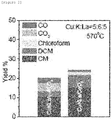
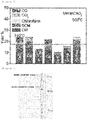
FIGS. 2 to 4 illustrate results of Experimental Example 1 or Experimental Example 2. -
FIG. 5 illustrates a reactor used in a process test. -
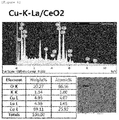
FIG. 6 illustrates the EDS data of a catalyst of Example 2. - Hereinafter, the present specification will be described.
- When one member is disposed "on" another member in the present specification, this includes not only a case where the one member is brought into contact with another member, but also a case where still another member is present between the two members.
- When one part "includes" one constituent element in the present specification, unless otherwise specifically described, this does not mean that another constituent element is excluded, but means that another constituent element may be further included.
- In the present specification, the "catalyst material" may be an "active material" having catalytic activity.
- In the present specification, unless otherwise mentioned, the "catalyst" may be a catalyst for an oxychlorination process of hydrocarbons.
- In the present specification, the "oxychlorination process of hydrocarbons" may mean a process for substituting hydrogen of hydrocarbons with chlorine, and may also be named an oxidative chlorination process of hydrocarbons. For example, the oxychlorination process of hydrocarbons may be a process of producing a chloromethane (CH3Cl, CH2Cl2, or CHCl3) by substituting hydrogen of a methane gas (CH4) with chlorine, and may be represented by the following Formula (I). The chloromethane produced through the following General Formula (I) may be converted into a useful chemical product through the following General Formula (II). In the following General Formula (I), not only a chloromethane, but also a byproduct such as carbon monoxide or carbon dioxide may be produced.
CH4 + HCl + O2 → Chloromethane + H2O (I)
Chloromethane → Chemical product + HCl (II)
- The present specification has been made in an effort to provide a catalyst which is used for the process of General Formula (I) and may minimize the selectivity of byproducts while increasing the selectivity of chloromethane in a product.
- The present specification provides a catalyst for an oxychlorination process of hydrocarbons, the catalyst including: a catalyst material including copper; and a carrier including cerium oxide (CeO2), in which the catalyst material further includes one or more first co-catalysts selected from the group consisting of an alkali metal and an alkaline earth metal; and a second co-catalyst including a lanthanide metal. As the carrier includes cerium oxide, it is possible to induce effects of enhancing catalytic stability and increasing the service life and the production amount by excellent oxygen adsorption-desorption performance of cerium oxide. Further, as a cerium oxide carrier includes both the copper and the co-catalysts, the above-described effects may be enhanced.
- The present specification may be used in a packed bed, fluidized bed, or circulating fluidized bed reactor by including cerium oxide as a carrier, using copper as an active material included in a catalyst material, and using the above-described first co-catalyst and second co-catalyst in the preparation of a chloro compound through an oxychlorination reaction of hydrocarbons.
- Further, the present specification has been made in an effort to maximally suppress the production of byproducts generated during the oxychlorination process of hydrocarbons and maximize the production of a target product by using the catalyst according to an exemplary embodiment of the present specification. For example, when a reactant is methane (CH4) and the target products are CH3Cl, CH2Cl2, and CHCl3 which are chlorination compounds of methane, CO2 and CO as byproducts are generated, and in this case, the present specification has been made in an effort to maximize the amount of chlorination methanes CH3Cl, CH2Cl2, and CHCl3 produced and minimize the generation of CO2 and CO as byproducts. In this case, the present specification has been made in an effort to induce the reduction in process costs by increasing the amount of target product produced while suppressing a risk that may occur due to the process by minimizing the amount of harmful materials carbon dioxide and carbon monoxide generated.
- In an exemplary embodiment of the present specification, the catalyst for an oxychlorination process of hydrocarbons may be a catalyst in which copper, one or more first co-catalysts selected from the group consisting of an alkali metal and an alkaline earth metal, and a second co-catalyst including a lanthanide metal are supported on the carrier including cerium oxide (CeO2). The supporting method is not particularly limited as long as the method is generally used in the art to which the technology pertains, and a specific method thereof will be described below.
- In an exemplary embodiment of the present specification, copper included in the catalyst material may be used as an active material. Specifically, copper is included in a catalyst material, so that there is an effect in that it is possible to reduce the selectivity of byproducts such as carbon monoxide or carbon dioxide which may be generated during the oxychlorination process of hydrocarbons.
- In an exemplary embodiment of the present specification, the catalyst material may further include platinum (Pt), palladium (Pd), nickel (Ni), cobalt (Co), ruthenium (Ru), rhenium (Re), rhodium (Rh), osmium (Os), titanium (Ti), vanadium (V), chromium (Cr), manganese (Mn), iron (Fe), or zinc (Zn) as the active material, in addition to copper, and these elements may be used either alone or in the form of an alloy.
- In an exemplary embodiment of the present specification, the catalyst material may be supported on the carrier. The method of supporting the catalyst material is not particularly limited as long as the method is generally used in the art to which the technology pertains, and a specific method thereof will be described below.
- In an exemplary embodiment of the present specification, the catalyst material may be included in an amount of 5 wt% to 25 wt%, preferably 10 wt% to 23 wt%, and more preferably 15 wt% to 20 wt%, based on the total weight of the catalyst for an oxychlorination process of hydrocarbons. When the content of the catalyst material satisfies the numerical range, the function of the catalyst by the catalyst material may be efficiently performed, and there is an effect in that it is possible to suppress the non-activation phenomenon of the catalyst.
- In an exemplary embodiment of the present specification, the contents of the first co-catalyst and the second co-catalyst are the same as or different from each other, and may be each 10 parts by weight to 2,000 parts by weight, 15 parts by weight to 1,000 parts by weight, 20 parts by weight to 500 parts by weight, 80 parts by weight to 300 parts by weight, or 100 parts by weight to 200 parts by weight, based on 100 parts by weight of copper. When the contents of the first co-catalyst and the second co-catalyst satisfy the numerical range, the reaction active point of the catalyst may be increased. The content of the catalyst material (or the first co-catalyst and the second co-catalyst) means the degree to which the catalyst material (or the first co-catalyst and the second co-catalyst) is supported on a carrier.
- In an exemplary embodiment of the present specification, the first co-catalyst may include one or more selected from the group consisting of sodium, lithium, potassium, magnesium, and calcium.
- In an exemplary embodiment of the present specification, the first co-catalyst may include potassium. When potassium is included as the first co-catalyst, there is an effect in that the contribution to the active material may be increased.
- In an exemplary embodiment of the present specification, the second co-catalyst may include one or more selected from the group consisting of yttria and a rare earth element.
- In an exemplary embodiment of the present specification, the rare earth element may be scandium (Sc), cerium (Ce), praseodymium (Pr), neodymium (Nd), promethium (Pm), samarium (Sm), europium (Eu), gadolinium (Gd), terbium (Tb), dysprosium (Dy), holmium (Ho), erbium (Er), thulium (Tm), ytterbium (Yb), or lutetium (Lu).
- In an exemplary embodiment of the present specification, the second co-catalyst may include lanthanum. When lanthanum is included as the second co-catalyst, there is an effect in that the contribution to the active material may be increased.
- In an exemplary embodiment of the present specification, the first co-catalyst may be potassium and the second co-catalyst may be lanthanum. In this case, the contribution to the active material may be maximized.
- In an exemplary embodiment of the present specification, the carrier may have a cerium oxide (CeO2) single composition. The cerium oxide (CeO2) single composition means that the carrier rarely includes materials other than cerium oxide, or includes a small amount of materials other than cerium oxide even though the carrier includes the materials. For example, the content of cerium oxide may be 80 wt% or more, 90 wt% or more, 95 wt% or more, or 99 wt% or more, and most preferably 100 wt%, based on the total 100 weight of the carrier.
- It is possible to confirm, by a general method used in the art to which the technology pertains, that the carrier has a cerium oxide (CeO2) single composition. For example, it is possible to confirm the presence or absence of CeO2 by confirming X-ray diffraction peak patterns. Specifically, when peaks corresponding to (111), (200), (220), and (311) crystal planes are present, it is possible to confirm that CeO2 on the cubic is present. Further, it is possible to confirm the presence or absence and wt% of Ce and O atoms by the energy dispersive spectroscopy (EDS) measurement. The EDS analysis is used to confirm the chemical composition of a sample along with SEM photographs. During the EDS measurement on cerium oxide, peaks corresponding to Ce and O atoms are observed. In contrast, when a peak of an atom other than Ce and O atoms is rarely observed, it is possible to confirm that the carrier has a cerium oxide single composition.
- In an exemplary embodiment of the present specification, the carrier may be composed of only cerium oxide.
- In an exemplary embodiment of the present specification, the carrier including cerium oxide (CeO2) may be in the form of a powder, the powder may be in the form of a sphere, and the diameter of a catalyst including the carrier will be described below.
- In an exemplary embodiment of the present specification, an "A-B-C/CeO2 catalyst" may mean that A, B, and C as a metal or metal oxide are supported on a CeO2 carrier.
- In an exemplary embodiment of the present specification, the carrier may have a specific surface area of 50 m2/g to 250 m2/g, 100 m2/g to 200 m2/g, and preferably 130 m2/g to 150 m2/g. When the specific surface area of the carries satisfies the numerical range, the contact area with an active component of the catalyst may be widely secured, and when an inlet gas is delivered into the catalyst, the material delivery resistance is appropriately controlled, so that the excellent conversion of the raw material gas may be achieved. The specific surface area of the carrier may mean the area (m2) of pores in the carrier based on the total weight (g) of the carrier. The specific surface area of the carrier may be measured by a method generally used in the art, and may be measured, for example, by the Brunauer, Emmett and Teller (BET) method. The method is a type of a vapor adsorption method that adsorbs molecules or ions onto the surface of a carrier and measures the surface area from the amount of molecules or ions adsorbed, and after a sample is stored at 250°C for 5 hours, the specific surface area may be measured by using an N2 adsorption-desorption isotherm using the Micromeritics ASAP 2010 apparatus.
- In an exemplary embodiment of the present specification, the carrier may further include a composite oxide including one or more elements selected from the group consisting of Zr, Y, an alkali metal element, an alkaline earth metal element, a lanthanide element, and a rare earth element. Specific examples on the alkali metal element, the alkaline earth metal element, the lanthanide element, and the rare earth element are the same as those described above.
- In an exemplary embodiment of the present specification, examples of the composite oxide include a CeZr composite oxide (70:30), a CeZrLa composite oxide (86:10:4), a CeZrLa composite oxide (66:29:5), a CeZrLaY composite oxide (40:50:5:5), a CeZrPr composite oxide (40:55:5), a CeZrLaNdPr composite oxide, a CeZrNdPrCa composite oxide, or the like. The numbers in the parenthesis in the latter part mean the ratios of the weights of respective elements.
- In an exemplary embodiment of the present specification, the catalyst for an oxychlorination process of hydrocarbons may have a diameter of 0.1 mm to 1.0 mm, preferably 0.1 mm to 0.5 mm, and more preferably 0.18 mm to 0.25 mm. When the catalyst diameter is less than 0.1 mm, a pressure drop phenomenon in a reactor significantly occurs, so that the conversion or reaction rate may deteriorate. In contrast, when the catalyst diameter is more than 1.0 mm, a channeling phenomenon in which a reactant does not go through a catalyst layer may occur. The diameter of the catalyst may mean an average particle diameter of catalyst particles. The diameter of the catalyst may be measured by a method generally used in the art, and for example, diameters of two or more catalyst particles may be measured by using scanning electron microscopy (SEM) or transmission electron microscopy (TEM), and an average of the measured diameters of the particles may be calculated as an average particle diameter.
- An exemplary embodiment of the present specification provides a method for preparing the above-described catalyst for an oxychlorination process of hydrocarbons, the method including: preparing a carrier including cerium oxide (CeO2); and supporting an active material including copper, a first co-catalyst, and a second co-catalyst on the carrier.
- In an exemplary embodiment of the present specification, the supporting of the active material including copper, the first co-catalyst, and the second co-catalyst on the carrier may use an incipient wetness method and may also use other wetness methods. As the precipitation method, a coprecipitation method, a homogeneous precipitation method, a sequential precipitation method, or the like may be used. When a catalyst powder is prepared by the precipitation method, a catalyst in a powder state may be obtained and the proportion of the active material may be freely adjusted by simultaneously precipitating an active material and a carrier as constituent elements, and a catalyst powder which is excellent in stability may be prepared by strengthening the mutual bonding strength between the active material and the carrier.
- In an exemplary embodiment of the present specification, the supporting of the active material including copper; the first co-catalyst; and the second co-catalyst on the carrier may be performed by a method of putting the carrier into an aqueous precursor solution including: an active material precursor including an active material precursor; a first co-catalyst precursor including a first co-catalyst; and a second co-catalyst precursor including a second co-catalyst, and stirring the resulting mixture.
- In an exemplary embodiment of the present specification, the active material precursor, the first co-catalyst precursor, and the second co-catalyst precursor may vary depending on the type of target material. For example, when the active material is copper, the active material precursor may be copper chloride dehydrate (CUCl2 · 2H2O), and when the first co-catalyst material is potassium, the first co-catalyst precursor may be potassium chloride (KCl), and when the second co-catalyst is lanthanum, the second co-catalyst precursor may be lanthanum chloride heptahydrate (LaCl3 · 7H2O).
- In an exemplary embodiment of the present specification, the stirring may be performed such that the aqueous precursor solution may be supported on the carrier well, and may be performed for 0.5 hour or more, preferably, 1 hour or more.
- In an exemplary embodiment of the present specification, the method for preparing a catalyst for an oxychlorination process of hydrocarbons may include: drying a catalyst; and calcining the catalyst.
- In an exemplary embodiment of the present specification, the drying of the catalyst is for evaporating moisture of the catalyst, and the method of drying the catalyst is not particularly limited as long as the method is generally used in the art to which the technology pertains. For example, the drying of the catalyst may be performed by a method of evaporating moisture using a rotary evaporator and drying the catalyst at a temperature of 100°C for 10 hours or more.
- In an exemplary embodiment of the present specification, the calcining of the catalyst is performed to remove a precursor material remaining in the catalyst after the supporting of the catalyst material, and a method of calcining the catalyst is not particularly limited as long as the method is generally used in the art to which the technology pertains, and may be performed at a temperature of 400°C or more for 1 to 10 hours, for example. When the performance temperature and the performance time are satisfied, it is possible to effectively remove the precursor material, and to suppress a problem with deterioration in durability caused by the occurrence of phase change in carrier.
- An exemplary embodiment of the present specification provides a method for preparing an oxychlorination compound of hydrocarbons, which is performed in the presence of the above-described catalyst for an oxychlorination process of hydrocarbons and includes an oxychlorination reaction of hydrocarbons. When the above-described catalyst for an oxychlorination process of hydrocarbons is applied, an amount of oxychlorination compound of hydrocarbons produced is increased and the reduction in activity of the catalyst is low. That is, the above-described catalyst for an oxychlorination process of hydrocarbons exhibits excellent activity even at low temperature, and thus has an advantage in that the catalyst is suitable for a low-temperature process.
- In an exemplary embodiment of the present specification, the method for preparing an oxychlorination compound of hydrocarbons may be expressed as a 'process' in the present specification.
- In an exemplary embodiment of the present specification, the fact that the method is performed in the presence of a catalyst for an oxychlorination process of hydrocarbons may mean inducing a reaction by allowing a reaction gas and the like to flow into a reactor in which a catalyst for an oxychlorination process of hydrocarbons is mounted.
- In an exemplary embodiment of the present specification, the oxychlorination reaction of hydrocarbons means a reaction of substituting hydrogen of a hydrocarbon raw material gas with chlorine, and is the same as described above.
- In an exemplary embodiment of the present specification, an inlet gas means a collection of gases flowing into a reactor, and is differentiated from an outlet gas discharged outside the reactor after the reaction.
- In an exemplary embodiment of the present specification, the method for preparing an oxychlorination compound of hydrocarbons may be performed by bringing an inlet gas into contact with the above-described catalyst. A partial oxidation reaction of the hydrocarbons is performed by bringing an inlet gas including a hydrocarbon raw material gas and a hydrogen chloride gas into contact with a catalyst. The meaning of the contact may be explained by a catalyst theory. Specifically, a catalyst includes a certain active site or active center, and a catalytic action is performed at the active site or active center. While the inlet gas is brought into contact with the active site or active center, the catalytic reaction occurs. For example, there is a method of loading a catalyst into a reactor and circulating the inlet gas in the reactor.
- In an exemplary embodiment of the present specification, the inlet gas may include a hydrocarbon raw material gas, a hydrogen chloride gas, and an oxygen gas.
- In an exemplary embodiment of the present specification, the hydrocarbon raw material gas is a gas including carbon and hydrogen, and means a gas which is a raw material for a target product. Examples thereof include: a straight-chained or branched saturated aliphatic hydrocarbon having 1 to 16 carbon atoms, such as methane, ethane, propane, butane, pentane, hexane, heptane, octane, nonane, and decane; an alicyclic saturated hydrocarbon, such as cyclohexane, methylcyclohexane, and cyclooctane; a monocyclic or polycyclic aromatic hydrocarbon; urban gas; LPG; naphtha; and a hydrocarbon such as kerosene.
- In an exemplary embodiment of the present specification, the hydrogen chloride gas (HCl) may function as a supply source of chlorine atoms.
- In an exemplary embodiment of the present specification, the inlet gas may further include one or two or more inert gases selected from the group consisting of nitrogen, helium, argon, and carbon dioxide.
- In an exemplary embodiment of the present specification, the ratio of the volume flow rates of the hydrocarbon raw material gas to the hydrogen chloride gas may be 1 : 1 to 10 : 1, preferably 1 : 1 to 5 : 1, more preferably 1 : 1 to 3 : 1, and most preferably 1.5 : 1 to 2.5 : 1. When the ratio satisfies the numerical range, the excellent activity of the catalyst may be maintained. Accordingly, there is an advantage in that the selectivity of the target product may be maintained at a high level.
- In an exemplary embodiment of the present specification, the inlet gas may further include an oxygen gas, and the ratio of the volume flow rates of the hydrocarbon raw material gas to the oxygen gas may be 1 : 1 to 10 : 1, preferably 2 : 1 to 6 : 1, and more preferably 3 : 1 to 5 : 1. When the ratio of the volume flow rates of the hydrocarbon raw material gas to the oxygen gas is less than 1 : 1, the selectivity of chloromethane as the target product may be decreased, and when the ratio of the volume flow rates of the hydrocarbon raw material gas to the oxygen gas is more than 10 : 1, there may be a problem in that the selectivity of byproducts such as carbon monoxide or carbon dioxide is increased.
- In an exemplary embodiment of the present specification, the ratio of the volume flow rates of the hydrocarbon raw material gas to the inert gas may be 1 : 0.5 to 1 : 10, preferably 1 : 0.5 to 1 : 5.
- The ratio of the volume flow rates may be measured by a method generally used in the art to which the technology pertains, and may be achieved by adjusting the temperature and pressure of an inlet gas flowing into a reactor. For example, the ratio of the volume flow rates may be measured at room temperature (25°C) and normal pressure (1 atm), and may be measured by using a volumetric flow meter generally used in the art.
- In an exemplary embodiment of the present specification, the process may be performed under a process temperature of 450°C to 550°C, a pressure of 0.5 atm to 3 atm, and a space velocity of 2, 000 h-1 to 20, 000 h-1.
- In an exemplary embodiment of the present specification, the process may be performed under a process temperature of 450°C to 530°C, 450°C or more and less than 530°C, 450°C to 520°C, or 450°C to 510°C. When the process temperature satisfies the range, it is possible to suppress byproducts from being produced and to increase the selectivity of a target product. For example, when the hydrocarbon raw material is methane, the process proceeds in the order of 1) the production of a Cl activated species through oxidation of hydrogen chloride, 2) the production of CH3Cl through reaction of methane and the Cl activated species, and 3) the production of byproducts such as carbon monoxide or carbon dioxide from the additional reaction of produced CH3Cl or the oxidation of methane. In this case, when the process temperature is low, the effect of the catalyst on the reaction is predominant, so that the rate of producing the Cl activated species in the reaction of 1) becomes faster than the rate of consuming the Cl activated species in the reaction of 2) through the oxidation-reduction ability of the catalyst itself. However, when the process temperature is high, the rate of the reaction of 3) becomes faster while the effect of temperature is gradually increased, so that there is a problem in that the production of byproducts is increased.
- The present specification intends to suppress byproducts such as carbon monoxide or carbon dioxide from being produced by appropriately maintaining the rates of the reactions of 1) and 2) while controlling the rate of the above-described reaction of 3) by adjusting the process conditions as described above.
- In an exemplary embodiment of the present specification, the rate at which the inlet gas is flowing may be 10,000 ml/(h•gcat) to 50,000 ml/(h•gcat). When the rate satisfies the range, the inlet gas is sufficiently fluid, so that it is possible to effectively suppress cokes from being generated. The gcat means the content of catalyst loaded into a reactor.
- In an exemplary embodiment of the present specification, the method for preparing an oxychlorination compound of hydrocarbons may be performed in a packed bed reactor, a fluidized bed reactor, or a circulating fluidized bed reactor.
- In an exemplary embodiment of the present specification, the method for preparing an oxychlorination compound of hydrocarbons may further include a neutralization process. The neutralization process is a process for removing a hydrogen chloride gas included in a reactant. Specifically, the neutralization process may be performed by allowing the reactant to pass through a reactor loaded with a sodium carbonate bed. The neutralization process may produce 1 equivalent of a carbon dioxide gas and 2 equivalents of sodium chloride by allowing 1 equivalent of sodium carbonate and 2 equivalents of hydrogen chloride to react, and may be expressed by the following drawing.

- Hereinafter, the above-described contents will be described through Examples. However, the right scope of the present specification is not limited by the following Examples.
- A cerium oxide carrier (CeO2) powder (3 g, from Rhodia®, surface area: 130 m2/g or more) was prepared as a carrier. Copper (Cu), potassium (K), and lanthanum (La) as catalyst materials were supported on the CeO2 carrier by the following method. In this case, a copper chloride dehydrate (CuCl2·2H2O) was used as a copper (Cu) precursor. Potassium chloride (KCl) was used as a potassium (K) precursor. Lanthanum chloride heptahydrate (LaCl3·7H2O) was used as a lanthanum (La) precursor.
- A precursor solution was prepared by weighing the calculated amounts of the precursors and dissolving the precursors in distilled water, the cerium oxide carrier was produced in a powder state and then put into the precursor solution and stirred sufficiently for 1 hour, and then the catalyst materials were supported on the cerium oxide carrier by evaporating water using a rotary evaporator. Thereafter, a catalyst was prepared by drying the carrier at a temperature of 100°C for about 12 hours or more, and then firing the dried carrier at a temperature of 600°C for 6 hours.
- In this case, the ratio of the weights of copper, potassium, and lanthanum supported on the catalyst was maintained at a weight ratio of Cu : K : La = 5 : 6 : 5, the contents of the components in the catalyst were 5 wt%, 6 wt%, and 5 wt%, respectively, based on the total weight of the catalyst (total sum of the weights of the carrier and the catalyst materials).
-
FIG. 1 is a view according to the X-ray diffraction (XRD) of the catalyst according to Example 1. The X-ray diffraction analysis may be measured under the measurement conditions of 40 kV and 30 mA by using the Ultra X18 (Rigaku Corp.). Cu K-alpha may be used as a radiation source, and the X-ray diffraction analysis was measured at a scanning step of 0.02°. - A catalyst was prepared in the same manner as in Example 1, except that the ratio of weights of copper, potassium, and lanthanum as catalyst materials was adjusted to a weight ratio of Cu : K : La = 7 : 2 : 2. In this case, the ratio of the weights of copper, potassium, and lanthanum supported on the catalyst was maintained at a weight ratio of Cu : K : La = 7 : 2 : 2, the contents of the components in the catalyst were 7 wt%, 2 wt%, and 2 wt%, respectively, based on the total weight of the catalyst (total sum of the weights of the carrier and the catalyst materials).
- The EDS confirmation data of the catalyst in Example 2 are illustrated in
FIG. 6 . Through the EDS confirmation data, it could be confirmed that Cu, K, and La were supported on the catalyst, and particularly, a CeO2 carrier including Ce and O elements was used. In particular, through the fact that elements other than the elements of the catalyst materials and CeO2 were not confirmed, it could be confirmed that the catalyst had a cerium oxide (CeO2) single composition. - A γ-Al2O3 powder (3 g, from Sasol Co. surface area: 192 m2/g) was prepared as a carrier. Copper (Cu), potassium (K), and lanthanum (La) as catalyst materials were supported on the γ-Al2O3 carrier by the following method. In this case, a copper chloride dehydrate (CuCl2·2H2O) was used as a copper (Cu) precursor. Potassium chloride (KCl) was used as a potassium (K) precursor. Lanthanum chloride heptahydrate (LaCl3·7H2O) was used as a lanthanum (La) precursor.
- A precursor solution was prepared by weighing the calculated amounts of the precursors and dissolving the precursors in distilled water, the γ-Al2O3 carrier was produced in a powder state and then put into the precursor solution and stirred sufficiently for 1 hour, and then the catalyst materials were supported on the cerium oxide carrier by evaporating water using a rotary evaporator. Thereafter, a catalyst was prepared by drying the carrier at a temperature of 120°C for about 12 hours, and then firing the dried carrier at a temperature of 550°C for 4 hours.
- In this case, the ratio of copper, potassium, and lanthanum on the catalyst was maintained at a weight ratio of Cu : K : La = 5 : 6 : 5, the contents of the components in the catalyst were 5 wt%, 6 wt%, and 5 wt%, respectively, based on the total weight of the catalyst (total sum of the weights of the carrier and the catalyst materials).
- A γ-Al2O3 powder (3 g, from Sasol Co. surface area: 192 m2/g) was prepared as a carrier. Copper (Cu), potassium (K), and lanthanum (La) as catalyst materials were supported on the γ-Al2O3 carrier by the following method. In this case, a copper chloride dehydrate (CuCl2·2H2O) was used as a copper (Cu) precursor. Potassium chloride (KCl) was used as a potassium (K) precursor. Lanthanum chloride heptahydrate (LaCl3·7H2O) was used as a lanthanum (La) precursor.
- A precursor solution was prepared by weighing the calculated amounts of the precursors and dissolving the precursors in distilled water, the γ-Al2O3 carrier was produced in a powder state and then put into the precursor solution and stirred sufficiently for 1 hour, and then the catalyst materials were supported on the cerium oxide carrier by evaporating water using a rotary evaporator. Thereafter, a catalyst was prepared by drying the carrier at a temperature of 100°C for about 12 hours, and then firing the dried carrier at a temperature of 600°C for 4 hours.
- In this case, the ratio of copper, potassium, and lanthanum on the catalyst was maintained at a weight ratio of Cu : K : La = 7 : 2 : 2, the contents of the components in the catalyst were 7 wt%, 2 wt%, and 2 wt%, respectively, based on the total weight of the catalyst (total sum of the weights of the carrier and the catalyst materials).
- A CeZr powder (3 g, from Sasol Co., surface area: 192 m2/g) was prepared as a carrier. Copper, potassium, and lanthanum were supported on the catalyst in the same manner as in Comparative Example 1, the contents of the components in the catalyst were7 wt%, 2 wt%, and 2 wt%, respectively, based on the total weight of the catalyst (total sum of the weights of the carrier and the catalyst materials), and the weight ratio of Ce : Zr of the carrier was 7 : 3.
- A catalyst was prepared in the same manner as in Example 1, except that no other metals were supported. In this case, as the cerium oxide carrier (CeO2) powder, the powder which is the same as that described in Example 1 was used.
- A catalyst was prepared in the same manner as in Example 1, except that only copper was supported on the cerium oxide carrier. In this case, as the precursor solution of copper and the cerium oxide carrier (CeO2) powder, the precursor solution and the cerium oxide carrier (CeO2) powder which are the same as those described in Example 1 were used.
- A catalyst was prepared in the same manner as in Example 1, except that only potassium (K) was supported on the cerium oxide carrier. In this case, as the precursor solution of potassium and the cerium oxide carrier (CeO2) powder, the precursor solution and the cerium oxide carrier (CeO2) powder which are the same as those described in Example 1 were used.
- A catalyst was prepared in the same manner as in Example 1, except that only lanthanum (La) was supported on the cerium oxide carrier. In this case, as the precursor solution of lanthanum and the cerium oxide carrier (CeO2) powder, the precursor solution and the cerium oxide carrier (CeO2) powder which are the same as those described in Example 1 were used.
- A catalyst was prepared in the same manner as in Example 1, except that only copper (Cu) and potassium (K) were supported on the cerium oxide carrier. In this case, as the precursor solutions of copper and potassium and the cerium oxide carrier (CeO2) powder, the precursor solutions and the cerium oxide carrier (CeO2) powder which are the same as those described in Example 1 were used.
- A catalyst was prepared in the same manner as in Example 1, except that only copper (Cu) and lanthanum (La) were supported on the cerium oxide carrier. In this case, as the precursor solutions of copper and lanthanum and the cerium oxide carrier (CeO2) powder, the precursor solutions and the cerium oxide carrier (CeO2) powder which are the same as those described in Example 1 were used.
- A cerium oxide carrier (CeO2) powder (3 g, from Rhodia®, surface area: 130 m2/g or more) was prepared as a carrier. Iron (Fe), potassium (K), and lanthanum (La) as catalyst materials were supported on the CeO2 carrier by the following method.
- In this case, iron (III) nitrate nonahydrate was used as a precursor of iron. The precursors of the other K and La, the supporting conditions, and the drying and firing conditions were the same as those in Example 1.
- In this case, the ratio of the weights of iron, potassium, and lanthanum supported on the catalyst was maintained at a weight ratio of Fe : K : La = 5 : 6 : 5, the contents of the components in the catalyst were 5 wt%, 6 wt%, and 5 wt%, respectively, based on the total weight of the catalyst (total sum of the weights of the carrier and the catalyst materials).
- The particle sizes of the catalysts prepared in the Examples and the Comparative Examples were adjusted by sieving to 180 µm to 250 µm.
- A packed bed reactor (PBR) formed of a quartz material as illustrated in
FIG. 5 was applied to the experiment. The portion indicated with a blue color in the drawing was loaded with the catalysts according to the Examples and the Comparative Examples. The process temperature was adjusted by using a thermocouple provided outside the packed bed reactor. - The composition of the inlet gas was composed of a volume ratio of CH4 : O2 : HCl : Ar : N2 = 4 : 1 : 2 : 3 : 10, and the volume flow rate of the inlet gas and the ratio [FT/Wcat] of flow rate/catalyst weight were adjusted to 50 ml/min and 30, 000 ml/(h·gcat), respectively, by adjusting the pressure in the reactor. The CH4 : O2 : HCl are reactant gases, and the Ar acts as a diluent.
- After all the gas conditions were completely set, an experiment was started after the reactor was pre-heated up to 450°C, and the composition of gas produced was monitored.
- The concentration of gas produced was measured by a gas chromatograph (GC) downstream. The concentrations of CH4, CH3Cl, CH2Cl2, and CHCl3 were measured by a flame ionization detector (FID), and the concentrations of CH4, N2, O2, CO2, and CO were measured by a thermal conductivity detector (TCD). In order to prevent the produced gas from being condensed, the produced gas may be heated up to 150°C.
- The yield and selectivity related to the gas may be calculated by the following Mathematical Formulae 1 to 3. The correction factor (α) associated with the inlet and outlet nitrogen gas is calculated by the following Mathematical Formula 1.

- The n(N2)inlet is the number of moles of a nitrogen gas flowing into the reactor, and the n(N2 ) outlet is the number of moles of a nitrogen gas flowing out of the reactor.
- The methane conversion (X, %) is calculated by the following
Mathematical Formula 2.
- The n(CH 4 )inlet is the number of moles of a methane gas flowing into the reactor, and the n(CH 4) outlet is the number of moles of a methane gas flowing out of the reactor.
- The selectivity (S) of the gas produced is calculated by the following Mathematical Formula 3.

- The n(j) outlet is the number of moles of each produced gas flowing out of the reactor, and the ∑n(j) outlet is the total number of moles of the produced gases.
- Meanwhile, during the experiments on the catalysts in the Examples and the Comparative Example, the process temperatures are the same as those in the following Tables 1 and 2.
- Oxychlorination reactions of methane were performed by using the catalysts according to the Examples and the Comparative Examples. In this case, the yields of the respective products are shown in the following Tables 1 and 2 and
FIG. 2 .[Table 1] Classification Constitution/Type Example 1 Example 2 Comparative Example 1 Comparative Example 2 Comparative Example 3 Comparative Example 4 Type of catalyst Supported material Cu(5),K(6),La(5) Cu(7),K(2),La(2) Cu(5), K(6), La(5) Cu(7), K(2), La(2) Cu(7), K(2), La(2)/ Not supported Carrier CeO2 CeO2 γ-Al2O3 γ-Al2O3 CeZr CeO2 Experimental results Process temperature (°C) 550 550 570 Not performed 510 550 Selectivity of Target product CH3Cl 15.1 14.8 10.5 Not performed 9.7 13.4 CH2Cl2 6.8 6.8 2.9 Not performed 1.9 4.1 CHCl3 1.36 1.4 0.02 Not performed 0 0.07 Selectivity of byproduct CO2 0.4 0.4 4.4 Not performed 4.4 1.7 CO 0.2 0.5 2.4 Not performed 2.4 4.4 [Table 2] Classification Constitution/Type Comparative Example 5 Comparative Example 6 Comparative Example 7 Comparative Example 8 Comparative Example 9 Comparative Example 10 Type of catalyst Supported material Cu K L Cu, K Cu, La Fe(5), K(6), La(5) Carrier CeO2 CeO2 CeO2 CeO2 CeO2 CeO2 Experimental results Process temperature (°C) 550 550 550 550 550 550 Selectivity of Target product CH3Cl 14.8 12.5 6. 7 11.2 7.5 11.1 CH2Cl2 5.2 3.5 2.1 3.5 1.9 3. 7 CHCl3 0.12 0.08 0.33 0.26 0.24 0.6 Selectivity of byproduct CO2 3.4 1.9 0 0.2 0 0 CO 0.4 4.0 4.0 0.6 0.7 0.9 - The cases where the same material was supported but the types of carriers were different were compared with one another. Specifically, it could be confirmed that in the case of the catalyst in which the type of carrier was CeO2 (Examples 1 and 2), the selectivity of the chloro compound as the target product was high and the selectivity of carbon dioxide and carbon monoxide as the byproducts was low as compared to the case where the type of carrier was an aluminum oxide in the related art (Comparative Example 1: γ-Al2O3) or CeZr (Comparative Example 3).
- The cases where the type of carrier was the same but different materials were supported were compared with one another. The catalyst according to Example 1 has an effect of lowering the production of the byproducts while increasing the selectivity of the target product (CH3Cl, CH2Cl2, or CHCl3) by using the catalyst material including all of copper-potassium-lanthanum. Specifically, it could be confirmed that in the case including copper as the catalyst material (Comparative Example 5), the selectivity of the product was excellent as compared to Comparative Examples 4, 6, and 7 including no copper. However, in the case of Comparative Example 5, there was a problem in that carbon dioxide and carbon monoxide as the byproducts were generated.
- It could be confirmed that in the case where potassium was further included (Comparative Example 8) or lanthanum was further included (Comparative Example 9) in addition to copper as the catalyst material in order to solve the problem, the problem in that the byproducts were produced was solved to some degree, but the selectivity of the target product was decreased as compared to Comparative Example 4.
- Accordingly, it was possible to minimize the production of the byproducts while maximizing the selectivity of the target product by including all of copper, potassium, and lanthanum as the catalyst materials in Example 1.
- Meanwhile, it could be confirmed that in the case where iron was included instead of copper as the catalyst material (Comparative Example 10), a small amount of byproducts were produced, but the selectivity of the target product was low. The reason is because the activity of copper is better than the activity of iron.
- The selectivity was calculated by using the catalyst according to Example 1 to measure the degree to which the gas was produced according to the temperature, and is shown in the following Table 3 and
FIG. 3 .[Table 3] Process temperature (°C) Target product Byproduct CH3Cl CH2Cl2 CHCl3 CO2 CO 450 6.7 1.3 0.09 0 0 480 9.2 2.6 0.28 0 0 510 12.1 4.4 0.66 0 0 530 14.0 5.7 1.00 0 0 550 15.1 6.8 1.36 0.4 0.2 570 15.2 6.7 1.26 0.3 0.9 590 14.4 6.8 1.42 0.3 1.3 - It could be confirmed that when the process temperature was 550°C or more, carbon dioxide and carbon monoxide as byproducts were partially produced, and the higher the process temperature was, the more byproducts were produced. The results as described above are due to the fact that when the process temperature was more than 530°C, the effect of temperature during the process was increased, and as a result, the produced CH3Cl additionally reacted or CH4 was directly oxidized to produce large amounts of carbon dioxide and carbon monoxide as byproducts. In contrast, when the process temperature was 530°C or less, it was possible to prevent carbon dioxide and carbon monoxide as byproducts from being produced by suppressing CH3Cl from additionally reacting, or suppressing CH4 from being directly oxidized.
- The results of the respective catalysts in Experimental Examples 1 and 2 are the same as those illustrated in
FIGS. 2 to 4 .
Claims (12)
- A catalyst for an oxychlorination process of hydrocarbons, the catalyst comprising:a catalyst material comprising copper; anda carrier comprising cerium oxide (CeO2),wherein the catalyst material further comprises one or more first co-catalysts selected from the group consisting of an alkali metal and an alkaline earth metal; and a second co-catalyst including a lanthanide metal.
- The catalyst of claim 1, where the catalyst material is comprised in an amount of 5 wt% to 25 wt% based on a total weight of the catalyst for an oxychlorination process of hydrocarbons.
- The catalyst of claim 1, wherein the contents of the first co-catalyst and the second co-catalyst are the same as or different from each other, and the first co-catalyst and the second co-catalyst are each comprised in an amount of 10 parts by weight to 2,000 parts by weight based on 100 parts by weight of copper.
- The catalyst of claim 1, wherein the first co-catalyst comprises one or more selected from the group consisting of sodium, lithium, potassium, magnesium, and calcium.
- The catalyst of claim 1, wherein the second co-catalyst further comprises one or more selected from the group consisting of yttria and a rare earth element.
- The catalyst of claim 1, wherein the carrier has a specific surface area of 50 m2/g to 250 m2/g.
- The catalyst of claim 1, wherein the carrier has a cerium oxide (CeO2) single composition.
- The catalyst of claim 1, wherein the catalyst has a diameter of 0.1 mm to 1.0 mm.
- A method for preparing the catalyst for an oxychlorination process of hydrocarbons according to any one of claims 1 to 8, the method comprising:preparing a carrier comprising cerium oxide (CeO2); andsupporting an active material comprising copper, a first co-catalyst, and a second co-catalyst on the carrier.
- A method for preparing an oxychlorination compound of hydrocarbons which is performed in the presence of the catalyst for an oxychlorination process of hydrocarbons according to any one of claims 1 to 8, and
comprises an oxychlorination reaction of hydrocarbons. - The method of claim 10, wherein the method is performed under a process temperature of 450°C to 550°C, a pressure of 0.5 atm to 3 atm, and a space velocity of 2,000 h-1 to 20,000 h-1.
- The method of claim 10, wherein the method is performed in a packed bed reactor, a fluidized bed reactor, or a circulating fluidized bed reactor.
Applications Claiming Priority (2)
| Application Number | Priority Date | Filing Date | Title |
|---|---|---|---|
| KR20180022215 | 2018-02-23 | ||
| PCT/KR2019/002232 WO2019164342A1 (en) | 2018-02-23 | 2019-02-22 | Catalyst for processing oxychlorination of hydrocarbon, preparation method therefor, and preparation method of oxychlorinated compound of hydrocarbon using same |
Publications (3)
| Publication Number | Publication Date |
|---|---|
| EP3721993A1 true EP3721993A1 (en) | 2020-10-14 |
| EP3721993A4 EP3721993A4 (en) | 2021-01-20 |
| EP3721993B1 EP3721993B1 (en) | 2022-06-15 |
Family
ID=67686919
Family Applications (1)
| Application Number | Title | Priority Date | Filing Date |
|---|---|---|---|
| EP19757172.2A Active EP3721993B1 (en) | 2018-02-23 | 2019-02-22 | Catalyst for processing oxychlorination of hydrocarbon, preparation method therefor, and preparation method of oxychlorinated compound of hydrocarbon using same |
Country Status (6)
| Country | Link |
|---|---|
| US (1) | US11179703B2 (en) |
| EP (1) | EP3721993B1 (en) |
| JP (1) | JP7067696B2 (en) |
| KR (1) | KR102230978B1 (en) |
| CN (1) | CN111565838B (en) |
| WO (1) | WO2019164342A1 (en) |
Families Citing this family (2)
| Publication number | Priority date | Publication date | Assignee | Title |
|---|---|---|---|---|
| CN110479324A (en) * | 2019-09-06 | 2019-11-22 | 内蒙古大学 | A kind of ethane oxychlorination preparing chloroethylene rare earth Zirconium-base catalyst preparation method |
| CN117244568A (en) * | 2023-09-18 | 2023-12-19 | 浙江大学 | Application of copper-cerium oxychloride composite catalyst in methane oxychlorination reaction process |
Family Cites Families (26)
| Publication number | Priority date | Publication date | Assignee | Title |
|---|---|---|---|---|
| US4199533A (en) | 1978-11-03 | 1980-04-22 | University Of Southern California | Conversion of methane |
| US4714796A (en) | 1987-04-21 | 1987-12-22 | Illinois Institute Of Technology | Production of higher molecular weight hydrocarbons from methane |
| US4804797A (en) | 1987-08-24 | 1989-02-14 | Gas Research Institute | Production of commodity chemicals from natural gas by methane chlorination |
| US4983783A (en) | 1989-07-25 | 1991-01-08 | Illinois Institute Of Technology | Reduction in carbon oxides in oxidative pyrolysis of halogenated methanes |
| US5113027A (en) * | 1989-12-15 | 1992-05-12 | Vulcan Materials Company | Oxychlorination process using a catalyst which comprises copper chloride supported on rare-earth modified alumina |
| JP3092330B2 (en) | 1992-06-30 | 2000-09-25 | 住友化学工業株式会社 | Oxychlorination catalyst, method for producing the same, and oxychlorination method using the same |
| US5292703A (en) | 1992-07-28 | 1994-03-08 | The Geon Company | Catalyst and process for oxychlorination of ethylene to EDC |
| FR2695574B1 (en) | 1992-09-15 | 1994-11-04 | Rhone Poulenc Chimie | Composition based on ceric oxide, preparation and use. |
| GB9315679D0 (en) | 1993-07-29 | 1993-09-15 | Rover Group | Base metal catalyst,catalytic support and two-stage process for the purification of vehicle exhaust gases |
| EP0720975A1 (en) * | 1995-01-06 | 1996-07-10 | Dow Corning Corporation | Oxyhydrochlorination catalyst and process |
| DE19751962A1 (en) * | 1997-11-24 | 1999-07-29 | Wacker Chemie Gmbh | Supported catalyst, process for its preparation and use in the oxychlorination of ethylene |
| WO2006119311A2 (en) * | 2005-05-02 | 2006-11-09 | Symyx Technologies, Inc. | High surface area metal and metal oxide materials and methods of making same |
| KR101169626B1 (en) | 2005-05-12 | 2012-08-03 | 솔베이(소시에떼아노님) | Oxychlorination catalyst and process using such a catalyst |
| JP5084193B2 (en) | 2006-07-13 | 2012-11-28 | 日揮触媒化成株式会社 | Fluid catalyst for oxychlorination and method for producing the same |
| KR101108801B1 (en) * | 2006-10-27 | 2012-01-31 | 주식회사 엘지화학 | Chlorometallic Compound Catalyst Used in Oxycyclo Reaction of Methane and Chlorine Compound Preparation Method Using the Same |
| WO2009010167A1 (en) | 2007-07-13 | 2009-01-22 | Bayer Technology Services Gmbh | Thermally stable catalyst for hydrogen chloride gas phase oxidation |
| EP2170496A1 (en) | 2007-07-13 | 2010-04-07 | Bayer Technology Services GmbH | Method for producing chlorine by gas phase oxidation |
| EP2208528A1 (en) | 2008-12-23 | 2010-07-21 | Süd Chemie - Catalysts Italia S.R.L. | Catalysts for fixed bed oxychlorination of ethylene to 1.2-dichloroethane |
| KR101799033B1 (en) | 2010-11-15 | 2017-11-20 | 엘지디스플레이 주식회사 | Red color phosphorescent host material and Organic electroluminescent display device using the same |
| US9248434B2 (en) * | 2012-11-06 | 2016-02-02 | Basf Corporation | Catalyst for the oxychlorination of ethylene to 1, 2-dichloroethane |
| JP6509807B2 (en) * | 2013-03-15 | 2019-05-08 | オキシ ヴィニールズ,エルピー | Catalyst and process for the oxychlorination of ethylene to dichloroethane |
| CN103721759B (en) * | 2014-01-07 | 2015-12-30 | 中国人民解放军防化学院 | A kind of air purifying preparation and preparation method thereof |
| WO2017216653A1 (en) | 2016-06-17 | 2017-12-21 | Sabic Global Technologies B.V. | Mixed cerium-lanthanum oxide catalysts and systems for oxidative halogenation of an alkane |
| EP3272418A1 (en) * | 2016-07-21 | 2018-01-24 | ETH Zurich | A catalyst composition for direct synthesis of vinyl chloride from ethylene |
| KR101888946B1 (en) | 2016-08-23 | 2018-08-16 | 양남수 | Portable mist device |
| KR20180079178A (en) | 2016-12-29 | 2018-07-10 | 주식회사 효성 | Composite catalyst support, dehydrogenation catalysts and preparation method thereof |
-
2019
- 2019-02-22 EP EP19757172.2A patent/EP3721993B1/en active Active
- 2019-02-22 CN CN201980007191.5A patent/CN111565838B/en active Active
- 2019-02-22 US US16/958,443 patent/US11179703B2/en active Active
- 2019-02-22 JP JP2020536777A patent/JP7067696B2/en active Active
- 2019-02-22 WO PCT/KR2019/002232 patent/WO2019164342A1/en not_active Ceased
- 2019-02-22 KR KR1020190021258A patent/KR102230978B1/en active Active
Also Published As
| Publication number | Publication date |
|---|---|
| CN111565838A (en) | 2020-08-21 |
| US20210053036A1 (en) | 2021-02-25 |
| JP7067696B2 (en) | 2022-05-16 |
| US11179703B2 (en) | 2021-11-23 |
| KR102230978B1 (en) | 2021-03-23 |
| JP2021509636A (en) | 2021-04-01 |
| EP3721993A4 (en) | 2021-01-20 |
| EP3721993B1 (en) | 2022-06-15 |
| KR20190101907A (en) | 2019-09-02 |
| WO2019164342A1 (en) | 2019-08-29 |
| CN111565838B (en) | 2023-09-26 |
Similar Documents
| Publication | Publication Date | Title |
|---|---|---|
| Ri et al. | Manganese-cerium composite oxide pyrolyzed from metal organic framework supporting palladium nanoparticles for efficient toluene oxidation | |
| Wang et al. | Highly efficient WO3-FeOx catalysts synthesized using a novel solvent-free method for NH3-SCR | |
| He et al. | Mesostructured Cu–Mn–Ce–O composites with homogeneous bulk composition for chlorobenzene removal: catalytic performance and microactivation course | |
| Wu et al. | Ultra-active Ru supported on CeO2 nanosheets for catalytic combustion of Propane: Experimental insights into interfacial active sites | |
| Profeti et al. | Production of hydrogen by ethanol steam reforming on Co/Al2O3 catalysts: effect of addition of small quantities of noble metals | |
| EP3400099B1 (en) | Process for methanol synthesis using an indium oxide based catalyst | |
| Mesrar et al. | Syngas production from dry reforming of methane over ni/perlite catalysts: effect of zirconia and ceria impregnation | |
| Braos-García et al. | Bimetallic Ru/Ni supported catalysts for the gas phase hydrogenation of acetonitrile | |
| Nunez et al. | CO selective oxidation using Co-promoted Pt/γ-Al2O3 catalysts | |
| Chen et al. | Preferential oxidation of CO in the presence of excess of hydrogen on Ru/Al2O3 catalyst: Promoting effect of ceria–terbia mixed oxide | |
| EP3721993B1 (en) | Catalyst for processing oxychlorination of hydrocarbon, preparation method therefor, and preparation method of oxychlorinated compound of hydrocarbon using same | |
| Ke et al. | Yttrium chloride-modified Au/AC catalysts for acetylene hydrochlorination with improved activity and stability | |
| Li et al. | Catalytic oxidation of dichloromethane co-promoted by RuO2 and V2O5 supported on nano-CeO2 | |
| Meshesha et al. | Gas-phase hydrodechlorination of trichloroethylene over Pd/NiMgAl mixed oxide catalysts | |
| Cai et al. | The efficient and stable catalytic combustion of chlorobenzene utilizing a cordierite honeycomb ceramic RuCeO2 catalyst: transitioning from laboratory innovation to practical application | |
| Xiao et al. | Bimetallic and trimetallic Pt-based catalysts for selective hydrogenation of p-chloronitrobenzene to p-chloroaniline | |
| CN102580767B (en) | Chromium-based fluorination catalyst and preparation method thereof | |
| EP3730211A1 (en) | Catalyst for oxychlorination process of hydrocarbon, method for producing same, and method for manufacturing oxychlorinated compound of hydrocarbon by using same | |
| EP3750847A1 (en) | Partial oxidation process of hydrocarbons | |
| KR102542195B1 (en) | Catalyst for partial oxidation of hydrocarbon and method for preparation method for carbon monooxide | |
| Zheng et al. | PVP modulation of CeCoOx morphology to enhance chlorine resistance and o-dichlorobenzene degradation | |
| JP4846706B2 (en) | Method for producing catalyst for producing hydrogen from hydrocarbon, catalyst produced by the production method, and method for producing hydrogen using the catalyst | |
| WO2019236513A1 (en) | Post-calcination treatment of mixed oxide catalyst for oxidative coupling of methane | |
| Bing | The Efficient and Stable Catalytic Oxidation of Chlorobenzene Utilizing Cordierite Honeycomb Ceramic Ruceo2 Catalyst: Transitioning from Laboratory Innovation to Practical Application |
Legal Events
| Date | Code | Title | Description |
|---|---|---|---|
| STAA | Information on the status of an ep patent application or granted ep patent |
Free format text: STATUS: THE INTERNATIONAL PUBLICATION HAS BEEN MADE |
|
| PUAI | Public reference made under article 153(3) epc to a published international application that has entered the european phase |
Free format text: ORIGINAL CODE: 0009012 |
|
| STAA | Information on the status of an ep patent application or granted ep patent |
Free format text: STATUS: REQUEST FOR EXAMINATION WAS MADE |
|
| 17P | Request for examination filed |
Effective date: 20200702 |
|
| AK | Designated contracting states |
Kind code of ref document: A1 Designated state(s): AL AT BE BG CH CY CZ DE DK EE ES FI FR GB GR HR HU IE IS IT LI LT LU LV MC MK MT NL NO PL PT RO RS SE SI SK SM TR |
|
| AX | Request for extension of the european patent |
Extension state: BA ME |
|
| A4 | Supplementary search report drawn up and despatched |
Effective date: 20201221 |
|
| RIC1 | Information provided on ipc code assigned before grant |
Ipc: B01J 37/02 20060101ALI20201215BHEP Ipc: B01J 35/02 20060101ALI20201215BHEP Ipc: B01J 35/10 20060101ALI20201215BHEP Ipc: C07C 19/03 20060101ALI20201215BHEP Ipc: B01J 35/00 20060101ALI20201215BHEP Ipc: B01J 23/83 20060101AFI20201215BHEP Ipc: B01J 23/78 20060101ALI20201215BHEP Ipc: C07C 17/154 20060101ALI20201215BHEP |
|
| DAV | Request for validation of the european patent (deleted) | ||
| DAX | Request for extension of the european patent (deleted) | ||
| GRAP | Despatch of communication of intention to grant a patent |
Free format text: ORIGINAL CODE: EPIDOSNIGR1 |
|
| STAA | Information on the status of an ep patent application or granted ep patent |
Free format text: STATUS: GRANT OF PATENT IS INTENDED |
|
| RIC1 | Information provided on ipc code assigned before grant |
Ipc: B01J 21/04 20060101ALN20220210BHEP Ipc: C07C 17/154 20060101ALI20220210BHEP Ipc: B01J 37/08 20060101ALI20220210BHEP Ipc: B01J 23/10 20060101ALI20220210BHEP Ipc: B01J 37/02 20060101ALI20220210BHEP Ipc: B01J 35/10 20060101ALI20220210BHEP Ipc: B01J 23/83 20060101AFI20220210BHEP |
|
| RIC1 | Information provided on ipc code assigned before grant |
Ipc: B01J 21/04 20060101ALN20220303BHEP Ipc: C07C 17/154 20060101ALI20220303BHEP Ipc: B01J 37/08 20060101ALI20220303BHEP Ipc: B01J 23/10 20060101ALI20220303BHEP Ipc: B01J 37/02 20060101ALI20220303BHEP Ipc: B01J 35/10 20060101ALI20220303BHEP Ipc: B01J 23/83 20060101AFI20220303BHEP |
|
| INTG | Intention to grant announced |
Effective date: 20220316 |
|
| RIC1 | Information provided on ipc code assigned before grant |
Ipc: B01J 21/04 20060101ALN20220304BHEP Ipc: C07C 17/154 20060101ALI20220304BHEP Ipc: B01J 37/08 20060101ALI20220304BHEP Ipc: B01J 23/10 20060101ALI20220304BHEP Ipc: B01J 37/02 20060101ALI20220304BHEP Ipc: B01J 35/10 20060101ALI20220304BHEP Ipc: B01J 23/83 20060101AFI20220304BHEP |
|
| GRAS | Grant fee paid |
Free format text: ORIGINAL CODE: EPIDOSNIGR3 |
|
| GRAA | (expected) grant |
Free format text: ORIGINAL CODE: 0009210 |
|
| STAA | Information on the status of an ep patent application or granted ep patent |
Free format text: STATUS: THE PATENT HAS BEEN GRANTED |
|
| AK | Designated contracting states |
Kind code of ref document: B1 Designated state(s): AL AT BE BG CH CY CZ DE DK EE ES FI FR GB GR HR HU IE IS IT LI LT LU LV MC MK MT NL NO PL PT RO RS SE SI SK SM TR |
|
| REG | Reference to a national code |
Ref country code: CH Ref legal event code: EP Ref country code: GB Ref legal event code: FG4D |
|
| REG | Reference to a national code |
Ref country code: IE Ref legal event code: FG4D |
|
| REG | Reference to a national code |
Ref country code: DE Ref legal event code: R096 Ref document number: 602019015969 Country of ref document: DE |
|
| REG | Reference to a national code |
Ref country code: AT Ref legal event code: REF Ref document number: 1498028 Country of ref document: AT Kind code of ref document: T Effective date: 20220715 |
|
| REG | Reference to a national code |
Ref country code: LT Ref legal event code: MG9D |
|
| REG | Reference to a national code |
Ref country code: NL Ref legal event code: MP Effective date: 20220615 |
|
| PG25 | Lapsed in a contracting state [announced via postgrant information from national office to epo] |
Ref country code: SE Free format text: LAPSE BECAUSE OF FAILURE TO SUBMIT A TRANSLATION OF THE DESCRIPTION OR TO PAY THE FEE WITHIN THE PRESCRIBED TIME-LIMIT Effective date: 20220615 Ref country code: NO Free format text: LAPSE BECAUSE OF FAILURE TO SUBMIT A TRANSLATION OF THE DESCRIPTION OR TO PAY THE FEE WITHIN THE PRESCRIBED TIME-LIMIT Effective date: 20220915 Ref country code: LT Free format text: LAPSE BECAUSE OF FAILURE TO SUBMIT A TRANSLATION OF THE DESCRIPTION OR TO PAY THE FEE WITHIN THE PRESCRIBED TIME-LIMIT Effective date: 20220615 Ref country code: HR Free format text: LAPSE BECAUSE OF FAILURE TO SUBMIT A TRANSLATION OF THE DESCRIPTION OR TO PAY THE FEE WITHIN THE PRESCRIBED TIME-LIMIT Effective date: 20220615 Ref country code: GR Free format text: LAPSE BECAUSE OF FAILURE TO SUBMIT A TRANSLATION OF THE DESCRIPTION OR TO PAY THE FEE WITHIN THE PRESCRIBED TIME-LIMIT Effective date: 20220916 Ref country code: FI Free format text: LAPSE BECAUSE OF FAILURE TO SUBMIT A TRANSLATION OF THE DESCRIPTION OR TO PAY THE FEE WITHIN THE PRESCRIBED TIME-LIMIT Effective date: 20220615 Ref country code: BG Free format text: LAPSE BECAUSE OF FAILURE TO SUBMIT A TRANSLATION OF THE DESCRIPTION OR TO PAY THE FEE WITHIN THE PRESCRIBED TIME-LIMIT Effective date: 20220915 |
|
| REG | Reference to a national code |
Ref country code: AT Ref legal event code: MK05 Ref document number: 1498028 Country of ref document: AT Kind code of ref document: T Effective date: 20220615 |
|
| PG25 | Lapsed in a contracting state [announced via postgrant information from national office to epo] |
Ref country code: RS Free format text: LAPSE BECAUSE OF FAILURE TO SUBMIT A TRANSLATION OF THE DESCRIPTION OR TO PAY THE FEE WITHIN THE PRESCRIBED TIME-LIMIT Effective date: 20220615 Ref country code: LV Free format text: LAPSE BECAUSE OF FAILURE TO SUBMIT A TRANSLATION OF THE DESCRIPTION OR TO PAY THE FEE WITHIN THE PRESCRIBED TIME-LIMIT Effective date: 20220615 |
|
| PG25 | Lapsed in a contracting state [announced via postgrant information from national office to epo] |
Ref country code: NL Free format text: LAPSE BECAUSE OF FAILURE TO SUBMIT A TRANSLATION OF THE DESCRIPTION OR TO PAY THE FEE WITHIN THE PRESCRIBED TIME-LIMIT Effective date: 20220615 |
|
| PG25 | Lapsed in a contracting state [announced via postgrant information from national office to epo] |
Ref country code: SM Free format text: LAPSE BECAUSE OF FAILURE TO SUBMIT A TRANSLATION OF THE DESCRIPTION OR TO PAY THE FEE WITHIN THE PRESCRIBED TIME-LIMIT Effective date: 20220615 Ref country code: SK Free format text: LAPSE BECAUSE OF FAILURE TO SUBMIT A TRANSLATION OF THE DESCRIPTION OR TO PAY THE FEE WITHIN THE PRESCRIBED TIME-LIMIT Effective date: 20220615 Ref country code: RO Free format text: LAPSE BECAUSE OF FAILURE TO SUBMIT A TRANSLATION OF THE DESCRIPTION OR TO PAY THE FEE WITHIN THE PRESCRIBED TIME-LIMIT Effective date: 20220615 Ref country code: PT Free format text: LAPSE BECAUSE OF FAILURE TO SUBMIT A TRANSLATION OF THE DESCRIPTION OR TO PAY THE FEE WITHIN THE PRESCRIBED TIME-LIMIT Effective date: 20221017 Ref country code: ES Free format text: LAPSE BECAUSE OF FAILURE TO SUBMIT A TRANSLATION OF THE DESCRIPTION OR TO PAY THE FEE WITHIN THE PRESCRIBED TIME-LIMIT Effective date: 20220615 Ref country code: EE Free format text: LAPSE BECAUSE OF FAILURE TO SUBMIT A TRANSLATION OF THE DESCRIPTION OR TO PAY THE FEE WITHIN THE PRESCRIBED TIME-LIMIT Effective date: 20220615 Ref country code: CZ Free format text: LAPSE BECAUSE OF FAILURE TO SUBMIT A TRANSLATION OF THE DESCRIPTION OR TO PAY THE FEE WITHIN THE PRESCRIBED TIME-LIMIT Effective date: 20220615 Ref country code: AT Free format text: LAPSE BECAUSE OF FAILURE TO SUBMIT A TRANSLATION OF THE DESCRIPTION OR TO PAY THE FEE WITHIN THE PRESCRIBED TIME-LIMIT Effective date: 20220615 |
|
| PG25 | Lapsed in a contracting state [announced via postgrant information from national office to epo] |
Ref country code: PL Free format text: LAPSE BECAUSE OF FAILURE TO SUBMIT A TRANSLATION OF THE DESCRIPTION OR TO PAY THE FEE WITHIN THE PRESCRIBED TIME-LIMIT Effective date: 20220615 Ref country code: IS Free format text: LAPSE BECAUSE OF FAILURE TO SUBMIT A TRANSLATION OF THE DESCRIPTION OR TO PAY THE FEE WITHIN THE PRESCRIBED TIME-LIMIT Effective date: 20221015 |
|
| REG | Reference to a national code |
Ref country code: DE Ref legal event code: R097 Ref document number: 602019015969 Country of ref document: DE |
|
| PG25 | Lapsed in a contracting state [announced via postgrant information from national office to epo] |
Ref country code: AL Free format text: LAPSE BECAUSE OF FAILURE TO SUBMIT A TRANSLATION OF THE DESCRIPTION OR TO PAY THE FEE WITHIN THE PRESCRIBED TIME-LIMIT Effective date: 20220615 |
|
| PLBE | No opposition filed within time limit |
Free format text: ORIGINAL CODE: 0009261 |
|
| STAA | Information on the status of an ep patent application or granted ep patent |
Free format text: STATUS: NO OPPOSITION FILED WITHIN TIME LIMIT |
|
| PG25 | Lapsed in a contracting state [announced via postgrant information from national office to epo] |
Ref country code: DK Free format text: LAPSE BECAUSE OF FAILURE TO SUBMIT A TRANSLATION OF THE DESCRIPTION OR TO PAY THE FEE WITHIN THE PRESCRIBED TIME-LIMIT Effective date: 20220615 |
|
| 26N | No opposition filed |
Effective date: 20230316 |
|
| PG25 | Lapsed in a contracting state [announced via postgrant information from national office to epo] |
Ref country code: SI Free format text: LAPSE BECAUSE OF FAILURE TO SUBMIT A TRANSLATION OF THE DESCRIPTION OR TO PAY THE FEE WITHIN THE PRESCRIBED TIME-LIMIT Effective date: 20220615 |
|
| PG25 | Lapsed in a contracting state [announced via postgrant information from national office to epo] |
Ref country code: MC Free format text: LAPSE BECAUSE OF FAILURE TO SUBMIT A TRANSLATION OF THE DESCRIPTION OR TO PAY THE FEE WITHIN THE PRESCRIBED TIME-LIMIT Effective date: 20220615 |
|
| REG | Reference to a national code |
Ref country code: CH Ref legal event code: PL |
|
| REG | Reference to a national code |
Ref country code: BE Ref legal event code: MM Effective date: 20230228 |
|
| PG25 | Lapsed in a contracting state [announced via postgrant information from national office to epo] |
Ref country code: LU Free format text: LAPSE BECAUSE OF NON-PAYMENT OF DUE FEES Effective date: 20230222 Ref country code: LI Free format text: LAPSE BECAUSE OF NON-PAYMENT OF DUE FEES Effective date: 20230228 Ref country code: CH Free format text: LAPSE BECAUSE OF NON-PAYMENT OF DUE FEES Effective date: 20230228 |
|
| REG | Reference to a national code |
Ref country code: IE Ref legal event code: MM4A |
|
| PG25 | Lapsed in a contracting state [announced via postgrant information from national office to epo] |
Ref country code: IT Free format text: LAPSE BECAUSE OF FAILURE TO SUBMIT A TRANSLATION OF THE DESCRIPTION OR TO PAY THE FEE WITHIN THE PRESCRIBED TIME-LIMIT Effective date: 20220615 Ref country code: IE Free format text: LAPSE BECAUSE OF NON-PAYMENT OF DUE FEES Effective date: 20230222 |
|
| PG25 | Lapsed in a contracting state [announced via postgrant information from national office to epo] |
Ref country code: BE Free format text: LAPSE BECAUSE OF NON-PAYMENT OF DUE FEES Effective date: 20230228 |
|
| PG25 | Lapsed in a contracting state [announced via postgrant information from national office to epo] |
Ref country code: BG Free format text: LAPSE BECAUSE OF FAILURE TO SUBMIT A TRANSLATION OF THE DESCRIPTION OR TO PAY THE FEE WITHIN THE PRESCRIBED TIME-LIMIT Effective date: 20220615 |
|
| PG25 | Lapsed in a contracting state [announced via postgrant information from national office to epo] |
Ref country code: BG Free format text: LAPSE BECAUSE OF FAILURE TO SUBMIT A TRANSLATION OF THE DESCRIPTION OR TO PAY THE FEE WITHIN THE PRESCRIBED TIME-LIMIT Effective date: 20220615 |
|
| PG25 | Lapsed in a contracting state [announced via postgrant information from national office to epo] |
Ref country code: CY Free format text: LAPSE BECAUSE OF FAILURE TO SUBMIT A TRANSLATION OF THE DESCRIPTION OR TO PAY THE FEE WITHIN THE PRESCRIBED TIME-LIMIT; INVALID AB INITIO Effective date: 20190222 |
|
| PG25 | Lapsed in a contracting state [announced via postgrant information from national office to epo] |
Ref country code: HU Free format text: LAPSE BECAUSE OF FAILURE TO SUBMIT A TRANSLATION OF THE DESCRIPTION OR TO PAY THE FEE WITHIN THE PRESCRIBED TIME-LIMIT; INVALID AB INITIO Effective date: 20190222 |
|
| PG25 | Lapsed in a contracting state [announced via postgrant information from national office to epo] |
Ref country code: TR Free format text: LAPSE BECAUSE OF FAILURE TO SUBMIT A TRANSLATION OF THE DESCRIPTION OR TO PAY THE FEE WITHIN THE PRESCRIBED TIME-LIMIT Effective date: 20220615 |
|
| PGFP | Annual fee paid to national office [announced via postgrant information from national office to epo] |
Ref country code: GB Payment date: 20260122 Year of fee payment: 8 |
|
| PGFP | Annual fee paid to national office [announced via postgrant information from national office to epo] |
Ref country code: DE Payment date: 20260120 Year of fee payment: 8 |
|
| PGFP | Annual fee paid to national office [announced via postgrant information from national office to epo] |
Ref country code: FR Payment date: 20260121 Year of fee payment: 8 |