EP3720196B1 - Timer processing method and terminal device - Google Patents
Timer processing method and terminal device Download PDFInfo
- Publication number
- EP3720196B1 EP3720196B1 EP19738162.7A EP19738162A EP3720196B1 EP 3720196 B1 EP3720196 B1 EP 3720196B1 EP 19738162 A EP19738162 A EP 19738162A EP 3720196 B1 EP3720196 B1 EP 3720196B1
- Authority
- EP
- European Patent Office
- Prior art keywords
- timer
- terminal device
- bwp
- downlink
- active
- Prior art date
- Legal status (The legal status is an assumption and is not a legal conclusion. Google has not performed a legal analysis and makes no representation as to the accuracy of the status listed.)
- Active
Links
Images




Classifications
-
- H—ELECTRICITY
- H04—ELECTRIC COMMUNICATION TECHNIQUE
- H04W—WIRELESS COMMUNICATION NETWORKS
- H04W52/00—Power management, e.g. Transmission Power Control [TPC] or power classes
- H04W52/02—Power saving arrangements
- H04W52/0209—Power saving arrangements in terminal devices
- H04W52/0212—Power saving arrangements in terminal devices managed by the network, e.g. network or access point is leader and terminal is follower
- H04W52/0216—Power saving arrangements in terminal devices managed by the network, e.g. network or access point is leader and terminal is follower using a pre-established activity schedule, e.g. traffic indication frame
-
- H—ELECTRICITY
- H04—ELECTRIC COMMUNICATION TECHNIQUE
- H04L—TRANSMISSION OF DIGITAL INFORMATION, e.g. TELEGRAPHIC COMMUNICATION
- H04L5/00—Arrangements affording multiple use of the transmission path
- H04L5/0091—Signalling for the administration of the divided path, e.g. signalling of configuration information
- H04L5/0096—Indication of changes in allocation
- H04L5/0098—Signalling of the activation or deactivation of component carriers, subcarriers or frequency bands
-
- H—ELECTRICITY
- H04—ELECTRIC COMMUNICATION TECHNIQUE
- H04W—WIRELESS COMMUNICATION NETWORKS
- H04W72/00—Local resource management
- H04W72/04—Wireless resource allocation
- H04W72/044—Wireless resource allocation based on the type of the allocated resource
- H04W72/0453—Resources in frequency domain, e.g. a carrier in FDMA
-
- H—ELECTRICITY
- H04—ELECTRIC COMMUNICATION TECHNIQUE
- H04L—TRANSMISSION OF DIGITAL INFORMATION, e.g. TELEGRAPHIC COMMUNICATION
- H04L5/00—Arrangements affording multiple use of the transmission path
- H04L5/003—Arrangements for allocating sub-channels of the transmission path
- H04L5/0044—Allocation of payload; Allocation of data channels, e.g. PDSCH or PUSCH
-
- H—ELECTRICITY
- H04—ELECTRIC COMMUNICATION TECHNIQUE
- H04L—TRANSMISSION OF DIGITAL INFORMATION, e.g. TELEGRAPHIC COMMUNICATION
- H04L69/00—Network arrangements, protocols or services independent of the application payload and not provided for in the other groups of this subclass
- H04L69/28—Timers or timing mechanisms used in protocols
-
- H—ELECTRICITY
- H04—ELECTRIC COMMUNICATION TECHNIQUE
- H04W—WIRELESS COMMUNICATION NETWORKS
- H04W52/00—Power management, e.g. Transmission Power Control [TPC] or power classes
- H04W52/02—Power saving arrangements
-
- H—ELECTRICITY
- H04—ELECTRIC COMMUNICATION TECHNIQUE
- H04W—WIRELESS COMMUNICATION NETWORKS
- H04W52/00—Power management, e.g. Transmission Power Control [TPC] or power classes
- H04W52/02—Power saving arrangements
- H04W52/0209—Power saving arrangements in terminal devices
- H04W52/0225—Power saving arrangements in terminal devices using monitoring of external events, e.g. the presence of a signal
- H04W52/0229—Power saving arrangements in terminal devices using monitoring of external events, e.g. the presence of a signal where the received signal is a wanted signal
-
- H—ELECTRICITY
- H04—ELECTRIC COMMUNICATION TECHNIQUE
- H04W—WIRELESS COMMUNICATION NETWORKS
- H04W72/00—Local resource management
- H04W72/04—Wireless resource allocation
- H04W72/044—Wireless resource allocation based on the type of the allocated resource
-
- H—ELECTRICITY
- H04—ELECTRIC COMMUNICATION TECHNIQUE
- H04W—WIRELESS COMMUNICATION NETWORKS
- H04W72/00—Local resource management
- H04W72/12—Wireless traffic scheduling
-
- H—ELECTRICITY
- H04—ELECTRIC COMMUNICATION TECHNIQUE
- H04W—WIRELESS COMMUNICATION NETWORKS
- H04W74/00—Wireless channel access
- H04W74/02—Hybrid access
-
- H—ELECTRICITY
- H04—ELECTRIC COMMUNICATION TECHNIQUE
- H04W—WIRELESS COMMUNICATION NETWORKS
- H04W72/00—Local resource management
- H04W72/20—Control channels or signalling for resource management
- H04W72/23—Control channels or signalling for resource management in the downlink direction of a wireless link, i.e. towards a terminal
-
- H—ELECTRICITY
- H04—ELECTRIC COMMUNICATION TECHNIQUE
- H04W—WIRELESS COMMUNICATION NETWORKS
- H04W74/00—Wireless channel access
- H04W74/08—Non-scheduled access, e.g. ALOHA
- H04W74/0833—Random access procedures, e.g. with 4-step access
-
- H—ELECTRICITY
- H04—ELECTRIC COMMUNICATION TECHNIQUE
- H04W—WIRELESS COMMUNICATION NETWORKS
- H04W74/00—Wireless channel access
- H04W74/08—Non-scheduled access, e.g. ALOHA
- H04W74/0833—Random access procedures, e.g. with 4-step access
- H04W74/0838—Random access procedures, e.g. with 4-step access using contention-free random access [CFRA]
-
- Y—GENERAL TAGGING OF NEW TECHNOLOGICAL DEVELOPMENTS; GENERAL TAGGING OF CROSS-SECTIONAL TECHNOLOGIES SPANNING OVER SEVERAL SECTIONS OF THE IPC; TECHNICAL SUBJECTS COVERED BY FORMER USPC CROSS-REFERENCE ART COLLECTIONS [XRACs] AND DIGESTS
- Y02—TECHNOLOGIES OR APPLICATIONS FOR MITIGATION OR ADAPTATION AGAINST CLIMATE CHANGE
- Y02D—CLIMATE CHANGE MITIGATION TECHNOLOGIES IN INFORMATION AND COMMUNICATION TECHNOLOGIES [ICT], I.E. INFORMATION AND COMMUNICATION TECHNOLOGIES AIMING AT THE REDUCTION OF THEIR OWN ENERGY USE
- Y02D30/00—Reducing energy consumption in communication networks
- Y02D30/70—Reducing energy consumption in communication networks in wireless communication networks
Definitions
- This application relates to communications technologies, and in particular, to a timer processing method, a terminal device and a computer-readable storage medium.
- a 5th generation (5th-Generation, 5G) new radio (New Radio, NR) technology introduces a concept of bandwidth part (Bandwidth Part, BWP).
- 5G NR 5th-Generation, 5G new radio
- BWP bandwidth part
- a base station can configure a maximum of 4 BWPs on one bandwidth carrier for one terminal device.
- One terminal device has only one active downlink BWP and one active uplink BWP in one serving cell at any moment.
- the configured BWPs may include one default downlink BWP (default DL BWP), and if no default downlink BWP is configured, an initial DL BWP (initial DL BWP) is the default downlink BWP by default.
- an uplink BWP and a downlink BWP appear in pairs, and the paired uplink BWP and downlink BWP are referred to as an uplink/downlink BWP (DL/UL BWP) pair or a BWP pair.
- the configured BWPs may include one default BWP pair (default BWP pair), and if no default BWP pair is configured, an initial BWP pair (initial BWP pair) is the default BWP pair by default.
- the default BWP corresponds to relatively narrow downlink bandwidth.
- a terminal device working on the default downlink BWP needs to listen to downlink control information (Downlink Control Information, DCI) on a narrow band only.
- the downlink control information is carried on a physical downlink control channel (Physical Downlink Control Channel, PDCCH), that is, the downlink control information is sent on the PDCCH. In other words, blind detection is performed in relatively small search space. Therefore, power consumption of the terminal device can be reduced.
- PDCCH Physical Downlink Control Channel
- receiving a PDCCH by a terminal device may be understood as receiving information carried on the PDCCH, or understood as receiving information such as DCI sent on the PDCCH.
- a concept of BWP timer is introduced to reduce power consumption of user equipment.
- a BWP inactivity timer is used as an example.
- the BWP inactivity timer is a timer that controls the terminal device to fall back to a default downlink BWP or a default BWP pair.
- the terminal device In the paired spectrum scenario, when the terminal device works on an active downlink BWP, and the active downlink BWP is not the default downlink BWP, the terminal device needs to run the BWP inactivity timer.
- the terminal device works on an active BWP pair, and the active BWP pair is not the default BWP pair, the terminal device needs to run the BWP inactivity timer.
- the BWP inactivity timer When the BWP inactivity timer expires, it indicates that the terminal device does not receive a downlink assignment in a specific period of time. In this case, the terminal device does not need to work on large bandwidth for data communication and only needs to work on narrow bandwidth. In other words, the terminal device may automatically switch to and work on the default downlink BWP or the default BWP pair, to reduce the power consumption of the terminal device.
- whether to start a BWP inactivity timer is determined based on a PDCCH that is received by a terminal device and that indicates a downlink assignment (downlink assignment), or is determined based on a PDCCH that is received by a terminal device and that indicates switching to a non-default BWP.
- a default BWP may be understood as a default downlink BWP or a default BWP pair.
- the BWP inactivity timer is started or restarted provided that the terminal device receives the PDCCH indicating a downlink assignment or indicating switching to a non-default BWP. It should be noted that, BWP switching may be understood as activating one inactive BWP and deactivating one active BWP.
- BWP switching may be downlink BWP switching or BWP pair switching.
- the BWP pair switching may be understood as switching both a downlink BWP and an uplink BWP.
- EP 3478019 A1 a prior art document pursuant to Article 54(3) EPC, discusses that the pre-configuration of a grant of a non-active bandwidth part (BWP) or other wireless resource may be beneficial to reduce signaling overhead.
- a base station may not need to transmit a DCI to activate a configured grant if the configured grant on a non-active BWP is activated based on switching an active BWP to a pre-configured BWP. If a configured grant on a non-active BWP is activated, a base station may not need to transmit a DCI on a new active BWP for a resource grant.
- a wireless device may receive a DCI indicating a switch an active BWP from a first BWP to a second BWP for a particular cell.
- the configured grants may be type 1 grant-free transmission that may not need activation signaling.
- the activation and/or deactivation of the one or more configured grants may depend on the state of the second BWP.
- EP 3720167 A1 a prior art document pursuant to Article 54(3) EPC discusses a method for partial activating and deactivating a downlink bandwidth, a terminal device, a network device and a computer storage medium. The method comprises: carrying out activating and deactivating on at least one downlink bandwidth portion (BWP) configured on a carrier of the terminal device.
- BWP downlink bandwidth portion
- WO 2019/088531 A1 a prior art document pursuant to Article 54(3) EPC discusses a wireless communication system. More specifically, a method and a device for handling for Bandwidth Part operation in wireless communication system are discussed, the method comprising: starting a timer related to a DL BWP, when an active BWP for a serving cell is switched to the DL BWP; transmitting UL data on one of the UL SPS resources or receiving DL data on one of the DL SPS resources; and restarting the timer related to the DL BWP when the UL data is transmitted on the UL SPS resource or the DL data is received in the DL SPS resource.
- 3GPP TS 38.321 V 15.0.0 titled “Medium Access Control (MAC) protocol specification (Release 15)" is the first draft of a MAC protocol specification for 5 th generation mobile radio networks developed by the 3 rd Generation Partnership Project (3GPP).
- This application provides a timer processing method, a terminal device and a computer-readable storage medium to resolve a prior-art problem that a terminal device cannot correctly switch to a default downlink BWP and power consumption of the terminal device cannot be reduced because there is an error or an omission during timer start or restart.
- an embodiment of this application provides a timer processing method.
- the timer processing method may include:
- the starting or restarting, by the terminal device, a timer based on a scrambling identifier of the first message includes: starting or restarting, by the terminal device, the timer when the scrambling identifier is not a random access radio network temporary identifier RA-RNTI or a temporary cell radio network temporary identifier TC-RNTI.
- the starting or restarting, by the terminal device, a timer based on a scrambling identifier of the first message includes: starting or restarting, by the terminal device, the timer when the scrambling identifier is a first scrambling identifier, wherein the first scrambling identifier is any one or a combination of a cell radio network temporary identifier C-RNTI, a configured scheduling radio network temporary identifier CS-RNTI, a paging radio network temporary identifier P-RNTI, and a system information radio network temporary identifier SI-RNTI.
- the starting or restarting, by the terminal device, a timer based on a scrambling identifier of the first message includes: starting or restarting, by the terminal device, the timer when the scrambling identifier is a random access radio network temporary identifier RA-RNTI and the terminal device executes non-contention-based random access.
- the timer processing method may further include: when the scrambling identifier is an RA-RNTI and the terminal device executes contention-based random access, controlling, by the terminal device, the timer to maintain an original state.
- the timer is a timer associated with the active downlink BWP of the terminal device, or the timer is a timer associated with the active BWP pair of the terminal device.
- an embodiment of this application further provides a timer processing method.
- the timer processing method may include:
- the timer is a timer of the carrier or the serving cell.
- the timer is a timer of the carrier or the serving cell used for receiving the first message.
- the timer is a timer associated with the active downlink BWP of the terminal device, or the timer is a timer associated with an active downlink BWP of the terminal device on the carrier or in the serving cell, or the timer is a timer associated with the active BWP pair of the terminal device, or the timer is a timer associated with an active BWP pair of the terminal device on the carrier or in the serving cell.
- an embodiment of this application further provides a timer processing method.
- the timer processing method may include:
- data is transmitted on the configured resource.
- the starting or restarting, by the terminal device, a timer based on the at least one configured resource that exists includes:
- the timer is a timer associated with the active BWP pair of the terminal device.
- the timer processing method may further be a method illustrated in any one of the following fourth to sixth aspects.
- an embodiment of this application provides a timer processing method.
- the method may include:
- the secondary serving cell is in an inactive state.
- the method may further include: receiving, by the terminal device, a radio resource control RRC message sent by the network device, wherein the RRC message includes instruction information, wherein the instruction information instructs to add or modify the at least one secondary serving cell, the RRC message further includes a first downlink BWP of the secondary serving cell, the first downlink BWP is a downlink BWP that is first activated when the secondary serving cell is activated, and the first downlink BWP is not a default downlink BWP; or the RRC message further includes a first BWP pair of the secondary serving cell, the first BWP pair is a BWP pair that is first activated when the secondary serving cell is activated, and the first BWP pair is not a default downlink BWP pair.
- the timer is a timer associated with the first downlink BWP
- the timer associated with the secondary serving cell is a timer associated with a first downlink BWP of the terminal device in the secondary serving cell
- the timer is a timer associated with the first BWP pair
- the timer associated with the secondary serving cell is a timer associated with a first BWP pair of the terminal device in the secondary serving cell
- the starting or restarting, by the terminal device, a timer associated with the secondary serving cell includes: starting or restarting, by the terminal device, the timer associated with the first downlink BWP of the secondary serving cell, or starting or restarting, by the terminal device, the timer associated with the first BWP pair of the secondary serving cell.
- an embodiment of this application provides a timer processing method.
- the method may include:
- the timer is a timer associated with the active downlink BWP of the terminal device, or the timer associated with the secondary serving cell is a timer associated with an active downlink BWP of the terminal device in the secondary serving cell, or the timer is a timer associated with the active BWP pair of the terminal device, or the timer associated with the secondary serving cell is a timer associated with an active BWP pair of the terminal device in the secondary serving cell.
- an embodiment of this application provides a timer processing method.
- the method may include:
- the timer is a timer associated with the active downlink BWP of the terminal device, or the timer associated with the secondary serving cell is a timer associated with an active downlink BWP of the terminal device in the secondary serving cell, or the timer is a timer associated with the active BWP pair of the terminal device, or the timer associated with the secondary serving cell is a timer associated with an active BWP pair of the terminal device in the secondary serving cell.
- the timer associated with the secondary serving cell may be a timer associated with any one or all of active BWPs of the secondary serving cell.
- an embodiment of this application further provides a terminal device.
- the terminal device may include:
- the processing unit is specifically configured to start or restart the timer when the scrambling identifier is not a random access radio network temporary identifier RA-RNTI or a temporary cell radio network temporary identifier TC-RNTI.
- the processing unit is specifically configured to start or restart the timer when the scrambling identifier is a first scrambling identifier, wherein the first scrambling identifier is any one or a combination of a cell radio network temporary identifier C-RNTI, a configured scheduling radio network temporary identifier CS-RNTI, a paging radio network temporary identifier P-RNTI, and a system information radio network temporary identifier SI-RNTI.
- the processing unit is specifically configured to start or restart the timer when the scrambling identifier is a random access radio network temporary identifier RA-RNTI and the terminal device executes non-contention-based random access.
- the terminal device may further include: a maintaining unit, configured to, when the scrambling identifier is an RA-RNTI and the terminal device executes contention-based random access, control the timer to maintain an original state.
- a maintaining unit configured to, when the scrambling identifier is an RA-RNTI and the terminal device executes contention-based random access, control the timer to maintain an original state.
- the timer is a timer associated with the active downlink BWP of the terminal device, or the timer is a timer associated with the active BWP pair of the terminal device.
- an embodiment of this application further provides a terminal device.
- the terminal device may include:
- the timer is a timer of the carrier or the serving cell.
- the timer is a timer of the carrier or the serving cell used for receiving the first message.
- the timer is a timer associated with the active downlink BWP of the terminal device, or the timer is a timer associated with an active downlink BWP of the terminal device on the carrier or in the serving cell, or the timer is a timer associated with the active BWP pair of the terminal device, or the timer is a timer associated with an active BWP pair of the terminal device on the carrier or in the serving cell.
- an embodiment of this application further provides a terminal device.
- the terminal device may include:
- data is transmitted on the configured resource.
- the configured resource is a downlink resource or an uplink resource; and the processing unit is specifically configured to: start or restart the timer when the at least one configured resource exists; or start or restart the timer when the configured resource is a downlink resource and downlink data is transmitted on the downlink resource; or start or restart the timer when the configured resource is an uplink resource and uplink data is transmitted on the uplink resource.
- the timer is a timer associated with the active BWP pair of the terminal device.
- an embodiment of this application further provides a terminal device.
- the terminal device may include a processor and a memory, wherein
- an embodiment of this application further provides a terminal device.
- the terminal device may include a receiver and a processor, wherein
- the processor is specifically configured to start or restart the timer when the scrambling identifier is not a random access radio network temporary identifier RA-RNTI or a temporary cell radio network temporary identifier TC-RNTI.
- the processor is specifically configured to start or restart the timer when the scrambling identifier is a first scrambling identifier, wherein the first scrambling identifier is any one or a combination of a cell radio network temporary identifier C-RNTI, a configured scheduling radio network temporary identifier CS-RNTI, a paging radio network temporary identifier P-RNTI, and a system information radio network temporary identifier SI-RNTI.
- the processor is specifically configured to start or restart the timer when the scrambling identifier is a random access radio network temporary identifier RA-RNTI and the terminal device executes non-contention-based random access.
- the processor is further configured to, when the scrambling identifier is an RA-RNTI and the terminal device executes contention-based random access, control the timer to maintain an original state.
- the timer is a timer associated with the active downlink BWP of the terminal device, or the timer is a timer associated with the active BWP pair of the terminal device.
- an embodiment of this application further provides a terminal device.
- the terminal device may include a receiver and a processor, wherein
- the timer is a timer of the carrier or the serving cell.
- the timer is a timer of the carrier or the serving cell used for receiving the first message.
- the timer is a timer associated with the active downlink BWP of the terminal device, or the timer is a timer associated with an active downlink BWP of the terminal device on the carrier or in the serving cell, or the timer is a timer associated with the active BWP pair of the terminal device, or the timer is a timer associated with an active BWP pair of the terminal device on the carrier or in the serving cell.
- an embodiment of this application further provides a terminal device.
- the terminal device may include a processor, wherein
- data is transmitted on the configured resource.
- the configured resource is a downlink resource or an uplink resource; and the processor is specifically configured to: start or restart the timer when determining that the at least one configured resource exists; or start or restart the timer when the configured resource is a downlink resource and downlink data is transmitted on the downlink resource; or start or restart the timer when the configured resource is an uplink resource and uplink data is transmitted on the uplink resource.
- the timer is a timer associated with the active BWP pair of the terminal device.
- an embodiment of this application further provides a terminal device.
- the terminal device may include a processor and a memory, wherein
- an embodiment of this application further provides a computer-readable storage medium, wherein the computer-readable storage medium stores a computer program, and when executed by a processor, the computer program executes the timer processing method according to any one of the first aspect to the third aspect.
- an embodiment of this application further provides a chip, wherein the chip stores a computer program, and when executed by a processor, the computer program executes the timer processing method according to any one of the first aspect to the third aspect.
- the terminal device in determining of whether to start or restart a timer, receives the first message sent by the network device. If the active downlink bandwidth part BWP of the terminal device is not the default downlink BWP, the terminal device starts or restarts a timer based on the scrambling identifier of the first message, wherein the timer is a timer used by the terminal device to switch from the active downlink BWP to the default downlink BWP, or the timer is a timer used by the terminal device to activate the default downlink BWP and deactivate the active downlink BWP.
- the terminal device If the active BWP pair of the terminal device is not the default BWP pair, the terminal device starts or restarts a timer based on the scrambling identifier of the first message, wherein the timer is a timer used by the terminal device to switch from the active BWP pair to the default BWP pair, or the timer is a timer used by the terminal device to activate the default BWP pair and deactivate the active BWP pair.
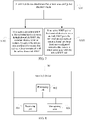
- FIG 1 is a schematic diagram of an application scenario according to an embodiment of this application.
- a networking architecture shown in FIG 1 mainly includes a network device 10 and a terminal device 20.
- the terminal device may communicate with the network device.
- the network device may configure both at least one downlink BWP and at least one uplink BWP for one terminal device.
- the at least one downlink BWP includes one default downlink BWP.
- the at least one uplink BWP includes one default uplink BWP
- the default downlink BWP and the default uplink BWP are paired to form one default BWP pair.
- the default downlink BWP corresponds to relatively narrow downlink bandwidth. Therefore, when the terminal device transmits data on the default downlink BWP, the terminal device only needs to listen to downlink control information on a narrow band and perform blind detection in relatively small search space, thereby reducing power consumption of the terminal device.
- whether a BWP inactivity timer is started is determined based on a PDCCH received by a terminal.
- the BWP inactivity timer is started or restarted provided that the PDCCH received by the terminal indicates a downlink assignment or indicates switching to a non-default BWP.
- there is an error or an omission during timer start or restart and consequently the terminal cannot correctly switch to a default downlink BWP and power consumption of the terminal cannot be reduced.
- an embodiment of this application provides a timer processing method, in which a terminal device does not directly start or restart a timer after receiving a first message sent by a network device, but needs to determine a scrambling identifier of the first message or a carrier index of the first message, to further determine whether to start or restart the timer.
- this embodiment of this application further provides a method for starting or restarting, in a non-dynamic scheduling scenario, a timer based on at least one configured resource that exists. This resolves the prior-art problem that a terminal device cannot correctly switch to a default downlink BWP and power consumption of the terminal cannot be reduced.
- the timer may be a timer associated with a serving cell or a timer associated with a BWP.
- the timer controls the only one BWP regardless of whether the timer is associated with the serving cell or the BWP.
- one terminal device has at least one active downlink BWP or at least one uplink BWP in a serving cell at any moment.
- BWP may be understood as a downlink BWP in the paired spectrum scenario and may be understood as a BWP pair in the unpaired spectrum.
- the timer when a timer is associated with a serving cell, the timer may be started or restarted in a plurality of possible implementations.
- the following describes in detail how to start or restart the timer in the plurality of possible implementations.
- the terminal device determines, based on the scrambling identifier of the first message, whether to start or restart the timer.
- FIG 2 is a schematic diagram of a timer processing method according to an embodiment of this application covered by the claims.
- the timer processing method includes the following steps.
- S201 A terminal device receives a first message sent by a network device.
- the first message indicates a downlink assignment or an uplink grant.
- the first message may be a message such as downlink control information carried on a PDCCH.
- receiving the first message may be understood as receiving the PDCCH, or receiving the downlink control information, or receiving the downlink control information carried on the PDCCH, or receiving the downlink control information sent by using the PDCCH.
- the first message may indicate a downlink assignment. When the first message indicates a downlink assignment, whether to start or restart a timer further needs to be determined. Alternatively, the first message may indicate an uplink grant. When the first message indicates an uplink grant, a timer is not started or restarted.
- the first message may also indicate BWP switching, and a downlink BWP that is switched to be not a default downlink BWP.
- a default BWP may be considered as including a pair of uplink and downlink BWPs.
- the first message indicates a downlink assignment or an uplink grant (uplink grant), or the first message indicates BWP switching and a BWP pair that is switched to is not a default BWP pair.
- the paired spectrum scenario and the unpaired spectrum scenario are different, and therefore methods for starting or restarting a timer based on a scrambling identifier of the first message are also different and respectively correspond to S202 in the claimed embodiment and S203 in an embodiment not covered by the claims.
- the timer is a timer used by the terminal device to switch from the active downlink BWP to the default downlink BWP, or the timer is a timer used by the terminal device to activate the default downlink BWP and deactivate the active downlink BWP.
- the first message indicates a downlink assignment and does not indicate BWP switching
- the active downlink BWP of the terminal device is a downlink BWP used for receiving the first message
- the first message indicates bandwidth part BWP switching
- the active downlink BWP of the terminal device is a downlink BWP that is switched to.
- the active downlink BWP of the terminal device is a BWP indicated by the first message, for example, an active downlink BWP indicated in the downlink control information.
- the scrambling identifier of the first message herein is a radio network temporary identifier used to scramble a cyclic redundancy check (Cyclic Redundancy Check, CRC) code of the first message.
- CRC Cyclic Redundancy Check
- the scrambling identifier is a radio network temporary identifier used to scramble a cyclic redundancy check code of the downlink control information. Scrambling the first message may be understood as scrambling the cyclic redundancy check code of the first message.
- the terminal device may start or restart the timer based on the scrambling identifier of the first message, wherein the timer is a timer used by the terminal device to switch from the active downlink BWP to the default downlink BWP, or the timer is a timer used by the terminal device to activate the default downlink BWP and deactivate the active downlink BWP.
- the timer is a timer used by the terminal device to switch from the active BWP pair to the default BWP pair, or the timer is a timer used by the terminal device to activate the default BWP pair and deactivate the active BWP pair.
- the active BWP pair of the terminal device is a BWP pair that is corresponding to a downlink BWP used for receiving the first message or a BWP pair to which a downlink BWP used for receiving the first message belongs; or if the first message indicates bandwidth part BWP switching, it may be considered that the active BWP pair of the terminal device is a BWP pair that is switched to. Alternatively, it may be considered that the active BWP pair of the terminal device is a BWP pair indicated by the first message, for example, an active BWP pair indicated in the downlink control information.
- the active BWP pair of the terminal device is a BWP pair that is corresponding to a downlink BWP indicated by the first message or a BWP pair to which a downlink BWP indicated by the first message belongs, for example, an active BWP pair that is corresponding to a downlink BWP indicated in the downlink control information or an active BWP pair to which a downlink BWP indicated in the downlink control information belongs.
- the terminal device may start or restart the timer based on the scrambling identifier of the first message, wherein the timer is a timer used by the terminal device to switch from the active BWP pair to the default BWP pair, or the timer is a timer used by the terminal device to activate the default BWP pair and deactivate the active BWP pair.
- a different active BWP of the terminal device leads to a different manner of starting or restarting the timer based on the scrambling identifier of the first message.
- control conditions for starting or restarting the timer in these two manners are the same, to be specific, control conditions for the terminal device to start or restart the timer based on the scrambling identifier of the first message in S202 and S203 are the same.
- the terminal device may start or restart the timer based on the scrambling identifier of the first message in the following possible manners:
- Manner 1 (not covered by the claims): The terminal device starts or restarts the timer when the scrambling identifier is not a random access radio network temporary identifier RA-RNTI or a temporary cell radio network temporary identifier TC-RNTI.
- the timer needs to be stopped when a random access procedure is triggered. In other words, that the timer is in a running state which is not expected in a random access process, to avoid a case in which the timer expires in the random access process.
- the first message scrambled by using the RA-RNTI schedules a random access response (Random Access Response, RAR), that is, a message 2 in the random access process.
- RAR Random Access Response
- receiving an RAR does not mean that contention is successfully addressed, that is, the random access process may fail. If a timer is started immediately after the first message scrambled by using the RA-RNTI is received, the timer may expire in the random access process, or the timer may be incorrectly in the running state when random access fails.
- the idle-state terminal device works on an initial BWP.
- a PDCCH scrambled by using a TC-RNTI schedules a message in a random access process.
- user equipment in the idle state has not received a configuration message of a base station, in other words, there is no concept of a default BWP. Therefore, the TC-RNTI is unrelated to timer start or restart.
- the terminal device determines whether the scrambling identifier that is used to scramble the first message is the RA-RNTI or TC-RNTI. If the scrambling identifier is not the RA-RNTI or TC-RNTI, it indicates that the terminal device may start or restart the timer. In this case, the terminal device starts or restarts the timer based on the scrambling identifier.
- the manner 1 describes a case in which the timer is directly started or restarted when the scrambling identifier of the first message is not the RA-RNTI. Conversely, if the scrambling identifier of the first message is the RA-RNTI, a manner of executing random access by the terminal device further needs to be determined, to determine whether to start or restart the timer, as described in a manner 2 below:
- receiving a random access response by the terminal device in the contention-based random access process does not mean that contention is successfully addressed, to be specific, the random access process may fail. If the timer is started immediately after the first message scrambled by using the RA-RNTI is received, the timer may expire in the random access process, or the timer may be incorrectly in the running state when random access fails. Therefore, when determining that the scrambling identifier of the first message is the RA-RNTI and the terminal device executes contention-based random access, the terminal device does not start or restart the timer, that is, the timer maintains the original state. In contrast, receiving a random access response by the terminal device in the non-contention-based random access process means that contention is successfully addressed.
- the terminal device when determining that the scrambling identifier of the first message is the RA-RNTI and the terminal executes non-contention-based random access, the terminal device directly controls the timer to start or restart, or starts or restarts the timer after the first message scrambled by using the C-RNTI is dynamically received for the first time. This avoids a case in which the timer expires in the random access process or a case in which the timer is incorrectly in the running state when random access fails, and resolves a problem that the terminal device cannot correctly switch to the default downlink BWP and power consumption of the terminal device cannot be reduced, thereby reducing the power consumption of the terminal device.
- the first scrambling identifier is any one of a cell radio network temporary identifier C-RNTI, a configured scheduling radio network temporary identifier CS-RNTI.
- the first scrambling identifier may be any one of the foregoing radio network temporary identifiers.
- any one of the foregoing radio network temporary identifiers may be selected to scramble the first message.
- the terminal device judges the scrambling identifier used to scramble the first message. If the scrambling identifier is the first scrambling identifier, it indicates that the terminal device may start or restart the timer. In this case, the terminal device starts or restarts the timer based on the scrambling identifier. This resolves a problem that the terminal device cannot correctly switch to the default downlink BWP and power consumption of the terminal device cannot be reduced, thereby reducing the power consumption of the terminal device.
- the terminal device receives the first message sent by the network device. If the active downlink bandwidth part BWP of the terminal device is not the default downlink BWP, the terminal device starts or restarts a timer based on the scrambling identifier of the first message, wherein the timer is a timer used by the terminal device to switch from the active downlink BWP to the default downlink BWP, or the timer is a timer used by the terminal device to activate the default downlink BWP and deactivate the active downlink BWP.
- the terminal device If the active BWP pair of the terminal device is not the default BWP pair, the terminal device starts or restarts a timer based on the scrambling identifier of the first message, wherein the timer is a timer used by the terminal device to switch from the active BWP pair to the default BWP pair, or the timer is a timer used by the terminal device to activate the default BWP pair and deactivate the active BWP pair.
- FIG 2 describes in detail the solution about how the terminal device determines, based on the scrambling identifier of the first message, whether to start or restart a timer.
- the following describes in detail another possible implementation in which the terminal device may determine, based on a carrier index of the first message, whether to start or restart a timer.
- the timer processing method is applicable to a carrier aggregation scenario.
- FIG 3 is a schematic diagram of another timer processing method according to an embodiment of the present invention. The timer processing method may include the following steps.
- S301 A terminal device receives a first message sent by a network device.
- the first message indicates a downlink assignment or an uplink grant, or the first message is used to indicate bandwidth part BWP switching.
- the first message may be a message such as downlink control information carried on a PDCCH.
- Receiving the first message may be understood as receiving the PDCCH, or receiving the downlink control information, or receiving the downlink control information carried on the PDCCH, or receiving the downlink control information sent by using the PDCCH.
- the first message indicates a downlink assignment, or the first message indicates BWP switching and a downlink BWP that is switched to is not a default downlink BWP.
- a default BWP may be considered as including a pair of uplink and downlink BWPs.
- the first message indicates a downlink assignment or an uplink grant (uplink grant), or the first message indicates BWP switching and a BWP pair that is switched to is not a default BWP pair.
- S302 The terminal device starts or restarts a timer based on a carrier index of the first message.
- the timer is a timer used by the terminal device to switch from an active downlink BWP to a default downlink BWP, or the timer is a timer used by the terminal device to activate a default downlink BWP and deactivate an active downlink BWP, or the timer is a timer used by the terminal device to switch from an active BWP pair to the default BWP pair, or the timer is a timer used by the terminal device to activate the default BWP pair and deactivate an active BWP pair.
- the carrier index of the first message herein may be understood as a carrier index in the first message, or a carrier index indicated by the first message, or a carrier index included by the first message, or certainly, a carrier index carried by the first message.
- the paired spectrum scenario and the unpaired spectrum scenario are different, and therefore timers started or restarted based on the carrier index of the first message are also different.
- a detailed description is as follows.
- the timer is a timer of the carrier or the serving cell.
- the timer is a timer used by the terminal device to switch from the active downlink BWP to the default downlink BWP, or the timer is a timer used by the terminal device to activate the default downlink BWP and deactivate the active downlink BWP.
- the active downlink BWP of the terminal device is a downlink BWP used for receiving the first message; or if the first message indicates bandwidth part BWP switching, it may be considered that the active downlink BWP of the terminal device is a downlink BWP that is switched to.
- the active downlink BWP of the terminal device is a BWP indicated by the first message, for example, an active downlink BWP indicated in the downlink control information.
- the timer is a timer of the carrier or the serving cell indicated by the carrier index.
- the carrier or the serving cell indicated by the carrier index is different from a carrier or a serving cell used for receiving the first message.
- the terminal device receives the first message on a carrier 1 or in a serving cell 1, and the carrier or the serving cell indicated by the carrier index of the first message is a carrier 2 or a serving cell 2. If the downlink BWP of the carrier or the serving cell indicated by the carrier index is not the default downlink BWP, the timer is the timer of the carrier or the serving cell indicated by the carrier index, namely, a timer of the carrier 2 or the serving cell 2.
- the timer is a timer of the carrier or the serving cell used for receiving the first message.
- the carrier or the serving cell indicated by the carrier index is different from a carrier or a serving cell used for receiving the first message.
- the terminal device receives the first message on a carrier 1 or in a serving cell 1, and the carrier or the serving cell indicated by the carrier index of the first message is a carrier 2 or a serving cell 2.
- the timer is the timer of the carrier or the serving cell indicated by the carrier index, namely, a timer of the carrier 2 or the serving cell 2. If the downlink BWP of the carrier or the serving cell used for receiving the first message is not the default downlink BWP, the timer is the timer of the carrier or the serving cell used for receiving the first message, namely, a timer of the carrier 1 or the serving cell 1. In other words, when the foregoing conditions are met, started or restarted timers include the timer of the carrier or the serving cell indicated by the carrier index and the timer of the carrier or the serving cell used for receiving the first message. This resolves a problem that the terminal device cannot correctly switch to the default downlink BWP and power consumption of the terminal device cannot be reduced, thereby reducing the power consumption of the terminal device.
- the timer is a timer of the carrier or the serving cell.
- the timer is a timer used by the terminal device to switch from the active BWP pair to the default BWP pair, or the timer is a timer used by the terminal device to activate the default BWP pair and deactivate the active BWP pair.
- the active BWP pair of the terminal device is a BWP pair that is corresponding to a downlink BWP used for receiving the first message or a BWP pair to which a downlink BWP used for receiving the first message belongs; or if the first message indicates bandwidth part BWP switching, it may be considered that the active BWP pair of the terminal device is a BWP pair that is switched to. Alternatively, it may be considered that the active BWP pair of the terminal device is a BWP pair indicated by the first message, for example, an active BWP pair indicated in the downlink control information.
- the active BWP pair of the terminal device is a BWP pair that is corresponding to a downlink BWP indicated by the first message or a BWP pair to which a downlink BWP indicated by the first message belongs, for example, an active BWP pair that is corresponding to a downlink BWP indicated in the downlink control information or an active BWP pair to which a downlink BWP indicated in the downlink control information belongs.
- the timer is a timer of the carrier or the serving cell indicated by the carrier index.
- the carrier or the serving cell indicated by the carrier index is different from a carrier or a serving cell used for receiving the first message.
- the terminal device receives the first message on a carrier 1 or in a serving cell 1, and the carrier or the serving cell indicated by the carrier index of the first message is a carrier 2 or a serving cell 2. If the BWP pair of the carrier or the serving cell indicated by the carrier index is not the default BWP pair, the timer is the timer of the carrier or the serving cell indicated by the carrier index, namely, a timer of the carrier 2 or the serving cell 2.
- the timer is a timer of the carrier or the serving cell used for receiving the first message.
- the carrier or the serving cell indicated by the carrier index is different from a carrier or a serving cell used for receiving the first message.
- the terminal device receives the first message on a carrier 1 or in a serving cell 1, and the carrier or the serving cell indicated by the carrier index of the first message is a carrier 2 or a serving cell 2.
- the timer is the timer of the carrier or the serving cell indicated by the carrier index, namely, a timer of the carrier 2 or the serving cell 2. If the BWP pair of the carrier or the serving cell used for receiving the first message is not the default BWP pair, the timer is the timer of the carrier or the serving cell used for receiving the first message, namely, a timer of the carrier 1 or the serving cell 1. In other words, when the foregoing conditions are met, started or restarted timers include the timer of the carrier or the serving cell indicated by the carrier index and the timer of the carrier or the serving cell used for receiving the first message. This resolves a problem that the terminal device cannot correctly switch to the default downlink BWP and power consumption of the terminal device cannot be reduced, thereby reducing the power consumption of the terminal device.
- the terminal device receives the first message sent by the network device.
- the terminal device starts or restarts the timer based on the carrier index of the first message, wherein the timer is a timer used by the terminal device to switch from the active downlink BWP to the default downlink BWP, or the timer is a timer used by the terminal device to activate the default downlink BWP and deactivate the active downlink BWP, or the timer is a timer used by the terminal device to switch from the active BWP pair to the default BWP pair, or the timer is a timer used by the terminal device to activate the default BWP pair and deactivate the active BWP pair.
- FIG 3 describes in detail the solution about how the terminal device determines, based on the carrier index of the first message, whether to start or restart a timer.
- a timer is started or restarted only when a PDCCH is received in the prior art. Therefore, there is no timer restart condition in a non-dynamic scheduling process, and the terminal device may fall back to a default BWP in the non-dynamic scheduling process. Consequently, current data transmission of the terminal device is affected. Therefore, in an embodiment of the present invention, a description about how to start or restart a timer in the non-dynamic scheduling process is added.
- FIG 4 is a schematic diagram of another timer processing method according to an embodiment of the present invention. The timer processing method may include the following steps.
- S401 A terminal device determines that at least one configured resource exists.
- an active downlink BWP of the terminal device is not a default downlink BWP.
- a default BWP may be considered as including a pair of uplink and downlink BWPs.
- an active BWP pair of the terminal device is not a default BWP pair.
- At least one configured resource exists herein may be understood as the following: there is at least one configured resource, or at least one configured resource appears, or certainly, at least one configured resource occurs, or the like.
- a timer based on the at least one configured resource that exists are different, and respectively correspond to S402 and S403.
- the timer is a timer used by the terminal device to switch from the active downlink BWP to the default downlink BWP, or the timer is a timer used by the terminal device to activate the default downlink BWP and deactivate the active downlink BWP.
- the terminal device may start or restart the timer based on the at least one configured resource that exists.
- that the terminal device starts or restarts a timer based on the at least one configured resource that exists in S402 may include the following possible manners: Manner 1: The terminal device starts or restarts the timer when the terminal device determines that the at least one configured resource exists.
- the terminal device determines that at least one configured downlink resource exists, that is, at least one configured downlink assignment (downlink assignment) exists, the terminal device starts or restarts the timer, wherein the timer is a timer used by the terminal device to switch from the active downlink BWP to the default downlink BWP, or the timer is a timer used by the terminal device to activate the default downlink BWP and deactivate the active downlink BWP.
- SPS downlink semi-persistent Scheduling
- the at least one configured resource is at least one configured resource on the active downlink BWP of the terminal device.
- the manner 1 describes direct timer start or restart performed when at least one configured resource exists. Certainly, whether data is transmitted on the configured resource may further be determined, to determine whether to start or restart the timer, as described in a manner 2 below: Manner 2: When determining that there is data transmitted on the configured resource, the terminal device starts or restarts the timer.
- the terminal device does not start or restart the timer after determining that at least one configured resource exists. Instead, the terminal device further determines whether data is transmitted on the configured resource. For example, with non-dynamic scheduling, for example, downlink semi-persistent scheduling (Semi-Persistent Scheduling, SPS), when the terminal device determines that downlink data is transmitted on at least one configured downlink resource, that is, downlink data is transmitted on at least one configured downlink assignment (downlink assignment), the terminal device starts or restarts the timer, wherein the timer is a timer used by the terminal device to switch from the active downlink BWP to the default downlink BWP, or the timer is a timer used by the terminal device to activate the default downlink BWP and deactivate the active downlink BWP.
- SPS downlink semi-persistent Scheduling
- the terminal device may fall back to a default BWP in a non-dynamic scheduling process because a timer is started or restarted only when a PDCCH is received, thereby avoiding impact on current data transmission of the terminal device.
- the data transmission is data transmission on the active downlink BWP of the terminal device.
- the timer is a timer used by the terminal device to switch from the active BWP pair to the default BWP pair, or the timer is a timer used by the terminal device to activate the default BWP pair and deactivate the active BWP pair.
- the terminal device may start or restart the timer based on the at least one configured resource that exists.
- that the terminal device starts or restarts a timer based on the at least one configured resource that exists in S403 may include the following possible manners: Manner 1: The terminal device starts or restarts the timer when the terminal device determines that the at least one configured resource exists.
- the terminal device determines that at least one configured downlink resource or configured uplink resource exists, that is, at least one configured downlink assignment (downlink assignment) exists or at least one configured uplink grant (uplink grant) exists, the terminal device starts or restarts the timer, wherein the timer is a timer used by the terminal device to switch from the active downlink BWP pair to the default downlink BWP pair , or the timer is a timer used by the terminal device to activate the default BWP pair and deactivate the active BWP
- the at least one configured resource is at least one configured resource on the active BWP pair of the terminal device.
- the manner 1 describes direct timer start or restart performed when at least one configured resource exists. Certainly, whether data is transmitted on the configured resource may further be determined, to determine whether to start or restart the timer, as described in a manner 2 below: Manner 2: When the terminal device transmits data on the determined configured resource, the terminal device starts or restarts the timer.
- the terminal device does not start or restart the timer after determining that at least one configured resource exists. Instead, the terminal device further determines whether data is transmitted on the configured resource.
- the terminal device For example, with non-dynamic scheduling, for example, downlink semi-persistent scheduling (Semi-Persistent Scheduling, SPS), grant free (Grant Free, GF) scheduling, or uplink semi-persistent scheduling, wherein the grant free (Grant Free, GF) scheduling is also referred to as a configured grant type 1 (configured grant Type 1) and the uplink semi-persistent scheduling is also referred to as a configured grant type 2 (configured grant Type 2), when the terminal device determines that downlink data is transmitted on at least one configured downlink resource, that is, downlink data is transmitted on at least one configured downlink assignment (downlink assignment), the terminal device starts or restarts the timer; or when the terminal device determines that uplink data is transmitted on at least one configured uplink resource, that is, uplink data is transmitted on at least one configured uplink
- the terminal device may fall back to a default BWP in a non-dynamic scheduling process because a timer is started or restarted only when a PDCCH is received, thereby avoiding impact on current data transmission of the terminal device.
- the data transmission is data transmission on the active BWP pair of the terminal device.
- the terminal device determines that at least one configured resource exists or determines that data is transmitted on the at least one configured resource. If the active downlink BWP of the terminal device is not the default downlink BWP, the terminal device starts or restarts the timer based on the at least one configured resource that exists or the terminal device starts or restarts the timer based on a fact that data is transmitted on the at least one configured resource, wherein the timer is a timer used by the terminal device to switch from the active downlink BWP to the default downlink BWP, or the timer is a timer used by the terminal device to activate the default downlink BWP and deactivate the active downlink BWP; if the active BWP pair of the terminal device is not the default BWP pair, the terminal device starts or restarts the timer based on the at least one configured resource that exists or the terminal device starts or restarts the timer based on a fact that data is transmitted on the at least one configured resource, wherein the timer is a timer used by the terminal device
- the timer in the embodiments shown in FIG 2 to FIG 4 may further be another type of timer.
- the another type of timer may be a timer used by the terminal device to deactivate the active downlink BWP, or the another type of timer may be used by the terminal device to deactivate the active BWP pair of the terminal device.
- the downlink BWP in the paired spectrum scenario may represent a downlink BWP in a BWP pair, and may also represent an uplink BWP paired with the downlink BWP, in other words, the downlink BWP may be understood as a BWP pair corresponding to the downlink BWP.
- FIG 2 to FIG 4 describe in detail the technical solutions about how to start or restart a timer when the timer is associated with a serving cell.
- the following describes in detail how the terminal device starts or restarts a timer when the timer is associated with a BWP in a second association scenario.
- the terminal device may determine, based on the scrambling identifier of the first message, whether to start or restart the timer.
- FIG 5 is a schematic diagram of a timer processing method according to an embodiment of this application. The timer processing method may include the following steps.
- S501 A terminal device receives a first message sent by a network device.
- the first message indicates a downlink assignment or an uplink grant, or the first message indicates bandwidth part BWP switching.
- the first message may be a message such as downlink control information carried on a PDCCH.
- receiving the first message may be understood as receiving the PDCCH, or receiving the downlink control information, or receiving the downlink control information carried on the PDCCH, or receiving the downlink control information sent by using the PDCCH.
- the first message may indicate a downlink assignment. When the first message indicates a downlink assignment, whether to start or restart a timer further needs to be determined. Alternatively, the first message may indicate an uplink grant. When the first message indicates an uplink grant, a timer is not started or restarted.
- the first message may also indicate BWP switching, and a downlink BWP that is switched to is not a default downlink BWP.
- a default BWP may be considered as including a pair of uplink and downlink BWPs.
- the first message indicates a downlink assignment or an uplink grant (uplink grant), or the first message indicates BWP switching and a BWP pair that is switched to is not a default BWP pair.
- the paired spectrum scenario and the unpaired spectrum scenario are different, and therefore methods for starting or restarting a timer based on a scrambling identifier of the first message are also different and respectively correspond to S202 and S203.
- the timer is a timer used by the terminal device to switch from the active downlink BWP to the default downlink BWP, or the timer is a timer used by the terminal device to activate the default downlink BWP and deactivate the active downlink BWP.
- the active downlink BWP of the terminal device is a downlink BWP used for receiving the first message; or if the first message indicates bandwidth part BWP switching, it may be considered that the active downlink BWP of the terminal device is a downlink BWP that is switched to.
- the active downlink BWP of the terminal device is a BWP indicated by the first message, for example, an active downlink BWP indicated in the downlink control information.
- the scrambling identifier of the first message herein is a radio network temporary identifier used to scramble a cyclic redundancy check (Cyclic Redundancy Check, CRC) code of the first message.
- CRC Cyclic Redundancy Check
- the scrambling identifier is a radio network temporary identifier used to scramble a cyclic redundancy check code of the downlink control information. Scrambling the first message may be understood as scrambling the cyclic redundancy check code of the first message.
- the timer is the timer associated with the active downlink BWP of the terminal device.
- Possibility 1 When the first message indicates a downlink assignment and does not indicate BWP switching, it may be considered that the active downlink BWP of the terminal device is a downlink BWP used for receiving the first message, and the timer is a timer associated with the downlink BWP used by the terminal device for receiving the first message.
- the first message indicates BWP switching and a downlink BWP that is switched to is not the default downlink BWP
- the active downlink BWP of the terminal device is the downlink BWP that is switched to
- the timer is a timer associated with the downlink BWP that the terminal device is switched to.
- the terminal device has two timers, which are a timer 1 and a timer 2, and the timer 1 is associated with a downlink BWP 1 and the timer 2 is associated with a downlink BWP 2.
- the terminal device After the terminal device receives a first message used to indicate switching from the current active downlink BWP 1 to the downlink BWP 2 that is not the default downlink BWP, the terminal device needs to switch from the current downlink BWP 1 to the downlink BWP 2.
- the terminal device determines to deactivate the active downlink BWP 1
- the terminal device stops the timer associated with the to-be-deactivated downlink BWP 1, to be specific
- the terminal device determines to activate the downlink BWP 2 and deactivate the downlink BWP 1
- the terminal device needs to start or restart the timer 2 associated with the to-be-activated downlink BWP 2 and stops the timer 1 associated with the to-be-deactivated downlink BWP 1.
- the method may further include: When the terminal device determines to deactivate the active downlink BWP, the terminal device stops the timer associated with the to-be-deactivated downlink BWP; or when the terminal device determines to deactivate an active BWP pair, the terminal device stops a timer associated with the to-be-deactivated BWP pair.
- the terminal device determines, based on the first message, to deactivate the active downlink BWP, and stops the timer associated with the to-be-deactivated downlink BWP.
- the terminal device determines to deactivate the active downlink BWP and stops the timer associated with the to-be-deactivated downlink BWP.
- the terminal device may start or restart the timer based on the scrambling identifier of the first message, wherein the timer is a timer used by the terminal device to switch from the active downlink BWP to the default downlink BWP, or the timer is a timer used by the terminal device to activate the default downlink BWP and deactivate the active downlink BWP.
- the timer is a timer used by the terminal device to switch from the active BWP pair to the default BWP pair, or the timer is a timer used by the terminal device to activate the default BWP pair and deactivate the active BWP pair.
- the active BWP pair of the terminal device is a BWP pair that is corresponding to a downlink BWP used for receiving the first message or a BWP pair to which a downlink BWP used for receiving the first message belongs; or if the first message indicates bandwidth part BWP switching, it may be considered that the active BWP pair of the terminal device is a BWP pair that is switched to. Alternatively, it may be considered that the active BWP pair of the terminal device is a BWP pair indicated by the first message, for example, an active BWP pair indicated in the downlink control information.
- the active BWP pair of the terminal device is a BWP pair that is corresponding to a downlink BWP indicated by the first message or a BWP pair to which a downlink BWP indicated by the first message belongs, for example, an active BWP pair that is corresponding to a downlink BWP indicated in the downlink control information or an active BWP pair to which a downlink BWP indicated in the downlink control information belongs.
- the timer is the timer associated with the active BWP pair of the terminal device.
- Possibility 1 When the first message indicates a downlink assignment or an uplink grant and does not indicate BWP switching, it may be considered that the active downlink BWP of the terminal device is a downlink BWP used for receiving the first message, and the timer is a timer associated with a BWP pair used by the terminal device for receiving the first message, or the timer is a timer associated with a BWP pair corresponding to the downlink BWP used by the terminal device for receiving the first message.
- the terminal device When the first message indicates BWP switching and a BWP pair that is switched to is not the default BWP pair, it may be considered that the active BWP pair of the terminal device is the BWP pair that is switched to, and the timer is a timer associated with the BWP pair that the terminal device is switched to.
- the terminal device has two timers, which are a timer 3 and a timer 4, and the timer 3 is associated with a BWP 3 pair and the timer 4 is associated with a BWP 4 pair.
- the terminal device After the terminal device receives a first message used to indicate switching from the current active BWP 3 pair to the BWP 4 pair that is not the default BWP pair, the terminal device needs to switch from the current BWP 3 pair to the BWP 4 pair.
- the terminal device determines to deactivate the active BWP 3 pair, the terminal device stops the timer associated with the to-be-deactivated BWP 3 pair, to be specific, when the terminal device determines to activate the BWP 4 pair and deactivate the BWP 3 pair, correspondingly, the terminal device needs to start or restart the timer 4 associated with the to-be-activated BWP 4 pairand stops the timer 3 associated with the to-be-deactivated BWP 3 pair.
- the method may further include: When the terminal device determines to deactivate the active downlink BWP, the terminal device stops the timer associated with the to-be-deactivated downlink BWP; or when the terminal device determines to deactivate the active BWP pair, the terminal device stops the timer associated with the to-be-deactivated BWP pair.
- the terminal device determines, based on the first message, to deactivate the active BWP pair, and stops the timer associated with the to-be-deactivated BWP pair.
- the terminal device determines to deactivate the active BWP pair and stops the timer associated with the to-be-deactivated BWP pair.
- the terminal device may start or restart the timer based on the scrambling identifier of the first message, wherein the timer is a timer used by the terminal device to switch from the active BWP pair to the default BWP pair, or the timer is a timer used by the terminal device to activate the default BWP pair and deactivate the active BWP pair.
- a different active BWP of the terminal device leads to a different manner of starting or restarting the timer based on the scrambling identifier of the first message.
- control conditions for starting or restarting the timer in these two manners are the same, to be specific, control conditions for the terminal device to start or restart the timer based on the scrambling identifier of the first message in S502 and S503 are the same.
- the terminal device may start or restart the timer based on the scrambling identifier of the first message in the following possible manners: Manner 1: The terminal device starts or restarts the timer when the scrambling identifier is not a random access radio network temporary identifier RA-RNTI or a temporary cell radio network temporary identifier TC-RNTI.
- the timer needs to be stopped when a random access procedure is triggered. In other words, that the timer is in a running state is not expected in a random access process, to avoid a case in which the timer expires in the random access process.
- the first message scrambled by using the RA-RNTI schedules a random access response (Random Access Response, RAR), that is, a message 2 in the random access process.
- RAR Random Access Response
- receiving an RAR does not mean that contention is successfully addressed, that is, the random access process may fail. If a timer is started immediately after the first message scrambled by using the RA-RNTI is received, the timer may expire in the random access process, or the timer may be incorrectly in the running state when random access fails.
- the idle-state terminal device works on an initial BWP.
- a PDCCH scrambled by using a TC-RNTI schedules a message in a random access process.
- user equipment in the idle state has not received a configuration message of a base station, in other words, there is no concept of a default BWP. Therefore, the TC-RNTI is unrelated to timer start or restart.
- the terminal device determines whether the scrambling identifier that is used to scramble the first message is the RA-RNTI or TC-RNTI. If the scrambling identifier is not the RA-RNTI or TC-RNTI, it indicates that the terminal device may start or restart the timer. In this case, the terminal device starts or restarts the timer based on the scrambling identifier.
- the manner 1 describes a case in which the timer is directly started or restarted when the scrambling identifier of the first message is not the RA-RNTI.
- a manner of executing random access by the terminal device further needs to be determined, to determine whether to start or restart the timer, as described in a manner 2 below: Manner 2: When the scrambling identifier is the random access radio network temporary identifier RA-RNTI, and the terminal device executes non-contention-based random access, the terminal device starts or restarts the timer.
- the scrambling identifier is the RA-RNTI, and the terminal device executes contention-based random access, the terminal device controls the timer to maintain an original state.
- receiving a random access response by the terminal device in the contention-based random access process does not mean that contention is successfully addressed, to be specific, the random access process may fail. If the timer is started immediately after the first message scrambled by using the RA-RNTI is received, the timer may expire in the random access process, or the timer may be incorrectly in the running state when random access fails. Therefore, when determining that the scrambling identifier of the first message is the RA-RNTI and the terminal device executes contention-based random access, the terminal device does not start or restart the timer, that is, the timer maintains the original state. In contrast, receiving a random access response by the terminal device in the non-contention-based random access process means that contention is successfully addressed.
- the terminal device when determining that the scrambling identifier of the first message is the RA-RNTI and the terminal executes non-contention-based random access, the terminal device directly controls the timer to start or restart, or starts or restarts the timer after the first message scrambled by using the C-RNTI is dynamically received for the first time. This avoids a case in which the timer expires in the random access process or a case in which the timer is incorrectly in the running state when random access fails, and resolves a problem that the terminal device cannot correctly switch to the default downlink BWP and power consumption of the terminal device cannot be reduced, thereby reducing the power consumption of the terminal device.
- the first scrambling identifier is any one or a combination of a cell radio network temporary identifier C-RNTI, a configured scheduling radio network temporary identifier CS-RNTI, a paging radio network temporary identifier P-RNTI, and a system information radio network temporary identifier SI-RNTI.
- the first scrambling identifier may be any one or a combination of the foregoing four radio network temporary identifiers.
- any one of the foregoing four radio network temporary identifiers may be selected to scramble the first message, or any two or three of the foregoing four radio network temporary identifiers may be selected to scramble the first message.
- the foregoing four radio network temporary identifiers may all be selected to scramble the first message.
- the terminal device determines the scrambling identifier used to scramble the first message. If the scrambling identifier is the first scrambling identifier, it indicates that the terminal device may start or restart the timer. In this case, the terminal device starts or restarts the timer based on the scrambling identifier. This resolves a problem that the terminal device cannot correctly switch to the default downlink BWP and power consumption of the terminal device cannot be reduced, thereby reducing the power consumption of the terminal device.
- the terminal device receives the first message sent by the network device. If the active downlink bandwidth part BWP of the terminal device is not the default downlink BWP, the terminal device starts or restarts a timer based on the scrambling identifier of the first message, wherein the timer is a timer used by the terminal device to switch from the active downlink BWP to the default downlink BWP, or the timer is a timer used by the terminal device to activate the default downlink BWP and deactivate the active downlink BWP.
- the terminal device If the active BWP pair of the terminal device is not the default BWP pair, the terminal device starts or restarts a timer based on the scrambling identifier of the first message, wherein the timer is a timer used by the terminal device to switch from the active BWP pair to the default BWP pair, or the timer is a timer used by the terminal device to activate the default BWP pair and deactivate the active BWP pair.
- FIG 5 describes in detail the solution about how the terminal device determines, based on the scrambling identifier of the first message, whether to start or restart a timer.
- the following describes in detail another possible implementation in which the terminal device may determine, based on a carrier index of the first message, whether to start or restart a timer.
- the timer processing method is applicable to a carrier aggregation scenario.
- FIG 6 is a schematic diagram of another timer processing method according to an embodiment of the present invention. The timer processing method may include the following steps.
- a terminal device receives a first message sent by a network device.
- the first message indicates a downlink assignment or an uplink grant, or the first message is used to indicate bandwidth part BWP switching.
- the first message may be a message such as downlink control information carried on a PDCCH.
- Receiving the first message may be understood as receiving the PDCCH, or receiving the downlink control information, or receiving the downlink control information carried on the PDCCH, or receiving the downlink control information sent by using the PDCCH.
- the first message indicates a downlink assignment, or the first message indicates BWP switching and a downlink BWP that is switched to is not a default downlink BWP.
- a default BWP may be considered as including a pair of uplink and downlink BWPs.
- the first message indicates a downlink assignment or an uplink grant (uplink grant), or the first message indicates BWP switching and a BWP pair that is switched to is not a default BWP pair.
- S602 The terminal device starts or restarts a timer based on a carrier index of the first message.
- the timer is a timer used by the terminal device to switch from an active downlink BWP to a default downlink BWP, or the timer is a timer used by the terminal device to activate a default downlink BWP and deactivate an active downlink BWP, or the timer is a timer used by the terminal device to switch from an active BWP pair to the default BWP pair, or the timer is a timer used by the terminal device to activate the default BWP pair and deactivate an active BWP pair.
- the carrier index of the first message herein may be understood as a carrier index in the first message, or a carrier index indicated by the first message, or a carrier index included by the first message, or certainly, a carrier index carried by the first message.
- the paired spectrum scenario and the unpaired spectrum scenario are different, and therefore timers started or restarted based on the carrier index of the first message are also different.
- a detailed description is as follows.
- the timer is a timer of the carrier or the serving cell.
- the timer is a timer used by the terminal device to switch from the active downlink BWP to the default downlink BWP, or the timer is a timer used by the terminal device to activate the default downlink BWP and deactivate the active downlink BWP.
- Possibility 1 When the first message indicates a downlink assignment and does not indicate BWP switching, it may be considered that the active downlink BWP of the terminal device is a downlink BWP used for receiving the first message, and the timer is a timer associated with the downlink BWP used by the terminal device for receiving the first message.
- the first message indicates BWP switching and a downlink BWP that is switched to is not the default downlink BWP
- the active downlink BWP of the terminal device is the downlink BWP that is switched to
- the timer is a timer associated with the downlink BWP that the terminal device is switched to.
- the terminal device has two timers, which are a timer 1 and a timer 2, and the timer 1 is associated with a downlink BWP 1 and the timer 2 is associated with a downlink BWP 2.
- the terminal device After the terminal device receives a first message used to indicate switching from the current active downlink BWP 1 to the downlink BWP 2 that is not the default downlink BWP, the terminal device needs to switch from the current downlink BWP 1 to the downlink BWP 2.
- the terminal device determines to deactivate the active downlink BWP 1
- the terminal device stops the timer associated with the to-be-deactivated downlink BWP 1, to be specific
- the terminal device determines to activate the downlink BWP 2 and deactivate the downlink BWP 1
- the terminal device needs to start or restart the timer 2 associated with the to-be-activated downlink BWP 2 and stops the timer 1 associated with the to-be-deactivated downlink BWP 1.
- the method may further include: When the terminal device determines to deactivate the active downlink BWP, the terminal device stops the timer associated with the to-be-deactivated downlink BWP; or when the terminal device determines to deactivate the active BWP pair, the terminal device stops the timer associated with the to-be-deactivated BWP pair.
- the terminal device determines, based on the first message, to deactivate the active downlink BWP, and stops the timer associated with the to-be-deactivated downlink BWP.
- the terminal device determines to deactivate the active downlink BWP and stops the timer associated with the to-be-deactivated downlink BWP.
- the active downlink BWP of the terminal device is a downlink BWP used for receiving the first message; or if the first message indicates bandwidth part BWP switching, it may be considered that the active downlink BWP of the terminal device is a BWP that is switched to.
- the active downlink BWP of the terminal device is a BWP indicated by the first message, for example, an active downlink BWP indicated in the downlink control information.
- the timer is a timer of the carrier or the serving cell indicated by the carrier index.
- the carrier or the serving cell indicated by the carrier index is different from a carrier or a serving cell used for receiving the first message.
- the terminal device receives the first message on a carrier 1 or in a serving cell 1, and the carrier or the serving cell indicated by the carrier index of the first message is a carrier 2 or a serving cell 2. If the downlink BWP of the carrier or the serving cell indicated by the carrier index is not the default downlink BWP, the timer is the timer of the carrier or the serving cell indicated by the carrier index, namely, a timer of the carrier 2 or the serving cell 2.
- the timer is a timer of the carrier or the serving cell used for receiving the first message.
- the carrier or the serving cell indicated by the carrier index is different from a carrier or a serving cell used for receiving the first message.
- the terminal device receives the first message on a carrier 1 or in a serving cell 1, and the carrier or the serving cell indicated by the carrier index of the first message is a carrier 2 or a serving cell 2.
- the timer is the timer of the carrier or the serving cell indicated by the carrier index, namely, a timer of the carrier 2 or the serving cell 2. If the downlink BWP of the carrier or the serving cell used for receiving the first message is not the default downlink BWP, the timer is the timer of the carrier or the serving cell used for receiving the first message, namely, a timer of the carrier 1 or the serving cell 1. In other words, when the foregoing conditions are met, started or restarted timers include the timer of the carrier or the serving cell indicated by the carrier index and the timer of the carrier or the serving cell used for receiving the first message. This resolves a problem that the terminal device cannot correctly switch to the default downlink BWP and power consumption of the terminal device cannot be reduced, thereby reducing the power consumption of the terminal device.
- the timer is a timer of the carrier or the serving cell.
- the timer is a timer used by the terminal device to switch from the active BWP pair to the default BWP pair, or the timer is a timer used by the terminal device to activate the default BWP pair and deactivate the active BWP pair.
- Possibility 1 When the first message indicates a downlink assignment or an uplink grant and does not indicate BWP switching, it may be considered that the active downlink BWP of the terminal device is a downlink BWP used for receiving the first message, and the timer is a timer associated with a BWP pair used by the terminal device for receiving the first message, or the timer is a timer associated with a BWP pair corresponding to the downlink BWP used by the terminal device for receiving the first message.
- the terminal device When the first message indicates BWP switching and a BWP pair that is switched to is not the default BWP pair, it may be considered that the active BWP pair of the terminal device is the BWP pair that is switched to, and the timer is a timer associated with the BWP pair that the terminal device is switched to.
- the terminal device has two timers, which are a timer 3 and a timer 4, and the timer 3 is associated with a BWP 3 pair and the timer 4 is associated with a BWP 4 pair.
- the terminal device After the terminal device receives a first message used to indicate switching from the current active BWP 3 pair to the BWP 4 pair that is not the default BWP pair, the terminal device needs to switch from the current BWP 3 pair to the BWP 4 pair.
- the terminal device determines to deactivate the active BWP 3 pair, the terminal device stops the timer associated with the to-be-deactivated BWP 3 pair, to be specific, when the terminal device determines to activate the BWP 4 pair and deactivate the BWP 3 pair, correspondingly, the terminal device needs to start or restart the timer 4 associated with the to-be-activated BWP 4 pair and stops the timer 3 associated with the to-be-deactivated BWP 3 pair.
- the method may further include: When the terminal device determines to deactivate the active downlink BWP, the terminal device stops the timer associated with the to-be-deactivated downlink BWP; or when the terminal device determines to deactivate the active BWP pair, the terminal device stops the timer associated with the to-be-deactivated BWP pair.
- the terminal device determines, based on the first message, to deactivate the active BWP pair, and stops the timer associated with the to-be-deactivated BWP pair.
- the terminal device determines to deactivate the active BWP pair and stops the timer associated with the to-be-deactivated BWP pair.
- the active BWP pair of the terminal device is a BWP pair that is corresponding to a downlink BWP used for receiving the first message or a BWP pair to which a downlink BWP used for receiving the first message belongs; or if the first message indicates bandwidth part BWP switching, it may be considered that the active BWP pair of the terminal device is a BWP pair that is switched to. Alternatively, it may be considered that the active BWP pair of the terminal device is a BWP pair indicated by the first message, for example, an active BWP pair indicated in the downlink control information.
- the active BWP pair of the terminal device is a BWP pair that is corresponding to a downlink BWP indicated by the first message or a BWP pair to which a downlink BWP indicated by the first message belongs, for example, an active BWP pair that is corresponding to a downlink BWP indicated in the downlink control information or an active BWP pair to which a downlink BWP indicated in the downlink control information belongs.
- the timer is a timer of the carrier or the serving cell indicated by the carrier index.
- the carrier or the serving cell indicated by the carrier index is different from a carrier or a serving cell used for receiving the first message.
- the terminal device receives the first message on a carrier 1 or in a serving cell 1, and the carrier or the serving cell indicated by the carrier index of the first message is a carrier 2 or a serving cell 2. If the BWP pair of the carrier or the serving cell indicated by the carrier index is not the default BWP pair, the timer is the timer of the carrier or the serving cell indicated by the carrier index, namely, a timer of the carrier 2 or the serving cell 2.
- the timer is a timer of the carrier or the serving cell used for receiving the first message.
- the carrier or the serving cell indicated by the carrier index is different from a carrier or a serving cell used for receiving the first message.
- the terminal device receives the first message on a carrier 1 or in a serving cell 1, and the carrier or the serving cell indicated by the carrier index of the first message is a carrier 2 or a serving cell 2.
- the timer is the timer of the carrier or the serving cell indicated by the carrier index, namely, a timer of the carrier 2 or the serving cell 2. If the BWP pair of the carrier or the serving cell used for receiving the first message is not the default BWP pair, the timer is the timer of the carrier or the serving cell used for receiving the first message, namely, a timer of the carrier 1 or the serving cell 1. In other words, when the foregoing conditions are met, started or restarted timers include the timer of the carrier or the serving cell indicated by the carrier index and the timer of the carrier or the serving cell used for receiving the first message. This resolves a problem that the terminal device cannot correctly switch to the default downlink BWP and power consumption of the terminal device cannot be reduced, thereby reducing the power consumption of the terminal device.
- the terminal device receives the first message sent by the network device.
- the terminal device starts or restarts the timer based on the carrier index of the first message, wherein the timer is a timer used by the terminal device to switch from the active downlink BWP to the default downlink BWP, or the timer is a timer used by the terminal device to activate the default downlink BWP and deactivate the active downlink BWP, or the timer is a timer used by the terminal device to switch from the active BWP pair to the default BWP pair, or the timer is a timer used by the terminal device to activate the default BWP pair and deactivate the active BWP pair.
- FIG 6 describes in detail the solution about how the terminal device determines, based on the carrier index of the first message, whether to start or restart a timer.
- a timer is started or restarted only when a PDCCH is received in the prior art. Therefore, there is no timer restart condition in a non-dynamic scheduling process, and the terminal device may fall back to a default BWP in the non-dynamic scheduling process. Consequently, current data transmission of the terminal device is affected. Therefore, in an embodiment of the present invention, a description about how to start or restart a timer in the non-dynamic scheduling process is added.
- FIG 7 is a schematic diagram of another timer processing method according to an embodiment of the present invention. The timer processing method may include the following steps.
- a terminal device determines that at least one configured resource exists.
- an active downlink BWP of the terminal device is not a default downlink BWP.
- a default BWP may be considered as including a pair of uplink and downlink BWPs.
- an active BWP pair of the terminal device is not a default BWP pair.
- At least one configured resource exists herein may be understood as the following: there is at least one configured resource, or at least one configured resource appears, or certainly, at least one configured resource occurs, or the like.
- a timer based on the at least one configured resource that exists are different, and respectively correspond to S402 and S403.
- an active downlink BWP of the terminal device is not a default downlink BWP, the terminal device starts or restarts, based on the at least one configured resource that exists, a timer associated with the active downlink BWP.
- the timer is a timer used by the terminal device to switch from the active downlink BWP to the default downlink BWP, or the timer is a timer used by the terminal device to activate the default downlink BWP and deactivate the active downlink BWP.
- the timer is the timer associated with the active downlink BWP of the terminal device.
- Possibility 1 When the first message indicates a downlink assignment and does not indicate BWP switching, it may be considered that the active downlink BWP of the terminal device is a downlink BWP used for receiving the first message, and the timer is a timer associated with the downlink BWP used by the terminal device for receiving the first message.
- the first message indicates BWP switching and a downlink BWP that is switched to is not the default downlink BWP
- the active downlink BWP of the terminal device is the downlink BWP that is switched to
- the timer is a timer associated with the downlink BWP that the terminal device is switched to.
- the terminal device has two timers, which are a timer 1 and a timer 2, and the timer 1 is associated with a downlink BWP 1 and the timer 2 is associated with a downlink BWP 2.
- the terminal device After the terminal device receives a first message used to indicate switching from the current active downlink BWP 1 to the downlink BWP 2 that is not the default downlink BWP, the terminal device needs to switch from the current downlink BWP 1 to the downlink BWP 2.
- the terminal device determines to deactivate the active downlink BWP 1
- the terminal device stops the timer associated with the to-be-deactivated downlink BWP 1, to be specific
- the terminal device determines to activate the downlink BWP 2 and deactivate the downlink BWP 1
- the terminal device needs to start or restart the timer 2 associated with the to-be-activated downlink BWP 2 and stops the timer 1 associated with the to-be-deactivated downlink BWP 1.
- the method may further include: When the terminal device determines to deactivate the active downlink BWP, the terminal device stops the timer associated with the to-be-deactivated downlink BWP; or when the terminal device determines to deactivate the active BWP pair, the terminal device stops the timer associated with the to-be-deactivated BWP pair.
- the terminal device determines, based on the first message, to deactivate the active downlink BWP, and stops the timer associated with the to-be-deactivated downlink BWP.
- the terminal device determines to deactivate the active downlink BWP and stops the timer associated with the to-be-deactivated downlink BWP.
- the terminal device may start or restart, based on the at least one configured resource that exists, the timer associated with the active downlink BWP.
- that the terminal device starts or restarts a timer based on the at least one configured resource that exists in S702 may include the following possible manners: Manner 1: When the terminal device determines that the at least one configured resource exists, the terminal device starts or restarts the timer associated with the active downlink BWP.
- the terminal device determines that at least one configured downlink resource exists, that is, at least one configured downlink assignment (downlink assignment) exists, the terminal device starts or restarts the timer, wherein the timer is a timer used by the terminal device to switch from the active downlink BWP to the default downlink BWP, or the timer is a timer used by the terminal device to activate the default downlink BWP and deactivate the active downlink BWP.
- SPS downlink semi-persistent Scheduling
- the at least one configured resource is at least one configured resource on the active downlink BWP of the terminal device.
- the manner 1 describes direct timer start or restart performed when at least one configured resource exists. Certainly, whether data is transmitted on the configured resource may further be determined, to determine whether to start or restart the timer, as described in a manner 2 below: Manner 2: When determining that there isdata transmitted on the configured resource, the terminal device starts or restarts the timer associated with the active downlink BWP.
- the terminal device does not start or restart the timer after determining that at least one configured resource exists. Instead, the terminal device further determines whether data is transmitted on the configured resource. For example, with non-dynamic scheduling, for example, downlink semi-persistent scheduling (Semi-Persistent Scheduling, SPS), when the terminal device determines that downlink data is transmitted on at least one configured downlink resource, that is, downlink data is transmitted on at least one configured downlink assignment (downlink assignment), the terminal device starts or restarts the timer, wherein the timer is a timer used by the terminal device to switch from the active downlink BWP to the default downlink BWP, or the timer is a timer used by the terminal device to activate the default downlink BWP and deactivate the active downlink BWP.
- SPS downlink semi-persistent Scheduling
- the terminal device may fall back to a default BWP in a non-dynamic scheduling process because a timer is started or restarted only when a PDCCH is received, thereby avoiding impact on current data transmission of the terminal device.
- the data transmission is data transmission on the active downlink BWP of the terminal device.
- the timer is a timer used by the terminal device to switch from the active BWP pair to the default BWP pair, or the timer is a timer used by the terminal device to activate the default BWP pair and deactivate the active BWP pair.
- the timer is the timer associated with the active BWP pair of the terminal device.
- Possibility 1 When the first message indicates a downlink assignment or an uplink grant and does not indicate BWP switching, it may be considered that the active downlink BWP of the terminal device is a downlink BWP used for receiving the first message, and the timer is a timer associated with a BWP pair used by the terminal device for receiving the first message, or the timer is a timer associated with a BWP pair corresponding to the downlink BWP used by the terminal device for receiving the first message.
- the terminal device When the first message indicates BWP switching and a BWP pair that is switched to is not the default BWP pair, it may be considered that the active BWP pair of the terminal device is the BWP pair that is switched to, and the timer is a timer associated with the BWP pair that the terminal device is switched to.
- the terminal device has two timers, which are a timer 3 and a timer 4, and the timer 3 is associated with a BWP 3 pair and the timer 4 is associated with a BWP 4 pair.
- the terminal device After the terminal device receives a first message used to indicate switching from the current active BWP 3 pair to the BWP 4 pair that is not the default BWP pair, the terminal device needs to switch from the current BWP 3 pair to the BWP 4 pair.
- the terminal device determines to deactivate the active BWP 3 pair, the terminal device stops the timer associated with the to-be-deactivated BWP 3 pair, to be specific, when the terminal device determines to activate the BWP 4 pair and deactivate the BWP 3 pair, correspondingly, the terminal device needs to start or restart the timer 4 associated with the to-be-activated BWP 4 pairand stops the timer 3 associated with the to-be-deactivated BWP 3 pair.
- the method may further include: When the terminal device determines to deactivate the active downlink BWP, the terminal device stops the timer associated with the to-be-deactivated downlink BWP; or when the terminal device determines to deactivate the active BWP pair, the terminal device stops the timer associated with the to-be-deactivated BWP pair.
- the terminal device determines, based on the first message, to deactivate the active BWP pair, and stops the timer associated with the to-be-deactivated BWP pair.
- the terminal device determines to deactivate the active BWP pair and stops the timer associated with the to-be-deactivated BWP pair.
- the terminal device may start or restart, based on the at least one configured resource that exists, the timer associated with the active BWP pair.
- a timer associated with the active BWP pair in S703 may include the following possible manners: Manner 1: When the terminal device determines that the at least one configured resource exists, the terminal device starts or restarts the timer associated with the active BWP pair.
- the terminal device determines that at least one configured downlink resource or configured uplink resource exists, that is, at least one configured downlink assignment (downlink assignment) exists or at least one configured uplink grant (uplink grant) exists, the terminal device starts or restarts the timer, wherein the timer is a timer used by the terminal device to switch from the active downlink BWP to the default downlink BWP, or the timer is a timer used by the terminal device to activate the default BWP pair and deactivate the active BWP pair.
- SPS downlink semi-persistent Scheduling
- grant free Grant Free, GF
- uplink semi-persistent scheduling is also referred to as a configured grant type 2 (configured grant Type 2)
- the terminal device starts or restarts the timer, wherein the timer is a timer used by the terminal device to switch from the active downlink BWP to the default downlink BWP, or the timer is a timer used by the terminal device to activate the default BWP pair and deactivate
- the at least one configured resource is at least one configured resource on the active BWP pair of the terminal device.
- the manner 1 describes direct timer start or restart performed when at least one configured resource exists. Certainly, whether data is transmitted on the configured resource may further be determined, to determine whether to start or restart the timer, as described in a manner 2 below: Manner 2: When determining that there is date transmitted on the configured resource, the terminal device starts or restarts the timer associated with the active BWP pair.
- the terminal device does not start or restart the timer after determining that at least one configured resource exists. Instead, the terminal device further determines whether data is transmitted on the configured resource.
- the terminal device For example, with non-dynamic scheduling, for example, downlink semi-persistent scheduling (Semi-Persistent Scheduling, SPS), grant free (Grant Free, GF) scheduling, or uplink semi-persistent scheduling, wherein the grant free (Grant Free, GF) scheduling is also referred to as a configured grant type 1 (configured grant Type 1) and the uplink semi-persistent scheduling is also referred to as a configured grant type 2 (configured grant Type 2), when the terminal device determines that downlink data is transmitted on at least one configured downlink resource, that is, downlink data is transmitted on at least one configured downlink assignment (downlink assignment), the terminal device starts or restarts the timer; or when the terminal device determines that uplink data is transmitted on at least one configured uplink resource, that is, uplink data is transmitted on at least one configured uplink
- the terminal device may fall back to a default BWP in a non-dynamic scheduling process because a timer is started or restarted only when a PDCCH is received, thereby avoiding impact on current data transmission of the terminal device.
- the data transmission is data transmission on the active BWP pair of the terminal device.
- the terminal device determines that at least one configured resource exists or determines that data is transmitted on the at least one configured resource. If the active downlink BWP of the terminal device is not the default downlink BWP, the terminal device starts or restarts the timer based on the at least one configured resource that exists or the terminal device starts or restarts the timer based on a fact that data is transmitted on the at least one configured resource, wherein the timer is a timer used by the terminal device to switch from the active downlink BWP to the default downlink BWP, or the timer is a timer used by the terminal device to activate the default downlink BWP and deactivate the active downlink BWP; if the active BWP pair of the terminal device is not the default BWP pair, the terminal device starts or restarts the timer based on the at least one configured resource that exists or the terminal device starts or restarts the timer based on a fact that data is transmitted on the at least one configured resource, wherein the timer is a timer used by the terminal device
- the timer in the embodiments shown in FIG. 5 to FIG. 7 may further be another type of timer.
- the another type of timer may be a timer used by the terminal device to deactivate the active downlink BWP, or the another type of timer may be used by the terminal device to deactivate the active BWP pair of the terminal device.
- the downlink BWP in the paired spectrum scenario may represent a downlink BWP in a BWP pair, and may also represent an uplink BWP paired with the downlink BWP, in other words, the downlink BWP may be understood as a BWP pair corresponding to the downlink BWP.
- An embodiment of the present invention provides another timer processing method.
- the method is specifically as follows.
- a terminal device receives an instruction message sent by a network device, wherein the instruction message instructs the terminal device to activate at least one secondary serving cell.
- the terminal device starts or restarts a timer associated with the secondary serving cell.
- the timer is a timer used by the terminal device to switch from an active downlink bandwidth part BWP to a default downlink BWP, or the timer is a timer used by the terminal device to activate a default downlink BWP and deactivate an active downlink BWP.
- the timer is a timer used by the terminal device to switch from an active BWP pair to a default BWP pair, or the timer is a timer used by the terminal device to activate a default BWP pair and deactivate an active BWP pair.
- the secondary serving cell is in an inactive state.
- the method further includes: The terminal device receives a radio resource control RRC message sent by the network device, wherein the RRC message includes instruction information, and the instruction information instructs to add or modify the at least one secondary serving cell.
- the RRC message further includes a first downlink BWP of the secondary serving cell, the first downlink BWP is a downlink BWP that is first activated when the secondary serving cell is activated, and the first downlink BWP is not a default downlink BWP.
- the RRC message further includes a first BWP pair of the secondary serving cell, the first BWP pair is a BWP pair that is first activated when the secondary serving cell is activated, and the first BWP pair is not a default downlink BWP pair.
- the timer is a timer associated with the first downlink BWP, or the timer is a timer associated with a current active downlink BWP, and the current active downlink BWP may be the first downlink BWP. That the terminal device starts or restarts a timer associated with the secondary serving cell may be understood as that the terminal device starts or restarts the timer associated with the first downlink BWP associated with the secondary serving cell.
- the timer is a timer associated with the first BWP pair, or the timer is a timer associated with a current active BWP pair, and the current active BWP pair may be a first downlink BWP. That the terminal device starts or restarts a timer associated with the secondary serving cell may be understood as that the terminal device starts or restarts the timer associated with the first BWP pair associated with the secondary serving cell.
- An embodiment of the present invention provides another timer processing method.
- the method is specifically as follows.
- a terminal device receives an instruction message sent by a network device, wherein the instruction message instructs the terminal device to deactivate at least one secondary serving cell, and a timer associated with the secondary serving cell is in a running state.
- the timer is a timer used by the terminal device to switch from an active downlink bandwidth part BWP to a default downlink BWP, or the timer is a timer used by the terminal device to activate a default downlink BWP and deactivate an active downlink BWP.
- the timer is a timer used by the terminal device to switch from an active BWP pair to a default BWP pair, or the timer is a timer used by the terminal device to activate a default BWP pair and deactivate an active BWP pair.
- the terminal device stops or resets the timer associated with the secondary serving cell, or the terminal device stops and resets the timer associated with the secondary serving cell.
- the timer is a timer associated with the active downlink BWP of the terminal device, or the timer is a timer associated with an active downlink BWP of the terminal device in the secondary serving cell. That the terminal device stops or resets the timer associated with the secondary serving cell may be understood as that the terminal device stops or resets the timer associated with the active downlink BWP of the secondary serving cell, or that the terminal device stops or resets the timer associated with the secondary serving cell may be understood as that the terminal device stops or resets a timer associated with any one or all of active downlink BWPs of the secondary serving cell.
- the timer is a timer associated with the active BWP pair of the terminal device, or the timer is a timer associated with an active BWP pair of the terminal device in the secondary serving cell. That the terminal device stops or resets the timer associated with the secondary serving cell may be understood as that the terminal device stops or resets the timer associated with the active BWP pair of the secondary serving cell, or that the terminal device stops or resets the timer associated with the secondary serving cell may be understood as that the terminal device stops or resets a timer associated with any one or all of active BWP pairs of the secondary serving cell.
- An embodiment of the present invention provides another timer processing method.
- the method is specifically as follows.
- a terminal device determines that a secondary serving cell deactivation timer of a secondary serving cell expires, wherein a timer associated with the secondary serving cell is in a running state.
- the timer is a timer used by the terminal device to switch from an active downlink bandwidth part BWP to a default downlink BWP, or the timer is a timer used by the terminal device to activate a default downlink BWP and deactivate an active downlink BWP.
- the timer is a timer used by the terminal device to switch from an active BWP pair to a default BWP pair, or the timer is a timer used by the terminal device to activate a default BWP pair and deactivate an active BWP pair.
- the terminal device stops or resets the timer associated with the secondary serving cell, or the terminal device stops and resets the timer associated with the secondary serving cell.
- the timer is a timer associated with the active downlink BWP of the terminal device, or the timer is a timer associated with an active downlink BWP of the terminal device in the secondary serving cell. That the terminal device stops or resets the timer associated with the secondary serving cell may be understood as that the terminal device stops or resets the timer associated with the active downlink BWP of the secondary serving cell, or that the terminal device stops or resets the timer associated with the secondary serving cell may be understood as that the terminal device stops or resets a timer associated with any one or all of active downlink BWPs of the secondary serving cell.
- the timer is a timer associated with the active BWP pair of the terminal device, or the timer is a timer associated with an active BWP pair of the terminal device in the secondary serving cell. That the terminal device stops or resets the timer associated with the secondary serving cell may be understood as that the terminal device stops or resets the timer associated with the active BWP pair of the secondary serving cell, or that the terminal device stops or resets the timer associated with the secondary serving cell may be understood as that the terminal device stops or resets a timer associated with any one or all of active BWP pairs of the secondary serving cell.
- FIG. 8 is a schematic structural diagram of a terminal device 80 according to an embodiment of this application. As shown in FIG. 8 , the terminal device 80 includes a receiving unit 801 and a processing unit 802.
- the receiving unit 801 is configured to receive a first message sent by a network device, wherein the first message is used to indicate a downlink assignment or an uplink grant, or the first message is used to indicate bandwidth part BWP switching.
- the processing unit 802 is configured to: if an active downlink bandwidth part BWP of the terminal device 80 is not a default downlink BWP, start or restart a timer based on a scrambling identifier of the first message, wherein the timer is a timer used by the terminal device 80 to switch from the active downlink BWP to the default downlink BWP.
- the processing unit 802 may further configured to: if an active BWP pair of the terminal device 80 is not a default BWP pair, start or restart a timer based on a scrambling identifier of the first message, wherein the timer is a timer used by the terminal device 80 to switch from the active BWP pair to the default BWP pair, or the timer is a timer used by the terminal device 80 to activate the default BWP pair and deactivate the active BWP pair.
- the processing unit 802 is specifically configured to start or restart the timer when the scrambling identifier is not a random access radio network temporary identifier RA-RNTI or a temporary cell radio network temporary identifier TC-RNTI.
- the processing unit 802 is specifically configured to start or restart the timer when the scrambling identifier is a first scrambling identifier, wherein the first scrambling identifier is any one of a cell radio network temporary identifier C-RNTI, a configured scheduling radio network temporary identifier CS-RNTI.
- the processing unit 802 is specifically configured to start or restart the timer when the scrambling identifier is a random access radio network temporary identifier RA-RNTI and the terminal device 80 executes non-contention-based random access.
- the terminal device 80 may further include: a maintaining unit 803, configured to, when the scrambling identifier is an RA-RNTI and the terminal device executes contention-based random access, control the timer to maintain an original state.
- a maintaining unit 803 configured to, when the scrambling identifier is an RA-RNTI and the terminal device executes contention-based random access, control the timer to maintain an original state.
- the timer is a timer associated with the active downlink BWP of the terminal device 80, or the timer is a timer associated with the active BWP pair of the terminal device 80.
- the terminal device 80 shown in this embodiment of this application may execute the technical solution of the timer processing method in the embodiment shown in FIG. 2 or FIG. 5 . Implementation principles and technical effects thereof are similar, and details are not described herein again.
- FIG. 9 is a schematic structural diagram of another terminal device 90 according to an embodiment of this application.
- the terminal device 90 may include a receiving unit 901 and a processing unit 902.
- the receiving unit 901 is configured to receive a first message sent by a network device, wherein the first message is used to indicate a downlink assignment or an uplink grant, or the first message is used to indicate bandwidth part BWP switching.
- the processing unit 902 is configured to start or restart a timer based on a carrier index of the first message, wherein the timer is a timer used by the terminal device 90 to switch from an active downlink BWP to a default downlink BWP, or the timer is a timer used by the terminal device 90 to activate a default downlink BWP and deactivate an active downlink BWP, or the timer is a timer used by the terminal device 90 to switch from an active BWP pair to a default BWP pair, or the timer is a timer used by the terminal device 90 to activate a default BWP pair and deactivate an active BWP pair.
- the timer is a timer of the carrier or the serving cell.
- the active downlink BWP of the terminal device 90 is not the default downlink BWP and the active downlink BWP of the terminal device 90 is a downlink BWP of a carrier or a serving cell used for receiving the first message
- the timer is a timer of the carrier or the serving cell used for receiving the first message.
- the timer is a timer associated with the active downlink BWP of the terminal device 90, or the timer is a timer associated with an active downlink BWP of the terminal device 90 on the carrier or in the serving cell, or the timer is a timer associated with the active BWP pair of the terminal device 90, or the timer is a timer associated with an active BWP pair of the terminal device 90 on the carrier or in the serving cell.
- the terminal device 90 shown in this embodiment of this application may execute the technical solution of the timer processing method in the embodiment shown in FIG. 3 or FIG. 6 . Implementation principles and technical effects thereof are similar, and details are not described herein again.
- FIG. 10 is a schematic structural diagram of another terminal device 100 according to an embodiment of this application. As shown in FIG. 10 , the terminal device 100 may include a determining unit 1001 and a processing unit 1002.
- the determining unit 1001 is configured to determine that at least one configured resource exists.
- the processing unit 1002 is configured to: if an active bandwidth part BWP pair of the terminal device 100 is not a default BWP pair, start or restart a timer based on the at least one configured resource that exists, wherein the timer is a timer used by the terminal device 100 to switch from the active BWP pair to the default BWP pair, or the timer is a timer used by the terminal device 100 to activate the default BWP pair and deactivate the active BWP pair.
- data is transmitted on the configured resource.
- the configured resource is a downlink resource or an uplink resource.
- the processing unit 1002 is specifically configured to: start or restart the timer when the at least one configured resource exists; or start or restart the timer when the configured resource is a downlink resource and downlink data is transmitted on the downlink resource; or start or restart the timer when the configured resource is an uplink resource and uplink data is transmitted on the uplink resource.
- the timer is a timer associated with the active BWP pair of the terminal device 100.
- the terminal device 100 shown in this embodiment of this application may execute the technical solution of the timer processing method in the embodiment shown in FIG. 4 or FIG. 7 . Implementation principles and technical effects thereof are similar, and details are not described herein again.
- FIG. 11 is a schematic structural diagram of a terminal device 110 according to an embodiment of this application.
- the terminal device 110 may include a receiver 1101 and a processor 1102.
- the receiver 1101 is configured to receive a first message sent by a network device, wherein the first message is used to indicate a downlink assignment or an uplink grant, or the first message is used to indicate bandwidth part BWP switching.
- the processor 1102 is configured to: if an active downlink BWP of the terminal device 110 is not a default downlink BWP, start or restart a timer based on a scrambling identifier of the first message, wherein the timer is a timer used by the terminal device 110 to switch from the active downlink BWP to the default downlink BWP, or the timer is a timer used by the terminal device 110 to activate the default downlink BWP and deactivate the active downlink BWP; or the processor 1102 is configured to: if an active BWP pair of the terminal device 110 is not a default BWP pair, start or restart a timer based on a scrambling identifier of the first message, wherein the timer is a timer used by the terminal device 110 to switch from the active BWP pair to the default BWP pair, or the timer is a timer used by the terminal device 110 to activate the default BWP pair and deactivate the active BWP pair.
- the processor 1102 is specifically configured to start or restart the timer when the scrambling identifier is not a random access radio network temporary identifier RA-RNTI or a temporary cell radio network temporary identifier TC-RNTI.
- the processor 1102 is specifically configured to start or restart the timer when the scrambling identifier is a first scrambling identifier, wherein the first scrambling identifier is any one or a combination of a cell radio network temporary identifier C-RNTI, a configured scheduling radio network temporary identifier CS-RNTI, a paging radio network temporary identifier P-RNTI, and a system information radio network temporary identifier SI-RNTI.
- the first scrambling identifier is any one or a combination of a cell radio network temporary identifier C-RNTI, a configured scheduling radio network temporary identifier CS-RNTI, a paging radio network temporary identifier P-RNTI, and a system information radio network temporary identifier SI-RNTI.
- the processor 1102 is specifically configured to start or restart the timer when the scrambling identifier is a random access radio network temporary identifier RA-RNTI and the terminal device 110 executes non-contention-based random access.
- the processor 1102 is further configured to, when the scrambling identifier is an RA-RNTI and the terminal device executes contention-based random access, control the timer to maintain an original state.
- the timer is a timer associated with the active downlink BWP of the terminal device 110, or the timer is a timer associated with the active BWP pair of the terminal device 110.
- the terminal device 110 shown in this embodiment of this application may execute the technical solution of the timer processing method in the embodiment shown in FIG. 2 or FIG. 5 .
- Implementation principles and technical effects thereof are similar, and details are not described herein again.
- FIG. 12 is a schematic structural diagram of another terminal device 120 according to an embodiment of the present invention. As shown in FIG. 12 , the terminal device 120 may include a receiver 1201 and a processor 1202.
- the receiver 1201 is configured to receive a first message sent by a network device, wherein the first message is used to indicate a downlink assignment or an uplink grant, or the first message is used to indicate bandwidth part BWP switching.
- the processor 1202 is configured to start or restart a timer based on a carrier index of the first message, wherein the timer is a timer used by the terminal device 120 to switch from an active downlink BWP to a default downlink BWP, or the timer is a timer used by the terminal device 120 to activate a default downlink BWP and deactivate an active downlink BWP, or the timer is a timer used by the terminal device 120 to switch from an active BWP pair to a default BWP pair, or the timer is a timer used by the terminal device 120 to activate a default BWP pair and deactivate an active BWP pair.
- the timer is a timer of the carrier or the serving cell.
- the timer is a timer of the carrier or the serving cell used for receiving the first message.
- the timer is a timer associated with the active downlink BWP of the terminal device 120, or the timer is a timer associated with an active downlink BWP of the terminal device 120 on the carrier or in the serving cell, or the timer is a timer associated with the active BWP pair of the terminal device 120, or the timer is a timer associated with an active BWP pair of the terminal device 120 on the carrier or in the serving cell.
- the terminal device 120 shown in this embodiment of this application may execute the technical solution of the timer processing method in the embodiment shown in FIG. 3 or FIG. 6 . Implementation principles and technical effects thereof are similar, and details are not described herein again.
- FIG. 13 is a schematic structural diagram of another terminal device 130 according to an embodiment of this application. As shown in FIG. 13 , the terminal device 130 may include a processor 1301.
- the processor 1301 is configured to determine that at least one configured resource exists.
- the processor 1301 is configured to: if an active bandwidth part BWP pair of the terminal device 130 is not a default BWP pair, start or restart a timer based on the at least one configured resource that exists, wherein the timer is a timer used by the terminal device 130 to switch from the active BWP pair to the default BWP pair, or the timer is a timer used by the terminal device 130 to activate the default BWP pair and deactivate the active BWP pair.
- data is transmitted on the configured resource.
- the configured resource is a downlink resource or an uplink resource.
- the processor 1301 is specifically configured to: start or restart the timer when determining that the at least one configured resource exists; or start or restart the timer when the configured resource is a downlink resource and downlink data is transmitted on the downlink resource; or start or restart the timer when the configured resource is an uplink resource and uplink data is transmitted on the uplink resource.
- the timer is a timer associated with the active BWP pair of the terminal device 130.
- the terminal device 130 shown in this embodiment of this application may execute the technical solution of the timer processing method in the embodiment shown in FIG. 4 or FIG. 7 . Implementation principles and technical effects thereof are similar, and details are not described herein again.
- FIG. 14 is a schematic structural diagram of another terminal device 140 according to an embodiment of this application.
- the terminal device 140 may include a processor 1401 and a memory 1402.
- the memory 1402 is configured to store a program instruction.
- the processor 1401 is configured to invoke and execute the program instruction stored in the memory 1402, to execute the timer processing method shown in any one of the foregoing embodiments.
- the terminal device 140 shown in this embodiment of this application may execute the technical solution of the timer processing method in any embodiment shown in FIG. 2 to FIG. 4 .
- Implementation principles and technical effects thereof are similar, and details are not described herein again.
- the processor shown in FIG. 11 to FIG. 14 may be a central processing unit (Central Processing Unit, CPU), and may also be another general-purpose processor, a digital signal processor (Digital Signal Processor, DSP), an application-specific integrated circuit (Application Specific Integrated Circuit, ASIC), or the like.
- the general-purpose processor may be a microprocessor or the processor may be any conventional processor, or the like.
- the steps of the methods disclosed with reference to this application may be directly implemented by a hardware processor, or may be implemented by a combination of hardware and a software module in a processor.
- the foregoing memory includes: a read-only memory (read-only memory, ROM), a RAM, a flash memory, a hard disk, a solid state disk, a magnetic tape (magnetic tape), a floppy disk (floppy disk), an optical disc (optical disc), and any combination thereof.
- An embodiment of this application further provides a computer-readable storage medium.
- the computer-readable storage medium stores a computer program, and when executed by a processor, the computer program executes the timer processing method shown in any one of the foregoing embodiments.
- the computer-readable storage medium shown in this embodiment of this application may execute the technical solution of the timer processing method in any embodiment shown in FIG. 2 to FIG. 4 .
- Implementation principles and technical effects thereof are similar, and details are not described herein again.
- An embodiment of this application further provides a chip.
- the chip stores a computer program, and when executed by a processor, the computer program executes the timer processing method shown in any one of the foregoing embodiments.
- the chip shown in this embodiment of this application may execute the technical solution of the timer processing method in any embodiment shown in FIG. 2 to FIG. 4 .
- Implementation principles and technical effects thereof are similar, and details are not described herein again.
- All or some of the foregoing embodiments may be implemented through software, hardware, firmware, or any combination thereof.
- the embodiments may be implemented completely or partially in a form of a computer program product.
- the computer program product includes one or more computer instructions.
- the computer may be a general-purpose computer, a dedicated computer, a computer network, or another programmable apparatus.
- the computer instructions may be stored in a computer-readable storage medium or may be transmitted from a computer-readable storage medium to another computer-readable storage medium.
- the computer instructions may be transmitted from a website, computer, server, or data center to another website, computer, server, or data center in a wired (for example, a coaxial cable, an optical fiber, or a digital subscriber line (Digital Subscriber Line, DSL)) or wireless (for example, infrared, radio, or microwave) manner.
- the computer-readable storage medium may be any usable medium accessible by a computer, or a data storage device, such as a server or a data center, integrating one or more usable media.
- the usable medium may be a magnetic medium (for example, a floppy disk, a hard disk, or a magnetic tape), an optical medium (for example, a DVD), a semiconductor medium (for example, a solid state disk (solid state Disk, SSD)), or the like.
- a magnetic medium for example, a floppy disk, a hard disk, or a magnetic tape
- an optical medium for example, a DVD
- a semiconductor medium for example, a solid state disk (solid state Disk, SSD)
- the computer-readable medium includes a computer storage medium and a communications medium, wherein the communications medium includes any medium that enables a computer program to be transmitted from one place to another.
- the storage medium may be any available medium accessible to a general-purpose or dedicated computer.
Landscapes
- Engineering & Computer Science (AREA)
- Signal Processing (AREA)
- Computer Networks & Wireless Communication (AREA)
- Computer Security & Cryptography (AREA)
- Mobile Radio Communication Systems (AREA)
- Telephone Function (AREA)
- Communication Control (AREA)
- Electrophonic Musical Instruments (AREA)
- Electrotherapy Devices (AREA)
Description
- This application relates to communications technologies, and in particular, to a timer processing method, a terminal device and a computer-readable storage medium.
- As communications technologies continuously develop, a 5th generation (5th-Generation, 5G) new radio (New Radio, NR) technology introduces a concept of bandwidth part (Bandwidth Part, BWP). In the first release of 5G NR, namely, in the 5G NR Rel-15, a base station can configure a maximum of 4 BWPs on one bandwidth carrier for one terminal device. One terminal device has only one active downlink BWP and one active uplink BWP in one serving cell at any moment. In a paired spectrum scenario, namely, with frequency division duplexing (Frequency Division Duplexing, FDD), the configured BWPs may include one default downlink BWP (default DL BWP), and if no default downlink BWP is configured, an initial DL BWP (initial DL BWP) is the default downlink BWP by default. In an unpaired spectrum scenario, namely, with Time Division Duplexing (Time Division Duplexing, TDD), an uplink BWP and a downlink BWP appear in pairs, and the paired uplink BWP and downlink BWP are referred to as an uplink/downlink BWP (DL/UL BWP) pair or a BWP pair. The configured BWPs may include one default BWP pair (default BWP pair), and if no default BWP pair is configured, an initial BWP pair (initial BWP pair) is the default BWP pair by default. The default BWP corresponds to relatively narrow downlink bandwidth. A terminal device working on the default downlink BWP needs to listen to downlink control information (Downlink Control Information, DCI) on a narrow band only. The downlink control information is carried on a physical downlink control channel (Physical Downlink Control Channel, PDCCH), that is, the downlink control information is sent on the PDCCH. In other words, blind detection is performed in relatively small search space. Therefore, power consumption of the terminal device can be reduced. It should be noted that, receiving a PDCCH by a terminal device may be understood as receiving information carried on the PDCCH, or understood as receiving information such as DCI sent on the PDCCH.
- A concept of BWP timer is introduced to reduce power consumption of user equipment. A BWP inactivity timer is used as an example. The BWP inactivity timer is a timer that controls the terminal device to fall back to a default downlink BWP or a default BWP pair. In the paired spectrum scenario, when the terminal device works on an active downlink BWP, and the active downlink BWP is not the default downlink BWP, the terminal device needs to run the BWP inactivity timer. In the unpaired spectrum scenario, when the terminal device works on an active BWP pair, and the active BWP pair is not the default BWP pair, the terminal device needs to run the BWP inactivity timer. When the BWP inactivity timer expires, it indicates that the terminal device does not receive a downlink assignment in a specific period of time. In this case, the terminal device does not need to work on large bandwidth for data communication and only needs to work on narrow bandwidth. In other words, the terminal device may automatically switch to and work on the default downlink BWP or the default BWP pair, to reduce the power consumption of the terminal device.
- In the prior art, whether to start a BWP inactivity timer is determined based on a PDCCH that is received by a terminal device and that indicates a downlink assignment (downlink assignment), or is determined based on a PDCCH that is received by a terminal device and that indicates switching to a non-default BWP. A default BWP may be understood as a default downlink BWP or a default BWP pair. To be specific, the BWP inactivity timer is started or restarted provided that the terminal device receives the PDCCH indicating a downlink assignment or indicating switching to a non-default BWP. It should be noted that, BWP switching may be understood as activating one inactive BWP and deactivating one active BWP. BWP switching may be downlink BWP switching or BWP pair switching. The BWP pair switching may be understood as switching both a downlink BWP and an uplink BWP. However, in the prior art, there is an error or an omission during timer start or restart. Consequently, the terminal device cannot correctly switch to a default downlink BWP, and power consumption of the terminal device cannot be reduced.
-
EP 3478019 A1 , a prior art document pursuant to Article 54(3) EPC, discusses that the pre-configuration of a grant of a non-active bandwidth part (BWP) or other wireless resource may be beneficial to reduce signaling overhead. A base station may not need to transmit a DCI to activate a configured grant if the configured grant on a non-active BWP is activated based on switching an active BWP to a pre-configured BWP. If a configured grant on a non-active BWP is activated, a base station may not need to transmit a DCI on a new active BWP for a resource grant. A wireless device may receive a DCI indicating a switch an active BWP from a first BWP to a second BWP for a particular cell. The configured grants may be type 1 grant-free transmission that may not need activation signaling. The activation and/or deactivation of the one or more configured grants may depend on the state of the second BWP. -
EP 3720167 A1 , a prior art document pursuant to Article 54(3) EPC discusses a method for partial activating and deactivating a downlink bandwidth, a terminal device, a network device and a computer storage medium. The method comprises: carrying out activating and deactivating on at least one downlink bandwidth portion (BWP) configured on a carrier of the terminal device. -
WO 2019/088531 A1 , a prior art document pursuant to Article 54(3) EPC discusses a wireless communication system. More specifically, a method and a device for handling for Bandwidth Part operation in wireless communication system are discussed, the method comprising: starting a timer related to a DL BWP, when an active BWP for a serving cell is switched to the DL BWP; transmitting UL data on one of the UL SPS resources or receiving DL data on one of the DL SPS resources; and restarting the timer related to the DL BWP when the UL data is transmitted on the UL SPS resource or the DL data is received in the DL SPS resource. - 3GPP TS 38.321 V 15.0.0 titled "Medium Access Control (MAC) protocol specification (Release 15)" is the first draft of a MAC protocol specification for 5th generation mobile radio networks developed by the 3rd Generation Partnership Project (3GPP).
- In addition, The 3GPP standard contribution R1-1715425 (Huawei: "Overview of bandwidth part, CA, and DC operation including SRS switching"; 17.09.2017), provides an overview of bandwidth part, carrier aggregation and dual connectivity operation including SRS switching. More particularly, a timer based activation/deactivation is agreed and two use cases are given:
- Case1: Energy saving. A timer can be configured if the UE is at the BWP with a large bandwidth. And the timer will be started/restarted if the UE receive a PDCCH. If the timer expires, the UE will switch to a default BWP with a smaller bandwidth for energy saving.
- Case2: Fall back. When DCI is adopted to indicate the BWP activation/deactivation, there is a possibility that the gNB and UE may not be aligned in the current active BWPs. A timer based fall back mechanism should be supported to deal with this problem.
- This application provides a timer processing method, a terminal device and a computer-readable storage medium to resolve a prior-art problem that a terminal device cannot correctly switch to a default downlink BWP and power consumption of the terminal device cannot be reduced because there is an error or an omission during timer start or restart.
- The present invention is defined by the claims. The following aspects refer to embodiments of this application useful for understanding the invention.
- According to a first aspect, an embodiment of this application provides a timer processing method. The timer processing method may include:
- receiving, by a terminal device, a first message sent by a network device, wherein the first message is used to indicate a downlink assignment or an uplink grant, or the first message is used to indicate bandwidth part BWP switching; and
- if an active downlink BWP of the terminal device is not a default downlink BWP, starting or restarting, by the terminal device, a timer based on a scrambling identifier of the first message, wherein the timer is a timer used by the terminal device to switch from the active downlink BWP to the default downlink BWP, or the timer is a timer used by the terminal device to activate the default downlink BWP and deactivate the active downlink BWP; or
- if an active BWP pair of the terminal device is not a default BWP pair, starting or restarting, by the terminal device, a timer based on a scrambling identifier of the first message, wherein the timer is a timer used by the terminal device to switch from the active BWP pair to the default BWP pair, or the timer is a timer used by the terminal device to activate the default BWP pair and deactivate the active BWP pair.
- It can be learned that, different from the prior art in which a timer is directly started or restarted after a PDCCH is directly received, in this embodiment of this application, in determining of whether to start or restart a timer, whether to start or restart a timer further needs to be determined based on the scrambling identifier of the first message after the first message is received. This resolves a problem that the terminal device cannot correctly switch to the default downlink BWP and power consumption of the terminal device cannot be reduced, thereby reducing the power consumption of the terminal device.
- In a possible implementation, the starting or restarting, by the terminal device, a timer based on a scrambling identifier of the first message includes:
starting or restarting, by the terminal device, the timer when the scrambling identifier is not a random access radio network temporary identifier RA-RNTI or a temporary cell radio network temporary identifier TC-RNTI. - In a possible implementation, the starting or restarting, by the terminal device, a timer based on a scrambling identifier of the first message includes:
starting or restarting, by the terminal device, the timer when the scrambling identifier is a first scrambling identifier, wherein the first scrambling identifier is any one or a combination of a cell radio network temporary identifier C-RNTI, a configured scheduling radio network temporary identifier CS-RNTI, a paging radio network temporary identifier P-RNTI, and a system information radio network temporary identifier SI-RNTI. - In a possible implementation, the starting or restarting, by the terminal device, a timer based on a scrambling identifier of the first message includes:
starting or restarting, by the terminal device, the timer when the scrambling identifier is a random access radio network temporary identifier RA-RNTI and the terminal device executes non-contention-based random access. - In a possible implementation, the timer processing method may further include:
when the scrambling identifier is an RA-RNTI and the terminal device executes contention-based random access, controlling, by the terminal device, the timer to maintain an original state. - In a possible implementation, the timer is a timer associated with the active downlink BWP of the terminal device, or the timer is a timer associated with the active BWP pair of the terminal device.
- According to a second aspect, an embodiment of this application further provides a timer processing method. The timer processing method may include:
- receiving, by a terminal device, a first message sent by a network device, wherein the first message is used to indicate a downlink assignment or an uplink grant, or the first message is used to indicate bandwidth part BWP switching; and
- starting or restarting, by the terminal device, a timer based on a carrier index of the first message, wherein the timer is a timer used by the terminal device to switch from an active downlink BWP to a default downlink BWP, or the timer is a timer used by the terminal device to activate a default downlink BWP and deactivate an active downlink BWP, or the timer is a timer used by the terminal device to switch from an active BWP pair to a default BWP pair, or the timer is a timer used by the terminal device to activate a default BWP pair and deactivate an active BWP pair.
- It can be learned that, different from the prior art in which a timer is directly started or restarted after a PDCCH is directly received, in this embodiment of this application, in determining of whether to start or restart a timer, whether to start or restart a timer further needs to be determined based on a carrier identifier of the first message after the first message is received. This resolves a problem that the terminal device cannot correctly switch to the default downlink BWP and power consumption of the terminal device cannot be reduced, thereby reducing the power consumption of the terminal device.
- In a possible implementation, if the active downlink BWP of the terminal device is not the default downlink BWP and the active downlink BWP of the terminal device is a downlink BWP of a carrier or a serving cell indicated by the carrier index, or if the active BWP pair of the terminal device is not the default BWP pair and the active BWP pair of the terminal device is a BWP pair of a carrier or a serving cell indicated by the carrier index, the timer is a timer of the carrier or the serving cell.
- In a possible implementation, if the active downlink BWP of the terminal device is not the default downlink BWP and the active downlink BWP of the terminal device is a downlink BWP of a carrier or a serving cell used for receiving the first message, or if the active BWP pair of the terminal device is not the default BWP pair and the active BWP pair of the terminal device is a BWP pair of a carrier or a serving cell used for receiving the first message, the timer is a timer of the carrier or the serving cell used for receiving the first message.
- In a possible implementation, the timer is a timer associated with the active downlink BWP of the terminal device, or the timer is a timer associated with an active downlink BWP of the terminal device on the carrier or in the serving cell, or the timer is a timer associated with the active BWP pair of the terminal device, or the timer is a timer associated with an active BWP pair of the terminal device on the carrier or in the serving cell.
- According to a third aspect, an embodiment of this application further provides a timer processing method. The timer processing method may include:
- determining, by a terminal device, that at least one configured resource exists; and
- if an active bandwidth part BWP pair of the terminal device is not a default BWP pair, starting or restarting, by the terminal device, a timer based on the at least one configured resource that exists, wherein the timer is a timer used by the terminal device to switch from the active BWP pair to the default BWP pair, or the timer is a timer used by the terminal device to activate the default BWP pair and deactivate the active BWP pair.
- It can be learned that, in this embodiment of this application, with semi-dynamic scheduling, when at least one configured resource exists, whether to start or restart a timer may be determined based on the at least one configured resource that exists. This resolves a problem that the terminal device cannot correctly switch to the default downlink BWP and power consumption of the terminal device cannot be reduced, thereby reducing the power consumption of the terminal device.
- In a possible implementation, data is transmitted on the configured resource.
- In a possible implementation, the starting or restarting, by the terminal device, a timer based on the at least one configured resource that exists includes:
- the configured resource is a downlink resource or an uplink resource; and
- starting or restarting, by the terminal device, the timer when determining that the at least one configured resource exists; or starting or restarting, by the terminal device, the timer when the configured resource is a downlink resource and downlink data is transmitted on the downlink resource; or starting or restarting, by the terminal device, the timer when the configured resource is an uplink resource and uplink data is transmitted on the uplink resource.
- In a possible implementation, the timer is a timer associated with the active BWP pair of the terminal device.
- In addition, it should be noted that, when a timer is associated with a BWP, the timer processing method may further be a method illustrated in any one of the following fourth to sixth aspects.
- According to the fourth aspect, an embodiment of this application provides a timer processing method. The method may include:
- receiving, by a terminal device, an instruction message sent by a network device, wherein the instruction message instructs the terminal device to activate at least one secondary serving cell; and
- starting or restarting, by the terminal device, a timer associated with the secondary serving cell, wherein the timer is a timer used by the terminal device to switch from an active downlink bandwidth part BWP to a default downlink BWP, or the timer is a timer used by the terminal device to activate a default downlink BWP and deactivate an active downlink BWP, or the timer is a timer used by the terminal device to switch from an active BWP pair to a default BWP pair, or the timer is a timer used by the terminal device to activate a default BWP pair and deactivate an active BWP pair.
- In a possible implementation, the secondary serving cell is in an inactive state.
- In a possible implementation, before the receiving, by a terminal device, an instruction message sent by a network device, the method may further include:
receiving, by the terminal device, a radio resource control RRC message sent by the network device, wherein the RRC message includes instruction information, wherein the instruction information instructs to add or modify the at least one secondary serving cell, the RRC message further includes a first downlink BWP of the secondary serving cell, the first downlink BWP is a downlink BWP that is first activated when the secondary serving cell is activated, and the first downlink BWP is not a default downlink BWP; or the RRC message further includes a first BWP pair of the secondary serving cell, the first BWP pair is a BWP pair that is first activated when the secondary serving cell is activated, and the first BWP pair is not a default downlink BWP pair. - In a possible implementation, the timer is a timer associated with the first downlink BWP, or the timer associated with the secondary serving cell is a timer associated with a first downlink BWP of the terminal device in the secondary serving cell, or the timer is a timer associated with the first BWP pair, or the timer associated with the secondary serving cell is a timer associated with a first BWP pair of the terminal device in the secondary serving cell; and
the starting or restarting, by the terminal device, a timer associated with the secondary serving cell includes:
starting or restarting, by the terminal device, the timer associated with the first downlink BWP of the secondary serving cell, or starting or restarting, by the terminal device, the timer associated with the first BWP pair of the secondary serving cell. - According to the fifth aspect, an embodiment of this application provides a timer processing method. The method may include:
- receiving, by a terminal device, an instruction message sent by a network device, wherein the instruction message instructs the terminal device to deactivate at least one secondary serving cell, and a timer associated with the secondary serving cell is in a running state, wherein the timer is a timer used by the terminal device to switch from an active downlink bandwidth part BWP to a default downlink BWP, or the timer is a timer used by the terminal device to activate a default downlink BWP and deactivate an active downlink BWP, or the timer is a timer used by the terminal device to switch from an active BWP pair to a default BWP pair, or the timer is a timer used by the terminal device to activate a default BWP pair and deactivate an active BWP pair; and
- stopping or resetting, by the terminal device, the timer associated with the secondary serving cell, or stopping and resetting, by the terminal device, the timer associated with the secondary serving cell.
- In a possible implementation, the timer is a timer associated with the active downlink BWP of the terminal device, or the timer associated with the secondary serving cell is a timer associated with an active downlink BWP of the terminal device in the secondary serving cell, or the timer is a timer associated with the active BWP pair of the terminal device, or the timer associated with the secondary serving cell is a timer associated with an active BWP pair of the terminal device in the secondary serving cell.
- According to the sixth aspect, an embodiment of this application provides a timer processing method. The method may include:
- determining, by a terminal device, that a secondary serving cell deactivation timer of a secondary serving cell expires, wherein a timer associated with the secondary serving cell is in a running state, wherein the timer is a timer used by the terminal device to switch from an active downlink bandwidth part BWP to a default downlink BWP, or the timer is a timer used by the terminal device to activate a default downlink BWP and deactivate an active downlink BWP, or the timer is a timer used by the terminal device to switch from an active BWP pair to a default BWP pair, or the timer is a timer used by the terminal device to activate a default BWP pair and deactivate an active BWP pair; and
- stopping or resetting, by the terminal device, the timer associated with the secondary serving cell, or stopping and resetting, by the terminal device, the timer associated with the secondary serving cell.
- In a possible implementation, the timer is a timer associated with the active downlink BWP of the terminal device, or the timer associated with the secondary serving cell is a timer associated with an active downlink BWP of the terminal device in the secondary serving cell, or the timer is a timer associated with the active BWP pair of the terminal device, or the timer associated with the secondary serving cell is a timer associated with an active BWP pair of the terminal device in the secondary serving cell.
- It should be noted that, in the timer processing method illustrated in any one of the fifth and the sixth aspects, the timer associated with the secondary serving cell may be a timer associated with any one or all of active BWPs of the secondary serving cell.
- According to a seventh aspect, an embodiment of this application further provides a terminal device. The terminal device may include:
- a receiving unit, configured to receive a first message sent by a network device, wherein the first message is used to indicate a downlink assignment or an uplink grant, or the first message is used to indicate bandwidth part BWP switching; and
- a processing unit, configured to: if an active downlink BWP of the terminal device is not a default downlink BWP, start or restart a timer based on a scrambling identifier of the first message, wherein the timer is a timer used by the terminal device to switch from the active downlink BWP to the default downlink BWP, or the timer is a timer used by the terminal device to activate the default downlink BWP and deactivate the active downlink BWP; wherein
- the processing unit is further configured to: if an active BWP pair of the terminal device is not a default BWP pair, start or restart a timer based on the scrambling identifier of the first message, wherein the timer is a timer used by the terminal device to switch from the active BWP pair to the default BWP pair, or the timer is a timer used by the terminal device to activate the default BWP pair and deactivate the active BWP pair.
- In a possible implementation, the processing unit is specifically configured to start or restart the timer when the scrambling identifier is not a random access radio network temporary identifier RA-RNTI or a temporary cell radio network temporary identifier TC-RNTI.
- In a possible implementation, the processing unit is specifically configured to start or restart the timer when the scrambling identifier is a first scrambling identifier, wherein the first scrambling identifier is any one or a combination of a cell radio network temporary identifier C-RNTI, a configured scheduling radio network temporary identifier CS-RNTI, a paging radio network temporary identifier P-RNTI, and a system information radio network temporary identifier SI-RNTI.
- In a possible implementation, the processing unit is specifically configured to start or restart the timer when the scrambling identifier is a random access radio network temporary identifier RA-RNTI and the terminal device executes non-contention-based random access.
- In a possible implementation, the terminal device may further include:
a maintaining unit, configured to, when the scrambling identifier is an RA-RNTI and the terminal device executes contention-based random access, control the timer to maintain an original state. - In a possible implementation, the timer is a timer associated with the active downlink BWP of the terminal device, or the timer is a timer associated with the active BWP pair of the terminal device.
- According to an eighth aspect, an embodiment of this application further provides a terminal device. The terminal device may include:
- a receiving unit, configured to receive a first message sent by a network device, wherein the first message is used to indicate a downlink assignment or an uplink grant, or the first message is used to indicate bandwidth part BWP switching; and
- a processing unit, configured to start or restart a timer based on a carrier index of the first message, wherein the timer is a timer used by the terminal device to switch from an active downlink BWP to a default downlink BWP, or the timer is a timer used by the terminal device to activate a default downlink BWP and deactivate an active downlink BWP, or the timer is a timer used by the terminal device to switch from an active BWP pair to a default BWP pair, or the timer is a timer used by the terminal device to activate a default BWP pair and deactivate an active BWP pair.
- In a possible implementation, if the active downlink BWP of the terminal device is not the default downlink BWP and the active downlink BWP of the terminal device is a downlink BWP of a carrier or a serving cell indicated by the carrier index, or if the active BWP pair of the terminal device is not the default BWP pair and the active BWP pair of the terminal device is a BWP pair of a carrier or a serving cell indicated by the carrier index, the timer is a timer of the carrier or the serving cell.
- In a possible implementation, if the active downlink BWP of the terminal device is not the default downlink BWP and the active downlink BWP of the terminal device is a downlink BWP of a carrier or a serving cell used for receiving the first message, or if the active BWP pair of the terminal device is not the default BWP pair and the active BWP pair of the terminal device is a BWP pair of a carrier or a serving cell used for receiving the first message, the timer is a timer of the carrier or the serving cell used for receiving the first message.
- In a possible implementation, the timer is a timer associated with the active downlink BWP of the terminal device, or the timer is a timer associated with an active downlink BWP of the terminal device on the carrier or in the serving cell, or the timer is a timer associated with the active BWP pair of the terminal device, or the timer is a timer associated with an active BWP pair of the terminal device on the carrier or in the serving cell.
- According to a ninth aspect, an embodiment of this application further provides a terminal device. The terminal device may include:
- a determining unit, configured to determine that at least one configured resource exists; and
- a processing unit, configured to: if an active bandwidth part BWP pair of the terminal device is not a default BWP pair, start or restart a timer based on the at least one configured resource that exists, wherein the timer is a timer used by the terminal device to switch from the active BWP pair to the default BWP pair, or the timer is a timer used by the terminal device to activate the default BWP pair and deactivate the active BWP pair.
- In a possible implementation, data is transmitted on the configured resource.
- In a possible implementation, the configured resource is a downlink resource or an uplink resource; and
the processing unit is specifically configured to: start or restart the timer when the at least one configured resource exists; or start or restart the timer when the configured resource is a downlink resource and downlink data is transmitted on the downlink resource; or start or restart the timer when the configured resource is an uplink resource and uplink data is transmitted on the uplink resource. - In a possible implementation, the timer is a timer associated with the active BWP pair of the terminal device.
- According to a tenth aspect, an embodiment of this application further provides a terminal device. The terminal device may include a processor and a memory, wherein
- the memory is configured to store a program instruction; and
- the processor is configured to invoke and execute the program instruction stored in the memory, to execute the timer processing method according to any one of the first aspect to the third aspect.
- According to a eleventh aspect, an embodiment of this application further provides a terminal device. The terminal device may include a receiver and a processor, wherein
- the receiver is configured to receive a first message sent by a network device, wherein the first message is used to indicate a downlink assignment or an uplink grant, or the first message is used to indicate bandwidth part BWP switching; and
- the processor is configured to: if an active downlink BWP of the terminal device is not a default downlink BWP, start or restart a timer based on a scrambling identifier of the first message, wherein the timer is a timer used by the terminal device to switch from the active downlink BWP to the default downlink BWP, or the timer is a timer used by the terminal device to activate the default downlink BWP and deactivate the active downlink BWP; or
- the processor is configured to: if an active BWP pair of the terminal device is not a default BWP pair, start or restart a timer based on a scrambling identifier of the first message, wherein the timer is a timer used by the terminal device to switch from the active BWP pair to the default BWP pair, or the timer is a timer used by the terminal device to activate the default BWP pair and deactivate the active BWP pair.
- In a possible implementation, the processor is specifically configured to start or restart the timer when the scrambling identifier is not a random access radio network temporary identifier RA-RNTI or a temporary cell radio network temporary identifier TC-RNTI.
- In a possible implementation, the processor is specifically configured to start or restart the timer when the scrambling identifier is a first scrambling identifier, wherein the first scrambling identifier is any one or a combination of a cell radio network temporary identifier C-RNTI, a configured scheduling radio network temporary identifier CS-RNTI, a paging radio network temporary identifier P-RNTI, and a system information radio network temporary identifier SI-RNTI.
- In a possible implementation, the processor is specifically configured to start or restart the timer when the scrambling identifier is a random access radio network temporary identifier RA-RNTI and the terminal device executes non-contention-based random access.
- In a possible implementation, the processor is further configured to, when the scrambling identifier is an RA-RNTI and the terminal device executes contention-based random access, control the timer to maintain an original state.
- In a possible implementation, the timer is a timer associated with the active downlink BWP of the terminal device, or the timer is a timer associated with the active BWP pair of the terminal device.
- According to an twelfth aspect, an embodiment of this application further provides a terminal device. The terminal device may include a receiver and a processor, wherein
- the receiver is configured to receive a first message sent by a network device, wherein the first message is used to indicate a downlink assignment or an uplink grant, or the first message is used to indicate bandwidth part BWP switching; and
- the processor is configured to start or restart a timer based on a carrier index of the first message, wherein the timer is a timer used by the terminal device to switch from an active downlink BWP to a default downlink BWP, or the timer is a timer used by the terminal device to activate a default downlink BWP and deactivate an active downlink BWP, or the timer is a timer used by the terminal device to switch from an active BWP pair to a default BWP pair, or the timer is a timer used by the terminal device to activate a default BWP pair and deactivate an active BWP pair.
- In a possible implementation, if the active downlink BWP of the terminal device is not the default downlink BWP and the active downlink BWP of the terminal device is a downlink BWP of a carrier or a serving cell indicated by the carrier index, or if the active BWP pair of the terminal device is not the default BWP pair and the active BWP pair of the terminal device is a BWP pair of a carrier or a serving cell indicated by the carrier index, the timer is a timer of the carrier or the serving cell.
- In a possible implementation, if the active downlink BWP of the terminal device is not the default downlink BWP and the active downlink BWP of the terminal device is a downlink BWP of a carrier or a serving cell used for receiving the first message, or if the active BWP pair of the terminal device is not the default BWP pair and the active BWP pair of the terminal device is a BWP pair of a carrier or a serving cell used for receiving the first message, the timer is a timer of the carrier or the serving cell used for receiving the first message.
- In a possible implementation, the timer is a timer associated with the active downlink BWP of the terminal device, or the timer is a timer associated with an active downlink BWP of the terminal device on the carrier or in the serving cell, or the timer is a timer associated with the active BWP pair of the terminal device, or the timer is a timer associated with an active BWP pair of the terminal device on the carrier or in the serving cell.
- According to a thirteenth aspect, an embodiment of this application further provides a terminal device. The terminal device may include a processor, wherein
- the processor is configured to determine that at least one configured resource exists; and
- the processor is configured to: if an active bandwidth part BWP pair of the terminal device is not a default BWP pair, start or restart a timer based on the at least one configured resource that exists, wherein the timer is a timer used by the terminal device to switch from the active BWP pair to the default BWP pair, or the timer is a timer used by the terminal device to activate the default BWP pair and deactivate the active BWP pair.
- In a possible implementation, data is transmitted on the configured resource.
- In a possible implementation, the configured resource is a downlink resource or an uplink resource; and
the processor is specifically configured to: start or restart the timer when determining that the at least one configured resource exists; or start or restart the timer when the configured resource is a downlink resource and downlink data is transmitted on the downlink resource; or start or restart the timer when the configured resource is an uplink resource and uplink data is transmitted on the uplink resource. - In a possible implementation, the timer is a timer associated with the active BWP pair of the terminal device.
- According to a fourteenth aspect, an embodiment of this application further provides a terminal device. The terminal device may include a processor and a memory, wherein
- the memory is configured to store a program instruction; and
- the processor is configured to invoke and execute the program instruction stored in the memory, to execute the timer processing method according to any one of the first aspect to the third aspect.
- According to a fifteenth aspect, an embodiment of this application further provides a computer-readable storage medium, wherein
the computer-readable storage medium stores a computer program, and when executed by a processor, the computer program executes the timer processing method according to any one of the first aspect to the third aspect. - According to a sixteenth aspect, an embodiment of this application further provides a chip, wherein the chip stores a computer program, and when executed by a processor, the computer program executes the timer processing method according to any one of the first aspect to the third aspect.
- According to the timer processing method and the terminal device provided in the embodiments of this application, in determining of whether to start or restart a timer, the terminal device receives the first message sent by the network device. If the active downlink bandwidth part BWP of the terminal device is not the default downlink BWP, the terminal device starts or restarts a timer based on the scrambling identifier of the first message, wherein the timer is a timer used by the terminal device to switch from the active downlink BWP to the default downlink BWP, or the timer is a timer used by the terminal device to activate the default downlink BWP and deactivate the active downlink BWP. If the active BWP pair of the terminal device is not the default BWP pair, the terminal device starts or restarts a timer based on the scrambling identifier of the first message, wherein the timer is a timer used by the terminal device to switch from the active BWP pair to the default BWP pair, or the timer is a timer used by the terminal device to activate the default BWP pair and deactivate the active BWP pair. This resolves a problem that the terminal device cannot correctly switch to the default downlink BWP and power consumption of the terminal device cannot be reduced, thereby reducing the power consumption of the terminal device.
-
-
FIG 1 is a schematic diagram of an application scenario according to an embodiment of this application; -
FIG 2 is a schematic diagram of a timer processing method according to an embodiment of this application; -
FIG 3 is a schematic diagram of another timer processing method according to an embodiment of this application not covered by the claimed invention; -
FIG 4 is a schematic diagram of another timer processing method according to an embodiment of this application not covered by the claimed invention; -
FIG 5 is a schematic diagram of another timer processing method according to an embodiment of this application not covered by the claimed invention; -
FIG 6 is a schematic diagram of another timer processing method according to an embodiment of this application not covered by the claimed invention; -
FIG 7 is a schematic diagram of another timer processing method according to an embodiment of this application not covered by the claimed invention; -
FIG 8 is a schematic structural diagram of a terminal device according to an embodiment of this application; -
FIG 9 is a schematic structural diagram of another terminal device according to an embodiment of this application not covered by the claimed invention; -
FIG 10 is a schematic structural diagram of another terminal device according to an embodiment of this application not covered by the claimed invention; -
FIG 11 is a schematic structural diagram of a terminal device according to an embodiment of this application not covered by the claimed invention; -
FIG 12 is a schematic structural diagram of another terminal device according to an embodiment of the present invention not covered by the claimed invention; -
FIG 13 is a schematic structural diagram of another terminal device according to an embodiment of this application not covered by the claimed invention; and -
FIG 14 is a schematic structural diagram of another terminal device according to an embodiment of this application not covered by the claimed invention. - The embodiments of this application are applied to a 5G communications system or another system that may emerge in the future. The following describes some terms used in this application, to facilitate understanding of a person skilled in the art. It should be noted that, when solutions in the embodiments of this application are applied to the 5G communications system or the another system that may emerge in the future, names of a network device and a terminal may change, but this does not affect implementation of the solutions in the embodiments of this application. In the following description the embodiments described with respect to
Fig. 2 andFig. 8 are covered by the claims. The other embodiments are provided for illustrative purposes only and are not covered by the claims. -
FIG 1 is a schematic diagram of an application scenario according to an embodiment of this application. A networking architecture shown inFIG 1 mainly includes anetwork device 10 and a terminal device 20. The terminal device may communicate with the network device. In this application, the network device may configure both at least one downlink BWP and at least one uplink BWP for one terminal device. In a paired spectrum scenario, the at least one downlink BWP includes one default downlink BWP. In an unpaired spectrum scenario, the at least one downlink BWP includes one default downlink BWP, the at least one uplink BWP includes one default uplink BWP, and the default downlink BWP and the default uplink BWP are paired to form one default BWP pair. The default downlink BWP corresponds to relatively narrow downlink bandwidth. Therefore, when the terminal device transmits data on the default downlink BWP, the terminal device only needs to listen to downlink control information on a narrow band and perform blind detection in relatively small search space, thereby reducing power consumption of the terminal device. - (1) A terminal device is also referred to as a terminal or user equipment, and is a device that provides voice and/or data connectivity for a user, for example, a handheld device with a wireless connection function or an in-vehicle device. For example, common terminal devices include a mobile phone, a tablet computer, a notebook computer, a palmtop computer, a mobile internet device (mobile internet device, MID), and a wearable device. For example, wearable devices include a smartwatch, a smart band, and a pedometer.
- (2) A network device is also referred to as a radio access network (Radio Access Network, RAN) device, and is a device that connects a terminal device to a wireless network. The network device includes network devices of various communications standards, for example, including but not limited to a base station, an evolved NodeB (evolved Node B, eNB), a radio network controller (radio network controller, RNC), a NodeB (Node B, NB), a base station controller (Base Station Controller, BSC), a base transceiver station (Base Transceiver Station, BTS), a home network device (for example, a home evolved NodeB, or a home Node B, HNB), and a base band unit (Base Band Unit, BBU).
- (3) Bandwidth part (band width part, BWP): When bandwidth of a cell is large, a terminal device may work only on a part of the bandwidth of the cell. Each part of the bandwidth of the cell is referred to as a BWP.
- (4) A network device includes network devices of various frequency standards, for example, including but not limited to a low-frequency network device and a high-frequency network device.
- (5) "A plurality of" means two or more, and another quantifier is similar to this. The term "and/or" describes an association relationship for describing associated objects and represents that three relationships may exist. For example, A and/or B may represent the following three cases: Only A exists, both A and B exist, and only B exists. The character "/" generally indicates an "or" relationship between the associated objects.
- In the prior art, whether a BWP inactivity timer is started is determined based on a PDCCH received by a terminal. To be specific, the BWP inactivity timer is started or restarted provided that the PDCCH received by the terminal indicates a downlink assignment or indicates switching to a non-default BWP. However, in the prior art, there is an error or an omission during timer start or restart, and consequently the terminal cannot correctly switch to a default downlink BWP and power consumption of the terminal cannot be reduced. To resolve the problem in the prior art, an embodiment of this application provides a timer processing method, in which a terminal device does not directly start or restart a timer after receiving a first message sent by a network device, but needs to determine a scrambling identifier of the first message or a carrier index of the first message, to further determine whether to start or restart the timer. In addition, this embodiment of this application further provides a method for starting or restarting, in a non-dynamic scheduling scenario, a timer based on at least one configured resource that exists. This resolves the prior-art problem that a terminal device cannot correctly switch to a default downlink BWP and power consumption of the terminal cannot be reduced.
- It should be noted that, when a timer is started or restarted in the foregoing three manners, the timer may be a timer associated with a serving cell or a timer associated with a BWP. In the first release of 5G NR, on a first bandwidth carrier, one terminal device has only one active downlink BWP or uplink BWP in a serving cell at any moment. Therefore, there is only one effective running timer. In this case, the timer controls the only one BWP regardless of whether the timer is associated with the serving cell or the BWP. In a future 5G release, on a first bandwidth carrier, one terminal device has at least one active downlink BWP or at least one uplink BWP in a serving cell at any moment. In this case, if a timer is associated with the serving cell, the timer needs to control a plurality of BWPs. In contrast, if the timer is associated with a BWP, there are a plurality of timers and each timer controls one corresponding BWP. The following separately describes different association scenarios by using specific embodiments, to be specific, describes how to start or restart a timer when the timer is associated with a serving cell or the timer is associated with a BWP. It should be noted that, if the term BWP appears, BWP may be understood as a downlink BWP in the paired spectrum scenario and may be understood as a BWP pair in the unpaired spectrum.
- In a first association scenario, when a timer is associated with a serving cell, the timer may be started or restarted in a plurality of possible implementations. The following describes in detail how to start or restart the timer in the plurality of possible implementations.
- In one implementation, the terminal device determines, based on the scrambling identifier of the first message, whether to start or restart the timer.
FIG 2 is a schematic diagram of a timer processing method according to an embodiment of this application covered by the claims. The timer processing method includes the following steps. - S201: A terminal device receives a first message sent by a network device.
- The first message indicates a downlink assignment or an uplink grant.
- It should be noted that, the first message may be a message such as downlink control information carried on a PDCCH. For example, receiving the first message may be understood as receiving the PDCCH, or receiving the downlink control information, or receiving the downlink control information carried on the PDCCH, or receiving the downlink control information sent by using the PDCCH. In a paired spectrum scenario, the first message may indicate a downlink assignment. When the first message indicates a downlink assignment, whether to start or restart a timer further needs to be determined. Alternatively, the first message may indicate an uplink grant. When the first message indicates an uplink grant, a timer is not started or restarted. Certainly, the first message may also indicate BWP switching, and a downlink BWP that is switched to be not a default downlink BWP. In an unpaired spectrum scenario, because an uplink BWP and a downlink BWP appear in pairs, that is, a pair of uplink and downlink BWPs are both switched during BWP switching, a default BWP may be considered as including a pair of uplink and downlink BWPs. In this case, the first message indicates a downlink assignment or an uplink grant (uplink grant), or the first message indicates BWP switching and a BWP pair that is switched to is not a default BWP pair.
- The paired spectrum scenario and the unpaired spectrum scenario are different, and therefore methods for starting or restarting a timer based on a scrambling identifier of the first message are also different and respectively correspond to S202 in the claimed embodiment and S203 in an embodiment not covered by the claims.
- S202: If an active downlink BWP of the terminal device is not a default downlink BWP, the terminal device starts or restarts a timer based on a scrambling identifier of the first message.
- The timer is a timer used by the terminal device to switch from the active downlink BWP to the default downlink BWP, or the timer is a timer used by the terminal device to activate the default downlink BWP and deactivate the active downlink BWP. In the paired spectrum scenario, if the first message indicates a downlink assignment and does not indicate BWP switching, it may be considered that the active downlink BWP of the terminal device is a downlink BWP used for receiving the first message; or if the first message indicates bandwidth part BWP switching, it may be considered that the active downlink BWP of the terminal device is a downlink BWP that is switched to. Alternatively, it may be considered that the active downlink BWP of the terminal device is a BWP indicated by the first message, for example, an active downlink BWP indicated in the downlink control information.
- It should be noted that, the scrambling identifier of the first message herein is a radio network temporary identifier used to scramble a cyclic redundancy check (Cyclic Redundancy Check, CRC) code of the first message. For example, when the first message is downlink control information, the scrambling identifier is a radio network temporary identifier used to scramble a cyclic redundancy check code of the downlink control information. Scrambling the first message may be understood as scrambling the cyclic redundancy check code of the first message.
- In the solution shown in S202, in the paired spectrum scenario, after the terminal device receives the first message indicating a downlink assignment, or after the terminal device receives the first message indicating BWP switching and the downlink BWP that is switched to is not the default downlink BWP, if the active downlink BWP of the terminal device is not the default downlink BWP in this case, the terminal device may start or restart the timer based on the scrambling identifier of the first message, wherein the timer is a timer used by the terminal device to switch from the active downlink BWP to the default downlink BWP, or the timer is a timer used by the terminal device to activate the default downlink BWP and deactivate the active downlink BWP. This avoids prior-art practice that a timer is directly started or restarted after a PDCCH is directly received, and resolves a problem that the terminal device cannot correctly switch to the default downlink BWP and power consumption of the terminal device cannot be reduced, thereby reducing the power consumption of the terminal device.
- S203: If an active BWP pair of the terminal device is not a default BWP pair, the terminal device starts or restarts a timer based on a scrambling identifier of the first message.
- The timer is a timer used by the terminal device to switch from the active BWP pair to the default BWP pair, or the timer is a timer used by the terminal device to activate the default BWP pair and deactivate the active BWP pair.
- In the unpaired spectrum scenario, if the first message indicates a downlink assignment or an uplink grant and does not indicate BWP switching, it may be considered that the active BWP pair of the terminal device is a BWP pair that is corresponding to a downlink BWP used for receiving the first message or a BWP pair to which a downlink BWP used for receiving the first message belongs; or if the first message indicates bandwidth part BWP switching, it may be considered that the active BWP pair of the terminal device is a BWP pair that is switched to. Alternatively, it may be considered that the active BWP pair of the terminal device is a BWP pair indicated by the first message, for example, an active BWP pair indicated in the downlink control information. Alternatively, it may be considered that the active BWP pair of the terminal device is a BWP pair that is corresponding to a downlink BWP indicated by the first message or a BWP pair to which a downlink BWP indicated by the first message belongs, for example, an active BWP pair that is corresponding to a downlink BWP indicated in the downlink control information or an active BWP pair to which a downlink BWP indicated in the downlink control information belongs.
- In the solution shown in S203, in the unpaired spectrum scenario, after the terminal device receives the first message indicating an uplink grant or a downlink assignment, or after the terminal device receives the first message indicating BWP switching and the BWP pair that is switched to is not the default BWP pair, if the active BWP pair of the terminal device is not the default BWP pair in this case, the terminal device may start or restart the timer based on the scrambling identifier of the first message, wherein the timer is a timer used by the terminal device to switch from the active BWP pair to the default BWP pair, or the timer is a timer used by the terminal device to activate the default BWP pair and deactivate the active BWP pair. This avoids prior-art practice that a timer is directly started or restarted after a PDCCH is directly received, and resolves a problem that the terminal device cannot correctly switch to the default BWP pair and power consumption of the terminal device cannot be reduced, thereby reducing the power consumption of the terminal device.
- It should be noted that, in one scheduling process, only either S202 or S203 is executed after S201 is executed, in other words, S202 and S203 are not synchronously executed.
- In S202 or S203 above, a different active BWP of the terminal device leads to a different manner of starting or restarting the timer based on the scrambling identifier of the first message. However, control conditions for starting or restarting the timer in these two manners are the same, to be specific, control conditions for the terminal device to start or restart the timer based on the scrambling identifier of the first message in S202 and S203 are the same. The terminal device may start or restart the timer based on the scrambling identifier of the first message in the following possible manners:
- Manner 1 (not covered by the claims): The terminal device starts or restarts the timer when the scrambling identifier is not a random access radio network temporary identifier RA-RNTI or a temporary cell radio network temporary identifier TC-RNTI.
- It should be noted that, for the RA-RNTI, the timer needs to be stopped when a random access procedure is triggered. In other words, that the timer is in a running state which is not expected in a random access process, to avoid a case in which the timer expires in the random access process. The first message scrambled by using the RA-RNTI schedules a random access response (Random Access Response, RAR), that is, a message 2 in the random access process. In a contention-based random access process, receiving an RAR does not mean that contention is successfully addressed, that is, the random access process may fail. If a timer is started immediately after the first message scrambled by using the RA-RNTI is received, the timer may expire in the random access process, or the timer may be incorrectly in the running state when random access fails.
- It should be noted that, for the TC-RNTI, only a contention-based random access process in which the terminal device is in an idle (idle) state occurs. In this case, the idle-state terminal device works on an initial BWP. A PDCCH scrambled by using a TC-RNTI schedules a message in a random access process. In this case, user equipment in the idle state has not received a configuration message of a base station, in other words, there is no concept of a default BWP. Therefore, the TC-RNTI is unrelated to timer start or restart.
- In the manner 1, after receiving the first message, the terminal device determines whether the scrambling identifier that is used to scramble the first message is the RA-RNTI or TC-RNTI. If the scrambling identifier is not the RA-RNTI or TC-RNTI, it indicates that the terminal device may start or restart the timer. In this case, the terminal device starts or restarts the timer based on the scrambling identifier. This avoids a case in which the timer expires in the random access process or a case in which the timer is incorrectly in the running state when random access fails, and resolves a problem that the terminal device cannot correctly switch to the default downlink BWP and power consumption of the terminal device cannot be reduced, thereby reducing the power consumption of the terminal device.
- The manner 1 describes a case in which the timer is directly started or restarted when the scrambling identifier of the first message is not the RA-RNTI. Conversely, if the scrambling identifier of the first message is the RA-RNTI, a manner of executing random access by the terminal device further needs to be determined, to determine whether to start or restart the timer, as described in a manner 2 below:
- Manner 2 (not covered by the claims): When the scrambling identifier is the random access radio network temporary identifier RA-RNTI, and the terminal device executes non-contention-based random access, the terminal device starts or restarts the timer. When the scrambling identifier is the RA-RNTI, and the terminal device executes contention-based random access, the terminal device controls the timer to maintain an original state.
- In the manner 2, receiving a random access response by the terminal device in the contention-based random access process does not mean that contention is successfully addressed, to be specific, the random access process may fail. If the timer is started immediately after the first message scrambled by using the RA-RNTI is received, the timer may expire in the random access process, or the timer may be incorrectly in the running state when random access fails. Therefore, when determining that the scrambling identifier of the first message is the RA-RNTI and the terminal device executes contention-based random access, the terminal device does not start or restart the timer, that is, the timer maintains the original state. In contrast, receiving a random access response by the terminal device in the non-contention-based random access process means that contention is successfully addressed. Therefore, when determining that the scrambling identifier of the first message is the RA-RNTI and the terminal executes non-contention-based random access, the terminal device directly controls the timer to start or restart, or starts or restarts the timer after the first message scrambled by using the C-RNTI is dynamically received for the first time. This avoids a case in which the timer expires in the random access process or a case in which the timer is incorrectly in the running state when random access fails, and resolves a problem that the terminal device cannot correctly switch to the default downlink BWP and power consumption of the terminal device cannot be reduced, thereby reducing the power consumption of the terminal device.
- Manner 3: When the scrambling identifier is a first scrambling identifier, the terminal device starts or restarts the timer.
- The first scrambling identifier is any one of a cell radio network temporary identifier C-RNTI, a configured scheduling radio network temporary identifier CS-RNTI.
- It should be noted that, the first scrambling identifier may be any one of the foregoing radio network temporary identifiers. To be specific, any one of the foregoing radio network temporary identifiers may be selected to scramble the first message.
- Similarly, in the manner 3, after receiving the first message, the terminal device judges the scrambling identifier used to scramble the first message. If the scrambling identifier is the first scrambling identifier, it indicates that the terminal device may start or restart the timer. In this case, the terminal device starts or restarts the timer based on the scrambling identifier. This resolves a problem that the terminal device cannot correctly switch to the default downlink BWP and power consumption of the terminal device cannot be reduced, thereby reducing the power consumption of the terminal device.
- According to the timer processing method provided in this embodiment of the present invention, during determining of whether to start or restart a timer, the terminal device receives the first message sent by the network device. If the active downlink bandwidth part BWP of the terminal device is not the default downlink BWP, the terminal device starts or restarts a timer based on the scrambling identifier of the first message, wherein the timer is a timer used by the terminal device to switch from the active downlink BWP to the default downlink BWP, or the timer is a timer used by the terminal device to activate the default downlink BWP and deactivate the active downlink BWP. If the active BWP pair of the terminal device is not the default BWP pair, the terminal device starts or restarts a timer based on the scrambling identifier of the first message, wherein the timer is a timer used by the terminal device to switch from the active BWP pair to the default BWP pair, or the timer is a timer used by the terminal device to activate the default BWP pair and deactivate the active BWP pair. This resolves a problem that the terminal device cannot correctly switch to the default downlink BWP and power consumption of the terminal device cannot be reduced, thereby reducing the power consumption of the terminal device.
- The embodiment shown in
FIG 2 describes in detail the solution about how the terminal device determines, based on the scrambling identifier of the first message, whether to start or restart a timer. The following describes in detail another possible implementation in which the terminal device may determine, based on a carrier index of the first message, whether to start or restart a timer. For example, the timer processing method is applicable to a carrier aggregation scenario.FIG 3 is a schematic diagram of another timer processing method according to an embodiment of the present invention. The timer processing method may include the following steps. - S301: A terminal device receives a first message sent by a network device.
- The first message indicates a downlink assignment or an uplink grant, or the first message is used to indicate bandwidth part BWP switching.
- It should also be noted that, the first message may be a message such as downlink control information carried on a PDCCH. Receiving the first message may be understood as receiving the PDCCH, or receiving the downlink control information, or receiving the downlink control information carried on the PDCCH, or receiving the downlink control information sent by using the PDCCH. In a paired spectrum scenario, the first message indicates a downlink assignment, or the first message indicates BWP switching and a downlink BWP that is switched to is not a default downlink BWP. In an unpaired spectrum scenario, because an uplink BWP and a downlink BWP appear in pairs, that is, a pair of uplink and downlink BWPs are both switched during BWP switching, a default BWP may be considered as including a pair of uplink and downlink BWPs. In this case, the first message indicates a downlink assignment or an uplink grant (uplink grant), or the first message indicates BWP switching and a BWP pair that is switched to is not a default BWP pair.
- S302: The terminal device starts or restarts a timer based on a carrier index of the first message.
- The timer is a timer used by the terminal device to switch from an active downlink BWP to a default downlink BWP, or the timer is a timer used by the terminal device to activate a default downlink BWP and deactivate an active downlink BWP, or the timer is a timer used by the terminal device to switch from an active BWP pair to the default BWP pair, or the timer is a timer used by the terminal device to activate the default BWP pair and deactivate an active BWP pair.
- It should be noted that, the carrier index of the first message herein may be understood as a carrier index in the first message, or a carrier index indicated by the first message, or a carrier index included by the first message, or certainly, a carrier index carried by the first message.
- The paired spectrum scenario and the unpaired spectrum scenario are different, and therefore timers started or restarted based on the carrier index of the first message are also different. A detailed description is as follows.
- In one scenario, namely, the paired spectrum scenario, if the active downlink BWP of the terminal device is not the default downlink BWP and the active downlink BWP of the terminal device is a downlink BWP of a carrier or a serving cell indicated by the carrier index, the timer is a timer of the carrier or the serving cell.
- The timer is a timer used by the terminal device to switch from the active downlink BWP to the default downlink BWP, or the timer is a timer used by the terminal device to activate the default downlink BWP and deactivate the active downlink BWP.
- In the paired spectrum scenario, if the first message indicates a downlink assignment and does not indicate BWP switching, it may be considered that the active downlink BWP of the terminal device is a downlink BWP used for receiving the first message; or if the first message indicates bandwidth part BWP switching, it may be considered that the active downlink BWP of the terminal device is a downlink BWP that is switched to. Alternatively, it may be considered that the active downlink BWP of the terminal device is a BWP indicated by the first message, for example, an active downlink BWP indicated in the downlink control information.
- In the paired spectrum scenario, if the active downlink bandwidth part BWP of the terminal device is not the default downlink BWP, and the active downlink BWP of the terminal device is a downlink BWP of a carrier or a serving cell indicated by the carrier index, or the active downlink BWP of the terminal device is a downlink BWP of a carrier or a serving cell with data transmitted, the timer is a timer of the carrier or the serving cell indicated by the carrier index. For example, with cross-carrier scheduling in the carrier aggregation scenario, the carrier or the serving cell indicated by the carrier index is different from a carrier or a serving cell used for receiving the first message. The terminal device receives the first message on a carrier 1 or in a serving cell 1, and the carrier or the serving cell indicated by the carrier index of the first message is a carrier 2 or a serving cell 2. If the downlink BWP of the carrier or the serving cell indicated by the carrier index is not the default downlink BWP, the timer is the timer of the carrier or the serving cell indicated by the carrier index, namely, a timer of the carrier 2 or the serving cell 2.
- Optionally, further, if the active downlink BWP of the terminal device is not the default downlink BWP and the active downlink BWP of the terminal device is a downlink BWP of the carrier or the serving cell used for receiving the first message, the timer is a timer of the carrier or the serving cell used for receiving the first message. For example, with cross-carrier scheduling in the carrier aggregation scenario, the carrier or the serving cell indicated by the carrier index is different from a carrier or a serving cell used for receiving the first message. The terminal device receives the first message on a carrier 1 or in a serving cell 1, and the carrier or the serving cell indicated by the carrier index of the first message is a carrier 2 or a serving cell 2. If the downlink BWP of the carrier or the serving cell indicated by the carrier index is not the default downlink BWP, the timer is the timer of the carrier or the serving cell indicated by the carrier index, namely, a timer of the carrier 2 or the serving cell 2. If the downlink BWP of the carrier or the serving cell used for receiving the first message is not the default downlink BWP, the timer is the timer of the carrier or the serving cell used for receiving the first message, namely, a timer of the carrier 1 or the serving cell 1. In other words, when the foregoing conditions are met, started or restarted timers include the timer of the carrier or the serving cell indicated by the carrier index and the timer of the carrier or the serving cell used for receiving the first message. This resolves a problem that the terminal device cannot correctly switch to the default downlink BWP and power consumption of the terminal device cannot be reduced, thereby reducing the power consumption of the terminal device.
- In another scenario, namely, the unpaired spectrum scenario, if the active BWP pair of the terminal device is not the default BWP pair and the active BWP pair of the terminal device is a BWP pair of a carrier or a serving cell indicated by the carrier index, the timer is a timer of the carrier or the serving cell.
- The timer is a timer used by the terminal device to switch from the active BWP pair to the default BWP pair, or the timer is a timer used by the terminal device to activate the default BWP pair and deactivate the active BWP pair.
- In the unpaired spectrum scenario, if the first message indicates a downlink assignment or an uplink grant and does not indicate BWP switching, it may be considered that the active BWP pair of the terminal device is a BWP pair that is corresponding to a downlink BWP used for receiving the first message or a BWP pair to which a downlink BWP used for receiving the first message belongs; or if the first message indicates bandwidth part BWP switching, it may be considered that the active BWP pair of the terminal device is a BWP pair that is switched to. Alternatively, it may be considered that the active BWP pair of the terminal device is a BWP pair indicated by the first message, for example, an active BWP pair indicated in the downlink control information. Alternatively, it may be considered that the active BWP pair of the terminal device is a BWP pair that is corresponding to a downlink BWP indicated by the first message or a BWP pair to which a downlink BWP indicated by the first message belongs, for example, an active BWP pair that is corresponding to a downlink BWP indicated in the downlink control information or an active BWP pair to which a downlink BWP indicated in the downlink control information belongs.
- In the unpaired spectrum scenario, if the active bandwidth part BWP pair of the terminal device is not the default BWP pair, and the active BWP pair of the terminal device is a BWP pair of a carrier or a serving cell indicated by the carrier index, or the active BWP pair of the terminal device is a BWP pair of a carrier or a serving cell with data transmitted, the timer is a timer of the carrier or the serving cell indicated by the carrier index. For example, with cross-carrier scheduling in the carrier aggregation scenario, the carrier or the serving cell indicated by the carrier index is different from a carrier or a serving cell used for receiving the first message. The terminal device receives the first message on a carrier 1 or in a serving cell 1, and the carrier or the serving cell indicated by the carrier index of the first message is a carrier 2 or a serving cell 2. If the BWP pair of the carrier or the serving cell indicated by the carrier index is not the default BWP pair, the timer is the timer of the carrier or the serving cell indicated by the carrier index, namely, a timer of the carrier 2 or the serving cell 2.
- Optionally, further, if the active BWP pair of the terminal device is not the default BWP pair and the active BWP pair of the terminal device is a BWP pair of the carrier or the serving cell used for receiving the first message, the timer is a timer of the carrier or the serving cell used for receiving the first message. For example, with cross-carrier scheduling in the carrier aggregation scenario, the carrier or the serving cell indicated by the carrier index is different from a carrier or a serving cell used for receiving the first message. The terminal device receives the first message on a carrier 1 or in a serving cell 1, and the carrier or the serving cell indicated by the carrier index of the first message is a carrier 2 or a serving cell 2. If the BWP pair of the carrier or the serving cell indicated by the carrier index is not the default BWP pair, the timer is the timer of the carrier or the serving cell indicated by the carrier index, namely, a timer of the carrier 2 or the serving cell 2. If the BWP pair of the carrier or the serving cell used for receiving the first message is not the default BWP pair, the timer is the timer of the carrier or the serving cell used for receiving the first message, namely, a timer of the carrier 1 or the serving cell 1. In other words, when the foregoing conditions are met, started or restarted timers include the timer of the carrier or the serving cell indicated by the carrier index and the timer of the carrier or the serving cell used for receiving the first message. This resolves a problem that the terminal device cannot correctly switch to the default downlink BWP and power consumption of the terminal device cannot be reduced, thereby reducing the power consumption of the terminal device.
- According to the timer processing method provided in this embodiment of the present invention, during determining of whether to start or restart a timer, the terminal device receives the first message sent by the network device. The terminal device starts or restarts the timer based on the carrier index of the first message, wherein the timer is a timer used by the terminal device to switch from the active downlink BWP to the default downlink BWP, or the timer is a timer used by the terminal device to activate the default downlink BWP and deactivate the active downlink BWP, or the timer is a timer used by the terminal device to switch from the active BWP pair to the default BWP pair, or the timer is a timer used by the terminal device to activate the default BWP pair and deactivate the active BWP pair. This resolves a problem that the terminal device cannot correctly switch to the default downlink BWP and power consumption of the terminal device cannot be reduced, thereby reducing the power consumption of the terminal device.
- The embodiment shown in
FIG 3 describes in detail the solution about how the terminal device determines, based on the carrier index of the first message, whether to start or restart a timer. In addition, a timer is started or restarted only when a PDCCH is received in the prior art. Therefore, there is no timer restart condition in a non-dynamic scheduling process, and the terminal device may fall back to a default BWP in the non-dynamic scheduling process. Consequently, current data transmission of the terminal device is affected. Therefore, in an embodiment of the present invention, a description about how to start or restart a timer in the non-dynamic scheduling process is added.FIG 4 is a schematic diagram of another timer processing method according to an embodiment of the present invention. The timer processing method may include the following steps. - S401: A terminal device determines that at least one configured resource exists.
- It should also be noted that, in a paired spectrum scenario, an active downlink BWP of the terminal device is not a default downlink BWP. In an unpaired spectrum scenario, because an uplink BWP and a downlink BWP appear in pairs, that is, a pair of uplink and downlink BWPs are both switched during BWP switching, a default BWP may be considered as including a pair of uplink and downlink BWPs. In this case, an active BWP pair of the terminal device is not a default BWP pair.
- It should be noted that, that at least one configured resource exists herein may be understood as the following: there is at least one configured resource, or at least one configured resource appears, or certainly, at least one configured resource occurs, or the like.
- As there are different scenarios, methods for starting or restarting, by the terminal device, a timer based on the at least one configured resource that exists are different, and respectively correspond to S402 and S403.
- S402: If an active downlink BWP of the terminal device is not a default downlink BWP, the terminal device starts or restarts a timer based on the at least one configured resource that exists.
- The timer is a timer used by the terminal device to switch from the active downlink BWP to the default downlink BWP, or the timer is a timer used by the terminal device to activate the default downlink BWP and deactivate the active downlink BWP.
- In the solution shown in S402, in the paired spectrum scenario, if the active downlink BWP of the terminal device is not the default downlink BWP and the configured resource is a downlink resource, the terminal device may start or restart the timer based on the at least one configured resource that exists.
- Optionally, that the terminal device starts or restarts a timer based on the at least one configured resource that exists in S402 may include the following possible manners:
Manner 1: The terminal device starts or restarts the timer when the terminal device determines that the at least one configured resource exists. - In the manner 1, for example, with non-dynamic scheduling, for example, downlink semi-persistent scheduling (Semi-Persistent Scheduling, SPS), when the terminal device determines that at least one configured downlink resource exists, that is, at least one configured downlink assignment (downlink assignment) exists, the terminal device starts or restarts the timer, wherein the timer is a timer used by the terminal device to switch from the active downlink BWP to the default downlink BWP, or the timer is a timer used by the terminal device to activate the default downlink BWP and deactivate the active downlink BWP. This avoids a prior-art problem that the terminal device may fall back to a default BWP in a non-dynamic scheduling process because a timer is started or restarted only when a PDCCH is received, thereby avoiding impact on current data transmission of the terminal device. It should be noted that, the at least one configured resource is at least one configured resource on the active downlink BWP of the terminal device.
- The manner 1 describes direct timer start or restart performed when at least one configured resource exists. Certainly, whether data is transmitted on the configured resource may further be determined, to determine whether to start or restart the timer, as described in a manner 2 below:
Manner 2: When determining that there is data transmitted on the configured resource, the terminal device starts or restarts the timer. - In the manner 2, the terminal device does not start or restart the timer after determining that at least one configured resource exists. Instead, the terminal device further determines whether data is transmitted on the configured resource. For example, with non-dynamic scheduling, for example, downlink semi-persistent scheduling (Semi-Persistent Scheduling, SPS), when the terminal device determines that downlink data is transmitted on at least one configured downlink resource, that is, downlink data is transmitted on at least one configured downlink assignment (downlink assignment), the terminal device starts or restarts the timer, wherein the timer is a timer used by the terminal device to switch from the active downlink BWP to the default downlink BWP, or the timer is a timer used by the terminal device to activate the default downlink BWP and deactivate the active downlink BWP. This avoids a prior-art problem that the terminal device may fall back to a default BWP in a non-dynamic scheduling process because a timer is started or restarted only when a PDCCH is received, thereby avoiding impact on current data transmission of the terminal device. It should be noted that, the data transmission is data transmission on the active downlink BWP of the terminal device.
- S403: If an active BWP pair of the terminal device is not a default BWP pair, the terminal device starts or restarts a timer based on the at least one configured resource that exists.
- The timer is a timer used by the terminal device to switch from the active BWP pair to the default BWP pair, or the timer is a timer used by the terminal device to activate the default BWP pair and deactivate the active BWP pair.
- In the solution shown in S403, in the unpaired spectrum scenario, if the active BWP pair of the terminal device is not the default BWP pair and the configured resource is a downlink resource or an uplink resource, the terminal device may start or restart the timer based on the at least one configured resource that exists.
- Optionally, that the terminal device starts or restarts a timer based on the at least one configured resource that exists in S403 may include the following possible manners:
Manner 1: The terminal device starts or restarts the timer when the terminal device determines that the at least one configured resource exists. - In the manner 1, for example, with non-dynamic scheduling, for example, downlink semi-persistent scheduling (Semi-Persistent Scheduling, SPS), grant free (Grant Free, GF) scheduling, or uplink semi-persistent scheduling, wherein the grant free (Grant Free, GF) scheduling is also referred to as a configured grant type 1 (configured grant Type 1) and the uplink semi-persistent scheduling is also referred to as a configured grant type 2 (configured grant Type 2), when the terminal device determines that at least one configured downlink resource or configured uplink resource exists, that is, at least one configured downlink assignment (downlink assignment) exists or at least one configured uplink grant (uplink grant) exists, the terminal device starts or restarts the timer, wherein the timer is a timer used by the terminal device to switch from the active downlink BWP pair to the default downlink BWP pair , or the timer is a timer used by the terminal device to activate the default BWP pair and deactivate the active BWP pair. This avoids a prior-art problem that the terminal device may fall back to a default BWP in a non-dynamic scheduling process because a timer is started or restarted only when a PDCCH is received, thereby avoiding impact on current data transmission of the terminal device. It should be noted that, the at least one configured resource is at least one configured resource on the active BWP pair of the terminal device.
- The manner 1 describes direct timer start or restart performed when at least one configured resource exists. Certainly, whether data is transmitted on the configured resource may further be determined, to determine whether to start or restart the timer, as described in a manner 2 below:
Manner 2: When the terminal device transmits data on the determined configured resource, the terminal device starts or restarts the timer. - In the manner 2, the terminal device does not start or restart the timer after determining that at least one configured resource exists. Instead, the terminal device further determines whether data is transmitted on the configured resource. For example, with non-dynamic scheduling, for example, downlink semi-persistent scheduling (Semi-Persistent Scheduling, SPS), grant free (Grant Free, GF) scheduling, or uplink semi-persistent scheduling, wherein the grant free (Grant Free, GF) scheduling is also referred to as a configured grant type 1 (configured grant Type 1) and the uplink semi-persistent scheduling is also referred to as a configured grant type 2 (configured grant Type 2), when the terminal device determines that downlink data is transmitted on at least one configured downlink resource, that is, downlink data is transmitted on at least one configured downlink assignment (downlink assignment), the terminal device starts or restarts the timer; or when the terminal device determines that uplink data is transmitted on at least one configured uplink resource, that is, uplink data is transmitted on at least one configured uplink grant (uplink grant), the terminal device starts or restarts the timer, wherein the timer is a timer used by the terminal device to switch from the active BWP pair to the default BWP pair, or the timer is a timer used by the terminal device to activate the default downlink BWP pair and deactivate the active downlink BWP pair. This avoids a prior-art problem that the terminal device may fall back to a default BWP in a non-dynamic scheduling process because a timer is started or restarted only when a PDCCH is received, thereby avoiding impact on current data transmission of the terminal device. It should be noted that, the data transmission is data transmission on the active BWP pair of the terminal device.
- It should be noted that, in one scheduling process, only either S402 or S403 is executed after S401 is executed, in other words, S402 and S403 are not synchronously executed.
- According to the timer processing method provided in this embodiment of the present invention, during determining of whether to start or restart a timer, the terminal device determines that at least one configured resource exists or determines that data is transmitted on the at least one configured resource. If the active downlink BWP of the terminal device is not the default downlink BWP, the terminal device starts or restarts the timer based on the at least one configured resource that exists or the terminal device starts or restarts the timer based on a fact that data is transmitted on the at least one configured resource, wherein the timer is a timer used by the terminal device to switch from the active downlink BWP to the default downlink BWP, or the timer is a timer used by the terminal device to activate the default downlink BWP and deactivate the active downlink BWP; if the active BWP pair of the terminal device is not the default BWP pair, the terminal device starts or restarts the timer based on the at least one configured resource that exists or the terminal device starts or restarts the timer based on a fact that data is transmitted on the at least one configured resource, wherein the timer is a timer used by the terminal device to switch from the active BWP pair to the default BWP pair, or the timer is a timer used by the terminal device to activate the default BWP pair and deactivate the active BWP pair. This resolves a problem that the terminal device falls back to a default BWP in a non-dynamic scheduling process, thereby avoiding impact on current data transmission of the terminal device.
- It should be noted that, the timer in the embodiments shown in
FIG 2 to FIG 4 may further be another type of timer. The another type of timer may be a timer used by the terminal device to deactivate the active downlink BWP, or the another type of timer may be used by the terminal device to deactivate the active BWP pair of the terminal device. In addition, it should be noted that, the downlink BWP in the paired spectrum scenario may represent a downlink BWP in a BWP pair, and may also represent an uplink BWP paired with the downlink BWP, in other words, the downlink BWP may be understood as a BWP pair corresponding to the downlink BWP. - The embodiments shown in
FIG 2 to FIG 4 describe in detail the technical solutions about how to start or restart a timer when the timer is associated with a serving cell. The following describes in detail how the terminal device starts or restarts a timer when the timer is associated with a BWP in a second association scenario. - In one possible implementation, the terminal device may determine, based on the scrambling identifier of the first message, whether to start or restart the timer.
FIG 5 is a schematic diagram of a timer processing method according to an embodiment of this application. The timer processing method may include the following steps. - S501: A terminal device receives a first message sent by a network device.
- The first message indicates a downlink assignment or an uplink grant, or the first message indicates bandwidth part BWP switching.
- It should be noted that, the first message may be a message such as downlink control information carried on a PDCCH. For example, receiving the first message may be understood as receiving the PDCCH, or receiving the downlink control information, or receiving the downlink control information carried on the PDCCH, or receiving the downlink control information sent by using the PDCCH. In a paired spectrum scenario, the first message may indicate a downlink assignment. When the first message indicates a downlink assignment, whether to start or restart a timer further needs to be determined. Alternatively, the first message may indicate an uplink grant. When the first message indicates an uplink grant, a timer is not started or restarted. Certainly, the first message may also indicate BWP switching, and a downlink BWP that is switched to is not a default downlink BWP. In an unpaired spectrum scenario, because an uplink BWP and a downlink BWP appear in pairs, that is, a pair of uplink and downlink BWPs are both switched during BWP switching, a default BWP may be considered as including a pair of uplink and downlink BWPs. In this case, the first message indicates a downlink assignment or an uplink grant (uplink grant), or the first message indicates BWP switching and a BWP pair that is switched to is not a default BWP pair.
- The paired spectrum scenario and the unpaired spectrum scenario are different, and therefore methods for starting or restarting a timer based on a scrambling identifier of the first message are also different and respectively correspond to S202 and S203.
- S502: If an active downlink BWP of the terminal device is not a default downlink BWP, the terminal device starts or restarts, based on a scrambling identifier of the first message, a timer associated with the active downlink BWP.
- The timer is a timer used by the terminal device to switch from the active downlink BWP to the default downlink BWP, or the timer is a timer used by the terminal device to activate the default downlink BWP and deactivate the active downlink BWP.
- In the paired spectrum scenario, if the first message indicates a downlink assignment and does not indicate BWP switching, it may be considered that the active downlink BWP of the terminal device is a downlink BWP used for receiving the first message; or if the first message indicates bandwidth part BWP switching, it may be considered that the active downlink BWP of the terminal device is a downlink BWP that is switched to. Alternatively, it may be considered that the active downlink BWP of the terminal device is a BWP indicated by the first message, for example, an active downlink BWP indicated in the downlink control information.
- It should be noted that, the scrambling identifier of the first message herein is a radio network temporary identifier used to scramble a cyclic redundancy check (Cyclic Redundancy Check, CRC) code of the first message. For example, when the first message is downlink control information, the scrambling identifier is a radio network temporary identifier used to scramble a cyclic redundancy check code of the downlink control information. Scrambling the first message may be understood as scrambling the cyclic redundancy check code of the first message.
- It should be noted that, in the paired spectrum scenario in which a timer is associated with a BWP, if the active downlink BWP of the terminal device is not the default downlink BWP, when the terminal device starts or restarts the timer based on the scrambling identifier of the first message, the timer is the timer associated with the active downlink BWP of the terminal device. The following two possibilities may be included:
Possibility 1: When the first message indicates a downlink assignment and does not indicate BWP switching, it may be considered that the active downlink BWP of the terminal device is a downlink BWP used for receiving the first message, and the timer is a timer associated with the downlink BWP used by the terminal device for receiving the first message. - Possibility 2: When the first message indicates BWP switching and a downlink BWP that is switched to is not the default downlink BWP, it may be considered that the active downlink BWP of the terminal device is the downlink BWP that is switched to, and the timer is a timer associated with the downlink BWP that the terminal device is switched to. For example, the terminal device has two timers, which are a timer 1 and a timer 2, and the timer 1 is associated with a downlink BWP 1 and the timer 2 is associated with a downlink BWP 2. After the terminal device receives a first message used to indicate switching from the current active downlink BWP 1 to the downlink BWP 2 that is not the default downlink BWP, the terminal device needs to switch from the current downlink BWP 1 to the downlink BWP 2. When the terminal device determines to deactivate the active downlink BWP 1, the terminal device stops the timer associated with the to-be-deactivated downlink BWP 1, to be specific, when the terminal device determines to activate the downlink BWP 2 and deactivate the downlink BWP 1, correspondingly, the terminal device needs to start or restart the timer 2 associated with the to-be-activated downlink BWP 2 and stops the timer 1 associated with the to-be-deactivated downlink BWP 1. It should be noted that, in this embodiment of this application, the method may further include: When the terminal device determines to deactivate the active downlink BWP, the terminal device stops the timer associated with the to-be-deactivated downlink BWP; or when the terminal device determines to deactivate an active BWP pair, the terminal device stops a timer associated with the to-be-deactivated BWP pair. The terminal device determines, based on the first message, to deactivate the active downlink BWP, and stops the timer associated with the to-be-deactivated downlink BWP. In addition, when determining that the timer expires, the terminal device determines to deactivate the active downlink BWP and stops the timer associated with the to-be-deactivated downlink BWP.
- In the solution shown in S502, after the terminal device receives the first message indicating a downlink assignment, or after the terminal device receives the first message indicating BWP switching and the downlink BWP that is switched to is not the default downlink BWP, if the active downlink BWP of the terminal device is not the default downlink BWP in this case, the terminal device may start or restart the timer based on the scrambling identifier of the first message, wherein the timer is a timer used by the terminal device to switch from the active downlink BWP to the default downlink BWP, or the timer is a timer used by the terminal device to activate the default downlink BWP and deactivate the active downlink BWP. This avoids prior-art practice that a timer is directly started or restarted after a PDCCH is directly received, and resolves a problem that the terminal device cannot correctly switch to the default downlink BWP and power consumption of the terminal device cannot be reduced, thereby reducing the power consumption of the terminal device.
- S503: If an active BWP pair of the terminal device is not a default BWP pair, the terminal device starts or restarts, based on a scrambling identifier of the first message, a timer associated with the active BWP pair.
- The timer is a timer used by the terminal device to switch from the active BWP pair to the default BWP pair, or the timer is a timer used by the terminal device to activate the default BWP pair and deactivate the active BWP pair.
- In the unpaired spectrum scenario, if the first message indicates a downlink assignment or an uplink grant and does not indicate BWP switching, it may be considered that the active BWP pair of the terminal device is a BWP pair that is corresponding to a downlink BWP used for receiving the first message or a BWP pair to which a downlink BWP used for receiving the first message belongs; or if the first message indicates bandwidth part BWP switching, it may be considered that the active BWP pair of the terminal device is a BWP pair that is switched to. Alternatively, it may be considered that the active BWP pair of the terminal device is a BWP pair indicated by the first message, for example, an active BWP pair indicated in the downlink control information. Alternatively, it may be considered that the active BWP pair of the terminal device is a BWP pair that is corresponding to a downlink BWP indicated by the first message or a BWP pair to which a downlink BWP indicated by the first message belongs, for example, an active BWP pair that is corresponding to a downlink BWP indicated in the downlink control information or an active BWP pair to which a downlink BWP indicated in the downlink control information belongs.
- It should be noted that, in the unpaired spectrum scenario in which a timer is associated with a BWP, if the active BWP pair of the terminal device is not the default BWP pair, when the terminal device starts or restarts the timer based on the scrambling identifier of the first message, the timer is the timer associated with the active BWP pair of the terminal device. The following two possibilities may be included:
Possibility 1: When the first message indicates a downlink assignment or an uplink grant and does not indicate BWP switching, it may be considered that the active downlink BWP of the terminal device is a downlink BWP used for receiving the first message, and the timer is a timer associated with a BWP pair used by the terminal device for receiving the first message, or the timer is a timer associated with a BWP pair corresponding to the downlink BWP used by the terminal device for receiving the first message. - Possibility 2: When the first message indicates BWP switching and a BWP pair that is switched to is not the default BWP pair, it may be considered that the active BWP pair of the terminal device is the BWP pair that is switched to, and the timer is a timer associated with the BWP pair that the terminal device is switched to. For example, the terminal device has two timers, which are a timer 3 and a timer 4, and the timer 3 is associated with a BWP 3 pair and the timer 4 is associated with a BWP 4 pair. After the terminal device receives a first message used to indicate switching from the current active BWP 3 pair to the BWP 4 pair that is not the default BWP pair, the terminal device needs to switch from the current BWP 3 pair to the BWP 4 pair. When the terminal device determines to deactivate the active BWP 3 pair, the terminal device stops the timer associated with the to-be-deactivated BWP 3 pair, to be specific, when the terminal device determines to activate the BWP 4 pair and deactivate the BWP 3 pair, correspondingly, the terminal device needs to start or restart the timer 4 associated with the to-be-activated BWP 4 pairand stops the timer 3 associated with the to-be-deactivated BWP 3 pair. It should be noted that, in this embodiment of this application, the method may further include: When the terminal device determines to deactivate the active downlink BWP, the terminal device stops the timer associated with the to-be-deactivated downlink BWP; or when the terminal device determines to deactivate the active BWP pair, the terminal device stops the timer associated with the to-be-deactivated BWP pair. The terminal device determines, based on the first message, to deactivate the active BWP pair, and stops the timer associated with the to-be-deactivated BWP pair. In addition, when determining that the timer expires, the terminal device determines to deactivate the active BWP pair and stops the timer associated with the to-be-deactivated BWP pair.
- In the solution shown in S503, after the terminal device receives the first message indicating an uplink grant or a downlink assignment, or after the terminal device receives the first message indicating BWP switching and the BWP pair that is switched to is not the default BWP pair, if the active BWP pair of the terminal device is not the default BWP pair in this case, the terminal device may start or restart the timer based on the scrambling identifier of the first message, wherein the timer is a timer used by the terminal device to switch from the active BWP pair to the default BWP pair, or the timer is a timer used by the terminal device to activate the default BWP pair and deactivate the active BWP pair. This avoids prior-art practice that a timer is directly started or restarted after a PDCCH is directly received, and resolves a problem that the terminal device cannot correctly switch to the default BWP pair and power consumption of the terminal device cannot be reduced, thereby reducing the power consumption of the terminal device.
- It should be noted that, in one scheduling process, only either S502 or S503 is executed after S501 is executed, in other words, S502 and S503 are not synchronously executed.
- In S502 or S503 above, a different active BWP of the terminal device leads to a different manner of starting or restarting the timer based on the scrambling identifier of the first message. However, control conditions for starting or restarting the timer in these two manners are the same, to be specific, control conditions for the terminal device to start or restart the timer based on the scrambling identifier of the first message in S502 and S503 are the same. The terminal device may start or restart the timer based on the scrambling identifier of the first message in the following possible manners:
Manner 1: The terminal device starts or restarts the timer when the scrambling identifier is not a random access radio network temporary identifier RA-RNTI or a temporary cell radio network temporary identifier TC-RNTI. - It should be noted that, for the RA-RNTI, the timer needs to be stopped when a random access procedure is triggered. In other words, that the timer is in a running state is not expected in a random access process, to avoid a case in which the timer expires in the random access process. The first message scrambled by using the RA-RNTI schedules a random access response (Random Access Response, RAR), that is, a message 2 in the random access process. In a contention-based random access process, receiving an RAR does not mean that contention is successfully addressed, that is, the random access process may fail. If a timer is started immediately after the first message scrambled by using the RA-RNTI is received, the timer may expire in the random access process, or the timer may be incorrectly in the running state when random access fails.
- It should be noted that, for the TC-RNTI, only a contention-based random access process in which the terminal device is in an idle (idle) state occurs. In this case, the idle-state terminal device works on an initial BWP. A PDCCH scrambled by using a TC-RNTI schedules a message in a random access process. In this case, user equipment in the idle state has not received a configuration message of a base station, in other words, there is no concept of a default BWP. Therefore, the TC-RNTI is unrelated to timer start or restart.
- In the manner 1, after receiving the first message, the terminal device determines whether the scrambling identifier that is used to scramble the first message is the RA-RNTI or TC-RNTI. If the scrambling identifier is not the RA-RNTI or TC-RNTI, it indicates that the terminal device may start or restart the timer. In this case, the terminal device starts or restarts the timer based on the scrambling identifier. This avoids a case in which the timer expires in the random access process or a case in which the timer is incorrectly in the running state when random access fails, and resolves a problem that the terminal device cannot correctly switch to the default downlink BWP and power consumption of the terminal device cannot be reduced, thereby reducing the power consumption of the terminal device.
- The manner 1 describes a case in which the timer is directly started or restarted when the scrambling identifier of the first message is not the RA-RNTI. Conversely, if the scrambling identifier of the first message is the RA-RNTI, a manner of executing random access by the terminal device further needs to be determined, to determine whether to start or restart the timer, as described in a manner 2 below:
Manner 2: When the scrambling identifier is the random access radio network temporary identifier RA-RNTI, and the terminal device executes non-contention-based random access, the terminal device starts or restarts the timer. When the scrambling identifier is the RA-RNTI, and the terminal device executes contention-based random access, the terminal device controls the timer to maintain an original state. - In the manner 2, receiving a random access response by the terminal device in the contention-based random access process does not mean that contention is successfully addressed, to be specific, the random access process may fail. If the timer is started immediately after the first message scrambled by using the RA-RNTI is received, the timer may expire in the random access process, or the timer may be incorrectly in the running state when random access fails. Therefore, when determining that the scrambling identifier of the first message is the RA-RNTI and the terminal device executes contention-based random access, the terminal device does not start or restart the timer, that is, the timer maintains the original state. In contrast, receiving a random access response by the terminal device in the non-contention-based random access process means that contention is successfully addressed. Therefore, when determining that the scrambling identifier of the first message is the RA-RNTI and the terminal executes non-contention-based random access, the terminal device directly controls the timer to start or restart, or starts or restarts the timer after the first message scrambled by using the C-RNTI is dynamically received for the first time. This avoids a case in which the timer expires in the random access process or a case in which the timer is incorrectly in the running state when random access fails, and resolves a problem that the terminal device cannot correctly switch to the default downlink BWP and power consumption of the terminal device cannot be reduced, thereby reducing the power consumption of the terminal device.
- Manner 3: When the scrambling identifier is a first scrambling identifier, the terminal device starts or restarts the timer.
- The first scrambling identifier is any one or a combination of a cell radio network temporary identifier C-RNTI, a configured scheduling radio network temporary identifier CS-RNTI, a paging radio network temporary identifier P-RNTI, and a system information radio network temporary identifier SI-RNTI.
- It should be noted that, the first scrambling identifier may be any one or a combination of the foregoing four radio network temporary identifiers. To be specific, any one of the foregoing four radio network temporary identifiers may be selected to scramble the first message, or any two or three of the foregoing four radio network temporary identifiers may be selected to scramble the first message. Certainly, alternatively, the foregoing four radio network temporary identifiers may all be selected to scramble the first message.
- Similarly, in the manner 3, after receiving the first message, the terminal device determines the scrambling identifier used to scramble the first message. If the scrambling identifier is the first scrambling identifier, it indicates that the terminal device may start or restart the timer. In this case, the terminal device starts or restarts the timer based on the scrambling identifier. This resolves a problem that the terminal device cannot correctly switch to the default downlink BWP and power consumption of the terminal device cannot be reduced, thereby reducing the power consumption of the terminal device.
- According to the timer processing method provided in this embodiment of the present invention, during determining of whether to start or restart a timer, the terminal device receives the first message sent by the network device. If the active downlink bandwidth part BWP of the terminal device is not the default downlink BWP, the terminal device starts or restarts a timer based on the scrambling identifier of the first message, wherein the timer is a timer used by the terminal device to switch from the active downlink BWP to the default downlink BWP, or the timer is a timer used by the terminal device to activate the default downlink BWP and deactivate the active downlink BWP. If the active BWP pair of the terminal device is not the default BWP pair, the terminal device starts or restarts a timer based on the scrambling identifier of the first message, wherein the timer is a timer used by the terminal device to switch from the active BWP pair to the default BWP pair, or the timer is a timer used by the terminal device to activate the default BWP pair and deactivate the active BWP pair. This resolves a problem that the terminal device cannot correctly switch to the default downlink BWP and power consumption of the terminal device cannot be reduced, thereby reducing the power consumption of the terminal device.
- The embodiment shown in
FIG 5 describes in detail the solution about how the terminal device determines, based on the scrambling identifier of the first message, whether to start or restart a timer. The following describes in detail another possible implementation in which the terminal device may determine, based on a carrier index of the first message, whether to start or restart a timer. For example, the timer processing method is applicable to a carrier aggregation scenario.FIG 6 is a schematic diagram of another timer processing method according to an embodiment of the present invention. The timer processing method may include the following steps. - S601: A terminal device receives a first message sent by a network device.
- The first message indicates a downlink assignment or an uplink grant, or the first message is used to indicate bandwidth part BWP switching.
- It should also be noted that, the first message may be a message such as downlink control information carried on a PDCCH. Receiving the first message may be understood as receiving the PDCCH, or receiving the downlink control information, or receiving the downlink control information carried on the PDCCH, or receiving the downlink control information sent by using the PDCCH. In a paired spectrum scenario, the first message indicates a downlink assignment, or the first message indicates BWP switching and a downlink BWP that is switched to is not a default downlink BWP. In an unpaired spectrum scenario, because an uplink BWP and a downlink BWP appear in pairs, that is, a pair of uplink and downlink BWPs are both switched during BWP switching, a default BWP may be considered as including a pair of uplink and downlink BWPs. In this case, the first message indicates a downlink assignment or an uplink grant (uplink grant), or the first message indicates BWP switching and a BWP pair that is switched to is not a default BWP pair.
- S602: The terminal device starts or restarts a timer based on a carrier index of the first message.
- The timer is a timer used by the terminal device to switch from an active downlink BWP to a default downlink BWP, or the timer is a timer used by the terminal device to activate a default downlink BWP and deactivate an active downlink BWP, or the timer is a timer used by the terminal device to switch from an active BWP pair to the default BWP pair, or the timer is a timer used by the terminal device to activate the default BWP pair and deactivate an active BWP pair.
- It should be noted that, the carrier index of the first message herein may be understood as a carrier index in the first message, or a carrier index indicated by the first message, or a carrier index included by the first message, or certainly, a carrier index carried by the first message.
- The paired spectrum scenario and the unpaired spectrum scenario are different, and therefore timers started or restarted based on the carrier index of the first message are also different. A detailed description is as follows.
- In one scenario, namely, the paired spectrum scenario, if the active downlink BWP of the terminal device is not the default downlink BWP and the active downlink BWP of the terminal device is a downlink BWP of a carrier or a serving cell indicated by the carrier index, the timer is a timer of the carrier or the serving cell.
- The timer is a timer used by the terminal device to switch from the active downlink BWP to the default downlink BWP, or the timer is a timer used by the terminal device to activate the default downlink BWP and deactivate the active downlink BWP. The following two possibilities may be included:
Possibility 1: When the first message indicates a downlink assignment and does not indicate BWP switching, it may be considered that the active downlink BWP of the terminal device is a downlink BWP used for receiving the first message, and the timer is a timer associated with the downlink BWP used by the terminal device for receiving the first message. - Possibility 2: When the first message indicates BWP switching and a downlink BWP that is switched to is not the default downlink BWP, it may be considered that the active downlink BWP of the terminal device is the downlink BWP that is switched to, and the timer is a timer associated with the downlink BWP that the terminal device is switched to. For example, the terminal device has two timers, which are a timer 1 and a timer 2, and the timer 1 is associated with a downlink BWP 1 and the timer 2 is associated with a downlink BWP 2. After the terminal device receives a first message used to indicate switching from the current active downlink BWP 1 to the downlink BWP 2 that is not the default downlink BWP, the terminal device needs to switch from the current downlink BWP 1 to the downlink BWP 2. When the terminal device determines to deactivate the active downlink BWP 1, the terminal device stops the timer associated with the to-be-deactivated downlink BWP 1, to be specific, when the terminal device determines to activate the downlink BWP 2 and deactivate the downlink BWP 1, correspondingly, the terminal device needs to start or restart the timer 2 associated with the to-be-activated downlink BWP 2 and stops the timer 1 associated with the to-be-deactivated downlink BWP 1. It should be noted that, in this embodiment of this application, the method may further include: When the terminal device determines to deactivate the active downlink BWP, the terminal device stops the timer associated with the to-be-deactivated downlink BWP; or when the terminal device determines to deactivate the active BWP pair, the terminal device stops the timer associated with the to-be-deactivated BWP pair. The terminal device determines, based on the first message, to deactivate the active downlink BWP, and stops the timer associated with the to-be-deactivated downlink BWP. In addition, when determining that the timer expires, the terminal device determines to deactivate the active downlink BWP and stops the timer associated with the to-be-deactivated downlink BWP.
- In the paired spectrum scenario, if the first message indicates a downlink assignment and does not indicate BWP switching, it may be considered that the active downlink BWP of the terminal device is a downlink BWP used for receiving the first message; or if the first message indicates bandwidth part BWP switching, it may be considered that the active downlink BWP of the terminal device is a BWP that is switched to. Alternatively, it may be considered that the active downlink BWP of the terminal device is a BWP indicated by the first message, for example, an active downlink BWP indicated in the downlink control information.
- In the paired spectrum scenario, if the active downlink bandwidth part BWP of the terminal device is not the default downlink BWP, and the active downlink BWP of the terminal device is a downlink BWP of a carrier or a serving cell indicated by the carrier index, or the active downlink BWP of the terminal device is a downlink BWP of a carrier or a serving cell with data transmitted, the timer is a timer of the carrier or the serving cell indicated by the carrier index. For example, with cross-carrier scheduling in the carrier aggregation scenario, the carrier or the serving cell indicated by the carrier index is different from a carrier or a serving cell used for receiving the first message. The terminal device receives the first message on a carrier 1 or in a serving cell 1, and the carrier or the serving cell indicated by the carrier index of the first message is a carrier 2 or a serving cell 2. If the downlink BWP of the carrier or the serving cell indicated by the carrier index is not the default downlink BWP, the timer is the timer of the carrier or the serving cell indicated by the carrier index, namely, a timer of the carrier 2 or the serving cell 2.
- Optionally, further, if the active downlink BWP of the terminal device is not the default downlink BWP and the active downlink BWP of the terminal device is a downlink BWP of the carrier or the serving cell used for receiving the first message, the timer is a timer of the carrier or the serving cell used for receiving the first message. For example, with cross-carrier scheduling in the carrier aggregation scenario, the carrier or the serving cell indicated by the carrier index is different from a carrier or a serving cell used for receiving the first message. The terminal device receives the first message on a carrier 1 or in a serving cell 1, and the carrier or the serving cell indicated by the carrier index of the first message is a carrier 2 or a serving cell 2. If the downlink BWP of the carrier or the serving cell indicated by the carrier index is not the default downlink BWP, the timer is the timer of the carrier or the serving cell indicated by the carrier index, namely, a timer of the carrier 2 or the serving cell 2. If the downlink BWP of the carrier or the serving cell used for receiving the first message is not the default downlink BWP, the timer is the timer of the carrier or the serving cell used for receiving the first message, namely, a timer of the carrier 1 or the serving cell 1. In other words, when the foregoing conditions are met, started or restarted timers include the timer of the carrier or the serving cell indicated by the carrier index and the timer of the carrier or the serving cell used for receiving the first message. This resolves a problem that the terminal device cannot correctly switch to the default downlink BWP and power consumption of the terminal device cannot be reduced, thereby reducing the power consumption of the terminal device.
- In another scenario, namely, the unpaired spectrum scenario, if the active BWP pair of the terminal device is not the default BWP pair and the active BWP pair of the terminal device is a BWP pair of a carrier or a serving cell indicated by the carrier index, the timer is a timer of the carrier or the serving cell.
- The timer is a timer used by the terminal device to switch from the active BWP pair to the default BWP pair, or the timer is a timer used by the terminal device to activate the default BWP pair and deactivate the active BWP pair. The following two possibilities may be included:
Possibility 1: When the first message indicates a downlink assignment or an uplink grant and does not indicate BWP switching, it may be considered that the active downlink BWP of the terminal device is a downlink BWP used for receiving the first message, and the timer is a timer associated with a BWP pair used by the terminal device for receiving the first message, or the timer is a timer associated with a BWP pair corresponding to the downlink BWP used by the terminal device for receiving the first message. - Possibility 2: When the first message indicates BWP switching and a BWP pair that is switched to is not the default BWP pair, it may be considered that the active BWP pair of the terminal device is the BWP pair that is switched to, and the timer is a timer associated with the BWP pair that the terminal device is switched to. For example, the terminal device has two timers, which are a timer 3 and a timer 4, and the timer 3 is associated with a BWP 3 pair and the timer 4 is associated with a BWP 4 pair. After the terminal device receives a first message used to indicate switching from the current active BWP 3 pair to the BWP 4 pair that is not the default BWP pair, the terminal device needs to switch from the current BWP 3 pair to the BWP 4 pair. When the terminal device determines to deactivate the active BWP 3 pair, the terminal device stops the timer associated with the to-be-deactivated BWP 3 pair, to be specific, when the terminal device determines to activate the BWP 4 pair and deactivate the BWP 3 pair, correspondingly, the terminal device needs to start or restart the timer 4 associated with the to-be-activated BWP 4 pair and stops the timer 3 associated with the to-be-deactivated BWP 3 pair. It should be noted that, in this embodiment of this application, the method may further include: When the terminal device determines to deactivate the active downlink BWP, the terminal device stops the timer associated with the to-be-deactivated downlink BWP; or when the terminal device determines to deactivate the active BWP pair, the terminal device stops the timer associated with the to-be-deactivated BWP pair. The terminal device determines, based on the first message, to deactivate the active BWP pair, and stops the timer associated with the to-be-deactivated BWP pair. In addition, when determining that the timer expires, the terminal device determines to deactivate the active BWP pair and stops the timer associated with the to-be-deactivated BWP pair.
- In the unpaired spectrum scenario, if the first message indicates a downlink assignment or an uplink grant and does not indicate BWP switching, it may be considered that the active BWP pair of the terminal device is a BWP pair that is corresponding to a downlink BWP used for receiving the first message or a BWP pair to which a downlink BWP used for receiving the first message belongs; or if the first message indicates bandwidth part BWP switching, it may be considered that the active BWP pair of the terminal device is a BWP pair that is switched to. Alternatively, it may be considered that the active BWP pair of the terminal device is a BWP pair indicated by the first message, for example, an active BWP pair indicated in the downlink control information. Alternatively, it may be considered that the active BWP pair of the terminal device is a BWP pair that is corresponding to a downlink BWP indicated by the first message or a BWP pair to which a downlink BWP indicated by the first message belongs, for example, an active BWP pair that is corresponding to a downlink BWP indicated in the downlink control information or an active BWP pair to which a downlink BWP indicated in the downlink control information belongs.
- In the unpaired spectrum scenario, if the active bandwidth part BWP pair of the terminal device is not the default BWP pair, and the active BWP pair of the terminal device is a BWP pair of a carrier or a serving cell indicated by the carrier index, or the active BWP pair of the terminal device is a BWP pair of a carrier or a serving cell with data transmitted, the timer is a timer of the carrier or the serving cell indicated by the carrier index. For example, with cross-carrier scheduling in the carrier aggregation scenario, the carrier or the serving cell indicated by the carrier index is different from a carrier or a serving cell used for receiving the first message. The terminal device receives the first message on a carrier 1 or in a serving cell 1, and the carrier or the serving cell indicated by the carrier index of the first message is a carrier 2 or a serving cell 2. If the BWP pair of the carrier or the serving cell indicated by the carrier index is not the default BWP pair, the timer is the timer of the carrier or the serving cell indicated by the carrier index, namely, a timer of the carrier 2 or the serving cell 2.
- Optionally, further, if the active BWP pair of the terminal device is not the default BWP pair and the active BWP pair of the terminal device is a BWP pair of the carrier or the serving cell used for receiving the first message, the timer is a timer of the carrier or the serving cell used for receiving the first message. For example, with cross-carrier scheduling in the carrier aggregation scenario, the carrier or the serving cell indicated by the carrier index is different from a carrier or a serving cell used for receiving the first message. The terminal device receives the first message on a carrier 1 or in a serving cell 1, and the carrier or the serving cell indicated by the carrier index of the first message is a carrier 2 or a serving cell 2. If the BWP pair of the carrier or the serving cell indicated by the carrier index is not the default BWP pair, the timer is the timer of the carrier or the serving cell indicated by the carrier index, namely, a timer of the carrier 2 or the serving cell 2. If the BWP pair of the carrier or the serving cell used for receiving the first message is not the default BWP pair, the timer is the timer of the carrier or the serving cell used for receiving the first message, namely, a timer of the carrier 1 or the serving cell 1. In other words, when the foregoing conditions are met, started or restarted timers include the timer of the carrier or the serving cell indicated by the carrier index and the timer of the carrier or the serving cell used for receiving the first message. This resolves a problem that the terminal device cannot correctly switch to the default downlink BWP and power consumption of the terminal device cannot be reduced, thereby reducing the power consumption of the terminal device.
- According to the timer processing method provided in this embodiment of the present invention, during determining of whether to start or restart a timer, the terminal device receives the first message sent by the network device. The terminal device starts or restarts the timer based on the carrier index of the first message, wherein the timer is a timer used by the terminal device to switch from the active downlink BWP to the default downlink BWP, or the timer is a timer used by the terminal device to activate the default downlink BWP and deactivate the active downlink BWP, or the timer is a timer used by the terminal device to switch from the active BWP pair to the default BWP pair, or the timer is a timer used by the terminal device to activate the default BWP pair and deactivate the active BWP pair. This resolves a problem that the terminal device cannot correctly switch to the default downlink BWP and power consumption of the terminal device cannot be reduced, thereby reducing the power consumption of the terminal device.
- The embodiment shown in
FIG 6 describes in detail the solution about how the terminal device determines, based on the carrier index of the first message, whether to start or restart a timer. In addition, a timer is started or restarted only when a PDCCH is received in the prior art. Therefore, there is no timer restart condition in a non-dynamic scheduling process, and the terminal device may fall back to a default BWP in the non-dynamic scheduling process. Consequently, current data transmission of the terminal device is affected. Therefore, in an embodiment of the present invention, a description about how to start or restart a timer in the non-dynamic scheduling process is added.FIG 7 is a schematic diagram of another timer processing method according to an embodiment of the present invention. The timer processing method may include the following steps. - S701: A terminal device determines that at least one configured resource exists.
- It should also be noted that, in a paired spectrum scenario, an active downlink BWP of the terminal device is not a default downlink BWP. In an unpaired spectrum scenario, because an uplink BWP and a downlink BWP appear in pairs, that is, a pair of uplink and downlink BWPs are both switched during BWP switching, a default BWP may be considered as including a pair of uplink and downlink BWPs. In this case, an active BWP pair of the terminal device is not a default BWP pair.
- It should be noted that, that at least one configured resource exists herein may be understood as the following: there is at least one configured resource, or at least one configured resource appears, or certainly, at least one configured resource occurs, or the like.
- As there are different scenarios, methods for starting or restarting, by the terminal device, a timer based on the at least one configured resource that exists are different, and respectively correspond to S402 and S403.
- S702: If an active downlink BWP of the terminal device is not a default downlink BWP, the terminal device starts or restarts, based on the at least one configured resource that exists, a timer associated with the active downlink BWP.
- The timer is a timer used by the terminal device to switch from the active downlink BWP to the default downlink BWP, or the timer is a timer used by the terminal device to activate the default downlink BWP and deactivate the active downlink BWP.
- It should be noted that, in the paired spectrum scenario in which a timer is associated with a BWP, if the active downlink BWP of the terminal device is not the default downlink BWP, when the terminal device starts or restarts the timer based on the scrambling identifier of the first message, the timer is the timer associated with the active downlink BWP of the terminal device. The following two possibilities may be included:
Possibility 1: When the first message indicates a downlink assignment and does not indicate BWP switching, it may be considered that the active downlink BWP of the terminal device is a downlink BWP used for receiving the first message, and the timer is a timer associated with the downlink BWP used by the terminal device for receiving the first message. - Possibility 2: When the first message indicates BWP switching and a downlink BWP that is switched to is not the default downlink BWP, it may be considered that the active downlink BWP of the terminal device is the downlink BWP that is switched to, and the timer is a timer associated with the downlink BWP that the terminal device is switched to. For example, the terminal device has two timers, which are a timer 1 and a timer 2, and the timer 1 is associated with a downlink BWP 1 and the timer 2 is associated with a downlink BWP 2. After the terminal device receives a first message used to indicate switching from the current active downlink BWP 1 to the downlink BWP 2 that is not the default downlink BWP, the terminal device needs to switch from the current downlink BWP 1 to the downlink BWP 2. When the terminal device determines to deactivate the active downlink BWP 1, the terminal device stops the timer associated with the to-be-deactivated downlink BWP 1, to be specific, when the terminal device determines to activate the downlink BWP 2 and deactivate the downlink BWP 1, correspondingly, the terminal device needs to start or restart the timer 2 associated with the to-be-activated downlink BWP 2 and stops the timer 1 associated with the to-be-deactivated downlink BWP 1. It should be noted that, in this embodiment of this application, the method may further include: When the terminal device determines to deactivate the active downlink BWP, the terminal device stops the timer associated with the to-be-deactivated downlink BWP; or when the terminal device determines to deactivate the active BWP pair, the terminal device stops the timer associated with the to-be-deactivated BWP pair. The terminal device determines, based on the first message, to deactivate the active downlink BWP, and stops the timer associated with the to-be-deactivated downlink BWP. In addition, when determining that the timer expires, the terminal device determines to deactivate the active downlink BWP and stops the timer associated with the to-be-deactivated downlink BWP.
- In the solution shown in S702, in the paired spectrum scenario, if the active downlink BWP of the terminal device is not the default downlink BWP and the configured resource is a downlink resource, the terminal device may start or restart, based on the at least one configured resource that exists, the timer associated with the active downlink BWP.
- Optionally, that the terminal device starts or restarts a timer based on the at least one configured resource that exists in S702 may include the following possible manners:
Manner 1: When the terminal device determines that the at least one configured resource exists, the terminal device starts or restarts the timer associated with the active downlink BWP. - In the manner 1, for example, with non-dynamic scheduling, for example, downlink semi-persistent scheduling (Semi-Persistent Scheduling, SPS), when the terminal device determines that at least one configured downlink resource exists, that is, at least one configured downlink assignment (downlink assignment) exists, the terminal device starts or restarts the timer, wherein the timer is a timer used by the terminal device to switch from the active downlink BWP to the default downlink BWP, or the timer is a timer used by the terminal device to activate the default downlink BWP and deactivate the active downlink BWP. This avoids a prior-art problem that the terminal device may fall back to a default BWP in a non-dynamic scheduling process because a timer is started or restarted only when a PDCCH is received, thereby avoiding impact on current data transmission of the terminal device. It should be noted that, the at least one configured resource is at least one configured resource on the active downlink BWP of the terminal device.
- The manner 1 describes direct timer start or restart performed when at least one configured resource exists. Certainly, whether data is transmitted on the configured resource may further be determined, to determine whether to start or restart the timer, as described in a manner 2 below:
Manner 2: When determining that there isdata transmitted on the configured resource, the terminal device starts or restarts the timer associated with the active downlink BWP. - In the manner 2, the terminal device does not start or restart the timer after determining that at least one configured resource exists. Instead, the terminal device further determines whether data is transmitted on the configured resource. For example, with non-dynamic scheduling, for example, downlink semi-persistent scheduling (Semi-Persistent Scheduling, SPS), when the terminal device determines that downlink data is transmitted on at least one configured downlink resource, that is, downlink data is transmitted on at least one configured downlink assignment (downlink assignment), the terminal device starts or restarts the timer, wherein the timer is a timer used by the terminal device to switch from the active downlink BWP to the default downlink BWP, or the timer is a timer used by the terminal device to activate the default downlink BWP and deactivate the active downlink BWP. This avoids a prior-art problem that the terminal device may fall back to a default BWP in a non-dynamic scheduling process because a timer is started or restarted only when a PDCCH is received, thereby avoiding impact on current data transmission of the terminal device. It should be noted that, the data transmission is data transmission on the active downlink BWP of the terminal device.
- S703: If an active BWP pair of the terminal device is not a default BWP pair, the terminal device starts or restarts a timer based on the at least one configured resource that exists.
- The timer is a timer used by the terminal device to switch from the active BWP pair to the default BWP pair, or the timer is a timer used by the terminal device to activate the default BWP pair and deactivate the active BWP pair.
- It should be noted that, in the unpaired spectrum scenario in which a timer is associated with a BWP, if the active BWP pair of the terminal device is not the default BWP pair, when the terminal device starts or restarts the timer based on the scrambling identifier of the first message, the timer is the timer associated with the active BWP pair of the terminal device. The following two possibilities may be included:
Possibility 1: When the first message indicates a downlink assignment or an uplink grant and does not indicate BWP switching, it may be considered that the active downlink BWP of the terminal device is a downlink BWP used for receiving the first message, and the timer is a timer associated with a BWP pair used by the terminal device for receiving the first message, or the timer is a timer associated with a BWP pair corresponding to the downlink BWP used by the terminal device for receiving the first message. - Possibility 2: When the first message indicates BWP switching and a BWP pair that is switched to is not the default BWP pair, it may be considered that the active BWP pair of the terminal device is the BWP pair that is switched to, and the timer is a timer associated with the BWP pair that the terminal device is switched to. For example, the terminal device has two timers, which are a timer 3 and a timer 4, and the timer 3 is associated with a BWP 3 pair and the timer 4 is associated with a BWP 4 pair. After the terminal device receives a first message used to indicate switching from the current active BWP 3 pair to the BWP 4 pair that is not the default BWP pair, the terminal device needs to switch from the current BWP 3 pair to the BWP 4 pair. When the terminal device determines to deactivate the active BWP 3 pair, the terminal device stops the timer associated with the to-be-deactivated BWP 3 pair, to be specific, when the terminal device determines to activate the BWP 4 pair and deactivate the BWP 3 pair, correspondingly, the terminal device needs to start or restart the timer 4 associated with the to-be-activated BWP 4 pairand stops the timer 3 associated with the to-be-deactivated BWP 3 pair. It should be noted that, in this embodiment of this application, the method may further include: When the terminal device determines to deactivate the active downlink BWP, the terminal device stops the timer associated with the to-be-deactivated downlink BWP; or when the terminal device determines to deactivate the active BWP pair, the terminal device stops the timer associated with the to-be-deactivated BWP pair. The terminal device determines, based on the first message, to deactivate the active BWP pair, and stops the timer associated with the to-be-deactivated BWP pair. In addition, when determining that the timer expires, the terminal device determines to deactivate the active BWP pair and stops the timer associated with the to-be-deactivated BWP pair.
- In the solution shown in S703, in the unpaired spectrum scenario, if the active BWP pair of the terminal device is not the default BWP pair and the configured resource is a downlink resource or an uplink resource, the terminal device may start or restart, based on the at least one configured resource that exists, the timer associated with the active BWP pair.
- Optionally, that the terminal device starts or restarts, based on the at least one configured resource that exists, a timer associated with the active BWP pair in S703 may include the following possible manners:
Manner 1: When the terminal device determines that the at least one configured resource exists, the terminal device starts or restarts the timer associated with the active BWP pair. - In the manner 1, for example, with non-dynamic scheduling, for example, downlink semi-persistent scheduling (Semi-Persistent Scheduling, SPS), grant free (Grant Free, GF) scheduling, or uplink semi-persistent scheduling, wherein the grant free (Grant Free, GF) scheduling is also referred to as a configured grant type 1 (configured grant Type 1) and the uplink semi-persistent scheduling is also referred to as a configured grant type 2 (configured grant Type 2), when the terminal device determines that at least one configured downlink resource or configured uplink resource exists, that is, at least one configured downlink assignment (downlink assignment) exists or at least one configured uplink grant (uplink grant) exists, the terminal device starts or restarts the timer, wherein the timer is a timer used by the terminal device to switch from the active downlink BWP to the default downlink BWP, or the timer is a timer used by the terminal device to activate the default BWP pair and deactivate the active BWP pair. This avoids a prior-art problem that the terminal device may fall back to a default BWP in a non-dynamic scheduling process because a timer is started or restarted only when a PDCCH is received, thereby avoiding impact on current data transmission of the terminal device. It should be noted that, the at least one configured resource is at least one configured resource on the active BWP pair of the terminal device.
- The manner 1 describes direct timer start or restart performed when at least one configured resource exists. Certainly, whether data is transmitted on the configured resource may further be determined, to determine whether to start or restart the timer, as described in a manner 2 below:
Manner 2: When determining that there is date transmitted on the configured resource, the terminal device starts or restarts the timer associated with the active BWP pair. - In the manner 2, the terminal device does not start or restart the timer after determining that at least one configured resource exists. Instead, the terminal device further determines whether data is transmitted on the configured resource. For example, with non-dynamic scheduling, for example, downlink semi-persistent scheduling (Semi-Persistent Scheduling, SPS), grant free (Grant Free, GF) scheduling, or uplink semi-persistent scheduling, wherein the grant free (Grant Free, GF) scheduling is also referred to as a configured grant type 1 (configured grant Type 1) and the uplink semi-persistent scheduling is also referred to as a configured grant type 2 (configured grant Type 2), when the terminal device determines that downlink data is transmitted on at least one configured downlink resource, that is, downlink data is transmitted on at least one configured downlink assignment (downlink assignment), the terminal device starts or restarts the timer; or when the terminal device determines that uplink data is transmitted on at least one configured uplink resource, that is, uplink data is transmitted on at least one configured uplink grant (uplink grant), the terminal device starts or restarts the timer, wherein the timer is a timer used by the terminal device to switch from the active BWP pair to the default BWP pair, or the timer is a timer used by the terminal device to activate the default downlink BWP and deactivate the active downlink BWP. This avoids a prior-art problem that the terminal device may fall back to a default BWP in a non-dynamic scheduling process because a timer is started or restarted only when a PDCCH is received, thereby avoiding impact on current data transmission of the terminal device. It should be noted that, the data transmission is data transmission on the active BWP pair of the terminal device.
- It should be noted that, in one scheduling process, only either S702 or S703 is executed after S701 is executed, in other words, S702 and S703 are not synchronously executed.
- According to the timer processing method provided in this embodiment of the present invention, during determining of whether to start or restart a timer, the terminal device determines that at least one configured resource exists or determines that data is transmitted on the at least one configured resource. If the active downlink BWP of the terminal device is not the default downlink BWP, the terminal device starts or restarts the timer based on the at least one configured resource that exists or the terminal device starts or restarts the timer based on a fact that data is transmitted on the at least one configured resource, wherein the timer is a timer used by the terminal device to switch from the active downlink BWP to the default downlink BWP, or the timer is a timer used by the terminal device to activate the default downlink BWP and deactivate the active downlink BWP; if the active BWP pair of the terminal device is not the default BWP pair, the terminal device starts or restarts the timer based on the at least one configured resource that exists or the terminal device starts or restarts the timer based on a fact that data is transmitted on the at least one configured resource, wherein the timer is a timer used by the terminal device to switch from the active BWP pair to the default BWP pair, or the timer is a timer used by the terminal device to activate the default BWP pair and deactivate the active BWP pair. This resolves a problem that the terminal device falls back to a default BWP in a non-dynamic scheduling process, thereby avoiding impact on current data transmission of the terminal device.
- It should be noted that, the timer in the embodiments shown in
FIG. 5 to FIG. 7 may further be another type of timer. The another type of timer may be a timer used by the terminal device to deactivate the active downlink BWP, or the another type of timer may be used by the terminal device to deactivate the active BWP pair of the terminal device. In addition, it should be noted that, the downlink BWP in the paired spectrum scenario may represent a downlink BWP in a BWP pair, and may also represent an uplink BWP paired with the downlink BWP, in other words, the downlink BWP may be understood as a BWP pair corresponding to the downlink BWP. - An embodiment of the present invention provides another timer processing method. The method is specifically as follows.
- A terminal device receives an instruction message sent by a network device, wherein the instruction message instructs the terminal device to activate at least one secondary serving cell.
- The terminal device starts or restarts a timer associated with the secondary serving cell.
- In a paired spectrum scenario, the timer is a timer used by the terminal device to switch from an active downlink bandwidth part BWP to a default downlink BWP, or the timer is a timer used by the terminal device to activate a default downlink BWP and deactivate an active downlink BWP. In an unpaired spectrum scenario, the timer is a timer used by the terminal device to switch from an active BWP pair to a default BWP pair, or the timer is a timer used by the terminal device to activate a default BWP pair and deactivate an active BWP pair.
- Optionally, the secondary serving cell is in an inactive state.
- Optionally, before the terminal device receives the instruction message sent by the network device, the method further includes:
The terminal device receives a radio resource control RRC message sent by the network device, wherein the RRC message includes instruction information, and the instruction information instructs to add or modify the at least one secondary serving cell. In the paired spectrum scenario, the RRC message further includes a first downlink BWP of the secondary serving cell, the first downlink BWP is a downlink BWP that is first activated when the secondary serving cell is activated, and the first downlink BWP is not a default downlink BWP. In the unpaired spectrum scenario, the RRC message further includes a first BWP pair of the secondary serving cell, the first BWP pair is a BWP pair that is first activated when the secondary serving cell is activated, and the first BWP pair is not a default downlink BWP pair. - In the paired spectrum scenario, the timer is a timer associated with the first downlink BWP, or the timer is a timer associated with a current active downlink BWP, and the current active downlink BWP may be the first downlink BWP. That the terminal device starts or restarts a timer associated with the secondary serving cell may be understood as that the terminal device starts or restarts the timer associated with the first downlink BWP associated with the secondary serving cell. In the unpaired spectrum scenario, the timer is a timer associated with the first BWP pair, or the timer is a timer associated with a current active BWP pair, and the current active BWP pair may be a first downlink BWP. That the terminal device starts or restarts a timer associated with the secondary serving cell may be understood as that the terminal device starts or restarts the timer associated with the first BWP pair associated with the secondary serving cell.
- An embodiment of the present invention provides another timer processing method. The method is specifically as follows.
- A terminal device receives an instruction message sent by a network device, wherein the instruction message instructs the terminal device to deactivate at least one secondary serving cell, and a timer associated with the secondary serving cell is in a running state.
- In a paired spectrum scenario, the timer is a timer used by the terminal device to switch from an active downlink bandwidth part BWP to a default downlink BWP, or the timer is a timer used by the terminal device to activate a default downlink BWP and deactivate an active downlink BWP. In an unpaired spectrum scenario, the timer is a timer used by the terminal device to switch from an active BWP pair to a default BWP pair, or the timer is a timer used by the terminal device to activate a default BWP pair and deactivate an active BWP pair.
- The terminal device stops or resets the timer associated with the secondary serving cell, or the terminal device stops and resets the timer associated with the secondary serving cell.
- In the paired spectrum scenario, the timer is a timer associated with the active downlink BWP of the terminal device, or the timer is a timer associated with an active downlink BWP of the terminal device in the secondary serving cell. That the terminal device stops or resets the timer associated with the secondary serving cell may be understood as that the terminal device stops or resets the timer associated with the active downlink BWP of the secondary serving cell, or that the terminal device stops or resets the timer associated with the secondary serving cell may be understood as that the terminal device stops or resets a timer associated with any one or all of active downlink BWPs of the secondary serving cell. In the unpaired spectrum scenario, the timer is a timer associated with the active BWP pair of the terminal device, or the timer is a timer associated with an active BWP pair of the terminal device in the secondary serving cell. That the terminal device stops or resets the timer associated with the secondary serving cell may be understood as that the terminal device stops or resets the timer associated with the active BWP pair of the secondary serving cell, or that the terminal device stops or resets the timer associated with the secondary serving cell may be understood as that the terminal device stops or resets a timer associated with any one or all of active BWP pairs of the secondary serving cell.
- An embodiment of the present invention provides another timer processing method. The method is specifically as follows.
- A terminal device determines that a secondary serving cell deactivation timer of a secondary serving cell expires, wherein a timer associated with the secondary serving cell is in a running state.
- In a paired spectrum scenario, the timer is a timer used by the terminal device to switch from an active downlink bandwidth part BWP to a default downlink BWP, or the timer is a timer used by the terminal device to activate a default downlink BWP and deactivate an active downlink BWP. In an unpaired spectrum scenario, the timer is a timer used by the terminal device to switch from an active BWP pair to a default BWP pair, or the timer is a timer used by the terminal device to activate a default BWP pair and deactivate an active BWP pair.
- The terminal device stops or resets the timer associated with the secondary serving cell, or the terminal device stops and resets the timer associated with the secondary serving cell.
- In the paired spectrum scenario, the timer is a timer associated with the active downlink BWP of the terminal device, or the timer is a timer associated with an active downlink BWP of the terminal device in the secondary serving cell. That the terminal device stops or resets the timer associated with the secondary serving cell may be understood as that the terminal device stops or resets the timer associated with the active downlink BWP of the secondary serving cell, or that the terminal device stops or resets the timer associated with the secondary serving cell may be understood as that the terminal device stops or resets a timer associated with any one or all of active downlink BWPs of the secondary serving cell. In the unpaired spectrum scenario, the timer is a timer associated with the active BWP pair of the terminal device, or the timer is a timer associated with an active BWP pair of the terminal device in the secondary serving cell. That the terminal device stops or resets the timer associated with the secondary serving cell may be understood as that the terminal device stops or resets the timer associated with the active BWP pair of the secondary serving cell, or that the terminal device stops or resets the timer associated with the secondary serving cell may be understood as that the terminal device stops or resets a timer associated with any one or all of active BWP pairs of the secondary serving cell.
-
FIG. 8 is a schematic structural diagram of aterminal device 80 according to an embodiment of this application. As shown inFIG. 8 , theterminal device 80 includes a receivingunit 801 and aprocessing unit 802. - The receiving
unit 801 is configured to receive a first message sent by a network device, wherein the first message is used to indicate a downlink assignment or an uplink grant, or the first message is used to indicate bandwidth part BWP switching. - The
processing unit 802 is configured to: if an active downlink bandwidth part BWP of theterminal device 80 is not a default downlink BWP, start or restart a timer based on a scrambling identifier of the first message, wherein the timer is a timer used by theterminal device 80 to switch from the active downlink BWP to the default downlink BWP. - Optionally, the
processing unit 802 may further configured to: if an active BWP pair of theterminal device 80 is not a default BWP pair, start or restart a timer based on a scrambling identifier of the first message, wherein the timer is a timer used by theterminal device 80 to switch from the active BWP pair to the default BWP pair, or the timer is a timer used by theterminal device 80 to activate the default BWP pair and deactivate the active BWP pair. - Optionally, the
processing unit 802 is specifically configured to start or restart the timer when the scrambling identifier is not a random access radio network temporary identifier RA-RNTI or a temporary cell radio network temporary identifier TC-RNTI. - The
processing unit 802 is specifically configured to start or restart the timer when the scrambling identifier is a first scrambling identifier, wherein the first scrambling identifier is any one of a cell radio network temporary identifier C-RNTI, a configured scheduling radio network temporary identifier CS-RNTI. - Optionally, the
processing unit 802 is specifically configured to start or restart the timer when the scrambling identifier is a random access radio network temporary identifier RA-RNTI and theterminal device 80 executes non-contention-based random access. - Optionally, the
terminal device 80 may further include:
a maintainingunit 803, configured to, when the scrambling identifier is an RA-RNTI and the terminal device executes contention-based random access, control the timer to maintain an original state. - Optionally, the timer is a timer associated with the active downlink BWP of the
terminal device 80, or the timer is a timer associated with the active BWP pair of theterminal device 80. - The
terminal device 80 shown in this embodiment of this application may execute the technical solution of the timer processing method in the embodiment shown inFIG. 2 orFIG. 5 . Implementation principles and technical effects thereof are similar, and details are not described herein again. -
FIG. 9 is a schematic structural diagram of anotherterminal device 90 according to an embodiment of this application. As shown inFIG. 9 , theterminal device 90 may include a receivingunit 901 and aprocessing unit 902. - The receiving
unit 901 is configured to receive a first message sent by a network device, wherein the first message is used to indicate a downlink assignment or an uplink grant, or the first message is used to indicate bandwidth part BWP switching. - The
processing unit 902 is configured to start or restart a timer based on a carrier index of the first message, wherein the timer is a timer used by theterminal device 90 to switch from an active downlink BWP to a default downlink BWP, or the timer is a timer used by theterminal device 90 to activate a default downlink BWP and deactivate an active downlink BWP, or the timer is a timer used by theterminal device 90 to switch from an active BWP pair to a default BWP pair, or the timer is a timer used by theterminal device 90 to activate a default BWP pair and deactivate an active BWP pair. - Optionally, if the active downlink BWP of the
terminal device 90 is not the default downlink BWP and the active downlink BWP of theterminal device 90 is a downlink BWP of a carrier or a serving cell indicated by the carrier index, or if the active BWP pair of theterminal device 90 is not the default BWP pair and the active BWP pair of theterminal device 90 is a BWP pair of a carrier or a serving cell indicated by the carrier index, the timer is a timer of the carrier or the serving cell. - Optionally, if the active downlink BWP of the
terminal device 90 is not the default downlink BWP and the active downlink BWP of theterminal device 90 is a downlink BWP of a carrier or a serving cell used for receiving the first message, or if the active BWP pair of theterminal device 90 is not the default BWP pair and the active BWP pair of theterminal device 90 is a BWP pair of a carrier or a serving cell used for receiving the first message, the timer is a timer of the carrier or the serving cell used for receiving the first message. - Optionally, the timer is a timer associated with the active downlink BWP of the
terminal device 90, or the timer is a timer associated with an active downlink BWP of theterminal device 90 on the carrier or in the serving cell, or the timer is a timer associated with the active BWP pair of theterminal device 90, or the timer is a timer associated with an active BWP pair of theterminal device 90 on the carrier or in the serving cell. - The
terminal device 90 shown in this embodiment of this application may execute the technical solution of the timer processing method in the embodiment shown inFIG. 3 orFIG. 6 . Implementation principles and technical effects thereof are similar, and details are not described herein again. -
FIG. 10 is a schematic structural diagram of anotherterminal device 100 according to an embodiment of this application. As shown inFIG. 10 , theterminal device 100 may include a determiningunit 1001 and aprocessing unit 1002. - The determining
unit 1001 is configured to determine that at least one configured resource exists. - The
processing unit 1002 is configured to: if an active bandwidth part BWP pair of theterminal device 100 is not a default BWP pair, start or restart a timer based on the at least one configured resource that exists, wherein the timer is a timer used by theterminal device 100 to switch from the active BWP pair to the default BWP pair, or the timer is a timer used by theterminal device 100 to activate the default BWP pair and deactivate the active BWP pair. - Optionally, data is transmitted on the configured resource.
- Optionally, the configured resource is a downlink resource or an uplink resource.
- The
processing unit 1002 is specifically configured to: start or restart the timer when the at least one configured resource exists; or start or restart the timer when the configured resource is a downlink resource and downlink data is transmitted on the downlink resource; or start or restart the timer when the configured resource is an uplink resource and uplink data is transmitted on the uplink resource. - Optionally, the timer is a timer associated with the active BWP pair of the
terminal device 100. - The
terminal device 100 shown in this embodiment of this application may execute the technical solution of the timer processing method in the embodiment shown inFIG. 4 orFIG. 7 . Implementation principles and technical effects thereof are similar, and details are not described herein again. -
FIG. 11 is a schematic structural diagram of aterminal device 110 according to an embodiment of this application. As shown inFIG. 11 , theterminal device 110 may include areceiver 1101 and aprocessor 1102. - The
receiver 1101 is configured to receive a first message sent by a network device, wherein the first message is used to indicate a downlink assignment or an uplink grant, or the first message is used to indicate bandwidth part BWP switching. - The
processor 1102 is configured to: if an active downlink BWP of theterminal device 110 is not a default downlink BWP, start or restart a timer based on a scrambling identifier of the first message, wherein the timer is a timer used by theterminal device 110 to switch from the active downlink BWP to the default downlink BWP, or the timer is a timer used by theterminal device 110 to activate the default downlink BWP and deactivate the active downlink BWP; or
theprocessor 1102 is configured to: if an active BWP pair of theterminal device 110 is not a default BWP pair, start or restart a timer based on a scrambling identifier of the first message, wherein the timer is a timer used by theterminal device 110 to switch from the active BWP pair to the default BWP pair, or the timer is a timer used by theterminal device 110 to activate the default BWP pair and deactivate the active BWP pair. - Optionally, the
processor 1102 is specifically configured to start or restart the timer when the scrambling identifier is not a random access radio network temporary identifier RA-RNTI or a temporary cell radio network temporary identifier TC-RNTI. - Optionally, the
processor 1102 is specifically configured to start or restart the timer when the scrambling identifier is a first scrambling identifier, wherein the first scrambling identifier is any one or a combination of a cell radio network temporary identifier C-RNTI, a configured scheduling radio network temporary identifier CS-RNTI, a paging radio network temporary identifier P-RNTI, and a system information radio network temporary identifier SI-RNTI. - Optionally, the
processor 1102 is specifically configured to start or restart the timer when the scrambling identifier is a random access radio network temporary identifier RA-RNTI and theterminal device 110 executes non-contention-based random access. - Optionally, the
processor 1102 is further configured to, when the scrambling identifier is an RA-RNTI and the terminal device executes contention-based random access, control the timer to maintain an original state. - Optionally, the timer is a timer associated with the active downlink BWP of the
terminal device 110, or the timer is a timer associated with the active BWP pair of theterminal device 110. - The
terminal device 110 shown in this embodiment of this application may execute the technical solution of the timer processing method in the embodiment shown inFIG. 2 orFIG. 5 . Implementation principles and technical effects thereof are similar, and details are not described herein again. -
FIG. 12 is a schematic structural diagram of anotherterminal device 120 according to an embodiment of the present invention. As shown inFIG. 12 , theterminal device 120 may include areceiver 1201 and aprocessor 1202. - The
receiver 1201 is configured to receive a first message sent by a network device, wherein the first message is used to indicate a downlink assignment or an uplink grant, or the first message is used to indicate bandwidth part BWP switching. - The
processor 1202 is configured to start or restart a timer based on a carrier index of the first message, wherein the timer is a timer used by theterminal device 120 to switch from an active downlink BWP to a default downlink BWP, or the timer is a timer used by theterminal device 120 to activate a default downlink BWP and deactivate an active downlink BWP, or the timer is a timer used by theterminal device 120 to switch from an active BWP pair to a default BWP pair, or the timer is a timer used by theterminal device 120 to activate a default BWP pair and deactivate an active BWP pair. - Optionally, if the active downlink BWP of the
terminal device 120 is not the default downlink BWP and the active downlink BWP of theterminal device 120 is a downlink BWP of a carrier or a serving cell indicated by the carrier index, or if the active BWP pair of theterminal device 120 is not the default BWP pair and the active BWP pair of theterminal device 120 is a BWP pair of a carrier or a serving cell indicated by the carrier index, the timer is a timer of the carrier or the serving cell. - Optionally, if the active downlink BWP of the
terminal device 120 is not the default downlink BWP and the active downlink BWP of theterminal device 120 is a downlink BWP of a carrier or a serving cell used for receiving the first message, or if the active BWP pair of theterminal device 120 is not the default BWP pair and the active BWP pair of theterminal device 120 is a BWP pair of a carrier or a serving cell used for receiving the first message, the timer is a timer of the carrier or the serving cell used for receiving the first message. - Optionally, the timer is a timer associated with the active downlink BWP of the
terminal device 120, or the timer is a timer associated with an active downlink BWP of theterminal device 120 on the carrier or in the serving cell, or the timer is a timer associated with the active BWP pair of theterminal device 120, or the timer is a timer associated with an active BWP pair of theterminal device 120 on the carrier or in the serving cell. - The
terminal device 120 shown in this embodiment of this application may execute the technical solution of the timer processing method in the embodiment shown inFIG. 3 orFIG. 6 . Implementation principles and technical effects thereof are similar, and details are not described herein again. -
FIG. 13 is a schematic structural diagram of anotherterminal device 130 according to an embodiment of this application. As shown inFIG. 13 , theterminal device 130 may include aprocessor 1301. - The
processor 1301 is configured to determine that at least one configured resource exists. - The
processor 1301 is configured to: if an active bandwidth part BWP pair of theterminal device 130 is not a default BWP pair, start or restart a timer based on the at least one configured resource that exists, wherein the timer is a timer used by theterminal device 130 to switch from the active BWP pair to the default BWP pair, or the timer is a timer used by theterminal device 130 to activate the default BWP pair and deactivate the active BWP pair. - Optionally, data is transmitted on the configured resource.
- Optionally, the configured resource is a downlink resource or an uplink resource.
- The
processor 1301 is specifically configured to: start or restart the timer when determining that the at least one configured resource exists; or start or restart the timer when the configured resource is a downlink resource and downlink data is transmitted on the downlink resource; or start or restart the timer when the configured resource is an uplink resource and uplink data is transmitted on the uplink resource. - Optionally, the timer is a timer associated with the active BWP pair of the
terminal device 130. - The
terminal device 130 shown in this embodiment of this application may execute the technical solution of the timer processing method in the embodiment shown inFIG. 4 orFIG. 7 . Implementation principles and technical effects thereof are similar, and details are not described herein again. -
FIG. 14 is a schematic structural diagram of anotherterminal device 140 according to an embodiment of this application. As shown inFIG. 14 , theterminal device 140 may include aprocessor 1401 and amemory 1402. - The
memory 1402 is configured to store a program instruction. - The
processor 1401 is configured to invoke and execute the program instruction stored in thememory 1402, to execute the timer processing method shown in any one of the foregoing embodiments. - The
terminal device 140 shown in this embodiment of this application may execute the technical solution of the timer processing method in any embodiment shown inFIG. 2 to FIG. 4 . Implementation principles and technical effects thereof are similar, and details are not described herein again. - It should be understood that, the processor shown in
FIG. 11 to FIG. 14 may be a central processing unit (Central Processing Unit, CPU), and may also be another general-purpose processor, a digital signal processor (Digital Signal Processor, DSP), an application-specific integrated circuit (Application Specific Integrated Circuit, ASIC), or the like. The general-purpose processor may be a microprocessor or the processor may be any conventional processor, or the like. The steps of the methods disclosed with reference to this application may be directly implemented by a hardware processor, or may be implemented by a combination of hardware and a software module in a processor. - All or some of the steps in the foregoing method embodiments may be implemented by a program instructing related hardware. The foregoing program may be stored in a computer-readable memory. When the program is executed, the steps of the method embodiments are performed. The foregoing memory (storage medium) includes: a read-only memory (read-only memory, ROM), a RAM, a flash memory, a hard disk, a solid state disk, a magnetic tape (magnetic tape), a floppy disk (floppy disk), an optical disc (optical disc), and any combination thereof.
- An embodiment of this application further provides a computer-readable storage medium. The computer-readable storage medium stores a computer program, and when executed by a processor, the computer program executes the timer processing method shown in any one of the foregoing embodiments.
- The computer-readable storage medium shown in this embodiment of this application may execute the technical solution of the timer processing method in any embodiment shown in
FIG. 2 to FIG. 4 . Implementation principles and technical effects thereof are similar, and details are not described herein again. - An embodiment of this application further provides a chip. The chip stores a computer program, and when executed by a processor, the computer program executes the timer processing method shown in any one of the foregoing embodiments.
- The chip shown in this embodiment of this application may execute the technical solution of the timer processing method in any embodiment shown in
FIG. 2 to FIG. 4 . Implementation principles and technical effects thereof are similar, and details are not described herein again. - All or some of the foregoing embodiments may be implemented through software, hardware, firmware, or any combination thereof. When software is used to implement the embodiments, the embodiments may be implemented completely or partially in a form of a computer program product. The computer program product includes one or more computer instructions. When the computer program instructions are loaded and executed on a computer, the procedures or functions according to the embodiments of this application are all or partially generated. The computer may be a general-purpose computer, a dedicated computer, a computer network, or another programmable apparatus. The computer instructions may be stored in a computer-readable storage medium or may be transmitted from a computer-readable storage medium to another computer-readable storage medium. For example, the computer instructions may be transmitted from a website, computer, server, or data center to another website, computer, server, or data center in a wired (for example, a coaxial cable, an optical fiber, or a digital subscriber line (Digital Subscriber Line, DSL)) or wireless (for example, infrared, radio, or microwave) manner. The computer-readable storage medium may be any usable medium accessible by a computer, or a data storage device, such as a server or a data center, integrating one or more usable media. The usable medium may be a magnetic medium (for example, a floppy disk, a hard disk, or a magnetic tape), an optical medium (for example, a DVD), a semiconductor medium (for example, a solid state disk (solid state Disk, SSD)), or the like.
- A person skilled in the art should be aware that in the foregoing one or more examples, functions described in the embodiments of this application may be implemented by hardware, software, firmware, or any combination thereof. When this application is implemented by software, these functions may be stored in a computer-readable medium or transmitted as one or more instructions or code in the computer-readable medium. The computer-readable medium includes a computer storage medium and a communications medium, wherein the communications medium includes any medium that enables a computer program to be transmitted from one place to another. The storage medium may be any available medium accessible to a general-purpose or dedicated computer.
Claims (12)
- A timer processing method performed by a terminal device, comprising:receiving (S201) a first message from a network device, wherein the first message is used to indicate a downlink assignment or an uplink grant; andif an active downlink bandwidth part, BWP, of the terminal device is not a default downlink BWP, starting or restarting a timer when a scrambling identifier with which the first message is scrambled is a first scrambling identifier, wherein the timer is used by the terminal device to switch from the active downlink BWP to the default downlink BWP;wherein the first scrambling identifier is a cell radio network temporary identifier, C-RNTI, or a configured scheduling radio network temporary identifier, CS-RNTI.
- The method according to claim 1, wherein the method further comprises:
in a random access process, enabling the timer to be not in a running state. - The method according to any one of claims 1 or 2, wherein the method further comprises:
stopping the timer when a random access procedure is triggered. - The method according to any one of claims 1 to 3, wherein receiving (S201) a first message comprises:receiving the first message on a first carrier or a first serving cell, whereinthe first message includes a carrier index, wherein the carrier index is used to indicate a second carrier or a second serving cell;wherein the starting or restarting a timer comprises:
starting or restarting a timer associated with the second carrier or the second serving cell, wherein the active downlink BWP of the terminal device comprises a downlink BWP of the second carrier or the second serving cell. - The method according to claim 4, wherein the starting or restarting a timer, further comprises:
starting or restarting a timer associated with the first carrier or the first serving cell, wherein the active downlink BWP of the terminal device further comprises a downlink BWP of the first carrier or the first serving cell. - The method according to claim 4 or 5, wherein the second carrier is different from the first carrier, or the second serving cell is different from the first serving cell.
- The method according to any one of claims 1 to 6, wherein the default downlink BWP is configured by the network device; or in a case that a default downlink BWP is not configured for the terminal device by the network device, the default downlink BWP is an initial downlink BWP.
- The method according to any one of claims 1 to 7, wherein the first message is downlink control information carried on a physical downlink control channel, PDCCH.
- The method according to any one of claims 1 to 8, wherein the method further comprises:
switching the active downlink BWP to the default downlink BWP, when the timer expires. - The method according to any one of claims 1 to 9, wherein the method further comprises:
skipping starting or restarting the timer when the first message is not scrambled by the first scrambling identifier. - A terminal device, configured to perform the method of any one of claims 1 to 10.
- A computer-readable storage medium, comprising a program comprising instructions, wherein when the instructions are executed by a processor of a terminal device, cause the processor to carry out the method according to any one of claims 1 to 10.
Priority Applications (1)
| Application Number | Priority Date | Filing Date | Title |
|---|---|---|---|
| EP22185075.3A EP4185051A3 (en) | 2018-01-11 | 2019-01-11 | Timer processing method and terminal device |
Applications Claiming Priority (2)
| Application Number | Priority Date | Filing Date | Title |
|---|---|---|---|
| CN201810028302.8A CN110035481A (en) | 2018-01-11 | 2018-01-11 | Timer processing method and terminal equipment |
| PCT/CN2019/071294 WO2019137457A1 (en) | 2018-01-11 | 2019-01-11 | Timer processing method and terminal device |
Related Child Applications (2)
| Application Number | Title | Priority Date | Filing Date |
|---|---|---|---|
| EP22185075.3A Division-Into EP4185051A3 (en) | 2018-01-11 | 2019-01-11 | Timer processing method and terminal device |
| EP22185075.3A Division EP4185051A3 (en) | 2018-01-11 | 2019-01-11 | Timer processing method and terminal device |
Publications (3)
| Publication Number | Publication Date |
|---|---|
| EP3720196A1 EP3720196A1 (en) | 2020-10-07 |
| EP3720196A4 EP3720196A4 (en) | 2020-12-23 |
| EP3720196B1 true EP3720196B1 (en) | 2022-08-24 |
Family
ID=67218885
Family Applications (2)
| Application Number | Title | Priority Date | Filing Date |
|---|---|---|---|
| EP22185075.3A Pending EP4185051A3 (en) | 2018-01-11 | 2019-01-11 | Timer processing method and terminal device |
| EP19738162.7A Active EP3720196B1 (en) | 2018-01-11 | 2019-01-11 | Timer processing method and terminal device |
Family Applications Before (1)
| Application Number | Title | Priority Date | Filing Date |
|---|---|---|---|
| EP22185075.3A Pending EP4185051A3 (en) | 2018-01-11 | 2019-01-11 | Timer processing method and terminal device |
Country Status (11)
| Country | Link |
|---|---|
| US (2) | US11553419B2 (en) |
| EP (2) | EP4185051A3 (en) |
| JP (1) | JP7048761B2 (en) |
| KR (1) | KR102385842B1 (en) |
| CN (2) | CN110856241B (en) |
| AU (1) | AU2019207134B2 (en) |
| BR (1) | BR112020012445A2 (en) |
| CA (1) | CA3085501C (en) |
| ES (1) | ES2930122T3 (en) |
| RU (2) | RU2764296C2 (en) |
| WO (1) | WO2019137457A1 (en) |
Families Citing this family (12)
| Publication number | Priority date | Publication date | Assignee | Title |
|---|---|---|---|---|
| CN111566966A (en) * | 2018-01-19 | 2020-08-21 | Oppo广东移动通信有限公司 | Method, terminal device and network device for switching bandwidth portion based on timer |
| EP3753364A1 (en) | 2018-02-15 | 2020-12-23 | Telefonaktiebolaget LM Ericsson (publ) | Random access procedure |
| CN112236968B (en) * | 2018-05-09 | 2024-04-23 | 联想(新加坡)私人有限公司 | Procedure for multiple active bandwidth portions |
| US11546912B2 (en) * | 2019-07-22 | 2023-01-03 | Qualcomm Incorporated | Resource conflict resolution |
| US12363692B2 (en) | 2019-08-16 | 2025-07-15 | Mediatek Inc. | Specialized BWP switch |
| WO2021062790A1 (en) * | 2019-09-30 | 2021-04-08 | 华为技术有限公司 | Data transmission method and apparatus |
| CN112702788B (en) * | 2019-10-23 | 2023-05-09 | 中国移动通信有限公司研究院 | Information transmission method, device, related equipment and storage medium |
| US11832244B2 (en) * | 2020-07-09 | 2023-11-28 | Qualcomm Incorporated | Timers and uplink skipping |
| WO2023050319A1 (en) * | 2021-09-30 | 2023-04-06 | Oppo广东移动通信有限公司 | Wireless communication method, terminal device and network device |
| US20240090007A1 (en) * | 2022-09-14 | 2024-03-14 | Apple Inc. | Apparatus and method for time domain bandwidth part (td-bwp) switching |
| US12484030B2 (en) | 2022-09-14 | 2025-11-25 | Apple Inc. | Apparatus and method for time domain bandwidth part (TD-BWP) switching |
| WO2024148604A1 (en) * | 2023-01-13 | 2024-07-18 | 北京小米移动软件有限公司 | Bandwidth part (bwp) switching method and device, and storage medium |
Family Cites Families (25)
| Publication number | Priority date | Publication date | Assignee | Title |
|---|---|---|---|---|
| WO2009107947A1 (en) * | 2008-02-25 | 2009-09-03 | Lg Electronics Inc. | Method of performing random access procedure in wireless communication system |
| KR101564107B1 (en) * | 2009-03-11 | 2015-10-29 | 삼성전자주식회사 | Method and apparatus for controlling sleep mode operation in a communication system |
| CN102215596B (en) * | 2010-04-09 | 2014-05-14 | 宏碁股份有限公司 | Wireless communication device, wireless access network and method for managing multiple component carriers |
| CN102300331B (en) | 2011-08-19 | 2013-11-27 | 电信科学技术研究院 | Data transmission method and equipment |
| US8797966B2 (en) * | 2011-09-23 | 2014-08-05 | Ofinno Technologies, Llc | Channel state information transmission |
| US9974028B2 (en) * | 2014-04-30 | 2018-05-15 | Sharp Kabushiki Kaisha | Terminal device, base station device and method |
| EP3442304B1 (en) * | 2017-08-07 | 2020-09-23 | HTC Corporation | Method of handling radio link failure and related communication device |
| CN109548152B (en) * | 2017-09-22 | 2023-01-03 | 华硕电脑股份有限公司 | Method and apparatus for preventing misalignment of bandwidth parts in wireless communication system |
| US11363624B2 (en) * | 2017-09-28 | 2022-06-14 | Lg Electronics Inc. | Method for receiving DL data on SPS resources in wireless communication system and a device therefor |
| US10602506B2 (en) * | 2017-09-28 | 2020-03-24 | Apple Inc. | Activation of secondary cell containing bandwidth parts |
| US11277862B2 (en) * | 2017-10-26 | 2022-03-15 | Comcast Cable Communications, Llc | Activation and deactivation of configured grant |
| EP3611866A1 (en) * | 2017-10-26 | 2020-02-19 | Ofinno, LLC | Reference signal received power report |
| EP3478019A1 (en) * | 2017-10-26 | 2019-05-01 | Comcast Cable Communications LLC | Activation and deactivation of configured grant |
| US10693620B2 (en) * | 2017-10-27 | 2020-06-23 | Ofinno, Llc | Bandwidth part configuration and operation |
| CN110463316B (en) * | 2017-11-01 | 2023-05-12 | Lg电子株式会社 | Method for handling bandwidth part operation in wireless communication system and apparatus therefor |
| KR102352684B1 (en) * | 2017-11-16 | 2022-01-18 | 삼성전자주식회사 | Method and apparatus for wireless communication in wireless communication system |
| CN109802793B (en) * | 2017-11-17 | 2021-04-02 | 电信科学技术研究院 | Method, device, terminal, and device for processing partial bandwidth deactivation timer |
| GB2568672B (en) | 2017-11-17 | 2021-08-04 | Samsung Electronics Co Ltd | Improvements in and relating to BWP setup and signalling in a telecommunication system |
| US10813137B2 (en) * | 2017-12-13 | 2020-10-20 | Asustek Computer Inc. | Method and apparatus of handling BWP inactivity timer during random access procedure in a wireless communication system |
| US20200396044A1 (en) * | 2017-12-28 | 2020-12-17 | Lg Electronics Inc. | Method for switching a bandwidth part (bwp) for configured ul resources in wireless communication system and a device therefor |
| BR112020012795A2 (en) * | 2017-12-29 | 2020-11-24 | Guangdong Oppo Mobile Telecommunications Corp., Ltd. | method for enabling and disabling part of downlink bandwidth (bwp), applied to a network device, network device, terminal device and computer storage media |
| CN110022571B (en) * | 2018-01-08 | 2021-01-22 | 电信科学技术研究院 | Method and equipment for maintaining partial bandwidth |
| US20190215868A1 (en) * | 2018-01-10 | 2019-07-11 | Htc Corporation | Method of Handling Bandwidth Part and Related Communication Device |
| US11109397B2 (en) | 2018-05-18 | 2021-08-31 | Comcast Cable Communications, Llc | Cross-carrier scheduling with multiple active bandwidth parts |
| US11206692B2 (en) * | 2019-01-04 | 2021-12-21 | Samsung Electronics Co., Ltd. | Method and apparatus for signaling multiple resources for message 3 (Msg3) transmissions |
-
2018
- 2018-01-11 CN CN201911120516.9A patent/CN110856241B/en active Active
- 2018-01-11 CN CN201810028302.8A patent/CN110035481A/en active Pending
-
2019
- 2019-01-11 AU AU2019207134A patent/AU2019207134B2/en active Active
- 2019-01-11 EP EP22185075.3A patent/EP4185051A3/en active Pending
- 2019-01-11 ES ES19738162T patent/ES2930122T3/en active Active
- 2019-01-11 JP JP2020557374A patent/JP7048761B2/en active Active
- 2019-01-11 BR BR112020012445-1A patent/BR112020012445A2/en unknown
- 2019-01-11 WO PCT/CN2019/071294 patent/WO2019137457A1/en not_active Ceased
- 2019-01-11 RU RU2021108044A patent/RU2764296C2/en active
- 2019-01-11 RU RU2020126594A patent/RU2745784C1/en active
- 2019-01-11 CA CA3085501A patent/CA3085501C/en active Active
- 2019-01-11 US US16/959,411 patent/US11553419B2/en active Active
- 2019-01-11 EP EP19738162.7A patent/EP3720196B1/en active Active
- 2019-01-11 KR KR1020207019327A patent/KR102385842B1/en active Active
-
2022
- 2022-12-07 US US18/076,556 patent/US11968620B2/en active Active
Also Published As
| Publication number | Publication date |
|---|---|
| EP3720196A4 (en) | 2020-12-23 |
| EP3720196A1 (en) | 2020-10-07 |
| US11553419B2 (en) | 2023-01-10 |
| KR20200090905A (en) | 2020-07-29 |
| US11968620B2 (en) | 2024-04-23 |
| BR112020012445A2 (en) | 2020-11-24 |
| US20200374799A1 (en) | 2020-11-26 |
| RU2764296C2 (en) | 2022-01-17 |
| CN110856241B (en) | 2020-11-24 |
| EP4185051A3 (en) | 2023-06-28 |
| US20230164692A1 (en) | 2023-05-25 |
| ES2930122T3 (en) | 2022-12-07 |
| JP7048761B2 (en) | 2022-04-05 |
| AU2019207134A1 (en) | 2020-07-02 |
| CA3085501C (en) | 2023-08-22 |
| EP4185051A2 (en) | 2023-05-24 |
| CA3085501A1 (en) | 2019-07-18 |
| CN110856241A (en) | 2020-02-28 |
| KR102385842B1 (en) | 2022-04-11 |
| JP2021510051A (en) | 2021-04-08 |
| RU2021108044A (en) | 2021-04-20 |
| RU2745784C1 (en) | 2021-03-31 |
| AU2019207134B2 (en) | 2021-11-11 |
| RU2021108044A3 (en) | 2021-09-01 |
| CN110035481A (en) | 2019-07-19 |
| WO2019137457A1 (en) | 2019-07-18 |
Similar Documents
| Publication | Publication Date | Title |
|---|---|---|
| EP3720196B1 (en) | Timer processing method and terminal device | |
| CN115397042B (en) | State transition for idle mode transmission using pre-configured dedicated resources | |
| US11419151B2 (en) | Communication method and apparatus | |
| JP7170730B2 (en) | Beam failure recovery method, apparatus and device | |
| US20220167412A1 (en) | Method and wireless communication system for handling timer operation | |
| JP7478751B2 (en) | User Equipment for Monitoring Downlink Control Channel - Patent application | |
| US11968737B2 (en) | Active time handling with 2-step granting | |
| EP3832939B1 (en) | Communication method and device | |
| EP4275436B1 (en) | Monitoring physical downlink control channel for small data transmission | |
| EP4080972B1 (en) | Communication method and device | |
| US12309848B2 (en) | Random access method and apparatus | |
| US20210235506A1 (en) | Information processing method and apparatus | |
| CN114071664A (en) | Indication response method, device, terminal and storage medium | |
| CN120111705A (en) | RAR receiving window processing method, terminal and network side equipment |
Legal Events
| Date | Code | Title | Description |
|---|---|---|---|
| STAA | Information on the status of an ep patent application or granted ep patent |
Free format text: STATUS: THE INTERNATIONAL PUBLICATION HAS BEEN MADE |
|
| PUAI | Public reference made under article 153(3) epc to a published international application that has entered the european phase |
Free format text: ORIGINAL CODE: 0009012 |
|
| STAA | Information on the status of an ep patent application or granted ep patent |
Free format text: STATUS: REQUEST FOR EXAMINATION WAS MADE |
|
| 17P | Request for examination filed |
Effective date: 20200703 |
|
| AK | Designated contracting states |
Kind code of ref document: A1 Designated state(s): AL AT BE BG CH CY CZ DE DK EE ES FI FR GB GR HR HU IE IS IT LI LT LU LV MC MK MT NL NO PL PT RO RS SE SI SK SM TR |
|
| AX | Request for extension of the european patent |
Extension state: BA ME |
|
| REG | Reference to a national code |
Ref country code: DE Ref legal event code: R079 Ref document number: 602019018687 Country of ref document: DE Free format text: PREVIOUS MAIN CLASS: H04W0052020000 Ipc: H04W0072040000 |
|
| A4 | Supplementary search report drawn up and despatched |
Effective date: 20201125 |
|
| RIC1 | Information provided on ipc code assigned before grant |
Ipc: H04W 72/04 20090101AFI20201119BHEP |
|
| DAV | Request for validation of the european patent (deleted) | ||
| DAX | Request for extension of the european patent (deleted) | ||
| STAA | Information on the status of an ep patent application or granted ep patent |
Free format text: STATUS: EXAMINATION IS IN PROGRESS |
|
| 17Q | First examination report despatched |
Effective date: 20210901 |
|
| GRAP | Despatch of communication of intention to grant a patent |
Free format text: ORIGINAL CODE: EPIDOSNIGR1 |
|
| STAA | Information on the status of an ep patent application or granted ep patent |
Free format text: STATUS: GRANT OF PATENT IS INTENDED |
|
| INTG | Intention to grant announced |
Effective date: 20220405 |
|
| GRAS | Grant fee paid |
Free format text: ORIGINAL CODE: EPIDOSNIGR3 |
|
| GRAA | (expected) grant |
Free format text: ORIGINAL CODE: 0009210 |
|
| STAA | Information on the status of an ep patent application or granted ep patent |
Free format text: STATUS: THE PATENT HAS BEEN GRANTED |
|
| AK | Designated contracting states |
Kind code of ref document: B1 Designated state(s): AL AT BE BG CH CY CZ DE DK EE ES FI FR GB GR HR HU IE IS IT LI LT LU LV MC MK MT NL NO PL PT RO RS SE SI SK SM TR |
|
| REG | Reference to a national code |
Ref country code: CH Ref legal event code: EP |
|
| REG | Reference to a national code |
Ref country code: IE Ref legal event code: FG4D |
|
| REG | Reference to a national code |
Ref country code: AT Ref legal event code: REF Ref document number: 1514571 Country of ref document: AT Kind code of ref document: T Effective date: 20220915 Ref country code: DE Ref legal event code: R096 Ref document number: 602019018687 Country of ref document: DE |
|
| REG | Reference to a national code |
Ref country code: NL Ref legal event code: FP |
|
| REG | Reference to a national code |
Ref country code: ES Ref legal event code: FG2A Ref document number: 2930122 Country of ref document: ES Kind code of ref document: T3 Effective date: 20221207 |
|
| REG | Reference to a national code |
Ref country code: LT Ref legal event code: MG9D |
|
| PG25 | Lapsed in a contracting state [announced via postgrant information from national office to epo] |
Ref country code: SE Free format text: LAPSE BECAUSE OF FAILURE TO SUBMIT A TRANSLATION OF THE DESCRIPTION OR TO PAY THE FEE WITHIN THE PRESCRIBED TIME-LIMIT Effective date: 20220824 Ref country code: RS Free format text: LAPSE BECAUSE OF FAILURE TO SUBMIT A TRANSLATION OF THE DESCRIPTION OR TO PAY THE FEE WITHIN THE PRESCRIBED TIME-LIMIT Effective date: 20220824 Ref country code: PT Free format text: LAPSE BECAUSE OF FAILURE TO SUBMIT A TRANSLATION OF THE DESCRIPTION OR TO PAY THE FEE WITHIN THE PRESCRIBED TIME-LIMIT Effective date: 20221226 Ref country code: NO Free format text: LAPSE BECAUSE OF FAILURE TO SUBMIT A TRANSLATION OF THE DESCRIPTION OR TO PAY THE FEE WITHIN THE PRESCRIBED TIME-LIMIT Effective date: 20221124 Ref country code: LV Free format text: LAPSE BECAUSE OF FAILURE TO SUBMIT A TRANSLATION OF THE DESCRIPTION OR TO PAY THE FEE WITHIN THE PRESCRIBED TIME-LIMIT Effective date: 20220824 Ref country code: LT Free format text: LAPSE BECAUSE OF FAILURE TO SUBMIT A TRANSLATION OF THE DESCRIPTION OR TO PAY THE FEE WITHIN THE PRESCRIBED TIME-LIMIT Effective date: 20220824 Ref country code: FI Free format text: LAPSE BECAUSE OF FAILURE TO SUBMIT A TRANSLATION OF THE DESCRIPTION OR TO PAY THE FEE WITHIN THE PRESCRIBED TIME-LIMIT Effective date: 20220824 |
|
| REG | Reference to a national code |
Ref country code: AT Ref legal event code: MK05 Ref document number: 1514571 Country of ref document: AT Kind code of ref document: T Effective date: 20220824 |
|
| PG25 | Lapsed in a contracting state [announced via postgrant information from national office to epo] |
Ref country code: PL Free format text: LAPSE BECAUSE OF FAILURE TO SUBMIT A TRANSLATION OF THE DESCRIPTION OR TO PAY THE FEE WITHIN THE PRESCRIBED TIME-LIMIT Effective date: 20220824 Ref country code: IS Free format text: LAPSE BECAUSE OF FAILURE TO SUBMIT A TRANSLATION OF THE DESCRIPTION OR TO PAY THE FEE WITHIN THE PRESCRIBED TIME-LIMIT Effective date: 20221224 Ref country code: HR Free format text: LAPSE BECAUSE OF FAILURE TO SUBMIT A TRANSLATION OF THE DESCRIPTION OR TO PAY THE FEE WITHIN THE PRESCRIBED TIME-LIMIT Effective date: 20220824 Ref country code: GR Free format text: LAPSE BECAUSE OF FAILURE TO SUBMIT A TRANSLATION OF THE DESCRIPTION OR TO PAY THE FEE WITHIN THE PRESCRIBED TIME-LIMIT Effective date: 20221125 |
|
| PG25 | Lapsed in a contracting state [announced via postgrant information from national office to epo] |
Ref country code: SM Free format text: LAPSE BECAUSE OF FAILURE TO SUBMIT A TRANSLATION OF THE DESCRIPTION OR TO PAY THE FEE WITHIN THE PRESCRIBED TIME-LIMIT Effective date: 20220824 Ref country code: RO Free format text: LAPSE BECAUSE OF FAILURE TO SUBMIT A TRANSLATION OF THE DESCRIPTION OR TO PAY THE FEE WITHIN THE PRESCRIBED TIME-LIMIT Effective date: 20220824 Ref country code: DK Free format text: LAPSE BECAUSE OF FAILURE TO SUBMIT A TRANSLATION OF THE DESCRIPTION OR TO PAY THE FEE WITHIN THE PRESCRIBED TIME-LIMIT Effective date: 20220824 Ref country code: CZ Free format text: LAPSE BECAUSE OF FAILURE TO SUBMIT A TRANSLATION OF THE DESCRIPTION OR TO PAY THE FEE WITHIN THE PRESCRIBED TIME-LIMIT Effective date: 20220824 Ref country code: AT Free format text: LAPSE BECAUSE OF FAILURE TO SUBMIT A TRANSLATION OF THE DESCRIPTION OR TO PAY THE FEE WITHIN THE PRESCRIBED TIME-LIMIT Effective date: 20220824 |
|
| REG | Reference to a national code |
Ref country code: DE Ref legal event code: R097 Ref document number: 602019018687 Country of ref document: DE |
|
| PG25 | Lapsed in a contracting state [announced via postgrant information from national office to epo] |
Ref country code: SK Free format text: LAPSE BECAUSE OF FAILURE TO SUBMIT A TRANSLATION OF THE DESCRIPTION OR TO PAY THE FEE WITHIN THE PRESCRIBED TIME-LIMIT Effective date: 20220824 Ref country code: EE Free format text: LAPSE BECAUSE OF FAILURE TO SUBMIT A TRANSLATION OF THE DESCRIPTION OR TO PAY THE FEE WITHIN THE PRESCRIBED TIME-LIMIT Effective date: 20220824 |
|
| P01 | Opt-out of the competence of the unified patent court (upc) registered |
Effective date: 20230511 |
|
| PG25 | Lapsed in a contracting state [announced via postgrant information from national office to epo] |
Ref country code: AL Free format text: LAPSE BECAUSE OF FAILURE TO SUBMIT A TRANSLATION OF THE DESCRIPTION OR TO PAY THE FEE WITHIN THE PRESCRIBED TIME-LIMIT Effective date: 20220824 |
|
| PLBE | No opposition filed within time limit |
Free format text: ORIGINAL CODE: 0009261 |
|
| STAA | Information on the status of an ep patent application or granted ep patent |
Free format text: STATUS: NO OPPOSITION FILED WITHIN TIME LIMIT |
|
| 26N | No opposition filed |
Effective date: 20230525 |
|
| PG25 | Lapsed in a contracting state [announced via postgrant information from national office to epo] |
Ref country code: SI Free format text: LAPSE BECAUSE OF FAILURE TO SUBMIT A TRANSLATION OF THE DESCRIPTION OR TO PAY THE FEE WITHIN THE PRESCRIBED TIME-LIMIT Effective date: 20220824 |
|
| REG | Reference to a national code |
Ref country code: CH Ref legal event code: PL |
|
| PG25 | Lapsed in a contracting state [announced via postgrant information from national office to epo] |
Ref country code: LU Free format text: LAPSE BECAUSE OF NON-PAYMENT OF DUE FEES Effective date: 20230111 |
|
| PG25 | Lapsed in a contracting state [announced via postgrant information from national office to epo] |
Ref country code: LI Free format text: LAPSE BECAUSE OF NON-PAYMENT OF DUE FEES Effective date: 20230131 Ref country code: CH Free format text: LAPSE BECAUSE OF NON-PAYMENT OF DUE FEES Effective date: 20230131 |
|
| PG25 | Lapsed in a contracting state [announced via postgrant information from national office to epo] |
Ref country code: MC Free format text: LAPSE BECAUSE OF FAILURE TO SUBMIT A TRANSLATION OF THE DESCRIPTION OR TO PAY THE FEE WITHIN THE PRESCRIBED TIME-LIMIT Effective date: 20220824 |
|
| PG25 | Lapsed in a contracting state [announced via postgrant information from national office to epo] |
Ref country code: MC Free format text: LAPSE BECAUSE OF FAILURE TO SUBMIT A TRANSLATION OF THE DESCRIPTION OR TO PAY THE FEE WITHIN THE PRESCRIBED TIME-LIMIT Effective date: 20220824 |
|
| PG25 | Lapsed in a contracting state [announced via postgrant information from national office to epo] |
Ref country code: BG Free format text: LAPSE BECAUSE OF FAILURE TO SUBMIT A TRANSLATION OF THE DESCRIPTION OR TO PAY THE FEE WITHIN THE PRESCRIBED TIME-LIMIT Effective date: 20220824 |
|
| PG25 | Lapsed in a contracting state [announced via postgrant information from national office to epo] |
Ref country code: BG Free format text: LAPSE BECAUSE OF FAILURE TO SUBMIT A TRANSLATION OF THE DESCRIPTION OR TO PAY THE FEE WITHIN THE PRESCRIBED TIME-LIMIT Effective date: 20220824 |
|
| PGFP | Annual fee paid to national office [announced via postgrant information from national office to epo] |
Ref country code: BE Payment date: 20241220 Year of fee payment: 7 |
|
| PGFP | Annual fee paid to national office [announced via postgrant information from national office to epo] |
Ref country code: DE Payment date: 20241203 Year of fee payment: 7 |
|
| PGFP | Annual fee paid to national office [announced via postgrant information from national office to epo] |
Ref country code: ES Payment date: 20250210 Year of fee payment: 7 |
|
| PGFP | Annual fee paid to national office [announced via postgrant information from national office to epo] |
Ref country code: IT Payment date: 20241210 Year of fee payment: 7 |
|
| PG25 | Lapsed in a contracting state [announced via postgrant information from national office to epo] |
Ref country code: CY Free format text: LAPSE BECAUSE OF FAILURE TO SUBMIT A TRANSLATION OF THE DESCRIPTION OR TO PAY THE FEE WITHIN THE PRESCRIBED TIME-LIMIT; INVALID AB INITIO Effective date: 20190111 |
|
| PG25 | Lapsed in a contracting state [announced via postgrant information from national office to epo] |
Ref country code: HU Free format text: LAPSE BECAUSE OF FAILURE TO SUBMIT A TRANSLATION OF THE DESCRIPTION OR TO PAY THE FEE WITHIN THE PRESCRIBED TIME-LIMIT; INVALID AB INITIO Effective date: 20190111 |
|
| PG25 | Lapsed in a contracting state [announced via postgrant information from national office to epo] |
Ref country code: TR Free format text: LAPSE BECAUSE OF FAILURE TO SUBMIT A TRANSLATION OF THE DESCRIPTION OR TO PAY THE FEE WITHIN THE PRESCRIBED TIME-LIMIT Effective date: 20220824 |
|
| PGFP | Annual fee paid to national office [announced via postgrant information from national office to epo] |
Ref country code: GB Payment date: 20251204 Year of fee payment: 8 |
|
| PGFP | Annual fee paid to national office [announced via postgrant information from national office to epo] |
Ref country code: NL Payment date: 20251215 Year of fee payment: 8 Ref country code: FR Payment date: 20251208 Year of fee payment: 8 |
|
| PGFP | Annual fee paid to national office [announced via postgrant information from national office to epo] |
Ref country code: IE Payment date: 20251209 Year of fee payment: 8 |