EP3720191B1 - Informationsangabeverfahren und -vorrichtung - Google Patents
Informationsangabeverfahren und -vorrichtung Download PDFInfo
- Publication number
- EP3720191B1 EP3720191B1 EP19848305.9A EP19848305A EP3720191B1 EP 3720191 B1 EP3720191 B1 EP 3720191B1 EP 19848305 A EP19848305 A EP 19848305A EP 3720191 B1 EP3720191 B1 EP 3720191B1
- Authority
- EP
- European Patent Office
- Prior art keywords
- field
- bssid
- frame
- band
- neighbor
- Prior art date
- Legal status (The legal status is an assumption and is not a legal conclusion. Google has not performed a legal analysis and makes no representation as to the accuracy of the status listed.)
- Active
Links
Images




Classifications
-
- H—ELECTRICITY
- H04—ELECTRIC COMMUNICATION TECHNIQUE
- H04W—WIRELESS COMMUNICATION NETWORKS
- H04W48/00—Access restriction; Network selection; Access point selection
- H04W48/16—Discovering, processing access restriction or access information
-
- H—ELECTRICITY
- H04—ELECTRIC COMMUNICATION TECHNIQUE
- H04W—WIRELESS COMMUNICATION NETWORKS
- H04W76/00—Connection management
- H04W76/10—Connection setup
- H04W76/11—Allocation or use of connection identifiers
-
- H—ELECTRICITY
- H04—ELECTRIC COMMUNICATION TECHNIQUE
- H04W—WIRELESS COMMUNICATION NETWORKS
- H04W84/00—Network topologies
- H04W84/02—Hierarchically pre-organised networks, e.g. paging networks, cellular networks, WLAN [Wireless Local Area Network] or WLL [Wireless Local Loop]
- H04W84/10—Small scale networks; Flat hierarchical networks
- H04W84/12—WLAN [Wireless Local Area Networks]
-
- H—ELECTRICITY
- H04—ELECTRIC COMMUNICATION TECHNIQUE
- H04W—WIRELESS COMMUNICATION NETWORKS
- H04W48/00—Access restriction; Network selection; Access point selection
- H04W48/08—Access restriction or access information delivery, e.g. discovery data delivery
Definitions
- Embodiments of this application relate to the communications field, and in particular, to information indication methods and apparatuses in the communications field.
- a frequency range of a newly opened 6 GHz band is more than 1 GHz.
- An unassociated non-access station (Non AP Station) or a non-access station (Non AP Station) in a roaming state needs to actively scan the band more than 1 GHz to obtain information about a surrounding access point AP.
- the following manner is used: continuously switching to each channel of the band more than 1 GHz, sending a probe request frame Probe Request through broadcasting to obtain a probe response frame responded with by a surrounding AP, and then selecting an appropriate AP for association.
- disadvantages of this method are long duration, high energy consumption, and unnecessary congestion on the 6 GHz band.
- BSS Basic Service Set
- FT Fast Basic Service Set
- US 2015/230093 A1 describes systems and methods for accessing an initial channel by a STA which can comprise the steps of: the STA receiving, via a first band from a multiband AP, a scanning frame comprising a neighboring AP information element, wherein the neighboring AP information element comprises information for a second band which is an operating band for the neighboring AP.
- US 2018/192421 A1 describes a wireless communication method and a wireless communication terminal, which using a trigger frame to allocate a resource unit.
- Document IEEE 802.11 Wireless LANs, Resolution for CID 11742 discloses that a bit in a Neighbor Report element can also be used to provide an indication of a co-located BSS.
- GSM Global System for Mobile Communications
- CDMA code division multiple access
- WCDMA wideband code division multiple Access
- GPRS general packet radio service
- UMTS universal mobile telecommunications system
- WiMAX worldwide interoperability for microwave access
- future 5G communications system or other various wireless communication systems using radio access technologies.
- FIG. 1 is a possible application scenario according to an embodiment of this application.
- a station in this embodiment of this application includes an access station (AP, Access Point) and a non-access station STA (Non-AP Station).
- application scenarios of this embodiment of this application include scenarios in which an AP performs sending to a STA, a STA performs sending to an AP, an AP performs sending to an AP, and a STA performs sending to a STA.
- FIG. 1 is merely an example, and does not represent all application scenarios of this embodiment of this application.
- a frequency range of a newly opened 6 GHz band is more than 1 GHz.
- An unassociated station or a station STA in a roaming state needs to actively scan the band more than 1 GHz to obtain information about a surrounding AP.
- the following manner is used: continuously switching to each channel of the band more than 1 GHz, sending a probe request frame Probe Request through broadcasting to obtain a probe response frame responded with by a surrounding AP, and then selecting an appropriate AP for association.
- disadvantages of this method are long duration, high energy consumption, and unnecessary congestion on the 6 GHz band.
- the unassociated station or the station in the roaming state it is prohibited for the unassociated station or the station in the roaming state to send the broadcast probe request frame; (2) it is prohibited for the station to send an 802.11n data packet HT PPDU and an 802.11ac data packet VHT PPDU on 6 GHz; (3) BSS information on the 6 GHz band including a 6 GHz operation information field is broadcast on 2.4 GHz and 5 GHz, where the 6 GHz operation information field includes a BSS bandwidth, a main channel, and a channel access mechanism.
- the unassociated station or the station in the roaming state is associated with and communicates with the AP on 6 GHz by using the BSS information on the 6 GHz band that is received on 2.4 GHz/5 GHz.
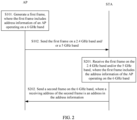
- FIG. 2 is a flowchart of an information indication method according to the claimed invention.
- An AP generates a first frame, where the first frame includes address information of an AP operating on a 6 GHz band.
- the first frame generated by the AP may be a beacon frame, a probe response frame, a neighbor report frame, or another management frame.
- a 6 GHz operation information field is newly added to an HE operation element (HE Operation Element) included in the beacon frame, the probe response frame, the neighbor report frame, and another management frame.
- the address information is located in the 6 GHz operation information field.
- Other fields in the HE operation element are the same as other fields in an HE operation element in 802.11ax.
- the other fields include an element ID (identifier, identifier) field, a length field, an element ID extension field, an HE operation parameter field, a BSS (basic service set, basic service set) color information field, a basic HE-MCS (high efficiency-modulation and coding scheme, high efficiency-modulation and coding scheme) and NSS (number of spatial streams, number of spatial stream) set field, a VHT (very high throughput, very high throughput) operation information field, and a maximum co-located basic service set indication max co-located BSSID (BSS identifier) field.
- BSS basic service set, basic service set
- NSS number of spatial streams, number of spatial stream
- VHT very high throughput, very high throughput
- max co-located basic service set indication max co-located BSSID (BSS identifier) field max co-located basic service set indication max co-located BSSID (BSS identifier) field.
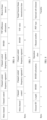
- FIG. 4 shows the 6 GHz operation information field.
- the 6 GHz operation information field includes a main channel field, a channel control field, a channel central frequency segment 0 field, a channel central frequency segment 1 field, and address information of a station operating on the 6 GHz band.
- the address information is a MAC address of the station operating on the 6 GHz band, or a BSSID of a BSS in which the station operating on the 6 GHz band is located.
- the address information is a transmitted BSSID (transmitted BSSID) in the BSSID set rather than a non-transmitted BSSID (Non-transmitted BSSID). Only one BSSID in the BSSID set is a transmitted BSSID, and a remaining BSSID is a non-transmitted BSSID.
- the beacon frame includes a multi-BSSID element for indicating BSSIDs in the multi-BSSID set, and BSS information of the corresponding AP.
- An AP corresponding to the non-transmitted BSSID may transmit a beacon frame.
- the beacon frame does not include a multi-BSSID element.
- the AP can accurately indicate an address of the AP operating on the 6 GHz band. Therefore, an unassociated STA or a STA in a roaming state can be accurately associated with and directionally communicate with the AP operating on the 6 GHz band, after learning of the address of the AP operating on the 6 GHz band.
- the channel control field includes a 4-bit channel bandwidth (values 0 to 3 respectively correspond to a 20 MHz channel bandwidth, a 40 MHz channel bandwidth, an 80 MHz channel bandwidth, and a 160 MHz channel bandwidth, and values 4 to 15 are reserved values and are not used), and a 4-bit channel access field (a value 0 indicates that EDCA is prohibited to be used to preempt a channel on a 6 GHz channel, a value 1 indicates that EDCA is allowed to be used to preempt a channel on the 6 GHz channel, and values 2 to 15 are reserved values and are not used).
- the channel access field mentioned in this embodiment may not exist. In this case, the STA is always allowed to contend for a channel on the 6 GHz band in the EDCA manner and send a frame to another STA after the preemption.
- the main channel is a main channel on which the AP operates on 6 GHz.
- the channel bandwidth field, the channel central frequency segment 0 field, and the channel central frequency segment 1 field jointly indicate channel information of a BSS that is established by the AP on 6 GHz.
- the channel information includes a channel start frequency, a channel central frequency, a BSS bandwidth, and a frequency location of the main channel.
- the channel central frequency segment 0 field and the channel central frequency segment 1 field are referred to as a channel central frequency.
- the bandwidth is further increased, and a quantity of frequency segments is further increased.
- a corresponding channel central frequency may include two or more segment fields. Setting methods are similar.
- a channel central frequency segment 0 is set to a central frequency sequence number of a BSS bandwidth.
- a channel central frequency segment 0 is set to a central frequency sequence number of primary 80 MHz of the 160 M BBS bandwidth.
- a channel central frequency segment 0 is set to a central frequency sequence number of primary 80 MHz.
- a channel central frequency segment 1 field is a reserved value 0.
- a channel central frequency segment 1 is set to a central frequency sequence number of the 160 MHz BBS bandwidth.
- a channel central frequency segment 1 is set to a central frequency sequence number of secondary 80 MHz.
- a value of the channel bandwidth field and that of the channel central frequency 1 field jointly indicate the BSS bandwidth. This is specifically shown in Table 1.
- Table 1 6 GHz HE BSS Bandwidth Channel bandwidth field Channel central frequency 1 field BSS bandwidth 0 0 20 MHz 1 0 40 MHz 2 0 80 MHz 3 CCFS1 > 0 and
- 8 160 MHz 3 CCFS1 > 0 and
- CCFS0 indicates a value of a channel central frequency 0 field
- the foregoing 6 GHz operation information field may be applied not only to 802.11ax, but also to the next generation of 802.1ax.
- the channel bandwidth field in channel control field indicates that the bandwidth needs to be extended to more bandwidth sets, for example, 20 MHz, 40 MHz, 80 MHz, 160 MHz, and 320 MHz.
- the 6 GHz operation information field may be included in an EHT operation element.
- the HE operation parameter field includes indication information for indicating whether the address information appears.
- One bit or one sub-field is used in the HE operation parameter field to indicate whether the address information appears in the 6 GHz operation information field.
- the indication information for indicating whether the address information appears is a first value, for example, 1, the address information of the AP operating on the 6 GHz band appears in the 6 GHz operation information field, which indicates that the address information of the AP operating on the 6 GHz band is the address information in the 6 GHz operation information field, for example, a MAC address of the AP operating on the 6 GHz band or a BSSID of a BSS in which the AP operating on the 6 GHz band is located.
- the address information of the AP operating on the 6 GHz band does not appear in the 6 GHz operation information field, which indicates that the address information of the AP operating on the 6 GHz band is a sending address of a frame (except a neighbor report frame or a frame including a neighbor element) for sending the 6 GHz operation information field, or a BSSID of the AP that sends the 6 GHz operation information field.
- the indication information for indicating whether the address information appears is the second value, for example, 0, the address information of the AP operating on the 6 GHz band does not appear in the 6 GHz operation information field, which indicates that the address information of the AP operating on the 6 GHz band is a BSSID in the neighbor report frame for sending the 6 GHz operation information field or a BSSID in the neighbor element of the frame including the neighbor element.
- an address information appearance field of the HE operation parameter field does not exist, the "address information of the station operating on the 6 GHz band" field of the 6 GHz operation information field keeps appearing.
- the HE operation parameter field further includes a 6 GHz operation information appearance field for indicating whether the 6 GHz operation information field appears.
- a value of the 6 GHz operation information appearance field is set to a first value, for example, 1, it indicates that the 6 GHz operation information field appears in the HE operation element, and implicitly indicates that the AP also establishes a BSS on 6 GHz.
- the value of the 6 GHz operation information field is set to a second value, for example, 0, it indicates that the 6 GHz operation information field does not appear in the HE operation element, and implicitly indicates that the AP does not establish a BSS on 6 GHz.
- other indication bits in the HE operation parameter field are the same as those in an HE operation parameter field in 802.11ax.
- the other indication bits include default PE (packet extension, packet extension) duration, a TWT (target wake-up time, target wake-up time) request, a TXOP (transmission of opportunity, transmission of opportunity) duration RTS (require to send, require to send) threshold, VHT operation information appearance, a basic service set co-located BSS, ER SU (extended range single user, extended range single user) prohibition, a 6 GHz operation information appearance indication bit, and the like.
- the 6 GHz operation information field further includes TSF information and beacon frame information.
- the TSF information includes TSF difference information or a TSF value.
- the beacon frame information includes a beacon frame interval or a target beacon frame transmission time.
- the TSF difference information indicates a difference between a time stamp of an AP operating on 6 GHz and a time stamp of an AP that transmits the 6 GHz information field on 2.4 GHz and/or 5 GHz.
- the TSF value indicates the time stamp of the AP operating on 6 GHz.
- the beacon frame interval indicates an interval at which the AP on 6 GHz transmits beacon frames.
- the target beacon frame transmission time indicates a transmission time of a latest beacon frame of the AP on 6 GHz.
- TSF (time stamp field, time stamp field) difference information/a TSF value and the beacon frame interval/the target beacon frame transmission time are newly added to the 6 GHz operation information field.
- the first two parameters are TSF parameters
- the following two parameters are beacon frame parameters. Any one of the first two parameters may be combined with any one of the following two parameters. For example, as shown in FIG. 6 , the TSF difference information and the beacon frame interval are newly added to the 6 GHz operation information field; as shown in FIG. 7 , the TSF value and the target beacon frame transmission time are newly added to the 6 GHz operation information field.
- a target beacon frame transmission time difference needs to be added to the 6 GHz operation information field.
- the target beacon frame transmission time difference indicates a difference between a target beacon frame transmission time of the AP on 6 GHz and the AP that transmits the 6 GHz operation information field on 2.4 GHz/5 GHz.
- a quantity of bytes occupied by each newly added parameter in the foregoing figure may also be another byte quantity.
- the TSF difference information occupies one byte.
- the AP newly adds the TSF information and the beacon frame information to the 6 GHz operation information field. Therefore, an unassociated STA or a STA in a roaming state can infer a time at which the AP operating on the 6 GHz band sends a beacon frame, and effectively listen to a corresponding channel on the 6 GHz band for the beacon frame sent by the AP operating on the 6 GHz band to further learn of information about an associated BSS and clock synchronization information of the AP operating on the 6 GHz band, after learning of the TSF information and the beacon frame information of the AP operating on the 6 GHz band. This facilitates passive scanning.
- the AP sends the first frame on the 2.4 GHz band and/or the 5 GHz band.
- the STA receives the first frame on the 2.4 GHz band and/or the 5 GHz band, where the first frame includes the address information of the AP operating on the 6 GHz band.
- the STA receives the first frame in S101 on the 2.4 GHz band and/or the 5 GHz band.
- the first frame includes the 6 GHz operation information field, and the 6 GHz operation information field includes a main channel, a channel bandwidth, a channel central frequency, and the address information of the AP operating on the 6 GHz band.
- the STA After the STA receives the 6 GHz operation information field, if a value of the channel access field in the 6 GHz operation information field is set to allowing preemption of a channel on the 6 GHz band through EDCA (enhanced distributed channel access, enhanced distributed channel access), the STA sends a probe request frame to the AP on the main channel indicated by BSS information on the 6 GHz band, then obtains a probe response frame responded with by the AP, and is further associated with the AP by using subsequent processes of exchanging an authentication request frame/an authentication response frame, an association request frame/an association response frame, and the like.
- EDCA enhanced distributed channel access, enhanced distributed channel access
- the STA sends a second frame on the 6 GHz band, where a receiving address of the second frame is an address in the address information or a sending address of sending the first frame/a BSSID field of the first frame.
- the STA sends the second frame to the AP on the main channel indicated by the BSS information on the 6 GHz band, and the receiving address of the second frame is the address in the address information.
- the STA performs active scanning or passive scanning on the main channel indicated by the BSS information on the 6 GHz band.
- the STA sends the probe request frame to the AP, and a receiving address of the probe request frame is set to the address information that is of the station operating on the 6 GHz band and that is in the 6 GHz operation information field, for example, in the 6 GHz operation information field, a MAC address of the station operating on the 6 GHz band or a BSSID of a BSS in which the station operating on the 6 GHz band is located.
- the BSSID field in the second frame is set to the BSSID field or the MAC address field of the AP in the 6 GHz operation information field.
- the receiving address of the request frame when indication information for indicating whether the address information appears is a first value, for example, 1, the receiving address of the request frame is set to address information that is of an AP operating on the 6 GHz band and that is in the 6 GHz operation information field, for example, in the 6 GHz operation information field, a BSSID of the AP operating on the 6 GHz band or a MAC address of the AP operating on the 6 GHz band.
- the BSSID field in the second frame is set to the BSSID field or the MAC address field of the AP in the 6 GHz operation information field.
- the indication information for indicating whether the address information appears is a second value, for example, 0, the receiving address of the request frame is set to a sending address of a frame (except a neighbor report frame or a frame including a neighbor element) for sending the 6 GHz operation information field, or a BSSID of the AP that sends the 6 GHz operation information field.
- the indication information for indicating whether the address information appears is the second value, for example, 0, the address information of the AP operating on the 6 GHz band does not appear in the 6 GHz operation information field, which indicates that the address information of the AP operating on the 6 GHz band is the receiving address of the second frame and the receiving address of the second frame is set to a BSSID in the neighbor report frame for sending the 6 GHz operation information field or a BSSID in the neighbor element of the frame including the neighbor element.
- the BSSID field in the second frame is set to a BSSID field in the frame that carries the HE Operation Element (except the neighbor report frame or the frame including the neighbor element) and is used to send the HE operation element; or is set to a BSSID in the neighbor report frame for sending the 6 GHz operation information field, or a BSSID in the neighbor element in the frame including the neighbor element.
- a receiving address of the probe request frame that is sent by the STA on the 6 GHz band is a transmitted BSSID
- an AP of the transmitted BSSID responds with a probe response frame including information about a multi-BSSID element and another non-transmitted BSSID.
- the STA may further select an appropriate virtual AP for association based on information about each AP, for example, a BSS load status.
- the STA cannot actively preempt a channel on the 6 GHz band through the EDCA manner to send a data packet to the AP, but can only be associated with the AP through passive scanning. For example, the STA listens to a beacon frame, and then is associated with the AP based on information included in the obtained beacon frame; or the STA waits for the AP to send a trigger frame, and sends an information frame of an association request in response to the trigger frame to be associated with the AP.
- the information frame of the association request includes a probe request frame, an authentication request frame, an association request frame, and the like.
- Processes of exchanging the probe request frame/the probe response frame, the authentication request frame/the authentication response frame, and the association request frame/the association response frame are all related to two handshakes.
- the STA first sends a request frame, and receives an acknowledgement frame responded with by the AP; then the AP sends a response frame; and finally the STA replies with an acknowledgement frame.
- this embodiment of this application further provides the following solutions:
- the AP sends a management frame (for example, a neighbor report frame) on a 2.4 GHz/5 GHz/6 GHz band or the like (or may be another band).
- the management frame includes a neighbor report element.
- the neighbor report element includes an element ID field, a length field, a BSSID field, a BSSID information field, an operation class field, a channel number field, a PHY type field, and an optional sub-element field.
- the operation class field and the channel number field jointly indicate a band on which the neighbor AP operates, and the channel number indicates a main channel on which the neighbor AP operates.
- a co-location AP field is added to the BSSID information.
- the co-location AP field is set to a first value.
- the co-location AP field is set to "1", which indicates that a neighbor AP corresponding to the BSSID in the neighbor report element and an AP that sends the neighbor report element are co-located, that is, share a same antenna interface share the same antenna connector (or the two APs are a in multi-band device).
- the co-location AP field is set to a second value.
- the co-location AP field is set to "0", which indicates that a neighbor AP corresponding to the BSSID in the neighbor report element and an AP that sends the neighbor report element are not co-located, that is, does not share a same antenna interface share the same antenna connector (or the two APs are not a multi-band device).
- an optional sub-element in the neighbor report element in FIG. 8 includes a multi-BSSID element.
- the multi-BSSID element includes an element ID, a length, a maximum BSSID indication, and an optional sub-element.
- the maximum BSSID indication indicates that a maximum quantity of BSSIDs included in the multi-BSSID set is n.
- the optional sub-element includes information about each non-transmitted BSSID.
- the BSSID in the neighbor report element shown in FIG. 8 is a reference BSSID for calculating a value of each BSSID in the BSSID set.
- the receive-end STA may calculate the value of each BSSID in the multi-BSSID set based on the reference BSSID and the maximum BSSID indication. Values of high-order (48-n) bits of each BSSID in the multi-BSSID set are the same as values of high-order (48-n) bits of the reference BSSID.
- Values of low-order n bits of each BSSID in the multi-BSSID set are obtained through performing modulo on 2 n and a sum of a value of a sequence number n of the BSSID and each of values of low-order n bits of the reference BSSID.
- modulo on 2 n
- a sum of a value of a sequence number n of the BSSID and each of values of low-order n bits of the reference BSSID For a specific calculation method, refer to the 802.11-2016 standard protocol.
- an optional sub-element in the neighbor report element in FIG. 8 includes a multi-BSSID element, and information indicating the transmitted BSSID further needs to be added.
- the neighbor report element further needs to include a multi-BSSID sequence number element. As shown in FIG.
- the multi-BSSID sequence number element includes an element ID, a length, a BSSID sequence number, a DTIM period (optional), and a DITM count (optional).
- the BSSID sequence number indicates a location n of the BSSID in the multi-BSSID set.
- the BSSID sequence number in FIG. 11 is a sequence number of the transmitted BSSID.
- a 1-byte BSSID sequence number or a 6-byte transmitted BSSID field is directly added to the neighbor report element.
- the co-location AP field may be extended to a field.
- the extended field is referred to as a co-location multi-band AP field.
- a first value of the co-location multi-band AP field such as 0 indicates that a reported AP is not a multi-band AP.
- a second value of the co-location multi-band AP field such as 1 indicates that the reported AP is a first reported AP of the multi-band AP.
- a third value of the co-location multi-band AP field such as 2 indicates that the reported AP is a last reported AP of the multi-band AP.
- a fourth value of the co-location multi-band AP field such as 3 indicates that the reported AP is an intermediate reported AP in the multi-band AP. There may be a plurality of intermediate reported APs.
- a fifth value of the co-location multi-band AP field such as 4 indicates that the reported AP and the reporting AP may be co-located.
- the co-location AP field indicates only whether the neighbor AP corresponding to the BSSID in the neighbor report element and the AP that sends the neighbor report element are co-located.
- a multi-band field is added to indicate whether the neighbor AP indicated by the BSSID in the neighbor report element is located in a multiple-band device, wherein the multiple-band comprises 6GHz band.
- the reported AP may also be referred to as a neighbor AP or an AP indicated by the BSSID in the neighbor element, and the reporting AP is an AP that transmits a neighbor report element.
- Co-location AP Multi-band Meaning 1 1 The AP indicated by the BSSID in the neighbor element and the reporting AP are co-located devices and belong to a same multi-band device. 0 1
- the AP indicated by the BSSID in the neighbor element is a device that supports a plurality of bands, but is not co-located with the reporting AP or does not belong to a same multi-band device with the reporting AP.
- the AP indicated by the BSSID in the neighbor element is not a device that supports a plurality of bands, and is not co-located with the reporting AP or does not belong to a same multi-band device with the reporting AP. 1 0 It is meaningless or reserved.
- the AP indicated by the BSSID in the neighbor element is not a device that supports a plurality of bands, and the AP indicated by the BSSID in the neighbor element and the reporting AP are co-located devices but do not belong to a same multi-band device.
- the STA receives a management frame (for example, a neighbor report frame) sent by the AP.
- the management frame includes a neighbor report element. If the co-location AP field in the BSSID information field of the neighbor report element is set to 1, it indicates that the neighbor AP corresponding to the BSSID field operates on the 6 GHz band.
- the STA sends, on a channel indicated by the channel number on corresponding 6 GHz, a unicast information frame of an association request to a neighbor AP operating on the 6 GHz band, so that the neighbor AP performs association and communication.
- the information frame of the association request includes frames such as a probe request frame, an authentication request frame, and an association request frame. If the co-location AP in the BSSID information field is set to 0, the STA continues to listen to a channel.
- the foregoing method is based on prohibition on an unassociated station or a station in a roaming state from sending a broadcast probe request frame.
- the unassociated station or the station in the roaming state is prohibited from sending a broadcast probe request frame whose BSSID field is wildcard BSSID and/or whose SSID element is wildcard SSID, and the unassociated station or the station in the roaming state is allowed to send a broadcast probe request frame whose BSSID field is not wildcard BSSID or whose SSID element is not wildcard SSID.
- the condition is as follows: 1. An SSID of an extended service set ESS (extended service set) of the AP matches the SSID of the received probe request frame; 2. a BBSID of the AP matches the BSSID of the received probe request frame.
- a frame for sending a 6 GHz information field carries a MAC address or a BSSID of an AP
- a frame for sending a neighbor report element carries a MAC address or a BSSID of a neighbor AP.
- a frame for sending a neighbor report element carries an SSID of an ESS in which a neighbor AP is located, and carries an SSID element or an SSID list element as a sub-element of the neighbor element.
- the BSSID field in the broadcast probe request frame sent by the station needs to be set to the BSSID in the 6 GHz information field, or the sending address or the BSSID field in the frame for sending the 6 GHz information field, or the BSSID in the neighbor report element, or the transmitted BSSID indicated in the neighbor report element.
- the SSID instead of the wildcard SSID is specified by the SSID element in the broadcast probe request frame.
- an SSID list element is further carried. The specified SSID is from an SSID element or an SSID list element included in the received frame carrying the neighbor report element.
- the foregoing embodiments of this application provide an information indication method.
- the following embodiments of this application provide an information indication apparatus. It should be understood that the information indication apparatus in the embodiments of this application has any function of the information indication apparatus in the foregoing method.
- an information indication apparatus includes: a processing unit 101, configured to generate a first frame, where the first frame includes address information of a station operating on a 6 GHz band; and a transceiver unit 102, configured to send the first frame on a 2.4 GHz band and/or a 5 GHz band.
- the information indication apparatus shown in FIG. 12 has any function of the sender station (for example, an AP) in the foregoing method. Details are not described herein again. For details, refer to the description of the foregoing method.
- an information indication apparatus includes:
- the information indication apparatus shown in FIG. 13 has any function of the station (for example, a STA) in the foregoing method. Details are not described herein again. For details, refer to the description of the foregoing method.
- the information indication apparatus provided in the foregoing embodiments of this application may be implemented in a plurality of product forms.
- the information indication apparatus may be configured as a general-purpose processing system.
- the information indication apparatus may be implemented by using a general bus architecture.
- the information indication apparatus may be implemented by an ASIC (application-specific integrated circuit), and so on.
- ASIC application-specific integrated circuit
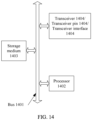
- FIG. 14 is a structural diagram of a possible product form of an information indication apparatus according to an embodiment of this application.
- the information indication apparatus may be an information indication device, and the information indication device includes a processor 1402 and a transceiver 1404.
- the information indication device may further include a storage medium 1403.
- the information indication apparatus is also implemented by a general-purpose processor, that is, implemented by a commonly called chip.
- the general-purpose processor includes a processor 1402 and a transceiver interface 1404/transceiver pin 1404.
- the general-purpose processor may further include a storage medium 1403.
- the information indication apparatus may also be implemented by using the following components: one or more FPGAs (field programmable gate arrays), a PLD (programmable logic device), a controller, a state machine, a gate logic, a discrete hardware component, any other suitable circuit, or any combination of circuits that can perform various functions described in this application.
- FPGAs field programmable gate arrays
- PLD programmable logic device
- controller a state machine
- gate logic a discrete hardware component
- any other suitable circuit any combination of circuits that can perform various functions described in this application.
- the disclosed system, apparatus, and method may be implemented in other manners.
- the described apparatus embodiment is merely an example.
- the unit division is merely logical function division and may be other division in actual implementation.
- a plurality of units or components may be combined or integrated into another system, or some features may be ignored or not performed.
- the displayed or discussed mutual couplings or direct couplings or communication connections may be implemented through some interfaces, indirect couplings or communication connections between the apparatuses or units, or electrical connections, mechanical connections, or connections in other forms.
- the units described as separate parts may or may not be physically separate, and parts displayed as units may or may not be physical units, may be located in one position, or may be distributed on a plurality of network units. Some or all of the units may be selected according to actual requirements to achieve the objectives of the solutions of the embodiments in this application.
- functional units in the embodiments of this application may be integrated into one processing unit, or each of the units may exist alone physically, or two or more units are integrated into one unit.
- the integrated unit may be implemented in a form of hardware, or may be implemented in a form of a software functional unit.
- the integrated unit When the integrated unit is implemented in the form of a software functional unit and sold or used as an independent product, the integrated unit may be stored in a computer-readable storage medium. Based on such an understanding, the technical solutions of this application essentially, or the part contributing to the prior art, or all or some of the technical solutions may be implemented in a form of a software product.
- the software product is stored in a storage medium and includes several instructions for instructing a computer device (which may be a personal computer, a server, or a network device) to perform all or some of the steps of the methods described in the embodiments of this application.
- the foregoing storage medium includes: any medium that can store program code, such as a USB flash drive, a removable hard disk, a read-only memory (read-only memory, ROM), a random access memory (random access memory, RAM), a magnetic disk, or an optical disc.
- program code such as a USB flash drive, a removable hard disk, a read-only memory (read-only memory, ROM), a random access memory (random access memory, RAM), a magnetic disk, or an optical disc.
Landscapes
- Engineering & Computer Science (AREA)
- Computer Networks & Wireless Communication (AREA)
- Signal Processing (AREA)
- Computer Security & Cryptography (AREA)
- Mobile Radio Communication Systems (AREA)
Claims (15)
- Informationsangabeverfahren, umfassend:Generieren (S101) eines ersten Frames durch einen meldenden Zugangspunkt (access point, AP), wobei der erste Frame ein Nachbarmeldeelement umfasst, das Nachbarmeldeelement ein Basisdienstsatzbezeichner (basic service set identifier, BSSID)-Feld und ein BSSID-Informationsfeld umfasst, das BSSID-Informationsfeld ein Ko-Lokalisierungs-AP-Feld und ein Multiband-Feld umfasst, das Ko-Lokalisierungs-AP-Feld angibt, ob ein Nachbar-AP, der durch das BSSID-Feld angegeben wird, und der meldende AP ko-lokalisiert sind, das Multiband-Feld dazu verwendet wird, anzugeben, ob der Nachbar-AP in einer Mehrband-Vorrichtung angeordnet ist, wobei die Mehrband-Vorrichtung einen 6-GHz-AP umfasst;Senden (S102) des ersten Frames durch den meldenden AP an eine Station (station, STA) auf einem 2,4-GHz-Band oder einem 5-GHz-Band.
- Verfahren gemäß Anspruch 1, wobei das Nachbarmeldeelement ferner ein Feld für einen Elementbezeichner (identifier, ID), ein Längenfeld, ein Operationsklassenfeld, ein Kanalnummernfeld, ein PHY-Typ-Feld und ein optionales Unterelementfeld umfasst.
- Verfahren gemäß Anspruch 1, wobei das Operationsklassenfeld und das Kanalnummernfeld gemeinsam ein Band angeben, auf dem der Nachbar-AP arbeitet.
- Verfahren gemäß Anspruch 2 oder 3, wobei das Kanalnummernfeld einen Hauptkanal angibt, auf dem der Nachbar-AP arbeitet.
- Verfahren gemäß einem der Ansprüche 1 bis 4, wobei das Multiband-Feld es der STA, die den ersten Frame empfängt, ermöglicht, den 6-GHz-AP zu entdecken.
- Informationsangabeverfahren, umfassend:Empfangen eines ersten Frames auf einem 2,4-GHz-Band oder einem 5-GHz-Band durch eine Station, STA, wobei der erste Frame ein Nachbarmeldeelement umfasst, das Nachbarmeldeelement ein BSSID-Feld und ein BSSID-Informationsfeld umfasst, das BSSID-Informationsfeld ein Ko-Lokalisierungs-AP-Feld und ein Multiband-Feld umfasst, das Ko-Lokalisierungs-AP-Feld angibt, ob ein Nachbar-AP, der durch das BSSID-Feld angegeben wird, und der meldende AP ko-lokalisiert sind, das Multiband-Feld dazu verwendet wird, anzugeben, ob der Nachbar-AP in einer Mehrband-Vorrichtung angeordnet ist, wobei die Mehrband-Vorrichtung einen 6-GHz-AP umfasst; undBestimmen basierend auf dem ersten Frame durch die STA, ob der Nachbar-AP in einer Mehrband-Vorrichtung angeordnet ist, wobei die Mehrband-Vorrichtung den 6-GHz-AP umfasst.
- Verfahren gemäß Anspruch 6, wobei das Nachbarmeldeelement ferner ein Element-ID-Feld, ein Längenfeld, ein Operationsklassenfeld, ein Kanalnummernfeld, ein PHY-Typ-Feld und ein optionales Unterelementfeld umfasst.
- Verfahren gemäß Anspruch 7, wobei das Operationsklassenfeld und das Kanalnummernfeld gemeinsam ein Band angeben, auf dem der Nachbar-AP arbeitet.
- Verfahren gemäß Anspruch 7 oder 8, wobei das Kanalnummernfeld einen Hauptkanal angibt, auf dem der Nachbar-AP arbeitet.
- Verfahren gemäß einem der Ansprüche 6 bis 9, wobei das Multiband-Feld es der STA ermöglicht, den 6-GHz-AP zu entdecken.
- Zugangspunkt, AP, der dazu konfiguriert ist, ein Verfahren gemäß einem der Ansprüche 1 bis 5 durchzuführen.
- Station, STA, die dazu konfiguriert ist, ein Verfahren gemäß einem der Ansprüche 6 bis 10 durchzuführen.
- Computerprogramm umfassend Anweisungen, die, wenn sie durch einen Prozessor eines Zugangspunkts, AP, ausgeführt werden, den AP dazu veranlassen, ein Verfahren gemäß einem der Ansprüche 1 bis 5 durchzuführen.
- Computerprogramm umfassend Anweisungen, die, wenn sie durch einen Prozessor einer Station, STA, ausgeführt werden, die STA dazu veranlassen, ein Verfahren gemäß einem der Ansprüche 6 bis 10 durchzuführen.
- Computerlesbares Aufzeichnungsmedium, auf dem ein Programm aufgezeichnet ist, wobei das Programm, wenn es durch einen Prozessor eines Zugangspunkts, AP, ausgeführt wird, den AP veranlasst, ein Verfahren gemäß einem der Ansprüche 1 bis 5 durchzuführen, oder wenn es durch einen Prozessor einer Station, STA, ausgeführt wird, die STA veranlasst, ein Verfahren gemäß einem der Ansprüche 6 bis 10 durchzuführen.
Priority Applications (1)
| Application Number | Priority Date | Filing Date | Title |
|---|---|---|---|
| EP25165356.4A EP4593470A3 (de) | 2018-08-07 | 2019-07-30 | Informationsanzeigeverfahren und -vorrichtung |
Applications Claiming Priority (2)
| Application Number | Priority Date | Filing Date | Title |
|---|---|---|---|
| CN201810891859.4A CN110831107A (zh) | 2018-08-07 | 2018-08-07 | 信息指示方法及装置 |
| PCT/CN2019/098412 WO2020029836A1 (zh) | 2018-08-07 | 2019-07-30 | 信息指示方法及装置 |
Related Child Applications (1)
| Application Number | Title | Priority Date | Filing Date |
|---|---|---|---|
| EP25165356.4A Division EP4593470A3 (de) | 2018-08-07 | 2019-07-30 | Informationsanzeigeverfahren und -vorrichtung |
Publications (4)
| Publication Number | Publication Date |
|---|---|
| EP3720191A1 EP3720191A1 (de) | 2020-10-07 |
| EP3720191A4 EP3720191A4 (de) | 2021-03-31 |
| EP3720191B1 true EP3720191B1 (de) | 2025-03-26 |
| EP3720191C0 EP3720191C0 (de) | 2025-03-26 |
Family
ID=69414493
Family Applications (2)
| Application Number | Title | Priority Date | Filing Date |
|---|---|---|---|
| EP19848305.9A Active EP3720191B1 (de) | 2018-08-07 | 2019-07-30 | Informationsangabeverfahren und -vorrichtung |
| EP25165356.4A Pending EP4593470A3 (de) | 2018-08-07 | 2019-07-30 | Informationsanzeigeverfahren und -vorrichtung |
Family Applications After (1)
| Application Number | Title | Priority Date | Filing Date |
|---|---|---|---|
| EP25165356.4A Pending EP4593470A3 (de) | 2018-08-07 | 2019-07-30 | Informationsanzeigeverfahren und -vorrichtung |
Country Status (7)
| Country | Link |
|---|---|
| US (2) | US11991617B2 (de) |
| EP (2) | EP3720191B1 (de) |
| JP (3) | JP7066851B2 (de) |
| KR (2) | KR20200091926A (de) |
| CN (2) | CN115460673B (de) |
| BR (1) | BR112020013495A2 (de) |
| WO (1) | WO2020029836A1 (de) |
Families Citing this family (15)
| Publication number | Priority date | Publication date | Assignee | Title |
|---|---|---|---|---|
| US11985588B2 (en) * | 2018-08-23 | 2024-05-14 | Lg Electronics Inc. | Method and device for obtaining information about communication entity operating in new band in wireless LAN system |
| US11452080B2 (en) * | 2018-12-17 | 2022-09-20 | Intel Corporation | Probes with short service set identifier |
| CN119485247A (zh) * | 2020-04-03 | 2025-02-18 | 华为技术有限公司 | 接入点ap多链路设备发现方法及相关装置 |
| CN113543227A (zh) | 2020-04-17 | 2021-10-22 | 华为技术有限公司 | 信道带宽配置方法及设备 |
| JP7657551B2 (ja) * | 2020-05-18 | 2025-04-07 | キヤノン株式会社 | 通信装置、制御方法、およびプログラム |
| CN111405684B (zh) * | 2020-06-08 | 2020-09-08 | 成都极米科技股份有限公司 | 连接到网络接入设备的方法、终端及计算机可读存储介质 |
| CN116233886B (zh) * | 2020-08-14 | 2024-04-23 | 华为技术有限公司 | 适用于多链路的关键bss参数管理方法及相关装置 |
| US12457587B2 (en) * | 2021-02-12 | 2025-10-28 | Nxp Usa, Inc. | Device, system, and method for wireless communications |
| CN116320049B (zh) * | 2021-03-30 | 2023-11-07 | 华为技术有限公司 | 用于包扩展的方法、设备和存储介质 |
| WO2022217587A1 (zh) * | 2021-04-16 | 2022-10-20 | 北京小米移动软件有限公司 | 多连接下的通信方法和通信装置 |
| WO2023005907A1 (zh) * | 2021-07-27 | 2023-02-02 | 华为技术有限公司 | 无线帧发送方法及装置、无线帧接收方法及装置 |
| EP4383926A4 (de) * | 2021-08-16 | 2024-10-09 | Beijing Xiaomi Mobile Software Co., Ltd. | Kommunikationsverfahren und vorrichtung für basisdienstsatz-handover |
| CN116528327A (zh) * | 2021-08-19 | 2023-08-01 | 华为技术有限公司 | 一种通信方法及通信装置 |
| CN115835292A (zh) * | 2021-09-16 | 2023-03-21 | 华为技术有限公司 | 一种数据传输方法及路由设备 |
| US20240073792A1 (en) * | 2022-08-26 | 2024-02-29 | Qualcomm Incorporated | Transmitted basic service set identifier reassignment |
Citations (1)
| Publication number | Priority date | Publication date | Assignee | Title |
|---|---|---|---|---|
| US20180192421A1 (en) * | 2015-09-02 | 2018-07-05 | Wilus Institute Of Standards And Technology Inc. | Wireless communication method and wireless communication terminal, which use network allocation vector |
Family Cites Families (26)
| Publication number | Priority date | Publication date | Assignee | Title |
|---|---|---|---|---|
| CA2524692A1 (en) * | 2002-12-19 | 2004-07-08 | Nokia Corporation | System and handover mechanism in frequency multiple band environment and equipment therefor |
| KR101493528B1 (ko) * | 2008-12-12 | 2015-02-16 | 엘지전자 주식회사 | 초고처리율 무선랜 시스템에서의 대역 스위치 방법 및 이를위한 프레임 포맷 |
| US8750180B2 (en) * | 2011-09-16 | 2014-06-10 | Blackberry Limited | Discovering network information available via wireless networks |
| US20130070739A1 (en) * | 2011-09-16 | 2013-03-21 | Research In Motion Limited | Discovering network information available via wireless networks |
| US9661560B2 (en) * | 2012-08-08 | 2017-05-23 | Lg Electronics Inc. | Scanning method and apparatus in wireless LAN |
| US9497635B2 (en) * | 2012-09-11 | 2016-11-15 | Lg Electronics Inc. | Method and apparatus for accessing initial channel in wireless LAN |
| CN104718779B (zh) * | 2012-10-19 | 2018-10-19 | 华为技术有限公司 | 用于进行有效通信系统扫描的系统和方法 |
| KR20150054624A (ko) | 2013-11-11 | 2015-05-20 | 인텔렉추얼디스커버리 주식회사 | 액세스 포인트, 스테이션 및 액세스 포인트와 스테이션 간의 접속 설정 방법 |
| US9769626B2 (en) | 2014-06-16 | 2017-09-19 | Mediatek Singapore Pte. Ltd. | Fine timing measurement positioning and improvements in wireless local area networks |
| EP3016440B1 (de) * | 2014-10-30 | 2020-08-26 | Alcatel Lucent | Verfahren zur Einrichtung mehrerer Funkverbindungen in einem Funkkommunikationssystem, netzwerkbasiertes Subsystem, Mobilstation und Computerprogramm dafür |
| KR102178131B1 (ko) * | 2015-06-29 | 2020-11-12 | 주식회사 윌러스표준기술연구소 | 레거시 무선 통신 단말과 공존을 위한 무선 통신 방법 및 무선 통신 단말 |
| CN106549738B (zh) * | 2015-09-17 | 2020-02-14 | 华为技术有限公司 | 一种物理下行控制信道的传输方法及装置 |
| KR102782586B1 (ko) * | 2015-10-20 | 2025-03-19 | 주식회사 윌러스표준기술연구소 | 중첩된 베이직 서비스 세트를 포함하는 고밀도 환경에서의 무선 통신 방법 및 무선 통신 단말 |
| US9867004B2 (en) * | 2015-12-23 | 2018-01-09 | Qualcomm Incorporated | Broadcast time-of-departure (TOD) frame format |
| US10212630B2 (en) * | 2016-02-03 | 2019-02-19 | Intel IP Corporation | Apparatus, system and method of fast basic service set (BSS) transition (FT) |
| US20180199215A1 (en) * | 2017-01-12 | 2018-07-12 | Qualcomm Incorporated | Filtering extended range frames by high efficiency wireless (hew) stations |
| WO2018232138A1 (en) * | 2017-06-14 | 2018-12-20 | Intel IP Corporation | 6 ghz neighbor reports and capability and operation elements |
| US20190037595A1 (en) * | 2017-07-27 | 2019-01-31 | Qualcomm Incorporated | Managing unscheduled uplink access |
| WO2019027492A1 (en) * | 2017-08-01 | 2019-02-07 | Intel IP Corporation | DEPENDENT OPERATIONS OF A 6 GHz GEOLOCATION DATABASE (GDD) |
| US10959153B2 (en) * | 2017-09-11 | 2021-03-23 | Qualcomm Incorporated | Techniques for multi-link aggregation signaling |
| US10716054B2 (en) * | 2017-09-27 | 2020-07-14 | Qualcomm Incorporated | Methods and systems for controlling network access |
| US11259285B2 (en) * | 2018-02-27 | 2022-02-22 | Qualcomm Incorporated | Co-located basic service sets |
| US20190297561A1 (en) * | 2018-03-20 | 2019-09-26 | Qualcomm Incorporated | Width and channel number signaling for multiband devices |
| US11844052B2 (en) * | 2018-06-13 | 2023-12-12 | Qualcomm Incorporated | Signaling multi-band operating parameters in a wireless local area network |
| JP7404236B2 (ja) * | 2018-07-09 | 2023-12-25 | パナソニック インテレクチュアル プロパティ コーポレーション オブ アメリカ | アクセスポイント及び通信方法 |
| US10959229B2 (en) * | 2018-07-30 | 2021-03-23 | Marvell Asia Pte, LTD | Medium protection in wireless local area networks |
-
2018
- 2018-08-07 CN CN202210939692.0A patent/CN115460673B/zh active Active
- 2018-08-07 CN CN201810891859.4A patent/CN110831107A/zh active Pending
-
2019
- 2019-07-30 BR BR112020013495-3A patent/BR112020013495A2/pt unknown
- 2019-07-30 KR KR1020207020012A patent/KR20200091926A/ko not_active Ceased
- 2019-07-30 EP EP19848305.9A patent/EP3720191B1/de active Active
- 2019-07-30 KR KR1020227014042A patent/KR20220057655A/ko not_active Ceased
- 2019-07-30 JP JP2020533089A patent/JP7066851B2/ja active Active
- 2019-07-30 EP EP25165356.4A patent/EP4593470A3/de active Pending
- 2019-07-30 WO PCT/CN2019/098412 patent/WO2020029836A1/zh not_active Ceased
-
2020
- 2020-07-07 US US16/922,563 patent/US11991617B2/en active Active
-
2022
- 2022-04-27 JP JP2022072857A patent/JP7263590B2/ja active Active
-
2023
- 2023-04-12 JP JP2023064800A patent/JP7456585B2/ja active Active
- 2023-07-17 US US18/353,519 patent/US20240031915A1/en active Pending
Patent Citations (1)
| Publication number | Priority date | Publication date | Assignee | Title |
|---|---|---|---|---|
| US20180192421A1 (en) * | 2015-09-02 | 2018-07-05 | Wilus Institute Of Standards And Technology Inc. | Wireless communication method and wireless communication terminal, which use network allocation vector |
Non-Patent Citations (1)
| Title |
|---|
| ABHISHEK PATIL (QUALCOMM): "Resolution for CID 11742", vol. 802.11ax, no. 1, 12 January 2018 (2018-01-12), pages 1 - 9, XP068122646, Retrieved from the Internet <URL:https://mentor.ieee.org/802.11/dcn/17/11-17-1859-01-00ax-resolution-for-cid-11742.docx> [retrieved on 20180112] * |
Also Published As
| Publication number | Publication date |
|---|---|
| KR20220057655A (ko) | 2022-05-09 |
| WO2020029836A1 (zh) | 2020-02-13 |
| JP7263590B2 (ja) | 2023-04-24 |
| EP4593470A3 (de) | 2025-10-08 |
| EP3720191A4 (de) | 2021-03-31 |
| EP3720191A1 (de) | 2020-10-07 |
| US20200336969A1 (en) | 2020-10-22 |
| US11991617B2 (en) | 2024-05-21 |
| JP2021510244A (ja) | 2021-04-15 |
| JP2022109992A (ja) | 2022-07-28 |
| US20240031915A1 (en) | 2024-01-25 |
| BR112020013495A2 (pt) | 2021-03-09 |
| CN115460673B (zh) | 2024-10-18 |
| JP7456585B2 (ja) | 2024-03-27 |
| EP3720191C0 (de) | 2025-03-26 |
| JP7066851B2 (ja) | 2022-05-13 |
| EP4593470A2 (de) | 2025-07-30 |
| CN110831107A (zh) | 2020-02-21 |
| CN115460673A (zh) | 2022-12-09 |
| JP2023089129A (ja) | 2023-06-27 |
| KR20200091926A (ko) | 2020-07-31 |
Similar Documents
| Publication | Publication Date | Title |
|---|---|---|
| EP3720191B1 (de) | Informationsangabeverfahren und -vorrichtung | |
| US11405953B2 (en) | Trigger-based random access in a multiple BSSID network | |
| AU2022280908B2 (en) | Communication method and apparatus | |
| US10893429B2 (en) | Uplink measurement signal indication method and apparatus | |
| EP3866373B1 (de) | Mehrfrequenzbandanzeigeverfahren und kommunikationsvorrichtung | |
| EP4181451B1 (de) | Funkrahmensendeverfahren und -vorrichtung | |
| US20250374028A1 (en) | Wireless communication method and device | |
| KR20250079918A (ko) | 통신 방법 및 통신 장치 | |
| CN117083950A (zh) | 一种传输需求指示的方法和装置 | |
| EP3531788B1 (de) | Informationsübertragungsverfahren, benutzergerät und netzwerkvorrichtung | |
| EP4664995A1 (de) | Verfahren und vorrichtung zur drahtlosen kommunikation |
Legal Events
| Date | Code | Title | Description |
|---|---|---|---|
| STAA | Information on the status of an ep patent application or granted ep patent |
Free format text: STATUS: THE INTERNATIONAL PUBLICATION HAS BEEN MADE |
|
| PUAI | Public reference made under article 153(3) epc to a published international application that has entered the european phase |
Free format text: ORIGINAL CODE: 0009012 |
|
| STAA | Information on the status of an ep patent application or granted ep patent |
Free format text: STATUS: REQUEST FOR EXAMINATION WAS MADE |
|
| 17P | Request for examination filed |
Effective date: 20200702 |
|
| AK | Designated contracting states |
Kind code of ref document: A1 Designated state(s): AL AT BE BG CH CY CZ DE DK EE ES FI FR GB GR HR HU IE IS IT LI LT LU LV MC MK MT NL NO PL PT RO RS SE SI SK SM TR |
|
| AX | Request for extension of the european patent |
Extension state: BA ME |
|
| A4 | Supplementary search report drawn up and despatched |
Effective date: 20210301 |
|
| RIC1 | Information provided on ipc code assigned before grant |
Ipc: H04W 48/08 20090101AFI20210223BHEP Ipc: H04W 76/11 20180101ALI20210223BHEP Ipc: H04W 48/16 20090101ALI20210223BHEP Ipc: H04W 84/12 20090101ALN20210223BHEP |
|
| DAV | Request for validation of the european patent (deleted) | ||
| DAX | Request for extension of the european patent (deleted) | ||
| STAA | Information on the status of an ep patent application or granted ep patent |
Free format text: STATUS: EXAMINATION IS IN PROGRESS |
|
| 17Q | First examination report despatched |
Effective date: 20221020 |
|
| REG | Reference to a national code |
Free format text: PREVIOUS MAIN CLASS: H04W0048080000 Ref country code: DE Ref legal event code: R079 Ref document number: 602019067884 Country of ref document: DE Free format text: PREVIOUS MAIN CLASS: H04W0048080000 Ipc: H04W0076110000 |
|
| GRAP | Despatch of communication of intention to grant a patent |
Free format text: ORIGINAL CODE: EPIDOSNIGR1 |
|
| STAA | Information on the status of an ep patent application or granted ep patent |
Free format text: STATUS: GRANT OF PATENT IS INTENDED |
|
| RIC1 | Information provided on ipc code assigned before grant |
Ipc: H04W 48/16 20090101ALN20241031BHEP Ipc: H04W 48/08 20090101ALN20241031BHEP Ipc: H04W 84/12 20090101ALN20241031BHEP Ipc: H04W 76/11 20180101AFI20241031BHEP |
|
| INTG | Intention to grant announced |
Effective date: 20241125 |
|
| GRAS | Grant fee paid |
Free format text: ORIGINAL CODE: EPIDOSNIGR3 |
|
| GRAA | (expected) grant |
Free format text: ORIGINAL CODE: 0009210 |
|
| STAA | Information on the status of an ep patent application or granted ep patent |
Free format text: STATUS: THE PATENT HAS BEEN GRANTED |
|
| AK | Designated contracting states |
Kind code of ref document: B1 Designated state(s): AL AT BE BG CH CY CZ DE DK EE ES FI FR GB GR HR HU IE IS IT LI LT LU LV MC MK MT NL NO PL PT RO RS SE SI SK SM TR |
|
| REG | Reference to a national code |
Ref country code: GB Ref legal event code: FG4D |
|
| REG | Reference to a national code |
Ref country code: CH Ref legal event code: EP |
|
| REG | Reference to a national code |
Ref country code: DE Ref legal event code: R096 Ref document number: 602019067884 Country of ref document: DE |
|
| REG | Reference to a national code |
Ref country code: IE Ref legal event code: FG4D |
|
| U01 | Request for unitary effect filed |
Effective date: 20250326 |
|
| U07 | Unitary effect registered |
Designated state(s): AT BE BG DE DK EE FI FR IT LT LU LV MT NL PT RO SE SI Effective date: 20250401 |
|
| PG25 | Lapsed in a contracting state [announced via postgrant information from national office to epo] |
Ref country code: RS Free format text: LAPSE BECAUSE OF FAILURE TO SUBMIT A TRANSLATION OF THE DESCRIPTION OR TO PAY THE FEE WITHIN THE PRESCRIBED TIME-LIMIT Effective date: 20250626 |
|
| PG25 | Lapsed in a contracting state [announced via postgrant information from national office to epo] |
Ref country code: NO Free format text: LAPSE BECAUSE OF FAILURE TO SUBMIT A TRANSLATION OF THE DESCRIPTION OR TO PAY THE FEE WITHIN THE PRESCRIBED TIME-LIMIT Effective date: 20250626 |
|
| PG25 | Lapsed in a contracting state [announced via postgrant information from national office to epo] |
Ref country code: HR Free format text: LAPSE BECAUSE OF FAILURE TO SUBMIT A TRANSLATION OF THE DESCRIPTION OR TO PAY THE FEE WITHIN THE PRESCRIBED TIME-LIMIT Effective date: 20250326 |
|
| PG25 | Lapsed in a contracting state [announced via postgrant information from national office to epo] |
Ref country code: GR Free format text: LAPSE BECAUSE OF FAILURE TO SUBMIT A TRANSLATION OF THE DESCRIPTION OR TO PAY THE FEE WITHIN THE PRESCRIBED TIME-LIMIT Effective date: 20250627 |
|
| U20 | Renewal fee for the european patent with unitary effect paid |
Year of fee payment: 7 Effective date: 20250731 |
|
| PG25 | Lapsed in a contracting state [announced via postgrant information from national office to epo] |
Ref country code: SM Free format text: LAPSE BECAUSE OF FAILURE TO SUBMIT A TRANSLATION OF THE DESCRIPTION OR TO PAY THE FEE WITHIN THE PRESCRIBED TIME-LIMIT Effective date: 20250326 |
|
| PG25 | Lapsed in a contracting state [announced via postgrant information from national office to epo] |
Ref country code: ES Free format text: LAPSE BECAUSE OF FAILURE TO SUBMIT A TRANSLATION OF THE DESCRIPTION OR TO PAY THE FEE WITHIN THE PRESCRIBED TIME-LIMIT Effective date: 20250326 |
|
| PG25 | Lapsed in a contracting state [announced via postgrant information from national office to epo] |
Ref country code: PL Free format text: LAPSE BECAUSE OF FAILURE TO SUBMIT A TRANSLATION OF THE DESCRIPTION OR TO PAY THE FEE WITHIN THE PRESCRIBED TIME-LIMIT Effective date: 20250326 |
|
| PG25 | Lapsed in a contracting state [announced via postgrant information from national office to epo] |
Ref country code: SK Free format text: LAPSE BECAUSE OF FAILURE TO SUBMIT A TRANSLATION OF THE DESCRIPTION OR TO PAY THE FEE WITHIN THE PRESCRIBED TIME-LIMIT Effective date: 20250326 |
|
| PG25 | Lapsed in a contracting state [announced via postgrant information from national office to epo] |
Ref country code: IS Free format text: LAPSE BECAUSE OF FAILURE TO SUBMIT A TRANSLATION OF THE DESCRIPTION OR TO PAY THE FEE WITHIN THE PRESCRIBED TIME-LIMIT Effective date: 20250726 |