EP3720071A2 - Benchmarking von verzögerungsschätzungen in einem 5g-netzwerk zur dienstgüteflusseinrichtung und -überwachung - Google Patents
Benchmarking von verzögerungsschätzungen in einem 5g-netzwerk zur dienstgüteflusseinrichtung und -überwachung Download PDFInfo
- Publication number
- EP3720071A2 EP3720071A2 EP20167463.7A EP20167463A EP3720071A2 EP 3720071 A2 EP3720071 A2 EP 3720071A2 EP 20167463 A EP20167463 A EP 20167463A EP 3720071 A2 EP3720071 A2 EP 3720071A2
- Authority
- EP
- European Patent Office
- Prior art keywords
- network
- network entity
- hop
- internet protocol
- quality
- Prior art date
- Legal status (The legal status is an assumption and is not a legal conclusion. Google has not performed a legal analysis and makes no representation as to the accuracy of the status listed.)
- Pending
Links
- 238000012544 monitoring process Methods 0.000 title claims description 15
- 238000000034 method Methods 0.000 claims abstract description 105
- 238000013507 mapping Methods 0.000 claims abstract description 30
- 230000004044 response Effects 0.000 claims description 38
- 238000005259 measurement Methods 0.000 claims description 28
- 230000011664 signaling Effects 0.000 claims description 20
- 230000009471 action Effects 0.000 claims description 10
- 230000015654 memory Effects 0.000 description 37
- 238000004590 computer program Methods 0.000 description 36
- HRULVFRXEOZUMJ-UHFFFAOYSA-K potassium;disodium;2-(4-chloro-2-methylphenoxy)propanoate;methyl-dioxido-oxo-$l^{5}-arsane Chemical compound [Na+].[Na+].[K+].C[As]([O-])([O-])=O.[O-]C(=O)C(C)OC1=CC=C(Cl)C=C1C HRULVFRXEOZUMJ-UHFFFAOYSA-K 0.000 description 21
- 230000006870 function Effects 0.000 description 20
- 238000007726 management method Methods 0.000 description 8
- 238000004891 communication Methods 0.000 description 6
- 230000008569 process Effects 0.000 description 6
- 230000008901 benefit Effects 0.000 description 4
- 101100240462 Homo sapiens RASAL2 gene Proteins 0.000 description 3
- 208000037550 Primary familial polycythemia Diseases 0.000 description 3
- 102100035410 Ras GTPase-activating protein nGAP Human genes 0.000 description 3
- 208000017693 primary familial polycythemia due to EPO receptor mutation Diseases 0.000 description 3
- 238000012545 processing Methods 0.000 description 3
- 238000005516 engineering process Methods 0.000 description 2
- 238000004458 analytical method Methods 0.000 description 1
- 230000005540 biological transmission Effects 0.000 description 1
- 238000010276 construction Methods 0.000 description 1
- 230000001955 cumulated effect Effects 0.000 description 1
- 238000013523 data management Methods 0.000 description 1
- 230000007774 longterm Effects 0.000 description 1
- 230000014759 maintenance of location Effects 0.000 description 1
- 238000012986 modification Methods 0.000 description 1
- 230000004048 modification Effects 0.000 description 1
- 230000001360 synchronised effect Effects 0.000 description 1
Images




Classifications
-
- H—ELECTRICITY
- H04—ELECTRIC COMMUNICATION TECHNIQUE
- H04L—TRANSMISSION OF DIGITAL INFORMATION, e.g. TELEGRAPHIC COMMUNICATION
- H04L47/00—Traffic control in data switching networks
- H04L47/10—Flow control; Congestion control
- H04L47/28—Flow control; Congestion control in relation to timing considerations
- H04L47/283—Flow control; Congestion control in relation to timing considerations in response to processing delays, e.g. caused by jitter or round trip time [RTT]
-
- H—ELECTRICITY
- H04—ELECTRIC COMMUNICATION TECHNIQUE
- H04W—WIRELESS COMMUNICATION NETWORKS
- H04W28/00—Network traffic management; Network resource management
- H04W28/02—Traffic management, e.g. flow control or congestion control
- H04W28/0268—Traffic management, e.g. flow control or congestion control using specific QoS parameters for wireless networks, e.g. QoS class identifier [QCI] or guaranteed bit rate [GBR]
-
- H—ELECTRICITY
- H04—ELECTRIC COMMUNICATION TECHNIQUE
- H04W—WIRELESS COMMUNICATION NETWORKS
- H04W24/00—Supervisory, monitoring or testing arrangements
- H04W24/08—Testing, supervising or monitoring using real traffic
-
- H—ELECTRICITY
- H04—ELECTRIC COMMUNICATION TECHNIQUE
- H04B—TRANSMISSION
- H04B17/00—Monitoring; Testing
- H04B17/30—Monitoring; Testing of propagation channels
- H04B17/309—Measuring or estimating channel quality parameters
- H04B17/364—Delay profiles
-
- H—ELECTRICITY
- H04—ELECTRIC COMMUNICATION TECHNIQUE
- H04B—TRANSMISSION
- H04B17/00—Monitoring; Testing
- H04B17/30—Monitoring; Testing of propagation channels
- H04B17/382—Monitoring; Testing of propagation channels for resource allocation, admission control or handover
-
- H—ELECTRICITY
- H04—ELECTRIC COMMUNICATION TECHNIQUE
- H04L—TRANSMISSION OF DIGITAL INFORMATION, e.g. TELEGRAPHIC COMMUNICATION
- H04L43/00—Arrangements for monitoring or testing data switching networks
- H04L43/08—Monitoring or testing based on specific metrics, e.g. QoS, energy consumption or environmental parameters
- H04L43/0852—Delays
-
- H—ELECTRICITY
- H04—ELECTRIC COMMUNICATION TECHNIQUE
- H04L—TRANSMISSION OF DIGITAL INFORMATION, e.g. TELEGRAPHIC COMMUNICATION
- H04L47/00—Traffic control in data switching networks
- H04L47/70—Admission control; Resource allocation
- H04L47/80—Actions related to the user profile or the type of traffic
- H04L47/805—QOS or priority aware
-
- H—ELECTRICITY
- H04—ELECTRIC COMMUNICATION TECHNIQUE
- H04L—TRANSMISSION OF DIGITAL INFORMATION, e.g. TELEGRAPHIC COMMUNICATION
- H04L47/00—Traffic control in data switching networks
- H04L47/70—Admission control; Resource allocation
- H04L47/82—Miscellaneous aspects
- H04L47/822—Collecting or measuring resource availability data
-
- H—ELECTRICITY
- H04—ELECTRIC COMMUNICATION TECHNIQUE
- H04L—TRANSMISSION OF DIGITAL INFORMATION, e.g. TELEGRAPHIC COMMUNICATION
- H04L47/00—Traffic control in data switching networks
- H04L47/70—Admission control; Resource allocation
- H04L47/83—Admission control; Resource allocation based on usage prediction
-
- H—ELECTRICITY
- H04—ELECTRIC COMMUNICATION TECHNIQUE
- H04W—WIRELESS COMMUNICATION NETWORKS
- H04W28/00—Network traffic management; Network resource management
- H04W28/02—Traffic management, e.g. flow control or congestion control
- H04W28/0231—Traffic management, e.g. flow control or congestion control based on communication conditions
- H04W28/0236—Traffic management, e.g. flow control or congestion control based on communication conditions radio quality, e.g. interference, losses or delay
-
- H—ELECTRICITY
- H04—ELECTRIC COMMUNICATION TECHNIQUE
- H04W—WIRELESS COMMUNICATION NETWORKS
- H04W28/00—Network traffic management; Network resource management
- H04W28/02—Traffic management, e.g. flow control or congestion control
- H04W28/10—Flow control between communication endpoints
-
- H—ELECTRICITY
- H04—ELECTRIC COMMUNICATION TECHNIQUE
- H04W—WIRELESS COMMUNICATION NETWORKS
- H04W28/00—Network traffic management; Network resource management
- H04W28/02—Traffic management, e.g. flow control or congestion control
- H04W28/10—Flow control between communication endpoints
- H04W28/12—Flow control between communication endpoints using signalling between network elements
-
- H—ELECTRICITY
- H04—ELECTRIC COMMUNICATION TECHNIQUE
- H04W—WIRELESS COMMUNICATION NETWORKS
- H04W28/00—Network traffic management; Network resource management
- H04W28/16—Central resource management; Negotiation of resources or communication parameters, e.g. negotiating bandwidth or QoS [Quality of Service]
- H04W28/24—Negotiating SLA [Service Level Agreement]; Negotiating QoS [Quality of Service]
-
- H—ELECTRICITY
- H04—ELECTRIC COMMUNICATION TECHNIQUE
- H04W—WIRELESS COMMUNICATION NETWORKS
- H04W40/00—Communication routing or communication path finding
- H04W40/02—Communication route or path selection, e.g. power-based or shortest path routing
- H04W40/12—Communication route or path selection, e.g. power-based or shortest path routing based on transmission quality or channel quality
-
- H—ELECTRICITY
- H04—ELECTRIC COMMUNICATION TECHNIQUE
- H04W—WIRELESS COMMUNICATION NETWORKS
- H04W40/00—Communication routing or communication path finding
- H04W40/24—Connectivity information management, e.g. connectivity discovery or connectivity update
- H04W40/248—Connectivity information update
Definitions
- 3rd Generation Partnership Project (3GPP) new radio (NR) release (Rel)-16 describes packet delay budget (PDB) division and quality of service (QoS) monitoring.
- PPF user plane function
- NG-RAN next generation radio access network
- This estimate of network delay may be used for a packet delay budget (PDB) division feature where the NG-RAN node may subtract the network delay from the end to end PDB to derive a radio PDB.
- PDB packet delay budget
- an alarm may be raised, such as to a session management function.
- a method may include performing, by a first network entity, at least one benchmarking procedure of at least one network hop delay per at least one transport resource towards at least one peer network node identified by at least one internet protocol destination address.
- the method may further include deriving, by the first network entity, for each peer node associated with an internet protocol destination address, estimated network hop delay per (network instance, differentiated services codepoint) pair using at least one existing configured mapping of at least one (network instance, differentiated services codepoint) pair into a transport resource T i per internet protocol destination address.
- the method may further include updating, by the first network entity, the first table and the second table for each internet protocol destination address and transmitting the updated second table to a second network entity configured to use the second table during setup of at least one protocol data unit session/quality of service flow to determine at least one (network instance, differentiated services codepoint) pair to be used for at least one network hop to be traversed by at least one quality of service flow.
- an apparatus may include means for performing at least one benchmarking procedure of at least one network hop delay per at least one transport resource towards at least one peer network node identified by at least one internet protocol destination address.
- the apparatus may further include means for deriving, for each peer node associated with an internet protocol destination address, estimated network hop delay per (network instance, differentiated services codepoint) pair using at least one existing configured mapping of at least one (network instance, differentiated services codepoint) pair into a transport resource T i per internet protocol destination address.
- the apparatus may further include means for updating the first table and the second table for each internet protocol destination address and transmitting the updated second table to a network entity configured to use the second table during setup of at least one protocol data unit session/quality of service flow to determine at least one (network instance, differentiated services codepoint) pair to be used for at least one network hop to be traversed by at least one quality of service flow.
- an apparatus may include at least one processor and at least one memory including computer program code.
- the at least one memory and the computer program code can be configured to, with the at least one processor, cause the apparatus to at least perform at least one benchmarking procedure of at least one network hop delay per at least one transport resource towards at least one peer network node identified by at least one internet protocol destination address.
- the at least one memory and the computer program code can be further configured to, with the at least one processor, cause the apparatus to at least derive, for each peer node associated with an internet protocol destination address, estimated network hop delay per (network instance, differentiated services codepoint) pair using at least one existing configured mapping of at least one (network instance, differentiated services codepoint) pair into a transport resource T i per internet protocol destination address.
- the at least one memory and the computer program code can be further configured to, with the at least one processor, cause the apparatus to at least update the first table and the second table for each internet protocol destination address and transmitting the updated second table to a network entity configured to use the second table during setup of at least one protocol data unit session/quality of service flow to determine at least one (network instance, differentiated services codepoint) pair to be used for at least one network hop to be traversed by at least one quality of service flow.
- a non-transitory computer readable medium can be encoded with instructions that may, when executed in hardware, perform a method.
- the method may include performing at least one benchmarking procedure of at least one network hop delay per at least one transport resource towards at least one peer network node identified by at least one internet protocol destination address.
- the method may further include deriving, for each peer node associated with an internet protocol destination address, estimated network hop delay per (network instance, differentiated services codepoint) pair using at least one existing configured mapping of at least one (network instance, differentiated services codepoint) pair into a transport resource T i per internet protocol destination address.
- the method may further include updating the first table and the second table for each internet protocol destination address and transmitting the updated second table to a network entity configured to use the second table during setup of at least one protocol data unit session/quality of service flow to determine at least one (network instance, differentiated services codepoint) pair to be used for at least one network hop to be traversed by at least one quality of service flow.
- a computer program product may perform a method.
- the method may include performing at least one benchmarking procedure of at least one network hop delay per at least one transport resource towards at least one peer network node identified by at least one internet protocol destination address.
- the method may further include deriving, for each peer node associated with an internet protocol destination address, estimated network hop delay per (network instance, differentiated services codepoint) pair using at least one existing configured mapping of at least one (network instance, differentiated services codepoint) pair into a transport resource T i per internet protocol destination address.
- the method may further include updating the first table and the second table for each internet protocol destination address and transmitting the updated second table to a network entity configured to use the second table during setup of at least one protocol data unit session/quality of service flow to determine at least one (network instance, differentiated services codepoint) pair to be used for at least one network hop to be traversed by at least one quality of service flow.
- an apparatus may include circuitry configured to perform at least one benchmarking procedure of at least one network hop delay per at least one transport resource towards at least one peer network node identified by at least one internet protocol destination address.
- the circuitry may further be configured to derive, for each peer node associated with an internet protocol destination address, estimated network hop delay per (network instance, differentiated services codepoint) pair using at least one existing configured mapping of at least one (network instance, differentiated services codepoint) pair into a transport resource T i per internet protocol destination address.
- the circuitry may further be configured to update the first table and the second table for each internet protocol destination address and transmitting the updated second table to a network entity configured to use the second table during setup of at least one protocol data unit session/quality of service flow to determine at least one (network instance, differentiated services codepoint) pair to be used for at least one network hop to be traversed by at least one quality of service flow.
- a method may include receiving, by a first network entity, at least one value of a first table from a second network entity, where each of at least one internet protocol destination address in the first table is associated with an estimated delay per (network instance, differentiated services codepoint) pair entry.
- the method may further include analyzing, by the first network entity, in response to at least one quality of service flow needing to be set up, at least one characteristic of at least one quality of service flow.
- the method may further include transmitting, by the first network entity, for each determined network hop to be traversed by the quality of service flow, at least one corresponding signaling associated with the network hop to the second network entity.
- an apparatus may include means for receiving at least one value of a first table from a network entity, where each of at least one internet protocol destination address in the first table is associated with an estimated delay per (network instance, differentiated services codepoint) pair entry.
- the apparatus may further include means for analyzing, in response to at least one quality of service flow needing to be set up, at least one characteristic of at least one quality of service flow.
- the apparatus may further include means for transmitting for each determined network hop to be traversed by the quality of service flow, at least one corresponding signaling associated with the network hop to the network entity.
- an apparatus may include at least one processor and at least one memory including computer program code.
- the at least one memory and the computer program code can be configured to, with the at least one processor, cause the apparatus to at least receive at least one value of a first table from a network entity, where each of at least one internet protocol destination address in the first table is associated with an estimated delay per (network instance, differentiated services codepoint) pair entry.
- the at least one memory and the computer program code can be further configured to, with the at least one processor, cause the apparatus to at least analyze, in response to at least one quality of service flow needing to be set up, at least one characteristic of at least one quality of service flow.
- the at least one memory and the computer program code can be further configured to, with the at least one processor, cause the apparatus to at least transmit, for each determined network hop to be traversed by the quality of service flow, at least one corresponding signaling associated with the network hop to the network entity.
- a non-transitory computer readable medium can be encoded with instructions that may, when executed in hardware, perform a method.
- the method may include receiving at least one value of a first table from a network entity, where each of at least one internet protocol destination address in the first table is associated with an estimated delay per (network instance, differentiated services codepoint) pair entry.
- the method may further include analyzing, in response to at least one quality of service flow needing to be set up, at least one characteristic of at least one quality of service flow.
- the method may further include transmitting, for each determined network hop to be traversed by the quality of service flow, at least one corresponding signaling associated with the network hop to the network entity.
- a computer program product may perform a method.
- the method may include receiving at least one value of a first table from a network entity, where each of at least one internet protocol destination address in the first table is associated with an estimated delay per (network instance, differentiated services codepoint) pair entry.
- the method may further include analyzing, in response to at least one quality of service flow needing to be set up, at least one characteristic of at least one quality of service flow.
- the method may further include transmitting, for each determined network hop to be traversed by the quality of service flow, at least one corresponding signaling associated with the network hop to the network entity.
- an apparatus may include circuitry configured to receive at least one value of a first table from a network entity, where each of at least one internet protocol destination address in the first table is associated with an estimated delay per (network instance, differentiated services codepoint) pair entry.
- the circuitry may further be configured to analyze, in response to at least one quality of service flow needing to be set up, at least one characteristic of at least one quality of service flow.
- the circuitry may further be configured to transmit, for each determined network hop to be traversed by the quality of service flow, at least one corresponding signaling associated with the network hop to the network entity.
- a method may include receiving, by a first network entity, from a second network entity, for each network entity involved in a path where network delay is to be estimated, at least one hop delay measurement request over N4/next generation application protocol including one or more of at least one destination internet protocol address for the first network entity for the hop, at least one network instance, and at least one differentiated services codepoint that the first network entity expects to use.
- the method may further include deriving, by the first network entity, a second table, by, for each peer node associated with an internet protocol destination address, determining at least one existing configured mapping of at least one network instance into a transport resource T i per internet protocol destination address.
- the method may further include updating, by the first network entity, the first table and the second table for each internet protocol destination address and transmitting the updated second table to the second network entity.
- an apparatus may include means for receiving, from a network entity, for each network entity involved in a path where network delay is to be estimated, at least one hop delay measurement request over N4/next generation application protocol including one or more of at least one destination internet protocol address for the apparatus for the hop, at least one network instance, and at least one differentiated services codepoint that the apparatus expects to use.
- the apparatus may further include means for deriving a second table, by, for each peer node associated with an internet protocol destination address, determining at least one existing configured mapping of at least one network instance into a transport resource T i per internet protocol destination address.
- the apparatus may further include means for updating the first table and the second table for each internet protocol destination address and transmitting the updated second table to the network entity.
- an apparatus may include at least one processor and at least one memory including computer program code.
- the at least one memory and the computer program code can be configured to, with the at least one processor, cause the apparatus to at least receive, from a network entity, for each network entity involved in a path where network delay is to be estimated, at least one hop delay measurement request over N4/next generation application protocol including one or more of at least one destination internet protocol address for the apparatus for the hop, at least one network instance, and at least one differentiated services codepoint that the apparatus expects to use.
- the at least one memory and the computer program code can be further configured to, with the at least one processor, cause the apparatus to at least derive a second table, by, for each peer node associated with an internet protocol destination address, determining at least one existing configured mapping of at least one network instance into a transport resource T i per internet protocol destination address.
- the at least one memory and the computer program code can be further configured to, with the at least one processor, cause the apparatus to at least update the first table and the second table for each internet protocol destination address and transmitting the updated second table to the network entity.
- a non-transitory computer readable medium can be encoded with instructions that may, when executed in hardware, perform a method.
- the method may include receiving, from a network entity, for each network entity involved in a path where network delay is to be estimated, at least one hop delay measurement request over N4/next generation application protocol including one or more of at least one destination internet protocol address for the apparatus for the hop, at least one network instance, and at least one differentiated services codepoint that the apparatus expects to use.
- the method may further include deriving a second table, by, for each peer node associated with an internet protocol destination address, determining at least one existing configured mapping of at least one network instance into a transport resource T i per internet protocol destination address.
- the method may further include updating the first table and the second table for each internet protocol destination address and transmitting the updated second table to the network entity.
- a computer program product may perform a method.
- the method may include receiving, from a network entity, for each network entity involved in a path where network delay is to be estimated, at least one hop delay measurement request over N4/next generation application protocol including one or more of at least one destination internet protocol address for the apparatus for the hop, at least one network instance, and at least one differentiated services codepoint that the apparatus expects to use.
- the method may further include deriving a second table, by, for each peer node associated with an internet protocol destination address, determining at least one existing configured mapping of at least one network instance into a transport resource T i per internet protocol destination address.
- the method may further include updating the first table and the second table for each internet protocol destination address and transmitting the updated second table to the network entity.
- an apparatus may include circuitry configured to receive, from a network entity, for each network entity involved in a path where network delay is to be estimated, at least one hop delay measurement request over N4/next generation application protocol including one or more of at least one destination internet protocol address for the apparatus for the hop, at least one network instance, and at least one differentiated services codepoint that the apparatus expects to use.
- the circuitry may further be configured to derive a second table, by, for each peer node associated with an internet protocol destination address, determining at least one existing configured mapping of at least one network instance into a transport resource T i per internet protocol destination address.
- the circuitry may further be configured to update the first table and the second table for each internet protocol destination address and transmitting the updated second table to the network entity.
- a method may include transmitting, by a first network entity, to a second network entity, for each network entity involved in a path where network delay is to be estimated, at least one hop delay measurement request over N4/next generation application protocol including one or more of at least one destination internet protocol address for the second network entity for the hop.
- the method may further include analyzing, by the first network entity, in response to at least one quality of service flow needing to be set up, at least one characteristic of at least one quality of service flow and using the hop delay measurements made by the second network entity to satisfy the at least one characteristics.
- the method may further include transmitting, by the first network entity, for each determined hop, at least one corresponding signaling associated with the hop to the second network entity.
- an apparatus may include means for transmitting, to a network entity, for each network entity involved in a path where network delay is to be estimated, at least one hop delay measurement request over N4/next generation application protocol including one or more of at least one destination internet protocol address for the network entity for the hop.
- the apparatus may further include means for analyzing, in response to at least one quality of service flow needing to be set up, at least one characteristic of at least one quality of service flow and using the hop delay measurements made by the network entity to satisfy the at least one characteristics.
- the apparatus may further include means for transmitting, for each determined hop, at least one corresponding signaling associated with the hop to the network entity.
- an apparatus may include at least one processor and at least one memory including computer program code.
- the at least one memory and the computer program code can be configured to, with the at least one processor, cause the apparatus to at least transmit, to a network entity, for each network entity involved in a path where network delay is to be estimated, at least one hop delay measurement request over N4/next generation application protocol including one or more of at least one destination internet protocol address for the network entity for the hop.
- the at least one memory and the computer program code can be further configured to, with the at least one processor, cause the apparatus to at least analyze, in response to at least one quality of service flow needing to be set up, at least one characteristic of at least one quality of service flow and using the hop delay measurements made by the network entity to satisfy the at least one characteristics.
- the at least one memory and the computer program code can be further configured to, with the at least one processor, cause the apparatus to at least transmit, for each determined hop, at least one corresponding signaling associated with the hop to the network entity.
- a non-transitory computer readable medium can be encoded with instructions that may, when executed in hardware, perform a method.
- the method may include transmitting, to a network entity, for each network entity involved in a path where network delay is to be estimated, at least one hop delay measurement request over N4/next generation application protocol including one or more of at least one destination internet protocol address for the network entity for the hop.
- the method may further include analyzing, in response to at least one quality of service flow needing to be set up, at least one characteristic of at least one quality of service flow and using the hop delay measurements made by the network entity to satisfy the at least one characteristics.
- the method may further include transmitting, for each determined hop, at least one corresponding signaling associated with the hop to the network entity.
- a computer program product may perform a method.
- the method may include transmitting, to a network entity, for each network entity involved in a path where network delay is to be estimated, at least one hop delay measurement request over N4/next generation application protocol including one or more of at least one destination internet protocol address for the network entity for the hop.
- the method may further include analyzing, in response to at least one quality of service flow needing to be set up, at least one characteristic of at least one quality of service flow and using the hop delay measurements made by the network entity to satisfy the at least one characteristics.
- the method may further include transmitting, for each determined hop, at least one corresponding signaling associated with the hop to the network entity.
- an apparatus may include circuitry configured to transmit, to a network entity, for each network entity involved in a path where network delay is to be estimated, at least one hop delay measurement request over N4/next generation application protocol including one or more of at least one destination internet protocol address for the network entity for the hop.
- the circuitry may further be configured to analyze, in response to at least one quality of service flow needing to be set up, at least one characteristic of at least one quality of service flow and using the hop delay measurements made by the network entity to satisfy the at least one characteristics.
- the circuitry may further be configured to transmit, for each determined hop, at least one corresponding signaling associated with the hop to the network entity.
- a method may include determining, by a first network entity, at a given point in time, each peer internet protocol address for which at least one transport resource is being used by at least one ongoing protocol data unit session and at least one quality of service flow.
- the method may further include determining, by the first network entity, a first table with estimated network hop delay per transport resource previously determined.
- the method may further include deriving, by the first network entity, a second table, by, for each peer node associated with an internet protocol destination address, providing the network hop delay per (network instance, differentiated services codepoint) pair using at least one existing configured mapping of at least one (network instance, differentiated services codepoint) pair into a transport resource T i per internet protocol destination address.
- the method may further include updating, by the first network entity, the first table and the second table for each internet protocol destination address and transmitting the updated second table to the second network entity.
- an apparatus may include means for determining at a given point in time, each peer internet protocol address for which at least one transport resource is being used by at least one ongoing protocol data unit session and at least one quality of service flow.
- the apparatus may further include means for determining a first table with estimated network hop delay per transport resource previously determined.
- the apparatus may further include means for deriving a second table, by, for each peer node associated with an internet protocol destination address, providing the network hop delay per (network instance, differentiated services codepoint) pair using at least one existing configured mapping of at least one (network instance, differentiated services codepoint) pair into a transport resource T i per internet protocol destination address.
- the apparatus may further include means for updating the first table and the second table for each internet protocol destination address and transmitting the updated second table to the network entity.
- an apparatus may include at least one processor and at least one memory including computer program code.
- the at least one memory and the computer program code can be configured to, with the at least one processor, cause the apparatus to at least determine at a given point in time, each peer internet protocol address for which at least one transport resource is being used by at least one ongoing protocol data unit session and at least one quality of service flow.
- the at least one memory and the computer program code can be further configured to, with the at least one processor, cause the apparatus to at least determine a first table with estimated network hop delay per transport resource previously determined.
- the at least one memory and the computer program code can be further configured to, with the at least one processor, cause the apparatus to at least derive a second table, by, for each peer node associated with an internet protocol destination address, providing the network hop delay per (network instance, differentiated services codepoint) pair using at least one existing configured mapping of at least one (network instance, differentiated services codepoint) pair into a transport resource T i per internet protocol destination address.
- the at least one memory and the computer program code can be further configured to, with the at least one processor, cause the apparatus to at least update the first table and the second table for each internet protocol destination address and transmitting the updated second table to the network entity.
- a non-transitory computer readable medium can be encoded with instructions that may, when executed in hardware, perform a method.
- the method may include determining at a given point in time, each peer internet protocol address for which at least one transport resource is being used by at least one ongoing protocol data unit session and at least one quality of service flow.
- the method may further include determining a first table with estimated network hop delay per transport resource previously determined.
- the method may further include deriving a second table, by, for each peer node associated with an internet protocol destination address, providing the network hop delay per (network instance, differentiated services codepoint) pair using at least one existing configured mapping of at least one (network instance, differentiated services codepoint) pair into a transport resource T i per internet protocol destination address.
- the method may further include updating the first table and the second table for each internet protocol destination address and transmitting the updated second table to the network entity.
- a computer program product may perform a method.
- the method may include determining at a given point in time, each peer internet protocol address for which at least one transport resource is being used by at least one ongoing protocol data unit session and at least one quality of service flow.
- the method may further include determining a first table with estimated network hop delay per transport resource previously determined.
- the method may further include deriving a second table, by, for each peer node associated with an internet protocol destination address, providing the network hop delay per (network instance, differentiated services codepoint) pair using at least one existing configured mapping of at least one (network instance, differentiated services codepoint) pair into a transport resource T i per internet protocol destination address.
- the method may further include updating the first table and the second table for each internet protocol destination address and transmitting the updated second table to the network entity.
- an apparatus may include circuitry configured to determine at a given point in time, each peer internet protocol address for which at least one transport resource is being used by at least one ongoing protocol data unit session and at least one quality of service flow.
- the circuitry may further be configured to determine a first table with estimated network hop delay per transport resource previously determined.
- the circuitry may further be configured to derive a second table, by, for each peer node associated with an internet protocol destination address, providing the network hop delay per (network instance, differentiated services codepoint) pair using at least one existing configured mapping of at least one (network instance, differentiated services codepoint) pair into a transport resource T i per internet protocol destination address.
- the circuitry may further be configured to update the first table and the second table for each internet protocol destination address and transmitting the updated second table to the network entity.
- a method may include transmitting, by a first network entity, at least one indication to a second network entity comprising at least one new indication in forward action rule per packet forwarding control protocol session (protocol data unit session) indicating which protocol data unit session/quality of service flow is involved in at least one quality of service monitoring feature.
- the method may further include analyzing, by the first network entity, in response to at least one quality of service flow needing to be set up, at least one characteristic of at least one quality of service flow.
- the method may further include transmitting, by the first network entity, for each determined hop, at least one corresponding signal associated with the hop to the second network entity.
- an apparatus may include means for transmitting at least one indication to a network entity comprising at least one new indication in forward action rule per packet forwarding control protocol session (protocol data unit session) indicating which protocol data unit session/quality of service flow is involved in at least one quality of service monitoring feature.
- the apparatus may further include means for analyzing, in response to at least one quality of service flow needing to be set up, at least one characteristic of at least one quality of service flow.
- the apparatus may further include means for transmitting, for each determined hop, at least one corresponding signal associated with the hop to the network entity.
- an apparatus may include at least one processor and at least one memory including computer program code.
- the at least one memory and the computer program code can be configured to, with the at least one processor, cause the apparatus to at least transmit at least one indication to a network entity comprising at least one new indication in forward action rule per packet forwarding control protocol session (protocol data unit session) indicating which protocol data unit session/quality of service flow is involved in at least one quality of service monitoring feature.
- the at least one memory and the computer program code can be further configured to, with the at least one processor, cause the apparatus to at least analyze, in response to at least one quality of service flow needing to be set up, at least one characteristic of at least one quality of service flow.
- the at least one memory and the computer program code can be further configured to, with the at least one processor, cause the apparatus to at least transmit, for each determined hop, at least one corresponding signal associated with the hop to the network entity.
- a non-transitory computer readable medium can be encoded with instructions that may, when executed in hardware, perform a method.
- the method may include transmitting at least one indication to a network entity comprising at least one new indication in forward action rule per packet forwarding control protocol session (protocol data unit session) indicating which protocol data unit session/quality of service flow is involved in at least one quality of service monitoring feature.
- the method may further include analyzing, in response to at least one quality of service flow needing to be set up, at least one characteristic of at least one quality of service flow.
- the method may further include transmitting, for each determined hop, at least one corresponding signal associated with the hop to the network entity.
- a computer program product may perform a method.
- the method may include transmitting at least one indication to a network entity comprising at least one new indication in forward action rule per packet forwarding control protocol session (protocol data unit session) indicating which protocol data unit session/quality of service flow is involved in at least one quality of service monitoring feature.
- the method may further include analyzing, in response to at least one quality of service flow needing to be set up, at least one characteristic of at least one quality of service flow.
- the method may further include transmitting, for each determined hop, at least one corresponding signal associated with the hop to the network entity.
- an apparatus may include circuitry configured to transmit at least one indication to a network entity comprising at least one new indication in forward action rule per packet forwarding control protocol session (protocol data unit session) indicating which protocol data unit session/quality of service flow is involved in at least one quality of service monitoring feature.
- the circuitry may further be configured to analyze, in response to at least one quality of service flow needing to be set up, at least one characteristic of at least one quality of service flow.
- the circuitry may further be configured to transmit, for each determined hop, at least one corresponding signal associated with the hop to the network entity.
- Alternative 1 In order to find an estimate of a network delay with precision above a threshold, two techniques have been proposed in 3GPP S2-1902858 , called Alternative 1 and Alternative 2.
- a first network node sender adds a timestamp to at least one packet.
- the last network node receiver compares the receiving time with the included timestamp, and deduces the network delay. It then determines the remaining part of the PDB that it should fulfil for transmitting the packet over the radio.
- This method assumes that all network nodes are tightly synchronized. Also, delay can be estimated only if QoS flow packets are to be sent; otherwise, it requires the creation of special "dummy" packets containing the time stamp without traffic.
- Alternative 1 requires tight synchronization between network nodes, and cannot estimate the network delay if there is no traffic unless new dedicated types of packets are created which introduces complexity. Furthermore, Alternative 1 does not provide a per hop delay estimate.
- each node-level QoS monitoring for each network node in the path generates a GTP echo request message, and then calculates the RTT when receiving the echo response.
- a network hop delay estimate is determined by computing RTT/2.
- the benchmarking of delay estimates remains a nodal process taking place independently of traffic, and furthermore, independently of setting up of QoS flows while still providing estimated values which are precise and usable for actual QoS flow traffic.
- the benchmarking of delay estimates may be proactively taken into account by the SMF when deciding the allocation of Network Instance (e.g. Network Instance associated to the S-NSSAI (Single Network Slice Assistance Information) of a slice of the 5G network) and DSCP to be taken into account by each network node involved by the QoS flow at PDU session/QoS flow creation/setup time.
- the SMF may influence which transport resources the network nodes, such as UPF and NG-RAN nodes, will do the benchmarking.
- Certain embodiments further do not require tight synchronization across network nodes, and provide a precise estimate which, even if calculated outside of any packet flow as nodal estimates, may be used efficiently as network delay estimates to compute the accumulated delay budget of a real QoS flow. Certain embodiments further provide a per-hop delay estimate which is regularly updated and independent of any ongoing traffic flow which can be very useful for early diagnostics of delay issues over a segment between two network nodes even in the absence of actual traffic.
- the benchmarking of delay estimates may be proactively taken into account by the SMF when deciding the allocation of Network Instance and DSCP to be taken into account by each network node involved by the QoS flow at PDU session/QoS flow creation/setup time.
- the SMF may influence in variant 2 over which transport resources the network nodes, such as UPF and NG-RAN nodes, may perform the benchmarking.
- the network nodes such as UPF and NG-RAN nodes
- certain embodiments may result in improved reliability and latency, and reduced power consumption.
- the UPF may infer by itself in variant 3 over which a minimum set of transport resources to perform the benchmarking through analysis of which PDU session/QoS flows are involved in the QoS monitoring process and what are their associated Network Instance and DSCP.
- certain embodiments are directed to improvements in computer-related technology.
- FIG. 1 illustrates an example of a method performed by a first network entity, such as network entity 820 illustrated in FIG. 8 , according to certain embodiments.
- the first network entity may perform at least one benchmarking procedure of at least one network hop delay per at least one transmit resource, such as T1, T2, T3, etc., towards at least one peer network node identified by at least one internet protocol (IP) destination address, for example, at least one hop between the first network entity and at least one peer network node.
- IP internet protocol
- the at least one transport resource may include one or more of a transport network resource used and at least one associated priority setting which may be configured.
- the at least one network hop delay may be a network hop estimated delay determined by transmitting at least one echo request over the at least one transmit resource T i and/or measuring round trip time (RTT) /2 when at least one echo response is received in response to the request.
- the first network entity may store at least one network hop estimate delay per destination IP address in a first table, such as illustrated in FIG.7(a) .
- the first network entity may derive a second table, such as illustrated in FIG. 7(c) , by, for each peer node associated with an IP destination address, determining at least one existing configured mapping of at least one (Network Instance, DSCP) pair into a transport resource T i per IP destination address.
- the second table may associate each IP destination address with an estimated delay per (Network Instance, DSCP) pair entry.
- the first network entity may transmit at least one value of the second table to at least one second network entity, such as a session management function (SMF), for each IP destination address.
- SMF session management function
- the first network entity may receive at least one corresponding signalling associated with each network node involved in the hop from the second network entity.
- the first network entity may, at the end of at least one measurement period, update the first table and/or the second table for each IP destination address and/or may transmit the updated second table to the second network entity.
- FIG. 2 illustrates an example of a method performed by a first network entity, such as network entity 820 illustrated in FIG. 8 , according to certain embodiments.
- the first network entity such as a session management function (SMF) may receive at least one value of a first table, such as illustrated in FIG. 7(c) , from a second network entity, wherein each IP destination address in the first table is associated with an estimated delay per (Network Instance, DSCP) pair entry.
- the first network entity may store at least one value of the first table for each IP address.
- the at least one value of the first table may be configured to be used for at least one future PDU session and/or QoS flow setup.
- the first network entity may analyze at least one characteristic of at least one QoS flow, such as 5QI, QoS characteristics, and/or ARP) and/or at least one configuration path, such as at least one network node expected to be traversed, to determine at least one acceptable network delay.
- the first network entity may analyze at least one value stored in the first table of each hop involved in the path and/or the suitable total network delay in order to determine at least one (Network Instance, DSCP) pair that should be considered for each hop.
- Network Instance Network Instance
- the first network entity may transmit at least one corresponding signaling associated with the hop to the second network entity.
- FIG. 3 illustrates an example of a method performed by a first network entity, such as network entity 820 illustrated in FIG. 8 , according to certain embodiments.
- the first network entity may receive, from a second network entity, such as a session management function (SMF), for each network entity involved in a path where network delay is to be estimated, at least one hop delay measurement request over N4/NGAP including one or more of at least one destination IP address for the second network entity for the hop, at least one Network Instance, and at least one DSCP that the first network entity expects to use.
- a second network entity such as a session management function (SMF)
- SMF session management function
- the first network entity may also receive at least one measurement period.
- the first network entity may determine at least one transport resource T i expected to be used and/or performs at least one network hop delay benchmarking procedure for only the associated at least one transport resource T i .
- the at least one at least one transport resource T i may include one or more of a transport network resource used and at least one priority setting which may be configured for that transport resource.
- the at least one network hop delay may be a network hop estimated delay determined by transmitting at least one echo request over the at least one transmit resource T i and/or measuring RTT/2 when at least one echo response is received in response to the request.
- the first network entity may store at least one such estimated network hop delay per destination IP address in a first table, such as illustrated in FIG.7(a) .
- the first network entity may derive a second table, such as illustrated in FIG. 7(c) , by, for each peer node associated with an IP destination address, using at least one existing configured mapping of at least one (Network Instance, DSCP) pair into a transport resource T i per IP destination address.
- the second table may associate each IP destination address with an estimated delay per (Network Instance, DSCP) pair entry.
- the first network entity may transmit at least one value of the second table to the at least one second network entity for each IP destination address.
- the first network entity may receive at least one corresponding signaling associated with each hop involved in the QoS flow setup path from the second network entity.
- the first network entity may, at the end of at least one measurement period, update the first table and/or the second table for each IP destination address and/or may transmit the updated second table to the second network entity.
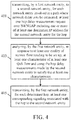
- FIG. 4 illustrates an example of a method performed by a first network entity, such as network entity 820 illustrated in FIG. 8 , according to certain embodiments.
- the first network entity may transmit, to a second network entity, which may also be similar to network entity 820 illustrated in FIG. 8 , for each network entity involved in a path where network delay is to be estimated, at least one hop delay measurement request over N4/NGAP including one or more of at least one destination IP address for the first network entity for the hop, at least one network instance, and at least one DSCP that the second network entity expects to use.
- the first network entity may also transmit at least one measurement period.
- the second network entity may determine at least one transport resource T i expected to be used and/or performs at least one network hop delay benchmarking procedure for only the associated at least one transport resource T i .
- the at least one at least one transport resource T i may include one or more of a transport network resource used and at least one priority setting which may be configured for the transport resource.
- the at least one network hop delay may be a network hop estimated delay determined by transmitting at least one echo request over the at least one transport resource T i and/or measuring RTT/2 when at least one echo response is received in response to the request.
- the second network entity may store at least one estimated network hop delay per destination IP address in a first table, such as illustrated in FIG.7(a) .
- the second network entity may derive for each destination IP address from this first table a second table giving the estimated delay per (Network Instance, DSCP) pair such as illustrated in Table 7(c) using a mapping existing in the second network entity of (Network Instance, DSCP) pair into Transport resource T i .
- the first network entity may analyze at least one characteristic of at least one QoS flow, such as 5QI, QoS characteristics, and/or ARP) and/or at least one configuration path, such as at least one network node expected to be traversed, to determine at least one acceptable network delay.
- the first network entity may analyze at least one value stored in the second table, such as illustrated in FIG. 7(c) , of each hop involved in the QoS flow path and/or the suitable total network delay in order to determine at least one network instance that should be considered for each hop for a given QoS flow.
- the first network entity may transmit at least one corresponding signaling associated with the hop to the second network entity.
- FIG. 5 illustrates an example of a method performed by a first network entity, such as network entity 820 illustrated in FIG. 8 , according to certain embodiments.
- the first network entity may determine, at a given point in time, each peer IP address for which at least one transport resource T i is being used by at least one ongoing PDU session and/or at least one QoS flow. For example, if the first network node is a UPF, the first network node may determine which at least one PDU session is flagged to use at least one QoS monitoring feature since this feature may require that the first network entity insert at least one "accumulated delay" in a GTP extension header. For example, the UPF may have previously received at least one indication from a second network entity, such as network entity 820 illustrated in FIG. 8 , for example, at least one new indication in forward action rule (FAR) per PFCP session (PDU session).
- FAR forward action rule
- the first network entity may perform at least one network hop delay benchmarking procedure for only the associated at least one transport resource T i .
- the at least one at least one transport resource T i may include one or more of a transport network resource used and at least one priority setting which may be configured for that transport resource.
- the at least one network hop delay may be a network hop estimated delay determined by transmitting at least one echo request over the at least one transmit resource T i and/or measuring RTT/2 when at least one echo response is received in response to the request.
- the first network entity may store at least one estimated network hop delay per destination IP address in a first table, such as illustrated in FIG.7(a) .
- the first network entity may derive a second table, such as illustrated in FIG. 7(c) , by, for each peer node associated with an IP destination address, using at least one existing configured mapping of at least one (Network Instance, DSCP) pair into a transport resource T i per IP destination address.
- the second table may associate each IP destination address with an estimated delay per (Network Instance, DSCP) pair entry.
- the first network entity may transmit at least one value of the second table to the at least one second network entity for each IP destination address.
- the first network entity may receive at least one corresponding signaling associated with each hop involved in the path from the second network entity.
- the first network entity may, at the end of at least one measurement period, update the first table and/or the second table for each IP destination address and/or may transmit the updated second table to the second network entity.
- FIG. 6 illustrates an example of a method performed by a first network entity, such as network entity 820 illustrated in FIG. 8 , according to certain embodiments.
- the first network entity may transmit at least one indication to a second network entity, such as network entity 820 illustrated in FIG. 8 , for example, at least one new indication, such as in forward action rule (FAR), per PFCP session (PDU session) indicating whether the PDU session/QoS flow is involved in QoS monitoring feature.
- FAR forward action rule
- PDU session per PFCP session
- the second network entity may determine from the above at least one transport resource T i expected to be used for the QoS monitoring feature and/or performs at least one network hop delay benchmarking procedure for only the associated at least one transport resource T i .
- the at least one at least one transport resource T i may include one or more of a transport network resource used and at least one priority setting which may be configured for that transport resource.
- the at least one network hop delay may be a network hop estimated delay determined by transmitting at least one echo request over the at least one transmit resource T i and/or measuring RTT/2 when at least one echo response is received in response to the request.
- the second network entity may store at least one estimated network hop delay per destination IP address in a first table, such as illustrated in FIG.7(a) .
- the second network entity may derive, for each destination IP address from this first table, a second table giving the estimated delay per (Network Instance, DSCP) pair, such as illustrated in Table 7(c), using a mapping existing in the second network entity of (Network Instance, DSCP) pair into Transport resource T i .
- the second network entity sends the second table to first network entity.
- the first network entity may analyze at least one characteristic of at least one QoS flow, such as 5QI, QoS characteristics, and/or ARP) and/or at least one configuration path, such as at least one network node expected to be traversed, to determine at least one acceptable network delay.
- the first network entity may analyze at least one value stored in the second table of each hop involved in the path and/or the suitable total network delay in order to determine at least one (Network Instance, DSCP) pair that should be considered for each hop for a given QoS flow.
- DSCP Network Instance
- the first network entity may transmit at least one corresponding signaling associated with the hop to the second network entity.
- FIG. 8 illustrates an example of a system according to certain embodiments.
- a system may include multiple devices, such as, for example, user equipment 810 and/or network entity 820.
- User equipment 810 may include one or more of a mobile device, such as a mobile phone, smart phone, personal digital assistant (PDA), tablet, or portable media player, digital camera, pocket video camera, video game console, navigation unit, such as a global positioning system (GPS) device, desktop or laptop computer, single-location device, such as a sensor or smart meter, or any combination thereof.
- a mobile device such as a mobile phone, smart phone, personal digital assistant (PDA), tablet, or portable media player, digital camera, pocket video camera, video game console, navigation unit, such as a global positioning system (GPS) device, desktop or laptop computer, single-location device, such as a sensor or smart meter, or any combination thereof.
- GPS global positioning system
- Network entity 820 may be one or more of a base station, such as an evolved node B (eNB) or 5G or New Radio node B (gNB), a serving gateway, a session management function (SMF), a user plane function (UPF), a 5G NG-RAN node, a server, and/or any other access node or combination thereof.
- a base station such as an evolved node B (eNB) or 5G or New Radio node B (gNB)
- gNB New Radio node B
- SMF session management function
- UPF user plane function
- 5G NG-RAN node a 5G NG-RAN node
- server and/or any other access node or combination thereof.
- CBSD citizens broadband radio service device
- processors 811 and 821 may be embodied by any computational or data processing device, such as a central processing unit (CPU), application specific integrated circuit (ASIC), or comparable device.
- the processors may be implemented as a single controller, or a plurality of controllers or processors.
- At least one memory may be provided in one or more of devices indicated at 812 and 822.
- the memory may be fixed or removable.
- the memory may include computer program instructions or computer code contained therein.
- Memories 812 and 822 may independently be any suitable storage device, such as a non-transitory computer-readable medium.
- a hard disk drive (HDD), random access memory (RAM), flash memory, or other suitable memory may be used.
- the memories may be combined on a single integrated circuit as the processor, or may be separate from the one or more processors.
- the computer program instructions stored in the memory and which may be processed by the processors may be any suitable form of computer program code, for example, a compiled or interpreted computer program written in any suitable programming language.
- Memory may be removable or non-removable.
- Processors 811 and 821 and memories 812 and 822 or a subset thereof may be configured to provide means corresponding to the various blocks of FIGS. 1-7 .
- the devices may also include positioning hardware, such as GPS or micro electrical mechanical system (MEMS) hardware, which may be used to determine a location of the device.
- MEMS micro electrical mechanical system
- Other sensors are also permitted and may be included to determine location, elevation, orientation, and so forth, such as barometers, compasses, and the like.
- transceivers 813 and 823 may be provided, and one or more devices may also include at least one antenna, respectively illustrated as 814 and 824.
- the device may have many antennas, such as an array of antennas configured for multiple input multiple output (MIMO) communications, or multiple antennas for multiple radio access technologies. Other configurations of these devices, for example, may be provided.
- Transceivers 813 and 823 may be a transmitter, a receiver, or both a transmitter and a receiver, or a unit or device that may be configured both for transmission and reception.
- the memory and the computer program instructions may be configured, with the processor for the particular device, to cause a hardware apparatus such as user equipment to perform any of the processes described below (see, for example, FIGS. 1-7 ). Therefore, in certain embodiments, a non-transitory computer-readable medium may be encoded with computer instructions that, when executed in hardware, perform a process such as one of the processes described herein. Alternatively, certain embodiments may be performed entirely in hardware.
- an apparatus may include circuitry configured to perform any of the processes or functions illustrated in FIGS. 1-7 .
- circuitry may be hardware-only circuit implementations, such as analog and/or digital circuitry.
- circuitry may be a combination of hardware circuits and software, such as a combination of analog and/or digital hardware circuit(s) with software or firmware, and/or any portions of hardware processor(s) with software (including digital signal processor(s)), software, and at least one memory that work together to cause an apparatus to perform various processes or functions.
- circuitry may be hardware circuit(s) and or processor(s), such as a microprocessor(s) or a portion of a microprocessor(s), that include software, such as firmware for operation. Software in circuitry may not be present when it is not needed for the operation of the hardware.
- FIG. 9 illustrates a 5G non-roaming reference architecture according to certain embodiments.
- NSF network slice selection function
- NEF network exposure function
- NRF network repository function
- PCF policy control function
- UDM universal data management
- AF application function
- AUSF authentication server function
- AMF core access and mobility management function
- SMF session management function
- at least one of these entities may be in communication with one or more of at least one user equipment (UE), radio access network (RAN), at least one user plane function (UPF), and at least one data network (DN).
- UE user equipment
- RAN radio access network
- UPF user plane function
- DN data network
Landscapes
- Engineering & Computer Science (AREA)
- Computer Networks & Wireless Communication (AREA)
- Signal Processing (AREA)
- Quality & Reliability (AREA)
- Physics & Mathematics (AREA)
- Electromagnetism (AREA)
- Environmental & Geological Engineering (AREA)
- Data Exchanges In Wide-Area Networks (AREA)
Applications Claiming Priority (1)
| Application Number | Priority Date | Filing Date | Title |
|---|---|---|---|
| US201962827608P | 2019-04-01 | 2019-04-01 |
Publications (2)
| Publication Number | Publication Date |
|---|---|
| EP3720071A2 true EP3720071A2 (de) | 2020-10-07 |
| EP3720071A3 EP3720071A3 (de) | 2020-12-16 |
Family
ID=70154240
Family Applications (1)
| Application Number | Title | Priority Date | Filing Date |
|---|---|---|---|
| EP20167463.7A Pending EP3720071A3 (de) | 2019-04-01 | 2020-04-01 | Benchmarking von verzögerungsschätzungen in einem 5g-netzwerk zur dienstgüteflusseinrichtung und -überwachung |
Country Status (3)
| Country | Link |
|---|---|
| US (1) | US11412403B2 (de) |
| EP (1) | EP3720071A3 (de) |
| CN (1) | CN111800814B (de) |
Families Citing this family (6)
| Publication number | Priority date | Publication date | Assignee | Title |
|---|---|---|---|---|
| CN111901242B (zh) * | 2019-05-06 | 2022-04-22 | 华为技术有限公司 | 一种路由规则的管理方法及通信装置 |
| KR102709500B1 (ko) * | 2019-09-17 | 2024-09-25 | 삼성전자주식회사 | 무선 통신 시스템에서 psa-upf 재배치를 위한 장치 및 방법 |
| WO2021089145A1 (en) * | 2019-11-07 | 2021-05-14 | Huawei Technologies Co., Ltd. | Network entities for enhanced qos monitoring |
| WO2021161867A1 (en) * | 2020-02-12 | 2021-08-19 | Sharp Kabushiki Kaisha | Channel dropping and processing timing requirements for uplink channel collision with different priorities |
| CN115334532A (zh) * | 2021-05-10 | 2022-11-11 | 华为技术有限公司 | 数据传输方法和相关设备 |
| US11943146B2 (en) * | 2021-10-01 | 2024-03-26 | VMware LLC | Traffic prioritization in SD-WAN |
Family Cites Families (12)
| Publication number | Priority date | Publication date | Assignee | Title |
|---|---|---|---|---|
| US6765905B2 (en) * | 2002-04-18 | 2004-07-20 | Motorola, Inc. | Method for reducing packet data delay variation in an internet protocol network |
| US7506052B2 (en) * | 2005-04-11 | 2009-03-17 | Microsoft Corporation | Network experience rating system and method |
| US8880724B2 (en) * | 2008-01-31 | 2014-11-04 | Cisco Technology, Inc. | Event triggered traceroute for optimized routing in a computer network |
| US10250474B2 (en) * | 2014-03-31 | 2019-04-02 | Cisco Technology, Inc. | Calculating latency in computer networks |
| US9906453B2 (en) * | 2015-11-13 | 2018-02-27 | Wipro Limited | System and method for modifying per hop behavior of one or more expedited forwarding packets |
| CN108541390B (zh) * | 2016-01-28 | 2021-08-31 | 瑞典爱立信有限公司 | Oss节点、网络节点和在其中执行的方法 |
| US20180279319A1 (en) * | 2017-03-23 | 2018-09-27 | Nokia Technologies Oy | Dynamic provisioning of quality of service for end-to-end quality of service control in device-to-device communication |
| CN113518031B (zh) * | 2017-06-16 | 2024-11-22 | 华为技术有限公司 | 一种业务转发的方法及网络设备 |
| US10986528B2 (en) * | 2018-02-15 | 2021-04-20 | Huawei Technologies Co., Ltd. | Tracking QoS violated events |
| US10230605B1 (en) * | 2018-09-04 | 2019-03-12 | Cisco Technology, Inc. | Scalable distributed end-to-end performance delay measurement for segment routing policies |
| US11778491B2 (en) * | 2019-08-02 | 2023-10-03 | Intel Corporation | 5G user plane packet delay performance measurements |
| US11153190B1 (en) * | 2021-01-21 | 2021-10-19 | Zscaler, Inc. | Metric computation for traceroute probes using cached data to prevent a surge on destination servers |
-
2020
- 2020-03-31 US US16/836,120 patent/US11412403B2/en active Active
- 2020-04-01 EP EP20167463.7A patent/EP3720071A3/de active Pending
- 2020-04-01 CN CN202010251754.XA patent/CN111800814B/zh active Active
Also Published As
| Publication number | Publication date |
|---|---|
| US11412403B2 (en) | 2022-08-09 |
| CN111800814B (zh) | 2024-12-13 |
| US20200314686A1 (en) | 2020-10-01 |
| EP3720071A3 (de) | 2020-12-16 |
| CN111800814A (zh) | 2020-10-20 |
Similar Documents
| Publication | Publication Date | Title |
|---|---|---|
| US11412403B2 (en) | Benchmarking of delay estimates in a 5G network for quality of service flow setup and monitoring | |
| US20240291623A1 (en) | Cli measurement reporting in telecommunication systems | |
| CN112997456B (zh) | 用于满足无线通信中时间控制要求的方法、装置和系统 | |
| US11678288B2 (en) | Synchronization of time sensitive communication hold-and-forward buffers with time sensitive communication assistance information | |
| CN111064629B (zh) | 用于测量时延的方法和装置 | |
| WO2020107411A1 (en) | Method and network device for terminal device positioning with integrated access backhaul | |
| CN113826436B (zh) | 一种通信方法、装置及设备 | |
| US20210297893A1 (en) | Method and Network Nodes for Handling End-to-End Delays for Voice Calls in a Communication Network | |
| CN112352467B (zh) | 语音可保持性评估 | |
| US12170623B2 (en) | Deterministic Quality of Service | |
| JP5451775B2 (ja) | ワイヤレスネットワークにおけるリンク品質推定方法 | |
| CN114745776B (zh) | 基于无线网络的时钟同步方法、装置、设备及介质 | |
| WO2018218998A1 (zh) | 资源调度方法、终端设备和网络侧设备 | |
| WO2019085660A1 (zh) | 规避信号干扰的方法及网络设备 | |
| US20240147286A1 (en) | Methods of ue-assisted report | |
| US10924948B2 (en) | Collecting characteristics for a path between IP end-points associated with a radio access transport network | |
| CN117812609A (zh) | 一种网络时延或抖动处理方法及装置、通信设备 | |
| JP2017523693A (ja) | パケットロス検出のための方法、装置、およびシステム | |
| WO2018214610A1 (zh) | 一种发送和接收数据包的方法、设备及系统 | |
| US12507235B2 (en) | Resource management for scheduling assignment in wireless communication | |
| CN114902718B (zh) | 用于获取QoS级别的平均活动时间段的第一网络实体、第二网络实体和第三网络实体 | |
| CN120937423A (zh) | 装置、方法和计算机程序 | |
| CN120238480A (zh) | 网络质量参数测量方法及相关设备 | |
| EP4672832A1 (de) | Kommunikationsverfahren, vorrichtung, chip, speichermedium und programmprodukt | |
| WO2024169927A1 (zh) | 直通链路定位参考信号sl-prs的搜索窗的确定方法和装置 |
Legal Events
| Date | Code | Title | Description |
|---|---|---|---|
| PUAI | Public reference made under article 153(3) epc to a published international application that has entered the european phase |
Free format text: ORIGINAL CODE: 0009012 |
|
| STAA | Information on the status of an ep patent application or granted ep patent |
Free format text: STATUS: THE APPLICATION HAS BEEN PUBLISHED |
|
| AK | Designated contracting states |
Kind code of ref document: A2 Designated state(s): AL AT BE BG CH CY CZ DE DK EE ES FI FR GB GR HR HU IE IS IT LI LT LU LV MC MK MT NL NO PL PT RO RS SE SI SK SM TR |
|
| AX | Request for extension of the european patent |
Extension state: BA ME |
|
| PUAL | Search report despatched |
Free format text: ORIGINAL CODE: 0009013 |
|
| AK | Designated contracting states |
Kind code of ref document: A3 Designated state(s): AL AT BE BG CH CY CZ DE DK EE ES FI FR GB GR HR HU IE IS IT LI LT LU LV MC MK MT NL NO PL PT RO RS SE SI SK SM TR |
|
| AX | Request for extension of the european patent |
Extension state: BA ME |
|
| RIC1 | Information provided on ipc code assigned before grant |
Ipc: H04W 28/12 20090101ALI20201106BHEP Ipc: H04L 12/911 20130101ALI20201106BHEP Ipc: H04L 12/841 20130101AFI20201106BHEP Ipc: H04L 12/26 20060101ALI20201106BHEP Ipc: H04L 12/927 20130101ALI20201106BHEP Ipc: H04W 28/02 20090101ALI20201106BHEP |
|
| STAA | Information on the status of an ep patent application or granted ep patent |
Free format text: STATUS: REQUEST FOR EXAMINATION WAS MADE |
|
| 17P | Request for examination filed |
Effective date: 20210616 |
|
| RBV | Designated contracting states (corrected) |
Designated state(s): AL AT BE BG CH CY CZ DE DK EE ES FI FR GB GR HR HU IE IS IT LI LT LU LV MC MK MT NL NO PL PT RO RS SE SI SK SM TR |
|
| STAA | Information on the status of an ep patent application or granted ep patent |
Free format text: STATUS: EXAMINATION IS IN PROGRESS |
|
| 17Q | First examination report despatched |
Effective date: 20230126 |