EP3719680B1 - Biometrische digitale signaturerzeugung zur identitätsprüfung - Google Patents
Biometrische digitale signaturerzeugung zur identitätsprüfung Download PDFInfo
- Publication number
- EP3719680B1 EP3719680B1 EP19191716.0A EP19191716A EP3719680B1 EP 3719680 B1 EP3719680 B1 EP 3719680B1 EP 19191716 A EP19191716 A EP 19191716A EP 3719680 B1 EP3719680 B1 EP 3719680B1
- Authority
- EP
- European Patent Office
- Prior art keywords
- user
- biometric
- digital signature
- biometric digital
- information
- Prior art date
- Legal status (The legal status is an assumption and is not a legal conclusion. Google has not performed a legal analysis and makes no representation as to the accuracy of the status listed.)
- Active
Links
Images







Classifications
-
- G—PHYSICS
- G06—COMPUTING OR CALCULATING; COUNTING
- G06F—ELECTRIC DIGITAL DATA PROCESSING
- G06F21/00—Security arrangements for protecting computers, components thereof, programs or data against unauthorised activity
- G06F21/30—Authentication, i.e. establishing the identity or authorisation of security principals
- G06F21/31—User authentication
- G06F21/32—User authentication using biometric data, e.g. fingerprints, iris scans or voiceprints
-
- G—PHYSICS
- G06—COMPUTING OR CALCULATING; COUNTING
- G06F—ELECTRIC DIGITAL DATA PROCESSING
- G06F21/00—Security arrangements for protecting computers, components thereof, programs or data against unauthorised activity
- G06F21/30—Authentication, i.e. establishing the identity or authorisation of security principals
- G06F21/31—User authentication
- G06F21/33—User authentication using certificates
-
- G—PHYSICS
- G06—COMPUTING OR CALCULATING; COUNTING
- G06F—ELECTRIC DIGITAL DATA PROCESSING
- G06F21/00—Security arrangements for protecting computers, components thereof, programs or data against unauthorised activity
- G06F21/60—Protecting data
- G06F21/64—Protecting data integrity, e.g. using checksums, certificates or signatures
-
- H—ELECTRICITY
- H04—ELECTRIC COMMUNICATION TECHNIQUE
- H04L—TRANSMISSION OF DIGITAL INFORMATION, e.g. TELEGRAPHIC COMMUNICATION
- H04L63/00—Network architectures or network communication protocols for network security
- H04L63/08—Network architectures or network communication protocols for network security for authentication of entities
- H04L63/0861—Network architectures or network communication protocols for network security for authentication of entities using biometrical features, e.g. fingerprint, retina-scan
-
- H—ELECTRICITY
- H04—ELECTRIC COMMUNICATION TECHNIQUE
- H04L—TRANSMISSION OF DIGITAL INFORMATION, e.g. TELEGRAPHIC COMMUNICATION
- H04L9/00—Cryptographic mechanisms or cryptographic arrangements for secret or secure communications; Network security protocols
- H04L9/32—Cryptographic mechanisms or cryptographic arrangements for secret or secure communications; Network security protocols including means for verifying the identity or authority of a user of the system or for message authentication, e.g. authorization, entity authentication, data integrity or data verification, non-repudiation, key authentication or verification of credentials
- H04L9/3226—Cryptographic mechanisms or cryptographic arrangements for secret or secure communications; Network security protocols including means for verifying the identity or authority of a user of the system or for message authentication, e.g. authorization, entity authentication, data integrity or data verification, non-repudiation, key authentication or verification of credentials using a predetermined code, e.g. password, passphrase or PIN
- H04L9/3231—Biological data, e.g. fingerprint, voice or retina
-
- H—ELECTRICITY
- H04—ELECTRIC COMMUNICATION TECHNIQUE
- H04L—TRANSMISSION OF DIGITAL INFORMATION, e.g. TELEGRAPHIC COMMUNICATION
- H04L9/00—Cryptographic mechanisms or cryptographic arrangements for secret or secure communications; Network security protocols
- H04L9/32—Cryptographic mechanisms or cryptographic arrangements for secret or secure communications; Network security protocols including means for verifying the identity or authority of a user of the system or for message authentication, e.g. authorization, entity authentication, data integrity or data verification, non-repudiation, key authentication or verification of credentials
- H04L9/3236—Cryptographic mechanisms or cryptographic arrangements for secret or secure communications; Network security protocols including means for verifying the identity or authority of a user of the system or for message authentication, e.g. authorization, entity authentication, data integrity or data verification, non-repudiation, key authentication or verification of credentials using cryptographic hash functions
- H04L9/3239—Cryptographic mechanisms or cryptographic arrangements for secret or secure communications; Network security protocols including means for verifying the identity or authority of a user of the system or for message authentication, e.g. authorization, entity authentication, data integrity or data verification, non-repudiation, key authentication or verification of credentials using cryptographic hash functions involving non-keyed hash functions, e.g. modification detection codes [MDCs], MD5, SHA or RIPEMD
-
- H—ELECTRICITY
- H04—ELECTRIC COMMUNICATION TECHNIQUE
- H04L—TRANSMISSION OF DIGITAL INFORMATION, e.g. TELEGRAPHIC COMMUNICATION
- H04L9/00—Cryptographic mechanisms or cryptographic arrangements for secret or secure communications; Network security protocols
- H04L9/32—Cryptographic mechanisms or cryptographic arrangements for secret or secure communications; Network security protocols including means for verifying the identity or authority of a user of the system or for message authentication, e.g. authorization, entity authentication, data integrity or data verification, non-repudiation, key authentication or verification of credentials
- H04L9/3247—Cryptographic mechanisms or cryptographic arrangements for secret or secure communications; Network security protocols including means for verifying the identity or authority of a user of the system or for message authentication, e.g. authorization, entity authentication, data integrity or data verification, non-repudiation, key authentication or verification of credentials involving digital signatures
Definitions
- the present disclosure relates to identify verification.
- the present disclosure relates to biometric digital signature generation for identity verification and settlements verification for distributed ledgers.
- US20160050213A1 relates to a system and a method for the provision of a profile of identification.
- the invention provides the method for the provision of a profile of information relevant to the identification of an entity, comprising the steps of providing at least one item of identity information to an identifying authority, wherein the identifying authority collects biometric information from the entity and utilizes the identity information and biometric information to form a profile of information relevant to the identification of the entity.
- the invention provides the system for the provision of a profile of information relevant to the identification of an entity, comprising a database arranged to provide at least one item of identity information to an identifying authority, wherein the identifying authority collects biometric information from the entity utilizing a biometric information collection device and a processor utilizes the identity information and biometric information to form a profile of information relevant to the identification of the entity.
- the biometric information may include at least one of a fingerprint, a retinal scan, a palm scan and a facial scan.
- Verification addresses may be established on a block chain by: associating identifiers with individuals having previously verified personal identities, assigning verification addresses on a block chain to the individuals, and recording identifiers and biometric data associated with the individuals at corresponding verification addresses.
- Block chain-based multifactor personal identity verification using the verification addresses may be performed by: receiving one or more identifiers in connection with one or more requests to verify an identity of one or more individuals, extracting the biometric data associated with the one or more individuals from the corresponding verification addresses, and verifying the identity of the one or more individuals upon receiving matching biometric data and private keys.
- Biometric identifiers are typically include physiological characteristics, but may also include behavioral characteristics and/or other characteristics.
- Physiological characteristics may be related to the shape of an individual's body (i.e. one or more of fingerprint, palm veins, face recognition, DNA, palm print, hand geometry, iris recognition, retina, odor or scent, and/or other physiological characteristics).
- Behavioral characteristics may be related to a pattern of behavior of an individual (i.e. one or more of typing rhythm, gait, voice, and/or other behavioral characteristics).
- the biometric data may include one or more of an image or other visual representation of a physiological characteristic, a recording of a behavioral characteristic, a template of a physiological characteristic and/or behavioral characteristic, and/or other biometric data.
- US20180309581 A1 discloses a method and system for decentralized biometric signing of a digital contract.
- a digital identity including a private key is created.
- the private key was encrypted on a mobile device via use of captured biometric data.
- a digital hash of the digital contract is generated.
- a user using biometric data is authenticated. Usage of the biometric data is authorized. Responsive to the usage of the biometric data being authorized, the encrypted private key is decrypted.
- the digital hash is signed with the decrypted private key.
- the signed digital hash is stored in a blockchain.
- US20190036692 A1 describes a processor implemented method for generating a recovery key from a mnemonic sentence and a Personal Identification Number (PIN) code to enable users to manage their own credentials, using a smart contract on a blockchain.
- the method includes the steps of generating, using a first cryptographic processor on the first device associated with the user, a first set of credentials; generating a mnemonic sentence from pseudorandom data; applying a key derivation algorithm to generate the recovery key and conditionally registering an identifier of the recovery key for the first public key of the first device in a smart contract in the blockchain.
- the first set of credentials includes a first blockchain-compatible public-private key pair associated with the user.
- the first blockchain-compatible public-private key pair includes a first public key and a first private key.
- the first private key is restricted to the first cryptographic processor on the first device.
- Distributed ledgers such as blockchain, provide a unique system for recording transactions.
- distributed ledgers store a log of transactions that may be replicated across a distributed network.
- Cryptography and digital signatures are often used to determine valid parties and transactions such that all parties agree on the state of the ledger in real-time without having to rely on a trusted third party.
- a user may lose their digital signature for the distributed ledger. It can be a burdensome and lengthy process for the user to obtain another valid digital signature.
- a method for identity verification of a user comprises sensing, by at least one sensor, biometric information from the user.
- the method further comprises generating, by a sensor device, biometric data from the biometric information.
- the method comprises transmitting, by the sensor device, the biometric data to a user device.
- the method comprises hashing, by the user device, at least a portion of the biometric data to generate a biometric digital signature for the user.
- the method comprises transmitting, by the user device, the biometric digital signature to a verification node.
- the method comprises comparing, by the verification node, the biometric digital signature to a previous biometric digital signature for the user. Further, the method comprises verifying, by the verification node, the user when the verification node determines that the biometric digital signature is identical to the previous biometric digital signature for the user.
- the method further comprises, when the user is verified, generating and transmitting, by the verification node to the user device, a confirmation verification signal indicating that the user is verified. In at least one embodiment, the method further comprises not verifying, by the verification node, the user when the verification node determines that the biometric digital signature is not identical to the previous biometric digital signature for the user. In some embodiments, method further comprises, when the user is not verified, generating and transmitting, by the verification node to the user device, an abort verification signal indicating that the user is not verified.
- the verification node determines that the biometric digital signature is identical to the previous biometric digital signature for the user, when the verification node determines that the biometric digital signature is one-hundred (100) percent the same as (i.e. identical to) the previous biometric digital signature for the user.
- the method when the user is verified, further comprises allowing the user to transfer assignment of a data block from the user to a beneficiary; allowing the user to transfer ownership of property from the user to the beneficiary; allowing the user to obtain medical records for the user; allowing the user to vote on behalf of the user; allowing the user to obtain travel documentation for the user; and/or allowing the user to make banking transactions on behalf of the user.
- the biometric information comprises at least three fingerprints, at least a portion of a deoxyribonucleic acid (DNA) sequence, at least a portion of at least one facial feature, isotopic information from odor, at least a portion of an eye feature, audio information from a voice, a three-dimensional (3D) surface scan of at least a portion of the user, and/or a two-dimensional (2D) surface scan of at least the portion of the user.
- DNA deoxyribonucleic acid
- the user device utilizes a hash algorithm or a fuzzy hash algorithm to hash at least a portion of the biometric data.
- the user device utilizes an elliptical curve digital signature algorithm (ECDSA) to hash at least a portion of the biometric data.
- EDSA elliptical curve digital signature algorithm
- the user device utilizes a SHA-256 algorithm, a Merkle-Damgard algorithm, a MD5 algorithm, a SHA-1 algorithm, a SHA-2 algorithm, a RACE Integrity Primitives Evaluation Message Digest-160 (RIPEMD-160) algorithm, a Whirlpool algorithm, or a BLAKE2 algorithm to hash at least a portion of the biometric data.
- the biometric digital signature is generated by additionally hashing, by the user device, additional identifying information.
- the additional identifying information comprises location information, temperature information, humidity information, date information, time information, elevation information, range information, and/or personal information.
- the biometric digital signature is a private identity key for the user.
- the user device is a smart phone, a tablet device, a personal computer, a laptop computer, a smart watch, a smart television (TV), a car, or a computing device.
- the user device comprises at least one sensor, the sensor device, and/or the verification node.
- a method for identity verification of at least one user comprises sensing, by at least one sensor, biometric information from the user.
- the method further comprises generating, by a sensor device, biometric data from the biometric information.
- the method comprises transmitting, by the sensor device, the biometric data to a user device.
- the method comprises hashing, by a user device, at least a portion of the biometric data to generate a biometric digital signature for the user.
- the method comprises storing, by the user device, at least a portion of the biometric digital signature for the user to a host biometric digital signature held by each of at least n (e.g., six (6)) number of persons to generate the host biometric digital signature for each of the n number of persons, such that a combination of the host biometric digital signatures for at least m (e.g., four (4)) number of the n number of persons comprises all of the biometric digital signature for the user, where the m number is a number greater than half of the n number.
- the method comprises generating, by the user device, a reconstructed biometric digital signature for the user by using the hosted biometric digital signatures for at least m number of the n number of persons.
- the method comprises transmitting, by the user device, the reconstructed biometric digital signature to a verification node. Also, the method comprises comparing, by the verification node, the reconstructed biometric digital signature to a previous biometric digital signature for the user. Further, the method comprises verifying, by the verification node, the user when the verification node determines that the reconstructed biometric digital signature is identical to the previous biometric digital signature for the user.
- a system for identity verification of a user comprises at least one sensor to sense biometric information from the user.
- the system further comprises a sensor device to generate biometric data from the biometric information, and to transmit the biometric data to a user device.
- the system comprises the user device to hash at least a portion of the biometric data to generate a biometric digital signature for the user, and to transmit the biometric digital signature to a verification node.
- the system comprises the verification node to compare the biometric digital signature to a previous biometric digital signature for the user, and to verify the user when the verification node determines that the biometric digital signature is identical to the previous biometric digital signature for the user.
- the verification node when the user is verified, the verification node is further to generate and to transmit to the user device, a confirmation verification signal indicating that the user is verified. In at least one embodiment, the verification node is to not verify the user when the verification node determines that the biometric digital signature is not identical to the previous biometric digital signature for the user. In some embodiments, when the user is not verified, the verification node is further to generate and to transmit to the user device, an abort verification signal indicating that the user is not verified. In one or more embodiments, the user device comprises at least one sensor and the sensor device.
- the user device is to utilize a hash algorithm or a fuzzy hash algorithm to hash at least a portion of the biometric data to generate the biometric digital signature for the user.
- the user device is to utilize an elliptical curve digital signature algorithm (ECDSA) to hash at least a portion of the biometric data.
- EDSA elliptical curve digital signature algorithm
- the user device utilizes a SHA-256 algorithm, a Merkle-Damgard algorithm, a MD5 algorithm, a SHA-1 algorithm, a SHA-2 algorithm, a RACE Integrity Primitives Evaluation Message Digest-160 (RIPEMD-160) algorithm, a Whirlpool algorithm, or a BLAKE2 algorithm to hash at least a portion of the biometric data.
- the methods and apparatus disclosed herein provide an operative system for biometric digital signature generation for identity verification.
- the system provides biometric digital signature generation, identity verification, and settlements verification for distributed ledgers.
- the system of the present disclosure generates a biometric digital signature for a user by hashing with a fuzzy hash algorithm (or alternatively a hash algorithm (e.g., a non-fuzzy hash algorithm)) biometric data from the user, where the biometric digital signature may be used for identity verification of the user that can be utilized for settlements verification for distributed ledgers.
- a cryptographic hash function has certain properties, which make it suitable for use in cryptography.
- a hash algorithm i.e.
- a non-fuzzy hash algorithm maps data of an arbitrary size to a bit string of a fixed size (i.e. a hash).
- a fuzzy hash algorithm maps data of an arbitrary size to a bit string of a non-fixed size (i.e. a hash).
- the system of the present disclosure solves the problem in digital signature creation where the source (i.e. user) able to create and protect their digital signature originating from their own biometric data.
- the system of the present disclosure employs the use of a fuzzy hash algorithm (or alternatively a hash algorithm (i.e. a non-fuzzy hash algorithm)) to create the digital signature from the biometric data.
- a fuzzy hash algorithm or alternatively to a hash algorithm (i.e. a non-fuzzy hash algorithm)
- the obtained biometric data from the source does not need to be one-hundred (100) percent accurate, as the fuzzy hash creates a digital signature without requiring 100 percent of the biometric data to be accurate.
- Fuzzy hash digital signature generation improves privacy and security when multiple transactions are required from the biometric source on a public ledger by allowing the generation of new digital signatures and comparing them to the original digital signature that is stored on the distributed ledgers.
- Losing private keys is very common problem these days. Private keys are hacked from computer and smart phone devices. The standard way to generate a private key is either to use a random generator to create a private key or to use a SEED phrase (Mnemonic). The SEED contains the main address with corresponding private key, and all child addresses will be generated from that SEED. If a person loses the phone or computer, he/she can generate the addresses using the SEED using another smart device or computer. Unfortunately, if a hacker or malicious user gets access to the SEED then could also re-generate the private keys.
- the system and the method of the present disclosure create a layer of security by generating private keys "on the fly” by accessing for example user geometric data and geolocation data. That enables creating a key which is not stored on any devices but generated among others by the users body and geological movements.
- the solution not only protects the user from theft but can also be used for authentication for various services that needs to allocate an account or service with a specific person.
- the geolocation solution creates a safe environment which means somebody not present at the geolocation, for example a person in North Korea, will not be able to generate the private key of a user living, for example, in USA where he needs to be in his home to generate his private key and sign a transaction (which is signed with his private key).
- the malicious user would need to be on that location, in order to mimic the private key generation, including owning a sample of the owners biometric data, like for example three fingerprints or facial scan.
- Embodiments of the present disclosure may be described herein in terms of functional and/or logical components and various processing steps. It should be appreciated that such components may be realized by any number of hardware, software, and/or firmware components configured to perform the specified functions. For example, an embodiment of the present disclosure may employ various integrated circuit components (e.g., memory elements, digital signal processing elements, logic elements, look-up tables, or the like), which may carry out a variety of functions under the control of one or more processors, microprocessors, or other control devices.
- integrated circuit components e.g., memory elements, digital signal processing elements, logic elements, look-up tables, or the like
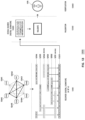
- FIG. 1A is a diagram showing the disclosed system 100 for biometric digital signature generation for identity verification of a user 105, in accordance with at least one embodiment of the present disclosure.
- sensors 110a - 110n are shown to be communicatively connected (via wire and/or wirelessly) to a sensor device 120.
- the sensor device 120 comprises a processor(s) 123, a communications interface 122, and memory 121. It should be noted that in other embodiments, the sensor device 120 may comprise more or less number of components than as shown in FIG. 1A .
- the sensors 110a - 110n may comprise various different types of sensors including, but not limited to, image scanning devices, chemical detection devices, temperature sensors, humidity sensors, elevation sensors, direction sensors, and/or Global Position System (GPS) signal receivers.
- GPS Global Position System
- a user device 130 is shown to comprise a processor(s) 133, a communications interface 132, and memory 131. Similar to the sensor device 120, in other embodiments, the user device 130 may comprise more or less number of components than as shown in FIG. 1A .
- the sensor device 120 is communicatively connected (via wire (e.g., universal serial bus (USB)) and/or wirelessly) to the user device 130.
- the user device 130 is a computing device associated with the user 105.
- a smart phone a tablet device, a personal computer, a laptop computer, a smart watch, a smart television (TV), a car, or a computing device (e.g., any computing device that is capable of running an operating system, such as Android, OSX, Windows, Unix, or future operating systems).
- a computing device e.g., any computing device that is capable of running an operating system, such as Android, OSX, Windows, Unix, or future operating systems.
- the user device 130 is communicatively connected (via wire and/or wirelessly), for example over the internet 145 (and/or other public and/or private network(s) and/or intranet(s)), to a node (e.g., a verification node) 140.
- the node 140 is shown to comprise a processor(s) 143 and a database 144. In other embodiments, the node 140 may comprise more or less number of components than as shown in FIG. 1A .
- the node 140 is a computing device, such as a server. It should be noted that, in one or more embodiments, various different types of computing devices may be employed for the node 140.
- the user device 130 may comprise at least one of the sensors 110a - 110n, the sensor device 120, and/or the node (e.g., verification node) 140.
- At least one sensor 110a - 110n senses biometric information from the user 105.
- biometric information may be sensed from the user 105 including, but not limited to, fingerprint information, information from a blood sample (e.g., a deoxyribonucleic acid (DNA) sequence), facial feature information, isotopic information from odor, eye feature information, audio information from voice, a three-dimensional (3D) surface scan of at least a portion of the user 105, and/or a two-dimensional (2D) surface scan of at least the portion of the user 105.
- a blood sample e.g., a deoxyribonucleic acid (DNA) sequence
- At least one sensor 110a - 110n After at least one sensor 110a - 110n has sensed biometric information from the user 105, at least one sensor 110a - 110n transmits (via wire and/or wirelessly) the biometric information to the sensor device 120.
- the sensor device 120 receives the biometric information of the user 105, at least one processor 123 converts the biometric information (e.g., in an analog data format) to biometric data (e.g., in a digital data format, such as a binary number and/or hexadecimal number).
- the sensor device 120 may store the biometric data in memory 121.
- a communications interface 122 (e.g., which may contain a transmitter and/or receiver) of the sensor device 120 transmits (via wire and/or wirelessly) (e.g., via USB) the biometric data for the user 105 to the user device 130.
- At least one processor 133 of the user device 130 utilizes a fuzzy hash algorithm (or alternatively a hash algorithm) to hash at least a portion of the biometric data to generate a biometric digital signature for the user 105.
- the user device 130 utilizes an elliptical curve digital signature algorithm (ECDSA) to hash at least a portion of the biometric data to generate a biometric digital signature for the user 105.
- EDSA elliptical curve digital signature algorithm
- hash algorithms may be employed by the user device 130 of the disclosed system 100 to hash including, but not limited to, a SHA-256 algorithm, a Merkle-Damgard algorithm, a MD5 algorithm, a SHA-1 algorithm, a SHA-2 algorithm, a RACE Integrity Primitives Evaluation Message Digest-160 (RIPEMD-160) algorithm, a Whirlpool algorithm, and a BLAKE2 algorithm.
- additional identifying information for the user 105 may be hashed (along with at least a portion of the biometric data) by at least one processor 133 utilizing a fuzzy hash algorithm or a hash algorithm to generate the biometric digital signature for the user 105.
- additional identifying information for the user 105 include, but are not limited to, location information, temperature information, humidity information, date information, time information, elevation information, range information, and/or personal information (e.g., date of birth and/or at least a portion of a social security number).
- the biometric digital signature for the user 105 may be utilized as a private identity key for user 105.
- the user 105 may use this private identity key to be able to conduct transactions, access data, and/or participate in activities.
- the user device 130 stores the biometric digital signature in memory 131.
- a user 105 when a user 105 desires to conduct a transaction (e.g., make a banking transaction, transfer assignment of a data block of a blockchain from the user 105 to a beneficiary and/or allow the user 105 to transfer ownership of property from the user 105 to a beneficiary), access data (e.g., obtain medical records for the user 105 and/or obtain travel documentation for the user), and/or participate in activities (e.g., vote on behalf of the user 105); the user 105 may be verified by having the biometric digital signature validated.
- a transaction e.g., make a banking transaction, transfer assignment of a data block of a blockchain from the user 105 to a beneficiary and/or allow the user 105 to transfer ownership of property from the user 105 to a beneficiary
- access data e.g., obtain medical records for the user 105 and/or obtain travel documentation for the user
- participate in activities e.g., vote on behalf of the user 105
- the communications interface 132 of the user device 130 first transmits (via wire and/or wirelessly), for example over the internet 145 (and/or other public and/or private network(s) and/or intranet(s)), the biometric digital signature of the user 105 to the node (e.g., a verification node) 140.
- the node e.g., a verification node
- At least one processor 143 of the verification node 140 compares the biometric digital signature for the user 105 to a previous biometric digital signature for the user 105.
- the previous biometric digital signature for the user 105 is a biometric digital signature that was previously generated and validated for the user 105 in the past.
- the database 144 comprises at least one database. In one or more embodiments, at least one of the databases of database 144 of the node 140 comprises the previous biometric digital signature for the user 105. In at least one embodiment, at least one of the databases of database 144 comprises biometric digital signatures for a plurality of different users (including the user 105). In at least one embodiment, at least one of the databases of the database 144 is a distributed ledger (e.g., which comprises a blockchain).
- At least one processor 143 After at least one processor 143 has compared the biometric digital signature for the user 105 to the previous biometric digital signature for the user 105, if at least one processor 143 determines that the biometric digital signature for the user 105 is identical to the previous biometric digital signature for the user 105, at least one processor 143 then validates the biometric digital signature, which verifies the user 105. In one or more embodiments, at least one processor 143 determines that the biometric digital signature for the user 105 is identical to the previous biometric digital signature for the user 105, when at least one processor 143 determines that the biometric digital signature for the user 105 is one-hundred (100) percent the same as (i.e. identical to) the previous biometric digital signature for the user 105.
- At least one processor 143 determines that the biometric digital signature for the user 105 is identical to the previous biometric digital signature for the user 105, at least one processor 143 generates a confirmation verification signal 141, which indicates that the biometric digital signature has been validated.
- the node 140 transmits (via wire and/or wirelessly), for example via the internet 145, the confirmation verification signal 141 to the communications interface 132 of the user device 130 to notify the user 105 that the biometric digital signature has been validated and, thus, that the user 105 has been verified.
- the user 105 is able to conduct the transaction (e.g., transfer assignment of a block in a blockchain), access the data, and/or participate in the activity.
- At least one processor 143 determines that the biometric digital signature for the user 105 is not identical to the previous biometric digital signature for the user 105, at least one processor 143 generates an abort verification signal 142, which indicates that the biometric digital signature has not been validated.
- the node 140 transmits (via wire and/or wirelessly), for example via the internet 145, the abort verification signal 142 to the communications interface 132 of the user device 130 to notify the user 105 that the biometric digital signature has not been validated and, thus, that the user 105 has not been verified. Since the user 105 has not been verified, the user 105 is unable to conduct the transaction, access the data, and/or participate in the activity.
- the user device 130 comprises the node 140.
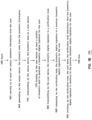
- FIG. 1B is a flow chart showing the disclosed method 150 for biometric digital signature generation for identity verification of a user, in accordance with at least one embodiment of the present disclosure.
- at least one sensor senses biometric information from the user 160.
- a sensor device generates biometric data from the biometric information 165.
- the sensor device transmits the biometric data to a user device 170.
- the user device 170 then hashes at least a portion of the biometric data to generate a biometric digital signature for the user 175.
- the user device transmits the biometric digital signature to a verification node 180.
- the verification node compares the biometric digital signature to a previous biometric digital signature for the user 185.
- the verification node verifies the user when the verification node determines that the biometric digital signature is identical to the previous biometric digital signature for the user 190.
- the method 150 ends 195.
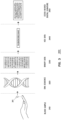
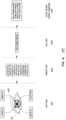
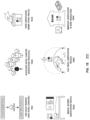
- FIG. 2 is a diagram illustrating the process 200 of hashing biometric data 240 obtained from fingerprints 220 of a user 105 to generate a biometric digital signature 250 for the user 105, in accordance with at least one embodiment of the present disclosure.
- a fingerprint sample 210 comprising images of fingerprints 220 (e.g., at least three fingerprints) (i.e. biometric information) is first obtained (e.g., sensed and/or imaged) from the fingers of the user 105.
- the images of the fingerprints 220 i.e.
- biometric information e.g., in an analog data format
- biometric data e.g., digital data, such as a binary number 230 and/or a hexadecimal number 240.
- biometric data e.g., digital data, such as a binary number 230 and/or a hexadecimal number 240.
- At least a portion of the biometric data e.g., a binary number 230 or a hexadecimal number 240
- a fuzzy hash algorithm or alternatively a hash algorithm
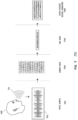
- FIG. 3 is a diagram illustrating the process 300 of hashing biometric data 340 obtained from blood 311 of a user 105 to generate a biometric digital signature 350 for the user 105, in accordance with at least one embodiment of the present disclosure.
- a blood sample 310 is first obtained by extracting blood 311 from a finger of the user 105.
- At least one chemical detector device e.g., sensor
- the DNA sequence 320 (e.g., biometric information, e.g., comprising nucleotides) is converted to biometric data (e.g., digital data, such as a binary number 330 and/or a hexadecimal number 340). At least a portion of the biometric data (e.g., a binary number 330 or a hexadecimal number 340) is hashed utilizing a fuzzy hash algorithm (or alternatively a hash algorithm) to generate a biometric digital signature 350 for the user 105.
- biometric data e.g., digital data, such as a binary number 330 and/or a hexadecimal number 340.
- At least a portion of the biometric data (e.g., a binary number 330 or a hexadecimal number 340) is hashed utilizing a fuzzy hash algorithm (or alternatively a hash algorithm) to generate a biometric digital signature 350 for the user 105.
- FIG. 4 is a diagram illustrating the process 400 of hashing biometric data 340 obtained from a facial scan 410 of a user 105 to generate a biometric digital signature 350 for the user 105, in accordance with at least one embodiment of the present disclosure.
- a facial scan 413 e.g., an image generated from a three-dimensional object based on biometrics 410 (i.e. biometric information) is first obtained (e.g., sensed and/or imaged) by scanning, with an image scanner 412, at least a portion of a face 411 of the user 105.
- the facial scan 413 i.e.
- biometric information is converted to biometric data (e.g., digital data, such as a binary number 420 and/or a hexadecimal number 430). At least a portion of the biometric data (e.g., a binary number 420 or a hexadecimal number 430) is hashed utilizing a fuzzy hash algorithm (or alternatively a hash algorithm to generate a biometric digital signature 440 for the user 105.
- biometric data e.g., digital data, such as a binary number 420 and/or a hexadecimal number 430.
- At least a portion of the biometric data e.g., a binary number 420 or a hexadecimal number 430
- a fuzzy hash algorithm or alternatively a hash algorithm to generate a biometric digital signature 440 for the user 105.
- FIG. 5 is a diagram illustrating the process 500 of hashing biometric data 530 obtained from a scent 511 of a user 105 to generate a biometric digital signature 540 for the user 105, in accordance with at least one embodiment of the present disclosure.
- an odor (e.g., scent, pheromone) sample 511 is first sensed from the user 105.
- At least one chemical detector device e.g., sensor
- determines a chemical composition e.g., biometric information, e.g., comprising isotopic data 510 512 of the odor sample 511.
- the chemical composition (e.g., biometric information, e.g., comprising isotopic data 510) 512 is converted to biometric data (e.g., digital data, such as a binary number 520 and/or a hexadecimal number 530). At least a portion of the biometric data (e.g., a binary number 520 or a hexadecimal number 530) is hashed utilizing a fuzzy hash algorithm (or alternatively a hash algorithm) to generate a biometric digital signature 540 for the user 105.
- biometric data e.g., digital data, such as a binary number 520 and/or a hexadecimal number 530.
- At least a portion of the biometric data e.g., a binary number 520 or a hexadecimal number 530
- a fuzzy hash algorithm or alternatively a hash algorithm
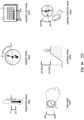
- FIG. 6 is a diagram illustrating the process 600 of hashing biometric data 630 obtained from an eye scan (e.g., iris scan and/or retina scan) 610 of a user 105 to generate a biometric digital signature 640 for the user 105, in accordance with at least one embodiment of the present disclosure.
- an eye 611 of the user 105 is scanned with a scanner (e.g., an imager, a sensor) to obtain an iris scan (i.e. biometric information) 610 of at least a portion of the iris 612 of the user 105.
- the iris scan 610 i.e.
- biometric information is converted to biometric data (e.g., digital data, such as a binary number 620 and/or a hexadecimal number 630). At least a portion of the biometric data (e.g., a binary number 620 or a hexadecimal number 630) is hashed utilizing a fuzzy hash algorithm (or alternatively a hash algorithm) to generate a biometric digital signature 640 for the user 105.
- biometric data e.g., digital data, such as a binary number 620 and/or a hexadecimal number 630.
- biometric data e.g., digital data, such as a binary number 620 and/or a hexadecimal number 630.
- At least a portion of the biometric data e.g., a binary number 620 or a hexadecimal number 630
- a fuzzy hash algorithm or alternatively a hash algorithm
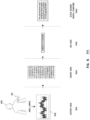
- FIG. 7 is a diagram illustrating the process 700 of hashing biometric data 730 obtained from a voice 711 of a user 105 to generate a biometric digital signature 740 for the user 105, in accordance with at least one embodiment of the present disclosure.
- a voice sample 710 is obtained by sensing a voice 711 from the user 105.
- At least one audio receiver device e.g., sensor, microphone
- senses e.g., records
- the voice 711 e.g., biometric information, e.g., comprising audio information 712
- the biometric information (e.g., comprising audio information 712) of the voice 711 is converted to biometric data (e.g., digital data, such as a binary number 720 and/or a hexadecimal number 730). At least a portion of the biometric data (e.g., a binary number 720 or a hexadecimal number 730) is hashed utilizing a fuzzy hash algorithm (or alternatively a hash algorithm) to generate a biometric digital signature 740 for the user 105.
- biometric data e.g., digital data, such as a binary number 720 and/or a hexadecimal number 730.
- At least a portion of the biometric data e.g., a binary number 720 or a hexadecimal number 730
- a fuzzy hash algorithm or alternatively a hash algorithm
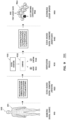
- FIG. 8 is a diagram illustrating the process 800 of utilizing biometric digital signatures 831, 833 for the transfer of a property 832 between an initiator (e.g., a user) and a beneficiary, in accordance with at least one embodiment of the present disclosure.
- a user e.g., initiator
- a biometric digital signature 831 is first generated 810 for the user (e.g., initiator) 105.
- biometric information e.g., a three-dimensional (3D) body scan
- An electronic device e.g., a user device 130 associated with the user (e.g., an initiator) 105 hashes, utilizing a fuzzy hash algorithm (or alternatively a hash algorithm), biometric data from the biometric information 811 to generate a biometric digital signature 831 for the user (e.g., initiator) 105.
- a biometric digital signature 833 for the beneficiary is generated and provided by an electronic device (e.g., user device) 841 associated with the beneficiary.
- the biometric digital signature 831 is validated and the user (e.g., initiator) 105 is verified (refer to FIG. 9 for that process)
- the data block 832 is transferred on the blockchain 842 from the user (e.g., initiator) 105 to the beneficiary, and the transaction on the distributed ledger is confirmed 840.
- the biometric digital signature 831 for the user (e.g., initiator) 105 will no longer be assigned to the data block 832, and instead the biometric digital signature 833 for the beneficiary will be assigned to that data block 832.
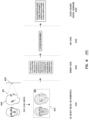
- FIG. 9 is a diagram illustrating the process 900 of verifying a user (e.g., initiator) 105 by validating the biometric digital signature 920 for the user 105 to perform a transaction desired by the user 105, in accordance with at least one embodiment of the present disclosure.
- the generated biometric digital signature 920 for the user (e.g., initiator) 105 is compared 932 to a previous biometric digital signature 931 for the user (e.g., initiator) 105.
- the generated biometric digital signature 920 for the user (e.g., initiator) 105 is found to be identical to the previous biometric digital signature 931 for the user (e.g., initiator) 105, the generated biometric digital signature 920 is confirmed 934, and the distributed ledger is updated 950 by transferring a data block 951 of a blockchain 953 from the user (e.g., initiator) 105 to a beneficiary.
- the biometric digital signature 920 for the user (e.g., initiator) 105 will no longer be assigned to the data block 951, and instead the biometric digital signature 940 for the beneficiary will be assigned to that data block 951.
- the generated biometric digital signature 920 for the user (e.g., initiator) 105 is not found to be identical to the previous biometric digital signature 931 for the user (e.g., initiator) 105, the generated biometric digital signature 920 is aborted 933, and the user 105 will not be able to conduct the transaction.
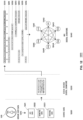
- FIG. 10 is a diagram illustrating the process 1000 of hashing location data (e.g., latitude, longitude) 1051 for a user 105 along with biometric data 1052 obtained from a user 105 to generate a biometric digital signature 1050 for the user 105, in accordance with at least one embodiment of the present disclosure.
- a user device 130 of the user 105 obtains location information (e.g., latitude and longitude) for the user 105, for example via Global Positioning System (GPS) signal detection 1020 by receiving a GPS signal 1023 radiating from a GPS satellite 1021 onto Earth 1022.
- GPS Global Positioning System
- the location information (e.g., latitude and longitude) is converted into a binary number 1030 (e.g., the GPS data is encoded into binary data 1030) and/or a hexadecimal number 1040 (e.g., the GPS data is hexadecimal 1040).
- the user device 130 may obtain location information (e.g., latitude and longitude) for the user 105 by utilizing various different positioning systems other than GPS including, but not limited to, Global Navigation Satellite System (GLONASS), Galileo, Compass (BeiDou), or Quazi-Zenith Satellite System (QZSS).
- GLONASS Global Navigation Satellite System
- Galileo Galileo
- Compass BeiDou
- QZSS Quazi-Zenith Satellite System
- the GPS data (e.g., comprising a binary number 1030 and/or a hexadecimal number 1040) is hashed utilizing a hash algorithm or alternatively a fuzzy hash algorithm to generate a GPS signature 1051 for the user 105.
- biometric data for the user 105 is hashed utilizing a fuzzy hash algorithm (or alternatively a hash algorithm) to generate a biometric digital signature 1052 for the user 105.
- the GPS signature 1051 and the biometric digital signature 1052 together form the complete biometric digital signature (e.g., a GPS secure biometric digital signature) 1050 for the user 105.
- FIG. 11 is a diagram illustrating the process 1100 of verifying the user 105 by validating the satellite (e.g., GPS satellite) signature, which comprises location data (e.g., latitude and longitude), for the user 105 of FIG. 11 to perform a transaction desired by the user 105, in accordance with at least one embodiment of the present disclosure.
- the user 105 wishes to transfer assignment of a data block (e.g., access protected data 1110, such as a data block in a blockchain 1112) to a beneficiary.
- a data block e.g., access protected data 1110, such as a data block in a blockchain 1112
- the user 105 needs to be verified.
- the user 105 is verified by validating the biometric digital signature of the user 105 and validating the location of the user 105.
- the biometric digital signature of the user 105 has already been validated.
- the user device 1111 of the user 105 obtains location information (e.g., latitude and longitude) for the user 105, for example via Global Positioning System (GPS) by receiving a GPS signal 1123 radiating from a GPS satellite 1121 onto Earth 1122 (e.g. locating a GPS signal 1120).
- the location information (e.g., latitude and longitude) is converted into a binary number (e.g., the GPS data is encoded into binary data) and/or a hexadecimal number (e.g., the GPS data is hexadecimal).
- the GPS data (e.g., comprising a binary number and/or a hexadecimal number) is hashed utilizing a hash algorithm (or alternatively a fuzzy hash algorithm) to generate a GPS signature 1131 for the user 105.
- a hash algorithm or alternatively a fuzzy hash algorithm
- the generated GPS signature 1131 for the user (e.g., initiator) 105 is compared 1132 to a previous GPS signature 1051 (refer to FIG. 10 ) for the user (e.g., initiator) 105. If the generated GPS signature 1131 for the user (e.g., initiator) 105 is found to be identical to the previous GPS signature 1051 for the user (e.g., initiator) 105, the generated GPS signature 1131 is confirmed 1134, and the transaction is initiated (e.g., blockchain confirmation 1140) by the distributed ledger being updated by transferring a data block of a blockchain 1142 from the user (e.g., initiator) 105 to a beneficiary.
- the transaction is initiated (e.g., blockchain confirmation 1140) by the distributed ledger being updated by transferring a data block of a blockchain 1142 from the user (e.g., initiator) 105 to a beneficiary.
- the generated GPS signature 1131 for the user (e.g., initiator) 105 is not found to be identical to the previous GPS signature 1051 for the user (e.g., initiator) 105, the generated GPS signature 1131 is aborted 1133, and the user 105 will not be able to conduct the transaction.
- FIG. 12 is a diagram illustrating the process 1200 of storing a portion of a biometric digital signature 1230 for a user ("You") 105 to host biometric digital signatures 1251 - 1256 held by other people 1241 - 1246 to generate the host biometric digital signatures 1251 - 1256 for each of the other people 1241 - 1246, in accordance with at least one embodiment of the present disclosure.
- people 1241 - 1246 who are related and/or associated with the user 105, may each have a host biometric digital signature 1251 - 1256 that comprises a portion of the biometric digital signature 1230 for the user 105 so that the user 105 may use their host biometric digital signatures 1251 - 1256 to reconstruct the complete biometric digital signature 1230 for the user 105.
- user data e.g., source data 1220, such as GPS data 1221, biometric data 1222, and/or personal data 1223 is first obtained 1210 from the user 105.
- the user data e.g., source data 1220
- the user data is hashed using a fuzzy hash algorithm (or alternatively a hash algorithm) to generate a biometric digital signature 1230 for the user 105.
- a portion of the biometric digital signature 1230 of the user 105 is stored for each host biometric digital signature 1251 - 1256 for each of the persons 1241 - 1246 (e.g., n number of people, e.g., six (6)) to generate a host biometric digital signature 1251 - 1256 for each of the people 1241 - 1246, such that a combination of the host biometric digital signatures 1251 - 1256 for at least a portion of the people (e.g., m number of the people, e.g., four (4)) 1241 - 1244 comprises all of the biometric digital signature 1230 for the user 105, where m number is a number greater than half of n number.
- the biometric digital signature 1230 of the user 105 comprises 64 characters
- each of the host biometric digital signatures 1251 - 1256 for the people 1241 - 1246 comprise a portion of the total number of characters (e.g., 32 characters).
- each host biometric digital signature 1251 - 1256 for the people 1241 - 1246 comprises a total of 32 characters.
- the host biometric digital signature 1251 - 1256 for the people 1241 - 1246 may each comprise more or less than a total of 32 characters, and/or may each comprise a different number of characters to each other (e.g., half of the host biometric digital signatures 1251 - 1253 may comprise a total of 30 characters, and the other half of the host biometric digital signatures 1254 - 1256 may comprise a total of 34 characters).
- FIG. 13 is a diagram illustrating the process 1300 of using the host biometric digital signatures 1251 - 1256 from the people 1241 - 1246 of FIG. 12 to generate a reconstructed biometric digital signature 1320 for the user 105, in accordance with at least one embodiment of the present disclosure.
- host biometric digital signatures 1252, 1253, 1255, 1256 from m (e.g., four (4)) number of the n (e.g., six (6)) number of the people 1242, 1243, 1245, 1246 are used to reconstruct the biometric digital signature 1320 for the user 105.
- the reconstructed biometric digital signature 1320 for the user 105 can then be validated 1330 for the user 105 to be verified 1340.
- FIG. 14 is a diagram illustrating the process 1400 of verifying the user 105 by validating the reconstructed biometric digital signature 1320 for the user 105 of FIG. 13 , in accordance with at least one embodiment of the present disclosure.
- GPS data 1221, biometric data 1222, and/or personal data 1223 from the user 105 is hashed using a fuzzy hash algorithm (or alternatively a hash algorithm) to generate a biometric digital signature 1230 for the user 105.
- a fuzzy hash algorithm or alternatively a hash algorithm
- Host biometric digital signatures 1252, 1253, 1255, 1256 from m (e.g., four (4)) number of the n (e.g., six (6)) number of the people 1242, 1243, 1245, 1246 are used to reconstruct the biometric digital signature 1320 for the user 105.
- the reconstructed the biometric digital signature 1320 is compared 1420 to the biometric digital signature 1230 for the user 105. If the reconstructed the biometric digital signature 1320 for the user 105 is found to be identical to the biometric digital signature 1230 for the user 105, the reconstructed the biometric digital signature 1320 is validated 1430.
- FIG. 15 is a diagram illustrating various different types of transactions that may occur after the user 105 is verified by validating the biometric digital signature for the user 105, in accordance with at least one embodiment of the present disclosure.
- the various different types of transactions that may occur include, but are not limited to, the transferring the assignment of data blocks on a blockchain using biometric digital signatures 1510, identification of assignment of data blocks on a blockchain using biometric digital signatures 1520, identification of a user 105 for casting a vote during a voting process 1530, identification of a user 105 for obtaining medical records 1540, identification of user 105 for obtaining travel documentation 1550, and identification of ownership of bank accounts for conducting bank transactions using biometric digital signatures 1560.
- FIG. 16 is a diagram illustrating various different types of additional identifying information that may be hashed along with biometric data obtained from the user 105 to generate a biometric digital signature for the user 105, in accordance with at least one embodiment of the present disclosure.
- the various different types of additional identifying information that may be utilized include, but are not limited to, temperature of the environment 1610, humidity of the environment 1620, a calendar date range 1630, a time range 1640, an elevation range 1650, and a cardinal direction range 1660.
- FIG. 17 is a diagram illustrating the process 1700 of generating a biometric digital signature 1760 for a user 105 by hashing biometric data 1701, 1701, 1703 from the user 105 along with additional identifying information 1710, 1720 and personal information 1730, 1740 for the user 105, in accordance with at least one embodiment of the present disclosure.
- biometric information in the form of fingerprints 1701, 1701, 1703, is obtained from the user 105.
- Biometric data (in the form of hexadecimal numbers 1705) is generated from the biometric information of the fingerprints 1701, 1701, 1703.
- additional identifying information is obtained for the user 105.
- the additional identifying information comprises GPS location information (e.g., latitude and longitude) 1710 and cardinal direction information 1720.
- Digital numbers e.g., hexadecimal numbers 1705 are generated from the additional identifying information.
- the personal information is obtained from the user 105.
- the personal information comprises the birth date 1730 of the user 105 and the last four digits of the user's 105 social security number.
- Digital numbers e.g., hexadecimal numbers 1705 are generated from the personal information.
- the digital numbers 1750 (e.g., all of the hexadecimal numbers 1705) for the biometric information (e.g., fingerprints 1701, 1703, 1703), the additional identifying information (e.g., GPS location information 1710 and cardinal direction information 1720), and the personal information (e.g., birth date 1730 and last four digits of the social security number 1740) are hashed using a fuzzy hash algorithm (or alternatively a hash algorithm) to generate the biometric digital signature 1760 for the user 105.
- a fuzzy hash algorithm or alternatively a hash algorithm
Landscapes
- Engineering & Computer Science (AREA)
- Computer Security & Cryptography (AREA)
- Theoretical Computer Science (AREA)
- Signal Processing (AREA)
- Computer Networks & Wireless Communication (AREA)
- Computer Hardware Design (AREA)
- General Engineering & Computer Science (AREA)
- General Health & Medical Sciences (AREA)
- Health & Medical Sciences (AREA)
- Software Systems (AREA)
- Physics & Mathematics (AREA)
- General Physics & Mathematics (AREA)
- Biomedical Technology (AREA)
- Life Sciences & Earth Sciences (AREA)
- Biodiversity & Conservation Biology (AREA)
- Bioethics (AREA)
- Computing Systems (AREA)
- Collating Specific Patterns (AREA)
- Measurement Of The Respiration, Hearing Ability, Form, And Blood Characteristics Of Living Organisms (AREA)
Claims (20)
- Verfahren zur Verifizierung der Identität eines Benutzers (105) unter Verwendung eines geteilten Registers, wobei das Verfahren aus folgenden Schritten besteht:Erfassung (160) von biometrischen Informationen vom Benutzer mit mindestens einem Sensor;Erstellung (165) von biometrischen Daten (1222) durch das Sensorgerät (120) aufgrund der biometrischen Informationen;Übertragung (170) von biometrischen Daten durch das Sensorgerät an das Benutzergerät (130) und Einholung von ergänzenden Identifizierungsinformationen (1221, 1223) durch das Benutzergerät;Hashing (175) von mindestens einem Teil der biometrischen Daten (1222) durch das Benutzergerät und von mindestens einem Teil der ergänzenden Identifizierungsinformationen (1221, 1223), um eine biometrische digitale Signatur (1230) für den Benutzer zu generieren;Speicherung durch das Benutzergerät von mindestens einem Teil der biometrischen digitalen Signatur für den Benutzer, in Form einer biometrischen digitalen Host-Signatur für die Benutzergeräte, die mit jeder Person von mindestens n-Anzahl der Personen (1241, ..., 1246) korrespondieren, so dass die Kombination von den biometrischen digitalen Host-Signaturen für mindestens die m-Anzahl von der n-Anzahl von Personen alle Daten für die biometrische digitale Signatur für den Benutzer umfasst, wobei die m-Anzahl größer sein soll als die Hälfte der n-Anzahl;Übermittlung (180) der biometrischen digitalen Signatur durch das Benutzergerät an einen Verifizierungsknoten (140);Einholung durch den Verifizierungsknoten der biometrischen digitalen Host-Signaturen von anderen Benutzergeräten, die von anderen mit dem Benutzer verbundenen Benutzern korrespondieren, wobei jede biometrische digitale Host-Signatur einen Teil der vorherigen biometrischen digitalen Signatur für den Benutzer umfasst;Wiederherstellung durch den Verifizierungsknoten der vorherigen biometrischen digitalen Signatur aufgrund der Teile der biometrischen digitalen Host-Signatur;Abgleich durch den Verifizierungsknoten der biometrischen digitalen Signatur mit der vorherigen biometrischen digitalen Signatur für den Benutzer; sowieVerifizierung (190) durch den Verifizierungsknoten des Benutzers, wenn der Verifizierungsknoten feststellt, dass die biometrische digitale Signatur der vorherigen biometrischen digitalen Signatur für den Benutzer vollumfänglich entspricht.
- Verfahren nach Anspruch 1, das darüber hinaus aus einem weiteren Schritt besteht, wenn der Benutzer verifiziert ist, wird durch den Verifizierungsknoten ein Bestätigungssignal der Verifizierung erzeugt und an das Benutzergerät übermittelt, das bestätigt, dass der Benutzer verifiziert wurde.
- Verfahren nach Anspruch 1, das darüber hinaus daraus besteht, dass keine Verifizierung durch den Verifizierungsknoten stattfindet, wenn der Verifizierungsknoten feststellt, dass die biometrische digitale Signatur der vorherigen biometrischen digitalen Signatur für den Benutzer nicht vollumfänglich entspricht.
- Verfahren nach Anspruch 3, das darüber hinaus daraus besteht, dass ein Abbruchsignal der Verifizierung durch den Verifizierungsknoten generiert und an das Benutzergerät übermittelt wird, wenn der Benutzer nicht verifiziert wurde.
- Verfahren nach Anspruch 1, das darüber hinaus mindestens aus einem der folgenden Schritte besteht, vorausgesetzt, dass der Benutzer verifiziert wurde:erlaubt dem Benutzer die Übermittlung eines Datenblocks vom Benutzer zum Empfänger;erlaubt dem Benutzer, den Besitz an einer Eigenschaft vom Benutzer zum Empfänger zu übermitteln;erlaubt dem Benutzer, die medizinischen Akten für den Benutzer zu erhalten;erlaubt dem Benutzer, im Namen des Benutzers abzustimmen;erlaubt dem Benutzer die Einholung von Reisedokumenten für den Benutzer; odererlaubt dem Benutzer, Banktransaktionen im Namen des Benutzers zu tätigen.
- Verfahren nach Anspruch 1, wobei die biometrische Information mindestens einen von mindestens drei Fingerabdrücken, mindestens eine Teilsequenz der Desoxyribonukleinsäure (DNA), mindestens einen Teil des mindestens einen Gesichtsmerkmals, isotopische Geruchsinformationen, mindestens einen Teil eines Augenmerkmals, Audioinformationen zur Stimme, einen dreidimensionalen Oberflächenscan von mindestens einem Teil des Benutzers oder einen zweidimensionalen Oberflächenscan von mindestens einem Teil des Benutzers umfassen muss.
- Verfahren nach Anspruch 1, wobei das Benutzergerät einen Hash-Algorithmus oder einen Fuzzy-Hash-Algorithmus verwendet, um mindestens einen Teil der biometrischen Daten zu hashen.
- Verfahren nach Anspruch 1, wobei das Benutzergerät einen SHA-256 Algorithmus, einen Merkle-Damgard-Algorithmus, einen MD5-Algorithmus, einen SHA-1-Algorithmus, einen SHA-2-Algorithmus, einen RACE Integrity Primitives Evaluation Message Digest-160 (RIPEMD-160) Algorithmus, einen Whirlpool-Algorithmus oder einen BLAKE2-Algorithmus verwendet, um mindestens einen Teil der biometrischen Daten zu hashen.
- Verfahren nach Anspruch 1, wobei die ergänzenden Identifizierungsinformationen mindestens eine Information, wie Standortinformation, Temperaturinformation, Feuchtigkeitsinformation, Datuminformation, Uhrzeitinformation, Höheninformation, Umkreisinformation oder persönlicher Information umfassen.
- Verfahren nach Anspruch 1, wobei die biometrische digitale Signatur ein privater Identitätsschlüssel für den Benutzer darstellt.
- Verfahren nach Anspruch 1, wobei das Benutzergerät ein Smartphone, ein Tablet, ein PC, ein Laptop, ein Smartwatch, ein Smartfernseher (TV), ein Auto oder ein Rechner ist.
- Verfahren nach Anspruch 1, wobei das Benutzergerät mindestens einen von mindestens einem Sensor, Sensorgerät oder Verifizierungsknoten umfasst.
- Verfahren zur Verifizierung der Identität von mindestens einem Benutzer (105), die folgende Schritte umfasst:Erfassung (160) von biometrischen Informationen vom Benutzer durch mindestens einen Sensor;Erstellung (165) von biometrischen Daten (1222) durch das Sensorgerät (120) aufgrund der biometrischen Informationen;Übermittlung (170) von biometrischen Daten an das Benutzergerät (130) durch das Sensorgerät;Hashing (175) von mindestens einem Teil der biometrischen Daten, um die biometrische digitale Signatur (1230) für den Benutzer zu generieren;Speicherung im Benutzergerät von mindestens einem Teil der biometrischen digitalen Signatur für den Benutzer in Form der biometrischen digitalen Host-Signatur von Benutzergeräten, die mit jeder von mindestens n-Anzahl der Personen (1241, ..., 1246) korrespondieren, die mit dem Benutzer verbunden sind, so dass die Kombination der biometrischen digitalen Host-Signaturen für mindestens die m-Anzahl der n-Anzahl von Personen alle Daten für die gesamte biometrische digitale Signatur für den Benutzer umfasst, wobei die m-Anzahl größer sein soll als die Hälfte der n-Anzahl;Einholung durch das Benutzergerät von biometrischen digitalen Host-Signaturen von den Benutzergeräten, die mindestens mit der m-Anzahl von Personen korrespondieren;Wiederherstellung der biometrischen digitalen Signatur für den Benutzer durch das Benutzergerät unter der Verwendung von biometrischen digitalen Host-Signaturen, die mindestens von der m-Anzahl der Personen erhalten wurden;Übermittlung (180) der wiederhergestellten biometrischen digitalen Signatur an den Verifizierungsknoten (140) durch das Benutzergerät; sowieEmpfang eines Verifizierungssignals durch das Benutzergerät vom Verifizierungsknoten mit der Bestätigung, dass der Benutzer durch den Abgleich der wiederhergestellten biometrischen digitalen Signatur mit der vorherigen biometrischen digitalen Signatur verifiziert wurde und durch die Feststellung, dass die wiederhergestellte biometrische digitale Signatur mit der vorherigen biometrischen digitalen Signatur vollumfänglich identisch ist.
- System zur Verifizierung der Benutzeridentität (105), wobei das System folgende Bestandteile umfasst:mindestens einen Sensor für die Erfassung der biometrischen Information vom Benutzer;ein Sensorgerät (120) zur Erstellung biometrischer Daten (1222) anhand der biometrischen Information und zur Übertragung (170) der biometrischen Daten an das Benutzergerät;Hashing (175) durch das Benutzergerät von mindestens einem Teil der biometrischen Daten und mindestens einem Teil der ergänzenden Identifizierungsinformationen (1221, 1223), um eine biometrische digitale Signatur (1230) für den Benutzer zu erstellen, dann Übermittlung (180) der biometrischen digitalen Signatur an den Verifizierungsknoten (140) und Speicherung von mindestens einem Teil der biometrischen digitalen Signatur für den Benutzer in Form einer biometrischen digitalen Host-Signatur für die Benutzergeräte, die mit jeder Person von mindestens n-Anzahl der Personen (1241, ..., 1246) korrespondieren, so dass eine Kombination der biometrischen digitalen Host-Signaturen für mindestens die m-Anzahl der n-Anzahl von Personen alle Daten für die biometrische digitale Signatur für den Benutzer umfasst, wobei die m-Anzahl größer sein muss als die Hälfte der n-Anzahl; sowieeinen Verifizierungsknoten, der die biometrischen digitalen Host-Signaturen von anderen Benutzergeräten, die mit den anderen dem Benutzer zugewiesenen Benutzern korrespondieren, erhält, wobei jede biometrische digitale Host-Signatur einen Teil der vorherigen biometrischen digitalen Signatur für den Benutzer umfasst und die vorherige biometrische digitale Signatur aus den Teilen der biometrischen digitalen Host-Signaturen wiederherstellt, indem die biometrische digitale Signatur mit der vorherigen biometrischen digitalen Signatur für den Benutzer abgeglichen (185) und der Benutzer verifiziert wird (190), wenn der Verifizierungsknoten feststellt, dass die biometrische digitale Signatur mit der vorherigen biometrischen digitalen Signatur für den Benutzer vollumfänglich identisch ist.
- System nach Anspruch 14, wobei der Verifizierungsknoten nach der Verifizierung des Benutzers ein Verifizierungssignal mit der Bestätigung der Verifizierung des Benutzers generiert und an das Benutzergerät übermittelt.
- System nach Anspruch 14, wobei der Verifizierungsknoten den Benutzer nicht verifiziert, wenn der Verifizierungsknoten feststellt, dass die biometrische digitale Signatur mit der vorherigen biometrischen digitalen Signatur für den Benutzer nicht übereinstimmt.
- System nach Anspruch 14, wobei das Benutzergerät mindestens einen von mindestens einem Sensor, einem Sensorgerät oder einem Verifizierungsknoten umfasst.
- System nach Anspruch 14, wobei das Benutzergerät einen Hash-Algorithmus oder einen Fuzzy-Hash-Algorithmus anwendet, um mindestens einen Teil der biometrischen Daten zu hashen, um die biometrische digitale Signatur für den Benutzer zu erstellen.
- Verfahren nach Anspruch 14, wobei das Benutzergerät einen SHA-256 Algorithmus, einen Merkle-Damgard-Algorithmus, einen MD5-Algorithmus, einen SHA-1-Algorithmus, einen SHA-2-Algorithmus, einen RACE Integrity Primitives Evaluation Message Digest-160 (RIPEMD-160) Algorithmus, einen Whirlpool-Algorithmus oder einen BLAKE2-Algorithmus anwendet, um mindestens einen Teil der biometrischen Daten zu hashen.
- System nach Anspruch 14, wobei die ergänzenden Identifizierungsinformationen mindestens eine Information, wie Standortinformation, Temperaturinformation, Feuchtigkeitsinformation, Datuminformation, Uhrzeitinformation, Höheninformation, Umkreisinformation oder persönlicher Information umfassen.
Priority Applications (19)
| Application Number | Priority Date | Filing Date | Title |
|---|---|---|---|
| EP22206487.5A EP4152185A1 (de) | 2019-04-03 | 2019-08-14 | Biometrische digitale signaturerzeugung zur identitätsprüfung |
| HRP20231152TT HRP20231152T1 (hr) | 2019-04-03 | 2019-08-14 | Generiranje biometrijskog digitalnog potpisa za verifikaciju identiteta |
| NZ788705A NZ788705B2 (en) | 2019-09-16 | Biometric digital signature generation for identity verification | |
| KR1020217035982A KR102592375B1 (ko) | 2019-04-03 | 2019-09-16 | 아이덴티티 검증을 위한 생체 인식 디지털 서명 생성 |
| CA3135745A CA3135745C (en) | 2019-04-03 | 2019-09-16 | Biometric digital signature generation for identity verification |
| PCT/US2019/051358 WO2020204989A1 (en) | 2019-04-03 | 2019-09-16 | Biometric digital signature generation for identity verification |
| KR1020237035559A KR20230149339A (ko) | 2019-04-03 | 2019-09-16 | 아이덴티티 검증을 위한 생체 인식 디지털 서명 생성 |
| MYPI2021005831A MY200518A (en) | 2019-04-03 | 2019-09-16 | Biometric digital signature generation for identity verification |
| SG11202110536TA SG11202110536TA (en) | 2019-04-03 | 2019-09-16 | Biometric digital signature generation for identity verification |
| BR112021019542-4A BR112021019542B1 (pt) | 2019-04-03 | 2019-09-16 | Método para verificação de identidade de pelo menos um usuário, e, método e sistema para verificação de identidade de um usuário |
| UAA202106144A UA129680C2 (uk) | 2019-04-03 | 2019-09-16 | Генерування біометричного цифрового підпису для верифікації особи |
| JP2019554357A JP7115760B2 (ja) | 2019-04-03 | 2019-09-16 | 本人確認のための生体デジタル署名生成 |
| NZ780714A NZ780714A (en) | 2019-04-03 | 2019-09-16 | Biometric digital signature generation for identity verification |
| MX2021011937A MX2021011937A (es) | 2019-04-03 | 2019-09-16 | Generacion de firma digital biometrica para verificacion de identidad. |
| CN201980095198.7A CN113678125B (zh) | 2019-04-03 | 2019-09-16 | 用于身份验证的生物特征数字签名生成 |
| AU2019439427A AU2019439427B2 (en) | 2019-04-03 | 2019-09-16 | Biometric digital signature generation for identity verification |
| SA521430506A SA521430506B1 (ar) | 2019-04-03 | 2021-10-03 | إنشاء توقيع رقمي بيومتري للتحقق من الهوية |
| JP2022116312A JP7458661B2 (ja) | 2019-04-03 | 2022-07-21 | 本人確認のための生体デジタル署名生成 |
| AU2023201756A AU2023201756B2 (en) | 2019-04-03 | 2023-03-21 | Biometric digital signature generation for identity verification |
Applications Claiming Priority (1)
| Application Number | Priority Date | Filing Date | Title |
|---|---|---|---|
| US16/374,517 US11303452B2 (en) | 2019-04-03 | 2019-04-03 | Biometric digital signature generation for identity verification |
Related Child Applications (2)
| Application Number | Title | Priority Date | Filing Date |
|---|---|---|---|
| EP22206487.5A Division-Into EP4152185A1 (de) | 2019-04-03 | 2019-08-14 | Biometrische digitale signaturerzeugung zur identitätsprüfung |
| EP22206487.5A Division EP4152185A1 (de) | 2019-04-03 | 2019-08-14 | Biometrische digitale signaturerzeugung zur identitätsprüfung |
Publications (3)
| Publication Number | Publication Date |
|---|---|
| EP3719680A1 EP3719680A1 (de) | 2020-10-07 |
| EP3719680B1 true EP3719680B1 (de) | 2023-06-28 |
| EP3719680C0 EP3719680C0 (de) | 2023-06-28 |
Family
ID=67658932
Family Applications (2)
| Application Number | Title | Priority Date | Filing Date |
|---|---|---|---|
| EP22206487.5A Pending EP4152185A1 (de) | 2019-04-03 | 2019-08-14 | Biometrische digitale signaturerzeugung zur identitätsprüfung |
| EP19191716.0A Active EP3719680B1 (de) | 2019-04-03 | 2019-08-14 | Biometrische digitale signaturerzeugung zur identitätsprüfung |
Family Applications Before (1)
| Application Number | Title | Priority Date | Filing Date |
|---|---|---|---|
| EP22206487.5A Pending EP4152185A1 (de) | 2019-04-03 | 2019-08-14 | Biometrische digitale signaturerzeugung zur identitätsprüfung |
Country Status (18)
| Country | Link |
|---|---|
| US (2) | US11303452B2 (de) |
| EP (2) | EP4152185A1 (de) |
| JP (2) | JP7115760B2 (de) |
| KR (2) | KR102592375B1 (de) |
| CN (1) | CN113678125B (de) |
| AU (2) | AU2019439427B2 (de) |
| CA (1) | CA3135745C (de) |
| ES (1) | ES2956083T3 (de) |
| HR (1) | HRP20231152T1 (de) |
| HU (1) | HUE063204T2 (de) |
| MX (1) | MX2021011937A (de) |
| MY (1) | MY200518A (de) |
| NZ (1) | NZ780714A (de) |
| PL (1) | PL3719680T3 (de) |
| SA (1) | SA521430506B1 (de) |
| SG (1) | SG11202110536TA (de) |
| UA (1) | UA129680C2 (de) |
| WO (1) | WO2020204989A1 (de) |
Families Citing this family (11)
| Publication number | Priority date | Publication date | Assignee | Title |
|---|---|---|---|---|
| US10839060B1 (en) * | 2019-08-27 | 2020-11-17 | Capital One Services, Llc | Techniques for multi-voice speech recognition commands |
| US12019784B2 (en) * | 2019-10-30 | 2024-06-25 | EMC IP Holding Company LLC | Privacy preserving evaluation of sensitive user features for anomaly detection |
| EP4100853A1 (de) * | 2020-02-07 | 2022-12-14 | Veridas Digital Authentication Solutions, S.L. | Elektronische signaturen |
| CN113806440A (zh) * | 2020-06-15 | 2021-12-17 | 富泰华工业(深圳)有限公司 | 区块链的区块打包方法、电子装置及存储介质 |
| EP3926497A1 (de) * | 2020-06-19 | 2021-12-22 | The Swatch Group Research and Development Ltd | Verfahren zur rückverfolgbarkeit eines digitalen informationselements in einem it-system |
| US11424929B2 (en) | 2021-01-07 | 2022-08-23 | Bank Of America Corporation | Authentication using encrypted biometric information |
| WO2022203897A1 (en) * | 2021-03-21 | 2022-09-29 | Ironvest, Inc. | System, device, and method of privacy-preserving user-identity verification and re-proofing |
| JP7128597B1 (ja) * | 2021-07-05 | 2022-08-31 | 克弥 西沢 | 熱画像を用いる生体認証装置 |
| CN115801287A (zh) * | 2022-12-26 | 2023-03-14 | 支付宝(杭州)信息技术有限公司 | 签名认证方法和装置 |
| CN117421605B (zh) * | 2023-10-27 | 2024-04-30 | 绍兴清研微科技有限公司 | 一种基于区块链技术的步态识别方法及系统 |
| US20260039479A1 (en) * | 2025-10-10 | 2026-02-05 | Optiml Vision Inc. | Methods, systems and computer program products for secure online verification of identity and presence |
Citations (1)
| Publication number | Priority date | Publication date | Assignee | Title |
|---|---|---|---|---|
| US20090146315A1 (en) * | 2005-08-08 | 2009-06-11 | Il Kwon Shim | Integrated circuit package-on-package stacking system and method of manufacture thereof |
Family Cites Families (35)
| Publication number | Priority date | Publication date | Assignee | Title |
|---|---|---|---|---|
| WO1998050875A2 (en) * | 1997-05-09 | 1998-11-12 | Gte Government Systems Corporation | Biometric certificates |
| US6925182B1 (en) * | 1997-12-19 | 2005-08-02 | Koninklijke Philips Electronics N.V. | Administration and utilization of private keys in a networked environment |
| JP2001092787A (ja) * | 1999-09-27 | 2001-04-06 | Ntt Data Corp | カード認証システム、カード媒体及びカード認証方法 |
| AU2001288679A1 (en) * | 2000-09-11 | 2002-03-26 | Sentrycom Ltd. | A biometric-based system and method for enabling authentication of electronic messages sent over a network |
| US7979698B2 (en) * | 2003-02-19 | 2011-07-12 | Hewlett-Packard Development Company, L.P. | Apparatus and method for proving authenticity with personal characteristics |
| KR101226651B1 (ko) * | 2003-12-24 | 2013-01-25 | 텔레콤 이탈리아 소시에떼 퍼 아찌오니 | 생체 인식 기술의 사용에 기초한 사용자 인증 방법 및 관련구조 |
| WO2006047694A1 (en) * | 2004-10-25 | 2006-05-04 | Orsini Rick L | Secure data parser method and system |
| GB0622149D0 (en) * | 2006-11-07 | 2006-12-20 | Singlepoint Holdings Ltd | System and method to validate and authenticate digital data |
| EP1944716B1 (de) * | 2007-01-15 | 2010-04-28 | Stepover GmbH | Verfahren und Vorrichtung zum Sichern eines Dokuments mit eingefügtem Signaturabbild und biometrischen Daten in einem Computersystem |
| US20090300737A1 (en) * | 2008-05-27 | 2009-12-03 | Crandell Jeffrey L | Split template biometric verification system |
| US20090313171A1 (en) * | 2008-06-17 | 2009-12-17 | Microsoft Corporation | Electronic transaction verification |
| KR100996466B1 (ko) * | 2008-10-09 | 2010-11-25 | 조선대학교산학협력단 | 비밀분산 기법을 이용한 지문정보 저장 장치, 비밀분산 기법을 이용한 지문 인증 시스템 및 비밀분산 기법을 이용한 지문 인증 방법 |
| US8918854B1 (en) * | 2010-07-15 | 2014-12-23 | Proxense, Llc | Proximity-based system for automatic application initialization |
| US9197637B2 (en) * | 2011-07-08 | 2015-11-24 | Research Foundation Of The City University Of New York | Method of comparing private data without revealing the data |
| WO2013032869A1 (en) * | 2011-08-26 | 2013-03-07 | Life Technologies Corporation | Systems and methods for identifying an individual |
| US20150113283A1 (en) * | 2012-06-23 | 2015-04-23 | Pomian & Corella | Protecting credentials against physical capture of a computing device |
| JP5323971B1 (ja) * | 2012-07-09 | 2013-10-23 | パナソニック株式会社 | 認証装置及びこれを備えた認証システム |
| WO2014049749A1 (ja) * | 2012-09-26 | 2014-04-03 | 株式会社 東芝 | 生体参照情報登録システム、装置及びプログラム |
| AU2013204989A1 (en) | 2013-04-13 | 2014-10-30 | Digital (Id)Entity Limited | A system, method, computer program and data signal for the provision of a profile of identification |
| EP3183680B1 (de) * | 2014-08-18 | 2018-03-21 | Csík, Balázs | Verfahren zum digitalen signieren einer elektronischen datei und authentifizierungsverfahren |
| US9935948B2 (en) | 2015-09-18 | 2018-04-03 | Case Wallet, Inc. | Biometric data hashing, verification and security |
| US9935947B1 (en) * | 2015-12-18 | 2018-04-03 | EMC IP Holding Company LLC | Secure and reliable protection and matching of biometric templates across multiple devices using secret sharing |
| US9985964B2 (en) | 2016-03-28 | 2018-05-29 | Black Gold Coin, Inc. | Systems and methods for providing block chain-based multifactor personal identity verification |
| EP3443501B1 (de) * | 2016-04-15 | 2021-09-01 | Irdeto B.V. | Kontozugriff |
| US10142333B1 (en) * | 2016-06-21 | 2018-11-27 | Wells Fargo Bank, N.A. | Biometric reference template record |
| US10700861B2 (en) | 2016-07-29 | 2020-06-30 | Workday, Inc. | System and method for generating a recovery key and managing credentials using a smart blockchain contract |
| KR101937136B1 (ko) * | 2016-12-08 | 2019-01-11 | (주)아이티 노매즈 | 다중 생체 인식을 이용한 본인 인증 시스템 및 방법 |
| US10853809B2 (en) | 2017-03-20 | 2020-12-01 | Avante International Technology, Inc. | System and method for conducting secure electronic transactions |
| US10541818B2 (en) | 2017-04-19 | 2020-01-21 | International Business Machines Corporation | Decentralized biometric signing of digital contracts |
| US20190066063A1 (en) | 2017-08-22 | 2019-02-28 | Jeffery J. Jessamine | Method and System for Secure Identity Transmission with Integrated Service Network and Application Ecosystem |
| US9990504B1 (en) * | 2017-12-18 | 2018-06-05 | Northern Trust Corporation | Systems and methods for generating and maintaining immutable digital meeting records within distributed network nodes |
| WO2019124610A1 (ko) * | 2017-12-21 | 2019-06-27 | 문인식 | 블록체인을 이용한 개인정보 분리 후 분산 저장 및 조합을 통한 인증 방법 |
| US11469897B2 (en) * | 2018-03-30 | 2022-10-11 | Biometric Blockchain, LLC | Integrating biometric data on a blockchain system |
| US20220063883A1 (en) * | 2018-04-06 | 2022-03-03 | Nicholas Evan Mott | Smart container cap with digital access authentication |
| CN108805573B (zh) * | 2018-04-21 | 2022-04-15 | 深圳市元征科技股份有限公司 | 一种信息验证方法、服务器及存储介质 |
-
2019
- 2019-04-03 US US16/374,517 patent/US11303452B2/en active Active
- 2019-08-14 HR HRP20231152TT patent/HRP20231152T1/hr unknown
- 2019-08-14 EP EP22206487.5A patent/EP4152185A1/de active Pending
- 2019-08-14 EP EP19191716.0A patent/EP3719680B1/de active Active
- 2019-08-14 HU HUE19191716A patent/HUE063204T2/hu unknown
- 2019-08-14 PL PL19191716.0T patent/PL3719680T3/pl unknown
- 2019-08-14 ES ES19191716T patent/ES2956083T3/es active Active
- 2019-09-16 UA UAA202106144A patent/UA129680C2/uk unknown
- 2019-09-16 MY MYPI2021005831A patent/MY200518A/en unknown
- 2019-09-16 JP JP2019554357A patent/JP7115760B2/ja active Active
- 2019-09-16 AU AU2019439427A patent/AU2019439427B2/en active Active
- 2019-09-16 KR KR1020217035982A patent/KR102592375B1/ko active Active
- 2019-09-16 SG SG11202110536TA patent/SG11202110536TA/en unknown
- 2019-09-16 KR KR1020237035559A patent/KR20230149339A/ko not_active Ceased
- 2019-09-16 MX MX2021011937A patent/MX2021011937A/es unknown
- 2019-09-16 CA CA3135745A patent/CA3135745C/en active Active
- 2019-09-16 CN CN201980095198.7A patent/CN113678125B/zh active Active
- 2019-09-16 WO PCT/US2019/051358 patent/WO2020204989A1/en not_active Ceased
- 2019-09-16 NZ NZ780714A patent/NZ780714A/en unknown
-
2021
- 2021-10-03 SA SA521430506A patent/SA521430506B1/ar unknown
-
2022
- 2022-04-11 US US17/717,936 patent/US11811937B2/en active Active
- 2022-07-21 JP JP2022116312A patent/JP7458661B2/ja active Active
-
2023
- 2023-03-21 AU AU2023201756A patent/AU2023201756B2/en active Active
Patent Citations (1)
| Publication number | Priority date | Publication date | Assignee | Title |
|---|---|---|---|---|
| US20090146315A1 (en) * | 2005-08-08 | 2009-06-11 | Il Kwon Shim | Integrated circuit package-on-package stacking system and method of manufacture thereof |
Also Published As
Similar Documents
| Publication | Publication Date | Title |
|---|---|---|
| AU2023201756B2 (en) | Biometric digital signature generation for identity verification | |
| EP4283551A1 (de) | Erzeugung von non-fungible token (nft) für sichere anwendungen | |
| US10810290B2 (en) | Robust method and an apparatus for authenticating a client in non-face-to-face online interactions based on a combination of live biometrics, biographical data, blockchain transactions and signed digital certificates | |
| US20240048555A1 (en) | Privacy-Preserving Biometric Authentication | |
| TW414882B (en) | Cryptographic key generation using biometric data | |
| Juan et al. | A model for national electronic identity document and authentication mechanism based on blockchain | |
| HK40081877A (en) | Biometric digital signature generation for identity verification | |
| RU2783069C1 (ru) | Генерирование биометрической цифровой подписи для верификации личности | |
| BR112021019542B1 (pt) | Método para verificação de identidade de pelo menos um usuário, e, método e sistema para verificação de identidade de um usuário | |
| TR2021015167T (tr) | Kimlik doğrulama için biyometrik dijital imza üretimi. | |
| HK40103489A (en) | Non-fungible token (nft) generation for secure applications | |
| WO2025122333A1 (en) | Scalable authentication system with synthesized signed challenge |
Legal Events
| Date | Code | Title | Description |
|---|---|---|---|
| REG | Reference to a national code |
Ref country code: HR Ref legal event code: TUEP Ref document number: P20231152T Country of ref document: HR |
|
| PUAI | Public reference made under article 153(3) epc to a published international application that has entered the european phase |
Free format text: ORIGINAL CODE: 0009012 |
|
| STAA | Information on the status of an ep patent application or granted ep patent |
Free format text: STATUS: THE APPLICATION HAS BEEN PUBLISHED |
|
| AK | Designated contracting states |
Kind code of ref document: A1 Designated state(s): AL AT BE BG CH CY CZ DE DK EE ES FI FR GB GR HR HU IE IS IT LI LT LU LV MC MK MT NL NO PL PT RO RS SE SI SK SM TR |
|
| AX | Request for extension of the european patent |
Extension state: BA ME |
|
| STAA | Information on the status of an ep patent application or granted ep patent |
Free format text: STATUS: REQUEST FOR EXAMINATION WAS MADE |
|
| 17P | Request for examination filed |
Effective date: 20210330 |
|
| RBV | Designated contracting states (corrected) |
Designated state(s): AL AT BE BG CH CY CZ DE DK EE ES FI FR GB GR HR HU IE IS IT LI LT LU LV MC MK MT NL NO PL PT RO RS SE SI SK SM TR |
|
| RAP1 | Party data changed (applicant data changed or rights of an application transferred) |
Owner name: KEYCHAINX AG |
|
| STAA | Information on the status of an ep patent application or granted ep patent |
Free format text: STATUS: EXAMINATION IS IN PROGRESS |
|
| 17Q | First examination report despatched |
Effective date: 20220713 |
|
| GRAJ | Information related to disapproval of communication of intention to grant by the applicant or resumption of examination proceedings by the epo deleted |
Free format text: ORIGINAL CODE: EPIDOSDIGR1 |
|
| GRAP | Despatch of communication of intention to grant a patent |
Free format text: ORIGINAL CODE: EPIDOSNIGR1 |
|
| GRAP | Despatch of communication of intention to grant a patent |
Free format text: ORIGINAL CODE: EPIDOSNIGR1 |
|
| STAA | Information on the status of an ep patent application or granted ep patent |
Free format text: STATUS: GRANT OF PATENT IS INTENDED |
|
| RIC1 | Information provided on ipc code assigned before grant |
Ipc: H04L 9/40 20220101ALI20221220BHEP Ipc: G06F 21/32 20130101AFI20221220BHEP |
|
| INTG | Intention to grant announced |
Effective date: 20230123 |
|
| GRAS | Grant fee paid |
Free format text: ORIGINAL CODE: EPIDOSNIGR3 |
|
| GRAA | (expected) grant |
Free format text: ORIGINAL CODE: 0009210 |
|
| STAA | Information on the status of an ep patent application or granted ep patent |
Free format text: STATUS: THE PATENT HAS BEEN GRANTED |
|
| AK | Designated contracting states |
Kind code of ref document: B1 Designated state(s): AL AT BE BG CH CY CZ DE DK EE ES FI FR GB GR HR HU IE IS IT LI LT LU LV MC MK MT NL NO PL PT RO RS SE SI SK SM TR |
|
| REG | Reference to a national code |
Ref country code: CH Ref legal event code: EP |
|
| REG | Reference to a national code |
Ref country code: AT Ref legal event code: REF Ref document number: 1583351 Country of ref document: AT Kind code of ref document: T Effective date: 20230715 |
|
| REG | Reference to a national code |
Ref country code: IE Ref legal event code: FG4D |
|
| REG | Reference to a national code |
Ref country code: DE Ref legal event code: R096 Ref document number: 602019031592 Country of ref document: DE |
|
| REG | Reference to a national code |
Ref country code: RO Ref legal event code: EPE |
|
| RAP4 | Party data changed (patent owner data changed or rights of a patent transferred) |
Owner name: KEYCHAINX AG |
|
| U01 | Request for unitary effect filed |
Effective date: 20230728 |
|
| U07 | Unitary effect registered |
Designated state(s): AT BE BG DE DK EE FI FR IT LT LU LV MT NL PT SE SI Effective date: 20230803 |
|
| REG | Reference to a national code |
Ref country code: NO Ref legal event code: T2 Effective date: 20230628 |
|
| REG | Reference to a national code |
Ref country code: LT Ref legal event code: MG9D |
|
| PG25 | Lapsed in a contracting state [announced via postgrant information from national office to epo] |
Ref country code: RS Free format text: LAPSE BECAUSE OF FAILURE TO SUBMIT A TRANSLATION OF THE DESCRIPTION OR TO PAY THE FEE WITHIN THE PRESCRIBED TIME-LIMIT Effective date: 20230628 |
|
| REG | Reference to a national code |
Ref country code: GR Ref legal event code: EP Ref document number: 20230401588 Country of ref document: GR Effective date: 20231113 |
|
| REG | Reference to a national code |
Ref country code: ES Ref legal event code: FG2A Ref document number: 2956083 Country of ref document: ES Kind code of ref document: T3 Effective date: 20231213 |
|
| REG | Reference to a national code |
Ref country code: HR Ref legal event code: ODRP Ref document number: P20231152T Country of ref document: HR Payment date: 20230929 Year of fee payment: 5 |
|
| PG25 | Lapsed in a contracting state [announced via postgrant information from national office to epo] |
Ref country code: SK Free format text: LAPSE BECAUSE OF FAILURE TO SUBMIT A TRANSLATION OF THE DESCRIPTION OR TO PAY THE FEE WITHIN THE PRESCRIBED TIME-LIMIT Effective date: 20230628 |
|
| REG | Reference to a national code |
Ref country code: HR Ref legal event code: T1PR Ref document number: P20231152 Country of ref document: HR |
|
| REG | Reference to a national code |
Ref country code: HU Ref legal event code: AG4A Ref document number: E063204 Country of ref document: HU |
|
| PG25 | Lapsed in a contracting state [announced via postgrant information from national office to epo] |
Ref country code: SM Free format text: LAPSE BECAUSE OF FAILURE TO SUBMIT A TRANSLATION OF THE DESCRIPTION OR TO PAY THE FEE WITHIN THE PRESCRIBED TIME-LIMIT Effective date: 20230628 Ref country code: SK Free format text: LAPSE BECAUSE OF FAILURE TO SUBMIT A TRANSLATION OF THE DESCRIPTION OR TO PAY THE FEE WITHIN THE PRESCRIBED TIME-LIMIT Effective date: 20230628 |
|
| PG25 | Lapsed in a contracting state [announced via postgrant information from national office to epo] |
Ref country code: MC Free format text: LAPSE BECAUSE OF FAILURE TO SUBMIT A TRANSLATION OF THE DESCRIPTION OR TO PAY THE FEE WITHIN THE PRESCRIBED TIME-LIMIT Effective date: 20230628 |
|
| U21 | Renewal fee for the european patent with unitary effect paid with additional fee |
Year of fee payment: 5 Effective date: 20240129 |
|
| PG25 | Lapsed in a contracting state [announced via postgrant information from national office to epo] |
Ref country code: MC Free format text: LAPSE BECAUSE OF FAILURE TO SUBMIT A TRANSLATION OF THE DESCRIPTION OR TO PAY THE FEE WITHIN THE PRESCRIBED TIME-LIMIT Effective date: 20230628 |
|
| REG | Reference to a national code |
Ref country code: DE Ref legal event code: R097 Ref document number: 602019031592 Country of ref document: DE |
|
| PLBE | No opposition filed within time limit |
Free format text: ORIGINAL CODE: 0009261 |
|
| STAA | Information on the status of an ep patent application or granted ep patent |
Free format text: STATUS: NO OPPOSITION FILED WITHIN TIME LIMIT |
|
| 26N | No opposition filed |
Effective date: 20240402 |
|
| REG | Reference to a national code |
Ref country code: HR Ref legal event code: ODRP Ref document number: P20231152 Country of ref document: HR Payment date: 20240801 Year of fee payment: 6 |
|
| U20 | Renewal fee for the european patent with unitary effect paid |
Year of fee payment: 6 Effective date: 20240803 |
|
| PG25 | Lapsed in a contracting state [announced via postgrant information from national office to epo] |
Ref country code: CY Free format text: LAPSE BECAUSE OF FAILURE TO SUBMIT A TRANSLATION OF THE DESCRIPTION OR TO PAY THE FEE WITHIN THE PRESCRIBED TIME-LIMIT; INVALID AB INITIO Effective date: 20190814 |
|
| REG | Reference to a national code |
Ref country code: HR Ref legal event code: ODRP Ref document number: P20231152 Country of ref document: HR Payment date: 20250731 Year of fee payment: 7 |
|
| U20 | Renewal fee for the european patent with unitary effect paid |
Year of fee payment: 7 Effective date: 20250821 |
|
| PGFP | Annual fee paid to national office [announced via postgrant information from national office to epo] |
Ref country code: ES Payment date: 20250901 Year of fee payment: 7 |
|
| PGFP | Annual fee paid to national office [announced via postgrant information from national office to epo] |
Ref country code: NO Payment date: 20250826 Year of fee payment: 7 Ref country code: GR Payment date: 20250822 Year of fee payment: 7 |
|
| PGFP | Annual fee paid to national office [announced via postgrant information from national office to epo] |
Ref country code: TR Payment date: 20250721 Year of fee payment: 7 Ref country code: PL Payment date: 20250724 Year of fee payment: 7 |
|
| PGFP | Annual fee paid to national office [announced via postgrant information from national office to epo] |
Ref country code: GB Payment date: 20250820 Year of fee payment: 7 |
|
| PGFP | Annual fee paid to national office [announced via postgrant information from national office to epo] |
Ref country code: HR Payment date: 20250731 Year of fee payment: 7 |
|
| PGFP | Annual fee paid to national office [announced via postgrant information from national office to epo] |
Ref country code: CH Payment date: 20250901 Year of fee payment: 7 |
|
| PGFP | Annual fee paid to national office [announced via postgrant information from national office to epo] |
Ref country code: CZ Payment date: 20250724 Year of fee payment: 7 Ref country code: IE Payment date: 20250820 Year of fee payment: 7 |
|
| PGFP | Annual fee paid to national office [announced via postgrant information from national office to epo] |
Ref country code: RO Payment date: 20250725 Year of fee payment: 7 |
|
| PGFP | Annual fee paid to national office [announced via postgrant information from national office to epo] |
Ref country code: IS Payment date: 20250807 Year of fee payment: 7 |
|
| PGFP | Annual fee paid to national office [announced via postgrant information from national office to epo] |
Ref country code: HU Payment date: 20250730 Year of fee payment: 7 |