EP3719136A1 - Method for evaluating or selecting sensory-stimulation-reducing agent - Google Patents
Method for evaluating or selecting sensory-stimulation-reducing agent Download PDFInfo
- Publication number
- EP3719136A1 EP3719136A1 EP18882405.6A EP18882405A EP3719136A1 EP 3719136 A1 EP3719136 A1 EP 3719136A1 EP 18882405 A EP18882405 A EP 18882405A EP 3719136 A1 EP3719136 A1 EP 3719136A1
- Authority
- EP
- European Patent Office
- Prior art keywords
- sulforaphane
- ces1
- extract
- agent
- plant
- Prior art date
- Legal status (The legal status is an assumption and is not a legal conclusion. Google has not performed a legal analysis and makes no representation as to the accuracy of the status listed.)
- Granted
Links
Images


Classifications
-
- A—HUMAN NECESSITIES
- A61—MEDICAL OR VETERINARY SCIENCE; HYGIENE
- A61K—PREPARATIONS FOR MEDICAL, DENTAL OR TOILETRY PURPOSES
- A61K31/00—Medicinal preparations containing organic active ingredients
- A61K31/70—Carbohydrates; Sugars; Derivatives thereof
- A61K31/7028—Compounds having saccharide radicals attached to non-saccharide compounds by glycosidic linkages
-
- C—CHEMISTRY; METALLURGY
- C12—BIOCHEMISTRY; BEER; SPIRITS; WINE; VINEGAR; MICROBIOLOGY; ENZYMOLOGY; MUTATION OR GENETIC ENGINEERING
- C12Q—MEASURING OR TESTING PROCESSES INVOLVING ENZYMES, NUCLEIC ACIDS OR MICROORGANISMS; COMPOSITIONS OR TEST PAPERS THEREFOR; PROCESSES OF PREPARING SUCH COMPOSITIONS; CONDITION-RESPONSIVE CONTROL IN MICROBIOLOGICAL OR ENZYMOLOGICAL PROCESSES
- C12Q1/00—Measuring or testing processes involving enzymes, nucleic acids or microorganisms; Compositions therefor; Processes of preparing such compositions
- C12Q1/68—Measuring or testing processes involving enzymes, nucleic acids or microorganisms; Compositions therefor; Processes of preparing such compositions involving nucleic acids
- C12Q1/6876—Nucleic acid products used in the analysis of nucleic acids, e.g. primers or probes
- C12Q1/6883—Nucleic acid products used in the analysis of nucleic acids, e.g. primers or probes for diseases caused by alterations of genetic material
-
- A—HUMAN NECESSITIES
- A61—MEDICAL OR VETERINARY SCIENCE; HYGIENE
- A61K—PREPARATIONS FOR MEDICAL, DENTAL OR TOILETRY PURPOSES
- A61K31/00—Medicinal preparations containing organic active ingredients
- A61K31/21—Esters, e.g. nitroglycerine, selenocyanates
- A61K31/26—Cyanate or isocyanate esters; Thiocyanate or isothiocyanate esters
-
- A—HUMAN NECESSITIES
- A61—MEDICAL OR VETERINARY SCIENCE; HYGIENE
- A61K—PREPARATIONS FOR MEDICAL, DENTAL OR TOILETRY PURPOSES
- A61K36/00—Medicinal preparations of undetermined constitution containing material from algae, lichens, fungi or plants, or derivatives thereof, e.g. traditional herbal medicines
- A61K36/18—Magnoliophyta (angiosperms)
- A61K36/185—Magnoliopsida (dicotyledons)
- A61K36/31—Brassicaceae or Cruciferae (Mustard family), e.g. broccoli, cabbage or kohlrabi
-
- A—HUMAN NECESSITIES
- A61—MEDICAL OR VETERINARY SCIENCE; HYGIENE
- A61P—SPECIFIC THERAPEUTIC ACTIVITY OF CHEMICAL COMPOUNDS OR MEDICINAL PREPARATIONS
- A61P17/00—Drugs for dermatological disorders
- A61P17/04—Antipruritics
-
- C—CHEMISTRY; METALLURGY
- C12—BIOCHEMISTRY; BEER; SPIRITS; WINE; VINEGAR; MICROBIOLOGY; ENZYMOLOGY; MUTATION OR GENETIC ENGINEERING
- C12Q—MEASURING OR TESTING PROCESSES INVOLVING ENZYMES, NUCLEIC ACIDS OR MICROORGANISMS; COMPOSITIONS OR TEST PAPERS THEREFOR; PROCESSES OF PREPARING SUCH COMPOSITIONS; CONDITION-RESPONSIVE CONTROL IN MICROBIOLOGICAL OR ENZYMOLOGICAL PROCESSES
- C12Q1/00—Measuring or testing processes involving enzymes, nucleic acids or microorganisms; Compositions therefor; Processes of preparing such compositions
- C12Q1/34—Measuring or testing processes involving enzymes, nucleic acids or microorganisms; Compositions therefor; Processes of preparing such compositions involving hydrolase
- C12Q1/44—Measuring or testing processes involving enzymes, nucleic acids or microorganisms; Compositions therefor; Processes of preparing such compositions involving hydrolase involving esterase
-
- G—PHYSICS
- G01—MEASURING; TESTING
- G01N—INVESTIGATING OR ANALYSING MATERIALS BY DETERMINING THEIR CHEMICAL OR PHYSICAL PROPERTIES
- G01N33/00—Investigating or analysing materials by specific methods not covered by groups G01N1/00 - G01N31/00
- G01N33/48—Biological material, e.g. blood, urine; Haemocytometers
- G01N33/50—Chemical analysis of biological material, e.g. blood, urine; Testing involving biospecific ligand binding methods; Immunological testing
- G01N33/5005—Chemical analysis of biological material, e.g. blood, urine; Testing involving biospecific ligand binding methods; Immunological testing involving human or animal cells
- G01N33/5008—Chemical analysis of biological material, e.g. blood, urine; Testing involving biospecific ligand binding methods; Immunological testing involving human or animal cells for testing or evaluating the effect of chemical or biological compounds, e.g. drugs, cosmetics
- G01N33/502—Chemical analysis of biological material, e.g. blood, urine; Testing involving biospecific ligand binding methods; Immunological testing involving human or animal cells for testing or evaluating the effect of chemical or biological compounds, e.g. drugs, cosmetics for testing non-proliferative effects
- G01N33/5023—Chemical analysis of biological material, e.g. blood, urine; Testing involving biospecific ligand binding methods; Immunological testing involving human or animal cells for testing or evaluating the effect of chemical or biological compounds, e.g. drugs, cosmetics for testing non-proliferative effects on expression patterns
-
- C—CHEMISTRY; METALLURGY
- C12—BIOCHEMISTRY; BEER; SPIRITS; WINE; VINEGAR; MICROBIOLOGY; ENZYMOLOGY; MUTATION OR GENETIC ENGINEERING
- C12Q—MEASURING OR TESTING PROCESSES INVOLVING ENZYMES, NUCLEIC ACIDS OR MICROORGANISMS; COMPOSITIONS OR TEST PAPERS THEREFOR; PROCESSES OF PREPARING SUCH COMPOSITIONS; CONDITION-RESPONSIVE CONTROL IN MICROBIOLOGICAL OR ENZYMOLOGICAL PROCESSES
- C12Q2600/00—Oligonucleotides characterized by their use
- C12Q2600/142—Toxicological screening, e.g. expression profiles which identify toxicity
-
- C—CHEMISTRY; METALLURGY
- C12—BIOCHEMISTRY; BEER; SPIRITS; WINE; VINEGAR; MICROBIOLOGY; ENZYMOLOGY; MUTATION OR GENETIC ENGINEERING
- C12Q—MEASURING OR TESTING PROCESSES INVOLVING ENZYMES, NUCLEIC ACIDS OR MICROORGANISMS; COMPOSITIONS OR TEST PAPERS THEREFOR; PROCESSES OF PREPARING SUCH COMPOSITIONS; CONDITION-RESPONSIVE CONTROL IN MICROBIOLOGICAL OR ENZYMOLOGICAL PROCESSES
- C12Q2600/00—Oligonucleotides characterized by their use
- C12Q2600/148—Screening for cosmetic compounds
-
- C—CHEMISTRY; METALLURGY
- C12—BIOCHEMISTRY; BEER; SPIRITS; WINE; VINEGAR; MICROBIOLOGY; ENZYMOLOGY; MUTATION OR GENETIC ENGINEERING
- C12Q—MEASURING OR TESTING PROCESSES INVOLVING ENZYMES, NUCLEIC ACIDS OR MICROORGANISMS; COMPOSITIONS OR TEST PAPERS THEREFOR; PROCESSES OF PREPARING SUCH COMPOSITIONS; CONDITION-RESPONSIVE CONTROL IN MICROBIOLOGICAL OR ENZYMOLOGICAL PROCESSES
- C12Q2600/00—Oligonucleotides characterized by their use
- C12Q2600/158—Expression markers
-
- G—PHYSICS
- G01—MEASURING; TESTING
- G01N—INVESTIGATING OR ANALYSING MATERIALS BY DETERMINING THEIR CHEMICAL OR PHYSICAL PROPERTIES
- G01N2333/00—Assays involving biological materials from specific organisms or of a specific nature
- G01N2333/90—Enzymes; Proenzymes
- G01N2333/914—Hydrolases (3)
- G01N2333/916—Hydrolases (3) acting on ester bonds (3.1), e.g. phosphatases (3.1.3), phospholipases C or phospholipases D (3.1.4)
- G01N2333/918—Carboxylic ester hydrolases (3.1.1)
-
- G—PHYSICS
- G01—MEASURING; TESTING
- G01N—INVESTIGATING OR ANALYSING MATERIALS BY DETERMINING THEIR CHEMICAL OR PHYSICAL PROPERTIES
- G01N2800/00—Detection or diagnosis of diseases
- G01N2800/20—Dermatological disorders
Definitions
- the present invention relates to a method for evaluating or selecting an agent for reducing sensory irritation, which suppresses sensory irritation caused by parabens, and an agent for reducing sensory irritation, which alleviates irritation caused by parabens.
- An external agent for the skin such as a skin cosmetic is often prepared by blending an antiseptic therein, in order to prevent contamination and propagation of bacteria.
- Parabens in particular, is blended the most in an external agent for the skin as an antiseptic having both high antimicrobial activity and high safety.
- those who have a skin sensitive to ultraviolet light, dry conditions and chemical substances, what we call a sensitive skin may feel a transient, uncomfortable irritation caused by parabens, such as a stinging sensation or a tingling sensation.
- Patent Literature 1 an agent for suppressing irritation caused by surfactant, which contains a hydrophobic group-containing polysaccharide derivative
- Patent Literature 2 an agent for suppressing irritation for a hair dye, which suppresses irritation caused by a hair dye
- Patent Literature 3 a TRPA1 inhibitor may be used as an agent for suppressing irritation caused by parabens
- broccoli sprouts which are a germinated seeds of broccoli ( Brassica oleracea var. italica ) belonging to the family Brassicaceae, genus Brassica, are known as a plant with a high content of sulforaphane.
- An extract thereof has been reported to have actions of whitening, and preventing and improving wrinkles and sagging (Patent Literature 4), and have an action of promoting production of sebum (Patent Literature 5).
- the present invention provides the following 1) to 11) .
- a method for evaluating or selecting an agent for reducing sensory irritation caused by parabens comprising the following steps (1) to (3):
- the present invention relates to a provision of a method for evaluating or selecting an agent for reducing sensory irritation, which reduces sensory irritation caused by parabens.
- the present invention also relates to a provision of an agent for reducing sensory irritation, which reduces sensory irritation caused by parabens.
- the present inventors have conducted studies on sensory irritation caused by parabens, and, as a result, have found that methylparaben is metabolized to p-hydroxybenzoic acid (PHBA) by a metabolic enzyme, carboxylesterase 1 (CES1) in a living body, and this PHBA produces little sensory irritation, and that the expression of CES1 in a person with sensitive skin is lower than that in a healthy person, and further found that an agent for reducing sensory irritation caused by parabens can be searched or evaluated by using the expression of CES1 as an indicator.
- PHBA p-hydroxybenzoic acid
- CES1 carboxylesterase 1
- sulforaphane and an extract of a plant containing sulforaphane, such as broccoli sprouts have an action of promoting the expression of CES1, and they can be an agent for reducing sensory irritation having an effect for reducing sensory irritation caused by parabens.
- an agent for reducing sensory irritation with a novel mechanism which quickly decomposes parabens in a living body to reduce sensory irritation caused by parabens, can be searched or evaluated.
- an agent for reducing sensory irritation with a novel mechanism which quickly decomposes parabens in a living body to reduce sensory irritation caused by parabens, can be provided.
- examples of the "paraben” include paraoxybenzoate such as methyl paraben (methyl p-hydroxybenzoate), ethyl paraben (ethyl p-hydroxybenzoate), propyl paraben (propyl p-hydroxybenzoate), isopropyl paraben (isopropyl p-hydroxybenzoate), butyl paraben (butyl p-hydroxybenzoate), isobutyl paraben (isobutyl p-hydroxybenzoate) and benzyl paraben (benzyl p-hydroxybenzoate) and a sodium salt thereof.
- paraoxybenzoate such as methyl paraben (methyl p-hydroxybenzoate), ethyl paraben (ethyl p-hydroxybenzoate), propyl paraben (propyl p-hydroxybenzoate), isopropyl paraben (isopropyl p-hydroxybenzoate), butyl paraben (butyl
- reducing sensory irritation caused by parabens means suppressing or alleviating a transient uncomfortable irritation on the skin, such as a stinging sensation or a tingling sensation, caused by parabens.
- CES1 refers to carboxylesterase 1, which is also known as serine esterase 1 or SES1.
- SES1 serine esterase 1
- This enzyme is a member of the family of mammalian liver carboxylesterases (EC 3.1.1.1) and hydrolyzes an endogenous substrate having an ester, thioester or amide functional group.
- CES1 has been reported to be expressed in the lungs and the skin of humans as well as the liver. The enzyme is involved in metabolic activation of drugs and detoxification of a xenobiotic substance such as chemical substances.
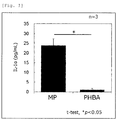
- methyl p-hydroxybenzoate (MP) or p-hydroxybenzoic acid (PHBA) was added to a three-dimensional cultured human epidermis model, the model was cultured, and then the amount of inflammatory cytokine (IL-1 ⁇ ) in the cultured medium was measured, production of IL-1 ⁇ was increased in case of MP addition, but little production of IL-1 ⁇ was observed in case of PHBA addition( Figure 1 ).
- MP or PHBA was applied to the skin of those aware of having sensitive skin and irritation was tested, they felt some irritation in case of MP application, while they felt little irritation in case of PHBA application ( Figure 2 ).
- the method for evaluating or selecting an agent for reducing sensory irritation caused by parabens includes the following steps (1) to (3):
- examples of the "cells capable of expressing CES1" include cells which inherently have CES1 gene and are capable of expressing it and cells into which CES1 gene has been exogenously and expressibly introduced.
- the cells may be cells sampled from a living body or cells contained in a tissue or an organ sampled from a living body, or may be cultured cells.
- the cells are preferably cells derived from a mammal, and more preferably cells derived from a human.
- Examples of the cells which inherently have CES1 gene and are capable of expressing it include cells derived from various tissues of living bodies.
- the cells are preferably cells derived from a skin sampled from a mammal (preferably a human) such as cells derived from the epidermal tissue (e.g., epidermal keratinocytes) and cells derived from the dermal tissue (e.g., fibroblasts) as well as a cell culture and organ culture derived from those cells.
- Cells derived from the epidermal tissue are preferred, and epidermal keratinocytes are more preferred.
- the cells into which CES1 gene has been exogenously and expressibly introduced may be prepared by introducing an expression vector containing CES1 gene into any mammalian cells to transform the cells.
- the transcription regulatory region (e.g., promotors) in the expression vector is not particularly limited as long as the expression can be regulated as in vivo, and it is preferable to use the transcription regulatory region (e.g., promotors) of CES1 gene.
- cells into which a vector with a reporter gene linked to the transcription regulatory region (e.g., promotors) of CES1 gene is introduced may also be used.
- Methods of preparing a vector with CES1 gene or the transcription regulatory region (e.g., promotors) of CES1 gene and methods of introducing the vector into mammalian cells are known to those skilled in the art.
- examples of the cultured cells include the cells which inherently have CES1 gene and are capable of expressing it and the cultured cells derived from the cells into which CES1 gene have been exogenously and expressibly introduced, as described above as well as cell lines capable of expressing CES1.
- Cultured cells derived from the skin sampled from a mammal are preferred, and cultured normal human epidermal keratinocytes are more preferred.
- three-dimensional cultured skin cells are preferably used. Specific examples thereof include EpiDerm TM (made by MatTek Corporation), EpiSkin (made by SkinEthic), RHE (made by SkinEthic) and Labcyte EPI-MODEL (made by J-TEC).
- test substance brought into contact with the above cells is not limited as long as it is intended to be used as an agent for reducing sensory irritation caused by parabens.
- examples thereof include an animal, and a plant, a marine organism, a microorganism, an extract thereof; a natural component derived therefrom; a synthetic compound; and a mixture and composition thereof.
- Means for contacting the test substance with the above cells may be means known in this field, and examples thereof include addition of the test substance to a cell culture medium and a direct addition to cells (e.g., dropping, coating, scattering, spraying and patches).
- the concentration and the amount of the test substance to be brought into contact may be adjusted based on the form, chemical properties, cytotoxicity, and the predicted intensity of skin sensitization of the test substance. For example, a predetermined amount of a test substance which has been diluted to a suitable concentration is exposed to the cells in conditions of 37°C and 5% CO 2 for 24 to 48 hours.
- the expression of CES1 in the above cells may be measured using, as an indicator, the expression of CES1 protein, the activity of CES1 protein, the expression of CES1 mRNA encoding the protein and the activation of CES1 gene promoter.
- the measurement may be carried out by a method known in the art as a method for measuring a parameter used as an indicator (e.g., expression of protein, biological activity of protein, expression of mRNA, activation of CES1 gene promoter).
- Examples of the method for measuring the expression of mRNA include dot blotting, Northern blotting, RT-PCR, real-time RT-PCR, microarrays and a combination thereof.
- Examples of the method for measuring the activity of CES1 gene promoter include fluorescent/optical measurement of promoter activity or transcription activity using a reporter gene (reporter assays).
- Examples of the method for measuring the expression of protein include SDS-PAGE, chromatography, immunological measurement (e.g., immunohistochemical methods, ELISA, Western blotting, immunoprecipitation), colorimetric methods, mass spectrometry, and a combination thereof.
- immunological measurement e.g., immunohistochemical methods, ELISA, Western blotting, immunoprecipitation
- colorimetric methods e.g., colorimetric methods, mass spectrometry, and a combination thereof.
- the activity of CES1 protein may be measured by, for example, exposing methyl p-hydroxybenzoate, which is a substrate of CES1, to cells expressing CES1, culturing the cells for a predetermined time, and then determining the amount of p-hydroxybenzoic acid in the cultured broth by HPLC.
- the effect of promoting the expression of CES1 of the test substance is evaluated based on the expression measured as described above.
- the effect is evaluated by, for example, comparing the results before and after addition of the test substance, or comparing a test substance-addition group and a test substance-free group or a control substance-addition group. Alternatively, the effect may be evaluated by comparing the results of measurement between different concentrations of the test substance.
- test substances which increase or promote the expression of CES1 are selected as an agent for reducing sensory irritation caused by parabens.
- the agent for reducing sensory irritation caused by parabens obtained as described above may be blended in a paraben-containing cosmetic, a drug and the like to be used in order to reduce sensory irritation caused by parabens.
- sulforaphane and an extract of a plant containing sulforaphane such as broccoli sprouts have been found to have the effect of promoting the expression of CES1, and they have been found as an agent for reducing sensory irritation.
- the present invention also provides an agent for reducing sensory irritation or an agent for promoting the expression of CES1, comprising, as an active ingredient, sulforaphane, or a plant or an extract thereof comprising sulforaphane or a glycoside thereof.
- sulforaphane means 4-(methylsulfinyl)butyl isothiocyanate.
- Sulforaphane can be obtained by, for example, isolation and purification from a plant containing sulforaphane or a glycoside thereof by a known method.
- Sulforaphane isolated and purified is also commercially available from, for example, Sigma-Aldrich. The commercially available product may also be used in the present invention.
- sulforaphane not only isolated sulforaphane but also the above plant or the extract thereof containing sulforaphane or a glycoside thereof cany be an active ingredient for the agent for reducing sensory irritation or the agent for promoting the expression of CES1.
- Examples of the plant containing sulforaphane or a glycoside thereof include a plant in the family Brassicaceae, and preferably a plant in the family Brassicaceae, genus Brassica. Specific examples thereof include broccoli, cauliflower and cabbage. Of them, in consideration of the content of sulforaphane, broccoli ( Brassica oleracea var. italica ) is preferred, and broccoli sprouts, sprouted broccoli before maturing, is more preferred.
- glycoside of sulforaphane examples include sulforaphane glucosinolate.
- a pulverized product, a lyophilized product or a squeezed juice of the whole plant or part of the plant containing sulforaphane or a glycoside thereof can be used.
- a dried and pulverized product of part of buds, seed leaves, seeds or roots, or the whole sprouts can be preferably used.
- Examples of the extract of the plant include a variety of solvent extraction liquid obtained by extracting the plant by a known method of extraction, a dilution thereof, a concentrate thereof or a dried powder thereof.
- Examples of the known method of extraction include immersion, exudation, solid-liquid extraction, reflux extraction, supercritical extraction, ultrasonic extraction and microwave extraction.
- the immersion includes immersion/exudation at 0°C to the boiling point of the solvent (preferably 15 to 40°C) for 1 hour to 4 weeks.
- the solid-liquid extraction includes stirring or shaking at 0°C to the boiling point of the solvent (preferably 15 to 40°C) at 30 to 1,000 rpm for 30 minutes to 2 weeks.
- means for extraction in a so-called non-oxidizing atmosphere may be used in combination, while dissolved oxygen is removed by boiling deaeration or aeration with inert gas such as nitrogen gas.
- inert gas such as nitrogen gas.
- an extractor such as a Soxhlet extractor may be used in reflux extraction.
- any of a polar solvent and a non-polar solvent may be used.
- the solvent include water; a monohydric, dihydric or polyhydric alcohol; a ketone such as acetone and methyl ethyl ketone; an ester such as methyl acetate and ethyl acetate; a linear or cyclic ether such as diethyl ether and tetrahydrofuran; a polyether such as polyethylene glycol; a saturated or unsaturated hydrocarbon such as hexane; an aromatic hydrocarbon such as benzene and toluene; a halogenated hydrocarbon such as dichloromethane, chloroform, dichloroethane and carbon tetrachloride; a pyridine; dimethyl sulfoxide; acetonitrile; carbon dioxide, supercritical carbon dioxide; fat, wax, other oils; and a mixture thereof.
- Preferred examples thereof include water, alcohol and a mixture thereof from the
- Examples of the alcohol described above include, but not limited to, a monohydric alcohol such as methanol, ethanol, propanol, butanol, amyl alcohol, hexanol, heptanol and octanol; a dihydric alcohol such as 1,3-butylene glycol, ethylene glycol, propylene glycol, 1,4-butanediol, 1,5-pentanediol and 1,6-hexanediol; and a trihydric or higher alcohol such as glycerol.
- a monohydric alcohol and a dihydric alcohol are preferred from the viewpoint of the pharmacological activity and workability.
- the above alcohol may also be preferably alcohol having 1 to 10 carbon atoms, and more preferably alcohol having 1 to 4 carbon atoms.
- Preferred examples of the alcohol described above include methanol, ethanol, 1,3-butylene glycol, n-propanol, isopropanol, n-butanol, isobutanol, sec-butanol and t-butanol.
- the concentration of the above alcohol in an aqueous solution of the alcohol is preferably 20% by mass or more, more preferably 30% by mass or more, and further preferably 40% by mass or more, and preferably 80% by mass or less, more preferably 70% by mass or less, and further preferably 60% by mass or less.
- the concentration of the above alcohol in an aqueous solution of the alcohol is preferably from 20 to 80% by mass, more preferably from 30 to 70% by mass, and further preferably from 40 to 60% by mass.
- ethanol is more preferred from the viewpoint of the applicability.
- more preferred examples of the solvent for preparing the extract of a plant described above include water, ethanol and an aqueous solution of ethanol.
- the amount of the solvent to be used in extraction is from 1 to 1,000 mL based on 1 g of the plant (in terms of dry mass).
- volume means volume at 25°C.
- the dry mass means the mass of a dried solid, which is a residue obtained by drying a sample in an electric constant temperature dryer at 105°C for 3 hours to remove volatile substances.
- the conditions of extraction are not particularly limited as long as sufficient extraction can be performed.
- the extraction time is preferably 1 hour or more, more preferably 3 days or more, and further preferably 1 week or more, and preferably 2 months or less, more preferably 5 weeks or less, and further preferably 2 weeks or less.
- the temperature of extraction is preferably 0°C or more, and more preferably 5°C or more, and preferably the boiling point of the solvent or less, and more preferably 90°C or less.
- the conditions of extraction include, for example, 15 to 40°C for 3 days to 5 weeks, preferably 1 to 2 weeks, and 60 to 90°C for 1 to 5 hours, but are not limited thereto, and may be suitably selected by those skilled in the art.
- the plant extract may be directly used, or the extract may be diluted, concentrated or dried and then prepared into powder or paste to be used.
- the extract may be lyophilized, and when in use, diluted with a solvent usually used for extraction, such as water, ethanol, propylene glycol, 1,3-butylene glycol, a mixture of water and ethanol, a mixture of water and propylene glycol or a mixture of water and 1,3-butylene glycol.
- the extract may also be included in a vesicle such as liposome, or a microcapsule or the like, and used.
- the content of sulforaphane in the plant extract obtained as described above may be increased by subjecting the extract to an isolation and purification step of, for example, treatment using a synthetic adsorbent, filtration treatment and concentration treatment, if necessary.
- An extract of broccoli sprouts in which the content of sulforaphane has been increased e.g., "Broccoli Sprout Extract," (Oryza Oil & Fat Chemical Co., Ltd.) is commercially available. Such a product may also be used in the present invention.
- sulforaphane and an extract of broccoli sprouts which is a plant containing sulforaphane, have an action of promoting the expression of CES1 and an action of reducing sensory irritation caused by parabens.
- sulforaphane, or a plant or an extract thereof comprising sulforaphane or a glycoside thereof can be an agent for reducing sensory irritation or an agent for promoting the expression of CES1. Furthermore, they may be used for reducing sensory irritation and promoting the expression of CES1, and may also be used for producing an agent for reducing sensory irritation or an agent for promoting the expression of CES1.
- non-therapeutic means administration to or intake in a human or a non-human animal. Furthermore, the use may be a therapeutic use or non-therapeutic use.
- non-therapeutic is a concept which does not include medical practice, i.e., a concept which does not include a method of operation, therapy or diagnosis of a human, more specifically, a concept which does not include a method of operation, therapy or diagnosis of a human by a physician or a person instructed by a physician.
- Reducing sensory irritation in the "agent for reducing sensory irritation” of the present invention means suppressing or alleviating a transient uncomfortable irritation on the skin, such as a stinging sensation or a tingling sensation, caused by parabens.
- a transient uncomfortable irritation on the skin such as a stinging sensation or a tingling sensation, caused by parabens.
- paraben is as described above.
- the "expression of CES1" in the "agent for promoting expression of CES1” includes the expression of CES1 protein, the activity of CES1 protein, the expression of CES1 mRNA encoding the protein and the activity of CES1 gene promoter as described above, and is preferably the expression of CES1 mRNA.
- the agent for reducing sensory irritation or the agent for promoting the expression of CES1 may contain sulforaphane, or a plant or an extract thereof containing sulforaphane or a glycoside thereof alone, or may be a composition containing it in combination with an additive or an excipient used for various preparations including a drug, a cosmetic, a quasi drug and a daily product, such as an oil component, a coloring matter, a perfume, an antiseptic, a chelating agent, a pigment, an antioxidant, vitamins, minerals, a sweetener, a seasoning, a preservative, a binder, an extender, a disintegrant, a surfactant, a lubricant, a dispersant, a buffer, a coating agent, a carrier and a diluent.
- the form of the agent is not particularly limited, and the agent may be prepared in any form of a solution, an emulsion, a suspension, a gel, a solid, a powder
- the amount of sulforaphane, or a plant or an extract thereof containing sulforaphane or a glycoside thereof to be blended in the composition is 0.0001% by mass or more, preferably 0.001% by mass or more, more preferably 0.01% by mass or more, and further preferably 0.1% by mass or more, and 99% by mass or less, preferably 95% by mass or less, more preferably 90% by mass or less, and further preferably 80% by mass or less, in terms of sulforaphane, based on the total mass of the preparation.
- the amount is from 0.001 to 99% by mass, preferably from 0.01 to 95% by mass, more preferably from 0.1 to 90% by mass, and further preferably from 1 to 80% by mass.
- the content thereof is 0.001% by mass or more, preferably 0.01% by mass or more, more preferably 0.1% by mass or more, and further preferably 1% by mass or more, and 99% by mass or less, preferably 95% by mass or less, more preferably 90% by mass or less, and further preferably 80% by mass or less, in terms of a dry solid, based on the total mass of the preparation.
- the content is from 0.001 to 99% by mass, preferably from 0.01 to 95% by mass, more preferably from 0.1 to 90% by mass, and further preferably from 1 to 80% by mass.
- the agent for reducing sensory irritation or the agent for promoting the expression of CES1 of the present invention into the above paraben-containing composition (e.g., a cosmetic, a quasi drug, a drug and a daily product, such as a skin detergent, a hair detergent, a make-up agent, a bath agent, a preparation for permanent wave, a hair dye, a soap, a kitchen detergent, a laundry detergent and a tooth paste) and using them, or by preparing the agent as a composition different from a paraben-containing composition and using the agent simultaneously with, or before or after using the above paraben-containing composition, irritation caused by parabens can be reduced.
- a cosmetic, a quasi drug, a drug and a daily product such as a skin detergent, a hair detergent, a make-up agent, a bath agent, a preparation for permanent wave, a hair dye, a soap, a kitchen detergent, a laundry detergent and a tooth paste
- the agent for reducing sensory irritation or the agent for promoting the expression of CES1 of the present invention is applied to preferably a human who uses a paraben-containing composition, and more specifically a human who desires to reduce irritation caused by parabens.
- the agent for reducing sensory irritation or the agent for promoting the expression of CES1 of the present invention is used in combination with a paraben-containing composition
- the amount of the agent for reducing sensory irritation or the agent for promoting the expression of CES1 to be used is not particularly limited as long as they reduce sensory irritation.
- the proportion of sulforaphane, or a plant or an extract thereof containing sulforaphane or a glycoside thereof according to the present invention may be, for example, preferably 10 -7 parts by mass or more, more preferably 10 -6 parts by mass or more, and further preferably 10 -5 parts by mass or more, and preferably 10 parts by mass or less, more preferably 1 part by mass or less, and further preferably 0.1 parts by mass or less, in terms of sulforaphane, based on 1 part by mass of parabens.
- the proportion may be preferably from 10 -7 to 10 parts by mass, more preferably from 10 -6 to 1 part by mass, and further preferably from 10 -5 to 0.1 part by mass.
- the present invention also discloses the following modes.
- LabCyte EPI-MODEL 24 (made by Japan Tissue Engineering Co., Ltd.) was used as a three-dimensional cultured human epidermis model.
- the culture insert was pre-cultured (5% CO 2 , 37°C) in a 500 ⁇ L exclusive assay medium overnight, and the culture insert was transferred to a 24-well plate containing a fresh assay medium.
- MP methyl p-hydroxybenzoate
- PHBA p-hydroxybenzoic acid
- the culture insert was washed with phosphate buffer 10 times, and transferred to a 24-well plate containing a fresh assay medium, and post-cultured for 18 hours. After the post-culture, the amount of IL-1 ⁇ in the medium was determined using Human IL-1 alpha/IL-1F1 Quantikine ELISA Kit (R&D Systems) according to the protocol attached. The results are shown in Figure 1 .
- Figure 1 shows that when PHBA was used, the amount of IL-1 ⁇ whose production is known to be increased due to substances which cause sensory irritation was much smaller than that when MP was used, suggesting that the sensory irritation caused by PHBA was very mild.
- the subjects selected were tested for Stinging test A according to the following method.
- conditioning was performed in an environment of a temperature of 23°C and a humidity of 50% for 5 minutes or more.
- a 2 cm ⁇ 5 cm piece of nonwoven fabric which was impregnated with 600 ⁇ L of a 16.4 mM aqueous solution of methyl p-hydroxybenzoate or p-hydroxybenzoic acid was contacted to the cheek.
- Figure 2 shows that the sensory irritation caused by PHBA is very mild, suggesting that PHBA contributes little to sensory irritation.
- a skin biopsy 4 mm in diameter was halved with a knife, and one of the pieces was used for analyzing the expression level of carboxylesterase 1 and the other was used for analyzing the activity of carboxylesterase 1.
- the skin biopsy tissue for analyzing the expression level was cut into strips with a scissors.
- RIPA buffer (Wako Pure Chemical Industries, Ltd.) to which Protease Inhibitor Mixture (Wako Pure Chemical Industries, Ltd.) had been added was added in an amount ((The weight of the tissue (mg) ⁇ 20) ⁇ L) to a microtube containing the skin biopsy tissue.
- the mixture was homogenized with a homogenizer (Physcotron, MICROTEC CO., LTD.) and then allowed to stand on ice for 30 minutes. After 30 minutes, the mixture was treated with ultrasonic waves at 4°C for 2 minutes and centrifuged at 10,000 rpm at 4°C for 20 minutes to obtain a supernatant thereof as a skin extract solution.
- the amount of protein in the skin extract solution was determined using Pierce BCA Protein Assay Kit (Thermo Scientific) with bovine serum albumin as a standard protein.
- sample skin extract solution was subjected to polyacrylamide gel electrophoresis (SDS-PAGE) and Western blotting as follows.
- the protein was transferred to a PVDF membrane (BIO-RAD).
- the PVDF membrane after transfer was immersed in a 5% skim milk solution to perform blocking, and then primary antibody reaction was performed using anti-carboxylesterase 1 antibody (R&D Systems, Cat#MAB4920) which had been diluted at 1:200.
- Secondary antibody reaction was performed using horseradish peroxidase (HRP)-labeled anti-mouse IgG antibody (R&D Systems, Cat#HAF007) which had been diluted at 1:2,000.
- Luminescence was obtained using Clarity Western ECL Substrate (BIO-RAD), and the antibody reaction was detected using LAS-4000 (FUJIFILM Corporation).
- the band of CES1 and the band of actin in the image of the Western blotting taken were individually selected by using an image analysis software, CS Analyzer (ATTO Corporation), and the intensity of the bands was measured to calculate the intensity of CES1 based on actin. Whether a constant amount of the samples was loaded into the polyacrylamide gel or not was examined by a test performed in the same manner except for using anti-p-actin antibody as primary antibody.
- the skin biopsy tissue for analyzing activity was cut into strips with a scissors. Then, a 50 mM HEPES/ 150 mM KCl (pH 7.4) solution was added thereto in an amount ((the weight of the tissue (mg) ⁇ 20) ⁇ L), and the mixture was homogenized with a homogenizer (Physcotron, MICROTEC CO., LTD.), and then centrifuged at 10,000 rpm at 4°C for 20 minutes to obtain a supernatant as a skin extract solution. The amount of protein in the skin extract solution was determined using Pierce BCA Protein Assay Kit (Thermo Scientific).
- the final concentration of protein in the respective skin extract solutions was adjusted to 50 ⁇ g/mL, and methyl p-hydroxybenzoate, which is a substrate of carboxylesterase 1, was added thereto so that the concentration was 200 ⁇ M, and the reaction was performed at 37°C for 5 hours. Then cold acetonitrile was added in the same amount as that of the reaction solution to the reaction solution to stop the reaction.
- the amount of the metabolite, p-hydroxybenzoic acid was determined by HPLC, and the amount of p-hydroxybenzoic acid produced per unit protein and unit time was determined as the metabolic activity of CES1.
- the instrument, column and conditions of measurement used in HPLC are shown below.
- Figure 3 and Figure 4 show that the expression level of CES1 and the metabolic activity of CES1 were lower in the skin of the subjects with sensitive skin than those in the skin of the subjects with healthy skin.
- RNA concentration was calculated by using NanoDrop 1000 (Thermo Fisher Scientific). Total RNA extracted was reverse-transcribed using High-Capacity RNA-to-cDNA Kit (Life Technologies Japan Ltd.), and then real-time PCR was performed using 7500 Fast Real-Time PCR System (Life Technologies Japan Ltd.). In the real-time PCR, the expression levels of CES1 mRNA were compared by the ⁇ CT method using the above reverse transcribed cDNA and CES1, or, as an endogenous control, Taqman primer for RPLP0 (Life Technologies Japan Ltd., CES1:Hs00275627-m1, RPLP0:HS00420895_gH), Taqman Gene Expression Master Mix (Life Technologies Japan Ltd.). The results are shown in Figure 5 .
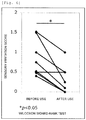
- Figure 5 shows that the extract of broccoli sprouts increased the expression level of CES1 mRNA.
- Stinging test C Males aware of having a sensitive skin and feeling sensory irritation for methyl p-hydroxybenzoate (MP) were selected as subjects.
- conditioning was performed in an environment of a temperature of 23°C and a humidity of 50% for 5 minutes or more.
- a 10 cm 2 piece of nonwoven fabric which was impregnated with 600 ⁇ L of a 16.4 mM aqueous solution of methyl p-hydroxybenzoate was contacted to the cheek.
- the subject submitted scores (0: nothing felt, 0.5: slightly felt, 1.0: a little felt, 2.0: substantially felt, 3.0: so strongly felt that wanting to remove the nonwoven fabric due to strong irritation)
- a value obtained by subtracting, from the highest score of the submitted scores, the highest score in a test performed in the same manner except for using distilled water was determined as the sensory irritation score, and the sensory irritation score was statistically analyzed by the Wilcoxon signed-rank test. The results are shown in Figure 7.
- Figure 6 shows that the extract of broccoli sprouts reduces sensory irritation caused by methyl p-hydroxybenzoate.
- RNA concentration was calculated by using NanoDrop 1000 (Thermo Fisher Scientific).
- RNA extracted was reverse-transcribed using High-Capacity RNA-to-cDNA Kit (Life Technologies Japan Ltd.), and then real-time PCR was performed using 7500 Fast Real-Time PCR System (Life Technologies Japan Ltd.).
- the expression levels of the gene were compared by the ⁇ CT method using the above reverse transcribed cDNA and carboxylesterase 1, or, as an endogenous control, Taqman primer for RPLP0 (Life Technologies Japan Ltd., CES1:Hs00275627-m1, RPLP0:HS00420895_gH), Taqman Gene Expression Master Mix (Life Technologies Japan Ltd.).
- Table 1 shows that sulforaphane increased the expression level of CES1 mRNA.
Landscapes
- Health & Medical Sciences (AREA)
- Life Sciences & Earth Sciences (AREA)
- Chemical & Material Sciences (AREA)
- Engineering & Computer Science (AREA)
- Organic Chemistry (AREA)
- General Health & Medical Sciences (AREA)
- Immunology (AREA)
- Molecular Biology (AREA)
- Proteomics, Peptides & Aminoacids (AREA)
- Medicinal Chemistry (AREA)
- Bioinformatics & Cheminformatics (AREA)
- Microbiology (AREA)
- Biotechnology (AREA)
- Biomedical Technology (AREA)
- Zoology (AREA)
- Analytical Chemistry (AREA)
- Wood Science & Technology (AREA)
- Physics & Mathematics (AREA)
- Biochemistry (AREA)
- Natural Medicines & Medicinal Plants (AREA)
- Veterinary Medicine (AREA)
- Public Health (AREA)
- Animal Behavior & Ethology (AREA)
- Pharmacology & Pharmacy (AREA)
- Urology & Nephrology (AREA)
- Hematology (AREA)
- Genetics & Genomics (AREA)
- Epidemiology (AREA)
- General Engineering & Computer Science (AREA)
- Biophysics (AREA)
- Pathology (AREA)
- Cell Biology (AREA)
- Food Science & Technology (AREA)
- General Physics & Mathematics (AREA)
- Toxicology (AREA)
- Tropical Medicine & Parasitology (AREA)
- Nuclear Medicine, Radiotherapy & Molecular Imaging (AREA)
- General Chemical & Material Sciences (AREA)
- Chemical Kinetics & Catalysis (AREA)
- Dermatology (AREA)
Abstract
Description
- The present invention relates to a method for evaluating or selecting an agent for reducing sensory irritation, which suppresses sensory irritation caused by parabens, and an agent for reducing sensory irritation, which alleviates irritation caused by parabens.
- An external agent for the skin such as a skin cosmetic is often prepared by blending an antiseptic therein, in order to prevent contamination and propagation of bacteria. Parabens, in particular, is blended the most in an external agent for the skin as an antiseptic having both high antimicrobial activity and high safety. However, those who have a skin sensitive to ultraviolet light, dry conditions and chemical substances, what we call a sensitive skin, may feel a transient, uncomfortable irritation caused by parabens, such as a stinging sensation or a tingling sensation.
- To respond to this, a conventional substance suppressing irritation on the skin has been reported, e.g., an agent for suppressing irritation caused by surfactant, which contains a hydrophobic group-containing polysaccharide derivative (Patent Literature 1) and an agent for suppressing irritation for a hair dye, which suppresses irritation caused by a hair dye (Patent Literature 2). It has been also reported that a TRPA1 inhibitor may be used as an agent for suppressing irritation caused by parabens (Patent Literature 3).
- Meanwhile, broccoli sprouts, which are a germinated seeds of broccoli (Brassica oleracea var. italica) belonging to the family Brassicaceae, genus Brassica, are known as a plant with a high content of sulforaphane. An extract thereof has been reported to have actions of whitening, and preventing and improving wrinkles and sagging (Patent Literature 4), and have an action of promoting production of sebum (Patent Literature 5).
- However, there is no report stating that the extract of broccoli sprouts or sulforaphane prevents or improves sensitive skin.
-
- [Patent Literature 1]
JP-A-2001-64185 - [Patent Literature 2]
JP-A-2002-363053 - [Patent Literature 3]
JP-A-2008-79528 - [Patent Literature 4]
JP-A-2003-155221 - [Patent Literature 5] Japanese Patent Application No.
2009-114152 - The present invention provides the following 1) to 11) .
- A method for evaluating or selecting an agent for reducing sensory irritation caused by parabens, comprising the following steps (1) to (3):
- (1) a step of contacting cells capable of expressing CES1 with a test substance;
- (2) a step of measuring expression of CES1 in the cells;
- (3) a step of evaluating a test substance which promotes expression of CES1 as an agent for reducing sensory irritation caused by parabens based on the results measured in (2).
- 2) An agent for reducing sensory irritation, comprising, as an active ingredient, sulforaphane, or a plant or an extract thereof comprising sulforaphane or a glycoside thereof.
- 3) An agent for promoting expression of CES1, comprising, as an active ingredient, sulforaphane, or a plant or an extract thereof comprising sulforaphane or a glycoside thereof.
- 4) Use of sulforaphane, or a plant or an extract thereof comprising sulforaphane or a glycoside thereof, for producing an agent for reducing sensory irritation.
- 5) Use of sulforaphane, or a plant or an extract thereof comprising sulforaphane or a glycoside thereof, for producing an agent for promoting expression of CES1.
- 6) Sulforaphane, or a plant or an extract thereof comprising sulforaphane or a glycoside thereof, for use in reducing sensory irritation.
- 7) Sulforaphane, or a plant or an extract thereof comprising sulforaphane or a glycoside thereof, for use in promoting expression of CES1.
- 8) Non-therapeutic use of sulforaphane, or a plant or an extract thereof comprising sulforaphane or a glycoside thereof, for reducing sensory irritation.
- 9) Non-therapeutic use of sulforaphane, or a plant or an extract thereof comprising sulforaphane or a glycoside thereof, for promoting expression of CES1.
- 10) A method for reducing sensory irritation, comprising using sulforaphane, or a plant or an extract thereof comprising sulforaphane or a glycoside thereof.
- 11) A method for promoting expression of CES1, comprising using sulforaphane, or a plant or an extract thereof comprising sulforaphane or a glycoside thereof.
-
- [
Figure 1] Figure 1 shows the amount of IL-1α produced in three-dimensional cultured epidermal cells. MP: methyl p-hydroxybenzoate added, PHBA: p-hydroxybenzoic acid added. Data is shown in a mean value ± SD. - [
Figure 2] Figure 2 shows the scores of sensory irritation on the skin of subjects with sensitive skin. MP: methyl p-hydroxybenzoate applied, PHBA: p-hydroxybenzoic acid applied - [
Figure 3] Figure 3 shows the CES1 expression levels in healthy subjects and subjects with sensitive skin. Data is shown in a mean value ± SD. - [
Figure 4] Figure 4 shows the methyl p-hydroxybenzoate metabolizing activity in healthy subjects and subjects with sensitive skin. Data is shown in a mean value ± SD. - [
Figure 5] Figure 5 shows an action of an extract of broccoli sprouts to promote the expression of CES1. - [
Figure 6] Figure 6 shows an action of an extract of broccoli sprouts to reduce sensory irritation caused by methyl p-hydroxybenzoate. - The present invention relates to a provision of a method for evaluating or selecting an agent for reducing sensory irritation, which reduces sensory irritation caused by parabens. The present invention also relates to a provision of an agent for reducing sensory irritation, which reduces sensory irritation caused by parabens.
- The present inventors have conducted studies on sensory irritation caused by parabens, and, as a result, have found that methylparaben is metabolized to p-hydroxybenzoic acid (PHBA) by a metabolic enzyme, carboxylesterase 1 (CES1) in a living body, and this PHBA produces little sensory irritation, and that the expression of CES1 in a person with sensitive skin is lower than that in a healthy person, and further found that an agent for reducing sensory irritation caused by parabens can be searched or evaluated by using the expression of CES1 as an indicator. The present inventors also have found that sulforaphane and an extract of a plant containing sulforaphane, such as broccoli sprouts, have an action of promoting the expression of CES1, and they can be an agent for reducing sensory irritation having an effect for reducing sensory irritation caused by parabens.
- According to the present invention, an agent for reducing sensory irritation with a novel mechanism, which quickly decomposes parabens in a living body to reduce sensory irritation caused by parabens, can be searched or evaluated.
- Furthermore, according to the present invention, an agent for reducing sensory irritation with a novel mechanism, which quickly decomposes parabens in a living body to reduce sensory irritation caused by parabens, can be provided.
- In the present invention, examples of the "paraben" include paraoxybenzoate such as methyl paraben (methyl p-hydroxybenzoate), ethyl paraben (ethyl p-hydroxybenzoate), propyl paraben (propyl p-hydroxybenzoate), isopropyl paraben (isopropyl p-hydroxybenzoate), butyl paraben (butyl p-hydroxybenzoate), isobutyl paraben (isobutyl p-hydroxybenzoate) and benzyl paraben (benzyl p-hydroxybenzoate) and a sodium salt thereof.
- Furthermore, "reducing sensory irritation caused by parabens" means suppressing or alleviating a transient uncomfortable irritation on the skin, such as a stinging sensation or a tingling sensation, caused by parabens.
- In the present invention, "CES1" refers to
carboxylesterase 1, which is also known asserine esterase 1 or SES1. This enzyme is a member of the family of mammalian liver carboxylesterases (EC 3.1.1.1) and hydrolyzes an endogenous substrate having an ester, thioester or amide functional group. CES1 has been reported to be expressed in the lungs and the skin of humans as well as the liver. The enzyme is involved in metabolic activation of drugs and detoxification of a xenobiotic substance such as chemical substances. - As shown in Examples described later, when methyl p-hydroxybenzoate (MP) or p-hydroxybenzoic acid (PHBA) was added to a three-dimensional cultured human epidermis model, the model was cultured, and then the amount of inflammatory cytokine (IL-1α) in the cultured medium was measured, production of IL-1α was increased in case of MP addition, but little production of IL-1α was observed in case of PHBA addition(
Figure 1 ). Furthermore, when MP or PHBA was applied to the skin of those aware of having sensitive skin and irritation was tested, they felt some irritation in case of MP application, while they felt little irritation in case of PHBA application (Figure 2 ). - Furthermore, when the skin was sampled from healthy subjects and subjects with sensitive skin to measure the MP metabolizing activity and the CES1 expression level in the skin, it was found that the MP metabolizing activity was lower and the CES1 expression level was significantly lower in the skin of the subjects with sensitive skin than those in the skin of the healthy subjects (
Figures 3 and4 ). - These results suggest that a substance which promotes the expression of CES1 are useful as an agent for reducing sensory irritation caused by parabens and that it is possible to evaluate or select an agent for reducing sensory irritation caused by parabens by using the expression of CES1 as an indicator.
- The method for evaluating or selecting an agent for reducing sensory irritation caused by parabens includes the following steps (1) to (3):
- (1) a step of contacting cells capable of expressing CES1 with a test substance;
- (2) a step of measuring expression of CES1 in the cells;
- (3) a step of evaluating a test substance which promotes expression of CES1 as an agent for reducing sensory irritation caused by parabens based on the results measured in (2).
- In this regard, examples of the "cells capable of expressing CES1" include cells which inherently have CES1 gene and are capable of expressing it and cells into which CES1 gene has been exogenously and expressibly introduced. The cells may be cells sampled from a living body or cells contained in a tissue or an organ sampled from a living body, or may be cultured cells. The cells are preferably cells derived from a mammal, and more preferably cells derived from a human.
- Examples of the cells which inherently have CES1 gene and are capable of expressing it include cells derived from various tissues of living bodies. The cells are preferably cells derived from a skin sampled from a mammal (preferably a human) such as cells derived from the epidermal tissue (e.g., epidermal keratinocytes) and cells derived from the dermal tissue (e.g., fibroblasts) as well as a cell culture and organ culture derived from those cells. Cells derived from the epidermal tissue are preferred, and epidermal keratinocytes are more preferred.
- The cells into which CES1 gene has been exogenously and expressibly introduced may be prepared by introducing an expression vector containing CES1 gene into any mammalian cells to transform the cells. The transcription regulatory region (e.g., promotors) in the expression vector is not particularly limited as long as the expression can be regulated as in vivo, and it is preferable to use the transcription regulatory region (e.g., promotors) of CES1 gene. As the cells into which CES1 gene has been exogenously and expressibly introduced, cells into which a vector with a reporter gene linked to the transcription regulatory region (e.g., promotors) of CES1 gene is introduced may also be used. Methods of preparing a vector with CES1 gene or the transcription regulatory region (e.g., promotors) of CES1 gene and methods of introducing the vector into mammalian cells are known to those skilled in the art.
- Furthermore, examples of the cultured cells include the cells which inherently have CES1 gene and are capable of expressing it and the cultured cells derived from the cells into which CES1 gene have been exogenously and expressibly introduced, as described above as well as cell lines capable of expressing CES1. Cultured cells derived from the skin sampled from a mammal (preferably a human) are preferred, and cultured normal human epidermal keratinocytes are more preferred. Furthermore, three-dimensional cultured skin cells are preferably used. Specific examples thereof include EpiDerm TM (made by MatTek Corporation), EpiSkin (made by SkinEthic), RHE (made by SkinEthic) and Labcyte EPI-MODEL (made by J-TEC).
- The test substance brought into contact with the above cells is not limited as long as it is intended to be used as an agent for reducing sensory irritation caused by parabens. Examples thereof include an animal, and a plant, a marine organism, a microorganism, an extract thereof; a natural component derived therefrom; a synthetic compound; and a mixture and composition thereof.
- Means for contacting the test substance with the above cells may be means known in this field, and examples thereof include addition of the test substance to a cell culture medium and a direct addition to cells (e.g., dropping, coating, scattering, spraying and patches). The concentration and the amount of the test substance to be brought into contact may be adjusted based on the form, chemical properties, cytotoxicity, and the predicted intensity of skin sensitization of the test substance. For example, a predetermined amount of a test substance which has been diluted to a suitable concentration is exposed to the cells in conditions of 37°C and 5% CO2 for 24 to 48 hours.
- The expression of CES1 in the above cells may be measured using, as an indicator, the expression of CES1 protein, the activity of CES1 protein, the expression of CES1 mRNA encoding the protein and the activation of CES1 gene promoter. The measurement may be carried out by a method known in the art as a method for measuring a parameter used as an indicator (e.g., expression of protein, biological activity of protein, expression of mRNA, activation of CES1 gene promoter).
- Examples of the method for measuring the expression of mRNA include dot blotting, Northern blotting, RT-PCR, real-time RT-PCR, microarrays and a combination thereof.
- Examples of the method for measuring the activity of CES1 gene promoter include fluorescent/optical measurement of promoter activity or transcription activity using a reporter gene (reporter assays).
- Examples of the method for measuring the expression of protein include SDS-PAGE, chromatography, immunological measurement (e.g., immunohistochemical methods, ELISA, Western blotting, immunoprecipitation), colorimetric methods, mass spectrometry, and a combination thereof.
- The activity of CES1 protein may be measured by, for example, exposing methyl p-hydroxybenzoate, which is a substrate of CES1, to cells expressing CES1, culturing the cells for a predetermined time, and then determining the amount of p-hydroxybenzoic acid in the cultured broth by HPLC.
- Next, the effect of promoting the expression of CES1 of the test substance is evaluated based on the expression measured as described above. The effect is evaluated by, for example, comparing the results before and after addition of the test substance, or comparing a test substance-addition group and a test substance-free group or a control substance-addition group. Alternatively, the effect may be evaluated by comparing the results of measurement between different concentrations of the test substance.
- Then, the test substances which increase or promote the expression of CES1 are selected as an agent for reducing sensory irritation caused by parabens.
- The agent for reducing sensory irritation caused by parabens obtained as described above may be blended in a paraben-containing cosmetic, a drug and the like to be used in order to reduce sensory irritation caused by parabens.
- According to the above method of the present invention, sulforaphane and an extract of a plant containing sulforaphane such as broccoli sprouts have been found to have the effect of promoting the expression of CES1, and they have been found as an agent for reducing sensory irritation.
- Thus, the present invention also provides an agent for reducing sensory irritation or an agent for promoting the expression of CES1, comprising, as an active ingredient, sulforaphane, or a plant or an extract thereof comprising sulforaphane or a glycoside thereof.
- As used herein, sulforaphane means 4-(methylsulfinyl)butyl isothiocyanate.
- Sulforaphane can be obtained by, for example, isolation and purification from a plant containing sulforaphane or a glycoside thereof by a known method. Sulforaphane isolated and purified is also commercially available from, for example, Sigma-Aldrich. The commercially available product may also be used in the present invention.
- In the present invention, not only isolated sulforaphane but also the above plant or the extract thereof containing sulforaphane or a glycoside thereof cany be an active ingredient for the agent for reducing sensory irritation or the agent for promoting the expression of CES1.
- Examples of the plant containing sulforaphane or a glycoside thereof include a plant in the family Brassicaceae, and preferably a plant in the family Brassicaceae, genus Brassica. Specific examples thereof include broccoli, cauliflower and cabbage. Of them, in consideration of the content of sulforaphane, broccoli (Brassica oleracea var. italica) is preferred, and broccoli sprouts, sprouted broccoli before maturing, is more preferred.
- Examples of a glycoside of sulforaphane include sulforaphane glucosinolate.
- As the plant containing sulforaphane or a glycoside thereof, a pulverized product, a lyophilized product or a squeezed juice of the whole plant or part of the plant containing sulforaphane or a glycoside thereof can be used. In the case of broccoli sprouts, for example, a dried and pulverized product of part of buds, seed leaves, seeds or roots, or the whole sprouts can be preferably used.
- Examples of the extract of the plant include a variety of solvent extraction liquid obtained by extracting the plant by a known method of extraction, a dilution thereof, a concentrate thereof or a dried powder thereof. Examples of the known method of extraction include immersion, exudation, solid-liquid extraction, reflux extraction, supercritical extraction, ultrasonic extraction and microwave extraction. For example, the immersion includes immersion/exudation at 0°C to the boiling point of the solvent (preferably 15 to 40°C) for 1 hour to 4 weeks. The solid-liquid extraction includes stirring or shaking at 0°C to the boiling point of the solvent (preferably 15 to 40°C) at 30 to 1,000 rpm for 30 minutes to 2 weeks. Furthermore, to prevent oxidation of the extract, means for extraction in a so-called non-oxidizing atmosphere may be used in combination, while dissolved oxygen is removed by boiling deaeration or aeration with inert gas such as nitrogen gas. Furthermore, in reflux extraction, an extractor such as a Soxhlet extractor may be used.
- As a solvent for extraction, any of a polar solvent and a non-polar solvent may be used. Specific examples of the solvent include water; a monohydric, dihydric or polyhydric alcohol; a ketone such as acetone and methyl ethyl ketone; an ester such as methyl acetate and ethyl acetate; a linear or cyclic ether such as diethyl ether and tetrahydrofuran; a polyether such as polyethylene glycol; a saturated or unsaturated hydrocarbon such as hexane; an aromatic hydrocarbon such as benzene and toluene; a halogenated hydrocarbon such as dichloromethane, chloroform, dichloroethane and carbon tetrachloride; a pyridine; dimethyl sulfoxide; acetonitrile; carbon dioxide, supercritical carbon dioxide; fat, wax, other oils; and a mixture thereof. Preferred examples thereof include water, alcohol and a mixture thereof from the viewpoint of the pharmacological activity and applicability.
- Examples of the alcohol described above include, but not limited to, a monohydric alcohol such as methanol, ethanol, propanol, butanol, amyl alcohol, hexanol, heptanol and octanol; a dihydric alcohol such as 1,3-butylene glycol, ethylene glycol, propylene glycol, 1,4-butanediol, 1,5-pentanediol and 1,6-hexanediol; and a trihydric or higher alcohol such as glycerol. Of them, a monohydric alcohol and a dihydric alcohol are preferred from the viewpoint of the pharmacological activity and workability. The above alcohol may also be preferably alcohol having 1 to 10 carbon atoms, and more preferably alcohol having 1 to 4 carbon atoms.
- Preferred examples of the alcohol described above include methanol, ethanol, 1,3-butylene glycol, n-propanol, isopropanol, n-butanol, isobutanol, sec-butanol and t-butanol.
- The concentration of the above alcohol in an aqueous solution of the alcohol is preferably 20% by mass or more, more preferably 30% by mass or more, and further preferably 40% by mass or more, and preferably 80% by mass or less, more preferably 70% by mass or less, and further preferably 60% by mass or less. The concentration of the above alcohol in an aqueous solution of the alcohol is preferably from 20 to 80% by mass, more preferably from 30 to 70% by mass, and further preferably from 40 to 60% by mass.
- Of the above alcohols, ethanol is more preferred from the viewpoint of the applicability. Thus, more preferred examples of the solvent for preparing the extract of a plant described above include water, ethanol and an aqueous solution of ethanol.
- It is preferable that the amount of the solvent to be used in extraction is from 1 to 1,000 mL based on 1 g of the plant (in terms of dry mass). As used herein, volume means volume at 25°C. Furthermore, the dry mass means the mass of a dried solid, which is a residue obtained by drying a sample in an electric constant temperature dryer at 105°C for 3 hours to remove volatile substances. The conditions of extraction are not particularly limited as long as sufficient extraction can be performed. For example, the extraction time is preferably 1 hour or more, more preferably 3 days or more, and further preferably 1 week or more, and preferably 2 months or less, more preferably 5 weeks or less, and further preferably 2 weeks or less. The temperature of extraction is preferably 0°C or more, and more preferably 5°C or more, and preferably the boiling point of the solvent or less, and more preferably 90°C or less. Usually extraction is performed for a longer time at a lower temperature and for a shorter time at a higher temperature. The conditions of extraction include, for example, 15 to 40°C for 3 days to 5 weeks, preferably 1 to 2 weeks, and 60 to 90°C for 1 to 5 hours, but are not limited thereto, and may be suitably selected by those skilled in the art.
- In the present invention, the plant extract may be directly used, or the extract may be diluted, concentrated or dried and then prepared into powder or paste to be used. Alternatively, the extract may be lyophilized, and when in use, diluted with a solvent usually used for extraction, such as water, ethanol, propylene glycol, 1,3-butylene glycol, a mixture of water and ethanol, a mixture of water and propylene glycol or a mixture of water and 1,3-butylene glycol. The extract may also be included in a vesicle such as liposome, or a microcapsule or the like, and used.
- The content of sulforaphane in the plant extract obtained as described above may be increased by subjecting the extract to an isolation and purification step of, for example, treatment using a synthetic adsorbent, filtration treatment and concentration treatment, if necessary. An extract of broccoli sprouts in which the content of sulforaphane has been increased, e.g., "Broccoli Sprout Extract," (Oryza Oil & Fat Chemical Co., Ltd.) is commercially available. Such a product may also be used in the present invention.
- As shown in Examples described later, sulforaphane and an extract of broccoli sprouts, which is a plant containing sulforaphane, have an action of promoting the expression of CES1 and an action of reducing sensory irritation caused by parabens.
- Thus, sulforaphane, or a plant or an extract thereof comprising sulforaphane or a glycoside thereof can be an agent for reducing sensory irritation or an agent for promoting the expression of CES1. Furthermore, they may be used for reducing sensory irritation and promoting the expression of CES1, and may also be used for producing an agent for reducing sensory irritation or an agent for promoting the expression of CES1.
- As used herein, "use" means administration to or intake in a human or a non-human animal. Furthermore, the use may be a therapeutic use or non-therapeutic use. The term "non-therapeutic" is a concept which does not include medical practice, i.e., a concept which does not include a method of operation, therapy or diagnosis of a human, more specifically, a concept which does not include a method of operation, therapy or diagnosis of a human by a physician or a person instructed by a physician.
- "Reducing sensory irritation" in the "agent for reducing sensory irritation" of the present invention means suppressing or alleviating a transient uncomfortable irritation on the skin, such as a stinging sensation or a tingling sensation, caused by parabens. As used herein, the "paraben" is as described above.
- The effect of reducing sensory irritation described above can be measured in a sensory evaluation shown in Examples described later.
- Furthermore, the "expression of CES1" in the "agent for promoting expression of CES1" includes the expression of CES1 protein, the activity of CES1 protein, the expression of CES1 mRNA encoding the protein and the activity of CES1 gene promoter as described above, and is preferably the expression of CES1 mRNA.
- The agent for reducing sensory irritation or the agent for promoting the expression of CES1 may contain sulforaphane, or a plant or an extract thereof containing sulforaphane or a glycoside thereof alone, or may be a composition containing it in combination with an additive or an excipient used for various preparations including a drug, a cosmetic, a quasi drug and a daily product, such as an oil component, a coloring matter, a perfume, an antiseptic, a chelating agent, a pigment, an antioxidant, vitamins, minerals, a sweetener, a seasoning, a preservative, a binder, an extender, a disintegrant, a surfactant, a lubricant, a dispersant, a buffer, a coating agent, a carrier and a diluent. The form of the agent is not particularly limited, and the agent may be prepared in any form of a solution, an emulsion, a suspension, a gel, a solid, a powder, a granule and an aerosol.
- The amount of sulforaphane, or a plant or an extract thereof containing sulforaphane or a glycoside thereof to be blended in the composition is 0.0001% by mass or more, preferably 0.001% by mass or more, more preferably 0.01% by mass or more, and further preferably 0.1% by mass or more, and 99% by mass or less, preferably 95% by mass or less, more preferably 90% by mass or less, and further preferably 80% by mass or less, in terms of sulforaphane, based on the total mass of the preparation. The amount is from 0.001 to 99% by mass, preferably from 0.01 to 95% by mass, more preferably from 0.1 to 90% by mass, and further preferably from 1 to 80% by mass. When the composition contains a plant or an extract thereof containing sulforaphane or a glycoside thereof, the content thereof is 0.001% by mass or more, preferably 0.01% by mass or more, more preferably 0.1% by mass or more, and further preferably 1% by mass or more, and 99% by mass or less, preferably 95% by mass or less, more preferably 90% by mass or less, and further preferably 80% by mass or less, in terms of a dry solid, based on the total mass of the preparation. The content is from 0.001 to 99% by mass, preferably from 0.01 to 95% by mass, more preferably from 0.1 to 90% by mass, and further preferably from 1 to 80% by mass.
- By blending the agent for reducing sensory irritation or the agent for promoting the expression of CES1 of the present invention into the above paraben-containing composition (e.g., a cosmetic, a quasi drug, a drug and a daily product, such as a skin detergent, a hair detergent, a make-up agent, a bath agent, a preparation for permanent wave, a hair dye, a soap, a kitchen detergent, a laundry detergent and a tooth paste) and using them, or by preparing the agent as a composition different from a paraben-containing composition and using the agent simultaneously with, or before or after using the above paraben-containing composition, irritation caused by parabens can be reduced. In other words, the agent for reducing sensory irritation or the agent for promoting the expression of CES1 of the present invention is applied to preferably a human who uses a paraben-containing composition, and more specifically a human who desires to reduce irritation caused by parabens.
- When the agent for reducing sensory irritation or the agent for promoting the expression of CES1 of the present invention is used in combination with a paraben-containing composition, the amount of the agent for reducing sensory irritation or the agent for promoting the expression of CES1 to be used is not particularly limited as long as they reduce sensory irritation. The proportion of sulforaphane, or a plant or an extract thereof containing sulforaphane or a glycoside thereof according to the present invention may be, for example, preferably 10-7 parts by mass or more, more preferably 10-6 parts by mass or more, and further preferably 10-5 parts by mass or more, and preferably 10 parts by mass or less, more preferably 1 part by mass or less, and further preferably 0.1 parts by mass or less, in terms of sulforaphane, based on 1 part by mass of parabens. The proportion may be preferably from 10-7 to 10 parts by mass, more preferably from 10-6 to 1 part by mass, and further preferably from 10-5 to 0.1 part by mass.
- For the embodiments described above, the present invention also discloses the following modes.
- <1> A method for evaluating or selecting an agent for reducing sensory irritation caused by parabens, comprising the following steps (1) to (3):
- (1) a step of contacting cells capable of expressing CES1 with a test substance;
- (2) a step of measuring expression of CES1 in the cells;
- (3) a step of evaluating a test substance which promotes expression of CES1 as an agent for reducing sensory irritation caused by parabens based on the results measured in (2).
- <2> The method according to <1>, wherein the paraben is one or more selected from the group consisting of methylparaben, sodium methylparaben, ethylparaben, butylparaben, propylparaben, isobutylparaben, isopropylparaben and benzylparaben.
- <3> The method according to <2>, wherein the paraben is methylparaben.
- <4> The method according to any one of <1> to <3>, wherein the cells capable of expressing CES1 are cells derived from human epidermal tissue, and preferably cultured normal human epidermal keratinocytes.
- <5> The method according to any one of <1> to <4>, wherein the expression of CES1 is measured using, as an indicator, one or more selected from the group consisting of expression of CES1 protein, activity of CES1 protein, expression of CES1 mRNA encoding the protein and activity of CES1 gene promoter, and preferably expression of CES1 mRNA.
- <6> An agent for reducing sensory irritation, comprising, as an active ingredient, sulforaphane, or a plant or an extract thereof comprising sulforaphane or a glycoside thereof.
- <7> An agent for promoting expression of CES1, comprising, as an active ingredient, sulforaphane, or a plant or an extract thereof comprising sulforaphane or a glycoside thereof.
- <8> Use of sulforaphane, or a plant or an extract thereof comprising sulforaphane or a glycoside thereof, for producing an agent for reducing sensory irritation.
- <9> Use of sulforaphane, or a plant or an extract thereof comprising sulforaphane or a glycoside thereof, for producing an agent for promoting expression of CES1.
- <10> Sulforaphane, or a plant or an extract thereof comprising sulforaphane or a glycoside thereof, for use in reducing sensory irritation.
- <11> Sulforaphane, or a plant or an extract thereof comprising sulforaphane or a glycoside thereof, for use in promoting expression of CES1.
- <12> Non-therapeutic use of sulforaphane, or a plant or an extract thereof comprising sulforaphane or a glycoside thereof, for reducing sensory irritation.
- <13> Non-therapeutic use of sulforaphane, or a plant or an extract thereof comprising sulforaphane or a glycoside thereof, for promoting expression of CES1.
- <14> A method for reducing sensory irritation, comprising using sulforaphane, or a plant or an extract thereof comprising sulforaphane or a glycoside thereof.
- <15> A method for promoting expression of CES1, comprising using sulforaphane, or a plant or an extract thereof comprising sulforaphane or a glycoside thereof.
- <16> The method according to <14> or <15>, wherein the using is using for a human who uses a paraben-containing composition.
- <17> In the above <6>, <8>, <10>, <12> or <14>, the sensory irritation is irritation caused by parabens.
- <18> In the above <6> to <17>, the plant comprising sulforaphane or a glycoside thereof is broccoli sprouts.
- <19> In the above <6> to <18>, the sulforaphane, or the plant or an extract thereof comprising sulforaphane or a glycoside thereof is blended in a paraben-containing composition and used, or is prepared as a composition different from a paraben-containing composition used simultaneously with, or before or after using the above paraben-containing composition.
- <20> In the above <19>, the sulforaphane, or the plant or an extract thereof comprising sulforaphane or a glycoside thereof is used in a proportion of preferably 10-7 parts by mass or more, more preferably 10-6 parts by mass or more, and further preferably 10-5 parts by mass or more, and preferably 10 parts by mass or less, more preferably 1 part by mass or less, and further preferably 0.1 parts by mass or less, or in a proportion of preferably from 10-7 to 10 parts by mass, more preferably from 10-6 to 1 part by mass, and further preferably from 10-5 to 0.1 parts by mass, in terms of sulforaphane, based on 1 part by mass of the paraben.
- <21> In the above <6> to <9>, the amount of sulforaphane, or the plant or the extract thereof comprising sulforaphane or a glycoside thereof blended in the composition is 0.0001% by mass or more, preferably 0.001% by mass or more, more preferably 0.01% by mass or more, and further preferably 0.1% by mass or more, and 99% by mass or less, preferably 95% by mass or less, more preferably 90% by mass or less, and further preferably 80% by mass or less, or from 0.001 to 99% by mass, preferably from 0.01 to 95% by mass, more preferably from 0.1 to 90% by mass, and further preferably from 1 to 80% by mass, in terms of sulforaphane, based on the total mass of the preparation.
- <22> In the above <6> to <9>, the amount of the plant or the extract thereof comprising sulforaphane or a glycoside thereof blended in the composition is 0.001% by mass or more, preferably 0.01% by mass or more, more preferably 0.1% by mass or more, and further preferably 1% by mass or more, and 99% by mass or less, preferably 95% by mass or less, more preferably 90% by mass or less, and further preferably 80% by mass or less, or from 0.001 to 99% by mass, preferably from 0.01 to 95% by mass, more preferably from 0.1 to 90% by mass, and further preferably from 1 to 80% by mass, in terms of a dry solid, based on the total mass of the preparation.
- Hereinafter, the present invention will be described in more detail with reference to Examples, but the present invention is not limited thereto.
- LabCyte EPI-MODEL 24 (made by Japan Tissue Engineering Co., Ltd.) was used as a three-dimensional cultured human epidermis model. The culture insert was pre-cultured (5% CO2, 37°C) in a 500 µL exclusive assay medium overnight, and the culture insert was transferred to a 24-well plate containing a fresh assay medium. 50 µL of a 16.4 mM aqueous solution of methyl p-hydroxybenzoate (MP) or p-hydroxybenzoic acid (PHBA) was added to the epidermal tissue in the culture insert, and the tissue was cultured for 6 hours. Then the culture insert was washed with
phosphate buffer 10 times, and transferred to a 24-well plate containing a fresh assay medium, and post-cultured for 18 hours. After the post-culture, the amount of IL-1α in the medium was determined using Human IL-1 alpha/IL-1F1 Quantikine ELISA Kit (R&D Systems) according to the protocol attached. The results are shown inFigure 1 . -
Figure 1 shows that when PHBA was used, the amount of IL-1α whose production is known to be increased due to substances which cause sensory irritation was much smaller than that when MP was used, suggesting that the sensory irritation caused by PHBA was very mild. - Those who met all of the following criteria were selected as subjects with sensitive skin.
- 1. Age: 20 to 55 years old
- 2. Sex: female
- 3. Aware of having sensitive skin
- 4. Met one or more of the following a and b
- a. Select and use cosmetics considered to be for sensitive skin
- b. Experienced irritation with a stinging or pricking sensation when used a face wash, a skin care product or a make-up base within one year
- The subjects selected were tested for Stinging test A according to the following method.
- After washing face with a make-up remover and a face wash, conditioning was performed in an environment of a temperature of 23°C and a humidity of 50% for 5 minutes or more. A 2 cm × 5 cm piece of nonwoven fabric which was impregnated with 600 µL of a 16.4 mM aqueous solution of methyl p-hydroxybenzoate or p-hydroxybenzoic acid was contacted to the cheek. For sensory irritation that the subjects felt (sore, stinging, pricking, smart, hot, flushed) 30 seconds, 1 minute, 2 minutes, 3 minutes, and 5 minutes after the start of the contact, the subjects submitted scores (0: nothing felt, 0.5: slightly felt or slight discomfort, 1.0: a little discomfort, 1.5: a little to moderate discomfort, 2.0: moderate discomfort, 2.5: moderate to much discomfort, 3.0: much or unbearable discomfort). A value obtained by subtracting, from the highest score of all the scores after 30 seconds to 5 minutes, the highest score in a test performed in the same manner as above except for using distilled water was determined as the sensory irritation score, and the sensory irritation score was statistically analyzed by the Wilcoxon signed-rank test. The results are shown in
Figure 2 . -
Figure 2 shows that the sensory irritation caused by PHBA is very mild, suggesting that PHBA contributes little to sensory irritation. - Reference Example 3 Comparison of expression level and metabolic activity of CES1 between healthy skin and sensitive skin
- After washing face with a make-up remover and a face wash, conditioning was performed in an environment of a temperature of 23°C and a humidity of 50% for 5 minutes or more. A 10 cm2 piece of nonwoven fabric which was impregnated with 600 µL of a 16.4 mM aqueous solution of methyl p-hydroxybenzoate was contacted to the right cheek. For sensory irritation that the subject felt 30 seconds, 1 minute, 2 minutes and 3 minutes after the contact, the subjects submitted scores (0: nothing felt, 0.5: slightly felt, 1.0: a little felt, 2.0: substantially felt, 3.0: so strongly felt that wanting to remove the nonwoven fabric due to strong irritation). The highest score of all the scores after 30 seconds to 3 minutes was determined as the sensory irritation score of the cheek. Next, after the right side of the neck was cleaned with 70% isopropyl alcohol, a 2 cm × 2.5 cm piece of nonwoven fabric which was impregnated with 300 µL of a 16.4 mM aqueous solution of methyl p-hydroxybenzoate (MP) was contacted to the site cleaned. For sensory irritation that the subjects felt 30 seconds, 1 minute, 2 minutes and 3 minutes after the start of the contact, the subjects submitted scores (0: nothing felt, 0.5: slightly felt, 1.0: a little felt, 2.0: substantially felt, 3.0: so strongly felt that wanting to remove the nonwoven fabric due to strong irritation), and the highest score of all the scores after 30 seconds to 3 minutes was determined as the sensory irritation score of the neck.
- Three were selected as subjects with healthy skin out of those who met all of the following criteria.
- Age: 20 to 55 years old
- Sex: Female
- Aware of not having sensitive skin
- Sensory irritation score of both the cheek and the neck of 0 (nothing felt) in Stinging test B
- Three were selected as a subject with sensitive skin out of those who met all of the following criteria.
- Age: 20 to 55 years old
- Sex: Female
- Aware of having sensitive skin
- Sensory irritation score of the cheek of 2 (substantially felt) or more and sensory irritation score of the neck of 0.5 (slightly felt) or more in Stinging test B
- Three subjects were selected from those with healthy skin and those with sensitive skin, respectively, and the skin was collected from the right side of their neck (the site used in the Stinging tests) by using a 4 mm φ biopsy punch. The skin collected was immediately frozen using liquid nitrogen and stored at -80°C until analyzed.
- A skin biopsy 4 mm in diameter was halved with a knife, and one of the pieces was used for analyzing the expression level of
carboxylesterase 1 and the other was used for analyzing the activity ofcarboxylesterase 1. - The skin biopsy tissue for analyzing the expression level was cut into strips with a scissors. RIPA buffer (Wako Pure Chemical Industries, Ltd.) to which Protease Inhibitor Mixture (Wako Pure Chemical Industries, Ltd.) had been added was added in an amount ((The weight of the tissue (mg) × 20) µL) to a microtube containing the skin biopsy tissue. The mixture was homogenized with a homogenizer (Physcotron, MICROTEC CO., LTD.) and then allowed to stand on ice for 30 minutes. After 30 minutes, the mixture was treated with ultrasonic waves at 4°C for 2 minutes and centrifuged at 10,000 rpm at 4°C for 20 minutes to obtain a supernatant thereof as a skin extract solution. The amount of protein in the skin extract solution was determined using Pierce BCA Protein Assay Kit (Thermo Scientific) with bovine serum albumin as a standard protein.
- The sample skin extract solution was subjected to polyacrylamide gel electrophoresis (SDS-PAGE) and Western blotting as follows.
- After the skin extract solution was separated by SDS-PAGE, the protein was transferred to a PVDF membrane (BIO-RAD). The PVDF membrane after transfer was immersed in a 5% skim milk solution to perform blocking, and then primary antibody reaction was performed using anti-carboxylesterase 1 antibody (R&D Systems, Cat#MAB4920) which had been diluted at 1:200. Secondary antibody reaction was performed using horseradish peroxidase (HRP)-labeled anti-mouse IgG antibody (R&D Systems, Cat#HAF007) which had been diluted at 1:2,000. Luminescence was obtained using Clarity Western ECL Substrate (BIO-RAD), and the antibody reaction was detected using LAS-4000 (FUJIFILM Corporation). The band of CES1 and the band of actin in the image of the Western blotting taken were individually selected by using an image analysis software, CS Analyzer (ATTO Corporation), and the intensity of the bands was measured to calculate the intensity of CES1 based on actin. Whether a constant amount of the samples was loaded into the polyacrylamide gel or not was examined by a test performed in the same manner except for using anti-p-actin antibody as primary antibody.
- The skin biopsy tissue for analyzing activity was cut into strips with a scissors. Then, a 50 mM HEPES/ 150 mM KCl (pH 7.4) solution was added thereto in an amount ((the weight of the tissue (mg) × 20) µL), and the mixture was homogenized with a homogenizer (Physcotron, MICROTEC CO., LTD.), and then centrifuged at 10,000 rpm at 4°C for 20 minutes to obtain a supernatant as a skin extract solution. The amount of protein in the skin extract solution was determined using Pierce BCA Protein Assay Kit (Thermo Scientific). The final concentration of protein in the respective skin extract solutions was adjusted to 50 µg/mL, and methyl p-hydroxybenzoate, which is a substrate of
carboxylesterase 1, was added thereto so that the concentration was 200 µM, and the reaction was performed at 37°C for 5 hours. Then cold acetonitrile was added in the same amount as that of the reaction solution to the reaction solution to stop the reaction. The amount of the metabolite, p-hydroxybenzoic acid, was determined by HPLC, and the amount of p-hydroxybenzoic acid produced per unit protein and unit time was determined as the metabolic activity of CES1. The instrument, column and conditions of measurement used in HPLC are shown below. - Instrument: Alliance 2695 Separation Module, 2996 Photodiode Array Detector (Waters)
Column: L-column ODS (4.6 × 150 mm, 5 µm, Chemicals Evaluation and Research Institute, Japan)
Column temperature: 40°C
Mobile phase: 45% methanol / 0.1% formic acid
Flow rate: 1.0 mL / minute
Amount of sample injected: 50 µL
Detection wavelength: 254 nm - The results are shown in
Figure 3 andFigure 4 . -
Figure 3 andFigure 4 show that the expression level of CES1 and the metabolic activity of CES1 were lower in the skin of the subjects with sensitive skin than those in the skin of the subjects with healthy skin. - Normal human epidermal keratinocytes (Life Technologies Japan Ltd.) were seeded into a 6-well plate so that the number of cells in each well was 1 × 10⁻⁵, and cultured in HuMedia-KG2 (KURABO INDUSTRIES LTD.) overnight. Then, an extract of broccoli sprouts (Broccoli Sprout Extract, Oryza Oil & Fat Chemical Co., Ltd., for cosmetics) was added to the culture medium at a solid concentration of 0.0001 w/v% or 0.001 w/v%, and the cells were cultured for 48 hours. The cells after culture was washed with D-PBS (-) and RNA was extracted using RNeasy Mini Kits (QIAGEN) according to the manual attached. The RNA concentration was calculated by using NanoDrop 1000 (Thermo Fisher Scientific). Total RNA extracted was reverse-transcribed using High-Capacity RNA-to-cDNA Kit (Life Technologies Japan Ltd.), and then real-time PCR was performed using 7500 Fast Real-Time PCR System (Life Technologies Japan Ltd.). In the real-time PCR, the expression levels of CES1 mRNA were compared by the ΔΔ CT method using the above reverse transcribed cDNA and CES1, or, as an endogenous control, Taqman primer for RPLP0 (Life Technologies Japan Ltd., CES1:Hs00275627-m1, RPLP0:HS00420895_gH), Taqman Gene Expression Master Mix (Life Technologies Japan Ltd.). The results are shown in
Figure 5 . -
Figure 5 shows that the extract of broccoli sprouts increased the expression level of CES1 mRNA. - Males aware of having a sensitive skin and feeling sensory irritation for methyl p-hydroxybenzoate (MP) were selected as subjects. A 500-yen coin size amount of a 10% ethanol solution containing an extract of broccoli sprouts (Broccoli Sprout Extract, Oryza Oil & Fat Chemical Co., Ltd. for cosmetics) having a solid concentration of 0.01% was applied to the entire face of the subject twice a day for a week, and sensory irritation scores before and after application in Stinging test C were compared. Stinging test C was performed according to the following method.
- After washing face with a make-up remover and a face wash, conditioning was performed in an environment of a temperature of 23°C and a humidity of 50% for 5 minutes or more. A 10 cm2 piece of nonwoven fabric which was impregnated with 600 µL of a 16.4 mM aqueous solution of methyl p-hydroxybenzoate was contacted to the cheek. For sensory irritation that the subject felt 30 seconds to 3 minutes after the contact, the subject submitted scores (0: nothing felt, 0.5: slightly felt, 1.0: a little felt, 2.0: substantially felt, 3.0: so strongly felt that wanting to remove the nonwoven fabric due to strong irritation) A value obtained by subtracting, from the highest score of the submitted scores, the highest score in a test performed in the same manner except for using distilled water was determined as the sensory irritation score, and the sensory irritation score was statistically analyzed by the Wilcoxon signed-rank test. The results are shown in Figure 7.
-
Figure 6 shows that the extract of broccoli sprouts reduces sensory irritation caused by methyl p-hydroxybenzoate. - Normal human epidermal keratinocytes (Life Technologies Japan Ltd.) were seeded into a 6-well plate so that the number of cells in each well was 1 × 10⁻⁵ and cultured in HuMedia-KG2 (KURABO INDUSTRIES LTD.) overnight. Then, sulforaphane (Sigma-Aldrich) was exposed to the cells so that the final concentration was 0.1, 1, and 10 µM, and the cells were cultured for 48 hours. The cells after culture was washed with a phosphate buffer (D-PBS (-)) and RNA was extracted using RNeasy Mini Kits (QIAGEN) according to the manual attached. The RNA concentration was calculated by using NanoDrop 1000 (Thermo Fisher Scientific). Total RNA extracted was reverse-transcribed using High-Capacity RNA-to-cDNA Kit (Life Technologies Japan Ltd.), and then real-time PCR was performed using 7500 Fast Real-Time PCR System (Life Technologies Japan Ltd.). In the real-time PCR, the expression levels of the gene were compared by the ΔΔ CT method using the above reverse transcribed cDNA and
carboxylesterase 1, or, as an endogenous control, Taqman primer for RPLP0 (Life Technologies Japan Ltd., CES1:Hs00275627-m1, RPLP0:HS00420895_gH), Taqman Gene Expression Master Mix (Life Technologies Japan Ltd.). The results are shown in Table 1.[Table 1] Mean value ±SD n=3 Sulforaphane (µM) 0.1 1 10 Relative gene expression level (with non treat as 1.0) 1.5±0.33 3.6±0.90 35±8.4 - Table 1 shows that sulforaphane increased the expression level of CES1 mRNA.
Claims (16)
- A method for evaluating or selecting an agent for reducing sensory irritation caused by parabens, comprising the following steps (1) to (3):(1) a step of contacting cells capable of expressing CES1 with a test substance;(2) a step of measuring expression of CES1 in the cells;(3) a step of evaluating a test substance which promotes expression of CES1 as an agent for reducing sensory irritation caused by parabens based on the results measured in (2).
- The method according to claim 1, wherein the paraben is one or more selected from the group consisting of methylparaben, sodium methylparaben, ethylparaben, butylparaben, propylparaben, isobutylparaben, isopropylparaben and benzylparaben.
- The method according to claim 1 or 2, wherein the cells capable of expressing CES1 is cells derived from human epidermal tissue.
- An agent for reducing sensory irritation, comprising, as an active ingredient, sulforaphane, or a plant or an extract thereof comprising sulforaphane or a glycoside thereof.
- The agent for reducing sensory irritation according to claim 4, wherein the sensory irritation is caused by parabens.
- An agent for promoting expression of CES1, comprising, as an active ingredient, sulforaphane, or a plant or an extract thereof comprising sulforaphane or a glycoside thereof.
- The agent according to any one of claims 4 to 6, wherein the plant comprising sulforaphane or a glycoside thereof is broccoli sprouts.
- Use of sulforaphane, or a plant or an extract thereof comprising sulforaphane or a glycoside thereof, for producing an agent for reducing sensory irritation.
- Use of sulforaphane, or a plant or an extract thereof comprising sulforaphane or a glycoside thereof, for producing an agent for promoting expression of CES1.
- Sulforaphane, or a plant or an extract thereof comprising sulforaphane or a glycoside thereof, for use in reducing sensory irritation.
- Sulforaphane, or a plant or an extract thereof comprising sulforaphane or a glycoside thereof, for use in promoting expression of CES1.
- Non-therapeutic use of sulforaphane, or a plant or an extract thereof comprising sulforaphane or a glycoside thereof, for reducing sensory irritation.
- Non-therapeutic use of sulforaphane, or a plant or an extract thereof comprising sulforaphane or a glycoside thereof, for promoting expression of CES1.
- A method for reducing sensory irritation, comprising using sulforaphane, or a plant or an extract thereof comprising sulforaphane or a glycoside thereof.
- A method for promoting expression of CES1, comprising using sulforaphane, or a plant or an extract thereof comprising sulforaphane or a glycoside thereof.
- The method according to claim 15 or 16, wherein the using is using for a human who uses a paraben-containing composition.
Applications Claiming Priority (3)
| Application Number | Priority Date | Filing Date | Title |
|---|---|---|---|
| JP2017230473A JP6621796B2 (en) | 2017-11-30 | 2017-11-30 | Method for evaluating or selecting sensory stimulus reducing agent |
| JP2018097850 | 2018-05-22 | ||
| PCT/JP2018/043990 WO2019107496A1 (en) | 2017-11-30 | 2018-11-29 | Method for evaluating or selecting sensory-stimulation-reducing agent |
Publications (3)
| Publication Number | Publication Date |
|---|---|
| EP3719136A1 true EP3719136A1 (en) | 2020-10-07 |
| EP3719136A4 EP3719136A4 (en) | 2021-08-18 |
| EP3719136B1 EP3719136B1 (en) | 2025-01-01 |
Family
ID=66664452
Family Applications (1)
| Application Number | Title | Priority Date | Filing Date |
|---|---|---|---|
| EP18882405.6A Active EP3719136B1 (en) | 2017-11-30 | 2018-11-29 | Method for evaluating or selecting agent for reducing sensory irritation |
Country Status (5)
| Country | Link |
|---|---|
| US (1) | US11969436B2 (en) |
| EP (1) | EP3719136B1 (en) |
| CN (1) | CN111406113B (en) |
| TW (1) | TWI865434B (en) |
| WO (1) | WO2019107496A1 (en) |
Family Cites Families (22)
| Publication number | Priority date | Publication date | Assignee | Title |
|---|---|---|---|---|
| JP2001199805A (en) | 2000-01-18 | 2001-07-24 | Shiseido Co Ltd | Antiseptic mildewproofing agent and composition for external use formulated with the same |
| JP2001064185A (en) | 1999-08-31 | 2001-03-13 | Nof Corp | Irritation inhibitors, compositions and cleaning agents |
| AU5440901A (en) | 1999-12-20 | 2001-07-03 | Cognis France, S.A. | Cosmetic and/or pharmaceutical preparations |
| JP2002363053A (en) | 2001-05-30 | 2002-12-18 | Sanei Kagaku Kk | Irritation-suppressing agent for hair-dyeing agent |
| JP3754646B2 (en) | 2001-11-16 | 2006-03-15 | 株式会社コーセー | Topical skin preparation |
| JP2007161668A (en) | 2005-12-15 | 2007-06-28 | Lion Corp | Hair cosmetics |
| JP2007169192A (en) | 2005-12-21 | 2007-07-05 | Lion Corp | Hair cosmetics |
| US20180353413A9 (en) | 2006-09-08 | 2018-12-13 | Norman Turkowitz | Skin compositions containing hydrocortisone |
| JP4917858B2 (en) | 2006-09-27 | 2012-04-18 | 株式会社マンダム | Screening method for substances that suppress irritation of parabens |
| US20080254055A1 (en) * | 2007-04-11 | 2008-10-16 | John Erich Oblong | Compositions for Regulation of Hair Growth |
| WO2009051739A1 (en) | 2007-10-16 | 2009-04-23 | Johns Hopkins University | Methods for protecting the skin from radiation insults |
| JP5571280B2 (en) | 2007-11-09 | 2014-08-13 | 株式会社コーセー | Sebum production promoter |
| US20110009486A1 (en) | 2008-03-03 | 2011-01-13 | Luna Innovations Incorporated | Method for treating pruritus by administering fullerenes |
| FR2938342A1 (en) | 2008-11-13 | 2010-05-14 | Galderma Res & Dev | TARGETING MODULATORS OF CES1 AND / OR CES3 IN THE TREATMENT OF ACNE, SEBORRHEA DERMATITIS OR HYPERSEBORRHEA |
| WO2012037193A2 (en) * | 2010-09-17 | 2012-03-22 | Brassica Protection Products Llc | Formulations for treatment with glucosinolate |
| KR101226758B1 (en) | 2010-09-28 | 2013-01-25 | 한국 한의학 연구원 | Composition for Prevention or Treatment of Atopic Dermatitis Comprising Herbal Extract and Fermentation Product thereof with Lactic acid Bacteria |
| US9856196B2 (en) | 2012-01-05 | 2018-01-02 | Kao Corporation | Agent for reduction of sensory irritation |
| US20160235057A1 (en) | 2013-09-30 | 2016-08-18 | 3M Innovative Properties Company | Compositions, Wipes, and Methods |
| CN105411923B (en) | 2015-12-03 | 2018-11-02 | 南京斯拜科生化实业有限公司 | Natural broad spectrum preservation composition containing grapefruit seed extract and its application |
| JPWO2017111069A1 (en) | 2015-12-25 | 2018-10-11 | 東レ株式会社 | Antidiarrheal |
| KR20170114773A (en) | 2016-04-06 | 2017-10-16 | (주)씨피바이오 | Anti-inflammatory composition comprising broccoli extracts or cosmetic composition for alleviating skin irritation |
| JP7182440B2 (en) | 2018-05-22 | 2022-12-02 | 花王株式会社 | sensory irritation reducing agent |
-
2018
- 2018-11-29 CN CN201880075956.4A patent/CN111406113B/en active Active
- 2018-11-29 US US16/768,180 patent/US11969436B2/en active Active
- 2018-11-29 WO PCT/JP2018/043990 patent/WO2019107496A1/en not_active Ceased
- 2018-11-29 EP EP18882405.6A patent/EP3719136B1/en active Active
- 2018-11-30 TW TW107143095A patent/TWI865434B/en active
Also Published As
| Publication number | Publication date |
|---|---|
| CN111406113B (en) | 2024-04-16 |
| US20200289538A1 (en) | 2020-09-17 |
| EP3719136B1 (en) | 2025-01-01 |
| CN111406113A (en) | 2020-07-10 |
| TW201925779A (en) | 2019-07-01 |
| EP3719136A4 (en) | 2021-08-18 |
| TWI865434B (en) | 2024-12-11 |
| WO2019107496A1 (en) | 2019-06-06 |
| US11969436B2 (en) | 2024-04-30 |
Similar Documents
| Publication | Publication Date | Title |
|---|---|---|
| Itoh et al. | Inhibitory effects of Citrus hassaku extract and its flavanone glycosides on melanogenesis | |
| KR20130134976A (en) | A cosmetic composition for whitening skin containing cynanchum atratum extracts | |
| US20220409510A1 (en) | Polypeptides And Methods For Improving Skin Conditions | |
| KR20160039972A (en) | Functional cosmetic composition comprising complex ferment consisting of soybean and barley | |
| US20160095815A1 (en) | Substance for restoring normal co-expression and interaction between the lox and nrage proteins | |
| AU2017324360A1 (en) | Aqueous extract of prunus persica and process for preparing the same | |
| KR20200050247A (en) | External Composition for Skin Containing the Mixture of the Sucrose, Indole-3-acetic Acid and Rose-Hip Extract | |
| EP3967319B1 (en) | Composition for skin protection comprising kaempferol saccharides compounds | |
| JP2009190988A (en) | p38 MAP kinase activation inhibitor | |
| EP3719136B1 (en) | Method for evaluating or selecting agent for reducing sensory irritation | |
| JP7182440B2 (en) | sensory irritation reducing agent | |
| KR20140118960A (en) | A Cosmetic Composition for Whitening Skin Containing Cynanchum atratum Extracts | |
| KR20230095638A (en) | Composition for skin whitening comprising culture of Lactobacillus reuteri and extract of Cnidium Monnieri | |
| EP2772255B1 (en) | Composition comprising syringaresinol for improving the skin | |
| CN105770077B (en) | Bleomycin hydrolase production promoter | |
| CN118695846A (en) | Process for obtaining plant extracts comprising a self-fermentation step, compositions comprising such extracts and their cosmetic use | |
| KR20230149643A (en) | Composition for promoting hair growth containing a compound isolated from hydrolyzed and fermented sea urchin shells as an active ingredient | |
| EP4578440A1 (en) | Non-therapeutic methods for skin tanning | |
| JP2019097446A (en) | Evaluation or selection method of sensory irritation reducing agent | |
| JP2022022672A (en) | Inflammatory cytokine inhibitor | |
| JP7802332B2 (en) | Composition for external use on the skin for promoting ceramide synthesis in the stratum corneum | |
| EP4578445A1 (en) | Composition comprising a methyl group donor and an acetyl-coa donor for use in the prevention of skin cancer | |
| KR100678865B1 (en) | Cosmetic composition for skin whitening containing upper limb extract and carnitine as active ingredients | |
| JP2026042897A (en) | Drugs and cosmetic methods for anti-photoaging, and screening methods for anti-photoaging agents | |
| KR20260054630A (en) | Ampk agonist peptides and uses thereof |
Legal Events
| Date | Code | Title | Description |
|---|---|---|---|
| STAA | Information on the status of an ep patent application or granted ep patent |
Free format text: STATUS: THE INTERNATIONAL PUBLICATION HAS BEEN MADE |
|
| PUAI | Public reference made under article 153(3) epc to a published international application that has entered the european phase |
Free format text: ORIGINAL CODE: 0009012 |
|
| STAA | Information on the status of an ep patent application or granted ep patent |
Free format text: STATUS: REQUEST FOR EXAMINATION WAS MADE |
|
| 17P | Request for examination filed |
Effective date: 20200629 |
|
| AK | Designated contracting states |
Kind code of ref document: A1 Designated state(s): AL AT BE BG CH CY CZ DE DK EE ES FI FR GB GR HR HU IE IS IT LI LT LU LV MC MK MT NL NO PL PT RO RS SE SI SK SM TR |
|
| AX | Request for extension of the european patent |
Extension state: BA ME |
|
| DAV | Request for validation of the european patent (deleted) | ||
| DAX | Request for extension of the european patent (deleted) | ||
| A4 | Supplementary search report drawn up and despatched |
Effective date: 20210716 |
|
| RIC1 | Information provided on ipc code assigned before grant |
Ipc: C12Q 1/68 20180101AFI20210712BHEP Ipc: C12Q 1/02 20060101ALI20210712BHEP Ipc: C12N 5/071 20100101ALI20210712BHEP Ipc: C12N 15/55 20060101ALI20210712BHEP Ipc: C12Q 1/6883 20180101ALI20210712BHEP |
|
| STAA | Information on the status of an ep patent application or granted ep patent |
Free format text: STATUS: EXAMINATION IS IN PROGRESS |
|
| 17Q | First examination report despatched |
Effective date: 20230331 |
|
| GRAP | Despatch of communication of intention to grant a patent |
Free format text: ORIGINAL CODE: EPIDOSNIGR1 |
|
| STAA | Information on the status of an ep patent application or granted ep patent |
Free format text: STATUS: GRANT OF PATENT IS INTENDED |
|
| RIC1 | Information provided on ipc code assigned before grant |
Ipc: G01N 33/50 20060101ALI20240628BHEP Ipc: C12Q 1/44 20060101ALI20240628BHEP Ipc: C12Q 1/6883 20180101ALI20240628BHEP Ipc: C12N 15/55 20060101ALI20240628BHEP Ipc: C12N 5/071 20100101ALI20240628BHEP Ipc: C12Q 1/02 20060101ALI20240628BHEP Ipc: C12Q 1/68 20180101AFI20240628BHEP |
|
| INTG | Intention to grant announced |
Effective date: 20240722 |
|
| GRAS | Grant fee paid |
Free format text: ORIGINAL CODE: EPIDOSNIGR3 |
|
| GRAA | (expected) grant |
Free format text: ORIGINAL CODE: 0009210 |
|
| STAA | Information on the status of an ep patent application or granted ep patent |
Free format text: STATUS: THE PATENT HAS BEEN GRANTED |
|
| P01 | Opt-out of the competence of the unified patent court (upc) registered |
Free format text: CASE NUMBER: APP_61303/2024 Effective date: 20241115 |
|
| RAP3 | Party data changed (applicant data changed or rights of an application transferred) |
Owner name: KAO CORPORATION |
|
| AK | Designated contracting states |
Kind code of ref document: B1 Designated state(s): AL AT BE BG CH CY CZ DE DK EE ES FI FR GB GR HR HU IE IS IT LI LT LU LV MC MK MT NL NO PL PT RO RS SE SI SK SM TR |
|
| REG | Reference to a national code |
Ref country code: GB Ref legal event code: FG4D |
|
| REG | Reference to a national code |
Ref country code: CH Ref legal event code: EP |
|
| REG | Reference to a national code |
Ref country code: DE Ref legal event code: R096 Ref document number: 602018078241 Country of ref document: DE |
|
| REG | Reference to a national code |
Ref country code: IE Ref legal event code: FG4D |
|
| REG | Reference to a national code |
Ref country code: LT Ref legal event code: MG9D |
|
| REG | Reference to a national code |
Ref country code: NL Ref legal event code: MP Effective date: 20250101 |
|
| REG | Reference to a national code |
Ref country code: AT Ref legal event code: MK05 Ref document number: 1756287 Country of ref document: AT Kind code of ref document: T Effective date: 20250101 |
|
| PG25 | Lapsed in a contracting state [announced via postgrant information from national office to epo] |
Ref country code: NL Free format text: LAPSE BECAUSE OF FAILURE TO SUBMIT A TRANSLATION OF THE DESCRIPTION OR TO PAY THE FEE WITHIN THE PRESCRIBED TIME-LIMIT Effective date: 20250101 |
|
| PG25 | Lapsed in a contracting state [announced via postgrant information from national office to epo] |
Ref country code: FI Free format text: LAPSE BECAUSE OF FAILURE TO SUBMIT A TRANSLATION OF THE DESCRIPTION OR TO PAY THE FEE WITHIN THE PRESCRIBED TIME-LIMIT Effective date: 20250101 |
|
| PG25 | Lapsed in a contracting state [announced via postgrant information from national office to epo] |
Ref country code: PL Free format text: LAPSE BECAUSE OF FAILURE TO SUBMIT A TRANSLATION OF THE DESCRIPTION OR TO PAY THE FEE WITHIN THE PRESCRIBED TIME-LIMIT Effective date: 20250101 |
|
| PG25 | Lapsed in a contracting state [announced via postgrant information from national office to epo] |
Ref country code: ES Free format text: LAPSE BECAUSE OF FAILURE TO SUBMIT A TRANSLATION OF THE DESCRIPTION OR TO PAY THE FEE WITHIN THE PRESCRIBED TIME-LIMIT Effective date: 20250101 |
|
| PG25 | Lapsed in a contracting state [announced via postgrant information from national office to epo] |
Ref country code: IS Free format text: LAPSE BECAUSE OF FAILURE TO SUBMIT A TRANSLATION OF THE DESCRIPTION OR TO PAY THE FEE WITHIN THE PRESCRIBED TIME-LIMIT Effective date: 20250501 Ref country code: NO Free format text: LAPSE BECAUSE OF FAILURE TO SUBMIT A TRANSLATION OF THE DESCRIPTION OR TO PAY THE FEE WITHIN THE PRESCRIBED TIME-LIMIT Effective date: 20250401 |
|
| PG25 | Lapsed in a contracting state [announced via postgrant information from national office to epo] |
Ref country code: HR Free format text: LAPSE BECAUSE OF FAILURE TO SUBMIT A TRANSLATION OF THE DESCRIPTION OR TO PAY THE FEE WITHIN THE PRESCRIBED TIME-LIMIT Effective date: 20250101 |
|
| PG25 | Lapsed in a contracting state [announced via postgrant information from national office to epo] |
Ref country code: LV Free format text: LAPSE BECAUSE OF FAILURE TO SUBMIT A TRANSLATION OF THE DESCRIPTION OR TO PAY THE FEE WITHIN THE PRESCRIBED TIME-LIMIT Effective date: 20250101 Ref country code: PT Free format text: LAPSE BECAUSE OF FAILURE TO SUBMIT A TRANSLATION OF THE DESCRIPTION OR TO PAY THE FEE WITHIN THE PRESCRIBED TIME-LIMIT Effective date: 20250502 |
|
| PG25 | Lapsed in a contracting state [announced via postgrant information from national office to epo] |
Ref country code: BG Free format text: LAPSE BECAUSE OF FAILURE TO SUBMIT A TRANSLATION OF THE DESCRIPTION OR TO PAY THE FEE WITHIN THE PRESCRIBED TIME-LIMIT Effective date: 20250101 Ref country code: GR Free format text: LAPSE BECAUSE OF FAILURE TO SUBMIT A TRANSLATION OF THE DESCRIPTION OR TO PAY THE FEE WITHIN THE PRESCRIBED TIME-LIMIT Effective date: 20250402 |
|
| PG25 | Lapsed in a contracting state [announced via postgrant information from national office to epo] |
Ref country code: AT Free format text: LAPSE BECAUSE OF FAILURE TO SUBMIT A TRANSLATION OF THE DESCRIPTION OR TO PAY THE FEE WITHIN THE PRESCRIBED TIME-LIMIT Effective date: 20250101 |
|
| PG25 | Lapsed in a contracting state [announced via postgrant information from national office to epo] |
Ref country code: CZ Free format text: LAPSE BECAUSE OF FAILURE TO SUBMIT A TRANSLATION OF THE DESCRIPTION OR TO PAY THE FEE WITHIN THE PRESCRIBED TIME-LIMIT Effective date: 20250101 |
|
| PG25 | Lapsed in a contracting state [announced via postgrant information from national office to epo] |
Ref country code: SE Free format text: LAPSE BECAUSE OF FAILURE TO SUBMIT A TRANSLATION OF THE DESCRIPTION OR TO PAY THE FEE WITHIN THE PRESCRIBED TIME-LIMIT Effective date: 20250101 |
|
| REG | Reference to a national code |
Ref country code: DE Ref legal event code: R097 Ref document number: 602018078241 Country of ref document: DE |
|
| PG25 | Lapsed in a contracting state [announced via postgrant information from national office to epo] |
Ref country code: SM Free format text: LAPSE BECAUSE OF FAILURE TO SUBMIT A TRANSLATION OF THE DESCRIPTION OR TO PAY THE FEE WITHIN THE PRESCRIBED TIME-LIMIT Effective date: 20250101 |
|
| PG25 | Lapsed in a contracting state [announced via postgrant information from national office to epo] |
Ref country code: DK Free format text: LAPSE BECAUSE OF FAILURE TO SUBMIT A TRANSLATION OF THE DESCRIPTION OR TO PAY THE FEE WITHIN THE PRESCRIBED TIME-LIMIT Effective date: 20250101 |
|
| PG25 | Lapsed in a contracting state [announced via postgrant information from national office to epo] |
Ref country code: IT Free format text: LAPSE BECAUSE OF FAILURE TO SUBMIT A TRANSLATION OF THE DESCRIPTION OR TO PAY THE FEE WITHIN THE PRESCRIBED TIME-LIMIT Effective date: 20250101 |
|
| PGFP | Annual fee paid to national office [announced via postgrant information from national office to epo] |
Ref country code: FR Payment date: 20250930 Year of fee payment: 8 |
|
| PG25 | Lapsed in a contracting state [announced via postgrant information from national office to epo] |
Ref country code: EE Free format text: LAPSE BECAUSE OF FAILURE TO SUBMIT A TRANSLATION OF THE DESCRIPTION OR TO PAY THE FEE WITHIN THE PRESCRIBED TIME-LIMIT Effective date: 20250101 |
|
| PG25 | Lapsed in a contracting state [announced via postgrant information from national office to epo] |
Ref country code: RO Free format text: LAPSE BECAUSE OF FAILURE TO SUBMIT A TRANSLATION OF THE DESCRIPTION OR TO PAY THE FEE WITHIN THE PRESCRIBED TIME-LIMIT Effective date: 20250101 |
|
| PG25 | Lapsed in a contracting state [announced via postgrant information from national office to epo] |
Ref country code: SK Free format text: LAPSE BECAUSE OF FAILURE TO SUBMIT A TRANSLATION OF THE DESCRIPTION OR TO PAY THE FEE WITHIN THE PRESCRIBED TIME-LIMIT Effective date: 20250101 |
|
| PLBE | No opposition filed within time limit |
Free format text: ORIGINAL CODE: 0009261 |
|
| STAA | Information on the status of an ep patent application or granted ep patent |
Free format text: STATUS: NO OPPOSITION FILED WITHIN TIME LIMIT |
|
| 26N | No opposition filed |
Effective date: 20251002 |
|
| PGFP | Annual fee paid to national office [announced via postgrant information from national office to epo] |
Ref country code: DE Payment date: 20250930 Year of fee payment: 8 |
|
| PGFP | Annual fee paid to national office [announced via postgrant information from national office to epo] |
Ref country code: GB Payment date: 20251001 Year of fee payment: 8 |