EP3718628A1 - Molecular sieve catalyst, preparation method therefor and application thereof - Google Patents
Molecular sieve catalyst, preparation method therefor and application thereof Download PDFInfo
- Publication number
- EP3718628A1 EP3718628A1 EP17933212.7A EP17933212A EP3718628A1 EP 3718628 A1 EP3718628 A1 EP 3718628A1 EP 17933212 A EP17933212 A EP 17933212A EP 3718628 A1 EP3718628 A1 EP 3718628A1
- Authority
- EP
- European Patent Office
- Prior art keywords
- molecular sieve
- catalyst
- propylene
- methanol
- sample
- Prior art date
- Legal status (The legal status is an assumption and is not a legal conclusion. Google has not performed a legal analysis and makes no representation as to the accuracy of the status listed.)
- Pending
Links
Images
Classifications
-
- B—PERFORMING OPERATIONS; TRANSPORTING
- B01—PHYSICAL OR CHEMICAL PROCESSES OR APPARATUS IN GENERAL
- B01J—CHEMICAL OR PHYSICAL PROCESSES, e.g. CATALYSIS OR COLLOID CHEMISTRY; THEIR RELEVANT APPARATUS
- B01J35/00—Catalysts, in general, characterised by their form or physical properties
- B01J35/60—Catalysts, in general, characterised by their form or physical properties characterised by their surface properties or porosity
- B01J35/61—Surface area
- B01J35/615—100-500 m2/g
-
- B—PERFORMING OPERATIONS; TRANSPORTING
- B01—PHYSICAL OR CHEMICAL PROCESSES OR APPARATUS IN GENERAL
- B01J—CHEMICAL OR PHYSICAL PROCESSES, e.g. CATALYSIS OR COLLOID CHEMISTRY; THEIR RELEVANT APPARATUS
- B01J29/00—Catalysts comprising molecular sieves
-
- B—PERFORMING OPERATIONS; TRANSPORTING
- B01—PHYSICAL OR CHEMICAL PROCESSES OR APPARATUS IN GENERAL
- B01J—CHEMICAL OR PHYSICAL PROCESSES, e.g. CATALYSIS OR COLLOID CHEMISTRY; THEIR RELEVANT APPARATUS
- B01J29/00—Catalysts comprising molecular sieves
- B01J29/04—Catalysts comprising molecular sieves having base-exchange properties, e.g. crystalline zeolites
- B01J29/06—Crystalline aluminosilicate zeolites; Isomorphous compounds thereof
-
- B—PERFORMING OPERATIONS; TRANSPORTING
- B01—PHYSICAL OR CHEMICAL PROCESSES OR APPARATUS IN GENERAL
- B01J—CHEMICAL OR PHYSICAL PROCESSES, e.g. CATALYSIS OR COLLOID CHEMISTRY; THEIR RELEVANT APPARATUS
- B01J29/00—Catalysts comprising molecular sieves
- B01J29/04—Catalysts comprising molecular sieves having base-exchange properties, e.g. crystalline zeolites
- B01J29/06—Crystalline aluminosilicate zeolites; Isomorphous compounds thereof
- B01J29/70—Crystalline aluminosilicate zeolites; Isomorphous compounds thereof of types characterised by their specific structure not provided for in groups B01J29/08 - B01J29/65
-
- B—PERFORMING OPERATIONS; TRANSPORTING
- B01—PHYSICAL OR CHEMICAL PROCESSES OR APPARATUS IN GENERAL
- B01J—CHEMICAL OR PHYSICAL PROCESSES, e.g. CATALYSIS OR COLLOID CHEMISTRY; THEIR RELEVANT APPARATUS
- B01J29/00—Catalysts comprising molecular sieves
- B01J29/04—Catalysts comprising molecular sieves having base-exchange properties, e.g. crystalline zeolites
- B01J29/06—Crystalline aluminosilicate zeolites; Isomorphous compounds thereof
- B01J29/70—Crystalline aluminosilicate zeolites; Isomorphous compounds thereof of types characterised by their specific structure not provided for in groups B01J29/08 - B01J29/65
- B01J29/7003—A-type
-
- B—PERFORMING OPERATIONS; TRANSPORTING
- B01—PHYSICAL OR CHEMICAL PROCESSES OR APPARATUS IN GENERAL
- B01J—CHEMICAL OR PHYSICAL PROCESSES, e.g. CATALYSIS OR COLLOID CHEMISTRY; THEIR RELEVANT APPARATUS
- B01J29/00—Catalysts comprising molecular sieves
- B01J29/82—Phosphates
- B01J29/83—Aluminophosphates [APO compounds]
-
- B—PERFORMING OPERATIONS; TRANSPORTING
- B01—PHYSICAL OR CHEMICAL PROCESSES OR APPARATUS IN GENERAL
- B01J—CHEMICAL OR PHYSICAL PROCESSES, e.g. CATALYSIS OR COLLOID CHEMISTRY; THEIR RELEVANT APPARATUS
- B01J29/00—Catalysts comprising molecular sieves
- B01J29/82—Phosphates
- B01J29/84—Aluminophosphates containing other elements, e.g. metals, boron
-
- B—PERFORMING OPERATIONS; TRANSPORTING
- B01—PHYSICAL OR CHEMICAL PROCESSES OR APPARATUS IN GENERAL
- B01J—CHEMICAL OR PHYSICAL PROCESSES, e.g. CATALYSIS OR COLLOID CHEMISTRY; THEIR RELEVANT APPARATUS
- B01J29/00—Catalysts comprising molecular sieves
- B01J29/82—Phosphates
- B01J29/84—Aluminophosphates containing other elements, e.g. metals, boron
- B01J29/85—Silicoaluminophosphates [SAPO compounds]
-
- B—PERFORMING OPERATIONS; TRANSPORTING
- B01—PHYSICAL OR CHEMICAL PROCESSES OR APPARATUS IN GENERAL
- B01J—CHEMICAL OR PHYSICAL PROCESSES, e.g. CATALYSIS OR COLLOID CHEMISTRY; THEIR RELEVANT APPARATUS
- B01J35/00—Catalysts, in general, characterised by their form or physical properties
- B01J35/60—Catalysts, in general, characterised by their form or physical properties characterised by their surface properties or porosity
- B01J35/63—Pore volume
- B01J35/633—Pore volume less than 0.5 ml/g
-
- B—PERFORMING OPERATIONS; TRANSPORTING
- B01—PHYSICAL OR CHEMICAL PROCESSES OR APPARATUS IN GENERAL
- B01J—CHEMICAL OR PHYSICAL PROCESSES, e.g. CATALYSIS OR COLLOID CHEMISTRY; THEIR RELEVANT APPARATUS
- B01J35/00—Catalysts, in general, characterised by their form or physical properties
- B01J35/60—Catalysts, in general, characterised by their form or physical properties characterised by their surface properties or porosity
- B01J35/64—Pore diameter
- B01J35/647—2-50 nm
-
- C—CHEMISTRY; METALLURGY
- C07—ORGANIC CHEMISTRY
- C07C—ACYCLIC OR CARBOCYCLIC COMPOUNDS
- C07C1/00—Preparation of hydrocarbons from one or more compounds, none of them being a hydrocarbon
- C07C1/20—Preparation of hydrocarbons from one or more compounds, none of them being a hydrocarbon starting from organic compounds containing only oxygen atoms as heteroatoms
-
- C—CHEMISTRY; METALLURGY
- C07—ORGANIC CHEMISTRY
- C07C—ACYCLIC OR CARBOCYCLIC COMPOUNDS
- C07C11/00—Aliphatic unsaturated hydrocarbons
- C07C11/02—Alkenes
- C07C11/04—Ethene
-
- C—CHEMISTRY; METALLURGY
- C07—ORGANIC CHEMISTRY
- C07C—ACYCLIC OR CARBOCYCLIC COMPOUNDS
- C07C11/00—Aliphatic unsaturated hydrocarbons
- C07C11/02—Alkenes
- C07C11/06—Propene
-
- C—CHEMISTRY; METALLURGY
- C07—ORGANIC CHEMISTRY
- C07C—ACYCLIC OR CARBOCYCLIC COMPOUNDS
- C07C2529/00—Catalysts comprising molecular sieves
- C07C2529/04—Catalysts comprising molecular sieves having base-exchange properties, e.g. crystalline zeolites, pillared clays
- C07C2529/06—Crystalline aluminosilicate zeolites; Isomorphous compounds thereof
-
- C—CHEMISTRY; METALLURGY
- C07—ORGANIC CHEMISTRY
- C07C—ACYCLIC OR CARBOCYCLIC COMPOUNDS
- C07C2529/00—Catalysts comprising molecular sieves
- C07C2529/04—Catalysts comprising molecular sieves having base-exchange properties, e.g. crystalline zeolites, pillared clays
- C07C2529/06—Crystalline aluminosilicate zeolites; Isomorphous compounds thereof
- C07C2529/70—Crystalline aluminosilicate zeolites; Isomorphous compounds thereof of types characterised by their specific structure not provided for in groups C07C2529/08 - C07C2529/65
-
- C—CHEMISTRY; METALLURGY
- C07—ORGANIC CHEMISTRY
- C07C—ACYCLIC OR CARBOCYCLIC COMPOUNDS
- C07C2529/00—Catalysts comprising molecular sieves
- C07C2529/82—Phosphates
- C07C2529/83—Aluminophosphates (APO compounds)
-
- C—CHEMISTRY; METALLURGY
- C07—ORGANIC CHEMISTRY
- C07C—ACYCLIC OR CARBOCYCLIC COMPOUNDS
- C07C2529/00—Catalysts comprising molecular sieves
- C07C2529/82—Phosphates
- C07C2529/84—Aluminophosphates containing other elements, e.g. metals, boron
-
- C—CHEMISTRY; METALLURGY
- C07—ORGANIC CHEMISTRY
- C07C—ACYCLIC OR CARBOCYCLIC COMPOUNDS
- C07C2529/00—Catalysts comprising molecular sieves
- C07C2529/82—Phosphates
- C07C2529/84—Aluminophosphates containing other elements, e.g. metals, boron
- C07C2529/85—Silicoaluminophosphates (SAPO compounds)
-
- C—CHEMISTRY; METALLURGY
- C07—ORGANIC CHEMISTRY
- C07C—ACYCLIC OR CARBOCYCLIC COMPOUNDS
- C07C2529/00—Catalysts comprising molecular sieves
- C07C2529/89—Silicates, aluminosilicates or borosilicates of titanium, zirconium or hafnium
Definitions
- the present application relates to a molecular sieve catalyst, a preparation method and application thereof, which belongs to the field of chemical catalysts.
- Propylene is an important chemical raw material, mainly used in the production of chemical products such as polypropylene (PP), propylene oxide (PO), acrylonitrile (AN), acrylic acid (AA), and terminal applications involving packaging, construction, automobile, spinning, and daily chemical industry and many other fields.
- PP polypropylene
- PO propylene oxide
- AN acrylonitrile
- AA acrylic acid
- terminal applications involving packaging, construction, automobile, spinning, and daily chemical industry and many other fields.
- HZSM-5 molecular sieve is the first choice for MTP catalyst because of its suitable pore size and acid properties.
- Lurgi company in German developed a MTP fixed bed process with high selectivity to propylene based on a modified high-silicon-aluminum ratio ZSM-5 molecular sieve. The process seeks to maximize the yield of propylene.
- ethylene and C4 + hydrocarbons are separated from propylene and recycled to the MTP reaction system, so that the conversion rate of raw material of methanol is greater than 99%, and the yield of propylene carbon-based is as high as 71%.
- Sinopec and Tsinghua University have also developed S-MTO / MTP and FMTP technology.
- MTP catalysts currently used in the industry all use ZSM-5 as a molecular sieve catalyst.
- SAPO-34 and SAPO-18 molecular sieves in MTP reaction.
- the selectivity to propylene based on these catalysts is limited, and improving the single-pass selectivity to propylene is the most important challenge in the current research on MTP reaction.
- a catalyst comprising a molecular sieve
- there is at least one-dimensional 8-membered ring small hole channel in the molecular sieve structure the diameter of a diffusible substance in the direction of the 8-membered ring channel is no less than 2.0 ⁇ , the diameter of a substance that can be accommodated in the molecular sieve structure is no more than 6 ⁇ ;
- the catalyst is used for the reaction of methanol and/or dimethyl ether to propylene.
- the molecular sieve structure contains one-dimensional, two-dimensional or three-dimensional 8-membered ring hole channels, and the diameter of the diffusible substance in the direction of channel is no less than 2.0 ⁇ .
- the space structure can accommodate a substance with a diameter in a range of 4.8 ⁇ to 6 ⁇ .
- the skeleton type of the molecular sieve is at least one selected from AFN, DFT, PHI, SIV, THO, APD, CAS, EDI, GIS and VNI.
- the molecular sieve is at least one selected from silicoaluminophosphate molecular sieve, aluminosilicate molecular sieve, and transition metal-substituted aluminophosphate molecular sieve.
- the catalyst comprises a transition metal-substituted aluminophosphate molecular sieve
- the preparation method comprises:
- the methanol to propylene catalyst contains at least one of aluminosilicate molecular sieve, silicoaluminophosphate molecular sieve and transition metal-substituted aluminophosphate molecular sieve;
- the reaction temperature for bringing methanol and/or dimethyl ether into contact with the methanol to propylene catalyst is in a range of 300 °C to 500 °C.
- the conversion rate of the raw material is greater than 75% in the method.
- the single pass selectivity to propylene is greater than 60% in the method.
- the test conditions for this application are as follows: The catalyst was tableted and crushed to 20-40 mesh, and calcined at 600 °C for 4 hours by introducing air. 0.3 g of this sample was placed in a fixed bed reactor (home-made) as a catalyst for MTP reaction evaluation, and the reactor was a quartz tube. The reaction was carried out by activating for 1 hour with nitrogen introduced at 550 °C and then cooling to a target temperature. Methanol was carried by nitrogen. The reaction product was analyzed by on-line gas chromatography (Agilent A7890) on a PoraPlot-Q-HT column.
- the elemental composition of the catalyst was measured using a Philips Magix 2424X type ray fluorescence analyzer (XRF).
- the specific surface area and pore size distribution of the samples were determined using an ASAP 2020 physical adsorption instrument from American Micromeritics Company. Before the analysis, the sample was preheated at 350 °C for 6 h, and the free volume of the sample tube was measured with He as the medium. When the sample was analyzed, the physical adsorption and desorption measurements were carried out at a liquid nitrogen temperature of 77 K using nitrogen as an adsorption gas.
- the specific surface area of the material was determined by the BET formula; the total pore volume of the material was calculated using the adsorption amount of N 2 at the relative pressure (P/P 0 ) of 0.99.
- the micropore surface area and pore volume of micropore were calculated by the t -plot method. When calculated, the cross-sectional area of the N 2 molecule is taken as 0.162 nm 2 .
- Temperature-programmed desorption of the sample after saturated adsorption of NH 3 was measured by an Autochem 2920 chemical adsorption instrument from American Micromeritics Company. The sample was activated for 60 min at 600 °C in He atmosphere of 40 mL/min. After the temperature was lowered to 100 °C, ammonia gas was injected to saturate the sample, and the physically adsorbed NH 3 was removed by He purge, and then the temperature was programmed to 600°C at a heating rate of 10 °C /min, and the NH 3 desorption signal was recorded using a TCD monitor.
- MnCl 2 ⁇ 4H 2 O, deionized water, aluminum isopropoxide, oxalic acid, 1,3-propanediamine (1,3-PDA) and phosphoric acid (85%) were added to a 100 mL stainless steel reaction kettle at a time.
- the raw material mixture was stirred uniformly, then sealed, and heated to 180 °C under stirring, and crystallized by rotation for 72h.
- the solid product was separated by centrifugation, washed with deionized water to neutrality, and dried in air at 120 °C to obtain a molecular sieve sample S1 to be used, named MnAPO-AFN.
- a certain amount of aluminum isopropoxide, deionized water, triethylenediamine (DABCO), tetraethyl orthosilicate, and phosphoric acid (85%) were sequentially added to a 100 mL synthesis kettle.
- the raw material mixture was stirred uniformly, then sealed, and heated to 200 °C under stirring, and crystallized by rotation for 40h.
- the solid product was separated by centrifugation, washed with deionized water to neutrality, and dried in air at 120 °C to obtain a molecular sieve sample S2 to be used, named SAPO-AFN.
- the raw material mixture was stirred uniformly, then sealed, heated to 180 °C with stirring, and crystallized by rotation for 96 hours.
- the solid product was separated by centrifugation, washed with deionized water to neutrality, and dried in air at 100 °C to obtain a molecular sieve sample S3 to be used, named CoAlPO-DFT.
- a certain amount of pseudoboehmite (65 wt%), deionized water, 1,3 propylenediamine (1,3-DPA), silica sol (31 wt%), and phosphoric acid (85%) were sequentially added to a 100 mL synthesis kettle.
- the raw material mixture was stirred uniformly, then sealed, heated to 180 °C with stirring, and crystallized by rotation for a time in a range of 12 hours to 72 hours.
- the solid product was separated by centrifugation, washed with deionized water to neutrality, and dried in air at 120 °C to obtain a molecular sieve sample S4 to be used, named SAPO- DFT.
- Zinc oxide, aluminum hydroxide, deionized water, phosphoric acid, ethylene glycol (EG) and N,N-dimethyl-1,3-propanamine (C 5 H 14 N 2 ) were sequentially added to a 100 mL synthesis kettle.
- the raw material mixture was stirred uniformly, then sealed, heated to 180 °C with stirring, and crystallized by rotation for 48 hours.
- the solid product was separated by centrifugation, washed with deionized water to neutrality, and dried in air at 100 °C to obtain a molecular sieve sample S5 to be used, named ZnAlPO-PHI.
- Phosphoric acid, aluminum isopropoxide, Co(OH) 2 , ethylmethylimidazolium bromide ionic liquid (IL) and hydrofluoric acid were sequentially added to a 100 mL stainless steel synthesis kettle.
- the raw material mixture was stirred uniformly, then sealed, heated to 170 °C with stirring, and crystallized by rotation for 72 hours.
- the solid product was separated by centrifugation, washed with deionized water to neutrality, and dried in air at 100 °C to obtain a molecular sieve sample S7 to be used, named CoAlPO-SIV.
- a certain amount of aluminum hydroxide, deionized water, isopropylamine (IPA), white carbon black, ethylmethylimidazolium bromide ionic liquid (IL), hydrofluoric acid and phosphoric acid (85%) were sequentially added to a 100 mL synthesis kettle.
- the raw material mixture was stirred uniformly, then sealed, heated 180 °C with stirring, and crystallized by rotation for 48 hours.
- the solid product was separated by centrifugation, washed with deionized water to neutrality, and dried in air at 120 °C to obtain a molecular sieve sample S8 to be used, named SAPO-SIV.
- SAPO-SIV molecular sieve sample S8 to be used
- the specific surface area and pore volume of the sample were measured after being calcined to remove the template.
- the sample had a high BET specific surface area of 412.8 m 2 g -1 , and a large pore volume of 0.24 cm 3 g -1 , wherein the specific surface area and pore volume of micropore calculated by the t -plot method were 360.5m 2 g -1 and 0.18 cm 3 g -1 respectively.
- Zinc oxide, aluminum isopropoxide, phosphoric acid, ethylene glycol (EG) and 1,3 propylenediamine (1,3-DPA) were sequentially added to a 100 mL synthesis kettle.
- the raw material mixture was stirred uniformly, then sealed, heated 180 °C with stirring, and crystallized by rotation for 96 hours.
- the solid product was separated by centrifugation, washed with deionized water to neutrality, and dried in air at 100 °C to obtain a molecular sieve sample S9 to be used, named ZnAlPO-THO.
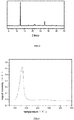
- the surface acidity of the molecular sieve was studied by NH 3 -TPD method.
- the NH 3 -TPD curve is shown in Figure 1 .
- the sample shows a very high desorption peak around 170 °C and only a short, wide envelope peak at 370 °C, which shows that the sample is very weak in acidity.
- Pseudoboehmite, deionized water, piperazine (PIP), silica sol (30%) and phosphoric acid (85%) were sequentially added to a 100 mL synthesis kettle.
- the reaction mixture was stirred uniformly, then sealed, heated 160 °C with stirring, and crystallized by rotation for 12 hours.
- the solid product was separated by centrifugation, washed with deionized water to neutrality, and dried in air at 120 °C to obtain a molecular sieve sample S13 to be used, named SAPO-CAS.
- the raw material mixture was stirred uniformly, then sealed, heated 150 °C with stirring, and crystallized by rotation for 24 hours.
- the solid product was separated by centrifugation, washed with deionized water to neutrality, and dried in air at 100 °C to obtain a molecular sieve sample S17 to be used, named GIS.
- a certain amount of aluminum isopropoxide, deionized water, phosphoric acid, cobalt acetate, dimethylamine (C 2 H 7 N) and 1,4-succinic acid (C 4 H 7 NO 4 ) were sequentially added to a 100 mL synthetic kettle.
- the raw material mixture was stirred uniformly, then sealed, heated 180 °C with stirring, and crystallized by rotation for 48 hours.
- the solid product was separated by centrifugation, washed with deionized water to neutrality, and dried in air at 100 °C to obtain a molecular sieve sample S18 to be used, named CoAPO-GIS.
- the samples prepared in Examples 1-19 were subjected to XRD characterization. The results showed that the synthesized samples were all pure phases, and there was no other heterogeneous molecular sieve.
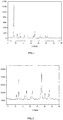
- the XRD diffraction pattern of selected examples 2, 6 and 18 are shown in Figures 1-3 below.
- the XRD characterization data such as 2 ⁇ angle and the relative intensity are shown in Table 1.
- the sample in example 11 was characterized by NH 3 -TPD. The results are shown in Figure 4 .
- the SAPO molecular sieves synthesized in the above example are calcined in air at a temperature in a range of 400 °C to 800 °C for 2 hours to obtain the catalyst product to be used for evaluating MTP catalytic reaction.
- the catalytic performance evaluation operation is shown in the specific embodiment, and the process conditions used in study and catalytic results are shown in table 2.
- both methanol and dimethyl ether are regarded as reactants, and the selectivity corresponds to the value of the conversion rate at the highest point.
- the silicon-aluminum molecular sieve synthesized in the above embodiment was subjected to ion exchange to obtain a hydrogen-type molecular sieve.
- the specific process was as follows: the silicon-aluminum molecular sieve was calcined in air at a temperature in a range of 400 °C to 800 °C for 3 hours.
- ammonium nitrate 100 g was dissolved in 1300 ml of deionized water, and 20 g of calcinated molecular sieve sample was added in ammonium nitrate solution after ammonium nitrate was completely dissolved and stirred under an oil bath at 85 °C for 10 hours, stand for cooling, and then separated by centrifugation, and the sample was washed with deionized water to neutrality.
- the above ion exchange step was repeated for 2-4 times (twice for S6, four times for S12, and the others were exchanged for three times) to obtain an ammonium type molecular sieve sample.
- the transition metal-substituted aluminophosphate molecular sieve synthesized in the above examples was calcinated carefully to remove the template agent to obtain an acidic molecular sieve.
- the molecular sieve sample was placed in a tube furnace, and then O 2 gas was introduced, and the temperature was raised to 400 °C at a heating rate of 1 degree/min and kept for 2 hours, and then raised to 500 °C at a heating rate of 0.5 degrees /min.
- the molecular sieve sample was calcinated at 500 °C for 4 hours to obtain MTP catalyst to be used.
- the catalytic performance operation is shown in the specific embodiment, and the process conditions used in study and catalytic results are shown in table 4.
- a comparative experiment of MTP catalytic performance was carried out by using the commonly used MTP catalysts SAPO-18 and ZSM-5. Both catalyst samples were calcined to remove the template agent for standby application.
- the molecular sieve sample was placed in a tube furnace, and then O 2 gas was introduced, and the temperature was raised to 400 °C at a heating rate of 1 degree/min and kept for 2 hours, and then raised to 500 °C at a heating rate of 0.5 degrees /min.
- the molecular sieve sample was calcinated at 500 °C for 4 hours to obtain MTP catalyst to be used.
- the catalytic performance operation is shown in the specific embodiment, and the process conditions used in study and catalytic results are shown in table 5.
- Table 5 a Sample Number Reaction temperat ure/°C Mass space velocity /h -1 Conversio n rate /(wt%) Selectivity (wt%) ethylene propylene C4 ZSM-5 400 2 100 13.63 34.59 11.01 SAPO-18 400 2 99.8 24.18 44.58 20.10 ZnAlPO-THO (S9) 400 2 93.7 9.18 72.88 10.10 a ZSM-5 and SAPO-18 were selected with the best selectivity to low olefins for comparison.
- the molecular sieve catalyst of the present invention is capable of catalyzing the MTP reaction with high conversion rate and high selectivity, which is significantly superior to the catalysts of the prior art.
Landscapes
- Chemical & Material Sciences (AREA)
- Organic Chemistry (AREA)
- Engineering & Computer Science (AREA)
- Materials Engineering (AREA)
- Chemical Kinetics & Catalysis (AREA)
- Crystallography & Structural Chemistry (AREA)
- Catalysts (AREA)
- Silicates, Zeolites, And Molecular Sieves (AREA)
- Organic Low-Molecular-Weight Compounds And Preparation Thereof (AREA)
- Low-Molecular Organic Synthesis Reactions Using Catalysts (AREA)
- Nanotechnology (AREA)
Abstract
Description
- The present application relates to a molecular sieve catalyst, a preparation method and application thereof, which belongs to the field of chemical catalysts.
- Propylene is an important chemical raw material, mainly used in the production of chemical products such as polypropylene (PP), propylene oxide (PO), acrylonitrile (AN), acrylic acid (AA), and terminal applications involving packaging, construction, automobile, spinning, and daily chemical industry and many other fields. At present, the global demand for propylene is increasing year by year, benefiting from China's economic development, China's propylene consumption is also growing rapidly.
- At present, the methods for preparing propylene at home and abroad mostly use petroleum as raw materials, while China's petroleum resources are very scarce, and oil reserves and output cannot meet the needs of the rapid development of the national economy, and the contradiction between supply and demand is prominent. The technology of methanol/dimethyl ether-to-olefins (MTO) and methanol/dimethyl ether-to-propylene (MTP) from coal can make use of abundant coal and natural gas resources, and is an advantageous alternative and supplement for obtaining olefins from petroleum routes.
- The key to MTP technology is the development of high performance catalysts. HZSM-5 molecular sieve is the first choice for MTP catalyst because of its suitable pore size and acid properties. In the 1990s, Lurgi company in German developed a MTP fixed bed process with high selectivity to propylene based on a modified high-silicon-aluminum ratio ZSM-5 molecular sieve. The process seeks to maximize the yield of propylene. In the process, ethylene and C4 + hydrocarbons are separated from propylene and recycled to the MTP reaction system, so that the conversion rate of raw material of methanol is greater than 99%, and the yield of propylene carbon-based is as high as 71%. In recent years, Sinopec and Tsinghua University have also developed S-MTO / MTP and FMTP technology.
- The MTP catalysts currently used in the industry all use ZSM-5 as a molecular sieve catalyst. In addition, there are related reports of using SAPO-34 and SAPO-18 molecular sieves in MTP reaction. The selectivity to propylene based on these catalysts is limited, and improving the single-pass selectivity to propylene is the most important challenge in the current research on MTP reaction.
- According to an aspect of the present invention, a catalyst comprising a molecular sieve is provided, there is at least one-dimensional 8-membered ring small hole channel in the molecular sieve structure, the diameter of a diffusible substance in the direction of the 8-membered ring channel is no less than 2.0 Å, the diameter of a substance that can be accommodated in the molecular sieve structure is no more than 6Å;
- The catalyst is used for the reaction of methanol and/or dimethyl ether to propylene.
- Preferably, the molecular sieve structure contains one-dimensional, two-dimensional or three-dimensional 8-membered ring hole channels, and the diameter of the diffusible substance in the direction of channel is no less than 2.0 Å.
- Preferably, the space structure can accommodate a substance with a diameter in a range of 4.8Å to 6Å.
- Preferably, the skeleton type of the molecular sieve is at least one selected from AFN, DFT, PHI, SIV, THO, APD, CAS, EDI, GIS and VNI.
- Preferably, the molecular sieve is at least one selected from silicoaluminophosphate molecular sieve, aluminosilicate molecular sieve, and transition metal-substituted aluminophosphate molecular sieve.
- Preferably, the catalyst comprises a transition metal-substituted aluminophosphate molecular sieve, and the preparation method comprises:
- Adding a transition metal raw material, an aluminum source, a phosphorus source, a templating agent and a solvent into a synthesis kettle, and the transition metal-substituted aluminophosphate molecular sieve is obtained after crystallization;
- The solvent is water, organic amine or ionic liquid.
- According to still another aspect of the present invention, a method for preparing propylene from methanol and/or dimethyl ether is provided, comprising bringing methanol and/or dimethyl ether into contact with a methanol to propylene catalyst to obtain propylene;
- The methanol to propylene catalyst comprises the catalyst provided in the present application.
- Preferably, the methanol to propylene catalyst contains at least one of aluminosilicate molecular sieve, silicoaluminophosphate molecular sieve and transition metal-substituted aluminophosphate molecular sieve;
The reaction temperature for bringing methanol and/or dimethyl ether into contact with the methanol to propylene catalyst is in a range of 300 °C to 500 °C. - Preferably, the conversion rate of the raw material is greater than 75% in the method. Preferably, the single pass selectivity to propylene is greater than 60% in the method. The beneficial effects that can be produced by this application include:
- 1) The molecular sieve catalyst provided by the present application has a good catalytic effect on the MTP reaction, and the conversion rate of methanol may be up to more than 80% by using the catalyst provided by the invention, and the catalyst of the invention can solve the problem of poor MTP reaction selectivity in the prior art, with a single pass propylene selectivity higher than 60%;
- 2) The catalyst molecular sieve of the present invention has various compositions, as long as it can drive the MTP reaction, so that different molecular sieves can be selected according to actual needs.
-
-
Figure 1 is an XRD spectrum of the synthesized sample in Example 1. -
Figure 2 is an XRD spectrum of the synthesized sample in Example 6. -
Figure 3 is an XRD spectrum of the synthesized sample in Example 18. -
Figure 4 is an NH3-TPD curve of the SAPO-APD molecular sieve in an embodiment of the present application. - The present invention will be further described below in conjunction with examples. It should be understood that these examples are only used to illustrate the present invention and not to limit the scope of the present invention. The experimental methods without specific conditions in the following examples generally follow the conventional conditions or the conditions recommended by the manufacturer. Without special instructions, the raw materials used in this application are purchased through commercial ways and used directly without special treatment.
- The test conditions for this application are as follows:
The catalyst was tableted and crushed to 20-40 mesh, and calcined at 600 °C for 4 hours by introducing air. 0.3 g of this sample was placed in a fixed bed reactor (home-made) as a catalyst for MTP reaction evaluation, and the reactor was a quartz tube. The reaction was carried out by activating for 1 hour with nitrogen introduced at 550 °C and then cooling to a target temperature. Methanol was carried by nitrogen. The reaction product was analyzed by on-line gas chromatography (Agilent A7890) on a PoraPlot-Q-HT column. - The elemental composition of the catalyst was measured using a Philips Magix 2424X type ray fluorescence analyzer (XRF).
- X-ray powder diffraction phase analysis (XRD) of the catalyst was carried out using an X'Pert PRO X-ray diffractometer from PANalytical Company, the Netherlands with a Cu target, a Kα radiation source (λ = 0.15418 nm), a voltage of 40 kV, and a current of 40 mA.
- The specific surface area and pore size distribution of the samples were determined using an ASAP 2020 physical adsorption instrument from American Micromeritics Company. Before the analysis, the sample was preheated at 350 °C for 6 h, and the free volume of the sample tube was measured with He as the medium. When the sample was analyzed, the physical adsorption and desorption measurements were carried out at a liquid nitrogen temperature of 77 K using nitrogen as an adsorption gas. The specific surface area of the material was determined by the BET formula; the total pore volume of the material was calculated using the adsorption amount of N2 at the relative pressure (P/P0) of 0.99. The micropore surface area and pore volume of micropore were calculated by the t-plot method. When calculated, the cross-sectional area of the N2 molecule is taken as 0.162 nm2.
- Temperature-programmed desorption of the sample after saturated adsorption of NH3 was measured by an Autochem 2920 chemical adsorption instrument from American Micromeritics Company. The sample was activated for 60 min at 600 °C in He atmosphere of 40 mL/min. After the temperature was lowered to 100 °C, ammonia gas was injected to saturate the sample, and the physically adsorbed NH3 was removed by He purge, and then the temperature was programmed to 600°C at a heating rate of 10 °C /min, and the NH3 desorption signal was recorded using a TCD monitor.
- The present invention will be further described below in conjunction with examples.
- MnCl2 · 4H2O, deionized water, aluminum isopropoxide, oxalic acid, 1,3-propanediamine (1,3-PDA) and phosphoric acid (85%) were added to a 100 mL stainless steel reaction kettle at a time. The molar ratio of the reactants was MnCl2·4H2O:Al(iPrO)3:H3PO4:H2C2O4:1,3PDA:H2O= (1.0:1.4:5.0:1.6:5.0:920). The raw material mixture was stirred uniformly, then sealed, and heated to 180 °C under stirring, and crystallized by rotation for 72h. The solid product was separated by centrifugation, washed with deionized water to neutrality, and dried in air at 120 °C to obtain a molecular sieve sample S1 to be used, named MnAPO-AFN.
- A certain amount of aluminum isopropoxide, deionized water, triethylenediamine (DABCO), tetraethyl orthosilicate, and phosphoric acid (85%) were sequentially added to a 100 mL synthesis kettle. The molar ratio of the reactants was Al2O3: P2O5: SiO2: DABCO: H2O=(1.0:1.0:0.3:3.0:50). The raw material mixture was stirred uniformly, then sealed, and heated to 200 °C under stirring, and crystallized by rotation for 40h. The solid product was separated by centrifugation, washed with deionized water to neutrality, and dried in air at 120 °C to obtain a molecular sieve sample S2 to be used, named SAPO-AFN.
- 13.2 g of cobalt carbonate was dissolved in 108.23 g of deionized water and 26.78 g of phosphoric acid (85%). 10 g of aluminum isopropoxide, 10.32 g of phosphoric acid and 53 g of ethylene glycol were uniformly mixed in another beaker, and stirred at room temperature for 24 hours. 23.41 g of the ethylene glycol solution prepared above was mixed with an aqueous solution containing cobalt and uniformly stirred for 20 minutes, and then 30 g of the solution was taken out, and 1.05 g of quinine, 3.08 g of piperazine and 0.6 ml of ethylenediamine were added into the solution. The raw material mixture was stirred uniformly, then sealed, heated to 180 °C with stirring, and crystallized by rotation for 96 hours. The solid product was separated by centrifugation, washed with deionized water to neutrality, and dried in air at 100 °C to obtain a molecular sieve sample S3 to be used, named CoAlPO-DFT.
- A certain amount of pseudoboehmite (65 wt%), deionized water, 1,3 propylenediamine (1,3-DPA), silica sol (31 wt%), and phosphoric acid (85%) were sequentially added to a 100 mL synthesis kettle. The molar ratio of the reactants was Al2O3: P2O5: SiO2: 1,3-DPA: H2O= (1.0:1.0:0.3:5.0:50). The raw material mixture was stirred uniformly, then sealed, heated to 180 °C with stirring, and crystallized by rotation for a time in a range of 12 hours to 72 hours. The solid product was separated by centrifugation, washed with deionized water to neutrality, and dried in air at 120 °C to obtain a molecular sieve sample S4 to be used, named SAPO- DFT.
- Zinc oxide, aluminum hydroxide, deionized water, phosphoric acid, ethylene glycol (EG) and N,N-dimethyl-1,3-propanamine (C5H14N2) were sequentially added to a 100 mL synthesis kettle. The molar ratio of the reactants was ZnO: P2O5:Al2O3: C5H14N2:20H2O:100EG= (3:5:1:8:20:100) . The raw material mixture was stirred uniformly, then sealed, heated to 180 °C with stirring, and crystallized by rotation for 48 hours. The solid product was separated by centrifugation, washed with deionized water to neutrality, and dried in air at 100 °C to obtain a molecular sieve sample S5 to be used, named ZnAlPO-PHI.
- A certain amount of KOH, deionized water, sodium silicate solution (Na2O: 8.9%, SiO2: 28.7%) and sodium metaaluminate(30.5% Na2O, 45.6% Al2O3) were sequentially added to a 100 mL synthesis kettle. The molar ratio of the reactants was Na2O:K2O:Al2O3: SiO2:H2O= (6.95:3.5:1.0:22:350) . The raw material mixture was stirred uniformly, then sealed, heated to 120 °C with stirring, and crystallized by rotation for 12 hours. The solid product was separated by centrifugation, washed with deionized water to neutrality, and dried in air at 100 °C to obtain a molecular sieve sample S6 to be used, named SiAl-PHI.
- Phosphoric acid, aluminum isopropoxide, Co(OH)2, ethylmethylimidazolium bromide ionic liquid (IL) and hydrofluoric acid were sequentially added to a 100 mL stainless steel synthesis kettle. The molar ratio of the reactants was Al(iPrO)3: H3PO4:HF:IL:Co(OH)2:6H2O= (1.0:2.9:0.69:40:1.6:3.6) . The raw material mixture was stirred uniformly, then sealed, heated to 170 °C with stirring, and crystallized by rotation for 72 hours. The solid product was separated by centrifugation, washed with deionized water to neutrality, and dried in air at 100 °C to obtain a molecular sieve sample S7 to be used, named CoAlPO-SIV.
- A certain amount of aluminum hydroxide, deionized water, isopropylamine (IPA), white carbon black, ethylmethylimidazolium bromide ionic liquid (IL), hydrofluoric acid and phosphoric acid (85%) were sequentially added to a 100 mL synthesis kettle. The molar ratio of the reactants was Al2O3:1.0 P2O5:0.3SiO2:IL:0.3HF:IPA:H2O= (1.0:1.0:0.3:25:0.3:2.0:10). The raw material mixture was stirred uniformly, then sealed, heated 180 °C with stirring, and crystallized by rotation for 48 hours. The solid product was separated by centrifugation, washed with deionized water to neutrality, and dried in air at 120 °C to obtain a molecular sieve sample S8 to be used, named SAPO-SIV. The specific surface area and pore volume of the sample were measured after being calcined to remove the template. The sample had a high BET specific surface area of 412.8 m2g-1, and a large pore volume of 0.24 cm3 g-1, wherein the specific surface area and pore volume of micropore calculated by the t-plot method were 360.5m2g-1 and 0.18 cm3 g-1 respectively.
- Zinc oxide, aluminum isopropoxide, phosphoric acid, ethylene glycol (EG) and 1,3 propylenediamine (1,3-DPA) were sequentially added to a 100 mL synthesis kettle. The molar ratio of the reactants was ZnO:P2O5:Al2O3: 1, 3-DPA: EG= (3:5:1:8:120). The raw material mixture was stirred uniformly, then sealed, heated 180 °C with stirring, and crystallized by rotation for 96 hours. The solid product was separated by centrifugation, washed with deionized water to neutrality, and dried in air at 100 °C to obtain a molecular sieve sample S9 to be used, named ZnAlPO-THO.
- Pseudoboehmite, deionized water, piperidine (C5H11N), white carbon black and phosphoric acid (85%) were sequentially added to a 100 mL synthesis kettle. The molar ratio of the reactants was 1.0 Al2O3: 1.0 P2O5: 0.3 SiO2: 3.0 C5H11N :40 H2O= (1:1:0.3:3.0:40) . The raw material mixture was stirred uniformly, then sealed, heated 180 °C with stirring, and crystallized by rotation for a time in a range of 12 hours to 72 hours. The solid product was separated by centrifugation, washed with deionized water to neutrality, and dried in air at 120 °C to obtain a molecular sieve sample S10 to be used, named SAPO-THO.
- Aluminum isopropoxide, deionized water, ethanolamine (ETA), silica sol (30%), and phosphoric acid (85%) were sequentially added to a 100 mL synthesis kettle. The molar ratio of the reactants was Al2O3: P2O5: SiO2: ETA:H2O= (1:1.4:0.3:7:140). The raw material mixture was stirred uniformly, then sealed, heated 160 °C with stirring, and crystallized by rotation for 72 hours. The solid product was separated by centrifugation, washed with deionized water to neutrality, and dried in air at 120 °C to obtain a molecular sieve sample S11 to be used, named SAPO-APD. The surface acidity of the molecular sieve was studied by NH3-TPD method. The NH3-TPD curve is shown in
Figure 1 . The sample shows a very high desorption peak around 170 °C and only a short, wide envelope peak at 370 °C, which shows that the sample is very weak in acidity. - Piperazine, deionized water, LudoxAS-40, sodium aluminate and HF were sequentially added to a synthesis kettle. The molar ratio of the reaction mixture was Na2O:Al2O3:SiO2:C4H10N2:HF:H2O=(1:1:10:5.6:77). The reaction mixture was stirred uniformly, then sealed, heated 150 °C with stirring, and crystallized by rotation for 48 hours. The solid product was separated by centrifugation, washed with deionized water to neutrality, and dried in air at 100 °C to obtain a molecular sieve precursor 1. The precursor 1 was placed in a tube furnace and heated up to 1000 °C at a heating rate of 1 minute/degree, and heated for 10 hours to obtain a target product of molecular sieve S12, named SiAl-CAS.
- Pseudoboehmite, deionized water, piperazine (PIP), silica sol (30%) and phosphoric acid (85%) were sequentially added to a 100 mL synthesis kettle. The molar ratio of the reactant was Al2O3: P2O5: SiO2: PIP:H2O= (1:1:0.3:3:40). The reaction mixture was stirred uniformly, then sealed, heated 160 °C with stirring, and crystallized by rotation for 12 hours. The solid product was separated by centrifugation, washed with deionized water to neutrality, and dried in air at 120 °C to obtain a molecular sieve sample S13 to be used, named SAPO-CAS.
- 12.8 g of cobalt nitrate, 23.2 g of aluminum nitrate, 27.16 phosphoric acid (2 M), 8.9 g of 1,2-propylenediamine, and 100 g of deionized water were sequentially added to a 200 mL synthesis kettle. The raw material mixture was stirred uniformly, then sealed, heated to 150 °C with stirring, and crystallized by rotation for 48 hours. The solid product was separated by centrifugation, washed with deionized water to neutrality, and dried in air at 100 °C to obtain a molecular sieve sample S14 to be used, named CoAlPO-EDI.
- A certain amount of KOH, deionized water, aluminum powder, and white carbon black were sequentially added to a 100 mL synthesis kettle. The molar ratio of the reactant was K2O:Al2O3:SiO2: H2O= (5:1:3:100). The raw material mixture was stirred uniformly, then sealed, heated 100 °C with stirring, and crystallized by rotation for 96 hours. The solid product was separated by centrifugation, washed with deionized water to neutrality, and dried in air at 100 °C to obtain a molecular sieve sample S15 to be used, named SiAl-EDI.
- Pseudoboehmite, deionized water, trimethylamine (TMA), tetraethylammonium hydroxide (35%), silica sol (30%), and phosphoric acid (85%) were sequentially added to a 100 mL synthetic kettle. The molar ratio of the reactant was Al2O3: P2O5: SiO2:TEA2O:TMA: H2O= (1:1:0.3:1.5:2:40) . The raw material mixture was stirred uniformly, then sealed, heated 170 °C with stirring, and crystallized by rotation for a time in a range of 12 hours to 72 hours. The solid product was separated by centrifugation, washed with deionized water to neutrality, and dried in air at 120 °C to obtain a molecular sieve sample S16 to be used, named SAPO-EDI.
- A certain amount of sodium fluoride, deionized water and kaolin (Al2O3:SiO2:H2O=1:2:2.2) were sequentially added to a 100 mL synthetic kettle. The molar ratio of the reactant was Al2O3:SiO2:NaF:H2O= (1:3:5: 120) . The raw material mixture was stirred uniformly, then sealed, heated 150 °C with stirring, and crystallized by rotation for 24 hours. The solid product was separated by centrifugation, washed with deionized water to neutrality, and dried in air at 100 °C to obtain a molecular sieve sample S17 to be used, named GIS.
- A certain amount of aluminum isopropoxide, deionized water, phosphoric acid, cobalt acetate, dimethylamine (C2H7N) and 1,4-succinic acid (C4H7NO4) were sequentially added to a 100 mL synthetic kettle. The molar ratio of the reactant was CoAc·4H2O:Al(iPrO)3:H3PO4:C2H7N:C4H7NO4:200H2O= (0.7:4:1:4:6:1.2:200) . The raw material mixture was stirred uniformly, then sealed, heated 180 °C with stirring, and crystallized by rotation for 48 hours. The solid product was separated by centrifugation, washed with deionized water to neutrality, and dried in air at 100 °C to obtain a molecular sieve sample S18 to be used, named CoAPO-GIS.
- Pseudoboehmite, deionized water, phosphoric acid, silica sol (30%), and propylamine were sequentially added to a synthesis kettle. The molar ratio of the reactant was Al2O3:P2O5:SiO2:4.0 PA: 100H2O= (1:1:0.3:4:100) . The raw material mixture was stirred uniformly, then sealed, heated 160 °C with stirring, and crystallized by rotation for 96 hours. The solid product was separated by centrifugation, washed with deionized water to neutrality, and dried in air at 100 °C to obtain a molecular sieve sample S19 to be used, named SAPO-GIS.
- The samples prepared in Examples 1-19 were subjected to XRD characterization. The results showed that the synthesized samples were all pure phases, and there was no other heterogeneous molecular sieve. The XRD diffraction pattern of selected examples 2, 6 and 18 are shown in
Figures 1-3 below. The XRD characterization data such as 2θ angle and the relative intensity are shown in Table 1. The sample in example 11 was characterized by NH3-TPD. The results are shown inFigure 4 .
- The SAPO molecular sieves synthesized in the above example are calcined in air at a temperature in a range of 400 °C to 800 °C for 2 hours to obtain the catalyst product to be used for evaluating MTP catalytic reaction. The catalytic performance evaluation operation is shown in the specific embodiment, and the process conditions used in study and catalytic results are shown in table 2. When referring to the calculation of the conversion rate in this example and in the following content, both methanol and dimethyl ether are regarded as reactants, and the selectivity corresponds to the value of the conversion rate at the highest point. As can be seen from table 2, the total selectivity to ethylene, propylene and C4 is close to 100% (the total selectivity may be equal to or slightly over 100% due to the detection error of the instrument).
Table 2 Sample Number Reaction temperature /°C Mass space velocity /h-1 Conversion rate /(wt%) Selectivity (wt%) ethylene propylene C4 SAPO-AFN (S2) 400 2 88.6 10.2 69.25 12.01 SAPO-DFT (S4) 375 2 75.8 9.48 72.88 18.10 SAPO-SIV (S8) 400 3 85 12.33 65.92 12.59 SAPO-THO(S10) 450 4 94 11.80 71.83 8.62 SAPO-APD(S11) 450 2 98.5 9.1 74.3 12.51 SAPO-CAS(S13) 350 1 80.5 8.74 61.79 20.21 SAPO-EDI (S16) 400 2 78.5 10.0 72.3 11.51 SAPO-GIS (S19) 400 2 85.8 6.48 72.88 10.10 - The silicon-aluminum molecular sieve synthesized in the above embodiment was subjected to ion exchange to obtain a hydrogen-type molecular sieve. The specific process was as follows: the silicon-aluminum molecular sieve was calcined in air at a temperature in a range of 400 °C to 800 °C for 3 hours. Then, 100 g of ammonium nitrate was dissolved in 1300 ml of deionized water, and 20 g of calcinated molecular sieve sample was added in ammonium nitrate solution after ammonium nitrate was completely dissolved and stirred under an oil bath at 85 °C for 10 hours, stand for cooling, and then separated by centrifugation, and the sample was washed with deionized water to neutrality. The above ion exchange step was repeated for 2-4 times (twice for S6, four times for S12, and the others were exchanged for three times) to obtain an ammonium type molecular sieve sample. It was further calcined in air at a temperature in a range of 400 °C to 800 °C for 3 hours to obtain an MTP catalyst to be used. The catalytic performance evaluation operation is shown in the specific embodiment, and the process conditions used in study and catalytic results are shown in table 3.
Table 3 Sample Number Reaction temperature /°C Mass space velocity /h-1 Conversion rate /(wt%) Selectivity (wt%) ethylene propylene C4 SiAl-PHI (S6) 300 2 100 9.2 71.25 11.01 SiAl-CAS (S12) 300 2 99 8.18 72.88 10.10 SiAl-EDI (S15) 315 3 98 10.33 75.92 10.59 SiAl-GIS (S17) 350 2 95 6.48 72.08 13.10 - The transition metal-substituted aluminophosphate molecular sieve synthesized in the above examples was calcinated carefully to remove the template agent to obtain an acidic molecular sieve. The molecular sieve sample was placed in a tube furnace, and then O2 gas was introduced, and the temperature was raised to 400 °C at a heating rate of 1 degree/min and kept for 2 hours, and then raised to 500 °C at a heating rate of 0.5 degrees /min. The molecular sieve sample was calcinated at 500 °C for 4 hours to obtain MTP catalyst to be used. The catalytic performance operation is shown in the specific embodiment, and the process conditions used in study and catalytic results are shown in table 4.
Table 4 Sample Number Reaction temperature / °C Mass space velocity /h-1 Conversion rate /(wt%) Selectivity (wt%) ethylene propylene C4 MnAlPO-AFN (S1) 400 2 80.5 9.2 71.25 11.01 CoAlPO-DFT (S3) 400 2 89.1 9.18 72.88 10.10 ZnAlPO-PHI (S5) 415 1 92.5 11.33 75.92 10.59 CoAlPO-SIV (S7) 450 2 91.9 10.48 72.08 13.10 ZnAlPO-THO (S9) 400 2 93.7 9.18 72.88 10.10 CoAlPO-EDI (S14) 415 1 90.8 11.33 75.92 10.59 CoAlPO-GIS (S18) 450 2 91.2 10.48 72.08 13.10 - A comparative experiment of MTP catalytic performance was carried out by using the commonly used MTP catalysts SAPO-18 and ZSM-5. Both catalyst samples were calcined to remove the template agent for standby application. The molecular sieve sample was placed in a tube furnace, and then O2 gas was introduced, and the temperature was raised to 400 °C at a heating rate of 1 degree/min and kept for 2 hours, and then raised to 500 °C at a heating rate of 0.5 degrees /min. The molecular sieve sample was calcinated at 500 °C for 4 hours to obtain MTP catalyst to be used. The catalytic performance operation is shown in the specific embodiment, and the process conditions used in study and catalytic results are shown in table 5.
Table 5 a Sample Number Reaction temperat ure/°C Mass space velocity /h-1 Conversio n rate /(wt%) Selectivity (wt%) ethylene propylene C4 ZSM-5 400 2 100 13.63 34.59 11.01 SAPO-18 400 2 99.8 24.18 44.58 20.10 ZnAlPO-THO (S9) 400 2 93.7 9.18 72.88 10.10 a ZSM-5 and SAPO-18 were selected with the best selectivity to low olefins for comparison. - As can be seen from the above examples, the molecular sieve catalyst of the present invention is capable of catalyzing the MTP reaction with high conversion rate and high selectivity, which is significantly superior to the catalysts of the prior art.
- The above are only a few examples of the present application, and are not intended to limit the present application in any way. Although the present application is disclosed in the above with preferred example, it is not intended to limit the present application. Any one skilled in the art can understand that other changes and modifications by using the above technical content without departing from the scope of the technical solution of the present application are equivalent to equivalent embodiments and belong to the scope of the technical solution.
- The above are only a few examples of the present application, and are not intended to limit the present application in any way. Although the present application is disclosed in the above with preferred example, it is not intended to limit the present application. Any one skilled in the art can understand that other changes and modifications by using the above technical content without departing from the scope of the technical solution of the present application are equivalent to equivalent embodiments and belong to the scope of the technical solution.
Claims (10)
- A catalyst, wherein the catalyst comprises a molecular sieve with at least one-dimensional 8-membered ring channel in the molecular sieve structure, and the diameter of a diffusible substance in the direction of the 8-membered ring channel is no less than 2.0 Å, the diameter of a substance that can be accommodated in the molecular sieve structure is no more than 6Å.
- The catalyst of claim 1, wherein the molecular sieve structure contains one-dimensional, two-dimensional or three-dimensional 8-membered ring channels, and the diameter of the diffusible substance in the direction of channel is no less than 2.0 Å.
- The catalyst of claim 1, wherein the diameter of the substance that can be accommodated in the molecular sieve structure is in a range of 4.8Å to 6Å.
- The catalyst of claim 1, wherein the topology of the molecular sieve structure is at least one selected from AFN, DFT, PHI, SIV, THO, APD, CAS, EDI, GIS and VNI.
- The catalyst of claim 1, wherein the molecular sieve is at least one selected from silicoaluminophosphate molecular sieve, aluminosilicate molecular sieve, and transition metal-substituted aluminophosphate molecular sieve.
- A method for preparing propylene from methanol and/or dimethyl ether, comprising bringing methanol and/or dimethyl ether into contact with a methanol to propylene catalyst to obtain propylene;
the methanol to propylene catalyst comprises the catalyst according to any one of claims 1 to 5. - The method of claim 6, wherein the methanol to propylene catalyst contains at least one of aluminosilicate molecular sieve, silicoaluminophosphate molecular sieve and transition metal-substituted aluminophosphate molecular sieve.
- The method of claim 7, wherein the reaction temperature for bringing methanol and/or dimethyl ether into contact with the methanol to propylene catalyst is in a range of 300 °C to 500 °C.
- The method of claim 7, wherein the conversion rate of the raw material is greater than 75% in the method.
- The method of claim 7, wherein the single pass selectivity to propylene is greater than 60% in the method.
Applications Claiming Priority (2)
| Application Number | Priority Date | Filing Date | Title |
|---|---|---|---|
| CN201711232744.6A CN109833905A (en) | 2017-11-29 | 2017-11-29 | Molecular sieve catalyst and its preparation method and application |
| PCT/CN2017/117561 WO2019104778A1 (en) | 2017-11-29 | 2017-12-20 | Molecular sieve catalyst, preparation method therefor and application thereof |
Publications (2)
| Publication Number | Publication Date |
|---|---|
| EP3718628A1 true EP3718628A1 (en) | 2020-10-07 |
| EP3718628A4 EP3718628A4 (en) | 2020-12-16 |
Family
ID=66665361
Family Applications (1)
| Application Number | Title | Priority Date | Filing Date |
|---|---|---|---|
| EP17933212.7A Pending EP3718628A4 (en) | 2017-11-29 | 2017-12-20 | MOLECULAR SCREEN CATALYST, MANUFACTURING METHOD FOR IT AND APPLICATION OF IT |
Country Status (8)
| Country | Link |
|---|---|
| US (1) | US11247198B2 (en) |
| EP (1) | EP3718628A4 (en) |
| JP (1) | JP6976436B2 (en) |
| KR (1) | KR102431121B1 (en) |
| CN (1) | CN109833905A (en) |
| RU (1) | RU2753413C1 (en) |
| SG (1) | SG11202004945TA (en) |
| WO (1) | WO2019104778A1 (en) |
Cited By (1)
| Publication number | Priority date | Publication date | Assignee | Title |
|---|---|---|---|---|
| WO2022129539A1 (en) * | 2020-12-17 | 2022-06-23 | Universitetet I Oslo | Process |
Families Citing this family (5)
| Publication number | Priority date | Publication date | Assignee | Title |
|---|---|---|---|---|
| CN112079363A (en) * | 2019-06-14 | 2020-12-15 | 中国石油化工股份有限公司 | AFN structure silicon phosphorus aluminum molecular sieve and its synthesis method and application |
| CN112624137B (en) * | 2019-09-24 | 2023-06-09 | 中国石油化工股份有限公司 | AFN structure molecular sieve composed of cobalt phosphorus aluminum and its synthesis method and application |
| CN113912080A (en) * | 2021-11-08 | 2022-01-11 | 吉林大学 | SAPO-14 molecular sieve, and preparation method and application thereof |
| CN114011456B (en) * | 2021-11-29 | 2024-08-06 | 苏州迈沃环保工程有限公司 | Preparation method of catalyst for synthesizing N-methylpyrrolidone from gamma-butyrolactone and dimethylamine |
| CN116422362B (en) * | 2021-12-30 | 2024-12-20 | 卓悦环保新材料(上海)有限公司 | A kind of methanol to propylene catalyst with anti-crushing property and its preparation method and application |
Family Cites Families (23)
| Publication number | Priority date | Publication date | Assignee | Title |
|---|---|---|---|---|
| US4752651A (en) | 1986-06-16 | 1988-06-21 | Union Carbide Corporation | Production of light olefins |
| ATE184586T1 (en) | 1991-06-05 | 1999-10-15 | Equistar Chem Lp | METHOD FOR ISOMERIZING STRAIGHT-LINE OLEFINS INTO ISOOLEFINS |
| US5191141A (en) | 1991-11-13 | 1993-03-02 | Uop | Process for converting methanol to olefins using an improved metal aluminophosphate catalyst |
| DE10032885A1 (en) | 2000-07-06 | 2002-01-17 | Basf Ag | Process for the production of propylene oxide |
| US6488741B2 (en) | 2001-01-23 | 2002-12-03 | The Trustess Of The University Of Pennsylvania | Light hydrocarbon separation using 8-member ring zeolites |
| KR20040044513A (en) | 2001-08-31 | 2004-05-28 | 엑손모빌 케미칼 패턴츠 인코포레이티드 | Low pressure separation of dimethyl ether from an olefin stream |
| US20040064007A1 (en) | 2002-09-30 | 2004-04-01 | Beech James H. | Method and system for regenerating catalyst from a plurality of hydrocarbon conversion apparatuses |
| US7102048B2 (en) * | 2002-12-17 | 2006-09-05 | Exxonmobil Chemical Patents Inc. | Methanol feed for producing olefin streams |
| US7323579B2 (en) | 2004-07-07 | 2008-01-29 | Basf Aktiengesellschaft | Separation of propylene oxide from a mixture comprising propylene oxide and methanol |
| DE102006037314A1 (en) | 2006-08-08 | 2008-02-14 | Süd-Chemie AG | Use of a catalyst based on zeolites in the reaction of oxygenates to lower olefins and processes for this purpose |
| MX377321B (en) | 2007-04-26 | 2025-03-07 | Johnson Matthey Plc | TRANSITION METAL/ZEOLITE SELECTIVE CATALYTIC REDUCTION CATALYSTS. |
| US7919660B2 (en) | 2007-12-21 | 2011-04-05 | Uop Llc | Methods of converting methanol feedstock to olefins |
| US8058497B2 (en) * | 2008-03-13 | 2011-11-15 | Exxonmobil Chemical Patents Inc. | Reducing deleterious effects of aldehydes in oxygenates to olefins reactions with catalysts containing basic metal oxides |
| CN102451749A (en) * | 2010-10-27 | 2012-05-16 | 中国科学院大连化学物理研究所 | Catalyst for preparing olefin by converting methanol and preparation and application thereof |
| CN102530987A (en) * | 2010-12-29 | 2012-07-04 | 中国科学院大连化学物理研究所 | Solvothermal synthesis method of SAPO molecular sieve and catalyst prepared therefrom |
| JP2013095672A (en) * | 2011-10-28 | 2013-05-20 | Toyota Motor Corp | Method for producing propylene |
| CN102557073B (en) * | 2011-12-15 | 2014-01-22 | 神华集团有限责任公司 | Method for preparing SAPO-34 molecular sieve, SAPO-34 molecular sieve and application of SAPO-34 molecular sieve |
| US9597669B2 (en) * | 2012-06-29 | 2017-03-21 | Basf Se | Catalyst and process for the conversion of oxygenates to olefins |
| CN103663490B (en) * | 2012-09-26 | 2016-04-20 | 中国科学院大连化学物理研究所 | A kind of SAPO-34 molecular sieve and synthetic method thereof |
| CN103551188B (en) * | 2013-11-07 | 2016-03-09 | 中国石油大学(北京) | The preparation of the coated central hole zeolite catalyst of micro-pore zeolite and the application in preparing propylene from methanol reaction thereof |
| JP6521979B2 (en) * | 2013-12-20 | 2019-05-29 | ビーエーエスエフ ソシエタス・ヨーロピアBasf Se | Catalyst and method for converting oxygenates to olefins |
| CA2969652A1 (en) | 2014-12-11 | 2016-06-16 | Uop Llc | Improved mto process for enhanced production of propylene and high value products |
| CN106365992B (en) | 2015-07-20 | 2019-01-01 | 中国科学院大连化学物理研究所 | A method of preparing acetal carbonyl compound |
-
2017
- 2017-11-29 CN CN201711232744.6A patent/CN109833905A/en active Pending
- 2017-12-20 US US16/767,300 patent/US11247198B2/en active Active
- 2017-12-20 RU RU2020119077A patent/RU2753413C1/en active
- 2017-12-20 JP JP2020528322A patent/JP6976436B2/en active Active
- 2017-12-20 KR KR1020207016345A patent/KR102431121B1/en active Active
- 2017-12-20 SG SG11202004945TA patent/SG11202004945TA/en unknown
- 2017-12-20 EP EP17933212.7A patent/EP3718628A4/en active Pending
- 2017-12-20 WO PCT/CN2017/117561 patent/WO2019104778A1/en not_active Ceased
Cited By (1)
| Publication number | Priority date | Publication date | Assignee | Title |
|---|---|---|---|---|
| WO2022129539A1 (en) * | 2020-12-17 | 2022-06-23 | Universitetet I Oslo | Process |
Also Published As
| Publication number | Publication date |
|---|---|
| RU2753413C1 (en) | 2021-08-16 |
| SG11202004945TA (en) | 2020-06-29 |
| JP2021504112A (en) | 2021-02-15 |
| US11247198B2 (en) | 2022-02-15 |
| US20200406242A1 (en) | 2020-12-31 |
| EP3718628A4 (en) | 2020-12-16 |
| KR102431121B1 (en) | 2022-08-11 |
| JP6976436B2 (en) | 2021-12-08 |
| WO2019104778A1 (en) | 2019-06-06 |
| CN109833905A (en) | 2019-06-04 |
| KR20200085313A (en) | 2020-07-14 |
Similar Documents
| Publication | Publication Date | Title |
|---|---|---|
| US11247198B2 (en) | Molecular sieve catalyst, preparation method therefor and application thereof | |
| Chen et al. | Migration of cations and shell functionalization for Cu-Ce-La/SSZ-13@ ZSM-5: The contribution to activity and hydrothermal stability in the selective catalytic reduction reaction | |
| Frontera et al. | Effect of support surface on methane dry-reforming catalyst preparation | |
| CN101555022B (en) | Preparation method of metal-modified SAPO-34 molecular sieve and catalyst containing the molecular sieve | |
| EP2025645B1 (en) | Sapo-34 molecular sieves having both micropores and mesopores and synthesis process thereof | |
| EP3495320B1 (en) | Method for synthesizing nano sapo-34 molecular sieve, and sapo-34 molecular sieve catalyst and application thereof | |
| JP5982064B2 (en) | SAPO-34 molecular sieve and synthesis method thereof | |
| Iwase et al. | Influence of Si distribution in framework of SAPO-34 and its particle size on propylene selectivity and production rate for conversion of ethylene to propylene | |
| CN112794338A (en) | ZSM-5 molecular sieve and preparation method and application thereof | |
| Zeng et al. | Catalytic arene alkylation over H-Beta zeolite: Influence of zeolite shape selectivity and reactant nucleophilicity | |
| EP3586960B1 (en) | Cu-sapo molecular sieve, synthesis method therefor and catalytic use thereof | |
| Takata et al. | Incorporation of various heterometal atoms in CHA zeolites by hydrothermal conversion of FAU zeolite and their performance for selective catalytic reduction of NOx with ammonia | |
| CN105858684A (en) | seed crystal auxiliary synthetic nanoscale hollow multi-stage porous SAPO-34 molecular sieve and application thereof | |
| CN106276964B (en) | A kind of transgranular phosphorous ZSM-5 molecular sieve and preparation method thereof | |
| WO2024221266A1 (en) | Synthesis method for and use of high-silicon mordenite molecular sieve having better reactive site accessibility | |
| CN101633509B (en) | A kind of modification method of silicoaluminophosphate molecular sieve | |
| CN105731484B (en) | A kind of synthetic method of the middle molecular sieves of micropore SAPO 34 | |
| CN108996517B (en) | Hierarchical-pore wide-silica-alumina-ratio EU-1 molecular sieve and preparation method thereof | |
| CN112239215A (en) | SCM-27 molecular sieves, methods of making, and uses thereof | |
| Kurmach et al. | Hierarchical zeolites as efficient catalysts for dehydration of substituted indanols | |
| CN103864095B (en) | A kind of SAPO-34 molecular sieve taking diisopropanolamine as template and its synthetic method | |
| Sun et al. | Synthesis of hierarchical MFI zeolite by interzeolite conversion of spent FAU zeolite for the methanol-to-olefins reaction | |
| JP2017128457A (en) | AFX type zeolite and method for producing the same | |
| EP2167427B1 (en) | A process for synthesis of ato molecular sieve framework | |
| Zhao et al. | Formation mechanism and catalytic application of hierarchical structured FeAlPO-5 molecular sieve by microwave-assisted ionothermal synthesis |
Legal Events
| Date | Code | Title | Description |
|---|---|---|---|
| STAA | Information on the status of an ep patent application or granted ep patent |
Free format text: STATUS: THE INTERNATIONAL PUBLICATION HAS BEEN MADE |
|
| PUAI | Public reference made under article 153(3) epc to a published international application that has entered the european phase |
Free format text: ORIGINAL CODE: 0009012 |
|
| STAA | Information on the status of an ep patent application or granted ep patent |
Free format text: STATUS: REQUEST FOR EXAMINATION WAS MADE |
|
| 17P | Request for examination filed |
Effective date: 20200624 |
|
| AK | Designated contracting states |
Kind code of ref document: A1 Designated state(s): AL AT BE BG CH CY CZ DE DK EE ES FI FR GB GR HR HU IE IS IT LI LT LU LV MC MK MT NL NO PL PT RO RS SE SI SK SM TR |
|
| AX | Request for extension of the european patent |
Extension state: BA ME |
|
| A4 | Supplementary search report drawn up and despatched |
Effective date: 20201117 |
|
| RIC1 | Information provided on ipc code assigned before grant |
Ipc: C07C 1/20 20060101ALI20201111BHEP Ipc: B01J 29/85 20060101ALI20201111BHEP Ipc: B01J 29/06 20060101AFI20201111BHEP Ipc: C07C 11/04 20060101ALI20201111BHEP Ipc: B01J 29/83 20060101ALI20201111BHEP Ipc: C07C 11/06 20060101ALI20201111BHEP |
|
| DAV | Request for validation of the european patent (deleted) | ||
| DAX | Request for extension of the european patent (deleted) |