EP3716016B1 - Verfahren und gehirn-computer-schnittstellensystem zum erkennen von gehirnwellensignalen - Google Patents
Verfahren und gehirn-computer-schnittstellensystem zum erkennen von gehirnwellensignalen Download PDFInfo
- Publication number
- EP3716016B1 EP3716016B1 EP19165786.5A EP19165786A EP3716016B1 EP 3716016 B1 EP3716016 B1 EP 3716016B1 EP 19165786 A EP19165786 A EP 19165786A EP 3716016 B1 EP3716016 B1 EP 3716016B1
- Authority
- EP
- European Patent Office
- Prior art keywords
- electrode channel
- ssvep
- attention
- glance
- state
- Prior art date
- Legal status (The legal status is an assumption and is not a legal conclusion. Google has not performed a legal analysis and makes no representation as to the accuracy of the status listed.)
- Active
Links
Images


Classifications
-
- G—PHYSICS
- G06—COMPUTING OR CALCULATING; COUNTING
- G06F—ELECTRIC DIGITAL DATA PROCESSING
- G06F3/00—Input arrangements for transferring data to be processed into a form capable of being handled by the computer; Output arrangements for transferring data from processing unit to output unit, e.g. interface arrangements
- G06F3/01—Input arrangements or combined input and output arrangements for interaction between user and computer
- G06F3/011—Arrangements for interaction with the human body, e.g. for user immersion in virtual reality
- G06F3/015—Input arrangements based on nervous system activity detection, e.g. brain waves [EEG] detection, electromyograms [EMG] detection, electrodermal response detection
-
- A—HUMAN NECESSITIES
- A61—MEDICAL OR VETERINARY SCIENCE; HYGIENE
- A61B—DIAGNOSIS; SURGERY; IDENTIFICATION
- A61B5/00—Measuring for diagnostic purposes; Identification of persons
- A61B5/24—Detecting, measuring or recording bioelectric or biomagnetic signals of the body or parts thereof
- A61B5/316—Modalities, i.e. specific diagnostic methods
- A61B5/369—Electroencephalography [EEG]
- A61B5/375—Electroencephalography [EEG] using biofeedback
-
- A—HUMAN NECESSITIES
- A61—MEDICAL OR VETERINARY SCIENCE; HYGIENE
- A61B—DIAGNOSIS; SURGERY; IDENTIFICATION
- A61B5/00—Measuring for diagnostic purposes; Identification of persons
- A61B5/24—Detecting, measuring or recording bioelectric or biomagnetic signals of the body or parts thereof
- A61B5/316—Modalities, i.e. specific diagnostic methods
- A61B5/369—Electroencephalography [EEG]
- A61B5/377—Electroencephalography [EEG] using evoked responses
- A61B5/378—Visual stimuli
-
- A—HUMAN NECESSITIES
- A61—MEDICAL OR VETERINARY SCIENCE; HYGIENE
- A61B—DIAGNOSIS; SURGERY; IDENTIFICATION
- A61B5/00—Measuring for diagnostic purposes; Identification of persons
- A61B5/68—Arrangements of detecting, measuring or recording means, e.g. sensors, in relation to patient
- A61B5/6801—Arrangements of detecting, measuring or recording means, e.g. sensors, in relation to patient specially adapted to be attached to or worn on the body surface
- A61B5/6802—Sensor mounted on worn items
- A61B5/6803—Head-worn items, e.g. helmets, masks, headphones or goggles
-
- G—PHYSICS
- G06—COMPUTING OR CALCULATING; COUNTING
- G06F—ELECTRIC DIGITAL DATA PROCESSING
- G06F3/00—Input arrangements for transferring data to be processed into a form capable of being handled by the computer; Output arrangements for transferring data from processing unit to output unit, e.g. interface arrangements
- G06F3/01—Input arrangements or combined input and output arrangements for interaction between user and computer
- G06F3/011—Arrangements for interaction with the human body, e.g. for user immersion in virtual reality
- G06F3/013—Eye tracking input arrangements
-
- A—HUMAN NECESSITIES
- A61—MEDICAL OR VETERINARY SCIENCE; HYGIENE
- A61B—DIAGNOSIS; SURGERY; IDENTIFICATION
- A61B5/00—Measuring for diagnostic purposes; Identification of persons
- A61B5/16—Devices for psychotechnics; Testing reaction times ; Devices for evaluating the psychological state
- A61B5/163—Devices for psychotechnics; Testing reaction times ; Devices for evaluating the psychological state by tracking eye movement, gaze, or pupil change
Definitions
- the present disclosure relates to a method and system for processing brainwave signals acquired at brain-computer interface.
- BCI brain-computer interface
- EEG electroencephalography
- HMD head-mounted devices
- a user may be equipped with the HMD to stare or gaze at a virtual image displayed on a display of the HMD, so as to activate corresponding BCI commands.
- a flashing object may be placed on lateral sides of the HMD display.
- U.S. application No. US 2017/035317 A1 provides a portable brain activity sensing platform for assessment of visual field deficits, which monitors electrical signals of the brain exhibited by an user and produces an assessment of the user's visual field.
- U.S. application No. US 2018/039329 A1 provides a brain actuated control utilizing visually evoked potentials, which attaches high impedance dry Ag/Ag-CI electrodes on a human user's scalp and analyzes the detected steady-state evoked potentials in response to visual stimuli.
- WO 2012/013535 A1 provides a brain-computer interfaces and use thereof, which decodes visual evoked potentials to determine a most likely target of interest or absence thereof.
- U.S. application No. US 8155736 B2 provides an EEG control of devices using sensory evoked potentials, which determines whether the received EEG signal samples are evoked in response to a pattern of stimulus.
- "An SSVEP-actuated brain computer interface using phase-tagged flickering sequences: a cursor system" of Annals of biomedical engineering provides a reliable channel for severely disabled patients to communicate with external environments.
- the present disclosure relates to simultaneous processing of brainwave signals as acquired by a brain-computer interface (BCI) so as to avoid the distraction of the attention of user when activating the commands corresponding to the BCI and improve the user scenario.
- BCI brain-computer interface
- brainwave-signal electrodes may be respectively placed on positions of an O1 electrode channel, 02 electrode channel and Oz electrode channel on a head of a user, so as to measure evoked potential signals corresponding to the Oz electrode channel, the O1 electrode channel and the 02 electrode channel based on the International 10-20 system.
- FIG. 1 is a schematic diagram of a brain-computer interface (BCI) system 10 according to an embodiment of the present disclosure.
- the BCI system 10 includes an electroencephalography (EEG) device 102 and a controller 104.
- the EEG device 102 is configured to acquire brainwave signals from a user.
- the EEG device 102 may record or monitor electrical activities of the brainwave signals of the user.
- the controller 104 is coupled to the EEG device 102 and configured to measure a steady-state visual evoked potential (SSVEP) corresponding to an Oz electrode channel according to the brainwave signals when in a rest state, measure the SSVEPs respectively corresponding to the Oz electrode channel, an O1 electrode channel and an 02 electrode channel according to the brainwave signals when in a stimulating state, and determine a stimulus source of a gaze attention according to the SSVEPs of the O1 electrode channel and the SSVEP of the 02 electrode channel. That is, the EEG device 102 records the brainwave signals before and after the user is stimulated by a stimulus source, and then the controller 104 measures the SSVEPs corresponding to the O1 electrode channel and the SSVEP of the 02 electrode channel. Therefore, the BCI system 10 of the present disclosure may simultaneously respond to a glance attention made by the user and recognize the brainwave signals.
- SSVEP steady-state visual evoked potential
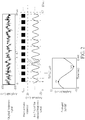
- FIG. 2 is a schematic diagram of the Epoch-average process.
- an original brainwave signal of the Oz electrode channel for 10 seconds is obtained.
- a flash stimulus sequence fstim with a stimulating flash frequency at 30 Hz is generated based on the original brainwave signal between 4 and 4.7 seconds, which is performed a band-pass filtering between 20 and 31 Hz.
- the flash stimulus sequence fstim consists of a plurality of dark periods and a plurality of bright periods corresponding to the original brainwave signal, and an onset point is defined at a transition of a dark period and a bright period.
- a period between two onset points is defined as an Epoch.
- the brainwave signals of the Oz electrode channel, the O1 electrode channel and the 02 electrode channel are respectively recorded by the EEG 102, such that the controller 104 respectively measures the SSVEPs of the Oz electrode channel, the O1 electrode channel and the O2 electrode channel based on the Epoch-average process.
- the BCI system 10 may further include a head-mounted device (HMD) to display virtual images to the user, such that the user may make commands through the glance attentions.
- HMD head-mounted device
- the brainwave signals e.g. optic nerve signals
- the brainwave signals are transferred to a left side of the visual cortex of the brain.
- the brainwave signals corresponding to different regions of the visual cortex of the brain may be taken as controlling signals of the BCI system 10. Therefore, the BCI system 10 utilizes the glance attention of the user to the stimulus source to determine the commands of the user.
- the EEG device 102 may record the brainwave signals for a period, e.g. at least 10 seconds, before the user is stimulated or when the brain of the user is in the rest state.
- the brainwave signals are utilized for measuring the SSVEP of the Oz electrode channel by the controller 104 based on the Epoch-average process.
- the glance attention of the user triggers/activates the brainwave signals when in the stimulating state.
- different flash stimulus sequences at different stimulating flash frequencies may be determined or classified, which may correspond to different stimuli, e.g. different regions of the lateral HMD display respectively correspond to different stimuli glanced by the user.
- a threshold related to a maximum of the SSVEP of the Oz electrode channel when in the rest state is measured to determine whether the SSVEP of the 01 electrode channel is greater than the SSVEP of the 02 electrode channel when the SSVEP of the Oz electrode channel is greater than the threshold.
- the controller 104 determines that a direction of the stimulus source of the glance attention of the user is towards the right side of the HMD display, which represents a command made by the user.
- the controller 104 determines that the direction of the stimulus source of the glance attention of the user is towards the left side of the HMD display. Therefore, when the user operates the BCI system 10, the user is free from gazing at the corresponding region of the lateral HMD display to make commands. Instead, the user focuses on the HMD display and glances at the lateral region of the HMD display to make commands for the BCI system 10.
- the BCI system 10 of the present disclosure may be implemented in all kinds of ways. Since the different flash stimulus sequences at different stimulating flash frequencies correspond to different stimulus sources on the HMD display, the different regions of the lateral HMD display may correspond to different commands. Please refer to FIG. 3 , which is a schematic diagram of the stimulus sources and the virtual image on the HMD display according to an embodiment of the present disclosure. As shown in FIG. 3 , each of the stimulating flash frequencies corresponds to a region on the lateral HMD display glanced by the user. In a user scenario, the user with the HMD operates with the BIC system 10 and makes commands to move a wheelchair.
- the controller 104 After the controller 104 measures the SSVEPs of the Oz electrode channel, the O1 electrode channel and the 02 electrode channel before and after the stimulating state, the controller 104 measures whether the SSVEP of the O1 electrode channel is greater than the SSVEP of the 02 electrode channel to determine the stimulus source of the glance attention made by the user.
- the stimulating flash frequency at 15 Hz of the right side of the HMD display may correspond to a command of "turn right” in the BCI system 10
- the stimulating flash frequency at 15 Hz of the left side of the HMD display may correspond to a command of "turn left” in the BCI system 10
- the stimulating flash frequency at 19 Hz of the right side of the HMD display may correspond to a command of "move forward” in the BCI system 10
- the stimulating flash frequency at 19 Hz of the left side of the HMD display may correspond to a command of "move back” in the BCI system 10.
- the stimulating flash frequency at 19 Hz of the right side and the left side of the HMD display respectively correspond to different commands in the BCI system 10.
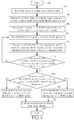
- FIG. 4 is a schematic diagram of a method 40 according to an embodiment of the present disclosure.
- the method 40 includes the following steps:
- the operation of the method 40 can be known by referring to the embodiments of the BCI system 10 described above, and are not repeated herein for brevity.
- the different regions of the lateral HMD display may respectively correspond to different commands of the BCI system, flash stimulus sequences at different stimulating flash frequencies may be determined to correspond different stimulus sources on the HMD display, and not limited thereto.
- the present disclosure provides a method and system for processing the brainwave signals of the BCI system, which avoids the distraction of the attention of the user when activating the commands corresponding to the BCI interface. Instead, the present disclosure recognizes the brainwave signals corresponding to the glance attention of the user to generate corresponding commands in the BCI system and improve the user scenario.
Landscapes
- Engineering & Computer Science (AREA)
- Health & Medical Sciences (AREA)
- Life Sciences & Earth Sciences (AREA)
- General Engineering & Computer Science (AREA)
- Theoretical Computer Science (AREA)
- Physics & Mathematics (AREA)
- General Health & Medical Sciences (AREA)
- Biomedical Technology (AREA)
- Human Computer Interaction (AREA)
- General Physics & Mathematics (AREA)
- Animal Behavior & Ethology (AREA)
- Public Health (AREA)
- Molecular Biology (AREA)
- Veterinary Medicine (AREA)
- Surgery (AREA)
- Biophysics (AREA)
- Pathology (AREA)
- Heart & Thoracic Surgery (AREA)
- Medical Informatics (AREA)
- Psychiatry (AREA)
- Psychology (AREA)
- Neurosurgery (AREA)
- Neurology (AREA)
- Dermatology (AREA)
- Measurement And Recording Of Electrical Phenomena And Electrical Characteristics Of The Living Body (AREA)
- User Interface Of Digital Computer (AREA)
Claims (10)
- Computerimplementiertes Verfahren (40) zum Prozessieren von Hirnwellensignalen eines Nutzers, die durch ein Hirn-Computer-Interface (10), abgekürzt BCI-System, erfasst wurden, worin das BCI-System (10) ein Elektroenzephalographie-, abgekürzt EEG, Gerät (102) umfasst, wobei das Verfahren die Schritte umfasst:in einem Ruhezustand:Erfassen eines visuell-evozierten Stabilzustandspotenziales, abgekürzt SSVEP, mittels des EEG-Gerätes entsprechend einem Oz-Elektrodenkanal basierend auf den Hirnwellensignalen (404);in einem Anregungszustand, während mehrere visuelle Stimuli in einer Anzeige angezeigt werden:Erfassen des SSVEP des Oz-Elektrodenkanals basierend auf den Hirnwellensignalen (410) mittels des EEG-Gerätes undBestimmen (414), ob dieses größer ist als ein Schwellenwert bezogen auf die SSVEP-Ruhezustandserfassung;Erfassen der entsprechenden SSVEPs entsprechend einem O1-Elektrodenkanal und einem O2-Elektrodenkanal (410) basierend auf den Hirnwellensignalen mittels des EEG-Gerätes, wenn der Anregungszustand (412) vorliegt; undBestimmen einer Richtung einer Blickaufmerksamkeit des Nutzers entsprechend dem SSVEP des O1-Elektrodenkanals und dem SSVEP des O2-Elektrodenkanals (414, 416);wobei die Bestimmung der Blickaufmerksamkeit des Nutzers verwendet wird, um entsprechend einem den mehreren visuellen Stimuli (422) einen Befehl zu bestimmen und zu aktivieren;wobei der Schritt des Bestimmens der Richtung der Blickaufmerksamkeit entsprechend dem SSVEP des O1-Elektrodenkanals und dem SSVEP des O2-Elektrodenkanals (414, 416) umfasst:
wenn das SSVEP des Oz-Elektrodenkanals größer ist als der Schwellenwert (414), Bestimmen, ob das SSVEP des O1-Elektrodenkanals größer ist als das SSVEP des O2-Elektrodenkanals, um die Richtung der Blickaufmerksamkeit auf die Stimulusquelle zu bestimmen. - Verfahren (40) nach Anspruch 1, wobei der Schwellenwert auf ein Maximum des SSVEP des Oz-Elektrodenkanals bezogen ist, wenn der Ruhezustand vorliegt.
- Verfahren (40) nach Anspruch 1, welches weiter umfasst, Bestimmen, dass die Stimulusquelle der Blickaufmerksamkeit einer rechten Seite zugewandt ist (418), wenn das SSVEP des O1-Elektrodenkanals größer ist als das SSVEP des O2-Elektrodenkanals, wenn der Anregungszustand vorliegt.
- Verfahren (40) nach Anspruch 1, welches weiter umfasst, Bestimmen, dass die Stimulusquelle der Blickaufmerksamkeit einer linken Seite zugewandt ist (420), wenn das SSVEP des O1-Elektrodenkanals geringer ist als das SSVEP des O2-Elektrodenkanals, wenn der Anregungszustand vorliegt.
- Verfahren (40) nach Anspruch 1, wobei die SSVEPs des Oz-Elektrodenkanals, des O1-Elektrodenkanals und des O2-Elektrodenkanals bezogen auf einen Epochen-gemittelten Prozess (406) bestimmt werden.
- Hirn-Computer-Interface-, abgekürzt BCI, System (10), welches umfasst:ein Elektroenzephalographie-, abgekürzt EEG, Gerät (102), das ausgestaltet ist, Hirnwellensignale eines Nutzers zu erfassen; undeine Steuerung (104), die mit dem EEG-Gerät (102) gekoppelt und ausgestaltet ist, ein visuell evoziertes Stabilzustandspotenzial, abgekürzt SSVEP, entsprechend einem Oz-Elektrodenkanal basierend auf den Hirnwellensignalen in einem Ruhezustand (404) zu erfassen;Auslösen eines Anregungszustandes durch Anzeigen mehrerer visueller Stimuli auf einer Anzeige und, wenn der Anregungszustand vorliegt:Erfassen des SSVEP des Oz-Elektrodenkanals (410) basierend auf den Hirnwellensignalen und Bestimmen (414), ob dieses größer ist als ein Schwellenwert bezogen auf die SSVEP-Ruhezustandserfassung,Erfassen der SSVEPs entsprechend einem O1-Elektrodenkanal und einem O2-Elektrodenkanal basierend auf den Hirnwellensignalen, wenn der Anregungszustand (412) vorliegt, undBestimmen einer Richtung einer Blickaufmerksamkeit des Nutzers bezogen auf das SSVEP des O1-Elektrodenkanals und das SSVEP des O2-Elektrodenkanals (414, 416);wobei die Bestimmung der Blickaufmerksamkeit des Nutzers verwendet wird, um entsprechend einem der mehreren visuellen Stimuli (422) einen Befehl zu bestimmen und zu aktivieren;wobei wenn das SSVEP des Oz-Elektrodenkanals größer ist als ein Schwellenwert (414), die Steuerung (104) bestimmt, ob das SSVEP des O1-Elektrodenkanals größer ist als das SSVEP des O2-Elektrodenkanals, um die Richtung der Blickaufmerksamkeit auf die Stimulusquelle zu bestimmen.
- BCI-System (10) nach Anspruch 6, worin der Schwellenwert auf ein Maximum des SSVEP des Oz-Elektrodenkanals bezogen ist, wenn der Ruhezustand vorliegt.
- BCI-System (10) nach Anspruch 6, worin die Steuerung (104) bestimmt, dass die Stimulusquelle der Blickaufmerksamkeit einer rechten Seite zugewandt ist, wenn das SSVEP des O1-Elektrodenkanals größer ist als das SSVEP des O2-Elektrodenkanals, wenn der Anregungszustand (418) vorliegt.
- BCI-System (10) nach Anspruch 6, worin die Steuerung (104) bestimmt, dass die Stimulusquelle der Blickaufmerksamkeit einer linken Seite zugewandt ist, wenn das SSVEP des O1-Elektrodenkanals geringer ist als das SSVEP des O2-Elektrodenkanals, wenn der Anregungszustand (420) vorliegt.
- BCI-System (10) nach Anspruch 6, worin das SSVEP bezogen auf einen Epochen-gemittelten Prozess (406) bestimmt wird.
Priority Applications (3)
| Application Number | Priority Date | Filing Date | Title |
|---|---|---|---|
| TW108110562A TWI699672B (zh) | 2019-03-25 | 2019-03-25 | 以腦波訊號辨識視覺控制指令之方法及裝置 |
| EP19165786.5A EP3716016B1 (de) | 2019-03-25 | 2019-03-28 | Verfahren und gehirn-computer-schnittstellensystem zum erkennen von gehirnwellensignalen |
| US16/367,266 US20200310538A1 (en) | 2019-03-25 | 2019-03-28 | Method and Brain-computer Interface System for Recognizing Brainwave Signals |
Applications Claiming Priority (3)
| Application Number | Priority Date | Filing Date | Title |
|---|---|---|---|
| TW108110562A TWI699672B (zh) | 2019-03-25 | 2019-03-25 | 以腦波訊號辨識視覺控制指令之方法及裝置 |
| EP19165786.5A EP3716016B1 (de) | 2019-03-25 | 2019-03-28 | Verfahren und gehirn-computer-schnittstellensystem zum erkennen von gehirnwellensignalen |
| US16/367,266 US20200310538A1 (en) | 2019-03-25 | 2019-03-28 | Method and Brain-computer Interface System for Recognizing Brainwave Signals |
Publications (2)
| Publication Number | Publication Date |
|---|---|
| EP3716016A1 EP3716016A1 (de) | 2020-09-30 |
| EP3716016B1 true EP3716016B1 (de) | 2021-04-21 |
Family
ID=91333999
Family Applications (1)
| Application Number | Title | Priority Date | Filing Date |
|---|---|---|---|
| EP19165786.5A Active EP3716016B1 (de) | 2019-03-25 | 2019-03-28 | Verfahren und gehirn-computer-schnittstellensystem zum erkennen von gehirnwellensignalen |
Country Status (3)
| Country | Link |
|---|---|
| US (1) | US20200310538A1 (de) |
| EP (1) | EP3716016B1 (de) |
| TW (1) | TWI699672B (de) |
Families Citing this family (3)
| Publication number | Priority date | Publication date | Assignee | Title |
|---|---|---|---|---|
| TWI755871B (zh) * | 2020-09-25 | 2022-02-21 | 國家中山科學研究院 | 深度學習辨識想像運動腦波結合輔助外骨骼控制系統與方法 |
| US11793434B1 (en) * | 2022-05-18 | 2023-10-24 | GM Global Technology Operations LLC | System to perform visual recognition and vehicle adaptation |
| US20250348146A1 (en) * | 2024-05-12 | 2025-11-13 | Board Of Regents, The University Of Texas System | Integrated smart system controllable by asynchronous eeg based braincomputer interface using riemannian geometry using embedded robotoperating system |
Family Cites Families (9)
| Publication number | Priority date | Publication date | Assignee | Title |
|---|---|---|---|---|
| WO2010004698A1 (ja) * | 2008-07-11 | 2010-01-14 | パナソニック株式会社 | 脳波を用いた機器の制御方法および脳波インタフェースシステム |
| US8155736B2 (en) * | 2009-03-16 | 2012-04-10 | Neurosky, Inc. | EEG control of devices using sensory evoked potentials |
| WO2012013535A1 (en) * | 2010-07-30 | 2012-02-02 | Katholieke Universiteit Leuven | Brain-computer interfaces and use thereof |
| TWI469814B (zh) * | 2013-02-07 | 2015-01-21 | Univ Southern Taiwan Sci & Tec | Voice - based and brain waves, supplemented by the role of video game control system Methods and methods |
| CA2946301A1 (en) * | 2014-04-17 | 2015-10-22 | The Regents Of The University Of California | Portable brain activity sensing platform for assessment of visual field deficits |
| TWI604823B (zh) * | 2015-08-18 | 2017-11-11 | 國立交通大學 | 利用腦波進行注意力反饋訓練之方法及其系統 |
| US20180039329A1 (en) * | 2016-08-04 | 2018-02-08 | David M. Tumey | Brain actuated control utilizing visually evoked potentials |
| TW201816545A (zh) * | 2016-10-26 | 2018-05-01 | 鄭義全 | 虛擬實境頭戴式裝置 |
| WO2019060298A1 (en) * | 2017-09-19 | 2019-03-28 | Neuroenhancement Lab, LLC | METHOD AND APPARATUS FOR NEURO-ACTIVATION |
-
2019
- 2019-03-25 TW TW108110562A patent/TWI699672B/zh active
- 2019-03-28 US US16/367,266 patent/US20200310538A1/en not_active Abandoned
- 2019-03-28 EP EP19165786.5A patent/EP3716016B1/de active Active
Non-Patent Citations (1)
| Title |
|---|
| None * |
Also Published As
| Publication number | Publication date |
|---|---|
| US20200310538A1 (en) | 2020-10-01 |
| EP3716016A1 (de) | 2020-09-30 |
| TWI699672B (zh) | 2020-07-21 |
| TW202036226A (zh) | 2020-10-01 |
Similar Documents
| Publication | Publication Date | Title |
|---|---|---|
| US12455625B2 (en) | Brain-computer interface with high-speed eye tracking features | |
| Bernal et al. | Galea: A physiological sensing system for behavioral research in Virtual Environments | |
| Borgheai et al. | Enhancing communication for people in late-stage ALS using an fNIRS-based BCI system | |
| Ryu et al. | EOG-based eye tracking protocol using baseline drift removal algorithm for long-term eye movement detection | |
| WO2020175759A1 (ko) | 생체 신호 센서 탑재 hmd 기기를 활용한 사용자의 스트레스 분석 및 개인 정신건강 관리 시스템 및 방법 | |
| Lee et al. | Brain computer interface using flash onset and offset visual evoked potentials | |
| KR20180055743A (ko) | 전자 장치 및 그 제어 방법 | |
| Kosmyna et al. | AttentivU: Designing EEG and EOG compatible glasses for physiological sensing and feedback in the car | |
| US20030046254A1 (en) | Apparatus for controlling electrical device using bio-signal and method thereof | |
| Müller et al. | Using a SSVEP-BCI to command a robotic wheelchair | |
| EP3551067A1 (de) | Sensorfusion zur gehirnmessung | |
| EP3716016B1 (de) | Verfahren und gehirn-computer-schnittstellensystem zum erkennen von gehirnwellensignalen | |
| KR20130141904A (ko) | 좌우 시각경로 차이를 이용한 ssvep―bci 시스템 및 이의 동작 방법 | |
| Meena et al. | Towards increasing the number of commands in a hybrid brain-computer interface with combination of gaze and motor imagery | |
| De Massari et al. | Brain–computer interface and semantic classical conditioning of communication in paralysis | |
| KR101788969B1 (ko) | 안정 상태 시각유발전위 기반 뇌-컴퓨터 접속 기술을 이용한 증강 현실 시스템의 타깃선택방법 | |
| López et al. | Low-cost system based on electro-oculography for communication of disabled people | |
| KR102927222B1 (ko) | 뇌-컴퓨터 인터페이스 기반의 목표 사물 제어를 위한 실시간 피드백 시스템 및 방법 | |
| Kanoh et al. | A P300-based BCI system for controlling computer cursor movement | |
| Gusso et al. | More than a feeling: scalp EEG and eye correlates of conscious tactile perception | |
| Rasheed et al. | Decoding saccadic eye movements from brain signals using an endovascular neural interface | |
| PETCU et al. | Brain-Computer Virtual Reality Interface System for Brainwave Analysis in Medical Recovery | |
| 허정 | Wearable Forehead EOG System and Comfortable Auditory Stimulation Method for Human Computer Interface | |
| Kaya | High rate quasi-steady-state pattern visual evoked potentials for brain-computer Interface | |
| Marochko et al. | A Survey on the Application of Virtual Reality in Event-Related Potential |
Legal Events
| Date | Code | Title | Description |
|---|---|---|---|
| PUAI | Public reference made under article 153(3) epc to a published international application that has entered the european phase |
Free format text: ORIGINAL CODE: 0009012 |
|
| STAA | Information on the status of an ep patent application or granted ep patent |
Free format text: STATUS: REQUEST FOR EXAMINATION WAS MADE |
|
| 17P | Request for examination filed |
Effective date: 20191114 |
|
| AK | Designated contracting states |
Kind code of ref document: A1 Designated state(s): AL AT BE BG CH CY CZ DE DK EE ES FI FR GB GR HR HU IE IS IT LI LT LU LV MC MK MT NL NO PL PT RO RS SE SI SK SM TR |
|
| AX | Request for extension of the european patent |
Extension state: BA ME |
|
| GRAJ | Information related to disapproval of communication of intention to grant by the applicant or resumption of examination proceedings by the epo deleted |
Free format text: ORIGINAL CODE: EPIDOSDIGR1 |
|
| GRAP | Despatch of communication of intention to grant a patent |
Free format text: ORIGINAL CODE: EPIDOSNIGR1 |
|
| RIC1 | Information provided on ipc code assigned before grant |
Ipc: A61B 5/0484 20060101ALI20201008BHEP Ipc: A61B 5/0476 20060101ALI20201008BHEP Ipc: G06F 3/01 20060101AFI20201008BHEP Ipc: A61B 5/00 20060101ALI20201008BHEP |
|
| GRAP | Despatch of communication of intention to grant a patent |
Free format text: ORIGINAL CODE: EPIDOSNIGR1 |
|
| STAA | Information on the status of an ep patent application or granted ep patent |
Free format text: STATUS: GRANT OF PATENT IS INTENDED |
|
| INTG | Intention to grant announced |
Effective date: 20201112 |
|
| INTG | Intention to grant announced |
Effective date: 20201116 |
|
| GRAS | Grant fee paid |
Free format text: ORIGINAL CODE: EPIDOSNIGR3 |
|
| GRAA | (expected) grant |
Free format text: ORIGINAL CODE: 0009210 |
|
| STAA | Information on the status of an ep patent application or granted ep patent |
Free format text: STATUS: THE PATENT HAS BEEN GRANTED |
|
| AK | Designated contracting states |
Kind code of ref document: B1 Designated state(s): AL AT BE BG CH CY CZ DE DK EE ES FI FR GB GR HR HU IE IS IT LI LT LU LV MC MK MT NL NO PL PT RO RS SE SI SK SM TR |
|
| REG | Reference to a national code |
Ref country code: GB Ref legal event code: FG4D |
|
| REG | Reference to a national code |
Ref country code: CH Ref legal event code: EP |
|
| REG | Reference to a national code |
Ref country code: DE Ref legal event code: R096 Ref document number: 602019003983 Country of ref document: DE Ref country code: IE Ref legal event code: FG4D |
|
| REG | Reference to a national code |
Ref country code: AT Ref legal event code: REF Ref document number: 1385342 Country of ref document: AT Kind code of ref document: T Effective date: 20210515 |
|
| REG | Reference to a national code |
Ref country code: LT Ref legal event code: MG9D |
|
| REG | Reference to a national code |
Ref country code: AT Ref legal event code: MK05 Ref document number: 1385342 Country of ref document: AT Kind code of ref document: T Effective date: 20210421 |
|
| REG | Reference to a national code |
Ref country code: NL Ref legal event code: MP Effective date: 20210421 |
|
| PG25 | Lapsed in a contracting state [announced via postgrant information from national office to epo] |
Ref country code: AT Free format text: LAPSE BECAUSE OF FAILURE TO SUBMIT A TRANSLATION OF THE DESCRIPTION OR TO PAY THE FEE WITHIN THE PRESCRIBED TIME-LIMIT Effective date: 20210421 Ref country code: BG Free format text: LAPSE BECAUSE OF FAILURE TO SUBMIT A TRANSLATION OF THE DESCRIPTION OR TO PAY THE FEE WITHIN THE PRESCRIBED TIME-LIMIT Effective date: 20210721 Ref country code: NL Free format text: LAPSE BECAUSE OF FAILURE TO SUBMIT A TRANSLATION OF THE DESCRIPTION OR TO PAY THE FEE WITHIN THE PRESCRIBED TIME-LIMIT Effective date: 20210421 Ref country code: HR Free format text: LAPSE BECAUSE OF FAILURE TO SUBMIT A TRANSLATION OF THE DESCRIPTION OR TO PAY THE FEE WITHIN THE PRESCRIBED TIME-LIMIT Effective date: 20210421 Ref country code: LT Free format text: LAPSE BECAUSE OF FAILURE TO SUBMIT A TRANSLATION OF THE DESCRIPTION OR TO PAY THE FEE WITHIN THE PRESCRIBED TIME-LIMIT Effective date: 20210421 Ref country code: FI Free format text: LAPSE BECAUSE OF FAILURE TO SUBMIT A TRANSLATION OF THE DESCRIPTION OR TO PAY THE FEE WITHIN THE PRESCRIBED TIME-LIMIT Effective date: 20210421 |
|
| PG25 | Lapsed in a contracting state [announced via postgrant information from national office to epo] |
Ref country code: NO Free format text: LAPSE BECAUSE OF FAILURE TO SUBMIT A TRANSLATION OF THE DESCRIPTION OR TO PAY THE FEE WITHIN THE PRESCRIBED TIME-LIMIT Effective date: 20210721 Ref country code: LV Free format text: LAPSE BECAUSE OF FAILURE TO SUBMIT A TRANSLATION OF THE DESCRIPTION OR TO PAY THE FEE WITHIN THE PRESCRIBED TIME-LIMIT Effective date: 20210421 Ref country code: PL Free format text: LAPSE BECAUSE OF FAILURE TO SUBMIT A TRANSLATION OF THE DESCRIPTION OR TO PAY THE FEE WITHIN THE PRESCRIBED TIME-LIMIT Effective date: 20210421 Ref country code: PT Free format text: LAPSE BECAUSE OF FAILURE TO SUBMIT A TRANSLATION OF THE DESCRIPTION OR TO PAY THE FEE WITHIN THE PRESCRIBED TIME-LIMIT Effective date: 20210823 Ref country code: RS Free format text: LAPSE BECAUSE OF FAILURE TO SUBMIT A TRANSLATION OF THE DESCRIPTION OR TO PAY THE FEE WITHIN THE PRESCRIBED TIME-LIMIT Effective date: 20210421 Ref country code: SE Free format text: LAPSE BECAUSE OF FAILURE TO SUBMIT A TRANSLATION OF THE DESCRIPTION OR TO PAY THE FEE WITHIN THE PRESCRIBED TIME-LIMIT Effective date: 20210421 Ref country code: GR Free format text: LAPSE BECAUSE OF FAILURE TO SUBMIT A TRANSLATION OF THE DESCRIPTION OR TO PAY THE FEE WITHIN THE PRESCRIBED TIME-LIMIT Effective date: 20210722 Ref country code: IS Free format text: LAPSE BECAUSE OF FAILURE TO SUBMIT A TRANSLATION OF THE DESCRIPTION OR TO PAY THE FEE WITHIN THE PRESCRIBED TIME-LIMIT Effective date: 20210821 |
|
| REG | Reference to a national code |
Ref country code: DE Ref legal event code: R097 Ref document number: 602019003983 Country of ref document: DE |
|
| PG25 | Lapsed in a contracting state [announced via postgrant information from national office to epo] |
Ref country code: SK Free format text: LAPSE BECAUSE OF FAILURE TO SUBMIT A TRANSLATION OF THE DESCRIPTION OR TO PAY THE FEE WITHIN THE PRESCRIBED TIME-LIMIT Effective date: 20210421 Ref country code: ES Free format text: LAPSE BECAUSE OF FAILURE TO SUBMIT A TRANSLATION OF THE DESCRIPTION OR TO PAY THE FEE WITHIN THE PRESCRIBED TIME-LIMIT Effective date: 20210421 Ref country code: EE Free format text: LAPSE BECAUSE OF FAILURE TO SUBMIT A TRANSLATION OF THE DESCRIPTION OR TO PAY THE FEE WITHIN THE PRESCRIBED TIME-LIMIT Effective date: 20210421 Ref country code: RO Free format text: LAPSE BECAUSE OF FAILURE TO SUBMIT A TRANSLATION OF THE DESCRIPTION OR TO PAY THE FEE WITHIN THE PRESCRIBED TIME-LIMIT Effective date: 20210421 Ref country code: SM Free format text: LAPSE BECAUSE OF FAILURE TO SUBMIT A TRANSLATION OF THE DESCRIPTION OR TO PAY THE FEE WITHIN THE PRESCRIBED TIME-LIMIT Effective date: 20210421 Ref country code: DK Free format text: LAPSE BECAUSE OF FAILURE TO SUBMIT A TRANSLATION OF THE DESCRIPTION OR TO PAY THE FEE WITHIN THE PRESCRIBED TIME-LIMIT Effective date: 20210421 Ref country code: CZ Free format text: LAPSE BECAUSE OF FAILURE TO SUBMIT A TRANSLATION OF THE DESCRIPTION OR TO PAY THE FEE WITHIN THE PRESCRIBED TIME-LIMIT Effective date: 20210421 |
|
| PLBE | No opposition filed within time limit |
Free format text: ORIGINAL CODE: 0009261 |
|
| STAA | Information on the status of an ep patent application or granted ep patent |
Free format text: STATUS: NO OPPOSITION FILED WITHIN TIME LIMIT |
|
| 26N | No opposition filed |
Effective date: 20220124 |
|
| PG25 | Lapsed in a contracting state [announced via postgrant information from national office to epo] |
Ref country code: IS Free format text: LAPSE BECAUSE OF FAILURE TO SUBMIT A TRANSLATION OF THE DESCRIPTION OR TO PAY THE FEE WITHIN THE PRESCRIBED TIME-LIMIT Effective date: 20210821 Ref country code: AL Free format text: LAPSE BECAUSE OF FAILURE TO SUBMIT A TRANSLATION OF THE DESCRIPTION OR TO PAY THE FEE WITHIN THE PRESCRIBED TIME-LIMIT Effective date: 20210421 |
|
| PG25 | Lapsed in a contracting state [announced via postgrant information from national office to epo] |
Ref country code: IT Free format text: LAPSE BECAUSE OF FAILURE TO SUBMIT A TRANSLATION OF THE DESCRIPTION OR TO PAY THE FEE WITHIN THE PRESCRIBED TIME-LIMIT Effective date: 20210421 |
|
| PG25 | Lapsed in a contracting state [announced via postgrant information from national office to epo] |
Ref country code: MC Free format text: LAPSE BECAUSE OF FAILURE TO SUBMIT A TRANSLATION OF THE DESCRIPTION OR TO PAY THE FEE WITHIN THE PRESCRIBED TIME-LIMIT Effective date: 20210421 |
|
| REG | Reference to a national code |
Ref country code: CH Ref legal event code: PL |
|
| PG25 | Lapsed in a contracting state [announced via postgrant information from national office to epo] |
Ref country code: LU Free format text: LAPSE BECAUSE OF NON-PAYMENT OF DUE FEES Effective date: 20220328 Ref country code: LI Free format text: LAPSE BECAUSE OF NON-PAYMENT OF DUE FEES Effective date: 20220331 Ref country code: IE Free format text: LAPSE BECAUSE OF NON-PAYMENT OF DUE FEES Effective date: 20220328 Ref country code: FR Free format text: LAPSE BECAUSE OF NON-PAYMENT OF DUE FEES Effective date: 20220331 Ref country code: CH Free format text: LAPSE BECAUSE OF NON-PAYMENT OF DUE FEES Effective date: 20220331 |
|
| PG25 | Lapsed in a contracting state [announced via postgrant information from national office to epo] |
Ref country code: MK Free format text: LAPSE BECAUSE OF FAILURE TO SUBMIT A TRANSLATION OF THE DESCRIPTION OR TO PAY THE FEE WITHIN THE PRESCRIBED TIME-LIMIT Effective date: 20210421 Ref country code: CY Free format text: LAPSE BECAUSE OF FAILURE TO SUBMIT A TRANSLATION OF THE DESCRIPTION OR TO PAY THE FEE WITHIN THE PRESCRIBED TIME-LIMIT Effective date: 20210421 |
|
| PG25 | Lapsed in a contracting state [announced via postgrant information from national office to epo] |
Ref country code: HU Free format text: LAPSE BECAUSE OF FAILURE TO SUBMIT A TRANSLATION OF THE DESCRIPTION OR TO PAY THE FEE WITHIN THE PRESCRIBED TIME-LIMIT; INVALID AB INITIO Effective date: 20190328 |
|
| REG | Reference to a national code |
Ref country code: DE Ref legal event code: R082 Ref document number: 602019003983 Country of ref document: DE Representative=s name: STRAUS, ALEXANDER, DIPL.-CHEM.UNIV. DR.PHIL., DE |
|
| PG25 | Lapsed in a contracting state [announced via postgrant information from national office to epo] |
Ref country code: MT Free format text: LAPSE BECAUSE OF FAILURE TO SUBMIT A TRANSLATION OF THE DESCRIPTION OR TO PAY THE FEE WITHIN THE PRESCRIBED TIME-LIMIT Effective date: 20210421 |
|
| PG25 | Lapsed in a contracting state [announced via postgrant information from national office to epo] |
Ref country code: TR Free format text: LAPSE BECAUSE OF FAILURE TO SUBMIT A TRANSLATION OF THE DESCRIPTION OR TO PAY THE FEE WITHIN THE PRESCRIBED TIME-LIMIT Effective date: 20210421 |
|
| PGFP | Annual fee paid to national office [announced via postgrant information from national office to epo] |
Ref country code: GB Payment date: 20260102 Year of fee payment: 8 |
|
| PGFP | Annual fee paid to national office [announced via postgrant information from national office to epo] |
Ref country code: DE Payment date: 20260102 Year of fee payment: 8 |
|
| PGFP | Annual fee paid to national office [announced via postgrant information from national office to epo] |
Ref country code: BE Payment date: 20260323 Year of fee payment: 8 |