EP3715834A1 - Grain identification method and device, and computer storage medium - Google Patents
Grain identification method and device, and computer storage medium Download PDFInfo
- Publication number
- EP3715834A1 EP3715834A1 EP17936231.4A EP17936231A EP3715834A1 EP 3715834 A1 EP3715834 A1 EP 3715834A1 EP 17936231 A EP17936231 A EP 17936231A EP 3715834 A1 EP3715834 A1 EP 3715834A1
- Authority
- EP
- European Patent Office
- Prior art keywords
- image data
- grain
- data
- recognized
- obtaining
- Prior art date
- Legal status (The legal status is an assumption and is not a legal conclusion. Google has not performed a legal analysis and makes no representation as to the accuracy of the status listed.)
- Granted
Links
Images



Classifications
-
- G—PHYSICS
- G06—COMPUTING OR CALCULATING; COUNTING
- G06V—IMAGE OR VIDEO RECOGNITION OR UNDERSTANDING
- G06V10/00—Arrangements for image or video recognition or understanding
- G06V10/70—Arrangements for image or video recognition or understanding using pattern recognition or machine learning
- G06V10/764—Arrangements for image or video recognition or understanding using pattern recognition or machine learning using classification, e.g. of video objects
-
- G—PHYSICS
- G01—MEASURING; TESTING
- G01N—INVESTIGATING OR ANALYSING MATERIALS BY DETERMINING THEIR CHEMICAL OR PHYSICAL PROPERTIES
- G01N21/00—Investigating or analysing materials by the use of optical means, i.e. using sub-millimetre waves, infrared, visible or ultraviolet light
- G01N21/84—Systems specially adapted for particular applications
-
- G—PHYSICS
- G06—COMPUTING OR CALCULATING; COUNTING
- G06N—COMPUTING ARRANGEMENTS BASED ON SPECIFIC COMPUTATIONAL MODELS
- G06N3/00—Computing arrangements based on biological models
- G06N3/02—Neural networks
- G06N3/08—Learning methods
-
- G—PHYSICS
- G06—COMPUTING OR CALCULATING; COUNTING
- G06T—IMAGE DATA PROCESSING OR GENERATION, IN GENERAL
- G06T3/00—Geometric image transformations in the plane of the image
- G06T3/40—Scaling of whole images or parts thereof, e.g. expanding or contracting
-
- G—PHYSICS
- G06—COMPUTING OR CALCULATING; COUNTING
- G06V—IMAGE OR VIDEO RECOGNITION OR UNDERSTANDING
- G06V10/00—Arrangements for image or video recognition or understanding
- G06V10/70—Arrangements for image or video recognition or understanding using pattern recognition or machine learning
-
- G—PHYSICS
- G06—COMPUTING OR CALCULATING; COUNTING
- G06V—IMAGE OR VIDEO RECOGNITION OR UNDERSTANDING
- G06V10/00—Arrangements for image or video recognition or understanding
- G06V10/70—Arrangements for image or video recognition or understanding using pattern recognition or machine learning
- G06V10/82—Arrangements for image or video recognition or understanding using pattern recognition or machine learning using neural networks
-
- G—PHYSICS
- G01—MEASURING; TESTING
- G01N—INVESTIGATING OR ANALYSING MATERIALS BY DETERMINING THEIR CHEMICAL OR PHYSICAL PROPERTIES
- G01N21/00—Investigating or analysing materials by the use of optical means, i.e. using sub-millimetre waves, infrared, visible or ultraviolet light
- G01N21/84—Systems specially adapted for particular applications
- G01N2021/8466—Investigation of vegetal material, e.g. leaves, plants, fruits
-
- G—PHYSICS
- G06—COMPUTING OR CALCULATING; COUNTING
- G06V—IMAGE OR VIDEO RECOGNITION OR UNDERSTANDING
- G06V10/00—Arrangements for image or video recognition or understanding
- G06V10/40—Extraction of image or video features
- G06V10/46—Descriptors for shape, contour or point-related descriptors, e.g. scale invariant feature transform [SIFT] or bags of words [BoW]; Salient regional features
- G06V10/469—Contour-based spatial representations, e.g. vector-coding
- G06V10/476—Contour-based spatial representations, e.g. vector-coding using statistical shape modelling, e.g. point distribution models
-
- G—PHYSICS
- G06—COMPUTING OR CALCULATING; COUNTING
- G06V—IMAGE OR VIDEO RECOGNITION OR UNDERSTANDING
- G06V20/00—Scenes; Scene-specific elements
- G06V20/60—Type of objects
- G06V20/68—Food, e.g. fruit or vegetables
Definitions
- the disclosure relates to an image recognition technology, and particularly to a method and device for recognizing grain and a computer storage medium.
- a mode interaction manner of an electric rice cooker for rice-type selection includes a rice type selection-free mode and a manual rice type selection mode. If a user does not know about a rice type, only the rice type selection-free mode may be selected. If an electric rice cooker capable of automatically recognizing a rice type is provided and a cooking mode is further determined based on the rice type, a convenient interaction manner may be provided for a user, thereby improving user experience.
- a mode interaction manner of an electric rice cooker for rice-type selection includes a rice type selection-free mode and a manual rice type selection mode. If a user does not know about a rice type, only the rice type selection-free mode may be selected. If an electric rice cooker capable of automatically recognizing a rice type is provided and a cooking mode is further determined based on the rice type, a convenient interaction manner may be provided for a user, thereby improving user experience.
- the embodiments of the disclosure provide a method and a device for recognizing grain and a computer storage medium.
- the embodiments of the disclosure provide a method for recognizing grain, which may include the following operations.
- a first recognition result is obtained based on the first image data and a first recognition model
- a second recognition result is obtained based on the first image data and a second recognition model.
- the first recognition result characterizes a type of the grain to be recognized
- the second recognition result characterizes a variety of the grain to be recognized.
- Information of the grain to be recognized is determined based on the first recognition result and the second recognition result.
- the method may further include the following operations.
- the second image information includes second image data and corresponding label data.
- Feature enhancement processing is performed on the second image data to obtain feature-enhanced image data.
- Data enhancement processing is performed on the feature-enhanced image data to obtain data-enhanced image data.
- the operation that the recognition model is obtained may include an operation that the first recognition model is obtained.
- the operation that the recognition model is obtained may include an operation that the second recognition model is obtained.
- the method may further include the following operations.
- Brightness of the second image data is recognized, and the second image data is clipped based on the brightness to obtain second image sub data.
- a brightness difference of the second image sub data satisfies a preset condition.
- the operation that feature enhancement processing is performed on the second image data may include an operation that feature enhancement processing is performed on the second image sub data.
- the operation that feature enhancement processing is performed on the second image data to obtain the feature-enhanced image data may include the following operations.
- the second image data is converted into a grayscale image, and contrast enhancement processing is performed on the grayscale image to obtain contrast-enhanced image data.
- the feature-enhanced image data is obtained based on the contrast-enhanced image data.
- the operation that data enhancement processing is performed on the feature-enhanced image data to obtain the data-enhanced image data may include the following operations.
- the feature-enhanced image data is flipped and/or rotated to obtain flipped image data and/or rotated image data corresponding to the feature-enhanced image data, and the data-enhanced image data is generated based on the flipped image data and/or the rotated image data.
- the operation that the first recognition result is obtained based on the first image data and the first recognition model, the second recognition result is obtained based on the first image data and the second recognition model and the information of the grain to be recognized is determined based on the first recognition result and the second recognition result may include the following operations.
- the first recognition result is obtained based on the first image data and the first recognition model.
- a confidence level that the grain to be recognized belongs to the type in the first recognition result is obtained.
- the second recognition result is obtained based on the first image data and the second recognition model.
- a confidence level that the grain to be recognized belongs to the variety in the second recognition result is obtained.
- the variety of the grain to be recognized is determined as the information of the grain to be recognized.
- the type of the grain to be recognized is determined as the information of the grain to be recognized.
- the embodiments of the disclosure provide a device for recognizing grain, which may include a memory and a processor.
- the memory may store a computer program capable of being executed by the processor.
- the processor may be configured to run the computer program to execute the operations of: obtaining first image data having a grain to be recognized; obtaining a first recognition result based on the first image data and a first recognition model and obtaining a second recognition result based on the first image data and a second recognition model, the first recognition result characterizing a type of the grain to be recognized and the second recognition result characterizing a variety of the grain to be recognized; and determining information of the grain to be recognized based on the first recognition result and the second recognition result.
- the processor may further be configured to run the computer program to execute the operations of: obtaining multiple pieces of second image information, the second image information including second image data and corresponding label data; performing feature enhancement processing on the second image data to obtain feature-enhanced image data; performing data enhancement processing on the feature-enhanced image data to obtain data-enhanced image data; and performing learning and training based on the data-enhanced image data and the corresponding label data to obtain a recognition model.
- the processor may further be configured to run the computer program to execute the operations of: in response to that the label data characterizes a type of grain, obtaining the first recognition model; and in response to that the label data characterizes a variety of the grain, obtaining the second recognition model.
- the processor may further be configured to run the computer program to execute the operations of: recognizing brightness of the second image data and clipping the second image data based on the brightness to obtain second image sub data, a brightness difference of the second image sub data satisfying a preset condition; and performing feature enhancement processing on the second image sub data to obtain the feature-enhanced image data.
- the processor may be configured to run the computer program to execute the operations of: converting the second image data into a grayscale image, and performing contrast enhancement processing on the grayscale image to obtain contrast-enhanced image data; and obtaining the feature-enhanced image data based on the contrast-enhanced image data.
- the processor may be configured to run the computer program to execute the operations of: flipping and/or rotating the feature-enhanced image data to obtain flipped image data and/or rotated image data corresponding to the feature-enhanced image data, and generating the data-enhanced image data based on the flipped image data and/or the rotated image data.
- the processor may be configured to run the computer program to execute the operations of: obtaining the first recognition result based on the first image data and the first recognition model; obtaining a confidence level that the grain to be recognized belongs to the type in the first recognition result; in response to that the confidence level that the grain to be recognized belongs to the type reaches a first preset condition, obtaining the second recognition result based on the first image data and the second recognition model; obtaining a confidence level that the grain to be recognized belongs to the variety in the second recognition result; in response to that that the grain to be recognized belongs to the variety reaches a second preset condition, determining the variety of the grain to be recognized as the information of the grain to be recognized; and in response to that the confidence level that the grain to be recognized belongs to the variety does not reach the second preset condition, determining the type of the grain to be recognized as the information of the grain to be recognized.
- the embodiments of the disclosure also provide a computer storage medium having stored thereon a computer instruction.
- the instruction when executed by a processor, implements the steps of the method for recognizing grain of the embodiments of the disclosure.
- the method includes operations as follows.
- the first image data of the grain to be recognized is obtained.
- the first recognition result is obtained based on the first image data and the first recognition mode.
- the second recognition result is obtained based on the first image data and the second recognition model.
- the first recognition result characterizes the type of the grain to be recognized and the second recognition result characterizes the variety of the grain to be recognized.
- the information of the grain to be recognized is determined based on the first recognition result and the second recognition result.
- grain can be automatically recognized in an image recognition manner, and a technical support is provided for automatically setting a cooking mode of a cooking device based on the type and the variety of grain, without recognizing the type and the variety of the grain by a user with eyes, which provides convenience to a user not knowing about the type and variety of grain in a cooking process, thereby greatly improving user experience.
- FIG. 1 is a flowchart of a method for recognizing grain according to an embodiment of the disclosure. As shown in FIG. 1 , the method includes the following operations.
- first image data having a grain to be recognized is obtained.
- a first recognition result is obtained based on the first image data and a first recognition model
- a second recognition result is obtained based on the first image data and a second recognition model.
- the first recognition result characterizes a type of the grain to be recognized and the second recognition result characterizes a variety of the grain to be recognized.
- information of the grain to be recognized is determined based on the first recognition result and the second recognition result.
- the device may be a kitchen device, the kitchen device is provided with an image acquisition component (for example, a camera). Image data is acquired through the image acquisition component, and the acquired image data is analyzed and recognized to determine the variety of the grain to be recognized.
- the device may be a kitchen device having no image acquisition function, the kitchen device may communicate with another device having an image acquisition component, image data is acquired through the image acquisition component of the another device, and the kitchen device obtains the image data acquired by the another device through a communication link with the another device.
- the device may be an electronic device, the electronic device may be a mobile device such as a mobile phone and a tablet computer.
- the electronic device acquires image data, analyzes and recognizes the acquired image data to determine the variety of the grain to be recognized, and determines a cooking parameter based on the variety of the grain to be recognized and sends the cooking parameter to a kitchen device.
- the first image data includes the grain to be recognized, and the grain to be recognized is, for example, rice.
- the kitchen device may be a kitchen heating device such as an electric rice cooker and an electric pressure cooker.
- the device has a cooking (for example, rice cooking) function, that is, the device is configured to heat grains in the device.
- a cooking for example, rice cooking
- the rice is rich in variety.
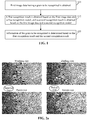
- FIG. 2a and FIG. 2b are schematic diagrams illustrating respectively grain types in a method for recognizing grain according to an embodiment of the disclosure.
- rice may be classified into japonica rice and indica rice.
- japonica rice and indica rice For example, Wuchang rice and Panjin rice are of japonica rice, and Zhefang rice and Simiao rice are of indica rice.
- Rice of different types has highly similar shape.
- rice of the four varieties is indica rice, and the indica rice of different varieties is highly similar.
- rice screenings/broken rice easily cause misjudgments. For example, indica rice is long, and a large amount of broken indica rice is close to japonica rice in shape. Based on this, it is difficult for a user to recognize a variety of a grain based on a shape of the grain.
- the device acquires an image of the grain to recognize the variety of the grain. In each of the following embodiments of the disclosure, descriptions are made under the condition that the grain is rice as an example.
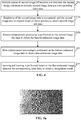
- FIG. 3 is a flowchart of training a recognition model in a method for recognizing grain according to an embodiment of the disclosure. As shown in FIG. 3 , the method for recognizing grain further includes the following operations.
- the second image information includes second image data and corresponding label data.
- feature enhancement processing is performed on the second image data to obtain feature-enhanced image data.
- data enhancement processing is performed on the feature-enhanced image data to obtain data-enhanced image data.
- learning and training is performed based on the data-enhanced image data and the corresponding label data to obtain a recognition model.
- the multiple pieces of second image information for training a recognition model are obtained.
- the second image information includes the second image data and corresponding label data, and the label data characterizes a type of a grain in the corresponding second image data.
- the recognition model in the embodiment includes the first recognition model and the second recognition model.
- the first recognition module is configured to output a grain type recognition result, and the label data in the second image information for training the first recognition model is grain type information.
- the second recognition model is configured to output a grain variety recognition result, and the label data in the second image information for training the second recognition model is grain variety information.
- the grain variety may be a subtype of the grain type.
- the grain type may be japonica rice or indica rice, and the grain variety may be Thai fragrant rice and the like under the type of japonica rice.
- the method may further include the following operations.
- brightness of the second image data is recognized, and the second image data is clipped based on the brightness to obtain second image sub data.
- a brightness difference of the second image sub data satisfies a preset condition.
- the operation that feature enhancement processing is performed on the second image data includes the following operation.
- feature enhancement processing is performed on the second image sub data to obtain the feature-enhanced image data.
- FIG. 5a and FIG. 5b Reference may be made to FIG. 5a and FIG. 5b in this embodiment.
- illumination at a left side in the second image data is strong. Therefore, the whole second image data is not suitable as training data.
- the brightness of the second image data is recognized, and the second image data is clipped based on brightness differences between pixels to obtain the second image sub data, of which the brightness difference satisfies the preset condition, in the second image data. As shown in FIG.
- the second image data may be clipped based on the set region size to minimize the brightness difference of the second image sub data obtained by clipping.
- the brightness difference of the second image sub data satisfying the preset condition may refer to the brightness difference of the second image sub data being minimum under the condition that the set region size is met.
- performing feature enhancement on the second image data includes performing enhancement processing on contrast of the second image data.
- the operation that feature enhancement processing is performed on the second image data to obtain the feature-enhanced image data includes an operation as follows.
- the second image data is converted into a grayscale image
- contrast enhancement processing is performed on the grayscale image to obtain contrast-enhanced image data
- the feature-enhanced image data is obtained based on the contrast-enhanced image data.
- the obtained second image data is usually color data.
- the color data of red, green and blue (RGB) channels of the second image data is converted into the grayscale image, the grayscale image is further processed using a contrast enhancement algorithm.
- the obtained contrast-enhanced image data is determined as the feature-enhanced image data corresponding to the second image data.
- Contrast represents a measurement of different brightness levels between the brightest pixel and the darkest pixel in the image data, the larger the difference is, the larger the contract is, and the smaller the difference is, the smaller the contrast is.
- the contrast enhancement algorithm includes but is not limited to at least one of the following algorithms: a linear transformation algorithm, an exponential transformation algorithm, a logarithmic transformation algorithm, a histogram algorithm and the like.
- FIG. 6 is a second application diagram illustrating training a recognition model in a method for recognizing grain according to an embodiment of the disclosure. As shown in FIG. 6 , the contrast of the image data is enhanced, so that difference between different rice grains is obvious, and transmittance degrees of different rice grains can be reflected.
- the operation that data enhancement processing is performed on the feature-enhanced image data corresponding to the second image data to obtain the data-enhanced image data includes operations as follows.
- the feature-enhanced image data corresponding to the second image data is flipped and/or rotated to obtain flipped image data and/or rotated image data corresponding to the feature-enhanced image data.
- the data-enhanced image data is generated based on the flipped image data and/or the rotated image data.
- the feature-enhanced image data is rotated by a rotating angle, which may be a first preset angle.
- the first preset angle is one of the following angles: 90 degrees, 180 degrees and 270 degrees.
- a rotating angle may be a second preset angle.
- the second preset angle is one of the following angles: 90 degrees, 180 degrees and 270 degrees. It is appreciated that, as a first implementation mode, in the embodiment of the disclosure, the feature-enhanced image data may be rotated by the first preset angle and the feature-enhanced image data and the rotated feature-enhanced image data are determined as images in the training set for model training.
- the flipped feature-enhanced image data is rotated by the second preset angle, and the feature-enhanced image data, the flipped feature-enhanced image data and the flipped and rotated feature-enhanced image data are determined as images in the training set for model training.
- the first implementation mode and the second implementation mode may be combined, to determine the feature-enhanced image data, the rotated feature-enhanced image data, the flipped feature-enhanced image data and the flipped and rotated feature-enhanced image data are determined as images in the training set for model training.
- FIG. 7a to FIG. 7h are third application diagrams of training a recognition model in a method for recognizing grain according to an embodiment of the disclosure respectively.
- FIG. 7a illustrates the feature-enhanced image data
- FIG. 7b to FIG. 7d illustrates the rotated feature-enhanced image data obtained by rotating FIG. 7a by 90 degrees, 180 degrees and 270 degrees respectively
- FIG. 7e illustrates the feature-enhanced image data obtained by flipping FIG. 7a horizontally
- FIG. 7f to FIG. 7b illustrates the flipped and rotated feature-enhanced image data obtained by rotating FIG. 7e by 90 degrees, 180 degrees and 270 degrees respectively.
- a piece of image data may be expanded to eight pieces of image data, so that a high-quality training set is greatly provided without increasing an acquired data amount.
- possible influence of different environments in a real usage environment for example, influence of light, is considered.
- different levels of light processing are performed on the image data of the training set.
- learning and training is performed based on the data-enhanced image data and the corresponding label data to obtain the recognition model.
- learning and training in response to that the label data characterizes a type of a grain, learning and training is performed based on the data-enhanced image data and the corresponding label data to obtain the first recognition model.
- learning and training in response to that the label data characterizes a variety of the grain, learning and training is performed based on the data-enhanced image data and the corresponding label data to obtain the second recognition model.
- a convolutional neural network structure is adopted to perform learning and training on the data-enhanced image data and the corresponding label data.
- the data-enhanced image data is taken as an input of a convolutional neural network model
- the label data is taken as an output of the convolutional neural network model
- learning and training is performed through a stochastic gradient descent method to obtain the recognition model.
- the label data characterizing the type of the grain is taken as the output of the convolutional neural network model, and learning and training is performed through the stochastic gradient descent method to obtain the first recognition model.
- the label data characterizing the variety of the grain is taken as the output of the convolutional neural network model, and learning and training is performed through the stochastic gradient descent method to obtain the second recognition model.
- the convolutional neural network structure may adopt one of the following network structures: AlexNet, VGGNet, GoogleNet and ResNet. Adopting the convolutional neural network structure for grain recognition may accurately recognize varieties of grains with high similarities and grain fineness, thereby improving recognition accuracy.
- the first image data is preprocessed before the first recognition result is obtained based on the first image data and the first recognition model, and the second recognition result is obtained based on the first image data and the second recognition model.
- the first image data is preprocessed in the following manner. Feature enhancement processing is performed on the first image data to obtain the feature-enhanced image data corresponding to the first image data.
- the first image data is preprocessed in the following manner. Brightness of the first image data is recognized, and the first image data is clipped based on the brightness to obtain first image sub data. A brightness difference of the first image sub data satisfies the preset condition.
- Feature enhancement processing is performed on the first image sub data to obtain the feature-enhanced image data corresponding to the first image data.
- the operation that the first recognition result is obtained based on the first image data and the first recognition model includes an operation as follows.
- the first recognition result is obtained based on the feature-enhanced image data corresponding to the first image data and the first recognition model.
- the feature-enhanced image data corresponding to the first image data is input into the first recognition model to obtain the first recognition result, and the first recognition result may include the type of the rice in the first image data.
- the feature-enhanced image data corresponding to the first image data is input into the second recognition model to obtain the second recognition result, and the second recognition result may include the variety of the rice in the first image data.
- the output recognition result may include a label and a corresponding probability.
- the first recognition result includes a type label and a corresponding probability.
- the second recognition result includes a variety label and a corresponding probability.
- the outputted first recognition result may be japonica rice and a corresponding probability 89%, and indica rice and a corresponding probability 11%. It may be determined based on the first recognition result that the type of the rice is japonica rice.
- the device may include the first recognition model configured to recognize the type of the rice and the second recognition model configured to recognize the variety of the rice.
- the operation that the first recognition result is obtained based on the first image data and the first recognition model, the second recognition result is obtained based on the first image data and the second recognition model and the information of the grain to be recognized is determined based on the first recognition result and the second recognition result includes operations as follows.
- the first recognition result is obtained based on the first image data and the first recognition model.
- a confidence level that the grain to be recognized belongs to the type in the first recognition result is obtained.
- the second recognition result is obtained based on the first image data and the second recognition model.
- a confidence level that the grain to be recognized belongs to the variety in the second recognition result is obtained.
- the variety of the grain to be recognized is determined as the information of the grain to be recognized.
- the type of the grain to be recognized is determined as the information of the grain to be recognized.
- the first image data is input into the first recognition model to recognize the type of the rice, the type of the rice is determined based on the type and corresponding probability in the obtained first recognition result, and a confidence level that the rice belongs to the type is determined.
- the first image data is input into the second recognition model to recognize the variety of the rice, the variety of the rice is determined based on the variety and the corresponding probability in the obtained second recognition result, and a confidence level that the rice belongs to the variety is determined.
- the variety of the rice is output.
- the type of the rice is output.
- the type of the rice may be determined according to a comparison result of probabilities corresponding to obtained types.
- the grain is probably not rice but morphologically close to rice, and in this case, the type of rice may be obtained while the probability corresponding to the type is not high. Based on this, if the probability that the rice belongs to the type is lower than a preset threshold value, it may be determined that the confidence level that the rice belongs to the type is low, and a recognition result indicating that the grain is not rice is output.
- the first image data is input into the second recognition model for recognizing the variety of the rice, to obtain the variety and the corresponding probability.
- the variety of the rice may be determined based on a probability comparison manner. If the probability that the rice belongs to the variety is low, it may be determined that the confidence level that the rice belongs to the variety is low, and the type of the rice is directly output. If the probability that the rice belongs to the variety is high, it may be determined that the confidence level that the rice belongs to the variety is high, and the variety of the rice is directly output.
- the device may include a first recognition model for type recognition and second recognition model for variety recognition, corresponding to each type of grains.
- the operation that the first recognition result is obtained based on the first image data and the first recognition model, the second recognition result is obtained based on the first image data and the second recognition model and the information of the grain to be recognized is determined based on the first recognition result and the second recognition result includes operations as follows. A first recognition result is obtained based on the first image data and the first recognition model, and a confidence level that the grain to be recognized belongs to a first type of a first grain in the first recognition result is obtained.
- a second recognition result is obtained based on the first image data and the second recognition model corresponding to the first grain, and a confidence level that the grain to be recognized belongs to a first variety of the first grain in the second recognition result is obtained.
- the first variety of the first grain that the grain to be recognized belongs to is determined as the information of the grain to be recognized.
- the first type of the first grain that the grain to be recognized belongs to is determined as the information of the grain to be recognized.
- the information of the grain to be recognized is determined in a manner of merging the results of the two recognition models, thereby improving robustness of the recognition result.
- the implementation mode corresponds to the scenario that the device may recognize multiple types of grains. It is appreciated that the device includes two recognition models corresponding to each of multiple types of grains. The device may preliminarily recognize based on an image recognition manner that the grain to be recognized in the first image data is the first grain, and further determine the information of the first grain according to the first recognition model and second recognition model corresponding to the first grain. Regarding a determination manner for the information of the first grain, reference may be made to the abovementioned manner for determining that the grain is rice, and which will not be elaborated herein.
- the method further includes an operation that an operation mode is selected based on the information of the grain to be recognized, and the grain to be recognized is heated based on the operation mode.
- the device may select the operation mode based on information such as the type, variety of the grain to be recognized.
- the operation mode has a heating parameter matching the operation mode, and the device heats the grain to be recognized based on the heating parameter corresponding to the operation mode.
- a grain may be automatically recognized in an image recognition manner
- a technical support is provided for automatically setting a cooking mode of a cooking device based on the type and the variety of grain without recognizing the type and the variety of the grain by a user with eyes, which provides convenience to a user not knowing about the type and variety of grain in a cooking process, thereby greatly improving user experience.
- FIG. 9 is a composition structure diagram of a device for recognizing grain according to an embodiment of the disclosure.
- the device includes: a memory 32 having stored thereon a computer program capable of being executed by a processor 31; and the processor 31, configured to run the computer program to execute the operations of: obtaining first image data having a grain to be recognized; obtaining a first recognition result based on the first image data and a first recognition model, and obtaining a second recognition result based on the first image data and a second recognition model, the first recognition result characterizing a type of the grain to be recognized and the second recognition result characterizing a variety of the grain to be recognized; and determining information of the grain to be recognized based on the first recognition result and the second recognition result.
- the processor 31 is further configured to run the computer program to execute the operations of: obtaining multiple pieces of second image information, the second image information including second image data and corresponding label data; performing feature enhancement processing on the second image data to obtain feature-enhanced image data; performing data enhancement processing on the feature-enhanced image data to obtain data-enhanced image data; and performing learning and training based on the data-enhanced image data and the corresponding label data to obtain a recognition model.
- the processor 31 is further configured to run the computer program to execute the operations of: in response to that the label data characterizes a type of a grain, obtaining the first recognition model; and in response to that the label data characterizes a variety of the grain, obtaining the second recognition model.
- the processor 31 is further configured to run the computer program to execute the operations of: recognizing brightness of the second image data and clipping the second image data based on the brightness to obtain second image sub data, a brightness difference of the second image sub data satisfies a preset condition; and performing feature enhancement processing on the second image sub data to obtain the feature-enhanced image data.
- the processor 31 is configured to run the computer program to execute the operations of: converting the second image data into a grayscale image, and performing contrast enhancement processing on the grayscale image to obtain contrast-enhanced image data; and obtaining the feature-enhanced image data based on the contrast-enhanced image data.
- the processor 31 is configured to run the computer program to execute the operations of: flipping and/or rotating the feature-enhanced image data to obtain flipped image data and/or rotated image data corresponding to the feature-enhanced image data, and generating the data-enhanced image data based on the flipped image data and/or the rotated image data.
- the processor 31 is configured to run the computer program to execute the operations of: obtaining the first recognition result based on the first image data and the first recognition model; obtaining a confidence level that the grain to be recognized belongs to the type in the first recognition result; in response to that the confidence level that the grain to be recognized belongs to the type reaches a first preset condition, obtaining the second recognition result based on the first image data and the second recognition model; obtaining a confidence level that the grain to be recognized belongs to the variety in the second recognition result; in response to that the confidence level that the grain to be recognized belongs to the variety reaches a second preset condition, determining the variety of the grain to be recognized as the information of the grain to be recognized; and in response to that the confidence level that the grain to be recognized belongs to the variety does not reach the second preset condition, determining the type of the grain to be recognized as the information of the grain to be recognized.
- the device for recognizing grain provided in the embodiment is described with division of the abovementioned program modules as an example during grain recognition.
- the above processing may be allocated to different program modules according to a requirement, that is, an internal structure of the device is divided into different program modules to implement all or part of abovementioned processing.
- the device for recognizing grain provided in the embodiment belongs to the same concept of the method for recognizing grain in the above embodiment, and for details about a specific implementation process of the device embodiment, reference may be made to the method embodiment, and will not be elaborated herein.
- the device further includes a bus system 33, and the components in the device are coupled together through the bus system 33. It is appreciated that the bus system 33 is configured to implement connection communication between these components.
- the bus system 33 includes a power bus, a control bus and a state signal bus, in addition to a data bus. However, for clear description, various buses in FIG. 9 are represented as the bus system 33.
- the memory 32 may be a volatile memory or a nonvolatile memory, and may also include both of the volatile and nonvolatile memories.
- the nonvolatile memory may be a Read Only Memory (ROM), a Programmable Read-Only Memory (PROM), an Erasable Programmable Read-Only Memory (EPROM), an Electrically Erasable Programmable Read-Only Memory (EEPROM), a Ferromagnetic Random Access Memory (FRAM), a flash memory, a magnetic surface memory, a compact disc or a Compact Disc Read-Only Memory (CD-ROM).
- the magnetic surface memory may be a disk memory or a tape memory.
- the volatile memory may be a Random Access Memory (RAM), which is used as an external high-speed cache.
- RAMs in various forms may be adopted, such as a Static Random Access Memory (SRAM), a Synchronous Static Random Access Memory (SSRAM), a Dynamic Random Access Memory (DRAM), a Synchronous Dynamic Random Access Memory (SDRAM), a Double Data Rate Synchronous Dynamic Random Access Memory (DDRSDRAM), an Enhanced Synchronous Dynamic Random Access Memory (ESDRAM), a SyncLink Dynamic Random Access Memory (SLDRAM) and a Direct Rambus Random Access Memory (DRRAM).
- SRAM Static Random Access Memory
- SSRAM Synchronous Static Random Access Memory
- DRAM Dynamic Random Access Memory
- SDRAM Synchronous Dynamic Random Access Memory
- DDRSDRAM Double Data Rate Synchronous Dynamic Random Access Memory
- ESDRAM Enhanced Synchronous Dynamic Random Access Memory
- SLDRAM SyncLink Dynamic Random Access Memory
- DRRAM Direct Rambus Random Access Memory
- the method disclosed in the embodiment of the disclosure may be applied to the processor 31 or implemented by the processor 31.
- the processor 31 may be an integrated circuit chip with a signal processing capability. In an implementation process, each step of the above method may be implemented by an integrated logic circuit in the processor 31 in a hardware form or an instruction in a software form.
- the processor 31 may be a universal processor, a Digital Signal Processor (DSP) or another Programmable Logic Device (PLD), a discrete gate or transistor logic device, a discrete hardware component and the like.
- DSP Digital Signal Processor
- PLD Programmable Logic Device
- the processor 31 may implement or execute each method, step and logical block diagram disclosed in the embodiments of the disclosure.
- the universal processor may be a microprocessor, any conventional processor or the like.
- the steps of the method disclosed in combination with the embodiments of the disclosure may be directly embodied to be executed and implemented by a hardware decoding processor or executed and implemented by a combination of hardware and software modules in the decoding processor.
- the software module may be arranged in a storage medium, and the storage medium is located in the memory 32.
- the processor 31 reads information in the memory 32 and implements the steps of the above method in combination with hardware.
- the device for recognizing grain may be implemented by one or more Application Specific Integrated Circuits (ASICs), DSPs, Programmable Logic Devices (PLDs), Complex Programmable Logic Devices (CPLDs), Field-Programmable Gate Arrays (FPGAs), universal processors, controllers, Micro Controller Units (MCUs), microprocessors or other electronic components, which are configured to execute the abovementioned method.
- ASICs Application Specific Integrated Circuits
- DSPs Programmable Logic Devices
- CPLDs Complex Programmable Logic Devices
- FPGAs Field-Programmable Gate Arrays
- controllers controllers
- MCUs Micro Controller Units
- microprocessors or other electronic components which are configured to execute the abovementioned method.
- the embodiment of the disclosure also provides a computer-readable storage medium, for example, a memory 32 including a computer program.
- the computer program may be executed by a processor 31 of a device for recognizing grain to implement the steps of the method.
- the computer-readable storage medium may be a memory such as an FRAM, an ROM, a PROM, an EPROM, an EEPROM, a flash memory, a magnetic surface memory, a compact disc or a CD-ROM, and may also be any device including one or any combination of these memories, for example, a mobile phone, a computer, a tablet and a personal digital assistant.
- An embodiment of the disclosure provides a computer storage medium having stored thereon a computer instruction.
- the instruction is executed by a processor to implement the following operations.
- First image data having a grain to be recognized is obtained.
- a first recognition result is obtained based on the first image data and a first recognition model.
- a second recognition result is obtained based on the first image data and a second recognition model.
- the first recognition result characterizes a type of the grain to be recognized and the second recognition result characterizes a variety of the grain to be recognized.
- Information of the grain to be recognized is determined based on the first recognition result and the second recognition result.
- the instruction is executed by the processor to implement the following operations. Multiple pieces of second image information are obtained, the second image information includes second image data and corresponding label data. Feature enhancement processing is performed on the second image data to obtain feature-enhanced image data. Data enhancement processing is performed on the feature-enhanced image data to obtain data-enhanced image data. Learning and training is performed based on the data-enhanced image data and the corresponding label data, to obtain a recognition model.
- the instruction is executed by the processor to implement the following operations.
- the label data characterizes a type of a grain
- the first recognition model is obtained.
- the second recognition model is obtained.
- the instruction is executed by the processor to implement the following operations.
- Brightness of the second image data is recognized, and the second image data is clipped based on the brightness to obtain second image sub data.
- a brightness difference of the second image sub data satisfies a preset condition.
- Feature enhancement processing is performed on the second image sub data to obtain the feature-enhanced image data.
- the instruction is executed by the processor to implement the following operations.
- the second image data is converted into a grayscale image.
- Contrast enhancement processing is performed on the grayscale image to obtain contrast-enhanced image data.
- the feature-enhanced image data is obtained based on the contrast-enhanced image data.
- the instruction is executed by the processor to implement the following operations.
- the feature-enhanced image data is flipped and/or rotated to obtain flipped image data and/or rotated image data corresponding to the feature-enhanced image data.
- the data-enhanced image data is generated based on the flipped image data and/or the rotated image data.
- the instruction is executed by the processor to implement the following operations.
- the first recognition result is obtained based on the first image data and the first recognition model.
- a confidence level that the grain to be recognized belongs to the type in the first recognition result is obtained.
- the second recognition result is obtained based on the first image data and the second recognition model.
- a confidence level that the grain to be recognized belongs to the variety in the second recognition result is obtained.
- the variety of the grain to be recognized is determined as the information of the grain to be recognized.
- the type of the grain to be recognized is determined the information of the grain to be recognized.
- the disclosed device and method may be implemented in another manner.
- the device embodiment described above is only schematic, and for example, division of the units is only logic function division, and other division manners may be adopted during practical implementation. For example, multiple units or components may be combined or integrated into another system, or some characteristics may be neglected or not executed.
- coupling or direct coupling or communication connection between displayed or discussed components may be indirect coupling or communication connection between the device or the units,, implemented through some interfaces, and may be electrical and mechanical or in other forms.
- the units described as separate parts may or may not be physically separated, and parts displayed as units may or may not be physical units. That is, the parts may be located in the same place, or may also be distributed to multiple network units. Part of all of the units may be selected according to a practical requirement to achieve the purposes of the solutions of the embodiments.
- all functional units in the embodiment of the disclosure may be integrated into a processing unit, each functional unit may also serve as an independent unit, or two or more units may also be integrated into a unit.
- the integrated unit may be implemented in a hardware form, and may also be implemented in form of hardware and software functional unit.
- the above program may be stored in a computer-readable storage medium.
- the program is executed to implement the steps of the above method embodiment.
- the storage medium includes: various media capable of storing program codes such as a mobile storage device, an ROM, an RAM, a magnetic disk or a compact disc.
- the above integrated unit of the disclosure may also be stored in a computer-readable storage medium.
- the essential part of the technical solution of the embodiments of the disclosure or the part of the technical solution making contributions to the conventional art may be embodied in form of software product, and the computer software product is stored in a storage medium, including a plurality of instructions configured to enable a computer device (which may be a personal computer, a server, a network device or the like) to execute all or part of the method in each embodiment of the disclosure.
- the storage medium includes: various media capable of storing program codes such as a mobile memory device, an ROM, an RAM, a magnetic disk or a compact disc.
Landscapes
- Engineering & Computer Science (AREA)
- Theoretical Computer Science (AREA)
- Physics & Mathematics (AREA)
- General Physics & Mathematics (AREA)
- Health & Medical Sciences (AREA)
- General Health & Medical Sciences (AREA)
- Evolutionary Computation (AREA)
- Software Systems (AREA)
- Computing Systems (AREA)
- Artificial Intelligence (AREA)
- Databases & Information Systems (AREA)
- Medical Informatics (AREA)
- Computer Vision & Pattern Recognition (AREA)
- Multimedia (AREA)
- Life Sciences & Earth Sciences (AREA)
- Analytical Chemistry (AREA)
- Pathology (AREA)
- Chemical & Material Sciences (AREA)
- Biochemistry (AREA)
- Immunology (AREA)
- Computational Linguistics (AREA)
- Biophysics (AREA)
- Biomedical Technology (AREA)
- Data Mining & Analysis (AREA)
- Molecular Biology (AREA)
- General Engineering & Computer Science (AREA)
- Mathematical Physics (AREA)
- Image Analysis (AREA)
- Investigating Or Analysing Materials By Optical Means (AREA)
Abstract
Description
- The disclosure relates to an image recognition technology, and particularly to a method and device for recognizing grain and a computer storage medium.
- Emergence of intelligent home appliances brings great convenience to people's daily lives. For example, a user is only required to select a cooking mode of an electric rice cooker, and the electric rice cooker can automatic cooking according to cooking time corresponding to the selected cooking mode. However, a mode interaction manner of an electric rice cooker for rice-type selection includes a rice type selection-free mode and a manual rice type selection mode. If a user does not know about a rice type, only the rice type selection-free mode may be selected. If an electric rice cooker capable of automatically recognizing a rice type is provided and a cooking mode is further determined based on the rice type, a convenient interaction manner may be provided for a user, thereby improving user experience. However, there is yet no effective solution at present in the conventional art.
- In order for solving the existing technical problem, the embodiments of the disclosure provide a method and a device for recognizing grain and a computer storage medium.
- In order for realizing the above objective, the technical solutions of the embodiments of the disclosure are implemented as follows.
- The embodiments of the disclosure provide a method for recognizing grain, which may include the following operations.
- First image data having grain to be recognized is obtained.
- A first recognition result is obtained based on the first image data and a first recognition model, and a second recognition result is obtained based on the first image data and a second recognition model. The first recognition result characterizes a type of the grain to be recognized, and the second recognition result characterizes a variety of the grain to be recognized.
- Information of the grain to be recognized is determined based on the first recognition result and the second recognition result.
- In an embodiment, the method may further include the following operations.
- Multiple pieces of second image information are obtained. The second image information includes second image data and corresponding label data.
- Feature enhancement processing is performed on the second image data to obtain feature-enhanced image data.
- Data enhancement processing is performed on the feature-enhanced image data to obtain data-enhanced image data.
- Learning and training is performed based on the data-enhanced image data and the corresponding label data, and a recognition model is obtained.
- In an embodiment, in response to that the label data characterizes a type of a grain, the operation that the recognition model is obtained may include an operation that the first recognition model is obtained.
- In response to that the label data characterizes a variety of the grain, the operation that the recognition model is obtained may include an operation that the second recognition model is obtained.
- In an embodiment, before the operation that feature enhancement processing is performed on the second image data, the method may further include the following operations.
- Brightness of the second image data is recognized, and the second image data is clipped based on the brightness to obtain second image sub data. A brightness difference of the second image sub data satisfies a preset condition.
- Correspondingly, the operation that feature enhancement processing is performed on the second image data may include an operation that feature enhancement processing is performed on the second image sub data.
- In an embodiment, the operation that feature enhancement processing is performed on the second image data to obtain the feature-enhanced image data may include the following operations.
- The second image data is converted into a grayscale image, and contrast enhancement processing is performed on the grayscale image to obtain contrast-enhanced image data. The feature-enhanced image data is obtained based on the contrast-enhanced image data.
- In an embodiment, the operation that data enhancement processing is performed on the feature-enhanced image data to obtain the data-enhanced image data may include the following operations.
- The feature-enhanced image data is flipped and/or rotated to obtain flipped image data and/or rotated image data corresponding to the feature-enhanced image data, and the data-enhanced image data is generated based on the flipped image data and/or the rotated image data.
- In an embodiment, the operation that the first recognition result is obtained based on the first image data and the first recognition model, the second recognition result is obtained based on the first image data and the second recognition model and the information of the grain to be recognized is determined based on the first recognition result and the second recognition result may include the following operations.
- The first recognition result is obtained based on the first image data and the first recognition model. A confidence level that the grain to be recognized belongs to the type in the first recognition result is obtained. In response to that the confidence level that the grain to be recognized belongs to the type reaches a first preset condition, the second recognition result is obtained based on the first image data and the second recognition model. A confidence level that the grain to be recognized belongs to the variety in the second recognition result is obtained. In response to that the confidence level that the grain to be recognized belongs to the variety reaches a second preset condition, the variety of the grain to be recognized is determined as the information of the grain to be recognized. In response to that the confidence level that the grain to be recognized belongs to the variety does not reach the second preset condition, the type of the grain to be recognized is determined as the information of the grain to be recognized.
- The embodiments of the disclosure provide a device for recognizing grain, which may include a memory and a processor.
- The memory may store a computer program capable of being executed by the processor.
- The processor may be configured to run the computer program to execute the operations of: obtaining first image data having a grain to be recognized; obtaining a first recognition result based on the first image data and a first recognition model and obtaining a second recognition result based on the first image data and a second recognition model, the first recognition result characterizing a type of the grain to be recognized and the second recognition result characterizing a variety of the grain to be recognized; and determining information of the grain to be recognized based on the first recognition result and the second recognition result.
- In an embodiment, the processor may further be configured to run the computer program to execute the operations of: obtaining multiple pieces of second image information, the second image information including second image data and corresponding label data; performing feature enhancement processing on the second image data to obtain feature-enhanced image data; performing data enhancement processing on the feature-enhanced image data to obtain data-enhanced image data; and performing learning and training based on the data-enhanced image data and the corresponding label data to obtain a recognition model.
- In an embodiment, the processor may further be configured to run the computer program to execute the operations of: in response to that the label data characterizes a type of grain, obtaining the first recognition model; and in response to that the label data characterizes a variety of the grain, obtaining the second recognition model.
- In an embodiment, the processor may further be configured to run the computer program to execute the operations of: recognizing brightness of the second image data and clipping the second image data based on the brightness to obtain second image sub data, a brightness difference of the second image sub data satisfying a preset condition; and performing feature enhancement processing on the second image sub data to obtain the feature-enhanced image data.
- In an embodiment, the processor may be configured to run the computer program to execute the operations of: converting the second image data into a grayscale image, and performing contrast enhancement processing on the grayscale image to obtain contrast-enhanced image data; and obtaining the feature-enhanced image data based on the contrast-enhanced image data.
- In an embodiment, the processor may be configured to run the computer program to execute the operations of: flipping and/or rotating the feature-enhanced image data to obtain flipped image data and/or rotated image data corresponding to the feature-enhanced image data, and generating the data-enhanced image data based on the flipped image data and/or the rotated image data.
- In an embodiment, the processor may be configured to run the computer program to execute the operations of: obtaining the first recognition result based on the first image data and the first recognition model; obtaining a confidence level that the grain to be recognized belongs to the type in the first recognition result; in response to that the confidence level that the grain to be recognized belongs to the type reaches a first preset condition, obtaining the second recognition result based on the first image data and the second recognition model; obtaining a confidence level that the grain to be recognized belongs to the variety in the second recognition result; in response to that that the grain to be recognized belongs to the variety reaches a second preset condition, determining the variety of the grain to be recognized as the information of the grain to be recognized; and in response to that the confidence level that the grain to be recognized belongs to the variety does not reach the second preset condition, determining the type of the grain to be recognized as the information of the grain to be recognized.
- The embodiments of the disclosure also provide a computer storage medium having stored thereon a computer instruction. The instruction, when executed by a processor, implements the steps of the method for recognizing grain of the embodiments of the disclosure.
- According to the method and the device for recognizing grain and computer storage medium provided in the embodiments of the disclosure, the method includes operations as follows. The first image data of the grain to be recognized is obtained. The first recognition result is obtained based on the first image data and the first recognition mode. The second recognition result is obtained based on the first image data and the second recognition model. The first recognition result characterizes the type of the grain to be recognized and the second recognition result characterizes the variety of the grain to be recognized. The information of the grain to be recognized is determined based on the first recognition result and the second recognition result. With the technical solutions of the embodiments of the disclosure, grain can be automatically recognized in an image recognition manner, and a technical support is provided for automatically setting a cooking mode of a cooking device based on the type and the variety of grain, without recognizing the type and the variety of the grain by a user with eyes, which provides convenience to a user not knowing about the type and variety of grain in a cooking process, thereby greatly improving user experience.
-
-
FIG. 1 is a flowchart of a method for recognizing grain according to an embodiment of the disclosure. -
FIG. 2a andFIG. 2b are schematic diagrams respectively illustrating grain types in the method for recognizing grain according to an embodiment of the disclosure. -
FIG. 3 is a flowchart of training a recognition model in a method for recognizing grain according to an embodiment of the disclosure. -
FIG. 4 is another flowchart of training a recognition model in a method for recognizing grain according to an embodiment of the disclosure. -
FIG. 5a andFIG. 5b are first application diagrams of training a recognition model in a method for recognizing grain according to an embodiment of the disclosure respecti vel y. -
FIG. 6 is a second application diagram of training a recognition model in a method for recognizing grain according to an embodiment of the disclosure. -
FIG. 7a to FIG. 7h are third application diagrams of training a recognition model in a method for recognizing grain according to an embodiment of the disclosure respectively. -
FIG. 8 is an application flowchart of a method for recognizing grain according to an embodiment of the disclosure. -
FIG. 9 is a composition structure diagram of a device for recognizing grain according to an embodiment of the disclosure. - The disclosure is further described below in combination with the drawings and embodiments in detail.
- An embodiment of the disclosure provides a method for recognizing grain.
FIG. 1 is a flowchart of a method for recognizing grain according to an embodiment of the disclosure. As shown inFIG. 1 , the method includes the following operations. - In 101, first image data having a grain to be recognized is obtained.
- In 102, a first recognition result is obtained based on the first image data and a first recognition model, and a second recognition result is obtained based on the first image data and a second recognition model. The first recognition result characterizes a type of the grain to be recognized and the second recognition result characterizes a variety of the grain to be recognized.
- In 103, information of the grain to be recognized is determined based on the first recognition result and the second recognition result.
- The method for recognizing grain of the embodiment of the disclosure may be applied to a device. As a first implementation mode, the device may be a kitchen device, the kitchen device is provided with an image acquisition component (for example, a camera). Image data is acquired through the image acquisition component, and the acquired image data is analyzed and recognized to determine the variety of the grain to be recognized. As a second implementation mode, the device may be a kitchen device having no image acquisition function, the kitchen device may communicate with another device having an image acquisition component, image data is acquired through the image acquisition component of the another device, and the kitchen device obtains the image data acquired by the another device through a communication link with the another device. As a third implementation mode, the device may be an electronic device, the electronic device may be a mobile device such as a mobile phone and a tablet computer. The electronic device acquires image data, analyzes and recognizes the acquired image data to determine the variety of the grain to be recognized, and determines a cooking parameter based on the variety of the grain to be recognized and sends the cooking parameter to a kitchen device. The first image data includes the grain to be recognized, and the grain to be recognized is, for example, rice. During a practical application, the kitchen device may be a kitchen heating device such as an electric rice cooker and an electric pressure cooker.
- As an implementation mode, the device has a cooking (for example, rice cooking) function, that is, the device is configured to heat grains in the device. During the practical application, taking the rice as an example of the grain, the rice is rich in variety.
FIG. 2a andFIG. 2b are schematic diagrams illustrating respectively grain types in a method for recognizing grain according to an embodiment of the disclosure. As shown inFIG. 2a , rice may be classified into japonica rice and indica rice. For example, Wuchang rice and Panjin rice are of japonica rice, and Zhefang rice and Simiao rice are of indica rice. Rice of different types has highly similar shape. As shown inFIG. 2b , rice of the four varieties is indica rice, and the indica rice of different varieties is highly similar. On the second aspect, due to different processing processes, rice of the same variety but different brands may have incompletely identical shapes. On the third aspect, rice screenings/broken rice easily cause misjudgments. For example, indica rice is long, and a large amount of broken indica rice is close to japonica rice in shape. Based on this, it is difficult for a user to recognize a variety of a grain based on a shape of the grain. In the embodiment of the disclosure, the device acquires an image of the grain to recognize the variety of the grain. In each of the following embodiments of the disclosure, descriptions are made under the condition that the grain is rice as an example. - In the embodiment of the disclosure, the device obtains a recognition model in advance with a learning and training method. In an embodiment,
FIG. 3 is a flowchart of training a recognition model in a method for recognizing grain according to an embodiment of the disclosure. As shown inFIG. 3 , the method for recognizing grain further includes the following operations. - In 201, multiple pieces of second image information are obtained. The second image information includes second image data and corresponding label data.
- In 202, feature enhancement processing is performed on the second image data to obtain feature-enhanced image data.
- In 203, data enhancement processing is performed on the feature-enhanced image data to obtain data-enhanced image data.
- In 204, learning and training is performed based on the data-enhanced image data and the corresponding label data to obtain a recognition model.
- In the embodiment, the multiple pieces of second image information for training a recognition model are obtained. The second image information includes the second image data and corresponding label data, and the label data characterizes a type of a grain in the corresponding second image data. Here, the recognition model in the embodiment includes the first recognition model and the second recognition model. The first recognition module is configured to output a grain type recognition result, and the label data in the second image information for training the first recognition model is grain type information. The second recognition model is configured to output a grain variety recognition result, and the label data in the second image information for training the second recognition model is grain variety information. The grain variety may be a subtype of the grain type. As an example, the grain type may be japonica rice or indica rice, and the grain variety may be Thai fragrant rice and the like under the type of japonica rice.
- During the practical application, considering influence of a light source on the image data during acquisition of the image data by the image acquisition component, as shown in
FIG. 4 , before the operation that feature enhancement processing is performed on the second image data, the method may further include the following operations. - In 202a, brightness of the second image data is recognized, and the second image data is clipped based on the brightness to obtain second image sub data. A brightness difference of the second image sub data satisfies a preset condition.
- The operation that feature enhancement processing is performed on the second image data includes the following operation.
- In 202b, feature enhancement processing is performed on the second image sub data to obtain the feature-enhanced image data.
- Reference may be made to
FIG. 5a andFIG. 5b in this embodiment. As illustrated inFIG. 5a , illumination at a left side in the second image data is strong. Therefore, the whole second image data is not suitable as training data. As compared with a method of stretching and clipping whole image data to a positive direction in another object recognition task, which may cause image deformation, in the embodiment of the disclosure, the brightness of the second image data is recognized, and the second image data is clipped based on brightness differences between pixels to obtain the second image sub data, of which the brightness difference satisfies the preset condition, in the second image data. As shown inFIG. 5b , since illumination at the left side in the second image data is strong, a left-side region with high brightness may be removed by clipping, to obtain a right-side square region with a small brightness difference. During the practical application, a unified region size may be adopted for the image data for training the recognition model, and in such case, the second image data may be clipped based on the set region size to minimize the brightness difference of the second image sub data obtained by clipping. In the embodiment, the brightness difference of the second image sub data satisfying the preset condition may refer to the brightness difference of the second image sub data being minimum under the condition that the set region size is met. - In the embodiment of the disclosure, since a color space of the image data of the rice is special, the obtained second image data almost includes no color information. Even though the second image data is converted into a grayscale image, a morphological feature of the rice is not obvious and a classification effect is poor. Based on this, in the embodiment of the disclosure, performing feature enhancement on the second image data includes performing enhancement processing on contrast of the second image data.
- Based on this, in the embodiment of the disclosure, as an implementation mode, the operation that feature enhancement processing is performed on the second image data to obtain the feature-enhanced image data includes an operation as follows. The second image data is converted into a grayscale image, contrast enhancement processing is performed on the grayscale image to obtain contrast-enhanced image data, and the feature-enhanced image data is obtained based on the contrast-enhanced image data.
- Here, the obtained second image data is usually color data. In such case, the color data of red, green and blue (RGB) channels of the second image data is converted into the grayscale image, the grayscale image is further processed using a contrast enhancement algorithm. The obtained contrast-enhanced image data is determined as the feature-enhanced image data corresponding to the second image data. Contrast represents a measurement of different brightness levels between the brightest pixel and the darkest pixel in the image data, the larger the difference is, the larger the contract is, and the smaller the difference is, the smaller the contrast is. The contrast enhancement algorithm includes but is not limited to at least one of the following algorithms: a linear transformation algorithm, an exponential transformation algorithm, a logarithmic transformation algorithm, a histogram algorithm and the like. Therefore, the contrast of the image data is enhanced, especially when contrast of useful data of the image data is quite close.
FIG. 6 is a second application diagram illustrating training a recognition model in a method for recognizing grain according to an embodiment of the disclosure. As shown inFIG. 6 , the contrast of the image data is enhanced, so that difference between different rice grains is obvious, and transmittance degrees of different rice grains can be reflected. - Considering that the problem of over-fitting easily occurs in a case of high similarity of rice grains, a training set is expanded in a flipping and/or rotation manner in the embodiment of the disclosure. In the embodiment, the operation that data enhancement processing is performed on the feature-enhanced image data corresponding to the second image data to obtain the data-enhanced image data includes operations as follows. The feature-enhanced image data corresponding to the second image data is flipped and/or rotated to obtain flipped image data and/or rotated image data corresponding to the feature-enhanced image data. The data-enhanced image data is generated based on the flipped image data and/or the rotated image data. The feature-enhanced image data is rotated by a rotating angle, which may be a first preset angle. The first preset angle is one of the following angles: 90 degrees, 180 degrees and 270 degrees. When the feature-enhanced image data is flipped, the flipped feature-enhanced image data is further rotated, and a rotating angle may be a second preset angle. The second preset angle is one of the following angles: 90 degrees, 180 degrees and 270 degrees. It is appreciated that, as a first implementation mode, in the embodiment of the disclosure, the feature-enhanced image data may be rotated by the first preset angle and the feature-enhanced image data and the rotated feature-enhanced image data are determined as images in the training set for model training. As a second implementation mode, in the embodiment of the disclosure, after the feature-enhanced image data is flipped, the flipped feature-enhanced image data is rotated by the second preset angle, and the feature-enhanced image data, the flipped feature-enhanced image data and the flipped and rotated feature-enhanced image data are determined as images in the training set for model training. As a third implementation mode, the first implementation mode and the second implementation mode may be combined, to determine the feature-enhanced image data, the rotated feature-enhanced image data, the flipped feature-enhanced image data and the flipped and rotated feature-enhanced image data are determined as images in the training set for model training.
-
FIG. 7a to FIG. 7h are third application diagrams of training a recognition model in a method for recognizing grain according to an embodiment of the disclosure respectively.FIG. 7a illustrates the feature-enhanced image data,FIG. 7b to FIG. 7d illustrates the rotated feature-enhanced image data obtained by rotatingFIG. 7a by 90 degrees, 180 degrees and 270 degrees respectively,FIG. 7e illustrates the feature-enhanced image data obtained by flippingFIG. 7a horizontally, andFIG. 7f to FIG. 7b illustrates the flipped and rotated feature-enhanced image data obtained by rotatingFIG. 7e by 90 degrees, 180 degrees and 270 degrees respectively. In such a manner, a piece of image data may be expanded to eight pieces of image data, so that a high-quality training set is greatly provided without increasing an acquired data amount. In addition, possible influence of different environments in a real usage environment, for example, influence of light, is considered. For managing the influence of light and improving generalization of the model, different levels of light processing are performed on the image data of the training set. - In the embodiment of the disclosure, learning and training is performed based on the data-enhanced image data and the corresponding label data to obtain the recognition model. As an implementation mode, in response to that the label data characterizes a type of a grain, learning and training is performed based on the data-enhanced image data and the corresponding label data to obtain the first recognition model. As another implementation mode, in response to that the label data characterizes a variety of the grain, learning and training is performed based on the data-enhanced image data and the corresponding label data to obtain the second recognition model.
- In the embodiment, a convolutional neural network structure is adopted to perform learning and training on the data-enhanced image data and the corresponding label data. Specifically, the data-enhanced image data is taken as an input of a convolutional neural network model, the label data is taken as an output of the convolutional neural network model, and learning and training is performed through a stochastic gradient descent method to obtain the recognition model. In response to that the label data characterizes the type of the grain, the label data characterizing the type of the grain is taken as the output of the convolutional neural network model, and learning and training is performed through the stochastic gradient descent method to obtain the first recognition model. In response to that the label data characterizes the variety of the grain, the label data characterizing the variety of the grain is taken as the output of the convolutional neural network model, and learning and training is performed through the stochastic gradient descent method to obtain the second recognition model.
- The convolutional neural network structure may adopt one of the following network structures: AlexNet, VGGNet, GoogleNet and ResNet. Adopting the convolutional neural network structure for grain recognition may accurately recognize varieties of grains with high similarities and grain fineness, thereby improving recognition accuracy.
- In the embodiment of the disclosure, before the first recognition result is obtained based on the first image data and the first recognition model, and the second recognition result is obtained based on the first image data and the second recognition model, the first image data is preprocessed. As an implementation mode, the first image data is preprocessed in the following manner. Feature enhancement processing is performed on the first image data to obtain the feature-enhanced image data corresponding to the first image data. As another implementation mode, the first image data is preprocessed in the following manner. Brightness of the first image data is recognized, and the first image data is clipped based on the brightness to obtain first image sub data. A brightness difference of the first image sub data satisfies the preset condition. Feature enhancement processing is performed on the first image sub data to obtain the feature-enhanced image data corresponding to the first image data. Correspondingly, the operation that the first recognition result is obtained based on the first image data and the first recognition model includes an operation as follows. The first recognition result is obtained based on the feature-enhanced image data corresponding to the first image data and the first recognition model. Regarding the clipping and feature enhancement processing on the first image data, reference may be made to the clipping and feature enhancement processing for the second image data, which will not be elaborated herein.
- It is appreciated that the feature-enhanced image data corresponding to the first image data is input into the first recognition model to obtain the first recognition result, and the first recognition result may include the type of the rice in the first image data. Correspondingly, the feature-enhanced image data corresponding to the first image data is input into the second recognition model to obtain the second recognition result, and the second recognition result may include the variety of the rice in the first image data.
- During the practical application, the output recognition result may include a label and a corresponding probability. When the first recognition result is output, the first recognition result includes a type label and a corresponding probability. When the second recognition result is output, the second recognition result includes a variety label and a corresponding probability. In a case that the grain is rice, it is appreciated that the outputted first recognition result may be japonica rice and a corresponding probability 89%, and indica rice and a corresponding probability 11%. It may be determined based on the first recognition result that the type of the rice is japonica rice.
- As an implementation mode, in a case that the grain is of a single type (for example, rice), the device may include the first recognition model configured to recognize the type of the rice and the second recognition model configured to recognize the variety of the rice. In the embodiment of the disclosure, the operation that the first recognition result is obtained based on the first image data and the first recognition model, the second recognition result is obtained based on the first image data and the second recognition model and the information of the grain to be recognized is determined based on the first recognition result and the second recognition result includes operations as follows. The first recognition result is obtained based on the first image data and the first recognition model. A confidence level that the grain to be recognized belongs to the type in the first recognition result is obtained. In response to that the confidence level that the grain to be recognized belongs to the type reaches a first preset condition, the second recognition result is obtained based on the first image data and the second recognition model. A confidence level that the grain to be recognized belongs to the variety in the second recognition result is obtained. In response to that the confidence level that the grain to be recognized belongs to the variety reaches a second preset condition, the variety of the grain to be recognized is determined as the information of the grain to be recognized. In response to that the confidence level that the grain to be recognized belongs to the variety does not reach the second preset condition, the type of the grain to be recognized is determined as the information of the grain to be recognized.
- Referring to
FIG. 8 , the first image data is input into the first recognition model to recognize the type of the rice, the type of the rice is determined based on the type and corresponding probability in the obtained first recognition result, and a confidence level that the rice belongs to the type is determined. In response to that it is determined that the confidence level that the rice belongs to the type satisfies a preset condition, the first image data is input into the second recognition model to recognize the variety of the rice, the variety of the rice is determined based on the variety and the corresponding probability in the obtained second recognition result, and a confidence level that the rice belongs to the variety is determined. In response to that it is determined that the confidence level that the rice belongs to the variety satisfies a preset condition, the variety of the rice is output. In response to it is determined that the confidence level that the rice belongs to the variety does not satisfy the preset condition, the type of the rice is output. - During the practical application, the type of the rice may be determined according to a comparison result of probabilities corresponding to obtained types. However, the grain is probably not rice but morphologically close to rice, and in this case, the type of rice may be obtained while the probability corresponding to the type is not high. Based on this, if the probability that the rice belongs to the type is lower than a preset threshold value, it may be determined that the confidence level that the rice belongs to the type is low, and a recognition result indicating that the grain is not rice is output. On the contrary, if it is determined that the rice belongs to the type, that is, it is determined that the confidence level that the rice belongs to the type reaches the preset threshold value, the first image data is input into the second recognition model for recognizing the variety of the rice, to obtain the variety and the corresponding probability. Furthermore, the variety of the rice may be determined based on a probability comparison manner. If the probability that the rice belongs to the variety is low, it may be determined that the confidence level that the rice belongs to the variety is low, and the type of the rice is directly output. If the probability that the rice belongs to the variety is high, it may be determined that the confidence level that the rice belongs to the variety is high, and the variety of the rice is directly output.
- As another implementation mode, if the device supports recognition for multiple types of grains (for example, rice, maize and soybean), the device may include a first recognition model for type recognition and second recognition model for variety recognition, corresponding to each type of grains. In the embodiment of the disclosure, the operation that the first recognition result is obtained based on the first image data and the first recognition model, the second recognition result is obtained based on the first image data and the second recognition model and the information of the grain to be recognized is determined based on the first recognition result and the second recognition result includes operations as follows. A first recognition result is obtained based on the first image data and the first recognition model, and a confidence level that the grain to be recognized belongs to a first type of a first grain in the first recognition result is obtained. In response to that the confidence level that the grain to be recognized belongs to the first type of the first grain reaches the first preset condition, a second recognition result is obtained based on the first image data and the second recognition model corresponding to the first grain, and a confidence level that the grain to be recognized belongs to a first variety of the first grain in the second recognition result is obtained. In response to that the confidence level that the grain to be recognized belongs to the first variety of the first grain reaches the second preset condition, the first variety of the first grain that the grain to be recognized belongs to is determined as the information of the grain to be recognized. In response to that the confidence level that the grain to be recognized belongs to the first variety of the first grain does not reach the second preset condition, the first type of the first grain that the grain to be recognized belongs to is determined as the information of the grain to be recognized.
- According to the embodiment of the disclosure, the information of the grain to be recognized is determined in a manner of merging the results of the two recognition models, thereby improving robustness of the recognition result.
- The implementation mode corresponds to the scenario that the device may recognize multiple types of grains. It is appreciated that the device includes two recognition models corresponding to each of multiple types of grains. The device may preliminarily recognize based on an image recognition manner that the grain to be recognized in the first image data is the first grain, and further determine the information of the first grain according to the first recognition model and second recognition model corresponding to the first grain. Regarding a determination manner for the information of the first grain, reference may be made to the abovementioned manner for determining that the grain is rice, and which will not be elaborated herein.
- In an embodiment, the method further includes an operation that an operation mode is selected based on the information of the grain to be recognized, and the grain to be recognized is heated based on the operation mode. During the practical application, the device may select the operation mode based on information such as the type, variety of the grain to be recognized. The operation mode has a heating parameter matching the operation mode, and the device heats the grain to be recognized based on the heating parameter corresponding to the operation mode.
- With the technical solution of the embodiment of the disclosure, a grain may be automatically recognized in an image recognition manner, a technical support is provided for automatically setting a cooking mode of a cooking device based on the type and the variety of grain without recognizing the type and the variety of the grain by a user with eyes, which provides convenience to a user not knowing about the type and variety of grain in a cooking process, thereby greatly improving user experience.
- An embodiment of the disclosure also provides a device for recognizing grain.
FIG. 9 is a composition structure diagram of a device for recognizing grain according to an embodiment of the disclosure. As shown inFIG. 9 , the device includes: amemory 32 having stored thereon a computer program capable of being executed by aprocessor 31; and theprocessor 31, configured to run the computer program to execute the operations of: obtaining first image data having a grain to be recognized; obtaining a first recognition result based on the first image data and a first recognition model, and obtaining a second recognition result based on the first image data and a second recognition model, the first recognition result characterizing a type of the grain to be recognized and the second recognition result characterizing a variety of the grain to be recognized; and determining information of the grain to be recognized based on the first recognition result and the second recognition result. - In an embodiment, the
processor 31 is further configured to run the computer program to execute the operations of: obtaining multiple pieces of second image information, the second image information including second image data and corresponding label data; performing feature enhancement processing on the second image data to obtain feature-enhanced image data; performing data enhancement processing on the feature-enhanced image data to obtain data-enhanced image data; and performing learning and training based on the data-enhanced image data and the corresponding label data to obtain a recognition model. - In an embodiment, the
processor 31 is further configured to run the computer program to execute the operations of: in response to that the label data characterizes a type of a grain, obtaining the first recognition model; and in response to that the label data characterizes a variety of the grain, obtaining the second recognition model. - In an embodiment, the
processor 31 is further configured to run the computer program to execute the operations of: recognizing brightness of the second image data and clipping the second image data based on the brightness to obtain second image sub data, a brightness difference of the second image sub data satisfies a preset condition; and performing feature enhancement processing on the second image sub data to obtain the feature-enhanced image data. - In an embodiment, the
processor 31 is configured to run the computer program to execute the operations of: converting the second image data into a grayscale image, and performing contrast enhancement processing on the grayscale image to obtain contrast-enhanced image data; and obtaining the feature-enhanced image data based on the contrast-enhanced image data. - In an embodiment, the
processor 31 is configured to run the computer program to execute the operations of: flipping and/or rotating the feature-enhanced image data to obtain flipped image data and/or rotated image data corresponding to the feature-enhanced image data, and generating the data-enhanced image data based on the flipped image data and/or the rotated image data. - In an embodiment, the
processor 31 is configured to run the computer program to execute the operations of: obtaining the first recognition result based on the first image data and the first recognition model; obtaining a confidence level that the grain to be recognized belongs to the type in the first recognition result; in response to that the confidence level that the grain to be recognized belongs to the type reaches a first preset condition, obtaining the second recognition result based on the first image data and the second recognition model; obtaining a confidence level that the grain to be recognized belongs to the variety in the second recognition result; in response to that the confidence level that the grain to be recognized belongs to the variety reaches a second preset condition, determining the variety of the grain to be recognized as the information of the grain to be recognized; and in response to that the confidence level that the grain to be recognized belongs to the variety does not reach the second preset condition, determining the type of the grain to be recognized as the information of the grain to be recognized. - It is to be noted that the device for recognizing grain provided in the embodiment is described with division of the abovementioned program modules as an example during grain recognition. During the practical application, the above processing may be allocated to different program modules according to a requirement, that is, an internal structure of the device is divided into different program modules to implement all or part of abovementioned processing. In addition, the device for recognizing grain provided in the embodiment belongs to the same concept of the method for recognizing grain in the above embodiment, and for details about a specific implementation process of the device embodiment, reference may be made to the method embodiment, and will not be elaborated herein.
- It is appreciated that the device further includes a
bus system 33, and the components in the device are coupled together through thebus system 33. It is appreciated that thebus system 33 is configured to implement connection communication between these components. Thebus system 33 includes a power bus, a control bus and a state signal bus, in addition to a data bus. However, for clear description, various buses inFIG. 9 are represented as thebus system 33. - It is appreciated that the
memory 32 may be a volatile memory or a nonvolatile memory, and may also include both of the volatile and nonvolatile memories. The nonvolatile memory may be a Read Only Memory (ROM), a Programmable Read-Only Memory (PROM), an Erasable Programmable Read-Only Memory (EPROM), an Electrically Erasable Programmable Read-Only Memory (EEPROM), a Ferromagnetic Random Access Memory (FRAM), a flash memory, a magnetic surface memory, a compact disc or a Compact Disc Read-Only Memory (CD-ROM). The magnetic surface memory may be a disk memory or a tape memory. The volatile memory may be a Random Access Memory (RAM), which is used as an external high-speed cache. It is exemplarily but unlimitedly described that RAMs in various forms may be adopted, such as a Static Random Access Memory (SRAM), a Synchronous Static Random Access Memory (SSRAM), a Dynamic Random Access Memory (DRAM), a Synchronous Dynamic Random Access Memory (SDRAM), a Double Data Rate Synchronous Dynamic Random Access Memory (DDRSDRAM), an Enhanced Synchronous Dynamic Random Access Memory (ESDRAM), a SyncLink Dynamic Random Access Memory (SLDRAM) and a Direct Rambus Random Access Memory (DRRAM). Thememory 32 described in the embodiment of the disclosure is intended to include, but be not limited to, memories of these and any other proper types. - The method disclosed in the embodiment of the disclosure may be applied to the
processor 31 or implemented by theprocessor 31. Theprocessor 31 may be an integrated circuit chip with a signal processing capability. In an implementation process, each step of the above method may be implemented by an integrated logic circuit in theprocessor 31 in a hardware form or an instruction in a software form. Theprocessor 31 may be a universal processor, a Digital Signal Processor (DSP) or another Programmable Logic Device (PLD), a discrete gate or transistor logic device, a discrete hardware component and the like. Theprocessor 31 may implement or execute each method, step and logical block diagram disclosed in the embodiments of the disclosure. The universal processor may be a microprocessor, any conventional processor or the like. The steps of the method disclosed in combination with the embodiments of the disclosure may be directly embodied to be executed and implemented by a hardware decoding processor or executed and implemented by a combination of hardware and software modules in the decoding processor. The software module may be arranged in a storage medium, and the storage medium is located in thememory 32. Theprocessor 31 reads information in thememory 32 and implements the steps of the above method in combination with hardware. - In an exemplary embodiment, the device for recognizing grain may be implemented by one or more Application Specific Integrated Circuits (ASICs), DSPs, Programmable Logic Devices (PLDs), Complex Programmable Logic Devices (CPLDs), Field-Programmable Gate Arrays (FPGAs), universal processors, controllers, Micro Controller Units (MCUs), microprocessors or other electronic components, which are configured to execute the abovementioned method.
- In an exemplary embodiment, the embodiment of the disclosure also provides a computer-readable storage medium, for example, a
memory 32 including a computer program. The computer program may be executed by aprocessor 31 of a device for recognizing grain to implement the steps of the method. The computer-readable storage medium may be a memory such as an FRAM, an ROM, a PROM, an EPROM, an EEPROM, a flash memory, a magnetic surface memory, a compact disc or a CD-ROM, and may also be any device including one or any combination of these memories, for example, a mobile phone, a computer, a tablet and a personal digital assistant. - An embodiment of the disclosure provides a computer storage medium having stored thereon a computer instruction. The instruction is executed by a processor to implement the following operations. First image data having a grain to be recognized is obtained. A first recognition result is obtained based on the first image data and a first recognition model. A second recognition result is obtained based on the first image data and a second recognition model. The first recognition result characterizes a type of the grain to be recognized and the second recognition result characterizes a variety of the grain to be recognized. Information of the grain to be recognized is determined based on the first recognition result and the second recognition result.
- In an embodiment, the instruction is executed by the processor to implement the following operations. Multiple pieces of second image information are obtained, the second image information includes second image data and corresponding label data. Feature enhancement processing is performed on the second image data to obtain feature-enhanced image data. Data enhancement processing is performed on the feature-enhanced image data to obtain data-enhanced image data. Learning and training is performed based on the data-enhanced image data and the corresponding label data, to obtain a recognition model.
- In an embodiment, the instruction is executed by the processor to implement the following operations. In response to that the label data characterizes a type of a grain, the first recognition model is obtained. In response to that the label data characterizes a variety of the grain, the second recognition model is obtained.
- In an embodiment, the instruction is executed by the processor to implement the following operations. Brightness of the second image data is recognized, and the second image data is clipped based on the brightness to obtain second image sub data. A brightness difference of the second image sub data satisfies a preset condition. Feature enhancement processing is performed on the second image sub data to obtain the feature-enhanced image data.
- In an embodiment, the instruction is executed by the processor to implement the following operations. The second image data is converted into a grayscale image. Contrast enhancement processing is performed on the grayscale image to obtain contrast-enhanced image data. The feature-enhanced image data is obtained based on the contrast-enhanced image data.
- In an embodiment, the instruction is executed by the processor to implement the following operations. The feature-enhanced image data is flipped and/or rotated to obtain flipped image data and/or rotated image data corresponding to the feature-enhanced image data. The data-enhanced image data is generated based on the flipped image data and/or the rotated image data.
- In an embodiment, the instruction is executed by the processor to implement the following operations. The first recognition result is obtained based on the first image data and the first recognition model. A confidence level that the grain to be recognized belongs to the type in the first recognition result is obtained. In response to that the confidence level that the grain to be recognized belongs to the type reaches a first preset condition, the second recognition result is obtained based on the first image data and the second recognition model. A confidence level that the grain to be recognized belongs to the variety in the second recognition result is obtained. In response to that the confidence level that the grain to be recognized belongs to the variety reaches a second preset condition, the variety of the grain to be recognized is determined as the information of the grain to be recognized. In response to that the confidence level that the grain to be recognized belongs to the variety does not reach the second preset condition, the type of the grain to be recognized is determined the information of the grain to be recognized.
- In some embodiments provided by the disclosure, it is appreciated that the disclosed device and method may be implemented in another manner. The device embodiment described above is only schematic, and for example, division of the units is only logic function division, and other division manners may be adopted during practical implementation. For example, multiple units or components may be combined or integrated into another system, or some characteristics may be neglected or not executed. In addition, coupling or direct coupling or communication connection between displayed or discussed components may be indirect coupling or communication connection between the device or the units,, implemented through some interfaces, and may be electrical and mechanical or in other forms.
- The units described as separate parts may or may not be physically separated, and parts displayed as units may or may not be physical units. That is, the parts may be located in the same place, or may also be distributed to multiple network units. Part of all of the units may be selected according to a practical requirement to achieve the purposes of the solutions of the embodiments.
- In addition, all functional units in the embodiment of the disclosure may be integrated into a processing unit, each functional unit may also serve as an independent unit, or two or more units may also be integrated into a unit. The integrated unit may be implemented in a hardware form, and may also be implemented in form of hardware and software functional unit.
- Those of ordinary skill in the art should know that all or part of the steps of the method embodiment may be implemented by instructing related hardware through a program. The above program may be stored in a computer-readable storage medium. The program is executed to implement the steps of the above method embodiment. The storage medium includes: various media capable of storing program codes such as a mobile storage device, an ROM, an RAM, a magnetic disk or a compact disc.
- Alternatively, when being implemented in form of software functional module and sold or used as an independent product, the above integrated unit of the disclosure may also be stored in a computer-readable storage medium. Based on such an understanding, the essential part of the technical solution of the embodiments of the disclosure or the part of the technical solution making contributions to the conventional art may be embodied in form of software product, and the computer software product is stored in a storage medium, including a plurality of instructions configured to enable a computer device (which may be a personal computer, a server, a network device or the like) to execute all or part of the method in each embodiment of the disclosure. The storage medium includes: various media capable of storing program codes such as a mobile memory device, an ROM, an RAM, a magnetic disk or a compact disc.
- The foregoing is only the specific implementation mode of the disclosure, however, the scope of protection of the disclosure is not limited thereto. Any variations or replacements apparent to those skilled in the art within the technical scope disclosed by the disclosure shall fall within the scope of protection of the disclosure. Therefore, the scope of protection of the disclosure shall conform to the scope of protection of the appended claims.
Claims (15)
- A method for recognizing grain, comprising:obtaining first image data having grain to be recognized;obtaining a first recognition result based on the first image data and a first recognition model, and obtaining a second recognition result based on the first image data and a second recognition model, wherein the first recognition result characterizes a type of the grain to be recognized, and the second recognition result characterizes a variety of the grain to be recognized; anddetermining information of the grain to be recognized based on the first recognition result and the second recognition result.
- The method of claim 1, further comprising:obtaining a plurality of pieces of second image information, wherein the second image information comprises second image data and corresponding label data;performing feature enhancement processing on the second image data to obtain feature-enhanced image data;performing data enhancement processing on the feature-enhanced image data to obtain data-enhanced image data; andperforming learning and training based on the data-enhanced image data and the corresponding label data, and obtaining a recognition model.
- The method of claim 2, wherein in response to that the label data characterizes a type of a grain, the step of obtaining the recognition model comprises: obtaining the first recognition model; and
in response to that the label data characterizes a variety of the grain, the step of obtaining the recognition model comprises: obtaining the second recognition model. - The method of claim 2, wherein before the step of performing feature enhancement processing on the second image data, the method further comprises:recognizing brightness of the second image data, and clipping the second image data based on the brightness to obtain second image sub data, wherein a brightness difference of the second image sub data satisfies a preset condition; andcorrespondingly, the step of performing feature enhancement processing on the second image data comprises: performing feature enhancement processing on the second image sub data.
- The method of any one of claims 2 to 4, wherein the step of performing feature enhancement processing on the second image data to obtain the feature-enhanced image data comprises:
converting the second image data into a grayscale image, and performing contrast enhancement processing on the grayscale image to obtain contrast-enhanced image data; and obtaining the feature-enhanced image data based on the contrast-enhanced image data. - The method of any one of claims 2 to 4, wherein the step of performing data enhancement processing on the feature-enhanced image data to obtain the data-enhanced image data comprises:
performing flipping and/or rotating on the feature-enhanced image data to obtain flipped image data and/or rotated image data corresponding to the feature-enhanced image data, and generating the data-enhanced image data based on the flipped image data and/or the rotated image data. - The method of claim 1, wherein the step of obtaining the first recognition result based on the first image data and the first recognition model, the step of obtaining the second recognition result based on the first image data and the second recognition model and the step of determining the information of the grain to be recognized based on the first recognition result and the second recognition result comprise:obtaining the first recognition result based on the first image data and the first recognition model;obtaining a confidence level that the grain to be recognized belongs to a type in the first recognition result;in response to that the confidence level that the grain to be recognized belongs to the type reaches a first preset condition, obtaining the second recognition result based on the first image data and the second recognition model;obtaining a confidence level that the grain to be recognized belongs to a variety in the second recognition result;in response to that the confidence level that the grain to be recognized belongs to the variety reaches a second preset condition, determining the variety of the grain to be recognized as the information of the grain to be recognized; andin response to that the confidence level that the grain to be recognized belongs to the variety does not reach the second preset condition, determining the type of the grain to be recognized as the information of the grain to be recognized.
- A device for recognizing grain, comprising:a memory having stored thereon a computer program capable of being executed by a processor; andthe processor, configured to run the computer program to execute operations of: obtaining first image data having grain to be recognized; obtaining a first recognition result based on the first image data and a first recognition model and obtaining a second recognition result based on the first image data and a second recognition model, wherein the first recognition result characterizes a type of the grain to be recognized and the second recognition result characterizes a variety of the grain to be recognized; and determining information of the grain to be recognized based on the first recognition result and the second recognition result.
- The device of claim 8, wherein the processor is further configured to run the computer program to execute operations of:obtaining a plurality of pieces of second image information, wherein the second image information comprises second image data and corresponding label data;performing feature enhancement processing on the second image data to obtain feature-enhanced image data;performing data enhancement processing on the feature-enhanced image data to obtain data-enhanced image data; andperforming learning and training based on the data-enhanced image data and the corresponding label data, and obtaining a recognition model.
- The device of claim 9, wherein the processor is further configured to run the computer program to execute operations of:in response to that the label data characterizes a type of a grain, obtaining the first recognition model; andin response to that the label data characterizes a variety of the grain, obtaining the second recognition model.
- The device of claim 9, wherein the processor is further configured to run the computer program to execute operations of:recognizing brightness of the second image data and clipping the second image data based on the brightness to obtain second image sub data, wherein a brightness difference of the second image sub data satisfies a preset condition; andperforming feature enhancement processing on the second image sub data to obtain the feature-enhanced image data.
- The device of any one of claims 9 to 11, wherein the processor is configured to run the computer program to execute operations of:converting the second image data into a grayscale image; andperforming contrast enhancement processing on the grayscale image to obtain contrast-enhanced image data; andobtaining the feature-enhanced image data based on the contrast-enhanced image data.
- The device of any one of claims 9 to 11, wherein the processor is configured to run the computer program to execute operations of:performing flipping and/or rotating the feature-enhanced image data to obtain flipped image data and/or rotated image data corresponding to the feature-enhanced image data; andgenerating the data-enhanced image data based on the flipped image data and/or the rotated image data.
- The device of claim 8, wherein the processor is configured to run the computer program to execute operations of:obtaining the first recognition result based on the first image data and the first recognition model;obtaining a confidence level that the grain to be recognized belongs to a type in the first recognition result;in response to that the confidence level that the grain to be recognized belongs to the type reaches a first preset condition, obtaining the second recognition result based on the first image data and the second recognition model;obtaining a confidence level that the grain to be recognized belongs to a variety in the second recognition result;in response to that the confidence level that the grain to be recognized belongs to the variety reaches a second preset condition, determining the variety of the grain to be recognized as the information of the grain to be recognized; andin response to that the confidence level that the grain to be recognized belongs to the variety does not reach the second preset condition, determining the type of the grain to be recognized as the information of the grain to be recognized.
- A computer storage medium having stored thereon a computer instruction, the instruction being executed by a processor to implement the steps of the method of any one of claims 1 to 7.
Applications Claiming Priority (1)
| Application Number | Priority Date | Filing Date | Title |
|---|---|---|---|
| PCT/CN2017/119932 WO2019127400A1 (en) | 2017-12-29 | 2017-12-29 | Grain identification method and device, and computer storage medium |
Publications (3)
| Publication Number | Publication Date |
|---|---|
| EP3715834A1 true EP3715834A1 (en) | 2020-09-30 |
| EP3715834A4 EP3715834A4 (en) | 2021-01-13 |
| EP3715834B1 EP3715834B1 (en) | 2024-04-03 |
Family
ID=67062898
Family Applications (1)
| Application Number | Title | Priority Date | Filing Date |
|---|---|---|---|
| EP17936231.4A Active EP3715834B1 (en) | 2017-12-29 | 2017-12-29 | Grain identification method and device, and computer storage medium |
Country Status (5)
| Country | Link |
|---|---|
| EP (1) | EP3715834B1 (en) |
| JP (1) | JP7073607B2 (en) |
| KR (1) | KR102333500B1 (en) |
| CN (1) | CN111033240A (en) |
| WO (1) | WO2019127400A1 (en) |
Families Citing this family (6)
| Publication number | Priority date | Publication date | Assignee | Title |
|---|---|---|---|---|
| CN111310815A (en) * | 2020-02-07 | 2020-06-19 | 北京字节跳动网络技术有限公司 | Image recognition method and device, electronic equipment and storage medium |
| CN113591740B (en) * | 2021-08-04 | 2024-05-14 | 清华大学 | Deep learning-based sediment particle identification method and device in complex river environment |
| CN116975698B (en) * | 2022-04-13 | 2025-08-19 | 广州腾讯科技有限公司 | Object type identification method and device, electronic equipment and storage medium |
| CN117830640A (en) * | 2022-09-26 | 2024-04-05 | 腾讯科技(深圳)有限公司 | Training method of chip layout encoder, screening method and device of chip layout |
| CN116343201B (en) * | 2023-05-29 | 2023-09-19 | 安徽高哲信息技术有限公司 | Grain class identification method and device and computer equipment |
| CN118658069B (en) * | 2024-08-20 | 2024-10-25 | 广州艾米生态人工智能农业有限公司 | Unmanned aerial vehicle-based intelligent plant protection method, device, equipment and medium |
Family Cites Families (10)
| Publication number | Priority date | Publication date | Assignee | Title |
|---|---|---|---|---|
| US6148099A (en) * | 1997-07-03 | 2000-11-14 | Neopath, Inc. | Method and apparatus for incremental concurrent learning in automatic semiconductor wafer and liquid crystal display defect classification |
| JP2002312762A (en) | 2001-04-12 | 2002-10-25 | Seirei Ind Co Ltd | Grain sorting apparatus utilizing neural network |
| CN101701916B (en) * | 2009-12-01 | 2011-05-18 | 中国农业大学 | Method for quickly identifying and distinguishing variety of corn |
| CN101788497B (en) | 2009-12-30 | 2013-05-29 | 深圳先进技术研究院 | Embedded bean classifying system based on image recognition technology |
| CN102279976A (en) * | 2011-09-22 | 2011-12-14 | 河南工业大学 | Method for constructing and identifying BP (Back Propagation) neural network for identifying different coarse rice seeds |
| KR101402764B1 (en) * | 2012-06-21 | 2014-06-03 | 박지명 | Cooker for auto control water level in cooking |
| CN103268492B (en) * | 2013-04-19 | 2016-03-30 | 北京农业信息技术研究中心 | A kind of corn grain type identification method |
| JP6435740B2 (en) | 2014-09-22 | 2018-12-12 | 日本電気株式会社 | Data processing system, data processing method, and data processing program |
| CN106326794A (en) * | 2015-07-07 | 2017-01-11 | 北京奈思膳品科技有限公司 | Cooking system, terminal, server and cooking method |
| CN105547915A (en) * | 2016-01-11 | 2016-05-04 | 北京广度漫想科技有限公司 | Shell food freshness determination system based on density model and method of system |
-
2017
- 2017-12-29 JP JP2020533125A patent/JP7073607B2/en active Active
- 2017-12-29 WO PCT/CN2017/119932 patent/WO2019127400A1/en not_active Ceased
- 2017-12-29 EP EP17936231.4A patent/EP3715834B1/en active Active
- 2017-12-29 KR KR1020207017704A patent/KR102333500B1/en active Active
- 2017-12-29 CN CN201780092478.3A patent/CN111033240A/en active Pending
Also Published As
| Publication number | Publication date |
|---|---|
| CN111033240A (en) | 2020-04-17 |
| EP3715834B1 (en) | 2024-04-03 |
| JP2021507389A (en) | 2021-02-22 |
| WO2019127400A1 (en) | 2019-07-04 |
| KR20200087243A (en) | 2020-07-20 |
| JP7073607B2 (en) | 2022-05-24 |
| EP3715834A4 (en) | 2021-01-13 |
| KR102333500B1 (en) | 2021-12-01 |
Similar Documents
| Publication | Publication Date | Title |
|---|---|---|
| EP3715834A1 (en) | Grain identification method and device, and computer storage medium | |
| CN108108767B (en) | Grain identification method, device and computer storage medium | |
| US11410277B2 (en) | Method and device for blurring image background, storage medium and electronic apparatus | |
| CN108765278B (en) | Image processing method, mobile terminal and computer readable storage medium | |
| Bianco et al. | Adaptive color constancy using faces | |
| KR102453207B1 (en) | Grain evaluation methods, devices and storage media | |
| CN111598065B (en) | Depth image acquisition method and living body recognition method, device, circuit and medium | |
| CN109348731A (en) | A method and device for image matching | |
| CN106412457B (en) | An image processing method and mobile terminal | |
| CN108090518A (en) | A kind of cereal recognition methods, device and computer storage media | |
| CN108090517A (en) | A kind of cereal recognition methods, device and computer storage media | |
| CN113536868B (en) | Circuit board fault identification method and related equipment | |
| JP7003776B2 (en) | Color determination methods, devices and electronic devices | |
| CN110162950A (en) | Electronic device and control method thereof | |
| US10474893B2 (en) | Electronic device, iris recognition method and computer-readable medium | |
| CN114091498B (en) | System and method for optimizing the performance of a machine vision system | |
| CN116188397A (en) | A fundus image screening method, device, equipment and medium | |
| KR20240015868A (en) | Image processing method and image processing apparatus performing the same | |
| CN116597449A (en) | Image acquisition method, device, electronic device and storage medium for avoiding edge cutting | |
| CN117726570A (en) | Image processing method, device, electronic equipment and readable storage medium | |
| CN118608811B (en) | Contour recognition method for integrated AI intelligent image recognition sensor | |
| CN107491741A (en) | Iris identification method and mobile terminal | |
| CN114693531B (en) | Image comparison method and related equipment | |
| US12293539B2 (en) | Location identification with multiple images | |
| CN121170852B (en) | A method, device, and storage medium for multi-species pet hybrid identity recognition |
Legal Events
| Date | Code | Title | Description |
|---|---|---|---|
| STAA | Information on the status of an ep patent application or granted ep patent |
Free format text: STATUS: THE INTERNATIONAL PUBLICATION HAS BEEN MADE |
|
| PUAI | Public reference made under article 153(3) epc to a published international application that has entered the european phase |
Free format text: ORIGINAL CODE: 0009012 |
|
| STAA | Information on the status of an ep patent application or granted ep patent |
Free format text: STATUS: REQUEST FOR EXAMINATION WAS MADE |
|
| 17P | Request for examination filed |
Effective date: 20200625 |
|
| AK | Designated contracting states |
Kind code of ref document: A1 Designated state(s): AL AT BE BG CH CY CZ DE DK EE ES FI FR GB GR HR HU IE IS IT LI LT LU LV MC MK MT NL NO PL PT RO RS SE SI SK SM TR |
|
| AX | Request for extension of the european patent |
Extension state: BA ME |
|
| A4 | Supplementary search report drawn up and despatched |
Effective date: 20201211 |
|
| RIC1 | Information provided on ipc code assigned before grant |
Ipc: G01N 21/84 20060101ALI20201207BHEP Ipc: G06K 9/62 20060101AFI20201207BHEP |
|
| DAV | Request for validation of the european patent (deleted) | ||
| DAX | Request for extension of the european patent (deleted) | ||
| STAA | Information on the status of an ep patent application or granted ep patent |
Free format text: STATUS: EXAMINATION IS IN PROGRESS |
|
| 17Q | First examination report despatched |
Effective date: 20220630 |
|
| REG | Reference to a national code |
Ref country code: DE Ref legal event code: R079 Free format text: PREVIOUS MAIN CLASS: G01N0021840000 Ipc: G06V0010820000 Ref country code: DE Ref legal event code: R079 Ref document number: 602017080740 Country of ref document: DE Free format text: PREVIOUS MAIN CLASS: G01N0021840000 Ipc: G06V0010820000 |
|
| GRAP | Despatch of communication of intention to grant a patent |
Free format text: ORIGINAL CODE: EPIDOSNIGR1 |
|
| STAA | Information on the status of an ep patent application or granted ep patent |
Free format text: STATUS: GRANT OF PATENT IS INTENDED |
|
| RIC1 | Information provided on ipc code assigned before grant |
Ipc: G06V 10/764 20220101ALI20231031BHEP Ipc: G06V 10/82 20220101AFI20231031BHEP |
|
| INTG | Intention to grant announced |
Effective date: 20231115 |
|
| GRAS | Grant fee paid |
Free format text: ORIGINAL CODE: EPIDOSNIGR3 |
|
| GRAA | (expected) grant |
Free format text: ORIGINAL CODE: 0009210 |
|
| STAA | Information on the status of an ep patent application or granted ep patent |
Free format text: STATUS: THE PATENT HAS BEEN GRANTED |
|
| AK | Designated contracting states |
Kind code of ref document: B1 Designated state(s): AL AT BE BG CH CY CZ DE DK EE ES FI FR GB GR HR HU IE IS IT LI LT LU LV MC MK MT NL NO PL PT RO RS SE SI SK SM TR |
|
| REG | Reference to a national code |
Ref country code: GB Ref legal event code: FG4D |
|
| REG | Reference to a national code |
Ref country code: CH Ref legal event code: EP |
|
| REG | Reference to a national code |
Ref country code: DE Ref legal event code: R096 Ref document number: 602017080740 Country of ref document: DE |
|
| REG | Reference to a national code |
Ref country code: IE Ref legal event code: FG4D |
|
| P01 | Opt-out of the competence of the unified patent court (upc) registered |
Effective date: 20240520 |
|
| REG | Reference to a national code |
Ref country code: LT Ref legal event code: MG9D |
|
| REG | Reference to a national code |
Ref country code: NL Ref legal event code: MP Effective date: 20240403 |
|
| REG | Reference to a national code |
Ref country code: AT Ref legal event code: MK05 Ref document number: 1673214 Country of ref document: AT Kind code of ref document: T Effective date: 20240403 |
|
| PG25 | Lapsed in a contracting state [announced via postgrant information from national office to epo] |
Ref country code: NL Free format text: LAPSE BECAUSE OF FAILURE TO SUBMIT A TRANSLATION OF THE DESCRIPTION OR TO PAY THE FEE WITHIN THE PRESCRIBED TIME-LIMIT Effective date: 20240403 |
|
| PG25 | Lapsed in a contracting state [announced via postgrant information from national office to epo] |
Ref country code: NL Free format text: LAPSE BECAUSE OF FAILURE TO SUBMIT A TRANSLATION OF THE DESCRIPTION OR TO PAY THE FEE WITHIN THE PRESCRIBED TIME-LIMIT Effective date: 20240403 |
|
| PG25 | Lapsed in a contracting state [announced via postgrant information from national office to epo] |
Ref country code: IS Free format text: LAPSE BECAUSE OF FAILURE TO SUBMIT A TRANSLATION OF THE DESCRIPTION OR TO PAY THE FEE WITHIN THE PRESCRIBED TIME-LIMIT Effective date: 20240803 |
|
| PG25 | Lapsed in a contracting state [announced via postgrant information from national office to epo] |
Ref country code: BG Free format text: LAPSE BECAUSE OF FAILURE TO SUBMIT A TRANSLATION OF THE DESCRIPTION OR TO PAY THE FEE WITHIN THE PRESCRIBED TIME-LIMIT Effective date: 20240403 |
|
| PG25 | Lapsed in a contracting state [announced via postgrant information from national office to epo] |
Ref country code: HR Free format text: LAPSE BECAUSE OF FAILURE TO SUBMIT A TRANSLATION OF THE DESCRIPTION OR TO PAY THE FEE WITHIN THE PRESCRIBED TIME-LIMIT Effective date: 20240403 Ref country code: FI Free format text: LAPSE BECAUSE OF FAILURE TO SUBMIT A TRANSLATION OF THE DESCRIPTION OR TO PAY THE FEE WITHIN THE PRESCRIBED TIME-LIMIT Effective date: 20240403 |
|
| PG25 | Lapsed in a contracting state [announced via postgrant information from national office to epo] |
Ref country code: GR Free format text: LAPSE BECAUSE OF FAILURE TO SUBMIT A TRANSLATION OF THE DESCRIPTION OR TO PAY THE FEE WITHIN THE PRESCRIBED TIME-LIMIT Effective date: 20240704 |
|
| PG25 | Lapsed in a contracting state [announced via postgrant information from national office to epo] |
Ref country code: PT Free format text: LAPSE BECAUSE OF FAILURE TO SUBMIT A TRANSLATION OF THE DESCRIPTION OR TO PAY THE FEE WITHIN THE PRESCRIBED TIME-LIMIT Effective date: 20240805 |
|
| PG25 | Lapsed in a contracting state [announced via postgrant information from national office to epo] |
Ref country code: ES Free format text: LAPSE BECAUSE OF FAILURE TO SUBMIT A TRANSLATION OF THE DESCRIPTION OR TO PAY THE FEE WITHIN THE PRESCRIBED TIME-LIMIT Effective date: 20240403 |
|
| PG25 | Lapsed in a contracting state [announced via postgrant information from national office to epo] |
Ref country code: CZ Free format text: LAPSE BECAUSE OF FAILURE TO SUBMIT A TRANSLATION OF THE DESCRIPTION OR TO PAY THE FEE WITHIN THE PRESCRIBED TIME-LIMIT Effective date: 20240403 |
|
| PG25 | Lapsed in a contracting state [announced via postgrant information from national office to epo] |
Ref country code: AT Free format text: LAPSE BECAUSE OF FAILURE TO SUBMIT A TRANSLATION OF THE DESCRIPTION OR TO PAY THE FEE WITHIN THE PRESCRIBED TIME-LIMIT Effective date: 20240403 |
|
| PG25 | Lapsed in a contracting state [announced via postgrant information from national office to epo] |
Ref country code: PL Free format text: LAPSE BECAUSE OF FAILURE TO SUBMIT A TRANSLATION OF THE DESCRIPTION OR TO PAY THE FEE WITHIN THE PRESCRIBED TIME-LIMIT Effective date: 20240403 |
|
| PG25 | Lapsed in a contracting state [announced via postgrant information from national office to epo] |
Ref country code: LV Free format text: LAPSE BECAUSE OF FAILURE TO SUBMIT A TRANSLATION OF THE DESCRIPTION OR TO PAY THE FEE WITHIN THE PRESCRIBED TIME-LIMIT Effective date: 20240403 |
|
| PG25 | Lapsed in a contracting state [announced via postgrant information from national office to epo] |
Ref country code: PT Free format text: LAPSE BECAUSE OF FAILURE TO SUBMIT A TRANSLATION OF THE DESCRIPTION OR TO PAY THE FEE WITHIN THE PRESCRIBED TIME-LIMIT Effective date: 20240805 Ref country code: PL Free format text: LAPSE BECAUSE OF FAILURE TO SUBMIT A TRANSLATION OF THE DESCRIPTION OR TO PAY THE FEE WITHIN THE PRESCRIBED TIME-LIMIT Effective date: 20240403 Ref country code: NO Free format text: LAPSE BECAUSE OF FAILURE TO SUBMIT A TRANSLATION OF THE DESCRIPTION OR TO PAY THE FEE WITHIN THE PRESCRIBED TIME-LIMIT Effective date: 20240703 Ref country code: LV Free format text: LAPSE BECAUSE OF FAILURE TO SUBMIT A TRANSLATION OF THE DESCRIPTION OR TO PAY THE FEE WITHIN THE PRESCRIBED TIME-LIMIT Effective date: 20240403 Ref country code: IS Free format text: LAPSE BECAUSE OF FAILURE TO SUBMIT A TRANSLATION OF THE DESCRIPTION OR TO PAY THE FEE WITHIN THE PRESCRIBED TIME-LIMIT Effective date: 20240803 Ref country code: HR Free format text: LAPSE BECAUSE OF FAILURE TO SUBMIT A TRANSLATION OF THE DESCRIPTION OR TO PAY THE FEE WITHIN THE PRESCRIBED TIME-LIMIT Effective date: 20240403 Ref country code: GR Free format text: LAPSE BECAUSE OF FAILURE TO SUBMIT A TRANSLATION OF THE DESCRIPTION OR TO PAY THE FEE WITHIN THE PRESCRIBED TIME-LIMIT Effective date: 20240704 Ref country code: FI Free format text: LAPSE BECAUSE OF FAILURE TO SUBMIT A TRANSLATION OF THE DESCRIPTION OR TO PAY THE FEE WITHIN THE PRESCRIBED TIME-LIMIT Effective date: 20240403 Ref country code: ES Free format text: LAPSE BECAUSE OF FAILURE TO SUBMIT A TRANSLATION OF THE DESCRIPTION OR TO PAY THE FEE WITHIN THE PRESCRIBED TIME-LIMIT Effective date: 20240403 Ref country code: CZ Free format text: LAPSE BECAUSE OF FAILURE TO SUBMIT A TRANSLATION OF THE DESCRIPTION OR TO PAY THE FEE WITHIN THE PRESCRIBED TIME-LIMIT Effective date: 20240403 Ref country code: BG Free format text: LAPSE BECAUSE OF FAILURE TO SUBMIT A TRANSLATION OF THE DESCRIPTION OR TO PAY THE FEE WITHIN THE PRESCRIBED TIME-LIMIT Effective date: 20240403 Ref country code: AT Free format text: LAPSE BECAUSE OF FAILURE TO SUBMIT A TRANSLATION OF THE DESCRIPTION OR TO PAY THE FEE WITHIN THE PRESCRIBED TIME-LIMIT Effective date: 20240403 Ref country code: RS Free format text: LAPSE BECAUSE OF FAILURE TO SUBMIT A TRANSLATION OF THE DESCRIPTION OR TO PAY THE FEE WITHIN THE PRESCRIBED TIME-LIMIT Effective date: 20240703 |
|
| REG | Reference to a national code |
Ref country code: DE Ref legal event code: R097 Ref document number: 602017080740 Country of ref document: DE |
|
| PG25 | Lapsed in a contracting state [announced via postgrant information from national office to epo] |
Ref country code: DK Free format text: LAPSE BECAUSE OF FAILURE TO SUBMIT A TRANSLATION OF THE DESCRIPTION OR TO PAY THE FEE WITHIN THE PRESCRIBED TIME-LIMIT Effective date: 20240403 |
|
| PG25 | Lapsed in a contracting state [announced via postgrant information from national office to epo] |
Ref country code: EE Free format text: LAPSE BECAUSE OF FAILURE TO SUBMIT A TRANSLATION OF THE DESCRIPTION OR TO PAY THE FEE WITHIN THE PRESCRIBED TIME-LIMIT Effective date: 20240403 |
|
| PG25 | Lapsed in a contracting state [announced via postgrant information from national office to epo] |
Ref country code: RO Free format text: LAPSE BECAUSE OF FAILURE TO SUBMIT A TRANSLATION OF THE DESCRIPTION OR TO PAY THE FEE WITHIN THE PRESCRIBED TIME-LIMIT Effective date: 20240403 Ref country code: SK Free format text: LAPSE BECAUSE OF FAILURE TO SUBMIT A TRANSLATION OF THE DESCRIPTION OR TO PAY THE FEE WITHIN THE PRESCRIBED TIME-LIMIT Effective date: 20240403 |
|
| PG25 | Lapsed in a contracting state [announced via postgrant information from national office to epo] |
Ref country code: SM Free format text: LAPSE BECAUSE OF FAILURE TO SUBMIT A TRANSLATION OF THE DESCRIPTION OR TO PAY THE FEE WITHIN THE PRESCRIBED TIME-LIMIT Effective date: 20240403 |
|
| PG25 | Lapsed in a contracting state [announced via postgrant information from national office to epo] |
Ref country code: SM Free format text: LAPSE BECAUSE OF FAILURE TO SUBMIT A TRANSLATION OF THE DESCRIPTION OR TO PAY THE FEE WITHIN THE PRESCRIBED TIME-LIMIT Effective date: 20240403 Ref country code: SK Free format text: LAPSE BECAUSE OF FAILURE TO SUBMIT A TRANSLATION OF THE DESCRIPTION OR TO PAY THE FEE WITHIN THE PRESCRIBED TIME-LIMIT Effective date: 20240403 Ref country code: RO Free format text: LAPSE BECAUSE OF FAILURE TO SUBMIT A TRANSLATION OF THE DESCRIPTION OR TO PAY THE FEE WITHIN THE PRESCRIBED TIME-LIMIT Effective date: 20240403 Ref country code: EE Free format text: LAPSE BECAUSE OF FAILURE TO SUBMIT A TRANSLATION OF THE DESCRIPTION OR TO PAY THE FEE WITHIN THE PRESCRIBED TIME-LIMIT Effective date: 20240403 Ref country code: DK Free format text: LAPSE BECAUSE OF FAILURE TO SUBMIT A TRANSLATION OF THE DESCRIPTION OR TO PAY THE FEE WITHIN THE PRESCRIBED TIME-LIMIT Effective date: 20240403 |
|
| PLBE | No opposition filed within time limit |
Free format text: ORIGINAL CODE: 0009261 |
|
| STAA | Information on the status of an ep patent application or granted ep patent |
Free format text: STATUS: NO OPPOSITION FILED WITHIN TIME LIMIT |
|
| 26N | No opposition filed |
Effective date: 20250106 |
|
| PG25 | Lapsed in a contracting state [announced via postgrant information from national office to epo] |
Ref country code: SI Free format text: LAPSE BECAUSE OF FAILURE TO SUBMIT A TRANSLATION OF THE DESCRIPTION OR TO PAY THE FEE WITHIN THE PRESCRIBED TIME-LIMIT Effective date: 20240403 |
|
| PG25 | Lapsed in a contracting state [announced via postgrant information from national office to epo] |
Ref country code: MC Free format text: LAPSE BECAUSE OF FAILURE TO SUBMIT A TRANSLATION OF THE DESCRIPTION OR TO PAY THE FEE WITHIN THE PRESCRIBED TIME-LIMIT Effective date: 20240403 |
|
| REG | Reference to a national code |
Ref country code: CH Ref legal event code: PL |
|
| PG25 | Lapsed in a contracting state [announced via postgrant information from national office to epo] |
Ref country code: LU Free format text: LAPSE BECAUSE OF NON-PAYMENT OF DUE FEES Effective date: 20241229 |
|
| PG25 | Lapsed in a contracting state [announced via postgrant information from national office to epo] |
Ref country code: SE Free format text: LAPSE BECAUSE OF FAILURE TO SUBMIT A TRANSLATION OF THE DESCRIPTION OR TO PAY THE FEE WITHIN THE PRESCRIBED TIME-LIMIT Effective date: 20240403 |
|
| REG | Reference to a national code |
Ref country code: BE Ref legal event code: MM Effective date: 20241231 |
|
| PG25 | Lapsed in a contracting state [announced via postgrant information from national office to epo] |
Ref country code: BE Free format text: LAPSE BECAUSE OF NON-PAYMENT OF DUE FEES Effective date: 20241231 |
|
| PG25 | Lapsed in a contracting state [announced via postgrant information from national office to epo] |
Ref country code: CH Free format text: LAPSE BECAUSE OF NON-PAYMENT OF DUE FEES Effective date: 20241231 |
|
| PG25 | Lapsed in a contracting state [announced via postgrant information from national office to epo] |
Ref country code: IE Free format text: LAPSE BECAUSE OF NON-PAYMENT OF DUE FEES Effective date: 20241229 |
|
| PGFP | Annual fee paid to national office [announced via postgrant information from national office to epo] |
Ref country code: DE Payment date: 20251212 Year of fee payment: 9 |
|
| PGFP | Annual fee paid to national office [announced via postgrant information from national office to epo] |
Ref country code: GB Payment date: 20251211 Year of fee payment: 9 |
|
| PGFP | Annual fee paid to national office [announced via postgrant information from national office to epo] |
Ref country code: FR Payment date: 20251212 Year of fee payment: 9 |
|
| PG25 | Lapsed in a contracting state [announced via postgrant information from national office to epo] |
Ref country code: IT Free format text: LAPSE BECAUSE OF FAILURE TO SUBMIT A TRANSLATION OF THE DESCRIPTION OR TO PAY THE FEE WITHIN THE PRESCRIBED TIME-LIMIT Effective date: 20240403 |