EP3715608B1 - Machine control based on automated learning of subordinate control skills - Google Patents
Machine control based on automated learning of subordinate control skills Download PDFInfo
- Publication number
- EP3715608B1 EP3715608B1 EP19165521.6A EP19165521A EP3715608B1 EP 3715608 B1 EP3715608 B1 EP 3715608B1 EP 19165521 A EP19165521 A EP 19165521A EP 3715608 B1 EP3715608 B1 EP 3715608B1
- Authority
- EP
- European Patent Office
- Prior art keywords
- control
- skill
- gas turbine
- superordinate
- skills
- Prior art date
- Legal status (The legal status is an assumption and is not a legal conclusion. Google has not performed a legal analysis and makes no representation as to the accuracy of the status listed.)
- Active
Links
Images
Classifications
-
- G—PHYSICS
- G05—CONTROLLING; REGULATING
- G05B—CONTROL OR REGULATING SYSTEMS IN GENERAL; FUNCTIONAL ELEMENTS OF SUCH SYSTEMS; MONITORING OR TESTING ARRANGEMENTS FOR SUCH SYSTEMS OR ELEMENTS
- G05B13/00—Adaptive control systems, i.e. systems automatically adjusting themselves to have a performance which is optimum according to some preassigned criterion
- G05B13/02—Adaptive control systems, i.e. systems automatically adjusting themselves to have a performance which is optimum according to some preassigned criterion electric
- G05B13/0265—Adaptive control systems, i.e. systems automatically adjusting themselves to have a performance which is optimum according to some preassigned criterion electric the criterion being a learning criterion
-
- G—PHYSICS
- G05—CONTROLLING; REGULATING
- G05B—CONTROL OR REGULATING SYSTEMS IN GENERAL; FUNCTIONAL ELEMENTS OF SUCH SYSTEMS; MONITORING OR TESTING ARRANGEMENTS FOR SUCH SYSTEMS OR ELEMENTS
- G05B13/00—Adaptive control systems, i.e. systems automatically adjusting themselves to have a performance which is optimum according to some preassigned criterion
- G05B13/02—Adaptive control systems, i.e. systems automatically adjusting themselves to have a performance which is optimum according to some preassigned criterion electric
- G05B13/0265—Adaptive control systems, i.e. systems automatically adjusting themselves to have a performance which is optimum according to some preassigned criterion electric the criterion being a learning criterion
- G05B13/027—Adaptive control systems, i.e. systems automatically adjusting themselves to have a performance which is optimum according to some preassigned criterion electric the criterion being a learning criterion using neural networks only
-
- F—MECHANICAL ENGINEERING; LIGHTING; HEATING; WEAPONS; BLASTING
- F02—COMBUSTION ENGINES; HOT-GAS OR COMBUSTION-PRODUCT ENGINE PLANTS
- F02C—GAS-TURBINE PLANTS; AIR INTAKES FOR JET-PROPULSION PLANTS; CONTROLLING FUEL SUPPLY IN AIR-BREATHING JET-PROPULSION PLANTS
- F02C9/00—Controlling gas-turbine plants; Controlling fuel supply in air- breathing jet-propulsion plants
-
- F—MECHANICAL ENGINEERING; LIGHTING; HEATING; WEAPONS; BLASTING
- F05—INDEXING SCHEMES RELATING TO ENGINES OR PUMPS IN VARIOUS SUBCLASSES OF CLASSES F01-F04
- F05D—INDEXING SCHEME FOR ASPECTS RELATING TO NON-POSITIVE-DISPLACEMENT MACHINES OR ENGINES, GAS-TURBINES OR JET-PROPULSION PLANTS
- F05D2220/00—Application
- F05D2220/70—Application in combination with
- F05D2220/72—Application in combination with a steam turbine
-
- F—MECHANICAL ENGINEERING; LIGHTING; HEATING; WEAPONS; BLASTING
- F05—INDEXING SCHEMES RELATING TO ENGINES OR PUMPS IN VARIOUS SUBCLASSES OF CLASSES F01-F04
- F05D—INDEXING SCHEME FOR ASPECTS RELATING TO NON-POSITIVE-DISPLACEMENT MACHINES OR ENGINES, GAS-TURBINES OR JET-PROPULSION PLANTS
- F05D2270/00—Control
- F05D2270/01—Purpose of the control system
- F05D2270/08—Purpose of the control system to produce clean exhaust gases
- F05D2270/082—Purpose of the control system to produce clean exhaust gases with as little NOx as possible
-
- F—MECHANICAL ENGINEERING; LIGHTING; HEATING; WEAPONS; BLASTING
- F05—INDEXING SCHEMES RELATING TO ENGINES OR PUMPS IN VARIOUS SUBCLASSES OF CLASSES F01-F04
- F05D—INDEXING SCHEME FOR ASPECTS RELATING TO NON-POSITIVE-DISPLACEMENT MACHINES OR ENGINES, GAS-TURBINES OR JET-PROPULSION PLANTS
- F05D2270/00—Control
- F05D2270/01—Purpose of the control system
- F05D2270/11—Purpose of the control system to prolong engine life
-
- F—MECHANICAL ENGINEERING; LIGHTING; HEATING; WEAPONS; BLASTING
- F05—INDEXING SCHEMES RELATING TO ENGINES OR PUMPS IN VARIOUS SUBCLASSES OF CLASSES F01-F04
- F05D—INDEXING SCHEME FOR ASPECTS RELATING TO NON-POSITIVE-DISPLACEMENT MACHINES OR ENGINES, GAS-TURBINES OR JET-PROPULSION PLANTS
- F05D2270/00—Control
- F05D2270/40—Type of control system
- F05D2270/44—Type of control system active, predictive, or anticipative
-
- F—MECHANICAL ENGINEERING; LIGHTING; HEATING; WEAPONS; BLASTING
- F05—INDEXING SCHEMES RELATING TO ENGINES OR PUMPS IN VARIOUS SUBCLASSES OF CLASSES F01-F04
- F05D—INDEXING SCHEME FOR ASPECTS RELATING TO NON-POSITIVE-DISPLACEMENT MACHINES OR ENGINES, GAS-TURBINES OR JET-PROPULSION PLANTS
- F05D2270/00—Control
- F05D2270/70—Type of control algorithm
- F05D2270/71—Type of control algorithm synthesized, i.e. parameter computed by a mathematical model
-
- G—PHYSICS
- G06—COMPUTING OR CALCULATING; COUNTING
- G06N—COMPUTING ARRANGEMENTS BASED ON SPECIFIC COMPUTATIONAL MODELS
- G06N20/00—Machine learning
Definitions
- the present disclosure relates to devices and methods for controlling a machine.
- control of a machine is needed and the control of the machine may need to be performed according to multiple different control objectives.
- a control mechanism may need to consider at least some of the following control objectives: maintaining high efficiency of the gas turbine, reducing carbon monoxide (CO) output of the gas turbine, reducing nitrogen oxide (NOx) output of the gas turbine, reducing vibrations or other undesired dynamic phenomena in the gas turbine, potentially individually for different frequency bands or different components of the gas turbine, improving combined efficiency of a steam cycle and a gas cycle of the gas turbine, increasing lifetime of the gas turbine.
- CO carbon monoxide
- NOx nitrogen oxide
- ML machine learning
- reinforcement learning utilizes available recorded system data to automatically learn an optimized control strategy, also referred to as policy.
- An RL process for a complex control problem involving multiple different control objectives typically utilizes a global reward function which operates on multiple individual reward inputs corresponding to the different control objective. Designing the global reward function is a critical aspect of the RL process and in typical practical scenarios the resulting global reward function is highly complex. As a consequence, the RL process may become difficult to implement or suffer from instabilities.
- the present disclosure provides a device as defined in claim 1, a method as defined in claim 10, and a computer program product according to claim 16.
- the dependent claims define further embodiments.
- a device for controlling a machine according to multiple control objectives is provided.
- the device is configured to:
- the device enables decomposing and thus simplifying a complex control problem associated with the multiple control objectives, so that learning of a suitable control strategy may be accomplished on the level of the subordinate control skills.
- the device enables application efficient and stable learning processes.
- an efficient overall control strategy can be derived by determining the superordinate control skill based on the optimized subordinate control skills.
- the learning processes are each based on an individual RL process and the input data comprise an input of a corresponding individual reward function of the RL process.
- the input data comprise an input of a corresponding individual reward function of the RL process.
- the device is configured to determine the superordinate control skill by selecting control actions provided by one or more of the subordinate control skills based on the individual reward functions.
- the device is configured to determine the superordinate control skill by combining control actions provided by one or more of the subordinate control skills based on the individual reward functions. In this way, the determination of the superordinate control skill can be accomplished in an efficient manner taking into consideration the individual reward functions used for optimizing the subordinate skills.
- the above selecting and/or combining of subordinate control skills is based on maximizing a sum of the individual reward functions. In this way, the superordinate control skill may be efficiently determined in view of an optimized overall reward.
- the above selecting and/or combining is based on maximizing the individual reward function with the lowest value among the individual reward functions. In this way, the superordinate control skill may be efficiently determined in view of worst-case scenario.
- the above selecting and/or combining is based on stored past values of the individual reward functions.
- the superordinate control skill may be efficiently determined in view of historic information, thereby allowing to consider relevant scenarios that occurred in the past, e.g., by considering the lowest value among the individual reward functions which occurred over a certain time span, thereby allowing for more reliably addressing possible worst-case scenarios.
- the device is configured to determine the superordinate control skill based on a superordinate RL process and a superordinate reward function combining the individual reward functions.
- an RL technique may be efficiently applied for learning a suitable strategy for determination of the superordinate control skill from the subordinate control skills.
- a method of controlling a machine comprises:
- the method enables decomposing and thus simplifying a complex control problem associated with the multiple control objectives, so that learning of a suitable control strategy may be accomplished on the level of the subordinate control skills.
- the method enables application efficient and stable learning processes.
- an efficient overall control strategy can be derived by determining the superordinate control skill based on the optimized subordinate control skills.
- the learning processes are each based on an individual RL process and the input data comprise an input of a corresponding individual reward function of the RL process.
- the input data comprise an input of a corresponding individual reward function of the RL process.
- the method comprises determining the superordinate control skill by selecting control actions provided by one or more of the subordinate control skills based on the individual reward functions.
- the method may comprise determining the superordinate control skill by combining control actions provided by one or more of the subordinate control skills based on the individual reward functions. In this way, the determination of the superordinate control skill can be accomplished in an efficient manner taking into consideration the individual reward functions used for optimizing the subordinate skills.
- the above selecting and/or combining of subordinate control skills is based on maximizing a sum of the individual reward functions. In this way, the superordinate control skill may be efficiently determined in view of an optimized overall reward.
- the above selecting and/or combining is based on maximizing the individual reward function with the lowest value among the individual reward functions. In this way, the superordinate control skill may be efficiently determined in view of worst-case scenario.
- the above selecting and/or combining is based on stored past values of the individual reward functions.
- the superordinate control skill may be efficiently determined in view of historic information, thereby allowing to consider relevant scenarios that occurred in the past, e.g., by considering the lowest value among the individual reward functions which occurred over a certain time span, thereby allowing for more reliably addressing possible worst-case scenarios.
- the method comprises determining the superordinate control skill based on a superordinate RL process and a superordinate reward function combining the individual reward functions.
- an RL technique may be efficiently applied for learning a suitable strategy for determination of the superordinate control skill from the subordinate control skills.
- the machine may comprise or correspond to a gas turbine, an electric power plant, an electric power supply system, factory infrastructure, traffic infrastructure, or an automated driving system.
- the subordinate control skills may comprise at least one of: a control skill for optimizing efficiency of the gas turbine, a control skill for reducing carbon monoxide output of the gas turbine, a control skill for reducing nitrogen oxide output of the gas turbine, a control skill for reducing vibrations in the gas turbine, a control skill for improving combined efficiency of a steam cycle and a gas cycle of the gas turbine, and a control skill for improving lifetime of the gas turbine.
- connection or coupling of functional blocks, devices, components, or other physical or functional elements could also be implemented by an indirect connection or coupling, e.g., via one or more intermediate elements.
- a connection or coupling of elements or components can for example be implemented by a wire-based, a wireless connection, and/or a combination of a wire-based and a wireless connection.
- Functional blocks can be implemented by dedicated hardware, by firmware and/or software installed on programmable hardware, and/or by a combination of dedicated hardware and firmware or software.
- a machine in particular a gas turbine
- gas turbine is controlled according to multiple different control objectives.
- the illustrated concepts are not limited to gas turbines and are also applicable to various other kinds of machines, such as electrical power plants, electrical power supply systems, factory infrastructure, e.g., digital factory infrastructure, traffic infrastructure, automated driving systems, or the like.
- control objectives can include: maintaining high efficiency of the gas turbine, reducing carbon monoxide (CO) output of the gas turbine, reducing nitrogen oxide (NOx) output of the gas turbine, reducing vibrations or other undesired dynamic phenomena in the gas turbine, potentially individually for different frequency bands or different components, e.g., baskets, of the gas turbine, improving combined efficiency of a steam cycle and a gas cycle of the gas turbine, increasing lifetime of the gas turbine.
- CO carbon monoxide
- NOx nitrogen oxide
- the overall control problem associated with simultaneously complying with the multiple different control objectives is decomposed by providing multiple subordinate control skills, each being assigned to a corresponding one of the control objectives, and optimizing each subordinate control skill by an individual learning process.
- the optimized subordinate control skills are then used as a basis for determining a superordinate control skill, e.g., by selecting one or more of the subordinate control skills and/or combining one or more of the subordinate control skills.
- the superordinate control skill may correspond to achieving optimized control of the gas turbine.
- the subordinate control skills may include the following: a control skill for maintaining high efficiency of the gas turbine, a control skill for reducing CO output of the gas turbine, a control skill for NOx output of the gas turbine, one or more control skills for reducing vibrations or other undesired dynamic phenomena in the gas turbine, potentially individually for different frequency bands or different components, e.g., baskets, of the gas turbine, a control skill for improving combined efficiency of a steam cycle and a gas cycle of the gas turbine, a control skill for increasing lifetime of the gas turbine.
- the learning processes for optimizing the subordinate control skills may each be based on an RL technique, i.e., correspond to RL processes.
- a corresponding individual reward function also referred to as action-value function, is assigned to the corresponding control skill.
- the reward function represents the value of the performed control action, i.e., how good the control action is in view of the underlying control objective.
- the RL processes may for example apply an iterative method like NFQ (Neural Fitted Q Iteration) to learn an optimized or optimal control policy which maximizes the return from the reward function.
- the superordinate control skill which is applied for controlling the machine at runtime to select control actions, may be determined by selecting among the possible control actions provided by the subordinate control skills, the control action or the combination of control actions, which is most suitable in view of the current status of the machine.
- the selection may be automated or at least in part be based on manual user input.
- the selection may be based on the following criteria:
- the superordinate control skill may also be determined on the basis of a learning process, in particular an RL process. This may be accomplished by first relabeling the historic data recorded from the machine according to the control actions provided by the subordinate control skills. These data may then be used as an input to a superordinate RL process where the action space is defined as a probability vector over all subordinate control skills. The probability vector may indicate, for each of the subordinate control skills, a probability of the respective control being triggered by this subordinate control skill.
- the superordinate RL process may be based on a superordinate reward function composed from the individual reward functions of the subordinate skills, e.g., by using a projection to a scalar output value.
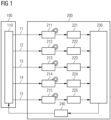
- Fig. 1 schematically illustrates a control system which implements the concepts as outlined above.
- Fig. 1 illustrates the controlled machine 100, e.g., a gas turbine, and a control management tool 200.
- the machine 100 is provided with a controller 110.
- the control management tool 200 receives input data 11, 12, 13, 14, 15 from the machine 100, in particular from the controller 110.
- the input data may correspond to reward values of the above-mentioned individual reward functions. Further, the input data 11, 12, 13, 14, 15 may include information on the state of the machine 100.
- the input data 11, 12, 13, 14, 15 are provided to multiple RL processes 211, 212, 213, 214, 215.
- the input data 11 are provided to the RL process 211
- the input data 12 are provided to the RL process 212
- the input data 13 are provided to the RL process 213
- the input data 14 are provided to the RL process 214
- the input data 15 are provided to the RL process 215.
- the RL processes 211, 212, 213, 214, 215 may each receive individual input data 11, 12, 13, 14, 15 from the machine.
- the RL processes 211, 212, 213, 214, 215 each optimize a corresponding subordinate control skill 221, 222, 223, 224, 225.
- the RL process 211 optimizes the subordinate control skill 221
- the RL process 212 optimizes the subordinate control skill 222
- the RL process 213 optimizes the subordinate control skill 223
- the RL process 214 optimizes the subordinate control skill 224
- the RL process 215 optimizes the subordinate control skill 225.
- the subordinate control skills 221, 222, 223, 224, 225 are each assigned to a specific one of the multiple control objectives on which control of the machine 100 is based.
- the subordinate control skill 221 may be a control skill for maintaining high efficiency of the gas turbine
- the subordinate control skill 222 may be a control skill for reducing CO output of the gas turbine
- the subordinate control skill 223 may be a control skill for NOx output of the gas turbine
- the subordinate control skill 224 may be a control skill for reducing vibrations or other undesired dynamic phenomena in the gas turbine, potentially individually for a certain frequency band or component, e.g., basket, of the gas turbine
- the subordinate control skill 225 may be control skill for increasing lifetime of the gas turbine.
- the input data 11, 12, 13, 14, 15 may in this case include the following:
- the input data 11 may include rewards and state information relevant for maintaining high efficiency of the gas turbine.
- the input data 12 may include rewards and state information relevant for reducing CO output of the gas turbine.
- the input data 13 may include rewards and state information relevant for reducing NOx output of the gas turbine.
- the input data 14 may include rewards and state information relevant for reducing vibrations or other undesired dynamic phenomena in the gas turbine.
- the input data 14 may include rewards and state information relevant for increasing lifetime of the gas turbine.
- control management tool 200 further includes a combination stage 230 which combines the individual control skills 221, 222, 223, 224, 225 to a superordinate control skill 240. This may involve selection and/or combination of control actions triggered by the subordinate control skills 221, 222, 223, 224, 225.
- the selection for determining the superordinate control skill 240 may be automated or at least in part be based on manual user input.
- the selection involve selecting the control action(s) yielding the highest combined reward over all individual reward functions of the RL processes 211, 212, 213, 214, 215, selecting the control action(s) maximizing the individual reward function currently having the lowest value, or selecting the control action(s) improving the individual reward function having the lowest value over a certain time span in the past.
- the combination stage 230 may determine the superordinate control skill 240 on the basis of a superordinate RL process.
- Input data of the superordinate RL process may then include state information recorded from the machine 100 and associated control actions triggered by the subordinate control skills 221, 222, 223, 224, 225.
- the superordinate RL process may be based on an action space defined by the different subordinate control skills which triggered the control actions and a reward function composed from the individual reward functions of the subordinate control skills 221, 222, 223, 224, 225.
- the machine 100 is controlled based on the superordinate control skill 240. This may involve providing a control policies corresponding to the superordinate control skill 240 to the machine 100.
- control management tool 200 could also directly trigger control actions based on the superordinate control skill 240, e.g., by providing corresponding control signals to the machine 100.
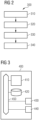
- Fig. 2 shows a flow chart for illustrating a method 300 which can be used for implementing the illustrated concepts in a device, such as in the above-mentioned control management tool 200.
- the method may for example be implemented by execution of program code by one or more processors of the device.
- the program code can be stored in a memory of the device.
- multiple subordinate control skills are provided, such as the above-mentioned subordinate control skills 221, 222, 223, 224, 225.
- Each of the control skills is assigned to a different one of multiple control objectives for controlling a machine, e.g., the above-mentioned machine.
- each of the learning processes is assigned to a different one of the multiple control objectives and is configured to optimize the corresponding subordinate control skill based on input data received from the machine.
- the learning processes may correspond to RL processes, such as the above-mentioned RL processes 211, 212, 213, 214, 215.
- the learning processes may each be based on an individual RL process and the input data comprise an input of a corresponding individual reward function of the RL process.
- a superordinate control skill such as the above-mentioned superordinate control skill 240, is determined based on the subordinate control skills.
- the superordinate control skill may be determined based on the individual reward functions by selecting control actions provided by one or more of the subordinate control skills.
- the superordinate control skill may be determined based on the individual reward functions by combining control actions provided by one or more of the subordinate control skills.
- the above selecting and/or combining of block 330 may be based on maximizing a sum of the individual reward functions. Alternatively, the selecting and/or combining of block 330 may be based on maximizing the individual reward function with the lowest value among the individual reward functions. Further, the selecting and/or combining of block 330 may be based on stored past values of the individual reward functions.
- the superordinate control skill may be determined based on a superordinate RL process and a superordinate reward function combining the individual reward functions.
- the machine is controlled based on the superordinate control skill determined at block 330. This may involve providing a control policy corresponding to the superordinate control skill to the machine or generating control signals for controlling the machine according to the superordinate control skill.
- Fig. 3 shows a block diagram for schematically illustrating structures of a device 400.
- the device 400 may for example be used for implementing the above-mentioned control management tool 200.
- the device 400 may for example be implemented as a computer or computer based system.
- the device 400 includes at least one processor 410 and a memory 420.
- the device 400 includes at least one data interface 430, which may be used for obtaining the above-mentioned input data and providing control information to the controlled machine.
- the device 400 may also include a user interface 440, e.g., for allowing configuration of the learning processes or for allowing configuration of the process of determining the superordinate control skill from the subordinate control skills.
- the components of device 400 i.e., the at least one processor 410, the memory 420, the at least one data interface 430, and the user interface 440, may for example be coupled to each other by a data bus 450 or similar internal communication infrastructure of the device 400.
- the device 400 may be configured to operate according to the above-described functionalities of the control management tool 200 and/or implement the method 300 as explained in connection with Fig. 2 .
- a computer program product e.g., in the form of a computer-readable storage medium, may store such program code in a non-transitory manner and may be used to provide the program code to the device 400.
Landscapes
- Engineering & Computer Science (AREA)
- Artificial Intelligence (AREA)
- Evolutionary Computation (AREA)
- Combustion & Propulsion (AREA)
- Chemical & Material Sciences (AREA)
- Software Systems (AREA)
- Medical Informatics (AREA)
- Physics & Mathematics (AREA)
- General Physics & Mathematics (AREA)
- Automation & Control Theory (AREA)
- Computer Vision & Pattern Recognition (AREA)
- Health & Medical Sciences (AREA)
- Mechanical Engineering (AREA)
- General Engineering & Computer Science (AREA)
- Feedback Control In General (AREA)
Description
- The present disclosure relates to devices and methods for controlling a machine.
- In many industrial applications, control of a machine is needed and the control of the machine may need to be performed according to multiple different control objectives. By way of example, when controlling a gas turbine, a control mechanism may need to consider at least some of the following control objectives: maintaining high efficiency of the gas turbine, reducing carbon monoxide (CO) output of the gas turbine, reducing nitrogen oxide (NOx) output of the gas turbine, reducing vibrations or other undesired dynamic phenomena in the gas turbine, potentially individually for different frequency bands or different components of the gas turbine, improving combined efficiency of a steam cycle and a gas cycle of the gas turbine, increasing lifetime of the gas turbine.
- Manually tuning the control algorithm to meet all the different control objectives is a complex task and may be virtually impossible in many practical scenarios. Also manually designing a control strategy for all the individual control objectives may be a cumbersome and costly task, e.g., because in many practical scenarios there is a lack of sufficient data which would enable such manual design of a suitable control strategy.
- One way to enable efficient determination of a control strategy for a machine is utilization of machine learning (ML). For example, an ML technique referred to as reinforcement learning (RL) utilizes available recorded system data to automatically learn an optimized control strategy, also referred to as policy. An RL process for a complex control problem involving multiple different control objectives typically utilizes a global reward function which operates on multiple individual reward inputs corresponding to the different control objective. Designing the global reward function is a critical aspect of the RL process and in typical practical scenarios the resulting global reward function is highly complex. As a consequence, the RL process may become difficult to implement or suffer from instabilities. Examples of multi-objective RL strategies suitable for controlling a machine are disclosed in the following papers: "Multi-Objective Reinforcement Learning using Sets of Pareto Dominating Policies", by Kristof Van Moffaert et al, Journal of Machine Learning Research, 1 January 2014, pages 3663-3692; "Multiobjective Reinforcement Learning: A Comprehensive Overview",by Liu Chunming et al., IEEE TRANSACTIONS ON SYSTEMS, MAN, AND CYBERNETICS: SYSTEMS, vol. 45, no. 3, 1 March 2015, pages 385-398, DOI: 10.1109/TSMC.2014.2358639; "A Neural Reinforcement Learning Approach to Gas Turbine Control", by Anton Maximilian Schaefer et al., IJCNN 2007, IEEE, 1 August 2007, pages 1691-1696, ISBN: 978-1-4244-1379-9; "Multi-policy Optimization in Self-organizing Systems", by Ivana Dusparic et al., 14 September 2009, SELF-ORGANIZING ARCHITECTURES, SPRINGER BERLIN HEIDELBERG, BERLIN, HEIDELBERG, pages 101 - 126, ISBN: 978-3-642-14411-0.
- Accordingly, there is a need for technologies that allow for efficiently controlling a machine according to multiple control objectives.
- In view of the above need, the present disclosure provides a device as defined in claim 1, a method as defined in claim 10, and a computer program product according to claim 16. The dependent claims define further embodiments.
- According to an embodiment, a device for controlling a machine according to multiple control objectives is provided. The device is configured to:
- provide multiple subordinate control skills, each of the control skills being assigned to a different one of the multiple control objectives;
- provide multiple learning processes, in particular reinforcement learning (RL) processes, each of the learning processes being assigned to a different one of the multiple control objectives and being configured to optimize the corresponding subordinate control skill based on input data received from the machine;
- determine a superordinate control skill based on the subordinate control skills; and
- control the machine based on the superordinate control skill.
- In this way, the device enables decomposing and thus simplifying a complex control problem associated with the multiple control objectives, so that learning of a suitable control strategy may be accomplished on the level of the subordinate control skills. As a result, the device enables application efficient and stable learning processes. On the other hand, an efficient overall control strategy can be derived by determining the superordinate control skill based on the optimized subordinate control skills.
- According to an embodiment of the device, the learning processes are each based on an individual RL process and the input data comprise an input of a corresponding individual reward function of the RL process. In this way, an RL technique can be efficiently applied to the complex control problem associated with the multiple different control objectives.
- According to an embodiment, the device is configured to determine the superordinate control skill by selecting control actions provided by one or more of the subordinate control skills based on the individual reward functions. Alternatively, or in addition, the device is configured to determine the superordinate control skill by combining control actions provided by one or more of the subordinate control skills based on the individual reward functions. In this way, the determination of the superordinate control skill can be accomplished in an efficient manner taking into consideration the individual reward functions used for optimizing the subordinate skills.
- According to an embodiment of the device, the above selecting and/or combining of subordinate control skills is based on maximizing a sum of the individual reward functions. In this way, the superordinate control skill may be efficiently determined in view of an optimized overall reward.
- According to an embodiment of the device, the above selecting and/or combining is based on maximizing the individual reward function with the lowest value among the individual reward functions. In this way, the superordinate control skill may be efficiently determined in view of worst-case scenario.
- According to an embodiment of the device, the above selecting and/or combining is based on stored past values of the individual reward functions. In this way, the superordinate control skill may be efficiently determined in view of historic information, thereby allowing to consider relevant scenarios that occurred in the past, e.g., by considering the lowest value among the individual reward functions which occurred over a certain time span, thereby allowing for more reliably addressing possible worst-case scenarios.
- According to an embodiment, the device is configured to determine the superordinate control skill based on a superordinate RL process and a superordinate reward function combining the individual reward functions. In this way, an RL technique may be efficiently applied for learning a suitable strategy for determination of the superordinate control skill from the subordinate control skills.
- According to a further embodiment, a method of controlling a machine is provided. The method comprises:
- providing multiple subordinate control skills, each of the control skills being assigned to a different one of the multiple control objectives;
- providing multiple learning processes in particular RL processes, each of the learning processes being assigned to a different one of the multiple control objectives and being configured to optimize the corresponding subordinate control skill based on input data received from the machine;
- determining a superordinate control skill based on the subordinate control skills; and
- controlling the machine based on the superordinate control skill.
- In this way, the method enables decomposing and thus simplifying a complex control problem associated with the multiple control objectives, so that learning of a suitable control strategy may be accomplished on the level of the subordinate control skills. As a result, the method enables application efficient and stable learning processes. On the other hand, an efficient overall control strategy can be derived by determining the superordinate control skill based on the optimized subordinate control skills.
- According to an embodiment of the method, the learning processes are each based on an individual RL process and the input data comprise an input of a corresponding individual reward function of the RL process. In this way, an RL technique can be efficiently applied to the complex control problem associated with the multiple different control objectives.
- According to an embodiment, the method comprises determining the superordinate control skill by selecting control actions provided by one or more of the subordinate control skills based on the individual reward functions. Alternatively, or in addition, the method may comprise determining the superordinate control skill by combining control actions provided by one or more of the subordinate control skills based on the individual reward functions. In this way, the determination of the superordinate control skill can be accomplished in an efficient manner taking into consideration the individual reward functions used for optimizing the subordinate skills.
- According to an embodiment of the method, the above selecting and/or combining of subordinate control skills is based on maximizing a sum of the individual reward functions. In this way, the superordinate control skill may be efficiently determined in view of an optimized overall reward.
- According to an embodiment of the method, the above selecting and/or combining is based on maximizing the individual reward function with the lowest value among the individual reward functions. In this way, the superordinate control skill may be efficiently determined in view of worst-case scenario.
- According to an embodiment of the method, the above selecting and/or combining is based on stored past values of the individual reward functions. In this way, the superordinate control skill may be efficiently determined in view of historic information, thereby allowing to consider relevant scenarios that occurred in the past, e.g., by considering the lowest value among the individual reward functions which occurred over a certain time span, thereby allowing for more reliably addressing possible worst-case scenarios.
- According to an embodiment, the method comprises determining the superordinate control skill based on a superordinate RL process and a superordinate reward function combining the individual reward functions. In this way, an RL technique may be efficiently applied for learning a suitable strategy for determination of the superordinate control skill from the subordinate control skills.
- In the above embodiments of the device or method, the machine may comprise or correspond to a gas turbine, an electric power plant, an electric power supply system, factory infrastructure, traffic infrastructure, or an automated driving system. If the machine comprises a gas turbine, the subordinate control skills may comprise at least one of: a control skill for optimizing efficiency of the gas turbine, a control skill for reducing carbon monoxide output of the gas turbine, a control skill for reducing nitrogen oxide output of the gas turbine, a control skill for reducing vibrations in the gas turbine, a control skill for improving combined efficiency of a steam cycle and a gas cycle of the gas turbine, and a control skill for improving lifetime of the gas turbine.
- In the following, embodiments of the present disclosure will be described in more detail and with reference to the accompanying drawings.
- Fig. 1
- schematically illustrates a control system according to an embodiment of the present disclosure.
- Fig. 2
- shows a flowchart for schematically illustrating a method according to an embodiment of the present disclosure.
- Fig. 3
- shows a block diagram for schematically illustrating structures of a device according to the present disclosure.
- It is noted that in the following detailed description of embodiments the accompanying drawings are only schematic and that the illustrated elements are not necessarily shown to scale. Rather, the drawings are intended to illustrate functions and cooperation of components. Here, it is to be understood that any connection or coupling of functional blocks, devices, components, or other physical or functional elements could also be implemented by an indirect connection or coupling, e.g., via one or more intermediate elements. A connection or coupling of elements or components can for example be implemented by a wire-based, a wireless connection, and/or a combination of a wire-based and a wireless connection. Functional blocks can be implemented by dedicated hardware, by firmware and/or software installed on programmable hardware, and/or by a combination of dedicated hardware and firmware or software.
- In the concepts as illustrated in the following, it is assumed that a machine, in particular a gas turbine, is controlled according to multiple different control objectives. However, it is noted that the illustrated concepts are not limited to gas turbines and are also applicable to various other kinds of machines, such as electrical power plants, electrical power supply systems, factory infrastructure, e.g., digital factory infrastructure, traffic infrastructure, automated driving systems, or the like.
- When considering the specific example of controlling a gas turbine, the control objectives can include: maintaining high efficiency of the gas turbine, reducing carbon monoxide (CO) output of the gas turbine, reducing nitrogen oxide (NOx) output of the gas turbine, reducing vibrations or other undesired dynamic phenomena in the gas turbine, potentially individually for different frequency bands or different components, e.g., baskets, of the gas turbine, improving combined efficiency of a steam cycle and a gas cycle of the gas turbine, increasing lifetime of the gas turbine.
- In the illustrated concepts, the overall control problem associated with simultaneously complying with the multiple different control objectives, e.g., achieving optimized control of the machine, is decomposed by providing multiple subordinate control skills, each being assigned to a corresponding one of the control objectives, and optimizing each subordinate control skill by an individual learning process. The optimized subordinate control skills are then used as a basis for determining a superordinate control skill, e.g., by selecting one or more of the subordinate control skills and/or combining one or more of the subordinate control skills.
- In the specific example of controlling a gas turbine, the superordinate control skill may correspond to achieving optimized control of the gas turbine. The subordinate control skills may include the following: a control skill for maintaining high efficiency of the gas turbine, a control skill for reducing CO output of the gas turbine, a control skill for NOx output of the gas turbine, one or more control skills for reducing vibrations or other undesired dynamic phenomena in the gas turbine, potentially individually for different frequency bands or different components, e.g., baskets, of the gas turbine, a control skill for improving combined efficiency of a steam cycle and a gas cycle of the gas turbine, a control skill for increasing lifetime of the gas turbine.
- The learning processes for optimizing the subordinate control skills may each be based on an RL technique, i.e., correspond to RL processes. In each RL process, a corresponding individual reward function, also referred to as action-value function, is assigned to the corresponding control skill. The reward function represents the value of the performed control action, i.e., how good the control action is in view of the underlying control objective. The RL processes may for example apply an iterative method like NFQ (Neural Fitted Q Iteration) to learn an optimized or optimal control policy which maximizes the return from the reward function.
- The superordinate control skill, which is applied for controlling the machine at runtime to select control actions, may be determined by selecting among the possible control actions provided by the subordinate control skills, the control action or the combination of control actions, which is most suitable in view of the current status of the machine. The selection may be automated or at least in part be based on manual user input. The selection may be based on the following criteria:
- a weighted sum maximization, e.g., by selecting the control action(s) yielding the highest combined reward over all individual reward functions;
- a worst case optimization: selecting the control action(s) maximizing the individual reward function currently having the lowest value,
- a history-based selection: selecting the control action(s) improving the individual reward function of the control skill having the lowest value individual reward function over a certain time span in the past.
- In some scenarios, the superordinate control skill may also be determined on the basis of a learning process, in particular an RL process. This may be accomplished by first relabeling the historic data recorded from the machine according to the control actions provided by the subordinate control skills. These data may then be used as an input to a superordinate RL process where the action space is defined as a probability vector over all subordinate control skills. The probability vector may indicate, for each of the subordinate control skills, a probability of the respective control being triggered by this subordinate control skill. The superordinate RL process may be based on a superordinate reward function composed from the individual reward functions of the subordinate skills, e.g., by using a projection to a scalar output value.
-
Fig. 1 schematically illustrates a control system which implements the concepts as outlined above. Specifically,Fig. 1 illustrates the controlledmachine 100, e.g., a gas turbine, and acontrol management tool 200. For implementing various control actions, themachine 100 is provided with acontroller 110. - The
control management tool 200 receivesinput data machine 100, in particular from thecontroller 110. The input data may correspond to reward values of the above-mentioned individual reward functions. Further, theinput data machine 100. - As illustrated, the
input data input data 11 are provided to theRL process 211, theinput data 12 are provided to theRL process 212, theinput data 13 are provided to theRL process 213, theinput data 14 are provided to theRL process 214, and theinput data 15 are provided to theRL process 215. Accordingly, the RL processes 211, 212, 213, 214, 215 may each receiveindividual input data - The RL processes 211, 212, 213, 214, 215 each optimize a corresponding
subordinate control skill RL process 211 optimizes thesubordinate control skill 221, theRL process 212 optimizes thesubordinate control skill 222, theRL process 213 optimizes thesubordinate control skill 223, theRL process 214 optimizes thesubordinate control skill 224, and theRL process 215 optimizes thesubordinate control skill 225. - The
subordinate control skills machine 100 is based. In the above-mentioned example of controlling a gas turbine, thesubordinate control skill 221 may be a control skill for maintaining high efficiency of the gas turbine, thesubordinate control skill 222 may be a control skill for reducing CO output of the gas turbine, thesubordinate control skill 223 may be a control skill for NOx output of the gas turbine, thesubordinate control skill 224 may be a control skill for reducing vibrations or other undesired dynamic phenomena in the gas turbine, potentially individually for a certain frequency band or component, e.g., basket, of the gas turbine, and thesubordinate control skill 225 may be control skill for increasing lifetime of the gas turbine. - The
input data input data 11 may include rewards and state information relevant for maintaining high efficiency of the gas turbine. Theinput data 12 may include rewards and state information relevant for reducing CO output of the gas turbine. Theinput data 13 may include rewards and state information relevant for reducing NOx output of the gas turbine. Theinput data 14 may include rewards and state information relevant for reducing vibrations or other undesired dynamic phenomena in the gas turbine. Theinput data 14 may include rewards and state information relevant for increasing lifetime of the gas turbine. - As further illustrated, the
control management tool 200 further includes acombination stage 230 which combines theindividual control skills superordinate control skill 240. This may involve selection and/or combination of control actions triggered by thesubordinate control skills - The selection for determining the
superordinate control skill 240 may be automated or at least in part be based on manual user input. The selection involve selecting the control action(s) yielding the highest combined reward over all individual reward functions of the RL processes 211, 212, 213, 214, 215, selecting the control action(s) maximizing the individual reward function currently having the lowest value, or selecting the control action(s) improving the individual reward function having the lowest value over a certain time span in the past. - In some scenarios, the
combination stage 230 may determine thesuperordinate control skill 240 on the basis of a superordinate RL process. Input data of the superordinate RL process may then include state information recorded from themachine 100 and associated control actions triggered by thesubordinate control skills subordinate control skills - As further illustrated, the
machine 100 is controlled based on thesuperordinate control skill 240. This may involve providing a control policies corresponding to thesuperordinate control skill 240 to themachine 100. - Alternatively, the
control management tool 200 could also directly trigger control actions based on thesuperordinate control skill 240, e.g., by providing corresponding control signals to themachine 100. -
Fig. 2 shows a flow chart for illustrating amethod 300 which can be used for implementing the illustrated concepts in a device, such as in the above-mentionedcontrol management tool 200. The method may for example be implemented by execution of program code by one or more processors of the device. The program code can be stored in a memory of the device. - At
block 310, multiple subordinate control skills are provided, such as the above-mentionedsubordinate control skills - At
block 320, multiple learning processes are provided. Each of the learning processes is assigned to a different one of the multiple control objectives and is configured to optimize the corresponding subordinate control skill based on input data received from the machine. The learning processes may correspond to RL processes, such as the above-mentioned RL processes 211, 212, 213, 214, 215. Specifically, the learning processes may each be based on an individual RL process and the input data comprise an input of a corresponding individual reward function of the RL process. - At
block 330, a superordinate control skill, such as the above-mentionedsuperordinate control skill 240, is determined based on the subordinate control skills. The superordinate control skill may be determined based on the individual reward functions by selecting control actions provided by one or more of the subordinate control skills. Alternatively or in addition, the superordinate control skill may be determined based on the individual reward functions by combining control actions provided by one or more of the subordinate control skills. - The above selecting and/or combining of
block 330 may be based on maximizing a sum of the individual reward functions. Alternatively, the selecting and/or combining ofblock 330 may be based on maximizing the individual reward function with the lowest value among the individual reward functions. Further, the selecting and/or combining ofblock 330 may be based on stored past values of the individual reward functions. - In some scenarios, the superordinate control skill may be determined based on a superordinate RL process and a superordinate reward function combining the individual reward functions.
- At
block 340, the machine is controlled based on the superordinate control skill determined atblock 330. This may involve providing a control policy corresponding to the superordinate control skill to the machine or generating control signals for controlling the machine according to the superordinate control skill. -
Fig. 3 shows a block diagram for schematically illustrating structures of adevice 400. Thedevice 400 may for example be used for implementing the above-mentionedcontrol management tool 200. Thedevice 400 may for example be implemented as a computer or computer based system. In the illustrated example, thedevice 400 includes at least oneprocessor 410 and amemory 420. Further, thedevice 400 includes at least onedata interface 430, which may be used for obtaining the above-mentioned input data and providing control information to the controlled machine. Further, thedevice 400 may also include auser interface 440, e.g., for allowing configuration of the learning processes or for allowing configuration of the process of determining the superordinate control skill from the subordinate control skills. The components ofdevice 400, i.e., the at least oneprocessor 410, thememory 420, the at least onedata interface 430, and theuser interface 440, may for example be coupled to each other by adata bus 450 or similar internal communication infrastructure of thedevice 400. By execution of program code by the at least oneprocessor 410, thedevice 400 may be configured to operate according to the above-described functionalities of thecontrol management tool 200 and/or implement themethod 300 as explained in connection withFig. 2 . A computer program product, e.g., in the form of a computer-readable storage medium, may store such program code in a non-transitory manner and may be used to provide the program code to thedevice 400. - It is to be understood that the above description of examples is intended to be illustrative and that the illustrated concepts are susceptible to various modifications. For example, the illustrated concepts could be applied to controlling various types of machine or machine systems. Further, the concepts may be applied to various types and numbers of different control objectives.
Claims (16)
- A device (200; 400) for controlling a machine (100) according to multiple control objectives, the device (200; 400) being configured to:- provide multiple subordinate control skills (221, 222, 223, 224, 225), each of the control skills (221, 222, 223, 224, 225) being assigned to a different one of the multiple control objectives;- provide multiple learning processes (211, 212, 213, 214, 215), each of the learning processes (211, 212, 213, 214, 215) being assigned to a different one of the multiple control objectives and being configured to optimize the corresponding subordinate control skill (221, 222, 223, 224, 225) based on input data (11, 12, 13, 14, 15) received from the machine (100);- determine a superordinate control skill (240) based on the subordinate control skills (221, 222, 223, 224, 225); and- control the machine (100) based on the superordinate control skill (240).
- The device (200; 400) according to claim 1,
wherein the learning processes (211, 212, 213, 214, 215) are each based on an individual reinforcement learning process and the input data (11, 12, 13, 14, 15) comprise an input of a corresponding individual reward function of the reinforcement learning process. - The device (200; 400) according to claim 2,
wherein the device (200; 400) is configured to determine the superordinate control skill (240) by selecting control actions provided by one or more of the subordinate control skills (221, 222, 223, 224, 225) based on the individual reward functions. - The device (200; 400) according to claim 2 or 3,
wherein the device (200; 400) is configured to determine the superordinate control skill (240) by combining control actions provided by one or more of the subordinate control skills (221, 222, 223, 224, 225) based on the individual reward functions. - The device (200; 400) according to claim 3 or 4,
wherein said selecting and/or combining is based on maximizing a sum of the individual reward functions. - The device (200; 400) according to claim 3 or 4,
wherein said selecting and/or combining is based on maximizing the individual reward function with the lowest value among the individual reward functions. - The device (200; 400) according to any one of claims 3 to 6,
wherein said selecting and/or combining is based on stored past values of the individual reward functions. - The device (200; 400) according to claim 2,
wherein the device (200; 400) is configured to determine the superordinate control skill (240) based on a superordinate reinforcement learning process and a superordinate reward function combining the individual reward functions. - The device (200; 400) according to any one of the preceding claims,
wherein the machine (100) comprises a gas turbine and the subordinate control skills comprise at least one of: a control skill for optimizing efficiency of the gas turbine, a control skill for reducing carbon monoxide output of the gas turbine, a control skill for reducing nitrogen oxide output of the gas turbine, a control skill for reducing vibrations in the gas turbine, a control skill for improving combined efficiency of a steam cycle and a gas cycle of the gas turbine, and a control skill for improving lifetime of the gas turbine. - A method (300) of controlling a machine (100), the method (300) comprising:- providing multiple subordinate control skills (221, 222, 223, 224, 225), each of the control skills (221, 222, 223, 224, 225) being assigned to a different one of the multiple control objectives;- providing multiple learning processes (211, 212, 213, 214, 215), each of the learning processes (211, 212, 213, 214, 215) being assigned to a different one of the multiple control objectives and being configured to optimize the corresponding subordinate control skill (221, 222, 223, 224, 225) based on input data (11, 12, 13, 14, 15) received from the machine (100);- determining a superordinate control skill (240) based on the subordinate control skills (221, 222, 223, 224, 225); and- controlling the machine (100) based on the superordinate control skill (240).
- The method (300) according to claim 10,
wherein the learning processes (211, 212, 213, 214, 215) are each based on an individual reinforcement learning process and the input data (11, 12, 13, 14, 15) comprise an input of a corresponding individual reward function of the reinforcement learning process. - The method (300) according to claim 11,
wherein the device (200; 400) is configured to determine the superordinate control skill (240) by selecting control actions provided by one or more of the subordinate control skills (221, 222, 223, 224, 225) based on the individual reward functions and/or by combining control actions provided by one or more of the subordinate control skills (221, 222, 223, 224, 225) based on the individual reward functions. - The method (300) according to claim 12,
wherein said selecting and/or combining is based on maximizing a sum of the individual reward functions, on maximizing the individual reward function with the lowest value among the individual reward functions, or on stored past values of the individual reward functions. - The method (300) according to claim 11, comprising:- determining the superordinate control skill (240) based on a superordinate reinforcement learning process and a superordinate reward function combining the individual reward functions.
- The method (300) according to any one of the preceding claims,
wherein the machine (100) comprises a gas turbine and the subordinate control skills comprise at least one of: a control skill for optimizing efficiency of the gas turbine, a control skill for reducing carbon monoxide output of the gas turbine, a control skill for reducing nitrogen oxide output of the gas turbine, a control skill for reducing vibrations in the gas turbine, a control skill for improving combined efficiency of a steam cycle and a gas cycle of the gas turbine, and a control skill for improving lifetime of the gas turbine. - A computer program product comprising program code executable by one or more processors (410) cause the processors (410) to perform a method according to any one of claims 10 to 15.
Priority Applications (4)
| Application Number | Priority Date | Filing Date | Title |
|---|---|---|---|
| EP19165521.6A EP3715608B1 (en) | 2019-03-27 | 2019-03-27 | Machine control based on automated learning of subordinate control skills |
| US17/598,003 US12050440B2 (en) | 2019-03-27 | 2020-03-11 | Machine control based on automated learning of subordinate control skills |
| PCT/EP2020/056558 WO2020193148A1 (en) | 2019-03-27 | 2020-03-11 | Machine control based on automated learning of subordinate control skills |
| CN202080023712.9A CN113906206B (en) | 2019-03-27 | 2020-03-11 | Machine control based on automatic learning of slave control skills |
Applications Claiming Priority (1)
| Application Number | Priority Date | Filing Date | Title |
|---|---|---|---|
| EP19165521.6A EP3715608B1 (en) | 2019-03-27 | 2019-03-27 | Machine control based on automated learning of subordinate control skills |
Publications (3)
| Publication Number | Publication Date |
|---|---|
| EP3715608A1 EP3715608A1 (en) | 2020-09-30 |
| EP3715608B1 true EP3715608B1 (en) | 2023-07-12 |
| EP3715608C0 EP3715608C0 (en) | 2023-07-12 |
Family
ID=66091860
Family Applications (1)
| Application Number | Title | Priority Date | Filing Date |
|---|---|---|---|
| EP19165521.6A Active EP3715608B1 (en) | 2019-03-27 | 2019-03-27 | Machine control based on automated learning of subordinate control skills |
Country Status (4)
| Country | Link |
|---|---|
| US (1) | US12050440B2 (en) |
| EP (1) | EP3715608B1 (en) |
| CN (1) | CN113906206B (en) |
| WO (1) | WO2020193148A1 (en) |
Families Citing this family (1)
| Publication number | Priority date | Publication date | Assignee | Title |
|---|---|---|---|---|
| US12263599B2 (en) * | 2021-03-26 | 2025-04-01 | Intel Corporation | Collaborative multi-robot tasks using action primitives |
Family Cites Families (11)
| Publication number | Priority date | Publication date | Assignee | Title |
|---|---|---|---|---|
| EP2172887A3 (en) * | 2008-09-30 | 2011-11-09 | Rockwell Automation Technologies, Inc. | System and method for dynamic multi-objective optimization of machine selection, integration and utilization |
| WO2010148238A2 (en) * | 2009-06-17 | 2010-12-23 | Board Of Regents, The University Of Texas System | System and method for solving multiobjective optimization problems |
| US20150370227A1 (en) | 2014-06-19 | 2015-12-24 | Hany F. Bassily | Controlling a Target System |
| US10059061B2 (en) | 2015-10-07 | 2018-08-28 | The Boeing Company | Composite manufacturing with a multi-dimensional array of independently-controllable thermal zones |
| JP6477551B2 (en) | 2016-03-11 | 2019-03-06 | トヨタ自動車株式会社 | Information providing apparatus and information providing program |
| WO2017178698A1 (en) * | 2016-04-12 | 2017-10-19 | Acament Oy | Arrangement and method for online learning |
| JP6490127B2 (en) | 2017-03-15 | 2019-03-27 | ファナック株式会社 | Machine learning device, servo control device, servo control system, and machine learning method |
| US11164077B2 (en) * | 2017-11-02 | 2021-11-02 | Siemens Aktiengesellschaft | Randomized reinforcement learning for control of complex systems |
| CN109087142A (en) | 2018-08-07 | 2018-12-25 | 阿里巴巴集团控股有限公司 | Learn the method and device of progress cost of marketing control by deeply |
| CN109039942B (en) * | 2018-08-29 | 2022-08-12 | 南京优速网络科技有限公司 | A network load balancing system and balancing method based on deep reinforcement learning |
| CN109143870B (en) * | 2018-10-23 | 2021-08-06 | 宁波溪棠信息科技有限公司 | Multi-target task control method |
-
2019
- 2019-03-27 EP EP19165521.6A patent/EP3715608B1/en active Active
-
2020
- 2020-03-11 US US17/598,003 patent/US12050440B2/en active Active
- 2020-03-11 WO PCT/EP2020/056558 patent/WO2020193148A1/en not_active Ceased
- 2020-03-11 CN CN202080023712.9A patent/CN113906206B/en not_active Expired - Fee Related
Non-Patent Citations (1)
| Title |
|---|
| IVANA DUSPARIC ET AL: "Multi-policy Optimization in Self-organizing Systems", 14 September 2009, SELF-ORGANIZING ARCHITECTURES, SPRINGER BERLIN HEIDELBERG, BERLIN, HEIDELBERG, PAGE(S) 101 - 126, ISBN: 978-3-642-14411-0, XP019147057 * |
Also Published As
| Publication number | Publication date |
|---|---|
| CN113906206A (en) | 2022-01-07 |
| CN113906206B (en) | 2024-07-26 |
| US12050440B2 (en) | 2024-07-30 |
| US20220171348A1 (en) | 2022-06-02 |
| WO2020193148A8 (en) | 2021-11-25 |
| WO2020193148A1 (en) | 2020-10-01 |
| EP3715608C0 (en) | 2023-07-12 |
| EP3715608A1 (en) | 2020-09-30 |
Similar Documents
| Publication | Publication Date | Title |
|---|---|---|
| Yang et al. | Joint optimization of preventive maintenance and production scheduling for multi-state production systems based on reinforcement learning | |
| Cai et al. | Observed-mode-dependent state estimation of hidden semi-Markov jump linear systems | |
| Abdollahzadeh et al. | Multi-objective opportunistic maintenance optimization of a wind farm considering limited number of maintenance groups | |
| Lin et al. | Hybrid evolutionary optimisation with learning for production scheduling: state-of-the-art survey on algorithms and applications | |
| Xing et al. | An efficient search method for multi-objective flexible job shop scheduling problems | |
| EP1635286A1 (en) | Energy management system | |
| Boudjelida | On the robustness of joint production and maintenance scheduling in presence of uncertainties | |
| Wu et al. | Toward efficient manufacturing systems: A trust based human robot collaboration | |
| CN103714397A (en) | Optimal selective maintenance optimization method and device for multi-stage task multi-state system | |
| Azzouz et al. | A self-adaptive hybrid algorithm for solving flexible job-shop problem with sequence dependent setup time | |
| Zhao et al. | A deep reinforcement learning approach for resource-constrained project scheduling | |
| JP2008061334A (en) | Power interchange method for distribution automation system | |
| Raju et al. | Reinforcement learning in adaptive control of power system generation | |
| US12050440B2 (en) | Machine control based on automated learning of subordinate control skills | |
| Makroum et al. | Agentic AI Home Energy Management System: A Large Language Model Framework for Residential Load Scheduling | |
| Wang et al. | An improved multi-objective optimization algorithm for flexible job shop dynamic scheduling problem | |
| Macktoobian et al. | Automatic reconfiguration of untimed discrete-event systems | |
| Kim et al. | Efficient and scalable demand response for the smart power grid | |
| Wu et al. | Multiobjective control for nonlinear stochastic Poisson jump-diffusion systems via TS fuzzy interpolation and Pareto optimal scheme | |
| Abderrazzak et al. | Adaptive large neighborhood search for the just-in-time job-shop scheduling problem | |
| Clausen et al. | A modifiable architectural design for commercial greenhouses energy economic dispatch testbed | |
| Dell'Aere | Multi-objective optimization in self-optimizing systems | |
| CN108829440A (en) | It is a kind of that Logical Configuration array is switched into the exectorial method and system of logic | |
| Yang et al. | Quickly finding recursively feasible solutions for MPC with discrete variables | |
| CN114546730A (en) | Data recovery processing method, device and system |
Legal Events
| Date | Code | Title | Description |
|---|---|---|---|
| PUAI | Public reference made under article 153(3) epc to a published international application that has entered the european phase |
Free format text: ORIGINAL CODE: 0009012 |
|
| STAA | Information on the status of an ep patent application or granted ep patent |
Free format text: STATUS: THE APPLICATION HAS BEEN PUBLISHED |
|
| AK | Designated contracting states |
Kind code of ref document: A1 Designated state(s): AL AT BE BG CH CY CZ DE DK EE ES FI FR GB GR HR HU IE IS IT LI LT LU LV MC MK MT NL NO PL PT RO RS SE SI SK SM TR |
|
| AX | Request for extension of the european patent |
Extension state: BA ME |
|
| RAP1 | Party data changed (applicant data changed or rights of an application transferred) |
Owner name: SIEMENS ENERGY GLOBAL GMBH & CO. KG |
|
| STAA | Information on the status of an ep patent application or granted ep patent |
Free format text: STATUS: REQUEST FOR EXAMINATION WAS MADE |
|
| 17P | Request for examination filed |
Effective date: 20210217 |
|
| RBV | Designated contracting states (corrected) |
Designated state(s): AL AT BE BG CH CY CZ DE DK EE ES FI FR GB GR HR HU IE IS IT LI LT LU LV MC MK MT NL NO PL PT RO RS SE SI SK SM TR |
|
| RAP1 | Party data changed (applicant data changed or rights of an application transferred) |
Owner name: SIEMENS AKTIENGESELLSCHAFT |
|
| STAA | Information on the status of an ep patent application or granted ep patent |
Free format text: STATUS: EXAMINATION IS IN PROGRESS |
|
| 17Q | First examination report despatched |
Effective date: 20211203 |
|
| GRAP | Despatch of communication of intention to grant a patent |
Free format text: ORIGINAL CODE: EPIDOSNIGR1 |
|
| STAA | Information on the status of an ep patent application or granted ep patent |
Free format text: STATUS: GRANT OF PATENT IS INTENDED |
|
| INTG | Intention to grant announced |
Effective date: 20230302 |
|
| GRAS | Grant fee paid |
Free format text: ORIGINAL CODE: EPIDOSNIGR3 |
|
| GRAA | (expected) grant |
Free format text: ORIGINAL CODE: 0009210 |
|
| STAA | Information on the status of an ep patent application or granted ep patent |
Free format text: STATUS: THE PATENT HAS BEEN GRANTED |
|
| AK | Designated contracting states |
Kind code of ref document: B1 Designated state(s): AL AT BE BG CH CY CZ DE DK EE ES FI FR GB GR HR HU IE IS IT LI LT LU LV MC MK MT NL NO PL PT RO RS SE SI SK SM TR |
|
| REG | Reference to a national code |
Ref country code: CH Ref legal event code: EP |
|
| REG | Reference to a national code |
Ref country code: IE Ref legal event code: FG4D |
|
| REG | Reference to a national code |
Ref country code: DE Ref legal event code: R096 Ref document number: 602019032404 Country of ref document: DE |
|
| U01 | Request for unitary effect filed |
Effective date: 20230712 |
|
| U07 | Unitary effect registered |
Designated state(s): AT BE BG DE DK EE FI FR IT LT LU LV MT NL PT SE SI Effective date: 20230720 |
|
| REG | Reference to a national code |
Ref country code: LT Ref legal event code: MG9D |
|
| PG25 | Lapsed in a contracting state [announced via postgrant information from national office to epo] |
Ref country code: GR Free format text: LAPSE BECAUSE OF FAILURE TO SUBMIT A TRANSLATION OF THE DESCRIPTION OR TO PAY THE FEE WITHIN THE PRESCRIBED TIME-LIMIT Effective date: 20231013 |
|
| PG25 | Lapsed in a contracting state [announced via postgrant information from national office to epo] |
Ref country code: ES Free format text: LAPSE BECAUSE OF FAILURE TO SUBMIT A TRANSLATION OF THE DESCRIPTION OR TO PAY THE FEE WITHIN THE PRESCRIBED TIME-LIMIT Effective date: 20230712 |
|
| PG25 | Lapsed in a contracting state [announced via postgrant information from national office to epo] |
Ref country code: IS Free format text: LAPSE BECAUSE OF FAILURE TO SUBMIT A TRANSLATION OF THE DESCRIPTION OR TO PAY THE FEE WITHIN THE PRESCRIBED TIME-LIMIT Effective date: 20231112 |
|
| PG25 | Lapsed in a contracting state [announced via postgrant information from national office to epo] |
Ref country code: RS Free format text: LAPSE BECAUSE OF FAILURE TO SUBMIT A TRANSLATION OF THE DESCRIPTION OR TO PAY THE FEE WITHIN THE PRESCRIBED TIME-LIMIT Effective date: 20230712 Ref country code: NO Free format text: LAPSE BECAUSE OF FAILURE TO SUBMIT A TRANSLATION OF THE DESCRIPTION OR TO PAY THE FEE WITHIN THE PRESCRIBED TIME-LIMIT Effective date: 20231012 Ref country code: IS Free format text: LAPSE BECAUSE OF FAILURE TO SUBMIT A TRANSLATION OF THE DESCRIPTION OR TO PAY THE FEE WITHIN THE PRESCRIBED TIME-LIMIT Effective date: 20231112 Ref country code: HR Free format text: LAPSE BECAUSE OF FAILURE TO SUBMIT A TRANSLATION OF THE DESCRIPTION OR TO PAY THE FEE WITHIN THE PRESCRIBED TIME-LIMIT Effective date: 20230712 Ref country code: GR Free format text: LAPSE BECAUSE OF FAILURE TO SUBMIT A TRANSLATION OF THE DESCRIPTION OR TO PAY THE FEE WITHIN THE PRESCRIBED TIME-LIMIT Effective date: 20231013 Ref country code: ES Free format text: LAPSE BECAUSE OF FAILURE TO SUBMIT A TRANSLATION OF THE DESCRIPTION OR TO PAY THE FEE WITHIN THE PRESCRIBED TIME-LIMIT Effective date: 20230712 |
|
| PG25 | Lapsed in a contracting state [announced via postgrant information from national office to epo] |
Ref country code: PL Free format text: LAPSE BECAUSE OF FAILURE TO SUBMIT A TRANSLATION OF THE DESCRIPTION OR TO PAY THE FEE WITHIN THE PRESCRIBED TIME-LIMIT Effective date: 20230712 |
|
| REG | Reference to a national code |
Ref country code: DE Ref legal event code: R097 Ref document number: 602019032404 Country of ref document: DE |
|
| U20 | Renewal fee for the european patent with unitary effect paid |
Year of fee payment: 6 Effective date: 20240318 |
|
| PG25 | Lapsed in a contracting state [announced via postgrant information from national office to epo] |
Ref country code: SM Free format text: LAPSE BECAUSE OF FAILURE TO SUBMIT A TRANSLATION OF THE DESCRIPTION OR TO PAY THE FEE WITHIN THE PRESCRIBED TIME-LIMIT Effective date: 20230712 Ref country code: RO Free format text: LAPSE BECAUSE OF FAILURE TO SUBMIT A TRANSLATION OF THE DESCRIPTION OR TO PAY THE FEE WITHIN THE PRESCRIBED TIME-LIMIT Effective date: 20230712 Ref country code: CZ Free format text: LAPSE BECAUSE OF FAILURE TO SUBMIT A TRANSLATION OF THE DESCRIPTION OR TO PAY THE FEE WITHIN THE PRESCRIBED TIME-LIMIT Effective date: 20230712 Ref country code: SK Free format text: LAPSE BECAUSE OF FAILURE TO SUBMIT A TRANSLATION OF THE DESCRIPTION OR TO PAY THE FEE WITHIN THE PRESCRIBED TIME-LIMIT Effective date: 20230712 |
|
| PLBE | No opposition filed within time limit |
Free format text: ORIGINAL CODE: 0009261 |
|
| STAA | Information on the status of an ep patent application or granted ep patent |
Free format text: STATUS: NO OPPOSITION FILED WITHIN TIME LIMIT |
|
| 26N | No opposition filed |
Effective date: 20240415 |
|
| REG | Reference to a national code |
Ref country code: CH Ref legal event code: PL |
|
| PG25 | Lapsed in a contracting state [announced via postgrant information from national office to epo] |
Ref country code: MC Free format text: LAPSE BECAUSE OF FAILURE TO SUBMIT A TRANSLATION OF THE DESCRIPTION OR TO PAY THE FEE WITHIN THE PRESCRIBED TIME-LIMIT Effective date: 20230712 |
|
| GBPC | Gb: european patent ceased through non-payment of renewal fee |
Effective date: 20240327 |
|
| PG25 | Lapsed in a contracting state [announced via postgrant information from national office to epo] |
Ref country code: MC Free format text: LAPSE BECAUSE OF FAILURE TO SUBMIT A TRANSLATION OF THE DESCRIPTION OR TO PAY THE FEE WITHIN THE PRESCRIBED TIME-LIMIT Effective date: 20230712 |
|
| PG25 | Lapsed in a contracting state [announced via postgrant information from national office to epo] |
Ref country code: GB Free format text: LAPSE BECAUSE OF NON-PAYMENT OF DUE FEES Effective date: 20240327 |
|
| PG25 | Lapsed in a contracting state [announced via postgrant information from national office to epo] |
Ref country code: IE Free format text: LAPSE BECAUSE OF NON-PAYMENT OF DUE FEES Effective date: 20240327 |
|
| PG25 | Lapsed in a contracting state [announced via postgrant information from national office to epo] |
Ref country code: IE Free format text: LAPSE BECAUSE OF NON-PAYMENT OF DUE FEES Effective date: 20240327 Ref country code: GB Free format text: LAPSE BECAUSE OF NON-PAYMENT OF DUE FEES Effective date: 20240327 Ref country code: CH Free format text: LAPSE BECAUSE OF NON-PAYMENT OF DUE FEES Effective date: 20240331 |
|
| PG25 | Lapsed in a contracting state [announced via postgrant information from national office to epo] |
Ref country code: CY Free format text: LAPSE BECAUSE OF FAILURE TO SUBMIT A TRANSLATION OF THE DESCRIPTION OR TO PAY THE FEE WITHIN THE PRESCRIBED TIME-LIMIT; INVALID AB INITIO Effective date: 20190327 |
|
| PG25 | Lapsed in a contracting state [announced via postgrant information from national office to epo] |
Ref country code: HU Free format text: LAPSE BECAUSE OF FAILURE TO SUBMIT A TRANSLATION OF THE DESCRIPTION OR TO PAY THE FEE WITHIN THE PRESCRIBED TIME-LIMIT; INVALID AB INITIO Effective date: 20190327 |
|
| U90 | Renewal fees not paid: noting of loss of rights |
Free format text: RENEWAL FEE NOT PAID FOR YEAR 07 Effective date: 20251017 |
|
| PG25 | Lapsed in a contracting state [announced via postgrant information from national office to epo] |
Ref country code: TR Free format text: LAPSE BECAUSE OF FAILURE TO SUBMIT A TRANSLATION OF THE DESCRIPTION OR TO PAY THE FEE WITHIN THE PRESCRIBED TIME-LIMIT Effective date: 20230712 |
|
| U93 | Unitary patent lapsed |
Free format text: RENEWAL FEE NOT PAID Effective date: 20250331 |