EP3712114A1 - Stannous oxide and method for producing same - Google Patents
Stannous oxide and method for producing same Download PDFInfo
- Publication number
- EP3712114A1 EP3712114A1 EP18877744.5A EP18877744A EP3712114A1 EP 3712114 A1 EP3712114 A1 EP 3712114A1 EP 18877744 A EP18877744 A EP 18877744A EP 3712114 A1 EP3712114 A1 EP 3712114A1
- Authority
- EP
- European Patent Office
- Prior art keywords
- stannous oxide
- ppm
- stannous
- less
- content
- Prior art date
- Legal status (The legal status is an assumption and is not a legal conclusion. Google has not performed a legal analysis and makes no representation as to the accuracy of the status listed.)
- Granted
Links
Images



Classifications
-
- C—CHEMISTRY; METALLURGY
- C25—ELECTROLYTIC OR ELECTROPHORETIC PROCESSES; APPARATUS THEREFOR
- C25D—PROCESSES FOR THE ELECTROLYTIC OR ELECTROPHORETIC PRODUCTION OF COATINGS; ELECTROFORMING; APPARATUS THEREFOR
- C25D3/00—Electroplating: Baths therefor
- C25D3/02—Electroplating: Baths therefor from solutions
- C25D3/30—Electroplating: Baths therefor from solutions of tin
-
- C—CHEMISTRY; METALLURGY
- C01—INORGANIC CHEMISTRY
- C01G—COMPOUNDS CONTAINING METALS NOT COVERED BY SUBCLASSES C01D OR C01F
- C01G19/00—Compounds of tin
- C01G19/02—Oxides
-
- B—PERFORMING OPERATIONS; TRANSPORTING
- B01—PHYSICAL OR CHEMICAL PROCESSES OR APPARATUS IN GENERAL
- B01J—CHEMICAL OR PHYSICAL PROCESSES, e.g. CATALYSIS OR COLLOID CHEMISTRY; THEIR RELEVANT APPARATUS
- B01J14/00—Chemical processes in general for reacting liquids with liquids; Apparatus specially adapted therefor
-
- B—PERFORMING OPERATIONS; TRANSPORTING
- B01—PHYSICAL OR CHEMICAL PROCESSES OR APPARATUS IN GENERAL
- B01J—CHEMICAL OR PHYSICAL PROCESSES, e.g. CATALYSIS OR COLLOID CHEMISTRY; THEIR RELEVANT APPARATUS
- B01J19/00—Chemical, physical or physico-chemical processes in general; Their relevant apparatus
- B01J19/0006—Controlling or regulating processes
-
- B—PERFORMING OPERATIONS; TRANSPORTING
- B01—PHYSICAL OR CHEMICAL PROCESSES OR APPARATUS IN GENERAL
- B01J—CHEMICAL OR PHYSICAL PROCESSES, e.g. CATALYSIS OR COLLOID CHEMISTRY; THEIR RELEVANT APPARATUS
- B01J19/00—Chemical, physical or physico-chemical processes in general; Their relevant apparatus
- B01J19/0006—Controlling or regulating processes
- B01J19/0013—Controlling the temperature of the process
-
- B—PERFORMING OPERATIONS; TRANSPORTING
- B01—PHYSICAL OR CHEMICAL PROCESSES OR APPARATUS IN GENERAL
- B01J—CHEMICAL OR PHYSICAL PROCESSES, e.g. CATALYSIS OR COLLOID CHEMISTRY; THEIR RELEVANT APPARATUS
- B01J19/00—Chemical, physical or physico-chemical processes in general; Their relevant apparatus
- B01J19/0086—Processes carried out with a view to control or to change the pH-value; Applications of buffer salts; Neutralisation reactions
-
- C—CHEMISTRY; METALLURGY
- C01—INORGANIC CHEMISTRY
- C01P—INDEXING SCHEME RELATING TO STRUCTURAL AND PHYSICAL ASPECTS OF SOLID INORGANIC COMPOUNDS
- C01P2004/00—Particle morphology
- C01P2004/01—Particle morphology depicted by an image
- C01P2004/03—Particle morphology depicted by an image obtained by SEM
-
- C—CHEMISTRY; METALLURGY
- C01—INORGANIC CHEMISTRY
- C01P—INDEXING SCHEME RELATING TO STRUCTURAL AND PHYSICAL ASPECTS OF SOLID INORGANIC COMPOUNDS
- C01P2004/00—Particle morphology
- C01P2004/51—Particles with a specific particle size distribution
-
- C—CHEMISTRY; METALLURGY
- C01—INORGANIC CHEMISTRY
- C01P—INDEXING SCHEME RELATING TO STRUCTURAL AND PHYSICAL ASPECTS OF SOLID INORGANIC COMPOUNDS
- C01P2004/00—Particle morphology
- C01P2004/60—Particles characterised by their size
- C01P2004/61—Micrometer sized, i.e. from 1-100 micrometer
-
- C—CHEMISTRY; METALLURGY
- C01—INORGANIC CHEMISTRY
- C01P—INDEXING SCHEME RELATING TO STRUCTURAL AND PHYSICAL ASPECTS OF SOLID INORGANIC COMPOUNDS
- C01P2004/00—Particle morphology
- C01P2004/60—Particles characterised by their size
- C01P2004/62—Submicrometer sized, i.e. from 0.1-1 micrometer
-
- C—CHEMISTRY; METALLURGY
- C01—INORGANIC CHEMISTRY
- C01P—INDEXING SCHEME RELATING TO STRUCTURAL AND PHYSICAL ASPECTS OF SOLID INORGANIC COMPOUNDS
- C01P2006/00—Physical properties of inorganic compounds
- C01P2006/11—Powder tap density
-
- C—CHEMISTRY; METALLURGY
- C01—INORGANIC CHEMISTRY
- C01P—INDEXING SCHEME RELATING TO STRUCTURAL AND PHYSICAL ASPECTS OF SOLID INORGANIC COMPOUNDS
- C01P2006/00—Physical properties of inorganic compounds
- C01P2006/12—Surface area
-
- C—CHEMISTRY; METALLURGY
- C01—INORGANIC CHEMISTRY
- C01P—INDEXING SCHEME RELATING TO STRUCTURAL AND PHYSICAL ASPECTS OF SOLID INORGANIC COMPOUNDS
- C01P2006/00—Physical properties of inorganic compounds
- C01P2006/80—Compositional purity
-
- C—CHEMISTRY; METALLURGY
- C01—INORGANIC CHEMISTRY
- C01P—INDEXING SCHEME RELATING TO STRUCTURAL AND PHYSICAL ASPECTS OF SOLID INORGANIC COMPOUNDS
- C01P2006/00—Physical properties of inorganic compounds
- C01P2006/80—Compositional purity
- C01P2006/82—Compositional purity water content
-
- C—CHEMISTRY; METALLURGY
- C25—ELECTROLYTIC OR ELECTROPHORETIC PROCESSES; APPARATUS THEREFOR
- C25D—PROCESSES FOR THE ELECTROLYTIC OR ELECTROPHORETIC PRODUCTION OF COATINGS; ELECTROFORMING; APPARATUS THEREFOR
- C25D17/00—Constructional parts, or assemblies thereof, of cells for electrolytic coating
- C25D17/10—Electrodes, e.g. composition, counter electrode
Definitions
- the present invention relates to stannous oxide powder and a method for producing the same.
- an insoluble electrode platinum, noble metal oxide, or the like
- stannous oxide is often added as a supplement for tin ions that are consumed from an electrolyte.
- Stannous oxide (SnO) has a higher dissolution rate than that of stannic oxide (SnO 2 ), and can allow easy production of a supplying solution.
- Patent Document 1 Japanese Patent No. 6095929 B discloses a technique for producing stannous oxide using tin chloride as a raw material.
- this technique has a disadvantage that it is difficult to reduce chlorine sufficiently, which is an impurity contained in the produced stannous oxide. Therefore, for example, in tin-silver plating, there is a need for sufficiently reducing chlorine as a source of tin ion supply because if chlorine is present in the plating, the chlorine reacts with silver and precipitates as silver chloride having lower solubility, resulting in a change of the bath composition.
- Patent Document 2 Japanese Patent Application Publication No. 2016-153361 A discloses a technique for producing stannous oxide from stannous chloride or stannous sulfate as a raw material.
- this technique has a disadvantage that it is difficult to sufficiently reduce chloride ions or sulfate ions derived from a tin solution as a raw material in the produced stannous oxide.
- chloride ions or sulfate ions derived from a tin solution as a raw material in the produced stannous oxide.
- a tin material for semiconductors there is a need for sufficient reduction of chlorine and sulfur as impurities.
- Patent Document 3 Japanese Patent No. 4975367 B produces stannous oxide by electrolysis of tin as an anode using an aqueous ammonium nitrate solution containing an organic sulfonic acid as an electrolytic solution.
- Patent Document 3 According to studies by the present inventors, the production method of Patent Document 3 resulted in insufficient reduction of impurities (chlorine, sulfur, sodium, and potassium) in the resulting stannous oxide.
- an object of the present invention is to provide a novel means for producing stannous oxide having excellent solubility while sufficiently reducing chlorine, sulfur, sodium, and potassium.
- the present invention includes the following aspects (1) to (16):
- a stannous oxide having excellent solubility can be produced while sufficiently reducing chlorine, sulfur, sodium, and potassium.
- Production of a stannous oxide according to the present invention can be carried out by a method comprising a step of subjecting stannous sulfate to a neutralization reaction with ammonium carbonate or ammonium bicarbonate in an aqueous solution to deposit stannous oxide.
- the neutralization reaction is carried out by allowing stannous sulfate to react with ammonium carbonate or ammonium bicarbonate in an aqueous solution.
- the neutralization reaction is carried out by adding an aqueous stannous sulfate solution to an aqueous ammonium carbonate or ammonium bicarbonate solution.
- the aqueous stannous sulfate solution can be added by a known means, for example, a means such as dropping, jetting, or spraying.
- the neutralization reaction can be carried out by simultaneously or alternately adding a stannous sulfate solution and an aqueous ammonium carbonate or ammonium bicarbonate solution to water or an aqueous solution. These additions can also be carried out by dropping.
- the aqueous solution is stirred as needed during the neutralization reaction. The stirring can be carried out by a known means.
- the neutralization reaction can be allowed to proceed by adding aqueous ammonia and/or blowing a carbon dioxide gas into the aqueous solution in addition to ammonium carbonate or ammonium bicarbonate.
- the addition of the aqueous ammonia can be carried out such that the concentration of ammonium ions in the aqueous solution containing the aqueous ammonium will be an ammonium ion concentration based on a range of an ammonium bicarbonate concentration as described below, together with the ammonium ions derived from ammonium bicarbonate.
- the blowing of the carbon dioxide gas can be carried out such that the sum of the concentrations of the carbonate ions and the hydrogen carbonate ions in the aqueous solution into which the carbon dioxide gas has been blown will be the sum of concentrations of carbonate ions and hydrogen carbonate ions based on a range of an ammonium bicarbonate concentration as described below, together with the carbonate ions and the hydrogen carbonate ions derived from the ammonium bicarbonate.
- the blowing of the carbon dioxide gas can be carried out using a known means.
- the addition of the aqueous ammonia water and/or the blowing of the carbon dioxide gas can be carried out in combination with a pH adjustment as described later.
- the neutralization reaction is carried out in an aqueous solution having a pH, for example in a range of from pH 6.0 to pH 8.0, and preferably in a range of from pH 7.0 to pH 8.0.
- the pH can be adjusted, for example, by adding ammonium carbonate, ammonium bicarbonate, or aqueous ammonia.
- the pH may be adjusted by blowing carbon dioxide into the reaction solution.
- the pH value is preferably maintained in the above range through two stage temperature adjustment as described later.
- the temperature of the solution subjected to the neutralization reaction is adjusted in two stages. That is, the reaction temperature is adjusted in two stages: a temperature at which the neutralization reaction is allowed to proceed by dropping the stannous sulfate solution and the aqueous ammonium carbonate or ammonium bicarbonate solution (a first stage reaction temperature); and a temperature at which the neutralization reaction is maintained after the end of the dropping (a second stage reaction temperature).
- the temperature during dropping, i.e., the first stage temperature can be from 50 to 80 °C, preferably 50 to 70 °C, more preferably 50 to 60 °C.
- the dropping time, i.e., a retention time of the first stage temperature can be from 1 to 10 hours, preferably from 2 to 5 hours, more preferably 2 to 4 hours, for example.
- the retention temperature after dropping, i.e., the second stage temperature can be from 60 to 100 °C, preferably from 70 to 90 °C, more preferably from 70 to 80 °C, for example.
- the retention time after dropping, i.e., the retention time of the second stage temperature can be from 1 to 10 hours, preferably from 1 to 4 hours, more preferably 1 to 2 hours, for example.
- a concentration of ammonium bicarbonate can be, for example, in a range of from 50 to 150 g/L, preferably from 70 to 120 g/L.
- the aqueous ammonium carbonate solution is used in the neutralization reaction, it can be suitably used in the same concentration range as that of ammonium bicarbonate.
- a concentration of tin in the aqueous stannous sulfate solution can be, for example, in a range of from 10 to 130 g/L, preferably from 10 to 100 g/L, more preferably from 20 to 90 g/L.
- stannous oxide is deposited and precipitated.
- the resulting precipitate can be subjected to solid-liquid separation to obtain stannous oxide powder.
- the solid-liquid separation can be carried out by a known means such as suction, squeeze filtration, decantation, and centrifugation.
- the stannous oxide powder may be washed as desired, for example, in combination with a separating means such as centrifugation.
- Stannous oxide (SnO) obtained by the present invention is composed of stannous oxide and inevitable impurities, and can have, for example, a stannous oxide content of 99.99% by mass or more, preferably 99.995% by mass or more, for example, in a range of from 99.99 to 99.995% by mass, preferably from 99.99 to 99.999% by mass.
- the content of impurities as described later can be determined by means of an ICP mass spectrometer (commonly known as ICP-MS), an ICP optical emission spectrometer (commonly known as ICP-OES), a flame atomic absorption spectrometer (commonly known as AAS), and a chlorine/sulfur analyzer/total organic halogen analyzer (commonly known as TOX), and by a carbon/sulfur analyzer (commonly known as LECO) for S.
- ICP mass spectrometer commonly known as ICP-MS
- ICP-OES ICP optical emission spectrometer
- AAS flame atomic absorption spectrometer
- TOX chlorine/sulfur analyzer/total organic halogen analyzer
- LECO carbon/sulfur analyzer
- a Cl content (chlorine content) of the stannous oxide can be, for example, less than 5 ppm, and preferably less than 1 ppm, and more preferably less than 1 ppm.
- the stannous oxide according to the present invention can allow a significantly decreased Cl content because the use of a hydrochloric acid-based aqueous solution is avoided in the production.
- a S content (sulfur content) of the stannous oxide can be, for example, less than 20 ppm, and preferably 10 ppm or less.
- the stannous oxide according to the present invention can allow a significantly decreased S content despite the use of the aqueous sulfate solution in the production.
- a Na content (sodium content) of the stannous oxide can be, for example, less than 5 ppm, and preferably less than 1 ppm.
- a K content (potassium content) of the stannous oxide can be, for example, less than 5 ppm, and preferably less than 1 ppm.
- the stannous oxide according to the present invention can allow significantly decreased Na and K contents because the use of sodium-containing materials and potassium-containing materials is avoided in the production.
- the impurities in the stannous oxide can have the following contents, as contents measured by ICP-MS (SPQ9700 from Hitachi High-Tech Science Co., Ltd.) for Ag, As, Bi, Cd, Cr, Cu, In, Mg, Mn, Pb, Sb, Th, TI, U and Zn; by ICP-OES (SPS3500DD from Hitachi High-Tech Science Co., Ltd.) for Ca, Co, Fe, Ni, and P; by AAS (AA240FS from Agilent Technologies) for K and Na; by TOX (TOX-2100H from Mitsubishi Chemical Analytech Co., Ltd.) for Cl; and by LECO (CSLS600 from LECO JAPAN CORPORATION) for S:
- the Ag content is 1 ppm or less, preferably less than 1 ppm (less than the detection limit);
- the As content is 1 ppm or less, preferably less than 1 ppm (less than the detection limit);
- the Bi content is less than 1 ppm, preferably less than
- the stannous oxide can be in the form of powder.
- a secondary particle of the powder (stannous oxide powder) has, for example, a spherical shape and a combined shape thereof.
- the stannous oxide powder can have a water content in a range of, for example, from 1 to 10% by weight, and preferably from 1 to 5% by weight.
- the water content can be measured by weight loss due to drying.
- the stannous oxide powder can have a specific surface area of, for example, from 0.1 to 1.0 m 2 /g, preferably from 0.1 to 0.9 m 2 /g, more preferably 0.2 to 0.5 m 2 /g.
- the specific surface area can be measured by Monosorb MS-21 from QUANTA CHROME.
- the stannous oxide powder can have a TAP density, for example in a range of from 1.0 to 4.0 g/cm 3 , preferably from 2.0 to 3.0 g/cm 3 .
- the TAP density can be measured by TAPDENSER KYT-4000K from SEISHIN ENTERPRISES Co., Ltd.
- the stannous oxide powder can have a 50% particle diameter (D50), for example in a range of from 20 to 60 ⁇ m, preferably from 40 to 60 ⁇ m, or from 30 to 50 ⁇ m, more preferably from 40 to 60 ⁇ m.
- D50 50% particle diameter
- the 50% particle diameter (D50) can be measured by MT3300EX2 from MicrotracBEL Corp.
- the stannous oxide powder according to the present invention has excellent solubility and can be suitably used for supplying a plating solution.
- the solubility as used herein refers to solubility in a methanesulfonic acid solution.
- the solubility can be determined as solubility under conditions of Examples as described later.
- particularly excellent solubility can refer to a case where the dissolution time is preferably 20 seconds or less, more preferably 10 seconds or less.
- An index of the solubility can be a turbidity after dissolving tin oxide in methanesulfonic acid and allowing it to stand for 5 minutes in the dissolved state.
- the turbidity is "20 degrees" in pure water (colorless and transparent), and the maximum value is "500 degrees".
- the turbidity of the solution of the dissolved stannous oxide according to the present invention can be "20 degrees".
- the turbidity can be measured with a turbidity meter, and examples of the turbidity meter include a digital turbidity meter 500G (model TB-500G) from Kyoritsu Chemical-Check Lab., Corp.
- 1 L of an aqueous 100 g/L ammonium bicarbonate solution was placed in a 3 L beaker, heated and maintained at 65 to 70 °C, and 1 L of a stannous sulfate solution having a tin concentration of 80 g/L was dropped over 2 hours to the aqueous ammonium bicarbonate solution with stirring by a stirrer, thereby carrying out a neutralization reaction (a first stage). After the reaction, the temperature was further raised to 75 to 80 °C and maintained for 1 hour (a second stage). The temperature during the reaction was maintained for a certain period of time in two stages: the first stage and the second stage as described above. During the neutralization reaction, the dissolved ammonium bicarbonate solution was added for pH adjustment.
- the resulting particulate stannous oxide was evaluated as follows.
- the impurity content was analyzed using ICP-MS, ICP-OES, AAS, TOX, LECO and the like.
- the water content was analyzed using a dryer and an electronic balance.
- the specific surface area was measured using Monosorb MS-21 from QUANTA CHROME.
- the TAP density was measured using TAPDENSER KYT-4000K from SEISHIN ENTERPRISE CO., LTD.
- the particle diameter was measured by MT3300EX2 from MicrotrackBEL Co., Ltd. The results obtained are summarized in Table 1.
- the solubility of the resulting particulate stannous oxide was evaluated by determining a dissolution time as follows: 7.5 mL of 96% methanesulfonic acid was collected and dilute to 50 mL with pure water.
- Stannous oxide (5.0 g) was rapidly introduced into an aqueous methanesulfonic acid solution in a 50 mL beaker, and the time from introduction to dissolution was measured while stirring the solution with a stirrer at 500 rpm.
- the solution temperature at this time was 23 °C. Based on visual observation that black turbidity became colorless and transparent, it was determined that the dissolution was completed, and the time was measured.
- Table 1 Based on visual observation that black turbidity became colorless and transparent, it was determined that the dissolution was completed, and the time was measured. The results obtained are summarized in Table 1.
- Examples 2 to 6 were carried out according to the same procedure as that of Example 1. Details of the conditions are summarized in Table 1. In Examples 2, 5 and 6, a carbon dioxide gas was blown simultaneously with the introduction of the aqueous ammonium bicarbonate solution. In Example 2, aqueous ammonium was further added simultaneously with the introduction of the aqueous ammonium bicarbonate solution.
- FIG. 1A shows a photograph of the appearance of the solution at the time when it was determined that the dissolution was completed, for Example 4.
- the resulting particulate stannous oxide was observed by SEM (Electron Microscope S-3000N from Hitachi High-Technologies Corporation).
- SEM Electro Microscope S-3000N from Hitachi High-Technologies Corporation.
- FIG. 1B A SEM image of the stannous oxide powder for Example 4 is shown in FIG. 1B .
- the neutralization reaction was carried out in the same manner as that of Example 1 with the exception that 1 L of a solution of stannous sulfate solution in hydrochloric acid having a tin concentration of 100 g/L was dropped instead of 1 L of the stannous sulfate solution.
- Table 1 summarizes the details of the conditions.
- the resulting particulate stannous oxide was evaluated in the same manner as that of Example 1. The same is true for the solubility test. Table 1 summarizes the obtained results.
- Example 1 The neutralization reaction was carried out in the same manner as that of Example 1 except for the conditions as shown in Table 1. Table 1 summarizes the details of the conditions. The resulting flaky stannous oxide was evaluated in the same manner as that of Example 1. The same is true for the solubility test. Table 1 summarizes the obtained results.
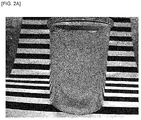
- FIG. 2A shows a photograph of the appearance of the solution at the time when it was determined that the dissolution was completed, for Comparative Example 4.
- FIG. 2B shows a photograph of an SEM image of the particulate stannous oxide obtained for Comparative Example 4. [Table 1] Example/ Comp.
- Examples 1 to 6 were completely colorless and transparent after dissolution in the aqueous methanesulfonic acid solution, and it could be confirmed from the results of impurity analysis that they had very high purity. Comparative Examples 1 to 3 were also colorless and transparent after dissolution, but each contained a large amount of impurities. In Comparative Example 4, the solubility of stannous oxide in the aqueous methanesulfonic acid solution was poor, and it remained in an opaque state with no change after 60 seconds, and the state remained after 5 minutes, and a turbidity measured for reference was 180 degrees.
- stannous oxide having excellent solubility while sufficiently reducing chlorine, sulfur, sodium, and potassium.
- the present invention is industrially useful.
Landscapes
- Chemical & Material Sciences (AREA)
- Organic Chemistry (AREA)
- Chemical Kinetics & Catalysis (AREA)
- Inorganic Chemistry (AREA)
- Engineering & Computer Science (AREA)
- Electrochemistry (AREA)
- Materials Engineering (AREA)
- Metallurgy (AREA)
- Inorganic Compounds Of Heavy Metals (AREA)
Abstract
Description
- The present invention relates to stannous oxide powder and a method for producing the same.
- When performing tin plating, an insoluble electrode (platinum, noble metal oxide, or the like) may be used in place of metallic tin as a positive electrode. In this case, stannous oxide is often added as a supplement for tin ions that are consumed from an electrolyte. Stannous oxide (SnO) has a higher dissolution rate than that of stannic oxide (SnO2), and can allow easy production of a supplying solution.
- Conventionally, tin chloride is preferably used as a starting material in order to produce soluble stannous oxide. Thus, for example, Patent Document 1 (Japanese Patent No.
6095929 B - Patent Document 2 (Japanese Patent Application Publication No.
2016-153361 A - Patent Document 3 (Japanese Patent No.
4975367 B -
- Patent Document 1: Japanese Patent No.
6095929 B - Patent Document 2: Japanese Patent Application Publication No.
2016-153361 A - Patent Document 3: Japanese Patent No.
4975367 B - According to studies by the present inventors, the production method of Patent Document 3 resulted in insufficient reduction of impurities (chlorine, sulfur, sodium, and potassium) in the resulting stannous oxide.
- Thus, there is a need for a technique for producing stannous oxide having excellent solubility while sufficiently reducing chlorine, sulfur, sodium, and potassium.
- Therefore, an object of the present invention is to provide a novel means for producing stannous oxide having excellent solubility while sufficiently reducing chlorine, sulfur, sodium, and potassium.
- As a result of intensive studies to solve the above problems, the present inventors have found that a production method as described later can sufficiently produce stannous oxide having excellent solubility while sufficiently reducing chlorine, sulfur, sodium, and potassium, and has arrived at the present invention.
- Therefore, the present invention includes the following aspects (1) to (16):
- (1) A method for producing stannous oxide, the method comprising a step of subjecting stannous sulfate to a neutralization reaction with ammonium carbonate or ammonium bicarbonate in an aqueous solution to deposit stannous oxide.
- (2) The method according to (1), wherein the neutralization reaction is carried out in an aqueous solution having a pH in a range of from pH 6.0 to pH 8.0.
- (3) The method according to (1) or (2), wherein the neutralization reaction is carried out by adding an aqueous stannous sulfate solution to an aqueous ammonium bicarbonate solution.
- (4) The method according to (3), wherein a concentration of ammonium bicarbonate in the aqueous ammonium bicarbonate solution is in a range of from 50 to 150 g/L.
- (5) The method according to (3) or (4), wherein a concentration of tin in the aqueous stannous sulfate solution is in a range of from 10 to 130 g/L.
- (6) The method according to any one of (1) to (5), wherein the step of subjecting stannous sulfate to the neutralization reaction to deposit stannous oxide comprises:
- subjecting stannous sulfate to the neutralization reaction at a temperature in a range of from 50 to 80 °C; and
- then maintaining the aqueous solution subjected to the neutralization reaction at a temperature in a range of from 60 to 100 °C to deposit stannous oxide.
- (7) The method according to any one of (1) to (5), wherein the step of subjecting stannous sulfate to the neutralization reaction to deposit stannous oxide comprises:
- subjecting stannous sulfate to the neutralization reaction at a temperature in a range of from 50 to 80 °C for 1 to 10 hours; and
- then maintaining the aqueous solution subjected to the neutralization reaction at a temperature in a range of from 60 to 100 °C for 1 to 10 hours to deposit stannous oxide.
- (8) A stannous oxide, the stannous oxide comprising stannous oxide and inevitable impurities, the stannous oxide having a stannous oxide content of 99.99% by mass or more, and satisfying either:
- a chlorine content of 1 ppm or less; or
- a sulfur content of less than 10 ppm.
- (9) The stannous oxide according to (8), wherein the chlorine content is 1 ppm or less and the sulfur content is less than 10 ppm.
- (10) The stannous oxide according to (8) or (9), wherein the stannous oxide has a sodium content of less than 5 ppm and a potassium content of less than 5 ppm.
- (11) The stannous oxide according to any one of (8) to (10), wherein the stannous oxide has an antimony content of 5 ppm or less.
- (12) The stannous oxide according to any one of (8) to (11), wherein the stannous oxide is in a form of powder.
- (13) The stannous oxide according to (12), wherein the powder has a water content in a range of from 1 to 10% by weight.
- (14) The stannous oxide according to (12) or (13), wherein the powder has a specific surface area in a range of from 0.1 to 1.0 m2/g.
- (15) The stannous oxide according to any one of (12) to (14), wherein the powder has a TAP density in a range of from 1.0 to 4.0 g/cm3.
- (16) The stannous oxide according to any one of (12) to (15), wherein the powder has a 50% particle diameter (D50) in a range of from 20 to 60 µm.
- According to the present invention, a stannous oxide having excellent solubility can be produced while sufficiently reducing chlorine, sulfur, sodium, and potassium.
-
-
FIG. 1A is a photograph showing a result of a solubility test of stannous oxide according to Example 4. -
FIG. 1B is a photograph showing a scanning electron microscope (SEM) image of stannous oxide according to Example 4. -
FIG. 2A is a photograph showing a result of a solubility test of stannous oxide according to Comparative Example 4. -
FIG. 2B is a photograph showing a SEM image of stannous oxide according to Comparative Example 4. - The present invention will be described in detail below with reference to embodiments. The present invention is not limited to the specific embodiments described below.
- Production of a stannous oxide according to the present invention can be carried out by a method comprising a step of subjecting stannous sulfate to a neutralization reaction with ammonium carbonate or ammonium bicarbonate in an aqueous solution to deposit stannous oxide.
- The neutralization reaction is carried out by allowing stannous sulfate to react with ammonium carbonate or ammonium bicarbonate in an aqueous solution. In a preferred embodiment, the neutralization reaction is carried out by adding an aqueous stannous sulfate solution to an aqueous ammonium carbonate or ammonium bicarbonate solution. In a preferred embodiment, the aqueous stannous sulfate solution can be added by a known means, for example, a means such as dropping, jetting, or spraying. Alternatively, in a preferred embodiment, the neutralization reaction can be carried out by simultaneously or alternately adding a stannous sulfate solution and an aqueous ammonium carbonate or ammonium bicarbonate solution to water or an aqueous solution. These additions can also be carried out by dropping. In a preferred embodiment, the aqueous solution is stirred as needed during the neutralization reaction. The stirring can be carried out by a known means.
- The neutralization reaction can be allowed to proceed by adding aqueous ammonia and/or blowing a carbon dioxide gas into the aqueous solution in addition to ammonium carbonate or ammonium bicarbonate. The addition of the aqueous ammonia can be carried out such that the concentration of ammonium ions in the aqueous solution containing the aqueous ammonium will be an ammonium ion concentration based on a range of an ammonium bicarbonate concentration as described below, together with the ammonium ions derived from ammonium bicarbonate. The blowing of the carbon dioxide gas can be carried out such that the sum of the concentrations of the carbonate ions and the hydrogen carbonate ions in the aqueous solution into which the carbon dioxide gas has been blown will be the sum of concentrations of carbonate ions and hydrogen carbonate ions based on a range of an ammonium bicarbonate concentration as described below, together with the carbonate ions and the hydrogen carbonate ions derived from the ammonium bicarbonate. The blowing of the carbon dioxide gas can be carried out using a known means. The addition of the aqueous ammonia water and/or the blowing of the carbon dioxide gas can be carried out in combination with a pH adjustment as described later.
- In a preferred embodiment, the neutralization reaction is carried out in an aqueous solution having a pH, for example in a range of from pH 6.0 to pH 8.0, and preferably in a range of from pH 7.0 to pH 8.0. The pH can be adjusted, for example, by adding ammonium carbonate, ammonium bicarbonate, or aqueous ammonia. Alternatively, the pH may be adjusted by blowing carbon dioxide into the reaction solution. The pH value is preferably maintained in the above range through two stage temperature adjustment as described later.
- In a preferred embodiment, the temperature of the solution subjected to the neutralization reaction is adjusted in two stages. That is, the reaction temperature is adjusted in two stages: a temperature at which the neutralization reaction is allowed to proceed by dropping the stannous sulfate solution and the aqueous ammonium carbonate or ammonium bicarbonate solution (a first stage reaction temperature); and a temperature at which the neutralization reaction is maintained after the end of the dropping (a second stage reaction temperature). The temperature during dropping, i.e., the first stage temperature can be from 50 to 80 °C, preferably 50 to 70 °C, more preferably 50 to 60 °C. The dropping time, i.e., a retention time of the first stage temperature can be from 1 to 10 hours, preferably from 2 to 5 hours, more preferably 2 to 4 hours, for example. The retention temperature after dropping, i.e., the second stage temperature, can be from 60 to 100 °C, preferably from 70 to 90 °C, more preferably from 70 to 80 °C, for example. The retention time after dropping, i.e., the retention time of the second stage temperature can be from 1 to 10 hours, preferably from 1 to 4 hours, more preferably 1 to 2 hours, for example.
- When the aqueous ammonium bicarbonate solution is used in the neutralization reaction, a concentration of ammonium bicarbonate can be, for example, in a range of from 50 to 150 g/L, preferably from 70 to 120 g/L. When the aqueous ammonium carbonate solution is used in the neutralization reaction, it can be suitably used in the same concentration range as that of ammonium bicarbonate.
- When the aqueous stannous sulfate solution is used in the neutralization reaction, a concentration of tin in the aqueous stannous sulfate solution can be, for example, in a range of from 10 to 130 g/L, preferably from 10 to 100 g/L, more preferably from 20 to 90 g/L.
- By the neutralization reaction, stannous oxide is deposited and precipitated. The resulting precipitate can be subjected to solid-liquid separation to obtain stannous oxide powder. The solid-liquid separation can be carried out by a known means such as suction, squeeze filtration, decantation, and centrifugation. The stannous oxide powder may be washed as desired, for example, in combination with a separating means such as centrifugation.
- Stannous oxide (SnO) obtained by the present invention is composed of stannous oxide and inevitable impurities, and can have, for example, a stannous oxide content of 99.99% by mass or more, preferably 99.995% by mass or more, for example, in a range of from 99.99 to 99.995% by mass, preferably from 99.99 to 99.999% by mass. The content of impurities as described later can be determined by means of an ICP mass spectrometer (commonly known as ICP-MS), an ICP optical emission spectrometer (commonly known as ICP-OES), a flame atomic absorption spectrometer (commonly known as AAS), and a chlorine/sulfur analyzer/total organic halogen analyzer (commonly known as TOX), and by a carbon/sulfur analyzer (commonly known as LECO) for S.
- In a preferred embodiment, a Cl content (chlorine content) of the stannous oxide can be, for example, less than 5 ppm, and preferably less than 1 ppm, and more preferably less than 1 ppm. The stannous oxide according to the present invention can allow a significantly decreased Cl content because the use of a hydrochloric acid-based aqueous solution is avoided in the production.
- In a preferred embodiment, a S content (sulfur content) of the stannous oxide can be, for example, less than 20 ppm, and preferably 10 ppm or less. The stannous oxide according to the present invention can allow a significantly decreased S content despite the use of the aqueous sulfate solution in the production.
- In a preferred embodiment, a Na content (sodium content) of the stannous oxide can be, for example, less than 5 ppm, and preferably less than 1 ppm. In a preferred embodiment, a K content (potassium content) of the stannous oxide can be, for example, less than 5 ppm, and preferably less than 1 ppm. The stannous oxide according to the present invention can allow significantly decreased Na and K contents because the use of sodium-containing materials and potassium-containing materials is avoided in the production.
- In a preferred embodiment, the impurities in the stannous oxide can have the following contents, as contents measured by ICP-MS (SPQ9700 from Hitachi High-Tech Science Co., Ltd.) for Ag, As, Bi, Cd, Cr, Cu, In, Mg, Mn, Pb, Sb, Th, TI, U and Zn; by ICP-OES (SPS3500DD from Hitachi High-Tech Science Co., Ltd.) for Ca, Co, Fe, Ni, and P; by AAS (AA240FS from Agilent Technologies) for K and Na; by TOX (TOX-2100H from Mitsubishi Chemical Analytech Co., Ltd.) for Cl; and by LECO (CSLS600 from LECO JAPAN CORPORATION) for S:
The Ag content is 1 ppm or less, preferably less than 1 ppm (less than the detection limit); the As content is 1 ppm or less, preferably less than 1 ppm (less than the detection limit); the Bi content is less than 1 ppm, preferably less than 1 ppm (less than the detection limit); the Ca content is 1 ppm or less, preferably less than 1 ppm (less than the detection limit); the Cd content is 1 ppm or less, preferably less than 1 ppm (less than the detection limit); the Co content is 1 ppm or less, preferably less than 1 ppm (less than the detection limit); the Cr content is 1 ppm or less, preferably less than 1 ppm (less than the detection limit); the Cu content is 1 ppm or less, preferably less than 1 ppm (less than the detection limit); the Fe content is 1 ppm or less, preferably less than 1 ppm (less than the detection limit); the In content is 1 ppm or less, preferably less than 1 ppm (less than the detection limit); the K content is less than 5 ppm, preferably 1 ppm or less, more preferably less than 1 ppm (less than the detection limit); the Mg content is 1 ppm or less, preferably less than 1 ppm (less than detection limit); the Mn content is 1 ppm or less, preferably less than 1 ppm (less than detection limit); the Na content is less than 5 ppm, preferably 1 ppm or less, more preferably less than 1 ppm (less than the detection limit); the P content is 10 ppm or less, preferably less than 10 ppm (less than the detection limit); the Ni content is 1 ppm or less, preferably less than 1 ppm (less than detection limit); the Pb content is 1 ppm or less, preferably less than 1 ppm (less than detection limit); the Th content is 1 ppm or less, preferably less than 1 ppm (less than the detection limit); the TI content is 1 ppm or less, preferably less than 1 ppm (less than the detection limit); the U content is 1 ppm or less, preferably less than 1 ppm (less than the detection limit); the Zn content is 1 ppm or less, preferably less than 1 ppm (less than the detection limit); and the Sb content is 5 ppm or less, preferably 2 ppm or less, more preferably 1.6 ppm or less, alternatively 0.1 ppm or more, preferably 0.5 ppm or more, more preferably 1.0 ppm or more. - In a preferred embodiment, the stannous oxide can be in the form of powder. A secondary particle of the powder (stannous oxide powder) has, for example, a spherical shape and a combined shape thereof.
- In a preferred embodiment, the stannous oxide powder can have a water content in a range of, for example, from 1 to 10% by weight, and preferably from 1 to 5% by weight. As used herein, the water content can be measured by weight loss due to drying.
- In a preferred embodiment, the stannous oxide powder can have a specific surface area of, for example, from 0.1 to 1.0 m2/g, preferably from 0.1 to 0.9 m2/g, more preferably 0.2 to 0.5 m2/g. As used herein, the specific surface area can be measured by Monosorb MS-21 from QUANTA CHROME.
- In a preferred embodiment, the stannous oxide powder can have a TAP density, for example in a range of from 1.0 to 4.0 g/cm3, preferably from 2.0 to 3.0 g/cm3. As used herein, the TAP density can be measured by TAPDENSER KYT-4000K from SEISHIN ENTERPRISES Co., Ltd.
- In a preferred embodiment, the stannous oxide powder can have a 50% particle diameter (D50), for example in a range of from 20 to 60 µm, preferably from 40 to 60 µm, or from 30 to 50 µm, more preferably from 40 to 60 µm. As used herein, the 50% particle diameter (D50) can be measured by MT3300EX2 from MicrotracBEL Corp.
- The stannous oxide powder according to the present invention has excellent solubility and can be suitably used for supplying a plating solution. The solubility as used herein refers to solubility in a methanesulfonic acid solution. The solubility can be determined as solubility under conditions of Examples as described later. In a preferred embodiment, particularly excellent solubility can refer to a case where the dissolution time is preferably 20 seconds or less, more preferably 10 seconds or less. An index of the solubility can be a turbidity after dissolving tin oxide in methanesulfonic acid and allowing it to stand for 5 minutes in the dissolved state. The turbidity is "20 degrees" in pure water (colorless and transparent), and the maximum value is "500 degrees". As shown in Examples as described later, in a preferred embodiment, the turbidity of the solution of the dissolved stannous oxide according to the present invention can be "20 degrees". The turbidity can be measured with a turbidity meter, and examples of the turbidity meter include a digital turbidity meter 500G (model TB-500G) from Kyoritsu Chemical-Check Lab., Corp.
- Hereinafter, the present invention will be described in more detail with reference to Examples. The present invention is not limited to the following Examples.
- 1 L of an aqueous 100 g/L ammonium bicarbonate solution was placed in a 3 L beaker, heated and maintained at 65 to 70 °C, and 1 L of a stannous sulfate solution having a tin concentration of 80 g/L was dropped over 2 hours to the aqueous ammonium bicarbonate solution with stirring by a stirrer, thereby carrying out a neutralization reaction (a first stage). After the reaction, the temperature was further raised to 75 to 80 °C and maintained for 1 hour (a second stage). The temperature during the reaction was maintained for a certain period of time in two stages: the first stage and the second stage as described above. During the neutralization reaction, the dissolved ammonium bicarbonate solution was added for pH adjustment. Table 1 summarizes the details of the conditions. Particulate stannous oxide was thus obtained. The reaction formula for the neutralization reaction is shown below:
SnSO4 + 2(NH4)HCO3 → SnO + (NH4)2SO4 + H2O + 2CO2.
- The resulting particulate stannous oxide was evaluated as follows.
- The impurity content was analyzed using ICP-MS, ICP-OES, AAS, TOX, LECO and the like.
- The water content was analyzed using a dryer and an electronic balance.
- The specific surface area was measured using Monosorb MS-21 from QUANTA CHROME.
- The TAP density was measured using TAPDENSER KYT-4000K from SEISHIN ENTERPRISE CO., LTD.
- The particle diameter was measured by MT3300EX2 from MicrotrackBEL Co., Ltd. The results obtained are summarized in Table 1.
- The solubility of the resulting particulate stannous oxide was evaluated by determining a dissolution time as follows:
7.5 mL of 96% methanesulfonic acid was collected and dilute to 50 mL with pure water. Stannous oxide (5.0 g) was rapidly introduced into an aqueous methanesulfonic acid solution in a 50 mL beaker, and the time from introduction to dissolution was measured while stirring the solution with a stirrer at 500 rpm. The solution temperature at this time was 23 °C. Based on visual observation that black turbidity became colorless and transparent, it was determined that the dissolution was completed, and the time was measured. The results obtained are summarized in Table 1. Further, turbidity after dissolving tin oxide in methanesulfonic acid and allowing it to stand for 5 minutes was measured with a digital turbidity meter 500G (model TB-500G) from KYORITSU CHEMICAL-CHECK Lab., Corp. These results are also shown inFIG. 1 . - Examples 2 to 6 were carried out according to the same procedure as that of Example 1. Details of the conditions are summarized in Table 1. In Examples 2, 5 and 6, a carbon dioxide gas was blown simultaneously with the introduction of the aqueous ammonium bicarbonate solution. In Example 2, aqueous ammonium was further added simultaneously with the introduction of the aqueous ammonium bicarbonate solution.
- The resulting particulate stannous oxide was evaluated according the same manners as those of Example 1. The same is true for the solubility test. The results obtained are summarized in Table 1.
FIG. 1A shows a photograph of the appearance of the solution at the time when it was determined that the dissolution was completed, for Example 4. - The resulting particulate stannous oxide was observed by SEM (Electron Microscope S-3000N from Hitachi High-Technologies Corporation). A SEM image of the stannous oxide powder for Example 4 is shown in
FIG. 1B . - The neutralization reaction was carried out in the same manner as that of Example 1 with the exception that 1 L of a solution of stannous sulfate solution in hydrochloric acid having a tin concentration of 100 g/L was dropped instead of 1 L of the stannous sulfate solution. Table 1 summarizes the details of the conditions. The resulting particulate stannous oxide was evaluated in the same manner as that of Example 1. The same is true for the solubility test. Table 1 summarizes the obtained results.
- The neutralization reaction was carried out in the same manner as that of Example 1 except for the conditions as shown in Table 1. Table 1 summarizes the details of the conditions. The resulting flaky stannous oxide was evaluated in the same manner as that of Example 1. The same is true for the solubility test. Table 1 summarizes the obtained results.
FIG. 2A shows a photograph of the appearance of the solution at the time when it was determined that the dissolution was completed, for Comparative Example 4.FIG. 2B shows a photograph of an SEM image of the particulate stannous oxide obtained for Comparative Example 4.[Table 1] Example/ Comp. pH Reaction Temperature Addition Time Reaction Reagent Impurity 1 (Lower Quantification Limit or less) Impurity 2 (Detection Quality) Water Content (wt%) Specific Surface Area (m2/g) TAP Density (g/cm3) Particle Diameter 50% (µm) Dissolution Time and Turbidity Example 1 7.0-7.5 First Stage 65-70 °C First Stage 2 hours 100 g/L Ammonium Bicarbonate Ag, As, Bi, Ca, Cd, Co, Cr, Cu, Fe, In, K, Mg, Mn, Na, Ni, Pb, Th, TI, U, Zn<1ppm P <10ppm Cl <1ppm Sb: 1.6 ppm 3 0.17 2.4 50.9 15 seconds Second Stage 75-80°C Second Stage 1 hour 20 degrees Example 2 6.5-7.0 First Stage 65-70 °C First Stage 3 hours 100 g/L Ammonium Bicarbonate + 1N Aqueous Ammonia + 1L/min Carbon Dioxide Same as above Sb: 1.6 ppm 3 0.14 2.8 39.8 8 seconds Second Stage 75-80°C Second Stage 2 hours 20 degrees Example 3 6.0-6.5 First Stage 55-60 °C First Stage 4 hours 100 g/L Ammonium Bicarbonate Same as above Sb <1 ppm 6 0.42 2.8 41.5 10 seconds Second Stage 75-80°C Second Stage 1 hour 20 degrees Example 4 6.5-7.0 First Stage 55-60 °C First Stage 2 hours 100 g/L Ammonium Bicarbonate Same as above Sb: 1.3 ppm 4 0.44 2.8 29.5 8 seconds Second Stage 75-80°C Second Stage 1 hour 20 degrees Example 5 6.0-6.5 First Stage 50-50 °C First Stage 3 hours 100 g/L Ammonium Bicarbonate + 1L/min Carbon Dioxide Same as above Sb: 1.3 ppm 3 0.61 2.8 42.2 8 seconds Second Stage 70-75°C Second Stage 2 hours 20 degrees Example 6 6.0-6.5 First Stage 55-60 °C First Stage 3 hours 100 g/L Ammonium Bicarbonate + 1L/min Carbon Dioxide Ag, As, Bi, Cd, Co, Cr, Cu, Fe, In, K, Mg, Mn, Na, Ni, Pb, Th, TI, U, Zn <1ppm P, S <10ppm Cl <1ppm Ca: 1 ppm 3 0.52 2.8 49.2 13 seconds Second Stage 75-80°C Second Stage 2 hours Sb: 1.6 ppm 20 degrees Comp. 1 6.0-6.5 First Stage 65-70 °C First Stage 2 hours 100 g/L Ammonium Bicarbonate Ag, As, Bi, Ca, Cd, Co, Cr, Cu, Fe, In, K, Mg, Mn, Na, Ni, Pb, Th, TI, U, Zn <1ppm P, S <10ppm Cl: 92 ppm 6 0.34 2.8 34.7 20 seconds Second Stage 75-80°C Second Stage 1 hour Sb: 1.2 ppm 20 degrees Comp. 2 5.0-5.5 First Stage 65-70 °C First Stage 2 hours 100 g/L Ammonium Bicarbonate Ag, As, Bi, Ca, Cd, Co, Cr, Cu, Fe, In, K, Mg, Mn, Na, Ni, Pb, Th, TI, U, Zn <1ppm P <10ppm S: 25 ppm 11 0.55 2.4 48.7 15 seconds Second Stage 75-80°C Second Stage 1 hour Sb: 1.8 ppm 20 degrees Comp. 3 6.0-6.5 First Stage 40-45 °C First Stage 2 hours 100 g/L Ammonium Bicarbonate Same as above S: 40 ppm 23 1.57 2.3 17.7 40 seconds Second Stage 50-55°C Second Stage 1 hour Sb: 1.6 ppm 20 degrees Comp. 4 6.0-6.5 First Stage 65-70 °C First Stage 16 hours 100 g/L Ammonium Bicarbonate Same as above S: 20 ppm 8 3.08 2.4 52.2 60 seconds Second Stage 75-80°C Second Stage 1 hour Sb: 1.1 ppm Not Dissolved - Examples 1 to 6 were completely colorless and transparent after dissolution in the aqueous methanesulfonic acid solution, and it could be confirmed from the results of impurity analysis that they had very high purity. Comparative Examples 1 to 3 were also colorless and transparent after dissolution, but each contained a large amount of impurities. In Comparative Example 4, the solubility of stannous oxide in the aqueous methanesulfonic acid solution was poor, and it remained in an opaque state with no change after 60 seconds, and the state remained after 5 minutes, and a turbidity measured for reference was 180 degrees.
- According to the present invention, it is possible to produce stannous oxide having excellent solubility while sufficiently reducing chlorine, sulfur, sodium, and potassium. The present invention is industrially useful.
Claims (16)
- A method for producing stannous oxide, the method comprising a step of subjecting stannous sulfate to a neutralization reaction with ammonium carbonate or ammonium bicarbonate in an aqueous solution to deposit stannous oxide.
- The method according to claim 1, wherein the neutralization reaction is carried out in an aqueous solution having a pH in a range of from pH 6.0 to pH 8.0.
- The method according to claim 1 or 2, wherein the neutralization reaction is carried out by adding an aqueous stannous sulfate solution to an aqueous ammonium bicarbonate solution.
- The method according to claim 3, wherein a concentration of ammonium bicarbonate in the aqueous ammonium bicarbonate solution is in a range of from 50 to 150 g/L.
- The method according to claim 3 or 4, wherein a concentration of tin in the aqueous stannous sulfate solution is in a range of from 10 to 130 g/L.
- The method according to any one of claims 1 to 5, wherein the step of subjecting stannous sulfate to the neutralization reaction to deposit stannous oxide comprises:subjecting stannous sulfate to the neutralization reaction at a temperature in a range of from 50 to 80 °C; andthen maintaining the aqueous solution subjected to the neutralization reaction at a temperature in a range of from 60 to 100 °C to deposit stannous oxide.
- The method according to any one of claims 1 to 5, wherein the step of subjecting stannous sulfate to the neutralization reaction to deposit stannous oxide comprises:subjecting stannous sulfate to the neutralization reaction at a temperature in a range of from 50 to 80 °C for 1 to 10 hours; andthen maintaining the aqueous solution subjected to the neutralization reaction at a temperature in a range of from 60 to 100 °C for 1 to 10 hours to deposit stannous oxide.
- A stannous oxide, the stannous oxide comprising stannous oxide and inevitable impurities, the stannous oxide having a stannous oxide content of 99.99% by mass or more, and satisfying either:a chlorine content of 1 ppm or less; ora sulfur content of less than 10 ppm.
- The stannous oxide according to claim 8, wherein the chlorine content is 1 ppm or less and the sulfur content is less than 10 ppm.
- The stannous oxide according to claim 8 or 9, wherein the stannous oxide has a sodium content of less than 5 ppm and a potassium content of less than 5 ppm.
- The stannous oxide according to any one of claims 8 to 10, wherein the stannous oxide has an antimony content of 5 ppm or less.
- The stannous oxide according to any one of claims 8 to 11, wherein the stannous oxide is in a form of powder.
- The stannous oxide according to claim 12, wherein the powder has a water content in a range of from 1 to 10% by weight.
- The stannous oxide according to claim 12 or 13, wherein the powder has a specific surface area in a range of from 0.1 to 1.0 m2/g.
- The stannous oxide according to any one of claims 12 to 14, wherein the powder has a TAP density in a range of from 1.0 to 4.0 g/cm3.
- The stannous oxide according to any one of claims 12 to 15, wherein the powder has a 50% particle diameter (D50) in a range of from 20 to 60 µm.
Applications Claiming Priority (2)
| Application Number | Priority Date | Filing Date | Title |
|---|---|---|---|
| JP2017220474 | 2017-11-15 | ||
| PCT/JP2018/034052 WO2019097831A1 (en) | 2017-11-15 | 2018-09-13 | Stannous oxide and method for producing same |
Publications (3)
| Publication Number | Publication Date |
|---|---|
| EP3712114A1 true EP3712114A1 (en) | 2020-09-23 |
| EP3712114A4 EP3712114A4 (en) | 2021-01-13 |
| EP3712114B1 EP3712114B1 (en) | 2024-11-06 |
Family
ID=66538577
Family Applications (1)
| Application Number | Title | Priority Date | Filing Date |
|---|---|---|---|
| EP18877744.5A Active EP3712114B1 (en) | 2017-11-15 | 2018-09-13 | Stannous oxide and method for producing same |
Country Status (7)
| Country | Link |
|---|---|
| US (1) | US12297121B2 (en) |
| EP (1) | EP3712114B1 (en) |
| JP (1) | JP7058284B2 (en) |
| KR (1) | KR102377239B1 (en) |
| CN (1) | CN110997570A (en) |
| TW (1) | TWI681932B (en) |
| WO (1) | WO2019097831A1 (en) |
Cited By (3)
| Publication number | Priority date | Publication date | Assignee | Title |
|---|---|---|---|---|
| EP3763677A4 (en) * | 2018-03-05 | 2021-06-30 | JX Nippon Mining & Metals Corporation | STANNOUS OXIDE POWDER |
| EP3828517A4 (en) * | 2018-07-25 | 2022-04-20 | JX Nippon Mining & Metals Corporation | TIN(II) OXIDE POWDER |
| US12297121B2 (en) | 2017-11-15 | 2025-05-13 | Jx Advanced Metals Corporation | Stannous oxide powder and method for producing same |
Families Citing this family (1)
| Publication number | Priority date | Publication date | Assignee | Title |
|---|---|---|---|---|
| KR102343152B1 (en) | 2019-02-28 | 2021-12-23 | 미쓰비시 마테리알 가부시키가이샤 | High-concentration tin sulfonate aqueous solution and method for producing the same |
Family Cites Families (27)
| Publication number | Priority date | Publication date | Assignee | Title |
|---|---|---|---|---|
| JPH0244773B2 (en) | 1984-04-17 | 1990-10-05 | Sumitomo Metal Mining Co | SANKADAIICHISUZUNOSEIZOHOHO |
| JPS6252130A (en) | 1985-08-30 | 1987-03-06 | Sumitomo Metal Mining Co Ltd | Production of spherical stannous oxide readily soluble in acid |
| DE4129611A1 (en) * | 1991-09-06 | 1993-03-11 | Goldschmidt Ag Th | METHOD FOR PRODUCING FINE-PARTICLE ELECTRICALLY CONDUCTIVE TIN IV OXIDE |
| JPH11310415A (en) | 1998-04-27 | 1999-11-09 | Mitsubishi Materials Corp | High purity tin oxide and its production method |
| CN1237007C (en) * | 2003-10-15 | 2006-01-18 | 中国科学院上海硅酸盐研究所 | Method for preparing nano tin anhydride powder |
| EP1986804B1 (en) * | 2006-02-16 | 2011-12-28 | Brigham Young University | Preparation of uniform nanoparticles of ultra-high purity metal oxides, mixed metal oxides, metals, and metal alloys |
| JP4975367B2 (en) | 2006-05-10 | 2012-07-11 | Jx日鉱日石金属株式会社 | High purity stannous oxide, powder thereof, and method for producing high purity stannous oxide |
| JP2009132570A (en) * | 2007-11-30 | 2009-06-18 | Mitsubishi Materials Corp | Method for producing stannous oxide powder |
| JP5104253B2 (en) | 2007-11-30 | 2012-12-19 | 三菱マテリアル株式会社 | Stannous oxide powder for Sn component replenishment to Sn alloy plating solution |
| JP5335328B2 (en) * | 2008-08-29 | 2013-11-06 | 三菱マテリアル株式会社 | Method for producing conductive tin oxide powder |
| CN101367543B (en) | 2008-09-17 | 2011-02-02 | 广东光华科技股份有限公司 | Preparation method for high purity stannous oxide |
| JP2010123428A (en) * | 2008-11-20 | 2010-06-03 | Mitsubishi Materials Corp | White conductive powder and its manufacturing method |
| JP5818196B2 (en) * | 2010-09-01 | 2015-11-18 | 株式会社 ナノ・キューブ・ジャパン | Method for producing tin oxide ultrafine particles |
| WO2012096171A1 (en) * | 2011-01-11 | 2012-07-19 | 日本板硝子株式会社 | Flake-like mesoporous particles and manufacturing method therefor |
| US8277774B2 (en) * | 2011-01-27 | 2012-10-02 | Honeywell International | Method for the preparation of high purity stannous oxide |
| JP5807377B2 (en) | 2011-05-10 | 2015-11-10 | 三菱マテリアル株式会社 | Stannous oxide powder for supplying Sn component to Sn alloy plating solution and method for producing the same |
| JP6121090B2 (en) | 2011-05-10 | 2017-04-26 | 三菱マテリアル株式会社 | Method for producing stannous oxide powder for replenishing Sn component to Sn alloy plating solution and stannous oxide powder produced by the method |
| TWI464117B (en) * | 2011-09-30 | 2014-12-11 | Dow Global Technologies Llc | Plurality of sno flakes |
| TWI465400B (en) * | 2011-09-30 | 2014-12-21 | Dow Global Technologies Llc | Process for making sno |
| JP6569237B2 (en) * | 2014-03-06 | 2019-09-04 | 三菱マテリアル株式会社 | Method for producing stannous oxide, method for producing Sn plating solution |
| JP6657991B2 (en) | 2015-02-16 | 2020-03-04 | 三菱マテリアル株式会社 | Stannous oxide powder and method for producing stannous oxide powder |
| JP6384369B2 (en) | 2015-03-16 | 2018-09-05 | 三菱マテリアル株式会社 | Sn replenisher for Sn alloy plating |
| JP6487377B2 (en) | 2016-06-14 | 2019-03-20 | 株式会社ニューギン | Game machine |
| CN106587139B (en) | 2016-12-12 | 2018-06-26 | 北京科技大学 | A kind of preparation method of micron order SnO square plates |
| US12297121B2 (en) | 2017-11-15 | 2025-05-13 | Jx Advanced Metals Corporation | Stannous oxide powder and method for producing same |
| JP7282074B2 (en) | 2018-03-05 | 2023-05-26 | Jx金属株式会社 | stannous oxide powder |
| CN110944945A (en) * | 2018-07-25 | 2020-03-31 | Jx金属株式会社 | Tin oxide powder |
-
2018
- 2018-09-13 US US16/652,609 patent/US12297121B2/en active Active
- 2018-09-13 JP JP2019553713A patent/JP7058284B2/en active Active
- 2018-09-13 EP EP18877744.5A patent/EP3712114B1/en active Active
- 2018-09-13 CN CN201880049513.8A patent/CN110997570A/en active Pending
- 2018-09-13 KR KR1020207002015A patent/KR102377239B1/en active Active
- 2018-09-13 WO PCT/JP2018/034052 patent/WO2019097831A1/en not_active Ceased
- 2018-10-11 TW TW107135684A patent/TWI681932B/en active
Cited By (5)
| Publication number | Priority date | Publication date | Assignee | Title |
|---|---|---|---|---|
| US12297121B2 (en) | 2017-11-15 | 2025-05-13 | Jx Advanced Metals Corporation | Stannous oxide powder and method for producing same |
| EP3763677A4 (en) * | 2018-03-05 | 2021-06-30 | JX Nippon Mining & Metals Corporation | STANNOUS OXIDE POWDER |
| US11981581B2 (en) | 2018-03-05 | 2024-05-14 | Jx Metals Corporation | Stannous oxide powder |
| EP3828517A4 (en) * | 2018-07-25 | 2022-04-20 | JX Nippon Mining & Metals Corporation | TIN(II) OXIDE POWDER |
| US11772981B2 (en) | 2018-07-25 | 2023-10-03 | Jx Metals Corporation | Stannous oxide powder |
Also Published As
| Publication number | Publication date |
|---|---|
| CN110997570A (en) | 2020-04-10 |
| US12297121B2 (en) | 2025-05-13 |
| WO2019097831A1 (en) | 2019-05-23 |
| US20200231461A1 (en) | 2020-07-23 |
| JPWO2019097831A1 (en) | 2020-11-19 |
| TWI681932B (en) | 2020-01-11 |
| KR20200022450A (en) | 2020-03-03 |
| EP3712114A4 (en) | 2021-01-13 |
| EP3712114B1 (en) | 2024-11-06 |
| TW201922620A (en) | 2019-06-16 |
| JP7058284B2 (en) | 2022-04-21 |
| KR102377239B1 (en) | 2022-03-22 |
Similar Documents
| Publication | Publication Date | Title |
|---|---|---|
| EP3712114B1 (en) | Stannous oxide and method for producing same | |
| EP3828517A1 (en) | Tin(ii) oxide powder | |
| WO2011102276A1 (en) | Aqueous solution of high purity copper sulfonate, and method for producing same | |
| EP3763677A1 (en) | Stannous oxide powder | |
| RO126480B1 (en) | Process for obtaining gold and silver | |
| CN107779599B (en) | A kind of preparation and its application method of rare precious metal complex reducing agent | |
| EP3916132A1 (en) | High-concentration aqueous tin sulfonate solution and method for producing same | |
| US11692277B2 (en) | High-concentration tin sulfonate aqueous solution and method for producing same | |
| EP2042472A1 (en) | Iron arsenate powder | |
| US20260081247A1 (en) | Process for recycling aluminum hydroxide from a black mass | |
| Davis et al. | Photo-oxidative dissolution of CdS (s): The effect of Cu (II) ions | |
| Koshel et al. | Novel process of electrochemical separation of copper-silver alloys in sulfate electrolyte | |
| JP2015190053A (en) | Tin plating method that suppresses oxidation without contamination | |
| JP2005100945A (en) | Zinc alloy powder for batteries |
Legal Events
| Date | Code | Title | Description |
|---|---|---|---|
| STAA | Information on the status of an ep patent application or granted ep patent |
Free format text: STATUS: THE INTERNATIONAL PUBLICATION HAS BEEN MADE |
|
| PUAI | Public reference made under article 153(3) epc to a published international application that has entered the european phase |
Free format text: ORIGINAL CODE: 0009012 |
|
| STAA | Information on the status of an ep patent application or granted ep patent |
Free format text: STATUS: REQUEST FOR EXAMINATION WAS MADE |
|
| 17P | Request for examination filed |
Effective date: 20200513 |
|
| AK | Designated contracting states |
Kind code of ref document: A1 Designated state(s): AL AT BE BG CH CY CZ DE DK EE ES FI FR GB GR HR HU IE IS IT LI LT LU LV MC MK MT NL NO PL PT RO RS SE SI SK SM TR |
|
| AX | Request for extension of the european patent |
Extension state: BA ME |
|
| RAP1 | Party data changed (applicant data changed or rights of an application transferred) |
Owner name: JX NIPPON MINING & METALS CORPORATION |
|
| A4 | Supplementary search report drawn up and despatched |
Effective date: 20201211 |
|
| RIC1 | Information provided on ipc code assigned before grant |
Ipc: C01G 19/02 20060101AFI20201207BHEP |
|
| DAV | Request for validation of the european patent (deleted) | ||
| DAX | Request for extension of the european patent (deleted) | ||
| RAP3 | Party data changed (applicant data changed or rights of an application transferred) |
Owner name: JX METALS CORPORATION |
|
| GRAP | Despatch of communication of intention to grant a patent |
Free format text: ORIGINAL CODE: EPIDOSNIGR1 |
|
| STAA | Information on the status of an ep patent application or granted ep patent |
Free format text: STATUS: GRANT OF PATENT IS INTENDED |
|
| INTG | Intention to grant announced |
Effective date: 20240722 |
|
| GRAS | Grant fee paid |
Free format text: ORIGINAL CODE: EPIDOSNIGR3 |
|
| GRAA | (expected) grant |
Free format text: ORIGINAL CODE: 0009210 |
|
| STAA | Information on the status of an ep patent application or granted ep patent |
Free format text: STATUS: THE PATENT HAS BEEN GRANTED |
|
| RAP3 | Party data changed (applicant data changed or rights of an application transferred) |
Owner name: JX ADVANCED METALS CORPORATION |
|
| AK | Designated contracting states |
Kind code of ref document: B1 Designated state(s): AL AT BE BG CH CY CZ DE DK EE ES FI FR GB GR HR HU IE IS IT LI LT LU LV MC MK MT NL NO PL PT RO RS SE SI SK SM TR |
|
| REG | Reference to a national code |
Ref country code: GB Ref legal event code: FG4D |
|
| REG | Reference to a national code |
Ref country code: CH Ref legal event code: EP |
|
| REG | Reference to a national code |
Ref country code: DE Ref legal event code: R096 Ref document number: 602018076401 Country of ref document: DE |
|
| REG | Reference to a national code |
Ref country code: IE Ref legal event code: FG4D |
|
| REG | Reference to a national code |
Ref country code: LT Ref legal event code: MG9D |
|
| REG | Reference to a national code |
Ref country code: NL Ref legal event code: MP Effective date: 20241106 |
|
| PG25 | Lapsed in a contracting state [announced via postgrant information from national office to epo] |
Ref country code: PT Free format text: LAPSE BECAUSE OF FAILURE TO SUBMIT A TRANSLATION OF THE DESCRIPTION OR TO PAY THE FEE WITHIN THE PRESCRIBED TIME-LIMIT Effective date: 20250306 Ref country code: HR Free format text: LAPSE BECAUSE OF FAILURE TO SUBMIT A TRANSLATION OF THE DESCRIPTION OR TO PAY THE FEE WITHIN THE PRESCRIBED TIME-LIMIT Effective date: 20241106 Ref country code: IS Free format text: LAPSE BECAUSE OF FAILURE TO SUBMIT A TRANSLATION OF THE DESCRIPTION OR TO PAY THE FEE WITHIN THE PRESCRIBED TIME-LIMIT Effective date: 20250306 |
|
| PG25 | Lapsed in a contracting state [announced via postgrant information from national office to epo] |
Ref country code: FI Free format text: LAPSE BECAUSE OF FAILURE TO SUBMIT A TRANSLATION OF THE DESCRIPTION OR TO PAY THE FEE WITHIN THE PRESCRIBED TIME-LIMIT Effective date: 20241106 Ref country code: NL Free format text: LAPSE BECAUSE OF FAILURE TO SUBMIT A TRANSLATION OF THE DESCRIPTION OR TO PAY THE FEE WITHIN THE PRESCRIBED TIME-LIMIT Effective date: 20241106 |
|
| REG | Reference to a national code |
Ref country code: AT Ref legal event code: MK05 Ref document number: 1739213 Country of ref document: AT Kind code of ref document: T Effective date: 20241106 |
|
| PG25 | Lapsed in a contracting state [announced via postgrant information from national office to epo] |
Ref country code: BG Free format text: LAPSE BECAUSE OF FAILURE TO SUBMIT A TRANSLATION OF THE DESCRIPTION OR TO PAY THE FEE WITHIN THE PRESCRIBED TIME-LIMIT Effective date: 20241106 |
|
| PG25 | Lapsed in a contracting state [announced via postgrant information from national office to epo] |
Ref country code: ES Free format text: LAPSE BECAUSE OF FAILURE TO SUBMIT A TRANSLATION OF THE DESCRIPTION OR TO PAY THE FEE WITHIN THE PRESCRIBED TIME-LIMIT Effective date: 20241106 |
|
| PG25 | Lapsed in a contracting state [announced via postgrant information from national office to epo] |
Ref country code: NO Free format text: LAPSE BECAUSE OF FAILURE TO SUBMIT A TRANSLATION OF THE DESCRIPTION OR TO PAY THE FEE WITHIN THE PRESCRIBED TIME-LIMIT Effective date: 20250206 |
|
| PG25 | Lapsed in a contracting state [announced via postgrant information from national office to epo] |
Ref country code: LV Free format text: LAPSE BECAUSE OF FAILURE TO SUBMIT A TRANSLATION OF THE DESCRIPTION OR TO PAY THE FEE WITHIN THE PRESCRIBED TIME-LIMIT Effective date: 20241106 Ref country code: GR Free format text: LAPSE BECAUSE OF FAILURE TO SUBMIT A TRANSLATION OF THE DESCRIPTION OR TO PAY THE FEE WITHIN THE PRESCRIBED TIME-LIMIT Effective date: 20250207 Ref country code: AT Free format text: LAPSE BECAUSE OF FAILURE TO SUBMIT A TRANSLATION OF THE DESCRIPTION OR TO PAY THE FEE WITHIN THE PRESCRIBED TIME-LIMIT Effective date: 20241106 |
|
| PG25 | Lapsed in a contracting state [announced via postgrant information from national office to epo] |
Ref country code: PL Free format text: LAPSE BECAUSE OF FAILURE TO SUBMIT A TRANSLATION OF THE DESCRIPTION OR TO PAY THE FEE WITHIN THE PRESCRIBED TIME-LIMIT Effective date: 20241106 |
|
| PG25 | Lapsed in a contracting state [announced via postgrant information from national office to epo] |
Ref country code: RS Free format text: LAPSE BECAUSE OF FAILURE TO SUBMIT A TRANSLATION OF THE DESCRIPTION OR TO PAY THE FEE WITHIN THE PRESCRIBED TIME-LIMIT Effective date: 20250206 |
|
| PG25 | Lapsed in a contracting state [announced via postgrant information from national office to epo] |
Ref country code: SM Free format text: LAPSE BECAUSE OF FAILURE TO SUBMIT A TRANSLATION OF THE DESCRIPTION OR TO PAY THE FEE WITHIN THE PRESCRIBED TIME-LIMIT Effective date: 20241106 |
|
| PG25 | Lapsed in a contracting state [announced via postgrant information from national office to epo] |
Ref country code: DK Free format text: LAPSE BECAUSE OF FAILURE TO SUBMIT A TRANSLATION OF THE DESCRIPTION OR TO PAY THE FEE WITHIN THE PRESCRIBED TIME-LIMIT Effective date: 20241106 |
|
| PG25 | Lapsed in a contracting state [announced via postgrant information from national office to epo] |
Ref country code: EE Free format text: LAPSE BECAUSE OF FAILURE TO SUBMIT A TRANSLATION OF THE DESCRIPTION OR TO PAY THE FEE WITHIN THE PRESCRIBED TIME-LIMIT Effective date: 20241106 |
|
| PG25 | Lapsed in a contracting state [announced via postgrant information from national office to epo] |
Ref country code: RO Free format text: LAPSE BECAUSE OF FAILURE TO SUBMIT A TRANSLATION OF THE DESCRIPTION OR TO PAY THE FEE WITHIN THE PRESCRIBED TIME-LIMIT Effective date: 20241106 |
|
| PG25 | Lapsed in a contracting state [announced via postgrant information from national office to epo] |
Ref country code: SK Free format text: LAPSE BECAUSE OF FAILURE TO SUBMIT A TRANSLATION OF THE DESCRIPTION OR TO PAY THE FEE WITHIN THE PRESCRIBED TIME-LIMIT Effective date: 20241106 |
|
| PG25 | Lapsed in a contracting state [announced via postgrant information from national office to epo] |
Ref country code: CZ Free format text: LAPSE BECAUSE OF FAILURE TO SUBMIT A TRANSLATION OF THE DESCRIPTION OR TO PAY THE FEE WITHIN THE PRESCRIBED TIME-LIMIT Effective date: 20241106 |
|
| PG25 | Lapsed in a contracting state [announced via postgrant information from national office to epo] |
Ref country code: IT Free format text: LAPSE BECAUSE OF FAILURE TO SUBMIT A TRANSLATION OF THE DESCRIPTION OR TO PAY THE FEE WITHIN THE PRESCRIBED TIME-LIMIT Effective date: 20241106 |
|
| REG | Reference to a national code |
Ref country code: DE Ref legal event code: R097 Ref document number: 602018076401 Country of ref document: DE |
|
| PG25 | Lapsed in a contracting state [announced via postgrant information from national office to epo] |
Ref country code: SE Free format text: LAPSE BECAUSE OF FAILURE TO SUBMIT A TRANSLATION OF THE DESCRIPTION OR TO PAY THE FEE WITHIN THE PRESCRIBED TIME-LIMIT Effective date: 20241106 |
|
| PLBE | No opposition filed within time limit |
Free format text: ORIGINAL CODE: 0009261 |
|
| STAA | Information on the status of an ep patent application or granted ep patent |
Free format text: STATUS: NO OPPOSITION FILED WITHIN TIME LIMIT |
|
| PGFP | Annual fee paid to national office [announced via postgrant information from national office to epo] |
Ref country code: DE Payment date: 20250730 Year of fee payment: 8 |
|
| 26N | No opposition filed |
Effective date: 20250807 |
|
| REG | Reference to a national code |
Ref country code: CH Ref legal event code: H13 Free format text: ST27 STATUS EVENT CODE: U-0-0-H10-H13 (AS PROVIDED BY THE NATIONAL OFFICE) Effective date: 20260504 |