EP3710000B1 - Tradipitant for use in treating gastroparesis - Google Patents
Tradipitant for use in treating gastroparesis Download PDFInfo
- Publication number
- EP3710000B1 EP3710000B1 EP18821773.1A EP18821773A EP3710000B1 EP 3710000 B1 EP3710000 B1 EP 3710000B1 EP 18821773 A EP18821773 A EP 18821773A EP 3710000 B1 EP3710000 B1 EP 3710000B1
- Authority
- EP
- European Patent Office
- Prior art keywords
- tradipitant
- dose
- day
- nausea
- use according
- Prior art date
- Legal status (The legal status is an assumption and is not a legal conclusion. Google has not performed a legal analysis and makes no representation as to the accuracy of the status listed.)
- Active
Links
Images




Classifications
-
- A—HUMAN NECESSITIES
- A61—MEDICAL OR VETERINARY SCIENCE; HYGIENE
- A61K—PREPARATIONS FOR MEDICAL, DENTAL OR TOILETRY PURPOSES
- A61K31/00—Medicinal preparations containing organic active ingredients
- A61K31/33—Heterocyclic compounds
- A61K31/395—Heterocyclic compounds having nitrogen as a ring hetero atom, e.g. guanethidine or rifamycins
- A61K31/435—Heterocyclic compounds having nitrogen as a ring hetero atom, e.g. guanethidine or rifamycins having six-membered rings with one nitrogen as the only ring hetero atom
- A61K31/44—Non condensed pyridines; Hydrogenated derivatives thereof
- A61K31/4427—Non condensed pyridines; Hydrogenated derivatives thereof containing further heterocyclic ring systems
- A61K31/444—Non condensed pyridines; Hydrogenated derivatives thereof containing further heterocyclic ring systems containing a six-membered ring with nitrogen as a ring heteroatom, e.g. amrinone
-
- A—HUMAN NECESSITIES
- A61—MEDICAL OR VETERINARY SCIENCE; HYGIENE
- A61K—PREPARATIONS FOR MEDICAL, DENTAL OR TOILETRY PURPOSES
- A61K31/00—Medicinal preparations containing organic active ingredients
- A61K31/33—Heterocyclic compounds
- A61K31/395—Heterocyclic compounds having nitrogen as a ring hetero atom, e.g. guanethidine or rifamycins
- A61K31/435—Heterocyclic compounds having nitrogen as a ring hetero atom, e.g. guanethidine or rifamycins having six-membered rings with one nitrogen as the only ring hetero atom
- A61K31/44—Non condensed pyridines; Hydrogenated derivatives thereof
- A61K31/4427—Non condensed pyridines; Hydrogenated derivatives thereof containing further heterocyclic ring systems
- A61K31/4439—Non condensed pyridines; Hydrogenated derivatives thereof containing further heterocyclic ring systems containing a five-membered ring with nitrogen as a ring hetero atom, e.g. omeprazole
-
- A—HUMAN NECESSITIES
- A61—MEDICAL OR VETERINARY SCIENCE; HYGIENE
- A61K—PREPARATIONS FOR MEDICAL, DENTAL OR TOILETRY PURPOSES
- A61K9/00—Medicinal preparations characterised by special physical form
- A61K9/0012—Galenical forms characterised by the site of application
- A61K9/0053—Mouth and digestive tract, i.e. intraoral and peroral administration
-
- A—HUMAN NECESSITIES
- A61—MEDICAL OR VETERINARY SCIENCE; HYGIENE
- A61K—PREPARATIONS FOR MEDICAL, DENTAL OR TOILETRY PURPOSES
- A61K9/00—Medicinal preparations characterised by special physical form
- A61K9/48—Preparations in capsules, e.g. of gelatin, of chocolate
-
- A—HUMAN NECESSITIES
- A61—MEDICAL OR VETERINARY SCIENCE; HYGIENE
- A61P—SPECIFIC THERAPEUTIC ACTIVITY OF CHEMICAL COMPOUNDS OR MEDICINAL PREPARATIONS
- A61P1/00—Drugs for disorders of the alimentary tract or the digestive system
-
- A—HUMAN NECESSITIES
- A61—MEDICAL OR VETERINARY SCIENCE; HYGIENE
- A61P—SPECIFIC THERAPEUTIC ACTIVITY OF CHEMICAL COMPOUNDS OR MEDICINAL PREPARATIONS
- A61P1/00—Drugs for disorders of the alimentary tract or the digestive system
- A61P1/04—Drugs for disorders of the alimentary tract or the digestive system for ulcers, gastritis or reflux esophagitis, e.g. antacids, inhibitors of acid secretion, mucosal protectants
-
- A—HUMAN NECESSITIES
- A61—MEDICAL OR VETERINARY SCIENCE; HYGIENE
- A61P—SPECIFIC THERAPEUTIC ACTIVITY OF CHEMICAL COMPOUNDS OR MEDICINAL PREPARATIONS
- A61P1/00—Drugs for disorders of the alimentary tract or the digestive system
- A61P1/08—Drugs for disorders of the alimentary tract or the digestive system for nausea, cinetosis or vertigo; Antiemetics
-
- A—HUMAN NECESSITIES
- A61—MEDICAL OR VETERINARY SCIENCE; HYGIENE
- A61P—SPECIFIC THERAPEUTIC ACTIVITY OF CHEMICAL COMPOUNDS OR MEDICINAL PREPARATIONS
- A61P1/00—Drugs for disorders of the alimentary tract or the digestive system
- A61P1/14—Prodigestives, e.g. acids, enzymes, appetite stimulants, antidyspeptics, tonics, antiflatulents
Definitions
- the application relates generally to use of NK-1 receptor antagonists. More particularly, the application relates the use of the NK-1 antagonist, tradipitant, for treatment of certain tradipitant-responsive diseases and conditions, most specifically gastric motility disorders and conditions in which a therapeutic benefit arises from improvement in gastric motility.
- the mammalian tachykinins are a family of peptide neurotransmitters that share a common C-terminal sequence. This group includes substance P (SP), neurokinin-A (NKA), and neurokinin-B (NKB). SP exerts its effects by binding to the NK-receptors: SP preferentially binds to the NK-1 receptor and, with lower affinity, to the NK-2 and NK-3 receptors, which preferentially bind NKA and NKB, respectively.
- the SP receptor is a G-protein-coupled receptor, which, upon binding of SP, activates several second messenger systems, protein kinases, and transcription factors including calcium, inositol triphosphate, p42/44 and p38 stressregulated kinases, and protein kinase C.
- SP is the most abundant NK and is involved in the regulation of many physiological processes; for example, in the gut and in the bronchial and vascular systems.
- CNS central nervous system
- SP-containing neurons are distributed in distinct neuronal networks. They are found in the midbrain and basal ganglia, the hypothalamus, the limbic system, and the spinal cord. SP is co-localized with other neurotransmitters and has neuromodulatory effects. Examples of co-localizations are serotonin in the nucleus raphe, dopamine in the midbrain and striatum, gammaaminobutyric acid (GABA) and acetylcholine (ACh) in the cortex, and corticotropinreleasing hormone in the hypothalamus. Examples for direct neuromodulatory effects of SP are the regulation of ACh release in the human cortex and the modulation of noradrenergic neurotransmission in the locus coeruleus.
- GABA gammaaminobutyric acid
- ACh acet
- the NK-1 receptor is as a potential therapeutic target for the treatment of functional gastrointestinal disorders (FGIDs), such as dyspepsia and irritable bowel syndrome (IBS).
- FGIDs are diagnosed by the presence of recurrent symptoms of abdominal pain or discomfort, and often subjects with IBS generally present with diarrhea or constipation.
- Current treatments for FGIDs include stress management strategies, dietary modifications, and pharmacotherapy limited to symptomatic treatment.
- Evidence for the role of neurokinins in abdominal pain has been observed in a double-blind study in which the NK-1 antagonist (CJ-11,974) alleviated the discomfort associated with rectosigmoidal distension in patients with IBS.
- NK-1 and NK-2 receptor antagonists have been investigated for their potential use in alleviating symptoms of food allergy and IBS.
- the NK-2 receptor antagonist nepadutant (MEN 11420) effectively antagonized the motility-stimulating effect of neurokinin A without affecting basal gastrointestinal motility.
- Gastrointestinal motility refers to the coordinated contraction of muscles that digests and propels the contents of the gastrointestinal (GI) tract through the tract.
- the GI tract includes the esophagus, stomach, small intestine, and colon, each of which has different motility patterns to accomplish different functions. Abnormal motility or sensitivity in any of these sphincter-separated segments of the GI tract may cause characteristic symptoms, which may include abdominal distention, recurrent obstruction, abdominal pain, constipation, nausea, and vomiting.
- Gastric motility disorders may include, for example, gastroesophageal reflux disease (GERD), intestinal dysmotility, intestinal pseudo-obstruction, small bowel bacterial overgrowth, constipation, outlet obstruction type constipation (pelvic floor dyssynergia), diarrhea, fecal incontinence, Hirschsprung's disease, gastroparesis, and Achalasia.
- GFD gastroesophageal reflux disease
- intestinal dysmotility intestinal pseudo-obstruction
- small bowel bacterial overgrowth constipation
- constipation constipation
- outlet obstruction type constipation pelletvic floor dyssynergia
- diarrhea fecal incontinence
- Hirschsprung's disease gastroparesis
- gastroparesis gastroparesis
- Symptoms of gastroparesis may also be present in individuals who do not have delayed gastric emptying. Such individuals may be diagnosed with, e.g., having symptoms of gastroparesis, or having functional dyspepsia or functional nausea. Despite the severity of symptoms and associated distress among gastroparesis patients, there are currently no treatments for the symptoms of gastroparesis approved for chronic use.
- Tradipitant is a highly potent, selective, centrally penetrating, and orally active neurokinin-1 (NK-1) receptor antagonist, depicted below as the compound of Formula I Tradipitant is disclosed in US Pat. 7,320,994 , and contains six main structural components: the 3,5-bis-trifluoromethylphenyl moiety, two pyridine rings, the triazol ring, the chlorophenyl ring, and the methanone.
- NK-1 neurokinin-1
- Tradipitant is known by the chemical names, 2-[1-[[3,5-bis(trifluoromethyl)phenyl]methyl]-5-(4-pyridinyl)-1H-1,2,3-triazol-4-yl]-3-pyridinyl](2-chlorophenyl)-methanone, and ⁇ 2-[1-(3,5-bistrifluoromethylbenzyl)-5-pyridin-4-yl-1H-[1,2,3]triazol-4-yl]-pyridin-3-yl ⁇ -(2-chlorophenyl)-methanone, and has also been known as LY686017 and as VLY-686.
- Patent 7,320,994 describes methods for using compounds, such as tradipitant, for treating a condition associated with an excess of tachykinins, most particularly where the condition associated with an excess of tachykinins is depression and anxiety.
- the patent further describes the possibility of using compounds, such as tradipitant, in other such diseases, i.e., because these compounds inhibit the physiological effects associated with an excess of tachykinins, the patent describes the usefulness of such compounds in the treatment of numerous other disorders related to tachykinin receptor activation including psychosis, and schizophrenia and other psychotic disorders; neurodegenerative disorders such as dementia, including senile dementia of the Alzheimer's type, Alzheimer's disease, AIDS-associated dementia, and Down syndrome; demyelinating diseases such as multiple sclerosis and amyotrophic lateral sclerosis and other neuropathological disorders, such as peripheral neuropathy, diabetic and chemotherapy-induced neuropathy, and post-herpetic and other neuralgias; acute and chronic obstructive
- Tradipitant is known to be therapeutically administered through a variety of routes of administration by which it is bioavailable.
- U.S. Patent 7,320,994 discloses administration of tradipitant by oral and parenteral routes, .e.g., orally, by inhalation, subcutaneously, intramuscularly, intravenously, transdermally, intranasally, rectally, occularly, topically, sublingually, and buccally, with oral administration being generally preferred for treatment.
- Crystalline Forms IV and V of tradipitant are disclosed in US Pat. 7,381,826 , and a process for preparing crystalline ⁇ 2-[1-(3,5-bistrifluoromethylbenzyl)-5-pyridin-4-yl-1H-[1,2,3]triazol-4-yl]-pyridin-3-yl ⁇ -(2-chlorophenyl)-methanone, Form IV is disclosed in US Pats. 8,772,496 and 9,708,291.
- WO2016/141341 discloses a method of treatment with tradipitant, and more particularly a method of treatment of pruritus with tradipitant.
- Pasricha Pankaj J et al., Gastroenterology 2018; 154: 65 - 67 discloses aprepitant has mixed effects on nausea and reduces other symptoms in patients with gastroparesis and related disorders.
- tradipitant to a patient diagnosed with a tradipitant-responsive gastrointestinal (GI) disease or condition, in an amount and at a frequency of administration sufficient to achieve and to maintain a plasma concentration of at least about 100 ng/mL, e.g., about 125 ng/mL or greater, about 150 ng/mL or greater, about 175 ng/mL or greater, about 200 ng/mL or greater, or about 225 ng/mL or greater for the duration of the treatment regimen.
- GI gastrointestinal
- a patient diagnosed with a tradipitant-responsive gastrointestinal (GI) disease or condition refers herein to a patient diagnosed with one or more of the known diseases or conditions in which tradipitant has been described as being therapeutically useful and specifically includes gastric motility disorders, including gastroparesis, delayed gastric emptying, gastric retention in the absence of mechanical obstruction, or other gastric motility disorders, as well as diseases or conditions manifesting symptoms selected from the group consisting of: nausea, vomiting, early satiety, postprandial fullness, dyspepsia (indigestion), functional dyspepsia, and abdominal pain.
- a tradipitant-responsive GI disease or condition includes disorders in which improvement of gastric motility is therapeutically beneficial.
- Chemotherapy-induced nausea and vomiting (CINV) is another example of a tradipitant-responsive GI diseases or conditions.
- tradipitant to a patient diagnosed with a tradipitant-responsive GI disease or condition
- the method comprising: orally administering to the patient tradipitant in a solid immediate release form, the solid immediate release form comprising tradipitant and one or more pharmaceutically acceptable excipients, twice daily in an amount of 100 to 400 mg/day, 100 to 300 mg/day, or 100 to 200 mg/day of tradipitant.
- Such treatment for a patient diagnosed with a tradipitant-responsive GI disease or condition may be for a gastric motility disorder, which may include gastroparesis, delayed gastric emptying, gastric retention in the absence of mechanical obstruction, or other gastric motility disorders, chemotherapy-induced nausea and vomiting (CINV), post-operative nausea and vomiting (PONV), and/or any symptoms selected from the group consisting of: nausea, vomiting, early satiety, postprandial fullness, dyspepsia (indigestion), functional dyspepsia, bloating, and abdominal pain.
- Treatment may be for diseases or conditions in which improvement of gastric motility is therapeutically beneficial to the patient being treated.
- tradipitant to a patient diagnosed with a tradipitant-responsive GI disease or condition
- the method comprising: orally administering to the patient tradipitant once daily in a solid immediate release form, the solid immediate release form comprising tradipitant and one or more pharmaceutically acceptable excipients, in an amount of 150 to 400 mg/day, 150 to 300 mg/day, or 150 to 200 mg/day of tradipitant.
- Such treatment for a patient diagnosed with a tradipitant-responsive GI disease or condition may be for a gastric motility disorder, which may include gastroparesis, delayed gastric emptying, gastric retention in the absence of mechanical obstruction, or other gastric motility disorders, chemotherapy-induced nausea and vomiting (CINV), post-operative nausea and vomiting (PONV), and/or any symptoms selected from the group consisting of: nausea, vomiting, early satiety, postprandial fullness, dyspepsia (indigestion), functional dyspepsia, bloating, and abdominal pain.
- Treatment may be for diseases or conditions in which improvement of gastric motility is therapeutically beneficial to the patient being treated.
- tradipitant administered to a patient diagnosed with a tradipitant-responsive GI disease or condition, the method comprising: orally administering to the patient tradipitant in an amount of about 170 mg/day of tradipitant.
- the amount of 170 mg/day may be administered as 85 mg BID, or more specifically as 85 mg Q12H.
- Such treatment for a patient diagnosed with a tradipitant-responsive GI disease or condition may be for a gastric motility disorder, which may include gastroparesis, delayed gastric emptying, gastric retention in the absence of mechanical obstruction, or other gastric motility disorders, chemotherapy-induced nausea and vomiting (CINV), post-operative nausea and vomiting (PONV), and/or any symptoms selected from the group consisting of: nausea, vomiting, early satiety, postprandial fullness, dyspepsia (indigestion), functional dyspepsia, bloating, and abdominal pain.
- Treatment may be for diseases or conditions in which improvement of gastric motility is therapeutically beneficial to the patient being treated.
- Disclosed is a pharmaceutical composition comprising tradipitant for use in any of the preceding treatments.
- tradipitant for use in the manufacture of a pharmaceutical composition comprising tradipitant for use in any of the preceding treatments.
- the individual may or may not have a diagnosis of gastroparesis.
- GI tradipitant-responsive gastrointestinal
- some embodiments of the disclosure are illustrated relative to specific disorders, e.g., gastroparesis, it is understood that the teachings are equally applicable to other gastric motility disorders, which may include delayed gastric emptying, gastric retention in the absence of mechanical obstruction, or other gastric motility disorders, chemotherapy-induced nausea and vomiting (CINV), post-operative nausea and vomiting (PONV), and/or any symptoms selected from the group consisting of: nausea, vomiting, early satiety, postprandial fullness, dyspepsia (indigestion), functional dyspepsia, bloating, and abdominal pain.
- CINV chemotherapy-induced nausea and vomiting
- PONV post-operative nausea and vomiting
- any symptoms selected from the group consisting of: nausea, vomiting, early satiety, postprandial fullness, dyspepsia (indigestion), functional dyspepsia, bloating, and abdominal pain.
- patients can be treated by orally administering tradipitant in amounts and at a dosing frequency required to achieve plasma concentrations of at least about 100 ng/mL, e.g., 125 ng/mL or greater, 150 ng/mL or greater, 175 ng/mL or greater, 200 ng/mL or greater, or 225 ng/mL or greater.
- a dosing frequency required to achieve plasma concentrations of at least about 100 ng/mL, e.g., 125 ng/mL or greater, 150 ng/mL or greater, 175 ng/mL or greater, 200 ng/mL or greater, or 225 ng/mL or greater.
- Such plasma concentration levels can be achieved, e.g., by orally administering to the patient tradipitant in a solid immediate release form comprising one or more pharmaceutically acceptable excipients and tradipitant in an amount of, e.g., 100 to 400 mg/day, 100 to 300 mg/day, 100 to 200 mg/day, or about 85-170 mg/day, which may be administered as, e.g., 50 to 200 mg bid, 50 to 150 mg bid, 50 to 100 mg bid, or about 85 mg bid as described in PCT publication WO 2016/141341 A1 . Other particular doses may also be considered part of the invention.
- patient refers to human beings, as well as companion animals (e.g., dogs and cats) and other domesticated animals (e.g., horses, cattle, and sheep). It will be understood that the most preferred patient is a human being.
- the disclosure further relates to the treatment of tradipitant-responsive GI diseases or conditions either prophylactically or therapeutically.
- treatment and “treating” are intended to refer to all processes wherein there may be a slowing, interrupting, arresting, controlling, or stopping of the progression of the disorders described herein, and is intended to include prophylactic treatment of such disorders, but does not necessarily indicate a total elimination of all disorder symptoms.
- the term "effective amount" with reference to the treatment of a tradipitant-responsive GI disease or condition refers to the dose of tradipitant administered to a patient that is effective in treating said disease or condition.
- qd refers to dosing once per day;
- bid typically means dosing once in the morning and once in the evening, generally no less than about 8 hours or more than about 16 hours apart, e.g., 10 to 14 hours or 12 hours (Q12H).
- tradipitant is a selective neurokinin-1 (NK-1) receptor antagonist.
- NK-1 receptor antagonist potently inhibits NK-1 receptor binding and antagonizes the effects of an NK-1 agonist.
- additional receptors, enzymes, and ion channels including the NK-2 and NK-3 receptors no significant activity is observed.
- tradipitant is also a potent centrally active NK-1 antagonist in vivo.
- Tradipitant inhibits [ 125 I] substance P (SP) binding to the NK-1 receptor expressed by IM-9 cells with a K i of 0.062 nM and inhibits the SP-induced mobilization of intracellular calcium in U373 cells with a K b of 0.095 nM (Table 1).
- SP substance P
- Table 1 Affinity of tradipitant for NK-1 Receptors In Vitro Antagonist IM-9 Human Cell Membrane Binding K i (nM) Calcium Mobilization in U373 Cells K b (nM) tradipitant 0.062 ⁇ 0.012 0.095 ⁇ 0.025 MK-869 (aprepitant) 0.14 ⁇ 0.03 0.14 ⁇ 0.01 CP-122721 0.027 ⁇ 0.01 0.034 ⁇ 0.009 These potencies are similar to the observed potencies of NK-1 antagonists MK-869 (aprepitant) and CP-122721. In addition, tradipitant is evaluated in a panel of 74 other receptors, enzymes, and ion channels.
- tradipitant is a highly selective NK-1 antagonist in vitro.
- NK-1 receptor antagonists Differences in species selectivity of NK-1 receptors pose challenges to characterization of NK-1 receptor antagonists in vivo.
- Gerbil NK-1 receptors are shown to be similar to those in humans (Gitter et al. 1991, Beresford et al. 1991). Gerbils exhibit a characteristic stereotypic foot-tapping behavior in response to distress, fear or aversive stimuli (Routtenberg and Kramis 1967; Holman 1985; Ballard et al. 2001).
- Intracerebroventricular (icv) administration of substance P or selective NK-1 receptor agonists such as GR 73632 produces rapid rhythmic tapping of the hind feet (Graham et al.
- NK-1 receptor antagonists of the NK-1 receptor
- This response is selective for NK-1 agonists, since selective NK-2 and NK-3 agonists do not elicit a similar response (Graham et al. 1993; Li and Iyengar unpublished).
- This behavioral response is further characterized and modified to enable identification and optimization, in vivo, of potent NK-1 receptor antagonists including tradipitant.
- the San Diego Instruments "SR" DOS-based computer program is used on a PC to record the number of foot-taps over the following 6 to 10 minutes, beginning 30 seconds after the floor was lightly tapped.
- Raw data is converted with a Microsoft Excel macro that determines the number of events over threshold (125) in each 250-millisecond time bin over the 5.5 minutes following onset of observation. The total number and average intensity of events over the duration is determined. Total number of taps is analyzed with one-way ANOVA and post-hoc Dunnett's test using JMP statistical software.
- a dose-response curve (with doses of 0.3, 1, 3 and 10 pmols, icv) is initially generated with the NK-1 agonist GR73632. Maximal foot-tapping behavior is achieved with 3 and 10 pmol doses. The 3 pmol dose is subsequently chosen as the dose of choice for antagonism experiments.
- NK-1 antagonists are tested for their ability to attenuate GR73632-induced foot tapping. NK-1 antagonists are administered (po) via oral feeding tube at doses and time points specified in each experiment. All animals receive only one dose of NK-1 antagonists in all tests.
- NK-1 antagonists are administered at multiple doses (at least 3; one dose per animal) and response to GR73632 is measured.
- NK-1 receptor antagonists including tradipitant, MK-869 (aprepitant), and CP-122721 are administered at multiple pre-treatment times (one administration per animal) including at 0.5, 1, 2, 4, 7, 16, and 24 hours prior to injection of GR73632 injection (Peninsula Labs, CA) dissolved in saline.
- Tradipitant is dissolved in 1% CMC/0.5% SLS/0.085% PVP vehicle.
- CP-122721 and MK-869 (Aprepitant) are synthesized at Lilly Laboratories and dissolved in 10% ethanol/emulphor and 1% CMC/0.5% SLS/0.085% PVP respectively.
- tradipitant (0.01, 0.03, 0.1, 0.3 mg/kg, po) potently inhibits NK-1 agonist (GR 73632, 3 pmol, icv)-induced foot-tapping behavior in gerbils, in a dose-dependent manner ( FIG. 1 ), with an ED 50 of 0.03 mg/kg.
- y-axis data is expressed in number of foot-tapping events in five minutes. The efficacy of tradipitant in this assay is compared to that of other NK-1 antagonists, MK-869 and CP-122721 ( FIG. 2 ).
- Tradipitant (0.01, 0.03, 0.1, 0.3 mg/kg, po) inhibits NK-1 agonist foot-tapping behavior with an ED 50 of 0.03 + 0.004 mg/kg.
- MK-869 inhibits foot-tapping behavior with an ED 50 of 0.4 + 0.05 mg/kg
- CP 122721 inhibits behavior at a dose of 2.2 + 0.5 mg/kg (mean ⁇ SE).
- Data in FIG. 2 are expressed as percent control of vehicle (vehicle response to 3 pmol GR73632).
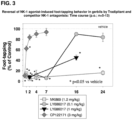
- Tradipitant (0.1 mg/kg, po) is found to significantly inhibit NK-1 agonist induced foot-tapping behavior up to 7 hours after administration ( FIG. 3 ) but the effect was significantly diminished by 16 hours after administration at this dose. However, at a higher dose of 1 mg/kg ( FIG. 3 ), tradipitant significantly reverses foot-tapping behavior (greater than 50% inhibition of foot-tapping behavior) up to 16 hours after administration. The duration of effects of tradipitant ( FIG. 3 ) is longer than that of CP-122721 (3 mg/kg), which inhibits foot-tapping behavior up to 2 hours after administration, while MK-869 (1.2 mg/kg, po) significantly inhibits foot-tapping behavior up to 24 hours after administration. Mean ⁇ SE *p ⁇ .05 compared to vehicle. Data are expressed as percent control of vehicle (vehicle response to 3 pmol GR73632).
- tradipitant is a very potent, centrally acting NK-1 receptor antagonist in vivo in the gerbil with a relatively long duration of action.
- Tradipitant is a potent and selective NK-1 receptor antagonist with demonstrated efficacy in animal models of distress.
- Five male dogs are administered a single oral dose of 3 mg/kg MK-869 (a positive control), or tradipitant at 0.3, 1.0, and 3.0 mg/kg in a Latin-square design.
- Each animal is administered a different dose on a particular dosing day, so that each dose of tradipitant, MK-869, and apomorphine alone is represented. Over the five (5) weeks of the study, each animal receives each of the treatments, but only one per week. The purpose of this study is to determine whether tradipitant suppresses apomorphine-induced emesis.
- the low dose of tradipitant is 10 times the ED 50 in the gerbil foot-tapping model of NK-1 receptor antagonism (Example 1.2.1).
- the high dose is 100 times this efficacious dose, and is also the dose of MK-869 that was determined to be efficacious against apomorphine-induced emesis in the dog (Gidda, 2003).
- the mid dose of tradipitant is the approximate half-log interval between the low and high doses.
- the oral route of administration is selected for tradipitant because this is the route proposed, or currently used, clinically.
- the intravenous route is typically used for experimental apomorphine administration.
- the beagle dog is considered an effective species for demonstration of antagonism of apomorphine-induced emesis (Gidda, 2003).
- a dose of 0.1 mg apomorphine/kg is administered by intravenous injection approximately 2 hours after each administration of tradipitant or MK-869. In cases where apomorphine was administered alone, without prior treatment with tradipitant or MK-869, apomorphine is given at approximately the same time as when given in combination with tradipitant or MK-869.
- All dogs are fasted overnight prior to each treatment day and are then fed approximately one (1) hour after oral dosing (approximately one hour prior to administration of apomorphine). Individual doses are adjusted weekly for changes in body weight.
- the dose regimen consists of a 5x5 Latin square design, in which each subject receives 1 dose or dose combination/week (6 day washout) as shown in Table 3 below.
- Table 3 Latin Square Design Study week 1 2 3 4 5 Dog 1 APO + 0.3 mg/kg tradipitant APO + MK-869 APO + 3 mg/kg tradipitant APO APO + 1 mg/kg tradipitant Dog 2 APO + MK-869 APO + 1 mg/kg tradipitant APO APO + 0.3 mg/kg tradipitant APO + 3 mg/kg tradipitant Dog 3 APO + 3 mg/kg tradipitant APO APO + MK-869 APO + 1 mg/kg tradipitant APO + 0.3 mg/kg tradipitant Dog 4 APO APO + 0.3 mg/kg tradipitant APO 1 mg/kg tradipitant APO + 3 mg/kg tradipitant Dog 5 APO 1 mg/kg tradi
- Table 4 Plasma concentrations of tradipitant (ng/ml) Administered Dose 0.3 mg/kg 1.0 mg/kg 3.0 mg/kg Concentration of tradipitant (ng/ml) Concentration of tradipitant (ng/ml) Concentration of tradipitant (ng/ml) Dog 1 51.20 175.58 122.73 Dog 2 41.33 86.49 256.58 Dog 3 90.93 240.84 316.20 Dog 4 83.38 100.97 682.91 Dog 5 22.59 61.56 119.79 Mean (SD) 57.89 (28.75) 133.09 (73.71) 299.64 (230.58) Emesis occurs after each treatment, with the largest incidence of emesis occurring in the apomorphine alone group.
- Table 5 Emetic episodes by treatment group Test article* Dose level (mg/kg) Total No.Emetic Episodes APO (control) 0 28 MK-869 3.0 1** tradipitant 0.3 1** tradipitant 1.0 1** tradipitant 3.0 1** *Apomorphine is administered as a challenge dose to all groups. **All episodes occur in same dog (Dog 3).
- NK-1 receptor agonist substance P
- SP substance P
- This behavioral assay is used to demonstrate potency and CNS penetration of NK-1 antagonists in the guinea pig, a species that has receptor affinity for NK-1 antagonists that is similar to humans.
- 0.1 mg/kg of tradipitant or vehicle solution is administered orally and then 2, 4, or 7 hours later, 0.1 nmol of GR73632 is administered into the cerebral ventricle as described above.
- Vocalizations are recorded and quantified as indicated above.
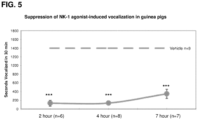
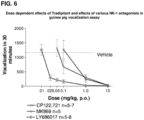
- Vehicle solutions are either CMC ( FIG. 4 data) or a 10% ethanol/emulphor, 10% propylene glycol solution ( FIGS. 5 and 6 ). Data is analyzed using one-tailed t-tests.
- a duration of activity study indicates that the effect of a single dose of 0.1 mg/kg tradipitant is significantly active ( FIG. 5 ) in suppressing agonist-induced vocalization at 7 hours following oral administration of the antagonist compound.
- NK-1 antagonists in the guinea pig vocalization assay are compared.
- Lower concentrations of tradipitant are tested and these data are presented with data obtained using Merck (MK-869), and Pfizer (CP-122721).
- All NK-1 antagonists tested produce significant inhibition of vocalization at 1 mg/kg (p ⁇ 0.001). Only tradipitant retains significant inhibitory activity at and below 0.1 mg/kg, as well as at lower doses of 0.05 and 0.025 mg/kg (p ⁇ 0.001).
- the minimum effective dose of tradipitant is found to be 0.025 mg/kg, which produces highly significant (p ⁇ 0.001) inhibition of vocalization compared to controls.
- Tradipitant significantly inhibits NK-1 agonist-induced vocalization in guinea pigs, indicating that this compound is an orally available and brain penetrant NK-1 antagonist.
- the minimum effective dose (MED) that produces this effect is 0.025 mg/kg.
- the compound, administered orally, is shown to have a duration of activity that exceeds 7 hours.
- tradipitant is substantially more potent than MK-869 and CP-122721.
- a tracer NK-1 antagonist compound (GR205171) is used to evaluate the ability of other NK-1 antagonists to occupy the brain NK-1 receptors.
- the test compounds are administered orally and the tracer compound administered intravenously afterward.
- the occupancy of the NK-1 receptors is evaluated by quantitating the amount of the tracer compound bound to the brain NK-1 receptors after increasing doses of the test compounds.
- tradipitant has an estimated ED 50 of 0.04 mg/kg p.o. and is substantially more potent than the other antagonists evaluated.
- a single-center, randomized, double-blind, placebo-controlled study is conducted to investigate the effect of tradipitant on small bowel transit time.
- a total of 15 healthy subjects, 12 men and 3 women, between the ages of 19 and 63 years are enrolled in the study and receive at least 1 dose of study medication.
- a total of 13 subjects complete the study.
- Subjects are randomized to receive 20 mg of tradipitant, 200 mg of tradipitant, or placebo as a single oral dose within each of 3 periods, coadministered with a capsule radiolabeled with a maximum of 1MBq 111 In.
- Four hours post-dose all subjects also receive a second capsule radiolabeled with a maximum of 4MBq 99m Tc.
- Each subject receives all 3 doses during the study.
- subjects report a mean daily nausea score over the 4 week period of about 3.20 ( ⁇ std. dev. of 0.83) on the 0 to 5 scale, i.e. greater than "moderate nausea.”
- the same patients report a mean daily nausea score of about 1.63 ( ⁇ std. dev. of 1.17) on the 0 to 5 scale.
- FIG. 7 illustrates the median daily nausea scores for the 64 subjects in the screening period (3.19) and open label extension period (1.35) respectively.
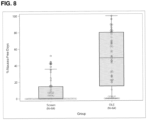
- FIG. 8 illustrates the median percentage of nausea-free days during the screening period (0%) and during the open label extension (49.11%).
- this disclosure can be seen to comprise one or more of the following illustrative embodiments:
Landscapes
- Health & Medical Sciences (AREA)
- Public Health (AREA)
- Animal Behavior & Ethology (AREA)
- Veterinary Medicine (AREA)
- General Health & Medical Sciences (AREA)
- Chemical & Material Sciences (AREA)
- Life Sciences & Earth Sciences (AREA)
- Pharmacology & Pharmacy (AREA)
- Medicinal Chemistry (AREA)
- General Chemical & Material Sciences (AREA)
- Engineering & Computer Science (AREA)
- Nuclear Medicine, Radiotherapy & Molecular Imaging (AREA)
- Chemical Kinetics & Catalysis (AREA)
- Organic Chemistry (AREA)
- Bioinformatics & Cheminformatics (AREA)
- Epidemiology (AREA)
- Nutrition Science (AREA)
- Hospice & Palliative Care (AREA)
- Otolaryngology (AREA)
- Physiology (AREA)
- Pharmaceuticals Containing Other Organic And Inorganic Compounds (AREA)
- Medicines That Contain Protein Lipid Enzymes And Other Medicines (AREA)
- Plural Heterocyclic Compounds (AREA)
Priority Applications (2)
| Application Number | Priority Date | Filing Date | Title |
|---|---|---|---|
| HRP20250615TT HRP20250615T1 (hr) | 2017-11-17 | 2018-11-16 | Tradipitant za upotrebu u liječenju gastropareze |
| SI201831236T SI3710000T1 (sl) | 2017-11-17 | 2018-11-16 | Tradipitant za uporabo pri zdravljenju gastropareze |
Applications Claiming Priority (2)
| Application Number | Priority Date | Filing Date | Title |
|---|---|---|---|
| US201762587681P | 2017-11-17 | 2017-11-17 | |
| PCT/US2018/061593 WO2019099883A1 (en) | 2017-11-17 | 2018-11-16 | Method of treatment of gastrointestinal diseases with tradipitant |
Publications (2)
| Publication Number | Publication Date |
|---|---|
| EP3710000A1 EP3710000A1 (en) | 2020-09-23 |
| EP3710000B1 true EP3710000B1 (en) | 2025-04-23 |
Family
ID=64734107
Family Applications (1)
| Application Number | Title | Priority Date | Filing Date |
|---|---|---|---|
| EP18821773.1A Active EP3710000B1 (en) | 2017-11-17 | 2018-11-16 | Tradipitant for use in treating gastroparesis |
Country Status (19)
| Country | Link |
|---|---|
| US (4) | US20200030307A1 (da) |
| EP (1) | EP3710000B1 (da) |
| JP (1) | JP7306614B2 (da) |
| KR (2) | KR20250140655A (da) |
| CN (2) | CN111343981A (da) |
| AU (1) | AU2018367623B2 (da) |
| BR (1) | BR112020009520A2 (da) |
| CA (1) | CA3081582A1 (da) |
| CL (1) | CL2020001290A1 (da) |
| DK (1) | DK3710000T3 (da) |
| ES (1) | ES3032138T3 (da) |
| FI (1) | FI3710000T3 (da) |
| HR (1) | HRP20250615T1 (da) |
| HU (1) | HUE071527T2 (da) |
| IL (1) | IL274541B2 (da) |
| MX (1) | MX2020005167A (da) |
| PT (1) | PT3710000T (da) |
| SI (1) | SI3710000T1 (da) |
| WO (1) | WO2019099883A1 (da) |
Families Citing this family (10)
| Publication number | Priority date | Publication date | Assignee | Title |
|---|---|---|---|---|
| MX385788B (es) * | 2015-03-04 | 2025-03-18 | Vanda Pharmaceuticals Inc | Método de tratamiento con tradipitant. |
| JP7410137B2 (ja) * | 2018-06-08 | 2024-01-09 | バンダ・ファーマシューティカルズ・インコーポレイテッド | トラジピタントを用いる処置方法 |
| US10821099B2 (en) | 2018-09-28 | 2020-11-03 | Vanda Pharmaceuticals Inc. | Use of tradipitant in motion sickness |
| WO2020069092A1 (en) * | 2018-09-28 | 2020-04-02 | Vanda Pharmaceuticals Inc. | Use of tradipitant in motion sickness |
| EP3890735A1 (en) * | 2018-12-03 | 2021-10-13 | Vanda Pharmaceuticals Inc. | Method of treatment with tradipitant |
| EP4125811A1 (en) | 2020-03-26 | 2023-02-08 | Vanda Pharmaceuticals Inc. | Treatment of lower respiratory tract infection with tradipitant |
| WO2023019084A1 (en) | 2021-08-12 | 2023-02-16 | Vanda Pharmaceuticals Inc. | Treatment of gastric accommodation with tradipitant |
| US20240350469A1 (en) | 2021-08-31 | 2024-10-24 | Vanda Pharmaceuticals Inc. | Treatment of lower respiratory tract infection with tradipitant |
| EP4637766A1 (en) | 2022-12-21 | 2025-10-29 | Vanda Pharmaceuticals Inc. | Methods of treatment with tradipitant |
| US20250255855A1 (en) | 2024-02-09 | 2025-08-14 | Vanda Pharmaceuticals Inc. | Method of treatment with tradipitant |
Family Cites Families (6)
| Publication number | Priority date | Publication date | Assignee | Title |
|---|---|---|---|---|
| PT1501809E (pt) | 2002-04-26 | 2008-03-18 | Lilly Co Eli | Derivados de triazole como antagonistas de receptores de taquiquinina |
| EA008881B1 (ru) * | 2003-10-24 | 2007-08-31 | Эли Лилли Энд Компани | Новые кристаллические формы {2-[1-(3,5-бис-трифторметилбензил)-5-пиридин-4-ил-1h-[1,2,3]триазол-4-ил]пиридин-3-ил}-(2-хлорфенил)метанона |
| DK2121610T3 (da) | 2006-12-20 | 2014-06-30 | Lilly Co Eli | Hidtil ukendt mellemprodukt og fremgangsmåde, som er anvendelige ved fremstilling af {2-[1-(3,5-bis-trifluormethyl-benzyl)-5-pyridin-4-yl-1h-[1,2,3]triazol-4-yl]-pyridin-3-yl}-(2-chlorphenyl)-methanon |
| PH12012500887A1 (en) * | 2009-11-18 | 2016-08-26 | Helsinn Healthcare Sa | Compositions for treating centrally mediated nausea and vomiting |
| MX385788B (es) * | 2015-03-04 | 2025-03-18 | Vanda Pharmaceuticals Inc | Método de tratamiento con tradipitant. |
| EP3393519A1 (en) * | 2015-12-22 | 2018-10-31 | Takeda Pharmaceutical Company Limited | Tripartite modulators of endosomal g protein-coupled receptors |
-
2018
- 2018-11-16 FI FIEP18821773.1T patent/FI3710000T3/fi active
- 2018-11-16 KR KR1020257031352A patent/KR20250140655A/ko active Pending
- 2018-11-16 CN CN201880073477.9A patent/CN111343981A/zh active Pending
- 2018-11-16 SI SI201831236T patent/SI3710000T1/sl unknown
- 2018-11-16 IL IL274541A patent/IL274541B2/en unknown
- 2018-11-16 BR BR112020009520-6A patent/BR112020009520A2/pt unknown
- 2018-11-16 CN CN202411421827.XA patent/CN119074729A/zh active Pending
- 2018-11-16 HR HRP20250615TT patent/HRP20250615T1/hr unknown
- 2018-11-16 AU AU2018367623A patent/AU2018367623B2/en active Active
- 2018-11-16 PT PT188217731T patent/PT3710000T/pt unknown
- 2018-11-16 WO PCT/US2018/061593 patent/WO2019099883A1/en not_active Ceased
- 2018-11-16 HU HUE18821773A patent/HUE071527T2/hu unknown
- 2018-11-16 ES ES18821773T patent/ES3032138T3/es active Active
- 2018-11-16 MX MX2020005167A patent/MX2020005167A/es unknown
- 2018-11-16 KR KR1020207014967A patent/KR102864285B1/ko active Active
- 2018-11-16 CA CA3081582A patent/CA3081582A1/en active Pending
- 2018-11-16 JP JP2020527780A patent/JP7306614B2/ja active Active
- 2018-11-16 EP EP18821773.1A patent/EP3710000B1/en active Active
- 2018-11-16 DK DK18821773.1T patent/DK3710000T3/da active
-
2019
- 2019-10-01 US US16/590,048 patent/US20200030307A1/en not_active Abandoned
-
2020
- 2020-05-15 CL CL2020001290A patent/CL2020001290A1/es unknown
- 2020-12-11 US US17/119,349 patent/US20210093621A1/en not_active Abandoned
-
2021
- 2021-07-08 US US17/370,211 patent/US20210330656A1/en not_active Abandoned
-
2023
- 2023-08-16 US US18/450,564 patent/US20230390269A1/en active Pending
Also Published As
| Publication number | Publication date |
|---|---|
| JP2021503480A (ja) | 2021-02-12 |
| NZ764107A (en) | 2024-07-05 |
| CN119074729A (zh) | 2024-12-06 |
| US20230390269A1 (en) | 2023-12-07 |
| US20210330656A1 (en) | 2021-10-28 |
| IL274541B2 (en) | 2024-10-01 |
| US20200030307A1 (en) | 2020-01-30 |
| ES3032138T3 (en) | 2025-07-15 |
| SI3710000T1 (sl) | 2025-07-31 |
| HRP20250615T1 (hr) | 2025-07-18 |
| KR20200088346A (ko) | 2020-07-22 |
| KR102864285B1 (ko) | 2025-09-24 |
| AU2018367623A1 (en) | 2020-05-21 |
| PT3710000T (pt) | 2025-05-29 |
| AU2018367623B2 (en) | 2024-03-28 |
| RU2020119259A (ru) | 2021-12-17 |
| BR112020009520A2 (pt) | 2020-11-03 |
| KR20250140655A (ko) | 2025-09-25 |
| CA3081582A1 (en) | 2019-05-23 |
| CN111343981A (zh) | 2020-06-26 |
| US20210093621A1 (en) | 2021-04-01 |
| IL274541B1 (en) | 2024-06-01 |
| EP3710000A1 (en) | 2020-09-23 |
| MX2020005167A (es) | 2020-08-20 |
| WO2019099883A1 (en) | 2019-05-23 |
| HUE071527T2 (hu) | 2025-09-28 |
| CL2020001290A1 (es) | 2020-11-13 |
| IL274541A (en) | 2020-06-30 |
| FI3710000T3 (fi) | 2025-07-03 |
| JP7306614B2 (ja) | 2023-07-11 |
| DK3710000T3 (da) | 2025-06-16 |
Similar Documents
| Publication | Publication Date | Title |
|---|---|---|
| US20230390269A1 (en) | Method of treatment with tradipitant | |
| US20220096449A1 (en) | Method of treatment with tradipitant | |
| De Ponti | Pharmacology of serotonin: what a clinician should know | |
| US20240285588A1 (en) | Use of tradipitant in motion sickness | |
| US20210008037A1 (en) | Use of tradipitant in motion sickness | |
| EA018927B1 (ru) | Способ лечения когнитивного расстройства, ассоциированного с шизофренией | |
| RU2797248C2 (ru) | Способ лечения заболеваний желудочно-кишечного тракта традипитантом | |
| US20240299373A1 (en) | Improved use of tradipitant in motion sickness | |
| US11752141B2 (en) | Pharmaceutical compositions and methods utilizing neostigmine and an NK-1 antagonist for treating myasthenia gravis | |
| NZ766397B2 (en) | Use of tradipitant in motion sickness | |
| WO2002051416A1 (fr) | Medicaments ameliorant les comportements de la vie courante chez des personnes atteintes de la maladie d'alzheimer |
Legal Events
| Date | Code | Title | Description |
|---|---|---|---|
| REG | Reference to a national code |
Ref country code: HR Ref legal event code: TUEP Ref document number: P20250615T Country of ref document: HR |
|
| STAA | Information on the status of an ep patent application or granted ep patent |
Free format text: STATUS: UNKNOWN |
|
| STAA | Information on the status of an ep patent application or granted ep patent |
Free format text: STATUS: THE INTERNATIONAL PUBLICATION HAS BEEN MADE |
|
| PUAI | Public reference made under article 153(3) epc to a published international application that has entered the european phase |
Free format text: ORIGINAL CODE: 0009012 |
|
| STAA | Information on the status of an ep patent application or granted ep patent |
Free format text: STATUS: REQUEST FOR EXAMINATION WAS MADE |
|
| 17P | Request for examination filed |
Effective date: 20200501 |
|
| AK | Designated contracting states |
Kind code of ref document: A1 Designated state(s): AL AT BE BG CH CY CZ DE DK EE ES FI FR GB GR HR HU IE IS IT LI LT LU LV MC MK MT NL NO PL PT RO RS SE SI SK SM TR |
|
| AX | Request for extension of the european patent |
Extension state: BA ME |
|
| DAV | Request for validation of the european patent (deleted) | ||
| DAX | Request for extension of the european patent (deleted) | ||
| STAA | Information on the status of an ep patent application or granted ep patent |
Free format text: STATUS: EXAMINATION IS IN PROGRESS |
|
| 17Q | First examination report despatched |
Effective date: 20230207 |
|
| GRAP | Despatch of communication of intention to grant a patent |
Free format text: ORIGINAL CODE: EPIDOSNIGR1 |
|
| STAA | Information on the status of an ep patent application or granted ep patent |
Free format text: STATUS: GRANT OF PATENT IS INTENDED |
|
| INTG | Intention to grant announced |
Effective date: 20241120 |
|
| GRAS | Grant fee paid |
Free format text: ORIGINAL CODE: EPIDOSNIGR3 |
|
| GRAA | (expected) grant |
Free format text: ORIGINAL CODE: 0009210 |
|
| STAA | Information on the status of an ep patent application or granted ep patent |
Free format text: STATUS: THE PATENT HAS BEEN GRANTED |
|
| AK | Designated contracting states |
Kind code of ref document: B1 Designated state(s): AL AT BE BG CH CY CZ DE DK EE ES FI FR GB GR HR HU IE IS IT LI LT LU LV MC MK MT NL NO PL PT RO RS SE SI SK SM TR |
|
| P01 | Opt-out of the competence of the unified patent court (upc) registered |
Free format text: CASE NUMBER: APP_12549/2025 Effective date: 20250314 |
|
| REG | Reference to a national code |
Ref country code: GB Ref legal event code: FG4D |
|
| REG | Reference to a national code |
Ref country code: CH Ref legal event code: EP |
|
| REG | Reference to a national code |
Ref country code: DE Ref legal event code: R096 Ref document number: 602018081359 Country of ref document: DE |
|
| REG | Reference to a national code |
Ref country code: IE Ref legal event code: FG4D |
|
| REG | Reference to a national code |
Ref country code: PT Ref legal event code: SC4A Ref document number: 3710000 Country of ref document: PT Date of ref document: 20250529 Kind code of ref document: T Free format text: AVAILABILITY OF NATIONAL TRANSLATION Effective date: 20250526 |
|
| REG | Reference to a national code |
Ref country code: DK Ref legal event code: T3 Effective date: 20250610 |
|
| REG | Reference to a national code |
Ref country code: NL Ref legal event code: FP |
|
| REG | Reference to a national code |
Ref country code: FI Ref legal event code: FGE |
|
| REG | Reference to a national code |
Ref country code: SE Ref legal event code: TRGR |
|
| REG | Reference to a national code |
Ref country code: ES Ref legal event code: FG2A Ref document number: 3032138 Country of ref document: ES Kind code of ref document: T3 Effective date: 20250715 |
|
| REG | Reference to a national code |
Ref country code: HR Ref legal event code: T1PR Ref document number: P20250615 Country of ref document: HR |
|
| REG | Reference to a national code |
Ref country code: GR Ref legal event code: EP Ref document number: 20250401186 Country of ref document: GR Effective date: 20250707 |
|
| REG | Reference to a national code |
Ref country code: HU Ref legal event code: AG4A Ref document number: E071527 Country of ref document: HU |
|
| REG | Reference to a national code |
Ref country code: LT Ref legal event code: MG9D |
|
| PG25 | Lapsed in a contracting state [announced via postgrant information from national office to epo] |
Ref country code: PL Free format text: LAPSE BECAUSE OF FAILURE TO SUBMIT A TRANSLATION OF THE DESCRIPTION OR TO PAY THE FEE WITHIN THE PRESCRIBED TIME-LIMIT Effective date: 20250423 |
|
| PG25 | Lapsed in a contracting state [announced via postgrant information from national office to epo] |
Ref country code: BG Free format text: LAPSE BECAUSE OF FAILURE TO SUBMIT A TRANSLATION OF THE DESCRIPTION OR TO PAY THE FEE WITHIN THE PRESCRIBED TIME-LIMIT Effective date: 20250423 |
|
| PG25 | Lapsed in a contracting state [announced via postgrant information from national office to epo] |
Ref country code: RS Free format text: LAPSE BECAUSE OF FAILURE TO SUBMIT A TRANSLATION OF THE DESCRIPTION OR TO PAY THE FEE WITHIN THE PRESCRIBED TIME-LIMIT Effective date: 20250723 |
|
| PG25 | Lapsed in a contracting state [announced via postgrant information from national office to epo] |
Ref country code: IS Free format text: LAPSE BECAUSE OF FAILURE TO SUBMIT A TRANSLATION OF THE DESCRIPTION OR TO PAY THE FEE WITHIN THE PRESCRIBED TIME-LIMIT Effective date: 20250823 |
|
| PG25 | Lapsed in a contracting state [announced via postgrant information from national office to epo] |
Ref country code: LV Free format text: LAPSE BECAUSE OF FAILURE TO SUBMIT A TRANSLATION OF THE DESCRIPTION OR TO PAY THE FEE WITHIN THE PRESCRIBED TIME-LIMIT Effective date: 20250423 |
|
| REG | Reference to a national code |
Ref country code: CH Ref legal event code: U11 Free format text: ST27 STATUS EVENT CODE: U-0-0-U10-U11 (AS PROVIDED BY THE NATIONAL OFFICE) Effective date: 20251201 |
|
| REG | Reference to a national code |
Ref country code: HR Ref legal event code: ODRP Ref document number: P20250615 Country of ref document: HR Payment date: 20251103 Year of fee payment: 8 |
|
| PGFP | Annual fee paid to national office [announced via postgrant information from national office to epo] |
Ref country code: PT Payment date: 20251105 Year of fee payment: 8 |
|
| PGFP | Annual fee paid to national office [announced via postgrant information from national office to epo] |
Ref country code: HU Payment date: 20251107 Year of fee payment: 8 |
|
| PGFP | Annual fee paid to national office [announced via postgrant information from national office to epo] |
Ref country code: LU Payment date: 20251126 Year of fee payment: 8 Ref country code: NL Payment date: 20251126 Year of fee payment: 8 |
|
| PGFP | Annual fee paid to national office [announced via postgrant information from national office to epo] |
Ref country code: DE Payment date: 20251128 Year of fee payment: 8 |
|
| PGFP | Annual fee paid to national office [announced via postgrant information from national office to epo] |
Ref country code: GB Payment date: 20251127 Year of fee payment: 8 |
|
| PGFP | Annual fee paid to national office [announced via postgrant information from national office to epo] |
Ref country code: NO Payment date: 20251128 Year of fee payment: 8 Ref country code: MC Payment date: 20251104 Year of fee payment: 8 |
|
| PG25 | Lapsed in a contracting state [announced via postgrant information from national office to epo] |
Ref country code: SM Free format text: LAPSE BECAUSE OF FAILURE TO SUBMIT A TRANSLATION OF THE DESCRIPTION OR TO PAY THE FEE WITHIN THE PRESCRIBED TIME-LIMIT Effective date: 20250423 |
|
| PGFP | Annual fee paid to national office [announced via postgrant information from national office to epo] |
Ref country code: AT Payment date: 20251128 Year of fee payment: 8 |
|
| PGFP | Annual fee paid to national office [announced via postgrant information from national office to epo] |
Ref country code: IT Payment date: 20251119 Year of fee payment: 8 Ref country code: FI Payment date: 20251125 Year of fee payment: 8 Ref country code: DK Payment date: 20251125 Year of fee payment: 8 |
|
| PGFP | Annual fee paid to national office [announced via postgrant information from national office to epo] |
Ref country code: HR Payment date: 20251103 Year of fee payment: 8 Ref country code: FR Payment date: 20251125 Year of fee payment: 8 |
|
| PGFP | Annual fee paid to national office [announced via postgrant information from national office to epo] |
Ref country code: TR Payment date: 20251104 Year of fee payment: 8 Ref country code: GR Payment date: 20251126 Year of fee payment: 8 Ref country code: BE Payment date: 20251127 Year of fee payment: 8 |
|
| PGFP | Annual fee paid to national office [announced via postgrant information from national office to epo] |
Ref country code: CH Payment date: 20251201 Year of fee payment: 8 Ref country code: SE Payment date: 20251127 Year of fee payment: 8 |
|
| PGFP | Annual fee paid to national office [announced via postgrant information from national office to epo] |
Ref country code: IE Payment date: 20251127 Year of fee payment: 8 Ref country code: CZ Payment date: 20251103 Year of fee payment: 8 |
|
| PGFP | Annual fee paid to national office [announced via postgrant information from national office to epo] |
Ref country code: MT Payment date: 20251031 Year of fee payment: 8 |
|
| PG25 | Lapsed in a contracting state [announced via postgrant information from national office to epo] |
Ref country code: EE Free format text: LAPSE BECAUSE OF FAILURE TO SUBMIT A TRANSLATION OF THE DESCRIPTION OR TO PAY THE FEE WITHIN THE PRESCRIBED TIME-LIMIT Effective date: 20250423 |
|
| PG25 | Lapsed in a contracting state [announced via postgrant information from national office to epo] |
Ref country code: SK Free format text: LAPSE BECAUSE OF FAILURE TO SUBMIT A TRANSLATION OF THE DESCRIPTION OR TO PAY THE FEE WITHIN THE PRESCRIBED TIME-LIMIT Effective date: 20250423 Ref country code: RO Free format text: LAPSE BECAUSE OF FAILURE TO SUBMIT A TRANSLATION OF THE DESCRIPTION OR TO PAY THE FEE WITHIN THE PRESCRIBED TIME-LIMIT Effective date: 20250423 |
|
| PGFP | Annual fee paid to national office [announced via postgrant information from national office to epo] |
Ref country code: SI Payment date: 20251030 Year of fee payment: 8 Ref country code: ES Payment date: 20251201 Year of fee payment: 8 |