EP3707859B1 - Ermöglichen null-touch-bootstrap für geräte über netzwerk-perimeter-feuerwände - Google Patents
Ermöglichen null-touch-bootstrap für geräte über netzwerk-perimeter-feuerwände Download PDFInfo
- Publication number
- EP3707859B1 EP3707859B1 EP18812436.6A EP18812436A EP3707859B1 EP 3707859 B1 EP3707859 B1 EP 3707859B1 EP 18812436 A EP18812436 A EP 18812436A EP 3707859 B1 EP3707859 B1 EP 3707859B1
- Authority
- EP
- European Patent Office
- Prior art keywords
- atls
- tls
- connection
- network device
- cloud server
- Prior art date
- Legal status (The legal status is an assumption and is not a legal conclusion. Google has not performed a legal analysis and makes no representation as to the accuracy of the status listed.)
- Active
Links
Images





Classifications
-
- H—ELECTRICITY
- H04—ELECTRIC COMMUNICATION TECHNIQUE
- H04L—TRANSMISSION OF DIGITAL INFORMATION, e.g. TELEGRAPHIC COMMUNICATION
- H04L63/00—Network architectures or network communication protocols for network security
- H04L63/08—Network architectures or network communication protocols for network security for authentication of entities
- H04L63/0823—Network architectures or network communication protocols for network security for authentication of entities using certificates
-
- H—ELECTRICITY
- H04—ELECTRIC COMMUNICATION TECHNIQUE
- H04L—TRANSMISSION OF DIGITAL INFORMATION, e.g. TELEGRAPHIC COMMUNICATION
- H04L63/00—Network architectures or network communication protocols for network security
- H04L63/02—Network architectures or network communication protocols for network security for separating internal from external traffic, e.g. firewalls
- H04L63/0281—Proxies
-
- H—ELECTRICITY
- H04—ELECTRIC COMMUNICATION TECHNIQUE
- H04L—TRANSMISSION OF DIGITAL INFORMATION, e.g. TELEGRAPHIC COMMUNICATION
- H04L63/00—Network architectures or network communication protocols for network security
- H04L63/16—Implementing security features at a particular protocol layer
- H04L63/168—Implementing security features at a particular protocol layer above the transport layer
-
- H—ELECTRICITY
- H04—ELECTRIC COMMUNICATION TECHNIQUE
- H04W—WIRELESS COMMUNICATION NETWORKS
- H04W12/00—Security arrangements; Authentication; Protecting privacy or anonymity
- H04W12/04—Key management, e.g. using generic bootstrapping architecture [GBA]
- H04W12/043—Key management, e.g. using generic bootstrapping architecture [GBA] using a trusted network node as an anchor
- H04W12/0431—Key distribution or pre-distribution; Key agreement
-
- H—ELECTRICITY
- H04—ELECTRIC COMMUNICATION TECHNIQUE
- H04W—WIRELESS COMMUNICATION NETWORKS
- H04W12/00—Security arrangements; Authentication; Protecting privacy or anonymity
- H04W12/06—Authentication
- H04W12/069—Authentication using certificates or pre-shared keys
-
- H—ELECTRICITY
- H04—ELECTRIC COMMUNICATION TECHNIQUE
- H04L—TRANSMISSION OF DIGITAL INFORMATION, e.g. TELEGRAPHIC COMMUNICATION
- H04L41/00—Arrangements for maintenance, administration or management of data switching networks, e.g. of packet switching networks
- H04L41/08—Configuration management of networks or network elements
- H04L41/0803—Configuration setting
- H04L41/0806—Configuration setting for initial configuration or provisioning, e.g. plug-and-play
-
- H—ELECTRICITY
- H04—ELECTRIC COMMUNICATION TECHNIQUE
- H04L—TRANSMISSION OF DIGITAL INFORMATION, e.g. TELEGRAPHIC COMMUNICATION
- H04L63/00—Network architectures or network communication protocols for network security
- H04L63/16—Implementing security features at a particular protocol layer
- H04L63/166—Implementing security features at a particular protocol layer at the transport layer
-
- H—ELECTRICITY
- H04—ELECTRIC COMMUNICATION TECHNIQUE
- H04W—WIRELESS COMMUNICATION NETWORKS
- H04W4/00—Services specially adapted for wireless communication networks; Facilities therefor
- H04W4/50—Service provisioning or reconfiguring
Definitions
- the present disclosure relates to network security.
- Provisioning and bootstrapping devices in a secure fashion on a secured network can be a difficult, time consuming, expensive and/or complex process.
- collaboration endpoints e.g., video endpoints and Internet Protocol (IP) Phones
- IoT Internet of Things
- IP Internet Protocol
- TLS Transport Layer Security
- TLS interception proxy firewalls may deploy TLS interception proxy firewalls. These proxy firewalls insert themselves as a so-called Man-in-the-Middle (MITM) when the devices attempt to contact trusted cloud services beyond the local domain. Since the device likely does not trust the TLS interception proxy, the device may be prevented from establishing a secure connection to the cloud service, and thus precluded from successfully bootstrapping.
- MITM Man-in-the-Middle
- interception proxies not only may be widely deployed, but they may be infrequently updated. Their existence, and the ability to establish secure connections in spite of them, is a continued problem for a large class of devices.
- the techniques result in "zero-touch" bootstrapping once a device is powered up, even if the device is deployed on a secure network that intercepts all traffic to the Internet.
- a method including operations of establishing an application layer transport layer security (ATLS) connection between a network device and a cloud server by sending, from the network device, TLS records in transport protocol message bodies (e.g., HTTP message bodies) to the cloud server, the ATLS connection transiting at least one transport layer security (TLS) proxy device, receiving, from the cloud server via the ATLS connection, an identifier for a certificate authority, establishing a connection with the certificate authority associated with the identifier and, in turn, receiving from the certificate authority credentials to access an application service different from the cloud server and the certificate authority, and connecting to the application service using the credentials received from the certificate authority.
- ATLS application layer transport layer security
- a device that includes an interface unit configured to enable network communications, a memory, and one or more processors coupled to the interface unit and the memory, and configured to: establish an application layer transport layer security (ATLS) connection between the device and a cloud server by sending, from the device, TLS records in transport protocol message bodies (e.g., HTTP message bodies) to the cloud server, the ATLS connection transiting at least one transport layer security (TLS) proxy device, receive, from the cloud server via the ATLS connection, an identifier for a certificate authority, establish a connection with the certificate authority associated with the identifier and, in turn, receive from the certificate authority credentials to access an application service different from the cloud server and the certificate authority, and complete a bootstrapping process of the device by connecting to the application service using the credentials received from the certificate authority.
- ATLS application layer transport layer security
- Embodiment described herein introduce Application Layer TLS (ATLS) which allows establishment of a TLS connection between a client and a service across a TLS interception "middlebox.”
- ATLS Application Layer TLS
- this is achieved by transporting TLS records in hypertext transport protocol (HTTP) message bodies between clients and services (hosted, e.g., on a cloud server).
- HTTP hypertext transport protocol
- This enables clients and services to establish secure connections using TLS at the application layer, and treat any middleboxes that are intercepting traffic at the network layer as untrusted transport.
- the mechanisms described herein move the TLS handshake up the OSI stack to the application layer.
- ATLS leverages TLS software stack application programming interfaces (APIs) which enable applications to unplug network stack and read/write TLS data from/to in-memory byte buffers.
- APIs application programming interfaces
- ATLS can be leveraged by both clients and servers such that TLS records are transported in messages bodies, such as HTTP message bodies.
- the connection between client and service may also be upgraded to a WebSocket. This allows client-server TLS connection at the application layer over untrusted HTTPS transport.
- a client 110 communicates with a service (e.g., a server) 150 via an untrusted man-in-the-middle (MITM) (or middlebox) gateway 120 and TLS Terminator 130. More specifically, the client 110 establishes a transport layer TLS connection 182 with the middlebox (client->gateway TLS) comprising a stack including UDP 160, the client->gateway TLS 162, transport 164 (in this example, Constrained Application Protocol (CoAP)), Client -> Service TLS 166 and application data 168.
- a service e.g., a server
- MAM man-in-the-middle gateway 120 and TLS Terminator 130.
- the client 110 establishes a transport layer TLS connection 182 with the middlebox (client->gateway TLS) comprising a stack including UDP 160, the client->gateway TLS 162, transport 164 (in this example, Constrained Application Protocol (CoAP)), Client -> Service TLS 166 and application data 168.
- CoAP Constrained
- the middlebox gateway 120 opens a transport layer TLS connection 184 with the TLS Terminator 130 deployed in front of the service (M->T TLS).
- Connection 184 comprises a stack including TCP 161, the M->T TLS 163, HTTP transport 164, client -> service TLS 166 and application data 168.
- TLS Terminator 130 in turn opens a connection to service 150 via stack 186 including TCP 161, HTTP transport 164, client -> service TLS 166 and application data 168.
- the client 110 can ignore any certificate validation errors that are generated by 162 when it connects to the middlebox gateway 120. Certificate validation errors generated by 166 would indicate an actual attack scenario.
- HTTP messages for example, are transported over this layer between the client and the service.
- Application layer TLS messages are thus exchanged via connection 180 inside the transport message bodies (e.g., HTTP message bodies) in order to establish an end-to-end TLS session between the client and the service (Client->Service TLS).
- TMS Transport Layer Security
- JSON JavaScript Object Notation
- TLS Transport Layer Security
- transport protocols include: Hyper Text Transfer Protocol Secure (HTTPS) + TLS, HTTP + Transport Control Protocol (TCP), HTTP2, the Quick UDP Internet Connections (QUIC) protocol + TLS, Datagram Transport Layer Security (DTLS), TLS, and IoT transports such as CoAP and Zigbee, among others.
- HTTPS Hyper Text Transfer Protocol Secure
- TCP Transport Control Protocol
- QUIC Quick UDP Internet Connections
- DTLS Datagram Transport Layer Security
- IoT transports such as CoAP and Zigbee, among others.
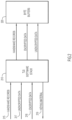
- FIG. 2 shows TLS software stack interfaces.
- TLS stack 210 expose Application Programming Interfaces (APIs) that allow applications to inject/extract TLS handshake records 215 from byte buffers 220.
- APIs Application Programming Interfaces
- the TLS stack 210 also allows applications to encrypt/decrypt application data 217, 218 into/from byte buffers. The bytes can then be exchanged between client 110 and server 150 over any suitable transport. Further, keying material 219 may be acquired via stack 210.
- TLS software stack 210 can be used to 'unplug' the default network socket transport layer and read and write TLS records 215 and other data 217, 218, 219 directly from byte buffers 220. This makes it possible to create application layer TLS sessions, extract the raw TLS record bytes from the bottom of the TLS stack, and transport these bytes over any suitable transport.
- the TLS software stacks can generate byte streams of full TLS flights which may include multiple TLS records.
- the TLS software stack APIs of FIG. 2 enable the architecture depicted in FIG. 3 , which shows how an application 310 (client or server) can interact directly with an application ATLS session 320 to extract raw TLS records 330. That is, the application 310 creates and interacts with an application layer TLS session 320 in order to generate and consume the raw TLS records 330 and application data 315.
- the application 310 transports the raw TLS records 330 inside, e.g., HTTP, message bodies using a (standard HTTP) stack 350.
- the stack 350 may in turn use an independent communication channel and transport encryption 360 with the same or a different TLS stack 340 (or TCP transport) to communicate packets 370 with its peer.
- the application layer TLS session 320 and network layer transport encryption 360 can both leverage a shared, common, TLS software stack 340. This high level architecture is applicable to both clients and services (peers).
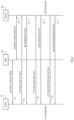
- FIG. 4 illustrates an example of an ATLS flow using HTTP.
- a device 410 e.g., a client device
- device 410 and in connection with a first flight, sends an HTTP POST to service 450, to which the service 450 replies at 413 with a "200 OK", indicating that the service (server) 450 was able to successfully parse the request and process the TLS records using its TLS software stack.
- device 410 sends an HTTP POST to service 450, to which the service 450 replies at 415 with a "200 OK".
- ATLS is fully established.
- device 410 may send an HTTP POST, at 416, including encrypted application data to which service 450 replies, at 417, with a "200 OK", along with service (server) application data.
- a status code of 200 OK does not necessarily indicate that the TLS connection being negotiated is error-free. That is, alerts produced by TLS will be returned in the encoded TLS records.
- a 200 OK response simply indicates that the client should provide the records encoded in the response to its TLS stack
- FIG. 5 illustrates examples of ATLS use cases in accordance with example embodiments.
- ATLS enables a client device 510 and server (cloud service 550) to establish a secure mutually authenticated channel over untrusted transport.
- an untrusted MITM TLS Interception Proxy e.g., a gateway or MITM2
- a TLS terminator e.g., MITM1
- ATLS as described herein, enables servers that sit behind various types of middleboxes to nevertheless to be accessed, and in accordance with the embodiments described herein perform PKI certificate based authentication of connecting clients.
- Bootstrapping Remote Secure Key Infrastructures is a protocol that allows a device, which is bootstrapping on a local domain, to query a default manufacturer service on the internet (called a Registrar 540) and to ask that Registrar 540 what domain and domain Certificate Authorities (CAs) that the device should trust. It is noted that a Registration Authority (RA) may be used in place of a CA. It should be understood that BRSKI relies on establishment of a network layer TLS connection between the device 510 and the Registrar 540 for the purposes of mutual authentication: the client device 510 verifies the Registrar 540 identity using TLS PKI mechanisms, and vice-versa.
- BRSKI necessitates that the Registrar is directly available on the local network or that any TLS proxy (middlebox) be configured to ignore the communication flows. Operationally this can be difficult in a range of deployments. For example, it is often the case that the TLS proxy either cannot be modified or the network administrators are interested in a 'low management' solution that requires minimal specialized configuration of their network. Collaboration solutions (e.g., video capable end units) are particularly impacted by this deficiency.
- a device 510 can leverage a cloud Registrar service 540 to zero-touch bootstrap against a CA and Application services.
- the CA can be in the cloud (e.g., cloud CA 560) or in a local domain (local CA 570).
- the device 510 that needs to bootstrap has an Initial Secure Device Identifier (IDevID) also known as Manufacturer Installed Certificate (MIC).
- IDevID Initial Secure Device Identifier
- MIC Manufacturer Installed Certificate
- the device 510 is configured to automatically enroll against the CA using its IDevID to obtain a Locally Significant Device Identifier (LDevID), also known as Locally Significant Certificate (LSC).
- LSC Locally Significant Certificate
- MITMs or middleboxes 520, 530 can sit between the device 510 and the cloud Registrar 540, Certificate Authority (CA) 560 and Application services 550, the network layer TLS connection can be broken between the device and all cloud services, preventing the device to successfully bootstrap.
- CA Certificate Authority
- the device 510 uses ATLS to establish TLS connections with cloud services across the MITMs.
- the device can also use its IDevID or LDevID on the ATLS session to verify its identity to services across MITMs.
- the device 510 can use its LDevID to automatically connect to a local domain service 580 or cloud Application services 550.
- the device 510 leverages cloud Registrar service 540 via connection 501 to facilitate zero-touch enrolment against one or more CAs 560, 570 and zero-touch registration against application services 550, 580.
- the Registrar service 540 determines the device local domain based on the device's IDevID. As shown, there may be a TLS Interception Proxy / Man In The Middle (MITM 1) 530 between the device 510 and all cloud services 540, 550, 560, but the ATLS mechanism overcomes the likelihood of a connection break.
- a Local CA 570 resides in a first network (Network 1) 512 and a Local Service 580 resides in a second network (Network 2) 514.
- the illustrated architecture also works if there is an MITM (MITM 2) 520 between the device 510 and all local services 570, 580, although such a deployment configuration may not be as common.
- MITM MITM 2
- the CA (560 or 570) from which the device 510, with its IDevID, obtains its LDevID could be in the cloud (via connection 502b) or in the local domain (via connection 502a).
- the device 510 could enrol and obtain multiple LDevIDs from multiple CAs, if desired.
- the device 510 can connect to cloud application service 550 via connection 503a and/or to local domain application service 580 via connection 503b.
- the device 510 may connect in different ways to, or through, a local domain network during the connection process.
- Network 1 512 may allow the device 510 to connect to Registrar 540 on the Internet, and may allow the device 510 to connect to the CA (whether that CA is deployed on the Internet (cloud CA 560) or on the local domain (local CA 570)). Such connections occur before the device 510 has enrolled to obtain an LDevID.
- the network may grant access to additional services, but this is not required. Further, the network may require that the device have a trusted IDevID prior to granting network access.
- Network 2 514 may allow the device 510 to connect to all required application services 580, 550 on the local domain and internet, respectively.
- the device 510 will typically have to present an LDevID issued by a trusted CA prior to being granted network access.
- Connections may make use of a mutual TLS connection where the client and service use PKI certificates to verify mutual identity and where that connection traverses an MITM, by leveraging ATLS. That is, where there is an MITM between the device 510 and cloud services, this means that, e.g., connections 501, 502b and 503a are ATLS connections. Where there is an MITM between the device 510 and al local domain services, this means that, e.g., connections 502a and 503b are ATLS connections.
- a high level flow associated with a cloud CA and both local domain and cloud application Services is as follows, with reference still to FIG. 5 .
- the service 550, 580 may issue to the device 510 a token, or establish a session with the device 510 such that all subsequent access is granted via the session or token, and not by using the certificate. Further, once the device 510 trusts the MITMs 520, 530, the device 510 may fallback to using standard TLS, and not ATLS. Additionally, subsequent flows might use the LDevID credential chain from the local network to fully authenticate the Client->gateway 120 TLS session 120 ( FIG. 1 ) during subsequent (non-bootstrapping) communications with the service 150. This provides a unique multi-secured flow between 182 and 150 that is both authenticated to the local MITM TLS proxy and authenticated to the service 150 or TLS terminator 130.
- FIG. 6 depicts a series of operations that may be performed by device 510 in connection with bootstrapping in a given local domain.
- a network device establishes an application layer transport layer security (ATLS) connection between the network device and a cloud server by sending, from the network device, TLS records in transport protocol message bodies (e.g., HTTP message bodies) to the cloud server, the ATLS connection transiting at least one transport layer security (TLS) proxy device.
- the network device receives, from the cloud server via the ATLS connection, an identifier for a certificate authority.
- the network device establishes a connection with the certificate authority associated with the identifier and, in turn, receives from the certificate authority credentials to access an application service different from the cloud server and the certificate authority. The network device may be considered to have completed bootstrapping at this point.
- the network device connects to the application service using the credentials received from the certificate authority.
- a client establishes an ATLS connection with a Registrar in the cloud by layering an application layer TLS handshake over a HTTP exchange, which could in turn be transported over either a TCP or TLS network layer connection, i.e., the connection could be ATLS over HTTP over TCP or ATLS over HTTPS over TLS.
- the client uses its manufacturer installed certificate (IDevID) when establishing the ATLS connection to the cloud Registrar.
- IDevID manufacturer installed certificate
- the client and cloud Registrar mutually authenticate each other's identity using PKI certificates presented in the ATLS connection.
- the cloud Registrar uses the client PKI certificate (e.g., the IDevID) to lookup the domain that owns the client (using sales channel integration using any suitable mechanism).
- the cloud Registrar then returns domain information including local CA information and any other necessary details to the client, such as trust anchor information, etc.
- the client trusts the information that it receives from the cloud Registrar.
- the client may, for example, leverage ATLS again to enroll against one or more CAs using its IDevID to obtain one or more LDevIDs, even if there is a TLS proxy between the client and the CA.
- the client may use its new LDevID to connect to the local domain and local domain services. This could include using the LDevID to connect to an 802.1x network, using the LDevID to connect to HTTP proxies or connect to MITMs, or using the LDevID to perform multiplex TLS (at the network layer or the application layer using ATLS) against local domain services or services on the internet.
- the embodiments described herein provide for a client to validate a service's PKI identity using ATLS and for a service to validate a client's PKI identity using a standard TLS software stack, but operating at the application level and effectively bypassing any network layer TLS middleboxes.
- the client can use ATLS to enroll against a CA using its IDevID for authentication in order to get an LDevID, while potentially traversing TLS middleboxes.
- the client can use ATLS to connect to a cloud service using its LDevID for authentication in order to access service features, while potentially traversing TLS middleboxes.
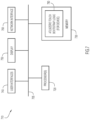
- FIG. 7 illustrates a block diagram of a client (device) 710 configured to participate in the techniques presented herein.
- the client 710 may take on a variety of forms, but for simplicity, FIG. 7 shows that the client includes one or more processors 720, a memory 730, user interfaces 740, a display 750 and a network interface 760, all interconnected via, e.g., a common bus 705.
- the processors 720 may comprise, e.g., application specific integrated circuits (ASICs) or configurable logic devices, e.g., simple programmable logic devices (SPLDs), complex programmable logic devices (CPLDs), and field programmable gate arrays (FPGAs), that, in addition to microprocessors and digital signal processors may individually, or collectively, operate as processing circuitry.
- ASICs application specific integrated circuits
- SPLDs simple programmable logic devices
- CPLDs complex programmable logic devices
- FPGAs field programmable gate arrays
- the memory 730 may comprise magnetic disk storage media devices, optical storage media devices, random access memory (RAM) or other dynamic storage device (e.g., dynamic RAM (DRAM), static RAM (SRAM), and synchronous DRAM (SD RAM)), read only memory (ROM) or other static storage device (e.g., programmable ROM (PROM), erasable PROM (EPROM), and electrically erasable PROM (EEPROM)), or other physical/tangible memory storage devices.
- RAM random access memory
- DRAM dynamic RAM
- SRAM static RAM
- SD RAM synchronous DRAM
- ROM read only memory
- PROM programmable ROM
- EPROM erasable PROM
- EEPROM electrically erasable PROM
- User interfaces 740 may include a mouse, keyboard, trackball, or touch screen among other like human-machine interfaces.
- Display 750 may be a cathode ray tube (CRT), liquid crystal display (LCD), light emitting diode (LED) display, etc., for displaying information to a computer user.
- CTR cathode ray tube
- LCD liquid crystal display
- LED light emitting diode
- the network interface 760 enables network connectivity/communication (wired and/or wireless), and might be, e.g., a physical or virtual network interface card (NIC).
- NIC network interface card
- the memory 730 may store instructions or logic (software) 780 for ATLS/zero touch bootstrap enabling software to allow the client 710 to perform the operations needed to participate in the techniques described herein.
- the network interface 760 may be configured to perform these operations.
- the memory 730 may comprise one or more tangible (non-transitory) computer readable storage media (e.g., a memory device) encoded with software comprising computer executable instructions and when the software is executed, it is operable to perform the operations described herein
- FIG. 8 illustrates a block diagram of a device (server) 810, such as the Registrar 540, Cloud CA 560, Cloud Service 550, Local CA 570 and Local Service 580, that may be configured to participate in the techniques or operations described herein.
- the server 810 may include a network interface 860 (like those described above), one or more processors 820 (like those described above) and memory 830 (like that described above) that stores instructions (logic) 880 for device-appropriate functions for zero touch bootstrap enabling software.
- Logic 880 is configured to, e.g., perform the operations of ATLS handshaking like that shown in, e.g., FIG. 4 .
- the memory 830 may comprise one or more tangible (non-transitory) computer readable storage media (e.g., a memory device) encoded with software comprising computer executable instructions and when the software is executed, it is operable to perform the operations described herein.
- tangible (non-transitory) computer readable storage media e.g., a memory device
- a method in one form, includes establishing an application layer transport layer security (ATLS) connection between a network device and a cloud server by sending, from the network device, TLS records in transport protocol message bodies to the cloud server, the ATLS connection transiting at least one transport layer security (TLS) proxy device, receiving, from the cloud server via the ATLS connection, an identifier for a certificate authority, establishing a connection with the certificate authority associated with the identifier and, in turn, receiving from the certificate authority credentials to access an application service different from the cloud server and the certificate authority, and connecting to the application service using the credentials received from the certificate authority.
- ATLS application layer transport layer security
- the method may further include sending by the network device to the cloud server a unique identifier of the network device.
- the unique identifier may be an Initial Secure Device Identifier (IDevID) or a Manufacturer Installed Certificate (MIC) of the network device.
- IDevID Initial Secure Device Identifier
- MIC Manufacturer Installed Certificate
- the credentials may be a locally significant device identifier (LDevID) or a locally significant certificate (LSC) of the network device.
- LevID locally significant device identifier
- LSC locally significant certificate
- the ATLS connection between the network device and the cloud server may be instantiated as ATLS over hypertext transport protocol (HTTP) over Transmission Control Protocol (TCP).
- HTTP hypertext transport protocol
- TCP Transmission Control Protocol
- the ATLS connection between the network device and the cloud server may be alternatively instantiated as ATLS over HTTP over TLS.
- the method includes establishing another application layer transport layer security (ATLS) connection between the network device and another cloud server by sending, from the network device, TLS records in hypertext transport protocol (HTTP) message bodies to the cloud server, the another ATLS connection transiting at least one transport layer security (TLS) proxy device, and receiving, from the another cloud server via the another ATLS connection, another identifier for another certificate authority.
- ATLS application layer transport layer security
- the at least one TLS proxy device comprises a TLS terminating load balancer
- the at least one transport layer security (TLS) proxy device comprises a TLS interception middlebox.
- a device in another embodiment, may include an interface unit configured to enable network communications, a memory, and one or more processors coupled to the interface unit and the memory, and configured to establish an application layer transport layer security (ATLS) connection between the device and a cloud server by sending, from the device, TLS records in transport protocol message bodies to the cloud server, the ATLS connection transiting at least one transport layer security (TLS) proxy device, receive, from the cloud server via the ATLS connection, an identifier for a certificate authority, establish a connection with the certificate authority associated with the identifier and, in turn, receive from the certificate authority credentials to access an application service different from the cloud server and the certificate authority, and connect to the application service using the credentials received from the certificate authority.
- ATLS application layer transport layer security
- the one or more processors may be further configured to send by the device to the cloud server a unique identifier of the device
- the unique identifier may comprise an Initial Secure Device Identifier (IDevID) or a Manufacturer Installed Certificate (MIC) of the device.
- IDevID Initial Secure Device Identifier
- MIC Manufacturer Installed Certificate
- the credentials may comprise a locally significant device identifier (LDevID) or a locally significant certificate (LSC) of the device, and the one or more processors may be further configured to establish a connection with a local domain application service using the LDevID or LSC.
- LevID locally significant device identifier
- LSC locally significant certificate
- the ATLS connection between the device and the cloud server may be instantiated as ATLS over hypertext transport protocol (HTTP) over Transmission Control Protocol (TCP), or alternatively, the ATLS connection between the device and the cloud server is instantiated as ATLS over HTTP over TLS.
- HTTP hypertext transport protocol
- TCP Transmission Control Protocol
- a non-transitory tangible computer readable storage media encoded with instructions that, when executed by at least one processor is configured to cause the processor to. establish an application layer transport layer security (ATLS) connection between a network device and a cloud server by sending, from the network device, TLS records in transport protocol message bodies to the cloud server, the ATLS connection transiting at least one transport layer security (TLS) proxy device, receive, from the cloud server via the ATLS connection, an identifier for a certificate authority, establish a connection with the certificate authority associated with the identifier and, in turn, receive from the certificate authority credentials to access an application service different from the cloud server and the certificate authority, and connect to the application service using the credentials received from the certificate authority.
- ATLS application layer transport layer security
- the instructions may be further operable to send by the network device to the cloud server a unique identifier of the network device.
- the unique identifier comprises an Initial Secure Device Identifier (IDevID) or a Manufacturer Installed Certificate (MIC) of the network device.
Landscapes
- Engineering & Computer Science (AREA)
- Computer Security & Cryptography (AREA)
- Computer Networks & Wireless Communication (AREA)
- Signal Processing (AREA)
- Computer Hardware Design (AREA)
- Computing Systems (AREA)
- General Engineering & Computer Science (AREA)
- Data Exchanges In Wide-Area Networks (AREA)
- Information Transfer Between Computers (AREA)
- Computer And Data Communications (AREA)
Claims (10)
- Verfahren zum Cloud-basierten Bootstrapping einer Netzwerkvorrichtung, das Folgendes umfasst:Herstellen einer ersten Anwendungsschicht-Transportschicht-Sicherheits- (Application layer Transport Layer Security, ATLS) Verbindung zwischen einer Netzwerkvorrichtung (510) und einem Cloud-Server (540) außerhalb einer lokalen Netzwerkdomäne (512) der Netzwerkvorrichtung durch Senden von TLS-Datensätzen in Transportprotokoll-Nachrichtenkörpern von der Netzwerkvorrichtung an den Cloud-Server, wobei die ATLS-Verbindung mindestens eine Transportschicht-Sicherheits-(Transport Layer Security, TLS) Proxy-Vorrichtung (530) durchläuft;Senden einer eindeutigen Kennung der Netzwerkvorrichtung durch die Netzwerkvorrichtung über die erste ATLS-Verbindung an den Cloud-Server;Bestimmen der lokalen Netzwerkdomäne der Vorrichtung basierend auf der eindeutigen Kennung der Vorrichtung und Zurücksenden von Domäneninformationen und Vertrauensankerinformationen an die Netzwerkvorrichtung über die erste ATLS-Verbindung durch den Cloud-Server (540), wobei die Domäneninformationen Zertifikatsautoritätsinformationen enthalten, die eine Kennung einer Zertifikatsautorität (Certificate Authority, CA) (560, 570), umfassen, die von der Netzwerkvorrichtung verwendet werden soll, und die Vertrauensankerinformationen es der Netzwerkvorrichtung ermöglichen, der CA zu vertrauen;an der Netzwerkvorrichtung:Empfangen der Kennung für die CA vom Cloud-Server über die erste ATLS-Verbindung;Herstellen einer zweiten ATLS-Verbindung, die mindestens eine TLS-Proxy-Vorrichtung mit der CA durchläuft, die der Kennung zugeordnet ist, und wiederum Empfangen von Anmeldeinformationen von der CA über die zweite ATLS-Verbindung, um auf einen Anwendungsdienst (550, 580) zuzugreifen, der sich von dem Cloud-Server und der Zertifizierungsstelle unterscheidet;Herstellen einer dritten ATLS-Verbindung, die mindestens eine TLS-Proxy-Vorrichtung mit dem Anwendungsdienst durchläuft; undVerbinden über die dritte ATLS-Verbindung mit dem Anwendungsdienst unter Verwendung der von der CA empfangenen Anmeldeinformationen.
- Verfahren nach Anspruch 1, wobei die eindeutige Kennung eine sichere Anfangsvorrichtungskennung (Initial Secure Device Identifier, IDevlD) oder ein herstellerinstalliertes Zertifikat (Manufacturer Installed Certificate, MIC) der Netzwerkvorrichtung umfasst.
- Verfahren nach Anspruch 1 oder 2, wobei die Anmeldeinformationen einen lokal signifikanten Geräteidentifikator (Locally significant DEVice IDentifier, LDevlD) oder ein lokal signifikantes Zertifikat (Locally Significant Certificate, LSC) der Netzwerkvorrichtung umfassen.
- Verfahren nach Anspruch 3, das ferner den Aufbau einer Verbindung mit einem lokalen Domänenanwendungsdienst unter Verwendung der LDevlD oder LSC umfasst.
- Verfahren nach einem der Ansprüche 1 bis 4, wobei die ATLS-Verbindung zwischen der Netzwerkvorrichtung und dem Cloud-Server als ATLS über das Hypertext-Transportprotokoll (Hypertext Transfer Protocol, HTTP) über das Sendesteuerungsprotokoll (Transmission Control Protocol, TCP) instanziiert wird.
- Verfahren nach einem der Ansprüche 1 bis 4, wobei die ATLS-Verbindung zwischen der Netzwerkvorrichtung und dem Cloud-Server als ATLS über HTTP über TLS instanziiert wird.
- Verfahren nach einem der Ansprüche 1 bis 6, das ferner den Aufbau einer weiteren Anwendungsschicht-Transportschicht-Sicherheits-, ATLS-, Verbindung zwischen der Netzwerkvorrichtung und einem anderen Cloud-Server durch Senden von TLS-Datensätzen in Hypertext-Transportprotokoll-, HTTP-, Nachrichtenkörpern von der Netzwerkvorrichtung an den Cloud-Server umfasst, wobei die weitere ATLS-Verbindung mindestens eine Transportschicht-Sicherheits-, TLS-, Proxy-Vorrichtung durchläuft; und
Empfangen einer weiteren Kennung für eine weitere Zertifizierungsstelle von dem anderen Cloud-Server über die weitere ATLS-Verbindung. - Verfahren nach einem der Ansprüche 1 bis 7, wobei die mindestens eine TLS-Proxy-Vorrichtung einen TLSterminierenden Lastausgleicher umfasst.
- Verfahren nach einem der Ansprüche 1 bis 8, wobei die mindestens eine TLS-Proxy-Vorrichtung eine TLS-Interception-Middlebox umfasst.
- System mit Mitteln zur Durchführung eines Verfahrens nach einem der Ansprüche 1 bis 9.
Applications Claiming Priority (3)
| Application Number | Priority Date | Filing Date | Title |
|---|---|---|---|
| US201762584168P | 2017-11-10 | 2017-11-10 | |
| US15/946,003 US11025608B2 (en) | 2017-11-10 | 2018-04-05 | Enabling zero-touch bootstrap for devices across network perimeter firewalls |
| PCT/US2018/059150 WO2019094316A1 (en) | 2017-11-10 | 2018-11-05 | Enabling zero-touch bootstrap for devices across network perimeter firewalls |
Publications (2)
| Publication Number | Publication Date |
|---|---|
| EP3707859A1 EP3707859A1 (de) | 2020-09-16 |
| EP3707859B1 true EP3707859B1 (de) | 2023-07-12 |
Family
ID=66433595
Family Applications (1)
| Application Number | Title | Priority Date | Filing Date |
|---|---|---|---|
| EP18812436.6A Active EP3707859B1 (de) | 2017-11-10 | 2018-11-05 | Ermöglichen null-touch-bootstrap für geräte über netzwerk-perimeter-feuerwände |
Country Status (4)
| Country | Link |
|---|---|
| US (1) | US11025608B2 (de) |
| EP (1) | EP3707859B1 (de) |
| CN (1) | CN111226418B (de) |
| WO (1) | WO2019094316A1 (de) |
Families Citing this family (10)
| Publication number | Priority date | Publication date | Assignee | Title |
|---|---|---|---|---|
| WO2018159204A1 (ja) * | 2017-02-28 | 2018-09-07 | 日本電気株式会社 | 通信装置、方法、プログラム、及び記録媒体 |
| US10833926B2 (en) * | 2017-11-17 | 2020-11-10 | T-Mobile Usa, Inc. | Touchless secure bootstrapping of IoT devices |
| US11522913B1 (en) | 2019-09-03 | 2022-12-06 | Rapid7, Inc. | Simplifying networking setup complexity for security agents |
| US11201897B1 (en) | 2019-09-03 | 2021-12-14 | Rapid7, Inc. | Secure multiplexed routing |
| US11297036B1 (en) | 2019-09-03 | 2022-04-05 | Rapid7, Inc. | Single whitelisted ingress endpoint on 1 and 2 way TLS connections |
| US11310273B2 (en) | 2020-01-23 | 2022-04-19 | Rockwell Collins, Inc. | Secure network aggregation protocol |
| WO2021230636A1 (en) * | 2020-05-11 | 2021-11-18 | Samsung Electronics Co., Ltd. | System and method for certificate based authentication for tethering |
| US11563579B2 (en) * | 2020-10-02 | 2023-01-24 | Nvidia Corporation | Token-based zero-touch enrollment for provisioning edge computing applications |
| US12244733B2 (en) | 2022-06-24 | 2025-03-04 | Hewlett Packard Enterprise Development Lp | Authorizing secure connections responsive to certificates bound to logical identifiers |
| WO2025199940A1 (en) * | 2024-03-29 | 2025-10-02 | Abb Schweiz Ag | Method for issuing and obtaining certificates, devices, and computer program product |
Family Cites Families (17)
| Publication number | Priority date | Publication date | Assignee | Title |
|---|---|---|---|---|
| US7114175B2 (en) * | 2001-08-03 | 2006-09-26 | Nokia Corporation | System and method for managing network service access and enrollment |
| US7039710B2 (en) * | 2003-03-20 | 2006-05-02 | Nokia Corporation | Method and apparatus for providing multi-client support in a SIP-enabled terminal |
| US7496755B2 (en) * | 2003-07-01 | 2009-02-24 | International Business Machines Corporation | Method and system for a single-sign-on operation providing grid access and network access |
| CN100586104C (zh) * | 2006-04-17 | 2010-01-27 | 中国科学院计算技术研究所 | 基于路由的会话初始化协议透明穿越网络地址转换的方法 |
| US8438618B2 (en) * | 2007-12-21 | 2013-05-07 | Intel Corporation | Provisioning active management technology (AMT) in computer systems |
| US9432356B1 (en) * | 2009-05-05 | 2016-08-30 | Amazon Technologies, Inc. | Host identity bootstrapping |
| US8527774B2 (en) * | 2009-05-28 | 2013-09-03 | Kaazing Corporation | System and methods for providing stateless security management for web applications using non-HTTP communications protocols |
| US8327424B2 (en) * | 2009-12-22 | 2012-12-04 | Motorola Solutions, Inc. | Method and apparatus for selecting a certificate authority |
| CA2831617C (en) * | 2011-04-01 | 2018-06-26 | Clawd Technologies Inc. | System, method, server and computer-readable medium for real-time verification of a status of a member of an organization |
| NO20120022A1 (no) * | 2012-01-10 | 2013-07-11 | Magnus Skraastad Gulbrandsen | System og fremgangsmate for kontroll av tilgang til opphavsrettsbeskyttede data |
| US9130837B2 (en) * | 2012-05-22 | 2015-09-08 | Cisco Technology, Inc. | System and method for enabling unconfigured devices to join an autonomic network in a secure manner |
| US9613052B2 (en) * | 2012-06-05 | 2017-04-04 | International Business Machines Corporation | Establishing trust within a cloud computing system |
| WO2013188875A1 (en) * | 2012-06-15 | 2013-12-19 | Massachusetts Institute Of Technology | Optimized transport layer security |
| US9462006B2 (en) * | 2015-01-21 | 2016-10-04 | Palo Alto Research Center Incorporated | Network-layer application-specific trust model |
| US10038695B2 (en) * | 2015-06-02 | 2018-07-31 | ALTR Solutions, Inc. | Remotely deauthenticating a user from a web-based application using a centralized login server |
| US20170289197A1 (en) * | 2016-03-31 | 2017-10-05 | Qualcomm Incorporated | Transport layer security token binding and trusted signing |
| US11829998B2 (en) * | 2016-06-07 | 2023-11-28 | Cornell University | Authenticated data feed for blockchains |
-
2018
- 2018-04-05 US US15/946,003 patent/US11025608B2/en active Active
- 2018-11-05 CN CN201880068004.XA patent/CN111226418B/zh active Active
- 2018-11-05 WO PCT/US2018/059150 patent/WO2019094316A1/en not_active Ceased
- 2018-11-05 EP EP18812436.6A patent/EP3707859B1/de active Active
Also Published As
| Publication number | Publication date |
|---|---|
| CN111226418A (zh) | 2020-06-02 |
| EP3707859A1 (de) | 2020-09-16 |
| CN111226418B (zh) | 2023-06-30 |
| US11025608B2 (en) | 2021-06-01 |
| US20190149538A1 (en) | 2019-05-16 |
| WO2019094316A1 (en) | 2019-05-16 |
Similar Documents
| Publication | Publication Date | Title |
|---|---|---|
| EP3707859B1 (de) | Ermöglichen null-touch-bootstrap für geräte über netzwerk-perimeter-feuerwände | |
| US11356417B2 (en) | Private cloud routing server connection mechanism for use in a private communication architecture | |
| US20230208822A1 (en) | Method and system for secure communications | |
| US20230065060A1 (en) | System and method for a multi system trust chain | |
| US11863529B2 (en) | Private cloud routing server connection mechanism for use in a private communication architecture | |
| US10609152B2 (en) | Creation of remote direct access path via internet to firewalled device using multi-site session forwarding | |
| US10903999B1 (en) | Protecting PII data from man-in-the-middle attacks in a network | |
| CN107534658A (zh) | 使用公钥机制在服务层的端对端认证 | |
| US9935930B2 (en) | Private and secure communication architecture without utilizing a public cloud based routing server | |
| US11683292B2 (en) | Private cloud routing server connection mechanism for use in a private communication architecture | |
| CN113542389A (zh) | 用于私有通信架构的私有云端路由服务器连接机制 | |
| US20260005873A1 (en) | Client-Rooted Decryption Public Key Infrastructure (PKI) for Secure Cloud-Based Inspection of Encrypted Traffic | |
| US20230308293A1 (en) | Systems and methods for automatic Secure Sockets Layer (SSL) bypass | |
| EP3932044B1 (de) | Automatische verteilung von dynamischen host-konfigurationsprotokoll(dhcp)-schlüsseln über verbindungsschichtentdeckungsprotokoll (lldp) | |
| US11888898B2 (en) | Network configuration security using encrypted transport | |
| Gao et al. | SecT: A lightweight secure thing-centered IoT communication system | |
| GB2607362A (en) | Private cloud routing server connection mechanism for use in a private communication architecture | |
| GB2609677A (en) | Private cloud routing server connection mechanism for use in a private communication architecture | |
| EP4011052B1 (de) | Onboarding einer hardwarevorrichtung | |
| EP3580901B1 (de) | Verbindungsvorrichtung zum aufbau einer gesicherten kommunikationsverbindung auf anwendungsebene | |
| Liu | Residential Network Security: Using Software-defined Networking to Inspect and Label Traffic | |
| KR20250100470A (ko) | 통합형 보안 평면 엔티티를 이용한 무선 통신 방법 및 시스템 | |
| GB2532831A (en) | Private cloud routing server connection mechanism for use in a private communication architecture |
Legal Events
| Date | Code | Title | Description |
|---|---|---|---|
| STAA | Information on the status of an ep patent application or granted ep patent |
Free format text: STATUS: UNKNOWN |
|
| STAA | Information on the status of an ep patent application or granted ep patent |
Free format text: STATUS: THE INTERNATIONAL PUBLICATION HAS BEEN MADE |
|
| PUAI | Public reference made under article 153(3) epc to a published international application that has entered the european phase |
Free format text: ORIGINAL CODE: 0009012 |
|
| STAA | Information on the status of an ep patent application or granted ep patent |
Free format text: STATUS: REQUEST FOR EXAMINATION WAS MADE |
|
| 17P | Request for examination filed |
Effective date: 20200325 |
|
| AK | Designated contracting states |
Kind code of ref document: A1 Designated state(s): AL AT BE BG CH CY CZ DE DK EE ES FI FR GB GR HR HU IE IS IT LI LT LU LV MC MK MT NL NO PL PT RO RS SE SI SK SM TR |
|
| AX | Request for extension of the european patent |
Extension state: BA ME |
|
| DAV | Request for validation of the european patent (deleted) | ||
| DAX | Request for extension of the european patent (deleted) | ||
| STAA | Information on the status of an ep patent application or granted ep patent |
Free format text: STATUS: EXAMINATION IS IN PROGRESS |
|
| 17Q | First examination report despatched |
Effective date: 20211201 |
|
| REG | Reference to a national code |
Ref country code: DE Ref legal event code: R079 Free format text: PREVIOUS MAIN CLASS: H04L0012240000 Ipc: H04L0009400000 Ref document number: 602018053311 Country of ref document: DE |
|
| GRAP | Despatch of communication of intention to grant a patent |
Free format text: ORIGINAL CODE: EPIDOSNIGR1 |
|
| STAA | Information on the status of an ep patent application or granted ep patent |
Free format text: STATUS: GRANT OF PATENT IS INTENDED |
|
| RIC1 | Information provided on ipc code assigned before grant |
Ipc: H04L 41/0806 20220101ALI20230109BHEP Ipc: H04W 12/0431 20210101ALI20230109BHEP Ipc: H04W 12/069 20210101ALI20230109BHEP Ipc: H04L 9/40 20220101AFI20230109BHEP |
|
| INTG | Intention to grant announced |
Effective date: 20230207 |
|
| GRAS | Grant fee paid |
Free format text: ORIGINAL CODE: EPIDOSNIGR3 |
|
| GRAA | (expected) grant |
Free format text: ORIGINAL CODE: 0009210 |
|
| STAA | Information on the status of an ep patent application or granted ep patent |
Free format text: STATUS: THE PATENT HAS BEEN GRANTED |
|
| P01 | Opt-out of the competence of the unified patent court (upc) registered |
Effective date: 20230525 |
|
| AK | Designated contracting states |
Kind code of ref document: B1 Designated state(s): AL AT BE BG CH CY CZ DE DK EE ES FI FR GB GR HR HU IE IS IT LI LT LU LV MC MK MT NL NO PL PT RO RS SE SI SK SM TR |
|
| REG | Reference to a national code |
Ref country code: CH Ref legal event code: EP |
|
| REG | Reference to a national code |
Ref country code: IE Ref legal event code: FG4D |
|
| REG | Reference to a national code |
Ref country code: DE Ref legal event code: R096 Ref document number: 602018053311 Country of ref document: DE |
|
| REG | Reference to a national code |
Ref country code: LT Ref legal event code: MG9D |
|
| REG | Reference to a national code |
Ref country code: NL Ref legal event code: MP Effective date: 20230712 |
|
| REG | Reference to a national code |
Ref country code: AT Ref legal event code: MK05 Ref document number: 1588255 Country of ref document: AT Kind code of ref document: T Effective date: 20230712 |
|
| PG25 | Lapsed in a contracting state [announced via postgrant information from national office to epo] |
Ref country code: NL Free format text: LAPSE BECAUSE OF FAILURE TO SUBMIT A TRANSLATION OF THE DESCRIPTION OR TO PAY THE FEE WITHIN THE PRESCRIBED TIME-LIMIT Effective date: 20230712 |
|
| PG25 | Lapsed in a contracting state [announced via postgrant information from national office to epo] |
Ref country code: GR Free format text: LAPSE BECAUSE OF FAILURE TO SUBMIT A TRANSLATION OF THE DESCRIPTION OR TO PAY THE FEE WITHIN THE PRESCRIBED TIME-LIMIT Effective date: 20231013 |
|
| PG25 | Lapsed in a contracting state [announced via postgrant information from national office to epo] |
Ref country code: ES Free format text: LAPSE BECAUSE OF FAILURE TO SUBMIT A TRANSLATION OF THE DESCRIPTION OR TO PAY THE FEE WITHIN THE PRESCRIBED TIME-LIMIT Effective date: 20230712 |
|
| PG25 | Lapsed in a contracting state [announced via postgrant information from national office to epo] |
Ref country code: IS Free format text: LAPSE BECAUSE OF FAILURE TO SUBMIT A TRANSLATION OF THE DESCRIPTION OR TO PAY THE FEE WITHIN THE PRESCRIBED TIME-LIMIT Effective date: 20231112 |
|
| PG25 | Lapsed in a contracting state [announced via postgrant information from national office to epo] |
Ref country code: SE Free format text: LAPSE BECAUSE OF FAILURE TO SUBMIT A TRANSLATION OF THE DESCRIPTION OR TO PAY THE FEE WITHIN THE PRESCRIBED TIME-LIMIT Effective date: 20230712 Ref country code: RS Free format text: LAPSE BECAUSE OF FAILURE TO SUBMIT A TRANSLATION OF THE DESCRIPTION OR TO PAY THE FEE WITHIN THE PRESCRIBED TIME-LIMIT Effective date: 20230712 Ref country code: PT Free format text: LAPSE BECAUSE OF FAILURE TO SUBMIT A TRANSLATION OF THE DESCRIPTION OR TO PAY THE FEE WITHIN THE PRESCRIBED TIME-LIMIT Effective date: 20231113 Ref country code: NO Free format text: LAPSE BECAUSE OF FAILURE TO SUBMIT A TRANSLATION OF THE DESCRIPTION OR TO PAY THE FEE WITHIN THE PRESCRIBED TIME-LIMIT Effective date: 20231012 Ref country code: LV Free format text: LAPSE BECAUSE OF FAILURE TO SUBMIT A TRANSLATION OF THE DESCRIPTION OR TO PAY THE FEE WITHIN THE PRESCRIBED TIME-LIMIT Effective date: 20230712 Ref country code: LT Free format text: LAPSE BECAUSE OF FAILURE TO SUBMIT A TRANSLATION OF THE DESCRIPTION OR TO PAY THE FEE WITHIN THE PRESCRIBED TIME-LIMIT Effective date: 20230712 Ref country code: IS Free format text: LAPSE BECAUSE OF FAILURE TO SUBMIT A TRANSLATION OF THE DESCRIPTION OR TO PAY THE FEE WITHIN THE PRESCRIBED TIME-LIMIT Effective date: 20231112 Ref country code: HR Free format text: LAPSE BECAUSE OF FAILURE TO SUBMIT A TRANSLATION OF THE DESCRIPTION OR TO PAY THE FEE WITHIN THE PRESCRIBED TIME-LIMIT Effective date: 20230712 Ref country code: GR Free format text: LAPSE BECAUSE OF FAILURE TO SUBMIT A TRANSLATION OF THE DESCRIPTION OR TO PAY THE FEE WITHIN THE PRESCRIBED TIME-LIMIT Effective date: 20231013 Ref country code: FI Free format text: LAPSE BECAUSE OF FAILURE TO SUBMIT A TRANSLATION OF THE DESCRIPTION OR TO PAY THE FEE WITHIN THE PRESCRIBED TIME-LIMIT Effective date: 20230712 Ref country code: ES Free format text: LAPSE BECAUSE OF FAILURE TO SUBMIT A TRANSLATION OF THE DESCRIPTION OR TO PAY THE FEE WITHIN THE PRESCRIBED TIME-LIMIT Effective date: 20230712 Ref country code: AT Free format text: LAPSE BECAUSE OF FAILURE TO SUBMIT A TRANSLATION OF THE DESCRIPTION OR TO PAY THE FEE WITHIN THE PRESCRIBED TIME-LIMIT Effective date: 20230712 |
|
| PG25 | Lapsed in a contracting state [announced via postgrant information from national office to epo] |
Ref country code: PL Free format text: LAPSE BECAUSE OF FAILURE TO SUBMIT A TRANSLATION OF THE DESCRIPTION OR TO PAY THE FEE WITHIN THE PRESCRIBED TIME-LIMIT Effective date: 20230712 |
|
| REG | Reference to a national code |
Ref country code: DE Ref legal event code: R097 Ref document number: 602018053311 Country of ref document: DE |
|
| PG25 | Lapsed in a contracting state [announced via postgrant information from national office to epo] |
Ref country code: SM Free format text: LAPSE BECAUSE OF FAILURE TO SUBMIT A TRANSLATION OF THE DESCRIPTION OR TO PAY THE FEE WITHIN THE PRESCRIBED TIME-LIMIT Effective date: 20230712 Ref country code: RO Free format text: LAPSE BECAUSE OF FAILURE TO SUBMIT A TRANSLATION OF THE DESCRIPTION OR TO PAY THE FEE WITHIN THE PRESCRIBED TIME-LIMIT Effective date: 20230712 Ref country code: EE Free format text: LAPSE BECAUSE OF FAILURE TO SUBMIT A TRANSLATION OF THE DESCRIPTION OR TO PAY THE FEE WITHIN THE PRESCRIBED TIME-LIMIT Effective date: 20230712 Ref country code: DK Free format text: LAPSE BECAUSE OF FAILURE TO SUBMIT A TRANSLATION OF THE DESCRIPTION OR TO PAY THE FEE WITHIN THE PRESCRIBED TIME-LIMIT Effective date: 20230712 Ref country code: CZ Free format text: LAPSE BECAUSE OF FAILURE TO SUBMIT A TRANSLATION OF THE DESCRIPTION OR TO PAY THE FEE WITHIN THE PRESCRIBED TIME-LIMIT Effective date: 20230712 Ref country code: SK Free format text: LAPSE BECAUSE OF FAILURE TO SUBMIT A TRANSLATION OF THE DESCRIPTION OR TO PAY THE FEE WITHIN THE PRESCRIBED TIME-LIMIT Effective date: 20230712 |
|
| PLBE | No opposition filed within time limit |
Free format text: ORIGINAL CODE: 0009261 |
|
| STAA | Information on the status of an ep patent application or granted ep patent |
Free format text: STATUS: NO OPPOSITION FILED WITHIN TIME LIMIT |
|
| PG25 | Lapsed in a contracting state [announced via postgrant information from national office to epo] |
Ref country code: IT Free format text: LAPSE BECAUSE OF FAILURE TO SUBMIT A TRANSLATION OF THE DESCRIPTION OR TO PAY THE FEE WITHIN THE PRESCRIBED TIME-LIMIT Effective date: 20230712 |
|
| 26N | No opposition filed |
Effective date: 20240415 |
|
| REG | Reference to a national code |
Ref country code: CH Ref legal event code: PL |
|
| PG25 | Lapsed in a contracting state [announced via postgrant information from national office to epo] |
Ref country code: MC Free format text: LAPSE BECAUSE OF FAILURE TO SUBMIT A TRANSLATION OF THE DESCRIPTION OR TO PAY THE FEE WITHIN THE PRESCRIBED TIME-LIMIT Effective date: 20230712 |
|
| PG25 | Lapsed in a contracting state [announced via postgrant information from national office to epo] |
Ref country code: LU Free format text: LAPSE BECAUSE OF NON-PAYMENT OF DUE FEES Effective date: 20231105 |
|
| PG25 | Lapsed in a contracting state [announced via postgrant information from national office to epo] |
Ref country code: CH Free format text: LAPSE BECAUSE OF NON-PAYMENT OF DUE FEES Effective date: 20231130 |
|
| PG25 | Lapsed in a contracting state [announced via postgrant information from national office to epo] |
Ref country code: MC Free format text: LAPSE BECAUSE OF FAILURE TO SUBMIT A TRANSLATION OF THE DESCRIPTION OR TO PAY THE FEE WITHIN THE PRESCRIBED TIME-LIMIT Effective date: 20230712 Ref country code: LU Free format text: LAPSE BECAUSE OF NON-PAYMENT OF DUE FEES Effective date: 20231105 Ref country code: CH Free format text: LAPSE BECAUSE OF NON-PAYMENT OF DUE FEES Effective date: 20231130 Ref country code: SI Free format text: LAPSE BECAUSE OF FAILURE TO SUBMIT A TRANSLATION OF THE DESCRIPTION OR TO PAY THE FEE WITHIN THE PRESCRIBED TIME-LIMIT Effective date: 20230712 |
|
| REG | Reference to a national code |
Ref country code: BE Ref legal event code: MM Effective date: 20231130 |
|
| REG | Reference to a national code |
Ref country code: IE Ref legal event code: MM4A |
|
| PG25 | Lapsed in a contracting state [announced via postgrant information from national office to epo] |
Ref country code: IE Free format text: LAPSE BECAUSE OF NON-PAYMENT OF DUE FEES Effective date: 20231105 |
|
| PG25 | Lapsed in a contracting state [announced via postgrant information from national office to epo] |
Ref country code: BE Free format text: LAPSE BECAUSE OF NON-PAYMENT OF DUE FEES Effective date: 20231130 |
|
| PG25 | Lapsed in a contracting state [announced via postgrant information from national office to epo] |
Ref country code: IE Free format text: LAPSE BECAUSE OF NON-PAYMENT OF DUE FEES Effective date: 20231105 Ref country code: BE Free format text: LAPSE BECAUSE OF NON-PAYMENT OF DUE FEES Effective date: 20231130 |
|
| PG25 | Lapsed in a contracting state [announced via postgrant information from national office to epo] |
Ref country code: BG Free format text: LAPSE BECAUSE OF FAILURE TO SUBMIT A TRANSLATION OF THE DESCRIPTION OR TO PAY THE FEE WITHIN THE PRESCRIBED TIME-LIMIT Effective date: 20230712 |
|
| PG25 | Lapsed in a contracting state [announced via postgrant information from national office to epo] |
Ref country code: BG Free format text: LAPSE BECAUSE OF FAILURE TO SUBMIT A TRANSLATION OF THE DESCRIPTION OR TO PAY THE FEE WITHIN THE PRESCRIBED TIME-LIMIT Effective date: 20230712 |
|
| PG25 | Lapsed in a contracting state [announced via postgrant information from national office to epo] |
Ref country code: CY Free format text: LAPSE BECAUSE OF FAILURE TO SUBMIT A TRANSLATION OF THE DESCRIPTION OR TO PAY THE FEE WITHIN THE PRESCRIBED TIME-LIMIT; INVALID AB INITIO Effective date: 20181105 |
|
| PG25 | Lapsed in a contracting state [announced via postgrant information from national office to epo] |
Ref country code: HU Free format text: LAPSE BECAUSE OF FAILURE TO SUBMIT A TRANSLATION OF THE DESCRIPTION OR TO PAY THE FEE WITHIN THE PRESCRIBED TIME-LIMIT; INVALID AB INITIO Effective date: 20181105 |
|
| PG25 | Lapsed in a contracting state [announced via postgrant information from national office to epo] |
Ref country code: TR Free format text: LAPSE BECAUSE OF FAILURE TO SUBMIT A TRANSLATION OF THE DESCRIPTION OR TO PAY THE FEE WITHIN THE PRESCRIBED TIME-LIMIT Effective date: 20230712 |
|
| PGFP | Annual fee paid to national office [announced via postgrant information from national office to epo] |
Ref country code: DE Payment date: 20251010 Year of fee payment: 8 |
|
| PGFP | Annual fee paid to national office [announced via postgrant information from national office to epo] |
Ref country code: GB Payment date: 20251111 Year of fee payment: 8 |
|
| PGFP | Annual fee paid to national office [announced via postgrant information from national office to epo] |
Ref country code: FR Payment date: 20251114 Year of fee payment: 8 |