EP3706062A1 - Biometric interaction manager - Google Patents
Biometric interaction manager Download PDFInfo
- Publication number
- EP3706062A1 EP3706062A1 EP20160786.8A EP20160786A EP3706062A1 EP 3706062 A1 EP3706062 A1 EP 3706062A1 EP 20160786 A EP20160786 A EP 20160786A EP 3706062 A1 EP3706062 A1 EP 3706062A1
- Authority
- EP
- European Patent Office
- Prior art keywords
- message
- format
- data
- processing system
- interaction
- Prior art date
- Legal status (The legal status is an assumption and is not a legal conclusion. Google has not performed a legal analysis and makes no representation as to the accuracy of the status listed.)
- Granted
Links
Images


Classifications
-
- H—ELECTRICITY
- H04—ELECTRIC COMMUNICATION TECHNIQUE
- H04L—TRANSMISSION OF DIGITAL INFORMATION, e.g. TELEGRAPHIC COMMUNICATION
- H04L63/00—Network architectures or network communication protocols for network security
- H04L63/08—Network architectures or network communication protocols for network security for authentication of entities
- H04L63/0861—Network architectures or network communication protocols for network security for authentication of entities using biometrical features, e.g. fingerprint, retina-scan
-
- G—PHYSICS
- G06—COMPUTING OR CALCULATING; COUNTING
- G06Q—INFORMATION AND COMMUNICATION TECHNOLOGY [ICT] SPECIALLY ADAPTED FOR ADMINISTRATIVE, COMMERCIAL, FINANCIAL, MANAGERIAL OR SUPERVISORY PURPOSES; SYSTEMS OR METHODS SPECIALLY ADAPTED FOR ADMINISTRATIVE, COMMERCIAL, FINANCIAL, MANAGERIAL OR SUPERVISORY PURPOSES, NOT OTHERWISE PROVIDED FOR
- G06Q20/00—Payment architectures, schemes or protocols
- G06Q20/38—Payment protocols; Details thereof
- G06Q20/40—Authorisation, e.g. identification of payer or payee, verification of customer or shop credentials; Review and approval of payers, e.g. check credit lines or negative lists
- G06Q20/401—Transaction verification
- G06Q20/4014—Identity check for transactions
- G06Q20/40145—Biometric identity checks
-
- G—PHYSICS
- G06—COMPUTING OR CALCULATING; COUNTING
- G06Q—INFORMATION AND COMMUNICATION TECHNOLOGY [ICT] SPECIALLY ADAPTED FOR ADMINISTRATIVE, COMMERCIAL, FINANCIAL, MANAGERIAL OR SUPERVISORY PURPOSES; SYSTEMS OR METHODS SPECIALLY ADAPTED FOR ADMINISTRATIVE, COMMERCIAL, FINANCIAL, MANAGERIAL OR SUPERVISORY PURPOSES, NOT OTHERWISE PROVIDED FOR
- G06Q20/00—Payment architectures, schemes or protocols
- G06Q20/38—Payment protocols; Details thereof
- G06Q20/40—Authorisation, e.g. identification of payer or payee, verification of customer or shop credentials; Review and approval of payers, e.g. check credit lines or negative lists
- G06Q20/405—Establishing or using transaction specific rules
-
- H—ELECTRICITY
- H04—ELECTRIC COMMUNICATION TECHNIQUE
- H04L—TRANSMISSION OF DIGITAL INFORMATION, e.g. TELEGRAPHIC COMMUNICATION
- H04L63/00—Network architectures or network communication protocols for network security
- H04L63/08—Network architectures or network communication protocols for network security for authentication of entities
- H04L63/0853—Network architectures or network communication protocols for network security for authentication of entities using an additional device, e.g. smartcard, SIM or a different communication terminal
-
- H—ELECTRICITY
- H04—ELECTRIC COMMUNICATION TECHNIQUE
- H04L—TRANSMISSION OF DIGITAL INFORMATION, e.g. TELEGRAPHIC COMMUNICATION
- H04L63/00—Network architectures or network communication protocols for network security
- H04L63/10—Network architectures or network communication protocols for network security for controlling access to devices or network resources
- H04L63/107—Network architectures or network communication protocols for network security for controlling access to devices or network resources wherein the security policies are location-dependent, e.g. entities privileges depend on current location or allowing specific operations only from locally connected terminals
-
- H—ELECTRICITY
- H04—ELECTRIC COMMUNICATION TECHNIQUE
- H04L—TRANSMISSION OF DIGITAL INFORMATION, e.g. TELEGRAPHIC COMMUNICATION
- H04L63/00—Network architectures or network communication protocols for network security
- H04L63/12—Applying verification of the received information
- H04L63/123—Applying verification of the received information received data contents, e.g. message integrity
-
- H—ELECTRICITY
- H04—ELECTRIC COMMUNICATION TECHNIQUE
- H04L—TRANSMISSION OF DIGITAL INFORMATION, e.g. TELEGRAPHIC COMMUNICATION
- H04L9/00—Cryptographic mechanisms or cryptographic arrangements for secret or secure communications; Network security protocols
- H04L9/32—Cryptographic mechanisms or cryptographic arrangements for secret or secure communications; Network security protocols including means for verifying the identity or authority of a user of the system or for message authentication, e.g. authorization, entity authentication, data integrity or data verification, non-repudiation, key authentication or verification of credentials
- H04L9/3226—Cryptographic mechanisms or cryptographic arrangements for secret or secure communications; Network security protocols including means for verifying the identity or authority of a user of the system or for message authentication, e.g. authorization, entity authentication, data integrity or data verification, non-repudiation, key authentication or verification of credentials using a predetermined code, e.g. password, passphrase or PIN
- H04L9/3231—Biological data, e.g. fingerprint, voice or retina
Definitions
- a person trying to obtain access to data on a secure server may need to open an application, enter a password, and then enter a biometric into the application. The type of data desired is selected, and is then retrieved.
- digital wallets provide a convenient way for a user to pay with a selected payment instrument using a mobile device.
- the process for paying for goods or services with a digital wallet involves several steps. First, the user initiates a transaction by opening a digital wallet on a mobile device. The user may be prompted to provide biometrics (e.g., by using a fingerprint reader or camera on the mobile device). The user must manually select a payment instrument.
- the available payment instruments are limited to credit cards. Once the payment instrument has been selected by the user, the user will bring the user's mobile device in contact with a merchant access device, and the payment will be processed using the selected payment instrument. Note that in these exemplary situations, only one mode of interaction (e.g., one type of data to retrieve or one type of payment method to be processed) is available.
- interaction methods could involve the use of fewer steps, while being more flexible to allow for more than one interaction mode.
- Embodiments address these and other problems, individually and collectively.
- Embodiments are directed to methods and systems for processing a transaction based on biometric data and access data. Different accounts and providers may be used to process the transaction, using different message formats, based on user-configured mappings.
- One embodiment is directed to a method comprising: receiving, by a message processing system, an authorization request message from an access device, the authorization request message comprising a biometric template and access data; retrieving, by the message processing system from a configuration database, an interaction entity record identifier associated with an interaction entity from among a plurality of different interaction entities that process messages in different message formats; initiating, by the message processing system, validation of the biometric template; upon a determination that the biometric template is valid, then converting the authorization request message from a first format to a second format, the second format being compatible with message processing by the interaction entity; transmitting the authorization request message in the second format to the interaction entity; receiving, by the message processing system, an authorization response message in the second format from the interaction entity; converting the authorization response message from the second format to the first format; and transmitting, by the message processing system, the authorization response message in the first format to the access device.
- Another embodiment is directed to a message processing system comprising: a processor; and a non-transitory computer-readable medium coupled to the processor, the non-transitory computer-readable medium comprising code, executable by the processor, to implement a method comprising: receiving, by the message processing system, an authorization request message from an access device, the authorization request message comprising a biometric template and access data; retrieving, by the message processing system from a configuration database, an interaction entity record identifier associated with an interaction entity from among a plurality of different interaction entities that process messages in different message formats; initiating, by the message processing system, validation of the biometric template; upon a determination that the biometric template is valid, then converting the authorization request message from a first format to a second format, the second format being compatible with message processing by the interaction entity; transmitting the authorization request message in the second format to the interaction entity; receiving, by the message processing system, an authorization response message in the second format from the interaction entity; converting the authorization response message from the second format to the first format; and transmitting, by the
- Another embodiment is directed to a non-transitory computer readable medium comprising code, executable by a processor, configured to: receive, by a message processing system, an authorization request message from an access device, the authorization request message comprising a biometric template and access data; retrieve, by the message processing system from a configuration database, an interaction entity record identifier associated with an interaction entity from among a plurality of different interaction entities that process messages in different message formats; initiate, by the message processing system, validation of the biometric template; upon a determination that the biometric template is valid, then convert the authorization request message from a first format to a second format, the second format being compatible with message processing by the interaction entity; transmit the authorization request message in the second format to the interaction entity; receive, by the message processing system, an authorization response message in the second format from the interaction entity; convert the authorization response message from the second format to the first format; and transmit, by the message processing system, the authorization response message in the first format to the access device.
- a "user” can be a person or thing that employs some other thing for some purpose.
- a user may include an individual that may be associated with one or more personal accounts and/or mobile devices.
- the user may also be referred to as a cardholder, account holder, or consumer in some embodiments.
- a "user device” may be any suitable device that is operated by a user. Suitable user devices can be portable, and can communicate with external entities such as portable devices. Examples of user devices include mobile phones, laptop computers, transponders, wearable devices such as smart watches, smart media, etc.
- An “interaction” can be a reciprocal action, effect, or influence.
- An interaction for example, could be an exchange or transaction between two or more parties.
- An “interaction entity” may typically refer to a business entity (e.g., an issuer such as a bank) that maintains an account for a user.
- An interaction entity may also issue payment credentials stored on a user device, such as a cellular telephone, smart card, tablet, or laptop to the consumer.
- An interaction entity may manage non-payment interactions such as access to a secure location, access to a secure file, etc.
- An “interaction entity record identifier” may be an identifier of a particular record managed by an interaction entity, such as a bank account, transit pass, cryptocurrency wallet, line of credit, and the like.
- the identifier may be any suitable information that identifies the record. Examples of an interaction entity record entity identifier may include a PAN (primary account number or "account number”), an account name, and a cryptographic key.
- a "resource providing entity” may be an entity that may make resources available to a user.
- Resource providing entities may also be known as resource providers. Examples of resource providing entities include resource providers, vendors, suppliers, owners, traders, wallet providers, service providers, and the like. In some embodiments, such entities may be a single individual, small groups of individuals, or larger groups of individuals (e.g., companies, governmental agencies). Resource providing entities may be associated with one or more physical locations (e.g., supermarkets, malls, stores, etc.) and online platforms (e.g., e-commerce websites, online companies, etc.). In some embodiments, resource providing entities may make available physical items (e.g., goods, products, etc.) to the user.
- physical locations e.g., supermarkets, malls, stores, etc.
- online platforms e.g., e-commerce websites, online companies, etc.
- resource providing entities may make available physical items (e.g., goods, products, etc.) to the user.
- resource providing entities may make available digital resources (e.g., electronic documents, electronic files, etc.) to the user.
- resource providing entities may manage access to certain resources by the user.
- resource providing entities may make available access to a secure location.
- the resources may be services (e.g., digital wallet services).
- a "communication” can be a connection between entities or devices allowing the imparting or exchange of information, data, or news.
- a communication for example, could be the sending or receiving of information between two or more computers.
- An "application program interface” or “API” may include software specifying how components of a system should interact.
- the API may comprise a set of routines, protocols, and tools on which software applications may be built.
- An API may be used for a web-based system, operating system, database system, computer hardware or software library, and may include specifications for routines, data structures, object classes, variables and/or remote calls.
- Authentication may include a process for verifying an identity of something (e.g., a user).
- One form of authentication can be biometric authentication.
- a “biometric” may be any human characteristic that is unique to an individual.
- a biometric may be a person's fingerprint, voice sample, face, DNA, retina, etc.
- a “biometric reader” may include a device for capturing data from an individual's biometric sample.
- biometric readers may include fingerprint readers, front-facing cameras, microphones, and iris scanners.
- a “biometric sample” may include data obtained by a biometric reader.
- the data may be either an analog or digital representation of the user's biometric, generated prior to determining distinct features needed for matching.
- a biometric sample of a user's face may be image data.
- a biometric sample of a user's voice may be audio data.
- a “biometric template” or “biometric sample template” may include a file containing distinct characteristics extracted from a biometric sample that may be used during a biometric authentication process.
- a biometric template may be a binary mathematical file representing the unique features of an individual's fingerprint, eye, hand or voice needed for performing accurate authentication of the individual.
- a "key” may refer to a piece of information that is used in a cryptographic algorithm to transform input data into another representation.
- a cryptographic algorithm can be an encryption algorithm that transforms original data into an alternate representation, or a decryption algorithm that transforms encrypted information back to the original data. Examples of cryptographic algorithms may include triple data encryption standard (TDES), data encryption standard (DES), advanced encryption standard (AES), etc.
- a "digital signature” may include a type of electronic signature that encrypts documents with digital codes that are particularly difficult to duplicate.
- a digital signature may include data used to provide assurance or evidence as to the origin and identity of an electronic record or message.
- Digital signatures can be based on public key cryptography (i.e. asymmetric cryptography).
- Digital signatures may be generated using a public key algorithm such as RSA.
- signing software may be used to create a one-way hash of electronic data that is to be signed by a signing entity. A private key of the signing entity is then used to encrypt the hash and form the digital signature.
- a symmetric key of a symmetric key pair can be used to create a digital signature.
- validation may include the act of checking or affirming that information is legitimate.
- An example may be the act of checking that a digital signature appended to an electronic record is, in fact, legitimate and was signed by the entity that alleges creation of the digital signature.
- digital signatures may be validated according to a verification algorithm in conjunction with a signing entity's public key. In other cases, if underlying data was signed using a symmetric key of a symmetric key pair, the signature can be validated with the corresponding symmetric key.
- Access data may include any suitable data that can be used to access a resource or create data that can access a resource.
- access data may be account information for a payment account.
- Account information may include a PAN, payment token, expiration date, verification values (e.g., CVV, CVV2, dCVV, dCW2), etc.
- access data may be data that can be used to activate account data.
- account information may be stored on a mobile device, but may not be activated until specific information is received by the mobile device. This specific information may be characterized as access data in some embodiments.
- Such information may be ticket information for an event, data to access a building, transit ticket information, etc.
- Access data parameters may include a type or category of access data.
- An access data parameter may be a category of resource provider, such as a grocer or a transit agency.
- An access data parameter may be a type of resource, such as beverages, medical services, car parts, bus rides, etc. Alternatively, or additionally, access data parameters may be based on a specific resource provider or resource (e.g., Jane's Cafe or the #7 bus).
- An access data parameter may be transaction-specific, such as a time of day, location, amount, or user associated with initiating a transaction.
- An "authorizing entity” is an entity which can authorize or approve interactions.
- An authorizing entity may typically refer to a business entity (e.g., an issuer, or bank) that maintains an account for a user and is capable of authorizing interactions such as payment transactions, for example the purchase of goods or services.
- An "authorization request message” may be an electronic message that requests authorization for a transaction. In some embodiments, it is sent to a transaction processing computer and/or an issuer of a payment card to request authorization for a transaction.
- An authorization request message may comply with International Organization for Standardization (ISO) 8583, which is a standard for systems that exchange electronic transaction information associated with a payment made by a user using a payment device or payment account.
- the authorization request message may include an issuer account identifier that may be associated with a payment device or payment account.
- An authorization request message may also comprise additional data elements corresponding to "identification information" including, by way of example only: a service code, a CVV (card verification value), a dCVV (dynamic card verification value), a PAN (primary account number or "account number”), a payment token, a user name, an expiration date, etc.
- An authorization request message may also comprise "transaction information," such as any information associated with a current transaction, such as the transaction amount, merchant identifier, merchant location, acquirer bank identification number (BIN), card acceptor ID, information identifying items being purchased, etc., as well as any other information that may be utilized in determining whether to identify and/or authorize a transaction.
- An "authorization response message” may be a message that responds to an authorization request. In some cases, it may be an electronic message reply to an authorization request message generated by an issuing financial institution or a transaction processing computer.
- the authorization response message may include, by way of example only, one or more of the following status indicators: Approval - transaction was approved; Declinetransaction was not approved; or Call Center -- response pending more information, merchant must call the toll-free authorization phone number.
- the authorization response message may also include an authorization code, which may be a code that a credit card issuing bank returns in response to an authorization request message in an electronic message (either directly or through the transaction processing computer) to the merchant's access device (e.g. point of sale equipment) that indicates approval of the transaction. The code may serve as proof of authorization.
- a "memory” may be any suitable device or devices that can store electronic data.
- a suitable memory may comprise a non-transitory computer readable medium that stores instructions that can be executed by a processor to implement a desired method. Examples of memories may comprise one or more memory chips, disk drives, etc. Such memories may operate using any suitable electrical, optical, and/or magnetic mode of operation.
- a “processor” may refer to any suitable data computation device or devices.
- a processor may comprise one or more microprocessors working together to accomplish a desired function.
- the processor may include a CPU that comprises at least one high-speed data processor adequate to execute program components for executing user and/or system-generated requests.
- the CPU may be a microprocessor such as AMD's Athlon, Duron and/or Opteron; IBM and/or Motorola's PowerPC; IBM's and Sony's Cell processor; Intel's Celeron, Itanium, Pentium, Xeon, and/or XScale; and/or the like processor(s).
- FIG. 1 shows a schematic diagram illustrating a system 100 according to some embodiments.
- the system 100 comprises a user device 102, a processor computer 104, a configuration database 106, biometrics validation entity computer A 108A, biometrics validation entity computer B 108B, and interaction entities 110A-110F.
- the system may further comprise a switching computer 112 (shown in FIGS. 4 and 5 ).
- FIG. 1 For simplicity of illustration, a certain number of components are shown in FIG. 1 . It is understood, however, that embodiments may include more than one of each component. In addition, some embodiments may include fewer than or greater than all of the components shown in FIG. 1 .
- the interaction entities 110A, 110B, 110C, 110D, 110E, and 110F may manage interactions related to access to a resource. Managing interactions may include allocating funds and determining whether funds are available for interactions.
- interaction entity A may be a bank
- interaction entity B 110B may be a prepaid card provider
- interaction entity C 110C may be a digital wallet provider
- interaction entity D 110D may be a credit card issuer
- interaction entity E 110E may be a cryptocurrency provider
- interaction entity F 110F may be a securities brokerage.
- Additional examples of interaction entities include a transit provider and a secure access provider (e.g., for a secure location).
- the interaction entities 110A, 110B, 110C, 110D, 110E, and 110F may include functionality to receive authorization request messages for requests to grant access to a resource.
- the interaction entities 110A, 110B, 110C, 110D, 110E, and 110F may include functionality to make a determination whether to grant access to a resource based on information in the authorization request message.
- an authorization request message may specify a bank account number and a purchase price, and an interaction entity may look up the bank account to determine if some amount in excess of the purchase price is available.
- an authorization request message may specify an employee identification number and access code which are used to grant access to a secure building.
- the interaction entities 110A, 110B, 110C, 110D, 110E, and 110F may include functionality to transmit authorization response messages indicating whether to grant access to the resource.
- the biometric reader 102A may be any suitable reader capable of capturing a biometric.
- the biometric reader 102A may output a biometric sample. Examples of the biometric reader 102A include fingerprint readers, front-facing cameras, microphones, iris scanners, and the like.
- the biometric reader 102A may a component of the user device 102.
- the biometric reader 102A may be coupled to the user device 102, for example, near field communication (NFC), LAN, a universal serial bus (USB), or any other suitable way to couple may be used.
- NFC near field communication
- LAN local area network
- USB universal serial bus
- the user device 102 may be any suitable device such as a mobile phone, laptop computer, tablet, or the like.
- the user device may include functionality to accept data from a user.
- the user device may include functionality to transmit data to the processor computer 104.
- the user device 102 may be connected to the processor computer 104 directly or via a communication network.
- the user device 102 may include software capable of supporting processing of biometric samples.
- the user device 102 may execute an application capable of converting a biometric sample into a biometric template.
- the user device 102 may include hardware and/or software capable of receiving user input.
- the user device 102 may include a keyboard, touchscreen, microphone, and/or the like for receiving configuration data from the user.
- the configuration data may correspond to user-selected interaction entities corresponding to one or more access data parameters.
- the user may specify a set of interaction entities comprising a bank and two credit card providers.
- the user may specify one or more interaction entity record identifiers such as a bank account number (represented by 16 digit debit card or direct Bank ACH), a credit card number (represented by a 16 digits if credit card), a prepaid card account number, and/or identifiers corresponding to accounts such as home equity lines of credit, securities, and electronic coins.
- Each interaction entity record identifier may be linked to one or more access data parameters.
- the user may select different payment accounts for different authorized users, types of goods, types of merchants, etc., as further described below with respect to FIG. 2 .
- the user device 102 may include software for accepting and managing the configuration data (e.g., a mobile application).
- a mobile application e.g., a mobile application
- the user device 102 may display, via a user interface, a set of access data parameters which the user may drag and drop into boxes corresponding to different interaction entity records (e.g., a particular bank account, credit card number, electronic coin wallet, and/or the like).
- the user's placement of the access data parameters may cause the user device 102 (and/or the processor computer 104) to generate a computer-readable mapping of access data parameters to interaction entity record identifiers.
- the user device 102 may, directly or via the processor computer 104, transmit such mappings to the configuration database 106 for storage.
- the configuration database 106 may be a storage unit and/or device (e.g., a file system, database, collection of tables, or other storage mechanism) for storing data.
- the configuration database 106 may include multiple different storage units and/or devices.
- the configuration database 106 may store mappings of users, interaction entities, and access data. Examples of data that may be stored to the configuration database 106 are further detailed below with respect to Figure 2 .
- the processor computer 104 may include functionality to identify a mapping based on a received biometric template and to process a transaction based on the parameters defined by the mapping.
- Processor computer 104 may be disposed between the user device 102 and the configuration database 106.
- the processor computer 104 may use any suitable wired or wireless network, including the Internet.
- the components of the processor computer 104, according to some embodiments, are described in further detail below with reference to FIG. 3 .
- the processor computer 104 and the access device 114 may be communicatively coupled to a switching computer 112 (shown in FIGS. 4 and 5 ) for switching an authorization request from a biometrics-based, interaction-entity agnostic format to a format specific to a particular interaction entity.
- the switching computer 112 may receive and process switch information for making the switch.
- the switch information may include a selected interaction entity and interaction entity record identifier, along with any additional information retrieved from the configuration database such as contact information, alert settings, spending limits, and the like.
- the switching computer 112 is described in detail with respect to FIGS. 4 and 5 .
- the processor computer 104, the switching computer 112, and the configuration database 106 may be collectively referred to as a "message processing system.”
- the biometrics validation entity computers 108A and 108B may be entities for validating biometric data.
- a biometrics validation entity computer (e.g., biometrics validation entity computers 108A and 108B) may include a memory storing a matching algorithm.
- the biometrics validation entity computer may use the matching algorithm to compare a first biometric template (e.g., received in connection with a transaction) with a second biometric template (e.g., a stored biometric template) to determine a match result.
- the memory of a biometrics validation entity computer may store biometric templates for comparison to a received biometric template.
- the biometrics validation entity computer (e.g. 108A or 108B) may receive the stored biometric template from the processor computer 104.
- the processor computer 104 may include functionality to validate biometric data.
- the processor computer may 104 may store matching algorithms for comparison of biometric templates.
- the processor may retrieve stored biometric templates from the configuration database 106 for validating a received biometric template and/or forwarding to a biometrics validation entity computer (e.g., 108A, 108B) for validation.
- a biometrics validation entity computer e.g., 108A, 108B
- a user may interact with user device 102 to initiate the setup process.
- the user may enter a biometric sample via biometric reader 102A.
- the biometric sample may correspond to fingerprint data, retinal data, facial data, voice data, etc.
- the user may further enter configuration parameters via the user device 102 (e.g., via a keyboard, touchscreen, voice recognition apparatus, or the like).
- the user device 102 may convert the biometric sample to a biometric template.
- the user device 102 may identify key points in the biometric sample (e.g., bifurcation points in a fingerprint).
- the user device may map the key points and fit the key points to a mathematical algorithm.
- the user device 102 may transmit the configuration parameters and the biometric template to the processor computer 104.
- the user device 102 may transmit the configuration parameters and biometric template via wired or wireless transmission, an API push, and/or the like.
- the processor computer 104 may transmit the biometric data to a biometrics validation entity computer (e.g., biometrics validation entity computer A 108A or biometrics validation entity computer B 108B).
- the biometrics validation entity computer may then execute biometric validation operations.
- the biometrics validation entity computer may retrieve a stored biometric template.
- the stored template may be identified, for example, based on received configuration parameters such as the user's name, identification number, etc.
- the biometrics validation entity computer may compare the stored biometric template to the received biometric template using a matching algorithm. If a match is found, then the received biometrics may be validated.
- processor computer 104 may itself execute the biometric validation operations without transmitting the biometric data to a biometrics validation entity computer.
- the processor computer 104, biometrics validation entity computer A 108A, and/or biometrics validation entity computer B 108B may validate the biometric template based on additional information received from the user. For example, the user may present a picture identification along with entering his biometric sample. The system may store the validated biometric template for future validation operations.
- the processor computer 104 may transmit at least a subset of the configuration data to an interaction entity computer (e.g., interaction entity A 110A, interaction entity B 110B, interaction entity C 110C, interaction entity D 110D, interaction entity E 110E, or interaction entity F 110F).
- the interaction entity computer may execute operations to validate the received configuration data.
- the configuration data may include a payment account to use for buying gasoline.
- the interaction entity computer may analyze the configuration data to determine whether the payment account is valid and whether the user is an authorized user of the account.
- the processor computer 104 may execute notification validation operations.
- the notification validation operations may ensure that notifications are received by the user. For example, a test message may be sent to the user for confirmation.
- the processor computer 104 may transmit the configuration parameters to configuration database 106.
- the processor computer may further transmit indicators that the biometrics validation, interaction validation, and/or notification validation has been completed.
- FIG. 2 shows example configuration data that may be stored to the configuration database 106.
- a user may initially transmit configuration data to processor computer 104 via user device 102 (S103).
- the processor computer 104 may transmit the configuration data to the configuration database 106 for storage (S107).
- the configuration data may be generated by a primary user 202.
- the primary user 202 may manage the configurations associated with additional authorized users.
- the authorized user map 106C includes three authorized users (User 1, User 2, and User 3).
- the primary user 202 may be User 1
- User 2 may be the spouse of the primary user 202
- User 3 may be the child of the primary user 202.
- the configuration database 106 stores a biometric template for each of the respective authorized users (User 1 Biometrics, User 2 Biometrics, and User 3 Biometrics).
- the configuration database 106 may further store an access data map 106A.
- the access data map 106A may include various access data parameters.
- the access data parameters may include location data, types of resource providers, transaction amounts, types of goods or services, etc.
- access data parameters may include categories such as "Outside of United States,” “Gas,” “Grocery,” “Restaurant,” and “Travel.”
- the access data map 106A may further be configurable based on specific access data parameters (e.g., "Joe's Grocery").
- access data parameters may include a merchant category code (MCC) which is generally a four-digit number assigned to a merchant by a payment processing network when the merchant begins to accept electronic methods of payment such as credit cards, debit cards, and the like.
- MCC merchant category code
- a MCC may classify a merchant by the type of goods or services it provides. Some merchants (e.g., large merchants that sell many types of goods and/or services) may be assigned a plurality of MCCs.
- the configuration database 106 may further store an interaction entity map 106B.
- the interaction entity map 106B may include various interaction entities, as described above with respect to FIG. 1 .
- three interaction entities Interaction Entity A, Interaction Entity B, and Interaction Entity C
- Storing an interaction entity may comprise storing an identifier of the interaction entity, an identifier of one or more records or accounts associated with the interaction entity, contact information for the interaction entity, etc.
- the configuration database 106 may store mappings between the access data, authorized users, and interaction entities.
- the primary user 202 may configure: for grocery purchases, use credit card X; for travel purchases, use credit card Y; for gas purchases, use bitcoin account Z; for purchases made by User 2, use debit account.
- the configuration database 106 may further store user-configured controls.
- the configuration database may accept and store thresholds for spending in a particular time period and category (e.g., $300 a month limit on groceries; $1,500 annual limit on entertainment).
- the configuration database may accept and store thresholds for alerting the user (e.g., send alert if transaction amount exceeds $500) or declining the transaction (e.g., decline all transactions over $1,000 at a retail store).
- These rules may be specific to one or more of a set of authorized users. For example, a son can spend up to $50 in a grocery store while a spouse can spend up to $300 in a grocery store. These rules may map to the biometric template of each respective user.
- FIG. 3 shows a detailed view of the processor computer 104.
- the processor computer 118 may include a processor 104B operatively coupled to a network interface 104A, a memory 104C, and a computer-readable medium 104D.
- FIG. 3 For simplicity of illustration, a certain number of components are shown in FIG. 3 . It is understood, however, that embodiments may include more than one of each component. In addition, some embodiments may include fewer than or greater than all of the components shown in FIG. 3 .
- the network interface 104A can be configured to connect to one or more communication networks to allow processor computer 104 to communicate with other entities such as the user device 102, the configuration database 106, the interaction entities, the biometrics validation entities, etc.
- the processor 104B may be implemented as one or more integrated circuits (e.g., one or more single core or multicore microprocessors and/or microcontrollers). The processor 104B may be used to control the operation of the processor computer 104. Processor 104B can execute a variety of programs in response to program code or computer-readable code stored in memory 104C. Processor 104B may include functionality to maintain multiple concurrently executing programs or processes.
- the memory 104C may be implemented using any combination of any number of non-volatile memories (e.g., flash memory) and volatile memories (e.g., DRAM, SRAM), or any other non-transitory storage medium, or a combination of media.
- non-volatile memories e.g., flash memory
- volatile memories e.g., DRAM, SRAM
- the computer-readable medium 104D comprises code, executable by the processor 104B, to implement a method comprising: receiving, by a message processing system, an authorization request message from an access device, the authorization request message comprising a biometric template and access data; retrieving, by the message processing system from a configuration database, an interaction entity record identifier associated with an interaction entity from among a plurality of different interaction entities that process messages in different message formats; initiating, by the message processing system, validation of the biometric template; upon a determination that the biometric template is valid, then converting the authorization request message from a first format to a second format, the second format being compatible with message processing by the interaction entity; transmitting the authorization request message in the second format to the interaction entity; receiving, by the message processing system, an authorization response message in the second format from the interaction entity; converting the authorization response message from the second format to the first format; and transmitting, by the message processing system, the authorization response message in the first format to the access device.
- the computer-readable medium 104D may comprise one or more non-transitory media for storage and/or transmission. Suitable media include, as examples, a random access memory (RAM), a read only memory (ROM), a magnetic medium such as a hard-drive or a floppy disk, or an optical medium such as a compact disk (CD) or DVD (digital versatile disk), flash memory, and the like.
- RAM random access memory
- ROM read only memory
- magnetic medium such as a hard-drive or a floppy disk
- an optical medium such as a compact disk (CD) or DVD (digital versatile disk), flash memory, and the like.
- CD compact disk
- DVD digital versatile disk
- flash memory and the like.
- the computer-readable medium 104D may be any combination of such storage or transmission devices.
- the computer-readable medium 104D may comprise software code stored as a series of instructions or commands
- the computer-readable medium 104D may comprise a configuration module 104E, a validation module 104F, a mapping module 104G, and a messaging module 104H.
- the configuration module 104E may include code for managing user configuration.
- the configuration module 104E may include functionality to accept user input comprising configuration parameters.
- the configuration module 104E may include functionality to convert the received input into computer-readable mappings and store such mappings to the configuration database 106.
- the validation module 104F may include code for managing validation operations.
- the validation module 104F may include functionality to initiate validation, either directly or via a request to a biometrics validation entity computer (e.g., biometrics validation entity computer A 108A and/or biometrics validation entity computer B 108B).
- the validation module 104F may be communicatively coupled to a memory for storing biometric templates (e.g., the configuration database 106).
- the validation module 104F may include a matching algorithm for comparing a first biometric template (e.g., a received biometric template) with a second biometric template (e.g., one of the stored biometric templates) to determine a match result.
- the validation module 104F may include code for determining whether a received biometric template matches a biometric template stored in association with a particular user.
- the mapping module 104G may be configured to use a matching algorithm to identify a mapping based on a received biometric template.
- the mapping module 104G may include code to compare the received biometric template with a plurality of stored biometric templates to identify the matching stored template.
- the mapping module 104G may identify one or more mappings corresponding to the stored template.
- the mapping module 104G may comprise code for identifying switch information based on an identified mapping and received access data.
- the mapping module 104G may include functionality to query the configuration database using access data parameters to retrieve the switch data according to the identified mapping.
- the mapping module 104G may be configured to query the configuration database 106 to identify an appropriate payment account for beverage purchases made by a particular user.
- the messaging module 104H may comprise code for preparing and transmitting messages.
- the messaging module 104H may further be configured to accept and analyze messages.
- the messaging module 104H may include functionality to receive and transmit messages containing biometric data (e.g., biometric templates and/or biometric samples), access data, and/or switch information.
- the messaging module 104H may be configured to prepare and transmit notifications (e.g., upon determining that a spending limit has been reached in a category).
- the processor computer 104 may further include data processing subsystems, networks, and operations used to support and deliver authorization services, exception file services, and clearing and settlement services.
- the processor computer 104 may comprise a server coupled to a network interface (e.g., by an external communication interface), and databases of information.
- the processor computer 104 may be representative of a transaction processing network.
- An example transaction processing network may include VisaNetTM.
- Transaction processing networks such as VisaNetTM are able to process credit card transactions, debit card transactions, and other types of commercial transactions.
- VisaNetTM in particular, includes a VIP system (Visa Integrated Payments system) which processes authorization requests and a Base II system which performs clearing and settlement services.
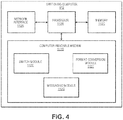
- FIG. 4 shows a detailed view of the switching computer 112.
- the switching computer 112 may include hardware and/or software configured to receive a biometrics-based authorization request message and switch information from processor computer 104.
- the switching computer 112 may include functionality to switch the biometrics-based, interaction-entity agnostic authorization request message to a format specific to a particular interaction entity specified in the switch information.
- the switching computer 112 may include a processor 112B operatively coupled to a network interface 112A, a memory 112C, and a computer-readable medium 112D.
- FIG. 4 For simplicity of illustration, a certain number of components are shown in FIG. 4 . It is understood, however, that embodiments may include more than one of each component. In addition, some embodiments may include fewer than or greater than all of the components shown in FIG. 4 .
- the network interface 112A can be configured to connect to one or more communication networks to allow switching computer 112 to communicate with other entities such as the access device 114, the processor computer 104, the interaction entities, etc.
- the processor 112B may be substantially similar to the processor 104B, described above with respect to FIG. 3 .
- the memory 112C may be substantially similar to the memory 104C, described above with respect to FIG. 3 .
- the computer-readable medium 112D may comprise one or more non-transitory media for storage and/or transmission. Suitable media include, as examples, a random access memory (RAM), a read only memory (ROM), a magnetic medium such as a hard-drive or a floppy disk, or an optical medium such as a compact disk (CD) or DVD (digital versatile disk), flash memory, and the like.
- RAM random access memory
- ROM read only memory
- magnetic medium such as a hard-drive or a floppy disk
- an optical medium such as a compact disk (CD) or DVD (digital versatile disk), flash memory, and the like.
- CD compact disk
- DVD digital versatile disk
- flash memory and the like.
- the computer-readable medium 112D may be any combination of such storage or transmission devices.
- the computer-readable medium 112D may comprise software code stored as a series of instructions or commands
- the computer-readable medium 112D may comprise a switch module 112E, a format conversion module 112F, and a messaging module 112G.
- the switch module 112E may include code for switching the authorization request message from an interaction-entity-agnostic message to an authorization request message that specifies a specific interaction entity.
- the switch module 112E may further modify the message and/or associated metadata to specify an interaction identity record (e.g., a bank account, securities account, credit line, etc.).
- An interaction identity record may be specified by an interaction identity record identifier (e.g., a bank account number, credit card number, bitcoin key, etc.).
- the switch module 112E may include functionality to accept switch information from the processor computer 104 and/or configuration database 106 (e.g., via the messaging module 112G).
- the switch module 112E may include functionality to parse the switch information and/or transmit the switch information to the format conversion module 112F.
- the format conversion module 112F may include code for converting a message from a first format (i.e., the received format) to a second format (i.e., the format compatible with message processing by the interaction entity).
- the format conversion module 112F may be configured to identify an appropriate format.
- the format conversion module may be configured to access stored mappings of formats to interaction entities and/or types of interaction entities.
- the format conversion module may include parsing software to parse the received access data to retrieve data elements for inclusion in the message in the second format.
- the format conversion module may include templates for messages in the second format.
- the messaging module 112G may comprise code for preparing and transmitting messages.
- the messaging module 112G may further be configured to accept and analyze messages.
- the messaging module 112G may include functionality to receive messages comprising switch information.
- the messaging module 112G may include functionality to parse received messages and pass switch information to the switch module 112E.
- the messaging module may be configured to receive messages from the format conversion module 112F, identify the appropriate destination for the messages, and transmit them to the appropriate destination.
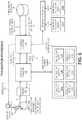
- FIG. 5 shows a system and a method according to some embodiments. Additional methods and processes may be included within these methods and may be recognized by one of ordinary skill in the art, in light of the description below. Further, in some embodiments, the described methods may be combined, mixed, and matched, as one of ordinary skill would recognize.
- a user may initiate a transaction.
- the user may request access to a resource.
- the user may enter information into user device 102 and/or access device 114.
- the request may result in the creation of access data, wherein the access data may include transaction information such as a resource provider name, transaction amount, data associated with a request to enter a building, a type of location to travel to, or any other suitable data.
- the user may be prompted to enter biometrics.
- the user device 102 and/or access device 114 may capture a biometric sample of the user.
- the user device 102 or access device 114 may initially display a message.
- the displayed message may relay information asking the user to enter a biometric sample and may state "scan fingerprint," "hold camera up to face,” “enter biometric,” or any other suitable statement.
- the user device 102 (or access device 114) may convert the biometric sample into a biometric template. If the biometric template and access data are collected at the user device 102, the user device 102 may transmit the biometric template and the access data to the access device 114.
- the access device 114 prepares and transmits an authorization request message to the message processing system.
- the authorization request message may comprise the biometric template and at least a subset of the access data.
- the access device 114 may transmit the authorization request message to the processor computer 104 directly.
- the access device 114 may transmit the authorization request message to the switching computer 112, and the switching computer 112 may forward the data to the processor computer 104.
- the authorization request message may be transmitted in a message in any suitable format (e.g., extensible markup language (XML), an international organization for standardization (ISO) 20022, etc.).
- the processor computer 104 may request information from the configuration database 106.
- the processor computer may transmit, to the configuration database 106, any necessary data for identifying the information, such as some or all of the received access data and the biometric template.
- the processor computer 104 may execute a query to the configuration database based on the access data and biometric template. For example, for a given biometric template, the processor computer may request an interaction entity identifier corresponding to one or more of 1 P.M., gas station, and 94122 zip code.
- the processor computer 104 may identify a stored biometric template which is a best match to the received biometric template by searching a set of stored biometric templates based on characteristics of the biometric template received from the user in association with the transaction.
- the processor computer 104 may use a matching algorithm to compare the received biometric template to a plurality of stored biometric templates until a match is detected.
- the processor computer 104 may identify a set of mappings stored in association with the biometric template.
- the processor computer 104 may query the set of mappings based on the access data received in the authorization request message.
- the received access data may specify a gasoline purchase made in California.
- the processor computer may identify, in the configuration database 106, a mapping that specifies that for gasoline purchases made in California, the user wants to use a particular account at Bank of California.
- the processor computer 104 may identify switch data specifying an interaction entity and any other transaction parameters specified by the mapping.
- the switch data may specify the interaction entity using an interaction entity identifier (e.g., the name "Bank of California," a routing number, etc.).
- the switch data may further specify an interaction entity record identifier which specifies to a particular record (e.g., a bank account number or a key for a cryptocurrency account).
- the switch data may further include additional user-defined parameters (e.g., reject transaction if amount exceeds $500).
- the processor computer 104 retrieves, from the configuration database 106, the identified switch data.
- the processor computer 104 may further retrieve the stored biometric template for further validation.
- the processor computer 104 may initiate validation of the biometric template to authenticate the user.
- the processor computer 104 may initiate validation of the biometric template by transmitting the received biometric template and/or the stored biometric template to a biometrics validation entity computer (e.g., biometrics validation entity computer A 108A or biometrics validation entity computer B 108B).
- a biometrics validation entity computer e.g., biometrics validation entity computer A 108A or biometrics validation entity computer B 108B.
- the processor computer may initiate validation of the biometric template by executing validation operations.
- the validation operations executed by biometrics validation entity computer A 108A, biometrics validation entity computer B 108B, and/or processor computer 104 may include comparing the received biometric template with a stored biometric template.
- the biometrics may be validated using a matching algorithm.
- the output of the matching algorithm may be a match result. If the match result shows that the received biometric template and the stored biometric template match, then the processor computer 104 may determine to continue with the method.
- the processor computer 104 may generate an "invalid" notification.
- the "invalid” notification may be transmitted to the access device 114 and/or user device 102 to be displayed.
- the "invalid” notification may be any suitable message informing the user that the biometric templates do not match.
- the "invalid” notification may be achieved through display of text such as "biometric does not match,” “no match,” “invalid user,” or the like.
- the biometrics validation entity computer may return a result to the processor computer 104.
- the processor computer 104 may pass the retrieved switch information to the switching computer 112.
- the switch information may be passed, along with access data, in any suitable format.
- the processor computer 104 may pass the switch information and any pertinent access data to the switching computer in the form of an authorization request message.
- the processor computer 104 may transmit the switch information in a stand-alone message.
- switching computer 112 converts the authorization request message from a first format to a second format, the second format being compatible with message processing by the interaction entity.
- the switching computer 112 may identify a message format, based on the interaction entity or type of interaction entity to receive the authorization request message.
- the format may further depend on a type of processing selected (e.g., if debit, credit, or ACH processing is available to retrieve funds from a bank account).
- the interaction entity or interaction entity type may be specified, explicitly or implicitly, in the switch information received from the configuration database.
- the switch information may specify an interaction entity identifier or an interaction entity type code.
- the switching computer 112 may use the interaction entity information to identify the message format by locating a stored mapping.
- the type of interaction entity is bank and the type of processing is bank transfer.
- the switching computer 112 may identify data elements to include in the translated authorization request message, based on the second message format and/or the received access data. For example, ISO messages destined for a bank in association with a line of credit are characterized by a specific set of data fields such as transaction amount, merchant ID, timestamps, and the like. The required data elements for inclusion in the message, as well as the available data elements in the received access data, are identified.
- the switching computer 112 may parse the identified data elements from the authorization request message in the first format. For example, the switching computer 112 may extract data such as a timestamp, transaction amount, etc., from the authorization request message in the first format.
- the switching computer 112 may generate an the authorization request message in the second format.
- the switching computer 112 may retrieve a stored template.
- the switching computer 112 may have access to a plurality of templates including headers, blank data fields, and/or the like, corresponding to the necessary formats, such as FIX, SWIFT, ISO-2022, FpML, xBRL, SEPA, epics, and other protocols.
- the switching computer 112 may insert the parsed data elements into the appropriate data fields to generate the authorization request message in the second format.
- the switching computer 112 converts the message to ACH format: 101 0420000131999999999YYMMDD0810A094101MYBANK Bank Your Company Name 00000000 where the message comprises a file header, a batch header, a standard entry class, an effective data, a description, a routing number, an account number, and an amount.
- the ACH message is a fixed-width, 94 character ASCII file.
- the switching computer 112 may initially convert the authorization request message to a generic messaging format such as ISO 20022. The switching computer may then convert the generic message to the second interaction-entity-specific format as described above.
- the switching computer 112 may transmit the authorization request message, in the second format, to the interaction entity.
- the interaction entity may process the received message and prepare an authorization response message specifying whether the transaction is approved or declined (i.e., whether access to the resource should be granted or refused).
- the authorization response message may be in the second format (e.g., the native format of the interaction entity).
- the switching computer 112 may receive the authorization response message in the second format from the interaction entity.
- the switching computer 112 may convert the authorization response message from the second format to the first format.
- the switching computer 112 may identify the second message format. Based on the second message format, the switching computer 112 may identify and parse data elements from the authorization response message (e.g., transaction amount, merchant ID, timestamps, etc.).
- data elements e.g., transaction amount, merchant ID, timestamps, etc.
- the switching computer 112 may generate an the authorization response message in the first format.
- the switching computer 112 may retrieve a stored template corresponding to the first format.
- the switching computer 112 may insert the parsed data elements into the appropriate data fields to generate the authorization response message in the first format.
- switching computer 112 transmits the authorization response message in the first format to the access device 114.
- the access device 114 may grant or refuse access to the resource based on the authorization response message.
- the access device 114 may proceed with the transaction if the authorization result was to approve. If the authorization result was to decline the access to the resource, then the access device 114 may display or transmit a message indicating that the transaction is declined.
- the system may further generate detailed reports accessible by the user. Because the system mediates transactions across multiple interaction entities, the system has the ability to give the user a single view of all the user's funds, without the need for the user to grant account access to a third-party as is required in some prior systems.
- the system may generate reports based on a time period (e.g., monthly, weekly, or yearly).
- the system may organize reports based on user (e.g., the primary user and/or one or more additional authorized users).
- the system may organize reports based on the interaction entity and/or interaction entity record (e.g., a particular bank or bank account).
- the reports may allow a user to view all transactions over a time period in one place.
- the reports may further provide an analysis of spending categories, and may specify whether spending in any of the categories exceeds a threshold.
- the reports may be accessible in association with the interface used for configuration (as detailed above with respect to FIG. 1 ).
- a finance manager application on the user's phone may be used to configure the payment sources.
- the finance manager application may further include functionality to display reports.
- a primary account holder (“user 1") enrolls an authorized user (“user 2").
- User 1 sets up the following rule set for user 2, which is stored in association with biometrics of user 2:
- User 2 goes to the point of purchase and uses his biometrics to make a purchase of $85 for some fruit.
- the system validates the biometrics of user 2 with the rules in the repository and checks whether the purchase conforms to the rules attached to the user's biometrics in the purchase category. If the purchase conforms to the rules, then the transaction is routed to interaction entity 2.
- the system deducts the amount from user 2's balance for the month. Now user 2 has a balance of $15 to spend on groceries for the month.
- the system periodically monitors for settlement of the transaction for 5 - 6 days since this is a credit card transaction. If no settlement of the transaction is found, then the system restores the balance. If settlement of the transaction is found, then the system makes the $15 balance permanent for the month. If no settlement transaction is seen, the balance is restored to the $100 level. Chargebacks and Returns also restore balance.
- User 2 makes a gas purchase for $10 using his biometrics.
- the system validates user 2's biometrics, and then switches that transaction to interaction entity 3.
- User 2 attempts to buy wine for $50 using his biometrics.
- the system identifies the rules based on a biometrics match for user 2.
- the identified rule is to not to allow user 2 to purchase alcoholic beverages.
- the system sends a decline. An alert is sent out to user 1 for the decline.
- User 2 attempts to spend $10 on coffee using his biometrics.
- the system matches the biometrics to the rule set and switches the transaction to interaction entity 2.
- user 2's balance will be reduced by $10 in the beverage category.
- User 1 looks at her online Manager App and is able to see spending in all categories at a monthly level. User 1 may reclassify purchases if needed.
- Embodiments of the disclosure have a number of advantages.
- a user can pay as a person using her biometrics. There is no need to carry a wallet, phone, or any other gadgets to make payments.
- Rules can be used to control the use of funds by user/purchase category and thresholds. These rules can be set up by the user at an initial time, such that, when conducting a transaction, the user does not need to make a decision about which payment instrument to use. This saves steps for the user as well as the payment processing system. For example, instead of providing biometrics, opening a digital wallet on a mobile device, selecting a credit card, and tagging the mobile device to an access device, the user simply provides biometrics.
- Embodiments of the disclosure have an additional number of advantages.
- the transaction process may initially be fund-source agnostic. Whether the source of funds is a bank account, line of credit, or prepaid balance, users can set rules as to what source of funds will be used in what order based of purchase category and users. Similarly, since authentication is executed based on biometrics, the system will be network and issuer agnostic. This can improve the functioning of the transaction processing system overall by obviating the need to route the authentication messages, pre-authorization, and other messages commonly needed to the appropriate parties. Processing resources and time are both saved by implementing the methods described herein.
- Embodiments of the disclosure have an additional number of advantages. Using the methods and systems disclosed, it is possible to process transactions start-to-finish without issuing cards, tokens, and the like. A transaction can be initiated based on biometrics and tied to an appropriate interaction entity through predefined rules. This can obviate the need for card art, marketing, and other expenses for issuers. Further, the transactions can be processed without the need for information such as bank identification numbers (BINs) and licensing information. Accordingly, resources are spared as various numbers and physical cards no longer need to be generated and tracked.
- BINs bank identification numbers
- licensing information Accordingly, resources are spared as various numbers and physical cards no longer need to be generated and tracked.
- the system is fraud and risk averse, as the payment is initiated with biometrics unique to the user. Further, the first portion of the message processing, including user authentication, is done without passing account information of the user. There is no account number being passed in the messages, thus the account number is not vulnerable to snooping.
- any of the embodiments can be implemented in the form of control logic using hardware (e.g. an application specific integrated circuit or field programmable gate array) and/or using computer software with a generally programmable processor in a modular or integrated manner.
- a processor includes a single-core processor, multi-core processor on a same integrated chip, or multiple processing units on a single circuit board or networked. Based on the disclosure and teachings provided herein, a person of ordinary skill in the art will know and appreciate other ways and/or methods to implement embodiments using hardware and a combination of hardware and software.
- any of the software components or functions described in this application may be implemented as software code to be executed by a processor using any suitable computer language such as, for example, Java, C, C++, C#, Objective-C, Swift, or scripting language such as Perl or Python using, for example, conventional or object-oriented techniques.
- the software code may be stored as a series of instructions or commands on a computer readable medium for storage and/or transmission, suitable media include random access memory (RAM), a read only memory (ROM), a magnetic medium such as a hard-drive or a floppy disk, or an optical medium such as a compact disk (CD) or DVD (digital versatile disk), flash memory, and the like.
- RAM random access memory
- ROM read only memory
- magnetic medium such as a hard-drive or a floppy disk
- an optical medium such as a compact disk (CD) or DVD (digital versatile disk), flash memory, and the like.
- the computer readable medium may be any combination of such storage or transmission devices.
- Such programs may also be encoded and transmitted using carrier signals adapted for transmission via wired, optical, and/or wireless networks conforming to a variety of protocols, including the Internet.
- a computer readable medium may be created using a data signal encoded with such programs.
- Computer readable media encoded with the program code may be packaged with a compatible device or provided separately from other devices (e.g., via Internet download). Any such computer readable medium may reside on or within a single computer product (e.g. a hard drive, a CD, or an entire computer system), and may be present on or within different computer products within a system or network.
- a computer system may include a monitor, printer, or other suitable display for providing any of the results mentioned herein to a user.
Landscapes
- Engineering & Computer Science (AREA)
- Computer Security & Cryptography (AREA)
- Computer Networks & Wireless Communication (AREA)
- Signal Processing (AREA)
- Business, Economics & Management (AREA)
- Computer Hardware Design (AREA)
- Computing Systems (AREA)
- General Engineering & Computer Science (AREA)
- Accounting & Taxation (AREA)
- Biomedical Technology (AREA)
- General Health & Medical Sciences (AREA)
- Health & Medical Sciences (AREA)
- Strategic Management (AREA)
- Finance (AREA)
- Physics & Mathematics (AREA)
- General Business, Economics & Management (AREA)
- General Physics & Mathematics (AREA)
- Theoretical Computer Science (AREA)
- Biodiversity & Conservation Biology (AREA)
- Life Sciences & Earth Sciences (AREA)
- Development Economics (AREA)
- Economics (AREA)
- Financial Or Insurance-Related Operations Such As Payment And Settlement (AREA)
Abstract
Description
- Current methods of interaction involve a large number of steps and are not particularly flexible or adaptable. For example, a person trying to obtain access to data on a secure server may need to open an application, enter a password, and then enter a biometric into the application. The type of data desired is selected, and is then retrieved. In another example, digital wallets provide a convenient way for a user to pay with a selected payment instrument using a mobile device. However, the process for paying for goods or services with a digital wallet involves several steps. First, the user initiates a transaction by opening a digital wallet on a mobile device. The user may be prompted to provide biometrics (e.g., by using a fingerprint reader or camera on the mobile device). The user must manually select a payment instrument. Typically, the available payment instruments are limited to credit cards. Once the payment instrument has been selected by the user, the user will bring the user's mobile device in contact with a merchant access device, and the payment will be processed using the selected payment instrument. Note that in these exemplary situations, only one mode of interaction (e.g., one type of data to retrieve or one type of payment method to be processed) is available.
- It would be desirable if interaction methods could involve the use of fewer steps, while being more flexible to allow for more than one interaction mode.
- Embodiments address these and other problems, individually and collectively.
- Embodiments are directed to methods and systems for processing a transaction based on biometric data and access data. Different accounts and providers may be used to process the transaction, using different message formats, based on user-configured mappings.
- One embodiment is directed to a method comprising: receiving, by a message processing system, an authorization request message from an access device, the authorization request message comprising a biometric template and access data; retrieving, by the message processing system from a configuration database, an interaction entity record identifier associated with an interaction entity from among a plurality of different interaction entities that process messages in different message formats; initiating, by the message processing system, validation of the biometric template; upon a determination that the biometric template is valid, then converting the authorization request message from a first format to a second format, the second format being compatible with message processing by the interaction entity; transmitting the authorization request message in the second format to the interaction entity; receiving, by the message processing system, an authorization response message in the second format from the interaction entity; converting the authorization response message from the second format to the first format; and transmitting, by the message processing system, the authorization response message in the first format to the access device.
- Another embodiment is directed to a message processing system comprising: a processor; and a non-transitory computer-readable medium coupled to the processor, the non-transitory computer-readable medium comprising code, executable by the processor, to implement a method comprising: receiving, by the message processing system, an authorization request message from an access device, the authorization request message comprising a biometric template and access data; retrieving, by the message processing system from a configuration database, an interaction entity record identifier associated with an interaction entity from among a plurality of different interaction entities that process messages in different message formats; initiating, by the message processing system, validation of the biometric template; upon a determination that the biometric template is valid, then converting the authorization request message from a first format to a second format, the second format being compatible with message processing by the interaction entity; transmitting the authorization request message in the second format to the interaction entity; receiving, by the message processing system, an authorization response message in the second format from the interaction entity; converting the authorization response message from the second format to the first format; and transmitting, by the message processing system, the authorization response message in the first format to the access device.
- Another embodiment is directed to a non-transitory computer readable medium comprising code, executable by a processor, configured to: receive, by a message processing system, an authorization request message from an access device, the authorization request message comprising a biometric template and access data; retrieve, by the message processing system from a configuration database, an interaction entity record identifier associated with an interaction entity from among a plurality of different interaction entities that process messages in different message formats; initiate, by the message processing system, validation of the biometric template; upon a determination that the biometric template is valid, then convert the authorization request message from a first format to a second format, the second format being compatible with message processing by the interaction entity; transmit the authorization request message in the second format to the interaction entity; receive, by the message processing system, an authorization response message in the second format from the interaction entity; convert the authorization response message from the second format to the first format; and transmit, by the message processing system, the authorization response message in the first format to the access device.
- These and other embodiments are described in further detail below.
-
-
FIG. 1 shows a system and method for user setup and configuration according to some embodiments. -
FIG. 2 shows example configuration data stored to a configuration database according to some embodiments. -
FIG. 3 shows a block diagram illustrating some system components in greater detail according to some embodiments. -
FIG. 4 shows a block diagram illustrating some system components in greater detail according to some embodiments. -
FIG. 5 shows a system and method for transaction processing according to some embodiments. - In the following description, various embodiments will be described. For purposes of explanation, specific configurations and details are set forth in order to provide a thorough understanding of the embodiments. However, it will also be apparent to one skilled in the art that the embodiments may be practiced without the specific details. Furthermore, well-known features may be omitted or simplified in order not to obscure the embodiment being described.
- Prior to discussing the details of some embodiments, description of some terms may be helpful in understanding the various embodiments.
- A "user" can be a person or thing that employs some other thing for some purpose. A user may include an individual that may be associated with one or more personal accounts and/or mobile devices. The user may also be referred to as a cardholder, account holder, or consumer in some embodiments.
- A "user device" may be any suitable device that is operated by a user. Suitable user devices can be portable, and can communicate with external entities such as portable devices. Examples of user devices include mobile phones, laptop computers, transponders, wearable devices such as smart watches, smart media, etc.
- An "interaction" can be a reciprocal action, effect, or influence. An interaction, for example, could be an exchange or transaction between two or more parties.
- An "interaction entity" may typically refer to a business entity (e.g., an issuer such as a bank) that maintains an account for a user. An interaction entity may also issue payment credentials stored on a user device, such as a cellular telephone, smart card, tablet, or laptop to the consumer. An interaction entity may manage non-payment interactions such as access to a secure location, access to a secure file, etc.
- An "interaction entity record identifier" may be an identifier of a particular record managed by an interaction entity, such as a bank account, transit pass, cryptocurrency wallet, line of credit, and the like. The identifier may be any suitable information that identifies the record. Examples of an interaction entity record entity identifier may include a PAN (primary account number or "account number"), an account name, and a cryptographic key.
- A "resource providing entity" may be an entity that may make resources available to a user. Resource providing entities may also be known as resource providers. Examples of resource providing entities include resource providers, vendors, suppliers, owners, traders, wallet providers, service providers, and the like. In some embodiments, such entities may be a single individual, small groups of individuals, or larger groups of individuals (e.g., companies, governmental agencies). Resource providing entities may be associated with one or more physical locations (e.g., supermarkets, malls, stores, etc.) and online platforms (e.g., e-commerce websites, online companies, etc.). In some embodiments, resource providing entities may make available physical items (e.g., goods, products, etc.) to the user. In other embodiments, resource providing entities may make available digital resources (e.g., electronic documents, electronic files, etc.) to the user. In other embodiments, resource providing entities may manage access to certain resources by the user. In some embodiments, resource providing entities may make available access to a secure location. In some embodiments, the resources may be services (e.g., digital wallet services).
- A "communication" can be a connection between entities or devices allowing the imparting or exchange of information, data, or news. A communication, for example, could be the sending or receiving of information between two or more computers.
- An "application program interface" or "API" may include software specifying how components of a system should interact. The API may comprise a set of routines, protocols, and tools on which software applications may be built. An API may be used for a web-based system, operating system, database system, computer hardware or software library, and may include specifications for routines, data structures, object classes, variables and/or remote calls.
- "Authentication" may include a process for verifying an identity of something (e.g., a user). One form of authentication can be biometric authentication.
- A "biometric" may be any human characteristic that is unique to an individual. For example, a biometric may be a person's fingerprint, voice sample, face, DNA, retina, etc.
- A "biometric reader" may include a device for capturing data from an individual's biometric sample. Examples of biometric readers may include fingerprint readers, front-facing cameras, microphones, and iris scanners.
- A "biometric sample" may include data obtained by a biometric reader. The data may be either an analog or digital representation of the user's biometric, generated prior to determining distinct features needed for matching. For example, a biometric sample of a user's face may be image data. In another example, a biometric sample of a user's voice may be audio data.
- A "biometric template" or "biometric sample template" may include a file containing distinct characteristics extracted from a biometric sample that may be used during a biometric authentication process. For example, a biometric template may be a binary mathematical file representing the unique features of an individual's fingerprint, eye, hand or voice needed for performing accurate authentication of the individual.
- A "key" may refer to a piece of information that is used in a cryptographic algorithm to transform input data into another representation. A cryptographic algorithm can be an encryption algorithm that transforms original data into an alternate representation, or a decryption algorithm that transforms encrypted information back to the original data. Examples of cryptographic algorithms may include triple data encryption standard (TDES), data encryption standard (DES), advanced encryption standard (AES), etc.
- A "digital signature" may include a type of electronic signature that encrypts documents with digital codes that are particularly difficult to duplicate. A digital signature may include data used to provide assurance or evidence as to the origin and identity of an electronic record or message. Digital signatures can be based on public key cryptography (i.e. asymmetric cryptography). Digital signatures may be generated using a public key algorithm such as RSA. To create a digital signature, signing software may be used to create a one-way hash of electronic data that is to be signed by a signing entity. A private key of the signing entity is then used to encrypt the hash and form the digital signature. In other cases, a symmetric key of a symmetric key pair can be used to create a digital signature.
- The term "validation" may include the act of checking or affirming that information is legitimate. An example may be the act of checking that a digital signature appended to an electronic record is, in fact, legitimate and was signed by the entity that alleges creation of the digital signature. In some embodiments, digital signatures may be validated according to a verification algorithm in conjunction with a signing entity's public key. In other cases, if underlying data was signed using a symmetric key of a symmetric key pair, the signature can be validated with the corresponding symmetric key.
- "Access data" may include any suitable data that can be used to access a resource or create data that can access a resource. In some embodiments, access data may be account information for a payment account. Account information may include a PAN, payment token, expiration date, verification values (e.g., CVV, CVV2, dCVV, dCW2), etc. In other embodiments, access data may be data that can be used to activate account data. For example, in some cases, account information may be stored on a mobile device, but may not be activated until specific information is received by the mobile device. This specific information may be characterized as access data in some embodiments. Such information may be ticket information for an event, data to access a building, transit ticket information, etc.
- "Access data parameters" may include a type or category of access data. An access data parameter may be a category of resource provider, such as a grocer or a transit agency. An access data parameter may be a type of resource, such as beverages, medical services, car parts, bus rides, etc. Alternatively, or additionally, access data parameters may be based on a specific resource provider or resource (e.g., Jane's Cafe or the #7 bus). An access data parameter may be transaction-specific, such as a time of day, location, amount, or user associated with initiating a transaction.
- An "authorizing entity" is an entity which can authorize or approve interactions. An authorizing entity may typically refer to a business entity (e.g., an issuer, or bank) that maintains an account for a user and is capable of authorizing interactions such as payment transactions, for example the purchase of goods or services.
- An "authorization request message" may be an electronic message that requests authorization for a transaction. In some embodiments, it is sent to a transaction processing computer and/or an issuer of a payment card to request authorization for a transaction. An authorization request message, according to some embodiments, may comply with International Organization for Standardization (ISO) 8583, which is a standard for systems that exchange electronic transaction information associated with a payment made by a user using a payment device or payment account. The authorization request message may include an issuer account identifier that may be associated with a payment device or payment account. An authorization request message may also comprise additional data elements corresponding to "identification information" including, by way of example only: a service code, a CVV (card verification value), a dCVV (dynamic card verification value), a PAN (primary account number or "account number"), a payment token, a user name, an expiration date, etc. An authorization request message may also comprise "transaction information," such as any information associated with a current transaction, such as the transaction amount, merchant identifier, merchant location, acquirer bank identification number (BIN), card acceptor ID, information identifying items being purchased, etc., as well as any other information that may be utilized in determining whether to identify and/or authorize a transaction.
- An "authorization response message" may be a message that responds to an authorization request. In some cases, it may be an electronic message reply to an authorization request message generated by an issuing financial institution or a transaction processing computer. The authorization response message may include, by way of example only, one or more of the following status indicators: Approval - transaction was approved; Declinetransaction was not approved; or Call Center -- response pending more information, merchant must call the toll-free authorization phone number. The authorization response message may also include an authorization code, which may be a code that a credit card issuing bank returns in response to an authorization request message in an electronic message (either directly or through the transaction processing computer) to the merchant's access device (e.g. point of sale equipment) that indicates approval of the transaction. The code may serve as proof of authorization.
- A "memory" may be any suitable device or devices that can store electronic data. A suitable memory may comprise a non-transitory computer readable medium that stores instructions that can be executed by a processor to implement a desired method. Examples of memories may comprise one or more memory chips, disk drives, etc. Such memories may operate using any suitable electrical, optical, and/or magnetic mode of operation.
- A "processor" may refer to any suitable data computation device or devices. A processor may comprise one or more microprocessors working together to accomplish a desired function. The processor may include a CPU that comprises at least one high-speed data processor adequate to execute program components for executing user and/or system-generated requests. The CPU may be a microprocessor such as AMD's Athlon, Duron and/or Opteron; IBM and/or Motorola's PowerPC; IBM's and Sony's Cell processor; Intel's Celeron, Itanium, Pentium, Xeon, and/or XScale; and/or the like processor(s).
-
FIG. 1 shows a schematic diagram illustrating asystem 100 according to some embodiments. Thesystem 100 comprises auser device 102, aprocessor computer 104, aconfiguration database 106, biometrics validationentity computer A 108A, biometrics validationentity computer B 108B, andinteraction entities 110A-110F. The system may further comprise a switching computer 112 (shown inFIGS. 4 and5 ). - For simplicity of illustration, a certain number of components are shown in
FIG. 1 . It is understood, however, that embodiments may include more than one of each component. In addition, some embodiments may include fewer than or greater than all of the components shown inFIG. 1 . - The
interaction entities interaction entity B 110B may be a prepaid card provider,interaction entity C 110C may be a digital wallet provider,interaction entity D 110D may be a credit card issuer,interaction entity E 110E may be a cryptocurrency provider, andinteraction entity F 110F may be a securities brokerage. Additional examples of interaction entities include a transit provider and a secure access provider (e.g., for a secure location). - The
interaction entities interaction entities interaction entities - The
biometric reader 102A may be any suitable reader capable of capturing a biometric. Thebiometric reader 102A may output a biometric sample. Examples of thebiometric reader 102A include fingerprint readers, front-facing cameras, microphones, iris scanners, and the like. - The
biometric reader 102A may a component of theuser device 102. Alternatively, thebiometric reader 102A may be coupled to theuser device 102, for example, near field communication (NFC), LAN, a universal serial bus (USB), or any other suitable way to couple may be used. - The
user device 102 may be any suitable device such as a mobile phone, laptop computer, tablet, or the like. The user device may include functionality to accept data from a user. The user device may include functionality to transmit data to theprocessor computer 104. Theuser device 102 may be connected to theprocessor computer 104 directly or via a communication network. - The
user device 102 may include software capable of supporting processing of biometric samples. Theuser device 102 may execute an application capable of converting a biometric sample into a biometric template. - The
user device 102 may include hardware and/or software capable of receiving user input. Theuser device 102 may include a keyboard, touchscreen, microphone, and/or the like for receiving configuration data from the user. - The configuration data may correspond to user-selected interaction entities corresponding to one or more access data parameters. For example, the user may specify a set of interaction entities comprising a bank and two credit card providers. For each of the interaction entities, the user may specify one or more interaction entity record identifiers such as a bank account number (represented by 16 digit debit card or direct Bank ACH), a credit card number (represented by a 16 digits if credit card), a prepaid card account number, and/or identifiers corresponding to accounts such as home equity lines of credit, securities, and electronic coins. Each interaction entity record identifier may be linked to one or more access data parameters. For example, the user may select different payment accounts for different authorized users, types of goods, types of merchants, etc., as further described below with respect to
FIG. 2 . - The
user device 102 may include software for accepting and managing the configuration data (e.g., a mobile application). As an example, when a user navigates to a mobile application for configuration, theuser device 102 may display, via a user interface, a set of access data parameters which the user may drag and drop into boxes corresponding to different interaction entity records (e.g., a particular bank account, credit card number, electronic coin wallet, and/or the like). The user's placement of the access data parameters may cause the user device 102 (and/or the processor computer 104) to generate a computer-readable mapping of access data parameters to interaction entity record identifiers. Theuser device 102 may, directly or via theprocessor computer 104, transmit such mappings to theconfiguration database 106 for storage. - The
configuration database 106 may be a storage unit and/or device (e.g., a file system, database, collection of tables, or other storage mechanism) for storing data. Theconfiguration database 106 may include multiple different storage units and/or devices. Theconfiguration database 106 may store mappings of users, interaction entities, and access data. Examples of data that may be stored to theconfiguration database 106 are further detailed below with respect toFigure 2 . - The
processor computer 104 may include functionality to identify a mapping based on a received biometric template and to process a transaction based on the parameters defined by the mapping.Processor computer 104 may be disposed between theuser device 102 and theconfiguration database 106. Theprocessor computer 104 may use any suitable wired or wireless network, including the Internet. The components of theprocessor computer 104, according to some embodiments, are described in further detail below with reference toFIG. 3 . - The
processor computer 104 and theaccess device 114 may be communicatively coupled to a switching computer 112 (shown inFIGS. 4 and5 ) for switching an authorization request from a biometrics-based, interaction-entity agnostic format to a format specific to a particular interaction entity. The switchingcomputer 112 may receive and process switch information for making the switch. The switch information may include a selected interaction entity and interaction entity record identifier, along with any additional information retrieved from the configuration database such as contact information, alert settings, spending limits, and the like. The switchingcomputer 112 is described in detail with respect toFIGS. 4 and5 . Theprocessor computer 104, the switchingcomputer 112, and theconfiguration database 106 may be collectively referred to as a "message processing system." - The biometrics
validation entity computers validation entity computers processor computer 104. - Alternatively, or additionally, the
processor computer 104 may include functionality to validate biometric data. The processor computer may 104 may store matching algorithms for comparison of biometric templates. The processor may retrieve stored biometric templates from theconfiguration database 106 for validating a received biometric template and/or forwarding to a biometrics validation entity computer (e.g., 108A, 108B) for validation. - With continued reference to
FIG. 1 , example operations for user setup and configuration are shown. At step S101, a user may interact withuser device 102 to initiate the setup process. The user may enter a biometric sample viabiometric reader 102A. As examples, the biometric sample may correspond to fingerprint data, retinal data, facial data, voice data, etc. The user may further enter configuration parameters via the user device 102 (e.g., via a keyboard, touchscreen, voice recognition apparatus, or the like). - The
user device 102 may convert the biometric sample to a biometric template. Theuser device 102 may identify key points in the biometric sample (e.g., bifurcation points in a fingerprint). The user device may map the key points and fit the key points to a mathematical algorithm. - At step S103, the
user device 102 may transmit the configuration parameters and the biometric template to theprocessor computer 104. Theuser device 102 may transmit the configuration parameters and biometric template via wired or wireless transmission, an API push, and/or the like. - At step S105A, the
processor computer 104 may transmit the biometric data to a biometrics validation entity computer (e.g., biometrics validationentity computer A 108A or biometrics validationentity computer B 108B). The biometrics validation entity computer may then execute biometric validation operations. The biometrics validation entity computer may retrieve a stored biometric template. The stored template may be identified, for example, based on received configuration parameters such as the user's name, identification number, etc. The biometrics validation entity computer may compare the stored biometric template to the received biometric template using a matching algorithm. If a match is found, then the received biometrics may be validated. Alternatively, or additionally,processor computer 104 may itself execute the biometric validation operations without transmitting the biometric data to a biometrics validation entity computer. - Alternatively, if a biometric template is not already stored in association with the user, the
processor computer 104, biometrics validationentity computer A 108A, and/or biometrics validationentity computer B 108B may validate the biometric template based on additional information received from the user. For example, the user may present a picture identification along with entering his biometric sample. The system may store the validated biometric template for future validation operations. - At step S105B, the
processor computer 104 may transmit at least a subset of the configuration data to an interaction entity computer (e.g.,interaction entity A 110A,interaction entity B 110B,interaction entity C 110C,interaction entity D 110D,interaction entity E 110E, orinteraction entity F 110F). The interaction entity computer may execute operations to validate the received configuration data. As an example, the configuration data may include a payment account to use for buying gasoline. The interaction entity computer may analyze the configuration data to determine whether the payment account is valid and whether the user is an authorized user of the account. - At step S105C, the
processor computer 104 may execute notification validation operations. The notification validation operations may ensure that notifications are received by the user. For example, a test message may be sent to the user for confirmation. - At step S107, the
processor computer 104 may transmit the configuration parameters toconfiguration database 106. The processor computer may further transmit indicators that the biometrics validation, interaction validation, and/or notification validation has been completed. -
FIG. 2 shows example configuration data that may be stored to theconfiguration database 106. As described above with respect toFIG. 1 , a user may initially transmit configuration data toprocessor computer 104 via user device 102 (S103). Theprocessor computer 104 may transmit the configuration data to theconfiguration database 106 for storage (S107). - The configuration data may be generated by a
primary user 202. Theprimary user 202 may manage the configurations associated with additional authorized users. As shown inFIG. 2 , the authorizeduser map 106C includes three authorized users (User 1, User 2, and User 3). For example, theprimary user 202 may beUser 1, User 2 may be the spouse of theprimary user 202, andUser 3 may be the child of theprimary user 202. Theconfiguration database 106 stores a biometric template for each of the respective authorized users (User 1 Biometrics, User 2 Biometrics, andUser 3 Biometrics). - The
configuration database 106 may further store an access data map 106A. The access data map 106A may include various access data parameters. The access data parameters may include location data, types of resource providers, transaction amounts, types of goods or services, etc. For example, as shown inFIG. 2 , access data parameters may include categories such as "Outside of United States," "Gas," "Grocery," "Restaurant," and "Travel." The access data map 106A may further be configurable based on specific access data parameters (e.g., "Joe's Grocery"). As another example, access data parameters may include a merchant category code (MCC) which is generally a four-digit number assigned to a merchant by a payment processing network when the merchant begins to accept electronic methods of payment such as credit cards, debit cards, and the like. Generally, a MCC may classify a merchant by the type of goods or services it provides. Some merchants (e.g., large merchants that sell many types of goods and/or services) may be assigned a plurality of MCCs. - The
configuration database 106 may further store aninteraction entity map 106B. Theinteraction entity map 106B may include various interaction entities, as described above with respect toFIG. 1 . In the example shown inFIG. 2 , three interaction entities (Interaction Entity A, Interaction Entity B, and Interaction Entity C) are stored. Storing an interaction entity may comprise storing an identifier of the interaction entity, an identifier of one or more records or accounts associated with the interaction entity, contact information for the interaction entity, etc. - The
configuration database 106 may store mappings between the access data, authorized users, and interaction entities. For example, theprimary user 202 may configure: for grocery purchases, use credit card X; for travel purchases, use credit card Y; for gas purchases, use bitcoin account Z; for purchases made by User 2, use debit account. - The
configuration database 106 may further store user-configured controls. For example, the configuration database may accept and store thresholds for spending in a particular time period and category (e.g., $300 a month limit on groceries; $1,500 annual limit on entertainment). As another example, the configuration database may accept and store one or more interaction entities to use for a particular spend category (e.g., for restaurants, first choice = credit card A, second choice = credit card B, third choice = checking account). As another example, the configuration database may accept and store thresholds for alerting the user (e.g., send alert if transaction amount exceeds $500) or declining the transaction (e.g., decline all transactions over $1,000 at a retail store). These rules may be specific to one or more of a set of authorized users. For example, a son can spend up to $50 in a grocery store while a spouse can spend up to $300 in a grocery store. These rules may map to the biometric template of each respective user. -
FIG. 3 shows a detailed view of theprocessor computer 104. The processor computer 118 may include aprocessor 104B operatively coupled to anetwork interface 104A, amemory 104C, and a computer-readable medium 104D. - For simplicity of illustration, a certain number of components are shown in
FIG. 3 . It is understood, however, that embodiments may include more than one of each component. In addition, some embodiments may include fewer than or greater than all of the components shown inFIG. 3 . - The
network interface 104A can be configured to connect to one or more communication networks to allowprocessor computer 104 to communicate with other entities such as theuser device 102, theconfiguration database 106, the interaction entities, the biometrics validation entities, etc. - The
processor 104B may be implemented as one or more integrated circuits (e.g., one or more single core or multicore microprocessors and/or microcontrollers). Theprocessor 104B may be used to control the operation of theprocessor computer 104.Processor 104B can execute a variety of programs in response to program code or computer-readable code stored inmemory 104C.Processor 104B may include functionality to maintain multiple concurrently executing programs or processes. - The
memory 104C may be implemented using any combination of any number of non-volatile memories (e.g., flash memory) and volatile memories (e.g., DRAM, SRAM), or any other non-transitory storage medium, or a combination of media. - In some embodiments, the computer-readable medium 104D comprises code, executable by the
processor 104B, to implement a method comprising: receiving, by a message processing system, an authorization request message from an access device, the authorization request message comprising a biometric template and access data; retrieving, by the message processing system from a configuration database, an interaction entity record identifier associated with an interaction entity from among a plurality of different interaction entities that process messages in different message formats; initiating, by the message processing system, validation of the biometric template; upon a determination that the biometric template is valid, then converting the authorization request message from a first format to a second format, the second format being compatible with message processing by the interaction entity; transmitting the authorization request message in the second format to the interaction entity; receiving, by the message processing system, an authorization response message in the second format from the interaction entity; converting the authorization response message from the second format to the first format; and transmitting, by the message processing system, the authorization response message in the first format to the access device. - The computer-readable medium 104D may comprise one or more non-transitory media for storage and/or transmission. Suitable media include, as examples, a random access memory (RAM), a read only memory (ROM), a magnetic medium such as a hard-drive or a floppy disk, or an optical medium such as a compact disk (CD) or DVD (digital versatile disk), flash memory, and the like. The computer-readable medium 104D may be any combination of such storage or transmission devices.
- The computer-readable medium 104D may comprise software code stored as a series of instructions or commands The computer-readable medium 104D may comprise a configuration module 104E, a
validation module 104F, amapping module 104G, and amessaging module 104H. - The configuration module 104E may include code for managing user configuration. The configuration module 104E may include functionality to accept user input comprising configuration parameters. The configuration module 104E may include functionality to convert the received input into computer-readable mappings and store such mappings to the
configuration database 106. - The
validation module 104F may include code for managing validation operations. Thevalidation module 104F may include functionality to initiate validation, either directly or via a request to a biometrics validation entity computer (e.g., biometrics validationentity computer A 108A and/or biometrics validationentity computer B 108B). Thevalidation module 104F may be communicatively coupled to a memory for storing biometric templates (e.g., the configuration database 106). Thevalidation module 104F may include a matching algorithm for comparing a first biometric template (e.g., a received biometric template) with a second biometric template (e.g., one of the stored biometric templates) to determine a match result. For example, thevalidation module 104F may include code for determining whether a received biometric template matches a biometric template stored in association with a particular user. - The
mapping module 104G may be configured to use a matching algorithm to identify a mapping based on a received biometric template. Themapping module 104G may include code to compare the received biometric template with a plurality of stored biometric templates to identify the matching stored template. Themapping module 104G may identify one or more mappings corresponding to the stored template. - The
mapping module 104G may comprise code for identifying switch information based on an identified mapping and received access data. Themapping module 104G may include functionality to query the configuration database using access data parameters to retrieve the switch data according to the identified mapping. For example, themapping module 104G may be configured to query theconfiguration database 106 to identify an appropriate payment account for beverage purchases made by a particular user. - The
messaging module 104H may comprise code for preparing and transmitting messages. Themessaging module 104H may further be configured to accept and analyze messages. Themessaging module 104H may include functionality to receive and transmit messages containing biometric data (e.g., biometric templates and/or biometric samples), access data, and/or switch information. Themessaging module 104H may be configured to prepare and transmit notifications (e.g., upon determining that a spending limit has been reached in a category). - The
processor computer 104 may further include data processing subsystems, networks, and operations used to support and deliver authorization services, exception file services, and clearing and settlement services. For example, theprocessor computer 104 may comprise a server coupled to a network interface (e.g., by an external communication interface), and databases of information. Theprocessor computer 104 may be representative of a transaction processing network. An example transaction processing network may include VisaNet™. Transaction processing networks such as VisaNet™ are able to process credit card transactions, debit card transactions, and other types of commercial transactions. VisaNet™, in particular, includes a VIP system (Visa Integrated Payments system) which processes authorization requests and a Base II system which performs clearing and settlement services. -
FIG. 4 shows a detailed view of the switchingcomputer 112. The switchingcomputer 112 may include hardware and/or software configured to receive a biometrics-based authorization request message and switch information fromprocessor computer 104. The switchingcomputer 112 may include functionality to switch the biometrics-based, interaction-entity agnostic authorization request message to a format specific to a particular interaction entity specified in the switch information. The switchingcomputer 112 may include a processor 112B operatively coupled to anetwork interface 112A, amemory 112C, and a computer-readable medium 112D. - For simplicity of illustration, a certain number of components are shown in
FIG. 4 . It is understood, however, that embodiments may include more than one of each component. In addition, some embodiments may include fewer than or greater than all of the components shown inFIG. 4 . - The
network interface 112A can be configured to connect to one or more communication networks to allow switchingcomputer 112 to communicate with other entities such as theaccess device 114, theprocessor computer 104, the interaction entities, etc. - The processor 112B may be substantially similar to the
processor 104B, described above with respect toFIG. 3 . Thememory 112C may be substantially similar to thememory 104C, described above with respect toFIG. 3 . - The computer-
readable medium 112D may comprise one or more non-transitory media for storage and/or transmission. Suitable media include, as examples, a random access memory (RAM), a read only memory (ROM), a magnetic medium such as a hard-drive or a floppy disk, or an optical medium such as a compact disk (CD) or DVD (digital versatile disk), flash memory, and the like. The computer-readable medium 112D may be any combination of such storage or transmission devices. - The computer-
readable medium 112D may comprise software code stored as a series of instructions or commands The computer-readable medium 112D may comprise aswitch module 112E, aformat conversion module 112F, and amessaging module 112G. - The
switch module 112E may include code for switching the authorization request message from an interaction-entity-agnostic message to an authorization request message that specifies a specific interaction entity. Theswitch module 112E may further modify the message and/or associated metadata to specify an interaction identity record (e.g., a bank account, securities account, credit line, etc.). An interaction identity record may be specified by an interaction identity record identifier (e.g., a bank account number, credit card number, bitcoin key, etc.). Theswitch module 112E may include functionality to accept switch information from theprocessor computer 104 and/or configuration database 106 (e.g., via themessaging module 112G). Theswitch module 112E may include functionality to parse the switch information and/or transmit the switch information to theformat conversion module 112F. - The
format conversion module 112F may include code for converting a message from a first format (i.e., the received format) to a second format (i.e., the format compatible with message processing by the interaction entity). Theformat conversion module 112F may be configured to identify an appropriate format. The format conversion module may be configured to access stored mappings of formats to interaction entities and/or types of interaction entities. The format conversion module may include parsing software to parse the received access data to retrieve data elements for inclusion in the message in the second format. The format conversion module may include templates for messages in the second format. - The
messaging module 112G may comprise code for preparing and transmitting messages. Themessaging module 112G may further be configured to accept and analyze messages. Themessaging module 112G may include functionality to receive messages comprising switch information. Themessaging module 112G may include functionality to parse received messages and pass switch information to theswitch module 112E. The messaging module may be configured to receive messages from theformat conversion module 112F, identify the appropriate destination for the messages, and transmit them to the appropriate destination. -
FIG. 5 shows a system and a method according to some embodiments. Additional methods and processes may be included within these methods and may be recognized by one of ordinary skill in the art, in light of the description below. Further, in some embodiments, the described methods may be combined, mixed, and matched, as one of ordinary skill would recognize. - At step S1, a user may initiate a transaction. The user may request access to a resource. The user may enter information into
user device 102 and/oraccess device 114. The request may result in the creation of access data, wherein the access data may include transaction information such as a resource provider name, transaction amount, data associated with a request to enter a building, a type of location to travel to, or any other suitable data. - Upon requesting access to the resource, the user may be prompted to enter biometrics. Via the
biometric reader 102A, theuser device 102 and/oraccess device 114 may capture a biometric sample of the user. In some embodiments, theuser device 102 oraccess device 114 may initially display a message. The displayed message may relay information asking the user to enter a biometric sample and may state "scan fingerprint," "hold camera up to face," "enter biometric," or any other suitable statement. The user device 102 (or access device 114) may convert the biometric sample into a biometric template. If the biometric template and access data are collected at theuser device 102, theuser device 102 may transmit the biometric template and the access data to theaccess device 114. - At step S2, The
access device 114 prepares and transmits an authorization request message to the message processing system. The authorization request message may comprise the biometric template and at least a subset of the access data. Theaccess device 114 may transmit the authorization request message to theprocessor computer 104 directly. Alternatively, theaccess device 114 may transmit the authorization request message to the switchingcomputer 112, and the switchingcomputer 112 may forward the data to theprocessor computer 104. The authorization request message may be transmitted in a message in any suitable format (e.g., extensible markup language (XML), an international organization for standardization (ISO) 20022, etc.). - As an example the authorization request message may include the following data fields:
 <TRANSACTION>
 <PAYEE IDENTIFICATION>
      <DIGITAL BIOMETRICS/>
 </PAYEE IDENTIFICATION>
 <ACCESS DATA>
      TRANSACTION ID/>
      TRANSACTION TIME/>
      <PAYMENT INITIATION DATA>
            <PAYMENT INITIATOR NAME/>
            <PAYMENT INITIATOR ADDRESS/>
            < PAYMENT INITIATOR ROUTING INFORMATIONS
      </PAYMENT INITIATION DATA >
      TRANSACTION AMOUNT/>
      <TAX/>
      <MCG/>
      <MCC/>
      <CURRENCY>
      <DEBIT/CREDIT/>
      <RECURRING/>
      <FREQUENCY/>
      <COMMENTS/>
      <INSTALLMENT PLAN/>
 </ACCESS DATA>
 </TRANSACTION>
, where the payee identification may uniquely identify the user. The payee identification may comprise a data field for digital biometrics (e.g., a biometric template). The digital biometrics may be used to uniquely identify the user that initiated the transaction. The access data fields may correspond to various transaction details such as a transaction identifier, a transaction time, a tax amount or percentage, and a currency. The access data may further comprise a merchant category group (MCG) and/or merchant category code (MCC). The access data may specify whether the transaction should be processed as debit or credit. The access data may specify whether the payment is recurring, and if so, a frequency for the recurring payment. The access data may comprise installment plan information (e.g., 5 payments of $29.99; 101 0420000131999999999YYMMDD0810A094101MYBANK Bank Your Company Name 00000000
where the message comprises a file header, a batch header, a standard entry class, an effective data, a description, a routing number, an account number, and an amount. The ACH message is a fixed-width, 94 character ASCII file.
- 1) User 2 may spend $60 every month on beverages using a bank account with
interaction entity 1. The rule is set with a warning threshold at $10 - this means thatuser 1 will get an in-app as well as email alert/SMS message as soon as the balance for the month drops to $10 in the beverage category.User 1 sets a red alert at $5, which means a red alert balance communication will be sent touser 1 and user 2 when the balance in the account drops to $5.User 1 also sets up a rule to deny any excess spend in the beverage category, which means that if user 2 were to exceed a $60 monthly spend in the beverage category, then the system will deny the transaction. The system will authenticate the bank account information through an ACH check transaction and SMS PIN authentication. - 2) Alcoholic beverages (e.g., wine, beer, and liquor categories) are excluded for user 2.
- 3) User 2 may spend $100 every month on groceries from an account with interaction entity 2. The rule is set with a warning threshold at $20- this means that
user 1 will get an in-app as well as email alert/SMS message as soon as the balance for the month drops to $20 in the grocery category.User 1 sets a red alert at $5, which means a red alert balance communication will be sent touser 1 and user 2 when the balance in the account drops to $5.User 1 also sets up a rule to approve an excess of 20% over the budgeted amount for the month on groceries. - 4) User 2 may spend $20 every month on gas using a prepaid account with
interaction entity 3. The prepaid account is linked touser 1's bank account and fills in increments of $20 with a not-to-exceed amount of $200. This means that user 2 could spend more than $20, but only in increments of $20 and not more than $200 over the whole month. Every increment results in red alert warning to both users.
Claims (15)
- A method comprising:receiving, by a message processing system, an authorization request message from an access device, the authorization request message comprising a biometric template and access data;retrieving, by the message processing system from a configuration database, an interaction entity record identifier associated with an interaction entity from among a plurality of different interaction entities that process messages in different message formats;initiating, by the message processing system, validation of the biometric template;upon a determination that the biometric template is valid, then converting the authorization request message from a first format to a second format, the second format being compatible with message processing by the interaction entity;transmitting the authorization request message in the second format to the interaction entity;receiving, by the message processing system, an authorization response message in the second format from the interaction entity;converting the authorization response message from the second format to the first format; andtransmitting, by the message processing system, the authorization response message in the first format to the access device.
- The method of claim 1, wherein the message processing system comprises a processor computer and a switching computer in operative communication with each other.
- The method of claim 1 or 2, further comprising receiving and storing, prior to the authorization request message, configuration data mapping the plurality of different interaction entities to a respective plurality of access data parameters.
- The method of claim 3, wherein the interaction entity is selected, from a plurality of interaction entities, based on the stored configuration data.
- The method of claim 3 or 4, wherein the access data parameters comprise one or more of: location data, an amount, a user of a set of users, or a type of resource provider.
- The method of any preceding claim, wherein the biometric template corresponds to one or more of: fingerprint data, retinal data, facial data, or voice data.
- The method of any preceding claim, wherein the access device grants or refuses access to a resource based on the authorization response message received from the message processing system.
- A message processing system comprising:a processor; anda non-transitory computer-readable medium coupled to the processor, the non-transitory computer-readable medium comprising code, executable by the processor, to implement a method comprising:receiving, by the message processing system, an authorization request message from an access device, the authorization request message comprising a biometric template and access data;retrieving, by the message processing system from a configuration database, an interaction entity record identifier associated with an interaction entity from among a plurality of different interaction entities that process messages in different message formats;initiating, by the message processing system, validation of the biometric template;upon a determination that the biometric template is valid, then converting the authorization request message from a first format to a second format, the second format being compatible with message processing by the interaction entity;transmitting the authorization request message in the second format to the interaction entity;receiving, by the message processing system, an authorization response message in the second format from the interaction entity;converting the authorization response message from the second format to the first format; andtransmitting, by the message processing system, the authorization response message in the first format to the access device.
- The message processing system of claim 8, wherein the message processing system comprises a processor computer and a switching computer in operative communication with each other.
- The message processing system of claim 8 or 9, the method further comprising further comprising receiving, prior to the authorization request message, configuration data mapping the plurality of different interaction entities to a respective plurality of access data parameters.
- The message processing system of claim 10, wherein the interaction entity is selected, from a plurality of interaction entities, based on the stored configuration data.
- The message processing system of claim 10 or 11, wherein the access data parameters comprise one or more of: location data, an amount, a user of a set of users, or a type of resource provider.
- The message processing system of any of claims 8 to 12, wherein the biometric template corresponds to one or more of: fingerprint data, retinal data, facial data, or voice data.
- The message processing system of any of claims 8 to 12, wherein the access device grants or refuses access to a resource based on the authorization response message received from the message processing system.
- A non-transitory computer readable medium comprising code, executable by a processor, configured to perform a method as recited in any of claims 1 - 7.
Applications Claiming Priority (1)
| Application Number | Priority Date | Filing Date | Title |
|---|---|---|---|
| US16/292,018 US11075904B2 (en) | 2019-03-04 | 2019-03-04 | Biometric interaction manager |
Publications (2)
| Publication Number | Publication Date |
|---|---|
| EP3706062A1 true EP3706062A1 (en) | 2020-09-09 |
| EP3706062B1 EP3706062B1 (en) | 2025-05-28 |
Family
ID=69770542
Family Applications (1)
| Application Number | Title | Priority Date | Filing Date |
|---|---|---|---|
| EP20160786.8A Active EP3706062B1 (en) | 2019-03-04 | 2020-03-03 | Biometric interaction manager |
Country Status (2)
| Country | Link |
|---|---|
| US (3) | US11075904B2 (en) |
| EP (1) | EP3706062B1 (en) |
Families Citing this family (15)
| Publication number | Priority date | Publication date | Assignee | Title |
|---|---|---|---|---|
| WO2019241788A1 (en) * | 2018-06-15 | 2019-12-19 | Vivokey Technologies Inc. | Cryptobionic system and associated devices and methods |
| US11210654B2 (en) * | 2018-10-23 | 2021-12-28 | Capital One Services, Llc | Systems and methods for multicomputer data transferring to activate contactless communication |
| US11949677B2 (en) * | 2019-04-23 | 2024-04-02 | Microsoft Technology Licensing, Llc | Resource access based on audio signal |
| US11669367B2 (en) * | 2020-04-01 | 2023-06-06 | Bank Of America Corporation | System and methods for generation and analysis of real-time resource requests |
| CN112866280B (en) * | 2020-07-03 | 2023-01-10 | 支付宝(杭州)信息技术有限公司 | An information verification method, device and equipment |
| WO2023156313A1 (en) * | 2022-02-15 | 2023-08-24 | Trinamix Gmbh | Authentication of a user for access |
| US12470552B1 (en) | 2022-07-27 | 2025-11-11 | Wells Fargo Bank, N.A. | Secure data processing using data packages generated by edge devices |
| US12301558B1 (en) | 2022-08-23 | 2025-05-13 | Wells Fargo Bank, N.A. | Secure generation of authentication datasets from network activity |
| US12299093B1 (en) | 2022-08-23 | 2025-05-13 | Wells Fargo Bank, N.A. | Machine-learning for real-time and secure analysis of digital metrics |
| US12200132B1 (en) | 2022-08-25 | 2025-01-14 | Wells Fargo Bank, N.A. | Secure multi-verification of biometric data in a distributed computing environment |
| US12347095B1 (en) | 2022-08-26 | 2025-07-01 | Wells Fargo Bank, N.A. | Sensor data processing for monitoring device performance |
| US12248545B1 (en) | 2022-09-01 | 2025-03-11 | Wells Fargo Bank, N.A. | Secure digital authorization via generated datasets |
| EP4386591A1 (en) * | 2022-12-12 | 2024-06-19 | Schneider Electric Industries SAS | Biometric access to programmable automation controller |
| US12387214B2 (en) * | 2023-01-24 | 2025-08-12 | Bank Of America Corporation | Stored value payment instrument, having payment card characteristics, for virtual cash transactions |
| CN116383902B (en) * | 2023-02-28 | 2023-12-19 | 国网浙江省电力有限公司常山县供电公司 | Secret-related USB interface authorized connection equipment and authorized connection method thereof |
Citations (1)
| Publication number | Priority date | Publication date | Assignee | Title |
|---|---|---|---|---|
| US20170262853A1 (en) * | 2016-03-14 | 2017-09-14 | Mastercard International Incorporated | Method and system for biometric confirmation of suspect transactions |
Family Cites Families (31)
| Publication number | Priority date | Publication date | Assignee | Title |
|---|---|---|---|---|
| US6434607B1 (en) * | 1997-06-19 | 2002-08-13 | International Business Machines Corporation | Web server providing role-based multi-level security |
| KR100322578B1 (en) * | 1998-10-02 | 2002-03-08 | 윤종용 | Data communication device and method between WAP terminal and WAP server |
| US7046691B1 (en) * | 1999-10-04 | 2006-05-16 | Microsoft Corporation | Methods and systems for dynamic conversion of objects from one format type to another format type by selectively using an intermediary format type |
| US20020112177A1 (en) * | 2001-02-12 | 2002-08-15 | Voltmer William H. | Anonymous biometric authentication |
| US20030065541A1 (en) * | 2001-03-23 | 2003-04-03 | Restaurant Services, Inc. | System, method and computer program product for adding supply chain components in a supply chain management analysis |
| JP2003030072A (en) * | 2001-07-18 | 2003-01-31 | Matsushita Electric Ind Co Ltd | Remote control proxy method and remote control proxy device |
| AU2003228007A1 (en) * | 2002-05-22 | 2003-12-02 | Koninklijke Philips Electronics N.V. | Digital rights management method and system |
| FR2843847B1 (en) * | 2002-08-26 | 2004-11-19 | At & T Corp | SYSTEM FOR ESTABLISHING A TELNET CONNECTION WITH A REMOTE MODEM-FREE DEVICE |
| US20140019352A1 (en) | 2011-02-22 | 2014-01-16 | Visa International Service Association | Multi-purpose virtual card transaction apparatuses, methods and systems |
| US7958030B2 (en) | 2004-09-01 | 2011-06-07 | Visa U.S.A. Inc. | System and method for issuer originated payments for on-line banking bill payments |
| US7480637B2 (en) * | 2005-12-23 | 2009-01-20 | Biometric Associates, Lp | Internet transaction authentication apparatus, method, and system for improving security of internet transactions |
| WO2008130282A1 (en) * | 2007-04-19 | 2008-10-30 | Telefonaktiebolaget Lm Ericsson (Publ) | A method and arrangement for handling profiles in a multimedia service network |
| JP2010238102A (en) * | 2009-03-31 | 2010-10-21 | Fujitsu Ltd | Information processing apparatus, authentication system, authentication method, authentication apparatus, and program |
| US8583748B2 (en) * | 2010-09-01 | 2013-11-12 | At&T Mobility Ii, Llc | Method and apparatus for messaging service internetworking |
| RU2595885C2 (en) | 2010-09-24 | 2016-08-27 | Виза Интернэшнл Сервис Ассосиэйшн | Method and system using universal identifier and biometric data |
| WO2012149455A2 (en) * | 2011-04-29 | 2012-11-01 | Visa International Service Association | Vertical network computing integration, analytics, and automation |
| US9978064B2 (en) * | 2011-12-30 | 2018-05-22 | Visa International Service Association | Hosted thin-client interface in a payment authorization system |
| EP2823438A4 (en) | 2012-03-05 | 2015-05-06 | Visa Int Service Ass | Authentication using biometric technology through a consumer device |
| GB2513126A (en) * | 2013-04-15 | 2014-10-22 | Visa Europe Ltd | Method and system for creating a unique identifier |
| WO2015119658A1 (en) * | 2014-02-07 | 2015-08-13 | Oracle International Corporation | Mobile cloud service architecture |
| US10846694B2 (en) * | 2014-05-21 | 2020-11-24 | Visa International Service Association | Offline authentication |
| US11257074B2 (en) * | 2014-09-29 | 2022-02-22 | Visa International Service Association | Transaction risk based token |
| AU2015334534B2 (en) * | 2014-10-23 | 2020-06-11 | Pageproof.Com Limited | Encrypted collaboration system and method |
| US10733415B1 (en) * | 2015-06-08 | 2020-08-04 | Cross Match Technologies, Inc. | Transformed representation for fingerprint data with high recognition accuracy |
| US9847997B2 (en) | 2015-11-11 | 2017-12-19 | Visa International Service Association | Server based biometric authentication |
| US10154029B1 (en) * | 2016-05-31 | 2018-12-11 | Wells Fargo Bank, N.A. | Biometric knowledge extraction for mutual and multi-factor authentication and key exchange |
| US20180018657A1 (en) * | 2016-07-18 | 2018-01-18 | Ca, Inc. | Mobile terminals providing secure user interfaces |
| US10237270B2 (en) * | 2016-09-29 | 2019-03-19 | International Business Machines Corporation | Distributed storage of authentication data |
| US11095450B2 (en) * | 2018-01-12 | 2021-08-17 | Visa International Service Association | Blockchain based alias interaction processing |
| US10911464B2 (en) * | 2018-04-27 | 2021-02-02 | Oracle International Corporation | Framework for multi-level and multi-factor inline enrollment |
| US11783344B2 (en) * | 2018-08-23 | 2023-10-10 | Mastercard International Incorporated | System and methods for obtaining real-time cardholder authentication of a payment transaction |
-
2019
- 2019-03-04 US US16/292,018 patent/US11075904B2/en active Active
-
2020
- 2020-03-03 EP EP20160786.8A patent/EP3706062B1/en active Active
-
2021
- 2021-06-22 US US17/354,841 patent/US11785003B2/en active Active
-
2023
- 2023-09-07 US US18/463,226 patent/US20230421553A1/en active Pending
Patent Citations (1)
| Publication number | Priority date | Publication date | Assignee | Title |
|---|---|---|---|---|
| US20170262853A1 (en) * | 2016-03-14 | 2017-09-14 | Mastercard International Incorporated | Method and system for biometric confirmation of suspect transactions |
Also Published As
| Publication number | Publication date |
|---|---|
| US20210320919A1 (en) | 2021-10-14 |
| EP3706062B1 (en) | 2025-05-28 |
| US11075904B2 (en) | 2021-07-27 |
| US11785003B2 (en) | 2023-10-10 |
| US20200287897A1 (en) | 2020-09-10 |
| US20230421553A1 (en) | 2023-12-28 |
Similar Documents
| Publication | Publication Date | Title |
|---|---|---|
| US11785003B2 (en) | Biometric interaction manager | |
| US11756026B2 (en) | Systems and methods for incorporating QR codes | |
| US11398910B2 (en) | Token provisioning utilizing a secure authentication system | |
| US11170365B2 (en) | Digital wallet merchant-specific virtual payment accounts | |
| US20140164243A1 (en) | Dynamic Account Identifier With Return Real Account Identifier | |
| US20140344155A1 (en) | Out of band authentication and authorization processing | |
| US20230196377A1 (en) | Digital Access Code | |
| EP3596896B1 (en) | Method and system for relay attack detection | |
| US12597038B2 (en) | Real time interaction processing system and method | |
| US12443695B2 (en) | Data value routing system and method | |
| US20220278986A1 (en) | System and method for identity verification | |
| US11711217B2 (en) | Token processing with selective de-tokenization for proximity based access device interactions | |
| WO2022159345A1 (en) | Mobile user authentication system and method | |
| EP3616111A1 (en) | System and method for generating access credentials | |
| US12333521B2 (en) | Portable device-based transaction | |
| US12627652B2 (en) | On demand tokenization processing |
Legal Events
| Date | Code | Title | Description |
|---|---|---|---|
| PUAI | Public reference made under article 153(3) epc to a published international application that has entered the european phase |
Free format text: ORIGINAL CODE: 0009012 |
|
| STAA | Information on the status of an ep patent application or granted ep patent |
Free format text: STATUS: THE APPLICATION HAS BEEN PUBLISHED |
|
| AK | Designated contracting states |
Kind code of ref document: A1 Designated state(s): AL AT BE BG CH CY CZ DE DK EE ES FI FR GB GR HR HU IE IS IT LI LT LU LV MC MK MT NL NO PL PT RO RS SE SI SK SM TR |
|
| AX | Request for extension of the european patent |
Extension state: BA ME |
|
| STAA | Information on the status of an ep patent application or granted ep patent |
Free format text: STATUS: REQUEST FOR EXAMINATION WAS MADE |
|
| 17P | Request for examination filed |
Effective date: 20210309 |
|
| RBV | Designated contracting states (corrected) |
Designated state(s): AL AT BE BG CH CY CZ DE DK EE ES FI FR GB GR HR HU IE IS IT LI LT LU LV MC MK MT NL NO PL PT RO RS SE SI SK SM TR |
|
| STAA | Information on the status of an ep patent application or granted ep patent |
Free format text: STATUS: EXAMINATION IS IN PROGRESS |
|
| 17Q | First examination report despatched |
Effective date: 20220202 |
|
| P01 | Opt-out of the competence of the unified patent court (upc) registered |
Effective date: 20230511 |
|
| GRAP | Despatch of communication of intention to grant a patent |
Free format text: ORIGINAL CODE: EPIDOSNIGR1 |
|
| STAA | Information on the status of an ep patent application or granted ep patent |
Free format text: STATUS: GRANT OF PATENT IS INTENDED |
|
| INTG | Intention to grant announced |
Effective date: 20241219 |
|
| RAP3 | Party data changed (applicant data changed or rights of an application transferred) |
Owner name: VISA INTERNATIONAL SERVICE ASSOCIATION |
|
| GRAS | Grant fee paid |
Free format text: ORIGINAL CODE: EPIDOSNIGR3 |
|
| GRAA | (expected) grant |
Free format text: ORIGINAL CODE: 0009210 |
|
| STAA | Information on the status of an ep patent application or granted ep patent |
Free format text: STATUS: THE PATENT HAS BEEN GRANTED |
|
| AK | Designated contracting states |
Kind code of ref document: B1 Designated state(s): AL AT BE BG CH CY CZ DE DK EE ES FI FR GB GR HR HU IE IS IT LI LT LU LV MC MK MT NL NO PL PT RO RS SE SI SK SM TR |
|
| REG | Reference to a national code |
Ref country code: GB Ref legal event code: FG4D |
|
| REG | Reference to a national code |
Ref country code: CH Ref legal event code: EP |
|
| REG | Reference to a national code |
Ref country code: IE Ref legal event code: FG4D Ref country code: DE Ref legal event code: R096 Ref document number: 602020051933 Country of ref document: DE |
|
| REG | Reference to a national code |
Ref country code: NL Ref legal event code: MP Effective date: 20250528 |
|
| PG25 | Lapsed in a contracting state [announced via postgrant information from national office to epo] |
Ref country code: FI Free format text: LAPSE BECAUSE OF FAILURE TO SUBMIT A TRANSLATION OF THE DESCRIPTION OR TO PAY THE FEE WITHIN THE PRESCRIBED TIME-LIMIT Effective date: 20250528 Ref country code: ES Free format text: LAPSE BECAUSE OF FAILURE TO SUBMIT A TRANSLATION OF THE DESCRIPTION OR TO PAY THE FEE WITHIN THE PRESCRIBED TIME-LIMIT Effective date: 20250528 |
|
| REG | Reference to a national code |
Ref country code: LT Ref legal event code: MG9D |
|
| PG25 | Lapsed in a contracting state [announced via postgrant information from national office to epo] |
Ref country code: GR Free format text: LAPSE BECAUSE OF FAILURE TO SUBMIT A TRANSLATION OF THE DESCRIPTION OR TO PAY THE FEE WITHIN THE PRESCRIBED TIME-LIMIT Effective date: 20250829 Ref country code: NO Free format text: LAPSE BECAUSE OF FAILURE TO SUBMIT A TRANSLATION OF THE DESCRIPTION OR TO PAY THE FEE WITHIN THE PRESCRIBED TIME-LIMIT Effective date: 20250828 |
|
| PG25 | Lapsed in a contracting state [announced via postgrant information from national office to epo] |
Ref country code: PL Free format text: LAPSE BECAUSE OF FAILURE TO SUBMIT A TRANSLATION OF THE DESCRIPTION OR TO PAY THE FEE WITHIN THE PRESCRIBED TIME-LIMIT Effective date: 20250528 Ref country code: NL Free format text: LAPSE BECAUSE OF FAILURE TO SUBMIT A TRANSLATION OF THE DESCRIPTION OR TO PAY THE FEE WITHIN THE PRESCRIBED TIME-LIMIT Effective date: 20250528 |
|
| PG25 | Lapsed in a contracting state [announced via postgrant information from national office to epo] |
Ref country code: BG Free format text: LAPSE BECAUSE OF FAILURE TO SUBMIT A TRANSLATION OF THE DESCRIPTION OR TO PAY THE FEE WITHIN THE PRESCRIBED TIME-LIMIT Effective date: 20250528 |
|
| PG25 | Lapsed in a contracting state [announced via postgrant information from national office to epo] |
Ref country code: HR Free format text: LAPSE BECAUSE OF FAILURE TO SUBMIT A TRANSLATION OF THE DESCRIPTION OR TO PAY THE FEE WITHIN THE PRESCRIBED TIME-LIMIT Effective date: 20250528 |
|
| PG25 | Lapsed in a contracting state [announced via postgrant information from national office to epo] |
Ref country code: RS Free format text: LAPSE BECAUSE OF FAILURE TO SUBMIT A TRANSLATION OF THE DESCRIPTION OR TO PAY THE FEE WITHIN THE PRESCRIBED TIME-LIMIT Effective date: 20250828 |
|
| PG25 | Lapsed in a contracting state [announced via postgrant information from national office to epo] |
Ref country code: IS Free format text: LAPSE BECAUSE OF FAILURE TO SUBMIT A TRANSLATION OF THE DESCRIPTION OR TO PAY THE FEE WITHIN THE PRESCRIBED TIME-LIMIT Effective date: 20250928 |
|
| PG25 | Lapsed in a contracting state [announced via postgrant information from national office to epo] |
Ref country code: LV Free format text: LAPSE BECAUSE OF FAILURE TO SUBMIT A TRANSLATION OF THE DESCRIPTION OR TO PAY THE FEE WITHIN THE PRESCRIBED TIME-LIMIT Effective date: 20250528 |
|
| REG | Reference to a national code |
Ref country code: AT Ref legal event code: MK05 Ref document number: 1799055 Country of ref document: AT Kind code of ref document: T Effective date: 20250528 |
|
| PG25 | Lapsed in a contracting state [announced via postgrant information from national office to epo] |
Ref country code: DK Free format text: LAPSE BECAUSE OF FAILURE TO SUBMIT A TRANSLATION OF THE DESCRIPTION OR TO PAY THE FEE WITHIN THE PRESCRIBED TIME-LIMIT Effective date: 20250528 Ref country code: AT Free format text: LAPSE BECAUSE OF FAILURE TO SUBMIT A TRANSLATION OF THE DESCRIPTION OR TO PAY THE FEE WITHIN THE PRESCRIBED TIME-LIMIT Effective date: 20250528 Ref country code: SM Free format text: LAPSE BECAUSE OF FAILURE TO SUBMIT A TRANSLATION OF THE DESCRIPTION OR TO PAY THE FEE WITHIN THE PRESCRIBED TIME-LIMIT Effective date: 20250528 |
|
| PG25 | Lapsed in a contracting state [announced via postgrant information from national office to epo] |
Ref country code: CZ Free format text: LAPSE BECAUSE OF FAILURE TO SUBMIT A TRANSLATION OF THE DESCRIPTION OR TO PAY THE FEE WITHIN THE PRESCRIBED TIME-LIMIT Effective date: 20250528 |
|
| PG25 | Lapsed in a contracting state [announced via postgrant information from national office to epo] |
Ref country code: EE Free format text: LAPSE BECAUSE OF FAILURE TO SUBMIT A TRANSLATION OF THE DESCRIPTION OR TO PAY THE FEE WITHIN THE PRESCRIBED TIME-LIMIT Effective date: 20250528 |
|
| PG25 | Lapsed in a contracting state [announced via postgrant information from national office to epo] |
Ref country code: SK Free format text: LAPSE BECAUSE OF FAILURE TO SUBMIT A TRANSLATION OF THE DESCRIPTION OR TO PAY THE FEE WITHIN THE PRESCRIBED TIME-LIMIT Effective date: 20250528 |
|
| PG25 | Lapsed in a contracting state [announced via postgrant information from national office to epo] |
Ref country code: IT Free format text: LAPSE BECAUSE OF FAILURE TO SUBMIT A TRANSLATION OF THE DESCRIPTION OR TO PAY THE FEE WITHIN THE PRESCRIBED TIME-LIMIT Effective date: 20250528 |
|
| REG | Reference to a national code |
Ref country code: DE Ref legal event code: R097 Ref document number: 602020051933 Country of ref document: DE |
|
| PLBE | No opposition filed within time limit |
Free format text: ORIGINAL CODE: 0009261 |
|
| STAA | Information on the status of an ep patent application or granted ep patent |
Free format text: STATUS: NO OPPOSITION FILED WITHIN TIME LIMIT |
|
| PGFP | Annual fee paid to national office [announced via postgrant information from national office to epo] |
Ref country code: GB Payment date: 20260220 Year of fee payment: 7 |
|
| REG | Reference to a national code |
Ref country code: CH Ref legal event code: L10 Free format text: ST27 STATUS EVENT CODE: U-0-0-L10-L00 (AS PROVIDED BY THE NATIONAL OFFICE) Effective date: 20260409 |
|
| PGFP | Annual fee paid to national office [announced via postgrant information from national office to epo] |
Ref country code: DE Payment date: 20260219 Year of fee payment: 7 |
|
| PGFP | Annual fee paid to national office [announced via postgrant information from national office to epo] |
Ref country code: FR Payment date: 20260219 Year of fee payment: 7 |
|
| 26N | No opposition filed |
Effective date: 20260303 |