EP3705992A1 - Systeme und verfahren zur automatisierten und verteilten konfiguration von rechenvorrichtungen - Google Patents
Systeme und verfahren zur automatisierten und verteilten konfiguration von rechenvorrichtungen Download PDFInfo
- Publication number
- EP3705992A1 EP3705992A1 EP20161777.6A EP20161777A EP3705992A1 EP 3705992 A1 EP3705992 A1 EP 3705992A1 EP 20161777 A EP20161777 A EP 20161777A EP 3705992 A1 EP3705992 A1 EP 3705992A1
- Authority
- EP
- European Patent Office
- Prior art keywords
- configuration
- laptop
- data
- configuration file
- multiple services
- Prior art date
- Legal status (The legal status is an assumption and is not a legal conclusion. Google has not performed a legal analysis and makes no representation as to the accuracy of the status listed.)
- Ceased
Links
Images

Classifications
-
- G—PHYSICS
- G06—COMPUTING OR CALCULATING; COUNTING
- G06F—ELECTRIC DIGITAL DATA PROCESSING
- G06F9/00—Arrangements for program control, e.g. control units
- G06F9/06—Arrangements for program control, e.g. control units using stored programs, i.e. using an internal store of processing equipment to receive or retain programs
- G06F9/46—Multiprogramming arrangements
- G06F9/50—Allocation of resources, e.g. of the central processing unit [CPU]
- G06F9/5005—Allocation of resources, e.g. of the central processing unit [CPU] to service a request
- G06F9/5027—Allocation of resources, e.g. of the central processing unit [CPU] to service a request the resource being a machine, e.g. CPUs, Servers, Terminals
- G06F9/5055—Allocation of resources, e.g. of the central processing unit [CPU] to service a request the resource being a machine, e.g. CPUs, Servers, Terminals considering software capabilities, i.e. software resources associated or available to the machine
-
- G—PHYSICS
- G06—COMPUTING OR CALCULATING; COUNTING
- G06F—ELECTRIC DIGITAL DATA PROCESSING
- G06F9/00—Arrangements for program control, e.g. control units
- G06F9/06—Arrangements for program control, e.g. control units using stored programs, i.e. using an internal store of processing equipment to receive or retain programs
- G06F9/44—Arrangements for executing specific programs
- G06F9/4401—Bootstrapping
- G06F9/4416—Network booting; Remote initial program loading [RIPL]
-
- G—PHYSICS
- G06—COMPUTING OR CALCULATING; COUNTING
- G06F—ELECTRIC DIGITAL DATA PROCESSING
- G06F9/00—Arrangements for program control, e.g. control units
- G06F9/06—Arrangements for program control, e.g. control units using stored programs, i.e. using an internal store of processing equipment to receive or retain programs
- G06F9/44—Arrangements for executing specific programs
- G06F9/445—Program loading or initiating
- G06F9/44505—Configuring for program initiating, e.g. using registry, configuration files
-
- G—PHYSICS
- G06—COMPUTING OR CALCULATING; COUNTING
- G06F—ELECTRIC DIGITAL DATA PROCESSING
- G06F9/00—Arrangements for program control, e.g. control units
- G06F9/06—Arrangements for program control, e.g. control units using stored programs, i.e. using an internal store of processing equipment to receive or retain programs
- G06F9/44—Arrangements for executing specific programs
- G06F9/445—Program loading or initiating
- G06F9/44505—Configuring for program initiating, e.g. using registry, configuration files
- G06F9/4451—User profiles; Roaming
-
- G—PHYSICS
- G06—COMPUTING OR CALCULATING; COUNTING
- G06F—ELECTRIC DIGITAL DATA PROCESSING
- G06F9/00—Arrangements for program control, e.g. control units
- G06F9/06—Arrangements for program control, e.g. control units using stored programs, i.e. using an internal store of processing equipment to receive or retain programs
- G06F9/44—Arrangements for executing specific programs
- G06F9/455—Emulation; Interpretation; Software simulation, e.g. virtualisation or emulation of application or operating system execution engines
- G06F9/45533—Hypervisors; Virtual machine monitors
- G06F9/45558—Hypervisor-specific management and integration aspects
-
- H—ELECTRICITY
- H04—ELECTRIC COMMUNICATION TECHNIQUE
- H04L—TRANSMISSION OF DIGITAL INFORMATION, e.g. TELEGRAPHIC COMMUNICATION
- H04L63/00—Network architectures or network communication protocols for network security
- H04L63/04—Network architectures or network communication protocols for network security for providing a confidential data exchange among entities communicating through data packet networks
- H04L63/0428—Network architectures or network communication protocols for network security for providing a confidential data exchange among entities communicating through data packet networks wherein the data content is protected, e.g. by encrypting or encapsulating the payload
- H04L63/0435—Network architectures or network communication protocols for network security for providing a confidential data exchange among entities communicating through data packet networks wherein the data content is protected, e.g. by encrypting or encapsulating the payload wherein the sending and receiving network entities apply symmetric encryption, i.e. same key used for encryption and decryption
-
- G—PHYSICS
- G06—COMPUTING OR CALCULATING; COUNTING
- G06F—ELECTRIC DIGITAL DATA PROCESSING
- G06F9/00—Arrangements for program control, e.g. control units
- G06F9/06—Arrangements for program control, e.g. control units using stored programs, i.e. using an internal store of processing equipment to receive or retain programs
- G06F9/44—Arrangements for executing specific programs
- G06F9/455—Emulation; Interpretation; Software simulation, e.g. virtualisation or emulation of application or operating system execution engines
- G06F9/45533—Hypervisors; Virtual machine monitors
- G06F9/45558—Hypervisor-specific management and integration aspects
- G06F2009/45562—Creating, deleting, cloning virtual machine instances
-
- G—PHYSICS
- G06—COMPUTING OR CALCULATING; COUNTING
- G06F—ELECTRIC DIGITAL DATA PROCESSING
- G06F9/00—Arrangements for program control, e.g. control units
- G06F9/06—Arrangements for program control, e.g. control units using stored programs, i.e. using an internal store of processing equipment to receive or retain programs
- G06F9/44—Arrangements for executing specific programs
- G06F9/455—Emulation; Interpretation; Software simulation, e.g. virtualisation or emulation of application or operating system execution engines
- G06F9/45533—Hypervisors; Virtual machine monitors
- G06F9/45558—Hypervisor-specific management and integration aspects
- G06F2009/4557—Distribution of virtual machine instances; Migration and load balancing
Definitions
- This disclosure relates to approaches for configuring multiple computing devices.
- a collection of services may be used to effectuate a platform for analyzing various datasets.
- Such a platform may be deployed, e.g., in the cloud on a server.
- some threshold for example, three concurrent services
- coordinating interactions between the services becomes difficult if not impossible.
- a centralized entity may be used to coordinate those services, where the centralized entity controls turning services on/off, for example, while managing configuration files for those services.
- those services are to be deployed to multiple laptop computers, e.g., when a user wishes to analyze datasets using/accessing the platform from a laptop computer remotely located from the server, those services/that platform is adapted for deployment on the laptop computer.
- those services/that platform is adapted for deployment on the laptop computer.
- the number of laptop computers on which those services/the platform is to be deployed increases, e.g., in the range of anywhere from three to four up to hundred or even more
- configuration of each of those laptop computers becomes an onerous task, oftentimes requiring manual configuration of each of the services.
- a laptop computer may comprise one or more processors, and a memory storing instructions that, when executed by the one or more processors, cause the system to perform the following operations.
- the laptop computer may receive a configuration file including configuration parameters associated with multiple services of a platform deployment to be mirrored on a plurality of laptop computers including the laptop computer.
- the laptop computer may render the configuration file, the rendering resulting in multiple subset configuration files, each of the multiple subset configuration files corresponding to each of the multiple services.
- the laptop computer may store each of the multiple subset configuration files in one or more appropriate sections of the laptop computer's file system.
- the laptop computer may implement each of the multiple services on the laptop computer to effectuate a mirror of the platform deployment on the laptop computer.
- the configuration parameters include override parameters customizing at least one of operation and implementation of each of the multiple services on the laptop computer.
- the override parameters supersede one or more configuration parameters applicable to a server instance of the platform deployment.
- the override parameters include local host information associated with each of the plurality of laptop computers to replace uniform resource locator information for accessing one or more resources in a server instance of the platform deployment.
- the configuration parameters include secret information needed by the laptop to implement each of the multiple services on the laptop computer.
- the configuration parameters include user-facing information associated with each of the multiple services.
- the configuration file is written, at least in part, with a templating language allowing one or more of the multiple services to reference data of at least one other service of the one or more multiple services.
- the instructions cause the processor to replace the reference to the data with a value associated with the data stored in relation to at least one other service of the one or more multiple services.
- the templating language comprises one or more textual indicators encapsulating the reference to the data.
- the reference to the data comprises a key-value pair.
- the configuration file comprises one or more labels indicative of and demarcating each of the multiple services in the configuration file.
- a host computer may comprise one or more processors, and a memory storing instructions that, when executed by the one or more processors, cause the host computer to perform the following operations.
- the host computer may receive input defining a configuration file including configuration parameters associated with multiple services of a platform deployment to be mirrored on a plurality of laptop computers, wherein the configuration parameters are organized into multiple subset configuration files corresponding to each of the multiple services.
- the host computer may generate the configuration file.
- the host computer may disseminate the configuration file to each of the plurality of laptop computers.
- the instructions when executed by the one or more processors, further cause the host computer to monitor payload status and history associated with the configuration file.
- the host computer further comprises a configuration editor through which the input defining the configuration file is received.
- the input defining the configuration file comprises default configuration parameters associated with the multiple services of the platform deployment to be mirrored.
- the instructions when executed by the one or more processors, cause the host computer to receive further input through the configuration editor, the further input customizing the configuration parameters for operation and implementation on the plurality of laptop computers.
- the configuration editor operates in accordance with a templating syntax allowing for specifying data associated with at least one of the multiple services to be referenced by least one other service of the multiple services.
- the referencing of the data is reflected through a key-value pair.
- the configuration parameters comprise at least one of override parameters superseding one or more configuration parameters applicable to a server instance of the platform deployment, secret information needed by each of the plurality of laptop computers to implement each of the multiple services on each of the plurality of laptop computers, and user-facing information associated with each of the multiple services.
- the multiple subset configuration files corresponding to each of the multiple services are denoted with labels.
- a centralized configuration entity or platform may be used to coordinate multiple services being used to effectuate a platform for analyzing data.
- a user may wish to analyze data using or accessing the platform from a computing system or device, such as a laptop computer, that is remote from one or more server resources or a server on which the platform is implemented.
- a platform may be adapted for deployment on a remote computing device. That is, a local application may be used to replicate the functionality of the centralized entity on the remote computing device.
- a layer built effectively on top of the centralized entity infrastructure allows an overall configuration file encompassing all the services needed for a platform deployment on a laptop to be written/developed based on the configuration files of each service in the cloud deployment.
- the overall configuration file may be generated from a combination of manual and automated actions.
- the overall configuration may begin as an aggregate of all default services running in a platform deployment through automated copy-paste operations. Adjustments to the default configurations can be made, e.g., by an administrator.
- uniform resource locators URLs
- URLs uniform resource locators
- Elements of a configuration file can include, e.g., override parameters that allow customization of a service (originally deployed on a server) for execution on a laptop, a description of secret information (e.g., passwords), user-facing information, and/or other service-related information.
- the overall configuration file may include references to another service, i.e., configuration parameters/values used in one service can be shared and used by another service. This can be achieved through the use of a templating language.
- the overall configuration file may then be pushed to multiple laptops.
- Each of the multiple laptops may receive the overall configuration file, and the configuration file can be rendered. That is, the various sections of the overall configuration file relevant to the laptop can be identified, and put into the correct place(s) on the laptop's file system, turning the overall configuration file into different configuration files for use in multiple services on the laptop.
- a platform payload status/history can be maintained, allowing users to build and/or test releases without publishing until desired or safe.
- the platform payload status/history can be referenced for, e.g., the most-up-to-date configuration(s).
- a remote computing device such as a laptop, may be configured to access one or more server resources needed to conduct data analysis, such as an investigation, remote from the server.
- Resources needed to conduct an investigation may include a portion of a database and/or one or more functionalities of a data analysis platform.
- Based on the investigation to be conducted e.g., type of investigation, location of investigation, personnel involved, etc., different amounts/types of resources may be obtained from the server.
- the remote computing device is able to (1) conduct the investigation without any active connection with the server, and (2) maintain a compact database/application that is necessary to conduct the investigation.
- the investigation may be conducted via a web application that runs on the remote computing device.
- the web application may access the resources obtained from the server.
- the results of the investigation may be sent by the remote computing device to the server.
- the remote computing device may receive updates from the server.
- the remote computing device may act as a server for other remote systems that are conducting investigations.
- the web applications running on the other remote systems may access the resources from the remote computing device.
- the results of the investigation may be sent by the other remote systems to the remote computing device, which may then send the results to the server.
- An example data analysis system is described in U.S. Patent Application Serial No. 15/383,812 , which is incorporated herein by reference in its entirety.
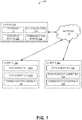
- FIG. 1 illustrates an example data analysis system 100 while having limited network connectivity to a server, in accordance with various embodiments.
- System 100 may include a server 110, a client A 120, and a client B 140.
- Server 110, client A 120, and client B 140 may include one or more processors and memory. The processor(s) may be configured to perform various operations by interpreting machine-readable instructions stored in the memory.
- Server 110 may communicate with client A 120 and/or client B 140 via a network 170.
- System 100 may also include a data store that can be a part of or accessible to server 110 and/or one or more of clients 120, 140 via network 170.
- the data store may include various databases, for example, database 112, application functionalities, application/data packages, and/or other data that are available for download, installation, and/or execution.
- server 110 may have access to resources required by data analysis applications to facilitate analysis by one or more users.
- Server 110 may include the aforementioned database 112, functionalities 114, a resource engine 116, and a communication engine 118.
- Database 112 may include a structured set of data that can be divided/extracted for provision when needed by a client device (e.g., client A 120, client B 140).
- the data stored in database 112 may include raw data or processed data.
- database 112 may include raw data of aerial view maps of various locations and may include processed data of roadways, pathways, and/or emergency routes that may be overlaid over the aerial view maps.
- database 112 may include raw data of weather information and may include processed information of predicted weather patterns.
- the functionalities 114 may include one or more functionalities for, e.g., an investigation application, using a subset of data from database 112 to facilitate an investigation.
- Functionalities for an investigation application may include different data analysis modules that allows the investigation application to perform different data analysis tasks, patches for the investigation application, custom application/functionalities built for particular investigations, administrative tasks to be executed by client devices 120, 140 and/or different permissions for the investigation application to change/operate on the data received from database 112.
- Resource engine 116 may be configured to determine one or more resources for an investigation to be performed remotely from server 110. Resource engine 116 may select one or more data (e.g., a subset of data from database 112 or data store) and/or one or more functionalities (a subset of functionalities from functionalities 114 or data store) for an investigation based on the investigation to be conducted, based on a user interaction with server 110, based on a user interaction with a client device (e.g., client A 120, client B 140) and/or other information. Resource engine 116 may have preset and/or previously defined sets of data/functionalities for different types of investigations, different locations of investigations, and/or different personnel involved in the investigations.
- data e.g., a subset of data from database 112 or data store
- functionalities a subset of functionalities from functionalities 114 or data store
- Resource engine 116 may have preset and/or previously defined sets of data/functionalities for different types of investigations, different locations of investigations, and/or different personnel involved in the
- Resource engine 116 may enable a user operating through a terminal (coupled with server 110 and/or a client device 120, 140) to select particular data and/or functionalities needed for an investigation. For example, the users may select a customized data set from database 112 based on a temporal and/or a geospatial filter, which enables the users to take the most relevant information for the investigation while reducing the size of the data set taken from database 112. Taking a subset of the database 112 may increase the speed and performance of the server 110, and client devices 120, 140 during investigations.
- Resource engine 116 may create one or more resource packages from the data (e.g., a subset of data from database 112 or data store) and/or functionalities (a subset of functionalities from functionalities 114 or data store) selected for an investigation.
- the resource packages created by the resource engine 116 may include database/data analytics ontologies that may be used by the client devices 120, 140 during investigations.
- Resource engine 116 may include one or more updated data/functionalities in a resource package.
- resource engine 116 may have created an initial payload for the client A 120 to include a map of a region and/or information associated with the region. The map included in the resource package may be changed at a later time.
- resource engine 116 may include changes to the map in the resource package so that client A 120, for example, can locally incorporate the changes into the map. Including updates to previously sent data/functionalities, rather than including new data/functionalities, may reduce the size of the resource package to be sent to client A 120.
- the resource engine 116 may enable offline syncing (storage and transfer of resource packages via physical media) between server 110 and client devices 120, 140.
- the server 110 and/or the client devices 120, 130 may allow for user-management of the data selected for analysis.
- data selected for an investigation may include a map cache (a collection of map tiles) of the location at which the investigation will be conducted.
- Users may use server 110 and/or the client devices 120, 140 to manually create map caches of the relevant location before deployment so that the data about the location is stored locally within the client devices 120, 140.
- a user may use client devices 120, 140 to view the maps with little or no connection with server 110.
- the users may change the map caches during the investigation by including more, less, and/or different information within the map caches.
- the users may define one or more parameters of the map cache.
- the users may define the location(s) for which the map cache will be defined.
- the users may define the levels/types of details to be included in the map cache.
- the data selected for an investigation e.g., map caches
- the data selected for an investigation may be stored at server 110 for reuse.
- the data selected for an investigation may not be stored-for example, a one-time map cache may be created for inclusion in a resource package.
- Communication engine 118 may be configured to send one or more resources for an investigation to a client device (e.g., client A 120 or client B 140). Communication engine 118 may be configured to send one or more updates for one or more resources to a client device. Communication engine 118 may be configured to receive one or more results of an investigation from a client device. For example, communication engine 118 may send resources and/or updates to resources to client A 120 and/or client B 140 by sending one or more resource packages discussed above. Communication engine 118 may send and/or receive data from a client device when the client device syncs with the server.
- server 110 may include one or more resource packages containing new map caches, updated map caches, software updates/patches, and/or other information for a client device. When a client device connects with server 110 for a data sync, communication engine 118 may send the resource package(s) to the client device for installation/use.
- Communication engine 118 may receive results of an investigation from the client A 120 and/or the client B 130 and incorporate the results into the database 112. For example, communication engine 118 may receive and incorporate changes to data stored in database 112 and/or may receive and incorporate new records for inclusion in the database 112. In some embodiments, communication engine 118 may receive operating information about client devices (e.g., operation logs), which enable users of server 110 to assist in solving issues with the client devices (e.g., writing/fixing mission-specific tools).
- client devices e.g., operation logs
- communication engine 118 may record full lineage and history of data as different users make changes to the data in the database 112 (e.g., via interaction with the data subset A-1 122A and/or the data subset A-2 122B). In some embodiments, communication engine 118 may hide one or more lineage and/or history information when sharing the results of the investigation. In some embodiments, communication engine 118 may implement a network protocol designed to allow for data transfers in locations where the network connection to the server is only periodically available or unreliable. In some implementations, the network protocol may enable communication engine 118 to reroute communications between server 110 and one or more of client devices 120, 140.
- client A 120 may include data subset A-1 122A, data subset A-2 122B, and a communication engine A 124.
- Client A 120 may include a data analysis platform that enables a user to utilize resources obtained from server 110 to conduct one or more investigations.
- the user may use an investigation application (e.g., a web application) that exposes the data obtained from the server 110 and locally stored at client A 120 to conduct the investigations and provide inputs into the data/investigation.
- the use of the data obtained from server 110 and locally stored at client A 120 may enable one or users to conduct investigations without having an active network connection with server 110.
- the investigation application may be executed at client A 120 (e.g., a user uses a web application from the client A 120 to conduct the investigation).
- the investigation application may be executed at a client device served by client A 120 (e.g., a user uses a web application from another client device to access the resources stored at client A 120 and conduct the investigation).
- client A 120 may communicate with different servers as needed when changing locations.
- Inputs provided by the users using the client A 120 may be synced back to the server 110.
- the users may use the investigation application to change the received data and/or make new records to be sent to server 110 for incorporation into database 112.
- the scope of the use of the data by the users may be limited based on the types of users.
- Communication engine A 124 may be configured to receive one or more resources (e.g., data subset A-1 122A, data subset A-2 122B) for an investigation from server 110.
- Communication engine A 124 may be configured to receive one or more updates for one or more resources from the server 110.
- Communication engine A 124 may be configured to send one or more results of an investigation to server 110. The results of an investigation may be sent during the investigation and/or after the investigation.
- communication engine A 124 may receive resources and/or updates to resources from server 110 by receiving one or more resource packages discussed above.
- Communication engine A 124 may send results of an investigation to the server 110, which may then be incorporated into the database 112.
- communications engine A 124 may send operating information about the client A 120 (e.g., operation logs), which may enable users of server 110 to assist in solving issues with the client A 120 (e.g., writing/fixing mission-specific tools).
- Communication engine A 124 may implement the network protocol described above to allow for data transfers in locations where the network connection to the server is only periodically available or unreliable.
- Data subset A-1 122A and data subset A-2 122B may include one or more data needed for a user to conduct an investigation using client A 120.
- Data subset A-1 122A and data subset A-2 122B may include a subset of the database 112.
- the data subset A-1 122A and the data subset A-2 122B may include one or more of the same data from the database 112 and/or may include one or more of different data from the database 112.
- Data subset A-1 122A and the data subset A-2 122B may be used for the same investigation or for different investigations.
- the user may use the investigation application executed at client A 120 to expose data subset A-1 122A and/or data subset A-2 122B.
- the user may user the investigation application executed at the client A 120 to conduct the investigation and provide inputs to the data/investigation without having an active network connection with server 110.
- client B 140 may include a data subset B-1 142, a functionality subset B-1 144, and a communication engine B 146.
- Client B 140 like client A 120, may include a data analysis platform that enables a user to utilize data obtained from server 110 to conduct one or more investigations. The user may use an investigation application (e.g., a web application) that exposes the data obtained from server 110 and locally stored at the client B 140 to conduct the investigations and provide inputs into the data/investigation.
- Client B 140 may have the same, similar, or different functionality as that of client A 120 described above.
- Communication engine B 146 may be configured to receive one or more resources (e.g., the data subset B-1 142, the functionality subset B-1 144) for an investigation from server 110.
- Communication engine B 146 may be configured to receive one or more updates for one or more resources from server 110.
- Communication engine B 146 may be configured to send one or more results of an investigation to server 110.
- Communication engine B 146 may be configured to implement some, or all, of the functionalities of the communication engine A 124 as described above.
- Data subset B-1 142 may include one or more data needed for a user to conduct an investigation using client B 140.
- Data subset B-1 142 may include a subset of database 112.
- the user may use the investigation application executed at client B 140 to expose the data subset B-1 142.
- the user may user the investigation application executed at client B 140 to conduct the investigation and provide inputs to the data/investigation without having an active network connection with the server 110.
- Functionality subset B-1 144 may include one or more functionalities for the investigation application using the data subset B-1 142.
- Functionality subset B-1 144 may include a subset of data analysis module, patches for the investigation application, custom applications/functionalities built for investigations, and/or permissions for the investigation application executed on the client B 140 and/or served by client B 140 to change/operate on data subset B-1 142.
- functionality subset B-1 144 may allow certain users (e.g., administrators) to create and run administrative tasks on the client B 140, such as collecting diagnostics about client B 140, deploy emergency software updates for investigation applications or other components of client B 140, etc.
- the particular functional blocks and arrangement of system 100 may be altered from the depicted configuration based on particular implementation details.
- functional blocks may be combined or subdivided based on the available processing resources and hardware. Some functional blocks may be unused or omitted based on the particular application of system 100.
- a service can be a single instance of a software product or software application installed on one or more hosts in the distributed computing environment, or other set(s) of installable and computer-executable instructions along with associated configuration information and metadata.
- a service might be a database server instance, a web server instance, or any other instance of a software product or a software application installed on one or more hosts.
- a service is a network "server” service in that responds to network requests from other network "client” services.
- a server can be both a server service and a client service, or just a client service, or just a server service.
- a service can be, but need not be, a network service. That is, a service may perform operations at one or more hosts without sending or responding to network requests.
- a host can be a single computing device.
- a host can be a single server computing device.
- a host can be a single virtual computer instance that executes on a computing device facilitated by a virtualization layer (e.g., a Type 1 or Type 2 hypervisor) interposed between the virtual computer instance and the computing device.
- a virtualization layer e.g., a Type 1 or Type 2 hypervisor
- a host can be configured with an operating system (e.g., UNIX, LINUX, or WINDOWS) that manages the low-level aspects of host operation including managing execution of processes, memory allocation, file input and output (I/O), and device I/O.
- an operating system e.g., UNIX, LINUX, or WINDOWS
- a host may also be configured with a container platform (e.g., DOCKER) for running services within containers on the operating system.
- a container platform e.g., DOCKER
- DOCKER a container platform for running services within containers on the operating system.
- services execute as processes on hosts that may be configured using a centralized entity (e.g., a distributed configuration platform).
- a layer built on top of a centralized entity infrastructure allows an overall configuration file encompassing all the services needed for a platform deployment on a laptop to be written/developed based on the configuration files of each service in the cloud deployment.
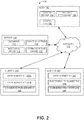
- FIG. 2 illustrates a host 180 that may act as the centralized entity on which a configuration platform is run.
- Host 180 may be a single computing device such as, for example, computer system 500 described below with respect to FIG. 5 .
- host 180 may be a single virtual computer instance that executes on a computing device, such as computer system 500 facilitated by a virtualization layer interposed between the virtual computer instance and the computing device.
- the configuration platform may be embodied as a CloudStack comprising a management server running on a first virtual machine, and a second virtual machine acting as the cloud infrastructure.
- the management server aspect of the CloudStack can create, control (e.g., turn on/off), and deploy various services as will be described below.
- the overall configuration file may be generated from a combination of manual and automated actions and represents configurations for every service intended to be deployed to remote computing devices, such as clients 120, 140.
- a user such as an administrator, platform developer, platform provider, etc. may use a configuration editor 184 to generate some or all of configuration file 182.
- the overall configuration may begin as an aggregate of all default services running in a platform deployment through automated copy-paste operations. Adjustments to the default configurations can be made, e.g., by an administrator via configuration editor 184.
- a service may have configuration information that the service uses to set execution parameters of the service.
- the execution parameters may be service-specific, that is, specific to the type of service or specific to a product that the service is an installation of.
- the configuration information of a service may be defined by a service definition stored as a set of key-values pairs that can be hierarchical or nested.
- a key name may be represented by character string data and can represent a path in a key namespace.
- An example portion or block of an overall configuration file may be as follows, where the example portion has a configuration for the service itself running on a server.
- an overall configuration file may be comprised of multiple subset configuration files, each corresponding to a service.
- configuration information or parameters may be added or updated to reflect a desired configuration suitable for a remote computing device.
- An example is shown below.
- remote computing device-specific configuration information can be added for services, e.g., a service named "service_1,” that may be one of a plurality of deployed/to-be-deployed services on a remote computing device, such as clients 120, 140.
- service_platform can refer to the remote computing device-specific configuration platform
- configuration_service can refer to the server-specific configuration service.
- a service(s) deployed on a remote computing device can operate and/or appear as desired on that remote computing device (that can be different from the server instance of that service).
- Labels such as the above-noted names may be used to indicate services to be configured and demarcate the blocks or subset configuration files corresponding to each service.
- configuration file 182 may be disseminated to clients 120, 140.
- Clients 120, 140 can determine which services should be installed, determine which portion(s) of configuration file 182 are specific to each service, and put that portion or portions into the requisite place(s) on clients 120, 140.
- configuration file 182 is the same for each remote computing device in a computing environment (or portion of a computing environment). In this way, the need for manual configuration in conventional systems is negated. Any time a particular remote computing device, e.g., client A 120 is to be updated, a new configuration file 182' may be disseminated, where client A 120 is able to apply any new configuration changes made at host 180.
- an override section (reflected in the above example of an overall configuration file) can be used to customize how a particular service is to run on a remote computing device, e.g., one or more parameters may supersede that of default configuration parameters for a server instance.
- the overall configuration file may reflect a default configuration or configuration suitable for a server instance that should be customized for use on a laptop computer.
- the overall configuration file may further include a section including descriptions of secret information, such as passwords customized for laptops, for each service, and a section for user-facing information, such as the name of a service or a location of information a laptop user/administrator can view to monitor the operation of a service.
- the overall configuration file may specify that upon bootup of client A 120, client A 120 should generate an administrator password, a login password, and a shared database password (e.g., for database 112 of server 110).
- Other sections of the overall configuration file may reflect other laptop-specific configuration aspects.
- remote computing devices need not send or reply with any configuration-related information back to host 180 (or centralized database). Rather, host 180 may simply push configuration file 182 (or updates) to remote computing devices, such as clients 120, 140.
- a templating language or syntax may be used to allow for referencing of another value (of a key-value pair).
- two or more deployed services can be connected or interact.
- a first service deployed on client A 120 can be configured to reference some aspect of a second service deployed on client A 120.
- This templating language or syntax can be reflected with the use of key-value pair delineated by double brackets.
- the examples noted above refer to a secure socket layer (SSL) certificate alias " ⁇ ssl.cert_alias ⁇ " in double brackets indicating that the configuration file should replace what is referenced in the double brackets with an actual retrieved value.
- SSL secure socket layer
- a remote computing device may run through a configuration file twice by first writing to memory with a reference to a value, retrieving the referenced value, and subsequently rendering the configuration file again to write the retrieved value to memory.
- a configuration file may contain large numbers of references to URLs needed to effectuate one or more services, access data, etc.
- real DNS entries, host names, etc. may be utilized, whereas on a remote computing device, services may be running on a local host. Accordingly, the templating language allows the URLs to be replaced to reference the local host.
- those multiple services may often utilize the same front-end interface, or at least may engage in some form of interaction, e.g., sharing of data to analyze, or receiving input at a first service from a second service and outputting some result from the first service to a third service.
- assets one or more static collection of files made available to a user, e.g., a set of hypertext markup language (HTML) text
- HTML hypertext markup language
- host 180 may further include a payload status/history component 186 that can track the status of a current configuration file, as well as different iterations of a configuration file.
- a payload status/history component 186 that can track the status of a current configuration file, as well as different iterations of a configuration file.
- an administrator may wish to edit a default configuration using configuration editor 184. The administrator may wish to test or otherwise ensure (prior to exporting the configuration file, e.g., configuration file 182 to clients 120 and 140 via network 170) that the configuration file is in a safe or ready state.
- payload status/history component 186 may include or comprise a table, entries of which reflect a most up-to-date version of configuration file 182 as well as prior versions thereof.
- the most up-to-date version of configuration file 182 can be entered upon the administrator exporting the platform payload.
- remote computing devices may be allowed to query payload status/history component 186 to determine a most recent payload, and may be allowed to automatically update their current configuration file.
- remote computing devices such as clients 120, 140 need not go down while a particular configuration is being updated, changed, tested, etc.
- payload status/history component 186 Another benefit realized with the use of payload status/history component 186 is that remote computing devices can be configured with approved or safe configurations. Without the payload status/history component 186, client A 120 and client B could be pushed configurations that may or may not work. With payload status/history component 186, client A 120 and client B 140 can be configured with configuration file 182 at different states (built at different times), yet the configuration file 182 at each state/build time is safe. It should be understood that depending on the state of a configuration, a remote computing device may need to step through one or more intermediate versions of a configuration file to reach a latest version.
- Still another benefit of centralized configuration in accordance with various embodiments is that configurations can be vetted prior to dissemination to remote computing devices.
- conflicts can occur between different services, or different versions of the same or other services.
- Such conflicts can be avoided by configuring all the desired services at host 180 vis-a-vis certain services or functions already available in distributed configuration platforms that are able to detect and notify a user of conflicts.
- little to no user interaction is necessary to enable a platform deployment on a remote computing device. In fact, a user is generally unaware of any of the processes described herein.
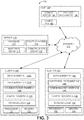
- FIG. 3 illustrates remote computing device elements that can be used to effectuate a platform deployment that mirrors (or substantially mirrors) that of a service deployment.
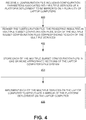
- FIG. 3 will be described in conjunction with FIG. 4 , an example flowchart of operations that may be performed to achieve the mirrored platform deployment in accordance with at least one embodiment.
- the term mirror may not necessarily mean and exact duplicate or replica of server-instance of a platform deployment, but can be less that an exact duplicate or replica.
- certain changes may be applied to a server instance of a platform deployment in order to customize implementation on a laptop computer.
- a laptop deployment may not have precisely the same services. For example, one or more services may be deemed not appropriate for implementation on a laptop, and the corresponding configuration may not be included in the overall configuration file exported to the laptop.
- a configuration file including configuration parameters associated with multiple services of a platform deployment to be mirrored on a plurality of laptop computer is received.
- host 180 may export or disseminate a configuration file, e.g., configuration file to one or more remote computing devices, such as clients 120, 140.
- the configuration file is rendered.
- client A 120 can render configuration file 182 to look for one or more of the subset configuration files corresponding to services to be deployed thereon.
- the first time client A 120 receives configuration file 182 it may assume that each of the subset configuration files correspond to all services to be deployed to client A 120.
- each of the multiple subset configuration files can be stored in one or more appropriate sections of the laptop computer's file system. That is, configuration rendering component 126 in conjunction with storage logic 128 may write each of the subset configuration files of configuration file 182 to appropriate locations in memory 132. As alluded to above, the initial rendering of configuration file 182 may involve writing the subset configuration files including references to values. Configuration component 126 may render configuration file 182 a second time, using the referenced value that is written to memory 132. It should be understood that similarly, regarding client B 140, under the control of processor 152, configuration rendering component 148 in conjunction with storage logic 150 writes each of the subset configuration files of configuration file 182 to appropriate locations in its memory 154
- each of the multiple services can be implemented on the laptop computer to effectuate a mirror of the platform deployment on the laptop computer. That is, each service corresponding to a subset configuration file contained within configuration file 182 may be installed on client A 120, where each service haas been properly configured in accordance its corresponding subset configuration files.
- Various embodiments disclosed herein provide automated configuration of remote computing devices from a centralized entity using a configuration file having subset configuration files corresponding to each service to be deployed on the remote computing devices.
- User interaction is minimal to non-existent, and users need not be aware of the configuration process(es) occurring on a remote computing device.
- a CloudStack-defined configuration can be prepared and made to be a fully running mirror of that CloudStack on a remote computing device. Configurations reflected in the configuration file can be tested, tweaked, and customized for use on the remote computing devices prior to dissemination to the remote computing devices. Any changes made to the configuration file are minimal as they are made relative to a base or default service configuration.
- the embodiments disclosed herein are not limited by any remote computing device operating system. Further still, different services can interact with one another easily and with little to no conflict due to a templating language or syntax implemented in various embodiments.
- FIG. 6 is a block diagram of an example computer system 600 with which embodiments described herein can be implemented, consistent with embodiments of the present disclosure.
- Computer system 600 includes a bus 602 or other communication mechanism for communicating information, and one or more hardware processors 604 (denoted as processor 604 for purposes of simplicity) coupled with bus 602 for processing information.
- Hardware processor 604 can be, for example, one or microprocessors.
- Computer system 600 also includes a main memory 606, such as a random access memory (RAM) or other dynamic storage device, coupled to bus 602 for storing information and instructions to be executed by processor 604.
- Main memory 606 also can be used for storing temporary variables or other intermediate information during execution of instructions to be executed by processor 604.
- Such instructions after being stored in non-transitory storage media accessible to processor 604, render computer system 600 into a special-purpose machine that is customized to perform the operations specified in the instructions.
- Computer system 600 further includes a read only memory (ROM) 608 or other static storage device coupled to bus 602 for storing static information and instructions for processor 604.
- ROM read only memory
- a storage device 610 such as a magnetic disk, optical disk, or USB thumb drive (Flash drive), etc., is provided and coupled to bus 602 for storing information and instructions.
- Computer system 600 can be coupled via bus 602 to a display 612, such as a cathode ray tube (CRT), a liquid crystal display (LCD), or a touch screen, for displaying information to a computer user.
- a display 612 such as a cathode ray tube (CRT), a liquid crystal display (LCD), or a touch screen
- An input device 614 is coupled to bus 602 for communicating information and command selections to processor 604.
- cursor control 616 such as a mouse, a trackball, or cursor direction keys for communicating direction information and command selections to processor 604 and for controlling cursor movement on display 612.
- the input device typically has two degrees of freedom in two axes, a first axis (for example, x) and a second axis (for example, y), that allows the device to specify positions in a plane.
- a first axis for example, x
- a second axis for example, y
- the same direction information and command selections as cursor control may be implemented via receiving touches on a touch screen without a cursor.
- Computer system 600 can include a user interface component to implement a graphical user interface (GUI) that can be stored in a mass storage device as executable software codes that are executed by the one or more computing devices.
- GUI graphical user interface
- This and other components can include, by way of example, components, such as software components, object-oriented software components, class components and task components, processes, functions, fields, procedures, subroutines, segments of program code, drivers, firmware, microcode, circuitry, data, databases, data structures, tables, arrays, and variables.
- the word "component,” as used herein, refers to logic embodied in hardware or firmware, or to a collection of software instructions, possibly having entry and exit points, written in a programming language, such as, for example, Java, Lua, C or C++.
- a software component can be compiled and linked into an executable program, installed in a dynamic link library, or written in an interpreted programming language such as, for example, BASIC, Perl, or Python. It will be appreciated that software components can be callable from other components or from themselves, and/or can be invoked in response to detected events or interrupts.
- Software components configured for execution on computing devices can be provided on a computer readable medium, such as a compact disc, digital video disc, flash drive, magnetic disc, or any other tangible medium, or as a digital download (and can be originally stored in a compressed or installable format that requires installation, decompression, or decryption prior to execution).
- a computer readable medium such as a compact disc, digital video disc, flash drive, magnetic disc, or any other tangible medium, or as a digital download (and can be originally stored in a compressed or installable format that requires installation, decompression, or decryption prior to execution).
- Such software code can be stored, partially or fully, on a memory device of the executing computing device, for execution by the computing device.
- Software instructions can be embedded in firmware, such as an EPROM.
- hardware components can be comprised of connected logic units, such as gates and flip-flops, and/or can be comprised of programmable units, such as programmable gate arrays or processors.
- the components or computing device functionality described herein are
- Computer system 600 can implement the techniques described herein using customized hard-wired logic, one or more ASICs or FPGAs, firmware and/or program logic which in combination with the computer system causes or programs computer system 600 to be a special-purpose machine. According to some embodiments, the operations, functionalities, and techniques and other features described herein are performed by computer system 600 in response to processor 604 executing one or more sequences of one or more instructions contained in main memory 606. Such instructions can be read into main memory 606 from another storage medium, such as storage device 610. Execution of the sequences of instructions contained in main memory 606 causes processor 604 to perform the process operations described herein. In alternative embodiments, hard-wired circuitry can be used in place of or in combination with software instructions.
- non-transitory media refers to any non-transitory media storing data and/or instructions that cause a machine to operate in a specific fashion.
- Such non-transitory media can comprise non-volatile media and/or volatile media.
- Non-volatile media can include, for example, optical or magnetic disks, such as storage device 610.
- Volatile media can include dynamic memory, such as main memory 606.
- non-transitory media include, for example, a floppy disk, a flexible disk, hard disk, solid state drive, magnetic tape, or any other magnetic data storage medium, a CD-ROM, any other optical data storage medium, any physical medium with patterns of holes, a RAM, a PROM, and EPROM, a FLASH-EPROM, NVRAM, any other memory chip or cartridge, and networked versions of the same.
- Non-transitory media is distinct from, but can be used in conjunction with, transmission media.
- Transmission media can participate in transferring information between storage media.
- transmission media can include coaxial cables, copper wire and fiber optics, including the wires that comprise bus 602.
- transmission media can also take the form of acoustic or light waves, such as those generated during radio-wave and infra-red data communications.
- Various forms of media can be involved in carrying one or more sequences of one or more instructions to processor 604 for execution.
- the instructions can initially be carried on a magnetic disk or solid state drive of a remote computer.
- the remote computer can load the instructions into its dynamic memory and send the instructions over a telephone line using a modem.
- a modem local to computer system 600 can receive the data on the telephone line and use an infra-red transmitter to convert the data to an infra-red signal.
- An infra-red detector can receive the data carried in the infra-red signal and appropriate circuitry can place the data on bus 602.
- Bus 602 carries the data to main memory 606, from which processor 604 retrieves and executes the instructions.
- the instructions received by main memory 606 can optionally be stored on storage device 610 either before or after execution by processor 604.
- Computer system 600 can also include a communication interface 618 coupled to bus 602.
- Communication interface 618 can provide a two-way data communication coupling to a network link 620 that can be connected to a local network 622.
- communication interface 618 can be an integrated services digital network (ISDN) card, cable modem, satellite modem, or a modem to provide a data communication connection to a corresponding type of telephone line.
- ISDN integrated services digital network
- communication interface 618 can be a local area network (LAN) card to provide a data communication connection to a compatible LAN.
- LAN local area network
- Wireless links can also be implemented.
- communication interface 618 can send and receive electrical, electromagnetic or optical signals that carry digital data streams representing various types of information.
- Network link 620 can typically provide data communication through one or more networks to other data devices.
- network link 620 can provide a connection through local network 622 to a host computer 624 or to data equipment operated by an Internet Service Provider (ISP) 626.
- ISP 626 in turn can provide data communication services through the world wide packet data communication network now commonly referred to as the "Internet" 628.
- Internet 628 uses electrical, electromagnetic or optical signals that carry digital data streams.
- the signals through the various networks and the signals on network link 620 and through communication interface 618, which carry the digital data to and from computer system 600, can be example forms of transmission media.
- Computer system 600 can send messages and receive data, including program code, through the network(s), network link 620 and communication interface 618.
- a server 630 can transmit a requested code for an application program through Internet 628, ISP 626, local network 622 and communication interface 618.
- server 630 can provide information for being displayed on a display.
- Engines may constitute either software engines (e.g., code embodied on a machine-readable medium) or hardware engines.
- a "hardware engine” is a tangible unit capable of performing certain operations and may be configured or arranged in a certain physical manner.
- one or more computer systems e.g., a standalone computer system, a client computer system, or a server computer system
- one or more hardware engines of a computer system e.g., a processor or a group of processors
- software e.g., an application or application portion
- a hardware engine may be implemented mechanically, electronically, or any suitable combination thereof.
- a hardware engine may include dedicated circuitry or logic that is permanently configured to perform certain operations.
- a hardware engine may be a special-purpose processor, such as a Field-Programmable Gate Array (FPGA) or an Application Specific Integrated Circuit (ASIC).
- a hardware engine may also include programmable logic or circuitry that is temporarily configured by software to perform certain operations.
- a hardware engine may include software executed by a general-purpose processor or other programmable processor. Once configured by such software, hardware engines become specific machines (or specific components of a machine) uniquely tailored to perform the configured functions and are no longer general-purpose processors. It will be appreciated that the decision to implement a hardware engine mechanically, in dedicated and permanently configured circuitry, or in temporarily configured circuitry (e.g., configured by software) may be driven by cost and time considerations.
- hardware engine should be understood to encompass a tangible entity, be that an entity that is physically constructed, permanently configured (e.g., hardwired), or temporarily configured (e.g., programmed) to operate in a certain manner or to perform certain operations described herein.
- “hardware-implemented engine” refers to a hardware engine. Considering embodiments in which hardware engines are temporarily configured (e.g., programmed), each of the hardware engines need not be configured or instantiated at any one instance in time. For example, where a hardware engine comprises a general-purpose processor configured by software to become a special-purpose processor, the general-purpose processor may be configured as respectively different special-purpose processors (e.g., comprising different hardware engines) at different times. Software accordingly configures a particular processor or processors, for example, to constitute a particular hardware engine at one instance of time and to constitute a different hardware engine at a different instance of time.
- Hardware engines can provide information to, and receive information from, other hardware engines. Accordingly, the described hardware engines may be regarded as being communicatively coupled. Where multiple hardware engines exist contemporaneously, communications may be achieved through signal transmission (e.g., over appropriate circuits and buses) between or among two or more of the hardware engines. In embodiments in which multiple hardware engines are configured or instantiated at different times, communications between such hardware engines may be achieved, for example, through the storage and retrieval of information in memory structures to which the multiple hardware engines have access. For example, one hardware engine may perform an operation and store the output of that operation in a memory device to which it is communicatively coupled. A further hardware engine may then, at a later time, access the memory device to retrieve and process the stored output. Hardware engines may also initiate communications with input or output devices, and can operate on a resource (e.g., a collection of information).
- a resource e.g., a collection of information
- processors may be temporarily configured (e.g., by software) or permanently configured to perform the relevant operations. Whether temporarily or permanently configured, such processors may constitute processor-implemented engines that operate to perform one or more operations or functions described herein.
- processor-implemented engine refers to a hardware engine implemented using one or more processors.
- the methods described herein may be at least partially processor-implemented, with a particular processor or processors being an example of hardware.
- a particular processor or processors being an example of hardware.
- the operations of a method may be performed by one or more processors or processor-implemented engines.
- the one or more processors may also operate to support performance of the relevant operations in a "cloud computing" environment or as a "software as a service” (SaaS).
- SaaS software as a service
- at least some of the operations may be performed by a group of computers (as examples of machines including processors), with these operations being accessible via a network (e.g., the Internet) and via one or more appropriate interfaces (e.g., an Application Program Interface (API)).
- API Application Program Interface
- processors or processor-implemented engines may be located in a single geographic location (e.g., within a home environment, an office environment, or a server farm). In other example embodiments, the processors or processor-implemented engines may be distributed across a number of geographic locations.
- an "engine,” “system,” “data store,” and/or “database” may comprise software, hardware, firmware, and/or circuitry.
- one or more software programs comprising instructions capable of being executable by a processor may perform one or more of the functions of the engines, data stores, databases, or systems described herein.
- circuitry may perform the same or similar functions.
- Alternative embodiments may comprise more, less, or functionally equivalent engines, systems, data stores, or databases, and still be within the scope of present embodiments.
- the functionality of the various systems, engines, data stores, and/or databases may be combined or divided differently.
- Open source software is defined herein to be source code that allows distribution as source code as well as compiled form, with a well-publicized and indexed means of obtaining the source, optionally with a license that allows modifications and derived works.
- the data stores described herein may be any suitable structure (e.g., an active database, a relational database, a self-referential database, a table, a matrix, an array, a flat file, a documented-oriented storage system, a non-relational No-SQL system, and the like), and may be cloud-based or otherwise.
- suitable structure e.g., an active database, a relational database, a self-referential database, a table, a matrix, an array, a flat file, a documented-oriented storage system, a non-relational No-SQL system, and the like
- cloud-based or otherwise e.g., an active database, a relational database, a self-referential database, a table, a matrix, an array, a flat file, a documented-oriented storage system, a non-relational No-SQL system, and the like
- the term "or" may be construed in either an inclusive or exclusive sense. Moreover, plural instances may be provided for resources, operations, or structures described herein as a single instance. Additionally, boundaries between various resources, operations, engines, engines, and data stores are somewhat arbitrary, and particular operations are illustrated in a context of specific illustrative configurations. Other allocations of functionality are envisioned and may fall within a scope of various embodiments of the present disclosure. In general, structures and functionality presented as separate resources in the example configurations may be implemented as a combined structure or resource. Similarly, structures and functionality presented as a single resource may be implemented as separate resources. These and other variations, modifications, additions, and improvements fall within a scope of embodiments of the present disclosure as represented by the appended claims. The specification and drawings are, accordingly, to be regarded in an illustrative rather than a restrictive sense.
Landscapes
- Engineering & Computer Science (AREA)
- Software Systems (AREA)
- Theoretical Computer Science (AREA)
- General Engineering & Computer Science (AREA)
- Physics & Mathematics (AREA)
- General Physics & Mathematics (AREA)
- Computer Security & Cryptography (AREA)
- Computer Hardware Design (AREA)
- Computing Systems (AREA)
- Computer Networks & Wireless Communication (AREA)
- Signal Processing (AREA)
- Information Retrieval, Db Structures And Fs Structures Therefor (AREA)
- Information Transfer Between Computers (AREA)
Applications Claiming Priority (2)
| Application Number | Priority Date | Filing Date | Title |
|---|---|---|---|
| US201962815911P | 2019-03-08 | 2019-03-08 | |
| US16/360,235 US11016784B2 (en) | 2019-03-08 | 2019-03-21 | Systems and methods for automated deployment and adaptation of configuration files at computing devices |
Publications (1)
| Publication Number | Publication Date |
|---|---|
| EP3705992A1 true EP3705992A1 (de) | 2020-09-09 |
Family
ID=69784150
Family Applications (1)
| Application Number | Title | Priority Date | Filing Date |
|---|---|---|---|
| EP20161777.6A Ceased EP3705992A1 (de) | 2019-03-08 | 2020-03-09 | Systeme und verfahren zur automatisierten und verteilten konfiguration von rechenvorrichtungen |
Country Status (2)
| Country | Link |
|---|---|
| US (3) | US11016784B2 (de) |
| EP (1) | EP3705992A1 (de) |
Cited By (2)
| Publication number | Priority date | Publication date | Assignee | Title |
|---|---|---|---|---|
| CN112130866A (zh) * | 2020-10-09 | 2020-12-25 | 腾讯科技(深圳)有限公司 | 一种应用部署方法和相关装置 |
| CN115480771A (zh) * | 2021-05-31 | 2022-12-16 | 京东方科技集团股份有限公司 | 用于部署算法的方法及相关设备 |
Families Citing this family (6)
| Publication number | Priority date | Publication date | Assignee | Title |
|---|---|---|---|---|
| CN113301156A (zh) * | 2021-05-24 | 2021-08-24 | 中国农业银行股份有限公司 | 文件的部署方法、装置和电子设备 |
| CN113703795B (zh) * | 2021-08-27 | 2024-10-25 | 西安交通大学 | 一种基于分布式Jupyterhub的自流程化方法、系统及平台 |
| US12069829B2 (en) * | 2021-11-22 | 2024-08-20 | Mellanox Technologies, Ltd. | Dual connect switch module |
| WO2024044977A1 (zh) * | 2022-08-30 | 2024-03-07 | 西门子股份公司 | 自动化应用的适配方法及装置 |
| CN116775163B (zh) * | 2023-08-22 | 2024-02-02 | 深圳富联富桂精密工业有限公司 | 配置文件获取方法、装置、电子设备及存储介质 |
| US12530186B2 (en) * | 2023-12-06 | 2026-01-20 | Lenovo Enterprise Solutions (Singapore) Pte. Ltd. | Smart xclarity |
Citations (4)
| Publication number | Priority date | Publication date | Assignee | Title |
|---|---|---|---|---|
| US20150067642A1 (en) * | 2013-08-29 | 2015-03-05 | International Business Machines Corporation | Development, test and deployment of applications |
| WO2015165111A1 (en) * | 2014-04-30 | 2015-11-05 | Pivotal Software, Inc. | Fast deployment across cloud platforms |
| US20160335066A1 (en) * | 2015-05-13 | 2016-11-17 | Samsung Electronics Co., Ltd. | System and method for automatically deploying cloud |
| US20180095739A1 (en) * | 2016-09-30 | 2018-04-05 | International Business Machines Corporation | Secure deployment of applications in a cloud computing platform |
Family Cites Families (61)
| Publication number | Priority date | Publication date | Assignee | Title |
|---|---|---|---|---|
| US6058373A (en) | 1996-10-16 | 2000-05-02 | Microsoft Corporation | System and method for processing electronic order forms |
| US7236173B2 (en) | 1996-10-30 | 2007-06-26 | Autodesk, Inc. | Method and apparatus for providing access to maps on a thin client |
| US7171373B2 (en) | 1999-10-21 | 2007-01-30 | International Business Machines Corporation | Database driven workflow management system for generating output material based on customer input |
| JP2002182983A (ja) | 2000-12-13 | 2002-06-28 | Sharp Corp | データベースへのアクセス制御方法、データベース装置、リソースへのアクセス制御方法、情報処理装置 |
| US7143419B2 (en) | 2001-06-06 | 2006-11-28 | Sap Ag | Device for running offline applications and synchronizing with a central computer system |
| US6876368B2 (en) | 2001-08-14 | 2005-04-05 | National Instruments Corporation | System and method for deploying a graphical program to a PDA device |
| US20030056206A1 (en) | 2001-09-17 | 2003-03-20 | Engo Frank Joseph | Cross-barrier programming language |
| US20060075070A1 (en) | 2002-04-02 | 2006-04-06 | Patrick Merissert-Coffinieres | Development and deployment of mobile and desktop applications within a flexible markup-based distributed architecture |
| US7263560B2 (en) | 2002-08-30 | 2007-08-28 | Sun Microsystems, Inc. | Decentralized peer-to-peer advertisement |
| GB2396780A (en) | 2002-12-27 | 2004-06-30 | Nokia Corp | Providing games to a mobile communication device for use online and offline |
| US7761569B2 (en) | 2004-01-23 | 2010-07-20 | Tiversa, Inc. | Method for monitoring and providing information over a peer to peer network |
| CA2459004A1 (en) | 2004-02-20 | 2005-08-20 | Ibm Canada Limited - Ibm Canada Limitee | Method and system to control data acces using security label components |
| US7779387B2 (en) | 2004-04-15 | 2010-08-17 | Microsoft Corporation | Offline source code control |
| US7685258B2 (en) | 2004-05-21 | 2010-03-23 | Bea Systems, Inc. | Disconnectible applications |
| US9083765B2 (en) | 2004-07-02 | 2015-07-14 | Oracle International Corporation | Systems and methods of offline processing |
| US20060047798A1 (en) * | 2004-07-13 | 2006-03-02 | Feinleib David A | System and method for automated capture, editing, replication, and deployment of server configurations |
| US7657925B2 (en) | 2004-10-14 | 2010-02-02 | Oracle International Corporation | Method and system for managing security policies for databases in a distributed system |
| US7831570B2 (en) | 2004-12-30 | 2010-11-09 | Oracle International Corporation | Mandatory access control label security |
| US7539682B2 (en) | 2005-03-14 | 2009-05-26 | Microsoft Corporation | Multilevel secure database |
| US8266327B2 (en) | 2005-06-21 | 2012-09-11 | Cisco Technology, Inc. | Identity brokering in a network element |
| US7788352B2 (en) | 2005-07-14 | 2010-08-31 | Yahoo! Inc. | System and method for servicing a user device |
| KR100713503B1 (ko) | 2005-11-09 | 2007-04-30 | 삼성전자주식회사 | 애플리케이션을 구동하는 방법과 그에 따른 이동 통신단말기 |
| EP2080124A4 (de) | 2006-07-09 | 2013-10-16 | Microsoft Amalgamated Company Iii | Systeme und verfahren zur verwaltung von netzwerken |
| US20080086540A1 (en) | 2006-10-06 | 2008-04-10 | James Scott | Method and system for executing a normally online application in an offline mode |
| US8655914B2 (en) | 2006-10-17 | 2014-02-18 | Commvault Systems, Inc. | System and method for storage operation access security |
| US7814234B2 (en) | 2006-10-30 | 2010-10-12 | Microsoft Corporation | Offline execution of web based applications |
| BRPI0718582A8 (pt) | 2006-11-07 | 2018-05-22 | Tiversa Ip Inc | Sistema e método para experiência aprimorada com uma rede ponto a ponto |
| CN102067518A (zh) | 2007-11-21 | 2011-05-18 | 阿尔卡特朗讯 | 响应于事件来调用服务的功能的系统和方法及使用该系统和方法的服务管理系统 |
| US8924920B2 (en) | 2008-02-29 | 2014-12-30 | Red Hat, Inc. | Providing a software appliance based on a role |
| US8935620B1 (en) | 2008-03-20 | 2015-01-13 | Amazon Technologies, Inc. | Dynamic content management |
| US20090319529A1 (en) | 2008-06-20 | 2009-12-24 | Raytheon Company | Information Rights Management |
| US20090327465A1 (en) | 2008-06-27 | 2009-12-31 | Microsoft Corporation | Distributed Configuration Orchestration for Network Client Management |
| US8640096B2 (en) | 2008-08-22 | 2014-01-28 | International Business Machines Corporation | Configuration of componentized software applications |
| EP2159742A1 (de) | 2008-08-29 | 2010-03-03 | Accenture Global Services GmbH | Dynamischer Bestellablaufplanschabloneninstantiator und Entkoppler |
| US8819106B1 (en) | 2008-12-12 | 2014-08-26 | Amazon Technologies, Inc. | Managing distributed execution of programs |
| US8320551B2 (en) | 2008-12-17 | 2012-11-27 | At&T Intellectual Property I, L.P. | Method and system for processing application logs |
| US8650634B2 (en) | 2009-01-14 | 2014-02-11 | International Business Machines Corporation | Enabling access to a subset of data |
| US8832173B2 (en) | 2009-01-20 | 2014-09-09 | Sap Ag | System and method of multithreaded processing across multiple servers |
| US8285860B2 (en) | 2009-03-16 | 2012-10-09 | Apple Inc. | Efficient service discovery for peer-to-peer networking devices |
| EP2282264A1 (de) | 2009-07-24 | 2011-02-09 | ProximusDA GmbH | Planung und Kommunikation in Computersystemen |
| US8549536B2 (en) | 2009-11-30 | 2013-10-01 | Autonomy, Inc. | Performing a workflow having a set of dependancy-related predefined activities on a plurality of task servers |
| US8447819B2 (en) | 2010-07-09 | 2013-05-21 | Robert Paul Morris | Methods, systems, and computer program products for processing a request for a resource in a communication |
| EP2583211B1 (de) | 2010-06-15 | 2020-04-15 | Oracle International Corporation | Virtuelle berechnungsinfrastruktur |
| TWI630493B (zh) | 2011-09-19 | 2018-07-21 | 塔塔顧問服務有限公司 | 用於提供促進感測器驅動式應用的開發及部署之運算平台的系統及方法 |
| US9363335B2 (en) | 2011-10-30 | 2016-06-07 | Lg Electronics Inc. | Method and apparatus that enables a web-based client-server application to be used offline |
| WO2013145254A1 (ja) | 2012-03-30 | 2013-10-03 | 富士通株式会社 | 分散処理を実行するプログラム、装置、および方法 |
| US8745174B2 (en) | 2012-07-03 | 2014-06-03 | Raytheon Company | Thin client for mapping system |
| WO2014008495A2 (en) | 2012-07-06 | 2014-01-09 | Cornell University | Managing dependencies between operations in a distributed system |
| US20140109176A1 (en) | 2012-10-15 | 2014-04-17 | Citrix Systems, Inc. | Configuring and providing profiles that manage execution of mobile applications |
| US9055072B2 (en) | 2013-04-10 | 2015-06-09 | Xerox Corporation | Method for automated generation of minimal partitioning of a process specification for supporting its distributed execution |
| KR20140122835A (ko) | 2013-04-11 | 2014-10-21 | 삼성전자주식회사 | 프로세스 병렬 처리 장치 및 방법 |
| US9256657B1 (en) | 2013-06-13 | 2016-02-09 | Amazon Technologies, Inc. | Tracking data communicated between services |
| WO2015108538A1 (en) | 2014-01-20 | 2015-07-23 | Hewlett-Packard Development Company, L.P. | Controlling replication of identity informaton |
| US9917923B2 (en) | 2014-09-26 | 2018-03-13 | Oracle International Corporation | Building message relationships for offline operation of an enterprise application |
| JP2018512084A (ja) | 2015-01-30 | 2018-05-10 | カルガリー サイエンティフィック インコーポレイテッド | 高度にスケーラブルでフォールトトレラントなリモートアクセスアーキテクチャと、当該リモートアクセスアーキテクチャに接続する方法 |
| US9521194B1 (en) | 2015-03-16 | 2016-12-13 | Amazon Technologies, Inc. | Nondeterministic value source |
| US10152384B1 (en) | 2015-03-30 | 2018-12-11 | EMC IP Holding Company LLC | Location based replication |
| US10165055B2 (en) | 2015-06-30 | 2018-12-25 | Citrix Systems, Inc. | Systems and methods for network controlled access of resources |
| US9928098B2 (en) | 2015-09-16 | 2018-03-27 | Red Hat, Inc. | Identifying application usage roles for devices provided to virtual machines |
| US9910697B2 (en) | 2015-10-13 | 2018-03-06 | Palantir Technologies Inc. | Fault-tolerant and highly-available configuration of distributed services |
| US10044836B2 (en) | 2016-12-19 | 2018-08-07 | Palantir Technologies Inc. | Conducting investigations under limited connectivity |
-
2019
- 2019-03-21 US US16/360,235 patent/US11016784B2/en active Active
-
2020
- 2020-03-09 EP EP20161777.6A patent/EP3705992A1/de not_active Ceased
-
2021
- 2021-05-25 US US17/330,247 patent/US11461110B2/en active Active
-
2022
- 2022-09-08 US US17/940,795 patent/US11789745B2/en active Active
Patent Citations (4)
| Publication number | Priority date | Publication date | Assignee | Title |
|---|---|---|---|---|
| US20150067642A1 (en) * | 2013-08-29 | 2015-03-05 | International Business Machines Corporation | Development, test and deployment of applications |
| WO2015165111A1 (en) * | 2014-04-30 | 2015-11-05 | Pivotal Software, Inc. | Fast deployment across cloud platforms |
| US20160335066A1 (en) * | 2015-05-13 | 2016-11-17 | Samsung Electronics Co., Ltd. | System and method for automatically deploying cloud |
| US20180095739A1 (en) * | 2016-09-30 | 2018-04-05 | International Business Machines Corporation | Secure deployment of applications in a cloud computing platform |
Cited By (2)
| Publication number | Priority date | Publication date | Assignee | Title |
|---|---|---|---|---|
| CN112130866A (zh) * | 2020-10-09 | 2020-12-25 | 腾讯科技(深圳)有限公司 | 一种应用部署方法和相关装置 |
| CN115480771A (zh) * | 2021-05-31 | 2022-12-16 | 京东方科技集团股份有限公司 | 用于部署算法的方法及相关设备 |
Also Published As
| Publication number | Publication date |
|---|---|
| US20230018854A1 (en) | 2023-01-19 |
| US20210279073A1 (en) | 2021-09-09 |
| US20200285485A1 (en) | 2020-09-10 |
| US11789745B2 (en) | 2023-10-17 |
| US11461110B2 (en) | 2022-10-04 |
| US11016784B2 (en) | 2021-05-25 |
Similar Documents
| Publication | Publication Date | Title |
|---|---|---|
| US11789745B2 (en) | Systems and methods for automated and distributed configuration of computing devices | |
| US11108635B2 (en) | Guided configuration item class creation in a remote network management platform | |
| US11665142B2 (en) | Dynamic discovery of executing applications | |
| EP3579101B1 (de) | Einschränkungsbasiertes upgrade und anwendung | |
| US11625281B2 (en) | Serverless platform request routing | |
| JP6774499B2 (ja) | オフラインでのハイブリッドアプリケーションへのアクセスの提供 | |
| US11635752B2 (en) | Detection and correction of robotic process automation failures | |
| US11635953B2 (en) | Proactive notifications for robotic process automation | |
| US9992064B1 (en) | Network device configuration deployment pipeline | |
| US20200201666A1 (en) | Discovery of hyper-converged infrastructure | |
| US11336524B2 (en) | Guided configuration item class creation in a remote network management platform | |
| EP3410293B1 (de) | Systeme und verfahren zur kontinuierlichen konfigurationsentfaltung | |
| US11849037B1 (en) | Cross-region replication of secrets | |
| US20200019637A1 (en) | External data management in a remote network management platform | |
| US10768961B2 (en) | Virtual machine seed image replication through parallel deployment | |
| US9703848B2 (en) | Caching linked queries for optimized compliance management | |
| US11263002B2 (en) | Efficient automatic population of downgrade rights of licensed software | |
| US11593498B2 (en) | Distribution of user specific data elements in a replication environment | |
| CA2562607A1 (en) | Systems and methods for providing a proxy for a shared file system | |
| US12461738B1 (en) | Cloud based service for customer enterprises | |
| AU2021268828B2 (en) | Secure data replication in distributed data storage environments | |
| US20230244361A1 (en) | Progressive Refresh of User Interface Screens | |
| US20200210071A1 (en) | Block volume mount synchronization to prevent data corruption | |
| US12547482B1 (en) | Cloud-based actions service for a data intake and query system | |
| US12045335B2 (en) | Software discovery within software packaging and deployment systems |
Legal Events
| Date | Code | Title | Description |
|---|---|---|---|
| PUAI | Public reference made under article 153(3) epc to a published international application that has entered the european phase |
Free format text: ORIGINAL CODE: 0009012 |
|
| STAA | Information on the status of an ep patent application or granted ep patent |
Free format text: STATUS: THE APPLICATION HAS BEEN PUBLISHED |
|
| AK | Designated contracting states |
Kind code of ref document: A1 Designated state(s): AL AT BE BG CH CY CZ DE DK EE ES FI FR GB GR HR HU IE IS IT LI LT LU LV MC MK MT NL NO PL PT RO RS SE SI SK SM TR |
|
| AX | Request for extension of the european patent |
Extension state: BA ME |
|
| STAA | Information on the status of an ep patent application or granted ep patent |
Free format text: STATUS: REQUEST FOR EXAMINATION WAS MADE |
|
| 17P | Request for examination filed |
Effective date: 20210309 |
|
| RBV | Designated contracting states (corrected) |
Designated state(s): AL AT BE BG CH CY CZ DE DK EE ES FI FR GB GR HR HU IE IS IT LI LT LU LV MC MK MT NL NO PL PT RO RS SE SI SK SM TR |
|
| STAA | Information on the status of an ep patent application or granted ep patent |
Free format text: STATUS: EXAMINATION IS IN PROGRESS |
|
| 17Q | First examination report despatched |
Effective date: 20220208 |
|
| RAP3 | Party data changed (applicant data changed or rights of an application transferred) |
Owner name: PALANTIR TECHNOLOGIES INC. |
|
| STAA | Information on the status of an ep patent application or granted ep patent |
Free format text: STATUS: THE APPLICATION HAS BEEN REFUSED |
|
| 18R | Application refused |
Effective date: 20241014 |