EP3705476B1 - 2-(1h-pyrazol-3-yl) phenol compound and use thereof - Google Patents
2-(1h-pyrazol-3-yl) phenol compound and use thereof Download PDFInfo
- Publication number
- EP3705476B1 EP3705476B1 EP18877108.3A EP18877108A EP3705476B1 EP 3705476 B1 EP3705476 B1 EP 3705476B1 EP 18877108 A EP18877108 A EP 18877108A EP 3705476 B1 EP3705476 B1 EP 3705476B1
- Authority
- EP
- European Patent Office
- Prior art keywords
- alkyl
- brm2
- heterocycloaryl
- compound
- halogen
- Prior art date
- Legal status (The legal status is an assumption and is not a legal conclusion. Google has not performed a legal analysis and makes no representation as to the accuracy of the status listed.)
- Active
Links
Classifications
-
- C—CHEMISTRY; METALLURGY
- C07—ORGANIC CHEMISTRY
- C07D—HETEROCYCLIC COMPOUNDS
- C07D403/00—Heterocyclic compounds containing two or more hetero rings, having nitrogen atoms as the only ring hetero atoms, not provided for by group C07D401/00
- C07D403/02—Heterocyclic compounds containing two or more hetero rings, having nitrogen atoms as the only ring hetero atoms, not provided for by group C07D401/00 containing two hetero rings
- C07D403/10—Heterocyclic compounds containing two or more hetero rings, having nitrogen atoms as the only ring hetero atoms, not provided for by group C07D401/00 containing two hetero rings linked by a carbon chain containing aromatic rings
-
- A—HUMAN NECESSITIES
- A61—MEDICAL OR VETERINARY SCIENCE; HYGIENE
- A61K—PREPARATIONS FOR MEDICAL, DENTAL OR TOILETRY PURPOSES
- A61K31/00—Medicinal preparations containing organic active ingredients
- A61K31/33—Heterocyclic compounds
- A61K31/395—Heterocyclic compounds having nitrogen as a ring hetero atom, e.g. guanethidine or rifamycins
- A61K31/41—Heterocyclic compounds having nitrogen as a ring hetero atom, e.g. guanethidine or rifamycins having five-membered rings with two or more ring hetero atoms, at least one of which being nitrogen, e.g. tetrazole
- A61K31/415—1,2-Diazoles
-
- A—HUMAN NECESSITIES
- A61—MEDICAL OR VETERINARY SCIENCE; HYGIENE
- A61K—PREPARATIONS FOR MEDICAL, DENTAL OR TOILETRY PURPOSES
- A61K31/00—Medicinal preparations containing organic active ingredients
- A61K31/33—Heterocyclic compounds
- A61K31/395—Heterocyclic compounds having nitrogen as a ring hetero atom, e.g. guanethidine or rifamycins
- A61K31/41—Heterocyclic compounds having nitrogen as a ring hetero atom, e.g. guanethidine or rifamycins having five-membered rings with two or more ring hetero atoms, at least one of which being nitrogen, e.g. tetrazole
- A61K31/415—1,2-Diazoles
- A61K31/4155—1,2-Diazoles non condensed and containing further heterocyclic rings
-
- A—HUMAN NECESSITIES
- A61—MEDICAL OR VETERINARY SCIENCE; HYGIENE
- A61K—PREPARATIONS FOR MEDICAL, DENTAL OR TOILETRY PURPOSES
- A61K31/00—Medicinal preparations containing organic active ingredients
- A61K31/33—Heterocyclic compounds
- A61K31/395—Heterocyclic compounds having nitrogen as a ring hetero atom, e.g. guanethidine or rifamycins
- A61K31/41—Heterocyclic compounds having nitrogen as a ring hetero atom, e.g. guanethidine or rifamycins having five-membered rings with two or more ring hetero atoms, at least one of which being nitrogen, e.g. tetrazole
- A61K31/4164—1,3-Diazoles
- A61K31/4178—1,3-Diazoles not condensed 1,3-diazoles and containing further heterocyclic rings, e.g. pilocarpine, nitrofurantoin
-
- A—HUMAN NECESSITIES
- A61—MEDICAL OR VETERINARY SCIENCE; HYGIENE
- A61K—PREPARATIONS FOR MEDICAL, DENTAL OR TOILETRY PURPOSES
- A61K31/00—Medicinal preparations containing organic active ingredients
- A61K31/33—Heterocyclic compounds
- A61K31/395—Heterocyclic compounds having nitrogen as a ring hetero atom, e.g. guanethidine or rifamycins
- A61K31/41—Heterocyclic compounds having nitrogen as a ring hetero atom, e.g. guanethidine or rifamycins having five-membered rings with two or more ring hetero atoms, at least one of which being nitrogen, e.g. tetrazole
- A61K31/42—Oxazoles
- A61K31/422—Oxazoles not condensed and containing further heterocyclic rings
-
- A—HUMAN NECESSITIES
- A61—MEDICAL OR VETERINARY SCIENCE; HYGIENE
- A61K—PREPARATIONS FOR MEDICAL, DENTAL OR TOILETRY PURPOSES
- A61K31/00—Medicinal preparations containing organic active ingredients
- A61K31/33—Heterocyclic compounds
- A61K31/395—Heterocyclic compounds having nitrogen as a ring hetero atom, e.g. guanethidine or rifamycins
- A61K31/435—Heterocyclic compounds having nitrogen as a ring hetero atom, e.g. guanethidine or rifamycins having six-membered rings with one nitrogen as the only ring hetero atom
- A61K31/44—Non condensed pyridines; Hydrogenated derivatives thereof
- A61K31/4427—Non condensed pyridines; Hydrogenated derivatives thereof containing further heterocyclic ring systems
- A61K31/4439—Non condensed pyridines; Hydrogenated derivatives thereof containing further heterocyclic ring systems containing a five-membered ring with nitrogen as a ring hetero atom, e.g. omeprazole
-
- A—HUMAN NECESSITIES
- A61—MEDICAL OR VETERINARY SCIENCE; HYGIENE
- A61K—PREPARATIONS FOR MEDICAL, DENTAL OR TOILETRY PURPOSES
- A61K31/00—Medicinal preparations containing organic active ingredients
- A61K31/33—Heterocyclic compounds
- A61K31/395—Heterocyclic compounds having nitrogen as a ring hetero atom, e.g. guanethidine or rifamycins
- A61K31/435—Heterocyclic compounds having nitrogen as a ring hetero atom, e.g. guanethidine or rifamycins having six-membered rings with one nitrogen as the only ring hetero atom
- A61K31/44—Non condensed pyridines; Hydrogenated derivatives thereof
- A61K31/445—Non condensed piperidines, e.g. piperocaine
- A61K31/4523—Non condensed piperidines, e.g. piperocaine containing further heterocyclic ring systems
- A61K31/454—Non condensed piperidines, e.g. piperocaine containing further heterocyclic ring systems containing a five-membered ring with nitrogen as a ring hetero atom, e.g. pimozide, domperidone
-
- A—HUMAN NECESSITIES
- A61—MEDICAL OR VETERINARY SCIENCE; HYGIENE
- A61K—PREPARATIONS FOR MEDICAL, DENTAL OR TOILETRY PURPOSES
- A61K31/00—Medicinal preparations containing organic active ingredients
- A61K31/33—Heterocyclic compounds
- A61K31/395—Heterocyclic compounds having nitrogen as a ring hetero atom, e.g. guanethidine or rifamycins
- A61K31/495—Heterocyclic compounds having nitrogen as a ring hetero atom, e.g. guanethidine or rifamycins having six-membered rings with two or more nitrogen atoms as the only ring heteroatoms, e.g. piperazine or tetrazines
- A61K31/496—Non-condensed piperazines containing further heterocyclic rings, e.g. rifampin, thiothixene or sparfloxacin
-
- A—HUMAN NECESSITIES
- A61—MEDICAL OR VETERINARY SCIENCE; HYGIENE
- A61K—PREPARATIONS FOR MEDICAL, DENTAL OR TOILETRY PURPOSES
- A61K31/00—Medicinal preparations containing organic active ingredients
- A61K31/33—Heterocyclic compounds
- A61K31/395—Heterocyclic compounds having nitrogen as a ring hetero atom, e.g. guanethidine or rifamycins
- A61K31/495—Heterocyclic compounds having nitrogen as a ring hetero atom, e.g. guanethidine or rifamycins having six-membered rings with two or more nitrogen atoms as the only ring heteroatoms, e.g. piperazine or tetrazines
- A61K31/4965—Non-condensed pyrazines
- A61K31/497—Non-condensed pyrazines containing further heterocyclic rings
-
- A—HUMAN NECESSITIES
- A61—MEDICAL OR VETERINARY SCIENCE; HYGIENE
- A61K—PREPARATIONS FOR MEDICAL, DENTAL OR TOILETRY PURPOSES
- A61K31/00—Medicinal preparations containing organic active ingredients
- A61K31/33—Heterocyclic compounds
- A61K31/395—Heterocyclic compounds having nitrogen as a ring hetero atom, e.g. guanethidine or rifamycins
- A61K31/535—Heterocyclic compounds having nitrogen as a ring hetero atom, e.g. guanethidine or rifamycins having six-membered rings with at least one nitrogen and one oxygen as the ring hetero atoms, e.g. 1,2-oxazines
- A61K31/5375—1,4-Oxazines, e.g. morpholine
- A61K31/5377—1,4-Oxazines, e.g. morpholine not condensed and containing further heterocyclic rings, e.g. timolol
-
- A—HUMAN NECESSITIES
- A61—MEDICAL OR VETERINARY SCIENCE; HYGIENE
- A61K—PREPARATIONS FOR MEDICAL, DENTAL OR TOILETRY PURPOSES
- A61K31/00—Medicinal preparations containing organic active ingredients
- A61K31/33—Heterocyclic compounds
- A61K31/395—Heterocyclic compounds having nitrogen as a ring hetero atom, e.g. guanethidine or rifamycins
- A61K31/55—Heterocyclic compounds having nitrogen as a ring hetero atom, e.g. guanethidine or rifamycins having seven-membered rings, e.g. azelastine, pentylenetetrazole
- A61K31/551—Heterocyclic compounds having nitrogen as a ring hetero atom, e.g. guanethidine or rifamycins having seven-membered rings, e.g. azelastine, pentylenetetrazole having two nitrogen atoms, e.g. dilazep
-
- A—HUMAN NECESSITIES
- A61—MEDICAL OR VETERINARY SCIENCE; HYGIENE
- A61P—SPECIFIC THERAPEUTIC ACTIVITY OF CHEMICAL COMPOUNDS OR MEDICINAL PREPARATIONS
- A61P35/00—Antineoplastic agents
-
- A—HUMAN NECESSITIES
- A61—MEDICAL OR VETERINARY SCIENCE; HYGIENE
- A61P—SPECIFIC THERAPEUTIC ACTIVITY OF CHEMICAL COMPOUNDS OR MEDICINAL PREPARATIONS
- A61P35/00—Antineoplastic agents
- A61P35/02—Antineoplastic agents specific for leukemia
-
- A—HUMAN NECESSITIES
- A61—MEDICAL OR VETERINARY SCIENCE; HYGIENE
- A61P—SPECIFIC THERAPEUTIC ACTIVITY OF CHEMICAL COMPOUNDS OR MEDICINAL PREPARATIONS
- A61P35/00—Antineoplastic agents
- A61P35/04—Antineoplastic agents specific for metastasis
-
- C—CHEMISTRY; METALLURGY
- C07—ORGANIC CHEMISTRY
- C07D—HETEROCYCLIC COMPOUNDS
- C07D231/00—Heterocyclic compounds containing 1,2-diazole or hydrogenated 1,2-diazole rings
- C07D231/02—Heterocyclic compounds containing 1,2-diazole or hydrogenated 1,2-diazole rings not condensed with other rings
- C07D231/10—Heterocyclic compounds containing 1,2-diazole or hydrogenated 1,2-diazole rings not condensed with other rings having two or three double bonds between ring members or between ring members and non-ring members
- C07D231/12—Heterocyclic compounds containing 1,2-diazole or hydrogenated 1,2-diazole rings not condensed with other rings having two or three double bonds between ring members or between ring members and non-ring members with only hydrogen atoms, hydrocarbon or substituted hydrocarbon radicals, directly attached to ring carbon atoms
-
- C—CHEMISTRY; METALLURGY
- C07—ORGANIC CHEMISTRY
- C07D—HETEROCYCLIC COMPOUNDS
- C07D231/00—Heterocyclic compounds containing 1,2-diazole or hydrogenated 1,2-diazole rings
- C07D231/02—Heterocyclic compounds containing 1,2-diazole or hydrogenated 1,2-diazole rings not condensed with other rings
- C07D231/10—Heterocyclic compounds containing 1,2-diazole or hydrogenated 1,2-diazole rings not condensed with other rings having two or three double bonds between ring members or between ring members and non-ring members
- C07D231/14—Heterocyclic compounds containing 1,2-diazole or hydrogenated 1,2-diazole rings not condensed with other rings having two or three double bonds between ring members or between ring members and non-ring members with hetero atoms or with carbon atoms having three bonds to hetero atoms with at the most one bond to halogen, e.g. ester or nitrile radicals, directly attached to ring carbon atoms
-
- C—CHEMISTRY; METALLURGY
- C07—ORGANIC CHEMISTRY
- C07D—HETEROCYCLIC COMPOUNDS
- C07D231/00—Heterocyclic compounds containing 1,2-diazole or hydrogenated 1,2-diazole rings
- C07D231/02—Heterocyclic compounds containing 1,2-diazole or hydrogenated 1,2-diazole rings not condensed with other rings
- C07D231/10—Heterocyclic compounds containing 1,2-diazole or hydrogenated 1,2-diazole rings not condensed with other rings having two or three double bonds between ring members or between ring members and non-ring members
- C07D231/14—Heterocyclic compounds containing 1,2-diazole or hydrogenated 1,2-diazole rings not condensed with other rings having two or three double bonds between ring members or between ring members and non-ring members with hetero atoms or with carbon atoms having three bonds to hetero atoms with at the most one bond to halogen, e.g. ester or nitrile radicals, directly attached to ring carbon atoms
- C07D231/38—Nitrogen atoms
-
- C—CHEMISTRY; METALLURGY
- C07—ORGANIC CHEMISTRY
- C07D—HETEROCYCLIC COMPOUNDS
- C07D231/00—Heterocyclic compounds containing 1,2-diazole or hydrogenated 1,2-diazole rings
- C07D231/02—Heterocyclic compounds containing 1,2-diazole or hydrogenated 1,2-diazole rings not condensed with other rings
- C07D231/10—Heterocyclic compounds containing 1,2-diazole or hydrogenated 1,2-diazole rings not condensed with other rings having two or three double bonds between ring members or between ring members and non-ring members
- C07D231/14—Heterocyclic compounds containing 1,2-diazole or hydrogenated 1,2-diazole rings not condensed with other rings having two or three double bonds between ring members or between ring members and non-ring members with hetero atoms or with carbon atoms having three bonds to hetero atoms with at the most one bond to halogen, e.g. ester or nitrile radicals, directly attached to ring carbon atoms
- C07D231/38—Nitrogen atoms
- C07D231/40—Acylated on said nitrogen atom
-
- C—CHEMISTRY; METALLURGY
- C07—ORGANIC CHEMISTRY
- C07D—HETEROCYCLIC COMPOUNDS
- C07D401/00—Heterocyclic compounds containing two or more hetero rings, having nitrogen atoms as the only ring hetero atoms, at least one ring being a six-membered ring with only one nitrogen atom
- C07D401/02—Heterocyclic compounds containing two or more hetero rings, having nitrogen atoms as the only ring hetero atoms, at least one ring being a six-membered ring with only one nitrogen atom containing two hetero rings
- C07D401/10—Heterocyclic compounds containing two or more hetero rings, having nitrogen atoms as the only ring hetero atoms, at least one ring being a six-membered ring with only one nitrogen atom containing two hetero rings linked by a carbon chain containing aromatic rings
-
- C—CHEMISTRY; METALLURGY
- C07—ORGANIC CHEMISTRY
- C07D—HETEROCYCLIC COMPOUNDS
- C07D401/00—Heterocyclic compounds containing two or more hetero rings, having nitrogen atoms as the only ring hetero atoms, at least one ring being a six-membered ring with only one nitrogen atom
- C07D401/02—Heterocyclic compounds containing two or more hetero rings, having nitrogen atoms as the only ring hetero atoms, at least one ring being a six-membered ring with only one nitrogen atom containing two hetero rings
- C07D401/12—Heterocyclic compounds containing two or more hetero rings, having nitrogen atoms as the only ring hetero atoms, at least one ring being a six-membered ring with only one nitrogen atom containing two hetero rings linked by a chain containing hetero atoms as chain links
-
- C—CHEMISTRY; METALLURGY
- C07—ORGANIC CHEMISTRY
- C07D—HETEROCYCLIC COMPOUNDS
- C07D401/00—Heterocyclic compounds containing two or more hetero rings, having nitrogen atoms as the only ring hetero atoms, at least one ring being a six-membered ring with only one nitrogen atom
- C07D401/14—Heterocyclic compounds containing two or more hetero rings, having nitrogen atoms as the only ring hetero atoms, at least one ring being a six-membered ring with only one nitrogen atom containing three or more hetero rings
-
- C—CHEMISTRY; METALLURGY
- C07—ORGANIC CHEMISTRY
- C07D—HETEROCYCLIC COMPOUNDS
- C07D403/00—Heterocyclic compounds containing two or more hetero rings, having nitrogen atoms as the only ring hetero atoms, not provided for by group C07D401/00
- C07D403/02—Heterocyclic compounds containing two or more hetero rings, having nitrogen atoms as the only ring hetero atoms, not provided for by group C07D401/00 containing two hetero rings
- C07D403/06—Heterocyclic compounds containing two or more hetero rings, having nitrogen atoms as the only ring hetero atoms, not provided for by group C07D401/00 containing two hetero rings linked by a carbon chain containing only aliphatic carbon atoms
-
- C—CHEMISTRY; METALLURGY
- C07—ORGANIC CHEMISTRY
- C07D—HETEROCYCLIC COMPOUNDS
- C07D403/00—Heterocyclic compounds containing two or more hetero rings, having nitrogen atoms as the only ring hetero atoms, not provided for by group C07D401/00
- C07D403/02—Heterocyclic compounds containing two or more hetero rings, having nitrogen atoms as the only ring hetero atoms, not provided for by group C07D401/00 containing two hetero rings
- C07D403/12—Heterocyclic compounds containing two or more hetero rings, having nitrogen atoms as the only ring hetero atoms, not provided for by group C07D401/00 containing two hetero rings linked by a chain containing hetero atoms as chain links
-
- C—CHEMISTRY; METALLURGY
- C07—ORGANIC CHEMISTRY
- C07D—HETEROCYCLIC COMPOUNDS
- C07D405/00—Heterocyclic compounds containing both one or more hetero rings having oxygen atoms as the only ring hetero atoms, and one or more rings having nitrogen as the only ring hetero atom
- C07D405/02—Heterocyclic compounds containing both one or more hetero rings having oxygen atoms as the only ring hetero atoms, and one or more rings having nitrogen as the only ring hetero atom containing two hetero rings
- C07D405/12—Heterocyclic compounds containing both one or more hetero rings having oxygen atoms as the only ring hetero atoms, and one or more rings having nitrogen as the only ring hetero atom containing two hetero rings linked by a chain containing hetero atoms as chain links
-
- C—CHEMISTRY; METALLURGY
- C07—ORGANIC CHEMISTRY
- C07D—HETEROCYCLIC COMPOUNDS
- C07D409/00—Heterocyclic compounds containing two or more hetero rings, at least one ring having sulfur atoms as the only ring hetero atoms
- C07D409/02—Heterocyclic compounds containing two or more hetero rings, at least one ring having sulfur atoms as the only ring hetero atoms containing two hetero rings
- C07D409/12—Heterocyclic compounds containing two or more hetero rings, at least one ring having sulfur atoms as the only ring hetero atoms containing two hetero rings linked by a chain containing hetero atoms as chain links
-
- C—CHEMISTRY; METALLURGY
- C07—ORGANIC CHEMISTRY
- C07D—HETEROCYCLIC COMPOUNDS
- C07D413/00—Heterocyclic compounds containing two or more hetero rings, at least one ring having nitrogen and oxygen atoms as the only ring hetero atoms
- C07D413/02—Heterocyclic compounds containing two or more hetero rings, at least one ring having nitrogen and oxygen atoms as the only ring hetero atoms containing two hetero rings
- C07D413/12—Heterocyclic compounds containing two or more hetero rings, at least one ring having nitrogen and oxygen atoms as the only ring hetero atoms containing two hetero rings linked by a chain containing hetero atoms as chain links
-
- C—CHEMISTRY; METALLURGY
- C07—ORGANIC CHEMISTRY
- C07D—HETEROCYCLIC COMPOUNDS
- C07D471/00—Heterocyclic compounds containing nitrogen atoms as the only ring hetero atoms in the condensed system, at least one ring being a six-membered ring with one nitrogen atom, not provided for by groups C07D451/00 - C07D463/00
- C07D471/02—Heterocyclic compounds containing nitrogen atoms as the only ring hetero atoms in the condensed system, at least one ring being a six-membered ring with one nitrogen atom, not provided for by groups C07D451/00 - C07D463/00 in which the condensed system contains two hetero rings
- C07D471/08—Bridged systems
-
- C—CHEMISTRY; METALLURGY
- C07—ORGANIC CHEMISTRY
- C07D—HETEROCYCLIC COMPOUNDS
- C07D487/00—Heterocyclic compounds containing nitrogen atoms as the only ring hetero atoms in the condensed system, not provided for by groups C07D451/00 - C07D477/00
- C07D487/02—Heterocyclic compounds containing nitrogen atoms as the only ring hetero atoms in the condensed system, not provided for by groups C07D451/00 - C07D477/00 in which the condensed system contains two hetero rings
- C07D487/08—Bridged systems
Definitions
- the present invention belongs to the field of medicine, and relates to a compound for preventing and/or treating cancers and a preparation method thereof.
- the references to methods of treatment in the subsequent paragraphs of this description re to be interpreted as references to the compounds, pharmaceutical compositions and medicaments of the present invention for use in a method of treatment of the human (or animal) body by therapy (or for diagnosis).
- BRG1 and BRM are core ATPase subunits of a mammalian chromatin remodeling complex SWI/SNF, have similar structures and are functionally complementary.
- An ATP hydrolase domain of the BRG1 can bind and hydrolyze ATP to provide energy, such that the chromatin remodeling complex binds to a chromatin to mediate DNA dissociation from a nucleosome, thereby regulating gene transcription.
- the C-terminus of the BRG1 is a reader domain of a histone code, which can specifically recognize acetylated lysines. This process is crucial for the binding of the chromatin remodeling complex to a correct chromatin site.
- the BRG1 is involved in the regulation of some mutations in transcription related to tumorigenesis and tumor progression, such as CD44 and c-fos, and the BRG1 is an important tumor suppressor gene in the pathogenesis of cancers such as lung cancer, bladder cancer, breast cancer, prostate cancer, and gastric cancer. Furthermore, Takahiro Oike et al also reported that a BRM protein could be used as a candidate target site for the treatment of BRG1-deficient lung cancer.
- BRG1-deficiency and BRM overexpression are present in about 10% of patients with the non-small cell lung cancers (NSCLCs), and thus it proves the feasibility of therapies against the BRM target site, and the deficiency of the BRG1 also occurs in other cancers, including pancreatic cancer, skin cancer and brain cancer.
- NSCLCs non-small cell lung cancers
- the BRG1 has recently been identified as a gene that frequently mutates in medulloblastoma, and thus a targeted therapy for a BRM protein can be applied to treatment of various cancers.
- CN105523955A discloses a series of compounds for cancer treatment, especially for the treatment of NSCLCs with deficiency of the BRG1 gene.
- WO2004080972A1 relates to pyrazoles of formula (I) which are modulators of ATP-Binding Cassette (“ABC”) transporters or fragments thereof, including Cystic Fibrosis Transmembrane Regulator (“CFTR”), compositions thereof, and methods therewith.
- ABSC ATP-Binding Cassette
- CFTR Cystic Fibrosis Transmembrane Regulator
- a specific embodiment of the present invention provides a compound represented by Formula (II), and a pharmaceutically acceptable salt, stereoisomer, and solvate thereof, wherein,
- a specific embodiment of the present invention provides a compound represented by Formula (II-2), and a pharmaceutically acceptable salt, stereoisomer, ether, ester, prodrug and solvate thereof, wherein,
- the compound represented by Formula (I) according to the present invention can be synthesized by employing the following reaction routes.
- An intermediate 40 (1.0 eq.), DHP (3.0 eq.) and PPST (0.2 eq.) are dissolved in dichloromethane to produce a mixture, the mixture is reacted at r.t. for 12 h to produce a product, and then the product is separated through a neutral aluminum oxide chromatographic column to produce an intermediate 41.
- the intermediate 41 (1.0 eq.), amide (1.2 eq.), Pd(OAc) 2 (0.02 eq.), Xantphos (0.03 eq.) and Cs 2 CO 3 (1.4 eq.) are dissolved in 1,4-dioxane to produce a mixture, the mixture is reacted at 100 °C for 12 h to produce a product, and then the product is separated through a neutral aluminum oxide chromatographic column to obtain an intermediate 42.
- the intermediate 42 is dissolved in ethanol, and added with 2N HCl in ethanol to produce a mixture, the mixture is extracted with ethyl acetate and added with saturated sodium bicarbonate to produce a crude product, and the crude product is dried, and then purified by silica-gel column chromatography to obtain the p-amide aryl substituted pyrazole skeleton compounds.
- a compound 47 (1.0 eq.), methyl iodide (3.0 eq.), and potassium carbonate (3.0 eq.) are dissolved in a certain amount of acetone solution, and reacted under stirring at 40 °C for 12 h.
- the solvent is dried by rotary evaporation, extraction is carried with ethyl acetate and saturated sodium bicarbonate is added to produce a crude product.
- the crude product is dried, and purified by silica-gel column chromatography to obtain an intermediate 48.
- the intermediate 48 (1.0 eq.) is dissolved in ultra-dry toluene, added with acetonitrile (3.0 eq.), then added with sodium hydride (3.0 eq.), and added with a buffer balloon to produce a mixture, and the mixture heated to react at 90 °C for 3 h.
- the solvent is dried by rotary evaporation, extraction is carried out with ethyl acetate, and saturated sodium bicarbonate is added to produce a crude product.
- the crude product is dried, and purified by silica-gel column chromatography to obtain an intermediate 49.
- the intermediate 49 (1.0 eq.) and hydrazine monohydrate (1.2 eq.) are dissolved in ethanol together, and then added with glacial acetic acid (6.0 eq.) to produce a mixture, and the mixture is heated to react at 50 °C for 3 h.
- the solvent is dried by rotary evaporation, extraction is carried out with ethyl acetate, and saturated sodium bicarbonate is added to produce a crude product.
- the crude product is dried, and purified by silica-gel column chromatography to obtain an intermediate 50.
- the intermediate 50 and different types of carboxylic acids are added into a solvent of DMF in one to one equivalent, and added with HATU (1.5 eq.) and DIPEA (1.5 eq.) to produce a mixture, the mixture is reacted at 70 °C for 12 h to produce a product, and the product is extracted with ethyl acetate to produce a crude product.
- the crude product is dried, and purified by silica-gel column chromatography to obtain an intermediate 51.
- the intermediate 51 or 50 (1 eq.) is dissolved in ultra-dry DCM, and added with boron tribromide (8 eq.) at 0 °C to produce a mixture, and the mixture is reacted under stirring at room temperature for 12 h.
- the solvent is dried by rotary evaporation, extraction is carried out with ethyl acetate and saturated sodium bicarbonate is added to produce a crude product.
- the crude product is dried, and purified by silica-gel column chromatography to obtain the 5-substituted aminopyrazole compounds as the final products.
- the pharmaceutically acceptable salt of the present invention includes an acid addition salt and a base addition salt.
- the acid addition salt includes, but is not limited to salts from an inorganic acid such as hydrochloric acid, nitric acid, phosphoric acid, sulfuric acid, hydrobromic acid, hydroiodic acid and phosphonic acid; and salts from an organic acid such as aliphatic monocarboxylic acid and dicarboxylic acid, phenyl-substituted alkanoic acid, hydroxyalkanoic acid, alkanedioic acid, aromatic acid, and salts of aliphatic and aromatic sulfonic acids.
- an inorganic acid such as hydrochloric acid, nitric acid, phosphoric acid, sulfuric acid, hydrobromic acid, hydroiodic acid and phosphonic acid
- organic acid such as aliphatic monocarboxylic acid and dicarboxylic acid, phenyl-substituted alkanoic acid, hydroxyalkanoic acid, alkanedioic acid, aromatic acid, and salts of aliphatic and aromatic
- these salts include, but are not limited to sulfates, pyrosulfates, bisulfates, sulfites, bisulfites, nitrates, phosphates, monohydrogen phosphates, dihydrogen phosphates, metaphosphates, pyrophosphates, hydrochlorides, hydrobromides, iodates, acetates, propionates, octanoates, isobutyrates, oxalates, malonates, succinates, suberates, sebacates, fumarates, maleates, amygdalates, benzoates, chlorobenzoates, methyl benzoates, dinitrobenzoates, phthalates, benzene sulfonates, tosylates, phenyl acetates, citrates, lactates, maleates, tartrates and methanesulfonates, and also include salts from amino acids, such as arginine salts, glu
- the acid addition salt can be prepared by contacting a free base with a sufficient amount of the desired acid to form a salt in a conventional manner.
- the free base form can be regenerated by contacting the salt with a base, and the free base can be isolated in a conventional manner.
- the alkali addition salt is formed with metals or amines, such as hydroxides of alkali metals and alkaline earth metals, or with organic amines.
- metals used as cations include, but are not limited to sodium, potassium, magnesium, and calcium.
- suitable amines include, but are not limited to N,N'-dibenzylethylenediamine, chloroprocaine, choline, diethanolamine, ethylenediamine (ethane-1,2-diamine), N-methylglucosamine, and procaine.
- the base addition salt can be prepared by contacting a free acid with a sufficient amount of the desired base to form a salt in a conventional manner.
- the free acid form can be regenerated by contacting the salt with an acid, and the free acid can be isolated in a conventional manner.
- the stereoisomer described in the present invention includes forms of enantiomers, diastereomers and geometric isomers.
- Some compounds of the present invention have a cycloalkyl group which can be substituted on more than one carbon atom thereof, in this case, all geometric forms, including cis and trans forms, and mixtures thereof are within the scope of the present invention.
- the solvate of the present invention refers to physical bonding of the compound of the present invention to one or more solvent molecules.
- the physical bonding includes various degrees of ionic and covalent bondings, including a hydrogen bonding.
- a solvate can be separated, for example when one or more solvent molecules are doped into crystal lattices of a crystalline solid.
- the "solvate” includes a solution-phase and separable solvate.
- the representative solvates include ethylates, methylates, and the like.
- a "hydrate” is a solvate in which one or more solvent molecules are H 2 O.
- the prodrug described in the present invention refers to a form of the compound represented by Formula I, which is suitable for administration to a patient without excessive toxicity, irritation and allergy, etc., is effective for its application purpose, and includes acetal, ester and zwitter-ionic forms.
- the prodrug is transformed in vivo (for example by hydrolysis in blood) to obtain a parent compound of the above formula.
- the present invention further provides a pharmaceutical composition including a compound of the present invention (e.g., the compound represented by Formula I, and a pharmaceutically acceptable salt, stereoisomer, ester, prodrug and solvate thereof), and a pharmaceutically acceptable carrier, diluent or excipient.
- a pharmaceutical composition contains a therapeutically effective amount of the compound of the present invention.
- the compounds of the present invention can be formulated into pharmaceutical compositions in the following forms: syrup, elixir, suspensions, powder, granules, tablets, capsules, lozenges, aqueous solutions, creams, ointments, lotions, gels, emulsion, etc.
- a pharmaceutical preparation is preferably in a unit dosage form.
- the preparation is subdivided into unit dosages containing appropriate quantities of active components.
- the unit dosage form can be a packaged preparation containing discrete quantities of the preparation, such as tablets, capsules, and powder packaged in vials or ampoules.
- the unit dosage form can be a capsule or tablet, or any of these dosage forms which may be in an appropriate number in a packaged form.
- the amount of the active components in a unit-dosage preparation can be changed or adjusted between 0.001 mg and 1000 mg, depending on the specific application and potency of the active components. If desired, the composition may also contain other suitable therapeutic agents.
- the pharmaceutically acceptable carrier depends in part on the specific administered composition and on a specific method of administration of the composition. Therefore, there are various suitable preparations for the pharmaceutical composition of the present invention.
- Aerosols i.e., they can be "aerosolized" to be administered via inhalation. Aerosols can be placed in acceptable pressurized propellants such as dichlorodifluorohexane, propane and nitrogen.
- Preparations suitable for parenteral administration include aqueous and non-aqueous isotonic sterile injections, which may contain antioxidants, buffers, bacteriostatic agents, and solutes that make the preparation be isotonic with the blood of a recipient; and aqueous and non-aqueous sterile suspensions, which may contain suspending agents, solubilizers, thickeners, stabilizers and preservatives.
- the composition can be administered by, for example, intravenous infusion, oral, topical, intraperitoneal, intravesical, and intrathecal ways.
- the preparations of the composition may be presented in unit-dosage or multi-dosage sealed containers, such as ampoules and vials. Solutions and suspensions for injection can be prepared from sterile powders, granules and tablets previously described.
- the dosage administrated to a subject should be sufficient to produce a beneficial therapeutic response in the subject over time.
- the dosage depends on the potency of a specific compound as used and the condition of the subject, as well as the body weight or body surface area of a subject to be treated.
- the size of the dosage will depend on the existence, nature, and extent of any adverse side effect generated along with the administration of the specific compound in the specific subject.
- a physician can evaluate factors such as the circulating plasma level of the compound, the toxicity of the compound, and/or the disease progression to determine the effective amount.
- the present invention also provides use of the compound represented by Formula (I), and a pharmaceutically acceptable salt, stereoisomer, ester, prodrug and solvate thereof in the prevention and/or treatment of cancers.
- the present invention also provides use of the compounds represented by formula (I), and a pharmaceutically acceptable salt, stereoisomer, ester, prodrug and solvate thereof in cancer immunotherapy.
- the present invention also provides use of the compound represented by formula (I) and a pharmaceutically acceptable salt, stereoisomer, ester, prodrug and solvate thereof in the preparation of a medication for preventing and/or treating cancers.
- the cancers described in the present invention include lymphoma, blastoma, medulloblastoma, retinoblastoma, sarcoma, liposarcoma, synovial cell sarcoma, neuroendocrine neoplasm, carcinoid tumor, gastrinoma, islet-cell carcinoma, mesothelioma, schwannoma, acoustic neuroma, meningioma, adenocarcinoma, melanoma, leukemia or lymphoid malignancies, squamous-cell carcinoma, squamous cell carcinoma, lung cancer, small cell lung cancer, non-small cell lung cancer, adenocarcinoma lung cancer, lung squamous carcinoma, peritoneal cancer, hepatocellular carcinoma, gastric cancer, intestinal cancer, pancreatic cancer, glioblastoma, cervical cancer, ovarian cancer, liver cancer, bladder cancer, hepatic carcinoma, breast cancer, metastatic
- C 0 alkyl refers to H, and thus C 0-10 alkyl includes H, C 1 alkyl, C 2 alkyl, C 3 alkyl, C 4 alkyl, C 5 alkyl, C 6 alkyl, C 7 alkyl, C 8 alkyl, C 9 alkyl, and C 10 alkyl.
- C 1-10 alkylene includes C 1 alkylene, C 2 alkylene, C 3 alkylene, C 4 alkylene, C 5 alkylene, C 6 alkylene, C 7 alkylene, C 8 alkylene, C 9 alkylene, and C 10 alkylene.
- C 3-10 cycloalkyl includes C 3 cycloalkyl, C 4 cycloalkyl, C 5 cycloalkyl, C 6 cycloalkyl, C 7 cycloalkyl, C 8 cycloalkyl, C 9 cycloalkyl, and C 10 cycloalkyl.
- C 1-6 alkyl includes H, C 1 alkyl, C 2 alkyl, C 3 alkyl, C 4 alkyl, C 5 alkyl, and C 6 alkyl.
- linear C 1-6 alkyl includes methyl, ethyl, linear C 3 alkyl, linear C 4 alkyl, linear C 5 alkyl, and linear C 6 alkyl.
- C 3-6 cycloalkyl includes C 3 cycloalkyl, C 4 cycloalkyl, C 5 cycloalkyl, and C 6 cycloalkyl.
- halogen includes fluorine, chlorine, bromine and iodine.
- heterocycloalkyl refers to a non-aromatic saturated monocyclic or polycyclic ring system containing 3-10 ring atoms, and preferably 5-10 ring atoms, wherein one or more of the ring atoms are not carbon atoms, but are for example nitrogen, oxygen or sulfur atoms.
- the heterocycloalkyl contains 5-6 ring atoms.
- aza, oxa or thio before the heterocycloalkyl respectively refers to that there is at least one nitrogen, oxygen or sulfur atom used as a ring atom.
- Representative monocyclic heterocycloalkyls include piperidinyl, pyrrolidinyl, piperazinyl, morpholinyl, thiomorpholinyl, thiazolidinyl, 1,3-dioxolyl, 1,4-dioxane, tetrahydrofuranyl, tetrahydrothienyl, tetrahydrothiopyranyl, etc.
- heterocycloaryl refers to an aromatic monocyclic or polycyclic ring system containing 5-14 ring atoms, and preferably 5-10 ring atoms, wherein one or more of the ring atoms are not carbon atoms, but are for example nitrogen, oxygen or sulfur atoms.
- the heterocycloaryl contains 5-6 ring atoms.
- heterocycloaryls include pyrazinyl, furyl, thienyl, pyridyl, pyrimidinyl, isoxazolyl, isothiazolyl, oxazolyl, thiazolyl, pyrazolyl, furazyl, pyrrolyl, pyrazolyl, triazolyl, 1,2,4-thiadiazolyl, pyrazinyl, pyridazinyl, quinoxalinyl, 2,3-diazenaphthyl, imidazo[1,2-a]pyridine, imidazo[2,1-b]thiazolyl, benzofurazyl, indolyl, azaindolyl, benzimidazolyl, benzothienyl, quinolinyl, imidazolyl, thienopyridyl, quinazolinyl, thienopyrimidinyl, pyrrolopyridinyl, imidazopyr
- Me represents an abbreviation for methyl
- Ph represents an abbreviation for phenyl.
- Boc as represents an abbreviation for t-butyloxycarboryl.
- unit dosage form refers to a physically discrete unit which is suitable as single dosage for human subjects and other mammals, each unit contains an active substance at a predetermined amount which as calculated can produce a desired preventive or therapeutic effect during the process of treatment when used in combination with a desired pharmaceutical carrier.
- auxiliary material means that this component has no biological activity or other undesirable active impurities.
- the component can be incorporated into the disclosed pharmaceutical preparation and administrated to a patient, without causing any significant adverse biological effects or interacting with other ingredients contained in the preparation in a harmful manner.
- treatment/treat/treating includes inhibiting, delaying, alleviating, weakening, limiting, relieving or regressing a disease, disorder, signs or status, the occurrence and/or progression thereof, and/or symptoms thereof.
- prevention/prevent/preventing includes reducing the risk of suffering from, infecting with or experiencing a disease, disorder, signs or status, the occurrence and/or progression thereof, and/or symptoms thereof.
- the term “comprise/comprising” or “include/including” means “open” or “inclusive” terms, such that they include the listed elements, but also allow the inclusion of additional, unmentioned elements.
- the term "about” generally means +/- 5% of the referred value, more generally +/- 4% of the referred value, more generally +/- 3% of the referred value, more generally +/- 2% of the referred value, more generally +/- 1% of the referred value, and more generally +/- 0.5% of the referred value.
- An intermediate 40 (1.0 eq.), DHP (3.0 eq.) and PPST (0.2 eq.) are dissolved in dichloromethane to produce a mixture, the mixture is reacted at r.t. for 12 h to produce a product, and then the product is separated through a neutral aluminum oxide chromatographic column to obtain an intermediate 41.
- the intermediate 41 (1.0 eq.), amide (1.2 eq.), Pd(OAc) 2 (0.02 eq.), Xantphos (0.03 eq.) and Cs 2 CO 3 (1.4 eq.) are dissolved in 1,4-dioxane to produce a mixture, the mixture is reacted at 100 °C for 12 h to produce a product, and then the product is separated through a neutral aluminum oxide chromatographic column to obtain an intermediate 42.
- the intermediate 42 is dissolved in ethanol, added with 2N HCl in ethanol, extracted with ethyl acetate and added with saturated sodium bicarbonate to produce a crude product.
- the crude product is dried, and then purified by silica-gel column chromatography to obtain the compounds BRM2-96 to BRM2-128.
- a compound 43 (1 eq.) is added dropwise into EtONa (2.3 eq.) and stirred at room temperature for 1 h, and then slowly added dropwise with diethyl oxalate to produce a mixture, the mixture is heated is to be subjected to for reflux for 4 h , and cooled to room temperature after the reaction is completed, and then glacial acetic acid (4 eq.) is added to generate a large amount of white solids. The white solids are filtered, and then respectively washed with a small amount of water, ethanol, and ether to obtain a product (intermediate) 44.
- the intermediate 44 is dissolved in acetic acid, then slowly added dropwise with hydrazine hydrate (1.2 eq.) in ice bath, and reacted overnight at room temperature to produce a reaction product. After the reaction is completed, the reaction product is filtered, and recrystallized in ethanol to obtain an intermediate 45.
- the intermediate 45 is dissolved in anhydrous dichloromethane, and added with BBr 3 (6 eq.) at -78°C, and after 1 h, reaction is carried out overnight at room temperature. After the reaction is completed, the reaction is quenched by slowly adding water. The organic phase is removed with a rotary evaporator to produce a reaction solution. The pH value of the reaction solution is adjusted to 5.
- the product is extracted with ethyl acetate, dried, and subjected to rotary evaporation under reduced pressure to remove the organic solvent, so as to obtain an intermediate 46.
- the intermediate 46, EDCI (1.2 eq.) and HOBt (1.2 eq.) are added into anhydrous DMF, stirred for half an hour and then added with a corresponding amine compound R to produce a mixture, and the mixture is reacted for 12 h to.
- a compound 47 (1.0 eq.), methyl iodide (3.0 eq.), and potassium carbonate (3.0 eq.) are dissolved in a certain amount of acetone solution , and reacted under stirring at 40 °C for 12 h.
- the solvent is dried by rotary evaporation, and extraction is carried out through ethyl acetate and added with saturated sodium bicarbonate to produce a crude product.
- the crude product is dried, and purified by silica-gel column chromatography to obtain an intermediate 48.
- the intermediate 48 (1.0 eq.) is dissolved in ultra-dry toluene, added with acetonitrile (3.0 eq.), then added with sodium hydride (3.0 eq.), and added with a buffer balloon to a produce a mixture, and the mixture is heated to react at 90 °C for 3 h.
- the solvent is dried by rotary evaporation, extraction is carried out with ethyl acetate and saturated sodium bicarbonate is added to produce a crude product.
- the crude product is dried, and purified by silica-gel column chromatography to obtain an intermediate 49.
- the intermediate 49 (1.0 eq.) and hydrazine monohydrate (1.2eq.) are dissolved in ethanol together, and then added with glacial acetic acid (6.0 eq.) to produce a mixture, and the mixture is heated to react at 50 °C for 3 h.
- the solvent is dried by rotary evaporation, extraction is carried out with ethyl acetate and saturated sodium bicarbonate is added to produce a crude product.
- the crude product is dried, and purified by silica-gel column chromatography to obtain an intermediate 50.
- the intermediate 50 and different types of carboxylic acids are added into a solvent of DMF in one to one equivalent, added with HATU (1.5 eq.) and DIPEA (1.5 eq.) to produce a mixture, the mixture is reacted at 70 °C for 12 h, and extraction is carried out with ethyl acetate to produce a crude product.
- the crude product is dried, and purified by silica-gel column chromatography to obtain an intermediate 51.
- the intermediate 51 or 50 (1 eq.) is dissolved in ultra-dry DCM, and added with boron tribromide (8 eq.) at 0 °C to produce a mixture, and the mixture is reacted under stirring at room temperature for 12 h.
- a tetrazolium salt (MTT) method is used for determining the pharmacodynamics activity of the compounds of the present invention by using H1299 cells as the cell line, wherein the cell line has deletion of the BRG1 gene (BRG1-), and has no deletion of the BRM gene (BRM+). That is, the cells of the cell line cannot express a BRG1 protein, but can normally express a BRM protein. Small molecules that could prevent the BRM protein from interacting with the chromosomes in the cells, could prevent the BRM protein from exerting functions in the cells. According to the law of synergistic lethality, in a BRGI-gene-deleted cell, if the function of the BRM protein is blocked, cell death will be caused, thereby achieving the function that the small molecules kill cancer cells.
- MTT tetrazolium salt
Landscapes
- Chemical & Material Sciences (AREA)
- Organic Chemistry (AREA)
- Health & Medical Sciences (AREA)
- General Health & Medical Sciences (AREA)
- Veterinary Medicine (AREA)
- Pharmacology & Pharmacy (AREA)
- Life Sciences & Earth Sciences (AREA)
- Animal Behavior & Ethology (AREA)
- Medicinal Chemistry (AREA)
- Public Health (AREA)
- Epidemiology (AREA)
- Chemical Kinetics & Catalysis (AREA)
- General Chemical & Material Sciences (AREA)
- Nuclear Medicine, Radiotherapy & Molecular Imaging (AREA)
- Oncology (AREA)
- Hematology (AREA)
- Pharmaceuticals Containing Other Organic And Inorganic Compounds (AREA)
- Plural Heterocyclic Compounds (AREA)
- Pyridine Compounds (AREA)
Description
- The present invention belongs to the field of medicine, and relates to a compound for preventing and/or treating cancers and a preparation method thereof. The references to methods of treatment in the subsequent paragraphs of this description re to be interpreted as references to the compounds, pharmaceutical compositions and medicaments of the present invention for use in a method of treatment of the human (or animal) body by therapy (or for diagnosis).
- BRG1 and BRM are core ATPase subunits of a mammalian chromatin remodeling complex SWI/SNF, have similar structures and are functionally complementary. An ATP hydrolase domain of the BRG1 can bind and hydrolyze ATP to provide energy, such that the chromatin remodeling complex binds to a chromatin to mediate DNA dissociation from a nucleosome, thereby regulating gene transcription. The C-terminus of the BRG1 is a reader domain of a histone code, which can specifically recognize acetylated lysines. This process is crucial for the binding of the chromatin remodeling complex to a correct chromatin site.
- Studies suggest that, the BRG1 is involved in the regulation of some mutations in transcription related to tumorigenesis and tumor progression, such as CD44 and c-fos, and the BRG1 is an important tumor suppressor gene in the pathogenesis of cancers such as lung cancer, bladder cancer, breast cancer, prostate cancer, and gastric cancer. Furthermore, Takahiro Oike et al also reported that a BRM protein could be used as a candidate target site for the treatment of BRG1-deficient lung cancer. By an immunohistochemical analysis method, it shows that BRG1-deficiency and BRM overexpression are present in about 10% of patients with the non-small cell lung cancers (NSCLCs), and thus it proves the feasibility of therapies against the BRM target site, and the deficiency of the BRG1 also occurs in other cancers, including pancreatic cancer, skin cancer and brain cancer. For example, the BRG1 has recently been identified as a gene that frequently mutates in medulloblastoma, and thus a targeted therapy for a BRM protein can be applied to treatment of various cancers.
CN105523955A discloses a series of compounds for cancer treatment, especially for the treatment of NSCLCs with deficiency of the BRG1 gene. However, the compounds disclosed therein still have defects of insufficient activity and poor druggability, and especially for compounds of the 2-(1H-pyrazol-3-yl)phenol type, only alkyl substituent groups can be applied as substituents on the pyrazole ring, which greatly limits the application scope.WO2004080972A1 relates to pyrazoles of formula (I) which are modulators of ATP-Binding Cassette ("ABC") transporters or fragments thereof, including Cystic Fibrosis Transmembrane Regulator ("CFTR"), compositions thereof, and methods therewith. - The invention is set out in the appended set of claims.
- A specific embodiment of the present invention provides a compound represented by Formula (II), and a pharmaceutically acceptable salt, stereoisomer, and solvate thereof,
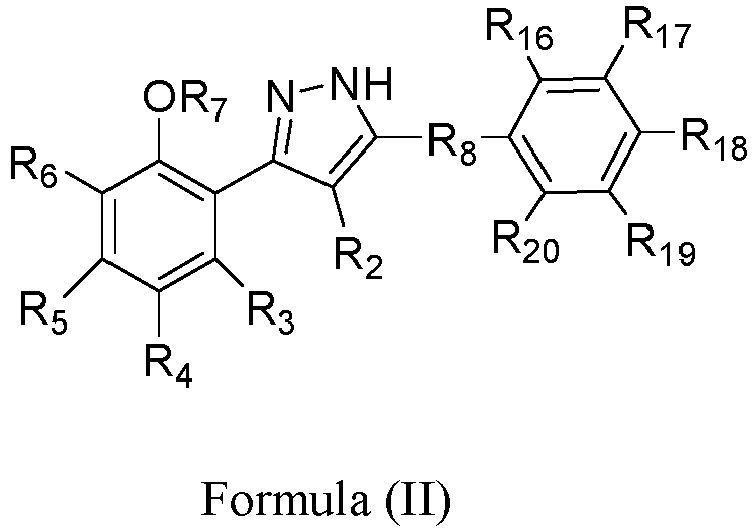
- R2 is selected from H, C1-6 alkyl or C2-6 alkenyl, wherein any carbon atom on alkyl or alkenyl can be substituted by one or more selected from the group consisting of: halogen, -OC0-6 alkyl, - S(O)mC0-6 alkyl, and phenyl;
- R8 is -NHC(=O)-;
- R16, R17, R18, R19 and R20 are independently selected from H, C1-6 alkyl, halogen, phenyl, -CN, - OH, -S(O)2C0-3 alkyl, -C(=O)C0-3 alkyl, -N(C0-3 alkyl)C(=O)(C0-3 alkyl), trimethylsilyl, triethylsilyl, N-heterocyclobutyl, pyridyl, pyrazolyl, pyrrolidinyl, pyranyl, tetrahydropyranyl, thienyl, tetrahydrofuryl, pyrazinyl, imidazolyl, piperidyl, piperazinyl, indolyl, morpholinyl, homopiperazinyl, thienyl, furyl, or oxazolyl, -NHC(=O)R21, wherein H on the N atom may optionally be substituted by C1-10 alkyl, C3-10 cycloalkyl, -CF3, or t-butyloxycarboryl;
- R3, R4, R5 and R6 are independently selected from H, C1-6 alkyl, C3-10 cycloalkyl, halogen, -OC0-6 alkyl, -N(C0-6 alkyl)(C0-6 alkyl), -N(C0-6 alkyl)C(=O)(C0-6 alkyl), -N(C0-6 alkyl)C(=O)O(C0-6 alkyl), -N(C0-6 alkyl)C(=O)N(C0-6 alkyl), -C(=O)C0-6 alkyl, -C(=O)OC0-6 alkyl, -C(=O)N(C0-6 alkyl)(C0-6 alkyl), or phenyl;
- R21 is selected from linear or branched C1-6 alkyl, C3-10 cycloalkyl, halogen, -OC0-6 alkyl, phenyl, N-heterocyclobutyl, pyridyl, pyrazolyl, pyrrolidinyl, pyranyl, tetrahydropyranyl, thienyl, tetrahydrofuryl, pyrazinyl, imidazolyl, piperidyl, piperazinyl, indolyl, morpholinyl, homopiperazinyl, thienyl, furyl, oxazolyl, wherein any carbon atom on alkyl, aryl, heterocycloalkyl, or heterocycloaryl can be substituted by one or more selected from the group consisting of halogen, -CN, -OC0-10 alkyl, -S(O)mC0-10 alkyl, -SO2N(C0-10 alkyl)(C0-10 alkyl), - N(C0-10 alkyl)(C0-10 alkyl), -N(C0-10 alkyl)C(=O)(C0-10 alkyl), -N(C0-10 alkyl)C(=O)O(C0-10 alkyl), -N(C0-10 alkyl)C(=O)N(C0-10 alkyl), -C(=O)C0-10 alkyl, -C(=O)OC0-10 alkyl, -C(=O)N(C0-10 alkyl)(C0-10 alkyl), -heterocycloalkyl, -N(C0-10 alkyl)heterocycloalkyl, -N(C0-10 alkyl)heterocycloaryl, heterocycloalkyl, aryl, -C1-10 alkylaryl, -C1-10 alkylheterocycloaryl, -N-heterocycloaryl, -S-heterocycloaryl and -O-heterocycloaryl, and m is 0, 1 or 2;
- R7 is selected from H, or C1-6 alkyl, and
- m is selected from 0, 1 or 2.
- Preferably, a specific embodiment of the present invention provides a compound represented by Formula (II-2), and a pharmaceutically acceptable salt, stereoisomer, ether, ester, prodrug and solvate thereof,

- R2 is selected from H, C1-6 alkyl or C2-6 alkenyl, wherein any carbon atom on alkyl or alkenyl can be substituted by one or more selected from the group consisting of: halogen, -OC0-6 alkyl, - S(O)mC0-6 alkyl, and phenyl;
- R21 is selected from C3-10 cycloalkyl, phenyl, N-heterocyclobutyl, pyridyl, pyrazolyl, pyrrolidinyl, pyranyl, tetrahydropyranyl, thienyl, tetrahydrofuryl, pyrazinyl, imidazolyl, piperidyl, piperazinyl, indolyl, morpholinyl, homopiperazinyl, thienyl, furyl, oxazolyl, wherein any carbon atom on aryl, heterocycloalkyl, or heterocycloaryl can be substituted by one or more selected from the group consisting of halogen, -CN, -OC0-10 alkyl, -S(O)mC0-10 alkyl, -SO2N(C0-10 alkyl)(C0-10 alkyl), -N(C0-10 alkyl)(C0-10 alkyl), -N(C0-10 alkyl)C(=O)(C0-10 alkyl), -N(C0-10 alkyl)C(=O)O(C0-10 alkyl), -N(C0-10 alkyl)C(=O)N(C0-10 alkyl), -C(=O)C0-10 alkyl, -C(=O)OC0-10 alkyl, -C(=O)N(C0-10 alkyl)(C0-10 alkyl), -heterocycloalkyl, -N(C0-10 alkyl)heterocycloalkyl, - N(C0-10 alkyl)heterocycloaryl, heterocycloalkyl, aryl, -C1-10 alkylaryl, -C1-10 alkylheterocycloaryl, -N-heterocycloaryl, -S-heterocycloaryl and -O-heterocycloaryl, and m is 0, 1 or 2;
- R3, R4, R5 and R6 are independently selected from H, C1-6 alkyl, C3-10 cycloalkyl, halogen, -OC0-6 alkyl, -N(C0-6 alkyl)(C0-6 alkyl), -N(C0-6 alkyl)C(=O)(C0-6 alkyl), -N(C0-6 alkyl)C(=O)O(C0-6 alkyl), -N(C0-6 alkyl)C(=O)N(C0-6 alkyl), -C(=O)C0-6 alkyl, -C(=O)OC0-6 alkyl, -C(=O)N(C0-6 alkyl)(C0-6 alkyl), or phenyl;
- R7 is selected from H, or C1-6 alkyl, and
- m is selected from 0, 1 or 2.
- A more specific embodiment of the present invention provides specific compounds as follows:
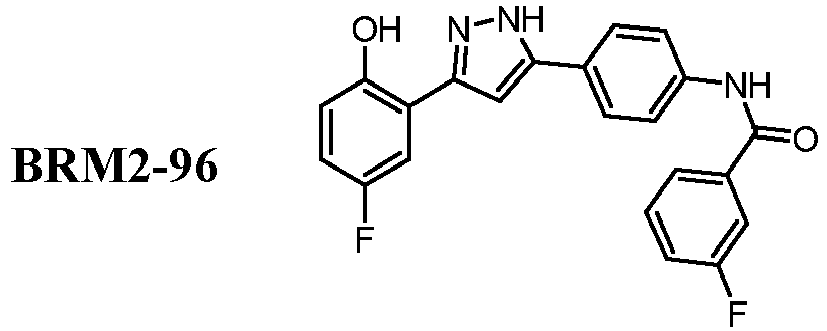


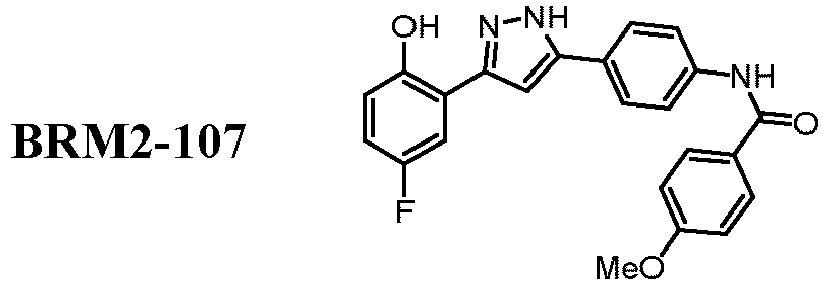


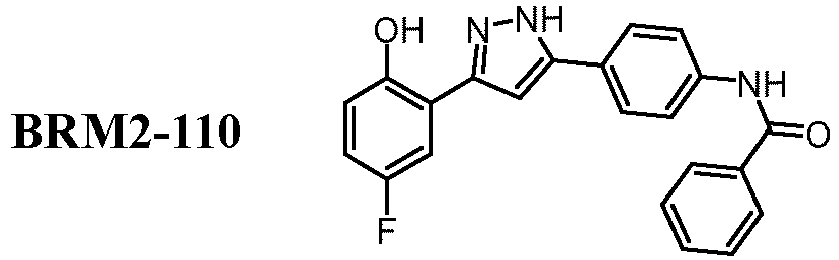


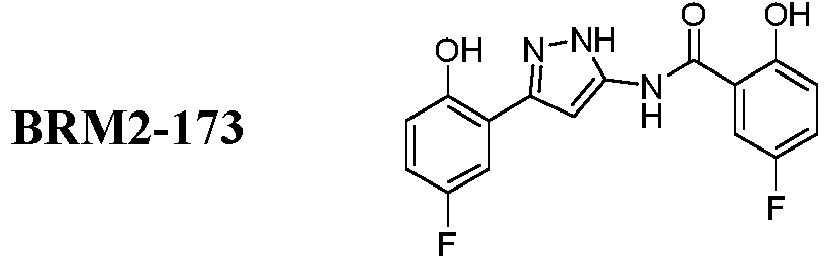
- The compound represented by Formula (I) according to the present invention can be synthesized by employing the following reaction routes.
-

- An intermediate 40 (1.0 eq.), DHP (3.0 eq.) and PPST (0.2 eq.) are dissolved in dichloromethane to produce a mixture, the mixture is reacted at r.t. for 12 h to produce a product, and then the product is separated through a neutral aluminum oxide chromatographic column to produce an intermediate 41. The intermediate 41 (1.0 eq.), amide (1.2 eq.), Pd(OAc)2 (0.02 eq.), Xantphos (0.03 eq.) and Cs2CO3 (1.4 eq.) are dissolved in 1,4-dioxane to produce a mixture, the mixture is reacted at 100 °C for 12 h to produce a product, and then the product is separated through a neutral aluminum oxide chromatographic column to obtain an intermediate 42. The intermediate 42 is dissolved in ethanol, and added with 2N HCl in ethanol to produce a mixture, the mixture is extracted with ethyl acetate and added with saturated sodium bicarbonate to produce a crude product, and the crude product is dried, and then purified by silica-gel column chromatography to obtain the p-amide aryl substituted pyrazole skeleton compounds.
-

- A compound 47 (1.0 eq.), methyl iodide (3.0 eq.), and potassium carbonate (3.0 eq.) are dissolved in a certain amount of acetone solution, and reacted under stirring at 40 °C for 12 h. The solvent is dried by rotary evaporation, extraction is carried with ethyl acetate and saturated sodium bicarbonate is added to produce a crude product. The crude product is dried, and purified by silica-gel column chromatography to obtain an intermediate 48. The intermediate 48 (1.0 eq.) is dissolved in ultra-dry toluene, added with acetonitrile (3.0 eq.), then added with sodium hydride (3.0 eq.), and added with a buffer balloon to produce a mixture, and the mixture heated to react at 90 °C for 3 h. The solvent is dried by rotary evaporation, extraction is carried out with ethyl acetate, and saturated sodium bicarbonate is added to produce a crude product. The crude product is dried, and purified by silica-gel column chromatography to obtain an intermediate 49. The intermediate 49 (1.0 eq.) and hydrazine monohydrate (1.2 eq.) are dissolved in ethanol together, and then added with glacial acetic acid (6.0 eq.) to produce a mixture, and the mixture is heated to react at 50 °C for 3 h. The solvent is dried by rotary evaporation, extraction is carried out with ethyl acetate, and saturated sodium bicarbonate is added to produce a crude product. The crude product is dried, and purified by silica-gel column chromatography to obtain an intermediate 50. The intermediate 50 and different types of carboxylic acids are added into a solvent of DMF in one to one equivalent, and added with HATU (1.5 eq.) and DIPEA (1.5 eq.) to produce a mixture, the mixture is reacted at 70 °C for 12 h to produce a product, and the product is extracted with ethyl acetate to produce a crude product. The crude product is dried, and purified by silica-gel column chromatography to obtain an intermediate 51. The intermediate 51 or 50 (1 eq.) is dissolved in ultra-dry DCM, and added with boron tribromide (8 eq.) at 0 °C to produce a mixture, and the mixture is reacted under stirring at room temperature for 12 h. The solvent is dried by rotary evaporation, extraction is carried out with ethyl acetate and saturated sodium bicarbonate is added to produce a crude product. The crude product is dried, and purified by silica-gel column chromatography to obtain the 5-substituted aminopyrazole compounds as the final products.
- The pharmaceutically acceptable salt of the present invention includes an acid addition salt and a base addition salt.
- The acid addition salt includes, but is not limited to salts from an inorganic acid such as hydrochloric acid, nitric acid, phosphoric acid, sulfuric acid, hydrobromic acid, hydroiodic acid and phosphonic acid; and salts from an organic acid such as aliphatic monocarboxylic acid and dicarboxylic acid, phenyl-substituted alkanoic acid, hydroxyalkanoic acid, alkanedioic acid, aromatic acid, and salts of aliphatic and aromatic sulfonic acids. Therefore, these salts include, but are not limited to sulfates, pyrosulfates, bisulfates, sulfites, bisulfites, nitrates, phosphates, monohydrogen phosphates, dihydrogen phosphates, metaphosphates, pyrophosphates, hydrochlorides, hydrobromides, iodates, acetates, propionates, octanoates, isobutyrates, oxalates, malonates, succinates, suberates, sebacates, fumarates, maleates, amygdalates, benzoates, chlorobenzoates, methyl benzoates, dinitrobenzoates, phthalates, benzene sulfonates, tosylates, phenyl acetates, citrates, lactates, maleates, tartrates and methanesulfonates, and also include salts from amino acids, such as arginine salts, gluconates and galacturonates. The acid addition salt can be prepared by contacting a free base with a sufficient amount of the desired acid to form a salt in a conventional manner. The free base form can be regenerated by contacting the salt with a base, and the free base can be isolated in a conventional manner.
- The alkali addition salt is formed with metals or amines, such as hydroxides of alkali metals and alkaline earth metals, or with organic amines. Examples of metals used as cations include, but are not limited to sodium, potassium, magnesium, and calcium. Examples of suitable amines include, but are not limited to N,N'-dibenzylethylenediamine, chloroprocaine, choline, diethanolamine, ethylenediamine (ethane-1,2-diamine), N-methylglucosamine, and procaine. The base addition salt can be prepared by contacting a free acid with a sufficient amount of the desired base to form a salt in a conventional manner. The free acid form can be regenerated by contacting the salt with an acid, and the free acid can be isolated in a conventional manner.
- The stereoisomer described in the present invention includes forms of enantiomers, diastereomers and geometric isomers. Some compounds of the present invention have a cycloalkyl group which can be substituted on more than one carbon atom thereof, in this case, all geometric forms, including cis and trans forms, and mixtures thereof are within the scope of the present invention.
- The solvate of the present invention refers to physical bonding of the compound of the present invention to one or more solvent molecules. The physical bonding includes various degrees of ionic and covalent bondings, including a hydrogen bonding. In certain cases, a solvate can be separated, for example when one or more solvent molecules are doped into crystal lattices of a crystalline solid. The "solvate" includes a solution-phase and separable solvate. The representative solvates include ethylates, methylates, and the like. A "hydrate" is a solvate in which one or more solvent molecules are H2O.
- The prodrug described in the present invention refers to a form of the compound represented by Formula I, which is suitable for administration to a patient without excessive toxicity, irritation and allergy, etc., is effective for its application purpose, and includes acetal, ester and zwitter-ionic forms. The prodrug is transformed in vivo (for example by hydrolysis in blood) to obtain a parent compound of the above formula.
- The present invention further provides a pharmaceutical composition including a compound of the present invention (e.g., the compound represented by Formula I, and a pharmaceutically acceptable salt, stereoisomer, ester, prodrug and solvate thereof), and a pharmaceutically acceptable carrier, diluent or excipient. Preferably, the pharmaceutical composition contains a therapeutically effective amount of the compound of the present invention.
- The compounds of the present invention can be formulated into pharmaceutical compositions in the following forms: syrup, elixir, suspensions, powder, granules, tablets, capsules, lozenges, aqueous solutions, creams, ointments, lotions, gels, emulsion, etc.
- A pharmaceutical preparation is preferably in a unit dosage form. In such a form, the preparation is subdivided into unit dosages containing appropriate quantities of active components. The unit dosage form can be a packaged preparation containing discrete quantities of the preparation, such as tablets, capsules, and powder packaged in vials or ampoules. Furthermore, the unit dosage form can be a capsule or tablet, or any of these dosage forms which may be in an appropriate number in a packaged form.
- The amount of the active components in a unit-dosage preparation can be changed or adjusted between 0.001 mg and 1000 mg, depending on the specific application and potency of the active components. If desired, the composition may also contain other suitable therapeutic agents.
- The pharmaceutically acceptable carrier depends in part on the specific administered composition and on a specific method of administration of the composition. Therefore, there are various suitable preparations for the pharmaceutical composition of the present invention.
- The compounds of the present invention, alone or in combination with other suitable components, are formulated into aerosols (i.e., they can be "aerosolized") to be administered via inhalation. Aerosols can be placed in acceptable pressurized propellants such as dichlorodifluorohexane, propane and nitrogen.
- Preparations suitable for parenteral administration, for example through intravenous, intramuscular, intradermal, and subcutaneous routes, include aqueous and non-aqueous isotonic sterile injections, which may contain antioxidants, buffers, bacteriostatic agents, and solutes that make the preparation be isotonic with the blood of a recipient; and aqueous and non-aqueous sterile suspensions, which may contain suspending agents, solubilizers, thickeners, stabilizers and preservatives. In the practice of the present invention, the composition can be administered by, for example, intravenous infusion, oral, topical, intraperitoneal, intravesical, and intrathecal ways. The preparations of the composition may be presented in unit-dosage or multi-dosage sealed containers, such as ampoules and vials. Solutions and suspensions for injection can be prepared from sterile powders, granules and tablets previously described.
- In the context of the present invention, the dosage administrated to a subject should be sufficient to produce a beneficial therapeutic response in the subject over time. The dosage depends on the potency of a specific compound as used and the condition of the subject, as well as the body weight or body surface area of a subject to be treated. The size of the dosage will depend on the existence, nature, and extent of any adverse side effect generated along with the administration of the specific compound in the specific subject. During determination of the effective amount of the compound to be administered in the treatment or prevention of the diseases being treated, a physician can evaluate factors such as the circulating plasma level of the compound, the toxicity of the compound, and/or the disease progression to determine the effective amount.
- The present invention also provides use of the compound represented by Formula (I), and a pharmaceutically acceptable salt, stereoisomer, ester, prodrug and solvate thereof in the prevention and/or treatment of cancers.
- The present invention also provides use of the compounds represented by formula (I), and a pharmaceutically acceptable salt, stereoisomer, ester, prodrug and solvate thereof in cancer immunotherapy.
- The present invention also provides use of the compound represented by formula (I) and a pharmaceutically acceptable salt, stereoisomer, ester, prodrug and solvate thereof in the preparation of a medication for preventing and/or treating cancers.
- The cancers described in the present invention include lymphoma, blastoma, medulloblastoma, retinoblastoma, sarcoma, liposarcoma, synovial cell sarcoma, neuroendocrine neoplasm, carcinoid tumor, gastrinoma, islet-cell carcinoma, mesothelioma, schwannoma, acoustic neuroma, meningioma, adenocarcinoma, melanoma, leukemia or lymphoid malignancies, squamous-cell carcinoma, squamous cell carcinoma, lung cancer, small cell lung cancer, non-small cell lung cancer, adenocarcinoma lung cancer, lung squamous carcinoma, peritoneal cancer, hepatocellular carcinoma, gastric cancer, intestinal cancer, pancreatic cancer, glioblastoma, cervical cancer, ovarian cancer, liver cancer, bladder cancer, hepatic carcinoma, breast cancer, metastatic breast cancer, colon cancer, rectal cancer, colorectal cancer, uterine cancer, salivary gland carcinoma, kidney cancer, prostate cancer, vulvar carcinoma, thyroid cancer, hepatoma, anal cancer, penile neoplasms, Merkel cell carcinoma, esophageal carcinoma, biliary tract neoplasms, head and neck neoplasm, and hematologic malignancies.
- As used in the present invention, the term "C0 alkyl" refers to H, and thus C0-10 alkyl includes H, C1 alkyl, C2 alkyl, C3 alkyl, C4 alkyl, C5 alkyl, C6 alkyl, C7 alkyl, C8 alkyl, C9 alkyl, and C10 alkyl.
- As used in the present invention, the term "C1-10 alkylene" includes C1 alkylene, C2 alkylene, C3 alkylene, C4 alkylene, C5 alkylene, C6 alkylene, C7 alkylene, C8 alkylene, C9 alkylene, and C10 alkylene.
- As used in the present invention, the term "C3-10 cycloalkyl" includes C3 cycloalkyl, C4 cycloalkyl, C5 cycloalkyl, C6 cycloalkyl, C7 cycloalkyl, C8 cycloalkyl, C9 cycloalkyl, and C10 cycloalkyl.
- As used in the present invention, the term "C1-6 alkyl" includes H, C1 alkyl, C2 alkyl, C3 alkyl, C4 alkyl, C5 alkyl, and C6 alkyl.
- As used in the present invention, the term "linear C1-6 alkyl" includes methyl, ethyl, linear C3 alkyl, linear C4 alkyl, linear C5 alkyl, and linear C6 alkyl.
- As used in the present invention, the term "C3-6 cycloalkyl" includes C3 cycloalkyl, C4 cycloalkyl, C5 cycloalkyl, and C6 cycloalkyl.
- As used in the present invention, the term "halogen" includes fluorine, chlorine, bromine and iodine.
- As used in the present invention, the term "heterocycloalkyl" refers to a non-aromatic saturated monocyclic or polycyclic ring system containing 3-10 ring atoms, and preferably 5-10 ring atoms, wherein one or more of the ring atoms are not carbon atoms, but are for example nitrogen, oxygen or sulfur atoms. Preferably, the heterocycloalkyl" contains 5-6 ring atoms. The prefixes aza, oxa or thio before the heterocycloalkyl respectively refers to that there is at least one nitrogen, oxygen or sulfur atom used as a ring atom. Representative monocyclic heterocycloalkyls include piperidinyl, pyrrolidinyl, piperazinyl, morpholinyl, thiomorpholinyl, thiazolidinyl, 1,3-dioxolyl, 1,4-dioxane, tetrahydrofuranyl, tetrahydrothienyl, tetrahydrothiopyranyl, etc.
- As used in the present invention, the term "heterocycloaryl" refers to an aromatic monocyclic or polycyclic ring system containing 5-14 ring atoms, and preferably 5-10 ring atoms, wherein one or more of the ring atoms are not carbon atoms, but are for example nitrogen, oxygen or sulfur atoms. Preferably, the heterocycloaryl contains 5-6 ring atoms. Representative heterocycloaryls include pyrazinyl, furyl, thienyl, pyridyl, pyrimidinyl, isoxazolyl, isothiazolyl, oxazolyl, thiazolyl, pyrazolyl, furazyl, pyrrolyl, pyrazolyl, triazolyl, 1,2,4-thiadiazolyl, pyrazinyl, pyridazinyl, quinoxalinyl, 2,3-diazenaphthyl, imidazo[1,2-a]pyridine, imidazo[2,1-b]thiazolyl, benzofurazyl, indolyl, azaindolyl, benzimidazolyl, benzothienyl, quinolinyl, imidazolyl, thienopyridyl, quinazolinyl, thienopyrimidinyl, pyrrolopyridinyl, imidazopyridinyl, isoquinolinyl, benzoazaindolyl, 1,2,4-triazinyl, benzothiazolyl, etc.
- As used in the present invention, the term "Me" represents an abbreviation for methyl.
- As used in the present invention, the term "Ph" represents an abbreviation for phenyl.
- As used in the present invention, the term "Boc" as represents an abbreviation for t-butyloxycarboryl.
- As used in the present invention, the term "unit dosage form" refers to a physically discrete unit which is suitable as single dosage for human subjects and other mammals, each unit contains an active substance at a predetermined amount which as calculated can produce a desired preventive or therapeutic effect during the process of treatment when used in combination with a desired pharmaceutical carrier.
- As used in the present invention, the term "auxiliary material" means that this component has no biological activity or other undesirable active impurities. For example, the component can be incorporated into the disclosed pharmaceutical preparation and administrated to a patient, without causing any significant adverse biological effects or interacting with other ingredients contained in the preparation in a harmful manner.
- As used in the present invention, the term "treatment/treat/treating" includes inhibiting, delaying, alleviating, weakening, limiting, relieving or regressing a disease, disorder, signs or status, the occurrence and/or progression thereof, and/or symptoms thereof.
- As used in the present invention, the term "prevention/prevent/preventing" includes reducing the risk of suffering from, infecting with or experiencing a disease, disorder, signs or status, the occurrence and/or progression thereof, and/or symptoms thereof.
- As used in the present invention, the term "comprise/comprising" or "include/including" means "open" or "inclusive" terms, such that they include the listed elements, but also allow the inclusion of additional, unmentioned elements.
- As used in the present invention, the term "about" generally means +/- 5% of the referred value, more generally +/- 4% of the referred value, more generally +/- 3% of the referred value, more generally +/- 2% of the referred value, more generally +/- 1% of the referred value, and more generally +/- 0.5% of the referred value.
- The technical solutions in embodiments of the present invention are clearly and completely described below.
-

- An intermediate 40 (1.0 eq.), DHP (3.0 eq.) and PPST (0.2 eq.) are dissolved in dichloromethane to produce a mixture, the mixture is reacted at r.t. for 12 h to produce a product, and then the product is separated through a neutral aluminum oxide chromatographic column to obtain an intermediate 41. The intermediate 41 (1.0 eq.), amide (1.2 eq.), Pd(OAc)2 (0.02 eq.), Xantphos (0.03 eq.) and Cs2CO3 (1.4 eq.) are dissolved in 1,4-dioxane to produce a mixture, the mixture is reacted at 100 °C for 12 h to produce a product, and then the product is separated through a neutral aluminum oxide chromatographic column to obtain an intermediate 42. The intermediate 42 is dissolved in ethanol, added with 2N HCl in ethanol, extracted with ethyl acetate and added with saturated sodium bicarbonate to produce a crude product. The crude product is dried, and then purified by silica-gel column chromatography to obtain the compounds BRM2-96 to BRM2-128.
-

- A compound 43 (1 eq.) is added dropwise into EtONa (2.3 eq.) and stirred at room temperature for 1 h, and then slowly added dropwise with diethyl oxalate to produce a mixture, the mixture is heated is to be subjected to for reflux for 4 h , and cooled to room temperature after the reaction is completed, and then glacial acetic acid (4 eq.) is added to generate a large amount of white solids. The white solids are filtered, and then respectively washed with a small amount of water, ethanol, and ether to obtain a product (intermediate) 44. The intermediate 44 is dissolved in acetic acid, then slowly added dropwise with hydrazine hydrate (1.2 eq.) in ice bath, and reacted overnight at room temperature to produce a reaction product. After the reaction is completed, the reaction product is filtered, and recrystallized in ethanol to obtain an intermediate 45. The intermediate 45 is dissolved in anhydrous dichloromethane, and added with BBr3 (6 eq.) at -78°C, and after 1 h, reaction is carried out overnight at room temperature. After the reaction is completed, the reaction is quenched by slowly adding water. The organic phase is removed with a rotary evaporator to produce a reaction solution. The pH value of the reaction solution is adjusted to 5. The product is extracted with ethyl acetate, dried, and subjected to rotary evaporation under reduced pressure to remove the organic solvent, so as to obtain an intermediate 46. The intermediate 46, EDCI (1.2 eq.) and HOBt (1.2 eq.) are added into anhydrous DMF, stirred for half an hour and then added with a corresponding amine compound R to produce a mixture, and the mixture is reacted for 12 h to. After the reaction is completed, with ethyl acetate is added, and the organic phase is washed for three times with a saturated ammonium chloride solution and once with a saturated sodium chloride solution, dried over anhydrous magnesium sulfate, and then the dried organic phase is purified by silica-gel column chromatography to obtain the final products BRM2-129 to BRM2-159.
-

- A compound 47 (1.0 eq.), methyl iodide (3.0 eq.), and potassium carbonate (3.0 eq.) are dissolved in a certain amount of acetone solution , and reacted under stirring at 40 °C for 12 h. The solvent is dried by rotary evaporation, and extraction is carried out through ethyl acetate and added with saturated sodium bicarbonate to produce a crude product. The crude product is dried, and purified by silica-gel column chromatography to obtain an intermediate 48. The intermediate 48 (1.0 eq.) is dissolved in ultra-dry toluene, added with acetonitrile (3.0 eq.), then added with sodium hydride (3.0 eq.), and added with a buffer balloon to a produce a mixture, and the mixture is heated to react at 90 °C for 3 h. The solvent is dried by rotary evaporation, extraction is carried out with ethyl acetate and saturated sodium bicarbonate is added to produce a crude product. The crude product is dried, and purified by silica-gel column chromatography to obtain an intermediate 49. The intermediate 49 (1.0 eq.) and hydrazine monohydrate (1.2eq.) are dissolved in ethanol together, and then added with glacial acetic acid (6.0 eq.) to produce a mixture, and the mixture is heated to react at 50 °C for 3 h. The solvent is dried by rotary evaporation, extraction is carried out with ethyl acetate and saturated sodium bicarbonate is added to produce a crude product. The crude product is dried, and purified by silica-gel column chromatography to obtain an intermediate 50. The intermediate 50 and different types of carboxylic acids are added into a solvent of DMF in one to one equivalent, added with HATU (1.5 eq.) and DIPEA (1.5 eq.) to produce a mixture, the mixture is reacted at 70 °C for 12 h, and extraction is carried out with ethyl acetate to produce a crude product. The crude product is dried, and purified by silica-gel column chromatography to obtain an intermediate 51. The intermediate 51 or 50 (1 eq.) is dissolved in ultra-dry DCM, and added with boron tribromide (8 eq.) at 0 °C to produce a mixture, and the mixture is reacted under stirring at room temperature for 12 h. The solvent is dried by rotary evaporation, extraction is carried out with ethyl acetate and saturated sodium bicarbonate is added to produce a crude product. The crude product is dried, and purified by silica-gel column chromatography to obtain the final products BRM2-160
- In the example, corresponding synthetic identification spectral data for the compounds prepared according to the general synthesis method described above are as follows:
- BRM2-96: 1H NMR (400 MHz, CDCl3) δ 8.97 (s, 1H), 7.91 - 7.76 (m, 4H), 7.76 - 7.45 (m, 3H), 7.46 - 7.30 (m, 2H), 7.21 - 7.06 (m, 2H), 6.95 (dd, J = 15.0, 10.1 Hz, 1H), 4.94 (s, 1H). Mass spectrum (ESI, m/z): C22H15F2N302, [M+H]+: 392.11.
- BRM2-97: 1H NMR (400 MHz, CDCl3) δ 9.04 (s, 1H), 8.28 - 8.02 (m, 1H), 8.00 - 7.70 (m, 4H), 7.51 (tdd, J = 14.9, 10.0, 3.1 Hz, 1H), 7.42 - 7.25 (m, 2H), 7.21 - 6.99 (m, 3H), 6.95 (dd, J = 15.0, 10.1 Hz, 1H), 4.89 (s, 1H). Mass spectrum (ESI, m/z): C22H15F2N3O2, [M+H]+: 392.11.
- BRM2-98: 1H NMR (400 MHz, CDCl3) δ 9.17 (s, 1H), 8.01 - 7.76 (m, 6H), 7.76 - 7.53 (m, 2H), 7.35 (dd, J = 16.0, 3.0 Hz, 1H), 7.31 - 7.04 (m, 2H), 6.95 (dd, J = 15.0, 10.0 Hz, 1H), 4.97 (s, 1H). Mass spectrum (ESI, m/z): C22H15BrFN3O2, [M+H]+: 452.03.
- BRM2-99: 1H NMR (400 MHz, CDCl3) δ 9.19 (s, 1H), 8.25 - 8.04 (m, 2H), 7.98 - 7.66 (m, 4H), 7.52 - 7.27 (m, 3H), 7.22 - 7.06 (m, 2H), 6.95 (dd, J = 15.0, 10.0 Hz, 1H), 4.97 (s, 1H). Mass spectrum (ESI, m/z): C22H15F2N302, [M+H]+: 392.11.
- BRM2-100: 1H NMR (400 MHz, CDCl3) δ 8.95 (s, 1H), 8.02 - 7.73 (m, 6H), 7.76 - 7.52 (m, 2H), 7.35 (dd, J = 16.0, 2.9 Hz, 1H), 7.24 - 7.07 (m, 2H), 6.95 (dd, J = 15.0, 10.1 Hz, 1H), 4.92 (s, 1H). Mass spectrum (ESI, m/z): C22H15FClN3O2, [M+H]+: 408.08.
- BRM2-101: 1H NMR (400 MHz, CDCl3) δ 9.17 (s, 1H), 8.01 - 7.59 (m, 4H), 7.43 (s, 4H), 7.35 (dd, J = 16.0, 2.9 Hz, 1H), 7.25 - 7.04 (m, 2H), 6.95 (dd, J = 15.0, 10.1 Hz, 1H), 4.93 (s, 1H). Mass spectrum (ESI, m/z): C22H15FClN3O2, [M+H]+: 408.08.
- BRM2-102: 1H NMR (400 MHz, CDCl3) δ 8.95 (s, 1H), 8.01 - 7.59 (m, 6H), 7.50 - 7.21 (m, 3H), 7.22 - 7.03 (m, 2H), 6.95 (dd, J = 15.0, 10.1 Hz, 1H), 4.94 (s, 1H), 2.42 (s, 3H). Mass spectrum (ESI, m/z): C23H18FN3O2, [M+H]+: 388.14.
- BRM2-103: 1H NMR (400 MHz, CDCl3) δ 9.20 (s, 1H), 8.04 - 7.61 (m, 6H), 7.48 - 7.22 (m, 3H), 7.24 - 7.03 (m, 2H), 6.95 (dd, J = 15.0, 10.0 Hz, 1H), 4.98 (s, 1H), 2.41 (s, 3H). Mass spectrum (ESI, m/z): C23H18FN3O2, [M+H]+: 388.14.
- BRM2-104: 1H NMR (400 MHz, CDCl3) δ 9.10 (s, 1H), 7.98 - 7.58 (m, 6H), 7.55 - 7.26 (m, 2H), 7.31 - 7.02 (m, 3H), 6.95 (dd, J = 15.0, 10.0 Hz, 1H), 4.96 (s, 1H). Mass spectrum (ESI, m/z): C23H15F4N3O2, [M+H]+: 442.12.
- BRM2-105: 1H NMR (400 MHz, CDCl3)δ 9.58 (s, 1H), 8.07 - 7.67 (m, 4H), 7.59 - 7.41 (m, 1H), 7.38 - 7.22 (m, 2H), 7.18 - 7.04 (m, 3H), 6.95 (dd, J = 15.0, 10.1 Hz, 1H). Mass spectrum (ESI, m/z): C22H14F3N3O2, [M+H]+: 410.10.
- BRM2-106: 1H NMR (400 MHz, CDCl3) δ 9.00 (s, 1H), 8.10 - 7.58 (m, 4H), 7.35 (dd, J = 16.0, 2.9 Hz, 1H), 7.20 - 7.00 (m, 2H), 6.95 (dd, J = 15.0, 10.1 Hz, 1H), 4.43 (s, 1H), 2.10 - 1.96 (m, 3H), 1.97 - 1.78 (m, 6H), 1.81 - 1.52 (m, 6H). Mass spectrum (ESI, m/z): C26H26FN3O2, [M+H]+: 432.20.
- BRM2-107: 1H NMR (400 MHz, CDCl3) δ 8.93 (s, 1H), 8.08 - 7.65 (m, 6H), 7.35 (dd, J = 16.0, 2.9 Hz, 1H), 7.25 - 7.04 (m, 4H), 6.95 (dd, J = 15.0, 10.1 Hz, 1H), 4.94 (s, 1H), 3.79 (s, 3H). Mass spectrum (ESI, m/z): C23H18FN3O2, [M+H]+: 404.13.
- BRM2-108: 1H NMR (400 MHz, CDCl3) δ 8.94 (s, 1H), 8.08 - 7.59 (m, 4H), 7.35 (dd, J = 16.0, 2.9 Hz, 1H), 7.25 - 7.03 (m, 2H), 6.95 (dd, J = 15.0, 10.1 Hz, 1H), 4.95 (s, 1H), 4.54 - 3.86 (m, 2H), 2.96 - 2.59 (m, 2H), 2.37 (p, J = 15.6 Hz, 1H), 1.90 - 1.69 (m, 2H), 1.67 - 1.40 (m, 1H), 1.37 - 0.89 (m, 3H). Mass spectrum (ESI, m/z): C22H22FN3O2, [M+H]+: 380.17.
- BRM2-109: 1H NMR (400 MHz, CDCl3) δ 8.92 (s, 1H), 8.82 (d, J= 15.0 Hz, 2H), 8.07 - 7.62 (m, 6H), 7.35 (dd, J = 16.0, 2.9 Hz, 1H), 7.35 (dd, J = 16.0, 2.9 Hz, 1H), 7.17 - 7.00 (m, 2H), 6.95 (dd, J = 15.0, 10.1 Hz, 1H), 4.57 (s, 1H). Mass spectrum (ESI, m/z): C21H15FN4O2, [M+H]+: 375.12.
- BRM2-110: 1H NMR (400 MHz, CDCl3) δ 8.93 (s, 1H), 8.03 - 7.72 (m, 6H), 7.68 - 7.46 (m, 3H), 7.35 (dd, J = 16.0, 2.9 Hz, 1H), 7.27 (s, 1H), 7.22 - 7.05 (m, 1H), 6.95 (dd, J = 15.0, 10.1 Hz, 1H). Mass spectrum (ESI, m/z): C22H16FN3O2, [M+H]+: 374.12.
- BRM2-111: 1H NMR (400 MHz, CDCl3) δ 9.15 - 8.80 (m, 2H), 8.09 (dd, J = 15.0, 3.0 Hz, 1H), 7.97 - 7.65 (m, 4H), 7.55 - 7.27 (m, 2H), 7.28 - 7.06 (m, 2H), 6.95 (dd, J = 15.0, 10.1 Hz, 1H), 4.94 (s, 1H), 2.55 (s, 3H) Mass spectrum (ESI, m/z): C22H17FN4O2, [M+H]+: 389.13.
- BRM2-112: 1H NMR (400 MHz, CDCl3) δ 8.97 - 8.61 (m, 2H), 8.53 - 8.28 (m, 1H), 8.14 - 7.66 (m, 6H), 7.35 (dd, J= 16.0, 2.9 Hz, 1H), 7.22 - 7.04 (m, 2H), 6.95 (dd, J= 15.0, 10.1 Hz, 1H), 4.92 (s, 1H). Mass spectrum (ESI, m/z): C21H15FN4O2, [M+H]+: 375.12.
- BRM2-113: 1H NMR (400 MHz, CDCl3) δ 9.79 (s, 1H), 7.79 (ddd, J = 18.3, 9.0, 4.5 Hz, 5H), 7.50 - 7.27 (m, 2H), 7.25 - 7.01 (m, 3H), 6.95 (dd, J = 7.4, 5.0 Hz, 1H), 4.96 (s, 1H), 3.87 (d, J = 16.0 Hz, 6H). Mass spectrum (ESI, m/z): C24H20FN3O4, [M+H]+: 434.14.
- BRM2-114: 1H NMR (400 MHz, CDCl3) δ 9.00 (s, 1H), 8.00 - 7.62 (m, 5H), 7.49 - 7.20 (m, 3H), 7.17 - 7.04 (m, 2H), 6.95 (dd, J = 15.0, 10.1 Hz, 1H), 4.93 (s, 1H). Mass spectrum (ESI, m/z): C22H14F3N3O2, [M+H]+: 410.10.
- BRM2-115: 1H NMR (400 MHz, CDCl3) δ 8.31 (s, 1H), 7.98 - 7.59 (m, 4H), 7.35 (dd, J = 16.0, 2.9 Hz, 1H), 7.27 - 7.07 (m, 2H), 6.95 (dd, J = 15.0, 10.1 Hz, 1H), 4.98 (s, 1H), 3.98 - 3.38 (m, 4H), 3.00 (tt, J= 17.7, 15.8 Hz, 1H), 2.30 - 1.65 (m, 4H). Mass spectrum (ESI, m/z): C21H20FN3O3, [M+H]+: 382.15.
- BRM2-116: 1H NMR (400 MHz, CDCl3) δ 8.79 (s, 1H), 8.24 - 7.65 (m, 4H), 7.49 - 7.21 (m, 2H), 7.20 - 7.07 (m, 1H), 6.95 (dd, J = 15.0, 10.1 Hz, 1H), 2.48 - 1.88 (m, 1H), 1.21 - 0.30 (m, 4H). Mass spectrum (ESI, m/z): C19H16FN3O2, [M+H]+: 338.12.
- BRM2-117: 1H NMR (400 MHz, CDCl3) δ 8.67 (s, 1H), 8.15 - 7.69 (m, 5H), 7.55 - 7.22 (m, 2H), 7.21 - 7.01 (m, 2H), 6.95 (dd, J = 15.0, 10.1 Hz, 1H), 6.71 (t, J = 15.0 Hz, 1H), 4.99 (s, 1H). Mass spectrum (ESI, m/z): C20H14FN3O3, [M+H]+: 364.10.
- BRM2-118: 1H NMR (400 MHz, CDCl3) δ 8.98 (s, 1H), 8.02 - 7.74 (m, 5H), 7.67 - 7.44 (m, 1H), 7.35 (dd, J = 16.0, 2.9 Hz, 1H), 7.33 (d, J = 2.9 Hz, 1H), 7.24 - 6.69 (m, 5H), 4.94 (s, 1H), 4.05 (q, J = 11.8 Hz, 2H), 1.34 (t, J = 11.8 Hz, 3H). Mass spectrum (ESI, m/z): C24H20FN3O3, [M+H]+: 418.15.
- BRM2-119: 1H NMR (400 MHz, CDCl3) δ 8.82 (s, 1H), 8.30 (dd, J = 15.0, 3.0 Hz, 1H), 8.08 - 7.65 (m, 5H), 7.35 (dd, J= 16.0, 2.9 Hz, 1H), 7.27 - 7.07 (m, 3H), 6.95 (dd, J= 15.0, 10.1 Hz, 1H), 4.95 (s, 1H). Mass spectrum (ESI, m/z): C20H14FN3O2S, [M+H]+: 380.08.
- BRM2-120: 1H NMR (400 MHz, CDCl3) δ 7.95 - 7.48 (m, 4H), 7.34 (dd, J = 16.0, 2.9 Hz, 1H), 7.20 - 7.00 (m, 1H), 7.07 - 6.73 (m, 1H), 2.68 - 2.13 (m, 4H), 2.10 - 1.67 (m, 3H). Mass spectrum (ESI, m/z): C20H18FN3O2, [M+H]+: 352.14.
- BRM2-121: 1H NMR (400 MHz, CDCl3) δ 9.14 (dd, J = 3.0, 0.5 Hz, 1H), 8.93 (s, 1H), 8.85 - 8.61 (m, 1H), 8.21 (dt, J = 15.0, 3.0 Hz, 1H), 8.02 - 7.63 (m, 4H), 7.58 - 7.30 (m, 2H), 7.22 - 7.09 (m, 2H), 6.95 (dd, J = 15.0, 10.1 Hz, 1H), 4.93 (s, 1H). Mass spectrum (ESI, m/z): C21H15FN4O2, [M+H]+: 375.12.
- BRM2-122: 1H NMR (400 MHz, CDCl3) δ 8.78 (s, 1H), 8.05 (s, 1H), 7.93 - 7.65 (m, 4H), 7.35 (dd, J = 16.0, 2.9 Hz, 1H), 7.28 - 7.01 (m, 2H), 6.95 (dd, J = 15.0, 10.1 Hz, 1H), 4.94 (s, 1H), 2.43 (s, 3H). Mass spectrum (ESI, m/z): C20H15FN4O3, [M+H]+: 379.11.
- BRM2-123: 1H NMR (400 MHz, CDCl3) δ 8.95 (s, 1H), 8.43 (d, J = 15.0 Hz, 1H), 8.08 - 7.72 (m, 5H), 7.62 (d, J = 2.9 Hz, 1H), 7.35 (dd, J = 16.0, 2.9 Hz, 1H), 7.27 - 7.03 (m, 2H), 6.95 (dd,
- J = 15.0, 10.1 Hz, 1H), 4.93 (s, 1H). Mass spectrum (ESI, m/z): C21H20ClFN4O2, [M+H]+: 409.08.
- BRM2-124: 1H NMR (400 MHz, CDCl3) δ 9.96 (s, 1H), 9.10 (d, J = 15.0 Hz, 1H), 8.89 (d, J = 15.0 Hz, 1H), 8.78 (s, 1H), 8.07 - 7.58 (m, 4H), 7.35 (dd, J = 16.0, 2.9 Hz, 1H), 7.22 - 7.06 (m, 2H), 6.97 - 6.69 (m, 1H), 4.90 (s, 1H). Mass spectrum (ESI, m/z): C20H14FN5O2, [M+H]+: 376.11.
- BRM2-125: 1H NMR (400 MHz, CDCl3) δ 8.96 (s, 1H), 7.97 - 7.66 (m, 4H), 7.35 (dd, J = 16.0, 2.9 Hz, 1H), 7.20 - 7.01 (m, 2H), 6.95 (dd, J = 15.0, 10.1 Hz, 1H), 6.46 (dt, J = 6.9, 2.5 Hz, 3H), 4.93 (s, 1H), 3.77 (s, 6H). Mass spectrum (ESI, m/z): C24H20FN3O4, [M+H]+: 434.14.
- BRM2-128: 1H NMR (400 MHz, CDCl3) δ 8.99 (s, 1H), 8.07 - 7.69 (m, 4H), 7.46 - 7.03 (m, 8H), 6.95 (dd, J = 15.0, 10.1 Hz, 1H), 4.95 (s, 1H), 3.23 - 2.68 (m, 4H). Mass spectrum (ESI, m/z): C24H20FN3O2, [M+H]+: 402.15.
- BRM2-129: 1H NMR (400 MHz, CDCl3) δ 7.32 (dd, J = 16.0, 2.9 Hz, 1H), 7.21 - 7.01 (m, 2H), 6.92 (dd, J = 14.9, 10.0 Hz, 1H), 5.93 (s, 1H), 4.88 (s, 1H), 3.55 (p, J = 15.2 Hz, 1H), 2.80 - 2.24 (m, 4H), 2.17 (s, 3H), 1.83 (dddt, J = 62.2, 24.8, 15.3, 11.1 Hz, 4H). Mass spectrum (ESI, m/z): C16H19FN4O2, [M+H]+: 319.15.
- BRM2-130: 1H NMR (400 MHz, CDCl3) δ 9.09 (s, 1H), 7.61 - 7.03 (m, 4H), 7.03 - 6.58 (m, 4H), 4.91 (s, 1H), 3.44 (t, J = 10.3 Hz, 4H), 2.35 (t, J = 10.3 Hz, 4H), 2.21 (s, 3H). Mass spectrum (ESI, m/z): C21H22FN5O2, [M+H]+: 396.18.
- BRM2-162: 1H NMR (400 MHz, 6d-DMSO) δ 8.03 - 7.80 (m, 1H), 7.73 - 7.45 (m, 2H), 7.45 - 7.25 (m, 1H), 7.24 - 6.85 (m, 2H), 5.99 (s, 1H). Mass spectrum (ESI, m/z): C16H12FN3O2, [M+H]+: 298.09.
- BRM2-163: 1H NMR (400 MHz, 6d-DMSO) δ 9.68 (s, 1H), 7.92 - 7.58 (m, 2H), 7.35 (dd, J = 16.0, 2.9 Hz, 1H), 7.24 - 6.72 (m, 5H), 5.98 (s, 1H). Mass spectrum (ESI, m/z): C16H12FN3O3, [M+H]+: 314.09.
- BRM2-169: 1H NMR (400 MHz, 6d-DMSO) δ 8.11 - 7.70 (m, 1H), 7.55 - 7.24 (m, 2H), 7.30 - 6.50 (m, 5H), 5.99 (s, 1H). Mass spectrum (ESI, m/z): C16H12FN3O3, [M+H]+: 314.09.
- BRM2-170: 1H NMR (400 MHz, 6d-DMSO) δ 7.91 - 7.72 (m, 1H), 7.72 - 7.49 (m, 1H), 7.35 (dd, J = 16.0, 2.9 Hz, 1H), 7.15 - 6.68 (m, 1H), 5.69 (s, 1H). Mass spectrum (ESI, m/z): C17H11F4N302, [M+H]+: 366.08.
- BRM2-171: 1H NMR (400 MHz, 6d-DMSO) δ 8.19 - 7.86 (m, 1H), 7.77 - 7.49 (m, 1H), 7.35 (dd, J = 16.0, 2.9 Hz, 1H), 7.17 - 6.65 (m, 1H), 5.98 (s, 1H). Mass spectrum (ESI, m/z): C16H11BrFN3O3, [M+H]+: 376.00.
- BRM2-172: 1H NMR (400 MHz, 6d-DMSO) δ 7.42 (d, J = 15.0 Hz, 1H), 7.35 (dd, J = 16.0, 2.9 Hz, 1H), 7.21 - 7.07 (m, 1H), 7.06 - 6.91 (m, 2H), 6.70 (d, J = 15.0 Hz, 1H), 6.00 (s, 1H). Mass spectrum (ESI, m/z): C13H10FN5O2, [M+H]+: 288.08.
- BRM2-173: 1H NMR (400 MHz, 6d-DMSO) δ 7.44 (dd, J = 7.9, 1.4 Hz, 1H), 7.35 (dd, J = 7.9, 1.4 Hz, 1H), 7.27 (td, J = 7.8, 1.4 Hz, 1H), 7.12 (td, J = 7.8, 1.4 Hz, 1H), 7.05 (s, 1H), 6.97 (ddd, J = 7.6, 4.9, 3.9 Hz, 2H), 6.00 (s, 1H). Mass spectrum (ESI, m/z): C16H11F2N3O2, [M+H]+: 332.08.
- A tetrazolium salt (MTT) method is used for determining the pharmacodynamics activity of the compounds of the present invention by using H1299 cells as the cell line, wherein the cell line has deletion of the BRG1 gene (BRG1-), and has no deletion of the BRM gene (BRM+). That is, the cells of the cell line cannot express a BRG1 protein, but can normally express a BRM protein. Small molecules that could prevent the BRM protein from interacting with the chromosomes in the cells, could prevent the BRM protein from exerting functions in the cells. According to the law of synergistic lethality, in a BRGI-gene-deleted cell, if the function of the BRM protein is blocked, cell death will be caused, thereby achieving the function that the small molecules kill cancer cells.
- The specific steps of the test are as follows:
- (8)different experimental cell lines are subcultured into a 96-well plate, and to prevent a marginal effect, the peripheries of the 96-well plate are added with 100 µL of PBS as a blank, wherein the cell line as used is H1299 cells (BRG1-/BRM + cell line);
- (9)when the cells are in adherent growth to be 40-50%, different concentrations of drug molecules and DMSO as controls are added, the cells treated with the small molecules continue to be cultured for 3-4 days, and the medium is replaced by a medium supplemented with small molecules during the culture;
- (10)after the 96-well plate treated with DMSO in the control group is full of the cells, each well is added with 20 µL of a MTT mother liquor (5 mg/mL);
- (1 1)the cell plate is placed back into a C2O incubator of 37 °C and continue to be incubated for 4 hours;
- (12)the MTT solution is pipetted off, and each well is added with 150 µL DMSO;
- (13)the 96-well plate is placed in a shaker at room temperature with protection from light for 15 min, until purple crystals are completely dissolved.
- (14)The absorbance (OD) of each well is determined by a SpectraMax M5 multi-well plate reader (Molecular Devices, USA) at a wavelength of 490 nm.
- According to a conventional detection method, the EC50 values of respective compounds (small molecules) are determined, and the results are summarized in Table 1.
Table 1 Compound No. Structure of Compound Ki (µM) EC50 (µM) BRM2-105 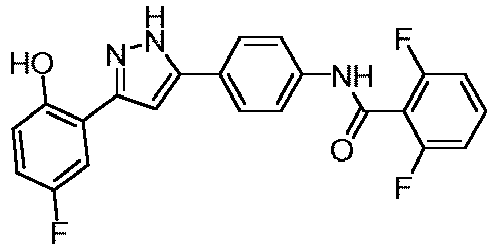
4.1 >20 BRM2-106 
0.2 0.9 BRM2-111 
0.8 3.8 BRM2-112 
0.9 6.5 BRM2-113 
2.0 > 20 BRM2-114 
3.0 11.4 BRM2-121 
0.6 2.4 BRM2-123 
0.7 2.8 BRM2-124 
0.6 1.5 BRM2-162 
6.8 > 20 BRM2-163 
4.4 17.2
Claims (5)
- A compound or a pharmaceutically acceptable salt, stereoisomer, and solvate thereof, characterized in that the compound has the following structure:
 R2 is selected from H, C1-6 alkyl or C2-6 alkenyl, wherein any carbon atom on alkyl or alkenyl can be substituted by one or more selected from the group consisting of: halogen, -OC0-6 alkyl, - S(O)mC0-6 alkyl, and phenyl;Rs is -NHC(=O)-;R16, R17, R18, R19 and R20 are independently selected from H, C1-6 alkyl, halogen, phenyl, -CN, - OH, -S(O)2C0-3 alkyl, -C(=O)C0-3 alkyl, -N(C0-3 alkyl)C(=O)(C0-3 alkyl), trimethylsilyl, triethylsilyl, N-heterocyclobutyl, pyridyl, pyrazolyl, pyrrolidinyl, pyranyl, tetrahydropyranyl, thienyl, tetrahydrofuryl, pyrazinyl, imidazolyl, piperidyl, piperazinyl, indolyl, morpholinyl, homopiperazinyl, thienyl, furyl, or oxazolyl, -NHC(=O)R21, wherein H on the N atom may optionally be substituted by C1-10 alkyl, C3-10 cycloalkyl, -CF3, or t-butyloxycarboryl;R3, R4, R5 and R6 are independently selected from H, C1-6 alkyl, C3-10 cycloalkyl, halogen, -OC0-6 alkyl, -N(C0-6 alkyl)(C0-6 alkyl), -N(C0-6 alkyl)C(=O)(C0-6 alkyl), -N(C0-6 alkyl)C(=O)O(C0-6 alkyl), -N(C0-6 alkyl)C(=O)N(C0-6 alkyl), -C(=O)C0-6 alkyl, -C(=O)OC0-6 alkyl, -C(=O)N(C0-6 alkyl)(C0-6 alkyl), or phenyl;R21 is selected from linear or branched C1-6 alkyl, C3-10 cycloalkyl, halogen, -OC0-6 alkyl, phenyl, N-heterocyclobutyl, pyridyl, pyrazolyl, pyrrolidinyl, pyranyl, tetrahydropyranyl, thienyl, tetrahydrofuryl, pyrazinyl, imidazolyl, piperidyl, piperazinyl, indolyl, morpholinyl, homopiperazinyl, thienyl, furyl, oxazolyl, wherein any carbon atom on alkyl, aryl, heterocycloalkyl, or heterocycloaryl can be substituted by one or more selected from the group consisting of halogen, -CN, -OC0-10 alkyl, -S(O)mC0-10 alkyl, -SO2N(C0-10 alkyl)(C0-10 alkyl), - N(C0-10 alkyl)(C0-10 alkyl), -N(C0-10 alkyl)C(=O)(C0-10 alkyl), -N(C0-10 alkyl)C(=O)O(C0-10 alkyl), -N(C0-10 alkyl)C(=O)N(C0-10 alkyl), -C(=O)C0-10 alkyl, -C(=O)OC0-10 alkyl, -C(=O)N(C0-10 alkyl)(C0-10 alkyl), -heterocycloalkyl, -N(C0-10 alkyl)heterocycloalkyl, -N(C0-10 alkyl)heterocycloaryl, heterocycloalkyl, aryl, -C1-10 alkylaryl, -C1-10 alkylheterocycloaryl, -N-heterocycloaryl, -S-heterocycloaryl and -O-heterocycloaryl, and m is 0, 1 or 2;R7 is selected from H, or C1-6 alkyl, andm is selected from 0, 1 or 2.
 - A compound or a pharmaceutically acceptable salt, stereoisomer, and solvate thereof, characterized in that the compound has the following structure:
 R2 is selected from H, C1-6 alkyl or C2-6 alkenyl, wherein any carbon atom on alkyl or alkenyl can be substituted by one or more selected from the group consisting of: halogen, -OC0-6 alkyl, - S(O)mC0-6 alkyl, and phenyl;R21 is selected from C3-10 cycloalkyl, phenyl, N-heterocyclobutyl, pyridyl, pyrazolyl, pyrrolidinyl, pyranyl, tetrahydropyranyl, thienyl, tetrahydrofuryl, pyrazinyl, imidazolyl, piperidyl, piperazinyl, indolyl, morpholinyl, homopiperazinyl, thienyl, furyl, oxazolyl, wherein any carbon atom on aryl, heterocycloalkyl, or heterocycloaryl can be substituted by one or more selected from the group consisting of halogen, -CN, -OC0-10 alkyl, -S(O)mC0-10 alkyl, -SO2N(C0-10 alkyl)(C0-10 alkyl), -N(C0-10 alkyl)(C0-10 alkyl), -N(C0-10 alkyl)C(=O)(C0-10 alkyl), -N(C0-10 alkyl)C(=O)O(C0-10 alkyl), -N(C0-10 alkyl)C(=O)N(C0-10 alkyl), -C(=O)C0-10 alkyl, -C(=O)OC0-10 alkyl, -C(=O)N(C0-10 alkyl)(C0-10 alkyl), -heterocycloalkyl, -N(C0-10 alkyl)heterocycloalkyl, - N(C0-10 alkyl)heterocycloaryl, heterocycloalkyl, aryl, -C1-10 alkylaryl, -C1-10 alkylheterocycloaryl, -N-heterocycloaryl, -S-heterocycloaryl and -O-heterocycloaryl, and m is 0, 1 or 2;R3, R4, R5 and R6 are independently selected from H, C1-6 alkyl, C3-10 cycloalkyl, halogen, -OC0-6 alkyl, -N(C0-6 alkyl)(C0-6 alkyl), -N(C0-6 alkyl)C(=O)(C0-6 alkyl), -N(C0-6 alkyl)C(=O)O(C0-6 alkyl), -N(C0-6 alkyl)C(=O)N(C0-6 alkyl), -C(=O)C0-6 alkyl, -C(=O)OC0-6 alkyl, -C(=O)N(C0-6 alkyl)(C0-6 alkyl), or phenyl;R7 is selected from H, or C1-6 alkyl, andm is selected from 0, 1 or 2.
 - The compound or the pharmaceutically acceptable salt, stereoisomer, and solvate thereof according to claim 1, characterized in that R16, R17, R18, R19 and R20 are independently selected from H, methyl, ethyl, propyl, isopropyl, halogen, -OH,


- The compound or the pharmaceutically acceptable salt, stereoisomer, and solvate thereof according to claim 2, characterized in that R21 is selected from halophenyl, benzyl,
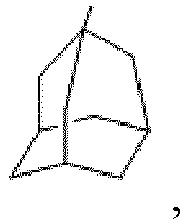


- A compound or the pharmaceutically acceptable salt, stereoisomer, and solvate thereof according to claim 1 or 2, characterized in that the compound has the following structures:


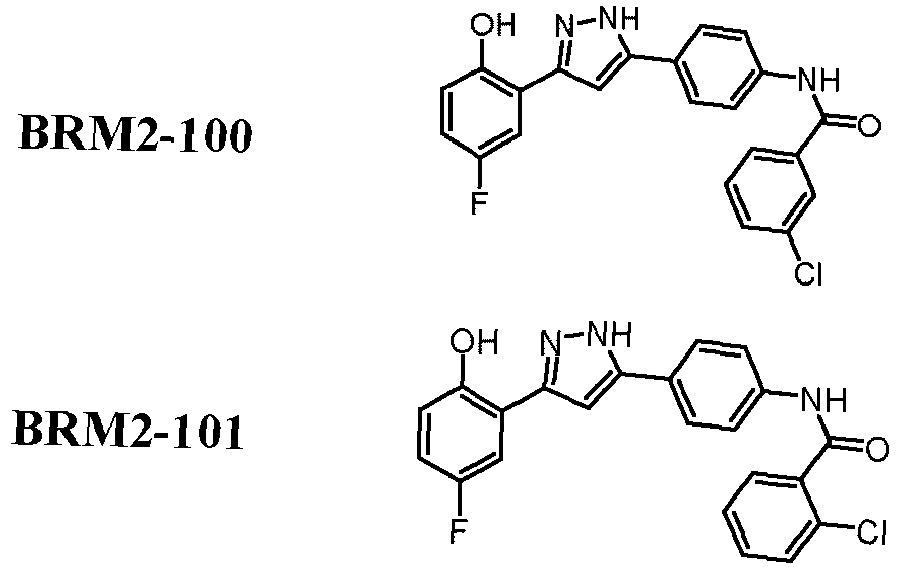

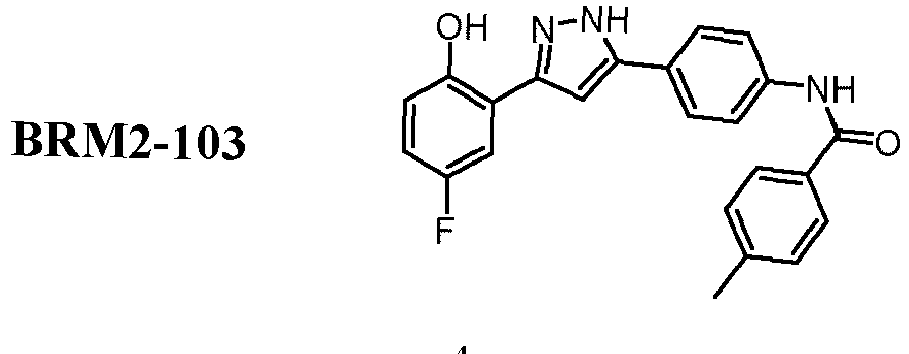


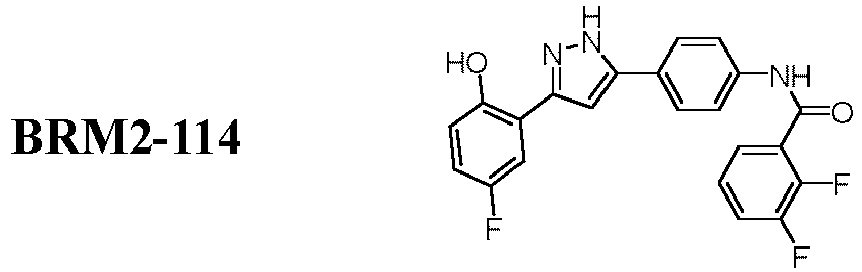


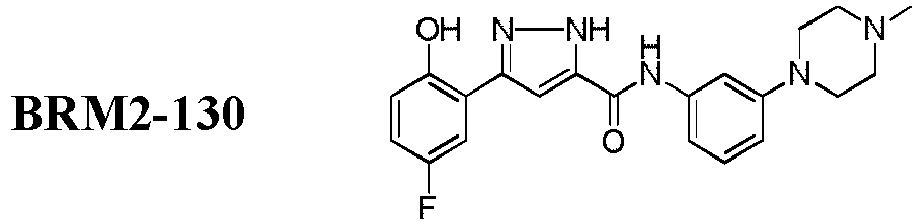


Applications Claiming Priority (2)
| Application Number | Priority Date | Filing Date | Title |
|---|---|---|---|
| CN201711091268.0A CN109748873B (en) | 2017-11-08 | 2017-11-08 | Compounds and their use in the treatment of cancer |
| PCT/CN2018/111154 WO2019091277A1 (en) | 2017-11-08 | 2018-10-22 | 2-(1h-pyrazol-3-yl) phenol compound and use thereof |
Publications (4)
| Publication Number | Publication Date |
|---|---|
| EP3705476A1 EP3705476A1 (en) | 2020-09-09 |
| EP3705476A4 EP3705476A4 (en) | 2020-09-09 |
| EP3705476B1 true EP3705476B1 (en) | 2024-09-04 |
| EP3705476C0 EP3705476C0 (en) | 2024-09-04 |
Family
ID=66401885
Family Applications (1)
| Application Number | Title | Priority Date | Filing Date |
|---|---|---|---|
| EP18877108.3A Active EP3705476B1 (en) | 2017-11-08 | 2018-10-22 | 2-(1h-pyrazol-3-yl) phenol compound and use thereof |
Country Status (4)
| Country | Link |
|---|---|
| US (1) | US11332461B2 (en) |
| EP (1) | EP3705476B1 (en) |
| CN (4) | CN109748873B (en) |
| WO (1) | WO2019091277A1 (en) |
Families Citing this family (4)
| Publication number | Priority date | Publication date | Assignee | Title |
|---|---|---|---|---|
| BR112022007998A2 (en) * | 2019-10-31 | 2022-07-05 | Holosmedic | NEW COMPOUND AND PHARMACEUTICAL COMPOSITION FOR THE PREVENTION OR TREATMENT OF CANCER THAT COMPRISES THE SAME |
| AU2020417293A1 (en) | 2020-01-03 | 2022-09-01 | Berg Llc | Polycyclic amides as UBE2K modulators for treating cancer |
| CN115768744B (en) | 2020-04-27 | 2024-06-28 | 奧土择破利悟 | Compounds as UBR box domain ligands |
| EP4173485A1 (en) * | 2021-10-27 | 2023-05-03 | Max-Planck-Gesellschaft zur Förderung der Wissenschaften e.V. | Protein aggregation inhibiting compounds for plant disease control |
Family Cites Families (15)
| Publication number | Priority date | Publication date | Assignee | Title |
|---|---|---|---|---|
| US6514977B1 (en) * | 1997-05-22 | 2003-02-04 | G.D. Searle & Company | Substituted pyrazoles as p38 kinase inhibitors |
| JP2002508754A (en) * | 1997-05-22 | 2002-03-19 | ジー ディ サール アンド カンパニ | Pyrazoles having substituents as p38 kinase inhibitors |
| WO2003104223A1 (en) * | 2002-06-05 | 2003-12-18 | Pharmacia Corporation | Pyrazole-derivatives as p38 kinase inhibitors |
| US20050113423A1 (en) * | 2003-03-12 | 2005-05-26 | Vangoor Frederick F. | Modulators of ATP-binding cassette transporters |
| TW200720254A (en) * | 2005-04-07 | 2007-06-01 | Nippon Kayaku Kk | Use of 3,5-diphenyl pyrazole derivatives as anti-tumor agent |
| WO2008046072A2 (en) * | 2006-10-13 | 2008-04-17 | The Board Of Regents Of The University Of Texas System | Chemical inducers of neurogenesis |
| TW200901974A (en) * | 2007-01-16 | 2009-01-16 | Wyeth Corp | Compounds, compositions, and methods of making and using them |
| WO2008145681A2 (en) * | 2007-05-31 | 2008-12-04 | Boehringer Ingelheim International Gmbh | Ccr2 receptor antagonists and uses thereof |
| AU2009253046A1 (en) * | 2008-05-30 | 2009-12-03 | Foster Wheeler Energia Oy | Method of and system for generating power by oxyfuel combustion |
| TW201004941A (en) * | 2008-07-16 | 2010-02-01 | Wyeth Corp | Alpha7 nicotinic acetylcholine receptor inhibitors |
| JP2012102018A (en) * | 2009-03-03 | 2012-05-31 | Astellas Pharma Inc | Amide compound |
| US9073911B2 (en) * | 2011-06-09 | 2015-07-07 | Hoffmann-La Roche Inc. | Pyrazole derivatives |
| WO2016040449A1 (en) * | 2014-09-10 | 2016-03-17 | Raze Therapeutics, Inc. | 3-phosphoglycerate dehydrogenase inhibitors and uses thereof |
| AU2016281346B2 (en) * | 2015-06-23 | 2020-01-02 | Kissei Pharmaceutical Co., Ltd. | Pyrazole derivative, or pharmaceutically acceptable salt thereof |
| CN105523955B (en) * | 2015-12-14 | 2018-08-17 | 北京嘉林药业股份有限公司 | Compound and its purposes in medicine preparation |
-
2017
- 2017-11-08 CN CN201711091268.0A patent/CN109748873B/en active Active
- 2017-11-08 CN CN202011437196.2A patent/CN112480005B/en active Active
- 2017-11-08 CN CN202011433095.8A patent/CN112480079B/en active Active
- 2017-11-08 CN CN202011433438.0A patent/CN112457255B/en active Active
-
2018
- 2018-10-22 EP EP18877108.3A patent/EP3705476B1/en active Active
- 2018-10-22 WO PCT/CN2018/111154 patent/WO2019091277A1/en not_active Ceased
- 2018-10-22 US US16/761,091 patent/US11332461B2/en active Active
Non-Patent Citations (1)
| Title |
|---|
| WU QIONG ET AL: "Targeting the chromatin remodeling enzyme BRG1 increases the efficacy of chemotherapy drugs in breast cancer cells", ONCOTARGET, vol. 7, no. 19, 10 May 2016 (2016-05-10), pages 27158 - 27175, XP055872592, DOI: 10.18632/oncotarget.8384 * |
Also Published As
| Publication number | Publication date |
|---|---|
| CN112457255A (en) | 2021-03-09 |
| CN109748873A (en) | 2019-05-14 |
| CN112457255B (en) | 2022-08-19 |
| CN112480079B (en) | 2022-03-11 |
| US11332461B2 (en) | 2022-05-17 |
| CN112480005B (en) | 2022-08-19 |
| CN112480005A (en) | 2021-03-12 |
| CN112480079A (en) | 2021-03-12 |
| EP3705476A1 (en) | 2020-09-09 |
| WO2019091277A1 (en) | 2019-05-16 |
| CN109748873B (en) | 2021-02-02 |
| US20200354342A1 (en) | 2020-11-12 |
| EP3705476C0 (en) | 2024-09-04 |
| EP3705476A4 (en) | 2020-09-09 |
Similar Documents
| Publication | Publication Date | Title |
|---|---|---|
| KR102866499B1 (en) | Novel small molecule inhibitors of TEAD transcription factors | |
| RS64464B1 (en) | Transglutaminase 2 (tg2) inhibitors | |
| US11332461B2 (en) | 2-(1H-pyrazol-3-yl) phenol compound and use thereof | |
| EP1650205A1 (en) | Cyclohexanecarboxylic acid compound | |
| CA3144075A1 (en) | Pharmaceutically active pyrazolo-pyridone modulators of dcn1/2-mediated cullin neddylation | |
| EP4153160A1 (en) | Benzoylhydrazide-derived hdac degraders as therapeutics for treating cancer and other human diseases | |
| JP2018138609A (en) | Naphthyridinedione derivatives | |
| WO2016000568A1 (en) | Compound for treating gout | |
| BR112015010570B1 (en) | MICROBIAL AGENTS, COMPOUND AND ITS USE AND PHARMACEUTICAL COMPOSITION | |
| JP2017516829A (en) | Pyridopyrimidinedione derivatives | |
| CN106459041B (en) | Pyrimido [4,5-b] quinoline -4,5 (3H, 10H)-derovatives | |
| WO1994011375A1 (en) | Tricyclic compound | |
| US20250051304A1 (en) | Beta-catenin and b-cell lymphoma 9 (bcl9) inhibitors | |
| CN113999211B (en) | Indazole skeleton derivative containing 1,2,3-triazole with specific activity of resisting prostate cancer | |
| CN102381997A (en) | Propofol hydroxyl ester compound with amino acid ester terminal and its preparation method and application | |
| CN114671887A (en) | Preparation of a kind of indoline compound and its antitumor application | |
| WO2016206138A1 (en) | Histone deacetylase inhibitor and preparation method and use thereof | |
| WO2023222122A1 (en) | Solid forms of a compound for treating or preventing hyperuricemia or gout | |
| CN113788835B (en) | Triazole tetrazine compound containing morpholine and quinoline ring and preparation method and application thereof | |
| WO2019036607A1 (en) | Imidazole-based anticancer agents and derivatives thereof, and methods of making and using same | |
| CN118772107A (en) | HDAC inhibitors and uses thereof | |
| EP2711367A1 (en) | New spiroepoxide tetrahydrobenzo-triazoles and -imidazoles and their use as MetAP-II inhibitors | |
| HK40052686A (en) | Transglutaminase 2 (tg2) inhibitors | |
| HK40052686B (en) | Transglutaminase 2 (tg2) inhibitors | |
| CN109020985A (en) | A kind of novel isofebrifugine derivative and its preparation method and application |
Legal Events
| Date | Code | Title | Description |
|---|---|---|---|
| STAA | Information on the status of an ep patent application or granted ep patent |
Free format text: STATUS: THE INTERNATIONAL PUBLICATION HAS BEEN MADE |
|
| PUAI | Public reference made under article 153(3) epc to a published international application that has entered the european phase |
Free format text: ORIGINAL CODE: 0009012 |
|
| STAA | Information on the status of an ep patent application or granted ep patent |
Free format text: STATUS: REQUEST FOR EXAMINATION WAS MADE |
|
| 17P | Request for examination filed |
Effective date: 20200602 |
|
| A4 | Supplementary search report drawn up and despatched |
Effective date: 20200805 |
|
| AK | Designated contracting states |
Kind code of ref document: A1 Designated state(s): AL AT BE BG CH CY CZ DE DK EE ES FI FR GB GR HR HU IE IS IT LI LT LU LV MC MK MT NL NO PL PT RO RS SE SI SK SM TR |
|
| AX | Request for extension of the european patent |
Extension state: BA ME |
|
| DAV | Request for validation of the european patent (deleted) | ||
| DAX | Request for extension of the european patent (deleted) | ||
| STAA | Information on the status of an ep patent application or granted ep patent |
Free format text: STATUS: EXAMINATION IS IN PROGRESS |
|
| 17Q | First examination report despatched |
Effective date: 20210615 |
|
| GRAP | Despatch of communication of intention to grant a patent |
Free format text: ORIGINAL CODE: EPIDOSNIGR1 |
|
| STAA | Information on the status of an ep patent application or granted ep patent |
Free format text: STATUS: GRANT OF PATENT IS INTENDED |
|
| INTG | Intention to grant announced |
Effective date: 20240522 |
|
| GRAS | Grant fee paid |
Free format text: ORIGINAL CODE: EPIDOSNIGR3 |
|
| GRAA | (expected) grant |
Free format text: ORIGINAL CODE: 0009210 |
|
| STAA | Information on the status of an ep patent application or granted ep patent |
Free format text: STATUS: THE PATENT HAS BEEN GRANTED |
|
| AK | Designated contracting states |
Kind code of ref document: B1 Designated state(s): AL AT BE BG CH CY CZ DE DK EE ES FI FR GB GR HR HU IE IS IT LI LT LU LV MC MK MT NL NO PL PT RO RS SE SI SK SM TR |
|
| REG | Reference to a national code |
Ref country code: GB Ref legal event code: FG4D |
|
| REG | Reference to a national code |
Ref country code: CH Ref legal event code: EP |
|
| REG | Reference to a national code |
Ref country code: IE Ref legal event code: FG4D |
|
| REG | Reference to a national code |
Ref country code: DE Ref legal event code: R096 Ref document number: 602018074108 Country of ref document: DE |
|
| U01 | Request for unitary effect filed |
Effective date: 20240918 |
|
| U07 | Unitary effect registered |
Designated state(s): AT BE BG DE DK EE FI FR IT LT LU LV MT NL PT RO SE SI Effective date: 20241010 |
|
| U20 | Renewal fee for the european patent with unitary effect paid |
Year of fee payment: 7 Effective date: 20241012 |
|
| PG25 | Lapsed in a contracting state [announced via postgrant information from national office to epo] |
Ref country code: NO Free format text: LAPSE BECAUSE OF FAILURE TO SUBMIT A TRANSLATION OF THE DESCRIPTION OR TO PAY THE FEE WITHIN THE PRESCRIBED TIME-LIMIT Effective date: 20241204 |
|
| PG25 | Lapsed in a contracting state [announced via postgrant information from national office to epo] |
Ref country code: GR Free format text: LAPSE BECAUSE OF FAILURE TO SUBMIT A TRANSLATION OF THE DESCRIPTION OR TO PAY THE FEE WITHIN THE PRESCRIBED TIME-LIMIT Effective date: 20241205 Ref country code: PL Free format text: LAPSE BECAUSE OF FAILURE TO SUBMIT A TRANSLATION OF THE DESCRIPTION OR TO PAY THE FEE WITHIN THE PRESCRIBED TIME-LIMIT Effective date: 20240904 |
|
| PG25 | Lapsed in a contracting state [announced via postgrant information from national office to epo] |
Ref country code: HR Free format text: LAPSE BECAUSE OF FAILURE TO SUBMIT A TRANSLATION OF THE DESCRIPTION OR TO PAY THE FEE WITHIN THE PRESCRIBED TIME-LIMIT Effective date: 20240904 |
|
| PG25 | Lapsed in a contracting state [announced via postgrant information from national office to epo] |
Ref country code: ES Free format text: LAPSE BECAUSE OF FAILURE TO SUBMIT A TRANSLATION OF THE DESCRIPTION OR TO PAY THE FEE WITHIN THE PRESCRIBED TIME-LIMIT Effective date: 20240904 Ref country code: RS Free format text: LAPSE BECAUSE OF FAILURE TO SUBMIT A TRANSLATION OF THE DESCRIPTION OR TO PAY THE FEE WITHIN THE PRESCRIBED TIME-LIMIT Effective date: 20241204 |
|
| PG25 | Lapsed in a contracting state [announced via postgrant information from national office to epo] |
Ref country code: RS Free format text: LAPSE BECAUSE OF FAILURE TO SUBMIT A TRANSLATION OF THE DESCRIPTION OR TO PAY THE FEE WITHIN THE PRESCRIBED TIME-LIMIT Effective date: 20241204 Ref country code: PL Free format text: LAPSE BECAUSE OF FAILURE TO SUBMIT A TRANSLATION OF THE DESCRIPTION OR TO PAY THE FEE WITHIN THE PRESCRIBED TIME-LIMIT Effective date: 20240904 Ref country code: NO Free format text: LAPSE BECAUSE OF FAILURE TO SUBMIT A TRANSLATION OF THE DESCRIPTION OR TO PAY THE FEE WITHIN THE PRESCRIBED TIME-LIMIT Effective date: 20241204 Ref country code: HR Free format text: LAPSE BECAUSE OF FAILURE TO SUBMIT A TRANSLATION OF THE DESCRIPTION OR TO PAY THE FEE WITHIN THE PRESCRIBED TIME-LIMIT Effective date: 20240904 Ref country code: GR Free format text: LAPSE BECAUSE OF FAILURE TO SUBMIT A TRANSLATION OF THE DESCRIPTION OR TO PAY THE FEE WITHIN THE PRESCRIBED TIME-LIMIT Effective date: 20241205 Ref country code: ES Free format text: LAPSE BECAUSE OF FAILURE TO SUBMIT A TRANSLATION OF THE DESCRIPTION OR TO PAY THE FEE WITHIN THE PRESCRIBED TIME-LIMIT Effective date: 20240904 |
|
| PG25 | Lapsed in a contracting state [announced via postgrant information from national office to epo] |
Ref country code: IS Free format text: LAPSE BECAUSE OF FAILURE TO SUBMIT A TRANSLATION OF THE DESCRIPTION OR TO PAY THE FEE WITHIN THE PRESCRIBED TIME-LIMIT Effective date: 20250104 |
|
| PG25 | Lapsed in a contracting state [announced via postgrant information from national office to epo] |
Ref country code: SM Free format text: LAPSE BECAUSE OF FAILURE TO SUBMIT A TRANSLATION OF THE DESCRIPTION OR TO PAY THE FEE WITHIN THE PRESCRIBED TIME-LIMIT Effective date: 20240904 |
|
| PG25 | Lapsed in a contracting state [announced via postgrant information from national office to epo] |
Ref country code: CZ Free format text: LAPSE BECAUSE OF FAILURE TO SUBMIT A TRANSLATION OF THE DESCRIPTION OR TO PAY THE FEE WITHIN THE PRESCRIBED TIME-LIMIT Effective date: 20240904 |
|
| PG25 | Lapsed in a contracting state [announced via postgrant information from national office to epo] |
Ref country code: SK Free format text: LAPSE BECAUSE OF FAILURE TO SUBMIT A TRANSLATION OF THE DESCRIPTION OR TO PAY THE FEE WITHIN THE PRESCRIBED TIME-LIMIT Effective date: 20240904 |
|
| REG | Reference to a national code |
Ref country code: CH Ref legal event code: PL |
|
| PG25 | Lapsed in a contracting state [announced via postgrant information from national office to epo] |
Ref country code: MC Free format text: LAPSE BECAUSE OF FAILURE TO SUBMIT A TRANSLATION OF THE DESCRIPTION OR TO PAY THE FEE WITHIN THE PRESCRIBED TIME-LIMIT Effective date: 20240904 |
|
| PLBE | No opposition filed within time limit |
Free format text: ORIGINAL CODE: 0009261 |
|
| STAA | Information on the status of an ep patent application or granted ep patent |
Free format text: STATUS: NO OPPOSITION FILED WITHIN TIME LIMIT |
|
| PG25 | Lapsed in a contracting state [announced via postgrant information from national office to epo] |
Ref country code: CH Free format text: LAPSE BECAUSE OF NON-PAYMENT OF DUE FEES Effective date: 20241031 |
|
| 26N | No opposition filed |
Effective date: 20250605 |
|
| GBPC | Gb: european patent ceased through non-payment of renewal fee |
Effective date: 20241204 |
|
| PG25 | Lapsed in a contracting state [announced via postgrant information from national office to epo] |
Ref country code: GB Free format text: LAPSE BECAUSE OF NON-PAYMENT OF DUE FEES Effective date: 20241204 |
|
| PG25 | Lapsed in a contracting state [announced via postgrant information from national office to epo] |
Ref country code: IE Free format text: LAPSE BECAUSE OF NON-PAYMENT OF DUE FEES Effective date: 20241022 |
|
| U20 | Renewal fee for the european patent with unitary effect paid |
Year of fee payment: 8 Effective date: 20251011 |
|
| PG25 | Lapsed in a contracting state [announced via postgrant information from national office to epo] |
Ref country code: CY Free format text: LAPSE BECAUSE OF FAILURE TO SUBMIT A TRANSLATION OF THE DESCRIPTION OR TO PAY THE FEE WITHIN THE PRESCRIBED TIME-LIMIT; INVALID AB INITIO Effective date: 20181022 |
|
| PG25 | Lapsed in a contracting state [announced via postgrant information from national office to epo] |
Ref country code: HU Free format text: LAPSE BECAUSE OF FAILURE TO SUBMIT A TRANSLATION OF THE DESCRIPTION OR TO PAY THE FEE WITHIN THE PRESCRIBED TIME-LIMIT; INVALID AB INITIO Effective date: 20181022 |