EP3704886B1 - Wiederholungsübertragung basierend auf der qualität des downlink-kanals - Google Patents
Wiederholungsübertragung basierend auf der qualität des downlink-kanals Download PDFInfo
- Publication number
- EP3704886B1 EP3704886B1 EP17930539.6A EP17930539A EP3704886B1 EP 3704886 B1 EP3704886 B1 EP 3704886B1 EP 17930539 A EP17930539 A EP 17930539A EP 3704886 B1 EP3704886 B1 EP 3704886B1
- Authority
- EP
- European Patent Office
- Prior art keywords
- channel
- channel quality
- downlink
- network device
- repetition level
- Prior art date
- Legal status (The legal status is an assumption and is not a legal conclusion. Google has not performed a legal analysis and makes no representation as to the accuracy of the status listed.)
- Active
Links
Images
Classifications
-
- H—ELECTRICITY
- H04—ELECTRIC COMMUNICATION TECHNIQUE
- H04L—TRANSMISSION OF DIGITAL INFORMATION, e.g. TELEGRAPHIC COMMUNICATION
- H04L1/00—Arrangements for detecting or preventing errors in the information received
- H04L1/08—Arrangements for detecting or preventing errors in the information received by repeating transmission, e.g. Verdan system
-
- H—ELECTRICITY
- H04—ELECTRIC COMMUNICATION TECHNIQUE
- H04L—TRANSMISSION OF DIGITAL INFORMATION, e.g. TELEGRAPHIC COMMUNICATION
- H04L1/00—Arrangements for detecting or preventing errors in the information received
- H04L1/0001—Systems modifying transmission characteristics according to link quality, e.g. power backoff
- H04L1/0002—Systems modifying transmission characteristics according to link quality, e.g. power backoff by adapting the transmission rate
- H04L1/0003—Systems modifying transmission characteristics according to link quality, e.g. power backoff by adapting the transmission rate by switching between different modulation schemes
-
- H—ELECTRICITY
- H04—ELECTRIC COMMUNICATION TECHNIQUE
- H04L—TRANSMISSION OF DIGITAL INFORMATION, e.g. TELEGRAPHIC COMMUNICATION
- H04L1/00—Arrangements for detecting or preventing errors in the information received
- H04L1/12—Arrangements for detecting or preventing errors in the information received by using return channel
- H04L1/16—Arrangements for detecting or preventing errors in the information received by using return channel in which the return channel carries supervisory signals, e.g. repetition request signals
- H04L1/18—Automatic repetition systems, e.g. Van Duuren systems
- H04L1/1867—Arrangements specially adapted for the transmitter end
- H04L1/1896—ARQ related signaling
-
- H—ELECTRICITY
- H04—ELECTRIC COMMUNICATION TECHNIQUE
- H04W—WIRELESS COMMUNICATION NETWORKS
- H04W4/00—Services specially adapted for wireless communication networks; Facilities therefor
- H04W4/70—Services for machine-to-machine communication [M2M] or machine type communication [MTC]
-
- H—ELECTRICITY
- H04—ELECTRIC COMMUNICATION TECHNIQUE
- H04W—WIRELESS COMMUNICATION NETWORKS
- H04W76/00—Connection management
- H04W76/20—Manipulation of established connections
- H04W76/28—Discontinuous transmission [DTX]; Discontinuous reception [DRX]
-
- H—ELECTRICITY
- H04—ELECTRIC COMMUNICATION TECHNIQUE
- H04L—TRANSMISSION OF DIGITAL INFORMATION, e.g. TELEGRAPHIC COMMUNICATION
- H04L1/00—Arrangements for detecting or preventing errors in the information received
- H04L1/0001—Systems modifying transmission characteristics according to link quality, e.g. power backoff
- H04L1/0009—Systems modifying transmission characteristics according to link quality, e.g. power backoff by adapting the channel coding
-
- H—ELECTRICITY
- H04—ELECTRIC COMMUNICATION TECHNIQUE
- H04L—TRANSMISSION OF DIGITAL INFORMATION, e.g. TELEGRAPHIC COMMUNICATION
- H04L1/00—Arrangements for detecting or preventing errors in the information received
- H04L1/0001—Systems modifying transmission characteristics according to link quality, e.g. power backoff
- H04L1/0015—Systems modifying transmission characteristics according to link quality, e.g. power backoff characterised by the adaptation strategy
-
- H—ELECTRICITY
- H04—ELECTRIC COMMUNICATION TECHNIQUE
- H04L—TRANSMISSION OF DIGITAL INFORMATION, e.g. TELEGRAPHIC COMMUNICATION
- H04L1/00—Arrangements for detecting or preventing errors in the information received
- H04L1/0001—Systems modifying transmission characteristics according to link quality, e.g. power backoff
- H04L1/0023—Systems modifying transmission characteristics according to link quality, e.g. power backoff characterised by the signalling
- H04L1/0026—Transmission of channel quality indication
Definitions
- a repetition transmission has been widely used.
- the number of repetition transmission there is a relationship between the number of repetition transmission and the repetition gain. For example, if the number of repetition transmission for a signal is doubled in the transmitting side, a 3 dB repetition gain can be achieved in the receiving side by combining the received multiple copies of the signal from the transmitting side.
- the increment of the number of repetition transmission will reduce the spectrum efficiency and the capacity of the LTE-M communication networks, which may be undesirable for some capacity-limited application scenarios.
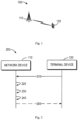
- the network device 110 may perform a repetition transmission in the downlink channel from the network device 110 to the terminal device 120.
- the repetition transmission refers to a plurality of retransmissions for the same signal in the downlink channel.
- the terminal device 120 may perform a combining operation for the plurality of copies of the same signal from the repetition transmission, in order to improve the receiving signal quality.
- the combining operation may be a Maximum Ration Combining (MRC), a Selective Combining (SC) or an Equal Gain Combing (EGC).
- the first channel quality for the downlink control channel may be represented by a Signal to Interference plus Noise Ratio (SINR) or a Signal to Noise Ratio (SNR).
- SINR Signal to Interference plus Noise Ratio
- SINR_first the SINR of the downlink channel
- the first channel quality may represent an estimated channel condition for the physical downlink channel as a function of different information associated with the uplink transmission, such as the CQI in the uplink channel and a detection of DRX in the uplink channel and etc.
- the detection of the DRT may imply that the terminal device 120 cannot successfully decode the control information in the downlink channel such as the DCI. Therefore, for example, DTX_offset may be a negative offset parameter, if the network device 110 detects a DRX in the uplink channels, such as the PUCCH and Physical Uplink Shared Channel (PUSCH) in LTE systems.
- PUSCH Physical Uplink Shared Channel
- the first channel quality may be determined according to the value of Control Format Indicator (CFI) for the downlink control channel.
- CFI Control Format Indicator
- the value of a CFI indicates the number of the Orthogonal Frequency Division Multiplexing (OFDM) symbols in the control region in one downlink subframe.
- OFDM Orthogonal Frequency Division Multiplexing
- the impact of CFI on the estimated first channel quality for the downlink data channel may be represented by another offset value.
- the second channel quality may be predefined and/or updated by the telecommunication operators or vendors based on various operational rules.
- the higher level operational rules may take different types of the time window in the communication network 100 and different priority levels of the cells or sectors in the communication network 100 into consideration.
- the target channel quality i.e., the second channel quality may be determined lower for the time periods with a lower traffic load in the communication network 100.
- the target channel quality may be determined larger for the cells or sectors with higher priority levels, thereby achieving a dynamic and flexible control of the network performance.
- the downlink channel may be a downlink control channel
- modulation and Coding Scheme may be fixed for the downlink control channel.
- the modulation scheme for the PDCCH is Quadrature Phase Shift Keying (QPSK) and the channel coding is Turbo coding with a coding rate of 1/3. All the specific numeral values are described only for illustration purpose, without suggesting any limitations as to the scope of the present disclosure. Therefore, the second channel quality for the downlink control channel may be determined according to a predetermined decoding performance for the downlink control channel. For example, with a target error rate of 1% for the downlink control channel, the second channel quality for the downlink control channel may be predetermined by link level or system level simulations and field tests.
- the maximum MCS for LTE or LTE-M communication network may be limited to a predefined level.
- the maximum MCS may be taken into consideration in the process of determining the second channel quality from the first channel quality of the downlink data channel. For example, a preliminary MCS may be first determined based on the first channel quality according to the mapping relationship between the MCSs and channel qualities. If the preliminary MCS is larger than the predefined maximum MCS, the MCS for the first channel quality may be configured as the predefined maximum MCS. On the other hand, if the preliminary MCS is smaller than the predefined maximum MCS, the MCS for the first channel quality may be configured as the preliminary MCS.
- the network device 110 may determine a second channel quality based the set of parameters associated with a target performance of the downlink data channel. More specifically, as discussed above, the second channel quality is a target channel quality for the downlink data channel with respect to a predetermined decoding performance. For a given MCS, the second channel quality may be obtained by computer simulations and/or field tests based on the set of parameters associated with the target performance of the downlink channel, such as a target decoding performance with a BLER of 1% for example. For example, the target decoding performance may be determined according to the specific applications and the priority levels of the terminal users.
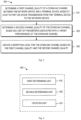
- the network device 110 updates the repetition level for the downlink channel based on the first channel quality and the second channel quality.
- the repetition level indicates the number of repetition transmissions in the downlink channel.
- the downlink channel may be a downlink control channel or a downlink data channel from the network device 110 to the terminal device 120.
- the first channel quality of the downlink channel may represent the channel condition of the physical downlink channel from the network device 110 to the terminal device 120.
- the second channel quality of the downlink channel may represent an overall channel condition of the downlink channel in the terminal device 120.
- the second channel quality is smaller than the first channel quality, it means the physical downlink channel condition is good enough to achieve the target channel quality in the terminal device 120.
- the repetition level may be reduced by a predetermined level or just kept unchanged.
- the second channel quality is larger than the first channel quality, it means the physical downlink channel condition cannot fulfill the overall channel quality requirements in the terminal device 120 indicated by the second channel quality. In this case, more repetition transmissions are required to achieve the desired second channel quality with a target performance.
- the repetition level should be increased to fill the gap between the first channel quality and the second channel quality through downlink repetition transmission.
- the repetition gain of an increased repetition level may also represent a repetition coding gain through the simple repetition transmissions.
- the network device 110 may decrease the repetition level by a predetermined level in order to improve the spectrum efficiency of the communication network 100.
- r max represents a maximum repetition level
- the network device 110 may decrease the current repetition level by a predetermined level.
- the network device 110 may decrease the repetition level from r 3 to r 2 or r 1 . That is, in this case, the repetition level may be decreased from 4 to 2 or 1.
- the network device 110 may increase the repetition level so that a repetition gain of the increased repetition level is larger than a difference between the first channel quality and the second channel quality. In this way, more repetition coding gain can be exploited through repetition downlink transmission in order to fill the gap between the second channel quality and the first channel quality.
- the repetition gain represents a channel quality gain of an increased repetition level with respect to the case of no repetition transmission in the downlink channel.
- the repetition gain for different repetition levels may be predetermined by link level, system level simulations and/or field tests.
- the network device 110 may also transmit the updated repetition level for the downlink channel in a downlink signaling to the terminal device 120.
- the updated repetition level may be explicitly informed from the network device 110 to the terminal device 120 in the DCI in PDCCH, Medium Access Control (MAC) Control Element (CE) or the Radio Resource Control (RRC) signaling.
- the updated repetition level may be obtained by the terminal device 120 in an implicit way.
- the terminal device 120 may derive the updated repetition level by performing a blind detection itself for example.
- Fig. 4 shows a block diagram of an apparatus 400 in accordance with some embodiments of the present disclosure.
- the apparatus 400 may be implemented at the network device 110 in the network 100.
- the apparatus 400 includes a first determining unit 410, a second determining unit 420 and an updating unit 430.
- the first determining unit 410 may be configured to determine a first channel quality of a downlink channel between the network device 110 and a terminal device 120, based at least in part on uplink transmission from the terminal device 120 to the network device 110.
- the second determining unit 420 may be configured to determine a second channel quality of the downlink channel based on a set of parameters associated with a target performance of the downlink channel.
- the updating unit 430 may be configured to update a repetition level for the downlink channel based on the first channel quality and the second channel quality. The repetition level indicates a number of repetition transmissions in the downlink channel.
- the downlink channel is a downlink data channel
- the first determining unit 410 may be configured to determine the first channel quality based on at least one of a CQI from an uplink channel between the network device 110 and the terminal device 120, a statistics of ACK and NACK from the uplink channel, and a value of CFI for a downlink control channel.
- he second determining unit 420 may be configured to determine a MCS based on the first channel quality and a relationship between MCSs and channel qualities.
- the updating unit 430 may be configured to in response to the first channel quality being less than the second channel quality, increase the repetition level so that a repetition gain of the increased repetition level is larger than a difference between the first channel quality and the second channel quality.
- the apparatus 400 may include a transmitting unit, which may be configured to transmit the updated repetition level for the downlink channel to the terminal device 120.
- apparatus 400 may be respectively implemented by any suitable technique either known at present or developed in the future. Further, a single device shown may be alternatively implemented in multiple devices separately, and multiple separated devices may be implemented in a single device. The scope of the present disclosure is not limited in these regards.
- the apparatus 400 may comprise at least one processor.
- the at least one processor suitable for use with embodiments of the present disclosure may include, by way of example, both general and special purpose processors already known or developed in the future.
- the apparatus 400 may further comprise at least one memory.
- the at least one memory may include, for example, semiconductor memory devices, e.g., RAM, ROM, EPROM, EEPROM, and flash memory devices.
- the at least one memory may be used to store program of computer executable instructions.
- the program can be written in any high-level and/or low-level compliable or interpretable programming languages.
- the computer executable instructions may be configured, with the at least one processor, to cause the apparatus 400 to at least perform according to the method 300 as discussed above.
- the present disclosure may be embodied in an apparatus, a method, or a computer program product.
- the various embodiments may be implemented in hardware or special purpose circuits, software, logic or any combination thereof.
- some aspects may be implemented in hardware, while other aspects may be implemented in firmware or software which may be executed by a controller, microprocessor or other computing device, although the disclosure is not limited thereto.
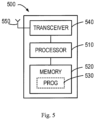
- the processor 510 may be of any type suitable to the local technical network, and may include one or more of general purpose computers, special purpose computers, microprocessors, Digital Signal Processors (DSPs) and processors based on multicore processor architecture, as non-limiting examples.
- the network device 500 may have multiple processors, such as an application specific integrated circuit chip that is slaved in time to a clock which synchronizes the main processor.
- the memory 520 stores at least a part of a program 530.
- the TX/RX 540 is for bidirectional communications.
- the TX/RX 540 has at least one antenna to facilitate communication, though in practice the network device 500 mentioned in this disclosure may have several ones.
- the communication interface may represent any interface that is necessary for communication with other network elements.
Landscapes
- Engineering & Computer Science (AREA)
- Computer Networks & Wireless Communication (AREA)
- Signal Processing (AREA)
- Quality & Reliability (AREA)
- Mobile Radio Communication Systems (AREA)
- Data Exchanges In Wide-Area Networks (AREA)
Claims (19)
- Verfahren, das von einer Netzwerkvorrichtung (110) eines Kommunikationsnetzwerks implementiert wird und Folgendes umfasst:Bestimmen einer ersten Kanalqualität eines Downlinkkanals zwischen der Netzwerkvorrichtung (110) und einer Endgerätevorrichtung (120) auf Basis einer Uplinkübertragung von der Endgerätevorrichtung (120) zur Netzwerkvorrichtung (110);Bestimmen einer zweiten Kanalqualität des Downlinkkanals auf Basis eines Satzes von Parametern, die mit einer Sollleistung des Downlinkkanals verknüpft sind; undAktualisieren eines Wiederholungsmaßes für den Downlinkkanal auf Basis der ersten Kanalqualität und der zweiten Kanalqualität, wobei das Wiederholungsmaß eine Anzahl von Wiederholungsübertragungen im Downlinkkanal anzeigt,wobei der Downlinkkanal ein Downlinkdatenkanal ist, undwobei das Bestimmen der zweiten Kanalqualität des Downlinkkanals Folgendes umfasst:Bestimmen eines Modulations- und Codierschemas, MCS, auf Basis der ersten Kanalqualität; undBestimmen der zweiten Kanalqualität auf Basis des Satzes von Parametern, die mit der Sollleistung des Downlinkkanals unter dem bestimmten MCS verknüpft sind.
- Verfahren nach Anspruch 1, wobei das Bestimmen der ersten Kanalqualität das Bestimmen der ersten Kanalqualität auf Basis von mindestens einem von Folgendem umfasst:einem CQI von einem Uplinkkanal zwischen der Netzwerkvorrichtung (110) und der Endgerätevorrichtung (120),einer Statistik einer Bestätigung, ACK, und einer Negativbestätigung, NACK, vom Uplinkkanal, undeinem Wert eines Steuerformatindikators, CFI, für einen Downlinksteuerkanal.
- Verfahren nach Anspruch 1, wobei der Satz von Parametern, die mit der Sollleistung des Downlinkkanals verknüpft sind, mindestens eines von Folgendem umfasst:einer Sollfehlerrate des Downlinkkanals,einem Abdeckungsbereich des Kommunikationsnetzwerks,einer Übertragungsleistung der Netzwerkvorrichtung (110),einer Übertragungsleistung der Endgerätevorrichtung (120), undeinem Verkehrsmodell des Kommunikationsnetzwerks.
- Verfahren nach Anspruch 1, wobei das Bestimmen des MCS auf Basis der ersten Kanalqualität Folgendes umfasst:
Bestimmen des MCS auf Basis der ersten Kanalqualität und einer Beziehung zwischen MCSs und Kanalqualitäten. - Verfahren nach Anspruch 1, wobei das Aktualisieren des Wiederholungsmaßes Folgendes umfasst:
in Reaktion darauf, dass die erste Kanalqualität die zweite Kanalqualität überschreitet, Halten des Wiederholungsmaßes unverändert oder Verringern des Wiederholungsmaßes. - Verfahren nach Anspruch 1, wobei das Aktualisieren des Wiederholungsmaßes Folgendes umfasst:
in Reaktion darauf, dass die erste Kanalqualität kleiner ist als die zweite Kanalqualität, Erhöhen des Wiederholungsmaßes derart, dass ein Wiederholungsgewinn des erhöhten Wiederholungsmaßes größer ist als eine Differenz zwischen der ersten Kanalqualität und der zweiten Kanalqualität. - Verfahren nach Anspruch 1, das ferner Folgendes umfasst:
Übertragen des aktualisierten Wiederholungsmaßes für den Downlinkkanal zur Endgerätevorrichtung (120). - Verfahren nach Anspruch 1, wobei die erste Kanalqualität und die zweite Kanalqualität mindestens eines von Folgendem sind:einem Signal-zu-Interferenz-plus-Rauschen-Verhältnis, SINR, undeinem Signal-zu-Rauschen-Verhältnis, SNR.
- Verfahren nach Anspruch 1, wobei das Kommunikationsnetzwerk ein Maschinenkommunikations(MTC)-Netzwerk ist und der Downlinkkanal ein physischer gemeinsam verwendeter MTC-Downlinkkanal, MPDSCH, ist.
- Netzwerkvorrichtung (500), die Folgendes umfasst:einen Prozessor (510); undeinen Speicher (520), der an den Prozessor gekoppelt ist und Anweisungen darin speichert, wobei die Anweisungen, wenn sie vom Prozessor ausgeführt werden, die Kommunikationsvorrichtung veranlassen, Aktionen durchzuführen, wobei die Aktionen Folgendes umfassen:Bestimmen einer ersten Kanalqualität eines Downlinkkanals zwischen der Netzwerkvorrichtung (500) und einer Endgerätevorrichtung (120) auf Basis einer Uplinkübertragung von der Endgerätevorrichtung (120) zur Netzwerkvorrichtung (500);Bestimmen einer zweiten Kanalqualität des Downlinkkanals auf Basis eines Satzes von Parametern, die mit einer Sollleistung des Downlinkkanals verknüpft sind; undAktualisieren eines Wiederholungsmaßes für den Downlinkkanal auf Basis der ersten Kanalqualität und der zweiten Kanalqualität, wobei das Wiederholungsmaß eine Anzahl von Wiederholungsübertragungen im Downlinkkanal anzeigt,wobei der Downlinkkanal ein Downlinkdatenkanal ist, undwobei das Bestimmen der zweiten Kanalqualität des Downlinkkanals Folgendes umfasst:Bestimmen eines Modulations- und Codierschemas, MCS, auf Basis der ersten Kanalqualität; undBestimmen einer zweiten Kanalqualität auf Basis des Satzes von Parametern, die mit der Sollleistung des Downlinkkanals unter dem bestimmten MCS verknüpft sind.
- Netzwerkvorrichtung (500) nach Anspruch 10,
wobei das Bestimmen der ersten Kanalqualität das Bestimmen der ersten Kanalqualität auf Basis von mindestens einem von Folgendem umfasst:einem CQI von einem Uplinkkanal zwischen der Netzwerkvorrichtung (500) und der Endgerätevorrichtung (120),einer Statistik einer Bestätigung, ACK, und einer Negativbestätigung, NACK, vom Uplinkkanal, undeinem Wert eines Steuerformatindikators, CFI, für einen Downlinksteuerkanal. - Netzwerkvorrichtung (500) nach Anspruch 10, wobei der Satz von Parametern, die mit der Sollleistung des Downlinkkanals verknüpft sind, mindestens eines von Folgendem umfasst:einer Sollfehlerrate des Downlinkkanals,einem Abdeckungsbereich des Kommunikationsnetzwerks,einer Übertragungsleistung der Netzwerkvorrichtung (500),einer Übertragungsleistung der Endgerätevorrichtung (120), undeinem Verkehrsmodell des Kommunikationsnetzwerks.
- Netzwerkvorrichtung (500) nach Anspruch 10, wobei das Bestimmen des MCS auf Basis der ersten Kanalqualität Folgendes umfasst:
Bestimmen des MCS auf Basis der ersten Kanalqualität und einer Beziehung zwischen MCSs und Kanalqualitäten. - Netzwerkvorrichtung (500) nach Anspruch 10, wobei das Aktualisieren des Wiederholungsmaßes Folgendes umfasst:
in Reaktion darauf, dass die erste Kanalqualität die zweite Kanalqualität überschreitet, Halten des Wiederholungsmaßes unverändert oder Verringern des Wiederholungsmaßes. - Netzwerkvorrichtung (500) nach Anspruch 10, wobei das Aktualisieren des Wiederholungsmaßes Folgendes umfasst:
in Reaktion darauf, dass die erste Kanalqualität kleiner ist als die zweite Kanalqualität, Erhöhen des Wiederholungsmaßes derart, dass ein Wiederholungsgewinn des erhöhten Wiederholungsmaßes größer ist als eine Differenz zwischen der ersten Kanalqualität und der zweiten Kanalqualität. - Netzwerkvorrichtung (500) nach Anspruch 10, wobei die Aktionen ferner Folgendes umfassen:
Übertragen des aktualisierten Wiederholungsmaßes für den Downlinkkanal zur Endgerätevorrichtung (120). - Netzwerkvorrichtung (500) nach Anspruch 10, wobei die erste Kanalqualität und die zweite Kanalqualität mindestens eines von Folgendem sind:einem Signal-zu-Interferenz-plus-Rauschen-Verhältnis, SINR, undeinem Signal-zu-Rauschen-Verhältnis, SNR.
- Netzwerkvorrichtung (500) nach Anspruch 10, wobei das Kommunikationsnetzwerk ein Maschinenkommunikations(MTC)-Netzwerk ist und der Downlinkkanal ein physischer gemeinsam verwendeter MTC-Downlinkkanal, MPDSCH, ist.
- Computerlesbares Medium, auf dem Anweisungen gespeichert sind, wobei die Anweisungen, wenn sie auf mindestens einem Prozessor einer Netzwerkvorrichtung ausgeführt werden, den mindestens einen Prozessor veranlassen, das Verfahren nach einem der Ansprüche 1 bis 9 umzusetzen.
Applications Claiming Priority (1)
| Application Number | Priority Date | Filing Date | Title |
|---|---|---|---|
| PCT/CN2017/108297 WO2019084711A1 (en) | 2017-10-30 | 2017-10-30 | Methods and apparatuses for repetition transmission |
Publications (3)
| Publication Number | Publication Date |
|---|---|
| EP3704886A1 EP3704886A1 (de) | 2020-09-09 |
| EP3704886A4 EP3704886A4 (de) | 2021-06-09 |
| EP3704886B1 true EP3704886B1 (de) | 2025-04-16 |
Family
ID=66333418
Family Applications (1)
| Application Number | Title | Priority Date | Filing Date |
|---|---|---|---|
| EP17930539.6A Active EP3704886B1 (de) | 2017-10-30 | 2017-10-30 | Wiederholungsübertragung basierend auf der qualität des downlink-kanals |
Country Status (4)
| Country | Link |
|---|---|
| US (1) | US20210184789A1 (de) |
| EP (1) | EP3704886B1 (de) |
| CN (1) | CN111345055B (de) |
| WO (1) | WO2019084711A1 (de) |
Families Citing this family (6)
| Publication number | Priority date | Publication date | Assignee | Title |
|---|---|---|---|---|
| CN111107618A (zh) * | 2018-10-29 | 2020-05-05 | 华为技术有限公司 | 功率控制的方法和终端设备 |
| CN113170448A (zh) * | 2019-06-05 | 2021-07-23 | Oppo广东移动通信有限公司 | 数据传输的方法、终端设备和网络设备 |
| US12034655B2 (en) * | 2019-07-06 | 2024-07-09 | Qualcomm Incorporated | DCI based xCarrier repetition and beam sweep |
| CN111050338B (zh) * | 2019-12-16 | 2022-05-03 | 重庆邮电大学 | 基于LampSite室分系统的下行容量分析方法 |
| US12495413B2 (en) * | 2021-01-14 | 2025-12-09 | Samsung Electronics Co., Ltd. | Method and apparatus for transmission of uplink channels |
| CN113329483B (zh) * | 2021-05-21 | 2022-08-16 | Oppo广东移动通信有限公司 | 一种数据传输方法及终端、存储介质 |
Family Cites Families (18)
| Publication number | Priority date | Publication date | Assignee | Title |
|---|---|---|---|---|
| KR100459573B1 (ko) * | 2001-08-25 | 2004-12-03 | 삼성전자주식회사 | 고속 순방향 패킷 접속 방식을 사용하는 통신 시스템에서역방향 전송 전력 오프셋과 고속 순방향 공통 채널 전력레벨을 송수신하는 장치 및 방법 |
| CN1213557C (zh) * | 2001-09-25 | 2005-08-03 | 华为技术有限公司 | 基于自适应编码调制和自动重传请求的链路自适应方法 |
| CN100536368C (zh) * | 2005-09-28 | 2009-09-02 | 中兴通讯股份有限公司 | 基于系统性能和信道质量评估的无线链路参数更新方法 |
| FI20065696A0 (fi) * | 2006-11-03 | 2006-11-03 | Nokia Corp | Radioprosessin ohjaus |
| GB2448889B (en) * | 2007-05-01 | 2009-09-23 | Nec Corp | Uplink timing recovery |
| US8493874B2 (en) * | 2008-05-05 | 2013-07-23 | Motorola Mobility Llc | Method and apparatus for providing channel quality feedback in an orthogonal frequency division multiplexing communication system |
| TWI454082B (zh) * | 2009-06-29 | 2014-09-21 | Htc Corp | 處理行動裝置行動性的方法及其相關通訊裝置 |
| KR20120109666A (ko) * | 2011-03-23 | 2012-10-08 | 삼성전자주식회사 | 네트워크 접속 방법 및 장치 |
| US8718667B2 (en) * | 2011-08-05 | 2014-05-06 | Apple, Inc. | Adaptive random access channel retransmission |
| CN103581959B (zh) * | 2012-07-27 | 2017-07-28 | 华为技术有限公司 | 一种改善小区下行覆盖的方法、设备和系统 |
| WO2015113214A1 (en) * | 2014-01-28 | 2015-08-06 | Mediatek Singapore Pte. Ltd. | Methods for enhanced harq mechanism |
| CN105024781B (zh) * | 2014-04-30 | 2019-06-21 | 中兴通讯股份有限公司 | 一种反馈信息的处理方法、装置及系统 |
| US10079665B2 (en) * | 2015-01-29 | 2018-09-18 | Samsung Electronics Co., Ltd. | System and method for link adaptation for low cost user equipments |
| US10447454B2 (en) * | 2015-04-29 | 2019-10-15 | Lg Electronics Inc. | Method and device for feeding back channel state information in wireless access system supporting machine type communication |
| WO2017010798A1 (ko) * | 2015-07-14 | 2017-01-19 | 엘지전자 주식회사 | 하향링크 신호 수신 방법 및 사용자기기와, 하향링크 신호 전송 방법 및 기지국 |
| WO2017023200A1 (en) * | 2015-08-06 | 2017-02-09 | Telefonaktiebolaget Lm Ericsson (Publ) | Uplink harq procedure for mtc operation |
| JP6272371B2 (ja) * | 2016-02-04 | 2018-01-31 | 株式会社Nttドコモ | ユーザ端末、無線基地局及び無線通信方法 |
| US10104695B2 (en) * | 2016-03-10 | 2018-10-16 | Verizon Patent And Licensing Inc. | Ultra-reliable and low priority communications |
-
2017
- 2017-10-30 EP EP17930539.6A patent/EP3704886B1/de active Active
- 2017-10-30 WO PCT/CN2017/108297 patent/WO2019084711A1/en not_active Ceased
- 2017-10-30 US US16/760,344 patent/US20210184789A1/en not_active Abandoned
- 2017-10-30 CN CN201780096435.2A patent/CN111345055B/zh active Active
Also Published As
| Publication number | Publication date |
|---|---|
| EP3704886A4 (de) | 2021-06-09 |
| US20210184789A1 (en) | 2021-06-17 |
| WO2019084711A1 (en) | 2019-05-09 |
| CN111345055A (zh) | 2020-06-26 |
| CN111345055B (zh) | 2023-05-30 |
| EP3704886A1 (de) | 2020-09-09 |
Similar Documents
| Publication | Publication Date | Title |
|---|---|---|
| US11818602B2 (en) | Power headroom reporting for carrier aggregation | |
| US10939384B2 (en) | Power control method and apparatus | |
| US11089552B2 (en) | Uplink power control method and communications device | |
| EP3704886B1 (de) | Wiederholungsübertragung basierend auf der qualität des downlink-kanals | |
| US20200366448A1 (en) | System and method for link adaptation for low cost user equipments | |
| EP3281339B1 (de) | Verfahren zur adaptiven übertragung von uplink-steuerinformationen | |
| EP3637875B1 (de) | Leistungssteuerungsverfahren und -vorrichtung | |
| EP3861651B1 (de) | Verbindungsanpassung für 5g-neufunk | |
| JP2018515987A (ja) | 無線通信システムにおけるアップリンク送信のための繰り返しレベルを適応させる方法及び装置 | |
| US20200145973A1 (en) | Information transmission method, apparatus and terminal | |
| US20180084507A1 (en) | Power control method, terminal, and base station | |
| EP3531753B1 (de) | Uplink-leistungssteuerungsverfahren und kommunikationsvorrichtung | |
| CN113228540B (zh) | 优化的链路适配 | |
| WO2023213411A1 (en) | Enhanced uplink control information mapping to uplink channel allocations | |
| US20190116558A1 (en) | Coverage extension for wireless devices | |
| WO2024073977A1 (en) | Methods and apparatuses for srs power headroom report | |
| WO2019029382A1 (zh) | 一种物理上行控制信道pucch的功率控制方法和基站 | |
| CN120456302A (zh) | 针对传输功率优先级的增强操作 | |
| CN120499725A (zh) | 交叉链路干扰报告 |
Legal Events
| Date | Code | Title | Description |
|---|---|---|---|
| STAA | Information on the status of an ep patent application or granted ep patent |
Free format text: STATUS: THE INTERNATIONAL PUBLICATION HAS BEEN MADE |
|
| PUAI | Public reference made under article 153(3) epc to a published international application that has entered the european phase |
Free format text: ORIGINAL CODE: 0009012 |
|
| STAA | Information on the status of an ep patent application or granted ep patent |
Free format text: STATUS: REQUEST FOR EXAMINATION WAS MADE |
|
| 17P | Request for examination filed |
Effective date: 20200414 |
|
| AK | Designated contracting states |
Kind code of ref document: A1 Designated state(s): AL AT BE BG CH CY CZ DE DK EE ES FI FR GB GR HR HU IE IS IT LI LT LU LV MC MK MT NL NO PL PT RO RS SE SI SK SM TR |
|
| AX | Request for extension of the european patent |
Extension state: BA ME |
|
| DAV | Request for validation of the european patent (deleted) | ||
| DAX | Request for extension of the european patent (deleted) | ||
| A4 | Supplementary search report drawn up and despatched |
Effective date: 20210511 |
|
| RIC1 | Information provided on ipc code assigned before grant |
Ipc: H04L 1/08 20060101AFI20210505BHEP Ipc: H04L 1/00 20060101ALI20210505BHEP Ipc: H04L 1/18 20060101ALN20210505BHEP Ipc: H04W 24/02 20090101ALN20210505BHEP Ipc: H04W 4/70 20180101ALN20210505BHEP |
|
| STAA | Information on the status of an ep patent application or granted ep patent |
Free format text: STATUS: EXAMINATION IS IN PROGRESS |
|
| RIC1 | Information provided on ipc code assigned before grant |
Ipc: H04L 1/00 20060101ALN20221208BHEP Ipc: H04L 1/08 20060101AFI20221208BHEP |
|
| 17Q | First examination report despatched |
Effective date: 20221219 |
|
| REG | Reference to a national code |
Ref country code: DE Ref legal event code: R079 Ref country code: DE Ref legal event code: R079 Ref document number: 602017089004 Country of ref document: DE Free format text: PREVIOUS MAIN CLASS: H04W0024020000 Ipc: H04L0001080000 |
|
| GRAP | Despatch of communication of intention to grant a patent |
Free format text: ORIGINAL CODE: EPIDOSNIGR1 |
|
| STAA | Information on the status of an ep patent application or granted ep patent |
Free format text: STATUS: GRANT OF PATENT IS INTENDED |
|
| RIC1 | Information provided on ipc code assigned before grant |
Ipc: H04L 1/00 20060101ALN20241213BHEP Ipc: H04L 1/08 20060101AFI20241213BHEP |
|
| INTG | Intention to grant announced |
Effective date: 20250103 |
|
| GRAS | Grant fee paid |
Free format text: ORIGINAL CODE: EPIDOSNIGR3 |
|
| GRAA | (expected) grant |
Free format text: ORIGINAL CODE: 0009210 |
|
| STAA | Information on the status of an ep patent application or granted ep patent |
Free format text: STATUS: THE PATENT HAS BEEN GRANTED |
|
| AK | Designated contracting states |
Kind code of ref document: B1 Designated state(s): AL AT BE BG CH CY CZ DE DK EE ES FI FR GB GR HR HU IE IS IT LI LT LU LV MC MK MT NL NO PL PT RO RS SE SI SK SM TR |
|
| REG | Reference to a national code |
Ref country code: GB Ref legal event code: FG4D |
|
| REG | Reference to a national code |
Ref country code: CH Ref legal event code: EP |
|
| REG | Reference to a national code |
Ref country code: IE Ref legal event code: FG4D |
|
| REG | Reference to a national code |
Ref country code: DE Ref legal event code: R096 Ref document number: 602017089004 Country of ref document: DE |
|
| REG | Reference to a national code |
Ref country code: NL Ref legal event code: MP Effective date: 20250416 |
|
| PG25 | Lapsed in a contracting state [announced via postgrant information from national office to epo] |
Ref country code: NL Free format text: LAPSE BECAUSE OF FAILURE TO SUBMIT A TRANSLATION OF THE DESCRIPTION OR TO PAY THE FEE WITHIN THE PRESCRIBED TIME-LIMIT Effective date: 20250416 |
|
| REG | Reference to a national code |
Ref country code: AT Ref legal event code: MK05 Ref document number: 1786554 Country of ref document: AT Kind code of ref document: T Effective date: 20250416 |
|
| PG25 | Lapsed in a contracting state [announced via postgrant information from national office to epo] |
Ref country code: ES Free format text: LAPSE BECAUSE OF FAILURE TO SUBMIT A TRANSLATION OF THE DESCRIPTION OR TO PAY THE FEE WITHIN THE PRESCRIBED TIME-LIMIT Effective date: 20250416 Ref country code: FI Free format text: LAPSE BECAUSE OF FAILURE TO SUBMIT A TRANSLATION OF THE DESCRIPTION OR TO PAY THE FEE WITHIN THE PRESCRIBED TIME-LIMIT Effective date: 20250416 Ref country code: PT Free format text: LAPSE BECAUSE OF FAILURE TO SUBMIT A TRANSLATION OF THE DESCRIPTION OR TO PAY THE FEE WITHIN THE PRESCRIBED TIME-LIMIT Effective date: 20250818 |
|
| REG | Reference to a national code |
Ref country code: LT Ref legal event code: MG9D |
|
| PG25 | Lapsed in a contracting state [announced via postgrant information from national office to epo] |
Ref country code: NO Free format text: LAPSE BECAUSE OF FAILURE TO SUBMIT A TRANSLATION OF THE DESCRIPTION OR TO PAY THE FEE WITHIN THE PRESCRIBED TIME-LIMIT Effective date: 20250716 Ref country code: GR Free format text: LAPSE BECAUSE OF FAILURE TO SUBMIT A TRANSLATION OF THE DESCRIPTION OR TO PAY THE FEE WITHIN THE PRESCRIBED TIME-LIMIT Effective date: 20250717 |
|
| PG25 | Lapsed in a contracting state [announced via postgrant information from national office to epo] |
Ref country code: PL Free format text: LAPSE BECAUSE OF FAILURE TO SUBMIT A TRANSLATION OF THE DESCRIPTION OR TO PAY THE FEE WITHIN THE PRESCRIBED TIME-LIMIT Effective date: 20250416 |
|
| PG25 | Lapsed in a contracting state [announced via postgrant information from national office to epo] |
Ref country code: BG Free format text: LAPSE BECAUSE OF FAILURE TO SUBMIT A TRANSLATION OF THE DESCRIPTION OR TO PAY THE FEE WITHIN THE PRESCRIBED TIME-LIMIT Effective date: 20250416 |
|
| PGFP | Annual fee paid to national office [announced via postgrant information from national office to epo] |
Ref country code: GB Payment date: 20250911 Year of fee payment: 9 |
|
| PG25 | Lapsed in a contracting state [announced via postgrant information from national office to epo] |
Ref country code: HR Free format text: LAPSE BECAUSE OF FAILURE TO SUBMIT A TRANSLATION OF THE DESCRIPTION OR TO PAY THE FEE WITHIN THE PRESCRIBED TIME-LIMIT Effective date: 20250416 |
|
| PG25 | Lapsed in a contracting state [announced via postgrant information from national office to epo] |
Ref country code: AT Free format text: LAPSE BECAUSE OF FAILURE TO SUBMIT A TRANSLATION OF THE DESCRIPTION OR TO PAY THE FEE WITHIN THE PRESCRIBED TIME-LIMIT Effective date: 20250416 |
|
| PG25 | Lapsed in a contracting state [announced via postgrant information from national office to epo] |
Ref country code: RS Free format text: LAPSE BECAUSE OF FAILURE TO SUBMIT A TRANSLATION OF THE DESCRIPTION OR TO PAY THE FEE WITHIN THE PRESCRIBED TIME-LIMIT Effective date: 20250716 |
|
| PG25 | Lapsed in a contracting state [announced via postgrant information from national office to epo] |
Ref country code: IS Free format text: LAPSE BECAUSE OF FAILURE TO SUBMIT A TRANSLATION OF THE DESCRIPTION OR TO PAY THE FEE WITHIN THE PRESCRIBED TIME-LIMIT Effective date: 20250816 |
|
| PG25 | Lapsed in a contracting state [announced via postgrant information from national office to epo] |
Ref country code: LV Free format text: LAPSE BECAUSE OF FAILURE TO SUBMIT A TRANSLATION OF THE DESCRIPTION OR TO PAY THE FEE WITHIN THE PRESCRIBED TIME-LIMIT Effective date: 20250416 |
|
| PGFP | Annual fee paid to national office [announced via postgrant information from national office to epo] |
Ref country code: DE Payment date: 20250902 Year of fee payment: 9 |
|
| PG25 | Lapsed in a contracting state [announced via postgrant information from national office to epo] |
Ref country code: SM Free format text: LAPSE BECAUSE OF FAILURE TO SUBMIT A TRANSLATION OF THE DESCRIPTION OR TO PAY THE FEE WITHIN THE PRESCRIBED TIME-LIMIT Effective date: 20250416 Ref country code: DK Free format text: LAPSE BECAUSE OF FAILURE TO SUBMIT A TRANSLATION OF THE DESCRIPTION OR TO PAY THE FEE WITHIN THE PRESCRIBED TIME-LIMIT Effective date: 20250416 |
|
| PG25 | Lapsed in a contracting state [announced via postgrant information from national office to epo] |
Ref country code: CZ Free format text: LAPSE BECAUSE OF FAILURE TO SUBMIT A TRANSLATION OF THE DESCRIPTION OR TO PAY THE FEE WITHIN THE PRESCRIBED TIME-LIMIT Effective date: 20250416 |
|
| PG25 | Lapsed in a contracting state [announced via postgrant information from national office to epo] |
Ref country code: EE Free format text: LAPSE BECAUSE OF FAILURE TO SUBMIT A TRANSLATION OF THE DESCRIPTION OR TO PAY THE FEE WITHIN THE PRESCRIBED TIME-LIMIT Effective date: 20250416 |
|
| PG25 | Lapsed in a contracting state [announced via postgrant information from national office to epo] |
Ref country code: SK Free format text: LAPSE BECAUSE OF FAILURE TO SUBMIT A TRANSLATION OF THE DESCRIPTION OR TO PAY THE FEE WITHIN THE PRESCRIBED TIME-LIMIT Effective date: 20250416 Ref country code: RO Free format text: LAPSE BECAUSE OF FAILURE TO SUBMIT A TRANSLATION OF THE DESCRIPTION OR TO PAY THE FEE WITHIN THE PRESCRIBED TIME-LIMIT Effective date: 20250416 |
|
| PG25 | Lapsed in a contracting state [announced via postgrant information from national office to epo] |
Ref country code: IT Free format text: LAPSE BECAUSE OF FAILURE TO SUBMIT A TRANSLATION OF THE DESCRIPTION OR TO PAY THE FEE WITHIN THE PRESCRIBED TIME-LIMIT Effective date: 20250416 |