EP3704871B1 - Verfahren zum betrieb eines hörgerätesystems und ein hörgerätesystem - Google Patents
Verfahren zum betrieb eines hörgerätesystems und ein hörgerätesystem Download PDFInfo
- Publication number
- EP3704871B1 EP3704871B1 EP18796001.8A EP18796001A EP3704871B1 EP 3704871 B1 EP3704871 B1 EP 3704871B1 EP 18796001 A EP18796001 A EP 18796001A EP 3704871 B1 EP3704871 B1 EP 3704871B1
- Authority
- EP
- European Patent Office
- Prior art keywords
- hearing aid
- phase
- microphone
- aid system
- inter
- Prior art date
- Legal status (The legal status is an assumption and is not a legal conclusion. Google has not performed a legal analysis and makes no representation as to the accuracy of the status listed.)
- Active
Links
Images
Classifications
-
- H—ELECTRICITY
- H04—ELECTRIC COMMUNICATION TECHNIQUE
- H04R—LOUDSPEAKERS, MICROPHONES, GRAMOPHONE PICK-UPS OR LIKE ACOUSTIC ELECTROMECHANICAL TRANSDUCERS; ELECTRIC HEARING AIDS; PUBLIC ADDRESS SYSTEMS
- H04R25/00—Electric hearing aids
- H04R25/40—Arrangements for obtaining a desired directivity characteristic
- H04R25/407—Circuits for combining signals of a plurality of transducers
-
- H—ELECTRICITY
- H04—ELECTRIC COMMUNICATION TECHNIQUE
- H04R—LOUDSPEAKERS, MICROPHONES, GRAMOPHONE PICK-UPS OR LIKE ACOUSTIC ELECTROMECHANICAL TRANSDUCERS; ELECTRIC HEARING AIDS; PUBLIC ADDRESS SYSTEMS
- H04R25/00—Electric hearing aids
- H04R25/40—Arrangements for obtaining a desired directivity characteristic
- H04R25/405—Arrangements for obtaining a desired directivity characteristic by combining a plurality of transducers
-
- H—ELECTRICITY
- H04—ELECTRIC COMMUNICATION TECHNIQUE
- H04R—LOUDSPEAKERS, MICROPHONES, GRAMOPHONE PICK-UPS OR LIKE ACOUSTIC ELECTROMECHANICAL TRANSDUCERS; ELECTRIC HEARING AIDS; PUBLIC ADDRESS SYSTEMS
- H04R25/00—Electric hearing aids
- H04R25/50—Customised settings for obtaining desired overall acoustical characteristics
- H04R25/505—Customised settings for obtaining desired overall acoustical characteristics using digital signal processing
-
- H—ELECTRICITY
- H04—ELECTRIC COMMUNICATION TECHNIQUE
- H04R—LOUDSPEAKERS, MICROPHONES, GRAMOPHONE PICK-UPS OR LIKE ACOUSTIC ELECTROMECHANICAL TRANSDUCERS; ELECTRIC HEARING AIDS; PUBLIC ADDRESS SYSTEMS
- H04R25/00—Electric hearing aids
- H04R25/55—Electric hearing aids using an external connection, either wireless or wired
- H04R25/552—Binaural
-
- H—ELECTRICITY
- H04—ELECTRIC COMMUNICATION TECHNIQUE
- H04R—LOUDSPEAKERS, MICROPHONES, GRAMOPHONE PICK-UPS OR LIKE ACOUSTIC ELECTROMECHANICAL TRANSDUCERS; ELECTRIC HEARING AIDS; PUBLIC ADDRESS SYSTEMS
- H04R25/00—Electric hearing aids
- H04R25/55—Electric hearing aids using an external connection, either wireless or wired
- H04R25/554—Electric hearing aids using an external connection, either wireless or wired using a wireless connection, e.g. between microphone and amplifier or using Tcoils
-
- H—ELECTRICITY
- H04—ELECTRIC COMMUNICATION TECHNIQUE
- H04R—LOUDSPEAKERS, MICROPHONES, GRAMOPHONE PICK-UPS OR LIKE ACOUSTIC ELECTROMECHANICAL TRANSDUCERS; ELECTRIC HEARING AIDS; PUBLIC ADDRESS SYSTEMS
- H04R25/00—Electric hearing aids
- H04R25/70—Adaptation of deaf aid to hearing loss, e.g. initial electronic fitting
-
- H—ELECTRICITY
- H04—ELECTRIC COMMUNICATION TECHNIQUE
- H04R—LOUDSPEAKERS, MICROPHONES, GRAMOPHONE PICK-UPS OR LIKE ACOUSTIC ELECTROMECHANICAL TRANSDUCERS; ELECTRIC HEARING AIDS; PUBLIC ADDRESS SYSTEMS
- H04R2225/00—Details of deaf aids covered by H04R25/00, not provided for in any of its subgroups
- H04R2225/41—Detection or adaptation of hearing aid parameters or programs to listening situation, e.g. pub, forest
-
- H—ELECTRICITY
- H04—ELECTRIC COMMUNICATION TECHNIQUE
- H04R—LOUDSPEAKERS, MICROPHONES, GRAMOPHONE PICK-UPS OR LIKE ACOUSTIC ELECTROMECHANICAL TRANSDUCERS; ELECTRIC HEARING AIDS; PUBLIC ADDRESS SYSTEMS
- H04R2225/00—Details of deaf aids covered by H04R25/00, not provided for in any of its subgroups
- H04R2225/43—Signal processing in hearing aids to enhance the speech intelligibility
-
- H—ELECTRICITY
- H04—ELECTRIC COMMUNICATION TECHNIQUE
- H04R—LOUDSPEAKERS, MICROPHONES, GRAMOPHONE PICK-UPS OR LIKE ACOUSTIC ELECTROMECHANICAL TRANSDUCERS; ELECTRIC HEARING AIDS; PUBLIC ADDRESS SYSTEMS
- H04R2225/00—Details of deaf aids covered by H04R25/00, not provided for in any of its subgroups
- H04R2225/55—Communication between hearing aids and external devices via a network for data exchange
-
- H—ELECTRICITY
- H04—ELECTRIC COMMUNICATION TECHNIQUE
- H04R—LOUDSPEAKERS, MICROPHONES, GRAMOPHONE PICK-UPS OR LIKE ACOUSTIC ELECTROMECHANICAL TRANSDUCERS; ELECTRIC HEARING AIDS; PUBLIC ADDRESS SYSTEMS
- H04R2460/00—Details of hearing devices, i.e. of ear- or headphones covered by H04R1/10 or H04R5/033 but not provided for in any of their subgroups, or of hearing aids covered by H04R25/00 but not provided for in any of its subgroups
- H04R2460/01—Hearing devices using active noise cancellation
-
- H—ELECTRICITY
- H04—ELECTRIC COMMUNICATION TECHNIQUE
- H04S—STEREOPHONIC SYSTEMS
- H04S1/00—Two-channel systems
- H04S1/002—Non-adaptive circuits, e.g. manually adjustable or static, for enhancing the sound image or the spatial distribution
- H04S1/005—For headphones
-
- H—ELECTRICITY
- H04—ELECTRIC COMMUNICATION TECHNIQUE
- H04S—STEREOPHONIC SYSTEMS
- H04S2420/00—Techniques used stereophonic systems covered by H04S but not provided for in its groups
- H04S2420/01—Enhancing the perception of the sound image or of the spatial distribution using head related transfer functions [HRTF's] or equivalents thereof, e.g. interaural time difference [ITD] or interaural level difference [ILD]
Definitions
- a hearing aid system is understood as meaning any device which provides an output signal that can be perceived as an acoustic signal by a user or contributes to providing such an output signal, and which has means which are customized to compensate for an individual hearing loss of the user or contribute to compensating for the hearing loss of the user.
- They are, in particular, hearing aids which can be worn on the body or by the ear, in particular on or in the ear, and which can be fully or partially implanted.
- some devices whose main aim is not to compensate for a hearing loss may also be regarded as hearing aid systems, for example consumer electronic devices (televisions, hi-fi systems, mobile phones, MP3 players etc.) provided they have, however, measures for compensating for an individual hearing loss.
- a hearing aid comprises one or more microphones, a battery, a microelectronic circuit comprising a signal processor, and an acoustic output transducer.
- the signal processor is preferably a digital signal processor.
- the hearing aid is enclosed in a casing suitable for fitting behind or in a human ear.
- a hearing aid system may comprise a single hearing aid (a so called monaural hearing aid system) or comprise two hearing aids, one for each ear of the hearing aid user (a so called binaural hearing aid system).
- the hearing aid system may comprise an external device, such as a smart phone having software applications adapted to interact with other devices of the hearing aid system.
- hearing aid system device may denote a hearing aid or an external device.
- a conducting member comprising electrical conductors conveys an electric signal from the housing and to a receiver placed in the earpiece in the ear.
- Such hearing aids are commonly referred to as Receiver-In-The-Ear (RITE) hearing aids.
- RITE Receiver-In-The-Ear
- RIC Receiver-In-Canal
- Hearing loss of a hearing impaired person is quite often frequency-dependent. This means that the hearing loss of the person varies depending on the frequency. Therefore, when compensating for hearing losses, it can be advantageous to utilize frequency-dependent amplification. Hearing aids therefore often provide to split an input sound signal received by an input transducer of the hearing aid, into various frequency intervals, also called frequency bands, which are independently processed. In this way, it is possible to adjust the input sound signal of each frequency band individually to account for the hearing loss in respective frequency bands.
- the invention in a first aspect, provides a method of operating a hearing aid system as defined in claim 1.
- This provides an improved method of operating a hearing aid system with respect to sound classification and hereby also with respect to a directional system.
- the invention in a second aspect, provides a hearing aid system as defined in claim 7.
- beam former and directional system may be used interchangeably.
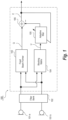
- the output signals from the filter bank 102 will primarily be denoted input signals because these signals represent the primary input signals to the directional system 100.
- digital input signal may be used interchangeably with the term input signal.
- all other signals referred to in the present disclosure may or may not be specifically denoted as digital signals.
- input signal, digital input signal, frequency band input signal, sub-band signal and frequency band signal may be used interchangeably in the following and unless otherwise noted the input signals can generally be assumed to be frequency band signals independent on whether the filter bank 102 provide frequency band signals in the time domain or in the time-frequency domain.
- the microphones 101a-b are omni-directional unless otherwise mentioned.
- Both the digital input signals are branched, whereby the input signals, in a first branch, is provided to a Fixed Beam Former (FBF) unit 103, and, in a second branch, is provided to a blocking matrix 104.
- FFF Fixed Beam Former
- H represents the adaptive filter 105, which in the following may also interchangeably be denoted the active noise cancellation filter.
- ⁇ is the average operator and n represents the number of inter-microphone phase difference samples used for the averaging. It follows that the unbiased mean phase ⁇ can be estimated by averaging a multitude of inter-microphone phase difference samples.
- the present invention provides an alternative method of estimating the phase of the steering vector which is optimal in the LMS sense, when the normalized input signals are considered as opposed to the input signals considered alone.
- the amplitude part is estimated simply by selecting at least one set of input signals that has contributed to providing a high value of the resultant length, wherefrom it may be assumed that the input signals are not primarily noise and that therefore the biased mean amplitude corresponding to said set of input signals is relatively accurate. Furthermore the value of unbiased mean phase can be used to select between different target sources.
- a directional system with improved performance is obtained.
- the method has been disclosed in connection with a Generalized Sidelobe Canceller (GSC) design, but may in variations also be applied to improve performance of other types of directional systems such as a multi-channel Wiener filter, a Minimum Mean Squared Error (MMSE) system and a Linearly Constrained Minimum Variance (LCMV) system.
- GSC Generalized Sidelobe Canceller
- MMSE Minimum Mean Squared Error
- LCMV Linearly Constrained Minimum Variance
- the method may also be applied for directional system that is not based on energy minimization.
- the determination of the amplitude and phase of the IMTF according to the present invention can be determined purely based on input signals and as such is highly flexible with respect to its use in various different directional systems.
- the input signals i.e. the sound environment
- the two main sources of dynamics are the temporal and spatial dynamics of the sound environment.
- speech the duration of a short consonant may be as short as only 5 milliseconds, while long vowels may have a duration of up to 200 milliseconds depending on the specific sound.
- the spatial dynamics is a consequence of relative movement between the hearing aid user and surrounding sound sources.
- speech is considered quasi stationary for a duration in the range between say 20 and 40 milliseconds and this includes the impact from spatial dynamics.
- the duration of the involved time windows are as long as possible, but it is, on the other hand, detrimental if the duration is so long that it covers natural speech variations or spatial variations and therefore cannot be considered quasi-stationary.
- a first time window is defined by the transformation of the digital input signals into the time-frequency domain and the longer the duration of the first time window the higher the frequency resolution in the time-frequency domain, which obviously is advantageous. Additionally, the present invention requires that the determination of an unbiased mean phase or the resultant length of the IMTF for a particular angular direction or the final estimate of an inter-microphone phase difference is based on a calculation of an expectation value and it has been found that the number of individual samples used for calculation of the expectation value preferably exceeds at least 5.
- improved accuracy of the unbiased mean phase or the resultant length may be provided by obtaining a multitude of successive samples of the unbiased mean phase and the resultant length, in the form of a complex number using the methods according to the present invention and subsequently adding these successive estimates (i.e. the complex numbers) and normalizing the result of the addition with the number of added estimates.
- This embodiment is particularly advantageous in that the resultant length effectively weights the samples that have a high probability of comprising a target source, while estimates with a high probability of mainly comprising noise will have a negligible impact on the final value of the unbiased mean phase of the IMTF or inter-microphone phase difference because the samples are characterized by having a low value of the resultant length.
- this method it therefore becomes possible to achieve pseudo time windows with a duration up to say several seconds or even longer and the improvements that follows therefrom, despite the fact that neither the temporal nor the spatial variations can be considered quasi-stationary.
- At least one or at least not all of the successive complex numbers representing the unbiased mean phase and the resultant length are used for improving the estimation of the unbiased mean phase of the IMTF or inter-microphone phase difference, wherein the selection of the complex numbers to be used are based on an evaluation of the corresponding resultant length (i.e. the variance) such that only complex numbers representing a high resultant length are considered.
- speech detection may be used as input to determine a preferred unbiased mean phase for controlling a directional system, e.g. by giving preference to target sources positioned at least approximately in front of the hearing aid system user, when speech is detected. In this way it may be avoided that a directional system enhances the direct sound from from an undesired source.
- monitoring of the unbiased mean phase and the corresponding variance may be used for speech detection either alone or in combination with traditional speech detection methods, such as the methods disclosed in WO-A1-2012076045 .
- the basic principle of this specific embodiment being that an unbiased mean phase estimate with a low variance is very likely to represent a sound environment with a single primary sound source.
- a single primary sound source may be single speaker or something else such as a person playing music it will be advantageous to combine the basic principle of this specific embodiment with traditional speech detection methods based on e.g. the temporal or level variations or the spectral distribution.
- the angular direction of a target source which may also be denoted the direction of arrival (DOA) is derived from the unbiased mean phase and used for various types of signal processing.
- DOA direction of arrival
- the resultant length can be used to determine how to weight information, such as a determined DOA of a target source, from each hearing aid of a binaural hearing aid system.
- the resultant length can be used to compare or weight information obtained from a multitude of microphone pairs, such as the multitude of microphone pairs that are available in e.g. a binaural hearing aid system comprising two hearing aids each having two microphones.
- the determination of a an angular direction of a target source is provided by combining a monaurally determined unbiased mean phase with a binaurally determined unbiased mean phase, whereby the symmetry ambiguity that results when translating an estimated phase to a target direction may be resolved.
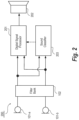
- the hearing aid system 200 comprises a first and a second acoustical-electrical input transducers 101a-b, a filter bank 102, a digital signal processor 201, an electrical-acoustical output transducer 202 and a sound classifier 203.
- the acoustical-electrical input transducers 101a-b which in the following may also be denoted microphones, provide analog output signals that are converted into digital output signals by analog-digital converters (ADC) and subsequently provided to a filter bank 102 adapted to transform the signals into the time-frequency domain.
- ADC analog-digital converters
- One specific advantage of transforming the input signals into the time-frequency domain is that both the amplitude and phase of the signals become directly available in the provided individual time-frequency bins.
- the input signals 101-a and 101-b are branched and provided both to the digital signal processor 201 and to a sound classifier 203.
- the digital signal processor 201 may be adapted to provide various forms of signal processing including at least: beam forming, noise reduction, speech enhancement and hearing compensation.
- the sound classifier 203 is configured to classify the current sound environment of the hearing aid system 200 and provide sound classification information to the digital signal processor such that the digital signal processor can operate dependent on the current sound environment.
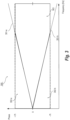
- Fig. 3 illustrates highly schematically a map of values of the unbiased mean phase as a function of frequency in order to provide a phase versus frequency plot.
- d represent the distance between the microphone
- c is the speed of sound
- the phase versus frequency plot can be used to identify a diffuse noise field if said mapping provides a uniform distribution, for a given frequency, within a coherent region, wherein the coherent region 303 is defined as the area in the phase versus frequency plot that is bounded by the at least continuous curves defining direct sounds coming directly from the front and the back direction respectively and the curves defining a constant phase of + ⁇ and - ⁇ respectively.
- a diffuse noise can be identified by in a first step transforming a value of the resultant length to reflect a transformation of the unbiased mean phase from inside the coherent region and onto the full phase region, and in a second step identifying a diffuse noise field if the transformed value of the resultant length, for at least one frequency range, is below a transformed resultant length diffuse noise trigger level.
- identification of a diffuse, random or incoherent noise field can be made if a value of the resultant length, for at least one frequency range, is below a resultant length noise trigger level.
- identification of a direct sound can be made if a value of the resultant length, for at least one frequency range, is above a resultant length direct sound trigger level.
- the trigger levels are replaced by a continuous function, which maps the resultant length or the unwrapped resultant length to a signal-to-noise-ratio, wherein the noise may be diffuse or incoherent.
- improved accuracy of the determined unbiased mean phase is achieved by at least one of averaging and fitting a multitude of determined unbiased mean phases across at least one of time and frequency by weighting the determined unbiased mean phases with the correspondingly determined resultant length.
- the resultant length may be used to perform hypothesis testing of probability distributions for a correspondingly determined unbiased mean phase.
- corresponding values, in time and frequency, of the unbiased mean phase and the resultant length can be used to identify and distinguish between at least two target sources, based on identification of direct sound comprising at least two different values of the unbiased mean phase.
- corresponding values, in time and frequency, of the unbiased mean phase and the resultant length can be used to estimate whether a distance to a target source is increasing or decreasing based on whether the value of the resultant length is decreasing or increasing respectively. This can be done because the reflections, at least while being indoors in say some sort of room will tend to dominate the direct sound, when the target source moves away from the hearing aid system user. This can be very advantageous in the context of beam former control because speech intelligibility can be improved by allowing at least the early reflections to pass through the beam former.
- the methods and selected parts of the hearing aid according to the disclosed embodiments may also be implemented in systems and devices that are not hearing aid systems (i.e. they do not comprise means for compensating a hearing loss), but nevertheless comprise both acoustical-electrical input transducers and electro-acoustical output transducers.
- Such systems and devices are at present often referred to as hearables.
- a headset is another example of such a system.
- the hearing aid system needs not comprise a traditional loudspeaker as output transducer.
- hearing aid systems that do not comprise a traditional loudspeaker are cochlear implants, implantable middle ear hearing devices (IMEHD), bone-anchored hearing aids (BAHA) and various other electro-mechanical transducer based solutions including e.g. systems based on using a laser diode for directly inducing vibration of the eardrum.
- IMEHD implantable middle ear hearing devices
- BAHA bone-anchored hearing aids
- electro-mechanical transducer based solutions including e.g. systems based on using a laser diode for directly inducing vibration of the eardrum.
Landscapes
- Engineering & Computer Science (AREA)
- Health & Medical Sciences (AREA)
- General Health & Medical Sciences (AREA)
- Neurosurgery (AREA)
- Otolaryngology (AREA)
- Physics & Mathematics (AREA)
- Acoustics & Sound (AREA)
- Signal Processing (AREA)
- Computer Networks & Wireless Communication (AREA)
- Circuit For Audible Band Transducer (AREA)
Claims (8)
- Verfahren zum Betreiben eines Hörhilfesystems (200), umfassend die Schritte zum:- Bereitstellen eines ersten und eines zweiten Eingangssignals, die zumindest aus Ausgangssignalen jeweils eines ersten (101-a) und eines zweiten (101-b) Mikrofons des Hörhilfesystems abgeleitet sind;- Verwenden des ersten und zweiten Eingangssignals, um eine unverzerrte mittlere Phase aus Abtastungen von Phasenunterschieden zwischen den Mikrofonen zwischen dem ersten undzweiten Eingangssignal durch Bestimmen eines komplexen Wertes Reiθ̂ zu bestimmen, gegeben durch:
 wobei n die Anzahl der Abtastungen der Phasendifferenz zwischen den Mikrofonen darstellt, wobei R die resultierende Länge darstellt, wobei θi Abtastungen der Phasendifferenzen zwischen den Mikrofonen darstellt und wobei θ̂ die unverzerrte mittlere Phase darstellt; und- Verwenden der unverzerrten mittleren Phase, um einen Strahlformer (100, 201) des Hörhilfesystems (200) zu steuern.
 - Verfahren nach Anspruch 1, umfassend den Schritt zum:- Auswählen einer bestimmten Winkelrichtung, um eine gewünschte Zielquelle oder eine unerwünschte Geräuschquelle darzustellen.
- Verfahren nach einem der vorstehenden Ansprüche, das die weiteren Schritte umfasst zum:- Verwenden des ersten und zweiten Eingangssignals, um die resultierende Länge einer Schätzung der Übertragungsfunktion zwischen den Mikrofonen zwischen dem ersten und zweiten Mikrofon des Hörhilfesystems zu bestimmen, wobei die Übertragungsfunktion zwischen den Mikrofonen Klang aus einer bestimmten Winkelrichtung darstellt;- Verwenden der resultierenden Länge, um ein Richtungssystem zu steuern.
- Verfahren nach einem der vorstehenden Ansprüche, wobei die Werte der Eingangssignale im Zeit-Frequenz-Bereich als komplexe Zahlen angegeben sind, welche die Amplitude und die Phase einzelner Zeit-Frequenz-Bins darstellen.
- Verfahren nach einem der vorstehenden Ansprüche, wobei das Richtungssystem aus einer Gruppe ausgewählt ist, die ein System mit minimalem mittleren quadratischen Fehler, ein System mit linear beschränkter minimaler Varianz, ein Mehrkanal-Wiener-Filter und einen verallgemeinerten Nebenkeulenunterdrücker umfasst.
- Verfahren nach einem der vorstehenden Ansprüche, wobei der Schritt zum Verwenden der unverzerrten mittleren Phase, um ein Richtungssystem zu steuern, den Schritt umfasst zum:- Verwenden beider, der unverzerrten mittleren Phase und der resultierenden Länge, um sicherzustellen, dass frühe Reflexionen von Sprache von einer Zielquelle nicht unterdrückt werden, wenn sie ein direktes Klangsignal dominieren.
- Hörhilfesystem (200), umfassend ein erstes (101-a) und ein zweites (101-b) Mikrofon, einen digitalen Signalprozessor (201) und einen elektrisch-akustischen Ausgangswandler (202);wobei der digitale Signalprozessor (201) konfiguriert ist, um eine frequenzabhängige Verstärkung anzuwenden, die zumindest dazu angepasst ist, Rauschen zu unterdrücken und ein Hördefizit einer Person, die das Hörhilfesystem trägt, zu lindern; und;wobei das Hörhilfesystem (200) angepasst ist, um ein erstes und ein zweites Eingangssignal bereitzustellen, die zumindest aus den Ausgangssignalen jeweils des ersten (101-a) und des zweiten Mikrofons (101-b) abgeleitet sind;wobei der digitale Signalprozessor (201) angepasst ist, um das erste und zweite Eingangssignal zu verwenden, um eine unverzerrte mittlere Phase aus Abtastungen von Phasendifferenzen zwischen den Mikrofonen zwischen dem ersten und zweiten Eingangssignal durch Bestimmen eines komplexen Werts Reiθ̂ zu bestimmen, gegeben durch:
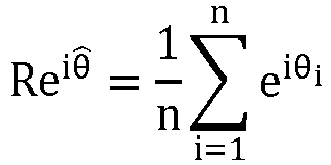 wobei n die Anzahl der Abtastungen der Phasendifferenz zwischen den Mikrofonen darstellt, wobei R die resultierende Länge darstellt, wobei θi Abtastungen der Phasendifferenzen zwischen den Mikrofonen darstellt und wobei θ̂ die unverzerrte mittlere Phase darstellt; undwobei der digitale Signalprozessor (201) angepasst ist, um die unverzerrte mittlere Phase zu verwenden, um ein Richtungssystem (100) zu steuern.
 - Nicht flüchtiges, computerlesbares Medium, das Anweisungen trägt, die, wenn sie ausgeführt werden, das Hörhilfesystem nach Anspruch 7 veranlassen, Schritte eines der Verfahren der Ansprüche 1-6 auszuführen.
Applications Claiming Priority (5)
| Application Number | Priority Date | Filing Date | Title |
|---|---|---|---|
| DKPA201700611 | 2017-10-31 | ||
| DKPA201700612 | 2017-10-31 | ||
| DKPA201800462A DK201800462A1 (en) | 2017-10-31 | 2018-08-15 | METHOD OF OPERATING A HEARING AID SYSTEM AND A HEARING AID SYSTEM |
| DKPA201800465 | 2018-08-15 | ||
| PCT/EP2018/079671 WO2019086432A1 (en) | 2017-10-31 | 2018-10-30 | Method of operating a hearing aid system and a hearing aid system |
Publications (3)
| Publication Number | Publication Date |
|---|---|
| EP3704871A1 EP3704871A1 (de) | 2020-09-09 |
| EP3704871C0 EP3704871C0 (de) | 2024-12-11 |
| EP3704871B1 true EP3704871B1 (de) | 2024-12-11 |
Family
ID=71894497
Family Applications (4)
| Application Number | Title | Priority Date | Filing Date |
|---|---|---|---|
| EP18796001.8A Active EP3704871B1 (de) | 2017-10-31 | 2018-10-30 | Verfahren zum betrieb eines hörgerätesystems und ein hörgerätesystem |
| EP18796007.5A Active EP3704874B1 (de) | 2017-10-31 | 2018-10-30 | Verfahren zum betrieb eines hörgerätesystems und ein hörgerätesystem |
| EP18796003.4A Active EP3704872B1 (de) | 2017-10-31 | 2018-10-30 | Verfahren zum betrieb eines hörgerätesystems und ein hörgerätesystem |
| EP18796004.2A Active EP3704873B1 (de) | 2017-10-31 | 2018-10-30 | Verfahren zum betrieb eines hörgerätesystems und ein hörgerätesystem |
Family Applications After (3)
| Application Number | Title | Priority Date | Filing Date |
|---|---|---|---|
| EP18796007.5A Active EP3704874B1 (de) | 2017-10-31 | 2018-10-30 | Verfahren zum betrieb eines hörgerätesystems und ein hörgerätesystem |
| EP18796003.4A Active EP3704872B1 (de) | 2017-10-31 | 2018-10-30 | Verfahren zum betrieb eines hörgerätesystems und ein hörgerätesystem |
| EP18796004.2A Active EP3704873B1 (de) | 2017-10-31 | 2018-10-30 | Verfahren zum betrieb eines hörgerätesystems und ein hörgerätesystem |
Country Status (3)
| Country | Link |
|---|---|
| US (4) | US11134348B2 (de) |
| EP (4) | EP3704871B1 (de) |
| DK (2) | DK3704872T3 (de) |
Families Citing this family (15)
| Publication number | Priority date | Publication date | Assignee | Title |
|---|---|---|---|---|
| CA3115682C (en) | 2011-02-28 | 2025-10-07 | Abbott Diabetes Care Inc. | DEVICES, SYSTEMS AND METHODS ASSOCIATED WITH ANALYTE MONITORING DEVICES, AND DEVICES COMPRISING SAID ANALYTE MONITORING DEVICES |
| US12574689B2 (en) * | 2019-02-08 | 2026-03-10 | Oticon A/S | Hearing device comprising a noise reduction system |
| US11438710B2 (en) * | 2019-06-10 | 2022-09-06 | Bose Corporation | Contextual guidance for hearing aid |
| EP3796677B1 (de) * | 2019-09-19 | 2025-07-09 | Oticon A/s | Verfahren zum adaptiven mischen von unkorrelierten oder korrelierten verrauschten signalen und eine hörvorrichtung |
| US11076251B2 (en) * | 2019-11-01 | 2021-07-27 | Cisco Technology, Inc. | Audio signal processing based on microphone arrangement |
| EP3873109B1 (de) * | 2020-02-27 | 2025-01-29 | Oticon A/s | Hörgerätesystem zur schätzung von akustischen übertragungsfunktionen |
| DE102020207585B4 (de) * | 2020-06-18 | 2025-05-08 | Sivantos Pte. Ltd. | Hörsystem mit mindestens einem am Kopf des Nutzers getragenen Hörinstrument sowie Verfahren zum Betrieb eines solchen Hörsystems |
| DE102020207586B4 (de) * | 2020-06-18 | 2025-05-08 | Sivantos Pte. Ltd. | Hörsystem mit mindestens einem am Kopf des Nutzers getragenen Hörinstrument sowie Verfahren zum Betrieb eines solchen Hörsystems |
| JP7387565B2 (ja) * | 2020-09-16 | 2023-11-28 | 株式会社東芝 | 信号処理装置、学習済みニューラルネットワーク、信号処理方法及び信号処理プログラム |
| CN112822592B (zh) * | 2020-12-31 | 2022-07-12 | 青岛理工大学 | 一种可定向聆听的有源降噪耳机及控制方法 |
| WO2023009414A1 (en) * | 2021-07-26 | 2023-02-02 | Immersion Networks, Inc. | System and method for audio diffusor |
| US11832061B2 (en) | 2022-01-14 | 2023-11-28 | Chromatic Inc. | Method, apparatus and system for neural network hearing aid |
| US12075215B2 (en) | 2022-01-14 | 2024-08-27 | Chromatic Inc. | Method, apparatus and system for neural network hearing aid |
| US11937047B1 (en) | 2023-08-04 | 2024-03-19 | Chromatic Inc. | Ear-worn device with neural network for noise reduction and/or spatial focusing using multiple input audio signals |
| US20250048043A1 (en) | 2023-08-04 | 2025-02-06 | Chromatic Inc. | Ear-worn device with neural network-based noise modification and/or spatial focusing |
Citations (2)
| Publication number | Priority date | Publication date | Assignee | Title |
|---|---|---|---|---|
| WO2007025128A2 (en) * | 2005-08-26 | 2007-03-01 | Step Communications Corporation | Method and apparatus for improving noise discrimination using attenuation factor |
| EP2947898A1 (de) * | 2014-05-20 | 2015-11-25 | Oticon A/s | Hörgerät |
Family Cites Families (18)
| Publication number | Priority date | Publication date | Assignee | Title |
|---|---|---|---|---|
| US6240192B1 (en) * | 1997-04-16 | 2001-05-29 | Dspfactory Ltd. | Apparatus for and method of filtering in an digital hearing aid, including an application specific integrated circuit and a programmable digital signal processor |
| DE10110258C1 (de) * | 2001-03-02 | 2002-08-29 | Siemens Audiologische Technik | Verfahren zum Betrieb eines Hörhilfegerätes oder Hörgerätesystems sowie Hörhilfegerät oder Hörgerätesystem |
| EP1818909B1 (de) | 2004-12-03 | 2011-11-02 | Honda Motor Co., Ltd. | Stimmenerkennungssystem |
| WO2009034524A1 (en) | 2007-09-13 | 2009-03-19 | Koninklijke Philips Electronics N.V. | Apparatus and method for audio beam forming |
| GB0720473D0 (en) | 2007-10-19 | 2007-11-28 | Univ Surrey | Accoustic source separation |
| EP2088802B1 (de) | 2008-02-07 | 2013-07-10 | Oticon A/S | Verfahren zur Schätzung der Gewichtungsfunktion von Audiosignalen in einem Hörgerät |
| EP2449798B2 (de) | 2009-08-11 | 2020-12-09 | Sivantos Pte. Ltd. | System und verfahren zur bestimmung der richtung eines ankommenden klangs |
| US9113247B2 (en) | 2010-02-19 | 2015-08-18 | Sivantos Pte. Ltd. | Device and method for direction dependent spatial noise reduction |
| DK2649812T3 (da) | 2010-12-08 | 2014-08-04 | Widex As | Høreapparat og en fremgangsmåde til at forbedre talegengivelse |
| KR20120080409A (ko) | 2011-01-07 | 2012-07-17 | 삼성전자주식회사 | 잡음 구간 판별에 의한 잡음 추정 장치 및 방법 |
| US20150312663A1 (en) | 2012-09-19 | 2015-10-29 | Analog Devices, Inc. | Source separation using a circular model |
| EP2882203A1 (de) * | 2013-12-06 | 2015-06-10 | Oticon A/s | Hörgerätevorrichtung für freihändige Kommunikation |
| JP6289936B2 (ja) | 2014-02-26 | 2018-03-07 | 株式会社東芝 | 音源方向推定装置、音源方向推定方法およびプログラム |
| EP2928211A1 (de) * | 2014-04-04 | 2015-10-07 | Oticon A/s | Selbstkalibrierung eines Multimikrofongeräuschunterdrückungssystems für Hörgeräte mit einer zusätzlichen Vorrichtung |
| WO2016100460A1 (en) | 2014-12-18 | 2016-06-23 | Analog Devices, Inc. | Systems and methods for source localization and separation |
| EP3148213B1 (de) | 2015-09-25 | 2018-09-12 | Starkey Laboratories, Inc. | Dynamische relative transferfunktionsschätzung mit strukturiertem verstreutem bayesschem lernen |
| EP3267697A1 (de) * | 2016-07-06 | 2018-01-10 | Oticon A/s | Schätzung der ankunftsrichtung in miniaturvorrichtungen mithilfe einer schallsensoranordnung |
| EP3905724B1 (de) * | 2017-04-06 | 2024-07-31 | Oticon A/s | Verfahren zur binauralen pegelschätzung und hörsystem mit einem binauralen pegelschätzer |
-
2018
- 2018-10-30 US US16/760,246 patent/US11134348B2/en active Active
- 2018-10-30 US US16/760,164 patent/US11109164B2/en active Active
- 2018-10-30 DK DK18796003.4T patent/DK3704872T3/da active
- 2018-10-30 DK DK18796004.2T patent/DK3704873T3/da active
- 2018-10-30 EP EP18796001.8A patent/EP3704871B1/de active Active
- 2018-10-30 EP EP18796007.5A patent/EP3704874B1/de active Active
- 2018-10-30 EP EP18796003.4A patent/EP3704872B1/de active Active
- 2018-10-30 US US16/760,148 patent/US11146897B2/en active Active
- 2018-10-30 EP EP18796004.2A patent/EP3704873B1/de active Active
- 2018-10-30 US US16/760,282 patent/US11218814B2/en active Active
Patent Citations (2)
| Publication number | Priority date | Publication date | Assignee | Title |
|---|---|---|---|---|
| WO2007025128A2 (en) * | 2005-08-26 | 2007-03-01 | Step Communications Corporation | Method and apparatus for improving noise discrimination using attenuation factor |
| EP2947898A1 (de) * | 2014-05-20 | 2015-11-25 | Oticon A/s | Hörgerät |
Also Published As
| Publication number | Publication date |
|---|---|
| EP3704874C0 (de) | 2023-07-12 |
| EP3704873B1 (de) | 2022-02-23 |
| EP3704871C0 (de) | 2024-12-11 |
| US11146897B2 (en) | 2021-10-12 |
| US11218814B2 (en) | 2022-01-04 |
| EP3704873A1 (de) | 2020-09-09 |
| US20210204073A1 (en) | 2021-07-01 |
| US11134348B2 (en) | 2021-09-28 |
| US11109164B2 (en) | 2021-08-31 |
| US20200329318A1 (en) | 2020-10-15 |
| DK3704872T3 (da) | 2023-06-12 |
| EP3704874B1 (de) | 2023-07-12 |
| EP3704874A1 (de) | 2020-09-09 |
| US20200322735A1 (en) | 2020-10-08 |
| US20200359139A1 (en) | 2020-11-12 |
| EP3704872A1 (de) | 2020-09-09 |
| EP3704872B1 (de) | 2023-05-10 |
| EP3704871A1 (de) | 2020-09-09 |
| DK3704873T3 (da) | 2022-03-28 |
Similar Documents
| Publication | Publication Date | Title |
|---|---|---|
| EP3704872B1 (de) | Verfahren zum betrieb eines hörgerätesystems und ein hörgerätesystem | |
| US11109163B2 (en) | Hearing aid comprising a beam former filtering unit comprising a smoothing unit | |
| US9723422B2 (en) | Multi-microphone method for estimation of target and noise spectral variances for speech degraded by reverberation and optionally additive noise | |
| CN110035367B (zh) | 反馈检测器及包括反馈检测器的听力装置 | |
| EP2899996B1 (de) | Signalverbesserung mittels drahtlosem Streaming | |
| US10631105B2 (en) | Hearing aid system and a method of operating a hearing aid system | |
| WO2019086433A1 (en) | Method of operating a hearing aid system and a hearing aid system | |
| EP4287657A1 (de) | Hörgerät mit eigenstimmenerkennung | |
| EP4252434B1 (de) | Vorrichtung und verfahren zus schätzung des schalldrucks am trommelfell mittels sekundärpfad-messung | |
| WO2020035158A1 (en) | Method of operating a hearing aid system and a hearing aid system | |
| JP6391197B2 (ja) | 補聴器システムの動作方法および補聴器システム | |
| EP3837861B1 (de) | Verfahren zum betrieb eines hörgerätesystems und ein hörgerätesystem | |
| DK201800462A1 (en) | METHOD OF OPERATING A HEARING AID SYSTEM AND A HEARING AID SYSTEM |
Legal Events
| Date | Code | Title | Description |
|---|---|---|---|
| STAA | Information on the status of an ep patent application or granted ep patent |
Free format text: STATUS: UNKNOWN |
|
| STAA | Information on the status of an ep patent application or granted ep patent |
Free format text: STATUS: THE INTERNATIONAL PUBLICATION HAS BEEN MADE |
|
| PUAI | Public reference made under article 153(3) epc to a published international application that has entered the european phase |
Free format text: ORIGINAL CODE: 0009012 |
|
| STAA | Information on the status of an ep patent application or granted ep patent |
Free format text: STATUS: REQUEST FOR EXAMINATION WAS MADE |
|
| 17P | Request for examination filed |
Effective date: 20200602 |
|
| AK | Designated contracting states |
Kind code of ref document: A1 Designated state(s): AL AT BE BG CH CY CZ DE DK EE ES FI FR GB GR HR HU IE IS IT LI LT LU LV MC MK MT NL NO PL PT RO RS SE SI SK SM TR |
|
| AX | Request for extension of the european patent |
Extension state: BA ME |
|
| DAV | Request for validation of the european patent (deleted) | ||
| DAX | Request for extension of the european patent (deleted) | ||
| STAA | Information on the status of an ep patent application or granted ep patent |
Free format text: STATUS: EXAMINATION IS IN PROGRESS |
|
| 17Q | First examination report despatched |
Effective date: 20210604 |
|
| RAP1 | Party data changed (applicant data changed or rights of an application transferred) |
Owner name: WIDEX A/S |
|
| GRAP | Despatch of communication of intention to grant a patent |
Free format text: ORIGINAL CODE: EPIDOSNIGR1 |
|
| STAA | Information on the status of an ep patent application or granted ep patent |
Free format text: STATUS: GRANT OF PATENT IS INTENDED |
|
| RIC1 | Information provided on ipc code assigned before grant |
Ipc: H04S 1/00 20060101ALN20240924BHEP Ipc: H04R 25/00 20060101AFI20240924BHEP |
|
| GRAS | Grant fee paid |
Free format text: ORIGINAL CODE: EPIDOSNIGR3 |
|
| GRAA | (expected) grant |
Free format text: ORIGINAL CODE: 0009210 |
|
| STAA | Information on the status of an ep patent application or granted ep patent |
Free format text: STATUS: THE PATENT HAS BEEN GRANTED |
|
| INTG | Intention to grant announced |
Effective date: 20241014 |
|
| AK | Designated contracting states |
Kind code of ref document: B1 Designated state(s): AL AT BE BG CH CY CZ DE DK EE ES FI FR GB GR HR HU IE IS IT LI LT LU LV MC MK MT NL NO PL PT RO RS SE SI SK SM TR |
|
| REG | Reference to a national code |
Ref country code: GB Ref legal event code: FG4D |
|
| REG | Reference to a national code |
Ref country code: CH Ref legal event code: EP |
|
| REG | Reference to a national code |
Ref country code: IE Ref legal event code: FG4D |
|
| REG | Reference to a national code |
Ref country code: DE Ref legal event code: R096 Ref document number: 602018077541 Country of ref document: DE |
|
| U01 | Request for unitary effect filed |
Effective date: 20241211 |
|
| U07 | Unitary effect registered |
Designated state(s): AT BE BG DE DK EE FI FR IT LT LU LV MT NL PT RO SE SI Effective date: 20241220 |
|
| PG25 | Lapsed in a contracting state [announced via postgrant information from national office to epo] |
Ref country code: HR Free format text: LAPSE BECAUSE OF FAILURE TO SUBMIT A TRANSLATION OF THE DESCRIPTION OR TO PAY THE FEE WITHIN THE PRESCRIBED TIME-LIMIT Effective date: 20241211 |
|
| PG25 | Lapsed in a contracting state [announced via postgrant information from national office to epo] |
Ref country code: ES Free format text: LAPSE BECAUSE OF FAILURE TO SUBMIT A TRANSLATION OF THE DESCRIPTION OR TO PAY THE FEE WITHIN THE PRESCRIBED TIME-LIMIT Effective date: 20241211 |
|
| PG25 | Lapsed in a contracting state [announced via postgrant information from national office to epo] |
Ref country code: NO Free format text: LAPSE BECAUSE OF FAILURE TO SUBMIT A TRANSLATION OF THE DESCRIPTION OR TO PAY THE FEE WITHIN THE PRESCRIBED TIME-LIMIT Effective date: 20250311 |
|
| PG25 | Lapsed in a contracting state [announced via postgrant information from national office to epo] |
Ref country code: GR Free format text: LAPSE BECAUSE OF FAILURE TO SUBMIT A TRANSLATION OF THE DESCRIPTION OR TO PAY THE FEE WITHIN THE PRESCRIBED TIME-LIMIT Effective date: 20250312 |
|
| PG25 | Lapsed in a contracting state [announced via postgrant information from national office to epo] |
Ref country code: RS Free format text: LAPSE BECAUSE OF FAILURE TO SUBMIT A TRANSLATION OF THE DESCRIPTION OR TO PAY THE FEE WITHIN THE PRESCRIBED TIME-LIMIT Effective date: 20250311 |
|
| PG25 | Lapsed in a contracting state [announced via postgrant information from national office to epo] |
Ref country code: SM Free format text: LAPSE BECAUSE OF FAILURE TO SUBMIT A TRANSLATION OF THE DESCRIPTION OR TO PAY THE FEE WITHIN THE PRESCRIBED TIME-LIMIT Effective date: 20241211 |
|
| PG25 | Lapsed in a contracting state [announced via postgrant information from national office to epo] |
Ref country code: PL Free format text: LAPSE BECAUSE OF FAILURE TO SUBMIT A TRANSLATION OF THE DESCRIPTION OR TO PAY THE FEE WITHIN THE PRESCRIBED TIME-LIMIT Effective date: 20241211 |
|
| PG25 | Lapsed in a contracting state [announced via postgrant information from national office to epo] |
Ref country code: IS Free format text: LAPSE BECAUSE OF FAILURE TO SUBMIT A TRANSLATION OF THE DESCRIPTION OR TO PAY THE FEE WITHIN THE PRESCRIBED TIME-LIMIT Effective date: 20250411 |
|
| PG25 | Lapsed in a contracting state [announced via postgrant information from national office to epo] |
Ref country code: SK Free format text: LAPSE BECAUSE OF FAILURE TO SUBMIT A TRANSLATION OF THE DESCRIPTION OR TO PAY THE FEE WITHIN THE PRESCRIBED TIME-LIMIT Effective date: 20241211 |
|
| PG25 | Lapsed in a contracting state [announced via postgrant information from national office to epo] |
Ref country code: CZ Free format text: LAPSE BECAUSE OF FAILURE TO SUBMIT A TRANSLATION OF THE DESCRIPTION OR TO PAY THE FEE WITHIN THE PRESCRIBED TIME-LIMIT Effective date: 20241211 |
|
| RAP4 | Party data changed (patent owner data changed or rights of a patent transferred) |
Owner name: WS AUDIOLOGY A/S |
|
| U1H | Name or address of the proprietor changed after the registration of the unitary effect |
Owner name: WS AUDIOLOGY A/S; DK |
|
| PGFP | Annual fee paid to national office [announced via postgrant information from national office to epo] |
Ref country code: GB Payment date: 20250923 Year of fee payment: 8 |
|
| PLBE | No opposition filed within time limit |
Free format text: ORIGINAL CODE: 0009261 |
|
| STAA | Information on the status of an ep patent application or granted ep patent |
Free format text: STATUS: NO OPPOSITION FILED WITHIN TIME LIMIT |
|
| REG | Reference to a national code |
Ref country code: CH Ref legal event code: L10 Free format text: ST27 STATUS EVENT CODE: U-0-0-L10-L00 (AS PROVIDED BY THE NATIONAL OFFICE) Effective date: 20251022 |
|
| U20 | Renewal fee for the european patent with unitary effect paid |
Year of fee payment: 8 Effective date: 20250923 |
|
| REG | Reference to a national code |
Ref country code: CH Ref legal event code: U11 Free format text: ST27 STATUS EVENT CODE: U-0-0-U10-U11 (AS PROVIDED BY THE NATIONAL OFFICE) Effective date: 20251101 |
|
| 26N | No opposition filed |
Effective date: 20250912 |
|
| PGFP | Annual fee paid to national office [announced via postgrant information from national office to epo] |
Ref country code: CH Payment date: 20251101 Year of fee payment: 8 |