EP3704844B1 - Datenerzeugung für datenschutz - Google Patents
Datenerzeugung für datenschutz Download PDFInfo
- Publication number
- EP3704844B1 EP3704844B1 EP18800009.5A EP18800009A EP3704844B1 EP 3704844 B1 EP3704844 B1 EP 3704844B1 EP 18800009 A EP18800009 A EP 18800009A EP 3704844 B1 EP3704844 B1 EP 3704844B1
- Authority
- EP
- European Patent Office
- Prior art keywords
- data
- simulated
- records
- data source
- simulated data
- Prior art date
- Legal status (The legal status is an assumption and is not a legal conclusion. Google has not performed a legal analysis and makes no representation as to the accuracy of the status listed.)
- Active
Links
Images




Classifications
-
- G—PHYSICS
- G06—COMPUTING OR CALCULATING; COUNTING
- G06F—ELECTRIC DIGITAL DATA PROCESSING
- G06F21/00—Security arrangements for protecting computers, components thereof, programs or data against unauthorised activity
- G06F21/50—Monitoring users, programs or devices to maintain the integrity of platforms, e.g. of processors, firmware or operating systems
- G06F21/55—Detecting local intrusion or implementing counter-measures
- G06F21/554—Detecting local intrusion or implementing counter-measures involving event detection and direct action
-
- G—PHYSICS
- G06—COMPUTING OR CALCULATING; COUNTING
- G06F—ELECTRIC DIGITAL DATA PROCESSING
- G06F21/00—Security arrangements for protecting computers, components thereof, programs or data against unauthorised activity
- G06F21/60—Protecting data
- G06F21/62—Protecting access to data via a platform, e.g. using keys or access control rules
- G06F21/6218—Protecting access to data via a platform, e.g. using keys or access control rules to a system of files or objects, e.g. local or distributed file system or database
- G06F21/6245—Protecting personal data, e.g. for financial or medical purposes
-
- G—PHYSICS
- G06—COMPUTING OR CALCULATING; COUNTING
- G06F—ELECTRIC DIGITAL DATA PROCESSING
- G06F16/00—Information retrieval; Database structures therefor; File system structures therefor
- G06F16/20—Information retrieval; Database structures therefor; File system structures therefor of structured data, e.g. relational data
- G06F16/24—Querying
- G06F16/245—Query processing
- G06F16/2455—Query execution
-
- G—PHYSICS
- G06—COMPUTING OR CALCULATING; COUNTING
- G06F—ELECTRIC DIGITAL DATA PROCESSING
- G06F21/00—Security arrangements for protecting computers, components thereof, programs or data against unauthorised activity
- G06F21/60—Protecting data
- G06F21/64—Protecting data integrity, e.g. using checksums, certificates or signatures
-
- G—PHYSICS
- G06—COMPUTING OR CALCULATING; COUNTING
- G06F—ELECTRIC DIGITAL DATA PROCESSING
- G06F30/00—Computer-aided design [CAD]
- G06F30/20—Design optimisation, verification or simulation
-
- H—ELECTRICITY
- H04—ELECTRIC COMMUNICATION TECHNIQUE
- H04L—TRANSMISSION OF DIGITAL INFORMATION, e.g. TELEGRAPHIC COMMUNICATION
- H04L63/00—Network architectures or network communication protocols for network security
- H04L63/14—Network architectures or network communication protocols for network security for detecting or protecting against malicious traffic
- H04L63/1441—Countermeasures against malicious traffic
- H04L63/1491—Countermeasures against malicious traffic using deception as countermeasure, e.g. honeypots, honeynets, decoys or entrapment
-
- G—PHYSICS
- G06—COMPUTING OR CALCULATING; COUNTING
- G06F—ELECTRIC DIGITAL DATA PROCESSING
- G06F2221/00—Indexing scheme relating to security arrangements for protecting computers, components thereof, programs or data against unauthorised activity
- G06F2221/03—Indexing scheme relating to G06F21/50, monitoring users, programs or devices to maintain the integrity of platforms
- G06F2221/034—Test or assess a computer or a system
-
- G—PHYSICS
- G06—COMPUTING OR CALCULATING; COUNTING
- G06F—ELECTRIC DIGITAL DATA PROCESSING
- G06F2221/00—Indexing scheme relating to security arrangements for protecting computers, components thereof, programs or data against unauthorised activity
- G06F2221/21—Indexing scheme relating to G06F21/00 and subgroups addressing additional information or applications relating to security arrangements for protecting computers, components thereof, programs or data against unauthorised activity
- G06F2221/2125—Just-in-time application of countermeasures, e.g., on-the-fly decryption, just-in-time obfuscation or de-obfuscation
-
- G—PHYSICS
- G06—COMPUTING OR CALCULATING; COUNTING
- G06F—ELECTRIC DIGITAL DATA PROCESSING
- G06F2221/00—Indexing scheme relating to security arrangements for protecting computers, components thereof, programs or data against unauthorised activity
- G06F2221/21—Indexing scheme relating to G06F21/00 and subgroups addressing additional information or applications relating to security arrangements for protecting computers, components thereof, programs or data against unauthorised activity
- G06F2221/2127—Bluffing
Definitions
- a database may store data related to organizations and/or individuals.
- the data may comprise sensitive information such as, for example, sales figures, corporate strategies, trade secrets, names and addresses, credit card numbers, and social security numbers. Systems are desired to protect such data from unauthorized access.
- Conventional database protection systems include firewalls, access controls, event monitors, etc. These systems attempt to protect stored data by limiting database access to authorized users and/or by detecting attempts to obtain unauthorized access to a database. Conventional systems fail to address the protection of stored data once a database has been breached by an attacker.
- Systems are desired to protect stored data which is accessed by an unauthorized user. Moreover, systems are desired to efficiently identify such an unauthorized user after access has occurred.
- US 9,591,023 B1 describes a method and apparatus for preventing fraudulent exfiltration of data.
- it is determined that data is to be inflated.
- a request for access to data is received and data responsive to the request is retrieved.
- Spurious data is also generated and provided together with the responsive data in response to the request.
- US 2008/052359 A1 describes a system and method that may respond to a fraudulent attack, such as a phishing attack.
- the system and method may send a number of responses to party committing fraud, the responses designed to mimic the responses to a phishing attack.
- the responses may include codes or marked information designed to entrap or detect the party committing fraud.
- some embodiments provide data protection by generating simulated data and providing the simulated data to an electronic attacker.
- the simulated data may be provided in lieu of authentic data in response to detection of an electronic attack.
- An electronic attack as described herein includes any attempt, whether successful or unsuccessful, to obtain unauthorized access to data, a computing network, an endpoint device, or the like.
- a quantity of simulated data in a database table significantly outnumbers a quantity of authentic data, thereby constructively masking the authentic data in a case that the database table is successfully accessed by an attacker.
- embodiments may detect subsequent use of the simulated data by an attacker (e.g., submission of a simulated username and password) to identify the attacker and initiate suitable security measures.
- a technical solution to the technical problem includes the generation of simulated data based on characteristics of authentic data to be protected, and the providing of the simulated data to an electronic attacker.
- the simulated data may be provided in response to detection of an electronic attack.
- FIG. 1 is a block diagram of system 100 according to some embodiments. Embodiments are not limited to the FIG. 1 system.
- System 100 comprises a production environment and includes data server 110 and client system 120. Accordingly, data server 110 stores authentic data for use by client system 120 in an operational (i.e., non-test) deployment.
- operational i.e., non-test
- database engine 112 generates simulated data for one or more of the database tables of data store 114.
- Database engine 112 may generate the simulated data according to a schedule, in response to a command from a database administrator, and/or in response to an event (e.g., a write to a database table, growth of a database table above particular size).
- the simulated data may be stored in data store 114 in a manner which allows database engine 112 to distinguish the simulated data from authentic data, but embodiments are not limited thereto.
- the database table may include significantly more simulated data than authentic data.
- client system 120 executes client application 125 to request data from data server 110.
- Data server 110 executes database engine 112 to receive the request from client system 120 (i.e., the requesting system) and retrieve data from database tables of data store 114 based on the request.
- Database engine 112 generates a result set and returns the result set to client application 125.
- the result set provided to client application 125 may include simulated data and/or authentic data. According to some embodiments, the result set includes only simulated data if the request is determined to be related to an attempt to obtain unauthorized access (i.e., an attack) on data server 110. According to some embodiments, the request may be determined to be related to an attempt to obtain unauthorized access if the request occurs at a time when other suspicious activities are detected by data server 110 or by a threat detection system.
- simulated data may be provided to a requester even if no attack has been detected.
- a database table of data store 114 stores passwords and login information. Simulated data may also be stored in the database table, such that the simulated data occupies many more rows of the database table than the authentic data. If a request is received from client application 125 for all rows of the database table, a result set including all the rows, both authentic and simulated, may be returned to client application 125. The larger quantity of simulated rows may act to obscure the authentic rows from a potential attacker, thereby protecting the authentic data.
- Data server 110 may comprise any hardware system to store data and to serve requests for the stored data.
- Database engine 112 may support any suitable query protocols (e.g., Structured Query Language (SQL)) and may provide other suitable database management functionality.
- Data store 114 may comprise any one or more data sources storing any type of structured data.
- a hardware processing system implementing database engine 112 e.g., a server blade
- a hardware storage system e.g., a fixed disk array, volatile random access memory
- the database tables of data store 114 may be logically interrelated via a database schema defined by metadata.
- the metadata may also include data protection information associated with one or more of the database tables of data store 114 as will be described below.
- the data protection information may indicate a degree to which the data of a database table should be protected using a system as described herein.
- the metadata may also be stored in data store 114.
- Client system 120 may comprise, for example, a desktop computer, a laptop computer, a tablet computer, or a smartphone.
- Client system 120 may comprise any suitable computing device capable of executing client application 125 to request and receive a result set from data server 110.
- Client application 125 may comprise a data analysis application which facilitates data visualization and analysis, but embodiments are not limited thereto.
- client application 125 comprises a Web application executed within a Web browser of client system 120.
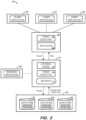
- FIG. 2 illustrates system 200 according to some embodiments.
- System 200 may comprise an implementation of system 100 but is not limited thereto.
- System 200 comprises a production environment including data server 210, client systems 220, 222 and 224, application server 230, data storage system 240 and development system 250.
- Embodiments are not limited to the architecture of system 200.
- any of client systems 220, 222 and 224 may execute a respective client application to interact with application 232 executed by application server 230 and to thereby receive data from data server 210. Some embodiments may also allow direct access of data server 210 by any of client systems 220, 222 and 224, as described with respect to FIG. 1 . Data server 210 and application server 230 reside on a same physical device in some embodiments.
- Application server 230 comprises threat detection component 234, and data server 210 similarly includes threat detection component 213.
- Threat detection components 213 and 234 may operate to identify attacks or other security compromises occurring at application server 230 and/or data server 210.
- Threat detection component 234 and threat detection component 213 may implement any suitable threat detection techniques known in the art, and may each implement a different respective set of threat detection techniques.
- Components 234 and 213 may operate in conjunction with one another (and, for example, with other systems) to implement one or more threat detection techniques according to some embodiments.
- Threat detection techniques may include, but are not limited to, the detection of unusual and potentially harmful attempts to access or exploit databases.
- Threat detection components 234 and 213 may detect, for example, suspicious database activities, anomalous database access patterns, and SQL injection attacks. Detection of suspicious database activities and anomalous database access patterns may rely in part on known user behavior analytics. SQL injection attacks inject malicious SQL statements into application entry fields, thereby breaching or modifying data in a backend database.
- Threat detection may also utilize correlation of network data as is known in the art. Such detection includes correlation of event data from network components (e.g., firewalls, routers and Security Information and Event Management appliances), network servers, and external threat information to determine the presence of a threat.
- network components e.g., firewalls, routers and Security Information and Event Management appliances
- Database engine 212 receives a query from application server 230 (i.e., the requesting system). Database engine 212 executes the query based on metadata 214 to generate a result set based on data stored in data storage system 240. Metadata 214 includes information specifying the structure and content of the data sources (e.g., relational database tables) stored in data stores 242, 244 and 246 and any interrelations there between. Metadata 214 may also associate various data protection information with one or more of the data sources (e.g., table columns) used to generate the result set. As described herein, database engine 212 may generate simulated data based on the data protection information according to some embodiments.
- data sources e.g., relational database tables
- Metadata 214 may also associate various data protection information with one or more of the data sources (e.g., table columns) used to generate the result set.
- database engine 212 may generate simulated data based on the data protection information according to some embodiments.
- Development system 250 may communicate with data server 210 during designtime to configure data server 210 and to add, modify or delete metadata 214.
- development system 250 may execute a database design application to create or modify a data schema which logically represents the data sources of data stores 242, 244 and 246, and to specify properties of underlying database tables and attributes of table columns. These properties and attributes may include data protection information as described herein.
- Development system 250 may comprise any suitable computing system (e.g., desktop computer, laptop computer, tablet computer, smartphone).
- FIG. 3 is a user interface presented by a display device of development system 250 during execution of a database design application according to some embodiments.
- User interface 300 comprises a window including metadata table 310.
- Metadata table 310 specifies column names for a database table entitled Customer and several attributes for each column.
- User interface 300 also presents various table properties in area 320.
- a database developer operating development system 250 may modify table 310 to create, modify or delete properties, property values, attributes and attribute values associated with the Customer table.
- the properties, property values, attributes and attribute values may be stored in metadata 214 as described above.
- the table properties include a Data Protection flag, the value of which is On.
- the Data Protection flag may be used to determine whether to generate simulated data for the database table according to some embodiments. Other systems for implementing this determination will be described below. Some embodiments may employ other data protection information
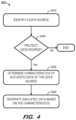
- FIG. 4 comprises a flow diagram of process 400 to generate simulated data according to some embodiments.
- a processing unit e.g., one or more processors, processing cores, processor threads
- a data server executes software program code to cause the data server to perform process 400.
- Process 400 and all other processes mentioned herein may be embodied in computer-executable program code read from one or more of non-transitory computer-readable media, such as a floppy disk, a CD-ROM, a DVD-ROM, a Flash drive, and a magnetic tape, and then stored in a compressed, uncompiled and/or encrypted format.
- hard-wired circuitry may be used in place of, or in combination with, program code for implementation of processes according to some embodiments. Embodiments are therefore not limited to any specific combination of hardware and software.
- Process 400 may be executed by any suitable element of a database and/or application platform, including but not limited to a database management system, a database security component, an application security component, and a database application. Process 400 may be executed according to a defined temporal schedule, in response to a command from a database administrator, and/or in response to a detected event (e.g., a write to a database table, growth of a database table above a particular size, a detected increased threat level).
- a detected event e.g., a write to a database table, growth of a database table above a particular size, a detected increased threat level.
- a data source is identified at S410. If process 400 is initiated with respect to a particular database table (e.g., in response to a received administrator command to protect the particular database table, in response to access of the particular database table, or in response to growth of the particular database table) the identified data source is the particular database table. If process 400 is initiated more generally (e.g., by a scheduled job, due to a detected increased threat level) the data source may be selected from a set of potential database tables to protect, such as all client-accessible database tables.
- the determination at S420 it is determined whether to protect the identified data source as described herein.
- the determination may be based on table metadata.
- the determination at S420 may be based on the value (i.e., On) of the Data Protection flag associated with the database table.
- the determination at S420 may be based at least in part on column names of the data source. For example, a database table including columns named "Password”, "SocialSecurityNumber” or the like may be identified for protection at S420.
- the determination at S420 may also be based on column attribute values according to some embodiments.
- a column attribute value specified in metadata may define a sensitivity or confidentiality of the information within the column, as described with respect to FIG. 3 .
- the column attribute value may indicate a degree to which associated data should be protected from unauthorized access and/or disclosure.
- Various columns may be associated with different column attribute values. It may therefore be determined to protect a database table at S420 based on the sensitivity and/or confidentiality of the values of its constituent columns, as indicated by its associated column metadata.
- characteristics of authentic data of the data source are determined at S430.
- Characteristics may include the type of data found in each column (e.g., dates, ages), the distinctness of such data, any alphanumeric patterns within each column (e.g., telephone number formats), relationships between values of different columns within a same row, column names, and any other constraints which may be helpful to generate simulated data for each column.
- a threshold number of rows may be required in order to determine such patterns and relationships.
- the characteristics may be determined simply based on the column names (e.g., SocialSecurityNumber).
- Simulated data is generated based on the determined characteristics at S440.
- the simulated data may comprise additional rows of the database table.
- the simulated rows are stored in the subject database table along with its authentic rows.
- the simulated rows may be generated and used on-the-fly, and not persisted in the data store.
- simulated database table rows based on the characteristics of authentic table rows is well-known in the art. For example, static data masking is currently used to build development and test datasets which are similar to datasets of production databases. Embodiments are not limited to generating the simulated data based on determined characteristics of authentic data.
- the simulated data is identifiable as simulated data.
- a separate database table is populated with the keys of the simulated data (or, alternatively, with the keys of the authentic data).
- a simulated row is generated at S440 and a hash function is applied to the data of the simulated row. If the hashed value of the data is equal to a pre-specified value (or falls within some pre-specified range of values), the simulated row is used as described herein (e.g., stored in the database table). If not, the simulated row is discarded. Consequently, simulated rows may be identified by reference to table metadata which specifies the permitted hash value (or range of values).
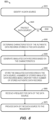
- FIG. 5 illustrates process 500 to utilize simulated data in response to an attack according to some embodiments.
- a request for data of a data source is received.
- the request may be received from a client system or from an intermediate system (e.g. application server 230) disposed between various client systems and a data server.
- the request is a database query (e.g., an SQL script).
- the request may be for data stored in one of more database tables as is known in the art.
- the request is related to an attack on the data source/data server.
- embodiments may provide detection of unusual and potentially harmful attempts to access or exploit the data source. For example, the determination at S520 may be affirmative if threat detection components of the system detect an SQL injection attack associated with the request.
- the request may be determined to be related to a brute force attack at S520.
- threat detection components may determine the request to be related to a brute force attack if the request was received from a client system which submitted many unsuccessful login attempts until a last successful login attempt.
- An affirmative determination at S520 may result from detection of any other suspicious network activities or anomalous database access patterns. For example, it may be determined that the request is related to an attack if the request is for large amounts of data, but not for backup purposes. In this regard, if a backup request is received from a suspicious or non-whitelisted IP address, it may be determined at S520 that the request is related to an attack.
- Flow proceeds from S520 to S530 if it is determined that the request is not related to an attack.
- authentic data fulfilling the request is provided to the requester. If the request is a query script, the data server executes the script based on a database schema and on metadata further describing the underlying database tables, and returns a result set based on the authentic data stored in the data source. Any rows of simulated data may be identified (e.g., based on key entries of a separate table or a hash function as described above) and ignored during generation of the result set at S530.
- simulated data of the data source is provided to the requester at S540.
- the data server executes the script based on the database schema and the metadata further describing the underlying database tables. Unlike conventional operation, only rows of simulated data are used to generate the result set. The rows of simulated data may be detected based on key entries of a separate table, a hash function, or other suitable identification mechanism.
- the result set may combine data from several source database tables.
- One or more of the source database tables may include rows of simulated data and/or rows of authentic data.
- the result set is generated based on only the rows of simulated data of the former tables and the rows of authentic data of the latter tables.
- the latter tables may be unprotected by simulated data due to the lack of sensitivity of their content.
- S540 includes determination of the underlying source tables of the result set, identification of any source tables which should be protected (e.g., as described with respect to S420), and on-the-fly generation of simulated rows of the identified source tables for use in generating the result set.
- the thuslygenerated simulated rows may or may not be persisted in their associated database tables.
- Process 500 may be executed to efficiently address data breaches and protect authentic data from unauthorized access.
- authentic data and authorized users are unaffected.
- FIG. 6 is a flow diagram of process 600 according to some embodiments.
- Process 600 may be executed to protect data even if an attack is not detected.
- S610 and S620 may proceed as described above with respect to S410 and S420 to identify a data source and determine whether the data source should be protected. If it is determined at S620 to protect the data source, characteristics of authentic data records of the data source may be determined at S630 as described above with respect to S430.
- Simulated data records are generated based on the determined characteristics at S640, and stored in the subject data source at S650.
- the number of generated and stored simulated data records may vastly outnumber the number of authentic data records of the data source.
- the ratio of simulated data records to authentic data records may be 100 to 1 or higher.
- the generated data records may or may not be identified as simulated as described above.
- a request for data of the data source is received at S660.
- the request may request a result set which is based at least in part on data of the data source.
- the data of the data source is provided to the requester at S670.
- a result set is generated based on the data of the data source and returned to the requester as is known in the art.
- Process 600 does not distinguish between valid requests and requests related to an attack. Rather, some embodiments of process 600 protect data by providing significantly more simulated data than authentic data, thereby hindering identification of the authentic data. Moreover, if any of the simulated data is subsequently used by a client system (e.g., a simulated username and password), such use identifies the client system as potentially unsafe. Such a client system may be subsequently blocked or provided with simulated data per process 500.
- a client system e.g., a simulated username and password
- Some database tables such as password tables, include authentic records which are occasionally modified. According to some embodiments of process 600, simulated records of such a database table are identified in a separate database. Periodically, the separate database is used to identify and change the simulated records of the subject database. An attacker is thereby prevented from identifying the simulated records by determining which records of the subject database have not changed over time.
- FIG. 7 is a block diagram of system architecture 700 according to some embodiments.
- Architecture 700 includes database service 710, application service 715, threat detection service 720 and storage account 725. As illustrated, architecture 700 may comprise a cloud-based implementation of some embodiments. Each of the elements of architecture 700 may comprise one or more computer servers executing one or more applications. Architecture 700 may be implemented using any number and type of public and/or private networks.
- Database service 710 may comprise a relational database-as-a-service in the cloud.
- Database service 710 may host one or more databases within a logical server.
- Application service 715 may comprise a platform supporting the development and deployment of Web applications, and storage account 725 may comprise blob containers to store audit logs and/or other logs.
- Database service 710 may store and provide authentic data to any of client systems 730 through 736 as is known in the art.
- client systems 730 through 736 may execute a Web browser to request data from a Web application deployed by application service 715.
- application service 715 requests a result set from database service 710
- database service 710 generates and returns the result set
- application service 715 transmits the result set to the requesting client system.
- Database service 710 may generate and provide simulated data as described herein.
- Database service 710 may persist the simulated data and/or generate the simulated data on-the-fly.
- Database service 710 in conjunction with threat detection service 715, may determine that a request (e.g., received from user 740) is related to an attack on, for example, application service 715 or database service 710.
- database service 710 may provide only simulated data of protected database tables in response to the request.
- Database service 710 and/or application service 715 may generate entries for an audit log of storage account 725.
- the audit log may be used to detect an attack in some embodiments.
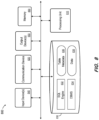
- FIG. 8 is a block diagram of system 800 according to some embodiments.
- System 800 may comprise a general-purpose computer server and may execute program code to perform any of the functions described herein.
- System 800 may include other unshown elements according to some embodiments.
- System 800 includes processing unit 810 operatively coupled to communication device 820, persistent data storage system 830, one or more input devices 840, one or more output devices 850 and volatile memory 860.
- Processing unit 810 may comprise one or more processors, processing cores, etc. for executing program code.
- Communication device 820 may facilitate communication with external devices, such as an external network in communication with the Web.
- Input device(s) 840 may comprise, for example, a keyboard, a keypad, a mouse or other pointing device, a microphone, a touch screen, and/or an eye-tracking device.
- Output device(s) 850 may comprise, for example, a display (e.g., a display screen), a speaker, and/or a printer.
- Data storage system 830 may comprise any number of appropriate persistent storage devices, including combinations of magnetic storage devices (e.g., magnetic tape, hard disk drives and flash memory), optical storage devices, Read Only Memory (ROM) devices, etc.
- Memory 860 may comprise Random Access Memory (RAM), Storage Class Memory (SCM) or any other fast-access memory.
- SQL Engine 832 and database management system 834 may comprise program code executed by processing unit 810 to cause system 800 to perform any one or more of the processes described herein.
- execution of SQL engine 832 may cause generation of simulated data and providing of simulated data to a requestor.
- table metadata 836 and data 836 may store metadata and data (i.e., authentic and simulated) as described herein.
- the data and metadata may be persisted in data storage system 830 and/or loaded into memory 860 during operation.
- Data storage device 830 may also store data and other program code for providing additional functionality and/or which are necessary for operation of system 800, such as device drivers, operating system files, etc.
- each component or device described herein may be implemented by any number of devices in communication via any number of other public and/or private networks. Two or more of such computing devices may be located remote from one another and may communicate with one another via any known manner of network(s) and/or a dedicated connection. Each component or device may comprise any number of hardware and/or software elements suitable to provide the functions described herein as well as any other functions.
Landscapes
- Engineering & Computer Science (AREA)
- Theoretical Computer Science (AREA)
- Computer Security & Cryptography (AREA)
- General Engineering & Computer Science (AREA)
- Physics & Mathematics (AREA)
- Computer Hardware Design (AREA)
- General Physics & Mathematics (AREA)
- Software Systems (AREA)
- Bioethics (AREA)
- General Health & Medical Sciences (AREA)
- Health & Medical Sciences (AREA)
- Databases & Information Systems (AREA)
- Medical Informatics (AREA)
- Computing Systems (AREA)
- Computer Networks & Wireless Communication (AREA)
- Signal Processing (AREA)
- Computational Linguistics (AREA)
- Data Mining & Analysis (AREA)
- Evolutionary Computation (AREA)
- Geometry (AREA)
- Storage Device Security (AREA)
Claims (12)
- System, umfassend:ein Datenspeichersystem (830), das Datenquellen (838) speichert, wobei jede der Datenquellen authentische Daten enthält;eine Speichervorrichtung (860), die prozessorausführbare Prozessschritte speichert; undeinen Prozessor (810) zum Ausführen der prozessorausführbaren Prozessschritte, um das System zu veranlassen:simulierte Daten einer in dem Datenspeichersystem gespeicherten Datenquelle zu erzeugen;die simulierten Daten in der Datenquelle zu speichern;die Datensätze von simulierten Daten periodisch zu erkennen und die erkannten Datensätze von simulierten Daten zu modifizieren;eine Anforderung von Daten der Datenquelle von einem anfordernden System zu empfangen;bestimmen, ob sich die Anforderung auf einen elektronischen Angriff bezieht; undwenn bestimmt wird, dass sich die Anforderung auf einen elektronischen Angriff bezieht, die simulierten Daten an das anfordernde System bereitzustellen;andernfalls die authentischen Daten der Datenquelle an das anfordernde System bereitzustellen.
- System nach Anspruch 1, wobei der Prozessor weiter die vom Prozessor ausführbaren Prozessschritte ausführt, um das System zu veranlassen:
Metadaten (214) zu speichern, die die simulierten Daten erkennen, wobei die simulierten Daten basierend auf den Metadaten an das anfordernde System bereitgestellt werden. - System nach Anspruch 1, wobei die Erzeugung der simulierten Daten umfasst:
Erzeugung von Datensätzen von simulierten Daten basierend auf einer Hash-Funktion, wobei das Bereitstellen der simulierten Daten die Anwendung der Hash-Funktion auf Datensätze der Datenquelle umfasst, um die Datensätze von simulierten Daten zu erkennen. - System nach Anspruch 1, wobei eine Anzahl von Datensätzen von simulierten Daten, die in der Datenquelle gespeichert sind, größer ist als eine Anzahl von Datensätzen von authentischen Daten, die in der Datenquelle gespeichert sind.
- System nach Anspruch 4, wobei der Prozessor weiter die prozessorausführbaren Prozessschritte ausführt, um das System zu veranlassen:
in einer zweiten Datenquelle Kennungen von Datensätzen der simulierten Daten zu speichern. - System nach Anspruch 1, wobei die Anforderung eine Ergebnismenge und zwei oder mehr Datenquellen definiert und wobei eine der zwei oder mehr Datenquellen keine simulierten Daten enthält, wobei der Prozessor weiter die prozessorausführbaren Prozessschritte ausführt, um das System zu veranlassen:
die Ergebnismenge auf der Grundlage von authentischen Daten der einen der zwei oder mehr Datenquellen und der simulierten Daten der Datenquelle zu erzeugen, und wobei das Bereitstellen der simulierten Daten an das anfordernde System das Bereitstellen der Ergebnismenge an das anfordernde System umfasst. - Computerimplementiertes Verfahren, umfassend:Erkennen (S410, S610) einer Datenquelle einer Produktionsumgebung, wobei die Datenquelle authentische Daten speichert;Erzeugen (S440, S640) simulierter Daten der Datenquelle;Speichern der simulierten Daten in der Datenquelle;periodisches Erkennen der Datensätze von simulierten Daten und Modifizieren der erkannten Datensätze von simulierten Daten;Empfangen (S510, S660) einer Anforderung von Daten der Datenquelle von einem anfordernden System in der Produktionsumgebung;Bestimmen (S520), ob sich die Anforderung auf einen elektronischen Angriff bezieht; undwenn bestimmt wird, dass sich die Anforderung auf einen elektronischen Angriff bezieht, Bereitstellen (S540, S670) der simulierten Daten an das anfordernde System;andernfalls Bereitstellen (S530) der authentischen Daten der Datenquelle an das anfordernde System.
- Verfahren nach Anspruch 7, wobei das Erzeugen der simulierten Daten umfasst:
Erzeugen von Datensätzen von simulierten Daten basierend auf einer Hash-Funktion, wobei das Bereitstellen der simulierten Daten das Anwenden der Hash-Funktion auf Datensätze der Datenquelle umfasst, um die Datensätze von simulierten Daten zu erkennen. - Verfahren nach Anspruch 7,
wobei eine Anzahl von Datensätzen von simulierten Daten, die in der Datenquelle gespeichert sind, größer ist als eine Anzahl von Datensätzen von authentischen Daten, die in der Datenquelle gespeichert sind. - Verfahren nach Anspruch 7, wobei die Anforderung eine Ergebnismenge und zwei oder mehr Datenquellen definiert, und wobei eine der zwei oder mehr Datenquellen keine simulierten Daten enthält, weiter umfassend:
Erzeugen der Ergebnismenge basierend auf authentischen Daten der einen der zwei oder mehr Datenquellen und der simulierten Daten der Datenquelle, und wobei das Bereitstellen der simulierten Daten an das anfordernde System ein Bereitstellen der Ergebnismenge an das anfordernde System umfasst. - Computerlesbares Medium, das prozessorausführbaren Code speichert, wobei der Code durch eine Verarbeitungseinheit ausführbar ist, um ein Computersystem zu veranlassen:eine Datenquelle einer Produktionsumgebung zu erkennen, wobei die Datenquelle authentische Daten speichert; simulierte Daten der Datenquelle zu erzeugen;die simulierten Daten in der Datenquelle zu speichern;die Datensätze von simulierten Daten periodisch zu erkennen und die erkannten Datensätze von simulierten Daten zu modifizieren;eine Anforderung von Daten der Datenquelle von einem anfordernden System in der Produktionsumgebung zu empfangen;bestimmen, ob sich die Anforderung auf einen elektronischen Angriff bezieht; undwenn bestimmt wird, dass sich die Anforderung auf einen elektronischen Angriff bezieht, die simulierten Daten an das anfordernde System bereitzustellen;andernfalls die authentischen Daten der Datenquelle an das anfordernde System bereitzustellen.
- Medium nach Anspruch 11, wobei der Code durch eine Verarbeitungseinheit ausführbar ist, um ein Computersystem zu veranlassen:
in einer zweiten Datenquelle Kennungen der Datensätze von simulierten Daten zu speichern, wobei eine Anzahl von Datensätzen von simulierten Daten, die in der Datenquelle gespeichert sind, größer ist als eine Anzahl von Datensätzen von authentischen Daten, die in der Datenquelle gespeichert sind.
Applications Claiming Priority (2)
| Application Number | Priority Date | Filing Date | Title |
|---|---|---|---|
| US15/800,559 US10922405B2 (en) | 2017-11-01 | 2017-11-01 | Data generation for data protection |
| PCT/US2018/057424 WO2019089327A1 (en) | 2017-11-01 | 2018-10-25 | Data generation for data protection |
Publications (2)
| Publication Number | Publication Date |
|---|---|
| EP3704844A1 EP3704844A1 (de) | 2020-09-09 |
| EP3704844B1 true EP3704844B1 (de) | 2023-03-01 |
Family
ID=64184277
Family Applications (1)
| Application Number | Title | Priority Date | Filing Date |
|---|---|---|---|
| EP18800009.5A Active EP3704844B1 (de) | 2017-11-01 | 2018-10-25 | Datenerzeugung für datenschutz |
Country Status (3)
| Country | Link |
|---|---|
| US (1) | US10922405B2 (de) |
| EP (1) | EP3704844B1 (de) |
| WO (1) | WO2019089327A1 (de) |
Families Citing this family (3)
| Publication number | Priority date | Publication date | Assignee | Title |
|---|---|---|---|---|
| MX2021012013A (es) * | 2019-04-01 | 2022-01-04 | Assa Abloy Ab | Sistema y metodo para proporcionar credenciales agregadas con niveles de garantia. |
| US11308234B1 (en) * | 2020-04-02 | 2022-04-19 | Wells Fargo Bank, N.A. | Methods for protecting data |
| US11888870B2 (en) | 2021-10-04 | 2024-01-30 | Microsoft Technology Licensing, Llc | Multitenant sharing anomaly cyberattack campaign detection |
Family Cites Families (13)
| Publication number | Priority date | Publication date | Assignee | Title |
|---|---|---|---|---|
| US8176551B1 (en) * | 2000-01-27 | 2012-05-08 | Trapware Corporation | Detection of observer programs and countermeasures against observer programs |
| US9076132B2 (en) | 2003-11-07 | 2015-07-07 | Emc Corporation | System and method of addressing email and electronic communication fraud |
| US9152808B1 (en) | 2013-03-25 | 2015-10-06 | Amazon Technologies, Inc. | Adapting decoy data present in a network |
| US20140351924A1 (en) * | 2013-05-21 | 2014-11-27 | Verizon Patent And Licensing Inc. | Method and system for providing limited secure access to sensitive data |
| US9591023B1 (en) | 2014-11-10 | 2017-03-07 | Amazon Technologies, Inc. | Breach detection-based data inflation |
| US9747455B1 (en) * | 2014-12-04 | 2017-08-29 | Amazon Technologies, Inc. | Data protection using active data |
| US9462013B1 (en) * | 2015-04-29 | 2016-10-04 | International Business Machines Corporation | Managing security breaches in a networked computing environment |
| US20160330219A1 (en) * | 2015-05-04 | 2016-11-10 | Syed Kamran Hasan | Method and device for managing security in a computer network |
| US9553885B2 (en) * | 2015-06-08 | 2017-01-24 | Illusive Networks Ltd. | System and method for creation, deployment and management of augmented attacker map |
| US10135867B2 (en) * | 2015-12-08 | 2018-11-20 | Bank Of America Corporation | Dynamically updated computing environments for detecting and capturing unauthorized computer activities |
| US10097581B1 (en) * | 2015-12-28 | 2018-10-09 | Amazon Technologies, Inc. | Honeypot computing services that include simulated computing resources |
| US10785259B2 (en) * | 2016-04-19 | 2020-09-22 | Mitsubishi Electric Corporation | Relay device |
| US10110626B2 (en) * | 2016-04-26 | 2018-10-23 | International Business Machines Corporation | Biology based techniques for handling information security and privacy |
-
2017
- 2017-11-01 US US15/800,559 patent/US10922405B2/en active Active
-
2018
- 2018-10-25 WO PCT/US2018/057424 patent/WO2019089327A1/en not_active Ceased
- 2018-10-25 EP EP18800009.5A patent/EP3704844B1/de active Active
Also Published As
| Publication number | Publication date |
|---|---|
| US20190130099A1 (en) | 2019-05-02 |
| EP3704844A1 (de) | 2020-09-09 |
| US10922405B2 (en) | 2021-02-16 |
| WO2019089327A1 (en) | 2019-05-09 |
Similar Documents
| Publication | Publication Date | Title |
|---|---|---|
| US10114960B1 (en) | Identifying sensitive data writes to data stores | |
| US10645109B1 (en) | System, method, and computer program for detection of anomalous user network activity based on multiple data sources | |
| JP6585131B2 (ja) | ネットワークの異常検出システムのためのグラフ・データベース分析 | |
| US11775678B2 (en) | Tagging and auditing sensitive information in a database environment | |
| US10419427B2 (en) | Authenticating identity for password changes | |
| US11947704B2 (en) | Tagging and auditing sensitive information in a database environment | |
| US11379601B2 (en) | Detection of sensitive database information | |
| CN109992986B (zh) | 一种敏感数据的脱敏处理方法及装置 | |
| US12093242B2 (en) | Online determination of result set sensitivity | |
| US11741200B2 (en) | Systems and methods for protection against theft of user credentials | |
| US12445472B2 (en) | Detecting suspicious data access by a rogue cloud resource | |
| EP3704844B1 (de) | Datenerzeugung für datenschutz | |
| US11997135B2 (en) | Systems and methods for protection against theft of user credentials | |
| CN113596044A (zh) | 一种网络防护方法、装置、电子设备及存储介质 | |
| US10721236B1 (en) | Method, apparatus and computer program product for providing security via user clustering | |
| US12028376B2 (en) | Systems and methods for creation, management, and storage of honeyrecords | |
| US11055431B2 (en) | Securing data storage of personally identifiable information in a database | |
| CN120979791A (zh) | 访问请求安全评估方法、装置、资源服务器、存储介质和程序产品 | |
| EP3699785A1 (de) | Verfahren zur datenverwaltung von digitalen dokumenten | |
| CN109800568B (zh) | 文档文件的安全防护方法、客户端、系统及存储介质 | |
| US20240430254A1 (en) | Automated login framework for application security testing | |
| WO2020074438A1 (en) | Method for managing data of digital documents | |
| Knieriem et al. | An Overview of the Usage of Default Passwords (extended version) |
Legal Events
| Date | Code | Title | Description |
|---|---|---|---|
| STAA | Information on the status of an ep patent application or granted ep patent |
Free format text: STATUS: UNKNOWN |
|
| STAA | Information on the status of an ep patent application or granted ep patent |
Free format text: STATUS: THE INTERNATIONAL PUBLICATION HAS BEEN MADE |
|
| PUAI | Public reference made under article 153(3) epc to a published international application that has entered the european phase |
Free format text: ORIGINAL CODE: 0009012 |
|
| STAA | Information on the status of an ep patent application or granted ep patent |
Free format text: STATUS: REQUEST FOR EXAMINATION WAS MADE |
|
| 17P | Request for examination filed |
Effective date: 20200409 |
|
| AK | Designated contracting states |
Kind code of ref document: A1 Designated state(s): AL AT BE BG CH CY CZ DE DK EE ES FI FR GB GR HR HU IE IS IT LI LT LU LV MC MK MT NL NO PL PT RO RS SE SI SK SM TR |
|
| AX | Request for extension of the european patent |
Extension state: BA ME |
|
| DAV | Request for validation of the european patent (deleted) | ||
| DAX | Request for extension of the european patent (deleted) | ||
| STAA | Information on the status of an ep patent application or granted ep patent |
Free format text: STATUS: EXAMINATION IS IN PROGRESS |
|
| 17Q | First examination report despatched |
Effective date: 20210709 |
|
| RAP3 | Party data changed (applicant data changed or rights of an application transferred) |
Owner name: MICROSOFT TECHNOLOGY LICENSING, LLC |
|
| REG | Reference to a national code |
Ref country code: DE Ref legal event code: R079 Ref document number: 602018046732 Country of ref document: DE Free format text: PREVIOUS MAIN CLASS: H04L0029060000 Ipc: H04L0009400000 |
|
| GRAP | Despatch of communication of intention to grant a patent |
Free format text: ORIGINAL CODE: EPIDOSNIGR1 |
|
| STAA | Information on the status of an ep patent application or granted ep patent |
Free format text: STATUS: GRANT OF PATENT IS INTENDED |
|
| RIC1 | Information provided on ipc code assigned before grant |
Ipc: G06F 21/62 20130101ALI20220916BHEP Ipc: H04L 9/40 20220101AFI20220916BHEP |
|
| INTG | Intention to grant announced |
Effective date: 20221019 |
|
| RIN1 | Information on inventor provided before grant (corrected) |
Inventor name: ROSENFELD, NIR Inventor name: MATCHORO, RON Inventor name: NEUVIRTH, HANI HANA Inventor name: YOM-TOV, ELAD |
|
| GRAS | Grant fee paid |
Free format text: ORIGINAL CODE: EPIDOSNIGR3 |
|
| GRAA | (expected) grant |
Free format text: ORIGINAL CODE: 0009210 |
|
| STAA | Information on the status of an ep patent application or granted ep patent |
Free format text: STATUS: THE PATENT HAS BEEN GRANTED |
|
| AK | Designated contracting states |
Kind code of ref document: B1 Designated state(s): AL AT BE BG CH CY CZ DE DK EE ES FI FR GB GR HR HU IE IS IT LI LT LU LV MC MK MT NL NO PL PT RO RS SE SI SK SM TR |
|
| REG | Reference to a national code |
Ref country code: GB Ref legal event code: FG4D |
|
| REG | Reference to a national code |
Ref country code: CH Ref legal event code: EP Ref country code: AT Ref legal event code: REF Ref document number: 1551772 Country of ref document: AT Kind code of ref document: T Effective date: 20230315 |
|
| REG | Reference to a national code |
Ref country code: DE Ref legal event code: R096 Ref document number: 602018046732 Country of ref document: DE |
|
| REG | Reference to a national code |
Ref country code: IE Ref legal event code: FG4D |
|
| P01 | Opt-out of the competence of the unified patent court (upc) registered |
Effective date: 20230505 |
|
| REG | Reference to a national code |
Ref country code: LT Ref legal event code: MG9D |
|
| REG | Reference to a national code |
Ref country code: NL Ref legal event code: MP Effective date: 20230301 |
|
| PG25 | Lapsed in a contracting state [announced via postgrant information from national office to epo] |
Ref country code: RS Free format text: LAPSE BECAUSE OF FAILURE TO SUBMIT A TRANSLATION OF THE DESCRIPTION OR TO PAY THE FEE WITHIN THE PRESCRIBED TIME-LIMIT Effective date: 20230301 Ref country code: NO Free format text: LAPSE BECAUSE OF FAILURE TO SUBMIT A TRANSLATION OF THE DESCRIPTION OR TO PAY THE FEE WITHIN THE PRESCRIBED TIME-LIMIT Effective date: 20230601 Ref country code: LV Free format text: LAPSE BECAUSE OF FAILURE TO SUBMIT A TRANSLATION OF THE DESCRIPTION OR TO PAY THE FEE WITHIN THE PRESCRIBED TIME-LIMIT Effective date: 20230301 Ref country code: LT Free format text: LAPSE BECAUSE OF FAILURE TO SUBMIT A TRANSLATION OF THE DESCRIPTION OR TO PAY THE FEE WITHIN THE PRESCRIBED TIME-LIMIT Effective date: 20230301 Ref country code: HR Free format text: LAPSE BECAUSE OF FAILURE TO SUBMIT A TRANSLATION OF THE DESCRIPTION OR TO PAY THE FEE WITHIN THE PRESCRIBED TIME-LIMIT Effective date: 20230301 Ref country code: ES Free format text: LAPSE BECAUSE OF FAILURE TO SUBMIT A TRANSLATION OF THE DESCRIPTION OR TO PAY THE FEE WITHIN THE PRESCRIBED TIME-LIMIT Effective date: 20230301 |
|
| REG | Reference to a national code |
Ref country code: AT Ref legal event code: MK05 Ref document number: 1551772 Country of ref document: AT Kind code of ref document: T Effective date: 20230301 |
|
| PG25 | Lapsed in a contracting state [announced via postgrant information from national office to epo] |
Ref country code: SE Free format text: LAPSE BECAUSE OF FAILURE TO SUBMIT A TRANSLATION OF THE DESCRIPTION OR TO PAY THE FEE WITHIN THE PRESCRIBED TIME-LIMIT Effective date: 20230301 Ref country code: PL Free format text: LAPSE BECAUSE OF FAILURE TO SUBMIT A TRANSLATION OF THE DESCRIPTION OR TO PAY THE FEE WITHIN THE PRESCRIBED TIME-LIMIT Effective date: 20230301 Ref country code: NL Free format text: LAPSE BECAUSE OF FAILURE TO SUBMIT A TRANSLATION OF THE DESCRIPTION OR TO PAY THE FEE WITHIN THE PRESCRIBED TIME-LIMIT Effective date: 20230301 Ref country code: GR Free format text: LAPSE BECAUSE OF FAILURE TO SUBMIT A TRANSLATION OF THE DESCRIPTION OR TO PAY THE FEE WITHIN THE PRESCRIBED TIME-LIMIT Effective date: 20230602 Ref country code: FI Free format text: LAPSE BECAUSE OF FAILURE TO SUBMIT A TRANSLATION OF THE DESCRIPTION OR TO PAY THE FEE WITHIN THE PRESCRIBED TIME-LIMIT Effective date: 20230301 |
|
| PG25 | Lapsed in a contracting state [announced via postgrant information from national office to epo] |
Ref country code: SM Free format text: LAPSE BECAUSE OF FAILURE TO SUBMIT A TRANSLATION OF THE DESCRIPTION OR TO PAY THE FEE WITHIN THE PRESCRIBED TIME-LIMIT Effective date: 20230301 Ref country code: RO Free format text: LAPSE BECAUSE OF FAILURE TO SUBMIT A TRANSLATION OF THE DESCRIPTION OR TO PAY THE FEE WITHIN THE PRESCRIBED TIME-LIMIT Effective date: 20230301 Ref country code: PT Free format text: LAPSE BECAUSE OF FAILURE TO SUBMIT A TRANSLATION OF THE DESCRIPTION OR TO PAY THE FEE WITHIN THE PRESCRIBED TIME-LIMIT Effective date: 20230703 Ref country code: EE Free format text: LAPSE BECAUSE OF FAILURE TO SUBMIT A TRANSLATION OF THE DESCRIPTION OR TO PAY THE FEE WITHIN THE PRESCRIBED TIME-LIMIT Effective date: 20230301 Ref country code: CZ Free format text: LAPSE BECAUSE OF FAILURE TO SUBMIT A TRANSLATION OF THE DESCRIPTION OR TO PAY THE FEE WITHIN THE PRESCRIBED TIME-LIMIT Effective date: 20230301 Ref country code: AT Free format text: LAPSE BECAUSE OF FAILURE TO SUBMIT A TRANSLATION OF THE DESCRIPTION OR TO PAY THE FEE WITHIN THE PRESCRIBED TIME-LIMIT Effective date: 20230301 |
|
| PG25 | Lapsed in a contracting state [announced via postgrant information from national office to epo] |
Ref country code: SK Free format text: LAPSE BECAUSE OF FAILURE TO SUBMIT A TRANSLATION OF THE DESCRIPTION OR TO PAY THE FEE WITHIN THE PRESCRIBED TIME-LIMIT Effective date: 20230301 Ref country code: IS Free format text: LAPSE BECAUSE OF FAILURE TO SUBMIT A TRANSLATION OF THE DESCRIPTION OR TO PAY THE FEE WITHIN THE PRESCRIBED TIME-LIMIT Effective date: 20230701 |
|
| REG | Reference to a national code |
Ref country code: DE Ref legal event code: R097 Ref document number: 602018046732 Country of ref document: DE |
|
| PLBE | No opposition filed within time limit |
Free format text: ORIGINAL CODE: 0009261 |
|
| STAA | Information on the status of an ep patent application or granted ep patent |
Free format text: STATUS: NO OPPOSITION FILED WITHIN TIME LIMIT |
|
| PG25 | Lapsed in a contracting state [announced via postgrant information from national office to epo] |
Ref country code: SI Free format text: LAPSE BECAUSE OF FAILURE TO SUBMIT A TRANSLATION OF THE DESCRIPTION OR TO PAY THE FEE WITHIN THE PRESCRIBED TIME-LIMIT Effective date: 20230301 Ref country code: DK Free format text: LAPSE BECAUSE OF FAILURE TO SUBMIT A TRANSLATION OF THE DESCRIPTION OR TO PAY THE FEE WITHIN THE PRESCRIBED TIME-LIMIT Effective date: 20230301 |
|
| 26N | No opposition filed |
Effective date: 20231204 |
|
| PG25 | Lapsed in a contracting state [announced via postgrant information from national office to epo] |
Ref country code: IT Free format text: LAPSE BECAUSE OF FAILURE TO SUBMIT A TRANSLATION OF THE DESCRIPTION OR TO PAY THE FEE WITHIN THE PRESCRIBED TIME-LIMIT Effective date: 20230301 Ref country code: MC Free format text: LAPSE BECAUSE OF FAILURE TO SUBMIT A TRANSLATION OF THE DESCRIPTION OR TO PAY THE FEE WITHIN THE PRESCRIBED TIME-LIMIT Effective date: 20230301 |
|
| REG | Reference to a national code |
Ref country code: CH Ref legal event code: PL |
|
| REG | Reference to a national code |
Ref country code: BE Ref legal event code: MM Effective date: 20231031 |
|
| PG25 | Lapsed in a contracting state [announced via postgrant information from national office to epo] |
Ref country code: LU Free format text: LAPSE BECAUSE OF NON-PAYMENT OF DUE FEES Effective date: 20231025 |
|
| PG25 | Lapsed in a contracting state [announced via postgrant information from national office to epo] |
Ref country code: LU Free format text: LAPSE BECAUSE OF NON-PAYMENT OF DUE FEES Effective date: 20231025 |
|
| PG25 | Lapsed in a contracting state [announced via postgrant information from national office to epo] |
Ref country code: CH Free format text: LAPSE BECAUSE OF NON-PAYMENT OF DUE FEES Effective date: 20231031 |
|
| PG25 | Lapsed in a contracting state [announced via postgrant information from national office to epo] |
Ref country code: CH Free format text: LAPSE BECAUSE OF NON-PAYMENT OF DUE FEES Effective date: 20231031 |
|
| PG25 | Lapsed in a contracting state [announced via postgrant information from national office to epo] |
Ref country code: BE Free format text: LAPSE BECAUSE OF NON-PAYMENT OF DUE FEES Effective date: 20231031 |
|
| PG25 | Lapsed in a contracting state [announced via postgrant information from national office to epo] |
Ref country code: IE Free format text: LAPSE BECAUSE OF NON-PAYMENT OF DUE FEES Effective date: 20231025 |
|
| PG25 | Lapsed in a contracting state [announced via postgrant information from national office to epo] |
Ref country code: IE Free format text: LAPSE BECAUSE OF NON-PAYMENT OF DUE FEES Effective date: 20231025 |
|
| PG25 | Lapsed in a contracting state [announced via postgrant information from national office to epo] |
Ref country code: BG Free format text: LAPSE BECAUSE OF FAILURE TO SUBMIT A TRANSLATION OF THE DESCRIPTION OR TO PAY THE FEE WITHIN THE PRESCRIBED TIME-LIMIT Effective date: 20230301 |
|
| PG25 | Lapsed in a contracting state [announced via postgrant information from national office to epo] |
Ref country code: BG Free format text: LAPSE BECAUSE OF FAILURE TO SUBMIT A TRANSLATION OF THE DESCRIPTION OR TO PAY THE FEE WITHIN THE PRESCRIBED TIME-LIMIT Effective date: 20230301 |
|
| PG25 | Lapsed in a contracting state [announced via postgrant information from national office to epo] |
Ref country code: CY Free format text: LAPSE BECAUSE OF FAILURE TO SUBMIT A TRANSLATION OF THE DESCRIPTION OR TO PAY THE FEE WITHIN THE PRESCRIBED TIME-LIMIT; INVALID AB INITIO Effective date: 20181025 |
|
| PG25 | Lapsed in a contracting state [announced via postgrant information from national office to epo] |
Ref country code: HU Free format text: LAPSE BECAUSE OF FAILURE TO SUBMIT A TRANSLATION OF THE DESCRIPTION OR TO PAY THE FEE WITHIN THE PRESCRIBED TIME-LIMIT; INVALID AB INITIO Effective date: 20181025 |
|
| PGFP | Annual fee paid to national office [announced via postgrant information from national office to epo] |
Ref country code: GB Payment date: 20250923 Year of fee payment: 8 |
|
| PGFP | Annual fee paid to national office [announced via postgrant information from national office to epo] |
Ref country code: FR Payment date: 20250924 Year of fee payment: 8 |
|
| PG25 | Lapsed in a contracting state [announced via postgrant information from national office to epo] |
Ref country code: TR Free format text: LAPSE BECAUSE OF FAILURE TO SUBMIT A TRANSLATION OF THE DESCRIPTION OR TO PAY THE FEE WITHIN THE PRESCRIBED TIME-LIMIT Effective date: 20230301 |
|
| PGFP | Annual fee paid to national office [announced via postgrant information from national office to epo] |
Ref country code: DE Payment date: 20250923 Year of fee payment: 8 |