EP3704634B1 - Systeme und verfahren zur bildverarbeitung - Google Patents
Systeme und verfahren zur bildverarbeitung Download PDFInfo
- Publication number
- EP3704634B1 EP3704634B1 EP18884959.0A EP18884959A EP3704634B1 EP 3704634 B1 EP3704634 B1 EP 3704634B1 EP 18884959 A EP18884959 A EP 18884959A EP 3704634 B1 EP3704634 B1 EP 3704634B1
- Authority
- EP
- European Patent Office
- Prior art keywords
- sub
- deep learning
- learning model
- image
- images
- Prior art date
- Legal status (The legal status is an assumption and is not a legal conclusion. Google has not performed a legal analysis and makes no representation as to the accuracy of the status listed.)
- Active
Links
Images




Classifications
-
- G—PHYSICS
- G06—COMPUTING OR CALCULATING; COUNTING
- G06T—IMAGE DATA PROCESSING OR GENERATION, IN GENERAL
- G06T1/00—General purpose image data processing
- G06T1/60—Memory management
-
- G—PHYSICS
- G06—COMPUTING OR CALCULATING; COUNTING
- G06F—ELECTRIC DIGITAL DATA PROCESSING
- G06F18/00—Pattern recognition
- G06F18/20—Analysing
- G06F18/21—Design or setup of recognition systems or techniques; Extraction of features in feature space; Blind source separation
- G06F18/214—Generating training patterns; Bootstrap methods, e.g. bagging or boosting
-
- G—PHYSICS
- G06—COMPUTING OR CALCULATING; COUNTING
- G06F—ELECTRIC DIGITAL DATA PROCESSING
- G06F18/00—Pattern recognition
- G06F18/20—Analysing
- G06F18/24—Classification techniques
- G06F18/241—Classification techniques relating to the classification model, e.g. parametric or non-parametric approaches
- G06F18/2413—Classification techniques relating to the classification model, e.g. parametric or non-parametric approaches based on distances to training or reference patterns
- G06F18/24133—Distances to prototypes
-
- G—PHYSICS
- G06—COMPUTING OR CALCULATING; COUNTING
- G06N—COMPUTING ARRANGEMENTS BASED ON SPECIFIC COMPUTATIONAL MODELS
- G06N3/00—Computing arrangements based on biological models
- G06N3/02—Neural networks
- G06N3/04—Architecture, e.g. interconnection topology
- G06N3/045—Combinations of networks
-
- G—PHYSICS
- G06—COMPUTING OR CALCULATING; COUNTING
- G06N—COMPUTING ARRANGEMENTS BASED ON SPECIFIC COMPUTATIONAL MODELS
- G06N3/00—Computing arrangements based on biological models
- G06N3/02—Neural networks
- G06N3/04—Architecture, e.g. interconnection topology
- G06N3/0464—Convolutional networks [CNN, ConvNet]
-
- G—PHYSICS
- G06—COMPUTING OR CALCULATING; COUNTING
- G06N—COMPUTING ARRANGEMENTS BASED ON SPECIFIC COMPUTATIONAL MODELS
- G06N3/00—Computing arrangements based on biological models
- G06N3/02—Neural networks
- G06N3/06—Physical realisation, i.e. hardware implementation of neural networks, neurons or parts of neurons
- G06N3/063—Physical realisation, i.e. hardware implementation of neural networks, neurons or parts of neurons using electronic means
-
- G—PHYSICS
- G06—COMPUTING OR CALCULATING; COUNTING
- G06N—COMPUTING ARRANGEMENTS BASED ON SPECIFIC COMPUTATIONAL MODELS
- G06N3/00—Computing arrangements based on biological models
- G06N3/02—Neural networks
- G06N3/08—Learning methods
-
- G—PHYSICS
- G06—COMPUTING OR CALCULATING; COUNTING
- G06N—COMPUTING ARRANGEMENTS BASED ON SPECIFIC COMPUTATIONAL MODELS
- G06N3/00—Computing arrangements based on biological models
- G06N3/02—Neural networks
- G06N3/08—Learning methods
- G06N3/084—Backpropagation, e.g. using gradient descent
-
- G—PHYSICS
- G06—COMPUTING OR CALCULATING; COUNTING
- G06N—COMPUTING ARRANGEMENTS BASED ON SPECIFIC COMPUTATIONAL MODELS
- G06N3/00—Computing arrangements based on biological models
- G06N3/02—Neural networks
- G06N3/08—Learning methods
- G06N3/09—Supervised learning
-
- G—PHYSICS
- G06—COMPUTING OR CALCULATING; COUNTING
- G06T—IMAGE DATA PROCESSING OR GENERATION, IN GENERAL
- G06T1/00—General purpose image data processing
- G06T1/20—Processor architectures; Processor configuration, e.g. pipelining
-
- G—PHYSICS
- G06—COMPUTING OR CALCULATING; COUNTING
- G06V—IMAGE OR VIDEO RECOGNITION OR UNDERSTANDING
- G06V10/00—Arrangements for image or video recognition or understanding
- G06V10/70—Arrangements for image or video recognition or understanding using pattern recognition or machine learning
- G06V10/82—Arrangements for image or video recognition or understanding using pattern recognition or machine learning using neural networks
-
- G—PHYSICS
- G06—COMPUTING OR CALCULATING; COUNTING
- G06N—COMPUTING ARRANGEMENTS BASED ON SPECIFIC COMPUTATIONAL MODELS
- G06N3/00—Computing arrangements based on biological models
- G06N3/02—Neural networks
- G06N3/04—Architecture, e.g. interconnection topology
- G06N3/044—Recurrent networks, e.g. Hopfield networks
-
- G—PHYSICS
- G06—COMPUTING OR CALCULATING; COUNTING
- G06N—COMPUTING ARRANGEMENTS BASED ON SPECIFIC COMPUTATIONAL MODELS
- G06N3/00—Computing arrangements based on biological models
- G06N3/02—Neural networks
- G06N3/04—Architecture, e.g. interconnection topology
- G06N3/047—Probabilistic or stochastic networks
-
- G—PHYSICS
- G06—COMPUTING OR CALCULATING; COUNTING
- G06T—IMAGE DATA PROCESSING OR GENERATION, IN GENERAL
- G06T2207/00—Indexing scheme for image analysis or image enhancement
- G06T2207/20—Special algorithmic details
- G06T2207/20021—Dividing image into blocks, subimages or windows
-
- G—PHYSICS
- G06—COMPUTING OR CALCULATING; COUNTING
- G06T—IMAGE DATA PROCESSING OR GENERATION, IN GENERAL
- G06T2207/00—Indexing scheme for image analysis or image enhancement
- G06T2207/30—Subject of image; Context of image processing
- G06T2207/30004—Biomedical image processing
Definitions
- the present disclosure generally relates to image processing, and more particularly, to systems and methods for training a deep learning model for image processing.
- a deep learning model may be used in image processing.
- a deep learning model may be employed in image segmentation, image classification, image recognition.
- the deep learning model may be trained before image processing.
- the deep learning model may be trained based on one or more sample images. Therefore, it is desirable to develop systems and methods for training a deep learning model based on sample image(s) with a relatively large size in a graphics processing unit (GPU).
- GPU graphics processing unit
- system engine
- unit unit
- module module
- block block
- module refers to logic embodied in hardware or firmware, or to a collection of software instructions.
- a module, a unit, or a block described herein may be implemented as software and/or hardware and may be stored in any type of non-transitory computer-readable medium or another storage device.
- a software module/unit/block may be compiled and linked into an executable program. It will be appreciated that software modules can be callable from other modules/units/blocks or from themselves, and/or may be invoked in response to detected events or interrupts.
- Software modules/units/blocks configured for execution on computing devices (e.g., processor 210 as illustrated in FIG.
- a computer-readable medium such as a compact disc, a digital video disc, a flash drive, a magnetic disc, or any other tangible medium, or as a digital download (and can be originally stored in a compressed or installable format that needs installation, decompression, or decryption prior to execution).
- Such software code may be stored, partially or fully, on a storage device of the executing computing device, for execution by the computing device.
- Software instructions may be embedded in firmware, such as an EPROM.
- hardware modules/units/blocks may be included in connected logic components, such as gates and flip-flops, and/or can be included of programmable units, such as programmable gate arrays or processors.
- modules/units/blocks or computing device functionality described herein may be implemented as software modules/units/blocks but may be represented in hardware or firmware.
- the modules/units/blocks described herein refer to logical modules/units/blocks that may be combined with other modules/units/blocks or divided into sub-modules/subunits/sub-blocks despite their physical organization or storage. The description may be applicable to a system, an engine, or a portion thereof.
- the imaging system may include one or more modalities including Digital Subtraction Angiography (DSA), Magnetic Resonance Imaging (MRI), Magnetic Resonance Angiography (MRA), Computed tomography (CT), Computed Tomography Angiography (CTA), Ultrasound Scanning (US), Positron Emission Tomography (PET), Single-Photon Emission Computerized Tomography (SPECT), CT-MR, CT-PET, CE-SPECT, DSA-MR, PET-MR, PET-US, SPECT-US, TMS (transcranial magnetic stimulation)-MR, US-CT, US-MR, X-ray-CT, X-ray-MR, X-ray-portal, X-ray-US, Video-CT, Vide-US, or the like, or any combination thereof.
- DSA Digital Subtraction Angiography
- MRI Magnetic Resonance Imaging
- MRA Magnetic Resonance Angiography
- CT Computed tomography
- CTA Computed Tomography Angiography
- the target region may be an organ, texture, an object, a lesion, a tumor, or the like, or any combination thereof.
- the target region may include a head, a breast, a lung, a rib, a vertebra, a trachea, a pleura, a mediastinum, an abdomen, a long intestine, a small intestine, a bladder, a gallbladder, a triple warmer, a pelvic cavity, a backbone, extremities, a skeleton, a blood vessel, or the like, or any combination thereof.
- the image may include a 2D image and/or a 3D image.
- its tiniest distinguishable element may be termed as a pixel.
- its tiniest distinguishable element may be termed as a voxel ("a volumetric pixel" or "a volume pixel”).
- the 3D image may also be seen as a series of 2D slices or 2D layers.
- an image, or a portion thereof corresponding to an object (e.g., a tissue, an organ, a tumor of a subject (e.g., a patient) may be referred to as an image, or a portion of thereof (e.g., an ROI) of or including the object, or the object itself.
- an ROI corresponding to the image of a rib may be described as that the ROI includes a rib.
- an image of or including a rib may be referred to a rib image, or simply a rib.
- a portion of an image corresponding to an object is processed may be described as the object is processed.
- a portion of an image corresponding to a rib is extracted from the rest of the image may be described as that the rib is extracted.
- An aspect of the present disclosure relates to a system and method of training a deep learning model for image processing (e.g., image segmentation).
- the system may acquire a preliminary deep learning model, acquire at least one sample image, generate a plurality of sub-images based on the at least one sample image, train the preliminary deep learning model using the plurality of sub-images to obtain a trained deep learning model.
- Each sub-image may have the same portion of the sample image(s) as one or more other sub-images.
- the sub-images may be generated based on a determined width of the same portion and a determined number of the sub-images (or a determined size of each sub-image).
- FIG. 1A and 1B are schematic diagrams illustrating an exemplary imaging system according to some embodiments of the present disclosure.
- the imaging system 100 may include a scanner 110, a network 120, one or more terminals 130, a processing device 140, and a storage device 150.
- the components of the imaging system 100 may be connected in one or more of variable ways.
- the scanner 110 may be connected to the processing device 140 through the network 120.
- the scanner 110 may be connected to the processing device 140 directly.
- the storage device 150 may be connected to the processing device 140 directly or through the network 120.
- a terminal 130 may be connected to the processing device 140 directly or through the network 120.
- the scanner 110 may scan an object and generate scanned data relating to the object.
- the scanner 110 may be a medical imaging device, for example, a PET device, a SPECT device, a CT device, an MRI device, or the like, or any combination thereof (e.g., a PET-CT device, a PET-MRI device, or a SPECT-MRI device).
- the scanner 110 may include a gantry 111, a detector 112, a detecting region 113, and a table 114.
- the scanner 110 may also include a radioactive scanning source 115.
- the gantry 111 may support the detector 112 and the radioactive scanning source 115. An object may be placed on the table 114 for scanning.
- the radioactive scanning source 115 may emit radioactive rays to the object.
- the detector 112 may detect radiation events (e.g., gamma photons) emitted from the detecting region 113.
- the scanner 110 may be an MRI scanning device, and the detector 112 may include an electric circuit for detecting and/or receiving radiofrequency (RF) signals.
- RF radiofrequency
- the network 120 may include any suitable network that can facilitate the exchange of information and/or data for the imaging system 100.
- one or more components of the imaging system 100 e.g., the scanner 110, the terminal 130, the processing device 140, the storage device 150
- the processing device 140 may obtain image data from the scanner 110 via the network 120.
- the processing device 140 may obtain user instructions from the terminal 130 via the network 120.
- the network 120 may be and/or include a public network (e.g., the Internet), a private network (e.g., a local area network (LAN), a wide area network (WAN)), a wired network (e.g., an Ethernet network), a wireless network (e.g., an 802.11 network, a Wi-Fi network), a cellular network (e.g., a Long Term Evolution (LTE) network), a frame relay network, a virtual private network (“VPN”), a satellite network, a telephone network, routers, hubs, switches, server computers, and/or any combination thereof.
- a public network e.g., the Internet
- a private network e.g., a local area network (LAN), a wide area network (WAN)
- a wired network e.g., an Ethernet network
- a wireless network e.g., an 802.11 network, a Wi-Fi network
- a cellular network e.g., a Long Term
- the network 120 may include a cable network, a wireline network, a fiber-optic network, a telecommunications network, an intranet, a wireless local area network (WLAN), a metropolitan area network (MAN), a public telephone switched network (PSTN), a Bluetooth TM network, a ZigBee TM network, a near field communication (NFC) network, or the like, or any combination thereof.
- the network 120 may include one or more network access points.
- the network 120 may include wired and/or wireless network access points such as base stations and/or internet exchange points through which one or more components of the imaging system 100 may be connected to the network 120 to exchange data and/or information.
- the terminal(s) 130 may include a mobile device 131, a tablet computer 132, a laptop computer 133, or the like, or any combination thereof.
- the mobile device 131 may include a smart home device, a wearable device, a mobile device, a virtual reality device, an augmented reality device, or the like, or any combination thereof.
- the smart home device may include a smart lighting device, a control device of an intelligent electrical apparatus, a smart monitoring device, a smart television, a smart video camera, an interphone, or the like, or any combination thereof.
- the wearable device may include a bracelet, footgear, eyeglasses, a helmet, a watch, clothing, a backpack, a smart accessory, or the like, or any combination thereof.
- the mobile device may include a mobile phone, a personal digital assistant (PDA), a gaming device, a navigation device, a point of sale (POS) device, a laptop, a tablet computer, a desktop, or the like, or any combination thereof.
- the virtual reality device and/or the augmented reality device may include a virtual reality helmet, virtual reality glasses, a virtual reality patch, an augmented reality helmet, augmented reality glasses, an augmented reality patch, or the like, or any combination thereof.
- the virtual reality device and/or the augmented reality device may include a Google Glass TM , an Oculus Rift TM , a Hololens TM , a Gear VR TM .
- the terminal(s) 130 may be part of the processing device 140.
- the processing device 140 may process data and/or information obtained from the scanner 110, the terminal 130, and/or the storage device 150.
- the processing device 140 may be a single server or a server group.
- the server group may be centralized or distributed.
- the processing device 140 may be local or remote.
- the processing device 140 may access information and/or data stored in the scanner 110, the terminal 130, and/or the storage device 150 via the network 120.
- the processing device 140 may be directly connected to the scanner 110, the terminal 130, and/or the storage device 150 to access stored information and/or data.
- the processing device 140 may be implemented on a cloud platform.
- the cloud platform may include a private cloud, a public cloud, a hybrid cloud, a community cloud, a distributed cloud, an inter-cloud, a multi-cloud, or the like, or any combination thereof.
- the processing device 140 may be implemented by a computing device 200 having one or more components as illustrated in FIG. 2 . In some embodiments, the processing device 140, or a portion of the processing device 140 may be integrated into the scanner 110.
- the storage device 150 may store data, instructions, and/or any other information. In some embodiments, the storage device 150 may store data obtained from the terminal 130 and/or the processing device 140. In some embodiments, the storage device 150 may store data and/or instructions that the processing device 140 may execute or use to perform exemplary methods described in the present disclosure. In some embodiments, the storage device 150 may include a mass storage, removable storage, a volatile read-and-write memory, a read-only memory (ROM), or the like, or any combination thereof. Exemplary mass storage may include a magnetic disk, an optical disk, a solid-state drive, etc. Exemplary removable storage may include a flash drive, a floppy disk, an optical disk, a memory card, a zip disk, a magnetic tape, etc.
- Exemplary volatile read-and-write memory may include a random access memory (RAM).
- RAM may include a dynamic RAM (DRAM), a double date rate synchronous dynamic RAM (DDR SDRAM), a static RAM (SRAM), a thyristor RAM (T-RAM), and a zero-capacitor RAM (Z-RAM), etc.
- Exemplary ROM may include a mask ROM (MROM), a programmable ROM (PROM), an erasable programmable ROM (EPROM), an electrically erasable programmable ROM (EEPROM), a compact disk ROM (CD-ROM), and a digital versatile disk ROM, etc.
- the storage device150 may be implemented on a cloud platform.
- the cloud platform may include a private cloud, a public cloud, a hybrid cloud, a community cloud, a distributed cloud, an inter-cloud, a multi-cloud, or the like, or any combination thereof.
- the storage device 150 may be connected to the network 120 to communicate with one or more other components of the imaging system 100 (e.g., the processing device 140, the terminal 130). One or more components of the imaging system 100 may access the data or instructions stored in the storage device 150 via the network 120. In some embodiments, the storage device 150 may be directly connected to or communicate with one or more other components of the imaging system 100 (e.g., the processing device 140, the terminal 130). In some embodiments, the storage device 150 may be part of the processing device 140.
- FIG. 2 is a schematic diagram illustrating exemplary hardware and/or software components of a computing device on which the processing device 140 may be implemented according to some embodiments of the present disclosure.
- the computing device 200 may include a processor 210, a storage 220, an input/output (I/O) 230, and a communication port 240.
- I/O input/output
- the processor 210 may execute computer instructions (e.g., program code) and perform functions of the processing device 140 in accordance with techniques described herein.
- the computer instructions may include, for example, routines, programs, objects, components, data structures, procedures, modules, and functions, which perform particular functions described herein.
- the processor 210 may process image data obtained from the scanner 110, the terminal 130, the storage device 150, and/or any other component of the imaging system 100.
- the processor 210 may include one or more hardware processors, such as a microcontroller, a microprocessor, a reduced instruction set computer (RISC), an application specific integrated circuits (ASICs), an applicationspecific instruction-set processor (ASIP), a central processing unit (CPU), a graphics processing unit (GPU), a physics processing unit (PPU), a microcontroller unit, a digital signal processor (DSP), a field programmable gate array (FPGA), an advanced RISC machine (ARM), a programmable logic device (PLD), any circuit or processor capable of executing one or more functions, or the like, or any combinations thereof.
- RISC reduced instruction set computer
- ASICs application specific integrated circuits
- ASIP applicationspecific instruction-set processor
- CPU central processing unit
- GPU graphics processing unit
- PPU physics processing unit
- DSP digital signal processor
- FPGA field programmable gate array
- ARM advanced RISC machine
- PLD programmable logic device
- a GPU (not shown) in the processor 210 may be configured for graphics processing.
- the GPU may include one or more raster operation units (ROPs), a bus interface, one or more shaders, or the like.
- the GPU may include one or more electronic circuits to accelerate the creation of one or more images in a frame buffer intended for output to a display device (e.g., a display device of the I/O 230).
- the GPU may perform graphics processing in one or more training processes for training a deep learning model.
- the GPU may perform one or more convolution operations (e.g., multiple matrix multiplications) involved in the training process(es).
- Exemplary producers of GPU may include NVIDIA, Intel, AMD, etc.
- Image processing may refer to an overall process for processing one or more images (e.g., image segmentation, image classification, image identification, image registration, image fusion).
- Graphics processing may include one or more convolution operations used in training a deep learning model with one or more images.
- graphics processing may be a part of deep learning model training.
- graphics processing may be a part of image processing based on a deep learning model.
- computing device 200 may also include multiple processors, thus operations and/or method steps that are performed by one processor as described in the present disclosure may also be jointly or separately performed by the multiple processors.
- the storage 220 may store data/information obtained from the scanner 110, the terminal 130, the storage device 150, and/or any other component of the imaging system 100.
- the storage 220 may include a mass storage, removable storage, a volatile read-and-write memory, a read-only memory (ROM), or the like, or any combination thereof.
- Exemplary mass storage may include a magnetic disk, an optical disk, a solid-state drive, etc.
- the removable storage may include a flash drive, a floppy disk, an optical disk, a memory card, a zip disk, a magnetic tape, etc.
- the volatile read-and-write memory may include a random access memory (RAM).
- the RAM may include a dynamic RAM (DRAM), a double date rate synchronous dynamic RAM (DDR SDRAM), a static RAM (SRAM), a thyristor RAM (T-RAM), and a zero-capacitor RAM (Z-RAM), etc.
- the ROM may include a mask ROM (MROM), a programmable ROM (PROM), an erasable programmable ROM (EPROM), an electrically erasable programmable ROM (EEPROM), a compact disk ROM (CD-ROM), and a digital versatile disk ROM, etc.
- the storage 220 may store one or more programs and/or instructions to perform exemplary methods described in the present disclosure.
- the storage 220 may store a program for the processing device 140 for determining a regularization item.
- the I/O 230 may input and/or output signals, data, information, etc. In some embodiments, the I/O 230 may enable a user interaction with the processing device 140. In some embodiments, the I/O 230 may include an input device and an output device. Examples of the input device may include a keyboard, a mouse, a touch screen, a microphone, or the like, or a combination thereof. Examples of the output device may include a display device, a loudspeaker, a printer, a projector, or the like, or a combination thereof.
- Examples of the display device may include a liquid crystal display (LCD), a light-emitting diode (LED)-based display, a flat panel display, a curved screen, a television device, a cathode ray tube (CRT), a touch screen, or the like, or a combination thereof.
- LCD liquid crystal display
- LED light-emitting diode
- flat panel display a flat panel display
- curved screen a television device
- CTR cathode ray tube
- touch screen or the like, or a combination thereof.
- the communication port 240 may be connected to a network (e.g., the network 120) to facilitate data communications.
- the communication port 240 may establish connections between the processing device 140 and the scanner 110, the terminal 130, and/or the storage device 150.
- the connection may be a wired connection, a wireless connection, any other communication connection that can enable data transmission and/or reception, and/or any combination of these connections.
- the wired connection may include, for example, an electrical cable, an optical cable, a telephone wire, or the like, or any combination thereof.
- the wireless connection may include, for example, a Bluetooth TM link, a Wi-Fi TM link, a WiMax TM link, a WLAN link, a ZigBee link, a mobile network link (e.g., 3G, 4G, 5G), or the like, or a combination thereof.
- the communication port 240 may be and/or include a standardized communication port, such as RS232, RS485, etc.
- the communication port 240 may be a specially designed communication port.
- the communication port 240 may be designed in accordance with the digital imaging and communications in medicine (DICOM) protocol.
- DICOM digital imaging and communications in medicine
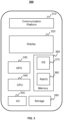
- FIG. 3 is a schematic diagram illustrating exemplary hardware and/or software components of a mobile device 300 on which the terminal 130 may be implemented according to some embodiments of the present disclosure.
- the mobile device 300 may include a communication platform 310, a display 320, a graphics processing unit (GPU) 330, a central processing unit (CPU) 340, an I/O 350, a memory 360, and a storage 390.
- any other suitable component including but not limited to a system bus or a controller (not shown), may also be included in the mobile device 300.
- a mobile operating system 370 e.g., iOS TM , Android TM , Windows Phone TM
- one or more applications 380 may be loaded into the memory 360 from the storage 390 in order to be executed by the CPU 340.
- the applications 380 may include a browser or any other suitable mobile apps for receiving and rendering information relating to image processing or other information from the processing device 140. User interactions with the information stream may be achieved via the I/O 350 and provided to the processing device 140 and/or other components of the imaging system 100 via the network 120.
- the GPU 330 may be configured for graphics processing.
- the GPU 330 may include one or more raster operation units (ROPs), a bus interface, one or more shaders, or the like.
- the GPU 330 may include one or more electronic circuits to accelerate the creation of one or more images in a frame buffer intended for output to a display device (e.g., the display 320).
- the GPU 330 may perform graphics processing in one or more training processes for training a deep learning model.
- the GPU 330 may perform one or more convolution operations (e.g., multiple matrix multiplications) involved in the training process(es). Exemplary producers of the GPU 330 may include NVIDIA, Intel, AMD, etc.
- computer hardware platforms may be used as the hardware platform(s) for one or more of the elements described herein.
- a computer with user interface elements may be used to implement a personal computer (PC) or any other type of work station or terminal device.
- PC personal computer
- a computer may also act as a server if appropriately programmed.
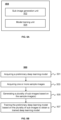
- FIG. 4A is a schematic diagram illustrating an exemplary processing device according to some embodiments of the present disclosure.
- the processing device 140 includes a data acquisition module 402, a model determination module 404, and an image processing module 406. At least a portion of the processing device 140 may be implemented on a computing device 200 as illustrated in FIG. 2 or a mobile device 300 as illustrated in FIG. 3 .
- the data acquisition module 402 may acquire data.
- the data may include image data, one or more instructions for processing the image data, one or more parameters for processing the image data, or data relating to a performance status of one or more components (e.g., the processing device 140) of the imaging system 100.
- the data acquisition module 402 may acquire data relating to available memory space of a GPU of the computing device 200 as illustrated in FIG. 2 or the GPU 330 of the mobile device 300 as illustrated in FIG. 3 .
- the data acquisition module 402 may acquire the image data from an internal data source of the imaging system 100 (e.g., the scanner 110 or the storage device 150) or an external data source connected to the imaging system 100 via the network (e.g., a database located on a cloud platform).
- the image data may relate to an object.
- the image data may be generated by a full scanning of an entire body of the object, and the generated image data may include information relating to the entire body of the object.
- the image data may be generated by scanning one or more portions of the object, and the generated image data may include information relating to the one or more portions of the object.
- the one or more portions may include a chest, a trunk, an upper limb, a lower limb, a head, an organ, tissue, etc.
- the image data may be 2D image data or 3D image data.
- the 3D image data may include a plurality of voxels.
- the 2D image data may include a plurality of pixels.
- the image data may include MRI image data, CT image data, X-ray image data, ultrasonic image data, PET image data, or the like, or any combination thereof.
- the image data may include original data generated by the scanner 110, the image generated based on the original data, parameters for image generation, or the like, or a combination thereof.
- the image data may include training data relating to one or more sample images.
- the data acquisition module 402 may transmit the training data to one or more other modules (e.g., the model determination module 404) or one or more units (e.g., the model training unit illustrated in FIG. 5A ) of the processing device 140 for further processing.
- the model determination module 404 determines one or more models (e.g., one or more trained deep learning models). The model determination module 404 determines the trained deep learning model by training a deep learning model based on training data.
- a deep learning model includes one or more deep neural networks (DNNs).
- DNN deep neural networks
- a DNN includes a multi-layer structure.
- the model determination module 404 may make the deep learning model learn one or more features of the training data and adjust one or more layers (or one or more parameters) of the multi-layer structure.
- the training data may relate to one or more sample images.
- the model determination module 404 if the sample image(s) have relatively large size, the model determination module 404 generates a plurality of sub-images based on the sample image(s) and obtain the training data corresponding to the sub-images.
- the trained deep learning model may be generated by one or more other processors inside and/or outside of the imaging system 100, and the model determination module 404 may directly obtain the trained deep learning model.
- the model determination module 404 may include one or more units, as described in FIG. 5A .
- the image processing module 406 may process one or more images.
- the image processing module 406 may process the image(s) based on a trained deep learning model.
- the image processing module 406 may bring an image (e.g., an input image) into a trained deep learning model, process the input image on one or more (e.g., all) layers of a multi-layer structure in the trained deep learning model, and generate a processing result.
- the image processing module 406 may process the input image based on one or more algorithms in the trained deep learning model.
- the processing may include image segmentation, image classification, image recognition, image quality improvement, or the like, or any combination thereof.
- the input image may include a region of interest (ROI), and the image processing module 406 may segment or extract the ROI from the input image based on the trained deep learning model.
- the image processing module 406 may determine a preset group that the input image belongs to, based on the trained deep learning model.
- the input image may include an ROI (e.g., a human face), and the image processing module 406 may recognize a person who owns the ROI based on the trained deep learning model.
- the input image may be an image with relatively low quality, and the image processing module 406 may improve the image quality based on the trained deep learning model.
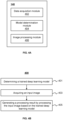
- FIG. 4B is a flowchart illustrating an exemplary process for processing an input image according to some embodiments of the present disclosure.
- one or more operations of process 400 illustrated in FIG. 4B for processing an input image may be implemented in the imaging system 100 illustrated in FIG. 1 .
- the process 400 illustrated in FIG. 4B may be stored in the storage device 150 in the form of instructions, and invoked and/or executed by the processing device 140 (e.g., the processor 210 of the computing device 200 as illustrated in FIG. 2 , the CPU 340 of the mobile device 300 as illustrated in FIG. 3 ).
- a portion of the process 400 may be implemented on the scanner 110.
- the operations of the illustrated process presented below are intended to be illustrative. In some embodiments, the process may be accomplished with one or more additional operations not described, and/or without one or more of the operations discussed. Additionally, the order in which the operations of the process as illustrated in FIG. 4B and described below is not intended to be limiting.
- the processing device140 may determine a trained deep learning model.
- a deep learning model includes one or more algorithms used for generating an output result (e.g., an image processing result) based on input image data.
- a deep learning model includes one or more deep neural networks (DNN), one or more deep Boltzmann machines (DBM), one or more stacked auto encoders, one or more deep stacking networks (DSN), etc.
- DNN includes a convolution neural network (CNN), a recurrent neural network (RNN), a deep belief network (DBN), etc.
- a DNN may include a multi-layer structure.
- a trained deep learning model refers to a deep learning model that has been trained using training data (e.g., one or more sample images).
- the trained deep learning model includes one or more relatively optimized parameters relating to the algorithms (e.g., the DNN) of the deep learning model, so that the accuracy of image processing based on the trained deep learning model may meet a requirement of practical use.
- the model determination module 404 determines the trained deep learning model by training a deep learning model based on training data. The model determination module 404 makes the deep learning model learn one or more features of the training data and adjust one or more layers (or one or more parameters) of the multi-layer structure.
- the model determination module 404 if the sample image(s) have relatively large size, the model determination module 404 generates a plurality of sub-images based on the sample image(s) and obtain the training data corresponding to the sub-images.
- the trained deep learning model may be generated by one or more other processors inside and/or outside of the imaging system 100, and the model determination module 404 may directly obtain the trained deep learning model. More descriptions of the determination of the trained deep learning model may be found elsewhere in the present disclosure (e.g., FIGs. 5B and 7 , and the descriptions thereof).
- the processing device140 acquires an input image.
- operation 403 may be performed before operation 401.
- the input image may have a similar level of size as at least one of the sample image(s) used for training the deep learning model.
- the data acquisition module 402 may acquire the input image from the scanner 110, the storage device 150, and/or the terminal 130 of the imaging system 100.
- the data acquisition module 402 may acquire the input image from the I/O 230 of the computing device 200 via the communication port 240, and/or the I/O 350 of the mobile device 300 via the communication platform 310.
- the data acquisition module 402 may acquire the input image from an external data source connected to the imaging system 100 via the network 120.
- One or more processors inside and/or outside of the imaging system 100 may pre-process the input image before and/or after the data acquisition module 402 acquires the input image.
- the pre-processing may include image normalization, image reconstruction, image smoothing, suppressing, weakening, noise reducing, detail reducing, mutation (e.g., a gray level mutation) reducing, resizing, or the like, or any combination thereof.
- the input image may be resized to a prescribed scale in pre-processing.
- the prescribed scale may be larger or smaller than an original scale of the input image.
- the processing device 140 may generate a processing result by processing the input image based on the trained deep learning model determined in 401.
- the image processing module 406 brings the input image into the trained deep learning model, process the input image in one or more (e.g., all) layers of a multi-layer structure in the trained deep learning model, and/or generate the processing result.
- the image processing module 406 processes the input image based on one or more algorithms in the trained deep learning model.
- the processing includes image segmentation, image classification, image recognition, image quality improvement, or the like, or any combination thereof.
- the input image may include a region of interest (ROI), and the image processing module 406 may segment or extract the ROI from the input image based on the trained deep learning model.
- the processing result includes a segmented image (e.g., an image including one or more segmented ribs) based on the segmentation.
- the image processing module 406 may determine a preset group that the input image belongs to, based on the trained deep learning model.
- the input image may include an ROI (e.g., a human face), and the image processing module 406 may recognize a person who owns the ROI based on the trained deep learning model.
- the input image may be an image with relatively low quality, and the image processing module 406 may improve the image quality based on the trained deep learning model.
- FIG. 5A is a block diagram illustrating an exemplary model determination module according to some embodiments of the present disclosure.
- the model determination module 404 includes a sub-image generation unit 502 and a model training unit 504. At least a portion of the model determination module 404 may be implemented on a computing device 200 as illustrated in FIG. 2 or a mobile device 300 as illustrated in FIG. 3 .
- the sub-image generation unit 502 may generate a plurality of sub-images based on one or more sample image(s).
- a sub-image may have one or more same portions of a sample image as one or more other sub-images.
- the same portion(s) shared by two or more sub-images may ensure that every pixel/voxel in the sample image(s) can be involved in the subsequent training process(es).
- the sub-image generation unit 502 may generate the sub-images based on a determined width of the same portion, a determined number of the sub-images, and/or a determined size of each sub-image.
- at least two of the plurality of sub-images may have the same size.
- the plurality of sub-images may have the same size.
- the model training unit 504 may train one or more models (e.g., one or more deep learning models). In some embodiments, the model training unit 504 may train the model(s) using a plurality of sub-images to obtain a trained deep learning model. The model training unit 504 may bring the sub-images into a preliminary deep learning model and train the preliminary deep learning model. In some embodiments, the model training unit 504 may perform one or more training processes until all the sub-images are used for training. In some embodiments, the model training unit 504 may generate an updated deep learning model in each training process.
- the model training unit 504 may generate an updated deep learning model in each training process.
- the model training unit 504 may bring one or more of the sub-images into the preliminary deep learning model at one time for a first training process to generate a first updated deep learning model, and then the model training unit 504 may bring one or more other sub-images into the first updated deep learning model at one time for a second training process to generate a second updated deep learning model.
- FIG. 5B is a flowchart illustrating an exemplary process for determining a trained deep learning model according to some embodiments of the present disclosure.
- one or more operations of process 500 illustrated in FIG. 5B for determining a trained deep learning model may be implemented in the imaging system 100 illustrated in FIG. 1 .
- the process 500 illustrated in FIG. 5B may be stored in the storage device 150 in the form of instructions, and invoked and/or executed by the processing device 140 (e.g., the processor 210 of the computing device 200 as illustrated in FIG. 2 , the CPU 340 of the mobile device 300 as illustrated in FIG. 3 ).
- the processing device 140 e.g., the processor 210 of the computing device 200 as illustrated in FIG. 2 , the CPU 340 of the mobile device 300 as illustrated in FIG. 3 .
- a portion of the process 500 may be implemented on the scanner 110.
- one or more operations of the process 500 may be performed by one or more processors inside and/or outside of the imaging system 100.
- operation 507 may be performed by a processor outside of the imaging system 100.
- the operations of the illustrated process presented below are intended to be illustrative. In some embodiments, the process may be accomplished with one or more additional operations not described, and/or without one or more of the operations discussed. Additionally, the order in which the operations of the process as illustrated in FIG. 5B and described below is not intended to be limiting.
- the processing device 140 may acquire a preliminary deep learning model.
- operation 501 may be performed after operation 503 and/or operation 505.
- a preliminary deep learning model may refer to a deep learning model to be trained.
- the preliminary deep learning model may include a multi-layer structure.
- the preliminary deep learning model may include one or more deep neural networks, for example, deep belief networks, convolutional neural networks, convolutional deep belief networks, deep Boltzmann machines, stacked auto-encoders, deep stacking networks, deep coding networks, deep kernel machines, or the like, or any combination thereof.
- the preliminary deep learning model may include one or more model parameters.
- the model parameter(s) may have one or more initial values.
- the initial values of the model parameter(s) may be default values determined by the imaging system 100 or preset by a user or operator via the terminal(s) 130.
- the data acquisition module 402 may acquire the initial values from the storage device 150, the terminal 130, and/or an external data source (not shown).
- the preliminary deep learning model may include a preliminary convolutional neural network (CNN).
- the preliminary deep learning model may include one or more preliminary convolution layers.
- a preliminary convolution layer may include one or more kernels and one or more activation functions.
- a kernel may refer to a matrix of a certain size (e.g., a 3 ⁇ 3 matrix, a 5 ⁇ 5 matrix, a 3 ⁇ 5 matrix, a 5 ⁇ 7 matrix), which may include one or more elements.
- the kernel may be convolved with an input image, and features may be extracted from the input image.
- a feature map may be generated after the input image is convolved with the kernel.
- the kernel(s) may be used in one or more convolution operations of the convolutional neural network.
- An activation function may refer to a function used for processing the feature map.
- the activation function may introduce non-linearity to the feature map.
- the preliminary deep learning model may also include a fully connected layer and/or a preliminary weight matrix of the fully connected layer.
- the fully connected layer may refer to a layer including a certain number of nodes, each node being connected to all nodes in a previous layer.
- the fully connected layer may include a weight matrix.
- the weight matrix may represent a connection between each node of the fully connected layer and each node of the previous layer.
- the data acquisition module 402 may acquire the preliminary deep learning model from the storage device 150 and/or the terminal 130 of the imaging system 100. In some embodiments, the data acquisition module 402 may acquire the preliminary deep learning model from the I/O 230 of the computing device 200 via the communication port 240 and/or the I/O 350 of the mobile device 300 via the communication platform 310. In some embodiments, the preliminary deep learning model may be acquired from an external data source connected to the imaging system 100 via the network 120.
- the processing device 140 may acquire one or more sample images. In some embodiments, operation 503 may be performed before operation 501.
- the data acquisition module 402 may acquire the sample image(s) based on an intended use of a deep learning model. In some embodiments, the data acquisition module 402 may acquire pre-determined information relating to the sample image(s) based on the intended use of a deep learning model. The pre-determined information relating to the sample image(s) may include a pre-determined ROI of the sample image(s), classification information of the sample image(s), etc.
- the data acquisition module 402 may acquire the sample image(s) including a region of interest (ROI) that has been previously segmented.
- ROI region of interest
- the data acquisition module 402 may acquire the sample image(s) including classification information that has been previously determined.
- the sample image(s) may include one or more positive sample images and one or more negative sample images.
- a positive sample image may include a properly segmented ROI, while a negative sample image may include no ROI or may include an improperly segmented region.
- a positive sample image may include a properly segmented rib, while a negative sample image may include no rib or may include a segmented vertebra connected to a rib.
- the data acquisition module 402 may acquire the sample image(s) from the scanner 110, the storage device 150, and/or the terminal 130 of imaging system 100. In some embodiments, the data acquisition module 402 may acquire the sample image(s) from the I/O 230 of the computing device 200 via the communication port 240 and/or the I/O 350 of the mobile device 300 via the communication platform 310. In some embodiments, the data acquisition module 402 may acquire the sample image(s) from an external data source connected to the imaging system 100 via the network 120.
- the processing device 140 may generate a plurality of sub-images based on the sample image(s) acquired in 503.
- a sub-image may have one or more same portions of a sample image as one or more other sub-images.
- the same portion(s) shared by two or more sub-images may ensure that every pixel/voxel in the sample image(s) can be involved in the subsequent training process(es).
- the sub-image generation unit 502 may generate the sub-image(s) based on a determined width of the same portion, a determined number of the sub-images, and/or a determined size of each sub-image.
- At least two of the plurality of sub-images may have the same size. In some embodiments, the plurality of sub-images may have the same size. More descriptions of the generation of sub-images may be found elsewhere in the present disclosure (e.g., FIG. 6 and the descriptions thereof).
- the processing device 140 trains the preliminary deep learning model based on the plurality of sub-images generated in 505 to obtain a trained deep learning model.
- one or more operations of the model training unit 504 may be implemented on a GPU of the computing device 200 illustrated in FIG. 2 or the GPU 330 of the mobile device 300 illustrated in FIG. 3 .
- the model training unit 504 brings the sub-images into the preliminary deep learning model and train the preliminary deep learning model.
- the model training unit 504 performs one or more training processes until all the sub-images are used for training.
- the model training unit 504 generates an updated deep learning model in each training process.
- the model training unit 504 brings one or more of the sub-images into the preliminary deep learning model at one time for a first training process to generate a first updated deep learning model, and then the model training unit 504 brings one or more other sub-images into the first updated deep learning model at one time for a second training process to generate a second updated deep learning model.
- one or more iterations of the training process are performed until all the sub-images are used for training, and a trained deep learning model may be obtained.
- the model training unit 504 processes one or more sub-images of the plurality of sub-images in an initial layer of a deep learning model (e.g., the preliminary or updated deep learning model), and the processing result serves as input data for a next layer of the preliminary or updated deep learning model.
- the model training unit 504 processes input data of each layer of the preliminary or updated deep learning model obtained from a previous layer.
- the model training unit 504 generates an output from a last layer of the preliminary or updated deep learning model.
- the output generated from the last layer includes one or more updated model parameters relating to the deep learning model, an image generated after a sub-image passes through all layers of the deep learning model, etc.
- the model training unit 504 compares between the predetermined information of the sub-image and the output. In some embodiments, the model training unit 504 updates the model parameters of the preliminary or updated deep learning model based on the result of the comparison to obtain a newly updated deep learning model, so that the newly updated deep learning model is used to generate an output that is closer to the predetermined information than a previous deep learning model (e.g., the preliminary or updated deep learning model).
- a preliminary deep learning model may include a CNN for image segmentation, and the model training unit 504 may perform an exemplary training process illustrated below.
- One or more model parameters of the CNN may have initial values.
- the model parameters may include a kernel of each convolution layer, an activation function of each convolution layer, a weight matrix of a fully connected layer.
- the model training unit 504 may bring a sub-image into the preliminary deep learning model.
- the sub-image may include a part of an ROI that has been previously segmented from a corresponding sample image.
- the model training unit 504 may perform a convolution operation and a max pooling operation based on the sub-image using the kernel and the activation function of the convolution layer to obtain a feature image corresponding to the sub-image.
- the model training unit 504 may process the feature image using the weight matrix of the fully connected layer to obtain a segmentation result.
- the model training unit 504 may determine a difference between the segmentation result and the part of the ROI previously segmented in the sub-image.
- the model training unit 504 may also update the model parameters of the preliminary deep learning model based on the determined difference. In some embodiments, the model training unit 504 may further update the previously updated deep learning model in a similar way as illustrated above.
- the model training unit 504 may iterate the exemplary training process for a number of times, so that the plurality of sub-images may be used for training at different times. Accordingly, the model training unit 504 may obtain a trained deep learning model with corresponding updated model parameters. More descriptions of the training process(es) may be found elsewhere in the present disclosure (e.g., FIG. 7 and the descriptions thereof).
- FIG. 6 is a flowchart illustrating an exemplary process for generating a plurality of sub-images based on one or more sample image(s) according to some embodiments of the present disclosure.
- one or more operations of process 600 illustrated in FIG. 6 for generating a plurality of sub-images may be implemented in the imaging system 100 illustrated in FIG. 1 .
- the process 600 illustrated in FIG. 6 may be stored in the storage device 150 in the form of instructions, and invoked and/or executed by the processing device 140 (e.g., the processor 210 of the computing device 200 as illustrated in FIG. 2 , the CPU 340 of the mobile device 300 as illustrated in FIG. 3 ).
- a portion of the process 600 may be implemented on the scanner 110.
- one or more operations of the process 600 may be performed by one or more processors inside and/or outside of the imaging system 100.
- operation 505 illustrated in FIG. 5B may be performed according to the process 600.
- the operations of the illustrated process presented below are intended to be illustrative. In some embodiments, the process may be accomplished with one or more additional operations not described, and/or without one or more of the operations discussed. Additionally, the order in which the operations of the process as illustrated in FIG. 6 and described below is not intended to be limiting.
- the processing device 140 may acquire one or more sample image(s).
- the operation 601 for acquiring sample image(s) may be performed according to operation 503 and is not repeated herein.
- the sample image(s) acquired in 503 may be used in one or more of the following operations, and thus, operation 601 may be omitted.
- the processing device 140 may determine the number of a plurality of sub-images and/or a size of each of the plurality of sub-images.
- the sub-image generation unit 502 may determine the number of the plurality of sub-images and/or the size of each of the plurality of sub-images according to a default setting of the imaging system 100 or preset by a user or operator via the terminals 130.
- the sub-image generation unit 502 may determine the number of the plurality of sub-images and/or the size of each of the plurality of sub-images based on a size of the sample image(s) and/or available memory space of a graphics processing unit (GPU) (e.g., a GPU in the processor 210, the GPU 330).
- a GPU may refer to a processor designed to perform one or more graphics operations.
- a graphics operation may include a convolution operation (i.e., multiple matrix multiplication) based on an image (e.g., a sub-image) and a kernel. More descriptions of the GPU may be found elsewhere in the present disclosure (e.g., FIGs. 2-3 and the descriptions thereof).
- the GPU may not be able to process a sample image with a relatively large size at one time, and thus, the GPU may not realize the training of a deep learning model.
- the relatively large size may refer to a size close to or larger than available memory space of the GPU. Therefore, the sample image(s) may need to be downscaled to facilitate the processing in the GPU.
- the sub-image generation unit 502 may generate a plurality of sub-images based on the sample image(s). Each of the plurality of sub-images may have a suitable size for being processed in the GPU.
- the sub-image generation unit 502 may determine a size range of the sub-image(s) that are suitable for being processed in the GPU based on the available memory space of the GPU. Each of the sub-images may have a size within the size range. In some embodiments, the sub-image generation unit 502 may determine a size threshold based on the available memory space of the GPU. The size threshold may be the highest image size for a sub-image that is suitable for being processed in the GPU. The size threshold may have a value related to a percentage of the available memory space of the GPU. For example, the percentage may be 10%, 20%, 30%, 40%, 50%, 60%, 70%, 80%, 90%, or the like.
- the size threshold, the size range, and/or the percentage may be determined based on default values.
- the default values may be determined by the imaging system 100 or may be preset by a user or operator via the terminal(s) 130.
- the sub-image generation unit 502 may determine a size of each of the sub-images based on the size range and/or the size threshold. It should be noted that in some embodiments, an upper limit of the size range may be no more than the available memory space of the GPU. In some embodiments, a lower limit of the size range may be a preset value or a preset percentage of the available memory space of the GPU to improve the utilization of the available memory space of the GPU.
- the sub-image generation unit 502 may determine the number of sub-images based on a quotient of the size of a sample image divided by the size threshold.
- the number of sub-images may be an integer larger than 1. For example, if the quotient of the size of the sample image divided by the size threshold is an integer, the number of sub-images may be determined as the integer. If the quotient of the size of the sample image divided by the size threshold is a decimal, the number of sub-images may be determined as the integer part of the decimal plus one.
- the plurality of sub-images may have the same size and/or the same shape.
- the plurality of sub-images may have various sizes and/or various shapes, and the size of each sub-image may be within the size range or no more than the size threshold.
- a sub-image may have a shape of a rectangle, a square, a circle, a triangle, etc.
- a sub-image may have the same portion of the sample image(s) as one or more other sub-images. For example, two sub-images may partially overlap with each other.
- the plurality of sub-images may include a first sub-image, a second sub-image, and a third sub-image, in which each of the first sub-image and the second sub-image may include a first portion (or a first same portion) of a sample image, and each of the first sub-image and the third sub-image may include a second portion (or a second same portion) of the sample image.
- each of the first sub-image and the third sub-image may include a second portion (or a second same portion) of the sample image.
- information relating to a sub-image edge may be lost in one or more convolution operations.
- the same portion shared by two or more sub-images may ensure that every pixel/voxel in the sample image(s) can be involved in the training process, and thus information loss related to the sample image(s) may be avoided in the training process.
- the processing device 140 may determine a width of the same portion of the sample image(s) shared by two or more sub-images (e.g., two adjacent sub-images) of the plurality of sub-images.
- the sub-image generation unit 502 may determine the width of the same portion based on the model parameters of a deep learning model (e.g., the preliminary deep learning model acquired in 501, an updated deep learning model) to be trained in one or more training processes.
- the deep learning model may include one or more kernels, as described in operations 501 and 507, and the sub-image generation unit 502 may determine the width of the same portion based on a size of the one or more kernels.
- the sub-image generation unit 502 may determine the number of pixels or voxels corresponding to the width of the same portion as no less than a reference value R.
- the sub-image generation unit 502 may determine the number of pixels or voxels corresponding to the width of the same portion as no less than (5-1), i.e., 4. In this way, even if each of two or more sub-images sharing the same portion loses information corresponding to pixels/voxels with a width of (W-1)/2 when being processed by the kernel, only data of the same portion may be lost, and data of the whole sample image(s) may be kept completely for further training.
- each down sampling layer may include one or more kernels.
- a down sampling layer may also be referred to as a pooling layer or a sub-sampling layer, which may down sample an output from a previous layer of the deep learning model (e.g., down sample a set of pixels/voxels into one value).
- the reference value R may relate to the widths of the one or more kernels and/or the number of the down sampling layers that includes the one or more kernels.
- a first same portion of a sample image shared by two sub-images and a second same portion of the sample image shared by other two sub-images may be the same or different. More descriptions of the same portion of the sub-images may be found elsewhere in the present disclosure (e.g., FIGs. 8A-8B and the descriptions thereof).
- the processing device 140 may generate the plurality of sub-images based on the width of the same portion, the number of the plurality of sub-images, and/or the size of each of the plurality of sub-images.
- the sub-image generation unit 502 may generate a plurality of preliminary sub-images by dividing a sample image based on the number of the plurality of sub-images and/or the size of each of the plurality of sub-images.
- the sub-image generation unit 502 may expand one or more edges of the preliminary sub-images based on the width of the same portion.
- the sub-image generation unit 502 may expand an edge of a preliminary sub-image for R/2 pixels/voxels, so that the width of the same portion shared by two adjacent sub-images may be no less than R.
- the sub-image generation unit 502 may expand the preliminary sub-images located at an edge of a sample image for R/2 pixels/voxels based on one or more pixels/voxels of the edge of the sample image.
- the sub-image generation unit 502 may generate the plurality of sub-images in a sequence from left to right, top to bottom.
- the sub-image generation unit 502 may generate a 1st sub-image with a first size at a top left corner of a sample image, and a 2nd sub-image with a second size adjacent to the 1st sub-image; the sub-image generation unit 502 may determine the range and/or location of the 2nd sub-image based on the first size and the second size, so that a shared portion of the 1st sub-image and the 2nd sub-image may have a width no less than R.
- Each sub-image may have a size suitable for being processed in the GPU.
- Each sub-image may have the same portion of the sample image(s) as one or more other sub-images. In some embodiments, two or more of the sub-images may have the same size. In some embodiments, the sub-images may have different sizes.
- the sub-image generation unit 502 may transmit the generated sub-images to a storage device (e.g., the storage device 150) for storing, and thus, the sub-images may be used in one or more further training processes.
- the data filling operation may be performed along an X axis direction, a Y axis direction, and/or a Z axis direction.
- a width of pixels/voxels corresponding to the extended or filled data may be no less than half of the reference value R.
- the data extension or filling of the sample image may be performed before the sub-images are generated.
- the processing device 140 may fill or extend the sample image towards the outside of the sample image.
- the processing device 140 may fill or extend the sample image along the positive direction of X axis, the positive direction of Y axis, the negative direction of X axis, and/or the negative direction of Y axis.
- the data extension or filling of the sample image may be performed after the sub-images are generated.
- the processing device 140 may fill or extend one or more sub-images located at a margin of the sample image (e.g, as shown in FIGs. 8A-8D and 8F-8I , the sub-image 820-1, the sub-image 820-2, the sub-image 820-3, the sub-image 820-4, the sub-image 820-6, the sub-image 820-7, the sub-image 820-8, and the sub-image 820-9).
- the processing device 140 may fill or extend the sub-images towards the outside of the sample image.
- the processing device 140 may fill or extend the sub-image 820-1 along the negative direction of X axis and the positive direction of Y axis; the processing device 140 may fill or extend the sub-image 820-2 along the positive direction of Y axis; the processing device 140 may fill or extend the sub-image 820-3 along the positive direction of X axis and the positive direction of Y axis; the processing device 140 may fill or extend the sub-image 820-4 along the negative direction of X axis; the processing device 140 may fill or extend the sub-image 820-6 along the positive direction of X axis; the processing device 140 may fill or extend the sub-image 820-7 along the negative direction of X axis and the negative direction of Y axis; the processing device 140 may fill or extend the sub-image 820-8 along the negative direction of Y axis; and the processing device 140 may fill or extend the sub-image 820-9 along the positive direction of X axis and the negative direction of Y axis.
- the extended or filled data may be determined by the imaging system 100 or a user, or obtained based on pixels/voxels of the sample image.
- the extended or filled data may be 0.
- the extended or filled data may be the same as those of pixels/voxels located at the margin of the sample image.
- the extended or filled data may be obtained based on a weighed calculation and/or exponential attenuation of one or more pixels/voxels of the sample image.
- operation 605 may be performed before or simultaneously with operation 603.
- the sample image(s) may be 3D image(s)
- the kernel(s) of the preliminary deep learning model may be 3D kernel(s)
- the same portion(s) of the sample image(s) may also be 3D portion(s).
- a 3D size of the same portion of a 3D image shared by two or more sub-images may be determined based on a 3D size of the kernel(s).
- FIG. 7 is a flowchart illustrating an exemplary process for training a preliminary deep learning model according to some embodiments of the present disclosure.
- one or more operations of process 700 illustrated in FIG. 7 for training a preliminary deep learning model may be implemented in the imaging system 100 illustrated in FIG. 1 .
- the process 700 illustrated in FIG. 7 may be stored in the storage device 150 in the form of instructions, and invoked and/or executed by the processing device 140 (e.g., the processor 210 of the computing device 200 as illustrated in FIG. 2 , the CPU 340 of the mobile device 300 as illustrated in FIG. 3 ).
- the processing device 140 e.g., the processor 210 of the computing device 200 as illustrated in FIG. 2 , the CPU 340 of the mobile device 300 as illustrated in FIG. 3 .
- a portion of the process 700 may be implemented on the scanner 110.
- one or more operations of the process 700 may be performed by one or more processors inside and/or outside of the imaging system 100.
- operation 507 illustrated in FIG. 5 may be performed according to the process 700.
- the operations of the illustrated process presented below are intended to be illustrative. In some embodiments, the process may be accomplished with one or more additional operations not described, and/or without one or more of the operations discussed. Additionally, the order in which the operations of the process as illustrated in FIG. 7 and described below is not intended to be limiting.
- the processing device 140 may load a first sub-image into the GPU (e.g., a GPU in the processor 210, the GPU 330).
- the first sub-image may be randomly selected from a plurality of sub-images.
- the first sub-image may be selected based on a preset rule.
- the preset rule may relate to an order of the plurality of sub-images.
- the model training unit 504 may determine the order of the plurality of sub-images based on position information of the sub-images.
- the model training unit 504 may determine a sub-image at a top left corner of a sample image as the 1st sub-image and may determine the residual sub-images in order from left to right, top to bottom as the 2nd sub-image, the 3rd sub-image, the Nth sub-image, etc.
- the number N may be an integer larger than 1.
- the model training unit 504 may determine the 1 st sub-image as the first sub-image to be loaded into the GPU. It should be noted that the 1st sub-image may not necessarily be the first sub-image to be loaded into the GPU, and the Nth sub-image may not necessarily be the last sub-image to be loaded into the GPU.
- a sequential number of the sub-images may not necessarily represent the order of the generation of the sub-images or the order of the loading of the sub-images into the GPU.
- the plurality of sub-images may be stored in a storage device (e.g., the storage device 150), and the model training unit 504 may load the first sub-image from the storage device into the GPU.
- the model training unit 504 may load the first sub-image directly from the sub-image generation unit 502 into the GPU.
- the processing device 140 may train the preliminary deep learning model using the first sub-image to obtain an updated deep learning model.
- the training of the preliminary deep learning model may correspond to those described in operation 507.
- the preliminary deep learning model may include one or more CNNs.
- One or more model parameters of the CNN may have initial values.
- the model parameters may include a kernel of each convolution layer, an activation function of each convolution layer, and/or a weight matrix of a fully connected layer.
- the model training unit 504 may bring the first sub-image into the preliminary deep learning model.
- the first sub-image may include a part of an ROI which has been previously segmented from a corresponding sample image.
- the model training unit 504 may perform a convolution operation and a max pooling operation based on the first sub-image using the kernel and the activation function of the convolution layer to obtain a feature image corresponding to the first sub-image.
- the model training unit 504 may process the feature image based on the weight matrix of the fully connected layer to obtain a segmentation result.
- the model training unit 504 may determine a difference between the segmentation result and the part of the ROI previously segmented in the first sub-image. Then the model training unit 504 may update the model parameters of the preliminary deep learning model based on the difference to obtain the updated deep learning model.
- the processing device 140 may load an i th sub-image into the GPU.
- the number i may represent a current iteration count.
- the number i may be an integer larger than 0.
- i may be 1, 2, 3, 4, 5, ..., N.
- the number N may represent the number of the sub-images to be used in the training process.
- i may have an initial value, for example, 1, 2, or the like.
- the model training unit 504 may select the i th sub-image randomly from one or more residual sub-images (i.e., the one or more sub-image(s) excluding the sub-image(s) that has already been loaded into the GPU for training).
- the model training unit 504 may select the i th sub-image based on a sequential number of the plurality of sub-images, as described in operation 701. In some embodiments, the model training unit 504 may load the i th sub-image from a storage device (e.g., the storage device 150) into the GPU. In some embodiments, the model training unit 504 may load the i th sub-image directly from the sub-image generation unit 502 into the GPU.
- a storage device e.g., the storage device 150
- the model training unit 504 may load the i th sub-image directly from the sub-image generation unit 502 into the GPU.
- the processing device 140 may train the updated deep learning model determined in 703 using the i th sub-image.
- the training process of the updated deep learning model may correspond to that of the preliminary deep learning model described in 703 and is not repeated herein.
- the model parameters may be updated again in 707.
- the process 700 may include a plurality of iterations.
- the processing device 140 e.g., the model training unit 504 may determine whether a condition is satisfied in 709.
- the condition may relate to an iteration count representing the number of iterations that have been performed, a degree of change in model parameters updated in a current iteration comparing with those updated in a previous iteration, a difference between the segmentation result generated using the currently updated deep learning model and a part of an ROI previously segmented in the sample image, or the like, or any combination thereof.
- the process 700 may proceed to 713; otherwise, the process 700 may proceed to 711.
- the condition e.g., the iteration count is no less than a first threshold, or the degree of change in model parameters between successive iterations is no more than a second threshold, or the difference between the segmentation result and a part of an ROI is no more than a third threshold
- the processing device 140 may update the number i by adding one to i. Then the process 700 may return to 705, and the model training unit 504 may perform the next iteration.
- the processing device 140 may obtain the trained deep learning model.
- the model training unit 504 may designate the last updated deep learning model as the trained deep learning model.
- the model training unit 504 may adjust one or more model parameters of the last updated deep learning model, and designate the adjusted deep learning model as the trained deep learning model.
- FIGs. 8A-8I are schematic diagrams illustrating a plurality of exemplary sub-images of a 2D sample image 810 according to some embodiments of the present disclosure.
- the 2D sample image 810 may have a relatively large size close to or larger than the available memory space of a GPU in which a deep learning model is to be trained.
- the plurality of sub-images 820 may include complete information of the sample image 810.
- Each sub-image 820-n may have a size suitable for being processed in the GPU.
- the plurality of sub-images 820 may have the same size.
- each sub-image 820-n may have a same portion of the 2D sample image 810 as one or more other sub-images.
- the sub-image 820-1 may have a first same portion of the 2D sample image 810 as the sub-image 820-2.
- the sub-image 820-1 may have a second same portion of the 2D sample image 810 as the sub-image 820-4.
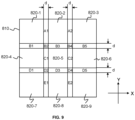
- FIG. 9 is a schematic diagram illustrating same exemplary portions of a plurality of sub-images 820 of a 2D sample image 810 according to some embodiments of the present disclosure.
- the same portion A1 may be shared by the sub-images 820-1 and 820-2.
- the same portion A2 may be shared by the sub-images 820-2 and 820-3.
- the same portion B1 may be shared by the sub-images 820-1 and 820-4.
- the same portion B2 may be shared by the sub-images 820-1, 820-2, 820-4, and 820-5.
- the same portion B3 may be shared by the sub-images 820-2 and 820-5.
- the same portion B4 may be shared by the sub-images 820-2, 820-3, 820-5, and 820-6.
- the same potion B5 may be shared by the sub-images 820-3 and 820-6.
- the same portion C1 may be shared by the sub-images 820-4 and 820-5.
- the same portion C2 may be shared by the sub-images 820-5 and 820-6.
- the same portion D1 may be shared by the sub-images 820-4 and 820-7.
- the same portion D2 may be shared by the sub-images 820-4, 820-5, 820-7, and 820-8.
- the same portion D3 may be shared by the sub-images 820-5 and 820-8.
- the same portion D4 may be shared by the sub-images 820-5, 820-6, 820-8, and 820-9.
- the same portion D5 may be shared by the sub-images 820-6 and 820-9.
- the same portion E1 may be shared by the sub-images 820-7 and 820-8.
- the same portion E2 may be shared by the sub-images 820-8 and 820-9.
- the same portions may ensure that every pixel/voxel in the 2D sample image 810 can be involved in a training process, and thus information loss related to the 2D sample image 810 may be avoided in the training process.
- the same portions may have the same width d.
- the same portions may have different widths (not shown). The width of the same portions may be determined based on model parameters of a deep learning model to be trained.
- the deep learning model may include one or more kernels.
- the width of the same portions may be determined based on a size of the one or more kernels.
- the number of pixels or voxels corresponding to the width of the same portion may be determined as no less than a reference value R.
- R a width of the kernel(s) W subtracting 1
- a kernel in the deep learning model is represented by a 5 ⁇ 5 matrix
- the number of pixels or voxels corresponding to the width of the same portion may be determined as no less than (5-1), i.e., 4.
- a coordinate system including an X axis and a Y axis is also illustrated in FIG. 9 to show different directions of the sample
- FIGs. 10A and 10B are diagrams illustrating exemplary hardware test information relating to a GPU according to some embodiments of the present disclosure.
- a deep learning model including a CNN e.g., Vnet (fully convolutional neural networks for volumetric medical image segmentation)
- the training process is to be performed in a GPU (NVIDIA GeForce GTX 1070) with available memory space of 8192 MB.
- the GPU is driven by a windows display driver model (WDDM).
- WDDM windows display driver model
- FIG. 10A after a sub-image with a resolution of 1024 ⁇ 1024 was loaded into the GPU for training, a memory space of 6579 MB of the GPU was occupied.
- the GPU 10A had a GPU ID 1, and the illustrated GPU fan speed was 58%.
- the GPU temperature was 68 °C.
- the power usage of the GPU was 173W, and the power capability of the GPU was 151W.
- the GPU performance state was P2.
- the volatile GPU utilization was 94%.
- FIG. 10B after a sub-image with a resolution of 512 ⁇ 512, was loaded into the GPU for training, a memory space of 2439 Mb of the GPU was occupied.
- the GPU illustrated in FIG. 10B had a GPU ID 0, and the illustrated GPU fan speed was 72%.
- the GPU temperature was 82 °C.
- the power usage of the GPU was 134W, and the power capability of the GPU was 151W.
- the GPU performance state was P2.
- the volatile GPU utilization was 98%. It should be noted that a sub-image with a smaller size may occupy less memory space of the GPU, and the performance of the GPU may be improved.
- aspects of the present disclosure may be illustrated and described herein in any of a number of patentable classes or context including any new and useful process, machine, manufacture, or composition of matter, or any new and useful improvement thereof. Accordingly, aspects of the present disclosure may be implemented entirely hardware, entirely software (including firmware, resident software, micro-code) or combining software and hardware implementation that may all generally be referred to herein as a "unit,” “module,” or “system.” Furthermore, aspects of the present disclosure may take the form of a computer program product embodied in one or more computer-readable media having computer readable program code embodied thereon.
- a computer readable signal medium may include a propagated data signal with computer readable program code embodied therein, for example, in baseband or as part of a carrier wave. Such a propagated signal may take any of a variety of forms, including electromagnetic, optical, or the like, or any suitable combination thereof.
- a computer readable signal medium may be any computer readable medium that is not a computer readable storage medium and that may communicate, propagate, or transport a program for use by or in connection with an instruction execution system, apparatus, or device.
- Program code embodied on a computer readable signal medium may be transmitted using any appropriate medium, including wireless, wireline, optical fiber cable, RF, or the like, or any suitable combination of the foregoing.
- Computer program code for carrying out operations for aspects of the present disclosure may be written in any combination of one or more programming languages, including an object-oriented programming language such as Java, Scala, Smalltalk, Eiffel, JADE, Emerald, C++, C#, VB. NET, Python or the like, conventional procedural programming languages, such as the "C" programming language, Visual Basic, Fortran 2103, Perl, COBOL 2102, PHP, ABAP, dynamic programming languages such as Python, Ruby, and Groovy, or other programming languages.
- the program code may execute entirely on the user's computer, partly on the user's computer, as a stand-alone software package, partly on the user's computer and partly on a remote computer or entirely on the remote computer or server.
- the remote computer may be connected to the user's computer through any type of network, including a local area network (LAN) or a wide area network (WAN), or the connection may be made to an external computer (for example, through the Internet using an Internet Service Provider) or in a cloud computing environment or offered as a service such as a Software as a Service (SaaS).
- LAN local area network
- WAN wide area network
- SaaS Software as a Service
- the numbers expressing quantities or properties used to describe and claim certain embodiments of the application are to be understood as being modified in some instances by the term "about,” “approximate,” or “substantially.” For example, “about,” “approximate,” or “substantially” may indicate ⁇ 20% variation of the value it describes, unless otherwise stated. Accordingly, in some embodiments, the numerical parameters set forth in the written description and attached claims are approximations that may vary depending upon the desired properties sought to be obtained by a particular embodiment. In some embodiments, the numerical parameters should be construed in light of the number of reported significant digits and by applying ordinary rounding techniques. Notwithstanding that the numerical ranges and parameters setting forth the broad scope of some embodiments of the application are approximations, the numerical values set forth in the specific examples are reported as precisely as practicable.
Landscapes
- Engineering & Computer Science (AREA)
- Theoretical Computer Science (AREA)
- Physics & Mathematics (AREA)
- General Physics & Mathematics (AREA)
- Evolutionary Computation (AREA)
- Data Mining & Analysis (AREA)
- Artificial Intelligence (AREA)
- Life Sciences & Earth Sciences (AREA)
- General Engineering & Computer Science (AREA)
- Health & Medical Sciences (AREA)
- Computing Systems (AREA)
- General Health & Medical Sciences (AREA)
- Software Systems (AREA)
- Biomedical Technology (AREA)
- Biophysics (AREA)
- Computational Linguistics (AREA)
- Molecular Biology (AREA)
- Mathematical Physics (AREA)
- Computer Vision & Pattern Recognition (AREA)
- Bioinformatics & Cheminformatics (AREA)
- Bioinformatics & Computational Biology (AREA)
- Evolutionary Biology (AREA)
- Multimedia (AREA)
- Medical Informatics (AREA)
- Databases & Information Systems (AREA)
- Neurology (AREA)
- Image Analysis (AREA)
Claims (11)
- System, umfassend:ein Modellbestimmungsmodul (404), das zum Bestimmen eines trainierten Deep-Learning-Modells konfiguriert ist;ein Datenerhebungsmodul (402), das zum Erheben eines Eingabebilds konfiguriert ist, wobei das Eingabebild ein ähnliches Größenniveau aufweist wie ein Beispielbild, das zum Trainieren des Deep-Learning-Modells verwendet wird;ein Bildverarbeitungsmodul (406), das dazu konfiguriert ist, ein Verarbeitungsergebnis durch Verarbeiten des Eingabebildes basierend auf dem trainierten Deep-Learning-Modell zu erzeugen, wobei das Verarbeiten Segmentieren des Eingabebildes beinhaltet, und das Verarbeitungsergebnis ein segmentiertes Bild beinhaltet, und das Modellbestimmungsmodul (404) Folgendes beinhaltet:
eine Teilbilderzeugungseinheit (502), die dazu konfiguriert ist:ein vorläufiges Deep-Learning-Modell zu erheben, wobei das vorläufige Deep-Learning-Modell ein vorläufiges Convolutional Neural Network (CNN) beinhaltet;das Beispielbild zu erheben; undeine Vielzahl von Teilbildern, basierend auf dem Beispielbild zu erzeugen, wobei mindestens zwei der Vielzahl von Teilbildern denselben Abschnitt des Beispielbildes gemeinsam aufweisen;wobei zum Erzeugen der Vielzahl von Teilbildern basierend auf dem Beispielbild die Teilbilderzeugungseinheit (502) dazu konfiguriert ist:eine Breite desselben Abschnitts des Beispielbilds zu bestimmen, indem eine Anzahl von Pixeln oder Voxeln bestimmt wird, die der Breite desselben Abschnitts des Beispielbilds entspricht, und zwar als nicht kleiner als ein Referenzwert R, wobei der Referenzwert R mindestens eine einer Breite mindestens eines Kernels des CNN oder einer Anzahl mindestens einer Downsampling-Schicht, die den mindestens einen Kernel beinhaltet, betrifft;Bestimmen einer Größe jedes der Vielzahl von Teilbildern oder der Anzahl der Teilbilder; undErzeugen der Vielzahl von Teilbildern basierend auf der Breite desselben Abschnitts und mindestens einer der Größe jedes der Vielzahl von Teilbildern oder der Anzahl der Teilbilder; undeine Modelltrainingseinheit (504), die dazu konfiguriert ist:eines oder mehrere der Vielzahl von Teilbildern in das vorläufige Deep-Learning-Model für einen ersten Trainingsprozess zu einem ersten Zeitpunkt einzugeben, um ein erstes aktualisiertes Deep-Learning-Modell zu erzeugen;ein oder mehrere andere Teilbilder der Vielzahl von Teilbildern in das erste aktualisierte Deep-Learning-Modell in einem Zeitpunkt für einen zweiten Trainingsprozess einzugeben, um ein zweites aktualisiertes Deep-Learning-Modell zu erzeugen; undeine oder mehrere Iterationen des Trainingsprozesses durchzuführen, bis die gesamte Vielzahl von Teilbildern für das Training verwendet wurde, um das trainierte Deep-Learning-Modell zu erhalten;wobei in jedem Trainingsprozess die Modelltrainingseinheit (504) dazu konfiguriert ist:eine Ausgabe aus einer letzten Schicht des vorläufigen Deep-Learning-Modells, des ersten aktualisierten Deep-Learning-Modells oder des zweiten aktualisierten Deep-Learning-Modells zu erzeugen;zwischen vorbestimmten Informationen eines Teilbildes und der Ausgabe zu vergleichen; unddie Modellparameter des vorläufigen Deep-Learning-Modells, des ersten aktualisierten Deep-Learning-Modells oder des zweiten aktualisierten Deep-Learning-Modells basierend auf einem Ergebnis des Vergleichs zu aktualisieren. - System nach Anspruch 1, wobei das CNN mindestens einen Kernel beinhaltet, und wobei zum Bestimmen der Breite desselben Abschnitts die Teilbilderzeugungseinheit (502) dazu konfiguriert ist:
die Breite desselben Abschnitts des Beispielbilds basierend auf einer Größe des mindestens einen Kernels zu bestimmen. - System nach Anspruch 1, wobei die Teilbilderzeugungseinheit (502) zum Erzeugen der Vielzahl von Teilbildern basierend auf dem Beispielbild dazu konfiguriert ist,
eine Datenerweiterung auf dem Beispielbild oder einem oder mehreren der Vielzahl von Teilbildern entlang einer oder mehrerer Richtungen durchzuführen, um erweiterte Daten zu erhalten, wobei eine Breite von Pixeln/Voxeln den erweiterten Daten entspricht, die nicht weniger als die Hälfte des Referenzwerts R betragen. - System nach Anspruch 3, wobei der Referenzwert R bestimmt wird als:

und wobei Pi gleich Si+1(1 +Pi+1) ist, i eine Ganzzahl größer als 1 ist, N die Anzahl der Downsampling-Schichten ist, die einen oder mehrere Kernel beinhaltet, die N-te Schicht die Ausgabeschicht ist, PN-1 gleich SN ist, Sj gleich (Wj -1)/2 ist, j eine Ganzzahl größer als 1 ist, und Wj die maximale Breite des/der Kernels/Kernel in der j-ten Schicht angibt. - System nach Anspruch 1, wobei:die Vielzahl von Teilbildern ein erstes Teilbild, ein zweites Teilbild und ein drittes Teilbild beinhaltet;das erste Teilbild und das zweite Teilbild einen ersten gleichen Teil gemeinsam aufweisen; unddas erste Teilbild und das dritte Teilbild einen zweiten gleichen Abschnitt gemeinsam aufweisen, wobei der erste gleiche Abschnitt eine erste Breite aufweist, die gleich ist wie eine zweite Breite des zweiten gleichen Abschnitts.
- System nach Anspruch 1,
wobei zum Trainieren des vorläufigen Deep-Learning-Modells die Modelltrainingseinheit (504) dazu konfiguriert ist, das vorläufige Deep-Learning-Modell durch eine Grafikverarbeitungseinheit (GPU) zu trainieren. - System nach Anspruch 6, wobei zum Trainieren des vorläufigen Deep-Learning-Modells durch eine GPU die Modelltrainingseinheit (504) dazu konfiguriert ist:ein erstes Teilbild in die GPU zu laden;das vorläufige Deep-Learning-Modell unter Verwendung des ersten Teilbildes zu trainieren, um ein aktualisiertes Deep-Learning-Modell zu erhalten;ein zweites Teilbild in die GPU zu laden; unddas aktualisierte Deep-Learning-Modell unter Verwendung des zweiten Teilbildes zu trainieren, um ein trainiertes Deep-Learning-Modell zu erhalten.
- System nach Anspruch 6,wobei zum Bestimmen einer Größe jedes der Vielzahl von Teilbildern oder der Anzahl der Teilbilder die Teilbild-Erzeugungseinheit (502) dazu konfiguriert ist,die Größe jedes der Vielzahl von Teilbildern oder die Anzahl der Teilbilder basierend auf einer Größe des Beispielbildes und des verfügbaren Speicherplatzes der GPU zu bestimmen.
- System nach Anspruch 1,
wobei mindestens zwei der Vielzahl von Teilbildern eine gleiche Größe aufweisen, oder die Vielzahl von Teilbildern eine gleiche Größe aufweist. - Verfahren, das auf mindestens einer Maschine implementiert ist, von denen jede mindestens einen Prozessor und eine Speicherung aufweist, wobei das Verfahren Folgendes umfasst:Bestimmen eines trainierten Deep-Learning-Modells;Erheben eines Eingabebildes, wobei das Eingabebild ein ähnliches Größenniveau aufweist wie ein zum Trainieren des Deep-Learning-Modells verwendetes Beispielbild; undErzeugen eines Verarbeitungsergebnisses durch Verarbeiten des Eingabebildes basierend auf dem trainierten Deep-Learning-Modells, wobei das Verarbeiten Segmentieren des Eingabebildes beinhaltet und das Verarbeitungsergebnis ein segmentiertes Bild beinhaltet, und das trainierte Deep-Learning-Modell gemäß einem Prozess erhalten wird, wobei der Prozess beinhaltet:Erheben eines vorläufigen Deep-Learning-Modells, wobei das vorläufige Deep-Learning-Modell ein vorläufiges Convolutional Neural Network (CNN) beinhaltet;Erheben des Beispielbildes;Erzeugen einer Vielzahl von Teilbildern basierend auf dem Beispielbild, wobei mindestens zwei der Vielzahl von Teilbildern denselben Abschnitt des Beispielbildes gemeinsam aufweisen;wobei das Erzeugen einer Vielzahl von Teilbildern basierend auf dem Beispielbild Folgendes umfasst:Bestimmen einer Breite desselben Abschnitts des Beispielbildes, indem eine Anzahl von Pixeln oder Voxeln bestimmt wird, die der Breite desselben Abschnitts des Beispielbildes entsprecht, als nicht kleiner als ein Referenzwert R, wobei der Referenzwert R mindestens eine einer Breite mindestens eines Kernel des CNNs oder eine Anzahl mindestens einer Downsampling-Schicht, die den mindestens einen Kernel beinhaltet, betrifft;Bestimmen einer Größe jedes der Vielzahl von Teilbildern oder der Anzahl der Teilbilder;Erzeugen der Vielzahl von Teilbildern basierend auf der Breite desselben Abschnitts und mindestens einer der Größe jedes der Vielzahl von Teilbildern oder der Anzahl der Teilbilder;Eingeben eines oder mehrerer der Vielzahl von Teilbildern in das vorläufige Deep-Learning-Modell für einen ersten Trainingsprozess zu einem ersten Zeitpunkt, um ein erstes aktualisiertes Deep-Learning-Modell zu erzeugen;Eingeben eines oder mehrerer anderer Teilbilder der Vielzahl von Teilbildern in das erste aktualisierte Deep-Learning-Modell in einem Zeitpunkt für einen zweiten Trainingsprozess, um ein zweites aktualisiertes Deep-Learning-Modell zu erzeugen; undDurchführen einer oder mehrerer Iterationen des Trainingsprozesses, bis die gesamte Vielzahl von Teilbildern für das Training verwendet wurde, um das trainierte Deep-Learning-Modell zu erhalten;wobei jeder Trainingsprozess Folgendes umfasst:Erzeugen einer Ausgabe aus einer letzten Schicht des vorläufigen Deep-Learning-Modells, des ersten aktualisierten Deep-Learning-Modells oder des zweiten aktualisierten Deep-Learning-Modells;Vergleichen zwischen vorbestimmten Informationen eines Teilbildes und der Ausgabe; undAktualisieren von Modellparametern des vorläufigen Deep-Learning-Modells, des ersten aktualisierten Deep-Learning-Modells oder des zweiten aktualisierten Deep-Learning-Modells basierend auf einem Ergebnis des Vergleichs.
- Nichtflüchtiges computerlesbares Medium, das Anweisungen speichert, die, wenn sie von mindestens einem Prozessor ausgeführt werden, den mindestens einen Prozessor veranlassen, ein Verfahren zu implementieren, das Folgendes umfasst:Bestimmen eines trainierten Deep-Learning-Modells;Erheben eines Eingabebildes, wobei das Eingabebild ein ähnliches Größenniveau aufweist wie ein zum Trainieren des Deep-Learning-Modells verwendetes Beispielbild; undErzeugen eines Verarbeitungsergebnisses durch Verarbeiten des Eingabebildes basierend auf dem trainierten Deep-Learning-Modells, wobei das Verarbeiten Segmentieren des Eingabebildes beinhaltet und das Verarbeitungsergebnis ein segmentiertes Bild beinhaltet, und das trainierte Deep-Learning-Modell gemäß einem Prozess erhalten wird, wobei der Prozess beinhaltet:Erheben eines vorläufigen Deep-Learning-Modells, wobei das vorläufige Deep-Learning-Modell ein vorläufiges Convolutional Neural Network (CNN) beinhaltet;Erheben des Beispielbildes;Erzeugen einer Vielzahl von Teilbildern basierend auf dem Beispielbild, wobei mindestens zwei der Vielzahl von Teilbildern denselben Abschnitt des Beispielbildes gemeinsam aufweisen;wobei das Erzeugen einer Vielzahl von Teilbildern basierend auf dem Beispielbild Folgendes umfasst:Bestimmen einer Breite desselben Abschnitts des Beispielbildes, indem eine Anzahl von Pixeln oder Voxeln bestimmt wird, die der Breite desselben Abschnitts des Beispielbildes entsprecht, als nicht kleiner als ein Referenzwert R, wobei der Referenzwert R mindestens eine einer Breite mindestens eines Kernel des CNNs oder eine Anzahl mindestens einer Downsampling-Schicht, die den mindestens einen Kernel beinhaltet, betrifft;Bestimmen einer Größe jedes der Vielzahl von Teilbildern oder der Anzahl der Teilbilder;Erzeugen der Vielzahl von Teilbildern basierend auf der Breite desselben Abschnitts und mindestens einer der Größe jedes der Vielzahl von Teilbildern oder der Anzahl der Teilbilder;Eingeben eines oder mehrerer der Vielzahl von Teilbildern in das vorläufige Deep-Learning-Modell für einen ersten Trainingsprozess zu einem ersten Zeitpunkt, um ein erstes aktualisiertes Deep-Learning-Modell zu erzeugen;Eingeben eines oder mehrerer anderer Teilbilder der Vielzahl von Teilbildern in das erste aktualisierte Deep-Learning-Modell in einem Zeitpunkt für einen zweiten Trainingsprozess, um ein zweites aktualisiertes Deep-Learning-Modell zu erzeugen; undDurchführen einer oder mehrerer Iterationen des Trainingsprozesses, bis die gesamte Vielzahl von Teilbildern für das Training verwendet wurde, um das trainierte Deep-Learning-Modell zu erhalten;wobei jeder Trainingsprozess Folgendes umfasst:Erzeugen einer Ausgabe aus einer letzten Schicht des vorläufigen Deep-Learning-Modells, des ersten aktualisierten Deep-Learning-Modells oder des zweiten aktualisierten Deep-Learning-Modells;Vergleichen zwischen vorbestimmten Informationen eines Teilbildes und der Ausgabe; undAktualisieren von Modellparametern des vorläufigen Deep-Learning-Modells, des ersten aktualisierten Deep-Learning-Modells oder des zweiten aktualisierten Deep-Learning-Modells basierend auf einem Ergebnis des Vergleichs.
Applications Claiming Priority (2)
| Application Number | Priority Date | Filing Date | Title |
|---|---|---|---|
| CN201711288530.0A CN107832807B (zh) | 2017-12-07 | 2017-12-07 | 一种图像处理方法和系统 |
| PCT/CN2018/090032 WO2019109613A1 (en) | 2017-12-07 | 2018-06-06 | Systems and methods for image processing |
Publications (4)
| Publication Number | Publication Date |
|---|---|
| EP3704634A1 EP3704634A1 (de) | 2020-09-09 |
| EP3704634A4 EP3704634A4 (de) | 2020-12-16 |
| EP3704634B1 true EP3704634B1 (de) | 2024-08-21 |
| EP3704634C0 EP3704634C0 (de) | 2024-08-21 |
Family
ID=61642269
Family Applications (1)
| Application Number | Title | Priority Date | Filing Date |
|---|---|---|---|
| EP18884959.0A Active EP3704634B1 (de) | 2017-12-07 | 2018-06-06 | Systeme und verfahren zur bildverarbeitung |
Country Status (4)
| Country | Link |
|---|---|
| EP (1) | EP3704634B1 (de) |
| JP (2) | JP7014910B2 (de) |
| CN (1) | CN107832807B (de) |
| WO (1) | WO2019109613A1 (de) |
Families Citing this family (40)
| Publication number | Priority date | Publication date | Assignee | Title |
|---|---|---|---|---|
| CN107832807B (zh) * | 2017-12-07 | 2020-08-07 | 上海联影医疗科技有限公司 | 一种图像处理方法和系统 |
| US10824907B2 (en) | 2017-12-07 | 2020-11-03 | Shanghai United Imaging Healthcare Co., Ltd. | Systems and methods for image processing |
| WO2019200349A1 (en) * | 2018-04-13 | 2019-10-17 | General Electric Company | Systems and methods for training a deep learning model for an imaging system |
| CN108564524A (zh) * | 2018-04-24 | 2018-09-21 | 开放智能机器(上海)有限公司 | 一种视觉图像的卷积计算优化方法 |
| KR102580062B1 (ko) | 2018-05-31 | 2023-09-19 | 삼성에스디에스 주식회사 | 이미지 분할 방법 및 장치 |
| CN108805923B (zh) * | 2018-06-01 | 2022-04-01 | 东软医疗系统股份有限公司 | 生理参数获取方法和装置 |
| JP2021527859A (ja) * | 2018-06-21 | 2021-10-14 | インターナショナル・ビジネス・マシーンズ・コーポレーションInternational Business Machines Corporation | 深層領域拡張を使用した画像内の不規則形状のセグメント化 |
| US10643092B2 (en) | 2018-06-21 | 2020-05-05 | International Business Machines Corporation | Segmenting irregular shapes in images using deep region growing with an image pyramid |
| US10776923B2 (en) | 2018-06-21 | 2020-09-15 | International Business Machines Corporation | Segmenting irregular shapes in images using deep region growing |
| TWI682332B (zh) * | 2018-07-18 | 2020-01-11 | 國立彰化師範大學 | 用於識別絕育狀態影像的深度學習方法及其識別裝置 |
| CN109512449A (zh) * | 2018-09-26 | 2019-03-26 | 沈阳东软医疗系统有限公司 | 生理参数输出方法和装置 |
| CN109685204B (zh) * | 2018-12-24 | 2021-10-01 | 北京旷视科技有限公司 | 图像处理方法及装置、存储介质及电子设备 |
| CN110009599A (zh) * | 2019-02-01 | 2019-07-12 | 腾讯科技(深圳)有限公司 | 肝占位检测方法、装置、设备及存储介质 |
| CN109886891B (zh) * | 2019-02-15 | 2022-01-11 | 北京市商汤科技开发有限公司 | 一种图像复原方法及装置、电子设备、存储介质 |
| CN109700528B (zh) * | 2019-02-27 | 2021-02-02 | 江苏霆升科技有限公司 | 一种实时构建心脏三维模型方法及装置 |
| CN110059715A (zh) * | 2019-03-12 | 2019-07-26 | 平安科技(深圳)有限公司 | 植物种类的识别方法及装置、存储介质、计算机设备 |
| CN111833288B (zh) * | 2019-04-12 | 2024-02-09 | 阿里巴巴集团控股有限公司 | 图像识别方法、装置和设备 |
| WO2020232612A1 (zh) * | 2019-05-20 | 2020-11-26 | 西门子股份公司 | 降低用于数据可视化的数据量的方法和装置 |
| CN110378203B (zh) * | 2019-06-05 | 2023-06-23 | 平安科技(深圳)有限公司 | 图像处理方法、装置、终端及存储介质 |
| CN110245710B (zh) * | 2019-06-18 | 2022-11-29 | 腾讯科技(深圳)有限公司 | 语义分割模型的训练方法、语义分割方法及装置 |
| CN110263724A (zh) * | 2019-06-21 | 2019-09-20 | 腾讯科技(深圳)有限公司 | 图片识别方法、识别模型训练方法、装置及存储介质 |
| CN110889411B (zh) * | 2019-09-27 | 2023-12-08 | 武汉创想外码科技有限公司 | 基于ai芯片的通用图像识别模型 |
| CN110929627B (zh) * | 2019-11-18 | 2021-12-28 | 北京大学 | 基于宽模型稀疏数据集的高效gpu训练模型的图像识别方法 |
| US11604984B2 (en) * | 2019-11-18 | 2023-03-14 | Shanghai United Imaging Intelligence Co., Ltd. | Systems and methods for machine learning based modeling |
| CN111222411B (zh) * | 2019-11-28 | 2023-09-01 | 中国船舶重工集团公司第七一三研究所 | 一种激光发射安全快速报警方法和装置 |
| CN111161273B (zh) * | 2019-12-31 | 2023-03-21 | 电子科技大学 | 一种基于深度学习的医学超声图像分割方法 |
| CN111275102A (zh) * | 2020-01-19 | 2020-06-12 | 深圳壹账通智能科技有限公司 | 多证件类型同步检测方法、装置、计算机设备及存储介质 |
| CN113391918B (zh) * | 2020-03-13 | 2024-07-05 | 伊姆西Ip控股有限责任公司 | 用于处理计算作业的方法、设备和计算机程序产品 |
| CN111783273A (zh) * | 2020-05-22 | 2020-10-16 | 成都飞机工业(集团)有限责任公司 | 一种3d打印组织预测方法 |
| CN112509334A (zh) * | 2020-12-03 | 2021-03-16 | 深圳杰睿联科技有限公司 | 一种车辆违章管理系统、方法及存储介质 |
| US12354274B2 (en) | 2021-02-22 | 2025-07-08 | Rensselaer Polytechnic Institute | System and method for machine learning based trackingless imaging volume reconstruction |
| CN115445190B (zh) * | 2021-06-09 | 2025-11-18 | 腾讯科技(深圳)有限公司 | 图像处理方法、装置、电子设备及存储介质 |
| CN113256497B (zh) * | 2021-06-21 | 2021-09-24 | 中南大学 | 图像重建方法及系统 |
| US11954853B2 (en) * | 2021-07-21 | 2024-04-09 | GE Precision Healthcare LLC | Systems and methods for fast mammography data handling |
| EP4369282A4 (de) | 2021-09-02 | 2024-11-20 | Samsung Electronics Co., Ltd. | Bildverarbeitungsvorrichtung und betriebsverfahren dafür |
| CN115546487A (zh) * | 2022-10-28 | 2022-12-30 | 北京有竹居网络技术有限公司 | 图像模型训练方法、装置、介质及电子设备 |
| CN116824349A (zh) * | 2023-06-16 | 2023-09-29 | 用友网络科技股份有限公司 | 废钢料型识别方法及系统、存储介质以及电子设备 |
| CN117033682A (zh) * | 2023-07-25 | 2023-11-10 | 北京达佳互联信息技术有限公司 | 图像检索方法、装置、系统、电子设备及存储介质 |
| CN117036882A (zh) * | 2023-08-09 | 2023-11-10 | 芯原微电子(成都)有限公司 | 图像处理方法、装置、设备及计算机可读存储介质 |
| CN118862965B (zh) * | 2024-07-12 | 2025-10-24 | 上海壁仞科技股份有限公司 | 一种卷积算子执行方法、设备、存储介质及程序产品 |
Family Cites Families (15)
| Publication number | Priority date | Publication date | Assignee | Title |
|---|---|---|---|---|
| JP2002216133A (ja) | 2001-01-22 | 2002-08-02 | Fuji Xerox Co Ltd | 画像処理システム、及び感覚情報処理システム |
| US9317779B2 (en) * | 2012-04-06 | 2016-04-19 | Brigham Young University | Training an image processing neural network without human selection of features |
| US9730643B2 (en) * | 2013-10-17 | 2017-08-15 | Siemens Healthcare Gmbh | Method and system for anatomical object detection using marginal space deep neural networks |
| US9668699B2 (en) * | 2013-10-17 | 2017-06-06 | Siemens Healthcare Gmbh | Method and system for anatomical object detection using marginal space deep neural networks |
| JP2016006626A (ja) | 2014-05-28 | 2016-01-14 | 株式会社デンソーアイティーラボラトリ | 検知装置、検知プログラム、検知方法、車両、パラメータ算出装置、パラメータ算出プログラムおよびパラメータ算出方法 |
| GB2532075A (en) | 2014-11-10 | 2016-05-11 | Lego As | System and method for toy recognition and detection based on convolutional neural networks |
| US9760807B2 (en) | 2016-01-08 | 2017-09-12 | Siemens Healthcare Gmbh | Deep image-to-image network learning for medical image analysis |
| US10095957B2 (en) * | 2016-03-15 | 2018-10-09 | Tata Consultancy Services Limited | Method and system for unsupervised word image clustering |
| CN106600538A (zh) * | 2016-12-15 | 2017-04-26 | 武汉工程大学 | 一种基于区域深度卷积神经网络的人脸超分辨率算法 |
| CN106846261A (zh) * | 2016-12-21 | 2017-06-13 | 大连海事大学 | 基于卷积神经网络的水下图像处理方法 |
| CN106845383B (zh) * | 2017-01-16 | 2023-06-06 | 腾讯科技(上海)有限公司 | 人头检测方法和装置 |
| CN107368886B (zh) * | 2017-02-23 | 2020-10-02 | 奥瞳系统科技有限公司 | 基于重复使用小规模卷积神经网络模块的神经网络系统 |
| CN106991420A (zh) * | 2017-03-27 | 2017-07-28 | 新智认知数据服务有限公司 | 一种基于分块的车牌区域回归技术的车牌检测方法 |
| CN107358262B (zh) * | 2017-07-13 | 2020-01-14 | 京东方科技集团股份有限公司 | 一种高分辨率图像的分类方法及分类装置 |
| CN107832807B (zh) * | 2017-12-07 | 2020-08-07 | 上海联影医疗科技有限公司 | 一种图像处理方法和系统 |
-
2017
- 2017-12-07 CN CN201711288530.0A patent/CN107832807B/zh active Active
-
2018
- 2018-06-06 WO PCT/CN2018/090032 patent/WO2019109613A1/en not_active Ceased
- 2018-06-06 JP JP2020531487A patent/JP7014910B2/ja active Active
- 2018-06-06 EP EP18884959.0A patent/EP3704634B1/de active Active
-
2022
- 2022-01-19 JP JP2022006250A patent/JP7248832B2/ja active Active
Also Published As
| Publication number | Publication date |
|---|---|
| JP7248832B2 (ja) | 2023-03-29 |
| EP3704634A4 (de) | 2020-12-16 |
| JP2021506021A (ja) | 2021-02-18 |
| CN107832807A (zh) | 2018-03-23 |
| JP2022050659A (ja) | 2022-03-30 |
| EP3704634A1 (de) | 2020-09-09 |
| JP7014910B2 (ja) | 2022-02-01 |
| WO2019109613A1 (en) | 2019-06-13 |
| EP3704634C0 (de) | 2024-08-21 |
| CN107832807B (zh) | 2020-08-07 |
Similar Documents
| Publication | Publication Date | Title |
|---|---|---|
| EP3704634B1 (de) | Systeme und verfahren zur bildverarbeitung | |
| US11416706B2 (en) | Systems and methods for image processing | |
| US11398030B2 (en) | System and method for image reconstruction | |
| US11887221B2 (en) | Systems and methods for image correction in positron emission tomography | |
| US12299813B2 (en) | Systems and methods for generating three-dimensional images | |
| US11348258B2 (en) | System and method for registering multi-modality images | |
| US11232558B2 (en) | Systems and methods for image generation | |
| US10949971B2 (en) | Systems and methods for attenuation correction | |
| US20230109899A1 (en) | Systems and methods for image reconstruction | |
| US10621724B2 (en) | System and method for image segmentation | |
| US11972575B2 (en) | Systems and methods for generating augmented segmented image set | |
| EP3675739B1 (de) | System und verfahren zur entfernung von hartem gewebe auf ct-bildern | |
| US11348247B2 (en) | Systems and methods for generating semantic information for scanning image | |
| EP3389016A1 (de) | System und verfahren zur streifenreduzierung bei mpr | |
| US20230342940A1 (en) | Systems and methods for image processing |
Legal Events
| Date | Code | Title | Description |
|---|---|---|---|
| STAA | Information on the status of an ep patent application or granted ep patent |
Free format text: STATUS: THE INTERNATIONAL PUBLICATION HAS BEEN MADE |
|
| PUAI | Public reference made under article 153(3) epc to a published international application that has entered the european phase |
Free format text: ORIGINAL CODE: 0009012 |
|
| STAA | Information on the status of an ep patent application or granted ep patent |
Free format text: STATUS: REQUEST FOR EXAMINATION WAS MADE |
|
| 17P | Request for examination filed |
Effective date: 20200605 |
|
| AK | Designated contracting states |
Kind code of ref document: A1 Designated state(s): AL AT BE BG CH CY CZ DE DK EE ES FI FR GB GR HR HU IE IS IT LI LT LU LV MC MK MT NL NO PL PT RO RS SE SI SK SM TR |
|
| AX | Request for extension of the european patent |
Extension state: BA ME |
|
| A4 | Supplementary search report drawn up and despatched |
Effective date: 20201113 |
|
| RIC1 | Information provided on ipc code assigned before grant |
Ipc: G06K 9/62 20060101AFI20201109BHEP Ipc: G06T 1/20 20060101ALI20201109BHEP Ipc: G06N 3/08 20060101ALI20201109BHEP |
|
| DAV | Request for validation of the european patent (deleted) | ||
| DAX | Request for extension of the european patent (deleted) | ||
| STAA | Information on the status of an ep patent application or granted ep patent |
Free format text: STATUS: EXAMINATION IS IN PROGRESS |
|
| 17Q | First examination report despatched |
Effective date: 20220906 |
|
| REG | Reference to a national code |
Ref country code: DE Ref legal event code: R079 Free format text: PREVIOUS MAIN CLASS: G06K0009620000 Ipc: G06N0003063000 Ref country code: DE Ref legal event code: R079 Ref document number: 602018073481 Country of ref document: DE Free format text: PREVIOUS MAIN CLASS: G06K0009620000 Ipc: G06N0003063000 |
|
| GRAP | Despatch of communication of intention to grant a patent |
Free format text: ORIGINAL CODE: EPIDOSNIGR1 |
|
| STAA | Information on the status of an ep patent application or granted ep patent |
Free format text: STATUS: GRANT OF PATENT IS INTENDED |
|
| INTG | Intention to grant announced |
Effective date: 20240322 |
|
| RIC1 | Information provided on ipc code assigned before grant |
Ipc: G06F 18/214 20230101ALI20240308BHEP Ipc: G06V 10/82 20220101ALI20240308BHEP Ipc: G06N 3/08 20060101ALI20240308BHEP Ipc: G06T 1/20 20060101ALI20240308BHEP Ipc: G06N 3/045 20230101ALI20240308BHEP Ipc: G06F 18/2413 20230101ALI20240308BHEP Ipc: G06T 1/60 20060101ALI20240308BHEP Ipc: G06N 3/063 20060101AFI20240308BHEP |
|
| GRAS | Grant fee paid |
Free format text: ORIGINAL CODE: EPIDOSNIGR3 |
|
| GRAA | (expected) grant |
Free format text: ORIGINAL CODE: 0009210 |
|
| STAA | Information on the status of an ep patent application or granted ep patent |
Free format text: STATUS: THE PATENT HAS BEEN GRANTED |
|
| AK | Designated contracting states |
Kind code of ref document: B1 Designated state(s): AL AT BE BG CH CY CZ DE DK EE ES FI FR GB GR HR HU IE IS IT LI LT LU LV MC MK MT NL NO PL PT RO RS SE SI SK SM TR |
|
| REG | Reference to a national code |
Ref country code: GB Ref legal event code: FG4D |
|
| REG | Reference to a national code |
Ref country code: CH Ref legal event code: EP |
|
| REG | Reference to a national code |
Ref country code: IE Ref legal event code: FG4D |
|
| REG | Reference to a national code |
Ref country code: DE Ref legal event code: R096 Ref document number: 602018073481 Country of ref document: DE |
|
| U01 | Request for unitary effect filed |
Effective date: 20240822 |
|
| U07 | Unitary effect registered |
Designated state(s): AT BE BG DE DK EE FI FR IT LT LU LV MT NL PT RO SE SI Effective date: 20240902 |
|
| PG25 | Lapsed in a contracting state [announced via postgrant information from national office to epo] |
Ref country code: NO Free format text: LAPSE BECAUSE OF FAILURE TO SUBMIT A TRANSLATION OF THE DESCRIPTION OR TO PAY THE FEE WITHIN THE PRESCRIBED TIME-LIMIT Effective date: 20241121 |
|
| PG25 | Lapsed in a contracting state [announced via postgrant information from national office to epo] |
Ref country code: GR Free format text: LAPSE BECAUSE OF FAILURE TO SUBMIT A TRANSLATION OF THE DESCRIPTION OR TO PAY THE FEE WITHIN THE PRESCRIBED TIME-LIMIT Effective date: 20241122 Ref country code: PL Free format text: LAPSE BECAUSE OF FAILURE TO SUBMIT A TRANSLATION OF THE DESCRIPTION OR TO PAY THE FEE WITHIN THE PRESCRIBED TIME-LIMIT Effective date: 20240821 |
|
| PG25 | Lapsed in a contracting state [announced via postgrant information from national office to epo] |
Ref country code: IS Free format text: LAPSE BECAUSE OF FAILURE TO SUBMIT A TRANSLATION OF THE DESCRIPTION OR TO PAY THE FEE WITHIN THE PRESCRIBED TIME-LIMIT Effective date: 20241221 |
|
| PG25 | Lapsed in a contracting state [announced via postgrant information from national office to epo] |
Ref country code: HR Free format text: LAPSE BECAUSE OF FAILURE TO SUBMIT A TRANSLATION OF THE DESCRIPTION OR TO PAY THE FEE WITHIN THE PRESCRIBED TIME-LIMIT Effective date: 20240821 |
|
| PG25 | Lapsed in a contracting state [announced via postgrant information from national office to epo] |
Ref country code: RS Free format text: LAPSE BECAUSE OF FAILURE TO SUBMIT A TRANSLATION OF THE DESCRIPTION OR TO PAY THE FEE WITHIN THE PRESCRIBED TIME-LIMIT Effective date: 20241121 Ref country code: ES Free format text: LAPSE BECAUSE OF FAILURE TO SUBMIT A TRANSLATION OF THE DESCRIPTION OR TO PAY THE FEE WITHIN THE PRESCRIBED TIME-LIMIT Effective date: 20240821 |
|
| PG25 | Lapsed in a contracting state [announced via postgrant information from national office to epo] |
Ref country code: RS Free format text: LAPSE BECAUSE OF FAILURE TO SUBMIT A TRANSLATION OF THE DESCRIPTION OR TO PAY THE FEE WITHIN THE PRESCRIBED TIME-LIMIT Effective date: 20241121 Ref country code: PL Free format text: LAPSE BECAUSE OF FAILURE TO SUBMIT A TRANSLATION OF THE DESCRIPTION OR TO PAY THE FEE WITHIN THE PRESCRIBED TIME-LIMIT Effective date: 20240821 Ref country code: NO Free format text: LAPSE BECAUSE OF FAILURE TO SUBMIT A TRANSLATION OF THE DESCRIPTION OR TO PAY THE FEE WITHIN THE PRESCRIBED TIME-LIMIT Effective date: 20241121 Ref country code: IS Free format text: LAPSE BECAUSE OF FAILURE TO SUBMIT A TRANSLATION OF THE DESCRIPTION OR TO PAY THE FEE WITHIN THE PRESCRIBED TIME-LIMIT Effective date: 20241221 Ref country code: HR Free format text: LAPSE BECAUSE OF FAILURE TO SUBMIT A TRANSLATION OF THE DESCRIPTION OR TO PAY THE FEE WITHIN THE PRESCRIBED TIME-LIMIT Effective date: 20240821 Ref country code: GR Free format text: LAPSE BECAUSE OF FAILURE TO SUBMIT A TRANSLATION OF THE DESCRIPTION OR TO PAY THE FEE WITHIN THE PRESCRIBED TIME-LIMIT Effective date: 20241122 Ref country code: ES Free format text: LAPSE BECAUSE OF FAILURE TO SUBMIT A TRANSLATION OF THE DESCRIPTION OR TO PAY THE FEE WITHIN THE PRESCRIBED TIME-LIMIT Effective date: 20240821 |
|
| PG25 | Lapsed in a contracting state [announced via postgrant information from national office to epo] |
Ref country code: SM Free format text: LAPSE BECAUSE OF FAILURE TO SUBMIT A TRANSLATION OF THE DESCRIPTION OR TO PAY THE FEE WITHIN THE PRESCRIBED TIME-LIMIT Effective date: 20240821 |
|
| PG25 | Lapsed in a contracting state [announced via postgrant information from national office to epo] |
Ref country code: CZ Free format text: LAPSE BECAUSE OF FAILURE TO SUBMIT A TRANSLATION OF THE DESCRIPTION OR TO PAY THE FEE WITHIN THE PRESCRIBED TIME-LIMIT Effective date: 20240821 |
|
| PG25 | Lapsed in a contracting state [announced via postgrant information from national office to epo] |
Ref country code: SK Free format text: LAPSE BECAUSE OF FAILURE TO SUBMIT A TRANSLATION OF THE DESCRIPTION OR TO PAY THE FEE WITHIN THE PRESCRIBED TIME-LIMIT Effective date: 20240821 |
|
| PLBE | No opposition filed within time limit |
Free format text: ORIGINAL CODE: 0009261 |
|
| STAA | Information on the status of an ep patent application or granted ep patent |
Free format text: STATUS: NO OPPOSITION FILED WITHIN TIME LIMIT |
|
| U20 | Renewal fee for the european patent with unitary effect paid |
Year of fee payment: 8 Effective date: 20250528 |
|
| PGFP | Annual fee paid to national office [announced via postgrant information from national office to epo] |
Ref country code: GB Payment date: 20250620 Year of fee payment: 8 |
|
| 26N | No opposition filed |
Effective date: 20250522 |
|
| REG | Reference to a national code |
Ref country code: CH Ref legal event code: H13 Free format text: ST27 STATUS EVENT CODE: U-0-0-H10-H13 (AS PROVIDED BY THE NATIONAL OFFICE) Effective date: 20260127 |
|
| PG25 | Lapsed in a contracting state [announced via postgrant information from national office to epo] |
Ref country code: MC Free format text: LAPSE BECAUSE OF FAILURE TO SUBMIT A TRANSLATION OF THE DESCRIPTION OR TO PAY THE FEE WITHIN THE PRESCRIBED TIME-LIMIT Effective date: 20240821 |