EP3703416A1 - Verfahren und vorrichtung zum übertragen von daten im fall einer pdcp-versionsänderung in einem drahtlosen kommunikationssystem - Google Patents
Verfahren und vorrichtung zum übertragen von daten im fall einer pdcp-versionsänderung in einem drahtlosen kommunikationssystem Download PDFInfo
- Publication number
- EP3703416A1 EP3703416A1 EP19764937.9A EP19764937A EP3703416A1 EP 3703416 A1 EP3703416 A1 EP 3703416A1 EP 19764937 A EP19764937 A EP 19764937A EP 3703416 A1 EP3703416 A1 EP 3703416A1
- Authority
- EP
- European Patent Office
- Prior art keywords
- data
- pdcp
- communication device
- mode
- case
- Prior art date
- Legal status (The legal status is an assumption and is not a legal conclusion. Google has not performed a legal analysis and makes no representation as to the accuracy of the status listed.)
- Granted
Links
Images



Classifications
-
- H—ELECTRICITY
- H04—ELECTRIC COMMUNICATION TECHNIQUE
- H04W—WIRELESS COMMUNICATION NETWORKS
- H04W36/00—Hand-off or reselection arrangements
- H04W36/12—Reselecting a serving backbone network switching or routing node
-
- H—ELECTRICITY
- H04—ELECTRIC COMMUNICATION TECHNIQUE
- H04W—WIRELESS COMMUNICATION NETWORKS
- H04W80/00—Wireless network protocols or protocol adaptations to wireless operation
- H04W80/02—Data link layer protocols
-
- H—ELECTRICITY
- H04—ELECTRIC COMMUNICATION TECHNIQUE
- H04W—WIRELESS COMMUNICATION NETWORKS
- H04W28/00—Network traffic management; Network resource management
- H04W28/02—Traffic management, e.g. flow control or congestion control
- H04W28/0205—Traffic management, e.g. flow control or congestion control at the air interface
-
- H—ELECTRICITY
- H04—ELECTRIC COMMUNICATION TECHNIQUE
- H04L—TRANSMISSION OF DIGITAL INFORMATION, e.g. TELEGRAPHIC COMMUNICATION
- H04L1/00—Arrangements for detecting or preventing errors in the information received
- H04L1/12—Arrangements for detecting or preventing errors in the information received by using return channel
- H04L1/16—Arrangements for detecting or preventing errors in the information received by using return channel in which the return channel carries supervisory signals, e.g. repetition request signals
- H04L1/18—Automatic repetition systems, e.g. Van Duuren systems
-
- H—ELECTRICITY
- H04—ELECTRIC COMMUNICATION TECHNIQUE
- H04L—TRANSMISSION OF DIGITAL INFORMATION, e.g. TELEGRAPHIC COMMUNICATION
- H04L1/00—Arrangements for detecting or preventing errors in the information received
- H04L1/12—Arrangements for detecting or preventing errors in the information received by using return channel
- H04L1/16—Arrangements for detecting or preventing errors in the information received by using return channel in which the return channel carries supervisory signals, e.g. repetition request signals
- H04L1/18—Automatic repetition systems, e.g. Van Duuren systems
- H04L1/1829—Arrangements specially adapted for the receiver end
- H04L1/1835—Buffer management
-
- H—ELECTRICITY
- H04—ELECTRIC COMMUNICATION TECHNIQUE
- H04L—TRANSMISSION OF DIGITAL INFORMATION, e.g. TELEGRAPHIC COMMUNICATION
- H04L1/00—Arrangements for detecting or preventing errors in the information received
- H04L1/12—Arrangements for detecting or preventing errors in the information received by using return channel
- H04L1/16—Arrangements for detecting or preventing errors in the information received by using return channel in which the return channel carries supervisory signals, e.g. repetition request signals
- H04L1/18—Automatic repetition systems, e.g. Van Duuren systems
- H04L1/1829—Arrangements specially adapted for the receiver end
- H04L1/1864—ARQ related signaling
-
- H—ELECTRICITY
- H04—ELECTRIC COMMUNICATION TECHNIQUE
- H04W—WIRELESS COMMUNICATION NETWORKS
- H04W28/00—Network traffic management; Network resource management
- H04W28/02—Traffic management, e.g. flow control or congestion control
-
- H—ELECTRICITY
- H04—ELECTRIC COMMUNICATION TECHNIQUE
- H04W—WIRELESS COMMUNICATION NETWORKS
- H04W28/00—Network traffic management; Network resource management
- H04W28/02—Traffic management, e.g. flow control or congestion control
- H04W28/04—Error control
-
- H—ELECTRICITY
- H04—ELECTRIC COMMUNICATION TECHNIQUE
- H04L—TRANSMISSION OF DIGITAL INFORMATION, e.g. TELEGRAPHIC COMMUNICATION
- H04L1/00—Arrangements for detecting or preventing errors in the information received
- H04L1/08—Arrangements for detecting or preventing errors in the information received by repeating transmission, e.g. Verdan system
-
- H—ELECTRICITY
- H04—ELECTRIC COMMUNICATION TECHNIQUE
- H04L—TRANSMISSION OF DIGITAL INFORMATION, e.g. TELEGRAPHIC COMMUNICATION
- H04L1/00—Arrangements for detecting or preventing errors in the information received
- H04L1/12—Arrangements for detecting or preventing errors in the information received by using return channel
- H04L1/16—Arrangements for detecting or preventing errors in the information received by using return channel in which the return channel carries supervisory signals, e.g. repetition request signals
- H04L1/18—Automatic repetition systems, e.g. Van Duuren systems
- H04L1/1867—Arrangements specially adapted for the transmitter end
- H04L1/1874—Buffer management
-
- H—ELECTRICITY
- H04—ELECTRIC COMMUNICATION TECHNIQUE
- H04W—WIRELESS COMMUNICATION NETWORKS
- H04W36/00—Hand-off or reselection arrangements
- H04W36/0005—Control or signalling for completing the hand-off
- H04W36/0055—Transmission or use of information for re-establishing the radio link
- H04W36/0069—Transmission or use of information for re-establishing the radio link in case of dual connectivity, e.g. decoupled uplink/downlink
-
- H—ELECTRICITY
- H04—ELECTRIC COMMUNICATION TECHNIQUE
- H04W—WIRELESS COMMUNICATION NETWORKS
- H04W36/00—Hand-off or reselection arrangements
- H04W36/14—Reselecting a network or an air interface
-
- H—ELECTRICITY
- H04—ELECTRIC COMMUNICATION TECHNIQUE
- H04W—WIRELESS COMMUNICATION NETWORKS
- H04W84/00—Network topologies
- H04W84/02—Hierarchically pre-organised networks, e.g. paging networks, cellular networks, WLAN [Wireless Local Area Network] or WLL [Wireless Local Loop]
- H04W84/04—Large scale networks; Deep hierarchical networks
- H04W84/042—Public Land Mobile systems, e.g. cellular systems
Definitions
- the disclosure relates to a method for transmitting data by a communication device in case of a packet data convergence protocol (PDCP) version change in a wireless communication system.
- PDCP packet data convergence protocol
- the 5G or pre-5G communication system is also called a "beyond 4G network" communication system or a "post LTE System.”
- Implementation of the 5G communication system in ultrahigh frequency (mmWave) bands e.g., 60 GHz bands, is being considered in order to accomplish higher data rates.
- mmWave ultrahigh frequency
- FD-MIMO full dimensional MIMO
- array antenna analog beamforming, and large scale antenna techniques are being discussed for 5G communication systems.
- 5G communication systems development for system network improvement is under way based on evolved small cells, advanced small cells, cloud radio access networks (cloud RANs), ultra-dense networks, device-to-device (D2D) communication, wireless backhaul, moving network, cooperative communication, coordinated multi-points (CoMP), reception-end interference cancellation, and the like.
- cloud RANs cloud radio access networks
- D2D device-to-device
- SWSC sliding window superposition coding
- ACM advanced coding modulation
- FBMC filter bank multi carrier
- NOMA non-orthogonal multiple access
- SCMA sparse code multiple access
- the Internet which is a human centered connectivity network where humans generate and consume information
- the Internet of things (loT) where distributed entities, such as things, exchange and process information without human intervention.
- the Internet of everything (loE) which is a combination of loT technology and big data processing technology through connection with a cloud server, has emerged.
- Technology elements such as “sensing technology”, “wired/wireless communication and network infrastructure”, “service interface technology”, and “security technology” have been demanded for loT implementation; therefore, technologies, such as a sensor network, machine-to-machine (M2M) communication, machine type communication (MTC) for a connection between things, are recently researched.
- M2M machine-to-machine
- MTC machine type communication
- Such an loT environment may provide intelligent Internet technology (IT) services that create a new value for human life by collecting and analyzing data generated among connected things.
- IoT may be applied to a variety of fields including smart home, smart building, smart city, smart car or connected car, smart grid, health care, smart appliances, and advanced medical services through convergence and combination between existing information technology (IT) and various industrial applications.
- 5G communication systems In line with this, various attempts have been made to apply 5G communication systems to loT networks.
- technologies such as a sensor network, machine-to-machine (M2M) communication, and machine type communication (MTC) may be implemented by beamforming, MIMO, and array antennas, which correspond to 5G communication technology.
- M2M machine-to-machine
- MTC machine type communication
- cloud RAN cloud radio access network
- PDCP packet data convergence protocol
- an inter system e.g., 4G and 5G
- DRB data radio bearer
- the disclosure provides a method and a device for solving a data loss or data redundancy problem that may occur in case that a packet data convergence protocol (PDCP) version is changed.
- PDCP packet data convergence protocol
- a method performed by a first communication device for transmitting data in case of a packet data convergence protocol (PDCP) version change in a wireless communication system includes identifying whether a PDCP version of a first PDCP entity for the first communication device is changed from a PDCP version of a second PDCP entity for a second communication device; identifying first data transmitted from the second PDCP entity to a radio link control (RLC) entity for the second communication device in case that the PDCP version of the first PDCP entity is changed; and transmitting second data to a third communication device based on the first data and a data transmission mode configured for the first communication device.
- RLC radio link control
- the method may further include determining the second data by excluding data for which an ack is sequentially received through an RLC automatic repeat request (ARQ) from the first data in case that the data transmission mode is a first acknowledged mode (AM mode).
- ARQ RLC automatic repeat request
- the method may further include determining the second data by excluding the first data in case that the data transmission mode is a second AM mode.
- the method may further include receiving, from the second communication device, information indicating that a buffer of the RLC entity is in an empty state in case that the data transmission mode is a third AM mode; and determining the second data by excluding the first data in response to the information.
- the method may further include determining the second data by excluding data for which a first timer expires from the first data in case that the data transmission mode is a first unacknowledged mode (UM mode).
- UM mode first unacknowledged mode
- the method may further include determining the second data by excluding the first data in case that the data transmission mode is a second UM mode.
- the method may further include determining the second data by excluding the first data in case that a second timer expires if the data transmission mode is a third UM mode.
- the first PDCP entity and the second PDCP entity may be implemented by a common entity.
- the method may further include giving a new sequence number to the second data.
- the PDCP version of the first PDCP entity may be changed from the PDCP version of the second PDCP entity.
- identifying the first data may include receiving data transmission state information from the second communication device; and determining the first data transmitted from the second PDCP entity to the RLC entity based on the data transmission state information.
- the method may further include receiving PDCP state information received by the third communication device; and determining the second data by excluding data that the third communication device has successfully received from the second communication device based on the PDCP state information.
- the third communication device may be implemented by a terminal, and if the first communication device and the second communication device are implemented by different terminals, the third communication device may be implemented by a base station.
- a first communication device for transmitting data in case of a packet data convergence protocol (PDCP) version change in a wireless communication system includes a transceiver; and a controller coupled with the transceiver, and configured to: identify whether a PDCP version of a first PDCP entity for the first communication device is changed from a PDCP version of a second PDCP entity for a second communication device, identify first data transmitted from the second PDCP entity to a radio link control (RLC) entity for the second communication device in case that the PDCP version of the first PDCP entity is changed, and control to transmit second data to a third communication device based on the first data and a data transmission mode configured for the first communication device.
- RLC radio link control
- the method and the device for transmitting data can improve the data transmission/reception quality by preventing a data loss or data redundancy problem that may occur in case that a packet data convergence protocol (PDCP) version is changed.
- PDCP packet data convergence protocol
- each block of the flowchart illustrations, and combinations of blocks in the flowchart illustrations can be implemented by computer program instructions.
- These computer program instructions can be provided to a processor of a general purpose computer, special purpose computer, or other programmable data processing equipment, such that the instructions, which execute via the processor of the computer or other programmable data processing equipment, create means for implementing the functions specified in the flowchart block or blocks.
- These computer program instructions may also be stored in a computer-usable or computer-readable memory that can direct a computer or other programmable data processing equipment to function in a particular manner, such that the instructions stored in the computer usable or computer-readable memory produce an article of manufacture including instruction means that implement the function specified in the flowchart block or blocks.
- the computer program instructions may also be loaded onto a computer or other programmable data processing equipment to cause a series of operational steps to be performed on the computer or other programmable equipment to produce a computer implemented process such that the instructions that execute on the computer or other programmable equipment provide steps for implementing the functions specified in the flowchart block or blocks.
- each block of the flowchart illustrations may represent a module, segment, or portion of code, which includes one or more executable instructions for implementing the specified logical function(s). It should also be noted that in some alternative implementations, the functions noted in the blocks may occur out of the order. For example, two blocks shown in succession may in fact be executed substantially concurrently or the blocks may sometimes be executed in the reverse order, depending upon the functionality involved.
- the term "-unit”, as used in an embodiment, means, but is not limited to, a software or hardware component, such as FPGA or ASIC, which performs certain tasks.
- ⁇ unit is not meant to be limited to software or hardware.
- the term “ ⁇ unit” may advantageously be configured to reside on the addressable storage medium and configured to execute on one or more processors.
- ⁇ unit may include, by way of example, components, such as software components, object-oriented software components, class components and task components, processes, functions, attributes, procedures, subroutines, segments of program code, drivers, firmware, microcode, circuitry, data, databases, data structures, tables, arrays, and variables.
- components and " ⁇ units” may be combined into fewer components and “ ⁇ units” or further separated into additional components and “ ⁇ units”. Further, the components and “ ⁇ units” may be implemented to operate one or more CPUs in a device or a security multimedia card.
- the disclosure relates to a method in which a base station and a terminal transmit and receive data without a loss in case that a packet data convergence protocol (PDCP) version is changed in an inter radio access technology (RAT) (e.g., 4G and 5G) dual connectivity or intra RAT (e.g., 4G or 5G) handover operation.
- RAT inter radio access technology
- intra RAT e.g., 4G or 5G
- FIG. 1 is a diagram illustrating a process in which a packet data convergence protocol (PDCP) version of a base station is changed in a wireless communication system.
- PDCP packet data convergence protocol
- a wireless communication system may include a mobility management entity (MME), a serving gateway (SGW), a packet data network gateway (PGW), and a plurality of base stations (eNBs or gNBs).
- MME mobility management entity
- SGW serving gateway
- PGW packet data network gateway
- eNBs or gNBs base stations
- the PDCP version should be changed through a data radio bearer (DRB) release and addition procedure in an inter system (e.g., 4G and 5G) network structure, and thus a data loss may occur during performing of the procedure.
- DRB data radio bearer
- a PDCP change procedure is necessary during a DC procedure in order to perform an inter RAT DC. Further, the PDCP change procedure is necessary during an intra RAT HO to a legacy LTE in an inter RAT DC operation. Further, the PDCP change procedure is necessary in a HO procedure in order to perform an inter RAT HO.
- a PDCP change procedure is necessary during an intra RAT HO to a legacy LTE in an inter RAT DC operation or during a connection with the eLTE eNB. Further, the PDCP change procedure is necessary during an inter RAT HO to a legacy LTE during a connection with a gNB.
- a terminal can perform a PDCP change procedure with an eLTE eNB or a gNB without a HO or DC procedure.
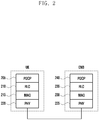
- FIG. 2 is a diagram illustrating a radio protocol structure in a wireless communication system.
- a radio protocol of a wireless communication system includes a packet data convergence protocol (PDCP) 205 or 240, a radio link control (RLC) 210 and 235, and a medium access control (MAC) 215 or 230.
- the packet data convergence protocol (PDCP) 205 or 240 takes charge of IP header compression/decompression operations, and the radio link control (hereinafter, referred to as "RLC") 210 or 235 reconfigures a PDCP packet data unit (PDU) with a proper size.
- RLC radio link control
- the MAC 215 or 230 is coupled with several RLC layer devices configured in one terminal, and performs multiplexing/demultiplexing of RLC PDUs into/from a MAC PDU.
- the physical layer 220 or 225 performs channel coding and modulation of higher layer data to make and transmit OFDM symbols on a radio channel, or performs demodulation and channel decoding of the OFDM symbols received on the radio channel, and transfers the demodulated and channel-decoded symbols to a higher layer.
- HARQ hybrid ARQ
- a reception end transmits whether to receive a packet transmitted from a transmission end with 1 bit.
- This is called HARQ ACK/NACK information.
- Downlink HARQ ACK/NACK information for uplink transmission may be transmitted on a physical hybrid-ARQ indicator channel (PHICH), and uplink HARQ ACK/NACK information for downlink transmission may be transmitted on a physical uplink control channel (PUCCH) or a physical uplink shared channel (PUSCH).
- PHICH physical hybrid-ARQ indicator channel
- PUCCH physical uplink control channel
- PUSCH physical uplink shared channel
- a data transmission mode may be generally divided into an acknowledged mode (AM mode) and an unacknowledged mode (UM mode) when the PDCP version is changed.
- AM mode acknowledged mode
- UM mode unacknowledged mode
- FIGS. 3 and 4 illustrate a data transmission process in an AM mode according to embodiments of the disclosure
- FIGS. 5 and 6 illustrate a data transmission process in an UM mode according to embodiments of the disclosure.
- FIGS. 3 to 6 of the description illustrate, for convenience in explanation, the technical idea of the disclosure based on a downlink data transmission from a base station to a terminal, but the disclosure is not limited thereto, and the technical idea of the disclosure is equally applicable to an uplink data transmission from the terminal to the base station.
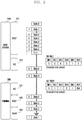
- FIG. 3 is a diagram explaining a process in which a base station transmits data to a terminal in an acknowledged mode (AM mode) according to an embodiment of the disclosure.
- AM mode acknowledged mode
- a base station 310 may give sequence numbers to first data (Data 1) to seventh data (Data 7), and may sequentially transmit the data to a terminal 320 in the order of the sequence numbers through a PDCP layer 311 and an RLC layer 313 in the base station 310.
- the eighth data (Data 8) is fresh data that is not sequence-numbered.
- the first data (Data 1) which the terminal 320 has successfully received from the base station 310, is transmitted up to an upper layer 325 in the terminal 320, and is data for which an ack has been transmitted from the terminal 320 to the base station 310.
- the second data (Data 2) which the terminal 320 has successfully received from the base station 310, is transmitted up to the upper layer 325 in the terminal 320, and is data for which an ack is being transmitted from the terminal 320 to the base station 310.
- the third data (Data 3) which the terminal 320 has successfully received from the base station 310, is transmitted up to the PDCP layer 323 in the terminal 320, and is data for which an ack is being transmitted from the terminal 320 to the base station 310.
- the fourth data (Data 4) is being transmitted from the base station 310 to the terminal 320, and thus is data that currently exists in the air.
- the fifth data (Data 5), which the terminal 320 has successfully received from the base station 310, has been transmitted up to the PDCP layer 323 in the terminal 320, but has not yet been transmitted up to the upper layer 325 for reordering.
- the fourth data is data for which an ack has been transmitted from the terminal 320 to the base station 310.
- the sixth data (Data 6) is data which has been transmitted up to the RLC layer 313 in the base station 310, but has not yet been transmitted to the terminal 320
- the seventh data (Data 7) is data that exists in the PDCP layer 311 in the base station 310 after the sequence numbering.
- the base station 310 may transmit information on a downlink data delivery status indicating whether the base station 310 has successfully received the data having different sequence numbers from the terminal 320 to another base station or a higher layer (e.g., PDCP entity) in the same base station.
- the base station 310 may be an S-NB, and the other base station may be a T-NB.
- the base station 310 may transmit information on a downlink data delivery status in which the first sequence number SN1 and the fifth sequence number SN5 are indicated as "1" to another base station or a higher layer in the same base station.
- the terminal 320 may transmit, to another base station, a PDCP status report indicating whether the PDCP layer 323 in the terminal 320 has successfully received the respective data having different sequence numbers.
- the base station may be an S-NB, and the other base station may be a T-NB.
- the terminal 320 may transmit, to the other base station, a PDCP status report in which the first sequence number SN1 to the third sequence number SN3 and the fifth sequence number SN5 are indicated as "1".
- FIG. 4 is a diagram explaining a process in which a base station transmits data to a terminal in an acknowledged mode (AM mode) according to embodiments of the disclosure.
- AM mode acknowledged mode
- the T-NB may transmit the second data to the terminal based on the first data transmitted from the S-PDCP to the S-RLC and a data transmission mode configured to the T-NB.
- the data transmission mode is the AM mode, three following modes may be defined.
- the base station configures various data transmission modes, and thus the data loss can be effectively reduced.
- the T-NB may give new sequence numbers to the second data (Data 2) to the eighth data (Data 8) excluding the first data (Data 1) for which the S-NB has received an ack through an RLC ARQ. Thereafter, the T-NB may transmit the second data (Data 2) to the eighth data (Data 8), to which the new sequence numbers have been given, to the terminal.
- the second data (Data 2) is data transmitted up to the upper layer in the terminal as shown in FIG. 3
- the T-NB may retransmit the second data in duplication.
- the first AM mode is a mode in which user data is not lost, but may be transmitted to the terminal in duplication, and downlink and uplink based detailed procedures are as follows.
- a source and a target NB operate respective PDCP entities (i.e., S-PDCP and T-PDCP) is as follows.
- a case where a source and a target NB operate a common PDCP entity (e.g., C-PDCP) is as follows.
- the S-PDCP or C-PDCP of the NB operates as follows. 1 All uplink PDCP SDUs successfully received from the S-PDCP (or C-PDCP) in succession may be transmitted to the GW (minimum loss purpose).
- the T-NB may give new sequence numbers to the seventh data (Data 7) and the eighth data (Data 8) excluding the first data (Data 1) to the sixth data (Data 6) transmitted from the S-PDCP to the S-RLC. Thereafter, the T-NB may transmit the seventh data (Data 7) and the eighth data (Data 8) to which the new sequence numbers have been given to the terminal.
- the third data (Data 3) to the sixth data (Data 6) are data that have not been transmitted up to the upper layer in the terminal as shown in FIG. 3 , they may be lost in the PDCP version change process.
- the second AM mode is a mode in which user data may be partially lost, but the data is transmitted to the terminal so as to avoid data duplication, and downlink and uplink based detailed procedures are as follows.
- a case where a source and a target NB operate respective PDCP entities i.e., S-PDCP and T-PDCP.
- C-PDCP PDCP entity
- the S-PDCP or C-PDCP of the NB operates as follows. 1 All uplink PDCP SDUs sequentially and successfully received may be transmitted to the GW (loss minimization purpose).
- the S-NB stops the S-PDCP operation until the buffer of the S-RLC becomes in an empty state, and after the buffer of the S-RLC becomes in the empty state, the T-NB may give new sequence numbers to the seventh data (Data 7) and the eighth data (Data 8) excluding the first data (Data 1) to the sixth data (Data 6) transmitted from the S-PDCP to the S-RLC. Thereafter, the T-NB may transmit the seventh data (Data 7) and the eighth data (Data 8) to which the new sequence numbers have been given to the terminal.
- the buffer of the S-RLC becomes in the empty state means (or assumes) that the first data (Data 1) to the sixth data (Data 6) have been transmitted up to the upper layer in the terminal, it is advantageous that the data loss and duplication do not occur in the third AM mode.
- the PDCP version change is deferred until the buffer of the S-RLC becomes in the empty state, and thus it takes more time to perform the operation in the third AM mode in comparison with other modes.
- the third AM mode is a mode in which data is transmitted to the terminal so as to avoid the user data loss and duplication, and downlink and uplink based detailed procedures are as follows.
- a case where a source and a target NB operate respective PDCP entities i.e., S-PDCP and T-PDCP.
- C-PDCP PDCP entity
- the S-PDCP or C-PDCP of the NB operates as follows. 1 All uplink PDCP SDUs sequentially and successfully received by the S-PDCP (or C-PDCP) may be transmitted to the GW (minimum loss purpose).
- All the AM mode processes are based to be triggered by the handover (e.g., inter NB handover) or the dual connectivity procedure (e.g., SgNB addition), and in case of triggering the PDCP change procedure between the terminal and the eLTE eNB or the gNB without the HO or DC procedure, the remaining operations excluding 1 are the same as those in the above-described processes, and the PDCP or the RLC that is divided into the source and the target in one NB, rather than the NB that is divided into the source and the target, will operate in one PDCP or an RLC.
- the handover e.g., inter NB handover
- the dual connectivity procedure e.g., SgNB addition
- FIG. 5 is a diagram explaining a process in which a base station transmits data to a terminal in an unacknowledged mode (UM mode) according to an embodiment of the disclosure.
- UM mode unacknowledged mode
- the terminal does not transmit ack/nack indicating whether a data reception has succeeded to the base station.
- a base station 510 may give sequence numbers to first data (Data 1) to seventh data (Data 7), and may sequentially transmit the data to a terminal 520 in the order of the sequence numbers through a PDCP layer 511 and an RLC layer 513 in the base station 510.
- the eighth data (Data 8) is fresh data that is not sequence-numbered.
- the first data (Data 1) and the second data (Data 2) are data which the terminal 520 has successfully received from the base station 510, and are transmitted up to an upper layer 525 in the terminal 520.
- the third data (Data 3) is data which the terminal 520 has successfully received from the base station 510, and is transmitted up to the PDCP layer 523 in the terminal 520.
- the fourth data (Data 4) is being transmitted from the base station 510 to the terminal 520, and thus is data that currently exists in the air.
- the fifth data (Data 5) is data which the terminal 520 has successfully received from the base station 510, is transmitted up to the PDCP layer 523 in the terminal 520, but has not yet been transmitted up to the upper layer 525 for reordering.
- the sixth data (Data 6) is data which has been transmitted up to the RLC layer 513 in the base station 510, but has not yet been transmitted to the terminal 520
- the seventh data (Data 7) is data that exists in the PDCP layer 511 in the base station 510 after the sequence numbering.
- FIG. 6 is a diagram explaining a process in which a base station transmits data to a terminal in an unacknowledged mode (UM mode) according to embodiments of the disclosure.
- UM mode unacknowledged mode
- the T-NB may transmit the second data to the terminal based on the first data transmitted from the S-PDCP to the S-RLC and a data transmission mode configured to the T-NB.
- the data transmission mode is the UM mode, three following modes may be defined.
- the base station configures various data transmission modes, and thus the data loss can be effectively reduced.
- the T-NB may give new sequence numbers to the second data (Data 2) to the eighth data (Data 8) excluding the first data (Data 1) for which a waiting timer expires. Thereafter, the T-NB may transmit the second data (Data 2) to the eighth data (Data 8), to which the new sequence numbers have been given, to the terminal.
- the second data (Data 2) is data transmitted up to the upper layer in the terminal as shown in FIG. 3
- the T-NB may retransmit the second data in duplication.
- the first UM mode is a mode in which a loss of user data is minimized, but the data may be transmitted to the terminal in duplication, and downlink and uplink based detailed procedures are as follows.
- a case where a source and a target NB operate respective PDCP entities i.e., S-PDCP and T-PDCP.
- a case where a source and a target NB operate a common PDCP entity (e.g., C-PDCP) is as follows.
- the S-PDCP or C-PDCP of the NB operates as follows. 1 All uplink PDCP SDUs sequentially and successfully received by the S-PDCP (or C-PDCP) may be transmitted to the GW (minimum loss purpose).
- the UM mode process is based to be triggered by the handover (e.g., inter NB handover) or the dual connectivity procedure (e.g., SgNB addition), and in case of triggering the PDCP change procedure between the terminal and the eLTE eNB or the gNB base station without the HO or DC procedure, the remaining operations excluding 2 are the same as those in the above-described processes, and the PDCP or the RLC that is divided into the source and the target in one NB, rather than the NB that is divided into the source and the target, will operate in one PDCP or an RLC.
- the handover e.g., inter NB handover
- the dual connectivity procedure e.g., SgNB addition
- the T-NB may give new sequence numbers to the seventh data (Data 7) and the eighth data (Data 8) excluding the first data (Data 1) to the sixth data (Data 6) transmitted from the S-PDCP to the S-RLC. Thereafter, the T-NB may transmit the seventh data (Data 7) and the eighth data (Data 8) to which the new sequence numbers have been given to the terminal.
- the third data (Data 3) to the sixth data (Data 6) are data that have not been transmitted up to the upper layer in the terminal as shown in FIG. 5 , they may be lost in the PDCP version change process.
- the second UM mode is a mode in which user data may be partially lost, but the data is transmitted to the terminal so as to avoid data duplication, and downlink and uplink based detailed procedures are as follows.
- a case where a source and a target NB operate respective PDCP entities i.e., S-PDCP and T-PDCP.
- C-PDCP PDCP entity
- the S-PDCP or C-PDCP of the NB operates as follows. 1 All uplink PDCP SDUs sequentially and successfully received may be transmitted to the GW (minimum loss purpose).
- the S-NB stops the S-PDCP operation until a suspending timer expires, and after the expiration of the suspending timer, the T-NB may give new sequence numbers to the seventh data (Data 7) and the eighth data (Data 8) excluding the first data (Data 1) to the sixth data (Data 6) already transmitted from the S-PDCP to the S-RLC. Thereafter, the T-NB may transmit the seventh data (Data 7) and the eighth data (Data 8) to which the new sequence numbers have been given to the terminal.
- a case where the suspending timer expires means (or assumes) that the first data (Data 1) to the sixth data (Data 6) have been transmitted up to the upper layer in the terminal, it is advantageous that the data loss and duplication do not occur in the third UM mode.
- the PDCP version change is deferred until the suspending timer expires, and thus it takes more time to perform the operation in the third UM mode in comparison with other modes.
- the third UM mode is a mode in which data is transmitted to the terminal so as to prevent or minimize the user data loss and to avoid data duplication, and downlink and uplink based detailed procedures are as follows.
- a case where a source and a target NB operate respective PDCP entities i.e., S-PDCP and T-PDCP.
- C-PDCP PDCP entity
- the S-PDCP or C-PDCP of the NB operates as follows. 1 All uplink PDCP SDUs sequentially and successfully received by the S-PDCP (or C-PDCP) may be transmitted to the GW (minimum loss purpose).
- All the UM mode processes are based to be triggered by the handover (e.g., inter NB handover) or the dual connectivity procedure (e.g., SgNB addition), and in case of triggering the PDCP change procedure between the terminal and the eLTE eNB or the gNB without the HO or DC procedure, the remaining operations excluding 1 are the same as those in the above-described processes, and the PDCP or the RLC that is divided into the source and the target in one NB, rather than the NB that is divided into the source and the target, will operate in one PDCP or an RLC.
- the handover e.g., inter NB handover
- the dual connectivity procedure e.g., SgNB addition
- FIG. 7 is a diagram illustrating the structure of a communication device according to embodiments of the disclosure.
- a communication device may include a transceiver 710, a controller 720, and a storage 730.
- the communication device may be implemented by the base station or the terminal as illustrated in FIGS. 1 to 6
- the controller may be defined as a circuit or an application-specific integrated circuit or at least one processor.
- the transceiver 710 may transmit and receive signals to and from another communication device.
- the communication device may receive system information from the base station, and may receive a synchronization signal or a reference signal.
- the controller 720 may control the overall operation of the communication device according to embodiments proposed in the disclosure. For example, the controller 720 may control a signal flow so as to perform the operations described in FIGS. 1 to 6 .
- the controller 720 may be configured to identify whether a PDCP version of a first PDCP entity for the first communication device (communication device of FIG. 7 ) is changed from a PDCP version of a second PDCP entity for a second communication device, identify first data transmitted from the second PDCP entity to a radio link control (RLC) entity for the second communication device if the PDCP version of the first PDCP entity is changed, and control to transmit second data to a third communication device based on the first data and a data transmission mode configured for the first communication device.
- RLC radio link control
- the third communication device may be implemented by a terminal, and if the first communication device and the second communication device are implemented by different terminals, the third communication device may be implemented by a base station.
- the storage 730 may store at least one of information transmitted and received through the transceiver 710 and information created through the controller 720.
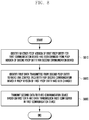
- FIG. 8 is a diagram illustrating an operation method of a communication device according to an embodiment of the disclosure.
- the third communication device may be implemented by a terminal, and if the first communication device and the second communication device are implemented by different terminals, the third communication device may be implemented by a base station.
- the first communication device may identify whether a PDCP version of a first PDCP entity for the first communication device has been changed from a PDCP version of a second PDCP entity for a second communication device.
- PDCP packet data convergence protocol
- the third communication device performs a handover from the second communication device to the first communication device or the third communication device is in dual connectivity with respect to the first communication device and the second communication device in a state where the first communication device and the second communication device belong to different networks, respectively, the PDCP version of the first PDCP entity may be changed from the PDCP version of the second PDCP entity.
- the first PDCP entity and the second PDCP entity may be implemented by a common entity.
- the first communication device may identify first data transmitted from the second PDCP entity to a radio link control (RLC) entity for the second communication device if the PDCP version of the first PDCP entity is changed.
- RLC radio link control
- the first communication device may receive data transmission status information from the second communication device, and may determine the first data transmitted from the second PDCP entity to the RLC entity based on the data transmission status information.
- the first communication device may transmit second data to a third communication device based on the first data and a data transmission mode configured for the first communication device.
- the first communication device may give a new sequence number to the second data.
- the first communication device may receive PDCP status information from the third communication device, and based on the PDCP status information, the third communication device may determine the second data by excluding the data successfully received from the second communication device.
- the first communication device may determine the second data by excluding data for which an ack is sequentially received through an RLC automatic repeat request (ARQ) from the first data.
- ARQ RLC automatic repeat request
- the first communication device may determine the second data by excluding the first data.
- the first communication device may receive, from the second communication device, information indicating that a buffer of the RLC entity is in an empty state, and may determine the second data by excluding the first data in response to the information.
- the first communication device may determine the second data by excluding data for which a first timer expires from the first data.
- UM mode first unacknowledged mode
- the first communication device may determine the second data by excluding the first data.
- the first communication device may determine the second data by excluding the first data in case that a second timer (suspending timer) expires.
Landscapes
- Engineering & Computer Science (AREA)
- Computer Networks & Wireless Communication (AREA)
- Signal Processing (AREA)
- Mobile Radio Communication Systems (AREA)
Applications Claiming Priority (2)
| Application Number | Priority Date | Filing Date | Title |
|---|---|---|---|
| KR1020180026700A KR102625128B1 (ko) | 2018-03-07 | 2018-03-07 | 무선통신 시스템에서 pdcp 버전 변경 시 데이터 전송 방법 및 장치 |
| PCT/KR2019/002641 WO2019172669A1 (ko) | 2018-03-07 | 2019-03-07 | 무선통신 시스템에서 pdcp 버전 변경 시 데이터 전송 방법 및 장치 |
Publications (3)
| Publication Number | Publication Date |
|---|---|
| EP3703416A1 true EP3703416A1 (de) | 2020-09-02 |
| EP3703416A4 EP3703416A4 (de) | 2020-10-14 |
| EP3703416B1 EP3703416B1 (de) | 2023-11-01 |
Family
ID=67845704
Family Applications (1)
| Application Number | Title | Priority Date | Filing Date |
|---|---|---|---|
| EP19764937.9A Active EP3703416B1 (de) | 2018-03-07 | 2019-03-07 | Verfahren und vorrichtung zum übertragen von daten im fall einer pdcp-versionsänderung in einem drahtlosen kommunikationssystem |
Country Status (4)
| Country | Link |
|---|---|
| US (1) | US11729685B2 (de) |
| EP (1) | EP3703416B1 (de) |
| KR (1) | KR102625128B1 (de) |
| WO (1) | WO2019172669A1 (de) |
Cited By (1)
| Publication number | Priority date | Publication date | Assignee | Title |
|---|---|---|---|---|
| WO2026050215A3 (en) * | 2024-08-30 | 2026-04-09 | Qualcomm Incorporated | Radio link control status report timing selection |
Families Citing this family (8)
| Publication number | Priority date | Publication date | Assignee | Title |
|---|---|---|---|---|
| CN114208279B (zh) * | 2019-05-29 | 2024-05-10 | 谷歌有限责任公司 | 无线电承载的序列号转移 |
| US20220234211A1 (en) * | 2019-06-24 | 2022-07-28 | Telefonaktiebolaget Lm Ericsson (Publ) | Technique for Selecting a Transmission Mode for Wirelessly Transmitting a Message Comprising Control Information for Robotic Device Control |
| US11800584B2 (en) * | 2019-07-12 | 2023-10-24 | Parallel Wireless, Inc. | 5G mobile network with intelligent 5G non-standalone (NSA) radio access network (RAN) |
| CN112235731B (zh) * | 2019-07-15 | 2022-12-27 | 华为技术有限公司 | 一种通信方法、装置和系统 |
| KR102854564B1 (ko) | 2019-11-01 | 2025-09-03 | 삼성전자 주식회사 | 차세대 이동 통신 시스템의 daps 핸드오버에서 pdcp 엔티티를 구동하는 방법 및 장치 |
| US12262255B2 (en) | 2019-11-06 | 2025-03-25 | Samsung Electronics Co., Ltd. | Operation method and apparatus of protocol layer device for efficient handover in wireless communication system |
| WO2022021350A1 (en) * | 2020-07-31 | 2022-02-03 | Lenovo (Beijing) Limited | Methods and apparatuses for data transmission for multicast broadcast service |
| EP4190024A4 (de) * | 2020-08-03 | 2024-04-24 | Qualcomm Incorporated | Mrb-architektur mit pdcp-neuübertragung |
Family Cites Families (11)
| Publication number | Priority date | Publication date | Assignee | Title |
|---|---|---|---|---|
| KR100595583B1 (ko) | 2001-07-09 | 2006-07-03 | 엘지전자 주식회사 | 이동통신시스템에서 핸드오버에 따른 패킷 데이터 전송 방법 |
| US8335189B2 (en) | 2007-09-28 | 2012-12-18 | Interdigital Patent Holdings, Inc. | Operation of control protocol data units in packet data convergence protocol |
| CN102651892B (zh) | 2007-09-29 | 2016-03-30 | 华为技术有限公司 | 基于s1切换的下行及上行数据包转发方法 |
| KR101500342B1 (ko) * | 2008-11-12 | 2015-03-10 | 삼성전자주식회사 | 무선 통신 시스템에서 핸드 오버 시 데이터 포워딩 방법 및이를 수행하는 시스템 |
| CN109348508B (zh) | 2013-11-11 | 2022-04-12 | 华为技术有限公司 | 数据传输方法及装置 |
| CN105580429B (zh) * | 2013-11-21 | 2020-06-26 | 华为技术有限公司 | 一种选择目标网络侧设备的方法及装置 |
| US9538575B2 (en) * | 2014-01-30 | 2017-01-03 | Sharp Kabushiki Kaisha | Systems and methods for dual-connectivity operation |
| US20170019945A1 (en) | 2014-03-21 | 2017-01-19 | Nokia Solutions And Networks Oy | Dual Connectivity Re-Establishment |
| US11129233B2 (en) * | 2016-04-01 | 2021-09-21 | Intel Corporation | User equipment (UE), evolved node-b (ENB) and methods for a packet convergence and link control (PCLC) layer |
| EP3346764A1 (de) * | 2017-01-05 | 2018-07-11 | Panasonic Intellectual Property Corporation of America | Verfahren und vorrichtungen für die auswahl einer funkverbindung in einem mobilen kommunikationssystem |
| WO2018232559A1 (zh) * | 2017-06-19 | 2018-12-27 | 北京小米移动软件有限公司 | 数据处理方法及装置、用户设备和计算机可读存储介质 |
-
2018
- 2018-03-07 KR KR1020180026700A patent/KR102625128B1/ko active Active
-
2019
- 2019-03-07 US US16/978,167 patent/US11729685B2/en active Active
- 2019-03-07 WO PCT/KR2019/002641 patent/WO2019172669A1/ko not_active Ceased
- 2019-03-07 EP EP19764937.9A patent/EP3703416B1/de active Active
Cited By (1)
| Publication number | Priority date | Publication date | Assignee | Title |
|---|---|---|---|---|
| WO2026050215A3 (en) * | 2024-08-30 | 2026-04-09 | Qualcomm Incorporated | Radio link control status report timing selection |
Also Published As
| Publication number | Publication date |
|---|---|
| EP3703416B1 (de) | 2023-11-01 |
| KR102625128B1 (ko) | 2024-01-16 |
| US11729685B2 (en) | 2023-08-15 |
| WO2019172669A1 (ko) | 2019-09-12 |
| EP3703416A4 (de) | 2020-10-14 |
| US20210045029A1 (en) | 2021-02-11 |
| KR20190105930A (ko) | 2019-09-18 |
Similar Documents
| Publication | Publication Date | Title |
|---|---|---|
| EP3703416B1 (de) | Verfahren und vorrichtung zum übertragen von daten im fall einer pdcp-versionsänderung in einem drahtlosen kommunikationssystem | |
| US11751097B2 (en) | Method and apparatus for reestablishing packet data convergence protocol (PDCP) entity in a wireless communication system | |
| US12219391B2 (en) | Method and apparatus for data processing in wireless communication system | |
| US12058768B2 (en) | Method and apparatus for transmitting and receiving data in wireless communication system | |
| CN112672343B (zh) | 无线通信系统中管理用户平面操作的方法和装置 | |
| US12028759B2 (en) | Method and apparatus for performing handover procedure in wireless communication system | |
| EP3669573B1 (de) | Verfahren und vorrichtung zur verarbeitung eines pakets in einem drahtloskommunikationssystem | |
| US10966123B2 (en) | Method and apparatus for preventing loss of data packets | |
| KR102554052B1 (ko) | 차세대 이동 통신 시스템에서 효율적인 패킷 중복 전송 및 수신 방법 및 장치 | |
| CN111316689B (zh) | 用于在无线通信系统中发送和接收数据的方法和装置 | |
| KR20200128977A (ko) | 무선 통신 시스템에서 단말 능력을 보고하는 방법 및 장치 | |
| US20190239114A1 (en) | Communications devices, method and mobile communications system | |
| US20180191479A1 (en) | Method and apparatus for retransmission in communication system | |
| KR20190097996A (ko) | 차세대 무선 통신 시스템에서 패킷 중복 전송 기술의 활성화 및 비활성화 시 효율적인 동작 방법 및 장치 | |
| US20220256412A1 (en) | Packet redundancy processing method for supporting enhanced handover in next generation mobile communication system, method for preventing header decompression failure during handover and apparatus therefor | |
| US20210298123A1 (en) | Wireless communication system, transmission and reception method, recording medium, wireless communication base station device, control circuit, and control method | |
| US12028785B2 (en) | Billing method and apparatus in wireless communication system | |
| EP3542484B1 (de) | Verfahren zur übertragung von daten in einer funkkommunikation | |
| US20210021379A1 (en) | Base station and automatic retransmission scheduling method thereof | |
| EP4531316B1 (de) | Vorrichtung, verfahren und computerprogramm zur neuübertragung von daten | |
| US20240187965A1 (en) | Method for lossless upstream packet processing during movement between donors in backhaul and access hole combination system, and method for processing ip address during separation of cp and up | |
| CN117997482A (zh) | 中继辅助重传 |
Legal Events
| Date | Code | Title | Description |
|---|---|---|---|
| STAA | Information on the status of an ep patent application or granted ep patent |
Free format text: STATUS: THE INTERNATIONAL PUBLICATION HAS BEEN MADE |
|
| PUAI | Public reference made under article 153(3) epc to a published international application that has entered the european phase |
Free format text: ORIGINAL CODE: 0009012 |
|
| STAA | Information on the status of an ep patent application or granted ep patent |
Free format text: STATUS: REQUEST FOR EXAMINATION WAS MADE |
|
| 17P | Request for examination filed |
Effective date: 20200525 |
|
| AK | Designated contracting states |
Kind code of ref document: A1 Designated state(s): AL AT BE BG CH CY CZ DE DK EE ES FI FR GB GR HR HU IE IS IT LI LT LU LV MC MK MT NL NO PL PT RO RS SE SI SK SM TR |
|
| AX | Request for extension of the european patent |
Extension state: BA ME |
|
| A4 | Supplementary search report drawn up and despatched |
Effective date: 20200914 |
|
| RIC1 | Information provided on ipc code assigned before grant |
Ipc: H04W 80/02 20090101ALI20200908BHEP Ipc: H04L 1/18 20060101ALN20200908BHEP Ipc: H04W 88/06 20090101ALN20200908BHEP Ipc: H04W 28/04 20090101ALI20200908BHEP Ipc: H04W 28/02 20090101AFI20200908BHEP Ipc: H04L 1/16 20060101ALN20200908BHEP Ipc: H04W 36/00 20090101ALI20200908BHEP |
|
| DAV | Request for validation of the european patent (deleted) | ||
| DAX | Request for extension of the european patent (deleted) | ||
| STAA | Information on the status of an ep patent application or granted ep patent |
Free format text: STATUS: EXAMINATION IS IN PROGRESS |
|
| 17Q | First examination report despatched |
Effective date: 20210928 |
|
| GRAP | Despatch of communication of intention to grant a patent |
Free format text: ORIGINAL CODE: EPIDOSNIGR1 |
|
| STAA | Information on the status of an ep patent application or granted ep patent |
Free format text: STATUS: GRANT OF PATENT IS INTENDED |
|
| INTG | Intention to grant announced |
Effective date: 20230526 |
|
| GRAS | Grant fee paid |
Free format text: ORIGINAL CODE: EPIDOSNIGR3 |
|
| GRAA | (expected) grant |
Free format text: ORIGINAL CODE: 0009210 |
|
| STAA | Information on the status of an ep patent application or granted ep patent |
Free format text: STATUS: THE PATENT HAS BEEN GRANTED |
|
| AK | Designated contracting states |
Kind code of ref document: B1 Designated state(s): AL AT BE BG CH CY CZ DE DK EE ES FI FR GB GR HR HU IE IS IT LI LT LU LV MC MK MT NL NO PL PT RO RS SE SI SK SM TR |
|
| REG | Reference to a national code |
Ref country code: GB Ref legal event code: FG4D |
|
| REG | Reference to a national code |
Ref country code: CH Ref legal event code: EP |
|
| REG | Reference to a national code |
Ref country code: DE Ref legal event code: R096 Ref document number: 602019040614 Country of ref document: DE |
|
| REG | Reference to a national code |
Ref country code: IE Ref legal event code: FG4D |
|
| REG | Reference to a national code |
Ref country code: LT Ref legal event code: MG9D |
|
| REG | Reference to a national code |
Ref country code: NL Ref legal event code: MP Effective date: 20231101 |
|
| PG25 | Lapsed in a contracting state [announced via postgrant information from national office to epo] |
Ref country code: GR Free format text: LAPSE BECAUSE OF FAILURE TO SUBMIT A TRANSLATION OF THE DESCRIPTION OR TO PAY THE FEE WITHIN THE PRESCRIBED TIME-LIMIT Effective date: 20240202 |
|
| PG25 | Lapsed in a contracting state [announced via postgrant information from national office to epo] |
Ref country code: IS Free format text: LAPSE BECAUSE OF FAILURE TO SUBMIT A TRANSLATION OF THE DESCRIPTION OR TO PAY THE FEE WITHIN THE PRESCRIBED TIME-LIMIT Effective date: 20240301 |
|
| PG25 | Lapsed in a contracting state [announced via postgrant information from national office to epo] |
Ref country code: LT Free format text: LAPSE BECAUSE OF FAILURE TO SUBMIT A TRANSLATION OF THE DESCRIPTION OR TO PAY THE FEE WITHIN THE PRESCRIBED TIME-LIMIT Effective date: 20231101 |
|
| REG | Reference to a national code |
Ref country code: AT Ref legal event code: MK05 Ref document number: 1628637 Country of ref document: AT Kind code of ref document: T Effective date: 20231101 |
|
| PG25 | Lapsed in a contracting state [announced via postgrant information from national office to epo] |
Ref country code: NL Free format text: LAPSE BECAUSE OF FAILURE TO SUBMIT A TRANSLATION OF THE DESCRIPTION OR TO PAY THE FEE WITHIN THE PRESCRIBED TIME-LIMIT Effective date: 20231101 |
|
| PG25 | Lapsed in a contracting state [announced via postgrant information from national office to epo] |
Ref country code: AT Free format text: LAPSE BECAUSE OF FAILURE TO SUBMIT A TRANSLATION OF THE DESCRIPTION OR TO PAY THE FEE WITHIN THE PRESCRIBED TIME-LIMIT Effective date: 20231101 |
|
| PG25 | Lapsed in a contracting state [announced via postgrant information from national office to epo] |
Ref country code: ES Free format text: LAPSE BECAUSE OF FAILURE TO SUBMIT A TRANSLATION OF THE DESCRIPTION OR TO PAY THE FEE WITHIN THE PRESCRIBED TIME-LIMIT Effective date: 20231101 |
|
| PG25 | Lapsed in a contracting state [announced via postgrant information from national office to epo] |
Ref country code: NL Free format text: LAPSE BECAUSE OF FAILURE TO SUBMIT A TRANSLATION OF THE DESCRIPTION OR TO PAY THE FEE WITHIN THE PRESCRIBED TIME-LIMIT Effective date: 20231101 Ref country code: LT Free format text: LAPSE BECAUSE OF FAILURE TO SUBMIT A TRANSLATION OF THE DESCRIPTION OR TO PAY THE FEE WITHIN THE PRESCRIBED TIME-LIMIT Effective date: 20231101 Ref country code: IS Free format text: LAPSE BECAUSE OF FAILURE TO SUBMIT A TRANSLATION OF THE DESCRIPTION OR TO PAY THE FEE WITHIN THE PRESCRIBED TIME-LIMIT Effective date: 20240301 Ref country code: GR Free format text: LAPSE BECAUSE OF FAILURE TO SUBMIT A TRANSLATION OF THE DESCRIPTION OR TO PAY THE FEE WITHIN THE PRESCRIBED TIME-LIMIT Effective date: 20240202 Ref country code: ES Free format text: LAPSE BECAUSE OF FAILURE TO SUBMIT A TRANSLATION OF THE DESCRIPTION OR TO PAY THE FEE WITHIN THE PRESCRIBED TIME-LIMIT Effective date: 20231101 Ref country code: BG Free format text: LAPSE BECAUSE OF FAILURE TO SUBMIT A TRANSLATION OF THE DESCRIPTION OR TO PAY THE FEE WITHIN THE PRESCRIBED TIME-LIMIT Effective date: 20240201 Ref country code: AT Free format text: LAPSE BECAUSE OF FAILURE TO SUBMIT A TRANSLATION OF THE DESCRIPTION OR TO PAY THE FEE WITHIN THE PRESCRIBED TIME-LIMIT Effective date: 20231101 Ref country code: PT Free format text: LAPSE BECAUSE OF FAILURE TO SUBMIT A TRANSLATION OF THE DESCRIPTION OR TO PAY THE FEE WITHIN THE PRESCRIBED TIME-LIMIT Effective date: 20240301 |
|
| PG25 | Lapsed in a contracting state [announced via postgrant information from national office to epo] |
Ref country code: SE Free format text: LAPSE BECAUSE OF FAILURE TO SUBMIT A TRANSLATION OF THE DESCRIPTION OR TO PAY THE FEE WITHIN THE PRESCRIBED TIME-LIMIT Effective date: 20231101 Ref country code: RS Free format text: LAPSE BECAUSE OF FAILURE TO SUBMIT A TRANSLATION OF THE DESCRIPTION OR TO PAY THE FEE WITHIN THE PRESCRIBED TIME-LIMIT Effective date: 20231101 Ref country code: PL Free format text: LAPSE BECAUSE OF FAILURE TO SUBMIT A TRANSLATION OF THE DESCRIPTION OR TO PAY THE FEE WITHIN THE PRESCRIBED TIME-LIMIT Effective date: 20231101 Ref country code: NO Free format text: LAPSE BECAUSE OF FAILURE TO SUBMIT A TRANSLATION OF THE DESCRIPTION OR TO PAY THE FEE WITHIN THE PRESCRIBED TIME-LIMIT Effective date: 20240201 Ref country code: LV Free format text: LAPSE BECAUSE OF FAILURE TO SUBMIT A TRANSLATION OF THE DESCRIPTION OR TO PAY THE FEE WITHIN THE PRESCRIBED TIME-LIMIT Effective date: 20231101 Ref country code: HR Free format text: LAPSE BECAUSE OF FAILURE TO SUBMIT A TRANSLATION OF THE DESCRIPTION OR TO PAY THE FEE WITHIN THE PRESCRIBED TIME-LIMIT Effective date: 20231101 |
|
| PG25 | Lapsed in a contracting state [announced via postgrant information from national office to epo] |
Ref country code: DK Free format text: LAPSE BECAUSE OF FAILURE TO SUBMIT A TRANSLATION OF THE DESCRIPTION OR TO PAY THE FEE WITHIN THE PRESCRIBED TIME-LIMIT Effective date: 20231101 |
|
| PG25 | Lapsed in a contracting state [announced via postgrant information from national office to epo] |
Ref country code: CZ Free format text: LAPSE BECAUSE OF FAILURE TO SUBMIT A TRANSLATION OF THE DESCRIPTION OR TO PAY THE FEE WITHIN THE PRESCRIBED TIME-LIMIT Effective date: 20231101 |
|
| PG25 | Lapsed in a contracting state [announced via postgrant information from national office to epo] |
Ref country code: SK Free format text: LAPSE BECAUSE OF FAILURE TO SUBMIT A TRANSLATION OF THE DESCRIPTION OR TO PAY THE FEE WITHIN THE PRESCRIBED TIME-LIMIT Effective date: 20231101 |
|
| PG25 | Lapsed in a contracting state [announced via postgrant information from national office to epo] |
Ref country code: SM Free format text: LAPSE BECAUSE OF FAILURE TO SUBMIT A TRANSLATION OF THE DESCRIPTION OR TO PAY THE FEE WITHIN THE PRESCRIBED TIME-LIMIT Effective date: 20231101 Ref country code: SK Free format text: LAPSE BECAUSE OF FAILURE TO SUBMIT A TRANSLATION OF THE DESCRIPTION OR TO PAY THE FEE WITHIN THE PRESCRIBED TIME-LIMIT Effective date: 20231101 Ref country code: EE Free format text: LAPSE BECAUSE OF FAILURE TO SUBMIT A TRANSLATION OF THE DESCRIPTION OR TO PAY THE FEE WITHIN THE PRESCRIBED TIME-LIMIT Effective date: 20231101 Ref country code: DK Free format text: LAPSE BECAUSE OF FAILURE TO SUBMIT A TRANSLATION OF THE DESCRIPTION OR TO PAY THE FEE WITHIN THE PRESCRIBED TIME-LIMIT Effective date: 20231101 Ref country code: CZ Free format text: LAPSE BECAUSE OF FAILURE TO SUBMIT A TRANSLATION OF THE DESCRIPTION OR TO PAY THE FEE WITHIN THE PRESCRIBED TIME-LIMIT Effective date: 20231101 |
|
| REG | Reference to a national code |
Ref country code: DE Ref legal event code: R097 Ref document number: 602019040614 Country of ref document: DE |
|
| PLBE | No opposition filed within time limit |
Free format text: ORIGINAL CODE: 0009261 |
|
| STAA | Information on the status of an ep patent application or granted ep patent |
Free format text: STATUS: NO OPPOSITION FILED WITHIN TIME LIMIT |
|
| 26N | No opposition filed |
Effective date: 20240802 |
|
| PG25 | Lapsed in a contracting state [announced via postgrant information from national office to epo] |
Ref country code: SI Free format text: LAPSE BECAUSE OF FAILURE TO SUBMIT A TRANSLATION OF THE DESCRIPTION OR TO PAY THE FEE WITHIN THE PRESCRIBED TIME-LIMIT Effective date: 20231101 |
|
| PG25 | Lapsed in a contracting state [announced via postgrant information from national office to epo] |
Ref country code: SI Free format text: LAPSE BECAUSE OF FAILURE TO SUBMIT A TRANSLATION OF THE DESCRIPTION OR TO PAY THE FEE WITHIN THE PRESCRIBED TIME-LIMIT Effective date: 20231101 |
|
| REG | Reference to a national code |
Ref country code: CH Ref legal event code: PL |
|
| PG25 | Lapsed in a contracting state [announced via postgrant information from national office to epo] |
Ref country code: LU Free format text: LAPSE BECAUSE OF NON-PAYMENT OF DUE FEES Effective date: 20240307 |
|
| PG25 | Lapsed in a contracting state [announced via postgrant information from national office to epo] |
Ref country code: MC Free format text: LAPSE BECAUSE OF FAILURE TO SUBMIT A TRANSLATION OF THE DESCRIPTION OR TO PAY THE FEE WITHIN THE PRESCRIBED TIME-LIMIT Effective date: 20231101 |
|
| PG25 | Lapsed in a contracting state [announced via postgrant information from national office to epo] |
Ref country code: MC Free format text: LAPSE BECAUSE OF FAILURE TO SUBMIT A TRANSLATION OF THE DESCRIPTION OR TO PAY THE FEE WITHIN THE PRESCRIBED TIME-LIMIT Effective date: 20231101 Ref country code: LU Free format text: LAPSE BECAUSE OF NON-PAYMENT OF DUE FEES Effective date: 20240307 |
|
| REG | Reference to a national code |
Ref country code: BE Ref legal event code: MM Effective date: 20240331 |
|
| PG25 | Lapsed in a contracting state [announced via postgrant information from national office to epo] |
Ref country code: BE Free format text: LAPSE BECAUSE OF NON-PAYMENT OF DUE FEES Effective date: 20240331 |
|
| PG25 | Lapsed in a contracting state [announced via postgrant information from national office to epo] |
Ref country code: IE Free format text: LAPSE BECAUSE OF NON-PAYMENT OF DUE FEES Effective date: 20240307 |
|
| PG25 | Lapsed in a contracting state [announced via postgrant information from national office to epo] |
Ref country code: IE Free format text: LAPSE BECAUSE OF NON-PAYMENT OF DUE FEES Effective date: 20240307 Ref country code: BE Free format text: LAPSE BECAUSE OF NON-PAYMENT OF DUE FEES Effective date: 20240331 Ref country code: CH Free format text: LAPSE BECAUSE OF NON-PAYMENT OF DUE FEES Effective date: 20240331 |
|
| PG25 | Lapsed in a contracting state [announced via postgrant information from national office to epo] |
Ref country code: RO Free format text: LAPSE BECAUSE OF FAILURE TO SUBMIT A TRANSLATION OF THE DESCRIPTION OR TO PAY THE FEE WITHIN THE PRESCRIBED TIME-LIMIT Effective date: 20231101 |
|
| PG25 | Lapsed in a contracting state [announced via postgrant information from national office to epo] |
Ref country code: CY Free format text: LAPSE BECAUSE OF FAILURE TO SUBMIT A TRANSLATION OF THE DESCRIPTION OR TO PAY THE FEE WITHIN THE PRESCRIBED TIME-LIMIT; INVALID AB INITIO Effective date: 20190307 |
|
| PG25 | Lapsed in a contracting state [announced via postgrant information from national office to epo] |
Ref country code: HU Free format text: LAPSE BECAUSE OF FAILURE TO SUBMIT A TRANSLATION OF THE DESCRIPTION OR TO PAY THE FEE WITHIN THE PRESCRIBED TIME-LIMIT; INVALID AB INITIO Effective date: 20190307 |
|
| PG25 | Lapsed in a contracting state [announced via postgrant information from national office to epo] |
Ref country code: FI Free format text: LAPSE BECAUSE OF FAILURE TO SUBMIT A TRANSLATION OF THE DESCRIPTION OR TO PAY THE FEE WITHIN THE PRESCRIBED TIME-LIMIT Effective date: 20231101 |
|
| PG25 | Lapsed in a contracting state [announced via postgrant information from national office to epo] |
Ref country code: TR Free format text: LAPSE BECAUSE OF FAILURE TO SUBMIT A TRANSLATION OF THE DESCRIPTION OR TO PAY THE FEE WITHIN THE PRESCRIBED TIME-LIMIT Effective date: 20231101 |
|
| PGFP | Annual fee paid to national office [announced via postgrant information from national office to epo] |
Ref country code: GB Payment date: 20260224 Year of fee payment: 8 |
|
| PGFP | Annual fee paid to national office [announced via postgrant information from national office to epo] |
Ref country code: DE Payment date: 20260220 Year of fee payment: 8 |
|
| PGFP | Annual fee paid to national office [announced via postgrant information from national office to epo] |
Ref country code: IT Payment date: 20260223 Year of fee payment: 8 |
|
| PGFP | Annual fee paid to national office [announced via postgrant information from national office to epo] |
Ref country code: FR Payment date: 20260224 Year of fee payment: 8 |