EP3702984B1 - Elektronische vorrichtung und verfahren zur bereitstellung von informationen durch eine elektronische vorrichtung - Google Patents
Elektronische vorrichtung und verfahren zur bereitstellung von informationen durch eine elektronische vorrichtung Download PDFInfo
- Publication number
- EP3702984B1 EP3702984B1 EP20159047.8A EP20159047A EP3702984B1 EP 3702984 B1 EP3702984 B1 EP 3702984B1 EP 20159047 A EP20159047 A EP 20159047A EP 3702984 B1 EP3702984 B1 EP 3702984B1
- Authority
- EP
- European Patent Office
- Prior art keywords
- electronic device
- user
- information
- external electronic
- external
- Prior art date
- Legal status (The legal status is an assumption and is not a legal conclusion. Google has not performed a legal analysis and makes no representation as to the accuracy of the status listed.)
- Active
Links
Images






Classifications
-
- G—PHYSICS
- G06—COMPUTING OR CALCULATING; COUNTING
- G06Q—INFORMATION AND COMMUNICATION TECHNOLOGY [ICT] SPECIALLY ADAPTED FOR ADMINISTRATIVE, COMMERCIAL, FINANCIAL, MANAGERIAL OR SUPERVISORY PURPOSES; SYSTEMS OR METHODS SPECIALLY ADAPTED FOR ADMINISTRATIVE, COMMERCIAL, FINANCIAL, MANAGERIAL OR SUPERVISORY PURPOSES, NOT OTHERWISE PROVIDED FOR
- G06Q30/00—Commerce
- G06Q30/02—Marketing; Price estimation or determination; Fundraising
- G06Q30/0241—Advertisements
- G06Q30/0251—Targeted advertisements
- G06Q30/0269—Targeted advertisements based on user profile or attribute
- G06Q30/0271—Personalized advertisement
-
- G—PHYSICS
- G06—COMPUTING OR CALCULATING; COUNTING
- G06Q—INFORMATION AND COMMUNICATION TECHNOLOGY [ICT] SPECIALLY ADAPTED FOR ADMINISTRATIVE, COMMERCIAL, FINANCIAL, MANAGERIAL OR SUPERVISORY PURPOSES; SYSTEMS OR METHODS SPECIALLY ADAPTED FOR ADMINISTRATIVE, COMMERCIAL, FINANCIAL, MANAGERIAL OR SUPERVISORY PURPOSES, NOT OTHERWISE PROVIDED FOR
- G06Q10/00—Administration; Management
- G06Q10/06—Resources, workflows, human or project management; Enterprise or organisation planning; Enterprise or organisation modelling
-
- H—ELECTRICITY
- H04—ELECTRIC COMMUNICATION TECHNIQUE
- H04L—TRANSMISSION OF DIGITAL INFORMATION, e.g. TELEGRAPHIC COMMUNICATION
- H04L12/00—Data switching networks
- H04L12/28—Data switching networks characterised by path configuration, e.g. LAN [Local Area Networks] or WAN [Wide Area Networks]
- H04L12/2803—Home automation networks
-
- H—ELECTRICITY
- H04—ELECTRIC COMMUNICATION TECHNIQUE
- H04W—WIRELESS COMMUNICATION NETWORKS
- H04W4/00—Services specially adapted for wireless communication networks; Facilities therefor
- H04W4/02—Services making use of location information
- H04W4/029—Location-based management or tracking services
-
- G—PHYSICS
- G06—COMPUTING OR CALCULATING; COUNTING
- G06Q—INFORMATION AND COMMUNICATION TECHNOLOGY [ICT] SPECIALLY ADAPTED FOR ADMINISTRATIVE, COMMERCIAL, FINANCIAL, MANAGERIAL OR SUPERVISORY PURPOSES; SYSTEMS OR METHODS SPECIALLY ADAPTED FOR ADMINISTRATIVE, COMMERCIAL, FINANCIAL, MANAGERIAL OR SUPERVISORY PURPOSES, NOT OTHERWISE PROVIDED FOR
- G06Q10/00—Administration; Management
- G06Q10/10—Office automation; Time management
-
- G—PHYSICS
- G06—COMPUTING OR CALCULATING; COUNTING
- G06Q—INFORMATION AND COMMUNICATION TECHNOLOGY [ICT] SPECIALLY ADAPTED FOR ADMINISTRATIVE, COMMERCIAL, FINANCIAL, MANAGERIAL OR SUPERVISORY PURPOSES; SYSTEMS OR METHODS SPECIALLY ADAPTED FOR ADMINISTRATIVE, COMMERCIAL, FINANCIAL, MANAGERIAL OR SUPERVISORY PURPOSES, NOT OTHERWISE PROVIDED FOR
- G06Q30/00—Commerce
- G06Q30/02—Marketing; Price estimation or determination; Fundraising
- G06Q30/0241—Advertisements
- G06Q30/0251—Targeted advertisements
- G06Q30/0261—Targeted advertisements based on user location
-
- G—PHYSICS
- G06—COMPUTING OR CALCULATING; COUNTING
- G06Q—INFORMATION AND COMMUNICATION TECHNOLOGY [ICT] SPECIALLY ADAPTED FOR ADMINISTRATIVE, COMMERCIAL, FINANCIAL, MANAGERIAL OR SUPERVISORY PURPOSES; SYSTEMS OR METHODS SPECIALLY ADAPTED FOR ADMINISTRATIVE, COMMERCIAL, FINANCIAL, MANAGERIAL OR SUPERVISORY PURPOSES, NOT OTHERWISE PROVIDED FOR
- G06Q30/00—Commerce
- G06Q30/02—Marketing; Price estimation or determination; Fundraising
- G06Q30/0241—Advertisements
- G06Q30/0251—Targeted advertisements
- G06Q30/0267—Wireless devices
-
- G—PHYSICS
- G06—COMPUTING OR CALCULATING; COUNTING
- G06Q—INFORMATION AND COMMUNICATION TECHNOLOGY [ICT] SPECIALLY ADAPTED FOR ADMINISTRATIVE, COMMERCIAL, FINANCIAL, MANAGERIAL OR SUPERVISORY PURPOSES; SYSTEMS OR METHODS SPECIALLY ADAPTED FOR ADMINISTRATIVE, COMMERCIAL, FINANCIAL, MANAGERIAL OR SUPERVISORY PURPOSES, NOT OTHERWISE PROVIDED FOR
- G06Q30/00—Commerce
- G06Q30/02—Marketing; Price estimation or determination; Fundraising
- G06Q30/0241—Advertisements
- G06Q30/0277—Online advertisement
-
- G—PHYSICS
- G06—COMPUTING OR CALCULATING; COUNTING
- G06Q—INFORMATION AND COMMUNICATION TECHNOLOGY [ICT] SPECIALLY ADAPTED FOR ADMINISTRATIVE, COMMERCIAL, FINANCIAL, MANAGERIAL OR SUPERVISORY PURPOSES; SYSTEMS OR METHODS SPECIALLY ADAPTED FOR ADMINISTRATIVE, COMMERCIAL, FINANCIAL, MANAGERIAL OR SUPERVISORY PURPOSES, NOT OTHERWISE PROVIDED FOR
- G06Q30/00—Commerce
- G06Q30/06—Buying, selling or leasing transactions
- G06Q30/0601—Electronic shopping [e-shopping]
- G06Q30/0631—Recommending goods or services
-
- H—ELECTRICITY
- H04—ELECTRIC COMMUNICATION TECHNIQUE
- H04L—TRANSMISSION OF DIGITAL INFORMATION, e.g. TELEGRAPHIC COMMUNICATION
- H04L12/00—Data switching networks
- H04L12/28—Data switching networks characterised by path configuration, e.g. LAN [Local Area Networks] or WAN [Wide Area Networks]
- H04L12/2803—Home automation networks
- H04L12/2816—Controlling appliance services of a home automation network by calling their functionalities
- H04L12/282—Controlling appliance services of a home automation network by calling their functionalities based on user interaction within the home
-
- H—ELECTRICITY
- H04—ELECTRIC COMMUNICATION TECHNIQUE
- H04M—TELEPHONIC COMMUNICATION
- H04M1/00—Substation equipment, e.g. for use by subscribers
- H04M1/02—Constructional features of telephone sets
- H04M1/0202—Portable telephone sets, e.g. cordless phones, mobile phones or bar type handsets
- H04M1/026—Details of the structure or mounting of specific components
-
- H—ELECTRICITY
- H04—ELECTRIC COMMUNICATION TECHNIQUE
- H04W—WIRELESS COMMUNICATION NETWORKS
- H04W4/00—Services specially adapted for wireless communication networks; Facilities therefor
- H04W4/30—Services specially adapted for particular environments, situations or purposes
- H04W4/38—Services specially adapted for particular environments, situations or purposes for collecting sensor information
-
- H—ELECTRICITY
- H04—ELECTRIC COMMUNICATION TECHNIQUE
- H04L—TRANSMISSION OF DIGITAL INFORMATION, e.g. TELEGRAPHIC COMMUNICATION
- H04L12/00—Data switching networks
- H04L12/28—Data switching networks characterised by path configuration, e.g. LAN [Local Area Networks] or WAN [Wide Area Networks]
- H04L12/2803—Home automation networks
- H04L2012/2847—Home automation networks characterised by the type of home appliance used
- H04L2012/285—Generic home appliances, e.g. refrigerators
Definitions
- the wireless communication module 192 may identify and authenticate the electronic device 101 in a communication network, such as the first network 198 or the second network 199, using subscriber information (e.g., international mobile subscriber identity (IMSI)) stored in the subscriber identification module 196.
- subscriber information e.g., international mobile subscriber identity (IMSI)
- the antenna module 197 may transmit or receive a signal or power to or from the outside (e.g., the external electronic device) of the electronic device 101.
- the antenna module 197 may include one antenna including a radiator made of a conductor or a conductive pattern formed on a substrate (e.g., a printed circuit board (PCB)).
- the antenna module 197 may include one or more antennas, and, therefrom, at least one antenna appropriate for a communication scheme used in the communication network, such as the first network 198 or the second network 199, may be selected, for example, by the communication module 190 (e.g., the wireless communication module 192).
- the signal or the power may then be transmitted or received between the communication module 190 and the external electronic device via the selected at least one antenna.
- a part of the antenna module 197 may be formed of other components (e.g., RFIC) than the radiator.
- At least some of the above-described components may be coupled mutually and communicate signals (e.g., commands or data) therebetween via an inter-peripheral communication scheme (e.g., a bus, general purpose input and output (GPIO), serial peripheral interface (SPI), or mobile industry processor interface (MIPI)).
- an inter-peripheral communication scheme e.g., a bus, general purpose input and output (GPIO), serial peripheral interface (SPI), or mobile industry processor interface (MIPI)
- commands or data may be transmitted or received between the electronic device 101 and the external electronic device 104 via the server 108 coupled with the second network 199.
- Each of the electronic devices 102 and 104 may be a device of a same type as, or a different type, from the electronic device 101.
- all or some of operations to be executed at the electronic device 101 may be executed at one or more of the external electronic devices 102, 104, or 108. For example, if the electronic device 101 should perform a function or a service automatically, or in response to a request from a user or another device, the electronic device 101, instead of, or in addition to, executing the function or the service, may request the one or more external electronic devices to perform at least part of the function or the service.
- the one or more external electronic devices receiving the request may perform the at least part of the function or the service requested, or an additional function or an additional service related to the request, and transfer an outcome of the performing to the electronic device 101.
- the electronic device 101 may provide the outcome, with or without further processing of the outcome, as at least part of a reply to the request.
- a cloud computing, distributed computing, or client-server computing technology may be used, for example.
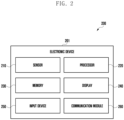
- FIG. 2 is a diagram 200 of an electronic device, according to an embodiment.
- An electronic device 201 may include a sensor 210, a processor (e.g., including processing circuitry) 220, a memory 230, a display 240, an input device 250, and a communication module (e.g., including communication circuitry) 260.
- the electronic device 201 may include at least a part of elements of the electronic device 100 illustrated in FIG. 1 .
- the electronic device 201 may include a portable device (e.g., a cellular phone and a tablet) or a wearable device (e.g., a smart watch).
- the electronic device 201 may include at least one sensor 210.
- the sensor 210 may include the sensor module 176 illustrated in FIG. 1 .
- the sensor 210 may measure information of a user.
- the sensor 210 may measure biometric information of a user or information of the electronic device 201 in real time.
- the sensor 210 may include at least one of a gyro sensor, an acceleration sensor, a heart rate sensor (e.g., a heart rate monitoring (HRM) sensor), or a photoplethysmograph (PPG) sensor, but is not limited thereto and may include various sensors.
- the sensor 210 may measure at least one of a posture, a direction, a position, or a movement of the electronic device 201.
- the sensor 210 may measure at least one of the number of steps of a user, whether or not the user moves, a moving speed, or a moving direction, via pedestrian dead reckoning (PDR).
- PDR pedestrian dead reckoning
- the sensor 210 may recognize activity information of a user based on measured information.
- the sensor 210 may recognize at least one of a state, a movement, or a gesture of a user.
- the sensor 210 may measure biometric information of a user.
- the biometric information of the user may include at least one of the user's heart rate, electrocardiogram, blood sugar, blood pressure, stress, calorie intake, calorie consumption, or health condition.
- the PPG sensor may emit light to the user's body via an emitter (e.g., a light emitting diode (LED)), and may receive light reflected from the user's body via a receiver.
- the PPG sensor may measure at least one of a heart rate, stress, or various biometric information of the user by analyzing the amount, intensity, or pattern of received reflected light.
- the sensor 210 may include an image sensor (e.g., a camera).
- a camera may generate an image by photographing a user or external subjects of the electronic device 201.
- the sensor 210 e.g., a global positioning system (GPS)
- GPS global positioning system
- the processor 220 may include the processor 120 illustrated in FIG. 1 .
- the processor 220 may receive information sensed by at least one sensor 210, at once or multiple times according to time.
- the processor 220 may read and analyze information of a user, which is stored in the memory 230 (e.g., a database).
- the information of the user, which is stored in the memory 230 may include at least one of life style information of the user, health condition information of the user (e.g., a disease state of the user), food information, activity information, biometric information, schedule information, or preference information of the user.
- the processor 220 may receive, from an external server (e.g., the server 106 of FIG. 1 ) or an external electronic device (e.g., the electronic device 102 or 104 of FIG.
- the processor 220 may transmit information of a user, which is stored in the memory 230, or information received from the sensor 210 via the communication module 260 to an external server or an external electronic device.
- the processor 220 may determine a movement, a state, or an activity of a user by analyzing information input by a user via the input device 250 or information received from the sensor 210.
- the processor 220 may recognize at least one of a movement, a state, or a shape of the user by analyzing an image captured by the camera.
- the processor 220 may recognize at least one of the user's health condition, calorie intake, calorie consumption, an exercise amount of the user, or a type of activity performed by the user (e.g., resting (sedentary), walking, running, cycling, or moving in vehicle)), by analyzing information received from the sensor 210.
- the processor 220 may recognize a change in a health condition of the user (e.g., heart rate, electrocardiogram, and stress) by analyzing biometric information received from the sensor 210.
- a health condition of the user e.g., heart rate, electrocardiogram, and stress
- the processor 220 may generate user guide information suitable for the user based on sensor data input from the sensor 210 or information received from the user via the input device 250.
- the processor 220 may generate the guide information based on the user's meal plan (e.g., diet and cooking information selected by the user) or the biometric information of the user, which is sensed via the sensor 210.
- the processor 220 may generate a meal recipe suitable for the user based on at least one of the user's blood sugar, heart rate, electrocardiogram, stress, calorie intake, calorie consumption, an activity state of the user, physical information of the user (e.g., height, weight), or a health condition of the user (e.g., the presence/absence and type of disease of the user).
- the meal recipe may include at least one of a cooking method or a type (menu) and amount of a dish suitable for the user.
- the processor 220 may request a service provided by an external electronic device, an external server, or an external system via the communication module 260.
- the processor 220 may request a service provided by an external electronic device, an external server, or an external system at least partially based on the generated user guide information.
- the processor 220 may provide a purchase service or a delivery service of an item (e.g., ingredients) required by the user, based on the user guide information (e.g., a meal recipe).
- the display 240 may include the display device 160 illustrated in FIG. 1 .
- the display 240 may display information.
- the display 240 may display information of a user, which is measured by the sensor 210, information analyzed by the processor 220, or information received from an external server or an external electronic device.
- the display 240 may display user guide information suitable for a user.
- the input device 250 may include the input device 150 illustrated in FIG. 1 .
- the input device 250 may include at least one of a physical key, a button, or a touch panel.
- the electronic device 201 may include a touch screen in which the display 240 and the input device 250 are integrally included.
- the input device 250 may receive information from the user.
- the input device 250 may receive, from the user, at least one of schedule information of the user (e.g., a meal plan, a schedule, an event, or an anniversary, etc.), activity information (e.g., the number of steps, calories consumption, food intake information, or exercise information of the user), or condition information of the user (e.g., health condition information of the user (e.g., the presence/absence and type of disease)).
- schedule information of the user e.g., a meal plan, a schedule, an event, or an anniversary, etc.
- activity information e.g., the number of steps, calories consumption, food intake information, or exercise information of the user
- condition information of the user e.g., health condition information of the user (e.g., the presence/absence and type of disease)).
- the memory 230 may include the memory 130 illustrated in FIG. 1 .
- the memory 230 may store at least one among data input by a user via the input device 250, information of the user, which is measured using the sensor 210, data or information received via the communication module 260, and data or information processed by the processor 220.
- the communication module 260 may include the communication module 190 illustrated in FIG. 1 .
- the communication module 260 may transmit data or information of the electronic device 201 to an external electronic device or may receive data or information from the external electronic device, via wired communication or various wireless networks, such as a cellular network (e.g., 3 rd generation (3G), long term evolution (LTE), 5 th generation (5G) network, etc.), Wi-Fi, Bluetooth TM (BLE), and ANT+.
- 3G 3 rd generation
- LTE long term evolution
- 5G 5 th generation
- Wi-Fi Wireless Fidelity
- BLE Bluetooth TM
- ANT+ ANT+
- the communication module 260 may transmit, to an external electronic device or an external driver, at least a part of information measured by the sensor 210, information input by a user via the input device 250, and information analyzed by the processor 220. Under the control of the processor 220, the communication module 260 may transmit, to an external electronic device or an external server, information indicating that the electronic device 201 is located at a selected place. Under the control of the processor 220, the communication module 260 may receive, from an external electronic device or an external server, user guide information corresponding to transmitted user information. The communication module 260 may receive, from an external electronic device or an external server, user guide information (e.g., a meal recipe) optimized to the user.
- user guide information e.g., a meal recipe
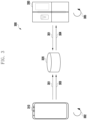
- FIG. 3 is a diagram illustrating a method for providing information by an electronic device, according to an embodiment.
- a system 300 which provides guide information to a user may include an electronic device 320, a first external electronic device 310, and a second external electronic device 330. At least one of the electronic device 320, the first external electronic device 310, or the second external electronic device 330 may include at least a part of elements of the electronic device 101 illustrated in FIG. 1 or the electronic device 201 illustrated in FIG. 2 .
- the electronic device 320 may include a server, a cloud, or a service platform.
- the first external electronic device 310 may include a portable electronic device (e.g., a cellular phone, a tablet, etc.) or a wearable device (e.g., a smart band or a smart watch).
- the second external electronic device 330 may include a home appliance (e.g., a smart refrigerator).
- the electronic device 320 may include account information.
- the first external electronic device 310 and the second external electronic device 330 may register device information in the account information of the electronic device 320.
- the account information of the electronic device 320 may include information relating to a device (e.g., information of the first external electronic device 310) associated with each user included in a specific group, and a shared device (e.g., information of a second external electronic device 330).
- the second external electronic device 330 may include group account information.
- the group account information may include account information of the first electronic device 310 and/or account information of another external electronic device.
- the second external electronic device 330 may be used as a shared device of a configured group (e.g., family), and the second external electronic device 330 may include group account information including account information of an external electronic device (e.g., the first external electronic device 310) used by each member of the configured group.
- the second external electronic device 330 may be connected to a device (e.g., the first external electronic device 310) of at least one belonging to the group at least partially based on the group account information.
- the first external electronic device 310 may receive schedule information from a user.
- the schedule information may include a meal plan of the user.
- the meal plan may include at least one type of food desired by the user, a meal time, or a type of meal (e.g., breakfast, lunch, dinner, or snack).
- the first external electronic device 310 may receive user information from the user.
- the first external electronic device 310 may receive, from the user, at least one piece of information of a health condition of the user (e.g., the presence or absence of disease, the presence or absence of allergies, or medication information), an activity performed by the user, food intake-related information, whether the user is on a diet, or a user profile (e.g., age, height, weight, nationality, religion, preference information).
- the first external electronic device 310 may transmit information (e.g., schedule information) received from the user to the electronic device 320.
- information e.g., schedule information
- the electronic device 320 may generate user guide information based on information received from the external electronic device 310, and may transmit the user guide information to the second external electronic device 330.
- the user guide information may include a meal recipe suitable for the user.
- the meal recipe may include at least one of a name, calories, or a cooking method of food.
- the electronic device 320 may search for or generate a meal recipe suitable for the user based on at least one of the user's height, weight, blood sugar, calorie intake, or calorie consumption.
- the electronic device 320 may search for or generate a meal recipe in consideration of a disease history or the presence or absence of allergies of the user.
- the electronic device 320 may search for or generate a meal recipe based on at least one of the user's country, culture, religion, climate, or weather.
- the electronic device 320 may search for or generate a meal recipe based on whether the user (the first external electronic device 310) is present at a selected place (e.g., the user's home) or whether the user is in weight management).
- the electronic device 320 may search for or generate a meal recipe based on schedule information (e.g., an anniversary, an event, and a schedule) of the user.
- the user guide information may include advertisement information.
- the electronic device 320 may generate, as the user guide information, an advertisement suitable for the user based on the user information.
- the electronic device 320 may generate, as the user guide information, an advertisement associated with a meal menu suitable for biometric information of the user based on the schedule information and the biometric information of the user.
- the electronic device 320 may generate, as the user guide information, an advertisement related to an item or a service necessary for the user (e.g., a medical service (e.g., medical guides, hospitals, or pharmacies), ordering and delivering of food or ingredients, drugs or nutritional supplements necessary for the user, and public service/health advertisements), based on the biometric information of the user.
- a medical service e.g., medical guides, hospitals, or pharmacies
- the second external electronic device 330 may monitor inside of the second external electronic device 330 by a sensor module.
- the second external electronic device 330 may monitor ingredients or foods which are stored within the second external electronic device 330.
- the second external electronic device 330 may compare monitored information with received user guide information (e.g., a meal recipe).
- the second external electronic device 330 may display the user guide information when the monitored information is suitable for the user guide information. If the stored ingredients are suitable for a received meal recipe, the second external electronic device 330 may provide the user with a corresponding meal recipe on a display. If the monitored information is not suitable for the received user guide information, the second external electronic device 330 may provide different user guide information or may request an external service.
- the second external electronic device 330 may search for a recipe for another dish, which is similar to the received meal recipe, wherein the another dish can be made from the stored ingredients.
- the second external electronic device 330 may request a recipe of another similar dish from the electronic device 320, or may select and display a recipe of another similar dish from among recipes stored therein.
- the second external electronic device 330 may request a purchase service or a delivery service for insufficient ingredients from the electronic device 320 or an external service.
- the second external electronic device 330 may transmit sensing information obtained by monitoring inside thereof to the electronic device 320.
- the electronic device 320 may generate user guide information based on user information received from the first external electronic device 310 and the sensing information received from the second external electronic device 330.
- the electronic device 320 may generate user guide information (e.g., a meal recipe) suitable for the user at least partially based on the user's biometric information, schedule information (e.g., a meal plan), or sensing information (e.g., information of ingredients stored in the second external electronic device 330).
- the electronic device 320 may allow the second external electronic device 330 to display the generated user guide information.
- the electronic device 320 may allow the second external electronic device 330 to display the user guide information at a configured time based on the schedule information of the user, may allow the second external electronic device 330 to display the user guide information at the configured time in response to information indicating that the first external electronic device 310 is located at a selected place (e.g., the user's house), or may allow the second external electronic device 330 to display the user guide information in response to reception of a user input for requesting of the user guide information via the second external electronic device 330.
- a selected place e.g., the user's house
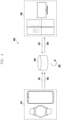
- FIG. 4 is a diagram illustrating a method for providing information by an electronic device, according to an embodiment.
- the electronic device 420 may include account information.
- the first external electronic device 410 and the second external electronic device 430 may register device information in the account information of the electronic device 420.
- the account information of the electronic device 420 may include information relating to a device (e.g., information of the first external electronic device 410) associated with each user included in a specific group, and a shared device (e.g., information of a second external electronic device 430).
- the first external electronic device 410 may transmit biometric information of a user to the electronic device 420.
- the first external electronic device 410 may acquire the biometric information of the user by at least one sensor.
- the biometric information of the user may include at least one of the user's heart rate, electrocardiogram, blood sugar, blood pressure, stress, calorie intake, calorie consumption, exercise amount, or health condition.
- the electronic device 420 may repeatedly receive the biometric information of the user from the first external electronic device 410 to update the biometric information of the user.
- the electronic device 420 may search for or generate a meal recipe suitable for the user based on physical information including the user's height and weight.
- the electronic device 420 may search for or generate a meal recipe by considering the user's disease history or the presence/absence of an allergy, and may search for and generate a meal recipe based on at least one of the user's country, culture, religion, climate, or weather.
- the electronic device 420 may search for or generate a meal recipe based on whether the user (the first external electronic device 410) is present at a selected place (e.g., the user's home) or whether the user is in weight management. If the user is on a diet, the electronic device 420 may select a low-calorie meal menu and may search for or generate a meal recipe therefor.
- the electronic device 420 may allow the second external electronic device 430 to display the user guide information.
- the electronic device 420 may allow the second external electronic device 430 to display the user guide information at a suitable time (or a configured time) based on user information (e.g., the user's biometric information or schedule information).
- the electronic device 420 may determine a suitable eating time of the user (e.g., when the user has an empty stomach or a time at which the user needs to eat food) based on calorie consumption or exercise amount of the user, and may allow the user guide information to be displayed via the second external electronic device 430 at the determined time.
- the electronic device 420 may determine a suitable eating time of the user (e.g., when the user has an empty stomach or a time at which the user needs to eat food) based on at least one of calorie consumption or exercise amount of the user, and may allow, at a determined time, the first external electronic device 410 to display the user guide information or provide a notification.
- the electronic device 420 may allow the second external electronic device 430 to display the user guide information at the configured time in response to information indicating that the first external electronic device 410 is located at a selected place (e.g., the user's house), or may allow the second external electronic device 430 to display the user guide information in response to reception of a user input for requesting of the user guide information via the second external electronic device 430.
- FIG. 5 is a diagram illustrating a method for providing information by an electronic device, according to an embodiment.
- a system 500 providing guide information to a user may include an electronic device 530, a first external electronic device 510 of a first user, a second external electronic device 520 of a second user, and a third external electronic device 540.
- the system 500 may further include a plurality of external electronic devices 530 for a plurality of users.
- the first external electronic device 510 of the first user and the second external electronic device 520 of the second user are included.
- At least one of the electronic device 530, the first external electronic device 510, the second external electronic device 520, or the third external electronic device 540 may include at least a part of elements of the electronic device illustrated in FIG. 1 or in FIG. 2 .
- the electronic device 530 may include a server, a cloud, or a service platform.
- the first external electronic device 510 and the second external electronic device 520 may include a portable electronic device 530 (e.g., a cellular phone or a tablet) or a wearable device (e.g., a smart watch or smart band).
- the third external electronic device 540 may include a home appliance (e.g., a smart refrigerator).
- the electronic device 530 may request the first external electronic device 510 or the second external electronic device 520 to confirm whether to be present at a selected place associated with the first external electronic device 510 or the second external electronic device 520 at a configured time.
- the configured time may include a time configured by the first user via the first external electronic device 510, a time configured by the second user via the second external electronic device 520, and a time configured based on information (e.g., schedule information (e.g., a meal plan) of the first or second user) of the first or second user.
- the first external electronic device 510 or the second external electronic device 520 may transmit, to the electronic device 530, a response to whether to be present at the selected place at the configured time, in response to the request of the electronic device 530.
- the electronic device 530 may generate, as the user guide information, a meal recipe suitable for all of the first to fourth users.
- the meal recipe may include information on at least one of a meal menu, a quantity, a cooking method, a cooking time, calories, or nutrients. If only the first user and the second user are present among the first to fourth users, the electronic device 530 may generate, as the user guide information, a meal recipe suitable for the first user and the second user. The electronic device 530 may generate the user guide information based on the sensing information received from the third external electronic device 540.
- the electronic device 530 may generate the user guide information based on the number of users present at the selected place and the sensing information (e.g., information of ingredients stored in the third external electronic device 540) received from the third external electronic device 540.
- the sensing information of the ingredients stored in the third external electronic device 540 is received, the electronic device 530 may select a food that can be made using the stored ingredients, and may generate a recipe therefor as the user guide information.
- the electronic device 530 may request an external service based on the received sensing information.
- the first external electronic device 615 may correspond to first user account information of the first user 610
- the second external electronic device 625 may correspond to second user account information of the second user 620
- the third external electronic device 635 may correspond to third user account information of the third user 630
- the fourth external electronic device 645 may correspond to fourth user account information of the fourth user 640.
- the electronic device 603 or the fifth external electronic device 670 may include group account information including the first to fourth user account information. If the first to fourth users 610, 620, 630, 640 are family, the group account information may be family account information including the first to fourth user account information.
- the first user account information may include information of electronic devices used by the first user 610 and information of a group account to which the first user 610 belongs.
- the electronic device 603 may receive information of the first to fourth users 610, 620, 630, 640 from the first to fourth external electronic devices 615, 625, 635, 645, respectively.
- Information of a user may include biometric information or schedule information of the user.
- the biometric information of the user may include at least one of the user's heart rate, electrocardiogram, blood sugar, blood pressure, stress, calorie intake, calorie consumption, or health condition.
- the schedule information may include at least one of the user's meal plan, schedule, anniversary, or event.
- the electronic device 603 may receive, from the fifth external electronic device 670, information sensed by the fifth external electronic device 670.
- the fifth external electronic device 670 may include a sensor module capable of monitoring inside of the fifth external electronic device 670.
- the fifth external electronic device 670 e.g., refrigerator
- the electronic device 603 may generate user guide information at least partially based on first user information, second user information, third user information, fourth user information, and information sensed by the fifth external electronic device 670.
- the user guide information may include a meal recipe corresponding to at least one among the first to fourth users 610, 620, 630, 640.
- the meal recipe may include at least a part of food-related information including at least one of a name of food, calories of the food, an amount of the food, a cooking method, a cooking time, or a nutrient of the food.
- the electronic device 603 may generate user guide information according to whether each of the first to fourth external electronic devices 615, 625, 635, 645 is located at the selected place 601.
- the electronic device 603 may determine user account information included in the group account information, and may generate user guide information based on whether the first to fourth external electronic devices 615, 625, 635, 645 corresponding to the respective pieces of first to fourth user account information included in the group account information are located in the selected place 601.
- the electronic device 603 may generate a meal recipe based on information of the first to fourth users 610, 620, 630, 640, and when ingredients stored in the fifth external electronic device 670 (e.g., a refrigerator) is insufficient for the generated meal recipe, the electronic device 603 may request a corresponding service from an external service (e.g., an external item purchase service or an external item delivery service).
- the first to fourth user account information or group account information may include at least one piece of payment information (e.g., account information, card information, or authentication information of at least one of the first to fourth users 610, 620, 630, 640).
- the electronic device 603 may request a purchase or delivery of an insufficient item (ingredients) from an external service based on the payment information included in the group account information.
- the electronic device 603 may allow a display device (e.g., at least one display among another home appliance device located at the selected place 601, a nearable device, and the first to fourth external electronic devices 615, 625, 635, 645) other than the fifth external electronic device 670 to display the user guide information.
- a display device e.g., at least one display among another home appliance device located at the selected place 601, a nearable device, and the first to fourth external electronic devices 615, 625, 635, 645) other than the fifth external electronic device 670 to display the user guide information.
- the electronic device 603 may generate a meal recipe suitable for the second user 620, a meal recipe suitable for the third user 630, and a meal recipe suitable for both of the second user 620 and the third user 630.
- the electronic device 603 may receive location information of each of the first to fourth external electronic devices 615, 625, 635, 645 repeatedly or at configured intervals. Even when at least one of the first to fourth external electronic devices 615, 625, 635, 645 is not located at the selected place 601, if it is recognized that an external electronic device (e.g., the first external electronic device 615 or the fourth external electronic device 645, in FIG.
- the second user information may include biometric information or schedule information of the second user.
- the second user's biometric information may include at least one of the second user's heart rate, electrocardiogram, stress, calorie intake, calorie consumption, blood pressure, or blood sugar, but is not limited thereto.
- the biometric information may include various biometric information.
- the schedule information of the second user may include at least one of the second user's meal plan, schedule, anniversary, or event, but is not limited thereto. Further, the schedule information may include various information related to the second user.
- the selected place may include a house or office of the first user or second user, which is associated with the first external electronic device or the second external electronic device.
- the selected place may be a place registered or configured by the first user or the second user via the first external electronic device or the second external electronic device.
- the electronic device may generate user guide information at least partially based on the received first user information, second user information, and sensed information.
- the electronic device may generate the user guide information suitable for the first user and the second user based on schedule information (e.g., a meal plan) and biometric information (e.g., blood sugar) of the first user, schedule information and biometric information of the second user, and sensing information (e.g., information of held ingredients) of the third external electronic device (e.g., refrigerator).
- schedule information e.g., a meal plan
- biometric information e.g., blood sugar
- schedule information and biometric information of the second user schedule information and biometric information of the second user
- sensing information e.g., information of held ingredients
- the guide information may include a meal recipe corresponding to at least one of the first user or the second user.
- the meal recipe may include a type (menu), quantity, and cooking method of a dish suitable for each of the first user and second user.
- the electronic device may generate different guide information according to whether the first external electronic device and the second external electronic device is located at the selected place (e.g., a house of the first or second user). If only the first external electronic device is located at the selected place, the electronic device may generate user guide information only for the first user. If only the second external electronic device is located at the selected place, the electronic device may generate user guide information only for the second user. When both the first and second external electronic devices are located at the selected place, the electronic device may generate suitable user guide information in consideration of both the first user and the second user.
- the selected place e.g., a house of the first or second user.
- the electronic device may determine a type and quantity of a dish suitable for the first user (or the second user) by considering information (e.g., schedule information or biometric information of the first user (or the second user)) of the first user (or the second user), and may generate a recipe therefor as user guide information. If both the first and second external electronic devices are located at the selected place, the electronic device may determine a type and quantity of a dish suitable for both the first user and the second user based on the first user information and the second user information, and may generate a recipe therefor as user guide information.
- information e.g., schedule information or biometric information of the first user (or the second user)
- the electronic device may determine a type and quantity of a dish suitable for both the first user and the second user based on the first user information and the second user information, and may generate a recipe therefor as user guide information.
- the electronic device may generate guide information based on a climate condition (e.g., season, weather, and climate) or other information (e.g., county, culture, and religion) of the first user or the second user.
- a climate condition e.g., season, weather, and climate
- other information e.g., county, culture, and religion
- the electronic device may receive at least one among a user input for requesting of the user guide information via the third external electronic device and information indicating that the first or second external electronic device is located at the selected place.
- the electronic device may receive, from the first or second external electronic device, information indicating that the first or second external electronic device is located at the selected place. If the third external electronic device receives, from a user, a user input for requesting of the user guide information, the electronic device may receive, from the third external electronic device, a user input in response to the request.
- the electronic device may display guide information via a display device located at the selected place in response to at least one of the received information or the user input.
- the electronic device may transmit the generated user guide information to an external display device, and may control the display device to display the user guide information.
- the display device may include the first external electronic device, the second external electronic device, or the third external electronic device.
- the electronic device may control the user guide information to be displayed via the first external electronic device, the second external electronic device, or the third external electronic device, which is located at the selected place.
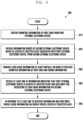
- FIG. 8 is a flowchart illustrating a method for providing information by an electronic device, according to an embodiment.
- an electronic device may receive biometric information of a first user from a first external electronic device.
- the first external electronic device may include a portable electronic device (e.g., a smartphone or a tablet) or a wearable device (e.g., a smart watch or a smart band).
- the first external electronic device may include at least a part of elements of the electronic device 101, 102 illustrated in FIG. 1 or FIG. 2 .
- the electronic device may receive information sensed by a second external electronic device, which is located at a selected place associated with the first external electronic device, from the second external electronic device.
- the electronic device may generate user guide information at least partially based on the received biometric information of the first user and sensed information.
- the electronic device may generate user guide information suitable for the first user based on the biometric information (e.g., blood sugar) of the first user and the sensing information (e.g., information of held ingredients) of the second external electronic device (e.g., a refrigerator).
- the guide information may include a meal recipe corresponding to the first user.
- the meal recipe may include a type (menu), quantity, and cooking method of a dish suitable for the first user.
- the electronic device may generate guide information based on schedule information of the first user, which is received from the first external electronic device.
- the electronic device may generate guide information based on a climate condition (season, weather, and climate) or other information (e.g., country, culture, and religion) of the first user.
- the electronic device may receive, from the first external electronic device, information indicating that the first external electronic device is located at the selected place. If the second external electronic device receives, from a user, a user input for requesting of the user guide information, the electronic device may receive, from the second external electronic device, a user input in response to the request.
- the electronic device may display guide information via a display device located at the selected place in response to at least one of the received information or the user input.
- the electronic device may transmit the generated user guide information to an external display device, and may control the display device to display the user guide information.
- the display device may include the first external electronic device and the second external electronic device.
- the electronic device may control the user guide information to be displayed via the display of the first external electronic device or second external electronic device which is located at the selected place.
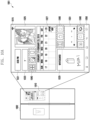
- FIG. 9A is a diagram illustrating an operation of an electronic device, according to an embodiment.
- FIG. 9B is a diagram illustrating an operation of an electronic device, according to an embodiment.
- the electronic device may display the amount of calories actually ingested by the user, as a graph or a numerical value with respect to the recommended amount of calorie intake of the user.
- the electronic device may display a graph indicating that the user has currently consumed 2027 Kcal out of the recommended daily calories of 2150 Kcal on December 12.
- the electronic device may display a graph indicating that there is no calorie intake out of the recommended daily calories of 2150 Kcal on December 13 that is the next day.
- the electronic device may display an amount of food and calories actually consumed by the user according to a meal plan (e.g., breakfast, lunch, dinner, or snack).
- the electronic device may display an amount of calories ingested by the user based on a configured meal plan (e.g., breakfast, lunch, dinner, or snack), via the graph of a recommended intake rate or actual intake rate.
- the electronic device may receive an input for selecting a date from the user.
- the electronic device may change and display a date for configuration of a meal plan according to an input touch of the user.
- the electronic device may determine recommended meal menus based on the biometric information of the user, may determine nutrition scores for the respective recommended meal menus, and may display the recommended menus in order of the determined nutrition scores.
- the electronic device may receive, from the user, an input of selecting a specific meal menu.
- the disclosure is not limited to those illustrated in FIG. 10A and FIG. 10B , and the electronic device 1002 may display, on the display 1010, a food name, a food image, or associated information according to a meal plan configured for a specific day of the week.
- the electronic device may display, on the display 1010, internal information (e.g., information of held ingredients) of the electronic device 1002, which is obtained by monitoring by a sensor.
- the first user information may include at least a part of schedule information or biometric information of the first user, which is measured by the first external electronic device.
- the displaying of the user guide information may include allowing different user guide information to be displayed via the display device according to whether the first external electronic device or the second external electronic device is located at the selected place.
- an operation method of an electronic device may include receiving biometric information of a first user from a first external electronic device, receiving information sensed by a second external electronic device, which is located at a selected place associated with the first external electronic device, from the second external electronic device, generating user guide information at least partially based on the received biometric information of the first user and sensed information, receiving at least one of information indicating that the first external electronic device is located at the selected place and a user input for requesting of the user guide information via the second external electronic device, and in response to at least one of the received information or the user input, displaying the user guide information via a display device located at the selected place.
- the sensed information may be information acquired by a sensor module configured to monitor inside of the second external electronic device.
- the electronic device may be one of various types of electronic devices.
- the electronic devices may include, for example, a portable communication device (e.g., a smart phone), a computer device, a portable multimedia device, a portable medical device, a camera, a wearable device, or a home appliance. According to an embodiment of the disclosure, the electronic devices are not limited to those described above.
- Various embodiments as set forth herein may be implemented as software (e.g., the program 140) including one or more instructions that are stored in a storage medium (e.g., internal memory 136 or external memory 138) that is readable by a machine (e.g., the electronic device 101) .
- a processor e.g., the processor 120
- the machine e.g., the electronic device 101
- the one or more instructions may include a code generated by a complier or a code executable by an interpreter.
- the machine-readable storage medium may be provided in the form of a non-transitory storage medium.
- non-transitory simply means that the storage medium is a tangible device, and does not include a signal (e.g., an electromagnetic wave), but this term does not differentiate between where data is semi-permanently stored in the storage medium and where the data is temporarily stored in the storage medium.
- a method according to various embodiments of the disclosure may be included and provided in a computer program product.
- the computer program product may be traded as a product between a seller and a buyer.
- the computer program product may be distributed in the form of a machine-readable storage medium (e.g., compact disc read only memory (CD-ROM)), or be distributed (e.g., downloaded or uploaded) online via an application store (e.g., Play Store TM ), or between two user devices (e.g., smart phones) directly. If distributed online, at least part of the computer program product may be temporarily generated or at least temporarily stored in the machine-readable storage medium, such as memory of the manufacturer's server, a server of the application store, or a relay server.
- CD-ROM compact disc read only memory
- an application store e.g., Play Store TM
- two user devices e.g., smart phones
- each component e.g., a module or a program of the above-described components may include a single entity or multiple entities. According to various embodiments, one or more of the above-described components may be omitted, or one or more other components may be added. Alternatively or additionally, a plurality of components (e.g., modules or programs) may be integrated into a single component. In such a case, according to various embodiments, the integrated component may still perform one or more functions of each of the plurality of components in the same or similar manner as they are performed by a corresponding one of the plurality of components before the integration.
Landscapes
- Engineering & Computer Science (AREA)
- Business, Economics & Management (AREA)
- Strategic Management (AREA)
- Finance (AREA)
- Accounting & Taxation (AREA)
- Development Economics (AREA)
- Entrepreneurship & Innovation (AREA)
- Economics (AREA)
- General Business, Economics & Management (AREA)
- Physics & Mathematics (AREA)
- General Physics & Mathematics (AREA)
- Theoretical Computer Science (AREA)
- Marketing (AREA)
- Game Theory and Decision Science (AREA)
- Computer Networks & Wireless Communication (AREA)
- Signal Processing (AREA)
- Human Resources & Organizations (AREA)
- Tourism & Hospitality (AREA)
- Operations Research (AREA)
- Quality & Reliability (AREA)
- Automation & Control Theory (AREA)
- Data Mining & Analysis (AREA)
- Human Computer Interaction (AREA)
- Educational Administration (AREA)
- Medical Treatment And Welfare Office Work (AREA)
Claims (11)
- Elektronische Vorrichtung (200, 530), die Folgendes umfasst:eine Kommunikationsschnittstelle (260), die konfiguriert ist, um mit mindestens einer externen elektronischen Vorrichtung zu kommunizieren;mindestens einen Prozessor (220), der mit der Kommunikationsschnittstelle (260) betriebsmäßig verbunden ist; undmindestens einen Speicher (230), der betriebsmäßig mit dem Prozessor (220) verbunden ist, wobei in dem Speicher Anweisungen gespeichert sind, die, wenn sie ausgeführt werden, den Prozessor (220) zu Folgendem veranlassen:Empfangen (501) von Informationen über einen ersten Benutzer aus einer ersten externen elektronischen Vorrichtung (510) über die Kommunikationsschnittstelle;Empfangen (501) von Informationen über einen zweiten Benutzer aus einer zweiten externen elektronischen Vorrichtung (520) über die Kommunikationsschnittstelle, wobei die Informationen über den ersten Benutzer und/oder die Informationen über den zweiten Benutzer biometrische Informationen über den jeweiligen Benutzer umfassen, die von der jeweiligen elektronischen Vorrichtung gemessen werden;Empfangen (502) von Informationen, die von einer dritten externen elektronischen Vorrichtung (540) erfasst werden, die sich an einem ausgewählten Standort befindet, der mindestens einer von der ersten externen elektronischen Vorrichtung (510) oder der zweiten externen elektronischen Vorrichtung (520) zugeordnet ist, aus der dritten externen elektronischen Vorrichtung (540) durch die Kommunikationsschnittstelle (260);Empfangen (503), durch die Kommunikationsschnittstelle (260), von Informationen, die angeben, ob sich die erste (510) oder zweite (520) externe elektronische Vorrichtung an dem ausgewählten Standort befindet;Erzeugen (504) von Benutzerführungsinformationen in Form eines Essensrezepts zumindest teilweise basierend auf den empfangenen biometrischen Informationen über den ersten und/oder zweiten Benutzer sowie erfassten Informationen, wobei unterschiedliche Benutzerführungsinformationen für jeden Benutzer geeignet sind und erzeugt werden, wenn sich nur die erste elektronische Vorrichtung an dem ausgewählten Standort befindet, wenn sich nur die zweite elektronische Vorrichtung an dem ausgewählten Standort befindet, oder wenn sich sowohl die erste als auch die zweite elektronische Vorrichtung an dem ausgewählten Standort befinden; wobei die biometrischen Informationen über den ersten und/oder zweiten Benutzer zumindest eine der folgenden Informationen über den jeweiligen Benutzer umfassen: Herzfrequenz, Elektrokardiogramm, Blutzucker, Blutdruck, Stress, Kalorienaufnahme, Kalorienverbrauch oder Gesundheitszustand des jeweiligen Benutzers; undAnzeigen (505) der erzeugten Benutzerführungsinformationen über eine Anzeigevorrichtung, die sich an dem ausgewählten Standort befindet.
- Elektronische Vorrichtung nach Anspruch 1, wobei die Informationen über den ersten und/oder zweiten Benutzer ferner Zeitplaninformationen des jeweiligen Benutzers umfassen.
- Elektronische Vorrichtung nach Anspruch 2, wobei die Zeitplaninformationen über den ersten und/oder zweiten Benutzer zumindest einen der folgenden Punkte umfassen: einen Essensplan, Zeitplan, Jahrestag oder ein Ereignis des Benutzers.
- Elektronische Vorrichtung nach einem der vorhergehenden Ansprüche, wobei die dritte externe elektronische Vorrichtung (540) ferner ein Sensormodul umfasst, das konfiguriert ist, um das Innere der dritten externen elektronischen Vorrichtung zu überwachen, und es sich bei den erfassten Informationen um Informationen handelt, die von dem Sensormodul erfasst werden.
- Elektronische Vorrichtung nach einem der vorhergehenden Ansprüche, wobei die Benutzerführungsinformationen ein Essensrezept umfassen, das mindestens einem von dem ersten Benutzer oder dem zweiten Benutzer entspricht.
- Elektronische Vorrichtung nach einem der vorhergehenden Ansprüche, wobei die erste externe elektronische Vorrichtung (510) ersten Benutzerkontoinformationen des ersten Benutzers entspricht, die zweite externe elektronische Vorrichtung (520) zweiten Benutzerkontoinformationen des zweiten Benutzers entspricht und die Anweisungen, wenn sie ausgeführt werden, ferner den Prozessor (220) veranlassen, die Führungsinformationen zumindest teilweise auf der Basis von Gruppenkontoinformationen zu erzeugen, die die ersten Benutzerkontoinformationen und die zweiten Benutzerkontoinformationen umfassen.
- Verfahren zum Betrieb einer elektronischen Vorrichtung (200, 530), wobei das Verfahren Folgendes umfasst:Empfangen (501) von Informationen über einen ersten Benutzer aus einer ersten externen elektronischen Vorrichtung (510);Empfangen (501) von Informationen über einen zweiten Benutzer aus einer zweiten externen elektronischen Vorrichtung (520), wobei die Informationen über den ersten Benutzer und/oder die Informationen über den zweiten Benutzer biometrische Informationen über den jeweiligen Benutzer umfassen, die von der jeweiligen elektronischen Vorrichtung gemessen werden;Empfangen (502) von Informationen, die von einer dritten externen elektronischen Vorrichtung (540) erfasst werden, die sich an einem ausgewählten Standort befindet, der mindestens einer von der ersten externen elektronischen Vorrichtung (510) oder der zweiten externen elektronischen Vorrichtung (520) zugeordnet ist, aus der dritten externen elektronischen Vorrichtung;Empfangen (503) von Informationen, die angeben, ob sich die erste (510) oder zweite (520) externe elektronische Vorrichtung an dem ausgewählten Standort befindet;Erzeugen (504) von Benutzerführungsinformationen in Form eines Essensrezepts zumindest teilweise basierend auf den empfangenen biometrischen Informationen über den ersten Benutzer und/oder zweiten Benutzer sowie erfassten Informationen, wobei unterschiedliche Benutzerführungsinformationen für jeden Benutzer geeignet sind und erzeugt werden, wenn sich nur die erste elektronische Vorrichtung an dem ausgewählten Standort befindet, wenn sich nur die zweite elektronische Vorrichtung an dem ausgewählten Standort befindet, oder wenn sich sowohl die erste als auch die zweite elektronische Vorrichtung an dem ausgewählten Standort befinden; wobei die biometrischen Informationen über den ersten und/oder zweiten Benutzer zumindest eine der folgenden Informationen über den jeweiligen Benutzer umfassen: Herzfrequenz, Elektrokardiogramm, Blutzucker, Blutdruck, Stress, Kalorienaufnahme, Kalorienverbrauch oder Gesundheitszustand des jeweiligen Benutzers; undAnzeigen (505) der erzeugten Benutzerführungsinformationen über eine Anzeigevorrichtung, die sich an dem ausgewählten Standort befindet.
- Verfahren nach Anspruch 7, wobei die Informationen über den ersten und/oder zweiten Benutzer ferner Zeitplaninformationen des jeweiligen Benutzers umfassen.
- Verfahren nach Anspruch 8, wobei die Zeitplaninformationen über den ersten und/oder zweiten Benutzer zumindest einen der folgenden Punkte umfassen: einen Essensplan, Zeitplan, Jahrestag oder ein Ereignis des Benutzers.
- Verfahren nach den Ansprüchen 7 bis 9, wobei die Benutzerführungsinformationen ein Essensrezept umfassen, das mindestens einem von dem ersten Benutzer oder dem zweiten Benutzer entspricht.
- Verfahren nach den Ansprüchen 7 bis 10, wobei die erste externe elektronische Vorrichtung (510) ersten Benutzerkontoinformationen des ersten Benutzers entspricht, die zweite externe elektronische Vorrichtung (520) zweiten Benutzerkontoinformationen des zweiten Benutzers entspricht und das Erzeugen der Benutzerführungsinformationen das Erzeugen der Führungsinformationen basierend auf Gruppenkontoinformationen umfasst, die die ersten Benutzerkontoinformationen und die zweiten Benutzerkontoinformationen umfassen.
Applications Claiming Priority (1)
| Application Number | Priority Date | Filing Date | Title |
|---|---|---|---|
| KR1020190024271A KR102751569B1 (ko) | 2019-02-28 | 2019-02-28 | 전자 장치 및 전자 장치의 정보 제공 방법 |
Publications (2)
| Publication Number | Publication Date |
|---|---|
| EP3702984A1 EP3702984A1 (de) | 2020-09-02 |
| EP3702984B1 true EP3702984B1 (de) | 2025-07-09 |
Family
ID=69810571
Family Applications (1)
| Application Number | Title | Priority Date | Filing Date |
|---|---|---|---|
| EP20159047.8A Active EP3702984B1 (de) | 2019-02-28 | 2020-02-24 | Elektronische vorrichtung und verfahren zur bereitstellung von informationen durch eine elektronische vorrichtung |
Country Status (5)
| Country | Link |
|---|---|
| US (1) | US10917753B2 (de) |
| EP (1) | EP3702984B1 (de) |
| KR (1) | KR102751569B1 (de) |
| CN (1) | CN111628917B (de) |
| WO (1) | WO2020175855A1 (de) |
Families Citing this family (4)
| Publication number | Priority date | Publication date | Assignee | Title |
|---|---|---|---|---|
| ES3035819T3 (en) * | 2019-04-24 | 2025-09-09 | Vorwerk Co Interholding | Method for nutrition control, kitchen appliance and system for preparing food |
| DE112020003021T5 (de) * | 2019-06-24 | 2022-03-24 | Panasonic Intellectual Property Management Co., Ltd. | Videosteuervorrichtung, Videosteuerverfahren und Programm |
| CN116508042A (zh) | 2020-10-21 | 2023-07-28 | 三星电子株式会社 | 电子装置及其控制方法 |
| KR20220052498A (ko) * | 2020-10-21 | 2022-04-28 | 삼성전자주식회사 | 전자 장치 및 그 제어 방법 |
Family Cites Families (22)
| Publication number | Priority date | Publication date | Assignee | Title |
|---|---|---|---|---|
| US7196625B1 (en) * | 2003-10-27 | 2007-03-27 | Nguyen Thu H | Advanced food and/or drink organization and/or handling system |
| KR20060104355A (ko) * | 2005-03-30 | 2006-10-09 | 엘지전자 주식회사 | 건강 관리형 냉장고 |
| US20060224050A1 (en) | 2005-03-30 | 2006-10-05 | Lee Ik K | Refrigerator for health care |
| US20090322513A1 (en) * | 2008-06-27 | 2009-12-31 | Franklin Dun-Jen Hwang | Medical emergency alert system and method |
| US20110063105A1 (en) * | 2009-09-16 | 2011-03-17 | Broadcom Corporation | Emergency message relay |
| US8588284B2 (en) * | 2010-06-01 | 2013-11-19 | Adeptence, Llc | Systems and methods for networked wearable medical sensors |
| EP2667577A4 (de) * | 2011-01-19 | 2017-05-31 | NEC Corporation | Mobilkommunikationsvorrichtung und kommunikationsverfahren |
| US20140249966A1 (en) * | 2012-08-30 | 2014-09-04 | FoodRocket, Inc. | System and Method for Recipe, Grocery, and Food Services |
| KR102010296B1 (ko) * | 2013-01-07 | 2019-08-13 | 엘지전자 주식회사 | 냉장고를 이용한 식단제공방법 및 그를 이용한 냉장고 |
| KR102212064B1 (ko) * | 2013-12-06 | 2021-02-05 | 삼성전자주식회사 | 냉장고에 의해 헬스 서비스를 제공하는 방법 및 이를 위한 냉장고 |
| RU2743044C1 (ru) * | 2014-02-20 | 2021-02-12 | Марк ОЛЕЙНИК | Роботизированная кухонная система |
| US9704205B2 (en) * | 2014-02-28 | 2017-07-11 | Christine E. Akutagawa | Device for implementing body fluid analysis and social networking event planning |
| US9449208B2 (en) * | 2014-12-03 | 2016-09-20 | Paypal, Inc. | Compartmentalized smart refrigerator with automated item management |
| KR102354943B1 (ko) | 2015-05-20 | 2022-01-25 | 삼성전자주식회사 | 전자 장치가 외부 기기를 제어하는 방법 및 상기 전자 장치 |
| US20170020431A1 (en) * | 2015-07-24 | 2017-01-26 | Johnson & Johnson Vision Care, Inc. | Biomedical devices for biometric based information communication related to fatigue sensing |
| CN105159103A (zh) * | 2015-07-31 | 2015-12-16 | 小米科技有限责任公司 | 调整模式的方法及装置 |
| WO2017048730A1 (en) * | 2015-09-14 | 2017-03-23 | Cogito Corporation | Systems and methods for identifying human emotions and/or mental health states based on analyses of audio inputs and/or behavioral data collected from computing devices |
| KR20170058793A (ko) * | 2015-11-19 | 2017-05-29 | 삼성전자주식회사 | 가상 현실 환경에서 정보를 제공하는 방법 및 장치 |
| US20170358020A1 (en) * | 2016-06-14 | 2017-12-14 | International Business Machines Corporation | Informed food selection in a particular eating environment |
| US11016634B2 (en) * | 2016-09-01 | 2021-05-25 | Samsung Electronics Co., Ltd. | Refrigerator storage system having a display |
| WO2018093169A1 (en) | 2016-11-17 | 2018-05-24 | Samsung Electronics Co., Ltd. | Method and apparatus for activating/deactivating cells with scalable transmission time intervals in wireless communication system using cell aggregation |
| US10664842B1 (en) * | 2018-11-26 | 2020-05-26 | Capital One Services, Llc | Systems for detecting biometric response to attempts at coercion |
-
2019
- 2019-02-28 KR KR1020190024271A patent/KR102751569B1/ko active Active
-
2020
- 2020-02-21 CN CN202010106391.0A patent/CN111628917B/zh active Active
- 2020-02-21 WO PCT/KR2020/002514 patent/WO2020175855A1/en not_active Ceased
- 2020-02-24 EP EP20159047.8A patent/EP3702984B1/de active Active
- 2020-02-26 US US16/802,046 patent/US10917753B2/en active Active
Also Published As
| Publication number | Publication date |
|---|---|
| EP3702984A1 (de) | 2020-09-02 |
| US20200280821A1 (en) | 2020-09-03 |
| WO2020175855A1 (en) | 2020-09-03 |
| KR102751569B1 (ko) | 2025-01-10 |
| CN111628917B (zh) | 2023-08-18 |
| CN111628917A (zh) | 2020-09-04 |
| US10917753B2 (en) | 2021-02-09 |
| KR20200105290A (ko) | 2020-09-07 |
Similar Documents
| Publication | Publication Date | Title |
|---|---|---|
| US20200245928A1 (en) | Method for managing weight of user and electronic device therefor | |
| US10917753B2 (en) | Electronic device and method for providing information by electronic device | |
| US11151801B2 (en) | Electronic device for displaying additional object in augmented reality image, and method for driving electronic device | |
| US9576105B2 (en) | Method of displaying health information and electronic device for providing same | |
| US20120055718A1 (en) | Electronic scale for recording health administration data | |
| US20190213416A1 (en) | Electronic device and method for processing information associated with food | |
| US20130105565A1 (en) | Nutritional Information System | |
| CN109256191B (zh) | 用于提供所摄入食物的消化率信息的电子装置和方法 | |
| US11029797B2 (en) | Electronic device and method for controlling pressure input | |
| JP6882746B1 (ja) | 情報処理装置、方法及びプログラム | |
| US10395511B1 (en) | Condition-responsive wearable device for sensing and indicating proximity of an article with a specific characteristic | |
| US11232305B2 (en) | Method for outputting content corresponding to object and electronic device therefor | |
| US20170358020A1 (en) | Informed food selection in a particular eating environment | |
| US20200297256A1 (en) | Electronic device and method for notification of biometric information by electronic device | |
| US20180018443A1 (en) | Method and apparatus for providing health information | |
| US10691318B2 (en) | Electronic device and method for outputting thumbnail corresponding to user input | |
| JP2024063303A (ja) | プログラム、方法、情報処理装置 | |
| US12555459B2 (en) | Condition-responsive wearable device for sensing and indicating proximity of an article with a specific characteristic | |
| US20180260402A1 (en) | Electronic device and method for searching based on beacon | |
| US20250391533A1 (en) | Electronic device, method, and storage medium for providing information on medication | |
| KR102786103B1 (ko) | 전자 장치 및 증강현실을 이용한 상품 정보 제공 방법 | |
| KR20250180072A (ko) | 복용 약의 정보를 제공하는 전자 장치, 방법 및 저장 매체 | |
| KR20250090127A (ko) | 전자 장치 및 이를 이용한, 약의 복용을 위한 알림 신호를 출력하는 방법 | |
| KR20260050901A (ko) | Atc 코드를 활용한 국가간 의약품 정보 제공 방법 및 그 전자 장치 |
Legal Events
| Date | Code | Title | Description |
|---|---|---|---|
| PUAI | Public reference made under article 153(3) epc to a published international application that has entered the european phase |
Free format text: ORIGINAL CODE: 0009012 |
|
| STAA | Information on the status of an ep patent application or granted ep patent |
Free format text: STATUS: REQUEST FOR EXAMINATION WAS MADE |
|
| 17P | Request for examination filed |
Effective date: 20200224 |
|
| AK | Designated contracting states |
Kind code of ref document: A1 Designated state(s): AL AT BE BG CH CY CZ DE DK EE ES FI FR GB GR HR HU IE IS IT LI LT LU LV MC MK MT NL NO PL PT RO RS SE SI SK SM TR |
|
| AX | Request for extension of the european patent |
Extension state: BA ME |
|
| RBV | Designated contracting states (corrected) |
Designated state(s): AL AT BE BG CH CY CZ DE DK EE ES FI FR GB GR HR HU IE IS IT LI LT LU LV MC MK MT NL NO PL PT RO RS SE SI SK SM TR |
|
| STAA | Information on the status of an ep patent application or granted ep patent |
Free format text: STATUS: EXAMINATION IS IN PROGRESS |
|
| 17Q | First examination report despatched |
Effective date: 20211124 |
|
| GRAP | Despatch of communication of intention to grant a patent |
Free format text: ORIGINAL CODE: EPIDOSNIGR1 |
|
| STAA | Information on the status of an ep patent application or granted ep patent |
Free format text: STATUS: GRANT OF PATENT IS INTENDED |
|
| INTG | Intention to grant announced |
Effective date: 20250317 |
|
| RIN1 | Information on inventor provided before grant (corrected) |
Inventor name: CHO, HOON Inventor name: CHUNG, WONSUK Inventor name: WOO, WOONGJO Inventor name: MIN, BUMKI Inventor name: CHON, HONGCHUN |
|
| GRAS | Grant fee paid |
Free format text: ORIGINAL CODE: EPIDOSNIGR3 |
|
| GRAA | (expected) grant |
Free format text: ORIGINAL CODE: 0009210 |
|
| STAA | Information on the status of an ep patent application or granted ep patent |
Free format text: STATUS: THE PATENT HAS BEEN GRANTED |
|
| AK | Designated contracting states |
Kind code of ref document: B1 Designated state(s): AL AT BE BG CH CY CZ DE DK EE ES FI FR GB GR HR HU IE IS IT LI LT LU LV MC MK MT NL NO PL PT RO RS SE SI SK SM TR |
|
| REG | Reference to a national code |
Ref country code: GB Ref legal event code: FG4D |
|
| REG | Reference to a national code |
Ref country code: CH Ref legal event code: EP |
|
| REG | Reference to a national code |
Ref country code: IE Ref legal event code: FG4D |
|
| REG | Reference to a national code |
Ref country code: DE Ref legal event code: R096 Ref document number: 602020054083 Country of ref document: DE |
|
| REG | Reference to a national code |
Ref country code: NL Ref legal event code: MP Effective date: 20250709 |
|
| PG25 | Lapsed in a contracting state [announced via postgrant information from national office to epo] |
Ref country code: PT Free format text: LAPSE BECAUSE OF FAILURE TO SUBMIT A TRANSLATION OF THE DESCRIPTION OR TO PAY THE FEE WITHIN THE PRESCRIBED TIME-LIMIT Effective date: 20251110 |
|
| PG25 | Lapsed in a contracting state [announced via postgrant information from national office to epo] |
Ref country code: NL Free format text: LAPSE BECAUSE OF FAILURE TO SUBMIT A TRANSLATION OF THE DESCRIPTION OR TO PAY THE FEE WITHIN THE PRESCRIBED TIME-LIMIT Effective date: 20250709 |
|
| REG | Reference to a national code |
Ref country code: AT Ref legal event code: MK05 Ref document number: 1812547 Country of ref document: AT Kind code of ref document: T Effective date: 20250709 |
|
| PG25 | Lapsed in a contracting state [announced via postgrant information from national office to epo] |
Ref country code: IS Free format text: LAPSE BECAUSE OF FAILURE TO SUBMIT A TRANSLATION OF THE DESCRIPTION OR TO PAY THE FEE WITHIN THE PRESCRIBED TIME-LIMIT Effective date: 20251109 |
|
| PG25 | Lapsed in a contracting state [announced via postgrant information from national office to epo] |
Ref country code: NO Free format text: LAPSE BECAUSE OF FAILURE TO SUBMIT A TRANSLATION OF THE DESCRIPTION OR TO PAY THE FEE WITHIN THE PRESCRIBED TIME-LIMIT Effective date: 20251009 |
|
| REG | Reference to a national code |
Ref country code: LT Ref legal event code: MG9D |
|
| PG25 | Lapsed in a contracting state [announced via postgrant information from national office to epo] |
Ref country code: AT Free format text: LAPSE BECAUSE OF FAILURE TO SUBMIT A TRANSLATION OF THE DESCRIPTION OR TO PAY THE FEE WITHIN THE PRESCRIBED TIME-LIMIT Effective date: 20250709 |
|
| PG25 | Lapsed in a contracting state [announced via postgrant information from national office to epo] |
Ref country code: FI Free format text: LAPSE BECAUSE OF FAILURE TO SUBMIT A TRANSLATION OF THE DESCRIPTION OR TO PAY THE FEE WITHIN THE PRESCRIBED TIME-LIMIT Effective date: 20250709 |
|
| PG25 | Lapsed in a contracting state [announced via postgrant information from national office to epo] |
Ref country code: HR Free format text: LAPSE BECAUSE OF FAILURE TO SUBMIT A TRANSLATION OF THE DESCRIPTION OR TO PAY THE FEE WITHIN THE PRESCRIBED TIME-LIMIT Effective date: 20250709 |
|
| PG25 | Lapsed in a contracting state [announced via postgrant information from national office to epo] |
Ref country code: GR Free format text: LAPSE BECAUSE OF FAILURE TO SUBMIT A TRANSLATION OF THE DESCRIPTION OR TO PAY THE FEE WITHIN THE PRESCRIBED TIME-LIMIT Effective date: 20251010 |
|
| PG25 | Lapsed in a contracting state [announced via postgrant information from national office to epo] |
Ref country code: SE Free format text: LAPSE BECAUSE OF FAILURE TO SUBMIT A TRANSLATION OF THE DESCRIPTION OR TO PAY THE FEE WITHIN THE PRESCRIBED TIME-LIMIT Effective date: 20250709 |
|
| PG25 | Lapsed in a contracting state [announced via postgrant information from national office to epo] |
Ref country code: LV Free format text: LAPSE BECAUSE OF FAILURE TO SUBMIT A TRANSLATION OF THE DESCRIPTION OR TO PAY THE FEE WITHIN THE PRESCRIBED TIME-LIMIT Effective date: 20250709 |
|
| PG25 | Lapsed in a contracting state [announced via postgrant information from national office to epo] |
Ref country code: PL Free format text: LAPSE BECAUSE OF FAILURE TO SUBMIT A TRANSLATION OF THE DESCRIPTION OR TO PAY THE FEE WITHIN THE PRESCRIBED TIME-LIMIT Effective date: 20250709 Ref country code: BG Free format text: LAPSE BECAUSE OF FAILURE TO SUBMIT A TRANSLATION OF THE DESCRIPTION OR TO PAY THE FEE WITHIN THE PRESCRIBED TIME-LIMIT Effective date: 20250709 |
|
| PG25 | Lapsed in a contracting state [announced via postgrant information from national office to epo] |
Ref country code: RS Free format text: LAPSE BECAUSE OF FAILURE TO SUBMIT A TRANSLATION OF THE DESCRIPTION OR TO PAY THE FEE WITHIN THE PRESCRIBED TIME-LIMIT Effective date: 20251009 |
|
| PG25 | Lapsed in a contracting state [announced via postgrant information from national office to epo] |
Ref country code: ES Free format text: LAPSE BECAUSE OF FAILURE TO SUBMIT A TRANSLATION OF THE DESCRIPTION OR TO PAY THE FEE WITHIN THE PRESCRIBED TIME-LIMIT Effective date: 20250709 |
|
| PG25 | Lapsed in a contracting state [announced via postgrant information from national office to epo] |
Ref country code: SM Free format text: LAPSE BECAUSE OF FAILURE TO SUBMIT A TRANSLATION OF THE DESCRIPTION OR TO PAY THE FEE WITHIN THE PRESCRIBED TIME-LIMIT Effective date: 20250709 |
|
| PG25 | Lapsed in a contracting state [announced via postgrant information from national office to epo] |
Ref country code: DK Free format text: LAPSE BECAUSE OF FAILURE TO SUBMIT A TRANSLATION OF THE DESCRIPTION OR TO PAY THE FEE WITHIN THE PRESCRIBED TIME-LIMIT Effective date: 20250709 |
|
| PGFP | Annual fee paid to national office [announced via postgrant information from national office to epo] |
Ref country code: DE Payment date: 20260120 Year of fee payment: 7 |
|
| PG25 | Lapsed in a contracting state [announced via postgrant information from national office to epo] |
Ref country code: IT Free format text: LAPSE BECAUSE OF FAILURE TO SUBMIT A TRANSLATION OF THE DESCRIPTION OR TO PAY THE FEE WITHIN THE PRESCRIBED TIME-LIMIT Effective date: 20250709 |
|
| PG25 | Lapsed in a contracting state [announced via postgrant information from national office to epo] |
Ref country code: CZ Free format text: LAPSE BECAUSE OF FAILURE TO SUBMIT A TRANSLATION OF THE DESCRIPTION OR TO PAY THE FEE WITHIN THE PRESCRIBED TIME-LIMIT Effective date: 20250709 |
|
| PG25 | Lapsed in a contracting state [announced via postgrant information from national office to epo] |
Ref country code: SK Free format text: LAPSE BECAUSE OF FAILURE TO SUBMIT A TRANSLATION OF THE DESCRIPTION OR TO PAY THE FEE WITHIN THE PRESCRIBED TIME-LIMIT Effective date: 20250709 Ref country code: EE Free format text: LAPSE BECAUSE OF FAILURE TO SUBMIT A TRANSLATION OF THE DESCRIPTION OR TO PAY THE FEE WITHIN THE PRESCRIBED TIME-LIMIT Effective date: 20250709 |
|
| PLBE | No opposition filed within time limit |
Free format text: ORIGINAL CODE: 0009261 |
|
| STAA | Information on the status of an ep patent application or granted ep patent |
Free format text: STATUS: NO OPPOSITION FILED WITHIN TIME LIMIT |