EP3701403B1 - Beschleunigter simulationseinstellungsprozess mit vorauswissensteuerung zum zusammenpassen von problems - Google Patents
Beschleunigter simulationseinstellungsprozess mit vorauswissensteuerung zum zusammenpassen von problems Download PDFInfo
- Publication number
- EP3701403B1 EP3701403B1 EP18827303.1A EP18827303A EP3701403B1 EP 3701403 B1 EP3701403 B1 EP 3701403B1 EP 18827303 A EP18827303 A EP 18827303A EP 3701403 B1 EP3701403 B1 EP 3701403B1
- Authority
- EP
- European Patent Office
- Prior art keywords
- simulation
- data
- setup
- accelerator
- similarity score
- Prior art date
- Legal status (The legal status is an assumption and is not a legal conclusion. Google has not performed a legal analysis and makes no representation as to the accuracy of the status listed.)
- Active
Links
Images


Classifications
-
- G—PHYSICS
- G06—COMPUTING OR CALCULATING; COUNTING
- G06F—ELECTRIC DIGITAL DATA PROCESSING
- G06F30/00—Computer-aided design [CAD]
- G06F30/20—Design optimisation, verification or simulation
-
- G—PHYSICS
- G06—COMPUTING OR CALCULATING; COUNTING
- G06N—COMPUTING ARRANGEMENTS BASED ON SPECIFIC COMPUTATIONAL MODELS
- G06N5/00—Computing arrangements using knowledge-based models
- G06N5/02—Knowledge representation; Symbolic representation
- G06N5/022—Knowledge engineering; Knowledge acquisition
-
- G—PHYSICS
- G06—COMPUTING OR CALCULATING; COUNTING
- G06N—COMPUTING ARRANGEMENTS BASED ON SPECIFIC COMPUTATIONAL MODELS
- G06N5/00—Computing arrangements using knowledge-based models
- G06N5/04—Inference or reasoning models
Definitions
- This application relates to digital simulation and modeling useful during stages of a product life cycle. More particularly, this application relates to accelerated simulation setup processes.
- Simulations are being used to overcome the lack of data, to shrink the time frame between design phase and end of life-cycle phase and to test potential but unlikely scenarios.
- simulations can be highly dependent on manual input in deciding the modeling assumptions and the simulation setup, which often prolongs the simulation setup process and can result in a multiplicity of trial and error simulation runs that are severely time inefficient. Simulations require high computational time, need for manual input, development of problem formulation in complex scenarios, and accurate parameter estimation.
- a problem to be solved for simulation setup includes determining inputs for each simulation case in terms of one or more of the following: solver type and level of complexity (e.g. 1D vs 3D), type of coupling between physics (if more than one), mesh refinement, boundary conditions (e.g., type and values), time discretization, or the like. Inefficiencies and wasted resources can be minimized by optimizing the selection of inputs for the simulation setup through artificial intelligence.
- solver type and level of complexity e.g. 1D vs 3D
- type of coupling between physics if more than one
- mesh refinement e.g., type and values
- boundary conditions e.g., type and values
- time discretization e.g., time discretization, or the like.
- a system and method for accelerated simulation setup includes receiving a description of a new problem for simulation, extracting input data and output data of previous simulation results, generating a representation of data based on the extracted input data and output data, and quantifying similarities between the new problem and the extracted input data and output data to identify a candidate simulation for the new problem.
- a machine learning component infers a solution output for the new problem based on extrapolation or interpolation of outputs of the candidate simulation, thereby conserving resources by eliminating a simulation generation and execution.
- an efficient simulation setup can be generated using the queried knowledge, input variables, and input parameters corresponding to the candidate simulation.
- model simulations may include a 3D model of an industrial component or system of components, such as fluid flow through a pipe, or physical stresses on a transportation chassis to name a few of many possibilities.
- the simulation models may be quite complex, consisting of multidimensional independent and dependent variables, such that simulation setup under conventional means would require a burdensome time investment.
- the disclosed system may receive a description of a new problem and can extract knowledge learned from existing simulation models, or from the recorded setup process of existing simulation models, used to solve previous problems that may not even be overtly related to the new problem.
- Additional sources for prior knowledge may include a library of documents (e.g., scientific literature) which may be scrubbed by the disclosed system to extract relevant information.
- the system may quantify similarities (e.g., hidden similarities) between the new problem and the solved problems to find a match with an existing simulation model, and determine input parameters for the simulation setup.
- the selected simulation may be executed using the determined setup parameters and can quickly provide a solution to the new problem without having to expend resources into generating a new simulation model from scratch.
- the results of the simulation execution may be analyzed to determine if the simulation provides an acceptable tolerance for accuracy.
- the selected simulation model may be tailored by a user making adjustments to input parameters as guided by recommendations from the system.
- the operation of learning from prior knowledge of simulation experience should be performed using artificial intelligence (Al) approaches to the maximum extent possible.
- AI artificial intelligence
- the system may rely on AI for a significant portion of the solution, and where gaps are detected, a query may be generated to request a user (e.g., engineering personnel) for additional information or a selection decision that cannot be inferred from past knowledge with an acceptable confidence level.
- a user e.g., engineering personnel
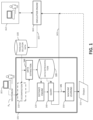
- FIG. 1 is a block diagram for an example of a system for simulation setup and execution in accordance with embodiments of the disclosure.
- System 100 as shown includes a simulation engine 160 and a simulation setup accelerator 101 that may include a decomposition unit 110, a distance engine 120, a data extraction unit 130, a query engine 140, and a machine learning component 150.
- the simulation setup accelerator 101 may automatically derive the settings needed to perform a simulation analysis by the simulation engine 150.
- the simulation setup accelerator 101 may generate a list of settings for a simulation model, such as a boundary variable and a boundary value to prescribe on each element of the boundary, a mesh definition, a time step parameter, a time advancing scheme label, or a combination thereof.
- the simulation setup accelerator 101 may receive a description of the new problem P N for simulation setup as entered by a user 102, using a workstation or graphical user interface (GUI) for example.
- the decomposition unit 110 may be provided as an optional feature to receive the description of a new problem P N for simulation, and may decompose the problem into several sub-problems to simplify comparison to previous simulation data for finding a candidate simulation.
- problem P N may consist of several elements or components for simulation, which may be divided according to a particular category or classification. If optional decomposition unit 110 is not utilized, the data extraction unit 130 may directly extract information for the new problem P N to be simulated and the problem solution data 115 to quantify similarities.
- the data extraction unit 130 may be configured to extract knowledge from problem/solution data 115, including numerical data and text. For each data in numeric form, data may be summarized in a concise and machine processable form. For each data in natural language form, data may be extracted in machine processable form (e.g., fields with numeric or Boolean values attached, logic propositions). For this process, existing library of natural language processing (NLP) can be used, possibly with additional development.
- Problem/solution data 115 may include a set of input/output (I/O) data generated, accumulated, and stored by previously solved problem simulations P 1 ... P N-1 , for which solutions were derived by means of analysis of simulation modeling.
- I/O input/output
- Such data can be in multiple forms including values of pointwise fields over a 3D geometry (potentially in time), vector of simulation settings, text, or the like.
- some problem simulations P 1 ... P N-1 could be of the same object of interest as new problem P N , but having a different geometry with conceptually the same boundary conditions, different mesh and time discretization parameters.
- new problem P N may relate to flow rate and pressure simulation through a vertical round pipe structure of diameter D N with mesh cell shape M N and time discretization T N .
- problem/solution data 115 may be searched to find a candidate problem simulation P 1 having stored simulation parameters for a flowrate and pressure simulation of a horizontal piping structure (i.e., different geometry) with similar diameter D 1 and different mesh cell shape M 1 and time discretization T 1 .
- Advantages of the simulation setup accelerator 101 include the capability the distance engine 120 to autonomously identify a strong candidate problem simulation from among the many candidates, and to quantify the similarities of parameters between the candidate simulation and the new problem to be simulated.
- the simulation setup accelerator 101 may determine a subset to be considered as input for problem simulation P N and which subset is to be the output variables set. For example, geometrical definition and conceptual boundary conditions may be determined to be the input variables for the new problem simulation, while mesh definition, time discretization parameter and time advancing scheme may be determined to be the output variables for the new problem simulation.
- Data corresponding to new problem P N may be extracted by the data extraction unit 130 and stored as data representation 135 in a way similar to that described herein for data 115.
- the data extraction unit 130 may store the data in an efficient manner.
- the data may be organized as a knowledge graph database or an ontology for a data representation 135.
- the structure of the knowledge representation may include ranking information or a distance field to allow fast recognition of related simulations which may be clustered according to similarity for common characteristics.
- the advantage of the autonomous ranking feature is that attempts to manually locate candidate problem simulations would be based on common characteristics without a deeper understanding of hidden similarities for an accurate quantification.
- the data extraction unit 130 may store the data according to a recommendation system for classifying the data in the data representation 135.
- the data may be classified in a format compatible with a series of questions and answers communicated between a user and the simulation setup accelerator 101.
- the data extraction unit 130 may be configured to read textual data (e.g., a published scientific paper), identify a use case along with settings used for the simulation, determine which settings did or did not successfully simulate the problem, and extract a rule for the data representation according to exclusion of failure settings and inclusion of successful settings. For example, the data extraction unit 130 may extract a simulation in which a mesh size setting of 0.5 was applied, but the simulation was unsuccessful. As a result of this knowledge, a rule may be inserted into the data representation for this previous problem simulation that mesh size should not equal 0.5, or that mesh size 0.5 is a failure setting to be excluded.
- textual data e.g., a published scientific paper
- the distance engine 120 may analyze the data of new problem P N and problem solution data 115 as received from data representation 135, such as vector representations, and similarities may be derived according to calculated distance between the vectors.
- the distance engine 120 may also quantify similarities between problem P N and a problem Pi based on evaluation of weighted edges between nodes to determine relative distances between ontological features of the problems P N and Pi.
- the query engine 140 may formulate a query of the data representation 135 corresponding to the candidate simulation problem Pi determined to have similar traits.
- the query determines a weak match e.g., based on a similarity score corresponding to a value below an established threshold, such as 70%
- the extracted data 135 can be used as input 143 for simulation setup at simulation engine 160 by identifying knowledge gaps to the user 162.
- Input 143 may be particularly advantageous where knowledge includes rules for parameters and variables that were or were not successful in previous simulations.
- queried parameters may be sent as input 145 to machine learning component 150 to infer simulation setup parameters for a new simulation.
- output 151 is sent as simulation setup parameters to simulation engine 160.
- the query engine 140 identifies a similarity score corresponding to a strong match according to an established threshold (e.g., 70% similarity)
- a simulation can be skipped to conserve time, and the parameters and variables 145 of data representation 135 for the candidate simulation may be sent to the machine learning component 150 for obtaining the solution at output 151 for new problem P N .
- the machine learning component 150 may predict output 151 as the solution for new problem P N using inferences based on extrapolation or interpolation of output values of previously solved problem Pi toward a value expected of the input values for problem P N . For example, when query engine 140 determines that there is a strong confidence level for relying on a previous simulation based on the similarity score, an actual simulation is bypassed, yielding significant conservation of resources. Alternatively, the machine learning component 150 may predict the parameters of the simulation setup without predicting the simulation results, where output 151 is sent to the simulation engine 160. For example, when the query engine 140 determines a weak confidence level for relying on the prediction of the simulation result based on prior data, output 151 is presented as simulation setup parameters.
- the simulation engine 160 may execute the candidate simulation using the simulation setup inputs 143. Alternatively, the simulation engine 160 may receive simulation setup inputs from the output 151 as described above. Simulation results 165 for new problem P N may be stored in problem/solution data 115 as the next accumulated data to be accessible for simulation setup for problem P N+1 and beyond. Simulation results may also be presented, such as a rendering for display to user 162.
- FIG. 2 is a flow diagram for an example of a method for simulation setup and execution in accordance with embodiments of the disclosure.
- the simulation setup accelerator 101 may receive a description of a new problem P i to be solved.
- the problem description may define parameters and input/output variables.
- data may be extracted from input/output data of simulations of previously solved problems 202.
- the new problem P N and previously simulated problems P i from extracted data 204 may be decomposed into subcomponents (e.g., P i decomposed into subcomponents Pi 1 ... P iK , for K ⁇ N.).
- the problem P i could be a recursive partitioning method that creates a decision tree with a given number of 2-way partitions, a given number of 3-way partitions and so on, until some stopping criteria are satisfied.
- the stopping criteria may be based on the computation of a distance metric, as will be further described below.
- similarity can be quantified between the current problem (or its sub-problems) and prior problems (or sub-problems).
- a method can be applied to compute a metric that represents the distance (opposite of similarity) between problems, based on certain feature sets.
- the 3D geometry may also be analyzed automatically to identify features. Depending on the problem, the relevant ones might be on the characteristic sizes, on the curvature of surfaces, on the tortuosity of the domain, or some other similar criterion.
- One approach could be to consider all the possible (relevant) geometric features and feed them to the method steps referenced below.
- a metric of similarity between two problems needs to be defined, e.g., considering the normalized norm of the difference between features vectors.
- a data representation may be generated that is designed to facilitate and speed up the identification in a large dataset of problems with features similar to a given features set.
- each solved problem (or sub problem) may be represented as a node in a graph using weighted edges to represent distances between them. This can speed up the identification of past similar problem and solution sets, which can then be used in the computation of solution for a new problem.
- Each problem (or sub-problem) node may have child nodes representing the corresponding data extracted at 204.
- means for inserting elements (such as nodes) in the data representation may include an ontological algorithm, based either on a predefined ontology or on an ontology automatically generated using artificial intelligence based on available data.
- means for a user to efficiently browse the data representation may include a graphical user interface (GUI).
- GUI graphical user interface
- a query for knowledge drawn from the data representation may elicit parameters and variables needed to simulate the new problem P N .
- parameters and variables from previous simulations may be evaluated to determine which of those provide accurate results (i.e., a successful simulation) and which of those resulted in poor results (i.e., an unsuccessful simulation).
- a source of information useful for this assessment may include textual information, such as commentary recorded by personnel who conducted the previous simulations, extracted by artificial intelligence.
- the query may generate a similarity score to quantify whether the simulation for candidate problem Pi includes information suitably matched for an accurate solution to new problem P N , i.e., whether candidate problem Pi is an acceptable match.
- the similarity score from the query may be measured against a threshold for an acceptable match (e.g., a similarity score of 70% or greater). If the similarity score indicates that the candidate simulation is an acceptable match, then the an inference algorithm may be executed at 211 to infer the solution outputs for the new problem P N based on collected input and output data of similar problem simulation data, without having to run a new simulation. On the other hand, if there is not an acceptable matching candidate simulation at 209, then a simulation setup 215 can commence with the benefit of the extracted knowledge of previous simulations. The simulation 217 results generated in this case can then be used as prior data 202 for successive utilization of the system.
- a threshold for an acceptable match e.g., a similarity score of 70% or greater.
- Advantages of the accelerated simulation setup include improved performance through elimination of manual steps. Exploration of design space may be improved due to the possibility of exploring a larger space at limited cost. Simulation setup is also more efficient by utilization of AI to identify relevant knowledge from previous simulations and lessons learned from human expertise extracted from scientific literature.
- FIG. 3 shows an exemplary computing environment within which embodiments of the disclosure may be implemented.
- the computer system 310 may include a communication mechanism such as a system bus 321 or other communication mechanism for communicating information within the computer system 310.
- the computer system 310 further includes one or more processors 320 coupled with the system bus 321 for processing the information.
- the processors 320 may include one or more central processing units (CPUs), graphical processing units (GPUs), or any other processor known in the art. More generally, a processor as described herein is a device for executing machine-readable instructions stored on a computer readable medium, for performing tasks and may comprise any one or combination of, hardware and firmware. A processor may also comprise memory storing machine-readable instructions executable for performing tasks. A processor acts upon information by manipulating, analyzing, modifying, converting or transmitting information for use by an executable procedure or an information device, and/or by routing the information to an output device. A processor may use or comprise the capabilities of a computer, controller or microprocessor, for example, and be conditioned using executable instructions to perform special purpose functions not performed by a general purpose computer.
- CPUs central processing units
- GPUs graphical processing units
- a processor may include any type of suitable processing unit including, but not limited to, a central processing unit, a microprocessor, a Reduced Instruction Set Computer (RISC) microprocessor, a Complex Instruction Set Computer (CISC) microprocessor, a microcontroller, an Application Specific Integrated Circuit (ASIC), a Field-Programmable Gate Array (FPGA), a System-on-a-Chip (SoC), a digital signal processor (DSP), and so forth.
- the processor(s) 320 may have any suitable microarchitecture design that includes any number of constituent components such as, for example, registers, multiplexers, arithmetic logic units, cache controllers for controlling read/write operations to cache memory, branch predictors, or the like.
- the microarchitecture design of the processor may be capable of supporting any of a variety of instruction sets.
- a processor may be coupled (electrically and/or as comprising executable components) with any other processor enabling interaction and/or communication there-between.
- a user interface processor or generator is a known element comprising electronic circuitry or software or a combination of both for generating display images or portions thereof.
- a user interface comprises one or more display images enabling user interaction with a processor or other device.
- the system bus 321 may include at least one of a system bus, a memory bus, an address bus, or a message bus, and may permit exchange of information (e.g., data (including computer-executable code), signaling, etc.) between various components of the computer system 310.
- the system bus 321 may include, without limitation, a memory bus or a memory controller, a peripheral bus, an accelerated graphics port, and so forth.
- the system bus 321 may be associated with any suitable bus architecture including, without limitation, an Industry Standard Architecture (ISA), a Micro Channel Architecture (MCA), an Enhanced ISA (EISA), a Video Electronics Standards Association (VESA) architecture, an Accelerated Graphics Port (AGP) architecture, a Peripheral Component Interconnects (PCI) architecture, a PCI-Express architecture, a Personal Computer Memory Card International Association (PCMCIA) architecture, a Universal Serial Bus (USB) architecture, and so forth.
- ISA Industry Standard Architecture
- MCA Micro Channel Architecture
- EISA Enhanced ISA
- VESA Video Electronics Standards Association
- AGP Accelerated Graphics Port
- PCI Peripheral Component Interconnects
- PCMCIA Personal Computer Memory Card International Association
- USB Universal Serial Bus
- the computer system 310 may also include a system memory 330 coupled to the system bus 321 for storing information and instructions to be executed by processors 320.
- the system memory 330 may include computer readable storage media in the form of volatile and/or nonvolatile memory, such as read only memory (ROM) 331 and/or random access memory (RAM) 332.
- the RAM 332 may include other dynamic storage device(s) (e.g., dynamic RAM, static RAM, and synchronous DRAM).
- the ROM 331 may include other static storage device(s) (e.g., programmable ROM, erasable PROM, and electrically erasable PROM).
- system memory 330 may be used for storing temporary variables or other intermediate information during the execution of instructions by the processors 320.
- a basic input/output system 333 (BIOS) containing the basic routines that help to transfer information between elements within computer system 310, such as during start-up, may be stored in the ROM 331.
- RAM 332 may contain data and/or program modules that are immediately accessible to and/or presently being operated on by the processors 320.
- System memory 330 may additionally include, for example, operating system 334, application programs 335, and other program modules 336.
- the operating system 334 may be loaded into the memory 330 and may provide an interface between other application software executing on the computer system 310 and hardware resources of the computer system 310. More specifically, the operating system 334 may include a set of computer-executable instructions for managing hardware resources of the computer system 310 and for providing common services to other application programs (e.g., managing memory allocation among various application programs). In certain example embodiments, the operating system 334 may control execution of one or more of the program modules depicted as being stored in the data storage 340.
- the operating system 334 may include any operating system now known or which may be developed in the future including, but not limited to, any server operating system, any mainframe operating system, or any other proprietary or non-proprietary operating system.
- the application programs 335 may a set of computer-executable instructions for performing the operative processes in accordance with embodiments of the disclosure.
- the computer system 310 may also include a disk/media controller 343 coupled to the system bus 321 to control one or more storage devices for storing information and instructions, such as a magnetic hard disk 341 and/or a removable media drive 342 (e.g., floppy disk drive, compact disc drive, tape drive, flash drive, and/or solid state drive).
- Storage devices 340 may be added to the computer system 310 using an appropriate device interface (e.g., a small computer system interface (SCSI), integrated device electronics (IDE), Universal Serial Bus (USB), or FireWire).
- Storage devices 341, 342 may be external to the computer system 310, and may be used to store data in accordance with the embodiments of the disclosure.
- the computer system 310 may also include a display controller 365 coupled to the system bus 321 to control a display or monitor 366, such as a cathode ray tube (CRT) or liquid crystal display (LCD), for displaying information to a computer user.
- the computer system includes a user input interface 360 and one or more input devices, such as a user terminal 361, which may include a keyboard, touchscreen, tablet and/or a pointing device, for interacting with a computer user and providing information to the processors 320.
- the display 366 may provide a touch screen interface which allows input to supplement or replace the communication of direction information and command selections by the user terminal device 361.
- the computer system 310 may perform a portion or all of the processing steps of embodiments of the invention in response to the processors 320 executing one or more sequences of one or more instructions contained in a memory, such as the system memory 330. Such instructions may be read into the system memory 330 from another computer readable medium, such as the magnetic hard disk 341 or the removable media drive 342.
- the magnetic hard disk 341 may contain one or more data stores and data files used by embodiments of the present invention.
- the data store may include, but are not limited to, databases (e.g., relational, object-oriented, etc.), file systems, flat files, distributed data stores in which data is stored on more than one node of a computer network, peer-to-peer network data stores, or the like.
- the processors 320 may also be employed in a multi-processing arrangement to execute the one or more sequences of instructions contained in system memory 330.
- hard-wired circuitry may be used in place of or in combination with software instructions.
- embodiments are not limited to any specific combination of hardware circuitry and software.
- the computer system 310 may include at least one computer readable medium or memory for holding instructions programmed according to embodiments of the invention and for containing data structures, tables, records, or other data described herein.
- the term "computer readable medium” as used herein refers to any medium that participates in providing instructions to the processors 320 for execution.
- a computer readable medium may take many forms including, but not limited to, non-transitory, non-volatile media, volatile media, and transmission media.
- Non-limiting examples of non-volatile media include optical disks, solid state drives, magnetic disks, and magneto-optical disks, such as magnetic hard disk 341 or removable media drive 342.
- Non-limiting examples of volatile media include dynamic memory, such as system memory 330.
- Non-limiting examples of transmission media include coaxial cables, copper wire, and fiber optics, including the wires that make up the system bus 321.
- Transmission media may also take the form of acoustic or light waves, such as those generated during radio wave and infrared data communications.
- Computer readable medium instructions for carrying out operations of the present disclosure may be assembler instructions, instruction-set-architecture (ISA) instructions, machine instructions, machine dependent instructions, microcode, firmware instructions, state-setting data, or either source code or object code written in any combination of one or more programming languages, including an object oriented programming language such as Smalltalk, C++ or the like, and conventional procedural programming languages, such as the "C" programming language or similar programming languages.
- the computer readable program instructions may execute entirely on the user's computer, partly on the user's computer, as a stand-alone software package, partly on the user's computer and partly on a remote computer or entirely on the remote computer or server.
- the remote computer may be connected to the user's computer through any type of network, including a local area network (LAN) or a wide area network (WAN), or the connection may be made to an external computer (for example, through the Internet using an Internet Service Provider).
- electronic circuitry including, for example, programmable logic circuitry, field-programmable gate arrays (FPGA), or programmable logic arrays (PLA) may execute the computer readable program instructions by utilizing state information of the computer readable program instructions to personalize the electronic circuitry, in order to perform aspects of the present disclosure.
- the computing environment 300 may further include the computer system 310 operating in a networked environment using logical connections to one or more remote computers, such as remote computing device 380.
- the network interface 370 may enable communication, for example, with other remote devices 380 or systems and/or the storage devices 341, 342 via the network 371.
- Remote computing device 380 may be a personal computer (laptop or desktop), a mobile device, a server, a router, a network PC, a peer device or other common network node, and typically includes many or all of the elements described above relative to computer system 310.
- computer system 310 may include modem 372 for establishing communications over a network 371, such as the Internet. Modem 372 may be connected to system bus 321 via user network interface 370, or via another appropriate mechanism.
- Network 371 may be any network or system generally known in the art, including the Internet, an intranet, a local area network (LAN), a wide area network (WAN), a metropolitan area network (MAN), a direct connection or series of connections, a cellular telephone network, or any other network or medium capable of facilitating communication between computer system 310 and other computers (e.g., remote computing device 380).
- the network 371 may be wired, wireless or a combination thereof. Wired connections may be implemented using Ethernet, Universal Serial Bus (USB), RJ-6, or any other wired connection generally known in the art.
- Wireless connections may be implemented using Wi-Fi, WiMAX, and Bluetooth, infrared, cellular networks, satellite or any other wireless connection methodology generally known in the art. Additionally, several networks may work alone or in communication with each other to facilitate communication in the network 371.
- program modules, applications, computer-executable instructions, code, or the like depicted in FIG. 3 as being stored in the system memory 330 are merely illustrative and not exhaustive and that processing described as being supported by any particular module may alternatively be distributed across multiple modules or performed by a different module.
- various program module(s), script(s), plug-in(s), Application Programming Interface(s) (API(s)), or any other suitable computer-executable code hosted locally on the computer system 310, the remote device 380, and/or hosted on other computing device(s) accessible via one or more of the network(s) 371, may be provided to support functionality provided by the program modules, applications, or computer-executable code depicted in FIG.
- functionality may be modularized differently such that processing described as being supported collectively by the collection of program modules depicted in FIG. 3 may be performed by a fewer or greater number of modules, or functionality described as being supported by any particular module may be supported, at least in part, by another module.
- program modules that support the functionality described herein may form part of one or more applications executable across any number of systems or devices in accordance with any suitable computing model such as, for example, a client-server model, a peer-to-peer model, and so forth.
- any of the functionality described as being supported by any of the program modules depicted in FIG. 3 may be implemented, at least partially, in hardware and/or firmware across any number of devices.
- An executable application comprises code or machine readable instructions for conditioning the processor to implement predetermined functions, such as those of an operating system, a context data acquisition system or other information processing system, for example, in response to user command or input.
- An executable procedure is a segment of code or machine readable instruction, sub-routine, or other distinct section of code or portion of an executable application for performing one or more particular processes. These processes may include receiving input data and/or parameters, performing operations on received input data and/or performing functions in response to received input parameters, and providing resulting output data and/or parameters.
- An activity performed automatically is performed in response to one or more executable instructions or device operation without user direct initiation of the activity.
Landscapes
- Engineering & Computer Science (AREA)
- Theoretical Computer Science (AREA)
- Physics & Mathematics (AREA)
- General Engineering & Computer Science (AREA)
- General Physics & Mathematics (AREA)
- Evolutionary Computation (AREA)
- Artificial Intelligence (AREA)
- Computational Linguistics (AREA)
- Data Mining & Analysis (AREA)
- Computing Systems (AREA)
- Mathematical Physics (AREA)
- Software Systems (AREA)
- Geometry (AREA)
- Computer Hardware Design (AREA)
- Management, Administration, Business Operations System, And Electronic Commerce (AREA)
Claims (10)
- System für beschleunigte Simulationseinrichtung zum Simulieren eines 3D-Modells einer industriellen Komponente, umfassend:
einen Simulationseinrichtungsbeschleuniger (101), konfiguriert zum:Empfangen einer Beschreibung eines neuen Problems (PN) für Simulation, wobei das neue Problem (PN) mit Simulieren des 3D-Modells der industriellen Komponente korrespondiert;Extrahieren von Eingabedaten und Ausgabedaten von vorherige Simulationsergebnissen, die Lösungen von Problemen enthalten, die nicht offenkundig mit dem neuen Problem (PN) in Beziehung stehen;Erzeugen einer Datenrepräsentation (135) basierend auf den extrahierten Eingabedaten und Ausgabedaten unter Verwendung eines ontologischen Algorithmus zum Repräsentieren jedes gelösten Problems von vorherigen Simulationen als einen Knoten in einem Graphen und gewichtete Ränder, die Entfernungen zwischen jedem Knoten repräsentieren;Quantifizieren von Ähnlichkeiten, einschließlich von versteckten Ähnlichkeiten, zwischen dem neuen Problem (PN) und den extrahierten Eingabedaten und Ausgabedaten basierend auf Entfernungen zwischen Repräsentationen der Eingabedaten und der Ausgabedaten;Abfragen von Wissen basierend auf den quantifizierten Ähnlichkeiten und der Repräsentation von Daten, um eine Problemkandidaten-Simulation basierend auf einer Ähnlichkeit-Bewertungsziffer zu bestimmen; undunter einer Bedingung, dass die Ähnlichkeit-Bewertungsziffer gleich einem oder größer als ein Schwellenwert für eine annehmbare Übereinstimmung ist:Ableiten, durch eine Maschinenlernen-Komponente (150), von Lösungsausgaben für das neue Problem (PN) basierend auf Extrapolation oder Interpolation von Ausgaben der Problemkandidaten-Simulation; undeine Simulation-Engine (160), konfiguriert zum Erzeugen einer Simulationseinrichtung für das 3D-Modell der industriellen Komponente unter einer Bedingung, dass die Ähnlichkeit-Bewertungsziffer kleiner als der Schwellenwert für eine annehmbare Übereinstimmung ist, wobei die Simulationseinrichtung unter Verwendung des abgefragten Wissens, der eingegebenen Variablen und der eingegebenen Parameter korrespondierend mit der Problemkandidaten-Simulation erzeugt wird. - System nach Anspruch 1, wobei der Simulationseinrichtungsbeschleuniger (101) ferner konfiguriert ist zum Zerlegen der neuen und vorherigen Probleme in Teilprobleme.
- System nach Anspruch 1, wobei die Datenextraktion das Bestimmen von Simulationsfehlereinstellungen enthält, die ein vorher gelöstes Problem nicht erfolgreich simuliert haben, und der Simulationseinrichtungsbeschleuniger (101) ferner konfiguriert ist zum Erzeugen einer Regel für die Datenrepräsentation (135), die die Fehlereinstellungen ausschließt.
- System nach Anspruch 1, wobei der Graph untergeordnete Knoten enthält, die extrahierte Daten korrespondierend mit dem Knoten, der ein jeweiliges gelöstes Problem repräsentiert, repräsentieren, und die durch die Abfrage erzeugte Ähnlichkeit-Bewertungsziffer auf der Analyse von Knoten und untergeordneten Knoten des Graphen basiert.
- System nach Anspruch 1, wobei die extrahierten Daten durch Personal, das die Problemkandidaten-Simulation durchführte, aufgezeichnete Kommentare enthalten und die durch die Abfrage erzeugte Ähnlichkeit-Bewertungsziffer eine Evaluation von Parametern und Variablen basierend auf den Kommentaren enthält.
- Computerimplementiertes Verfahren für beschleunigte Simulationseinrichtung zum Simulieren eines 3D-Modells einer industriellen Komponente, umfassend:Empfangen (201), durch einen Simulationseinrichtungsbeschleuniger (101), einer Beschreibung eines neuen Problems (PN) für Simulation, wobei das neue Problem (PN) mit Simulieren des 3D-Modells der industriellen Komponente korrespondiert;Extrahieren (204), durch den Simulationseinrichtungsbeschleuniger (101), von Eingabedaten und Ausgabedaten von vorherige Simulationsergebnissen, die Lösungen von Problemen enthalten, die nicht offenkundig mit dem neuen Problem in Beziehung stehen;Erzeugen (208), durch den Simulationseinrichtungsbeschleuniger (101), einer Datenrepräsentation (135) basierend auf den extrahierten Eingabedaten und Ausgabedaten unter Verwendung eines ontologischen Algorithmus zum Repräsentieren jedes gelösten Problems von vorherigen Simulationen als einen Knoten in einem Graphen und gewichtete Ränder, die Entfernungen zwischen jedem Knoten repräsentieren;Quantifizieren (205), durch den Simulationseinrichtungsbeschleuniger (101), von Ähnlichkeiten, einschließlich von versteckten Ähnlichkeiten, zwischen dem neuen Problem (PN) und den extrahierten Eingabedaten und Ausgabedaten basierend auf Entfernungen zwischen Repräsentationen der Eingabedaten und der Ausgabedaten;Abfragen (207), durch den Simulationseinrichtungsbeschleuniger (101), von Wissen basierend auf den quantifizierten Ähnlichkeiten und der Repräsentation von Daten, um eine Problemkandidaten-Simulation basierend auf einer Ähnlichkeit-Bewertungsziffer zu bestimmen;unter einer Bedingung, dass die Ähnlichkeit-Bewertungsziffer gleich einem oder größer als ein Schwellenwert für eine annehmbare Übereinstimmung ist:Ableiten (211), durch eine Maschinenlernen-Komponente (150), von Lösungsausgaben für das neue Problem (PN) basierend auf Extrapolation oder Interpolation von Ausgaben der Problemkandidaten-Simulation; undErzeugen, durch eine Simulation-Engine (160), einer Simulationseinrichtung (215) für das 3D-Modell der industriellen Komponente unter einer Bedingung, dass die Ähnlichkeit-Bewertungsziffer kleiner als der Schwellenwert für eine annehmbare Übereinstimmung ist, wobei die Simulationseinrichtung (215) unter Verwendung des abgefragten Wissens, der eingegebenen Variablen und der eingegebenen Parameter korrespondierend mit der Problemkandidaten-Simulation erzeugt wird.
- Verfahren nach Anspruch 6, ferner umfassend Zerlegen (203), durch den Simulationseinrichtungsbeschleuniger (101), der neuen und vorherigen Probleme in Teilprobleme.
- Verfahren nach Anspruch 6, wobei die Datenextraktion das Bestimmen von Simulationsfehlereinstellungen enthält, die ein vorher gelöstes Problem nicht erfolgreich simuliert haben, das Verfahren ferner umfassend Erzeugen einer Regel für die Datenrepräsentation (135), die die Fehlereinstellungen ausschließt.
- Verfahren nach Anspruch 6, wobei der Graph untergeordnete Knoten enthält, die extrahierte Daten korrespondierend mit dem Knoten, der ein jeweiliges gelöstes Problem repräsentiert, repräsentieren, und die durch die Abfrage erzeugte Ähnlichkeit-Bewertungsziffer auf der Analyse von Knoten und untergeordneten Knoten des Graphen basiert.
- Verfahren nach Anspruch 6, wobei die extrahierten Daten durch Personal, das die Problemkandidaten-Simulation durchführte, aufgezeichnete Kommentare enthalten und die durch die Abfrage erzeugte Ähnlichkeit-Bewertungsziffer eine Evaluation von Parametern und Variablen basierend auf den Kommentaren enthält.
Applications Claiming Priority (2)
| Application Number | Priority Date | Filing Date | Title |
|---|---|---|---|
| US201762590675P | 2017-11-27 | 2017-11-27 | |
| PCT/US2018/062565 WO2019104304A1 (en) | 2017-11-27 | 2018-11-27 | Accelerated simulation setup process using prior knowledge extraction for problem matching |
Publications (3)
| Publication Number | Publication Date |
|---|---|
| EP3701403A1 EP3701403A1 (de) | 2020-09-02 |
| EP3701403B1 true EP3701403B1 (de) | 2024-02-14 |
| EP3701403C0 EP3701403C0 (de) | 2024-02-14 |
Family
ID=64901657
Family Applications (1)
| Application Number | Title | Priority Date | Filing Date |
|---|---|---|---|
| EP18827303.1A Active EP3701403B1 (de) | 2017-11-27 | 2018-11-27 | Beschleunigter simulationseinstellungsprozess mit vorauswissensteuerung zum zusammenpassen von problems |
Country Status (4)
| Country | Link |
|---|---|
| US (1) | US11886779B2 (de) |
| EP (1) | EP3701403B1 (de) |
| CN (1) | CN111373406B (de) |
| WO (1) | WO2019104304A1 (de) |
Families Citing this family (9)
| Publication number | Priority date | Publication date | Assignee | Title |
|---|---|---|---|---|
| WO2021062754A1 (zh) * | 2019-09-30 | 2021-04-08 | 西门子股份公司 | 非线性模型的建模方法、装置及存储介质 |
| EP4179451A1 (de) * | 2020-08-12 | 2023-05-17 | Siemens Aktiengesellschaft | Automatisches clustern von designprojektdaten mit konformitätsüberprüfung |
| WO2022036515A1 (zh) * | 2020-08-17 | 2022-02-24 | 西门子股份公司 | 生产过程的建模和仿真方法及装置 |
| TWI798583B (zh) * | 2020-09-01 | 2023-04-11 | 中華電信股份有限公司 | 加速模擬軟體的模擬結果的產生的電子裝置和方法 |
| CN112996024A (zh) * | 2021-01-20 | 2021-06-18 | 国网西藏电力有限公司信息通信公司 | 一种网络通信问题判定处理装置 |
| CN112883636A (zh) * | 2021-01-28 | 2021-06-01 | 上海眼控科技股份有限公司 | 一种用于数值模式的参数模型的加速方法及设备 |
| US20230334416A1 (en) * | 2022-04-13 | 2023-10-19 | Tata Consultancy Services Limited | Method and system for material replenishment planning |
| US20250181791A1 (en) | 2023-11-30 | 2025-06-05 | Generative Vision Limited | Method for automatically generating design solutions for an engineering design project |
| EP4607397A1 (de) * | 2024-02-22 | 2025-08-27 | Siemens Aktiengesellschaft | Computerimplementiertes verfahren und system zur gewinnung von simulationsparametern |
Family Cites Families (8)
| Publication number | Priority date | Publication date | Assignee | Title |
|---|---|---|---|---|
| US9507754B2 (en) * | 2011-11-15 | 2016-11-29 | Halliburton Energy Services, Inc. | Modeling passage of a tool through a well |
| WO2013148369A1 (en) * | 2012-03-30 | 2013-10-03 | Erdman Arthur G | Virtual design |
| US10073424B2 (en) * | 2014-05-13 | 2018-09-11 | Autodesk, Inc. | Intelligent 3D printing through optimization of 3D print parameters |
| WO2016004330A1 (en) * | 2014-07-03 | 2016-01-07 | Oim Squared Inc. | Interactive content generation |
| US10305758B1 (en) * | 2014-10-09 | 2019-05-28 | Splunk Inc. | Service monitoring interface reflecting by-service mode |
| US10831811B2 (en) * | 2015-12-01 | 2020-11-10 | Oracle International Corporation | Resolution of ambiguous and implicit references using contextual information |
| CN109716346A (zh) * | 2016-07-18 | 2019-05-03 | 河谷生物组学有限责任公司 | 分布式机器学习系统、装置和方法 |
| US10558780B1 (en) * | 2017-09-30 | 2020-02-11 | Cadence Design Systems, Inc. | Methods, systems, and computer program product for implementing schematic driven extracted views for an electronic design |
-
2018
- 2018-11-27 EP EP18827303.1A patent/EP3701403B1/de active Active
- 2018-11-27 WO PCT/US2018/062565 patent/WO2019104304A1/en not_active Ceased
- 2018-11-27 US US16/766,816 patent/US11886779B2/en active Active
- 2018-11-27 CN CN201880075853.8A patent/CN111373406B/zh active Active
Non-Patent Citations (1)
| Title |
|---|
| LOHMANN STEFFEN ET AL: "Visualizing ontologies with VOWL", SEMANTIC WEB, vol. 7, no. 4, 27 May 2016 (2016-05-27), pages 399 - 419, XP093075458, ISSN: 1570-0844, Retrieved from the Internet <URL:https://www.semantic-web-journal.net/system/files/swj1114.pdf> [retrieved on 20230822], DOI: 10.3233/SW-150200 * |
Also Published As
| Publication number | Publication date |
|---|---|
| EP3701403A1 (de) | 2020-09-02 |
| CN111373406A (zh) | 2020-07-03 |
| US20210019456A1 (en) | 2021-01-21 |
| US11886779B2 (en) | 2024-01-30 |
| CN111373406B (zh) | 2023-09-01 |
| EP3701403C0 (de) | 2024-02-14 |
| WO2019104304A1 (en) | 2019-05-31 |
Similar Documents
| Publication | Publication Date | Title |
|---|---|---|
| EP3701403B1 (de) | Beschleunigter simulationseinstellungsprozess mit vorauswissensteuerung zum zusammenpassen von problems | |
| US10904072B2 (en) | System and method for recommending automation solutions for technology infrastructure issues | |
| US20200097810A1 (en) | Automated window based feature generation for time-series forecasting and anomaly detection | |
| EP3467723A1 (de) | Auf maschinellem lernen basierendes netzwerkmodellkonstruktionsverfahren und vorrichtung | |
| US20170169078A1 (en) | Log Mining with Big Data | |
| CN115796312A (zh) | 一种多变量时间序列预测方法及系统 | |
| US12210331B2 (en) | Automation engineering learning framework for cognitive engineering | |
| EP4024203B1 (de) | Systemleistungsoptimierung | |
| US20230152787A1 (en) | Performance optimization of complex industrial systems and processes | |
| US20200167660A1 (en) | Automated heuristic deep learning-based modelling | |
| EP3842940A1 (de) | Verfahren und system zur gleichmässigen merkmalsextraktion | |
| CN120412984A (zh) | 一种基于大模型的企业智能诊断方法、系统、设备及介质 | |
| CN117519656A (zh) | 一种基于智能制造的软件开发系统 | |
| JP7618804B2 (ja) | 自己学習分析ソリューションコア | |
| WO2020056107A1 (en) | Automated simulation pipeline for fast simulation driven computer aided design | |
| CN115186738A (zh) | 模型训练方法、装置和存储介质 | |
| CN117151247B (zh) | 机器学习任务建模的方法、装置、计算机设备和存储介质 | |
| RU2715024C1 (ru) | Способ отладки обученной рекуррентной нейронной сети | |
| US20230368086A1 (en) | Automated intelligence facilitation of routing operations | |
| WO2023214933A1 (en) | Feature crossing for machine learning | |
| Almoqren et al. | A smart framework for optimizing user feedback prioritization in application development | |
| CN115658021A (zh) | 动态模型的确定方法、装置、存储介质及电子设备 | |
| CN111444170B (zh) | 基于预测业务场景的自动机器学习方法和设备 | |
| CN118132977B (zh) | 一种地铁能耗的预测方法及电子设备 | |
| US20240346368A1 (en) | Augmented feature enablement of machine learning models via graph neural networks |
Legal Events
| Date | Code | Title | Description |
|---|---|---|---|
| STAA | Information on the status of an ep patent application or granted ep patent |
Free format text: STATUS: UNKNOWN |
|
| STAA | Information on the status of an ep patent application or granted ep patent |
Free format text: STATUS: THE INTERNATIONAL PUBLICATION HAS BEEN MADE |
|
| PUAI | Public reference made under article 153(3) epc to a published international application that has entered the european phase |
Free format text: ORIGINAL CODE: 0009012 |
|
| STAA | Information on the status of an ep patent application or granted ep patent |
Free format text: STATUS: REQUEST FOR EXAMINATION WAS MADE |
|
| 17P | Request for examination filed |
Effective date: 20200525 |
|
| AK | Designated contracting states |
Kind code of ref document: A1 Designated state(s): AL AT BE BG CH CY CZ DE DK EE ES FI FR GB GR HR HU IE IS IT LI LT LU LV MC MK MT NL NO PL PT RO RS SE SI SK SM TR |
|
| AX | Request for extension of the european patent |
Extension state: BA ME |
|
| DAV | Request for validation of the european patent (deleted) | ||
| DAX | Request for extension of the european patent (deleted) | ||
| STAA | Information on the status of an ep patent application or granted ep patent |
Free format text: STATUS: EXAMINATION IS IN PROGRESS |
|
| 17Q | First examination report despatched |
Effective date: 20220328 |
|
| REG | Reference to a national code |
Ref country code: DE Ref legal event code: R079 Free format text: PREVIOUS MAIN CLASS: G06F0017500000 Ipc: G06F0030200000 Ref document number: 602018065290 Country of ref document: DE |
|
| GRAP | Despatch of communication of intention to grant a patent |
Free format text: ORIGINAL CODE: EPIDOSNIGR1 |
|
| STAA | Information on the status of an ep patent application or granted ep patent |
Free format text: STATUS: GRANT OF PATENT IS INTENDED |
|
| RIC1 | Information provided on ipc code assigned before grant |
Ipc: G06F 30/20 20200101AFI20230822BHEP |
|
| INTG | Intention to grant announced |
Effective date: 20230914 |
|
| RIN1 | Information on inventor provided before grant (corrected) |
Inventor name: DALLORO, LIVIO Inventor name: SRIVASTAVA, SANJEEV Inventor name: MIRABELLA, LUCIA |
|
| GRAS | Grant fee paid |
Free format text: ORIGINAL CODE: EPIDOSNIGR3 |
|
| GRAA | (expected) grant |
Free format text: ORIGINAL CODE: 0009210 |
|
| STAA | Information on the status of an ep patent application or granted ep patent |
Free format text: STATUS: THE PATENT HAS BEEN GRANTED |
|
| AK | Designated contracting states |
Kind code of ref document: B1 Designated state(s): AL AT BE BG CH CY CZ DE DK EE ES FI FR GB GR HR HU IE IS IT LI LT LU LV MC MK MT NL NO PL PT RO RS SE SI SK SM TR |
|
| REG | Reference to a national code |
Ref country code: GB Ref legal event code: FG4D |
|
| REG | Reference to a national code |
Ref country code: CH Ref legal event code: EP |
|
| REG | Reference to a national code |
Ref country code: DE Ref legal event code: R096 Ref document number: 602018065290 Country of ref document: DE |
|
| REG | Reference to a national code |
Ref country code: IE Ref legal event code: FG4D |
|
| U01 | Request for unitary effect filed |
Effective date: 20240215 |
|
| U07 | Unitary effect registered |
Designated state(s): AT BE BG DE DK EE FI FR IT LT LU LV MT NL PT SE SI Effective date: 20240226 |
|
| PG25 | Lapsed in a contracting state [announced via postgrant information from national office to epo] |
Ref country code: IS Free format text: LAPSE BECAUSE OF FAILURE TO SUBMIT A TRANSLATION OF THE DESCRIPTION OR TO PAY THE FEE WITHIN THE PRESCRIBED TIME-LIMIT Effective date: 20240614 |
|
| PG25 | Lapsed in a contracting state [announced via postgrant information from national office to epo] |
Ref country code: GR Free format text: LAPSE BECAUSE OF FAILURE TO SUBMIT A TRANSLATION OF THE DESCRIPTION OR TO PAY THE FEE WITHIN THE PRESCRIBED TIME-LIMIT Effective date: 20240515 |
|
| PG25 | Lapsed in a contracting state [announced via postgrant information from national office to epo] |
Ref country code: HR Free format text: LAPSE BECAUSE OF FAILURE TO SUBMIT A TRANSLATION OF THE DESCRIPTION OR TO PAY THE FEE WITHIN THE PRESCRIBED TIME-LIMIT Effective date: 20240214 Ref country code: RS Free format text: LAPSE BECAUSE OF FAILURE TO SUBMIT A TRANSLATION OF THE DESCRIPTION OR TO PAY THE FEE WITHIN THE PRESCRIBED TIME-LIMIT Effective date: 20240514 |
|
| PG25 | Lapsed in a contracting state [announced via postgrant information from national office to epo] |
Ref country code: ES Free format text: LAPSE BECAUSE OF FAILURE TO SUBMIT A TRANSLATION OF THE DESCRIPTION OR TO PAY THE FEE WITHIN THE PRESCRIBED TIME-LIMIT Effective date: 20240214 |
|
| PG25 | Lapsed in a contracting state [announced via postgrant information from national office to epo] |
Ref country code: RS Free format text: LAPSE BECAUSE OF FAILURE TO SUBMIT A TRANSLATION OF THE DESCRIPTION OR TO PAY THE FEE WITHIN THE PRESCRIBED TIME-LIMIT Effective date: 20240514 Ref country code: NO Free format text: LAPSE BECAUSE OF FAILURE TO SUBMIT A TRANSLATION OF THE DESCRIPTION OR TO PAY THE FEE WITHIN THE PRESCRIBED TIME-LIMIT Effective date: 20240514 Ref country code: IS Free format text: LAPSE BECAUSE OF FAILURE TO SUBMIT A TRANSLATION OF THE DESCRIPTION OR TO PAY THE FEE WITHIN THE PRESCRIBED TIME-LIMIT Effective date: 20240614 Ref country code: HR Free format text: LAPSE BECAUSE OF FAILURE TO SUBMIT A TRANSLATION OF THE DESCRIPTION OR TO PAY THE FEE WITHIN THE PRESCRIBED TIME-LIMIT Effective date: 20240214 Ref country code: GR Free format text: LAPSE BECAUSE OF FAILURE TO SUBMIT A TRANSLATION OF THE DESCRIPTION OR TO PAY THE FEE WITHIN THE PRESCRIBED TIME-LIMIT Effective date: 20240515 Ref country code: ES Free format text: LAPSE BECAUSE OF FAILURE TO SUBMIT A TRANSLATION OF THE DESCRIPTION OR TO PAY THE FEE WITHIN THE PRESCRIBED TIME-LIMIT Effective date: 20240214 |
|
| PG25 | Lapsed in a contracting state [announced via postgrant information from national office to epo] |
Ref country code: PL Free format text: LAPSE BECAUSE OF FAILURE TO SUBMIT A TRANSLATION OF THE DESCRIPTION OR TO PAY THE FEE WITHIN THE PRESCRIBED TIME-LIMIT Effective date: 20240214 |
|
| PG25 | Lapsed in a contracting state [announced via postgrant information from national office to epo] |
Ref country code: PL Free format text: LAPSE BECAUSE OF FAILURE TO SUBMIT A TRANSLATION OF THE DESCRIPTION OR TO PAY THE FEE WITHIN THE PRESCRIBED TIME-LIMIT Effective date: 20240214 |
|
| PG25 | Lapsed in a contracting state [announced via postgrant information from national office to epo] |
Ref country code: SM Free format text: LAPSE BECAUSE OF FAILURE TO SUBMIT A TRANSLATION OF THE DESCRIPTION OR TO PAY THE FEE WITHIN THE PRESCRIBED TIME-LIMIT Effective date: 20240214 |
|
| PG25 | Lapsed in a contracting state [announced via postgrant information from national office to epo] |
Ref country code: CZ Free format text: LAPSE BECAUSE OF FAILURE TO SUBMIT A TRANSLATION OF THE DESCRIPTION OR TO PAY THE FEE WITHIN THE PRESCRIBED TIME-LIMIT Effective date: 20240214 |
|
| PG25 | Lapsed in a contracting state [announced via postgrant information from national office to epo] |
Ref country code: SK Free format text: LAPSE BECAUSE OF FAILURE TO SUBMIT A TRANSLATION OF THE DESCRIPTION OR TO PAY THE FEE WITHIN THE PRESCRIBED TIME-LIMIT Effective date: 20240214 |
|
| PG25 | Lapsed in a contracting state [announced via postgrant information from national office to epo] |
Ref country code: SM Free format text: LAPSE BECAUSE OF FAILURE TO SUBMIT A TRANSLATION OF THE DESCRIPTION OR TO PAY THE FEE WITHIN THE PRESCRIBED TIME-LIMIT Effective date: 20240214 Ref country code: SK Free format text: LAPSE BECAUSE OF FAILURE TO SUBMIT A TRANSLATION OF THE DESCRIPTION OR TO PAY THE FEE WITHIN THE PRESCRIBED TIME-LIMIT Effective date: 20240214 Ref country code: RO Free format text: LAPSE BECAUSE OF FAILURE TO SUBMIT A TRANSLATION OF THE DESCRIPTION OR TO PAY THE FEE WITHIN THE PRESCRIBED TIME-LIMIT Effective date: 20240214 Ref country code: CZ Free format text: LAPSE BECAUSE OF FAILURE TO SUBMIT A TRANSLATION OF THE DESCRIPTION OR TO PAY THE FEE WITHIN THE PRESCRIBED TIME-LIMIT Effective date: 20240214 |
|
| REG | Reference to a national code |
Ref country code: DE Ref legal event code: R097 Ref document number: 602018065290 Country of ref document: DE |
|
| PLBE | No opposition filed within time limit |
Free format text: ORIGINAL CODE: 0009261 |
|
| STAA | Information on the status of an ep patent application or granted ep patent |
Free format text: STATUS: NO OPPOSITION FILED WITHIN TIME LIMIT |
|
| U20 | Renewal fee for the european patent with unitary effect paid |
Year of fee payment: 7 Effective date: 20241118 |
|
| 26N | No opposition filed |
Effective date: 20241115 |
|
| REG | Reference to a national code |
Ref country code: CH Ref legal event code: PL |
|
| PG25 | Lapsed in a contracting state [announced via postgrant information from national office to epo] |
Ref country code: MC Free format text: LAPSE BECAUSE OF FAILURE TO SUBMIT A TRANSLATION OF THE DESCRIPTION OR TO PAY THE FEE WITHIN THE PRESCRIBED TIME-LIMIT Effective date: 20240214 |
|
| REG | Reference to a national code |
Ref country code: CH Ref legal event code: PL |
|
| PG25 | Lapsed in a contracting state [announced via postgrant information from national office to epo] |
Ref country code: CH Free format text: LAPSE BECAUSE OF NON-PAYMENT OF DUE FEES Effective date: 20241130 |
|
| PG25 | Lapsed in a contracting state [announced via postgrant information from national office to epo] |
Ref country code: IE Free format text: LAPSE BECAUSE OF NON-PAYMENT OF DUE FEES Effective date: 20241127 |
|
| U20 | Renewal fee for the european patent with unitary effect paid |
Year of fee payment: 8 Effective date: 20251120 |
|
| PGFP | Annual fee paid to national office [announced via postgrant information from national office to epo] |
Ref country code: GB Payment date: 20251211 Year of fee payment: 8 |
|
| PG25 | Lapsed in a contracting state [announced via postgrant information from national office to epo] |
Ref country code: HU Free format text: LAPSE BECAUSE OF FAILURE TO SUBMIT A TRANSLATION OF THE DESCRIPTION OR TO PAY THE FEE WITHIN THE PRESCRIBED TIME-LIMIT; INVALID AB INITIO Effective date: 20181127 |
|
| PG25 | Lapsed in a contracting state [announced via postgrant information from national office to epo] |
Ref country code: CY Free format text: LAPSE BECAUSE OF FAILURE TO SUBMIT A TRANSLATION OF THE DESCRIPTION OR TO PAY THE FEE WITHIN THE PRESCRIBED TIME-LIMIT; INVALID AB INITIO Effective date: 20181127 |