EP3701249B1 - Nachweisverfahren - Google Patents
Nachweisverfahren Download PDFInfo
- Publication number
- EP3701249B1 EP3701249B1 EP18870710.3A EP18870710A EP3701249B1 EP 3701249 B1 EP3701249 B1 EP 3701249B1 EP 18870710 A EP18870710 A EP 18870710A EP 3701249 B1 EP3701249 B1 EP 3701249B1
- Authority
- EP
- European Patent Office
- Prior art keywords
- compound
- sensing
- moiety
- narcotic
- fluorescent
- Prior art date
- Legal status (The legal status is an assumption and is not a legal conclusion. Google has not performed a legal analysis and makes no representation as to the accuracy of the status listed.)
- Active
Links
Images





Classifications
-
- C—CHEMISTRY; METALLURGY
- C07—ORGANIC CHEMISTRY
- C07D—HETEROCYCLIC COMPOUNDS
- C07D285/00—Heterocyclic compounds containing rings having nitrogen and sulfur atoms as the only ring hetero atoms, not provided for by groups C07D275/00 - C07D283/00
- C07D285/01—Five-membered rings
- C07D285/02—Thiadiazoles; Hydrogenated thiadiazoles
- C07D285/14—Thiadiazoles; Hydrogenated thiadiazoles condensed with carbocyclic rings or ring systems
-
- C—CHEMISTRY; METALLURGY
- C09—DYES; PAINTS; POLISHES; NATURAL RESINS; ADHESIVES; COMPOSITIONS NOT OTHERWISE PROVIDED FOR; APPLICATIONS OF MATERIALS NOT OTHERWISE PROVIDED FOR
- C09K—MATERIALS FOR MISCELLANEOUS APPLICATIONS, NOT PROVIDED FOR ELSEWHERE
- C09K11/00—Luminescent materials, e.g. electroluminescent or chemiluminescent
- C09K11/06—Luminescent materials, e.g. electroluminescent or chemiluminescent containing organic luminescent materials
-
- G—PHYSICS
- G01—MEASURING; TESTING
- G01N—INVESTIGATING OR ANALYSING MATERIALS BY DETERMINING THEIR CHEMICAL OR PHYSICAL PROPERTIES
- G01N21/00—Investigating or analysing materials by the use of optical means, i.e. using sub-millimetre waves, infrared, visible or ultraviolet light
- G01N21/62—Systems in which the material investigated is excited whereby it emits light or causes a change in wavelength of the incident light
- G01N21/63—Systems in which the material investigated is excited whereby it emits light or causes a change in wavelength of the incident light optically excited
- G01N21/64—Fluorescence; Phosphorescence
- G01N21/6428—Measuring fluorescence of fluorescent products of reactions or of fluorochrome labelled reactive substances, e.g. measuring quenching effects, using measuring "optrodes"
-
- G—PHYSICS
- G01—MEASURING; TESTING
- G01N—INVESTIGATING OR ANALYSING MATERIALS BY DETERMINING THEIR CHEMICAL OR PHYSICAL PROPERTIES
- G01N21/00—Investigating or analysing materials by the use of optical means, i.e. using sub-millimetre waves, infrared, visible or ultraviolet light
- G01N21/84—Systems specially adapted for particular applications
- G01N21/85—Investigating moving fluids or granular solids
-
- G—PHYSICS
- G01—MEASURING; TESTING
- G01N—INVESTIGATING OR ANALYSING MATERIALS BY DETERMINING THEIR CHEMICAL OR PHYSICAL PROPERTIES
- G01N33/00—Investigating or analysing materials by specific methods not covered by groups G01N1/00 - G01N31/00
- G01N33/48—Biological material, e.g. blood, urine; Haemocytometers
- G01N33/50—Chemical analysis of biological material, e.g. blood, urine; Testing involving biospecific ligand binding methods; Immunological testing
- G01N33/53—Immunoassay; Biospecific binding assay; Materials therefor
- G01N33/536—Immunoassay; Biospecific binding assay; Materials therefor with immune complex formed in liquid phase
- G01N33/542—Immunoassay; Biospecific binding assay; Materials therefor with immune complex formed in liquid phase with steric inhibition or signal modification, e.g. fluorescent quenching
-
- G—PHYSICS
- G01—MEASURING; TESTING
- G01N—INVESTIGATING OR ANALYSING MATERIALS BY DETERMINING THEIR CHEMICAL OR PHYSICAL PROPERTIES
- G01N33/00—Investigating or analysing materials by specific methods not covered by groups G01N1/00 - G01N31/00
- G01N33/48—Biological material, e.g. blood, urine; Haemocytometers
- G01N33/50—Chemical analysis of biological material, e.g. blood, urine; Testing involving biospecific ligand binding methods; Immunological testing
- G01N33/94—Chemical analysis of biological material, e.g. blood, urine; Testing involving biospecific ligand binding methods; Immunological testing involving narcotics or drugs or pharmaceuticals, neurotransmitters or associated receptors
-
- G—PHYSICS
- G01—MEASURING; TESTING
- G01N—INVESTIGATING OR ANALYSING MATERIALS BY DETERMINING THEIR CHEMICAL OR PHYSICAL PROPERTIES
- G01N33/00—Investigating or analysing materials by specific methods not covered by groups G01N1/00 - G01N31/00
- G01N33/48—Biological material, e.g. blood, urine; Haemocytometers
- G01N33/50—Chemical analysis of biological material, e.g. blood, urine; Testing involving biospecific ligand binding methods; Immunological testing
- G01N33/94—Chemical analysis of biological material, e.g. blood, urine; Testing involving biospecific ligand binding methods; Immunological testing involving narcotics or drugs or pharmaceuticals, neurotransmitters or associated receptors
- G01N33/9486—Analgesics, e.g. opiates, aspirine
-
- C—CHEMISTRY; METALLURGY
- C09—DYES; PAINTS; POLISHES; NATURAL RESINS; ADHESIVES; COMPOSITIONS NOT OTHERWISE PROVIDED FOR; APPLICATIONS OF MATERIALS NOT OTHERWISE PROVIDED FOR
- C09K—MATERIALS FOR MISCELLANEOUS APPLICATIONS, NOT PROVIDED FOR ELSEWHERE
- C09K2211/00—Chemical nature of organic luminescent or tenebrescent compounds
- C09K2211/10—Non-macromolecular compounds
- C09K2211/1018—Heterocyclic compounds
-
- G—PHYSICS
- G01—MEASURING; TESTING
- G01N—INVESTIGATING OR ANALYSING MATERIALS BY DETERMINING THEIR CHEMICAL OR PHYSICAL PROPERTIES
- G01N21/00—Investigating or analysing materials by the use of optical means, i.e. using sub-millimetre waves, infrared, visible or ultraviolet light
- G01N21/62—Systems in which the material investigated is excited whereby it emits light or causes a change in wavelength of the incident light
- G01N21/63—Systems in which the material investigated is excited whereby it emits light or causes a change in wavelength of the incident light optically excited
- G01N21/64—Fluorescence; Phosphorescence
- G01N2021/6417—Spectrofluorimetric devices
- G01N2021/6421—Measuring at two or more wavelengths
-
- G—PHYSICS
- G01—MEASURING; TESTING
- G01N—INVESTIGATING OR ANALYSING MATERIALS BY DETERMINING THEIR CHEMICAL OR PHYSICAL PROPERTIES
- G01N21/00—Investigating or analysing materials by the use of optical means, i.e. using sub-millimetre waves, infrared, visible or ultraviolet light
- G01N21/62—Systems in which the material investigated is excited whereby it emits light or causes a change in wavelength of the incident light
- G01N21/63—Systems in which the material investigated is excited whereby it emits light or causes a change in wavelength of the incident light optically excited
- G01N21/64—Fluorescence; Phosphorescence
- G01N21/6428—Measuring fluorescence of fluorescent products of reactions or of fluorochrome labelled reactive substances, e.g. measuring quenching effects, using measuring "optrodes"
- G01N2021/6432—Quenching
-
- G—PHYSICS
- G01—MEASURING; TESTING
- G01N—INVESTIGATING OR ANALYSING MATERIALS BY DETERMINING THEIR CHEMICAL OR PHYSICAL PROPERTIES
- G01N21/00—Investigating or analysing materials by the use of optical means, i.e. using sub-millimetre waves, infrared, visible or ultraviolet light
- G01N21/84—Systems specially adapted for particular applications
- G01N21/85—Investigating moving fluids or granular solids
- G01N2021/8578—Gaseous flow
Definitions
- the present invention relates to the detection of narcotics.
- the present invention relates to an optical sensing element used for the detection of narcotics, to a sensing device incorporating the sensing element and to a method of detecting narcotics based on the properties of the optical sensing element.
- narcotics Various detection methods for narcotics are currently available. Colourimetric-based methods rely on a chemical reaction taking place between an analyte (narcotic) and sensing compound to give a coloured response that is indicative of the analyte being present. The relevant reaction is solution-based and this methodology has not been demonstrated as applicable for detection of narcotics in the vapour phase.
- the copolymers comprise repeat units consisting of a fluorenyl moiety and specified aryl moieties. It is noted that fluorene is chosen for the polymer backbone construction to achieve photo-induced electron transfer (PET) with respect to methamphetamine.
- PET photo-induced electron transfer
- the aryl moieties are noted as being electron deficient units (i.e., electron accepting) and are said to fine tune the highest occupied molecular orbital of the polymer and thus adjust the PET between the copolymer and methamphetamine. It is also suggested that the photophysical and electrochemical properties of the polymer are tunable by the alternating copolymerisation. Three copolymers are described specifically with molecular weights of 14900, 26000, and 5900. The difference in fluorescent response of each of the polymers to methamphetamine is attributed to the electron accepting units present. The data given indicate a detection limit only as low as 180 ppb may be achieved.
- CN101899021 B discloses fluorescence detection of methylamphetamine using a film comprising florescent molecules.
- the present invention provides an optical sensing element for detection of a narcotic according to claim 1, the optical sensing element comprising a fluorescent sensing compound provided on a substrate, wherein emission of the fluorescent sensing compound is quenched in the presence of the narcotic, and wherein the fluorescent sensing compound is non-polymeric and comprises an electron donor moiety, an electron acceptor moiety and a moiety that influences solubility of the compound in a solvent.
- the moiety may also influence how the sensing compound interacts with the analyte (narcotic).
- the optical sensing element is for vapour phase detection.
- the present invention also provides a method for detection of a narcotic in a sample according to claim 3, which method comprises: (a) irradiating an optical sensing element in accordance with the present invention thereby causing fluorescent emission by the fluorescent sensing compound; (b) contacting the sample with the optical sensing element; (c) measuring the luminescence of the fluorescent optical sensing element after contacting with the sample; and (d) determining whether the narcotic is present in the sample based on the measurement obtained in step (c).
- the optical sensing element is irradiated continuously or with pulses at least during steps (b) and (c).
- the sample may be treated to convert any narcotic present to a free base form.
- the method is for vapour phase detection.
- the present invention also provides a sensing device according to claim 6. Accordingly, in this embodiment the present invention provides a sensing device for detection of a narcotic in a sample, the sensing device comprising:
- the invention may have application in law enforcement applications where detection of narcotics is important.
- the presence of a narcotic can be detected based on the luminescent response of an optical sensing element when exposed to the narcotic. More specifically, the fluorescent sensing compound of the optical sensing element can be photoexcited thereby causing a characteristic fluorescent emission. However, when the photoexcited compound is exposed to the narcotic, a quenching of the fluorescent emission occurs. This quenching can be detected and relied upon as an indicator for the presence of the narcotic. It has been discovered that this form of narcotic detection has application for detection of narcotics in the vapour phase. It is also applicable to solution phase detection, for example detection of a narcotic in an aqueous solution. This adaptability thus provides access to a variety of methods for detecting narcotics which can be adjusted to suit various situations.
- narcotic is used in the conventional sense to denote an addictive drug that is prohibited by law.
- the present invention may be used to detect a variety of narcotics based on the interaction of the narcotic with the photoexcited fluorescent sensing compound. Examples of narcotics that may be detected in accordance with the present invention include one or more of:
- narcotics may exist as their free base or may be in the form of an acid addition salt, such as a hydrochloride salt.
- the narcotic analyte may be detected regardless of whether the narcotic is present as its free base or as an acid addition salt, such as a hydrochloride salt.
- detection of a narcotic in the form of a salt may require heating to a higher temperature than that required for the corresponding free base to effect vapourisation. In some examples it may be necessary to heat a narcotic salt to a temperature of greater than 120 °C or greater than 140 °C to enable vapourisation.
- any narcotic present as an acid addition salt may be desirable to convert to its free base prior to carrying out analysis of the sample.
- Methods of converting a hydrochloride salt to the corresponding free base are well known in the art and include techniques such as heating, or reaction with a base.
- the fluorescent sensing compound used in the present invention is non-polymeric in character.
- the fluorescent sensing compound comprises at least one electron donor moiety and electron acceptor moiety. These moieties are primarily responsible for the fluorescence quenching effect of the sensing compound, and the mechanism responsible for this is explained in more detail below.
- the fluorescent sensing compound also includes another functional moiety that is selected based on its effect on solubility of the sensing compound in a solvent. As will be explained, this is relevant to how the sensing compound is provided on a substrate. The choice of functional moiety/moieties will influence the type of solvent that may be employed to dissolve the sensing compound prior to providing a coating on the substrate.
- the functional moiety/moieties can provide an element of selectivity to the narcotic detected.
- a functional moiety that is lipophilic in nature may give increased selectivity to narcotics that are relatively more lipophilic than other narcotics, such as THC.
- a functional moiety that is more polar in nature may give increased selectivity to narcotics that are more polar in character.
- the sensing compound may include one or more such functional moieties that are the same or different. It will be appreciated that the degree of interaction and/or selectivity between a given functional moiety/moieties and a given narcotic may vary depending on whether the detection is performed in a solution or vapour phase. It will also be understood that a sensing compound for use in a solution-based detection method preferably has negligible solubility in the solvent employed.
- the compound may include more than one electron donor moiety and more than one electron acceptor moiety. However, in that case the compound does not include repeat units comprising these moieties to the extent that it may be regarded as a polymer. In an embodiment the compound may include repeat units comprising electron donor and electron acceptor moieties with the degree of repetition of those units being up to 5. Each repeat unit may comprise one or more electron donor moieties and one or more electron acceptor moieties. Electron donor moieties are defined as having a lower electron affinity and ionisation potential. Electron acceptors moieties are defined as having high electron affinity and ionisation potential.
- the fluorescent sensing compound may include one or more modifier moieties that enable fine tuning of optoelectronic properties of the sensing compound in the context of the present invention.
- the role of this modifier moiety is to influence how the sensing compound interacts with a narcotic resulting in a fluorescence quenching effect.
- the one or more modifier moieties influence the electron affinity of the photoexcited sensing compound with respect to a particular narcotic. This may enable the selectivity of the sensing compound to be adjusted.
- the fluorescent sensing compound may include a branching moiety from which branches comprising the electron donor and electron acceptor moieties extend.
- the branches may include a functional moiety of the type mentioned.
- the fluorescent sensing compound is represented by general formula (I): A a B b C c D d E e (I) in which:
- the fluorescent sensing compound may be a dendrimer having a "core" comprising one or more of the electron donor and/or electron acceptor moieties with dendron moieties attached to the core.
- the dendron moieties may comprise functional moieties of the types mentioned.
- the dendrons can be first, second or higher generations, with surface groups chosen to provide the necessary solubility and interactions with the analyte.
- Formula (I) is an empirical formula and should not be interpreted as implying any particular sequence or arrangement of moieties.
- the compound may comprise more than one moiety A and more than one B moiety.
- the formula given should not be interpreted as meaning that the compound necessarily includes repeat a unit -A-B-. This may be the case but other arrangements are possible.
- Other moieties, such as modifier moieties D can be attached to either A or B, or both. When more than one moiety A is present, they may be the same or different. When more than one moiety B is present, they may be the same or different. When more than one D moiety is present, each D may be the same or different.
- the fluorescent sensing compound may be a dimer, trimer or higher oligomer.
- a is an integer of 1 to 5.
- b is an integer of 1 to 5.
- the moiety A is an electron donor moiety and non-limiting examples of this moiety include fluorenyl, bisfluorenyl, phenyl, thiophenyl, phenyl, and terphenyl.
- the moiety B is an electron acceptor moiety and non-limiting examples of this moiety include benzothiadiazolyl, benzooxadiazolyl, oxazolyl, triazinyl, imidazolyl, pyridinyl and quinoxalinyl.
- Examples of the moiety C include straight or branched chain alkyl or alkoxy groups containing up to 10 carbon atoms (preferably n-propyl groups), ethylene glycol chains including 2-methoxymethyl, 2-methoxyethyl, 2-(2-methoxyethoxy)ethyl, and 2-(2-(2-methoxyethoxy)ethoxy)ethyl.
- the moiety C may include one or more aryl rings (preferably phenyl) and/or hetero atoms, and/or heteroaryl, and/or alkenyl, and/or alkynyl.
- the group C may be an alkoxy group, such as C 1-10 alkoxy attached to a phenyl ring.
- modifier moieties (D) examples include Rhodanine, vinyl cyano esters, and vinyl dicyano vinyl diesters.
- the ester moiety may include a C 1-8 alkyl group.
- the alkyl groups may be the same or different C 1-8 alkyl groups.
- A is fluorenyl and B is benzothiadiazolyl.
- A is fluorenyl
- B is benzothiadiazolyl
- D is 1,1-dicyanovinyl
- the sensing compound may include moieties A and B and where present D in a linear arrangement.
- e is 0 and no branching moiety is present.
- the sensing compound may be a branched structure.
- e is 1 and the sensing compound includes a branching moiety E to which are attached arms (branches) containing the A, B, C and optionally D and possibly other functional moieties.
- the number of arms is typically 2, 3, 4, or 6 per molecule of the sensing compound.
- the branching moiety is chosen such that each arm behaves as an individual chromophore within the sensing compound. That is, while the sensing compound may be fully conjugated the arrangement of arms is such that the wave functions are not fully delocalized.
- This can be achieved by having a linking moiety that does not contain conjugated units between the arms, and the use of regio-isomers that break the delocalization such as a meta arrangement of units around a benzene ring, or the use of steric interactions that twist the units out of plane.
- the branching moiety is a benzene ring substituted by the arms at the 1-, 3- and 5-positions.
- the branching moiety is a benzene ring itself hexa-substituted by phenylene moieties that form part of the arms.
- the branching moiety may be an adamantyl moiety tetra-substituted by phenylene moieties which also forms part of the arms.
- branching moieties that cause delocalization of the pi-system are not preferred. Accordingly, in an embodiment compounds with a branching group that comprises a (central) nitrogen atom, such as a nitrogen atom or triphenylamine group, are not within the scope of the present invention because they delocalize the pi-systems of attached chromophores.
- the branched material may be a dendrimer comprised of a core, one or more dendrons (branching groups).
- dendrons may enable the tuning of solubility and intermolecular interactions in the solid state. This may be relevant to controlling analyte diffusion and fluorescence quenching response.
- the dendrons can be first, second or higher generations, with surface groups chosen to provide the necessary solubility and interactions with the analyte.
- the dendrimer sensing compounds may have the core comprised of one or more of A and/or B moieties, and the dendrons themselves may contain one or more chromophores comprised of A and/or B and/or other functional moieties.
- fluorescent sensing compounds that may be useful in the present invention are given below.
- the following are branched molecules in which the electron donor and electron acceptor moieties are present in the branches.
- the sensing compound is K12.
- the sensing compound is K12. In some embodiments, the sensing compound is not JED.
- a sensing compound is novel. Accordingly, the present invention also encompasses novel sensing compounds as described herein, for example AL03-77; AL03-79; AL03-56; AL03-28; AL03-100; AL03-102; AL03-96; AL03-09; WJ05-106; and WJ05-113. The present invention also encompasses the novel sensing compound WJ07-24.
- the photoexcited sensing compound used in the present invention interacts with a narcotic thereby causing a fluorescence quenching effect.
- the interaction can take place at room temperature and pressure, which simplifies design of a sensing device in which the sensing compound/optical sensing element is used.
- this is not essential and it is possible that the interaction takes place at elevated temperature and the device designed accordingly to facilitate this.
- the device may require some form of heating means to raise the temperature of the optical sensing element to provide a stable testing temperature independent of the environment or change the absorption/desorption kinetics.
- the mechanism that causes fluorescence quenching of the photoexcited sensing compound when exposed to the narcotic is photo-induced electron transfer (PET). That is, on excitation of the sensing compound an electron is transferred from the analyte to the sensing molecule leading to a pathway by which the excited state can then undergo non-radiative decay. For this to take place the energy of the highest occupied molecular orbital (HOMO) or ionization potential of the sensing compound must be such that on excitation the exciton can oxidise the narcotic.
- the fluorescence quenching effect when the narcotic interacts with photoexcited sensing compound may be transient.
- the optical sensing element may therefore be reusable.
- the sensing compound in the optical sensing element is provided as a thin film coating on a solid transparent substrate.
- transparent refers to the ability of the substrate to allow transmission of electromagnetic radiation used for photoexcitation of the sensing compound.
- the optical sensing element is therefore a solid-state system.
- the sensing compound will typically be provided as a continuous layer (coating) on the transparent substrate.
- the sensing compound may be dissolved in a solvent and applied to the substrate using conventional means for coating. The solvent is then removed leaving the sensing compound as a coating on the substrate.
- solvents examples include toluene, chlorinated solvents such as dichloromethane and chloroform, acetone, ethanol, methanol, iso-propanol, tert-butanol, methoxyethanol, tetrahydrofuran (THF), N,N-dimethylformamide (DMF), dimethyl sulfoxide (DMSO), 1,3-dioxane and 1,4-dioxane, or mixture thereof.
- chlorinated solvents such as dichloromethane and chloroform
- acetone such as dichloromethane and chloroform
- acetone such as dichloromethane and chloroform
- ethanol methanol
- iso-propanol tert-butanol
- methoxyethanol tetrahydrofuran
- THF tetrahydrofuran
- DMF N,N-dimethylformamide
- DMSO dimethyl sulfoxide
- the film coating will have a thickness of 100 nm, or less. In some embodiments, the film coating has a thickness of 20 nm to 100 nm or 50 nm to 100 nm, for example 50 nm to 80 nm. In some embodiments, the coating is a thin coating of 20 nm to 50 nm, for example 20 nm to 30 nm, or 25 nm to 35 nm.
- a polymer may also be employed with the sensing compound to form the coating. This may be appropriate in scenarios that require large-area and/or thick coatings or to change the polarity of the film.
- suitable polymers include polyethylene oxide (PEO) and cellulose acetate. Methods of coating a substrate are well known, and will depend on the shape, configuration and/or chemical composition of the substrate.
- the minimum amount of sensing compound provided in the coating will be that required to produce a detectable fluorescent emission when excited and a detectable fluorescence quenching when the photoexcited sensing compound is exposed to a narcotic.
- the amount of sensing compound included in the coating may be determined experimentally.
- the thickness of the sensing film will determine how quickly signal saturation is reached, with thicker films taking longer and potentially allowing for multiple detection events.
- the films can be reused and the thickness only needs to be such that a measurable change in the fluorescence is observable in each sensing event.
- the substrate may take a variety of forms, and may depend on the phase employed in the method of detection. Methods of detection include those where the analyte is analysed in the vapour phase. In some methods, the analyte is in solution. It will be appreciated that the nature of the substrate should be compatible with the detection technique with regard to, for example, resistance to solubility, chemical compatibility with sensing compound and/or degradation by heat, light or chemical reaction.
- a substrate may be a glass such as borosilicate glass or fused silica.
- the substrate may take the form of, for example, a tube or a surface in an enclosed channel with the sensing compound provided as a coating on an internal surface of the tube or surface in the channel.
- a sample to be tested is provided to the interior of the tube or enclosed channel for contacting where it will come into contact with the sensing compound.
- the substrate is a tube it may be a capillary tube made of a glass, such as a borosilicate glass or silica.
- the capillary tube will have an internal diameter of up to 1 mm.
- the length of the capillary tube is usually no more than 100 mm. Capillary tubes useful in the invention are commercially available and may be cut to an appropriate length.
- the substrate may take the form of, for example, a tube or a surface in an enclosed channel with the sensing compound provided as a coating on an internal surface of the tube or surface in the channel.
- a sample to be tested is provided to the interior of the tube or enclosed channel for contacting where it will come into contact with the sensing compound.
- the substrate is a tube it may be a made of a glass, such as a borosilicate glass or fused silica.
- the length of the capillary tube is usually no more than 100 mm. Tubes useful in the invention are commercially available and may be cut to an appropriate length.
- the sensing compound may be provided as a coating on a planar substrate such a slide of borosilicate glass or fused silica.
- the slide is placed in contact with the solution to be tested.
- the slide will be of suitable dimension to fit in a container such as a vial or cuvette where it can contact the analyte solution to be tested.
- the cuvette will be of suitable dimensions to fit in a conventional spectrometer.
- a desirable property of the optical sensing element of the invention is that it is non-scattering when irradiated, as takes place during the detection process.
- Preferred substrates are transparent. However, in certain applications and configurations reflective substrates may also be useful.
- the response from the interaction of the sensing compound with the narcotic is reversible. Reversibility typically occurs when the sensing element recovers its original detection properties after the analyte is removed. In such circumstances, the sensing element may be used again. It will be appreciated that an activator may be required to promote reversibility. Reversibility may be encouraged by heating the sensing element.
- the present invention uses an irradiation source for irradiating the optical sensing element with stimulating radiation in order to photoexcite the sensing compound prior to contacting with a sample that may include a narcotic to be detected.
- the exciting radiation is in the UV or near UV-deep blue or blue register.
- a detector is used for measuring any luminescent response (quenching) of the optical sensing element when photoexcited and after exposure to a sample. It is envisaged that the luminescent response will be measured with a broadband detector such as a photodiode. To maximize sensitivity an amplified detector such as an avalanche photodiode or photomultiplier tube could be used. Alternatively, a spectrally resolved detector such as CCD spectrograph may be used to resolve changes in the luminescence shape and intensity. In addition, a long-pass or band-pass optical filter may be included between the sensor and the detector to block the excitation wavelength from reaching the detector. The detection will include some means for relating to an operator the luminescence measured by the detector. This may involve some form of signal, for example a signal that is communicated visually, audibly or stimulatorily (for example by vibration).
- the device of the invention will also include a means for delivering a sample to be analysed for contacting with the (photoexcited) optical sensing element.
- Figure 1 depicts components that may be present in a device useful for implementing the present invention.
- the sample will be gaseous. Typically, this means a fan or blower or pump coupled with a flow meter will be needed to continuously draw the sample into contact with the optical sensing element.
- the sample will be in solution and typically the sample may be drawn into contact with the sensing element using a pump.
- the optical sensing element is contacted by a solution of the analyte. This may be achieved for example by placing the sensing element in contact with the analyte solution, for example in a container such as a vial or cuvette.
- a sample to be analysed may be processed so that narcotics present in the sample are converted to their free base form prior to contacting the sample with the optical sensing element.
- a sensing device of the invention may comprise means for converting any narcotic present in the sample to be tested to its corresponding free base.
- the sensing device may therefore additionally include a component to prepare the sample, for example to convert any narcotic acid addition salt present in the sample to its free base.
- a component for preparing the sample may be comprised in the means for delivering the sample for contacting with the optical sensing element. It will also be appreciated that a component to prepare the sample may form a separate component to the means for delivering the sample.
- the analyte solution may be an aqueous solution.
- aqueous solution may also be in the form of waste water, for example from drains, sewage and the like. It will also be appreciated that the aqueous solution may be a physiological fluid such as, for example, blood, saliva or urine, thus facilitating detection of drug abuse in an individual.
- the degree of quenching may be quantitative when compared with the concentration of narcotic present in the sample. This can provide access to a method of determining the amount of narcotic present.
- Tetrakis(triphenylphosphine)-palladium(0) (30 mg, 0.026 mmol) was added and the solution heated in an oil bath held at 110 °C overnight under a blanket of argon. The solution when then cooled, diluted with water (30 mL), diethyl ether (50 mL), and the layers separated. The aqueous solution was extracted with diethyl ether (3 x 30 mL), light petroleum (2 x 30 mL), and the combined organic extracts washed with water (50 mL), brine (50 mL), dried over anhydrous magnesium sulphate, filtered on a silica plug, and the solvent removed in vacuo. The crude material was initially purified by column chromatography over silica using a dichloromethane:light petroleum mixture (0:1 to 1:10) as eluent to afford a yellow solid.
- Tetrakis(triphenylphosphine)palladium(0) (155 mg, 0.134 mmol) was added and the solution heated in an oil bath held at 105 °C overnight under a blanket of argon. The solution when then cooled, diluted with water (25 mL), ethyl acetate (25 mL), and the layers separated. The aqueous solution was extracted with ethyl acetate (3 x 50 mL), and the combined organic extracts washed with water (2 x 50 mL), brine (50 mL), dried over anhydrous sodium sulphate, filtered, and the solvent removed in vacuo.
- the crude material was initially purified by column chromatography over silica using an ethyl acetate:light petroleum mixture (3:1) as eluent to afford a yellow solid.
- the solid was then recrystallised from dichloromethane, diethyl ether, and n-hexane to afford AL03-28 as a yellow solid (970 mg, 90%).
- Tetrakis(triphenylphosphine)palladium(0) 15 mg, 0.013 mmol was added and the solution heated in an oil bath held at 110 °C for 3 days, under a blanket of argon, in the absence of light. The solution when then cooled, diluted with water (20 mL), diethyl ether (30 mL), and the layers separated. The aqueous solution was extracted with diethyl ether (4 x 25 mL), and the combined organic extracts washed with brine (30 mL), dried over anhydrous magnesium sulphate, filtered through a silica plug, and the solvent removed in vacuo.
- the crude material was initially purified by column chromatography over silica using a dichloromethane:light petroleum mixture (3:10) as eluent to afford a yellow solid after removal of the solvent.
- the solid was recrystallised from dichloromethane and light petroleum to afford AL03-100 as a bright yellow solid (140 mg, 64%).
- the crude reside was initially purified by column chromatography over silica using a dichloromethane:light petroleum mixture (3:10 to 4:5) as eluent to afford an orange solid.
- the solid was recrystallised from dichloromethane and methanol to afford AL03-96 as a bright orange solid (445 mg, 84%).
- Tetrakis(triphenylphosphine)palladium(0) (32 mg, 0.03 mmol) was added and the solution heated in an oil bath held at 100 °C for overnight under argon in the absence of light. The solution was allowed to cool to room temperature, diluted with water (50 mL) and the layers separated. The aqueous solution was extracted with dichloromethane (3 x 20 mL), and the combined organic extracts were dried over anhydrous sodium sulfate, filtered followed by the solvent being removed in vacuo.
- Methamphetamine hydrochloride (11.8 mg, 0.063 mmol) was dissolved into aqueous NaOH (0.1 M, 3 mL). Diethyl ether (3 mL) was added and the mixture shaken vigorously several times. The layers were separated, and the aqueous solution extracted with ether (4 x 2 mL). The combined organic extracts were washed with water (3 x 2 mL), dried over sodium carbonate, filtered through filter paper, and the solvent removed by blowing with nitrogen for 5 mins. The colourless oil was then further dried under vacuum (200 mbar) for 30 sec.
- 3,4-Methylenedioxyamphetamine hydrochloride (39.0 mg, 0.181 mmol) was dissolved into aqueous NaOH (0.1 M, 18 mL). Diethyl ether (3 mL) was added and the mixture shaken vigorously several times. The layers were separated, and the aqueous solution extracted with ether (4 x 2 mL). The combined organic extracts were washed with water (3 x 2 mL), dried over sodium carbonate, filtered through filter paper, and the solvent removed by blowing with nitrogen for 5 mins. The colourless oil was then further dried under vacuum (200 mbar) for 30 sec.
- the films on the substrate were secured onto a film holder inside the detection instrument setup.
- the film was then excited at 365 nm (Ocean Optics, LSM-365A) and the photoluminescence spectrum from 200 to 800 nm continuously recorded (Ocean Optics, Flame Spectrometer). Specific kinetics of each compound was also continuously recorded (example: sum of the emission from 450-700 nm).
- a baseline of the photoluminescence was recorded for 20 sec.
- the film holder (including secured film) was removed and the centre of the film positioned over the mouth of a 20 mL vial containing the target analyte for 20 secs.
- the film holder was quickly replaced inside the detection instrument and the photoluminescence recorded. This process was repeated three times on three separate films.
Landscapes
- Health & Medical Sciences (AREA)
- Chemical & Material Sciences (AREA)
- Life Sciences & Earth Sciences (AREA)
- Immunology (AREA)
- Engineering & Computer Science (AREA)
- Physics & Mathematics (AREA)
- Molecular Biology (AREA)
- Organic Chemistry (AREA)
- General Physics & Mathematics (AREA)
- General Health & Medical Sciences (AREA)
- Pathology (AREA)
- Biochemistry (AREA)
- Analytical Chemistry (AREA)
- Hematology (AREA)
- Biomedical Technology (AREA)
- Urology & Nephrology (AREA)
- Chemical Kinetics & Catalysis (AREA)
- Optics & Photonics (AREA)
- Nuclear Medicine, Radiotherapy & Molecular Imaging (AREA)
- Medicinal Chemistry (AREA)
- Microbiology (AREA)
- Cell Biology (AREA)
- Biotechnology (AREA)
- Food Science & Technology (AREA)
- Bioinformatics & Cheminformatics (AREA)
- Pharmacology & Pharmacy (AREA)
- Materials Engineering (AREA)
- Emergency Medicine (AREA)
- Pain & Pain Management (AREA)
- Investigating, Analyzing Materials By Fluorescence Or Luminescence (AREA)
- Investigating Or Analysing Materials By The Use Of Chemical Reactions (AREA)
Claims (7)
- Optisches Erkennungselement zum Nachweis eines Betäubungsmittels ausgewählt aus der Gruppe bestehend aus Methamphetamin, Kokain, 3,4-Dimethylendioxyamphetamin und Fentanyl, das optische Erkennungselement umfassend eine fluoreszierende Erkennungsverbindung, die auf einem Substrat bereitgestellt ist, wobei die Erkennungsverbindung durch die folgende allgemeine Formel (IA) dargestellt wird:
AaBbCcDdEe (IA)
in der:A ein Elektronendonorteil ist;A ein Elektronenakzeptorteil ist;C ein Teil ist, der die Lösbarkeit der Verbindung in einem Lösemittel beeinflusst;D ein Modifikatorteil ist, der ein Einstellen der optoelektronischen Eigenschaften der Erkennungsverbindung ermöglicht;A ein Verzweigungsteil ist;a eine ganze Zahl von 1 oder mehr ist;b eine ganze Zahl von 1 oder mehr ist;c eine ganze Zahl von 1 oder mehr ist;d eine ganze Zahl von 1 bis weniger als oder gleich b ist; unde 0 oder 1 ist, wobei die fluoreszierende Erkennungsverbindung ausgewählt ist aus:
AL03-116 
AL03-96 
AL03-35 
AL-4-09 und wobei die Emission der fluoreszierenden Erkennungsverbindung in Anwesenheit des Betäubungsmittels unterdrückt wird. - Erkennungselement gemäß Anspruch 1, wobei die Emission der fluoreszierenden Erkennungsverbindung gesteigert wird, wenn das Betäubungsmittel entfernt wird.
- Verfahren zum Nachweis eines Betäubungsmittels ausgewählt aus der Gruppe bestehend aus Methamphetamin, Kokain, 3,4-Dimethylendioxyamphetamin und Fentanyl in einer Probe, wobei das Verfahren Folgendes umfasst: (a) Bestrahlen eines optischen Erkennungselements, dadurch Verursachen einer fluoreszierenden Emission durch die fluoreszierende Erkennungsverbindung; (b) Inkontaktbringen der Probe mit dem optischen Erkennungselement; (c) Messen der Lumineszenz des fluoreszierende optischen Erkennungselements nach dem Inkontaktbringen mit der Probe; und (d) Bestimmen, ob das Betäubungsmittel in der Probe vorliegt basierend auf der in Schritt (c) erhaltenen Messung; wobei das optische Erkennungselement eine fluoreszierende Erkennungsverbindung umfasst, die auf einem Substrat bereitgestellt ist, wobei die fluoreszierende Erkennungsverbindung durch die folgende allgemeine Formel (IA) dargestellt wird:
AaBbCcDdEe (IA)
in der:A ein Elektronendonorteil ist;A ein Elektronenakzeptorteil ist;C ein Teil ist, der die Lösbarkeit der Verbindung in einem Lösemittel beeinflusst;D ein Modifikatorteil ist, der ein Einstellen der optoelektronischen Eigenschaften der Erkennungsverbindung ermöglicht;A ein Verzweigungsteil ist;a eine ganze Zahl von 1 oder mehr ist;b eine ganze Zahl von 1 oder mehr ist;c eine ganze Zahl von 1 oder mehr ist;d eine ganze Zahl von 1 bis weniger als oder gleich b ist; unde 0 oder 1 ist, wobei die fluoreszierende Erkennungsverbindung ausgewählt ist aus:
AL03-116 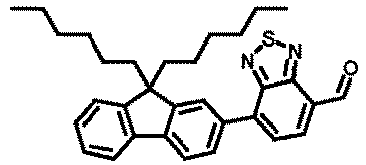
AL03-96 
AL03-35 
K12 3,4 
AL-4-09 
JED und wobei die Emission der fluoreszierenden Erkennungsverbindung in Anwesenheit des Betäubungsmittels unterdrückt wird. - Verfahren nach Anspruch 3, wobei das Verfahren dem Dampfphasennachweis dient.
- Verfahren nach Anspruch 3, wobei das Verfahren dem Lösungsphasennachweis dient.
- Erkennungsvorrichtung zum Nachweis eines Betäubungsmittels ausgewählt aus der Gruppe bestehend aus Methamphetamin, Kokain, 3,4-Dimethylendioxyamphetamin und Fentanyl in einer Probe, wobei die Erkennungsvorrichtung Folgendes umfasst:ein optisches Erkennungselement, wie in Verfahrensanspruch 3 definiert;eine Bestrahlungsquelle zum Bestrahlen des optischen Erkennungselements mit Stimulationsstrahlung;ein Detektor zum Messen der Lumineszenz des optischen Erkennungselements;Mittel zum Liefern der Probe zum Inkontaktbringen mit dem optischen Erkennungselement; undMittel zum Verknüpfen eines Operators und der von dem Detektor gemessenen Lumineszenz.
- Verwendung eines optischen Erkennungselements wie in Verfahrensanspruch 3 definiert zum Nachweis eines Betäubungsmittels ausgewählt aus der Gruppe bestehend aus Methamphetamin, Kokain, 3,4-Dimethylendioxyamphetamin und Fentanyl.
Applications Claiming Priority (3)
| Application Number | Priority Date | Filing Date | Title |
|---|---|---|---|
| AU2017904338A AU2017904338A0 (en) | 2017-10-26 | Detection method | |
| AU2018903104A AU2018903104A0 (en) | 2018-08-23 | Method | |
| PCT/AU2018/051157 WO2019079860A1 (en) | 2017-10-26 | 2018-10-26 | DETECTION METHOD |
Publications (3)
| Publication Number | Publication Date |
|---|---|
| EP3701249A1 EP3701249A1 (de) | 2020-09-02 |
| EP3701249A4 EP3701249A4 (de) | 2021-07-21 |
| EP3701249B1 true EP3701249B1 (de) | 2025-07-09 |
Family
ID=66246069
Family Applications (1)
| Application Number | Title | Priority Date | Filing Date |
|---|---|---|---|
| EP18870710.3A Active EP3701249B1 (de) | 2017-10-26 | 2018-10-26 | Nachweisverfahren |
Country Status (4)
| Country | Link |
|---|---|
| US (3) | US20200284728A1 (de) |
| EP (1) | EP3701249B1 (de) |
| AU (2) | AU2018354714B2 (de) |
| WO (1) | WO2019079860A1 (de) |
Families Citing this family (2)
| Publication number | Priority date | Publication date | Assignee | Title |
|---|---|---|---|---|
| CN112608466B (zh) * | 2019-12-10 | 2023-01-20 | 青岛大学 | 一种单体化合物、其制备方法、水溶性荧光共轭分子及其制备方法 |
| CN117164578A (zh) * | 2023-08-28 | 2023-12-05 | 吉林大学 | 一类有机红光化合物及其在有机电致发光器件中的应用 |
Family Cites Families (11)
| Publication number | Priority date | Publication date | Assignee | Title |
|---|---|---|---|---|
| US5155046A (en) * | 1990-08-10 | 1992-10-13 | Puritan-Bennett Corporation | System and method for measuring oxygen in the presence of halothane |
| WO2006010038A2 (en) * | 2004-07-08 | 2006-01-26 | Biosearch Technologies, Inc. | Inducible fluorescence assay |
| GB0600249D0 (en) * | 2006-01-06 | 2006-02-15 | Isis Innovation | Branched compounds and their use in sensors |
| CN101899021B (zh) * | 2010-07-16 | 2012-08-29 | 中国科学院上海微系统与信息技术研究所 | 一类荧光化合物及其在检测痕量甲基苯丙胺中的应用 |
| CN103502817B (zh) * | 2011-03-28 | 2016-01-20 | 前视红外系统股份有限公司 | 包括药物的分析物的检测方法 |
| WO2014165196A1 (en) * | 2013-03-13 | 2014-10-09 | Platypus Technologies, Llc | Detection of gas-phase analytes using liquid crystals |
| AU2015274227B2 (en) * | 2014-06-12 | 2020-10-15 | VOELCKER, Nicolas H. | Optical biosensor |
| CN107850538A (zh) * | 2015-07-09 | 2018-03-27 | 犹他大学研究基金会 | 传感器化合物和相关联的方法与设备 |
| WO2017058827A1 (en) * | 2015-09-29 | 2017-04-06 | Essenlix Corp. | Method of detecting an analyte in a sample |
| CN106748976B (zh) * | 2016-11-14 | 2020-03-27 | 中国科学院上海微系统与信息技术研究所 | 一种用于沙林毒剂及其模拟物检测的荧光探针及其合成方法和应用 |
| US10830764B2 (en) * | 2016-12-27 | 2020-11-10 | Flir Detection, Inc. | Fluorescence-based chemical detection of amine-based substances |
-
2018
- 2018-10-26 EP EP18870710.3A patent/EP3701249B1/de active Active
- 2018-10-26 AU AU2018354714A patent/AU2018354714B2/en active Active
- 2018-10-26 WO PCT/AU2018/051157 patent/WO2019079860A1/en not_active Ceased
- 2018-10-26 US US16/759,533 patent/US20200284728A1/en not_active Abandoned
-
2022
- 2022-09-08 US US17/940,276 patent/US12181411B2/en active Active
-
2024
- 2024-04-16 AU AU2024202465A patent/AU2024202465A1/en active Pending
- 2024-10-14 US US18/914,388 patent/US20250123206A1/en active Pending
Non-Patent Citations (2)
| Title |
|---|
| DONAGHEY JENNY E. ET AL: "Dielectric constant enhancement of non-fullerene acceptors via side-chain modification", CHEMICAL COMMUNICATIONS, vol. 51, no. 74, 1 January 2015 (2015-01-01), UK, pages 14115 - 14118, XP093033803, ISSN: 1359-7345, Retrieved from the Internet <URL:https://pubs.rsc.org/en/content/articlepdf/2015/cc/c5cc05853h> DOI: 10.1039/C5CC05853H * |
| KE GUI: "Novel Materials for Bulk Heterojunction Thin Film Organic Photovoltaic Devices -Research and Application", 1 January 2012 (2012-01-01), pages 1 - 210, XP093033844, Retrieved from the Internet <URL:https://espace.library.uq.edu.au/data/UQ_282067/s4155295_phd_finalthesis.pdf?dsi_version=6e14d4a17c2c51dfb3e910a366e28146&Expires=1679574582&Key-Pair-Id=APKAJKNBJ4MJBJNC6NLQ&Signature=CJhSpQv-5B~ALFSOKM3VHSZ9N1onSE0hTivlF59Fe72va-TOjcQxmoeYKsvsdrXLRzA3DvuQf4MampOjtQ~TcHPh2Gg5jJpp3rl9jr5NoMlnt9gYEDFR> [retrieved on 20230322] * |
Also Published As
| Publication number | Publication date |
|---|---|
| US20230039657A1 (en) | 2023-02-09 |
| US20200284728A1 (en) | 2020-09-10 |
| WO2019079860A1 (en) | 2019-05-02 |
| US20250123206A1 (en) | 2025-04-17 |
| AU2018354714A1 (en) | 2020-06-11 |
| EP3701249A1 (de) | 2020-09-02 |
| AU2018354714B2 (en) | 2024-01-18 |
| EP3701249A4 (de) | 2021-07-21 |
| US12181411B2 (en) | 2024-12-31 |
| AU2024202465A1 (en) | 2024-05-02 |
Similar Documents
| Publication | Publication Date | Title |
|---|---|---|
| US20250123206A1 (en) | Detection method | |
| Venkatramaiah et al. | Fluoranthene based fluorescent chemosensors for detection of explosive nitroaromatics | |
| Zhai et al. | Nanofibers generated from nonclassical organogelators based on difluoroboron β-diketonate complexes to detect aliphatic primary amine vapors | |
| Wang et al. | Fluorescent nanoaggregates of quinoxaline derivatives for highly efficient and selective sensing of trace picric acid | |
| US20210048389A1 (en) | Method for the detection of analytes via luminescence quenching | |
| Sathiyan et al. | A multibranched carbazole linked triazine based fluorescent molecule for the selective detection of picric acid | |
| Guo et al. | PL sensor for sensitive and selective detection of 2, 4, 6-trinitrophenol based on carbazole and tetraphenylsilane polymer | |
| Kaur et al. | Chemodosimeter approach: Selective detection of fluoride ion using a diketopyrrolopyrrole derivative | |
| Ramakrishna et al. | Bigger and Brighter Fluorenes: Facile π‐Expansion, Brilliant Emission and Sensing of Nitroaromatics | |
| Jia et al. | Fluorescent sensor based on dimesitylborylthiophene derivative for probing fluoride and cyanide | |
| Liu et al. | New three-component conjugated polymers and their application as super rapid-response fluorescent probe to DNT vapor | |
| CN110776466B (zh) | 有机荧光材料、荧光薄膜及其在神经毒剂检测中的应用 | |
| Zhuang et al. | AEE-active conjugated polymers based on di (naphthalen-2-yl)-1, 2-diphenylethene for sensitive fluorescence detection of picric acid | |
| Chen et al. | Trifluoromethyl‐substituted perylene diimides for rapid and sensitive film‐based fluorescence detection of methamphetamine and cocaine hydrochloride | |
| Zhang et al. | A rapid-response fluorescent film probe to DNT based on novel AIE materials | |
| Xu et al. | Star-shaped triazatruxene derivatives for rapid fluorescence fiber-optic detection of nitroaromatic explosive vapors | |
| Peng et al. | Branched benzothiadiazole-cored oligomers with terminal carbazoles: Synthesis and fluorescence probing nitroaromatics | |
| Mi et al. | Luminescent non-traditional π-gels fabricated from pyrimidine derivatives bearing carbazole for the detection of acid vapors | |
| Haque et al. | Detection of TNT vapors by fluorescence quenching and Self-Recovery using highly fluorescent conjugated Silole polymers | |
| Li et al. | Electron‐Rich π‐Extended Diindolotriazatruxene‐Based Chemosensors with Highly Selective and Rapid Responses to Nitroaromatic Explosives | |
| Kaleeswaran et al. | Alkyl‐Chain‐Separated Triphenybenzene‐Carbazole Conjugates and their Derived Polymers: Candidates for Sensory, Electrical and Optical Materials | |
| Del Rosso et al. | Chemosensing of nitroaromatics with a new segmented conjugated quaterphenylene polymer | |
| US20200172561A1 (en) | Detection method | |
| Schlücker | Influence of the chemical structure on the fluorescence lifetime of dicarboxylic imides and oligothiophenes | |
| CN110183626A (zh) | 一种共轭聚合物及其制备方法与应用 |
Legal Events
| Date | Code | Title | Description |
|---|---|---|---|
| STAA | Information on the status of an ep patent application or granted ep patent |
Free format text: STATUS: THE INTERNATIONAL PUBLICATION HAS BEEN MADE |
|
| PUAI | Public reference made under article 153(3) epc to a published international application that has entered the european phase |
Free format text: ORIGINAL CODE: 0009012 |
|
| STAA | Information on the status of an ep patent application or granted ep patent |
Free format text: STATUS: REQUEST FOR EXAMINATION WAS MADE |
|
| 17P | Request for examination filed |
Effective date: 20200524 |
|
| AK | Designated contracting states |
Kind code of ref document: A1 Designated state(s): AL AT BE BG CH CY CZ DE DK EE ES FI FR GB GR HR HU IE IS IT LI LT LU LV MC MK MT NL NO PL PT RO RS SE SI SK SM TR |
|
| AX | Request for extension of the european patent |
Extension state: BA ME |
|
| DAV | Request for validation of the european patent (deleted) | ||
| DAX | Request for extension of the european patent (deleted) | ||
| A4 | Supplementary search report drawn up and despatched |
Effective date: 20210617 |
|
| RIC1 | Information provided on ipc code assigned before grant |
Ipc: G01N 21/64 20060101AFI20210611BHEP Ipc: G01N 33/94 20060101ALI20210611BHEP Ipc: C07D 285/14 20060101ALI20210611BHEP Ipc: G01N 33/542 20060101ALI20210611BHEP |
|
| STAA | Information on the status of an ep patent application or granted ep patent |
Free format text: STATUS: EXAMINATION IS IN PROGRESS |
|
| 17Q | First examination report despatched |
Effective date: 20230331 |
|
| GRAP | Despatch of communication of intention to grant a patent |
Free format text: ORIGINAL CODE: EPIDOSNIGR1 |
|
| STAA | Information on the status of an ep patent application or granted ep patent |
Free format text: STATUS: GRANT OF PATENT IS INTENDED |
|
| INTG | Intention to grant announced |
Effective date: 20250213 |
|
| GRAS | Grant fee paid |
Free format text: ORIGINAL CODE: EPIDOSNIGR3 |
|
| GRAA | (expected) grant |
Free format text: ORIGINAL CODE: 0009210 |
|
| STAA | Information on the status of an ep patent application or granted ep patent |
Free format text: STATUS: THE PATENT HAS BEEN GRANTED |
|
| AK | Designated contracting states |
Kind code of ref document: B1 Designated state(s): AL AT BE BG CH CY CZ DE DK EE ES FI FR GB GR HR HU IE IS IT LI LT LU LV MC MK MT NL NO PL PT RO RS SE SI SK SM TR |
|
| REG | Reference to a national code |
Ref country code: GB Ref legal event code: FG4D |
|
| REG | Reference to a national code |
Ref country code: CH Ref legal event code: EP |
|
| REG | Reference to a national code |
Ref country code: IE Ref legal event code: FG4D |
|
| REG | Reference to a national code |
Ref country code: DE Ref legal event code: R096 Ref document number: 602018083493 Country of ref document: DE |
|
| P01 | Opt-out of the competence of the unified patent court (upc) registered |
Free format text: CASE NUMBER: UPC_APP_3831_3701249/2025 Effective date: 20250820 |
|
| REG | Reference to a national code |
Ref country code: NL Ref legal event code: MP Effective date: 20250709 |
|
| PG25 | Lapsed in a contracting state [announced via postgrant information from national office to epo] |
Ref country code: PT Free format text: LAPSE BECAUSE OF FAILURE TO SUBMIT A TRANSLATION OF THE DESCRIPTION OR TO PAY THE FEE WITHIN THE PRESCRIBED TIME-LIMIT Effective date: 20251110 |
|
| PG25 | Lapsed in a contracting state [announced via postgrant information from national office to epo] |
Ref country code: NL Free format text: LAPSE BECAUSE OF FAILURE TO SUBMIT A TRANSLATION OF THE DESCRIPTION OR TO PAY THE FEE WITHIN THE PRESCRIBED TIME-LIMIT Effective date: 20250709 |
|
| REG | Reference to a national code |
Ref country code: AT Ref legal event code: MK05 Ref document number: 1812216 Country of ref document: AT Kind code of ref document: T Effective date: 20250709 |
|
| PG25 | Lapsed in a contracting state [announced via postgrant information from national office to epo] |
Ref country code: IS Free format text: LAPSE BECAUSE OF FAILURE TO SUBMIT A TRANSLATION OF THE DESCRIPTION OR TO PAY THE FEE WITHIN THE PRESCRIBED TIME-LIMIT Effective date: 20251109 |
|
| PGFP | Annual fee paid to national office [announced via postgrant information from national office to epo] |
Ref country code: DE Payment date: 20251021 Year of fee payment: 8 |
|
| PGFP | Annual fee paid to national office [announced via postgrant information from national office to epo] |
Ref country code: GB Payment date: 20251022 Year of fee payment: 8 |
|
| PG25 | Lapsed in a contracting state [announced via postgrant information from national office to epo] |
Ref country code: NO Free format text: LAPSE BECAUSE OF FAILURE TO SUBMIT A TRANSLATION OF THE DESCRIPTION OR TO PAY THE FEE WITHIN THE PRESCRIBED TIME-LIMIT Effective date: 20251009 |
|
| REG | Reference to a national code |
Ref country code: LT Ref legal event code: MG9D |
|
| PG25 | Lapsed in a contracting state [announced via postgrant information from national office to epo] |
Ref country code: AT Free format text: LAPSE BECAUSE OF FAILURE TO SUBMIT A TRANSLATION OF THE DESCRIPTION OR TO PAY THE FEE WITHIN THE PRESCRIBED TIME-LIMIT Effective date: 20250709 |
|
| PG25 | Lapsed in a contracting state [announced via postgrant information from national office to epo] |
Ref country code: FI Free format text: LAPSE BECAUSE OF FAILURE TO SUBMIT A TRANSLATION OF THE DESCRIPTION OR TO PAY THE FEE WITHIN THE PRESCRIBED TIME-LIMIT Effective date: 20250709 |
|
| PG25 | Lapsed in a contracting state [announced via postgrant information from national office to epo] |
Ref country code: HR Free format text: LAPSE BECAUSE OF FAILURE TO SUBMIT A TRANSLATION OF THE DESCRIPTION OR TO PAY THE FEE WITHIN THE PRESCRIBED TIME-LIMIT Effective date: 20250709 |
|
| PGFP | Annual fee paid to national office [announced via postgrant information from national office to epo] |
Ref country code: FR Payment date: 20251030 Year of fee payment: 8 |
|
| PG25 | Lapsed in a contracting state [announced via postgrant information from national office to epo] |
Ref country code: GR Free format text: LAPSE BECAUSE OF FAILURE TO SUBMIT A TRANSLATION OF THE DESCRIPTION OR TO PAY THE FEE WITHIN THE PRESCRIBED TIME-LIMIT Effective date: 20251010 |
|
| PG25 | Lapsed in a contracting state [announced via postgrant information from national office to epo] |
Ref country code: SE Free format text: LAPSE BECAUSE OF FAILURE TO SUBMIT A TRANSLATION OF THE DESCRIPTION OR TO PAY THE FEE WITHIN THE PRESCRIBED TIME-LIMIT Effective date: 20250709 |
|
| PG25 | Lapsed in a contracting state [announced via postgrant information from national office to epo] |
Ref country code: LV Free format text: LAPSE BECAUSE OF FAILURE TO SUBMIT A TRANSLATION OF THE DESCRIPTION OR TO PAY THE FEE WITHIN THE PRESCRIBED TIME-LIMIT Effective date: 20250709 |
|
| PG25 | Lapsed in a contracting state [announced via postgrant information from national office to epo] |
Ref country code: BG Free format text: LAPSE BECAUSE OF FAILURE TO SUBMIT A TRANSLATION OF THE DESCRIPTION OR TO PAY THE FEE WITHIN THE PRESCRIBED TIME-LIMIT Effective date: 20250709 Ref country code: PL Free format text: LAPSE BECAUSE OF FAILURE TO SUBMIT A TRANSLATION OF THE DESCRIPTION OR TO PAY THE FEE WITHIN THE PRESCRIBED TIME-LIMIT Effective date: 20250709 |
|
| PG25 | Lapsed in a contracting state [announced via postgrant information from national office to epo] |
Ref country code: RS Free format text: LAPSE BECAUSE OF FAILURE TO SUBMIT A TRANSLATION OF THE DESCRIPTION OR TO PAY THE FEE WITHIN THE PRESCRIBED TIME-LIMIT Effective date: 20251009 |
|
| PG25 | Lapsed in a contracting state [announced via postgrant information from national office to epo] |
Ref country code: ES Free format text: LAPSE BECAUSE OF FAILURE TO SUBMIT A TRANSLATION OF THE DESCRIPTION OR TO PAY THE FEE WITHIN THE PRESCRIBED TIME-LIMIT Effective date: 20250709 |
|
| PG25 | Lapsed in a contracting state [announced via postgrant information from national office to epo] |
Ref country code: RO Free format text: LAPSE BECAUSE OF FAILURE TO SUBMIT A TRANSLATION OF THE DESCRIPTION OR TO PAY THE FEE WITHIN THE PRESCRIBED TIME-LIMIT Effective date: 20250709 |
|
| PG25 | Lapsed in a contracting state [announced via postgrant information from national office to epo] |
Ref country code: SM Free format text: LAPSE BECAUSE OF FAILURE TO SUBMIT A TRANSLATION OF THE DESCRIPTION OR TO PAY THE FEE WITHIN THE PRESCRIBED TIME-LIMIT Effective date: 20250709 |
|
| PG25 | Lapsed in a contracting state [announced via postgrant information from national office to epo] |
Ref country code: DK Free format text: LAPSE BECAUSE OF FAILURE TO SUBMIT A TRANSLATION OF THE DESCRIPTION OR TO PAY THE FEE WITHIN THE PRESCRIBED TIME-LIMIT Effective date: 20250709 |
|
| PG25 | Lapsed in a contracting state [announced via postgrant information from national office to epo] |
Ref country code: IT Free format text: LAPSE BECAUSE OF FAILURE TO SUBMIT A TRANSLATION OF THE DESCRIPTION OR TO PAY THE FEE WITHIN THE PRESCRIBED TIME-LIMIT Effective date: 20250709 |
|
| PG25 | Lapsed in a contracting state [announced via postgrant information from national office to epo] |
Ref country code: CZ Free format text: LAPSE BECAUSE OF FAILURE TO SUBMIT A TRANSLATION OF THE DESCRIPTION OR TO PAY THE FEE WITHIN THE PRESCRIBED TIME-LIMIT Effective date: 20250709 |
|
| PG25 | Lapsed in a contracting state [announced via postgrant information from national office to epo] |
Ref country code: SK Free format text: LAPSE BECAUSE OF FAILURE TO SUBMIT A TRANSLATION OF THE DESCRIPTION OR TO PAY THE FEE WITHIN THE PRESCRIBED TIME-LIMIT Effective date: 20250709 Ref country code: EE Free format text: LAPSE BECAUSE OF FAILURE TO SUBMIT A TRANSLATION OF THE DESCRIPTION OR TO PAY THE FEE WITHIN THE PRESCRIBED TIME-LIMIT Effective date: 20250709 |