EP3699194A1 - Antibody constructs for cdh19 and cd3 - Google Patents
Antibody constructs for cdh19 and cd3 Download PDFInfo
- Publication number
- EP3699194A1 EP3699194A1 EP19202926.2A EP19202926A EP3699194A1 EP 3699194 A1 EP3699194 A1 EP 3699194A1 EP 19202926 A EP19202926 A EP 19202926A EP 3699194 A1 EP3699194 A1 EP 3699194A1
- Authority
- EP
- European Patent Office
- Prior art keywords
- seq
- depicted
- cdr
- nos
- antibody
- Prior art date
- Legal status (The legal status is an assumption and is not a legal conclusion. Google has not performed a legal analysis and makes no representation as to the accuracy of the status listed.)
- Granted
Links
Images


Classifications
-
- C—CHEMISTRY; METALLURGY
- C07—ORGANIC CHEMISTRY
- C07K—PEPTIDES
- C07K16/00—Immunoglobulins [IG], e.g. monoclonal or polyclonal antibodies
- C07K16/18—Immunoglobulins [IG], e.g. monoclonal or polyclonal antibodies against material from animals or humans
- C07K16/28—Immunoglobulins [IG], e.g. monoclonal or polyclonal antibodies against material from animals or humans against receptors, cell surface antigens or cell surface determinants
-
- A—HUMAN NECESSITIES
- A61—MEDICAL OR VETERINARY SCIENCE; HYGIENE
- A61K—PREPARATIONS FOR MEDICAL, DENTAL OR TOILETRY PURPOSES
- A61K47/00—Medicinal preparations characterised by the non-active ingredients used, e.g. carriers or inert additives; Targeting or modifying agents chemically bound to the active ingredient
- A61K47/50—Medicinal preparations characterised by the non-active ingredients used, e.g. carriers or inert additives; Targeting or modifying agents chemically bound to the active ingredient the non-active ingredient being chemically bound to the active ingredient, e.g. polymer-drug conjugates
- A61K47/51—Medicinal preparations characterised by the non-active ingredients used, e.g. carriers or inert additives; Targeting or modifying agents chemically bound to the active ingredient the non-active ingredient being chemically bound to the active ingredient, e.g. polymer-drug conjugates the non-active ingredient being a modifying agent
- A61K47/56—Medicinal preparations characterised by the non-active ingredients used, e.g. carriers or inert additives; Targeting or modifying agents chemically bound to the active ingredient the non-active ingredient being chemically bound to the active ingredient, e.g. polymer-drug conjugates the non-active ingredient being a modifying agent the modifying agent being an organic macromolecular compound, e.g. an oligomeric, polymeric or dendrimeric molecule
- A61K47/59—Medicinal preparations characterised by the non-active ingredients used, e.g. carriers or inert additives; Targeting or modifying agents chemically bound to the active ingredient the non-active ingredient being chemically bound to the active ingredient, e.g. polymer-drug conjugates the non-active ingredient being a modifying agent the modifying agent being an organic macromolecular compound, e.g. an oligomeric, polymeric or dendrimeric molecule obtained otherwise than by reactions only involving carbon-to-carbon unsaturated bonds, e.g. polyureas or polyurethanes
- A61K47/60—Medicinal preparations characterised by the non-active ingredients used, e.g. carriers or inert additives; Targeting or modifying agents chemically bound to the active ingredient the non-active ingredient being chemically bound to the active ingredient, e.g. polymer-drug conjugates the non-active ingredient being a modifying agent the modifying agent being an organic macromolecular compound, e.g. an oligomeric, polymeric or dendrimeric molecule obtained otherwise than by reactions only involving carbon-to-carbon unsaturated bonds, e.g. polyureas or polyurethanes the organic macromolecular compound being a polyoxyalkylene oligomer, polymer or dendrimer, e.g. PEG, PPG, PEO or polyglycerol
-
- A—HUMAN NECESSITIES
- A61—MEDICAL OR VETERINARY SCIENCE; HYGIENE
- A61P—SPECIFIC THERAPEUTIC ACTIVITY OF CHEMICAL COMPOUNDS OR MEDICINAL PREPARATIONS
- A61P35/00—Antineoplastic agents
-
- A—HUMAN NECESSITIES
- A61—MEDICAL OR VETERINARY SCIENCE; HYGIENE
- A61P—SPECIFIC THERAPEUTIC ACTIVITY OF CHEMICAL COMPOUNDS OR MEDICINAL PREPARATIONS
- A61P35/00—Antineoplastic agents
- A61P35/04—Antineoplastic agents specific for metastasis
-
- C—CHEMISTRY; METALLURGY
- C07—ORGANIC CHEMISTRY
- C07K—PEPTIDES
- C07K16/00—Immunoglobulins [IG], e.g. monoclonal or polyclonal antibodies
- C07K16/18—Immunoglobulins [IG], e.g. monoclonal or polyclonal antibodies against material from animals or humans
- C07K16/28—Immunoglobulins [IG], e.g. monoclonal or polyclonal antibodies against material from animals or humans against receptors, cell surface antigens or cell surface determinants
- C07K16/2803—Immunoglobulins [IG], e.g. monoclonal or polyclonal antibodies against material from animals or humans against receptors, cell surface antigens or cell surface determinants against the immunoglobulin superfamily
- C07K16/2809—Immunoglobulins [IG], e.g. monoclonal or polyclonal antibodies against material from animals or humans against receptors, cell surface antigens or cell surface determinants against the immunoglobulin superfamily against the T-cell receptor (TcR)-CD3 complex
-
- C—CHEMISTRY; METALLURGY
- C07—ORGANIC CHEMISTRY
- C07K—PEPTIDES
- C07K16/00—Immunoglobulins [IG], e.g. monoclonal or polyclonal antibodies
- C07K16/18—Immunoglobulins [IG], e.g. monoclonal or polyclonal antibodies against material from animals or humans
- C07K16/28—Immunoglobulins [IG], e.g. monoclonal or polyclonal antibodies against material from animals or humans against receptors, cell surface antigens or cell surface determinants
- C07K16/2896—Immunoglobulins [IG], e.g. monoclonal or polyclonal antibodies against material from animals or humans against receptors, cell surface antigens or cell surface determinants against molecules with a "CD"-designation, not provided for elsewhere
-
- C—CHEMISTRY; METALLURGY
- C07—ORGANIC CHEMISTRY
- C07K—PEPTIDES
- C07K16/00—Immunoglobulins [IG], e.g. monoclonal or polyclonal antibodies
- C07K16/18—Immunoglobulins [IG], e.g. monoclonal or polyclonal antibodies against material from animals or humans
- C07K16/28—Immunoglobulins [IG], e.g. monoclonal or polyclonal antibodies against material from animals or humans against receptors, cell surface antigens or cell surface determinants
- C07K16/30—Immunoglobulins [IG], e.g. monoclonal or polyclonal antibodies against material from animals or humans against receptors, cell surface antigens or cell surface determinants from tumour cells
- C07K16/3053—Skin, nerves, brain
-
- C—CHEMISTRY; METALLURGY
- C07—ORGANIC CHEMISTRY
- C07K—PEPTIDES
- C07K16/00—Immunoglobulins [IG], e.g. monoclonal or polyclonal antibodies
- C07K16/46—Hybrid immunoglobulins
- C07K16/468—Immunoglobulins having two or more different antigen binding sites, e.g. multifunctional antibodies
-
- A—HUMAN NECESSITIES
- A61—MEDICAL OR VETERINARY SCIENCE; HYGIENE
- A61K—PREPARATIONS FOR MEDICAL, DENTAL OR TOILETRY PURPOSES
- A61K39/00—Medicinal preparations containing antigens or antibodies
- A61K2039/505—Medicinal preparations containing antigens or antibodies comprising antibodies
-
- C—CHEMISTRY; METALLURGY
- C07—ORGANIC CHEMISTRY
- C07K—PEPTIDES
- C07K2317/00—Immunoglobulins specific features
- C07K2317/20—Immunoglobulins specific features characterized by taxonomic origin
- C07K2317/21—Immunoglobulins specific features characterized by taxonomic origin from primates, e.g. man
-
- C—CHEMISTRY; METALLURGY
- C07—ORGANIC CHEMISTRY
- C07K—PEPTIDES
- C07K2317/00—Immunoglobulins specific features
- C07K2317/30—Immunoglobulins specific features characterized by aspects of specificity or valency
- C07K2317/31—Immunoglobulins specific features characterized by aspects of specificity or valency multispecific
-
- C—CHEMISTRY; METALLURGY
- C07—ORGANIC CHEMISTRY
- C07K—PEPTIDES
- C07K2317/00—Immunoglobulins specific features
- C07K2317/30—Immunoglobulins specific features characterized by aspects of specificity or valency
- C07K2317/33—Crossreactivity, e.g. for species or epitope, or lack of said crossreactivity
-
- C—CHEMISTRY; METALLURGY
- C07—ORGANIC CHEMISTRY
- C07K—PEPTIDES
- C07K2317/00—Immunoglobulins specific features
- C07K2317/50—Immunoglobulins specific features characterized by immunoglobulin fragments
- C07K2317/56—Immunoglobulins specific features characterized by immunoglobulin fragments variable (Fv) region, i.e. VH and/or VL
- C07K2317/565—Complementarity determining region [CDR]
-
- C—CHEMISTRY; METALLURGY
- C07—ORGANIC CHEMISTRY
- C07K—PEPTIDES
- C07K2317/00—Immunoglobulins specific features
- C07K2317/50—Immunoglobulins specific features characterized by immunoglobulin fragments
- C07K2317/56—Immunoglobulins specific features characterized by immunoglobulin fragments variable (Fv) region, i.e. VH and/or VL
- C07K2317/569—Single domain, e.g. dAb, sdAb, VHH, VNAR or nanobody®
-
- C—CHEMISTRY; METALLURGY
- C07—ORGANIC CHEMISTRY
- C07K—PEPTIDES
- C07K2317/00—Immunoglobulins specific features
- C07K2317/60—Immunoglobulins specific features characterized by non-natural combinations of immunoglobulin fragments
- C07K2317/62—Immunoglobulins specific features characterized by non-natural combinations of immunoglobulin fragments comprising only variable region components
- C07K2317/622—Single chain antibody (scFv)
-
- C—CHEMISTRY; METALLURGY
- C07—ORGANIC CHEMISTRY
- C07K—PEPTIDES
- C07K2317/00—Immunoglobulins specific features
- C07K2317/60—Immunoglobulins specific features characterized by non-natural combinations of immunoglobulin fragments
- C07K2317/62—Immunoglobulins specific features characterized by non-natural combinations of immunoglobulin fragments comprising only variable region components
- C07K2317/626—Diabody or triabody
-
- C—CHEMISTRY; METALLURGY
- C07—ORGANIC CHEMISTRY
- C07K—PEPTIDES
- C07K2317/00—Immunoglobulins specific features
- C07K2317/70—Immunoglobulins specific features characterized by effect upon binding to a cell or to an antigen
- C07K2317/73—Inducing cell death, e.g. apoptosis, necrosis or inhibition of cell proliferation
-
- C—CHEMISTRY; METALLURGY
- C07—ORGANIC CHEMISTRY
- C07K—PEPTIDES
- C07K2317/00—Immunoglobulins specific features
- C07K2317/70—Immunoglobulins specific features characterized by effect upon binding to a cell or to an antigen
- C07K2317/77—Internalization into the cell
-
- C—CHEMISTRY; METALLURGY
- C07—ORGANIC CHEMISTRY
- C07K—PEPTIDES
- C07K2317/00—Immunoglobulins specific features
- C07K2317/90—Immunoglobulins specific features characterized by (pharmaco)kinetic aspects or by stability of the immunoglobulin
- C07K2317/92—Affinity (KD), association rate (Ka), dissociation rate (Kd) or EC50 value
-
- C—CHEMISTRY; METALLURGY
- C07—ORGANIC CHEMISTRY
- C07K—PEPTIDES
- C07K2319/00—Fusion polypeptide
Definitions
- the present invention relates to an antibody construct comprising a first human binding domain capable of binding to human CDH19 on the surface of a target cell and a second domain capable of binding to human CD3 on the surface of a T cell.
- the invention provides a nucleic acid sequence encoding the antibody construct, a vector comprising said nucleic acid sequence and a host cell transformed or transfected with said vector.
- the invention provides a process for the production of the antibody construct of the invention, a medical use of said antibody construct and a kit comprising said antibody construct.
- Melanoma is a skin cancer that is caused by the oncogenic transformation of melanocytes, which are pigment producing skin cells. As of 2009, Melanoma had a prevalence of more than 870,000 cases in the US alone (US National Institutes of Health). Each year, over 75,000 new cases of melanoma are diagnosed in the US, and approximately 25% of patients have advanced disease at the time of diagnosis. Despite the fact that cases of primary melanoma can be cured by surgery if they are detected early enough, melanoma is the leading cause of death from skin disease in the US, responsible for about 10,000 deaths per year in the US. Once the disease has spread and became metastatic, the prognosis is poor, with a 5 year relative survival of 15%.
- melanomas There are four basic types of melanomas. Three types are found in the top layers of the skin and the fourth one is invasive and has penetrated deeper into the skin and may have spread to other areas of the body.
- Superficial spreading melanoma is the most common type of melanoma which accounts for about 70% of all cases. It grows along the top layer of the skin for a fairly long time before penetrating more deeply. It first appears as a flat or slightly raised discolored patch that has irregular borders and may be somewhat asymmetrical in form. The color varies, and you may see areas of tan, brown, black, red, blue or white. This type of melanoma can occur in a previously benign mole and is found most often in young people.
- Lentigo maligna is similar to the superficial spreading type, as it also remains close to the skin surface for quite a while, and usually appears as a flat or mildly elevated mottled tan, brown or dark brown discoloration. It is found most often in the elderly. When this cancer becomes invasive, it is referred to as lentigo maligna melanoma.
- Acral lentiginous melanoma also spreads superficially before penetrating more deeply. It is quite different from the others, though, as it usually appears as a black or brown discoloration under the nails or on the soles of the feet or palms of the hands. This type of melanoma is sometimes found on dark-skinned people, and can often advance more quickly than superficial spreading melanoma and lentigo maligna.
- Nodular melanoma is usually invasive at the time it is first diagnosed. The malignancy is recognized when it becomes a bump. It is usually black, but occasionally is blue, gray, white, brown, tan, red or skin tone. This is the most aggressive of the melanomas, and is found in 10 to 15 percent of cases.
- metastatic melanoma is a tumor type where immunotherapy has been demonstrated to not only slow disease progression, but to lead to cures in late stage patients.
- Interleukin-2 was approved for the use in metastatic melanoma in 1998, and in 2011 an antibody targeting CTLA4, a member of a new generation of immune checkpoint inhibitors, gained approval by the FDA.
- CDH19 is a type II cadherin transmembrane protein of unknown function.
- the human gene was cloned in 2000 based on its sequence similarity to CDH7 ( Kools, P. et al. Genomics. 2000 ).
- Expressed Sequence Tags (ESTs) for CDH19 were isolated from melanocyte cDNA libraries, indicating that expression of CDH19 may be limited to cells of neural crest origin ( Kools, P. et al. Genomics. 2000 ).
- rat CDH19 was found to be expressed primarily in nerve ganglia and in Schwann cells during rat embryonic development ( Takahashi, M. and Osumi, O. Devl Dynamics. 2005 .).
- the present invention provides an isolated multispecific antibody construct comprising a first human binding domain capable of binding to human CDH19 on the surface of a target cell and a second domain capable of binding to human CD3 on the surface of a T cell.
- the first binding domain comprises a VH region comprising CDR-H1, CDR-H2 and CDR-H3 and a VL region comprising CDR-L1, CDR-L2 and CDR-L3 selected from the group consisting of:
- the invention further provides an embodiment of the antibody construct of the invention, wherein the first binding domain comprises a VH region and a VL region selected from the group consisting of:
- the antibody construct is in a format selected from the group consisting of (scFv) 2 , (single domain mAb) 2 , scFv-single domain mAb, diabodies and oligomers thereof.
- the second binding domain is capable of binding to human and Callithrix jacchus, Saguinus Oedipus or Saimiri sciureus CD3 epsilon.
- the invention further provides a nucleic acid sequence encoding an antibody construct of the invention.
- the invention provides a vector comprising a nucleic acid sequence of the invention. Moreover, the invention provides a host cell transformed or transfected with the nucleic acid sequence of the invention.
- the invention provides a process for the production of a antibody construct of the invention, said process comprising culturing a host cell of the invention under conditions allowing the expression of the antibody construct of the invention and recovering the produced antibody construct from the culture.
- the invention provides a pharmaceutical composition comprising an antibody construct of the invention or produced according to the process of the invention
- the invention provides the antibody construct of the invention or produced according to the process of the invention for use in the prevention, treatment or amelioration of a melanoma disease or metastatic melanoma disease.
- the invention also provides a method for the treatment or amelioration of a melanoma disease or metastatic melanoma disease, comprising the step of administering to a subject in need thereof the antibody construct of the invention or produced according to the process of the invention.
- the melanoma disease or metastatic melanoma disease is selected from the group consisting of superficial spreading melanoma, lentigo maligna, lentigo maligna melanoma, acral lentiginous melanoma and nodular melanoma.
- the invention provides a kit comprising an antibody construct of the invention, or produced according to the process of the invention, a vector of the invention, and/or a host cell of the invention.
- antibody includes embodiments such as monoclonal, chimeric, single chain, humanized and human antibodies, as well as antibody fragments, like, inter alia, Fab fragments.
- Antibody fragments or derivatives further comprise F(ab') 2 , Fv, scFv fragments or single domain antibodies such as domain antibodies or nanobodies, single variable domain antibodies or immunoglobulin single variable domain comprising merely one variable domain, which might be VHH, VH or VL, that specifically bind an antigen or epitope independently of other V regions or domains; see, for example, Harlow and Lane (1988) and (1999), loc. cit.; Kontermann and Dübel, Antibody Engineering, Springer, 2nd ed.
- immunoglobulin single variable domain encompasses not only an isolated antibody single variable domain polypeptide, but also larger polypeptides that comprise one or more monomers of an antibody single variable domain polypeptide sequence.
- antibody construct Said term also includes diabodies or Dual-Affinity Re-Targeting (DART) antibodies.
- DART Dual-Affinity Re-Targeting
- scFv-CH3 tandem diabodies
- minibodies exemplified by a structure which is as follows: (VH-VL-CH3) 2 , (scFv-CH3) 2 or (scFv-CH3-scFv) 2 , "Fc DART” antibodies and "IgG DART” antibodies, and multibodies such as triabodies.
- Immunoglobulin single variable domains encompass not only an isolated antibody single variable domain polypeptide, but also larger polypeptides that comprise one or more monomers of an antibody single variable domain polypeptide sequence.
- (antibody) derivatives can be produced by peptidomimetics.
- techniques described for the production of single chain antibodies see, inter alia, US Patent 4,946,778 , Kontermann and Dübel (2010), loc. cit. and Little(2009), loc. cit.
- transgenic animals may be used to express humanized antibodies specific for polypeptides and fusion proteins of this invention.
- any technique, providing antibodies produced by continuous cell line cultures can be used.
- Examples for such techniques include the hybridoma technique ( Kohler and Milstein Nature 256 (1975), 495-497 ), the trioma technique, the human B-cell hybridoma technique ( Kozbor, Immunology Today 4 (1983), 72 ) and the EBV-hybridoma technique to produce human monoclonal antibodies ( Cole et al., Monoclonal Antibodies and Cancer Therapy, Alan R. Liss, Inc. (1985), 77-96 ).
- antibody comprises antibody constructs, which may be expressed in a host as described herein below, e.g. antibody constructs which may be transfected and/or transduced via, inter alia, viruses or plasmid vectors.
- antibody as employed in the invention also relates to derivatives or variants of the antibodies described herein which display the same specificity as the described antibodies.
- an antigen-binding domain refers to a part of an antibody molecule that comprises amino acids responsible for the specific binding between antibody and antigen.
- the part of the antigen that is specifically recognized and bound by the antibody is referred to as the "epitope" as described herein above.
- an antigen-binding domain may typically comprise an antibody light chain variable region (VL) and an antibody heavy chain variable region (VH); however, it does not have to comprise both.
- Fd fragments for example, have two VH regions and often retain some antigen-binding function of the intact antigen-binding domain.
- antigen-binding fragments of an antibody examples include (1) a Fab fragment, a monovalent fragment having the VL, VH, CL and CH1 domains; (2) a F(ab')2 fragment, a bivalent fragment having two Fab fragments linked by a disulfide bridge at the hinge region; (3) a Fd fragment having the two VH and CH1 domains; (4) a Fv fragment having the VL and VH domains of a single arm of an antibody, (5) a dAb fragment ( Ward et al., (1989) Nature 341 :544-546 ), which has a VH domain; (6) an isolated complementarity determining region (CDR), and (7) a single chain Fv (scFv).
- a Fab fragment a monovalent fragment having the VL, VH, CL and CH1 domains
- F(ab')2 fragment a bivalent fragment having two Fab fragments linked by a disulfide bridge at the hinge region
- a Fd fragment having the two
- the two domains of the Fv fragment, VL and VH are coded for by separate genes, they can be joined, using recombinant methods, by a synthetic linker that enables them to be made as a single protein chain in which the VL and VH regions pair to form monovalent molecules (known as single chain Fv (scFv); see e.g., Huston et al. (1988) Proc. Natl. Acad. Sci USA 85:5879-5883 ).
- scFv single chain Fv
- monoclonal antibody refers to an antibody obtained from a population of substantially homogeneous antibodies, i.e., the individual antibodies comprising the population are identical except for possible naturally occurring mutations and/or post- translation modifications (e.g., isomerizations, amidations) that may be present in minor amounts. Monoclonal antibodies are highly specific, being directed against a single antigenic site. Furthermore, in contrast to conventional (polyclonal) antibody preparations which typically include different antibodies directed against different determinants (epitopes), each monoclonal antibody is directed against a single determinant on the antigen.
- the monoclonal antibodies are advantageous in that they are synthesized by the hybridoma culture, uncontaminated by other immunoglobulins.
- the modifier "monoclonal" indicates the character of the antibody as being obtained from a substantially homogeneous population of antibodies, and is not to be construed as requiring production of the antibody by any particular method.
- the monoclonal antibodies to be used in accordance with the present invention may be made by the hybridoma method first described by Kohler et al., Nature, 256: 495 (1975 ), or may be made by recombinant DNA methods (see, e.g., U. S. Patent No. 4,816,567 ).
- the "monoclonal antibodies” may also be isolated from phage antibody libraries using the techniques described in Clackson et al., Nature, 352: 624-628 (1991 ) and Marks et al., J. Mol. Biol., 222: 581-597 (1991 ), for example.
- human antibody includes antibodies having variable and constant regions corresponding substantially to human germline immunoglobulin sequences known in the art, including, for example, those described by Kabat et al. (See Kabat et al. (1991) loc. cit.).
- the human antibodies of the invention may include amino acid residues not encoded by human germline immunoglobulin sequences (e.g., mutations introduced by random or site-specific mutagenesis in vitro or by somatic mutation in vivo ), for example in the CDRs, and in particular, CDR3.
- the human antibody can have at least one, two, three, four, five, or more positions replaced with an amino acid residue that is not encoded by the human germline immunoglobulin sequence. It is emphasized that the definition of human antibodies as used herein also contemplates fully human antibodies, which include only non-artificially and/or genetically altered human sequences of antibodies as those can be derived by using technologies using systems such as the Xenomice.
- antibody variants include humanized variants of non- human antibodies, "affinity matured” antibodies (see, e.g. Hawkins et al. J. Mol. Biol. 254, 889-896 (1992 ) and Lowman et al., Biochemistry 30, 10832- 10837 (1991 )) and antibody mutants with altered effector function (s) (see, e.g., US Patent 5, 648, 260 , Kontermann and Dübel (2010), loc. cit. and Little(2009), loc. cit.).
- in vitro generated antibody refers to an antibody where all or part of the variable region (e.g., at least one CDR) is generated in a non-immune cell selection (e.g., an in vitro phage display, protein chip or any other method in which candidate sequences can be tested for their ability to bind to an antigen). This term thus preferably excludes sequences generated by genomic rearrangement in an immune cell.
- the pairing of a VH and VL together forms a single antigen-binding site.
- the CH domain most proximal to VH is designated as CH1.
- Each L chain is linked to an H chain by one covalent disulfide bond, while the two H chains are linked to each other by one or more disulfide bonds depending on the H chain isotype.
- the VH and VL domains consist of four regions of relatively conserved sequences called framework regions (FR1, FR2, FR3, and FR4), which form a scaffold for three regions of hypervariable sequences (complementarity determining regions, CDRs).
- the CDRs contain most of the residues responsible for specific interactions of the antibody with the antigen.
- CDRs are referred to as CDR 1, CDR2, and CDR3. Accordingly, CDR constituents on the heavy chain are referred to as H1, H2, and H3, while CDR constituents on the light chain are referred to as L1, L2, and L3.
- variable refers to the portions of the immunoglobulin domains that exhibit variability in their sequence and that are involved in determining the specificity and binding affinity of a particular antibody (i.e., the "variable domain(s)"). Variability is not evenly distributed throughout the variable domains of antibodies; it is concentrated in sub-domains of each of the heavy and light chain variable regions. These sub-domains are called “hypervariable” regions or “complementarity determining regions” (CDRs). The more conserved (i.e., non-hypervariable) portions of the variable domains are called the "framework" regions (FRM).
- CDRs complementarity determining regions
- variable domains of naturally occurring heavy and light chains each comprise four FRM regions, largely adopting a ⁇ -sheet configuration, connected by three hypervariable regions, which form loops connecting, and in some cases forming part of, the ⁇ -sheet structure.
- the hypervariable regions in each chain are held together in close proximity by the FRM and, with the hypervariable regions from the other chain, contribute to the formation of the antigen-binding site (see Kabat et al., loc. cit.).
- the constant domains are not directly involved in antigen binding, but exhibit various effector functions, such as, for example, antibody-dependent, cell-mediated cytotoxicity and complement activation.
- CDR refers to a complementarity determining region (CDR) of which three make up the binding character of a light chain variable region (CDRL1, CDRL2 and CDRL3) and three make up the binding character of a heavy chain variable region (CDRH1, CDRH2 and CDRH3).
- CDRs contribute to the functional activity of an antibody molecule and are separated by amino acid sequences that comprise scaffolding or framework regions.
- the exact definitional CDR boundaries and lengths are subject to different classification and numbering systems. CDRs may therefore be referred to by Kabat, Chothia, contact or any other boundary definitions, including the numbering system described herein.
- CDR definitions according to these systems may therefore differ in length and boundary areas with respect to the adjacent framework region. See for example Kabat, Chothia, and/or MacCallum (Kabat et al., loc. cit.; Chothia et al., J. Mol. Biol, 1987, 196: 901 ; and MacCallum et al., J. Mol. Biol, 1996, 262: 732 ). However, the numbering in accordance with the so-called Kabat system is preferred.
- the CDR3 of the light chain and, particularly, CDR3 of the heavy chain may constitute the most important determinants in antigen binding within the light and heavy chain variable regions.
- the heavy chain CDR3 appears to constitute the major area of contact between the antigen and the antibody.
- In vitro selection schemes in which CDR3 alone is varied can be used to vary the binding properties of an antibody or determine which residues contribute to the binding of an antigen.
- Consisting essentially of means that the amino acid sequence can vary by about 1, 2, 3, 4, 5, 6, 7, 8, 9, 10, 11, 12, 13, 14, or 15% relative to the recited SEQ ID NO: sequence and still retain biological activity, as described herein.
- the antibody constructs of the invention are isolated proteins or substantially pure proteins.
- An "isolated" protein is unaccompanied by at least some of the material with which it is normally associated in its natural state, for example constituting at least about 5%, or at least about 50% by weight of the total protein in a given sample. It is understood that the isolated protein may constitute from 5 to 99.9% by weight of the total protein content depending on the circumstances. For example, the protein may be made at a significantly higher concentration through the use of an inducible promoter or high expression promoter, such that the protein is made at increased concentration levels.
- the definition includes the production of an antigen binding protein in a wide variety of organisms and/or host cells that are known in the art.
- sequence identity and/or similarity is determined by using standard techniques known in the art, including, but not limited to, the local sequence identity algorithm of Smith and Waterman, 1981, Adv. Appl. Math. 2:482 , the sequence identity alignment algorithm of Needleman and Wunsch, 1970, J. Mol. Biol. 48:443 , the search for similarity method of Pearson and Lipman, 1988, Proc. Nat. Acad. Sci. U.S.A. 85:2444 , computerized implementations of these algorithms (GAP, BESTFIT, FASTA, and TFASTA in the Wisconsin Genetics Software Package, Genetics Computer Group, 575 Science Drive, Madison, Wis.), the Best Fit sequence program described by Devereux et al., 1984, Nucl.
- Acid Res. 12:387-395 preferably using the default settings, or by inspection.
- percent identity is calculated by FastDB based upon the following parameters: mismatch penalty of 1; gap penalty of 1; gap size penalty of 0.33; and joining penalty of 30, " Current Methods in Sequence Comparison and Analysis,” Macromolecule Sequencing and Synthesis, Selected Methods and Applications, pp 127-149 (1988), Alan R. Liss, Inc.
- PILEUP creates a multiple sequence alignment from a group of related sequences using progressive, pairwise alignments. It can also plot a tree showing the clustering relationships used to create the alignment. PILEUP uses a simplification of the progressive alignment method of Feng & Doolittle, 1987, J. Mol. Evol. 35:351-360 ; the method is similar to that described by Higgins and Sharp, 1989, CABIOS 5:151-153 .
- Useful PILEUP parameters including a default gap weight of 3.00, a default gap length weight of 0.10, and weighted end gaps.
- BLAST algorithm Another example of a useful algorithm is the BLAST algorithm, described in: Altschul et al., 1990, J. Mol. Biol. 215:403-410 ; Altschul et al., 1997, Nucleic Acids Res. 25:3389-3402 ; and Karin et al., 1993, Proc. Natl. Acad. Sci. U.S.A. 90:5873-5787 .
- a particularly useful BLAST program is the WU-BLAST-2 program which was obtained from Altschul et al., 1996, Methods in Enzymology 266:460-480 . WU-BLAST-2 uses several search parameters, most of which are set to the default values.
- the HSP S and HSP S2 parameters are dynamic values and are established by the program itself depending upon the composition of the particular sequence and composition of the particular database against which the sequence of interest is being searched; however, the values may be adjusted to increase sensitivity.
- Gapped BLAST uses BLOSUM-62 substitution scores; threshold T parameter set to 9; the two-hit method to trigger ungapped extensions, charges gap lengths of k a cost of 10+k; Xu set to 16, and Xg set to 40 for database search stage and to 67 for the output stage of the algorithms. Gapped alignments are triggered by a score corresponding to about 22 bits.
- amino acid homology, similarity, or identity between individual variant CDRs are at least 80% to the sequences depicted herein, and more typically with preferably increasing homologies or identities of at least 85%, 90%, 91%, 92%, 93%, 94%, 95%, 96%, 97%, 98%, 99%, and almost 100%.
- percent (%) nucleic acid sequence identity with respect to the nucleic acid sequence of the binding proteins identified herein is defined as the percentage of nucleotide residues in a candidate sequence that are identical with the nucleotide residues in the coding sequence of the antigen binding protein.
- a specific method utilizes the BLASTN module of WU-BLAST-2 set to the default parameters, with overlap span and overlap fraction set to 1 and 0.125, respectively.
- nucleic acid sequence homology, similarity, or identity between the nucleotide sequences encoding individual variant CDRs and the nucleotide sequences depicted herein are at least 80%, and more typically with preferably increasing homologies or identities of at least 80%, 81%, 82%, 83%, 84%, 85%, 86%, 87%, 88%, 89%, 90%, 91%, 92%, 93%, 94%, 95%, 96%, 97%, 98%, or 99%, and almost 100%.
- a "variant CDR" is one with the specified homology, similarity, or identity to the parent CDR of the invention, and shares biological function, including, but not limited to, at least 80%, 81%, 82%, 83%, 84%, 85%, 86%, 87%, 88%, 89%, 90%, 91%, 92%, 93%, 94%, 95%, 96%, 97%, 98%, or 99% of the specificity and/or activity of the parent CDR.
- the mutation per se need not be predetermined.
- random mutagenesis may be conducted at the target codon or region and the expressed antigen binding protein CDR variants screened for the optimal combination of desired activity.
- Techniques for making substitution mutations at predetermined sites in DNA having a known sequence are well known, for example, M13 primer mutagenesis and PCR mutagenesis. Screening of the mutants is done using assays of antigen binding protein activities, such as CDH19 binding.
- amino acid typically refers to an amino acid having its art recognized definition such as an amino acid selected from the group consisting of: alanine (Ala or A); arginine (Arg or R); asparagine (Asn or N); aspartic acid (Asp or D); cysteine (Cys or C); glutamine (Gln or Q); glutamic acid (Glu or E); glycine (Gly or G); histidine (His or H); isoleucine (He or I): leucine (Leu or L); lysine (Lys or K); methionine (Met or M); phenylalanine (Phe or F); pro line (Pro or P); serine (Ser or S); threonine (Thr or T); tryptophan (Trp or W); tyrosine (Tyr or Y); and valine (Val or V), although modified, synthetic, or rare amino acids may be used as desired.
- alanine Al or A
- arginine
- amino acids can be grouped as having a nonpolar side chain (e.g., Ala, Cys, He, Leu, Met, Phe, Pro, Val); a negatively charged side chain (e.g., Asp, Glu); a positively charged sidechain (e.g., Arg, His, Lys); or an uncharged polar side chain (e.g., Asn, Cys, Gln, Gly, His, Met, Phe, Ser, Thr, Trp, and Tyr).
- a nonpolar side chain e.g., Ala, Cys, He, Leu, Met, Phe, Pro, Val
- a negatively charged side chain e.g., Asp, Glu
- a positively charged sidechain e.g., Arg, His, Lys
- an uncharged polar side chain e.g., Asn, Cys, Gln, Gly, His, Met, Phe, Ser, Thr, Trp, and Tyr.
- hypervariable region also known as “complementarity determining regions” or CDRs
- CDRs complementarity determining regions
- CDR residues are preferably identified in accordance with the so-called Kabat (numbering) system.
- framework region refers to the art-recognized portions of an antibody variable region that exist between the more divergent (i.e., hypervariable) CDRs.
- framework regions are typically referred to as frameworks 1 through 4 (FR1, FR2, FR3, and FR4) and provide a scaffold for the presentation of the six CDRs (three from the heavy chain and three from the light chain) in three dimensional space, to form an antigen-binding surface.
- CDRs form a loop structure that can be classified as a canonical structure.
- canonical structure refers to the main chain conformation that is adopted by the antigen binding (CDR) loops. From comparative structural studies, it has been found that five of the six antigen binding loops have only a limited repertoire of available conformations. Each canonical structure can be characterized by the torsion angles of the polypeptide backbone. Correspondent loops between antibodies may, therefore, have very similar three dimensional structures, despite high amino acid sequence variability in most parts of the loops ( Chothia and Lesk, J. Mol.
- canonical structure may also include considerations as to the linear sequence of the antibody, for example, as catalogued by Kabat (Kabat et al., loc. cit.).
- Kabat numbering scheme system
- a given antibody sequence may be placed into a canonical class which allows for, among other things, identifying appropriate chassis sequences (e.g., based on a desire to include a variety of canonical structures in a library). Kabat numbering of antibody amino acid sequences and structural considerations as described by Chothia et al., loc. cit. and their implications for construing canonical aspects of antibody structure, are described in the literature.
- CDR3 is typically the greatest source of molecular diversity within the antibody-binding site.
- H3 for example, can be as short as two amino acid residues or greater than 26 amino acids.
- the subunit structures and three-dimensional configurations of different classes of immunoglobulins are well known in the art. For a review of the antibody structure, see Antibodies: A Laboratory Manual, Cold Spring Harbor Laboratory, eds. Harlow et al., 1988 .
- each subunit structure e.g., a CH, VH, CL, VL, CDR, FR structure
- comprises active fragments e.g., the portion of the VH, VL, or CDR subunit the binds to the antigen, i.e., the antigen-binding fragment, or, e.g., the portion of the CH subunit that binds to and/or activates, e.g., an Fc receptor and/or complement.
- the CDRs typically refer to the Kabat CDRs, as described in Sequences of Proteins of immunological Interest, US Department of Health and Human Services (1991), eds. Kab at et al.
- Another standard for characterizing the antigen binding site is to refer to the hypervariable loops as described by Chothia. See, e.g., Chothia, et al. (1987; J. Mol. Biol. 227:799-817 ); and Tomlinson et al. (1995) EMBO J. 14: 4628-4638 . Still another standard is the AbM definition used by Oxford Molecular's AbM antibody modeling software. See, generally, e.g., Protein Sequence and Structure Analysis of Antibody Variable Domains. In: Antibody Engineering Lab Manual (Ed.: Duebel, S. and Kontermann, R., Springer-Verlag, Heidelberg ).
- Embodiments described with respect to Kabat CDRs can alternatively be implemented using similar described relationships with respect to Chothia hypervariable loops or to the AbM-defined loops.
- the sequence of antibody genes after assembly and somatic mutation is highly varied, and these varied genes are estimated to encode 10 10 different antibody molecules ( Immunoglobulin Genes, 2nd ed., eds. Jonio et al., Academic Press, San Diego, CA, 1995 ). Accordingly, the immune system provides a repertoire of immunoglobulins.
- the term "repertoire” refers to at least one nucleotide sequence derived wholly or partially from at least one sequence encoding at least one immunoglobulin.
- the sequence(s) may be generated by rearrangement in vivo of the V, D, and J segments of heavy chains, and the V and J segments of light chains.
- sequence(s) can be generated from a cell in response to which rearrangement occurs, e.g., in vitro stimulation.
- part or all of the sequence(s) may be obtained by DNA splicing, nucleotide synthesis, mutagenesis, and other methods, see, e.g., U.S. Patent 5,565,332 .
- a repertoire may include only one sequence or may include a plurality of sequences, including ones in a genetically diverse collection.
- binding molecule or "antibody construct” in the sense of the present disclosure indicates any molecule capable of (specifically) binding to, interacting with or recognizing the target molecules CDH19 and CD3.
- Such molecules or constructs may include proteinaceous parts and non-proteinaceous parts (e.g. chemical linkers or chemical cross-linking agents such as glutaraldehyde).
- the antibody construct of the invention is a "bispecific single chain antibody construct", more prefereably a bispecific single chain Fv (scFv).
- Bispecific single chain molecules are known in the art and are described in WO 99/54440 , Mack, J. Immunol. (1997), 158, 3965-3970 , Mack, PNAS, (1995), 92, 7021-7025 , Kufer, Cancer Immunol.
- variable domains comprised in the herein described antibody constructs may be connected by additional linker sequences.
- peptide linker defines in accordance with the present invention an amino acid sequence by which the amino acid sequences of the first domain and the second domain of the antibody construct of the invention are linked with each other.
- An essential technical feature of such peptide linker is that said peptide linker does not comprise any polymerization activity.
- suitable peptide linkers are those described in U.S. Patents 4,751,180 and 4,935,233 or WO 88/09344 .
- a preferred embodiment of a peptide linker is characterized by the amino acid sequence Gly-Gly-Gly-Gly-Ser, i.e.
- Gly 4 Ser or polymers thereof, i.e. (Gly 4 Ser)x, where x is an integer 1 or greater.
- the characteristics of said peptide linker, which comprise the absence of the promotion of secondary structures are known in the art and described e.g. in Dall'Acqua et al. (Biochem. (1998) 37, 9266-9273 ), Cheadle et al. (Mol Immunol (1992) 29, 21-30 ) and Raag and Whitlow (FASEB (1995) 9(1), 73-80 ).
- Peptide linkers which also do not promote any secondary structures are preferred.
- the linkage of said domains to each other can be provided by, e.g. genetic engineering, as described in the examples.
- peptide linkers which connect the at least two binding domains in the antibody construct of the invention
- peptide linkers which comprise only a few number of amino acid residues, e.g. 12 amino acid residues or less.
- peptide linker of 12, 11, 10, 9, 8, 7, 6 or 5 amino acid residues are preferred.
- An envisaged peptide linker with less than 5 amino acids comprises 4, 3, 2 or one amino acid(s) wherein Gly-rich linkers are preferred.
- a particularly preferred "single" amino acid in context of said "peptide linker” is Gly. Accordingly, said peptide linker may consist of the single amino acid Gly.
- multispecific refers to a binding molecule which is an antibody construct and comprises at least a first and a second binding domain, wherein the first binding domain is capable of binding to one antigen or target, and the second binding domain is capable of binding to another antigen or target. Accordingly, antibody constructs according to the invention comprise at least specificities for two different antigens or targets and are at least bispecific.
- the "antibody construct” of the invention also comprises multispecific binding molecules such as e.g. trispecific binding molecules, the latter ones including three binding domains.
- the antibody construct of the invention has, in addition to its function to bind to the target molecules CDH19 and CD3, a further function.
- the antibody construct is a tri-or multifunctional antibody construct by targeting plasma cells through binding to CDH19, mediating cytotoxic T cell activity through CD3 binding and providing a further function such as a fully functional Fc constant domain mediating antibody-dependent cellular cytotoxicity through recruitment of effector cells like NK cells, a label (fluorescent etc.), a therapeutic agent such as, e.g. a toxin or radionuclide, and/or means to enhance serum half-life, etc.
- binding domain characterizes in connection with the present invention a domain which is capable of specifically binding to / interacting with a given target epitope or a given target site on the target molecules CDH19 and CD3. Binding domains can be derived from a binding domain donor such as for example an antibody. It is envisaged that a binding domain of the present invention comprises at least said part of any of the aforementioned binding domains that is required for binding to/interacting with a given target epitope or a given target site on the target molecules CDH19 and CD3.
- the binding domain of the aforementioned binding domain donors is characterized by that part of these donors that is responsible for binding the respective target, i.e. when that part is removed from the binding domain donor, said donor loses its binding capability.
- “Loses” means a reduction of at least 50% of the binding capability when compared with the binding donor. Methods to map these binding sites are well known in the art - it is therefore within the standard knowledge of the skilled person to locate/map the binding site of a binding domain donor and, thereby, to "derive" said binding domain from the respective binding domain donors.
- epitope refers to a site on an antigen to which a binding domain, such as an antibody or immunoglobulin or derivative or fragment of an antibody or of an immunoglobulin, specifically binds.
- a binding domain such as an antibody or immunoglobulin or derivative or fragment of an antibody or of an immunoglobulin, specifically binds.
- An “epitope” is antigenic and thus the term epitope is sometimes also referred to herein as “antigenic structure” or “antigenic determinant”.
- the binding domain is an "antigen-interaction-site”. Said binding/interaction is also understood to define a "specific recognition”.
- said binding domain which (specifically) binds to / interacts with a given target epitope or a given target site on the target molecules CDH19 and CD3 is an antibody or immunoglobulin, and said binding domain is a VH and/or VL region of an antibody or of an immunoglobulin.
- Epitopes can be formed both by contiguous amino acids or non-contiguous amino acids juxtaposed by tertiary folding of a protein.
- a “linear epitope” is an epitope where an amino acid primary sequence comprises the recognized epitope.
- a linear epitope typically includes at least 3 or at least 4, and more usually, at least 5 or at least 6 or at least 7, for example, about 8 to about 10 amino acids in a unique sequence.
- a “conformational epitope”, in contrast to a linear epitope, is an epitope wherein the primary sequence of the amino acids comprising the epitope is not the sole defining component of the epitope recognized (e.g., an epitope wherein the primary sequence of amino acids is not necessarily recognized by the binding domain).
- a conformational epitope comprises an increased number of amino acids relative to a linear epitope.
- the binding domain recognizes a three-dimensional structure of the antigen, preferably a peptide or protein or fragment thereof (in the context of the present invention, the antigen for one of the binding domains is comprised within the CDH19 protein).
- a protein molecule folds to form a three-dimensional structure, certain amino acids and/or the polypeptide backbone forming the conformational epitope become juxtaposed enabling the antibody to recognize the epitope.
- Methods of determining the conformation of epitopes include, but are not limited to, x-ray crystallography, two-dimensional nuclear magnetic resonance (2D-NMR) spectroscopy and site-directed spin labelling and electron paramagnetic resonance (EPR) spectroscopy.
- EPR electron paramagnetic resonance
- the provided examples describe a further method to characterize a given binding domain by way of binning, which includes a test whether the given binding domain binds to one or more epitope cluster(s) of a given protein, in particular CDH19.
- epitope cluster denotes the entirety of epitopes lying in a defined contiguous stretch of an antigen.
- An epitope cluster can comprise one, two or more epitopes.
- the concept of epitope cluster is also used in the characterization of the features of the antibody constructs of the invention.
- binding domain is capable of specifically interacting with one or more, preferably at least two, more preferably at least three and most preferably at least four amino acids of an epitope.
- binding domain exhibits appreciable affinity for a particular protein or antigen and, generally, does not exhibit significant reactivity with proteins or antigens other than CDH19 or CD3.
- Appreciable affinity includes binding with an affinity of about 10 -6 M (KD) or stronger.
- binding is considered specific when binding affinity is about 10 -12 to 10 -8 M, 10 -12 to 10 -9 M, 10 -12 to 10 -10 M, 10 -11 to 10 -8 M, preferably of about 10 -11 to 10 -9 M.
- a binding domain specifically reacts with or binds to a target can be tested readily by, inter alia, comparing the reaction of said binding domain with a target protein or antigen with the reaction of said binding domain with proteins or antigens other than CDH19 or CD3.
- a binding domain of the invention does not essentially bind or is not capable of binding to proteins or antigens other than CDH19 or CD3 (i.e. the first binding domain is not capable of binding to proteins other than CDH19 and the second binding domain is not capable of binding to proteins other than CD3).
- a binding domain of the present invention does not bind another protein or antigen other than CDH19 or CD3, i.e., does not show reactivity of more than 30%, preferably not more than 20%, more preferably not more than 10%, particularly preferably not more than 9%, 8%, 7%, 6% or 5% with proteins or antigens other than CDH19 or CD3, whereby binding to CDH19 or CD3, respectively, is set to be 100%.
- Specific binding is believed to be effected by specific motifs in the amino acid sequence of the binding domain and the antigen. Thus, binding is achieved as a result of their primary, secondary and/or tertiary structure as well as the result of secondary modifications of said structures.
- the specific interaction of the antigen-interaction-site with its specific antigen may result in a simple binding of said site to the antigen.
- the specific interaction of the antigen-interaction-site with its specific antigen may alternatively or additionally result in the initiation of a signal, e.g. due to the induction of a change of the conformation of the antigen, an oligomerization of the antigen, etc.
- Proteins (including fragments thereof, preferably biologically active fragments, and peptides, usually having less than 30 amino acids) comprise one or more amino acids coupled to each other via a covalent peptide bond (resulting in a chain of amino acids).
- polypeptide as used herein describes a group of molecules, which consist of more than 30 amino acids. Polypeptides may further form multimers such as dimers, trimers and higher oligomers, i.e. consisting of more than one polypeptide molecule. Polypeptide molecules forming such dimers, trimers etc. may be identical or non-identical. The corresponding higher order structures of such multimers are, consequently, termed homo- or heterodimers, homo- or heterotrimers etc.
- polypeptide and “protein” also refer to naturally modified polypeptides/proteins wherein the modification is effected e.g. by post-translational modifications like glycosylation, acetylation, phosphorylation and the like.
- a "polypeptide” when referred to herein may also be chemically modified such as pegylated. Such modifications are well known in the art.
- Isolated when used to describe the antibody construct disclosed herein, means a antibody construct that has been identified, separated and/or recovered from a component of its production environment. Preferably, the isolated antibody construct is free of association with all other components from its production environment. Contaminant components of its production environment, such as that resulting from recombinant transfected cells, are materials that would typically interfere with diagnostic or therapeutic uses for the polypeptide, and may include enzymes, hormones, and other proteinaceous or non-proteinaceous solutes.
- the antibody construct will be purified (1) to a degree sufficient to obtain at least 15 residues of N-terminal or internal amino acid sequence by use of a spinning cup sequenator, or (2) to homogeneity by SDS-PAGE under non-reducing or reducing conditions using Coomassie blue or, preferably, silver stain. Ordinarily, however, an isolated antibody will be prepared by at least one purification step.
- Amino acid sequence modifications of the antibody constructs described herein are contemplated. For example, it may be desirable to improve the binding affinity and/or other biological properties of the antibody.
- Amino acid sequence variants of the antibody constructs are prepared by introducing appropriate nucleotide changes into the antibody constructs nucleic acid, or by peptide synthesis.
- Such modifications include, for example, deletions from, and/or insertions into, and/or substitutions of, residues within the amino acid sequences of the antibody constructs. Any combination of deletion, insertion, and substitution is made to arrive at the final construct, provided that the final construct possesses the desired characteristics.
- the amino acid changes also may alter post-translational processes of the antibody constructs, such as changing the number or position of glycosylation sites.
- 1, 2, 3, 4, 5, 6, 7, 8, 9, or 10 amino acids may be substituted in a CDR, while 1, 2, 3, 4, 5, 6, 7, 8, 9, 10, 11, 12, 13, 14, 15, 16, 17, 18, 19, 20, or 25 amino acids may be substituted in the framework regions (FRs).
- the substitutions are preferably conservative substitutions as described herein.
- 1, 2, 3, 4, 5, or 6 amino acids may be inserted or deleted in each of the CDRs (of course, dependent on their length), while 1, 2, 3, 4, 5, 6, 7, 8, 9, 10, 11, 12, 13, 14, 15, 16, 17, 18, 19, 20, or 25 amino acids may be inserted or deleted in each of the FRs.
- a useful method for identification of certain residues or regions of the antibody constructs that are preferred locations for mutagenesis is called "alanine scanning mutagenesis" as described by Cunningham and Wells in Science, 244: 1081-1085 (1989 ).
- a residue or group of target residues within the antibody construct is/are identified (e.g. charged residues such as arg, asp, his, lys, and glu) and replaced by a neutral or negatively charged amino acid (most preferably alanine or polyalanine) to affect the interaction of the amino acids with the epitope.
- Those amino acid locations demonstrating functional sensitivity to the substitutions then are refined by introducing further or other variants at, or for, the sites of substitution.
- the site for introducing an amino acid sequence variation is predetermined, the nature of the mutation per se needs not to be predetermined. For example, to analyze the performance of a mutation at a given site, ala scanning or random mutagenesis is conducted at a target codon or region and the expressed antibody construct variants are screened for the desired activity.
- amino acid sequence insertions include amino- and/or carboxyl-terminal fusions ranging in length from 1, 2, 3, 4, 5, 6, 7, 8, 9 or 10 residues to polypeptides containing a hundred or more residues, as well as intrasequence insertions of single or multiple amino acid residues.
- An insertional variant of the antibody construct includes the fusion to the N-or C-terminus of the antibody to an enzyme or a fusion to a polypeptide which increases the serum half-life of the antibody.
- variants are an amino acid substitution variant. These variants have preferably at least 1, 2, 3, 4, 5, 6, 7, 8, 9 or 10 amino acid residues in the antibody construct replaced by a different residue.
- the sites of greatest interest for substitutional mutagenesis include the CDRs of the heavy and/or light chain, in particular the hypervariable regions, but FR alterations in the heavy and/or light chain are also contemplated.
- a CDR sequence encompasses 6 amino acids, it is envisaged that one, two or three of these amino acids are substituted. Similarly, if a CDR sequence encompasses 15 amino acids it is envisaged that one, two, three, four, five or six of these amino acids are substituted.
- the then-obtained "substituted" sequence is at least 60%, more preferably 65%, even more preferably 70%, particularly preferably 75%, more particularly preferably 80% identical to the "original" CDR sequence. This means that it is dependent of the length of the CDR to which degree it is identical to the "substituted" sequence.
- a CDR having 5 amino acids is preferably 80% identical to its substituted sequence in order to have at least one amino acid substituted.
- the CDRs of the antibody construct may have different degrees of identity to their substituted sequences, e.g., CDRL1 may have 80%, while CDRL3 may have 90%.
- substitutions are conservative substitutions.
- any substitution including non-conservative substitution or one or more from the "exemplary substitutions” listed in Table 1, below is envisaged as long as the antibody construct retains its capability to bind to CDH19 via the first binding domain and to CD3 epsilon via the second binding domain and/or its CDRs have an identity to the then substituted sequence (at least 60%, more preferably 65%, even more preferably 70%, particularly preferably 75%, more particularly preferably 80% identical to the "original" CDR sequence).
- Substantial modifications in the biological properties of the antibody construct of the present invention are accomplished by selecting substitutions that differ significantly in their effect on maintaining (a) the structure of the polypeptide backbone in the area of the substitution, for example, as a sheet or helical conformation, (b) the charge or hydrophobicity of the molecule at the target site, or (c) the bulk of the side chain.
- Naturally occurring residues are divided into groups based on common side-chain properties: (1) hydrophobic: norleucine, met, ala, val, leu, ile; (2) neutral hydrophilic: cys, ser, thr; (3) acidic: asp, glu; (4) basic: asn, gin, his, lys, arg; (5) residues that influence chain orientation: gly, pro; and (6) aromatic : trp, tyr, phe.
- Non-conservative substitutions will entail exchanging a member of one of these classes for another class. Any cysteine residue not involved in maintaining the proper conformation of the antibody construct may be substituted, generally with serine, to improve the oxidative stability of the molecule and prevent aberrant crosslinking. Conversely, cysteine bond(s) may be added to the antibody to improve its stability (particularly where the antibody is an antibody fragment such as an Fv fragment).
- a particularly preferred type of substitutional variant involves substituting one or more hypervariable region residues of a parent antibody (e. g. a humanized or human antibody).
- a parent antibody e. g. a humanized or human antibody
- the resulting variant(s) selected for further development will have improved biological properties relative to the parent antibody from which they are generated.
- a convenient way for generating such substitutional variants involves affinity maturation using phage display. Briefly, several hypervariable region sites (e. g. 6-7 sites) are mutated to generate all possible amino acid substitutions at each site.
- the antibody variants thus generated are displayed in a monovalent fashion from filamentous phage particles as fusions to the gene III product of M13 packaged within each particle. The phage-displayed variants are then screened for their biological activity (e. g.
- alanine scanning mutagenesis can be performed to identify hypervariable region residues contributing significantly to antigen binding.
- Such contact residues and neighbouring residues are candidates for substitution according to the techniques elaborated herein.
- the antibody construct may be linked to one of a variety of non-proteinaceous polymers, e.g., polyethylene glycol, polypropylene glycol, polyoxyalkylenes, or copolymers of polyethylene glycol and polypropylene glycol.
- non-proteinaceous polymers e.g., polyethylene glycol, polypropylene glycol, polyoxyalkylenes, or copolymers of polyethylene glycol and polypropylene glycol.
- the antibody construct may also be entrapped in microcapsules prepared, for example, by coacervation techniques or by interfacial polymerization (for example, hydroxymethylcellulose or gelatine-microcapsules and poly (methylmethacylate) microcapsules, respectively), in colloidal drug delivery systems (for example, liposomes, albumin microspheres, microemulsions, nanoparticles and nanocapsules), or in macroemulsions.
- colloidal drug delivery systems for example, liposomes, albumin microspheres, microemulsions, nanoparticles and nanocapsules
- the antibody constructs disclosed herein may also be formulated as immuno-liposomes.
- a "liposome” is a small vesicle composed of various types of lipids, phospholipids and/or surfactant which is useful for delivery of a drug to a mammal. The components of the liposome are commonly arranged in a bilayer formation, similar to the lipid arrangement of biological membranes. Liposomes containing the antibody are prepared by methods known in the art, such as described in Epstein et al., Proc. Natl. Acad. Sci. USA, 82: 3688 (1985 ); Hwang et al., Proc. Natl Acad. Sci. USA, 77: 4030 (1980 ); US Pat. Nos.
- Liposomes with enhanced circulation time are disclosed in US Patent No. 5,013 , 556 .
- Particularly useful liposomes can be generated by the reverse phase evaporation method with a lipid composition comprising phosphatidylcholine, cholesterol and PEG-derivatized phosphatidylethanolamine (PEG-PE). Liposomes are extruded through filters of defined pore size to yield liposomes with the desired diameter.
- Fab' fragments of the antibody of the present invention can be conjugated to the liposomes as described in Martin et al. J. Biol. Chem.
- chemotherapeutic agent is optionally contained within the liposome. See Gabizon et al. J. National Cancer Inst. 81 (19) 1484 (1989 ).
- the antibody construct can be produced intracellularly, in the periplasmic space, or directly secreted into the medium. If the antibody construct is produced intracellularly, as a first step, the particulate debris, either host cells or lysed fragments, are removed, for example, by centrifugation or ultrafiltration. Carter et al., Bio/Technology 10: 163-167 (1992 ) describe a procedure for isolating antibodies which are secreted to the periplasmic space of E. coli.
- the antibody construct composition prepared from the cells can be purified using, for example, hydroxylapatite chromatography, gel electrophoresis, dialysis, and affinity chromatography, with affinity chromatography being the preferred purification technique.
- nucleic acid is well known to the skilled person and encompasses DNA (such as cDNA) and RNA (such as mRNA).
- the nucleic acid can be double stranded and single stranded, linear and circular.
- Said nucleic acid molecule is preferably comprised in a vector which is preferably comprised in a host cell.
- Said host cell is, e.g. after transformation or transfection with the nucleic acid sequence of the invention, capable of expressing the antibody construct.
- the nucleic acid molecule is operatively linked with control sequences.
- a vector is a nucleic acid molecule used as a vehicle to transfer (foreign) genetic material into a cell.
- vehicle encompasses - but is not restricted to - plasmids, viruses, cosmids and artificial chromosomes.
- engineered vectors comprise an origin of replication, a multicloning site and a selectable marker.
- the vector itself is generally a nucleotide sequence, commonly a DNA sequence, that comprises an insert (transgene) and a larger sequence that serves as the "backbone” of the vector.
- Modern vectors may encompass additional features besides the transgene insert and a backbone: promoter, genetic marker, antibiotic resistance, reporter gene, targeting sequence, protein purification tag.
- Vectors called expression vectors specifically are for the expression of the transgene in the target cell, and generally have control sequences such as a promoter sequence that drives expression of the transgene. Insertion of a vector into the target cell is usually called “transformation” for bacteria, “transfection” for eukaryotic cells, although insertion of a viral vector is also called “transduction”.
- the term "host cell” is intended to refer to a cell into which a nucleic acid encoding the antibody construct of the invention is introduced by way of transformation, transfection and the like. It should be understood that such terms refer not only to the particular subject cell but to the progeny or potential progeny of such a cell. Because certain modifications may occur in succeeding generations due to either mutation or environmental influences, such progeny may not, in fact, be identical to the parent cell, but are still included within the scope of the term as used herein.
- the term "expression” includes any step involved in the production of a antibody construct of the invention including, but not limited to, transcription, post-transcriptional modification, translation, post-translational modification, and secretion.
- control sequences refers to DNA sequences necessary for the expression of an operably linked coding sequence in a particular host organism.
- the control sequences that are suitable for prokaryotes include a promoter, optionally an operator sequence, and a ribosome binding site.
- Eukaryotic cells are known to utilize promoters, polyadenylation signals, and enhancers.
- a nucleic acid is "operably linked" when it is placed into a functional relationship with another nucleic acid sequence.
- DNA for a presequence or secretory leader is operably linked to DNA for a polypeptide if it is expressed as a preprotein that participates in the secretion of the polypeptide;
- a promoter or enhancer is operably linked to a coding sequence if it affects the transcription of the sequence; or
- a ribosome binding site is operably linked to a coding sequence if it is positioned so as to facilitate translation.
- "operably linked” means that the DNA sequences being linked are contiguous, and, in the case of a secretory leader, contiguous and in reading phase. However, enhancers do not have to be contiguous. Linking is accomplished by ligation at convenient restriction sites. If such sites do not exist, the synthetic oligonucleotide adaptors or linkers are used in accordance with conventional practice.
- host cell intended to include any individual cell or cell culture that can be or has/have been recipients for vectors or the incorporation of exogenous nucleic acid molecules, polynucleotides and/or proteins. It also is intended to include progeny of a single cell, and the progeny may not necessarily be completely identical (in morphology or in genomic or total DNA complement) to the original parent cell due to natural, accidental, or deliberate mutation.
- the cells may be prokaryotic or eukaryotic, and include but are not limited to bacteria, yeast cells, animal cells, and mammalian cells, e.g., murine, rat, macaque or human.
- Suitable host cells include prokaryotes and eukaryotic host cells including yeasts, fungi, insect cells and mammalian cells.
- the antibody construct of the invention can be produced in bacteria. After expression, the antibody construct of the invention, preferably the antibody construct is isolated from the E. coli cell paste in a soluble fraction and can be purified through, e.g., affinity chromatography and/or size exclusion. Final purification can be carried out similar to the process for purifying antibody expressed e. g, in CHO cells.
- eukaryotic microbes such as filamentous fungi or yeast are suitable cloning or expression hosts for the antibody construct of the invention.
- Saccharomyces cerevisiae or common baker's yeast, is the most commonly used among lower eukaryotic host microorganisms.
- a number of other genera, species, and strains are commonly available and useful herein, such as Schizosaccharomyces pombe, Kluyveromyces hosts such as, e.g., K. lactis, K. fragilis (ATCC 12424), K. bulgaricus (ATCC 16045), K. wickeramii (ATCC 24178), K. waltii (ATCC 56500), K.
- drosophilarum ATCC 36906
- K. thermotolerans K. marxianus
- yarrowia EP 402 226
- Pichia pastoris EP 183 070
- Candida Trichoderma reesia
- Neurospora crassa Schwanniomyces such as Schwanniomyces occidentalis
- filamentous fungi such as, e.g., Neurospora, Penicillium, Tolypocladium, and Aspergillus hosts such as A. nidulans and A. niger.
- Suitable host cells for the expression of glycosylated antibody construct of the invention are derived from multicellular organisms.
- invertebrate cells include plant and insect cells.
- Numerous baculoviral strains and variants and corresponding permissive insect host cells from hosts such as Spodoptera frugiperda (caterpillar), Aedes aegypti (mosquito), Aedes albopictus (mosquito), Drosophila melanogaster (fruit fly), and Bombyx mori have been identified.
- a variety of viral strains for transfection are publicly available, e. g.
- the L-1 variant of Autographa californica NPV and the Bm-5 strain of Bombyx mori NPV, and such viruses may be used as the virus herein according to the present invention, particularly for transfection of Spodoptera frugiperda cells.
- Plant cell cultures of cotton, corn, potato, soybean, petunia, tomato, Arabidopsis and tobacco can also be utilized as hosts.
- Cloning and expression vectors useful in the production of proteins in plant cell culture are known to those of skill in the art. See e.g. Hiatt et al., Nature (1989) 342: 76-78 , Owen et al. (1992) Bio/Technology 10: 790-794 , Artsaenko et al. (1995) The Plant J 8: 745-750 , and Fecker et al. (1996) Plant Mol Biol 32: 979-986 .
- vertebrate cells have been greatest in vertebrate cells, and propagation of vertebrate cells in culture (tissue culture) has become a routine procedure.
- useful mammalian host cell lines are monkey kidney CV1 line transformed by SV40 (COS-7, ATCC CRL 1651); human embryonic kidney line (293 or 293 cells subcloned for growth in suspension culture, Graham et al. , J. Gen Virol. 36 : 59 (1977 )); baby hamster kidney cells (BHK, ATCC CCL 10); Chinese hamster ovary cells/-DHFR (CHO, Urlaub et al., Proc. Natl. Acad. Sci. USA 77: 4216 (1980 )); mouse sertoli cells (TM4, Mather, Biol. Reprod.
- SV40 monkey kidney CV1 line transformed by SV40
- human embryonic kidney line (293 or 293 cells subcloned for growth in suspension culture, Graham et al. , J. Gen Virol. 36 : 59 (1977 )
- monkey kidney cells CVI ATCC CCL 70); African green monkey kidney cells (VERO-76, ATCC CRL1587) ; human cervical carcinoma cells (HELA, ATCC CCL 2); canine kidney cells (MDCK, ATCC CCL 34); buffalo rat liver cells (BRL 3A, ATCC CRL 1442); human lung cells (W138, ATCC CCL 75); human liver cells (Hep G2,1413 8065); mouse mammary tumor (MMT 060562, ATCC CCL5 1); TRI cells ( Mather et al., Annals N. Y Acad. Sci. 383 : 44-68 (1982 )); MRC 5 cells; FS4 cells; and a human hepatoma line (Hep G2).
- the antibody construct of the invention can be produced intracellularly, in the periplasmic space, or directly secreted into the medium. If the antibody construct is produced intracellularly, as a first step, the particulate debris, either host cells or lysed fragments, are removed, for example, by centrifugation or ultrafiltration. Carter et al., Bio/Technology 10: 163-167 (1992 ) describe a procedure for isolating antibodies which are secreted to the periplasmic space of E. coli. Briefly, cell paste is thawed in the presence of sodium acetate (pH 3.5), EDTA, and phenylmethylsulfonylfluoride (PMSF) over about 30 min.
- sodium acetate pH 3.5
- EDTA EDTA
- PMSF phenylmethylsulfonylfluoride
- Cell debris can be removed by centrifugation.
- supernatants from such expression systems are generally first concentrated using a commercially available protein concentration filter, for example, an Amicon or Millipore Pellicon ultrafiltration unit.
- a protease inhibitor such as PMSF may be included in any of the foregoing steps to inhibit proteolysis and antibiotics may be included to prevent the growth of adventitious contaminants.
- the antibody construct of the invention prepared from the host cells can be purified using, for example, hydroxylapatite chromatography, gel electrophoresis, dialysis, and affinity chromatography, with affinity chromatography being the preferred purification technique.
- the matrix to which the affinity ligand is attached is most often agarose, but other matrices are available.
- Mechanically stable matrices such as controlled pore glass or poly (styrenedivinyl) benzene allow for faster flow rates and shorter processing times than can be achieved with agarose.
- the antibody construct of the invention comprises a CH3 domain
- the Bakerbond ABXMresin J. T. Baker, Phillipsburg, NJ
- culture refers to the in vitro maintenance, differentiation, growth, proliferation and/or propagation of cells under suitable conditions in a medium.
- the term "pharmaceutical composition” relates to a composition for administration to a patient, preferably a human patient.
- the particular preferred pharmaceutical composition of this invention comprises the antibody construct of the invention.
- the pharmaceutical composition comprises suitable formulations of carriers, stabilizers and/or excipients.
- the pharmaceutical composition comprises a composition for parenteral, transdermal, intraluminal, intraarterial, intrathecal and/or intranasal administration or by direct injection into tissue. It is in particular envisaged that said composition is administered to a patient via infusion or injection.
- Administration of the suitable compositions may be effected by different ways, e.g., by intravenous, intraperitoneal, subcutaneous, intramuscular, topical or intradermal administration.
- the present invention provides for an uninterrupted administration of the suitable composition.
- uninterrupted i.e. continuous administration may be realized by a small pump system worn by the patient for metering the influx of therapeutic agent into the body of the patient.
- the pharmaceutical composition comprising the antibody construct of the invention can be administered by using said pump systems.
- Such pump systems are generally known in the art, and commonly rely on periodic exchange of cartridges containing the therapeutic agent to be infused.
- a temporary interruption of the otherwise uninterrupted flow of therapeutic agent into the body of the patient may ensue.
- the phase of administration prior to cartridge replacement and the phase of administration following cartridge replacement would still be considered within the meaning of the pharmaceutical means and methods of the invention together make up one "uninterrupted administration" of such therapeutic agent.
- the continuous or uninterrupted administration of these antibody constructs of the invention may be intravenous or subcutaneous by way of a fluid delivery device or small pump system including a fluid driving mechanism for driving fluid out of a reservoir and an actuating mechanism for actuating the driving mechanism.
- Pump systems for subcutaneous administration may include a needle or a cannula for penetrating the skin of a patient and delivering the suitable composition into the patient's body. Said pump systems may be directly fixed or attached to the skin of the patient independently of a vein, artery or blood vessel, thereby allowing a direct contact between the pump system and the skin of the patient.
- the pump system can be attached to the skin of the patient for 24 hours up to several days.
- the pump system may be of small size with a reservoir for small volumes. As a non-limiting example, the volume of the reservoir for the suitable pharmaceutical composition to be administered can be between 0.1 and 50 ml.
- the continuous administration may be transdermal by way of a patch worn on the skin and replaced at intervals.
- a patch worn on the skin worn on the skin and replaced at intervals.
- patch systems for drug delivery suitable for this purpose. It is of note that transdermal administration is especially amenable to uninterrupted administration, as exchange of a first exhausted patch can advantageously be accomplished simultaneously with the placement of a new, second patch, for example on the surface of the skin immediately adjacent to the first exhausted patch and immediately prior to removal of the first exhausted patch. Issues of flow interruption or power cell failure do not arise.
- compositions may further comprise a pharmaceutically acceptable carrier.
- suitable pharmaceutical carriers include solutions, e.g. phosphate buffered saline solutions, water, emulsions, such as oil/water emulsions, various types of wetting agents, sterile solutions, liposomes, etc.
- Compositions comprising such carriers can be formulated by well known conventional methods.
- Formulations can comprise carbohydrates, buffer solutions, amino acids and/or surfactants.
- Carbohydrates may be non-reducing sugars, preferably trehalose, sucrose, octasulfate, sorbitol or xylitol.
- pharmaceutically acceptable carrier means any and all solvents, dispersion media, coatings, antibacterial and antifungal agents, isotonic and absorption delaying agents, compatible with pharmaceutical administration.
- solvents dispersion media, coatings, antibacterial and antifungal agents, isotonic and absorption delaying agents, compatible with pharmaceutical administration.
- the use of such media and agents for pharmaceutically active substances is well known in the art.
- Acceptable carriers, excipients, or stabilizers are nontoxic to recipients at the dosages and concentrations employed and include: additional buffering agents; preservatives; co-solvents; antioxidants, including ascorbic acid and methionine; chelating agents such as EDTA; metal complexes (e.g., Zn-protein complexes); biodegradable polymers, such as polyesters; salt-forming counter-ions, such as sodium, polyhydric sugar alcohols; amino acids, such as alanine, glycine, asparagine, 2-phenylalanine, and threonine; sugars or sugar alcohols, such as trehalose, sucrose, octasulfate, sorbitol or xylitol stachyose, mannose, sorbose, xylose, ribose, myoinisitose, galactose, lactitol, ribitol, myoinisitol, galacti
- Such formulations may be used for continuous administrations which may be intravenuous or subcutaneous with and/or without pump systems.
- Amino acids may be charged amino acids, preferably lysine, lysine acetate, arginine, glutamate and/or histidine.
- Surfactants may be detergents, preferably with a molecular weight of >1.2 KD and/or a polyether, preferably with a molecular weight of >3 KD.
- Non-limiting examples for preferred detergents are Tween 20, Tween 40, Tween 60, Tween 80 or Tween 85.
- Non-limiting examples for preferred polyethers are PEG 3000, PEG 3350, PEG 4000 or PEG 5000.
- Buffer systems used in the present invention can have a preferred pH of 5-9 and may comprise citrate, succinate, phosphate, histidine and acetate.
- compositions of the present invention can be administered to the subject at a suitable dose which can be determined e.g. by dose escalating studies by administration of increasing doses of the polypeptide of the invention exhibiting cross-species specificity described herein to non-chimpanzee primates, for instance macaques.
- the antibody construct of the invention exhibiting cross-species specificity described herein can be advantageously used in identical form in preclinical testing in non-chimpanzee primates and as drug in humans.
- These compositions can also be administered in combination with other proteinaceous and non-proteinaceous drugs. These drugs may be administered simultaneously with the composition comprising the polypeptide of the invention as defined herein or separately before or after administration of said polypeptide in timely defined intervals and doses.
- dosage regimen will be determined by the attending physician and clinical factors. As is well known in the medical arts, dosages for any one patient depend upon many factors, including the patient's size, body surface area, age, the particular compound to be administered, sex, time and route of administration, general health, and other drugs being administered concurrently.
- Preparations for parenteral administration include sterile aqueous or non-aqueous solutions, suspensions, and emulsions.
- non-aqueous solvents are propylene glycol, polyethylene glycol, vegetable oils such as olive oil, and injectable organic esters such as ethyl oleate.
- Aqueous carriers include water, alcoholic/aqueous solutions, emulsions or suspensions, including saline and buffered media.
- Parenteral vehicles include sodium chloride solution, Ringer's dextrose, dextrose and sodium chloride, lactated Ringer's, or fixed oils.
- Intravenous vehicles include fluid and nutrient replenishers, electrolyte replenishers (such as those based on Ringer's dextrose), and the like. Preservatives and other additives may also be present such as, for example, antimicrobials, anti-oxidants, chelating agents, inert gases and the like.
- the composition of the present invention might comprise proteinaceous carriers, like, e.g., serum albumin or immunoglobulin, preferably of human origin. It is envisaged that the composition of the invention might comprise, in addition to the polypeptide of the invention defined herein, further biologically active agents, depending on the intended use of the composition.
- Such agents might be drugs acting on the gastrointestinal system, drugs acting as cytostatica, drugs preventing hyperurikemia, drugs inhibiting immunoreactions (e.g. corticosteroids), drugs modulating the inflammatory response, drugs acting on the circulatory system and/or agents such as cytokines known in the art. It is also envisaged that the antibody construct of the present invention is applied in a co-therapy, i.e., in combination with another anti-cancer medicament.
- the biological activity of the pharmaceutical composition defined herein can be determined for instance by cytotoxicity assays, as described in the following examples, in WO 99/54440 or by Schlereth et al. (Cancer Immunol. Immunother. 20 (2005), 1-12 ).
- "Efficacy” or " in vivo efficacy” as used herein refers to the response to therapy by the pharmaceutical composition of the invention, using e.g. standardized NCI response criteria.
- the success or in vivo efficacy of the therapy using a pharmaceutical composition of the invention refers to the effectiveness of the composition for its intended purpose, i.e. the ability of the composition to cause its desired effect, i.e. depletion of pathologic cells, e.g. tumor cells.
- the in vivo efficacy may be monitored by established standard methods for the respective disease entities including, but not limited to white blood cell counts, differentials, Fluorescence Activated Cell Sorting, bone marrow aspiration.
- various disease specific clinical chemistry parameters and other established standard methods may be used.
- computer-aided tomography, X-ray, nuclear magnetic resonance tomography e.g.
- positron-emission tomography scanning white blood cell counts, differentials, Fluorescence Activated Cell Sorting, bone marrow aspiration, lymph node biopsies/histologies, and various lymphoma specific clinical chemistry parameters (e.g. lactate dehydrogenase) and other established standard methods may be used.
- a pharmacokinetic profile of the drug candidate i.e. a profile of the pharmacokinetic parameters that affect the ability of a particular drug to treat a given condition
- Pharmacokinetic parameters of the drug influencing the ability of a drug for treating a certain disease entity include, but are not limited to: half-life, volume of distribution, hepatic first-pass metabolism and the degree of blood serum binding.
- the efficacy of a given drug agent can be influenced by each of the parameters mentioned above.
- Half-life means the time where 50% of an administered drug are eliminated through biological processes, e.g. metabolism, excretion, etc.
- hepatic first-pass metabolism is meant the propensity of a drug to be metabolized upon first contact with the liver, i.e. during its first pass through the liver.
- Volume of distribution means the degree of retention of a drug throughout the various compartments of the body, like e.g. intracellular and extracellular spaces, tissues and organs, etc. and the distribution of the drug within these compartments.
- “Degree of blood serum binding” means the propensity of a drug to interact with and bind to blood serum proteins, such as albumin, leading to a reduction or loss of biological activity of the drug.
- Pharmacokinetic parameters also include bioavailability, lag time (Tlag), Tmax, absorption rates, more onset and/or Cmax for a given amount of drug administered.
- Bioavailability means the amount of a drug in the blood compartment.
- Lag time means the time delay between the administration of the drug and its detection and measurability in blood or plasma.
- Tmax is the time after which maximal blood concentration of the drug is reached
- Cmax is the blood concentration maximally obtained with a given drug.
- the time to reach a blood or tissue concentration of the drug which is required for its biological effect is influenced by all parameters.
- Pharmacokinetic parameters of bispecific single chain antibodies exhibiting cross-species specificity which may be determined in preclinical animal testing in non-chimpanzee primates as outlined above, are also set forth e.g. in the publication by Schlereth et al. (Cancer Immunol. Immunother. 20 (2005), 1-12 ).
- toxicity refers to the toxic effects of a drug manifested in adverse events or severe adverse events. These side events might refer to a lack of tolerability of the drug in general and/or a lack of local tolerance after administration. Toxicity could also include teratogenic or carcinogenic effects caused by the drug.
- safety means the administration of a drug without inducing severe adverse events directly after administration (local tolerance) and during a longer period of application of the drug.
- Safety can be evaluated e.g. at regular intervals during the treatment and follow-up period. Measurements include clinical evaluation, e.g. organ manifestations, and screening of laboratory abnormalities. Clinical evaluation may be carried out and deviations to normal findings recorded/coded according to NCI-CTC and/or MedDRA standards. Organ manifestations may include criteria such as allergy/immunology, blood/bone marrow, cardiac arrhythmia, coagulation and the like, as set forth e.g.
- CCAE Common Terminology Criteria for adverse events v3.0
- Laboratory parameters which may be tested include for instance hematology, clinical chemistry, coagulation profile and urine analysis and examination of other body fluids such as serum, plasma, lymphoid or spinal fluid, liquor and the like.
- Safety can thus be assessed e.g. by physical examination, imaging techniques (i.e. ultrasound, x-ray, CT scans, Magnetic Resonance Imaging (MRI), other measures with technical devices (i.e. electrocardiogram), vital signs, by measuring laboratory parameters and recording adverse events.
- imaging techniques i.e. ultrasound, x-ray, CT scans, Magnetic Resonance Imaging (MRI), other measures with technical devices (i.e. electrocardiogram), vital signs
- adverse events in non-chimpanzee primates in the uses and methods according to the invention may be examined by histopathological and/or histochemical methods.
- an effective dose or "effective dosage” is defined as an amount sufficient to achieve or at least partially achieve the desired effect.
- therapeutically effective dose is defined as an amount sufficient to cure or at least partially arrest the disease and its complications in a patient already suffering from the disease. Amounts effective for this use will depend upon the severity of the infection and the general state of the subject's own immune system.
- patient includes human and other mammalian subjects that receive either prophylactic or therapeutic treatment.
- effective and non-toxic dose refers to a tolerable dose of an inventive antibody construct which is high enough to cause depletion of pathologic cells, tumor elimination, tumor shrinkage or stabilization of disease without or essentially without major toxic effects.
- effective and non-toxic doses may be determined e.g. by dose escalation studies described in the art and should be below the dose inducing severe adverse side events (dose limiting toxicity, DLT).
- the appropriate dosage, or therapeutically effective amount, of the antibody construct of the invention will depend on the condition to be treated, the severity of the condition, prior therapy, and the patient's clinical history and response to the therapeutic agent.
- the proper dose can be adjusted according to the judgment of the attending physician such that it can be administered to the patient one time or over a series of administrations.
- the pharmaceutical composition can be administered as a sole therapeutic or in combination with additional therapies such as anti-cancer therapies as needed.
- compositions of this invention are particularly useful for parenteral administration, i.e., subcutaneously, intramuscularly, intravenously, intra-articular and/or intra-synovial.
- Parenteral administration can be by bolus injection or continuous infusion.
- the lyophilized material is first reconstituted in an appropriate liquid prior to administration.
- the lyophilized material may be reconstituted in, e.g., bacteriostatic water for injection (BWFI), physiological saline, phosphate buffered saline (PBS), or the same formulation the protein had been in prior to lyophilization.
- BWFI bacteriostatic water for injection
- PBS phosphate buffered saline
- CDH19 expression is elevated in both primary and metastatic melanoma tumors compared to normal, untransformed tissues. Internal analysis also confirmed that expression of CDH19 in normal tissues is limited to neural crest derived peripheral nerve ganglia and nerve fibers. The differential CDH19 expression in normal and tumor tissues makes this protein attractive for cell-surface targeting therapeutics. Although CDH 19 was discussed as one marker as part of long lists of markers associated with some cancer types (see e.g. WO2009/055937 ) or Parkinson's disease (see e.g. WO2005/067391 ) CDH19 was never discussed as a prognostic marker or a drug target in connection with melanoma tumors.
- the present invention provides an isolated multispecific antibody construct comprising a first human binding domain capable of binding to human CDH19 on the surface of a target cell and a second domain capable of binding to human CD3 on the surface of a T cell.
- CDH19 extracellular domain refers to a form of CDH19 which is essentially free of transmembrane and cytoplasmic domains of CDH19. It will be understood by the skilled artisan that the transmembrane domain identified for the CDH19 polypeptide of the present invention is identified pursuant to criteria routinely employed in the art for identifying that type of hydrophobic domain. The exact boundaries of a transmembrane domain may vary but most likely by no more than about 5 amino acids at either end of the domain specifically mentioned herein. A preferred human CDH19 ECD is shown in SEQ ID NO: 948. In this context it is understood that the CDH19 ECD represents the part of CDH19 on the surface of a target cell.
- the T cell CD3 receptor complex is a protein complex and is composed of four distinct chains. In mammals, the complex contains a CD3 ⁇ chain, a CD3 ⁇ chain, and two CD3 ⁇ (epsilon) chains. These chains associate with a molecule known as the T cell receptor (TCR) and the ⁇ chain to generate an activation signal in T lymphocytes.
- TCR T cell receptor
- the redirected lysis of target cells via the recruitment of T cells by a multispecific, at least bispecific, antibody construct involves cytolytic synapse formation and delivery of perforin and granzymes.
- the engaged T cells are capable of serial target cell lysis, and are not affected by immune escape mechanisms interfering with peptide antigen processing and presentation, or clonal T cell differentiation; see, for example, WO 2007/042261 .
- the affinity of the first binding domain for human CDH19 is preferably ⁇ 15 nM, more preferably ⁇ 10 nM, even more preferably ⁇ 5 nM, even more preferably ⁇ 1 nM, even more preferably ⁇ 0.5 nM, even more preferably ⁇ 0.1 nM, and most preferably ⁇ 0.05 nM.
- the affinity of the first binding domain for macaque CDH19 is preferably ⁇ 15 nM, more preferably ⁇ 10 nM, even more preferably ⁇ 5 nM, even more preferably ⁇ 1 nM, even more preferably ⁇ 0.5 nM, even more preferably ⁇ 0.1 nM, and most preferably ⁇ 0.05 nM or even ⁇ 0.01 nM.
- the affinity can be measured for example in a Biacore assay or in a Scatchard assay, e.g. as described in the Examples.
- the affinity gap for binding to macaque CDH19 versus human CDH19 is preferably [1:10-1:5] or [5:1-10:1], more preferably [1:5-5:1], and most preferably [1:2-3:1] or even [1:1-3:1].
- Other methods of determining the affinity are well-known to the skilled person.
- Human antibodies respectively human antibody constructs, avoid some of the problems associated with antibodies/antibody constructs that possess murine or rat variable and/or constant regions.
- the presence of such murine or rat derived proteins can lead to the rapid clearance of the antibodies/antibody constructs or can lead to the generation of an immune response against the antibody/antibody construct by a patient.
- human or fully human antibodies can be generated through the introduction of human antibody function into a rodent so that the rodent produces fully human antibodies.
- Fully human antibodies/antibody constructs are expected to minimize the immunogenic and allergic responses intrinsic to mouse or mouse-derivatized mAbs and thus to increase the efficacy and safety of the administered antibodies/antibody constructs.
- the use of fully human antibodies/antibody constructs can be expected to provide a substantial advantage in the treatment of chronic and recurring human diseases, such as inflammation, autoimmunity, and cancer, which require repeated compound administrations.
- the XenoMouse strains were engineered with yeast artificial chromosomes (YACs) containing 245 kb and 190 kb-sized germline configuration fragments of the human heavy chain locus and kappa light chain locus, respectively, which contained core variable and constant region sequences.
- YACs yeast artificial chromosomes
- the human Ig containing YACs proved to be compatible with the mouse system for both rearrangement and expression of antibodies and were capable of substituting for the inactivated mouse Ig genes. This was demonstrated by their ability to induce B-cell development, to produce an adult-like human repertoire of fully human antibodies, and to generate antigen-specific human mAbs.
- minilocus In an alternative approach, others, including GenPharm International, Inc., have utilized a "minilocus" approach. In the minilocus approach, an exogenous Ig locus is mimicked through the inclusion of pieces (individual genes) from the Ig locus. Thus, one or more V.sub.H genes, one or more D.sub.H genes, one or more J.sub.H genes, a mu constant region, and a second constant region (preferably a gamma constant region) are formed into a construct for insertion into an animal. This approach is described in U.S. Pat. No. 5,545,807 to Surani et al. and U.S. Pat. Nos.
- Kirin has also demonstrated the generation of human antibodies from mice in which, through microcell fusion, large pieces of chromosomes, or entire chromosomes, have been introduced. See European Patent Application Nos. 773 288 and 843 961 , the disclosures of which are hereby incorporated by reference.Xenerex Biosciences is developing a technology for the potential generation of human antibodies. In this technology, SCID mice are reconstituted with human lymphatic cells, e.g., B and/or T cells. Mice are then immunized with an antigen and can generate an immune response against the antigen. See U.S. Pat. Nos. 5,476,996 , 5,698,767 , and 5,958,765 .
- HAMA Human anti-mouse antibody
- HACA human anti-chimeric antibody
- Cytotoxicity mediated by CDH19/CD3 bispecific antibody constructs can be measured in various ways.
- Effector cells can be e.g. stimulated enriched (human) CD8 positive T cells or unstimulated (human) peripheral blood mononuclear cells (PBMC). If the target cells are of macaque origin or express or are transfected with macaque CDH19, the effector cells should also be of macaque origin such as a macaque T cell line, e.g. 4119LnPx. The target cells should express (at least the extracellular domain of) CDH19, e.g. human or macaque CDH19.
- PBMC peripheral blood mononuclear cells
- Target cells can be a cell line (such as CHO) which is stably or transiently transfected with CDH19, e.g. human or macaque CDH19.
- the target cells can be a CDH19 positive natural expresser cell line, such as the human myeloma cell line CHL-1 or Colo-699.
- CDH19 positive natural expresser cell line such as the human myeloma cell line CHL-1 or Colo-699.
- E:T effector to target cell
- Cytotoxic activity of CDH19/CD3 bispecific antibody constructs can be measured in an 51-chromium release assay (incubation time of about 18 hours) or in a in a FACS-based cytotoxicity assay (incubation time of about 48 hours). Modifications of the assay incubation time (cytotoxic reaction) are also possible.
- Other methods of measuring cytotoxicity are well-known to the skilled person and comprise MTT or MTS assays, ATP-based assays including bioluminescent assays, the sulforhodamine B (SRB) assay, WST assay, clonogenic assay and the ECIS technology.
- the cytotoxic activity mediated by CDH19/CD3 bispecific antibody constructs of the present invention is preferably measured in a cell-based cytotoxicity assay. It is represented by the EC 50 value, which corresponds to the half maximal effective concentration (concentration of the antibody construct which induces a cytotoxic response halfway between the baseline and maximum).
- the EC 50 value of the CDH19/CD3 bispecific antibody constructs is ⁇ 20.000 pg/ml, more preferably ⁇ 5000 pg/ml, even more preferably ⁇ 1000 pg/ml, even more preferably ⁇ 500 pg/ml, even more preferably ⁇ 350 pg/ml, even more preferably ⁇ 320 pg/ml, even more preferably ⁇ 250 pg/ml, even more preferably ⁇ 100 pg/ml, even more preferably ⁇ 50 pg/ml, even more preferably ⁇ 10 pg/ml, and most preferably ⁇ 5 pg/ml.
- the EC 50 value of the CDH19/CD3 bispecific antibody construct is preferably ⁇ 1000 pg/ml, more preferably ⁇ 500 pg/ml, even more preferably ⁇ 250 pg/ml, even more preferably ⁇ 100 pg/ml, even more preferably ⁇ 50 pg/ml, even more preferably ⁇ 10 pg/ml, and most preferably ⁇ 5 pg/ml.
- the target cells are (human or macaque) CDH19 transfected cells such as CHO cells
- the EC 50 value of the CDH19/CD3 bispecific antibody construct is preferably ⁇ 150 pg/ml, more preferably ⁇ 100 pg/ml, even more preferably ⁇ 50 pg/ml, even more preferably ⁇ 30 pg/ml, even more preferably ⁇ 10 pg/ml, and most preferably ⁇ 5 pg/ml.
- the EC 50 value is preferably ⁇ 350 pg/ml, more preferably ⁇ 320 pg/ml, even more preferably ⁇ 250 pg/ml, even more preferably ⁇ 200 pg/ml, even more preferably ⁇ 100 pg/ml, even more preferably ⁇ 150 pg/ml, even more preferably ⁇ 100 pg/ml, and most preferably ⁇ 50 pg/ml, or lower.
- the EC 50 value of the CDH19/CD3 bispecific antibody construct is preferably ⁇ 1000 pg/ml, more preferably ⁇ 750 pg/ml, more preferably ⁇ 500 pg/ml, even more preferably ⁇ 350 pg/ml, even more preferably ⁇ 320 pg/ml, even more preferably ⁇ 250 pg/ml, even more preferably ⁇ 100 pg/ml, and most preferably ⁇ 50 pg/ml, or lower.
- Potency gap The difference in cytotoxic activity between the monomeric and the dimeric isoform of individual CDH19/CD3 bispecific antibody constructs is referred to as "potency gap".
- This potency gap can e.g. be calculated as ratio between EC 50 values of the molecule's monomeric and dimeric form.
- Potency gaps of the CDH19/CD3 bispecific antibody constructs of the present invention are preferably ⁇ 5, more preferably ⁇ 4, even more preferably ⁇ 3, even more preferably ⁇ 2 and most preferably ⁇ 1.
- the antibody construct of the invention is a fusion protein comprising at least two binding domains, with or without peptide linkers (spacer peptides).
- suitable peptide linkers are those described in U.S. Patents 4,751,180 and 4,935,233 or WO 88/09344 .
- Leucine zipper domains are peptides that promote oligomerization of the proteins in which they are found.
- Leucine zippers were originally identified in several DNA-binding proteins ( Landschulz et al., 1988, Science 240:1759 ), and have since been found in a variety of different proteins.
- leucine zippers are naturally occurring peptides and derivatives thereof that dimerize or trimerize.
- leucine zipper domains suitable for producing soluble oligomeric proteins are described in PCT application WO 94/10308 , and the leucine zipper derived from lung surfactant protein D (SPD) described in Hoppe et al., 1994, FEBS Letters 344:191 , hereby incorporated by reference.
- SPD lung surfactant protein D
- the use of a modified leucine zipper that allows for stable trimerization of a heterologous protein fused thereto is described in Fanslow et al., 1994, Semin. Immunol. 6:267-78 .
- recombinant fusion proteins comprising CDH19 antibody fragment or derivative fused to a leucine zipper peptide are expressed in suitable host cells, and the soluble oligomeric CDH19 antibody fragments or derivatives that form are recovered from the culture supernatant.
- Covalent modifications of antigen binding proteins are included within the scope of this invention, and are generally, but not always, done post-translationally.
- several types of covalent modifications of the antigen binding protein are introduced into the molecule by reacting specific amino acid residues of the antigen binding protein with an organic derivatizing agent that is capable of reacting with selected side chains or the N- or C-terminal residues.
- Cysteinyl residues most commonly are reacted with ⁇ -haloacetates (and corresponding amines), such as chloroacetic acid or chloroacetamide, to give carboxymethyl or carboxyamidomethyl derivatives. Cysteinyl residues also are derivatized by reaction with bromotrifluoroacetone, ⁇ -bromo- ⁇ -(5-imidozoyl)propionic acid, chloroacetyl phosphate, N-alkylmaleimides, 3-nitro-2-pyridyl disulfide, methyl 2-pyridyl disulfide, p-chloromercuribenzoate, 2-chloromercuri-4-nitrophenol, or chloro-7-nitrobenzo-2-oxa-1,3-diazole.
- Histidyl residues are derivatized by reaction with diethylpyrocarbonate at pH 5.5-7.0 because this agent is relatively specific for the histidyl side chain.
- Para-bromophenacyl bromide also is useful; the reaction is preferably performed in 0.1M sodium cacodylate at pH 6.0.
- Lysinyl and amino terminal residues are reacted with succinic or other carboxylic acid anhydrides. Derivatization with these agents has the effect of reversing the charge of the lysinyl residues.
- Suitable reagents for derivatizing alpha-amino-containing residues include imidoesters such as methyl picolinimidate; pyridoxal phosphate; pyridoxal; chloroborohydride; trinitrobenzenesulfonic acid; O-methylisourea; 2,4-pentanedione; and transaminase-catalyzed reaction with glyoxylate.
- imidoesters such as methyl picolinimidate; pyridoxal phosphate; pyridoxal; chloroborohydride; trinitrobenzenesulfonic acid; O-methylisourea; 2,4-pentanedione; and transaminase-catalyzed reaction with glyoxylate.
- Arginyl residues are modified by reaction with one or several conventional reagents, among them phenylglyoxal, 2,3-butanedione, 1,2-cyclohexanedione, and ninhydrin. Derivatization of arginine residues requires that the reaction be performed in alkaline conditions because of the high pKa of the guanidine functional group. Furthermore, these reagents may react with the groups of lysine as well as the arginine epsilon-amino group.
- tyrosyl residues may be made, with particular interest in introducing spectral labels into tyrosyl residues by reaction with aromatic diazonium compounds or tetranitromethane.
- aromatic diazonium compounds or tetranitromethane Most commonly, N-acetylimidizole and tetranitromethane are used to form O-acetyl tyrosyl species and 3-nitro derivatives, respectively.
- Tyrosyl residues are iodinated using 125 I or 131 I to prepare labeled proteins for use in radioimmunoassay, the chloramine T method described above being suitable.
- R and R' are optionally different alkyl groups, such as 1-cyclohexyl-3-(2-morpholinyl-4-ethyl) carbodiimide or 1-ethyl-3-(4-azonia-4,4-dimethylpentyl) carbodiimide.
- aspartyl and glutamyl residues are converted to asparaginyl and glutaminyl residues by reaction with ammonium ions.
- Derivatization with bifunctional agents is useful for crosslinking antigen binding proteins to a water-insoluble support matrix or surface for use in a variety of methods.
- Commonly used crosslinking agents include, e.g., 1,1-bis(diazoacetyl)-2-phenylethane, glutaraldehyde, N-hydroxysuccinimide esters, for example, esters with 4-azidosalicylic acid, homobifunctional imidoesters, including disuccinimidyl esters such as 3,3'-dithiobis(succinimidylpropionate), and bifunctional maleimides such as bis-N-maleimido-1,8-octane.
- Derivatizing agents such as methyl-3-[(p-azidophenyl)dithio]propioimidate yield photoactivatable intermediates that are capable of forming crosslinks in the presence of light.
- reactive water-insoluble matrices such as cyanogen bromide-activated carbohydrates and the reactive substrates described in U.S. Pat. Nos. 3,969,287 ; 3,691,016 ; 4,195,128 ; 4,247,642 ; 4,229,537 ; and 4,330,440 are employed for protein immobilization.
- Glutaminyl and asparaginyl residues are frequently deamidated to the corresponding glutamyl and aspartyl residues, respectively. Alternatively, these residues are deamidated under mildly acidic conditions. Either form of these residues falls within the scope of this invention.
- glycosylation patterns can depend on both the sequence of the protein (e.g., the presence or absence of particular glycosylation amino acid residues, discussed below), or the host cell or organism in which the protein is produced. Particular expression systems are discussed below.
- N-linked refers to the attachment of the carbohydrate moiety to the side chain of an asparagine residue.
- the tri-peptide sequences asparagine-X-serine and asparagine-X-threonine, where X is any amino acid except proline, are the recognition sequences for enzymatic attachment of the carbohydrate moiety to the asparagine side chain.
- O-linked glycosylation refers to the attachment of one of the sugars N-acetylgalactosamine, galactose, or xylose, to a hydroxyamino acid, most commonly serine or threonine, although 5-hydroxyproline or 5-hydroxylysine may also be used.
- Addition of glycosylation sites to the antigen binding protein is conveniently accomplished by altering the amino acid sequence such that it contains one or more of the above-described tri-peptide sequences (for N-linked glycosylation sites).
- the alteration may also be made by the addition of, or substitution by, one or more serine or threonine residues to the starting sequence (for O-linked glycosylation sites).
- the antigen binding protein amino acid sequence is preferably altered through changes at the DNA level, particularly by mutating the DNA encoding the target polypeptide at preselected bases such that codons are generated that will translate into the desired amino acids.
- Another means of increasing the number of carbohydrate moieties on the antigen binding protein is by chemical or enzymatic coupling of glycosides to the protein. These procedures are advantageous in that they do not require production of the protein in a host cell that has glycosylation capabilities for N- and O-linked glycosylation.
- the sugar(s) may be attached to (a) arginine and histidine, (b) free carboxyl groups, (c) free sulfhydryl groups such as those of cysteine, (d) free hydroxyl groups such as those of serine, threonine, or hydroxyproline, (e) aromatic residues such as those of phenylalanine, tyrosine, or tryptophan, or (f) the amide group of glutamine.
- Removal of carbohydrate moieties present on the starting antigen binding protein may be accomplished chemically or enzymatically.
- Chemical deglycosylation requires exposure of the protein to the compound trifluoromethanesulfonic acid, or an equivalent compound. This treatment results in the cleavage of most or all sugars except the linking sugar (N-acetylglucosamine or N-acetylgalactosamine), while leaving the polypeptide intact.
- Chemical deglycosylation is described by Hakimuddin et al., 1987, Arch. Biochem. Biophys. 259:52 and by Edge et al., 1981, Anal. Biochem. 118:131 .
- Enzymatic cleavage of carbohydrate moieties on polypeptides can be achieved by the use of a variety of endo- and exo-glycosidases as described by Thotakura et al., 1987, Meth. Enzymol. 138:350 .
- Glycosylation at potential glycosylation sites may be prevented by the use of the compound tunicamycin as described by Duskin et al., 1982, J. Biol. Chem. 257:3105 . Tunicamycin blocks the formation of protein-N-glycoside linkages.
- Another type of covalent modification of the antigen binding protein comprises linking the antigen binding protein to various non-proteinaceous polymers, including, but not limited to, various polyols such as polyethylene glycol, polypropylene glycol or polyoxyalkylenes, in the manner set forth in U.S. Pat. Nos. 4,640,835 ; 4,496,689 ; 4,301,144 ; 4,670,417 ; 4,791,192 or 4,179,337 .
- amino acid substitutions may be made in various positions within the antigen binding protein to facilitate the addition of polymers such as PEG.
- the covalent modification of the antigen binding proteins of the invention comprises the addition of one or more labels.
- labelling group means any detectable label.
- suitable labelling groups include, but are not limited to, the following: radioisotopes or radionuclides (e.g., 3 H, 14 C, 15 N, 35 S, 89 Zr, 90 Y, 99 Tc, 111 In, 125 I, 131 I), fluorescent groups (e.g., FITC, rhodamine, lanthanide phosphors), enzymatic groups (e.g., horseradish peroxidase, ⁇ -gaiactosidase, luciferase, alkaline phosphatase), chemiluminescent groups, biotinyl groups, or predetermined polypeptide epitopes recognized by a secondary reporter (e.g ., leucine zipper pair sequences, binding sites for secondary antibodies, metal binding domains, epitope tags).
- the labelling group is coupled to the antigen binding protein via spacer arms of various lengths to reduce potential
- labels fall into a variety of classes, depending on the assay in which they are to be detected: a) isotopic labels, which may be radioactive or heavy isotopes; b) magnetic labels (e.g., magnetic particles); c) redox active moieties; d) optical dyes; enzymatic groups (e.g. horseradish peroxidase, ⁇ -galactosidase, luciferase, alkaline phosphatase); e) biotinylated groups; and f) predetermined polypeptide epitopes recognized by a secondary reporter ( e.g., leucine zipper pair sequences, binding sites for secondary antibodies, metal binding domains, epitope tags, etc.).
- the labelling group is coupled to the antigen binding protein via spacer arms of various lengths to reduce potential steric hindrance.
- Various methods for labelling proteins are known in the art and may be used in performing the present invention.
- optical dyes including, but not limited to, chromophores, phosphors and fluorophores, with the latter being specific in many instances.
- Fluorophores can be either "small molecule" fluores, or proteinaceous fluores.
- fluorescent label any molecule that may be detected via its inherent fluorescent properties. Suitable fluorescent labels include, but are not limited to, fluorescein, rhodamine, tetramethylrhodamine, eosin, erythrosin, coumarin, methyl-coumarins, pyrene, Malacite green, stilbene, Lucifer Yellow, Cascade BlueJ, Texas Red, IAEDANS, EDANS, BODIPY FL, LC Red 640, Cy 5, Cy 5.5, LC Red 705, Oregon green, the Alexa-Fluor dyes (Alexa Fluor 350, Alexa Fluor 430, Alexa Fluor 488, Alexa Fluor 546, Alexa Fluor 568, Alexa Fluor 594, Alexa Fluor 633, Alexa Fluor 660, Alexa Fluor 680), Cascade Blue, Cascade Yellow and R-phycoerythrin (PE) (Molecular Probes, Eugene, OR), FITC, Rhodamine, and
- Suitable proteinaceous fluorescent labels also include, but are not limited to, green fluorescent protein, including a Renilla, Ptilosarcus, or Aequorea species of GFP ( Chalfie et al., 1994, Science 263:802-805 ), EGFP (Clontech Laboratories, Inc., Genbank Accession Number U55762), blue fluorescent protein (BFP, Quantum Biotechnologies, Inc. 1801 de Maisonneuve Blvd. West, 8th Floor, Montreal, Quebec, Canada H3H 1J9; Stauber, 1998, Biotechniques 24:462-471 ; Heim et al., 1996, Curr. Biol.
- green fluorescent protein including a Renilla, Ptilosarcus, or Aequorea species of GFP ( Chalfie et al., 1994, Science 263:802-805 ), EGFP (Clontech Laboratories, Inc., Genbank Accession Number U55762), blue fluorescent protein (BFP, Quantum Biotechnologies, Inc. 1801 de Maisonneuve
- EYFP enhanced yellow fluorescent protein
- luciferase Ichiki et al., 1993, J. Immunol. 150:5408-5417
- ⁇ galactosidase Nolan et al., 1988, Proc. Natl. Acad. Sci. U.S.A. 85:2603-2607
- Renilla WO92/15673 , WO95/07463 , WO98/14605 , WO98/26277 , WO99/49019 , U.S. Patent Nos.
- the antibody construct of the invention may also comprise additional domains, which e.g. are helpful in the isolation of the molecule or relate to an adapted pharmacokinetic profile of the molecule.
- Domains helpful for the isolation of an antibody construct may be elected from peptide motives or secondarily introduced moieties, which can be captured in an isolation method, e.g. an isolation column.
- additional domains comprise peptide motives known as Myc-tag, HAT-tag, HA-tag, TAP-tag, GST-tag, chitin binding domain (CBD-tag), maltose binding protein (MBP-tag), Flag-tag, Strep-tag and variants thereof (e.g. Strepll-tag) and His-tag.
- All herein disclosed antibody constructs characterized by the identified CDRs are preferred to comprise a His-tag domain, which is generally known as a repeat of consecutive His residues in the amino acid sequence of a molecule, preferably of six His residues.
- the antibody construct of the invention comprises a VH region comprising CDR-H1, CDR-H2 and CDR-H3 and a VL region comprising CDR-L1, CDR-L2 and CDR-L3 selected from the group consisting of:
- the invention further provides an embodiment of the antibody construct of the invention, wherein the first binding domain comprises a VH region and a VL region selected from the group consisting of:
- the antibody construct is in a format selected from the group consisting of (scFv) 2 , (single domain mAb) 2 , scFv-single domain mAb, diabodies and oligomers thereof.
- the second binding domain is capable of binding to to human CD3 and to macaque CD3, preferably to human CD3 epsilon and to macaque CD3 epsilon. Additionally or alternatively, the second binding domain is capable of binding to Callithrix jacchus, Saguinus oedipus and/or Saimiri sciureus CD3 epsilon.
- one or both binding domains of the antibody construct of the invention are preferably cross-species specific for members of the mammalian order of primates. Cross-species specific CD3 binding domains are, for example, described in WO 2008/119567 .
- the second binding domain capable of binding to the T cell CD3 receptor complex comprises a VL region comprising CDR-L1, CDR-L2 and CDR-L3 selected from:
- the second binding domain capable of binding to the T cell CD3 receptor complex comprises a VH region comprising CDR-H 1, CDR-H2 and CDR-H3 selected from:
- the second binding domain capable of binding to the T cell CD3 receptor complex comprises a VL region selected from the group consisting of a VL region as depicted in SEQ ID NO: 35, 39, 125, 129, 161 or 165 of WO 2008/119567 .
- the second binding domain capable of binding to the T cell CD3 receptor complex comprises a VH region selected from the group consisting of a VH region as depicted in SEQ ID NO: 15, 19, 33, 37, 51, 55, 69, 73, 87, 91, 105, 109, 123, 127, 141, 145, 159, 163, 177 or 181 of WO 2008/119567 .
- the antibody construct of the present invention is characterized by the second binding domain capable of binding to the T cell CD3 receptor complex comprising a VL region and a VH region selected from the group consisting of:
- the pairs of VH-regions and VL-regions are in the format of a single chain antibody (scFv).
- the VH and VL regions are arranged in the order VH-VL or VL-VH. It is preferred that the VH-region is positioned N-terminally to a linker sequence.
- the VL-region is positioned C-terminally of the linker sequence.
- a preferred embodiment of the above described antibody construct of the present invention is characterized by the second binding domain capable of binding to the T cell CD3 receptor complex comprising an amino acid sequence selected from the group consisting of SEQ ID NOs: 23, 25, 41, 43, 59, 61, 77, 79, 95, 97, 113, 115, 131, 133, 149, 151, 167, 169, 185 or 187 of WO 2008/119567 .
- the invention further provides a nucleic acid sequence encoding an antibody construct of the invention.
- the invention provides a vector comprising a nucleic acid sequence of the invention. Moreover, the invention provides a host cell transformed or transfected with the nucleic acid sequence of the invention.
- the invention provides a process for the production of a antibody construct of the invention, said process comprising culturing a host cell of the invention under conditions allowing the expression of the antibody construct of the invention and recovering the produced antibody construct from the culture.
- the invention provides a pharmaceutical composition comprising an antibody construct of the invention or produced according to the process of the invention
- treatment refers to both therapeutic treatment and prophylactic or preventative measures.
- Treatment includes the application or administration of the formulation to the body, an isolated tissue, or cell from a patient who has a disease/disorder, a symptom of a disease/disorder, or a predisposition toward a disease/disorder, with the purpose to cure, heal, alleviate, relieve, alter, remedy, ameliorate, improve, or affect the disease, the symptom of the disease, or the predisposition toward the disease.
- Those "in need of treatment” include those already with the disorder, as well as those in which the disorder is to be prevented.
- the term “disease” is any condition that would benefit from treatment with the protein formulation described herein. This includes chronic and acute disorders or diseases including those pathological conditions that predispose the mammal to the disease in question.
- diseases/disorders to be treated herein include proliferative disease, a tumorous disease, or an immunological disorder.
- the invention provides a pharmaceutical composition comprising a therapeutically effective amount of one or a plurality of the antibody construct of the invention together with a pharmaceutically effective diluents, carrier, solubilizer, emulsifier, preservative, and/or adjuvant.
- Pharmaceutical compositions of the invention include, but are not limited to, liquid, frozen, and lyophilized compositions.
- formulation materials are nontoxic to recipients at the dosages and concentrations employed.
- pharmaceutical compositions comprising a therapeutically effective amount of an antibody construct of the invention.
- the pharmaceutical composition may contain formulation materials for modifying, maintaining or preserving, for example, the pH, osmolarity, viscosity, clarity, color, isotonicity, odor, sterility, stability, rate of dissolution or release, adsorption or penetration of the composition.
- formulation materials for modifying, maintaining or preserving for example, the pH, osmolarity, viscosity, clarity, color, isotonicity, odor, sterility, stability, rate of dissolution or release, adsorption or penetration of the composition.
- suitable formulation materials include, but are not limited to, amino acids (such as glycine, glutamine, asparagine, arginine, proline, or lysine); antimicrobials; antioxidants (such as ascorbic acid, sodium sulfite or sodium hydrogen-sulfite); buffers (such as borate, bicarbonate, Tris-HCl, citrates, phosphates or other organic acids); bulking agents (such as mannitol or glycine); chelating agents (such as ethylenediamine tetraacetic acid (EDTA)); complexing agents (such as caffeine, polyvinylpyrrolidone, beta-cyclodextrin or hydroxypropyl-beta-cyclodextrin); fillers; monosaccharides; disaccharides; and other carbohydrates (such as glucose, mannose or dextrins); proteins (such as serum albumin, gelatin or immunoglobulins); coloring, flavoring and diluting agents; emuls, g
- the optimal pharmaceutical composition will be determined by one skilled in the art depending upon, for example, the intended route of administration, delivery format and desired dosage. See, for example, REMINGTON'S PHARMACEUTICAL SCIENCES, supra. In certain embodiments, such compositions may influence the physical state, stability, rate of in vivo release and rate of in vivo clearance of the antigen binding proteins of the invention.
- the primary vehicle or carrier in a pharmaceutical composition may be either aqueous or non-aqueous in nature.
- a suitable vehicle or carrier may be water for injection, physiological saline solution or artificial cerebrospinal fluid, possibly supplemented with other materials common in compositions for parenteral administration.
- Neutral buffered saline or saline mixed with serum albumin are further exemplary vehicles.
- pharmaceutical compositions comprise Tris buffer of about pH 7.0-8.5, or acetate buffer of about pH 4.0-5.5, and may further include sorbitol or a suitable substitute therefore.
- human antibody or antigen binding fragment thereof of the invention or the antibody construct of the invention compositions may be prepared for storage by mixing the selected composition having the desired degree of purity with optional formulation agents (REMINGTON'S PHARMACEUTICAL SCIENCES, supra) in the form of a lyophilized cake or an aqueous solution.
- the human antibody or antigen binding fragment thereof of the invention or the antibody construct of the invention may be formulated as a lyophilizate using appropriate excipients such as sucrose.
- compositions of the invention can be selected for parenteral delivery. Alternatively, the compositions may be selected for inhalation or for delivery through the digestive tract, such as orally. Preparation of such pharmaceutically acceptable compositions is within the skill of the art.
- the formulation components are present preferably in concentrations that are acceptable to the site of administration. In certain embodiments, buffers are used to maintain the composition at physiological pH or at a slightly lower pH, typically within a pH range of from about 5 to about 8.
- the therapeutic compositions for use in this invention may be provided in the form of a pyrogen-free, parenterally acceptable aqueous solution comprising the desired human antibody or antigen binding fragment thereof of the invention or the antibody construct of the invention in a pharmaceutically acceptable vehicle.
- a particularly suitable vehicle for parenteral injection is sterile distilled water in which the antibody construct of the invention is formulated as a sterile, isotonic solution, properly preserved.
- the preparation can involve the formulation of the desired molecule with an agent, such as injectable microspheres, bio-erodible particles, polymeric compounds (such as polylactic acid or polyglycolic acid), beads or liposomes, that may provide controlled or sustained release of the product which can be delivered via depot injection.
- an agent such as injectable microspheres, bio-erodible particles, polymeric compounds (such as polylactic acid or polyglycolic acid), beads or liposomes, that may provide controlled or sustained release of the product which can be delivered via depot injection.
- hyaluronic acid may also be used, having the effect of promoting sustained duration in the circulation.
- implantable drug delivery devices may be used to introduce the desired antigen binding protein.
- sustained- or controlled-delivery formulations include formulations involving h the antibody construct of the invention in sustained- or controlled-delivery formulations.
- Techniques for formulating a variety of other sustained- or controlled-delivery means such as liposome carriers, bio-erodible microparticles or porous beads and depot injections, are also known to those skilled in the art. See, for example, International Patent Application No. PCT/US93/00829 , which is incorporated by reference and describes controlled release of porous polymeric microparticles for delivery of pharmaceutical compositions.
- Sustained-release preparations may include semipermeable polymer matrices in the form of shaped articles, e.g., films, or microcapsules.
- Sustained release matrices may include polyesters, hydrogels, polylactides (as disclosed in U.S. Pat. No. 3,773,919 and European Patent Application Publication No. EP 058481 , each of which is incorporated by reference), copolymers of L-glutamic acid and gamma ethyl-L-glutamate ( Sidman et al., 1983, Biopolymers 2:547-556 ), poly (2-hydroxyethyl-methacrylate) ( Langer et al., 1981, J. Biomed. Mater. Res. 15:167-277 and Langer, 1982, Chem. Tech.
- Sustained release compositions may also include liposomes that can be prepared by any of several methods known in the art. See, e.g., Eppstein et al., 1985, Proc. Natl. Acad. Sci. U.S.A. 82:3688-3692 ; European Patent Application Publication Nos. EP 036,676 ; EP 088,046 and EP 143,949 , incorporated by reference.
- compositions used for in vivo administration are typically provided as sterile preparations. Sterilization can be accomplished by filtration through sterile filtration membranes. When the composition is lyophilized, sterilization using this method may be conducted either prior to or following lyophilization and reconstitution.
- Compositions for parenteral administration can be stored in lyophilized form or in a solution. Parenteral compositions generally are placed into a container having a sterile access port, for example, an intravenous solution bag or vial having a stopper pierceable by a hypodermic injection needle.
- aspects of the invention includes self-buffering antibody construct of the invention formulations, which can be used as pharmaceutical compositions, as described in international patent application WO 06138181A2 ( PCT/US2006/022599 ), which is incorporated by reference in its entirety herein.
- certain embodiments provide antibody construct of the invention protein compositions, particularly pharmaceutical compositions of the invention, that comprise, in addition to the antibody construct of the invention, one or more excipients such as those illustratively described in this section and elsewhere herein.
- Excipients can be used in the invention in this regard for a wide variety of purposes, such as adjusting physical, chemical, or biological properties of formulations, such as adjustment of viscosity, and or processes of the invention to improve effectiveness and or to stabilize such formulations and processes against degradation and spoilage due to, for instance, stresses that occur during manufacturing, shipping, storage, pre-use preparation, administration, and thereafter.
- Salts may be used in accordance with certain embodiments of the invention to, for example, adjust the ionic strength and/or the isotonicity of a formulation and/or to improve the solubility and/or physical stability of a protein or other ingredient of a composition in accordance with the invention.
- ions can stabilize the native state of proteins by binding to charged residues on the protein's surface and by shielding charged and polar groups in the protein and reducing the strength of their electrostatic interactions, attractive, and repulsive interactions. Ions also can stabilize the denatured state of a protein by binding to, in particular, the denatured peptide linkages (--CONH) of the protein. Furthermore, ionic interaction with charged and polar groups in a protein also can reduce intermolecular electrostatic interactions and, thereby, prevent or reduce protein aggregation and insolubility.
- Ionic species differ significantly in their effects on proteins.
- a number of categorical rankings of ions and their effects on proteins have been developed that can be used in formulating pharmaceutical compositions in accordance with the invention.
- One example is the Hofmeister series, which ranks ionic and polar non-ionic solutes by their effect on the conformational stability of proteins in solution.
- Stabilizing solutes are referred to as “kosmotropic.”
- Destabilizing solutes are referred to as "chaotropic.”
- Kosmotropes commonly are used at high concentrations (e.g., >1 molar ammonium sulfate) to precipitate proteins from solution (“salting-out”).
- Chaotropes commonly are used to denture and/or to solubilize proteins ("salting-in”).
- the relative effectiveness of ions to "salt-in” and "salt-out” defines their position in the Hofmeister series.
- Free amino acids can be used in the antibody construct of the invention formulations in accordance with various embodiments of the invention as bulking agents, stabilizers, and antioxidants, as well as other standard uses. Lysine, proline, serine, and alanine can be used for stabilizing proteins in a formulation. Glycine is useful in lyophilization to ensure correct cake structure and properties. Arginine may be useful to inhibit protein aggregation, in both liquid and lyophilized formulations. Methionine is useful as an antioxidant.
- Polyols include sugars, e.g., mannitol, sucrose, and sorbitol and polyhydric alcohols such as, for instance, glycerol and propylene glycol, and, for purposes of discussion herein, polyethylene glycol (PEG) and related substances.
- Sugars e.g., mannitol, sucrose, and sorbitol and polyhydric alcohols such as, for instance, glycerol and propylene glycol, and, for purposes of discussion herein, polyethylene glycol (PEG) and related substances.
- Polyols are kosmotropic. They are useful stabilizing agents in both liquid and lyophilized formulations to protect proteins from physical and chemical degradation processes. Polyols also are useful for adjusting the tonicity of formulations.
- polyols useful in select embodiments of the invention is mannitol, commonly used to ensure structural stability of the cake in lyophilized formulations. It ensures structural stability to the cake. It is generally used with a lyoprotectant, e.g., sucrose. Sorbitol and sucrose are among preferred agents for adjusting tonicity and as stabilizers to protect against freeze-thaw stresses during transport or the preparation of bulks during the manufacturing process. Reducing sugars (which contain free aldehyde or ketone groups), such as glucose and lactose, can glycate surface lysine and arginine residues. Therefore, they generally are not among preferred polyols for use in accordance with the invention.
- a lyoprotectant e.g., sucrose.
- Sorbitol and sucrose are among preferred agents for adjusting tonicity and as stabilizers to protect against freeze-thaw stresses during transport or the preparation of bulks during the manufacturing process.
- Reducing sugars which contain
- sugars that form such reactive species such as sucrose, which is hydrolyzed to fructose and glucose under acidic conditions, and consequently engenders glycation, also is not among preferred polyols of the invention in this regard.
- PEG is useful to stabilize proteins and as a cryoprotectant and can be used in the invention in this regard.
- Embodiments of the antibody construct of the invention formulations further comprise surfactants.
- Protein molecules may be susceptible to adsorption on surfaces and to denaturation and consequent aggregation at air-liquid, solid-liquid, and liquid-liquid interfaces. These effects generally scale inversely with protein concentration. These deleterious interactions generally scale inversely with protein concentration and typically are exacerbated by physical agitation, such as that generated during the shipping and handling of a product.
- surfactants routinely are used to prevent, minimize, or reduce surface adsorption.
- Useful surfactants in the invention in this regard include polysorbate 20, polysorbate 80, other fatty acid esters of sorbitan polyethoxylates, and poloxamer 188.
- surfactants also are commonly used to control protein conformational stability.
- the use of surfactants in this regard is protein-specific since, any given surfactant typically will stabilize some proteins and destabilize others.
- Polysorbates are susceptible to oxidative degradation and often, as supplied, contain sufficient quantities of peroxides to cause oxidation of protein residue side-chains, especially methionine. Consequently, polysorbates should be used carefully, and when used, should be employed at their lowest effective concentration. In this regard, polysorbates exemplify the general rule that excipients should be used in their lowest effective concentrations.
- Embodiments of the antibody construct of the invention formulations further comprise one or more antioxidants.
- antioxidants To some extent deleterious oxidation of proteins can be prevented in pharmaceutical formulations by maintaining proper levels of ambient oxygen and temperature and by avoiding exposure to light.
- Antioxidant excipients can be used as well to prevent oxidative degradation of proteins.
- useful antioxidants in this regard are reducing agents, oxygen/free-radical scavengers, and chelating agents.
- Antioxidants for use in therapeutic protein formulations in accordance with the invention preferably are watersoluble and maintain their activity throughout the shelf life of a product.
- EDTA is a preferred antioxidant in accordance with the invention in this regard.
- Antioxidants can damage proteins.
- reducing agents such as glutathione in particular, can disrupt intramolecular disulfide linkages.
- antioxidants for use in the invention are selected to, among other things, eliminate or sufficiently reduce the possibility of themselves damaging proteins in the formulation.
- Formulations in accordance with the invention may include metal ions that are protein cofactors and that are necessary to form protein coordination complexes, such as zinc necessary to form certain insulin suspensions. Metal ions also can inhibit some processes that degrade proteins. However, metal ions also catalyze physical and chemical processes that degrade proteins.
- Magnesium ions (10-120 mM) can be used to inhibit isomerization of aspartic acid to isoaspartic acid.
- Ca +2 ions (up to 100 mM) can increase the stability of human deoxyribonuclease. Mg +2 , Mn +2 , and Zn +2 , however, can destabilize rhDNase.
- Ca +2 and Sr +2 can stabilize Factor VIII, it can be destabilized by Mg +2 , Mn +2 and Zn +2 , Cu +2 and Fe +2 , and its aggregation can be increased by Al +3 ions.
- Embodiments of the antibody construct of the invention formulations further comprise one or more preservatives.
- Preservatives are necessary when developing multi-dose parenteral formulations that involve more than one extraction from the same container. Their primary function is to inhibit microbial growth and ensure product sterility throughout the shelf-life or term of use of the drug product. Commonly used preservatives include benzyl alcohol, phenol and m-cresol. Although preservatives have a long history of use with small-molecule parenterals, the development of protein formulations that includes preservatives can be challenging. Preservatives almost always have a destabilizing effect (aggregation) on proteins, and this has become a major factor in limiting their use in multi-dose protein formulations.
- the antibody construct of the invention generally will be designed for specific routes and methods of administration, for specific administration dosages and frequencies of administration, for specific treatments of specific diseases, with ranges of bio-availability and persistence, among other things.
- Formulations thus may be designed in accordance with the invention for delivery by any suitable route, including but not limited to orally, aurally, opthalmically, rectally, and vaginally, and by parenteral routes, including intravenous and intraarterial injection, intramuscular injection, and subcutaneous injection.
- kits for producing a single-dose administration unit may each contain both a first container having a dried protein and a second container having an aqueous formulation.
- kits containing single and multi-chambered pre-filled syringes e.g., liquid syringes and lyosyringes are provided.
- an antibody construct of the invention protein-containing pharmaceutical composition to be employed will depend, for example, upon the therapeutic context and objectives.
- One skilled in the art will appreciate that the appropriate dosage levels for treatment will vary depending, in part, upon the molecule delivered, the indication for which the antibody construct of the invention is being used, the route of administration, and the size (body weight, body surface or organ size) and/or condition (the age and general health) of the patient.
- the clinician may titer the dosage and modify the route of administration to obtain the optimal therapeutic effect.
- a typical dosage may range from about 0.1 ⁇ g/kg to up to about 30 mg/kg or more, depending on the factors mentioned above.
- the dosage may range from 1.0 ⁇ g/kg up to about 20 mg/kg, optionally from 10 ⁇ g/kg up to about 10 mg/kg or from 100 ⁇ g/kg up to about 5 mg/kg.
- a therapeutic effective amount of an antibody construct of the invention preferably results in a decrease in severity of disease symptoms, in increase in frequency or duration of disease symptom-free periods or a prevention of impairment or disability due to the disease affliction.
- a therapeutically effective amount of the antibody construct of the invention e.g. an anti-CDH19/CD3 antibody construct, preferably inhibits cell growth or tumor growth by at least about 20%, at least about 40%, at least about 50%, at least about 60%, at least about 70%, at least about 80%, or at least about 90% relative to untreated patients.
- the ability of a compound to inhibit tumor growth may be evaluated in an animal model predictive of efficacy in human tumors.
- compositions may be administered using a medical device.
- medical devices for administering pharmaceutical compositions are described in U.S. Patent Nos. 4,475,196 ; 4,439,196 ; 4,447,224 ; 4,447 , 233 ; 4,486,194 ; 4,487,603 ; 4,596,556 ; 4,790,824 ; 4,941,880 ; 5,064,413 ; 5,312,335 ; 5,312,335 ; 5,383,851 ; and 5,399,163 , all incorporated by reference herein.
- the invention provides the antibody construct of the invention or produced according to the process of the invention for use in the prevention, treatment or amelioration of a melanoma disease or metastatic melanoma disease.
- the invention also provides a method for the treatment or amelioration of a melanoma disease or metastatic melanoma disease, comprising the step of administering to a subject in need thereof the antibody construct of the invention or produced according to the process of the invention.
- the melanoma disease or metastatic melanoma disease is selected from the group consisting of superficial spreading melanoma, lentigo maligna, lentigo maligna melanoma, acral lentiginous melanoma and nodular melanoma.
- the invention provides a kit comprising an antibody construct of the invention, or produced according to the process of the invention, a vector of the invention, and/or a host cell of the invention.
- Fully human antibodies to Cadherin-19 were generated using XENOMOUSE® technology, transgenic mice engineered to express diverse repertoires of fully human IgG ⁇ and IgG ⁇ antibodies of the corresponding isotype.
- (United States Patent Nos. 6,114,598 ; 6,162,963 ; 6,833,268 ; 7,049,426 ; 7,064,244 which are incorporated herein by reference in their entirety; Green et al., 1994, Nature Genetics 7:13-21 ; Mendez et al., 1997, Nature Genetics 15:146-156 ; Green and Jakobovitis, 1998, J. Ex. Med. 188:483-495 ; Kellermann and Green, Current Opinion in Biotechnology 13, 593-597, 2002 ).
- mice were immunized with multiple forms of Cadherin-19 immunogen, including: (1) full length human and cynomologous (“cyno") monkey cadherin-19, (2) secreted Cadherin-19 ecto-domain (amino acids 1-596), and (3) a truncated membrane bound form of human cadherin-19 (amino acids 1-624). Mice were immunized over a period of 8 to 10 weeks with a range of 16-18 boosts.
- Sera were collected at approximately 5 and 9 weeks after the first injection and specific titers were determined by FACs staining of recombinant Cadherin-19 receptor transiently expressed on CHO-S cells. A total of 37 animals were identified with specific immune responses, these animals were pooled into 3 groups and advanced to antibody generation.
- lymphocytes were obtained from draining lymph nodes and, if necessary, pooled for each cohort. Lymphocytes were dissociated from lymphoid tissue by grinding in a suitable medium (for example, Dulbecco's Modified Eagle Medium (DMEM); obtainable from Invitrogen, Carlsbad, CA) to release the cells from the tissues, and suspended in DMEM. B cells were selected and/or expanded using standard methods, and fused with suitable fusion partner using techniques that were known in the art.
- DMEM Dulbecco's Modified Eagle Medium
- hybridoma supernatants were collected and subjected to screening assays as detailed in the examples below, including confirmation of binding to human and cynomologous monkey as well as the ability to kill cell lines in secondary antibody-drug conjugate Bioassays.
- Hybridoma lines that were identified to have the binding and functional properties of interest were then further selected and subjected to standard cloning and subcloning techniques. Clonal lines were expanded in vitro, and the secreted human antibodies obtained for analysis and V gene sequencing was performed.
- hybridoma supernatants were screened for CDH19-specific monoclonal antibodies by Fluorometric Microvolume Assay Technology (FMAT) (Applied Biosystems, Foster City, CA). The supernatants were screened against adherent CHO cells transiently transfected with human Cadherin-19 and counter screened against CHO cells transiently transfected with the same expression plasmid that did not contain the Cadherin-19 gene.
- FMAT Fluorometric Microvolume Assay Technology
- FACS binding assays were performed to evaluate the binding of the anti-Cadherin-19 receptor specific antibodies to endogenous Cadherin-19 receptor expressed on the CHL-1 tumor cell lines.
- cross-reactive binding to murine and cynomologous monkey Cadherin-19 orthologues was also evaluated by FACs using recombinant forms of the various receptors transiently expressed on 293T cells.
- FACs assays were performed by incubating hybridoma supernatants with 10,000 to 25,000 cells in PBS/2%Fetal bovine serum/2mM Calcium Chloride at 4°C for one hour followed by two washes with PBS/2%Fetal bovine serum/2mM Calcium Chloride. Cells were then treated with florochrome-labeled secondary antibodies at 4°C followed by one wash. The cells were resuspended in 50 ⁇ l of PBS/2%FBS and antibody binding was analyzed using a FACSCaliburTM instrument.
- the cells were incubated for 96 hours at 37°C and 5% CO 2 in the presence of the antibody samples and the DM1-Fab. At the end of this time, the cell viability was assessed using the CellTiter-Glo® Luminescent Cell Viability reagent (Promega) according to manufacturer's recommendations.
- FIG. 1 An example of the cell viability data with the Colo-699 cells is shown in Figure 1 and Figure 2 .
- the antibodies capable of delivering the DM1-Fab to the cells and inhibiting the cell growth read out with a lower luminescent signal (RLU).
- the top antibodies of interest from this screen are observed in the lower left corner of Fig. 1 and are denoted as open circles.
- These antibodies were taken forward into a cell viability assay on CHL-1 cells.
- the average cell viability data from the CHL-1 assay is plotted against the average cell viability data from the Colo-699 assay ( Fig. 2 ).
- the antibodies that had activity on both the Colo-699 and the CHL-1 cells are denoted as open circles on the left-hand side of the Figure 2 .
- This assay was run concurrently with the FACs antibody binding assay above (2.2), and the results from these two studies were used to select the antibodies for further characterization.
- 1570 antibodies were run through these cell based viability assays and approximately 44 antibodies were selected on the bases of in vitro cell killing and/or antibody binding for sub-cloning,V gene sequencing and expressed in recombinant form for further characterization assays as described below.
- a 4A9 binding competition method was developed to identify antibodies that compete with 4A9 binding.
- 96-well V-bottom plates (Sarstedt #82.1583.001)
- 50,000 transiently transfected 293T cells were incubated with 5ug/ml of purified anti-CDH19 antibodies for 1hr at 4oC followed by one wash with PBS/2%FBS.
- 25 ⁇ l of 5 ⁇ g/ml Alexa647-labelled 4A9 was then added to each well and the plates incubated for 1 hour at 4°C. Cells were then washed two times and the amount of cell associated Alexa647-labelled 4A9 was quantitated by flow cytometry.
- the experiments included negative controls consisting of PBS/2%FBS only. The average signal observed in these negative control experiments was adopted as the maximum possible signal for the assay. Antibodies were compared to this maximum signal and a percent inhibition was calculated for each well (% Inhibition (1-(FL4 Geomean with the anti-CDH19 antibodies/Maximum FL4 Geomean signal)).
- Domain binding was determined by flow cytometry on 293T cells transiently transfected with plasmids consisting of single human CDH19 cadherin repeat domain replacements into the chicken Cadherin 19 backbone cloned into the pTT5 expression vector immediately preceded by native human or chicken CDH19 leader sequences and a Flag tag.
- the experiment included assaying a subset of anti-CDH19 antibodies against chicken Cadherin19 to determine suitability for binning on these human/chicken chimeras.
- Domain binding was determined by flow cytometry on 293T cells transiently transfected with plasmids consisting of rhesus macaque CDH19 cadherin repeat domain 1 or segments domain 1 (designated EC1a, EC1b, EC1c) replacements into the dog Cadherin19 backbone, or rat CDH19 cadherin repeat domain 2 replacement into the rhesus Cadherin19 backbone cloned into the pTT5 expression vector immediately preceded by native rhesus or canine CDH19 leader sequences and a Flag tag.
- the experiment included assaying a subset of anti-CDH19 antibodies against dog, rat and macaque Cadherin19 to determine suitability for binning on these macaque/dog and rat/rhesus chimeras.
- Domain binding was determined by flow cytometry on 293T cells transiently transfected with plasmids consisting of rat CDH19 cadherin repeat domain 3 substitutions (designated EC3a, EC3b) or human CDH19 cadherin repeat domain 3 substitution (designated EC3c) into the mouse Cadherin19 backbone cloned into the pTT5 expression vector immediately preceded by native mouse CDH19 leader sequence and a Flag tag.
- the experiment included assaying a subset of anti-CDH19 antibodies against human, rat and mouse Cadherin19 to determine suitability for binning on these rat/mouse and human/mouse chimeras.
- I muCDH19(44-770) (see SEQ ID NO: 966)
- W raCDH19(44-770) (see SEQ ID NO: 1464)
- X muCDH19(44-323)::raCDH19(324-327)::muCDH19(328-770) (see SEQ ID NO: 1465)
- Y muCDH19(44-770)::raCDH19(290,299,308) (see SEQ ID NO: 1466)
- Z muCDH19(44-770)::huCDH19(271) (see SEQ ID NO: 1467)
- a total of 18 antibodies were analyzed for potential hotspots and covariance violations.
- the designed variants (shown below) outline amino acid substitutions capable of reducing and/or avoiding isomerization, deamidation, oxidation, covariance violations, and the like.
- the 80 engineered variants together with the 15 parental antibodies, thus totaling 95 sequences, were taken forward to the cloning, expression, and purification processes.
- Site-directed mutagenesis was performed on the engineered variants in a 96-well format.
- the parental antibodies and engineered variants were expressed by high throughput transient transfection in HEK 293-6E cells, purified using a modified AKTA auto-sampler and assayed for activity and biophysical characteristics.
- the 3 parental antibodies that had either free (unpaired) Cys or N-glycosylation site were not taken forward in this process. Those were replaced with the engineered version of the parental antibodies.
- the designed variants outline amino acid substitutions capable of reducing and/or avoiding isomerization, deamidation, oxidation, covariance violations, immunogenicity and the like. It will be appreciated that these variant sequences are examples of engineered antibodies within the meaning of the present application but single point and/or multiple point mutations can be combined in any combinatorial manner in order to arrive at a final desired antigen binding molecule or antibody.
- qRT-PCR Quantitative Real Time Polymerase Chain Reaction
- Threshold cycle values were determined, using Sequence Detector software version 2.3 (Applied Biosystems) and transformed to 2 - ⁇ CT for relative expression of CDH19 specific transcript to ACTB. The results are shown in Figure 3 . Of 54 unique metastatic and primary melanoma samples, the majority can be seen to overexpress CDH19 mRNA relative to the expression in samples from normal tissue.
- CDH19 antibody Novo Biologicals, Catalog #H00028513-B01P
- DAKO Envision+ HRP anti-mouse polymer
- DAKO hematoxylin
- Tumor cell lines were analyzed by flow cytometry and IHC to identify model systems with CDH19 expression similar to human tumors.
- Human anti-huCDH19 IgG4 antibody 4A2 was purified directly from hybridoma conditioned media.
- 2x10 5 cells were incubated with 200 nM of the CDH19 4A2 antibody that was conjugated to PE at a 1:1 ratio. The incubation and subsequent wash steps were performed in the presence of 1.2 mM calcium.
- a tube of QuantiBRITE PE lyophilized beads with four levels of PE (BD, cat# 340495) was simultaneously prepared according to the manufacturer's instructions. The beads were analyzed by flow cytometry to generate a standard curve.
- the PE median values obtained from the melanoma lines after FACS analysis were then calibrated against the standard curve to calculate the antibodies bound per cell (ABC), which provides an estimate of the number of receptors on each cell.
- APC antibodies bound per cell
- IHC was performed as described in Example 6 and the results are provided in Figure 5 .
- the melanoma cell line CHL-1 expresses about 10,000 CDH19 molecules on the cell surface, while Colo699 cells express about 5,000 receptors.
- Both cell lines represent tumors with medium to high expression levels based on IHC. Expression in A2058 is very low, while LOX cells do not express any detectable CDH19 protein.
- the CDH19/CD3 bispecific antibodies stained L1.2 cells transfected with human CDH19, the human CDH19-expressing melanoma cell lines CHL-1 and A2058 as well as human and macaque T cells. Moreover, there was no staining of untransfected L1.2 cells (see Figure 6 ).
- PBMC Human peripheral blood mononuclear cells
- enriched lymphocyte preparations e.g. buffy coats
- Buffy coats were supplied by a local blood bank and PBMC were prepared on the same day of blood collection.
- erythrocytes were removed from PBMC via incubation with erythrocyte lysis buffer (155 mM NH 4 Cl, 10 mM KHCO 3 , 100 ⁇ M EDTA). Platelets were removed via the supernatant upon centrifugation of PBMC at 100 x g.
- Remaining lymphocytes mainly encompass B and T lymphocytes, NK cells and monocytes.
- PBMC were kept in culture at 37°C/5% CO 2 in RPMI medium (Gibco) with 10% FCS (Gibco).
- CD14 MicroBeads and CD56 MicroBeads (20 ⁇ L/10 7 cells) were added and incubated for 15 min at 4 - 8°C. The cells were washed with MACS isolation buffer (1 - 2 mL/10 7 cells). After centrifugation (see above), supernatant was discarded and cells resuspended in MACS isolation buffer (500 ⁇ L/10 8 cells). CD14/CD56 negative cells were then isolated using LS Columns (Miltenyi Biotec, #130-042-401). PBMC w/o CD14+/CD56+ cells were cultured in RPMI complete medium i.e.
- RPMI1640 Biochrom AG, #FG1215) supplemented with 10% FBS (Biochrom AG, #S0115), 1x non-essential amino acids (Biochrom AG, #K0293), 10 mM Hepes buffer (Biochrom AG, #L1613), 1 mM sodium pyruvate (Biochrom AG, #L0473) and 100 U/mL penicillin/streptomycin (Biochrom AG, #A2213) at 37°C in an incubator until needed.
- FBS Biochrom AG, #S0115
- 1x non-essential amino acids Biochrom AG, #K0293
- 10 mM Hepes buffer Biochrom AG, #L1613
- 1 mM sodium pyruvate Biochrom AG, #L0473
- 100 U/mL penicillin/streptomycin Biochrom AG, #A2213
- the fluorescent membrane dye DiOC 18 (DiO) (Molecular Probes, #V22886) was used to label human CDH19- as target cells and distinguish them from effector cells. Briefly, cells were harvested, washed once with PBS and adjusted to 10 6 cell/mL in PBS containing 2 % (v/v) FBS and the membrane dye DiO (5 ⁇ L/10 6 cells). After incubation for 3 min at 37°C, cells were washed twice in complete RPMI medium and the cell number adjusted to 1.25 x 10 5 cells/mL. The vitality of cells was determined using 0.5 % (v/v) isotonic EosinG solution (Roth, #45380).
- This assay was designed to quantify the lysis of human CDH19-transfected CHO cells in the presence of serial dilutions of CDH19 bispecific antibodies.
- Equal volumes of DiO-labeled target cells and effector cells i.e., PBMC w/o CD14 + cells
- PBMC w/o CD14 + cells PBMC w/o CD14 + cells
- E:T cell ratio 10:1.
- 160 ⁇ L of this suspension were transferred to each well of a 96-well plate.
- 40 ⁇ L of serial dilutions of the CDH19 bispecific antibodies and a negative control bispecific (an CD3-based bispecific antibody recognizing an irrelevant target antigen) or RPMI complete medium as an additional negative control were added.
- the bispecific antibody-mediated cytotoxic reaction proceeded for 48 hours in a 7% CO 2 humidified incubator.
- PI propidium iodide
- mice 5 million Colo699 or CHL-1 tumor cells were admixed with 2.5 million freshly isolated peripheral blood mononuclear cells (PBMC) and injected subcutaneously in the left flank of female athymic nude mice on Day 0. The same day, mice were treated intraperitoneally with either CDH19 BiTE 2G6 or non-specific control BiTE (MEC14) at the indicated doses. Dosing continued daily for the first 10 days post-tumor inoculation.
- PBMC peripheral blood mononuclear cells
- Tumor volumes and body weights were measured twice per week using calipers and an analytical scale, respectively.
- This assay measures the T cell mediated lysis of melanoma cells.
- 3000 A2058 cells (CDH19 positive) or 2500 LOX IMVI cells (CDH19 negative) are combined with na ⁇ ve human T cells in a 1:10 ratio in the wells of 384 well plates.
- LOX IMVI cells CDH19 negative
- the cells are incubated for 48 h at 37°C.
- the samples are treated for 2 h with 30 ⁇ M Hoechst 33342 to stain the nuclei of all cells and 2 ⁇ M propidium iodide (PI) to identify dead cells.
- PI propidium iodide
- Image acquisition and analysis is performed on a ThermoFisher ArrayScan with a 10x objective. Data for two channels is collected, at 386nm (Hoechst 33342) and at 549nm (propidium iodide).
- Live cells are identified as Hoechst positive, PI negative events, dead cells as Hoechst positive, PI positive.
- Percentage of cytotoxicity is determined as described in example 7. Representative results are shown in figure 10 .
- CM was exchanged by UF/DF with 5 diavolumes HEPES buffered saline plus CaCl 2 using a 1 sq ft 10K PES Pellicon 2 membrane and purified to homogeneity as described above.
- CDH19 sub-domain proteins D and E retained constituent linker and C terminal polyhistidine tags.
- N terminal sequence of each protein was determined to be G44 as expected, while ESI LC/MS of purified proteins as compared with same subjected to PNGase F digestion revealed the presence of both N- and O-linked glycans. Proteins used in binding experiments described below were randomly biotinylated by methods well known in the art.
- the Octet RED384 biosensor was used to characterize kinetics and affinity of protein-protein interactions.
- Minimally biotinylated CDH19 domain target proteins A-E were bound to streptavidin tips in the machine while serial dilutions of analyte bi-specific binder proteins were made in 96-well or 384-well plates.
- Empirical target loading conditions were found from assay development to be 10-20 nM target concentration and loading for 600 seconds to give a 2nm signal. Binding experiments were performed by setting up a plate with 6-point (Tables 7-9) or 3-point (Table 10) 1:3 serial dilutions from 30nM starting concentrations of each analyte, with two reference wells per column having buffer alone.
- Octet Buffer 10 mM HEPES (pH 7.5), 150 mM NaCl, +/- 1 mM CaCl 2 , 0.13% Triton X-100 and 0.10 mg/ml BSA. Additional baseline and dissociation wells in the plate also contained buffer alone.
- the binding method was as follows: ForteBio Octet streptavidin tips were (1) soaked in buffer for 10 minutes; (2) transferred to the plate baseline wells and incubated for 5 minutes; (3) transferred to the target loading wells and incubated for 10 minutes; (4) transferred to the plate baseline wells and incubated for 5 minutes; (5) transferred to the sample wells and incubated for 5 minutes (Table 9) or 20 minutes (Tables 7, 8, 10); (6) transferred to the dissociation wells and incubated for 8.3 minutes (Table 9) or 1.5hr (Tables 7, 8, 10).
- Raw data was processed in the following manner: (a) reference tip curves were averaged and subtracted from sample curves; (b) the association and dissociation curves were isolated and aligned to the Y axis; (c) the association and dissociation interstep was aligned; (d) Savitzky-Golay filtering was implemented to reduce the signal noise and (e) the resulting set of association and dissociation curves for each sample-target interaction were fit globally with a single 1:1 binding model to determine the measured values of the association (Ka) and dissociation (Kd) rate constants to calculate the equilibrium dissociation constant, KD.
- HEK293 transfected with human CDH19 see example 14
- CD3-expressing human T cell leukemia cell line HPB-ALL DSMZ, Braunschweig, ACC483 were used as antigen positive cell lines.
- CDH19/CD3 bispecific antibodies stained HEK293 cells transfected with human CDH19 as well as human and macaque T cells (see Figure 19 ).
- a petri dish (145 mm diameter, Greiner bio-one GmbH, Kremsmünster) was coated with a commercially available anti-CD3 specific antibody (OKT3, Orthoclone) in a final concentration of 1 ⁇ g/ml for 1 hour at 37°C. Unbound protein was removed by one washing step with PBS. 3 - 5 x 10 7 human PBMC were added to the precoated petri dish in 120 ml of RPMI 1640 with stabilized glutamine / 10% FCS / IL-2 20 U/ml (Proleukin®, Chiron) and stimulated for 2 days. On the third day, the cells were collected and washed once with RPMI 1640. IL-2 was added to a final concentration of 20 U/ml and the cells were cultured again for one day in the same cell culture medium as above.
- a commercially available anti-CD3 specific antibody OKT3, Orthoclone
- CD8 + cytotoxic T lymphocytes were enriched by depletion of CD4 + T cells and CD56 + NK cells using Dynal-Beads according to the manufacturer's protocol.
- Human CDH19-transfected HEK293 target cells (production see example 14) were washed twice with PBS and labeled with 11.1 MBq 51 Cr in a final volume of 50 ⁇ l supplemented RPMI for 60 minutes at 37°C. Subsequently, the labeled target cells were washed 3 times with 5 ml RPMI and then used in the cytotoxicity assay. The assay was performed in a 96-well plate in a total volume of 200 ⁇ l supplemented RPMI with an E:T ratio of 10:1. A starting concentration of 0.1 - 1 ⁇ g/ml of purified bispecific antibody and threefold dilutions thereof were used. Incubation time for the assay was 18 hours.
- Cytotoxicity was determined as relative values of released chromium in the supernatant relative to the difference of maximum lysis (addition of Triton-X) and spontaneous lysis (without effector cells). All measurements were carried out in quadruplicates. Measurement of chromium activity in the supernatants was performed in a Wizard 3" gamma counter (Perkin Elmer Life Sciences GmbH, GmbH, Germany). Analysis of the results was carried out with Prism 6 for Windows (version 6.02, GraphPad Software Inc., San Diego, California, USA). EC50 values calculated by the analysis program from the sigmoidal dose response curves were used for comparison of cytotoxic activity (see Figure 20 ).
- Standardized research scale production of CDH19 BiTE antibodies was performed in roller bottles. Harvested culture supernatant was subjected after filtration to two step BiTE antibody purification based either on immobilized metal affinity chromatography (IMAC) capture and subsequent size exclusion chromatography or Protein_A capture and subsequent size exclusion chromatography (SEC).
- IMAC immobilized metal affinity chromatography
- SEC Protein_A capture and subsequent size exclusion chromatography
- IMAC Immobilized metal affinity chromatography
- Fractogel EMD chelate® Merck, Darmstadt
- the column was equilibrated with buffer A (20 mM sodium phosphate buffer , 0.1 M NaCl, 10 mM imidazole, pH 7.2) and the cell culture supernatant (1000 ml) applied to the column (10 ml packing volume) at a flow rate of 4 ml/min.
- the column was washed with buffer A to remove unbound sample.
- Bound protein was eluted using a two step gradient of buffer B (20 mM sodium phosphate buffer, 0.1 M NaCl, 0.5 M imidazole, pH 7.2) according to the following procedure:
- Size exclusion chromatography was performed on a HiLoad 16/60 Superdex 200 prep grade column (GE Healthcare) equilibrated with SEC buffer (20 mM NaCl, 30 mM NaH2PO4, 100 mM L-Arginin, pH 7.0) at a flow rate of 1 ml/min.
- SEC buffer 20 mM NaCl, 30 mM NaH2PO4, 100 mM L-Arginin, pH 7.0
- BiTE antibody monomer and dimer fractions were pooled and a 24% trehalose stock solution was added to reach a final trehalose concentration of 4%.
- Eluted protein samples were subjected to reducing SDS-PAGE and Anti His TAG Western Blot for analysis.
- Protein pools were measured at 280 nm in polycarbonate cuvettes with 1 cm lightpath (Eppendorf, Hamburg-Germany) and protein concentration was calculated on the base of the Vector NTI sequence analysis software calculated factor for each protein.
- BiTE monomer pools were adjusted to 250 ⁇ g/ml with additional BiTE formulation buffer (20 mM NaCl, 30 mM NaH2PO4, 100 mM L-Arginin, 4% Trehalose, pH 7.0). An amount of a minimum of 600 ⁇ g for each BiTE was taken and transferred for immediate protein analytics as described in example 16.
- a buffer consisting of 20 mM NaH2PO4 and 1000 mM NaCl adjusted with sodium hydroxide to a pH of 5.5 was used.
- BiTE antibody monomer 50 ⁇ g were diluted with dilution buffer to 50 ml final volume.
- Elution was carried out by a steadily increasing gradient with elution buffer from zero to 100% over a total volume corresponding to 200 column volumes. The whole run was monitored at 280 (blue line) and 254 nm (red line) optical absorption.
- BiTE antibody monomeric protein 50 ⁇ g was filled up with buffer (10 mM Citric acid - 75 mM Lysine x HCI - 4% Trehalose - pH 7.2) to a final volume of 300 ⁇ l.
- the column was connected to an ⁇ kta Purifier 10 system (GE Healthcare).
- a 500 ⁇ l sample loop was connected to the system.
- the system and column were equilibrated with running buffer (10 mM Citric acid - 75 mM Lysine x HCl -- 200 mM NaCl - pH 7.2).
- CDH19 BiTE monomer 1000 ⁇ l were concentrated in two Vivaspin 500 centrifugation units with 10 kDa PES membran (Sartorius-Stedim, Göttingen-Germany) to a final volume of 100 ⁇ l. This volume as stored over night at 5°C in a cooling cabinet. Turbidity was measured three times at 340 nm optical wavelength absorption. Afterwards the mean value oft he three measurement values was calculated. OD340 Turbidity of CDH19 BiTE CH19 2G6 302 x I2C SA21: 0.034
- a volume of 40 ⁇ l monomeric BiTE antibody at 250 ⁇ g/ml was transferred into the inner core of a disposable plastic cuvette.
- the deeper placed outer core was filled up with generic BiTE formulation buffer.
- the top of the cuvette was sealed with a rubber top to avoid liquid loss by evaporation in the process of sample heating.
- the cuvette was placed in a Nanostar Dynamic Light Scattering device (Wyatt) and heated from 40°C to 70°C at a heating increment of 0.5 °C/min
- Monomeric BiTE antibody containing an c-terminal CysLoop (see for methodical details WO 2006/008096) was dialyzed against a Tris/NaCl buffer pH 7.4 and reduced by the addition of the reduction agent Tris(2-carboxyethyl)phosphine TCEP (Perbio Pierce) to create two reduced cysteins of the now opened CysLoop.
- TCEP was removed by dialysis.
- PEG Maleimid capable of covalent binding to reduced cystein was added in molar excess and incubated for 3 hours at room temperature.
- a Sepharose SP column cation exchange column (GE Healthcare) was connected to an ⁇ kta FPLC system and equillibrated with binding buffer (low molar Phosphat/NaCl buffer of pH 5.0)
- the protein solution was diluted with binding buffer adjusted to pH 5.0 to enable binding of the BiTE protein to the cation exchange column. Unbound PEG was removed in the wash step with further binding puffer pH 5.0 over 10 column volumes. Bound protein was eluted by a linear increasing percentage of elution buffer 20 mM phosphat 1 M NaCl.
- PEGylated BiTE antibody eluted at lower molarity of the elutionbuffer compared to the unmodified BiTE antibody.
Landscapes
- Health & Medical Sciences (AREA)
- Chemical & Material Sciences (AREA)
- Immunology (AREA)
- Organic Chemistry (AREA)
- Life Sciences & Earth Sciences (AREA)
- General Health & Medical Sciences (AREA)
- Medicinal Chemistry (AREA)
- Biophysics (AREA)
- Genetics & Genomics (AREA)
- Molecular Biology (AREA)
- Proteomics, Peptides & Aminoacids (AREA)
- Biochemistry (AREA)
- Engineering & Computer Science (AREA)
- Veterinary Medicine (AREA)
- Pharmacology & Pharmacy (AREA)
- Animal Behavior & Ethology (AREA)
- Public Health (AREA)
- Neurology (AREA)
- Cell Biology (AREA)
- Biomedical Technology (AREA)
- Bioinformatics & Cheminformatics (AREA)
- Epidemiology (AREA)
- Chemical Kinetics & Catalysis (AREA)
- General Chemical & Material Sciences (AREA)
- Nuclear Medicine, Radiotherapy & Molecular Imaging (AREA)
- Oncology (AREA)
- Peptides Or Proteins (AREA)
- Micro-Organisms Or Cultivation Processes Thereof (AREA)
- Preparation Of Compounds By Using Micro-Organisms (AREA)
- Medicines Containing Antibodies Or Antigens For Use As Internal Diagnostic Agents (AREA)
Abstract
Description
- This application is related to a U.S. provisional application entitled "Antibodies targeting CDH19 for melanoma", filed on March 15, 2013, the same day as the present application is filed. This related application is incorporated in its entirety by reference.
- The present invention relates to an antibody construct comprising a first human binding domain capable of binding to human CDH19 on the surface of a target cell and a second domain capable of binding to human CD3 on the surface of a T cell. Moreover, the invention provides a nucleic acid sequence encoding the antibody construct, a vector comprising said nucleic acid sequence and a host cell transformed or transfected with said vector. Furthermore, the invention provides a process for the production of the antibody construct of the invention, a medical use of said antibody construct and a kit comprising said antibody construct.
- Melanoma is a skin cancer that is caused by the oncogenic transformation of melanocytes, which are pigment producing skin cells. As of 2009, Melanoma had a prevalence of more than 870,000 cases in the US alone (US National Institutes of Health). Each year, over 75,000 new cases of melanoma are diagnosed in the US, and approximately 25% of patients have advanced disease at the time of diagnosis. Despite the fact that cases of primary melanoma can be cured by surgery if they are detected early enough, melanoma is the leading cause of death from skin disease in the US, responsible for about 10,000 deaths per year in the US. Once the disease has spread and became metastatic, the prognosis is poor, with a 5 year relative survival of 15%.
- There are four basic types of melanomas. Three types are found in the top layers of the skin and the fourth one is invasive and has penetrated deeper into the skin and may have spread to other areas of the body.
- Superficial spreading melanoma is the most common type of melanoma which accounts for about 70% of all cases. It grows along the top layer of the skin for a fairly long time before penetrating more deeply. It first appears as a flat or slightly raised discolored patch that has irregular borders and may be somewhat asymmetrical in form. The color varies, and you may see areas of tan, brown, black, red, blue or white. This type of melanoma can occur in a previously benign mole and is found most often in young people.
- Lentigo maligna is similar to the superficial spreading type, as it also remains close to the skin surface for quite a while, and usually appears as a flat or mildly elevated mottled tan, brown or dark brown discoloration. It is found most often in the elderly. When this cancer becomes invasive, it is referred to as lentigo maligna melanoma.
- Acral lentiginous melanoma also spreads superficially before penetrating more deeply. It is quite different from the others, though, as it usually appears as a black or brown discoloration under the nails or on the soles of the feet or palms of the hands. This type of melanoma is sometimes found on dark-skinned people, and can often advance more quickly than superficial spreading melanoma and lentigo maligna.
- Nodular melanoma is usually invasive at the time it is first diagnosed. The malignancy is recognized when it becomes a bump. It is usually black, but occasionally is blue, gray, white, brown, tan, red or skin tone. This is the most aggressive of the melanomas, and is found in 10 to 15 percent of cases.
- Common treatments for metastatic melanoma include chemotherapy, targeted therapies for eligible patients (e.g. BRAF inhibitor treatment for patients with BRAF mutations) and immunotherapy. Metastatic melanoma is a tumor type where immunotherapy has been demonstrated to not only slow disease progression, but to lead to cures in late stage patients. Interleukin-2 was approved for the use in metastatic melanoma in 1998, and in 2011 an antibody targeting CTLA4, a member of a new generation of immune checkpoint inhibitors, gained approval by the FDA.
- CDH19 is a type II cadherin transmembrane protein of unknown function. The human gene was cloned in 2000 based on its sequence similarity to CDH7 (Kools, P. et al. Genomics. 2000). Expressed Sequence Tags (ESTs) for CDH19 were isolated from melanocyte cDNA libraries, indicating that expression of CDH19 may be limited to cells of neural crest origin (Kools, P. et al. Genomics. 2000). In support of this notion, rat CDH19 was found to be expressed primarily in nerve ganglia and in Schwann cells during rat embryonic development (Takahashi, M. and Osumi, O. Devl Dynamics. 2005.).
- Diagnostic antibodies detecting CDH19 in Western Blot, immunohistochemitstry or flow cytometry are known in the art and commercially available. Those antibodies comprise poly- and monoclonal antibodies generated in animal hosts.
- The present invention provides an isolated multispecific antibody construct comprising a first human binding domain capable of binding to human CDH19 on the surface of a target cell and a second domain capable of binding to human CD3 on the surface of a T cell.
- In one embodiment the antibody construct of the invention the first binding domain comprises a VH region comprising CDR-H1, CDR-H2 and CDR-H3 and a VL region comprising CDR-L1, CDR-L2 and CDR-L3 selected from the group consisting of:
- (a) CDR-H1 as depicted in SEQ ID NO: 52, CDR-H2 as depicted in SEQ ID NO: 53, CDR-H3 as depicted in SEQ ID NO: 54, CDR-L1 as depicted in SEQ ID NO: 220, CDR-L2 as depicted in SEQ ID NO: 221 and CDR-L3 as depicted in SEQ ID NO: 222, CDR-H1 as depicted in SEQ ID NO: 82, CDR-H2 as depicted in SEQ ID NO: 83, CDR-H3 as depicted in SEQ ID NO: 84, CDR-L1 as depicted in SEQ ID NO: 250, CDR-L2 as depicted in SEQ ID NO: 251 and CDR-L3 as depicted in SEQ ID NO: 252, CDR-H1 as depicted in SEQ ID NO: 82, CDR-H2 as depicted in SEQ ID NO: 83, CDR-H3 as depicted in SEQ ID NO: 84, CDR-L1 as depicted in SEQ ID NO: 250, CDR-L2 as depicted in SEQ ID NO: 251 and CDR-L3 as depicted in SEQ ID NO: 927, CDR-H1 as depicted in SEQ ID NO: 82, CDR-H2 as depicted in SEQ ID NO: 83, CDR-H3 as depicted in SEQ ID NO: 909, CDR-L1 as depicted in SEQ ID NO: 250, CDR-L2 as depicted in SEQ ID NO: 251 and CDR-L3 as depicted in SEQ ID NO: 927, CDR-H1 as depicted in SEQ ID NO: 52, CDR-H2 as depicted in SEQ ID NO: 53, CDR-H3 as depicted in SEQ ID NO: 54, CDR-L1 as depicted in SEQ ID NO: 220, CDR-L2 as depicted in SEQ ID NO: 221 and CDR-L3 as depicted in SEQ ID NO: 926,
CDR-H1 as depicted in SEQ ID NO: 52, CDR-H2 as depicted in SEQ ID NO: 53, CDR-H3 as depicted in SEQ ID NO: 904, CDR-L1 as depicted in SEQ ID NO: 220, CDR-L2 as depicted in SEQ ID NO: 221 and CDR-L3 as depicted in SEQ ID NO: 926,
CDR-H1 as depicted in SEQ ID NO: 1126, CDR-H2 as depicted in SEQ ID NO: 1127, CDR-H3 as depicted in SEQ ID NO: 1128, CDR-L1 as depicted in SEQ ID NO: 1129, CDR-L2 as depicted in SEQ ID NO: 1130 and CDR-L3 as depicted in SEQ ID NO: 1131,
CDR-H1 as depicted in SEQ ID NO: 1165, CDR-H2 as depicted in SEQ ID NO: 1166, CDR-H3 as depicted in SEQ ID NO: 1167, CDR-L1 as depicted in SEQ ID NO: 1168, CDR-L2 as depicted in SEQ ID NO: 1169 and CDR-L3 as depicted in SEQ ID NO: 1170,
CDR-H1 as depicted in SEQ ID NO: 1334, CDR-H2 as depicted in SEQ ID NO: 1335, CDR-H3 as depicted in SEQ ID NO: 1336, CDR-L1 as depicted in SEQ ID NO: 1337, CDR-L2 as depicted in SEQ ID NO: 1338 and CDR-L3 as depicted in SEQ ID NO: 1339,
CDR-H1 as depicted in SEQ ID NO: 1347, CDR-H2 as depicted in SEQ ID NO: 1348, CDR-H3 as depicted in SEQ ID NO: 1349, CDR-L1 as depicted in SEQ ID NO: 1350, CDR-L2 as depicted in SEQ ID NO: 1351 and CDR-L3 as depicted in SEQ ID NO: 1352,
CDR-H1 as depicted in SEQ ID NO: 1360 CDR-H2 as depicted in SEQ ID NO: 1361, CDR-H3 as depicted in SEQ ID NO: 1362, CDR-L1 as depicted in SEQ ID NO: 1363, CDR-L2 as depicted in SEQ ID NO: 1364 and CDR-L3 as depicted in SEQ ID NO: 1365,
CDR-H1 as depicted in SEQ ID NO: 1425 CDR-H2 as depicted in SEQ ID NO: 1426, CDR-H3 as depicted in SEQ ID NO: 1427, CDR-L1 as depicted in SEQ ID NO: 1428, CDR-L2 as depicted in SEQ ID NO: 1429 and CDR-L3 as depicted in SEQ ID NO: 1430,
CDR-H1 as depicted in SEQ ID NO: 1438 CDR-H2 as depicted in SEQ ID NO: 1439, CDR-H3 as depicted in SEQ ID NO: 1440, CDR-L1 as depicted in SEQ ID NO: 1441, CDR-L2 as depicted in SEQ ID NO: 1442 and CDR-L3 as depicted in SEQ ID NO: 1443, and
CDR-H1 as depicted in SEQ ID NO: 2167 CDR-H2 as depicted in SEQ ID NO: 2168, CDR-H3 as depicted in SEQ ID NO: 2169, CDR-L1 as depicted in SEQ ID NO: 2170, CDR-L2 as depicted in SEQ ID NO: 2171 and CDR-L3 as depicted in SEQ ID NO: 2172; - (b) CDR-H1 as depicted in SEQ ID NO: 124, CDR-H2 as depicted in SEQ ID NO: 125, CDR-H3 as depicted in SEQ ID NO: 126, CDR-L1 as depicted in SEQ ID NO: 292, CDR-L2 as depicted in SEQ ID NO: 293 and CDR-L3 as depicted in SEQ ID NO: 294, CDR-H1 as depicted in SEQ ID NO: 130, CDR-H2 as depicted in SEQ ID NO: 131, CDR-H3 as depicted in SEQ ID NO: 132, CDR-L1 as depicted in SEQ ID NO: 298, CDR-L2 as depicted in SEQ ID NO: 299 and CDR-L3 as depicted in SEQ ID NO: 300, CDR-H1 as depicted in SEQ ID NO: 136, CDR-H2 as depicted in SEQ ID NO: 137, CDR-H3 as depicted in SEQ ID NO: 138, CDR-L1 as depicted in SEQ ID NO: 304, CDR-L2 as depicted in SEQ ID NO: 305 and CDR-L3 as depicted in SEQ ID NO: 306, CDR-H1 as depicted in SEQ ID NO: 142, CDR-H2 as depicted in SEQ ID NO: 143, CDR-H3 as depicted in SEQ ID NO: 144, CDR-L1 as depicted in SEQ ID NO: 310, CDR-L2 as depicted in SEQ ID NO: 311 and CDR-L3 as depicted in SEQ ID NO: 312, CDR-H1 as depicted in SEQ ID NO: 148, CDR-H2 as depicted in SEQ ID NO: 149, CDR-H3 as depicted in SEQ ID NO: 150, CDR-L1 as depicted in SEQ ID NO: 316, CDR-L2 as depicted in SEQ ID NO: 317 and CDR-L3 as depicted in SEQ ID NO: 318, CDR-H1 as depicted in SEQ ID NO: 166, CDR-H2 as depicted in SEQ ID NO: 167, CDR-H3 as depicted in SEQ ID NO: 168, CDR-L1 as depicted in SEQ ID NO: 334, CDR-L2 as depicted in SEQ ID NO: 335 and CDR-L3 as depicted in SEQ ID NO: 336, CDR-H1 as depicted in SEQ ID NO: 124, CDR-H2 as depicted in SEQ ID NO: 125, CDR-H3 as depicted in SEQ ID NO: 915, CDR-L1 as depicted in SEQ ID NO: 292, CDR-L2 as depicted in SEQ ID NO: 293 and CDR-L3 as depicted in SEQ ID NO: 294, CDR-H1 as depicted in SEQ ID NO: 124, CDR-H2 as depicted in SEQ ID NO: 125, CDR-H3 as depicted in SEQ ID NO: 915, CDR-L1 as depicted in SEQ ID NO: 292, CDR-L2 as depicted in SEQ ID NO: 293 and CDR-L3 as depicted in SEQ ID NO: 928, CDR-H1 as depicted in SEQ ID NO: 124, CDR-H2 as depicted in SEQ ID NO: 125, CDR-H3 as depicted in SEQ ID NO: 915, CDR-L1 as depicted in SEQ ID NO: 292, CDR-L2 as depicted in SEQ ID NO: 293 and CDR-L3 as depicted in SEQ ID NO: 929, CDR-H1 as depicted in SEQ ID NO: 166, CDR-H2 as depicted in SEQ ID NO: 167, CDR-H3 as depicted in SEQ ID NO: 168, CDR-L1 as depicted in SEQ ID NO: 334, CDR-L2 as depicted in SEQ ID NO: 335 and CDR-L3 as depicted in SEQ ID NO: 336, CDR-H1 as depicted in SEQ ID NO: 166, CDR-H2 as depicted in SEQ ID NO: 167, CDR-H3 as depicted in SEQ ID NO: 168, CDR-L1 as depicted in SEQ ID NO: 334, CDR-L2 as depicted in SEQ ID NO: 335 and CDR-L3 as depicted in SEQ ID NO: 942, CDR-H1 as depicted in SEQ ID NO: 166, CDR-H2 as depicted in SEQ ID NO: 167, CDR-H3 as depicted in SEQ ID NO: 168, CDR-L1 as depicted in SEQ ID NO: 334, CDR-L2 as depicted in SEQ ID NO: 335 and CDR-L3 as depicted in SEQ ID NO: 943, CDR-H1 as depicted in SEQ ID NO: 148, CDR-H2 as depicted in SEQ ID NO: 149, CDR-H3 as depicted in SEQ ID NO: 150, CDR-L1 as depicted in SEQ ID NO: 316, CDR-L2 as depicted in SEQ ID NO: 317 and CDR-L3 as depicted in SEQ ID NO: 318, CDR-H1 as depicted in SEQ ID NO: 148, CDR-H2 as depicted in SEQ ID NO: 149, CDR-H3 as depicted in SEQ ID NO: 150, CDR-L1 as depicted in SEQ ID NO: 316, CDR-L2 as depicted in SEQ ID NO: 317 and CDR-L3 as depicted in SEQ ID NO: 937, CDR-H1 as depicted in SEQ ID NO: 148, CDR-H2 as depicted in SEQ ID NO: 149, CDR-H3 as depicted in SEQ ID NO: 150, CDR-L1 as depicted in SEQ ID NO: 316, CDR-L2 as depicted in SEQ ID NO: 317 and CDR-L3 as depicted in SEQ ID NO: 938, CDR-H1 as depicted in SEQ ID NO: 148, CDR-H2 as depicted in SEQ ID NO: 149, CDR-H3 as depicted in SEQ ID NO: 919, CDR-L1 as depicted in SEQ ID NO: 316, CDR-L2 as depicted in SEQ ID NO: 317 and CDR-L3 as depicted in SEQ ID NO: 938, CDR-H1 as depicted in SEQ ID NO: 142, CDR-H2 as depicted in SEQ ID NO: 143, CDR-H3 as depicted in SEQ ID NO: 144, CDR-L1 as depicted in SEQ ID NO: 310, CDR-L2 as depicted in SEQ ID NO: 311 and CDR-L3 as depicted in SEQ ID NO: 935, CDR-H1 as depicted in SEQ ID NO: 142, CDR-H2 as depicted in SEQ ID NO: 143, CDR-H3 as depicted in SEQ ID NO: 918, CDR-L1 as depicted in SEQ ID NO: 310, CDR-L2 as depicted in SEQ ID NO: 311 and CDR-L3 as depicted in SEQ ID NO: 935, CDR-H1 as depicted in SEQ ID NO: 142, CDR-H2 as depicted in SEQ ID NO: 143, CDR-H3 as depicted in SEQ ID NO: 918, CDR-L1 as depicted in SEQ ID NO: 310, CDR-L2 as depicted in SEQ ID NO: 311 and CDR-L3 as depicted in SEQ ID NO: 936, CDR-H1 as depicted in SEQ ID NO: 136, CDR-H2 as depicted in SEQ ID NO: 137, CDR-H3 as depicted in SEQ ID NO: 138, CDR-L1 as depicted in SEQ ID NO: 304, CDR-L2 as depicted in SEQ ID NO: 305 and CDR-L3 as depicted in SEQ ID NO: 933, CDR-H1 as depicted in SEQ ID NO: 136, CDR-H2 as depicted in SEQ ID NO: 137, CDR-H3 as depicted in SEQ ID NO: 917, CDR-L1 as depicted in SEQ ID NO: 304, CDR-L2 as depicted in SEQ ID NO: 305 and CDR-L3 as depicted in SEQ ID NO: 934, CDR-H1 as depicted in SEQ ID NO: 130, CDR-H2 as depicted in SEQ ID NO: 131, CDR-H3 as depicted in SEQ ID NO: 132, CDR-L1 as depicted in SEQ ID NO: 298, CDR-L2 as depicted in SEQ ID NO: 299 and CDR-L3 as depicted in SEQ ID NO: 930, CDR-H1 as depicted in SEQ ID NO: 130, CDR-H2 as depicted in SEQ ID NO: 131, CDR-H3 as depicted in SEQ ID NO: 916, CDR-L1 as depicted in SEQ ID NO: 298, CDR-L2 as depicted in SEQ ID NO: 299 and CDR-L3 as depicted in SEQ ID NO: 931, CDR-H1 as depicted in SEQ ID NO: 130, CDR-H2 as depicted in SEQ ID NO: 131, CDR-H3 as depicted in SEQ ID NO: 916, CDR-L1 as depicted in SEQ ID NO: 298, CDR-L2 as depicted in SEQ ID NO: 299 and CDR-L3 as depicted in SEQ ID NO: 932, CDR-H1 as depicted in SEQ ID NO: 1009, CDR-H2 as depicted in SEQ ID NO: 1010, CDR-H3 as depicted in SEQ ID NO: 1011, CDR-L1 as depicted in SEQ ID NO: 1012, CDR-L2 as depicted in SEQ ID NO: 1013 and CDR-L3 as depicted in SEQ ID NO: 1014,
CDR-H1 as depicted in SEQ ID NO: 1022, CDR-H2 as depicted in SEQ ID NO: 1023, CDR-H3 as depicted in SEQ ID NO: 1024, CDR-L1 as depicted in SEQ ID NO: 1025, CDR-L2 as depicted in SEQ ID NO: 1026 and CDR-L3 as depicted in SEQ ID NO: 1027,
CDR-H1 as depicted in SEQ ID NO: 1035, CDR-H2 as depicted in SEQ ID NO: 1036, CDR-H3 as depicted in SEQ ID NO: 1037, CDR-L1 as depicted in SEQ ID NO: 1038, CDR-L2 as depicted in SEQ ID NO: 1039 and CDR-L3 as depicted in SEQ ID NO: 1040,
CDR-H1 as depicted in SEQ ID NO: 1074, CDR-H2 as depicted in SEQ ID NO: 1075, CDR-H3 as depicted in SEQ ID NO: 1076, CDR-L1 as depicted in SEQ ID NO: 1077, CDR-L2 as depicted in SEQ ID NO: 1078 and CDR-L3 as depicted in SEQ ID NO: 1079,
CDR-H1 as depicted in SEQ ID NO: 1100, CDR-H2 as depicted in SEQ ID NO: 1101, CDR-H3 as depicted in SEQ ID NO: 1102, CDR-L1 as depicted in SEQ ID NO: 1103, CDR-L2 as depicted in SEQ ID NO: 1104 and CDR-L3 as depicted in SEQ ID NO: 1105,
CDR-H1 as depicted in SEQ ID NO: 1113, CDR-H2 as depicted in SEQ ID NO: 1114, CDR-H3 as depicted in SEQ ID NO: 1115, CDR-L1 as depicted in SEQ ID NO: 1116, CDR-L2 as depicted in SEQ ID NO: 1117 and CDR-L3 as depicted in SEQ ID NO: 1118,
CDR-H1 as depicted in SEQ ID NO: 1243, CDR-H2 as depicted in SEQ ID NO: 1244, CDR-H3 as depicted in SEQ ID NO: 1245, CDR-L1 as depicted in SEQ ID NO: 1246, CDR-L2 as depicted in SEQ ID NO: 1247 and CDR-L3 as depicted in SEQ ID NO: 1248,
CDR-H1 as depicted in SEQ ID NO: 1256, CDR-H2 as depicted in SEQ ID NO: 1257, CDR-H3 as depicted in SEQ ID NO: 1258, CDR-L1 as depicted in SEQ ID NO: 1259, CDR-L2 as depicted in SEQ ID NO: 1260 and CDR-L3 as depicted in SEQ ID NO: 1261,
CDR-H1 as depicted in SEQ ID NO: 1269, CDR-H2 as depicted in SEQ ID NO: 1270, CDR-H3 as depicted in SEQ ID NO: 1271, CDR-L1 as depicted in SEQ ID NO: 1272, CDR-L2 as depicted in SEQ ID NO: 1273 and CDR-L3 as depicted in SEQ ID NO: 1274,
CDR-H1 as depicted in SEQ ID NO: 1282, CDR-H2 as depicted in SEQ ID NO: 1283, CDR-H3 as depicted in SEQ ID NO: 1284, CDR-L1 as depicted in SEQ ID NO: 1285, CDR-L2 as depicted in SEQ ID NO: 1286 and CDR-L3 as depicted in SEQ ID NO: 1287,
CDR-H1 as depicted in SEQ ID NO: 1295, CDR-H2 as depicted in SEQ ID NO: 1296, CDR-H3 as depicted in SEQ ID NO: 1297, CDR-L1 as depicted in SEQ ID NO: 1298, CDR-L2 as depicted in SEQ ID NO: 1299 and CDR-L3 as depicted in SEQ ID NO: 1300,
CDR-H1 as depicted in SEQ ID NO: 1647, CDR-H2 as depicted in SEQ ID NO: 1648, CDR-H3 as depicted in SEQ ID NO: 1649, CDR-L1 as depicted in SEQ ID NO: 1650, CDR-L2 as depicted in SEQ ID NO: 1651 and CDR-L3 as depicted in SEQ ID NO: 1652,
CDR-H1 as depicted in SEQ ID NO: 1660, CDR-H2 as depicted in SEQ ID NO: 1661, CDR-H3 as depicted in SEQ ID NO: 1662, CDR-L1 as depicted in SEQ ID NO: 1663, CDR-L2 as depicted in SEQ ID NO: 1664 and CDR-L3 as depicted in SEQ ID NO: 1665,
CDR-H1 as depicted in SEQ ID NO: 1894, CDR-H2 as depicted in SEQ ID NO: 1895, CDR-H3 as depicted in SEQ ID NO: 1896, CDR-L1 as depicted in SEQ ID NO: 1897, CDR-L2 as depicted in SEQ ID NO: 1898 and CDR-L3 as depicted in SEQ ID NO: 1899,
CDR-H1 as depicted in SEQ ID NO: 1907, CDR-H2 as depicted in SEQ ID NO: 1908, CDR-H3 as depicted in SEQ ID NO: 1909, CDR-L1 as depicted in SEQ ID NO: 1910, CDR-L2 as depicted in SEQ ID NO: 1911 and CDR-L3 as depicted in SEQ ID NO: 1912,
CDR-H1 as depicted in SEQ ID NO: 1933, CDR-H2 as depicted in SEQ ID NO: 1934, CDR-H3 as depicted in SEQ ID NO: 1935, CDR-L1 as depicted in SEQ ID NO: 1936, CDR-L2 as depicted in SEQ ID NO: 1937 and CDR-L3 as depicted in SEQ ID NO: 1938,
CDR-H1 as depicted in SEQ ID NO: 1946, CDR-H2 as depicted in SEQ ID NO: 1947, CDR-H3 as depicted in SEQ ID NO: 1948, CDR-L1 as depicted in SEQ ID NO: 1949, CDR-L2 as depicted in SEQ ID NO: 1950 and CDR-L3 as depicted in SEQ ID NO: 1951,
CDR-H1 as depicted in SEQ ID NO: 1959, CDR-H2 as depicted in SEQ ID NO: 1960, CDR-H3 as depicted in SEQ ID NO: 1961, CDR-L1 as depicted in SEQ ID NO: 1962, CDR-L2 as depicted in SEQ ID NO: 1963 and CDR-L3 as depicted in SEQ ID NO: 1964,
CDR-H1 as depicted in SEQ ID NO: 1972, CDR-H2 as depicted in SEQ ID NO: 1973, CDR-H3 as depicted in SEQ ID NO: 1974, CDR-L1 as depicted in SEQ ID NO: 1975, CDR-L2 as depicted in SEQ ID NO: 1976 and CDR-L3 as depicted in SEQ ID NO: 1977,
CDR-H1 as depicted in SEQ ID NO: 1985, CDR-H2 as depicted in SEQ ID NO: 1986, CDR-H3 as depicted in SEQ ID NO: 1987, CDR-L1 as depicted in SEQ ID NO: 1988, CDR-L2 as depicted in SEQ ID NO: 1989 and CDR-L3 as depicted in SEQ ID NO: 1990,
CDR-H1 as depicted in SEQ ID NO: 1998, CDR-H2 as depicted in SEQ ID NO: 1999, CDR-H3 as depicted in SEQ ID NO: 2000, CDR-L1 as depicted in SEQ ID NO: 2001, CDR-L2 as depicted in SEQ ID NO: 2002 and CDR-L3 as depicted in SEQ ID NO: 2003,
CDR-H1 as depicted in SEQ ID NO: 2011, CDR-H2 as depicted in SEQ ID NO: 2012, CDR-H3 as depicted in SEQ ID NO: 2013, CDR-L1 as depicted in SEQ ID NO: 2014, CDR-L2 as depicted in SEQ ID NO: 2015 and CDR-L3 as depicted in SEQ ID NO: 2016,
CDR-H1 as depicted in SEQ ID NO: 2024, CDR-H2 as depicted in SEQ ID NO: 2025, CDR-H3 as depicted in SEQ ID NO: 2026, CDR-L1 as depicted in SEQ ID NO: 2027, CDR-L2 as depicted in SEQ ID NO: 2028 and CDR-L3 as depicted in SEQ ID NO: 2029,
CDR-H1 as depicted in SEQ ID NO: 2037, CDR-H2 as depicted in SEQ ID NO: 2038, CDR-H3 as depicted in SEQ ID NO: 2039, CDR-L1 as depicted in SEQ ID NO: 2040, CDR-L2 as depicted in SEQ ID NO: 2041 and CDR-L3 as depicted in SEQ ID NO: 2042, and
CDR-H1 as depicted in SEQ ID NO: 2050, CDR-H2 as depicted in SEQ ID NO: 2051, CDR-H3 as depicted in SEQ ID NO: 2052, CDR-L1 as depicted in SEQ ID NO: 2053, CDR-L2 as depicted in SEQ ID NO: 2054 and CDR-L3 as depicted in SEQ ID NO: 2055; - (c) CDR-H1 as depicted in SEQ ID NO: 94, CDR-H2 as depicted in SEQ ID NO: 95, CDR-H3 as depicted in SEQ ID NO: 96, CDR-L1 as depicted in SEQ ID NO: 262, CDR-L2 as depicted in SEQ ID NO: 263 and CDR-L3 as depicted in SEQ ID NO: 264, CDR-H1 as depicted in SEQ ID NO: 100, CDR-H2 as depicted in SEQ ID NO: 101, CDR-H3 as depicted in SEQ ID NO: 102, CDR-L1 as depicted in SEQ ID NO: 268, CDR-L2 as depicted in SEQ ID NO: 269 and CDR-L3 as depicted in SEQ ID NO: 270, CDR-H1 as depicted in SEQ ID NO: 118, CDR-H2 as depicted in SEQ ID NO: 119, CDR-H3 as depicted in SEQ ID NO: 120, CDR-L1 as depicted in SEQ ID NO: 286, CDR-L2 as depicted in SEQ ID NO: 287 and CDR-L3 as depicted in SEQ ID NO: 288, CDR-H1 as depicted in SEQ ID NO: 154, CDR-H2 as depicted in SEQ ID NO: 155, CDR-H3 as depicted in SEQ ID NO: 156, CDR-L1 as depicted in SEQ ID NO: 322, CDR-L2 as depicted in SEQ ID NO: 323 and CDR-L3 as depicted in SEQ ID NO: 324, CDR-H1 as depicted in SEQ ID NO: 100, CDR-H2 as depicted in SEQ ID NO: 101, CDR-H3 as depicted in SEQ ID NO: 912, CDR-L1 as depicted in SEQ ID NO: 268, CDR-L2 as depicted in SEQ ID NO: 269 and CDR-L3 as depicted in SEQ ID NO: 270, CDR-H1 as depicted in SEQ ID NO: 100, CDR-H2 as depicted in SEQ ID NO: 101, CDR-H3 as depicted in SEQ ID NO: 913, CDR-L1 as depicted in SEQ ID NO: 268, CDR-L2 as depicted in SEQ ID NO: 269 and CDR-L3 as depicted in SEQ ID NO: 270, CDR-H1 as depicted in SEQ ID NO: 94, CDR-H2 as depicted in SEQ ID NO: 95, CDR-H3 as depicted in SEQ ID NO: 910, CDR-L1 as depicted in SEQ ID NO: 262, CDR-L2 as depicted in SEQ ID NO: 263 and CDR-L3 as depicted in SEQ ID NO: 264, CDR-H1 as depicted in SEQ ID NO: 94, CDR-H2 as depicted in SEQ ID NO: 95, CDR-H3 as depicted in SEQ ID NO: 911, CDR-L1 as depicted in SEQ ID NO: 262, CDR-L2 as depicted in SEQ ID NO: 263 and CDR-L3 as depicted in SEQ ID NO: 264, CDR-H1 as depicted in SEQ ID NO: 118, CDR-H2 as depicted in SEQ ID NO: 119, CDR-H3 as depicted in SEQ ID NO: 120, CDR-L1 as depicted in SEQ ID NO: 286, CDR-L2 as depicted in SEQ ID NO: 287 and CDR-L3 as depicted in SEQ ID NO: 288, CDR-H1 as depicted in SEQ ID NO: 118, CDR-H2 as depicted in SEQ ID NO: 914, CDR-H3 as depicted in SEQ ID NO: 120, CDR-L1 as depicted in SEQ ID NO: 286, CDR-L2 as depicted in SEQ ID NO: 287 and CDR-L3 as depicted in SEQ ID NO: 288, CDR-H1 as depicted in SEQ ID NO: 154, CDR-H2 as depicted in SEQ ID NO: 155, CDR-H3 as depicted in SEQ ID NO: 920, CDR-L1 as depicted in SEQ ID NO: 322, CDR-L2 as depicted in SEQ ID NO: 323 and CDR-L3 as depicted in SEQ ID NO: 324, CDR-H1 as depicted in SEQ ID NO: 996, CDR-H2 as depicted in SEQ ID NO: 997, CDR-H3 as depicted in SEQ ID NO: 998, CDR-L1 as depicted in SEQ ID NO: 999, CDR-L2 as depicted in SEQ ID NO: 1000 and CDR-L3 as depicted in SEQ ID NO: 1001,
CDR-H1 as depicted in SEQ ID NO: 1048, CDR-H2 as depicted in SEQ ID NO: 1049, CDR-H3 as depicted in SEQ ID NO: 1050, CDR-L1 as depicted in SEQ ID NO: 1051, CDR-L2 as depicted in SEQ ID NO: 1052 and CDR-L3 as depicted in SEQ ID NO: 1053,
CDR-H1 as depicted in SEQ ID NO: 1087, CDR-H2 as depicted in SEQ ID NO: 1088, CDR-H3 as depicted in SEQ ID NO: 1089, CDR-L1 as depicted in SEQ ID NO: 1090, CDR-L2 as depicted in SEQ ID NO: 1091 and CDR-L3 as depicted in SEQ ID NO: 1092,
CDR-H1 as depicted in SEQ ID NO: 1608, CDR-H2 as depicted in SEQ ID NO: 1609, CDR-H3 as depicted in SEQ ID NO: 1610, CDR-L1 as depicted in SEQ ID NO: 1611, CDR-L2 as depicted in SEQ ID NO: 1612 and CDR-L3 as depicted in SEQ ID NO: 1613,
CDR-H1 as depicted in SEQ ID NO: 1621, CDR-H2 as depicted in SEQ ID NO: 1622, CDR-H3 as depicted in SEQ ID NO: 1623, CDR-L1 as depicted in SEQ ID NO: 1624, CDR-L2 as depicted in SEQ ID NO: 1625 and CDR-L3 as depicted in SEQ ID NO: 1626,
CDR-H1 as depicted in SEQ ID NO: 1634, CDR-H2 as depicted in SEQ ID NO: 1635, CDR-H3 as depicted in SEQ ID NO: 1636, CDR-L1 as depicted in SEQ ID NO: 1637, CDR-L2 as depicted in SEQ ID NO: 1638 and CDR-L3 as depicted in SEQ ID NO: 1639,
CDR-H1 as depicted in SEQ ID NO: 1673, CDR-H2 as depicted in SEQ ID NO: 1674, CDR-H3 as depicted in SEQ ID NO: 1675, CDR-L1 as depicted in SEQ ID NO: 1676, CDR-L2 as depicted in SEQ ID NO: 1677 and CDR-L3 as depicted in SEQ ID NO: 1678,
CDR-H1 as depicted in SEQ ID NO: 1686, CDR-H2 as depicted in SEQ ID NO: 1687, CDR-H3 as depicted in SEQ ID NO: 1688, CDR-L1 as depicted in SEQ ID NO: 1689, CDR-L2 as depicted in SEQ ID NO: 1690 and CDR-L3 as depicted in SEQ ID NO: 1691,
CDR-H1 as depicted in SEQ ID NO: 1699, CDR-H2 as depicted in SEQ ID NO: 1700, CDR-H3 as depicted in SEQ ID NO: 1701, CDR-L1 as depicted in SEQ ID NO: 1702, CDR-L2 as depicted in SEQ ID NO: 1703 and CDR-L3 as depicted in SEQ ID NO: 1704,
CDR-H1 as depicted in SEQ ID NO: 1712, CDR-H2 as depicted in SEQ ID NO: 1713, CDR-H3 as depicted in SEQ ID NO: 1714, CDR-L1 as depicted in SEQ ID NO: 1715, CDR-L2 as depicted in SEQ ID NO: 1716 and CDR-L3 as depicted in SEQ ID NO: 1717,
CDR-H1 as depicted in SEQ ID NO: 1725, CDR-H2 as depicted in SEQ ID NO: 1726, CDR-H3 as depicted in SEQ ID NO: 1727, CDR-L1 as depicted in SEQ ID NO: 1728, CDR-L2 as depicted in SEQ ID NO: 1729 and CDR-L3 as depicted in SEQ ID NO: 1730,
CDR-H1 as depicted in SEQ ID NO: 1738, CDR-H2 as depicted in SEQ ID NO: 1739, CDR-H3 as depicted in SEQ ID NO: 1740, CDR-L1 as depicted in SEQ ID NO: 1741, CDR-L2 as depicted in SEQ ID NO: 1742 and CDR-L3 as depicted in SEQ ID NO: 1743,
CDR-H1 as depicted in SEQ ID NO: 1751, CDR-H2 as depicted in SEQ ID NO: 1752, CDR-H3 as depicted in SEQ ID NO: 1753, CDR-L1 as depicted in SEQ ID NO: 1754, CDR-L2 as depicted in SEQ ID NO: 1755 and CDR-L3 as depicted in SEQ ID NO: 1756,
CDR-H1 as depicted in SEQ ID NO: 1764, CDR-H2 as depicted in SEQ ID NO: 1765, CDR-H3 as depicted in SEQ ID NO: 1766, CDR-L1 as depicted in SEQ ID NO: 1767, CDR-L2 as depicted in SEQ ID NO: 1768 and CDR-L3 as depicted in SEQ ID NO: 1769, and
CDR-H1 as depicted in SEQ ID NO: 1920, CDR-H2 as depicted in SEQ ID NO: 1921, CDR-H3 as depicted in SEQ ID NO: 1922, CDR-L1 as depicted in SEQ ID NO: 1923, CDR-L2 as depicted in SEQ ID NO: 1924 and CDR-L3 as depicted in SEQ ID NO: 1925; - (d) CDR-H1 as depicted in SEQ ID NO: 4, CDR-H2 as depicted in SEQ ID NO: 5, CDR-H3 as depicted in SEQ ID NO: 6, CDR-L1 as depicted in SEQ ID NO: 172, CDR-L2 as depicted in SEQ ID NO: 173 and CDR-L3 as depicted in SEQ ID NO: 174, CDR-H1 as depicted in SEQ ID NO: 10, CDR-H2 as depicted in SEQ ID NO: 11, CDR-H3 as depicted in SEQ ID NO: 12, CDR-L1 as depicted in SEQ ID NO: 178, CDR-L2 as depicted in SEQ ID NO: 179 and CDR-L3 as depicted in SEQ ID NO: 180, CDR-H1 as depicted in SEQ ID NO: 28, CDR-H2 as depicted in SEQ ID NO: 29, CDR-H3 as depicted in SEQ ID NO: 30, CDR-L1 as depicted in SEQ ID NO: 196, CDR-L2 as depicted in SEQ ID NO: 197 and CDR-L3 as depicted in SEQ ID NO: 198, CDR-H1 as depicted in SEQ ID NO: 34, CDR-H2 as depicted in SEQ ID NO: 35, CDR-H3 as depicted in SEQ ID NO: 36, CDR-L1 as depicted in SEQ ID NO: 202, CDR-L2 as depicted in SEQ ID NO: 203 and CDR-L3 as depicted in SEQ ID NO: 204, CDR-H1 as depicted in SEQ ID NO: 46, CDR-H2 as depicted in SEQ ID NO: 47, CDR-H3 as depicted in SEQ ID NO: 48, CDR-L1 as depicted in SEQ ID NO: 214, CDR-L2 as depicted in SEQ ID NO: 215 and CDR-L3 as depicted in SEQ ID NO: 216, CDR-H1 as depicted in SEQ ID NO: 58, CDR-H2 as depicted in SEQ ID NO: 59, CDR-H3 as depicted in SEQ ID NO: 60, CDR-L1 as depicted in SEQ ID NO: 226, CDR-L2 as depicted in SEQ ID NO: 227 and CDR-L3 as depicted in SEQ ID NO: 228, CDR-H1 as depicted in SEQ ID NO: 64, CDR-H2 as depicted in SEQ ID NO: 65, CDR-H3 as depicted in SEQ ID NO: 66, CDR-L1 as depicted in SEQ ID NO: 232, CDR-L2 as depicted in SEQ ID NO: 233 and CDR-L3 as depicted in SEQ ID NO: 234, CDR-H1 as depicted in SEQ ID NO: 70, CDR-H2 as depicted in SEQ ID NO: 71, CDR-H3 as depicted in SEQ ID NO: 72, CDR-L1 as depicted in SEQ ID NO: 238, CDR-L2 as depicted in SEQ ID NO: 239 and CDR-L3 as depicted in SEQ ID NO: 240, CDR-H1 as depicted in SEQ ID NO: 160, CDR-H2 as depicted in SEQ ID NO: 161, CDR-H3 as depicted in SEQ ID NO: 162, CDR-L1 as depicted in SEQ ID NO: 328, CDR-L2 as depicted in SEQ ID NO: 329 and CDR-L3 as depicted in SEQ ID NO: 330, CDR-H1 as depicted in SEQ ID NO: 46, CDR-H2 as depicted in SEQ ID NO: 47, CDR-H3 as depicted in SEQ ID NO: 48, CDR-L1 as depicted in SEQ ID NO: 924, CDR-L2 as depicted in SEQ ID NO: 215 and CDR-L3 as depicted in SEQ ID NO: 216, CDR-H1 as depicted in SEQ ID NO: 46, CDR-H2 as depicted in SEQ ID NO: 47, CDR-H3 as depicted in SEQ ID NO: 902, CDR-L1 as depicted in SEQ ID NO: 924, CDR-L2 as depicted in SEQ ID NO: 215 and CDR-L3 as depicted in SEQ ID NO: 216, CDR-H1 as depicted in SEQ ID NO: 46, CDR-H2 as depicted in SEQ ID NO: 47, CDR-H3 as depicted in SEQ ID NO: 903, CDR-L1 as depicted in SEQ ID NO: 924, CDR-L2 as depicted in SEQ ID NO: 215 and CDR-L3 as depicted in SEQ ID NO: 216, CDR-H1 as depicted in SEQ ID NO: 46, CDR-H2 as depicted in SEQ ID NO: 47, CDR-H3 as depicted in SEQ ID NO: 48, CDR-L1 as depicted in SEQ ID NO: 925, CDR-L2 as depicted in SEQ ID NO: 215 and CDR-L3 as depicted in SEQ ID NO: 216, CDR-H1 as depicted in SEQ ID NO: 70, CDR-H2 as depicted in SEQ ID NO: 907, CDR-H3 as depicted in SEQ ID NO: 72, CDR-L1 as depicted in SEQ ID NO: 238, CDR-L2 as depicted in SEQ ID NO: 239 and CDR-L3 as depicted in SEQ ID NO: 240, CDR-H1 as depicted in SEQ ID NO: 70, CDR-H2 as depicted in SEQ ID NO: 907, CDR-H3 as depicted in SEQ ID NO: 908, CDR-L1 as depicted in SEQ ID NO: 238, CDR-L2 as depicted in SEQ ID NO: 239 and CDR-L3 as depicted in SEQ ID NO: 240, CDR-H1 as depicted in SEQ ID NO: 28, CDR-H2 as depicted in SEQ ID NO: 901, CDR-H3 as depicted in SEQ ID NO: 30, CDR-L1 as depicted in SEQ ID NO: 922, CDR-L2 as depicted in SEQ ID NO: 197 and CDR-L3 as depicted in SEQ ID NO: 923, CDR-H1 as depicted in SEQ ID NO: 58, CDR-H2 as depicted in SEQ ID NO: 905, CDR-H3 as depicted in SEQ ID NO: 906, CDR-L1 as depicted in SEQ ID NO: 226, CDR-L2 as depicted in SEQ ID NO: 227 and CDR-L3 as depicted in SEQ ID NO: 228, CDR-H1 as depicted in SEQ ID NO: 58, CDR-H2 as depicted in SEQ ID NO: 905, CDR-H3 as depicted in SEQ ID NO: 60, CDR-L1 as depicted in SEQ ID NO: 226, CDR-L2 as depicted in SEQ ID NO: 227 and CDR-L3 as depicted in SEQ ID NO: 228, CDR-H1 as depicted in SEQ ID NO: 160, CDR-H2 as depicted in SEQ ID NO: 161, CDR-H3 as depicted in SEQ ID NO: 162, CDR-L1 as depicted in SEQ ID NO: 939, CDR-L2 as depicted in SEQ ID NO: 329 and CDR-L3 as depicted in SEQ ID NO: 330, CDR-H1 as depicted in SEQ ID NO: 160, CDR-H2 as depicted in SEQ ID NO: 921, CDR-H3 as depicted in SEQ ID NO: 162, CDR-L1 as depicted in SEQ ID NO: 939, CDR-L2 as depicted in SEQ ID NO: 329 and CDR-L3 as depicted in SEQ ID NO: 940, CDR-H1 as depicted in SEQ ID NO: 160, CDR-H2 as depicted in SEQ ID NO: 161, CDR-H3 as depicted in SEQ ID NO: 162, CDR-L1 as depicted in SEQ ID NO: 941, CDR-L2 as depicted in SEQ ID NO: 329 and CDR-L3 as depicted in SEQ ID NO: 330, CDR-H1 as depicted in SEQ ID NO: 28, CDR-H2 as depicted in SEQ ID NO: 29, CDR-H3 as depicted in SEQ ID NO: 30, CDR-L1 as depicted in SEQ ID NO: 196, CDR-L2 as depicted in SEQ ID NO: 197 and CDR-L3 as depicted in SEQ ID NO: 923, CDR-H1 as depicted in SEQ ID NO: 28, CDR-H2 as depicted in SEQ ID NO: 29, CDR-H3 as depicted in SEQ ID NO: 30, CDR-L1 as depicted in SEQ ID NO: 922, CDR-L2 as depicted in SEQ ID NO: 197 and CDR-L3 as depicted in SEQ ID NO: 923, CDR-H1 as depicted in SEQ ID NO: 28, CDR-H2 as depicted in SEQ ID NO: 901, CDR-H3 as depicted in SEQ ID NO: 30, CDR-L1 as depicted in SEQ ID NO: 922, CDR-L2 as depicted in SEQ ID NO: 197 and CDR-L3 as depicted in SEQ ID NO: 923, CDR-H1 as depicted in SEQ ID NO: 28, CDR-H2 as depicted in SEQ ID NO: 29, CDR-H3 as depicted in SEQ ID NO: 30, CDR-L1 as depicted in SEQ ID NO: 939, CDR-L2 as depicted in SEQ ID NO: 329 and CDR-L3 as depicted in SEQ ID NO: 330,
CDR-H1 as depicted in SEQ ID NO: 970, CDR-H2 as depicted in SEQ ID NO: 971, CDR-H3 as depicted in SEQ ID NO: 972, CDR-L1 as depicted in SEQ ID NO: 973, CDR-L2 as depicted in SEQ ID NO: 974 and CDR-L3 as depicted in SEQ ID NO: 975, CDR-H1 as depicted in SEQ ID NO: 1061, CDR-H2 as depicted in SEQ ID NO: 1062, CDR-H3 as depicted in SEQ ID NO: 1063, CDR-L1 as depicted in SEQ ID NO: 1064, CDR-L2 as depicted in SEQ ID NO: 1065 and CDR-L3 as depicted in SEQ ID NO: 1066,
CDR-H1 as depicted in SEQ ID NO: 1139, CDR-H2 as depicted in SEQ ID NO: 1140, CDR-H3 as depicted in SEQ ID NO: 1141, CDR-L1 as depicted in SEQ ID NO: 1142, CDR-L2 as depicted in SEQ ID NO: 1143 and CDR-L3 as depicted in SEQ ID NO: 1144,
CDR-H1 as depicted in SEQ ID NO: 1152, CDR-H2 as depicted in SEQ ID NO: 1153, CDR-H3 as depicted in SEQ ID NO: 1154, CDR-L1 as depicted in SEQ ID NO: 1155, CDR-L2 as depicted in SEQ ID NO: 1156 and CDR-L3 as depicted in SEQ ID NO: 1157,
CDR-H1 as depicted in SEQ ID NO: 1178, CDR-H2 as depicted in SEQ ID NO: 1179, CDR-H3 as depicted in SEQ ID NO: 1180, CDR-L1 as depicted in SEQ ID NO: 1181, CDR-L2 as depicted in SEQ ID NO: 1182 and CDR-L3 as depicted in SEQ ID NO: 1183,
CDR-H1 as depicted in SEQ ID NO: 1191, CDR-H2 as depicted in SEQ ID NO: 1192, CDR-H3 as depicted in SEQ ID NO: 1193, CDR-L1 as depicted in SEQ ID NO: 1194, CDR-L2 as depicted in SEQ ID NO: 1195 and CDR-L3 as depicted in SEQ ID NO: 1196,
CDR-H1 as depicted in SEQ ID NO: 1204, CDR-H2 as depicted in SEQ ID NO: 1205, CDR-H3 as depicted in SEQ ID NO: 1206, CDR-L1 as depicted in SEQ ID NO: 1207, CDR-L2 as depicted in SEQ ID NO: 1208 and CDR-L3 as depicted in SEQ ID NO: 1209,
CDR-H1 as depicted in SEQ ID NO: 1217, CDR-H2 as depicted in SEQ ID NO: 1218, CDR-H3 as depicted in SEQ ID NO: 1219, CDR-L1 as depicted in SEQ ID NO: 1220, CDR-L2 as depicted in SEQ ID NO: 1221 and CDR-L3 as depicted in SEQ ID NO: 1222,
CDR-H1 as depicted in SEQ ID NO: 1230, CDR-H2 as depicted in SEQ ID NO: 1231, CDR-H3 as depicted in SEQ ID NO: 1232, CDR-L1 as depicted in SEQ ID NO: 1233, CDR-L2 as depicted in SEQ ID NO: 1234 and CDR-L3 as depicted in SEQ ID NO: 1235,
CDR-H1 as depicted in SEQ ID NO: 1308, CDR-H2 as depicted in SEQ ID NO: 1309, CDR-H3 as depicted in SEQ ID NO: 1310, CDR-L1 as depicted in SEQ ID NO: 1311, CDR-L2 as depicted in SEQ ID NO: 1312 and CDR-L3 as depicted in SEQ ID NO: 1313,
CDR-H1 as depicted in SEQ ID NO: 1321, CDR-H2 as depicted in SEQ ID NO: 1322, CDR-H3 as depicted in SEQ ID NO: 1323, CDR-L1 as depicted in SEQ ID NO: 1324, CDR-L2 as depicted in SEQ ID NO: 1325 and CDR-L3 as depicted in SEQ ID NO: 1326,
CDR-H1 as depicted in SEQ ID NO: 1373, CDR-H2 as depicted in SEQ ID NO: 1374, CDR-H3 as depicted in SEQ ID NO: 1375, CDR-L1 as depicted in SEQ ID NO: 1376, CDR-L2 as depicted in SEQ ID NO: 1377 and CDR-L3 as depicted in SEQ ID NO: 1378,
CDR-H1 as depicted in SEQ ID NO: 1386, CDR-H2 as depicted in SEQ ID NO: 1387, CDR-H3 as depicted in SEQ ID NO: 1388, CDR-L1 as depicted in SEQ ID NO: 1389, CDR-L2 as depicted in SEQ ID NO: 1390 and CDR-L3 as depicted in SEQ ID NO: 1391,
CDR-H1 as depicted in SEQ ID NO: 1399, CDR-H2 as depicted in SEQ ID NO: 1400, CDR-H3 as depicted in SEQ ID NO: 1401, CDR-L1 as depicted in SEQ ID NO: 1402, CDR-L2 as depicted in SEQ ID NO: 1403 and CDR-L3 as depicted in SEQ ID NO: 1404,
CDR-H1 as depicted in SEQ ID NO: 1412, CDR-H2 as depicted in SEQ ID NO: 1413, CDR-H3 as depicted in SEQ ID NO: 1414, CDR-L1 as depicted in SEQ ID NO: 1415, CDR-L2 as depicted in SEQ ID NO: 1416 and CDR-L3 as depicted in SEQ ID NO: 1417,
CDR-H1 as depicted in SEQ ID NO: 1777, CDR-H2 as depicted in SEQ ID NO: 1778, CDR-H3 as depicted in SEQ ID NO: 1779, CDR-L1 as depicted in SEQ ID NO: 1780, CDR-L2 as depicted in SEQ ID NO: 1781 and CDR-L3 as depicted in SEQ ID NO: 1782,
CDR-H1 as depicted in SEQ ID NO: 1790, CDR-H2 as depicted in SEQ ID NO: 1791, CDR-H3 as depicted in SEQ ID NO: 1792, CDR-L1 as depicted in SEQ ID NO: 1793, CDR-L2 as depicted in SEQ ID NO: 1794 and CDR-L3 as depicted in SEQ ID NO: 1795,
CDR-H1 as depicted in SEQ ID NO: 1803, CDR-H2 as depicted in SEQ ID NO: 1804, CDR-H3 as depicted in SEQ ID NO: 1805, CDR-L1 as depicted in SEQ ID NO: 1806, CDR-L2 as depicted in SEQ ID NO: 1807 and CDR-L3 as depicted in SEQ ID NO: 1808,
CDR-H1 as depicted in SEQ ID NO: 1816, CDR-H2 as depicted in SEQ ID NO: 1817, CDR-H3 as depicted in SEQ ID NO: 1818, CDR-L1 as depicted in SEQ ID NO: 1819, CDR-L2 as depicted in SEQ ID NO: 1820 and CDR-L3 as depicted in SEQ ID NO: 1821,
CDR-H1 as depicted in SEQ ID NO: 1829, CDR-H2 as depicted in SEQ ID NO: 1830, CDR-H3 as depicted in SEQ ID NO: 1831, CDR-L1 as depicted in SEQ ID NO: 1832, CDR-L2 as depicted in SEQ ID NO: 1833 and CDR-L3 as depicted in SEQ ID NO: 1834,
CDR-H1 as depicted in SEQ ID NO: 1842, CDR-H2 as depicted in SEQ ID NO: 1843, CDR-H3 as depicted in SEQ ID NO: 1844, CDR-L1 as depicted in SEQ ID NO: 1845, CDR-L2 as depicted in SEQ ID NO: 1846 and CDR-L3 as depicted in SEQ ID NO: 1847,
CDR-H1 as depicted in SEQ ID NO: 1855, CDR-H2 as depicted in SEQ ID NO: 1856, CDR-H3 as depicted in SEQ ID NO: 1857, CDR-L1 as depicted in SEQ ID NO: 1858, CDR-L2 as depicted in SEQ ID NO: 1859 and CDR-L3 as depicted in SEQ ID NO: 1860,
CDR-H1 as depicted in SEQ ID NO: 1868, CDR-H2 as depicted in SEQ ID NO: 1869, CDR-H3 as depicted in SEQ ID NO: 1870, CDR-L1 as depicted in SEQ ID NO: 1871, CDR-L2 as depicted in SEQ ID NO: 1872 and CDR-L3 as depicted in SEQ ID NO: 1873,
CDR-H1 as depicted in SEQ ID NO: 1881, CDR-H2 as depicted in SEQ ID NO: 1882, CDR-H3 as depicted in SEQ ID NO: 1883, CDR-L1 as depicted in SEQ ID NO: 1884, CDR-L2 as depicted in SEQ ID NO: 1885 and CDR-L3 as depicted in SEQ ID NO: 1886,
CDR-H1 as depicted in SEQ ID NO: 2063, CDR-H2 as depicted in SEQ ID NO: 2064, CDR-H3 as depicted in SEQ ID NO: 2065, CDR-L1 as depicted in SEQ ID NO: 2066, CDR-L2 as depicted in SEQ ID NO: 2067 and CDR-L3 as depicted in SEQ ID NO: 2068,
CDR-H1 as depicted in SEQ ID NO: 2076, CDR-H2 as depicted in SEQ ID NO: 2077, CDR-H3 as depicted in SEQ ID NO: 2078, CDR-L1 as depicted in SEQ ID NO: 2079, CDR-L2 as depicted in SEQ ID NO: 2080 and CDR-L3 as depicted in SEQ ID NO: 2081,
CDR-H1 as depicted in SEQ ID NO: 2089, CDR-H2 as depicted in SEQ ID NO: 2090, CDR-H3 as depicted in SEQ ID NO: 2091, CDR-L1 as depicted in SEQ ID NO: 2092, CDR-L2 as depicted in SEQ ID NO: 2093 and CDR-L3 as depicted in SEQ ID NO: 2094,
CDR-H1 as depicted in SEQ ID NO: 2102, CDR-H2 as depicted in SEQ ID NO: 2103, CDR-H3 as depicted in SEQ ID NO: 2104, CDR-L1 as depicted in SEQ ID NO: 2105, CDR-L2 as depicted in SEQ ID NO: 2106 and CDR-L3 as depicted in SEQ ID NO: 2107,
CDR-H1 as depicted in SEQ ID NO: 2115, CDR-H2 as depicted in SEQ ID NO: 2116, CDR-H3 as depicted in SEQ ID NO: 2117, CDR-L1 as depicted in SEQ ID NO: 2118, CDR-L2 as depicted in SEQ ID NO: 2119 and CDR-L3 as depicted in SEQ ID NO: 2120,
CDR-H1 as depicted in SEQ ID NO: 2128, CDR-H2 as depicted in SEQ ID NO: 2129, CDR-H3 as depicted in SEQ ID NO: 2130, CDR-L1 as depicted in SEQ ID NO: 2131, CDR-L2 as depicted in SEQ ID NO: 2132 and CDR-L3 as depicted in SEQ ID NO: 2133,
CDR-H1 as depicted in SEQ ID NO: 2141, CDR-H2 as depicted in SEQ ID NO: 2142, CDR-H3 as depicted in SEQ ID NO: 2143, CDR-L1 as depicted in SEQ ID NO: 2144, CDR-L2 as depicted in SEQ ID NO: 2145 and CDR-L3 as depicted in SEQ ID NO: 2146,
CDR-H1 as depicted in SEQ ID NO: 2154, CDR-H2 as depicted in SEQ ID NO: 2155, CDR-H3 as depicted in SEQ ID NO: 2156, CDR-L1 as depicted in SEQ ID NO: 2157, CDR-L2 as depicted in SEQ ID NO: 2158 and CDR-L3 as depicted in SEQ ID NO: 2159,
CDR-H1 as depicted in SEQ ID NO: 2180, CDR-H2 as depicted in SEQ ID NO: 2181, CDR-H3 as depicted in SEQ ID NO: 2182, CDR-L1 as depicted in SEQ ID NO: 2183, CDR-L2 as depicted in SEQ ID NO: 2184 and CDR-L3 as depicted in SEQ ID NO: 2185,
CDR-H1 as depicted in SEQ ID NO: 2193, CDR-H2 as depicted in SEQ ID NO: 2194, CDR-H3 as depicted in SEQ ID NO: 2195, CDR-L1 as depicted in SEQ ID NO: 2196, CDR-L2 as depicted in SEQ ID NO: 2197 and CDR-L3 as depicted in SEQ ID NO: 2198, and
CDR-H1 as depicted in SEQ ID NO: 2206, CDR-H2 as depicted in SEQ ID NO: 2207, CDR-H3 as depicted in SEQ ID NO: 2208, CDR-L1 as depicted in SEQ ID NO: 2209, CDR-L2 as depicted in SEQ ID NO: 2210 and CDR-L3 as depicted in SEQ ID NO: 2211; and - (e) CDR-H1 as depicted in SEQ ID NO: 76, CDR-H2 as depicted in SEQ ID NO: 77, CDR-H3 as depicted in SEQ ID NO: 78, CDR-L1 as depicted in SEQ ID NO: 244, CDR-L2 as depicted in SEQ ID NO: 245 and CDR-L3 as depicted in SEQ ID NO: 246, CDR-H1 as depicted in SEQ ID NO: 88, CDR-H2 as depicted in SEQ ID NO: 89, CDR-H3 as depicted in SEQ ID NO: 90, CDR-L1 as depicted in SEQ ID NO: 256, CDR-L2 as depicted in SEQ ID NO: 257 and CDR-L3 as depicted in SEQ ID NO: 258, CDR-H1 as depicted in SEQ ID NO: 106, CDR-H2 as depicted in SEQ ID NO: 107, CDR-H3 as depicted in SEQ ID NO: 108, CDR-L1 as depicted in SEQ ID NO: 274, CDR-L2 as depicted in SEQ ID NO: 275 and CDR-L3 as depicted in SEQ ID NO: 276, CDR-H1 as depicted in SEQ ID NO: 112, CDR-H2 as depicted in SEQ ID NO: 113, CDR-H3 as depicted in SEQ ID NO: 114, CDR-L1 as depicted in SEQ ID NO: 280, CDR-L2 as depicted in SEQ ID NO: 281 and CDR-L3 as depicted in SEQ ID NO: 282, CDR-H1 as depicted in SEQ ID NO: 106, CDR-H2 as depicted in SEQ ID NO: 107, CDR-H3 as depicted in SEQ ID NO: 108, CDR-L1 as depicted in SEQ ID NO: 274, CDR-L2 as depicted in SEQ ID NO: 275 and CDR-L3 as depicted in SEQ ID NO: 276, CDR-H1 as depicted in SEQ ID NO: 983, CDR-H2 as depicted in SEQ ID NO: 984, CDR-H3 as depicted in SEQ ID NO: 985, CDR-L1 as depicted in SEQ ID NO: 986, CDR-L2 as depicted in SEQ ID NO: 987 and CDR-L3 as depicted in SEQ ID NO: 988,
CDR-H1 as depicted in SEQ ID NO: 1582, CDR-H2 as depicted in SEQ ID NO: 1583, CDR-H3 as depicted in SEQ ID NO: 1584, CDR-L1 as depicted in SEQ ID NO: 1585, CDR-L2 as depicted in SEQ ID NO: 1586 and CDR-L3 as depicted in SEQ ID NO: 1587, and
CDR-H1 as depicted in SEQ ID NO: 1595, CDR-H2 as depicted in SEQ ID NO: 1596, CDR-H3 as depicted in SEQ ID NO: 1597, CDR-L1 as depicted in SEQ ID NO: 1598, CDR-L2 as depicted in SEQ ID NO: 1599 and CDR-L3 as depicted in SEQ ID NO: 1600. - In a further embodiment of the antibody construct of the invention the first binding domain comprises a VH region selected from the group consisting of VH regions
- (a) as depicted in SEQ ID NO: 362, SEQ ID NO: 364, SEQ ID NO: 485, SEQ ID NO: 486, SEQ ID NO: 487, SEQ ID NO: 492, SEQ ID NO: 493, SEQ ID NO: 494, SEQ ID NO: 495, SEQ ID NO: 1133, SEQ ID NO: 1172, SEQ ID NO: 1341, SEQ ID NO: 1354, SEQ ID NO: 1367, SEQ ID NO: 1432, SEQ ID NO: 1445 and SEQ ID NO: 2174;
- (b) as depicted in SEQ ID NO: 342, SEQ ID NO: 366, SEQ ID NO: 370, SEQ ID NO: 344, SEQ ID NO: 372, SEQ ID NO: 368, SEQ ID NO: 496, SEQ ID NO: 497, SEQ ID NO: 498, SEQ ID NO: 499, SEQ ID NO: 500, SEQ ID NO: 508, SEQ ID NO: 509, SEQ ID NO: 510, SEQ ID NO: 511, SEQ ID NO: 512, SEQ ID NO: 519, SEQ ID NO: 520, SEQ ID NO: 521, SEQ ID NO: 522, SEQ ID NO: 523, SEQ ID NO: 524, SEQ ID NO: 525, SEQ ID NO: 526, SEQ ID NO: 527, SEQ ID NO: 528, SEQ ID NO: 529, SEQ ID NO: 530, SEQ ID NO: 531, SEQ ID NO: 532, SEQ ID NO: 533, SEQ ID NO: 534, SEQ ID NO: 535, SEQ ID NO: 536, SEQ ID NO: 537, SEQ ID NO: 538, SEQ ID NO: 1016, SEQ ID NO: 1029, SEQ ID NO: 1042, SEQ ID NO: 1081, SEQ ID NO: 1107, SEQ ID NO: 1120, SEQ ID NO: 1250, SEQ ID NO: 1263, SEQ ID NO: 1276, SEQ ID NO: 1289, SEQ ID NO: 1302, SEQ ID NO: 1654, SEQ ID NO: 1667, SEQ ID NO: 1901, SEQ ID NO: 1914, SEQ ID NO: 1940, SEQ ID NO: 1953, SEQ ID NO: 1966, SEQ ID NO: 1979, SEQ ID NO: 1992, SEQ ID NO: 2005, SEQ ID NO: 2018, SEQ ID NO: 2031, SEQ ID NO: 2044, and SEQ ID NO: 2057;
- (c) as depicted in SEQ ID NO: 338, SEQ ID NO: 354, SEQ ID NO: 378, SEQ ID NO: 356, SEQ ID NO: 476, SEQ ID NO: 477, SEQ ID NO: 478, SEQ ID NO: 479, SEQ ID NO: 480, SEQ ID NO: 481, SEQ ID NO: 482, SEQ ID NO: 483, SEQ ID NO: 484, SEQ ID NO: 501, SEQ ID NO: 502, SEQ ID NO: 503, SEQ ID NO: 504, SEQ ID NO: 505, SEQ ID NO: 506, SEQ ID NO: 517, SEQ ID NO: 518, SEQ ID NO: 1003, SEQ ID NO: 1055, SEQ ID NO: 1094, SEQ ID NO: 1615, SEQ ID NO: 1628, SEQ ID NO: 1641, SEQ ID NO: 1680, SEQ ID NO: 1693, SEQ ID NO: 1706, SEQ ID NO: 1719, SEQ ID NO: 1732, SEQ ID NO: 1745, SEQ ID NO: 1758, SEQ ID NO: 1771, and SEQ ID NO: 1927;
- (d) as depicted in SEQ ID NO: 352, SEQ ID NO: 360, SEQ ID NO: 388, SEQ ID NO: 386, SEQ ID NO: 340, SEQ ID NO: 346, SEQ ID NO: 374, SEQ ID NO: 348, SEQ ID NO: 390, SEQ ID NO: 463, SEQ ID NO: 464, SEQ ID NO: 465, SEQ ID NO: 466, SEQ ID NO: 467, SEQ ID NO: 468, SEQ ID NO: 469, SEQ ID NO: 470, SEQ ID NO: 471, SEQ ID NO: 472, SEQ ID NO: 473, SEQ ID NO: 474, SEQ ID NO: 475, SEQ ID NO: 488, SEQ ID NO: 489, SEQ ID NO: 490, SEQ ID NO: 491, SEQ ID NO: 513, SEQ ID NO: 514, SEQ ID NO: 515, SEQ ID NO: 516, SEQ ID NO: 540, SEQ ID NO: 541, SEQ ID NO: 542, SEQ ID NO: 543, SEQ ID NO: 977, SEQ ID NO: 1068, SEQ ID NO: 1146, SEQ ID NO: 1159, SEQ ID NO: 1185, SEQ ID NO: 1198, SEQ ID NO: 1211, SEQ ID NO: 1224, SEQ ID NO: 1237, SEQ ID NO: 1315, SEQ ID NO: 1328, SEQ ID NO: 1380, SEQ ID NO: 1393, SEQ ID NO: 1406, SEQ ID NO: 1419, SEQ ID NO: 1469, SEQ ID NO: 1478, SEQ ID NO: 1485, SEQ ID NO: 1494, SEQ ID NO: 1501, SEQ ID NO: 1508, SEQ ID NO: 1519, SEQ ID NO: 1526, SEQ ID NO: 1533, SEQ ID NO: 1542, SEQ ID NO: 1549, SEQ ID NO: 1558, SEQ ID NO: 1565, SEQ ID NO: 1784, SEQ ID NO: 1797, SEQ ID NO: 1810, SEQ ID NO: 1823, SEQ ID NO: 1836, SEQ ID NO: 1849, SEQ ID NO: 1862, SEQ ID NO: 1875, SEQ ID NO: 1888, SEQ ID NO: 2070, SEQ ID NO: 2083, SEQ ID NO: 2096, SEQ ID NO: 2109, SEQ ID NO: 2122, SEQ ID NO: 2135, SEQ ID NO: 2148, SEQ ID NO: 2161, SEQ ID NO: 2187, SEQ ID NO: 2200, and SEQ ID NO: 2213; and
- (e) as depicted in SEQ ID NO: 376, SEQ ID NO: 392, SEQ ID NO: 358, SEQ ID NO: 350, SEQ ID NO: 507, SEQ ID NO: 990, SEQ ID NO: 1589, and SEQ ID NO: 1602.
- In another embodiment of the antibody construct of the invention the first binding domain comprises a VL region selected from the group consisting of VL regions
- (a) as depicted in SEQ ID NO: 418, SEQ ID NO: 420, SEQ ID NO: 580, SEQ ID NO: 581, SEQ ID NO: 582, SEQ ID NO: 587, SEQ ID NO: 588, SEQ ID NO: 589, SEQ ID NO: 590, SEQ ID NO: 1135, SEQ ID NO: 1174, SEQ ID NO: 1343, SEQ ID NO: 1356, SEQ ID NO: 1369, SEQ ID NO: 1434, SEQ ID NO: 1447 and SEQ ID NO: 2176;
- (b) as depicted in SEQ ID NO: 398, SEQ ID NO: 422, SEQ ID NO: 426, SEQ ID NO: 400, SEQ ID NO: 428, SEQ ID NO: 424, SEQ ID NO: 591, SEQ ID NO: 592, SEQ ID NO: 593, SEQ ID NO: 594, SEQ ID NO: 595, SEQ ID NO: 603, SEQ ID NO: 604, SEQ ID NO: 605, SEQ ID NO: 606, SEQ ID NO: 607, SEQ ID NO: 614, SEQ ID NO: 615, SEQ ID NO: 616, SEQ ID NO: 617, SEQ ID NO: 618, SEQ ID NO: 619, SEQ ID NO: 620, SEQ ID NO: 621, SEQ ID NO: 622, SEQ ID NO: 623, SEQ ID NO: 624, SEQ ID NO: 625, SEQ ID NO: 626, SEQ ID NO: 627, SEQ ID NO: 628, SEQ ID NO: 629, SEQ ID NO: 630, SEQ ID NO: 631, SEQ ID NO: 632, SEQ ID NO: 633, SEQ ID NO: 1018, SEQ ID NO: 1031, SEQ ID NO: 1044, SEQ ID NO: 1083, SEQ ID NO: 1109, SEQ ID NO: 1122, SEQ ID NO: 1252, SEQ ID NO: 1265, SEQ ID NO: 1278, SEQ ID NO: 1291, SEQ ID NO: 1304, SEQ ID NO: 1656, SEQ ID NO: 1669, SEQ ID NO: 1903, SEQ ID NO: 1916, SEQ ID NO: 1942, SEQ ID NO: 1955, SEQ ID NO: 1968, SEQ ID NO: 1981, SEQ ID NO: 1994, SEQ ID NO: 2007, SEQ ID NO: 2020, SEQ ID NO: 2033, SEQ ID NO: 2046, and SEQ ID NO: 2059;
- (c) as depicted in SEQ ID NO: 394, SEQ ID NO: 410, SEQ ID NO: 434, SEQ ID NO: 412, SEQ ID NO: 571, SEQ ID NO: 572, SEQ ID NO: 573, SEQ ID NO: 574, SEQ ID NO: 575, SEQ ID NO: 576, SEQ ID NO: 577, SEQ ID NO: 578, SEQ ID NO: 579, SEQ ID NO: 596, SEQ ID NO: 597, SEQ ID NO: 598, SEQ ID NO: 599, SEQ ID NO: 600, SEQ ID NO: 601, SEQ ID NO: 612, SEQ ID NO: 613, SEQ ID NO: 1005, SEQ ID NO: 1057, SEQ ID NO: 1096, SEQ ID NO: 1617, SEQ ID NO: 1630, SEQ ID NO: 1643, SEQ ID NO: 1682, SEQ ID NO: 1695, SEQ ID NO: 1708, SEQ ID NO: 1721, SEQ ID NO: 1734, SEQ ID NO: 1747, SEQ ID NO: 1760, SEQ ID NO: 1773, and SEQ ID NO: 1929;
- (d) as depicted in SEQ ID NO: 408, SEQ ID NO: 416, SEQ ID NO: 444, SEQ ID NO: 442, SEQ ID NO: 396, SEQ ID NO: 402, SEQ ID NO: 430, SEQ ID NO: 404, SEQ ID NO: 446, SEQ ID NO: 558, SEQ ID NO: 559, SEQ ID NO: 560, SEQ ID NO: 561, SEQ ID NO: 562, SEQ ID NO: 563, SEQ ID NO: 564, SEQ ID NO: 565, SEQ ID NO: 566, SEQ ID NO: 567, SEQ ID NO: 568, SEQ ID NO: 569, SEQ ID NO: 570, SEQ ID NO: 583, SEQ ID NO: 584, SEQ ID NO: 585, SEQ ID NO: 586, SEQ ID NO: 608, SEQ ID NO: 609, SEQ ID NO: 610, SEQ ID NO: 611, SEQ ID NO: 635, SEQ ID NO: 636, SEQ ID NO: 637, SEQ ID NO: 638, SEQ ID NO: 979, SEQ ID NO: 1070, SEQ ID NO: 1148, SEQ ID NO: 1161, SEQ ID NO: 1187, SEQ ID NO: 1200, SEQ ID NO: 1213, SEQ ID NO: 1226, SEQ ID NO: 1239, SEQ ID NO: 1317, SEQ ID NO: 1330, SEQ ID NO: 1382, SEQ ID NO: 1395, SEQ ID NO: 1408, SEQ ID NO: 1421, SEQ ID NO: 1471, SEQ ID NO: 1480, SEQ ID NO: 1487, SEQ ID NO: 1496, SEQ ID NO: 1503, SEQ ID NO: 1510, SEQ ID NO: 1521, SEQ ID NO: 1528, SEQ ID NO: 1535, SEQ ID NO: 1544, SEQ ID NO: 1551, SEQ ID NO: 1560, SEQ ID NO: 1567, SEQ ID NO: 1786, SEQ ID NO: 1799, SEQ ID NO: 1812, SEQ ID NO: 1825, SEQ ID NO: 1838, SEQ ID NO: 1851, SEQ ID NO: 1864, SEQ ID NO: 1877, SEQ ID NO: 1890, SEQ ID NO: 2072, SEQ ID NO: 2085, SEQ ID NO: 2098, SEQ ID NO: 2111, SEQ ID NO: 2124, SEQ ID NO: 2137, SEQ ID NO: 2150, SEQ ID NO: 2163, SEQ ID NO: 2189, SEQ ID NO: 2202, and SEQ ID NO: 2215; and
- (e) as depicted in SEQ ID NO: 432, SEQ ID NO: 448, SEQ ID NO: 414, SEQ ID NO: 406, SEQ ID NO: 602, SEQ ID NO: 992, SEQ ID NO: 1591, and SEQ ID NO: 1604.
- The invention further provides an embodiment of the antibody construct of the invention, wherein the first binding domain comprises a VH region and a VL region selected from the group consisting of:
- (1) pairs of a VH region and a VL region as depicted in SEQ ID NOs: 362+418, SEQ ID NOs: 364+420, SEQ ID NOs: 485+580, SEQ ID NOs: 486+581, SEQ ID NOs: 487+582, SEQ ID NOs: 492+587, SEQ ID NOs: 493+588, SEQ ID NOs: 494+589, SEQ ID NOs: 495+590, SEQ ID NOs: 1133+1135, SEQ ID NOs: 1172+1174, SEQ ID NOs: 1341+1343, SEQ ID NOs: 1354+1356, SEQ ID NOs: 1367+1369, SEQ ID NOs: 1432+1434, SEQ ID NOs: 1445+1447, and SEQ ID NOs: 2174+2176;
- (2) pairs of a VH region and a VL region as depicted in SEQ ID NOs: 342+398, SEQ ID NOs: 366+422, SEQ ID NOs: 370+426, SEQ ID NOs: 344+400, SEQ ID NOs: 372+428, SEQ ID NOs: 368+424, SEQ ID NOs: 496+591, SEQ ID NOs: 497+592, SEQ ID NOs: 498+593, SEQ ID NOs: 499+594, SEQ ID NOs: 500+595, SEQ ID NOs: 508+603, SEQ ID NOs: 509+604, SEQ ID NOs: 510+605, SEQ ID NOs: 511+606, SEQ ID NOs: 512+607, SEQ ID NOs: 519+614, SEQ ID NOs: 520+615, SEQ ID NOs: 521+616, SEQ ID NOs: 522+617, SEQ ID NOs: 523+618, SEQ ID NOs: 524+619, SEQ ID NOs: 525+620, SEQ ID NOs: 526+621, SEQ ID NOs: 527+622, SEQ ID NOs: 528+623, SEQ ID NOs: 529+624, SEQ ID NOs: 530+625, SEQ ID NOs: 531+626, SEQ ID NOs: 532+627, SEQ ID NOs: 533+628, SEQ ID NOs: 534+629, SEQ ID NOs: 535+630, SEQ ID NOs: 536+631, SEQ ID NOs: 537+632, SEQ ID NOs: 538+633, SEQ ID NOs: 1016+1018, SEQ ID NOs: 1029+1031, SEQ ID NOs: 1042+1044, SEQ ID NOs: 1081+1083, SEQ ID NOs: 1107+1109, SEQ ID NOs: 1120+1122, SEQ ID NOs: 1250+1252, SEQ ID NOs: 1263+1265, SEQ ID NOs: 1276+1278, SEQ ID NOs: 1289+1291, SEQ ID NOs: 1302+1304, SEQ ID NOs: 1654+1656, SEQ ID NOs: 1667+1669, SEQ ID NOs: 1901+1903, SEQ ID NOs: 1914+1916, SEQ ID NOs: 1940+1942, SEQ ID NOs: 1953+1955, SEQ ID NOs: 1966+1968, SEQ ID NOs: 1979+1981, SEQ ID NOs: 1992+1994, SEQ ID NOs: 2005+2007, SEQ ID NOs: 2018+2020, SEQ ID NOs: 2031+2033, SEQ ID NOs: 2044+2046, and SEQ ID NOs: 2057+2059;
- (3) pairs of a VH region and a VL region as depicted in SEQ ID NOs: 338+394, SEQ ID NOs: 354+410, SEQ ID NOs: 378+434, SEQ ID NOs: 356+412, SEQ ID NOs: 476+571, SEQ ID NOs: 477+572, SEQ ID NOs: 478+573, SEQ ID NOs: 479+574, SEQ ID NOs: 480+575, SEQ ID NOs: 481+576, SEQ ID NOs: 482+577, SEQ ID NOs: 483+578, SEQ ID NOs: 484+579, SEQ ID NOs: 501+596, SEQ ID NOs: 502+597, SEQ ID NOs: 503+598, SEQ ID NOs: 504+599, SEQ ID NOs: 505+600, SEQ ID NOs: 506+601, SEQ ID NOs: 517+612, SEQ ID NOs: 518+613, SEQ ID NOs: 1003+1005, SEQ ID NOs: 1055+1057, SEQ ID NOs: 1094+1096, SEQ ID NOs: 1615+1617, SEQ ID NOs: 1628+1630, SEQ ID NOs: 1641+1643, SEQ ID NOs: 1680+1682, SEQ ID NOs: 1693+1695, SEQ ID NOs: 1706+1708, SEQ ID NOs: 1719+1721, SEQ ID NOs: 1732+1734, SEQ ID NOs: 1745+1747, SEQ ID NOs: 1758+1760, SEQ ID NOs: 1771+1773, and SEQ ID NOs: 1927+1929;
- (4) pairs of a VH region and a VL region as depicted in SEQ ID NOs: 352+408, SEQ ID NOs: 360+416, SEQ ID NOs: 388+444, SEQ ID NOs: 386+442, SEQ ID NOs: 340+396, SEQ ID NOs: 346+402, SEQ ID NOs: 374+430, SEQ ID NOs: 348+404, SEQ ID NOs: 390+446, SEQ ID NOs: 463+558, SEQ ID NOs: 464+559, SEQ ID NOs: 465+560, SEQ ID NOs: 466+561, SEQ ID NOs: 467+562, SEQ ID NOs: 468+563, SEQ ID NOs: 469+564, SEQ ID NOs: 470+565, SEQ ID NOs: 471+566, SEQ ID NOs: 472+567, SEQ ID NOs: 473+568, SEQ ID NOs: 474+569, SEQ ID NOs: 475+570, SEQ ID NOs: 488+583, SEQ ID NOs: 489+584, SEQ ID NOs: 490+585, SEQ ID NOs: 491+586, SEQ ID NOs: 513+608, SEQ ID NOs: 514+609, SEQ ID NOs: 515+610, SEQ ID NOs: 516+611, SEQ ID NOs: 540+635, SEQ ID NOs: 541+636, SEQ ID NOs: 542+637, SEQ ID NOs: 543+638, SEQ ID NOs: 977+979, SEQ ID NOs: 1068+1070, SEQ ID NOs: 1146+1148, SEQ ID NOs: 1159+1161, SEQ ID NOs: 1185+1187, SEQ ID NOs: 1198+1200, SEQ ID NOs: 1211+1213, SEQ ID NOs: 1224+1226, SEQ ID NOs: 1237+1239, SEQ ID NOs: 1315+1317, SEQ ID NOs: 1328+1330, SEQ ID NOs: 1380,+1382 SEQ ID NOs: 1393+1395, SEQ ID NOs: 1406+1408, SEQ ID NOs: 1419+1421, SEQ ID NOs: 1469+1471, SEQ ID NOs: 1478+1480, SEQ ID NOs: 1485+1487, SEQ ID NOs: 1494+1496, SEQ ID NOs: 1501+1503, SEQ ID NOs: 1508+1510, SEQ ID NOs: 1519+1521, SEQ ID NOs: 1526+1528, SEQ ID NOs: 1533+1535, SEQ ID NOs: 1542+1544, SEQ ID NOs: 1549+1551, SEQ ID NOs: 1558+1560, SEQ ID NOs: 1565+1567, SEQ ID NOs: 1784+1786, SEQ ID NOs: 1797+1799, SEQ ID NOs: 1810+1812, SEQ ID NOs: 1823+1825, SEQ ID NOs: 1836+1838, SEQ ID NOs: 1849+1851, SEQ ID NOs: 1862+1864, SEQ ID NOs: 1875+1877, SEQ ID NOs: 1888+1890, SEQ ID NOs: 2070+2072, SEQ ID NOs: 2083+2085, SEQ ID NOs: 2096+2098, SEQ ID NOs: 2109+2111, SEQ ID NOs: 2122+2124, SEQ ID NOs: 2135+2137, SEQ ID NOs: 2148+2150, SEQ ID NOs: 2161+2163, SEQ ID NOs: 2187+2189, SEQ ID NOs: 2200+2202, and SEQ ID NOs: 2213+2215; and
- (5) pairs of a VH region and a VL region as depicted in SEQ ID NOs: 376+432, SEQ ID NOs: 392+448, SEQ ID NOs: 358+414, SEQ ID NOs: 350+406, SEQ ID NOs: 507+602, SEQ ID NOs: 990+992, SEQ ID NOs: 1589+1591, and SEQ ID NOs: 1602+1604.
- In a further embodiment of the invention the antibody construct is in a format selected from the group consisting of (scFv)2, (single domain mAb)2, scFv-single domain mAb, diabodies and oligomers thereof.
- In a preferred embodiment the first binding domain comprises an amino acid sequence selected from the group consisting of
- (a) as depicted in SEQ ID NO: 117, SEQ ID NO: 1137, SEQ ID NO: 1176, SEQ ID NO: 1345, SEQ ID NO: 1358, SEQ ID NO: 1371, SEQ ID NO: 1436, SEQ ID NO: 1449 and SEQ ID NO: 2178;
- (b) as depicted in SEQ ID NO: 1020, SEQ ID NO: 1033, SEQ ID NO: 1046, SEQ ID NO: 1085, SEQ ID NO: 1111, SEQ ID NO: 1124, SEQ ID NO: 1254, SEQ ID NO: 1267, SEQ ID NO: 1280, SEQ ID NO: 1293, SEQ ID NO: 1306, SEQ ID NO: 1658, SEQ ID NO: 1671, SEQ ID NO: 1905, SEQ ID NO: 1918, SEQ ID NO: 1944, SEQ ID NO: 1957, SEQ ID NO: 1970, SEQ ID NO: 1983, SEQ ID NO: 1996, SEQ ID NO: 2009, SEQ ID NO: 2022, SEQ ID NO: 2035, SEQ ID NO: 2048, and SEQ ID NO: 2061;
- (c) as depicted in SEQ ID NO: 1007, SEQ ID NO: 1059, SEQ ID NO: 1098, SEQ ID NO: 1619, SEQ ID NO: 1632, SEQ ID NO: 1645, SEQ ID NO: 1684, SEQ ID NO: 1697, SEQ ID NO: 1710, SEQ ID NO: 1723, SEQ ID NO: 1736, SEQ ID NO: 1749, SEQ ID NO: 1762, SEQ ID NO: 1775, and SEQ ID NO: 1931;
- (d) as depicted in SEQ ID NO: 981, SEQ ID NO: 1072, SEQ ID NO: 1150, SEQ ID NO: 1163, SEQ ID NO: 1189, SEQ ID NO: 1202, SEQ ID NO: 1215, SEQ ID NO: 1228, SEQ ID NO: 1241, SEQ ID NO: 1319, SEQ ID NO: 1332, SEQ ID NO: 1384, SEQ ID NO: 1397, SEQ ID NO: 1410, SEQ ID NO: 1423, SEQ ID NO: 1473, SEQ ID NO: 1482, SEQ ID NO: 1489, SEQ ID NO: 1498, SEQ ID NO: 1505, SEQ ID NO: 1512, SEQ ID NO: 1523, SEQ ID NO: 1530, SEQ ID NO: 1537, SEQ ID NO: 1546, SEQ ID NO: 1553, SEQ ID NO: 1562, SEQ ID NO: 1569, SEQ ID NO: 1788, SEQ ID NO: 1801, SEQ ID NO: 1814, SEQ ID NO: 1827, SEQ ID NO: 1840, SEQ ID NO: 1853, SEQ ID NO: 1866, SEQ ID NO: 1879, SEQ ID NO: 1892, SEQ ID NO: 2074, SEQ ID NO: 2087, SEQ ID NO: 2100, SEQ ID NO: 2113, SEQ ID NO: 2126, SEQ ID NO: 2139, SEQ ID NO: 2152, SEQ ID NO: 2165, SEQ ID NO: 2191, SEQ ID NO: 2204, and SEQ ID NO: 2217; and
- (e) as depicted in SEQ ID NO: 994, SEQ ID NO: 1593, and SEQ ID NO: 1606.
- In another embodiment of the antibody construct of the invention the second binding domain is capable of binding to human and Callithrix jacchus, Saguinus Oedipus or Saimiri sciureus CD3 epsilon.
- In a preferred embodiment the antibody construct of the invention has an amino acid sequence selected from the group consisting of
- (a) as depicted in SEQ ID NO: 1138, SEQ ID NO: 1177, SEQ ID NO: 1346, SEQ ID NO: 1359, SEQ ID NO: 1372, SEQ ID NO: 1437, SEQ ID NO: 14501450 and SEQ ID NO: 2179;
- (b) as depicted in SEQ ID NO: 1021, SEQ ID NO: 1034, SEQ ID NO: 1047, SEQ ID NO: 1086, SEQ ID NO: 1112, SEQ ID NO: 1125, SEQ ID NO: 1255, SEQ ID NO: 1268, SEQ ID NO: 1281, SEQ ID NO: 1294, SEQ ID NO: 1307, SEQ ID NO: 1659, SEQ ID NO: 1672, SEQ ID NO: 1906, SEQ ID NO: 1919, SEQ ID NO: 1945, SEQ ID NO: 1958, SEQ ID NO: 1971, SEQ ID NO: 1984, SEQ ID NO: 1997, SEQ ID NO: 2010, SEQ ID NO: 2023, SEQ ID NO: 2036, SEQ ID NO: 2049, and SEQ ID NO: 2062;
- (c) as depicted in SEQ ID NO: 1008, SEQ ID NO: 1060, SEQ ID NO: 1099, SEQ ID NO: 1620, SEQ ID NO: 1633, SEQ ID NO: 1646, SEQ ID NO: 1685, SEQ ID NO: 1698, SEQ ID NO: 1711, SEQ ID NO: 1724, SEQ ID NO: 1737, SEQ ID NO: 1750, SEQ ID NO: 1763, SEQ ID NO: 1776, and SEQ ID NO: 1932;
- (d) as depicted in SEQ ID NO: 982, SEQ ID NO: 1073, SEQ ID NO: 1151, SEQ ID NO: 1164, SEQ ID NO: 1190, SEQ ID NO: 1203, SEQ ID NO: 1216, SEQ ID NO: 1229, SEQ ID NO: 1242, SEQ ID NO: 1320, SEQ ID NO: 1333, SEQ ID NO: 1385, SEQ ID NO: 1398, SEQ ID NO: 1411, SEQ ID NO: 1424, SEQ ID NO: 1474, SEQ ID NO: 1475, SEQ ID NO: 1476, SEQ ID NO: 1483, SEQ ID NO: 1490, SEQ ID NO: 1491, SEQ ID NO: 1492, SEQ ID NO: 1499, SEQ ID NO: 1506, SEQ ID NO: 1513, SEQ ID NO: 1514, SEQ ID NO: 1515, SEQ ID NO: 1516, SEQ ID NO: 1517, SEQ ID NO: 1524, SEQ ID NO: 1531, SEQ ID NO: 1538, SEQ ID NO: 1539, SEQ ID NO: 1540, SEQ ID NO: 1547, SEQ ID NO: 1554, SEQ ID NO: 1555, SEQ ID NO: 1556, SEQ ID NO: 1563, SEQ ID NO: 1570, SEQ ID NO: 1571, SEQ ID NO: 1572, SEQ ID NO: 1573, SEQ ID NO: 1574, SEQ ID NO: 1575, SEQ ID NO: 1576, SEQ ID NO: 1577, SEQ ID NO: 1578, SEQ ID NO: 1579, SEQ ID NO: 1580, SEQ ID NO: 1581, SEQ ID NO: 1789, SEQ ID NO: 1802, SEQ ID NO: 1815, SEQ ID NO: 1828, SEQ ID NO: 1841, SEQ ID NO: 1854, SEQ ID NO: 1867, SEQ ID NO: 1880, SEQ ID NO: 1893, SEQ ID NO: 2075, SEQ ID NO: 2088, SEQ ID NO: 2101, SEQ ID NO: 2114, SEQ ID NO: 2127, SEQ ID NO: 2140, SEQ ID NO: 2153, SEQ ID NO: 2166, SEQ ID NO: 2192, SEQ ID NO: 2205, and SEQ ID NO: 2218 to 2228; and
- (e) as depicted in SEQ ID NO: 995, SEQ ID NO: 1594, and SEQ ID NO: 1607.
- The invention further provides a nucleic acid sequence encoding an antibody construct of the invention.
- Furthermore, the invention provides a vector comprising a nucleic acid sequence of the invention. Moreover, the invention provides a host cell transformed or transfected with the nucleic acid sequence of the invention.
- In a further embodiment the invention provides a process for the production of a antibody construct of the invention, said process comprising culturing a host cell of the invention under conditions allowing the expression of the antibody construct of the invention and recovering the produced antibody construct from the culture.
- Moreover, the invention provides a pharmaceutical composition comprising an antibody construct of the invention or produced according to the process of the invention
- In one embodiment the invention provides the antibody construct of the invention or produced according to the process of the invention for use in the prevention, treatment or amelioration of a melanoma disease or metastatic melanoma disease.
- The invention also provides a method for the treatment or amelioration of a melanoma disease or metastatic melanoma disease, comprising the step of administering to a subject in need thereof the antibody construct of the invention or produced according to the process of the invention.
- In a preferred embodiment method of use of the invention the melanoma disease or metastatic melanoma disease is selected from the group consisting of superficial spreading melanoma, lentigo maligna, lentigo maligna melanoma, acral lentiginous melanoma and nodular melanoma.
- In a further embodiment, the invention provides a kit comprising an antibody construct of the invention, or produced according to the process of the invention, a vector of the invention, and/or a host cell of the invention.
-
-
Figure 1 :
FIG. 1 depicts cell viability data of Colo-699 cells that have been treated with fully human anti-CDH19 antibodies and a high concentration of a goat anti-human Fc monovalent Fab conjugated with DM1 (DM1-Fab) at a drug-antibody ratio (DAR) (∼1.3). -
Figure 2 :
FIG. 2 depicts the average cell viability data from a CHL-1 assay plotted against the average cell viability data from the Colo-699 assay. -
Figure 3 :
FIG. 3 shows the relative expression of CDH19 mRNA in metastatic and primary melanoma samples. -
Figure 4 :
FIG. 4 shows the expression of CDH19 protein in human tumor samples by IHC. -
Figure 5 :
FIG. 5 shows the results of the analysis of tumor cell lines by flow cytometry and IHC to identify model systems with CDH19 expression similar to human tumors based on the number of CDH19 receptors present on the cell surface. -
Figure 6 :
FACS analysis of CDH19/CD3 bispecific antibodies on indicated cell lines:
1) untransfected L1.2. 2) L1.2 cells stably transfected with human CDH19, 3) melanoma cell line CHL-1, 4) melanoma cell line A2058, 5) human CD3 positive human T cell line HBP-ALL, 6) macaqueT cell line 4119 LnPx. Negative controls [1) to 6)]: detection antibodies without prior CDH19/CD3 bispecific antibody. -
Figure 7 :
Cytotoxic activity of CDH19/CD3 bispecific antibodies as measured in a 48-hour FACS-based cytotoxicity assay. Effector cells: unstimulated human PBMC. Target cells: as indicated. Effector to target cell (E:T)-ratio: 10:1. -
Figure 8 :
Tumor growth in vivo inhibition of Colo699 cells by administration of CDH19 BiTE 2G6. The bispecific antibody construct inhibits growth of tumors at 0.5 mg/kg dose. -
Figure 9 :
Tumor growth in vivo inhibition of CHL-1 cells by administration of CDH19 BiTE 2G6. The bispecific antibody construct inhibits growth of tumors at 0.5 mg/kg dose. -
Figure 10 :
Cytotoxic activity of CDH19/CD3 bispecific antibodies as measured in a 48-hour imaging-based cytotoxicity assay. Effector cells: unstimulated human T cells. Target cells: as indicated. Effector to target cell (E:T)-ratio: 10:1. -
Figure 11 :
Chromatogram IMAC capture and elution CH19 2G6 302 x I2C SA21
Typical IMAC elution profile obtained during purification of an CDH19 BiTE antibody. The red line indicates absorption at 254 nm, the blue line indicates absorption at 280 nm. Brown line indicates conductivity. 1 - Capture. 2 -Pre-Elution 50 mM Imidazole. 3.BiTE Elution 500 mM Imidazole -
Figure 12 :
Chromatogram Protein_A capture and elution CH19 2G6 302 x F12Q
Typical Protein_A elution profile obtained during purification of an CDH19 BiTE antibody. The red line indicates absorption at 254 nm, the blue line indicates absorption at 280 nm. Brown line indicates conductivity. Green line indicates the applied gradient percentage. 1 - Capture. 2 - BiTE Elution -
Figure 13 :
SEC elution profile of CDH19 BiTE antibody 2G6 302 x I2C SA21
Typical SEC elution profile obtained during purification of an CDH19 BiTE antibody. Protein peaks corresponding to the monomeric and dimeric BiTE antibody isoforms are indicated. LMW = low molecular weight. The red line indicates absorption at 254 nm, the blue line indicates absorption at 280 nm. Brown line indicates conductivity. 1 - non BiTE aggregates in SEC exclusion volume. 2. BiTE dimer. 3. BiTE monomer. 4. Low molecular weight contaminants and salts -
Figure 14 :
Reduced SDS PAGE analytics of CDH19 BiTE Monomer CH19 2G6 302 x I2C SA21 (left) and molecular weight marker Novex Sharp Protein Standard (Life Technologies). -
Figure 15 :
HP-SEC chromatogram showing the elution of CDH19 BiTE CH19 2G6 302 x I2C SA21 after seven day of storage at 37°C. Pink line indicationg optical absorption at 210 nm wavelength. Brown line indicating conductivity.
1 BiTE Dimer. 2. BiTE Monomer -
Figure 16 :
HP-SEC chromatogram showing the elution of CDH19 BiTE CH19 2G6 302 x I2C SA21 after three freeze/thaw cycles. Pink line indicationg optical absorption at 210 nm wavelength. Brown line indicating conductivity. 1. BiTE Monomer -
Figure 17 :
CatlEX chromatogramm of elution of CDH19 BiTE CH19 2G6 302 x I2C SA21. Blue line indicating optical absorption at 280 nm. Red line indicating optical absorption at 254 nm. -
Figure 18 :
HIC elution profil of CDH19 BiTE CH19 2G6 302 x I2C SA21. Blue line indicating optical absorption at 280 nm. Red line indicating optical absorption at 254 nm. Brown line indicating conductivity. -
Figure 19 :
FACS analysis of CDH19/CD3 bispecific antibodies on indicated cell lines: 1) HEK293 cells stably transfected with human CDH19, 2) human CD3 positive human T cell line HBP-ALL; Negative controls [1) and 2)]: detection antibodies without prior CDH19/CD3 bispecific antibody cell culture supernatant. -
Figure 20 :
Cytotoxic activity of CDH19/CD3 bispecific antibodies as measured in an 18-hour Chromium release-based cytotoxicity assay. Effector cells: stimulated human CD8+ T-cells. Target cells: HEK293 transfected with human CDH19. Effector to target cell (E:T)-ratio: 10:1. - It must be noted that as used herein, the singular forms "a", "an", and "the", include plural references unless the context clearly indicates otherwise. Thus, for example, reference to "a reagent" includes one or more of such different reagents and reference to "the method" includes reference to equivalent steps and methods known to those of ordinary skill in the art that could be modified or substituted for the methods described herein.
- Unless otherwise indicated, the term "at least" preceding a series of elements is to be understood to refer to every element in the series. Those skilled in the art will recognize, or be able to ascertain using no more than routine experimentation, many equivalents to the specific embodiments of the invention described herein. Such equivalents are intended to be encompassed by the present invention.
- The term "and/or" wherever used herein includes the meaning of "and", "or" and "all or any other combination of the elements connected by said term".
- The term "about" or "approximately" as used herein means within ±20%, preferably within ±15%, more preferably within ±10%, and most preferably within ±5% of a given value or range.
- Throughout this specification and the claims which follow, unless the context requires otherwise, the word "comprise", and variations such as "comprises" and "comprising", will be understood to imply the inclusion of a stated integer or step or group of integers or steps but not the exclusion of any other integer or step or group of integer or step. When used herein the term "comprising" can be substituted with the term "containing" or "including" or sometimes when used herein with the term "having".
- When used herein "consisting of" excludes any element, step, or ingredient not specified in the claim element. When used herein, "consisting essentially of" does not exclude materials or steps that do not materially affect the basic and novel characteristics of the claim.
- In each instance herein any of the terms "comprising", "consisting essentially of" and "consisting of" may be replaced with either of the other two terms.
- The definition of the term "antibody" includes embodiments such as monoclonal, chimeric, single chain, humanized and human antibodies, as well as antibody fragments, like, inter alia, Fab fragments. Antibody fragments or derivatives further comprise F(ab')2, Fv, scFv fragments or single domain antibodies such as domain antibodies or nanobodies, single variable domain antibodies or immunoglobulin single variable domain comprising merely one variable domain, which might be VHH, VH or VL, that specifically bind an antigen or epitope independently of other V regions or domains; see, for example, Harlow and Lane (1988) and (1999), loc. cit.; Kontermann and Dübel, Antibody Engineering, Springer, 2nd ed. 2010 and Little, Recombinant Antibodies for Immunotherapy, Cambridge University Press 2009. Such immunoglobulin single variable domain encompasses not only an isolated antibody single variable domain polypeptide, but also larger polypeptides that comprise one or more monomers of an antibody single variable domain polypeptide sequence.
- In line with this definition all above described embodiments of the term antibody can be subsumed under the term "antibody construct". Said term also includes diabodies or Dual-Affinity Re-Targeting (DART) antibodies. Further envisaged are (bispecific) single chain diabodies, tandem diabodies (Tandab's), "minibodies" exemplified by a structure which is as follows: (VH-VL-CH3)2, (scFv-CH3)2 or (scFv-CH3-scFv)2, "Fc DART" antibodies and "IgG DART" antibodies, and multibodies such as triabodies. Immunoglobulin single variable domains encompass not only an isolated antibody single variable domain polypeptide, but also larger polypeptides that comprise one or more monomers of an antibody single variable domain polypeptide sequence.
- Various procedures are known in the art and may be used for the production of such antibody constructs (antibodies and/or fragments). Thus, (antibody) derivatives can be produced by peptidomimetics. Further, techniques described for the production of single chain antibodies (see, inter alia,
US Patent 4,946,778 , Kontermann and Dübel (2010), loc. cit. and Little(2009), loc. cit.) can be adapted to produce single chain antibodies specific for elected polypeptide(s). Also, transgenic animals may be used to express humanized antibodies specific for polypeptides and fusion proteins of this invention. For the preparation of monoclonal antibodies, any technique, providing antibodies produced by continuous cell line cultures can be used. Examples for such techniques include the hybridoma technique (Kohler and Milstein Nature 256 (1975), 495-497), the trioma technique, the human B-cell hybridoma technique (Kozbor, Immunology Today 4 (1983), 72) and the EBV-hybridoma technique to produce human monoclonal antibodies (Cole et al., Monoclonal Antibodies and Cancer Therapy, Alan R. Liss, Inc. (1985), 77-96). Surface plasmon resonance as employed in the BIAcore system can be used to increase the efficiency of phage antibodies which bind to an epitope of a target polypeptide, such as CD3 epsilon (Schier, Human Antibodies Hybridomas 7 (1996), 97-105; Malmborg, J. Immunol. Methods 183 (1995), 7-13). It is also envisaged in the context of this invention that the term "antibody" comprises antibody constructs, which may be expressed in a host as described herein below, e.g. antibody constructs which may be transfected and/or transduced via, inter alia, viruses or plasmid vectors. - Furthermore, the term "antibody" as employed in the invention also relates to derivatives or variants of the antibodies described herein which display the same specificity as the described antibodies.
- The terms "antigen-binding domain", "antigen-binding fragment" and "antibody binding region" when used herein refer to a part of an antibody molecule that comprises amino acids responsible for the specific binding between antibody and antigen. The part of the antigen that is specifically recognized and bound by the antibody is referred to as the "epitope" as described herein above. As mentioned above, an antigen-binding domain may typically comprise an antibody light chain variable region (VL) and an antibody heavy chain variable region (VH); however, it does not have to comprise both. Fd fragments, for example, have two VH regions and often retain some antigen-binding function of the intact antigen-binding domain. Examples of antigen-binding fragments of an antibody include (1) a Fab fragment, a monovalent fragment having the VL, VH, CL and CH1 domains; (2) a F(ab')2 fragment, a bivalent fragment having two Fab fragments linked by a disulfide bridge at the hinge region; (3) a Fd fragment having the two VH and CH1 domains; (4) a Fv fragment having the VL and VH domains of a single arm of an antibody, (5) a dAb fragment (Ward et al., (1989) Nature 341 :544-546), which has a VH domain; (6) an isolated complementarity determining region (CDR), and (7) a single chain Fv (scFv). Although the two domains of the Fv fragment, VL and VH are coded for by separate genes, they can be joined, using recombinant methods, by a synthetic linker that enables them to be made as a single protein chain in which the VL and VH regions pair to form monovalent molecules (known as single chain Fv (scFv); see e.g., Huston et al. (1988) Proc. Natl. Acad. Sci USA 85:5879-5883). These antibody fragments are obtained using conventional techniques known to those with skill in the art, and the fragments are evaluated for function in the same manner as are intact antibodies.
- The term "monoclonal antibody" as used herein refers to an antibody obtained from a population of substantially homogeneous antibodies, i.e., the individual antibodies comprising the population are identical except for possible naturally occurring mutations and/or post- translation modifications (e.g., isomerizations, amidations) that may be present in minor amounts. Monoclonal antibodies are highly specific, being directed against a single antigenic site. Furthermore, in contrast to conventional (polyclonal) antibody preparations which typically include different antibodies directed against different determinants (epitopes), each monoclonal antibody is directed against a single determinant on the antigen. In addition to their specificity, the monoclonal antibodies are advantageous in that they are synthesized by the hybridoma culture, uncontaminated by other immunoglobulins. The modifier "monoclonal" indicates the character of the antibody as being obtained from a substantially homogeneous population of antibodies, and is not to be construed as requiring production of the antibody by any particular method. For example, the monoclonal antibodies to be used in accordance with the present invention may be made by the hybridoma method first described by Kohler et al., Nature, 256: 495 (1975), or may be made by recombinant DNA methods (see, e.g.,
U. S. Patent No. 4,816,567 ). The "monoclonal antibodies" may also be isolated from phage antibody libraries using the techniques described in Clackson et al., Nature, 352: 624-628 (1991) and Marks et al., J. Mol. Biol., 222: 581-597 (1991), for example. - The term "human antibody" includes antibodies having variable and constant regions corresponding substantially to human germline immunoglobulin sequences known in the art, including, for example, those described by Kabat et al. (See Kabat et al. (1991) loc. cit.). The human antibodies of the invention may include amino acid residues not encoded by human germline immunoglobulin sequences (e.g., mutations introduced by random or site-specific mutagenesis in vitro or by somatic mutation in vivo), for example in the CDRs, and in particular, CDR3. The human antibody can have at least one, two, three, four, five, or more positions replaced with an amino acid residue that is not encoded by the human germline immunoglobulin sequence. It is emphasized that the definition of human antibodies as used herein also contemplates fully human antibodies, which include only non-artificially and/or genetically altered human sequences of antibodies as those can be derived by using technologies using systems such as the Xenomice.
- Examples of "antibody variants" include humanized variants of non- human antibodies, "affinity matured" antibodies (see, e.g. Hawkins et al. J. Mol. Biol. 254, 889-896 (1992) and Lowman et al., )) and antibody mutants with altered effector function (s) (see, e.g.,
US Patent 5, 648, 260 - As used herein, "in vitro generated antibody" refers to an antibody where all or part of the variable region (e.g., at least one CDR) is generated in a non-immune cell selection (e.g., an in vitro phage display, protein chip or any other method in which candidate sequences can be tested for their ability to bind to an antigen). This term thus preferably excludes sequences generated by genomic rearrangement in an immune cell.
- The pairing of a VH and VL together forms a single antigen-binding site. The CH domain most proximal to VH is designated as CH1. Each L chain is linked to an H chain by one covalent disulfide bond, while the two H chains are linked to each other by one or more disulfide bonds depending on the H chain isotype. The VH and VL domains consist of four regions of relatively conserved sequences called framework regions (FR1, FR2, FR3, and FR4), which form a scaffold for three regions of hypervariable sequences (complementarity determining regions, CDRs). The CDRs contain most of the residues responsible for specific interactions of the antibody with the antigen. CDRs are referred to as
CDR 1, CDR2, and CDR3. Accordingly, CDR constituents on the heavy chain are referred to as H1, H2, and H3, while CDR constituents on the light chain are referred to as L1, L2, and L3. - The term "variable" refers to the portions of the immunoglobulin domains that exhibit variability in their sequence and that are involved in determining the specificity and binding affinity of a particular antibody (i.e., the "variable domain(s)"). Variability is not evenly distributed throughout the variable domains of antibodies; it is concentrated in sub-domains of each of the heavy and light chain variable regions. These sub-domains are called "hypervariable" regions or "complementarity determining regions" (CDRs). The more conserved (i.e., non-hypervariable) portions of the variable domains are called the "framework" regions (FRM). The variable domains of naturally occurring heavy and light chains each comprise four FRM regions, largely adopting a β-sheet configuration, connected by three hypervariable regions, which form loops connecting, and in some cases forming part of, the β-sheet structure. The hypervariable regions in each chain are held together in close proximity by the FRM and, with the hypervariable regions from the other chain, contribute to the formation of the antigen-binding site (see Kabat et al., loc. cit.). The constant domains are not directly involved in antigen binding, but exhibit various effector functions, such as, for example, antibody-dependent, cell-mediated cytotoxicity and complement activation.
- The terms "CDR", and its plural "CDRs", refer to a complementarity determining region (CDR) of which three make up the binding character of a light chain variable region (CDRL1, CDRL2 and CDRL3) and three make up the binding character of a heavy chain variable region (CDRH1, CDRH2 and CDRH3). CDRs contribute to the functional activity of an antibody molecule and are separated by amino acid sequences that comprise scaffolding or framework regions. The exact definitional CDR boundaries and lengths are subject to different classification and numbering systems. CDRs may therefore be referred to by Kabat, Chothia, contact or any other boundary definitions, including the numbering system described herein. Despite differing boundaries, each of these systems has some degree of overlap in what constitutes the so called "hypervariable regions" within the variable sequences. CDR definitions according to these systems may therefore differ in length and boundary areas with respect to the adjacent framework region. See for example Kabat, Chothia, and/or MacCallum (Kabat et al., loc. cit.; Chothia et al., J. Mol. Biol, 1987, 196: 901; and MacCallum et al., J. Mol. Biol, 1996, 262: 732). However, the numbering in accordance with the so-called Kabat system is preferred. The CDR3 of the light chain and, particularly, CDR3 of the heavy chain may constitute the most important determinants in antigen binding within the light and heavy chain variable regions. In some antibody constructs, the heavy chain CDR3 appears to constitute the major area of contact between the antigen and the antibody. In vitro selection schemes in which CDR3 alone is varied can be used to vary the binding properties of an antibody or determine which residues contribute to the binding of an antigen.
- "Consisting essentially of" means that the amino acid sequence can vary by about 1, 2, 3, 4, 5, 6, 7, 8, 9, 10, 11, 12, 13, 14, or 15% relative to the recited SEQ ID NO: sequence and still retain biological activity, as described herein.
- In some embodiments, the antibody constructs of the invention are isolated proteins or substantially pure proteins. An "isolated" protein is unaccompanied by at least some of the material with which it is normally associated in its natural state, for example constituting at least about 5%, or at least about 50% by weight of the total protein in a given sample. It is understood that the isolated protein may constitute from 5 to 99.9% by weight of the total protein content depending on the circumstances. For example, the protein may be made at a significantly higher concentration through the use of an inducible promoter or high expression promoter, such that the protein is made at increased concentration levels. The definition includes the production of an antigen binding protein in a wide variety of organisms and/or host cells that are known in the art.
- For amino acid sequences, sequence identity and/or similarity is determined by using standard techniques known in the art, including, but not limited to, the local sequence identity algorithm of Smith and Waterman, 1981, Adv. Appl. Math. 2:482, the sequence identity alignment algorithm of Needleman and Wunsch, 1970, J. Mol. Biol. 48:443, the search for similarity method of Pearson and Lipman, 1988, Proc. Nat. Acad. Sci. U.S.A. 85:2444, computerized implementations of these algorithms (GAP, BESTFIT, FASTA, and TFASTA in the Wisconsin Genetics Software Package, Genetics Computer Group, 575 Science Drive, Madison, Wis.), the Best Fit sequence program described by Devereux et al., 1984, Nucl. Acid Res. 12:387-395, preferably using the default settings, or by inspection. Preferably, percent identity is calculated by FastDB based upon the following parameters: mismatch penalty of 1; gap penalty of 1; gap size penalty of 0.33; and joining penalty of 30, "Current Methods in Sequence Comparison and Analysis," Macromolecule Sequencing and Synthesis, Selected Methods and Applications, pp 127-149 (1988), Alan R. Liss, Inc.
- An example of a useful algorithm is PILEUP. PILEUP creates a multiple sequence alignment from a group of related sequences using progressive, pairwise alignments. It can also plot a tree showing the clustering relationships used to create the alignment. PILEUP uses a simplification of the progressive alignment method of Feng & Doolittle, 1987, J. Mol. Evol. 35:351-360; the method is similar to that described by Higgins and Sharp, 1989, CABIOS 5:151-153. Useful PILEUP parameters including a default gap weight of 3.00, a default gap length weight of 0.10, and weighted end gaps.
- Another example of a useful algorithm is the BLAST algorithm, described in: Altschul et al., 1990, J. Mol. Biol. 215:403-410; Altschul et al., 1997, Nucleic Acids Res. 25:3389-3402; and Karin et al., 1993, Proc. Natl. Acad. Sci. U.S.A. 90:5873-5787. A particularly useful BLAST program is the WU-BLAST-2 program which was obtained from Altschul et al., 1996, Methods in Enzymology 266:460-480. WU-BLAST-2 uses several search parameters, most of which are set to the default values. The adjustable parameters are set with the following values: overlap span=1, overlap fraction=0.125, word threshold (T)=II. The HSP S and HSP S2 parameters are dynamic values and are established by the program itself depending upon the composition of the particular sequence and composition of the particular database against which the sequence of interest is being searched; however, the values may be adjusted to increase sensitivity.
- An additional useful algorithm is gapped BLAST as reported by Altschul et al., 1993, Nucl. Acids Res. 25:3389-3402. Gapped BLAST uses BLOSUM-62 substitution scores; threshold T parameter set to 9; the two-hit method to trigger ungapped extensions, charges gap lengths of k a cost of 10+k; Xu set to 16, and Xg set to 40 for database search stage and to 67 for the output stage of the algorithms. Gapped alignments are triggered by a score corresponding to about 22 bits.
- Generally, the amino acid homology, similarity, or identity between individual variant CDRs are at least 80% to the sequences depicted herein, and more typically with preferably increasing homologies or identities of at least 85%, 90%, 91%, 92%, 93%, 94%, 95%, 96%, 97%, 98%, 99%, and almost 100%. In a similar manner, "percent (%) nucleic acid sequence identity" with respect to the nucleic acid sequence of the binding proteins identified herein is defined as the percentage of nucleotide residues in a candidate sequence that are identical with the nucleotide residues in the coding sequence of the antigen binding protein. A specific method utilizes the BLASTN module of WU-BLAST-2 set to the default parameters, with overlap span and overlap fraction set to 1 and 0.125, respectively.
- Generally, the nucleic acid sequence homology, similarity, or identity between the nucleotide sequences encoding individual variant CDRs and the nucleotide sequences depicted herein are at least 80%, and more typically with preferably increasing homologies or identities of at least 80%, 81%, 82%, 83%, 84%, 85%, 86%, 87%, 88%, 89%, 90%, 91%, 92%, 93%, 94%, 95%, 96%, 97%, 98%, or 99%, and almost 100%.
Thus, a "variant CDR" is one with the specified homology, similarity, or identity to the parent CDR of the invention, and shares biological function, including, but not limited to, at least 80%, 81%, 82%, 83%, 84%, 85%, 86%, 87%, 88%, 89%, 90%, 91%, 92%, 93%, 94%, 95%, 96%, 97%, 98%, or 99% of the specificity and/or activity of the parent CDR. - While the site or region for introducing an amino acid sequence variation is predetermined, the mutation per se need not be predetermined. For example, in order to optimize the performance of a mutation at a given site, random mutagenesis may be conducted at the target codon or region and the expressed antigen binding protein CDR variants screened for the optimal combination of desired activity. Techniques for making substitution mutations at predetermined sites in DNA having a known sequence are well known, for example, M13 primer mutagenesis and PCR mutagenesis. Screening of the mutants is done using assays of antigen binding protein activities, such as CDH19 binding.
- The term "amino acid" or "amino acid residue" typically refers to an amino acid having its art recognized definition such as an amino acid selected from the group consisting of: alanine (Ala or A); arginine (Arg or R); asparagine (Asn or N); aspartic acid (Asp or D); cysteine (Cys or C); glutamine (Gln or Q); glutamic acid (Glu or E); glycine (Gly or G); histidine (His or H); isoleucine (He or I): leucine (Leu or L); lysine (Lys or K); methionine (Met or M); phenylalanine (Phe or F); pro line (Pro or P); serine (Ser or S); threonine (Thr or T); tryptophan (Trp or W); tyrosine (Tyr or Y); and valine (Val or V), although modified, synthetic, or rare amino acids may be used as desired. Generally, amino acids can be grouped as having a nonpolar side chain (e.g., Ala, Cys, He, Leu, Met, Phe, Pro, Val); a negatively charged side chain (e.g., Asp, Glu); a positively charged sidechain (e.g., Arg, His, Lys); or an uncharged polar side chain (e.g., Asn, Cys, Gln, Gly, His, Met, Phe, Ser, Thr, Trp, and Tyr).
- The term "hypervariable region" (also known as "complementarity determining regions" or CDRs) when used herein refers to the amino acid residues of an antibody which are (usually three or four short regions of extreme sequence variability) within the V-region domain of an immunoglobulin which form the antigen-binding site and are the main determinants of antigen specificity. There are at least two methods for identifying the CDR residues: (1) An approach based on cross-species sequence variability (i. e., Kabat et al., loc. cit.); and (2) An approach based on crystallographic studies of antigen-antibody complexes (Chothia, C. et al., J. Mol. Biol. 196: 901-917 (1987)). However, to the extent that two residue identification techniques define regions of overlapping, but not identical regions, they can be combined to define a hybrid CDR. However, in general, the CDR residues are preferably identified in accordance with the so-called Kabat (numbering) system.
- The term "framework region" refers to the art-recognized portions of an antibody variable region that exist between the more divergent (i.e., hypervariable) CDRs. Such framework regions are typically referred to as
frameworks 1 through 4 (FR1, FR2, FR3, and FR4) and provide a scaffold for the presentation of the six CDRs (three from the heavy chain and three from the light chain) in three dimensional space, to form an antigen-binding surface. - Typically, CDRs form a loop structure that can be classified as a canonical structure. The term "canonical structure" refers to the main chain conformation that is adopted by the antigen binding (CDR) loops. From comparative structural studies, it has been found that five of the six antigen binding loops have only a limited repertoire of available conformations. Each canonical structure can be characterized by the torsion angles of the polypeptide backbone. Correspondent loops between antibodies may, therefore, have very similar three dimensional structures, despite high amino acid sequence variability in most parts of the loops (Chothia and Lesk, J. Mol. Biol., 1987, 196: 901; Chothia et al., Nature, 1989, 342: 877; Martin and Thornton, J. Mol. Biol, 1996, 263: 800, each of which is incorporated by reference in its entirety). Furthermore, there is a relationship between the adopted loop structure and the amino acid sequences surrounding it. The conformation of a particular canonical class is determined by the length of the loop and the amino acid residues residing at key positions within the loop, as well as within the conserved framework (i.e., outside of the loop). Assignment to a particular canonical class can therefore be made based on the presence of these key amino acid residues. The term "canonical structure" may also include considerations as to the linear sequence of the antibody, for example, as catalogued by Kabat (Kabat et al., loc. cit.). The Kabat numbering scheme (system) is a widely adopted standard for numbering the amino acid residues of an antibody variable domain in a consistent manner and is the preferred scheme applied in the present invention as also mentioned elsewhere herein. Additional structural considerations can also be used to determine the canonical structure of an antibody. For example, those differences not fully reflected by Kabat numbering can be described by the numbering system of Chothia et al and/or revealed by other techniques, for example, crystallography and two or three-dimensional computational modeling. Accordingly, a given antibody sequence may be placed into a canonical class which allows for, among other things, identifying appropriate chassis sequences (e.g., based on a desire to include a variety of canonical structures in a library). Kabat numbering of antibody amino acid sequences and structural considerations as described by Chothia et al., loc. cit. and their implications for construing canonical aspects of antibody structure, are described in the literature.
- CDR3 is typically the greatest source of molecular diversity within the antibody-binding site. H3, for example, can be as short as two amino acid residues or greater than 26 amino acids. The subunit structures and three-dimensional configurations of different classes of immunoglobulins are well known in the art. For a review of the antibody structure, see Antibodies: A Laboratory Manual, Cold Spring Harbor Laboratory, eds. Harlow et al., 1988. One of skill in the art will recognize that each subunit structure, e.g., a CH, VH, CL, VL, CDR, FR structure, comprises active fragments, e.g., the portion of the VH, VL, or CDR subunit the binds to the antigen, i.e., the antigen-binding fragment, or, e.g., the portion of the CH subunit that binds to and/or activates, e.g., an Fc receptor and/or complement. The CDRs typically refer to the Kabat CDRs, as described in Sequences of Proteins of immunological Interest, US Department of Health and Human Services (1991), eds. Kabat et al. Another standard for characterizing the antigen binding site is to refer to the hypervariable loops as described by Chothia. See, e.g., Chothia, et al. (1987; J. Mol. Biol. 227:799-817); and Tomlinson et al. (1995) EMBO J. 14: 4628-4638. Still another standard is the AbM definition used by Oxford Molecular's AbM antibody modeling software. See, generally, e.g., Protein Sequence and Structure Analysis of Antibody Variable Domains. In: Antibody Engineering Lab Manual (Ed.: Duebel, S. and Kontermann, R., Springer-Verlag, Heidelberg).
- Embodiments described with respect to Kabat CDRs can alternatively be implemented using similar described relationships with respect to Chothia hypervariable loops or to the AbM-defined loops.
- The sequence of antibody genes after assembly and somatic mutation is highly varied, and these varied genes are estimated to encode 1010 different antibody molecules (Immunoglobulin Genes, 2nd ed., eds. Jonio et al., Academic Press, San Diego, CA, 1995). Accordingly, the immune system provides a repertoire of immunoglobulins. The term "repertoire" refers to at least one nucleotide sequence derived wholly or partially from at least one sequence encoding at least one immunoglobulin. The sequence(s) may be generated by rearrangement in vivo of the V, D, and J segments of heavy chains, and the V and J segments of light chains. Alternatively, the sequence(s) can be generated from a cell in response to which rearrangement occurs, e.g., in vitro stimulation. Alternatively, part or all of the sequence(s) may be obtained by DNA splicing, nucleotide synthesis, mutagenesis, and other methods, see, e.g.,
U.S. Patent 5,565,332 . A repertoire may include only one sequence or may include a plurality of sequences, including ones in a genetically diverse collection. - The term "binding molecule" or "antibody construct" in the sense of the present disclosure indicates any molecule capable of (specifically) binding to, interacting with or recognizing the target molecules CDH19 and CD3. Such molecules or constructs may include proteinaceous parts and non-proteinaceous parts (e.g. chemical linkers or chemical cross-linking agents such as glutaraldehyde).
- In the event that a linker is used, this linker is preferably of a length and sequence sufficient to ensure that each of the first and second domains can, independently from one another, retain their differential binding specificities. Most preferably and as documented in the appended examples, the antibody construct of the invention is a "bispecific single chain antibody construct", more prefereably a bispecific single chain Fv (scFv). Bispecific single chain molecules are known in the art and are described in
WO 99/54440 - The said variable domains comprised in the herein described antibody constructs may be connected by additional linker sequences. The term "peptide linker" defines in accordance with the present invention an amino acid sequence by which the amino acid sequences of the first domain and the second domain of the antibody construct of the invention are linked with each other. An essential technical feature of such peptide linker is that said peptide linker does not comprise any polymerization activity. Among the suitable peptide linkers are those described in
U.S. Patents 4,751,180 and4,935,233 orWO 88/09344 integer 1 or greater. The characteristics of said peptide linker, which comprise the absence of the promotion of secondary structures are known in the art and described e.g. in Dall'Acqua et al. (Biochem. (1998) 37, 9266-9273), Cheadle et al. (Mol Immunol (1992) 29, 21-30) and Raag and Whitlow (FASEB (1995) 9(1), 73-80). Peptide linkers which also do not promote any secondary structures are preferred. The linkage of said domains to each other can be provided by, e.g. genetic engineering, as described in the examples. Methods for preparing fused and operatively linked bispecific single chain constructs and expressing them in mammalian cells or bacteria are well-known in the art (e.g.WO 99/54440 - For peptide linkers, which connect the at least two binding domains in the antibody construct of the invention peptide linkers are preferred which comprise only a few number of amino acid residues, e.g. 12 amino acid residues or less. Thus, peptide linker of 12, 11, 10, 9, 8, 7, 6 or 5 amino acid residues are preferred. An envisaged peptide linker with less than 5 amino acids comprises 4, 3, 2 or one amino acid(s) wherein Gly-rich linkers are preferred. A particularly preferred "single" amino acid in context of said "peptide linker" is Gly. Accordingly, said peptide linker may consist of the single amino acid Gly.
- The term "multispecific" as used herein refers to a binding molecule which is an antibody construct and comprises at least a first and a second binding domain, wherein the first binding domain is capable of binding to one antigen or target, and the second binding domain is capable of binding to another antigen or target. Accordingly, antibody constructs according to the invention comprise at least specificities for two different antigens or targets and are at least bispecific. The "antibody construct" of the invention also comprises multispecific binding molecules such as e.g. trispecific binding molecules, the latter ones including three binding domains.
- It is also envisaged that the antibody construct of the invention has, in addition to its function to bind to the target molecules CDH19 and CD3, a further function. In this format, the antibody construct is a tri-or multifunctional antibody construct by targeting plasma cells through binding to CDH19, mediating cytotoxic T cell activity through CD3 binding and providing a further function such as a fully functional Fc constant domain mediating antibody-dependent cellular cytotoxicity through recruitment of effector cells like NK cells, a label (fluorescent etc.), a therapeutic agent such as, e.g. a toxin or radionuclide, and/or means to enhance serum half-life, etc.
- The term "binding domain" characterizes in connection with the present invention a domain which is capable of specifically binding to / interacting with a given target epitope or a given target site on the target molecules CDH19 and CD3.
Binding domains can be derived from a binding domain donor such as for example an antibody. It is envisaged that a binding domain of the present invention comprises at least said part of any of the aforementioned binding domains that is required for binding to/interacting with a given target epitope or a given target site on the target molecules CDH19 and CD3. - It is envisaged that the binding domain of the aforementioned binding domain donors is characterized by that part of these donors that is responsible for binding the respective target, i.e. when that part is removed from the binding domain donor, said donor loses its binding capability. "Loses" means a reduction of at least 50% of the binding capability when compared with the binding donor. Methods to map these binding sites are well known in the art - it is therefore within the standard knowledge of the skilled person to locate/map the binding site of a binding domain donor and, thereby, to "derive" said binding domain from the respective binding domain donors.
- The term "epitope" refers to a site on an antigen to which a binding domain, such as an antibody or immunoglobulin or derivative or fragment of an antibody or of an immunoglobulin, specifically binds. An "epitope" is antigenic and thus the term epitope is sometimes also referred to herein as "antigenic structure" or "antigenic determinant". Thus, the binding domain is an "antigen-interaction-site". Said binding/interaction is also understood to define a "specific recognition". In one example, said binding domain which (specifically) binds to / interacts with a given target epitope or a given target site on the target molecules CDH19 and CD3 is an antibody or immunoglobulin, and said binding domain is a VH and/or VL region of an antibody or of an immunoglobulin.
- "Epitopes" can be formed both by contiguous amino acids or non-contiguous amino acids juxtaposed by tertiary folding of a protein. A "linear epitope" is an epitope where an amino acid primary sequence comprises the recognized epitope. A linear epitope typically includes at least 3 or at least 4, and more usually, at least 5 or at least 6 or at least 7, for example, about 8 to about 10 amino acids in a unique sequence.
- A "conformational epitope", in contrast to a linear epitope, is an epitope wherein the primary sequence of the amino acids comprising the epitope is not the sole defining component of the epitope recognized (e.g., an epitope wherein the primary sequence of amino acids is not necessarily recognized by the binding domain). Typically a conformational epitope comprises an increased number of amino acids relative to a linear epitope. With regard to recognition of conformational epitopes, the binding domain recognizes a three-dimensional structure of the antigen, preferably a peptide or protein or fragment thereof (in the context of the present invention, the antigen for one of the binding domains is comprised within the CDH19 protein). For example, when a protein molecule folds to form a three-dimensional structure, certain amino acids and/or the polypeptide backbone forming the conformational epitope become juxtaposed enabling the antibody to recognize the epitope. Methods of determining the conformation of epitopes include, but are not limited to, x-ray crystallography, two-dimensional nuclear magnetic resonance (2D-NMR) spectroscopy and site-directed spin labelling and electron paramagnetic resonance (EPR) spectroscopy. Moreover, the provided examples describe a further method to characterize a given binding domain by way of binning, which includes a test whether the given binding domain binds to one or more epitope cluster(s) of a given protein, in particular CDH19.
- As used herein, the term "epitope cluster" denotes the entirety of epitopes lying in a defined contiguous stretch of an antigen. An epitope cluster can comprise one, two or more epitopes. The concept of epitope cluster is also used in the characterization of the features of the antibody constructs of the invention.
- The terms "(capable of) binding to", "specifically recognizing", "directed to" and "reacting with" mean in accordance with this invention that a binding domain is capable of specifically interacting with one or more, preferably at least two, more preferably at least three and most preferably at least four amino acids of an epitope.
- As used herein, the terms "specifically interacting", "specifically binding" or "specifically bind(s)" mean that a binding domain exhibits appreciable affinity for a particular protein or antigen and, generally, does not exhibit significant reactivity with proteins or antigens other than CDH19 or CD3. "Appreciable affinity" includes binding with an affinity of about 10-6M (KD) or stronger. Preferably, binding is considered specific when binding affinity is about 10-12 to 10-8 M, 10-12 to 10-9 M, 10-12 to 10-10 M, 10-11 to 10-8 M, preferably of about 10-11 to 10-9 M. Whether a binding domain specifically reacts with or binds to a target can be tested readily by, inter alia, comparing the reaction of said binding domain with a target protein or antigen with the reaction of said binding domain with proteins or antigens other than CDH19 or CD3. Preferably, a binding domain of the invention does not essentially bind or is not capable of binding to proteins or antigens other than CDH19 or CD3 (i.e. the first binding domain is not capable of binding to proteins other than CDH19 and the second binding domain is not capable of binding to proteins other than CD3).
- The term "does not essentially bind", or "is not capable of binding" means that a binding domain of the present invention does not bind another protein or antigen other than CDH19 or CD3, i.e., does not show reactivity of more than 30%, preferably not more than 20%, more preferably not more than 10%, particularly preferably not more than 9%, 8%, 7%, 6% or 5% with proteins or antigens other than CDH19 or CD3, whereby binding to CDH19 or CD3, respectively, is set to be 100%.
- Specific binding is believed to be effected by specific motifs in the amino acid sequence of the binding domain and the antigen. Thus, binding is achieved as a result of their primary, secondary and/or tertiary structure as well as the result of secondary modifications of said structures. The specific interaction of the antigen-interaction-site with its specific antigen may result in a simple binding of said site to the antigen. Moreover, the specific interaction of the antigen-interaction-site with its specific antigen may alternatively or additionally result in the initiation of a signal, e.g. due to the induction of a change of the conformation of the antigen, an oligomerization of the antigen, etc.
- Proteins (including fragments thereof, preferably biologically active fragments, and peptides, usually having less than 30 amino acids) comprise one or more amino acids coupled to each other via a covalent peptide bond (resulting in a chain of amino acids). The term "polypeptide" as used herein describes a group of molecules, which consist of more than 30 amino acids. Polypeptides may further form multimers such as dimers, trimers and higher oligomers, i.e. consisting of more than one polypeptide molecule. Polypeptide molecules forming such dimers, trimers etc. may be identical or non-identical. The corresponding higher order structures of such multimers are, consequently, termed homo- or heterodimers, homo- or heterotrimers etc. An example for a hereteromultimer is an antibody molecule, which, in its naturally occurring form, consists of two identical light polypeptide chains and two identical heavy polypeptide chains. The terms "polypeptide" and "protein" also refer to naturally modified polypeptides/proteins wherein the modification is effected e.g. by post-translational modifications like glycosylation, acetylation, phosphorylation and the like. A "polypeptide" when referred to herein may also be chemically modified such as pegylated. Such modifications are well known in the art.
- "Isolated" when used to describe the antibody construct disclosed herein, means a antibody construct that has been identified, separated and/or recovered from a component of its production environment. Preferably, the isolated antibody construct is free of association with all other components from its production environment. Contaminant components of its production environment, such as that resulting from recombinant transfected cells, are materials that would typically interfere with diagnostic or therapeutic uses for the polypeptide, and may include enzymes, hormones, and other proteinaceous or non-proteinaceous solutes. In preferred embodiments, the antibody construct will be purified (1) to a degree sufficient to obtain at least 15 residues of N-terminal or internal amino acid sequence by use of a spinning cup sequenator, or (2) to homogeneity by SDS-PAGE under non-reducing or reducing conditions using Coomassie blue or, preferably, silver stain. Ordinarily, however, an isolated antibody will be prepared by at least one purification step.
- Amino acid sequence modifications of the antibody constructs described herein are contemplated. For example, it may be desirable to improve the binding affinity and/or other biological properties of the antibody. Amino acid sequence variants of the antibody constructs are prepared by introducing appropriate nucleotide changes into the antibody constructs nucleic acid, or by peptide synthesis.
- Such modifications include, for example, deletions from, and/or insertions into, and/or substitutions of, residues within the amino acid sequences of the antibody constructs. Any combination of deletion, insertion, and substitution is made to arrive at the final construct, provided that the final construct possesses the desired characteristics. The amino acid changes also may alter post-translational processes of the antibody constructs, such as changing the number or position of glycosylation sites. Preferably, 1, 2, 3, 4, 5, 6, 7, 8, 9, or 10 amino acids may be substituted in a CDR, while 1, 2, 3, 4, 5, 6, 7, 8, 9, 10, 11, 12, 13, 14, 15, 16, 17, 18, 19, 20, or 25 amino acids may be substituted in the framework regions (FRs). The substitutions are preferably conservative substitutions as described herein. Additionally or alternatively, 1, 2, 3, 4, 5, or 6 amino acids may be inserted or deleted in each of the CDRs (of course, dependent on their length), while 1, 2, 3, 4, 5, 6, 7, 8, 9, 10, 11, 12, 13, 14, 15, 16, 17, 18, 19, 20, or 25 amino acids may be inserted or deleted in each of the FRs.
- A useful method for identification of certain residues or regions of the antibody constructs that are preferred locations for mutagenesis is called "alanine scanning mutagenesis" as described by Cunningham and Wells in Science, 244: 1081-1085 (1989). Here, a residue or group of target residues within the antibody construct is/are identified (e.g. charged residues such as arg, asp, his, lys, and glu) and replaced by a neutral or negatively charged amino acid (most preferably alanine or polyalanine) to affect the interaction of the amino acids with the epitope.
- Those amino acid locations demonstrating functional sensitivity to the substitutions then are refined by introducing further or other variants at, or for, the sites of substitution. Thus, while the site for introducing an amino acid sequence variation is predetermined, the nature of the mutation per se needs not to be predetermined. For example, to analyze the performance of a mutation at a given site, ala scanning or random mutagenesis is conducted at a target codon or region and the expressed antibody construct variants are screened for the desired activity.
- Preferably, amino acid sequence insertions include amino- and/or carboxyl-terminal fusions ranging in length from 1, 2, 3, 4, 5, 6, 7, 8, 9 or 10 residues to polypeptides containing a hundred or more residues, as well as intrasequence insertions of single or multiple amino acid residues. An insertional variant of the antibody construct includes the fusion to the N-or C-terminus of the antibody to an enzyme or a fusion to a polypeptide which increases the serum half-life of the antibody.
- Another type of variant is an amino acid substitution variant. These variants have preferably at least 1, 2, 3, 4, 5, 6, 7, 8, 9 or 10 amino acid residues in the antibody construct replaced by a different residue. The sites of greatest interest for substitutional mutagenesis include the CDRs of the heavy and/or light chain, in particular the hypervariable regions, but FR alterations in the heavy and/or light chain are also contemplated.
- For example, if a CDR sequence encompasses 6 amino acids, it is envisaged that one, two or three of these amino acids are substituted. Similarly, if a CDR sequence encompasses 15 amino acids it is envisaged that one, two, three, four, five or six of these amino acids are substituted.
- Generally, if amino acids are substituted in one or more or all of the CDRs of the heavy and/or light chain, it is preferred that the then-obtained "substituted" sequence is at least 60%, more preferably 65%, even more preferably 70%, particularly preferably 75%, more particularly preferably 80% identical to the "original" CDR sequence. This means that it is dependent of the length of the CDR to which degree it is identical to the "substituted" sequence. For example, a CDR having 5 amino acids is preferably 80% identical to its substituted sequence in order to have at least one amino acid substituted. Accordingly, the CDRs of the antibody construct may have different degrees of identity to their substituted sequences, e.g., CDRL1 may have 80%, while CDRL3 may have 90%.
- Preferred substitutions (or replacements) are conservative substitutions. However, any substitution (including non-conservative substitution or one or more from the "exemplary substitutions" listed in Table 1, below) is envisaged as long as the antibody construct retains its capability to bind to CDH19 via the first binding domain and to CD3 epsilon via the second binding domain and/or its CDRs have an identity to the then substituted sequence (at least 60%, more preferably 65%, even more preferably 70%, particularly preferably 75%, more particularly preferably 80% identical to the "original" CDR sequence).
- Conservative substitutions are shown in Table 1 under the heading of "preferred substitutions". If such substitutions result in a change in biological activity, then more substantial changes, denominated "exemplary substitutions" in Table 1, or as further described below in reference to amino acid classes, may be introduced and the products screened for a desired characteristic.
Table 1: Amino Acid Substitutions Original Exemplary Substitutions Preferred Substitutions Ala (A) val, leu, ile val Arg (R) lys, gln, asn lys Asn (N) gln, his, asp, lys, arg gln Asp (D) glu, asn glu Cys (C) ser, ala ser Gln (Q) asn, glu asn Glu (E) asp, gln asp Gly (G) ala ala His (H) asn, gln, lys, arg arg Ile (I) leu, val, met, ala, phe leu Leu (L) norleucine, ile, val, met, ala ile Lys (K) arg, gln, asn arg Met (M) leu, phe, ile leu Phe (F) leu, val, ile, ala, tyr tyr Pro (P) ala ala Ser (S) thr thr Thr (T) ser ser Trp (W) tyr, phe tyr Tyr (Y) trp, phe, thr, ser phe Val (V) ile, leu, met, phe, ala leu - Substantial modifications in the biological properties of the antibody construct of the present invention are accomplished by selecting substitutions that differ significantly in their effect on maintaining (a) the structure of the polypeptide backbone in the area of the substitution, for example, as a sheet or helical conformation, (b) the charge or hydrophobicity of the molecule at the target site, or (c) the bulk of the side chain. Naturally occurring residues are divided into groups based on common side-chain properties: (1) hydrophobic: norleucine, met, ala, val, leu, ile; (2) neutral hydrophilic: cys, ser, thr; (3) acidic: asp, glu; (4) basic: asn, gin, his, lys, arg; (5) residues that influence chain orientation: gly, pro; and (6) aromatic : trp, tyr, phe.
- Non-conservative substitutions will entail exchanging a member of one of these classes for another class. Any cysteine residue not involved in maintaining the proper conformation of the antibody construct may be substituted, generally with serine, to improve the oxidative stability of the molecule and prevent aberrant crosslinking. Conversely, cysteine bond(s) may be added to the antibody to improve its stability (particularly where the antibody is an antibody fragment such as an Fv fragment).
- A particularly preferred type of substitutional variant involves substituting one or more hypervariable region residues of a parent antibody (e. g. a humanized or human antibody). Generally, the resulting variant(s) selected for further development will have improved biological properties relative to the parent antibody from which they are generated. A convenient way for generating such substitutional variants involves affinity maturation using phage display. Briefly, several hypervariable region sites (e. g. 6-7 sites) are mutated to generate all possible amino acid substitutions at each site. The antibody variants thus generated are displayed in a monovalent fashion from filamentous phage particles as fusions to the gene III product of M13 packaged within each particle. The phage-displayed variants are then screened for their biological activity (e. g. binding affinity) as herein disclosed. In order to identify candidate hypervariable region sites for modification, alanine scanning mutagenesis can be performed to identify hypervariable region residues contributing significantly to antigen binding. Alternatively, or additionally, it may be beneficial to analyze a crystal structure of the antigen-antibody complex to identify contact points between the binding domain and, e.g., human CDH19. Such contact residues and neighbouring residues are candidates for substitution according to the techniques elaborated herein. Once such variants are generated, the panel of variants is subjected to screening as described herein and antibodies with superior properties in one or more relevant assays may be selected for further development.
- Other modifications of the antibody construct are contemplated herein. For example, the antibody construct may be linked to one of a variety of non-proteinaceous polymers, e.g., polyethylene glycol, polypropylene glycol, polyoxyalkylenes, or copolymers of polyethylene glycol and polypropylene glycol. The antibody construct may also be entrapped in microcapsules prepared, for example, by coacervation techniques or by interfacial polymerization (for example, hydroxymethylcellulose or gelatine-microcapsules and poly (methylmethacylate) microcapsules, respectively), in colloidal drug delivery systems (for example, liposomes, albumin microspheres, microemulsions, nanoparticles and nanocapsules), or in macroemulsions. Such techniques are disclosed in Remington's Pharmaceutical Sciences, 16th edition, Oslo, A., Ed., (1980).
- The antibody constructs disclosed herein may also be formulated as immuno-liposomes. A "liposome" is a small vesicle composed of various types of lipids, phospholipids and/or surfactant which is useful for delivery of a drug to a mammal. The components of the liposome are commonly arranged in a bilayer formation, similar to the lipid arrangement of biological membranes. Liposomes containing the antibody are prepared by methods known in the art, such as described in Epstein et al., Proc. Natl. Acad. Sci. USA, 82: 3688 (1985); Hwang et al., Proc. Natl Acad. Sci. USA, 77: 4030 (1980);
US Pat. Nos. 4,485,045 and4,544,545 ; andWO 97/38731 published October 23, 1997 US Patent No. 5,013 ,556 . Particularly useful liposomes can be generated by the reverse phase evaporation method with a lipid composition comprising phosphatidylcholine, cholesterol and PEG-derivatized phosphatidylethanolamine (PEG-PE). Liposomes are extruded through filters of defined pore size to yield liposomes with the desired diameter. Fab' fragments of the antibody of the present invention can be conjugated to the liposomes as described in Martin et al. J. Biol. Chem. 257: 286-288 (1982) via a disulfide interchange reaction. A chemotherapeutic agent is optionally contained within the liposome. See Gabizon et al. J. National Cancer Inst. 81 (19) 1484 (1989). - When using recombinant techniques, the antibody construct can be produced intracellularly, in the periplasmic space, or directly secreted into the medium. If the antibody construct is produced intracellularly, as a first step, the particulate debris, either host cells or lysed fragments, are removed, for example, by centrifugation or ultrafiltration. Carter et al., Bio/Technology 10: 163-167 (1992) describe a procedure for isolating antibodies which are secreted to the periplasmic space of E. coli.
- The antibody construct composition prepared from the cells can be purified using, for example, hydroxylapatite chromatography, gel electrophoresis, dialysis, and affinity chromatography, with affinity chromatography being the preferred purification technique.
- The term "nucleic acid" is well known to the skilled person and encompasses DNA (such as cDNA) and RNA (such as mRNA). The nucleic acid can be double stranded and single stranded, linear and circular. Said nucleic acid molecule is preferably comprised in a vector which is preferably comprised in a host cell. Said host cell is, e.g. after transformation or transfection with the nucleic acid sequence of the invention, capable of expressing the antibody construct. For that purpose the nucleic acid molecule is operatively linked with control sequences.
- A vector is a nucleic acid molecule used as a vehicle to transfer (foreign) genetic material into a cell. The term "vector" encompasses - but is not restricted to - plasmids, viruses, cosmids and artificial chromosomes. In general, engineered vectors comprise an origin of replication, a multicloning site and a selectable marker. The vector itself is generally a nucleotide sequence, commonly a DNA sequence, that comprises an insert (transgene) and a larger sequence that serves as the "backbone" of the vector. Modern vectors may encompass additional features besides the transgene insert and a backbone: promoter, genetic marker, antibiotic resistance, reporter gene, targeting sequence, protein purification tag. Vectors called expression vectors (expression constructs) specifically are for the expression of the transgene in the target cell, and generally have control sequences such as a promoter sequence that drives expression of the transgene. Insertion of a vector into the target cell is usually called "transformation" for bacteria, "transfection" for eukaryotic cells, although insertion of a viral vector is also called "transduction".
- As used herein, the term "host cell" is intended to refer to a cell into which a nucleic acid encoding the antibody construct of the invention is introduced by way of transformation, transfection and the like. It should be understood that such terms refer not only to the particular subject cell but to the progeny or potential progeny of such a cell. Because certain modifications may occur in succeeding generations due to either mutation or environmental influences, such progeny may not, in fact, be identical to the parent cell, but are still included within the scope of the term as used herein.
- As used herein, the term "expression" includes any step involved in the production of a antibody construct of the invention including, but not limited to, transcription, post-transcriptional modification, translation, post-translational modification, and secretion.
- The term "control sequences" refers to DNA sequences necessary for the expression of an operably linked coding sequence in a particular host organism. The control sequences that are suitable for prokaryotes, for example, include a promoter, optionally an operator sequence, and a ribosome binding site. Eukaryotic cells are known to utilize promoters, polyadenylation signals, and enhancers.
- A nucleic acid is "operably linked" when it is placed into a functional relationship with another nucleic acid sequence. For example, DNA for a presequence or secretory leader is operably linked to DNA for a polypeptide if it is expressed as a preprotein that participates in the secretion of the polypeptide; a promoter or enhancer is operably linked to a coding sequence if it affects the transcription of the sequence; or a ribosome binding site is operably linked to a coding sequence if it is positioned so as to facilitate translation. Generally, "operably linked" means that the DNA sequences being linked are contiguous, and, in the case of a secretory leader, contiguous and in reading phase. However, enhancers do not have to be contiguous. Linking is accomplished by ligation at convenient restriction sites. If such sites do not exist, the synthetic oligonucleotide adaptors or linkers are used in accordance with conventional practice.
- The terms "host cell," "target cell" or "recipient cell" are intended to include any individual cell or cell culture that can be or has/have been recipients for vectors or the incorporation of exogenous nucleic acid molecules, polynucleotides and/or proteins. It also is intended to include progeny of a single cell, and the progeny may not necessarily be completely identical (in morphology or in genomic or total DNA complement) to the original parent cell due to natural, accidental, or deliberate mutation. The cells may be prokaryotic or eukaryotic, and include but are not limited to bacteria, yeast cells, animal cells, and mammalian cells, e.g., murine, rat, macaque or human.
- Suitable host cells include prokaryotes and eukaryotic host cells including yeasts, fungi, insect cells and mammalian cells.
- The antibody construct of the invention can be produced in bacteria. After expression, the antibody construct of the invention, preferably the antibody construct is isolated from the E. coli cell paste in a soluble fraction and can be purified through, e.g., affinity chromatography and/or size exclusion. Final purification can be carried out similar to the process for purifying antibody expressed e. g, in CHO cells.
- In addition to prokaryotes, eukaryotic microbes such as filamentous fungi or yeast are suitable cloning or expression hosts for the antibody construct of the invention. Saccharomyces cerevisiae, or common baker's yeast, is the most commonly used among lower eukaryotic host microorganisms. However, a number of other genera, species, and strains are commonly available and useful herein, such as Schizosaccharomyces pombe, Kluyveromyces hosts such as, e.g., K. lactis, K. fragilis (ATCC 12424), K. bulgaricus (ATCC 16045), K. wickeramii (ATCC 24178), K. waltii (ATCC 56500), K. drosophilarum (ATCC 36906), K. thermotolerans, and K. marxianus; yarrowia (EP 402 226); Pichia pastoris (
EP 183 070); Candida; Trichoderma reesia (EP 244 234); Neurospora crassa; Schwanniomyces such as Schwanniomyces occidentalis; and filamentous fungi such as, e.g., Neurospora, Penicillium, Tolypocladium, and Aspergillus hosts such as A. nidulans and A. niger. - Suitable host cells for the expression of glycosylated antibody construct of the invention, preferably antibody derived antibody constructs are derived from multicellular organisms. Examples of invertebrate cells include plant and insect cells. Numerous baculoviral strains and variants and corresponding permissive insect host cells from hosts such as Spodoptera frugiperda (caterpillar), Aedes aegypti (mosquito), Aedes albopictus (mosquito), Drosophila melanogaster (fruit fly), and Bombyx mori have been identified. A variety of viral strains for transfection are publicly available, e. g. , the L-1 variant of Autographa californica NPV and the Bm-5 strain of Bombyx mori NPV, and such viruses may be used as the virus herein according to the present invention, particularly for transfection of Spodoptera frugiperda cells.
- Plant cell cultures of cotton, corn, potato, soybean, petunia, tomato, Arabidopsis and tobacco can also be utilized as hosts. Cloning and expression vectors useful in the production of proteins in plant cell culture are known to those of skill in the art. See e.g. Hiatt et al., Nature (1989) 342: 76-78, Owen et al. (1992) Bio/Technology 10: 790-794, Artsaenko et al. (1995) The Plant J 8: 745-750, and Fecker et al. (1996) Plant Mol Biol 32: 979-986.
- However, interest has been greatest in vertebrate cells, and propagation of vertebrate cells in culture (tissue culture) has become a routine procedure. Examples of useful mammalian host cell lines are monkey kidney CV1 line transformed by SV40 (COS-7, ATCC CRL 1651); human embryonic kidney line (293 or 293 cells subcloned for growth in suspension culture, Graham et al. , J. Gen Virol. 36 : 59 (1977)); baby hamster kidney cells (BHK, ATCC CCL 10); Chinese hamster ovary cells/-DHFR (CHO, Urlaub et al., Proc. Natl. Acad. Sci. USA 77: 4216 (1980)); mouse sertoli cells (TM4, Mather, Biol. Reprod. 23: 243-251 (1980)); monkey kidney cells (CVI ATCC CCL 70); African green monkey kidney cells (VERO-76, ATCC CRL1587) ; human cervical carcinoma cells (HELA, ATCC CCL 2); canine kidney cells (MDCK, ATCC CCL 34); buffalo rat liver cells (BRL 3A, ATCC CRL 1442); human lung cells (W138, ATCC CCL 75); human liver cells (Hep G2,1413 8065); mouse mammary tumor (MMT 060562, ATCC CCL5 1); TRI cells (Mather et al., Annals N. Y Acad. Sci. 383 : 44-68 (1982));
MRC 5 cells; FS4 cells; and a human hepatoma line (Hep G2). - When using recombinant techniques, the antibody construct of the invention can be produced intracellularly, in the periplasmic space, or directly secreted into the medium. If the antibody construct is produced intracellularly, as a first step, the particulate debris, either host cells or lysed fragments, are removed, for example, by centrifugation or ultrafiltration. Carter et al., Bio/Technology 10: 163-167 (1992) describe a procedure for isolating antibodies which are secreted to the periplasmic space of E. coli. Briefly, cell paste is thawed in the presence of sodium acetate (pH 3.5), EDTA, and phenylmethylsulfonylfluoride (PMSF) over about 30 min. Cell debris can be removed by centrifugation. Where the antibody is secreted into the medium, supernatants from such expression systems are generally first concentrated using a commercially available protein concentration filter, for example, an Amicon or Millipore Pellicon ultrafiltration unit. A protease inhibitor such as PMSF may be included in any of the foregoing steps to inhibit proteolysis and antibiotics may be included to prevent the growth of adventitious contaminants.
- The antibody construct of the invention prepared from the host cells can be purified using, for example, hydroxylapatite chromatography, gel electrophoresis, dialysis, and affinity chromatography, with affinity chromatography being the preferred purification technique.
- The matrix to which the affinity ligand is attached is most often agarose, but other matrices are available. Mechanically stable matrices such as controlled pore glass or poly (styrenedivinyl) benzene allow for faster flow rates and shorter processing times than can be achieved with agarose. Where the antibody construct of the invention comprises a CH3 domain, the Bakerbond ABXMresin (J. T. Baker, Phillipsburg, NJ) is useful for purification. Other techniques for protein purification such as fractionation on an ion-exchange column, ethanol precipitation, Reverse Phase HPLC, chromatography on silica, chromatography on heparin SEPHAROSE™ chromatography on an anion or cation exchange resin (such as a polyaspartic acid column), chromato-focusing, SDS-PAGE, and ammonium sulfate precipitation are also available depending on the antibody to be recovered.
- The term "culturing" refers to the in vitro maintenance, differentiation, growth, proliferation and/or propagation of cells under suitable conditions in a medium.
- As used herein, the term "pharmaceutical composition" relates to a composition for administration to a patient, preferably a human patient. The particular preferred pharmaceutical composition of this invention comprises the antibody construct of the invention. Preferably, the pharmaceutical composition comprises suitable formulations of carriers, stabilizers and/or excipients. In a preferred embodiment, the pharmaceutical composition comprises a composition for parenteral, transdermal, intraluminal, intraarterial, intrathecal and/or intranasal administration or by direct injection into tissue. It is in particular envisaged that said composition is administered to a patient via infusion or injection. Administration of the suitable compositions may be effected by different ways, e.g., by intravenous, intraperitoneal, subcutaneous, intramuscular, topical or intradermal administration. In particular, the present invention provides for an uninterrupted administration of the suitable composition. As a non-limiting example, uninterrupted, i.e. continuous administration may be realized by a small pump system worn by the patient for metering the influx of therapeutic agent into the body of the patient. The pharmaceutical composition comprising the antibody construct of the invention can be administered by using said pump systems. Such pump systems are generally known in the art, and commonly rely on periodic exchange of cartridges containing the therapeutic agent to be infused. When exchanging the cartridge in such a pump system, a temporary interruption of the otherwise uninterrupted flow of therapeutic agent into the body of the patient may ensue. In such a case, the phase of administration prior to cartridge replacement and the phase of administration following cartridge replacement would still be considered within the meaning of the pharmaceutical means and methods of the invention together make up one "uninterrupted administration" of such therapeutic agent.
- The continuous or uninterrupted administration of these antibody constructs of the invention may be intravenous or subcutaneous by way of a fluid delivery device or small pump system including a fluid driving mechanism for driving fluid out of a reservoir and an actuating mechanism for actuating the driving mechanism. Pump systems for subcutaneous administration may include a needle or a cannula for penetrating the skin of a patient and delivering the suitable composition into the patient's body. Said pump systems may be directly fixed or attached to the skin of the patient independently of a vein, artery or blood vessel, thereby allowing a direct contact between the pump system and the skin of the patient. The pump system can be attached to the skin of the patient for 24 hours up to several days. The pump system may be of small size with a reservoir for small volumes. As a non-limiting example, the volume of the reservoir for the suitable pharmaceutical composition to be administered can be between 0.1 and 50 ml.
- The continuous administration may be transdermal by way of a patch worn on the skin and replaced at intervals. One of skill in the art is aware of patch systems for drug delivery suitable for this purpose. It is of note that transdermal administration is especially amenable to uninterrupted administration, as exchange of a first exhausted patch can advantageously be accomplished simultaneously with the placement of a new, second patch, for example on the surface of the skin immediately adjacent to the first exhausted patch and immediately prior to removal of the first exhausted patch. Issues of flow interruption or power cell failure do not arise.
- The inventive compositions may further comprise a pharmaceutically acceptable carrier. Examples of suitable pharmaceutical carriers are well known in the art and include solutions, e.g. phosphate buffered saline solutions, water, emulsions, such as oil/water emulsions, various types of wetting agents, sterile solutions, liposomes, etc. Compositions comprising such carriers can be formulated by well known conventional methods. Formulations can comprise carbohydrates, buffer solutions, amino acids and/or surfactants. Carbohydrates may be non-reducing sugars, preferably trehalose, sucrose, octasulfate, sorbitol or xylitol. In general, as used herein, "pharmaceutically acceptable carrier" means any and all solvents, dispersion media, coatings, antibacterial and antifungal agents, isotonic and absorption delaying agents, compatible with pharmaceutical administration. The use of such media and agents for pharmaceutically active substances is well known in the art. Acceptable carriers, excipients, or stabilizers are nontoxic to recipients at the dosages and concentrations employed and include: additional buffering agents; preservatives; co-solvents; antioxidants, including ascorbic acid and methionine; chelating agents such as EDTA; metal complexes (e.g., Zn-protein complexes); biodegradable polymers, such as polyesters; salt-forming counter-ions, such as sodium, polyhydric sugar alcohols; amino acids, such as alanine, glycine, asparagine, 2-phenylalanine, and threonine; sugars or sugar alcohols, such as trehalose, sucrose, octasulfate, sorbitol or xylitol stachyose, mannose, sorbose, xylose, ribose, myoinisitose, galactose, lactitol, ribitol, myoinisitol, galactitol, glycerol, cyclitols (e.g., inositol), polyethylene glycol; sulfur containing reducing agents, such as glutathione, thioctic acid, sodium thioglycolate, thioglycerol, [alpha]-monothioglycerol, and sodium thio sulfate; low molecular weight proteins, such as human serum albumin, bovine serum albumin, gelatin, or other immunoglobulins; and hydrophilic polymers, such as polyvinylpyrrolidone. Such formulations may be used for continuous administrations which may be intravenuous or subcutaneous with and/or without pump systems. Amino acids may be charged amino acids, preferably lysine, lysine acetate, arginine, glutamate and/or histidine. Surfactants may be detergents, preferably with a molecular weight of >1.2 KD and/or a polyether, preferably with a molecular weight of >3 KD. Non-limiting examples for preferred detergents are
Tween 20,Tween 40,Tween 60,Tween 80 orTween 85. Non-limiting examples for preferred polyethers arePEG 3000, PEG 3350,PEG 4000 orPEG 5000. Buffer systems used in the present invention can have a preferred pH of 5-9 and may comprise citrate, succinate, phosphate, histidine and acetate. - The compositions of the present invention can be administered to the subject at a suitable dose which can be determined e.g. by dose escalating studies by administration of increasing doses of the polypeptide of the invention exhibiting cross-species specificity described herein to non-chimpanzee primates, for instance macaques. As set forth above, the antibody construct of the invention exhibiting cross-species specificity described herein can be advantageously used in identical form in preclinical testing in non-chimpanzee primates and as drug in humans. These compositions can also be administered in combination with other proteinaceous and non-proteinaceous drugs. These drugs may be administered simultaneously with the composition comprising the polypeptide of the invention as defined herein or separately before or after administration of said polypeptide in timely defined intervals and doses. The dosage regimen will be determined by the attending physician and clinical factors. As is well known in the medical arts, dosages for any one patient depend upon many factors, including the patient's size, body surface area, age, the particular compound to be administered, sex, time and route of administration, general health, and other drugs being administered concurrently.
- Preparations for parenteral administration include sterile aqueous or non-aqueous solutions, suspensions, and emulsions. Examples of non-aqueous solvents are propylene glycol, polyethylene glycol, vegetable oils such as olive oil, and injectable organic esters such as ethyl oleate. Aqueous carriers include water, alcoholic/aqueous solutions, emulsions or suspensions, including saline and buffered media. Parenteral vehicles include sodium chloride solution, Ringer's dextrose, dextrose and sodium chloride, lactated Ringer's, or fixed oils. Intravenous vehicles include fluid and nutrient replenishers, electrolyte replenishers (such as those based on Ringer's dextrose), and the like. Preservatives and other additives may also be present such as, for example, antimicrobials, anti-oxidants, chelating agents, inert gases and the like. In addition, the composition of the present invention might comprise proteinaceous carriers, like, e.g., serum albumin or immunoglobulin, preferably of human origin. It is envisaged that the composition of the invention might comprise, in addition to the polypeptide of the invention defined herein, further biologically active agents, depending on the intended use of the composition. Such agents might be drugs acting on the gastrointestinal system, drugs acting as cytostatica, drugs preventing hyperurikemia, drugs inhibiting immunoreactions (e.g. corticosteroids), drugs modulating the inflammatory response, drugs acting on the circulatory system and/or agents such as cytokines known in the art. It is also envisaged that the antibody construct of the present invention is applied in a co-therapy, i.e., in combination with another anti-cancer medicament.
- The biological activity of the pharmaceutical composition defined herein can be determined for instance by cytotoxicity assays, as described in the following examples, in
WO 99/54440 - Another major challenge in the development of drugs such as the pharmaceutical composition of the invention is the predictable modulation of pharmacokinetic properties. To this end, a pharmacokinetic profile of the drug candidate, i.e. a profile of the pharmacokinetic parameters that affect the ability of a particular drug to treat a given condition, can be established. Pharmacokinetic parameters of the drug influencing the ability of a drug for treating a certain disease entity include, but are not limited to: half-life, volume of distribution, hepatic first-pass metabolism and the degree of blood serum binding. The efficacy of a given drug agent can be influenced by each of the parameters mentioned above.
- "Half-life" means the time where 50% of an administered drug are eliminated through biological processes, e.g. metabolism, excretion, etc.
- By "hepatic first-pass metabolism" is meant the propensity of a drug to be metabolized upon first contact with the liver, i.e. during its first pass through the liver.
- "Volume of distribution" means the degree of retention of a drug throughout the various compartments of the body, like e.g. intracellular and extracellular spaces, tissues and organs, etc. and the distribution of the drug within these compartments.
- "Degree of blood serum binding" means the propensity of a drug to interact with and bind to blood serum proteins, such as albumin, leading to a reduction or loss of biological activity of the drug.
- Pharmacokinetic parameters also include bioavailability, lag time (Tlag), Tmax, absorption rates, more onset and/or Cmax for a given amount of drug administered. "Bioavailability" means the amount of a drug in the blood compartment. "Lag time" means the time delay between the administration of the drug and its detection and measurability in blood or plasma.
- "Tmax" is the time after which maximal blood concentration of the drug is reached, and "Cmax" is the blood concentration maximally obtained with a given drug. The time to reach a blood or tissue concentration of the drug which is required for its biological effect is influenced by all parameters. Pharmacokinetic parameters of bispecific single chain antibodies exhibiting cross-species specificity, which may be determined in preclinical animal testing in non-chimpanzee primates as outlined above, are also set forth e.g. in the publication by Schlereth et al. (Cancer Immunol. Immunother. 20 (2005), 1-12).
- The term "toxicity" as used herein refers to the toxic effects of a drug manifested in adverse events or severe adverse events. These side events might refer to a lack of tolerability of the drug in general and/or a lack of local tolerance after administration. Toxicity could also include teratogenic or carcinogenic effects caused by the drug.
- The term "safety", "in vivo safety" or "tolerability" as used herein defines the administration of a drug without inducing severe adverse events directly after administration (local tolerance) and during a longer period of application of the drug. "Safety", "in vivo safety" or "tolerability" can be evaluated e.g. at regular intervals during the treatment and follow-up period. Measurements include clinical evaluation, e.g. organ manifestations, and screening of laboratory abnormalities. Clinical evaluation may be carried out and deviations to normal findings recorded/coded according to NCI-CTC and/or MedDRA standards. Organ manifestations may include criteria such as allergy/immunology, blood/bone marrow, cardiac arrhythmia, coagulation and the like, as set forth e.g. in the Common Terminology Criteria for adverse events v3.0 (CTCAE). Laboratory parameters which may be tested include for instance hematology, clinical chemistry, coagulation profile and urine analysis and examination of other body fluids such as serum, plasma, lymphoid or spinal fluid, liquor and the like. Safety can thus be assessed e.g. by physical examination, imaging techniques (i.e. ultrasound, x-ray, CT scans, Magnetic Resonance Imaging (MRI), other measures with technical devices (i.e. electrocardiogram), vital signs, by measuring laboratory parameters and recording adverse events. For example, adverse events in non-chimpanzee primates in the uses and methods according to the invention may be examined by histopathological and/or histochemical methods.
- The term "effective dose" or "effective dosage" is defined as an amount sufficient to achieve or at least partially achieve the desired effect. The term "therapeutically effective dose" is defined as an amount sufficient to cure or at least partially arrest the disease and its complications in a patient already suffering from the disease. Amounts effective for this use will depend upon the severity of the infection and the general state of the subject's own immune system. The term "patient" includes human and other mammalian subjects that receive either prophylactic or therapeutic treatment.
- The term "effective and non-toxic dose" as used herein refers to a tolerable dose of an inventive antibody construct which is high enough to cause depletion of pathologic cells, tumor elimination, tumor shrinkage or stabilization of disease without or essentially without major toxic effects. Such effective and non-toxic doses may be determined e.g. by dose escalation studies described in the art and should be below the dose inducing severe adverse side events (dose limiting toxicity, DLT).
- The above terms are also referred to e.g. in the Preclinical safety evaluation of biotechnology-derived pharmaceuticals S6; ICH Harmonised Tripartite Guideline; ICH Steering Committee meeting on July 16, 1997.
- The appropriate dosage, or therapeutically effective amount, of the antibody construct of the invention will depend on the condition to be treated, the severity of the condition, prior therapy, and the patient's clinical history and response to the therapeutic agent. The proper dose can be adjusted according to the judgment of the attending physician such that it can be administered to the patient one time or over a series of administrations. The pharmaceutical composition can be administered as a sole therapeutic or in combination with additional therapies such as anti-cancer therapies as needed.
- The pharmaceutical compositions of this invention are particularly useful for parenteral administration, i.e., subcutaneously, intramuscularly, intravenously, intra-articular and/or intra-synovial. Parenteral administration can be by bolus injection or continuous infusion.
- If the pharmaceutical composition has been lyophilized, the lyophilized material is first reconstituted in an appropriate liquid prior to administration. The lyophilized material may be reconstituted in, e.g., bacteriostatic water for injection (BWFI), physiological saline, phosphate buffered saline (PBS), or the same formulation the protein had been in prior to lyophilization.
- In an internal analysis of proprietary mRNA expression data it has been surprisingly found that CDH19 expression is elevated in both primary and metastatic melanoma tumors compared to normal, untransformed tissues. Internal analysis also confirmed that expression of CDH19 in normal tissues is limited to neural crest derived peripheral nerve ganglia and nerve fibers. The differential CDH19 expression in normal and tumor tissues makes this protein attractive for cell-surface targeting therapeutics. Although
CDH 19 was discussed as one marker as part of long lists of markers associated with some cancer types (see e.g.WO2009/055937 ) or Parkinson's disease (see e.g.WO2005/067391 ) CDH19 was never discussed as a prognostic marker or a drug target in connection with melanoma tumors. - As stated above, the present invention provides an isolated multispecific antibody construct comprising a first human binding domain capable of binding to human CDH19 on the surface of a target cell and a second domain capable of binding to human CD3 on the surface of a T cell.
- The "CDH19 extracellular domain" or "CDH19 ECD" refers to a form of CDH19 which is essentially free of transmembrane and cytoplasmic domains of CDH19. It will be understood by the skilled artisan that the transmembrane domain identified for the CDH19 polypeptide of the present invention is identified pursuant to criteria routinely employed in the art for identifying that type of hydrophobic domain. The exact boundaries of a transmembrane domain may vary but most likely by no more than about 5 amino acids at either end of the domain specifically mentioned herein. A preferred human CDH19 ECD is shown in SEQ ID NO: 948. In this context it is understood that the CDH19 ECD represents the part of CDH19 on the surface of a target cell.
- The T cell CD3 receptor complex is a protein complex and is composed of four distinct chains. In mammals, the complex contains a CD3γ chain, a CD3δ chain, and two CD3ε (epsilon) chains. These chains associate with a molecule known as the T cell receptor (TCR) and the ζ chain to generate an activation signal in T lymphocytes.
- The redirected lysis of target cells via the recruitment of T cells by a multispecific, at least bispecific, antibody construct involves cytolytic synapse formation and delivery of perforin and granzymes. The engaged T cells are capable of serial target cell lysis, and are not affected by immune escape mechanisms interfering with peptide antigen processing and presentation, or clonal T cell differentiation; see, for example,
WO 2007/042261 . - The affinity of the first binding domain for human CDH19 is preferably ≤15 nM, more preferably ≤10 nM, even more preferably ≤5 nM, even more preferably ≤1 nM, even more preferably ≤0.5 nM, even more preferably ≤0.1 nM, and most preferably ≤0.05 nM. The affinity of the first binding domain for macaque CDH19 is preferably ≤15 nM, more preferably ≤10 nM, even more preferably ≤5 nM, even more preferably ≤1 nM, even more preferably ≤0.5 nM, even more preferably ≤0.1 nM, and most preferably ≤0.05 nM or even ≤0.01 nM. The affinity can be measured for example in a Biacore assay or in a Scatchard assay, e.g. as described in the Examples. The affinity gap for binding to macaque CDH19 versus human CDH19 is preferably [1:10-1:5] or [5:1-10:1], more preferably [1:5-5:1], and most preferably [1:2-3:1] or even [1:1-3:1]. Other methods of determining the affinity are well-known to the skilled person.
- Human antibodies, respectively human antibody constructs, avoid some of the problems associated with antibodies/antibody constructs that possess murine or rat variable and/or constant regions. The presence of such murine or rat derived proteins can lead to the rapid clearance of the antibodies/antibody constructs or can lead to the generation of an immune response against the antibody/antibody construct by a patient. In order to avoid the utilization of murine or rat derived antibodies/antibody constructs, human or fully human antibodies can be generated through the introduction of human antibody function into a rodent so that the rodent produces fully human antibodies.
- The ability to clone and reconstruct megabase-sized human loci in YACs and to introduce them into the mouse germline provides a powerful approach to elucidating the functional components of very large or crudely mapped loci as well as generating useful models of human disease. Furthermore, the utilization of such technology for substitution of mouse loci with their human equivalents could provide unique insights into the expression and regulation of human gene products during development, their communication with other systems, and their involvement in disease induction and progression.
- An important practical application of such a strategy is the "humanization" of the mouse humoral immune system. Introduction of human immunoglobulin (Ig) loci into mice in which the endogenous Ig genes have been inactivated offers the opportunity to study the mechanisms underlying programmed expression and assembly of antibodies as well as their role in B-cell development. Furthermore, such a strategy could provide an ideal source for production of fully human monoclonal antibodies (mAbs)--an important milestone towards fulfilling the promise of antibody therapy in human disease. Fully human antibodies/antibody constructs are expected to minimize the immunogenic and allergic responses intrinsic to mouse or mouse-derivatized mAbs and thus to increase the efficacy and safety of the administered antibodies/antibody constructs. The use of fully human antibodies/antibody constructs can be expected to provide a substantial advantage in the treatment of chronic and recurring human diseases, such as inflammation, autoimmunity, and cancer, which require repeated compound administrations.
- One approach towards this goal was to engineer mouse strains deficient in mouse antibody production with large fragments of the human Ig loci in anticipation that such mice would produce a large repertoire of human antibodies in the absence of mouse antibodies. Large human Ig fragments would preserve the large variable gene diversity as well as the proper regulation of antibody production and expression. By exploiting the mouse machinery for antibody diversification and selection and the lack of immunological tolerance to human proteins, the reproduced human antibody repertoire in these mouse strains should yield high affinity antibodies against any antigen of interest, including human antigens. Using the hybridoma technology, antigen-specific human mAbs with the desired specificity could be readily produced and selected. This general strategy was demonstrated in connection with our generation of the first XenoMouse mouse strains, as published in 1994. (See Green et al. Nature Genetics 7:13-21 (1994)) The XenoMouse strains were engineered with yeast artificial chromosomes (YACs) containing 245 kb and 190 kb-sized germline configuration fragments of the human heavy chain locus and kappa light chain locus, respectively, which contained core variable and constant region sequences. Id. The human Ig containing YACs proved to be compatible with the mouse system for both rearrangement and expression of antibodies and were capable of substituting for the inactivated mouse Ig genes. This was demonstrated by their ability to induce B-cell development, to produce an adult-like human repertoire of fully human antibodies, and to generate antigen-specific human mAbs. These results also suggested that introduction of larger portions of the human Ig loci containing greater numbers of V genes, additional regulatory elements, and human Ig constant regions might recapitulate substantially the full repertoire that is characteristic of the human humoral response to infection and immunization. The work of Green et al. was recently extended to the introduction of greater than approximately 80% of the human antibody repertoire through introduction of megabase sized, germline configuration YAC fragments of the human heavy chain loci and kappa light chain loci, respectively. See Mendez et al. Nature Genetics 15:146-156 (1997) and
U.S. patent application Ser. No. 08/759,620, filed Dec. 3, 1996 - The production of the XenoMouse mice is further discussed and delineated in
U.S. patent application Ser. No. 07/466,008, filed Jan. 12, 1990 Ser. No. 07/610,515, filed Nov. 8, 1990 07/919,297, filed Jul. 24, 1992 , Ser. No.07/922,649, filed Jul. 30, 1992 , filed Ser. No.08/031,801, filed Mar. 15, 1993 , Ser. No.08/112,848, filed Aug. 27, 1993 , Ser. No.08/234,145, filed Apr. 28, 1994 , Ser. No.08/376,279, filed Jan. 20, 1995 , Ser. No.08/430,938, Apr. 27, 1995 , Ser. No.08/464,584, filed Jun. 5, 1995 , Ser. No.08/464,582, filed Jun. 5, 1995 , Ser. No.08/463,191, filed Jun. 5, 1995 , Ser. No.08/462,837, filed Jun. 5, 1995 , Ser. No.08/486,853, filed Jun. 5, 1995 , Ser. No.08/486,857, filed Jun. 5, 1995 , Ser. No.08/486,859, filed Jun. 5, 1995 , Ser. No.08/462,513, filed Jun. 5, 1995 , Ser. No.08/724,752, filed Oct. 2, 1996 , and Ser. No.08/759,620, filed Dec. 3, 1996 andU.S. Pat. Nos. 6,162,963 ,6,150,584 ,6,114,598 ,6,075,181 , and5,939,598 and Japanese Patent Nos.3 068 180 B2 3 068 506 B2 3 068 507 B2 EP 0 463151 B1WO 94/02602, published Feb. 3, 1994 WO 96/34096, published Oct. 31, 1996 WO 98/24893, published Jun. 11, 1998 WO 00/76310, published Dec. 21, 2000 WO 03/47336 - In an alternative approach, others, including GenPharm International, Inc., have utilized a "minilocus" approach. In the minilocus approach, an exogenous Ig locus is mimicked through the inclusion of pieces (individual genes) from the Ig locus. Thus, one or more V.sub.H genes, one or more D.sub.H genes, one or more J.sub.H genes, a mu constant region, and a second constant region (preferably a gamma constant region) are formed into a construct for insertion into an animal. This approach is described in
U.S. Pat. No. 5,545,807 to Surani et al. andU.S. Pat. Nos. 5,545,806 ,5,625,825 ,5,625,126 ,5,633,425 ,5,661,016 ,5,770,429 ,5,789,650 ,5,814,318 ,5,877,397 ,5,874,299 , and6,255,458 each to Lonberg and Kay,U.S. Pat. Nos. 5,591,669 and6,023.010 to Krimpenfort and Berns ,U.S. Pat. Nos. 5,612,205 ,5,721,367 , and5,789,215 to Berns et al. , andU.S. Pat. No. 5,643,763 to Choi and Dunn , and GenPharm InternationalU.S. patent application Ser. No. 07/574,748, filed Aug. 29, 1990 Ser. No. 07/575,962, filed Aug. 31, 1990 Ser. No. 07/810,279, filed Dec. 17, 1991 Ser. No. 07/853,408, filed Mar. 18, 1992 Ser. No. 07/904,068, filed Jun. 23, 1992 Ser. No. 07/990,860, filed Dec. 16, 1992 Ser. No. 08/053,131, filed Apr. 26, 1993 ,Ser. No. 08/096,762, filed Jul. 22, 1993 Ser. No. 08/155,301, filed Nov. 18, 1993 Ser. No. 08/161,739, filed Dec. 3, 1993 Ser. No. 08/165,699, filed Dec. 10, 1993 Ser. No. 08/209,741, filed Mar. 9, 1994 0 546 073 B1 , International Patent Application Nos.WO 92/03918 WO 92/22645 WO 92/22647 WO 92/22670 WO 93/12227 WO 94/00569 WO 94/25585 WO 96/14436 WO 97/13852 WO 98/24884 U.S. Pat. No. 5,981,175 , the disclosures of which are hereby incorporated by reference in their entirety. See further Taylor et al., 1992, Chen et al., 1993, Tuaillon et al., 1993, Choi et al., 1993, Lonberg et al., (1994), Taylor et al., (1994), and Tuaillon et al., (1995), Fishwild et al., (1996), the disclosures of which are hereby incorporated by reference in their entirety. - Kirin has also demonstrated the generation of human antibodies from mice in which, through microcell fusion, large pieces of chromosomes, or entire chromosomes, have been introduced. See European Patent Application Nos.
773 288 843 961 U.S. Pat. Nos. 5,476,996 ,5,698,767 , and5,958,765 . - Human anti-mouse antibody (HAMA) responses have led the industry to prepare chimeric or otherwise humanized antibodies. While chimeric antibodies have a human constant region and a murine variable region, it is expected that certain human anti-chimeric antibody (HACA) responses will be observed, particularly in chronic or multi-dose utilizations of the antibody. Thus, it would be desirable to provide fully human antibodies against EGFRvIII in order to vitiate concerns and/or effects of HAMA or HACA response.
- Cytotoxicity mediated by CDH19/CD3 bispecific antibody constructs can be measured in various ways. Effector cells can be e.g. stimulated enriched (human) CD8 positive T cells or unstimulated (human) peripheral blood mononuclear cells (PBMC). If the target cells are of macaque origin or express or are transfected with macaque CDH19, the effector cells should also be of macaque origin such as a macaque T cell line, e.g. 4119LnPx. The target cells should express (at least the extracellular domain of) CDH19, e.g. human or macaque CDH19. Target cells can be a cell line (such as CHO) which is stably or transiently transfected with CDH19, e.g. human or macaque CDH19. Alternatively, the target cells can be a CDH19 positive natural expresser cell line, such as the human myeloma cell line CHL-1 or Colo-699. Usually EC50-values are expected to be lower with target cell lines expressing higher levels of CDH19on the cell surface. The effector to target cell (E:T) ratio is usually about 10:1, but can also vary. Cytotoxic activity of CDH19/CD3 bispecific antibody constructs can be measured in an 51-chromium release assay (incubation time of about 18 hours) or in a in a FACS-based cytotoxicity assay (incubation time of about 48 hours). Modifications of the assay incubation time (cytotoxic reaction) are also possible. Other methods of measuring cytotoxicity are well-known to the skilled person and comprise MTT or MTS assays, ATP-based assays including bioluminescent assays, the sulforhodamine B (SRB) assay, WST assay, clonogenic assay and the ECIS technology.
- The cytotoxic activity mediated by CDH19/CD3 bispecific antibody constructs of the present invention is preferably measured in a cell-based cytotoxicity assay. It is represented by the EC50 value, which corresponds to the half maximal effective concentration (concentration of the antibody construct which induces a cytotoxic response halfway between the baseline and maximum). Preferably, the EC50 value of the CDH19/CD3 bispecific antibody constructs is ≤20.000 pg/ml, more preferably ≤5000 pg/ml, even more preferably ≤1000 pg/ml, even more preferably ≤500 pg/ml, even more preferably ≤350 pg/ml, even more preferably ≤320 pg/ml, even more preferably ≤250 pg/ml, even more preferably ≤100 pg/ml, even more preferably ≤50 pg/ml, even more preferably ≤10 pg/ml, and most preferably ≤5 pg/ml.
- Any of the above given EC50 values can be combined with any one of the indicated scenarios of a cell-based cytotoxicity assay. For example, when (human) CD8 positive T cells or a macaque T cell line are used as effector cells, the EC50 value of the CDH19/CD3 bispecific antibody construct is preferably ≤1000 pg/ml, more preferably ≤500 pg/ml, even more preferably ≤250 pg/ml, even more preferably ≤100 pg/ml, even more preferably ≤50 pg/ml, even more preferably ≤10 pg/ml, and most preferably ≤5 pg/ml. If in this assay the target cells are (human or macaque) CDH19 transfected cells such as CHO cells, the EC50 value of the CDH19/CD3 bispecific antibody construct is preferably ≤150 pg/ml, more preferably ≤100 pg/ml, even more preferably ≤50 pg/ml, even more preferably ≤30 pg/ml, even more preferably ≤10 pg/ml, and most preferably ≤5 pg/ml.
If the target cells are a CDH19positive natural expresser cell line, then the EC50 value is preferably ≤350 pg/ml, more preferably ≤320 pg/ml, even more preferably ≤250 pg/ml, even more preferably ≤200 pg/ml, even more preferably ≤100 pg/ml, even more preferably ≤150 pg/ml, even more preferably ≤100 pg/ml, and most preferably ≤50 pg/ml, or lower.
When (human) PBMCs are used as effector cells, the EC50 value of the CDH19/CD3 bispecific antibody construct is preferably ≤1000 pg/ml, more preferably ≤750 pg/ml, more preferably ≤500 pg/ml, even more preferably ≤350 pg/ml, even more preferably ≤320 pg/ml, even more preferably ≤250 pg/ml, even more preferably ≤100 pg/ml, and most preferably ≤50 pg/ml, or lower. - The difference in cytotoxic activity between the monomeric and the dimeric isoform of individual CDH19/CD3 bispecific antibody constructs is referred to as "potency gap". This potency gap can e.g. be calculated as ratio between EC50 values of the molecule's monomeric and dimeric form. Potency gaps of the CDH19/CD3 bispecific antibody constructs of the present invention are preferably ≤5, more preferably ≤4, even more preferably ≤3, even more preferably ≤2 and most preferably ≤1.
- The antibody construct of the invention is a fusion protein comprising at least two binding domains, with or without peptide linkers (spacer peptides). Among the suitable peptide linkers are those described in
U.S. Patents 4,751,180 and4,935,233 orWO 88/09344 - Another method for preparing oligomeric antibody constuct derivatives involves use of a leucine zipper. Leucine zipper domains are peptides that promote oligomerization of the proteins in which they are found. Leucine zippers were originally identified in several DNA-binding proteins (Landschulz et al., 1988, Science 240:1759), and have since been found in a variety of different proteins. Among the known leucine zippers are naturally occurring peptides and derivatives thereof that dimerize or trimerize. Examples of leucine zipper domains suitable for producing soluble oligomeric proteins are described in
PCT application WO 94/10308 - Covalent modifications of antigen binding proteins are included within the scope of this invention, and are generally, but not always, done post-translationally. For example, several types of covalent modifications of the antigen binding protein are introduced into the molecule by reacting specific amino acid residues of the antigen binding protein with an organic derivatizing agent that is capable of reacting with selected side chains or the N- or C-terminal residues.
- Cysteinyl residues most commonly are reacted with α-haloacetates (and corresponding amines), such as chloroacetic acid or chloroacetamide, to give carboxymethyl or carboxyamidomethyl derivatives. Cysteinyl residues also are derivatized by reaction with bromotrifluoroacetone, α-bromo-β-(5-imidozoyl)propionic acid, chloroacetyl phosphate, N-alkylmaleimides, 3-nitro-2-pyridyl disulfide, methyl 2-pyridyl disulfide, p-chloromercuribenzoate, 2-chloromercuri-4-nitrophenol, or chloro-7-nitrobenzo-2-oxa-1,3-diazole.
- Histidyl residues are derivatized by reaction with diethylpyrocarbonate at pH 5.5-7.0 because this agent is relatively specific for the histidyl side chain. Para-bromophenacyl bromide also is useful; the reaction is preferably performed in 0.1M sodium cacodylate at pH 6.0.
Lysinyl and amino terminal residues are reacted with succinic or other carboxylic acid anhydrides. Derivatization with these agents has the effect of reversing the charge of the lysinyl residues. Other suitable reagents for derivatizing alpha-amino-containing residues include imidoesters such as methyl picolinimidate; pyridoxal phosphate; pyridoxal; chloroborohydride; trinitrobenzenesulfonic acid; O-methylisourea; 2,4-pentanedione; and transaminase-catalyzed reaction with glyoxylate. - Arginyl residues are modified by reaction with one or several conventional reagents, among them phenylglyoxal, 2,3-butanedione, 1,2-cyclohexanedione, and ninhydrin. Derivatization of arginine residues requires that the reaction be performed in alkaline conditions because of the high pKa of the guanidine functional group. Furthermore, these reagents may react with the groups of lysine as well as the arginine epsilon-amino group.
- The specific modification of tyrosyl residues may be made, with particular interest in introducing spectral labels into tyrosyl residues by reaction with aromatic diazonium compounds or tetranitromethane. Most commonly, N-acetylimidizole and tetranitromethane are used to form O-acetyl tyrosyl species and 3-nitro derivatives, respectively. Tyrosyl residues are iodinated using 125I or 131I to prepare labeled proteins for use in radioimmunoassay, the chloramine T method described above being suitable.
- Carboxyl side groups (aspartyl or glutamyl) are selectively modified by reaction with carbodiimides (R'-N=C=N--R'), where R and R' are optionally different alkyl groups, such as 1-cyclohexyl-3-(2-morpholinyl-4-ethyl) carbodiimide or 1-ethyl-3-(4-azonia-4,4-dimethylpentyl) carbodiimide. Furthermore, aspartyl and glutamyl residues are converted to asparaginyl and glutaminyl residues by reaction with ammonium ions.
- Derivatization with bifunctional agents is useful for crosslinking antigen binding proteins to a water-insoluble support matrix or surface for use in a variety of methods. Commonly used crosslinking agents include, e.g., 1,1-bis(diazoacetyl)-2-phenylethane, glutaraldehyde, N-hydroxysuccinimide esters, for example, esters with 4-azidosalicylic acid, homobifunctional imidoesters, including disuccinimidyl esters such as 3,3'-dithiobis(succinimidylpropionate), and bifunctional maleimides such as bis-N-maleimido-1,8-octane. Derivatizing agents such as methyl-3-[(p-azidophenyl)dithio]propioimidate yield photoactivatable intermediates that are capable of forming crosslinks in the presence of light. Alternatively, reactive water-insoluble matrices such as cyanogen bromide-activated carbohydrates and the reactive substrates described in
U.S. Pat. Nos. 3,969,287 ;3,691,016 ;4,195,128 ;4,247,642 ;4,229,537 ; and4,330,440 are employed for protein immobilization. - Glutaminyl and asparaginyl residues are frequently deamidated to the corresponding glutamyl and aspartyl residues, respectively. Alternatively, these residues are deamidated under mildly acidic conditions. Either form of these residues falls within the scope of this invention.
- Other modifications include hydroxylation of proline and lysine, phosphorylation of hydroxyl groups of seryl or threonyl residues, methylation of the α-amino groups of lysine, arginine, and histidine side chains (T. E. Creighton, Proteins: Structure and Molecular Properties, W. H. Freeman & Co., San Francisco, 1983, pp. 79-86), acetylation of the N-terminal amine, and amidation of any C-terminal carboxyl group.
- Another type of covalent modification of the antigen binding protein included within the scope of this invention comprises altering the glycosylation pattern of the protein. As is known in the art, glycosylation patterns can depend on both the sequence of the protein (e.g., the presence or absence of particular glycosylation amino acid residues, discussed below), or the host cell or organism in which the protein is produced. Particular expression systems are discussed below.
- Glycosylation of polypeptides is typically either N-linked or O-linked. N-linked refers to the attachment of the carbohydrate moiety to the side chain of an asparagine residue. The tri-peptide sequences asparagine-X-serine and asparagine-X-threonine, where X is any amino acid except proline, are the recognition sequences for enzymatic attachment of the carbohydrate moiety to the asparagine side chain. Thus, the presence of either of these tri-peptide sequences in a polypeptide creates a potential glycosylation site. O-linked glycosylation refers to the attachment of one of the sugars N-acetylgalactosamine, galactose, or xylose, to a hydroxyamino acid, most commonly serine or threonine, although 5-hydroxyproline or 5-hydroxylysine may also be used.
- Addition of glycosylation sites to the antigen binding protein is conveniently accomplished by altering the amino acid sequence such that it contains one or more of the above-described tri-peptide sequences (for N-linked glycosylation sites). The alteration may also be made by the addition of, or substitution by, one or more serine or threonine residues to the starting sequence (for O-linked glycosylation sites). For ease, the antigen binding protein amino acid sequence is preferably altered through changes at the DNA level, particularly by mutating the DNA encoding the target polypeptide at preselected bases such that codons are generated that will translate into the desired amino acids.
- Another means of increasing the number of carbohydrate moieties on the antigen binding protein is by chemical or enzymatic coupling of glycosides to the protein. These procedures are advantageous in that they do not require production of the protein in a host cell that has glycosylation capabilities for N- and O-linked glycosylation. Depending on the coupling mode used, the sugar(s) may be attached to (a) arginine and histidine, (b) free carboxyl groups, (c) free sulfhydryl groups such as those of cysteine, (d) free hydroxyl groups such as those of serine, threonine, or hydroxyproline, (e) aromatic residues such as those of phenylalanine, tyrosine, or tryptophan, or (f) the amide group of glutamine. These methods are described in
WO 87/05330 published Sep. 11, 1987 - Removal of carbohydrate moieties present on the starting antigen binding protein may be accomplished chemically or enzymatically. Chemical deglycosylation requires exposure of the protein to the compound trifluoromethanesulfonic acid, or an equivalent compound. This treatment results in the cleavage of most or all sugars except the linking sugar (N-acetylglucosamine or N-acetylgalactosamine), while leaving the polypeptide intact. Chemical deglycosylation is described by Hakimuddin et al., 1987, Arch. Biochem. Biophys. 259:52 and by Edge et al., 1981, Anal. Biochem. 118:131. Enzymatic cleavage of carbohydrate moieties on polypeptides can be achieved by the use of a variety of endo- and exo-glycosidases as described by Thotakura et al., 1987, Meth. Enzymol. 138:350. Glycosylation at potential glycosylation sites may be prevented by the use of the compound tunicamycin as described by Duskin et al., 1982, J. Biol. Chem. 257:3105. Tunicamycin blocks the formation of protein-N-glycoside linkages.
- Another type of covalent modification of the antigen binding protein comprises linking the antigen binding protein to various non-proteinaceous polymers, including, but not limited to, various polyols such as polyethylene glycol, polypropylene glycol or polyoxyalkylenes, in the manner set forth in
U.S. Pat. Nos. 4,640,835 ;4,496,689 ;4,301,144 ;4,670,417 ;4,791,192 or4,179,337 . In addition, as is known in the art, amino acid substitutions may be made in various positions within the antigen binding protein to facilitate the addition of polymers such as PEG. - In some embodiments, the covalent modification of the antigen binding proteins of the invention comprises the addition of one or more labels.
- The term "labelling group" means any detectable label. Examples of suitable labelling groups include, but are not limited to, the following: radioisotopes or radionuclides (e.g., 3H, 14C, 15N, 35S, 89Zr, 90Y, 99Tc, 111In, 125I, 131I), fluorescent groups (e.g., FITC, rhodamine, lanthanide phosphors), enzymatic groups (e.g., horseradish peroxidase, β-gaiactosidase, luciferase, alkaline phosphatase), chemiluminescent groups, biotinyl groups, or predetermined polypeptide epitopes recognized by a secondary reporter (e.g., leucine zipper pair sequences, binding sites for secondary antibodies, metal binding domains, epitope tags). In some embodiments, the labelling group is coupled to the antigen binding protein via spacer arms of various lengths to reduce potential steric hindrance. Various methods for labelling proteins are known in the art and may be used in performing the present invention.
- In general, labels fall into a variety of classes, depending on the assay in which they are to be detected: a) isotopic labels, which may be radioactive or heavy isotopes; b) magnetic labels (e.g., magnetic particles); c) redox active moieties; d) optical dyes; enzymatic groups (e.g. horseradish peroxidase, β-galactosidase, luciferase, alkaline phosphatase); e) biotinylated groups; and f) predetermined polypeptide epitopes recognized by a secondary reporter (e.g., leucine zipper pair sequences, binding sites for secondary antibodies, metal binding domains, epitope tags, etc.). In some embodiments, the labelling group is coupled to the antigen binding protein via spacer arms of various lengths to reduce potential steric hindrance. Various methods for labelling proteins are known in the art and may be used in performing the present invention.
- Specific labels include optical dyes, including, but not limited to, chromophores, phosphors and fluorophores, with the latter being specific in many instances. Fluorophores can be either "small molecule" fluores, or proteinaceous fluores.
- By "fluorescent label" is meant any molecule that may be detected via its inherent fluorescent properties. Suitable fluorescent labels include, but are not limited to, fluorescein, rhodamine, tetramethylrhodamine, eosin, erythrosin, coumarin, methyl-coumarins, pyrene, Malacite green, stilbene, Lucifer Yellow, Cascade BlueJ, Texas Red, IAEDANS, EDANS, BODIPY FL, LC Red 640,
Cy 5, Cy 5.5, LC Red 705, Oregon green, the Alexa-Fluor dyes (Alexa Fluor 350, Alexa Fluor 430, Alexa Fluor 488, Alexa Fluor 546, Alexa Fluor 568, Alexa Fluor 594, Alexa Fluor 633, Alexa Fluor 660, Alexa Fluor 680), Cascade Blue, Cascade Yellow and R-phycoerythrin (PE) (Molecular Probes, Eugene, OR), FITC, Rhodamine, and Texas Red (Pierce, Rockford, IL), Cy5, Cy5.5, Cy7 (Amersham Life Science, Pittsburgh, PA). Suitable optical dyes, including fluorophores, are described in Molecular Probes Handbook by Richard P. Haugland, hereby expressly incorporated by reference. - Suitable proteinaceous fluorescent labels also include, but are not limited to, green fluorescent protein, including a Renilla, Ptilosarcus, or Aequorea species of GFP (Chalfie et al., 1994, Science 263:802-805), EGFP (Clontech Laboratories, Inc., Genbank Accession Number U55762), blue fluorescent protein (BFP, Quantum Biotechnologies, Inc. 1801 de Maisonneuve Blvd. West, 8th Floor, Montreal, Quebec, Canada H3H 1J9; Stauber, 1998, Biotechniques 24:462-471; Heim et al., 1996, Curr. Biol. 6:178-182), enhanced yellow fluorescent protein (EYFP, Clontech Laboratories, Inc.), luciferase (Ichiki et al., 1993, J. Immunol. 150:5408-5417), β galactosidase (Nolan et al., 1988, Proc. Natl. Acad. Sci. U.S.A. 85:2603-2607) and Renilla (
WO92/15673 WO95/07463 WO98/14605 WO98/26277 WO99/49019 U.S. Patent Nos. 5292658 ,5418155 ,5683888 ,5741668 ,5777079 ,5804387 ,5874304 ,5876995 ,5925558 ). All of the above-cited references are expressly incorporated herein by reference. - The antibody construct of the invention may also comprise additional domains, which e.g. are helpful in the isolation of the molecule or relate to an adapted pharmacokinetic profile of the molecule.
- Domains helpful for the isolation of an antibody construct may be elected from peptide motives or secondarily introduced moieties, which can be captured in an isolation method, e.g. an isolation column. A non-limiting embodiments of such additional domains comprise peptide motives known as Myc-tag, HAT-tag, HA-tag, TAP-tag, GST-tag, chitin binding domain (CBD-tag), maltose binding protein (MBP-tag), Flag-tag, Strep-tag and variants thereof (e.g. Strepll-tag) and His-tag. All herein disclosed antibody constructs characterized by the identified CDRs are preferred to comprise a His-tag domain, which is generally known as a repeat of consecutive His residues in the amino acid sequence of a molecule, preferably of six His residues.
- As described in appended example 2 a broad number of CDH19 specific binder has been characterized with respect to identified binding characteristics and those binders were grouped into five different bins, which refers to five different subgroups of CDH19 specific binding domains. Accordingly, in one embodiment the antibody construct of the invention the first binding domain comprises a VH region comprising CDR-H1, CDR-H2 and CDR-H3 and a VL region comprising CDR-L1, CDR-L2 and CDR-L3 selected from the group consisting of:
- (a) CDR-H1 as depicted in SEQ ID NO: 52, CDR-H2 as depicted in SEQ ID NO: 53, CDR-H3 as depicted in SEQ ID NO: 54, CDR-L1 as depicted in SEQ ID NO: 220, CDR-L2 as depicted in SEQ ID NO: 221 and CDR-L3 as depicted in SEQ ID NO: 222, CDR-H1 as depicted in SEQ ID NO: 82, CDR-H2 as depicted in SEQ ID NO: 83, CDR-H3 as depicted in SEQ ID NO: 84, CDR-L1 as depicted in SEQ ID NO: 250, CDR-L2 as depicted in SEQ ID NO: 251 and CDR-L3 as depicted in SEQ ID NO: 252, CDR-H1 as depicted in SEQ ID NO: 82, CDR-H2 as depicted in SEQ ID NO: 83, CDR-H3 as depicted in SEQ ID NO: 84, CDR-L1 as depicted in SEQ ID NO: 250, CDR-L2 as depicted in SEQ ID NO: 251 and CDR-L3 as depicted in SEQ ID NO: 927, CDR-H1 as depicted in SEQ ID NO: 82, CDR-H2 as depicted in SEQ ID NO: 83, CDR-H3 as depicted in SEQ ID NO: 909, CDR-L1 as depicted in SEQ ID NO: 250, CDR-L2 as depicted in SEQ ID NO: 251 and CDR-L3 as depicted in SEQ ID NO: 927, CDR-H1 as depicted in SEQ ID NO: 52, CDR-H2 as depicted in SEQ ID NO: 53, CDR-H3 as depicted in SEQ ID NO: 54, CDR-L1 as depicted in SEQ ID NO: 220, CDR-L2 as depicted in SEQ ID NO: 221 and CDR-L3 as depicted in SEQ ID NO: 926,
CDR-H1 as depicted in SEQ ID NO: 52, CDR-H2 as depicted in SEQ ID NO: 53, CDR-H3 as depicted in SEQ ID NO: 904, CDR-L1 as depicted in SEQ ID NO: 220, CDR-L2 as depicted in SEQ ID NO: 221 and CDR-L3 as depicted in SEQ ID NO: 926,
CDR-H1 as depicted in SEQ ID NO: 1126, CDR-H2 as depicted in SEQ ID NO: 1127, CDR-H3 as depicted in SEQ ID NO: 1128, CDR-L1 as depicted in SEQ ID NO: 1129, CDR-L2 as depicted in SEQ ID NO: 1130 and CDR-L3 as depicted in SEQ ID NO: 1131,
CDR-H1 as depicted in SEQ ID NO: 1165, CDR-H2 as depicted in SEQ ID NO: 1166, CDR-H3 as depicted in SEQ ID NO: 1167, CDR-L1 as depicted in SEQ ID NO: 1168, CDR-L2 as depicted in SEQ ID NO: 1169 and CDR-L3 as depicted in SEQ ID NO: 1170,
CDR-H1 as depicted in SEQ ID NO: 1334, CDR-H2 as depicted in SEQ ID NO: 1335, CDR-H3 as depicted in SEQ ID NO: 1336, CDR-L1 as depicted in SEQ ID NO: 1337, CDR-L2 as depicted in SEQ ID NO: 1338 and CDR-L3 as depicted in SEQ ID NO: 1339,
CDR-H1 as depicted in SEQ ID NO: 1347, CDR-H2 as depicted in SEQ ID NO: 1348, CDR-H3 as depicted in SEQ ID NO: 1349, CDR-L1 as depicted in SEQ ID NO: 1350, CDR-L2 as depicted in SEQ ID NO: 1351 and CDR-L3 as depicted in SEQ ID NO: 1352, and
CDR-H1 as depicted in SEQ ID NO: 1360 CDR-H2 as depicted in SEQ ID NO: 1361, CDR-H3 as depicted in SEQ ID NO: 1362, CDR-L1 as depicted in SEQ ID NO: 1363, CDR-L2 as depicted in SEQ ID NO: 1364 and CDR-L3 as depicted in SEQ ID NO: 1365,
CDR-H1 as depicted in SEQ ID NO: 1425 CDR-H2 as depicted in SEQ ID NO: 1426, CDR-H3 as depicted in SEQ ID NO: 1427, CDR-L1 as depicted in SEQ ID NO: 1428, CDR-L2 as depicted in SEQ ID NO: 1429 and CDR-L3 as depicted in SEQ ID NO: 1430,
CDR-H1 as depicted in SEQ ID NO: 1438 CDR-H2 as depicted in SEQ ID NO: 1439, CDR-H3 as depicted in SEQ ID NO: 1440, CDR-L1 as depicted in SEQ ID NO: 1441, CDR-L2 as depicted in SEQ ID NO: 1442 and CDR-L3 as depicted in SEQ ID NO: 1443, and
CDR-H1 as depicted in SEQ ID NO: 2167 CDR-H2 as depicted in SEQ ID NO: 2168, CDR-H3 as depicted in SEQ ID NO: 2169, CDR-L1 as depicted in SEQ ID NO: 2170, CDR-L2 as depicted in SEQ ID NO: 2171 and CDR-L3 as depicted in SEQ ID NO: 2172,
which all characterize binding domains for CDH19 grouped intobin 1; - (b) CDR-H1 as depicted in SEQ ID NO: 124, CDR-H2 as depicted in SEQ ID NO: 125, CDR-H3 as depicted in SEQ ID NO: 126, CDR-L1 as depicted in SEQ ID NO: 292, CDR-L2 as depicted in SEQ ID NO: 293 and CDR-L3 as depicted in SEQ ID NO: 294, CDR-H1 as depicted in SEQ ID NO: 130, CDR-H2 as depicted in SEQ ID NO: 131, CDR-H3 as depicted in SEQ ID NO: 132, CDR-L1 as depicted in SEQ ID NO: 298, CDR-L2 as depicted in SEQ ID NO: 299 and CDR-L3 as depicted in SEQ ID NO: 300, CDR-H1 as depicted in SEQ ID NO: 136, CDR-H2 as depicted in SEQ ID NO: 137, CDR-H3 as depicted in SEQ ID NO: 138, CDR-L1 as depicted in SEQ ID NO: 304, CDR-L2 as depicted in SEQ ID NO: 305 and CDR-L3 as depicted in SEQ ID NO: 306, CDR-H1 as depicted in SEQ ID NO: 142, CDR-H2 as depicted in SEQ ID NO: 143, CDR-H3 as depicted in SEQ ID NO: 144, CDR-L1 as depicted in SEQ ID NO: 310, CDR-L2 as depicted in SEQ ID NO: 311 and CDR-L3 as depicted in SEQ ID NO: 312, CDR-H1 as depicted in SEQ ID NO: 148, CDR-H2 as depicted in SEQ ID NO: 149, CDR-H3 as depicted in SEQ ID NO: 150, CDR-L1 as depicted in SEQ ID NO: 316, CDR-L2 as depicted in SEQ ID NO: 317 and CDR-L3 as depicted in SEQ ID NO: 318, CDR-H1 as depicted in SEQ ID NO: 166, CDR-H2 as depicted in SEQ ID NO: 167, CDR-H3 as depicted in SEQ ID NO: 168, CDR-L1 as depicted in SEQ ID NO: 334, CDR-L2 as depicted in SEQ ID NO: 335 and CDR-L3 as depicted in SEQ ID NO: 336, CDR-H1 as depicted in SEQ ID NO: 124, CDR-H2 as depicted in SEQ ID NO: 125, CDR-H3 as depicted in SEQ ID NO: 915, CDR-L1 as depicted in SEQ ID NO: 292, CDR-L2 as depicted in SEQ ID NO: 293 and CDR-L3 as depicted in SEQ ID NO: 294, CDR-H1 as depicted in SEQ ID NO: 124, CDR-H2 as depicted in SEQ ID NO: 125, CDR-H3 as depicted in SEQ ID NO: 915, CDR-L1 as depicted in SEQ ID NO: 292, CDR-L2 as depicted in SEQ ID NO: 293 and CDR-L3 as depicted in SEQ ID NO: 928, CDR-H1 as depicted in SEQ ID NO: 124, CDR-H2 as depicted in SEQ ID NO: 125, CDR-H3 as depicted in SEQ ID NO: 915, CDR-L1 as depicted in SEQ ID NO: 292, CDR-L2 as depicted in SEQ ID NO: 293 and CDR-L3 as depicted in SEQ ID NO: 929, CDR-H1 as depicted in SEQ ID NO: 166, CDR-H2 as depicted in SEQ ID NO: 167, CDR-H3 as depicted in SEQ ID NO: 168, CDR-L1 as depicted in SEQ ID NO: 334, CDR-L2 as depicted in SEQ ID NO: 335 and CDR-L3 as depicted in SEQ ID NO: 336, CDR-H1 as depicted in SEQ ID NO: 166, CDR-H2 as depicted in SEQ ID NO: 167, CDR-H3 as depicted in SEQ ID NO: 168, CDR-L1 as depicted in SEQ ID NO: 334, CDR-L2 as depicted in SEQ ID NO: 335 and CDR-L3 as depicted in SEQ ID NO: 942, CDR-H1 as depicted in SEQ ID NO: 166, CDR-H2 as depicted in SEQ ID NO: 167, CDR-H3 as depicted in SEQ ID NO: 168, CDR-L1 as depicted in SEQ ID NO: 334, CDR-L2 as depicted in SEQ ID NO: 335 and CDR-L3 as depicted in SEQ ID NO: 943, CDR-H1 as depicted in SEQ ID NO: 148, CDR-H2 as depicted in SEQ ID NO: 149, CDR-H3 as depicted in SEQ ID NO: 150, CDR-L1 as depicted in SEQ ID NO: 316, CDR-L2 as depicted in SEQ ID NO: 317 and CDR-L3 as depicted in SEQ ID NO: 318, CDR-H1 as depicted in SEQ ID NO: 148, CDR-H2 as depicted in SEQ ID NO: 149, CDR-H3 as depicted in SEQ ID NO: 150, CDR-L1 as depicted in SEQ ID NO: 316, CDR-L2 as depicted in SEQ ID NO: 317 and CDR-L3 as depicted in SEQ ID NO: 937, CDR-H1 as depicted in SEQ ID NO: 148, CDR-H2 as depicted in SEQ ID NO: 149, CDR-H3 as depicted in SEQ ID NO: 150, CDR-L1 as depicted in SEQ ID NO: 316, CDR-L2 as depicted in SEQ ID NO: 317 and CDR-L3 as depicted in SEQ ID NO: 938, CDR-H1 as depicted in SEQ ID NO: 148, CDR-H2 as depicted in SEQ ID NO: 149, CDR-H3 as depicted in SEQ ID NO: 919, CDR-L1 as depicted in SEQ ID NO: 316, CDR-L2 as depicted in SEQ ID NO: 317 and CDR-L3 as depicted in SEQ ID NO: 938, CDR-H1 as depicted in SEQ ID NO: 142, CDR-H2 as depicted in SEQ ID NO: 143, CDR-H3 as depicted in SEQ ID NO: 144, CDR-L1 as depicted in SEQ ID NO: 310, CDR-L2 as depicted in SEQ ID NO: 311 and CDR-L3 as depicted in SEQ ID NO: 935, CDR-H1 as depicted in SEQ ID NO: 142, CDR-H2 as depicted in SEQ ID NO: 143, CDR-H3 as depicted in SEQ ID NO: 918, CDR-L1 as depicted in SEQ ID NO: 310, CDR-L2 as depicted in SEQ ID NO: 311 and CDR-L3 as depicted in SEQ ID NO: 935, CDR-H1 as depicted in SEQ ID NO: 142, CDR-H2 as depicted in SEQ ID NO: 143, CDR-H3 as depicted in SEQ ID NO: 918, CDR-L1 as depicted in SEQ ID NO: 310, CDR-L2 as depicted in SEQ ID NO: 311 and CDR-L3 as depicted in SEQ ID NO: 936, CDR-H1 as depicted in SEQ ID NO: 136, CDR-H2 as depicted in SEQ ID NO: 137, CDR-H3 as depicted in SEQ ID NO: 138, CDR-L1 as depicted in SEQ ID NO: 304, CDR-L2 as depicted in SEQ ID NO: 305 and CDR-L3 as depicted in SEQ ID NO: 933, CDR-H1 as depicted in SEQ ID NO: 136, CDR-H2 as depicted in SEQ ID NO: 137, CDR-H3 as depicted in SEQ ID NO: 917, CDR-L1 as depicted in SEQ ID NO: 304, CDR-L2 as depicted in SEQ ID NO: 305 and CDR-L3 as depicted in SEQ ID NO: 934, CDR-H1 as depicted in SEQ ID NO: 130, CDR-H2 as depicted in SEQ ID NO: 131, CDR-H3 as depicted in SEQ ID NO: 132, CDR-L1 as depicted in SEQ ID NO: 298, CDR-L2 as depicted in SEQ ID NO: 299 and CDR-L3 as depicted in SEQ ID NO: 930, CDR-H1 as depicted in SEQ ID NO: 130, CDR-H2 as depicted in SEQ ID NO: 131, CDR-H3 as depicted in SEQ ID NO: 916, CDR-L1 as depicted in SEQ ID NO: 298, CDR-L2 as depicted in SEQ ID NO: 299 and CDR-L3 as depicted in SEQ ID NO: 931, CDR-H1 as depicted in SEQ ID NO: 130, CDR-H2 as depicted in SEQ ID NO: 131, CDR-H3 as depicted in SEQ ID NO: 916, CDR-L1 as depicted in SEQ ID NO: 298, CDR-L2 as depicted in SEQ ID NO: 299 and CDR-L3 as depicted in SEQ ID NO: 932, CDR-H1 as depicted in SEQ ID NO: 1009, CDR-H2 as depicted in SEQ ID NO: 1010, CDR-H3 as depicted in SEQ ID NO: 1011, CDR-L1 as depicted in SEQ ID NO: 1012, CDR-L2 as depicted in SEQ ID NO: 1013 and CDR-L3 as depicted in SEQ ID NO: 1014,
CDR-H1 as depicted in SEQ ID NO: 1022, CDR-H2 as depicted in SEQ ID NO: 1023, CDR-H3 as depicted in SEQ ID NO: 1024, CDR-L1 as depicted in SEQ ID NO: 1025, CDR-L2 as depicted in SEQ ID NO: 1026 and CDR-L3 as depicted in SEQ ID NO: 1027,
CDR-H1 as depicted in SEQ ID NO: 1035, CDR-H2 as depicted in SEQ ID NO: 1036, CDR-H3 as depicted in SEQ ID NO: 1037, CDR-L1 as depicted in SEQ ID NO: 1038, CDR-L2 as depicted in SEQ ID NO: 1039 and CDR-L3 as depicted in SEQ ID NO: 1040,
CDR-H1 as depicted in SEQ ID NO: 1074, CDR-H2 as depicted in SEQ ID NO: 1075, CDR-H3 as depicted in SEQ ID NO: 1076, CDR-L1 as depicted in SEQ ID NO: 1077, CDR-L2 as depicted in SEQ ID NO: 1078 and CDR-L3 as depicted in SEQ ID NO: 1079,
CDR-H1 as depicted in SEQ ID NO: 1100, CDR-H2 as depicted in SEQ ID NO: 1101, CDR-H3 as depicted in SEQ ID NO: 1102, CDR-L1 as depicted in SEQ ID NO: 1103, CDR-L2 as depicted in SEQ ID NO: 1104 and CDR-L3 as depicted in SEQ ID NO: 1105,
CDR-H1 as depicted in SEQ ID NO: 1113, CDR-H2 as depicted in SEQ ID NO: 1114, CDR-H3 as depicted in SEQ ID NO: 1115, CDR-L1 as depicted in SEQ ID NO: 1116, CDR-L2 as depicted in SEQ ID NO: 1117 and CDR-L3 as depicted in SEQ ID NO: 1118,
CDR-H1 as depicted in SEQ ID NO: 1243, CDR-H2 as depicted in SEQ ID NO: 1244, CDR-H3 as depicted in SEQ ID NO: 1245, CDR-L1 as depicted in SEQ ID NO: 1246, CDR-L2 as depicted in SEQ ID NO: 1247 and CDR-L3 as depicted in SEQ ID NO: 1248,
CDR-H1 as depicted in SEQ ID NO: 1256, CDR-H2 as depicted in SEQ ID NO: 1257, CDR-H3 as depicted in SEQ ID NO: 1258, CDR-L1 as depicted in SEQ ID NO: 1259, CDR-L2 as depicted in SEQ ID NO: 1260 and CDR-L3 as depicted in SEQ ID NO: 1261,
CDR-H1 as depicted in SEQ ID NO: 1269, CDR-H2 as depicted in SEQ ID NO: 1270, CDR-H3 as depicted in SEQ ID NO: 1271, CDR-L1 as depicted in SEQ ID NO: 1272, CDR-L2 as depicted in SEQ ID NO: 1273 and CDR-L3 as depicted in SEQ ID NO: 1274,
CDR-H1 as depicted in SEQ ID NO: 1282, CDR-H2 as depicted in SEQ ID NO: 1283, CDR-H3 as depicted in SEQ ID NO: 1284, CDR-L1 as depicted in SEQ ID NO: 1285, CDR-L2 as depicted in SEQ ID NO: 1286 and CDR-L3 as depicted in SEQ ID NO: 1287, and
CDR-H1 as depicted in SEQ ID NO: 1295, CDR-H2 as depicted in SEQ ID NO: 1296, CDR-H3 as depicted in SEQ ID NO: 1297, CDR-L1 as depicted in SEQ ID NO: 1298, CDR-L2 as depicted in SEQ ID NO: 1299 and CDR-L3 as depicted in SEQ ID NO: 1300,
CDR-H1 as depicted in SEQ ID NO: 1647, CDR-H2 as depicted in SEQ ID NO: 1648, CDR-H3 as depicted in SEQ ID NO: 1649, CDR-L1 as depicted in SEQ ID NO: 1650, CDR-L2 as depicted in SEQ ID NO: 1651 and CDR-L3 as depicted in SEQ ID NO: 1652,
CDR-H1 as depicted in SEQ ID NO: 1660, CDR-H2 as depicted in SEQ ID NO: 1661, CDR-H3 as depicted in SEQ ID NO: 1662, CDR-L1 as depicted in SEQ ID NO: 1663, CDR-L2 as depicted in SEQ ID NO: 1664 and CDR-L3 as depicted in SEQ ID NO: 1665,
CDR-H1 as depicted in SEQ ID NO: 1894, CDR-H2 as depicted in SEQ ID NO: 1895, CDR-H3 as depicted in SEQ ID NO: 1896, CDR-L1 as depicted in SEQ ID NO: 1897, CDR-L2 as depicted in SEQ ID NO: 1898 and CDR-L3 as depicted in SEQ ID NO: 1899,
CDR-H1 as depicted in SEQ ID NO: 1907, CDR-H2 as depicted in SEQ ID NO: 1908, CDR-H3 as depicted in SEQ ID NO: 1909, CDR-L1 as depicted in SEQ ID NO: 1910, CDR-L2 as depicted in SEQ ID NO: 1911 and CDR-L3 as depicted in SEQ ID NO: 1912,
CDR-H1 as depicted in SEQ ID NO: 1933, CDR-H2 as depicted in SEQ ID NO: 1934, CDR-H3 as depicted in SEQ ID NO: 1935, CDR-L1 as depicted in SEQ ID NO: 1936, CDR-L2 as depicted in SEQ ID NO: 1937 and CDR-L3 as depicted in SEQ ID NO: 1938,
CDR-H1 as depicted in SEQ ID NO: 1946, CDR-H2 as depicted in SEQ ID NO: 1947, CDR-H3 as depicted in SEQ ID NO: 1948, CDR-L1 as depicted in SEQ ID NO: 1949, CDR-L2 as depicted in SEQ ID NO: 1950 and CDR-L3 as depicted in SEQ ID NO: 1951,
CDR-H1 as depicted in SEQ ID NO: 1959, CDR-H2 as depicted in SEQ ID NO: 1960, CDR-H3 as depicted in SEQ ID NO: 1961, CDR-L1 as depicted in SEQ ID NO: 1962, CDR-L2 as depicted in SEQ ID NO: 1963 and CDR-L3 as depicted in SEQ ID NO: 1964,
CDR-H1 as depicted in SEQ ID NO: 1972, CDR-H2 as depicted in SEQ ID NO: 1973, CDR-H3 as depicted in SEQ ID NO: 1974, CDR-L1 as depicted in SEQ ID NO: 1975, CDR-L2 as depicted in SEQ ID NO: 1976 and CDR-L3 as depicted in SEQ ID NO: 1977,
CDR-H1 as depicted in SEQ ID NO: 1985, CDR-H2 as depicted in SEQ ID NO: 1986, CDR-H3 as depicted in SEQ ID NO: 1987, CDR-L1 as depicted in SEQ ID NO: 1988, CDR-L2 as depicted in SEQ ID NO: 1989 and CDR-L3 as depicted in SEQ ID NO: 1990,
CDR-H1 as depicted in SEQ ID NO: 1998, CDR-H2 as depicted in SEQ ID NO: 1999, CDR-H3 as depicted in SEQ ID NO: 2000, CDR-L1 as depicted in SEQ ID NO: 2001, CDR-L2 as depicted in SEQ ID NO: 2002 and CDR-L3 as depicted in SEQ ID NO: 2003,
CDR-H1 as depicted in SEQ ID NO: 2011, CDR-H2 as depicted in SEQ ID NO: 2012, CDR-H3 as depicted in SEQ ID NO: 2013, CDR-L1 as depicted in SEQ ID NO: 2014, CDR-L2 as depicted in SEQ ID NO: 2015 and CDR-L3 as depicted in SEQ ID NO: 2016,
CDR-H1 as depicted in SEQ ID NO: 2024, CDR-H2 as depicted in SEQ ID NO: 2025, CDR-H3 as depicted in SEQ ID NO: 2026, CDR-L1 as depicted in SEQ ID NO: 2027, CDR-L2 as depicted in SEQ ID NO: 2028 and CDR-L3 as depicted in SEQ ID NO: 2029,
CDR-H1 as depicted in SEQ ID NO: 2037, CDR-H2 as depicted in SEQ ID NO: 2038, CDR-H3 as depicted in SEQ ID NO: 2039, CDR-L1 as depicted in SEQ ID NO: 2040, CDR-L2 as depicted in SEQ ID NO: 2041 and CDR-L3 as depicted in SEQ ID NO: 2042, and
CDR-H1 as depicted in SEQ ID NO: 2050, CDR-H2 as depicted in SEQ ID NO: 2051, CDR-H3 as depicted in SEQ ID NO: 2052, CDR-L1 as depicted in SEQ ID NO: 2053, CDR-L2 as depicted in SEQ ID NO: 2054 and CDR-L3 as depicted in SEQ ID NO: 2055,
which all characterize binding domains for CDH19 grouped intobin 2; - (c) CDR-H1 as depicted in SEQ ID NO: 94, CDR-H2 as depicted in SEQ ID NO: 95, CDR-H3 as depicted in SEQ ID NO: 96, CDR-L1 as depicted in SEQ ID NO: 262, CDR-L2 as depicted in SEQ ID NO: 263 and CDR-L3 as depicted in SEQ ID NO: 264, CDR-H1 as depicted in SEQ ID NO: 100, CDR-H2 as depicted in SEQ ID NO: 101, CDR-H3 as depicted in SEQ ID NO: 102, CDR-L1 as depicted in SEQ ID NO: 268, CDR-L2 as depicted in SEQ ID NO: 269 and CDR-L3 as depicted in SEQ ID NO: 270, CDR-H1 as depicted in SEQ ID NO: 118, CDR-H2 as depicted in SEQ ID NO: 119, CDR-H3 as depicted in SEQ ID NO: 120, CDR-L1 as depicted in SEQ ID NO: 286, CDR-L2 as depicted in SEQ ID NO: 287 and CDR-L3 as depicted in SEQ ID NO: 288, CDR-H1 as depicted in SEQ ID NO: 154, CDR-H2 as depicted in SEQ ID NO: 155, CDR-H3 as depicted in SEQ ID NO: 156, CDR-L1 as depicted in SEQ ID NO: 322, CDR-L2 as depicted in SEQ ID NO: 323 and CDR-L3 as depicted in SEQ ID NO: 324, CDR-H1 as depicted in SEQ ID NO: 100, CDR-H2 as depicted in SEQ ID NO: 101, CDR-H3 as depicted in SEQ ID NO: 912, CDR-L1 as depicted in SEQ ID NO: 268, CDR-L2 as depicted in SEQ ID NO: 269 and CDR-L3 as depicted in SEQ ID NO: 270, CDR-H1 as depicted in SEQ ID NO: 100, CDR-H2 as depicted in SEQ ID NO: 101, CDR-H3 as depicted in SEQ ID NO: 913, CDR-L1 as depicted in SEQ ID NO: 268, CDR-L2 as depicted in SEQ ID NO: 269 and CDR-L3 as depicted in SEQ ID NO: 270, CDR-H1 as depicted in SEQ ID NO: 94, CDR-H2 as depicted in SEQ ID NO: 95, CDR-H3 as depicted in SEQ ID NO: 910, CDR-L1 as depicted in SEQ ID NO: 262, CDR-L2 as depicted in SEQ ID NO: 263 and CDR-L3 as depicted in SEQ ID NO: 264, CDR-H1 as depicted in SEQ ID NO: 94, CDR-H2 as depicted in SEQ ID NO: 95, CDR-H3 as depicted in SEQ ID NO: 911, CDR-L1 as depicted in SEQ ID NO: 262, CDR-L2 as depicted in SEQ ID NO: 263 and CDR-L3 as depicted in SEQ ID NO: 264, CDR-H1 as depicted in SEQ ID NO: 118, CDR-H2 as depicted in SEQ ID NO: 119, CDR-H3 as depicted in SEQ ID NO: 120, CDR-L1 as depicted in SEQ ID NO: 286, CDR-L2 as depicted in SEQ ID NO: 287 and CDR-L3 as depicted in SEQ ID NO: 288, CDR-H1 as depicted in SEQ ID NO: 118, CDR-H2 as depicted in SEQ ID NO: 914, CDR-H3 as depicted in SEQ ID NO: 120, CDR-L1 as depicted in SEQ ID NO: 286, CDR-L2 as depicted in SEQ ID NO: 287 and CDR-L3 as depicted in SEQ ID NO: 288, CDR-H1 as depicted in SEQ ID NO: 154, CDR-H2 as depicted in SEQ ID NO: 155, CDR-H3 as depicted in SEQ ID NO: 920, CDR-L1 as depicted in SEQ ID NO: 322, CDR-L2 as depicted in SEQ ID NO: 323 and CDR-L3 as depicted in SEQ ID NO: 324, CDR-H1 as depicted in SEQ ID NO: 996, CDR-H2 as depicted in SEQ ID NO: 997, CDR-H3 as depicted in SEQ ID NO: 998, CDR-L1 as depicted in SEQ ID NO: 999, CDR-L2 as depicted in SEQ ID NO: 1000 and CDR-L3 as depicted in SEQ ID NO: 1001,
CDR-H1 as depicted in SEQ ID NO: 1048, CDR-H2 as depicted in SEQ ID NO: 1049, CDR-H3 as depicted in SEQ ID NO: 1050, CDR-L1 as depicted in SEQ ID NO: 1051, CDR-L2 as depicted in SEQ ID NO: 1052 and CDR-L3 as depicted in SEQ ID NO: 1053,
CDR-H1 as depicted in SEQ ID NO: 1087, CDR-H2 as depicted in SEQ ID NO: 1088, CDR-H3 as depicted in SEQ ID NO: 1089, CDR-L1 as depicted in SEQ ID NO: 1090, CDR-L2 as depicted in SEQ ID NO: 1091 and CDR-L3 as depicted in SEQ ID NO: 1092,
CDR-H1 as depicted in SEQ ID NO: 1608, CDR-H2 as depicted in SEQ ID NO: 1609, CDR-H3 as depicted in SEQ ID NO: 1610, CDR-L1 as depicted in SEQ ID NO: 1611, CDR-L2 as depicted in SEQ ID NO: 1612 and CDR-L3 as depicted in SEQ ID NO: 1613,
CDR-H1 as depicted in SEQ ID NO: 1621, CDR-H2 as depicted in SEQ ID NO: 1622, CDR-H3 as depicted in SEQ ID NO: 1623, CDR-L1 as depicted in SEQ ID NO: 1624, CDR-L2 as depicted in SEQ ID NO: 1625 and CDR-L3 as depicted in SEQ ID NO: 1626,
CDR-H1 as depicted in SEQ ID NO: 1634, CDR-H2 as depicted in SEQ ID NO: 1635, CDR-H3 as depicted in SEQ ID NO: 1636, CDR-L1 as depicted in SEQ ID NO: 1637, CDR-L2 as depicted in SEQ ID NO: 1638 and CDR-L3 as depicted in SEQ ID NO: 1639,
CDR-H1 as depicted in SEQ ID NO: 1673, CDR-H2 as depicted in SEQ ID NO: 1674, CDR-H3 as depicted in SEQ ID NO: 1675, CDR-L1 as depicted in SEQ ID NO: 1676, CDR-L2 as depicted in SEQ ID NO: 1677 and CDR-L3 as depicted in SEQ ID NO: 1678,
CDR-H1 as depicted in SEQ ID NO: 1686, CDR-H2 as depicted in SEQ ID NO: 1687, CDR-H3 as depicted in SEQ ID NO: 1688, CDR-L1 as depicted in SEQ ID NO: 1689, CDR-L2 as depicted in SEQ ID NO: 1690 and CDR-L3 as depicted in SEQ ID NO: 1691,
CDR-H1 as depicted in SEQ ID NO: 1699, CDR-H2 as depicted in SEQ ID NO: 1700, CDR-H3 as depicted in SEQ ID NO: 1701, CDR-L1 as depicted in SEQ ID NO: 1702, CDR-L2 as depicted in SEQ ID NO: 1703 and CDR-L3 as depicted in SEQ ID NO: 1704,
CDR-H1 as depicted in SEQ ID NO: 1712, CDR-H2 as depicted in SEQ ID NO: 1713, CDR-H3 as depicted in SEQ ID NO: 1714, CDR-L1 as depicted in SEQ ID NO: 1715, CDR-L2 as depicted in SEQ ID NO: 1716 and CDR-L3 as depicted in SEQ ID NO: 1717,
CDR-H1 as depicted in SEQ ID NO: 1725, CDR-H2 as depicted in SEQ ID NO: 1726, CDR-H3 as depicted in SEQ ID NO: 1727, CDR-L1 as depicted in SEQ ID NO: 1728, CDR-L2 as depicted in SEQ ID NO: 1729 and CDR-L3 as depicted in SEQ ID NO: 1730,
CDR-H1 as depicted in SEQ ID NO: 1738, CDR-H2 as depicted in SEQ ID NO: 1739, CDR-H3 as depicted in SEQ ID NO: 1740, CDR-L1 as depicted in SEQ ID NO: 1741, CDR-L2 as depicted in SEQ ID NO: 1742 and CDR-L3 as depicted in SEQ ID NO: 1743,
CDR-H1 as depicted in SEQ ID NO: 1751, CDR-H2 as depicted in SEQ ID NO: 1752, CDR-H3 as depicted in SEQ ID NO: 1753, CDR-L1 as depicted in SEQ ID NO: 1754, CDR-L2 as depicted in SEQ ID NO: 1755 and CDR-L3 as depicted in SEQ ID NO: 1756,
CDR-H1 as depicted in SEQ ID NO: 1764, CDR-H2 as depicted in SEQ ID NO: 1765, CDR-H3 as depicted in SEQ ID NO: 1766, CDR-L1 as depicted in SEQ ID NO: 1767, CDR-L2 as depicted in SEQ ID NO: 1768 and CDR-L3 as depicted in SEQ ID NO: 1769, and
CDR-H1 as depicted in SEQ ID NO: 1920, CDR-H2 as depicted in SEQ ID NO: 1921, CDR-H3 as depicted in SEQ ID NO: 1922, CDR-L1 as depicted in SEQ ID NO: 1923, CDR-L2 as depicted in SEQ ID NO: 1924 and CDR-L3 as depicted in SEQ ID NO: 1925,
which all characterize binding domains for CDH19 grouped intobin 3; - (d) CDR-H1 as depicted in SEQ ID NO: 4, CDR-H2 as depicted in SEQ ID NO: 5, CDR-H3 as depicted in SEQ ID NO: 6, CDR-L1 as depicted in SEQ ID NO: 172, CDR-L2 as depicted in SEQ ID NO: 173 and CDR-L3 as depicted in SEQ ID NO: 174, CDR-H1 as depicted in SEQ ID NO: 10, CDR-H2 as depicted in SEQ ID NO: 11, CDR-H3 as depicted in SEQ ID NO: 12, CDR-L1 as depicted in SEQ ID NO: 178, CDR-L2 as depicted in SEQ ID NO: 179 and CDR-L3 as depicted in SEQ ID NO: 180, CDR-H1 as depicted in SEQ ID NO: 28, CDR-H2 as depicted in SEQ ID NO: 29, CDR-H3 as depicted in SEQ ID NO: 30, CDR-L1 as depicted in SEQ ID NO: 196, CDR-L2 as depicted in SEQ ID NO: 197 and CDR-L3 as depicted in SEQ ID NO: 198, CDR-H1 as depicted in SEQ ID NO: 34, CDR-H2 as depicted in SEQ ID NO: 35, CDR-H3 as depicted in SEQ ID NO: 36, CDR-L1 as depicted in SEQ ID NO: 202, CDR-L2 as depicted in SEQ ID NO: 203 and CDR-L3 as depicted in SEQ ID NO: 204, CDR-H1 as depicted in SEQ ID NO: 46, CDR-H2 as depicted in SEQ ID NO: 47, CDR-H3 as depicted in SEQ ID NO: 48, CDR-L1 as depicted in SEQ ID NO: 214, CDR-L2 as depicted in SEQ ID NO: 215 and CDR-L3 as depicted in SEQ ID NO: 216, CDR-H1 as depicted in SEQ ID NO: 58, CDR-H2 as depicted in SEQ ID NO: 59, CDR-H3 as depicted in SEQ ID NO: 60, CDR-L1 as depicted in SEQ ID NO: 226, CDR-L2 as depicted in SEQ ID NO: 227 and CDR-L3 as depicted in SEQ ID NO: 228, CDR-H1 as depicted in SEQ ID NO: 64, CDR-H2 as depicted in SEQ ID NO: 65, CDR-H3 as depicted in SEQ ID NO: 66, CDR-L1 as depicted in SEQ ID NO: 232, CDR-L2 as depicted in SEQ ID NO: 233 and CDR-L3 as depicted in SEQ ID NO: 234, CDR-H1 as depicted in SEQ ID NO: 70, CDR-H2 as depicted in SEQ ID NO: 71, CDR-H3 as depicted in SEQ ID NO: 72, CDR-L1 as depicted in SEQ ID NO: 238, CDR-L2 as depicted in SEQ ID NO: 239 and CDR-L3 as depicted in SEQ ID NO: 240, CDR-H1 as depicted in SEQ ID NO: 160, CDR-H2 as depicted in SEQ ID NO: 161, CDR-H3 as depicted in SEQ ID NO: 162, CDR-L1 as depicted in SEQ ID NO: 328, CDR-L2 as depicted in SEQ ID NO: 329 and CDR-L3 as depicted in SEQ ID NO: 330, CDR-H1 as depicted in SEQ ID NO: 46, CDR-H2 as depicted in SEQ ID NO: 47, CDR-H3 as depicted in SEQ ID NO: 48, CDR-L1 as depicted in SEQ ID NO: 924, CDR-L2 as depicted in SEQ ID NO: 215 and CDR-L3 as depicted in SEQ ID NO: 216, CDR-H1 as depicted in SEQ ID NO: 46, CDR-H2 as depicted in SEQ ID NO: 47, CDR-H3 as depicted in SEQ ID NO: 902, CDR-L1 as depicted in SEQ ID NO: 924, CDR-L2 as depicted in SEQ ID NO: 215 and CDR-L3 as depicted in SEQ ID NO: 216, CDR-H1 as depicted in SEQ ID NO: 46, CDR-H2 as depicted in SEQ ID NO: 47, CDR-H3 as depicted in SEQ ID NO: 903, CDR-L1 as depicted in SEQ ID NO: 924, CDR-L2 as depicted in SEQ ID NO: 215 and CDR-L3 as depicted in SEQ ID NO: 216, CDR-H1 as depicted in SEQ ID NO: 46, CDR-H2 as depicted in SEQ ID NO: 47, CDR-H3 as depicted in SEQ ID NO: 48, CDR-L1 as depicted in SEQ ID NO: 925, CDR-L2 as depicted in SEQ ID NO: 215 and CDR-L3 as depicted in SEQ ID NO: 216, CDR-H1 as depicted in SEQ ID NO: 70, CDR-H2 as depicted in SEQ ID NO: 907, CDR-H3 as depicted in SEQ ID NO: 72, CDR-L1 as depicted in SEQ ID NO: 238, CDR-L2 as depicted in SEQ ID NO: 239 and CDR-L3 as depicted in SEQ ID NO: 240, CDR-H1 as depicted in SEQ ID NO: 70, CDR-H2 as depicted in SEQ ID NO: 907, CDR-H3 as depicted in SEQ ID NO: 908, CDR-L1 as depicted in SEQ ID NO: 238, CDR-L2 as depicted in SEQ ID NO: 239 and CDR-L3 as depicted in SEQ ID NO: 240, CDR-H1 as depicted in SEQ ID NO: 28, CDR-H2 as depicted in SEQ ID NO: 901, CDR-H3 as depicted in SEQ ID NO: 30, CDR-L1 as depicted in SEQ ID NO: 922, CDR-L2 as depicted in SEQ ID NO: 197 and CDR-L3 as depicted in SEQ ID NO: 923, CDR-H1 as depicted in SEQ ID NO: 58, CDR-H2 as depicted in SEQ ID NO: 905, CDR-H3 as depicted in SEQ ID NO: 906, CDR-L1 as depicted in SEQ ID NO: 226, CDR-L2 as depicted in SEQ ID NO: 227 and CDR-L3 as depicted in SEQ ID NO: 228, CDR-H1 as depicted in SEQ ID NO: 58, CDR-H2 as depicted in SEQ ID NO: 905, CDR-H3 as depicted in SEQ ID NO: 60, CDR-L1 as depicted in SEQ ID NO: 226, CDR-L2 as depicted in SEQ ID NO: 227 and CDR-L3 as depicted in SEQ ID NO: 228, CDR-H1 as depicted in SEQ ID NO: 160, CDR-H2 as depicted in SEQ ID NO: 161, CDR-H3 as depicted in SEQ ID NO: 162, CDR-L1 as depicted in SEQ ID NO: 939, CDR-L2 as depicted in SEQ ID NO: 329 and CDR-L3 as depicted in SEQ ID NO: 330, CDR-H1 as depicted in SEQ ID NO: 160, CDR-H2 as depicted in SEQ ID NO: 921, CDR-H3 as depicted in SEQ ID NO: 162, CDR-L1 as depicted in SEQ ID NO: 939, CDR-L2 as depicted in SEQ ID NO: 329 and CDR-L3 as depicted in SEQ ID NO: 940, CDR-H1 as depicted in SEQ ID NO: 160, CDR-H2 as depicted in SEQ ID NO: 161, CDR-H3 as depicted in SEQ ID NO: 162, CDR-L1 as depicted in SEQ ID NO: 941, CDR-L2 as depicted in SEQ ID NO: 329 and CDR-L3 as depicted in SEQ ID NO: 330, CDR-H1 as depicted in SEQ ID NO: 28, CDR-H2 as depicted in SEQ ID NO: 29, CDR-H3 as depicted in SEQ ID NO: 30, CDR-L1 as depicted in SEQ ID NO: 196, CDR-L2 as depicted in SEQ ID NO: 197 and CDR-L3 as depicted in SEQ ID NO: 923, CDR-H1 as depicted in SEQ ID NO: 28, CDR-H2 as depicted in SEQ ID NO: 29, CDR-H3 as depicted in SEQ ID NO: 30, CDR-L1 as depicted in SEQ ID NO: 922, CDR-L2 as depicted in SEQ ID NO: 197 and CDR-L3 as depicted in SEQ ID NO: 923, CDR-H1 as depicted in SEQ ID NO: 28, CDR-H2 as depicted in SEQ ID NO: 901, CDR-H3 as depicted in SEQ ID NO: 30, CDR-L1 as depicted in SEQ ID NO: 922, CDR-L2 as depicted in SEQ ID NO: 197 and CDR-L3 as depicted in SEQ ID NO: 923,
CDR-H1 as depicted in SEQ ID NO: 28, CDR-H2 as depicted in SEQ ID NO: 29, CDR-H3 as depicted in SEQ ID NO: 30, CDR-L1 as depicted in SEQ ID NO: 939, CDR-L2 as depicted in SEQ ID NO: 329 and CDR-L3 as depicted in SEQ ID NO: 330,
CDR-H1 as depicted in SEQ ID NO: 970, CDR-H2 as depicted in SEQ ID NO: 971, CDR-H3 as depicted in SEQ ID NO: 972, CDR-L1 as depicted in SEQ ID NO: 973, CDR-L2 as depicted in SEQ ID NO: 974 and CDR-L3 as depicted in SEQ ID NO: 975,
CDR-H1 as depicted in SEQ ID NO: 1061, CDR-H2 as depicted in SEQ ID NO: 1062, CDR-H3 as depicted in SEQ ID NO: 1063, CDR-L1 as depicted in SEQ ID NO: 1064, CDR-L2 as depicted in SEQ ID NO: 1065 and CDR-L3 as depicted in SEQ ID NO: 1066,
CDR-H1 as depicted in SEQ ID NO: 1139, CDR-H2 as depicted in SEQ ID NO: 1140, CDR-H3 as depicted in SEQ ID NO: 1141, CDR-L1 as depicted in SEQ ID NO: 1142, CDR-L2 as depicted in SEQ ID NO: 1143 and CDR-L3 as depicted in SEQ ID NO: 1144,
CDR-H1 as depicted in SEQ ID NO: 1152, CDR-H2 as depicted in SEQ ID NO: 1153, CDR-H3 as depicted in SEQ ID NO: 1154, CDR-L1 as depicted in SEQ ID NO: 1155, CDR-L2 as depicted in SEQ ID NO: 1156 and CDR-L3 as depicted in SEQ ID NO: 1157,
CDR-H1 as depicted in SEQ ID NO: 1178, CDR-H2 as depicted in SEQ ID NO: 1179, CDR-H3 as depicted in SEQ ID NO: 1180, CDR-L1 as depicted in SEQ ID NO: 1181, CDR-L2 as depicted in SEQ ID NO: 1182 and CDR-L3 as depicted in SEQ ID NO: 1183,
CDR-H1 as depicted in SEQ ID NO: 1191, CDR-H2 as depicted in SEQ ID NO: 1192, CDR-H3 as depicted in SEQ ID NO: 1193, CDR-L1 as depicted in SEQ ID NO: 1194, CDR-L2 as depicted in SEQ ID NO: 1195 and CDR-L3 as depicted in SEQ ID NO: 1196,
CDR-H1 as depicted in SEQ ID NO: 1204, CDR-H2 as depicted in SEQ ID NO: 1205, CDR-H3 as depicted in SEQ ID NO: 1206, CDR-L1 as depicted in SEQ ID NO: 1207, CDR-L2 as depicted in SEQ ID NO: 1208 and CDR-L3 as depicted in SEQ ID NO: 1209,
CDR-H1 as depicted in SEQ ID NO: 1217, CDR-H2 as depicted in SEQ ID NO: 1218, CDR-H3 as depicted in SEQ ID NO: 1219, CDR-L1 as depicted in SEQ ID NO: 1220, CDR-L2 as depicted in SEQ ID NO: 1221 and CDR-L3 as depicted in SEQ ID NO: 1222,
CDR-H1 as depicted in SEQ ID NO: 1230, CDR-H2 as depicted in SEQ ID NO: 1231, CDR-H3 as depicted in SEQ ID NO: 1232, CDR-L1 as depicted in SEQ ID NO: 1233, CDR-L2 as depicted in SEQ ID NO: 1234 and CDR-L3 as depicted in SEQ ID NO: 1235,
CDR-H1 as depicted in SEQ ID NO: 1308, CDR-H2 as depicted in SEQ ID NO: 1309, CDR-H3 as depicted in SEQ ID NO: 1310, CDR-L1 as depicted in SEQ ID NO: 1311, CDR-L2 as depicted in SEQ ID NO: 1312 and CDR-L3 as depicted in SEQ ID NO: 1313,
CDR-H1 as depicted in SEQ ID NO: 1321, CDR-H2 as depicted in SEQ ID NO: 1322, CDR-H3 as depicted in SEQ ID NO: 1323, CDR-L1 as depicted in SEQ ID NO: 1324, CDR-L2 as depicted in SEQ ID NO: 1325 and CDR-L3 as depicted in SEQ ID NO: 1326,
CDR-H1 as depicted in SEQ ID NO: 1373, CDR-H2 as depicted in SEQ ID NO: 1374, CDR-H3 as depicted in SEQ ID NO: 1375, CDR-L1 as depicted in SEQ ID NO: 1376, CDR-L2 as depicted in SEQ ID NO: 1377 and CDR-L3 as depicted in SEQ ID NO: 1378,
CDR-H1 as depicted in SEQ ID NO: 1386, CDR-H2 as depicted in SEQ ID NO: 1387, CDR-H3 as depicted in SEQ ID NO: 1388, CDR-L1 as depicted in SEQ ID NO: 1389, CDR-L2 as depicted in SEQ ID NO: 1390 and CDR-L3 as depicted in SEQ ID NO: 1391,
CDR-H1 as depicted in SEQ ID NO: 1399, CDR-H2 as depicted in SEQ ID NO: 1400, CDR-H3 as depicted in SEQ ID NO: 1401, CDR-L1 as depicted in SEQ ID NO: 1402, CDR-L2 as depicted in SEQ ID NO: 1403 and CDR-L3 as depicted in SEQ ID NO: 1404,
CDR-H1 as depicted in SEQ ID NO: 1412, CDR-H2 as depicted in SEQ ID NO: 1413, CDR-H3 as depicted in SEQ ID NO: 1414, CDR-L1 as depicted in SEQ ID NO: 1415, CDR-L2 as depicted in SEQ ID NO: 1416 and CDR-L3 as depicted in SEQ ID NO: 1417,
CDR-H1 as depicted in SEQ ID NO: 1777, CDR-H2 as depicted in SEQ ID NO: 1778, CDR-H3 as depicted in SEQ ID NO: 1779, CDR-L1 as depicted in SEQ ID NO: 1780, CDR-L2 as depicted in SEQ ID NO: 1781 and CDR-L3 as depicted in SEQ ID NO: 1782,
CDR-H1 as depicted in SEQ ID NO: 1790, CDR-H2 as depicted in SEQ ID NO: 1791, CDR-H3 as depicted in SEQ ID NO: 1792, CDR-L1 as depicted in SEQ ID NO: 1793, CDR-L2 as depicted in SEQ ID NO: 1794 and CDR-L3 as depicted in SEQ ID NO: 1795,
CDR-H1 as depicted in SEQ ID NO: 1803, CDR-H2 as depicted in SEQ ID NO: 1804, CDR-H3 as depicted in SEQ ID NO: 1805, CDR-L1 as depicted in SEQ ID NO: 1806, CDR-L2 as depicted in SEQ ID NO: 1807 and CDR-L3 as depicted in SEQ ID NO: 1808,
CDR-H1 as depicted in SEQ ID NO: 1816, CDR-H2 as depicted in SEQ ID NO: 1817, CDR-H3 as depicted in SEQ ID NO: 1818, CDR-L1 as depicted in SEQ ID NO: 1819, CDR-L2 as depicted in SEQ ID NO: 1820 and CDR-L3 as depicted in SEQ ID NO: 1821,
CDR-H1 as depicted in SEQ ID NO: 1829, CDR-H2 as depicted in SEQ ID NO: 1830, CDR-H3 as depicted in SEQ ID NO: 1831, CDR-L1 as depicted in SEQ ID NO: 1832, CDR-L2 as depicted in SEQ ID NO: 1833 and CDR-L3 as depicted in SEQ ID NO: 1834,
CDR-H1 as depicted in SEQ ID NO: 1842, CDR-H2 as depicted in SEQ ID NO: 1843, CDR-H3 as depicted in SEQ ID NO: 1844, CDR-L1 as depicted in SEQ ID NO: 1845, CDR-L2 as depicted in SEQ ID NO: 1846 and CDR-L3 as depicted in SEQ ID NO: 1847,
CDR-H1 as depicted in SEQ ID NO: 1855, CDR-H2 as depicted in SEQ ID NO: 1856, CDR-H3 as depicted in SEQ ID NO: 1857, CDR-L1 as depicted in SEQ ID NO: 1858, CDR-L2 as depicted in SEQ ID NO: 1859 and CDR-L3 as depicted in SEQ ID NO: 1860,
CDR-H1 as depicted in SEQ ID NO: 1868, CDR-H2 as depicted in SEQ ID NO: 1869, CDR-H3 as depicted in SEQ ID NO: 1870, CDR-L1 as depicted in SEQ ID NO: 1871, CDR-L2 as depicted in SEQ ID NO: 1872 and CDR-L3 as depicted in SEQ ID NO: 1873,
CDR-H1 as depicted in SEQ ID NO: 1881, CDR-H2 as depicted in SEQ ID NO: 1882, CDR-H3 as depicted in SEQ ID NO: 1883, CDR-L1 as depicted in SEQ ID NO: 1884, CDR-L2 as depicted in SEQ ID NO: 1885 and CDR-L3 as depicted in SEQ ID NO: 1886,
CDR-H1 as depicted in SEQ ID NO: 2063, CDR-H2 as depicted in SEQ ID NO: 2064, CDR-H3 as depicted in SEQ ID NO: 2065, CDR-L1 as depicted in SEQ ID NO: 2066, CDR-L2 as depicted in SEQ ID NO: 2067 and CDR-L3 as depicted in SEQ ID NO: 2068,
CDR-H1 as depicted in SEQ ID NO: 2076, CDR-H2 as depicted in SEQ ID NO: 2077, CDR-H3 as depicted in SEQ ID NO: 2078, CDR-L1 as depicted in SEQ ID NO: 2079, CDR-L2 as depicted in SEQ ID NO: 2080 and CDR-L3 as depicted in SEQ ID NO: 2081,
CDR-H1 as depicted in SEQ ID NO: 2089, CDR-H2 as depicted in SEQ ID NO: 2090, CDR-H3 as depicted in SEQ ID NO: 2091, CDR-L1 as depicted in SEQ ID NO: 2092, CDR-L2 as depicted in SEQ ID NO: 2093 and CDR-L3 as depicted in SEQ ID NO: 2094,
CDR-H1 as depicted in SEQ ID NO: 2102, CDR-H2 as depicted in SEQ ID NO: 2103, CDR-H3 as depicted in SEQ ID NO: 2104, CDR-L1 as depicted in SEQ ID NO: 2105, CDR-L2 as depicted in SEQ ID NO: 2106 and CDR-L3 as depicted in SEQ ID NO: 2107,
CDR-H1 as depicted in SEQ ID NO: 2115, CDR-H2 as depicted in SEQ ID NO: 2116, CDR-H3 as depicted in SEQ ID NO: 2117, CDR-L1 as depicted in SEQ ID NO: 2118, CDR-L2 as depicted in SEQ ID NO: 2119 and CDR-L3 as depicted in SEQ ID NO: 2120,
CDR-H1 as depicted in SEQ ID NO: 2128, CDR-H2 as depicted in SEQ ID NO: 2129, CDR-H3 as depicted in SEQ ID NO: 2130, CDR-L1 as depicted in SEQ ID NO: 2131, CDR-L2 as depicted in SEQ ID NO: 2132 and CDR-L3 as depicted in SEQ ID NO: 2133,
CDR-H1 as depicted in SEQ ID NO: 2141, CDR-H2 as depicted in SEQ ID NO: 2142, CDR-H3 as depicted in SEQ ID NO: 2143, CDR-L1 as depicted in SEQ ID NO: 2144, CDR-L2 as depicted in SEQ ID NO: 2145 and CDR-L3 as depicted in SEQ ID NO: 2146,
CDR-H1 as depicted in SEQ ID NO: 2154, CDR-H2 as depicted in SEQ ID NO: 2155, CDR-H3 as depicted in SEQ ID NO: 2156, CDR-L1 as depicted in SEQ ID NO: 2157, CDR-L2 as depicted in SEQ ID NO: 2158 and CDR-L3 as depicted in SEQ ID NO: 2159,
CDR-H1 as depicted in SEQ ID NO: 2180, CDR-H2 as depicted in SEQ ID NO: 2181, CDR-H3 as depicted in SEQ ID NO: 2182, CDR-L1 as depicted in SEQ ID NO: 2183, CDR-L2 as depicted in SEQ ID NO: 2184 and CDR-L3 as depicted in SEQ ID NO: 2185,
CDR-H1 as depicted in SEQ ID NO: 2193, CDR-H2 as depicted in SEQ ID NO: 2194, CDR-H3 as depicted in SEQ ID NO: 2195, CDR-L1 as depicted in SEQ ID NO: 2196, CDR-L2 as depicted in SEQ ID NO: 2197 and CDR-L3 as depicted in SEQ ID NO: 2198, and
CDR-H1 as depicted in SEQ ID NO: 2206, CDR-H2 as depicted in SEQ ID NO: 2207, CDR-H3 as depicted in SEQ ID NO: 2208, CDR-L1 as depicted in SEQ ID NO: 2209, CDR-L2 as depicted in SEQ ID NO: 2210 and CDR-L3 as depicted in SEQ ID NO: 2211
which all characterize binding domains for CDH19 grouped intobin 4; and - (e) CDR-H1 as depicted in SEQ ID NO: 76, CDR-H2 as depicted in SEQ ID NO: 77, CDR-H3 as depicted in SEQ ID NO: 78, CDR-L1 as depicted in SEQ ID NO: 244, CDR-L2 as depicted in SEQ ID NO: 245 and CDR-L3 as depicted in SEQ ID NO: 246, CDR-H1 as depicted in SEQ ID NO: 88, CDR-H2 as depicted in SEQ ID NO: 89, CDR-H3 as depicted in SEQ ID NO: 90, CDR-L1 as depicted in SEQ ID NO: 256, CDR-L2 as depicted in SEQ ID NO: 257 and CDR-L3 as depicted in SEQ ID NO: 258, CDR-H1 as depicted in SEQ ID NO: 106, CDR-H2 as depicted in SEQ ID NO: 107, CDR-H3 as depicted in SEQ ID NO: 108, CDR-L1 as depicted in SEQ ID NO: 274, CDR-L2 as depicted in SEQ ID NO: 275 and CDR-L3 as depicted in SEQ ID NO: 276, CDR-H1 as depicted in SEQ ID NO: 112, CDR-H2 as depicted in SEQ ID NO: 113, CDR-H3 as depicted in SEQ ID NO: 114, CDR-L1 as depicted in SEQ ID NO: 280, CDR-L2 as depicted in SEQ ID NO: 281 and CDR-L3 as depicted in SEQ ID NO: 282, CDR-H1 as depicted in SEQ ID NO: 106, CDR-H2 as depicted in SEQ ID NO: 107, CDR-H3 as depicted in SEQ ID NO: 108, CDR-L1 as depicted in SEQ ID NO: 274, CDR-L2 as depicted in SEQ ID NO: 275 and CDR-L3 as depicted in SEQ ID NO: 276, CDR-H1 as depicted in SEQ ID NO: 983, CDR-H2 as depicted in SEQ ID NO: 984, CDR-H3 as depicted in SEQ ID NO: 985, CDR-L1 as depicted in SEQ ID NO: 986, CDR-L2 as depicted in SEQ ID NO: 987 and CDR-L3 as depicted in SEQ ID NO: 988, CDR-H1 as depicted in SEQ ID NO: 1582, CDR-H2 as depicted in SEQ ID NO: 1583, CDR-H3 as depicted in SEQ ID NO: 1584, CDR-L1 as depicted in SEQ ID NO: 1585, CDR-L2 as depicted in SEQ ID NO: 1586 and CDR-L3 as depicted in SEQ ID NO: 1587, and
CDR-H1 as depicted in SEQ ID NO: 1595, CDR-H2 as depicted in SEQ ID NO: 1596, CDR-H3 as depicted in SEQ ID NO: 1597, CDR-L1 as depicted in SEQ ID NO: 1598, CDR-L2 as depicted in SEQ ID NO: 1599 and CDR-L3 as depicted in SEQ ID NO: 1600, - In a further embodiment of the antibody construct of the invention the first binding domain comprises a VH region selected from the group consisting of VH regions
- (a) as depicted in SEQ ID NO: 362, SEQ ID NO: 364, SEQ ID NO: 485, SEQ ID NO: 486, SEQ ID NO: 487, SEQ ID NO: 492, SEQ ID NO: 493, SEQ ID NO: 494, SEQ ID NO: 495, SEQ ID NO: 1133, SEQ ID NO: 1172, SEQ ID NO: 1341, SEQ ID NO: 1354, SEQ ID NO: 1367, SEQ ID NO: 1432, SEQ ID NO: 1445 and SEQ ID NO: 2174, grouped into
bin 1; - (b) as depicted in SEQ ID NO: 342, SEQ ID NO: 366, SEQ ID NO: 370, SEQ ID NO: 344, SEQ ID NO: 372, SEQ ID NO: 368, SEQ ID NO: 496, SEQ ID NO: 497, SEQ ID NO: 498, SEQ ID NO: 499, SEQ ID NO: 500, SEQ ID NO: 508, SEQ ID NO: 509, SEQ ID NO: 510, SEQ ID NO: 511, SEQ ID NO: 512, SEQ ID NO: 519, SEQ ID NO: 520, SEQ ID NO: 521, SEQ ID NO: 522, SEQ ID NO: 523, SEQ ID NO: 524, SEQ ID NO: 525, SEQ ID NO: 526, SEQ ID NO: 527, SEQ ID NO: 528, SEQ ID NO: 529, SEQ ID NO: 530, SEQ ID NO: 531, SEQ ID NO: 532, SEQ ID NO: 533, SEQ ID NO: 534, SEQ ID NO: 535, SEQ ID NO: 536, SEQ ID NO: 537, SEQ ID NO: 538, SEQ ID NO: 1016, SEQ ID NO: 1029, SEQ ID NO: 1042, SEQ ID NO: 1081, SEQ ID NO: 1107, SEQ ID NO: 1120, SEQ ID NO: 1250, SEQ ID NO: 1263, SEQ ID NO: 1276, SEQ ID NO: 1289, SEQ ID NO: 1302, SEQ ID NO: 1654, SEQ ID NO: 1667, SEQ ID NO: 1901, SEQ ID NO: 1914, SEQ ID NO: 1940, SEQ ID NO: 1953, SEQ ID NO: 1966, SEQ ID NO: 1979, SEQ ID NO: 1992, SEQ ID NO: 2005, SEQ ID NO: 2018, SEQ ID NO: 2031, SEQ ID NO: 2044, and SEQ ID NO: 2057,
grouped intobin 2; - (c) as depicted in SEQ ID NO: 338, SEQ ID NO: 354, SEQ ID NO: 378, SEQ ID NO: 356, SEQ ID NO: 476, SEQ ID NO: 477, SEQ ID NO: 478, SEQ ID NO: 479, SEQ ID NO: 480, SEQ ID NO: 481, SEQ ID NO: 482, SEQ ID NO: 483, SEQ ID NO: 484, SEQ ID NO: 501, SEQ ID NO: 502, SEQ ID NO: 503, SEQ ID NO: 504, SEQ ID NO: 505, SEQ ID NO: 506, SEQ ID NO: 517, SEQ ID NO: 518, SEQ ID NO: 1003, SEQ ID NO: 1055, SEQ ID NO: 1094, SEQ ID NO: 1615, SEQ ID NO: 1628, SEQ ID NO: 1641, SEQ ID NO: 1680, SEQ ID NO: 1693, SEQ ID NO: 1706, SEQ ID NO: 1719, SEQ ID NO: 1732, SEQ ID NO: 1745, SEQ ID NO: 1758, SEQ ID NO: 1771, and SEQ ID NO: 1927,
grouped intobin 3; - (d) as depicted in SEQ ID NO: 352, SEQ ID NO: 360, SEQ ID NO: 388, SEQ ID NO: 386, SEQ ID NO: 340, SEQ ID NO: 346, SEQ ID NO: 374, SEQ ID NO: 348, SEQ ID NO: 390, SEQ ID NO: 463, SEQ ID NO: 464, SEQ ID NO: 465, SEQ ID NO: 466, SEQ ID NO: 467, SEQ ID NO: 468, SEQ ID NO: 469, SEQ ID NO: 470, SEQ ID NO: 471, SEQ ID NO: 472, SEQ ID NO: 473, SEQ ID NO: 474, SEQ ID NO: 475, SEQ ID NO: 488, SEQ ID NO: 489, SEQ ID NO: 490, SEQ ID NO: 491, SEQ ID NO: 513, SEQ ID NO: 514, SEQ ID NO: 515, SEQ ID NO: 516, SEQ ID NO: 540, SEQ ID NO: 541, SEQ ID NO: 542, SEQ ID NO: 543, SEQ ID NO: 977, SEQ ID NO: 1068, SEQ ID NO: 1146, SEQ ID NO: 1159, SEQ ID NO: 1185, SEQ ID NO: 1198, SEQ ID NO: 1211, SEQ ID NO: 1224, SEQ ID NO: 1237, SEQ ID NO: 1315, SEQ ID NO: 1328, SEQ ID NO: 1380, SEQ ID NO: 1393, SEQ ID NO: 1406, SEQ ID NO: 1419, SEQ ID NO: 1469, SEQ ID NO: 1478, SEQ ID NO: 1485, SEQ ID NO: 1494, SEQ ID NO: 1501, SEQ ID NO: 1508, SEQ ID NO: 1519, SEQ ID NO: 1526, SEQ ID NO: 1533, SEQ ID NO: 1542, SEQ ID NO: 1549, SEQ ID NO: 1558, SEQ ID NO: 1565, SEQ ID NO: 1784, SEQ ID NO: 1797, SEQ ID NO: 1810, SEQ ID NO: 1823, SEQ ID NO: 1836, SEQ ID NO: 1849, SEQ ID NO: 1862, SEQ ID NO: 1875, SEQ ID NO: 1888, SEQ ID NO: 2070, SEQ ID NO: 2083, SEQ ID NO: 2096, SEQ ID NO: 2109, SEQ ID NO: 2122, SEQ ID NO: 2135, SEQ ID NO: 2148, SEQ ID NO: 2161, SEQ ID NO: 2187, SEQ ID NO: 2200, and SEQ ID NO: 2213,
grouped intobin 4; and - (e) as depicted in SEQ ID NO: 376, SEQ ID NO: 392, SEQ ID NO: 358, SEQ ID NO: 350, SEQ ID NO: 507, SEQ ID NO: 990, SEQ ID NO: 1589, and SEQ ID NO: 1602, grouped into
bin 5. - In another embodiment of the antibody construct of the invention the first binding domain comprises a VL region selected from the group consisting of VL regions
- (a) as depicted in SEQ ID NO: 418, SEQ ID NO: 420, SEQ ID NO: 580, SEQ ID NO: 581, SEQ ID NO: 582, SEQ ID NO: 587, SEQ ID NO: 588, SEQ ID NO: 589, SEQ ID NO: 590, SEQ ID NO: 1135, SEQ ID NO: 1174, SEQ ID NO: 1343, SEQ ID NO: 1356, SEQ ID NO: 1369, SEQ ID NO: 1434, SEQ ID NO: 1447 and SEQ ID NO: 2176, grouped into
bin 1; - (b) as depicted in SEQ ID NO: 398, SEQ ID NO: 422, SEQ ID NO: 426, SEQ ID NO: 400, SEQ ID NO: 428, SEQ ID NO: 424, SEQ ID NO: 591, SEQ ID NO: 592, SEQ ID NO: 593, SEQ ID NO: 594, SEQ ID NO: 595, SEQ ID NO: 603, SEQ ID NO: 604, SEQ ID NO: 605, SEQ ID NO: 606, SEQ ID NO: 607, SEQ ID NO: 614, SEQ ID NO: 615, SEQ ID NO: 616, SEQ ID NO: 617, SEQ ID NO: 618, SEQ ID NO: 619, SEQ ID NO: 620, SEQ ID NO: 621, SEQ ID NO: 622, SEQ ID NO: 623, SEQ ID NO: 624, SEQ ID NO: 625, SEQ ID NO: 626, SEQ ID NO: 627, SEQ ID NO: 628, SEQ ID NO: 629, SEQ ID NO: 630, SEQ ID NO: 631, SEQ ID NO: 632, SEQ ID NO: 633, SEQ ID NO: 1018, SEQ ID NO: 1031, SEQ ID NO: 1044, SEQ ID NO: 1083, SEQ ID NO: 1109, SEQ ID NO: 1122, SEQ ID NO: 1252, SEQ ID NO: 1265, SEQ ID NO: 1278, SEQ ID NO: 1291, SEQ ID NO: 1304, SEQ ID NO: 1656, SEQ ID NO: 1669, SEQ ID NO: 1903, SEQ ID NO: 1916, SEQ ID NO: 1942, SEQ ID NO: 1955, SEQ ID NO: 1968, SEQ ID NO: 1981, SEQ ID NO: 1994, SEQ ID NO: 2007, SEQ ID NO: 2020, SEQ ID NO: 2033, SEQ ID NO: 2046, and SEQ ID NO: 2059,
grouped intobin 2; - (c) as depicted in SEQ ID NO: 394, SEQ ID NO: 410, SEQ ID NO: 434, SEQ ID NO: 412, SEQ ID NO: 571, SEQ ID NO: 572, SEQ ID NO: 573, SEQ ID NO: 574, SEQ ID NO: 575, SEQ ID NO: 576, SEQ ID NO: 577, SEQ ID NO: 578, SEQ ID NO: 579, SEQ ID NO: 596, SEQ ID NO: 597, SEQ ID NO: 598, SEQ ID NO: 599, SEQ ID NO: 600, SEQ ID NO: 601, SEQ ID NO: 612, SEQ ID NO: 613, SEQ ID NO: 1005, SEQ ID NO: 1057, SEQ ID NO: 1096, SEQ ID NO: 1617, SEQ ID NO: 1630, SEQ ID NO: 1643, SEQ ID NO: 1682, SEQ ID NO: 1695, SEQ ID NO: 1708, SEQ ID NO: 1721, SEQ ID NO: 1734, SEQ ID NO: 1747, SEQ ID NO: 1760, SEQ ID NO: 1773, and SEQ ID NO: 1929,
grouped intobin 3; - (d) as depicted in SEQ ID NO: 408, SEQ ID NO: 416, SEQ ID NO: 444, SEQ ID NO: 442, SEQ ID NO: 396, SEQ ID NO: 402, SEQ ID NO: 430, SEQ ID NO: 404, SEQ ID NO: 446, SEQ ID NO: 558, SEQ ID NO: 559, SEQ ID NO: 560, SEQ ID NO: 561, SEQ ID NO: 562, SEQ ID NO: 563, SEQ ID NO: 564, SEQ ID NO: 565, SEQ ID NO: 566, SEQ ID NO: 567, SEQ ID NO: 568, SEQ ID NO: 569, SEQ ID NO: 570, SEQ ID NO: 583, SEQ ID NO: 584, SEQ ID NO: 585, SEQ ID NO: 586, SEQ ID NO: 608, SEQ ID NO: 609, SEQ ID NO: 610, SEQ ID NO: 611, SEQ ID NO: 635, SEQ ID NO: 636, SEQ ID NO: 637, SEQ ID NO: 638, SEQ ID NO: 979, SEQ ID NO: 1070, SEQ ID NO: 1148, SEQ ID NO: 1161, SEQ ID NO: 1187, SEQ ID NO: 1200, SEQ ID NO: 1213, SEQ ID NO: 1226, SEQ ID NO: 1239, SEQ ID NO: 1317, SEQ ID NO: 1330, SEQ ID NO: 1382, SEQ ID NO: 1395, SEQ ID NO: 1408, SEQ ID NO: 1421, SEQ ID NO: 1471, SEQ ID NO: 1480, SEQ ID NO: 1487, SEQ ID NO: 1496, SEQ ID NO: 1503, SEQ ID NO: 1510, SEQ ID NO: 1521, SEQ ID NO: 1528, SEQ ID NO: 1535, SEQ ID NO: 1544, SEQ ID NO: 1551, SEQ ID NO: 1560, SEQ ID NO: 1567, SEQ ID NO: 1786, SEQ ID NO: 1799, SEQ ID NO: 1812, SEQ ID NO: 1825, SEQ ID NO: 1838, SEQ ID NO: 1851, SEQ ID NO: 1864, SEQ ID NO: 1877, SEQ ID NO: 1890, SEQ ID NO: 2072, SEQ ID NO: 2085, SEQ ID NO: 2098, SEQ ID NO: 2111, SEQ ID NO: 2124, SEQ ID NO: 2137, SEQ ID NO: 2150, SEQ ID NO: 2163, SEQ ID NO: 2189, SEQ ID NO: 2202, and SEQ ID NO: 2215,
grouped intobin 4; and - (e) as depicted in SEQ ID NO: 432, SEQ ID NO: 448, SEQ ID NO: 414, SEQ ID NO: 406, SEQ ID NO: 602, SEQ ID NO: 992, SEQ ID NO: 1591, and SEQ ID NO: 1604, grouped into
bin 5. - The invention further provides an embodiment of the antibody construct of the invention, wherein the first binding domain comprises a VH region and a VL region selected from the group consisting of:
- (1) pairs of a VH region and a VL region as depicted in SEQ ID NOs: 362+418, SEQ ID NOs: 364+420, SEQ ID NOs: 485+580, SEQ ID NOs: 486+581, SEQ ID NOs: 487+582, SEQ ID NOs: 492+587, SEQ ID NOs: 493+588, SEQ ID NOs: 494+589, SEQ ID NOs: 495+590, SEQ ID NOs: 1133+1135, SEQ ID NOs: 1172+1174, SEQ ID NOs: 1341+1343, SEQ ID NOs: 1354+1356, SEQ ID NOs: 1367+1369, SEQ ID NOs: 1432+1434, SEQ ID NOs: 1445+1447, and SEQ ID NOs: 2174+2176,
all pairs grouped intobin 1; - (2) pairs of a VH region and a VL region as depicted in SEQ ID NOs: 342+398, SEQ ID NOs: 366+422, SEQ ID NOs: 370+426, SEQ ID NOs: 344+400, SEQ ID NOs: 372+428, SEQ ID NOs: 368+424, SEQ ID NOs: 496+591, SEQ ID NOs: 497+592, SEQ ID NOs: 498+593, SEQ ID NOs: 499+594, SEQ ID NOs: 500+595, SEQ ID NOs: 508+603, SEQ ID NOs: 509+604, SEQ ID NOs: 510+605, SEQ ID NOs: 511+606, SEQ ID NOs: 512+607, SEQ ID NOs: 519+614, SEQ ID NOs: 520+615, SEQ ID NOs: 521+616, SEQ ID NOs: 522+617, SEQ ID NOs: 523+618, SEQ ID NOs: 524+619, SEQ ID NOs: 525+620, SEQ ID NOs: 526+621, SEQ ID NOs: 527+622, SEQ ID NOs: 528+623, SEQ ID NOs: 529+624, SEQ ID NOs: 530+625, SEQ ID NOs: 531+626, SEQ ID NOs: 532+627, SEQ ID NOs: 533+628, SEQ ID NOs: 534+629, SEQ ID NOs: 535+630, SEQ ID NOs: 536+631, SEQ ID NOs: 537+632, SEQ ID NOs: 538+633, SEQ ID NOs: 1016+1018, SEQ ID NOs: 1029+1031, SEQ ID NOs: 1042+1044, SEQ ID NOs: 1081+1083, SEQ ID NOs: 1107+1109, SEQ ID NOs: 1120+1122, SEQ ID NOs: 1250+1252, SEQ ID NOs: 1263+1265, SEQ ID NOs: 1276+1278, SEQ ID NOs: 1289+1291, SEQ ID NOs: 1302+1304, SEQ ID NOs: 1654+1656, SEQ ID NOs: 1667+1669, SEQ ID NOs: 1901+1903, SEQ ID NOs: 1914+1916, SEQ ID NOs: 1940+1942, SEQ ID NOs: 1953+1955, SEQ ID NOs: 1966+1968, SEQ ID NOs: 1979+1981, SEQ ID NOs: 1992+1994, SEQ ID NOs: 2005+2007, SEQ ID NOs: 2018+2020, SEQ ID NOs: 2031+2033, SEQ ID NOs: 2044+2046, and SEQ ID NOs: 2057+2059,
all pairs grouped intobin 2; - (3) pairs of a VH region and a VL region as depicted in SEQ ID NOs: 338+394, SEQ ID NOs: 354+410, SEQ ID NOs: 378+434, SEQ ID NOs: 356+412, SEQ ID NOs: 476+571, SEQ ID NOs: 477+572, SEQ ID NOs: 478+573, SEQ ID NOs: 479+574, SEQ ID NOs: 480+575, SEQ ID NOs: 481+576, SEQ ID NOs: 482+577, SEQ ID NOs: 483+578, SEQ ID NOs: 484+579, SEQ ID NOs: 501+596, SEQ ID NOs: 502+597, SEQ ID NOs: 503+598, SEQ ID NOs: 504+599, SEQ ID NOs: 505+600, SEQ ID NOs: 506+601, SEQ ID NOs: 517+612, SEQ ID NOs: 518+613, SEQ ID NOs: 1003+1005, SEQ ID NOs: 1055+1057, SEQ ID NOs: 1094+1096, SEQ ID NOs: 1615+1617, SEQ ID NOs: 1628+1630, SEQ ID NOs: 1641+1643, SEQ ID NOs: 1680+1682, SEQ ID NOs: 1693+1695, SEQ ID NOs: 1706+1708, SEQ ID NOs: 1719+1721, SEQ ID NOs: 1732+1734, SEQ ID NOs: 1745+1747, SEQ ID NOs: 1758+1760, SEQ ID NOs: 1771+1773, and SEQ ID NOs: 1927+1929,
all pairs grouped intobin 3; - (4) pairs of a VH region and a VL region as depicted in SEQ ID NOs: 352+408, SEQ ID NOs: 360+416, SEQ ID NOs: 388+444, SEQ ID NOs: 386+442, SEQ ID NOs: 340+396, SEQ ID NOs: 346+402, SEQ ID NOs: 374+430, SEQ ID NOs: 348+404, SEQ ID NOs: 390+446, SEQ ID NOs: 463+558, SEQ ID NOs: 464+559, SEQ ID NOs: 465+560, SEQ ID NOs: 466+561, SEQ ID NOs: 467+562, SEQ ID NOs: 468+563, SEQ ID NOs: 469+564, SEQ ID NOs: 470+565, SEQ ID NOs: 471+566, SEQ ID NOs: 472+567, SEQ ID NOs: 473+568, SEQ ID NOs: 474+569, SEQ ID NOs: 475+570, SEQ ID NOs: 488+583, SEQ ID NOs: 489+584, SEQ ID NOs: 490+585, SEQ ID NOs: 491+586, SEQ ID NOs: 513+608, SEQ ID NOs: 514+609, SEQ ID NOs: 515+610, SEQ ID NOs: 516+611, SEQ ID NOs: 540+635, SEQ ID NOs: 541+636, SEQ ID NOs: 542+637, SEQ ID NOs: 543+638, SEQ ID NOs: 977+979, SEQ ID NOs: 1068+1070, SEQ ID NOs: 1146+1148, SEQ ID NOs: 1159+1161, SEQ ID NOs: 1185+1187, SEQ ID NOs: 1198+1200, SEQ ID NOs: 1211+1213, SEQ ID NOs: 1224+1226, SEQ ID NOs: 1237+1239, SEQ ID NOs: 1315+1317, SEQ ID NOs: 1328+1330, SEQ ID NOs: 1380,+1382 SEQ ID NOs: 1393+1395, SEQ ID NOs: 1406+1408, SEQ ID NOs: 1419+1421, SEQ ID NOs: 1469+1471, SEQ ID NOs: 1478+1480, SEQ ID NOs: 1485+1487, SEQ ID NOs: 1494+1496, SEQ ID NOs: 1501+1503, SEQ ID NOs: 1508+1510, SEQ ID NOs: 1519+1521, SEQ ID NOs: 1526+1528, SEQ ID NOs: 1533+1535, SEQ ID NOs: 1542+1544, SEQ ID NOs: 1549+1551, SEQ ID NOs: 1558+1560, SEQ ID NOs: 1565+1567, SEQ ID NOs: 1784+1786, SEQ ID NOs: 1797+1799, SEQ ID NOs: 1810+1812, SEQ ID NOs: 1823+1825, SEQ ID NOs: 1836+1838, SEQ ID NOs: 1849+1851, SEQ ID NOs: 1862+1864, SEQ ID NOs: 1875+1877, SEQ ID NOs: 1888+1890, SEQ ID NOs: 2070+2072, SEQ ID NOs: 2083+2085, SEQ ID NOs: 2096+2098, SEQ ID NOs: 2109+2111, SEQ ID NOs: 2122+2124, SEQ ID NOs: 2135+2137, SEQ ID NOs: 2148+2150, SEQ ID NOs: 2161+2163, SEQ ID NOs: 2187+2189, SEQ ID NOs: 2200+2202, and SEQ ID NOs: 2213+2215,
all pairs grouped intobin 4; and - (5) pairs of a VH region and a VL region as depicted in SEQ ID NOs: 376+432, SEQ ID NOs: 392+448, SEQ ID NOs: 358+414, SEQ ID NOs: 350+406, SEQ ID NOs: 507+602, SEQ ID NOs: 990+992, SEQ ID NOs: 1589+1591, and SEQ ID NOs: 1602+1604,
all pairs grouped intobin 5. - In a further embodiment of the invention the antibody construct is in a format selected from the group consisting of (scFv)2, (single domain mAb)2, scFv-single domain mAb, diabodies and oligomers thereof.
- In a preferred embodiment the first binding domain comprises an amino acid selected from the group consisting of
- (a) as depicted in SEQ ID NO: 117, SEQ ID NO: 1137, SEQ ID NO: 1176, SEQ ID NO: 1345, SEQ ID NO: 1358, SEQ ID NO: 1371, SEQ ID NO: 1436, SEQ ID NO: 1449 and SEQ ID NO: 2178,
all binders grouped intobin 1; - (b) as depicted in SEQ ID NO: 1020, SEQ ID NO: 1033, SEQ ID NO: 1046, SEQ ID NO: 1085, SEQ ID NO: 1111, SEQ ID NO: 1124, SEQ ID NO: 1254, SEQ ID NO: 1267, SEQ ID NO: 1280, SEQ ID NO: 1293, SEQ ID NO: 1306, SEQ ID NO: 1658, SEQ ID NO: 1671, SEQ ID NO: 1905, SEQ ID NO: 1918, SEQ ID NO: 1944, SEQ ID NO: 1957, SEQ ID NO: 1970, SEQ ID NO: 1983, SEQ ID NO: 1996, SEQ ID NO: 2009, SEQ ID NO: 2022, SEQ ID NO: 2035, SEQ ID NO: 2048, and SEQ ID NO: 2061,
all binders grouped intobin 2; - (c) as depicted in SEQ ID NO: 1007, SEQ ID NO: 1059, SEQ ID NO: 1098, SEQ ID NO: 1619, SEQ ID NO: 1632, SEQ ID NO: 1645, SEQ ID NO: 1684, SEQ ID NO: 1697, SEQ ID NO: 1710, SEQ ID NO: 1723, SEQ ID NO: 1736, SEQ ID NO: 1749, SEQ ID NO: 1762, SEQ ID NO: 1775, and SEQ ID NO: 1931,
all binders grouped intobin 3; - (d) as depicted in SEQ ID NO: 981, SEQ ID NO: 1072, SEQ ID NO: 1150, SEQ ID NO: 1163, SEQ ID NO: 1189, SEQ ID NO: 1202, SEQ ID NO: 1215, SEQ ID NO: 1228, SEQ ID NO: 1241, SEQ ID NO: 1319, SEQ ID NO: 1332, SEQ ID NO: 1384, SEQ ID NO: 1397, SEQ ID NO: 1410, SEQ ID NO: 1423, SEQ ID NO: 1473, SEQ ID NO: 1482, SEQ ID NO: 1489, SEQ ID NO: 1498, SEQ ID NO: 1505, SEQ ID NO: 1512, SEQ ID NO: 1523, SEQ ID NO: 1530, SEQ ID NO: 1537, SEQ ID NO: 1546, SEQ ID NO: 1553, SEQ ID NO: 1562, SEQ ID NO: 1569, SEQ ID NO: 1788, SEQ ID NO: 1801, SEQ ID NO: 1814, SEQ ID NO: 1827, SEQ ID NO: 1840, SEQ ID NO: 1853, SEQ ID NO: 1866, SEQ ID NO: 1879, SEQ ID NO: 1892, SEQ ID NO: 2074, SEQ ID NO: 2087, SEQ ID NO: 2100, SEQ ID NO: 2113, SEQ ID NO: 2126, SEQ ID NO: 2139, SEQ ID NO: 2152, SEQ ID NO: 2165, SEQ ID NO: 2191, SEQ ID NO: 2204, and SEQ ID NO: 2217,
all binders grouped intobin 4; and - (e) as depicted in SEQ ID NO: 994, SEQ ID NO: 1593, and SEQ ID NO: 1606, grouped into
bin 5;. - In one aspect of the invention, the second binding domain is capable of binding to to human CD3 and to macaque CD3, preferably to human CD3 epsilon and to macaque CD3 epsilon. Additionally or alternatively, the second binding domain is capable of binding to Callithrix jacchus, Saguinus oedipus and/or Saimiri sciureus CD3 epsilon. According to these embodiments, one or both binding domains of the antibody construct of the invention are preferably cross-species specific for members of the mammalian order of primates. Cross-species specific CD3 binding domains are, for example, described in
WO 2008/119567 . - It is particularly preferred for the antibody construct of the present invention that the second binding domain capable of binding to the T cell CD3 receptor complex comprises a VL region comprising CDR-L1, CDR-L2 and CDR-L3 selected from:
- (a) CDR-L1 as depicted in SEQ ID NO: 27 of
WO 2008/119567 , CDR-L2 as depicted in SEQ ID NO: 28 ofWO 2008/119567 and CDR-L3 as depicted in SEQ ID NO: 29 ofWO 2008/119567 ; - (b) CDR-L1 as depicted in SEQ ID NO: 117 of
WO 2008/119567 , CDR-L2 as depicted in SEQ ID NO: 118 ofWO 2008/119567 and CDR-L3 as depicted in SEQ ID NO: 119 ofWO 2008/119567 ; and - (c) CDR-L1 as depicted in SEQ ID NO: 153 of
WO 2008/119567 , CDR-L2 as depicted in SEQ ID NO: 154 ofWO 2008/119567 and CDR-L3 as depicted in SEQ ID NO: 155 ofWO 2008/119567 . - In an alternatively preferred embodiment of the antibody construct of the present invention, the second binding domain capable of binding to the T cell CD3 receptor complex comprises a VH region comprising CDR-
H 1, CDR-H2 and CDR-H3 selected from: - (a) CDR-H1 as depicted in SEQ ID NO: 12 of
WO 2008/119567 , CDR-H2 as depicted in SEQ ID NO: 13 ofWO 2008/119567 and CDR-H3 as depicted in SEQ ID NO: 14 ofWO 2008/119567 ; - (b) CDR-H1 as depicted in SEQ ID NO: 30 of
WO 2008/119567 , CDR-H2 as depicted in SEQ ID NO: 31 ofWO 2008/119567 and CDR-H3 as depicted in SEQ ID NO: 32 ofWO 2008/119567 ; - (c) CDR-H1 as depicted in SEQ ID NO: 48 of
WO 2008/119567 , CDR-H2 as depicted in SEQ ID NO: 49 ofWO 2008/119567 and CDR-H3 as depicted in SEQ ID NO: 50 ofWO 2008/119567 ; - (d) CDR-H1 as depicted in SEQ ID NO: 66 of
WO 2008/119567 , CDR-H2 as depicted in SEQ ID NO: 67 ofWO 2008/119567 and CDR-H3 as depicted in SEQ ID NO: 68 ofWO 2008/119567 ; - (e) CDR-H1 as depicted in SEQ ID NO: 84 of
WO 2008/119567 , CDR-H2 as depicted in SEQ ID NO: 85 ofWO 2008/119567 and CDR-H3 as depicted in SEQ ID NO: 86 ofWO 2008/119567 ; - (f) CDR-H1 as depicted in SEQ ID NO: 102 of
WO 2008/119567 , CDR-H2 as depicted in SEQ ID NO: 103 ofWO 2008/119567 and CDR-H3 as depicted in SEQ ID NO: 104 ofWO 2008/119567 ; - (g) CDR-H1 as depicted in SEQ ID NO: 120 of
WO 2008/119567 , CDR-H2 as depicted in SEQ ID NO: 121 ofWO 2008/119567 and CDR-H3 as depicted in SEQ ID NO: 122 ofWO 2008/119567 ; - (h) CDR-H1 as depicted in SEQ ID NO: 138 of
WO 2008/119567 , CDR-H2 as depicted in SEQ ID NO: 139 ofWO 2008/119567 and CDR-H3 as depicted in SEQ ID NO: 140 ofWO 2008/119567 ; - (i) CDR-H1 as depicted in SEQ ID NO: 156 of
WO 2008/119567 , CDR-H2 as depicted in SEQ ID NO: 157 ofWO 2008/119567 and CDR-H3 as depicted in SEQ ID NO: 158 ofWO 2008/119567 ; and - (j) CDR-H1 as depicted in SEQ ID NO: 174 of
WO 2008/119567 , CDR-H2 as depicted in SEQ ID NO: 175 ofWO 2008/119567 and CDR-H3 as depicted in SEQ ID NO: 176 ofWO 2008/119567 . - It is further preferred for the antibody construct of the present invention that the second binding domain capable of binding to the T cell CD3 receptor complex comprises a VL region selected from the group consisting of a VL region as depicted in SEQ ID NO: 35, 39, 125, 129, 161 or 165 of
WO 2008/119567 . - It is alternatively preferred that the second binding domain capable of binding to the T cell CD3 receptor complex comprises a VH region selected from the group consisting of a VH region as depicted in SEQ ID NO: 15, 19, 33, 37, 51, 55, 69, 73, 87, 91, 105, 109, 123, 127, 141, 145, 159, 163, 177 or 181 of
WO 2008/119567 . - More preferably, the antibody construct of the present invention is characterized by the second binding domain capable of binding to the T cell CD3 receptor complex comprising a VL region and a VH region selected from the group consisting of:
- (a) a VL region as depicted in SEQ ID NO: 17 or 21 of
WO 2008/119567 and a VH region as depicted in SEQ ID NO: 15 or 19 ofWO 2008/119567 ; - (b) a VL region as depicted in SEQ ID NO: 35 or 39 of
WO 2008/119567 and a VH region as depicted in SEQ ID NO: 33 or 37 ofWO 2008/119567 ; - (c) a VL region as depicted in SEQ ID NO: 53 or 57 of
WO 2008/119567 and a VH region as depicted in SEQ ID NO: 51 or 55 ofWO 2008/119567 ; - (d) a VL region as depicted in SEQ ID NO: 71 or 75 of
WO 2008/119567 and a VH region as depicted in SEQ ID NO: 69 or 73 ofWO 2008/119567 ; - (e) a VL region as depicted in SEQ ID NO: 89 or 93 of
WO 2008/119567 and a VH region as depicted in SEQ ID NO: 87 or 91 ofWO 2008/119567 ; - (f) a VL region as depicted in SEQ ID NO: 107 or 111 of
WO 2008/119567 and a VH region as depicted in SEQ ID NO: 105 or 109 ofWO 2008/119567 ; - (g) a VL region as depicted in SEQ ID NO: 125 or 129 of
WO 2008/119567 and a VH region as depicted in SEQ ID NO: 123 or 127 ofWO 2008/119567 ; - (h) a VL region as depicted in SEQ ID NO: 143 or 147 of
WO 2008/119567 and a VH region as depicted in SEQ ID NO: 141 or 145 ofWO 2008/119567 ; - (i) a VL region as depicted in SEQ ID NO: 161 or 165 of
WO 2008/119567 and a VH region as depicted in SEQ ID NO: 159 or 163 ofWO 2008/119567 ; and - (j) a VL region as depicted in SEQ ID NO: 179 or 183 of
WO 2008/119567 and a VH region as depicted in SEQ ID NO: 177 or 181 ofWO 2008/119567 . - According to a preferred embodiment of the antibody construct of the present invention, in particular the second binding domain capable of binding to the T cell CD3 receptor complex, the pairs of VH-regions and VL-regions are in the format of a single chain antibody (scFv). The VH and VL regions are arranged in the order VH-VL or VL-VH. It is preferred that the VH-region is positioned N-terminally to a linker sequence. The VL-region is positioned C-terminally of the linker sequence.
- A preferred embodiment of the above described antibody construct of the present invention is characterized by the second binding domain capable of binding to the T cell CD3 receptor complex comprising an amino acid sequence selected from the group consisting of SEQ ID NOs: 23, 25, 41, 43, 59, 61, 77, 79, 95, 97, 113, 115, 131, 133, 149, 151, 167, 169, 185 or 187 of
WO 2008/119567 . - In a preferred embodiment the antibody construct of the invention has an amino acid sequence selected from the group consisting of
- (a) as depicted in SEQ ID NO: 1138, SEQ ID NO: 1177, SEQ ID NO: 1346, SEQ ID NO: 1359, SEQ ID NO: 1372, SEQ ID NO: 1437, SEQ ID NO: 1450 and SEQ ID NO: 2179;
- (b) as depicted in SEQ ID NO: 1021, SEQ ID NO: 1034, SEQ ID NO: 1047, SEQ ID NO: 1086, SEQ ID NO: 1112, SEQ ID NO: 1125, SEQ ID NO: 1255, SEQ ID NO: 1268, SEQ ID NO: 1281, SEQ ID NO: 1294, SEQ ID NO: 1307, SEQ ID NO: 1659, SEQ ID NO: 1672, SEQ ID NO: 1906, SEQ ID NO: 1919, SEQ ID NO: 1945, SEQ ID NO: 1958, SEQ ID NO: 1971, SEQ ID NO: 1984, SEQ ID NO: 1997, SEQ ID NO: 2010, SEQ ID NO: 2023, SEQ ID NO: 2036, SEQ ID NO: 2049, and SEQ ID NO: 2062;
- (c) as depicted in SEQ ID NO: 1008, SEQ ID NO: 1060, SEQ ID NO: 1099, SEQ ID NO: 1620, SEQ ID NO: 1633, SEQ ID NO: 1646, SEQ ID NO: 1685, SEQ ID NO: 1698, SEQ ID NO: 1711, SEQ ID NO: 1724, SEQ ID NO: 1737, SEQ ID NO: 1750, SEQ ID NO: 1763, SEQ ID NO: 1776, and SEQ ID NO: 1932;
- (d) as depicted in SEQ ID NO: 982, SEQ ID NO: 1073, SEQ ID NO: 1151, SEQ ID NO: 1164, SEQ ID NO: 1190, SEQ ID NO: 1203, SEQ ID NO: 1216, SEQ ID NO: 1229, SEQ ID NO: 1242, SEQ ID NO: 1320, SEQ ID NO: 1333, SEQ ID NO: 1385, SEQ ID NO: 1398, SEQ ID NO: 1411, SEQ ID NO: 1424, SEQ ID NO: 1474, SEQ ID NO: 1475, SEQ ID NO: 1476, SEQ ID NO: 1483, SEQ ID NO: 1490, SEQ ID NO: 1491, SEQ ID NO: 1492, SEQ ID NO: 1499, SEQ ID NO: 1506, SEQ ID NO: 1513, SEQ ID NO: 1514, SEQ ID NO: 1515, SEQ ID NO: 1516, SEQ ID NO: 1517, SEQ ID NO: 1524, SEQ ID NO: 1531, SEQ ID NO: 1538, SEQ ID NO: 1539, SEQ ID NO: 1540, SEQ ID NO: 1547, SEQ ID NO: 1554, SEQ ID NO: 1555, SEQ ID NO: 1556, SEQ ID NO: 1563, SEQ ID NO: 1570, SEQ ID NO: 1571, SEQ ID NO: 1572, SEQ ID NO: 1573, SEQ ID NO: 1574, SEQ ID NO: 1575, SEQ ID NO: 1576, SEQ ID NO: 1577, SEQ ID NO: 1578, SEQ ID NO: 1579, SEQ ID NO: 1580, SEQ ID NO: 1581, SEQ ID NO: 1789, SEQ ID NO: 1802, SEQ ID NO: 1815, SEQ ID NO: 1828, SEQ ID NO: 1841, SEQ ID NO: 1854, SEQ ID NO: 1867, SEQ ID NO: 1880, SEQ ID NO: 1893, SEQ ID NO: 2075, SEQ ID NO: 2088, SEQ ID NO: 2101, SEQ ID NO: 2114, SEQ ID NO: 2127, SEQ ID NO: 2140, SEQ ID NO: 2153, SEQ ID NO: 2166, SEQ ID NO: 2192, SEQ ID NO: 2205, and SEQ ID NO: 2218 to 2228; and
- (e) as depicted in SEQ ID NO: 995, SEQ ID NO: 1594, and SEQ ID NO: 1607.
- The invention further provides a nucleic acid sequence encoding an antibody construct of the invention.
- Furthermore, the invention provides a vector comprising a nucleic acid sequence of the invention. Moreover, the invention provides a host cell transformed or transfected with the nucleic acid sequence of the invention.
- In a further embodiment the invention provides a process for the production of a antibody construct of the invention, said process comprising culturing a host cell of the invention under conditions allowing the expression of the antibody construct of the invention and recovering the produced antibody construct from the culture.
- Moreover, the invention provides a pharmaceutical composition comprising an antibody construct of the invention or produced according to the process of the invention
- The formulations described herein are useful as pharmaceutical compositions in the treatment, amelioration and/or prevention of the pathological medical condition as described herein in a patient in need thereof. The term "treatment" refers to both therapeutic treatment and prophylactic or preventative measures. Treatment includes the application or administration of the formulation to the body, an isolated tissue, or cell from a patient who has a disease/disorder, a symptom of a disease/disorder, or a predisposition toward a disease/disorder, with the purpose to cure, heal, alleviate, relieve, alter, remedy, ameliorate, improve, or affect the disease, the symptom of the disease, or the predisposition toward the disease.
- Those "in need of treatment" include those already with the disorder, as well as those in which the disorder is to be prevented. The term "disease" is any condition that would benefit from treatment with the protein formulation described herein. This includes chronic and acute disorders or diseases including those pathological conditions that predispose the mammal to the disease in question. Non-limiting examples of diseases/disorders to be treated herein include proliferative disease, a tumorous disease, or an immunological disorder.
- In some embodiments, the invention provides a pharmaceutical composition comprising a therapeutically effective amount of one or a plurality of the antibody construct of the invention together with a pharmaceutically effective diluents, carrier, solubilizer, emulsifier, preservative, and/or adjuvant. Pharmaceutical compositions of the invention include, but are not limited to, liquid, frozen, and lyophilized compositions.
- Preferably, formulation materials are nontoxic to recipients at the dosages and concentrations employed. In specific embodiments, pharmaceutical compositions comprising a therapeutically effective amount of an antibody construct of the invention.
- In certain embodiments, the pharmaceutical composition may contain formulation materials for modifying, maintaining or preserving, for example, the pH, osmolarity, viscosity, clarity, color, isotonicity, odor, sterility, stability, rate of dissolution or release, adsorption or penetration of the composition. In such embodiments, suitable formulation materials include, but are not limited to, amino acids (such as glycine, glutamine, asparagine, arginine, proline, or lysine); antimicrobials; antioxidants (such as ascorbic acid, sodium sulfite or sodium hydrogen-sulfite); buffers (such as borate, bicarbonate, Tris-HCl, citrates, phosphates or other organic acids); bulking agents (such as mannitol or glycine); chelating agents (such as ethylenediamine tetraacetic acid (EDTA)); complexing agents (such as caffeine, polyvinylpyrrolidone, beta-cyclodextrin or hydroxypropyl-beta-cyclodextrin); fillers; monosaccharides; disaccharides; and other carbohydrates (such as glucose, mannose or dextrins); proteins (such as serum albumin, gelatin or immunoglobulins); coloring, flavoring and diluting agents; emulsifying agents; hydrophilic polymers (such as polyvinylpyrrolidone); low molecular weight polypeptides; salt-forming counterions (such as sodium); preservatives (such as benzalkonium chloride, benzoic acid, salicylic acid, thimerosal, phenethyl alcohol, methylparaben, propylparaben, chlorhexidine, sorbic acid or hydrogen peroxide); solvents (such as glycerin, propylene glycol or polyethylene glycol); sugar alcohols (such as mannitol or sorbitol); suspending agents; surfactants or wetting agents (such as pluronics, PEG, sorbitan esters, polysorbates such as polysorbate 20, polysorbate, triton, tromethamine, lecithin, cholesterol, tyloxapal); stability enhancing agents (such as sucrose or sorbitol); tonicity enhancing agents (such as alkali metal halides, preferably sodium or potassium chloride, mannitol sorbitol); delivery vehicles; diluents; excipients and/or pharmaceutical adjuvants. See, REMINGTON'S PHARMACEUTICAL SCIENCES, 18" Edition, (A. R. Genrmo, ed.), 1990, Mack Publishing Company.
- In certain embodiments, the optimal pharmaceutical composition will be determined by one skilled in the art depending upon, for example, the intended route of administration, delivery format and desired dosage. See, for example, REMINGTON'S PHARMACEUTICAL SCIENCES, supra. In certain embodiments, such compositions may influence the physical state, stability, rate of in vivo release and rate of in vivo clearance of the antigen binding proteins of the invention. In certain embodiments, the primary vehicle or carrier in a pharmaceutical composition may be either aqueous or non-aqueous in nature. For example, a suitable vehicle or carrier may be water for injection, physiological saline solution or artificial cerebrospinal fluid, possibly supplemented with other materials common in compositions for parenteral administration. Neutral buffered saline or saline mixed with serum albumin are further exemplary vehicles. In specific embodiments, pharmaceutical compositions comprise Tris buffer of about pH 7.0-8.5, or acetate buffer of about pH 4.0-5.5, and may further include sorbitol or a suitable substitute therefore. In certain embodiments of the invention, human antibody or antigen binding fragment thereof of the invention or the antibody construct of the invention compositions may be prepared for storage by mixing the selected composition having the desired degree of purity with optional formulation agents (REMINGTON'S PHARMACEUTICAL SCIENCES, supra) in the form of a lyophilized cake or an aqueous solution. Further, in certain embodiments, the human antibody or antigen binding fragment thereof of the invention or the antibody construct of the invention may be formulated as a lyophilizate using appropriate excipients such as sucrose.
- The pharmaceutical compositions of the invention can be selected for parenteral delivery. Alternatively, the compositions may be selected for inhalation or for delivery through the digestive tract, such as orally. Preparation of such pharmaceutically acceptable compositions is within the skill of the art. The formulation components are present preferably in concentrations that are acceptable to the site of administration. In certain embodiments, buffers are used to maintain the composition at physiological pH or at a slightly lower pH, typically within a pH range of from about 5 to about 8.
- When parenteral administration is contemplated, the therapeutic compositions for use in this invention may be provided in the form of a pyrogen-free, parenterally acceptable aqueous solution comprising the desired human antibody or antigen binding fragment thereof of the invention or the antibody construct of the invention in a pharmaceutically acceptable vehicle. A particularly suitable vehicle for parenteral injection is sterile distilled water in which the antibody construct of the invention is formulated as a sterile, isotonic solution, properly preserved. In certain embodiments, the preparation can involve the formulation of the desired molecule with an agent, such as injectable microspheres, bio-erodible particles, polymeric compounds (such as polylactic acid or polyglycolic acid), beads or liposomes, that may provide controlled or sustained release of the product which can be delivered via depot injection. In certain embodiments, hyaluronic acid may also be used, having the effect of promoting sustained duration in the circulation. In certain embodiments, implantable drug delivery devices may be used to introduce the desired antigen binding protein.
- Additional pharmaceutical compositions will be evident to those skilled in the art, including formulations involving h the antibody construct of the invention in sustained- or controlled-delivery formulations. Techniques for formulating a variety of other sustained- or controlled-delivery means, such as liposome carriers, bio-erodible microparticles or porous beads and depot injections, are also known to those skilled in the art. See, for example, International Patent Application No.
PCT/US93/00829 U.S. Pat. No. 3,773,919 and European Patent Application Publication No.EP 058481 EP 133,988 EP 036,676 EP 088,046 EP 143,949 - Pharmaceutical compositions used for in vivo administration are typically provided as sterile preparations. Sterilization can be accomplished by filtration through sterile filtration membranes. When the composition is lyophilized, sterilization using this method may be conducted either prior to or following lyophilization and reconstitution. Compositions for parenteral administration can be stored in lyophilized form or in a solution. Parenteral compositions generally are placed into a container having a sterile access port, for example, an intravenous solution bag or vial having a stopper pierceable by a hypodermic injection needle.
- Aspects of the invention includes self-buffering antibody construct of the invention formulations, which can be used as pharmaceutical compositions, as described in international patent application
WO 06138181A2 PCT/US2006/022599 ), which is incorporated by reference in its entirety herein. - As discussed above, certain embodiments provide antibody construct of the invention protein compositions, particularly pharmaceutical compositions of the invention, that comprise, in addition to the antibody construct of the invention, one or more excipients such as those illustratively described in this section and elsewhere herein. Excipients can be used in the invention in this regard for a wide variety of purposes, such as adjusting physical, chemical, or biological properties of formulations, such as adjustment of viscosity, and or processes of the invention to improve effectiveness and or to stabilize such formulations and processes against degradation and spoilage due to, for instance, stresses that occur during manufacturing, shipping, storage, pre-use preparation, administration, and thereafter.
A variety of expositions are available on protein stabilization and formulation materials and methods useful in this regard, such as Arakawa et al., "Solvent interactions in pharmaceutical formulations," Pharm Res. 8(3): 285-91 (1991); Kendrick et al., "Physical stabilization of proteins in aqueous solution," in: RATIONAL DESIGN OF STABLE PROTEIN FORMULATIONS: THEORY AND PRACTICE, Carpenter and Manning, eds. Pharmaceutical Biotechnology. 13: 61-84 (2002), and Randolph et al., "Surfactant-protein interactions," Pharm Biotechnol. 13: 159-75 (2002), each of which is herein incorporated by reference in its entirety, particularly in parts pertinent to excipients and processes of the same for self-buffering protein formulations in accordance with the current invention, especially as to protein pharmaceutical products and processes for veterinary and/or human medical uses. - Salts may be used in accordance with certain embodiments of the invention to, for example, adjust the ionic strength and/or the isotonicity of a formulation and/or to improve the solubility and/or physical stability of a protein or other ingredient of a composition in accordance with the invention.
- As is well known, ions can stabilize the native state of proteins by binding to charged residues on the protein's surface and by shielding charged and polar groups in the protein and reducing the strength of their electrostatic interactions, attractive, and repulsive interactions. Ions also can stabilize the denatured state of a protein by binding to, in particular, the denatured peptide linkages (--CONH) of the protein. Furthermore, ionic interaction with charged and polar groups in a protein also can reduce intermolecular electrostatic interactions and, thereby, prevent or reduce protein aggregation and insolubility.
- Ionic species differ significantly in their effects on proteins. A number of categorical rankings of ions and their effects on proteins have been developed that can be used in formulating pharmaceutical compositions in accordance with the invention. One example is the Hofmeister series, which ranks ionic and polar non-ionic solutes by their effect on the conformational stability of proteins in solution. Stabilizing solutes are referred to as "kosmotropic." Destabilizing solutes are referred to as "chaotropic." Kosmotropes commonly are used at high concentrations (e.g., >1 molar ammonium sulfate) to precipitate proteins from solution ("salting-out"). Chaotropes commonly are used to denture and/or to solubilize proteins ("salting-in"). The relative effectiveness of ions to "salt-in" and "salt-out" defines their position in the Hofmeister series.
- Free amino acids can be used in the antibody construct of the invention formulations in accordance with various embodiments of the invention as bulking agents, stabilizers, and antioxidants, as well as other standard uses. Lysine, proline, serine, and alanine can be used for stabilizing proteins in a formulation. Glycine is useful in lyophilization to ensure correct cake structure and properties. Arginine may be useful to inhibit protein aggregation, in both liquid and lyophilized formulations. Methionine is useful as an antioxidant.
- Polyols include sugars, e.g., mannitol, sucrose, and sorbitol and polyhydric alcohols such as, for instance, glycerol and propylene glycol, and, for purposes of discussion herein, polyethylene glycol (PEG) and related substances. Polyols are kosmotropic. They are useful stabilizing agents in both liquid and lyophilized formulations to protect proteins from physical and chemical degradation processes. Polyols also are useful for adjusting the tonicity of formulations.
- Among polyols useful in select embodiments of the invention is mannitol, commonly used to ensure structural stability of the cake in lyophilized formulations. It ensures structural stability to the cake. It is generally used with a lyoprotectant, e.g., sucrose. Sorbitol and sucrose are among preferred agents for adjusting tonicity and as stabilizers to protect against freeze-thaw stresses during transport or the preparation of bulks during the manufacturing process. Reducing sugars (which contain free aldehyde or ketone groups), such as glucose and lactose, can glycate surface lysine and arginine residues. Therefore, they generally are not among preferred polyols for use in accordance with the invention. In addition, sugars that form such reactive species, such as sucrose, which is hydrolyzed to fructose and glucose under acidic conditions, and consequently engenders glycation, also is not among preferred polyols of the invention in this regard. PEG is useful to stabilize proteins and as a cryoprotectant and can be used in the invention in this regard.
- Embodiments of the antibody construct of the invention formulations further comprise surfactants. Protein molecules may be susceptible to adsorption on surfaces and to denaturation and consequent aggregation at air-liquid, solid-liquid, and liquid-liquid interfaces. These effects generally scale inversely with protein concentration. These deleterious interactions generally scale inversely with protein concentration and typically are exacerbated by physical agitation, such as that generated during the shipping and handling of a product.
- Surfactants routinely are used to prevent, minimize, or reduce surface adsorption. Useful surfactants in the invention in this regard include
polysorbate 20,polysorbate 80, other fatty acid esters of sorbitan polyethoxylates, and poloxamer 188. - Surfactants also are commonly used to control protein conformational stability. The use of surfactants in this regard is protein-specific since, any given surfactant typically will stabilize some proteins and destabilize others.
- Polysorbates are susceptible to oxidative degradation and often, as supplied, contain sufficient quantities of peroxides to cause oxidation of protein residue side-chains, especially methionine. Consequently, polysorbates should be used carefully, and when used, should be employed at their lowest effective concentration. In this regard, polysorbates exemplify the general rule that excipients should be used in their lowest effective concentrations.
- Embodiments of the antibody construct of the invention formulations further comprise one or more antioxidants. To some extent deleterious oxidation of proteins can be prevented in pharmaceutical formulations by maintaining proper levels of ambient oxygen and temperature and by avoiding exposure to light. Antioxidant excipients can be used as well to prevent oxidative degradation of proteins. Among useful antioxidants in this regard are reducing agents, oxygen/free-radical scavengers, and chelating agents. Antioxidants for use in therapeutic protein formulations in accordance with the invention preferably are watersoluble and maintain their activity throughout the shelf life of a product. EDTA is a preferred antioxidant in accordance with the invention in this regard.
- Antioxidants can damage proteins. For instance, reducing agents, such as glutathione in particular, can disrupt intramolecular disulfide linkages. Thus, antioxidants for use in the invention are selected to, among other things, eliminate or sufficiently reduce the possibility of themselves damaging proteins in the formulation.
- Formulations in accordance with the invention may include metal ions that are protein cofactors and that are necessary to form protein coordination complexes, such as zinc necessary to form certain insulin suspensions. Metal ions also can inhibit some processes that degrade proteins. However, metal ions also catalyze physical and chemical processes that degrade proteins.
- Magnesium ions (10-120 mM) can be used to inhibit isomerization of aspartic acid to isoaspartic acid. Ca+2 ions (up to 100 mM) can increase the stability of human deoxyribonuclease. Mg+2, Mn+2, and Zn+2, however, can destabilize rhDNase. Similarly, Ca+2 and Sr+2 can stabilize Factor VIII, it can be destabilized by Mg+2, Mn+2 and Zn+2, Cu+2 and Fe+2, and its aggregation can be increased by Al+3 ions.
- Embodiments of the antibody construct of the invention formulations further comprise one or more preservatives. Preservatives are necessary when developing multi-dose parenteral formulations that involve more than one extraction from the same container. Their primary function is to inhibit microbial growth and ensure product sterility throughout the shelf-life or term of use of the drug product. Commonly used preservatives include benzyl alcohol, phenol and m-cresol. Although preservatives have a long history of use with small-molecule parenterals, the development of protein formulations that includes preservatives can be challenging. Preservatives almost always have a destabilizing effect (aggregation) on proteins, and this has become a major factor in limiting their use in multi-dose protein formulations. To date, most protein drugs have been formulated for single-use only. However, when multi-dose formulations are possible, they have the added advantage of enabling patient convenience, and increased marketability. A good example is that of human growth hormone (hGH) where the development of preserved formulations has led to commercialization of more convenient, multi-use injection pen presentations. At least four such pen devices containing preserved formulations of hGH are currently available on the market. Norditropin (liquid, Novo Nordisk), Nutropin AQ (liquid, Genentech) & Genotropin (lyophilized--dual chamber cartridge, Pharmacia & Upjohn) contain phenol while Somatrope (Eli Lilly) is formulated with m-cresol. Several aspects need to be considered during the formulation and development of preserved dosage forms. The effective preservative concentration in the drug product must be optimized. This requires testing a given preservative in the dosage form with concentration ranges that confer anti-microbial effectiveness without compromising protein stability.
- As might be expected, development of liquid formulations containing preservatives are more challenging than lyophilized formulations. Freeze-dried products can be lyophilized without the preservative and reconstituted with a preservative containing diluent at the time of use. This shortens the time for which a preservative is in contact with the protein, significantly minimizing the associated stability risks. With liquid formulations, preservative effectiveness and stability should be maintained over the entire product shelf-life (about 18 to 24 months). An important point to note is that preservative effectiveness should be demonstrated in the final formulation containing the active drug and all excipient components.
- The antibody construct of the invention generally will be designed for specific routes and methods of administration, for specific administration dosages and frequencies of administration, for specific treatments of specific diseases, with ranges of bio-availability and persistence, among other things. Formulations thus may be designed in accordance with the invention for delivery by any suitable route, including but not limited to orally, aurally, opthalmically, rectally, and vaginally, and by parenteral routes, including intravenous and intraarterial injection, intramuscular injection, and subcutaneous injection.
- Once the pharmaceutical composition has been formulated, it may be stored in sterile vials as a solution, suspension, gel, emulsion, solid, crystal, or as a dehydrated or lyophilized powder. Such formulations may be stored either in a ready-to-use form or in a form (e.g., lyophilized) that is reconstituted prior to administration. The invention also provides kits for producing a single-dose administration unit. The kits of the invention may each contain both a first container having a dried protein and a second container having an aqueous formulation. In certain embodiments of this invention, kits containing single and multi-chambered pre-filled syringes (e.g., liquid syringes and lyosyringes) are provided. The therapeutically effective amount of an antibody construct of the invention protein-containing pharmaceutical composition to be employed will depend, for example, upon the therapeutic context and objectives. One skilled in the art will appreciate that the appropriate dosage levels for treatment will vary depending, in part, upon the molecule delivered, the indication for which the antibody construct of the invention is being used, the route of administration, and the size (body weight, body surface or organ size) and/or condition (the age and general health) of the patient. In certain embodiments, the clinician may titer the dosage and modify the route of administration to obtain the optimal therapeutic effect. A typical dosage may range from about 0.1 µg/kg to up to about 30 mg/kg or more, depending on the factors mentioned above. In specific embodiments, the dosage may range from 1.0 µg/kg up to about 20 mg/kg, optionally from 10 µg/kg up to about 10 mg/kg or from 100 µg/kg up to about 5 mg/kg.
- A therapeutic effective amount of an antibody construct of the invention preferably results in a decrease in severity of disease symptoms, in increase in frequency or duration of disease symptom-free periods or a prevention of impairment or disability due to the disease affliction. For treating CDH19-expressing tumors, a therapeutically effective amount of the antibody construct of the invention, e.g. an anti-CDH19/CD3 antibody construct, preferably inhibits cell growth or tumor growth by at least about 20%, at least about 40%, at least about 50%, at least about 60%, at least about 70%, at least about 80%, or at least about 90% relative to untreated patients. The ability of a compound to inhibit tumor growth may be evaluated in an animal model predictive of efficacy in human tumors.
- Pharmaceutical compositions may be administered using a medical device. Examples of medical devices for administering pharmaceutical compositions are described in
U.S. Patent Nos. 4,475,196 ;4,439,196 ;4,447,224 ;4,447 ,233 ;4,486,194 ;4,487,603 ;4,596,556 ;4,790,824 ;4,941,880 ;5,064,413 ;5,312,335 ;5,312,335 ;5,383,851 ; and5,399,163 , all incorporated by reference herein. - In one embodiment the invention provides the antibody construct of the invention or produced according to the process of the invention for use in the prevention, treatment or amelioration of a melanoma disease or metastatic melanoma disease.
- The invention also provides a method for the treatment or amelioration of a melanoma disease or metastatic melanoma disease, comprising the step of administering to a subject in need thereof the antibody construct of the invention or produced according to the process of the invention.
- In a preferred embodiment method of use of the invention the melanoma disease or metastatic melanoma disease is selected from the group consisting of superficial spreading melanoma, lentigo maligna, lentigo maligna melanoma, acral lentiginous melanoma and nodular melanoma.
- In a further embodiment, the invention provides a kit comprising an antibody construct of the invention, or produced according to the process of the invention, a vector of the invention, and/or a host cell of the invention.
- It should be understood that the inventions herein are not limited to particular methodology, protocols, or reagents, as such can vary. The discussion and examples provided herein are presented for the purpose of describing particular embodiments only and are not intended to limit the scope of the present invention, which is defined solely by the claims.
All publications and patents cited throughout the text of this specification (including all patents, patent applications, scientific publications, manufacturer's specifications, instructions, etc.), whether supra or infra, are hereby incorporated by reference in their entirety. Nothing herein is to be construed as an admission that the invention is not entitled to antedate such disclosure by virtue of prior invention. To the extent the material incorporated by reference contradicts or is inconsistent with this specification, the specification will supersede any such material. - The following examples are provided for the purpose of illustrating specific embodiments or features of the present invention. These examples should not be construed as to limit the scope of this invention. The examples are included for purposes of illustration, and the present invention is limited only by the claims.
- Fully human antibodies to Cadherin-19 (CDH19) were generated using XENOMOUSE® technology, transgenic mice engineered to express diverse repertoires of fully human IgGκ and IgGλ antibodies of the corresponding isotype. (United States Patent Nos.
6,114,598 ;6,162,963 ;6,833,268 ;7,049,426 ;7,064,244 , which are incorporated herein by reference in their entirety; Green et al., 1994, Nature Genetics 7:13-21; Mendez et al., 1997, Nature Genetics 15:146-156; Green and Jakobovitis, 1998, J. Ex. Med. 188:483-495; Kellermann and Green, Current Opinion in ). - Mice were immunized with multiple forms of Cadherin-19 immunogen, including: (1) full length human and cynomologous ("cyno") monkey cadherin-19, (2) secreted Cadherin-19 ecto-domain (amino acids 1-596), and (3) a truncated membrane bound form of human cadherin-19 (amino acids 1-624). Mice were immunized over a period of 8 to 10 weeks with a range of 16-18 boosts.
- Sera were collected at approximately 5 and 9 weeks after the first injection and specific titers were determined by FACs staining of recombinant Cadherin-19 receptor transiently expressed on CHO-S cells. A total of 37 animals were identified with specific immune responses, these animals were pooled into 3 groups and advanced to antibody generation.
- Animals exhibiting suitable titers were identified, and lymphocytes were obtained from draining lymph nodes and, if necessary, pooled for each cohort. Lymphocytes were dissociated from lymphoid tissue by grinding in a suitable medium (for example, Dulbecco's Modified Eagle Medium (DMEM); obtainable from Invitrogen, Carlsbad, CA) to release the cells from the tissues, and suspended in DMEM. B cells were selected and/or expanded using standard methods, and fused with suitable fusion partner using techniques that were known in the art.
- After several days of culture, the hybridoma supernatants were collected and subjected to screening assays as detailed in the examples below, including confirmation of binding to human and cynomologous monkey as well as the ability to kill cell lines in secondary antibody-drug conjugate Bioassays. Hybridoma lines that were identified to have the binding and functional properties of interest were then further selected and subjected to standard cloning and subcloning techniques. Clonal lines were expanded in vitro, and the secreted human antibodies obtained for analysis and V gene sequencing was performed.
- After 14 days of culture, hybridoma supernatants were screened for CDH19-specific monoclonal antibodies by Fluorometric Microvolume Assay Technology (FMAT) (Applied Biosystems, Foster City, CA). The supernatants were screened against adherent CHO cells transiently transfected with human Cadherin-19 and counter screened against CHO cells transiently transfected with the same expression plasmid that did not contain the Cadherin-19 gene.
- After multiple screening campaigns, a panel of 1570 anti-Cadherin-19 binding hybridoma lines were identified and advanced to further characterization assays.
- FACS binding assays were performed to evaluate the binding of the anti-Cadherin-19 receptor specific antibodies to endogenous Cadherin-19 receptor expressed on the CHL-1 tumor cell lines. In addition, cross-reactive binding to murine and cynomologous monkey Cadherin-19 orthologues was also evaluated by FACs using recombinant forms of the various receptors transiently expressed on 293T cells.
- FACs assays were performed by incubating hybridoma supernatants with 10,000 to 25,000 cells in PBS/2%Fetal bovine serum/2mM Calcium Chloride at 4°C for one hour followed by two washes with PBS/2%Fetal bovine serum/2mM Calcium Chloride. Cells were then treated with florochrome-labeled secondary antibodies at 4°C followed by one wash. The cells were resuspended in 50µl of PBS/2%FBS and antibody binding was analyzed using a FACSCalibur™ instrument.
- Cell killing through antibody drug conjugates requires the delivery of the conjugate into a cell through internalization and the catabolism of the drug-conjugate into a form that it is toxic to the cell. To identify antibodies with these properties, CDH19-positive cell lines (Colo-699 or CHL-1) were seeded at low cell densities and allowed to adhere overnight in a 384 well plate. XENOMOUSE® hybridoma samples containing fully human anti-CDH19 antibodies were then added to these cells in the presence of a high concentration of a goat anti-human Fc monovalent Fab conjugated with DM1 (DM1-Fab) at a relatively low drug-antibody ratio (DAR) (∼1.3). The cells were incubated for 96 hours at 37°C and 5% CO2 in the presence of the antibody samples and the DM1-Fab. At the end of this time, the cell viability was assessed using the CellTiter-Glo® Luminescent Cell Viability reagent (Promega) according to manufacturer's recommendations.
- An example of the cell viability data with the Colo-699 cells is shown in
Figure 1 andFigure 2 . The antibodies capable of delivering the DM1-Fab to the cells and inhibiting the cell growth read out with a lower luminescent signal (RLU). The top antibodies of interest from this screen are observed in the lower left corner ofFig. 1 and are denoted as open circles. These antibodies were taken forward into a cell viability assay on CHL-1 cells. The average cell viability data from the CHL-1 assay is plotted against the average cell viability data from the Colo-699 assay (Fig. 2 ). The antibodies that had activity on both the Colo-699 and the CHL-1 cells are denoted as open circles on the left-hand side of theFigure 2 . - This assay was run concurrently with the FACs antibody binding assay above (2.2), and the results from these two studies were used to select the antibodies for further characterization. In total, 1570 antibodies were run through these cell based viability assays and approximately 44 antibodies were selected on the bases of in vitro cell killing and/or antibody binding for sub-cloning,V gene sequencing and expressed in recombinant form for further characterization assays as described below.
- These 44 antibodies were again assayed as in Example 2 and 19 antibodies were selected that contained unique sequences. Of these 19 antibodies, 18 antibodies were analyzed and their properties characterized in Table 2 below. The data in this table was generated using FACs binding on recombinant human and cynomologous CDH-19, +/- Calcium (Ca+2) binding data on 293/CDH-19 transfectants, binding to endogenous CDH-19 on CHL-1 and Colo699 tumor cells and competition with the antibody designated as 4A9 in the table. These experiments provided the further characterizations for the grouping of these antibodies into 5 groups or bins.
Table 2 -Binning of Lead panel using Antibody Binding Information Bin ID LMR Sequence/Ab ID Clone ID Bin Characteristics 1 13589 4A9 High Endogenous binding, Calcium insensitive, sequence clustered, moderate cyno complete 4A9 competitor 13591 4F7 2 13885 19B5 High Endogenous binding, Calcium insensitive, sequence clustered, Good cyno, partial 4A9 competitor 13880 25F8 13882 26D1 13881 26F12=27B3 13878 16H2=20D3=23E7 13879 22D1 3 13877 22G10 High Endogenous binding, moderate 293 binding, Calcium insensitive, 2 sequence clusters, moderate cyno, partial 4A9 competitor, 22G10 best binder in bin. 13874 17H8=23B6=28D10 13883 25G10 13875 16C1 4 13590 4B10 Low Endogenous and recombinant binding, Calcium sensitive, sequence diverse group, comparable cyno, No 4A9 competition 13586 4F3 13592 4A2 13884 23A10 13588 2G6 5 13876 16A4 Best endogenous binder, moderate recombinant binder, calcium insensitive, very weak cyno, No 4A9 competition. - Of these 18 antibodies. 8 antibodies were selected for further analysis of their epitope binding as described below. At least one representative antibody from each bin was selected for further analysis.
- A 4A9 binding competition method was developed to identify antibodies that compete with 4A9 binding. In 96-well V-bottom plates (Sarstedt #82.1583.001), 50,000 transiently transfected 293T cells were incubated with 5ug/ml of purified anti-CDH19 antibodies for 1hr at 4oC followed by one wash with PBS/2%FBS. 25µl of 5µg/ml Alexa647-labelled 4A9 was then added to each well and the plates incubated for 1 hour at 4°C. Cells were then washed two times and the amount of cell associated Alexa647-labelled 4A9 was quantitated by flow cytometry.
- The experiments included negative controls consisting of PBS/2%FBS only. The average signal observed in these negative control experiments was adopted as the maximum possible signal for the assay. Antibodies were compared to this maximum signal and a percent inhibition was calculated for each well (% Inhibition = (1-(FL4 Geomean with the anti-CDH19 antibodies/Maximum FL4 Geomean signal)).
- Domain binding was determined by flow cytometry as above on 293T cells transiently transfected with plasmids consisting of single or dual human CDH19 cadherin repeat domain replacements into the
mouse Cadherin 19 backbone cloned into the pTT5 expression vector immediately preceded by native human or murine CDH19 leader sequences and a Flag tag (SEQ ID NO: 968). The experiment included assaying the anti-CDH19 antibodies against mouse Cadherin19 to determine suitability for binning on these human/mouse chimeras. - The data from these experiments are presented in the Table below entitled as follows:
Table 3 - Calcium Sensitive Binding and Epitope Prediction Summary Hu EC1- 5 Hu EC1 Hu EC1- 2 Hu EC2 Hu EC2- 3 Hu EC3 Hu EC4- 5 Hu EC5 Mu EC1- 5 Clone ID Ab ID Bin Ca2+ Sensitive Binding Competes with 4A9 (13589) A B C D E F G H I Predicted Epitope Region 4A9 13589 1 No Yes + + + - - - - - - 44-141 14056 1 No Yes + + + - - - - - - 14057 1 No Yes + + + - - - - - - 25F8 13880 2 No Yes + + + - - - - - - 14094 2 No Yes + + + - - - - - - 14096 2 No Yes + + + - - - - - - 26D1 13882 2 No Yes + + + - - - - - - 14088 2 No Yes + + + - - - - - - 17H8 13874 3 No Yes + + + - - - - - - 14045 3 No Yes + + + - - - - - - 14048 3 No Yes + + + - - - - - - 4A2 13592 4 Yes No + - - - + + - - - 250-364 14026 4 Yes No + - - - + + - - - 4B10 13590 4 Yes No + - - - + + - - - 14055 4 Yes No + - - - + + - - - 14054 4 Yes No + - - - + + - - - 2G6 13588 4 Yes No + + + + + + + + + un assignable 14304 4 Yes No + + + + + + + + + 14039 4 Yes No + + + + + + + + + 16A4 13876 5 No No + + + - - - - - - Unassigned complex epitope 14071 5 No No + + + - - - - - - Rat anti-FLAG + + + + + + + + + Legend Table 3
Human and/or murine chimera constructs
A = huCDH19(44-772) (see SEQ ID NO: 944)
B = huCDH19(44-141)::muCDH19(140-770) (see SEQ ID NO: 952)
C = huCDH19(44-249)::muCDH19(248-770) (see SEQ ID NO: 954)
D = muCDH19(44-139)::huCDH19(142-249)::muCDH19(248-770) (see SEQ ID NO: 956)
E = muCDH19(44-139)::huCDH19(142-364)::muCDH19(363-770) (see SEQ ID NO: 958)
F = muCDH19(44-247)::huCDH19(250-364)::muCDH19(363-770) (see SEQ ID NO: 960)
G = muCDH19(44-362)::huCDH19(365-772) (see SEQ ID NO: 962)
H = muCDH19(44-461)::huCDH19(464-772) (see SEQ ID NO: 964)
I = muCDH19(44-770) (see SEQ ID NO: 966) - Domain binding was determined by flow cytometry on 293T cells transiently transfected with plasmids consisting of single human CDH19 cadherin repeat domain replacements into the
chicken Cadherin 19 backbone cloned into the pTT5 expression vector immediately preceded by native human or chicken CDH19 leader sequences and a Flag tag. The experiment included assaying a subset of anti-CDH19 antibodies against chicken Cadherin19 to determine suitability for binning on these human/chicken chimeras. - The following binding assay was completed in presence of 2mM CaCl2. In 96-well V-bottom plates (Costar 3897), 50,000 transiently transfected 293T cells were incubated with 5ug/ml of purified anti-CDH19 antibodies for 1hr at 4oC followed by two washes with PBS/2%FBS. 50µl of 5µg/ml Alexa647-labelled anti-human IgG secondary antibody (Jackson Immuno 109-605-098) and 2ug/ml 7AAD (Sigma A9400) was then added to each well and the plates incubated for 15 minutes at 4oC. Cells were then washed one time and the amount of cell associated Alexa647-labelled Ab was quantitated by flow cytometry. The experiments included mock transfected controls. The data from these experiments are presented in the Table below, n.d. = not determined.
Table4 - Antibody Bin C Epitope Prediction Summary Hu Ck Hu Hu Hu Hu EC1-5 EC1-5 EC1 EC2 EC3 EC5 Clone ID Ab. ID Bin A J K L M O Predicted Epitope Region 4A9 13589 1 + - + - - - 44-141 Bin A 26F12 13881 2 + - + - - - 25F8 14096 2 + - + - - - 26D1 13882 2 + - + - - - 17H8 13874 3 + - + - - - 16A4 14071 5 + - + - - - 4A2 13592 4 + - - - + - 250-364 Bin B 4B10 13590 4 + - - - + - 2G6 13588 4 + - - - + - 23A10 14077 4 + - - - + - Rat anti-FLAG + + + + + + control Positive Binding (+) Negative Binding (-) Legend Table 4
Human and/or chicken chimera constructs
A = huCDH19(44-772) (see SEQ ID NO: 944)
J = ckCDH19(44-776) (see SEQ ID NO: 1451)
K = huCDH19(44-141)::ckCDH19(142-776) (see SEQ ID NO: 1452)
L = ckCDH19(44-141)::huCDH19(142-249)::ckCDH19(250-776) (see SEQ ID NO: 1453)
M = ckCDH19(44-249)::huCDH19(250-364)::ckCDH19(365-776) (see SEQ ID NO: 1454)
N = ckCDH19(44-364)::huCDH19(365-463)::ckCDH19(469-776) (see SEQ ID NO: 1455)
O = ckCDH19(44-468)::huCDH19(464-772) (see SEQ ID NO: 1456) - Domain binding was determined by flow cytometry on 293T cells transiently transfected with plasmids consisting of rhesus macaque CDH19 cadherin repeat
domain 1 or segments domain 1 (designated EC1a, EC1b, EC1c) replacements into the dog Cadherin19 backbone, or rat CDH19cadherin repeat domain 2 replacement into the rhesus Cadherin19 backbone cloned into the pTT5 expression vector immediately preceded by native rhesus or canine CDH19 leader sequences and a Flag tag. The experiment included assaying a subset of anti-CDH19 antibodies against dog, rat and macaque Cadherin19 to determine suitability for binning on these macaque/dog and rat/rhesus chimeras. - The following binding assay was completed in presence of 2mM CaCl2. In 96-well V-bottom plates (Costar 3897), 50,000 transiently transfected 293T cells were incubated with 5ug/ml of purified anti-CDH19 antibodies for 1hr at 4oC followed by two washes with PBS/2%FBS. 50µl of 5µg/ml Alexa647-labelled anti-human IgG secondary antibody (Jackson Immuno 109-605-098) and 2ug/ml 7AAD (Sigma A9400) was then added to each well and the plates incubated for 15 minutes at 4oC. Cells were then washed one time and the amount of cell associated Alexa647-labelled Ab was quantitated by flow cytometry. The experiments included mock transfected controls. The data from these experiments are presented in the Table below, n.d. = not determined.
Table 5 - Antibody BinA Epitope prediction Summary Rh Ca rh rh rh ra Ra EC1-5 EC1-5 EC1 EC1a EC1b EC2 EC1-5 Clone ID Ab. ID Bin P Q R S T V W Predicted Epitope Region 4A9 13589 1 + - + - - - - 44-141 Bin A.1 26F12 13881 2 + - + + + - - 44-141 Bin A.2 (44-114) 25F8 14096 2 + - + + + - - 26D1 13882 2 + - + + + - - 17H8 13874 3 + - + + - - - 44-141 Bin A.3 (44-65) 16A4 14071 5 + - + + - n.d. + 4A2 13592 4 + - n.d. n.d. n.d. n.d. + 4B10 13590 4 + + n.d. n.d. n.d. n.d. + 250-364 Bin B 2G6 13588 4 + + n.d. n.d. n.d. n.d. + 23A10 14077 4 + + n.d. n.d. n.d. n.d. + Rat anti-FLAG + + + + + + + Positive Binding (+) Negative Binding (-) Not Determined (n.d.) Legend Table 5
Rhesus macaque, dog, and/or rat chimera constructs
P = rhCDH19(44-772) (see SEQ ID NO: 1457)
Q = caCDH19(44-770) (see SEQ ID NO: 1458)
R = rhCDH19(44-141)::caCDH19(141-770) (see SEQ ID NO: 1459)
S = rhCDH19(44-65)::caCDH19(65-770) (see SEQ ID NO: 1460)
T = caCDH19(44-87)::rhCDH19(89-114)::caCDH19(115-770) (see SEQ ID NO: 1461)
U = caCDH19(44-120)::rhCDH19(122-137)::caCDH19(137-770) (see SEQ ID NO: 1462)
V = rhCDH19(44-141)::raCDH19(140-247)::rhCDH19(250-772) (see SEQ ID NO: 1463)
W = raCDH19(44-770) (see SEQ ID NO: 1464) - The data summarized in table 5 allowed for segregating the binder of Bin A 44-141 into the following subgroups:
- Bin A.1 44-141
- Bin A.2 44-141 (44-114)
- Bin A.3 44-141 (44-65)
- Domain binding was determined by flow cytometry on 293T cells transiently transfected with plasmids consisting of rat CDH19
cadherin repeat domain 3 substitutions (designated EC3a, EC3b) or human CDH19cadherin repeat domain 3 substitution (designated EC3c) into the mouse Cadherin19 backbone cloned into the pTT5 expression vector immediately preceded by native mouse CDH19 leader sequence and a Flag tag. The experiment included assaying a subset of anti-CDH19 antibodies against human, rat and mouse Cadherin19 to determine suitability for binning on these rat/mouse and human/mouse chimeras. - The following binding assay was completed in presence of 2mM CaCl2. In 96-well V-bottom plates (Costar 3897), 50,000 transiently transfected 293T cells were incubated with 5ug/ml of purified anti-CDH19 antibodies for 1hr at 4oC followed by two washes with PBS/2%FBS. 50µl of 5µg/ml Alexa647-labelled anti-human IgG secondary antibody (Jackson Immuno 109-605-098) and 2ug/ml 7AAD (Sigma A9400) was then added to each well and the plates incubated for 15 minutes at 4oC. Cells were then washed one time and the amount of cell associated Alexa647-labelled Ab was quantitated by flow cytometry. The experiments included mock transfected controls. The data from these experiments are presented in the Table below, n.d. = not determined.
Table 6 - Antibody Bin B Epitope Prediction Summary Hu Mo Ra Ra Ra Hu EC1-5 EC1-5 EC1-5 EC3c EC3b EC3a Clone ID Ab. ID Bin A I W X Y Z Predicted Epitope Region 4A9 13589 1 + - - n.d. n.d. n.d. 44.141 Bin A 26F12 13881 2 + - - n.d. n.d. n.d. 25F8 14096 2 + - - n.d. n.d. n.d. 26D1 13882 2 + - - n.d. n.d. n.d. 17H8 13874 3 + - - n.d. n.d. n.d. 16A4 14071 5 + - + n.d. n.d. n.d. 4A2 13592 4 + - + + - - 250-364 (324-327) Bin B.2 4B10 13590 4 + - + + - - 2G6 13588 4 + + + + + + 250-364 Bin B.1 23A10 14077 4 + + + n.d. n.d. n.d. Rat anti-FLAG + + + + + + control Positive Binding (+) Negative Binding (-) Not Determined (n.d.) Legend Table 6
Rat/mouse or human/mouse chimera constructs
A = huCDH19(44-772) (see SEQ ID NO: 944)
I = muCDH19(44-770) (see SEQ ID NO: 966)
W = raCDH19(44-770) (see SEQ ID NO: 1464)
X = muCDH19(44-323)::raCDH19(324-327)::muCDH19(328-770) (see SEQ ID NO: 1465)
Y = muCDH19(44-770)::raCDH19(290,299,308) (see SEQ ID NO: 1466)
Z = muCDH19(44-770)::huCDH19(271) (see SEQ ID NO: 1467) - The data summarized in table 6 allowed for segregating the binder of Bin B 250-364 into the following subgroups:
- Bin B.1 250-364
- Bin B.2 250-364 (324-327)) by rodent numeration as referenced in table 6, corresponding to residues (326-329) within human and macaque CDH19.
- A total of 18 antibodies were analyzed for potential hotspots and covariance violations. The designed variants (shown below) outline amino acid substitutions capable of reducing and/or avoiding isomerization, deamidation, oxidation, covariance violations, and the like. The 80 engineered variants together with the 15 parental antibodies, thus totaling 95 sequences, were taken forward to the cloning, expression, and purification processes. Site-directed mutagenesis was performed on the engineered variants in a 96-well format. The parental antibodies and engineered variants were expressed by high throughput transient transfection in HEK 293-6E cells, purified using a modified AKTA auto-sampler and assayed for activity and biophysical characteristics. The 3 parental antibodies that had either free (unpaired) Cys or N-glycosylation site were not taken forward in this process. Those were replaced with the engineered version of the parental antibodies. The designed variants outline amino acid substitutions capable of reducing and/or avoiding isomerization, deamidation, oxidation, covariance violations, immunogenicity and the like. It will be appreciated that these variant sequences are examples of engineered antibodies within the meaning of the present application but single point and/or multiple point mutations can be combined in any combinatorial manner in order to arrive at a final desired antigen binding molecule or antibody.
- RNA was extracted from individual patient tissues representing tumor (>70% tumor content by cell count) or normal (0% tumor content by cell count). Individual tissues were homogenized using TisssueLyzer (Qiagen, Valencia, CA) and total RNA extracted and purified by the mirVana total RNA extraction kit (Life Technologies, Foster City, CA). RNA quality and quantity checked by NanoDrop (NanoDrop, Wilmington, DE) spectrophotometer readings and Bioanalyzer RNA profiling (Agilient Technologies, Santa Clara, CA). RNA was DNAse treated with DNA-free kit (Life Technologies, Foster City, CA) and reverse transcribed according to manufacturer's specifications using random hexamers in the High Capacity cDNA Reverse Transcription Kit (Life Technologies, Foster City, CA). Quantitative Real Time Polymerase Chain Reaction (qRT-PCR) was performed on cDNA using primers to CDH19, probeset Hs00253534_m1, (Life Technologies, Foster City, CA) or the housekeeping gene human ACTB (primers CCT GGC ACC CAG CAC AA; GCC GAT CCA CAC GGA GTA CT; probe ATC AAG ATC ATT GCT CCT CCT GAG CG). 10 µL qRT-PCR reaction components; 1.0 ng/µL cDNA, 2xUniversal PCR Master Mix (Life Technologies, Foster City, CA), gene expression assay (ACTB; 75 nM primers, 150 nM probe. EPOR; 300 nM primers, 250 nM probe) Following the qRT-PCR amplification program: (1) activation at 50°C for 2 min; (2) denaturation at 95°C for 10 min; (3)
amplification 40 cycles at 95°C for 15 s and 60°C for 1 min with fluorescence capture at each step (ABI PRISM 7900HT Sequence Detection Systems, Applied Biosystems). Threshold cycle values (CT) were determined, using Sequence Detector software version 2.3 (Applied Biosystems) and transformed to 2-ΔCT for relative expression of CDH19 specific transcript to ACTB. The results are shown inFigure 3 . Of 54 unique metastatic and primary melanoma samples, the majority can be seen to overexpress CDH19 mRNA relative to the expression in samples from normal tissue. - Expression of CDH19 protein was analyzed in human tumor samples by IHC and the results are shown in
Figure 4 . Samples were fixed in 10% neutral buffered formalin for 24 hours, dehydrated and paraffin embedded. 4 µm sections were cut. Sections were deparaffinized first and then heated in DIVA Decloaker solution (Biocare) for 40 minutes for antigen retrieval. Remaining IHC steps were performed at room temperature in a DAKO Autostainer. Sections were incubated for 10 minutes with Peroxidazed 1 (Biocare) to block endogenous peroxidase, followed by incubation for 10 minutes with background sniper (Biocare) to reduce nonspecific background. Section were incubated for 60 minutes with CDH19 antibody (Novo Biologicals, Catalog #H00028513-B01P) at 5 µg/ml, then incubated for 30 minutes with Envision+ HRP anti-mouse polymer (DAKO), followed by DAB+ (DAKO) for 5 minutes. Sections were counterstained with hematoxylin (DAKO) approximately for 1 minute. CDH19 expression could be detected in 62% of tumors examined (staining intensity ≥1+ in 101 of 162 samples). 51% of the tumor samples demonstrated medium to high expression (staining intensity of 2+ to 3+ in 83 of162 samples). CDH19 showed dense and distinct membrane staining in many samples, although in some tumors heterogeneity was noted. - Tumor cell lines were analyzed by flow cytometry and IHC to identify model systems with CDH19 expression similar to human tumors.. Human anti-huCDH19 IgG4 antibody 4A2 was purified directly from hybridoma conditioned media. For flow cytometry, 2x10⁵ cells were incubated with 200 nM of the CDH19 4A2 antibody that was conjugated to PE at a 1:1 ratio. The incubation and subsequent wash steps were performed in the presence of 1.2 mM calcium. A tube of QuantiBRITE PE lyophilized beads with four levels of PE (BD, cat# 340495) was simultaneously prepared according to the manufacturer's instructions. The beads were analyzed by flow cytometry to generate a standard curve. The PE median values obtained from the melanoma lines after FACS analysis were then calibrated against the standard curve to calculate the antibodies bound per cell (ABC), which provides an estimate of the number of receptors on each cell. IHC was performed as described in Example 6 and the results are provided in
Figure 5 . The melanoma cell line CHL-1 expresses about 10,000 CDH19 molecules on the cell surface, while Colo699 cells express about 5,000 receptors. - Both cell lines represent tumors with medium to high expression levels based on IHC. Expression in A2058 is very low, while LOX cells do not express any detectable CDH19 protein.
- For confirmation of binding to human CDH19 and to human and macaque CD3, bispecific antibodies were tested by flow cytometry using indicated cell lines. L1.2 transfected with human CDH19, the human melanoma cell lines CHL-1 and A2058 expressing native human CDH19, CD3-expressing human T cell leukemia cell line HPB-ALL (DSMZ, Braunschweig, ACC483) and the CD3-expressing macaque T cell line 4119LnPx (Knappe A, et al., Blood, 2000, 95, 3256-3261) were used as antigen positive cell lines. Moreover, untransfected L1.2 cells were used as negative control.
- For flow cytometry 200,000 cells of the respective cell lines were incubated for 30 min on ice with 50 µl of purified bispecific antibody at a concentration of 5 µg/ml. The cells were washed twice in PBS/2% FCS and binding of the constructs was detected with a murine PentaHis antibody (Qiagen; diluted 1:20 in 50 µl PBS/2% FCS). After washing, bound PentaHis antibodies were detected with an Fc gamma-specific antibody (Dianova) conjugated to phycoerythrin, diluted 1:100 in PBS/2% FCS. Samples were measured by flow cytometry on a FACSCanto II instrument and analyzed by FACSDiva software (both from Becton Dickinson).
- The CDH19/CD3 bispecific antibodies stained L1.2 cells transfected with human CDH19, the human CDH19-expressing melanoma cell lines CHL-1 and A2058 as well as human and macaque T cells. Moreover, there was no staining of untransfected L1.2 cells (see
Figure 6 ). - FACS-based cytotoxicity assay with unstimulated human PBMC
- Human peripheral blood mononuclear cells (PBMC) were prepared by Ficoll density gradient centrifugation from enriched lymphocyte preparations (e.g. buffy coats), a side product of blood banks collecting blood for transfusions. Buffy coats were supplied by a local blood bank and PBMC were prepared on the same day of blood collection. After Ficoll density centrifugation and extensive washes with Dulbecco's PBS (Gibco), remaining erythrocytes were removed from PBMC via incubation with erythrocyte lysis buffer (155 mM NH4Cl, 10 mM KHCO3, 100 µM EDTA). Platelets were removed via the supernatant upon centrifugation of PBMC at 100 x g. Remaining lymphocytes mainly encompass B and T lymphocytes, NK cells and monocytes. PBMC were kept in culture at 37°C/5% CO2 in RPMI medium (Gibco) with 10% FCS (Gibco).
- For depletion of CD14+ cells, human CD14 MicroBeads (Milteny Biotec, MACS, #130-050-201) were used, for depletion of NK cells human CD56 MicroBeads (MACS, #130-050-401). PBMC were counted and centrifuged for 10 min at room temperature with 300 x g. The supernatant was discarded and the cell pellet resuspended in MACS isolation buffer [80 µL/ 107 cells; PBS (Invitrogen, #20012-043), 0.5% (v/v) FBS (Gibco, #10270-106), 2 mM EDTA (Sigma-Aldrich, #E-6511)]. CD14 MicroBeads and CD56 MicroBeads (20 µL/107 cells) were added and incubated for 15 min at 4 - 8°C. The cells were washed with MACS isolation buffer (1 - 2 mL/107 cells). After centrifugation (see above), supernatant was discarded and cells resuspended in MACS isolation buffer (500 µL/108 cells). CD14/CD56 negative cells were then isolated using LS Columns (Miltenyi Biotec, #130-042-401). PBMC w/o CD14+/CD56+ cells were cultured in RPMI complete medium i.e. RPMI1640 (Biochrom AG, #FG1215) supplemented with 10% FBS (Biochrom AG, #S0115), 1x non-essential amino acids (Biochrom AG, #K0293), 10 mM Hepes buffer (Biochrom AG, #L1613), 1 mM sodium pyruvate (Biochrom AG, #L0473) and 100 U/mL penicillin/streptomycin (Biochrom AG, #A2213) at 37°C in an incubator until needed.
- For the analysis of cell lysis in flow cytometry assays, the fluorescent membrane dye DiOC18 (DiO) (Molecular Probes, #V22886) was used to label human CDH19- as target cells and distinguish them from effector cells. Briefly, cells were harvested, washed once with PBS and adjusted to 106 cell/mL in PBS containing 2 % (v/v) FBS and the membrane dye DiO (5 µL/106 cells). After incubation for 3 min at 37°C, cells were washed twice in complete RPMI medium and the cell number adjusted to 1.25 x 10⁵ cells/mL. The vitality of cells was determined using 0.5 % (v/v) isotonic EosinG solution (Roth, #45380).
- This assay was designed to quantify the lysis of human CDH19-transfected CHO cells in the presence of serial dilutions of CDH19 bispecific antibodies.
- Equal volumes of DiO-labeled target cells and effector cells (i.e., PBMC w/o CD14+ cells) were mixed, resulting in an E:T cell ratio of 10:1. 160 µL of this suspension were transferred to each well of a 96-well plate. 40 µL of serial dilutions of the CDH19 bispecific antibodies and a negative control bispecific (an CD3-based bispecific antibody recognizing an irrelevant target antigen) or RPMI complete medium as an additional negative control were added. The bispecific antibody-mediated cytotoxic reaction proceeded for 48 hours in a 7% CO2 humidified incubator. Then cells were transferred to a new 96-well plate and loss of target cell membrane integrity was monitored by adding propidium iodide (PI) at a final concentration of 1 µg/mL. PI is a membrane impermeable dye that normally is excluded from viable cells, whereas dead cells take it up and become identifiable by fluorescent emission.
- Samples were measured by flow cytometry on a FACSCanto II instrument and analyzed by FACSDiva software (both from Becton Dickinson).
Target cells were identified as DiO-positive cells. PI-negative target cells were classified as living target cells. Percentage of cytotoxicity was calculated according to the following formula:
- Using
GraphPad Prism 5 software (Graph Pad Software, San Diego), the percentage of cytotoxicity was plotted against the corresponding bispecific antibody concentrations. Dose response curves were analyzed with the four parametric logistic regression models for evaluation of sigmoid dose response curves with fixed hill slope and EC50 values were calculated. The results are shown inFigure 7 . - 5 million Colo699 or CHL-1 tumor cells were admixed with 2.5 million freshly isolated peripheral blood mononuclear cells (PBMC) and injected subcutaneously in the left flank of female athymic nude mice on
Day 0. The same day, mice were treated intraperitoneally with either CDH19 BiTE 2G6 or non-specific control BiTE (MEC14) at the indicated doses. Dosing continued daily for the first 10 days post-tumor inoculation. - Tumor volumes and body weights were measured twice per week using calipers and an analytical scale, respectively.
- The results of experiments with Colo699 or CHL-1 tumor cells are shown in
Figures 8 and9 . - Imaging-based cytotoxicity assay with unstimulated human T-cells
- Purified, naïve human T cells were obtained from AllCells LLC, Alameda, USA.
- This assay measures the T cell mediated lysis of melanoma cells. 3000 A2058 cells (CDH19 positive) or 2500 LOX IMVI cells (CDH19 negative) are combined with naïve human T cells in a 1:10 ratio in the wells of 384 well plates. After addition of a serial dilution of CDH19 targeting BiTE molecules as well as a negative control bispecific (a CD3-based bispecific antibody recognizing an irrelevant target antigen), the cells are incubated for 48 h at 37°C. Next, the samples are treated for 2 h with 30 µM Hoechst 33342 to stain the nuclei of all cells and 2 µM propidium iodide (PI) to identify dead cells.
- Image acquisition and analysis is performed on a ThermoFisher ArrayScan with a 10x objective. Data for two channels is collected, at 386nm (Hoechst 33342) and at 549nm (propidium iodide).
- Live cells are identified as Hoechst positive, PI negative events, dead cells as Hoechst positive, PI positive.
- Percentage of cytotoxicity is determined as described in example 7. Representative results are shown in
figure 10 . - A methionine initiation codon followed by nucleotide sequences encoding CDH19 sub-domain protein A= huCDH19(140-367 of SEQ ID NO:944), immediately preceding a G4S linker and poly-Histidine tag was cloned into a suitable pET vector; whereas, nucleotides sequences encoding sub-domain proteins B= huCDH19(44-367 of SEQ ID NO:944) and C= rhCDH19(44-367 of SEQ ID NO:1457) were cloned into the pET-SUMO vector (Life Technologies, Invitrogen) by methods known in the art. Each was expressed in E coli, isolated from the soluble fraction and purified to homogeneity by metal chelate affinity chromatography, followed by anion exchange, and size exclusion chromatography in HEPES buffered saline, 3mM CaCl2,
pH 8. Sub-domain protein A retained its linker and C terminal polyhistidine tag, but His-SUMO tags constituent to the N termini of proteins B and C were removed by digestion with SUMO protease (Life Technologies, Invitrogen) prior to anion exchange. All proteins were determined to have their expected molecular weight by ESI LC/MS. Proteins used in binding experiments described below were randomly biotinylated by typical methods known in the art. - CDH19 sub-domain proteins D= huCDH19(44-367 of SEQ ID NO:944), and E= rhCDH19(44-367 of SEQ ID NO:1457) were generated by cloning nucleotide sequences encoding respective amino acid residues 1-367 into the pSURETech235b vector (Selexis) each immediately preceded a G4S linker and poly-Histidine tag were cloned into the pSURETech235b vector (Selexis), transfected into CHO-S cells (Life Technologies, Invitrogen), and stable pools were generated following hygromycin selection by methods known in the art. Stable pools were expanded and conditioned media was collected after 7 days culture in serum free media. CM was exchanged by UF/DF with 5 diavolumes HEPES buffered saline plus CaCl2 using a 1 sq ft
10K PES Pellicon 2 membrane and purified to homogeneity as described above. CDH19 sub-domain proteins D and E retained constituent linker and C terminal polyhistidine tags. N terminal sequence of each protein was determined to be G44 as expected, while ESI LC/MS of purified proteins as compared with same subjected to PNGase F digestion revealed the presence of both N- and O-linked glycans. Proteins used in binding experiments described below were randomly biotinylated by methods well known in the art. - The Octet RED384 biosensor was used to characterize kinetics and affinity of protein-protein interactions. Minimally biotinylated CDH19 domain target proteins A-E were bound to streptavidin tips in the machine while serial dilutions of analyte bi-specific binder proteins were made in 96-well or 384-well plates. Empirical target loading conditions were found from assay development to be 10-20 nM target concentration and loading for 600 seconds to give a 2nm signal. Binding experiments were performed by setting up a plate with 6-point (Tables 7-9) or 3-point (Table 10) 1:3 serial dilutions from 30nM starting concentrations of each analyte, with two reference wells per column having buffer alone. Octet Buffer: 10 mM HEPES (pH 7.5), 150 mM NaCl, +/- 1 mM CaCl2, 0.13% Triton X-100 and 0.10 mg/ml BSA. Additional baseline and dissociation wells in the plate also contained buffer alone. The binding method was as follows: ForteBio Octet streptavidin tips were (1) soaked in buffer for 10 minutes; (2) transferred to the plate baseline wells and incubated for 5 minutes; (3) transferred to the target loading wells and incubated for 10 minutes; (4) transferred to the plate baseline wells and incubated for 5 minutes; (5) transferred to the sample wells and incubated for 5 minutes (Table 9) or 20 minutes (Tables 7, 8, 10); (6) transferred to the dissociation wells and incubated for 8.3 minutes (Table 9) or 1.5hr (Tables 7, 8, 10). Raw data was processed in the following manner: (a) reference tip curves were averaged and subtracted from sample curves; (b) the association and dissociation curves were isolated and aligned to the Y axis; (c) the association and dissociation interstep was aligned; (d) Savitzky-Golay filtering was implemented to reduce the signal noise and (e) the resulting set of association and dissociation curves for each sample-target interaction were fit globally with a single 1:1 binding model to determine the measured values of the association (Ka) and dissociation (Kd) rate constants to calculate the equilibrium dissociation constant, KD.
Table 7 - Domain Specificity and Biochemical Affinity of Bi-specific Binders to Isolated human CDH19 Protein Domains Lacking Post Translational Modifications A = huCDH19(140-367) E coli B = huCDH19(44-367) E coli Clone ID Bispecific binder ID KD (nM) ka (M-1s-1) kd (s-1) KD (pM) ka (M-1s-1) kd (s-1) Predicted Epitope Region 2G6 65254 < 0.03 3.37E+05 < 1.0E-05 < 0.04 2.31E+05 < 1.0E-05 250-364 Bin B.1 26F12 65251 (-) (-) (-) 0.20 3.86E+05 7.56E-05 44-114 Bin A.2 (-) negative binding, 20 min association, 1.5 hr dissociation Legend Table 7
Human CDH19 Protein domains lacking post translational modifications
A = E coli expressed huCDH19(140-367 of SEQ ID NO:944)
B = E coli expressed huCDH19(44-367 of SEQ ID NO:944) - The data summarized in table 7 confirmed CDH19 epitope region specificity of bi-specific binders and allowed for their relative affinity ranking.
Table 8 - Calcium Modulated Biochemical Affinity of Bi-specific Binders to Isolated Human and Macaque CDH19 Protein Domains Lacking Post Translational Modifications B = huCDH19(44-367) E coli C = rhCDH19(44-367) E coli Clone ID, Epitope Bin Bispecific binder ID KD (nM) ka (M-1s-1) kd (s-1) KD (nM) ka (M-1s-1) kd (s-1) CaCl2 2G6, Bin B.1 65254 < 0.06 1.66E+05 < 1.0E-05 < 0.03 2.97E+05 < 1.0 E-05 1mM 26F12, Bin A.2 65251 0.31 2.91E+05 9.0E-05 0.17 8.19E+05 1.36E-04 1mM 2G6, Bin B.1 65254 (-) (-) (-) (-) (-) (-) absent 26F12, Bin A.2 65251 2.56 1.21E+05 3.08E-04 1.16 4.68E+05 5.44E-04 absent (-) negative binding, 20 min association, 1.5 hr dissociation Legend Table 8
CDH19 Protein domains lacking post translational modifications
B = E coli expressed huCDH19(44-367 of SEQ ID NO:944)
C = E coli expressed rhCDH19(44-367 of SEQ ID NO:1457) - The data summarized in table 8 allowed determination of calcium sensitivity of bi-specific binders and for their relative affinity ranking. Data further suggests conformational epitopes, with Bin B.1 more dependent on CDH19/Ca2+ association than epitope Bin A.2
Table 9 - Biochemical Affinity of Bi-specific Binders to Isolated Human and Macaque CDH19 Protein Domains Lacking Post Translational Modifications B = huCDH19(44-367) E coli C = rhCDH19(44-367) E coli Clone ID Bispecific binder ID KD ka kd KD ka kd (nM) (M-1s-1) (s-1) (nM) (M-1s-1) (s-1) 2G6 65254 < 0.3 3.11E+05 < 1.0E-04 < 0.3 3.69E+05 < 1.0E-04 2G6.001 65254.001 < 0.4 2.21E+05 < 1.0E-04 < 0.4 2.42E+05 < 1.0E-04 2G6.003 65254.003 < 0.5 1.80E+05 < 1.0E-04 < 0.5 1.91E+05 < 1.0E-04 2G6.007 65254.007 0.57 2.95E+05 1.69E-04 0.55 3.53E+05 1.94E-04 4A2.002 65238.002 < 0.2 5.48E+05 < 1.0E-04 < 0.1 9.13E+05 < 1.0E-04 4B10.002 65240.002 < 0.2 5.02E+05 < 1.0E-04 < 0.1 7.48E+05 < 1.0E-04 4B10.003 65240.003 < 0.2 3.87E+05 < 1.0E-04 < 0.2 5.06E+05 < 1.0E-04 4B10.005 65240.005 < 0.2 4.41E+05 < 1.0E-04 < 0.2 6.00E+05 < 1.0E-04 19B5.1.002 65235.002 1.74 3.74E+05 6.49E-04 1.02 4.94E+05 5.02E-04 19B5.1.003 65235.003 2.44 3.09E+05 7.54E-04 1.63 3.97E+05 6.45E-04 23A10.001 (B1) 65237.001 < 0.4 2.55E+05 < 1.0E-04 < 0.3 3.16E+05 < 1.0E-04 23A10.001 (B2) 65237b.001 0.57 2.95E+05 1.69E-04 0.55 3.53E+05 1.94E-04 23A10.002 65237.002 < 0.3 2.86E+05 < 1.0E-04 < 0.3 3.61E+05 < 1.0E-04 26D1.1.003 65250.003 0.66 3.64E+05 2.41E-04 0.50 5.20E+05 2.62E-04 26D1.1.004 65250.004 1.08 3.39E+05 3.67E-04 0.65 4.66E+05 3.02E-04 26D1.1.005 65250.005 2.65 3.19E+05 8.44E-04 1.42 4.42E+05 6.25E-04 26F12.002 65251.002 0.97 3.25E+05 3.16E-04 1.70 4.33E+05 7.36E-04 26F12.004 65251.004 1.04 2.90E+05 3.00E-04 1.85 3.46E+05 6.38E-04 26F12.006 65251.006 3.96 4.10E+05 1.62E-03 5.39 5.95E+05 3.21E-03 26F12.008 65251.008 3.77 4.87E+05 1.84E-03 5.14 7.45E+05 3.83E-03 1mM CaCl2, 5 min association, 8.3 min dissociation Legend Table 9
CDH19 Protein domains lacking post translational modifications
B = E coli expressed huCDH19(44-367 of SEQ ID NO:944)
C = E coli expressed rhCDH19(44-367 of SEQ ID NO:1457) - The data summarized in table 9 allowed relative affinity ranking of bi-specific binders to human and non-human primate CDH19 domains lacking glycosylation.
Table 10 - Calcium Modulated Biochemical Affinity of Bi-specific Binders to Isolated Glycosylated Human and Macaque CDH19 Protein Domains D = huCDH19(44-367) CHO E = rhCDH19(44-367) CHO Clone ID, Epitope Bin Bispecific binder ID KD (nM) ka kd KD (nM) ka kd CaCl2 (M-1s-1) (s-1) (M-1s-1) (s-1) 2G6, Bin B.1 65254 < 0.041 2.44E+05 < 1.0E-05 < 0.031 3.19E+05 < 1.0E-05 1mM 2G6.003, Bin B.1 65254.003 < 0.099 1.01E+05 < 1.0E-05 < 0.09 1.10E+05 < 1.0E-05 1mM 4B10.003, Bin B.2 65240.003 0.24 2.08E+05 4.91E-05 0.29 2.70E+05 7.88E-05 1mM 19B5.1.003, Bin A.2 65235.003 1.01 4.02E+05 4.07E-04 0.27 7.12E+05 1.93E-04 1mM 23A10.002, Bin B.1 65237.002 < 0.036 2.75E+05 < 1.0E-05 < 0.035 2.82E+05 < 1.0E-05 1mM 26D1.1.005, Bin A.2 65250.005 0.97 3.13E+05 3.04E-04 0.37 4.64E+05 1.74E-04 1mM 26F12, Bin A.2 65251 0.28 5.28E+05 1.50E-04 0.22 8.72E+05 1.94E-04 1mM 26F12.006, Bin A.2 65251.006 1.24 4.92E+05 6.07E-04 1.13 6.94E+05 7.86E-04 1mM 2G6, Bin B.1 65254 (-) (-) (-) (-) (-) (-) absent 2G6.003, Bin B.1 65254.003 (-) (-) (-) (-) (-) (-) absent 4B10.003, Bin B.2 65240.003 (-) (-) (-) (-) (-) (-) absent 19B5.1.003, Bin A.2 65235.003 3.49 2.90E+05 1.01E-03 3.28 2.65E+05 8.68E-04 absent 23A10.002, Bin B.1 65237.002 (-) (-) (-) (-) (-) (-) absent 26D1.1.005, Bin A.2 65250.005 0.86 4.12E+05 3.56E-04 2.58 3.26E+05 8.41E-04 absent 26F12, Bin A.2 65251 1.91 2.66E+05 5.09E-04 1.09 5.38E+05 5.88E-04 absent 26F12.006, Bin A.2 65251.006 0.79 6.29E+05 4.95E-04 18.53 3.36E+05 6.22E-03 absent (-) negative binding, 20 min association, 1.5 hr dissociation Legend Table 10
Glycosylated CDH19 Protein domains
D =CHO expressed huCDH19(44-367 of SEQ ID NO:944)
E = CHO expressed rhCDH19(44-367 of SEQ ID NO:1457) - The data summarized in table 10 allowed determination of calcium sensitivity of bi-specific binders and relative affinity ranking toward glycosylated human and non-human primate CDH19 domain proteins. As compared to data in Table 8, affinities are similar to those with domains lacking post-translational modifications. Data further suggests conformational epitopes, with epitope Bins B.1 and B.2 being more dependent on CDH19/Ca2+ association than epitope Bin A.2
- For confirmation of binding to human CDH19 and to human CD3, bispecific antibodies were tested by flow cytometry using indicated cell lines. HEK293 transfected with human CDH19 (see example 14) and CD3-expressing human T cell leukemia cell line HPB-ALL (DSMZ, Braunschweig, ACC483) were used as antigen positive cell lines.
- For flow cytometry 200,000 cells of the respective cell lines were incubated for 30 min on ice with 100 µl of BiTE containing cell culture supernatant. The cells were washed twice in PBS/2% FCS and binding of the constructs was detected with a murine anti-CD3scFv antibody (3E5.A5, Amgen; diluted to 2 µg/ml PBS/2% FCS). After washing, bound anti-CD3scFv antibodies were detected with an Fc gamma-specific antibody (Dianova) conjugated to phycoerythrin, diluted 1:100 in PBS/2% FCS. Samples were measured by flow cytometry on a FACSCanto II instrument and analyzed by FACSDiva software (both from Becton Dickinson).
- The CDH19/CD3 bispecific antibodies stained HEK293 cells transfected with human CDH19 as well as human and macaque T cells (see
Figure 19 ). - Chromium release assay with stimulated human T cells
- A petri dish (145 mm diameter, Greiner bio-one GmbH, Kremsmünster) was coated with a commercially available anti-CD3 specific antibody (OKT3, Orthoclone) in a final concentration of 1 µg/ml for 1 hour at 37°C. Unbound protein was removed by one washing step with PBS. 3 - 5
x 107 human PBMC were added to the precoated petri dish in 120 ml of RPMI 1640 with stabilized glutamine / 10% FCS / IL-2 20 U/ml (Proleukin®, Chiron) and stimulated for 2 days. On the third day, the cells were collected and washed once with RPMI 1640. IL-2 was added to a final concentration of 20 U/ml and the cells were cultured again for one day in the same cell culture medium as above. - CD8+ cytotoxic T lymphocytes (CTLs) were enriched by depletion of CD4+ T cells and CD56+ NK cells using Dynal-Beads according to the manufacturer's protocol.
- Human CDH19-transfected HEK293 target cells (production see example 14) were washed twice with PBS and labeled with 11.1 MBq 51Cr in a final volume of 50 µl supplemented RPMI for 60 minutes at 37°C. Subsequently, the labeled target cells were washed 3 times with 5 ml RPMI and then used in the cytotoxicity assay. The assay was performed in a 96-well plate in a total volume of 200 µl supplemented RPMI with an E:T ratio of 10:1. A starting concentration of 0.1 - 1 µg/ml of purified bispecific antibody and threefold dilutions thereof were used. Incubation time for the assay was 18 hours. Cytotoxicity was determined as relative values of released chromium in the supernatant relative to the difference of maximum lysis (addition of Triton-X) and spontaneous lysis (without effector cells). All measurements were carried out in quadruplicates. Measurement of chromium activity in the supernatants was performed in a
Wizard 3" gamma counter (Perkin Elmer Life Sciences GmbH, Köln, Germany). Analysis of the results was carried out with Prism 6 for Windows (version 6.02, GraphPad Software Inc., San Diego, California, USA). EC50 values calculated by the analysis program from the sigmoidal dose response curves were used for comparison of cytotoxic activity (seeFigure 20 ). - Standardized research scale production of CDH19 BiTE antibodies was performed in roller bottles. Harvested culture supernatant was subjected after filtration to two step BiTE antibody purification based either on immobilized metal affinity chromatography (IMAC) capture and subsequent size exclusion chromatography or Protein_A capture and subsequent size exclusion chromatography (SEC).
- Äkta® Explorer Systems (GE Healthcare) controlled by Unicorn® Software were used for chromatography. Immobilized metal affinity chromatography (IMAC) was performed using Fractogel EMD chelate® (Merck, Darmstadt) which was loaded with ZnCl2 according to the protocol provided by the manufacturer. The column was equilibrated with buffer A (20 mM sodium phosphate buffer , 0.1 M NaCl, 10 mM imidazole, pH 7.2) and the cell culture supernatant (1000 ml) applied to the column (10 ml packing volume) at a flow rate of 4 ml/min. The column was washed with buffer A to remove unbound sample. Bound protein was eluted using a two step gradient of buffer B (20 mM sodium phosphate buffer, 0.1 M NaCl, 0.5 M imidazole, pH 7.2) according to the following procedure:
- Step 1: 10 % buffer B in 5 column volumes
- Step 2: 100% buffer B in 5 column volumes
- Eluted protein fractions from
step 2 were pooled for further purification and concentrated to 3 ml final volume using Vivaspin (Sartorius-Stedim, Göttingen-Germany) centrifugation units with PES membran and a molecular weight cut-off of 10 kDa. All chemicals were of research grade and purchased from Merck (Darmstadt, Germany).Figure 11 - Äkta® Explorer Systems (GE Life Sciences) controlled by Unicorn® Software were used for chromatography. Affinity columns which containin beads with covalently bound Protein_A were used for the capture step. The column was equilibrated with equillibration buffer pH 7.4 and the cell culture supernatant applied. After washing the column with three column volumes of equillibration buffer to wash out unbound sample the bound BiTE antibodies were eluted by application of an elution buffer at pH 3.0. Eluted solution was immediately neutralized in pH by a Trishydroxymethylamine Tris solution pH 8.0 already contained in the fractionation tubes in the fraction collector.
- Eluted protein fractions from
step 2 were pooled for further purification and concentrated to 3 ml final volume using Vivaspin (Sartorius-Stedim, Göttingen-Germany) centrifugation units with PES membran and a molecular weight cut-off of 10 kDa. All chemicals were of research grade and purchased from Merck (Darmstadt, Germany).Figure 12 - Size exclusion chromatography was performed on a HiLoad 16/60
Superdex 200 prep grade column (GE Healthcare) equilibrated with SEC buffer (20 mM NaCl, 30 mM NaH2PO4, 100 mM L-Arginin, pH 7.0) at a flow rate of 1 ml/min. BiTE antibody monomer and dimer fractions were pooled and a 24% trehalose stock solution was added to reach a final trehalose concentration of 4%. Eluted protein samples were subjected to reducing SDS-PAGE and Anti His TAG Western Blot for analysis. - Protein pools were measured at 280 nm in polycarbonate cuvettes with 1 cm lightpath (Eppendorf, Hamburg-Germany) and protein concentration was calculated on the base of the Vector NTI sequence analysis software calculated factor for each protein.
- BiTE monomer pools were adjusted to 250 µg/ml with additional BiTE formulation buffer (20 mM NaCl, 30 mM NaH2PO4, 100 mM L-Arginin, 4% Trehalose, pH 7.0). An amount of a minimum of 600 µg for each BiTE was taken and transferred for immediate protein analytics as described in example 16.
- Remaining protein pools of BiTE antibody monomer and BiTE antibody dimer were aliquoted in 15 and 50 µg protein aliquots and shock frozen in liquid nitrogen. Further storage until usage was done in a -80°C freezer until analysis of biologic activity and affinity measurements.
Figure 13 . - The purity of isolated BiTE antibody monomer was determined by SDS-PAGE to be >95%. As expected, purified monomeric BiTE antibody appeared as protein bands in the molecular weight range of 54-56 kDa.
Figure 14 - The freshly prepared BiTE monomer solution generated in example 15 was applied to the following analytical methods
- High Performance Size Exclusion Chromatography (HP-SEC) of initially monomeric CDH19 BiTE antibodies after one week of incubation at 250 µg/ml and 37°C.
- BiTE monomer conversion of BiTE monomer to dimer by three freeze/thaw cycles followed by HP-SEC
- High resolution analytical cation exchange
- Hydrophobic interaction chromatography on a Sepharose Octyl FF matrix.
- Concentration to 2500 µg/ml followed by over night storage and turbidity measurement
- Aggregation temperature TA determination by heated Dynamic Light Scattering measurment
- 15 µg of the monomeric CDH19 BiTE antibody at a concentration of 250 µg/ml were incubated at 37°C for 7 days.
- A high resolution SEC Column TSK Gel G3000 SWXL (Tosoh,Tokyo-Japan) was connected to an
Äkta Purifier 10 FPLC (GE Lifesciences) equipped with an A905 Autosampler. Column equilibration and running buffer consisted of 100 mM KH2PO4 - 200 mM Na2SO4 adjusted to pH 6.6. After 7 days of incubation, the BiTE antibody solution (15 µg protein) was applied to the equilibrated column and elution was carried out at a flow rate of 0.75 ml/min at a maximum pressure of 7 MPa. The whole run was monitored at 280, 254 and 210 nm optical absorbance. Analysis was done by peak integration of the 210 nm signal recorded in the Äkta Unicorn software run evaluation sheet. Dimer content was calculated by dividing the area of the dimer peak by the total area of monomer plus dimer peak.Figure 15 - 15 µg of monomeric BiTE antibody at 250 µg/ml were frozen at -80°C for 30 min followed by thawing for 30 min at room temperature. After three freeze/thaw cycles the dimer content was determined by HP-SEC as described in example 16.1.
Figure 16
CDH19 BiTE CH19 2G6 302 x I2C SA21: 0.50 % Dimer content - A 1 ml BioPro SP column manufactured by YMC (YMC Europe GmbH, Dinslaken-Germany) with sulphpropyl groups coupled to solid beads was connected to a Äkta Micro FPLC (GE Healthcare) device.
- For column equilibration, sample dilution and washing a buffer consisting of 20 mM sodium dihydrogen phosphate and 30 mM sodium chloride adjusted with sodium hydroxide to a pH of 5.5 was used.
- For elution a buffer consisting of 20 mM NaH2PO4 and 1000 mM NaCl adjusted with sodium hydroxide to a pH of 5.5 was used.
- 50 µg of BiTE antibody monomer were diluted with dilution buffer to 50 ml final volume.
- After column equilibration 40 ml of the diluted protein solution was applied to the column followed by a wash step.
- Elution was carried out by a steadily increasing gradient with elution buffer from zero to 100% over a total volume corresponding to 200 column volumes. The whole run was monitored at 280 (blue line) and 254 nm (red line) optical absorption.
- Percentage of Main Peak was calculated by dividing the peak area of the main peak by the sum of peak area of all detected peaks followed by multiplication with a factor of 100.
Figure 17
CDH19 BiTE CH19 2G6 302 x I2C SA21: 89.3 % Main Peak Percentage - Elution of monomeric BiTE antibodies was evaluated on a hydrophobic interaction chromatography C8 Sepharose Octyl FF column (GE Healthcare) with 1 ml gel volume.
- 50 µg of BiTE antibody monomeric protein was filled up with buffer (10 mM Citric acid - 75 mM Lysine x HCI - 4% Trehalose - pH 7.2) to a final volume of 300 µl. The column was connected to an
Äkta Purifier 10 system (GE Healthcare). A 500 µl sample loop was connected to the system. The system and column were equilibrated with running buffer (10 mM Citric acid - 75 mM Lysine x HCl -- 200 mM NaCl - pH 7.2). - The complete sampe was injected into the sample loop and the content of the sample loop was applied to the column. After sample injection a volume of 10 ml running buffer was applied to the column at a flow rate of 0,2 ml/min while recording the optical absorption at 254 and 280 nm together with conductivity.
Figure 18
CDH19 BiTE CH19 2G6 302 x I2C SA21: Rapid and complete elution - 1000 µl of CDH19 BiTE monomer were concentrated in two
Vivaspin 500 centrifugation units with 10 kDa PES membran (Sartorius-Stedim, Göttingen-Germany) to a final volume of 100 µl. This volume as stored over night at 5°C in a cooling cabinet. Turbidity was measured three times at 340 nm optical wavelength absorption. Afterwards the mean value oft he three measurement values was calculated.
OD340 Turbidity of CDH19 BiTE CH19 2G6 302 x I2C SA21: 0.034 - A volume of 40 µl monomeric BiTE antibody at 250 µg/ml was transferred into the inner core of a disposable plastic cuvette. The deeper placed outer core was filled up with generic BiTE formulation buffer. The top of the cuvette was sealed with a rubber top to avoid liquid loss by evaporation in the process of sample heating.
- The cuvette was placed in a Nanostar Dynamic Light Scattering device (Wyatt) and heated from 40°C to 70°C at a heating increment of 0.5 °C/min
- Aggregation status was permanently monitored and recorded in the whole heating process. Evaluation was was executed with the software package supplied by the device manufacturer.
Aggregation temperature of CDH19 BiTE CH19 2G6 302 x I2C SA21: 52.4°C - Monomeric BiTE antibody containing an c-terminal CysLoop (see for methodical details WO 2006/008096) was dialyzed against a Tris/NaCl buffer pH 7.4 and reduced by the addition of the reduction agent Tris(2-carboxyethyl)phosphine TCEP (Perbio Pierce) to create two reduced cysteins of the now opened CysLoop.
- TCEP was removed by dialysis. PEG Maleimid capable of covalent binding to reduced cystein was added in molar excess and incubated for 3 hours at room temperature.
- A Sepharose SP column cation exchange column (GE Healthcare) was connected to an Äkta FPLC system and equillibrated with binding buffer (low molar Phosphat/NaCl buffer of pH 5.0)
- The protein solution was diluted with binding buffer adjusted to pH 5.0 to enable binding of the BiTE protein to the cation exchange column. Unbound PEG was removed in the wash step with further binding puffer pH 5.0 over 10 column volumes. Bound protein was eluted by a linear increasing percentage of
elution buffer 20 mM phosphat 1 M NaCl. - PEGylated BiTE antibody eluted at lower molarity of the elutionbuffer compared to the unmodified BiTE antibody.
- The invention is further characterized by the following items:
- 1. An isolated multispecific antibody construct comprising a first human binding domain capable of binding to human CDH19 on the surface of a target cell and a second domain capable of binding to human CD3 on the surface of a T cell.
- 2. The antibody construct according to
item 1, wherein the first binding domain comprises a VH region comprising CDR-H1, CDR-H2 and CDR-H3 and a VL region comprising CDR-L1, CDR-L2 and CDR-L3 selected from the group consisting of:- (a) CDR-H1 as depicted in SEQ ID NO: 52, CDR-H2 as depicted in SEQ ID NO: 53, CDR-H3 as depicted in SEQ ID NO: 54, CDR-L1 as depicted in SEQ ID NO: 220, CDR-L2 as depicted in SEQ ID NO: 221 and CDR-L3 as depicted in SEQ ID NO: 222,
CDR-H1 as depicted in SEQ ID NO: 82, CDR-H2 as depicted in SEQ ID NO: 83, CDR-H3 as depicted in SEQ ID NO: 84, CDR-L1 as depicted in SEQ ID NO: 250, CDR-L2 as depicted in SEQ ID NO: 251 and CDR-L3 as depicted in SEQ ID NO: 252,
CDR-H1 as depicted in SEQ ID NO: 82, CDR-H2 as depicted in SEQ ID NO: 83, CDR-H3 as depicted in SEQ ID NO: 84, CDR-L1 as depicted in SEQ ID NO: 250, CDR-L2 as depicted in SEQ ID NO: 251 and CDR-L3 as depicted in SEQ ID NO: 927,
CDR-H1 as depicted in SEQ ID NO: 82, CDR-H2 as depicted in SEQ ID NO: 83, CDR-H3 as depicted in SEQ ID NO: 909, CDR-L1 as depicted in SEQ ID NO: 250, CDR-L2 as depicted in SEQ ID NO: 251 and CDR-L3 as depicted in SEQ ID NO: 927,
CDR-H1 as depicted in SEQ ID NO: 52, CDR-H2 as depicted in SEQ ID NO: 53, CDR-H3 as depicted in SEQ ID NO: 54, CDR-L1 as depicted in SEQ ID NO: 220, CDR-L2 as depicted in SEQ ID NO: 221 and CDR-L3 as depicted in SEQ ID NO: 926,
CDR-H1 as depicted in SEQ ID NO: 52, CDR-H2 as depicted in SEQ ID NO: 53, CDR-H3 as depicted in SEQ ID NO: 904, CDR-L1 as depicted in SEQ ID NO: 220, CDR-L2 as depicted in SEQ ID NO: 221 and CDR-L3 as depicted in SEQ ID NO: 926,
CDR-H1 as depicted in SEQ ID NO: 1126, CDR-H2 as depicted in SEQ ID NO: 1127, CDR-H3 as depicted in SEQ ID NO: 1128, CDR-L1 as depicted in SEQ ID NO: 1129, CDR-L2 as depicted in SEQ ID NO: 1130 and CDR-L3 as depicted in SEQ ID NO: 1131,
CDR-H1 as depicted in SEQ ID NO: 1165, CDR-H2 as depicted in SEQ ID NO: 1166, CDR-H3 as depicted in SEQ ID NO: 1167, CDR-L1 as depicted in SEQ ID NO: 1168, CDR-L2 as depicted in SEQ ID NO: 1169 and CDR-L3 as depicted in SEQ ID NO: 1170,
CDR-H1 as depicted in SEQ ID NO: 1334, CDR-H2 as depicted in SEQ ID NO: 1335, CDR-H3 as depicted in SEQ ID NO: 1336, CDR-L1 as depicted in SEQ ID NO: 1337, CDR-L2 as depicted in SEQ ID NO: 1338 and CDR-L3 as depicted in SEQ ID NO: 1339,
CDR-H1 as depicted in SEQ ID NO: 1347, CDR-H2 as depicted in SEQ ID NO: 1348, CDR-H3 as depicted in SEQ ID NO: 1349, CDR-L1 as depicted in SEQ ID NO: 1350, CDR-L2 as depicted in SEQ ID NO: 1351 and CDR-L3 as depicted in SEQ ID NO: 1352,
CDR-H1 as depicted in SEQ ID NO: 1360 CDR-H2 as depicted in SEQ ID NO: 1361, CDR-H3 as depicted in SEQ ID NO: 1362, CDR-L1 as depicted in SEQ ID NO: 1363, CDR-L2 as depicted in SEQ ID NO: 1364 and CDR-L3 as depicted in SEQ ID NO: 1365,
CDR-H1 as depicted in SEQ ID NO: 1425 CDR-H2 as depicted in SEQ ID NO: 1426, CDR-H3 as depicted in SEQ ID NO: 1427, CDR-L1 as depicted in SEQ ID NO: 1428, CDR-L2 as depicted in SEQ ID NO: 1429 and CDR-L3 as depicted in SEQ ID NO: 1430,
CDR-H1 as depicted in SEQ ID NO: 1438 CDR-H2 as depicted in SEQ ID NO: 1439, CDR-H3 as depicted in SEQ ID NO: 1440, CDR-L1 as depicted in SEQ ID NO: 1441, CDR-L2 as depicted in SEQ ID NO: 1442 and CDR-L3 as depicted in SEQ ID NO: 1443, and
CDR-H1 as depicted in SEQ ID NO: 2167 CDR-H2 as depicted in SEQ ID NO: 2168, CDR-H3 as depicted in SEQ ID NO: 2169, CDR-L1 as depicted in SEQ ID NO: 2170, CDR-L2 as depicted in SEQ ID NO: 2171 and CDR-L3 as depicted in SEQ ID NO: 2172; - (b) CDR-H1 as depicted in SEQ ID NO: 124, CDR-H2 as depicted in SEQ ID NO: 125, CDR-H3 as depicted in SEQ ID NO: 126, CDR-L1 as depicted in SEQ ID NO: 292, CDR-L2 as depicted in SEQ ID NO: 293 and CDR-L3 as depicted in SEQ ID NO: 294,
CDR-H1 as depicted in SEQ ID NO: 130, CDR-H2 as depicted in SEQ ID NO: 131, CDR-H3 as depicted in SEQ ID NO: 132, CDR-L1 as depicted in SEQ ID NO: 298, CDR-L2 as depicted in SEQ ID NO: 299 and CDR-L3 as depicted in SEQ ID NO: 300,
CDR-H1 as depicted in SEQ ID NO: 136, CDR-H2 as depicted in SEQ ID NO: 137, CDR-H3 as depicted in SEQ ID NO: 138, CDR-L1 as depicted in SEQ ID NO: 304, CDR-L2 as depicted in SEQ ID NO: 305 and CDR-L3 as depicted in SEQ ID NO: 306,
CDR-H1 as depicted in SEQ ID NO: 142, CDR-H2 as depicted in SEQ ID NO: 143, CDR-H3 as depicted in SEQ ID NO: 144, CDR-L1 as depicted in SEQ ID NO: 310, CDR-L2 as depicted in SEQ ID NO: 311 and CDR-L3 as depicted in SEQ ID NO: 312,
CDR-H1 as depicted in SEQ ID NO: 148, CDR-H2 as depicted in SEQ ID NO: 149, CDR-H3 as depicted in SEQ ID NO: 150, CDR-L1 as depicted in SEQ ID NO: 316, CDR-L2 as depicted in SEQ ID NO: 317 and CDR-L3 as depicted in SEQ ID NO: 318,
CDR-H1 as depicted in SEQ ID NO: 166, CDR-H2 as depicted in SEQ ID NO: 167, CDR-H3 as depicted in SEQ ID NO: 168, CDR-L1 as depicted in SEQ ID NO: 334, CDR-L2 as depicted in SEQ ID NO: 335 and CDR-L3 as depicted in SEQ ID NO: 336,
CDR-H1 as depicted in SEQ ID NO: 124, CDR-H2 as depicted in SEQ ID NO: 125, CDR-H3 as depicted in SEQ ID NO: 915, CDR-L1 as depicted in SEQ ID NO: 292, CDR-L2 as depicted in SEQ ID NO: 293 and CDR-L3 as depicted in SEQ ID NO: 294,
CDR-H1 as depicted in SEQ ID NO: 124, CDR-H2 as depicted in SEQ ID NO: 125, CDR-H3 as depicted in SEQ ID NO: 915, CDR-L1 as depicted in SEQ ID NO: 292, CDR-L2 as depicted in SEQ ID NO: 293 and CDR-L3 as depicted in SEQ ID NO: 928,
CDR-H1 as depicted in SEQ ID NO: 124, CDR-H2 as depicted in SEQ ID NO: 125, CDR-H3 as depicted in SEQ ID NO: 915, CDR-L1 as depicted in SEQ ID NO: 292, CDR-L2 as depicted in SEQ ID NO: 293 and CDR-L3 as depicted in SEQ ID NO: 929,
CDR-H1 as depicted in SEQ ID NO: 166, CDR-H2 as depicted in SEQ ID NO: 167, CDR-H3 as depicted in SEQ ID NO: 168, CDR-L1 as depicted in SEQ ID NO: 334, CDR-L2 as depicted in SEQ ID NO: 335 and CDR-L3 as depicted in SEQ ID NO: 336,
CDR-H1 as depicted in SEQ ID NO: 166, CDR-H2 as depicted in SEQ ID NO: 167, CDR-H3 as depicted in SEQ ID NO: 168, CDR-L1 as depicted in SEQ ID NO: 334, CDR-L2 as depicted in SEQ ID NO: 335 and CDR-L3 as depicted in SEQ ID NO: 942,
CDR-H1 as depicted in SEQ ID NO: 166, CDR-H2 as depicted in SEQ ID NO: 167, CDR-H3 as depicted in SEQ ID NO: 168, CDR-L1 as depicted in SEQ ID NO: 334, CDR-L2 as depicted in SEQ ID NO: 335 and CDR-L3 as depicted in SEQ ID NO: 943,
CDR-H1 as depicted in SEQ ID NO: 148, CDR-H2 as depicted in SEQ ID NO: 149, CDR-H3 as depicted in SEQ ID NO: 150, CDR-L1 as depicted in SEQ ID NO: 316, CDR-L2 as depicted in SEQ ID NO: 317 and CDR-L3 as depicted in SEQ ID NO: 318,
CDR-H1 as depicted in SEQ ID NO: 148, CDR-H2 as depicted in SEQ ID NO: 149, CDR-H3 as depicted in SEQ ID NO: 150, CDR-L1 as depicted in SEQ ID NO: 316, CDR-L2 as depicted in SEQ ID NO: 317 and CDR-L3 as depicted in SEQ ID NO: 937,
CDR-H1 as depicted in SEQ ID NO: 148, CDR-H2 as depicted in SEQ ID NO: 149, CDR-H3 as depicted in SEQ ID NO: 150, CDR-L1 as depicted in SEQ ID NO: 316, CDR-L2 as depicted in SEQ ID NO: 317 and CDR-L3 as depicted in SEQ ID NO: 938,
CDR-H1 as depicted in SEQ ID NO: 148, CDR-H2 as depicted in SEQ ID NO: 149, CDR-H3 as depicted in SEQ ID NO: 919, CDR-L1 as depicted in SEQ ID NO: 316, CDR-L2 as depicted in SEQ ID NO: 317 and CDR-L3 as depicted in SEQ ID NO: 938,
CDR-H1 as depicted in SEQ ID NO: 142, CDR-H2 as depicted in SEQ ID NO: 143, CDR-H3 as depicted in SEQ ID NO: 144, CDR-L1 as depicted in SEQ ID NO: 310, CDR-L2 as depicted in SEQ ID NO: 311 and CDR-L3 as depicted in SEQ ID NO: 935,
CDR-H1 as depicted in SEQ ID NO: 142, CDR-H2 as depicted in SEQ ID NO: 143, CDR-H3 as depicted in SEQ ID NO: 918, CDR-L1 as depicted in SEQ ID NO: 310, CDR-L2 as depicted in SEQ ID NO: 311 and CDR-L3 as depicted in SEQ ID NO: 935,
CDR-H1 as depicted in SEQ ID NO: 142, CDR-H2 as depicted in SEQ ID NO: 143, CDR-H3 as depicted in SEQ ID NO: 918, CDR-L1 as depicted in SEQ ID NO: 310, CDR-L2 as depicted in SEQ ID NO: 311 and CDR-L3 as depicted in SEQ ID NO: 936,
CDR-H1 as depicted in SEQ ID NO: 136, CDR-H2 as depicted in SEQ ID NO: 137, CDR-H3 as depicted in SEQ ID NO: 138, CDR-L1 as depicted in SEQ ID NO: 304, CDR-L2 as depicted in SEQ ID NO: 305 and CDR-L3 as depicted in SEQ ID NO: 933,
CDR-H1 as depicted in SEQ ID NO: 136, CDR-H2 as depicted in SEQ ID NO: 137, CDR-H3 as depicted in SEQ ID NO: 917, CDR-L1 as depicted in SEQ ID NO: 304, CDR-L2 as depicted in SEQ ID NO: 305 and CDR-L3 as depicted in SEQ ID NO: 934,
CDR-H1 as depicted in SEQ ID NO: 130, CDR-H2 as depicted in SEQ ID NO: 131, CDR-H3 as depicted in SEQ ID NO: 132, CDR-L1 as depicted in SEQ ID NO: 298, CDR-L2 as depicted in SEQ ID NO: 299 and CDR-L3 as depicted in SEQ ID NO: 930,
CDR-H1 as depicted in SEQ ID NO: 130, CDR-H2 as depicted in SEQ ID NO: 131, CDR-H3 as depicted in SEQ ID NO: 916, CDR-L1 as depicted in SEQ ID NO: 298, CDR-L2 as depicted in SEQ ID NO: 299 and CDR-L3 as depicted in SEQ ID NO: 931,
CDR-H1 as depicted in SEQ ID NO: 130, CDR-H2 as depicted in SEQ ID NO: 131, CDR-H3 as depicted in SEQ ID NO: 916, CDR-L1 as depicted in SEQ ID NO: 298, CDR-L2 as depicted in SEQ ID NO: 299 and CDR-L3 as depicted in SEQ ID NO: 932,
CDR-H1 as depicted in SEQ ID NO: 1009, CDR-H2 as depicted in SEQ ID NO: 1010, CDR-H3 as depicted in SEQ ID NO: 1011, CDR-L1 as depicted in SEQ ID NO: 1012, CDR-L2 as depicted in SEQ ID NO: 1013 and CDR-L3 as depicted in SEQ ID NO: 1014,
CDR-H1 as depicted in SEQ ID NO: 1022, CDR-H2 as depicted in SEQ ID NO: 1023, CDR-H3 as depicted in SEQ ID NO: 1024, CDR-L1 as depicted in SEQ ID NO: 1025, CDR-L2 as depicted in SEQ ID NO: 1026 and CDR-L3 as depicted in SEQ ID NO: 1027,
CDR-H1 as depicted in SEQ ID NO: 1035, CDR-H2 as depicted in SEQ ID NO: 1036, CDR-H3 as depicted in SEQ ID NO: 1037, CDR-L1 as depicted in SEQ ID NO: 1038, CDR-L2 as depicted in SEQ ID NO: 1039 and CDR-L3 as depicted in SEQ ID NO: 1040,
CDR-H1 as depicted in SEQ ID NO: 1074, CDR-H2 as depicted in SEQ ID NO: 1075, CDR-H3 as depicted in SEQ ID NO: 1076, CDR-L1 as depicted in SEQ ID NO: 1077, CDR-L2 as depicted in SEQ ID NO: 1078 and CDR-L3 as depicted in SEQ ID NO: 1079,
CDR-H1 as depicted in SEQ ID NO: 1100, CDR-H2 as depicted in SEQ ID NO: 1101, CDR-H3 as depicted in SEQ ID NO: 1102, CDR-L1 as depicted in SEQ ID NO: 1103, CDR-L2 as depicted in SEQ ID NO: 1104 and CDR-L3 as depicted in SEQ ID NO: 1105,
CDR-H1 as depicted in SEQ ID NO: 1113, CDR-H2 as depicted in SEQ ID NO: 1114, CDR-H3 as depicted in SEQ ID NO: 1115, CDR-L1 as depicted in SEQ ID NO: 1116, CDR-L2 as depicted in SEQ ID NO: 1117 and CDR-L3 as depicted in SEQ ID NO: 1118,
CDR-H1 as depicted in SEQ ID NO: 1243, CDR-H2 as depicted in SEQ ID NO: 1244, CDR-H3 as depicted in SEQ ID NO: 1245, CDR-L1 as depicted in SEQ ID NO: 1246, CDR-L2 as depicted in SEQ ID NO: 1247 and CDR-L3 as depicted in SEQ ID NO: 1248,
CDR-H1 as depicted in SEQ ID NO: 1256, CDR-H2 as depicted in SEQ ID NO: 1257, CDR-H3 as depicted in SEQ ID NO: 1258, CDR-L1 as depicted in SEQ ID NO: 1259, CDR-L2 as depicted in SEQ ID NO: 1260 and CDR-L3 as depicted in SEQ ID NO: 1261,
CDR-H1 as depicted in SEQ ID NO: 1269, CDR-H2 as depicted in SEQ ID NO: 1270, CDR-H3 as depicted in SEQ ID NO: 1271, CDR-L1 as depicted in SEQ ID NO: 1272, CDR-L2 as depicted in SEQ ID NO: 1273 and CDR-L3 as depicted in SEQ ID NO: 1274,
CDR-H1 as depicted in SEQ ID NO: 1282, CDR-H2 as depicted in SEQ ID NO: 1283, CDR-H3 as depicted in SEQ ID NO: 1284, CDR-L1 as depicted in SEQ ID NO: 1285, CDR-L2 as depicted in SEQ ID NO: 1286 and CDR-L3 as depicted in SEQ ID NO: 1287,
CDR-H1 as depicted in SEQ ID NO: 1295, CDR-H2 as depicted in SEQ ID NO: 1296, CDR-H3 as depicted in SEQ ID NO: 1297, CDR-L1 as depicted in SEQ ID NO: 1298, CDR-L2 as depicted in SEQ ID NO: 1299 and CDR-L3 as depicted in SEQ ID NO: 1300,
CDR-H1 as depicted in SEQ ID NO: 1647, CDR-H2 as depicted in SEQ ID NO: 1648, CDR-H3 as depicted in SEQ ID NO: 1649, CDR-L1 as depicted in SEQ ID NO: 1650, CDR-L2 as depicted in SEQ ID NO: 1651 and CDR-L3 as depicted in SEQ ID NO: 1652,
CDR-H1 as depicted in SEQ ID NO: 1660, CDR-H2 as depicted in SEQ ID NO: 1661, CDR-H3 as depicted in SEQ ID NO: 1662, CDR-L1 as depicted in SEQ ID NO: 1663, CDR-L2 as depicted in SEQ ID NO: 1664 and CDR-L3 as depicted in SEQ ID NO: 1665,
CDR-H1 as depicted in SEQ ID NO: 1894, CDR-H2 as depicted in SEQ ID NO: 1895, CDR-H3 as depicted in SEQ ID NO: 1896, CDR-L1 as depicted in SEQ ID NO: 1897, CDR-L2 as depicted in SEQ ID NO: 1898 and CDR-L3 as depicted in SEQ ID NO: 1899,
CDR-H1 as depicted in SEQ ID NO: 1907, CDR-H2 as depicted in SEQ ID NO: 1908, CDR-H3 as depicted in SEQ ID NO: 1909, CDR-L1 as depicted in SEQ ID NO: 1910, CDR-L2 as depicted in SEQ ID NO: 1911 and CDR-L3 as depicted in SEQ ID NO: 1912,
CDR-H1 as depicted in SEQ ID NO: 1933, CDR-H2 as depicted in SEQ ID NO: 1934, CDR-H3 as depicted in SEQ ID NO: 1935, CDR-L1 as depicted in SEQ ID NO: 1936, CDR-L2 as depicted in SEQ ID NO: 1937 and CDR-L3 as depicted in SEQ ID NO: 1938,
CDR-H1 as depicted in SEQ ID NO: 1946, CDR-H2 as depicted in SEQ ID NO: 1947, CDR-H3 as depicted in SEQ ID NO: 1948, CDR-L1 as depicted in SEQ ID NO: 1949, CDR-L2 as depicted in SEQ ID NO: 1950 and CDR-L3 as depicted in SEQ ID NO: 1951,
CDR-H1 as depicted in SEQ ID NO: 1959, CDR-H2 as depicted in SEQ ID NO: 1960, CDR-H3 as depicted in SEQ ID NO: 1961, CDR-L1 as depicted in SEQ ID NO: 1962, CDR-L2 as depicted in SEQ ID NO: 1963 and CDR-L3 as depicted in SEQ ID NO: 1964,
CDR-H1 as depicted in SEQ ID NO: 1972, CDR-H2 as depicted in SEQ ID NO: 1973, CDR-H3 as depicted in SEQ ID NO: 1974, CDR-L1 as depicted in SEQ ID NO: 1975, CDR-L2 as depicted in SEQ ID NO: 1976 and CDR-L3 as depicted in SEQ ID NO: 1977,
CDR-H1 as depicted in SEQ ID NO: 1985, CDR-H2 as depicted in SEQ ID NO: 1986, CDR-H3 as depicted in SEQ ID NO: 1987, CDR-L1 as depicted in SEQ ID NO: 1988, CDR-L2 as depicted in SEQ ID NO: 1989 and CDR-L3 as depicted in SEQ ID NO: 1990,
CDR-H1 as depicted in SEQ ID NO: 1998, CDR-H2 as depicted in SEQ ID NO: 1999, CDR-H3 as depicted in SEQ ID NO: 2000, CDR-L1 as depicted in SEQ ID NO: 2001, CDR-L2 as depicted in SEQ ID NO: 2002 and CDR-L3 as depicted in SEQ ID NO: 2003,
CDR-H1 as depicted in SEQ ID NO: 2011, CDR-H2 as depicted in SEQ ID NO: 2012, CDR-H3 as depicted in SEQ ID NO: 2013, CDR-L1 as depicted in SEQ ID NO: 2014, CDR-L2 as depicted in SEQ ID NO: 2015 and CDR-L3 as depicted in SEQ ID NO: 2016,
CDR-H1 as depicted in SEQ ID NO: 2024, CDR-H2 as depicted in SEQ ID NO: 2025, CDR-H3 as depicted in SEQ ID NO: 2026, CDR-L1 as depicted in SEQ ID NO: 2027, CDR-L2 as depicted in SEQ ID NO: 2028 and CDR-L3 as depicted in SEQ ID NO: 2029,
CDR-H1 as depicted in SEQ ID NO: 2037, CDR-H2 as depicted in SEQ ID NO: 2038, CDR-H3 as depicted in SEQ ID NO: 2039, CDR-L1 as depicted in SEQ ID NO: 2040, CDR-L2 as depicted in SEQ ID NO: 2041 and CDR-L3 as depicted in SEQ ID NO: 2042, and
CDR-H1 as depicted in SEQ ID NO: 2050, CDR-H2 as depicted in SEQ ID NO: 2051, CDR-H3 as depicted in SEQ ID NO: 2052, CDR-L1 as depicted in SEQ ID NO: 2053, CDR-L2 as depicted in SEQ ID NO: 2054 and CDR-L3 as depicted in SEQ ID NO: 2055; - (c) CDR-H1 as depicted in SEQ ID NO: 94, CDR-H2 as depicted in SEQ ID NO: 95, CDR-H3 as depicted in SEQ ID NO: 96, CDR-L1 as depicted in SEQ ID NO: 262, CDR-L2 as depicted in SEQ ID NO: 263 and CDR-L3 as depicted in SEQ ID NO: 264,
CDR-H1 as depicted in SEQ ID NO: 100, CDR-H2 as depicted in SEQ ID NO: 101, CDR-H3 as depicted in SEQ ID NO: 102, CDR-L1 as depicted in SEQ ID NO: 268, CDR-L2 as depicted in SEQ ID NO: 269 and CDR-L3 as depicted in SEQ ID NO: 270,
CDR-H1 as depicted in SEQ ID NO: 118, CDR-H2 as depicted in SEQ ID NO: 119, CDR-H3 as depicted in SEQ ID NO: 120, CDR-L1 as depicted in SEQ ID NO: 286, CDR-L2 as depicted in SEQ ID NO: 287 and CDR-L3 as depicted in SEQ ID NO: 288,
CDR-H1 as depicted in SEQ ID NO: 154, CDR-H2 as depicted in SEQ ID NO: 155, CDR-H3 as depicted in SEQ ID NO: 156, CDR-L1 as depicted in SEQ ID NO: 322, CDR-L2 as depicted in SEQ ID NO: 323 and CDR-L3 as depicted in SEQ ID NO: 324,
CDR-H1 as depicted in SEQ ID NO: 100, CDR-H2 as depicted in SEQ ID NO: 101, CDR-H3 as depicted in SEQ ID NO: 912, CDR-L1 as depicted in SEQ ID NO: 268, CDR-L2 as depicted in SEQ ID NO: 269 and CDR-L3 as depicted in SEQ ID NO: 270,
CDR-H1 as depicted in SEQ ID NO: 100, CDR-H2 as depicted in SEQ ID NO: 101, CDR-H3 as depicted in SEQ ID NO: 913, CDR-L1 as depicted in SEQ ID NO: 268, CDR-L2 as depicted in SEQ ID NO: 269 and CDR-L3 as depicted in SEQ ID NO: 270,
CDR-H1 as depicted in SEQ ID NO: 94, CDR-H2 as depicted in SEQ ID NO: 95, CDR-H3 as depicted in SEQ ID NO: 910, CDR-L1 as depicted in SEQ ID NO: 262, CDR-L2 as depicted in SEQ ID NO: 263 and CDR-L3 as depicted in SEQ ID NO: 264,
CDR-H1 as depicted in SEQ ID NO: 94, CDR-H2 as depicted in SEQ ID NO: 95, CDR-H3 as depicted in SEQ ID NO: 911, CDR-L1 as depicted in SEQ ID NO: 262, CDR-L2 as depicted in SEQ ID NO: 263 and CDR-L3 as depicted in SEQ ID NO: 264,
CDR-H1 as depicted in SEQ ID NO: 118, CDR-H2 as depicted in SEQ ID NO: 119, CDR-H3 as depicted in SEQ ID NO: 120, CDR-L1 as depicted in SEQ ID NO: 286, CDR-L2 as depicted in SEQ ID NO: 287 and CDR-L3 as depicted in SEQ ID NO: 288,
CDR-H1 as depicted in SEQ ID NO: 118, CDR-H2 as depicted in SEQ ID NO: 914, CDR-H3 as depicted in SEQ ID NO: 120, CDR-L1 as depicted in SEQ ID NO: 286, CDR-L2 as depicted in SEQ ID NO: 287 and CDR-L3 as depicted in SEQ ID NO: 288,
CDR-H1 as depicted in SEQ ID NO: 154, CDR-H2 as depicted in SEQ ID NO: 155, CDR-H3 as depicted in SEQ ID NO: 920, CDR-L1 as depicted in SEQ ID NO: 322, CDR-L2 as depicted in SEQ ID NO: 323 and CDR-L3 as depicted in SEQ ID NO: 324,
CDR-H1 as depicted in SEQ ID NO: 996, CDR-H2 as depicted in SEQ ID NO: 997, CDR-H3 as depicted in SEQ ID NO: 998, CDR-L1 as depicted in SEQ ID NO: 999, CDR-L2 as depicted in SEQ ID NO: 1000 and CDR-L3 as depicted in SEQ ID NO: 1001,
CDR-H1 as depicted in SEQ ID NO: 1048, CDR-H2 as depicted in SEQ ID NO: 1049, CDR-H3 as depicted in SEQ ID NO: 1050, CDR-L1 as depicted in SEQ ID NO: 1051, CDR-L2 as depicted in SEQ ID NO: 1052 and CDR-L3 as depicted in SEQ ID NO: 1053,
CDR-H1 as depicted in SEQ ID NO: 1087, CDR-H2 as depicted in SEQ ID NO: 1088, CDR-H3 as depicted in SEQ ID NO: 1089, CDR-L1 as depicted in SEQ ID NO: 1090, CDR-L2 as depicted in SEQ ID NO: 1091 and CDR-L3 as depicted in SEQ ID NO: 1092,
CDR-H1 as depicted in SEQ ID NO: 1608, CDR-H2 as depicted in SEQ ID NO: 1609, CDR-H3 as depicted in SEQ ID NO: 1610, CDR-L1 as depicted in SEQ ID NO: 1611, CDR-L2 as depicted in SEQ ID NO: 1612 and CDR-L3 as depicted in SEQ ID NO: 1613,
CDR-H1 as depicted in SEQ ID NO: 1621, CDR-H2 as depicted in SEQ ID NO: 1622, CDR-H3 as depicted in SEQ ID NO: 1623, CDR-L1 as depicted in SEQ ID NO: 1624, CDR-L2 as depicted in SEQ ID NO: 1625 and CDR-L3 as depicted in SEQ ID NO: 1626,
CDR-H1 as depicted in SEQ ID NO: 1634, CDR-H2 as depicted in SEQ ID NO: 1635, CDR-H3 as depicted in SEQ ID NO: 1636, CDR-L1 as depicted in SEQ ID NO: 1637, CDR-L2 as depicted in SEQ ID NO: 1638 and CDR-L3 as depicted in SEQ ID NO: 1639,
CDR-H1 as depicted in SEQ ID NO: 1673, CDR-H2 as depicted in SEQ ID NO: 1674, CDR-H3 as depicted in SEQ ID NO: 1675, CDR-L1 as depicted in SEQ ID NO: 1676, CDR-L2 as depicted in SEQ ID NO: 1677 and CDR-L3 as depicted in SEQ ID NO: 1678,
CDR-H1 as depicted in SEQ ID NO: 1686, CDR-H2 as depicted in SEQ ID NO: 1687, CDR-H3 as depicted in SEQ ID NO: 1688, CDR-L1 as depicted in SEQ ID NO: 1689, CDR-L2 as depicted in SEQ ID NO: 1690 and CDR-L3 as depicted in SEQ ID NO: 1691,
CDR-H1 as depicted in SEQ ID NO: 1699, CDR-H2 as depicted in SEQ ID NO: 1700, CDR-H3 as depicted in SEQ ID NO: 1701, CDR-L1 as depicted in SEQ ID NO: 1702, CDR-L2 as depicted in SEQ ID NO: 1703 and CDR-L3 as depicted in SEQ ID NO: 1704,
CDR-H1 as depicted in SEQ ID NO: 1712, CDR-H2 as depicted in SEQ ID NO: 1713, CDR-H3 as depicted in SEQ ID NO: 1714, CDR-L1 as depicted in SEQ ID NO: 1715, CDR-L2 as depicted in SEQ ID NO: 1716 and CDR-L3 as depicted in SEQ ID NO: 1717,
CDR-H1 as depicted in SEQ ID NO: 1725, CDR-H2 as depicted in SEQ ID NO: 1726, CDR-H3 as depicted in SEQ ID NO: 1727, CDR-L1 as depicted in SEQ ID NO: 1728, CDR-L2 as depicted in SEQ ID NO: 1729 and CDR-L3 as depicted in SEQ ID NO: 1730,
CDR-H1 as depicted in SEQ ID NO: 1738, CDR-H2 as depicted in SEQ ID NO: 1739, CDR-H3 as depicted in SEQ ID NO: 1740, CDR-L1 as depicted in SEQ ID NO: 1741, CDR-L2 as depicted in SEQ ID NO: 1742 and CDR-L3 as depicted in SEQ ID NO: 1743,
CDR-H1 as depicted in SEQ ID NO: 1751, CDR-H2 as depicted in SEQ ID NO: 1752, CDR-H3 as depicted in SEQ ID NO: 1753, CDR-L1 as depicted in SEQ ID NO: 1754, CDR-L2 as depicted in SEQ ID NO: 1755 and CDR-L3 as depicted in SEQ ID NO: 1756,
CDR-H1 as depicted in SEQ ID NO: 1764, CDR-H2 as depicted in SEQ ID NO: 1765, CDR-H3 as depicted in SEQ ID NO: 1766, CDR-L1 as depicted in SEQ ID NO: 1767, CDR-L2 as depicted in SEQ ID NO: 1768 and CDR-L3 as depicted in SEQ ID NO: 1769, and
CDR-H1 as depicted in SEQ ID NO: 1920, CDR-H2 as depicted in SEQ ID NO: 1921, CDR-H3 as depicted in SEQ ID NO: 1922, CDR-L1 as depicted in SEQ ID NO: 1923, CDR-L2 as depicted in SEQ ID NO: 1924 and CDR-L3 as depicted in SEQ ID NO: 1925; - (d) CDR-H1 as depicted in SEQ ID NO: 4, CDR-H2 as depicted in SEQ ID NO: 5, CDR-H3 as depicted in SEQ ID NO: 6, CDR-L1 as depicted in SEQ ID NO: 172, CDR-L2 as depicted in SEQ ID NO: 173 and CDR-L3 as depicted in SEQ ID NO: 174,
CDR-H1 as depicted in SEQ ID NO: 10, CDR-H2 as depicted in SEQ ID NO: 11, CDR-H3 as depicted in SEQ ID NO: 12, CDR-L1 as depicted in SEQ ID NO: 178, CDR-L2 as depicted in SEQ ID NO: 179 and CDR-L3 as depicted in SEQ ID NO: 180,
CDR-H1 as depicted in SEQ ID NO: 28, CDR-H2 as depicted in SEQ ID NO: 29, CDR-H3 as depicted in SEQ ID NO: 30, CDR-L1 as depicted in SEQ ID NO: 196, CDR-L2 as depicted in SEQ ID NO: 197 and CDR-L3 as depicted in SEQ ID NO: 198,
CDR-H1 as depicted in SEQ ID NO: 34, CDR-H2 as depicted in SEQ ID NO: 35, CDR-H3 as depicted in SEQ ID NO: 36, CDR-L1 as depicted in SEQ ID NO: 202, CDR-L2 as depicted in SEQ ID NO: 203 and CDR-L3 as depicted in SEQ ID NO: 204,
CDR-H1 as depicted in SEQ ID NO: 46, CDR-H2 as depicted in SEQ ID NO: 47, CDR-H3 as depicted in SEQ ID NO: 48, CDR-L1 as depicted in SEQ ID NO: 214, CDR-L2 as depicted in SEQ ID NO: 215 and CDR-L3 as depicted in SEQ ID NO: 216,
CDR-H1 as depicted in SEQ ID NO: 58, CDR-H2 as depicted in SEQ ID NO: 59, CDR-H3 as depicted in SEQ ID NO: 60, CDR-L1 as depicted in SEQ ID NO: 226, CDR-L2 as depicted in SEQ ID NO: 227 and CDR-L3 as depicted in SEQ ID NO: 228,
CDR-H1 as depicted in SEQ ID NO: 64, CDR-H2 as depicted in SEQ ID NO: 65, CDR-H3 as depicted in SEQ ID NO: 66, CDR-L1 as depicted in SEQ ID NO: 232, CDR-L2 as depicted in SEQ ID NO: 233 and CDR-L3 as depicted in SEQ ID NO: 234,
CDR-H1 as depicted in SEQ ID NO: 70, CDR-H2 as depicted in SEQ ID NO: 71, CDR-H3 as depicted in SEQ ID NO: 72, CDR-L1 as depicted in SEQ ID NO: 238, CDR-L2 as depicted in SEQ ID NO: 239 and CDR-L3 as depicted in SEQ ID NO: 240,
CDR-H1 as depicted in SEQ ID NO: 160, CDR-H2 as depicted in SEQ ID NO: 161, CDR-H3 as depicted in SEQ ID NO: 162, CDR-L1 as depicted in SEQ ID NO: 328, CDR-L2 as depicted in SEQ ID NO: 329 and CDR-L3 as depicted in SEQ ID NO: 330,
CDR-H1 as depicted in SEQ ID NO: 46, CDR-H2 as depicted in SEQ ID NO: 47, CDR-H3 as depicted in SEQ ID NO: 48, CDR-L1 as depicted in SEQ ID NO: 924, CDR-L2 as depicted in SEQ ID NO: 215 and CDR-L3 as depicted in SEQ ID NO: 216,
CDR-H1 as depicted in SEQ ID NO: 46, CDR-H2 as depicted in SEQ ID NO: 47, CDR-H3 as depicted in SEQ ID NO: 902, CDR-L1 as depicted in SEQ ID NO: 924, CDR-L2 as depicted in SEQ ID NO: 215 and CDR-L3 as depicted in SEQ ID NO: 216,
CDR-H1 as depicted in SEQ ID NO: 46, CDR-H2 as depicted in SEQ ID NO: 47, CDR-H3 as depicted in SEQ ID NO: 903, CDR-L1 as depicted in SEQ ID NO: 924, CDR-L2 as depicted in SEQ ID NO: 215 and CDR-L3 as depicted in SEQ ID NO: 216,
CDR-H1 as depicted in SEQ ID NO: 46, CDR-H2 as depicted in SEQ ID NO: 47, CDR-H3 as depicted in SEQ ID NO: 48, CDR-L1 as depicted in SEQ ID NO: 925, CDR-L2 as depicted in SEQ ID NO: 215 and CDR-L3 as depicted in SEQ ID NO: 216,
CDR-H1 as depicted in SEQ ID NO: 70, CDR-H2 as depicted in SEQ ID NO: 907, CDR-H3 as depicted in SEQ ID NO: 72, CDR-L1 as depicted in SEQ ID NO: 238, CDR-L2 as depicted in SEQ ID NO: 239 and CDR-L3 as depicted in SEQ ID NO: 240,
CDR-H1 as depicted in SEQ ID NO: 70, CDR-H2 as depicted in SEQ ID NO: 907, CDR-H3 as depicted in SEQ ID NO: 908, CDR-L1 as depicted in SEQ ID NO: 238, CDR-L2 as depicted in SEQ ID NO: 239 and CDR-L3 as depicted in SEQ ID NO: 240,
CDR-H1 as depicted in SEQ ID NO: 28, CDR-H2 as depicted in SEQ ID NO: 901, CDR-H3 as depicted in SEQ ID NO: 30, CDR-L1 as depicted in SEQ ID NO: 922, CDR-L2 as depicted in SEQ ID NO: 197 and CDR-L3 as depicted in SEQ ID NO: 923,
CDR-H1 as depicted in SEQ ID NO: 58, CDR-H2 as depicted in SEQ ID NO: 905, CDR-H3 as depicted in SEQ ID NO: 906, CDR-L1 as depicted in SEQ ID NO: 226, CDR-L2 as depicted in SEQ ID NO: 227 and CDR-L3 as depicted in SEQ ID NO: 228,
CDR-H1 as depicted in SEQ ID NO: 58, CDR-H2 as depicted in SEQ ID NO: 905, CDR-H3 as depicted in SEQ ID NO: 60, CDR-L1 as depicted in SEQ ID NO: 226, CDR-L2 as depicted in SEQ ID NO: 227 and CDR-L3 as depicted in SEQ ID NO: 228,
CDR-H1 as depicted in SEQ ID NO: 160, CDR-H2 as depicted in SEQ ID NO: 161, CDR-H3 as depicted in SEQ ID NO: 162, CDR-L1 as depicted in SEQ ID NO: 939, CDR-L2 as depicted in SEQ ID NO: 329 and CDR-L3 as depicted in SEQ ID NO: 330,
CDR-H1 as depicted in SEQ ID NO: 160, CDR-H2 as depicted in SEQ ID NO: 921, CDR-H3 as depicted in SEQ ID NO: 162, CDR-L1 as depicted in SEQ ID NO: 939, CDR-L2 as depicted in SEQ ID NO: 329 and CDR-L3 as depicted in SEQ ID NO: 940,
CDR-H1 as depicted in SEQ ID NO: 160, CDR-H2 as depicted in SEQ ID NO: 161, CDR-H3 as depicted in SEQ ID NO: 162, CDR-L1 as depicted in SEQ ID NO: 941, CDR-L2 as depicted in SEQ ID NO: 329 and CDR-L3 as depicted in SEQ ID NO: 330,
CDR-H1 as depicted in SEQ ID NO: 28, CDR-H2 as depicted in SEQ ID NO: 29, CDR-H3 as depicted in SEQ ID NO: 30, CDR-L1 as depicted in SEQ ID NO: 196, CDR-L2 as depicted in SEQ ID NO: 197 and CDR-L3 as depicted in SEQ ID NO: 923,
CDR-H1 as depicted in SEQ ID NO: 28, CDR-H2 as depicted in SEQ ID NO: 29, CDR-H3 as depicted in SEQ ID NO: 30, CDR-L1 as depicted in SEQ ID NO: 922, CDR-L2 as depicted in SEQ ID NO: 197 and CDR-L3 as depicted in SEQ ID NO: 923,
CDR-H1 as depicted in SEQ ID NO: 28, CDR-H2 as depicted in SEQ ID NO: 901, CDR-H3 as depicted in SEQ ID NO: 30, CDR-L1 as depicted in SEQ ID NO: 922, CDR-L2 as depicted in SEQ ID NO: 197 and CDR-L3 as depicted in SEQ ID NO: 923,
CDR-H1 as depicted in SEQ ID NO: 28, CDR-H2 as depicted in SEQ ID NO: 29, CDR-H3 as depicted in SEQ ID NO: 30, CDR-L1 as depicted in SEQ ID NO: 939, CDR-L2 as depicted in SEQ ID NO: 329 and CDR-L3 as depicted in SEQ ID NO: 330,
CDR-H1 as depicted in SEQ ID NO: 970, CDR-H2 as depicted in SEQ ID NO: 971, CDR-H3 as depicted in SEQ ID NO: 972, CDR-L1 as depicted in SEQ ID NO: 973, CDR-L2 as depicted in SEQ ID NO: 974 and CDR-L3 as depicted in SEQ ID NO: 975,
CDR-H1 as depicted in SEQ ID NO: 1061, CDR-H2 as depicted in SEQ ID NO: 1062, CDR-H3 as depicted in SEQ ID NO: 1063, CDR-L1 as depicted in SEQ ID NO: 1064, CDR-L2 as depicted in SEQ ID NO: 1065 and CDR-L3 as depicted in SEQ ID NO: 1066,
CDR-H1 as depicted in SEQ ID NO: 1139, CDR-H2 as depicted in SEQ ID NO: 1140, CDR-H3 as depicted in SEQ ID NO: 1141, CDR-L1 as depicted in SEQ ID NO: 1142, CDR-L2 as depicted in SEQ ID NO: 1143 and CDR-L3 as depicted in SEQ ID NO: 1144,
CDR-H1 as depicted in SEQ ID NO: 1152, CDR-H2 as depicted in SEQ ID NO: 1153, CDR-H3 as depicted in SEQ ID NO: 1154, CDR-L1 as depicted in SEQ ID NO: 1155, CDR-L2 as depicted in SEQ ID NO: 1156 and CDR-L3 as depicted in SEQ ID NO: 1157,
CDR-H1 as depicted in SEQ ID NO: 1178, CDR-H2 as depicted in SEQ ID NO: 1179, CDR-H3 as depicted in SEQ ID NO: 1180, CDR-L1 as depicted in SEQ ID NO: 1181, CDR-L2 as depicted in SEQ ID NO: 1182 and CDR-L3 as depicted in SEQ ID NO: 1183,
CDR-H1 as depicted in SEQ ID NO: 1191, CDR-H2 as depicted in SEQ ID NO: 1192, CDR-H3 as depicted in SEQ ID NO: 1193, CDR-L1 as depicted in SEQ ID NO: 1194, CDR-L2 as depicted in SEQ ID NO: 1195 and CDR-L3 as depicted in SEQ ID NO: 1196,
CDR-H1 as depicted in SEQ ID NO: 1204, CDR-H2 as depicted in SEQ ID NO: 1205, CDR-H3 as depicted in SEQ ID NO: 1206, CDR-L1 as depicted in SEQ ID NO: 1207, CDR-L2 as depicted in SEQ ID NO: 1208 and CDR-L3 as depicted in SEQ ID NO: 1209,
CDR-H1 as depicted in SEQ ID NO: 1217, CDR-H2 as depicted in SEQ ID NO: 1218, CDR-H3 as depicted in SEQ ID NO: 1219, CDR-L1 as depicted in SEQ ID NO: 1220, CDR-L2 as depicted in SEQ ID NO: 1221 and CDR-L3 as depicted in SEQ ID NO: 1222,
CDR-H1 as depicted in SEQ ID NO: 1230, CDR-H2 as depicted in SEQ ID NO: 1231, CDR-H3 as depicted in SEQ ID NO: 1232, CDR-L1 as depicted in SEQ ID NO: 1233, CDR-L2 as depicted in SEQ ID NO: 1234 and CDR-L3 as depicted in SEQ ID NO: 1235,
CDR-H1 as depicted in SEQ ID NO: 1308, CDR-H2 as depicted in SEQ ID NO: 1309, CDR-H3 as depicted in SEQ ID NO: 1310, CDR-L1 as depicted in SEQ ID NO: 1311, CDR-L2 as depicted in SEQ ID NO: 1312 and CDR-L3 as depicted in SEQ ID NO: 1313,
CDR-H1 as depicted in SEQ ID NO: 1321, CDR-H2 as depicted in SEQ ID NO: 1322, CDR-H3 as depicted in SEQ ID NO: 1323, CDR-L1 as depicted in SEQ ID NO: 1324, CDR-L2 as depicted in SEQ ID NO: 1325 and CDR-L3 as depicted in SEQ ID NO: 1326,
CDR-H1 as depicted in SEQ ID NO: 1373, CDR-H2 as depicted in SEQ ID NO: 1374, CDR-H3 as depicted in SEQ ID NO: 1375, CDR-L1 as depicted in SEQ ID NO: 1376, CDR-L2 as depicted in SEQ ID NO: 1377 and CDR-L3 as depicted in SEQ ID NO: 1378,
CDR-H1 as depicted in SEQ ID NO: 1386, CDR-H2 as depicted in SEQ ID NO: 1387, CDR-H3 as depicted in SEQ ID NO: 1388, CDR-L1 as depicted in SEQ ID NO: 1389, CDR-L2 as depicted in SEQ ID NO: 1390 and CDR-L3 as depicted in SEQ ID NO: 1391,
CDR-H1 as depicted in SEQ ID NO: 1399, CDR-H2 as depicted in SEQ ID NO: 1400, CDR-H3 as depicted in SEQ ID NO: 1401, CDR-L1 as depicted in SEQ ID NO: 1402, CDR-L2 as depicted in SEQ ID NO: 1403 and CDR-L3 as depicted in SEQ ID NO: 1404,
CDR-H1 as depicted in SEQ ID NO: 1412, CDR-H2 as depicted in SEQ ID NO: 1413, CDR-H3 as depicted in SEQ ID NO: 1414, CDR-L1 as depicted in SEQ ID NO: 1415, CDR-L2 as depicted in SEQ ID NO: 1416 and CDR-L3 as depicted in SEQ ID NO: 1417,
CDR-H1 as depicted in SEQ ID NO: 1777, CDR-H2 as depicted in SEQ ID NO: 1778, CDR-H3 as depicted in SEQ ID NO: 1779, CDR-L1 as depicted in SEQ ID NO: 1780, CDR-L2 as depicted in SEQ ID NO: 1781 and CDR-L3 as depicted in SEQ ID NO: 1782,
CDR-H1 as depicted in SEQ ID NO: 1790, CDR-H2 as depicted in SEQ ID NO: 1791, CDR-H3 as depicted in SEQ ID NO: 1792, CDR-L1 as depicted in SEQ ID NO: 1793, CDR-L2 as depicted in SEQ ID NO: 1794 and CDR-L3 as depicted in SEQ ID NO: 1795,
CDR-H1 as depicted in SEQ ID NO: 1803, CDR-H2 as depicted in SEQ ID NO: 1804, CDR-H3 as depicted in SEQ ID NO: 1805, CDR-L1 as depicted in SEQ ID NO: 1806, CDR-L2 as depicted in SEQ ID NO: 1807 and CDR-L3 as depicted in SEQ ID NO: 1808,
CDR-H1 as depicted in SEQ ID NO: 1816, CDR-H2 as depicted in SEQ ID NO: 1817, CDR-H3 as depicted in SEQ ID NO: 1818, CDR-L1 as depicted in SEQ ID NO: 1819, CDR-L2 as depicted in SEQ ID NO: 1820 and CDR-L3 as depicted in SEQ ID NO: 1821,
CDR-H1 as depicted in SEQ ID NO: 1829, CDR-H2 as depicted in SEQ ID NO: 1830, CDR-H3 as depicted in SEQ ID NO: 1831, CDR-L1 as depicted in SEQ ID NO: 1832, CDR-L2 as depicted in SEQ ID NO: 1833 and CDR-L3 as depicted in SEQ ID NO: 1834,
CDR-H1 as depicted in SEQ ID NO: 1842, CDR-H2 as depicted in SEQ ID NO: 1843, CDR-H3 as depicted in SEQ ID NO: 1844, CDR-L1 as depicted in SEQ ID NO: 1845, CDR-L2 as depicted in SEQ ID NO: 1846 and CDR-L3 as depicted in SEQ ID NO: 1847,
CDR-H1 as depicted in SEQ ID NO: 1855, CDR-H2 as depicted in SEQ ID NO: 1856, CDR-H3 as depicted in SEQ ID NO: 1857, CDR-L1 as depicted in SEQ ID NO: 1858, CDR-L2 as depicted in SEQ ID NO: 1859 and CDR-L3 as depicted in SEQ ID NO: 1860,
CDR-H1 as depicted in SEQ ID NO: 1868, CDR-H2 as depicted in SEQ ID NO: 1869, CDR-H3 as depicted in SEQ ID NO: 1870, CDR-L1 as depicted in SEQ ID NO: 1871, CDR-L2 as depicted in SEQ ID NO: 1872 and CDR-L3 as depicted in SEQ ID NO: 1873,
CDR-H1 as depicted in SEQ ID NO: 1881, CDR-H2 as depicted in SEQ ID NO: 1882, CDR-H3 as depicted in SEQ ID NO: 1883, CDR-L1 as depicted in SEQ ID NO: 1884, CDR-L2 as depicted in SEQ ID NO: 1885 and CDR-L3 as depicted in SEQ ID NO: 1886,
CDR-H1 as depicted in SEQ ID NO: 2063, CDR-H2 as depicted in SEQ ID NO: 2064, CDR-H3 as depicted in SEQ ID NO: 2065, CDR-L1 as depicted in SEQ ID NO: 2066, CDR-L2 as depicted in SEQ ID NO: 2067 and CDR-L3 as depicted in SEQ ID NO: 2068,
CDR-H1 as depicted in SEQ ID NO: 2076, CDR-H2 as depicted in SEQ ID NO: 2077, CDR-H3 as depicted in SEQ ID NO: 2078, CDR-L1 as depicted in SEQ ID NO: 2079, CDR-L2 as depicted in SEQ ID NO: 2080 and CDR-L3 as depicted in SEQ ID NO: 2081,
CDR-H1 as depicted in SEQ ID NO: 2089, CDR-H2 as depicted in SEQ ID NO: 2090, CDR-H3 as depicted in SEQ ID NO: 2091, CDR-L1 as depicted in SEQ ID NO: 2092, CDR-L2 as depicted in SEQ ID NO: 2093 and CDR-L3 as depicted in SEQ ID NO: 2094,
CDR-H1 as depicted in SEQ ID NO: 2102, CDR-H2 as depicted in SEQ ID NO: 2103, CDR-H3 as depicted in SEQ ID NO: 2104, CDR-L1 as depicted in SEQ ID NO: 2105, CDR-L2 as depicted in SEQ ID NO: 2106 and CDR-L3 as depicted in SEQ ID NO: 2107,
CDR-H1 as depicted in SEQ ID NO: 2115, CDR-H2 as depicted in SEQ ID NO: 2116, CDR-H3 as depicted in SEQ ID NO: 2117, CDR-L1 as depicted in SEQ ID NO: 2118, CDR-L2 as depicted in SEQ ID NO: 2119 and CDR-L3 as depicted in SEQ ID NO: 2120,
CDR-H1 as depicted in SEQ ID NO: 2128, CDR-H2 as depicted in SEQ ID NO: 2129, CDR-H3 as depicted in SEQ ID NO: 2130, CDR-L1 as depicted in SEQ ID NO: 2131, CDR-L2 as depicted in SEQ ID NO: 2132 and CDR-L3 as depicted in SEQ ID NO: 2133,
CDR-H1 as depicted in SEQ ID NO: 2141, CDR-H2 as depicted in SEQ ID NO: 2142, CDR-H3 as depicted in SEQ ID NO: 2143, CDR-L1 as depicted in SEQ ID NO: 2144, CDR-L2 as depicted in SEQ ID NO: 2145 and CDR-L3 as depicted in SEQ ID NO: 2146,
CDR-H1 as depicted in SEQ ID NO: 2154, CDR-H2 as depicted in SEQ ID NO: 2155, CDR-H3 as depicted in SEQ ID NO: 2156, CDR-L1 as depicted in SEQ ID NO: 2157, CDR-L2 as depicted in SEQ ID NO: 2158 and CDR-L3 as depicted in SEQ ID NO: 2159,
CDR-H1 as depicted in SEQ ID NO: 2180, CDR-H2 as depicted in SEQ ID NO: 2181, CDR-H3 as depicted in SEQ ID NO: 2182, CDR-L1 as depicted in SEQ ID NO: 2183, CDR-L2 as depicted in SEQ ID NO: 2184 and CDR-L3 as depicted in SEQ ID NO: 2185,
CDR-H1 as depicted in SEQ ID NO: 2193, CDR-H2 as depicted in SEQ ID NO: 2194, CDR-H3 as depicted in SEQ ID NO: 2195, CDR-L1 as depicted in SEQ ID NO: 2196, CDR-L2 as depicted in SEQ ID NO: 2197 and CDR-L3 as depicted in SEQ ID NO: 2198, and
CDR-H1 as depicted in SEQ ID NO: 2206, CDR-H2 as depicted in SEQ ID NO: 2207, CDR-H3 as depicted in SEQ ID NO: 2208, CDR-L1 as depicted in SEQ ID NO: 2209, CDR-L2 as depicted in SEQ ID NO: 2210 and CDR-L3 as depicted in SEQ ID NO: 2211; and - (e) CDR-H1 as depicted in SEQ ID NO: 76, CDR-H2 as depicted in SEQ ID NO: 77, CDR-H3 as depicted in SEQ ID NO: 78, CDR-L1 as depicted in SEQ ID NO: 244, CDR-L2 as depicted in SEQ ID NO: 245 and CDR-L3 as depicted in SEQ ID NO: 246,
CDR-H1 as depicted in SEQ ID NO: 88, CDR-H2 as depicted in SEQ ID NO: 89, CDR-H3 as depicted in SEQ ID NO: 90, CDR-L1 as depicted in SEQ ID NO: 256, CDR-L2 as depicted in SEQ ID NO: 257 and CDR-L3 as depicted in SEQ ID NO: 258,
CDR-H1 as depicted in SEQ ID NO: 106, CDR-H2 as depicted in SEQ ID NO: 107, CDR-H3 as depicted in SEQ ID NO: 108, CDR-L1 as depicted in SEQ ID NO: 274, CDR-L2 as depicted in SEQ ID NO: 275 and CDR-L3 as depicted in SEQ ID NO: 276,
CDR-H1 as depicted in SEQ ID NO: 112, CDR-H2 as depicted in SEQ ID NO: 113, CDR-H3 as depicted in SEQ ID NO: 114, CDR-L1 as depicted in SEQ ID NO: 280, CDR-L2 as depicted in SEQ ID NO: 281 and CDR-L3 as depicted in SEQ ID NO: 282,
CDR-H1 as depicted in SEQ ID NO: 106, CDR-H2 as depicted in SEQ ID NO: 107, CDR-H3 as depicted in SEQ ID NO: 108, CDR-L1 as depicted in SEQ ID NO: 274, CDR-L2 as depicted in SEQ ID NO: 275 and CDR-L3 as depicted in SEQ ID NO: 276,
CDR-H1 as depicted in SEQ ID NO: 983, CDR-H2 as depicted in SEQ ID NO: 984, CDR-H3 as depicted in SEQ ID NO: 985, CDR-L1 as depicted in SEQ ID NO: 986, CDR-L2 as depicted in SEQ ID NO: 987 and CDR-L3 as depicted in SEQ ID NO: 988,
CDR-H1 as depicted in SEQ ID NO: 1582, CDR-H2 as depicted in SEQ ID NO: 1583, CDR-H3 as depicted in SEQ ID NO: 1584, CDR-L1 as depicted in SEQ ID NO: 1585, CDR-L2 as depicted in SEQ ID NO: 1586 and CDR-L3 as depicted in SEQ ID NO: 1587, and
CDR-H1 as depicted in SEQ ID NO: 1595, CDR-H2 as depicted in SEQ ID NO: 1596, CDR-H3 as depicted in SEQ ID NO: 1597, CDR-L1 as depicted in SEQ ID NO: 1598, CDR-L2 as depicted in SEQ ID NO: 1599 and CDR-L3 as depicted in SEQ ID NO: 1600.
- (a) CDR-H1 as depicted in SEQ ID NO: 52, CDR-H2 as depicted in SEQ ID NO: 53, CDR-H3 as depicted in SEQ ID NO: 54, CDR-L1 as depicted in SEQ ID NO: 220, CDR-L2 as depicted in SEQ ID NO: 221 and CDR-L3 as depicted in SEQ ID NO: 222,
- 3. The antibody construct according to
item - (a) as depicted in SEQ ID NO: 362, SEQ ID NO: 364, SEQ ID NO: 485, SEQ ID NO: 486, SEQ ID NO: 487, SEQ ID NO: 492, SEQ ID NO: 493, SEQ ID NO: 494, SEQ ID NO: 495, SEQ ID NO: 1133, SEQ ID NO: 1172, SEQ ID NO: 1341, SEQ ID NO: 1354, SEQ ID NO: 1367, SEQ ID NO: 1432, SEQ ID NO: 1445 and SEQ ID NO: 2174;
- (b) as depicted in SEQ ID NO: 342, SEQ ID NO: 366, SEQ ID NO: 370, SEQ ID NO: 344, SEQ ID NO: 372, SEQ ID NO: 368, SEQ ID NO: 496, SEQ ID NO: 497, SEQ ID NO: 498, SEQ ID NO: 499, SEQ ID NO: 500, SEQ ID NO: 508, SEQ ID NO: 509, SEQ ID NO: 510, SEQ ID NO: 511, SEQ ID NO: 512, SEQ ID NO: 519, SEQ ID NO: 520, SEQ ID NO: 521, SEQ ID NO: 522, SEQ ID NO: 523, SEQ ID NO: 524, SEQ ID NO: 525, SEQ ID NO: 526, SEQ ID NO: 527, SEQ ID NO: 528, SEQ ID NO: 529, SEQ ID NO: 530, SEQ ID NO: 531, SEQ ID NO: 532, SEQ ID NO: 533, SEQ ID NO: 534, SEQ ID NO: 535, SEQ ID NO: 536, SEQ ID NO: 537, SEQ ID NO: 538, SEQ ID NO: 1016, SEQ ID NO: 1029, SEQ ID NO: 1042, SEQ ID NO: 1081, SEQ ID NO: 1107, SEQ ID NO: 1120, SEQ ID NO: 1250, SEQ ID NO: 1263, SEQ ID NO: 1276, SEQ ID NO: 1289, SEQ ID NO: 1302, SEQ ID NO: 1654, SEQ ID NO: 1667, SEQ ID NO: 1901, SEQ ID NO: 1914, SEQ ID NO: 1940, SEQ ID NO: 1953, SEQ ID NO: 1966, SEQ ID NO: 1979, SEQ ID NO: 1992, SEQ ID NO: 2005, SEQ ID NO: 2018, SEQ ID NO: 2031, SEQ ID NO: 2044, and SEQ ID NO: 2057;
- (c) as depicted in SEQ ID NO: 338, SEQ ID NO: 354, SEQ ID NO: 378, SEQ ID NO: 356, SEQ ID NO: 476, SEQ ID NO: 477, SEQ ID NO: 478, SEQ ID NO: 479, SEQ ID NO: 480, SEQ ID NO: 481, SEQ ID NO: 482, SEQ ID NO: 483, SEQ ID NO: 484, SEQ ID NO: 501, SEQ ID NO: 502, SEQ ID NO: 503, SEQ ID NO: 504, SEQ ID NO: 505, SEQ ID NO: 506, SEQ ID NO: 517, SEQ ID NO: 518, SEQ ID NO: 1003, SEQ ID NO: 1055, SEQ ID NO: 1094, SEQ ID NO: 1615, SEQ ID NO: 1628, SEQ ID NO: 1641, SEQ ID NO: 1680, SEQ ID NO: 1693, SEQ ID NO: 1706, SEQ ID NO: 1719, SEQ ID NO: 1732, SEQ ID NO: 1745, SEQ ID NO: 1758, SEQ ID NO: 1771, and SEQ ID NO: 1927;
- (d) as depicted in SEQ ID NO: 352, SEQ ID NO: 360, SEQ ID NO: 388, SEQ ID NO: 386, SEQ ID NO: 340, SEQ ID NO: 346, SEQ ID NO: 374, SEQ ID NO: 348, SEQ ID NO: 390, SEQ ID NO: 463, SEQ ID NO: 464, SEQ ID NO: 465, SEQ ID NO: 466, SEQ ID NO: 467, SEQ ID NO: 468, SEQ ID NO: 469, SEQ ID NO: 470, SEQ ID NO: 471, SEQ ID NO: 472, SEQ ID NO: 473, SEQ ID NO: 474, SEQ ID NO: 475, SEQ ID NO: 488, SEQ ID NO: 489, SEQ ID NO: 490, SEQ ID NO: 491, SEQ ID NO: 513, SEQ ID NO: 514, SEQ ID NO: 515, SEQ ID NO: 516, SEQ ID NO: 540, SEQ ID NO: 541, SEQ ID NO: 542, SEQ ID NO: 543, SEQ ID NO: 977, SEQ ID NO: 1068, SEQ ID NO: 1146, SEQ ID NO: 1159, SEQ ID NO: 1185, SEQ ID NO: 1198, SEQ ID NO: 1211, SEQ ID NO: 1224, SEQ ID NO: 1237, SEQ ID NO: 1315, SEQ ID NO: 1328, SEQ ID NO: 1380, SEQ ID NO: 1393, SEQ ID NO: 1406, SEQ ID NO: 1419, SEQ ID NO: 1469, SEQ ID NO: 1478, SEQ ID NO: 1485, SEQ ID NO: 1494, SEQ ID NO: 1501, SEQ ID NO: 1508, SEQ ID NO: 1519, SEQ ID NO: 1526, SEQ ID NO: 1533, SEQ ID NO: 1542, SEQ ID NO: 1549, SEQ ID NO: 1558, SEQ ID NO: 1565, SEQ ID NO: 1784, SEQ ID NO: 1797, SEQ ID NO: 1810, SEQ ID NO: 1823, SEQ ID NO: 1836, SEQ ID NO: 1849, SEQ ID NO: 1862, SEQ ID NO: 1875, SEQ ID NO: 1888, SEQ ID NO: 2070, SEQ ID NO: 2083, SEQ ID NO: 2096, SEQ ID NO: 2109, SEQ ID NO: 2122, SEQ ID NO: 2135, SEQ ID NO: 2148, SEQ ID NO: 2161, SEQ ID NO: 2187, SEQ ID NO: 2200, and SEQ ID NO: 2213; and
- (e) as depicted in SEQ ID NO: 376, SEQ ID NO: 392, SEQ ID NO: 358, SEQ ID NO: 350, SEQ ID NO: 507, SEQ ID NO: 990, SEQ ID NO: 1589, and SEQ ID NO: 1602.
- 4. The antibody construct according to any one of the preceding items, wherein the first binding domain comprises a VL region selected from the group consisting of VL regions
- (a) as depicted in SEQ ID NO: 418, SEQ ID NO: 420, SEQ ID NO: 580, SEQ ID NO: 581, SEQ ID NO: 582, SEQ ID NO: 587, SEQ ID NO: 588, SEQ ID NO: 589, SEQ ID NO: 590, SEQ ID NO: 1135, SEQ ID NO: 1174, SEQ ID NO: 1343, SEQ ID NO: 1356, SEQ ID NO: 1369, SEQ ID NO: 1434, SEQ ID NO: 1447 and SEQ ID NO: 2176;
- (b) as depicted in SEQ ID NO: 398, SEQ ID NO: 422, SEQ ID NO: 426, SEQ ID NO: 400, SEQ ID NO: 428, SEQ ID NO: 424, SEQ ID NO: 591, SEQ ID NO: 592, SEQ ID NO: 593, SEQ ID NO: 594, SEQ ID NO: 595, SEQ ID NO: 603, SEQ ID NO: 604, SEQ ID NO: 605, SEQ ID NO: 606, SEQ ID NO: 607, SEQ ID NO: 614, SEQ ID NO: 615, SEQ ID NO: 616, SEQ ID NO: 617, SEQ ID NO: 618, SEQ ID NO: 619, SEQ ID NO: 620, SEQ ID NO: 621, SEQ ID NO: 622, SEQ ID NO: 623, SEQ ID NO: 624, SEQ ID NO: 625, SEQ ID NO: 626, SEQ ID NO: 627, SEQ ID NO: 628, SEQ ID NO: 629, SEQ ID NO: 630, SEQ ID NO: 631, SEQ ID NO: 632, SEQ ID NO: 633, SEQ ID NO: 1018, SEQ ID NO: 1031, SEQ ID NO: 1044, SEQ ID NO: 1083, SEQ ID NO: 1109, SEQ ID NO: 1122, SEQ ID NO: 1252, SEQ ID NO: 1265, SEQ ID NO: 1278, SEQ ID NO: 1291, SEQ ID NO: 1304, SEQ ID NO: 1656, SEQ ID NO: 1669, SEQ ID NO: 1903, SEQ ID NO: 1916, SEQ ID NO: 1942, SEQ ID NO: 1955, SEQ ID NO: 1968, SEQ ID NO: 1981, SEQ ID NO: 1994, SEQ ID NO: 2007, SEQ ID NO: 2020, SEQ ID NO: 2033, SEQ ID NO: 2046, and SEQ ID NO: 2059;
- (c) as depicted in SEQ ID NO: 394, SEQ ID NO: 410, SEQ ID NO: 434, SEQ ID NO: 412, SEQ ID NO: 571, SEQ ID NO: 572, SEQ ID NO: 573, SEQ ID NO: 574, SEQ ID NO: 575, SEQ ID NO: 576, SEQ ID NO: 577, SEQ ID NO: 578, SEQ ID NO: 579, SEQ ID NO: 596, SEQ ID NO: 597, SEQ ID NO: 598, SEQ ID NO: 599, SEQ ID NO: 600, SEQ ID NO: 601, SEQ ID NO: 612, SEQ ID NO: 613, SEQ ID NO: 1005, SEQ ID NO: 1057, SEQ ID NO: 1096, SEQ ID NO: 1617, SEQ ID NO: 1630, SEQ ID NO: 1643, SEQ ID NO: 1682, SEQ ID NO: 1695, SEQ ID NO: 1708, SEQ ID NO: 1721, SEQ ID NO: 1734, SEQ ID NO: 1747, SEQ ID NO: 1760, SEQ ID NO: 1773, and SEQ ID NO: 1929;
- (d) as depicted in SEQ ID NO: 408, SEQ ID NO: 416, SEQ ID NO: 444, SEQ ID NO: 442, SEQ ID NO: 396, SEQ ID NO: 402, SEQ ID NO: 430, SEQ ID NO: 404, SEQ ID NO: 446, SEQ ID NO: 558, SEQ ID NO: 559, SEQ ID NO: 560, SEQ ID NO: 561, SEQ ID NO: 562, SEQ ID NO: 563, SEQ ID NO: 564, SEQ ID NO: 565, SEQ ID NO: 566, SEQ ID NO: 567, SEQ ID NO: 568, SEQ ID NO: 569, SEQ ID NO: 570, SEQ ID NO: 583, SEQ ID NO: 584, SEQ ID NO: 585, SEQ ID NO: 586, SEQ ID NO: 608, SEQ ID NO: 609, SEQ ID NO: 610, SEQ ID NO: 611, SEQ ID NO: 635, SEQ ID NO: 636, SEQ ID NO: 637, SEQ ID NO: 638, SEQ ID NO: 979, SEQ ID NO: 1070, SEQ ID NO: 1148, SEQ ID NO: 1161, SEQ ID NO: 1187, SEQ ID NO: 1200, SEQ ID NO: 1213, SEQ ID NO: 1226, SEQ ID NO: 1239, SEQ ID NO: 1317, SEQ ID NO: 1330, SEQ ID NO: 1382, SEQ ID NO: 1395, SEQ ID NO: 1408, SEQ ID NO: 1421, SEQ ID NO: 1471, SEQ ID NO: 1480, SEQ ID NO: 1487, SEQ ID NO: 1496, SEQ ID NO: 1503, SEQ ID NO: 1510, SEQ ID NO: 1521, SEQ ID NO: 1528, SEQ ID NO: 1535, SEQ ID NO: 1544, SEQ ID NO: 1551, SEQ ID NO: 1560, SEQ ID NO: 1567, SEQ ID NO: 1786, SEQ ID NO: 1799, SEQ ID NO: 1812, SEQ ID NO: 1825, SEQ ID NO: 1838, SEQ ID NO: 1851, SEQ ID NO: 1864, SEQ ID NO: 1877, SEQ ID NO: 1890, SEQ ID NO: 2072, SEQ ID NO: 2085, SEQ ID NO: 2098, SEQ ID NO: 2111, SEQ ID NO: 2124, SEQ ID NO: 2137, SEQ ID NO: 2150, SEQ ID NO: 2163, SEQ ID NO: 2189, SEQ ID NO: 2202, and SEQ ID NO: 2215; and
- (e) as depicted in SEQ ID NO: 432, SEQ ID NO: 448, SEQ ID NO: 414, SEQ ID NO: 406, SEQ ID NO: 602, SEQ ID NO: 992, SEQ ID NO: 1591, and SEQ ID NO: 1604.
- 5. The antibody construct according to any one of the preceding items, wherein the first binding domain comprises a VH region and a VL region selected from the group consisting of:
- (1) pairs of a VH region and a VL region as depicted in SEQ ID NOs: 362+418, SEQ ID NOs: 364+420, SEQ ID NOs: 485+580, SEQ ID NOs: 486+581, SEQ ID NOs: 487+582, SEQ ID NOs: 492+587, SEQ ID NOs: 493+588, SEQ ID NOs: 494+589, SEQ ID NOs: 495+590, SEQ ID NOs: 1133+1135, SEQ ID NOs: 1172+1174, SEQ ID NOs: 1341+1343, SEQ ID NOs: 1354+1356, SEQ ID NOs: 1367+1369, SEQ ID NOs: 1432+1434, SEQ ID NOs: 1445+1447, and SEQ ID NOs: 2174+2176;
- (2) pairs of a VH region and a VL region as depicted in SEQ ID NOs: 342+398, SEQ ID NOs: 366+422, SEQ ID NOs: 370+426, SEQ ID NOs: 344+400, SEQ ID NOs: 372+428, SEQ ID NOs: 368+424, SEQ ID NOs: 496+591, SEQ ID NOs: 497+592, SEQ ID NOs: 498+593, SEQ ID NOs: 499+594, SEQ ID NOs: 500+595, SEQ ID NOs: 508+603, SEQ ID NOs: 509+604, SEQ ID NOs: 510+605, SEQ ID NOs: 511+606, SEQ ID NOs: 512+607, SEQ ID NOs: 519+614, SEQ ID NOs: 520+615, SEQ ID NOs: 521+616, SEQ ID NOs: 522+617, SEQ ID NOs: 523+618, SEQ ID NOs: 524+619, SEQ ID NOs: 525+620, SEQ ID NOs: 526+621, SEQ ID NOs: 527+622, SEQ ID NOs: 528+623, SEQ ID NOs: 529+624, SEQ ID NOs: 530+625, SEQ ID NOs: 531+626, SEQ ID NOs: 532+627, SEQ ID NOs: 533+628, SEQ ID NOs: 534+629, SEQ ID NOs: 535+630, SEQ ID NOs: 536+631, SEQ ID NOs: 537+632, SEQ ID NOs: 538+633, SEQ ID NOs: 1016+1018, SEQ ID NOs: 1029+1031, SEQ ID NOs: 1042+1044, SEQ ID NOs: 1081+1083, SEQ ID NOs: 1107+1109, SEQ ID NOs: 1120+1122, SEQ ID NOs: 1250+1252, SEQ ID NOs: 1263+1265, SEQ ID NOs: 1276+1278, SEQ ID NOs: 1289+1291, SEQ ID NOs: 1302+1304, SEQ ID NOs: 1654+1656, SEQ ID NOs: 1667+1669, SEQ ID NOs: 1901+1903, SEQ ID NOs: 1914+1916, SEQ ID NOs: 1940+1942, SEQ ID NOs: 1953+1955, SEQ ID NOs: 1966+1968, SEQ ID NOs: 1979+1981, SEQ ID NOs: 1992+1994, SEQ ID NOs: 2005+2007, SEQ ID NOs: 2018+2020, SEQ ID NOs: 2031+2033, SEQ ID NOs: 2044+2046, and SEQ ID NOs: 2057+2059;
- (3) pairs of a VH region and a VL region as depicted in SEQ ID NOs: 338+394, SEQ ID NOs: 354+410, SEQ ID NOs: 378+434, SEQ ID NOs: 356+412, SEQ ID NOs: 476+571, SEQ ID NOs: 477+572, SEQ ID NOs: 478+573, SEQ ID NOs: 479+574, SEQ ID NOs: 480+575, SEQ ID NOs: 481+576, SEQ ID NOs: 482+577, SEQ ID NOs: 483+578, SEQ ID NOs: 484+579, SEQ ID NOs: 501+596, SEQ ID NOs: 502+597, SEQ ID NOs: 503+598, SEQ ID NOs: 504+599, SEQ ID NOs: 505+600, SEQ ID NOs: 506+601, SEQ ID NOs: 517+612, SEQ ID NOs: 518+613, SEQ ID NOs: 1003+1005, SEQ ID NOs: 1055+1057, SEQ ID NOs: 1094+1096, SEQ ID NOs: 1615+1617, SEQ ID NOs: 1628+1630, SEQ ID NOs: 1641+1643, SEQ ID NOs: 1680+1682, SEQ ID NOs: 1693+1695, SEQ ID NOs: 1706+1708, SEQ ID NOs: 1719+1721, SEQ ID NOs: 1732+1734, SEQ ID NOs: 1745+1747, SEQ ID NOs: 1758+1760, SEQ ID NOs: 1771+1773, and SEQ ID NOs: 1927+1929;
- (4) pairs of a VH region and a VL region as depicted in SEQ ID NOs: 352+408, SEQ ID NOs: 360+416, SEQ ID NOs: 388+444, SEQ ID NOs: 386+442, SEQ ID NOs: 340+396, SEQ ID NOs: 346+402, SEQ ID NOs: 374+430, SEQ ID NOs: 348+404, SEQ ID NOs: 390+446, SEQ ID NOs: 463+558, SEQ ID NOs: 464+559, SEQ ID NOs: 465+560, SEQ ID NOs: 466+561, SEQ ID NOs: 467+562, SEQ ID NOs: 468+563, SEQ ID NOs: 469+564, SEQ ID NOs: 470+565, SEQ ID NOs: 471+566, SEQ ID NOs: 472+567, SEQ ID NOs: 473+568, SEQ ID NOs: 474+569, SEQ ID NOs: 475+570, SEQ ID NOs: 488+583, SEQ ID NOs: 489+584, SEQ ID NOs: 490+585, SEQ ID NOs: 491+586, SEQ ID NOs: 513+608, SEQ ID NOs: 514+609, SEQ ID NOs: 515+610, SEQ ID NOs: 516+611, SEQ ID NOs: 540+635, SEQ ID NOs: 541+636, SEQ ID NOs: 542+637, SEQ ID NOs: 543+638, SEQ ID NOs: 977+979, SEQ ID NOs: 1068+1070, SEQ ID NOs: 1146+1148, SEQ ID NOs: 1159+1161, SEQ ID NOs: 1185+1187, SEQ ID NOs: 1198+1200, SEQ ID NOs: 1211+1213, SEQ ID NOs: 1224+1226, SEQ ID NOs: 1237+1239, SEQ ID NOs: 1315+1317, SEQ ID NOs: 1328+1330, SEQ ID NOs: 1380+1382 SEQ ID NOs: 1393+1395, SEQ ID NOs: 1406+1408, SEQ ID NOs: 1419+1421, SEQ ID NOs: 1469+1471, SEQ ID NOs: 1478+1480, SEQ ID NOs: 1485+1487, SEQ ID NOs: 1494+1496, SEQ ID NOs: 1501+1503, SEQ ID NOs: 1508+1510, SEQ ID NOs: 1519+1521, SEQ ID NOs: 1526+1528, SEQ ID NOs: 1533+1535, SEQ ID NOs: 1542+1544, SEQ ID NOs: 1549+1551, SEQ ID NOs: 1558+1560, SEQ ID NOs: 1565+1567, SEQ ID NOs: 1784+1786, SEQ ID NOs: 1797+1799, SEQ ID NOs: 1810+1812, SEQ ID NOs: 1823+1825, SEQ ID NOs: 1836+1838, SEQ ID NOs: 1849+1851, SEQ ID NOs: 1862+1864, SEQ ID NOs: 1875+1877, SEQ ID NOs: 1888+1890, SEQ ID NOs: 2070+2072, SEQ ID NOs: 2083+2085, SEQ ID NOs: 2096+2098, SEQ ID NOs: 2109+2111, SEQ ID NOs: 2122+2124, SEQ ID NOs: 2135+2137, SEQ ID NOs: 2148+2150, SEQ ID NOs: 2161+2163, SEQ ID NOs: 2187+2189, SEQ ID NOs: 2200+2202, and SEQ ID NOs: 2213+2215; and
- (5) pairs of a VH region and a VL region as depicted in SEQ ID NOs: 376+432, SEQ ID NOs: 392+448, SEQ ID NOs: 358+414, SEQ ID NOs: 350+406, SEQ ID NOs: 507+602, SEQ ID NOs: 990+992, SEQ ID NOs: 1589+1591, and SEQ ID NOs: 1602+1604.
- 6. The antibody construct according to any one of the preceding items, wherein the antibody construct is in a format selected from the group consisting of (scFv)2, (single domain mAb)2, scFv-single domain mAb, diabodies and oligomers thereof.
- 7. The antibody construct according to item 6, wherein the first binding domain comprises an amino acid sequence selected from the group consisting of
- (a) as depicted in SEQ ID NO: 117, SEQ ID NO: 1137, SEQ ID NO: 1176, SEQ ID NO: 1345, SEQ ID NO: 1358, SEQ ID NO: 1371, SEQ ID NO: 1436, SEQ ID NO: 1449 and SEQ ID NO: 2178;
- (b) as depicted in SEQ ID NO: 1020, SEQ ID NO: 1033, SEQ ID NO: 1046, SEQ ID NO: 1085, SEQ ID NO: 1111, SEQ ID NO: 1124, SEQ ID NO: 1254, SEQ ID NO: 1267, SEQ ID NO: 1280, SEQ ID NO: 1293, SEQ ID NO: 1306, SEQ ID NO: 1658, SEQ ID NO: 1671, SEQ ID NO: 1905, SEQ ID NO: 1918, SEQ ID NO: 1944, SEQ ID NO: 1957, SEQ ID NO: 1970, SEQ ID NO: 1983, SEQ ID NO: 1996, SEQ ID NO: 2009, SEQ ID NO: 2022, SEQ ID NO: 2035, SEQ ID NO: 2048, and SEQ ID NO: 2061;
- (c) as depicted in SEQ ID NO: 1007, SEQ ID NO: 1059, SEQ ID NO: 1098, SEQ ID NO: 1619, SEQ ID NO: 1632, SEQ ID NO: 1645, SEQ ID NO: 1684, SEQ ID NO: 1697, SEQ ID NO: 1710, SEQ ID NO: 1723, SEQ ID NO: 1736, SEQ ID NO: 1749, SEQ ID NO: 1762, SEQ ID NO: 1775, and SEQ ID NO: 1931;
- (d) as depicted in SEQ ID NO: 981, SEQ ID NO: 1072, SEQ ID NO: 1150, SEQ ID NO: 1163, SEQ ID NO: 1189, SEQ ID NO: 1202, SEQ ID NO: 1215, SEQ ID NO: 1228, SEQ ID NO: 1241, SEQ ID NO: 1319, SEQ ID NO: 1332, SEQ ID NO: 1384, SEQ ID NO: 1397, SEQ ID NO: 1410, SEQ ID NO: 1423, SEQ ID NO: 1473, SEQ ID NO: 1482, SEQ ID NO: 1489, SEQ ID NO: 1498, SEQ ID NO: 1505, SEQ ID NO: 1512, SEQ ID NO: 1523, SEQ ID NO: 1530, SEQ ID NO: 1537, SEQ ID NO: 1546, SEQ ID NO: 1553, SEQ ID NO: 1562, SEQ ID NO: 1569, SEQ ID NO: 1788, SEQ ID NO: 1801, SEQ ID NO: 1814, SEQ ID NO: 1827, SEQ ID NO: 1840, SEQ ID NO: 1853, SEQ ID NO: 1866, SEQ ID NO: 1879, SEQ ID NO: 1892, SEQ ID NO: 2074, SEQ ID NO: 2087, SEQ ID NO: 2100, SEQ ID NO: 2113, SEQ ID NO: 2126, SEQ ID NO: 2139, SEQ ID NO: 2152, SEQ ID NO: 2165, SEQ ID NO: 2191, SEQ ID NO: 2204, and SEQ ID NO: 2217; and
- (e) as depicted in SEQ ID NO: 994, SEQ ID NO: 1593, and SEQ ID NO: 1606.
- 8. The antibody construct according to any one of the preceding items, wherein the second binding domain is capable of binding to human and Callithrix jacchus, Saguinus Oedipus or Saimiri sciureus CD3 epsilon.
- 9. The antibody construct according
item 8, having the amino acid sequence selected from the group consisting of- (a) as depicted in SEQ ID NO: 1138, SEQ ID NO: 1177, SEQ ID NO: 1346, SEQ ID NO: 1359, SEQ ID NO: 1372, SEQ ID NO: 1437, SEQ ID NO: 1450 and SEQ ID NO: 2179;
- (b) as depicted in SEQ ID NO: 1021, SEQ ID NO: 1034, SEQ ID NO: 1047, SEQ ID NO: 1086, SEQ ID NO: 1112, SEQ ID NO: 1125, SEQ ID NO: 1255, SEQ ID NO: 1268, SEQ ID NO: 1281, SEQ ID NO: 1294, SEQ ID NO: 1307, SEQ ID NO: 1659, SEQ ID NO: 1672, SEQ ID NO: 1906, SEQ ID NO: 1919, SEQ ID NO: 1945, SEQ ID NO: 1958, SEQ ID NO: 1971, SEQ ID NO: 1984, SEQ ID NO: 1997, SEQ ID NO: 2010, SEQ ID NO: 2023, SEQ ID NO: 2036, SEQ ID NO: 2049, and SEQ ID NO: 2062;
- (c) as depicted in SEQ ID NO: 1008, SEQ ID NO: 1060, SEQ ID NO: 1099, SEQ ID NO: 1620, SEQ ID NO: 1633, SEQ ID NO: 1646, SEQ ID NO: 1685, SEQ ID NO: 1698, SEQ ID NO: 1711, SEQ ID NO: 1724, SEQ ID NO: 1737, SEQ ID NO: 1750, SEQ ID NO: 1763, SEQ ID NO: 1776, and SEQ ID NO: 1932;
- (d) as depicted in SEQ ID NO: 982, SEQ ID NO: 1073, SEQ ID NO: 1151, SEQ ID NO: 1164, SEQ ID NO: 1190, SEQ ID NO: 1203, SEQ ID NO: 1216, SEQ ID NO: 1229, SEQ ID NO: 1242, SEQ ID NO: 1320, SEQ ID NO: 1333, SEQ ID NO: 1385, SEQ ID NO: 1398, SEQ ID NO: 1411, SEQ ID NO: 1424, SEQ ID NO: 1474, SEQ ID NO: 1475, SEQ ID NO: 1476, SEQ ID NO: 1483, SEQ ID NO: 1490, SEQ ID NO: 1491, SEQ ID NO: 1492, SEQ ID NO: 1499, SEQ ID NO: 1506, SEQ ID NO: 1513, SEQ ID NO: 1514, SEQ ID NO: 1515, SEQ ID NO: 1516, SEQ ID NO: 1517, SEQ ID NO: 1524, SEQ ID NO: 1531, SEQ ID NO: 1538, SEQ ID NO: 1539, SEQ ID NO: 1540, SEQ ID NO: 1547, SEQ ID NO: 1554, SEQ ID NO: 1555, SEQ ID NO: 1556, SEQ ID NO: 1563, SEQ ID NO: 1570, SEQ ID NO: 1571, SEQ ID NO: 1572, SEQ ID NO: 1573, SEQ ID NO: 1574, SEQ ID NO: 1575, SEQ ID NO: 1576, SEQ ID NO: 1577, SEQ ID NO: 1578, SEQ ID NO: 1579, SEQ ID NO: 1580, SEQ ID NO: 1581, SEQ ID NO: 1789, SEQ ID NO: 1802, SEQ ID NO: 1815, SEQ ID NO: 1828, SEQ ID NO: 1841, SEQ ID NO: 1854, SEQ ID NO: 1867, SEQ ID NO: 1880, SEQ ID NO: 1893, SEQ ID NO: 2075, SEQ ID NO: 2088, SEQ ID NO: 2101, SEQ ID NO: 2114, SEQ ID NO: 2127, SEQ ID NO: 2140, SEQ ID NO: 2153, SEQ ID NO: 2166, SEQ ID NO: 2192, SEQ ID NO: 2205, and SEQ ID NO: 2218 to 2228; and
- (e) as depicted in SEQ ID NO: 995, SEQ ID NO: 1594, and SEQ ID NO: 1607.
- 10. A nucleic acid sequence encoding an antibody construct as defined in any one of
items 1 to 9. - 11. A vector comprising a nucleic acid sequence as defined in
item 10. - 12. A host cell transformed or transfected with the nucleic acid sequence as defined in
claim 10 or with the vector as defined in item 11. - 13. A process for the production of a antibody construct according to any one of
items 1 to 9, said process comprising culturing a host cell as defined in item 12 under conditions allowing the expression of the antibody construct as defined in any one ofitems 1 to 9 and recovering the produced antibody construct from the culture. - 14. A pharmaceutical composition comprising an antibody construct according to any one of
items 1 to 9, or produced according to the process ofitem 13. - 15. The antibody construct according to any one of
items 1 to 9, or produced according to the process ofitem 13 for use in the prevention, treatment or amelioration of a melanoma disease or metastatic melanoma disease. - 16. A method for the treatment or amelioration of a melanoma disease or metastatic melanoma disease, comprising the step of administering to a subject in need thereof the antibody construct according to any one of
items 1 to 9, or produced according to the process ofitem 13. - 17. The method according to item 16, wherein the melanoma disease or metastatic melanoma disease is selected from the group consisting of superficial spreading melanoma, lentigo maligna, lentigo maligna melanoma, acral lentiginous melanoma and nodular melanoma.
- 18. A kit comprising an antibody construct according to any one of
items 1 to 9, or produced according to the process ofitem 13, a vector as defined in item 11, and/or a host cell as defined in item 12. -
TABLE Ia: HEAVY CHAIN CDRs Ab Type CDR 1 CDR 2CDR 31D10 NA AGCTATGGCATGCAC 

2C12 SEQ ID NO: 1 SEQ ID NO: 2 SEQ ID NO: 3 AA SYGMH VIWYDGSNKYYADSVKG RAGIIGTTGYYYGMDV SEQ ID NO: 4 SEQ ID NO: 5 SEQ ID NO: 6 1F10 NA 


SEQ ID NO: 7 SEQ ID NO: 8 SEQ ID NO:9 AA SGGYYWS YIYYSGSTYYNPSLTS DGSSGWYFQH SEQ ID NO: 10 SEQ ID NO: 11 SEQ ID NO: 12 2C12_LC#1 NA AGCTATGGCATGCAC 

SEQ ID NO: 13 SEQ ID NO: 14 SEQ ID NO: 15 AA SYGMH VIWYDGSNKYYADSVKG RAGIIGTTGYYYGMDV SEQ ID NO: 16 SEQ ID NO: 17 SEQ ID NO: 18 2G6_LC# 1NA AGCTATGGCATGCAC 
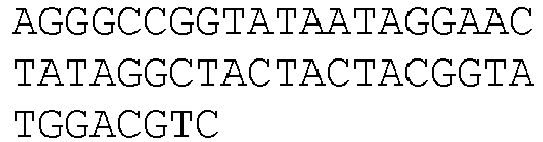
SEQ ID NO: 19 SEQ ID NO: 20 SEQ ID NO: 21 AA SYGMH FIWYDGSNKYYADSVKD RAGIIGTIGYYYGMDV SEQ ID NO: 22 SEQ ID NO: 23 SEQ ID NO: 24 2G6 NA AGCTATGGCATGCAC 

SEQ ID NO: 25 SEQ ID NO: 26 SEQ ID NO: 27 AA SYGMH FIWYDGSNKYYADSVKD RAGIIGTIGYYYGMDV SEQ ID NO: 28 SEQ ID NO: 29 SEQ ID NO: 30 2H12 NA AGCTATGGCATGCAC 

SEQ ID NO: 31 SEQ ID NO: 32 SEQ ID NO: 33 AA SYGMH VIWYDGSNKYYTDSVKG RAGIIGTTGYYYGMDV SEQ ID NO: 34 SEQ ID NO: 35 SEQ ID NO: 36 2H12_LC#2 NA AGCTATGGCATGCAC 

SEQ ID NO: 37 SEQ ID NO: 38 SEQ ID NO: 39 AA SYGMH VIWYDGSNKYYTDSVKG RAGIIGTTGYYYGMDV SEQ ID NO: 40 SEQ ID NO: 41 SEQ ID NO: 42 4A2 NA 


5B4 5C5 SEQ ID NO: 43 SEQ ID NO: 44 SEQ ID NO: 45 AA SSGYYWS YIYYTGSAYYNPSLKS DGSSGWYFQY SEQ ID NO: 46 SEQ ID NO: 47 SEQ ID NO: 48 4A9 NA GGTTACTACTGGAGC 

SEQ ID NO: 49 SEQ ID NO: 50 SEQ ID NO: 51 AA GYYWS YFSYSGSTNYNPSLKS NWAFHFDF SEQ ID NO: 52 SEQ ID NO: 53 SEQ ID NO: 54 4B10 NA AGCTATGACATGCAC 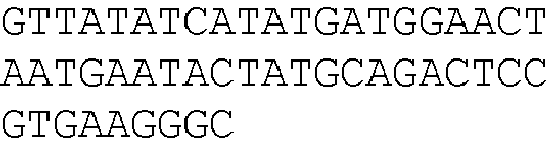

4C2 SEQ ID NO: 55 SEQ ID NO: 56 SEQ ID NO: 57 AA SYDMH VISYDGTNEYYADSVKG ERYFDWSFDY SEQ ID NO: 58 SEQ ID NO: 59 SEQ ID NO: 60 4D2 NA AGTTATGACATGCAC 

SEQ ID NO: 61 SEQ ID NO: 62 SEQ ID NO: 63 AA SYDMH VISYDGTNEYYADSVKG ERYFDWSFDY SEQ ID NO: 64 SEQ ID NO: 65 SEQ ID NO: 66 4D3 NA AGCTATGACATGGAC 

4F3 SEQ ID NO: 67 SEQ ID NO: 68 SEQ ID NO: 69 AA SYDMD VIWYDGSNKYYADSVRG ETGEGWYFDL SEQ ID NO: 70 SEQ ID NO: 71 SEQ ID NO: 72 4E10 NA AGCTATGACATGCAC 

SEQ ID NO: 73 SEQ ID NO: 74 SEQ ID NO: 75 AA SYDMH VIWYDGSNKYYADSVKG EYRYSWYFDY SEQ ID NO: 76 SEQ ID NO: 77 SEQ ID NO: 78 4F7 NA AGTTACTCCTGGAGC 

SEQ ID NO: 79 SEQ ID NO: 80 SEQ ID NO: 81 AA SYSWS YIYYSGSTNYNPSLKS NWAFHFDY SEQ ID NO: 82 SEQ ID NO: 83 SEQ ID NO: 84 5E3 NA AGCTATAGCATGCAC 

SEQ ID NO: 85 SEQ ID NO: 86 SEQ ID NO: 87 AA SYSMH SISSSSSYIYYADSVKG GETGTNYYYYGMDV SEQ ID NO: 88 SEQ ID NO: 89 SEQ ID NO: 90 17H8 NA AGTTACTACTGGAGC 

23B6 28D10 SEQ ID NO: 91 SEQ ID NO: 92 SEQ ID NO: 93 AA SYYWS YIYYIGSTNYNPSLKS DSRYRSGWYDAFDI SEQ ID NO: 94 SEQ ID NO: 95 SEQ ID NO: 96 16C1 NA GGTTACTACTGGAGC 

SEQ ID NO: 97 SEQ ID NO: 98 SEQ ID NO: 99 AA GYYWS YIYYIGSTNYNPSLKS DGSSGWYRWFDP SEQ ID NO: 100 SEQ ID NO: 101 SEQ ID NO: 102 16A4 NA AGTTACTACTGGAGC 

SEQ ID NO: 103 SEQ ID NO: 104 SEQ ID NO: 105 AA SYYWS YIYYSGSTNYNPSLKS DQRRIAAAGTHFYGMDV SEQ ID NO: 106 SEQ ID NO: 107 SEQ ID NO: 108 16E2 NA AGCTATGGCATGCAC 

17E10 20B12 SEQ ID NO: 109 SEQ ID NO: 110 SEQ ID NO: 111 AA SYGMH VIWYDGSNKYYADSVKG DGWELSFDY SEQ ID NO: 112 SEQ ID NO: 113 SEQ ID NO: 114 22G10 NA AGTTATGCCATGAAC 

SEQ ID NO: 115 SEQ ID NO: 116 SEQ ID NO: 117 AA SYAMN TISGGGANTYYADSVKG GGMGGYYYGMDV SEQ ID NO: 118 SEQ ID NO: 119 SEQ ID NO: 120 16H2 NA AGCTACTTTATTCAC 

20D3 23E7 SEQ ID NO: 121 SEQ ID NO: 122 SEQ ID NO: 123 AA SYFIH IINPISVSTSYAQKFQG GGIQLWLHFDY SEQ ID NO: 124 SEQ ID NO: 125 SEQ ID NO: 126 22D1 NA AGCTACTTTATTCAC 

SEQ ID NO: 127 SEQ ID NO: 128 SEQ ID NO: 129 AA SYFIH IINPISVSTSYAQKFQG GGIQLWLHLDY SEQ ID NO: 130 SEQ ID NO: 131 SEQ ID NO: 132 25F8 NA AGCTACTATATTCAC 

SEQ ID NO: 133 SEQ ID NO: 134 SEQ ID NO: 135 AA SYYIH IINPSGGSTRYAQKFQG GGIQLWLHFDY SEQ ID NO: 136 SEQ ID NO: 137 SEQ ID NO: 138 26F12 NA AACTACTATATGTCC 

27B3 SEQ ID NO: 139 SEQ ID NO: 140 SEQ ID NO: 141 AA NYYMS IINPSGGDSTYAQKFQG GGIQLWLHFDY SEQ ID NO: 142 SEQ ID NO: 143 SEQ ID NO: 144 26D1 NA AGCTACTATATGTCC 

SEQ ID NO: 145 SEQ ID NO: 146 SEQ ID NO: 147 AA SYYMS IIHPSGGDTTYAQKFQG GGIKLWLHFDY SEQ ID NO: 148 SEQ ID NO: 149 SEQ ID NO: 150 25G10 NA GGTTACTACTGGAGC 

SEQ ID NO: 151 SEQ ID NO: 152 SEQ ID NO: 153 AA GYYWS YIYYIGSTNYNPSLKS DGSSGWYRWFDP SEQ ID NO: 154 SEQ ID NO: 155 SEQ ID NO: 156 23A10 NA CGCTATGGCATACAC 

SEQ ID NO: 157 SEQ ID NO: 158 SEQ ID NO: 159 AA RYGIH VIWYDGSNKYYADSVKG RAGIPGTTGYYYGMDV SEQ ID NO: 160 SEQ ID NO: 161 SEQ ID NO: 162 19B5 NA AGCTACTTTATTCAC 

SEQ ID NO: 163 SEQ ID NO: 164 SEQ ID NO: 165 AA SYFIH IINPISVSTSYAQKFQG GGIQLWLHLDY SEQ ID NO: 166 SEQ ID NO: 167 SEQ ID NO: 168 TABLE Ib: LIGHT CHAIN CDRs Ab Type CDR 1 CDR 2CDR 31D10 NA 
CAAGATACCAAGCGGCCCTCA 
2C12 SEQ ID NO: 169 SEQ ID NO: 170 SEQ ID NO: 171 AA SGDRLGEKYTC QDTKRPS QAWDSSTVV SEQ ID NO: 172 SEQ ID NO: 173 SEQ ID NO: 174 1F10 NA 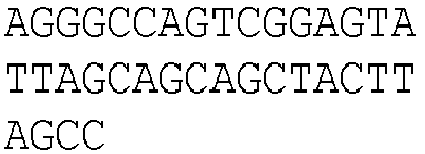
GGTCCATCCAGCAGGGCCACT 
SEQ ID NO: 175 SEQ ID NO: 176 SEQ ID NO: 177 AA RASRSISSSYLA GPSSRAT QQYGSSFT SEQ ID NO: 178 SEQ ID NO: 179 SEQ ID NO: 180 2C12_LC#1 NA 
AAGGTTTCTAACTGGGactct 
SEQ ID NO: 181 SEQ ID NO: 182 SEQ ID NO: 183 AA RSSQSLVYSDGNTYLN KVSNWDS MQGIVWPCS SEQ ID NO: 184 SEQ ID NO: 185 SEQ ID NO: 186 2G6_LC# 1NA 
CAGGTTTCTAACTGGGACTCT 
SEQ ID NO: 187 SEQ ID NO: 188 SEQ ID NO: 189 AA RSSQSLVYSDGNTYLN QVSNWDS MQDTLWPCS SEQ ID NO: 190 SEQ ID NO: 191 SEQ ID NO: 192 2G6 NA 
CAAGATACCAAGCGGCCCTCA 
SEQ ID NO: 193 SEQ ID NO: 194 SEQ ID NO: 195 AA SGDRLGEKYTC QDTKRPS QAWDSSTVV SEQ ID NO: 196 SEQ ID NO: 197 SEQ ID NO: 198 2H12 NA 
CAAGATACCAAGCGGCCCTCA 
SEQ ID NO: 199 SEQ ID NO: 200 SEQ ID NO: 201 AA SGDRLGEKYTC QDTKRPS QAWDSSTVV SEQ ID NO: 202 SEQ ID NO: 203 SEQ ID NO: 204 2H12_LC#2 NA 
AAGGTTTCTAACTGGGACTCT 
SEQ ID NO: 205 SEQ ID NO: 206 SEQ ID NO: 207 AA RSSQSLVYSDGNTYLN KVSNWDS MQDTLWPCS SEQ ID NO: 208 SEQ ID NO: 209 SEQ ID NO: 210 4A2 NA 
GGTCCATCCAGCAGGGccaCT 
5B4 5C5 SEQ ID NO: 211 SEQ ID NO: 212 SEQ ID NO: 213 AA RASRNISSSYLA GPSSRAT QQYGSSFT SEQ ID NO: 214 SEQ ID NO: 215 SEQ ID NO: 216 4A9 NA 
GGTAACAACAATCGGCCCTCA 
SEQ ID NO: 217 SEQ ID NO: 218 SEQ ID NO: 219 AA TGSSSNIGTGYAVH GNNNRPS QSYDSRLSGWV SEQ ID NO: 220 SEQ ID NO: 221 SEQ ID NO: 222 4B10 NA 
GGTGCATCCAGCAGGGCCACT 
4C2 SEQ ID NO: 223 SEQ ID NO: 224 SEQ ID NO: 225 AA RASQSVSNTYLA GASSRAT QQYSNSWT SEQ ID NO: 226 SEQ ID NO: 227 SEQ ID NO: 228 4D2 NA 
GGTGCATCCAGCAGGGCCGCT 
SEQ ID NO: 229 SEQ ID NO: 230 SEQ ID NO: 231 AA RASQSVSNTYLA GASSRAA QQYSNSWT SEQ ID NO: 232 SEQ ID NO: 233 SEQ ID NO: 234 4D3 NA 
GGTGCATCCAGCAGGGCCACT 
4F3 SEQ ID NO: 235 SEQ ID NO: 236 SEQ ID NO: 237 AA RASQSVSSSYLA GASSRAT QQYGSSWT SEQ ID NO: 238 SEQ ID NO: 239 SEQ ID NO: 240 4E10 NA 
GGTGCATCCAGCAGGGTCACT 
SEQ ID NO: 241 SEQ ID NO: 242 SEQ ID NO: 243 AA RASQSVGSSYLA GASSRVT QQYSNSWT SEQ ID NO: 244 SEQ ID NO: 245 SEQ ID NO: 246 4F7 NA 
GGTAACAGCAATCGGCCCTCA 
SEQ ID NO: 247 SEQ ID NO: 248 SEQ ID NO: 249 AA TGSSSNIGTGYDVH GNSNRPS QSYDSSLSGWV SEQ ID NO: 250 SEQ ID NO: 251 SEQ ID NO: 252 5E3 NA 
CAAGATAGCAAGCGGCCCTCA 
SEQ ID NO: 253 SEQ ID NO: 254 SEQ ID NO: 255 AA SGDKLGDEYAC QDSKRPS QAWDSSTVV SEQ ID NO: 256 SEQ ID NO: 257 SEQ ID NO: 258 17H8 NA 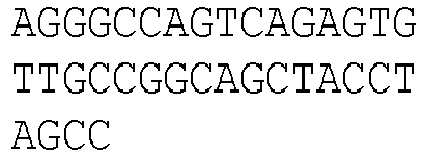
GGTGCATCCAGCAGGGCCACT 
23B6 28D10 SEQ ID NO: 259 SEQ ID NO: 260 SEQ ID NO: 261 AA RASQSVAGSYLA GASSRAT QQYGKSPIT SEQ ID NO: 262 SEQ ID NO: 263 SEQ ID NO: 264 16C1 NA 
GGTGCATCCAGCAGGGCCACT 
SEQ ID NO: 265 SEQ ID NO: 266 SEQ ID NO: 267 AA RASQSVSSSYLA GASSRAT QQYGNSPLT SEQ ID NO: 268 SEQ ID NO: 269 SEQ ID NO: 270 16A4 NA 
GGTACATCCAGCAGGGCCACT 
SEQ ID NO: 271 SEQ ID NO: 272 SEQ ID NO: 273 AA RASQSVSSSYLA GTSSRAT QQYGSSPFT SEQ ID NO: 274 SEQ ID NO: 275 SEQ ID NO: ***276 16E2 NA 
GCTGCATCCAGTTTGCAAAGT 
17E10 20B12 SEQ ID NO: 277 SEQ ID NO: 278 SEQ ID NO: 279 AA RASQGISNYLA AASSLQS QHYFTYPRT SEQ ID NO: 280 SEQ ID NO: 281 SEQ ID NO: 282 22G10 NA 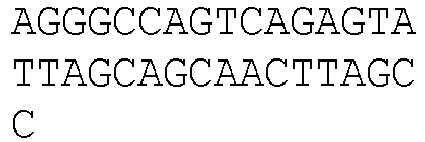
GGTGCATTTACCAGGGCCACT 
SEQ ID NO: 283 SEQ ID NO: 284 SEQ ID NO: 285 AA RASQSISSNLA GAFTRAT QQYNYWPLT SEQ ID NO: 286 SEQ ID NO: 287 SEQ ID NO: 288 16H2 NA 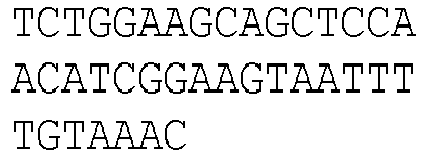
ACTAATAATCAGCGGCCCTCA 
20D3 23E7 SEQ ID NO: 289 SEQ ID NO: 290 SEQ ID NO: 291 AA SGSSSNIGSNFVN TNNQRPS ATWDDSLNGWV SEQ ID NO: 292 SEQ ID NO: 293 SEQ ID NO: 294 22D1 NA 
ACTAATAATCAGCGGCCCTCA 
SEQ ID NO: 295 SEQ ID NO: 296 SEQ ID NO: 297 AA SGSSSNIGSNFVN TNNQRPS ATWDDSMNGWV SEQ ID NO: 298 SEQ ID NO: 299 SEQ ID NO: 300 25F8 NA 
ACTAATAATCAGCGGCCCTCA 
SEQ ID NO: 301 SEQ ID NO: 302 SEQ ID NO: 303 AA SGSSSNIGRNFVN TNNQRPS AAWDDSLNGWV SEQ ID NO: 304 SEQ ID NO: 305 SEQ ID NO: 306 26F12 NA 
ACTAATTATCAGCGGCCCTCA 
27B3 SEQ ID NO: 307 SEQ ID NO: 308 SEQ ID NO: 309 AA SGSRSNIGSNFVN TNYQRPS AVWDDSLNGWV SEQ ID NO: 310 SEQ ID NO: 311 SEQ ID NO: 312 26D1 NA 
ACTAATAATCAGCGGCCCTCA 
SEQ ID NO: 313 SEQ ID NO: 314 SEQ ID NO: 315 AA SGSRSNIGSNFVN TNNQRPS AVWDDSLNGWV SEQ ID NO: 316 SEQ ID NO: 317 SEQ ID NO: 318 25G10 NA 
GGTGCATCCAGCAGGGCCACT 
SEQ ID NO: 319 SEQ ID NO: 320 SEQ ID NO: 321 AA RASQSVSSSYLA GASSRAT QQYGNSPLT SEQ ID NO: 322 SEQ ID NO: 323 SEQ ID NO: 324 23A10 NA 
CAAGATAATAAGTGGCCCTCA 
SEQ ID NO: 325 SEQ ID NO: 326 SEQ ID NO: 327 AA SGDRLGEKYVC QDNKWPS QAWDSSTW SEQ ID NO: 328 SEQ ID NO: 329 SEQ ID NO: 330 19B5 NA 
ACTAATAATCAGCGGCCCTCA 
SEQ ID NO: 331 SEQ ID NO: 332 SEQ ID NO: 333 AA SGSRSNIGSNFVN TNNQRPS ATWDDSMNGWV SEQ ID NO: 334 SEQ ID NO: 335 SEQ ID NO: 336 -
TABLE IIa: Heavy Chain Variable Region Polynucleotide and Amino acid Sequences SEQ ID NO. DESIGNATION SOURCE TYPE SEQUENCE 337 17H8 artificial nt 
23B6 28D10 338 17H8 artificial aa 
23B6 28D10 339 4A2 artificial nt 
5B4 5C5 340 4A2 artificial aa 
5B4 5C5 341 16H2 artificial nt 
20D3 23E7 342 16H2 artificial aa 
20D3 23E7 343 26F12 artificial nt 
27B3 344 26F12 artificial aa 
27B3 345 4B10 artificial nt 
4C2 
346 4B10 artificial aa 
4C2 347 4D3 artificial nt 
4F3 348 4D3 artificial aa 
4F3 349 16E2 artificial nt 
17E10 20B12 350 16E2 artificial aa 
17E10 20B12 351 1D10 artificial nt 
2C12 352 1D10 artificial aa 
2C12 353 16C1 artificial nt 
354 16C1 artificial aa 
355 25G10 artificial nt 

356 25G10 artificial aa 
357 16A4 artificial nt 
358 16A4 artificial aa 
359 1F10 artificial nt 
360 1F10 artificial aa 
361 4A9 artificial nt 
362 4A9 artificial aa 
363 4F7 artificial nt 
364 4F7 artificial aa 
365 22D1 artificial nt 

366 22D1 artificial aa 
367 19B5 artificial nt 
368 19B5 artificial aa 
369 25F8 artificial nt 
370 25F8 artificial aa 
371 26D1 artificial nt 
372 26D1 artificial aa 
373 4D2 artificial nt 
374 4D2 artificial aa 
375 4E10 artificial nt 

376 4E10 artificial aa 
377 22G10 artificial nt 
378 22G10 artificial aa 
379 2C12_LC#1 artificial nt 
380 2C12_LC#1 artificial aa 
381 2H12_LC#2 artificial nt 
382 2H12_LC#2 artificial aa 
383 2G6_LC#1 artificial nt 
384 2G6_LC#1 artificial aa 
385 2H12 artificial nt 

386 2H12 artificial aa 
387 2G6 artificial nt 
388 2G6 artificial aa 
389 23A10 artificial nt 
390 23A10 artificial aa 
391 5E3 artificial nt 
392 5E3 artificial aa 
TABLE IIB: Light Chain Variable Region Polynucleotide and Amino acid Sequences SEQ ID NO. DESIGNATION SOURCE TYPE SEQUENCE 393 17H8 artificial nt 
23B6 28D10 394 17H8 artificial aa 
23B6 28D10 395 4A2 artificial nt 
5B4 5C5 396 4A2 artificial aa 
5B4 5C5 397 16H2 artificial nt 
20D3 23E7 398 16H2 artificial aa 
20D3 23E7 399 26F12 artificial nt 
27B3 400 26F12 artificial aa 
27B3 401 4B10 artificial nt 
4C2 402 4B10 artificial aa 
4C2 403 4D3 artificial nt 
4F3 404 4D3 artificial aa 
4F3 405 16E2 artificial nt 
17E10 20B12 
406 16E2 artificial aa 
17E10 20B12 407 1D10 artificial nt 
2C12 408 1D10 artificial aa 
2C12 409 16C1 artificial nt 
410 16C1 artificial aa 
411 25G 10 artificial nt 
412 25G10 artificial aa 
413 16A4 artificial nt 
414 16A4 artificial aa 
415 1F10 artificial nt 
416 1F10 artificial aa 
417 4A9 artificial nt 
418 4A9 artificial aa 
419 4F7 artificial nt 
420 4F7 artificial aa 
421 22D1 artificial nt 
422 22D1 artificial aa 
423 19B5 artificial nt 
424 19B5 artificial aa 
425 25F8 artificial nt 
426 25F8 artificial aa 
427 26D1 artificial nt 
428 26D1 artificial aa 
429 4D2 artificial nt 
430 4D2 artificial aa 
431 4E10 artificial nt 
432 4E10 artificial aa 
433 22G10 artificial nt 
434 22G10 artificial aa 
435 2C12_LC#1 artificial nt 
436 2C12_LC#1 artificial aa 
437 2H12_LC#2 artificial nt 
438 2H12_LC#2 artificial aa 
439 2G6_LC#1 artificial nt 
440 2G6_LC#1 artificial aa 
441 2H12 artificial nt 
442 2H12 artificial aa 
443 2G6 artificial nt 
444 2G6 artificial aa 
445 23A10 artificial nt 
446 23A10 artificial aa 
447 5E3 artificial nt 
448 5E3 artificial aa 
TABLE IIc: Heavy Chain Variable Region Polynucleotide and Amino acid Sequences 13586 HC [hu anti-<huCDH19> 4F3 VH] 
13589 HC [hu anti-<huCDH19> 4A9 VH] 
13590 HC [hu anti-<huCDH19> 4B10 VH] 
13874 HC [hu anti-<huCDH19> 17H8.2 VH] 
13875 HC [hu anti-<huCDH19> 16C1.1 VH] 
13876 HC [hu anti-<huCDH19> 16A4.1 VH] 
13877 HC [hu anti-<huCDH19> 22G10.1 VH] 
13878 HC [hu anti-<huCDH19> 20D3.1 VH] 
13879 HC [hu anti-<huCDH19> 22D1.1 VH] 
13880 HC [hu anti-<huCDH19> 25F8.1 VH] 
13881 HC [hu anti-<huCDH19> 26F12.1 VH] 
13882 HC [hu anti-<huCDH19> 26D1.1 VH] 
13883 HC [hu anti-<huCDH19> 25G10.1 VH] 
13885 HC [hu anti-<huCDH19> 19B5.1 VH] 
14022 HC [hu anti-<huCDH19> 4A2 VH] 
14024 HC [hu anti-<huCDH19> 4A2 (1-472)(Q17E,H47P) VH] 
14025 HC [hu anti-<huCDH19> 4A2 VH] 
14026 HC [hu anti-<huCDH19> 4A2 (1-472)(Q17E,H47P) VH] 
14027 HC [hu anti-<huCDH19> 4A2 (1-472)(Q17F,H47P,D111F) VH] 
14028 HC [hu anti-<huCDH19> 4A2 (1-472)(Q17F,H47P,D111F,W134Y) VH] 
14029 HC [hu anti-<huCDH19> 4A2 VH] 
14030 HC [hu anti-<huCDH19> 4F3 (1-471)(R17G) VH] 
14031 HC [hu anti-<huCDH19> 4F3 (1-471)(R17G,T47A) VH] 
14032 HC [hu anti-<huCDH19> 4F3 (1-471)(R17G,T47A,R141Q) VH] 
14033 HC [hu anti-<huCDH19> 4F3 (1-471)(R17G,T47A,D61E,D72E,R141Q) VH] 
14034 HC [hu anti-<huCDH19> 4F3 (1-471)(R17G,T47A,D61E,D72E,W134Y,R141Q) VH] 
14039 HC [hu anti-<huCDH19> 2G6 (1-477)(R17G,D61E,D72E,K94N) VH] 
14040 HC [hu anti-<huCDH19> 16C1.1 VH] 
14041 HC [hu anti-<huCDH19> 16C1.1 (1-469)(T92K) VH] 
14042 HC [hu anti-<huCDH19> 16C1.1 (1-469)(T92K,D109E) VH] 
14043 HC [hu anti-<huCDH19> 16C1.1 (1-469)(T92K,W132Y,W135Y) VH] 
14044 HC [hu anti-<huCDH19> 16C1.1 (1-469)(T92K) VH] 
14045 HC [hu anti-<huCDH19> 17H8.2 VH] 
14046 HC [hu anti-<huCDH19> 17H8.2 (1-471)(D109E) VH] 
14047 HC [hu anti-<huCDH19> 17H8.2 (1-471)(D109E,W132Y) VH] 
14048 HC [hu anti-<huCDH19> 17H8.2 (1-471)(D109E) VH] 
14049 HC [hu anti-<huCDH19> 4F7 VH] 
14050 HC [hu anti-<huCDH19> 4F7 VH] 
14051 HC [hu anti-<huCDH19> 4F7 (1-468)(W113Y) VH] 
14052 HC [hu anti-<huCDH19> 4B10 (1-471)(R17G,D61E,D72E,W134Y) VH] 
14053 HC [hu anti-<huCDH19> 4B10 VH] 
14054 HC [hu anti-<huCDH19> 4B10 (1-471)(R17G) VH] 
14055 HC [hu anti-<huCDH19> 4B10 (1-471)(R17G,D61E,D72E) VH] 
14056 HC [hu anti-<huCDH19> 4A9 VH] 
14057 HC [hu anti-<huCDH19> 4A9 (1-468)(F55I,A56G) VH] 
14058 HC [hu anti-<huCDH19> 4A9 (1-468)(F55I,A56G) VH] 
14059 HC [hu anti-<huCDH19> 4A9 (1-468)(F55I,A56G,W113Y) VH] 
14060 HC [hu anti-<huCDH19> 20D3.1 VH] 
14061 HC [hu anti-<huCDH19> 20D3.1 VH] 
14062 HC [hu anti-<huCDH19> 20D3.1 (1-469)(W133Y) VH] 
14063 HC [hu anti-<huCDH19> 20D3.1 (1-469)(W133Y) VH] 
14064 HC [hu anti-<huCDH19> 20D3.1 (1-469)(W133Y) VH] 
14065 HC [hu anti-<huCDH19> 22G10.1 (1-470)(S82R,A99E) VH] 
14066 HC [hu anti-<huCDH19> 22G10.1 (1-470)(A99E,H105Y) VH] 
14067 HC [hu anti-<huCDH19> 22G10.1 (1-470)(A99E) VH] 
14068 HC [hu anti-<huCDH19> 22G10.1 (1-470)(A99E) VH] 
14069 HC [hu anti-<huCDH19> 22G10.1 (1-470)(D72E,A99E) VH] 
14070 HC [hu anti-<huCDH19> 22G10.1 (1-470)(H105Y) VH] 
14071 HC [hu anti-<huCDH19> 16A4.1 (1-474)(T144L) VH] 
14072 HC [hu anti-<huCDH19> 19B5.1 VH] 
14073 HC [hu anti-<huCDH19> 19B5.1 (1-469)(W133Y) VH] 
14074 HC [hu anti-<huCDH19> 19B5.1 VH] 
14075 HC [hu anti-<huCDH19> 19B5.1 VH] 
14076 HC [hu anti-<huCDH19> 19B5.1 (1-469)(W133Y) VH] 
14077 HC [hu anti-<huCDH19> 23A10.3 (1-474)(L92Q) VH] 
14078 HC [hu anti-<huCDH19> 23A10.3 (1-474)(R17G,L92Q) VH] 
14079 HC [hu anti-<huCDH19> 23A10.3 (1-474)(R17G,D61E,D72E,L92Q) VH] 
14080 HC [hu anti-<huCDH19> 23A10.3 VH] 
14081 HC [hu anti-<huCDH19> 25G10.1 VH] 
14082 HC [hu anti-<huCDH19> 25G10.1 (1-469)(D109E,W132Y,W135Y) VH] 
14083 HC [hu anti-<huCDH19> 26D1.1 VH] 
14084 HC [hu anti-<huCDH19> 26D1.1 VH] 
14085 HC [hu anti-<huCDH19> 26D1.1 VH] 
14086 HC [hu anti-<huCDH19> 26D1.1 VH] 
14087 HC [hu anti-<huCDH19> 26D1.1 (1-469)(W133Y) VH] 
14088 HC [hu anti-<huCDH19> 26D1.1 (1-469)(R27G,G82R) VH] 
14089 HC [hu anti-<huCDH19> 26F12.1 VH] 
14090 HC [hu anti-<huCDH19> 26F12.1 VH] 
14091 HC [hu anti-<huCDH19> 26F12.1 (1-469)(W133Y) VH] 
14092 HC [hu anti-<huCDH19> 26F12.1 (1-469)(W133Y) VH] 
14093 HC [hu anti-<huCDH19> 25F8.1 VH] 
14094 HC [hu anti-<huCDH19> 25F8.1 VH] 
14095 anti-<huCDH19> 25F8.1 (1-469)(F90Y) VH] 14095 
14096 HC [hu anti-<huCDH19> 25F8.1 (1-469)(F90Y) VH] 
14097 HC [hu anti-<huCDH19> 25F8.1 (1-469)(F90Y,W133Y) VH] 
14098 HC [hu anti-<huCDH19> 22D1.1 VH] 
14099 HC [hu anti-<huCDH19> 22D1.1 VH] 
14100 HC [hu anti-<huCDH19> 22D1.1 (1-469)(W133Y) VH] 
14101 HC [hu anti-<huCDH19> 22D1.1 (1-469)(W133Y) VH] 
14102 HC [hu anti-<huCDH19> 22D1.1 (1-469)(F90Y) VH] 
13591 HC [hu anti-<huCDH19> 4F7 VH] 
14301 HC [hu anti-<huCDH19> 2G6 VH] 
14302 HC [hu anti-<huCDH19> 2G6 (1-477)(R17G,K94N) VH] 
14303 HC [hu anti-<huCDH19> 2G6 (1-477)(D61E,D72R) VH] 
14304 HC [hu anti-<huCDH19> 2G6 (1-477)(R17G) VH] 
TABLE IId: Light Chain Variable Region Amino acid Sequences 13586 LC [hu anti-<huCDH19> 4F3 VL] 
13589 LC [hu anti-<huCDH19> 4A9 VL] 
13590 LC [hu anti-<huCDH19> 4B10 VL] 
13874 LC [hu anti-<huCDH19> 17H8.2 VL] 
13875 LC [hu anti-<huCDH19> 16C1.1 VL] 
13876 LC [hu anti-<huCDH19> 16A4.1 VL] 
13877 LC [hu anti-<huCDH19> 22G10.1 VL] 
13878 LC [hu anti-<huCDH19> 20D3.1 VL] 
13879 LC [hu anti-<huCDH19> 22D1.1 VL] 
13880 LC [hu anti-<huCDH19> 25F8.1 VL] 
13881 LC [hu anti-<huCDH19> 26F12.1 VL] 
13882 LC [hu anti-<huCDH19> 26D1.1 VL] 
13883 LC [hu anti-<huCDH19> 25G10.1 VL] 
13885 LC [hu anti-<huCDH19> 19B5.1 VL] 
14022 LC [hu anti-<huCDH19> 4A2 (1-236)(N30Q) VL] 
14024 LC [hu anti-<huCDH19> 4A2 (1-236)(N30Q,T102A,P141Q) VL] 
14025 LC [hu anti-<huCDH19> 4A2 (1-236)(N30Q,T102A)VL] 
14026 LC [hu anti-<huCDH19> 4A2 (1-236)(N30Q,T102A) VL] 
14027 LC [hu anti-<huCDH19> 4A2 (1-236)(N30Q,T102A,P141Q)VL] 
14028 LC [hu anti-<huCDH19> 4A2 (1-236)(N30Q,T102A,P141Q) VL] 
14029 LC [hu anti-<huCDH19> 4A2 (1-236)(R29Q,N30S) VL] 
14030 LC [hu anti-<huCDH19> 4F3 VL] 
14031 LC [hu anti-<huCDH19> 4F3 VL] 
14032 LC [hu anti-<huCDH19> 4F3 VL] 
14033 LC [hu anti-<huCDH19> 4F3 VL] 
14034 LC [hu anti-<huCDH19> 4F3 VL] 
14039 LC [hu anti-<huCDH19> 2G6 (1-234)(C42S,D110E) VL] 
14040 LC [hu anti-<huCDH19> 16C1.1 (1-235)(H105Y) VL] 
14041 LC [hu anti-<huCDH19> 16C1.1 (1-235)(H105Y) VL] 
14042 LC [hu anti-<huCDH19> 16C1.1 (1-235)(H105Y) VL] 
14043 LC [hu anti-<huCDH19> 16C1.1 (1-235)(H105Y) VL] 
14044 LC [hu anti-<huCDH19> 16C1.1 (1-235)(G95R,H105Y,G141Q) VL] 
14045 LC [hu anti-<huCDH19> 17H8.2 (1-235)(G149R) VL] 
14046 LC [hu anti-<huCDH19> 17H8.2 (1-235)(G149R) VL] 
14047 LC [hu anti-<huCDH19> 17H8.2 (1-235)(G149R) VL] 
14048 LC [hu anti-<huCDH19> 17H8.2 (1.235)(S57Y,G149R) VL] 
14049 LC [hu anti-<huCDH19> 4F7 (1-239)(H57Y) VL] 
14050 LC [hu anti-<huCDH19> 4F7 (1-239)(H57Y,D110E) VL] 
14051 LC [hu anti-<huCDH19> 4F7 (1-239)(D110E) VL] 
14052 LC [hu anti-<huCDH19> 4B10 (1-236)(H45Q,A90T) VL] 
14053 LC [hu anti-<huCDH19> 4B10 (1-236)(H45Q,A90T) VL] 
14054 LC [hu anti-<huCDH19> 4B10 (1-236)(H45Q,A90T) VL] 
14055 LC [hu anti-<huCDH19> 4B10 (1-236)(H45Q,A90T) VL] 
14056 LC [hu anti-<huCDH19> 4A9 (1-239)(F47L) VL] 
14057 LC [hu anti-<huCDH19> 4A9 (1-239)(F47L) VL] 
14058 LC [hu anti-<huCDH19> 4A9 (1-239)(F47L,D110E) VL] 
14059 LC [hu anti-<huCDH19> 4A9 (1-239)(F47L,D110E) VL] 
14060 LC [hu anti-<huCDH19> 20D3.1 (1-235)(S102A) VL] 
14061 LC [hu anti-<huCDH19> 20D3.1 (1-235)(K45Q,S102A) VL] 
14062 LC [hu anti-<huCDH19> 20D3.1 (1-235)(K45Q,S102A) VL] 
14063 LC [hu anti-<huCDH19> 20D3.1 (1-235)(K45Q,S102A,D111E,N135Q) VL] 
14064 LC [hu anti-<huCDH19> 20D3.1 (1-235)(W109Y) VL] 
14065 LC [hu anti-<huCDH19> 22G10.1 VL] 
14066 LC [hu anti-<huCDH19> 22G10.1 VL] 
14067 LC [hu anti-<huCDH19> 22G10.1 (1-234)(Q97E,S98P) VL] 
14068 LC [hu anti-<huCDH19> 22G10.1 (1-234)(V78F,Q97E,S98P) VL] 
14069 LC [hu anti-<huCDH19> 22G10.1 (1-234)(V78F,Q97E,S98P) VL] 
14070 LC [hu anti-<huCDH19> 22G10.1 VL] 
14071 LC [hu anti-<huCDH19> 16A4.1 (1-235)(G141Q) VL] 
14072 LC [hu anti-<huCDH19> 19B5.1 (1-235)(K45Q,S102A) VL] 
14073 LC [hu anti-<huCDH19> 19B5.1 (1-235)(K45Q,S102A) VL] 
14074 LC [hu anti-<huCDH19> 19B5.1 (1-235)(T11V,K45Q,S102A) VL] 
14075 LC [hu anti-<huCDH19> 19B5.1 (1-235)(T11V,K45Q,S102A,D111E,N135Q) VL] 
14076 LC [hu anti-<huCDH19> 19B5.1 (1-235)(T11V,K45Q,S102A,W109Y,D111E,N135Q) VL] 
14077 LC [hu anti-<huCDH19> 23A10.3 (1-231)(C42S) VL] 
14078 LC [hu anti-<huCDH19> 23A10.3 (1-231)(C42S) VL] 
14079 LC [hu anti-<huCDH19> 23A10.3 (1-231)(C42S,D110E) VL] 
14080 LC [hu anti-<huCDH19> 23A10.3 (1-231)(C42Y) VL] 
14081 LC [hu anti-<huCDH19> 25G10.1 (1-235)(H105Y) VL] 
14082 LC [hu anti-<huCDH19> 25G10.1 (1-235)(H105Y) VL] 
14083 LC [hu anti-<huCDH19> 26D1.1 (1-235)(S7P) VL] 
14084 LC [hu anti-<huCDH19> 26D1.1 (1-235)(H1Q,S7P) VL] 
14085 LC [hu anti-<huCDH19> 26D1.1 (1-235)(H1Q,S7P,W109Y) VL] 
14086 LC [hu anti-<huCDH19> 26D1.1 (1-235)(H1Q,S7P,W109Y,D111E,N135Q) VL] 
14087 LC [hu anti-<huCDH19> 26D1.1 (1-235)(H1Q,S7P,W109Y,D111E,N135Q) VL] 
14088 LC [hu anti-<huCDH19> 26D1.1 (1-235)(H1Q,S7P) VL] 
14089 LC [hu anti-<huCDH19> 26F12.1 (1-235)(S7P) VL] 
14090 LC [hu anti-<huCDH19> 26F12.1 (1-235)(S7P,D111E) VL] 
14091 LC [hu anti-<huCDH19> 26F12.1 (1-235)(S7P,D111E) VL] 
14092 LC [hu anti-<huCDH19> 26F12.1 (1-235)(S7P,W109Y,D111E,N135Q) VL] 
14093 LC [hu anti-<huCDH19> 25F8.1 (1-235)(K45Q) VL] 
14094 LC [hu anti-<huCDH19> 25F8.1 (1-235)(K45Q,S102A) VL] 
14095 LC [hu anti-<huCDH19> 25F8.1 (1-235)(K45Q,S102A) VL] 
14096 LC [hu anti-<huCDH19> 25F8.1 (1-235)(K45Q,S102A,D111E) VL] 
14097 LC [hu anti-<huCDH19> 25F8.1 (1-235)(K45Q,S102A,D111E,N135Q) VL] 
14098 LC [hu anti-<huCDH19> 22D1.1 (1-235)(K45Q,S102A) VL] 
14099 LC [hu anti-<huCDH19> 22D1.1 (1-235)(K45Q,S102A,D111E,N135Q) VL] 
14100 LC [hu anti-<huCDH19> 22D1.1 (1-235)(K45Q,S102A,W109Y,D111E,N135Q) VL] 
14101 LC [hu anti-<huCDH19> 22D1.1 (1-235)(K45Q,S102A,W109Y) VL] 
14102 LC [hu anti-<huCDH19> 22D1.1 (1-235)(K45Q,S102A) VL] 
13591 LC [hu anti-<huCD419> 4F7 VL] 
14301 LC [hu anti-<huCDH19> 2G6 (1-234)(D110E) VL] 
14302 LC [hu anti-<huCDH19> 2G6 (1-234)(C42S,D110E) VL] 
14303 LC [hu anti-<huCDH19> 2G6 (1-234)(C42S,D110E) VL] 
14304 LC [hu anti-<huCDH19> 23A10.3 (1-231)(C42S) VL] 
-
TABLE IIIa: Heavy Chain Variable and Contant Region Polynucleotide and Amino acid Sequences 2G6 


4A2 

4A9 

4B10 


4F3 

4F7 

16A4 

16C1 


17H8 

19B5 


20D3 

22D1 


22G10 

23A10 


25F8 


25G10 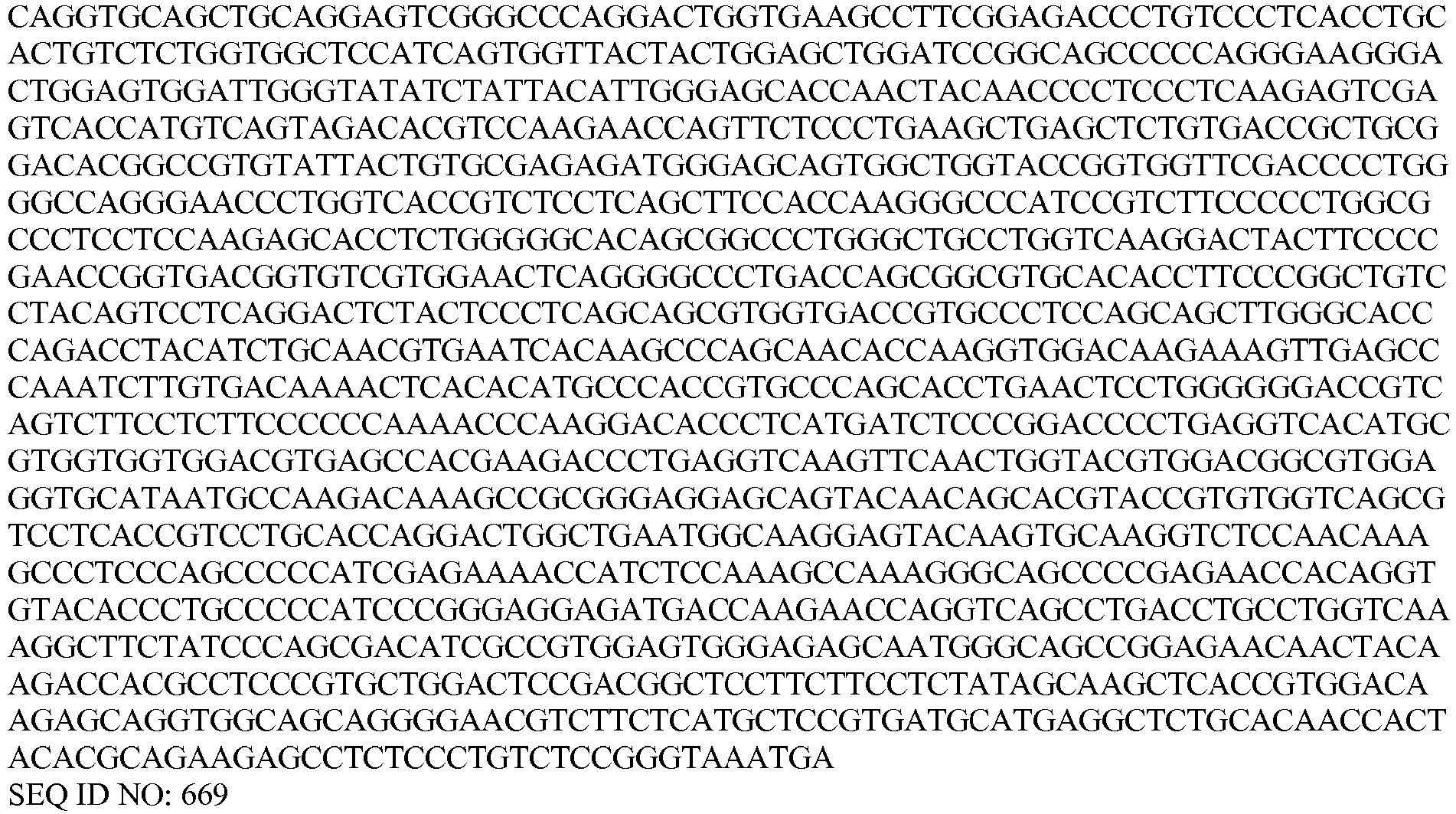

26D1 


26F12 

TABLE IIIb: Light Chain Variable and Contant Region Polynucleotide and Amino acid Sequences 2G6 

4A2 

4A9 

4B10 

4F3 
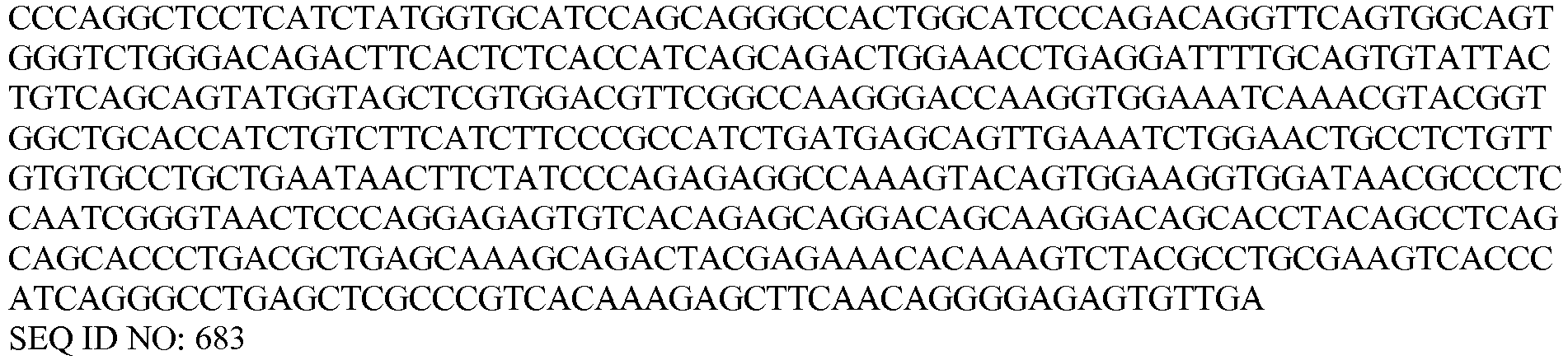

4F7 

16A4 

16C1 

17H8 
19B5 
20D3 

22D1 

22G10 

23A10 


25F8 

25G10 

26D1 

26F12 

TABLE IIIc: Heavy Chain Variable and Contant Region Polynucleotide and Amino acid Sequences 13586 HC [hu anti-<huCDH19> 4F3 VH]::huIg:G1z 
13589 HC [hu anti-<huCDH19> 4A9 VH]::huIgG1z 
13590 HC [hu anti-<huCDH19> 4B10 VH]::huIgG1z 
13874 HC [hu anti-<huCDH19> 17H8.2 VH]::huIgG1z 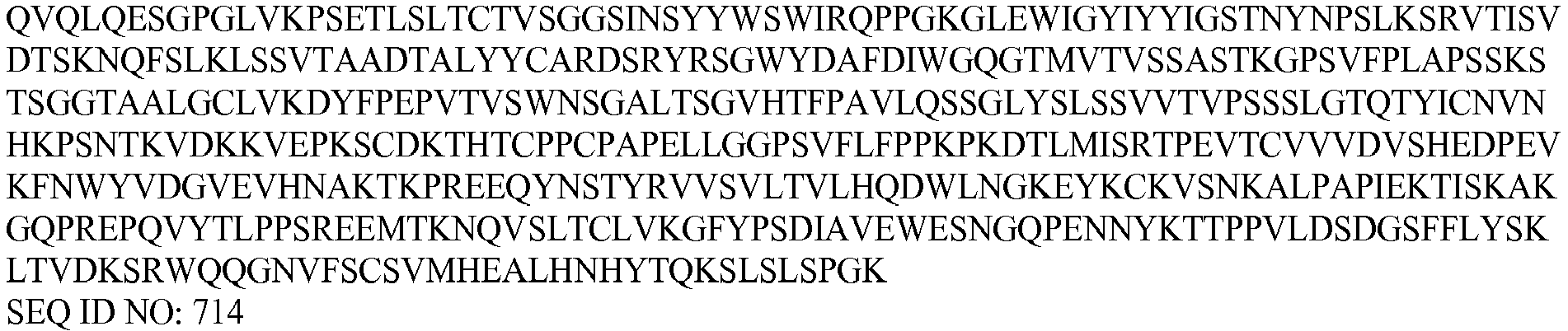
13875 HC [hu anti-<huCDH19> 16C1.1 VH]::huIgG1z 
13876 HC [hu anti-<huCDH19> 16A4.1 VH]::huIGG1z 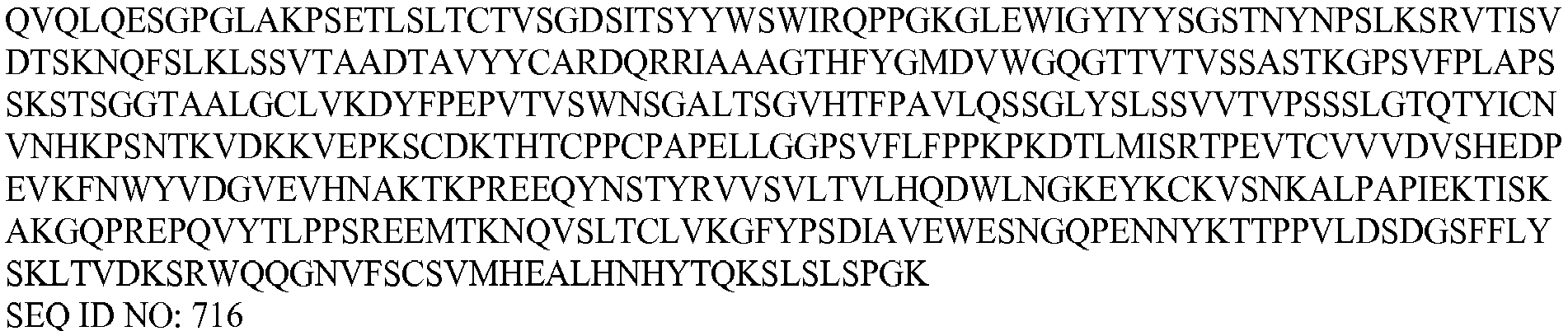
13877 HC [hu anti-<huCDH19> 22G10.1 VH]::huIgG1z 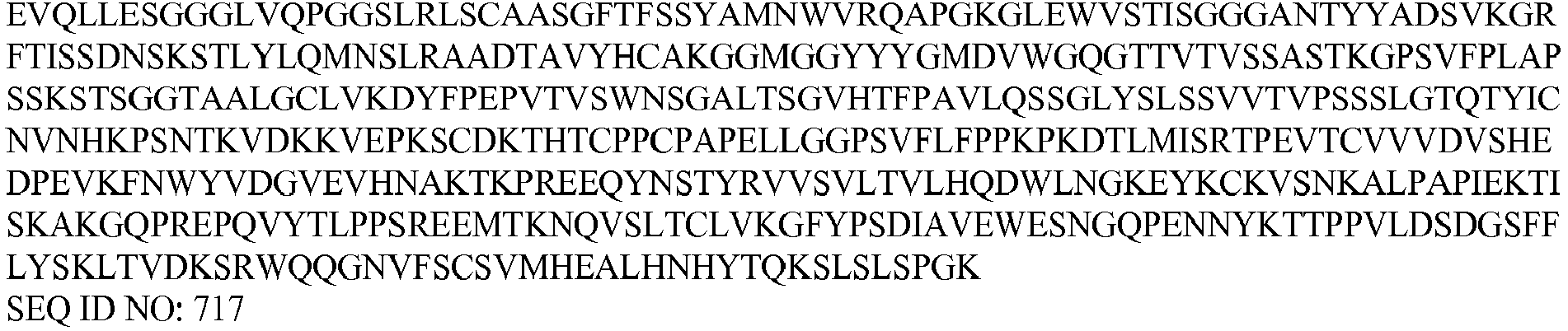
13878 HC [hu anti-<huCDH19> 20D3.1 VH]::huIgG1z 
13879 HC [hu anti-<huCDH19> 22D1.1 VH]::huIgG1z 
13880 HC [hu anti-<huCDH19> 25F8.1 VH1::huIgG1z 
13881 HC [hu anti-<huCDH19> 26F12.1 VH]::huIgG1z 
13882 HC [hu anti-<huCDH19> 26D1.1 VH]::huIgG1z 
13883 HC [hu anti-<huCDH19> 25G10.1 VH1::huIgG1z 
13885 HC [hu anti-<huCDH19> 19B5.1 VH]::huIgG1z 
14022 HC [hu anti-<huCDH19> 4A2 VH]::huIgG1z 
14024 HC [hu anti-<huCDH19> 4A2 (1-472)(Q17E,H47P) VH]::huIgG1z 
14025 HC [hu anti-<huCDH19> 4A2 VH]::huIgG1z 
14026 HC [hu anti-<huCDH19> 4A2 (1-472)(Q17E,H47P) VH]::huIgG1z 
14027 HC [hu anti-<huCDH19> 4A2 (1-472)(Q17E,H47P,D111E) VH]::huIgG1z 
14028 HC [hu anti-<huCDH19> 4A2 (1-472)(Q17E,H47P,D111E,W134Y) VH]::huIgG1z 
14029 HC [hu anti-<huCDH19> 4A2 VH]::huIgG1z 
14030 HC [hu anti-<huCDH19> 4F3 (1-471)(R17G) VH]::huIgG1z 
14011 HC [hu Anti-<huCDH19>4F3 (1-471)(R17G,T47A) VH]::huIgG1z 
14032 HC [hu anti-<huCDH19> 4F3 (1-471)(R17G,T47A,R141Q) VH]::huIgG1z 
14033 HC [hu anti-<huCDH19> 4F3 (1-471)(R17G,T47A,D61E,D72E,R141Q) VH]::huIgG1z 
14034 HC [hu anti-<huCDH19> 4F3 (1-471)(R17G,T47A,D61E,D72E,W134Y,R141Q) VH]::huIgG1z 
14039 HC [hu anti-<huCDH19> 2G6 (1-477)(R17G,D61E,D72E,K94N) VH]::huIgG1z 
14040 HC [hu anti-<huCDH19> 16C1.1 VH]::huIgG1z 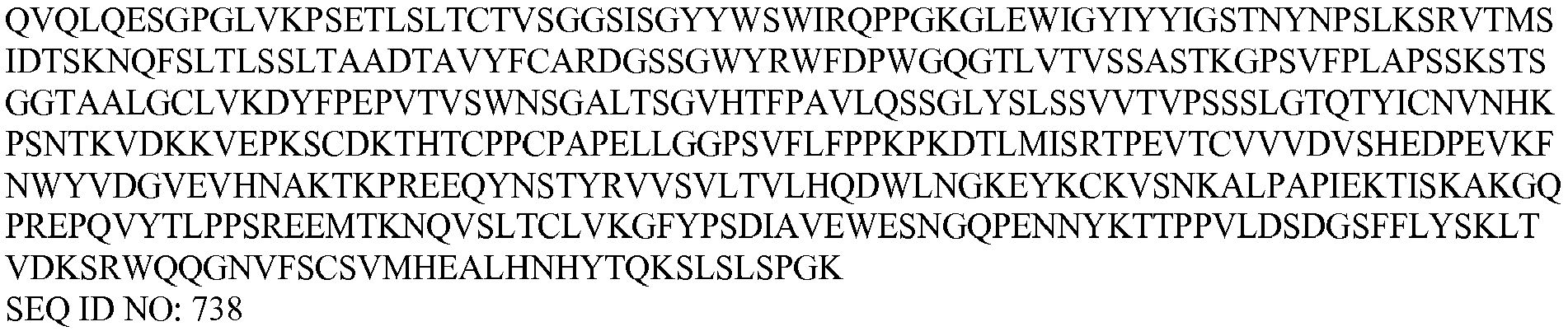
14041 HC [hu anti-<huCDH19> 16C1.1 (1-469)(T92K) VH]::huIG1z 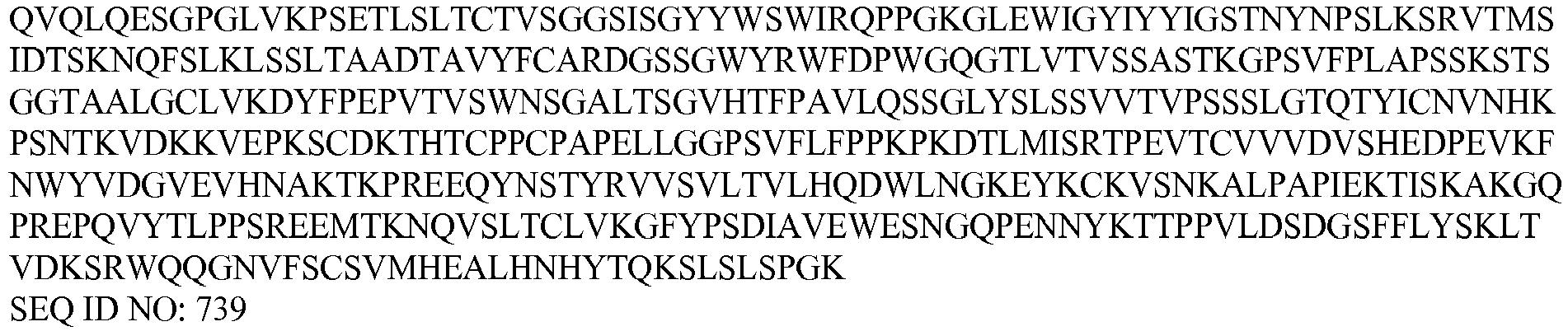
14042 HC [hu anti-<huCDH19> 16C1.1 (1-469)(T92K,D109E) VH]::huIgG1z 
14043 HC [hu anti-<huCDH19> 16C1.1 (1-469)(T92K,W132Y,W135Y) VH]::huIgG1z 
14044 HC [hu anti-<huCDH19> 16C1.1 (1-469)(T92K) VH]::huIgG1z 
14045 HC [hu anti-<huCDH19> 17H8.2 VH]::huIG1z 
14046 HC [hu anti-<huCDH19> 17H8.2 (1-471)(D109E) VH]::huIgG1z 
14047 HC [hu anti-<huCDH19> 17H8.2 (1-471)(D109E,W132Y) VH]::huIgG1z 
14048 HC [hu anti-<huCDH19> 17H8.2 (1-471)(D109E) VH]::huIgG1z 
14049 HC [hu anti-<huCDH19> 4F7 VH]::huIgG1z 
14050 HC [hu anti-<huCDH19> 4F7 VH]::huIgG1z 
14051 HC [hu anti-<huCDH19> 4F7 (1-468)(W113Y) VH]::huIgG1z 
14052 HC [hu anti-<huCDH19> 4B10 0-471)(R17G,D61E,D72E,W134Y) VH]::huIgG1z 
14053 HC [hu anti-<huCDH19> 4B10 VH]::huIgG1z 
14054 HC [hu anti-<huCDH19> 4B10 (1-471)(R17G) VH]::huIgG1z 
14055 HC [hu anti-<huCDH19> 4B10 (1-471)(R17G,D61E,D72E) VH]::huIG1z 
14056 HC [hu anti-<huCDH19> 4A9 VH]::huIgG1z 
14057 HC [hu anti-<huCDH19> 4A9 (1-468)(F55I,A56G) VH]::huIgG1z 
14058 HC [hu anti-<huCDH19> 4A9 (1-468)(F55I,A56G) VH]::huIgG1z 
14059 HC [hu anti-<huCDH19> 4A9 (1-468)(F55I,A56G,W113Y) VH]::huIgG1z 
14060 HC [hu anti-<huCDH19> 20D3.1 VH]::huIgG1z 
14061 HC [hu anti-<huCDH19> 20D3.1 VH]::huIgG1z 
14062 HC [hu anti-<huCDH19> 20D3.1 (1-469)(W133Y) VH]::huIgG1z 
14063 HC [hu anti-<huCDH19> 20D3.1 (1-469)(W133Y) VH]::huIgG1z 
14064 HC [hu anti-<huCDH19> 20D3.1 (1-469)(W133Y) VH]::huIgG1z 
14065 HC [hu anti-<huCDH19> 22G10.1 (1-470)(S82R,A99E) VH]::huIgG1z 
14066 HC [hu anti-<huCDH19> 22G10.1 (1-470)(A99E,H105Y) VH]::huIgG1z 
14067 HC [hu anti-<huCDH19> 22G10.1 (1-470)(A99E) VH]::huIgG1z 
14068 HC [hu anti-<huCDH19> 22G10.1 (1-470)(A99E) VH]::huIgG1z 
14069 HC [hu anti-<huCDH19> 22G10.1 (1-470)(D72E,A99E) VH]::huIgG1z 
14070 HC [hu anti-<huCDH19> 22G10.1 (1-470)(H105Y) VH]::huIgG1z 
14071 HC [hu anti-<huCDH19> 16A4.1 (1-474)(T144L) VH]::huIgG1z 
14072 HC [hu anti-<huCDH19> 19B5.1 VH]::huIG1z 
14073 HC [hu anti-<huCDH19> 19B5.1 (1-469)(W133Y) VH]::huIgG1z 
14074 HC [hu anti-<huCDH19> 19B5.1 VH]::huIgG1z 
14075 HC [hu anti-<huCDH19> 19B5.1 VH]::huIG1z 
14076 HC [hu anti-<huCDH19> 19B5.1 (1-469)(W133Y) VH]::huIgG1z 
14077 HC [hu anti-<huCDH19> 23A10.3 (1-474)(L92Q) VH]::huIG1z 
14078 HC [hu anti-<huCDH19> 23A10.3 (1-474)(R17G,L92Q) VH]::huIgG1z 
14079 HC [hu anti-<huCDH19> 23A10.3 (1-474)(R17G,D61E,D72E,L92Q) VH]::huIgG1z 
14080 HC [hu anti-<huCDH19> 23A10.3 VH]::huIgG1z 
14081 HC [hu anti-<huCDH19> 25G10.1 VH]::huIgG1z 
14082 HC [hu anti-<huCDH19> 25G10.1 (1-469)(D109E,W132Y,W135Y) VH]::huIgG1z 
14083 HC [hu anti-<huCDH19> 26D1.1 VH]::huIgG1z 
14084 HC [hu anti-<huCDH19> 26D1.1 VH]::huIgG1z 
14085 HC [hu anti-<huCDH19> 26D1.1 VH]::huIgG1z 
14086 HC [hu anti-<huCDH19> 26D1.1 VH]::huIgG1z 
14087 HC [hu anti-<huCDH19> 26D1.1 (1-469)(W133Y) VH]::huIgG1z 
14088 HC [hu anti-<huCDH19> 26D1.1 (1-469)(R27G.G82R) VH]::huIgG1z 
14089 HC [hu anti-<huCDH19> 26F12.1 VH]::huIgG1z 
14090 HC [hu anti-<huCDH19> 26F12.1 VH]::huIgG1z 
14091 HC [hu anti-<huCDH19> 26F12.1 (1-469)(W133Y) VH]::huIG1z 
14092 HC [hu anti-<huCDH19> 26F12.1 (1-469)(W133Y) VH]::huIgG1z 
14093 HC [hu anti-<huCDH19> 25F8.1 VH]::huIgG1z 
14094 HC [hu anti-<huCDH19> 25F8.1 VH]::huIgG1z 
14095 HC [hu anti-<huCDH19> 25F8.1 (1-469)(F90Y) VH]::huIgG1z 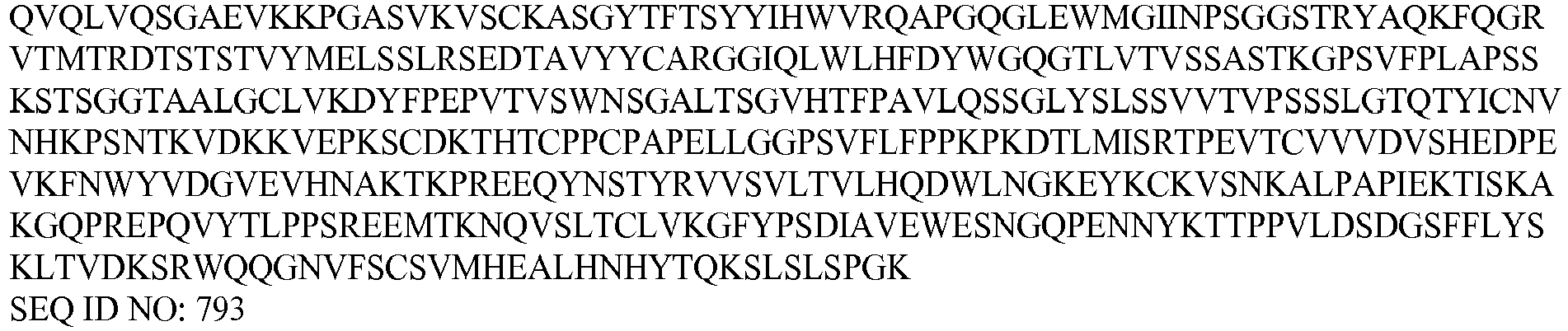
14096 HC [hu anti-<huCDH19> 25F8.1 (1-469)(F90Y) VH]::huIgG1z 
14097 HC [hu anti-<huCDH19> 25F8.1 (1-469)(F90Y,W133Y) VH]::huIgG1z 
14098 HC [hu anti-<huCDH19> 22D1.1 VH]::huIgG1z 
14099 HC [hu anti-<huCDH19> 22D1.1 VH]::huIgG1z 
14100 HC [hu anti-<huCDH19> 22D1.1 (1-469)(W133Y) VH]::huIgG1z 
14101 HC [hu anti-<huCDH19> 22D1.1 (1-469)(W133Y) VH]::huIgG1z 
14102 HC [hu anti-<huCDH19> 22D1.1 (1-469)(F90Y) VH]::huIgG1z 
13591 HC [hu anti-<huCDH19> 4F7 VH]::huIgG1z 
14301 HC [hu anti-<huCDH19> 2G6 VH]::huIgG1z 
14302 HC [hu anti-<huCDH19> 2G6 (1-477)(R17G,K94N) VH]::huIgG1z 
14303 HC [hu anti-<huCDH19> 2G6 (1-477)(D61E,D72E) VH]::huIgG1z 
14304_HC [hu anti-<huCDH19> 2G6 (1-477)(R17G) VH]::huIgG1z 
TABLE IIId: Light Chain Variable and Contant Region Polynucleotide and Amino acid Sequences 13586 LC [hu anti-<huCDH19> 4F3 VL]::huKLC 
13589 LC [hu anti-<huCDH19> 4A9 VL]::huLLC-C1 
13590 LC [hu anti-<huCDH19> 4B10 VL]::huKLC 
13874 LC [hu anti-<huCDH19> 17H8.2 VL]::huKLC 
13875 LC [hu anti-<huCDH19> 16C1.1 VL]::huKLC 
13876 LC [hu anti-<huCDH19> 16A4.1 VL]::huKLC 
13877 LC [hu anti-<huCDH19> 22G10.1 VL]::huKLC 
13878 LC [hu anti-<huCDH19> 20D3.1 VL]::huLLC-C2 
13879 LC [hu anti-<huCDH19> 22D1.1 VL]::huLLC-C2 
13880 LC [hu anti-<huCDH19> 25F8.1 VL]::huLLC-C2 
13881 LC [hu anti-<huCDH19> 26F12.1 VL]::huLLC-C2 
13882 LC [hu anti-<huCDH19> 26D1.1 VL]::huLLC-C2 
13883 LC [hu anti-<huCDH19> 25G10.1 VL]::huKLC 
13885 LC [hu anti-<huCDH19> 19B5.1 VL]::huLLC-C2 
14022 LC [hu anti-<huCDH19> 4A2 (1-236)(N30Q) VL]::huKLC 
14024 LC [hu anti-<huCDH19> 4A2 (1-236)(N30Q,T102A,P141Q) VL]::huKLC 

14025 LC [hu anti-<huCDH19> 4A2 (1-236)(N30Q,T102A) VL]::huKLC 
14026 LC [hu anti-<huCDH19> 4A2 (1-236)(N30Q,T102A) VL]::huKLC 
14027 LC [hu anti-<huCDH19> 4A2 (1-236)(N30Q,T102A,P141Q) VL]::huKLC 
14028 LC [hu anti-<huCDH19> 4A2 (1-236)(N30Q,T102A,P141Q) VL]::huKLC 
14029 LC [hu anti-<huCDH19> 4A2 (1-236)(R29Q,N30S) VL]::huKLC 
14030 LC [hu anti-<huCDH19> 4F3 VL]::huKLC 
14031 LC [hu anti-<huCDH19> 4F3 VL]::huKLC 
14032 LC [hu anti-<huCDH19> 4F3 VL]::huKLC 
14033 LC [hu anti-<huCDH19> 4F3 VL]::huKLC 
14034 LC [hu anti-<huCDH19> 4F3 VL]::huKLC 
14039 LC [hu anti-<huCDH19> 2G6 (1-234)(C42S,D110E) VL]::huLLC-C1 
14040 LC [hu anti-<huCDH19> 16C1.1 (1-235)(H105Y) VL]::huKLC 
14041 LC [hu anti-<huCDH19> 16C1.1 (1-235)(H105Y) VL]::huKLC 
14042 LC [hu anti-<huCDH19> 16C1.1 (1-235)(H105Y) VL]::huKLC 
14043 LC [hu anti-<huCDH19> 16C1.1 (1-235)(H105Y) VL]::huKLC 
14044 LC [hu anti-<huCDH19> 16C1.1 (1-235)(G95R,H105Y,G141Q) VL]::huKLC 
14045 LC [hu anti-<huCDH19> 17H8.2 (1-235)(G149R) VL]::huKLC 

14046 LC [hu anti-<huCDH19> 17H8.2 (1-235)(G149R) VL]::huKLC 
14047 LC [hu anti-<huCDH19> 17H8.2 (1-235)(G149R) VL]::huKLC 
14048 LC [hu anti-<huCDH19> 17H8.2 (1-235)(S57Y,G149R) VL]::huKLC 
14049 LC [hu anti-<huCDH19> 4F7 (1-239)(H57Y) VL]::huLLC-C2 
14050 LC [hu anti-<huCDH19> 4F7 (1-239)(H57Y,D110E) VL]::huLLC-C2 
14051 LC [hu anti-<huCDH19> 4F7 (1-239)(D110E) VL]::huLLC-C2 
14052 LC [hu anti-<huCDH19> 4B10 (1-236)(H45Q,A90T) VL]::huKLC 
14053 LC [hu anti-<huCDH19> 4B10 (1-236)(H45Q,A90T) VL]::huKLC 
14054 LC [hu anti-<huCDH19> 4B10 (1-236)(H45Q,A90T) VL]::huKLC 
14055 LC [hu anti-<huCDH19> 4B10 (1-236)(H45Q,A90T) VL]::huKLC 
14056 LC [hu anti-<huCDH19> 4A9 (1-239)(F47L) VL]::huLLC-C1 
14057 LC [hu anti-<huCDH19> 4A9 (1-239)(F47L) VL]::huLLC-C1 
14058 LC [hu anti-<huCDH19> 4A9 (1-239)(F47L,D110E) VL]::huLLC-C1 14059 LC [hu anti-<huCDH19> 4A9 (1-239)(F47L,D110E) VL]::huLLC-C1

14060 LC [hu anti-<huCDH19> 20D3.1 (1-235)(S102A) VL]::huLLC-C2 
14061 LC [hu anti-<huCDH19> 20D3.1 (1-235)(K45Q,S102A) VL]::huLLC-C2 
14062 LC [hu anti-<huCDH19> 20D3.1 (1-235)(K45Q,S102A) VL]::huLLC-C2 

14063 LC [hu anti-<huCDH19> 20D3.1 (1-235)(K45Q,S102A,D111E,N135Q) VL]::huLLC-C2 
14064 LC [hu anti-<huCDH19> 20D3.1 (1-235)(W109Y) VL]::huLLC-C2 
14065 LC [hu anti-<huCDH19> 22G10.1 VL]::huKLC 
14066 LC [hu anti-<huCDH19> 22G10.1 VL]::huKLC 
14067 LC [hu anti-<huCDH19> 22G10.1 (1-234)(Q97E,S98P) VL]::huKLC 
14068 LC [hu anti-<huCDH19> 22G10.1 (1-234)(V78F,Q97E,S98P) VL]::huKLC 
14069 LC [hu anti-<huCDH19> 22G10.1 (1-234)(V78F,Q97E,S98P) VL]::huKLC 
14070 LC [hu anti-<huCDH19> 22G10.1 VL]::huKLC 
14071 LC [hu anti-<huCDH19> 16A4.1 (1-235)(G141Q) VL]::huKLC 
14072 LC [hu anti-<huCDH19> 19B5.1 (1-235)(K455,S102A) VL]::huLLC-C2 
14073 LC [hu anti-<huCDH19> 19B5.1 (1-235)(K455,S102A) VL]::huLLC-C2 
14074 LC [hu anti-<huCDH19> 19B5.1 (1-235)(T11V,K45Q,S102A) VL]::huLLC-C2 
14075 LC [hu anti-<huCDH19> 19B5.1 (1-235)(T11V,K45Q,S102A,D111E,N135Q) VL]::huLLC-C2 
14076 LC [hu anti-<huCDH19> 19B5.1 (1-235)(T11V,K45Q,S102A,W109Y,D111E,N135Q) VL]::huLLC- C2 
14077 LC [hu anti-<huCDH19> 23A10.3 (1-231)(C42S) VL]::huLLC-C2 
14078 LC [hu anti-<huCDH19> 23A10.3 (1-231)(C42S) VL]::huLLC-C2 
14079 LC [hu anti-<huCDH19> 23A10.3 (1-231)(C42S,D110E) VL]::huLLC-C2 

14080 LC [hu anti-<huCDH19> 23A10.3 (1-231)(C42Y) VL]::huLLC-C2 
14081 LC [hu anti-<huCDH19> 25G10.1 (1-235)(H105Y) VL]::huKLC 
14082 LC [hu anti-<huCDH19> 25G10.1 (1-235)(H105Y) VL]::huKLC 
14083 LC [hu anti-<huCDH19> 26D1.1 (1-235)(S7P) VL]::huLLC-C2 
14084 LC [hu anti-<huCDH19> 26D1.1 (1-235)(H1Q,S7P) VL]::huLLC-C2 
14085 LC [hu anti-<huCDH19> 26D1.1 (1-235)(H1Q,S7P,W109Y) VL]::huLLC-C2 
14086 LC [hu anti-<huCDH19> 26D1.1 (1-235)(H1Q,S7P,W109Y,D111E,N135Q) VL]::huLLC-C2 
14087 LC [hu anti-<huCDH19> 26D1.1 (1-235)(H1Q,S7P,W109Y,D111E,N135Q) VL]::huLLC-C2 
14088 LC [hu anti-<huCDH19> 26D1.1 (1-235)(H1Q,S7P) VL]::huLLC-C2 
14089 LC [hu anti-<huCDH19> 26F12.1 (1-235)(S7P) VL]::huLLC-C2 
14090 LC [hu anti-<huCDH19> 26F12.1 (1-235)(S7P,D111E) VL]::huLLC-C2 
14091 LC [hu anti-<huCDH19> 26F12.1 (1-235)(S7P,D111E) VL]::huLLC-C2 
14092 LC [hu anti-<huCDH19> 26F12.1 (1-235)(S7P,W109Y,D111E,N135Q) VL]::huLLC-C2 
14093 LC [hu anti-<huCDH19> 25F8.1 (1-235)(K45Q) VL]::huLLC-C2 
14094 LC [hu anti-<huCDH19> 25F8.1 (1-235)(K45Q,S102A) VL]::huLLC-C2 
14095 LC [hu anti-<huCDH19> 25F8.1 (1-235)(K45Q,S102A) VL]::huLLC-C2 
14096 LC [hu anti-<huCDH19> 25F8.1 (1-235)(K45Q,S102A,D111E) VL]::huLLC-C2 

14097 LC [hu anti-<huCDH19> 25F8.1 (1-235)(K45Q,S102A,D111E,N135Q) VL]::huLLC-C2 
14098 LC [hu anti-<huCDH19> 22D1.1 (1-235)(K45Q,S102A) VL]::huLLC-C2 
14099 LC [hu anti-<huCDH19> 22D1.1 (1-235)(K45Q,S102A,D111E,N135Q) VL]::huLLC-C2 
14100 LC [hu anti-<huCDH19> 22D1.1 (1-235)(K45Q,S102A,W109Y,D111E,N135Q) VL]::huLLC-C2 
14101 LC [hu anti-<huCDH19> 22D1.1 (1-235)(K45Q,S102A,W109Y) VL]::huLLC-C2 
14102 LC [hu anti-<huCDH19> 22D1.1 (1-235)(K45Q,S102A) VL]::huLLC-C2 
13591 LC [hu anti-<huCDH19> 4F7 VL]::huLLC-C1 
14301 LC [hu anti-<huCDH19> 2G6 (1-234)(D110E) VL]::huLLC-C1 
14302 LC [hu anti-<huCDH19> 2G6 (1-234)(C42S,D110E) VL]::huLLC-C1 

14303 LC [hu anti-<huCDH19> 2G6 (1-234)(C42S,D110E) VL]::huLLC-C1 
14304 LC [hu anti-<huCDH19> 23A10.3 (1-231)(C42S) VL]::huLLC-C2 
TABLE IVa: HEAVY CHAIN CDRs Ab Type CDR 1 CDR 2CDR 314039 AA SYGMH FIWYEGSNKYYAESVKD RAGIIGTIGYYYGMDV 14303 SEQ ID NO: 28 SEQ ID NO: 901 SEQ ID NO: 30 14027 AA SSGYYWS YIYYTGSAYYNPSLKS EGSSGWYFQY SEQ ID NO: 46 SEQ ID NO: 47 SEQ ID NO: 902 14028 AA SSGYYWS YIYYTGSAYYNPSLKS EGSSGYYFQY SEQ ID NO: 46 SEQ ID NO: 47 SEQ ID NO: 903 14059 AA GYYWS YFSYSGSTNYNPSLKS NYAFHFDF SEQ ID NO: 52 SEQ ID NO: 53 SEQ ID NO: 904 14052 AA SYDMH VISYEGTNEYYAESVKG ERYFDYSFDY SEQ ID NO: 58 SEQ ID NO: 905 SEQ ID NO: 906 14055 AA SYDMH VISYEGTNEYYAESVKG ERYFDWSFDY SEQ ID NO: 58 SEQ ID NO: 905 SEQ ID NO: 60 14033 AA SYDMD VIWYEGSNKYYAESVRG ETGEGWYFDL SEQ ID NO: 70 SEQ ID NO: 907 SEQ ID NO: 72 14034 AA SYDMD VIWYEGSNKYYAESVRG ETGEGYYFDL SEQ ID NO: 70 SEQ ID NO: 907 SEQ ID NO: 908 14051 AA SYSWS YIYYSGSTNYNPSLKS NYAFHFDY SEQ ID NO: 82 SEQ ID NO: 83 SEQ ID NO: 909 14046 AA SYYWS YIYYIGSTNYNPSLKS ESRYRSGWYDAFDI 14048 SEQ ID NO: 94 SEQ ID NO: 95 SEQ ID NO: 910 14047 AA SYYWS YIYYIGSTNYNPSLKS ESRYRSGYYDAFDI SEQ ID NO: 94 SEQ ID NO: 95 SEQ ID NO: 911 14042 AA GYYWS YIYYIGSTNYNPSLKS EGSSGWYRWFDP SEQ ID NO: 100 SEQ ID NO: 101 SEQ ID NO: 912 14043 AA GYYWS YIYYIGSTNYNPSLKS DGSSGYYRYFDP SEQ ID NO: 100 SEQ ID NO: 101 SEQ ID NO: 913 14069 AA SYAMN TISGGGANTYYAESVKG GGMGGYYYGMDV SEQ ID NO: 118 SEQ ID NO: 914 SEQ ID NO: 120 14062 AA SYFIH IINPISVSTSYAQKFQG GGIQLYLHFDY 14063 14064 SEQ ID NO: 124 SEQ ID NO: 125 SEQ ID NO: 915 14100 AA SYFIH IINPISVSTSYAQKFQG GGIQLYLHLDY 14101 SEQ ID NO: 130 SEQ ID NO: 131 SEQ ID NO: 916 14097 AA SYYIH IINPSGGSTRYAQKFQG GGIQLYLHFDY SEQ ID NO: 136 SEQ ID NO: 137 SEQ ID NO: 917 14091 AA NYYMS IINPSGGDSTYAQKFQG GGIQLYLHFDY 14092 SEQ ID NO: 142 SEQ ID NO: 143 SEQ ID NO: 918 14087 AA SYYMS IIHPSGGDTTYAQKFQG GGIKLYLHFDY SEQ ID NO: 148 SEQ ID NO: 149 SEQ ID NO: 919 14082 AA GYYWS YIYYIGSTNYNPSLKS EGSSGYYRYFDP SEQ ID NO: 154 SEQ ID NO: 155 SEQ ID NO: 920 14079 AA RYGIH VIWYEGSNKYYAESVKG RAGIPGTTGYYYGMDV SEQ ID NO: 160 SEQ ID NO: 921 SEQ ID NO: 162 14073 AA SYFIH IINPISVSTSYAQKFQG GGIQLYLHLDY SEQ ID NO: 1 SEQ ID NO: 2 SEQ ID NO: 3 14076 AA SYGMH VIWYDGSNKYYADSVKG RAGIIGTTGYYYGMDV SEQ ID NO: 4 SEQ ID NO: 5 SEQ ID NO: 6 TABLE IVb: LIGHT CHAIN CDRs Ab Type CDR 1 CDR 2CDR 314039 AA SGDRLGEKYTS QDTKRPS QAWESSTVV 14302 14303 SEQ ID NO: 922 SEQ ID NO: 197 SEQ ID NO: 923 14301 AA SGDRLGEKYTC QDTKRPS QAWESSTVV SEQ ID NO: 196 SEQ ID NO: 197 SEQ ID NO: 923 14022 AA RASRQISSSYLA GPSSRAT QQYGSSFT 14024 SEQ ID NO: 924 SEQ ID NO: 215 SEQ ID NO: 216 14025 14026 14027 14028 14029 AA RASQSISSSYLA GPSSRAT QQYGSSFT SEQ ID NO: 925 SEQ ID NO: 215 SEQ ID NO: 216 14058 AA TGSSSNIGTGYAVH GNNNRPS QSYESRLSGWV 14059 SEQ ID NO: 220 SEQ ID NO: 221 SEQ ID NO: 926 14050 AA TGSSSNIGTGYDVH GNSNRPS QSYESSLSGWV 14051 SEQ ID NO: 250 SEQ ID NO: 251 SEQ ID NO: 927 14063 AA SGSSSNIGSNFVN TNNQRPS ATWDESLQGWV SEQ ID NO: 292 SEQ ID NO: 293 SEQ ID NO: 928 14064 AA SGSSSNIGSNFVN TNNQRPS ATYDDSLNGWV SEQ ID NO: 292 SEQ ID NO: 293 SEQ ID NO: 929 14099 AA SGSSSNIGSNFVN TNNQRPS ATWDESMQGWV SEQ ID NO: 298 SEQ ID NO: 299 SEQ ID NO: 930 14100 AA SGSSSNIGSNFVN TNNQRPS ATYDESMQGWV SEQ ID NO: 298 SEQ ID NO: 299 SEQ ID NO: 931 14101 AA SGSSSNIGSNFVN TNNQRPS ATYDDSMNGWV SEQ ID NO: 298 SEQ ID NO: 299 SEQ ID NO: 932 14096 AA SGSSSNIGRNFVN TNNQRPS AAWDESLNGWV SEQ ID NO: 304 SEQ ID NO: 305 SEQ ID NO: 933 14097 AA SGSSSNIGRNFVN TNNQRPS AAWDESLQGWV SEQ ID NO: 304 SEQ ID NO: 305 SEQ ID NO: 934 14090 AA SGSRSNIGSNFVN TNYQRPS AVWDESLNGWV 14091 SEQ ID NO: 310 SEQ ID NO: 311 SEQ ID NO: 935 14092 AA SGSRSNIGSNFVN TNYQRPS AVYDESLQGWV SEQ ID NO: 310 SEQ ID NO: 311 SEQ ID NO: 936 14085 AA SGSRSNIGSNFVN TNNQRPS AVYDDSLNGWV SEQ ID NO: 316 SEQ ID NO: 317 SEQ ID NO: 937 14086 AA SGSRSNIGSNFVN TNNQRPS AVYDESLQGWV 14087 SEQ ID NO: 316 SEQ ID NO: 317 SEQ ID NO: 938 14077 AA SGDRLGEKYVS QDNKWPS QAWDSSTVV 14078 SEQ ID NO: 939 SEQ ID NO: 329 SEQ ID NO: 330 14304 14079 AA SGDRLGEKYVS QDNKWPS QAWESSTVV SEQ ID NO: 939 SEQ ID NO: 329 SEQ ID NO: 940 14080 AA SGDRLGEKYVY QDNKWPS QAWDSSTVV SEQ ID NO: 941 SEQ ID NO: 329 SEQ ID NO: 330 14075 AA SGSRSNIGSNFVN TNNQRPS ATWDESMQGWV SEQ ID NO: 334 SEQ ID NO: 335 SEQ ID NO: 942 14076 AA SGSRSNIGSNFVN TNNQRPS ATYDESMQGWV SEQ ID NO: 334 SEQ ID NO: 335 SEQ ID NO: 943 -
TABLE V: SEQ ID NO. DESIGNATION SOURCE TYPE SEQUENCE 944 Human Cadherin-19 Human aa 
945 Human Cadherin-19 Human nt 

946 Cyno Cadherin-19 Macaca fascicular is aa 
947 Cyno Cadherin-19 Macaca fascicular is nt 

948 secreted Cadherin-19 ecto-domain (amino acids 1-596) Human aa 
949 secreted Cadherin-19 ecto-domain (amino acids 1-596) Human nt 
950 truncated membrane bound form of human cadherin-19 (amino acids 1-624) Human aa 

951 truncated membrane bound form of human cadherin-19 (amino acids 1-624) Humanl nt 
952 C137897 huCDH19 (44-141) muCDH19 (140-770) artificial aa 
953 C137897 huCDH19 (44-141) muCDH19 (140-770) artificial nt 

954 C137896 huCDH19 (44-249) muCDH19 (248-770) artificial aa 
955 C137896 huCDH19 (44-249) muCDH19 (248-770) artificial nt 

956 C137913 muCDH19 (44-139) huCDH19 (142-249) muCDH19 (248-770) artificial aa 
957 C137913 muCDH19 (44-139) huCDH19 (142-249) muCDH19 (248-770) artificial nt 

958 C137847 muCDH19 (44-139) huCDH19 (142-364) muCDH19 (363-770) artificial aa 
959 C137847 muCDH19 (44-139) huCDH19 (142-364) muCDH19 (363-770) artificial nt 

960 C137911 muCDH19 (44-247) huCDH19 (250-364) muCDH19 (363-770) artificial aa 
961 C137911 muCDH19 (44-247) huCDH19 (250-364) muCDH19 (363-770) artificial nt 

962 C137917 muCDH19 (44-362) huCDH19 (365-772) artificial aa 
963 C137917 muCDH19 (44-362) huCDH19 (365-772) artificial nt 

964 C137915 muCDH19 (44-461) huCDH19 (464-772) artificial aa 
965 C137915 muCDH19 (44-461) huCDH19 (464-772) artificial nt 

966 C71144 muCDH19 (44-770) artificial aa 
967 C71144 muCDH19 (44-770) artificial nt 

968 Flag Tag artificial aa DYKDDDDK 969 Flag Tag artificial nt gactacaaagacgatgacgacaag -
TABLE VI: SEQ ID NO. DESIGNATION SOURCE TYPE SEQUENCE 970 CDR-H1 of CDH19 2G6 artificial AA SYGMH 971 CDR-H2 of CDH19 2G6 artificial AA FIWYDGSNKYYADSVKD 972 CDR-H3 of CDH19 2G6 artificial AA RAGIIGTIGYYYGMDV 973 CDR-L1 of CDH19 2G6 artificial AA SGDRLGEKYTC 974 CDR-L2 of CDH19 2G6 artificial AA QDTKRPS 975 CDR-L3 of CDH19 2G6 artificial AA QAWDSSTVV 976 VH of CDH19 2G6 artificial NT 
977 VH of CDH19 2G6 artificial AA 
978 VL of CDH19 2G6 artificial NT 
979 VL of CDH19 2G6 artificial AA 
980 VH-VL of CDH19 2G6 artificial NT 
981 VH-VL of CDH19 2G6 artificial AA 
982 CDH19 2G6 x I2C artificial 
983 CDR-H1 of CDH19 16E2.1 artificial AA SYGMH 984 CDR-H2 of CDH19 16E2.1 artificial AA VIWYDGSNKYYADSVKG 985 CDR-H3 of CDH19 16E2.1 artificial AA DGWELSFDY 986 CDR-L1 of CDH19 16E2.1 artificial AA RASQGISNYLA 987 CDR-L2 of CDH19 16E2.1 artificial AA AASSLQS 988 CDR-L3 of CDH19 16E2.1 artificial AA QHYFTYPRT 989 VH of CDH19 16E2.1 artificial NT 
990 VH of CDH19 16E2.1 artificial AA 
991 VL of CDH19 16E2.1 artificial NT 
992 VL of CDH19 16E2.1 artificial AA 
993 VH-VL of CDH19 16E2.1 artificial NT 
994 VH-VL of CDH19 16E2.1 artificial AA 
995 CDH19 16E2.1 x I2C artificial 
996 CDR-H1 of CDH19 17H8.2 artificial AA SYYWS 997 CDR-H2 of CDH19 17H8.2 artificial AA YIYYIGSTNYNPSLKS 998 CDR-H3 of CDH19 17H8.2 artificial AA DSRYRSGWYDAFDI 999 CDR-L1 of CDH19 17H8.2 artificial AA RASQSVAGSYLA 1000 CDR-L2 of CDH19 17H8.2 artificial AA GASSRAT 1001 CDR-L3 of CDH19 17H8.2 artificial AA QQYGKSPIT 1002 VH of CDH19 17H8.2 artificial NT 
1003 VH of CDH19 17H8.2 artificial AA 
1004 VL of CDH19 17H8.2 artificial NT 
1005 VL of CDH19 17H8.2 artificial AA 
1006 VH-VL of CDH19 17H8.2 artificial NT 
1007 VH-VL of CDH19 17H8.2 artificial AA 
1008 CDH19 17H8.2 x I2C artificial 
1009 CDR-H1 of CDH19 19B5.1 artificial AA SYFIH 1010 CDR-H2 of CDH19 19B5.1 artificial AA IINPISVSTSYAQKFQG 1011 CDR-H3 of CDH19 19B5.1 artificial AA GGIQLWLHLDY 1012 CDR-L1 of CDH19 19B5.1 artificial AA SGSRSNIGSNFVN 1013 CDR-L2 of CDH19 19B5.1 artificial AA TNNQRPS 1014 CDR-L3 of CDH19 19B5.1 artificial AA ATWDDSMNGWV 1015 VH of CDH19 19B5.1 artificial NT 
1016 VH of CDH19 19B5.1 artificial AA 
1017 VL of CDH19 19B5.1 artificial NT 
1018 VL of CDH19 19B5.1 artificial AA 
1019 VH-VL of CDH19 19B5.1 artificial NT 
1020 VH-VL of CDH19 19B5.1 artificial AA 
1021 CDH19 19B5.1 x I2C artificial 
1022 CDR-H1 of CDH19 20D3.1 artificial AA SYFIH 1023 CDR-H2 of CDH19 20D3.1 artificial AA IINPISVSTSYAQKFQG 1024 CDR-H3 of CDH19 20D3.1 artificial AA GGIQLWLHFDY 1025 CDR-L1 of CDH19 20D3.1 artificial AA SGSSSNIGSNFVN 1026 CDR-L2 of CDH19 20D3.1 artificial AA TNNQRPS 1027 CDR-L3 of CDH19 20D3.1 artificial AA ATWDDSLNGWV 1028 VH of CDH19 20D3.1 artificial NT 
1029 VH of CDH19 20D3.1 artificial AA 
1030 VL of CDH19 20D3.1 artificial NT 
1031 VL of CDH19 20D3.1 artificial AA 
1032 VH-VL of CDH19 20D3.1 artificial NT 
1033 VH-VL of CDH19 20D3.1 artificial AA 
1034 CDH19 20D3.1 x I2C artificial 
1035 CDR-H1 of CDH19 22D1.1 artificial AA SYFIH 1036 CDR-H2 of CDH19 22D1.1 artificial AA IINPISVSTSYAQKFQG 1037 CDR-H3 of CDH19 22D1.1 artificial AA GGIQLWLHLDY 1038 CDR-L1 of CDH19 22D1.1 artificial AA SGSSSNIGSNFVN 1039 CDR-L2 of CDH19 22D1.1 artificial AA TNNQRPS 1040 CDR-L3 of CDH19 22D1.1 artificial AA ATWDDSMNGWV 1041 VH of CDH19 22D1.1 artificial NT 
1042 VH of CDH19 22D1.1 artificial AA 
1043 VL of CDH19 22D1.1 artificial NT 
1044 VL of CDH19 22D1.1 artificial AA 
1045 VH-VL of CDH19 22D1.1 artificial NT 
1046 VH-VL of CDH19 22D1.1 artificial AA 

1047 CDH19 22D1.1 x I2C artificial 
1048 CDR-H1 of CDH19 22G10.1 artificial AA SYAMN 1049 CDR-H2 of CDH19 22G10.1 artificial AA TISGGGANTYYADSVKG 1050 CDR-H3 of CDH19 22G10.1 artificial AA GGMGGYYYGMDV 1051 CDR-L1 of CDH19 22G10.1 artificial AA RASQSISSNLA 1052 CDR-L2 of CDH19 22G10.1 artificial AA GAFTRAT 1053 CDR-L3 of CDH19 22G10.1 artificial AA QQYNYWPLT 1054 VH of CDH19 22G10.1 artificial NT 
1055 VH of CDH19 22G10.1 artificial AA 
1056 VL of CDH19 22G10.1 artificial NT 

1057 VL of CDH19 22G10.1 artificial AA 
1058 VH-VL of CDH19 22G10.1 artificial NT 
1059 VH-VL of CDH19 22G10.1 artificial AA 
1060 CDH19 22G10.1 x I2C artificial 
1061 CDR-H1 of CDH19 23A10.3 artificial AA RYGIH 1062 CDR-H2 of CDH19 23A10.3 artificial AA VIWYDGSNKYYADSVKG 1063 CDR-H3 of CDH19 23A10.3 artificial AA RAGIPGTTGYYYGMDV 1064 CDR-L1 of CDH19 23A10.3 artificial AA SGDRLGEKYVC 1065 CDR-L2 of CDH19 23A10.3 artificial AA QDNKWPS 1066 CDR-L3 of CDH19 23A10.3 artificial AA QAWDSSTVV 1067 VH of CDH19 23A10.3 artificial NT 
1068 VH of CDH19 23A10.3 artificial AA 
1069 VL of CDH19 23A10.3 artificial NT 
1070 VL of CDH19 23A10.3 artificial AA 
1071 VH-VL of CDH19 23A10.3 artificial NT 
1072 VH-VL of CDH19 23A10.3 artificial AA 
1073 CDH19 23A10.3 x I2C artificial 

1074 CDR-H1 of CDH19 25F8.1 artificial AA SYYIH 1075 CDR-H2 of CDH19 25F8.1 artificial AA IINPSGGSTRYAQKFQG 1076 CDR-H3 of CDH19 25F8.1 artificial AA GGIQLWLHFDY 1077 CDR-L1 of CDH19 25F8.1 artificial AA SGSSSNIGRNFVN 1078 CDR-L2 of CDH19 25F8.1 artificial AA TNNQRPS 1079 CDR-L3 of CDH19 25F8.1 artificial AA AAWDDSLNGWV 1080 VH of CDH19 25F8.1 artificial NT 
1081 VH of CDH19 25F8.1 artificial AA 
1082 VL of CDH19 25F8.1 artificial NT 
1083 VL of CDH19 25F8.1 artificial AA 
1084 VH-VL of CDH19 25F8.1 artificial NT 

1085 VH-VL of CDH19 25F8.1 artificial AA 
1086 CDH19 25F8.1 x I2C artificial 
1087 CDR-H1 of CDH19 25G10.1 artificial AA GYYWS 1088 CDR-H2 of CDH19 25G10.1 artificial AA YIYYIGSTNYNPSLKS 1089 CDR-H3 of CDH19 25G10.1 artificial AA DGSSGWYRWFDP 1090 CDR-L1 of CDH19 25G10.1 artificial AA RASQSVSSSYLA 1091 CDR-L2 of CDH19 25G10.1 artificial AA GASSRAT 1092 CDR-L3 of CDH19 25G10.1 artificial AA QQYGNSPLT 1093 VH of CDH19 25G10.1 artificial NT 
1094 VH of CDH19 25G10.1 artificial AA 
1095 VL of CDH19 25G10.1 artificial NT 
1096 VL of CDH19 25G10.1 artificial AA 
1097 VH-VL of CDH19 25G10.1 artificial NT 
1098 VH-VL of CDH19 25G10.1 artificial AA 
1099 CDH19 25G10.1 x I2C artificial 
1100 CDR-H1 of CDH19 26D1.1 artificial AA SYYMS 1101 CDR-H2 of CDH19 26D1.1 artificial AA IIHPSGGDTTYAQKFQG 1102 CDR-H3 of CDH19 26D1.1 artificial AA GGIKLWLHFDY 1103 CDR-L1 of CDH19 26D1.1 artificial AA SGSRSNIGSNFVN 1104 CDR-L2 of CDH19 26D1.1 artificial AA TNNQRPS 1105 CDR-L3 of CDH19 26D1.1 artificial AA AVWDDSLNGWV 1106 VH of CDH19 26D1.1 artificial NT 
1107 VH of CDH19 26D1.1 artificial AA 
1108 VL of CDH19 26D1.1 artificial NT 
1109 VL of CDH19 26D1.1 artificial AA 
1110 VH-VL of CDH19 26D1.1 artificial NT 
1111 VH-VL of CDH19 26D1.1 artificial AA 
1112 CDH19 26D1.1 x I2C artificial 
1113 CDR-H1 of CDH19 26F12.1 artificial AA NYYMS 1114 CDR-H2 of CDH19 26F12.1 artificial AA IINPSGGDSTYAQKFQG 1115 CDR-H3 of CDH19 26F12.1 artificial AA GGIQLWLHFDY 1116 CDR-L1 of CDH19 26F12.1 artificial AA SGSRSNIGSNFVN 1117 CDR-L2 of CDH19 26F12.1 artificial AA TNYQRPS 1118 CDR-L3 of CDH19 26F12.1 artificial AA AVWDDSLNGWV 1119 VH of CDH19 26F12.1 artificial NT 
1120 VH of CDH19 26F12.1 artificial AA 
1121 VL of CDH19 26F12.1 artificial NT 
1122 VL of CDH19 26F12.1 artificial AA 
1123 VH-VL of CDH19 26F12.1 artificial NT 

1124 VH-VL of CDH19 26F12.1 artificial AA 
1125 CDH19 26F12.1 x I2C artificial 
1126 CDR-H1 of CDH19 4A9 artificial AA GYYWS 1127 CDR-H2 of CDH19 4A9 artificial AA YFSYSGSTNYNPSLKS 1128 CDR-H3 of CDH19 4A9 artificial AA NWAFHFDF 1129 CDR-L1 of CDH19 4A9 artificial AA TGSSSNIGTGYAVH 1130 CDR-L2 of CDH19 4A9 artificial AA GNNNRPS 1131 CDR-L3 of CDH19 4A9 artificial AA QSYDSRLSGWV 1132 VH of CDH19 4A9 artificial NT 
1133 VH of CDH19 4A9 artificial AA 
1134 VL of CDH19 4A9 artificial NT 
1135 VL of CDH19 4A9 artificial AA 
1136 VH-VL of CDH19 4A9 artificial NT 
1137 VH-VL of CDH19 4A9 artificial AA 
1138 CDH19 4A9 x I2C artificial 
1139 CDR-H1 of CDH19 4B10 artificial AA SYDMH 1140 CDR-H2 of CDH19 4B10 artificial AA VISYDGTNEYYADSVKG 1141 CDR-H3 of CDH19 4B10 artificial AA ERYFDWSFDY 1142 CDR-L1 of CDH19 4B10 artificial AA RASQSVSNTYLA 1143 CDR-L2 of CDH19 4B10 artificial AA GASSRAT 1144 CDR-L3 of CDH19 4B10 artificial AA QQYSNSWT 1145 VH of CDH19 4B10 artificial NT 
1146 VH of CDH19 4B10 artificial AA 
1147 VL of CDH19 4B10 artificial NT 
1148 VL of CDH19 4B10 artificial AA 
1149 VH-VL of CDH19 4B10 artificial NT 
1150 VH-VL of CDH19 4B10 artificial AA 
1151 CDH19 4B10 x I2C artificial 
1152 CDR-H1 of CDH19 4F3 artificial AA SYDMD 1153 CDR-H2 of CDH19 4F3 artificial AA VIWYDGSNKYYADSVRG 1154 CDR-H3 of CDH19 4F3 artificial AA ETGEGWYFDL 1155 CDR-L1 of CDH19 4F3 artificial AA RASQSVSSSYLA 1156 CDR-L2 of CDH19 4F3 artificial AA GASSRAT 1157 CDR-L3 of CDH19 4F3 artificial AA QQYGSSWT 1158 VH of CDH19 4F3 artificial NT 
1159 VH of CDH19 4F3 artificial AA 
1160 VL of CDH19 4F3 artificial NT 
1161 VL of CDH19 4F3 artificial AA 
1162 VH-VL of CDH19 4F3 artificial NT 
1163 VH-VL of CDH19 4F3 artificial AA 
1164 CDH19 4F3 x I2C artificial 

1165 CDR-H1 of CDH19 4F7 artificial AA SYSWS 1166 CDR-H2 of CDH19 4F7 artificial AA YIYYSGSTNYNPSLKS 1167 CDR-H3 of CDH19 4F7 artificial AA NWAFHFDY 1168 CDR-L1 of CDH19 4F7 artificial AA TGSSSNIGTGYDVH 1169 CDR-L2 of CDH19 4F7 artificial AA GNSNRPS 1170 CDR-L3 of CDH19 4F7 artificial AA QSYDSSLSGWV 1171 VH of CDH19 4F7 artificial NT 
1172 VH of CDH19 4F7 artificial AA 
1173 VL of CDH19 4F7 artificial NT 
1174 VL of CDH19 4F7 artificial AA 
1175 VH-VL of CDH19 4F7 artificial NT 

1176 VH-VL of CDH19 4F7 artificial AA 
1177 CDH19 4F7 x I2C artificial 
1178 CDR-H1 of CDH19 14039 artificial AA SYGMH 1179 CDR-H2 of CDH19 14039 artificial AA FIWYEGSNKYYAESVKD 1180 CDR-H3 of CDH19 14039 artificial AA RAGIIGTIGYYYGMDV 1181 CDR-L1 of CDH19 14039 artificial AA SGDRLGEKYTS 1182 CDR-L2 of CDH19 14039 artificial AA QDTKRPS 1183 CDR-L3 of CDH19 14039 artificial AA QAWESSTVV 1184 VH of CDH19 14039 artificial NT 
1185 VH of CDH19 14039 artificial AA 
1186 VL of CDH19 14039 artificial NT 

1187 VL of CDH19 14039 artificial AA 
1188 VH-VL of CDH19 14039 artificial NT 
1189 VH-VL of CDH19 14039 artificial AA 
1190 CDH19 14039 x I2C artificial 
1191 CDR-H1 of CDH19 14304 artificial AA SYGMH 1192 CDR-H2 of CDH19 14304 artificial AA FIWYDGSNKYYADSVKD 1193 CDR-H3 of CDH19 14304 artificial AA RAGIIGTIGYYYGMDV 1194 CDR-L1 of CDH19 14304 artificial AA SGDRLGEKYVS 1195 CDR-L2 of CDH19 14304 artificial AA QDNKWPS 1196 CDR-L3 of CDH19 14304 artificial AA QAWDSSTVV 1197 VH of CDH19 14304 artificial NT 

1198 VH of CDH19 14304 artificial AA 
1199 VL of CDH19 14304 artificial NT 
1200 VL of CDH19 14304 artificial AA 
1201 VH-VL of CDH19 14304 artificial NT 
1202 VH-VL of CDH19 14304 artificial AA 
1203 CDH19 14304 x I2C artificial 
1204 CDR-H1 of CDH19 14301 artificial AA SYGMH 1205 CDR-H2 of CDH19 14301 artificial AA FIWYDGSNKYYADSVKD 1206 CDR-H3 of CDH19 14301 artificial AA RAGIIGTIGYYYGMDV 1207 CDR-L1 of CDH19 14301 artificial AA SGDRLGEKYTC 1208 CDR-L2 of CDH19 14301 artificial AA QDTKRPS 1209 CDR-L3 of CDH19 14301 artificial AA QAWESSTVV 1210 VH of CDH19 14301 artificial NT 
1211 VH of CDH19 14301 artificial AA 
1212 VL of CDH19 14301 artificial NT 
1213 VL of CDH19 14301 artificial AA 
1214 VH-VL of CDH19 14301 artificial NT 
1215 VH-VL of CDH19 14301 artificial AA 
1216 CDH19 14301 x I2C artificial 

1217 CDR-H1 of CDH19 14079 artificial AA RYGIH 1218 CDR-H2 of CDH19 14079 artificial AA VIWYEGSNKYYAESVKG 1219 CDR-H3 of CDH19 14079 artificial AA RAGIPGTTGYYYGMDV 1220 CDR-L1 of CDH19 14079 artificial AA SGDRLGEKYVS 1221 CDR-L2 of CDH19 14079 artificial AA QDNKWPS 1222 CDR-L3 of CDH19 14079 artificial AA QAWESSTVV 1223 VH of CDH19 14079 artificial NT 
1224 VH of CDH19 14079 artificial AA 
1225 VL of CDH19 14079 artificial NT 
1226 VL of CDH19 14079 artificial AA 
1227 VH-VL of CDH19 14079 artificial NT 

1228 VH-VL of CDH19 14079 artificial AA 
1229 CDH19 14079 x I2C artificial 
1230 CDR-H1 of CDH19 14077 artificial AA RYGIH 1231 CDR-H2 of CDH19 14077 artificial AA VIWYDGSNKYYADSVKG 1232 CDR-H3 of CDH19 14077 artificial AA RAGIPGTTGYYYGMDV 1233 CDR-L1 of CDH19 14077 artificial AA SGDRLGEKYVS 1234 CDR-L2 of CDH19 14077 artificial AA QDNKWPS 1235 CDR-L3 of CDH19 14077 artificial AA QAWDSSTVV 1236 VH of CDH19 14077 artificial NT 
1237 VH of CDH19 14077 artificial AA 
1238 VL of CDH19 14077 artificial NT 
1239 VL of CDH19 14077 artificial AA 
1240 VH-VL of CDH19 14077 artificial NT 
1241 VH-VL of CDH19 14077 artificial AA 
1242 CDH19 14077 x I2C artificial 
1243 CDR-H1 of CDH19 14096 artificial AA SYYIH 1244 CDR-H2 of CDH19 14096 artificial AA IINPSGGSTRYAQKFQG 1245 CDR-H3 of CDH19 14096 artificial AA GGIQLWLHFDY 1246 CDR-L1 of CDH19 14096 artificial AA SGSSSNIGRNFVN 1247 CDR-L2 of CDH19 14096 artificial AA TNNQRPS 1248 CDR-L3 of CDH19 14096 artificial AA AAWDESLNGWV 1249 VH of CDH19 14096 artificial NT 

1250 VH of CDH19 14096 artificial AA 
1251 VL of CDH19 14096 artificial NT 
1252 VL of CDH19 artificial AA 
1253 VH-VL of CDH19 14096 artificial NT 
1254 VH-VL of CDH19 14096 artificial AA 
1255 CDH19 14096 x I2C artificial 
1256 CDR-H1 of CDH19 14088 artificial AA SYYMS 1257 CDR-H2 of CDH19 14088 artificial AA IIHPSGGDTTYAQKFQG 1258 CDR-H3 of CDH19 14088 artificial AA GGIKLWLHFDY 1259 CDR-L1 of CDH19 14088 artificial AA SGSRSNIGSNFVN 1260 CDR-L2 of CDH19 14088 artificial AA TNNQRPS 1261 CDR-L3 of CDH19 14088 artificial AA AVWDDSLNGWV 1262 VH of CDH19 14088 artificial NT 
1263 VH of CDH19 14088 artificial AA 
1264 VL of CDH19 14088 artificial NT 
1265 VL of CDH19 14088 artificial AA 
1266 VH-VL of CDH19 14088 artificial NT 
1267 VH-VL of CDH19 14088 artificial AA 
1268 CDH19 14088 x I2C artificial 

1269 CDR-H1 of CDH19 14085 artificial AA SYYMS 1270 CDR-H2 of CDH19 14085 artificial AA IIHPSGGDTTYAQKFQG 1271 CDR-H3 of CDH19 14085 artificial AA GGIKLWLHFDY 1272 CDR-L1 of CDH19 14085 artificial AA SGSRSNIGSNFVN 1273 CDR-L2 of CDH19 14085 artificial AA TNNQRPS 1274 CDR-L3 of CDH19 14085 artificial AA AVYDDSLNGWV 1275 VH of CDH19 14085 artificial NT 
1276 VH of CDH19 14085 artificial AA 
1277 VL of CDH19 14085 artificial NT 
1278 VL of CDH19 14085 artificial AA 
1279 VH-VL of CDH19 14085 artificial NT 

1280 VH-VL of CDH19 14085 artificial AA 
1281 CDH19 14085 x I2C artificial 
1282 CDR-H1 of CDH19 14074 artificial AA SYFIH 1283 CDR-H2 of CDH19 14074 artificial AA IINPISVSTSYAQKFQG 1284 CDR-H3 of CDH19 14074 artificial AA GGIQLWLHLDY 1285 CDR-L1 of CDH19 14074 artificial AA SGSRSNIGSNFVN 1286 CDR-L2 of CDH19 14074 artificial AA TNNQRPS 1287 CDR-L3 of CDH19 14074 artificial AA ATWDDSMNGWV 1288 VH of CDH19 14074 artificial NT 
1289 VH of CDH19 14074 artificial AA 
1290 VL of CDH19 14074 artificial NT 
1291 VL of CDH19 14074 artificial AA 
1292 VH-VL of CDH19 14074 artificial NT 
1293 VH-VL of CDH19 14074 artificial AA 
1294 CDH19 14074 x I2C artificial 
1295 CDR-H1 of CDH19 14075 artificial AA SYFIH 1296 CDR-H2 of CDH19 14075 artificial AA IINPISVSTSYAQKFQG 1297 CDR-H3 of CDH19 14075 artificial AA GGIQLWLHLDY 1298 CDR-L1 of CDH19 14075 artificial AA SGSRSNIGSNFVN 1299 CDR-L2 of CDH19 14075 artificial AA TNNQRPS 1300 CDR-L3 of CDH19 14075 artificial AA ATWDESMQGWV 1301 VH of CDH19 14075 artificial nt 

1302 VH of CDH19 14075 artificial AA 
1303 VL of CDH19 14075 artificial nt 
1304 VL of CDH19 14075 artificial AA 
1305 VH-VL of CDH19 14075 artificial nt 
1306 VH-VL of CDH19 14075 artificial AA 
1307 CDH19 14075 x I2C artificial 
1308 CDR-H1 of CDH19 14024 artificial AA SSGYY 1309 CDR-H2 of CDH19 14024 artificial AA YIYYTGSAYYNPSLKS 1310 CDR-H3 of CDH19 14024 artificial AA DGSSGWYFQY 1311 CDR-L1 of CDH19 14024 artificial AA RASRQISSSYLA 1312 CDR-L2 of CDH19 14024 artificial AA GPSSRAT 1313 CDR-L3 of CDH19 14024 artificial AA QQYGSSFT 1314 VH of CDH19 14024 artificial nt 
1315 VH of CDH19 14024 artificial AA 
1316 VL of CDH19 14024 artificial nt 
1317 VL of CDH19 14024 artificial AA 
1318 VH-VL of CDH19 artificial nt 
1319 VH-VL of CDH19 14024 artificial AA 
1320 CDH19 14024 x I2C artificial 
1321 CDR-H1 of CDH19 14054 artificial AA SYDMH 1322 CDR-H2 of CDH19 14054 artificial AA VISYDGTNEYYADSVKG 1323 CDR-H3 of CDH19 14054 artificial AA ERYFDWSFDY 1324 CDR-L1 of CDH19 14054 artificial AA RASQSVSNTYLA 1325 CDR-L2 of CDH19 14054 artificial AA GASSRAT 1326 CDR-L3 of CDH19 14054 artificial AA QQYSNSWT 1327 VH of CDH19 14054 artificial nt 
1328 VH of CDH19 14054 artificial AA 
1329 VL of CDH19 14054 artificial nt 
1330 VL of CDH19 14054 artificial AA 
1331 VH-VL of CDH19 14054 artificial nt 
1332 VH-VL of CDH19 14054 artificial AA 
1333 CDH19 14054 x I2C artificial 
1334 CDR-H1 of CDH19 14056 artificial AA GYYWS 1335 CDR-H2 of CDH19 14056 artificial AA YFSYSGSTNYNPSLKS 1336 CDR-H3 of CDH19 14056 artificial AA NWAFHFDF 1337 CDR-L1 of CDH19 14056 artificial AA TGSSSNIGTGYAVH 1338 CDR-L2 of CDH19 14056 artificial AA GNNNRPS 1339 CDR-L3 of CDH19 14056 artificial AA QSYDSRLSGWV 1340 VH of CDH19 14056 artificial nt 
1341 VH of CDH19 14056 artificial AA 
1342 VL of CDH19 14056 artificial nt 
1343 VL of CDH19 14056 artificial AA 
1344 VH-VL of CDH19 14056 artificial nt 
1345 VH-VL of CDH19 14056 artificial AA 
1346 CDH19 14056 x I2C artificial 
1347 CDR-H1 of CDH19 14057 artificial AA GYYWS 1348 CDR-H2 of CDH19 14057 artificial AA YFSYSGSTNYNPSLKS 1349 CDR-H3 of CDH19 14057 artificial AA NWAFHFDF 1350 CDR-L1 of CDH19 14057 artificial AA TGSSSNIGTGYAVH 1351 CDR-L2 of CDH19 14057 artificial AA GNNNRPS 1352 CDR-L3 of CDH19 14057 artificial AA QSYDSRLSGWV 1353 VH of CDH19 14057 artificial nt 
1354 VH of CDH19 14057 artificial AA 
1355 VL of CDH19 14057 artificial nt 
1356 VL of CDH19 14057 artificial AA 
1357 VH-VL of CDH19 14057 artificial nt 
1358 VH-VL of CDH19 14057 artificial AA 
1359 CDH19 14057 x I2C artificial aa 
1360 CDR-H1 of CDH19 14049 artificial AA SYSWS 1361 CDR-H2 of CDH19 14049 artificial AA YIYYSGSTNYNPSLKS 1362 CDR-H3 of CDH19 14049 artificial AA NWAFHFDY 1363 CDR-L1 of CDH19 14049 artificial AA TGSSSNIGTGYDVH 1364 CDR-L2 of CDH19 14049 artificial AA GNSNRPS 1365 CDR-L3 of CDH19 14049 artificial AA QSYDSSLSGWV 1366 VH of CDH19 14049 artificial nt 
1367 VH of CDH19 14049 artificial AA 
1368 VL of CDH19 14049 artificial nt 
1369 VL of CDH19 14049 artificial AA 
1370 VH-VL of CDH19 14049 artificial nt 
1371 VH-VL of CDH19 14049 artificial AA 
1372 CDH1914049 x I2C artificial aa 
1373 CDR-H1 of CDH19 14302 artificial AA SYGMH 1374 CDR-H2 of CDH19 14302 artificial AA FIWYDGSNKYYADSVKD 1375 CDR-H3 of CDH19 14302 artificial AA RAGIIGTIGYYYGMDV 1376 CDR-L1 of CDH19 14302 artificial AA SGDRLGEKYTS 1377 CDR-L2 of CDH19 14302 artificial AA QDTKRPS 1378 CDR-L3 of CDH19 14302 artificial AA QAWESSTVV 1379 VH of CDH19 14302 artificial nt 
1380 VH of CDH19 14302 artificial AA 
1381 VL of CDH19 14302 artificial nt 
1382 VL of CDH19 14302 artificial AA 
1383 VH-VL of CDH19 14302 artificial nt 
1384 VH-VL of CDH19 14302 artificial AA 

1385 CDH19 x I2C artificial aa 
1386 CDR-H1 of CDH19 14303 artificial AA SYGMH 1387 CDR-H2 of CDH19 14303 artificial AA FIWYEGSNKYYAESVKD 1388 CDR-H3 of CDH19 14303 artificial AA RAGIIGTIGYYYGMDV 1389 CDR-L1 of CDH19 14303 artificial AA SGDRLGEKYTS 1390 CDR-L2 of CDH19 14303 artificial AA QDTKRPS 1391 CDR-L3 of CDH19 14303 artificial AA QAWESSTVV 1392 VH of CDH19 14303 artificial nt 
1393 VH of CDH19 14303 artificial AA 
1394 VL of CDH19 14303 artificial nt 
1395 VL of CDH19 14303 artificial AA 
1396 VH-VL of CDH19 14303 artificial nt 

1397 VH-VL of CDH19 14303 artificial AA 
1398 CDH19 14303 x I2C artificial aa 
1399 CDR-H1 of CDH19 14078 artificial AA RYGIH 1400 CDR-H2 of CDH19 14078 artificial AA VIWYDGSNKYYADSVKG 1401 CDR-H3 of CDH19 14078 artificial AA RAGIPGTTGYYYGMDV 1402 CDR-L1 of CDH19 14078 artificial AA SGDRLGEKYVS 1403 CDR-L2 of CDH19 14078 artificial AA QDNKWPS 1404 CDR-L3 of CDH19 14078 artificial AA QAWDSSTVV 1405 VH of CDH19 14078 artificial nt 
1406 VH of CDH19 14078 artificial AA 
1407 VL of CDH19 14078 artificial nt 
1408 VL of CDH19 14078 artificial AA 
1409 VH-VL of CDH19 14078 artificial nt 
1410 VH-VL of CDH19 14078 artificial AA 
1411 CDH19 14078 x I2C artificial aa 
1412 CDR-H1 of CDH19 14080 artificial AA RYGIH 1413 CDR-H2 of CDH19 14080 artificial AA VIWYDGSNKYYADSVKG 1414 CDR-H3 of CDH19 14080 artificial AA RAGIPGTTGYYYGMDV 1415 CDR-L1 of CDH19 14080 artificial AA SGDRLGEKYVY 1416 CDR-L2 of CDH19 14080 artificial AA QDNKWPS 1417 CDR-L3 of CDH19 14080 artificial AA QAWDSSTVV 1418 VH of CDH19 14080 artificial nt 
1419 VH of CDH19 14080 artificial AA 
1420 VL of CDH19 14080 artificial nt 
1421 VL of CDH19 14080 artificial AA 
1422 VH-VL of CDH1914080 artificial nt 
1423 VH-VL of CDH19 14080 artificial AA 
1424 CDH19 14080 x I2C artificial aa 
1425 CDR-H1 of CDH19 13591 artificial AA SYSWS 1426 CDR-H2 of CDH19 13591 artificial AA YIYYSGSTNYNPSLKS 1427 CDR-H3 of CDH19 13591 artificial AA NWAFHFDY 1428 CDR-L1 of CDH19 13591 artificial AA TGSSSNIGTGYDVH 1429 CDR-L2 of CDH19 13591 artificial AA GNSNRPS 1430 CDR-L3 of CDH19 13591 artificial AA QSYDSSLSGWV 1431 VH of CDH19 13591 artificial nt 
1432 VH of CDH19 13591 artificial AA 
1433 VL of CDH19 13591 artificial nt 
1434 VL of CDH19 13591 artificial AA 
1435 VH-VL of CDH19 1591 artificial nt 
1436 VH-VL of CDH19 13591 artificial AA 
1437 CDH19 13591 x I2C artificial aa 

1438 CDR-H1 of CDH19 14299 artificial AA SYSWS 1439 CDR-H2 of CDH19 14299 artificial AA YIYYSGSTNYNPSLKS 1440 CDR-H3 of CDH19 14299 artificial AA NWAFHFDY 1441 CDR-L1 of CDH19 14299 artificial AA TGSSSNIGTGYDVH 1442 CDR-L2 of CDH19 14299 artificial AA GNSNRPS 1443 CDR-L3 of CDH19 14299 artificial AA QSYDSSLSGWV 1444 VH of CDH19 14299 artificial nt 
1445 VH of CDH19 14299 artificial AA 
1446 VL of CDH19 14299 artificial nt 
1447 VL of CDH19 14299 artificial AA 
1448 VH-VL of CDH19 14299 artificial nt 

1449 VH-VL of CDH19 14299 artificial AA 
1450 CDH19 14299 x I2C artificial aa 
1451 ckCDH19(1-43)::FLAG::ckC DH19(44-776) artificial aa 
1452 huCDH19(1-43)::FLAG::hu(44-141)::ckCDH19(142-776) artificial aa 
1453 ckCDH19(1-43)::FLAG::ckCDH19(44-141)::huCDH19(142-249)::ckCDH19(250-776) artificial aa 

1454 ckCDH19(1-43)::FLAG::ckCDH19(44-249)::huCDH19(250-364)::ckCDH19(365-776) artificial aa 
1455 ckCDH19(1-43)::FLAG::ckCDH19(44-364)::huCDH19(365-463)::ckCDH19(469-776) artificial aa 
1456 (1-43)::FLAG::ckCDH19(44-468)::huCDH19(464-772) artificial aa 

1457 rhCDH19(1-43)::FLAG::rhCDH19(44-772) artificial aa 
1458 caCDH19(1-42)::FLAG::caCDH19(43-770) artificial aa 
1459 rhCDH19(1-43):FLAG::rhCDH19(44-141)::caCDH19(141-770) artificial aa 
1460 rhCDH19(1-43)::FLAG::rhCDH19(44-65)::caCDH19(65-770) artificial aa 

1461 caCDH19(1-43)::FLAG::caCDH19(44-87)::rhCDH19(89-114)::caCDH19(115-770) artificial aa 
1462 caCDH19(1-43)::FLAG::caCDH19(44-120)::rhCDH19(122-137)::caCDH19(137-770) artificial aa 
1463 rhCDH19(1-43)::FLAG::rhCDH19(44-141)::raCDH19(140-247)::rhCDH19(250-772) artificial aa 
1464 raCDH19(1-43)::FLAG::raCDH19(44-770) artificial aa 
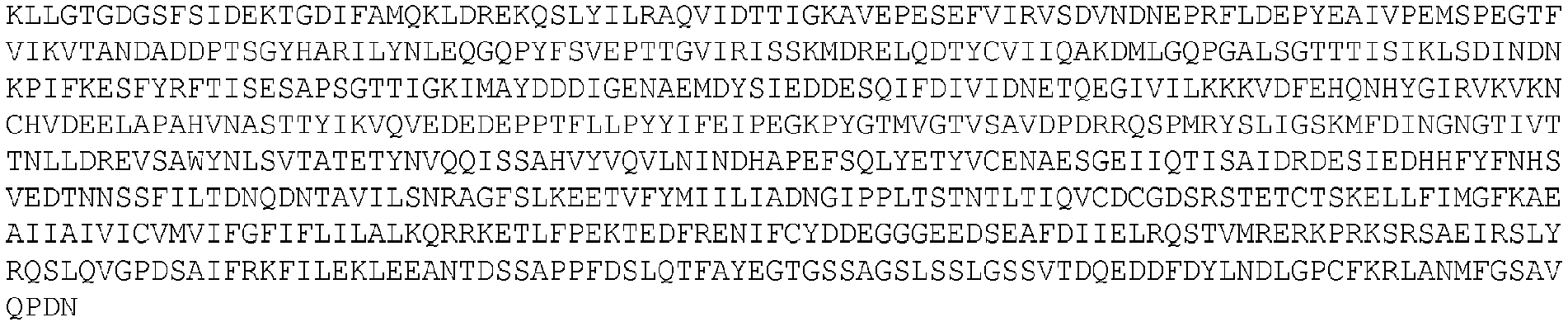
1465 (1-43)::FLAG::muCDH19(44-323)::raCDH19(324-327)::muCDH19(328-770) artificial aa 
1466 muCDH19(1-43)::FLAG::muCDH19(44-770)::raCDH19(290,299,308) artificial aa 
1467 muCDH19(1-43)::FLAG::muCDH19(44-770)::huCDH19(271) artificial aa 

1468 VH of CDH19 14302 CC x I2C artificial nt 
1469 VH of CDH19 14302 CC x I2C artificial AA 
1470 VL of CDH19 14302 CC x I2C artificial nt 
1471 VL of CDH19 14302 CC x I2C artificial AA 
1472 VH-VL of CDH19 14302 CC x I2C artificial nt 
1473 VH-VL of CDH19 14302 CC x I2C artificial AA 
1474 CDH19 14302 CC x I2C artificial aa 
1475 CDH19 14302 x F12q0 artificial aa 

1476 CDH19 14302 CC x F12q0 artificial aa 
1477 VH of CDH19 21-14302 x I2C artificial nt 
1478 VH of CDH19 21-14302 x I2C artificial AA 
1479 VL of CDH19 21-14302 x I2C artificial nt 
1480 VL of CDH19 21-14302 x I2C artificial AA 
1481 VH-VL of CDH19 21-14302 x I2C artificial nt 

1482 VH-VL of CDH19 21-14302 x I2C artificial AA 
1483 CDH19 21-14302 x I2C artificial aa 
1484 VH of CDH19 21-14302 CC x I2C artificial nt 
1485 VH of CDH19 21-14302 CC x I2C artificial AA 
1486 VL of CDH19 21-14302 CC x I2C artificial nt 
1487 VL of CDH19 21-14302 CC x I2C artificial AA 
1488 VH-VL of CDH19 21-14302 CC x I2C artificial nt 

1489 VH-VL of CDH19 21-14302 CC x I2C artificial AA 
1490 CDH19 21-14302 CC x I2C artificial aa 
1491 CDH19 14302 x I2C-21 artificial aa 
1492 CDH19 14302 CC x I2C-21 artificial aa 
1493 VH of CDH19 14302 x I2C x FcBY artificial nt 
1494 VH of CDH19 14302 x I2C x FcBY artificial AA 
1495 VL of CDH19 14302 x I2C x FcBY artificial nt 
1496 VL of CDH19 14302 x I2C x FcBY artificial AA 
1497 VH-VL of CDH19 14302 x I2C x FcBY artificial nt 
1498 VH-VL of CDH19 14302 x I2C x FcBY artificial AA 
1499 CDH19 14302 x I2C x FcBY artificial aa 
1500 VH of CDH19 14302 CC x I2C x FcBY artificial nt 
1501 VH of CDH19 14302 CC x I2C x FcBY artificial AA 
1502 VL of CDH19 14302 CC x I2C x FcBY artificial nt 
1503 VL of CDH19 14302 CC x I2C x FcBY artificial AA 
1504 VH-VL of CDH19 14302 CC x I2C x FcBY artificial nt 
1505 VH-VL of CDH19 14302 CC x I2C x FcBY artificial AA 
1506 CDH19 14302 CC x I2C x FcBY artificial aa 
1507 VH of CDH19 14303 CC x I2C artificial nt 
1508 VH of CDH19 14303 CC x I2C artificial AA 

1509 VL of CDH19 14303 CC x I2C artificial nt 
1510 VL of CDH19 14303 CC x I2C artificial AA 
1511 VH-VL of CDH19 14303 CC x I2C artificial nt 
1512 VH-VL of CDH19 14303 CC x I2C artificial AA 
1513 CDH19 14303 CC x I2C artificial aa 
1514 CDH19 14303 x F12q0 artificial aa 
1515 CDH19 14303 CC x F12q0 artificial aa 

1516 CDH19 14303 x I2C-21 artificial aa 
1517 CDH19 14303 CC x I2C-21 artificial aa 
1518 VH of CDH19 14303 x I2C x FcBY artificial nt 
1519 VH of CDH19 14303 x I2C x FcBY artificial AA 
1520 VL of CDH19 14303 x I2C x FcBY artificial nt 
1521 VL of CDH19 14303 x I2C x FcBY artificial AA 
1522 VH-VL of CDH19 14303 x I2C x FcBY artificial nt 

1523 VH-VL of CDH19 14303 x I2C x FcBY artificial AA 
1524 CDH19 14303 x I2C x FcBY artificial aa 
1525 VH of CDH19 14303 CC x I2C x FcBY artificial nt 
1526 VH of CDH19 14303 CC x I2C x FcBY artificial AA 
1527 VL of CDH19 14303 CC x I2C x FcBY artificial nt 
1528 VL of CDH19 14303 CC x I2C x FcBY artificial AA 
1529 VH-VL of CDH19 14303 CC x I2C x FcBY artificial nt 

1530 VH-VL of CDH19 14303 CC x I2C x FcBY artificial AA 
1531 CDH19 14303 CC x I2C x FcBY artificial aa 
1532 VH of CDH19 14039 CC x I2C artificial nt 
1533 VH of CDH19 14039 CC x I2C artificial AA 
1534 VL of CDH19 14039 CC x I2C artificial nt 
1535 VL of CDH19 14039 CC x I2C artificial AA 
1536 VH-VL of CDH19 14039 CC x I2C artificial nt 

1537 VH-VL of CDH19 14039 CC x I2C artificial AA 
1538 CDH19 14039 CC x I2C artificial 
1539 CDH19 14039 x F12q0 artificial 
1540 CDH19 14039 CC x F12q0 artificial 
1541 VH of CDH19 21-14039 x I2C artificial nt 
1542 VH of CDH19 21-14039 x I2C artificial AA 
1543 VL of CDH19 21-14039 x I2C artificial nt 
1544 VL of CDH19 21-14039 x I2C artificial AA 
1545 VH-VL of CDH19 21-14039 x I2C artificial nt 
1546 VH-VL of CDH19 21-14039 x I2C artificial AA 
1547 CDH19 21-14039 x I2C artificial 
1548 VH of CDH19 21-14039 CC x I2C artificial nt 
1549 VH of CDH19 21-14039 CC x I2C artificial AA 
1550 VL of CDH19 21-14039 CC x I2C artificial nt 
1551 VL of CDH19 21-14039 CC x I2C artificial AA 
1552 VH-VL of CDH19 21-14039 CC x I2C artificial nt 
1553 VH-VL of CDH19 21-14039 CC x I2C artificial AA 
1554 CDH19 21-14039 CC x I2C artificial 
1555 CDH19 14039 x I2C-21 artificial 

1556 CDH19 14039 CC x I2C-21 artificial 
1557 VH of CDH19 14039 x I2C x FcBY artificial nt 
1558 VH of CDH19 14039 x I2C x FcBY artificial AA 
1559 VL of CDH19 14039 x I2C x FcBY artificial nt 
1560 VL of CDH19 14039 x I2C x FcBY artificial AA 
1561 VH-VL of CDH19 14039 x I2C x FcBY artificial nt 
1562 VH-VL of CDH19 14039 x I2C x FcBY artificial AA 

1563 CDH19 14039 x I2C x FcBY artificial 
1564 VH of CDH19 14039 CC x I2C x FcBY artificial nt 
1565 VH of CDH19 14039 CC x I2C x FcBY artificial AA 
1566 VL of CDH19 14039 CC x I2C x FcBY artificial nt 
1567 VL of CDH19 14039 CC x I2C x FcBY artificial AA 
1568 VH-VL of CDH19 14039 CC x I2C x FcBY artificial nt 

1569 VH-VL of CDH19 14039 CC x I2C x FcBY artificial AA 
1570 CDH19 14039 CC x I2C x FcBY artificial 
1571 CDH19 14302 x I2C-156 artificial aa 
1572 CDH19 14302 x I2C-LFcBY artificial aa 
1573 CDH19 14302 x I2C-LFcBY-156 artificial aa 
1574 CDH19 14302 x I2C-Cys-Loop artificial aa 

1575 CDH19 14302 x I2C-HALB artificial aa 
1576 CDH19 14302 x I2C-GS-D3HSA artificial aa 
1577 CDH19 14302 x I2C-3GS-D3HSA artificial aa 
1578 CDH19 14302 x I2C-GS-D3HSA-156 artificial aa 

1579 CDH19 14302 x I2C-3GS-D3HSA-156 artificial aa 
1580 CDH19 14302 x I2C-GS-D3HSA-21 artificial aa 
1581 CDH19 14302 x I2C-3GS-D3HSA-21 artificial aa 
1582 CDR-H1 of CDH19 65231.002 artificial AA SYYWS 1583 CDR-H2 of CDH19 65231.002 artificial AA YIYYSGSTNYNPSLKS 1584 CDR-H3 of CDH19 65231.002 artificial AA DQRRIAAAGTHFYGMDV 1585 CDR-L1 of CDH19 65231.002 artificial AA RASQSVSSSYLA 1586 CDR-L2 of CDH19 65231.002 artificial AA GTSSRAT 1587 CDR-L3 of CDH19 65231.002 artificial AA QQYGSSPFT 1588 VH of CDH19 65231.002 artificial NT 
1589 VH of CDH19 65231.002 artificial AA 
1590 VL of CDH19 65231.002 artificial NT 
1591 VL of CDH19 65231.002 artificial AA 
1592 VH-VL of CDH19 65231.002 artificial NT 

1593 VH-VL of CDH19 65231.002 artificial AA 
1594 CDH19 65231.002 x I2C artificial AA 
1595 CDR-H1 of CDH19 65231.003 artificial AA SYYWS 1596 CDR-H2 of CDH19 65231.003 artificial AA YIYYSGSTNYNPSLKS 1597 CDR-H3 of CDH19 65231.003 artificial AA DQRRIAAAGTHFYGMDV 1598 CDR-L1 of CDH19 65231.003 artificial AA RASQSVSSSYLA 1599 CDR-L2 of CDH19 65231.003 artificial AA GTSSRAT 1600 CDR-L3 of CDH19 65231.003 artificial AA QQYGSSPFT 1601 VH of CDH19 65231.003 artificial NT 

1602 VH of CDH19 65231.003 artificial AA 
1603 VL of CDH19 65231.003 artificial NT 
1604 VL of CDH19 65231.003 artificial AA 
1605 VH-VL of CDH19 65231.003 artificial NT 
1606 VH-VL of CDH19 65231.003 artificial AA 
1607 CDH19 65231.003 x I2C artificial AA 
1608 CDR-H1 of CDH19 65234.001 artificial AA SYYWS 1609 CDR-H2 of CDH19 65234.001 artificial AA YIYYIGSTNYNPSLKS 1610 CDR-H3 of CDH19 65234.001 artificial AA DSRYRSGWYDAFDI 1611 CDR-L1 of CDH19 65234.001 artificial AA RASQSVAGSYLA 1612 CDR-L2 of CDH19 65234.001 artificial AA GASSRAT 1613 CDR-L3 of CDH19 65234.001 artificial AA QQYGKSPIT 1614 VH of CDH19 65234.001 artificial NT 
1615 VH of CDH19 65234.001 artificial AA 
1616 VL of CDH19 65234.001 artificial NT 
1617 VL of CDH19 65234.001 artificial AA 
1618 VH-VL of CDH19 65234.001 artificial NT 
1619 VH-VL of CDH19 65234.001 artificial AA 

1620 CDH19 65234.001 x I2C artificial AA 
1621 CDR-H1 of CDH19 65234.004 artificial AA SYYWS 1622 CDR-H2 of CDH19 65234.004 artificial AA YIYYIGSTNYNPSLKS 1623 CDR-H3 of CDH19 65234.004 artificial AA ESRYRSGWYDAFDI 1624 CDR-L1 of CDH19 65234.004 artificial AA RASQSVAGSYLA 1625 CDR-L2 of CDH19 65234.004 artificial AA GASSRAT 1626 CDR-L3 of CDH19 65234.004 artificial AA QQYGKSPIT 1627 VH of CDH19 65234.004 artificial NT 
1628 VH of CDH19 65234.004 artificial AA 
1629 VL of CDH19 65234.004 artificial NT 

1630 VL of CDH19 65234.004 artificial AA 
1631 VH-VL of CDH19 65234.004 artificial NT 
1632 VH-VL of CDH19 65234.004 artificial AA 
1633 CDH19 65234.004 x I2C artificial AA 
1634 CDR-H1 of CDH19 65235.005 artificial AA SYFIH 1635 CDR-H2 of CDH19 65235.005 artificial AA IINPISVSTSYAQKFQG 1636 CDR-H3 of CDH19 65235.005 artificial AA GGIQLWLHLDY 1637 CDR-L1 of CDH19 65235.005 artificial AA SGSRSNIGSNFVN 1638 CDR-L2 of CDH19 65235.005 artificial AA TNNQRPS 1639 CDR-L3 of CDH19 65235.005 artificial AA ATYDESMQGWV 1640 VH of CDH19 65235.005 artificial NT 
1641 VH of CDH19 65235.005 artificial AA 
1642 VL of CDH19 65235.005 artificial NT 
1643 VL of CDH19 65235.005 artificial AA 
1644 VH-VL of CDH19 65234.005 artificial NT 
1645 VH-VL of CDH19 65234.005 artificial AA 
1646 CDH19 65234.005 x I2C artificial AA 

1647 CDR-H1 of CDH19 65235.002 artificial AA SYFIH 1648 CDR-H2 of CDH19 65235.002 artificial AA IINPISVSTSYAQKFQG 1649 CDR-H3 of CDH19 65235.002 artificial AA GGIQLWLHLDY 1650 CDR-L1 of CDH19 65235.002 artificial AA SGSRSNIGSNFVN 1651 CDR-L2 of CDH19 65235.002 artificial AA TNNQRPS 1652 CDR-L3 of CDH19 65235.002 artificial AA ATWDDSMNGWV 1653 VH of CDH19 65235.002 artificial NT 
1654 VH of CDH19 65235.002 artificial AA 
1655 VL of CDH19 65235.002 artificial NT 
1656 VL of CDH19 65235.002 artificial AA 
1657 VH-VL of CDH19 65235.002 artificial NT 
1658 VH-VL of CDH19 65235.002 artificial AA 
1659 CDH19 65235.002 x I2C artificial AA 
1660 CDR-H1 of CDH19 65235.003 artificial AA SYFIH 1661 CDR-H2 of CDH19 65235.003 artificial AA IINPISVSTSYAQKFQG 1662 CDR-H3 of CDH19 65235.003 artificial AA GGIQLWLHLDY 1663 CDR-L1 of CDH19 65235.003 artificial AA SGSRSNIGSNFVN 1664 CDR-L2 of CDH19 65235.003 artificial AA TNNQRPS 1665 CDR-L3 of CDH19 65235.003 artificial AA ATWDESMQGWV 1666 VH of CDH19 65235.003 artificial NT 
1667 VH of CDH19 65235.003 artificial AA 
1668 VL of CDH19 65235.003 artificial NT 
1669 VL of CDH19 65235.003 artificial AA 
1670 VH-VL of CDH19 65235.003 artificial NT 
1671 VH-VL of CDH19 65235.003 artificial AA 
1672 CDH19 65235.003 x I2C artificial AA 
1673 CDR-H1 of CDH19 65236.001 artificial AA SYAMN 1674 CDR-H2 of CDH19 65236.001 artificial AA TISGGGANTYYADSVKG 1675 CDR-H3 of CDH19 65236.001 artificial AA GGMGGYYYGMDV 1676 CDR-L1 of CDH19 65236.001 artificial AA RASQSISSNLA 1677 CDR-L2 of CDH19 65236.001 artificial AA GAFTRAT 1678 CDR-L3 of CDH19 65236.001 artificial AA QQYNYWPLT 1679 VH of CDH19 65236.001 artificial NT 
1680 VH of CDH19 65236.001 artificial AA 
1681 VL of CDH19 65236.001 artificial NT 
1682 VL of CDH19 65236.001 artificial AA 
1683 VH-VL of CDH19 65236.001 artificial NT 

1684 VH-VL of CDH19 65236.001 artificial AA 
1685 CDH19 65236.001 x I2C artificial AA 
1686 CDR-H1 of CDH19 65236.007 artificial AA SYAMN 1687 CDR-H2 of CDH19 65236.007 artificial AA TISGGGANTYYAESVKG 1688 CDR-H3 of CDH19 65236.007 artificial AA GGMGGYYYGMDV 1689 CDR-L1 of CDH19 65236.007 artificial AA RASQSISSNLA 1690 CDR-L2 of CDH19 65236.007 artificial AA GAFTRAT 1691 CDR-L3 of CDH19 65236.007 artificial AA QQYNYWPLT 1692 VH of CDH19 65236.007 artificial NT 

1693 VH of CDH19 65236.007 artificial AA 
1694 VL of CDH19 65236.007 artificial NT 
1695 VL of CDH19 65236.007 artificial AA 
1696 VH-VL of CDH19 65236.007 artificial NT 
1697 VH-VL of CDH19 65236.007 artificial AA 
1698 CDH19 65236.007 x I2C artificial AA 
1699 CDR-H1 of CDH19 65236.009 artificial AA SYAMN 1700 CDR-H2 of CDH19 65236.009 artificial AA TISGGGANTYYADSVKG 1701 CDR-H3 of CDH19 65236.009 artificial AA GGMGGYYYGMDV 1702 CDR-L1 of CDH19 65236.009 artificial AA RASQSISSNLA 1703 CDR-L2 of CDH19 65236.009 artificial AA GAFTRAT 1704 CDR-L3 of CDH19 65236.009 artificial AA QQYNYWPLT 1705 VH of CDH19 65236.009 artificial NT 
1706 VH of CDH19 65236.009 artificial AA 
1707 VL of CDH19 65236.009 artificial NT 
1708 VL of CDH19 65236.009 artificial AA 
1709 VH-VL of CDH19 65236.009 artificial NT 
1710 VH-VL of CDH19 65236.009 artificial AA 

1711 CDH19 65236.009 x I2C artificial AA 
1712 CDR-H1 of CDH19 65236.010 artificial AA SYAMN 1713 CDR-H2 of CDH19 65236.010 artificial AA TISGGGANTYYADSVKG 1714 CDR-H3 of CDH19 65236.010 artificial AA GGMGGYYYGMDV 1715 CDR-L1 of CDH19 65236.010 artificial AA RASQSISSNLA 1716 CDR-L2 of CDH19 65236.010 artificial AA GAFTRAT 1717 CDR-L3 of CDH19 65236.010 artificial AA QQYNYWPLT 1718 VH of CDH19 65236.010 artificial NT 
1719 VH of CDH19 65236.010 artificial AA 
1720 VL of CDH19 65236.010 artificial NT 

1721 VL of CDH19 65236.010 artificial AA 
1722 VH-VL of CDH19 65236.010 artificial NT 
1723 VH-VL of CDH19 65236.010 artificial AA 
1724 CDH19 65236.010 x I2C artificial AA 
1725 CDR-H1 of CDH19 65236.011 artificial AA SYAMN 1726 CDR-H2 of CDH19 65236.011 artificial AA TISGGGANTYYADSVKG 1727 CDR-H3 of CDH19 65236.011 artificial AA GGMGGYYYGMDV 1728 CDR-L1 of CDH19 65236.011 artificial AA RASQSISSNLA 1729 CDR-L2 of CDH19 65236.011 artificial AA GAFTRAT 1730 CDR-L3 of CDH19 65236.011 artificial AA QQYNYWPLT 1731 VH of CDH19 65236.011 artificial NT 
1732 VH of CDH19 65236.011 artificial AA 
1733 VL of CDH19 65236.011 artificial NT 
1734 VL of CDH19 65236.011 artificial AA 
1735 VH-VL of CDH19 65236.011 artificial NT 
1736 VH-VL of CDH19 65236.011 artificial AA 
1737 CDH19 65236.011 x I2C artificial AA 

1738 CDR-H1 of CDH19 65236.012 artificial AA SYAMN 1739 CDR-H2 of CDH19 65236.012 artificial AA TISGGGANTYYAESVKG 1740 CDR-H3 of CDH19 65236.012 artificial AA GGMGGYYYGMDV 1741 CDR-L1 of CDH19 65236.012 artificial AA RASQSISSNLA 1742 CDR-L2 of CDH19 65236.012 artificial AA GAFTRAT 1743 CDR-L3 of CDH19 65236.012 artificial AA QQYNYWPLT 1744 VH of CDH19 65236.012 artificial NT 
1745 VH of CDH19 65236.012 artificial AA 
1746 VL of CDH19 65236.012 artificial NT 
1747 VL of CDH19 65236.012 artificial AA 
1748 VH-VL of CDH19 65236.012 artificial NT 
1749 VH-VL of CDH19 65236.012 artificial AA 
1750 CDH19 65236.012 x I2C artificial AA 
1751 CDR-H1 of CDH19 65236.013 artificial AA SYAMN 1752 CDR-H2 of CDH19 65236.013 artificial AA TISGGGANTYYADSVKG 1753 CDR-H3 of CDH19 65236.013 artificial AA GGMGGYYYGMDV 1754 CDR-L1 of CDH19 65236.013 artificial AA RASQSISSNLA 1755 CDR-L2 of CDH19 65236.013 artificial AA GAFTRAT 1756 CDR-L3 of CDH19 65236.013 artificial AA QQYNYWPLT 1757 VH of CDH19 65236.013 artificial NT 
1758 VH of CDH19 65236.013 artificial AA 
1759 VL of CDH19 65236.013 artificial NT 
1760 VL of CDH19 65236.013 artificial AA 
1761 VH-VL of CDH19 65236.013 artificial NT 
1762 VH-VL of CDH19 65236.013 artificial AA 
1763 CDH19 65236.013 x I2C artificial AA 
1764 CDR-H1 of CDH19 65236.014 artificial AA SYAMN 1765 CDR-H2 of CDH19 65236.014 artificial AA TISGGGANTYYAESVKG 1766 CDR-H3 of CDH19 65236.014 artificial AA GGMGGYYYGMDV 1767 CDR-L1 of CDH19 65236.014 artificial AA RASQSISSNLA 1768 CDR-L2 of CDH19 65236.014 artificial AA GAFTRAT 1769 CDR-L3 of CDH19 65236.014 artificial AA QQYNYWPLT 1770 VH of CDH19 65236.014 artificial NT 
1771 VH of CDH19 65236.014 artificial AA 
1772 VL of CDH19 65236.014 artificial NT 
1773 VL of CDH19 65236.014 artificial AA 
1774 VH-VL of CDH19 65236.014 artificial NT 

1775 VH-VL of CDH19 65236.014 artificial AA 
1776 CDH19 65236.014 x I2C artificial AA 
1777 CDR-H1 of CDH19 65237.001 artificial AA RYGIH 1778 CDR-H2 of CDH19 65237.001 artificial AA VIWYDGSNKYYADSVKG 1779 CDR-H3 of CDH19 65237.001 artificial AA RAGIPGTTGYYYGMDV 1780 CDR-L1 of CDH19 65237.001 artificial AA SGDRLGEKYVS 1781 CDR-L2 of CDH19 65237.001 artificial AA QDNKWPS 1782 CDR-L3 of CDH19 65237.001 artificial AA QAWDSSTVV 1783 VH of CDH19 65237.001 artificial NT 

1784 VH of CDH19 65237.001 artificial AA 
1785 VL of CDH19 65237.001 artificial NT 
1786 VL of CDH19 65237.001 artificial AA 
1787 VH-VL of CDH19 65237.001 artificial NT 
1788 VH-VL of CDH19 65237.001 artificial AA 
1789 CDH19 65237.001 x I2C artificial AA 
1790 CDR-H1 of CDH19 65237b.001 artificial AA RYGIH 1791 CDR-H2 of CDH19 65237b.001 artificial AA VIWYEGSNKYYAESVKG 1792 CDR-H3 of CDH19 65237b.001 artificial AA RAGIPGTTGYYYGMDV 1793 CDR-L1 of CDH19 65237b.001 artificial AA SGDRLGEKYVS 1794 CDR-L2 of CDH19 65237b.001 artificial AA QDNKWPS 1795 CDR-L3 of CDH19 65237b.001 artificial AA QAWESSTVV 1796 VH of CDH19 65237b.001 artificial NT 
1797 VH of CDH19 65237b.001 artificial AA 
1798 VL of CDH19 65237b.001 artificial NT 
1799 VL of CDH19 65237b.001 artificial AA 
1800 VH-VL of CDH19 65237b.001 artificial NT 
1801 VH-VL of CDH19 65237b.001 artificial AA 

1802 CDH19 65237b.001 x I2C artificial AA 
1803 CDR-H1 of CDH19 65237.002 artificial AA RYGIH 1804 CDR-H2 of CDH19 65237.002 artificial AA VIWYDGSNKYYADSVKG 1805 CDR-H3 of CDH19 65237.002 artificial AA RAGIPGTTGYYYGMDV 1806 CDR-L1 of CDH19 65237.002 artificial AA SGDRLGEKYVS 1807 CDR-L2 of CDH19 65237.002 artificial AA QDNKWPS 1808 CDR-L3 of CDH19 65237.002 artificial AA QAWDSSTVV 1809 VH of CDH19 65237.002 artificial NT 
1810 VH of CDH19 65237.002 artificial AA 
1811 VL of CDH19 65237.002 artificial NT 

1812 VL of CDH19 65237.002 artificial AA 
1813 VH-VL of CDH19 65237.002 artificial NT 
1814 VH-VL of CDH19 65237.002 artificial AA 
1815 CDH19 65237.002 x I2C artificial AA 
1816 CDR-H1 of CDH19 65238.002 artificial AA SSGYYWS 1817 CDR-H2 of CDH19 65238.002 artificial AA YIYYTGSAYYNPSLKS 1818 CDR-H3 of CDH19 65238.002 artificial AA DGSSGWYFQY 1819 CDR-L1 of CDH19 65238.002 artificial AA RASRQISSSYLA 1820 CDR-L2 of CDH19 65238.002 artificial AA GPSSRAT 1821 CDR-L3 of CDH19 65238.002 artificial AA QQYGSSFT 1822 VH of CDH19 65238.002 artificial NT 
1823 VH of CDH19 65238.002 artificial AA 
1824 VL of CDH19 65238.002 artificial NT 
1825 VL of CDH19 65238.002 artificial AA 
1826 VH-VL of CDH19 65238.002 artificial NT 
1827 VH-VL of CDH19 65238.002 artificial AA 
1828 CDH19 65238.002 x I2C artificial AA 

1829 CDR-H1 of CDH19 65238.004 artificial AA SSGYYWS 1830 CDR-H2 of CDH19 65238.004 artificial AA YIYYTGSAYYNPSLKS 1831 CDR-H3 of CDH19 65238.004 artificial AA DGSSGWYFQY 1832 CDR-L1 of CDH19 65238.004 artificial AA RASRQISSSYLA 1833 CDR-L2 of CDH19 65238.004 artificial AA GPSSRAT 1834 CDR-L3 of CDH19 65238.004 artificial AA QQYGSSFT 1835 VH of CDH19 65238.004 artificial NT 
1836 VH of CDH19 65238.004 artificial AA 
1837 VL of CDH19 65238.004 artificial NT 
1838 VL of CDH19 65238.004 artificial AA 
1839 VH-VL of CDH19 65238.004 artificial NT 
1840 VH-VL of CDH19 65238.004 artificial AA 
1841 CDH19 65238.004 x I2C artificial AA 
1842 CDR-H1 of CDH19 65240.002 artificial AA SYDMH 1843 CDR-H2 of CDH19 65240.002 artificial AA VISYDGTNEYYADSVKG 1844 CDR-H3 of CDH19 65240.002 artificial AA ERYFDWSFDY 1845 CDR-L1 of CDH19 65240.002 artificial AA RASQSVSNTYLA 1846 CDR-L2 of CDH19 65240.002 artificial AA GASSRAT 1847 CDR-L3 of CDH19 65240.002 artificial AA QQYSNSWT 1848 VH of CDH19 65240.002 artificial NT 
1849 VH of CDH19 65240.002 artificial AA 
1850 VL of CDH19 65240.002 artificial NT 
1851 VL of CDH19 65240.002 artificial AA 
1852 VH-VL of CDH19 65240.002 artificial NT 
1853 VH-VL of CDH19 65240.002 artificial AA 
1854 CDH19 65240.002 x I2C artificial AA 
1855 CDR-H1 of CDH19 65240.003 artificial AA SYDMH 1856 CDR-H2 of CDH19 65240.003 artificial AA VISYEGTNEYYAESVKG 1857 CDR-H3 of CDH19 65240.003 artificial AA ERYFDWSFDY 1858 CDR-L1 of CDH19 65240.003 artificial AA RASQSVSNTYLA 1859 CDR-L2 of CDH19 65240.003 artificial AA GASSRAT 1860 CDR-L3 of CDH19 65240.003 artificial AA QQYSNSWT 1861 VH of CDH19 65240.003 artificial NT 
1862 VH of CDH19 65240.003 artificial AA 
1863 VL of CDH19 65240.003 artificial NT 
1864 VL of CDH19 65240.003 artificial AA 
1865 VH-VL of CDH19 65240.003 artificial NT 

1866 VH-VL of CDH19 65240.003 artificial AA 
1867 CDH19 65240.003 x I2C artificial AA 
1868 CDR-H1 of CDH19 65240.004 artificial AA SYDMH 1869 CDR-H2 of CDH19 65240.004 artificial AA VISYEGTNEYYAESVKG 1870 CDR-H3 of CDH19 65240.004 artificial AA ERYFDWSFDY 1871 CDR-L1 of CDH19 65240.004 artificial AA RASQSVSNTYLA 1872 CDR-L2 of CDH19 65240.004 artificial AA GASSRAT 1873 CDR-L3 of CDH19 65240.004 artificial AA QQYSNSWT 1874 VH of CDH19 65240.004 artificial NT 

1875 VH of CDH19 65240.004 artificial AA 
1876 VL of CDH19 65240.004 artificial NT 
1877 VL of CDH19 65240.004 artificial AA 
1878 VH-VL of CDH19 65240.004 artificial NT 
1879 VH-VL of CDH19 65240.004 artificial AA 
1880 CDH19 65240.004 x I2C artificial AA 
1881 CDR-H1 of CDH19 65240.005 artificial AA SYDMH 1882 CDR-H2 of CDH19 65240.005 artificial AA VISYEGTNEYYAESVKG 1883 CDR-H3 of CDH19 65240.005 artificial AA ERYFDWSFDY 1884 CDR-L1 of CDH19 65240.005 artificial AA RASQSVSNTYLA 1885 CDR-L2 of CDH19 65240.005 artificial AA GASSRAT 1886 CDR-L3 of CDH19 65240.005 artificial AA QQYSNSWT 1887 VH of CDH19 65240.005 artificial NT 
1888 VH of CDH19 65240.005 artificial AA 
1889 VL of CDH19 65240.005 artificial NT 
1890 VL of CDH19 65240.005 artificial AA 
1891 VH-VL of CDH19 65240.005 artificial NT 
1892 VH-VL of CDH19 65240.005 artificial AA 

1893 CDH19 65240.005 x I2C artificial AA 
1894 CDR-H1 of CDH19 65246.004 artificial AA SYFIH 1895 CDR-H2 of CDH19 65246.004 artificial AA IINPISVSTSYAQKFQG 1896 CDR-H3 of CDH19 65246.004 artificial AA GGIQLWLHFDY 1897 CDR-L1 of CDH19 65246.004 artificial AA SGSSSNIGSNFVN 1898 CDR-L2 of CDH19 65246.004 artificial AA TNNQRPS 1899 CDR-L3 of CDH19 65246.004 artificial AA ATWDESLQGWV 1900 VH of CDH19 65246.004 artificial NT 
1901 VH of CDH19 65246.004 artificial AA 
1902 VL of CDH19 65246.004 artificial NT 

1903 VL of CDH19 65246.004 artificial AA 
1904 VH-VL of CDH19 65246.004 artificial NT 
1905 VH-VL of CDH19 65246.004 artificial AA 
1906 CDH19 65246.004 x I2C artificial AA 
1907 CDR-H1 of CDH19 65247.004 artificial AA SYFIH 1908 CDR-H2 of CDH19 65247.004 artificial AA IINPISVSTSYAQKFQG 1909 CDR-H3 of CDH19 65247.004 artificial AA GGIQLWLHLDY 1910 CDR-L1 of CDH19 65247.004 artificial AA SGSSSNIGSNFVN 1911 CDR-L2 of CDH19 65247.004 artificial AA TNNQRPS 1912 CDR-L3 of CDH19 65247.004 artificial AA ATYDESMQGWV 1913 VH of CDH19 65247.004 artificial NT 
1914 VH of CDH19 65247.004 artificial AA 
1915 VL of CDH19 65247.004 artificial NT 
1916 VL of CDH19 65247.004 artificial AA 
1917 VH-VL of CDH19 65247.004 artificial NT 
1918 VH-VL of CDH19 65247.004 artificial AA 
1919 CDH19 65247.004 x I2C artificial AA 

1920 CDR-H1 of CDH19 65249.002 artificial AA GYYWS 1921 CDR-H2 of CDH19 65249.002 artificial AA YIYYIGSTNYNPSLKS 1922 CDR-H3 of CDH19 65249.002 artificial AA DGSSGWYRWFDP 1923 CDR-L1 of CDH19 65249.002 artificial AA RASQSVSSSYLA 1924 CDR-L2 of CDH19 65249.002 artificial AA GASSRAT 1925 CDR-L3 of CDH19 65249.002 artificial AA QQYGNSPLT 1926 VH of CDH19 65249.002 artificial NT 
1927 VH of CDH19 65249.002 artificial AA 
1928 VL of CDH19 65249.002 artificial NT 
1929 VL of CDH19 65249.002 artificial AA 
1930 VH-VL of CDH19 65249.002 artificial NT 
1931 VH-VL of CDH19 65249.002 artificial AA 
1932 CDH19 65249.002 x I2C artificial AA 
1933 CDR-H1 of CDH19 65250.003 artificial AA SYYMS 1934 CDR-H2 of CDH19 65250.003 artificial AA IIHPSGGDTTYAQKFQG 1935 CDR-H3 of CDH19 65250.003 artificial AA GGIKLWLHFDY 1936 CDR-L1 of CDH19 65250.003 artificial AA SGSRSNIGSNFVN 1937 CDR-L2 of CDH19 65250.003 artificial AA TNNQRPS 1938 CDR-L3 of CDH19 65250.003 artificial AA AVYDDSLNGWV 1939 VH of CDH19 65250.003 artificial NT 
1940 VH of CDH19 65250.003 artificial AA 
1941 VL of CDH19 65250.003 artificial NT 
1942 VL of CDH19 65250.003 artificial AA 
1943 VH-VL of CDH19 65250.003 artificial NT 
1944 VH-VL of CDH19 65250.003 artificial AA 
1945 CDH19 65250.003 x I2C artificial AA 
1946 CDR-H1 of CDH19 65250.004 artificial AA SYYMS 1947 CDR-H2 of CDH19 65250.004 artificial AA IIHPSGGDTTYAQKFQG 1948 CDR-H3 of CDH19 65250.004 artificial AA GGIKLWLHFDY 1949 CDR-L1 of CDH19 65250.004 artificial AA SGSRSNIGSNFVN 1950 CDR-L2 of CDH19 65250.004 artificial AA TNNQRPS 1951 CDR-L3 of CDH19 65250.004 artificial AA AVYDESLQGWV 1952 VH of CDH19 65250.004 artificial NT 
1953 VH of CDH19 65250.004 artificial AA 
1954 VL of CDH19 65250.004 artificial NT 
1955 VL of CDH19 65250.004 artificial AA 
1956 VH-VL of CDH19 65250.004 artificial NT 

1957 VH-VL of CDH19 65250.004 artificial AA 
1958 CDH19 65250.004 x I2C artificial AA 
1959 CDR-H1 of CDH19 65250.005 artificial AA SYYMS 1960 CDR-H2 of CDH19 65250.005 artificial AA IIHPSGGDTTYAQKFQG 1961 CDR-H3 of CDH19 65250.005 artificial AA GGIKLWLHFDY 1962 CDR-L1 of CDH19 65250.005 artificial AA SGSRSNIGSNFVN 1963 CDR-L2 of CDH19 65250.005 artificial AA TNNQRPS 1964 CDR-L3 of CDH19 65250.005 artificial AA AVYDESLQGWV 1965 VH of CDH19 65250.005 artificial NT 

1966 VH of CDH19 65250.005 artificial AA 
1967 VL of CDH19 65250.005 artificial NT 
1968 VL of CDH19 65250.005 artificial AA 
1969 VH-VL of CDH19 65250.005 artificial NT 
1970 VH-VL of CDH19 65250.005 artificial AA 
1971 CDH19 65250.005 x I2C artificial AA 
1972 CDR-H1 of CDH19 65251.002 artificial AA NYYMS 1973 CDR-H2 of CDH19 65251.002 artificial AA IINPSGGDSTYAQKFQG 1974 CDR-H3 of CDH19 65251.002 artificial AA GGIQLWLHFDY 1975 CDR-L1 of CDH19 65251.002 artificial AA SGSRSNIGSNFVN 1976 CDR-L2 of CDH19 65251.002 artificial AA TNYQRPS 1977 CDR-L3 of CDH19 65251.002 artificial AA AVWDESLNGWV 1978 VH of CDH19 65251.002 artificial NT 
1979 VH of CDH19 65251.002 artificial AA 
1980 VL of CDH19 65251.002 artificial NT 
1981 VL of CDH19 65251.002 artificial AA 
1982 VH-VL of CDH19 65251.002 artificial NT 
1983 VH-VL of CDH19 65251.002 artificial AA 

1984 CDH19 65251.002 x I2C artificial AA 
1985 CDR-H1 of CDH19 65251.003 artificial AA NYYMS 1986 CDR-H2 of CDH19 65251.003 artificial AA IINPSGGDSTYAQKFQG 1987 CDR-H3 of CDH19 65251.003 artificial AA GGIQLWLHFDY 1988 CDR-L1 of CDH19 65251.003 artificial AA SGSRSNIGSNFVN 1989 CDR-L2 of CDH19 65251.003 artificial AA TNYQRPS 1990 CDR-L3 of CDH19 65251.003 artificial AA AVWDESLQGWV 1991 VH of CDH19 65251.003 artificial NT 
1992 VH of CDH19 65251.003 artificial AA 
1993 VL of CDH19 65251.003 artificial NT 

1994 VL of CDH19 65251.003 artificial AA 
1995 VH-VL of CDH19 65251.003 artificial NT 
1996 VH-VL of CDH19 65251.003 artificial AA 
1997 CDH19 65251.003 x I2C artificial AA 
1998 CDR-H1 of CDH19 65251.004 artificial AA NYYMS 1999 CDR-H2 of CDH19 65251.004 artificial AA IINPSGGDSTYAQKFQG 2000 CDR-H3 of CDH19 65251.004 artificial AA GGIQLWLHFDY 2001 CDR-L1 of CDH19 65251.004 artificial AA SGSRSNIGSNFVN 2002 CDR-L2 of CDH19 65251.004 artificial AA TNYQRPS 2003 CDR-L3 of CDH19 65251.004 artificial AA AVYDESLQGWV 2004 VH of CDH19 65251.004 artificial NT 
2005 VH of CDH19 65251.004 artificial AA 
2006 VL of CDH19 65251.004 artificial NT 
2007 VL of CDH19 65251.004 artificial AA 
2008 VH-VL of CDH19 65251.004 artificial NT 
2009 VH-VL of CDH19 65251.004 artificial AA 
2010 CDH19 65251.004 x I2C artificial AA 

2011 CDR-H1 of CDH19 65251.005 artificial AA NYYMS 2012 CDR-H2 of CDH19 65251.005 artificial AA IINPSGGDSTYAQKFQG 2013 CDR-H3 of CDH19 65251.005 artificial AA GGIQLWLHFDY 2014 CDR-L1 of CDH19 65251.005 artificial AA SGSRSNIGSNFVN 2015 CDR-L2 of CDH19 65251.005 artificial AA TNYQRPS 2016 CDR-L3 of CDH19 65251.005 artificial AA AVWDDSLNGWV 2017 VH of CDH19 65251.005 artificial NT 
2018 VH of CDH19 65251.005 artificial AA 
2019 VL of CDH19 65251.005 artificial NT 
2020 VL of CDH19 65251.005 artificial AA 
2021 VH-VL of CDH19 65251.005 artificial NT 
2022 VH-VL of CDH19 65251.005 artificial AA 
2023 CDH19 65251.005 x I2C artificial AA 
2024 CDR-H1 of CDH19 65251.006 artificial AA NYYMS 2025 CDR-H2 of CDH19 65251.006 artificial AA IINPSGGDSTYAQKFQG 2026 CDR-H3 of CDH19 65251.006 artificial AA GGIQLWLHFDY 2027 CDR-L1 of CDH19 65251.006 artificial AA SGSRSNIGSNFVN 2028 CDR-L2 of CDH19 65251.006 artificial AA TNYQRPS 2029 CDR-L3 of CDH19 65251.006 artificial AA AVWDESLNGWV 2030 VH of CDH19 65251.006 artificial NT 
2031 VH of CDH19 65251.006 artificial AA 
2032 VL of CDH19 65251.006 artificial NT 
2033 VL of CDH19 65251.006 artificial AA 
2034 VH-VL of CDH19 65251.006 artificial NT 
2035 VH-VL of CDH19 65251.006 artificial AA 
2036 CDH19 65251.006 x I2C artificial AA 
2037 CDR-H1 of CDH19 65251.007 artificial AA NYYMS 2038 CDR-H2 of CDH19 65251.007 artificial AA IINPSGGDSTYAQKFQG 2039 CDR-H3 of CDH19 65251.007 artificial AA GGIQLWLHFDY 2040 CDR-L1 of CDH19 65251.007 artificial AA SGSRSNIGSNFVN 2041 CDR-L2 of CDH19 65251.007 artificial AA TNYQRPS 2042 CDR-L3 of CDH19 65251.007 artificial AA AVWDESLQGWV 2043 VH of CDH19 65251.007 artificial NT 
2044 VH of CDH19 65251.007 artificial AA 
2045 VL of CDH19 65251.007 artificial NT 
2046 VL of CDH19 65251.007 artificial AA 
2047 VH-VL of CDH19 65251.007 artificial NT 

2048 VH-VL of CDH19 65251.007 artificial AA 
2049 CDH19 65251.007 x I2C artificial AA 
2050 CDR-H1 of CDH19 65251.008 artificial AA NYYMS 2051 CDR-H2 of CDH19 65251.008 artificial AA IINPSGGDSTYAQKFQG 2052 CDR-H3 of CDH19 65251.008 artificial AA GGIQLWLHFDY 2053 CDR-L1 of CDH19 65251.008 artificial AA SGSRSNIGSNFVN 2054 CDR-L2 of CDH19 65251.008 artificial AA TNYQRPS 2055 CDR-L3 of CDH19 65251.008 artificial AA AVYDESLQGWV 2056 VH of CDH19 65251.008 artificial NT 

2057 VH of CDH19 65251.008 artificial AA 
2058 VL of CDH19 65251.008 artificial NT 
2059 VL of CDH19 65251.008 artificial AA 
2060 VH-VL of CDH19 65251.008 artificial NT 
2061 VH-VL of CDH19 65251.008 artificial AA 
2062 CDH19 65251.008 x I2C artificial AA 
2063 CDR-H1 of CDH19 65252.005 artificial AA SYDMD 2064 CDR-H2 of CDH19 65252.005 artificial AA VIWYDGSNKYYADSVRG 2065 CDR-H3 of CDH19 65252.005 artificial AA ETGEGWYFDL 2066 CDR-L1 of CDH19 65252.005 artificial AA RASQSVSSSYLA 2067 CDR-L2 of CDH19 65252.005 artificial AA GASSRAT 2068 CDR-L3 of CDH19 65252.005 artificial AA QQYGSSWT 2069 VH of CDH19 65252.005 artificial NT 
2070 VH of CDH19 65252.005 artificial AA 
2071 VL of CDH19 65252.005 artificial NT 
2072 VL of CDH19 65252.005 artificial AA 
2073 VH-VL of CDH19 65252.005 artificial NT 
2074 VH-VL of CDH19 65252.005 artificial AA 

2075 CDH19 65252.005 x I2C artificial AA 
2076 CDR-H1 of CDH19 65252.006 artificial AA SYDMD 2077 CDR-H2 of CDH19 65252.006 artificial AA VIWYDGSNKYYADSVRG 2078 CDR-H3 of CDH19 65252.006 artificial AA ETGEGWYFDL 2079 CDR-L1 of CDH19 65252.006 artificial AA RASQSVSSSYLA 2080 CDR-L2 of CDH19 65252.006 artificial AA GASSRAT 2081 CDR-L3 of CDH19 65252.006 artificial AA QQYGSSWT 2082 VH of CDH19 65252.006 artificial NT 
2083 VH of CDH19 65252.006 artificial AA 
2084 VL of CDH19 65252.006 artificial NT 

2085 VL of CDH19 65252.006 artificial AA 
2086 VH-VL of CDH19 65252.006 artificial NT 
2087 VH-VL of CDH19 65252.006 artificial AA 
2088 CDH19 65252.006 x I2C artificial AA 
2089 CDR-H1 of CDH19 65252.007 artificial AA SYDMD 2090 CDR-H2 of CDH19 65252.007 artificial AA VIWYDGSNKYYADSVRG 2091 CDR-H3 of CDH19 65252.007 artificial AA ETGEGWYFDL 2092 CDR-L1 of CDH19 65252.007 artificial AA RASQSVSSSYLA 2093 CDR-L2 of CDH19 65252.007 artificial AA GASSRAT 2094 CDR-L3 of CDH19 65252.007 artificial AA QQYGSSWT 2095 VH of CDH19 65252.007 artificial NT 
2096 VH of CDH19 65252.007 artificial AA 
2097 VL of CDH19 65252.007 artificial NT 
2098 VL of CDH19 65252.007 artificial AA 
2099 VH-VL of CDH19 65252.007 artificial NT 
2100 VH-VL of CDH19 65252.007 artificial AA 
2101 CDH19 65252.007 x I2C artificial AA 

2102 CDR-H1 of CDH19 65252.008 artificial AA SYDMD 2103 CDR-H2 of CDH19 65252.008 artificial AA VIWYEGSNKYYAESVRG 2104 CDR-H3 of CDH19 65252.008 artificial AA ETGEGWYFDL 2105 CDR-L1 of CDH19 65252.008 artificial AA RASQSVSSSYLA 2106 CDR-L2 of CDH19 65252.008 artificial AA GASSRAT 2107 CDR-L3 of CDH19 65252.008 artificial AA QQYGSSWT 2108 VH of CDH19 65252.008 artificial NT 
2109 VH of CDH19 65252.008 artificial AA 
2110 VL of CDH19 65252.008 artificial NT 
2111 VL of CDH19 65252.008 artificial AA 
2112 VH-VL of CDH19 65252.008 artificial NT 
2113 VH-VL of CDH19 65252.008 artificial AA 
2114 CDH19 65252.008 x I2C artificial AA 
2115 CDR-H1 of CDH19 65252.009 artificial AA SYDMD 2116 CDR-H2 of CDH19 65252.009 artificial AA VIWYDGSNKYYADSVRG 2117 CDR-H3 of CDH19 65252.009 artificial AA ETGEGWYFDL 2118 CDR-L1 of CDH19 65252.009 artificial AA RASQSVSSSYLA 2119 CDR-L2 of CDH19 65252.009 artificial AA GASSRAT 2120 CDR-L3 of CDH19 65252.009 artificial AA QQYGSSWT 2121 VH of CDH19 65252.009 artificial NT 
2122 VH of CDH19 65252.009 artificial AA 
2123 VL of CDH19 65252.009 artificial NT 
2124 VL of CDH19 65252.009 artificial AA 
2125 VH-VL of CDH19 65252.009 artificial NT 
2126 VH-VL of CDH19 65252.009 artificial AA 
2127 CDH19 65252.009 x I2C artificial AA 
2128 CDR-H1 of CDH19 65252.010 artificial AA SYDMD 2129 CDR-H2 of CDH19 65252.010 artificial AA VIWYDGSNKYYADSVRG 2130 CDR-H3 of CDH19 65252.010 artificial AA ETGEGWYFDL 2131 CDR-L1 of CDH19 65252.010 artificial AA RASQSVSSSYLA 2132 CDR-L2 of CDH19 65252.010 artificial AA GASSRAT 2133 CDR-L3 of CDH19 65252.010 artificial AA QQYGSSWT 2134 VH of CDH19 65252.010 artificial NT 
2135 VH of CDH19 65252.010 artificial AA 
2136 VL of CDH19 65252.010 artificial NT 
2137 VL of CDH19 65252.010 artificial AA 
2138 VH-VL of CDH19 65252.010 artificial NT 

2139 VH-VL of CDH19 65252.010 artificial AA 
2140 CDH19 65252.010 x I2C artificial AA 
2141 CDR-H1 of CDH19 65252.011 artificial AA SYDMD 2142 CDR-H2 of CDH19 65252.011 artificial AA VIWYDGSNKYYADSVRG 2143 CDR-H3 of CDH19 65252.011 artificial AA ETGEGWYFDL 2144 CDR-L1 of CDH19 65252.011 artificial AA RASQSVSSSYLA 2145 CDR-L2 of CDH19 65252.011 artificial AA GASSRAT 2146 CDR-L3 of CDH19 65252.011 artificial AA QQYGSSWT 2147 VH of CDH19 65252.011 artificial NT 

2148 VH of CDH19 65252.011 artificial AA 
2149 VL of CDH19 65252.011 artificial NT 
2150 VL of CDH19 65252.011 artificial AA 
2151 VH-VL of CDH19 65252.011 artificial NT 
2152 VH-VL of CDH19 65252.011 artificial AA 
2153 CDH19 65252.011 x I2C artificial AA 
2154 CDR-H1 of CDH19 65252.012 artificial AA SYDMD 2155 CDR-H2 of CDH19 65252.012 artificial AA VIWYEGSNKYYAESVRG 2156 CDR-H3 of CDH19 65252.012 artificial AA ETGEGWYFDL 2157 CDR-L1 of CDH19 65252.012 artificial AA RASQSVSSSYLA 2158 CDR-L2 of CDH19 65252.012 artificial AA GASSRAT 2159 CDR-L3 of CDH19 65252.012 artificial AA QQYGSSWT 2160 VH of CDH19 65252.012 artificial NT 
2161 VH of CDH19 65252.012 artificial AA 
2162 VL of CDH19 65252.012 artificial NT 
2163 VL of CDH19 65252.012 artificial AA 
2164 VH-VL of CDH19 65252.012 artificial NT 
2165 VH-VL of CDH19 65252.012 artificial AA 

2166 CDH19 65252.012 x I2C artificial AA 
2167 CDR-H1 of CDH19 65253.003 artificial AA SYSWS 2168 CDR-H2 of CDH19 65253.003 artificial AA YIYYSGSTNYNPSLKS 2169 CDR-H3 of CDH19 65253.003 artificial AA NWAFHFDY 2170 CDR-L1 of CDH19 65253.003 artificial AA TGSSSNIGTGYDVH 2171 CDR-L2 of CDH19 65253.003 artificial AA GNSNRPS 2172 CDR-L3 of CDH19 65253.003 artificial AA QSYESSLSGWV 2173 VH of CDH19 65253.003 artificial NT 
2174 VH of CDH19 65253.003 artificial AA 
2175 VL of CDH19 65253.003 artificial NT 

2176 VL of CDH19 65253.003 artificial AA 
2177 VH-VL of CDH19 65253.003 artificial NT 
2178 VH-VL of CDH19 65253.003 artificial AA 
2179 CDH19 65253.003 x I2C artificial AA 
2180 CDR-H1 of CDH19 65254.001 artificial AA SYGMH 2181 CDR-H2 of CDH19 65254.001 artificial AA FIWYDGSNKYYADSVKD 2182 CDR-H3 of CDH19 65254.001 artificial AA RAGIIGTIGYYYGMDV 2183 CDR-L1 of CDH19 65254.001 artificial AA SGDRLGEKYTS 2184 CDR-L2 of CDH19 65254.001 artificial AA QDTKRPS 2185 CDR-L3 of CDH19 65254.001 artificial AA QAWDSSTVV 2186 VH of CDH19 65254.001 artificial NT 
2187 VH of CDH19 65254.001 artificial AA 
2188 VL of CDH19 65254.001 artificial NT 
2189 VL of CDH19 65254.001 artificial AA 
2190 VH-VL of CDH19 65254.001 artificial NT 
2191 VH-VL of CDH19 65254.001 artificial AA 
2192 CDH19 65254.001 x I2C artificial AA 

2193 CDR-H1 of CDH19 65254.003 artificial AA SYGMH 2194 CDR-H2 of CDH19 65254.003 artificial AA FIWYDGSNKYYADSVKD 2195 CDR-H3 of CDH19 65254.003 artificial AA RAGIIGTIGYYYGMDV 2196 CDR-L1 of CDH19 65254.003 artificial AA SGDRLGEKYTS 2197 CDR-L2 of CDH19 65254.003 artificial AA QDTKRPS 2198 CDR-L3 of CDH19 65254.003 artificial AA QAWDSSTVV 2199 VH of CDH19 65254.003 artificial NT 
2200 VH of CDH19 65254.003 artificial AA 
2201 VL of CDH19 65254.003 artificial NT 
2202 VL of CDH19 65254.003 artificial AA 
2203 VH-VL of CDH19 65254.003 artificial NT 
2204 VH-VL of CDH19 65254.003 artificial AA 
2205 CDH19 65254.003 x I2C artificial AA 
2206 CDR-H1 of CDH19 65254.007 artificial AA SYGMH 2207 CDR-H2 of CDH19 65254.007 artificial AA FIWYEGSNKYYAESVKD 2208 CDR-H3 of CDH19 65254.007 artificial AA RAGIIGTIGYYYGMDV 2209 CDR-L1 of CDH19 65254.007 artificial AA SGDRLGEKYTS 2210 CDR-L2 of CDH19 65254.007 artificial AA QDTKRPS 2211 CDR-L3 of CDH19 65254.007 artificial AA QAWESSTVV 2212 VH of CDH19 65254.007 artificial NT 
2213 VH of CDH19 65254.007 artificial AA 
2214 VL of CDH19 65254.007 artificial NT 
2215 VL of CDH19 65254.007 artificial AA 
2216 VH-VL of CDH19 65254.007 artificial NT 
2217 VH-VL of CDH19 65254.007 artificial AA 
2218 CDH19 65254.007 x I2C artificial AA 
2219 CDH19 14302 CC x I2C-LFcBY artificial aa 

2220 CDH19 14302 CC x I2C-LFcBY-156 artificial aa 
2221 CDH19 14302 CC x I2C-Cys-Loop artificial aa 
2222 CDH19 14302 CC x I2C-HALB artificial aa 
2223 CDH19 14302 CC x I2C-GS-D3HSA artificial aa 

2224 CDH19 14302 CC x I2C-3GS-D3HSA artificial aa 
2225 CDH19 14302 CC x I2C-GS-D3HSA-156 artificial aa 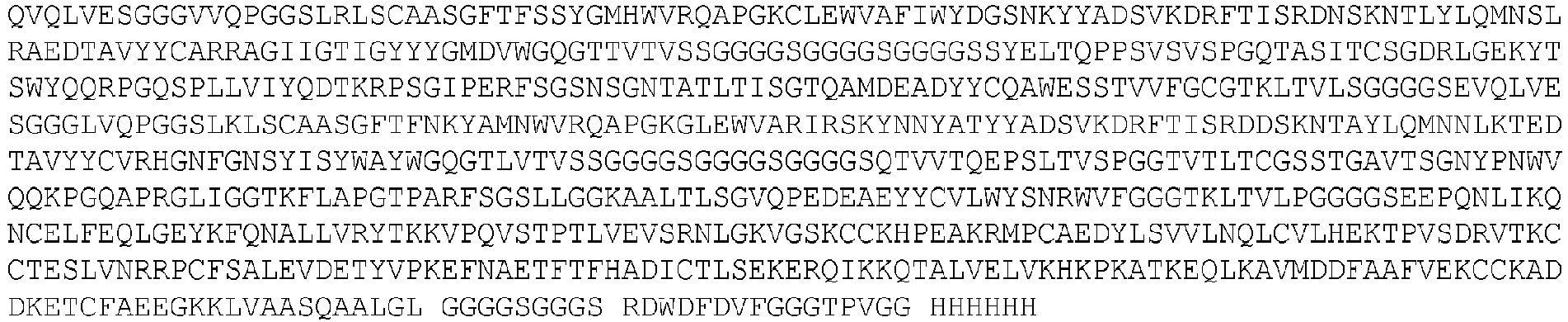
2226 CDH19 14302 CC x I2C-3GS-D3HSA-156 artificial aa 
2227 CDH19 14302 CC x I2C-GS-D3HSA-21 artificial aa 

2228 CDH19 14302 CC x I2C-3GS-D3HSA-21 artificial aa 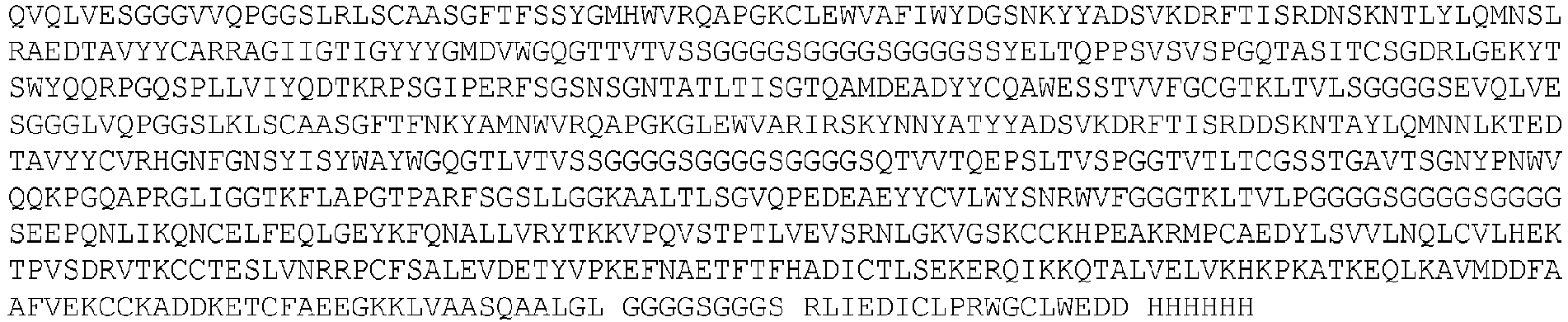
Claims (15)
- An isolated multispecific antibody construct comprising a first human binding domain capable of binding to human CDH19 on the surface of a target cell and a second domain capable of binding to human CD3 on the surface of a T cell, wherein the first binding domain comprises a VH region comprising CDR-H1, CDR-H2 and CDR-H3 and a VL region comprising CDR-L1, CDR-L2 and CDR-L3 selected from the group consisting of:CDR-H1 as depicted in SEQ ID NO: 124, CDR-H2 as depicted in SEQ ID NO: 125,CDR-H3 as depicted in SEQ ID NO: 126, CDR-L1 as depicted in SEQ ID NO: 292,CDR-L2 as depicted in SEQ ID NO: 293 and CDR-L3 as depicted in SEQ ID NO: 294,CDR-H1 as depicted in SEQ ID NO: 130, CDR-H2 as depicted in SEQ ID NO: 131,CDR-H3 as depicted in SEQ ID NO: 132, CDR-L1 as depicted in SEQ ID NO: 298,CDR-L2 as depicted in SEQ ID NO: 299 and CDR-L3 as depicted in SEQ ID NO: 300,CDR-H1 as depicted in SEQ ID NO: 136, CDR-H2 as depicted in SEQ ID NO: 137,CDR-H3 as depicted in SEQ ID NO: 138, CDR-L1 as depicted in SEQ ID NO: 304,CDR-L2 as depicted in SEQ ID NO: 305 and CDR-L3 as depicted in SEQ ID NO: 306,CDR-H1 as depicted in SEQ ID NO: 142, CDR-H2 as depicted in SEQ ID NO: 143,CDR-H3 as depicted in SEQ ID NO: 144, CDR-L1 as depicted in SEQ ID NO: 310,CDR-L2 as depicted in SEQ ID NO: 311 and CDR-L3 as depicted in SEQ ID NO: 312,CDR-H1 as depicted in SEQ ID NO: 148, CDR-H2 as depicted in SEQ ID NO: 149,CDR-H3 as depicted in SEQ ID NO: 150, CDR-L1 as depicted in SEQ ID NO: 316,CDR-L2 as depicted in SEQ ID NO: 317 and CDR-L3 as depicted in SEQ ID NO: 318,CDR-H1 as depicted in SEQ ID NO: 166, CDR-H2 as depicted in SEQ ID NO: 167,CDR-H3 as depicted in SEQ ID NO: 168, CDR-L1 as depicted in SEQ ID NO: 334,CDR-L2 as depicted in SEQ ID NO: 335 and CDR-L3 as depicted in SEQ ID NO: 336,CDR-H1 as depicted in SEQ ID NO: 124, CDR-H2 as depicted in SEQ ID NO: 125,CDR-H3 as depicted in SEQ ID NO: 915, CDR-L1 as depicted in SEQ ID NO: 292,CDR-L2 as depicted in SEQ ID NO: 293 and CDR-L3 as depicted in SEQ ID NO: 294,CDR-H1 as depicted in SEQ ID NO: 124, CDR-H2 as depicted in SEQ ID NO: 125,CDR-H3 as depicted in SEQ ID NO: 915, CDR-L1 as depicted in SEQ ID NO: 292,CDR-L2 as depicted in SEQ ID NO: 293 and CDR-L3 as depicted in SEQ ID NO: 928,CDR-H1 as depicted in SEQ ID NO: 124, CDR-H2 as depicted in SEQ ID NO: 125,CDR-H3 as depicted in SEQ ID NO: 915, CDR-L1 as depicted in SEQ ID NO: 292,CDR-L2 as depicted in SEQ ID NO: 293 and CDR-L3 as depicted in SEQ ID NO: 929,CDR-H1 as depicted in SEQ ID NO: 166, CDR-H2 as depicted in SEQ ID NO: 167,CDR-H3 as depicted in SEQ ID NO: 168, CDR-L1 as depicted in SEQ ID NO: 334,CDR-L2 as depicted in SEQ ID NO: 335 and CDR-L3 as depicted in SEQ ID NO: 336,CDR-H1 as depicted in SEQ ID NO: 166, CDR-H2 as depicted in SEQ ID NO: 167,CDR-H3 as depicted in SEQ ID NO: 168, CDR-L1 as depicted in SEQ ID NO: 334,CDR-L2 as depicted in SEQ ID NO: 335 and CDR-L3 as depicted in SEQ ID NO: 942,CDR-H1 as depicted in SEQ ID NO: 166, CDR-H2 as depicted in SEQ ID NO: 167,CDR-H3 as depicted in SEQ ID NO: 168, CDR-L1 as depicted in SEQ ID NO: 334,CDR-L2 as depicted in SEQ ID NO: 335 and CDR-L3 as depicted in SEQ ID NO: 943,CDR-H1 as depicted in SEQ ID NO: 148, CDR-H2 as depicted in SEQ ID NO: 149,CDR-H3 as depicted in SEQ ID NO: 150, CDR-L1 as depicted in SEQ ID NO: 316,CDR-L2 as depicted in SEQ ID NO: 317 and CDR-L3 as depicted in SEQ ID NO: 318,CDR-H1 as depicted in SEQ ID NO: 148, CDR-H2 as depicted in SEQ ID NO: 149,CDR-H3 as depicted in SEQ ID NO: 150, CDR-L1 as depicted in SEQ ID NO: 316,CDR-L2 as depicted in SEQ ID NO: 317 and CDR-L3 as depicted in SEQ ID NO: 937,CDR-H1 as depicted in SEQ ID NO: 148, CDR-H2 as depicted in SEQ ID NO: 149,CDR-H3 as depicted in SEQ ID NO: 150, CDR-L1 as depicted in SEQ ID NO: 316,CDR-L2 as depicted in SEQ ID NO: 317 and CDR-L3 as depicted in SEQ ID NO: 938,CDR-H1 as depicted in SEQ ID NO: 148, CDR-H2 as depicted in SEQ ID NO: 149,CDR-H3 as depicted in SEQ ID NO: 919, CDR-L1 as depicted in SEQ ID NO: 316,CDR-L2 as depicted in SEQ ID NO: 317 and CDR-L3 as depicted in SEQ ID NO: 938,CDR-H1 as depicted in SEQ ID NO: 142, CDR-H2 as depicted in SEQ ID NO: 143,CDR-H3 as depicted in SEQ ID NO: 144, CDR-L1 as depicted in SEQ ID NO: 310,CDR-L2 as depicted in SEQ ID NO: 311 and CDR-L3 as depicted in SEQ ID NO: 935,CDR-H1 as depicted in SEQ ID NO: 142, CDR-H2 as depicted in SEQ ID NO: 143,CDR-H3 as depicted in SEQ ID NO: 918, CDR-L1 as depicted in SEQ ID NO: 310,CDR-L2 as depicted in SEQ ID NO: 311 and CDR-L3 as depicted in SEQ ID NO: 935,CDR-H1 as depicted in SEQ ID NO: 142, CDR-H2 as depicted in SEQ ID NO: 143,CDR-H3 as depicted in SEQ ID NO: 918, CDR-L1 as depicted in SEQ ID NO: 310,CDR-L2 as depicted in SEQ ID NO: 311 and CDR-L3 as depicted in SEQ ID NO: 936,CDR-H1 as depicted in SEQ ID NO: 136, CDR-H2 as depicted in SEQ ID NO: 137,CDR-H3 as depicted in SEQ ID NO: 138, CDR-L1 as depicted in SEQ ID NO: 304,CDR-L2 as depicted in SEQ ID NO: 305 and CDR-L3 as depicted in SEQ ID NO: 933,CDR-H1 as depicted in SEQ ID NO: 136, CDR-H2 as depicted in SEQ ID NO: 137,CDR-H3 as depicted in SEQ ID NO: 917, CDR-L1 as depicted in SEQ ID NO: 304,CDR-L2 as depicted in SEQ ID NO: 305 and CDR-L3 as depicted in SEQ ID NO: 934,CDR-H1 as depicted in SEQ ID NO: 130, CDR-H2 as depicted in SEQ ID NO: 131,CDR-H3 as depicted in SEQ ID NO: 132, CDR-L1 as depicted in SEQ ID NO: 298,CDR-L2 as depicted in SEQ ID NO: 299 and CDR-L3 as depicted in SEQ ID NO: 930,CDR-H1 as depicted in SEQ ID NO: 130, CDR-H2 as depicted in SEQ ID NO: 131,CDR-H3 as depicted in SEQ ID NO: 916, CDR-L1 as depicted in SEQ ID NO: 298,CDR-L2 as depicted in SEQ ID NO: 299 and CDR-L3 as depicted in SEQ ID NO: 931,CDR-H1 as depicted in SEQ ID NO: 130, CDR-H2 as depicted in SEQ ID NO: 131,CDR-H3 as depicted in SEQ ID NO: 916, CDR-L1 as depicted in SEQ ID NO: 298,CDR-L2 as depicted in SEQ ID NO: 299 and CDR-L3 as depicted in SEQ ID NO: 932,CDR-H1 as depicted in SEQ ID NO: 1009, CDR-H2 as depicted in SEQ ID NO: 1010, CDR-H3 as depicted in SEQ ID NO: 1011, CDR-L1 as depicted in SEQ ID NO: 1012, CDR-L2 as depicted in SEQ ID NO: 1013 and CDR-L3 as depicted in SEQ ID NO: 1014,CDR-H1 as depicted in SEQ ID NO: 1022, CDR-H2 as depicted in SEQ ID NO: 1023, CDR-H3 as depicted in SEQ ID NO: 1024, CDR-L1 as depicted in SEQ ID NO: 1025, CDR-L2 as depicted in SEQ ID NO: 1026 and CDR-L3 as depicted in SEQ ID NO: 1027,CDR-H1 as depicted in SEQ ID NO: 1035, CDR-H2 as depicted in SEQ ID NO: 1036, CDR-H3 as depicted in SEQ ID NO: 1037, CDR-L1 as depicted in SEQ ID NO: 1038, CDR-L2 as depicted in SEQ ID NO: 1039 and CDR-L3 as depicted in SEQ ID NO: 1040,CDR-H1 as depicted in SEQ ID NO: 1074, CDR-H2 as depicted in SEQ ID NO: 1075, CDR-H3 as depicted in SEQ ID NO: 1076, CDR-L1 as depicted in SEQ ID NO: 1077, CDR-L2 as depicted in SEQ ID NO: 1078 and CDR-L3 as depicted in SEQ ID NO: 1079,CDR-H1 as depicted in SEQ ID NO: 1100, CDR-H2 as depicted in SEQ ID NO: 1101, CDR-H3 as depicted in SEQ ID NO: 1102, CDR-L1 as depicted in SEQ ID NO: 1103, CDR-L2 as depicted in SEQ ID NO: 1104 and CDR-L3 as depicted in SEQ ID NO: 1105,CDR-H1 as depicted in SEQ ID NO: 1113, CDR-H2 as depicted in SEQ ID NO: 1114, CDR-H3 as depicted in SEQ ID NO: 1115, CDR-L1 as depicted in SEQ ID NO: 1116, CDR-L2 as depicted in SEQ ID NO: 1117 and CDR-L3 as depicted in SEQ ID NO: 1118,CDR-H1 as depicted in SEQ ID NO: 1243, CDR-H2 as depicted in SEQ ID NO: 1244, CDR-H3 as depicted in SEQ ID NO: 1245, CDR-L1 as depicted in SEQ ID NO: 1246, CDR-L2 as depicted in SEQ ID NO: 1247 and CDR-L3 as depicted in SEQ ID NO: 1248,CDR-H1 as depicted in SEQ ID NO: 1256, CDR-H2 as depicted in SEQ ID NO: 1257, CDR-H3 as depicted in SEQ ID NO: 1258, CDR-L1 as depicted in SEQ ID NO: 1259, CDR-L2 as depicted in SEQ ID NO: 1260 and CDR-L3 as depicted in SEQ ID NO: 1261,CDR-H1 as depicted in SEQ ID NO: 1269, CDR-H2 as depicted in SEQ ID NO: 1270, CDR-H3 as depicted in SEQ ID NO: 1271, CDR-L1 as depicted in SEQ ID NO: 1272, CDR-L2 as depicted in SEQ ID NO: 1273 and CDR-L3 as depicted in SEQ ID NO: 1274,CDR-H1 as depicted in SEQ ID NO: 1282, CDR-H2 as depicted in SEQ ID NO: 1283, CDR-H3 as depicted in SEQ ID NO: 1284, CDR-L1 as depicted in SEQ ID NO: 1285, CDR-L2 as depicted in SEQ ID NO: 1286 and CDR-L3 as depicted in SEQ ID NO: 1287,CDR-H1 as depicted in SEQ ID NO: 1295, CDR-H2 as depicted in SEQ ID NO: 1296, CDR-H3 as depicted in SEQ ID NO: 1297, CDR-L1 as depicted in SEQ ID NO: 1298, CDR-L2 as depicted in SEQ ID NO: 1299 and CDR-L3 as depicted in SEQ ID NO: 1300,CDR-H1 as depicted in SEQ ID NO: 1647, CDR-H2 as depicted in SEQ ID NO: 1648, CDR-H3 as depicted in SEQ ID NO: 1649, CDR-L1 as depicted in SEQ ID NO: 1650, CDR-L2 as depicted in SEQ ID NO: 1651 and CDR-L3 as depicted in SEQ ID NO: 1652,CDR-H1 as depicted in SEQ ID NO: 1660, CDR-H2 as depicted in SEQ ID NO: 1661, CDR-H3 as depicted in SEQ ID NO: 1662, CDR-L1 as depicted in SEQ ID NO: 1663, CDR-L2 as depicted in SEQ ID NO: 1664 and CDR-L3 as depicted in SEQ ID NO: 1665,CDR-H1 as depicted in SEQ ID NO: 1894, CDR-H2 as depicted in SEQ ID NO: 1895, CDR-H3 as depicted in SEQ ID NO: 1896, CDR-L1 as depicted in SEQ ID NO: 1897, CDR-L2 as depicted in SEQ ID NO: 1898 and CDR-L3 as depicted in SEQ ID NO: 1899,CDR-H1 as depicted in SEQ ID NO: 1907, CDR-H2 as depicted in SEQ ID NO: 1908, CDR-H3 as depicted in SEQ ID NO: 1909, CDR-L1 as depicted in SEQ ID NO: 1910, CDR-L2 as depicted in SEQ ID NO: 1911 and CDR-L3 as depicted in SEQ ID NO: 1912,CDR-H1 as depicted in SEQ ID NO: 1933, CDR-H2 as depicted in SEQ ID NO: 1934, CDR-H3 as depicted in SEQ ID NO: 1935, CDR-L1 as depicted in SEQ ID NO: 1936, CDR-L2 as depicted in SEQ ID NO: 1937 and CDR-L3 as depicted in SEQ ID NO: 1938,CDR-H1 as depicted in SEQ ID NO: 1946, CDR-H2 as depicted in SEQ ID NO: 1947, CDR-H3 as depicted in SEQ ID NO: 1948, CDR-L1 as depicted in SEQ ID NO: 1949, CDR-L2 as depicted in SEQ ID NO: 1950 and CDR-L3 as depicted in SEQ ID NO: 1951,CDR-H1 as depicted in SEQ ID NO: 1959, CDR-H2 as depicted in SEQ ID NO: 1960, CDR-H3 as depicted in SEQ ID NO: 1961, CDR-L1 as depicted in SEQ ID NO: 1962, CDR-L2 as depicted in SEQ ID NO: 1963 and CDR-L3 as depicted in SEQ ID NO: 1964,CDR-H1 as depicted in SEQ ID NO: 1972, CDR-H2 as depicted in SEQ ID NO: 1973, CDR-H3 as depicted in SEQ ID NO: 1974, CDR-L1 as depicted in SEQ ID NO: 1975, CDR-L2 as depicted in SEQ ID NO: 1976 and CDR-L3 as depicted in SEQ ID NO: 1977,CDR-H1 as depicted in SEQ ID NO: 1985, CDR-H2 as depicted in SEQ ID NO: 1986, CDR-H3 as depicted in SEQ ID NO: 1987, CDR-L1 as depicted in SEQ ID NO: 1988, CDR-L2 as depicted in SEQ ID NO: 1989 and CDR-L3 as depicted in SEQ ID NO: 1990,CDR-H1 as depicted in SEQ ID NO: 1998, CDR-H2 as depicted in SEQ ID NO: 1999, CDR-H3 as depicted in SEQ ID NO: 2000, CDR-L1 as depicted in SEQ ID NO: 2001, CDR-L2 as depicted in SEQ ID NO: 2002 and CDR-L3 as depicted in SEQ ID NO: 2003,CDR-H1 as depicted in SEQ ID NO: 2011, CDR-H2 as depicted in SEQ ID NO: 2012, CDR-H3 as depicted in SEQ ID NO: 2013, CDR-L1 as depicted in SEQ ID NO: 2014, CDR-L2 as depicted in SEQ ID NO: 2015 and CDR-L3 as depicted in SEQ ID NO: 2016,CDR-H1 as depicted in SEQ ID NO: 2024, CDR-H2 as depicted in SEQ ID NO: 2025, CDR-H3 as depicted in SEQ ID NO: 2026, CDR-L1 as depicted in SEQ ID NO: 2027, CDR-L2 as depicted in SEQ ID NO: 2028 and CDR-L3 as depicted in SEQ ID NO: 2029,CDR-H1 as depicted in SEQ ID NO: 2037, CDR-H2 as depicted in SEQ ID NO: 2038, CDR-H3 as depicted in SEQ ID NO: 2039, CDR-L1 as depicted in SEQ ID NO: 2040, CDR-L2 as depicted in SEQ ID NO: 2041 and CDR-L3 as depicted in SEQ ID NO: 2042, andCDR-H1 as depicted in SEQ ID NO: 2050, CDR-H2 as depicted in SEQ ID NO: 2051, CDR-H3 as depicted in SEQ ID NO: 2052, CDR-L1 as depicted in SEQ ID NO: 2053, CDR-L2 as depicted in SEQ ID NO: 2054 and CDR-L3 as depicted in SEQ ID NO: 2055.
- The antibody construct according to claim 1, wherein the first binding domain comprises a VH region selected from the group consisting of VH regions as depicted in SEQ ID NO: 342, SEQ ID NO: 366, SEQ ID NO: 370, SEQ ID NO: 344, SEQ ID NO: 372, SEQ ID NO: 368, SEQ ID NO: 496, SEQ ID NO: 497, SEQ ID NO: 498, SEQ ID NO: 499, SEQ ID NO: 500, SEQ ID NO: 508, SEQ ID NO: 509, SEQ ID NO: 510, SEQ ID NO: 511, SEQ ID NO: 512, SEQ ID NO: 519, SEQ ID NO: 520, SEQ ID NO: 521, SEQ ID NO: 522, SEQ ID NO: 523, SEQ ID NO: 524, SEQ ID NO: 525, SEQ ID NO: 526, SEQ ID NO: 527, SEQ ID NO: 528, SEQ ID NO: 529, SEQ ID NO: 530, SEQ ID NO: 531, SEQ ID NO: 532, SEQ ID NO: 533, SEQ ID NO: 534, SEQ ID NO: 535, SEQ ID NO: 536, SEQ ID NO: 537, SEQ ID NO: 538, SEQ ID NO: 1016, SEQ ID NO: 1029, SEQ ID NO: 1042, SEQ ID NO: 1081, SEQ ID NO: 1107, SEQ ID NO: 1120, SEQ ID NO: 1250, SEQ ID NO: 1263, SEQ ID NO: 1276, SEQ ID NO: 1289, SEQ ID NO: 1302, SEQ ID NO: 1654, SEQ ID NO: 1667, SEQ ID NO: 1901, SEQ ID NO: 1914, SEQ ID NO: 1940, SEQ ID NO: 1953, SEQ ID NO: 1966, SEQ ID NO: 1979, SEQ ID NO: 1992, SEQ ID NO: 2005, SEQ ID NO: 2018, SEQ ID NO: 2031, SEQ ID NO: 2044, and SEQ ID NO: 2057.
- The antibody construct according to claim 1 or 2, wherein the first binding domain comprises a VL region selected from the group consisting of VL regions as depicted in SEQ ID NO: 398, SEQ ID NO: 422, SEQ ID NO: 426, SEQ ID NO: 400, SEQ ID NO: 428, SEQ ID NO: 424, SEQ ID NO: 591, SEQ ID NO: 592, SEQ ID NO: 593, SEQ ID NO: 594, SEQ ID NO: 595, SEQ ID NO: 603, SEQ ID NO: 604, SEQ ID NO: 605, SEQ ID NO: 606, SEQ ID NO: 607, SEQ ID NO: 614, SEQ ID NO: 615, SEQ ID NO: 616, SEQ ID NO: 617, SEQ ID NO: 618, SEQ ID NO: 619, SEQ ID NO: 620, SEQ ID NO: 621, SEQ ID NO: 622, SEQ ID NO: 623, SEQ ID NO: 624, SEQ ID NO: 625, SEQ ID NO: 626, SEQ ID NO: 627, SEQ ID NO: 628, SEQ ID NO: 629, SEQ ID NO: 630, SEQ ID NO: 631, SEQ ID NO: 632, SEQ ID NO: 633, SEQ ID NO: 1018, SEQ ID NO: 1031, SEQ ID NO: 1044, SEQ ID NO: 1083, SEQ ID NO: 1109, SEQ ID NO: 1122, SEQ ID NO: 1252, SEQ ID NO: 1265, SEQ ID NO: 1278, SEQ ID NO: 1291, SEQ ID NO: 1304, SEQ ID NO: 1656, SEQ ID NO: 1669, SEQ ID NO: 1903, SEQ ID NO: 1916, SEQ ID NO: 1942, SEQ ID NO: 1955, SEQ ID NO: 1968, SEQ ID NO: 1981, SEQ ID NO: 1994, SEQ ID NO: 2007, SEQ ID NO: 2020, SEQ ID NO: 2033, SEQ ID NO: 2046, and SEQ ID NO: 2059.
- The antibody construct according to any one of the preceding claims, wherein the first binding domain comprises a VH region and a VL region selected from the group consisting of:
pairs of a VH region and a VL region as depicted in SEQ ID NOs: 342+398, SEQ ID NOs: 366+422, SEQ ID NOs: 370+426, SEQ ID NOs: 344+400, SEQ ID NOs: 372+428, SEQ ID NOs: 368+424, SEQ ID NOs: 496+591, SEQ ID NOs: 497+592, SEQ ID NOs: 498+593, SEQ ID NOs: 499+594, SEQ ID NOs: 500+595, SEQ ID NOs: 508+603, SEQ ID NOs: 509+604, SEQ ID NOs: 510+605, SEQ ID NOs: 511+606, SEQ ID NOs: 512+607, SEQ ID NOs: 519+614, SEQ ID NOs: 520+615, SEQ ID NOs: 521+616, SEQ ID NOs: 522+617, SEQ ID NOs: 523+618, SEQ ID NOs: 524+619, SEQ ID NOs: 525+620, SEQ ID NOs: 526+621, SEQ ID NOs: 527+622, SEQ ID NOs: 528+623, SEQ ID NOs: 529+624, SEQ ID NOs: 530+625, SEQ ID NOs: 531+626, SEQ ID NOs: 532+627, SEQ ID NOs: 533+628, SEQ ID NOs: 534+629, SEQ ID NOs: 535+630, SEQ ID NOs: 536+631, SEQ ID NOs: 537+632, SEQ ID NOs: 538+633, SEQ ID NOs: 1016+1018, SEQ ID NOs: 1029+1031, SEQ ID NOs: 1042+1044, SEQ ID NOs: 1081+1083, SEQ ID NOs: 1107+1109, SEQ ID NOs: 1120+1122, SEQ ID NOs: 1250+1252, SEQ ID NOs: 1263+1265, SEQ ID NOs: 1276+1278, SEQ ID NOs: 1289+1291, SEQ ID NOs: 1302+1304, SEQ ID NOs: 1654+1656, SEQ ID NOs: 1667+1669, SEQ ID NOs: 1901+1903, SEQ ID NOs: 1914+1916, SEQ ID NOs: 1940+1942, SEQ ID NOs: 1953+1955, SEQ ID NOs: 1966+1968, SEQ ID NOs: 1979+1981, SEQ ID NOs: 1992+1994, SEQ ID NOs: 2005+2007, SEQ ID NOs: 2018+2020, SEQ ID NOs: 2031+2033, SEQ ID NOs: 2044+2046, and SEQ ID NOs: 2057+2059. - The antibody construct according to any one of the preceding claims, wherein the antibody construct is in a format selected from the group consisting of (scFv)2, scFv-single domain mAb, diabodies and oligomers thereof.
- The antibody construct according to claim 5, wherein the first binding domain comprises an amino acid sequence selected from the group consisting of as depicted in SEQ ID NO: 1020, SEQ ID NO: 1033, SEQ ID NO: 1046, SEQ ID NO: 1085, SEQ ID NO: 1111, SEQ ID NO: 1124, SEQ ID NO: 1254, SEQ ID NO: 1267, SEQ ID NO: 1280, SEQ ID NO: 1293, SEQ ID NO: 1306, SEQ ID NO: 1658, SEQ ID NO: 1671, SEQ ID NO: 1905, SEQ ID NO: 1918, SEQ ID NO: 1944, SEQ ID NO: 1957, SEQ ID NO: 1970, SEQ ID NO: 1983, SEQ ID NO: 1996, SEQ ID NO: 2009, SEQ ID NO: 2022, SEQ ID NO: 2035, SEQ ID NO: 2048, and SEQ ID NO: 2061.
- The antibody construct according to any one of the preceding claims, wherein the second binding domain is capable of binding to human and Callithrix jacchus, Saguinus Oedipus or Saimiri sciureus CD3 epsilon.
- The antibody construct according claim 7, having the amino acid sequence selected from the group consisting of as depicted in SEQ ID NO: 1021, SEQ ID NO: 1034, SEQ ID NO: 1047, SEQ ID NO: 1086, SEQ ID NO: 1112, SEQ ID NO: 1125, SEQ ID NO: 1255, SEQ ID NO: 1268, SEQ ID NO: 1281, SEQ ID NO: 1294, SEQ ID NO: 1307, SEQ ID NO: 1659, SEQ ID NO: 1672, SEQ ID NO: 1906, SEQ ID NO: 1919, SEQ ID NO: 1945, SEQ ID NO: 1958, SEQ ID NO: 1971, SEQ ID NO: 1984, SEQ ID NO: 1997, SEQ ID NO: 2010, SEQ ID NO: 2023, SEQ ID NO: 2036, SEQ ID NO: 2049, and SEQ ID NO: 2062.
- A nucleic acid sequence encoding an antibody construct as defined in any one of claims 1 to 8.
- A vector comprising a nucleic acid sequence as defined in claim 9.
- A host cell transformed or transfected with the nucleic acid sequence as defined in claim 9 or with the vector as defined in claim 10.
- A process for the production of an antibody construct according to any one of claims 1 to 8, said process comprising culturing a host cell as defined in claim 11 under conditions allowing the expression of the antibody construct as defined in any one of claims 1 to 8 and recovering the produced antibody construct from the culture.
- A pharmaceutical composition comprising an antibody construct according to any one of claims 1 to 8, or produced according to the process of claim 12.
- The antibody construct according to any one of claims 1 to 8, or produced according to the process of claim 12 for use in the prevention, treatment or amelioration of a melanoma disease or metastatic melanoma disease.
- A kit comprising an antibody construct according to any one of claims 1 to 8, or produced according to the process of claim 12, a vector as defined in claim 10, and/or a host cell as defined in claim 11.
Applications Claiming Priority (4)
| Application Number | Priority Date | Filing Date | Title |
|---|---|---|---|
| US201361756991P | 2013-01-25 | 2013-01-25 | |
| US201361785147P | 2013-03-14 | 2013-03-14 | |
| PCT/EP2014/051550 WO2014114800A1 (en) | 2013-01-25 | 2014-01-27 | Antibody constructs for cdh19 and cd3 |
| EP14705293.0A EP2948477B1 (en) | 2013-01-25 | 2014-01-27 | Antibody constructs for cdh19 and cd3 |
Related Parent Applications (1)
| Application Number | Title | Priority Date | Filing Date |
|---|---|---|---|
| EP14705293.0A Division EP2948477B1 (en) | 2013-01-25 | 2014-01-27 | Antibody constructs for cdh19 and cd3 |
Publications (2)
| Publication Number | Publication Date |
|---|---|
| EP3699194A1 true EP3699194A1 (en) | 2020-08-26 |
| EP3699194B1 EP3699194B1 (en) | 2022-07-20 |
Family
ID=50137614
Family Applications (2)
| Application Number | Title | Priority Date | Filing Date |
|---|---|---|---|
| EP19202926.2A Active EP3699194B1 (en) | 2013-01-25 | 2014-01-27 | Antibody constructs for cdh19 and cd3 |
| EP14705293.0A Active EP2948477B1 (en) | 2013-01-25 | 2014-01-27 | Antibody constructs for cdh19 and cd3 |
Family Applications After (1)
| Application Number | Title | Priority Date | Filing Date |
|---|---|---|---|
| EP14705293.0A Active EP2948477B1 (en) | 2013-01-25 | 2014-01-27 | Antibody constructs for cdh19 and cd3 |
Country Status (37)
| Country | Link |
|---|---|
| US (5) | US10059766B2 (en) |
| EP (2) | EP3699194B1 (en) |
| JP (2) | JP6522517B2 (en) |
| KR (2) | KR102230620B1 (en) |
| CN (1) | CN105121468B (en) |
| AP (1) | AP2015008608A0 (en) |
| AU (2) | AU2014209877B2 (en) |
| BR (1) | BR112015017548B1 (en) |
| CA (1) | CA2896372C (en) |
| CL (1) | CL2015002071A1 (en) |
| CR (1) | CR20150437A (en) |
| CY (1) | CY1123005T1 (en) |
| DK (1) | DK2948477T3 (en) |
| EA (1) | EA036950B1 (en) |
| ES (2) | ES2759248T3 (en) |
| HR (1) | HRP20191983T1 (en) |
| HU (1) | HUE046412T2 (en) |
| IL (2) | IL240092B (en) |
| JO (1) | JO3519B1 (en) |
| LT (1) | LT2948477T (en) |
| MX (1) | MX369149B (en) |
| MY (1) | MY175075A (en) |
| NZ (1) | NZ709318A (en) |
| PE (1) | PE20151613A1 (en) |
| PH (1) | PH12015501651B1 (en) |
| PL (1) | PL2948477T3 (en) |
| PT (1) | PT2948477T (en) |
| RS (1) | RS59633B1 (en) |
| SG (2) | SG10201705874QA (en) |
| SI (1) | SI2948477T1 (en) |
| SM (1) | SMT201900739T1 (en) |
| TN (1) | TN2015000317A1 (en) |
| TW (2) | TWI660971B (en) |
| UA (1) | UA118749C2 (en) |
| UY (1) | UY35286A (en) |
| WO (1) | WO2014114800A1 (en) |
| ZA (1) | ZA201506129B (en) |
Families Citing this family (52)
| Publication number | Priority date | Publication date | Assignee | Title |
|---|---|---|---|---|
| CN109456410B (en) * | 2007-04-03 | 2022-01-28 | 安进研发(慕尼黑)股份有限公司 | Cross-species specific CD 3-epsilon binding domains |
| SG194399A1 (en) * | 2008-10-01 | 2013-11-29 | Amgen Res Munich Gmbh | Cross-species-specific pscaxcd3, cd19xcd3, c-metxcd3, endosialinxcd3, epcamxcd3, igf-1rxcd3 or fapalpha xcd3 bispecific single chain antibody |
| CA2738568C (en) * | 2008-10-01 | 2024-02-20 | Micromet Ag | Cross-species-specific single domain bispecific single chain antibody |
| TWI679212B (en) | 2011-11-15 | 2019-12-11 | 美商安進股份有限公司 | Binding molecules for e3 of bcma and cd3 |
| JO3519B1 (en) | 2013-01-25 | 2020-07-05 | Amgen Inc | Antibody combinations for CDH19 and CD3 |
| EP2948478B1 (en) | 2013-01-25 | 2019-04-03 | Amgen Inc. | Antibodies targeting cdh19 for melanoma |
| GB201411320D0 (en) | 2014-06-25 | 2014-08-06 | Ucb Biopharma Sprl | Antibody construct |
| UY36245A (en) * | 2014-07-31 | 2016-01-29 | Amgen Res Munich Gmbh | ANTIBODY CONSTRUCTS FOR CDH19 AND CD3 |
| JP6749312B2 (en) * | 2014-07-31 | 2020-09-02 | アムゲン リサーチ (ミュンヘン) ゲーエムベーハーAMGEN Research(Munich)GmbH | Optimized interspecific bispecific single chain antibody constructs |
| WO2016016415A1 (en) * | 2014-07-31 | 2016-02-04 | Amgen Research (Munich) Gmbh | Bispecific single chain antibody construct with enhanced tissue distribution |
| KR102602417B1 (en) * | 2014-12-05 | 2023-11-16 | 메모리얼 슬로안 케터링 캔서 센터 | Antibodies targeting g-protein coupled receptor and methods of use |
| CN113968912B (en) | 2014-12-05 | 2025-05-16 | 纪念斯隆-凯特琳癌症中心 | Chimeric antigen receptor targeting G-protein coupled receptor and its use |
| SG11201706583PA (en) | 2015-02-19 | 2017-09-28 | Compugen Ltd | Anti-pvrig antibodies and methods of use |
| US11046767B2 (en) * | 2015-05-13 | 2021-06-29 | Ablynx N.V. | T cell recruiting polypeptides based on CD3 reactivity |
| MX383614B (en) | 2015-05-21 | 2025-03-14 | Harpoon Therapeutics Inc | TRISPECIFIC BINDING PROTEINS AND METHODS OF USE. |
| TWI717375B (en) | 2015-07-31 | 2021-02-01 | 德商安美基研究(慕尼黑)公司 | Antibody constructs for cd70 and cd3 |
| TWI793062B (en) | 2015-07-31 | 2023-02-21 | 德商安美基研究(慕尼黑)公司 | Antibody constructs for dll3 and cd3 |
| TWI829617B (en) | 2015-07-31 | 2024-01-21 | 德商安美基研究(慕尼黑)公司 | Antibody constructs for flt3 and cd3 |
| EA039859B1 (en) * | 2015-07-31 | 2022-03-21 | Эмджен Рисерч (Мюник) Гмбх | Bispecific antibody constructs binding egfrviii and cd3 |
| TWI744242B (en) | 2015-07-31 | 2021-11-01 | 德商安美基研究(慕尼黑)公司 | Antibody constructs for egfrviii and cd3 |
| TWI796283B (en) | 2015-07-31 | 2023-03-21 | 德商安美基研究(慕尼黑)公司 | Antibody constructs for msln and cd3 |
| EP3328994A4 (en) * | 2015-07-31 | 2019-04-17 | Memorial Sloan-Kettering Cancer Center | CD56 TARGETING ANTIGEN BINDING PROTEINS AND USES THEREOF |
| KR20250099459A (en) * | 2015-11-03 | 2025-07-01 | 얀센 바이오테크 인코포레이티드 | Antibodies specifically binding pd-1 and their uses |
| WO2017120557A1 (en) * | 2016-01-09 | 2017-07-13 | Arbele Limited | Cadherin-17 specific antibodies and cytotoxic cells for cancer treatment |
| CA3011942A1 (en) | 2016-02-03 | 2017-08-10 | Amgen Research (Munich) Gmbh | Psma and cd3 bispecific t cell engaging antibody constructs |
| US11623958B2 (en) | 2016-05-20 | 2023-04-11 | Harpoon Therapeutics, Inc. | Single chain variable fragment CD3 binding proteins |
| US10100106B2 (en) | 2016-05-20 | 2018-10-16 | Harpoon Therapeutics, Inc. | Single domain serum albumin binding protein |
| AU2017267793B2 (en) * | 2016-05-20 | 2024-01-25 | Harpoon Therapeutics, Inc. | Single chain variable fragment CD3 binding proteins |
| JP7059494B2 (en) * | 2016-07-06 | 2022-04-26 | ナショナル リサーチ カウンシル オブ カナダ | Humanized antibodies that cross the blood-brain barrier and their use |
| SG11201901077RA (en) | 2016-08-17 | 2019-03-28 | Compugen Ltd | Anti-tigit antibodies, anti-pvrig antibodies and combinations thereof |
| US10844134B2 (en) | 2016-11-23 | 2020-11-24 | Harpoon Therapeutics, Inc. | PSMA targeting trispecific proteins and methods of use |
| KR102275008B1 (en) | 2016-11-23 | 2021-07-13 | 하푼 테라퓨틱스, 인크. | prostate specific membrane antigen binding protein |
| AU2018214223B2 (en) * | 2017-02-02 | 2025-08-14 | Amgen Inc. | Low pH pharmaceutical composition comprising T cell engaging antibody constructs |
| WO2018160754A2 (en) | 2017-02-28 | 2018-09-07 | Harpoon Therapeutics, Inc. | Inducible monovalent antigen binding protein |
| CA3063362A1 (en) | 2017-05-12 | 2018-11-15 | Harpoon Therapeutics, Inc. | Msln targeting trispecific proteins and methods of use |
| AU2018265856B2 (en) | 2017-05-12 | 2023-04-27 | Harpoon Therapeutics, Inc. | Mesothelin binding proteins |
| IL315737A (en) | 2017-10-13 | 2024-11-01 | Harpoon Therapeutics Inc | B cell maturation antigen binding proteins |
| SI3694529T1 (en) | 2017-10-13 | 2024-10-30 | Harpoon Therapeutics, Inc. | Trispecific proteins and methods of use |
| US12398209B2 (en) | 2018-01-22 | 2025-08-26 | Janssen Biotech, Inc. | Methods of treating cancers with antagonistic anti-PD-1 antibodies |
| MA52571A (en) * | 2018-05-08 | 2021-03-17 | Amgen Inc | BISPECIFIC ANTIBODIES WITH LABELS MATCHED TO CLIVABLE C-TERMINAL LOADS |
| BR112020023330A2 (en) | 2018-05-14 | 2021-04-20 | Harpoon Therapeutics, Inc. | binding portion for conditional activation of immunoglobulin molecules |
| US12195544B2 (en) | 2018-09-21 | 2025-01-14 | Harpoon Therapeutics, Inc. | EGFR binding proteins and methods of use |
| EP3856771A4 (en) | 2018-09-25 | 2022-06-29 | Harpoon Therapeutics, Inc. | Dll3 binding proteins and methods of use |
| KR20220008866A (en) | 2019-05-14 | 2022-01-21 | 하푼 테라퓨틱스, 인크. | EpCAM binding proteins and methods of use |
| CN115335399A (en) | 2019-12-06 | 2022-11-11 | 朱诺治疗学股份有限公司 | Anti-idiotype antibodies directed against GPRC5D target binding domains and related compositions and methods |
| GB201918230D0 (en) | 2019-12-11 | 2020-01-22 | Prec Therapeutics Ltd | Antibodies and their uses |
| CA3170833A1 (en) | 2020-02-21 | 2021-08-26 | Harpoon Therapeutics, Inc. | Flt3 binding proteins and methods of use |
| EP4146266A4 (en) * | 2020-05-05 | 2024-06-26 | University of Massachusetts | ANTIBODIES AGAINST SARS-COV-2 S PROTEIN AND METHODS OF USE THEREOF |
| CA3209869A1 (en) * | 2021-02-26 | 2022-09-01 | Fred Hutchinson Cancer Center | Protective antibodies against respiratory viral infections |
| EP4388011A4 (en) * | 2021-08-16 | 2025-07-30 | Janssen Biotech Inc | ANTI-VEGFR1 ANTIBODIES AND THEIR USES |
| CN116554340A (en) * | 2022-01-28 | 2023-08-08 | 江苏众红生物工程创药研究院有限公司 | New long-acting and highly active and safer antibody constructs |
| WO2023235805A2 (en) * | 2022-06-01 | 2023-12-07 | The Wistar Institute Of Anatomy And Biology | Dna-encoded bispecific antibodies targeting carbonic anhydrase 9 and methods of use in cancer therapeutics |
Citations (108)
| Publication number | Priority date | Publication date | Assignee | Title |
|---|---|---|---|---|
| US3180193A (en) | 1963-02-25 | 1965-04-27 | Benedict David | Machines for cutting lengths of strip material |
| US3691016A (en) | 1970-04-17 | 1972-09-12 | Monsanto Co | Process for the preparation of insoluble enzymes |
| US3773919A (en) | 1969-10-23 | 1973-11-20 | Du Pont | Polylactide-drug mixtures |
| US3969287A (en) | 1972-12-08 | 1976-07-13 | Boehringer Mannheim Gmbh | Carrier-bound protein prepared by reacting the protein with an acylating or alkylating compound having a carrier-bonding group and reacting the product with a carrier |
| US4179337A (en) | 1973-07-20 | 1979-12-18 | Davis Frank F | Non-immunogenic polypeptides |
| US4195128A (en) | 1976-05-03 | 1980-03-25 | Bayer Aktiengesellschaft | Polymeric carrier bound ligands |
| US4229537A (en) | 1978-02-09 | 1980-10-21 | New York University | Preparation of trichloro-s-triazine activated supports for coupling ligands |
| US4247642A (en) | 1977-02-17 | 1981-01-27 | Sumitomo Chemical Company, Limited | Enzyme immobilization with pullulan gel |
| EP0036676A1 (en) | 1978-03-24 | 1981-09-30 | The Regents Of The University Of California | Method of making uniformly sized liposomes and liposomes so made |
| US4301144A (en) | 1979-07-11 | 1981-11-17 | Ajinomoto Company, Incorporated | Blood substitute containing modified hemoglobin |
| US4330440A (en) | 1977-02-08 | 1982-05-18 | Development Finance Corporation Of New Zealand | Activated matrix and method of activation |
| EP0058481A1 (en) | 1981-02-16 | 1982-08-25 | Zeneca Limited | Continuous release pharmaceutical compositions |
| EP0088046A2 (en) | 1982-02-17 | 1983-09-07 | Ciba-Geigy Ag | Lipids in the aqueous phase |
| US4439196A (en) | 1982-03-18 | 1984-03-27 | Merck & Co., Inc. | Osmotic drug delivery system |
| US4447233A (en) | 1981-04-10 | 1984-05-08 | Parker-Hannifin Corporation | Medication infusion pump |
| US4447224A (en) | 1982-09-20 | 1984-05-08 | Infusaid Corporation | Variable flow implantable infusion apparatus |
| US4475196A (en) | 1981-03-06 | 1984-10-02 | Zor Clair G | Instrument for locating faults in aircraft passenger reading light and attendant call control system |
| US4485045A (en) | 1981-07-06 | 1984-11-27 | Research Corporation | Synthetic phosphatidyl cholines useful in forming liposomes |
| US4486194A (en) | 1983-06-08 | 1984-12-04 | James Ferrara | Therapeutic device for administering medicaments through the skin |
| US4487603A (en) | 1982-11-26 | 1984-12-11 | Cordis Corporation | Implantable microinfusion pump system |
| US4496689A (en) | 1983-12-27 | 1985-01-29 | Miles Laboratories, Inc. | Covalently attached complex of alpha-1-proteinase inhibitor with a water soluble polymer |
| EP0133988A2 (en) | 1983-08-02 | 1985-03-13 | Hoechst Aktiengesellschaft | Regulating peptide-containing pharmaceutical preparations with retarded release, and process for their preparation |
| EP0143949A1 (en) | 1983-11-01 | 1985-06-12 | TERUMO KABUSHIKI KAISHA trading as TERUMO CORPORATION | Pharmaceutical composition containing urokinase |
| US4544545A (en) | 1983-06-20 | 1985-10-01 | Trustees University Of Massachusetts | Liposomes containing modified cholesterol for organ targeting |
| EP0183070A2 (en) | 1984-10-30 | 1986-06-04 | Phillips Petroleum Company | Transformation of yeasts of the genus pichia |
| US4596556A (en) | 1985-03-25 | 1986-06-24 | Bioject, Inc. | Hypodermic injection apparatus |
| US4640835A (en) | 1981-10-30 | 1987-02-03 | Nippon Chemiphar Company, Ltd. | Plasminogen activator derivatives |
| US4670417A (en) | 1985-06-19 | 1987-06-02 | Ajinomoto Co., Inc. | Hemoglobin combined with a poly(alkylene oxide) |
| WO1987005330A1 (en) | 1986-03-07 | 1987-09-11 | Michel Louis Eugene Bergh | Method for enhancing glycoprotein stability |
| EP0244234A2 (en) | 1986-04-30 | 1987-11-04 | Alko Group Ltd. | Transformation of trichoderma |
| US4751180A (en) | 1985-03-28 | 1988-06-14 | Chiron Corporation | Expression using fused genes providing for protein product |
| WO1988009344A1 (en) | 1987-05-21 | 1988-12-01 | Creative Biomolecules, Inc. | Targeted multifunctional proteins |
| US4791192A (en) | 1986-06-26 | 1988-12-13 | Takeda Chemical Industries, Ltd. | Chemically modified protein with polyethyleneglycol |
| US4790824A (en) | 1987-06-19 | 1988-12-13 | Bioject, Inc. | Non-invasive hypodermic injection device |
| US4816567A (en) | 1983-04-08 | 1989-03-28 | Genentech, Inc. | Recombinant immunoglobin preparations |
| US4935233A (en) | 1985-12-02 | 1990-06-19 | G. D. Searle And Company | Covalently linked polypeptide cell modulators |
| US4941880A (en) | 1987-06-19 | 1990-07-17 | Bioject, Inc. | Pre-filled ampule and non-invasive hypodermic injection device assembly |
| US4946778A (en) | 1987-09-21 | 1990-08-07 | Genex Corporation | Single polypeptide chain binding molecules |
| EP0402226A1 (en) | 1989-06-06 | 1990-12-12 | Institut National De La Recherche Agronomique | Transformation vectors for yeast yarrowia |
| US5013556A (en) | 1989-10-20 | 1991-05-07 | Liposome Technology, Inc. | Liposomes with enhanced circulation time |
| US5064413A (en) | 1989-11-09 | 1991-11-12 | Bioject, Inc. | Needleless hypodermic injection device |
| EP0463151A1 (en) | 1990-01-12 | 1992-01-02 | Cell Genesys Inc | GENERATION OF XENOGENIC ANTIBODIES. |
| WO1992003918A1 (en) | 1990-08-29 | 1992-03-19 | Genpharm International, Inc. | Transgenic non-human animals capable of producing heterologous antibodies |
| WO1992015673A1 (en) | 1991-03-11 | 1992-09-17 | The University Of Georgia Research Foundation, Inc. | Cloning and expression of renilla luciferase |
| WO1992022647A1 (en) | 1991-06-12 | 1992-12-23 | Genpharm International, Inc. | Early detection of transgenic emryros |
| WO1992022645A1 (en) | 1991-06-14 | 1992-12-23 | Genpharm International, Inc. | Transgenic immunodeficient non-human animals |
| WO1993012227A1 (en) | 1991-12-17 | 1993-06-24 | Genpharm International, Inc. | Transgenic non-human animals capable of producing heterologous antibodies |
| WO1994000569A1 (en) | 1992-06-18 | 1994-01-06 | Genpharm International, Inc. | Methods for producing transgenic non-human animals harboring a yeast artificial chromosome |
| WO1994002602A1 (en) | 1992-07-24 | 1994-02-03 | Cell Genesys, Inc. | Generation of xenogeneic antibodies |
| US5292658A (en) | 1989-12-29 | 1994-03-08 | University Of Georgia Research Foundation, Inc. Boyd Graduate Studies Research Center | Cloning and expressions of Renilla luciferase |
| WO1994010308A1 (en) | 1992-10-23 | 1994-05-11 | Immunex Corporation | Methods of preparing soluble, oligomeric proteins |
| US5312335A (en) | 1989-11-09 | 1994-05-17 | Bioject Inc. | Needleless hypodermic injection device |
| US5313198A (en) | 1987-12-09 | 1994-05-17 | Omron Tateisi Electronics Co. | Data communication apparatus |
| WO1994025585A1 (en) | 1993-04-26 | 1994-11-10 | Genpharm International, Inc. | Transgenic non-human animals capable of producing heterologous antibodies |
| US5383851A (en) | 1992-07-24 | 1995-01-24 | Bioject Inc. | Needleless hypodermic injection device |
| WO1995007463A1 (en) | 1993-09-10 | 1995-03-16 | The Trustees Of Columbia University In The City Of New York | Uses of green fluorescent protein |
| US5476996A (en) | 1988-06-14 | 1995-12-19 | Lidak Pharmaceuticals | Human immune system in non-human animal |
| WO1996014436A1 (en) | 1994-11-04 | 1996-05-17 | Genpharm International, Inc. | Method for making recombinant yeast artificial chromosomes |
| US5545806A (en) | 1990-08-29 | 1996-08-13 | Genpharm International, Inc. | Ransgenic non-human animals for producing heterologous antibodies |
| US5545807A (en) | 1988-10-12 | 1996-08-13 | The Babraham Institute | Production of antibodies from transgenic animals |
| US5565332A (en) | 1991-09-23 | 1996-10-15 | Medical Research Council | Production of chimeric antibodies - a combinatorial approach |
| WO1996034096A1 (en) | 1995-04-28 | 1996-10-31 | Abgenix, Inc. | Human antibodies derived from immunized xenomice |
| US5591669A (en) | 1988-12-05 | 1997-01-07 | Genpharm International, Inc. | Transgenic mice depleted in a mature lymphocytic cell-type |
| US5612205A (en) | 1990-08-29 | 1997-03-18 | Genpharm International, Incorporated | Homologous recombination in mammalian cells |
| WO1997013852A1 (en) | 1995-10-10 | 1997-04-17 | Genpharm International, Inc. | Transgenic non-human animals capable of producing heterologous antibodies |
| US5625825A (en) | 1993-10-21 | 1997-04-29 | Lsi Logic Corporation | Random number generating apparatus for an interface unit of a carrier sense with multiple access and collision detect (CSMA/CD) ethernet data network |
| US5625126A (en) | 1990-08-29 | 1997-04-29 | Genpharm International, Inc. | Transgenic non-human animals for producing heterologous antibodies |
| EP0773288A2 (en) | 1995-08-29 | 1997-05-14 | Kirin Beer Kabushiki Kaisha | Chimeric animal and method for producing the same |
| US5633425A (en) | 1990-08-29 | 1997-05-27 | Genpharm International, Inc. | Transgenic non-human animals capable of producing heterologous antibodies |
| US5648260A (en) | 1987-03-18 | 1997-07-15 | Scotgen Biopharmaceuticals Incorporated | DNA encoding antibodies with altered effector functions |
| US5661016A (en) | 1990-08-29 | 1997-08-26 | Genpharm International Inc. | Transgenic non-human animals capable of producing heterologous antibodies of various isotypes |
| WO1997038731A1 (en) | 1996-04-18 | 1997-10-23 | The Regents Of The University Of California | Immunoliposomes that optimize internalization into target cells |
| US5683888A (en) | 1989-07-22 | 1997-11-04 | University Of Wales College Of Medicine | Modified bioluminescent proteins and their use |
| WO1998014605A1 (en) | 1996-10-04 | 1998-04-09 | Loma Linda University | Renilla luciferase and green fluorescent protein fusion genes |
| US5741668A (en) | 1994-02-04 | 1998-04-21 | Rutgers, The State University Of New Jersey | Expression of a gene for a modified green-fluorescent protein |
| WO1998024893A2 (en) | 1996-12-03 | 1998-06-11 | Abgenix, Inc. | TRANSGENIC MAMMALS HAVING HUMAN IG LOCI INCLUDING PLURAL VH AND Vλ REGIONS AND ANTIBODIES PRODUCED THEREFROM |
| WO1998024884A1 (en) | 1996-12-02 | 1998-06-11 | Genpharm International | Transgenic non-human animals capable of producing heterologous antibodies |
| WO1998026277A2 (en) | 1996-12-12 | 1998-06-18 | Prolume, Ltd. | Apparatus and method for detecting and identifying infectious agents |
| US5777079A (en) | 1994-11-10 | 1998-07-07 | The Regents Of The University Of California | Modified green fluorescent proteins |
| US5789215A (en) | 1991-08-20 | 1998-08-04 | Genpharm International | Gene targeting in animal cells using isogenic DNA constructs |
| US5789650A (en) | 1990-08-29 | 1998-08-04 | Genpharm International, Inc. | Transgenic non-human animals for producing heterologous antibodies |
| US5804387A (en) | 1996-02-01 | 1998-09-08 | The Board Of Trustees Of The Leland Stanford Junior University | FACS-optimized mutants of the green fluorescent protein (GFP) |
| US5814318A (en) | 1990-08-29 | 1998-09-29 | Genpharm International Inc. | Transgenic non-human animals for producing heterologous antibodies |
| US5874299A (en) | 1990-08-29 | 1999-02-23 | Genpharm International, Inc. | Transgenic non-human animals capable of producing heterologous antibodies |
| US5874304A (en) | 1996-01-18 | 1999-02-23 | University Of Florida Research Foundation, Inc. | Humanized green fluorescent protein genes and methods |
| US5876995A (en) | 1996-02-06 | 1999-03-02 | Bryan; Bruce | Bioluminescent novelty items |
| US5877397A (en) | 1990-08-29 | 1999-03-02 | Genpharm International Inc. | Transgenic non-human animals capable of producing heterologous antibodies of various isotypes |
| US5925558A (en) | 1996-07-16 | 1999-07-20 | The Regents Of The University Of California | Assays for protein kinases using fluorescent protein substrates |
| US5958765A (en) | 1995-06-07 | 1999-09-28 | Idec Pharmaceuticals Corporation | Neutralizing high affinity human monoclonal antibodies specific to RSV F-protein and methods for their manufacture and therapeutic use thereof |
| WO1999049019A2 (en) | 1998-03-27 | 1999-09-30 | Prolume, Ltd. | Luciferases, fluorescent proteins, nucleic acids encoding the luciferases and fluorescent proteins and the use thereof in diagnostics |
| WO1999054440A1 (en) | 1998-04-21 | 1999-10-28 | Micromet Gesellschaft Für Biomedizinische Forschung Mbh | CD19xCD3 SPECIFIC POLYPEPTIDES AND USES THEREOF |
| US5981175A (en) | 1993-01-07 | 1999-11-09 | Genpharm Internation, Inc. | Methods for producing recombinant mammalian cells harboring a yeast artificial chromosome |
| US6075181A (en) | 1990-01-12 | 2000-06-13 | Abgenix, Inc. | Human antibodies derived from immunized xenomice |
| US6150584A (en) | 1990-01-12 | 2000-11-21 | Abgenix, Inc. | Human antibodies derived from immunized xenomice |
| US6162963A (en) | 1990-01-12 | 2000-12-19 | Abgenix, Inc. | Generation of Xenogenetic antibodies |
| WO2000076310A1 (en) | 1999-06-10 | 2000-12-21 | Abgenix, Inc. | Transgenic animals for producing specific isotypes of human antibodies via non-cognate switch regions |
| US6255458B1 (en) | 1990-08-29 | 2001-07-03 | Genpharm International | High affinity human antibodies and human antibodies against digoxin |
| WO2003047336A2 (en) | 2001-11-30 | 2003-06-12 | Abgenix, Inc. | TRANSGENIC ANIMALS BEARING HUMAN Igμ LIGHT CHAIN GENES |
| WO2005067391A2 (en) | 2004-01-19 | 2005-07-28 | Technion Research & Development Foundation Ltd. | Diagnostic test for parkinson's disease |
| WO2006008096A1 (en) | 2004-07-16 | 2006-01-26 | Micromet Ag | Expression-enhanced polypeptides |
| WO2006071441A2 (en) * | 2004-11-30 | 2006-07-06 | Curagen Corporation | Antibodies directed to gpnmb and uses thereof |
| WO2006138181A2 (en) | 2005-06-14 | 2006-12-28 | Amgen Inc. | Self-buffering protein formulations |
| WO2007042261A2 (en) | 2005-10-11 | 2007-04-19 | Micromet Ag | Compositions comprising cross-species-specific antibodies and uses thereof |
| WO2008119567A2 (en) | 2007-04-03 | 2008-10-09 | Micromet Ag | Cross-species-specific cd3-epsilon binding domain |
| WO2009055937A1 (en) | 2007-11-01 | 2009-05-07 | The Royal Institution For The Advancement Of Learning/Mcgill University | Altered n-cadherin processing in tumor cells by furln and proproteln convertase 5a (pc5a) |
| US9300829B2 (en) | 2014-04-04 | 2016-03-29 | Canon Kabushiki Kaisha | Image reading apparatus and correction method thereof |
| US9676298B2 (en) | 2010-12-30 | 2017-06-13 | C. Rob. Hammerstein Gmbh & Co. Kg | Longitudinal adjustment device for a motor vehicle seat, comprising two pairs of rails |
| US11284898B2 (en) | 2014-09-18 | 2022-03-29 | Cilag Gmbh International | Surgical instrument including a deployable knife |
Family Cites Families (29)
| Publication number | Priority date | Publication date | Assignee | Title |
|---|---|---|---|---|
| US721367A (en) | 1902-05-26 | 1903-02-24 | Andrew J Gunter | Bellows. |
| US5470582A (en) | 1992-02-07 | 1995-11-28 | Syntex (U.S.A.) Inc. | Controlled delivery of pharmaceuticals from preformed porous polymeric microparticles |
| EP1600459A3 (en) * | 2002-06-28 | 2005-12-07 | Domantis Limited | Ligand |
| WO2006007441A1 (en) * | 2004-06-16 | 2006-01-19 | Cardo Systems Inc. | Wireless communication headset with microphone switching system |
| JP5364870B2 (en) | 2005-08-19 | 2013-12-11 | アッヴィ・インコーポレイテッド | Dual variable domain immunoglobulins and uses thereof |
| US20080312093A1 (en) * | 2005-11-04 | 2008-12-18 | Johji Inazawa | Method for detecting cancer and a method for suppressing cancer |
| TW200817680A (en) | 2006-06-02 | 2008-04-16 | Glaxosmithkline Biolog Sa | Method |
| US8430938B1 (en) | 2006-07-13 | 2013-04-30 | The United States Of America As Represented By The Secretary Of The Navy | Control algorithm for autothermal reformer |
| CN109456410B (en) * | 2007-04-03 | 2022-01-28 | 安进研发(慕尼黑)股份有限公司 | Cross-species specific CD 3-epsilon binding domains |
| US8464584B2 (en) | 2007-10-19 | 2013-06-18 | Food Equipment Technologies Company, Inc. | Beverage dispenser with level measuring apparatus and display |
| EP2072971A1 (en) | 2007-12-17 | 2009-06-24 | Services Pétroliers Schlumberger | Variable throat venturi flow meter |
| SG194399A1 (en) * | 2008-10-01 | 2013-11-29 | Amgen Res Munich Gmbh | Cross-species-specific pscaxcd3, cd19xcd3, c-metxcd3, endosialinxcd3, epcamxcd3, igf-1rxcd3 or fapalpha xcd3 bispecific single chain antibody |
| GB2512153B (en) * | 2008-11-17 | 2014-11-12 | Veracyte Inc | Methods and compositions of molecular profiling for disease diagnostics |
| US9243058B2 (en) | 2012-12-07 | 2016-01-26 | Amgen, Inc. | BCMA antigen binding proteins |
| JO3519B1 (en) * | 2013-01-25 | 2020-07-05 | Amgen Inc | Antibody combinations for CDH19 and CD3 |
| EP2948478B1 (en) * | 2013-01-25 | 2019-04-03 | Amgen Inc. | Antibodies targeting cdh19 for melanoma |
| MX357011B (en) * | 2013-03-15 | 2018-06-22 | Amgen Inc | Heterodimeric bispecific antibodies. |
| AU2014373927B2 (en) * | 2013-12-30 | 2018-03-22 | Genomatix | Prostate cancer gene profiles and methods of using the same |
| JP6749312B2 (en) | 2014-07-31 | 2020-09-02 | アムゲン リサーチ (ミュンヘン) ゲーエムベーハーAMGEN Research(Munich)GmbH | Optimized interspecific bispecific single chain antibody constructs |
| UY36245A (en) * | 2014-07-31 | 2016-01-29 | Amgen Res Munich Gmbh | ANTIBODY CONSTRUCTS FOR CDH19 AND CD3 |
| TWI744242B (en) | 2015-07-31 | 2021-11-01 | 德商安美基研究(慕尼黑)公司 | Antibody constructs for egfrviii and cd3 |
| TWI717375B (en) | 2015-07-31 | 2021-02-01 | 德商安美基研究(慕尼黑)公司 | Antibody constructs for cd70 and cd3 |
| EA039859B1 (en) | 2015-07-31 | 2022-03-21 | Эмджен Рисерч (Мюник) Гмбх | Bispecific antibody constructs binding egfrviii and cd3 |
| TWI829617B (en) | 2015-07-31 | 2024-01-21 | 德商安美基研究(慕尼黑)公司 | Antibody constructs for flt3 and cd3 |
| TWI796283B (en) | 2015-07-31 | 2023-03-21 | 德商安美基研究(慕尼黑)公司 | Antibody constructs for msln and cd3 |
| TWI793062B (en) | 2015-07-31 | 2023-02-21 | 德商安美基研究(慕尼黑)公司 | Antibody constructs for dll3 and cd3 |
| SG11201805770UA (en) | 2016-02-03 | 2018-08-30 | Amgen Res Munich Gmbh | BCMA and CD3 Bispecific T Cell Engaging Antibody Constructs |
| CA3011942A1 (en) | 2016-02-03 | 2017-08-10 | Amgen Research (Munich) Gmbh | Psma and cd3 bispecific t cell engaging antibody constructs |
| TWI827570B (en) * | 2017-12-11 | 2024-01-01 | 美商安進公司 | Continuous manufacturing process for bispecific antibody products |
-
2014
- 2014-01-26 JO JOP/2014/0017A patent/JO3519B1/en active
- 2014-01-27 CA CA2896372A patent/CA2896372C/en active Active
- 2014-01-27 HR HRP20191983TT patent/HRP20191983T1/en unknown
- 2014-01-27 AP AP2015008608A patent/AP2015008608A0/en unknown
- 2014-01-27 KR KR1020157022936A patent/KR102230620B1/en active Active
- 2014-01-27 CN CN201480017626.1A patent/CN105121468B/en active Active
- 2014-01-27 ES ES14705293T patent/ES2759248T3/en active Active
- 2014-01-27 PL PL14705293T patent/PL2948477T3/en unknown
- 2014-01-27 EP EP19202926.2A patent/EP3699194B1/en active Active
- 2014-01-27 JP JP2015554186A patent/JP6522517B2/en active Active
- 2014-01-27 EA EA201591376A patent/EA036950B1/en not_active IP Right Cessation
- 2014-01-27 TW TW103103045A patent/TWI660971B/en active
- 2014-01-27 PT PT147052930T patent/PT2948477T/en unknown
- 2014-01-27 DK DK14705293.0T patent/DK2948477T3/en active
- 2014-01-27 AU AU2014209877A patent/AU2014209877B2/en active Active
- 2014-01-27 SG SG10201705874QA patent/SG10201705874QA/en unknown
- 2014-01-27 HU HUE14705293A patent/HUE046412T2/en unknown
- 2014-01-27 SM SM20190739T patent/SMT201900739T1/en unknown
- 2014-01-27 MX MX2015009594A patent/MX369149B/en active IP Right Grant
- 2014-01-27 PE PE2015001548A patent/PE20151613A1/en active IP Right Grant
- 2014-01-27 EP EP14705293.0A patent/EP2948477B1/en active Active
- 2014-01-27 US US14/761,839 patent/US10059766B2/en active Active
- 2014-01-27 SG SG11201505232WA patent/SG11201505232WA/en unknown
- 2014-01-27 WO PCT/EP2014/051550 patent/WO2014114800A1/en not_active Ceased
- 2014-01-27 RS RS20191539A patent/RS59633B1/en unknown
- 2014-01-27 KR KR1020217007846A patent/KR102452351B1/en active Active
- 2014-01-27 BR BR112015017548-1A patent/BR112015017548B1/en active IP Right Grant
- 2014-01-27 UY UY0001035286A patent/UY35286A/en active IP Right Grant
- 2014-01-27 SI SI201431390T patent/SI2948477T1/en unknown
- 2014-01-27 LT LT14705293T patent/LT2948477T/en unknown
- 2014-01-27 TW TW107103118A patent/TWI695012B/en active
- 2014-01-27 UA UAA201508287A patent/UA118749C2/en unknown
- 2014-01-27 MY MYPI2015702403A patent/MY175075A/en unknown
- 2014-01-27 ES ES19202926T patent/ES2929276T3/en active Active
- 2014-01-27 NZ NZ709318A patent/NZ709318A/en unknown
- 2014-01-27 US US14/165,330 patent/US20140322218A1/en not_active Abandoned
-
2015
- 2015-07-22 IL IL240092A patent/IL240092B/en active IP Right Grant
- 2015-07-23 TN TN2015000317A patent/TN2015000317A1/en unknown
- 2015-07-24 PH PH12015501651A patent/PH12015501651B1/en unknown
- 2015-07-24 CL CL2015002071A patent/CL2015002071A1/en unknown
- 2015-08-24 ZA ZA2015/06129A patent/ZA201506129B/en unknown
- 2015-08-25 CR CR20150437A patent/CR20150437A/en unknown
-
2018
- 2018-05-14 AU AU2018203339A patent/AU2018203339A1/en not_active Abandoned
- 2018-07-20 US US16/040,927 patent/US11498964B2/en active Active
-
2019
- 2019-04-24 JP JP2019082428A patent/JP6880100B2/en active Active
- 2019-09-13 US US16/570,129 patent/US20200071405A1/en not_active Abandoned
- 2019-12-17 CY CY20191101322T patent/CY1123005T1/en unknown
-
2020
- 2020-06-03 IL IL275114A patent/IL275114B/en unknown
-
2022
- 2022-09-19 US US17/933,277 patent/US12441796B2/en active Active
Patent Citations (126)
| Publication number | Priority date | Publication date | Assignee | Title |
|---|---|---|---|---|
| US3180193A (en) | 1963-02-25 | 1965-04-27 | Benedict David | Machines for cutting lengths of strip material |
| US3773919A (en) | 1969-10-23 | 1973-11-20 | Du Pont | Polylactide-drug mixtures |
| US3691016A (en) | 1970-04-17 | 1972-09-12 | Monsanto Co | Process for the preparation of insoluble enzymes |
| US3969287A (en) | 1972-12-08 | 1976-07-13 | Boehringer Mannheim Gmbh | Carrier-bound protein prepared by reacting the protein with an acylating or alkylating compound having a carrier-bonding group and reacting the product with a carrier |
| US4179337A (en) | 1973-07-20 | 1979-12-18 | Davis Frank F | Non-immunogenic polypeptides |
| US4195128A (en) | 1976-05-03 | 1980-03-25 | Bayer Aktiengesellschaft | Polymeric carrier bound ligands |
| US4330440A (en) | 1977-02-08 | 1982-05-18 | Development Finance Corporation Of New Zealand | Activated matrix and method of activation |
| US4247642A (en) | 1977-02-17 | 1981-01-27 | Sumitomo Chemical Company, Limited | Enzyme immobilization with pullulan gel |
| US4229537A (en) | 1978-02-09 | 1980-10-21 | New York University | Preparation of trichloro-s-triazine activated supports for coupling ligands |
| EP0036676A1 (en) | 1978-03-24 | 1981-09-30 | The Regents Of The University Of California | Method of making uniformly sized liposomes and liposomes so made |
| US4301144A (en) | 1979-07-11 | 1981-11-17 | Ajinomoto Company, Incorporated | Blood substitute containing modified hemoglobin |
| EP0058481A1 (en) | 1981-02-16 | 1982-08-25 | Zeneca Limited | Continuous release pharmaceutical compositions |
| US4475196A (en) | 1981-03-06 | 1984-10-02 | Zor Clair G | Instrument for locating faults in aircraft passenger reading light and attendant call control system |
| US4447233A (en) | 1981-04-10 | 1984-05-08 | Parker-Hannifin Corporation | Medication infusion pump |
| US4485045A (en) | 1981-07-06 | 1984-11-27 | Research Corporation | Synthetic phosphatidyl cholines useful in forming liposomes |
| US4640835A (en) | 1981-10-30 | 1987-02-03 | Nippon Chemiphar Company, Ltd. | Plasminogen activator derivatives |
| EP0088046A2 (en) | 1982-02-17 | 1983-09-07 | Ciba-Geigy Ag | Lipids in the aqueous phase |
| US4439196A (en) | 1982-03-18 | 1984-03-27 | Merck & Co., Inc. | Osmotic drug delivery system |
| US4447224A (en) | 1982-09-20 | 1984-05-08 | Infusaid Corporation | Variable flow implantable infusion apparatus |
| US4487603A (en) | 1982-11-26 | 1984-12-11 | Cordis Corporation | Implantable microinfusion pump system |
| US4816567A (en) | 1983-04-08 | 1989-03-28 | Genentech, Inc. | Recombinant immunoglobin preparations |
| US4486194A (en) | 1983-06-08 | 1984-12-04 | James Ferrara | Therapeutic device for administering medicaments through the skin |
| US4544545A (en) | 1983-06-20 | 1985-10-01 | Trustees University Of Massachusetts | Liposomes containing modified cholesterol for organ targeting |
| EP0133988A2 (en) | 1983-08-02 | 1985-03-13 | Hoechst Aktiengesellschaft | Regulating peptide-containing pharmaceutical preparations with retarded release, and process for their preparation |
| EP0143949A1 (en) | 1983-11-01 | 1985-06-12 | TERUMO KABUSHIKI KAISHA trading as TERUMO CORPORATION | Pharmaceutical composition containing urokinase |
| US4496689A (en) | 1983-12-27 | 1985-01-29 | Miles Laboratories, Inc. | Covalently attached complex of alpha-1-proteinase inhibitor with a water soluble polymer |
| EP0183070A2 (en) | 1984-10-30 | 1986-06-04 | Phillips Petroleum Company | Transformation of yeasts of the genus pichia |
| US4596556A (en) | 1985-03-25 | 1986-06-24 | Bioject, Inc. | Hypodermic injection apparatus |
| US4751180A (en) | 1985-03-28 | 1988-06-14 | Chiron Corporation | Expression using fused genes providing for protein product |
| US4670417A (en) | 1985-06-19 | 1987-06-02 | Ajinomoto Co., Inc. | Hemoglobin combined with a poly(alkylene oxide) |
| US4935233A (en) | 1985-12-02 | 1990-06-19 | G. D. Searle And Company | Covalently linked polypeptide cell modulators |
| WO1987005330A1 (en) | 1986-03-07 | 1987-09-11 | Michel Louis Eugene Bergh | Method for enhancing glycoprotein stability |
| EP0244234A2 (en) | 1986-04-30 | 1987-11-04 | Alko Group Ltd. | Transformation of trichoderma |
| US4791192A (en) | 1986-06-26 | 1988-12-13 | Takeda Chemical Industries, Ltd. | Chemically modified protein with polyethyleneglycol |
| US5648260A (en) | 1987-03-18 | 1997-07-15 | Scotgen Biopharmaceuticals Incorporated | DNA encoding antibodies with altered effector functions |
| WO1988009344A1 (en) | 1987-05-21 | 1988-12-01 | Creative Biomolecules, Inc. | Targeted multifunctional proteins |
| US4941880A (en) | 1987-06-19 | 1990-07-17 | Bioject, Inc. | Pre-filled ampule and non-invasive hypodermic injection device assembly |
| US4790824A (en) | 1987-06-19 | 1988-12-13 | Bioject, Inc. | Non-invasive hypodermic injection device |
| US4946778A (en) | 1987-09-21 | 1990-08-07 | Genex Corporation | Single polypeptide chain binding molecules |
| US5313198A (en) | 1987-12-09 | 1994-05-17 | Omron Tateisi Electronics Co. | Data communication apparatus |
| US5698767A (en) | 1988-06-14 | 1997-12-16 | Lidak Pharmaceuticals | Human immune system in non-human animal |
| US5476996A (en) | 1988-06-14 | 1995-12-19 | Lidak Pharmaceuticals | Human immune system in non-human animal |
| US5545807A (en) | 1988-10-12 | 1996-08-13 | The Babraham Institute | Production of antibodies from transgenic animals |
| US5591669A (en) | 1988-12-05 | 1997-01-07 | Genpharm International, Inc. | Transgenic mice depleted in a mature lymphocytic cell-type |
| US6023010A (en) | 1988-12-05 | 2000-02-08 | Genpharm International | Transgenic non-human animals depleted in a mature lymphocytic cell-type |
| EP0402226A1 (en) | 1989-06-06 | 1990-12-12 | Institut National De La Recherche Agronomique | Transformation vectors for yeast yarrowia |
| US5683888A (en) | 1989-07-22 | 1997-11-04 | University Of Wales College Of Medicine | Modified bioluminescent proteins and their use |
| US5013556A (en) | 1989-10-20 | 1991-05-07 | Liposome Technology, Inc. | Liposomes with enhanced circulation time |
| US5064413A (en) | 1989-11-09 | 1991-11-12 | Bioject, Inc. | Needleless hypodermic injection device |
| US5312335A (en) | 1989-11-09 | 1994-05-17 | Bioject Inc. | Needleless hypodermic injection device |
| US5292658A (en) | 1989-12-29 | 1994-03-08 | University Of Georgia Research Foundation, Inc. Boyd Graduate Studies Research Center | Cloning and expressions of Renilla luciferase |
| US5418155A (en) | 1989-12-29 | 1995-05-23 | University Of Georgia Research Foundation, Inc. | Isolated Renilla luciferase and method of use thereof |
| US6075181A (en) | 1990-01-12 | 2000-06-13 | Abgenix, Inc. | Human antibodies derived from immunized xenomice |
| US5939598A (en) | 1990-01-12 | 1999-08-17 | Abgenix, Inc. | Method of making transgenic mice lacking endogenous heavy chains |
| JP3068506B2 (en) | 1990-01-12 | 2000-07-24 | アブジェニックス インコーポレイテッド | Generation of heterologous antibodies |
| JP3068507B2 (en) | 1990-01-12 | 2000-07-24 | アブジェニックス インコーポレイテッド | Generation of heterologous antibodies |
| JP3068180B2 (en) | 1990-01-12 | 2000-07-24 | アブジェニックス インコーポレイテッド | Generation of heterologous antibodies |
| US6114598A (en) | 1990-01-12 | 2000-09-05 | Abgenix, Inc. | Generation of xenogeneic antibodies |
| US6150584A (en) | 1990-01-12 | 2000-11-21 | Abgenix, Inc. | Human antibodies derived from immunized xenomice |
| US6162963A (en) | 1990-01-12 | 2000-12-19 | Abgenix, Inc. | Generation of Xenogenetic antibodies |
| EP0463151A1 (en) | 1990-01-12 | 1992-01-02 | Cell Genesys Inc | GENERATION OF XENOGENIC ANTIBODIES. |
| US5545806A (en) | 1990-08-29 | 1996-08-13 | Genpharm International, Inc. | Ransgenic non-human animals for producing heterologous antibodies |
| US5633425A (en) | 1990-08-29 | 1997-05-27 | Genpharm International, Inc. | Transgenic non-human animals capable of producing heterologous antibodies |
| US5874299A (en) | 1990-08-29 | 1999-02-23 | Genpharm International, Inc. | Transgenic non-human animals capable of producing heterologous antibodies |
| US5877397A (en) | 1990-08-29 | 1999-03-02 | Genpharm International Inc. | Transgenic non-human animals capable of producing heterologous antibodies of various isotypes |
| US6255458B1 (en) | 1990-08-29 | 2001-07-03 | Genpharm International | High affinity human antibodies and human antibodies against digoxin |
| WO1992003918A1 (en) | 1990-08-29 | 1992-03-19 | Genpharm International, Inc. | Transgenic non-human animals capable of producing heterologous antibodies |
| US5612205A (en) | 1990-08-29 | 1997-03-18 | Genpharm International, Incorporated | Homologous recombination in mammalian cells |
| US5789650A (en) | 1990-08-29 | 1998-08-04 | Genpharm International, Inc. | Transgenic non-human animals for producing heterologous antibodies |
| US5721367A (en) | 1990-08-29 | 1998-02-24 | Pharming B.V. | Homologous recombination in mammalian cells |
| US5625126A (en) | 1990-08-29 | 1997-04-29 | Genpharm International, Inc. | Transgenic non-human animals for producing heterologous antibodies |
| EP0546073A1 (en) | 1990-08-29 | 1993-06-16 | Genpharm Int | NON-HUMAN TRANSGENETES CAPABLE OF PRODUCING HETEROLOGICAL ANTIBODIES. |
| US5814318A (en) | 1990-08-29 | 1998-09-29 | Genpharm International Inc. | Transgenic non-human animals for producing heterologous antibodies |
| US5661016A (en) | 1990-08-29 | 1997-08-26 | Genpharm International Inc. | Transgenic non-human animals capable of producing heterologous antibodies of various isotypes |
| US5770429A (en) | 1990-08-29 | 1998-06-23 | Genpharm International, Inc. | Transgenic non-human animals capable of producing heterologous antibodies |
| WO1992015673A1 (en) | 1991-03-11 | 1992-09-17 | The University Of Georgia Research Foundation, Inc. | Cloning and expression of renilla luciferase |
| WO1992022670A1 (en) | 1991-06-12 | 1992-12-23 | Genpharm International, Inc. | Early detection of transgenic embryos |
| WO1992022647A1 (en) | 1991-06-12 | 1992-12-23 | Genpharm International, Inc. | Early detection of transgenic emryros |
| WO1992022645A1 (en) | 1991-06-14 | 1992-12-23 | Genpharm International, Inc. | Transgenic immunodeficient non-human animals |
| US5789215A (en) | 1991-08-20 | 1998-08-04 | Genpharm International | Gene targeting in animal cells using isogenic DNA constructs |
| US5565332A (en) | 1991-09-23 | 1996-10-15 | Medical Research Council | Production of chimeric antibodies - a combinatorial approach |
| WO1993012227A1 (en) | 1991-12-17 | 1993-06-24 | Genpharm International, Inc. | Transgenic non-human animals capable of producing heterologous antibodies |
| WO1994000569A1 (en) | 1992-06-18 | 1994-01-06 | Genpharm International, Inc. | Methods for producing transgenic non-human animals harboring a yeast artificial chromosome |
| US5383851A (en) | 1992-07-24 | 1995-01-24 | Bioject Inc. | Needleless hypodermic injection device |
| WO1994002602A1 (en) | 1992-07-24 | 1994-02-03 | Cell Genesys, Inc. | Generation of xenogeneic antibodies |
| US5399163A (en) | 1992-07-24 | 1995-03-21 | Bioject Inc. | Needleless hypodermic injection methods and device |
| WO1994010308A1 (en) | 1992-10-23 | 1994-05-11 | Immunex Corporation | Methods of preparing soluble, oligomeric proteins |
| US5981175A (en) | 1993-01-07 | 1999-11-09 | Genpharm Internation, Inc. | Methods for producing recombinant mammalian cells harboring a yeast artificial chromosome |
| WO1994025585A1 (en) | 1993-04-26 | 1994-11-10 | Genpharm International, Inc. | Transgenic non-human animals capable of producing heterologous antibodies |
| WO1995007463A1 (en) | 1993-09-10 | 1995-03-16 | The Trustees Of Columbia University In The City Of New York | Uses of green fluorescent protein |
| US5625825A (en) | 1993-10-21 | 1997-04-29 | Lsi Logic Corporation | Random number generating apparatus for an interface unit of a carrier sense with multiple access and collision detect (CSMA/CD) ethernet data network |
| US5741668A (en) | 1994-02-04 | 1998-04-21 | Rutgers, The State University Of New Jersey | Expression of a gene for a modified green-fluorescent protein |
| WO1996014436A1 (en) | 1994-11-04 | 1996-05-17 | Genpharm International, Inc. | Method for making recombinant yeast artificial chromosomes |
| US5643763A (en) | 1994-11-04 | 1997-07-01 | Genpharm International, Inc. | Method for making recombinant yeast artificial chromosomes by minimizing diploid doubling during mating |
| US5777079A (en) | 1994-11-10 | 1998-07-07 | The Regents Of The University Of California | Modified green fluorescent proteins |
| WO1996034096A1 (en) | 1995-04-28 | 1996-10-31 | Abgenix, Inc. | Human antibodies derived from immunized xenomice |
| US5958765A (en) | 1995-06-07 | 1999-09-28 | Idec Pharmaceuticals Corporation | Neutralizing high affinity human monoclonal antibodies specific to RSV F-protein and methods for their manufacture and therapeutic use thereof |
| EP0773288A2 (en) | 1995-08-29 | 1997-05-14 | Kirin Beer Kabushiki Kaisha | Chimeric animal and method for producing the same |
| EP0843961A1 (en) | 1995-08-29 | 1998-05-27 | Kirin Beer Kabushiki Kaisha | Chimeric animal and method for constructing the same |
| WO1997013852A1 (en) | 1995-10-10 | 1997-04-17 | Genpharm International, Inc. | Transgenic non-human animals capable of producing heterologous antibodies |
| US5874304A (en) | 1996-01-18 | 1999-02-23 | University Of Florida Research Foundation, Inc. | Humanized green fluorescent protein genes and methods |
| US5804387A (en) | 1996-02-01 | 1998-09-08 | The Board Of Trustees Of The Leland Stanford Junior University | FACS-optimized mutants of the green fluorescent protein (GFP) |
| US5876995A (en) | 1996-02-06 | 1999-03-02 | Bryan; Bruce | Bioluminescent novelty items |
| WO1997038731A1 (en) | 1996-04-18 | 1997-10-23 | The Regents Of The University Of California | Immunoliposomes that optimize internalization into target cells |
| US5925558A (en) | 1996-07-16 | 1999-07-20 | The Regents Of The University Of California | Assays for protein kinases using fluorescent protein substrates |
| WO1998014605A1 (en) | 1996-10-04 | 1998-04-09 | Loma Linda University | Renilla luciferase and green fluorescent protein fusion genes |
| WO1998024884A1 (en) | 1996-12-02 | 1998-06-11 | Genpharm International | Transgenic non-human animals capable of producing heterologous antibodies |
| US7064244B2 (en) | 1996-12-03 | 2006-06-20 | Abgenix, Inc. | Transgenic mammals having human Ig loci including plural VH and VK regions and antibodies produced therefrom |
| WO1998024893A2 (en) | 1996-12-03 | 1998-06-11 | Abgenix, Inc. | TRANSGENIC MAMMALS HAVING HUMAN IG LOCI INCLUDING PLURAL VH AND Vλ REGIONS AND ANTIBODIES PRODUCED THEREFROM |
| WO1998026277A2 (en) | 1996-12-12 | 1998-06-18 | Prolume, Ltd. | Apparatus and method for detecting and identifying infectious agents |
| WO1999049019A2 (en) | 1998-03-27 | 1999-09-30 | Prolume, Ltd. | Luciferases, fluorescent proteins, nucleic acids encoding the luciferases and fluorescent proteins and the use thereof in diagnostics |
| WO1999054440A1 (en) | 1998-04-21 | 1999-10-28 | Micromet Gesellschaft Für Biomedizinische Forschung Mbh | CD19xCD3 SPECIFIC POLYPEPTIDES AND USES THEREOF |
| WO2000076310A1 (en) | 1999-06-10 | 2000-12-21 | Abgenix, Inc. | Transgenic animals for producing specific isotypes of human antibodies via non-cognate switch regions |
| US6833268B1 (en) | 1999-06-10 | 2004-12-21 | Abgenix, Inc. | Transgenic animals for producing specific isotypes of human antibodies via non-cognate switch regions |
| US7049426B2 (en) | 1999-06-10 | 2006-05-23 | Abgenix, Inc. | Transgenic animals for producing specific isotypes of human antibodies via non-cognate switch regions |
| WO2003047336A2 (en) | 2001-11-30 | 2003-06-12 | Abgenix, Inc. | TRANSGENIC ANIMALS BEARING HUMAN Igμ LIGHT CHAIN GENES |
| WO2005067391A2 (en) | 2004-01-19 | 2005-07-28 | Technion Research & Development Foundation Ltd. | Diagnostic test for parkinson's disease |
| WO2006008096A1 (en) | 2004-07-16 | 2006-01-26 | Micromet Ag | Expression-enhanced polypeptides |
| WO2006071441A2 (en) * | 2004-11-30 | 2006-07-06 | Curagen Corporation | Antibodies directed to gpnmb and uses thereof |
| WO2006138181A2 (en) | 2005-06-14 | 2006-12-28 | Amgen Inc. | Self-buffering protein formulations |
| WO2007042261A2 (en) | 2005-10-11 | 2007-04-19 | Micromet Ag | Compositions comprising cross-species-specific antibodies and uses thereof |
| WO2008119567A2 (en) | 2007-04-03 | 2008-10-09 | Micromet Ag | Cross-species-specific cd3-epsilon binding domain |
| WO2009055937A1 (en) | 2007-11-01 | 2009-05-07 | The Royal Institution For The Advancement Of Learning/Mcgill University | Altered n-cadherin processing in tumor cells by furln and proproteln convertase 5a (pc5a) |
| US9676298B2 (en) | 2010-12-30 | 2017-06-13 | C. Rob. Hammerstein Gmbh & Co. Kg | Longitudinal adjustment device for a motor vehicle seat, comprising two pairs of rails |
| US9300829B2 (en) | 2014-04-04 | 2016-03-29 | Canon Kabushiki Kaisha | Image reading apparatus and correction method thereof |
| US11284898B2 (en) | 2014-09-18 | 2022-03-29 | Cilag Gmbh International | Surgical instrument including a deployable knife |
Non-Patent Citations (86)
| Title |
|---|
| "Antibody Engineering Lab Manual", SPRINGER-VERLAG, article "Protein Sequence and Structure Analysis of Antibody Variable Domains" |
| "Genbank", Database accession no. U55762 |
| "Macromolecule Sequencing and Synthesis, Selected Methods and Applications", 1988, ALAN R. LISS, INC., article "Current Methods in Sequence Comparison and Analysis", pages: 127 - 149 |
| "REMINGTON'S PHARMACEUTICAL SCIENCES", 1990, MACK PUBLISHING COMPANY |
| ALTSCHUL ET AL., J. MOL. BIOL., vol. 215, 1990, pages 403 - 410 |
| ALTSCHUL ET AL., METHODS IN ENZYMOLOGY, vol. 266, 1996, pages 460 - 480 |
| ALTSCHUL ET AL., NUCL. ACIDS RES., vol. 25, 1993, pages 3389 - 3402 |
| ALTSCHUL ET AL., NUCLEIC ACIDS RES., vol. 25, 1997, pages 3389 - 3402 |
| ANONYMOUS: "Anti-CDH19 Product Datasheet", December 2012 (2012-12-01), XP055117756, Retrieved from the Internet <URL:https://atlasantibodies.com/print_datasheet/R74953> [retrieved on 20140513] * |
| ANONYMOUS: "CDH19 monoclonal antibody (M01), clone 1G4", pages 1, XP055117753, Retrieved from the Internet <URL:http://www.abnova.com/protocol_pdf/DS_H00028513-M01.pdf> [retrieved on 20140513] * |
| APLINWRISTON, CRC CRIT. REV. BIOCHEM., 1981, pages 259 - 306 |
| ARAKAWA ET AL.: "Solvent interactions in pharmaceutical formulations", PHARM RES., vol. 8, no. 3, 1991, pages 285 - 91, XP009052919, DOI: 10.1023/A:1015825027737 |
| ARTSAENKO ET AL., THE PLANT J, vol. 8, 1995, pages 745 - 750 |
| BERTUCCI FRANÇOIS ET AL: "Gene expression profiling of human melanoma cell lines with distinct metastatic potential identifies new progression markers", ANTICANCER RESEARCH - INTERNATIONAL JOURNAL OF CANCER RESEARCH AND TREATMENT, INTERNATIONAL INSTITUTE OF ANTICANCER RESEARCH, GR, vol. 27, no. 5A, 1 September 2007 (2007-09-01), pages 3441 - 3449, XP009154071, ISSN: 0250-7005 * |
| BRÜHL, IMMUNOL., vol. 166, 2001, pages 2420 - 2426 |
| CARTER ET AL., BIO/TECHNOLOGY, vol. 10, 1992, pages 790 - 794 |
| CHALFIE ET AL., SCIENCE, vol. 263, 1994, pages 802 - 805 |
| CHEADLE ET AL., MOL IMMUNOL, vol. 29, 1992, pages 21 - 30 |
| CHESON BDHORNING SJCOIFFIER BSHIPP MAFISHER RICONNORS JMLISTER TAVOSE JGRILLO-LOPEZ AHAGENBEEK A: "Report of an international workshop to standardize response criteria for non-Hodgkin's lymphomas. NCI Sponsored International Working Group", J CLIN ONCOL., vol. 17, no. 4, April 1999 (1999-04-01), pages 1244 |
| CHOTHIA ET AL., J. MOL. BIOL, vol. 196, 1987, pages 901 |
| CHOTHIA ET AL., NATURE, vol. 342, 1989, pages 877 - 546 |
| CHOTHIA, C. ET AL., J. MOL. BIOL., vol. 227, 1987, pages 799 - 817 |
| CLACKSON ET AL., NATURE, vol. 352, 1991, pages 624 - 628 |
| CUNNINGHAMWELLS, SCIENCE, vol. 244, 1989, pages 1081 - 1085 |
| DALL'ACQUA ET AL., BIOCHEM., vol. 37, 1998, pages 9266 - 9273 |
| DEVEREUX ET AL., NUCL. ACID RES., vol. 12, 1984, pages 387 - 395 |
| DUSKIN ET AL., J. BIOL. CHEM., vol. 257, 1982, pages 3105 - 288 |
| EDGE ET AL., ANAL. BIOCHEM., vol. 118, 1981, pages 131 |
| EPPSTEIN ET AL., PROC. NATL. ACAD. SCI. U.S.A., vol. 82, 1985, pages 3688 - 3692 |
| EPSTEIN ET AL., PROC. NATL. ACAD. SCI. USA, vol. 82, 1985, pages 3688 - 96 |
| FANSLOW ET AL., SEMIN. IMMUNOL., vol. 6, 1994, pages 267 - 78 |
| FECKER ET AL., PLANT MOL BIOL, vol. 32, 1996, pages 979 - 986 |
| FENGDOOLITTLE, J. MOL. EVOL., vol. 35, 1987, pages 351 - 360 |
| GABIZON ET AL., J. NATIONAL CANCER INST., vol. 81, no. 19, 1989, pages 1484 |
| GRAHAM ET AL., J. GEN VIROL., vol. 36, 1977, pages 59 |
| GREEN ET AL., NATURE GENETICS, vol. 7, 1994, pages 13 - 21 |
| GREENJAKOBOVITIS, J. EX. MED., vol. 188, 1998, pages 483 - 495 |
| GREENJAKOBOVITS, J. EXP. MED., vol. 188, 1998, pages 483 - 495 |
| HAKIMUDDIN ET AL., ARCH. BIOCHEM. BIOPHYS., vol. 259, 1987, pages 52 |
| HAWKINS ET AL., J. MOL. BIOL., vol. 254, 1992, pages 889 - 896 |
| HEIM, CURR. BIOL., vol. 6, 1996, pages 178 - 182 |
| HIGGINSSHARP, CABIOS, vol. 5, 1989, pages 151 - 153 |
| HOPPE ET AL., FEBS LETTERS, vol. 344, 1994, pages 191 |
| HUSTON ET AL., PROC. NATL. ACAD. SCI USA, vol. 85, 1988, pages 5879 - 5883 |
| HWANG ET AL., PROC. NATL ACAD. SCI. USA, vol. 77, 1980, pages 4030 |
| ICHIKI ET AL., J. IMMUNOL., vol. 150, 1993, pages 5408 - 5417 |
| J. NIU ET AL: "Monocyte Chemotactic Protein (MCP)-1 Promotes Angiogenesis via a Novel Transcription Factor, MCP-1-induced Protein (MCPIP)", JOURNAL OF BIOLOGICAL CHEMISTRY, vol. 283, no. 21, 23 May 2008 (2008-05-23), pages 14542 - 14551, XP055116978, ISSN: 0021-9258, DOI: 10.1074/jbc.M802139200 * |
| KARIN ET AL., PROC. NATL. ACAD. SCI. U.S.A., vol. 90, 1993, pages 5873 - 5787 |
| KELLERMANNGREEN, CURRENT OPINION IN BIOTECHNOLOGY, vol. 13, 2002, pages 593 - 597 |
| KENDRICK ET AL.: "RATIONAL DESIGN OF STABLE PROTEIN FORMULATIONS: THEORY AND PRACTICE", vol. 13, 2002, article "Physical stabilization of proteins in aqueous solution", pages: 61 - 84 |
| KIPRIYANOV, J. MOL. BIOL., vol. 293, 1999, pages 41 - 56 |
| KISCHEL ROMAN ET AL: "Characterization of novel CD33-and MCSP-specific BiTE antibodies for the treatment of acute myeloid leukemia and melanoma, respectively, that are fully human in sequence", AMERICAN ASSOCIATION FOR CANCER RESEARCH. PROCEEDINGS OF THE ANNUAL MEETING, AMERICAN ASSOCIATION FOR CANCER RESEARCH, US, vol. 49, 12 April 2008 (2008-04-12), pages 567 - 568, XP009175475, ISSN: 0197-016X * |
| KNAPPE A ET AL., BLOOD, vol. 95, no. 6, 2000, pages 3256 - 3261 |
| KOHLERMILSTEIN, NATURE, vol. 256, 1975, pages 495 - 497 |
| KONTERMANNDUBEL: "Antibody Engineering", 2010, SPRINGER |
| KOOLS, P. ET AL., GENOMICS, 2000 |
| KOZBOR, IMMUNOLOGY TODAY, vol. 4, 1983, pages 72 |
| KUFER, CANCER IMMUNOL. IMMUNOTHER., vol. 45, 1997, pages 193 - 197 |
| LANDSCHULZ ET AL., SCIENCE, vol. 240, 1988, pages 1759 |
| LANGER ET AL., J. BIOMED. MATER. RES., vol. 15, 1981, pages 167 - 277 |
| LANGER, CHEM. TECH., vol. 12, 1982, pages 98 - 105 |
| LITTLE: "Recombinant Antibodies for Immunotherapy", 2009, CAMBRIDGE UNIVERSITY PRESS |
| LOWMAN ET AL., BIOCHEMISTRY, vol. 30, 1991, pages 10832 - 10837 |
| MACCALLUM ET AL., J. MOL. BIOL, vol. 263, 1996, pages 800 |
| MACK, J. IMMUNOL., vol. 158, 1997, pages 3965 - 3970 |
| MACK, PNAS, vol. 92, 1995, pages 7021 - 7025 |
| MALMBORG, J. IMMUNOL. METHODS, vol. 183, 1995, pages 7 - 13 |
| MARKS ET AL., J. MOL. BIOL., vol. 222, 1991, pages 581 - 597 |
| MATHER ET AL., ANNALS N. Y ACAD. SCI., vol. 383, 1982, pages 44 - 68 |
| MATHER, BIOL. REPROD., vol. 23, 1980, pages 243 - 251 |
| MENDEZ ET AL., NATURE GENETICS, vol. 15, 1997, pages 146 - 156 |
| NEEDLEMANWUNSCH, J. MOL. BIOL., vol. 48, 1970, pages 443 |
| NOLAN ET AL., PROC. NATL. ACAD. SCI. U.S.A., vol. 85, 1988, pages 2603 - 2607 |
| PEARSONLIPMAN, PROC. NAT. ACAD. SCI. U.S.A., vol. 85, 1988, pages 2444 |
| RAAGWHITLOW, FASEB, vol. 9, no. 1, 1995, pages 73 - 80 |
| RANDOLPH ET AL.: "Surfactant-protein interactions", PHARM BIOTECHNOL., vol. 13, 2002, pages 159 - 75 |
| SAMBROOK ET AL.: "Molecular Cloning: A Laboratory Manual", 2001, COLD SPRING HARBOR LABORATORY PRESS |
| SCHIER, HUMAN ANTIBODIES HYBRIDOMAS, vol. 7, 1996, pages 97 - 105 |
| SCHLERETH ET AL., CANCER IMMUNOL. IMMUNOTHER., vol. 20, 2005, pages 1 - 12 |
| SIDMAN ET AL., BIOPOLYMERS, vol. 2, 1983, pages 547 - 556 |
| SMITHWATERMAN, ADV. APPL. MATH., vol. 2, 1981, pages 482 |
| STAUBER, BIOTECHNIQUES, vol. 24, 1998, pages 462 - 471 |
| TAKAHASHI, M.OSUMI, O., DEVI DYNAMICS, 2005 |
| THOTAKURA ET AL., METH. ENZYMOL., vol. 138, 1987, pages 350 |
| TOMLINSON ET AL., EMBO J., vol. 14, 1995, pages 4628 - 4638 |
| URLAUB ET AL., PROC. NATL. ACAD. SCI. USA, vol. 77, 1980, pages 4216 |
Also Published As
Similar Documents
| Publication | Publication Date | Title |
|---|---|---|
| US12441796B2 (en) | Antibody constructs for CDH19 and CD3 | |
| US12297292B2 (en) | Antibody constructs for CDH19 and CD3 | |
| EP3411404B1 (en) | Psma and cd3 bispecific t cell engaging antibody constructs | |
| EP3328890B1 (en) | Antibody constructs for cd70 and cd3 | |
| EP4327885A2 (en) | Antibody constructs for msln and cd3 | |
| EP4276116A2 (en) | Bispecific antibody constructs for cdh3 and cd3 | |
| HK40035685A (en) | Antibody constructs for cdh19 and cd3 | |
| HK40035685B (en) | Antibody constructs for cdh19 and cd3 | |
| HK1211946B (en) | Antibody constructs for cdh19 and cd3 | |
| HK40108701A (en) | Antibody constructs for msln and cd3 | |
| HK1257749B (en) | Psma and cd3 bispecific t cell engaging antibody constructs |
Legal Events
| Date | Code | Title | Description |
|---|---|---|---|
| PUAI | Public reference made under article 153(3) epc to a published international application that has entered the european phase |
Free format text: ORIGINAL CODE: 0009012 |
|
| STAA | Information on the status of an ep patent application or granted ep patent |
Free format text: STATUS: THE APPLICATION HAS BEEN PUBLISHED |
|
| AC | Divisional application: reference to earlier application |
Ref document number: 2948477 Country of ref document: EP Kind code of ref document: P |
|
| AK | Designated contracting states |
Kind code of ref document: A1 Designated state(s): AL AT BE BG CH CY CZ DE DK EE ES FI FR GB GR HR HU IE IS IT LI LT LU LV MC MK MT NL NO PL PT RO RS SE SI SK SM TR |
|
| AX | Request for extension of the european patent |
Extension state: BA ME |
|
| STAA | Information on the status of an ep patent application or granted ep patent |
Free format text: STATUS: REQUEST FOR EXAMINATION WAS MADE |
|
| STAA | Information on the status of an ep patent application or granted ep patent |
Free format text: STATUS: EXAMINATION IS IN PROGRESS |
|
| 17P | Request for examination filed |
Effective date: 20210225 |
|
| RAX | Requested extension states of the european patent have changed |
Extension state: ME Payment date: 20210225 Extension state: BA Payment date: 20210225 |
|
| RBV | Designated contracting states (corrected) |
Designated state(s): AL AT BE BG CH CY CZ DE DK EE ES FI FR GB GR HR HU IE IS IT LI LT LU LV MC MK MT NL NO PL PT RO RS SE SI SK SM TR |
|
| 17Q | First examination report despatched |
Effective date: 20210329 |
|
| REG | Reference to a national code |
Ref country code: HK Ref legal event code: DE Ref document number: 40035685 Country of ref document: HK |
|
| GRAP | Despatch of communication of intention to grant a patent |
Free format text: ORIGINAL CODE: EPIDOSNIGR1 |
|
| STAA | Information on the status of an ep patent application or granted ep patent |
Free format text: STATUS: GRANT OF PATENT IS INTENDED |
|
| INTG | Intention to grant announced |
Effective date: 20220203 |
|
| GRAS | Grant fee paid |
Free format text: ORIGINAL CODE: EPIDOSNIGR3 |
|
| GRAA | (expected) grant |
Free format text: ORIGINAL CODE: 0009210 |
|
| STAA | Information on the status of an ep patent application or granted ep patent |
Free format text: STATUS: THE PATENT HAS BEEN GRANTED |
|
| AC | Divisional application: reference to earlier application |
Ref document number: 2948477 Country of ref document: EP Kind code of ref document: P |
|
| AK | Designated contracting states |
Kind code of ref document: B1 Designated state(s): AL AT BE BG CH CY CZ DE DK EE ES FI FR GB GR HR HU IE IS IT LI LT LU LV MC MK MT NL NO PL PT RO RS SE SI SK SM TR |
|
| REG | Reference to a national code |
Ref country code: CH Ref legal event code: EP |
|
| REG | Reference to a national code |
Ref country code: DE Ref legal event code: R096 Ref document number: 602014084380 Country of ref document: DE |
|
| REG | Reference to a national code |
Ref country code: AT Ref legal event code: REF Ref document number: 1505510 Country of ref document: AT Kind code of ref document: T Effective date: 20220815 |
|
| REG | Reference to a national code |
Ref country code: IE Ref legal event code: FG4D |
|
| REG | Reference to a national code |
Ref country code: LT Ref legal event code: MG9D |
|
| REG | Reference to a national code |
Ref country code: NL Ref legal event code: MP Effective date: 20220720 |
|
| REG | Reference to a national code |
Ref country code: ES Ref legal event code: FG2A Ref document number: 2929276 Country of ref document: ES Kind code of ref document: T3 Effective date: 20221128 |
|
| PG25 | Lapsed in a contracting state [announced via postgrant information from national office to epo] |
Ref country code: SE Free format text: LAPSE BECAUSE OF FAILURE TO SUBMIT A TRANSLATION OF THE DESCRIPTION OR TO PAY THE FEE WITHIN THE PRESCRIBED TIME-LIMIT Effective date: 20220720 Ref country code: RS Free format text: LAPSE BECAUSE OF FAILURE TO SUBMIT A TRANSLATION OF THE DESCRIPTION OR TO PAY THE FEE WITHIN THE PRESCRIBED TIME-LIMIT Effective date: 20220720 Ref country code: PT Free format text: LAPSE BECAUSE OF FAILURE TO SUBMIT A TRANSLATION OF THE DESCRIPTION OR TO PAY THE FEE WITHIN THE PRESCRIBED TIME-LIMIT Effective date: 20221121 Ref country code: NO Free format text: LAPSE BECAUSE OF FAILURE TO SUBMIT A TRANSLATION OF THE DESCRIPTION OR TO PAY THE FEE WITHIN THE PRESCRIBED TIME-LIMIT Effective date: 20221020 Ref country code: NL Free format text: LAPSE BECAUSE OF FAILURE TO SUBMIT A TRANSLATION OF THE DESCRIPTION OR TO PAY THE FEE WITHIN THE PRESCRIBED TIME-LIMIT Effective date: 20220720 Ref country code: LV Free format text: LAPSE BECAUSE OF FAILURE TO SUBMIT A TRANSLATION OF THE DESCRIPTION OR TO PAY THE FEE WITHIN THE PRESCRIBED TIME-LIMIT Effective date: 20220720 Ref country code: LT Free format text: LAPSE BECAUSE OF FAILURE TO SUBMIT A TRANSLATION OF THE DESCRIPTION OR TO PAY THE FEE WITHIN THE PRESCRIBED TIME-LIMIT Effective date: 20220720 Ref country code: FI Free format text: LAPSE BECAUSE OF FAILURE TO SUBMIT A TRANSLATION OF THE DESCRIPTION OR TO PAY THE FEE WITHIN THE PRESCRIBED TIME-LIMIT Effective date: 20220720 |
|
| REG | Reference to a national code |
Ref country code: AT Ref legal event code: MK05 Ref document number: 1505510 Country of ref document: AT Kind code of ref document: T Effective date: 20220720 |
|
| PG25 | Lapsed in a contracting state [announced via postgrant information from national office to epo] |
Ref country code: PL Free format text: LAPSE BECAUSE OF FAILURE TO SUBMIT A TRANSLATION OF THE DESCRIPTION OR TO PAY THE FEE WITHIN THE PRESCRIBED TIME-LIMIT Effective date: 20220720 Ref country code: IS Free format text: LAPSE BECAUSE OF FAILURE TO SUBMIT A TRANSLATION OF THE DESCRIPTION OR TO PAY THE FEE WITHIN THE PRESCRIBED TIME-LIMIT Effective date: 20221120 Ref country code: HR Free format text: LAPSE BECAUSE OF FAILURE TO SUBMIT A TRANSLATION OF THE DESCRIPTION OR TO PAY THE FEE WITHIN THE PRESCRIBED TIME-LIMIT Effective date: 20220720 Ref country code: GR Free format text: LAPSE BECAUSE OF FAILURE TO SUBMIT A TRANSLATION OF THE DESCRIPTION OR TO PAY THE FEE WITHIN THE PRESCRIBED TIME-LIMIT Effective date: 20221021 |
|
| REG | Reference to a national code |
Ref country code: DE Ref legal event code: R097 Ref document number: 602014084380 Country of ref document: DE |
|
| PG25 | Lapsed in a contracting state [announced via postgrant information from national office to epo] |
Ref country code: SM Free format text: LAPSE BECAUSE OF FAILURE TO SUBMIT A TRANSLATION OF THE DESCRIPTION OR TO PAY THE FEE WITHIN THE PRESCRIBED TIME-LIMIT Effective date: 20220720 Ref country code: RO Free format text: LAPSE BECAUSE OF FAILURE TO SUBMIT A TRANSLATION OF THE DESCRIPTION OR TO PAY THE FEE WITHIN THE PRESCRIBED TIME-LIMIT Effective date: 20220720 Ref country code: DK Free format text: LAPSE BECAUSE OF FAILURE TO SUBMIT A TRANSLATION OF THE DESCRIPTION OR TO PAY THE FEE WITHIN THE PRESCRIBED TIME-LIMIT Effective date: 20220720 Ref country code: CZ Free format text: LAPSE BECAUSE OF FAILURE TO SUBMIT A TRANSLATION OF THE DESCRIPTION OR TO PAY THE FEE WITHIN THE PRESCRIBED TIME-LIMIT Effective date: 20220720 Ref country code: AT Free format text: LAPSE BECAUSE OF FAILURE TO SUBMIT A TRANSLATION OF THE DESCRIPTION OR TO PAY THE FEE WITHIN THE PRESCRIBED TIME-LIMIT Effective date: 20220720 |
|
| PLBE | No opposition filed within time limit |
Free format text: ORIGINAL CODE: 0009261 |
|
| STAA | Information on the status of an ep patent application or granted ep patent |
Free format text: STATUS: NO OPPOSITION FILED WITHIN TIME LIMIT |
|
| PG25 | Lapsed in a contracting state [announced via postgrant information from national office to epo] |
Ref country code: SK Free format text: LAPSE BECAUSE OF FAILURE TO SUBMIT A TRANSLATION OF THE DESCRIPTION OR TO PAY THE FEE WITHIN THE PRESCRIBED TIME-LIMIT Effective date: 20220720 Ref country code: EE Free format text: LAPSE BECAUSE OF FAILURE TO SUBMIT A TRANSLATION OF THE DESCRIPTION OR TO PAY THE FEE WITHIN THE PRESCRIBED TIME-LIMIT Effective date: 20220720 |
|
| 26N | No opposition filed |
Effective date: 20230421 |
|
| PG25 | Lapsed in a contracting state [announced via postgrant information from national office to epo] |
Ref country code: AL Free format text: LAPSE BECAUSE OF FAILURE TO SUBMIT A TRANSLATION OF THE DESCRIPTION OR TO PAY THE FEE WITHIN THE PRESCRIBED TIME-LIMIT Effective date: 20220720 |
|
| PG25 | Lapsed in a contracting state [announced via postgrant information from national office to epo] |
Ref country code: SI Free format text: LAPSE BECAUSE OF FAILURE TO SUBMIT A TRANSLATION OF THE DESCRIPTION OR TO PAY THE FEE WITHIN THE PRESCRIBED TIME-LIMIT Effective date: 20220720 |
|
| PG25 | Lapsed in a contracting state [announced via postgrant information from national office to epo] |
Ref country code: LU Free format text: LAPSE BECAUSE OF NON-PAYMENT OF DUE FEES Effective date: 20230127 |
|
| REG | Reference to a national code |
Ref country code: BE Ref legal event code: MM Effective date: 20230131 |
|
| PG25 | Lapsed in a contracting state [announced via postgrant information from national office to epo] |
Ref country code: BE Free format text: LAPSE BECAUSE OF NON-PAYMENT OF DUE FEES Effective date: 20230131 |
|
| PG25 | Lapsed in a contracting state [announced via postgrant information from national office to epo] |
Ref country code: IE Free format text: LAPSE BECAUSE OF NON-PAYMENT OF DUE FEES Effective date: 20230127 |
|
| PG25 | Lapsed in a contracting state [announced via postgrant information from national office to epo] |
Ref country code: MC Free format text: LAPSE BECAUSE OF FAILURE TO SUBMIT A TRANSLATION OF THE DESCRIPTION OR TO PAY THE FEE WITHIN THE PRESCRIBED TIME-LIMIT Effective date: 20220720 |
|
| PG25 | Lapsed in a contracting state [announced via postgrant information from national office to epo] |
Ref country code: MC Free format text: LAPSE BECAUSE OF FAILURE TO SUBMIT A TRANSLATION OF THE DESCRIPTION OR TO PAY THE FEE WITHIN THE PRESCRIBED TIME-LIMIT Effective date: 20220720 |
|
| PG25 | Lapsed in a contracting state [announced via postgrant information from national office to epo] |
Ref country code: BG Free format text: LAPSE BECAUSE OF FAILURE TO SUBMIT A TRANSLATION OF THE DESCRIPTION OR TO PAY THE FEE WITHIN THE PRESCRIBED TIME-LIMIT Effective date: 20220720 |
|
| P01 | Opt-out of the competence of the unified patent court (upc) registered |
Free format text: CASE NUMBER: UPC_APP_410039/2023 Effective date: 20230508 |
|
| PG25 | Lapsed in a contracting state [announced via postgrant information from national office to epo] |
Ref country code: BG Free format text: LAPSE BECAUSE OF FAILURE TO SUBMIT A TRANSLATION OF THE DESCRIPTION OR TO PAY THE FEE WITHIN THE PRESCRIBED TIME-LIMIT Effective date: 20220720 |
|
| PG25 | Lapsed in a contracting state [announced via postgrant information from national office to epo] |
Ref country code: CY Free format text: LAPSE BECAUSE OF FAILURE TO SUBMIT A TRANSLATION OF THE DESCRIPTION OR TO PAY THE FEE WITHIN THE PRESCRIBED TIME-LIMIT; INVALID AB INITIO Effective date: 20140127 |
|
| PG25 | Lapsed in a contracting state [announced via postgrant information from national office to epo] |
Ref country code: HU Free format text: LAPSE BECAUSE OF FAILURE TO SUBMIT A TRANSLATION OF THE DESCRIPTION OR TO PAY THE FEE WITHIN THE PRESCRIBED TIME-LIMIT; INVALID AB INITIO Effective date: 20140127 |
|
| PG25 | Lapsed in a contracting state [announced via postgrant information from national office to epo] |
Ref country code: TR Free format text: LAPSE BECAUSE OF FAILURE TO SUBMIT A TRANSLATION OF THE DESCRIPTION OR TO PAY THE FEE WITHIN THE PRESCRIBED TIME-LIMIT Effective date: 20220720 |
|
| PGFP | Annual fee paid to national office [announced via postgrant information from national office to epo] |
Ref country code: GB Payment date: 20251220 Year of fee payment: 13 |
|
| PGFP | Annual fee paid to national office [announced via postgrant information from national office to epo] |
Ref country code: FR Payment date: 20251217 Year of fee payment: 13 |
|
| REG | Reference to a national code |
Ref country code: CH Ref legal event code: U11 Free format text: ST27 STATUS EVENT CODE: U-0-0-U10-U11 (AS PROVIDED BY THE NATIONAL OFFICE) Effective date: 20260201 |
|
| PGFP | Annual fee paid to national office [announced via postgrant information from national office to epo] |
Ref country code: ES Payment date: 20260202 Year of fee payment: 13 |
|
| PGFP | Annual fee paid to national office [announced via postgrant information from national office to epo] |
Ref country code: DE Payment date: 20251217 Year of fee payment: 13 |
|
| PGFP | Annual fee paid to national office [announced via postgrant information from national office to epo] |
Ref country code: IT Payment date: 20260107 Year of fee payment: 13 |
|
| PGFP | Annual fee paid to national office [announced via postgrant information from national office to epo] |
Ref country code: CH Payment date: 20260201 Year of fee payment: 13 |