EP3698274B1 - Verfahren zur berechnung eines globalen deskriptors eines bildes - Google Patents
Verfahren zur berechnung eines globalen deskriptors eines bildes Download PDFInfo
- Publication number
- EP3698274B1 EP3698274B1 EP18785974.9A EP18785974A EP3698274B1 EP 3698274 B1 EP3698274 B1 EP 3698274B1 EP 18785974 A EP18785974 A EP 18785974A EP 3698274 B1 EP3698274 B1 EP 3698274B1
- Authority
- EP
- European Patent Office
- Prior art keywords
- image
- computing
- global descriptor
- exposure time
- global
- Prior art date
- Legal status (The legal status is an assumption and is not a legal conclusion. Google has not performed a legal analysis and makes no representation as to the accuracy of the status listed.)
- Active
Links
Images




Classifications
-
- G—PHYSICS
- G06—COMPUTING OR CALCULATING; COUNTING
- G06V—IMAGE OR VIDEO RECOGNITION OR UNDERSTANDING
- G06V40/00—Recognition of biometric, human-related or animal-related patterns in image or video data
- G06V40/10—Human or animal bodies, e.g. vehicle occupants or pedestrians; Body parts, e.g. hands
- G06V40/16—Human faces, e.g. facial parts, sketches or expressions
- G06V40/161—Detection; Localisation; Normalisation
- G06V40/165—Detection; Localisation; Normalisation using facial parts and geometric relationships
-
- G—PHYSICS
- G06—COMPUTING OR CALCULATING; COUNTING
- G06V—IMAGE OR VIDEO RECOGNITION OR UNDERSTANDING
- G06V10/00—Arrangements for image or video recognition or understanding
- G06V10/40—Extraction of image or video features
- G06V10/44—Local feature extraction by analysis of parts of the pattern, e.g. by detecting edges, contours, loops, corners, strokes or intersections; Connectivity analysis, e.g. of connected components
- G06V10/457—Local feature extraction by analysis of parts of the pattern, e.g. by detecting edges, contours, loops, corners, strokes or intersections; Connectivity analysis, e.g. of connected components by analysing connectivity, e.g. edge linking, connected component analysis or slices
-
- G—PHYSICS
- G06—COMPUTING OR CALCULATING; COUNTING
- G06V—IMAGE OR VIDEO RECOGNITION OR UNDERSTANDING
- G06V10/00—Arrangements for image or video recognition or understanding
- G06V10/40—Extraction of image or video features
- G06V10/46—Descriptors for shape, contour or point-related descriptors, e.g. scale invariant feature transform [SIFT] or bags of words [BoW]; Salient regional features
- G06V10/462—Salient features, e.g. scale invariant feature transforms [SIFT]
-
- G—PHYSICS
- G06—COMPUTING OR CALCULATING; COUNTING
- G06V—IMAGE OR VIDEO RECOGNITION OR UNDERSTANDING
- G06V10/00—Arrangements for image or video recognition or understanding
- G06V10/40—Extraction of image or video features
- G06V10/46—Descriptors for shape, contour or point-related descriptors, e.g. scale invariant feature transform [SIFT] or bags of words [BoW]; Salient regional features
- G06V10/467—Encoded features or binary features, e.g. local binary patterns [LBP]
Definitions
- the present invention relates to the field of extraction and analysis of visual patterns or characteristics in an image, a part of an image or a sequence of several images.
- the invention relates in particular to the field of computer vision and more specifically relates to a method for calculating a global descriptor of an image.
- a global descriptor of an image has the function of characterizing the information contained in the image, for example the general properties of the scene of the image. It can be made up of local descriptors each corresponding to a pixel of the image among all the pixels of the image, of a part of the image or of a set of points of interest of the image.
- image descriptors are commonly used in the field of computer vision, particularly for object recognition applications (e.g. faces), classification or content analysis.
- the invention is applicable to any type of digital image and in particular to multi-spectral images in which each pixel comprises several components at different wavelengths.
- the invention is also applicable to three-component images known as RGB.
- FIG. 1 schematizes the principle of the method for calculating an LBP descriptor according to the state of the art.
- a local descriptor is calculated for each pixel of the image or of a part of the image.
- the first step of the method consists in defining a neighborhood V around the pixel, for example a block of 3x3 pixels around a central pixel P.
- the eight pixels surrounding the central pixel P 0 form a loop which is traversed in a direction chosen by convention.
- the LBP descriptor calculation method does not allow to characterize the intensity changes between the corresponding images of a scene, obtained with different exposure times. If all the pixels of a neighborhood have an intensity decreased by the same factor, the local descriptor calculated for this neighborhood will always be the same.
- the invention proposes a method for calculating a global descriptor of an image or part of an image which makes it possible to obtain a spatial and spectral descriptor jointly, unlike the LBP method which can only be applied to a single wavelength at a time, independently.
- the invention is applicable to multispectral images, in particular RGB images, or hyperspectral images which comprise several wavelengths ranging from three channels to several hundred. It allows to calculate a single descriptor for the entire available spectral domain of the image and stands out from the methods of the prior art which generally apply a separate and independent processing for each wavelength. Furthermore, the invention allows to generate an exhaustive descriptor base which includes all the patterns which can be extracted from an image.
- the invention relates to a method as described in claim 1.
- the step of simulating a second image is carried out by reducing the intensity of the pixels of the first image by a factor equal to the ratio between the first exposure time and the second exposure time.
- At least one part of the first acquired image is composed of pixels whose values are all different from each other.
- the method according to the invention comprises a step of generating the first image acquired from a multi-spectral image by selecting the minimum number of spectral components of the image necessary to obtain that at least one part of the first acquired image is composed of pixels whose values are all different from each other.
- the method according to the invention comprises a step of displaying the global descriptors calculated as a function of the second exposure time.
- the method according to the invention comprises a calculation of the entropy of the local descriptors for each calculated global descriptor and the selection of at least one global descriptor of at least one image to be described according to the calculated entropies.
- the method according to the invention comprises the selection of the global descriptor whose calculated entropy is the highest.
- the equivalence class is a class of rotation-invariant label strings.
- the equivalence class is a class of label strings which is further invariant under permutation of label values.
- the equivalence class is a class of label strings which is furthermore invariant by symmetry.
- an image to be described is a multi-spectral image in which each pixel comprises several components at different wavelengths.
- the invention also relates to a computer program comprising instructions for executing the method for calculating a global descriptor according to the invention, when the program is executed by a processor and a recording medium readable by a processor on which is recorded a program comprising instructions for executing the method for calculating a global descriptor according to the invention, when the program is executed by a processor.
- THE figures 2 And 3 illustrate, respectively on a flowchart and a diagram, the steps of implementing a method for calculating a global descriptor of an image I or part of an image according to a first embodiment of the invention.
- a global descriptor is composed of a plurality of local descriptors each associated with a pixel of the image I or an area of the image that we wish to describe.
- figure 3 illustrates the calculation of a local descriptor for a pixel P.
- the image I considered can be a multi-spectral, hyper-spectral image or an image with a single spectral component (gray level image).
- each pixel of the image is represented by a vector with N spectral components corresponding to N different wavelengths, N being an integer at least equal to one.
- a neighborhood V of the pixel P is selected.
- a neighborhood is made up of several pixels surrounding the pixel P.
- the pixel P can be included in the neighborhood or excluded from it.
- a particular example of neighborhood V is shown which is equal to a loop of 8 pixels surrounding the pixel P.
- the neighborhood V can be equal to a square pattern of 2 pixels by 2 pixels, including the pixel P, or even to a rectangular pattern of 3 pixels by 2 pixels, including the pixel P or any other pattern of pixels neighboring the pixel P.
- the neighborhood V is composed of the pixels P 0 to P 7 .
- a label is determined for each pixel of the neighborhood V as a function of the value of the pixel.
- the value of a pixel is an integer.
- the value of a pixel is a vector with several components.
- An identical label is assigned to the pixels that have exactly the same values.
- a different label is assigned to the pixels that have different values.
- a label is a numerical value, for example taken from the set of integers ⁇ 0,..,M P ⁇ where M P is the number of pixels in the neighborhood V.
- the image I is a multispectral image
- the comparison of the values of the pixels is carried out on all the components of a pixel. In other words, an identical label is assigned to the pixels that have the same values for each spectral component.
- pixels P 0 and P 1 have the same value, they are assigned the label 0.
- Pixels P 2 and P 4 have the same value, they are assigned the label 1.
- Pixel P 3 has a different value from all the other pixels, it is assigned the label 2.
- Pixels P 5 ,P 6 ,P 7 have the same value, they are assigned the label 3.
- the labels 0,1,2,3 thus correspond to four different pixel values.
- step 202 we therefore obtain a chain of labels E corresponding to a sequence of numbers.
- the chain E is equal to ⁇ 0 ;0 ;1 ;2 ;1 ;3 ;3 ⁇ , considering the pixel P 0 as the first element of the chain, this choice being made by convention. Any pixel of the neighborhood V can be taken as the first element of the chain E, since this convention is preserved for all pixels of the image I.
- the last step 203 of the method consists in assigning an identifier to the label string E, this identifier being the local descriptor of the pixel P. In other words, it involves identifying the label string E with one of the patterns in the pattern base.
- a necklace of k pearls of length n is a mathematical equivalence class of sequences of n symbols on an alphabet of size k, with k less than or equal to n, invariant by rotation.
- a necklace is an equivalence class that includes several representatives that are all obtained by rotation with respect to each other.
- a bracelet is a particular necklace, also called a free necklace or reversible necklace. It corresponds to an equivalence class under the three operations of rotation (or circular shift), symmetry (or reversal) and permutation.
- An unlabeled necklace is another special necklace. It corresponds to an equivalence class under both rotation (or circular shift) and permutation operations.
- a permutation is a bijective application from a subset s to a global set S including the subset s.
- a permutation applied to a first representative of the necklace to obtain a second representative of the necklace consists of permuting the values of the symbols of the first representative on the alphabet of k symbols used. For example, if we apply a permutation to the alphabet ⁇ 0;1;2;3 ⁇ to obtain ⁇ 3;0;1;2 ⁇ , the symbols "0" of the first representative are replaced by the symbols "3" for the second representative and so on.
- a definition of an unlabeled collar is, for example, given in document [3] paragraph 1.1, for example by equation (2).
- the invention is subsequently described using as an equivalence class, unlabeled necklaces. However, the invention applies identically using as an equivalence class, simple necklaces, bracelets or any other equivalence class comprising several representatives obtained by a mathematical transformation with respect to each other.
- An unlabeled necklace is an equivalence class that includes several representatives.
- On the figure 4 we illustrated, for each unlabeled necklace, one of its representatives.
- the unlabeled necklace 0 includes the representative ⁇ 0;0;0;0 ⁇ illustrated on the figure 4 but also the representatives ⁇ 1;1;1;1 ⁇ , ⁇ 2;2;2;2 ⁇ , ⁇ 3;3;3;3;3 ⁇ .
- the unlabeled necklace 6 includes the representative ⁇ 0;1;2;3 ⁇ illustrated on the figure 4 but also, non-exhaustively, the representatives ⁇ 1;2;3;0 ⁇ , ⁇ 2;3;0;1 ⁇ , ⁇ 3;0;1;2 ⁇ .
- the local descriptor is taken equal to the identifier of a representative of the equivalence class, which is here an unlabeled necklace, to which the label chain E of the neighborhood V belongs.
- the identifier of a representative is equal to a number obtained from the label chain of the representative.
- the chosen representative is the one that gives the smallest identifier.
- the set of possible necklaces is arranged in a predetermined order, for example a lexicographic order or any other order.
- Steps 201,202,203 are iterated for all pixels of image I or of the area of image I to be represented.
- This global descriptor can be represented in the form of a DG image in which each pixel is equal to the calculated local descriptor.
- the global descriptor can be a histogram of the calculated values of the local descriptors.
- a simple necklace equivalence class includes all circular shift invariant label strings.
- the string ⁇ 0;0;1;2 ⁇ is equivalent to the string ⁇ 2;0, 0;1 ⁇ .
- An equivalence class of type bracelet includes all label strings that are invariant under circular shift, symmetry, and label permutation.
- the string ⁇ 0;0;1;2 ⁇ is equivalent to the string ⁇ 0;1;2;2 ⁇ obtained by label permutation of the string ⁇ 2;1;0;0 ⁇ .
- the LBP method does not take into account intensity changes in an image.
- the comparisons between the pixels in the neighborhood and the central pixel do not change and therefore the calculated descriptor does not change either.
- the labels of the pixels in the neighborhood all have different values ⁇ 0;1;2;3;4;5;6;7 ⁇ since all the pixels in the neighborhood have different values ⁇ 90;3;7;8;180;140;120;130 ⁇ .
- the invention therefore makes it possible to better take into account this type of change in intensity compared to the LBP method.
- An objective of calculating a descriptor is to be able to characterize the content of an image, in particular the texture, the contours or any information contained in the image with the aim of enabling a classification of the content.
- the information provided by the descriptor depends on the distribution of the values of the pixels in the image. For example, if all the pixels in an image have the same value, all the local descriptors will also have the same value. Conversely, if all the pixels in an image all have different values, all the local descriptors will also have the same value since the calculation of a local descriptor depends on the differences between pixels in a neighborhood.
- the local descriptor or extracted pattern also depends on it; we are then interested here in the local variation of the pattern during the exposure time.
- the pattern analysis of the content of an image strongly depends on the dynamics used to digitize the pixels, in other words the number of bits per pixel, but also on the number of channels in the case of a multi-spectral image. In addition, it also depends on the exposure time of the image when it is taken. Indeed, the contours of the objects and shapes present in the scene appear progressively according to the exposure time, when the picture is taken. In the same way, the patterns that can be extracted from an image from the descriptors calculated according to the invention, also vary depending on the exposure time of the image during its acquisition.
- a global descriptor is calculated for each of the simulated It images, according to the method described in figure 2 .
- the exposure time t varies between 0 and the initial exposure time T.
- the simulation model can be of any type, it can be linear or non-linear and is based on a modeling of the imager used for taking the image I which makes it possible to restore the image at different exposure times.
- the number of simulated images is a parameter of the invention.
- the values of the exposure times are chosen to follow a predetermined distribution in the interval [ 0 ; T ].
- the distribution can be a T*(i/j) distribution with i and j two integers prime to each other, i being strictly less than j.
- This distribution has the advantage of including all possible values of exposure time between 0 and T and thus allowing detection of all intensity changes as a function of exposure time.
- This distribution provides the most detailed possible version of the variation over time of a local descriptor.
- the chosen distribution can be a T/i distribution, with i varying from 1 to a maximum value I. Such a distribution is suited to the statistics of pixel intensities in an image, in particular for the intensity distribution of natural scenes.
- the result of the method can be produced 205 in the form of an image sequence or video sequence comprising a global descriptor, represented in the form of an image, evolving as a function of time between 0 and the exposure time T of the image I.
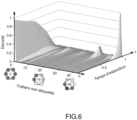
- the result of the method can also be produced 205 in the form of a three-dimensional histogram, the first dimension of which corresponds to the different possible equivalence classes (depending on the neighborhood and the type of class chosen to calculate a local descriptor), the second dimension is the exposure time and the third dimension is the intensity of the density of the local descriptors which can be expressed in probability or in occurrence of appearance of each equivalence class among the calculated local descriptors.
- FIG. 7 illustrates, for a particular image, an example of a sequence of global descriptors represented as images for different exposure times.
- An image comprises, for each pixel, the associated local descriptor which has a numerical value between 0 and the maximum number of possible equivalence classes.
- the result produced by the method according to the invention can be restored by being displayed on a screen or any human-machine interface.
- the image corresponding to the simulated maximum exposure time must be an image comprising pixels of all different values with a minimum number of bits per pixel and a minimum number of channels.
- the image corresponding to the effective acquisition time T pose is acquired in such a way that all its spectra differ significantly compared to a standard noise model. This leads to choosing a minimum number of spectral channels and photometric sensitivity.
- the invention is also suitable for images having less variability of the pixels at the acquisition time T pose but then leads to a less detailed description of the scene. This is for example the case of RGB images which typically present the same color several times in several places.
- another image is determined 206 from the image I initially acquired, which corresponds to the effective acquisition time or effective exposure time T pose .
- the image I is reduced to a predetermined dynamic range, for example 256 bits per pixel and to a single channel. Then, the number of spectral channels is progressively increased until a multispectral image is obtained for which all the pixels are different.
- this condition can be limited to the neighborhoods of each pixel of the image. In this alternative, the number of spectral channels is increased until an image is obtained for which all the pixels are different within each neighborhood of a pixel.
- the dynamics of the pixels may be different for different spectral channels.
- the dynamics i.e. the number of bits per pixel, may be fixed for all channels, with the number of bits per channel thereby being decreased as the number of channels increases.
- the image for a time T less than T pose is simulated by taking into account the known characteristics of the image sensor, following the method described in figure 5 .
- FIG 8 schematizes, on a flowchart, an alternative embodiment of the invention.
- the method as described in figure 5 is taken identically and then an additional step 207 of calculating the entropy of each global descriptor is added.
- FIG 9 represents, on three diagrams, the entropies as a function of the exposure time reduced to the normalized maximum exposure time (t varies between 0 and 1).
- On each diagram four entropy curves calculated respectively for the original resolution of the image, then for resolutions reduced by a factor of 2, 4 and 8 respectively, are represented. The maxima of each curve are identified by a point.
- the entropy has a relatively stable maximum depending on the resolution and the size of the unlabeled collar. We therefore see that there is an optimal exposure time for which the entropy of the local descriptor densities is maximal. We can deduce that the global descriptor associated with this optimal exposure time is the one that has the most information about the content of the initial image. We also note that the value of the maximum entropy increases with the size of the unlabeled necklace.
- FIG 10 illustrates a comparison of results obtained with on the one hand a calculation of descriptors according to the prior art LBP method (image 101) and on the other hand a calculation of descriptors according to the invention (images 110-160), for an example image.
- Image 100 shown on the figure 10 is the original image.
- Image 101 is the image composed of the local descriptors calculated for each pixel of image 100 by applying the LBP method.
- Images 110-160 are composed of the local descriptors calculated for each pixel of image 100 by applying the invention and by varying the exposure time with the values indicated below images 110-160.
- a possible application of the calculation of image descriptors 100 is to analyze the descriptors to segment and classify certain areas of the image and thus allow automatic recognition of certain areas of the image.
- the original image 100 is an image of a face.
- image 101 obtained by applying the LBP method, we notice that the information relating to the different characteristics of the face is mixed.
- some elements of the face are not segmentable, for example the nostrils, because the descriptors calculated for these elements are too close to descriptors calculated for other parts of the face. This is due, in particular, to the fact that the LBP method does not allow to select an optimal exposure time to obtain a maximum level of information for the calculated descriptors.
- the method according to the invention makes it possible to generate several descriptors 110-160 for different exposure times. Thanks to this aspect of the invention, an optimal exposure time can be selected according to the information that one seeks to classify in the image. Furthermore, the invention also makes it possible to jointly manage the different spectral channels of the image, which promotes better segmentation of the details of the image.
- the descriptor represented by image 140 allows a better segmentation of the nostrils than the descriptor represented by image 101.
- the method according to the invention can be implemented as a computer program, the method being applied to an image I previously acquired using an image sensor, for example a camera, a video camera or a multispectral camera.
- an image sensor for example a camera, a video camera or a multispectral camera.
- the invention may be embodied as a computer program having instructions for its execution.
- the computer program may be recorded on a recording medium readable by a processor.
- Reference to a computer program that, when executed, performs any of the functions described above is not limited to an application program executing on a single host computer. Rather, the terms computer program and software are used herein in a general sense to refer to any type of computer code (e.g., application software, firmware, microcode, or any other form of computer instruction) that can be used to program one or more processors to implement aspects of the techniques described herein.
- the computing means or resources may in particular be distributed (" Cloud computing "), possibly according to peer-to-peer technologies.
- the software code may be executed on any suitable processor (for example, a microprocessor) or processor core or a set of processors, whether provided in a single computing device or distributed among several computing devices (for example as possibly accessible in the environment of the device).
- the executable code of each program allowing the programmable device to implement the processes according to the invention, may be stored, for example, in the hard disk or in read-only memory.
- the program or programs may be loaded into one of the storage means of the device before being executed.
- the central unit may control and direct the execution of the instructions or portions of software code of the program or programs according to the invention, instructions which are stored in the hard disk or in the read-only memory or in the other aforementioned storage elements.
- results of the method according to the invention can be displayed on a screen or any other human-machine interface.
Landscapes
- Engineering & Computer Science (AREA)
- Physics & Mathematics (AREA)
- General Physics & Mathematics (AREA)
- Multimedia (AREA)
- Theoretical Computer Science (AREA)
- Computer Vision & Pattern Recognition (AREA)
- Health & Medical Sciences (AREA)
- Oral & Maxillofacial Surgery (AREA)
- Geometry (AREA)
- General Health & Medical Sciences (AREA)
- Human Computer Interaction (AREA)
- Image Analysis (AREA)
Claims (13)
- Verfahren, das von einem Computer ausgeführt wird, zum Berechnen eines globalen Deskriptors (DG) mindestens eines Teils eines zu beschreibenden Bildes (I), wobei der globale Deskriptor (DG) einen lokalen Deskriptor (DL) umfasst, der jedem Pixel des mindestens einen Teils des zu beschreibenden Bildes zugeordnet ist, wobei das Verfahren die folgenden Schritte umfasst:- Erhalten (206) eines ersten Bildes, das mit einer ersten Belichtungszeit erfasst wurde,- Simulieren (204) mindestens eines zweiten Bildes, das aus einer Bildaufnahme des ersten Bildes mit mindestens einer zweiten Belichtungszeit kürzer als die erste Belichtungszeit resultiert,- Berechnen eines globalen Deskriptors für mindestens einen Teil eines zu beschreibenden Bildes, der von dem ersten erfassten Bild und dem mindestens einen zweiten simulierten Bild genommen wurde, wobei das Verfahren das Berechnen aller lokalen Deskriptoren des globalen Deskriptors umfasst, durch:i. Definieren (201) einer Nachbarschaft des dem lokalen Deskriptor zugeordneten Pixels,ii. Zuordnen (202) eines Labels zu jedem Pixel der Nachbarschaft, wobei zwei Pixel mit verschiedenen Werten zwei unterschiedliche Label aufweisen, wobei zwei Pixel mit identischen Werten das gleiche Label aufweisen, wobei die Gesamtheit der Label der Nachbarschaft ein Muster (E) bildet,iii. Zuweisen (203) des Wertes des lokalen Deskriptors zu einem Vertreter einer Äquivalenzklasse, zu der das Muster (E) gehört,- Variieren der zweiten Belichtungszeit zwischen der ersten Belichtungszeit und Null und Wiederholen der Schritte des Simulierens mindestens eines zweiten Bildes und des Berechnens eines globalen Deskriptors.
- Verfahren zum Berechnen eines globalen Deskriptors nach Anspruch 1, wobei der Schritt des Simulierens (204) eines zweiten Bildes durch Verringern der Intensität der Pixel des ersten Bildes um einen Faktor gleich dem Verhältnis der ersten Belichtungszeit zu der zweiten Belichtungszeit ausgeführt wird.
- Verfahren zum Berechnen eines globalen Deskriptors nach einem der Ansprüche 1 oder 2, wobei der mindestens eine Teil des ersten erfassten Bildes aus Pixeln zusammengesetzt ist, deren Werte alle untereinander unterschiedlich sind.
- Verfahren zum Berechnen eines globalen Deskriptors nach Anspruch 3, umfassend einen Schritt zum Erzeugen (206) des ersten erfassten Bildes aus einem Multispektralbild durch Auswählen der Mindestanzahl an spektralen Komponenten des Bildes, die notwendig ist, um zu erreichen, dass der mindestens eine Teil des ersten erfassten Bildes aus Pixeln zusammengesetzt ist, deren Werte alle untereinander unterschiedlich sind.
- Verfahren zum Berechnen eines globalen Deskriptors nach einem der vorhergehenden Ansprüche, umfassend einen Schritt zum Anzeigen (205) der berechneten globalen Deskriptoren in Abhängigkeit von der zweiten Belichtungszeit.
- Verfahren zum Berechnen eines globalen Deskriptors nach einem der vorhergehenden Ansprüche, umfassend eine Entropieberechnung (207) der lokalen Deskriptoren für jeden berechneten globalen Deskriptor und das Auswählen (208) mindestens eines globalen Deskriptors aus mindestens einem zu beschreibenden Bild in Abhängigkeit von den berechneten Entropien.
- Verfahren zum Berechnen eines globalen Deskriptors nach Anspruch 6, umfassend das Auswählen (208) des globalen Deskriptors, dessen berechnete Entropie die höchste ist.
- Verfahren zum Berechnen eines globalen Deskriptors nach einem der vorhergehenden Ansprüche, wobei die Äquivalenzklasse eine Klasse von Labelketten ist, die rotationsinvariant sind.
- Verfahren zum Berechnen eines globalen Deskriptors nach Anspruch 8, wobei die Äquivalenzklasse eine Klasse von Labelketten ist, die des Weiteren invariant bezüglich der Permutation von Labelwerten sind.
- Verfahren zum Berechnen eines globalen Deskriptors nach einem der Ansprüche 8 oder 9, wobei die Äquivalenzklasse eine Klasse von Labelketten ist, die des Weiteren symmetrieinvariant sind.
- Verfahren zum Berechnen eines globalen Deskriptors nach einem der vorhergehenden Ansprüche, wobei ein zu beschreibendes Bild ein Multispektralbild ist, bei dem jedes Pixel mehrere Komponenten mit verschiedenen Wellenlängen aufweist.
- Computerprogramm, aufweisend Anweisungen zum Ausführen des Verfahrens zum Berechnen eines globalen Deskriptors nach einem der Ansprüche 1 bis 11, wenn das Programm von einem Prozessor ausgeführt wird.
- Speichermedium, das von einem Prozessor lesbar ist, auf dem ein Programm gespeichert ist, das Anweisungen zum Ausführen des Verfahrens zum Berechnen eines globalen Deskriptors nach einem der Ansprüche 1 bis 11 aufweist, wenn das Programm von einem Prozessor ausgeführt wird.
Applications Claiming Priority (2)
| Application Number | Priority Date | Filing Date | Title |
|---|---|---|---|
| FR1759814A FR3072806B1 (fr) | 2017-10-19 | 2017-10-19 | Procede de calcul d'un descripteur global d'une image |
| PCT/EP2018/078518 WO2019077026A1 (fr) | 2017-10-19 | 2018-10-18 | Procede de calcul d'un descripteur global d'une image |
Publications (2)
| Publication Number | Publication Date |
|---|---|
| EP3698274A1 EP3698274A1 (de) | 2020-08-26 |
| EP3698274B1 true EP3698274B1 (de) | 2025-01-29 |
Family
ID=61873370
Family Applications (1)
| Application Number | Title | Priority Date | Filing Date |
|---|---|---|---|
| EP18785974.9A Active EP3698274B1 (de) | 2017-10-19 | 2018-10-18 | Verfahren zur berechnung eines globalen deskriptors eines bildes |
Country Status (4)
| Country | Link |
|---|---|
| EP (1) | EP3698274B1 (de) |
| ES (1) | ES3011470T3 (de) |
| FR (1) | FR3072806B1 (de) |
| WO (1) | WO2019077026A1 (de) |
Families Citing this family (1)
| Publication number | Priority date | Publication date | Assignee | Title |
|---|---|---|---|---|
| FR3113432B1 (fr) | 2020-08-12 | 2022-08-05 | Thibault Autheman | Procede de classification automatique d’images |
Family Cites Families (2)
| Publication number | Priority date | Publication date | Assignee | Title |
|---|---|---|---|---|
| US6711293B1 (en) | 1999-03-08 | 2004-03-23 | The University Of British Columbia | Method and apparatus for identifying scale invariant features in an image and use of same for locating an object in an image |
| EP1850270B1 (de) | 2006-04-28 | 2010-06-09 | Toyota Motor Europe NV | Robuster Detektor und Deskriptor für einen Interessenspunkt |
-
2017
- 2017-10-19 FR FR1759814A patent/FR3072806B1/fr active Active
-
2018
- 2018-10-18 ES ES18785974T patent/ES3011470T3/es active Active
- 2018-10-18 EP EP18785974.9A patent/EP3698274B1/de active Active
- 2018-10-18 WO PCT/EP2018/078518 patent/WO2019077026A1/fr not_active Ceased
Also Published As
| Publication number | Publication date |
|---|---|
| FR3072806A1 (fr) | 2019-04-26 |
| FR3072806B1 (fr) | 2019-09-27 |
| EP3698274A1 (de) | 2020-08-26 |
| WO2019077026A1 (fr) | 2019-04-25 |
| ES3011470T3 (en) | 2025-04-07 |
Similar Documents
| Publication | Publication Date | Title |
|---|---|---|
| Douarre et al. | Novel data augmentation strategies to boost supervised segmentation of plant disease | |
| FR2974433A1 (fr) | Evaluation de la qualite d'image | |
| FR3103938A1 (fr) | Procédé de détection d’au moins un élément d’intérêt visible dans une image d’entrée au moyen d’un réseau de neurones à convolution | |
| BE1025504B1 (fr) | Système de reconnaissance de formes | |
| Dadhich | Practical Computer Vision: Extract Insightful Information from Images Using TensorFlow, Keras, and OpenCV | |
| WO2013057210A2 (fr) | Methode de simulation d'une chevelure a colorimetrie variable et dispositif pour la mise en œuvre de la methode | |
| Salman et al. | Image enhancement using convolution neural networks | |
| FR3087033A1 (fr) | Procedes d'apprentissage de parametres d'un reseau de neurones a convolution et de detection d'elements d'interet visibles dans une image | |
| EP3570213A1 (de) | Verfahren zur erkennung von schriftzeichen | |
| EP3633544A1 (de) | Assoziationsverfahren von wichtigen elementen, die in einem video zu sehen sind | |
| Douarre et al. | On the value of ctis imagery for neural-network-based classification: a simulation perspective | |
| Achanta et al. | Digital image processing | |
| Singh et al. | A review on computational low-light image enhancement models: Challenges, benchmarks, and perspectives | |
| EP3966739B1 (de) | Automatisches bildanalyseverfahren zur automatischen erkennung von mindestens einer seltenen eigenschaft | |
| FR3126529A1 (fr) | Procédé de mise en relation d’une image candidate avec une image de référence. | |
| FR3072806B1 (fr) | Procede de calcul d'un descripteur global d'une image | |
| EP3195259B1 (de) | Verfahren zur identifizierung der anisotropie der textur eines digitalen bildes | |
| EP4091098B1 (de) | Verfahren zur verarbeitung eines kandidatenbildes | |
| WO2021123209A1 (fr) | Procédé de segmentation d'une image d'entrée représentant un document comportant des informations structurées | |
| EP3545496B1 (de) | Verfahren zur charakterisierung der anisotropie der textur eines digitalen bildes | |
| Crisci et al. | Neural network for archaeological glyph detection | |
| Ajuluchukwu et al. | Low-resolution image enhancement using generative adversarial networks | |
| Thepade et al. | Thepade’s sorted block truncation coding applied on local binary patterns of images for splicing identification using machine learning classifiers | |
| EP3491582B1 (de) | Verfahren zum vergleichen von objekten, die in der nähe voneinander positioniert sind, und zugehörige vorrichtung | |
| FR3112228A1 (fr) | Dispositif et procédé pour générer un masque de la silhouette du profil d’une structure |
Legal Events
| Date | Code | Title | Description |
|---|---|---|---|
| STAA | Information on the status of an ep patent application or granted ep patent |
Free format text: STATUS: UNKNOWN |
|
| STAA | Information on the status of an ep patent application or granted ep patent |
Free format text: STATUS: THE INTERNATIONAL PUBLICATION HAS BEEN MADE |
|
| PUAI | Public reference made under article 153(3) epc to a published international application that has entered the european phase |
Free format text: ORIGINAL CODE: 0009012 |
|
| STAA | Information on the status of an ep patent application or granted ep patent |
Free format text: STATUS: REQUEST FOR EXAMINATION WAS MADE |
|
| 17P | Request for examination filed |
Effective date: 20200414 |
|
| AK | Designated contracting states |
Kind code of ref document: A1 Designated state(s): AL AT BE BG CH CY CZ DE DK EE ES FI FR GB GR HR HU IE IS IT LI LT LU LV MC MK MT NL NO PL PT RO RS SE SI SK SM TR |
|
| AX | Request for extension of the european patent |
Extension state: BA ME |
|
| DAV | Request for validation of the european patent (deleted) | ||
| DAX | Request for extension of the european patent (deleted) | ||
| STAA | Information on the status of an ep patent application or granted ep patent |
Free format text: STATUS: EXAMINATION IS IN PROGRESS |
|
| 17Q | First examination report despatched |
Effective date: 20220309 |
|
| REG | Reference to a national code |
Ref country code: DE Ref legal event code: R079 Free format text: PREVIOUS MAIN CLASS: G06K0009460000 Ipc: G06V0010440000 Ref country code: DE Ref legal event code: R079 Ref document number: 602018078849 Country of ref document: DE Free format text: PREVIOUS MAIN CLASS: G06K0009460000 Ipc: G06V0010440000 |
|
| GRAP | Despatch of communication of intention to grant a patent |
Free format text: ORIGINAL CODE: EPIDOSNIGR1 |
|
| STAA | Information on the status of an ep patent application or granted ep patent |
Free format text: STATUS: GRANT OF PATENT IS INTENDED |
|
| RIC1 | Information provided on ipc code assigned before grant |
Ipc: G06V 40/16 20220101ALN20240904BHEP Ipc: G06V 10/46 20220101ALI20240904BHEP Ipc: G06V 10/44 20220101AFI20240904BHEP |
|
| INTG | Intention to grant announced |
Effective date: 20240918 |
|
| RAP3 | Party data changed (applicant data changed or rights of an application transferred) |
Owner name: COMMISSARIAT A L'ENERGIE ATOMIQUE ET AUX ENERGIESALTERNATIVES |
|
| GRAS | Grant fee paid |
Free format text: ORIGINAL CODE: EPIDOSNIGR3 |
|
| GRAA | (expected) grant |
Free format text: ORIGINAL CODE: 0009210 |
|
| STAA | Information on the status of an ep patent application or granted ep patent |
Free format text: STATUS: THE PATENT HAS BEEN GRANTED |
|
| AK | Designated contracting states |
Kind code of ref document: B1 Designated state(s): AL AT BE BG CH CY CZ DE DK EE ES FI FR GB GR HR HU IE IS IT LI LT LU LV MC MK MT NL NO PL PT RO RS SE SI SK SM TR |
|
| REG | Reference to a national code |
Ref country code: GB Ref legal event code: FG4D Free format text: NOT ENGLISH |
|
| REG | Reference to a national code |
Ref country code: CH Ref legal event code: EP |
|
| REG | Reference to a national code |
Ref country code: DE Ref legal event code: R096 Ref document number: 602018078849 Country of ref document: DE |
|
| REG | Reference to a national code |
Ref country code: IE Ref legal event code: FG4D Free format text: LANGUAGE OF EP DOCUMENT: FRENCH |
|
| REG | Reference to a national code |
Ref country code: ES Ref legal event code: FG2A Ref document number: 3011470 Country of ref document: ES Kind code of ref document: T3 Effective date: 20250407 |
|
| REG | Reference to a national code |
Ref country code: NL Ref legal event code: MP Effective date: 20250129 |
|
| PG25 | Lapsed in a contracting state [announced via postgrant information from national office to epo] |
Ref country code: NL Free format text: LAPSE BECAUSE OF FAILURE TO SUBMIT A TRANSLATION OF THE DESCRIPTION OR TO PAY THE FEE WITHIN THE PRESCRIBED TIME-LIMIT Effective date: 20250129 |
|
| PG25 | Lapsed in a contracting state [announced via postgrant information from national office to epo] |
Ref country code: RS Free format text: LAPSE BECAUSE OF FAILURE TO SUBMIT A TRANSLATION OF THE DESCRIPTION OR TO PAY THE FEE WITHIN THE PRESCRIBED TIME-LIMIT Effective date: 20250429 |
|
| PG25 | Lapsed in a contracting state [announced via postgrant information from national office to epo] |
Ref country code: FI Free format text: LAPSE BECAUSE OF FAILURE TO SUBMIT A TRANSLATION OF THE DESCRIPTION OR TO PAY THE FEE WITHIN THE PRESCRIBED TIME-LIMIT Effective date: 20250129 |
|
| PG25 | Lapsed in a contracting state [announced via postgrant information from national office to epo] |
Ref country code: PL Free format text: LAPSE BECAUSE OF FAILURE TO SUBMIT A TRANSLATION OF THE DESCRIPTION OR TO PAY THE FEE WITHIN THE PRESCRIBED TIME-LIMIT Effective date: 20250129 |
|
| REG | Reference to a national code |
Ref country code: LT Ref legal event code: MG9D |
|
| PG25 | Lapsed in a contracting state [announced via postgrant information from national office to epo] |
Ref country code: IS Free format text: LAPSE BECAUSE OF FAILURE TO SUBMIT A TRANSLATION OF THE DESCRIPTION OR TO PAY THE FEE WITHIN THE PRESCRIBED TIME-LIMIT Effective date: 20250529 Ref country code: NO Free format text: LAPSE BECAUSE OF FAILURE TO SUBMIT A TRANSLATION OF THE DESCRIPTION OR TO PAY THE FEE WITHIN THE PRESCRIBED TIME-LIMIT Effective date: 20250429 |
|
| REG | Reference to a national code |
Ref country code: AT Ref legal event code: MK05 Ref document number: 1764227 Country of ref document: AT Kind code of ref document: T Effective date: 20250129 |
|
| PG25 | Lapsed in a contracting state [announced via postgrant information from national office to epo] |
Ref country code: HR Free format text: LAPSE BECAUSE OF FAILURE TO SUBMIT A TRANSLATION OF THE DESCRIPTION OR TO PAY THE FEE WITHIN THE PRESCRIBED TIME-LIMIT Effective date: 20250129 |
|
| PG25 | Lapsed in a contracting state [announced via postgrant information from national office to epo] |
Ref country code: LV Free format text: LAPSE BECAUSE OF FAILURE TO SUBMIT A TRANSLATION OF THE DESCRIPTION OR TO PAY THE FEE WITHIN THE PRESCRIBED TIME-LIMIT Effective date: 20250129 Ref country code: PT Free format text: LAPSE BECAUSE OF FAILURE TO SUBMIT A TRANSLATION OF THE DESCRIPTION OR TO PAY THE FEE WITHIN THE PRESCRIBED TIME-LIMIT Effective date: 20250529 |
|
| PG25 | Lapsed in a contracting state [announced via postgrant information from national office to epo] |
Ref country code: BG Free format text: LAPSE BECAUSE OF FAILURE TO SUBMIT A TRANSLATION OF THE DESCRIPTION OR TO PAY THE FEE WITHIN THE PRESCRIBED TIME-LIMIT Effective date: 20250129 Ref country code: GR Free format text: LAPSE BECAUSE OF FAILURE TO SUBMIT A TRANSLATION OF THE DESCRIPTION OR TO PAY THE FEE WITHIN THE PRESCRIBED TIME-LIMIT Effective date: 20250430 |
|
| PG25 | Lapsed in a contracting state [announced via postgrant information from national office to epo] |
Ref country code: AT Free format text: LAPSE BECAUSE OF FAILURE TO SUBMIT A TRANSLATION OF THE DESCRIPTION OR TO PAY THE FEE WITHIN THE PRESCRIBED TIME-LIMIT Effective date: 20250129 |
|
| PG25 | Lapsed in a contracting state [announced via postgrant information from national office to epo] |
Ref country code: SE Free format text: LAPSE BECAUSE OF FAILURE TO SUBMIT A TRANSLATION OF THE DESCRIPTION OR TO PAY THE FEE WITHIN THE PRESCRIBED TIME-LIMIT Effective date: 20250129 |
|
| PG25 | Lapsed in a contracting state [announced via postgrant information from national office to epo] |
Ref country code: SM Free format text: LAPSE BECAUSE OF FAILURE TO SUBMIT A TRANSLATION OF THE DESCRIPTION OR TO PAY THE FEE WITHIN THE PRESCRIBED TIME-LIMIT Effective date: 20250129 |
|
| PG25 | Lapsed in a contracting state [announced via postgrant information from national office to epo] |
Ref country code: DK Free format text: LAPSE BECAUSE OF FAILURE TO SUBMIT A TRANSLATION OF THE DESCRIPTION OR TO PAY THE FEE WITHIN THE PRESCRIBED TIME-LIMIT Effective date: 20250129 |
|
| PG25 | Lapsed in a contracting state [announced via postgrant information from national office to epo] |
Ref country code: CZ Free format text: LAPSE BECAUSE OF FAILURE TO SUBMIT A TRANSLATION OF THE DESCRIPTION OR TO PAY THE FEE WITHIN THE PRESCRIBED TIME-LIMIT Effective date: 20250129 Ref country code: EE Free format text: LAPSE BECAUSE OF FAILURE TO SUBMIT A TRANSLATION OF THE DESCRIPTION OR TO PAY THE FEE WITHIN THE PRESCRIBED TIME-LIMIT Effective date: 20250129 |
|
| PG25 | Lapsed in a contracting state [announced via postgrant information from national office to epo] |
Ref country code: RO Free format text: LAPSE BECAUSE OF FAILURE TO SUBMIT A TRANSLATION OF THE DESCRIPTION OR TO PAY THE FEE WITHIN THE PRESCRIBED TIME-LIMIT Effective date: 20250129 |
|
| PG25 | Lapsed in a contracting state [announced via postgrant information from national office to epo] |
Ref country code: SK Free format text: LAPSE BECAUSE OF FAILURE TO SUBMIT A TRANSLATION OF THE DESCRIPTION OR TO PAY THE FEE WITHIN THE PRESCRIBED TIME-LIMIT Effective date: 20250129 |
|
| REG | Reference to a national code |
Ref country code: DE Ref legal event code: R097 Ref document number: 602018078849 Country of ref document: DE |
|
| REG | Reference to a national code |
Ref country code: CH Ref legal event code: U11 Free format text: ST27 STATUS EVENT CODE: U-0-0-U10-U11 (AS PROVIDED BY THE NATIONAL OFFICE) Effective date: 20251101 |
|
| PLBE | No opposition filed within time limit |
Free format text: ORIGINAL CODE: 0009261 |
|
| STAA | Information on the status of an ep patent application or granted ep patent |
Free format text: STATUS: NO OPPOSITION FILED WITHIN TIME LIMIT |
|
| 26N | No opposition filed |
Effective date: 20251030 |
|
| PGFP | Annual fee paid to national office [announced via postgrant information from national office to epo] |
Ref country code: DE Payment date: 20251020 Year of fee payment: 8 |
|
| PGFP | Annual fee paid to national office [announced via postgrant information from national office to epo] |
Ref country code: IT Payment date: 20251031 Year of fee payment: 8 |
|
| PGFP | Annual fee paid to national office [announced via postgrant information from national office to epo] |
Ref country code: FR Payment date: 20251024 Year of fee payment: 8 |
|
| PGFP | Annual fee paid to national office [announced via postgrant information from national office to epo] |
Ref country code: CH Payment date: 20251101 Year of fee payment: 8 |
|
| PGFP | Annual fee paid to national office [announced via postgrant information from national office to epo] |
Ref country code: ES Payment date: 20251114 Year of fee payment: 8 |