EP3696670B1 - Verteiltes computersystem und verfahren zum betrieb davon - Google Patents
Verteiltes computersystem und verfahren zum betrieb davon Download PDFInfo
- Publication number
- EP3696670B1 EP3696670B1 EP19020069.1A EP19020069A EP3696670B1 EP 3696670 B1 EP3696670 B1 EP 3696670B1 EP 19020069 A EP19020069 A EP 19020069A EP 3696670 B1 EP3696670 B1 EP 3696670B1
- Authority
- EP
- European Patent Office
- Prior art keywords
- computing nodes
- computational
- value
- partial
- computing
- Prior art date
- Legal status (The legal status is an assumption and is not a legal conclusion. Google has not performed a legal analysis and makes no representation as to the accuracy of the status listed.)
- Active
Links
Images
Classifications
-
- H—ELECTRICITY
- H04—ELECTRIC COMMUNICATION TECHNIQUE
- H04L—TRANSMISSION OF DIGITAL INFORMATION, e.g. TELEGRAPHIC COMMUNICATION
- H04L9/00—Cryptographic mechanisms or cryptographic arrangements for secret or secure communications; Network security protocols
- H04L9/08—Key distribution or management, e.g. generation, sharing or updating, of cryptographic keys or passwords
- H04L9/0816—Key establishment, i.e. cryptographic processes or cryptographic protocols whereby a shared secret becomes available to two or more parties, for subsequent use
- H04L9/085—Secret sharing or secret splitting, e.g. threshold schemes
-
- G—PHYSICS
- G06—COMPUTING OR CALCULATING; COUNTING
- G06F—ELECTRIC DIGITAL DATA PROCESSING
- G06F9/00—Arrangements for program control, e.g. control units
- G06F9/06—Arrangements for program control, e.g. control units using stored programs, i.e. using an internal store of processing equipment to receive or retain programs
- G06F9/46—Multiprogramming arrangements
- G06F9/48—Program initiating; Program switching, e.g. by interrupt
- G06F9/4806—Task transfer initiation or dispatching
- G06F9/4843—Task transfer initiation or dispatching by program, e.g. task dispatcher, supervisor, operating system
- G06F9/4881—Scheduling strategies for dispatcher, e.g. round robin, multi-level priority queues
-
- G—PHYSICS
- G06—COMPUTING OR CALCULATING; COUNTING
- G06F—ELECTRIC DIGITAL DATA PROCESSING
- G06F9/00—Arrangements for program control, e.g. control units
- G06F9/06—Arrangements for program control, e.g. control units using stored programs, i.e. using an internal store of processing equipment to receive or retain programs
- G06F9/46—Multiprogramming arrangements
- G06F9/50—Allocation of resources, e.g. of the central processing unit [CPU]
- G06F9/5061—Partitioning or combining of resources
- G06F9/5066—Algorithms for mapping a plurality of inter-dependent sub-tasks onto a plurality of physical CPUs
-
- H—ELECTRICITY
- H04—ELECTRIC COMMUNICATION TECHNIQUE
- H04L—TRANSMISSION OF DIGITAL INFORMATION, e.g. TELEGRAPHIC COMMUNICATION
- H04L9/00—Cryptographic mechanisms or cryptographic arrangements for secret or secure communications; Network security protocols
- H04L9/08—Key distribution or management, e.g. generation, sharing or updating, of cryptographic keys or passwords
- H04L9/0861—Generation of secret information including derivation or calculation of cryptographic keys or passwords
-
- H—ELECTRICITY
- H04—ELECTRIC COMMUNICATION TECHNIQUE
- H04L—TRANSMISSION OF DIGITAL INFORMATION, e.g. TELEGRAPHIC COMMUNICATION
- H04L9/00—Cryptographic mechanisms or cryptographic arrangements for secret or secure communications; Network security protocols
- H04L9/08—Key distribution or management, e.g. generation, sharing or updating, of cryptographic keys or passwords
- H04L9/0861—Generation of secret information including derivation or calculation of cryptographic keys or passwords
- H04L9/0869—Generation of secret information including derivation or calculation of cryptographic keys or passwords involving random numbers or seeds
-
- H—ELECTRICITY
- H04—ELECTRIC COMMUNICATION TECHNIQUE
- H04L—TRANSMISSION OF DIGITAL INFORMATION, e.g. TELEGRAPHIC COMMUNICATION
- H04L9/00—Cryptographic mechanisms or cryptographic arrangements for secret or secure communications; Network security protocols
- H04L9/14—Cryptographic mechanisms or cryptographic arrangements for secret or secure communications; Network security protocols using a plurality of keys or algorithms
-
- H—ELECTRICITY
- H04—ELECTRIC COMMUNICATION TECHNIQUE
- H04L—TRANSMISSION OF DIGITAL INFORMATION, e.g. TELEGRAPHIC COMMUNICATION
- H04L9/00—Cryptographic mechanisms or cryptographic arrangements for secret or secure communications; Network security protocols
- H04L9/30—Public key, i.e. encryption algorithm being computationally infeasible to invert or user's encryption keys not requiring secrecy
- H04L9/3066—Public key, i.e. encryption algorithm being computationally infeasible to invert or user's encryption keys not requiring secrecy involving algebraic varieties, e.g. elliptic or hyper-elliptic curves
-
- H—ELECTRICITY
- H04—ELECTRIC COMMUNICATION TECHNIQUE
- H04L—TRANSMISSION OF DIGITAL INFORMATION, e.g. TELEGRAPHIC COMMUNICATION
- H04L9/00—Cryptographic mechanisms or cryptographic arrangements for secret or secure communications; Network security protocols
- H04L9/32—Cryptographic mechanisms or cryptographic arrangements for secret or secure communications; Network security protocols including means for verifying the identity or authority of a user of the system or for message authentication, e.g. authorization, entity authentication, data integrity or data verification, non-repudiation, key authentication or verification of credentials
- H04L9/3218—Cryptographic mechanisms or cryptographic arrangements for secret or secure communications; Network security protocols including means for verifying the identity or authority of a user of the system or for message authentication, e.g. authorization, entity authentication, data integrity or data verification, non-repudiation, key authentication or verification of credentials using proof of knowledge, e.g. Fiat-Shamir, GQ, Schnorr, ornon-interactive zero-knowledge proofs
- H04L9/3221—Cryptographic mechanisms or cryptographic arrangements for secret or secure communications; Network security protocols including means for verifying the identity or authority of a user of the system or for message authentication, e.g. authorization, entity authentication, data integrity or data verification, non-repudiation, key authentication or verification of credentials using proof of knowledge, e.g. Fiat-Shamir, GQ, Schnorr, ornon-interactive zero-knowledge proofs interactive zero-knowledge proofs
-
- H—ELECTRICITY
- H04—ELECTRIC COMMUNICATION TECHNIQUE
- H04L—TRANSMISSION OF DIGITAL INFORMATION, e.g. TELEGRAPHIC COMMUNICATION
- H04L9/00—Cryptographic mechanisms or cryptographic arrangements for secret or secure communications; Network security protocols
- H04L9/32—Cryptographic mechanisms or cryptographic arrangements for secret or secure communications; Network security protocols including means for verifying the identity or authority of a user of the system or for message authentication, e.g. authorization, entity authentication, data integrity or data verification, non-repudiation, key authentication or verification of credentials
- H04L9/3236—Cryptographic mechanisms or cryptographic arrangements for secret or secure communications; Network security protocols including means for verifying the identity or authority of a user of the system or for message authentication, e.g. authorization, entity authentication, data integrity or data verification, non-repudiation, key authentication or verification of credentials using cryptographic hash functions
- H04L9/3239—Cryptographic mechanisms or cryptographic arrangements for secret or secure communications; Network security protocols including means for verifying the identity or authority of a user of the system or for message authentication, e.g. authorization, entity authentication, data integrity or data verification, non-repudiation, key authentication or verification of credentials using cryptographic hash functions involving non-keyed hash functions, e.g. modification detection codes [MDCs], MD5, SHA or RIPEMD
-
- H—ELECTRICITY
- H04—ELECTRIC COMMUNICATION TECHNIQUE
- H04L—TRANSMISSION OF DIGITAL INFORMATION, e.g. TELEGRAPHIC COMMUNICATION
- H04L9/00—Cryptographic mechanisms or cryptographic arrangements for secret or secure communications; Network security protocols
- H04L9/50—Cryptographic mechanisms or cryptographic arrangements for secret or secure communications; Network security protocols using hash chains, e.g. blockchains or hash trees
Definitions
- the present disclosure relates generally to distributed computation systems, and methods of operating a distributed computation system to solve a given computational task, for example a computation task associated with data representative of real physical quantities representative of a real physical environment, but not limited thereto; and more specifically, to systems and methods of establishing consensus related to a solution of the computational task.
- computing systems can now perform multitudes of computational tasks with increasing efficiency.
- computing systems employ several resources, such as processing units, network arrangements, to perform the computational tasks.
- computing systems may require additional resources for successfully performing the computational tasks.
- computing systems may employ a distributed architecture to procure external assistance (namely, services, solutions and the like) from resources at remote locations.
- external assistance namely, services, solutions and the like
- the resources at remote locations are not always reliable. Therefore, there is a need to establish consensus associated with the assistance provided by the resources.
- Document WO 2018/203186 discloses a method and device for generating an elliptic curve digital signature algorithm signature (r, w).
- the method includes forming, by a node, a signing group with other nodes, obtaining, by the node, based on a secure random number, a) a multiplicative inverse of the secure random number; and b) the first signature component, r, wherein the first signature component is determined based on the secure random number and an elliptic curve generator point.
- the method includes determining, by the node, a partial signature based on a private secret share, the multiplicative inverse of the secure random number and the first signature component; receiving, by the node, partial signatures from other nodes of the signing group; and generating, by the node, the second signature component, w, based on determined and received partial signatures.
- the present disclosure seeks to provide a distributed computation system that establishes consensus related to a computational value of a computational task, wherein the distributed computation system includes a plurality of computing nodes.
- the system employs a non-interactive approach for establishing consensus within the system; such a consensus is important for stable operation of the system, for example when different parts of the system are functioning in an asynchronous or pseudo-asynchronous manner.
- the present disclosure seeks to improve how a distributed computer network functions in terms of reliability and robustness, speed, security when establishing consensus related to a solution of the computational task.
- the present disclosure also seeks to provide a method of (for) operating a distributed computation system that establishes consensus related to a computational value of a computational task, wherein the distributed computational system includes a plurality of computing nodes that function, for example, in an asynchronous manner or pseudo-asynchronous manner; by "pseudo-asynchronous" means, for example, that certain portions of the computing nodes function in a synchronous manner.
- the method disclosed herein utilizes a non-interactive approach for establishing the consensus.
- the method disclosed herein requires less time for establishing consensus as the plurality of computing nodes need not to interact; such rapidity to establish consensus renders the computing nodes more stable when in operation and also potentially more temporally responsive.
- a non-interactive approach of establishing consensus brings security by eliminating use of an unsecured channel for communication among the plurality of computing nodes.
- An aim of the present disclosure is to provide an at least partial solution that overcomes, at least partially the problems encountered in prior art, and provides a seamless, more secure, faster and more efficient approach for establishing consensus within a distributed computation system.
- an embodiment of the present disclosure provides a distributed computation system that establishes consensus related to a computational value of a computational task
- an embodiment of the present disclosure provides a method, as defined in claim 6, of operating a distributed computation system according to claim 1.
- Embodiments of the present disclosure substantially eliminate, or at least partially address, the aforementioned problems in the prior art, and provide a more reliable, faster and more robust approach of establishing consensus, related to a solution of a computational task, within the system.
- the present disclosure is of advantage in that it provides a more secure, more efficient, more effective and more robust approach using a distributed computation system for solving computational tasks within a distributed economy or distributed resource control system, for example in a manufacturing environment.
- an underlined number is employed to represent an item over which the underlined number is positioned or an item to which the underlined number is adjacent.
- a non-underlined number relates to an item identified by a line linking the non-underlined number to the item. When a number is non-underlined and accompanied by an associated arrow, the non-underlined number is used to identify a general item at which the arrow is pointing.
- an embodiment of the present disclosure provides a distributed computation system that establishes consensus related to a computational value of a computational task, as defined in claim 1.
- an embodiment of the present disclosure provides a method, as defined in claim 6, of operating a distributed computation system that establishes consensus related to a computational value of a computational task, according to claim 1.
- the present disclosure provides a solution to a technical problem of establishing consensus regarding a computational value of computational task within a distributed computation system.
- the distributed computational system includes a plurality of computing nodes for carrying out different operations within the system.
- the distributed computation system establishes a consensus related to a computational value determined as a solution of the computational task.
- the non-interactive approach of the system results in a secured, faster and time efficient solution of computational task.
- such a correctness proof of the computational value has a reduced size that consumes a lower network bandwidth while being communicated and associated reduced energy dissipation.
- the distributed nature of the system improves reliability, availability and responsiveness thereof.
- the distributed computation system is more robust and has, for example, a substantially reduced downtime.
- system and method proposed herein are susceptible to being implemented using conventional hardware devices whose technical operation is implemented pursuant to the present disclosure; embodiments of the present disclosure cause the conventional hardware devices mutually to interact in a novel manner that improves their technical performance, as aforementioned.
- the distributed computation system as disclosed herein relates to the system that, when in operation. establishes a consensus for correctness of work done for solving the computational task.
- the distributed (namely, decentralized) nature of the system substantially reduces overall downtime of the system when in operation.
- the distributed computation system includes the plurality of computing nodes, wherein the plurality of computing nodes carries out a plurality of operations such as a mathematical operation, a Boolean operation, a logical operation, a decision-making operation and so forth within the system for solving the computational task.
- the computational task as used herein relates to a mathematical operation, a puzzle, a Boolean operation, a logical operation, a decision-making operation and the like.
- the computational task is optionally a pseudorandom function (namely, a PRF) that is evaluated and solved by means of the plurality of computing nodes that are mutually distrustful in nature.
- a pseudorandom function namely, a PRF
- the pseudorandom function is an efficient, deterministic function (namely, computable in polynomial time) that maps two distinct sets (namely, domain and range) and behaves as a truly random function.
- the pseudorandom function used in the system is a distributed verifiable random function (namely, DVRF), wherein a publicly verifiable proofs of correctness of its output is used to validate work done by the plurality of computing nodes.
- An aim of a distributed verifiable random function is to compute, in a spatially distributed manner, a pseudorandom function f sk (x) for a given input x, wherein sk is a secret key that is not explicitly available to any computing node.
- a public key pk corresponding to the secret key sk is collectively computed by the plurality of computing nodes.
- a verifiability of work done by a plurality of computing nodes increases reliability and security of operation of the system.
- System reliability and security are both technical effects.
- the plurality of computing nodes relates to computational elements that are operable to respond to, and processes, instructions that drive the distributed computational system.
- the plurality of computing nodes includes, but are not limited to, a microprocessor, a microcontroller, a complex instruction set computing (CISC) microprocessor, an application-specific integrated circuit (ASIC), a configuration of customized logic devices, a reduced instruction set (RISC) microprocessor, a very long instruction word (VLIW) microprocessor, an artificial intelligence (AI) computing engine based on hierarchical networks of variable-state machines, or any other type of processing circuit.
- the plurality of computing nodes can be one or more individual processors, processing devices and various elements associated with a processing device that may be shared by other processing devices.
- the plurality of computing nodes, processing devices and elements are arranged in various architectures for responding to and processing the instructions that drive the system. Beneficially, such arrangement of the plurality if computing nodes provides adaptability and flexibility to the distributed computing system.
- the plurality of computing nodes is communicably coupled to each other via a data communication network.
- the data communication network allows for communication among the plurality of computing nodes.
- each of the plurality of computing nodes are capable of communicating with other computing nodes via the data communication network.
- the data communication network relates to an arrangement of interconnected, programmable and/or non-programmable components that, when in operation, facilitate data communication between one or more electronic devices and/or databases.
- the data communication network may include, but is not limited to, a peer-to-peer (P2P) network, ring communication networks, a hybrid peer-to-peer network, local area networks (LANs), radio access networks (RANs), metropolitan area networks (MANs), wide area networks (WANs), all of or a portion of a public network such as global computer network known as the Internet ® , a private network, a cellular network and any other communication system.
- P2P peer-to-peer
- ring communication networks a hybrid peer-to-peer network
- LANs local area networks
- RANs radio access networks
- MANs metropolitan area networks
- WANs wide area networks
- the data communication network employs wired or wireless communication that can be carried out via one or more known protocols, including, but not limited to, Internet Protocol (IP), Wireless Access Protocol (WAP), Frame Relay, or Asynchronous Transfer Mode (ATM), Bluetooth ® an such like.
- IP Internet Protocol
- WAP Wireless Access Protocol
- ATM Asynchronous Transfer Mode
- Bluetooth ® an such like.
- any other suitable protocols using voice, video, data, or combinations thereof, can also be employed, for example VoIP.
- the data communication network is implemented as a distributed peer-to-peer (P2P) network of interconnected plurality of computing nodes.
- P2P distributed peer-to-peer
- the plurality of computing nodes participates in an interactive distributed key generation.
- the plurality of computing nodes participates in an interactive distributed key generation protocol, wherein each of the plurality of computing nodes interact with other computing nodes using a confidential and authenticated channel.
- use of confidential and authenticated channel provides an enhanced security to the system.
- use of confidential and authenticated channel prevents communication among the plurality of computing nodes from attacks by malicious and fraudulent elements trying to attack the data communication network.
- a secret key X i is known only to corresponding to a computing node P i .
- the plurality of computing nodes participates in Non-Interactive and Information-Theoretic Secure Verifiable Secret Sharing.
- Non-Interactive and Information-Theoretic Secure Verifiable Secret Sharing enable sharing of data between two or more parties lacking mutual trust.
- a leader from the plurality of computing nodes is selected that facilitates sharing of secret data.
- the Non-Interactive and Information-Theoretic Secure Verifiable Secret Sharing is implemented over a cryptographically secure elliptic curve group (G, g, q), wherein G denotes the elliptic curve group, g is generator of the elliptic curve group, q is a prime that divides the order of the elliptic curve group G.
- ECC Elliptical curve cryptography
- the plurality of computing nodes evaluates and solve the computational task. Subsequently, the plurality of computing nodes provides the computational value of the computational task, wherein the computational value of the computational task relates to an output (namely, a solution, a result) obtained by solving the computational task.
- the distributed computing system establishes a consensus related to the computational value of the computational task.
- the consensus related to the computational value of the computational task refers to an agreement within the system regarding truthfulness and correctness of the computational value of the computational task. Furthermore, the distributed computation system distributes the computational task to the plurality of computing nodes.
- the computational task is distributed to specific computing nodes selected from the plurality of computing nodes.
- computing nodes from the plurality of computing nodes opt themselves to receive the computational task.
- computing nodes from the plurality of computing nodes that partially evaluate the computational task form the first set of computing nodes.
- the first set of computing nodes includes at least one of the pluralities of computing nodes.
- each of the first set of computing nodes performs the partial evaluation of the computational task.
- Each of the computing nodes in the plurality of computing nodes that have received the computational task perform an analysis and/or operations (such as a mathematical process, a Boolean process and the like) on the computational task.
- each of the computing nodes in the first set of computing nodes generates a partial evaluation of the computational task.
- the first set of computing nodes generate partial evaluations of the computational task equal to a number of computing nodes in the first set of computing nodes.
- solving the computational task partially reduces a time period required to solve the computational task as the computational value is computed using the partial evaluations generated by the first set of computing nodes.
- the partial evaluation of the computational task includes one or more operations to be performed to solve the computational task.
- the first set of computing nodes perform the partial evaluation of the computational task using a partial evaluation algorithm.
- a partial evaluation algorithm Given a plaintext input x, at least t+1 computing nodes from the set C perform a partial pseudorandom function computation.
- PartialEval(sk i , vk i , x) is a partial evaluation algorithm that takes as input server S i , a secret key sk i and a verification key vk i , and a plaintext input x.
- H(g 1 , 92, Y1, Y2) (PrEq H , VerifyEq H ) for g 1 , g
- the zero-knowledge proof system discloses a method by which one party (a prover) proves to another party (a verifier) that they know a value x, without conveying any information apart from a fact that they know the value x.
- An essence of zero-knowledge proofs is that it is trivial to prove that one proves possession of an information without revealing the information itself or any additional information.
- the first set of computing nodes generate partial evaluations of the computational task equal to a number of computing nodes in the first set of computing nodes.
- generation of partial evaluations does not require any interaction among the plurality of computing nodes. Therefore, such generation of partial evaluations requires less time, less communication bandwidth used, and less energy dissipated, and is secured as no insecure channel for communication is used.
- the first set of computing nodes store the partial evaluations of the computational task in the ledger arrangement associated with the plurality of computing nodes.
- the ledger arrangement is implemented as a distributed database.
- Such a distributed ledger arrangement optionally exists as a plurality of copies thereof on computing nodes within the system that are optionally arranged at different geographical locations.
- Such a ledger arrangement is optionally implemented using a public and non-permissioned ledger.
- the partial evaluations stored in the ledger arrangement are available to the plurality of computing nodes.
- storing the partial evaluations of the computational task increases an ease of access and availability of the partial computations by the plurality of computing nodes.
- the computing nodes access the partial evaluations directly from the ledger arrangement, thereby reducing time required for accessing the partial evaluations.
- the first set of computing nodes store the partial evaluations in a single block on the ledger arrangement.
- each of the first set of plurality of computing nodes store the partial evaluations on different blocks on the ledger arrangement.
- each of the blocks in the ledger arrangement is connected to a previous block within the ledger arrangement. Notably, storing the partial evaluations in blocks enables the plurality of computing nodes to access the partial evaluations randomly.
- computing nodes from the plurality of computing nodes that access the partial evaluations stored in the ledger arrangement and further solve the partial evaluations of the computational task form the second set of computing nodes.
- each of a second set of computing nodes from the plurality of computing nodes generate the computational value corresponding to each of the partial evaluations stored in the ledger arrangement and determine the correctness proof of each of the computational value.
- the second set of computing nodes includes at least one of the plurality of computing nodes.
- the computational value corresponding to each of the partial evaluations are tentative final solutions of the computational tasks.
- each of the computational value has a correctness proof associated therewith. The correctness proof associated with the computational value provides an evidence of work done (such as electricity, memory and processing power consumed) to generate the computational value.
- computational values generated by each of the computing nodes from the second set of computing nodes provides the system with multiple solutions to the computational task, wherein the system is enabled to pick one or more correct and suitable computational values as a final solution to the computational task.
- the correctness proof provided by the second set of computing nodes eliminates a need to communicate with other computing nodes for validating the computational values generated by the second set of computing nodes; such an elimination of a need to communicate reduces data communication workload arising in operation within the system.
- the second set of computing nodes generate the computational value and the correctness proof using a recovery algorithm.
- An execution of the recovery algorithm does not require any interaction among the plurality of nodes.
- the second set of computing nodes run the recovery algorithm.
- the third set of computing nodes from the plurality of computing nodes validates the correctness proof of each of the computational value to establish consensus related to the computational values.
- computing nodes from the plurality of computing nodes that evaluates correctness proof of the computational value form the third set of computing nodes.
- the third set of computing nodes validate truthfulness and genuinity of the correctness proof. Consequently, a successful validation of the computational value proves a correct computational value (namely, solution) of the computational task.
- validating the computational value using the correctness proof reduces a time required for validation thereof and enhances security of the system by eliminating use of unsafe communication channels; such a manner of operation is capable of increasing temporal responsiveness of the system when executing various data processing tasks.
- the third set of computing nodes verify correctness of the computational value of each of the partial evaluations of the computational task using a verification algorithm.
- any of the plurality of computing nodes can validate the correctness proof by applying the verification algorithm.
- a third party computing node can validate the correctness proof by applying the algorithm.
- t + 1 and further the algorithm:
- the present disclosure also relates to the method as described above.
- Various embodiments and variants disclosed above apply mutatis mutandis to the method.
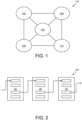
- the distributed computation system 100 establishes a consensus related to a computational value of a computational task. Furthermore, the distributed computation system 100 includes a plurality of computing nodes (depicted as computing nodes 102, 104, 106, 108 and 110) that are mutually interconnected via a data communication network, wherein, when in operation, the distributed computation system 100 distributes the computational task to the plurality of computing nodes. Furthermore, each of a first set of computing nodes, from the plurality of computing nodes 102, 104, 106, 108 and 110, performs a partial evaluation of the computational task.
- the first set of computing nodes stores the partial evaluations of the computational task in a ledger arrangement (not shown) associated with the plurality of computing nodes 102, 104, 106, 108 and 110. Moreover, each of a second set of computing nodes from the plurality of computing nodes 102, 104, 106, 108 and 110 generates a computational value corresponding to each of the partial evaluations stored in the ledger arrangement and determine a correctness proof of each of the computational value. Subsequently, a third set of computing nodes from the plurality of computing nodes 102, 104, 106, 108 and 110 validates the correctness proof of each of the computational value to establish consensus related to the computational values.
- FIG. 1 includes a simplified illustration of the distributed computation system 100 for sake of clarity only, which should not unduly limit the scope of the claims herein.
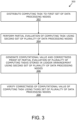
- FIG. 2 there is provided an illustration of a schematic illustration of a ledger arrangement 200 of the distributed computation system 100 of FIG. 1 .
- the blocks 2A, 2B and 2C are blocks containing partial evaluations of a computational task.
- each block is connected to a previous block within the ledger arrangement that is block 2C is connected to previous block 2B and further 2B is connected to 2A.
- FIG. 2 is merely an example, which should not unduly limit the scope of the claims herein.
- the distributed computation system establishes a consensus related to a computational value of a computational task.
- the distributed computation system includes a plurality of computing nodes.
- the computational task is distributed to a first set of computing nodes from the plurality of computing nodes.
- a partial evaluation of the computational task is performed by each of the first set of computing nodes.
- the first set of computing nodes stores the partial evaluations of the computing task in a ledger arrangement associated with the plurality of computing nodes.
- a computational value is generated corresponding to each of the partial evaluations stored in the ledger arrangement and a correctness proof of each of the computational value is determined using each of a second set of computing nodes from the plurality of computing nodes.
- the correctness proof of each of the computational value is validated to establish a consensus related to the computational values using a third set of computing nodes from the plurality of computing nodes.
- steps 302, 304, 306 and 308 are only illustrative and other alternatives can also be provided where one or more steps are added, one or more steps are removed, or one or more steps are provided in a different sequence without departing from the scope of the claims herein.
- embodiments of the present disclosure are capable of improving operation of a system that includes a plurality of nodes, for example computing devices, hardware logic devices or similar.
- the embodiments are capable of improving technical performance, for example system responsiveness, system security, system energy dissipation, system operating bandwidth requirement and system operating stability (for example, when the nodes are functioning asynchronously or pseudo-synchronously.
- the system when in operation, is capable of receiving input sensor signals from a physical environment, and providing output signals to the physical environment, wherein operations performed via use of the ledger determine how the output signals are generated in respect of the input signals.
- Embodiments of the present disclosure can be used, for example, in autonomous vehicle control, manufacturing processes, and robotics. Other practical uses of embodiments in the present disclosure are also feasible.
Landscapes
- Engineering & Computer Science (AREA)
- Computer Security & Cryptography (AREA)
- Signal Processing (AREA)
- Computer Networks & Wireless Communication (AREA)
- Theoretical Computer Science (AREA)
- Software Systems (AREA)
- Physics & Mathematics (AREA)
- General Physics & Mathematics (AREA)
- General Engineering & Computer Science (AREA)
- Mathematical Optimization (AREA)
- Mathematical Physics (AREA)
- Pure & Applied Mathematics (AREA)
- Computing Systems (AREA)
- Mathematical Analysis (AREA)
- Algebra (AREA)
- Multi Processors (AREA)
- Debugging And Monitoring (AREA)
Claims (6)
- Verteiltes Rechensystem (100), das einen Konsens in Bezug auf einen Rechenwert einer Rechenaufgabe herstellt, wobei das verteilte Rechensystem (100) eine Vielzahl von Rechenknoten (102, 104, 106, 108, 110) aufweist, die mindestens drei Rechenknoten umfassen, wobei:- das verteilte Rechensystem (100) konfiguriert ist, die Rechenaufgabe an die Vielzahl von Rechenknoten (102, 104, 106, 108, 110) zu verteilen;- jeder eines ersten Satzes von Rechenknoten, von der Vielzahl von Rechenknoten (102, 104, 106, 108, 110), konfiguriert ist, eine Teilbewertung der Rechenaufgabe unter Verwendung eines Teilbewertungsalgorithmus basierend auf einem geheimen Schlüssel (ski) und einem Verifizierungsschlüssel (vki) und einer Klartexteingabe (x) zu erzeugen, wobei der erste Satz von Rechenknoten konfiguriert ist, die Teilbewertungen der Rechenaufgabe in einer Ledger-Anordnung zu speichern, die mit der Vielzahl von Rechenknoten (102, 104, 106, 108, 110) assoziiert ist;- jeder eines zweiten Satzes von Rechenknoten von der Vielzahl von Rechenknoten (102, 104, 106, 108, 110) konfiguriert ist, einen Rechenwert entsprechend jeder der Teilbewertungen, die in der Ledger-Anordnung gespeichert sind, zu erzeugen, und konfiguriert ist, einen Korrektheitsbeweis von jedem der Rechenwerte unter Verwendung eines Wiederherstellungsalgorithmus zu bestimmen, wobei der Wiederherstellungsalgorithmus als Ausgabe ein Paar (v, n) aus einem Rechenwert (v) und einem Korrektheitsbeweis (n) basierend auf Eingaben bereitstellt, die einen öffentlichen Schlüssel (pk), den Klartext (x), eine Liste (S) von Teilbewertungen, die aus mindestens t + 1 verschiedenen Rechenknoten stammen, und Verifizierungsschlüssel (vk1, vkf) umfassen, wobei t ein Schwellenwert ist, wobei 2 ≤ t + 1 ≤ N, wobei N eine Anzahl von Rechenknoten in der Vielzahl von Rechenknoten ist; und jeder eines dritten Satzes von Rechenknoten aus der Vielzahl von Rechenknoten (102, 104, 106, 108, 110) konfiguriert ist, den Korrektheitsbeweis jedes der Rechenwerte zu validieren, um einen Konsens in Bezug auf die Rechenwerte herzustellen, wobei jeder der Vielzahl von Rechenknoten mit anderen Rechenknoten unter Verwendung eines vertraulichen und authentifizierten Kanals interagiert, wobei mindestens t + 1 Rechenknoten von der Vielzahl von Rechenknoten erfolgreich ein Protokoll zur interaktiven verteilten Schlüsselerzeugung abschließen,wobei mindestens t + 1 Rechenknoten von der Vielzahl von Rechenknoten erfolgreich ein Protokoll zur interaktiven verteilten Schlüsselerzeugung abschließen,wobei die Ausgabe des Protokolls zur interaktiven verteilten Schlüsselerzeugung ein öffentlicher Schlüssel ist, ein Vektor von höchstens N Verifizierungsschlüsseln und höchstens N geheimen Schlüsseln.
- System (100) nach Anspruch 1, wobei, wenn mindestens t + 1 Teilbewertungen einer Pseudozufallsfunktion fsk(x) in der Ledger-Anordnung gespeichert sind, der zweite Satz von Rechenknoten den Wiederherstellungsalgorithmus ausführt.
- System (100) nach Anspruch 1, wobei der dritte Satz von Rechenknoten (102, 104, 106, 108, 110) konfiguriert ist, die Korrektheit des Rechenwerts von jeder der Teilbewertungen der Rechenaufgabe unter Verwendung eines Verifizierungsalgorithmus zu validieren.
- System (100) nach Anspruch 1, wobei, wenn der Rechenwert auf unbedingt falsch (⊥) eingestellt ist, die Ausgabe abgelehnt wird.
- System (100) nach Anspruch 3, wobei der Verifizierungsalgorithmus den Verifizierungsschlüssel, den Rechenwert und den Korrektheitsbeweis verwendet und entweder eine Annehmen-Ausgabe oder eine Ablehnen-Ausgabe bereitstellt, wobei die Annehmen-Ausgabe eine Validierung des Rechenwerts darstellt und die Ablehnen-Ausgabe eine Invalidierung des Rechenwerts darstellt.
- Verfahren (300) zum Betreiben eines verteilten Rechensystems (100) nach Anspruch 1-5, das einen Konsens in Bezug auf einen Rechenwert einer Rechenaufgabe herstellt, wobei das verteilte Rechensystem eine Vielzahl von Rechenknoten (102, 104, 106, 108, 110) aufweist, die mindestens drei Rechenknoten umfassen, wobei das Verfahren Folgendes umfasst:- Verteilen der Rechenaufgabe auf die Vielzahl von Rechenknoten (102, 104, 106, 108, 110);- Erzeugen und Durchführen einer Teilbewertung der Rechenaufgabe basierend auf einem geheimen Schlüssel (ski) und einem Verifizierungsschlüssel (vki) und einer Klartexteingabe (x) durch jeden eines ersten Satzes von Rechenknoten unter Verwendung eines Teilbewertungsalgorithmus von der Vielzahl von Rechenknoten (102, 104, 106, 108, 110), wobei der erste Satz von Rechenknoten die Teilbewertungen der Rechenaufgabe in einer Ledger-Anordnung speichert, die mit der Vielzahl von Rechenknoten assoziiert ist;- Erzeugen eines Rechenwerts entsprechend jeder der Teilbewertungen, die in der Ledger-Anordnung gespeichert sind, und Bestimmen eines Korrektheitsbeweises von jedem der Rechenwerte unter Verwendung eines zweiten Satzes von Rechenknoten von der Vielzahl von Rechenknoten (102, 104, 106, 108, 110) unter Verwendung eines Wiederherstellungsalgorithmus, wobei der Wiederherstellungsalgorithmus als Ausgabe ein Paar (v, n) aus einem Rechenwert (v) und einem Korrektheitsbeweis (n) basierend auf Eingaben bereitstellt, die einen öffentlichen Schlüssel (pk), den Klartext (x), eine Liste (S) von Teilbewertungen, die aus mindestens t + 1 verschiedenen Rechenknoten stammen, und Verifizierungsschlüssel (vk1, vkf) umfassen, wobei t ein Schwellenwert ist, wobei 2 ≤ t + 1 ≤ N, wobei N eine Anzahl von Rechenknoten in der Vielzahl von Rechenknoten ist; und- Validieren des Korrektheitsbeweises von jedem der Rechenwerte, um Konsens in Bezug auf die Rechenwerte herzustellen, unter Verwendung eines dritten Satzes von Rechenknoten aus der Vielzahl von Rechenknoten (102, 104, 106, 108, 110),wobei jeder der Vielzahl von Rechenknoten mit anderen Rechenknoten unter Verwendung eines vertraulichen und authentifizierten Kanals interagiert, wobei mindestens t + 1 Rechenknoten von der Vielzahl von Rechenknoten erfolgreich ein Protokoll zur interaktiven verteilten Schlüsselerzeugung abschließen,wobei die Ausgabe des Protokolls zur interaktiven verteilten Schlüsselerzeugung der öffentliche Schlüssel, ein Vektor von höchstens N Verifizierungsschlüsseln und höchstens N geheimen Schlüsseln, ist.
Priority Applications (3)
| Application Number | Priority Date | Filing Date | Title |
|---|---|---|---|
| EP19020069.1A EP3696670B1 (de) | 2019-02-13 | 2019-02-13 | Verteiltes computersystem und verfahren zum betrieb davon |
| PCT/EP2020/053598 WO2020165249A1 (en) | 2019-02-13 | 2020-02-12 | Distributed computing system and method of operation thereof |
| US17/430,979 US11782758B2 (en) | 2019-02-13 | 2020-02-12 | Distributed computing system and method of operation thereof |
Applications Claiming Priority (1)
| Application Number | Priority Date | Filing Date | Title |
|---|---|---|---|
| EP19020069.1A EP3696670B1 (de) | 2019-02-13 | 2019-02-13 | Verteiltes computersystem und verfahren zum betrieb davon |
Publications (3)
| Publication Number | Publication Date |
|---|---|
| EP3696670A1 EP3696670A1 (de) | 2020-08-19 |
| EP3696670C0 EP3696670C0 (de) | 2025-05-14 |
| EP3696670B1 true EP3696670B1 (de) | 2025-05-14 |
Family
ID=65443620
Family Applications (1)
| Application Number | Title | Priority Date | Filing Date |
|---|---|---|---|
| EP19020069.1A Active EP3696670B1 (de) | 2019-02-13 | 2019-02-13 | Verteiltes computersystem und verfahren zum betrieb davon |
Country Status (3)
| Country | Link |
|---|---|
| US (1) | US11782758B2 (de) |
| EP (1) | EP3696670B1 (de) |
| WO (1) | WO2020165249A1 (de) |
Families Citing this family (3)
| Publication number | Priority date | Publication date | Assignee | Title |
|---|---|---|---|---|
| CN114450687A (zh) * | 2019-10-08 | 2022-05-06 | 索尼集团公司 | 用于实现对计算结果的验证的方法、计算机程序和系统 |
| CN113536356B (zh) * | 2021-07-30 | 2024-07-16 | 海宁奕斯伟集成电路设计有限公司 | 数据验证方法和分布式存储系统 |
| CN114185993B (zh) * | 2021-12-21 | 2023-02-03 | 北京理工大学 | 一种基于区块链的可审计数据共享方法 |
Family Cites Families (8)
| Publication number | Priority date | Publication date | Assignee | Title |
|---|---|---|---|---|
| GB201707168D0 (en) * | 2017-05-05 | 2017-06-21 | Nchain Holdings Ltd | Computer-implemented system and method |
| CN110999207B (zh) * | 2017-08-15 | 2024-05-31 | 区块链控股有限公司 | 生成阈值库的计算机实现方法 |
| EP3669490A1 (de) * | 2017-08-15 | 2020-06-24 | Nchain Holdings Limited | Verfahren und system zur digitalen schwellwertsignatur |
| GB201720753D0 (en) * | 2017-12-13 | 2018-01-24 | Nchain Holdings Ltd | Computer-implemented system and method |
| SG11202006382VA (en) * | 2018-01-16 | 2020-08-28 | Nchain Holdings Ltd | Computer implemented method and system for obtaining digitally signed data |
| GB201805633D0 (en) * | 2018-04-05 | 2018-05-23 | Nchain Holdings Ltd | Computer implemented method and system |
| CN109120398B (zh) * | 2018-08-03 | 2021-07-27 | 河南师范大学 | 一种基于区块链系统的秘密共享方法与装置 |
| CN109728910A (zh) * | 2018-12-27 | 2019-05-07 | 北京永恒纪元科技有限公司 | 一种高效的门限分布式椭圆曲线密钥生成及签名方法和系统 |
-
2019
- 2019-02-13 EP EP19020069.1A patent/EP3696670B1/de active Active
-
2020
- 2020-02-12 US US17/430,979 patent/US11782758B2/en active Active
- 2020-02-12 WO PCT/EP2020/053598 patent/WO2020165249A1/en not_active Ceased
Also Published As
| Publication number | Publication date |
|---|---|
| EP3696670A1 (de) | 2020-08-19 |
| WO2020165249A1 (en) | 2020-08-20 |
| EP3696670C0 (de) | 2025-05-14 |
| US11782758B2 (en) | 2023-10-10 |
| US20220138005A1 (en) | 2022-05-05 |
Similar Documents
| Publication | Publication Date | Title |
|---|---|---|
| US20230245131A1 (en) | Method, System, and Computer Program Product for Determining Solvency of a Digital Asset Exchange | |
| Li et al. | Synchronized provable data possession based on blockchain for digital twin | |
| Chen et al. | Blockchain-based key management scheme in fog-enabled IoT systems | |
| Freitag et al. | Non-malleable time-lock puzzles and applications | |
| Mendis et al. | A blockchain-powered decentralized and secure computing paradigm | |
| Zeydan et al. | Blockchain-based self-sovereign identity: Taking control of identity in federated learning | |
| CN116628504A (zh) | 一种基于联邦学习的可信模型训练方法 | |
| US11782758B2 (en) | Distributed computing system and method of operation thereof | |
| Liu et al. | Towards practical homomorphic time-lock puzzles: Applicability and verifiability | |
| Yan et al. | Reputation consensus-based scheme for information sharing in internet of vehicles | |
| Zhang et al. | A novel privacy protection of permissioned blockchains with conditionally anonymous ring signature | |
| Yang et al. | Perception layer lightweight certificateless authentication scheme for IoT-based emergency logistics | |
| Alrehily et al. | Conventional and improved digital signature scheme: A comparative study | |
| US11977930B2 (en) | Distributed computer system using correctness proof for partial evaluations in determining consensus | |
| Homoliak et al. | BBB-Voting: Self-Tallying End-to-End Verifiable 1-out-of-k Blockchain-Based Boardroom Voting. | |
| Dousti et al. | An efficient statistical zero-knowledge authentication protocol for smart cards | |
| Ersoy et al. | Practical exchange for unique digital goods | |
| Maire et al. | Efficient zero-knowledge arguments and digital signatures via sharing conversion in the head | |
| Teşeleanu | Lightweight swarm authentication | |
| Deng et al. | A practical data trading protocol for sudoku solutions | |
| Aleksandrova et al. | Using undeniable signature on elliptic curves to verify servers in outsourced computations | |
| Thyagarajan et al. | Vitārit: Paying for Threshold Services on Bitcoin and Friends | |
| Liu et al. | Blind polynomial evaluation and data trading | |
| Ma et al. | A practical NIZK argument for confidential transactions over account-model blockchain | |
| Khajehpour et al. | Mitigating MEV via Multiparty Delay Encryption. |
Legal Events
| Date | Code | Title | Description |
|---|---|---|---|
| PUAI | Public reference made under article 153(3) epc to a published international application that has entered the european phase |
Free format text: ORIGINAL CODE: 0009012 |
|
| STAA | Information on the status of an ep patent application or granted ep patent |
Free format text: STATUS: THE APPLICATION HAS BEEN PUBLISHED |
|
| AK | Designated contracting states |
Kind code of ref document: A1 Designated state(s): AL AT BE BG CH CY CZ DE DK EE ES FI FR GB GR HR HU IE IS IT LI LT LU LV MC MK MT NL NO PL PT RO RS SE SI SK SM TR |
|
| AX | Request for extension of the european patent |
Extension state: BA ME |
|
| STAA | Information on the status of an ep patent application or granted ep patent |
Free format text: STATUS: REQUEST FOR EXAMINATION WAS MADE |
|
| 17P | Request for examination filed |
Effective date: 20210219 |
|
| RBV | Designated contracting states (corrected) |
Designated state(s): AL AT BE BG CH CY CZ DE DK EE ES FI FR GB GR HR HU IE IS IT LI LT LU LV MC MK MT NL NO PL PT RO RS SE SI SK SM TR |
|
| STAA | Information on the status of an ep patent application or granted ep patent |
Free format text: STATUS: EXAMINATION IS IN PROGRESS |
|
| 17Q | First examination report despatched |
Effective date: 20220519 |
|
| RAP3 | Party data changed (applicant data changed or rights of an application transferred) |
Owner name: UVUE LIMITED |
|
| 111Z | Information provided on other rights and legal means of execution |
Free format text: AL AT BE BG CH CY CZ DE DK EE ES FI FR GB GR HR HU IE IS IT LT LU LV MC MK MT NL NO PL PT RO RS SE SI SK SM TR Effective date: 20231018 |
|
| GRAP | Despatch of communication of intention to grant a patent |
Free format text: ORIGINAL CODE: EPIDOSNIGR1 |
|
| STAA | Information on the status of an ep patent application or granted ep patent |
Free format text: STATUS: GRANT OF PATENT IS INTENDED |
|
| INTG | Intention to grant announced |
Effective date: 20250226 |
|
| GRAS | Grant fee paid |
Free format text: ORIGINAL CODE: EPIDOSNIGR3 |
|
| GRAA | (expected) grant |
Free format text: ORIGINAL CODE: 0009210 |
|
| STAA | Information on the status of an ep patent application or granted ep patent |
Free format text: STATUS: THE PATENT HAS BEEN GRANTED |
|
| AK | Designated contracting states |
Kind code of ref document: B1 Designated state(s): AL AT BE BG CH CY CZ DE DK EE ES FI FR GB GR HR HU IE IS IT LI LT LU LV MC MK MT NL NO PL PT RO RS SE SI SK SM TR |
|
| REG | Reference to a national code |
Ref country code: GB Ref legal event code: FG4D |
|
| REG | Reference to a national code |
Ref country code: CH Ref legal event code: EP |
|
| REG | Reference to a national code |
Ref country code: DE Ref legal event code: R096 Ref document number: 602019069863 Country of ref document: DE |
|
| REG | Reference to a national code |
Ref country code: IE Ref legal event code: FG4D |
|
| U01 | Request for unitary effect filed |
Effective date: 20250603 |
|
| U07 | Unitary effect registered |
Designated state(s): AT BE BG DE DK EE FI FR IT LT LU LV MT NL PT RO SE SI Effective date: 20250611 |
|
| PG25 | Lapsed in a contracting state [announced via postgrant information from national office to epo] |
Ref country code: ES Free format text: LAPSE BECAUSE OF FAILURE TO SUBMIT A TRANSLATION OF THE DESCRIPTION OR TO PAY THE FEE WITHIN THE PRESCRIBED TIME-LIMIT Effective date: 20250514 |
|
| PG25 | Lapsed in a contracting state [announced via postgrant information from national office to epo] |
Ref country code: NO Free format text: LAPSE BECAUSE OF FAILURE TO SUBMIT A TRANSLATION OF THE DESCRIPTION OR TO PAY THE FEE WITHIN THE PRESCRIBED TIME-LIMIT Effective date: 20250814 Ref country code: GR Free format text: LAPSE BECAUSE OF FAILURE TO SUBMIT A TRANSLATION OF THE DESCRIPTION OR TO PAY THE FEE WITHIN THE PRESCRIBED TIME-LIMIT Effective date: 20250815 |
|
| PG25 | Lapsed in a contracting state [announced via postgrant information from national office to epo] |
Ref country code: PL Free format text: LAPSE BECAUSE OF FAILURE TO SUBMIT A TRANSLATION OF THE DESCRIPTION OR TO PAY THE FEE WITHIN THE PRESCRIBED TIME-LIMIT Effective date: 20250514 |
|
| PG25 | Lapsed in a contracting state [announced via postgrant information from national office to epo] |
Ref country code: HR Free format text: LAPSE BECAUSE OF FAILURE TO SUBMIT A TRANSLATION OF THE DESCRIPTION OR TO PAY THE FEE WITHIN THE PRESCRIBED TIME-LIMIT Effective date: 20250514 |
|
| PG25 | Lapsed in a contracting state [announced via postgrant information from national office to epo] |
Ref country code: RS Free format text: LAPSE BECAUSE OF FAILURE TO SUBMIT A TRANSLATION OF THE DESCRIPTION OR TO PAY THE FEE WITHIN THE PRESCRIBED TIME-LIMIT Effective date: 20250814 |
|
| PG25 | Lapsed in a contracting state [announced via postgrant information from national office to epo] |
Ref country code: IS Free format text: LAPSE BECAUSE OF FAILURE TO SUBMIT A TRANSLATION OF THE DESCRIPTION OR TO PAY THE FEE WITHIN THE PRESCRIBED TIME-LIMIT Effective date: 20250914 |
|
| PG25 | Lapsed in a contracting state [announced via postgrant information from national office to epo] |
Ref country code: SM Free format text: LAPSE BECAUSE OF FAILURE TO SUBMIT A TRANSLATION OF THE DESCRIPTION OR TO PAY THE FEE WITHIN THE PRESCRIBED TIME-LIMIT Effective date: 20250514 |
|
| PG25 | Lapsed in a contracting state [announced via postgrant information from national office to epo] |
Ref country code: CZ Free format text: LAPSE BECAUSE OF FAILURE TO SUBMIT A TRANSLATION OF THE DESCRIPTION OR TO PAY THE FEE WITHIN THE PRESCRIBED TIME-LIMIT Effective date: 20250514 |
|
| PG25 | Lapsed in a contracting state [announced via postgrant information from national office to epo] |
Ref country code: SK Free format text: LAPSE BECAUSE OF FAILURE TO SUBMIT A TRANSLATION OF THE DESCRIPTION OR TO PAY THE FEE WITHIN THE PRESCRIBED TIME-LIMIT Effective date: 20250514 |
|
| PLBE | No opposition filed within time limit |
Free format text: ORIGINAL CODE: 0009261 |
|
| STAA | Information on the status of an ep patent application or granted ep patent |
Free format text: STATUS: NO OPPOSITION FILED WITHIN TIME LIMIT |
|
| REG | Reference to a national code |
Ref country code: CH Ref legal event code: L10 Free format text: ST27 STATUS EVENT CODE: U-0-0-L10-L00 (AS PROVIDED BY THE NATIONAL OFFICE) Effective date: 20260325 |
|
| U20 | Renewal fee for the european patent with unitary effect paid |
Year of fee payment: 8 Effective date: 20260218 |
|
| PGFP | Annual fee paid to national office [announced via postgrant information from national office to epo] |
Ref country code: GB Payment date: 20260218 Year of fee payment: 8 |
|
| 26N | No opposition filed |
Effective date: 20260217 |