EP3696506A1 - Display device for vehicle - Google Patents
Display device for vehicle Download PDFInfo
- Publication number
- EP3696506A1 EP3696506A1 EP18874809.9A EP18874809A EP3696506A1 EP 3696506 A1 EP3696506 A1 EP 3696506A1 EP 18874809 A EP18874809 A EP 18874809A EP 3696506 A1 EP3696506 A1 EP 3696506A1
- Authority
- EP
- European Patent Office
- Prior art keywords
- vehicle
- distance
- supply facility
- supply
- farthest
- Prior art date
- Legal status (The legal status is an assumption and is not a legal conclusion. Google has not performed a legal analysis and makes no representation as to the accuracy of the status listed.)
- Withdrawn
Links
- 230000003247 decreasing effect Effects 0.000 claims abstract description 9
- 239000000446 fuel Substances 0.000 description 12
- 230000005611 electricity Effects 0.000 description 7
- UFHFLCQGNIYNRP-UHFFFAOYSA-N Hydrogen Chemical compound [H][H] UFHFLCQGNIYNRP-UHFFFAOYSA-N 0.000 description 5
- 238000005265 energy consumption Methods 0.000 description 5
- 239000001257 hydrogen Substances 0.000 description 5
- 229910052739 hydrogen Inorganic materials 0.000 description 5
- 238000010586 diagram Methods 0.000 description 4
- 239000000284 extract Substances 0.000 description 4
- 238000000034 method Methods 0.000 description 4
- 230000007423 decrease Effects 0.000 description 3
- 238000001514 detection method Methods 0.000 description 3
- 239000007789 gas Substances 0.000 description 3
- 238000012986 modification Methods 0.000 description 3
- 230000004048 modification Effects 0.000 description 3
- 230000000694 effects Effects 0.000 description 2
- HBBGRARXTFLTSG-UHFFFAOYSA-N Lithium ion Chemical compound [Li+] HBBGRARXTFLTSG-UHFFFAOYSA-N 0.000 description 1
- 230000001133 acceleration Effects 0.000 description 1
- 230000015556 catabolic process Effects 0.000 description 1
- 238000002485 combustion reaction Methods 0.000 description 1
- 238000011156 evaluation Methods 0.000 description 1
- 239000002828 fuel tank Substances 0.000 description 1
- 239000003502 gasoline Substances 0.000 description 1
- 230000010365 information processing Effects 0.000 description 1
- 239000007788 liquid Substances 0.000 description 1
- 229910001416 lithium ion Inorganic materials 0.000 description 1
- 238000011084 recovery Methods 0.000 description 1
- 239000000126 substance Substances 0.000 description 1
Images




Classifications
-
- G—PHYSICS
- G01—MEASURING; TESTING
- G01C—MEASURING DISTANCES, LEVELS OR BEARINGS; SURVEYING; NAVIGATION; GYROSCOPIC INSTRUMENTS; PHOTOGRAMMETRY OR VIDEOGRAMMETRY
- G01C21/00—Navigation; Navigational instruments not provided for in groups G01C1/00 - G01C19/00
- G01C21/26—Navigation; Navigational instruments not provided for in groups G01C1/00 - G01C19/00 specially adapted for navigation in a road network
- G01C21/34—Route searching; Route guidance
- G01C21/36—Input/output arrangements for on-board computers
- G01C21/3679—Retrieval, searching and output of POI information, e.g. hotels, restaurants, shops, filling stations, parking facilities
-
- G—PHYSICS
- G01—MEASURING; TESTING
- G01C—MEASURING DISTANCES, LEVELS OR BEARINGS; SURVEYING; NAVIGATION; GYROSCOPIC INSTRUMENTS; PHOTOGRAMMETRY OR VIDEOGRAMMETRY
- G01C21/00—Navigation; Navigational instruments not provided for in groups G01C1/00 - G01C19/00
- G01C21/26—Navigation; Navigational instruments not provided for in groups G01C1/00 - G01C19/00 specially adapted for navigation in a road network
- G01C21/34—Route searching; Route guidance
- G01C21/3453—Special cost functions, i.e. other than distance or default speed limit of road segments
- G01C21/3476—Special cost functions, i.e. other than distance or default speed limit of road segments using point of interest [POI] information, e.g. a route passing visible POIs
-
- G—PHYSICS
- G01—MEASURING; TESTING
- G01C—MEASURING DISTANCES, LEVELS OR BEARINGS; SURVEYING; NAVIGATION; GYROSCOPIC INSTRUMENTS; PHOTOGRAMMETRY OR VIDEOGRAMMETRY
- G01C21/00—Navigation; Navigational instruments not provided for in groups G01C1/00 - G01C19/00
- G01C21/26—Navigation; Navigational instruments not provided for in groups G01C1/00 - G01C19/00 specially adapted for navigation in a road network
- G01C21/34—Route searching; Route guidance
- G01C21/3453—Special cost functions, i.e. other than distance or default speed limit of road segments
- G01C21/3469—Fuel consumption; Energy use; Emission aspects
-
- G—PHYSICS
- G01—MEASURING; TESTING
- G01C—MEASURING DISTANCES, LEVELS OR BEARINGS; SURVEYING; NAVIGATION; GYROSCOPIC INSTRUMENTS; PHOTOGRAMMETRY OR VIDEOGRAMMETRY
- G01C21/00—Navigation; Navigational instruments not provided for in groups G01C1/00 - G01C19/00
- G01C21/26—Navigation; Navigational instruments not provided for in groups G01C1/00 - G01C19/00 specially adapted for navigation in a road network
- G01C21/34—Route searching; Route guidance
- G01C21/36—Input/output arrangements for on-board computers
- G01C21/3679—Retrieval, searching and output of POI information, e.g. hotels, restaurants, shops, filling stations, parking facilities
- G01C21/3682—Retrieval, searching and output of POI information, e.g. hotels, restaurants, shops, filling stations, parking facilities output of POI information on a road map
-
- G—PHYSICS
- G01—MEASURING; TESTING
- G01C—MEASURING DISTANCES, LEVELS OR BEARINGS; SURVEYING; NAVIGATION; GYROSCOPIC INSTRUMENTS; PHOTOGRAMMETRY OR VIDEOGRAMMETRY
- G01C21/00—Navigation; Navigational instruments not provided for in groups G01C1/00 - G01C19/00
- G01C21/26—Navigation; Navigational instruments not provided for in groups G01C1/00 - G01C19/00 specially adapted for navigation in a road network
- G01C21/34—Route searching; Route guidance
- G01C21/36—Input/output arrangements for on-board computers
- G01C21/3697—Output of additional, non-guidance related information, e.g. low fuel level
-
- G—PHYSICS
- G08—SIGNALLING
- G08G—TRAFFIC CONTROL SYSTEMS
- G08G1/00—Traffic control systems for road vehicles
- G08G1/09—Arrangements for giving variable traffic instructions
- G08G1/0962—Arrangements for giving variable traffic instructions having an indicator mounted inside the vehicle, e.g. giving voice messages
- G08G1/0968—Systems involving transmission of navigation instructions to the vehicle
-
- G—PHYSICS
- G09—EDUCATION; CRYPTOGRAPHY; DISPLAY; ADVERTISING; SEALS
- G09B—EDUCATIONAL OR DEMONSTRATION APPLIANCES; APPLIANCES FOR TEACHING, OR COMMUNICATING WITH, THE BLIND, DEAF OR MUTE; MODELS; PLANETARIA; GLOBES; MAPS; DIAGRAMS
- G09B29/00—Maps; Plans; Charts; Diagrams, e.g. route diagram
-
- B—PERFORMING OPERATIONS; TRANSPORTING
- B60—VEHICLES IN GENERAL
- B60L—PROPULSION OF ELECTRICALLY-PROPELLED VEHICLES; SUPPLYING ELECTRIC POWER FOR AUXILIARY EQUIPMENT OF ELECTRICALLY-PROPELLED VEHICLES; ELECTRODYNAMIC BRAKE SYSTEMS FOR VEHICLES IN GENERAL; MAGNETIC SUSPENSION OR LEVITATION FOR VEHICLES; MONITORING OPERATING VARIABLES OF ELECTRICALLY-PROPELLED VEHICLES; ELECTRIC SAFETY DEVICES FOR ELECTRICALLY-PROPELLED VEHICLES
- B60L2250/00—Driver interactions
- B60L2250/16—Driver interactions by display
-
- B—PERFORMING OPERATIONS; TRANSPORTING
- B60—VEHICLES IN GENERAL
- B60L—PROPULSION OF ELECTRICALLY-PROPELLED VEHICLES; SUPPLYING ELECTRIC POWER FOR AUXILIARY EQUIPMENT OF ELECTRICALLY-PROPELLED VEHICLES; ELECTRODYNAMIC BRAKE SYSTEMS FOR VEHICLES IN GENERAL; MAGNETIC SUSPENSION OR LEVITATION FOR VEHICLES; MONITORING OPERATING VARIABLES OF ELECTRICALLY-PROPELLED VEHICLES; ELECTRIC SAFETY DEVICES FOR ELECTRICALLY-PROPELLED VEHICLES
- B60L50/00—Electric propulsion with power supplied within the vehicle
- B60L50/50—Electric propulsion with power supplied within the vehicle using propulsion power supplied by batteries or fuel cells
- B60L50/60—Electric propulsion with power supplied within the vehicle using propulsion power supplied by batteries or fuel cells using power supplied by batteries
-
- Y—GENERAL TAGGING OF NEW TECHNOLOGICAL DEVELOPMENTS; GENERAL TAGGING OF CROSS-SECTIONAL TECHNOLOGIES SPANNING OVER SEVERAL SECTIONS OF THE IPC; TECHNICAL SUBJECTS COVERED BY FORMER USPC CROSS-REFERENCE ART COLLECTIONS [XRACs] AND DIGESTS
- Y02—TECHNOLOGIES OR APPLICATIONS FOR MITIGATION OR ADAPTATION AGAINST CLIMATE CHANGE
- Y02T—CLIMATE CHANGE MITIGATION TECHNOLOGIES RELATED TO TRANSPORTATION
- Y02T10/00—Road transport of goods or passengers
- Y02T10/60—Other road transportation technologies with climate change mitigation effect
- Y02T10/70—Energy storage systems for electromobility, e.g. batteries
Definitions
- the present invention relates to a display device for displaying a travelable distance, based on an energy remaining amount and the like of a vehicle, and notifying a driver.
- an electric vehicle which travels by driving a motor by electric power accumulated in a battery, and does not discharge exhaust gas containing harmful substances during traveling has been paid attention to.
- a battery mounted in the EV a repeatedly chargeable and dischargeable secondary battery such as a lithium-ion battery is employed.
- a remaining amount of charged electric power (hereinafter, referred to as a battery remaining amount) is constantly calculated and monitored from a charging state of the secondary battery.
- a display unit provided in the EV displays a calculated battery remaining amount, a travelable distance calculated based on the battery remaining amount, an average electricity efficiency of the EV, etc., and the like. Further, for example, when the battery remaining amount becomes equal to or lower than a predetermined reference value, the display unit displays in such a way that the driver is encouraged to charge the battery.
- an upper limit distance (a cruising distance) travelable from a fully filled state or a fully charged state tends to be shortened in the EV, as compared with a vehicle which travels by an engine.
- the travelable distance also changes depending on a traveling environment such as a slope of a road and a traffic congestion, and an operation condition of an accessory such as an air-conditioner, for example.
- a driver of the EV tends to be keenly aware of the travelable distance.
- the travelable distance is shortened by a decrease in battery remaining amount, the driver may be forced to travel, while suppressing battery consumption by voluntarily suppressing an operation of an accessory, for example.
- Patent Literature 1 In order to prevent lack of electricity of the EV, for example, as disclosed in Patent Literature 1, there is known a technique of specifying an area where the battery remaining amount is likely to lower, based on information about charging states of a plurality of EVs, and notifying the driver of the area as an area where lack of electricity is likely to occur. Further, there is a case that the EV encounters lack of electricity before the EV arrives at a charging facility depending on a traffic congestion and the like of a road. As a technique for avoiding this situation, as disclosed in Patent Literature 2, there is known a technique of displaying a charging facility near a current location with respect to a place where congestion has occurred on a traveling route to a destination.
- Patent Literatures 1 and 2 fail to disclose encouraging a driver to charge by assuming that charging may be disabled at a charging facility where the EV arrived.
- FCV fuel cell vehicle
- the number of hydrogen supply facilities is small.
- the FCV cannot easily return to a travelable state.
- the number of supply facilities of fuel such as gasoline may be small, or a time zone during which fuel is suppliable is limited depending on a district. In such a district, recovery of the vehicle is not easy when the vehicle runs out of gas.
- An object of the present invention is to provide a vehicle display device that enables to reduce a risk that a vehicle may be unable to travel due to energy shortage.
- a vehicle display device includes: a storage unit for storing position information on a plurality of supply facilities capable of supplying energy for driving a vehicle; a position information acquisition unit for acquiring position information of an own vehicle; a control unit for calculating a travel distance limit of the own vehicle, based on a remaining amount of energy accumulated in the own vehicle; and a display for displaying information calculated by the control unit.
- the control unit performs processing of extracting, based on position information of each of the supply facilities stored in the storage unit, the position information of the own vehicle acquired by the position information acquisition unit, and the travel distance limit calculated by the control unit, a farthest supply facility being a supply facility farthest from the own vehicle within the travel distance limit, and other supply facilities present within a predetermined distance from the farthest supply facility; processing of calculating, based on each piece of position information of the extracted farthest supply facility and the extracted other supply facilities, a degree of scattering being a numerical value indicating a degree of remoteness between the farthest supply facility and the other supply facilities; processing of calculating, based on the travel distance limit and the degree of scattering, a travelable distance being a distance by which the own vehicle is able to travel; and processing of causing the display to display the calculated travelable distance.
- the travelable distance is decreased, as the degree of scattering increases.
- FIG. 1 illustrates a schematic configuration of a vehicle display device 1 according to a first embodiment of the present invention.
- the vehicle display device 1 illustrated in FIG. 1 is mounted in a vehicle, and is communicably connected to an electronic control unit (hereinafter, referred to as an ECU) 10 for controlling the vehicle.
- the vehicle display device 1 includes a storage unit 2 for storing map information, and information on a traffic sign, a facility, and the like on a map; a position information acquisition unit 3 for acquiring position information of the vehicle, a control unit 4 for performing predetermined control, based on the information acquired from the storage unit 2 and the position information acquisition unit 3; and a display 5 capable of displaying the map information acquired from the storage unit 2, information calculated by the control unit 4, and the like.
- the control unit 4 is constituted of a CPU, an ROM, an RAM, and the like. Various programs and data for control are stored in the ROM. Data to be used when the CPU executes a series of processing are temporarily stored in the RAM.
- a motor which operates by electric power accumulated in a battery is appropriate as the vehicle in which the vehicle display device 1 is mounted.
- a fuel cell vehicle (FCV) and a vehicle (hereinafter, referred to as an automobile) which travels by using an engine as a driving source are also available.
- the ECU 10 controls traveling of the vehicle, based on detection signals from various types of sensors provided in the vehicle.
- the ECU 10 controls a rotational speed and the like of a driving source (a motor or an engine), based on a detection signal indicating an acceleration opening degree, and calculates vehicle information such as a vehicle speed and a travel distance, based on a detection signal from a wheel speed sensor and the like.
- the vehicle information to be calculated by the ECU 10 includes an energy remaining amount, an average energy consumption rate, and the like.
- the energy remaining amount is a battery remaining amount in a case of an EV, and is a fuel remaining amount in a case of an FCV or an automobile.
- the average energy consumption rate is an average electricity efficiency (a travel distance per unit power) in a case of an EV, and is an average fuel efficiency (a travel distance per fuel unit amount) in a case of an FCV or an automobile.
- the position information acquisition unit 3 acquires position information such as a current location and a direction of a vehicle in which the vehicle display device 1 is mounted, in other words, an own vehicle, based on a GPS signal input from a plurality of GPS satellites via a GPS antenna 7.
- the control unit 4 performs necessary information processing, based on the position information of the own vehicle, the information stored in the storage unit 2, and the vehicle information of the ECU 10 input to the vehicle display device 1, and causes the display 5 to display.
- control unit 4 calculates a travel distance limit L, based on at least an energy remaining amount Wr included in the vehicle information to be output by the ECU 10, and causes the display 5 to display a travelable distance R1 (details will be described later), which is shorter than the calculated travel distance limit L, together with the energy remaining amount Wr.
- the energy remaining amount Wr is, in a case of an EV, a value (SOC) indicating a ratio of a current remaining amount of the battery with respect to a full capacity of the battery in terms of percentage; in a case of an FCV, a fuel remaining amount to be calculated based on an inner pressure and the like of a hydrogen tank; and in a case of an automobile, a fuel remaining amount to be calculated based on a fuel liquid surface position and the like within a fuel tank.
- SOC value
- the travel distance limit L is calculated by the control unit 4 according to the following equation (1), based on a vehicle travel distance DL, an energy consumption amount Wc (an electric power consumption amount or a fuel consumption amount) when the vehicle travels the distance DL, and the energy remaining amount Wr.
- the vehicle travel distance DL is calculated based on the position information of the own vehicle acquired by the position information acquisition unit 3. Further, the energy consumption amount Wc is calculated based on an energy remaining amount Wr' output by the ECU 10 when traveling has started, and the current energy remaining amount Wr.
- the control unit 4 extracts supply facilities where the vehicle can reach, from among the plurality of energy supply facilities stored in the storage unit 2, and causes the display 5 to display them.
- the display control is described with reference to FIGS. 2 and 3 .
- the control unit 4 calculates, first in Step S1, the travel distance limit L according to the equation (1).
- Step S2 the control unit 4 calculates a distance from the current location to each of the supply facilities, based on the position information (the current location) of the own vehicle acquired by the position information acquisition unit 3, and position information of the plurality of supply facilities stored in the storage unit 2, within a range in which the distance from the current location is smaller than the travel distance limit L.
- Calculation relating to a distance in each step after Step S2 is preferably performed on the basis of a travel distance on a road, in other words, a travel distance in a case that the vehicle travels from a start point to a destination along a road being a shortest route.
- FIG. 3 for simplification, various distances to be calculated are indicated by direct distances. It is assumed that the following description is also made on the basis of FIGS. 3 , which is a simplified diagram.
- Step S3 the control unit 4 extracts a farthest supply facility being a supply facility farthest from the current location, based on the distance from the current location to each supply facility, which is calculated in Step S2; and calculates a distance D from the current location to the farthest supply facility.
- candidates for the farthest supply facility are limited to those around which another supply facility presents within a search distance, which is set for each supply facility.
- the control unit 4 extracts, as a candidate facility, a supply facility around which another supply facility presents within the search distance, from among all supply facilities whose distances from the current location are smaller than the travel distance limit L; and specifies, as the farthest supply facility, a supply facility whose distance from the current location is longest among the candidate facilities.
- the search distance to be set for each supply facility is a value acquired by subtracting, from the travel distance limit L, a distance from the current location to each supply facility, and is a distance by which the vehicle is able to travel from a certain supply facility, when the vehicle arrives at the certain supply facility from the current location.
- a supply facility around which another supply facility does not present within a search distance is excluded from candidates for the farthest supply facility. This is because evaluation relating to a degree of scattering to be described later cannot be performed with respect to such a supply facility.
- Step S4 the control unit 4 extracts, from the supply facilities whose distances from the current location are smaller than the travel distance limit L, supply facilities whose distances from the farthest supply facility extracted in Step S3 are smaller than a predetermined distance M; and calculates a distance from each of the extracted supply facilities to the farthest supply facility.
- Step S5 the control unit 4 selects a supply facility whose distance calculated in Step S4 is shortest (nearest to the farthest supply facility), and calculates, as a remote distance ⁇ , a distance from the selected supply facility to the farthest supply facility.
- the remote distance ⁇ indicates that the larger the remote distance ⁇ is, the less supply facilities are present in the vicinity of the farthest supply facility.
- the remote distance ⁇ is a numerical value indicating a degree of remoteness (a degree of scattering) between the farthest supply facility and supply facilities in the vicinity of the farthest supply facility.
- Step S7 the control unit 4 causes the display 5 to display the travelable distance R1 together with a supply facility.
- the control unit 4 causes the display 5 to display a circle X1 including the current location of the own vehicle indicated by the arrowhead-shaped portion as a center, and having a radius being equal to the travelable distance R1.
- the control unit 4 causes the display 5 to display supply facilities (small hollow circles in FIG. 3 ) within the circle X1; and not to display a supply facility outside the circle X1 or to display a supply facility outside the circle X1 in a pattern (e.g. in a different color or size) different from the pattern of the supply facilities within the circle X1.
- a pattern e.g. in a different color or size
- the vehicle display device 1 encourages the driver to supply energy within the travelable distance R1 by displaying the travelable distance R1 shorter than the calculated travel distance limit L. Further, the vehicle display device 1 calculates, as a degree of scattering of supply facilities in the vicinity of the farthest supply facility, the remote distance ⁇ between the farthest supply facility and a supply facility nearest to the farthest supply facility, and encourages the driver to supply energy at a supply facility near the current location by decreasing the travelable distance R1, as the remote distance ⁇ increases, in other words, when not so many other supply facilities are present in the vicinity of the farthest supply facility.
- the driver can drive the vehicle from the arrival place to another supply facility.
- the driver can drive the vehicle at least to another supply facility nearest to the arrival place. Therefore, even when energy supply is not available at a supply facility where the vehicle arrived, the driver can secure a next supply opportunity.
- a second embodiment according to the present invention is described with reference to FIGS. 4 and 5 .
- the second embodiment is configured by partially modifying display control according to the first embodiment. Since configurations of a vehicle and a vehicle display device 1 are similar to those in the first embodiment, description thereof is omitted.
- a control unit 4 calculates a travel distance limit L of an own vehicle (S11), calculates a distance to each of supply facilities, which satisfy that a distance from the current location is smaller than the travel distance limit L (S12), calculates a distance D to a farthest supply facility farthest within a range smaller than the travel distance limit L (S13), and calculates a distance from each of supply facilities, which satisfy that a distance from the farthest supply facility is smaller than a predetermined distance M, to the farthest supply facility (S14).
- the predetermined distance M is a distance by which the vehicle is able to travel from the farthest supply facility, when the vehicle arrives at the farthest supply facility from the current location.
- Step S15 the control unit 4 calculates, as an average remote distance ⁇ , an average value of the distances calculated in Step S14.
- an average remote distance ⁇ an average value of the distances calculated in Step S14.
- the control unit 4 calculates an average value of the remote distances ⁇ 1 and ⁇ 2, and uses the average value as the average remote distance ⁇ .
- the average remote distance ⁇ indicates that the larger the average remote distance ⁇ is, the less supply facilities are present in the vicinity of the farthest supply facility.
- the average remote distance ⁇ is a numerical value indicating a degree of remoteness (a degree of scattering) between the farthest supply facility and supply facilities in the vicinity of the farthest supply facility.
- Step S17 the control unit 4 causes the display 5 to display the travelable distance R2 together with a supply facility.
- the control unit 4 causes the display 5 to display a circle X2 including the current location of the own vehicle indicated by the arrowhead-shaped portion as a center, and having a radius being equal to the travelable distance R2.
- the control unit 4 causes the display 5 to display supply facilities (small hollow circles) in a similar manner as in the case of the first embodiment.
- the vehicle display device 1 encourages the driver to supply energy within the travelable distance R2 by displaying the travelable distance R2 shorter than the calculated travel distance limit L. Further, the vehicle display device 1 calculates, as a degree of scattering of supply facilities in the vicinity of the farthest supply facility, the average remote distance ⁇ between the farthest supply facility and supply facilities reachable from the farthest supply facility; and encourages the driver to supply energy at a supply facility near the current location by decreasing the travelable distance R2, as the average remote distance ⁇ increases, in other words, when not so many other supply facilities are present in the vicinity of the farthest supply facility.
- the driver can drive the vehicle from the arrival place to another supply facility.
- the driver can drive the vehicle at least to another supply facility nearest to the arrival place. Therefore, even when energy supply is not available at a supply facility where the vehicle arrived, the driver can secure a next supply opportunity.
- the travelable distance R1 or R2 is acquired by subtracting the remote distance ⁇ or the average remote distance ⁇ from the travel distance limit L. It is also possible to acquire a travelable distance by adding, to the distance D from the current location to the farthest supply facility, the remote distance ⁇ or the average remote distance ⁇ .
- a vehicle display device includes: a storage unit for storing position information on a plurality of supply facilities capable of supplying energy for driving a vehicle; a position information acquisition unit for acquiring position information of an own vehicle; a control unit for calculating a travel distance limit of the own vehicle, based on a remaining amount of energy accumulated in the own vehicle; and a display for displaying information calculated by the control unit.
- the control unit performs processing of extracting, based on position information of each of the supply facilities stored in the storage unit, the position information of the own vehicle acquired by the position information acquisition unit, and the travel distance limit calculated by the control unit, a farthest supply facility being a supply facility farthest from the own vehicle within the travel distance limit, and the other supply facilities present within a predetermined distance from the farthest supply facility; processing of calculating, based on each piece of position information of the extracted farthest supply facility and the extracted other supply facilities, a degree of scattering being a numerical value indicating a degree of remoteness between the farthest supply facility and the other supply facilities; processing of calculating, based on the travel distance limit and the degree of scattering, a travelable distance being a distance by which the own vehicle is able to travel; and processing of causing the display to display the calculated travelable distance.
- the travelable distance is decreased, as the degree of scattering increases.
- the degree of scattering may be a remote distance between a supply facility nearest to the farthest supply facility among the other supply facilities, and the farthest supply facility.
- the remote distance calculated as described above indicates that the larger the remote distance is, the less supply facilities are present in the vicinity of the farthest supply facility. Therefore, it is possible to more advantageously reduce a risk that the vehicle may be disabled to travel due to energy shortage by encouraging the driver to supply energy at a supply facility near the current location by decreasing the travelable distance, as the remote distance increases.
- the degree of scattering may be an average value of remote distances between the other supply facilities and the farthest supply facility.
- the average value (the average remote distance) of the remote distances calculated as described above indicates that the larger the average remote distance is, the less supply facilities are present in the vicinity of the farthest supply facility. Therefore, it is possible to more advantageously reduce a risk that the vehicle may be disabled to travel due to energy shortage by encouraging the driver to supply energy at a supply facility near the current location by decreasing the travelable distance, as the average remote distance increases.
Landscapes
- Engineering & Computer Science (AREA)
- Radar, Positioning & Navigation (AREA)
- Remote Sensing (AREA)
- Physics & Mathematics (AREA)
- General Physics & Mathematics (AREA)
- Automation & Control Theory (AREA)
- Theoretical Computer Science (AREA)
- Business, Economics & Management (AREA)
- Educational Administration (AREA)
- Educational Technology (AREA)
- Mathematical Physics (AREA)
- Navigation (AREA)
- Traffic Control Systems (AREA)
- Instructional Devices (AREA)
- Electric Propulsion And Braking For Vehicles (AREA)
Abstract
Description
- The present invention relates to a display device for displaying a travelable distance, based on an energy remaining amount and the like of a vehicle, and notifying a driver.
- In recent years, an electric vehicle (EV) which travels by driving a motor by electric power accumulated in a battery, and does not discharge exhaust gas containing harmful substances during traveling has been paid attention to. As the battery mounted in the EV, a repeatedly chargeable and dischargeable secondary battery such as a lithium-ion battery is employed. A remaining amount of charged electric power (hereinafter, referred to as a battery remaining amount) is constantly calculated and monitored from a charging state of the secondary battery. A display unit provided in the EV displays a calculated battery remaining amount, a travelable distance calculated based on the battery remaining amount, an average electricity efficiency of the EV, etc., and the like. Further, for example, when the battery remaining amount becomes equal to or lower than a predetermined reference value, the display unit displays in such a way that the driver is encouraged to charge the battery.
- It is necessary to move the EV to a chargeable place by using another vehicle, when the EV encounters a state called lack of electricity in which the battery remaining amount becomes zero, and is unable to travel. As compared with a case that a vehicle which travels by using an engine (an internal combustion engine) as a driving source encounters a state called out-of-gas, it is difficult to return the EV to a travelable state. Further, an upper limit distance (a cruising distance) travelable from a fully filled state or a fully charged state tends to be shortened in the EV, as compared with a vehicle which travels by an engine. Further, the travelable distance also changes depending on a traveling environment such as a slope of a road and a traffic congestion, and an operation condition of an accessory such as an air-conditioner, for example.
- For these reasons, a driver of the EV tends to be keenly aware of the travelable distance. When the travelable distance is shortened by a decrease in battery remaining amount, the driver may be forced to travel, while suppressing battery consumption by voluntarily suppressing an operation of an accessory, for example.
- In order to prevent lack of electricity of the EV, for example, as disclosed in
Patent Literature 1, there is known a technique of specifying an area where the battery remaining amount is likely to lower, based on information about charging states of a plurality of EVs, and notifying the driver of the area as an area where lack of electricity is likely to occur. Further, there is a case that the EV encounters lack of electricity before the EV arrives at a charging facility depending on a traffic congestion and the like of a road. As a technique for avoiding this situation, as disclosed in Patent Literature 2, there is known a technique of displaying a charging facility near a current location with respect to a place where congestion has occurred on a traveling route to a destination. - When a driver of the EV tries to charge the EV by traveling to a charging facility before encountering lack of electricity, there may be a case that charging is disabled due to breakdown or the like of the charging facility, or a case that charging cannot be started immediately after arrival because the charging facility is crowded. In such a case, the driver may try to go to another charging facility. However, since the travelable distance is shortened, the EV may not reach the another charging facility. The techniques of
Patent Literatures 1 and 2 fail to disclose encouraging a driver to charge by assuming that charging may be disabled at a charging facility where the EV arrived. - Also in a fuel cell vehicle (FCV) which travels by using hydrogen as fuel, in the present circumstances, the number of hydrogen supply facilities is small. When a hydrogen remaining amount within a hydrogen tank becomes zero, and the FCV is unable to travel, the FCV cannot easily return to a travelable state. Further, also in a conventional vehicle which travels by an engine, the number of supply facilities of fuel such as gasoline may be small, or a time zone during which fuel is suppliable is limited depending on a district. In such a district, recovery of the vehicle is not easy when the vehicle runs out of gas. In view of the above, providing a measure, taking into consideration a case that energy cannot be supplied at a supply facility where the vehicle arrived, is important, whatever the type of energy source of the vehicle is.
-
- Patent Literature 1: Japanese Unexamined Patent Application Publication No.
2015-69259 - Patent Literature 1: Japanese Unexamined Patent Application Publication No.
2016-217769 - An object of the present invention is to provide a vehicle display device that enables to reduce a risk that a vehicle may be unable to travel due to energy shortage.
- As means for solving the above issue, a vehicle display device according to the present invention includes: a storage unit for storing position information on a plurality of supply facilities capable of supplying energy for driving a vehicle; a position information acquisition unit for acquiring position information of an own vehicle; a control unit for calculating a travel distance limit of the own vehicle, based on a remaining amount of energy accumulated in the own vehicle; and a display for displaying information calculated by the control unit. The control unit performs processing of extracting, based on position information of each of the supply facilities stored in the storage unit, the position information of the own vehicle acquired by the position information acquisition unit, and the travel distance limit calculated by the control unit, a farthest supply facility being a supply facility farthest from the own vehicle within the travel distance limit, and other supply facilities present within a predetermined distance from the farthest supply facility; processing of calculating, based on each piece of position information of the extracted farthest supply facility and the extracted other supply facilities, a degree of scattering being a numerical value indicating a degree of remoteness between the farthest supply facility and the other supply facilities; processing of calculating, based on the travel distance limit and the degree of scattering, a travelable distance being a distance by which the own vehicle is able to travel; and processing of causing the display to display the calculated travelable distance. In the processing of calculating the travelable distance, the travelable distance is decreased, as the degree of scattering increases.
-
-
FIG. 1 is a block diagram illustrating a schematic configuration of a vehicle display device according to a first embodiment of the present invention. -
FIG. 2 is a flowchart illustrating a content of display control on a travelable distance according to the first embodiment. -
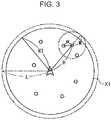
FIG. 3 is a diagram illustrating one example of display on a travelable distance according to the first embodiment. -
FIG. 4 is a flowchart illustrating a content of display control on a travelable distance according to a second embodiment of the present invention. -
FIG. 5 is a diagram illustrating one example of display on a travelable distance according to the second embodiment. - Preferred embodiments according to the present invention are described with reference to the drawings.
-
FIG. 1 illustrates a schematic configuration of avehicle display device 1 according to a first embodiment of the present invention. Thevehicle display device 1 illustrated inFIG. 1 is mounted in a vehicle, and is communicably connected to an electronic control unit (hereinafter, referred to as an ECU) 10 for controlling the vehicle. Thevehicle display device 1 includes a storage unit 2 for storing map information, and information on a traffic sign, a facility, and the like on a map; a positioninformation acquisition unit 3 for acquiring position information of the vehicle, acontrol unit 4 for performing predetermined control, based on the information acquired from the storage unit 2 and the positioninformation acquisition unit 3; and adisplay 5 capable of displaying the map information acquired from the storage unit 2, information calculated by thecontrol unit 4, and the like. Thecontrol unit 4 is constituted of a CPU, an ROM, an RAM, and the like. Various programs and data for control are stored in the ROM. Data to be used when the CPU executes a series of processing are temporarily stored in the RAM. For example, an electric vehicle (EV) which travels by using, as a driving source, a motor which operates by electric power accumulated in a battery is appropriate as the vehicle in which thevehicle display device 1 is mounted. However, a fuel cell vehicle (FCV), and a vehicle (hereinafter, referred to as an automobile) which travels by using an engine as a driving source are also available. - The ECU 10 controls traveling of the vehicle, based on detection signals from various types of sensors provided in the vehicle. For example, the ECU 10 controls a rotational speed and the like of a driving source (a motor or an engine), based on a detection signal indicating an acceleration opening degree, and calculates vehicle information such as a vehicle speed and a travel distance, based on a detection signal from a wheel speed sensor and the like. The vehicle information to be calculated by the
ECU 10 includes an energy remaining amount, an average energy consumption rate, and the like. The energy remaining amount is a battery remaining amount in a case of an EV, and is a fuel remaining amount in a case of an FCV or an automobile. Further, the average energy consumption rate is an average electricity efficiency (a travel distance per unit power) in a case of an EV, and is an average fuel efficiency (a travel distance per fuel unit amount) in a case of an FCV or an automobile. - The position
information acquisition unit 3 acquires position information such as a current location and a direction of a vehicle in which thevehicle display device 1 is mounted, in other words, an own vehicle, based on a GPS signal input from a plurality of GPS satellites via aGPS antenna 7. Thecontrol unit 4 performs necessary information processing, based on the position information of the own vehicle, the information stored in the storage unit 2, and the vehicle information of theECU 10 input to thevehicle display device 1, and causes thedisplay 5 to display. - Further, the
control unit 4 calculates a travel distance limit L, based on at least an energy remaining amount Wr included in the vehicle information to be output by theECU 10, and causes thedisplay 5 to display a travelable distance R1 (details will be described later), which is shorter than the calculated travel distance limit L, together with the energy remaining amount Wr. The energy remaining amount Wr is, in a case of an EV, a value (SOC) indicating a ratio of a current remaining amount of the battery with respect to a full capacity of the battery in terms of percentage; in a case of an FCV, a fuel remaining amount to be calculated based on an inner pressure and the like of a hydrogen tank; and in a case of an automobile, a fuel remaining amount to be calculated based on a fuel liquid surface position and the like within a fuel tank. - Next, the travel distance limit L is described.
- The travel distance limit L is calculated by the
control unit 4 according to the following equation (1), based on a vehicle travel distance DL, an energy consumption amount Wc (an electric power consumption amount or a fuel consumption amount) when the vehicle travels the distance DL, and the energy remaining amount Wr. The vehicle travel distance DL is calculated based on the position information of the own vehicle acquired by the positioninformation acquisition unit 3. Further, the energy consumption amount Wc is calculated based on an energy remaining amount Wr' output by theECU 10 when traveling has started, and the current energy remaining amount Wr.
ECU 10, and the average energy consumption rate. In this way, it is possible to calculate the travel distance limit L, based on a plurality of parameters including at least the energy remaining amount Wr. - The
control unit 4 extracts supply facilities where the vehicle can reach, from among the plurality of energy supply facilities stored in the storage unit 2, and causes thedisplay 5 to display them. The display control is described with reference toFIGS. 2 and3 . - The
control unit 4 calculates, first in Step S1, the travel distance limit L according to the equation (1). - Subsequently, in Step S2, the
control unit 4 calculates a distance from the current location to each of the supply facilities, based on the position information (the current location) of the own vehicle acquired by the positioninformation acquisition unit 3, and position information of the plurality of supply facilities stored in the storage unit 2, within a range in which the distance from the current location is smaller than the travel distance limit L. Calculation relating to a distance in each step after Step S2 is preferably performed on the basis of a travel distance on a road, in other words, a travel distance in a case that the vehicle travels from a start point to a destination along a road being a shortest route. However, inFIG. 3 , for simplification, various distances to be calculated are indicated by direct distances. It is assumed that the following description is also made on the basis ofFIGS. 3 , which is a simplified diagram. - Subsequently, in Step S3, the
control unit 4 extracts a farthest supply facility being a supply facility farthest from the current location, based on the distance from the current location to each supply facility, which is calculated in Step S2; and calculates a distance D from the current location to the farthest supply facility. However, candidates for the farthest supply facility are limited to those around which another supply facility presents within a search distance, which is set for each supply facility. Specifically, thecontrol unit 4 extracts, as a candidate facility, a supply facility around which another supply facility presents within the search distance, from among all supply facilities whose distances from the current location are smaller than the travel distance limit L; and specifies, as the farthest supply facility, a supply facility whose distance from the current location is longest among the candidate facilities. The search distance to be set for each supply facility is a value acquired by subtracting, from the travel distance limit L, a distance from the current location to each supply facility, and is a distance by which the vehicle is able to travel from a certain supply facility, when the vehicle arrives at the certain supply facility from the current location. In this way, in the present embodiment, a supply facility around which another supply facility does not present within a search distance, is excluded from candidates for the farthest supply facility. This is because evaluation relating to a degree of scattering to be described later cannot be performed with respect to such a supply facility. - Subsequently, in Step S4, the
control unit 4 extracts, from the supply facilities whose distances from the current location are smaller than the travel distance limit L, supply facilities whose distances from the farthest supply facility extracted in Step S3 are smaller than a predetermined distance M; and calculates a distance from each of the extracted supply facilities to the farthest supply facility. The predetermined distance M is a value (M=L-D) acquired by subtracting, from the travel distance limit L, the distance D from the current location to the farthest supply facility; and is a distance by which the vehicle is able to travel from the farthest supply facility, when the vehicle arrives at the farthest supply facility from the current location. - Subsequently, in Step S5, the
control unit 4 selects a supply facility whose distance calculated in Step S4 is shortest (nearest to the farthest supply facility), and calculates, as a remote distance α, a distance from the selected supply facility to the farthest supply facility. The remote distance α indicates that the larger the remote distance α is, the less supply facilities are present in the vicinity of the farthest supply facility. In other words, the remote distance α is a numerical value indicating a degree of remoteness (a degree of scattering) between the farthest supply facility and supply facilities in the vicinity of the farthest supply facility. - Subsequently, in Step S6, the
control unit 4 calculates a travelable distance R1. Specifically, thecontrol unit 4 acquires the travelable distance R1 (R1=L- α) by subtracting the remote distance α from the travel distance limit L. Therefore, when it is assumed that the travel distance limit L is constant, the travelable distance R1 decreases, as the remote distance α (a degree of scattering) increases. - Subsequently, in Step S7, the
control unit 4 causes thedisplay 5 to display the travelable distance R1 together with a supply facility. For example, as illustrated inFIG. 3 , thecontrol unit 4 causes thedisplay 5 to display a circle X1 including the current location of the own vehicle indicated by the arrowhead-shaped portion as a center, and having a radius being equal to the travelable distance R1. Further, thecontrol unit 4 causes thedisplay 5 to display supply facilities (small hollow circles inFIG. 3 ) within the circle X1; and not to display a supply facility outside the circle X1 or to display a supply facility outside the circle X1 in a pattern (e.g. in a different color or size) different from the pattern of the supply facilities within the circle X1. It should be noted that only a part of the circle X1 may be displayed depending on a scale of indication or the like. - Next, operations and advantageous effects of the
vehicle display device 1 according to the present embodiment are described. - The
vehicle display device 1 encourages the driver to supply energy within the travelable distance R1 by displaying the travelable distance R1 shorter than the calculated travel distance limit L. Further, thevehicle display device 1 calculates, as a degree of scattering of supply facilities in the vicinity of the farthest supply facility, the remote distance α between the farthest supply facility and a supply facility nearest to the farthest supply facility, and encourages the driver to supply energy at a supply facility near the current location by decreasing the travelable distance R1, as the remote distance α increases, in other words, when not so many other supply facilities are present in the vicinity of the farthest supply facility. - In the above configuration, even when it becomes clear that energy supply is not available when the vehicle arrives at a supply facility within the travelable distance R1, the driver can drive the vehicle from the arrival place to another supply facility. In particular, even when it becomes clear that energy supply is not available when the vehicle arrives at the farthest supply facility farthest within the travelable distance R1, the driver can drive the vehicle at least to another supply facility nearest to the arrival place. Therefore, even when energy supply is not available at a supply facility where the vehicle arrived, the driver can secure a next supply opportunity. Thus, it is possible to advantageously reduce a risk that the vehicle may be disabled to travel due to energy shortage.
- A second embodiment according to the present invention is described with reference to
FIGS. 4 and5 . The second embodiment is configured by partially modifying display control according to the first embodiment. Since configurations of a vehicle and avehicle display device 1 are similar to those in the first embodiment, description thereof is omitted. - Processing of Steps S11 to S14 in
FIG. 4 are similar to Steps S1 to S4 according to the first embodiment (FIG. 2 ). Specifically, acontrol unit 4 calculates a travel distance limit L of an own vehicle (S11), calculates a distance to each of supply facilities, which satisfy that a distance from the current location is smaller than the travel distance limit L (S12), calculates a distance D to a farthest supply facility farthest within a range smaller than the travel distance limit L (S13), and calculates a distance from each of supply facilities, which satisfy that a distance from the farthest supply facility is smaller than a predetermined distance M, to the farthest supply facility (S14). The predetermined distance M is a distance by which the vehicle is able to travel from the farthest supply facility, when the vehicle arrives at the farthest supply facility from the current location. - Subsequently, in Step S15, the
control unit 4 calculates, as an average remote distance β, an average value of the distances calculated in Step S14. For example, as illustrated inFIG. 5 , it is assumed that there are two supply facilities, which satisfy that a distance from the current location is smaller than the travel distance limit L, and a distance from the farthest supply facility (a supply facility whose distance from the current location is D) is smaller than the predetermined distance M; and distances (remote distances) from the farthest supply facility to the two supply facilities are respectively β1 and β2. In this case, thecontrol unit 4 calculates an average value of the remote distances β1 and β2, and uses the average value as the average remote distance β. The average remote distance β indicates that the larger the average remote distance β is, the less supply facilities are present in the vicinity of the farthest supply facility. In other words, the average remote distance β is a numerical value indicating a degree of remoteness (a degree of scattering) between the farthest supply facility and supply facilities in the vicinity of the farthest supply facility. - Subsequently, in Step S16, the
control unit 4 calculates a travelable distance R2. Specifically, thecontrol unit 4 acquires the travelable distance R2 (R2=L- β) by subtracting the average remote distance β from the travel distance limit L. Therefore, when it is assumed that the travel distance limit L is constant, the travelable distance R2 decreases, as the average remote distance β (a degree of scattering) increases. - Subsequently, in Step S17, the
control unit 4 causes thedisplay 5 to display the travelable distance R2 together with a supply facility. For example, as illustrated inFIG. 5 , thecontrol unit 4 causes thedisplay 5 to display a circle X2 including the current location of the own vehicle indicated by the arrowhead-shaped portion as a center, and having a radius being equal to the travelable distance R2. Further, thecontrol unit 4 causes thedisplay 5 to display supply facilities (small hollow circles) in a similar manner as in the case of the first embodiment. - Next, operations and advantageous effects of the
vehicle display device 1 according to the present embodiment are described. - The
vehicle display device 1 encourages the driver to supply energy within the travelable distance R2 by displaying the travelable distance R2 shorter than the calculated travel distance limit L. Further, thevehicle display device 1 calculates, as a degree of scattering of supply facilities in the vicinity of the farthest supply facility, the average remote distance β between the farthest supply facility and supply facilities reachable from the farthest supply facility; and encourages the driver to supply energy at a supply facility near the current location by decreasing the travelable distance R2, as the average remote distance β increases, in other words, when not so many other supply facilities are present in the vicinity of the farthest supply facility. - In the above configuration, even when it becomes clear that energy supply is not available when the vehicle arrives at a supply facility within the travelable distance R2, the driver can drive the vehicle from the arrival place to another supply facility. In particular, even when it becomes clear that energy supply is not available when the vehicle arrives at the farthest supply facility farthest within the travelable distance R2, the driver can drive the vehicle at least to another supply facility nearest to the arrival place. Therefore, even when energy supply is not available at a supply facility where the vehicle arrived, the driver can secure a next supply opportunity. Thus, it is possible to advantageously reduce a risk that the vehicle may be disabled to travel due to energy shortage.
- In each of the embodiments, the travelable distance R1 or R2 is acquired by subtracting the remote distance α or the average remote distance β from the travel distance limit L. It is also possible to acquire a travelable distance by adding, to the distance D from the current location to the farthest supply facility, the remote distance α or the average remote distance β.
- Also, a person skilled in the art may carry out the present invention by adding various modifications to the embodiments, as far as the modifications do not depart from the gist of the present invention. The present invention includes such various modifications.
- The following is an overview of the embodiments.
- A vehicle display device according to the embodiment includes: a storage unit for storing position information on a plurality of supply facilities capable of supplying energy for driving a vehicle; a position information acquisition unit for acquiring position information of an own vehicle; a control unit for calculating a travel distance limit of the own vehicle, based on a remaining amount of energy accumulated in the own vehicle; and a display for displaying information calculated by the control unit. The control unit performs processing of extracting, based on position information of each of the supply facilities stored in the storage unit, the position information of the own vehicle acquired by the position information acquisition unit, and the travel distance limit calculated by the control unit, a farthest supply facility being a supply facility farthest from the own vehicle within the travel distance limit, and the other supply facilities present within a predetermined distance from the farthest supply facility; processing of calculating, based on each piece of position information of the extracted farthest supply facility and the extracted other supply facilities, a degree of scattering being a numerical value indicating a degree of remoteness between the farthest supply facility and the other supply facilities; processing of calculating, based on the travel distance limit and the degree of scattering, a travelable distance being a distance by which the own vehicle is able to travel; and processing of causing the display to display the calculated travelable distance. In the processing of calculating the travelable distance, the travelable distance is decreased, as the degree of scattering increases.
- In the above configuration, it is possible to encourage the driver to supply energy within the travelable distance by displaying the travelable distance shorter than the travel distance limit; and encourage the driver to supply energy at a supply facility near the current location by decreasing the travelable distance, as the degree of scattering of supply facilities present in the vicinity of the farthest supply facility increases. Therefore, even when it becomes clear that energy supply is not available when the vehicle arrives at a supply facility within the travelable distance, the driver can drive the vehicle from the arrival place to another supply facility. In particular, even when it becomes clear that energy supply is not available when the vehicle arrives at the farthest supply facility farthest within the travelable distance, the driver can drive the vehicle at least to another supply facility nearest to the arrival place. Therefore, even when energy supply is not available at a supply facility where the vehicle arrived, the driver can secure a next supply opportunity. Thus, it is possible to advantageously reduce a risk that the vehicle may be disabled to travel due to energy shortage.
- The degree of scattering may be a remote distance between a supply facility nearest to the farthest supply facility among the other supply facilities, and the farthest supply facility.
- The remote distance calculated as described above indicates that the larger the remote distance is, the less supply facilities are present in the vicinity of the farthest supply facility. Therefore, it is possible to more advantageously reduce a risk that the vehicle may be disabled to travel due to energy shortage by encouraging the driver to supply energy at a supply facility near the current location by decreasing the travelable distance, as the remote distance increases.
- The degree of scattering may be an average value of remote distances between the other supply facilities and the farthest supply facility.
- The average value (the average remote distance) of the remote distances calculated as described above indicates that the larger the average remote distance is, the less supply facilities are present in the vicinity of the farthest supply facility. Therefore, it is possible to more advantageously reduce a risk that the vehicle may be disabled to travel due to energy shortage by encouraging the driver to supply energy at a supply facility near the current location by decreasing the travelable distance, as the average remote distance increases.
Claims (3)
- A vehicle display device comprising:a storage unit for storing position information on a plurality of supply facilities capable of supplying energy for driving a vehicle;a position information acquisition unit for acquiring position information of an own vehicle;a control unit for calculating a travel distance limit of the own vehicle, based on a remaining amount of energy accumulated in the own vehicle; anda display for displaying information calculated by the control unit, whereinthe control unit performsprocessing of extracting, based on position information of each of the supply facilities stored in the storage unit, the position information of the own vehicle acquired by the position information acquisition unit, and the travel distance limit calculated by the control unit, a farthest supply facility being a supply facility farthest from the own vehicle within the travel distance limit, and other supply facilities present within a predetermined distance from the farthest supply facility;processing of calculating, based on each piece of position information of the extracted farthest supply facility and the extracted other supply facilities, a degree of scattering being a numerical value indicating a degree of remoteness between the farthest supply facility and the other supply facilities;processing of calculating, based on the travel distance limit and the degree of scattering, a travelable distance being a distance by which the own vehicle is able to travel; andprocessing of causing the display to display the calculated travelable distance, andin the processing of calculating the travelable distance, the travelable distance is decreased, as the degree of scattering increases.
- The vehicle display device according to claim 1, wherein
the degree of scattering is a remote distance between a supply facility nearest to the farthest supply facility among the other supply facilities, and the farthest supply facility. - The vehicle display device according to claim 1, wherein
the degree of scattering is an average value of remote distances between the other supply facilities and the farthest supply facility.
Applications Claiming Priority (2)
| Application Number | Priority Date | Filing Date | Title |
|---|---|---|---|
| JP2017211467A JP6597752B2 (en) | 2017-11-01 | 2017-11-01 | Vehicle display device |
| PCT/JP2018/040020 WO2019087995A1 (en) | 2017-11-01 | 2018-10-29 | Display device for vehicle |
Publications (2)
| Publication Number | Publication Date |
|---|---|
| EP3696506A1 true EP3696506A1 (en) | 2020-08-19 |
| EP3696506A4 EP3696506A4 (en) | 2020-11-25 |
Family
ID=66333139
Family Applications (1)
| Application Number | Title | Priority Date | Filing Date |
|---|---|---|---|
| EP18874809.9A Withdrawn EP3696506A4 (en) | 2017-11-01 | 2018-10-29 | Display device for vehicle |
Country Status (5)
| Country | Link |
|---|---|
| US (1) | US11326893B2 (en) |
| EP (1) | EP3696506A4 (en) |
| JP (1) | JP6597752B2 (en) |
| CN (1) | CN111279151B (en) |
| WO (1) | WO2019087995A1 (en) |
Families Citing this family (5)
| Publication number | Priority date | Publication date | Assignee | Title |
|---|---|---|---|---|
| US11828616B2 (en) * | 2019-07-03 | 2023-11-28 | Micware Co., Ltd. | Search system, search method, and recording medium for recording search program |
| KR20220123861A (en) * | 2021-03-02 | 2022-09-13 | 현대자동차주식회사 | Vehicle and its control method |
| TWI816146B (en) * | 2021-06-28 | 2023-09-21 | 拓連科技股份有限公司 | Route management methods and systems for electric vehicles |
| JP7670637B2 (en) * | 2022-02-25 | 2025-04-30 | トヨタ自動車株式会社 | Information display device and information display program |
| JP2024080838A (en) * | 2022-12-05 | 2024-06-17 | 株式会社ゼンリン | Information processing device, information processing method, and program |
Family Cites Families (32)
| Publication number | Priority date | Publication date | Assignee | Title |
|---|---|---|---|---|
| JP3758180B2 (en) * | 1996-09-17 | 2006-03-22 | マツダ株式会社 | Navigation device |
| JP2000039328A (en) * | 1998-07-22 | 2000-02-08 | Fujitsu Ten Ltd | Navigation system |
| JP3515377B2 (en) * | 1998-07-31 | 2004-04-05 | 三洋電機株式会社 | Navigation system |
| JP4906164B2 (en) * | 2007-07-19 | 2012-03-28 | アイシン・エィ・ダブリュ株式会社 | Map display device, map display method, and computer program |
| CN201114302Y (en) * | 2007-09-19 | 2008-09-10 | 烟台麦特电子有限公司 | Fuel oil station information enquiry and issue device based on GPRS |
| JP2010122117A (en) * | 2008-11-20 | 2010-06-03 | Aisin Aw Co Ltd | Travel guiding device, travel guiding method, and computer program |
| DE102009052853B4 (en) * | 2009-11-11 | 2017-07-20 | Dr. Ing. H.C. F. Porsche Aktiengesellschaft | Method for estimating the range of a motor vehicle |
| WO2011101885A1 (en) * | 2010-02-16 | 2011-08-25 | 三菱電機株式会社 | Charging guidance device |
| CN102542833B (en) * | 2010-12-07 | 2014-04-09 | 北京四维图新科技股份有限公司 | Method, device and system for managing energy of motor vehicle |
| DE102011015775A1 (en) * | 2011-04-01 | 2012-10-04 | Volkswagen Aktiengesellschaft | Method and apparatus for carrying out itinerary planning for a vehicle |
| CN102303538B (en) * | 2011-05-26 | 2014-07-02 | 奇瑞汽车股份有限公司 | Method and device for displaying residual driving range of electromobile |
| JP5927919B2 (en) * | 2012-01-12 | 2016-06-01 | 日産自動車株式会社 | Energy supply guidance device |
| EP2631595A1 (en) * | 2012-02-22 | 2013-08-28 | Harman Becker Automotive Systems GmbH | Navigation system and method for operating an electric vehicle |
| WO2013172157A1 (en) * | 2012-05-18 | 2013-11-21 | 住友電工システムソリューション株式会社 | Path search device and computer program |
| CN103512580B (en) * | 2012-06-21 | 2016-07-13 | 日电(中国)有限公司 | A kind of electric automobile paths planning method and device |
| DE102012210698A1 (en) * | 2012-06-25 | 2014-01-02 | Robert Bosch Gmbh | Method for carrying out an energy management of a vehicle |
| EP2690408B1 (en) * | 2012-07-26 | 2017-02-22 | Harman Becker Automotive Systems GmbH | Method of operating a navigation system and navigation system |
| DE112012007108B4 (en) * | 2012-11-06 | 2019-06-13 | Mitsubishi Electric Corporation | navigation device |
| TWI479772B (en) * | 2013-02-21 | 2015-04-01 | 台達電子工業股份有限公司 | Charging system for electric vehicle and charging method thereof |
| JP2015069259A (en) | 2013-09-27 | 2015-04-13 | 日産自動車株式会社 | Out-of-charge warning area setting system |
| JP6132982B2 (en) * | 2014-07-09 | 2017-05-24 | 三菱電機株式会社 | Power transfer system and power transfer method |
| CN104460583B (en) * | 2014-10-11 | 2018-01-09 | 国家电网公司 | A kind of electric automobile and user interaction system |
| JP6701624B2 (en) | 2015-05-15 | 2020-05-27 | 日産自動車株式会社 | Information display device and information display method |
| CN104864883B (en) * | 2015-05-22 | 2017-09-22 | 清华大学 | Electric automobile paths planning method based on cloud platform |
| JP2017032654A (en) * | 2015-07-29 | 2017-02-09 | アイシン・エィ・ダブリュ株式会社 | Information guide system, information guide method and computer program |
| CN105160428B (en) * | 2015-08-19 | 2018-04-06 | 天津大学 | The planing method of electric automobile on highway quick charge station |
| JP6635543B2 (en) * | 2015-12-18 | 2020-01-29 | 丘 森田 | Travel support system |
| WO2017168685A1 (en) * | 2016-03-31 | 2017-10-05 | 日産自動車株式会社 | Charging facility notification method and information presentation device |
| CN105928534A (en) * | 2016-06-07 | 2016-09-07 | 东风汽车公司 | Vehicle fuel refuelling prompting system and method based on internet of vehicles |
| CN106595689A (en) * | 2016-12-28 | 2017-04-26 | 苏州寅初信息科技有限公司 | Gas station navigation target formulating system based on Internet of Vehicles |
| CN106871918B (en) * | 2017-01-23 | 2020-07-24 | 深圳充电网科技有限公司 | Electric vehicle route planning method and device |
| CN107144287B (en) * | 2017-04-28 | 2020-05-05 | 简单充(杭州)科技有限公司 | Travel planning method and device for electric vehicle |
-
2017
- 2017-11-01 JP JP2017211467A patent/JP6597752B2/en active Active
-
2018
- 2018-10-29 EP EP18874809.9A patent/EP3696506A4/en not_active Withdrawn
- 2018-10-29 CN CN201880069793.9A patent/CN111279151B/en active Active
- 2018-10-29 WO PCT/JP2018/040020 patent/WO2019087995A1/en not_active Ceased
- 2018-10-29 US US16/758,060 patent/US11326893B2/en active Active
Also Published As
| Publication number | Publication date |
|---|---|
| US11326893B2 (en) | 2022-05-10 |
| US20210190524A1 (en) | 2021-06-24 |
| CN111279151A (en) | 2020-06-12 |
| JP2019082457A (en) | 2019-05-30 |
| CN111279151B (en) | 2023-02-14 |
| WO2019087995A1 (en) | 2019-05-09 |
| EP3696506A4 (en) | 2020-11-25 |
| JP6597752B2 (en) | 2019-10-30 |
Similar Documents
| Publication | Publication Date | Title |
|---|---|---|
| US10889199B2 (en) | Determining a charging requirement for an energy storage means of a vehicle | |
| US11326893B2 (en) | Display device for vehicle | |
| US11138813B2 (en) | Apparatus, systems, and methods for estimating and reporting electric vehicle range while towing | |
| KR102283958B1 (en) | System and method of controling driving for electric vehicle | |
| US11443563B2 (en) | Driving range based on past and future data | |
| US10500974B2 (en) | Travelable distance calculation system and travelable distance calculation method for vehicle | |
| EP2208968B1 (en) | Route guidance device, route guidance method, and computer program | |
| JP5560788B2 (en) | Information provision device | |
| JP5553106B2 (en) | Power supply control device | |
| US9213670B2 (en) | Method and user interface system of a vehicle for providing an energy level gauge relative to a vehicle range meter | |
| JP6137304B2 (en) | Energy consumption prediction apparatus and energy consumption prediction method | |
| CN112477635A (en) | Method, device and equipment for supplementing electric quantity of battery and storage medium | |
| KR101916511B1 (en) | Vehicle system and battery charging method thereof | |
| JP6205805B2 (en) | Vehicle destination arrival estimation device | |
| CN109506668A (en) | Path planning method and device for electric automobile, computer equipment and storage medium | |
| CN114040860A (en) | Method for controlling a low fuel or low battery warning system in a vehicle | |
| KR101417401B1 (en) | Apparatus for guiding drive-able distance of electric vehicle and method thereof | |
| EP3985638A1 (en) | Route planning device, route planning method, and route planning system | |
| CN102867430A (en) | Information terminal and cruise controller for electric-powered vehicle | |
| JP2013115873A (en) | Vehicle-to-vehicle power transmitting/receiving system and in-vehicle power transmitting/receiving controller | |
| JP2011102801A (en) | Method of estimating travelable distance of motor vehicle | |
| WO2014034298A1 (en) | Travelable distance display system | |
| KR20150052965A (en) | Battery charge amount estimation method of electric vehicle | |
| WO2024189914A1 (en) | Processing device | |
| WO2025203528A1 (en) | Information processing device, information processing device system, information processing method, and program |
Legal Events
| Date | Code | Title | Description |
|---|---|---|---|
| STAA | Information on the status of an ep patent application or granted ep patent |
Free format text: STATUS: THE INTERNATIONAL PUBLICATION HAS BEEN MADE |
|
| PUAI | Public reference made under article 153(3) epc to a published international application that has entered the european phase |
Free format text: ORIGINAL CODE: 0009012 |
|
| STAA | Information on the status of an ep patent application or granted ep patent |
Free format text: STATUS: REQUEST FOR EXAMINATION WAS MADE |
|
| 17P | Request for examination filed |
Effective date: 20200514 |
|
| AK | Designated contracting states |
Kind code of ref document: A1 Designated state(s): AL AT BE BG CH CY CZ DE DK EE ES FI FR GB GR HR HU IE IS IT LI LT LU LV MC MK MT NL NO PL PT RO RS SE SI SK SM TR |
|
| AX | Request for extension of the european patent |
Extension state: BA ME |
|
| A4 | Supplementary search report drawn up and despatched |
Effective date: 20201023 |
|
| RIC1 | Information provided on ipc code assigned before grant |
Ipc: G01C 21/34 20060101ALI20201019BHEP Ipc: G08G 1/0968 20060101ALI20201019BHEP Ipc: G09B 29/00 20060101ALI20201019BHEP Ipc: G01C 21/26 20060101AFI20201019BHEP Ipc: G01C 21/36 20060101ALI20201019BHEP |
|
| DAV | Request for validation of the european patent (deleted) | ||
| DAX | Request for extension of the european patent (deleted) | ||
| STAA | Information on the status of an ep patent application or granted ep patent |
Free format text: STATUS: THE APPLICATION IS DEEMED TO BE WITHDRAWN |
|
| 18D | Application deemed to be withdrawn |
Effective date: 20211022 |