EP3696248B1 - Method for manufacturing a quantum dot - Google Patents
Method for manufacturing a quantum dot Download PDFInfo
- Publication number
- EP3696248B1 EP3696248B1 EP18865758.9A EP18865758A EP3696248B1 EP 3696248 B1 EP3696248 B1 EP 3696248B1 EP 18865758 A EP18865758 A EP 18865758A EP 3696248 B1 EP3696248 B1 EP 3696248B1
- Authority
- EP
- European Patent Office
- Prior art keywords
- zinc
- solution
- znse
- olam
- added
- Prior art date
- Legal status (The legal status is an assumption and is not a legal conclusion. Google has not performed a legal analysis and makes no representation as to the accuracy of the status listed.)
- Active
Links
Images




Classifications
-
- C—CHEMISTRY; METALLURGY
- C09—DYES; PAINTS; POLISHES; NATURAL RESINS; ADHESIVES; COMPOSITIONS NOT OTHERWISE PROVIDED FOR; APPLICATIONS OF MATERIALS NOT OTHERWISE PROVIDED FOR
- C09K—MATERIALS FOR MISCELLANEOUS APPLICATIONS, NOT PROVIDED FOR ELSEWHERE
- C09K11/00—Luminescent materials, e.g. electroluminescent or chemiluminescent
- C09K11/08—Luminescent materials, e.g. electroluminescent or chemiluminescent containing inorganic luminescent materials
- C09K11/88—Luminescent materials, e.g. electroluminescent or chemiluminescent containing inorganic luminescent materials containing selenium, tellurium or unspecified chalcogen elements
- C09K11/881—Chalcogenides
- C09K11/883—Chalcogenides with zinc or cadmium
-
- B—PERFORMING OPERATIONS; TRANSPORTING
- B82—NANOTECHNOLOGY
- B82Y—SPECIFIC USES OR APPLICATIONS OF NANOSTRUCTURES; MEASUREMENT OR ANALYSIS OF NANOSTRUCTURES; MANUFACTURE OR TREATMENT OF NANOSTRUCTURES
- B82Y40/00—Manufacture or treatment of nanostructures
-
- C—CHEMISTRY; METALLURGY
- C01—INORGANIC CHEMISTRY
- C01B—NON-METALLIC ELEMENTS; COMPOUNDS THEREOF; METALLOIDS OR COMPOUNDS THEREOF NOT COVERED BY SUBCLASS C01C
- C01B19/00—Selenium; Tellurium; Compounds thereof
- C01B19/04—Binary compounds including binary selenium-tellurium compounds
-
- C—CHEMISTRY; METALLURGY
- C09—DYES; PAINTS; POLISHES; NATURAL RESINS; ADHESIVES; COMPOSITIONS NOT OTHERWISE PROVIDED FOR; APPLICATIONS OF MATERIALS NOT OTHERWISE PROVIDED FOR
- C09K—MATERIALS FOR MISCELLANEOUS APPLICATIONS, NOT PROVIDED FOR ELSEWHERE
- C09K11/00—Luminescent materials, e.g. electroluminescent or chemiluminescent
- C09K11/02—Use of particular materials as binders, particle coatings or suspension media therefor
-
- C—CHEMISTRY; METALLURGY
- C09—DYES; PAINTS; POLISHES; NATURAL RESINS; ADHESIVES; COMPOSITIONS NOT OTHERWISE PROVIDED FOR; APPLICATIONS OF MATERIALS NOT OTHERWISE PROVIDED FOR
- C09K—MATERIALS FOR MISCELLANEOUS APPLICATIONS, NOT PROVIDED FOR ELSEWHERE
- C09K11/00—Luminescent materials, e.g. electroluminescent or chemiluminescent
- C09K11/02—Use of particular materials as binders, particle coatings or suspension media therefor
- C09K11/025—Use of particular materials as binders, particle coatings or suspension media therefor non-luminescent particle coatings or suspension media
-
- C—CHEMISTRY; METALLURGY
- C09—DYES; PAINTS; POLISHES; NATURAL RESINS; ADHESIVES; COMPOSITIONS NOT OTHERWISE PROVIDED FOR; APPLICATIONS OF MATERIALS NOT OTHERWISE PROVIDED FOR
- C09K—MATERIALS FOR MISCELLANEOUS APPLICATIONS, NOT PROVIDED FOR ELSEWHERE
- C09K11/00—Luminescent materials, e.g. electroluminescent or chemiluminescent
- C09K11/08—Luminescent materials, e.g. electroluminescent or chemiluminescent containing inorganic luminescent materials
- C09K11/88—Luminescent materials, e.g. electroluminescent or chemiluminescent containing inorganic luminescent materials containing selenium, tellurium or unspecified chalcogen elements
-
- F—MECHANICAL ENGINEERING; LIGHTING; HEATING; WEAPONS; BLASTING
- F21—LIGHTING
- F21V—FUNCTIONAL FEATURES OR DETAILS OF LIGHTING DEVICES OR SYSTEMS THEREOF; STRUCTURAL COMBINATIONS OF LIGHTING DEVICES WITH OTHER ARTICLES, NOT OTHERWISE PROVIDED FOR
- F21V7/00—Reflectors for light sources
- F21V7/22—Reflectors for light sources characterised by materials, surface treatments or coatings, e.g. dichroic reflectors
- F21V7/28—Reflectors for light sources characterised by materials, surface treatments or coatings, e.g. dichroic reflectors characterised by coatings
- F21V7/30—Reflectors for light sources characterised by materials, surface treatments or coatings, e.g. dichroic reflectors characterised by coatings the coatings comprising photoluminescent substances
-
- F—MECHANICAL ENGINEERING; LIGHTING; HEATING; WEAPONS; BLASTING
- F21—LIGHTING
- F21V—FUNCTIONAL FEATURES OR DETAILS OF LIGHTING DEVICES OR SYSTEMS THEREOF; STRUCTURAL COMBINATIONS OF LIGHTING DEVICES WITH OTHER ARTICLES, NOT OTHERWISE PROVIDED FOR
- F21V9/00—Elements for modifying spectral properties, polarisation or intensity of the light emitted, e.g. filters
- F21V9/30—Elements containing photoluminescent material distinct from or spaced from the light source
-
- H—ELECTRICITY
- H05—ELECTRIC TECHNIQUES NOT OTHERWISE PROVIDED FOR
- H05B—ELECTRIC HEATING; ELECTRIC LIGHT SOURCES NOT OTHERWISE PROVIDED FOR; CIRCUIT ARRANGEMENTS FOR ELECTRIC LIGHT SOURCES, IN GENERAL
- H05B33/00—Electroluminescent light sources
- H05B33/12—Light sources with substantially two-dimensional [2D] radiating surfaces
- H05B33/14—Light sources with substantially two-dimensional [2D] radiating surfaces characterised by the chemical or physical composition or the arrangement of the electroluminescent material, or by the simultaneous addition of the electroluminescent material in or onto the light source
-
- H—ELECTRICITY
- H10—SEMICONDUCTOR DEVICES; ELECTRIC SOLID-STATE DEVICES NOT OTHERWISE PROVIDED FOR
- H10H—INORGANIC LIGHT-EMITTING SEMICONDUCTOR DEVICES HAVING POTENTIAL BARRIERS
- H10H20/00—Individual inorganic light-emitting semiconductor devices having potential barriers, e.g. light-emitting diodes [LED]
- H10H20/80—Constructional details
- H10H20/85—Packages
- H10H20/851—Wavelength conversion means
-
- H—ELECTRICITY
- H10—SEMICONDUCTOR DEVICES; ELECTRIC SOLID-STATE DEVICES NOT OTHERWISE PROVIDED FOR
- H10H—INORGANIC LIGHT-EMITTING SEMICONDUCTOR DEVICES HAVING POTENTIAL BARRIERS
- H10H20/00—Individual inorganic light-emitting semiconductor devices having potential barriers, e.g. light-emitting diodes [LED]
- H10H20/80—Constructional details
- H10H20/85—Packages
- H10H20/851—Wavelength conversion means
- H10H20/8511—Wavelength conversion means characterised by their material, e.g. binder
- H10H20/8512—Wavelength conversion materials
- H10H20/8513—Wavelength conversion materials having two or more wavelength conversion materials
-
- B—PERFORMING OPERATIONS; TRANSPORTING
- B82—NANOTECHNOLOGY
- B82Y—SPECIFIC USES OR APPLICATIONS OF NANOSTRUCTURES; MEASUREMENT OR ANALYSIS OF NANOSTRUCTURES; MANUFACTURE OR TREATMENT OF NANOSTRUCTURES
- B82Y20/00—Nanooptics, e.g. quantum optics or photonic crystals
-
- C—CHEMISTRY; METALLURGY
- C01—INORGANIC CHEMISTRY
- C01P—INDEXING SCHEME RELATING TO STRUCTURAL AND PHYSICAL ASPECTS OF SOLID INORGANIC COMPOUNDS
- C01P2002/00—Crystal-structural characteristics
- C01P2002/70—Crystal-structural characteristics defined by measured X-ray, neutron or electron diffraction data
- C01P2002/72—Crystal-structural characteristics defined by measured X-ray, neutron or electron diffraction data by d-values or two theta-values, e.g. as X-ray diagram
-
- C—CHEMISTRY; METALLURGY
- C01—INORGANIC CHEMISTRY
- C01P—INDEXING SCHEME RELATING TO STRUCTURAL AND PHYSICAL ASPECTS OF SOLID INORGANIC COMPOUNDS
- C01P2004/00—Particle morphology
- C01P2004/01—Particle morphology depicted by an image
- C01P2004/03—Particle morphology depicted by an image obtained by SEM
Definitions
- the present invention relates to a method of producing a quantum dot.
- Quantum dots are nanoparticles made of around several hundreds to several thousands of atoms, each having a particle diameter of around several nanometers to several tens of nanometers. Quantum dots are also referred to as fluorescent nanoparticles, semiconductor nanoparticles, or nanocrystals. The emission wavelength of quantum dots may be variously changed depending on the particle diameter and the composition of the nanoparticles.
- quantum dots examples include the fluorescence quantum yield (QY) and the full width at half maximum (FWHM) of the fluorescence peak (hereinafter referred to as fluorescence FWHM).
- QY fluorescence quantum yield
- FWHM full width at half maximum
- quantum dots are used as a wavelength conversion material for a visible light region, the reproducibility of a wider range of colors, that is, a wider color gamut can be given as the most major feature. In terms of improving the color gamut, it is important to make the fluorescence FWHM narrow.
- Typical blue quantum dots include cadmium selenide (CdSe)-based quantum dots using cadmium (Cd); however, use of cadmium is internationally restricted, and there have been significant obstacles to put into practice materials using cadmium selenide-based quantum dots.
- chalcopyrite-based quantum dots such as CuInS 2 and AgInS 2 , and indium phosphide (InP)-based quantum dots, for example, are being developed as Cd-free quantum dots that do not use cadmium (for example, see WO 2007/060889 A : PTL 1).
- quantum dots currently being developed typically have a wide FWHM, and so are not suitable as blue emission quantum dots.
- ZnSe quantum dots have been developed as quantum dots, and many examples of synthesizing blue emission fluorescent materials using ZnSe have been reported.
- ZnSe quantum dots having a wavelength and a FWHM that can serve as a substitute for conventional blue LEDs.
- NPL 1 Organic Electronics 15 (2014) 126-131
- ZnSe obtained in the paper is not suitable for practical use since it has a fluorescence wavelength of approximately 430 nm, which is less than 450 nm that is a blue fluorescence wavelength used for practical applications.
- CN 106 753 381 A discloses a ZnSe x S (1-x) alloy quantum dot and a preparation method thereof.
- the method comprises steps as follows: a prepared zinc precursor is heated to 220-270 °C in the inert gas atmosphere; a CuSe x S (1-x) alloy quantum dot prepared in advance is injected into the zinc precursor and reacts for 5-20 mins, and heating is stopped; after a reaction liquid is cooled to the room temperature, a product is repeatedly dissolved and settled, centrifugal purification is performed, and the ZnSe x S (1-x) alloy quantum dot is obtained.
- the environment-friendly CuSe x S (1-x) alloy quantum dot is converted into the ZnSe x S (1-x) alloy quantum dot with a cation exchange technology, and the use amount of heavy metal zinc is reduced.
- ingredients and crystal lattices of the ZnSe x S (1-x) alloy quantum dot can be obtained by designing ingredients and crystal lattices of the CuSe x S (1-x) alloy quantum dot in advance. In the cation exchange process, the morphology and the size of the alloy quantum dot are unchanged.
- Methods for synthesizing ZnSe described above by direct synthesis include, for example, a method of using an organic zinc compound such as diethylzinc (Et 2 Zn) to increase the reactivity of a raw material for zinc.
- Diethylzinc is highly reactive and is flammable in air, it is difficult to handle and store the raw material; for example, diethylzinc must be handled in an inert gas flow. Accordingly, reactions using diethylzinc also involve risks such as heat generation or combustion, so that it is unsuitable for mass production.
- reactions using, for example, hydrogen selenide (H 2 Se) to increase the reactivity of a material for selenium are also unsuitable for mass production in terms of toxicity and safety.
- the present invention is made in consideration of the above, and seeks to provide Cd-free blue fluorescent quantum dots with a narrow fluorescence FWHM.
- the present invention also seeks to provide a method of producing the quantum dots, by which the quantum dots can be safely mass-produced.
- quantum dots that are similar in particle shape and size can be synthesized, which makes it possible to reduce the fluorescence FWHM, leading to the improvement of color gamut.
- Cd-free quantum dots with a narrow fluorescence FWHM can be safely produced by a method capable of mass production.
- Embodiments of the present invention (hereinafter simply referred to as “embodiments") will now be described in detail. Note that the present invention is not limited to the following embodiments.
- FIGS. 1A and 1B are schematic views of quantum dots according to this embodiment.
- a quantum dot 1 shown in FIG. 1A is a nanocrystal which does not contain cadmium (hereinafter referred to as Cd).
- the quantum dot 1 is preferably a nanocrystal containing zinc and selenium (hereinafter referred to as Zn, Se) or zinc and selenium and sulfur (hereinafter referred to as Zn, Se, S).
- the quantum dot 1 has fluorescence properties based on near band-edge emission, and the quantum size effect is achieved when the quantum dot is a nanoscale particle.
- a “nanocrystal” refers to a nanoparticle having a particle size of around several nanometers to several tens of nanometers.
- many quantum dots 1 can be formed to be approximately uniform in particle size.
- Zn and Se or Zn and Se and S contained in the quantum dot 1 are main ingredients, and elements other than these elements may be contained. However, it is preferred that Cd is not contained, and phosphorus (P) is also not contained. Since an organic phosphorus compound is expensive and is easily oxidized in air, resulting in unstable synthesis; thus, the cost would be increased, the fluorescence properties will be unstable, and the production process would likely be complicated.
- the quantum dot 1 of this embodiment has a fluorescence FWHM of 25 nm or less.
- Fluorescence FWHM refers to the full width at half maximum (FWHM) of the spread of the fluorescence wavelength at half the peak value of the fluorescence intensity in the fluorescence spectrum.
- the fluorescence FWHM is preferably 23 nm or less.
- the fluorescence FWHM is more preferably 20 nm or less.
- the fluorescence FWHM is yet more preferably 17 nm or less.
- the reaction system for synthesizing the quantum dot 1 copper chalcogenide is synthesized as a precursor, followed by a metal exchange reaction on the precursor.
- the quantum dot 1 is produced based on such an indirect synthetic reaction, the fluorescence FWHM can be made narrower; specifically, a fluorescence FWHM of 25 nm or less can be achieved.
- organic ligands 2 are preferably placed on the surface of the quantum dot 1. This can inhibit aggregation of quantum dots 1, resulting in the target optical properties.
- the ligands available for the reaction are not particularly limited; for example, the following ligands can be given as typical examples.
- the fluorescence quantum yield of the quantum dot 1 in this embodiment is 10 % or more. Further, the fluorescence quantum yield is preferably 30 % or more, more preferably 50 % or more. Thus, in this embodiment, the fluorescence quantum yield of the quantum dot can be increased.
- the fluorescence wavelength can be freely controlled to around 410 nm or more and 470 nm or less.
- the quantum dot 1 in this embodiment is a ZnSe-based solid solution using a chalcogen in addition to zinc.
- the particle size of the quantum dot 1 and the composition of the quantum dot 1 can be adjusted to control the fluorescence wavelength.
- the fluorescence wavelength is preferably 410 nm or more, more preferably 430 nm or more.
- the fluorescence wavelength is preferably 440 nm or more, more preferably 470 nm or less, even more preferably 460 nm or less.
- the fluorescence wavelength can be controlled to blue.
- the quantum dot 1 depicted in FIG. 1B has a core-shell structure having a core 1a and a shell 1b covering the surface of the core 1a. As shown in FIG. 1B , many organic ligands 2 are preferably placed on the surface of the quantum dot 1. Further, the fluorescence FWHM of the quantum dot 1 shown in FIG. 1B is 25 nm or less.
- the core 1a of the quantum dot 1 shown in FIG. 1B is the nanocrystal shown in FIG. 1A . Accordingly, the core 1a is preferably formed of ZnSe or ZnSeS. As with the core 1a, the shell 1b does not contain cadmium (Cd) either.
- the material for forming the shell 1b may be, but not limited to, for example, zinc sulfide (ZnS) or the like.
- the shell 1b may be in a condition of being a solid solution on the surface of the core 1a.
- the boundary between the core 1a and the shell 1b is indicated by a dotted line, and this means that the boundary between the core 1a and the shell 1b may or may not be identified by an analysis.
- fluorescence is caused also by a ZnSe core alone.
- the fluorescence wavelength of the quantum dot 1 shown in FIG. 1B can also be freely controlled to around 410 nm or more and 470 nm or less. Further, in this embodiment, the fluorescence wavelength can be adjusted to blue.
- copper chalcogenide (precursor) is synthesized from an organic copper compound or an inorganic copper compound and an organic chalcogen compound.
- the precursor is preferably copper selenide: Cu 2 Se or copper selenide sulfide: Cu 2 SeS.
- a raw material for Cu used for Cu 2 Se may be, but not limited to, for example, one of the following organic copper reagents and inorganic copper reagents.
- an organic selenium compound (organic chalcogenide) is used as a raw material.
- a solution in which selenium is dissolved in a high-boiling solvent that is a long-chain hydrocarbon such as octadecene (Se-ODE) at a high temperature a solution in which selenium is dissolved in a mixture of oleylamine and dodecanethiol (Se-DDT/ OLAm), etc. can be used.
- a high-boiling solvent that is a long-chain hydrocarbon such as octadecene (Se-ODE) at a high temperature
- a solution in which selenium is dissolved in a mixture of oleylamine and dodecanethiol Se-DDT/ OLAm
- an organic copper compound or an inorganic copper compound is mixed with an organic chalcogen compound to be dissolved.
- octadecene can be used as high-boiling saturated hydrocarbon or unsaturated saturated hydrocarbon.
- t-butylbenzene can be used as a high-boiling aromatic solvent
- benzyl butyrate: C 6 H 5 CH 2 COOC 4 H 9 , etc. can be used as a high-boiling ester solvent; alternatively, an aliphatic amine compound, an aliphatic acid compound, or an aliphatic phosphorus compound, or a mixture of them may be used as a solvent.
- copper chalcogenide (precursor) is synthesized with the reaction temperature being set to 140 °C or more and 250 °C or less.
- the reaction temperature is preferably as lower as 140 °C or more and 220 °C or less, more preferably even as lower as 140 °C or more and 200 °C or less.
- the reaction process is not particularly limited; however, in order to obtain quantum dots with a narrow FWHM, it is important to synthesize Cu 2 Se or Cu 2 SeS of similar particle sizes.
- Se-DDT/OLAm is more preferably used as a raw material for Se.
- Thiols include, but not limited to, for example, octadecanethiol: C 18 H 37 SH, hexadecanethiol: C 16 H 33 SH, tetradecanethiol: C 14 H 29 SH, dodecanethiol: C 12 H 25 SH, decanethiol: C 10 H 21 SH, and octanethiol: C 8 H 17 SH.
- Organic zinc compounds and inorganic zinc compounds are materials that are stable and easy to handle even in air.
- the structure of the organic zinc compound or inorganic zinc compound is not limited; however, a highly ionic zinc compound is preferably used to efficiently perform a metal exchange reaction.
- the following organic zinc compounds and inorganic zinc compounds can be used.
- the above organic zinc compound or inorganic zinc compound is added to a reaction solution in which the precursor of copper chalcogenide is synthesized.
- the metal exchange reaction is preferably made to occur at 180 °C or more and 280 °C or less.
- the metal exchange reaction is more preferably made to occur at a lower temperature of 180 °C or more and 250 °C or less.
- the metal exchange between Cu and Zn proceeds quantitatively and Cu that is a precursor is not contained in nanocrystals. If Cu that is a precursor remains, Cu acts as a dopant, and light emission is caused by a different mechanism and the FWHM is wider.
- the amount of Cu left is preferably 100 ppm or less, more preferably 50 ppm or less, and ideally 10 ppm or less.
- Compounds playing the above role include ligands which can be complexed with Cu.
- ligands which can be complexed with Cu.
- phosphorus-based ligands, amine-based ligands, sulfur-based ligands are preferred; in particular, phosphorus-based ligands are preferred more because of its high efficiency.
- metal exchange of Cu and Zn can be appropriately performed, and quantum dots having a narrow fluorescence FWHM based on Zn and Se can be produced.
- copper chalcogenide is synthesized as the precursor from an organic copper compound or an inorganic copper compound and an organic chalcogen compound, and metal exchange is performed using the precursor to synthesize quantum dots.
- quantum dots are synthesized after the synthesis of the precursor; namely, direct synthesis is not performed.
- direct synthesis renders it unnecessary to use regents that are excessively reactive and so dangerous to handle, and ZnSe-based quantum dots having a narrow FWHM can be safely and stably synthesized.
- desired quantum dots can be obtained by subjecting Cu-Zn to metal exchange by one-pot synthesis without isolating and purifying the precursor.
- the precursor copper chalcogenide may be used after being isolated and purified.
- the synthesized quantum dots exhibit fluorescent properties.
- the core 1a made of a nanocrystal such as of ZnSe or ZnSeS is coated by the shell 1b, thereby further increasing the fluorescence quantum yield.
- the core/shell structure can be synthesized in the stage of the precursor.
- ZnS zinc sulfide
- copper chalcogenide of the precursor is Cu 2 Se /Cu 2 S. This is synthesized by continuously adding the raw material for S in one reaction vessel, followed by metal exchange of Cu-Zn, thereby obtaining ZnSe/ZnS.
- typical raw materials for S used in the shell structure include, but not limited to, the following materials.
- Thiols octadecanethiol: C 18 H 37 SH, hexadecanethiol: C 16 H 33 SH, tetradecanethiol: C 14 H 29 SH, dodecanethiol: C 12 H 25 SH, decanethiol: C 10 H 21 SH, octanethiol: C 8 H 17 SH, benzenethiol: C 6 H 5 SH, or a solution in which sulfur is dissolved in a high-boiling solvent that is a long-chain hydrocarbon such as octadecene(S-ODE) or a solution in which selenium is dissolved in a mixture of oleylamine and dodecanethiol (S-DDT/ OLAm); etc. can be used.
- a high-boiling solvent that is a long-chain hydrocarbon
- S-ODE octadecene
- S-DDT/ OLAm a solution in which
- the uses of the quantum dot 1 shown in FIG. 1A and FIG. 1B are not particularly limited; for example, the quantum dot 1 exhibiting blue fluorescence in this embodiment can be applied to a wavelength converting member, a lighting member, a back light unit, a display device, etc.
- the quantum dot 1 in this embodiment is applied to part of a wavelength converting member, a lighting member, a back light unit, and a display device and for example, photoluminescence (PL) is used for light emission; blue fluorescence can be induced by UV radiation from a light source.
- PL photoluminescence
- EL electroluminescence
- a light-emitting device giving blue fluorescence using the quantum dot 1 of this embodiment can be obtained.
- a light-emitting device full color LED
- the quantum dots 1 exhibiting blue fluorescence in this embodiment in addition to quantum dots exhibiting green fluorescence and quantum dots exhibiting red fluorescence is obtained, thus white color emission can be achieved.
- a wavelength converting member is formed as a sheet or a film, or formed from a molding.
- a molding of resin in which quantum dots are dispersed is fitted in a container having a receiving space by press fitting etc.
- the refractive index of the molding is preferably smaller than the refractive index of the container.
- part of light incident on the molding is totally reflected by an inner wall of the container. This can reduce light beams leaking out from the sides of the container.
- the quantum dot having a narrow fluorescence FWHM in this embodiment is applied to a wavelength converting member, a lighting member, a back light unit, a display device, etc., the light emission properties of the device can be effectively improved.
- the following raw materials were used to synthesize quantum dots free of cadmium.
- Ethanol was added to the Cu 2 Se reaction solution to cause precipitation, and centrifugal separation was performed to recover the precipitate.
- ODE was added to disperse the precipitate.
- Ethanol was added to the ZnSe(S) reaction solution to cause precipitation, and centrifugal separation was performed to recover the precipitate.
- ODE was added to disperse the precipitate.
- the resultant reaction solution was subjected to a measurement using the spectrofluorometer.
- a fluorescence wavelength of approximately 446.0 nm and a fluorescence FWHM of approximately 16.6 nm were obtained as optical properties.
- the resultant reaction solution was subjected to a measurement using the quantum efficiency measurement system. As a result, the quantum yield was approximately30.6 %.
- the resultant reaction solution was subjected to a measurement using the spectrofluorometer.
- a fluorescence wavelength of approximately 445.5 nm and a fluorescence FWHM of approximately 23.0 nm were obtained as optical properties.
- Ethanol was added to the Cu 2 SeS reaction solution to cause precipitation, and centrifugal separation was performed to recover the precipitate.
- TOP was added to disperse the precipitate.
- the resultant reaction solution was subjected to a measurement using the spectrofluorometer.
- a fluorescence wavelength of approximately 454.0 nm and a fluorescence FWHM of approximately 19.7 nm were obtained as optical properties.
- the resultant reaction solution was subjected to a measurement using the spectrofluorometer.
- a fluorescence wavelength of approximately 434.0 nm and a fluorescence FWHM of approximately 23.5 nm were obtained as optical properties.
- Ethanol was added to the Cu 2 Se(S) reaction solution to cause precipitation, and centrifugal separation was performed to recover the precipitate.
- ODE was added to disperse the precipitate.
- Ethanol was added to the ZnSe(S) reaction solution to cause precipitation, and centrifugal separation was performed to recover the precipitate.
- ODE was added to disperse the precipitate.
- Ethanol was added to the ZnSe(S) reaction solution to cause precipitation, and centrifugal separation was performed to recover the precipitate.
- ODE was added to disperse the precipitate.
- the resultant reaction solution was subjected to a measurement using the spectrofluorometer.
- a fluorescence wavelength of approximately 445.5 nm and a fluorescence FWHM of approximately 13.3 nm were obtained as optical properties.
- the resultant reaction solution was subjected to a measurement using the quantum efficiency measurement system. As a result, the quantum yield was approximately 52 %.
- Ethanol was added to the ZnSe(S) reaction solution to cause precipitation, and centrifugal separation was performed to recover the precipitate.
- ODE was added to disperse the precipitate.
- the resultant reaction solution was subjected to a measurement using the spectrofluorometer.
- a fluorescence wavelength of approximately 436.0 nm and a fluorescence FWHM of approximately 15.2 nm were obtained as optical properties.
- the resultant reaction solution was subjected to a measurement using the quantum efficiency measurement system. As a result, the quantum yield was approximately 66 %.
- Ethanol was added to the Cu 2 Se reaction solution to cause precipitation, and centrifugal separation was performed to recover the precipitate.
- ODE was added to disperse the precipitate.
- Ethanol was added to the ZnSe(S) reaction solution to cause precipitation, and centrifugal separation was performed to recover the precipitate.
- ODE was added to disperse the precipitate.
- Ethanol was added to the ZnSe(S) reaction solution to cause precipitation, and centrifugal separation was performed to recover the precipitate.
- ODE was added to disperse the precipitate.
- the resultant reaction solution was subjected to a measurement using the spectrofluorometer.
- a fluorescence wavelength of approximately 432.0 nm and a fluorescence FWHM of approximately 15.3 nm were obtained as optical properties.
- the resultant reaction solution was subjected to a measurement using the quantum efficiency measurement system. As a result, the quantum yield was approximately 70 %.
- Ethanol was added to the ZnSe reaction solution to cause precipitation, and centrifugal separation was performed to recover the precipitate.
- ODE was added to disperse the precipitate.
- the resultant reaction solution was subjected to a measurement using the spectrofluorometer.
- a fluorescence wavelength of approximately 425.5 nm and a fluorescence FWHM of approximately 22.1 nm were obtained as optical properties.
- the resultant reaction solution was subjected to a measurement using the quantum efficiency measurement system. As a result, the quantum yield was approximately 63 %.
- Ethanol was added to the ZnSe(S) reaction solution to cause precipitation, and centrifugal separation was performed to recover the precipitate.
- ODE was added to disperse the precipitate.
- the resultant reaction solution was subjected to a measurement using the spectrofluorometer.
- a fluorescence wavelength of approximately 452.5 nm and a fluorescence FWHM of approximately 16.2 nm were obtained as optical properties.
- the resultant reaction solution was subjected to a measurement using the quantum efficiency measurement system. As a result, the quantum yield was approximately 25 %.
- Example 6 To the reaction solution of Example 6, 0.6 mL of dodecylamine: DDA was added, and heating was performed while stirring in an inert gas (N 2 ) atmosphere at 220 °C for 5 minutes.
- N 2 inert gas
- the resultant reaction solution was subjected to a measurement using the spectrofluorometer.
- a fluorescence wavelength of approximately 436.0 nm and a fluorescence FWHM of approximately 14.7 nm were obtained as optical properties.
- the resultant reaction solution was subjected to a measurement using the quantum efficiency measurement system. As a result, the quantum yield was approximately 58 %.
- the resultant reaction solution was subjected to a measurement using the spectrofluorometer.
- a fluorescence wavelength of approximately 436.0 nm and a fluorescence FWHM of approximately 15.1 nm were obtained as optical properties.
- the resultant reaction solution was subjected to a measurement using the quantum efficiency measurement system. As a result, the quantum yield was approximately 48 %.
- Ethanol was added to 10 mL of the reaction solution of Example 5 to cause precipitation, and centrifugal separation was performed to recover the precipitate. ODE was added to disperse the precipitate.
- the resultant hexane dispersion solution was subjected to a measurement using the spectrofluorometer.
- a fluorescence wavelength of approximately 445.5 nm and a fluorescence FWHM of approximately 22.5 nm were obtained as optical properties.
- the resultant reaction solution was subjected to a measurement using the quantum efficiency measurement system. As a result, the quantum yield was approximately 3 %.
- Ethanol was added to 12.5 mL of the reaction solution of Example 6 to cause precipitation, and centrifugal separation was performed to recover the precipitate.
- ODE was added to disperse the precipitate.
- the resultant hexane dispersion solution was subjected to a measurement using the spectrofluorometer.
- a fluorescence wavelength of approximately 431.0 nm and a fluorescence FWHM of approximately 18.0 nm were obtained as optical properties.
- the resultant reaction solution was subjected to a measurement using the quantum efficiency measurement system. As a result, the quantum yield was approximately 9 %.
- Ethanol was added to 10 mL of the reaction solution of Example 7 to cause precipitation, and centrifugal separation was performed to recover the precipitate. ODE was added to disperse the precipitate.
- the resultant hexane dispersion solution was subjected to a measurement using the spectrofluorometer.
- a fluorescence wavelength of approximately 432.0 nm and a fluorescence FWHM of approximately 21.0 nm were obtained as optical properties.
- the resultant reaction solution was subjected to a measurement using the quantum efficiency measurement system. As a result, the quantum yield was approximately 23 %.
- Ethanol was added to 10 mL of the reaction solution of Example 7 to cause precipitation, and centrifugal separation was performed to recover the precipitate. ODE was added to disperse the precipitate.
- the resultant hexane dispersion solution was subjected to a measurement using the spectrofluorometer.
- a fluorescence wavelength of approximately 430.0 nm and a fluorescence FWHM of approximately 16.0 nm were obtained as optical properties.
- the resultant reaction solution was subjected to a measurement using the quantum efficiency measurement system. As a result, the quantum yield was approximately 54 %.
- the resultant reaction solution was subjected to a measurement using the spectrofluorometer.
- a fluorescence wavelength of approximately 459.0 nm and a fluorescence FWHM of approximately 45.2 nm were obtained as optical properties.
- the resultant reaction solution was subjected to a measurement using the spectrofluorometer.
- a fluorescence wavelength of approximately 461.0 nm and a fluorescence FWHM of approximately 65.8 nm were obtained as optical properties.
- the resultant reaction solution was subjected to a measurement using the spectrofluorometer.
- a fluorescence wavelength of approximately 406.5 nm and a fluorescence FWHM of approximately 20.8 nm were obtained as optical properties.
- a tributylphosphine selenide Se-TBP solution (0.2M) was added, and heating was performed while stirring at 280 °C for 30 minutes.
- Example Raw material for synthesis Synthesis conditions Fluorescence wavelength (nm) Fluorescence FWHM (nm) 14 Cu(OLAc) 2 183mg 230°C 406.5 20.8 OLAm 0.66mL Octanoic acid 0.64mL 120min ODE 8.7mL Se-TOP 2.5mL 15 Zinc octanoate 141mg 280°C 415.0 22.5 ODE 20mL Se-TBP 0.2mL.
- the fluorescence FWHM was 25 nm or less. Further, it was found that the fluorescence FWHM could be controlled to 20 nm or less, and the fluorescence FWHM could be further controlled to 17 nm or less.
- the fluorescence wavelength was found to be possibly adjusted within a range of 410 nm to 470 nm. Moreover, it was found that the fluorescence wavelength could be adjusted within a range of 430 nm to 470 nm, and could further be adjusted within a range of 440 nm to 460 nm.
- Example 1 the dispersion solution of ZnSe particles in Example 1 was subjected to measurements using the scanning electron microscope (SEM) and the X-ray diffraction (XRD) system.
- FIG. 11 shows the result of the measurement using the scanning electron microscope (SEM)
- FIG. 12 shows the result of the measurement using the X-ray diffraction (XRD) system.
- Example 1 The dispersion solution of Cu 2 Se particles in Example 1 was subjected to a measurement using the scanning electron microscope (SEM). The result is shown in FIG. 13 .
- the ZnSe particles as quantum dots and Cu 2 Se as the precursor were found to have been formed to be substantially uniform in particle diameter.
- quantum dots exhibiting blue phosphorescence can be obtained.
- quantum dots of the present invention By applying quantum dots of the present invention to LEDs, back light units, display devices, etc., excellent emission properties can be obtained in those devices.
Landscapes
- Chemical & Material Sciences (AREA)
- Engineering & Computer Science (AREA)
- Organic Chemistry (AREA)
- Materials Engineering (AREA)
- Inorganic Chemistry (AREA)
- Physics & Mathematics (AREA)
- Nanotechnology (AREA)
- General Engineering & Computer Science (AREA)
- Spectroscopy & Molecular Physics (AREA)
- Crystallography & Structural Chemistry (AREA)
- Optics & Photonics (AREA)
- Biophysics (AREA)
- Condensed Matter Physics & Semiconductors (AREA)
- General Physics & Mathematics (AREA)
- Manufacturing & Machinery (AREA)
- Life Sciences & Earth Sciences (AREA)
- Luminescent Compositions (AREA)
- Optical Filters (AREA)
- Led Device Packages (AREA)
- Electroluminescent Light Sources (AREA)
- Microelectronics & Electronic Packaging (AREA)
Description
- The present invention relates to a method of producing a quantum dot.
- Quantum dots are nanoparticles made of around several hundreds to several thousands of atoms, each having a particle diameter of around several nanometers to several tens of nanometers. Quantum dots are also referred to as fluorescent nanoparticles, semiconductor nanoparticles, or nanocrystals. The emission wavelength of quantum dots may be variously changed depending on the particle diameter and the composition of the nanoparticles.
- Examples of the properties of quantum dots include the fluorescence quantum yield (QY) and the full width at half maximum (FWHM) of the fluorescence peak (hereinafter referred to as fluorescence FWHM). When quantum dots are used as a wavelength conversion material for a visible light region, the reproducibility of a wider range of colors, that is, a wider color gamut can be given as the most major feature. In terms of improving the color gamut, it is important to make the fluorescence FWHM narrow.
- When photoluminescence (PL) is used for light emission of a display using quantum dots, a method of converting excitation light from a backlight using blue LEDs to green light, red light with the use of quantum dots is used. On the other hand, for example when electroluminescence (EL) is used for the emission, or for example when light emission of all three primary colors using quantum dots is achieved by other methods, quantum dots with blue emission are required. In that case, in terms of achieving a wide color gamut, the FWHM of not only green and red but also that of blue light is required to be narrow. Thus, when achieving light emission of all three colors of RGB using quantum dots, the fluorescence FWHM of quantum dots with blue emission is required to be narrow.
- Typical blue quantum dots include cadmium selenide (CdSe)-based quantum dots using cadmium (Cd); however, use of cadmium is internationally restricted, and there have been significant obstacles to put into practice materials using cadmium selenide-based quantum dots.
- On the other hand, chalcopyrite-based quantum dots such as CuInS2 and AgInS2, and indium phosphide (InP)-based quantum dots, for example, are being developed as Cd-free quantum dots that do not use cadmium (for example, see
WO 2007/060889 A : PTL 1). However, such quantum dots currently being developed typically have a wide FWHM, and so are not suitable as blue emission quantum dots. - Meanwhile, as blue emission materials, materials having a relatively wide band gap, such as gallium nitride (GaN) and zinc selenide (ZnSe) are known. ZnSe quantum dots have been developed as quantum dots, and many examples of synthesizing blue emission fluorescent materials using ZnSe have been reported. However, there are few reports of practical ZnSe quantum dots having a wavelength and a FWHM that can serve as a substitute for conventional blue LEDs.
- For example, Organic Electronics 15 (2014) 126-131 (NPL 1) describes a method of directly synthesizing ZnSe using an organic zinc compound and diphenylphosphine selenide believed to be relatively highly reactive in detail. ZnSe obtained in the paper is not suitable for practical use since it has a fluorescence wavelength of approximately 430 nm, which is less than 450 nm that is a blue fluorescence wavelength used for practical applications.
- Further, Materials Science and Engineering C 64 (2016) 167-172 (NPL 2) reports a method of synthesizing ZnSe in water. Although the reaction proceeds at low temperatures, the FWHM is as slightly wide as 30 nm or more and the fluorescence wavelength is less than 430 nm. Thus, ZnSe obtained in the paper is unsuitable for use as a substitute for conventional blue LEDs to achieve a wide color gamut.
CN 106 753 381 A discloses a ZnSexS(1-x) alloy quantum dot and a preparation method thereof. The method comprises steps as follows: a prepared zinc precursor is heated to 220-270 °C in the inert gas atmosphere; a CuSexS(1-x) alloy quantum dot prepared in advance is injected into the zinc precursor and reacts for 5-20 mins, and heating is stopped; after a reaction liquid is cooled to the room temperature, a product is repeatedly dissolved and settled, centrifugal purification is performed, and the ZnSexS(1-x) alloy quantum dot is obtained. The environment-friendly CuSexS(1-x) alloy quantum dot is converted into the ZnSexS(1-x) alloy quantum dot with a cation exchange technology, and the use amount of heavy metal zinc is reduced. Ingredients and crystal lattices of the ZnSexS(1-x) alloy quantum dot can be obtained by designing ingredients and crystal lattices of the CuSexS(1-x) alloy quantum dot in advance. In the cation exchange process, the morphology and the size of the alloy quantum dot are unchanged. - PTL 1:
WO 2007/060889 A -
- NPL 1: Organic Electronics 15 (2014) 126-131
- NPL 2: Materials Science and Engineering C 64 (2016) 167-172
- As described above, although blue quantum dots are being researched and developed, no quantum dots having a fluorescence wavelength of 430 nm or more and a fluorescence FWHM of 25 nm or less that can be mass-produced have been obtained.
- Methods for synthesizing ZnSe described above by direct synthesis include, for example, a method of using an organic zinc compound such as diethylzinc (Et2Zn) to increase the reactivity of a raw material for zinc. However, since diethylzinc is highly reactive and is flammable in air, it is difficult to handle and store the raw material; for example, diethylzinc must be handled in an inert gas flow. Accordingly, reactions using diethylzinc also involve risks such as heat generation or combustion, so that it is unsuitable for mass production. Similarly, reactions using, for example, hydrogen selenide (H2Se) to increase the reactivity of a material for selenium are also unsuitable for mass production in terms of toxicity and safety.
- Further, in the case of reaction systems using materials for zinc or selenium that are highly reactive, although ZnSe is generated, particle formation is not controlled and the FWHM of the resulting ZnSe is wide.
- Methods of synthesizing ZnSe quantum dots with a narrow FWHM have been reported; however, in the reported methods, no blue ZnSe quantum dots with a narrow fluorescence FWHM has been confirmed to be synthesized by safe methods capable of mass production.
- The present invention is made in consideration of the above, and seeks to provide Cd-free blue fluorescent quantum dots with a narrow fluorescence FWHM.
- Further, the present invention also seeks to provide a method of producing the quantum dots, by which the quantum dots can be safely mass-produced.
- The invention is set out in appended
claim 1. The dependent claims describe advantageous embodiments. - According to the present invention, quantum dots that are similar in particle shape and size can be synthesized, which makes it possible to reduce the fluorescence FWHM, leading to the improvement of color gamut.
- Further, according to the method of producing quantum dots, of the present invention, Cd-free quantum dots with a narrow fluorescence FWHM can be safely produced by a method capable of mass production.
- In the accompanying drawings:
-
FIG. 1A is a schematic view of a quantum dot according to an embodiment of the present invention; -
FIG. 1B is a schematic view of a quantum dot according to an embodiment of the present invention; -
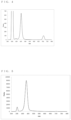
FIG. 2 shows a fluorescence (photoluminescence: PL) spectrum exhibited by ZnSe in Example 1; -
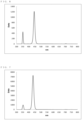
FIG. 3 shows a PL spectrum exhibited by ZnSe in Example 2; -
FIG. 4 shows a PL spectrum exhibited by ZnSe in Example 3; -
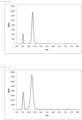
FIG. 5 shows a PL spectrum exhibited by ZnSe in Example 4; -
FIG. 6 shows a PL spectrum exhibited by ZnSe in Example 5; -
FIG. 7 shows a PL spectrum exhibited by ZnSe in Example 6; -
FIG. 8 shows a PL spectrum exhibited by ZnSe in Example 7; -
FIG. 9 shows a PL spectrum exhibited by ZnSe in Example 8; -
FIG. 10 shows a PL spectrum exhibited by ZnSe in Example 9; -
FIG. 11 is a photograph of ZnSe in Example 1, taken by scanning electron microscopy (SEM); -
FIG. 12 shows an X-ray diffraction (XRD) spectrum exhibited by ZnSe in Example 1; and -
FIG. 13 is a SEM photograph of Cu2Se in Example 1. - Embodiments of the present invention (hereinafter simply referred to as "embodiments") will now be described in detail. Note that the present invention is not limited to the following embodiments.
-
FIGS. 1A and 1B are schematic views of quantum dots according to this embodiment. Aquantum dot 1 shown inFIG. 1A is a nanocrystal which does not contain cadmium (hereinafter referred to as Cd). - In this embodiment, the
quantum dot 1 is preferably a nanocrystal containing zinc and selenium (hereinafter referred to as Zn, Se) or zinc and selenium and sulfur (hereinafter referred to as Zn, Se, S). - The
quantum dot 1 has fluorescence properties based on near band-edge emission, and the quantum size effect is achieved when the quantum dot is a nanoscale particle. - Here, a "nanocrystal" refers to a nanoparticle having a particle size of around several nanometers to several tens of nanometers. In this embodiment, many
quantum dots 1 can be formed to be approximately uniform in particle size. - Zn and Se or Zn and Se and S contained in the
quantum dot 1 are main ingredients, and elements other than these elements may be contained. However, it is preferred that Cd is not contained, and phosphorus (P) is also not contained. Since an organic phosphorus compound is expensive and is easily oxidized in air, resulting in unstable synthesis; thus, the cost would be increased, the fluorescence properties will be unstable, and the production process would likely be complicated. - The
quantum dot 1 of this embodiment has a fluorescence FWHM of 25 nm or less. "Fluorescence FWHM" herein refers to the full width at half maximum (FWHM) of the spread of the fluorescence wavelength at half the peak value of the fluorescence intensity in the fluorescence spectrum. Further, the fluorescence FWHM is preferably 23 nm or less. The fluorescence FWHM is more preferably 20 nm or less. The fluorescence FWHM is yet more preferably 17 nm or less. Thus, since the fluorescence FWHM can be made narrow in this embodiment, the color gamut can be improved. - In this embodiment, as described below, for the reaction system for synthesizing the
quantum dot 1, copper chalcogenide is synthesized as a precursor, followed by a metal exchange reaction on the precursor. When thequantum dot 1 is produced based on such an indirect synthetic reaction, the fluorescence FWHM can be made narrower; specifically, a fluorescence FWHM of 25 nm or less can be achieved. - Many
organic ligands 2 are preferably placed on the surface of thequantum dot 1. This can inhibit aggregation ofquantum dots 1, resulting in the target optical properties. The ligands available for the reaction are not particularly limited; for example, the following ligands can be given as typical examples. - Aliphatic primary amines: oleylamine: C18H35NH2, stearyl(octadecyl)amine: C18H37NH2, dodecyl(lauryl)amine: C12H25NH2, decylamine: C10H21NH2, octylamine: C8H17NH2
- Aliphatic acids: oleic acid: C17H33COOH, stearic acid: C17H35COOH, palmitic acid: C15H31COOH, myristic acid: C13H27COOH, lauric (dodecanoic) acid: C11H23COOH, decanoic acid: C9H19COOH, octanoic acid: C7H15COOH
- Thiols: octadecanethiol: C18H37SH, hexadecanethiol: C16H33SH, tetradecanethiol: C14H29SH, dodecanethiol: C12H25SH, decanethiol: C10H21SH, octanethiol: C8H17SH
- Phosphines: trioctylphosphine: (C8H17)3P, triphenylphosphine: (C6H5)3P, tributylphosphine: (C4H9)3P
- Phosphine oxides: trioctylphosphine oxide: (C8H17)3P=O, triphenylphosphine oxide: (C6H5)3P=O, tributylphosphine oxide: (C4H9)3P=O
- The fluorescence quantum yield of the
quantum dot 1 in this embodiment is 10 % or more. Further, the fluorescence quantum yield is preferably 30 % or more, more preferably 50 % or more. Thus, in this embodiment, the fluorescence quantum yield of the quantum dot can be increased. - In this embodiment, the fluorescence wavelength can be freely controlled to around 410 nm or more and 470 nm or less. The
quantum dot 1 in this embodiment is a ZnSe-based solid solution using a chalcogen in addition to zinc. In this embodiment, the particle size of thequantum dot 1 and the composition of thequantum dot 1 can be adjusted to control the fluorescence wavelength. Accordingly, the fluorescence wavelength is preferably 410 nm or more, more preferably 430 nm or more. Further, the fluorescence wavelength is preferably 440 nm or more, more preferably 470 nm or less, even more preferably 460 nm or less. - Note that, in this embodiment, the fluorescence wavelength can be controlled to blue.
- The
quantum dot 1 depicted inFIG. 1B has a core-shell structure having acore 1a and ashell 1b covering the surface of thecore 1a. As shown inFIG. 1B , manyorganic ligands 2 are preferably placed on the surface of thequantum dot 1. Further, the fluorescence FWHM of thequantum dot 1 shown inFIG. 1B is 25 nm or less. - The core 1a of the
quantum dot 1 shown inFIG. 1B is the nanocrystal shown inFIG. 1A . Accordingly, thecore 1a is preferably formed of ZnSe or ZnSeS. As with thecore 1a, theshell 1b does not contain cadmium (Cd) either. The material for forming theshell 1b may be, but not limited to, for example, zinc sulfide (ZnS) or the like. - The
shell 1b may be in a condition of being a solid solution on the surface of thecore 1a. InFIG. 1B , the boundary between the core 1a and theshell 1b is indicated by a dotted line, and this means that the boundary between the core 1a and theshell 1b may or may not be identified by an analysis. In this embodiment, fluorescence is caused also by a ZnSe core alone. - As with
FIG. 1A , the fluorescence wavelength of thequantum dot 1 shown inFIG. 1B can also be freely controlled to around 410 nm or more and 470 nm or less. Further, in this embodiment, the fluorescence wavelength can be adjusted to blue. - Subsequently, a method of producing the
quantum dot 1 of this embodiment will be described. - First, in this embodiment, copper chalcogenide (precursor) is synthesized from an organic copper compound or an inorganic copper compound and an organic chalcogen compound. Specifically, the precursor is preferably copper selenide: Cu2Se or copper selenide sulfide: Cu2SeS.
- Here, in this embodiment, a raw material for Cu used for Cu2Se may be, but not limited to, for example, one of the following organic copper reagents and inorganic copper reagents. Specifically, for example, copper(I) acetate: Cu(OAc) or copper(II) acetate: Cu(OAc)2 can be used as an acetate; copper stearate: Cu(OC(=O)C17H35)2, copper oleate: Cu(OC(=O)C17H33)2, copper myristate: Cu(OC(=O)C13H27)2, copper didodecanoate: Cu(OC(=O)C11H23)2, or copper acetylacetonate: Cu(acac)2 can be used an aliphatic acid salt; and either a monovalent compound or a divalent compound, for example, copper(I) chloride: CuCl, copper(II) chloride:CuCl2, copper(I) bromide: CuBr, copper(II) bromide: CuBr2, copper(I) iodide: CuI, or copper(II) iodide: CuI2 can be used as a halide.
- In this embodiment, for selenium, an organic selenium compound (organic chalcogenide) is used as a raw material. The structure of the compound is not particularly limited, and for example, trioctylphosphine selenide: (C8H17)3P=Se in which selenium is dissolved in trioctylphosphine, tributylphosphine selenide: (C4H9)3P=Se in which selenium is dissolved in tributylphosphine, or the like can be used. Alternatively, a solution in which selenium is dissolved in a high-boiling solvent that is a long-chain hydrocarbon such as octadecene (Se-ODE) at a high temperature, a solution in which selenium is dissolved in a mixture of oleylamine and dodecanethiol (Se-DDT/ OLAm), etc. can be used.
- In this embodiment, an organic copper compound or an inorganic copper compound is mixed with an organic chalcogen compound to be dissolved. For a solvent, octadecene can be used as high-boiling saturated hydrocarbon or unsaturated saturated hydrocarbon. Other than the above, t-butylbenzene can be used as a high-boiling aromatic solvent, and butyl butyrate: C4H9COOC4H9, benzyl butyrate: C6H5CH2COOC4H9, etc. can be used as a high-boiling ester solvent; alternatively, an aliphatic amine compound, an aliphatic acid compound, or an aliphatic phosphorus compound, or a mixture of them may be used as a solvent.
- Here, copper chalcogenide (precursor) is synthesized with the reaction temperature being set to 140 °C or more and 250 °C or less. The reaction temperature is preferably as lower as 140 °C or more and 220 °C or less, more preferably even as lower as 140 °C or more and 200 °C or less.
- Further, in this embodiment, the reaction process is not particularly limited; however, in order to obtain quantum dots with a narrow FWHM, it is important to synthesize Cu2Se or Cu2SeS of similar particle sizes.
- Further, in this embodiment, in order to obtain ZnSe of a narrower FWHM as a core, it is important to mix sulfur (S) as a solid solution in the core. Therefore, it is preferred to add thiol in synthesizing Cu2Se that is a precursor, and in order to obtain quantum dots with a narrower FWHM, Se-DDT/OLAm is more preferably used as a raw material for Se. Thiols include, but not limited to, for example, octadecanethiol: C18H37SH, hexadecanethiol: C16H33SH, tetradecanethiol: C14H29SH, dodecanethiol: C12H25SH, decanethiol: C10H21SH, and octanethiol: C8H17SH.
- Next, as a raw material for ZnSe or ZnSeS, an organic zinc compound or an inorganic zinc compound is prepared. Organic zinc compounds and inorganic zinc compounds are materials that are stable and easy to handle even in air. The structure of the organic zinc compound or inorganic zinc compound is not limited; however, a highly ionic zinc compound is preferably used to efficiently perform a metal exchange reaction. For example, the following organic zinc compounds and inorganic zinc compounds can be used. Specifically, for example, zinc acetate: Zn(OAc)2 or nitric acid zinc: Zn(NO3)2 can be used as an acetate; zinc stearate: Zn(OC(=O)C17H35)2, zinc oleate: Zn(OC(=O)C17H33)2, zinc palmitate: Zn(OC(=O)C15H31)2, zinc myristate: Zn(OC(=O)C13H27)2, zinc dodecanoate: Zn(OC(=O)C11H23)2, or zinc acetylacetonate: Zn(acac)2 can be used as an aliphatic acid salt; zinc chloride: ZnCl2, zinc bromide: ZnBr2, or zinc iodide: ZnI2 can be used as a halide; and zinc diethyldithiocarbamate: Zn(SC(=S)N(C2H5)2)2, zinc dimethyldithiocarbamate: Zn(SC(=S)N(CH3)2)2, or zinc dibutyldithiocarbamate: Zn(SC(=S)N(C4H9)2)2 can be used as a zinc carbamate.
- Subsequently, the above organic zinc compound or inorganic zinc compound is added to a reaction solution in which the precursor of copper chalcogenide is synthesized. This results in a metal exchange reaction between copper (Cu) in copper chalcogenide and zinc (Zn). The metal exchange reaction is preferably made to occur at 180 °C or more and 280 °C or less. The metal exchange reaction is more preferably made to occur at a lower temperature of 180 °C or more and 250 °C or less.
- In this embodiment, it is preferred that the metal exchange between Cu and Zn proceeds quantitatively and Cu that is a precursor is not contained in nanocrystals. If Cu that is a precursor remains, Cu acts as a dopant, and light emission is caused by a different mechanism and the FWHM is wider. The amount of Cu left is preferably 100 ppm or less, more preferably 50 ppm or less, and ideally 10 ppm or less.
- Further, in this embodiment, when the metal exchange is performed, a compound that serves to help isolate the metal of the precursor in the reaction solution by coordination, chelation, etc. is required.
- Compounds playing the above role include ligands which can be complexed with Cu. For example, phosphorus-based ligands, amine-based ligands, sulfur-based ligands are preferred; in particular, phosphorus-based ligands are preferred more because of its high efficiency.
- Thus, metal exchange of Cu and Zn can be appropriately performed, and quantum dots having a narrow fluorescence FWHM based on Zn and Se can be produced.
- In this embodiment, copper chalcogenide is synthesized as the precursor from an organic copper compound or an inorganic copper compound and an organic chalcogen compound, and metal exchange is performed using the precursor to synthesize quantum dots. Thus, in this embodiment, first, quantum dots are synthesized after the synthesis of the precursor; namely, direct synthesis is not performed. Such indirect synthesis renders it unnecessary to use regents that are excessively reactive and so dangerous to handle, and ZnSe-based quantum dots having a narrow FWHM can be safely and stably synthesized.
- Further, in this embodiment, desired quantum dots can be obtained by subjecting Cu-Zn to metal exchange by one-pot synthesis without isolating and purifying the precursor. Alternatively, the precursor copper chalcogenide may be used after being isolated and purified.
- Further, in this embodiment, even if processes such as cleaning, isolation/purification, coating, and ligand exchange are not performed, the synthesized quantum dots exhibit fluorescent properties.
- However, as shown in
FIG. 1B , thecore 1a made of a nanocrystal such as of ZnSe or ZnSeS is coated by theshell 1b, thereby further increasing the fluorescence quantum yield. - Further, in this embodiment, the core/shell structure can be synthesized in the stage of the precursor. For example, when zinc sulfide (ZnS) is used for the shell structure, copper chalcogenide of the precursor is Cu2Se /Cu2S. This is synthesized by continuously adding the raw material for S in one reaction vessel, followed by metal exchange of Cu-Zn, thereby obtaining ZnSe/ZnS.
- Further, in this embodiment, typical raw materials for S used in the shell structure include, but not limited to, the following materials.
- Thiols: octadecanethiol: C18H37SH, hexadecanethiol: C16H33SH, tetradecanethiol: C14H29SH, dodecanethiol: C12H25SH, decanethiol: C10H21SH, octanethiol: C8H17SH, benzenethiol: C6H5SH, or a solution in which sulfur is dissolved in a high-boiling solvent that is a long-chain hydrocarbon such as octadecene(S-ODE) or a solution in which selenium is dissolved in a mixture of oleylamine and dodecanethiol (S-DDT/ OLAm); etc. can be used.
- The uses of the
quantum dot 1 shown inFIG. 1A and FIG. 1B are not particularly limited; for example, thequantum dot 1 exhibiting blue fluorescence in this embodiment can be applied to a wavelength converting member, a lighting member, a back light unit, a display device, etc. - When the
quantum dot 1 in this embodiment is applied to part of a wavelength converting member, a lighting member, a back light unit, and a display device and for example, photoluminescence (PL) is used for light emission; blue fluorescence can be induced by UV radiation from a light source. Alternatively, when electroluminescence (EL) is used for the emission, or for example when light emission of all three primary colors is achieved by other methods, a light-emitting device giving blue fluorescence using thequantum dot 1 of this embodiment can be obtained. In this embodiment, a light-emitting device (full color LED) including thequantum dots 1 exhibiting blue fluorescence in this embodiment in addition to quantum dots exhibiting green fluorescence and quantum dots exhibiting red fluorescence is obtained, thus white color emission can be achieved. - A wavelength converting member is formed as a sheet or a film, or formed from a molding. For example, a molding of resin in which quantum dots are dispersed is fitted in a container having a receiving space by press fitting etc. Here, the refractive index of the molding is preferably smaller than the refractive index of the container. Thus, part of light incident on the molding is totally reflected by an inner wall of the container. This can reduce light beams leaking out from the sides of the container. When the quantum dot having a narrow fluorescence FWHM in this embodiment is applied to a wavelength converting member, a lighting member, a back light unit, a display device, etc., the light emission properties of the device can be effectively improved.
- The effects of the present invention will be described using Examples and Comparative Examples. Note that the present invention is not limited to the following examples in any way.
- In the present invention, the following raw materials were used to synthesize quantum dots free of cadmium.
-
- Octadecene: product of Sigma-Aldrich Co. LLC/ Idemitsu Kosan Co.,Ltd
- Oleylamine: FARMIN produced by Kao Corporation
- Oleic acid: LUNAC O-V produced by Kao Corporation
- Trioctylphosphine: product of HOKKO CHEMICAL INDUSTRY CO., LTD.
- Zinc chloride: product of Sigma-Aldrich Co. LLC/ KISHIDA CHEMICAL Co.,Ltd.
- Zinc iodide: product of Sigma-Aldrich Co. LLC
- Zinc acetate dihydrate: product of IKOMA chemical products Co.Ltd.
- Anhydrous zinc acetate: product of Sigma-Aldrich Co. LLC
- Selenium (4N: 99.99 %): product of Shinko Chemical Co., Ltd./Sigma-Aldrich Co. LLC
- Sulfur: product of KISHIDA CHEMICAL Co.,Ltd.
-
- Spectrofluorometer: F-2700 produced by Hitachi High-Tech Science Corporation
- Ultraviolet-visible spectrophotometer: V-770 produced by JASCO Corporation
- Quantum yield measurement system: QE-1100 produced by Otsuka Electronics Co.,Ltd.
- X-ray diffraction (XRD) system: D2 PHASER produced by Bruker Corporation
- Scanning electron microscope (SEM): SU9000 produced by Hitachi High-Tech Science Corporation
- Into a 100 mL reaction vessel, 131 mg of copper acetylacetonate: Cu(acac)2, 1.5 mL of dodecanethiol: DDT, 4.75 mL of oleylamine: OLAm, and 6.25 mL of octadecene: ODE were charged. Heating was then performed while stirring in an inert gas (N2) atmosphere, thereby dissolving the raw materials.
- To this solution, 1.75 mL of a Se-DDT/OLAm solution (0.3M) was added, and heating was performed while stirring at 220 °C for 10 minutes. The resultant reaction solution (Cu2Se(S)) was cooled to room temperature.
- Ethanol was added to the Cu2Se reaction solution to cause precipitation, and centrifugal separation was performed to recover the precipitate. ODE was added to disperse the precipitate.
- To the Cu2Se(S)-ODE solution, 682 mg of zinc chloride: ZnCl2, 10 mL of trioctylphosphine: TOP, and 0.4 mL of oleylamine: OLAm were added, and heating was performed while stirring in an inert gas (N2) atmosphere at 220 °C for 30 minutes. The resultant reaction solution (ZnSe) was cooled to room temperature.
- Ethanol was added to the ZnSe(S) reaction solution to cause precipitation, and centrifugal separation was performed to recover the precipitate. ODE was added to disperse the precipitate.
- To 14 mL of the ZnSe(S)-ODE solution, 682 mg of zinc chloride: ZnCl2, 5 mL of trioctylphosphine: TOP, and 0.5 mL of oleylamine: OLAm were added, and heating was performed while stirring in an inert gas (N2) atmosphere at 280 °C for 120 minutes. The resultant reaction solution (ZnSe(S)) was cooled to room temperature.
- The resultant reaction solution was subjected to a measurement using the spectrofluorometer. Thus, as shown in
FIG. 2 , a fluorescence wavelength of approximately 446.0 nm and a fluorescence FWHM of approximately 16.6 nm were obtained as optical properties. - The resultant reaction solution was subjected to a measurement using the quantum efficiency measurement system. As a result, the quantum yield was approximately30.6 %.
- Further, ethanol was added to the resultant reaction solution to cause precipitation, and centrifugal separation was performed to recover the precipitate. Toluene was then added to disperse the precipitate, thereby obtaining a dispersion solution in which ZnSe(S) particles were dispersed.
- Into a 100 mL reaction vessel, 36.3 mg of anhydrous copper acetate: Cu(OAc)2, 0.3 mL of dodecanethiol: DDT, 0.4 mL of a Se-DDT/ OLAm solution (0.5M), and 10 mL of octadecene: ODE were charged. Heating was then performed while stirring in an inert gas (N2) atmosphere at 220 °C for 10 minutes. The resultant reaction solution (Cu2Se(S)) was cooled to room temperature.
- After that, 273 mg of zinc chloride: ZnCl2, 3 mL of trioctylphosphine: TOP, and 0.1 mL of oleylamine: OLAm were added to the solution, and heating was performed while stirring in an inert gas (N2) atmosphere at 230 °C for 30 minutes. The resultant reaction solution (ZnSe(S)) was cooled to room temperature.
- The resultant reaction solution was subjected to a measurement using the spectrofluorometer. Thus, as shown in
FIG. 3 , a fluorescence wavelength of approximately 445.5 nm and a fluorescence FWHM of approximately 23.0 nm were obtained as optical properties. - Into a 100 mL reaction vessel, 131 mg of copper acetylacetonate: Cu(acac)2, 1.5 mL of dodecanethiol: DDT, 4.75 mL of oleylamine: OLAm, and 6.25 mL of octadecene: ODE were charged. Heating was then performed while stirring in an inert gas (N2) atmosphere, thereby dissolving the raw materials.
- To this solution, 1 mL of a Se-DDT/OLAm solution (0.5M) was added, and heating was performed while stirring at 200 °C for 10 minutes.
- To this solution, 1 mL of a S-DDT/OLAm solution (0.2M) was added, and heating was performed while stirring at 200 °C for 10 minutes. The resultant reaction solution (Cu2SeS) was cooled to room temperature.
- Ethanol was added to the Cu2SeS reaction solution to cause precipitation, and centrifugal separation was performed to recover the precipitate. TOP was added to disperse the precipitate.
- After that, 682 mg of zinc chloride: ZnCh and 0.4 mL of oleylamine: OLAm were added to the Cu2SeS-ODE solution, and heating was performed while stirring in an inert gas (N2) atmosphere at 230 °C for 60 minutes. The resultant reaction solution (ZnSeS) was cooled to room temperature.
- The resultant reaction solution was subjected to a measurement using the spectrofluorometer. Thus, as shown in
FIG. 4 , a fluorescence wavelength of approximately 454.0 nm and a fluorescence FWHM of approximately 19.7 nm were obtained as optical properties. - Into a 100 mL reaction vessel, 1.2 mL of a solution of copper oleate in octadecene (0.2M): Cu(OLAc)2-ODE, 3 mL of a Se-ODE solution, 0.4 mL of dodecanethiol: DDT, and 3 mL of octadecene: ODE were charged. This solution was heated while stirring at 200 °C for 60 minutes. The resultant reaction solution (Cu2SeS) was cooled to room temperature.
- To this Cu2SeS reaction solution, 5 mL of trioctylphosphine: TOP, 1.0 mL of oleylamine: OLAm, and 940 mg of zinc chloride: ZnCl2 were added, and heating was performed while stirring in an inert gas (N2) atmosphere at 200 °C for 20 minutes. The resultant reaction solution (ZnSeS) was cooled to room temperature.
- The resultant reaction solution was subjected to a measurement using the spectrofluorometer. Thus, as shown in
FIG. 5 , a fluorescence wavelength of approximately 434.0 nm and a fluorescence FWHM of approximately 23.5 nm were obtained as optical properties. - Into a 300 mL reaction vessel, 543 mg of anhydrous copper acetate: Cu(OAc)2, 9 mL of dodecanethiol: DDT, 28.5 mL of oleylamine: OLAm, and 37.5 mL of octadecene: ODE were charged. Heating was then performed while stirring in an inert gas (N2) atmosphere, thereby dissolving the raw materials.
- To this solution, 10.5 mL of a Se-DDT/OLAm solution (0.3M) was added, and heating was performed while stirring at 220 °C for 10 minutes. The resultant reaction solution (Cu2Se(S)) was cooled to room temperature.
- Ethanol was added to the Cu2Se(S) reaction solution to cause precipitation, and centrifugal separation was performed to recover the precipitate. ODE was added to disperse the precipitate.
- To the Cu2Se(S)-ODE solution, 4092 mg of zinc chloride: ZnCl2, 60 mL of trioctylphosphine: TOP, and 2.4 mL of oleylamine: OLAm were added, and heating was performed while stirring in an inert gas (N2) atmosphere at 220 °C for 30 minutes. The resultant reaction solution (ZnSe(S)) was cooled to room temperature.
- Ethanol was added to the ZnSe(S) reaction solution to cause precipitation, and centrifugal separation was performed to recover the precipitate. ODE was added to disperse the precipitate.
- To the ZnSe(S)-ODE solution, 4092 mg of zinc chloride: ZnCl2, 30 mL of trioctylphosphine: TOP, and 3 mL of oleylamine: OLAm were added, and heating was performed while stirring in an inert gas (N2) atmosphere at 280 °C for 120 minutes. The resultant reaction solution (ZnSe(S)) was cooled to room temperature.
- To this solution, 15 mL of a S-DDT/OLAm solution (0.1M) was added, and heating was performed while stirring at 220 °C for 30 minutes. The resultant reaction solution (ZnSe(S)) was cooled to room temperature.
- Ethanol was added to the ZnSe(S) reaction solution to cause precipitation, and centrifugal separation was performed to recover the precipitate. ODE was added to disperse the precipitate.
- To the ZnSe(S)-ODE solution, 2052 mg of zinc chloride: ZnCl2, 36 mL of trioctylphosphine: TOP, and 1.2 mL of oleylamine: OLAm were added, and heating was performed while stirring in an inert gas (N2) atmosphere at 230 °C for 60 minutes. The resultant reaction solution (ZnSe(S)) was cooled to room temperature.
- The resultant reaction solution was subjected to a measurement using the spectrofluorometer. Thus, as shown in
FIG. 6 , a fluorescence wavelength of approximately 445.5 nm and a fluorescence FWHM of approximately 13.3 nm were obtained as optical properties. - The resultant reaction solution was subjected to a measurement using the quantum efficiency measurement system. As a result, the quantum yield was approximately 52 %.
- Into a 300 mL reaction vessel, 543 mg of anhydrous copper acetate: Cu(OAc)2, 9 mL of dodecanethiol: DDT, 9 mL of oleylamine: OLAm, and 57 mL of octadecene: ODE were charged. Heating was then performed while stirring in an inert gas (N2) atmosphere, thereby dissolving the raw materials.
- To this solution, 10.5 mL of a Se-DDT/OLAm solution (0.3M) was added, and heating was performed while stirring at 220 °C for 10 minutes. The resultant reaction solution (Cu2Se(S)) was cooled to room temperature.
- To this solution, 4092 mg of zinc chloride: ZnCl2, 60 mL of trioctylphosphine: TOP, and 2.4 mL of oleylamine: OLAm were added, and heating was performed while stirring in an inert gas (N2) atmosphere at 220 °C for 30 minutes. The resultant reaction solution (ZnSe) was cooled to room temperature.
- Ethanol was added to the ZnSe(S) reaction solution to cause precipitation, and centrifugal separation was performed to recover the precipitate. ODE was added to disperse the precipitate.
- To the ZnSe(S)-ODE solution, 6150 mg of zinc chloride: ZnCl2, 30 mL of trioctylphosphine: TOP, and 3 mL of oleylamine: OLAm were added, and heating was performed while stirring in an inert gas (N2) atmosphere at 280 °C for 60 minutes. The resultant reaction solution (ZnSe(S)) was cooled to room temperature.
- To this solution, 15 mL of a S-DDT/OLAm solution (0.1M) was added, and heating was performed while stirring at 220 °C for 30 minutes. The resultant reaction solution (ZnSe(S)) was cooled to room temperature.
- To this solution, 2052 mg of zinc chloride: ZnCl2, 36 mL of trioctylphosphine: TOP, and 1.2 mL of oleylamine: OLAm were added, and heating was performed while stirring in an inert gas (N2) atmosphere at 230 °C for 60 minutes. The resultant reaction solution (ZnSe(S)) was cooled to room temperature.
- The resultant reaction solution was subjected to a measurement using the spectrofluorometer. Thus, as shown in
FIG. 7 , a fluorescence wavelength of approximately 436.0 nm and a fluorescence FWHM of approximately 15.2 nm were obtained as optical properties. - The resultant reaction solution was subjected to a measurement using the quantum efficiency measurement system. As a result, the quantum yield was approximately 66 %.
- Into a 300 mL reaction vessel, 546 mg of anhydrous copper acetate: Cu(OAc)2, 9 mL of dodecanethiol: DDT, 9 mL of oleylamine: OLAm, and 57 mL of octadecene: ODE were charged. Heating was then performed while stirring in an inert gas (N2) atmosphere, thereby dissolving the raw materials.
- To this solution, 8.4 mL of a Se-DDT/OLAm solution (0.3M) was added, and heating was performed while stirring at 220 °C for 10 minutes. The resultant reaction solution (Cu2Se(S)) was cooled to room temperature.
- Ethanol was added to the Cu2Se reaction solution to cause precipitation, and centrifugal separation was performed to recover the precipitate. ODE was added to disperse the precipitate.
- To the Cu2Se(S)-ODE solution, 4092 mg of zinc chloride: ZnCl2, 60 mL of trioctylphosphine: TOP, and 2.4 mL of oleylamine: OLAm were added, and heating was performed while stirring in an inert gas (N2) atmosphere at 220 °C for 30 minutes. The resultant reaction solution (ZnSe) was cooled to room temperature.
- Ethanol was added to the ZnSe(S) reaction solution to cause precipitation, and centrifugal separation was performed to recover the precipitate. ODE was added to disperse the precipitate.
- To the ZnSe(S)-ODE solution, 4092 mg of zinc chloride: ZnCl2, 30 mL of trioctylphosphine: TOP, and 3 mL of oleylamine: OLAm were added, and heating was performed while stirring in an inert gas (N2) atmosphere at 280 °C for 30 minutes. The resultant reaction solution (ZnSe(S)) was cooled to room temperature.
- To this solution, 15 mL of a S-DDT/OLAm solution (0.1M) was added, and heating was performed while stirring at 220 °C for 30 minutes. The resultant reaction solution (ZnSe(S)) was cooled to room temperature.
- Ethanol was added to the ZnSe(S) reaction solution to cause precipitation, and centrifugal separation was performed to recover the precipitate. ODE was added to disperse the precipitate.
- To the ZnSe(S)-ODE solution, 2052 mg of zinc chloride: ZnCl2, 36 mL of trioctylphosphine: TOP, and 1.2 mL of oleylamine: OLAm were added, and heating was performed while stirring in an inert gas (N2) atmosphere at 230 °C for 60 minutes. The resultant reaction solution (ZnSe(S)) was cooled to room temperature.
- The resultant reaction solution was subjected to a measurement using the spectrofluorometer. Thus, as shown in
FIG. 8 , a fluorescence wavelength of approximately 432.0 nm and a fluorescence FWHM of approximately 15.3 nm were obtained as optical properties. - The resultant reaction solution was subjected to a measurement using the quantum efficiency measurement system. As a result, the quantum yield was approximately 70 %.
- Into a 100 mL reaction vessel, 72.6 mg of anhydrous copper acetate: Cu(OAc)2, 0.263 mL of oleylamine: OLAm, and 10 mL of octadecene: ODE were charged. Heating was then performed while stirring in an inert gas (N2) atmosphere, thereby dissolving the raw materials.
- To this solution, 2 mL of a Se-ODE solution (0.1M) was added, and heating was performed while stirring at 145 °C for 30 minutes. The resultant reaction solution (Cu2Se) was cooled to room temperature.
- After that, 546 mg of zinc chloride: ZnCl2, 5 mL of trioctylphosphine: TOP, and 0.1 mL of oleylamine: OLAm were added to the solution, and heating was performed while stirring in an inert gas (N2) atmosphere at 220 °C for 30 minutes. The resultant reaction solution (ZnSe) was cooled to room temperature.
- Ethanol was added to the ZnSe reaction solution to cause precipitation, and centrifugal separation was performed to recover the precipitate. ODE was added to disperse the precipitate.
- After that, 546 mg of zinc chloride: ZnCl2, 5 mL of trioctylphosphine: TOP, and 0.1 mL of oleylamine: OLAm were added to the ZnSe-ODE solution, and heating was performed while stirring in an inert gas (N2) atmosphere at 280 °C for 30 minutes. The resultant reaction solution (ZnSe) was cooled to room temperature.
- To this solution, 2 mL of a S-DDT/OLAm solution (0.1M) was added, and heating was performed while stirring at 220 °C for 30 minutes. The resultant reaction solution (ZnSe(S)) was cooled to room temperature.
- After that, 274 mg of zinc chloride: ZnCl2, 6 mL of trioctylphosphine: TOP, and 0.2 mL of oleylamine: OLAm were added to the solution, and heating was performed while stirring in an inert gas (N2) atmosphere at 230 °C for 30 minutes. The resultant reaction solution (ZnSe(S)) was cooled to room temperature.
- The resultant reaction solution was subjected to a measurement using the spectrofluorometer. Thus, as shown in
FIG. 9 , a fluorescence wavelength of approximately 425.5 nm and a fluorescence FWHM of approximately 22.1 nm were obtained as optical properties. - The resultant reaction solution was subjected to a measurement using the quantum efficiency measurement system. As a result, the quantum yield was approximately 63 %.
- Into a 100 mL reaction vessel, 182 mg of anhydrous copper acetate: Cu(OAc)2, 3 mL of dodecanethiol: DDT, 9.5 mL of oleylamine: OLAm, and 12.5 mL of octadecene: ODE were charged. Heating was then performed while stirring in an inert gas (N2) atmosphere, thereby dissolving the raw materials.
- To this solution, 2 mL of a Se-DDT/OLAm solution (0.5M) was added, and heating was performed while stirring at 220 °C for 10 minutes, followed by the addition of 8 mL of a Se-ODE solution (0.1M), and heating was then performed while stirring at 220 °C for 10 minutes. The resultant reaction solution (Cu2Se(S)) was cooled to room temperature.
- To this solution, 1364 mg of zinc chloride: ZnCl2, 20 mL of trioctylphosphine: TOP, and 0.8 mL of oleylamine: OLAm were added, and heating was performed while stirring in an inert gas (N2) atmosphere at 220 °C for 30 minutes. The resultant reaction solution (ZnSe(S)) was cooled to room temperature.
- Ethanol was added to the ZnSe(S) reaction solution to cause precipitation, and centrifugal separation was performed to recover the precipitate. ODE was added to disperse the precipitate.
- To the ZnSe(S)-ODE solution, 2050 mg of zinc chloride: ZnCl2, 10 mL of trioctylphosphine: TOP, and 1 mL of oleylamine: OLAm were added, and heating was performed while stirring in an inert gas (N2) atmosphere at 280 °C for 120 minutes. The resultant reaction solution (ZnSe(S)) was cooled to room temperature.
- The resultant reaction solution was subjected to a measurement using the spectrofluorometer. Thus, as shown in
FIG. 10 , a fluorescence wavelength of approximately 452.5 nm and a fluorescence FWHM of approximately 16.2 nm were obtained as optical properties. - The resultant reaction solution was subjected to a measurement using the quantum efficiency measurement system. As a result, the quantum yield was approximately 25 %.
- To the reaction solution of Example 6, 0.6 mL of dodecylamine: DDA was added, and heating was performed while stirring in an inert gas (N2) atmosphere at 220 °C for 5 minutes.
- To this solution, 6 mL of a S-ODE solution (0.1M) was added, and heating was performed while stirring at 220 °C for 10 minutes, followed by the addition of 12 mL of a zinc octanoate solution (0.1M), and heating was then performed while stirring at 220 °C for 10 minutes. A process of heating and stirring the S-ODE solution and the zinc octanoate solution was performed twice in total. This solution was then heated while stirring at 200 °C for 30. The resultant reaction solution (ZnSe(S)-ZnS) was cooled to room temperature.
- The resultant reaction solution was subjected to a measurement using the spectrofluorometer. Thus, a fluorescence wavelength of approximately 436.0 nm and a fluorescence FWHM of approximately 14.7 nm were obtained as optical properties.
- The resultant reaction solution was subjected to a measurement using the quantum efficiency measurement system. As a result, the quantum yield was approximately 58 %.
- To 100 mL of the reaction solution of Example 6, 1 mL of dodecylamine: DDA was added, and heating was performed while stirring in an inert gas (N2) atmosphere at 220 °C for 5 minutes.
- To this solution, 10 mL of a S-DDT/OLAm solution (0.1M) was added, and heating was performed while stirring at 220 °C for 10 minutes, followed by the addition of 20 mL of a zinc octanoate solution (0.1M), and heating was then performed while stirring at 220 °C for 10 minutes. A process of heating and stirring the S-ODE solution and the zinc octanoate solution was performed twice in total. This solution was then heated while stirring at 200 °C for 30. The resultant reaction solution (ZnSe(S)-ZnS) was then cooled to room temperature.
- The resultant reaction solution was subjected to a measurement using the spectrofluorometer. Thus, a fluorescence wavelength of approximately 436.0 nm and a fluorescence FWHM of approximately 15.1 nm were obtained as optical properties.
- The resultant reaction solution was subjected to a measurement using the quantum efficiency measurement system. As a result, the quantum yield was approximately 48 %.
- Ethanol was added to 10 mL of the reaction solution of Example 5 to cause precipitation, and centrifugal separation was performed to recover the precipitate. ODE was added to disperse the precipitate.
- To this reaction solution, 0. 75 mL of oleylamine: OLAm was added, and heating was performed while stirring in an inert gas (N2) atmosphere at 320 °C for 3 minutes.
- After that, 0.25 mL of a mixed solution of 5 mL of a zinc oleate solution (0.4M) and 0.375 mL of dodecanethiol: DDT was added, and heating was performed while stirring at 220 °C for 10 minutes. This mixed solution was further added, and a process of heating and stirring was performed three times in total. The resultant reaction solution (ZnSe(S)-ZnS) was then cooled to room temperature.
- Further, ethanol was added to the resultant reaction solution to cause precipitation, and centrifugal separation was performed to recover the precipitate. Hexane was then added to disperse the precipitate, thereby obtaining a dispersion solution in which ZnSe(S)-ZnS particles were dispersed.
- The resultant hexane dispersion solution was subjected to a measurement using the spectrofluorometer. Thus, a fluorescence wavelength of approximately 445.5 nm and a fluorescence FWHM of approximately 22.5 nm were obtained as optical properties.
- The resultant reaction solution was subjected to a measurement using the quantum efficiency measurement system. As a result, the quantum yield was approximately 3 %.
- Ethanol was added to 12.5 mL of the reaction solution of Example 6 to cause precipitation, and centrifugal separation was performed to recover the precipitate. ODE was added to disperse the precipitate.
- To this reaction solution, 0. 75 mL of oleylamine: OLAm was added, and heating was performed while stirring in an inert gas (N2) atmosphere at 320 °C for 3 minutes.
- After that, 0.25 mL of a mixed solution of 5 mL of a zinc oleate solution (0.4M) and 0.375 mL of dodecanethiol: DDT was added, and heating was performed while stirring at 220 °C for 10 minutes. This mixed solution was further added, and a process of heating and stirring was performed three times in total. The resultant reaction solution (ZnSe(S)-ZnS) was then cooled to room temperature.
- Further, ethanol was added to the resultant reaction solution to cause precipitation, and centrifugal separation was performed to recover the precipitate. Hexane was then added to disperse the precipitate, thereby obtaining a dispersion solution in which ZnSe(S)-ZnS particles were dispersed.
- The resultant hexane dispersion solution was subjected to a measurement using the spectrofluorometer. Thus, a fluorescence wavelength of approximately 431.0 nm and a fluorescence FWHM of approximately 18.0 nm were obtained as optical properties.
- The resultant reaction solution was subjected to a measurement using the quantum efficiency measurement system. As a result, the quantum yield was approximately 9 %.
- Ethanol was added to 10 mL of the reaction solution of Example 7 to cause precipitation, and centrifugal separation was performed to recover the precipitate. ODE was added to disperse the precipitate.
- To this reaction solution, 0. 75 mL of oleylamine: OLAm was added, and heating was performed while stirring in an inert gas (N2) atmosphere at 320 °C for 3 minutes.
- After that, 0.25 mL of a mixed solution of 5 mL of a zinc oleate solution (0.4M) and 0.375 mL of dodecanethiol: DDT was added, and heating was performed while stirring at 220 °C for 10 minutes. This mixed solution was further added, and a process of heating and stirring was performed three times in total. The resultant reaction solution (ZnSe(S)-ZnS) was then cooled to room temperature.
- Further, ethanol was added to the resultant reaction solution to cause precipitation, and centrifugal separation was performed to recover the precipitate. Hexane was then added to disperse the precipitate, thereby obtaining a dispersion solution in which ZnSe(S)-ZnS particles were dispersed.
- The resultant hexane dispersion solution was subjected to a measurement using the spectrofluorometer. Thus, a fluorescence wavelength of approximately 432.0 nm and a fluorescence FWHM of approximately 21.0 nm were obtained as optical properties.
- The resultant reaction solution was subjected to a measurement using the quantum efficiency measurement system. As a result, the quantum yield was approximately 23 %.
- Ethanol was added to 10 mL of the reaction solution of Example 7 to cause precipitation, and centrifugal separation was performed to recover the precipitate. ODE was added to disperse the precipitate.
- This solution was heated while being stirred in an inert gas (N2) atmosphere at 280 °C for 3 minutes.
- After that, 0.25 mL of a mixed solution of 5 mL of a zinc oleate solution (0.4M) and 0.375 mL of dodecanethiol: DDT was added, and heating was performed while stirring at 220 °C for 10 minutes. This mixed solution was further added, and a process of heating and stirring was performed 12 times in total. The resultant reaction solution (ZnSe(S)-ZnS) was then cooled to room temperature.
- Further, ethanol was added to the resultant reaction solution to cause precipitation, and centrifugal separation was performed to recover the precipitate. Hexane was then added to disperse the precipitate, thereby obtaining a dispersion solution in which ZnSe(S)-ZnS particles were dispersed.
- The resultant hexane dispersion solution was subjected to a measurement using the spectrofluorometer. Thus, a fluorescence wavelength of approximately 430.0 nm and a fluorescence FWHM of approximately 16.0 nm were obtained as optical properties.
- The resultant reaction solution was subjected to a measurement using the quantum efficiency measurement system. As a result, the quantum yield was approximately 54 %.
- Into a 100 mL reaction vessel, 0.833 mL of zinc oleate: Zn(OLAc)2-ODE solution (0.4M) and 10 mL of a Se-ODE solution (0.1M) were charged, and heating was performed while stirring in an inert gas (N2) atmosphere at 280 °C for 35 minutes.
- The resultant reaction solution was subjected to a measurement using the spectrofluorometer. Thus, a fluorescence wavelength of approximately 459.0 nm and a fluorescence FWHM of approximately 45.2 nm were obtained as optical properties.
- Into a 100 mL reaction vessel, 20 mL of a Se-ODE solution (0.1M) was charged, and heating was performed while stirring in an inert gas (N2) atmosphere at 260 °C for 3 minutes.
- To this solution, 1.67 mL of a zinc oleate: Zn(OLAc)2-ODE solution (0.4M) was added, and heating was performed while stirring at 240 °C for 30 minutes.
- The resultant reaction solution was subjected to a measurement using the spectrofluorometer. Thus, a fluorescence wavelength of approximately 461.0 nm and a fluorescence FWHM of approximately 65.8 nm were obtained as optical properties.
- Into a 100 mL reaction vessel, 183 mg of anhydrous copper acetate: Cu(OAc)2, 0.66 mL of oleylamine: OLAm, 0.64 mL of octanoic acid, and 8.7 mL of octadecene: ODE were charged. Heating was then performed while stirring in an inert gas (N2) atmosphere, thereby dissolving the raw materials.
- To this solution, 2.5 mL of a trioctylphosphine selenide: Se-TOP solution (0.2M) was added, and heating was performed while stirring at 230 °C for 120 minutes.
- The resultant reaction solution was subjected to a measurement using the spectrofluorometer. Thus, a fluorescence wavelength of approximately 406.5 nm and a fluorescence FWHM of approximately 20.8 nm were obtained as optical properties.
- Into a 100 mL reaction vessel, 141 mg of octanoic acid zinc and 20 mL of octadecene: ODE were charged. Heating was then performed while stirring in an inert gas (N2) atmosphere, thereby dissolving the raw materials.
- To this solution, 0.2 mL of a tributylphosphine selenide: Se-TBP solution (0.2M) was added, and heating was performed while stirring at 280 °C for 30 minutes.
- The resultant reaction solution was subjected to a measurement using the spectrofluorometer. Thus, a fluorescence wavelength of approximately 415.0 nm and a fluorescence FWHM of approximately 22.5 nm were obtained as optical properties.
[Table 1] Example Raw material for synthesis Cu2Se Synthesis conditions ZnSe Synthesis conditions Fluorescence wavelength (nm) Fluorescence FWHM (nm) 1 Cu(acac)2 131mg 220°C 220°C DDT 1.5mL OLAm 4.75mL ODE 6.25mL Se-DDT/OLAm 1.75mL 10min 30min ZnCl2 682mg TOP 10mL. OLAm 0.4mL ZnSe-ODE 14mL 280°C 446.0 16.6 ZnCl2 682mg TOP 5mL 120min OLAm 0.5 mL 2 Cu(OAc)2 36.3 mg 200°C 230°C 445.5 23.0 Se-DDT/OLAm 0.4.mL DDT 0.3mL ODE 10mL 10min 30min ZnCl2 273mg TOP 3mL OLAm 0.1mL 3 Cu(acac)2 131mg 200°C 230°C 454.0 19.7 DDT 1.5mL OLAm 4.75mL ODE 6.25mL Se-DDT/OLAm 1mL 20mm 60min S-DDT/OLAm 1mL ZnCl2 682mg OLAm 0.4mL 4 Cu(OLAc)2-ODE 1.2 mL 200°C 200°C 434.0 23.49 Se-ODE 3mL DDT 0.4mL ODE 3mL 60min 20min ZnCl2 940mg TOP 5mL OLAm 1.0mL [Table 2] Example Raw material for synthesis Cu2Se Synthesis conditions ZnSe Synthesis conditions Fluorescence wavelength (nm) Fluorescence FWHM (nm) 5 Cu(OLAc)2 543mg 220°C 220°C DDT 9mL OLAm 28.5mL ODE 37.5mL Se-DDT/OLAm 10.5mL ZnCl2 4092mg 10min 30min TOP 60mL. OLAm 2.4mL ZnCl2 4092mg 280°C TOP 30mL OLAm 3mL 120min S-DDT/OLAm 15mL 220°C 30min ZnCl2 2052mg 230°C 445.5 13.3 TOP 36mL 60min OLAm 1.2mL 6 Cu(OLAc)2 543mg 220°C 220°C DDT 9mL OLAm 9mL ODE 57mL 30min Se-DDT/OLAm 10.5mL 10min ZnCh 4092mg TOP 60mL OLAm 2.4mL ZnCl2 6150mg 280°C TOP 30mL 60mm OLAm 3mL S-DDT/OLAm 15mL 220°C 30min ZnCl2 2052mg 230°C 436.0 15.2 TOP 36mL 60mm OLAm 1.2mL [Table 3] Example Raw material for synthesis Cu2Se Synthesis conditions ZnSe Synthesis conditions Fluorescence wavelength (nm) Fluorescence FWHM (nm) 7 Cu(OLAc)2 546mg 220°C 220°C DDT 9mL OLAm 9mL. ODE 57mL Se-DDT/OLAm 8.4 mL 1 Umin 30min ZnCl2 4092mg TOP 60mL OLAm 2.4mL ZnCl2 4092mg 280°C TOP 30mL 30min OLAm 3mL S-DDT/OLAm 15ml. 220°C 30min ZnCl2 2052mg 230°C 432.0 15.3 TOP 36mL 60min OLAm 1.2mL 8 Cu(OLAc)2 72.6mg 145°C 220°C OLAm 0.263mL ODE 10mL Se-DDT/OLAm 2mL 30min 30min ZnCl2 546mg TOP 5mL OLAm 0.1mL. ZnCl2 546mg 280°C TOP 5mL 30min OLAm 0.1mL S-DDT/OLAm 2mL 220°C 30min ZnCl2 274mg 230°C 425.5 22.1 TOP 6mL 60min OLAm 0.2mL [Table 4] Example Raw material for synthesis Cu2Se Synthesis conditions ZnSe Synthesis conditions Fluorescence wavelength (nm) Fluorescence FWHM (nm) 9 Cu(OLAc)2 182mg 220°C 220°C DDT 3mL OLAm 9.5mL ODE 12.5mL Se-DDT/OLAm 2mL Se-ODE 8mL 20min 30min ZuCl2 1364mg TOP 20mL OLAm 0.8mL ZnCl2 2050mg 280°C 452.5 16.2 TOP 10mL 120min OLAm 1mL 10 Addition to Example 6 220°C DDA 0.6mL 5min S-ODE 6mL 220°C 436.0 14.7 Zinc octanoate solution 12mL 20min 200°C 30min [Table 5] Example Raw material for synthesis Cu2Se Synthesis conditions ZnSe Synthesis conditions Fluorescence wavelength (nm) Fluorescence FWHM (nm) 11 Addition to Example 6 (100mL) 220°C DDA 1mL 5min S-DDT/OLAm 10mL 220°C 436.0 15.1 Zinc octanoate solution 20mL 20min 200°C 30mm 12-1 Addition to Example 5 (10mL) 320°C OLAm 0.75mL 3min Zinc oleate solution 5mL 220°C 445.5 22.5 DDT 0.375mL 30min [Table 6] Example Raw material for synthesis Cu2Se Synthesis conditions ZnSe Synthesis conditions Fluorescence wavelength (nm) Fluorescence FWHM (nm) 12-2 Addition to Example 6 (12.5mL) 320°C OLAm. 0.75mL 3min Zinc oleate solution 5mL 220°C 30min 431.0 18.0 DDT 0.375mL 12-3 Addition to Example 7 (10mL) 320°C OLAm 0.75mL 3min Zinc oleate solution 5mL 2.20°C 432.0 21.0 DDT 0.375mL 3 0min 13 Addition to Example 7 (10mL) 2.80°C Ethanol 3min Zinc oleate solution 5mL 220°C 430.0 16.0 DDT 0.375mL 120min [Table 7] Example Raw material for synthesis Synthesis conditions Fluorescence wavelength (nm) Fluorescence FWHM (nm) 14 Cu(OLAc)2 183mg 230°C 406.5 20.8 OLAm 0.66mL Octanoic acid 0.64mL 120min ODE 8.7mL Se-TOP 2.5mL 15 Zinc octanoate 141mg 280°C 415.0 22.5 ODE 20mL Se-TBP 0.2mL. 30min [Table 8] Example Fluorescence wavelength (nm) Fluorescence FWHM (nm) Quantum yield (%) 1 446.0 16.6 31 2 445.5 23.0 3 454.a 19.7 4 434.0 23.5 5 445.5 13.3 52 6 436.0 15.2 66 7 432.0 15.3 70 5 425.5 22.1 63 9 452.5 16.2 25 10 436.0 14.7 58 11 436.0 15.1 48 12-1 445.5 22.5 3 12-2 431.0 18.0 9 12-3 432.0 21.0 23 13 430.0 16.0 54 - As shown in Table 8, in each Example, the fluorescence FWHM was 25 nm or less. Further, it was found that the fluorescence FWHM could be controlled to 20 nm or less, and the fluorescence FWHM could be further controlled to 17 nm or less.
- As shown in Table 8, the fluorescence wavelength was found to be possibly adjusted within a range of 410 nm to 470 nm. Moreover, it was found that the fluorescence wavelength could be adjusted within a range of 430 nm to 470 nm, and could further be adjusted within a range of 440 nm to 460 nm.
- Further, the dispersion solution of ZnSe particles in Example 1 was subjected to measurements using the scanning electron microscope (SEM) and the X-ray diffraction (XRD) system.
FIG. 11 shows the result of the measurement using the scanning electron microscope (SEM), andFIG. 12 shows the result of the measurement using the X-ray diffraction (XRD) system. - The dispersion solution of Cu2Se particles in Example 1 was subjected to a measurement using the scanning electron microscope (SEM). The result is shown in
FIG. 13 . - As shown in
FIG. 11 andFIG. 13 , the ZnSe particles as quantum dots and Cu2Se as the precursor were found to have been formed to be substantially uniform in particle diameter. - Further, the peak value of the XRD spectrum for ZnSe shown in
FIG. 12 proved that a ZnSe solid solution was formed. - According to the present invention, quantum dots exhibiting blue phosphorescence can be obtained. By applying quantum dots of the present invention to LEDs, back light units, display devices, etc., excellent emission properties can be obtained in those devices.
- This application is based on
Japanese patent application No. 2017-198667 filed on October 12, 2017
Claims (5)
- A method of producing a quantum dot, having a core comprising:
forming the core by:synthesizing copper chalcogenide as a precursor from an organic copper compound or an inorganic copper compound, and an organic selenium compound;adding an organic zinc compound or an inorganic zinc compound to a reaction solution, in which the precursor made of copper chalcogenide is synthesized;performing metal exchange between copper and zinc in the precursor made of copper chalcogenide;synthesizing the core, free of cadmium, by including zinc and selenium, or zinc and selenium and sulfur; andusing a solution, as the organic selenium compound, in which selenium is dissolved in a mixture of oleylamine and dodecanethiol. - The method of producing a quantum dot, according to Claim 1, wherein the metal exchange reaction is performed at 180 °C or more and 280 °C or less.
- The method of producing a quantum dot, according to Claim 1 or 2, wherein the copper chalcogenide is synthesized at a reaction temperature of 140 °C or more and 250 °C or less.
- The method of producing a quantum dot according to any one of Claim 1 through 3, wherein the organic zinc compound or the inorganic zinc compound is selected from a group containing:
zinc acetate (Zn(OAc)2), nitric acid zinc (Zn(NO3)2), zinc stearate (Zn(OC(=O)C17H35)2), zinc oleate (Zn(OC(=O)C17H33)2), zinc palmitate (Zn(OC(=O)C15H31)2), zinc myristate (Zn(OC(=O)C13H27)2), zinc dodecanoate (Zn(OC(=O)C11H23)2), zinc acetylacetonate (Zn(acac)2); as a halide: zinc chloride (ZnCl2), zinc bromide (ZnBr2), and zinc iodide (ZnlI2); and as a zinc carbamate: zinc diethyldithiocarbamate (Zn(SC(=S)N(C2H5)2)2), zinc dimethyldithiocarbamate (Zn(SC(=S)N(CH3)2)2), and zinc dibutyldithiocarbamate (Zn(SC(=S)N(C4H9)2)2). - The method of producing a quantum dot according to Claim 4, further comprising adding zinc chloride to the reaction solution, in which the precursor made of copper chalcogenide is synthesized.
Priority Applications (1)
| Application Number | Priority Date | Filing Date | Title |
|---|---|---|---|
| EP23171034.4A EP4223855A1 (en) | 2017-10-12 | 2018-10-12 | Quantum dot; and wavelength converting member, lighting member, back light unit, and display device using quantum dot |
Applications Claiming Priority (2)
| Application Number | Priority Date | Filing Date | Title |
|---|---|---|---|
| JP2017198667 | 2017-10-12 | ||
| PCT/JP2018/038038 WO2019074083A1 (en) | 2017-10-12 | 2018-10-12 | Quantum dot, method for manufacturing same, wavelength conversion member using quantum dot, illumination member, backlight device, and display device |
Related Child Applications (2)
| Application Number | Title | Priority Date | Filing Date |
|---|---|---|---|
| EP23171034.4A Division EP4223855A1 (en) | 2017-10-12 | 2018-10-12 | Quantum dot; and wavelength converting member, lighting member, back light unit, and display device using quantum dot |
| EP23171034.4A Division-Into EP4223855A1 (en) | 2017-10-12 | 2018-10-12 | Quantum dot; and wavelength converting member, lighting member, back light unit, and display device using quantum dot |
Publications (3)
| Publication Number | Publication Date |
|---|---|
| EP3696248A1 EP3696248A1 (en) | 2020-08-19 |
| EP3696248A4 EP3696248A4 (en) | 2021-04-07 |
| EP3696248B1 true EP3696248B1 (en) | 2023-06-07 |
Family
ID=66100724
Family Applications (2)
| Application Number | Title | Priority Date | Filing Date |
|---|---|---|---|
| EP18865758.9A Active EP3696248B1 (en) | 2017-10-12 | 2018-10-12 | Method for manufacturing a quantum dot |
| EP23171034.4A Pending EP4223855A1 (en) | 2017-10-12 | 2018-10-12 | Quantum dot; and wavelength converting member, lighting member, back light unit, and display device using quantum dot |
Family Applications After (1)
| Application Number | Title | Priority Date | Filing Date |
|---|---|---|---|
| EP23171034.4A Pending EP4223855A1 (en) | 2017-10-12 | 2018-10-12 | Quantum dot; and wavelength converting member, lighting member, back light unit, and display device using quantum dot |
Country Status (8)
| Country | Link |
|---|---|
| US (3) | US11124703B2 (en) |
| EP (2) | EP3696248B1 (en) |
| JP (4) | JP6690886B2 (en) |
| KR (2) | KR102822314B1 (en) |
| CN (2) | CN113583677A (en) |
| AU (1) | AU2018348597A1 (en) |
| TW (2) | TWI720352B (en) |
| WO (1) | WO2019074083A1 (en) |
Families Citing this family (17)
| Publication number | Priority date | Publication date | Assignee | Title |
|---|---|---|---|---|
| JP6690886B2 (en) * | 2017-10-12 | 2020-04-28 | Nsマテリアルズ株式会社 | Quantum dot manufacturing method |
| KR20260006067A (en) | 2017-11-08 | 2026-01-12 | 도판 홀딩스 가부시키가이샤 | Display device |
| WO2020213097A1 (en) * | 2019-04-17 | 2020-10-22 | シャープ株式会社 | Electroluminescent element, display, method for manufacturing electroluminescent element, and liquid composition |
| US11952522B2 (en) | 2019-09-20 | 2024-04-09 | Ns Materials Inc. | Quantum dot and manufacturing method for the same |
| WO2021070858A1 (en) * | 2019-10-09 | 2021-04-15 | Nsマテリアルズ株式会社 | Quantum dot and method for producing same |
| US20220411695A1 (en) | 2019-12-02 | 2022-12-29 | Shin-Etsu Chemical Co., Ltd. | Quantum dot, wavelength conversion material, backlight unit, image display device, and method for producing quantum dot |
| JP7622356B2 (en) * | 2020-05-22 | 2025-01-28 | Toppanホールディングス株式会社 | Quantum dots, quantum dot precursors, and methods for producing quantum dots |
| US20230232647A1 (en) * | 2020-07-03 | 2023-07-20 | Sharp Kabushiki Kaisha | Quantum dot dispersion solution and production method for electroluminescent element using same |
| CN111995998B (en) * | 2020-09-07 | 2024-03-22 | 合肥福纳科技有限公司 | Metal quantum dot core-shell heterojunction material and preparation method thereof |
| US12221575B2 (en) * | 2020-12-25 | 2025-02-11 | Boe Technology Group Co., Ltd. | Method for preparing ZnSe quantum dot, ZnSe quantum dot, ZnSe structure and display device |
| US12606742B2 (en) | 2020-12-25 | 2026-04-21 | Boe Technology Group Co., Ltd. | Method for preparing quantum dot, quantum dot, and display device |
| US20240107792A1 (en) * | 2021-02-18 | 2024-03-28 | Sharp Kabushiki Kaisha | Electroluminescent element |
| US20240352316A1 (en) * | 2021-10-19 | 2024-10-24 | Sharp Display Technology Corporation | Method of forming quantum-dot layer, quantum-dot layer, optical element, and light-emitting device |
| TWI869629B (en) * | 2021-10-20 | 2025-01-11 | 財團法人工業技術研究院 | Device and method for preparing core-shell quantum dots |
| TWI870318B (en) * | 2021-10-20 | 2025-01-11 | 財團法人工業技術研究院 | Method for preparing core-shell quantum dots |
| CN119677688A (en) * | 2022-07-29 | 2025-03-21 | 昭荣化学工业株式会社 | Infrared absorption quantum dots and method for producing infrared absorption quantum dots |
| WO2026140969A1 (en) * | 2024-12-24 | 2026-07-02 | Toppanホールディングス株式会社 | Quantum dot composition |
Family Cites Families (33)
| Publication number | Priority date | Publication date | Assignee | Title |
|---|---|---|---|---|
| US6251303B1 (en) | 1998-09-18 | 2001-06-26 | Massachusetts Institute Of Technology | Water-soluble fluorescent nanocrystals |
| JP4404489B2 (en) | 1998-09-18 | 2010-01-27 | マサチューセッツ インスティテュート オブ テクノロジー | Water-soluble fluorescent semiconductor nanocrystal |
| JP2002053319A (en) * | 2000-05-17 | 2002-02-19 | Mitsubishi Chemicals Corp | Zinc chalcogenide semiconductor particles with sulfide shell |
| EP1231254A1 (en) * | 2001-02-07 | 2002-08-14 | Agfa-Gevaert | Preparation of ZnS particles doped with copper |
| WO2004066361A2 (en) * | 2003-01-22 | 2004-08-05 | The Board Of Trustees Of The University Of Arkansas | Monodisperse core/shell and other complex structured nanocrystals and methods of preparing the same |
| JP4817298B2 (en) | 2005-03-17 | 2011-11-16 | 独立行政法人産業技術総合研究所 | Blue light-emitting phosphor dispersed with semiconductor nanoparticles |
| US20090021148A1 (en) * | 2005-05-12 | 2009-01-22 | Idemitsu Kosan Co., Ltd. | Color converting material composition and color converting medium including same |
| JP2007060889A (en) | 2005-07-29 | 2007-03-08 | Yaskawa Electric Corp | Permanent magnet motor |
| US8585927B2 (en) | 2005-09-22 | 2013-11-19 | National Institute Of Advanced Industrial Science And Technology | Semiconductor-nanoparticle-dispersed small glass particles and process for preparing the same |
| JP2007169605A (en) | 2005-11-24 | 2007-07-05 | National Institute Of Advanced Industrial & Technology | Phosphor and method for producing the same |
| WO2009034777A1 (en) | 2007-09-13 | 2009-03-19 | Konica Minolta Medical & Graphic, Inc. | Process for producing phosphor nanoparticles, and phosphor nanoparticles produced by the process |
| EP2262931A4 (en) * | 2008-02-04 | 2011-11-16 | Agency Science Tech & Res | FORMATION OF ZINC / ZINC SULFIDE-BASED QUANTITY POINTS BASED ON METAL-DOPED ZINC SULFIDE AND PROTECTED BY GLUTATHION IN AQUEOUS SOLUTION |
| CN101831711A (en) * | 2009-03-09 | 2010-09-15 | 苏州市长三角系统生物交叉科学研究院有限公司 | Microwave preparation method of water soluble ZnSe quantum dots |
| US20110175054A1 (en) | 2010-01-15 | 2011-07-21 | Xiaofan Ren | Device containing large-sized emitting colloidal nanocrystals |
| CN103112885A (en) * | 2012-12-12 | 2013-05-22 | 南京工业大学 | Preparation method of copper-based nano solar cell material |
| US10160648B2 (en) * | 2013-07-01 | 2018-12-25 | Yissum Research Development Company Of The Hebrew University Of Jerusalem Ltd. | Colloidal semiconductor metal chalcogenide nanostructures |
| KR102110271B1 (en) * | 2014-02-05 | 2020-05-14 | 삼성디스플레이 주식회사 | Container of quantum dot bar and backlight unit comprising the same |
| US9790425B2 (en) * | 2014-04-18 | 2017-10-17 | Los Alamos National Security, Llc | Synthesis of quantum dots |
| JP6729554B2 (en) * | 2015-03-23 | 2020-07-22 | コニカミノルタ株式会社 | Composition and optically functional film containing the same |
| JP6589318B2 (en) * | 2015-03-23 | 2019-10-16 | コニカミノルタ株式会社 | Color gamut expansion film |
| KR20180052679A (en) * | 2015-09-09 | 2018-05-18 | 나노시스, 인크. | Highly luminous cadmium nanocrystals with blue emission |
| CN105219380B (en) * | 2015-10-20 | 2018-01-23 | 广东昭信光电科技有限公司 | A kind of synthetic method of the high quality colloid without cadmium quantum dot |
| JP6447745B2 (en) * | 2015-11-20 | 2019-01-09 | Jsr株式会社 | Photosensitive pattern forming material |
| CN107017325B (en) * | 2015-11-30 | 2020-06-23 | 隆达电子股份有限公司 | Quantum dot composite material and its manufacturing method and application |
| FR3050283B1 (en) | 2016-04-15 | 2018-04-20 | Alessandro Manneschi | DETECTOR OF OBJECTS OR UNAUTHORIZED MATERIALS DISSIMILATED IN A SHOE |
| CN106479481B (en) * | 2016-09-20 | 2019-04-30 | 纳晶科技股份有限公司 | ZnSe/III-V race/ZnSexS1-x or ZnSe/III-V race/ZnSe/ZnS quantum dot and preparation method thereof |
| CN106544003B (en) * | 2016-10-17 | 2019-12-10 | Tcl集团股份有限公司 | CuInS 2/ZnS nanorod with core-shell structure and preparation method thereof |
| CN106753381A (en) * | 2016-11-14 | 2017-05-31 | Tcl集团股份有限公司 | A kind of ZnSexS1‑xAlloy quantum dot and preparation method thereof |
| KR20180113664A (en) * | 2017-04-06 | 2018-10-17 | 삼성디스플레이 주식회사 | Manufacturing method of quantum dot |
| KR101958088B1 (en) * | 2017-05-23 | 2019-03-14 | 한국세라믹기술원 | Manufacturing method of core/shell multi-layered structure semiconductor nanoparticles |
| EP3660127A4 (en) * | 2017-07-27 | 2021-03-31 | NS Materials Inc. | QUANTUM BOX, USER WAVELENGTH CONVERSION ELEMENT, LIGHTING ELEMENT, BACKLIGHT DEVICE, DISPLAY DEVICE AND METHOD OF MANUFACTURING A QUANTUM BOX |
| CN107573923A (en) * | 2017-09-04 | 2018-01-12 | 河南大学 | A kind of nucleocapsid alloy quantum dot and preparation method thereof |
| JP6690886B2 (en) * | 2017-10-12 | 2020-04-28 | Nsマテリアルズ株式会社 | Quantum dot manufacturing method |
-
2018
- 2018-10-12 JP JP2019502819A patent/JP6690886B2/en active Active
- 2018-10-12 KR KR1020247013477A patent/KR102822314B1/en active Active
- 2018-10-12 KR KR1020207009813A patent/KR102661236B1/en active Active
- 2018-10-12 WO PCT/JP2018/038038 patent/WO2019074083A1/en not_active Ceased
- 2018-10-12 US US16/754,578 patent/US11124703B2/en active Active
- 2018-10-12 AU AU2018348597A patent/AU2018348597A1/en not_active Abandoned
- 2018-10-12 TW TW107136067A patent/TWI720352B/en active
- 2018-10-12 EP EP18865758.9A patent/EP3696248B1/en active Active
- 2018-10-12 CN CN202110710825.2A patent/CN113583677A/en active Pending
- 2018-10-12 TW TW110102536A patent/TWI756032B/en active
- 2018-10-12 EP EP23171034.4A patent/EP4223855A1/en active Pending
- 2018-10-12 CN CN201880065902.XA patent/CN111201305B/en active Active
-
2019
- 2019-02-05 JP JP2019018900A patent/JP7283733B2/en active Active
-
2021
- 2021-08-18 US US17/405,687 patent/US11845890B2/en active Active
-
2023
- 2023-05-11 JP JP2023078630A patent/JP7473050B2/en active Active
- 2023-11-03 US US18/386,884 patent/US12391880B2/en active Active
-
2024
- 2024-04-10 JP JP2024063065A patent/JP2024102074A/en active Pending
Also Published As
| Publication number | Publication date |
|---|---|
| KR102822314B1 (en) | 2025-06-19 |
| US12391880B2 (en) | 2025-08-19 |
| EP4223855A1 (en) | 2023-08-09 |
| JP7283733B2 (en) | 2023-05-30 |
| JP2019081905A (en) | 2019-05-30 |
| JPWO2019074083A1 (en) | 2019-11-14 |
| AU2018348597A1 (en) | 2020-04-23 |
| CN111201305A (en) | 2020-05-26 |
| US20240124774A1 (en) | 2024-04-18 |
| US20200347296A1 (en) | 2020-11-05 |
| WO2019074083A1 (en) | 2019-04-18 |
| TW202127684A (en) | 2021-07-16 |
| CN111201305B (en) | 2021-07-16 |
| US11124703B2 (en) | 2021-09-21 |
| KR102661236B1 (en) | 2024-04-29 |
| JP2024102074A (en) | 2024-07-30 |
| KR20240058978A (en) | 2024-05-07 |
| US11845890B2 (en) | 2023-12-19 |
| EP3696248A4 (en) | 2021-04-07 |
| CN113583677A (en) | 2021-11-02 |
| EP3696248A1 (en) | 2020-08-19 |
| TWI756032B (en) | 2022-02-21 |
| KR20200066306A (en) | 2020-06-09 |
| JP6690886B2 (en) | 2020-04-28 |
| TW201923036A (en) | 2019-06-16 |
| US20210388263A1 (en) | 2021-12-16 |
| TWI720352B (en) | 2021-03-01 |
| JP2023101543A (en) | 2023-07-21 |
| JP7473050B2 (en) | 2024-04-23 |
Similar Documents
| Publication | Publication Date | Title |
|---|---|---|
| US12391880B2 (en) | Quantum dot and method of producing the same; and wavelength converting member, lighting member, back light unit, and display device using quantum dot | |
| JP7148974B2 (en) | Quantum dots, wavelength conversion member using quantum dots, illumination member, backlight device, display device, and method for manufacturing quantum dots | |
| US12421451B2 (en) | Quantum dot and method for producing the same | |
| CN113039257B (en) | Quantum dots and methods for making the same | |
| JP7622356B2 (en) | Quantum dots, quantum dot precursors, and methods for producing quantum dots | |
| WO2025070817A1 (en) | Quantum dot |
Legal Events
| Date | Code | Title | Description |
|---|---|---|---|
| STAA | Information on the status of an ep patent application or granted ep patent |
Free format text: STATUS: THE INTERNATIONAL PUBLICATION HAS BEEN MADE |
|
| PUAI | Public reference made under article 153(3) epc to a published international application that has entered the european phase |
Free format text: ORIGINAL CODE: 0009012 |
|
| STAA | Information on the status of an ep patent application or granted ep patent |
Free format text: STATUS: REQUEST FOR EXAMINATION WAS MADE |
|
| 17P | Request for examination filed |
Effective date: 20200508 |
|
| AK | Designated contracting states |
Kind code of ref document: A1 Designated state(s): AL AT BE BG CH CY CZ DE DK EE ES FI FR GB GR HR HU IE IS IT LI LT LU LV MC MK MT NL NO PL PT RO RS SE SI SK SM TR |
|
| AX | Request for extension of the european patent |
Extension state: BA ME |
|
| DAV | Request for validation of the european patent (deleted) | ||
| DAX | Request for extension of the european patent (deleted) | ||
| A4 | Supplementary search report drawn up and despatched |
Effective date: 20210304 |
|
| RIC1 | Information provided on ipc code assigned before grant |
Ipc: F21Y 115/10 20160101ALI20210226BHEP Ipc: C01G 3/12 20060101ALI20210226BHEP Ipc: C01B 19/04 20060101ALI20210226BHEP Ipc: F21V 7/30 20180101ALI20210226BHEP Ipc: H01L 33/50 20100101ALI20210226BHEP Ipc: H05B 33/14 20060101ALI20210226BHEP Ipc: C01G 3/00 20060101ALI20210226BHEP Ipc: C09K 11/08 20060101ALI20210226BHEP Ipc: F21S 2/00 20160101ALI20210226BHEP Ipc: C09K 11/02 20060101ALI20210226BHEP Ipc: H05B 33/10 20060101ALI20210226BHEP Ipc: C09K 11/88 20060101AFI20210226BHEP |
|
| STAA | Information on the status of an ep patent application or granted ep patent |
Free format text: STATUS: EXAMINATION IS IN PROGRESS |
|
| 17Q | First examination report despatched |
Effective date: 20211019 |
|
| GRAP | Despatch of communication of intention to grant a patent |
Free format text: ORIGINAL CODE: EPIDOSNIGR1 |
|
| STAA | Information on the status of an ep patent application or granted ep patent |
Free format text: STATUS: GRANT OF PATENT IS INTENDED |
|
| INTG | Intention to grant announced |
Effective date: 20230103 |
|
| GRAS | Grant fee paid |
Free format text: ORIGINAL CODE: EPIDOSNIGR3 |
|
| GRAA | (expected) grant |
Free format text: ORIGINAL CODE: 0009210 |
|
| STAA | Information on the status of an ep patent application or granted ep patent |
Free format text: STATUS: THE PATENT HAS BEEN GRANTED |
|
| AK | Designated contracting states |
Kind code of ref document: B1 Designated state(s): AL AT BE BG CH CY CZ DE DK EE ES FI FR GB GR HR HU IE IS IT LI LT LU LV MC MK MT NL NO PL PT RO RS SE SI SK SM TR |
|
| REG | Reference to a national code |
Ref country code: GB Ref legal event code: FG4D |
|
| REG | Reference to a national code |
Ref country code: CH Ref legal event code: EP Ref country code: AT Ref legal event code: REF Ref document number: 1575011 Country of ref document: AT Kind code of ref document: T Effective date: 20230615 |
|
| REG | Reference to a national code |
Ref country code: DE Ref legal event code: R096 Ref document number: 602018051568 Country of ref document: DE |
|
| P01 | Opt-out of the competence of the unified patent court (upc) registered |
Effective date: 20230706 |
|
| REG | Reference to a national code |
Ref country code: LT Ref legal event code: MG9D |
|
| REG | Reference to a national code |
Ref country code: DE Ref legal event code: R081 Ref document number: 602018051568 Country of ref document: DE Owner name: TOPPAN INC., JP Free format text: FORMER OWNER: NS MATERIALS INC., CHIKUSHINO CITY, FUKUOKA, JP |
|
| REG | Reference to a national code |
Ref country code: NL Ref legal event code: MP Effective date: 20230607 |
|
| PG25 | Lapsed in a contracting state [announced via postgrant information from national office to epo] |
Ref country code: SE Free format text: LAPSE BECAUSE OF FAILURE TO SUBMIT A TRANSLATION OF THE DESCRIPTION OR TO PAY THE FEE WITHIN THE PRESCRIBED TIME-LIMIT Effective date: 20230607 Ref country code: NO Free format text: LAPSE BECAUSE OF FAILURE TO SUBMIT A TRANSLATION OF THE DESCRIPTION OR TO PAY THE FEE WITHIN THE PRESCRIBED TIME-LIMIT Effective date: 20230907 Ref country code: ES Free format text: LAPSE BECAUSE OF FAILURE TO SUBMIT A TRANSLATION OF THE DESCRIPTION OR TO PAY THE FEE WITHIN THE PRESCRIBED TIME-LIMIT Effective date: 20230607 |
|
| REG | Reference to a national code |
Ref country code: AT Ref legal event code: MK05 Ref document number: 1575011 Country of ref document: AT Kind code of ref document: T Effective date: 20230607 |
|
| REG | Reference to a national code |
Ref country code: GB Ref legal event code: 732E Free format text: REGISTERED BETWEEN 20231102 AND 20231108 |
|
| PG25 | Lapsed in a contracting state [announced via postgrant information from national office to epo] |
Ref country code: RS Free format text: LAPSE BECAUSE OF FAILURE TO SUBMIT A TRANSLATION OF THE DESCRIPTION OR TO PAY THE FEE WITHIN THE PRESCRIBED TIME-LIMIT Effective date: 20230607 Ref country code: NL Free format text: LAPSE BECAUSE OF FAILURE TO SUBMIT A TRANSLATION OF THE DESCRIPTION OR TO PAY THE FEE WITHIN THE PRESCRIBED TIME-LIMIT Effective date: 20230607 Ref country code: LV Free format text: LAPSE BECAUSE OF FAILURE TO SUBMIT A TRANSLATION OF THE DESCRIPTION OR TO PAY THE FEE WITHIN THE PRESCRIBED TIME-LIMIT Effective date: 20230607 Ref country code: LT Free format text: LAPSE BECAUSE OF FAILURE TO SUBMIT A TRANSLATION OF THE DESCRIPTION OR TO PAY THE FEE WITHIN THE PRESCRIBED TIME-LIMIT Effective date: 20230607 Ref country code: HR Free format text: LAPSE BECAUSE OF FAILURE TO SUBMIT A TRANSLATION OF THE DESCRIPTION OR TO PAY THE FEE WITHIN THE PRESCRIBED TIME-LIMIT Effective date: 20230607 Ref country code: GR Free format text: LAPSE BECAUSE OF FAILURE TO SUBMIT A TRANSLATION OF THE DESCRIPTION OR TO PAY THE FEE WITHIN THE PRESCRIBED TIME-LIMIT Effective date: 20230908 |
|
| PG25 | Lapsed in a contracting state [announced via postgrant information from national office to epo] |
Ref country code: FI Free format text: LAPSE BECAUSE OF FAILURE TO SUBMIT A TRANSLATION OF THE DESCRIPTION OR TO PAY THE FEE WITHIN THE PRESCRIBED TIME-LIMIT Effective date: 20230607 |
|
| PG25 | Lapsed in a contracting state [announced via postgrant information from national office to epo] |
Ref country code: SK Free format text: LAPSE BECAUSE OF FAILURE TO SUBMIT A TRANSLATION OF THE DESCRIPTION OR TO PAY THE FEE WITHIN THE PRESCRIBED TIME-LIMIT Effective date: 20230607 |
|
| PG25 | Lapsed in a contracting state [announced via postgrant information from national office to epo] |
Ref country code: IS Free format text: LAPSE BECAUSE OF FAILURE TO SUBMIT A TRANSLATION OF THE DESCRIPTION OR TO PAY THE FEE WITHIN THE PRESCRIBED TIME-LIMIT Effective date: 20231007 |
|
| PG25 | Lapsed in a contracting state [announced via postgrant information from national office to epo] |
Ref country code: SM Free format text: LAPSE BECAUSE OF FAILURE TO SUBMIT A TRANSLATION OF THE DESCRIPTION OR TO PAY THE FEE WITHIN THE PRESCRIBED TIME-LIMIT Effective date: 20230607 Ref country code: SK Free format text: LAPSE BECAUSE OF FAILURE TO SUBMIT A TRANSLATION OF THE DESCRIPTION OR TO PAY THE FEE WITHIN THE PRESCRIBED TIME-LIMIT Effective date: 20230607 Ref country code: RO Free format text: LAPSE BECAUSE OF FAILURE TO SUBMIT A TRANSLATION OF THE DESCRIPTION OR TO PAY THE FEE WITHIN THE PRESCRIBED TIME-LIMIT Effective date: 20230607 Ref country code: PT Free format text: LAPSE BECAUSE OF FAILURE TO SUBMIT A TRANSLATION OF THE DESCRIPTION OR TO PAY THE FEE WITHIN THE PRESCRIBED TIME-LIMIT Effective date: 20231009 Ref country code: IS Free format text: LAPSE BECAUSE OF FAILURE TO SUBMIT A TRANSLATION OF THE DESCRIPTION OR TO PAY THE FEE WITHIN THE PRESCRIBED TIME-LIMIT Effective date: 20231007 Ref country code: EE Free format text: LAPSE BECAUSE OF FAILURE TO SUBMIT A TRANSLATION OF THE DESCRIPTION OR TO PAY THE FEE WITHIN THE PRESCRIBED TIME-LIMIT Effective date: 20230607 Ref country code: CZ Free format text: LAPSE BECAUSE OF FAILURE TO SUBMIT A TRANSLATION OF THE DESCRIPTION OR TO PAY THE FEE WITHIN THE PRESCRIBED TIME-LIMIT Effective date: 20230607 Ref country code: AT Free format text: LAPSE BECAUSE OF FAILURE TO SUBMIT A TRANSLATION OF THE DESCRIPTION OR TO PAY THE FEE WITHIN THE PRESCRIBED TIME-LIMIT Effective date: 20230607 |
|
| PG25 | Lapsed in a contracting state [announced via postgrant information from national office to epo] |
Ref country code: PL Free format text: LAPSE BECAUSE OF FAILURE TO SUBMIT A TRANSLATION OF THE DESCRIPTION OR TO PAY THE FEE WITHIN THE PRESCRIBED TIME-LIMIT Effective date: 20230607 |
|
| REG | Reference to a national code |
Ref country code: DE Ref legal event code: R097 Ref document number: 602018051568 Country of ref document: DE |
|
| PLBE | No opposition filed within time limit |
Free format text: ORIGINAL CODE: 0009261 |
|
| STAA | Information on the status of an ep patent application or granted ep patent |
Free format text: STATUS: NO OPPOSITION FILED WITHIN TIME LIMIT |
|
| PG25 | Lapsed in a contracting state [announced via postgrant information from national office to epo] |
Ref country code: DK Free format text: LAPSE BECAUSE OF FAILURE TO SUBMIT A TRANSLATION OF THE DESCRIPTION OR TO PAY THE FEE WITHIN THE PRESCRIBED TIME-LIMIT Effective date: 20230607 |
|
| PG25 | Lapsed in a contracting state [announced via postgrant information from national office to epo] |
Ref country code: SI Free format text: LAPSE BECAUSE OF FAILURE TO SUBMIT A TRANSLATION OF THE DESCRIPTION OR TO PAY THE FEE WITHIN THE PRESCRIBED TIME-LIMIT Effective date: 20230607 |
|
| 26N | No opposition filed |
Effective date: 20240308 |
|
| PG25 | Lapsed in a contracting state [announced via postgrant information from national office to epo] |
Ref country code: MC Free format text: LAPSE BECAUSE OF FAILURE TO SUBMIT A TRANSLATION OF THE DESCRIPTION OR TO PAY THE FEE WITHIN THE PRESCRIBED TIME-LIMIT Effective date: 20230607 Ref country code: SI Free format text: LAPSE BECAUSE OF FAILURE TO SUBMIT A TRANSLATION OF THE DESCRIPTION OR TO PAY THE FEE WITHIN THE PRESCRIBED TIME-LIMIT Effective date: 20230607 Ref country code: IT Free format text: LAPSE BECAUSE OF FAILURE TO SUBMIT A TRANSLATION OF THE DESCRIPTION OR TO PAY THE FEE WITHIN THE PRESCRIBED TIME-LIMIT Effective date: 20230607 |
|
| REG | Reference to a national code |
Ref country code: CH Ref legal event code: PL |
|
| REG | Reference to a national code |
Ref country code: BE Ref legal event code: MM Effective date: 20231031 |
|
| PG25 | Lapsed in a contracting state [announced via postgrant information from national office to epo] |
Ref country code: LU Free format text: LAPSE BECAUSE OF NON-PAYMENT OF DUE FEES Effective date: 20231012 |
|
| PG25 | Lapsed in a contracting state [announced via postgrant information from national office to epo] |
Ref country code: LU Free format text: LAPSE BECAUSE OF NON-PAYMENT OF DUE FEES Effective date: 20231012 |
|
| PG25 | Lapsed in a contracting state [announced via postgrant information from national office to epo] |
Ref country code: CH Free format text: LAPSE BECAUSE OF NON-PAYMENT OF DUE FEES Effective date: 20231031 |
|
| PG25 | Lapsed in a contracting state [announced via postgrant information from national office to epo] |
Ref country code: CH Free format text: LAPSE BECAUSE OF NON-PAYMENT OF DUE FEES Effective date: 20231031 |
|
| PG25 | Lapsed in a contracting state [announced via postgrant information from national office to epo] |
Ref country code: BE Free format text: LAPSE BECAUSE OF NON-PAYMENT OF DUE FEES Effective date: 20231031 |
|
| PG25 | Lapsed in a contracting state [announced via postgrant information from national office to epo] |
Ref country code: IE Free format text: LAPSE BECAUSE OF NON-PAYMENT OF DUE FEES Effective date: 20231012 |
|
| PG25 | Lapsed in a contracting state [announced via postgrant information from national office to epo] |
Ref country code: IE Free format text: LAPSE BECAUSE OF NON-PAYMENT OF DUE FEES Effective date: 20231012 |
|
| PG25 | Lapsed in a contracting state [announced via postgrant information from national office to epo] |
Ref country code: BG Free format text: LAPSE BECAUSE OF FAILURE TO SUBMIT A TRANSLATION OF THE DESCRIPTION OR TO PAY THE FEE WITHIN THE PRESCRIBED TIME-LIMIT Effective date: 20230607 |
|
| PG25 | Lapsed in a contracting state [announced via postgrant information from national office to epo] |
Ref country code: BG Free format text: LAPSE BECAUSE OF FAILURE TO SUBMIT A TRANSLATION OF THE DESCRIPTION OR TO PAY THE FEE WITHIN THE PRESCRIBED TIME-LIMIT Effective date: 20230607 |
|
| PG25 | Lapsed in a contracting state [announced via postgrant information from national office to epo] |
Ref country code: CY Free format text: LAPSE BECAUSE OF FAILURE TO SUBMIT A TRANSLATION OF THE DESCRIPTION OR TO PAY THE FEE WITHIN THE PRESCRIBED TIME-LIMIT; INVALID AB INITIO Effective date: 20181012 |
|
| PG25 | Lapsed in a contracting state [announced via postgrant information from national office to epo] |
Ref country code: HU Free format text: LAPSE BECAUSE OF FAILURE TO SUBMIT A TRANSLATION OF THE DESCRIPTION OR TO PAY THE FEE WITHIN THE PRESCRIBED TIME-LIMIT; INVALID AB INITIO Effective date: 20181012 |
|
| PGFP | Annual fee paid to national office [announced via postgrant information from national office to epo] |
Ref country code: GB Payment date: 20250828 Year of fee payment: 8 |
|
| PGFP | Annual fee paid to national office [announced via postgrant information from national office to epo] |
Ref country code: FR Payment date: 20250908 Year of fee payment: 8 |
|
| PG25 | Lapsed in a contracting state [announced via postgrant information from national office to epo] |
Ref country code: TR Free format text: LAPSE BECAUSE OF FAILURE TO SUBMIT A TRANSLATION OF THE DESCRIPTION OR TO PAY THE FEE WITHIN THE PRESCRIBED TIME-LIMIT Effective date: 20230607 |
|
| PGFP | Annual fee paid to national office [announced via postgrant information from national office to epo] |
Ref country code: DE Payment date: 20250902 Year of fee payment: 8 |