EP3696027B1 - Information processing device for saddle-ridden vehicle, and information processing method for saddle-ridden vehicle - Google Patents
Information processing device for saddle-ridden vehicle, and information processing method for saddle-ridden vehicle Download PDFInfo
- Publication number
- EP3696027B1 EP3696027B1 EP18783577.2A EP18783577A EP3696027B1 EP 3696027 B1 EP3696027 B1 EP 3696027B1 EP 18783577 A EP18783577 A EP 18783577A EP 3696027 B1 EP3696027 B1 EP 3696027B1
- Authority
- EP
- European Patent Office
- Prior art keywords
- straddle
- type vehicle
- physical quantity
- travel state
- quantity set
- Prior art date
- Legal status (The legal status is an assumption and is not a legal conclusion. Google has not performed a legal analysis and makes no representation as to the accuracy of the status listed.)
- Active
Links
Images
Classifications
-
- B—PERFORMING OPERATIONS; TRANSPORTING
- B60—VEHICLES IN GENERAL
- B60R—VEHICLES, VEHICLE FITTINGS, OR VEHICLE PARTS, NOT OTHERWISE PROVIDED FOR
- B60R21/00—Arrangements or fittings on vehicles for protecting or preventing injuries to occupants or pedestrians in case of accidents or other traffic risks
-
- B—PERFORMING OPERATIONS; TRANSPORTING
- B60—VEHICLES IN GENERAL
- B60R—VEHICLES, VEHICLE FITTINGS, OR VEHICLE PARTS, NOT OTHERWISE PROVIDED FOR
- B60R21/00—Arrangements or fittings on vehicles for protecting or preventing injuries to occupants or pedestrians in case of accidents or other traffic risks
- B60R21/01—Electrical circuits for triggering passive safety arrangements, e.g. airbags, safety belt tighteners, in case of vehicle accidents or impending vehicle accidents
- B60R21/013—Electrical circuits for triggering passive safety arrangements, e.g. airbags, safety belt tighteners, in case of vehicle accidents or impending vehicle accidents including means for detecting collisions, impending collisions or roll-over
- B60R21/0132—Electrical circuits for triggering passive safety arrangements, e.g. airbags, safety belt tighteners, in case of vehicle accidents or impending vehicle accidents including means for detecting collisions, impending collisions or roll-over responsive to vehicle motion parameters, e.g. to vehicle longitudinal or transversal deceleration or speed value
-
- B—PERFORMING OPERATIONS; TRANSPORTING
- B60—VEHICLES IN GENERAL
- B60R—VEHICLES, VEHICLE FITTINGS, OR VEHICLE PARTS, NOT OTHERWISE PROVIDED FOR
- B60R21/00—Arrangements or fittings on vehicles for protecting or preventing injuries to occupants or pedestrians in case of accidents or other traffic risks
- B60R21/01—Electrical circuits for triggering passive safety arrangements, e.g. airbags, safety belt tighteners, in case of vehicle accidents or impending vehicle accidents
- B60R21/017—Electrical circuits for triggering passive safety arrangements, e.g. airbags, safety belt tighteners, in case of vehicle accidents or impending vehicle accidents including arrangements for providing electric power to safety arrangements or their actuating means, e.g. to pyrotechnic fuses or electro-mechanic valves
-
- B—PERFORMING OPERATIONS; TRANSPORTING
- B62—LAND VEHICLES FOR TRAVELLING OTHERWISE THAN ON RAILS
- B62J—CYCLE SADDLES OR SEATS; AUXILIARY DEVICES OR ACCESSORIES SPECIALLY ADAPTED TO CYCLES AND NOT OTHERWISE PROVIDED FOR, e.g. ARTICLE CARRIERS OR CYCLE PROTECTORS
- B62J27/00—Safety equipment
-
- B—PERFORMING OPERATIONS; TRANSPORTING
- B60—VEHICLES IN GENERAL
- B60R—VEHICLES, VEHICLE FITTINGS, OR VEHICLE PARTS, NOT OTHERWISE PROVIDED FOR
- B60R21/00—Arrangements or fittings on vehicles for protecting or preventing injuries to occupants or pedestrians in case of accidents or other traffic risks
- B60R2021/0027—Post collision measures, e.g. notifying emergency services
-
- B—PERFORMING OPERATIONS; TRANSPORTING
- B60—VEHICLES IN GENERAL
- B60R—VEHICLES, VEHICLE FITTINGS, OR VEHICLE PARTS, NOT OTHERWISE PROVIDED FOR
- B60R21/00—Arrangements or fittings on vehicles for protecting or preventing injuries to occupants or pedestrians in case of accidents or other traffic risks
- B60R2021/0065—Type of vehicles
- B60R2021/0088—Cycles, e.g. motorcycles
-
- B—PERFORMING OPERATIONS; TRANSPORTING
- B60—VEHICLES IN GENERAL
- B60R—VEHICLES, VEHICLE FITTINGS, OR VEHICLE PARTS, NOT OTHERWISE PROVIDED FOR
- B60R21/00—Arrangements or fittings on vehicles for protecting or preventing injuries to occupants or pedestrians in case of accidents or other traffic risks
- B60R21/01—Electrical circuits for triggering passive safety arrangements, e.g. airbags, safety belt tighteners, in case of vehicle accidents or impending vehicle accidents
- B60R21/013—Electrical circuits for triggering passive safety arrangements, e.g. airbags, safety belt tighteners, in case of vehicle accidents or impending vehicle accidents including means for detecting collisions, impending collisions or roll-over
- B60R21/0132—Electrical circuits for triggering passive safety arrangements, e.g. airbags, safety belt tighteners, in case of vehicle accidents or impending vehicle accidents including means for detecting collisions, impending collisions or roll-over responsive to vehicle motion parameters, e.g. to vehicle longitudinal or transversal deceleration or speed value
- B60R2021/01327—Angular velocity or angular acceleration
Definitions
- the present invention relates to an information processor and an information processing method for recognizing that a straddle-type vehicle has crashed during travel.
- a vehicle information processor that includes a travel state information acquisition section, a crash recognition section, and an output section has been available.
- the travel state information acquisition section acquires information related to a travel state of a vehicle
- the crash recognition section recognizes that the vehicle has crashed during travel on the basis of the information acquired by the travel state information acquisition section
- the output section makes output corresponding to the recognition of the crash by the crash recognition section.
- the travel state information acquisition section acquires acceleration that is generated in the vehicle during the travel.
- the crash recognition section recognizes that the vehicle has crashed during the travel in the case where the acceleration exceeds a threshold value (for example, see PTL 1).
- DE 10 2007 030313 discloses a method and a control device, for activating personal protection means for a vehicle, a feature vector with at least two features being determined and the two features being derived from at least one signal from an accident sensor system.
- the feature vector is classified as a function of a comparison with at least one class boundary.
- the personal protection equipment is activated depending on the classification.
- a confidence measure is determined as a function of a position of the at least one feature vector in relation to the at least one class boundary.
- the personal protection equipment is actuated as a function of this confidence measure.
- a target of the conventional vehicle information processor is a vehicle with relatively high travel stability such as an automobile or a track, that is, a vehicle in which a change in the acceleration generated during the travel is relatively small.
- a target of the crash recognition by the conventional vehicle information processor is a vehicle with relatively high occupant safety such as the automobile or the track. Accordingly, in the case where the conventional vehicle information processor is used as a straddle-type vehicle information processor for a purpose of recognizing that a straddle-type vehicle has crashed during travel, a frequency of the erroneous recognition that the straddle-type vehicle has crashed is increased due to the relatively significant change in the acceleration generated during the travel. In addition, in the case where the threshold value is set high so as to suppress such an increase, a delay occurs to the recognition of the crash despite a fact that the occupant safety is relatively low.
- the present invention has been made with the above-described problems as the background, and therefore obtains a straddle-type vehicle information processor and a straddle-type vehicle information processing method capable of recognizing that a straddle-type vehicle has crashed during travel with a high degree of accuracy at appropriate timing to contribute to improvement in occupant safety.
- the present invention is a straddle-type vehicle information processor according to claim 1.
- the present invention is a straddle-type vehicle information processing method according to claim 8.
- the physical quantity set which is configured to include the at least two types of the physical quantities, is acquired as the information related to the travel state of the straddle-type vehicle
- the Mahalanobis distance is acquired with respect to the referred sample group of the physical quantity set, and it is determined whether the crash has occurred on the basis of the relationship between the Mahalanobis distance and the reference value. That is, it is determined whether the crash has occurred in consideration of dispersion states of the at least two types of the physical quantities in a no-crash state.
- the present invention can contribute to improvement in occupant safety.
- the travel state information acquisition section 11 acquires, as the information related to the travel state of the straddle-type vehicle 1, the physical quantity set s, which is configured to include the at least two types of the physical quantities (x1, x2), and the crash recognition section 12 acquires the Mahalanobis distance MHD with respect to the referred sample group of the physical quantity set s and determines whether the crash has occurred on the basis of the relationship between the Mahalanobis distance MHD and the reference value Th. That is, it is determined whether the crash has occurred in consideration of the dispersion states of the at least two types of the physical quantities (x1, x2) in the no-crash state.
- the physical quantity set s includes the acceleration or the angular velocity generated in the straddle-type vehicle 1.
- the crash recognition section 12 varies the referred sample group in accordance with the travel state of the straddle-type vehicle 1.
- the crash recognition section 12 varies the referred sample group in accordance with the travel state of the straddle-type vehicle 1.
- the travel state information acquisition section 11 further acquires, as the information related to the travel state of the straddle-type vehicle 1, the other physical quantity set s, which is configured to include the at least two types of the physical quantities, the physical quantity set s and the other physical quantity set s have the different combinations of the types of the physical quantities from each other, and the crash recognition section 12 switches the physical quantity set s, which is used to determine whether the crash has occurred, to the other physical quantity set s in accordance with the travel state of the straddle-type vehicle 1.
- the crash recognition section 12 switches the physical quantity set s, which is used to determine whether the crash has occurred, to the other physical quantity set s in accordance with the travel state of the straddle-type vehicle 1.
- the at least two types of the physical quantities (x1, x2) acquired by the travel state information acquisition section 11 are treated with the median filter.
- the median filter can suppress a delay occurred to the data that has been processed using the filter. Therefore, it is possible to recognize that the straddle-type vehicle 1 has crashed during the travel with the high degree of accuracy at the appropriate timing to contribute to the improvement in the occupant safety, and the realization of such recognition is improved by using the median filter.
- the straddle-type vehicle 1 is the two-wheeled motor vehicle. Since travel stability and the occupant safety of the two-wheeled motor vehicle are especially low, the characteristics thereof that have been described so far are particularly effective in the two-wheeled motor vehicle.
Landscapes
- Engineering & Computer Science (AREA)
- Mechanical Engineering (AREA)
- Control Of Driving Devices And Active Controlling Of Vehicle (AREA)
- Traffic Control Systems (AREA)
Description
- The present invention relates to an information processor and an information processing method for recognizing that a straddle-type vehicle has crashed during travel.
- As a conventional vehicle information processor, a vehicle information processor that includes a travel state information acquisition section, a crash recognition section, and an output section has been available. The travel state information acquisition section acquires information related to a travel state of a vehicle, the crash recognition section recognizes that the vehicle has crashed during travel on the basis of the information acquired by the travel state information acquisition section, and the output section makes output corresponding to the recognition of the crash by the crash recognition section. As the information related to the travel state, the travel state information acquisition section acquires acceleration that is generated in the vehicle during the travel. The crash recognition section recognizes that the vehicle has crashed during the travel in the case where the acceleration exceeds a threshold value (for example, see PTL 1).
DE 10 2007 030313 discloses a method and a control device, for activating personal protection means for a vehicle, a feature vector with at least two features being determined and the two features being derived from at least one signal from an accident sensor system. The feature vector is classified as a function of a comparison with at least one class boundary. The personal protection equipment is activated depending on the classification. A confidence measure is determined as a function of a position of the at least one feature vector in relation to the at least one class boundary. The personal protection equipment is actuated as a function of this confidence measure. - PTL 1:
JP-A-2009-290789 - A target of the conventional vehicle information processor is a vehicle with relatively high travel stability such as an automobile or a track, that is, a vehicle in which a change in the acceleration generated during the travel is relatively small. In addition, a target of the crash recognition by the conventional vehicle information processor is a vehicle with relatively high occupant safety such as the automobile or the track. Accordingly, in the case where the conventional vehicle information processor is used as a straddle-type vehicle information processor for a purpose of recognizing that a straddle-type vehicle has crashed during travel, a frequency of the erroneous recognition that the straddle-type vehicle has crashed is increased due to the relatively significant change in the acceleration generated during the travel. In addition, in the case where the threshold value is set high so as to suppress such an increase, a delay occurs to the recognition of the crash despite a fact that the occupant safety is relatively low.
- The present invention has been made with the above-described problems as the background, and therefore obtains a straddle-type vehicle information processor and a straddle-type vehicle information processing method capable of recognizing that a straddle-type vehicle has crashed during travel with a high degree of accuracy at appropriate timing to contribute to improvement in occupant safety.
- The present invention is a straddle-type vehicle information processor according to
claim 1. - The present invention is a straddle-type vehicle information processing method according to claim 8.
- In the straddle-type vehicle information processor and the straddle-type vehicle information processing method according to the present invention, the physical quantity set, which is configured to include the at least two types of the physical quantities, is acquired as the information related to the travel state of the straddle-type vehicle, the Mahalanobis distance is acquired with respect to the referred sample group of the physical quantity set, and it is determined whether the crash has occurred on the basis of the relationship between the Mahalanobis distance and the reference value. That is, it is determined whether the crash has occurred in consideration of dispersion states of the at least two types of the physical quantities in a no-crash state. Accordingly, even in the case where acceleration of the straddle-type vehicle is abruptly increased during the travel, such erroneous recognition that the straddle-type vehicle has crashed can be prevented. In addition, it is possible to recognize that the straddle-type vehicle has crashed at a stage before the acceleration is extremely increased. Therefore, the present invention can contribute to improvement in occupant safety.
-
- [
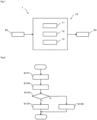
Fig. 1] Fig. 1 is a diagram of an exemplary system configuration of a straddle-type vehicle information processor according to an embodiment of the present invention. - [
Fig. 2] Fig. 2 is a flowchart of an exemplary operation of the straddle-type vehicle information processor according to the embodiment of the present invention. - [
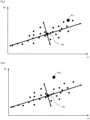
Fig. 3] Fig. 3 is a graph illustrating action in a crash recognition step executed by a crash recognition section of the straddle-type vehicle information processor according to the embodiment of the present invention. - [
Fig. 4] Fig. 4 is a graph illustrating the action in the crash recognition step executed by the crash recognition section of the straddle-type vehicle information processor according to the embodiment of the present invention. - A description will hereinafter be made on a straddle-type vehicle information processor and a straddle-type vehicle information processing method according to the present invention by using the drawings. Note that a configuration, an operation, and the like, which will be described below, constitute merely one example and each of the straddle-type vehicle information processor and the straddle-type vehicle information processing method according to the present invention is not limited to a case with such a configuration, such an operation, and the like.
- A description will hereinafter be made on a straddle-type vehicle information processor according to an embodiment.
- A description will be made on a configuration of the straddle-type vehicle information processor according to the embodiment.
-
Fig. 1 is a diagram of an exemplary system configuration of the straddle-type vehicle information processor according to the embodiment of the present invention. - As illustrated in
Fig. 1 , a straddle-typevehicle information processor 10 includes a travel stateinformation acquisition section 11, acrash recognition section 12, and anoutput section 13. The straddle-typevehicle information processor 10 is mounted on a straddle-type vehicle 1. The straddle-type vehicle 1 means a type of a vehicle on which an occupant is seated in a manner to straddle. Examples of the straddle-type vehicle 1 are a motorcycle (a two-wheeled motor vehicle, a three-wheeled motor vehicle, and the like) and an all-terrain vehicle. - A travel
state information sensor 20 that is mounted on the straddle-type vehicle 1 is connected to the straddle-typevehicle information processor 10. When the travel stateinformation acquisition section 11 receives output of the travelstate information sensor 20, the travel stateinformation acquisition section 11 acquires information related to a travel state of the straddle-type vehicle 1. As the information related to the travel state of the straddle-type vehicle 1, the travel stateinformation acquisition section 11 continuously acquires a physical quantity set s that is configured to include at least two types of physical quantities at a time point. - The travel
state information sensor 20 is an inertial measurement unit (IMU) that includes a three-axis gyroscope sensor and a three-directional acceleration sensor, for example. In such a case, the travel stateinformation acquisition section 11 acquires, as the information related to the travel state of the straddle-type vehicle 1, the physical quantity set s that is configured to include the two types or more of the physical quantities among an angular velocity and acceleration generated in the straddle-type vehicle 1 during travel (that is, six types of the physical quantities). The travel stateinformation acquisition section 11 may receive the angular velocity itself from the travelstate information sensor 20 or may receive, as the angular velocity, another physical quantity that can substantially be converted to the angular velocity. Alternatively, the travel stateinformation acquisition section 11 may receive the acceleration itself from the travelstate information sensor 20 or may receive, as the acceleration, another physical quantity that can substantially be converted to the acceleration. - The
crash recognition section 12 acquires a Mahalanobis distance MHD with respect to a referred sample group of the physical quantity set s that is acquired by the travel stateinformation acquisition section 11, and determines whether the straddle-type vehicle 1 has crashed on the basis of a relationship between the Mahalanobis distance MHD and a reference value Th. The referred sample group is referred data that is configured to include plural referred physical quantity sets S (that is, the physical quantity sets, each of which is referred and is configured to include the same types of the physical quantities as the physical quantity set s). The referred sample group may be input and stored in advance (for example, upon shipment), or may be generated from the plural physical quantity sets s that have been acquired by the travel stateinformation acquisition section 11 in the past. In addition, thecrash recognition section 12 may acquire the Mahalanobis distance MHD itself or may acquire, as the Mahalanobis distance MHD, another parameter that can substantially be converted to the Mahalanobis distance MHD. - The
output section 13 outputs a trigger signal to anexecution device 30 when thecrash recognition section 12 recognizes that the straddle-type vehicle 1 has crashed. When receiving the trigger signal, theexecution device 30 performs an operation to inform a rescue facility that the straddle-type vehicle 1 has crashed, for example. In addition, when receiving the trigger signal, theexecution device 30 performs an operation to protect the occupant of the straddle-type vehicle 1 (for example, an operation to activate an airbag, or the like), for example. - In the straddle-type
vehicle information processor 10, the sections may collectively be accommodated in a single casing, or each of the sections may be provided in a separate casing. In addition, the straddle-typevehicle information processor 10 may be incorporated in theexecution device 30 or may not be incorporated in theexecution device 30. Furthermore, the straddle-typevehicle information processor 10 may partially or entirely be constructed of a microcomputer, a microprocessor unit, or the like, may be constructed of a member in which firmware and the like can be updated, or may be a program module or the like that is executed by a command from a CPU or the like, for example. - A description will be made on an operation of the straddle-type vehicle information processor according to the embodiment.
- The following description will be made on a case where the physical quantity set s configured to include two types of physical quantities x1, x2 is acquired in a travel state information acquisition step. However, in the travel state information acquisition step, the physical quantity set s that is configured to include three types or more of the physical quantities may be acquired, and the Mahalanobis distance MHD may be derived with respect to such a physical quantity set s.
-
Fig. 2 is a flowchart of an exemplary operation of the straddle-type vehicle information processor according to the embodiment of the present invention. - The straddle-type
vehicle information processor 10 repeatedly executes step S101 to step S105 illustrated inFig. 2 when the straddle-type vehicle 1 is in the travel state. - In step S101, the travel state
information acquisition section 11 acquires, as the information related to the travel state of the straddle-type vehicle 1, the two types of the physical quantities x1, x2 at the time point. That is, the travel stateinformation acquisition section 11 acquires the physical quantity set s at the time point. Each of the two types of the physical quantities x1, x2 may be raw data (that is, unprocessed data) that is detected by the travelstate information sensor 20, or may be data that is acquired by eliminating noise from the raw data (that is, the unprocessed data) detected by the travelstate information sensor 20. - In particular, each of the physical quantities x1, x2 is preferably data that is acquired by treating the raw data (that is, the unprocessed data) detected by the travel
state information sensor 20 with a median filter. The median filter is used to replace the raw data (that is, the unprocessed data) acquired at a certain time point to the raw data (that is, the unprocessed data), a magnitude of which is ranked in the middle in a group of the raw data (that is, the unprocessed data) acquired in a specified period before and after the certain time point. Various types of the noise can be eliminated by appropriately setting duration of the specified period before and after the certain time point. - Next, in step S102, the
crash recognition section 12 acquires the Mahalanobis distance MHD with respect to the referred sample group of the physical quantity set s acquired in step S101. Thecrash recognition section 12 may derive the Mahalanobis distance MHD by calculation, or may derive the Mahalanobis distance MHD by referring to a lookup table that is created in advance, or the like. - More specifically, the Mahalanobis distance MHD is derived as a value that is calculated by the
following equation 1. Note that x1, x2 in theequation 1 are the physical quantities x1, x2 of the physical quantity set s acquired in step S101. In addition, µ1 in theequation 1 is an average of a physical quantity X1 (a referred value of the same type of the physical quantity as the physical quantity x1) of the plural referred physical quantity sets S that constitute the referred sample group. Furthermore, µ2 in theequation 1 is an average of a physical quantity X2 (a referred value of the same type of the physical quantity as the physical quantity x2) of the plural referred physical quantity sets S that constitute the referred sample group. Moreover, Σ in theequation 1 is a covariance matrix of the physical quantities X1, X2 of the plural referred physical quantity sets S that constitute the referred sample group.
- Next, in step S103, the
crash recognition section 12 determines whether the derived Mahalanobis distance MHD exceeds the reference value Th. If the Mahalanobis distance MHD exceeds the reference value Th, the processing proceeds to step S104. If the Mahalanobis distance MHD does not exceed the reference value Th, the processing proceeds to step S105. Note that the reference value Th may be a constant value or may be a variation value. In addition, thecrash recognition section 12 may determine whether a change rate of the Mahalanobis distance MHD exceeds the reference value Th, or may determine whether a time in which the Mahalanobis distance MHD keeps exceeding the reference value Th exceeds a reference time. - Each of
Fig. 3 and Fig. 4 is a graph illustrating action in the crash recognition step that is executed by the crash recognition section of the straddle-type vehicle information processor according to the embodiment of the present invention. - Note that, in
Fig. 3 and Fig. 4 , a horizontal axis represents the physical quantity x1, and a vertical axis represents the physical quantity x2. In addition, inFig. 3 and Fig. 4 , a coordinate of each of the referred physical quantity sets S, which constitute the referred sample group, is plotted using a small dot, and an average coordinate Ps of all of the referred physical quantity sets S, which constitute the referred sample group, is dotted using a large dot. Furthermore, inFig. 3 , a coordinate PT1 of a physical quantity set s1 that is acquired at a time point T1 is plotted using a large dot, and inFig. 4 , a coordinate PT2 of a physical quantity set s2 that is acquired at a time point T2 is plotted using a large dot. - In an example illustrated in
Fig. 3 , the physical quantity set s1 (that is, the coordinate PT1) that significantly deviates from the average coordinate Ps is acquired. However, since the deviation of the physical quantity set s1 from the referred sample group is insignificant, the short Mahalanobis distance MHD is derived, and it is thus determined that the crash has not occurred. Meanwhile, in the example illustrated inFig. 4 , compared to the example illustrated inFig. 3 , the physical quantity set s2 (that is, the coordinate PT2) that slightly deviates from the average coordinate Ps is acquired. However, since the deviation of the physical quantity set s2 from the referred sample group is significant, the long Mahalanobis distance MHD is derived, and it is thus determined that the crash has occurred. That is, thecrash recognition section 12 can determine whether the crash has occurred in consideration of dispersion states of the two types of the physical quantities x1, x2 in a no-crash state. - Note that the
crash recognition section 12 may vary the referred sample group in accordance with the travel state of the straddle-type vehicle 1. For example, thecrash recognition section 12 may change the referred sample group, which is used to derive the Mahalanobis distance MHD, in accordance with a speed, the acceleration, a bank angle, vibrations, or the like generated in the straddle-type vehicle 1. - The travel state
information acquisition section 11 may further acquire another physical quantity set s that has a different combination of the types of the physical quantities from the physical quantity set s and that is configured to include at least two types of the physical quantities, and thecrash recognition section 12 may switch the physical quantity set s to the other physical quantity set s in accordance with the travel state of the straddle-type vehicle 1, so as to derive the Mahalanobis distance MHD. That is, in the case where the travel stateinformation acquisition section 11 acquires the three types of the angular velocity and the three types of the acceleration (that is, the six types of the physical quantities) generated in the straddle-type vehicle 1 during the travel from the travelstate information sensor 20, thecrash recognition section 12 may switch the physical quantities, each of which is selected to constitute the physical quantity set s, in accordance with the speed, the acceleration, the bank angle, the vibrations, or the like generated in the straddle-type vehicle 1. - Next, in step S104, the
output section 13 outputs the trigger signal to theexecution device 30. Meanwhile, in step S105, theoutput section 13 does not output the trigger signal to theexecution device 30. - A description will be made on effects of the straddle-type vehicle information processor according to the embodiment.
- In the straddle-type
vehicle information processor 10, the travel stateinformation acquisition section 11 acquires, as the information related to the travel state of the straddle-type vehicle 1, the physical quantity set s, which is configured to include the at least two types of the physical quantities (x1, x2), and thecrash recognition section 12 acquires the Mahalanobis distance MHD with respect to the referred sample group of the physical quantity set s and determines whether the crash has occurred on the basis of the relationship between the Mahalanobis distance MHD and the reference value Th. That is, it is determined whether the crash has occurred in consideration of the dispersion states of the at least two types of the physical quantities (x1, x2) in the no-crash state. Accordingly, even in the case where the acceleration of the straddle-type vehicle 1 is abruptly increased during the travel, such erroneous recognition that the straddle-type vehicle 1 has crashed can be prevented. In addition, it is possible to recognize that the straddle-type vehicle 1 has crashed at a stage before the acceleration is extremely increased. Therefore, the present invention can contribute to improvement in the occupant safety. - Preferably, the physical quantity set s includes the acceleration or the angular velocity generated in the straddle-
type vehicle 1. With such a configuration, it is possible to accurately determine whether the crash has occurred. Therefore, it is possible to recognize that the straddle-type vehicle 1 has crashed during the travel with a high degree of accuracy at appropriate timing to contribute to the improvement in the occupant safety, and realization of such recognition is improved. - Preferably, the
crash recognition section 12 varies the referred sample group in accordance with the travel state of the straddle-type vehicle 1. With such a configuration, it is possible to optimize the determination on whether the crash has occurred in accordance with vehicle body behavior. In particular, compared to a vehicle such as an automobile or a track, the vehicle body behavior of the straddle-type vehicle 1 is changed drastically. Therefore, such a configuration is particularly advantageous for the straddle-type vehicle 1. - Preferably, the travel state
information acquisition section 11 further acquires, as the information related to the travel state of the straddle-type vehicle 1, the other physical quantity set s, which is configured to include the at least two types of the physical quantities, the physical quantity set s and the other physical quantity set s have the different combinations of the types of the physical quantities from each other, and thecrash recognition section 12 switches the physical quantity set s, which is used to determine whether the crash has occurred, to the other physical quantity set s in accordance with the travel state of the straddle-type vehicle 1. With such a configuration, it is possible to optimize the determination on whether the crash has occurred in accordance with the vehicle body behavior. In particular, compared to the vehicle such as the automobile or the track, the vehicle body behavior of the straddle-type vehicle 1 is changed drastically. Therefore, such a configuration is particularly advantageous for the straddle-type vehicle 1. - Preferably, the at least two types of the physical quantities (x1, x2) acquired by the travel state
information acquisition section 11 are treated with the median filter. Compared to other filters (for example, a moving average filter, a high-pass filter, a low-pass filter, a bandpass filter, and the like), use of the median filter can suppress a delay occurred to the data that has been processed using the filter. Therefore, it is possible to recognize that the straddle-type vehicle 1 has crashed during the travel with the high degree of accuracy at the appropriate timing to contribute to the improvement in the occupant safety, and the realization of such recognition is improved by using the median filter. - Preferably, the straddle-
type vehicle 1 is the two-wheeled motor vehicle. Since travel stability and the occupant safety of the two-wheeled motor vehicle are especially low, the characteristics thereof that have been described so far are particularly effective in the two-wheeled motor vehicle. - In the description that has been made so far, the
crash recognition section 12 recognizes that the straddle-type vehicle 1 has crashed during the travel only on the basis of the relationship between the Mahalanobis distance MHD, which is derived with respect to the physical quantity set s, and the reference value Th. The travel stateinformation acquisition section 11 may further acquire, as the information related to the travel state of the straddle-type vehicle 1, a sub-physical quantity set ss that has a different combination of the types of the physical quantities from the physical quantity set s and is configured to include at least the two types of the physical quantities. Thecrash recognition section 12 may further acquire a sub-Mahalanobis distance MHDs that is the Mahalanobis distance with respect to a referred sample group of the sub-physical quantity set ss. That is, thecrash recognition section 12 may make the determination on whether the straddle-type vehicle 1 has crashed during the travel on the basis of the relationship between the Mahalanobis distance MHD, which is derived with respect to the physical quantity set s, and the reference value Th and the determination on whether the straddle-type vehicle 1 has crashed during the travel on the basis of a relationship between the sub-Mahalanobis distance MHDs, which is derived with respect to the sub-physical quantity set ss, and a reference value Ths in parallel (that is, almost simultaneously). In this way, thecrash recognition section 12 may recognize that the straddle-type vehicle 1 has crashed during the travel. With such a configuration, a response speed to the crash can be improved by making the high-sensitive determination while erroneous recognition of the crash by the low-sensitive determination is suppressed. - The description has been made so far on the embodiment. However, the present invention is not limited to the description of the embodiment. For example, only a part of the embodiment may be implemented, or parts of the embodiment may be combined.
-
- 1: Straddle-type vehicle
- 10: Straddle-type vehicle information processor
- 11: Travel state information acquisition section
- 12: Crash recognition section
- 13: Output section
- 20: Travel state information sensor
- 30: Execution device
- x1, x2: Physical quantity
- Ps: Average coordinate of referred sample group
- PT1: Coordinate of physical quantity set s1 acquired at time point T1
- PT2: Coordinate of physical quantity set s2 acquired at time point T2
Claims (8)
- A straddle-type vehicle information processor (10) mountable on a straddle-type vehicle (1), comprising:a travel state information acquisition section (11) that acquires information related to a travel state of a straddle-type vehicle (1);a crash recognition section (12) that recognizes that the straddle-type vehicle (1) has crashed during travel on the basis of the information acquired by the travel state information acquisition section (11); andan output section (13) that makes output corresponding to the recognition of the crash by the crash recognition section (12),whereinthe travel state information acquisition section (11) acquires, as the information, a physical quantity set (s) that is configured to include at least two types of physical quantities (x1, x2), the information processor (10) characterized in that:
the crash recognition section (12)acquires a Mahalanobis distance (MHD) of the physical quantity set (s) with respect to a referred sample group of the physical quantity set (s), which is acquired by the travel state information acquisition section (11), wherein the referred sample group relates to referred data that is configured to include a plurality of referred physical quantity sets (S), wherein each referred physical quantity set (S) is referred and configured to include the same types of the physical quantities as the physical quantity set (s), anddetermines whether the crash has occurred on the basis of a relationship between said Mahalanobis distance (MHD) and a reference value (Th). - The straddle-type vehicle information processor according to claim 1, wherein the physical quantity set (s) includes acceleration generated in the straddle-type vehicle (1).
- The straddle-type vehicle information processor according to claim 1 or 2, wherein the physical quantity set (s) includes an angular velocity generated in the straddle-type vehicle (1).
- The straddle-type vehicle information processor according to any one of claims 1 to 3,
wherein the crash recognition section (12) is configured to vary the referred sample group in accordance with the travel state of the straddle-type vehicle (1). - The straddle-type vehicle information processor according to any one of claims 1 to 4,wherein the travel state information acquisition section (11) further acquires, as the information, a sub-physical quantity set (ss) that is configured to include at least two types of the physical quantities,the physical quantity set (s) and the sub-physical quantity set (ss) have different combinations of the types of the physical quantities from each other, andthe crash recognition section (12) further acquires a sub-Mahalanobis distance (MHDs) that is the Mahalanobis distance with respect to a referred sample group of the sub-physical quantity set (ss) acquired by the travel state information acquisition section (11), and determines whether the crash has occurred on the basis of a relationship between said sub-Mahalanobis distance (MHDs) and a reference value (Ths), and makes the determination on the basis of the relationship between the Mahalanobis distance (MHD) and the reference value (Th) and the determination on the basis of the relationship between the sub-Mahalanobis distance (MHDs) and the reference value (Ths) in parallel, so as to recognize that the straddle-type vehicle (1) has crashed during the travel.
- The straddle-type vehicle information processor according to any one of claims 1 to 5,
wherein the at least two types of the physical quantities (x1, x2) acquired by the travel state information acquisition section (11) are treated with a median filter. - The straddle-type vehicle information processor according to any one of claims 1 to 6, wherein the straddle-type vehicle (1) is a two-wheeled motor vehicle.
- An information processing method in a straddle-type vehicle information processor (10) mounted on a straddle-type vehicle (1), comprising:a travel state information acquisition step (S101) of acquiring information related to a travel state of a straddle-type vehicle (1);a crash recognition step (S102, S103) of recognizing that the straddle-type vehicle (1) has crashed during travel on the basis of the information acquired in the travel state information acquisition step (S101); andan output step (S104, S105) of making output corresponding to the recognition of the crash in the crash recognition step (S102, S103), whereinin the travel state information acquisition step (S101), a physical quantity set (s) that is configured to include at least two types of physical quantities (x1, X2) is acquired as the information, the method characterized in thatin the crash recognition step (S102, S103), a Mahalanobis distance (MHD) of the physical quantity set (s) is acquired with respect to a referred sample group of the physical quantity set (s) acquired in the travel state information acquisition step (S101), wherein the referred sample group relates to referred data that is configured to include a plurality of referred physical quantity sets (S), wherein each referred physical quantity set (S) is referred and configured to include the same types of the physical quantities as the physical quantity set (s), andit is determined whether the crash has occurred on the basis of a relationship between said Mahalanobis distance (MHD) and a reference value (Th).
Applications Claiming Priority (2)
| Application Number | Priority Date | Filing Date | Title |
|---|---|---|---|
| JP2017197186A JP2019069720A (en) | 2017-10-10 | 2017-10-10 | Information processing device for saddle-riding type vehicle and information processing method for saddle-riding type vehicle |
| PCT/IB2018/056995 WO2019073318A1 (en) | 2017-10-10 | 2018-09-13 | Information processing device for saddle-ridden vehicle, and information processing method for saddle-ridden vehicle |
Publications (2)
| Publication Number | Publication Date |
|---|---|
| EP3696027A1 EP3696027A1 (en) | 2020-08-19 |
| EP3696027B1 true EP3696027B1 (en) | 2025-03-19 |
Family
ID=63799055
Family Applications (1)
| Application Number | Title | Priority Date | Filing Date |
|---|---|---|---|
| EP18783577.2A Active EP3696027B1 (en) | 2017-10-10 | 2018-09-13 | Information processing device for saddle-ridden vehicle, and information processing method for saddle-ridden vehicle |
Country Status (5)
| Country | Link |
|---|---|
| US (1) | US20200307482A1 (en) |
| EP (1) | EP3696027B1 (en) |
| JP (2) | JP2019069720A (en) |
| AU (1) | AU2018349050B2 (en) |
| WO (1) | WO2019073318A1 (en) |
Family Cites Families (15)
| Publication number | Priority date | Publication date | Assignee | Title |
|---|---|---|---|---|
| US20080147280A1 (en) * | 1995-06-07 | 2008-06-19 | Automotive Technologies International, Inc. | Method and apparatus for sensing a rollover |
| US6853898B2 (en) * | 2001-05-30 | 2005-02-08 | Eaton Corporation | Occupant labeling for airbag-related applications |
| JP4044837B2 (en) * | 2002-12-19 | 2008-02-06 | 東急車輛製造株式会社 | Abnormality detection system for moving body, and abnormality detection method for moving body |
| US7233852B2 (en) * | 2005-05-06 | 2007-06-19 | Delphi Technologies, Inc. | Method of distinguishing between adult and cinched car seat occupants of a vehicle seat |
| DE102006048907A1 (en) * | 2006-10-17 | 2008-04-30 | Robert Bosch Gmbh | Method and device for controlling personal protection devices and a corresponding computer program and computer program product |
| US20080306666A1 (en) * | 2007-06-05 | 2008-12-11 | Gm Global Technology Operations, Inc. | Method and apparatus for rear cross traffic collision avoidance |
| DE102007030313A1 (en) * | 2007-06-29 | 2009-01-02 | Robert Bosch Gmbh | Method and control device for controlling personal protective equipment |
| JP2009196410A (en) * | 2008-02-19 | 2009-09-03 | Honda Motor Co Ltd | Motorcycle |
| JP5045492B2 (en) * | 2008-02-27 | 2012-10-10 | トヨタ自動車株式会社 | Awakening level estimation device |
| JP2009290789A (en) * | 2008-05-30 | 2009-12-10 | Toyota Motor Corp | System and method for emergency reporting |
| JP6200644B2 (en) * | 2012-12-07 | 2017-09-20 | 富士通テン株式会社 | Radar apparatus and signal processing method |
| JP2015155807A (en) * | 2014-02-20 | 2015-08-27 | 富士通テン株式会社 | Radar device, vehicle control system, and signal processing method |
| US20160086489A1 (en) * | 2014-09-23 | 2016-03-24 | Ford Global Technologies, Llc | E-bike to infrastructure or vehicle communication |
| JP6125135B1 (en) * | 2016-07-22 | 2017-05-10 | 三菱電機株式会社 | Driving support device, driving support method, and driving support program |
| GB2559323B (en) * | 2017-01-25 | 2020-04-29 | High Street Tv Group Ltd | Multiple movement exercise device |
-
2017
- 2017-10-10 JP JP2017197186A patent/JP2019069720A/en active Pending
-
2018
- 2018-09-13 AU AU2018349050A patent/AU2018349050B2/en active Active
- 2018-09-13 WO PCT/IB2018/056995 patent/WO2019073318A1/en not_active Ceased
- 2018-09-13 US US16/753,942 patent/US20200307482A1/en not_active Abandoned
- 2018-09-13 EP EP18783577.2A patent/EP3696027B1/en active Active
- 2018-09-13 JP JP2019547801A patent/JP7054314B2/en active Active
Also Published As
| Publication number | Publication date |
|---|---|
| JP7054314B2 (en) | 2022-04-13 |
| JP2019069720A (en) | 2019-05-09 |
| AU2018349050A1 (en) | 2020-05-21 |
| AU2018349050B2 (en) | 2021-08-19 |
| EP3696027A1 (en) | 2020-08-19 |
| JPWO2019073318A1 (en) | 2020-09-24 |
| WO2019073318A1 (en) | 2019-04-18 |
| US20200307482A1 (en) | 2020-10-01 |
Similar Documents
| Publication | Publication Date | Title |
|---|---|---|
| US6725141B2 (en) | Method of triggering restraint means in a motor vehicle | |
| EP3501911B1 (en) | Apparatus and method for controlling vehicular active seatbelt | |
| US20060095183A1 (en) | Method for activating restraining means | |
| JP5910755B2 (en) | Vehicle state determination device, vehicle state determination method, and driving operation diagnosis device | |
| US20120310485A1 (en) | Method and control unit for ascertaining a type of collision of a vehicle | |
| US7422087B2 (en) | Method and system for detecting vehicle rollover events | |
| EP2212160A1 (en) | A system for classifying objects in the vicinity of a vehicle | |
| EP2261089A1 (en) | Method and control device for crash recognition in a vehicle | |
| US20200369282A1 (en) | Driver state determination apparatus, driver state determination method, and non-transitory computer-readable medium | |
| US10780855B2 (en) | Method for operating a motorized two-wheeled vehicle, in particular a motorcycle, and computer program for carrying out the method | |
| US20100168965A1 (en) | Method and control device for triggering passenger protection means | |
| US20190009776A1 (en) | Enhanced collision avoidance | |
| EP3696027B1 (en) | Information processing device for saddle-ridden vehicle, and information processing method for saddle-ridden vehicle | |
| JP2019206243A (en) | Behavior determination method of vehicle | |
| CN112918417A (en) | Method, controller and storage medium for identifying damage on a vehicle | |
| US9475442B2 (en) | Method and device for triggering at least one passenger protection means of a vehicle | |
| CN103129501A (en) | Method and apparatus for activating passenger protection units for vehicle during side impact | |
| RU2748525C2 (en) | Method for activating at least one secondary function of the vehicle passenger protection system | |
| US20120265406A1 (en) | Method and control unit for detecting a safety-critical impact of an object on a vehicle | |
| KR102180800B1 (en) | Apparatus and Method for determining traveling status of vehicle | |
| US6640176B2 (en) | Method for deploying a restraint system | |
| CN112287797A (en) | Data processing method and device, electronic equipment and readable storage medium | |
| CN113602225A (en) | Method for determining a collision type of a vehicle | |
| CN112384958A (en) | Notification device and notification method | |
| EP2261088B1 (en) | Method and control device for the classification of a crash of a vehicle |
Legal Events
| Date | Code | Title | Description |
|---|---|---|---|
| STAA | Information on the status of an ep patent application or granted ep patent |
Free format text: STATUS: UNKNOWN |
|
| STAA | Information on the status of an ep patent application or granted ep patent |
Free format text: STATUS: THE INTERNATIONAL PUBLICATION HAS BEEN MADE |
|
| PUAI | Public reference made under article 153(3) epc to a published international application that has entered the european phase |
Free format text: ORIGINAL CODE: 0009012 |
|
| STAA | Information on the status of an ep patent application or granted ep patent |
Free format text: STATUS: REQUEST FOR EXAMINATION WAS MADE |
|
| 17P | Request for examination filed |
Effective date: 20200511 |
|
| AK | Designated contracting states |
Kind code of ref document: A1 Designated state(s): AL AT BE BG CH CY CZ DE DK EE ES FI FR GB GR HR HU IE IS IT LI LT LU LV MC MK MT NL NO PL PT RO RS SE SI SK SM TR |
|
| AX | Request for extension of the european patent |
Extension state: BA ME |
|
| DAV | Request for validation of the european patent (deleted) | ||
| DAX | Request for extension of the european patent (deleted) | ||
| STAA | Information on the status of an ep patent application or granted ep patent |
Free format text: STATUS: EXAMINATION IS IN PROGRESS |
|
| 17Q | First examination report despatched |
Effective date: 20211124 |
|
| P01 | Opt-out of the competence of the unified patent court (upc) registered |
Effective date: 20230509 |
|
| GRAP | Despatch of communication of intention to grant a patent |
Free format text: ORIGINAL CODE: EPIDOSNIGR1 |
|
| STAA | Information on the status of an ep patent application or granted ep patent |
Free format text: STATUS: GRANT OF PATENT IS INTENDED |
|
| INTG | Intention to grant announced |
Effective date: 20241127 |
|
| GRAS | Grant fee paid |
Free format text: ORIGINAL CODE: EPIDOSNIGR3 |
|
| GRAA | (expected) grant |
Free format text: ORIGINAL CODE: 0009210 |
|
| STAA | Information on the status of an ep patent application or granted ep patent |
Free format text: STATUS: THE PATENT HAS BEEN GRANTED |
|
| AK | Designated contracting states |
Kind code of ref document: B1 Designated state(s): AL AT BE BG CH CY CZ DE DK EE ES FI FR GB GR HR HU IE IS IT LI LT LU LV MC MK MT NL NO PL PT RO RS SE SI SK SM TR |
|
| REG | Reference to a national code |
Ref country code: GB Ref legal event code: FG4D |
|
| REG | Reference to a national code |
Ref country code: CH Ref legal event code: EP |
|
| REG | Reference to a national code |
Ref country code: DE Ref legal event code: R096 Ref document number: 602018080282 Country of ref document: DE |
|
| REG | Reference to a national code |
Ref country code: IE Ref legal event code: FG4D |
|
| PG25 | Lapsed in a contracting state [announced via postgrant information from national office to epo] |
Ref country code: RS Free format text: LAPSE BECAUSE OF FAILURE TO SUBMIT A TRANSLATION OF THE DESCRIPTION OR TO PAY THE FEE WITHIN THE PRESCRIBED TIME-LIMIT Effective date: 20250619 |
|
| PG25 | Lapsed in a contracting state [announced via postgrant information from national office to epo] |
Ref country code: FI Free format text: LAPSE BECAUSE OF FAILURE TO SUBMIT A TRANSLATION OF THE DESCRIPTION OR TO PAY THE FEE WITHIN THE PRESCRIBED TIME-LIMIT Effective date: 20250319 |
|
| REG | Reference to a national code |
Ref country code: LT Ref legal event code: MG9D |
|
| PG25 | Lapsed in a contracting state [announced via postgrant information from national office to epo] |
Ref country code: NO Free format text: LAPSE BECAUSE OF FAILURE TO SUBMIT A TRANSLATION OF THE DESCRIPTION OR TO PAY THE FEE WITHIN THE PRESCRIBED TIME-LIMIT Effective date: 20250619 |
|
| PG25 | Lapsed in a contracting state [announced via postgrant information from national office to epo] |
Ref country code: HR Free format text: LAPSE BECAUSE OF FAILURE TO SUBMIT A TRANSLATION OF THE DESCRIPTION OR TO PAY THE FEE WITHIN THE PRESCRIBED TIME-LIMIT Effective date: 20250319 |
|
| PG25 | Lapsed in a contracting state [announced via postgrant information from national office to epo] |
Ref country code: LV Free format text: LAPSE BECAUSE OF FAILURE TO SUBMIT A TRANSLATION OF THE DESCRIPTION OR TO PAY THE FEE WITHIN THE PRESCRIBED TIME-LIMIT Effective date: 20250319 |
|
| PG25 | Lapsed in a contracting state [announced via postgrant information from national office to epo] |
Ref country code: BG Free format text: LAPSE BECAUSE OF FAILURE TO SUBMIT A TRANSLATION OF THE DESCRIPTION OR TO PAY THE FEE WITHIN THE PRESCRIBED TIME-LIMIT Effective date: 20250319 Ref country code: GR Free format text: LAPSE BECAUSE OF FAILURE TO SUBMIT A TRANSLATION OF THE DESCRIPTION OR TO PAY THE FEE WITHIN THE PRESCRIBED TIME-LIMIT Effective date: 20250620 |
|
| REG | Reference to a national code |
Ref country code: NL Ref legal event code: MP Effective date: 20250319 |
|
| REG | Reference to a national code |
Ref country code: AT Ref legal event code: MK05 Ref document number: 1776724 Country of ref document: AT Kind code of ref document: T Effective date: 20250319 |
|
| PG25 | Lapsed in a contracting state [announced via postgrant information from national office to epo] |
Ref country code: NL Free format text: LAPSE BECAUSE OF FAILURE TO SUBMIT A TRANSLATION OF THE DESCRIPTION OR TO PAY THE FEE WITHIN THE PRESCRIBED TIME-LIMIT Effective date: 20250319 |
|
| PG25 | Lapsed in a contracting state [announced via postgrant information from national office to epo] |
Ref country code: SE Free format text: LAPSE BECAUSE OF FAILURE TO SUBMIT A TRANSLATION OF THE DESCRIPTION OR TO PAY THE FEE WITHIN THE PRESCRIBED TIME-LIMIT Effective date: 20250319 |
|
| PG25 | Lapsed in a contracting state [announced via postgrant information from national office to epo] |
Ref country code: SM Free format text: LAPSE BECAUSE OF FAILURE TO SUBMIT A TRANSLATION OF THE DESCRIPTION OR TO PAY THE FEE WITHIN THE PRESCRIBED TIME-LIMIT Effective date: 20250319 |
|
| PG25 | Lapsed in a contracting state [announced via postgrant information from national office to epo] |
Ref country code: ES Free format text: LAPSE BECAUSE OF FAILURE TO SUBMIT A TRANSLATION OF THE DESCRIPTION OR TO PAY THE FEE WITHIN THE PRESCRIBED TIME-LIMIT Effective date: 20250319 Ref country code: PT Free format text: LAPSE BECAUSE OF FAILURE TO SUBMIT A TRANSLATION OF THE DESCRIPTION OR TO PAY THE FEE WITHIN THE PRESCRIBED TIME-LIMIT Effective date: 20250721 |
|
| PG25 | Lapsed in a contracting state [announced via postgrant information from national office to epo] |
Ref country code: PL Free format text: LAPSE BECAUSE OF FAILURE TO SUBMIT A TRANSLATION OF THE DESCRIPTION OR TO PAY THE FEE WITHIN THE PRESCRIBED TIME-LIMIT Effective date: 20250319 |
|
| PGFP | Annual fee paid to national office [announced via postgrant information from national office to epo] |
Ref country code: GB Payment date: 20250923 Year of fee payment: 8 |
|
| PG25 | Lapsed in a contracting state [announced via postgrant information from national office to epo] |
Ref country code: AT Free format text: LAPSE BECAUSE OF FAILURE TO SUBMIT A TRANSLATION OF THE DESCRIPTION OR TO PAY THE FEE WITHIN THE PRESCRIBED TIME-LIMIT Effective date: 20250319 |
|
| PGFP | Annual fee paid to national office [announced via postgrant information from national office to epo] |
Ref country code: FR Payment date: 20250925 Year of fee payment: 8 |
|
| PG25 | Lapsed in a contracting state [announced via postgrant information from national office to epo] |
Ref country code: EE Free format text: LAPSE BECAUSE OF FAILURE TO SUBMIT A TRANSLATION OF THE DESCRIPTION OR TO PAY THE FEE WITHIN THE PRESCRIBED TIME-LIMIT Effective date: 20250319 Ref country code: CZ Free format text: LAPSE BECAUSE OF FAILURE TO SUBMIT A TRANSLATION OF THE DESCRIPTION OR TO PAY THE FEE WITHIN THE PRESCRIBED TIME-LIMIT Effective date: 20250319 |
|
| PG25 | Lapsed in a contracting state [announced via postgrant information from national office to epo] |
Ref country code: RO Free format text: LAPSE BECAUSE OF FAILURE TO SUBMIT A TRANSLATION OF THE DESCRIPTION OR TO PAY THE FEE WITHIN THE PRESCRIBED TIME-LIMIT Effective date: 20250319 |
|
| PG25 | Lapsed in a contracting state [announced via postgrant information from national office to epo] |
Ref country code: SK Free format text: LAPSE BECAUSE OF FAILURE TO SUBMIT A TRANSLATION OF THE DESCRIPTION OR TO PAY THE FEE WITHIN THE PRESCRIBED TIME-LIMIT Effective date: 20250319 |
|
| PG25 | Lapsed in a contracting state [announced via postgrant information from national office to epo] |
Ref country code: IS Free format text: LAPSE BECAUSE OF FAILURE TO SUBMIT A TRANSLATION OF THE DESCRIPTION OR TO PAY THE FEE WITHIN THE PRESCRIBED TIME-LIMIT Effective date: 20250719 |
|
| REG | Reference to a national code |
Ref country code: DE Ref legal event code: R097 Ref document number: 602018080282 Country of ref document: DE |
|
| PGFP | Annual fee paid to national office [announced via postgrant information from national office to epo] |
Ref country code: DE Payment date: 20251121 Year of fee payment: 8 |
|
| PG25 | Lapsed in a contracting state [announced via postgrant information from national office to epo] |
Ref country code: DK Free format text: LAPSE BECAUSE OF FAILURE TO SUBMIT A TRANSLATION OF THE DESCRIPTION OR TO PAY THE FEE WITHIN THE PRESCRIBED TIME-LIMIT Effective date: 20250319 |
|
| PGFP | Annual fee paid to national office [announced via postgrant information from national office to epo] |
Ref country code: IT Payment date: 20250930 Year of fee payment: 8 |
|
| PLBE | No opposition filed within time limit |
Free format text: ORIGINAL CODE: 0009261 |
|
| STAA | Information on the status of an ep patent application or granted ep patent |
Free format text: STATUS: NO OPPOSITION FILED WITHIN TIME LIMIT |
|
| REG | Reference to a national code |
Ref country code: CH Ref legal event code: L10 Free format text: ST27 STATUS EVENT CODE: U-0-0-L10-L00 (AS PROVIDED BY THE NATIONAL OFFICE) Effective date: 20260128 |
|
| 26N | No opposition filed |
Effective date: 20251222 |