EP3693821B1 - Drahtlose informationsübermittlung zwischen einer robotergruppe und einer stationären kommunikationseinheit - Google Patents
Drahtlose informationsübermittlung zwischen einer robotergruppe und einer stationären kommunikationseinheit Download PDFInfo
- Publication number
- EP3693821B1 EP3693821B1 EP19156343.6A EP19156343A EP3693821B1 EP 3693821 B1 EP3693821 B1 EP 3693821B1 EP 19156343 A EP19156343 A EP 19156343A EP 3693821 B1 EP3693821 B1 EP 3693821B1
- Authority
- EP
- European Patent Office
- Prior art keywords
- robot
- robots
- communication unit
- group
- wireless communication
- Prior art date
- Legal status (The legal status is an assumption and is not a legal conclusion. Google has not performed a legal analysis and makes no representation as to the accuracy of the status listed.)
- Active
Links
Images


Classifications
-
- B—PERFORMING OPERATIONS; TRANSPORTING
- B25—HAND TOOLS; PORTABLE POWER-DRIVEN TOOLS; MANIPULATORS
- B25J—MANIPULATORS; CHAMBERS PROVIDED WITH MANIPULATION DEVICES
- B25J9/00—Program-controlled manipulators
- B25J9/16—Program controls
- B25J9/1679—Program controls characterised by the tasks executed
- B25J9/1682—Dual arm manipulator; Coordination of several manipulators
-
- G—PHYSICS
- G05—CONTROLLING; REGULATING
- G05B—CONTROL OR REGULATING SYSTEMS IN GENERAL; FUNCTIONAL ELEMENTS OF SUCH SYSTEMS; MONITORING OR TESTING ARRANGEMENTS FOR SUCH SYSTEMS OR ELEMENTS
- G05B19/00—Program-control systems
- G05B19/02—Program-control systems electric
- G05B19/418—Total factory control, i.e. centrally controlling a plurality of machines, e.g. direct or distributed numerical control [DNC], flexible manufacturing systems [FMS], integrated manufacturing systems [IMS] or computer integrated manufacturing [CIM]
- G05B19/4185—Total factory control, i.e. centrally controlling a plurality of machines, e.g. direct or distributed numerical control [DNC], flexible manufacturing systems [FMS], integrated manufacturing systems [IMS] or computer integrated manufacturing [CIM] characterised by the network communication
-
- G—PHYSICS
- G05—CONTROLLING; REGULATING
- G05B—CONTROL OR REGULATING SYSTEMS IN GENERAL; FUNCTIONAL ELEMENTS OF SUCH SYSTEMS; MONITORING OR TESTING ARRANGEMENTS FOR SUCH SYSTEMS OR ELEMENTS
- G05B2219/00—Program-control systems
- G05B2219/30—Nc systems
- G05B2219/39—Robotics, robotics to robotics hand
- G05B2219/39122—Follower, follower mirrors leader, leader
-
- Y—GENERAL TAGGING OF NEW TECHNOLOGICAL DEVELOPMENTS; GENERAL TAGGING OF CROSS-SECTIONAL TECHNOLOGIES SPANNING OVER SEVERAL SECTIONS OF THE IPC; TECHNICAL SUBJECTS COVERED BY FORMER USPC CROSS-REFERENCE ART COLLECTIONS [XRACs] AND DIGESTS
- Y02—TECHNOLOGIES OR APPLICATIONS FOR MITIGATION OR ADAPTATION AGAINST CLIMATE CHANGE
- Y02P—CLIMATE CHANGE MITIGATION TECHNOLOGIES IN THE PRODUCTION OR PROCESSING OF GOODS
- Y02P90/00—Enabling technologies with a potential contribution to greenhouse gas [GHG] emissions mitigation
- Y02P90/02—Total factory control, e.g. smart factories, flexible manufacturing systems [FMS] or integrated manufacturing systems [IMS]
Definitions
- the invention relates to a wireless transmission of safety and/or status information between a robot group comprising several mobile robots and a stationary communication unit.
- Mobile robots can be used in different application areas to perform specific tasks.
- the US 2004/030451 A1 a method used in the military sector for transmitting status information from a robot group comprising several mobile robots to a communication unit designed as a satellite.
- One robot in the robot group is operated as a master robot, from which its own status information and the status information of at least one slave robot are sent or forwarded to the satellite.
- the message transmission in the other direction takes place in the same way.
- Mobile robots can, for example, also be used in particular for transporting and/or sorting objects, in particular for transporting and sorting goods in a warehouse or for transporting baggage in an airport.
- each robot in the robot group has its own sensor-based safety system.
- Such a robot safety system can cause the robot to carry out a specified action if a safety-critical situation is detected.
- the robots are wirelessly communicate with a stationary communication unit, which provides safety information to the robots and to which the robots may transmit status information regarding their states and/or the states of the robot environments.
- the basic problem here is that only a limited number of point-to-point connections can be established between the stationary communication unit and the robots.
- the number of point-to-point connections that can be implemented may not be sufficient to establish a wireless communication connection between each robot in the robot group and the stationary communication unit.
- An object of the invention is to reduce or avoid at least some of the aforementioned disadvantages of the prior art.
- it is aimed at enabling information transmission between a stationary communication unit and the mobile robots of a robot group, which can be implemented at low cost and/or has a low complexity.
- the above-mentioned object is achieved according to the invention by a method for transmitting safety information to a robot group according to claim 1, by a method for Transmitting status information to a stationary communication unit according to claim 2. Furthermore, this object is achieved according to the invention by a system according to claim 13, by a computer program according to claim 14 and by a computer-readable storage medium according to claim 15.
- the robot group comprises several mobile robots.
- the safety information is transmitted wirelessly from a stationary communication unit to the robot group.
- one robot of the robot group is operated as a master robot with regard to communication with the stationary communication unit, which is connected to the stationary communication unit via a long-range wireless communication interface and to which the safety information is transmitted from the stationary communication unit via the long-range wireless communication interface.
- at least one robot of the robot group is operated as a slave robot with regard to communication with the stationary communication unit, to which the safety information received from the master robot is forwarded from the master robot via a short-range wireless communication interface.
- the respective slave robot does not need a direct connection to the stationary communication unit in order to receive the safety information.
- This "hierarchical" type of information transfer in which the safety information is first transmitted from the stationary communication unit to the master robot and the master robot then forwards the received.
- the advantage of forwarding safety information to the slave robot(s) of the robot group is that a point-to-point connection between the respective robot of the robot group operating as a slave robot and the stationary communication unit can be eliminated.
- a single direct connection between the robot group and the stationary communication unit can be sufficient to make safety information from the communication unit available to all robots in the robot group.
- a short-range wireless communication interface can be used to forward the safety information from the master robot to a slave robot of the robot group.
- Such a wireless communication interface is usually less expensive and has a low complexity than a long-range wireless communication interface, which helps to ensure that the method can be implemented with low costs and a low complexity of the communication infrastructure.
- a robot group is understood to mean a group of several mobile robots, which comprises two or more, preferably at least three, mobile robots.
- the robots in the robot group can preferably move independently of one another.
- the robots in the robot group can be autonomous mobile robots in particular.
- the robots can also be self-learning robots, for example.
- the robots of the robot group are each provided with at least one long-range wireless communication interface and at least one short-range wireless communication interface, in particular at least two short-range wireless communication interfaces. Furthermore, it is preferred if the stationary communication unit has at least one long-range wireless communication interface.
- the stationary communication unit uses its long-range wireless communication interface to send the safety information to the master robot.
- the master robot conveniently uses its long-range wireless communication interface to receive the safety information sent by the stationary communication unit.
- the master robot To forward the safety information transmitted by the communication unit to a slave robot in the robot group, the master robot expediently uses its short-range wireless communication interface or one of its short-range wireless communication interfaces.
- the slave robot in the robot group expediently uses its short-range wireless communication interface or one of its short-range wireless communication interfaces to receive the safety information.
- the safety information is preferably information concerning the safety of people and/or the safety of a technical device.
- the safety information can in particular comprise one or more safety-relevant control commands for the robot group, such as an emergency stop command or the like, which can be implemented by one or more of the robots.
- the safety information can comprise, for example, safety-relevant status information that can be processed by one or more of the robots.
- the robots of the robot group are each suitably equipped with a processor for executing a computer program and for evaluating data. Furthermore, it is expedient if the respective robot has a sensor unit for monitoring its state and/or for monitoring a state of its environment, which generates state information regarding the state of the robot and/or regarding the state of its environment.
- the respective robot is equipped with a control algorithm which generates safety-relevant control commands for the robot using at least part of the safety information and/or using the status information generated by the robot.
- a short-range wireless communication interface in the sense of the invention is a communication interface for wireless data transmission that can bridge short distances of, for example, a maximum of 20 m.
- a short-range wireless communication interface in the sense of the invention can be a communication interface that can bridge distances of a maximum of 15 m or a maximum of 10 m.
- a long-distance wireless communication interface in the sense of the invention is a communication interface for wireless data transmission that can bridge large distances of, for example, more than 20 m.
- a long-distance wireless communication interface in the sense of the invention can be a communication interface that can bridge distances of more than 40 m or more than 80 m.
- the respective wireless communication interface may be a radio interface.
- the status information from a robot group comprising several mobile robots is transmitted wirelessly to the stationary Communication unit transmitted.
- one robot of the robot group is operated as a master robot with regard to communication with the stationary communication unit, which is connected to the stationary communication unit via a long-distance wireless communication interface and from which the status information is transmitted to the stationary communication unit via the long-distance wireless communication interface.
- at least one robot of the robot group is operated as a slave robot with regard to communication with the stationary communication unit, from which at least part of the status information to be transmitted from the master robot to the communication unit is forwarded to the master robot via a short-distance wireless communication interface.
- Said state information is preferably information relating to states of the robots and/or states of their environments.
- the state information is generated using sensor units of the robots.
- the method for transmitting status information to the stationary communication unit can be used to transmit the status information to the communication unit without all robots in the robot group having to establish a direct connection to the stationary communication unit. Rather, it is sufficient if only the master robot in the robot group has a direct connection to the communication unit via a long-distance wireless communication interface.
- the master robot can collect the status information it generates and the status information generated by other robots in the robot group and transmit them together to the stationary communication unit via its long-distance wireless communication interface.
- the communication unit can generate safety information for the robot group, which includes, for example, control commands, and transmit the safety information to the robot group in accordance with the method for transmitting safety information described above.
- the method for transmitting safety information to the robot group and the method for transmitting status information to the stationary communication unit can therefore be used to mutually exchange information between the communication unit and the robot group.
- the robot in the robot group for which the signal strength of a signal transmitted by the stationary communication unit via its long-distance wireless communication interface is the greatest is determined with regard to communication with the communication unit to the master robot.
- the master robot can be selected according to another selection criterion.
- the master robot can be selected depending on the positions and/or directions of movement of the robots.
- the forwarding of information from a slave robot in the robot group to the master robot can be done indirectly, i.e. via another slave robot in the robot group, or directly. Conversely, the forwarding of information from the master robot to a slave robot in the robot group can be done directly or indirectly.
- the respective wireless communication interface is a bidirectional interface, i.e. an interface via which data can be sent and received.
- the respective wireless communication interface expediently comprises at least one antenna for sending and receiving signals. It is also expedient if the respective robot is equipped with a coding-decoding unit for coding and decoding signals.
- all robots in the robot group except the master robot are operated as slave robots. This allows the number of point-to-point connections required for information transmission between the stationary communication unit and the robot group to be minimized, since in this case only a single point-to-point connection is required.
- At least one of the two types of wireless communication interfaces is advantageously a standardized wireless communication interface.
- the long-range wireless communication interface can, for example, correspond to an Ethernet standard or an Ethernet-based standard.
- the long-range wireless communication interface can, for example, correspond to the 4G mobile radio standard (also called LTE) or the 5G mobile radio standard.
- a WLAN interface or a cellular interface is used as the long-range wireless communication interface.
- a Bluetooth interface or a ZigBee interface is used as the short-range wireless communication interface.
- the robot group comprises at least three mobile robots.
- at least one of the slave robots is operated as a submaster robot, to which the safety information received from the master robot is transmitted via a short-range wireless communication interface and from which this information is forwarded via a further short-range wireless communication interface to at least one other slave robot in the robot group.
- the safety information received from the master robot is forwarded to several robots in the robot group without the master robot having to have more than one direct connection to other robots in the robot group.
- a communication interface can be used as a short-range wireless communication interface, by means of which a maximum of one point-to-point connection can be established at the same time.
- the short-range wireless communication interface through which the submaster robot receives information and the short-range wireless communication interface through which the submaster robot forwards information are preferably similar short-range wireless communication interfaces of the submaster robot. For example, they may be two Bluetooth interfaces.
- data is forwarded serially between the robots of the robot group.
- data is forwarded directly from the respective robot of the robot group to a maximum of one of the other robots of the robot group via a short-range wireless communication interface.
- each robot of the robot group has a maximum of two short-range connections to other robots of the robot group, which enables a comparatively low complexity of data transmission between the robots of the robot group.
- the stationary communication unit expediently has a communication range within which the communication unit can wirelessly send and receive data via a long-distance wireless communication interface, wherein the master robot of the robot group must be located within the communication range in order to communicate with the stationary communication unit, wherein the master robot transmits the data to at least one slave robot of the robot group, which can be located at least temporarily outside the communication range of the stationary communication unit.
- the master robot of the robot group In order to provide this robot with the safety information from the stationary communication unit, it is sufficient for the master robot of the robot group to be within the communication range. By having the master robot transmit the safety information to the slave robot that is outside the communication range of the stationary communication unit, the effective communication range of the stationary communication unit is increased.
- At least one of the two types of wireless communication interfaces uses a security protocol for data transmission. It is particularly preferred if the security protocol is a protocol certified for secure data transmission.
- the PROFIsafe protocol can be used as a safety protocol of the Profinet standard.
- One advantage of this protocol is that it is certified for data transmission via a WLAN interface as well as for data transmission via a Bluetooth interface.
- a slave robot of the robot group advantageously becomes the new master robot with regard to communication with the stationary communication unit and the previous master robot with regard to communication with the stationary communication unit to a slave robot.
- This enables information to continue to be transferred between the stationary communication unit and the robot group, even if the previous master robot is no longer within the communication range of the communication unit.
- information is transferred between the communication unit and the robot group advantageously via the long-distance wireless communication interface of the new master robot.
- the robot group can be connected simultaneously to several stationary communication units, which can be assigned to different areas of a system, for example. This enables information to be transmitted between the several stationary communication units and the robot group.
- the robot group is preferably connected to the respective stationary communication unit via a long-distance wireless communication interface.
- a robot of the robot group which is located outside the communication range of the said communication unit and at the same time at least partially within such a communication range of a second stationary communication unit is advantageously operated as a master robot with regard to communication with the second stationary communication unit.
- This further master robot is preferably connected to the second stationary communication unit via a long-distance wireless communication interface.
- safety information is preferably transmitted from the second stationary communication unit to this further master robot.
- At least one robot of the robot group is advantageously operated as a slave robot with regard to communication with the second stationary communication unit, to which the latter master robot transmits the safety information transmitted by the latter via a short-distance wireless communication interface. Master robot can be forwarded.
- iPCF industrial Point Coordination Function
- the communication area of the first-mentioned communication unit and the communication area of the second communication unit can overlap.
- these two communication areas can be communication areas that do not have a common overlap area.
- the mobile robots of the robot group are operated in such a way that the robots move synchronously with one another.
- the mobile robots of the robot group move at the same speed in the same direction. In this way, the robots can be used, for example, to transport a load that is supported on the robots of the robot group.
- the system according to the invention comprises at least one stationary communication unit for sending and/or receiving Information, which has at least one long-distance wireless communication interface, and a robot group with several mobile robots, each of which has at least one long-distance wireless communication interface. Furthermore, the system according to the invention is characterized in that the mobile robots each have at least one short-distance wireless communication interface and the system is set up to carry out the inventive method for transmitting safety information to a robot group and/or to carry out the inventive method for transmitting status information to a stationary communication unit.
- the system is configured by software implemented in the robots of the robot group (and possibly in the communication unit) to carry out the method according to the invention for transmitting safety information to a robot group and/or to carry out the method according to the invention for transmitting status information to a stationary communication unit.
- the computer program according to the invention is intended for a system according to the preamble of claim 13. That is, the computer program according to the invention is intended for a system which comprises a stationary communication unit for sending and/or receiving information, which has at least one long-range wireless communication interface, and a robot group with several mobile robots, each of which has at least one long-range wireless communication interface and at least one short-range wireless communication interface.
- the computer program according to the invention causes a system to carry out the method according to the invention for transmitting safety information to a robot group and/or to carry out the method according to the invention for transmitting status information to a stationary communication unit when the computer program is executed on the system.
- the computer program according to the invention enables a system according to the preamble of claim 13 to carry out the method according to the invention for transmitting safety information to a robot group and/or the method according to the invention for transmitting status information to a stationary communication unit.
- the computer-readable storage medium according to the invention is a storage medium which contains the computer program according to the invention.
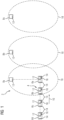
- FIG 1 schematically shows a system 2, which comprises a robot group 4 with several mobile robots 6a-6d and several stationary communication units 8a-8c.
- the system 2 comprises, by way of example, a first communication unit 8a, a second communication unit 8b and a third communication unit 8c. If necessary, the communication units 8a-8c can be coupled to one another, for example via a data line. A coupling of the communication units 8a-8c can be present, for example, if the system 2 has a central control unit (not shown in the figure) which monitors and/or controls the individual communication units 8a-8c.
- the robot group 4 of the system 2 comprises, by way of example, a first robot 6a, a second robot 6b, a third robot 6c and a fourth robot 6d.
- a different number of communication units 8a-8c and/or robots 6a-6d can in principle be provided.
- the robots 6a-6d of the robot group 4 can be used, for example, to transport a load.
- the robots 6a-6d of the robot group 4 are operated synchronously, for example to to transport the load supported by all four robots 6a-6d. This means that the robots 6a-6d of robot group 4 have the same direction of movement 10 and move at the same speed.
- the robots 6a-6d are arranged in a row one behind the other and move from left to right.
- Said stationary communication units 8a-8c serve, among other things, for the wireless transmission of safety information to the robot group 4.
- This safety information can, for example, include safety-relevant control commands for the robot group 4, such as an emergency stop command or the like.
- each of the robots 6a-6d is equipped with a processor on which a control algorithm is executed, which processes safety information sent by the communication units 8a-8c and causes the respective robot 6a-6d to carry out corresponding actions.
- each of the communication units 8a-8c is equipped with a long-range wireless communication interface 12, while the robots 6a-6d of the robot group 4 are each equipped with a long-range wireless communication interface 12 and two short-range wireless communication interfaces 14.
- the respective communication unit 8a-8c and/or the respective robot 6a-6d can have a larger number of wireless communication interfaces 12, 14 of the respective type (long-range wireless communication interfaces 12 and short-range wireless communication interfaces 14, respectively), in particular for redundancy reasons.
- Standardized wireless communication interfaces are used as wireless communication interfaces 12, 14, which are certified for the data transmission of safety information, in particular safety information according to SIL 3.
- the respective long-distance wireless communication interface 12 is a WLAN interface
- the respective short-distance wireless communication interface 14 is a Bluetooth interface.
- the respective wireless communication interface 12, 14 uses a security protocol, such as the PROFIsafe protocol of the Profinet standard.
- the respective robot 6a-6d of the robot group 4 is equipped with a sensor unit 16 for monitoring its state and for monitoring the state of its environment.
- the respective robot 6a-6d monitors its state and the state of its environment and generates state information, which can include, for example, information about its speed, its position, its direction of movement and/or its distances to neighboring robots 6a-6d and/or to obstacles.
- the robots 6a-6d of the robot group 4 are each directly or indirectly connected to one another, with each of the robots 6a-6d being directly connected to one or two of the other robots 6a-6d.
- Each of the communication units 8a-8c shows its respective communication area 18, within which the respective communication unit 8a-8c can send and receive data or information via its long-distance wireless communication interface 12.
- the communication area 18 of the first communication unit 8a and the communication area 18 of the second communication unit 8b overlap.
- the communication area 18 of the third communication unit 8c does not overlap with the other two communication areas 18.
- the first robot 6a and the second robot 6b of the robot group 4 are located within the communication area 18 of the first communication unit 8a, whereas the other two robots 6c, 6d of the robot group 4 are located outside the communication area 18 of the first communication unit 8a and outside the communication areas 18 of the other two communication units 8b, 8c.
- the first robot 6a of the robot group 4 is operated as a master robot with respect to communication with the first communication unit 8a, whereas the other robots 6b-6d of the robot group 4 are operated as slave robots with respect to communication with the first communication unit 8a.
- the first robot 6a is connected to the first communication unit 8a via its long-range wireless communication interface 12 and receives safety information from the first communication unit 8a via its long-range wireless communication interface 12.
- the first robot 6a is also connected to the second robot 6b of the robot group 4 via one of its short-range wireless communication interfaces 14.
- the first robot 6a forwards the safety information transmitted by the first communication unit 8a to the second robot 6b of the robot group 4 via said short-range wireless communication interface 14.
- the second robot 6b is connected to the third robot 6c of the robot group 4 via one of its short-range wireless communication interfaces 14 and forwards the safety information of the first communication unit 8a transmitted by the first robot 6a to the third robot 6c.
- the third robot 6c is in turn connected to the fourth robot 6d of the robot group 4 via one of its short-range wireless communication interfaces 14 and forwards the safety information of the first communication unit 8a transmitted by the second robot 6b to the fourth robot 6d.
- the safety information of the first communication unit 8a received by the first robot 6a of the robot group 4 is forwarded serially to the other robots 6b-6d of the robot group 4 via the short-range wireless communication interfaces 14, wherein each of the first three robots 6a-6c of the robot group 4 forwards the safety information of the first communication unit 8a directly to exactly one of the other robots of the robot group 4 via one of its short-range wireless communication interfaces 14.
- the first robot 6a transmits the status information generated by it as well as the status information generated by the other robots 6b-6d of the robot group 4, which is transmitted to the first robot 6a by the other robots 6b-6d via the short-range wireless communication interfaces 14, to the first communication unit 8a via its long-range wireless communication interface 12.
- first robot 6a of the robot group 4 leaves the communication range of the first communication unit 8a, another robot 6b-6d of the robot group 4 is operated as a master robot with regard to communication with the first communication unit 8a.
- the first robot 6a of the robot group 4 is then operated as a slave robot with regard to communication with the first communication unit 8a.
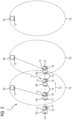
- FIG 2 shows the system 2 in a state in which the first robot 6a of the robot group 4 is within the communication range 18 of the second communication unit 8b (and still partially within the communication range 18 of the first communication unit 8a) and the second robot 6b and the third robot 6c of the robot group 4 are within the communication range 18 of the first communication unit 8a.
- the fourth robot 6d of the Robot group 4 is located outside the communication areas 18 of all three communication units 8a-8c.
- the third robot 6c of the robot group 4 is operated as a master robot with respect to communication with the first communication unit 8a, whereas the other robots 6a, 6b, 6d of the robot group 4 are operated as slave robots with respect to communication with the first communication unit 8a.
- the third robot 6c is connected to the first communication unit 8a via its long-range wireless communication interface 12 and receives safety information from the first communication unit 8a via its long-range wireless communication interface 12.
- the third robot 6c is connected to the second robot 6b of the robot group 4 via one of its short-range wireless communication interfaces 14.
- the third robot 6c forwards the safety information transmitted by the first communication unit 8a to the second robot 6b of the robot group 4 via said short-range wireless communication interface 14.
- the second robot 6b is connected to the first robot 6a of the robot group 4 via one of its short-range wireless communication interfaces 14 and forwards the safety information of the first communication unit 8a to the first robot 6a. That is, the second robot 6b functions as a submaster robot to the first robot 6a with regard to communication with the first communication unit 8a.
- the third robot 6c is connected to the fourth robot 6d of the robot group 4 via one of its short-range wireless communication interfaces 14.
- the third robot 6c transmits the data received from the first communication unit via this short-range wireless communication interface 14.
- 8a forwards the safety information to the fourth robot 6d of robot group 4.
- the third robot 6c transmits the status information generated by it as well as the status information generated by the other robots 6a, 6b, 6d of the robot group 4, which is transmitted to the third robot 6c by the other robots 6a, 6b, 6d via the short-range wireless communication interfaces 14, to the first communication unit 8a via its long-range wireless communication interface 12.
- the first robot 6a of the robot group 4 is operated as a master robot with respect to communication with the second communication unit 8b, whereas the other robots 6b-6d are operated as slave robots with respect to communication with the second communication unit 8b.
- the transmission of safety information from the second communication unit 8b to the individual robots 6a-6d of the robot group 4 as well as the transmission of status information of the individual robots 6a-6d of the robot group 4 to the second communication unit 8b are carried out analogously to the method described in connection with FIG 1 described type of information transmission between the first communication unit 8a and the robot group 4.
- FIG 3 shows the system 2 in a state in which the first robot 6a and the second robot 6b of the robot group 4 are within the communication range 18 of the second communication unit 8b and the third robot 6c and the fourth robot 6d of the robot group 4 are within the communication range 18 of the first communication unit 8a.
- the fourth robot 6d of the robot group 4 is operated as a master robot with respect to communication with the first communication unit 8a, whereas the other robots 6a-6c of the robot group 4 are operated as slave robots with respect to communication with the first communication unit 8a.
- the fourth robot 6d is connected to the first communication unit 8a via its long-range wireless communication interface 12 and receives safety information from the first communication unit 8a via its long-range wireless communication interface 12.
- the forwarding of safety information from the first communication unit 8a to the other robots 6a-6c of robot group 4 is carried out analogously to the FIG 1 described type of forwarding of safety information between the individual robots 6a-6d of the robot group 4, but in the opposite direction of transmission.
- FIG 4 shows the system 2 in a state in which the first robot 6a of the robot group 4 is partially within the communication range 18 of the third communication unit 8c, the second robot 6b and the third robot 6c of the robot group 4 are within the communication range 18 of the second communication unit 8b, and the fourth robot 6d of the robot group 4 is within the communication range 18 of the first communication unit 8a (and partially within the communication range 18 of the second communication unit 8b).
- the first robot 6a of the robot group 4 is operated as a master robot with respect to communication with the third communication unit 8c, whereas the other robots 6b-6d of the robot group 4 are operated as slave robots with respect to communication with the third communication unit 8c. Furthermore, in this state, the third robot 6c of the robot group 4 is operated as a master robot with respect to communication with the second communication unit 8b, while the other robots 6a, 6b, 6d of the robot group 4 are operated as slave robots with respect to communication with the first second communication unit 8b.
- the fourth robot 6d of the robot group 4 is operated as a master robot with respect to communication with the first communication unit 8a, while the other robots 6a-6c of the robot group 4 are operated as slave robots with respect to communication with the first communication unit 8a.
- the first robot 6a is connected to the third communication unit 8c via its long-range wireless communication interface 12, receives safety information from the third communication unit 8c via its long-range wireless communication interface 12, and transmits status information of the robot group 4 to the third communication unit 8c via its long-range wireless communication interface 12.
- the third robot 6c is connected to the second communication unit 8b via its long-range wireless communication interface 12, receives safety information from the second communication unit 8b via its long-range wireless communication interface 12, and transmits status information of the robot group 4 to the second communication unit 8b via its long-range wireless communication interface 12.
- the fourth robot 6d is connected to the first communication unit 8a via its long-range wireless communication interface 12, receives safety information from the first communication unit 8a via its long-range wireless communication interface 12 and transmits safety information via its long-range wireless communication interface 12 Status information of the robot group 4 to the first communication unit 8a.
- the forwarding of safety information of the respective communication unit 8a-8c within the robot group 4 is carried out analogously to the FIG 1 , FIG 2 and FIG 3 described method of forwarding security information.
- the robot group 4 can simultaneously receive wireless safety information from several communication units 8a-8c and simultaneously transmit wireless status information to several communication units 8a-8c, as long as at least one robot 6a-6c of the robot group 4 has a connection to the respective communication unit 8a-8c via its long-distance wireless communication interface 12, regardless of whether the communication ranges 18 of the communication units 8a-8c overlap or not.
- At least one robot 6a-6d of the robot group 4 may be located outside the communication areas 18, for example in a spatial area between two communication areas 18, and yet (indirectly) to wirelessly receive safety information from one or more of the communication units 8a-8c and to transmit status information to one or more of the communication units 8a-8c, provided that at least one robot 6a-6d of the robot group 4 has a connection to the respective communication unit 8a-8c via its long-distance wireless communication interface 12.
Landscapes
- Engineering & Computer Science (AREA)
- General Engineering & Computer Science (AREA)
- Manufacturing & Machinery (AREA)
- Quality & Reliability (AREA)
- Physics & Mathematics (AREA)
- General Physics & Mathematics (AREA)
- Automation & Control Theory (AREA)
- Robotics (AREA)
- Mechanical Engineering (AREA)
- Manipulator (AREA)
- Mobile Radio Communication Systems (AREA)
Description
- Die Erfindung betrifft eine drahtlose Übermittlung von Sicherheits- und/oder Zustandsinformationen zwischen einer mehrere mobile Roboter umfassenden Robotergruppe und einer stationären Kommunikationseinheit.
- Mobile Roboter können in unterschiedlichen Anwendungsgebieten zur Erledigung bestimmter Aufgaben eingesetzt werden.
- Beispielsweise zeigt die
US 2004/030451 A1 ein im militärischen Bereich angesiedeltes Verfahren zum Übermitteln von Zustandsinformationen von einer mehrere mobile Roboter umfassenden Robotergruppe an eine als Satellit ausgeprägte Kommunikationseinheit. Dabei wird ein Roboter der Robotergruppe als Master-Roboter betrieben, von dem seine eigenen Zustandsinformationen und Zustandsinformationen mindestens eines Slave-Roboter an den Satelliten gesendet bzw. weitergeleitet werden. Die Nachrichtenübertragung in die andere Richtung erfolgt entsprechend. - Mobile Roboter können beispielsweise insbesondere auch zum Transportieren und/oder Sortieren von Gegenständen, insbesondere zum Transportieren und Sortieren von Waren in einer Lagerhalle oder zum Transportieren von Gepäck in einem Flughafen, eingesetzt werden.
- Damit mobile Roboter einer Robotergruppe sicherheitskritische Situationen in einem Sicherheitsbereich einer Anlage, in der die Robotergruppe eingesetzt wird, erkennen und darauf reagieren können, kann vorgesehen sein, dass der jeweilige Roboter der Robotergruppe ein eigenes, sensorbasiertes Sicherheitssystem aufweist. Ein solches Sicherheitssystem eines Roboters kann den Roboter im Falle einer Detektion einer sicherheitskritischen Situation zur Durchführung einer vorgegebenen Aktion veranlassen.
- Nachteilig bei solchen Sicherheitssystemen ist, dass eine sicherheitskritische Situation, die außerhalb der durch die Sicherheitssysteme überwachbaren Raumbereiche auftritt, wie zum Beispiel ein Brand in einem entfernten Anlagenbereich, ggf. nicht detektiert wird, sodass eine Reaktion der Roboter auf eine solche sicherheitskritische Situation ausbleibt.
- Damit die mobilen Roboter einer Robotergruppe auf sicherheitskritische Situationen, die außerhalb der durch ihre Sicherheitssysteme überwachbaren Raumbereiche auftreten, reagieren können, kann vorgesehen sein, dass die Roboter drahtlos mit einer stationären Kommunikationseinheit kommunizieren, welche den Robotern Sicherheitsinformationen bereitstellt und an die ggf. von den Robotern Zustandsinformationen bezüglich ihrer Zustände und/oder der Zustände der Roboter-Umgebungen übermittelt werden.
- Problematisch ist hierbei grundsätzlich, dass zwischen der stationären Kommunikationseinheit und den Robotern nur eine begrenzte Anzahl von Punkt-zu-Punkt-Verbindungen hergestellt werden kann. Insbesondere bei einer Robotergruppe mit einer großen Anzahl von Robotern kann die Anzahl realisierbarer Punkt-zu-Punkt-Verbindungen ggf. nicht ausreichen, um zwischen jedem Roboter der Robotergruppe und der stationären Kommunikationseinheit eine Drahtloskommunikationsverbindung herzustellen.
- Bisher wurde versucht, dieses Problem dadurch zu lösen, dass für denselben Sicherheitsbereich mehrere stationäre Kommunikationseinheiten für die Informationsübermittlung vorgesehen werden, sodass die Gesamtanzahl realisierbarer Punkt-zu-Punkt-Verbindungen zwischen der Robotergruppe und den mehreren stationären Kommunikationseinheiten - verglichen mit dem Fall, dass für den jeweiligen Sicherheitsbereich nur eine stationäre Kommunikationseinheit vorgesehen ist - erhöht werden kann. Dieser Ansatz ist jedoch mit hohen Kosten und einer hohen Komplexität der Kommunikationsinfrastruktur verbunden.
- Eine Aufgabe der Erfindung ist es, zumindest einige der zuvor erwähnten Nachteile des Standes der Technik zu verringern oder zu vermeiden. Insbesondere wird angestrebt, eine Informationsübermittlung zwischen einer stationären Kommunikationseinheit und den mobilen Robotern einer Robotergruppe zu ermöglichen, die mit geringen Kosten realisiert werden kann und/oder eine geringe Komplexität aufweist.
- Die zuvor erwähnte Aufgabe wird erfindungsgemäß gelöst durch ein Verfahren zum Übermitteln von Sicherheitsinformationen an eine Robotergruppe nach Anspruch 1, durch ein Verfahren zum Übermitteln von Zustandsinformationen an eine stationäre Kommunikationseinheit nach Anspruch 2. Außerdem wird diese Aufgabe erfindungsgemäß durch ein System nach Anspruch 13, durch ein Computerprogramm nach Anspruch 14 sowie durch ein computerlesbares Speichermedium nach Anspruch 15 gelöst.
- Bevorzugte Ausgestaltungen der Erfindung sind in den weiteren Ansprüchen sowie in der nachfolgenden Beschreibung angegeben.
- Bei dem erfindungsgemäßen Verfahren zum Übermitteln von Sicherheitsinformationen an eine Robotergruppe umfasst die Robotergruppe mehrere mobile Roboter. Zudem werden die Sicherheitsinformationen von einer stationären Kommunikationseinheit drahtlos an die Robotergruppe übermittelt. Erfindungsgemäß ist vorgesehen, dass ein Roboter der Robotergruppe hinsichtlich einer Kommunikation mit der stationären Kommunikationseinheit als Master-Roboter betrieben wird, welcher über eine Langstrecken-Drahtloskommunikationsschnittstelle mit der stationären Kommunikationseinheit verbunden ist und an den von der stationären Kommunikationseinheit über die Langstrecken-Drahtloskommunikationsschnittstelle die Sicherheitsinformationen übermittelt werden. Ferner ist erfindungsgemäß vorgesehen, dass mindestens ein Roboter der Robotergruppe hinsichtlich der Kommunikation mit der stationären Kommunikationseinheit als Slave-Roboter betrieben wird, an welchen vom Master-Roboter über eine Kurzstrecken-Drahtloskommunikationsschnittstelle die vom Master-Roboter empfangenen Sicherheitsinformationen weitergeleitet werden.
- Dadurch, dass der Master-Roboter die von der stationären Kommunikationseinheit empfangenen Sicherheitsinformationen an den bzw. die Slave-Roboter der Robotergruppe weitergeleitet, benötigt der jeweilige Slave-Roboter keine direkte Verbindung zu der stationären Kommunikationseinheit, um die Sicherheitsinformationen zu erhalten. Diese "hierarchische" Art der Informationsübertragung, bei der die Sicherheitsinformationen von der stationären Kommunikationseinheit zunächst an den Master-Roboter übermittelt werden und dieser die empfangenen Sicherheitsinformationen dann an den bzw. die Slave-Roboter der Robotergruppe weiterleitet, hat daher den Vorteil, dass zwischen dem jeweiligen als Slave-Roboter betriebenen Roboter der Robotergruppe und der stationären Kommunikationseinheit eine Punkt-zu-Punkt-Verbindung eingespart werden kann. Insbesondere kann eine einzige direkte Verbindung zwischen der Robotergruppe und der stationären Kommunikationseinheit ausreichen, um Sicherheitsinformationen der Kommunikationseinheit sämtlichen Robotern der Robotergruppe zur Verfügung stellen zu können.
- Da die Roboter einer Robotergruppe, insbesondere in dem Fall, dass die Roboter eine gemeinsame Aufgabe erledigen, einen vergleichsweise geringen Abstand zueinander aufweisen, kann für das Weiterleiten der Sicherheitsinformationen vom Master-Roboter an einen Slave-Roboter der Robotergruppe eine Kurzstrecken-Drahtloskommunikationsschnittstelle verwendet werden. Eine solche Drahtloskommunikationsschnittstelle ist üblicherweise kostengünstiger und hat eine geringe Komplexität als eine Langstrecken-Drahtloskommunikationsschnittstelle, was dazu beiträgt, dass das Verfahren mit geringen Kosten und einer geringen Komplexität der Kommunikationsinfrastruktur realisiert werden kann.
- Unter einer Robotergruppe ist vorliegend eine Gruppe von mehreren mobilen Robotern zu verstehen, die zwei oder mehr, vorzugsweise mindestens drei, mobile Roboter umfasst. Vorzugsweise können sich die Roboter der Robotergruppe unabhängig voneinander bewegen.
- Die Roboter der Robotergruppe können insbesondere autonome mobile Roboter sein. Zudem kann es sich bei den Robotern beispielsweise um selbstlernende Roboter handeln.
- In bevorzugter Weise sind die Roboter der Robotergruppe jeweils mit mindestens einer Langstrecken-Drahtloskommunikationsschnittstelle sowie mindestens einer Kurzstrecken-Drahtloskommunikationsschnittstelle, insbesondere mindestens zwei Kurzstrecken-Drahtloskommunikationsschnittstellen, ausgestattet. Ferner ist es bevorzugt, wenn die stationäre Kommunikationseinheit mindestens eine Langstrecken-Drahtloskommunikationsschnittstelle aufweist.
- Zweckmäßigerweise nutzt die stationäre Kommunikationseinheit ihre Langstrecken-Drahtloskommunikationsschnittstelle, um die Sicherheitsinformationen an den Master-Roboter zu senden. Der Master-Roboter nutzt zweckmäßigerweise seine Langstrecken-Drahtloskommunikationsschnittstelle, um die von der stationären Kommunikationseinheit versendeten Sicherheitsinformationen zu empfangen.
- Zum Weiterleiten der von der Kommunikationseinheit übermittelten Sicherheitsinformationen an einen Slave-Roboter der Robotergruppe nutzt der Master-Roboter zweckmäßigerweise seine Kurzstrecken-Drahtloskommunikationsschnittstelle bzw. eine seiner Kurzstrecken-Drahtloskommunikationsschnittstellen. Der Slave-Roboter der Robotergruppe nutzt zweckmäßigerweise seine Kurzstrecken-Drahtloskommunikationsschnittstelle bzw. eine seiner Kurzstrecken-Drahtloskommunikationsschnittstellen zum Empfangen der Sicherheitsinformationen.
- Bei den Sicherheitsinformationen handelt es sich vorzugsweise um Informationen, welche die Sicherheit von Menschen und/oder die Sicherheit einer technischen Einrichtung betreffen.
- Die Sicherheitsinformationen können insbesondere einen oder mehrere sicherheitsrelevante Steuerbefehle für die Robotergruppe, wie zum Beispiel einen Not-Aus-Befehl oder dergleichen, umfassen, der/die von einem oder mehreren der Roboter umsetzbar ist/sind. Alternativ oder zusätzlich können die Sicherheitsinformationen beispielsweise sicherheitsrelevante Zustandsinformationen umfassen, die von einem oder mehreren der Roboter verarbeitbar sind.
- Zweckmäßigerweise sind die Roboter der Robotergruppe jeweils mit einem Prozessor zum Ausführen eines Computerprogramms sowie zum Auswerten von Daten ausgestattet. Ferner ist es zweckmäßig, wenn der jeweilige Roboter eine Sensoreinheit zum Überwachen seines Zustands und/oder zum Überwachen eines Zustands seiner Umgebung aufweist, welche Zustandsinformationen bezüglich des Zustands des Roboters und/oder bezüglich des Zustands seiner Umgebung erzeugt.
- In bevorzugter Weise ist der jeweilige Roboter mit einem Steueralgorithmus ausgestattet, der unter Verwendung zumindest eines Teils der Sicherheitsinformationen und/oder unter Verwendung der vom Roboter erzeugten Zustandsinformationen sicherheitsrelevante Steuerbefehle für den Roboter erzeugt.
- Als Kurzstrecken-Drahtloskommunikationsschnittstelle im Sinne der Erfindung ist eine Kommunikationsschnittstelle zur drahtlosen Datenübertragung zu verstehen, welche kurze Distanzen von beispielsweise maximal 20 m überbrücken kann. Insbesondere kann eine Kurzstrecken-Drahtloskommunikationsschnittstelle im Sinne der Erfindung eine Kommunikationsschnittstelle sein, die Distanzen von maximal 15 m oder maximal 10 m überbrücken kann.
- Als Langstrecken-Drahtloskommunikationsschnittstelle im Sinne der Erfindung ist eine Kommunikationsschnittstelle zur drahtlosen Datenübertragung zu verstehen, welche große Distanzen von beispielsweise mehr als 20 m überbrücken kann. Insbesondere kann eine Langstrecken-Drahtloskommunikationsschnittstelle im Sinne der Erfindung eine Kommunikationsschnittstelle sein, die Distanzen von mehr als 40 m oder mehr als 80 m überbrücken kann.
- Insbesondere kann es sich bei der jeweiligen Drahtloskommunikationsschnittstelle um eine Funkschnittstelle handeln.
- Bei dem erfindungsgemäßen Verfahren zum Übermitteln von Zustandsinformationen an eine stationäre Kommunikationseinheit werden die Zustandsinformationen von einer mehrere mobile Roboter umfassenden Robotergruppe drahtlos an die stationäre Kommunikationseinheit übermittelt. Erfindungsgemäß ist vorgesehen, dass ein Roboter der Robotergruppe hinsichtlich einer Kommunikation mit der stationären Kommunikationseinheit als Master-Roboter betrieben wird, welcher über eine Langstrecken-Drahtloskommunikationsschnittstelle mit der stationären Kommunikationseinheit verbunden ist und von dem über die Langstrecken-Drahtloskommunikationsschnittstelle die Zustandsinformationen an die stationäre Kommunikationseinheit übermittelt werden. Zudem ist erfindungsgemäß vorgesehen, dass mindestens ein Roboter der Robotergruppe hinsichtlich der Kommunikation mit der stationären Kommunikationseinheit als Slave-Roboter betrieben wird, von welchem über eine Kurzstrecken-Drahtloskommunikationsschnittstelle zumindest einen Teil der vom Master-Roboter an die Kommunikationseinheit zu übermittelnden Zustandsinformationen an den Master-Roboter weitergeleitet werden.
- Bei besagten Zustandsinformationen handelt es sich vorzugsweise um Informationen, die sich auf Zustände der Roboter und/oder auf Zustände ihrer Umgebungen beziehen. In bevorzugter Weise werden die Zustandsinformationen unter Verwendung von Sensoreinheiten der Roboter erzeugt.
- Das Verfahren zum Übermitteln von Zustandsinformationen an die stationäre Kommunikationseinheit kann dazu genutzt werden, die Zustandsinformationen an die Kommunikationseinheit zu übermitteln, ohne dass alle Roboter der Robotergruppe eine direkte Verbindung mit der stationären Kommunikationseinheit aufbauen müssen. Vielmehr ist es ausreichend, wenn von der Robotergruppe einzig der Master-Roboter über eine Langstrecken-Drahtloskommunikationsschnittstelle eine direkte Verbindung zu der Kommunikationseinheit aufweist. Der Master-Roboter kann die von ihm erzeugten Zustandsinformationen sowie die von anderen Robotern der Robotergruppe erzeugten Zustandsinformationen sammeln und über seine Langstrecken-Drahtloskommunikationsschnittstelle zusammen an die stationäre Kommunikationseinheit übermitteln.
- Anhand der übermittelten Zustandsinformationen kann die Kommunikationseinheit Sicherheitsinformationen für die Robotergruppe generieren, die beispielsweise Steuerbefehle umfassen, und die Sicherheitsinformationen gemäß dem weiter oben beschriebenen Verfahren zum Übermitteln von Sicherheitsinformationen an die Robotergruppe übermitteln. Das Verfahren zum Übermitteln von Sicherheitsinformationen an die Robotergruppe und das Verfahren zum Übermitteln von Zustandsinformationen an die stationäre Kommunikationseinheit können also genutzt werden, um wechselseitig Informationen zwischen der Kommunikationseinheit und der Robotergruppe auszutauschen.
- Vorzugsweise wird derjenige Roboter der Robotergruppe, bei dem die Signalstärke eines von der stationären Kommunikationseinheit über ihre Langstrecken-Drahtloskommunikationsschnittstelle ausgesandten Signals am größten ist, hinsichtlich der Kommunikation mit der Kommunikationseinheit zum Master-Roboter bestimmt. Dadurch kann eine gute Übertragungsqualität bei der Informationsübermittlung zwischen der stationären Kommunikationseinheit und der Robotergruppe erreicht werden. Alternativ kann die Auswahl des Master-Roboters nach einem anderen Auswahlkriterium erfolgen. Zum Beispiel kann die Auswahl des Master-Roboters in Abhängigkeit der Positionen und/oder Bewegungsrichtungen der Roboter erfolgen.
- Die Weiterleitung von Informationen von einem Slave-Roboter der Robotergruppe an den Master-Roboter kann indirekt, d. h. über einen anderen Slave-Roboter der Robotergruppe, oder direkt erfolgen. Umgekehrt kann die Weiterleitung von Informationen vom Master-Roboter an ein Slave-Roboter der Robotergruppe direkt oder indirekt erfolgen.
- Vorteilhafterweise handelt es sich bei der jeweiligen Drahtloskommunikationsschnittstelle um eine bidirektionale Schnittstelle, also um eine Schnittstelle, über welche Daten gesendet und empfangen werden können.
- Die jeweilige Drahtloskommunikationsschnittstelle umfasst zweckmäßigerweise mindestens eine Antenne zum Senden und Empfangen von Signalen. Weiter ist es zweckmäßig, wenn der jeweilige Roboter mit einer Kodier-Dekodier-Einheit zum Kodieren und Dekodieren von Signalen ausgestattet ist.
- Besonders bevorzugt ist es, wenn hinsichtlich der Kommunikation mit der stationären Kommunikationseinheit bis auf den Master-Roboter alle Roboter der Robotergruppe als Slave-Roboter betrieben werden. Dadurch kann die Anzahl der für eine Informationsübertragung zwischen der stationären Kommunikationseinheit und der Robotergruppe benötigten Punkt-zu-Punkt-Verbindungen zwischen der stationären Kommunikationseinheit und der Robotergruppe minimiert werden, da in diesem Fall nur eine einzige Punkt-zu-Punkt-Verbindung benötigt wird. Insbesondere vor diesem Hintergrund ist es vorteilhaft, wenn von der Robotergruppe einzig der Master-Roboter über eine Langstrecken-Drahtloskommunikationsschnittstelle eine direkte Verbindung zu der besagten stationären Kommunikationseinheit aufweist.
- Mindestens einer der beiden Typen von Drahtloskommunikationsschnittstellen, vorzugsweise jeder der beiden Typen von Drahtloskommunikationsschnittstellen, ist vorteilhafterweise eine standardisierte Drahtloskommunikationsschnittstelle. Die Langstrecken-Drahtloskommunikationsschnittstelle kann zum Beispiel einem Ethernet-Standard bzw. einem Ethernet-basierten Standard entsprechen. Alternativ kann die Langstrecken-Drahtloskommunikationsschnittstelle zum Beispiel dem 4G-Mobilfunkstandard (auch LTE genannt) oder dem 5G-Mobilfunkstandard entsprechen.
- In bevorzugter Weise wird als Langstrecken-Drahtloskommunikationsschnittstelle eine WLAN-Schnittstelle oder eine Mobilfunkschnittstelle verwendet. Als Kurzstrecken-Drahtloskommunikationsschnittstelle wird vorzugsweise eine Bluetooth-Schnittstelle oder eine ZigBee-Schnittstelle verwendet.
- Bei einer vorteilhaften Erfindungsvariante umfasst die Robotergruppe mindestens drei mobile Roboter. In diesem Fall wird vorzugsweise mindestens einer der Slave-Roboter als Submaster-Roboter betrieben, an welchen die vom Master-Roboter empfangenen Sicherheitsinformationen über eine Kurzstrecken-Drahtloskommunikationsschnittstelle übermittelt werden und von dem diese Informationen über eine weitere Kurzstrecken-Drahtloskommunikationsschnittstelle an mindestens einen anderen Slave-Roboter der Robotergruppe weitergeleitet werden. Auf diese Weise kann erreicht werden, dass die vom Master-Roboter empfangenen Sicherheitsinformationen an mehrere Roboter der Robotergruppe weitergeleitet werden, ohne dass der Master-Roboter mehr als eine direkte Verbindung zu anderen Roboter der Robotergruppe aufweisen muss. Dadurch kann als Kurzstrecken-Drahtloskommunikationsschnittstelle insbesondere eine Kommunikationsschnittstelle genutzt werden, mittels welches maximal eine Punkt-zu-Punkt-Verbindung zur selben Zeit hergestellt werden kann.
- Die Kurzstrecken-Drahtloskommunikationsschnittstelle, über die der Submaster-Roboter Informationen erhält, und die Kurzstrecken-Drahtloskommunikationsschnittstelle, über die der Submaster-Roboter Informationen weiterleitet, sind vorzugsweise gleichartige Kurzstrecken-Drahtloskommunikationsschnittstellen des Submaster-Roboters. Zum Beispiel kann es sich dabei um zwei Bluetooth-Schnittstellen handeln.
- Bei einer bevorzugten Ausführungsform der Erfindung werden Daten unter den Robotern der Robotergruppe seriell weitergeleitet. Hierbei werden von dem jeweiligen Roboter der Robotergruppe Daten über eine Kurzstrecken-Drahtloskommunikationsschnittstelle an maximal einen der anderen Roboter der Robotergruppe direkt weitergeleitet. Auf diese Weise kann erreicht werden, dass jeder Roboter der Robotergruppe maximal zwei Kurzstrecken-Verbindungen zu anderen Roboter der Robotergruppe aufweist, wodurch eine vergleichsweise geringe Komplexität der Datenübertragung unter den Robotern der Robotergruppe ermöglicht wird.
- Zweckmäßigerweise weist die stationäre Kommunikationseinheit einen Kommunikationsbereich auf, innerhalb dessen die Kommunikationseinheit über eine Langstrecken-Drahtloskommunikationsschnittstelle drahtlos Daten senden und empfangen kann, wobei sich der Master-Roboter der Robotergruppe zur Kommunikation mit der stationären Kommunikationseinheit innerhalb des Kommunikationsbereichs befinden muss, wobei der Master-Roboter die Daten an mindestens einen Slave-Roboter der Robotergruppe, der sich zumindest temporär außerhalb des Kommunikationsbereichs der stationären Kommunikationseinheit befinden kann, übermittelt.
- Um diesem Roboter die Sicherheitsinformationen der stationären Kommunikationseinheit zur Verfügung stellen zu können, ist es ausreichend, wenn der Master-Roboter der Robotergruppe sich innerhalb des Kommunikationsbereichs befindet. Dadurch, dass der Master-Roboter die Sicherheitsinformationen an den Slave-Roboter, der sich außerhalb des Kommunikationsbereichs der stationären Kommunikationseinheit befindet, übermittelt, wird die effektive Kommunikationsreichweite der stationären Kommunikationseinheit vergrößert.
- Vorteilhafterweise wird von mindestens einem der beiden Typen von Drahtloskommunikationsschnittstellen, vorzugsweise von jedem der beiden Typen von Drahtloskommunikationsschnittstellen, ein Sicherheitsprotokoll zur Datenübertragung genutzt. Besonders bevorzugt ist es, wenn das Sicherheitsprotokoll ein für eine sichere Datenübertragung zertifiziertes Protokoll ist.
- Als Sicherheitsprotokoll kann beispielsweise das PROFIsafe-Protokoll des Profinet-Standards genutzt werden. Ein Vorteil dieses Protokolls ist, dass es für eine Datenübertragung mittels einer WLAN-Schnittstelle sowie für eine Datenübertragung mittels einer Bluetooth-Schnittstelle zertifiziert ist.
- Wenn der Master-Roboter den Kommunikationsbereich der Kommunikationseinheit verlässt, wird vorteilhafterweise ein Slave-Roboter der Robotergruppe hinsichtlich der Kommunikation mit der stationären Kommunikationseinheit zum neuen Master-Roboter und der bisherige Master-Roboter hinsichtlich der Kommunikation mit der stationären Kommunikationseinheit zu einem Slave-Roboter. Dadurch wird weiterhin eine Informationsübertragung zwischen der stationären Kommunikationseinheit und der Robotergruppe ermöglicht, auch wenn sich der bisherige Master-Roboter nicht mehr innerhalb des Kommunikationsbereichs der Kommunikationseinheit befindet. In diesem Fall erfolgt eine Informationsübertragung zwischen der Kommunikationseinheit und der Robotergruppe vorteilhafterweise über die Langstrecken-Drahtloskommunikationsschnittstelle des neuen Master-Roboters.
- Grundsätzlich kann die Robotergruppe zeitgleich mit mehreren stationären Kommunikationseinheiten, die beispielsweise unterschiedlichen Bereichen einer Anlage zugeordnet sein können, verbunden sein. Dies ermöglicht eine Informationsübermittlung zwischen den mehreren stationären Kommunikationseinheiten und der Robotergruppe. In solch einem Fall ist die Robotergruppe vorzugsweise jeweils über eine Langstrecken-Drahtloskommunikationsschnittstelle mit jeweiligen stationären Kommunikationseinheit verbunden.
- Ein Roboter der Robotergruppe, welcher sich außerhalb des Kommunikationsbereichs der besagten Kommunikationseinheit und zugleich zumindest teilweise innerhalb eines solchen Kommunikationsbereichs einer zweiten stationären Kommunikationseinheit befindet, wird vorteilhafterweise hinsichtlich einer Kommunikation mit der zweiten stationären Kommunikationseinheit als Master-Roboter betrieben. Dieser weitere Master-Roboter ist vorzugsweise über eine Langstrecken-Drahtloskommunikationsschnittstelle mit der zweiten stationären Kommunikationseinheit verbunden. Ferner werden Sicherheitsinformationen von der zweiten stationären Kommunikationseinheit vorzugsweise an diesen weiteren Master-Roboter übermittelt. Mindestens ein Roboter der Robotergruppe wird vorteilhafterweise hinsichtlich der Kommunikation mit der zweiten stationären Kommunikationseinheit als Slave-Roboter betrieben, an welchen von letztgenanntem Master-Roboter über eine Kurzstrecken-Drahtloskommunikationsschnittstelle die von letztgenanntem Master-Roboter empfangenen Sicherheitsinformationen weitergeleitet werden. Dadurch können Sicherheitsinformationen der zweiten Kommunikationseinheit in der gleichen Weise an die Robotergruppe übermittelt werden wie die Sicherheitsinformationen der erstgenannten Kommunikationseinheit. Entsprechend können bei der Übermittlung von Sicherheitsinformationen der zweiten Kommunikationseinheit an die Robotergruppe die gleichen Vorteile realisiert werden wie bei der Übermittlung von Sicherheitsinformationen der erstgenannten Kommunikationseinheit.
- Vorzugsweise wird ein sogenanntes iPCF-Verfahren (iPCF = industrial Point Coordindation Function), auch Rapid-Roaming-Verfahren genannt, genutzt, um bei einem Wechsel von einer Verbindung zu der erstgenannten Kommunikationseinheit zu einer Verbindung zu der zweiten Kommunikationseinheit kurze Roaming-Zeiten von vorzugsweise unter 50 ms zu erreichen.
- Der Kommunikationsbereich der erstgenannten Kommunikationseinheit und der Kommunikationsbereich der zweiten Kommunikationseinheit können sich überlappen. Alternativ kann es sich bei diesen beiden Kommunikationsbereichen um Kommunikationsbereiche handeln, welche keinen gemeinsamen Überlappungsbereich aufweisen.
- In einer vorteilhaften Ausführungsvariante der Erfindung ist vorgesehen, dass die mobilen Roboter der Robotergruppe derart betrieben werden, dass sich die Roboter synchron zueinander bewegen. Mit anderen Worten, bei einer vorteilhaften Ausführungsvariante der Erfindung ist vorgesehen, dass sich die mobilen Roboter der Robotergruppe mit der gleichen Geschwindigkeit in die gleiche Richtung bewegen. Auf diese Weise können die Roboter beispielsweise dazu genutzt werden, eine Last zu transportieren, welche auf den Robotern der Robotergruppe abgestützt ist.
- Das erfindungsgemäße System umfasst mindestens eine stationäre Kommunikationseinheit zum Senden und/oder Empfangen von Informationen, die mindestens eine Langstrecken-Drahtloskommunikationsschnittstelle aufweist, sowie eine Robotergruppe mit mehreren mobilen Robotern, die jeweils mindestens eine Langstrecken-Drahtloskommunikationsschnittstelle aufweisen. Ferner ist das erfindungsgemäße System dadurch gekennzeichnet, dass die mobilen Roboter jeweils mindestens eine Kurzstrecken-Drahtloskommunikationsschnittstelle aufweisen und das System zur Durchführung des erfindungsgemäßen Verfahrens zum Übermitteln von Sicherheitsinformationen an eine Robotergruppe und/oder zur Durchführung des erfindungsgemäßen Verfahrens zum Übermitteln von Zustandsinformationen an eine stationäre Kommunikationseinheit eingerichtet ist.
- Weiter oben im Zusammenhang mit den erfindungsgemäßen Verfahren beschriebene Ausführungsformen, Ausführungsdetails und Vorteile können sich auch auf das erfindungsgemäße System beziehen.
- In bevorzugter Weise ist das System durch eine in den Robotern der Robotergruppe (und ggf. in der Kommunikationseinheit) implementierte Software zur Durchführung des erfindungsgemäßen Verfahrens zum Übermitteln von Sicherheitsinformationen an eine Robotergruppe und/oder zur Durchführung des erfindungsgemäßen Verfahrens zum Übermitteln von Zustandsinformationen an eine stationäre Kommunikationseinheit eingerichtet.
- Das erfindungsgemäße Computerprogramm ist für ein System gemäß dem Oberbegriff des Anspruchs 13 vorgesehen. Das heißt, das erfindungsgemäße Computerprogramm ist für ein System vorgesehen, welches eine stationäre Kommunikationseinheit zum Senden und/oder Empfangen von Informationen, die mindestens eine Langstrecken-Drahtloskommunikationsschnittstelle aufweist, sowie eine Robotergruppe mit mehreren mobilen Robotern, die jeweils mindestens eine Langstrecken-Drahtloskommunikationsschnittstelle sowie mindestens eine Kurzstrecken-Drahtloskommunikationsschnittstelle aufweisen, umfasst.
- Das erfindungsgemäße Computerprogramm veranlasst ein System zur Durchführung des erfindungsgemäßen Verfahrens zum Übermitteln von Sicherheitsinformationen an eine Robotergruppe und/oder zur Durchführung des erfindungsgemäßen Verfahrens zum Übermitteln von Zustandsinformationen an eine stationäre Kommunikationseinheit, wenn das Computerprogramm auf dem System ausgeführt wird. Mit anderen Worten, durch das erfindungsgemäße Computerprogramm wird ein System gemäß dem Oberbegriff des Anspruchs 13 dazu befähigt, das erfindungsgemäße Verfahren zum Übermitteln von Sicherheitsinformationen an eine Robotergruppe und/oder das erfindungsgemäße Verfahren zum Übermitteln von Zustandsinformationen an eine stationäre Kommunikationseinheit durchzuführen.
- Das erfindungsgemäße computerlesbare Speichermedium ist ein Speichermedium, welches das erfindungsgemäße Computerprogramm enthält.
- Die bisher gegebene Beschreibung bevorzugter Ausgestaltungen der Erfindung enthält zahlreiche Merkmale, die in den einzelnen abhängigen Ansprüchen teilweise zu mehreren zusammengefasst wiedergegeben sind. Diese Merkmale können jedoch auch einzeln betrachtet und zu sinnvollen weiteren Kombinationen zusammengefasst werden. Insbesondere sind diese Merkmale jeweils einzeln und in beliebiger geeigneter Kombination mit den erfindungsgemäßen Verfahren, dem erfindungsgemäßen System, dem erfindungsgemäßen Computerprogramm und/oder dem erfindungsgemäßen Speichermedium kombinierbar. Ferner können Verfahrensmerkmale auch als Eigenschaft der entsprechenden Vorrichtungseinheit angesehen werden.
- Die oben beschriebenen Eigenschaften, Merkmale und Vorteile der Erfindung sowie die Art und Weise, wie diese erreicht werden, werden klarer und deutlicher verständlich im Zusammenhang mit der folgenden Beschreibung eines Ausführungsbeispiels der Erfindung, das im Zusammenhang mit den Figuren näher erläutert wird. Das Ausführungsbeispiel dient der Erläuterung der Erfindung und beschränkt die Erfindung nicht auf die darin angegebenen Kombinationen von Merkmalen, auch nicht in Bezug auf funktionale Merkmale. Außerdem können dazu geeignete Merkmale des Ausführungsbeispiels auch explizit isoliert betrachtet und mit einem beliebigen der Ansprüche kombiniert werden.
- Es zeigen:
- FIG 1-4
- vier verschiedene Zustände eines Systems, welches eine Robotergruppe mit mehreren mobilen Robotern sowie mehrere stationäre Kommunikationseinheiten zum Senden von Sicherheitsinformationen an die Robotergruppe umfasst.
-
FIG 1 zeigt schematisch ein System 2, welches eine Robotergruppe 4 mit mehreren mobilen Robotern 6a-6d sowie mehreren stationären Kommunikationseinheiten 8a-8c umfasst. - Vorliegend umfasst das System 2 exemplarisch eine erste Kommunikationseinheit 8a, eine zweite Kommunikationseinheit 8b sowie eine dritte Kommunikationseinheit 8c. Gegebenenfalls können die Kommunikationseinheiten 8a-8c miteinander gekoppelt sein, beispielsweise über eine Datenleitung. Eine Kopplung der Kommunikationseinheiten 8a-8c kann zum Beispiel vorhanden sein, wenn das System 2 ein (figürlich nicht dargestelltes) zentrales Steuergerät aufweist, welches die einzelnen Kommunikationseinheiten 8a-8c überwacht und/oder steuert.
- Die Robotergruppe 4 des Systems 2 umfasst exemplarisch einen ersten Roboter 6a, einen zweiten Roboter 6b, einen dritten Roboter 6c sowie einen vierten Roboter 6d. Alternativ kann grundsätzlich eine andere Anzahl von Kommunikationseinheiten 8a-8c und/oder von Robotern 6a-6d vorgesehen sein.
- Die Roboter 6a-6d der Robotergruppe 4 können beispielsweise dazu genutzt werden, eine Last zu transportieren. Im vorliegenden Ausführungsbeispiel werden die Roboter 6a-6d der Robotergruppe 4 synchron betrieben, beispielsweise um eine auf allen vier Robotern 6a-6d abgestützte Last zu transportieren. Das heißt, die Roboter 6a-6d der Robotergruppe 4 haben die gleiche Bewegungsrichtung 10 und bewegen sich mit der gleichen Geschwindigkeit. In
FIG 1 sind die Roboter 6a-6d in einer Reihe hintereinander angeordnet und bewegen sich von links nach rechts. - Besagte stationäre Kommunikationseinheiten 8a-8c dienen unter anderem zur drahtlosen Übermittlung von Sicherheitsinformationen an die Robotergruppe 4. Diese Sicherheitsinformationen können beispielsweise sicherheitsrelevante Steuerbefehle für die Robotergruppe 4, wie zum Beispiel einen Not-Aus-Befehl oder dergleichen, umfassen.
- Darüber hinaus ist jeder der Roboter 6a-6d mit einem Prozessor ausgestattet, auf welchem ein Steueralgorithmus ausgeführt wird, welcher von den Kommunikationseinheiten 8a-8c versendete Sicherheitsinformationen verarbeitet und den jeweiligen Roboter 6a-6d zur Durchführung entsprechender Aktionen veranlasst.
- Im vorliegenden Ausführungsbeispiel ist jede der Kommunikationseinheiten 8a-8c mit einer Langstrecken-Drahtloskommunikationsschnittstelle 12 ausgestattet, während die Roboter 6a-6d der Robotergruppe 4 jeweils mit einer Langstrecken-Drahtloskommunikationsschnittstelle 12 sowie zwei Kurzstrecken-Drahtloskommunikationsschnittstellen 14 ausgestattet sind. Grundsätzlich können/kann die jeweilige Kommunikationseinheit 8a-8c und/oder der jeweilige Roboter 6a-6d, insbesondere aus Redundanzgründen, eine größere Anzahl von Drahtloskommunikationsschnittstellen 12, 14 des jeweiligen Typs (Langstrecken-Drahtloskommunikationsschnittstellen 12 bzw. Kurzstrecken-Drahtloskommunikationsschnittstellen 14) aufweisen.
- Als Drahtloskommunikationsschnittstellen 12, 14 kommen standardisierte Drahtloskommunikationsschnittstellen zum Einsatz, welche zur Datenübertragung von Sicherheitsinformationen, insbesondere von Sicherheitsinformationen gemäß SIL 3, zertifiziert sind. Bei der jeweiligen Langstrecken-Drahtloskommunikationsschnittstelle 12 handelt es sich im vorliegenden Ausführungsbeispiel um eine WLAN-Schnittstelle, während es sich bei der jeweiligen Kurzstrecken-Drahtloskommunikationsschnittstelle 14 um eine Bluetooth-Schnittstelle handelt. Zur Datenübertragung nutzt die jeweilige Drahtloskommunikationsschnittstelle 12, 14 ein Sicherheitsprotokoll, wie zum Beispiel das PROFIsafe-Protokoll des Profinet-Standards.
- Des Weiteren ist der jeweilige Roboter 6a-6d der Robotergruppe 4 mit einer Sensoreinheit 16 zum Überwachen seines Zustands sowie zum Überwachen des Zustands seiner Umgebung ausgestattet. Mithilfe seiner Sensoreinheit 16 überwacht der jeweilige Roboter 6a-6d seinen Zustand sowie den Zustand seiner Umgebung und erzeugt dabei Zustandsinformationen, die zum Beispiel Informationen über seine Geschwindigkeit, seine Position, seine Bewegungsrichtung und/oder seine Abstände zu benachbarten Robotern 6a-6d und/oder zu Hindernissen umfassen können.
- Mithilfe ihrer Kurzstrecken-Drahtloskommunikationsschnittstellen 14 sind die Roboter 6a-6d der Robotergruppe 4 jeweils direkt oder indirekt miteinander verbunden, wobei jeder der Roboter 6a-6d jeweils mit einem oder mit zweien der anderen Roboter 6a-6d direkt verbunden ist.
- In
FIG 1 ist von jeder der Kommunikationseinheiten 8a-8c ihr jeweiliger Kommunikationsbereich 18 dargestellt, innerhalb dessen die jeweilige Kommunikationseinheit 8a-8c über ihre Langstrecken-Drahtloskommunikationsschnittstelle 12 Daten bzw. Information senden und empfangen kann. Wie ausFIG 1 ersichtlich ist, überlappen sich der Kommunikationsbereich 18 der ersten Kommunikationseinheit 8a und der Kommunikationsbereich 18 der zweiten Kommunikationseinheit 8b. Der Kommunikationsbereich 18 der dritten Kommunikationseinheit 8c hingegen überlappt sich nicht mit den beiden anderen Kommunikationsbereichen 18. - Bei dem in
FIG 1 dargestellten Zustand des Systems 2 befinden sich der erste Roboter 6a und der zweite Roboter 6b der Robotergruppe 4 innerhalb des Kommunikationsbereichs 18 der ersten Kommunikationseinheit 8a, wohingegen die beiden anderen Roboter 6c, 6d der Robotergruppe 4 außerhalb des Kommunikationsbereichs 18 der ersten Kommunikationseinheit 8a sowie außerhalb der Kommunikationsbereiche 18 der beiden anderen Kommunikationseinheiten 8b, 8c befinden. - In diesem Zustand wird der erste Roboter 6a der Robotergruppe 4 hinsichtlich einer Kommunikation mit der ersten Kommunikationseinheit 8a als Master-Roboter betrieben, wohingegen die anderen Roboter 6b-6d der Robotergruppe 4 hinsichtlich der Kommunikation mit der ersten Kommunikationseinheit 8a als Slave-Roboter betrieben werden.
- Der erste Roboter 6a ist über seine Langstrecken-Drahtloskommunikationsschnittstelle 12 mit der ersten Kommunikationseinheit 8a verbunden und empfängt über seine Langstrecken-Drahtloskommunikationsschnittstelle 12 Sicherheitsinformationen von der ersten Kommunikationseinheit 8a. Über eine seiner Kurzstrecken-Drahtloskommunikationsschnittstellen 14 ist der erste Roboter 6a zudem mit dem zweiten Roboter 6b der Robotergruppe 4 verbunden. Der erste Roboter 6a leitet über besagte Kurzstrecken-Drahtloskommunikationsschnittstelle 14 die von der ersten Kommunikationseinheit 8a übermittelten Sicherheitsinformationen an den zweiten Roboter 6b der Robotergruppe 4 weiter.
- Der zweite Roboter 6b ist über eine seiner Kurzstrecken-Drahtloskommunikationsschnittstellen 14 mit dem dritten Roboter 6c der Robotergruppe 4 verbunden und leitet die vom ersten Roboter 6a übermittelten Sicherheitsinformationen der ersten Kommunikationseinheit 8a an den dritten Roboter 6c weiter. Das heißt, der zweite Roboter 6b fungiert gegenüber dem dritten Roboter 6c hinsichtlich der Kommunikation mit der ersten Kommunikationseinheit 8a als Submaster-Roboter.
- Der dritte Roboter 6c ist seinerseits über eine seiner Kurzstrecken-Drahtloskommunikationsschnittstellen 14 mit dem vierten Roboter 6d der Robotergruppe 4 verbunden und leitet die vom zweiten Roboter 6b übermittelten Sicherheitsinformationen der ersten Kommunikationseinheit 8a an den vierten Roboter 6d weiter. Das heißt, der dritte Roboter 6c fungiert gegenüber dem vierten Roboter 6d hinsichtlich der Kommunikation mit der ersten Kommunikationseinheit 8a als Submaster-Roboter.
- Anders ausgedrückt, die vom ersten Roboter 6a der Robotergruppe 4 empfangenen Sicherheitsinformationen der ersten Kommunikationseinheit 8a werden über die Kurzstrecken-Drahtloskommunikationsschnittstellen 14 seriell an die anderen Roboter 6b-6d der Robotergruppe 4 weitergeleitet, wobei von jedem der ersten drei Robotern 6a-6c der Robotergruppe 4 die Sicherheitsinformationen der ersten Kommunikationseinheit 8a über eine seiner Kurzstrecken-Drahtloskommunikationsschnittstellen 14 an genau einen der anderen Roboter der Robotergruppe 4 direkt weitergeleitet werden.
- In
FIG 1 sowie in den weiteren Figuren sind die Kurzstrecken-Verbindungen, durch welche die Roboter 6a-6d der Robotergruppe 4 untereinander verbunden sind, als gestrichelte Linien dargestellt, während die Langstrecken-Verbindungen, durch welche die Robotergruppe 4 mit der jeweiligen Kommunikationseinheit 8a-8c verbunden ist, als stichpunktierte Linien dargestellt sind. - Da der erste Roboter 6a als einziger Roboter der Robotergruppe 4 über seine Langstrecken-Drahtloskommunikationsschnittstelle 12 direkt mit der ersten Kommunikationseinheit 8a verbunden ist, ist nur eine einzige Punkt-zu-Punkt-Verbindung zwischen der ersten Kommunikationseinheit 8a und der Robotergruppe 4 erforderlich, um Sicherheitsinformationen von der ersten Kommunikationseinheit 8a an die Robotergruppe 4 zu übermitteln.
- Zur Überwachung der Robotergruppe 4 durch die erste Kommunikationseinheit 8a übermittelt der erste Roboter 6a die von ihm erzeugten Zustandsinformationen sowie die von den anderen Robotern 6b-6d der Robotergruppe 4 erzeugten Zustandsinformationen, welche dem ersten Roboter 6a von den anderen Robotern 6b-6d über die Kurzstrecken-Drahtloskommunikationsschnittstellen 14 übermittelt werden, über seine Langstrecken-Drahtloskommunikationsschnittstelle 12 an die erste Kommunikationseinheit 8a.
- Verlässt der erste Roboter 6a der Robotergruppe 4 den Kommunikationsbereich der ersten Kommunikationseinheit 8a, wird ein anderer Roboter 6b-6d der Robotergruppe 4 hinsichtlich der Kommunikation mit der ersten Kommunikationseinheit 8a als Master-Roboter betrieben. Der erste Roboter 6a der Robotergruppe 4 wird dann hinsichtlich der Kommunikation mit der ersten Kommunikationseinheit 8a als Slave-Roboter betrieben.
- Aus den obigen Ausführungen folgt, dass es nicht erforderlich ist, dass sich alle Roboter 6a-6d der Robotergruppe 4 innerhalb eines Kommunikationsbereichs 18 einer Kommunikationseinheit 8a-8c befinden, von welcher die Robotergruppe 4 Sicherheitsinformationen erhält bzw. an welche die Robotergruppe 4 Zustandsinformationen übermittelt, sofern sich mindestens einer der Roboter 6a-6d zumindest teilweise innerhalb des Kommunikationsbereichs 18 der entsprechenden Kommunikationseinheit 8a-8c befindet und über seine Langstrecken-Drahtloskommunikationsschnittstelle 12 mit der entsprechenden Kommunikationseinheit 8a-8c verbunden ist.
-
FIG 2 zeigt das System 2 in einem Zustand, in welchem sich der erste Roboter 6a der Robotergruppe 4 innerhalb des Kommunikationsbereichs 18 der zweiten Kommunikationseinheit 8b (und noch teilweise innerhalb des Kommunikationsbereichs 18 der ersten Kommunikationseinheit 8a) befindet und sich der zweite Roboter 6b sowie der dritte Roboter 6c der Robotergruppe 4 innerhalb des Kommunikationsbereichs 18 der ersten Kommunikationseinheit 8a befinden. Der vierte Roboter 6d der Robotergruppe 4 befindet sich hingegen außerhalb der Kommunikationsbereiche 18 aller drei Kommunikationseinheiten 8a-8c. - In diesem Zustand wird der dritte Roboter 6c der Robotergruppe 4 hinsichtlich der Kommunikation mit der ersten Kommunikationseinheit 8a als Master-Roboter betrieben, wohingegen die anderen Roboter 6a, 6b, 6d der Robotergruppe 4 hinsichtlich der Kommunikation mit der ersten Kommunikationseinheit 8a als Slave-Roboter betrieben werden.
- Der dritte Roboter 6c ist über seine Langstrecken-Drahtloskommunikationsschnittstelle 12 mit der ersten Kommunikationseinheit 8a verbunden und empfängt über seine Langstrecken-Drahtloskommunikationsschnittstelle 12 Sicherheitsinformationen von der ersten Kommunikationseinheit 8a. Über eine seiner Kurzstrecken-Drahtloskommunikationsschnittstellen 14 ist der dritte Roboter 6c mit dem zweiten Roboter 6b der Robotergruppe 4 verbunden. Der dritte Roboter 6c leitet über besagte Kurzstrecken-Drahtloskommunikationsschnittstelle 14 die von der ersten Kommunikationseinheit 8a übermittelten Sicherheitsinformationen an den zweiten Roboter 6b der Robotergruppe 4 weiter.
- Ferner ist der zweite Roboter 6b über eine seiner Kurzstrecken-Drahtloskommunikationsschnittstellen 14 mit dem ersten Roboter 6a der Robotergruppe 4 verbunden und leitet die Sicherheitsinformationen der ersten Kommunikationseinheit 8a an den ersten Roboter 6a weiter. Das heißt, der zweite Roboter 6b fungiert gegenüber dem ersten Roboter 6a hinsichtlich der Kommunikation mit der ersten Kommunikationseinheit 8a als Submaster-Roboter.
- Des Weiteren ist der dritte Roboter 6c über eine seiner Kurzstrecken-Drahtloskommunikationsschnittstellen 14 mit dem vierten Roboter 6d der Robotergruppe 4 verbunden. Über diese Kurzstrecken-Drahtloskommunikationsschnittstelle 14 leitet der dritte Roboter 6c die von der ersten Kommunikationseinheit 8a übermittelten Sicherheitsinformationen an den vierten Roboter 6d der Robotergruppe 4 weiter.
- Zur Überwachung der Robotergruppe 4 durch die erste Kommunikationseinheit 8a übermittelt der dritte Roboter 6c die von ihm erzeugten Zustandsinformationen sowie die von den anderen Robotern 6a, 6b, 6d der Robotergruppe 4 erzeugten Zustandsinformationen, welche dem dritten Roboter 6c von den anderen Robotern 6a, 6b, 6d über die Kurzstrecken-Drahtloskommunikationsschnittstellen 14 übermittelt werden, über seine Langstrecken-Drahtloskommunikationsschnittstelle 12 an die erste Kommunikationseinheit 8a.
- Darüber hinaus wird in dem Zustand, der in
FIG 2 dargestellt ist, der erste Roboter 6a der Robotergruppe 4 hinsichtlich einer Kommunikation mit der zweiten Kommunikationseinheit 8b als Master-Roboter betrieben, wohingegen die anderen Roboter 6b-6d hinsichtlich der Kommunikation mit der zweiten Kommunikationseinheit 8b als Slave-Roboter betrieben werden. - Die Übermittlung von Sicherheitsinformationen von der zweiten Kommunikationseinheit 8b an die einzelnen Roboter 6a-6d der Robotergruppe 4 sowie die Übermittlung von Zustandsinformationen der einzelnen Roboter 6a-6d der Robotergruppe 4 an die zweite Kommunikationseinheit 8b erfolgen analog zu der im Zusammenhang mit
FIG 1 beschriebenen Art der Informationsübermittlung zwischen der ersten Kommunikationseinheit 8a und der Robotergruppe 4. -
FIG 3 zeigt das System 2 in einem Zustand, in welchem sich der erste Roboter 6a sowie der zweite Roboter 6b der Robotergruppe 4 innerhalb des Kommunikationsbereichs 18 der zweiten Kommunikationseinheit 8b befinden und sich der dritte Roboter 6c sowie der vierte Roboter 6d der Robotergruppe 4 innerhalb des Kommunikationsbereichs 18 der ersten Kommunikationseinheit 8a befinden. - In diesem Zustand wird der vierte Roboter 6d der Robotergruppe 4 hinsichtlich der Kommunikation mit der ersten Kommunikationseinheit 8a als Master-Roboter betrieben, wohingegen die anderen Roboter 6a-6c der Robotergruppe 4 hinsichtlich der Kommunikation mit der ersten Kommunikationseinheit 8a als Slave-Roboter betrieben werden.
- Der vierte Roboter 6d ist über seine Langstrecken-Drahtloskommunikationsschnittstelle 12 mit der ersten Kommunikationseinheit 8a verbunden und empfängt über seine Langstrecken-Drahtloskommunikationsschnittstelle 12 Sicherheitsinformationen von der ersten Kommunikationseinheit 8a.
- Die Weiterleitung von Sicherheitsinformationen der ersten Kommunikationseinheit 8a an die anderen Roboter 6a-6c der Robotergruppe 4 erfolgt analog zu der im Zusammenhang mit
FIG 1 beschriebenen Art der Weiterleitung von Sicherheitsinformationen zwischen den einzelnen Robotern 6a-6d der Robotergruppe 4, jedoch in umgekehrter Übertragungsrichtung. Das heißt, die Sicherheitsinformationen der ersten Kommunikationseinheit 8a werden in diesem Zustand vom vierten Roboter 6d an den dritten Roboter 6c weitergeleitet. Dieser leitet die Sicherheitsinformationen an den zweiten Roboter 6b der Robotergruppe 4 weiter, welche seinerseits die Sicherheitsinformationen an den ersten Roboter 6a weiterleitet. -
FIG 4 zeigt das System 2 in einem Zustand, in welchem sich der erste Roboter 6a der Robotergruppe 4 teilweise innerhalb des Kommunikationsbereichs 18 der dritten Kommunikationseinheit 8c befindet, sich der zweite Roboter 6b sowie der dritte Roboter 6c der Robotergruppe 4 innerhalb des Kommunikationsbereichs 18 der zweiten Kommunikationseinheit 8b befinden und sich der vierte Roboter 6d der Robotergruppe 4 innerhalb des Kommunikationsbereichs 18 der ersten Kommunikationseinheit 8a (und teilweise innerhalb des Kommunikationsbereichs 18 der zweiten Kommunikationseinheit 8b) befindet. - In diesem Zustand wird der erste Roboter 6a der Robotergruppe 4 hinsichtlich einer Kommunikation mit der dritten Kommunikationseinheit 8c als Master-Roboter betrieben, wohingegen die anderen Roboter 6b-6d der Robotergruppe 4 hinsichtlich der Kommunikation mit der dritten Kommunikationseinheit 8c als Slave-Roboter betrieben werden. Ferner wird in diesem Zustand der dritte Roboter 6c der Robotergruppe 4 hinsichtlich der Kommunikation mit der zweiten Kommunikationseinheit 8b als Master-Roboter betrieben, während die anderen Roboter 6a, 6b, 6d der Robotergruppe 4 hinsichtlich der Kommunikation mit der ersten zweiten 8b als Slave-Roboter betrieben werden. Außerdem wird in diesem Zustand der vierte Roboter 6d der Robotergruppe 4 hinsichtlich der Kommunikation mit der ersten Kommunikationseinheit 8a als Master-Roboter betrieben, während die anderen Roboter 6a-6c der Robotergruppe 4 hinsichtlich der Kommunikation mit der ersten Kommunikationseinheit 8a als Slave-Roboter betrieben werden.
- Der erste Roboter 6a ist über seine Langstrecken-Drahtloskommunikationsschnittstelle 12 mit der dritten Kommunikationseinheit 8c verbunden, empfängt über seine Langstrecken-Drahtloskommunikationsschnittstelle 12 Sicherheitsinformationen von der dritten Kommunikationseinheit 8c und übermittelt über seine Langstrecken-Drahtloskommunikationsschnittstelle 12 Zustandsinformationen der Robotergruppe 4 an die dritte Kommunikationseinheit 8c. Der dritte Roboter 6c ist über seine Langstrecken-Drahtloskommunikationsschnittstelle 12 mit der zweiten Kommunikationseinheit 8b verbunden, empfängt über seine Langstrecken-Drahtloskommunikationsschnittstelle 12 Sicherheitsinformationen von der zweiten Kommunikationseinheit 8b und übermittelt über seine Langstrecken-Drahtloskommunikationsschnittstelle 12 Zustandsinformationen der Robotergruppe 4 an die zweite Kommunikationseinheit 8b. Der vierte Roboter 6d ist über seine Langstrecken-Drahtloskommunikationsschnittstelle 12 mit der ersten Kommunikationseinheit 8a verbunden, empfängt über seine Langstrecken-Drahtloskommunikationsschnittstelle 12 Sicherheitsinformationen von der ersten Kommunikationseinheit 8a und übermittelt über seine Langstrecken-Drahtloskommunikationsschnittstelle 12 Zustandsinformationen der Robotergruppe 4 an die erste Kommunikationseinheit 8a.
- Die Weiterleitung von Sicherheitsinformationen der jeweiligen Kommunikationseinheit 8a-8c innerhalb der Robotergruppe 4 erfolgt jeweils analog zu der im Zusammenhang
FIG 1 ,FIG 2 undFIG 3 beschriebenen Art der Weiterleitung von Sicherheitsinformationen. - Wie aus den obigen Ausführungen hervorgeht, kann die Robotergruppe 4 auch dann, wenn sich die Roboter 6a-6d jeweils nur im Kommunikationsbereich 18 einer einzigen Kommunikationseinheit 8a-8c aufhalten, gleichzeitig von mehreren Kommunikationseinheiten 8a-8c drahtlos Sicherheitsinformationen erhalten sowie gleichzeitig an mehrere Kommunikationseinheiten 8a-8c drahtlos Zustandsinformationen übermitteln, solange mindestens ein Roboter 6a-6c der Robotergruppe 4 über seine Langstrecken-Drahtloskommunikationsschnittstelle 12 eine Verbindung zu der jeweiligen Kommunikationseinheit 8a-8c aufweist, und zwar unabhängig davon, ob sich die Kommunikationsbereiche 18 der Kommunikationseinheiten 8a-8c überlappen oder nicht.
- Zudem ist es möglich, dass sich mindestens ein Roboter 6a-6d der Robotergruppe 4 außerhalb der Kommunikationsbereiche 18, beispielsweise in einem Raumbereich zwischen zwei Kommunikationsbereichen 18, auffällt und dennoch (auf indirektem Wege) drahtlos Sicherheitsinformationen von einer oder mehreren der Kommunikationseinheiten 8a-8c erhalten und Zustandsinformationen an eine oder mehrere der Kommunikationseinheiten 8a-8c übermitteln kann, sofern mindestens ein Roboter 6a-6d der Robotergruppe 4 über seine Langstrecken-Drahtloskommunikationsschnittstelle 12 eine Verbindung zu der jeweiligen Kommunikationseinheit 8a-8c aufweist.
- Obwohl die Erfindung im Detail durch das bevorzugte Ausführungsbeispiel näher illustriert und beschrieben wurde, so ist die Erfindung nicht durch das offenbarte Beispiel eingeschränkt und andere Variationen können hieraus abgeleitet werden, ohne den Schutzumfang der Erfindung zu verlassen.
-
- 2
- System
- 4
- Robotergruppe
- 6a
- Roboter
- 6b
- Roboter
- 6c
- Roboter
- 6d
- Roboter
- 8a
- Kommunikationseinheit
- 8b
- Kommunikationseinheit
- 8c
- Kommunikationseinheit
- 10
- Bewegungsrichtung
- 12
- Langstrecken-Drahtloskommunikationsschnittstelle
- 14
- Kurzstrecken-Drahtloskommunikationsschnittstelle
- 16
- Sensoreinheit
- 18
- Kommunikationsbereich
Claims (15)
- Verfahren zum Übermitteln von Sicherheitsinformationen an eine Robotergruppe (4), bei dem die Robotergruppe (4) mehrere mobile Roboter (6a-6d) umfasst und die Sicherheitsinformationen von einer stationären Kommunikationseinheit (8a-8c) drahtlos an die Robotergruppe (4) übermittelt werden, dadurch gekennzeichnet, dass ein Roboter (6a-6d) der Robotergruppe (4) hinsichtlich einer Kommunikation mit der stationären Kommunikationseinheit (8a-8c) als Master-Roboter betrieben wird, welcher über eine Langstrecken-Drahtloskommunikationsschnittstelle (12) mit der stationären Kommunikationseinheit (8a-8c) verbunden ist und an den von der stationären Kommunikationseinheit (8a-8c) über die Langstrecken-Drahtloskommunikationsschnittstelle (12) die Sicherheitsinformationen übermittelt werden, und mindestens ein Roboter (6a-6d) der Robotergruppe (4) hinsichtlich der Kommunikation mit der stationären Kommunikationseinheit (8a-8c) als Slave-Roboter betrieben wird, an welchen vom Master-Roboter über eine Kurzstrecken-Drahtloskommunikationsschnittstelle (14) die vom Master-Roboter empfangenen Sicherheitsinformationen weitergeleitet werden.
- Verfahren zum Übermitteln von Zustandsinformationen an eine stationäre Kommunikationseinheit (8a-8c), bei dem die Zustandsinformationen von einer mehrere mobile Roboter (6a-6d) umfassenden Robotergruppe (4) drahtlos an die stationäre Kommunikationseinheit (8a-8c) übermittelt werden,
dadurch gekennzeichnet, dass ein Roboter (6a-6d) der Robotergruppe hinsichtlich einer Kommunikation mit der stationären Kommunikationseinheit (8a-8c) als Master-Roboter betrieben wird, welcher über eine Langstrecken-Drahtloskommunikationsschnittstelle (12) mit der stationären Kommunikationseinheit (8a-8c) verbunden ist und von dem über die Langstrecken-Drahtloskommunikationsschnittstelle (12) die Zustandsinformationen an die stationäre Kommunikationseinheit (8a-8c) übermittelt werden, und mindestens ein Roboter (6a-6d) der Robotergruppe (4) hinsichtlich der Kommunikation mit der stationären Kommunikationseinheit (8a-8c) als Slave-Roboter betrieben wird, von welchem über eine Kurzstrecken-Drahtloskommunikationsschnittstelle (14) zumindest einen Teil der vom Master-Roboter an die Kommunikationseinheit (8a-8c) zu übermittelnden Zustandsinformationen an den Master-Roboter weitergeleitet werden. - Verfahren nach Anspruch 1 oder 2,
dadurch gekennzeichnet, dass hinsichtlich der Kommunikation mit der stationären Kommunikationseinheit (8a-8c) bis auf den Master-Roboter alle Roboter (6a-6d) der Robotergruppe (4) als Slave-Roboter betrieben werden. - Verfahren nach einem der voranstehenden Ansprüche, dadurch gekennzeichnet, dass als Langstrecken-Drahtloskommunikationsschnittstelle (12) eine WLAN-Schnittstelle oder eine Mobilfunkschnittstelle verwendet wird und/oder dass als Kurzstrecken-Drahtloskommunikationsschnittstelle (14) eine Bluetooth-Schnittstelle oder eine ZigBee-Schnittstelle verwendet wird.
- Verfahren nach einem der voranstehenden Ansprüche, dadurch gekennzeichnet, dass die Robotergruppe (4) mindestens drei mobile Roboter (6a-6d) umfasst und mindestens einer der Slave-Roboter als Submaster-Roboter betrieben wird, an welchen die vom Master-Roboter empfangenen Sicherheitsinformationen über eine Kurzstrecken-Drahtloskommunikationsschnittstelle (14) übermittelt werden und von dem diese Informationen über eine weitere Kurzstrecken-Drahtloskommunikationsschnittstelle (14) an mindestens einen anderen Slave-Roboter der Robotergruppe (4) weitergeleitet werden.
- Verfahren nach einem der voranstehenden Ansprüche, dadurch gekennzeichnet, dass Daten unter den Robotern (6a-6d) der Robotergruppe (4) seriell weitergeleitet werden, wobei von dem jeweiligen Roboter (6a-6d) der Robotergruppe (4) Daten über eine Kurzstrecken-Drahtloskommunikationsschnittstelle (14) an maximal einen der anderen Roboter (6a-6d) der Robotergruppe (4) direkt weitergeleitet werden.
- Verfahren nach einem der voranstehenden Ansprüche, dadurch gekennzeichnet, dass die stationäre Kommunikationseinheit (8a-8c) einen Kommunikationsbereich (18) aufweist, innerhalb dessen die Kommunikationseinheit (8a-8c) über eine Langstrecken-Drahtloskommunikationsschnittstelle (12) drahtlos Daten senden und empfangen kann, wobei sich der Master-Roboter der Robotergruppe zur Kommunikation mit der stationären Kommunikationseinheit (8a-8c) innerhalb des Kommunikationsbereichs befinden muss, wobei der Master-Roboter die Daten an mindestens einen Slave-Roboter der Robotergruppe (4), der sich zumindest temporär außerhalb des Kommunikationsbereichs (18) der stationären Kommunikationseinheit (8a-8c) befinden kann, übermittelt.
- Verfahren nach einem der voranstehenden Ansprüche, dadurch gekennzeichnet, dass von mindestens einem der beiden Typen von Drahtloskommunikationsschnittstellen (12, 14), vorzugsweise jedem der beiden Typen von Drahtloskommunikationsschnittstellen (12, 14), ein Sicherheitsprotokoll zur Datenübertragung genutzt wird.
- Verfahren nach Anspruch 8,
dadurch gekennzeichnet, dass das PROFIsafe-Protokoll des Profinet-Standards als Sicherheitsprotokoll genutzt wird. - Verfahren nach einem der voranstehenden Ansprüche, dadurch gekennzeichnet, dass die stationäre Kommunikationseinheit (8a-8c) einen Kommunikationsbereich (18) aufweist, innerhalb dessen die Kommunikationseinheit (8a-8c) über eine Langstrecken-Drahtloskommunikationsschnittstelle (12) drahtlos Daten senden und empfangen kann, wobei, wenn der Master-Roboter den Kommunikationsbereich (18) der Kommunikationseinheit (8a-8c) verlässt, ein Slave-Roboter der Robotergruppe (4) hinsichtlich der Kommunikation mit der stationären Kommunikationseinheit (8a-8c) zum neuen Master-Roboter wird und der bisherige Master-Roboter hinsichtlich der Kommunikation mit der stationären Kommunikationseinheit (8a-8c) zu einem Slave-Roboter wird.
- Verfahren nach einem der voranstehenden Ansprüche, dadurch gekennzeichnet, dass die stationäre Kommunikationseinheit (8a-8c) einen Kommunikationsbereich (18) aufweist, innerhalb dessen die Kommunikationseinheit (8a-8c) über eine Langstrecken-Drahtloskommunikationsschnittstelle (12) drahtlos Daten senden und empfangen kann, ein Roboter (6a-6d) der Robotergruppe (4), welcher sich außerhalb des Kommunikationsbereichs (18) der besagten Kommunikationseinheit (8a-8c) und zugleich zumindest teilweise innerhalb eines solchen Kommunikationsbereichs (18) einer zweiten stationären Kommunikationseinheit (8a-8c) befindet, hinsichtlich einer Kommunikation mit der zweiten stationären Kommunikationseinheit (8a-8c) als Master-Roboter betrieben wird, welcher über eine Langstrecken-Drahtloskommunikationsschnittstelle (12) mit der zweiten stationären Kommunikationseinheit (8a-8c) verbunden ist und an den über diese Langstrecken-Drahtloskommunikationsschnittstelle (12) von der zweiten stationären Kommunikationseinheit (8a-8c) Sicherheitsinformationen übermittelt werden, und mindestens ein Roboter (6a-6d) der Robotergruppe (4) hinsichtlich der Kommunikation mit der zweiten stationären Kommunikationseinheit (8a-8c) als Slave-Roboter betrieben wird, an welchen von letztgenanntem Master-Roboter über eine Kurzstrecken-Drahtloskommunikationsschnittstelle (14) die von letztgenanntem Master-Roboter empfangenen Sicherheitsinformationen weitergeleitet werden.
- Verfahren nach einem der voranstehenden Ansprüche, dadurch gekennzeichnet, dass die mobilen Roboter (6a-6d) der Robotergruppe (4) derart betrieben werden, dass sich die Roboter (6a-6d) synchron zueinander bewegen.
- System (2), umfassend mindestens eine stationäre Kommunikationseinheit (8a-8c) zum Senden und/oder Empfangen von Informationen, die mindestens eine Langstrecken-Drahtloskommunikationsschnittstelle (12) aufweist, sowie eine Robotergruppe (4) mit mehreren mobilen Robotern (6a-6d), die jeweils mindestens eine Langstrecken-Drahtloskommunikationsschnittstelle (12) aufweisen,
dadurch gekennzeichnet, dass die mobilen Roboter (6a-6d) jeweils mindestens eine Kurzstrecken-Drahtloskommunikationsschnittstelle (14) aufweisen und das System (2) zur Durchführung eines Verfahrens nach einem der voranstehenden Ansprüche eingerichtet ist. - Computerprogramm für ein System (2) gemäß dem Oberbegriff des Anspruchs 13,
dadurch gekennzeichnet, dass das Computerprogramm das System (2) zur Durchführung eines Verfahrens nach einem der Ansprüche 1 bis 12 veranlasst, wenn das Computerprogramm auf dem System (2) ausgeführt wird. - Computerlesbares Speichermedium mit einem Computerprogramm nach Anspruch 14.
Priority Applications (1)
| Application Number | Priority Date | Filing Date | Title |
|---|---|---|---|
| EP19156343.6A EP3693821B1 (de) | 2019-02-11 | 2019-02-11 | Drahtlose informationsübermittlung zwischen einer robotergruppe und einer stationären kommunikationseinheit |
Applications Claiming Priority (1)
| Application Number | Priority Date | Filing Date | Title |
|---|---|---|---|
| EP19156343.6A EP3693821B1 (de) | 2019-02-11 | 2019-02-11 | Drahtlose informationsübermittlung zwischen einer robotergruppe und einer stationären kommunikationseinheit |
Publications (3)
| Publication Number | Publication Date |
|---|---|
| EP3693821A1 EP3693821A1 (de) | 2020-08-12 |
| EP3693821C0 EP3693821C0 (de) | 2024-10-23 |
| EP3693821B1 true EP3693821B1 (de) | 2024-10-23 |
Family
ID=65628512
Family Applications (1)
| Application Number | Title | Priority Date | Filing Date |
|---|---|---|---|
| EP19156343.6A Active EP3693821B1 (de) | 2019-02-11 | 2019-02-11 | Drahtlose informationsübermittlung zwischen einer robotergruppe und einer stationären kommunikationseinheit |
Country Status (1)
| Country | Link |
|---|---|
| EP (1) | EP3693821B1 (de) |
Families Citing this family (2)
| Publication number | Priority date | Publication date | Assignee | Title |
|---|---|---|---|---|
| GB202101748D0 (en) * | 2021-02-09 | 2021-03-24 | Agco Int Gmbh | Data exchange within a robotic system using mobile robots representing a communication chain |
| CN113741297B (zh) * | 2021-09-10 | 2023-06-23 | 北京京东乾石科技有限公司 | 用于多个机器人的任务处理方法、装置及系统、机器人 |
Family Cites Families (1)
| Publication number | Priority date | Publication date | Assignee | Title |
|---|---|---|---|---|
| US6842674B2 (en) * | 2002-04-22 | 2005-01-11 | Neal Solomon | Methods and apparatus for decision making of system of mobile robotic vehicles |
-
2019
- 2019-02-11 EP EP19156343.6A patent/EP3693821B1/de active Active
Also Published As
| Publication number | Publication date |
|---|---|
| EP3693821C0 (de) | 2024-10-23 |
| EP3693821A1 (de) | 2020-08-12 |
Similar Documents
| Publication | Publication Date | Title |
|---|---|---|
| EP1221075B1 (de) | Vorrichtung zum steuern von sicherheitskritischen prozessen | |
| EP3230189B1 (de) | Aufzugsystem mit sicherheitsüberwachungssystem mit einer master-slave-hierarchie | |
| DE102011117116B4 (de) | Steuereinrichtung zum wenigstens teilweise autonomen Betrieb eines Fahrzeugs und Fahrzeug mit solch einer Steuereinrichtung | |
| EP3253539B1 (de) | Manipulatorsystem zur koordinierten steuerung von zumindest zwei manipulatoren | |
| EP2359354B1 (de) | Netzwerk mit steuergerät und sensor/aktor mit zwei redundanten übertragungsstrecken | |
| EP2093122B1 (de) | Eindeutige und automatische Kopplung von genau einem WLAN Client an einen WLAN Accesspoint für die Zugwagenkopplung | |
| EP2759162B1 (de) | Komplett redundante verbindung und handover bei zellularen industriellen funknetzwerken | |
| EP3693821A1 (de) | Drahtlose informationsübermittlung zwischen einer robotergruppe und einer stationären kommunikationseinheit | |
| EP2099164B1 (de) | Sicherheitsvorrichtung zur sicheren Ansteuerung angeschlossener Aktoren | |
| DE102007058267A1 (de) | Verfahren zur Übertragung von Daten zwischen einer Steuereinheit und einer Vielzahl von abgesetzten E/A-Einheiten einer automatisierten Anlage | |
| DE102018109299A1 (de) | Verfahren zum Informationsaustausch zwischen Flurförderzeugen und intralogistisches System mit entsprechenden Flurförderzeugen | |
| EP3373458A1 (de) | Kommunikationssystem und maschinenanordnung | |
| DE112012003005T5 (de) | Netzwerk für die Übertragung von Informationen und entsprechender Netzwerkknoten | |
| DE4304916A1 (de) | Kommunikationssystem und Verfahren zum Betreiben eines Kommunikationssystems | |
| DE102012209509A1 (de) | Sicheres stoßfreies Handover bei zellularen industriellen Funknetzen | |
| EP3980856A1 (de) | Verfahren und vorrichtung zum betreiben eines fahrzeuges | |
| EP4625284B1 (de) | Sicherheitssystemverbund zur überwachung eines bereichs und ein verfahren zur überwachung eines solchen bereichs | |
| DE102007058258A1 (de) | Vorrichtung und Verfahren zur drahtlosen Vernetzung von Geräten der Automatisierungstechnik | |
| DE102022212465A1 (de) | Verfahren zur verteilten Schwarmbildung | |
| EP3591636B1 (de) | System und verfahren zur beeinflussung von maschinenfunktionen einer landmaschine, sowie landmaschine mit einem derartigen system | |
| EP3364209A1 (de) | Verfahren und system zur positionsbestimmung von mindestens einem flurförderzeug | |
| AT411631B (de) | Industrielle steuerung | |
| DE202017001537U1 (de) | Sicherheitsvorrichtung für ein Fahrzeug, insbesondere für ein fahrerloses Fahrzeug | |
| DE102018109316A1 (de) | Antriebssystem, vorzugsweise Roboter | |
| AT527720A1 (de) | Flugleitsystem |
Legal Events
| Date | Code | Title | Description |
|---|---|---|---|
| PUAI | Public reference made under article 153(3) epc to a published international application that has entered the european phase |
Free format text: ORIGINAL CODE: 0009012 |
|
| STAA | Information on the status of an ep patent application or granted ep patent |
Free format text: STATUS: THE APPLICATION HAS BEEN PUBLISHED |
|
| AK | Designated contracting states |
Kind code of ref document: A1 Designated state(s): AL AT BE BG CH CY CZ DE DK EE ES FI FR GB GR HR HU IE IS IT LI LT LU LV MC MK MT NL NO PL PT RO RS SE SI SK SM TR |
|
| AX | Request for extension of the european patent |
Extension state: BA ME |
|
| STAA | Information on the status of an ep patent application or granted ep patent |
Free format text: STATUS: REQUEST FOR EXAMINATION WAS MADE |
|
| 17P | Request for examination filed |
Effective date: 20210209 |
|
| RBV | Designated contracting states (corrected) |
Designated state(s): AL AT BE BG CH CY CZ DE DK EE ES FI FR GB GR HR HU IE IS IT LI LT LU LV MC MK MT NL NO PL PT RO RS SE SI SK SM TR |
|
| STAA | Information on the status of an ep patent application or granted ep patent |
Free format text: STATUS: EXAMINATION IS IN PROGRESS |
|
| 17Q | First examination report despatched |
Effective date: 20211215 |
|
| RAP1 | Party data changed (applicant data changed or rights of an application transferred) |
Owner name: SIEMENS LOGISTICS GMBH |
|
| GRAP | Despatch of communication of intention to grant a patent |
Free format text: ORIGINAL CODE: EPIDOSNIGR1 |
|
| STAA | Information on the status of an ep patent application or granted ep patent |
Free format text: STATUS: GRANT OF PATENT IS INTENDED |
|
| RIC1 | Information provided on ipc code assigned before grant |
Ipc: B25J 9/16 20060101ALI20240704BHEP Ipc: G05B 19/418 20060101AFI20240704BHEP |
|
| INTG | Intention to grant announced |
Effective date: 20240725 |
|
| GRAS | Grant fee paid |
Free format text: ORIGINAL CODE: EPIDOSNIGR3 |
|
| GRAA | (expected) grant |
Free format text: ORIGINAL CODE: 0009210 |
|
| STAA | Information on the status of an ep patent application or granted ep patent |
Free format text: STATUS: THE PATENT HAS BEEN GRANTED |
|
| AK | Designated contracting states |
Kind code of ref document: B1 Designated state(s): AL AT BE BG CH CY CZ DE DK EE ES FI FR GB GR HR HU IE IS IT LI LT LU LV MC MK MT NL NO PL PT RO RS SE SI SK SM TR |
|
| REG | Reference to a national code |
Ref country code: GB Ref legal event code: FG4D Free format text: NOT ENGLISH |
|
| REG | Reference to a national code |
Ref country code: CH Ref legal event code: EP |
|
| REG | Reference to a national code |
Ref country code: DE Ref legal event code: R096 Ref document number: 502019012326 Country of ref document: DE |
|
| REG | Reference to a national code |
Ref country code: IE Ref legal event code: FG4D Free format text: LANGUAGE OF EP DOCUMENT: GERMAN |
|
| U01 | Request for unitary effect filed |
Effective date: 20241024 |
|
| U07 | Unitary effect registered |
Designated state(s): AT BE BG DE DK EE FI FR IT LT LU LV MT NL PT RO SE SI Effective date: 20241107 |
|
| U20 | Renewal fee for the european patent with unitary effect paid |
Year of fee payment: 7 Effective date: 20250220 |
|
| PG25 | Lapsed in a contracting state [announced via postgrant information from national office to epo] |
Ref country code: IS Free format text: LAPSE BECAUSE OF FAILURE TO SUBMIT A TRANSLATION OF THE DESCRIPTION OR TO PAY THE FEE WITHIN THE PRESCRIBED TIME-LIMIT Effective date: 20250223 Ref country code: HR Free format text: LAPSE BECAUSE OF FAILURE TO SUBMIT A TRANSLATION OF THE DESCRIPTION OR TO PAY THE FEE WITHIN THE PRESCRIBED TIME-LIMIT Effective date: 20241023 |
|
| PG25 | Lapsed in a contracting state [announced via postgrant information from national office to epo] |
Ref country code: ES Free format text: LAPSE BECAUSE OF FAILURE TO SUBMIT A TRANSLATION OF THE DESCRIPTION OR TO PAY THE FEE WITHIN THE PRESCRIBED TIME-LIMIT Effective date: 20241023 |
|
| PG25 | Lapsed in a contracting state [announced via postgrant information from national office to epo] |
Ref country code: NO Free format text: LAPSE BECAUSE OF FAILURE TO SUBMIT A TRANSLATION OF THE DESCRIPTION OR TO PAY THE FEE WITHIN THE PRESCRIBED TIME-LIMIT Effective date: 20250123 |
|
| PG25 | Lapsed in a contracting state [announced via postgrant information from national office to epo] |
Ref country code: GR Free format text: LAPSE BECAUSE OF FAILURE TO SUBMIT A TRANSLATION OF THE DESCRIPTION OR TO PAY THE FEE WITHIN THE PRESCRIBED TIME-LIMIT Effective date: 20250124 |
|
| PG25 | Lapsed in a contracting state [announced via postgrant information from national office to epo] |
Ref country code: PL Free format text: LAPSE BECAUSE OF FAILURE TO SUBMIT A TRANSLATION OF THE DESCRIPTION OR TO PAY THE FEE WITHIN THE PRESCRIBED TIME-LIMIT Effective date: 20241023 |
|
| PG25 | Lapsed in a contracting state [announced via postgrant information from national office to epo] |
Ref country code: RS Free format text: LAPSE BECAUSE OF FAILURE TO SUBMIT A TRANSLATION OF THE DESCRIPTION OR TO PAY THE FEE WITHIN THE PRESCRIBED TIME-LIMIT Effective date: 20250123 |
|
| PG25 | Lapsed in a contracting state [announced via postgrant information from national office to epo] |
Ref country code: SM Free format text: LAPSE BECAUSE OF FAILURE TO SUBMIT A TRANSLATION OF THE DESCRIPTION OR TO PAY THE FEE WITHIN THE PRESCRIBED TIME-LIMIT Effective date: 20241023 |
|
| PG25 | Lapsed in a contracting state [announced via postgrant information from national office to epo] |
Ref country code: SK Free format text: LAPSE BECAUSE OF FAILURE TO SUBMIT A TRANSLATION OF THE DESCRIPTION OR TO PAY THE FEE WITHIN THE PRESCRIBED TIME-LIMIT Effective date: 20241023 |
|
| PG25 | Lapsed in a contracting state [announced via postgrant information from national office to epo] |
Ref country code: CZ Free format text: LAPSE BECAUSE OF FAILURE TO SUBMIT A TRANSLATION OF THE DESCRIPTION OR TO PAY THE FEE WITHIN THE PRESCRIBED TIME-LIMIT Effective date: 20241023 |
|
| PLBE | No opposition filed within time limit |
Free format text: ORIGINAL CODE: 0009261 |
|
| STAA | Information on the status of an ep patent application or granted ep patent |
Free format text: STATUS: NO OPPOSITION FILED WITHIN TIME LIMIT |
|
| PG25 | Lapsed in a contracting state [announced via postgrant information from national office to epo] |
Ref country code: MC Free format text: LAPSE BECAUSE OF FAILURE TO SUBMIT A TRANSLATION OF THE DESCRIPTION OR TO PAY THE FEE WITHIN THE PRESCRIBED TIME-LIMIT Effective date: 20241023 |
|
| REG | Reference to a national code |
Ref country code: CH Ref legal event code: PL |
|
| 26N | No opposition filed |
Effective date: 20250724 |
|
| PG25 | Lapsed in a contracting state [announced via postgrant information from national office to epo] |
Ref country code: CH Free format text: LAPSE BECAUSE OF NON-PAYMENT OF DUE FEES Effective date: 20250228 |
|
| GBPC | Gb: european patent ceased through non-payment of renewal fee |
Effective date: 20250211 |
|
| PG25 | Lapsed in a contracting state [announced via postgrant information from national office to epo] |
Ref country code: GB Free format text: LAPSE BECAUSE OF NON-PAYMENT OF DUE FEES Effective date: 20250211 |
|
| PG25 | Lapsed in a contracting state [announced via postgrant information from national office to epo] |
Ref country code: IE Free format text: LAPSE BECAUSE OF NON-PAYMENT OF DUE FEES Effective date: 20250211 |
|
| U20 | Renewal fee for the european patent with unitary effect paid |
Year of fee payment: 8 Effective date: 20260219 |