EP3691268B1 - Reducing latency in video encoding and decoding - Google Patents
Reducing latency in video encoding and decoding Download PDFInfo
- Publication number
- EP3691268B1 EP3691268B1 EP20162441.8A EP20162441A EP3691268B1 EP 3691268 B1 EP3691268 B1 EP 3691268B1 EP 20162441 A EP20162441 A EP 20162441A EP 3691268 B1 EP3691268 B1 EP 3691268B1
- Authority
- EP
- European Patent Office
- Prior art keywords
- frame
- constraint
- latency
- frames
- reordering
- Prior art date
- Legal status (The legal status is an assumption and is not a legal conclusion. Google has not performed a legal analysis and makes no representation as to the accuracy of the status listed.)
- Active
Links
Images




Classifications
-
- H—ELECTRICITY
- H04—ELECTRIC COMMUNICATION TECHNIQUE
- H04N—PICTORIAL COMMUNICATION, e.g. TELEVISION
- H04N19/00—Methods or arrangements for coding, decoding, compressing or decompressing digital video signals
- H04N19/10—Methods or arrangements for coding, decoding, compressing or decompressing digital video signals using adaptive coding
- H04N19/169—Methods or arrangements for coding, decoding, compressing or decompressing digital video signals using adaptive coding characterised by the coding unit, i.e. the structural portion or semantic portion of the video signal being the object or the subject of the adaptive coding
- H04N19/17—Methods or arrangements for coding, decoding, compressing or decompressing digital video signals using adaptive coding characterised by the coding unit, i.e. the structural portion or semantic portion of the video signal being the object or the subject of the adaptive coding the unit being an image region, e.g. an object
- H04N19/172—Methods or arrangements for coding, decoding, compressing or decompressing digital video signals using adaptive coding characterised by the coding unit, i.e. the structural portion or semantic portion of the video signal being the object or the subject of the adaptive coding the unit being an image region, e.g. an object the region being a picture, frame or field
-
- H—ELECTRICITY
- H04—ELECTRIC COMMUNICATION TECHNIQUE
- H04N—PICTORIAL COMMUNICATION, e.g. TELEVISION
- H04N19/00—Methods or arrangements for coding, decoding, compressing or decompressing digital video signals
- H04N19/70—Methods or arrangements for coding, decoding, compressing or decompressing digital video signals characterised by syntax aspects related to video coding, e.g. related to compression standards
-
- H—ELECTRICITY
- H04—ELECTRIC COMMUNICATION TECHNIQUE
- H04N—PICTORIAL COMMUNICATION, e.g. TELEVISION
- H04N19/00—Methods or arrangements for coding, decoding, compressing or decompressing digital video signals
- H04N19/10—Methods or arrangements for coding, decoding, compressing or decompressing digital video signals using adaptive coding
- H04N19/102—Methods or arrangements for coding, decoding, compressing or decompressing digital video signals using adaptive coding characterised by the element, parameter or selection affected or controlled by the adaptive coding
- H04N19/103—Selection of coding mode or of prediction mode
-
- H—ELECTRICITY
- H04—ELECTRIC COMMUNICATION TECHNIQUE
- H04N—PICTORIAL COMMUNICATION, e.g. TELEVISION
- H04N19/00—Methods or arrangements for coding, decoding, compressing or decompressing digital video signals
- H04N19/10—Methods or arrangements for coding, decoding, compressing or decompressing digital video signals using adaptive coding
- H04N19/134—Methods or arrangements for coding, decoding, compressing or decompressing digital video signals using adaptive coding characterised by the element, parameter or criterion affecting or controlling the adaptive coding
- H04N19/146—Data rate or code amount at the encoder output
- H04N19/15—Data rate or code amount at the encoder output by monitoring actual compressed data size at the memory before deciding storage at the transmission buffer
-
- H—ELECTRICITY
- H04—ELECTRIC COMMUNICATION TECHNIQUE
- H04N—PICTORIAL COMMUNICATION, e.g. TELEVISION
- H04N19/00—Methods or arrangements for coding, decoding, compressing or decompressing digital video signals
- H04N19/30—Methods or arrangements for coding, decoding, compressing or decompressing digital video signals using hierarchical techniques, e.g. scalability
- H04N19/31—Methods or arrangements for coding, decoding, compressing or decompressing digital video signals using hierarchical techniques, e.g. scalability in the temporal domain
-
- H—ELECTRICITY
- H04—ELECTRIC COMMUNICATION TECHNIQUE
- H04N—PICTORIAL COMMUNICATION, e.g. TELEVISION
- H04N19/00—Methods or arrangements for coding, decoding, compressing or decompressing digital video signals
- H04N19/42—Methods or arrangements for coding, decoding, compressing or decompressing digital video signals characterised by implementation details or hardware specially adapted for video compression or decompression, e.g. dedicated software implementation
- H04N19/423—Methods or arrangements for coding, decoding, compressing or decompressing digital video signals characterised by implementation details or hardware specially adapted for video compression or decompression, e.g. dedicated software implementation characterised by memory arrangements
-
- H—ELECTRICITY
- H04—ELECTRIC COMMUNICATION TECHNIQUE
- H04N—PICTORIAL COMMUNICATION, e.g. TELEVISION
- H04N19/00—Methods or arrangements for coding, decoding, compressing or decompressing digital video signals
- H04N19/44—Decoders specially adapted therefor, e.g. video decoders which are asymmetric with respect to the encoder
-
- H—ELECTRICITY
- H04—ELECTRIC COMMUNICATION TECHNIQUE
- H04N—PICTORIAL COMMUNICATION, e.g. TELEVISION
- H04N19/00—Methods or arrangements for coding, decoding, compressing or decompressing digital video signals
- H04N19/46—Embedding additional information in the video signal during the compression process
-
- H—ELECTRICITY
- H04—ELECTRIC COMMUNICATION TECHNIQUE
- H04N—PICTORIAL COMMUNICATION, e.g. TELEVISION
- H04N19/00—Methods or arrangements for coding, decoding, compressing or decompressing digital video signals
- H04N19/10—Methods or arrangements for coding, decoding, compressing or decompressing digital video signals using adaptive coding
- H04N19/169—Methods or arrangements for coding, decoding, compressing or decompressing digital video signals using adaptive coding characterised by the coding unit, i.e. the structural portion or semantic portion of the video signal being the object or the subject of the adaptive coding
- H04N19/184—Methods or arrangements for coding, decoding, compressing or decompressing digital video signals using adaptive coding characterised by the coding unit, i.e. the structural portion or semantic portion of the video signal being the object or the subject of the adaptive coding the unit being bits, e.g. of the compressed video stream
-
- H—ELECTRICITY
- H04—ELECTRIC COMMUNICATION TECHNIQUE
- H04N—PICTORIAL COMMUNICATION, e.g. TELEVISION
- H04N19/00—Methods or arrangements for coding, decoding, compressing or decompressing digital video signals
- H04N19/85—Methods or arrangements for coding, decoding, compressing or decompressing digital video signals using pre-processing or post-processing specially adapted for video compression
- H04N19/88—Methods or arrangements for coding, decoding, compressing or decompressing digital video signals using pre-processing or post-processing specially adapted for video compression involving rearrangement of data among different coding units, e.g. shuffling, interleaving, scrambling or permutation of pixel data or permutation of transform coefficient data among different blocks
Definitions
- Engineers use compression (also called source coding or source encoding) to reduce the bit rate of digital video. Compression decreases the cost of storing and transmitting video information by converting the information into a lower bit rate form. Decompression (also called decoding) reconstructs a version of the original information from the compressed form.
- a "codec" is an encoder/decoder system.
- H.261, H.262 MPEG-2 or ISO/IEC 13818-2
- H.263 and H.264 AVC or ISO/IEC 14496-10) standards
- MPEG-1 ISO/IEC 11172-2
- MPEG-4 Visual ISO/IEC 14496-2
- SMPTE 421M SMPTE 421M
- a video codec standard typically defines options for the syntax of an encoded video bitstream, detailing parameters in the bitstream when particular features are used in encoding and decoding (cf. US 2010/0266012A1 or P. V.
- a basic goal of compression is to provide good rate-distortion performance. So, for a particular bit rate, an encoder attempts to provide the highest quality of video. Or, for a particular level of quality/fidelity to the original video, an encoder attempts to provide the lowest bit rate encoded video.
- considerations such as encoding time, encoding complexity, encoding resources, decoding time, decoding complexity, decoding resources, overall delay, and/or smoothness in playback also affect decisions made during encoding and decoding.
- an encoder can increase encoding time and increase resources used during encoding to find the most efficient way to compress video, and thereby improve rate-distortion performance. If a small amount of delay is also acceptable at the decoder side, the encoder can further improve rate-distortion performance, e.g., by exploiting inter-picture dependencies from pictures farther ahead in a sequence.
- the detailed description presents techniques and tools for reducing latency in video encoding and decoding.
- the techniques and tools can reduce latency so as to improve responsiveness in real-time communication.
- the techniques and tools reduce overall latency by constraining latency due to reordering of video frames, and by indicating the constraint on frame reordering latency with one or more syntax elements that accompany coded data for the video frames.
- a tool such as a video encoder, real-time communication tool with a video encoder, or other tool, sets one or more syntax elements that indicate a constraint on latency (e.g., a constraint on frame reordering latency consistent with inter-frame dependencies between multiple frames of a video sequence).
- the tool outputs the syntax element(s), thereby facilitating simpler and quicker determination of when reconstructed frames are ready for output in terms of output order of the frames.
- a tool such as a video decoder, real-time communication tool with a video decoder, or other tool, receives and parses one or more syntax elements that indicate a constraint on latency (e.g., a constraint on frame reordering latency).
- the tool also receives encoded data for multiple frames of a video sequence. At least some of the encoded data is decoded to reconstruct one of the frames.
- the tool can determine the constraint on latency based on the syntax element(s), then use the constraint on latency to determine when a reconstructed frame is ready for output (in terms of output order).
- the tool outputs the reconstructed frame.
- the detailed description presents techniques and tools for reducing latency in video encoding and decoding.
- the techniques and tools can help reduce latency so as to improve responsiveness in real-time communication.
- the frame is encoded by an encoder, delivered to a decoder and decoded by the decoder, and some amount of latency is caused by practical limitations on encoding resources, decoding resources and/or network bandwidth. Other latency is avoidable, however. For example, latency might be introduced by an encoder and decoder to improve rate-distortion performance (e.g., to exploit inter-frame dependencies from pictures farther ahead in a sequence). Such latency can be reduced, although there may be a penalty in terms of rate-distortion performance, processor utilization or playback smoothness.
- latency is decreased by constraining latency (hence, limiting the temporal extent of inter-frame dependencies) and indicating the constraint on latency to a decoder.
- the constraint on latency is a constraint on frame reordering latency.
- the constraint on latency is a constraint in terms of seconds, milliseconds, or another time measure.
- the decoder can then determine the constraint on latency and use the constraint when determining which frames are ready for output. In this way, delay can be reduced for remote desktop conferencing, video telephony, video surveillance, web camera video and other real-time communication applications.
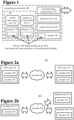
- Figure 1 illustrates a generalized example of a suitable computing system (100) in which several of the described techniques and tools may be implemented.
- the computing system (100) is not intended to suggest any limitation as to scope of use or functionality, as the techniques and tools may be implemented in diverse general-purpose or special-purpose computing systems.
- the computing system (100) includes one or more processing units (110, 115) and memory (120, 125). In Figure 1 , this most basic configuration (130) is included within a dashed line.
- the processing units (110, 115) execute computer-executable instructions.
- a processing unit can be a general-purpose central processing unit (CPU), processor in an application-specific integrated circuit (ASIC) or any other type of processor. In a multi-processing system, multiple processing units execute computer-executable instructions to increase processing power.
- Figure 1 shows a central processing unit (110) as well as a graphics processing unit or co-processing unit (115).
- the tangible memory (120, 125) may be volatile memory (e.g., registers, cache, RAM), non-volatile memory (e.g., ROM, EEPROM, flash memory, etc.), or some combination of the two, accessible by the processing unit(s).
- the memory (120, 125) stores software (180) implementing one or more innovations for reducing latency in video encoding and decoding, in the form of computer-executable instructions suitable for execution by the processing unit(s).
- a computing system may have additional features.
- the computing system (100) includes storage (140), one or more input devices (150), one or more output devices (160), and one or more communication connections (170).
- An interconnection mechanism such as a bus, controller, or network interconnects the components of the computing system (100).
- operating system software provides an operating environment for other software executing in the computing system (100), and coordinates activities of the components of the computing system (100).
- the tangible storage (140) may be removable or non-removable, and includes magnetic disks, magnetic tapes or cassettes, CD-ROMs, DVDs, or any other medium which can be used to store information in a non-transitory way and which can be accessed within the computing system (100).
- the storage (140) stores instructions for the software (180) implementing one or more innovations for latency reduction in video encoding and decoding.
- the input device(s) (150) may be a touch input device such as a keyboard, mouse, pen, or trackball, a voice input device, a scanning device, or another device that provides input to the computing system (100).
- the input device(s) (150) may be a camera, video card, TV tuner card, or similar device that accepts video input in analog or digital form, or a CD-ROM or CD-RW that reads video samples into the computing system (100).
- the output device(s) (160) may be a display, printer, speaker, CD-writer, or another device that provides output from the computing system (100).
- the communication connection(s) (170) enable communication over a communication medium to another computing entity.
- the communication medium conveys information such as computer-executable instructions, audio or video input or output, or other data in a modulated data signal.
- a modulated data signal is a signal that has one or more of its characteristics set or changed in such a manner as to encode information in the signal.
- communication media can use an electrical, optical, RF, or other carrier.
- Computer-readable media are any available tangible media that can be accessed within a computing environment.
- Computer-readable media include memory (120, 125), storage (140), and combinations of any of the above.
- program modules include routines, programs, libraries, objects, classes, components, data structures, etc. that perform particular tasks or implement particular abstract data types.
- the functionality of the program modules may be combined or split between program modules as desired in various embodiments.
- Computer-executable instructions for program modules may be executed within a local or distributed computing system.
- system and “device” are used interchangeably herein. Unless the context clearly indicates otherwise, neither term implies any limitation on a type of computing system or computing device. In general, a computing system or computing device can be local or distributed, and can include any combination of special-purpose hardware and/or general-purpose hardware with software implementing the functionality described herein.
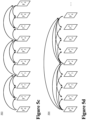
- Figures 2a and 2b show example network environments (201, 202) that include video encoders (220) and video decoders (270).
- the encoders (220) and decoders (270) are connected over a network (250) using an appropriate communication protocol.
- the network (250) can include the Internet or another computer network.
- each real-time communication (“RTC") tool (210) includes both an encoder (220) and a decoder (270) for bidirectional communication.
- a given encoder (220) can produce output compliant with the SMPTE 421M standard, ISO-IEC 14496-10 standard (also known as H.264 or AVC), HEVC standard, another standard, or a proprietary format, with a corresponding decoder (270) accepting encoded data from the encoder (220).
- the bidirectional communication can be part of a video conference, video telephone call, or other two-party communication scenario.
- the network environment (201) in Figure 2a includes two real-time communication tools (210), the network environment (201) can instead include three or more real-time communication tools (210) that participate in multi-party communication.
- a real-time communication tool (210) manages encoding by an encoder (220).
- Figure 3 shows an example encoder system (300) that can be included in the real-time communication tool (210).
- the real-time communication tool (210) uses another encoder system.
- a real-time communication tool (210) also manages decoding by a decoder (270).
- Figure 4 shows an example decoder system (400), which can be included in the real-time communication tool (210).
- the real-time communication tool (210) uses another decoder system.
- an encoding tool (212) includes an encoder (220) that encodes video for delivery to multiple playback tools (214), which include decoders (270).
- the unidirectional communication can be provided for a video surveillance system, web camera monitoring system, remote desktop conferencing presentation or other scenario in which video is encoded and sent from one location to one or more other locations.
- the network environment (202) in Figure 2b includes two playback tools (214)
- the network environment (202) can include more or fewer playback tools (214).
- a playback tool (214) communicates with the encoding tool (212) to determine a stream of video for the playback tool (214) to receive.
- the playback tool (214) receives the stream, buffers the received encoded data for an appropriate period, and begins decoding and playback.
- Figure 3 shows an example encoder system (300) that can be included in the encoding tool (212).
- the encoding tool (212) uses another encoder system.
- the encoding tool (212) can also include server-side controller logic for managing connections with one or more playback tools (214).
- Figure 4 shows an example decoder system (400), which can be included in the playback tool (214).
- the playback tool (214) uses another decoder system.
- a playback tool (214) can also include client-side controller logic for managing connections with the encoding tool (212).
- a syntax element to indicate latency is specific to a particular standard or format.
- encoded data can contain one or more syntax elements that indicate a constraint on latency as part of the syntax of an elementary coded video bitstream defined according to the standard or format, or as defined media metadata relating to the encoded data.
- the real-time communication tool (210), encoding tool (212) and/or playback tool (214) with reduced latency may be codec dependent, in that decisions they make can depend on bitstream syntax for a particular standard or format.
- syntax element(s) that indicate a constraint on latency is outside a particular standard or format.
- syntax element(s) that indicate a constraint on latency can be signaled as part of the syntax of a media transmission stream, media storage file or, more generally, a media system multiplexing protocol or transport protocol.
- syntax element(s) that indicate latency can be negotiated between real-time communication tools (210), encoding tools (212) and/or playback tools (214) according to a media property negotiation protocol.
- the real-time communication tool (210), encoding tool (212) and playback tool (214) with reduced latency may be codec independent, in that they can work with any available video encoder and decoder, assuming a level of control over inter-frame dependencies set during encoding.
- FIG. 3 is a block diagram of an example encoder system (300) in conjunction with which some described embodiments may be implemented.
- the encoder system (300) can be a general-purpose encoding tool capable of operating in any of multiple encoding modes such as a low-latency encoding mode for real-time communication, transcoding mode, and regular encoding mode for media playback from a file or stream, or it can be a special-purpose encoding tool adapted for one such encoding mode.
- the encoder system (300) can be implemented as an operating system module, as part of an application library or as a standalone application. Overall, the encoder system (300) receives a sequence of source video frames (311) from a video source (310) and produces encoded data as output to a channel (390).
- the encoded data output to the channel can include one or more syntax elements that indicate a constraint on latency (e.g., frame reordering latency) to facilitate reduced-latency decoding.
- the video source (310) can be a camera, tuner card, storage media, or other digital video source.
- the video source (310) produces a sequence of video frames at a frame rate of, for example, 30 frames per second.
- frame generally refers to source, coded or reconstructed image data.
- a frame is a progressive video frame.
- an interlaced video frame is de-interlaced prior to encoding.
- two complementary interlaced video fields are encoded as an interlaced video frame or separate fields.
- frame can indicate a single non-paired video field, a complementary pair of video fields, a video object plane that represents a video object at a given time, or a region of interest in a larger image.
- the video object plane or region can be part of a larger image that includes multiple objects or regions of a scene.
- An arriving source frame (311) is stored in a source frame temporary memory storage area (320) that includes multiple frame buffer storage areas (321, 322, ... , 32 n ).
- a frame buffer (321, 322, etc.) holds one source frame in the source frame storage area (320).
- a frame selector (330) periodically selects an individual source frame from the source frame storage area (320).
- the order in which frames are selected by the frame selector (330) for input to the encoder (340) may differ from the order in which the frames are produced by the video source (310), e.g., a frame may be ahead in order, to facilitate temporally backward prediction.
- the encoder system (300) can include a pre-processor (not shown) that performs pre-processing (e.g., filtering) of the selected frame (331) before encoding.
- the encoder (340) encodes the selected frame (331) to produce a coded frame (341) and also produces memory management control signals (342). If the current frame is not the first frame that has been encoded, when performing its encoding process, the encoder (340) may use one or more previously encoded/decoded frames (369) that have been stored in a decoded frame temporary memory storage area (360). Such stored decoded frames (369) are used as reference frames for inter-frame prediction of the content of the current source frame (331). Generally, the encoder (340) includes multiple encoding modules that perform encoding tasks such as motion estimation and compensation, frequency transforms, quantization and entropy coding. The exact operations performed by the encoder (340) can vary depending on compression format.
- the format of the output encoded data can be a Windows Media Video format, VC-1 format, MPEG-x format (e.g., MPEG-1, MPEG-2, or MPEG-4), H.26x format (e.g., H.261, H.262, H.263, H.264), HEVC format or other format.
- the coded frames (341) and memory management control signals (342) are processed by a decoding process emulator (350).
- the decoding process emulator (350) implements some of the functionality of a decoder, for example, decoding tasks to reconstruct reference frames that are used by the encoder (340) in motion estimation and compensation.
- the decoding process emulator (350) uses the memory management control signals (342) to determine whether a given coded frame (341) needs to be reconstructed and stored for use as a reference frame in inter-frame prediction of subsequent frames to be encoded.
- the decoding process emulator (350) models the decoding process that would be conducted by a decoder that receives the coded frame (341) and produces a corresponding decoded frame (351). In doing so, when the encoder (340) has used decoded frame(s) (369) that have been stored in the decoded frame storage area (360), the decoding process emulator (350) also uses the decoded frame(s) (369) from the storage area (360) as part of the decoding process.
- the decoded frame temporary memory storage area (360) includes multiple frame buffer storage areas (361, 362, ..., 36n).
- the decoding process emulator (350) uses the memory management control signals (342) to manage the contents of the storage area (360) in order to identify any frame buffers (361, 362, etc.) with frames that are no longer needed by the encoder (340) for use as reference frames. After modeling the decoding process, the decoding process emulator (350) stores a newly decoded frame (351) in a frame buffer (361, 362, etc.) that has been identified in this manner.
- the coded frames (341) and memory management control signals (342) are also buffered in a temporary coded data area (370).
- the coded data that is aggregated in the coded data area (370) can contain, as part of the syntax of an elementary coded video bitstream, one or more syntax elements that indicate a constraint on latency.
- the coded data that is aggregated in the coded data area (370) can include syntax element(s) that indicate a constraint on latency as part of media metadata relating to the coded video data (e.g., as one or more parameters in one or more supplemental enhancement information (“SEI”) messages or video usability information (“VUI”) messages).
- SEI Supplemental Enhancement Information
- VUI video usability information
- the aggregated data (371) from the temporary coded data area (370) are processed by a channel encoder (380).
- the channel encoder (380) can packetize the aggregated data for transmission as a media stream, in which case the channel encoder (380) can add, as part of the syntax of the media transmission stream, syntax element(s) that indicate a constraint on latency.
- the channel encoder (380) can organize the aggregated data for storage as a file, in which case the channel encoder (380) can add, as part of the syntax of the media storage file, syntax element(s) that indicate a constraint on latency.
- the channel encoder (380) can implement one or more media system multiplexing protocols or transport protocols, in which case the channel encoder (380) can add, as part of the syntax of the protocol(s), syntax element(s) that indicate a constraint on latency.
- the channel encoder (380) provides output to a channel (390), which represents storage, a communications connection, or another channel for the output.
- FIG. 4 is a block diagram of an example decoder system (400) in conjunction with which some described embodiments may be implemented.
- the decoder system (400) can be a general-purpose decoding tool capable of operating in any of multiple decoding modes such as a low-latency decoding mode for real-time communication and regular decoding mode for media playback from a file or stream, or it can be a special-purpose decoding tool adapted for one such decoding mode.
- the decoder system (400) can be implemented as an operating system module, as part of an application library or as a standalone application. Overall, the decoder system (400) receives coded data from a channel (410) and produces reconstructed frames as output for an output destination (490).
- the coded data can include one or more syntax elements that indicate a constraint on latency (e.g., frame reordering latency) to facilitate reduced-latency decoding.
- the decoder system (400) includes a channel (410), which can represent storage, a communications connection, or another channel for coded data as input.
- the channel (410) produces coded data that has been channel coded.
- a channel decoder (420) can process the coded data. For example, the channel decoder (420) de-packetizes data that has been aggregated for transmission as a media stream, in which case the channel decoder (420) can parse, as part of the syntax of the media transmission stream, syntax element(s) that indicate a constraint on latency.
- the channel decoder (420) separates coded video data that has been aggregated for storage as a file, in which case the channel decoder (420) can parse, as part of the syntax of the media storage file, syntax element(s) that indicate a constraint on latency.
- the channel decoder (420) can implement one or more media system demultiplexing protocols or transport protocols, in which case the channel decoder (420) can parse, as part of the syntax of the protocol(s), syntax element(s) that indicate a constraint on latency.
- the coded data (421) that is output from the channel decoder (420) is stored in a temporary coded data area (430) until a sufficient quantity of such data has been received.
- the coded data (421) includes coded frames (431) and memory management control signals (432).
- the coded data (421) in the coded data area (430) can contain, as part of the syntax of an elementary coded video bitstream, one or more syntax elements that indicate a constraint on latency.
- the coded data (421) in the coded data area (430) can include syntax element(s) that indicate a constraint on latency as part of media metadata relating to the encoded video data (e.g., as one or more parameters in one or more SEI messages or VUI messages).
- the coded data area (430) temporarily stores coded data (421) until such coded data (421) is used by the decoder
- coded data for a coded frame (431) and memory management control signals (432) are transferred from the coded data area (430) to the decoder (450).
- new coded data is added to the coded data area (430) and the oldest coded data remaining in the coded data area (430) is transferred to the decoder (450).
- the decoder (450) periodically decodes a coded frame (431) to produce a corresponding decoded frame (451). As appropriate, when performing its decoding process, the decoder (450) may use one or more previously decoded frames (469) as reference frames for inter-frame prediction. The decoder (450) reads such previously decoded frames (469) from a decoded frame temporary memory storage area (460). Generally, the decoder (450) includes multiple decoding modules that perform decoding tasks such as entropy decoding, inverse quantization, inverse frequency transforms and motion compensation. The exact operations performed by the decoder (450) can vary depending on compression format.
- the decoded frame temporary memory storage area (460) includes multiple frame buffer storage areas (461, 462, ..., 46n).
- the decoded frame storage area (460) is an example of a decoded picture buffer.
- the decoder (450) uses the memory management control signals (432) to identify a frame buffer (461, 462, etc.) in which it can store a decoded frame (451).
- the decoder (450) stores the decoded frame (451) in that frame buffer.
- An output sequencer (480) uses the memory management control signals (432) to identify when the next frame to be produced in output order is available in the decoded frame storage area (460). To reduce latency of the encoding-decoding system, the output sequencer (480) uses syntax elements that indicate constraints on latency to expedite identification of frames to be produced in output order. When the next frame
- the order in which frames are output from the decoded frame storage area (460) by the output sequencer (480) may differ from the order in which the frames are decoded by the decoder (450).
- the coded order (also called the decoding order or bitstream order) is the order in which video frames are represented in coded data in a bitstream and, hence, processed during decoding.
- the coded order may differ from the order in which the frames are captured by a camera before encoding and differ from the order in which decoded frames are displayed, stored, or otherwise output after decoding (output order or display order).
- Reordering of frames relative to the output order has benefits (primarily in terms of compression capability), but it increases the end-to-end latency of encoding and decoding processes.
- Techniques and tools described herein reduce latency due to reordering of video frames and, by providing information about constraints on the reordering latency to decoder systems, also facilitate latency reduction by the decoder systems. Such latency reduction is useful for many purposes. For example, it can be used to reduce the time lag that occurs in interactive video communication using a video conferencing system, so that the conversation flow and interactivity of communication between remote participants will be more rapid and natural.
- a decoder can use two approaches to determine when a decoded frame is ready to be output.
- a decoder can use timing information in the form of decoding timestamps and output timestamps (e.g., as signaled in picture timing SEI messages).
- the decoder can use buffering capacity limits signaled with various syntax elements to determine when a decoded frame is ready to be output.
- Timing information can be associated with each decoded frame.
- the decoder can use timing information to determine when a decoded frame can be output. In practice, however, such timing information may be unavailable to a decoder. Moreover, even when timing information is available, some decoders do not actually use this information (e.g., because a decoder has been designed to work regardless of whether timing information is available).
- Buffering capacity limits are indicated with several syntax elements according to the H.264 standard (and draft versions of the HEVC standard), including the syntax element max_dec_frame_buffering, the syntax element num_reorder_frames, relative ordering information (termed "picture order count” information) and other memory management control information signaled in the bitstream.
- the syntax element max_dec_frame_buffering (or the derived variable specified as MaxDpbFrames) specifies the required size of a decoded picture buffer (“DPB”) in units of frame buffers.
- the syntax element max_dec_frame_buffering expresses a top-level memory capacity used for a coded video sequence, so as to enable a decoder to output pictures in the correct order.
- the syntax element num_reorder_frames indicates the maximum number of frames (or complementary field pairs, or non-paired fields) that can precede any frame (or complementary field pair, or non-paired field) in coded order and follow it in output order. In other words, num_reorder_frames specifies a constraint on the memory capacity necessary for picture reordering.
- the syntax element max_num_ref_frames specifies the maximum number of short-term and long-term reference frames (or complementary reference field pairs, or non-paired reference fields) that may be used by the decoding process for inter prediction of any picture in the sequence.
- the syntax element max_num_ref_frames also determines the size of the sliding window for decoded reference picture marking. Like num_reorder_frames, max_num_ref_frames specifies a constraint on required memory capacity.
- a decoder uses the max_dec_frame_buffering (or MaxDpbFrames) and num_reorder_frames syntax elements to determine when a buffering capacity limit has been exceeded. This happens, for example, when a new decoded frame needs to be stored in the DPB, but there is no available space remaining in the DPB. In this situation, the decoder uses picture order count information to identify, among the pictures that have been decoded, which is the earliest in output order. The picture that is earliest in output order is then output. Such processing is sometimes called “bumping" because a picture is "bumped out" of the DPB by the arrival of a new picture that needs to be stored.
- max_dec_frame_buffering or MaxDpbFrames
- num_reorder_frames syntax elements suffices for determining memory capacity needed in a decoder. When used to control the "bumping" process for picture output, however, use of such information can introduce latency unnecessarily.
- the max_dec_frame_buffering and num_reorder_frames syntax elements do not establish a limit on the amount of reordering that can be applied to any particular picture and, hence, do not establish a limit on end-to-end latency. Regardless of the values of these syntax elements, a particular picture can be kept in the DPB for an arbitrarily long time before it is output, which corresponds to substantial latency added by pre-buffering of the source pictures by an encoder.
- An encoding tool, real-time communication tool, or other tool sets a limit on the extent of reordering that can be applied to any frame in a coded video sequence.
- the limit is expressed as a number of frames that can precede any given frame in a coded video sequence in output order and follow it in coded order.
- the limit constrains the reordering latency allowed for any particular frame in the sequence. Stated differently, the limit constrains the temporal extent of reordering (in terms of frames) between coded order and output order that can be applied to any particular frame. Limiting the extent of reordering helps reduce end-to-end delay. Also, establishing such a limit can be useful in real-time system negotiation protocols or application specifications for use scenarios in which reducing latency is important.
- One or more syntax elements indicate the constraint on frame reordering latency. Signaling a constraint on frame reordering latency facilitates system-level negotiation for interactive real-time communication or other use scenarios. It provides a way to directly express constraints on frame reordering latency and characterize properties of a media stream or session.
- a video decoder can use an indicated constraint on frame reordering latency to enable reduced-latency output of decoded video frames.
- signaling a constraint on frame reordering latency enables a decoder to more simply and quickly identify frames in a DPB that are ready to be output.
- a decoder can determine the latency status of a frame in the DPB by computing the difference between coded order for the frame and output order. By comparing the latency status of the frame to the constraint on frame reordering latency, a decoder can determine when the constraint on frame reordering latency has been reached. The decoder can immediately output any frame that has reached this limit.
- the decoder can rapidly (and earlier) determine when a decoded frame can be output. The more rapidly (and earlier) the decoder can identify when frames can be output, the more rapidly (and earlier) the decoder can output video to a display or subsequent processing stages.
- a decoder can begin output of frames from the decoded frame storage area before the decoded frame storage area is full, but still provide conformant decoding (i.e., decoding all frames such that the frames are bit-exact matches of frames decoded using another, conventional scheme). This significantly reduces delay when the delay (in frames) indicated by the latency syntax element is much lower than the size (in frames) of the decoded frame storage area.
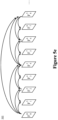
- Figures 5a-5e illustrate series (501-505) of frames having different inter-frame dependencies.
- the series are characterized by different values for (1) the constraint on the memory capacity necessary for picture reordering (that is, the number of frame buffers used to store reference frames for purposes of reordering, e.g., as indicated with a syntax element num_reorder_frames, and (2) a constraint on frame reordering latency, e.g., as specified by a variable MaxLatencyFrames.
- the constraint on the memory capacity necessary for picture reordering that is, the number of frame buffers used to store reference frames for purposes of reordering, e.g., as indicated with a syntax element num_reorder_frames
- a constraint on frame reordering latency e.g., as specified by a variable MaxLatencyFrames.
- the subscript j indicates position of the frame in output order
- the superscript k indicates position of the frame in coded order
- the frames are shown in output order - the output order subscript value increases from left to right.
- Arrows illustrate inter-frame dependencies for motion compensation, according to which preceding frames in coded order are used for prediction of subsequent frames in coded order.
- Figures 5a-5e show inter-frame dependencies at the frame level (and not at the level of macroblocks, blocks, etc. at which reference frames can change), and Figures 5a-5e show at most two frames as reference frames for a given frame.
- different macroblocks, blocks, etc. in a given frame can use different reference frames, and more than two reference frames can be used for the given frame.
- the series (501) includes nine frames.
- the last frame F 8 1 in output order uses the first frame F 0 0 as a reference frame.
- the other frames in the series (501) use both the last frame F 8 1 and first frame F 0 0 as reference frames. This means the frame F 0 0 is decoded first, followed by the frame F 8 1 , followed by the frame F 1 2 , etc.
- the value of num_reorder_frames is 1. At any point in the processing of the decoder system, among the frames shown in Figure 5a , there is only one frame (F 8 1 ) stored in the decoded frame storage area for reordering purposes.
- the first frame F 0 0 is also used as a reference frame and is stored, but is not stored for reordering purposes. Because the output order for the first frame F 0 0 is less than the output order of the intermediate frames, the first frame F 0 0 is not counted for purposes of num_reorder_frames.) Despite the low value for num_reorder_frames, the series (501) has a relatively high latency - the value of MaxLatencyFrames is 7. After encoding the first frame F 0 0 , the encoder waits until it has buffered eight more source frames before encoding the next frame F 1 2 in output order, because the next frame F 1 2 depends on the last frame F 8 1 in the series (501). The value of MaxLatencyFrames is effectively the maximum allowed difference between the subscript value and the superscript value for any particular coded frame.
- the series (502) includes nine frames, as in the series (501) of Figure 5a , but the inter-frame dependencies are different. Temporal reordering of frames occurs over short extents. As a result, the series (502) has a much lower latency - the value of MaxLatencyFrames is 1. The value of num_reorder_frames is still 1.
- the series (503) includes ten frames.
- the longest inter-frame dependency is shorter (in temporal extent) than the longest inter-frame dependency in Figure 5a , but longer than the longest inter-frame dependency in Figure 5b .
- the series (503) has the same low value of 1 for num_reorder_frames, and it has a relatively low value of 2 for MaxLatencyFrames.
- the series (503) therefore allows a lower end-to-end latency than the series (501) of Figure 5a , although not as low as the allowable latency of the series (502) of Figure 5b .
- the series (504) includes frames organized in a temporal hierarchy with three temporal layers according to inter-frame dependencies.
- the lowest temporal resolution layer includes the first frame F 0 0 and last frame F 8 1 .
- the next temporal resolution layer adds the frame F 4 2 , which depends on the first frame F 0 0 and last frame F 8 1 .
- the highest temporal resolution layer adds the remaining frames.
- the series (504) shown in Figure 5d has a relatively low value of 2 for num_reorder_frames but a relatively high value of 7 for MaxLatencyFrames, at least for the highest temporal resolution layer, due to the difference between coded order and output order for the last frame F 8 1 .
- syntax elements can indicate constraints on frame reordering latency for different layers in a temporal hierarchy.
- the series (505) includes frames organized in a temporal hierarchy with three temporal layers according to different inter-frame dependencies.
- the lowest temporal resolution layer includes the first frame F 0 0 , middle frame F 4 1 and last frame F 8 5 .
- the next temporal resolution layer adds the frames F 2 2 (which depends on the first frame F 0 0 and middle frame F 4 1 ) and F 6 6 (which depends on the middle frame F 4 1 and last frame F 8 5 ).
- the highest temporal resolution layer adds the remaining frames.
- the series (505) of Figure 5e still has a relatively low value of 2 for num_reorder_frames but has a lower value of 3 for MaxLatencyFrames, at least for the highest temporal resolution layer, due to the difference between coded order and output order for the middle frame F 4 1 and last frame F 8 5 . If only the intermediate temporal resolution layer or lowest temporal resolution layer is decoded, the constraint on frame reordering delay can be reduced to 1 (for the intermediate layer) or 0 (for the lowest layer).
- a decoder can identify certain frames as being ready for immediate output upon receipt of the preceding frame in output order. For a given frame, the frame's output order value minus the frame's coded order value may be equal to the value of MaxLatencyFrames. In this case, the given frame is ready for output as soon as the frame preceding it in output order is received. (In contrast, such frames could not be identified as ready for output using num_reorder_frames alone until additional frames were received or the end of the sequence was reached.) In particular, a decoder can use the value of MaxLatencyFrames to enable earlier output of the following frames:
- Syntax elements that indicate a constraint on frame reordering latency can be signaled in various ways, depending on implementation.
- the syntax elements can be signaled as part of a sequence parameter set ("SPS"), picture parameter set (“PPS”), or other element of the bitstream, signaled as part of SEI messages, VUI messages or other metadata, or signaled in some other way.
- a syntax element indicating a constraint value can be encoded using unsigned exponential-Golomb coding, some other form of entropy coding, or fixed length coding, then signaled.
- a decoder performs corresponding decoding after receiving the syntax element.
- a flag max_latency_limitation flag is signaled. If the flag has a first binary value (e.g., 0), no constraint on frame reordering latency is imposed. In this case, the value of a max_latency_frames syntax element is not signaled or is ignored. Otherwise (the flag having a second binary value such as 1), the value of a max_latency_frames syntax element is signaled to indicate the constraint on frame reordering latency. For example, in this case, the value signaled for the max_latency_frames syntax element can be any non-negative integer value.
- a syntax element max_latency_frames_plus1 is signaled to indicate the constraint on frame reordering latency. If max_latency_frames_plus1 has a first value (e.g., 0), no constraint on frame reordering latency is imposed. For other values (e.g., non-zero values), the value of the constraint on frame reordering latency is set to max_latency_frames_plusl - 1. For example, the value of max_latency_frames_plus1 is in the range of 0 to 2 32 - 2, inclusive.
- a syntax element max_latency_frames is signaled to indicate the constraint on frame reordering latency. If max_latency_frames has a first value (e.g., a maximum value), no constraint on frame reordering latency is imposed. For other values (e.g., values less than the maximum value), the value of the constraint on frame reordering latency is set to max_latency_frames.
- the constraint on frame reordering latency is indicated relative to a maximum size of frame memory.
- the latency constraint is signaled as an increase relative to the num_reorder_frames syntax element.
- the constraint on frame reordering latency (in terms of frames) is greater than or equal to num_reorder_frames.
- the difference between the latency constraint and num_reorder_frames is encoded (e.g., using unsigned exponential-Golomb coding, some other form of entropy coding) then signaled.
- a syntax element max_latency_increase_plus1 is signaled to indicate the constraint on frame reordering latency.
- max_latency_increase_plus1 has a first value (e.g., 0), no constraint on frame reordering latency is imposed.
- the value of the constraint on frame reordering latency is set to num_reorder_frames + max_latency_increase_plus1 - 1.
- the value of max_latency_increase_plus1 is in the range of 0 to 2 32 - 2, inclusive.
- one or more syntax elements that indicate a constraint on frame reordering latency are signaled in some other way.
- the constraint on latency is a constraint on frame reordering latency that is expressed in terms of a count of frames. More generally, the constraint on latency is a constraint on delay that can be expressed in terms of a frame count or expressed in terms of seconds, milliseconds or another time measure. For example, the constraint on latency can be expressed as an absolute time measure such as 1 second or 0.5 seconds. An encoder can convert such a time measure to a count of frames (considering the frame rate of video), then encode the video such that inter-frame dependencies between multiple frames of a video sequence are consistent with the frame count.
- the encoder can use the time measure to limit the extent to which delay is used to smooth out short-term fluctuations in bit rate of encoded video, encoding complexity, network bandwidth, etc.
- a decoder can use the time measure to determine when a frame can be output from a decoded picture buffer.
- the constraint on latency can be negotiated between a transmitter side and receiver side so as to trade-off responsiveness (lack of delay) with ability to smooth out short-term fluctuations in bit rate of encoded video, ability to smooth out short-term fluctuations in encoding complexity, ability to smooth out short-term fluctuations in network bandwidth and/or another factor that benefits from increased delay.
- latitude of delay ability to smooth out short-term fluctuations in bit rate of encoded video
- encoding complexity ability to smooth out short-term fluctuations in encoding complexity
- ability to smooth out short-term fluctuations in network bandwidth and/or another factor that benefits from increased delay.
- the constraint can then be applied during encoding and decoding, considering the frame rate of the video. Or, the constraint can be applied during encoding and decoding regardless of the frame rate of the video.
- Figure 6 shows an example technique (600) for setting and outputting syntax elements that facilitate reduced-latency decoding.
- a real-time communication tool or encoding tool described with reference to Figure 2a and 2b performs the technique (600).
- another tool performs the technique (600).
- the tool sets (610) one or more syntax elements that indicate a constraint on latency (e.g., frame reordering latency, latency in terms of a time measure) consistent with inter-frame dependencies between multiple frames of a video sequence.
- a constraint on latency e.g., frame reordering latency, latency in terms of a time measure
- the same tool can also receive the frames, encode the frames to produce encoded data (using the inter-frame dependencies that are consistent with the constraint on frame reordering latency), and output the encoded data for storage or transmission.
- a constraint on frame reordering latency is a reordering latency allowed for any frame in the video sequence.
- the constraint can be expressed in various ways, however, and have various other meanings.
- the constraint can be expressed in terms of a maximum count of frames that can precede a given frame in output order but follow the given frame in coded order.
- the constraint can be expressed as a maximum difference between coded order and output order for any frame in the video sequence.
- the constraint can be expressed as the reordering latency associated with a given, specific frame in the video sequence.
- the constraint can be expressed as the reordering latency associated with the group of frames in the video sequence.
- the constraint can be expressed in some other way.
- the tool outputs (620) the syntax element(s). This facilitates determination of when reconstructed frames are ready for output in terms of output order of the multiple frames.
- the syntax element(s) can be output as part of a sequence parameter set or picture parameter set in an elementary coded video bitstream, as part of syntax for a media storage file or media transmission stream that also includes encoded data for the frames, as part of a media properties negotiation protocol (e.g., during exchange of stream or session parameter values in system-level negotiation), as part of media system information multiplexed with encoded data for the frames, or as part of media metadata relating to encoded data for the frames (e.g., in SEI messages or VUI messages).
- Different syntax elements can be output to indicate memory capacity requirements.
- a buffer size syntax element (such as max_dec_frame_buffering) can indicate maximum size of a DPB
- a frame memory syntax element (such as num_reorder_frames) can indicate maximum size of frame memory for reordering.
- the value of the constraint on latency can be represented in various ways, as described in section V.C.
- the tool outputs a flag that indicates presence or absence of the syntax element(s). If the flag indicates the syntax element(s) are absent, then the constraint on latency is undefined or has a default value. Otherwise, the syntax element(s) follow and indicate the constraint on latency. Or, one value of the syntax element(s) indicates the constraint on latency is undefined or has a default value, and other possible values of the syntax element(s) indicate an integer count for the constraint on latency.
- a given value of the syntax element(s) indicates an integer count for the constraint on frame reordering latency relative to a maximum size of frame memory for reordering, which is indicated with a different syntax element such as num_reorder_frames.
- the constraint on latency is represented in some other way.
- the frames of the video sequence are organized according to a temporal hierarchy.
- different syntax elements can indicate different constraints on frame reordering latencies for different temporal layers of the temporal hierarchy.
- Figure 7 shows an example technique (700) for receiving and using syntax elements that facilitate reduced-latency decoding.
- a real-time communication tool or playback tool described with reference to Figure 2a and 2b performs the technique (700).
- another tool performs the technique (700).
- the tool receives and parses (710) one or more syntax elements that indicate a constraint on latency (e.g., frame reordering latency, latency in terms of a time measure). For example, the parsing includes reading the one or more syntax elements that indicate the constraint on latency from the bitstream.
- the tool also receives (720) encoded data for multiple frames of a video sequence. The tool can parse the syntax element(s) and, based upon syntax element(s), determine the constraint on latency.
- a constraint on frame reordering latency is a reordering latency allowed for any frame in the video sequence.
- the constraint can be expressed in various ways, however, and have various other meanings, as described in the previous section.
- the syntax element(s) can be signaled as part of a sequence parameter set or picture parameter set in an elementary coded video bitstream, as part of syntax for a media storage file or media transmission stream, as part of a media properties negotiation protocol, as part of media system information multiplexed with the encoded data, or as part of media metadata relating to the encoded data.
- the tool can receive and parse different syntax elements which indicate memory capacity requirements, for example, a buffer size syntax element such as max_dec_frame_buffering and a frame memory syntax element such as num_reorder_frames.
- the value of the constraint on latency can be represented in various ways, as described in section V.C.
- the tool receives a flag that indicates presence or absence of the syntax element(s). If the flag indicates the syntax element(s) are absent, then the constraint on latency is undefined or has a default value. Otherwise, the syntax element(s) follow and indicate the constraint on latency. Or, one value of the syntax element(s) indicates the constraint on latency is undefined or has a default value, and other possible values of the syntax element(s) indicate an integer count for the constraint on latency.
- the constraint on latency is a constraint on frame reordering latency
- a given value of the syntax element(s) indicates an integer count for the constraint on frame reordering latency relative to a maximum size of frame memory for reordering, which is indicated with a different syntax element such as num_reorder_frames.
- the constraint on latency is signaled in some other way.
- the tool decodes (730) at least some of the encoded data to reconstruct one of the frames.
- the tool outputs (740) the reconstructed frame. In doing so, the tool can use the constraint on latency to determine when the reconstructed frame is ready for output, e.g., in terms of output order of the frames of the video sequence.
- the frames of the video sequence are organized according to a temporal hierarchy.
- different syntax elements can indicate different constraints on frame reordering latencies for different temporal layers of the temporal hierarchy.
- the tool can select one of the different constraints on frame reordering latencies depending on temporal resolution of the output.
Landscapes
- Engineering & Computer Science (AREA)
- Multimedia (AREA)
- Signal Processing (AREA)
- Compression Or Coding Systems Of Tv Signals (AREA)
Priority Applications (4)
| Application Number | Priority Date | Filing Date | Title |
|---|---|---|---|
| EP23190880.7A EP4246968A3 (en) | 2011-06-30 | 2011-10-11 | Reducing latency in video encoding and decoding |
| RS20230857A RS64742B1 (sr) | 2011-06-30 | 2011-10-11 | Smanjenje kašnjenja kod video kodiranja i dekodiranja |
| EP23190874.0A EP4246967A3 (en) | 2011-06-30 | 2011-10-11 | Reducing latency in video encoding and decoding |
| HRP20231180TT HRP20231180T1 (hr) | 2011-06-30 | 2011-10-11 | Smanjenje latencije u kodiranju i dekodiranju videozapisa |
Applications Claiming Priority (4)
| Application Number | Priority Date | Filing Date | Title |
|---|---|---|---|
| US201161571553P | 2011-06-30 | 2011-06-30 | |
| EP11868856.3A EP2727341B1 (en) | 2011-06-30 | 2011-10-11 | Reducing latency in video encoding and decoding |
| PCT/US2011/055835 WO2013002818A1 (en) | 2011-06-30 | 2011-10-11 | Reducing latency in video encoding and decoding |
| US13/270,969 US8837600B2 (en) | 2011-06-30 | 2011-10-11 | Reducing latency in video encoding and decoding |
Related Parent Applications (1)
| Application Number | Title | Priority Date | Filing Date |
|---|---|---|---|
| EP11868856.3A Division EP2727341B1 (en) | 2011-06-30 | 2011-10-11 | Reducing latency in video encoding and decoding |
Related Child Applications (2)
| Application Number | Title | Priority Date | Filing Date |
|---|---|---|---|
| EP23190874.0A Division EP4246967A3 (en) | 2011-06-30 | 2011-10-11 | Reducing latency in video encoding and decoding |
| EP23190880.7A Division EP4246968A3 (en) | 2011-06-30 | 2011-10-11 | Reducing latency in video encoding and decoding |
Publications (2)
| Publication Number | Publication Date |
|---|---|
| EP3691268A1 EP3691268A1 (en) | 2020-08-05 |
| EP3691268B1 true EP3691268B1 (en) | 2023-08-30 |
Family
ID=47390681
Family Applications (4)
| Application Number | Title | Priority Date | Filing Date |
|---|---|---|---|
| EP23190880.7A Pending EP4246968A3 (en) | 2011-06-30 | 2011-10-11 | Reducing latency in video encoding and decoding |
| EP20162441.8A Active EP3691268B1 (en) | 2011-06-30 | 2011-10-11 | Reducing latency in video encoding and decoding |
| EP23190874.0A Pending EP4246967A3 (en) | 2011-06-30 | 2011-10-11 | Reducing latency in video encoding and decoding |
| EP11868856.3A Active EP2727341B1 (en) | 2011-06-30 | 2011-10-11 | Reducing latency in video encoding and decoding |
Family Applications Before (1)
| Application Number | Title | Priority Date | Filing Date |
|---|---|---|---|
| EP23190880.7A Pending EP4246968A3 (en) | 2011-06-30 | 2011-10-11 | Reducing latency in video encoding and decoding |
Family Applications After (2)
| Application Number | Title | Priority Date | Filing Date |
|---|---|---|---|
| EP23190874.0A Pending EP4246967A3 (en) | 2011-06-30 | 2011-10-11 | Reducing latency in video encoding and decoding |
| EP11868856.3A Active EP2727341B1 (en) | 2011-06-30 | 2011-10-11 | Reducing latency in video encoding and decoding |
Country Status (28)
| Country | Link |
|---|---|
| US (18) | US8837600B2 (OSRAM) |
| EP (4) | EP4246968A3 (OSRAM) |
| JP (1) | JP6059219B2 (OSRAM) |
| KR (1) | KR101944565B1 (OSRAM) |
| CN (2) | CN103621085B (OSRAM) |
| AU (1) | AU2011371809B2 (OSRAM) |
| BR (1) | BR112013033552B1 (OSRAM) |
| CA (1) | CA2840427C (OSRAM) |
| CL (1) | CL2013003736A1 (OSRAM) |
| CO (1) | CO6862115A2 (OSRAM) |
| DK (1) | DK3691268T3 (OSRAM) |
| ES (1) | ES2958967T3 (OSRAM) |
| HR (1) | HRP20231180T1 (OSRAM) |
| HU (1) | HUE063498T2 (OSRAM) |
| IL (2) | IL230189A (OSRAM) |
| LT (1) | LT3691268T (OSRAM) |
| MX (1) | MX2013015154A (OSRAM) |
| MY (2) | MY205545A (OSRAM) |
| NZ (1) | NZ619406A (OSRAM) |
| PH (1) | PH12013502659A1 (OSRAM) |
| PL (1) | PL3691268T3 (OSRAM) |
| PT (1) | PT3691268T (OSRAM) |
| RS (1) | RS64742B1 (OSRAM) |
| RU (1) | RU2587467C2 (OSRAM) |
| SG (1) | SG10201408609SA (OSRAM) |
| TW (3) | TWI606722B (OSRAM) |
| WO (1) | WO2013002818A1 (OSRAM) |
| ZA (1) | ZA201308553B (OSRAM) |
Families Citing this family (61)
| Publication number | Priority date | Publication date | Assignee | Title |
|---|---|---|---|---|
| LT3691268T (lt) | 2011-06-30 | 2023-10-10 | Microsoft Technology Licensing, Llc | Delsos mažinimas vaizdo kodavimo ir dekodavimo metu |
| KR20130058584A (ko) * | 2011-11-25 | 2013-06-04 | 삼성전자주식회사 | 복호화기의 버퍼 관리를 위한 영상 부호화 방법 및 장치, 그 영상 복호화 방법 및 장치 |
| CN107257490B (zh) | 2012-01-27 | 2019-12-17 | 太阳专利托管公司 | 图像编码方法及图像编码装置 |
| FR2994785A1 (fr) * | 2012-08-23 | 2014-02-28 | France Telecom | Procede de traitement d'un flux multimedia, terminal de communication, serveur et produit programme d'ordinateur correspondant. |
| US9161039B2 (en) | 2012-09-24 | 2015-10-13 | Qualcomm Incorporated | Bitstream properties in video coding |
| AP3943A (en) * | 2012-09-28 | 2016-12-16 | Ericsson Telefon Ab L M | Decoding and encoding of pictures of a video sequence |
| US9374585B2 (en) | 2012-12-19 | 2016-06-21 | Qualcomm Incorporated | Low-delay buffering model in video coding |
| JP5811106B2 (ja) * | 2013-01-11 | 2015-11-11 | セイコーエプソン株式会社 | 映像処理装置、表示装置および映像処理方法 |
| US20140301477A1 (en) * | 2013-04-07 | 2014-10-09 | Sharp Laboratories Of America, Inc. | Signaling dpb parameters in vps extension and dpb operation |
| EP4468707A1 (en) * | 2013-06-05 | 2024-11-27 | Sun Patent Trust | Image encoding method, image decoding method, image encoding apparatus, and image decoding apparatus |
| JP6270808B2 (ja) * | 2013-06-27 | 2018-01-31 | パナソニック インテレクチュアル プロパティ コーポレーション オブ アメリカPanasonic Intellectual Property Corporation of America | 複数の光源を有するモーションセンサ装置 |
| WO2015001770A1 (ja) * | 2013-07-01 | 2015-01-08 | パナソニック インテレクチュアル プロパティ コーポレーション オブ アメリカ | 複数の光源を有するモーションセンサ装置 |
| WO2015008479A1 (en) * | 2013-07-14 | 2015-01-22 | Sharp Kabushiki Kaisha | Signaling indications and constraints |
| US9674257B2 (en) * | 2013-12-31 | 2017-06-06 | Echostar Technologies L.L.C. | Placeshifting live encoded video faster than real time |
| JP5866499B2 (ja) * | 2014-02-24 | 2016-02-17 | パナソニックIpマネジメント株式会社 | 監視カメラシステム及び監視カメラシステムの制御方法 |
| US10419703B2 (en) * | 2014-06-20 | 2019-09-17 | Qualcomm Incorporated | Automatic multiple depth cameras synchronization using time sharing |
| DE102014214750B3 (de) * | 2014-07-28 | 2015-06-11 | Reimar Lenz | Bildaufnahmesystem mit schnell vibrierendem Global-Shutter-CMOS-Sensor |
| TWI500904B (zh) * | 2014-09-18 | 2015-09-21 | Vivotek Inc | 立體攝影機及用來測量立體攝影機與基準面之距離的自動測距方法 |
| US10283091B2 (en) * | 2014-10-13 | 2019-05-07 | Microsoft Technology Licensing, Llc | Buffer optimization |
| US10075692B2 (en) * | 2015-01-28 | 2018-09-11 | Hfi Innovation Inc. | Method of simple intra mode for video coding |
| US10638140B2 (en) | 2015-05-29 | 2020-04-28 | Qualcomm Incorporated | Slice level intra block copy and other video coding improvements |
| US10003813B2 (en) * | 2015-06-25 | 2018-06-19 | Samsung Electronics Co., Ltd. | Method and system for decoding by enabling optimal picture buffer management |
| CN106358042B (zh) | 2015-07-17 | 2020-10-09 | 恩智浦美国有限公司 | 使用视频图像的帧间预测的并行解码器 |
| US11051026B2 (en) * | 2015-08-31 | 2021-06-29 | Intel Corporation | Method and system of frame re-ordering for video coding |
| US10962780B2 (en) * | 2015-10-26 | 2021-03-30 | Microsoft Technology Licensing, Llc | Remote rendering for virtual images |
| TWI632814B (zh) | 2016-11-11 | 2018-08-11 | 財團法人工業技術研究院 | 視訊畫幀產生方法及其系統 |
| FR3058858A1 (fr) * | 2016-11-15 | 2018-05-18 | Orange | Procede et dispositif de codage et de decodage d'une sequence multi-vues |
| KR102342051B1 (ko) | 2017-08-08 | 2021-12-22 | 삼성전자주식회사 | 영상 처리 장치, 영상 처리 방법 및 영상 디스플레이 시스템 |
| US10412383B2 (en) | 2017-08-15 | 2019-09-10 | Google Llc | Compressing groups of video frames using reversed ordering |
| US10748844B2 (en) * | 2017-12-30 | 2020-08-18 | Intel Corporation | Stress isolation for silicon photonic applications |
| CN108833932B (zh) * | 2018-07-19 | 2021-01-05 | 湖南君瀚信息技术有限公司 | 一种实现高清视频超低延迟编解码及传输的方法及系统 |
| DK3797518T3 (da) * | 2018-08-21 | 2025-01-02 | Adeia Guides Inc | Systemer og fremgangsmåder til adaptiv realtidsbitrate-omkodning og transmission af omkodede medier |
| US12238353B2 (en) | 2018-10-03 | 2025-02-25 | Qualcomm Incorporated | Service description for streaming media data |
| WO2020094038A1 (en) * | 2018-11-07 | 2020-05-14 | Mediatek Inc. | Method and apparatus of encoding or decoding video blocks by current picture referencing coding |
| US10911791B2 (en) * | 2019-01-09 | 2021-02-02 | Netflix, Inc. | Optimizing encoding operations when generating a buffer-constrained version of a media title |
| KR102662448B1 (ko) | 2019-02-02 | 2024-05-02 | 베이징 바이트댄스 네트워크 테크놀로지 컴퍼니, 리미티드 | 비디오 코딩에서 인트라 블록 복사를 위한 버퍼내 데이터 저장 |
| WO2020156541A1 (en) | 2019-02-02 | 2020-08-06 | Beijing Bytedance Network Technology Co., Ltd. | Data storage in buffers for intra block copy in video coding |
| US10992960B2 (en) | 2019-02-06 | 2021-04-27 | Jared Michael Cohn | Accelerated video exportation to multiple destinations |
| CN117395439A (zh) * | 2019-03-01 | 2024-01-12 | 北京字节跳动网络技术有限公司 | 用于视频编解码中的帧内块复制的基于方向的预测 |
| WO2020177660A1 (en) | 2019-03-01 | 2020-09-10 | Beijing Bytedance Network Technology Co., Ltd. | Block vector representation for intra block copy in video coding |
| KR20210125506A (ko) | 2019-03-04 | 2021-10-18 | 베이징 바이트댄스 네트워크 테크놀로지 컴퍼니, 리미티드 | 비디오 코딩에서 인트라 블록 복사를 위한 버퍼 관리 |
| EP3709272A1 (en) * | 2019-03-15 | 2020-09-16 | InterDigital VC Holdings, Inc. | Processing a point cloud |
| MX2022000102A (es) | 2019-07-06 | 2022-02-03 | Beijing Bytedance Network Tech Co Ltd | Bufer de prediccion virtual para la copia intra-bloque en codificacion de video. |
| CN117395398A (zh) | 2019-07-10 | 2024-01-12 | 北京字节跳动网络技术有限公司 | 用于视频编解码中的帧内块复制的样点标识 |
| CN117579816A (zh) | 2019-07-11 | 2024-02-20 | 北京字节跳动网络技术有限公司 | 用于视频编解码中的帧内块复制的比特流一致性约束 |
| CN114424573B (zh) | 2019-09-19 | 2024-03-26 | 北京字节跳动网络技术有限公司 | 视频编解码中的参考样点位置推导 |
| CN114503574B (zh) * | 2019-09-19 | 2025-01-10 | 北京字节跳动网络技术有限公司 | 视频编解码中的缩放窗口 |
| WO2021072131A1 (en) * | 2019-10-09 | 2021-04-15 | Sony Corporation | Synchronization of decoded frames before point cloud reconstruction |
| EP4029274A4 (en) | 2019-10-13 | 2022-11-30 | Beijing Bytedance Network Technology Co., Ltd. | INTERPLAY BETWEEN REFERENCE IMAGE CAPTURE AND VIDEO ENCODING TOOLS |
| US11064194B2 (en) | 2019-10-31 | 2021-07-13 | Western Digital Technologies, Inc. | Encoding digital videos using controllers of data storage devices |
| CN113497932B (zh) * | 2020-04-07 | 2022-10-18 | 上海交通大学 | 测量视频传输时延的方法、系统及介质 |
| WO2021243044A1 (en) * | 2020-05-27 | 2021-12-02 | Let's Jam, Llc | Methods and systems for synchronizing multimedia |
| WO2021251700A1 (ko) * | 2020-06-09 | 2021-12-16 | 엘지전자 주식회사 | Dpb 동작 기반 영상 또는 비디오 코딩 |
| CN112351285B (zh) * | 2020-11-04 | 2024-04-05 | 北京金山云网络技术有限公司 | 视频编码、解码方法和装置、电子设备和存储介质 |
| CN112468875B (zh) * | 2020-11-30 | 2022-03-29 | 展讯通信(天津)有限公司 | 视频解码帧的显示输出控制方法及装置、存储介质、终端 |
| US11620725B2 (en) * | 2021-02-18 | 2023-04-04 | Qualcomm Incorporated | Low latency frame delivery |
| KR102897441B1 (ko) | 2021-04-19 | 2025-12-09 | 삼성전자주식회사 | 서버 및 그 제어 방법 |
| KR20240110005A (ko) * | 2021-11-01 | 2024-07-12 | 엘지전자 주식회사 | 피쳐 부호화/복호화 방법, 장치 및 비트스트림을 저장한 기록 매체 |
| US11425423B1 (en) | 2022-03-10 | 2022-08-23 | Yendo Hu | Memory storage for motion estimation and visual artifact redcution |
| EP4254900B1 (en) * | 2022-03-28 | 2024-07-24 | Deutsche Telekom AG | Multipath receiver and processing of 3gpp atsss on a multipath receiver |
| US20240127484A1 (en) * | 2022-10-14 | 2024-04-18 | Rovi Guides, Inc. | Optimized light field representation for compression |
Family Cites Families (114)
| Publication number | Priority date | Publication date | Assignee | Title |
|---|---|---|---|---|
| US4309754A (en) | 1979-07-30 | 1982-01-05 | International Business Machines Corp. | Data interface mechanism for interfacing bit-parallel data buses of different bit width |
| US4642756A (en) | 1985-03-15 | 1987-02-10 | S & H Computer Systems, Inc. | Method and apparatus for scheduling the execution of multiple processing tasks in a computer system |
| DE69227664T2 (de) | 1991-10-15 | 1999-04-22 | Hewlett Packard Co | Hardwarekonfiguriertes Betriebssystemkern für einen Multitaskprozessor |
| US6002801A (en) | 1995-04-18 | 1999-12-14 | Advanced Micro Devices, Inc. | Method and apparatus for improved video decompression by selection of IDCT method based on image characteristics |
| DE19530483A1 (de) | 1995-08-18 | 1997-02-20 | Siemens Ag | Einrichtung und Verfahren zur Echtzeit-Verarbeitung einer Mehrzahl von Tasks |
| US5861920A (en) * | 1996-11-08 | 1999-01-19 | Hughes Electronics Corporation | Hierarchical low latency video compression |
| JPH10229420A (ja) | 1997-02-17 | 1998-08-25 | Matsushita Electric Ind Co Ltd | 通信システム |
| US5909559A (en) | 1997-04-04 | 1999-06-01 | Texas Instruments Incorporated | Bus bridge device including data bus of first width for a first processor, memory controller, arbiter circuit and second processor having a different second data width |
| US6006303A (en) | 1997-08-28 | 1999-12-21 | Oki Electric Industry Co., Inc. | Priority encoding and decoding for memory architecture |
| EP0909094A1 (en) | 1997-10-07 | 1999-04-14 | CANAL+ Société Anonyme | Multithread data processor |
| DE69825710T2 (de) | 1997-11-28 | 2005-07-14 | Matsushita Electric Industrial Co., Ltd., Kadoma | Audio-Video Dekodierungssystem |
| JP3935252B2 (ja) | 1997-12-26 | 2007-06-20 | キヤノン株式会社 | 画像形成装置及びジョブ処理方法 |
| US6823016B1 (en) | 1998-02-20 | 2004-11-23 | Intel Corporation | Method and system for data management in a video decoder |
| JPH11252552A (ja) | 1998-03-05 | 1999-09-17 | Sony Corp | ビデオ信号の圧縮符号化方法及び圧縮符号化装置、並びに、圧縮符号化データの多重化方法及び多重化装置 |
| US6298166B1 (en) | 1998-03-30 | 2001-10-02 | Seiko Epson Corporation | Image transformations in the compressed domain |
| US6859496B1 (en) | 1998-05-29 | 2005-02-22 | International Business Machines Corporation | Adaptively encoding multiple streams of video data in parallel for multiplexing onto a constant bit rate channel |
| JP4146950B2 (ja) | 1998-11-04 | 2008-09-10 | キヤノン株式会社 | 画像形成装置、画像形成装置における表示制御方法及び記憶媒体 |
| US6768774B1 (en) | 1998-11-09 | 2004-07-27 | Broadcom Corporation | Video and graphics system with video scaling |
| US6637031B1 (en) | 1998-12-04 | 2003-10-21 | Microsoft Corporation | Multimedia presentation latency minimization |
| US6249288B1 (en) | 1998-12-14 | 2001-06-19 | Ati International Srl | Multi thread display controller |
| US7370325B1 (en) | 1999-02-19 | 2008-05-06 | Lucent Technologies Inc. | Eager evaluation of tasks in a workflow system |
| US6771824B1 (en) | 1999-12-28 | 2004-08-03 | Lucent Technologies Inc. | Adaptive variable length decoding method |
| US6574279B1 (en) | 2000-02-02 | 2003-06-03 | Mitsubishi Electric Research Laboratories, Inc. | Video transcoding using syntactic and semantic clues |
| JP2002010216A (ja) | 2000-04-20 | 2002-01-11 | Canon Inc | 復号化装置及びその制御方法並びに記憶媒体 |
| US7206016B2 (en) | 2000-05-01 | 2007-04-17 | Polycom, Inc. | Filtering artifacts from multi-threaded video |
| EP1156674A1 (en) | 2000-05-19 | 2001-11-21 | THOMSON multimedia | Method and device for decoding a video data stream in special reproduction modes |
| US6963347B1 (en) | 2000-08-04 | 2005-11-08 | Ati International, Srl | Vertex data processing with multiple threads of execution |
| GB2366464A (en) | 2000-08-14 | 2002-03-06 | Nokia Mobile Phones Ltd | Video coding using intra and inter coding on the same data |
| US20040117427A1 (en) | 2001-03-16 | 2004-06-17 | Anystream, Inc. | System and method for distributing streaming media |
| US7366236B1 (en) | 2001-06-04 | 2008-04-29 | Cisco Sytems Canada Co. | Source adaptive system and method for 2D iDCT |
| WO2003058860A2 (en) * | 2001-12-31 | 2003-07-17 | Bae Systems Information And Electronic Systems Integration Inc. | System for peak detection among multiple signals |
| US7920624B2 (en) | 2002-04-01 | 2011-04-05 | Broadcom Corporation | Inverse quantizer supporting multiple decoding processes |
| US6963613B2 (en) | 2002-04-01 | 2005-11-08 | Broadcom Corporation | Method of communicating between modules in a decoding system |
| US7034897B2 (en) | 2002-04-01 | 2006-04-25 | Broadcom Corporation | Method of operating a video decoding system |
| EP3324626B1 (en) | 2002-04-19 | 2019-06-12 | Panasonic Intellectual Property Corporation of America | Motion vector calculating method |
| JP2004088736A (ja) * | 2002-06-28 | 2004-03-18 | Matsushita Electric Ind Co Ltd | 動画像の符号化方法、復号化方法、データストリーム、データ記録媒体およびプログラム |
| US7787539B2 (en) * | 2002-07-17 | 2010-08-31 | Broadcom Corporation | Decoding and presentation time stamps for MPEG-4 advanced video coding |
| JP3534742B1 (ja) * | 2002-10-03 | 2004-06-07 | 株式会社エヌ・ティ・ティ・ドコモ | 動画像復号方法、動画像復号装置、及び動画像復号プログラム |
| TWI249356B (en) | 2002-11-06 | 2006-02-11 | Nokia Corp | Picture buffering for prediction references and display |
| EP2557787B1 (en) | 2002-11-29 | 2016-02-24 | Sony Corporation | Encoding apparatus and the method |
| US7099389B1 (en) | 2002-12-10 | 2006-08-29 | Tut Systems, Inc. | Rate control with picture-based lookahead window |
| WO2004075555A1 (en) | 2003-02-18 | 2004-09-02 | Nokia Corporation | Picture coding method |
| JP4750350B2 (ja) | 2003-03-13 | 2011-08-17 | パナソニック株式会社 | タスク切換装置、方法及びプログラム |
| US7646817B2 (en) | 2003-03-28 | 2010-01-12 | Microsoft Corporation | Accelerating video decoding using a graphics processing unit |
| US7627039B2 (en) | 2003-09-05 | 2009-12-01 | Realnetworks, Inc. | Parallel video decoding |
| US7869503B2 (en) | 2004-02-06 | 2011-01-11 | Apple Inc. | Rate and quality controller for H.264/AVC video coder and scene analyzer therefor |
| JP4095559B2 (ja) | 2004-02-13 | 2008-06-04 | 株式会社東芝 | H.264コーデックic、dvd再生装置、h.264コーデック方法 |
| CN1922657B (zh) | 2004-02-19 | 2012-04-25 | Nxp股份有限公司 | 用于可变块尺寸信号的解码方案 |
| EP1942670B1 (en) | 2004-04-28 | 2011-09-14 | Panasonic Corporation | Stream generation apparatus, stream generation method, coding apparatus, coding method, recording medium and program thereof |
| US20060002479A1 (en) | 2004-06-22 | 2006-01-05 | Fernandes Felix C A | Decoder for H.264/AVC video |
| US20050289505A1 (en) | 2004-06-25 | 2005-12-29 | Williams Stanley N | Method and system for improving performance and scalability of applications that utilize a flow-based-programming methodology |
| WO2006031925A2 (en) | 2004-09-15 | 2006-03-23 | Nokia Corporation | Providing zapping streams to broadcast receivers |
| JP4375305B2 (ja) | 2004-10-26 | 2009-12-02 | ソニー株式会社 | 情報処理装置および情報処理方法、記録媒体、並びに、プログラム |
| JP4867235B2 (ja) | 2004-10-26 | 2012-02-01 | ソニー株式会社 | 情報処理装置および情報処理方法、記録媒体、並びに、プログラム |
| US20060114995A1 (en) | 2004-12-01 | 2006-06-01 | Joshua Robey | Method and system for high speed video encoding using parallel encoders |
| US7430238B2 (en) | 2004-12-10 | 2008-09-30 | Micronas Usa, Inc. | Shared pipeline architecture for motion vector prediction and residual decoding |
| US20060126726A1 (en) | 2004-12-10 | 2006-06-15 | Lin Teng C | Digital signal processing structure for decoding multiple video standards |
| US20060126744A1 (en) | 2004-12-10 | 2006-06-15 | Liang Peng | Two pass architecture for H.264 CABAC decoding process |
| US7817723B2 (en) | 2004-12-14 | 2010-10-19 | Fraunhofer-Gesellschaft Zur Foerderung Der Angewandten Forschung E. V. | Apparatus and method of optimizing motion estimation parameters for encoding a video signal |
| EP1675402A1 (en) | 2004-12-22 | 2006-06-28 | Thomson Licensing | Optimisation of a quantisation matrix for image and video coding |
| US9219917B2 (en) | 2005-01-19 | 2015-12-22 | Thomson Licensing | Method and apparatus for real time parallel encoding |
| US7565021B2 (en) | 2005-03-01 | 2009-07-21 | Microsoft Corporation | Efficient implementation of block-based transform on graphics processing unit |
| WO2006096612A2 (en) | 2005-03-04 | 2006-09-14 | The Trustees Of Columbia University In The City Of New York | System and method for motion estimation and mode decision for low-complexity h.264 decoder |
| US20060215754A1 (en) | 2005-03-24 | 2006-09-28 | Intel Corporation | Method and apparatus for performing video decoding in a multi-thread environment |
| JP4261508B2 (ja) | 2005-04-11 | 2009-04-30 | 株式会社東芝 | 動画像復号装置 |
| JP4374548B2 (ja) | 2005-04-15 | 2009-12-02 | ソニー株式会社 | 復号装置および方法、記録媒体、並びに、プログラム |
| US7920633B2 (en) | 2005-04-22 | 2011-04-05 | Broadcom Corporation | Method and system for parallel processing video data |
| US8902989B2 (en) | 2005-04-27 | 2014-12-02 | Broadcom Corporation | Decoder system for decoding multi-standard encoded video |
| EP1773063A1 (en) | 2005-06-14 | 2007-04-11 | Thomson Licensing | Method and apparatus for encoding video data, and method and apparatus for decoding video data |
| US7119723B1 (en) | 2005-07-28 | 2006-10-10 | Texas Instruments Incorporated | Decoding variable length codes while using optimal resources |
| KR100770704B1 (ko) | 2005-08-04 | 2007-10-29 | 삼성전자주식회사 | 픽쳐 스킵 방법 및 장치 |
| US8306112B2 (en) | 2005-09-20 | 2012-11-06 | Mitsubishi Electric Corporation | Image encoding method and image decoding method, image encoder and image decoder, and image encoded bit stream and recording medium |
| EP1932361A1 (en) | 2005-10-03 | 2008-06-18 | Nokia Corporation | Adaptive variable length codes for independent variables |
| US8270496B2 (en) | 2005-10-12 | 2012-09-18 | Thomson Licensing | Region of interest H.264 scalable video coding |
| US8200164B2 (en) * | 2005-12-01 | 2012-06-12 | Intel Corporation | Wireless communication system, associated methods and data structures |
| US8767836B2 (en) | 2006-03-27 | 2014-07-01 | Nokia Corporation | Picture delimiter in scalable video coding |
| EP1841072B1 (de) | 2006-03-30 | 2016-06-01 | Unify GmbH & Co. KG | Verfahren und Einrichtung zum Dekodieren von schichtkodierten Daten |
| US7694102B2 (en) | 2006-03-30 | 2010-04-06 | International Business Machines Corporation | Systems and methods for self-tuning memory |
| US7626518B2 (en) | 2006-06-08 | 2009-12-01 | Via Technologies, Inc. | Decoding systems and methods in computational core of programmable graphics processing unit |
| US8369419B2 (en) | 2006-06-16 | 2013-02-05 | Via Technologies, Inc. | Systems and methods of video compression deblocking |
| US7586425B2 (en) | 2006-07-11 | 2009-09-08 | Nokia Corporation | Scalable video coding and decoding |
| US8699583B2 (en) | 2006-07-11 | 2014-04-15 | Nokia Corporation | Scalable video coding and decoding |
| CN1960472A (zh) | 2006-08-14 | 2007-05-09 | 中兴通讯股份有限公司 | 一种多媒体移动终端及其接收多媒体数据的处理方法 |
| US8218640B2 (en) | 2006-10-31 | 2012-07-10 | Sony Computer Entertainment Inc. | Picture decoding using same-picture reference for pixel reconstruction |
| US8121196B2 (en) | 2006-11-02 | 2012-02-21 | Corel Corporation | Method and apparatus for multi-threaded video decoding |
| US7573407B2 (en) | 2006-11-14 | 2009-08-11 | Qualcomm Incorporated | Memory efficient adaptive block coding |
| KR101307050B1 (ko) | 2006-12-14 | 2013-09-11 | 톰슨 라이센싱 | 비트 심도 스케일러빌리티를 위하여 인핸스먼트 계층 레시듀얼 예측을 이용하여 비디오 데이터를 인코딩 및/또는 디코딩하기 위한 방법 및 장치 |
| JP2010515336A (ja) | 2006-12-27 | 2010-05-06 | インテル コーポレイション | ビデオ情報をデコード及びエンコードする方法及び装置 |
| MY162367A (en) | 2007-01-05 | 2017-06-15 | Thomson Licensing | Hypothetical reference decoder for scalable video coding |
| KR101455161B1 (ko) * | 2007-01-08 | 2014-10-28 | 톰슨 라이센싱 | 비디오 스트림 스플라이싱을 위한 방법 및 장치 |
| US8411734B2 (en) | 2007-02-06 | 2013-04-02 | Microsoft Corporation | Scalable multi-thread video decoding |
| WO2008125900A1 (en) * | 2007-04-13 | 2008-10-23 | Nokia Corporation | A video coder |
| WO2008143157A1 (ja) | 2007-05-17 | 2008-11-27 | Sony Corporation | 情報処理装置および方法 |
| US8396082B2 (en) | 2007-06-05 | 2013-03-12 | Core Wireless Licensing S.A.R.L. | Time-interleaved simulcast for tune-in reduction |
| US8265144B2 (en) | 2007-06-30 | 2012-09-11 | Microsoft Corporation | Innovations in video decoder implementations |
| US9648325B2 (en) | 2007-06-30 | 2017-05-09 | Microsoft Technology Licensing, Llc | Video decoding implementations for a graphics processing unit |
| US8254455B2 (en) | 2007-06-30 | 2012-08-28 | Microsoft Corporation | Computing collocated macroblock information for direct mode macroblocks |
| JP5411417B2 (ja) * | 2007-09-11 | 2014-02-12 | 古野電気株式会社 | パルス信号の送受信装置および送受信方法 |
| US20110038424A1 (en) * | 2007-10-05 | 2011-02-17 | Jiancong Luo | Methods and apparatus for incorporating video usability information (vui) within a multi-view video (mvc) coding system |
| US20090109988A1 (en) | 2007-10-26 | 2009-04-30 | Chowdhary Musunuri | Video Decoder with an Adjustable Video Clock |
| US8121187B2 (en) | 2007-12-05 | 2012-02-21 | Alcatel Lucent | Method and apparatus for performing multiple bit rate video encoding and video stream switching |
| US20100128779A1 (en) * | 2008-11-14 | 2010-05-27 | Chanchal Chatterjee | Method and apparatus for splicing in a compressed video bitstream |
| WO2010086501A1 (en) | 2009-01-28 | 2010-08-05 | Nokia Corporation | Method and apparatus for video coding and decoding |
| US8189666B2 (en) | 2009-02-02 | 2012-05-29 | Microsoft Corporation | Local picture identifier and computation of co-located information |
| US20110002376A1 (en) * | 2009-07-01 | 2011-01-06 | Wham! Inc. | Latency Minimization Via Pipelining of Processing Blocks |
| JP5604825B2 (ja) | 2009-08-19 | 2014-10-15 | ソニー株式会社 | 画像処理装置および方法 |
| RU2540527C2 (ru) | 2009-10-06 | 2015-02-10 | ДАУ ГЛОБАЛ ТЕКНОЛОДЖИЗ ЭлЭлСи. | Экструдированная полистирольная пена с широким распределением содержания сомономера |
| US9237387B2 (en) * | 2009-10-06 | 2016-01-12 | Microsoft Technology Licensing, Llc | Low latency cacheable media streaming |
| US8918533B2 (en) | 2010-07-13 | 2014-12-23 | Qualcomm Incorporated | Video switching for streaming video data |
| CN101938341B (zh) * | 2010-09-17 | 2012-12-05 | 东华大学 | 一种跨节点控制的在线视频流选择性重传方法 |
| US8885729B2 (en) | 2010-12-13 | 2014-11-11 | Microsoft Corporation | Low-latency video decoding |
| US8797842B2 (en) * | 2011-03-10 | 2014-08-05 | The Boeing Company | Aircraft communication bus fault isolator apparatus and method |
| LT3691268T (lt) | 2011-06-30 | 2023-10-10 | Microsoft Technology Licensing, Llc | Delsos mažinimas vaizdo kodavimo ir dekodavimo metu |
| KR20130058584A (ko) * | 2011-11-25 | 2013-06-04 | 삼성전자주식회사 | 복호화기의 버퍼 관리를 위한 영상 부호화 방법 및 장치, 그 영상 복호화 방법 및 장치 |
-
2011
- 2011-10-11 LT LTEP20162441.8T patent/LT3691268T/lt unknown
- 2011-10-11 PL PL20162441.8T patent/PL3691268T3/pl unknown
- 2011-10-11 HR HRP20231180TT patent/HRP20231180T1/hr unknown
- 2011-10-11 KR KR1020137034813A patent/KR101944565B1/ko active Active
- 2011-10-11 CN CN201180071993.6A patent/CN103621085B/zh active Active
- 2011-10-11 HU HUE20162441A patent/HUE063498T2/hu unknown
- 2011-10-11 NZ NZ619406A patent/NZ619406A/en unknown
- 2011-10-11 TW TW106113582A patent/TWI606722B/zh not_active IP Right Cessation
- 2011-10-11 EP EP23190880.7A patent/EP4246968A3/en active Pending
- 2011-10-11 SG SG10201408609SA patent/SG10201408609SA/en unknown
- 2011-10-11 DK DK20162441.8T patent/DK3691268T3/da active
- 2011-10-11 EP EP20162441.8A patent/EP3691268B1/en active Active
- 2011-10-11 RS RS20230857A patent/RS64742B1/sr unknown
- 2011-10-11 MY MYPI2021007810A patent/MY205545A/en unknown
- 2011-10-11 CA CA2840427A patent/CA2840427C/en active Active
- 2011-10-11 MX MX2013015154A patent/MX2013015154A/es active IP Right Grant
- 2011-10-11 CN CN201610092615.0A patent/CN105721880B/zh active Active
- 2011-10-11 TW TW100136771A patent/TWI533677B/zh not_active IP Right Cessation
- 2011-10-11 PT PT201624418T patent/PT3691268T/pt unknown
- 2011-10-11 ES ES20162441T patent/ES2958967T3/es active Active
- 2011-10-11 EP EP23190874.0A patent/EP4246967A3/en active Pending
- 2011-10-11 IL IL230189A patent/IL230189A/en active IP Right Grant
- 2011-10-11 EP EP11868856.3A patent/EP2727341B1/en active Active
- 2011-10-11 PH PH1/2013/502659A patent/PH12013502659A1/en unknown
- 2011-10-11 AU AU2011371809A patent/AU2011371809B2/en active Active
- 2011-10-11 RU RU2013158832/07A patent/RU2587467C2/ru active
- 2011-10-11 US US13/270,969 patent/US8837600B2/en active Active
- 2011-10-11 MY MYPI2013702507A patent/MY189650A/en unknown
- 2011-10-11 WO PCT/US2011/055835 patent/WO2013002818A1/en not_active Ceased
- 2011-10-11 BR BR112013033552-1A patent/BR112013033552B1/pt active IP Right Grant
- 2011-10-11 JP JP2014518537A patent/JP6059219B2/ja active Active
- 2011-10-11 TW TW105103519A patent/TWI587693B/zh not_active IP Right Cessation
-
2013
- 2013-11-13 ZA ZA2013/08553A patent/ZA201308553B/en unknown
- 2013-12-27 CL CL2013003736A patent/CL2013003736A1/es unknown
-
2014
- 2014-01-30 CO CO14019170A patent/CO6862115A2/es unknown
- 2014-08-13 US US14/458,997 patent/US9426495B2/en active Active
-
2016
- 2016-07-01 US US15/201,160 patent/US9729898B2/en active Active
- 2016-08-08 IL IL247175A patent/IL247175A/en active IP Right Grant
- 2016-12-13 US US15/377,831 patent/US9743114B2/en active Active
-
2017
- 2017-07-12 US US15/647,962 patent/US10003824B2/en active Active
-
2018
- 2018-04-26 US US15/963,899 patent/US10805640B2/en active Active
-
2020
- 2020-09-02 US US17/009,918 patent/US10924766B2/en active Active
-
2021
- 2021-01-07 US US17/143,782 patent/US11451830B2/en active Active
-
2022
- 2022-08-18 US US17/890,398 patent/US11601681B2/en active Active
- 2022-09-20 US US17/949,049 patent/US11601684B1/en active Active
- 2022-09-20 US US17/948,982 patent/US11641486B2/en active Active
- 2022-09-20 US US17/948,849 patent/US11601682B2/en active Active
- 2022-09-20 US US17/949,025 patent/US11641487B2/en active Active
- 2022-09-20 US US17/948,949 patent/US11641485B2/en active Active
- 2022-09-20 US US17/948,903 patent/US11601683B2/en active Active
-
2023
- 2023-03-21 US US18/124,517 patent/US11871040B2/en active Active
- 2023-11-02 US US18/386,524 patent/US12075097B2/en active Active
-
2024
- 2024-07-10 US US18/768,380 patent/US12439091B2/en active Active
Also Published As
Similar Documents
| Publication | Publication Date | Title |
|---|---|---|
| US12075097B2 (en) | Reducing latency in video encoding and decoding | |
| AU2011371809A1 (en) | Reducing latency in video encoding and decoding | |
| HK40101355A (en) | Reducing latency in video encoding and decoding | |
| HK40100960A (en) | Reducing latency in video encoding and decoding |
Legal Events
| Date | Code | Title | Description |
|---|---|---|---|
| REG | Reference to a national code |
Ref country code: HR Ref legal event code: TUEP Ref document number: P20231180T Country of ref document: HR |
|
| PUAI | Public reference made under article 153(3) epc to a published international application that has entered the european phase |
Free format text: ORIGINAL CODE: 0009012 |
|
| STAA | Information on the status of an ep patent application or granted ep patent |
Free format text: STATUS: REQUEST FOR EXAMINATION WAS MADE |
|
| 17P | Request for examination filed |
Effective date: 20200311 |
|
| AC | Divisional application: reference to earlier application |
Ref document number: 2727341 Country of ref document: EP Kind code of ref document: P |
|
| AK | Designated contracting states |
Kind code of ref document: A1 Designated state(s): AL AT BE BG CH CY CZ DE DK EE ES FI FR GB GR HR HU IE IS IT LI LT LU LV MC MK MT NL NO PL PT RO RS SE SI SK SM TR |
|
| STAA | Information on the status of an ep patent application or granted ep patent |
Free format text: STATUS: EXAMINATION IS IN PROGRESS |
|
| 17Q | First examination report despatched |
Effective date: 20210329 |
|
| RAP3 | Party data changed (applicant data changed or rights of an application transferred) |
Owner name: MICROSOFT TECHNOLOGY LICENSING, LLC |
|
| GRAP | Despatch of communication of intention to grant a patent |
Free format text: ORIGINAL CODE: EPIDOSNIGR1 |
|
| STAA | Information on the status of an ep patent application or granted ep patent |
Free format text: STATUS: GRANT OF PATENT IS INTENDED |
|
| INTG | Intention to grant announced |
Effective date: 20230413 |
|
| GRAS | Grant fee paid |
Free format text: ORIGINAL CODE: EPIDOSNIGR3 |
|
| GRAA | (expected) grant |
Free format text: ORIGINAL CODE: 0009210 |
|
| STAA | Information on the status of an ep patent application or granted ep patent |
Free format text: STATUS: THE PATENT HAS BEEN GRANTED |
|
| AC | Divisional application: reference to earlier application |
Ref document number: 2727341 Country of ref document: EP Kind code of ref document: P |
|
| AK | Designated contracting states |
Kind code of ref document: B1 Designated state(s): AL AT BE BG CH CY CZ DE DK EE ES FI FR GB GR HR HU IE IS IT LI LT LU LV MC MK MT NL NO PL PT RO RS SE SI SK SM TR |
|
| REG | Reference to a national code |
Ref country code: GB Ref legal event code: FG4D |
|
| REG | Reference to a national code |
Ref country code: CH Ref legal event code: EP |
|
| P01 | Opt-out of the competence of the unified patent court (upc) registered |
Effective date: 20230731 |
|
| REG | Reference to a national code |
Ref country code: PT Ref legal event code: SC4A Ref document number: 3691268 Country of ref document: PT Date of ref document: 20230920 Kind code of ref document: T Free format text: AVAILABILITY OF NATIONAL TRANSLATION Effective date: 20230915 |
|
| REG | Reference to a national code |
Ref country code: DE Ref legal event code: R096 Ref document number: 602011074220 Country of ref document: DE |
|
| REG | Reference to a national code |
Ref country code: RO Ref legal event code: EPE |
|
| REG | Reference to a national code |
Ref country code: IE Ref legal event code: FG4D |
|
| REG | Reference to a national code |
Ref country code: DK Ref legal event code: T3 Effective date: 20230927 |
|
| REG | Reference to a national code |
Ref country code: NL Ref legal event code: FP |
|
| REG | Reference to a national code |
Ref country code: SE Ref legal event code: TRGR |
|
| REG | Reference to a national code |
Ref country code: NO Ref legal event code: T2 Effective date: 20230830 |
|
| REG | Reference to a national code |
Ref country code: HR Ref legal event code: ODRP Ref document number: P20231180T Country of ref document: HR Payment date: 20230928 Year of fee payment: 13 |
|
| REG | Reference to a national code |
Ref country code: GR Ref legal event code: EP Ref document number: 20230402000 Country of ref document: GR Effective date: 20231211 |
|
| REG | Reference to a national code |
Ref country code: HR Ref legal event code: T1PR Ref document number: P20231180 Country of ref document: HR |
|
| REG | Reference to a national code |
Ref country code: AT Ref legal event code: MK05 Ref document number: 1606948 Country of ref document: AT Kind code of ref document: T Effective date: 20230830 |
|
| PG25 | Lapsed in a contracting state [announced via postgrant information from national office to epo] |
Ref country code: IS Free format text: LAPSE BECAUSE OF FAILURE TO SUBMIT A TRANSLATION OF THE DESCRIPTION OR TO PAY THE FEE WITHIN THE PRESCRIBED TIME-LIMIT Effective date: 20231230 |
|
| REG | Reference to a national code |
Ref country code: HU Ref legal event code: AG4A Ref document number: E063498 Country of ref document: HU |
|
| PG25 | Lapsed in a contracting state [announced via postgrant information from national office to epo] |
Ref country code: IS Free format text: LAPSE BECAUSE OF FAILURE TO SUBMIT A TRANSLATION OF THE DESCRIPTION OR TO PAY THE FEE WITHIN THE PRESCRIBED TIME-LIMIT Effective date: 20231230 Ref country code: FI Free format text: LAPSE BECAUSE OF FAILURE TO SUBMIT A TRANSLATION OF THE DESCRIPTION OR TO PAY THE FEE WITHIN THE PRESCRIBED TIME-LIMIT Effective date: 20230830 Ref country code: AT Free format text: LAPSE BECAUSE OF FAILURE TO SUBMIT A TRANSLATION OF THE DESCRIPTION OR TO PAY THE FEE WITHIN THE PRESCRIBED TIME-LIMIT Effective date: 20230830 |
|
| REG | Reference to a national code |
Ref country code: SK Ref legal event code: T3 Ref document number: E 42994 Country of ref document: SK |
|
| REG | Reference to a national code |
Ref country code: ES Ref legal event code: FG2A Ref document number: 2958967 Country of ref document: ES Kind code of ref document: T3 Effective date: 20240216 |
|
| PG25 | Lapsed in a contracting state [announced via postgrant information from national office to epo] |
Ref country code: SM Free format text: LAPSE BECAUSE OF FAILURE TO SUBMIT A TRANSLATION OF THE DESCRIPTION OR TO PAY THE FEE WITHIN THE PRESCRIBED TIME-LIMIT Effective date: 20230830 Ref country code: EE Free format text: LAPSE BECAUSE OF FAILURE TO SUBMIT A TRANSLATION OF THE DESCRIPTION OR TO PAY THE FEE WITHIN THE PRESCRIBED TIME-LIMIT Effective date: 20230830 |
|
| PG25 | Lapsed in a contracting state [announced via postgrant information from national office to epo] |
Ref country code: MC Free format text: LAPSE BECAUSE OF FAILURE TO SUBMIT A TRANSLATION OF THE DESCRIPTION OR TO PAY THE FEE WITHIN THE PRESCRIBED TIME-LIMIT Effective date: 20230830 |
|
| REG | Reference to a national code |
Ref country code: DE Ref legal event code: R097 Ref document number: 602011074220 Country of ref document: DE |
|
| PG25 | Lapsed in a contracting state [announced via postgrant information from national office to epo] |
Ref country code: LU Free format text: LAPSE BECAUSE OF NON-PAYMENT OF DUE FEES Effective date: 20231011 |
|
| PG25 | Lapsed in a contracting state [announced via postgrant information from national office to epo] |
Ref country code: LU Free format text: LAPSE BECAUSE OF NON-PAYMENT OF DUE FEES Effective date: 20231011 |
|
| PLBE | No opposition filed within time limit |
Free format text: ORIGINAL CODE: 0009261 |
|
| STAA | Information on the status of an ep patent application or granted ep patent |
Free format text: STATUS: NO OPPOSITION FILED WITHIN TIME LIMIT |
|
| PG25 | Lapsed in a contracting state [announced via postgrant information from national office to epo] |
Ref country code: SI Free format text: LAPSE BECAUSE OF FAILURE TO SUBMIT A TRANSLATION OF THE DESCRIPTION OR TO PAY THE FEE WITHIN THE PRESCRIBED TIME-LIMIT Effective date: 20230830 |
|
| 26N | No opposition filed |
Effective date: 20240603 |
|
| PG25 | Lapsed in a contracting state [announced via postgrant information from national office to epo] |
Ref country code: IE Free format text: LAPSE BECAUSE OF NON-PAYMENT OF DUE FEES Effective date: 20231011 |
|
| PGFP | Annual fee paid to national office [announced via postgrant information from national office to epo] |
Ref country code: HR Payment date: 20240925 Year of fee payment: 14 |
|
| REG | Reference to a national code |
Ref country code: HR Ref legal event code: ODRP Ref document number: P20231180 Country of ref document: HR Payment date: 20240925 Year of fee payment: 14 |
|
| PG25 | Lapsed in a contracting state [announced via postgrant information from national office to epo] |
Ref country code: IE Free format text: LAPSE BECAUSE OF NON-PAYMENT OF DUE FEES Effective date: 20231011 |
|
| PG25 | Lapsed in a contracting state [announced via postgrant information from national office to epo] |
Ref country code: IT Free format text: LAPSE BECAUSE OF NON-PAYMENT OF DUE FEES Effective date: 20231011 |
|
| PG25 | Lapsed in a contracting state [announced via postgrant information from national office to epo] |
Ref country code: IT Free format text: LAPSE BECAUSE OF NON-PAYMENT OF DUE FEES Effective date: 20231011 |
|
| PGFP | Annual fee paid to national office [announced via postgrant information from national office to epo] |
Ref country code: DE Payment date: 20240919 Year of fee payment: 14 |
|
| PGFP | Annual fee paid to national office [announced via postgrant information from national office to epo] |
Ref country code: RO Payment date: 20241009 Year of fee payment: 14 |
|
| PGFP | Annual fee paid to national office [announced via postgrant information from national office to epo] |
Ref country code: ES Payment date: 20241104 Year of fee payment: 14 Ref country code: RS Payment date: 20241004 Year of fee payment: 14 |
|
| PGFP | Annual fee paid to national office [announced via postgrant information from national office to epo] |
Ref country code: CH Payment date: 20241101 Year of fee payment: 14 |
|
| PG25 | Lapsed in a contracting state [announced via postgrant information from national office to epo] |
Ref country code: CY Free format text: LAPSE BECAUSE OF FAILURE TO SUBMIT A TRANSLATION OF THE DESCRIPTION OR TO PAY THE FEE WITHIN THE PRESCRIBED TIME-LIMIT; INVALID AB INITIO Effective date: 20111011 |
|
| PGFP | Annual fee paid to national office [announced via postgrant information from national office to epo] |
Ref country code: PT Payment date: 20250926 Year of fee payment: 15 |
|
| PGFP | Annual fee paid to national office [announced via postgrant information from national office to epo] |
Ref country code: LT Payment date: 20250923 Year of fee payment: 15 Ref country code: DK Payment date: 20250923 Year of fee payment: 15 |
|
| PGFP | Annual fee paid to national office [announced via postgrant information from national office to epo] |
Ref country code: GR Payment date: 20250925 Year of fee payment: 15 Ref country code: NO Payment date: 20250925 Year of fee payment: 15 |
|
| PGFP | Annual fee paid to national office [announced via postgrant information from national office to epo] |
Ref country code: TR Payment date: 20250925 Year of fee payment: 15 Ref country code: PL Payment date: 20250925 Year of fee payment: 15 Ref country code: NL Payment date: 20250923 Year of fee payment: 15 |
|
| PGFP | Annual fee paid to national office [announced via postgrant information from national office to epo] |
Ref country code: BG Payment date: 20250924 Year of fee payment: 15 Ref country code: BE Payment date: 20250923 Year of fee payment: 15 Ref country code: GB Payment date: 20250923 Year of fee payment: 15 |
|
| PGFP | Annual fee paid to national office [announced via postgrant information from national office to epo] |
Ref country code: FR Payment date: 20250924 Year of fee payment: 15 |
|
| PGFP | Annual fee paid to national office [announced via postgrant information from national office to epo] |
Ref country code: SE Payment date: 20250923 Year of fee payment: 15 |
|
| PGFP | Annual fee paid to national office [announced via postgrant information from national office to epo] |
Ref country code: CZ Payment date: 20250926 Year of fee payment: 15 |
|
| REG | Reference to a national code |
Ref country code: HR Ref legal event code: ODRP Ref document number: P20231180 Country of ref document: HR Payment date: 20250929 Year of fee payment: 15 |
|
| PGFP | Annual fee paid to national office [announced via postgrant information from national office to epo] |
Ref country code: SK Payment date: 20250929 Year of fee payment: 15 |
|
| PGFP | Annual fee paid to national office [announced via postgrant information from national office to epo] |
Ref country code: LV Payment date: 20250923 Year of fee payment: 15 |
|
| REG | Reference to a national code |
Ref country code: CH Ref legal event code: U11 Free format text: ST27 STATUS EVENT CODE: U-0-0-U10-U11 (AS PROVIDED BY THE NATIONAL OFFICE) Effective date: 20251101 |
|
| PGFP | Annual fee paid to national office [announced via postgrant information from national office to epo] |
Ref country code: HU Payment date: 20251029 Year of fee payment: 15 |