EP3690787A1 - Graphical structure model-based method for credit risk control, and device and equipment - Google Patents
Graphical structure model-based method for credit risk control, and device and equipment Download PDFInfo
- Publication number
- EP3690787A1 EP3690787A1 EP18888429.0A EP18888429A EP3690787A1 EP 3690787 A1 EP3690787 A1 EP 3690787A1 EP 18888429 A EP18888429 A EP 18888429A EP 3690787 A1 EP3690787 A1 EP 3690787A1
- Authority
- EP
- European Patent Office
- Prior art keywords
- node
- sample
- structure model
- graphical structure
- tested
- Prior art date
- Legal status (The legal status is an assumption and is not a legal conclusion. Google has not performed a legal analysis and makes no representation as to the accuracy of the status listed.)
- Withdrawn
Links
Images


Classifications
-
- G—PHYSICS
- G06—COMPUTING OR CALCULATING; COUNTING
- G06Q—INFORMATION AND COMMUNICATION TECHNOLOGY [ICT] SPECIALLY ADAPTED FOR ADMINISTRATIVE, COMMERCIAL, FINANCIAL, MANAGERIAL OR SUPERVISORY PURPOSES; SYSTEMS OR METHODS SPECIALLY ADAPTED FOR ADMINISTRATIVE, COMMERCIAL, FINANCIAL, MANAGERIAL OR SUPERVISORY PURPOSES, NOT OTHERWISE PROVIDED FOR
- G06Q10/00—Administration; Management
- G06Q10/06—Resources, workflows, human or project management; Enterprise or organisation planning; Enterprise or organisation modelling
- G06Q10/063—Operations research, analysis or management
- G06Q10/0635—Risk analysis of enterprise or organisation activities
-
- G—PHYSICS
- G06—COMPUTING OR CALCULATING; COUNTING
- G06F—ELECTRIC DIGITAL DATA PROCESSING
- G06F18/00—Pattern recognition
- G06F18/20—Analysing
- G06F18/21—Design or setup of recognition systems or techniques; Extraction of features in feature space; Blind source separation
- G06F18/214—Generating training patterns; Bootstrap methods, e.g. bagging or boosting
-
- G—PHYSICS
- G06—COMPUTING OR CALCULATING; COUNTING
- G06N—COMPUTING ARRANGEMENTS BASED ON SPECIFIC COMPUTATIONAL MODELS
- G06N20/00—Machine learning
- G06N20/10—Machine learning using kernel methods, e.g. support vector machines [SVM]
-
- G—PHYSICS
- G06—COMPUTING OR CALCULATING; COUNTING
- G06N—COMPUTING ARRANGEMENTS BASED ON SPECIFIC COMPUTATIONAL MODELS
- G06N7/00—Computing arrangements based on specific mathematical models
- G06N7/01—Probabilistic graphical models, e.g. probabilistic networks
-
- G—PHYSICS
- G06—COMPUTING OR CALCULATING; COUNTING
- G06Q—INFORMATION AND COMMUNICATION TECHNOLOGY [ICT] SPECIALLY ADAPTED FOR ADMINISTRATIVE, COMMERCIAL, FINANCIAL, MANAGERIAL OR SUPERVISORY PURPOSES; SYSTEMS OR METHODS SPECIALLY ADAPTED FOR ADMINISTRATIVE, COMMERCIAL, FINANCIAL, MANAGERIAL OR SUPERVISORY PURPOSES, NOT OTHERWISE PROVIDED FOR
- G06Q40/00—Finance; Insurance; Tax strategies; Processing of corporate or income taxes
- G06Q40/03—Credit; Loans; Processing thereof
Definitions
- the present specification relates to the field of computer software technologies, and in particular, to a graphical structure model-based method, apparatus, and device for credit risk control.
- Implementations of the present specification provide a graphical structure model-based method, apparatus, and device for credit risk control, to alleviate the following technical problem: an effective credit risk control solution is needed.
- An implementation of the present specification provides a graphical structure model-based method for credit risk control, including: obtaining a graphical structure model trained by using a labeled sample, where the graphical structure model is defined based on an enterprise relationship network, the enterprise relationship network is composed of one or more nodes among enterprises, accounts, executives, civil servants, and legal persons and a relationship between the nodes, and the graphical structure model is used to calculate embedding vectors of the node after a plurality of iterations in hidden feature space based on original features of the node and/or edge features associated with the nodes; calculating an embedding vector corresponding to a sample to be tested by using the trained graphical structure model; and performing credit risk control on the sample to be tested based on the embedding vector corresponding to the sample to be tested, where the labeled sample is labeled whether a node corresponding to the labeled sample is a credit risk node.
- An implementation of the present specification provides a graphical structure model-based apparatus for credit risk control, including: an acquisition module, configured to obtain a graphical structure model trained by using a labeled sample, where the graphical structure model is defined based on an enterprise relationship network, the enterprise relationship network is composed of one or more nodes among enterprises, accounts, executives, civil servants, and legal persons and a relationship between the nodes, and the graphical structure model is used to calculate embedding vectors of the node after a plurality of iterations in hidden feature space based on original features of the node and/or edge features associated with the nodes; a calculation module, configured to calculate an embedding vector corresponding to a sample to be tested by using the trained graphical structure model; and a risk control module, configured to perform credit risk control on the sample to be tested based on the embedding vector corresponding to the sample to be tested, where the labeled sample is labeled whether a node corresponding to the labeled sample is a credit risk node.
- An implementation of the present specification provides a graphical structure model-based device for credit risk control, including: at least one processor; and at least one memory, connected to and communicating with the at least one processor, where the at least one memory stores an instruction executable by the at least one processor, and when the instruction is executed by the at least one processor, the at least one processor is enabled to perform the following steps: obtaining a graphical structure model trained by using a labeled sample, where the graphical structure model is defined based on an enterprise relationship network, the enterprise relationship network is composed of one or more nodes among enterprises, accounts, executives, civil servants, and legal persons and a relationship between the nodes, and the graphical structure model is used to calculate embedding vectors of the node after a plurality of iterations in hidden feature space based on original features of the node and/or edge features associated with the nodes; calculating an embedding vector corresponding to a sample to be tested by using the trained graphical structure model; and performing credit risk control on the sample to be tested based on the embedding vector
- An embedding vector and/or a predicted probability corresponding to a node can be calculated by effectively integrating a structure feature, a node feature, and an edge feature of the enterprise relationship network, and then credit risk control can be effectively performed on the node based on the embedding vector and/or the predicted probability.
- the implementations of the present specification provide a graphical structure model and a graphical structure model-based method, apparatus, and device for credit risk control.
- the present disclosure attempts to evaluate credit of an enterprise or an account by using information about executives and legal persons of the enterprise and combining their surrounding network relationships to integrate complex network information including factors such as enterprises, executives, legal persons, civil servants, and accounts to perform risk control.
- FIG. 1 is a schematic diagram illustrating an overall architecture in an actual application scenario, according to a solution of the present specification.
- the overall architecture mainly includes two parts: an enterprise and factors associated with the enterprise and a platform server.
- the associated factors include accounts, executives, legal persons, civil servants, etc. related to the enterprise.
- the platform server can include one or more devices.
- the platform server establishes an enterprise relationship network based on data related to the enterprise and the factors associated with the enterprise, defines a corresponding graphical structure model, and trains the graphical structure model for credit risk control.
- FIG. 2 is a schematic flowchart illustrating a graphical structure model training method, according to an implementation of the present specification. The process in FIG. 2 includes the following steps:
- S202 Establish an enterprise relationship network based on data related to an enterprise and factors associated with the enterprise, where the enterprise relationship network is composed of one or more nodes among enterprises, accounts, executives, civil servants, and legal persons and a relationship between the nodes.
- nodes such as the account, the executive, the civil servant, and the legal person are directly or indirectly associated with the enterprise.
- the other nodes include an account of the enterprise, accounts of some pivotal natural persons of the enterprise, the executive of the enterprise, a civil servant directly involved in a service of the enterprise, civil servants who are in a relatively close relationship with some pivotal natural persons of the enterprises, the legal person, a legal representative of the enterprise, or a representative of the legal person of the enterprise.
- the account is a bank account, a third-party payment platform account, or a stock account.
- nodes such as the enterprise, the executive, the civil servant, and the legal person can be indicated by using corresponding identification information, for example, a name of the enterprise, an identity card number of the executive, a number of the civil servant, and an identity card number of the legal representative.
- the enterprise relationship network can include one network or a combination of a plurality of heterogeneous networks, and can be established based on actual demands.
- the enterprise relationship network includes a shareholding relationship network between enterprises, a shareholding relationship network between a legal person and an enterprise, an employment relationship network between an executive and an enterprise, an association relationship network between an executive and a civil servant, an association relationship network between an executive and a civil servant, a belonging relationship network between an executive and an account, a family relationship network between accounts, a friend relationship network between accounts, a fund transfer network between accounts, and a labeling network between accounts.
- the labeling can indicate a label, remark information, etc.
- the enterprise relationship network is graph data.
- the graph data is visual and can be easily processed by using a graph algorithm with high efficiency.
- a node in the enterprise relationship network can include original features of the node.
- the original features can include a node type and respective features of different types of node.
- features of an enterprise node include a ranking of the enterprise (for example, whether the enterprise is in the top 500 enterprises worldwide, whether the enterprise is in the top 100 enterprises nationwide, or whether the enterprise is in the top 100 enterprises in the industry), a type, registered capital, registration duration, a region, and financial report data.
- features of an executive or civil servant node include age, gender, origin, educational background, and income of the executive or civil servant.
- features of an account node include an asset amount in the account within a specific time period, an asset size, transaction data, transfer data, and the length of login/registration.
- the transaction data includes detail or statistical data such as a transaction amount, the number of transactions, days of transaction , months of transaction, and the number of times different types of products are purchased, and purchase times of different types of products
- the transfer data includes detail or statistical data such as a transfer amount, the number of transfers, days of transfer , and months of transfer.
- An edge in the enterprise relationship network can include a feature associated with nodes that are connected by the edge.
- the feature usually includes at least one of the following: shareholding relationship data, subordinate relationship data, interpersonal relationship data, service relationship data, and evaluation data.
- shareholding relationship between nodes the edge feature is, for example, a shareholding proportion.
- subordinate relationship between nodes the edge feature is, for example, a position of an executive in an enterprise.
- the edge feature is, for example, a friend relationship or a past working relationship between an executive and a civil servant.
- the edge feature is, for example, transfer data between accounts or a public service relationship between an enterprise and a civil servant.
- the edge feature is, for example, remark information between accounts.
- S204 Define a graphical structure model based on the enterprise relationship network, where the graphical structure model is used to calculate embedding vectors of the node after a plurality of iterations in hidden feature space based on original features of the node and edge features associated with the nodes.
- the original features of the nodes and the edge features in the enterprise relationship network can be integrated to describe feature space.
- the graphical structure model is defined based on one or more feature space, a weight matrix to be determined in the feature space, and a specified nonlinear transformation function.
- the weight matrix is used to perform linear transformation on the feature space, and the nonlinear transformation function is used to perform nonlinear transformation on the feature space. Therefore, the original feature of the node and the edge feature can be mapped to more complex hidden feature space by using the graphical structure model.
- the embedding vector reflects a feature of the corresponding node embedded in the final hidden feature space.
- the feature space can alternatively be defined based on a previous iteration result. Compared with the feature space defined based on the original feature of the node or the edge feature, the feature space can also be considered as hidden feature space.
- an embedding vector of the node after each iteration in the hidden feature space can be calculated based on one or a combination of the following factors: original features of the node, edge features associated with the node and other nodes, and an embedding vector after a previous iteration or embedding vectors after a plurality of iterations of the node in the hidden feature space.
- some existing samples can be labeled in advance with whether the samples are credit risk samples, to train the graphical structure model. Any sample can correspond to a node in the graphical structure model.
- a credit risk sample corresponds to a credit risk node.
- a sample is usually a labeled enterprise or account.
- an example which is an enterprise.
- Credit risk of an enterprise usually can be labeled based on behavior data obtained after the enterprise uses a credit product. If a repayment is overdue for a long time, the enterprise can be considered as a credit risky enterprise and is labeled as such.
- labeling can be performed every day, or can be performed every a plurality of days, etc.
- the labeling criterion of this example is merely an example, and is not intended to limit the present application.
- the labeling criterion can be defined based on actual demands.
- training the graphical structure model is intended to determine an appropriate weight matrix, so that an embedding vector calculated based on the trained graphical structure model can indicate an attribute of a node corresponding to the embedding vector as true as possible, for example, indicate whether the node is a credit risk node.
- an embedding vector and/or a predicted probability corresponding to a node can be calculated by effectively integrating a structure feature, a node feature, and an edge feature of the enterprise relationship network, and then credit risk control can be effectively performed on the node based on the embedding vector and/or the predicted probability.
- an implementation of the present specification further provides some specific implementations solutions and extension solutions of the method, to continue to describe the method.
- the graphical structure model is further used to calculate a predicted probability of the node based on the embedding vector.
- the predicted probability can indicate a probability that the node is a credit risk node.
- the definition and the training process of the graphical structure model are visually defined by using an instance. Assuming that T represents the number of iterations to be performed, there are n nodes in total, y i represents a labeling result of the i th node (for example, a risk node is labeled 1, and a non-risk node is labeled 0), F i represents an original feature (with a feature dimension of f dimensions) of the i th node, E ij represents an edge feature (with a feature dimension of e dimensions) associated with the i th node and the j th node, N i represents a set of adjacent nodes of the i th node, the dimension needs to be finally embedded in the hidden feature space is h, and H i t represents an embedding vector of the i th node in the t th iteration in the hidden feature space.
- step S206 of training the graphical structure model by using a labeled sample can include: improving arg min w 1 , w 2 , w 3 , w 4 ⁇ i corss _ entrep ( pred i , y i ) by using a backward propagation algorithm and the labeled samples, to obtain optimal W 1 , W 2 , W 3 , and W 4 .
- An optimization objective here is set based on cross entropy of the predicted probability and a labeled result. It is worthwhile to note that the optimization objective can be set based on parameters, other than the cross entropy, that can measure consistency between the predicted probability and the labeling result. The optimization objective is to improve the consistency between the predicted probability and the labeling result.
- equation 1 items of F i , E ij , and H i t ⁇ 1 can be transformed by performing an operation such as multiplication, exponent, or logarithm, or two items can be combined, or one of the items can be deleted.
- the function softmax can be replaced with other suitable normalization functions, etc.
- embedding vectors or predicted probabilities of existing samples and new samples can be calculated by using the trained graphical structure model through forward propagation. Then, the calculated embedding vector or predicted probability can be used for a sample-related service.
- the embedding vector is used as an input to other models (for example, used as an input to other supervised, unsupervised, or reinforcement learning), or the embedding vector or the predicted probability is directly used to determine an attribute of the corresponding sample.
- Credit risk control is used as an example. When a predicted probability of a certain enterprise is greater than a specified threshold, the enterprise can be determined as a credit risky enterprise, and then risk control is performed.
- FIG. 3 is a schematic flowchart illustrating the credit risk control method. The process in FIG. 3 includes the following steps:
- the graphical structure model in FIG. 3 is trained by using the method in FIG. 2 , and references can be made to the previous description of FIG. 2 to understand the method in FIG. 3 .
- a predicted probability corresponding to the sample to be tested can be further calculated by using the trained graphical structure model based on the embedding vector corresponding to the sample to be tested, and then credit risk control is performed on the sample to be tested based on the predicted probability corresponding to the sample to be tested. For example, assume that a certain sample to be tested is an enterprise. If a calculated predicted probability corresponding to the enterprise is greater than a specified threshold, it can be determined that the enterprise is a credit risky enterprise with relatively low credit, and then a loan request of the enterprise can be rejected or a loan amount granted to the enterprise can be adjusted.
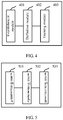
- implementations of the present specification further provide apparatuses corresponding to the previously described methods, as shown in FIG. 4 and FIG. 5 .
- FIG. 4 is a schematic structural diagram of a graphical structure model training apparatus corresponding to FIG. 2 , according to an implementation of the present specification.
- the apparatus includes: an establishment module 401, configured to establish an enterprise relationship network based on data related to an enterprise and factors associated with the enterprise, where the enterprise relationship network is composed of one or more nodes among enterprises, accounts, executives, civil servants, and legal persons and a relationship between the nodes; a definition module 402, configured to define a graphical structure model based on the enterprise relationship network, where the graphical structure model is used to calculate embedding vectors of the node after a plurality of iterations in hidden feature space based on original features of the node and edge features associated with the nodes; and a training module 403, configured to train the graphical structure model by using a labeled sample, where the labeled sample is labeled whether a node corresponding to the labeled sample is a credit risk node.
- FIG. 5 is a schematic structural diagram of a graphical structure model-based apparatus for credit risk control corresponding to FIG. 3 , according to an implementation of the present specification.
- the apparatus includes: an acquisition module 501, configured to obtain a graphical structure model trained by using a labeled sample, where the graphical structure model is defined based on an enterprise relationship network, the enterprise relationship network is composed of one or more nodes among enterprises, accounts, executives, civil servants, and legal persons and a relationship between the nodes, and the graphical structure model is used to calculate embedding vectors of the node after a plurality of iterations in hidden feature space based on original features of the node and/or edge features associated with the nodes; a calculation module 502, configured to calculate an embedding vector corresponding to a sample to be tested by using the trained graphical structure model; and a risk control module 503, configured to perform credit risk control on the sample to be tested based on the embedding vector corresponding to the sample to be tested, where the labeled sample is labeled whether
- the graphical structure model is further used to calculate a predicted probability of the node based on the embedding vector, where the predicted probability indicates a probability that the node is a credit risk node; and that the risk control module 503 is configured to perform risk control on the sample to be tested based on the embedding vector corresponding to the sample are to be tested includes: the risk control module 503 is configured to calculate a predicted probability corresponding to the sample to be tested by using the trained graphical structure model based on the embedding vector corresponding to the sample to be tested; and perform credit risk control on the sample to be tested based on the predicted probability corresponding to the sample to be tested.
- the enterprise relationship networks includes one or a combination of the following networks: a shareholding relationship network between enterprises, a shareholding relationship network between a legal person and an enterprise, an employment relationship network between an executive and an enterprise, an association relationship network between an executive and a civil servant, an association relationship network between an executive and a civil servant, a belonging relationship network between an executive and an account, a family relationship network between accounts, a friend relationship network between accounts, a fund transfer network between accounts, and a labeling network between accounts.
- the edge feature includes at least one type of the following data related to the edge-connected nodes: shareholding relationship data, subordinate relationship data, interpersonal relationship data, service relationship data, and evaluation data.
- an embedding vector of the node after the tth iteration in the hidden feature space is calculated based on the original feature of the node, edge features associated with the node and another node, and an embedding vector of the node after the ( t -1)th iteration in the hidden feature space.
- training the graphical structure model by using the labeled sample includes: training the graphic structure by using the labeled sample, to improve consistency between the predicted probability and a corresponding sample labeling result.
- training the graphical structure model by using the labeled sample includes: improving arg min w 1 , w 2 , w 3 , w 4 ⁇ i corss _ entrep ( pred i , y i ) by using a back propagation algorithm and the labeled samples, to obtain optimal W 1 , W 2 , W 3 , and W 4 , where corss _ entrep represents a function used to calculate cross entropy.
- an implementation of the present specification further provides a graphical structure model training device corresponding to FIG. 2 .
- the device includes: at least one processor; and at least one memory, connected to and communicating with the at least one processor, where the at least one memory stores an instruction executable by the at least one processor, and when the instruction is executed by the at least one processor, the at least one processor is enabled to perform the following steps: establishing an enterprise relationship network based on data related to an enterprise and factors associated with the enterprise, where the enterprise relationship network is composed of one or more nodes among enterprises, accounts, executives, civil servants, and legal persons and a relationship between the nodes; defining a graphical structure model based on the enterprise relationship network, where the graphical structure model is used to calculate embedding vectors of the node after a plurality of iterations in hidden feature space based on original features of the node and edge features associated with the nodes; and training the graphical structure model by using a labeled sample, where the labeled sample is labeled whether a node
- an implementation of the present specification further provides a graphical structure model-based device for credit risk control corresponding to FIG. 3 .
- the device includes: at least one processor; and at least one memory, connected to and communicating with the at least one processor, where the at least one memory stores an instruction executable by the at least one processor, and when the instruction is executed by the at least one processor, the at least one processor is enabled to perform the following steps: obtaining a graphical structure model trained by using a labeled sample, where the graphical structure model is defined based on an enterprise relationship network, the enterprise relationship network is composed of one or more nodes among enterprises, accounts, executives, civil servants, and legal persons and a relationship between the nodes, and the graphical structure model is used to calculate embedding vectors of the node after a plurality of iterations in hidden feature space based on original features of the node and/or edge features associated with the nodes; calculating an embedding vector corresponding to a sample to be tested by using the trained graphical structure model; and performing credit risk
- an implementation of the present specification further provides a nonvolatile computer storage medium corresponding to FIG. 2 .
- the nonvolatile computer storage medium stores a computer executable instruction, and the computer executable instruction is used to perform the following steps: establishing an enterprise relationship network based on data related to an enterprise and factors associated with the enterprise, where the enterprise relationship network is composed of one or more nodes among enterprises, accounts, executives, civil servants, and legal persons and a relationship between the nodes; defining a graphical structure model based on the enterprise relationship network, where the graphical structure model is used to calculate embedding vectors of the node after a plurality of iterations in hidden feature space based on original features of the node and edge features associated with the nodes; and training the graphical structure model by using a labeled sample, where the labeled sample is labeled whether a node corresponding to the labeled sample is a credit risk node.
- an implementation of the present specification further provides a nonvolatile computer storage medium corresponding to FIG. 3 .
- the nonvolatile computer storage medium stores a computer executable instruction, and the computer executable instruction is used to perform the following steps: obtaining a graphical structure model trained by using a labeled sample, where the graphical structure model is defined based on an enterprise relationship network, the enterprise relationship network is composed of one or more nodes among enterprises, accounts, executives, civil servants, and legal persons and a relationship between the nodes, and the graphical structure model is used to calculate embedding vectors of the node after a plurality of iterations in hidden feature space based on original features of the node and/or edge features associated with the nodes; calculating an embedding vector corresponding to a sample to be tested by using the trained graphical structure model; and performing credit risk control on the sample to be tested based on the embedding vector corresponding to the sample to be tested, where the labeled sample is labeled whether a node corresponding to the label
- the apparatus, the device, and the nonvolatile computer storage medium provided in the implementations of the present specification correspond to the method. Therefore, the apparatus, device, and nonvolatile computer storage medium also have beneficial technical effects similar to those of the corresponding method.
- the beneficial technical effects of the method have been described in detail above, and therefore the beneficial technical effects corresponding to the apparatus, the device, and the nonvolatile computer storage medium are omitted here for simplicity.
- a technical improvement is a hardware improvement (for example, an improvement to circuit structures, such as a diode, a transistor, or a switch) or a software improvement (an improvement to a method procedure) can be clearly distinguished.
- a hardware improvement for example, an improvement to circuit structures, such as a diode, a transistor, or a switch
- a software improvement an improvement to a method procedure
- a designer usually programs an improved method procedure into a hardware circuit, to obtain a corresponding hardware circuit structure. Therefore, a method procedure can be improved by using a hardware entity module.
- a programmable logic device for example, a field programmable gate array (FPGA)
- FPGA field programmable gate array
- the designer performs programming to "integrate" a digital system to a PLD without requesting a chip manufacturer to design and produce an application-specific integrated circuit chip.
- the programming is mostly implemented by modifying "logic compiler” software instead of manually making an integrated circuit chip. This is similar to a software compiler used for program development and compiling. However, original code before compiling is also written in a specific programming language, which is referred to as a hardware description language (HDL).
- HDL hardware description language
- HDLs such as an Advanced Boolean Expression Language (ABEL), an Altera Hardware Description Language (AHDL), Confluence, a Georgia University Programming Language (CUPL), HDCal, a Java Hardware Description Language (JHDL), Lava, Lola, MyHDL, PALASM, and a Ruby Hardware Description Language (RHDL).
- ABEL Advanced Boolean Expression Language
- AHDL Altera Hardware Description Language
- CUPL Cornell University Programming Language
- HDCal a Java Hardware Description Language
- JHDL Java Hardware Description Language
- Lava Lola
- MyHDL MyHDL
- PALASM Ruby Hardware Description Language
- RHDL Ruby Hardware Description Language
- VHDL Very-High-Speed Integrated Circuit Hardware Description Language
- Verilog Verilog
- a controller can be implemented by using any appropriate method.
- the controller can be a microprocessor or a processor, a computer-readable medium that stores computer readable program code (such as software or firmware) that can be executed by a microprocessor or a processor, a logic gate, a switch, an application-specific integrated circuit (ASIC), a programmable logic controller, or a built-in microprocessor.
- Examples of the controller include but are not limited to the following microprocessors: ARC 625D, Atmel AT91SAM, Microchip PIC18F26K20, and Silicone Labs C8051F320.
- the memory controller can also be implemented as a part of control logic of a memory.
- controller in addition to implementing the controller by using the computer readable program code, logic programming can be performed on method steps to allow the controller to implement the same function in forms of a logic gate, a switch, an application-specific integrated circuit, a programmable logic controller, and a built-in microcontroller. Therefore, the controller can be considered as a hardware component, and an apparatus configured to implement various functions in the controller can also be considered as a structure in the hardware component. Or the apparatus configured to implement various functions can even be considered as both a software module implementing the method and a structure in the hardware component.
- the system, apparatus, module, or unit illustrated in the previous implementations can be implemented by using a computer chip or an entity, or can be implemented by using a product having a certain function.
- a typical implementation device is a computer.
- the computer can be, for example, a personal computer, a laptop computer, a cellular phone, a camera phone, a smartphone, a personal digital assistant, a media player, a navigation device, an email device, a game console, a tablet computer, a wearable device, or a combination of any of these devices.
- an implementation of the present disclosure can be provided as a method, a system, or a computer program product. Therefore, the implementations of the present specification can use a form of hardware only implementations, software only implementations, or implementations with a combination of software and hardware. In addition, the implementations of the present disclosure can use a form of a computer program product that is implemented on one or more computer-usable storage media (including but not limited to a disk memory, a CD-ROM, an optical memory, etc.) that include computer-usable program code.
- computer-usable storage media including but not limited to a disk memory, a CD-ROM, an optical memory, etc.
- These computer program instructions can be provided for a general-purpose computer, a dedicated computer, an embedded processor, or a processor of another programmable data processing device to generate a machine, so that the instructions executed by the computer or the processor of the another programmable data processing device generate an apparatus for implementing a specific function in one or more processes in the flowcharts and/or in one or more blocks in the block diagrams.
- These computer program instructions can be stored in a computer readable memory that can instruct a computer or another programmable data processing device to work in a specific way, so that the instructions stored in the computer readable memory generate an artifact that includes an instruction apparatus.
- the instruction apparatus implements a specific function in one or more processes in the flowcharts and/or in one or more blocks in the block diagrams.
- a computing device includes one or more processors (CPU), input/output interfaces, network interfaces, and memories.
- processors CPU
- input/output interfaces network interfaces
- memories volatile and non-volatile memories
- the memory can include a non-persistent memory, a random access memory (RAM), a nonvolatile memory, and/or another form that are in a computer readable medium, for example, a read-only memory (ROM) or a flash memory (flash RAM).
- RAM random access memory
- flash RAM flash memory
- the memory is an example of the computer readable medium.
- the computer readable medium includes persistent, non-persistent, removable, and irremovable media that can store information by using any method or technology.
- the information can be a computer readable instruction, a data structure, a program module, or other data.
- Examples of a computer storage medium include but are not limited to a parameter random access memory (PRAM), a static random access memory (SRAM), a dynamic random access memory (DRAM), another type of random access memory (RAM), a read-only memory (ROM), an electrically erasable programmable read-only memory (EEPROM), a flash memory or another memory technology, a compact disc read-only memory (CD-ROM), a digital versatile disc (DVD) or other optical storage, a cassette magnetic tape, magnetic tape/magnetic disk storage, another magnetic storage device, or any other non-transmission medium.
- the computer storage medium can be used to store information accessible by the computing device. Based on the definition in the present specification, the computer readable medium does not include transitory computer readable media (transitory media) such
- the present specification can be described in the general context of computer executable instructions executed by a computer, for example, a program module.
- the program module usually includes a routine, a program, an object, a component, a data structure, etc. for executing a specific task or implementing a specific abstract data type.
- the present specification can be practiced in distributed computing environments. In the distributed computing environments, tasks are executed by remote processing devices that are connected through a communications network. In the distributed computing environment, the program module can be located in both local and remote computer storage media including storage devices.
Landscapes
- Engineering & Computer Science (AREA)
- Business, Economics & Management (AREA)
- Theoretical Computer Science (AREA)
- Physics & Mathematics (AREA)
- General Physics & Mathematics (AREA)
- Human Resources & Organizations (AREA)
- Strategic Management (AREA)
- Economics (AREA)
- Data Mining & Analysis (AREA)
- Software Systems (AREA)
- Artificial Intelligence (AREA)
- Evolutionary Computation (AREA)
- Finance (AREA)
- General Engineering & Computer Science (AREA)
- Accounting & Taxation (AREA)
- Marketing (AREA)
- General Business, Economics & Management (AREA)
- Development Economics (AREA)
- Entrepreneurship & Innovation (AREA)
- Mathematical Physics (AREA)
- Computing Systems (AREA)
- Computer Vision & Pattern Recognition (AREA)
- Operations Research (AREA)
- Quality & Reliability (AREA)
- Algebra (AREA)
- Probability & Statistics with Applications (AREA)
- Mathematical Analysis (AREA)
- Mathematical Optimization (AREA)
- Pure & Applied Mathematics (AREA)
- Technology Law (AREA)
- Tourism & Hospitality (AREA)
- Computational Mathematics (AREA)
- Game Theory and Decision Science (AREA)
- Educational Administration (AREA)
- Medical Informatics (AREA)
- Bioinformatics & Cheminformatics (AREA)
- Bioinformatics & Computational Biology (AREA)
- Life Sciences & Earth Sciences (AREA)
- Evolutionary Biology (AREA)
- Management, Administration, Business Operations System, And Electronic Commerce (AREA)
Abstract
Description
- The present specification relates to the field of computer software technologies, and in particular, to a graphical structure model-based method, apparatus, and device for credit risk control.
- With rapid development of computer and Internet technologies, many services including credit services can be implemented online.
- In the existing technology, credit of Internet users is usually evaluated by collecting behavior data of the users, and then loans can be granted to or other forms of resources other than funds can be provided for the users based on the credit of the users. However, operating statuses and risks of small enterprises usually cannot be directly reflected in the Internet, and data of the small enterprises usually needs to be collected and reported by specialized institutions.
- Based on the existing technology, an effective credit risk control solution is needed.
- Implementations of the present specification provide a graphical structure model-based method, apparatus, and device for credit risk control, to alleviate the following technical problem: an effective credit risk control solution is needed.
- To alleviate the previous technical problem, the implementations of the present specification are implemented as follows:
An implementation of the present specification provides a graphical structure model-based method for credit risk control, including: obtaining a graphical structure model trained by using a labeled sample, where the graphical structure model is defined based on an enterprise relationship network, the enterprise relationship network is composed of one or more nodes among enterprises, accounts, executives, civil servants, and legal persons and a relationship between the nodes, and the graphical structure model is used to calculate embedding vectors of the node after a plurality of iterations in hidden feature space based on original features of the node and/or edge features associated with the nodes; calculating an embedding vector corresponding to a sample to be tested by using the trained graphical structure model; and performing credit risk control on the sample to be tested based on the embedding vector corresponding to the sample to be tested, where the labeled sample is labeled whether a node corresponding to the labeled sample is a credit risk node. - An implementation of the present specification provides a graphical structure model-based apparatus for credit risk control, including: an acquisition module, configured to obtain a graphical structure model trained by using a labeled sample, where the graphical structure model is defined based on an enterprise relationship network, the enterprise relationship network is composed of one or more nodes among enterprises, accounts, executives, civil servants, and legal persons and a relationship between the nodes, and the graphical structure model is used to calculate embedding vectors of the node after a plurality of iterations in hidden feature space based on original features of the node and/or edge features associated with the nodes; a calculation module, configured to calculate an embedding vector corresponding to a sample to be tested by using the trained graphical structure model; and a risk control module, configured to perform credit risk control on the sample to be tested based on the embedding vector corresponding to the sample to be tested, where the labeled sample is labeled whether a node corresponding to the labeled sample is a credit risk node.
- An implementation of the present specification provides a graphical structure model-based device for credit risk control, including: at least one processor; and at least one memory, connected to and communicating with the at least one processor, where the at least one memory stores an instruction executable by the at least one processor, and when the instruction is executed by the at least one processor, the at least one processor is enabled to perform the following steps: obtaining a graphical structure model trained by using a labeled sample, where the graphical structure model is defined based on an enterprise relationship network, the enterprise relationship network is composed of one or more nodes among enterprises, accounts, executives, civil servants, and legal persons and a relationship between the nodes, and the graphical structure model is used to calculate embedding vectors of the node after a plurality of iterations in hidden feature space based on original features of the node and/or edge features associated with the nodes; calculating an embedding vector corresponding to a sample to be tested by using the trained graphical structure model; and performing credit risk control on the sample to be tested based on the embedding vector corresponding to the sample to be tested, where the labeled sample is labeled whether a node corresponding to the labeled sample is a credit risk node.
- The at least one technical solution used in the implementations of the present specification can achieve following beneficial effects: An embedding vector and/or a predicted probability corresponding to a node can be calculated by effectively integrating a structure feature, a node feature, and an edge feature of the enterprise relationship network, and then credit risk control can be effectively performed on the node based on the embedding vector and/or the predicted probability.
- To describe the technical solutions in the implementations of the present specification or in the existing technology more clearly, the following briefly describes the accompanying drawings needed for describing the implementations or the existing technology. Apparently, the accompanying drawings in the following description are merely some of the implementations described in the present specification. A person of ordinary skill in the art can further derive other drawings from these accompanying drawings without creative efforts.
-
FIG. 1 is a schematic diagram illustrating an overall architecture in an actual application scenario, according to a solution of the present specification; -
FIG. 2 is a schematic flowchart illustrating a graphical structure model training method, according to an implementation of the present specification; -
FIG. 3 is a schematic flowchart illustrating a graphical structure model-based method for credit risk control, according to an implementation of the present specification; -
FIG. 4 is a schematic structural diagram of a graphical structure model training apparatus corresponding toFIG. 2 , according to an implementation of the present specification; -
FIG. 5 is a schematic structural diagram of a graphical structure model-based apparatus for credit risk control corresponding toFIG. 3 , according to an implementation of the present specification. - The implementations of the present specification provide a graphical structure model and a graphical structure model-based method, apparatus, and device for credit risk control.
- To make a person skilled in the art better understand the technical solutions in the present specification, the following clearly and comprehensively describes the technical solutions in the implementations of the present specification with reference to the accompanying drawings in the implementations of the present specification. Apparently, the described implementations are merely some but not all of the implementations of the present application. All other implementations obtained by a person of ordinary skill in the art based on the implementations of the present specification without creative efforts shall fall within the protection scope of the present application.
- As described in background, it is hard to evaluate credit of enterprises, especially small enterprises. The present disclosure attempts to evaluate credit of an enterprise or an account by using information about executives and legal persons of the enterprise and combining their surrounding network relationships to integrate complex network information including factors such as enterprises, executives, legal persons, civil servants, and accounts to perform risk control.
-
FIG. 1 is a schematic diagram illustrating an overall architecture in an actual application scenario, according to a solution of the present specification. The overall architecture mainly includes two parts: an enterprise and factors associated with the enterprise and a platform server. The associated factors include accounts, executives, legal persons, civil servants, etc. related to the enterprise. The platform server can include one or more devices. The platform server establishes an enterprise relationship network based on data related to the enterprise and the factors associated with the enterprise, defines a corresponding graphical structure model, and trains the graphical structure model for credit risk control. - The solutions of the present specification are described below in detail based on the architecture in
FIG. 1 . -
FIG. 2 is a schematic flowchart illustrating a graphical structure model training method, according to an implementation of the present specification. The process inFIG. 2 includes the following steps: - S202. Establish an enterprise relationship network based on data related to an enterprise and factors associated with the enterprise, where the enterprise relationship network is composed of one or more nodes among enterprises, accounts, executives, civil servants, and legal persons and a relationship between the nodes.
- Other nodes such as the account, the executive, the civil servant, and the legal person are directly or indirectly associated with the enterprise. For example, the other nodes include an account of the enterprise, accounts of some pivotal natural persons of the enterprise, the executive of the enterprise, a civil servant directly involved in a service of the enterprise, civil servants who are in a relatively close relationship with some pivotal natural persons of the enterprises, the legal person, a legal representative of the enterprise, or a representative of the legal person of the enterprise. For example, the account is a bank account, a third-party payment platform account, or a stock account.
- In the enterprise relationship network, nodes such as the enterprise, the executive, the civil servant, and the legal person can be indicated by using corresponding identification information, for example, a name of the enterprise, an identity card number of the executive, a number of the civil servant, and an identity card number of the legal representative.
- The enterprise relationship network can include one network or a combination of a plurality of heterogeneous networks, and can be established based on actual demands.
- For example, the enterprise relationship network includes a shareholding relationship network between enterprises, a shareholding relationship network between a legal person and an enterprise, an employment relationship network between an executive and an enterprise, an association relationship network between an executive and a civil servant, an association relationship network between an executive and a civil servant, a belonging relationship network between an executive and an account, a family relationship network between accounts, a friend relationship network between accounts, a fund transfer network between accounts, and a labeling network between accounts. The labeling can indicate a label, remark information, etc.
- In the present implementation of the present specification, the enterprise relationship network is graph data. The graph data is visual and can be easily processed by using a graph algorithm with high efficiency.
- A node in the enterprise relationship network can include original features of the node. The original features can include a node type and respective features of different types of node. For example, features of an enterprise node include a ranking of the enterprise (for example, whether the enterprise is in the top 500 enterprises worldwide, whether the enterprise is in the top 100 enterprises nationwide, or whether the enterprise is in the top 100 enterprises in the industry), a type, registered capital, registration duration, a region, and financial report data. For example, features of an executive or civil servant node include age, gender, origin, educational background, and income of the executive or civil servant. For example, features of an account node include an asset amount in the account within a specific time period, an asset size, transaction data, transfer data, and the length of login/registration. For example, the transaction data includes detail or statistical data such as a transaction amount, the number of transactions, days of transaction , months of transaction, and the number of times different types of products are purchased, and purchase times of different types of products, and the transfer data includes detail or statistical data such as a transfer amount, the number of transfers, days of transfer , and months of transfer.
- An edge in the enterprise relationship network can include a feature associated with nodes that are connected by the edge. The feature usually includes at least one of the following: shareholding relationship data, subordinate relationship data, interpersonal relationship data, service relationship data, and evaluation data. For a shareholding relationship between nodes, the edge feature is, for example, a shareholding proportion. For a subordinate relationship between nodes, the edge feature is, for example, a position of an executive in an enterprise. For an interpersonal relationship between nodes, the edge feature is, for example, a friend relationship or a past working relationship between an executive and a civil servant. For a service relationship between nodes, the edge feature is, for example, transfer data between accounts or a public service relationship between an enterprise and a civil servant. For evaluation between nodes, the edge feature is, for example, remark information between accounts.
- S204. Define a graphical structure model based on the enterprise relationship network, where the graphical structure model is used to calculate embedding vectors of the node after a plurality of iterations in hidden feature space based on original features of the node and edge features associated with the nodes.
- In the present implementation of the present specification, the original features of the nodes and the edge features in the enterprise relationship network can be integrated to describe feature space. Then, the graphical structure model is defined based on one or more feature space, a weight matrix to be determined in the feature space, and a specified nonlinear transformation function.
- The weight matrix is used to perform linear transformation on the feature space, and the nonlinear transformation function is used to perform nonlinear transformation on the feature space. Therefore, the original feature of the node and the edge feature can be mapped to more complex hidden feature space by using the graphical structure model. The embedding vector reflects a feature of the corresponding node embedded in the final hidden feature space.
- In a case of a plurality of iterations, the feature space can alternatively be defined based on a previous iteration result. Compared with the feature space defined based on the original feature of the node or the edge feature, the feature space can also be considered as hidden feature space.
- Based on the previous analysis, an embedding vector of the node after each iteration in the hidden feature space can be calculated based on one or a combination of the following factors: original features of the node, edge features associated with the node and other nodes, and an embedding vector after a previous iteration or embedding vectors after a plurality of iterations of the node in the hidden feature space.
- S206. Train the graphical structure model by using a labeled sample, where the labeled sample is labeled whether a node corresponding to the labeled sample is a credit risk node.
- In the present implementation of the present specification, some existing samples can be labeled in advance with whether the samples are credit risk samples, to train the graphical structure model. Any sample can correspond to a node in the graphical structure model. A credit risk sample corresponds to a credit risk node. In a credit risk control scenario, a sample is usually a labeled enterprise or account.
- In the following implementations, description is mainly provided by using an example, which is an enterprise. Credit risk of an enterprise usually can be labeled based on behavior data obtained after the enterprise uses a credit product. If a repayment is overdue for a long time, the enterprise can be considered as a credit risky enterprise and is labeled as such. In an actual service, labeling can be performed every day, or can be performed every a plurality of days, etc. Certainly, the labeling criterion of this example is merely an example, and is not intended to limit the present application. The labeling criterion can be defined based on actual demands.
- In the present implementation of the present specification, training the graphical structure model is intended to determine an appropriate weight matrix, so that an embedding vector calculated based on the trained graphical structure model can indicate an attribute of a node corresponding to the embedding vector as true as possible, for example, indicate whether the node is a credit risk node.
- According to the method in
FIG. 2 , an embedding vector and/or a predicted probability corresponding to a node can be calculated by effectively integrating a structure feature, a node feature, and an edge feature of the enterprise relationship network, and then credit risk control can be effectively performed on the node based on the embedding vector and/or the predicted probability. - Based on the method in
FIG. 2 , an implementation of the present specification further provides some specific implementations solutions and extension solutions of the method, to continue to describe the method. - In the present implementation of the present specification, the graphical structure model is further used to calculate a predicted probability of the node based on the embedding vector. In the credit risk control scenario, the predicted probability can indicate a probability that the node is a credit risk node.
- In the present implementation of the present specification, the definition and the training process of the graphical structure model are visually defined by using an instance. Assuming that T represents the number of iterations to be performed, there are n nodes in total, yi represents a labeling result of the i th node (for example, a risk node is labeled 1, and a non-risk node is labeled 0), Fi represents an original feature (with a feature dimension of f dimensions) of the i th node, Eij represents an edge feature (with a feature dimension of e dimensions) associated with the i th node and the j th node, Ni represents a set of adjacent nodes of the i th node, the dimension needs to be finally embedded in the hidden feature space is h, and

- Assuming that an embedding vector of the node after the tth iteration in the hidden feature space is calculated based on the original feature of the node, edge features associated with the node and another node, and an embedding vector of the node after the (t - 1)th iteration in the hidden feature space. Example definition of the graphical structure model is as follows:
- "initialize W 1 (h ∗ f dimensions), W 2 (h ∗ e dimensions), W 3 (h ∗ h dimensions), and W 4 (h ∗2 dimensions), for example, initialize by using standard Gaussian distribution
for t=1 to T : //perform T iterations
for i=0 to n-1 : //traverse n nodes

1 ,w2 ,w3 ,w4 ∑ icorss_entrep(predi , yi );
//(equation 3) predicted probability of the i th node after T iterations, where σ represents a nonlinear transformation function (for example, functions like Relu, Sigmoid, Tanh, etc.), W 1, W 2, W 3, and W 4 represents weight matrices, αij represents a weight matrix (for example, a diagonal matrix) for the i th node and the j th node, predi represents a predicted probability of the i th node after T iterations, and corss _ entrep represents a function used to calculate cross entropy. - In the previous example, step S206 of training the graphical structure model by using a labeled sample can include: improving arg min w
1 ,w2 ,w3 ,w4 ∑ icorss_entrep(predi , yi ) by using a backward propagation algorithm and the labeled samples, to obtain optimal W 1, W 2 , W 3 , and W 4. An optimization objective here is set based on cross entropy of the predicted probability and a labeled result. It is worthwhile to note that the optimization objective can be set based on parameters, other than the cross entropy, that can measure consistency between the predicted probability and the labeling result. The optimization objective is to improve the consistency between the predicted probability and the labeling result. - The previous equations 1, 2, and 3 are merely examples, and are not the only solutions. For example, in equation 1, items of Fi , Eij , and

- Further, after the graphical structure model is trained, embedding vectors or predicted probabilities of existing samples and new samples can be calculated by using the trained graphical structure model through forward propagation. Then, the calculated embedding vector or predicted probability can be used for a sample-related service. For example, the embedding vector is used as an input to other models (for example, used as an input to other supervised, unsupervised, or reinforcement learning), or the embedding vector or the predicted probability is directly used to determine an attribute of the corresponding sample. Credit risk control is used as an example. When a predicted probability of a certain enterprise is greater than a specified threshold, the enterprise can be determined as a credit risky enterprise, and then risk control is performed.
- Based on the same idea, an implementation of the present specification further provides a graphical structure model-based method for credit risk control.
FIG. 3 is a schematic flowchart illustrating the credit risk control method. The process inFIG. 3 includes the following steps: - S302. Obtain a graphical structure model trained by using a labeled sample, where the graphical structure model is defined based on an enterprise relationship network, the enterprise relationship network is composed of one or more nodes among enterprises, accounts, executives, civil servants, and legal persons and a relationship between the nodes, and the graphical structure model is used to calculate embedding vectors of the node after a plurality of iterations in hidden feature space based on original features of the node and/or edge features associated with the nodes.
- In the present implementation of the present specification, the graphical structure model in
FIG. 3 is trained by using the method inFIG. 2 , and references can be made to the previous description ofFIG. 2 to understand the method inFIG. 3 . - S304. Calculate an embedding vector corresponding to a sample to be tested by using the trained graphical structure model.
- S306. Perform credit risk control on the sample to be tested based on the embedding vector corresponding to the sample to be tested, where the labeled sample is labeled whether a node corresponding to the labeled sample is a credit risk node.
- In actual application, the predicted probability can directly indicate a possibility that the enterprises involved in the samples are credit risky enterprises. Therefore, for step S306, a predicted probability corresponding to the sample to be tested can be further calculated by using the trained graphical structure model based on the embedding vector corresponding to the sample to be tested, and then credit risk control is performed on the sample to be tested based on the predicted probability corresponding to the sample to be tested. For example, assume that a certain sample to be tested is an enterprise. If a calculated predicted probability corresponding to the enterprise is greater than a specified threshold, it can be determined that the enterprise is a credit risky enterprise with relatively low credit, and then a loan request of the enterprise can be rejected or a loan amount granted to the enterprise can be adjusted.
- Based on the same idea, implementations of the present specification further provide apparatuses corresponding to the previously described methods, as shown in
FIG. 4 and FIG. 5 . -
FIG. 4 is a schematic structural diagram of a graphical structure model training apparatus corresponding toFIG. 2 , according to an implementation of the present specification. The apparatus includes: anestablishment module 401, configured to establish an enterprise relationship network based on data related to an enterprise and factors associated with the enterprise, where the enterprise relationship network is composed of one or more nodes among enterprises, accounts, executives, civil servants, and legal persons and a relationship between the nodes; adefinition module 402, configured to define a graphical structure model based on the enterprise relationship network, where the graphical structure model is used to calculate embedding vectors of the node after a plurality of iterations in hidden feature space based on original features of the node and edge features associated with the nodes; and atraining module 403, configured to train the graphical structure model by using a labeled sample, where the labeled sample is labeled whether a node corresponding to the labeled sample is a credit risk node. -
FIG. 5 is a schematic structural diagram of a graphical structure model-based apparatus for credit risk control corresponding toFIG. 3 , according to an implementation of the present specification. The apparatus includes: anacquisition module 501, configured to obtain a graphical structure model trained by using a labeled sample, where the graphical structure model is defined based on an enterprise relationship network, the enterprise relationship network is composed of one or more nodes among enterprises, accounts, executives, civil servants, and legal persons and a relationship between the nodes, and the graphical structure model is used to calculate embedding vectors of the node after a plurality of iterations in hidden feature space based on original features of the node and/or edge features associated with the nodes; acalculation module 502, configured to calculate an embedding vector corresponding to a sample to be tested by using the trained graphical structure model; and arisk control module 503, configured to perform credit risk control on the sample to be tested based on the embedding vector corresponding to the sample to be tested, where the labeled sample is labeled whether a node corresponding to the labeled sample is a credit risk node. - Optionally, the graphical structure model is further used to calculate a predicted probability of the node based on the embedding vector, where the predicted probability indicates a probability that the node is a credit risk node; and that the
risk control module 503 is configured to perform risk control on the sample to be tested based on the embedding vector corresponding to the sample are to be tested includes: therisk control module 503 is configured to calculate a predicted probability corresponding to the sample to be tested by using the trained graphical structure model based on the embedding vector corresponding to the sample to be tested; and perform credit risk control on the sample to be tested based on the predicted probability corresponding to the sample to be tested. - Optionally, the enterprise relationship networks includes one or a combination of the following networks: a shareholding relationship network between enterprises, a shareholding relationship network between a legal person and an enterprise, an employment relationship network between an executive and an enterprise, an association relationship network between an executive and a civil servant, an association relationship network between an executive and a civil servant, a belonging relationship network between an executive and an account, a family relationship network between accounts, a friend relationship network between accounts, a fund transfer network between accounts, and a labeling network between accounts.
- Optionally, the edge feature includes at least one type of the following data related to the edge-connected nodes: shareholding relationship data, subordinate relationship data, interpersonal relationship data, service relationship data, and evaluation data.
- Optionally, an embedding vector of the node after the tth iteration in the hidden feature space is calculated based on the original feature of the node, edge features associated with the node and another node, and an embedding vector of the node after the (t-1)th iteration in the hidden feature space.
- Optionally, the calculating embedding vectors of the node after a plurality of iterations in hidden feature space based on original features of the node and edge features associated with the nodes includes: calculating, by the
calculation module 502, the embedding vectors of the node after the plurality of iterations in the hidden feature space based on the following equation:

- Optionally, the calculating a predicted probability of the node based on the embedding vector includes: calculating, by the
calculation module 502, the predicted probability of the node based on the following equation:
predi represents a predicted probability of the i th node after T iterations, and W 4 represents a weight matrix. - Optionally, training the graphical structure model by using the labeled sample includes: training the graphic structure by using the labeled sample, to improve consistency between the predicted probability and a corresponding sample labeling result.
- Optionally, training the graphical structure model by using the labeled sample includes: improving arg min w
1 ,w2 ,w3 ,w4 ∑ icorss_entrep(predi, yi ) by using a back propagation algorithm and the labeled samples, to obtain optimal W 1, W 2 , W 3 , and W 4, where corss _ entrep represents a function used to calculate cross entropy. - Based on the same idea, an implementation of the present specification further provides a graphical structure model training device corresponding to
FIG. 2 . The device includes: at least one processor; and at least one memory, connected to and communicating with the at least one processor, where the at least one memory stores an instruction executable by the at least one processor, and when the instruction is executed by the at least one processor, the at least one processor is enabled to perform the following steps: establishing an enterprise relationship network based on data related to an enterprise and factors associated with the enterprise, where the enterprise relationship network is composed of one or more nodes among enterprises, accounts, executives, civil servants, and legal persons and a relationship between the nodes; defining a graphical structure model based on the enterprise relationship network, where the graphical structure model is used to calculate embedding vectors of the node after a plurality of iterations in hidden feature space based on original features of the node and edge features associated with the nodes; and training the graphical structure model by using a labeled sample, where the labeled sample is labeled whether a node corresponding to the labeled sample is a credit risk node. - Based on the same idea, an implementation of the present specification further provides a graphical structure model-based device for credit risk control corresponding to
FIG. 3 . The device includes: at least one processor; and at least one memory, connected to and communicating with the at least one processor, where the at least one memory stores an instruction executable by the at least one processor, and when the instruction is executed by the at least one processor, the at least one processor is enabled to perform the following steps: obtaining a graphical structure model trained by using a labeled sample, where the graphical structure model is defined based on an enterprise relationship network, the enterprise relationship network is composed of one or more nodes among enterprises, accounts, executives, civil servants, and legal persons and a relationship between the nodes, and the graphical structure model is used to calculate embedding vectors of the node after a plurality of iterations in hidden feature space based on original features of the node and/or edge features associated with the nodes; calculating an embedding vector corresponding to a sample to be tested by using the trained graphical structure model; and performing credit risk control on the sample to be tested based on the embedding vector corresponding to the sample to be tested, where the labeled sample is labeled whether a node corresponding to the labeled sample is a credit risk node. - Based on the same idea, an implementation of the present specification further provides a nonvolatile computer storage medium corresponding to
FIG. 2 . The nonvolatile computer storage medium stores a computer executable instruction, and the computer executable instruction is used to perform the following steps: establishing an enterprise relationship network based on data related to an enterprise and factors associated with the enterprise, where the enterprise relationship network is composed of one or more nodes among enterprises, accounts, executives, civil servants, and legal persons and a relationship between the nodes; defining a graphical structure model based on the enterprise relationship network, where the graphical structure model is used to calculate embedding vectors of the node after a plurality of iterations in hidden feature space based on original features of the node and edge features associated with the nodes; and training the graphical structure model by using a labeled sample, where the labeled sample is labeled whether a node corresponding to the labeled sample is a credit risk node. - Based on the same idea, an implementation of the present specification further provides a nonvolatile computer storage medium corresponding to
FIG. 3 . The nonvolatile computer storage medium stores a computer executable instruction, and the computer executable instruction is used to perform the following steps: obtaining a graphical structure model trained by using a labeled sample, where the graphical structure model is defined based on an enterprise relationship network, the enterprise relationship network is composed of one or more nodes among enterprises, accounts, executives, civil servants, and legal persons and a relationship between the nodes, and the graphical structure model is used to calculate embedding vectors of the node after a plurality of iterations in hidden feature space based on original features of the node and/or edge features associated with the nodes; calculating an embedding vector corresponding to a sample to be tested by using the trained graphical structure model; and performing credit risk control on the sample to be tested based on the embedding vector corresponding to the sample to be tested, where the labeled sample is labeled whether a node corresponding to the labeled sample is a credit risk node. - Specific implementations of the present specification are described above. Other implementations are within the scope of the appended claims. In some cases, actions or steps described in the claims can be performed in an order different from that in the implementations, and desired results can be still achieved. In addition, the process described in the accompanying drawings does not necessarily require a particular sequence or consecutive sequence to achieve the desired results. In certain implementations, multi-task processing and parallel processing are also possible or can be advantageous.
- The implementations in the present specification are described in a progressive way. For the same or similar parts between the implementations, references can be made to the implementations. Each implementation focuses on a difference from other implementations. In particular, implementations of the apparatus, device, and nonvolatile computer storage medium are basically similar to the method implementation, and therefore are described briefly. For related part, references can be made to partial description in the method implementation.
- The apparatus, the device, and the nonvolatile computer storage medium provided in the implementations of the present specification correspond to the method. Therefore, the apparatus, device, and nonvolatile computer storage medium also have beneficial technical effects similar to those of the corresponding method. The beneficial technical effects of the method have been described in detail above, and therefore the beneficial technical effects corresponding to the apparatus, the device, and the nonvolatile computer storage medium are omitted here for simplicity.
- In the 1990s, whether a technical improvement is a hardware improvement (for example, an improvement to circuit structures, such as a diode, a transistor, or a switch) or a software improvement (an improvement to a method procedure) can be clearly distinguished. However, as technologies develop, current improvements to many method procedures can be considered as direct improvements to hardware circuit structures. A designer usually programs an improved method procedure into a hardware circuit, to obtain a corresponding hardware circuit structure. Therefore, a method procedure can be improved by using a hardware entity module. For example, a programmable logic device (PLD) (for example, a field programmable gate array (FPGA)) is such an integrated circuit, and a logical function of the PLD is determined by a user through device programming. The designer performs programming to "integrate" a digital system to a PLD without requesting a chip manufacturer to design and produce an application-specific integrated circuit chip. In addition, the programming is mostly implemented by modifying "logic compiler" software instead of manually making an integrated circuit chip. This is similar to a software compiler used for program development and compiling. However, original code before compiling is also written in a specific programming language, which is referred to as a hardware description language (HDL). There are many HDLs, such as an Advanced Boolean Expression Language (ABEL), an Altera Hardware Description Language (AHDL), Confluence, a Cornell University Programming Language (CUPL), HDCal, a Java Hardware Description Language (JHDL), Lava, Lola, MyHDL, PALASM, and a Ruby Hardware Description Language (RHDL). Currently, a Very-High-Speed Integrated Circuit Hardware Description Language (VHDL) and Verilog are most commonly used. A person skilled in the art should also understand that a hardware circuit that implements a logical method procedure can be readily obtained once the method procedure is logically programmed by using the several described hardware description languages and is programmed into an integrated circuit.
- A controller can be implemented by using any appropriate method. For example, the controller can be a microprocessor or a processor, a computer-readable medium that stores computer readable program code (such as software or firmware) that can be executed by a microprocessor or a processor, a logic gate, a switch, an application-specific integrated circuit (ASIC), a programmable logic controller, or a built-in microprocessor. Examples of the controller include but are not limited to the following microprocessors: ARC 625D, Atmel AT91SAM, Microchip PIC18F26K20, and Silicone Labs C8051F320. The memory controller can also be implemented as a part of control logic of a memory. A person skilled in the art also knows that, in addition to implementing the controller by using the computer readable program code, logic programming can be performed on method steps to allow the controller to implement the same function in forms of a logic gate, a switch, an application-specific integrated circuit, a programmable logic controller, and a built-in microcontroller. Therefore, the controller can be considered as a hardware component, and an apparatus configured to implement various functions in the controller can also be considered as a structure in the hardware component. Or the apparatus configured to implement various functions can even be considered as both a software module implementing the method and a structure in the hardware component.
- The system, apparatus, module, or unit illustrated in the previous implementations can be implemented by using a computer chip or an entity, or can be implemented by using a product having a certain function. A typical implementation device is a computer. The computer can be, for example, a personal computer, a laptop computer, a cellular phone, a camera phone, a smartphone, a personal digital assistant, a media player, a navigation device, an email device, a game console, a tablet computer, a wearable device, or a combination of any of these devices.
- For ease of description, the apparatus above is described by dividing functions into various units. Certainly, when the present specification is implemented, function of units can be implemented in one or more pieces of software and/or hardware.
- A person skilled in the art should understand that an implementation of the present disclosure can be provided as a method, a system, or a computer program product. Therefore, the implementations of the present specification can use a form of hardware only implementations, software only implementations, or implementations with a combination of software and hardware. In addition, the implementations of the present disclosure can use a form of a computer program product that is implemented on one or more computer-usable storage media (including but not limited to a disk memory, a CD-ROM, an optical memory, etc.) that include computer-usable program code.
- The present specification is described with reference to the flowcharts and/or block diagrams of the method, the device (system), and the computer program product based on the implementations of the present specification. It should be understood that computer program instructions can be used to implement each process and/or each block in the flowcharts and/or the block diagrams and a combination of processes and/or blocks in the flowcharts and/or the block diagrams. These computer program instructions can be provided for a general-purpose computer, a dedicated computer, an embedded processor, or a processor of another programmable data processing device to generate a machine, so that the instructions executed by the computer or the processor of the another programmable data processing device generate an apparatus for implementing a specific function in one or more processes in the flowcharts and/or in one or more blocks in the block diagrams.
- These computer program instructions can be stored in a computer readable memory that can instruct a computer or another programmable data processing device to work in a specific way, so that the instructions stored in the computer readable memory generate an artifact that includes an instruction apparatus. The instruction apparatus implements a specific function in one or more processes in the flowcharts and/or in one or more blocks in the block diagrams.
- These computer program instructions can be loaded onto a computer or another programmable data processing device, so that a series of operations and steps are performed on the computer or the another programmable device, thereby generating computer-implemented processing. Therefore, the instructions executed on the computer or the another programmable device provide steps for implementing a specific function in one or more processes in the flowcharts and/or in one or more blocks in the block diagrams.
- In a typical configuration, a computing device includes one or more processors (CPU), input/output interfaces, network interfaces, and memories.
- The memory can include a non-persistent memory, a random access memory (RAM), a nonvolatile memory, and/or another form that are in a computer readable medium, for example, a read-only memory (ROM) or a flash memory (flash RAM). The memory is an example of the computer readable medium.
- The computer readable medium includes persistent, non-persistent, removable, and irremovable media that can store information by using any method or technology. The information can be a computer readable instruction, a data structure, a program module, or other data. Examples of a computer storage medium include but are not limited to a parameter random access memory (PRAM), a static random access memory (SRAM), a dynamic random access memory (DRAM), another type of random access memory (RAM), a read-only memory (ROM), an electrically erasable programmable read-only memory (EEPROM), a flash memory or another memory technology, a compact disc read-only memory (CD-ROM), a digital versatile disc (DVD) or other optical storage, a cassette magnetic tape, magnetic tape/magnetic disk storage, another magnetic storage device, or any other non-transmission medium. The computer storage medium can be used to store information accessible by the computing device. Based on the definition in the present specification, the computer readable medium does not include transitory computer readable media (transitory media) such as a modulated data signal and carrier.
- It is worthwhile to further note that the term "include", "comprise", or their any other variant is intended to cover a nonexclusive inclusion, so that a process, a method, a product, or a device that includes a series of elements not only includes these elements, but also includes other elements which are not expressly listed, or further includes elements inherent to such process, method, product, or device. An element described by "includes a ..." further includes, without more constraints, another same or identical element in the process, method, product, or device that includes the element.
- The present specification can be described in the general context of computer executable instructions executed by a computer, for example, a program module. The program module usually includes a routine, a program, an object, a component, a data structure, etc. for executing a specific task or implementing a specific abstract data type. The present specification can be practiced in distributed computing environments. In the distributed computing environments, tasks are executed by remote processing devices that are connected through a communications network. In the distributed computing environment, the program module can be located in both local and remote computer storage media including storage devices.
- The implementations in the present specification are described in a progressive way. For the same or similar parts between the implementations, references can be made to the implementations. Each implementation focuses on a difference from other implementations. In particular, the system implementation is basically similar to the method implementation, and therefore is described briefly. For related parts, references can be made to partial description in the method implementation.
- The previous descriptions are merely implementations of the present specification, and are not intended to limit the present application. For a person skilled in the art, the present application can have various modifications and changes. Any modifications, equivalent replacements, and improvements made within the spirit and the principle of the present application shall fall within the scope of the claims in the present application.
Claims (19)
- A graphical structure model-based method for credit risk control, comprising:obtaining a graphical structure model trained by using a labeled sample, wherein the graphical structure model is defined based on an enterprise relationship network, the enterprise relationship network is composed of one or more nodes among enterprises, accounts, executives, civil servants, and legal persons and a relationship between the nodes, and the graphical structure model is used to calculate embedding vectors of the node after a plurality of iterations in hidden feature space based on original features of the node and/or edge features associated with the nodes;calculating an embedding vector corresponding to a sample to be tested by using the trained graphical structure model; andperforming credit risk control on the sample to be tested based on the embedding vector corresponding to the sample to be tested, whereinthe labeled sample is labeled whether a node corresponding to the labeled sample is a credit risk node.
- The method according to claim 1, wherein the graphical structure model is further used to calculate a predicted probability of the node based on the embedding vector, wherein the predicted probability indicates a probability that the node is a credit risk node; and
the performing credit risk control on the sample to be tested based on the embedding vector corresponding to the sample to be tested comprises:calculating a predicted probability corresponding to the sample to be tested by using the trained graphical structure model based on the embedding vector corresponding to the sample to be tested; andperforming credit risk control on the sample to be tested based on the predicted probability corresponding to the sample to be tested. - The method according to claim 1, wherein the enterprise relationship network comprises one or a combination of the following networks: a shareholding relationship network between enterprises, a shareholding relationship network between a legal person and an enterprise, an employment relationship network between an executive and an enterprise, an association relationship network between an executive and a civil servant, an association relationship network between an executive and a civil servant, a belonging relationship network between an executive and an account, a family relationship network between accounts, a friend relationship network between accounts, a fund transfer network between accounts, and a labeling network between accounts.
- The method according to claim 1, wherein the edge feature comprises at least one type of the following data related to the edge-connected nodes: shareholding relationship data, subordinate relationship data, interpersonal relationship data, service relationship data, and evaluation data.
- The method according to claim 1, wherein an embedding vector of the node after the t th iteration in the hidden feature space is calculated based on the original feature of the node, edge features associated with the node and another node, and an embedding vector of the node after the (t-1)th iteration in the hidden feature space.
- The method according to claim 2, wherein the calculating embedding vectors of the node after a plurality of iterations in hidden feature space based on original features of the node and edge features associated with the nodes comprises:calculating the embedding vectors of the node after the plurality of iterations in the hidden feature space based on the following equation:


- The method according to claim 6, wherein the calculating a predicted probability of the node based on the embedding vector comprises:calculating the predicted probability of the node based on the following equation:

- The method according to claim 2, wherein training the graphical structure model by using the labeled sample comprises:
training the graphic structure by using the labeled sample, to improve consistency between the predicted probability and a corresponding sample labeling result. - The method according to claim 7, wherein training the graphical structure model by using the labeled sample comprises:improving arg min w
1 ,w2 ,w3 ,w4 ∑ icorss_entrep(predi , yi ) by using a back propagation algorithm and the labeled sample, to obtain optimal W 1, W 2 , W 3 , and W 4, whereincorss _ entrep represents a function used to calculate cross entropy. - A graphical structure model-based apparatus for credit risk control, comprising:an acquisition module, configured to obtain a graphical structure model trained by using a labeled sample, wherein the graphical structure model is defined based on an enterprise relationship network,the enterprise relationship network is composed of one or more nodes among enterprises, accounts, executives, civil servants, and legal persons and a relationship between the nodes, and the graphical structure model is used to calculate embedding vectors of the node after a plurality of iterations in hidden feature space based on original features of the node and/or edge features associated with the nodes;a calculation module, configured to calculate an embedding vector corresponding to a sample to be tested by using the trained graphical structure model; anda risk control module, configured to perform credit risk control on the sample to be tested based on the embedding vector corresponding to the sample to be tested, whereinthe labeled sample is labeled whether a node corresponding to the labeled sample is a credit risk node.
- The apparatus according to claim 10, wherein the graphical structure model is further used to calculate a predicted probability of the node based on the embedding vector, wherein the predicted probability indicates a probability that the node is a credit risk node; and
that the risk control module is configured to perform credit risk control on the sample to be tested based on the embedding vector corresponding to the sample to be tested comprises:the risk control module is configured to calculate a predicted probability corresponding to the sample to be tested by using the trained graphical structure model based on the embedding vector corresponding to the sample to be tested; andperform credit risk control on the sample to be tested based on the predicted probability corresponding to the sample to be tested. - The apparatus according to claim 10, wherein the enterprise relationship network comprises one or a combination of the following networks: a shareholding relationship network between enterprises, a shareholding relationship network between a legal person and an enterprise, an employment relationship network between an executive and an enterprise, an association relationship network between an executive and a civil servant, an association relationship network between an executive and a civil servant, a belonging relationship network between an executive and an account, a family relationship network between accounts, a friend relationship network between accounts, a fund transfer network between accounts, and a labeling network between accounts.
- The apparatus according to claim 10, wherein the edge feature comprises at least one type of the following data related to the edge-connected nodes: shareholding relationship data, subordinate relationship data, interpersonal relationship data, service relationship data, and evaluation data.
- The apparatus according to claim 10, wherein an embedding vector of the node after the tth iteration in the hidden feature space is calculated based on the original feature of the node, edge features associated with the node and another node, and an embedding vector of the node after the (t-1)th iteration in the hidden feature space.
- The apparatus according to claim 11, wherein the calculating embedding vectors of the node after a plurality of iterations in hidden feature space based on original features of the node and edge features associated with the nodes comprises:calculating, by the calculation module, the embedding vectors of the node after the plurality of iterations in the hidden feature space based on the following equation:


- The apparatus according to claim 15, wherein the calculating a predicted probability of the node based on the embedding vector comprises:calculating, by the calculation module, the predicted probability of the node based on the following equation:
 predi represents a predicted probability of the i th node after T iterations, and W 4 represents a weight matrix.
 - The apparatus according to claim 11, wherein training the graphical structure model by using the labeled sample comprises:
training the graphic structure by using the labeled sample, to improve consistency between the predicted probability and a corresponding sample labeling result. - The apparatus according to claim 16, wherein training the graphical structure model by using the labeled sample comprises:improving arg min w
1 ,w2 ,w3 ,w4 ∑ icorss_entrep(predi, yi ) by using a back propagation algorithm and the labeled sample, to obtain optimal W 1, W 2 , W 3 , and W 4, whereincorss _ entrep represents a function used to calculate cross entropy. - A graphical structure model-based device for credit risk control, comprising:at least one processor; andat least one memory, connected to and communicating with the at least one processor, whereinthe at least one memory stores an instruction executable by the at least one processor, and when the instruction is executed by the at least one processor, the at least one processor is enabled to perform the following steps:obtaining a graphical structure model trained by using a labeled sample, wherein the graphical structure model is defined based on an enterprise relationship network, the enterprise relationship network is composed of one or more nodes among enterprises, accounts, executives, civil servants, and legal persons and a relationship between the nodes, and the graphical structure model is used to calculate embedding vectors of the node after a plurality of iterations in hidden feature space based on original features of the node and/or edge features associated with the nodes;calculating an embedding vector corresponding to a sample to be tested by using the trained graphical structure model; andperforming credit risk control on the sample to be tested based on the embedding vector corresponding to the sample to be tested, whereinthe labeled sample is labeled whether a node corresponding to the labeled sample is a credit risk node.
Applications Claiming Priority (2)
| Application Number | Priority Date | Filing Date | Title |
|---|---|---|---|
| CN201711349800.4A CN109934697A (en) | 2017-12-15 | 2017-12-15 | A kind of credit risk control method, device and equipment based on graph structure model |
| PCT/CN2018/110730 WO2019114412A1 (en) | 2017-12-15 | 2018-10-18 | Graphical structure model-based method for credit risk control, and device and equipment |
Publications (2)
| Publication Number | Publication Date |
|---|---|
| EP3690787A1 true EP3690787A1 (en) | 2020-08-05 |
| EP3690787A4 EP3690787A4 (en) | 2020-09-02 |
Family
ID=66819563
Family Applications (1)
| Application Number | Title | Priority Date | Filing Date |
|---|---|---|---|
| EP18888429.0A Withdrawn EP3690787A4 (en) | 2017-12-15 | 2018-10-18 | Graphical structure model-based method for credit risk control, and device and equipment |
Country Status (6)
| Country | Link |
|---|---|
| US (1) | US11526936B2 (en) |
| EP (1) | EP3690787A4 (en) |
| CN (1) | CN109934697A (en) |
| SG (1) | SG11202001318XA (en) |
| TW (1) | TWI715880B (en) |
| WO (1) | WO2019114412A1 (en) |
Families Citing this family (26)
| Publication number | Priority date | Publication date | Assignee | Title |
|---|---|---|---|---|
| CN110516915B (en) * | 2019-08-02 | 2023-07-04 | 创新先进技术有限公司 | Service node training and evaluating method and device and electronic equipment |
| CN110968701A (en) * | 2019-11-05 | 2020-04-07 | 量子数聚(北京)科技有限公司 | Relationship map establishing method, device and equipment for graph neural network |
| CN111222681A (en) * | 2019-11-05 | 2020-06-02 | 量子数聚(北京)科技有限公司 | Data processing method, device, equipment and storage medium for enterprise bankruptcy risk prediction |
| CN111178615B (en) * | 2019-12-24 | 2023-10-27 | 成都数联铭品科技有限公司 | Method and system for constructing enterprise risk identification model |
| CN111275071B (en) * | 2020-01-06 | 2022-06-10 | 支付宝(杭州)信息技术有限公司 | Prediction model training method, prediction device and electronic equipment |
| CN111275176B (en) * | 2020-02-27 | 2023-09-26 | 支付宝(杭州)信息技术有限公司 | Distributed computing methods and distributed computing systems |
| CN111598408B (en) * | 2020-04-23 | 2023-04-18 | 成都数之联科技股份有限公司 | Construction method and application of trade information risk early warning model |
| CN111611530B (en) * | 2020-05-20 | 2023-11-17 | 杭州中奥科技有限公司 | Case and personnel relationship analysis methods, devices and electronic equipment |
| CN111611531B (en) * | 2020-05-20 | 2023-11-21 | 杭州中奥科技有限公司 | Personnel relationship analysis method, device and electronic equipment |
| CN111861119B (en) * | 2020-06-17 | 2023-07-11 | 国家计算机网络与信息安全管理中心 | Enterprise risk data processing method and device based on enterprise risk association graph |
| CN114358893B (en) * | 2020-09-30 | 2024-12-03 | 航天信息股份有限公司 | A method and device for identifying tax-related risk enterprises |
| CN112417060B (en) * | 2020-11-19 | 2024-12-31 | 中国建设银行股份有限公司 | Method, apparatus, device and computer-readable medium for identifying enterprise relationships |
| CN112364182B (en) * | 2020-12-09 | 2024-07-09 | 交通银行股份有限公司 | Enterprise risk conduction prediction method, equipment and storage medium based on graph characteristics |
| CN113159084B (en) * | 2020-12-18 | 2024-04-19 | 国家电网有限公司大数据中心 | Method and device for determining empty shell enterprises and method and device for monitoring empty shell enterprises |
| CN112785320B (en) * | 2021-02-01 | 2023-09-19 | 北京互金新融科技有限公司 | Credit risk determination method and device, storage medium and electronic equipment |
| CN112950344A (en) * | 2021-02-26 | 2021-06-11 | 平安国际智慧城市科技股份有限公司 | Data evaluation method and device, electronic equipment and storage medium |
| US12437193B2 (en) * | 2021-04-27 | 2025-10-07 | International Business Machines Corporation | Multi-relational graph convolutional network (GCN) in risk prediction |
| CN113689285B (en) * | 2021-08-18 | 2024-04-26 | 深圳前海微众银行股份有限公司 | Method, device, equipment and storage medium for detecting user characteristics |
| CN114118526B (en) * | 2021-10-29 | 2024-12-24 | 中国建设银行股份有限公司 | Enterprise risk prediction method, device, equipment and storage medium |
| CN114282731A (en) * | 2021-12-27 | 2022-04-05 | 深圳前海微众银行股份有限公司 | Risk model training method, device, equipment and storage medium |
| CN114676927B (en) | 2022-04-08 | 2024-09-24 | 北京百度网讯科技有限公司 | Risk prediction method and device, electronic device, and computer-readable storage medium |
| CN114943307B (en) * | 2022-06-28 | 2024-09-06 | 支付宝(杭州)信息技术有限公司 | A method, device, storage medium and electronic device for model training |
| CN115687992A (en) * | 2022-09-14 | 2023-02-03 | 中国科学院自动化研究所 | Credit rating method, device and electronic device |
| CN115964568B (en) * | 2023-02-10 | 2025-08-05 | 南京邮电大学 | A personalized recommendation method based on edge caching |
| CN116545910A (en) * | 2023-05-04 | 2023-08-04 | 云控智行科技有限公司 | Method, device, equipment and medium for determining local connectivity of network |
| CN116882767B (en) * | 2023-09-08 | 2024-01-05 | 之江实验室 | Risk prediction method and device based on imperfect heterogeneous relation network diagram |
Family Cites Families (42)
| Publication number | Priority date | Publication date | Assignee | Title |
|---|---|---|---|---|
| US6957191B1 (en) | 1999-02-05 | 2005-10-18 | Babcock & Brown Lp | Automated financial scenario modeling and analysis tool having an intelligent graphical user interface |
| US20030174165A1 (en) * | 2002-03-18 | 2003-09-18 | Barney Rock D. | System and method for rendering a directed graph |
| US7769682B2 (en) * | 2004-02-13 | 2010-08-03 | International Business Machines Corporation | Financial transaction analysis using directed graphs |
| US20090018940A1 (en) | 2007-03-30 | 2009-01-15 | Liang Wang | Enhanced Fraud Detection With Terminal Transaction-Sequence Processing |
| KR20130040049A (en) | 2011-10-13 | 2013-04-23 | 주식회사 네오플 | Apparatus and method for detecting abnormal account |
| US9659185B2 (en) | 2012-03-22 | 2017-05-23 | B.G. Negev Technologies And Applications Ltd. | Method for detecting spammers and fake profiles in social networks |
| US9105062B2 (en) * | 2012-12-13 | 2015-08-11 | Addepar, Inc. | Transaction effects |
| EP2973282A4 (en) | 2013-03-13 | 2016-11-16 | Guardian Analytics Inc | DETECTION AND ANALYSIS OF FRAUD |
| US9027134B2 (en) | 2013-03-15 | 2015-05-05 | Zerofox, Inc. | Social threat scoring |
| US9195941B2 (en) | 2013-04-23 | 2015-11-24 | International Business Machines Corporation | Predictive and descriptive analysis on relations graphs with heterogeneous entities |
| CN105005931A (en) | 2014-04-24 | 2015-10-28 | 中国银联股份有限公司 | Method and device for controlling risk of transfer transaction |
| US9396332B2 (en) | 2014-05-21 | 2016-07-19 | Microsoft Technology Licensing, Llc | Risk assessment modeling |
| CN104199832B (en) | 2014-08-01 | 2017-08-22 | 西安理工大学 | Banking network based on comentropy transaction community discovery method extremely |
| CN105335855A (en) * | 2014-08-06 | 2016-02-17 | 阿里巴巴集团控股有限公司 | Transaction risk identification method and apparatus |
| CN105719033B (en) | 2014-12-02 | 2019-12-13 | 阿里巴巴集团控股有限公司 | Method and device for identifying risk to an object |
| CN105844526A (en) * | 2015-01-14 | 2016-08-10 | 阿里巴巴集团控股有限公司 | Networked transaction risk identification method and networked transaction risk identification device based on computer system |
| CN104636912A (en) | 2015-02-13 | 2015-05-20 | 银联智惠信息服务(上海)有限公司 | Identification method and device for withdrawal of credit cards |
| CN104778605B (en) | 2015-04-09 | 2019-05-03 | 北京京东尚科信息技术有限公司 | E-commerce customer classification method and device |
| US9672814B2 (en) * | 2015-05-08 | 2017-06-06 | International Business Machines Corporation | Semi-supervised learning of word embeddings |
| CN106372938A (en) | 2015-07-21 | 2017-02-01 | 华为技术有限公司 | Abnormal account identification method and system |
| CN106469376B (en) | 2015-08-20 | 2021-12-03 | 创新先进技术有限公司 | Risk control method and equipment |
| CN106611137B (en) | 2015-10-22 | 2020-09-15 | 阿里巴巴集团控股有限公司 | Risk control method and device |
| US20170140382A1 (en) | 2015-11-12 | 2017-05-18 | International Business Machines Corporation | Identifying transactional fraud utilizing transaction payment relationship graph link prediction |
| CN105389732A (en) | 2015-11-30 | 2016-03-09 | 安徽融信金模信息技术有限公司 | Enterprise risk assessment method |
| CN105931046A (en) | 2015-12-16 | 2016-09-07 | 中国银联股份有限公司 | Suspected transaction node set detection method and device |
| CN107133865B (en) * | 2016-02-29 | 2021-06-01 | 阿里巴巴集团控股有限公司 | A method and device for obtaining credit score and outputting feature vector value |
| US10127477B2 (en) * | 2016-04-21 | 2018-11-13 | Sas Institute Inc. | Distributed event prediction and machine learning object recognition system |
| CN107305611B (en) | 2016-04-22 | 2020-11-03 | 腾讯科技(深圳)有限公司 | Method and device for establishing model corresponding to malicious account and method and device for identifying malicious account |
| CN106097090A (en) | 2016-06-22 | 2016-11-09 | 西安交通大学 | A kind of taxpayer interests theoretical based on figure associate group's recognition methods |
| CN106327340B (en) | 2016-08-04 | 2022-01-07 | 中国银联股份有限公司 | Abnormal node set detection method and device for financial network |
| CN106547838B (en) | 2016-10-14 | 2019-06-18 | 北京银丰新融科技开发有限公司 | Method based on the suspicious funds transaction of fund network monitor |
| US11222253B2 (en) * | 2016-11-03 | 2022-01-11 | Salesforce.Com, Inc. | Deep neural network model for processing data through multiple linguistic task hierarchies |
| CN106548302B (en) | 2016-12-01 | 2020-08-14 | 携程旅游信息技术(上海)有限公司 | Risk identification method and system for internet transaction |
| CN107256465A (en) | 2017-06-28 | 2017-10-17 | 阿里巴巴集团控股有限公司 | The recognition methods of adventure account and device |
| CN107392456A (en) * | 2017-07-14 | 2017-11-24 | 武汉理工大学 | A kind of multi-angle rating business credit modeling method for merging internet information |
| US10963941B2 (en) * | 2017-09-08 | 2021-03-30 | Nec Corporation | Method and system for combining user, item and review representations for recommender systems |
| US11853903B2 (en) * | 2017-09-28 | 2023-12-26 | Siemens Aktiengesellschaft | SGCNN: structural graph convolutional neural network |
| US11250433B2 (en) * | 2017-11-02 | 2022-02-15 | Microsoft Technologly Licensing, LLC | Using semi-supervised label procreation to train a risk determination model |
| CN109934706B (en) | 2017-12-15 | 2021-10-29 | 创新先进技术有限公司 | A transaction risk control method, device and equipment based on graph structure model |
| US20190378051A1 (en) * | 2018-06-12 | 2019-12-12 | Bank Of America Corporation | Machine learning system coupled to a graph structure detecting outlier patterns using graph scanning |
| KR102608470B1 (en) * | 2018-10-23 | 2023-12-01 | 삼성전자주식회사 | Data recognition device and method and training device and method |
| US11238531B2 (en) * | 2020-04-24 | 2022-02-01 | Capital One Services, Llc | Credit decisioning based on graph neural networks |
-
2017
- 2017-12-15 CN CN201711349800.4A patent/CN109934697A/en active Pending
-
2018
- 2018-10-12 TW TW107135932A patent/TWI715880B/en not_active IP Right Cessation
- 2018-10-18 WO PCT/CN2018/110730 patent/WO2019114412A1/en not_active Ceased
- 2018-10-18 EP EP18888429.0A patent/EP3690787A4/en not_active Withdrawn
- 2018-10-18 SG SG11202001318XA patent/SG11202001318XA/en unknown
-
2020
- 2020-02-28 US US16/805,538 patent/US11526936B2/en active Active
Also Published As
| Publication number | Publication date |
|---|---|
| US11526936B2 (en) | 2022-12-13 |
| TWI715880B (en) | 2021-01-11 |
| CN109934697A (en) | 2019-06-25 |
| TW201928848A (en) | 2019-07-16 |
| SG11202001318XA (en) | 2020-03-30 |
| WO2019114412A1 (en) | 2019-06-20 |
| EP3690787A4 (en) | 2020-09-02 |
| US20200202428A1 (en) | 2020-06-25 |
Similar Documents
| Publication | Publication Date | Title |
|---|---|---|
| US11526936B2 (en) | Graphical structure model-based credit risk control | |
| US11526766B2 (en) | Graphical structure model-based transaction risk control | |
| US11514369B2 (en) | Systems and methods for machine learning model interpretation | |
| EP3654610B1 (en) | Graphical structure model-based method for prevention and control of abnormal accounts, and device | |
| Teles et al. | Machine learning and decision support system on credit scoring | |
| EP3703332A1 (en) | Graph structure model training and junk account identification | |
| WO2019196546A1 (en) | Method and apparatus for determining risk probability of service request event | |
| US11037236B1 (en) | Algorithm and models for creditworthiness based on user entered data within financial management application | |
| Jabeen et al. | An empirical study of macroeconomic factors and stock returns in the context of economic uncertainty news sentiment using machine learning | |
| US20090177612A1 (en) | Method and Apparatus for Analyzing Data to Provide Decision Making Information | |
| KR102519878B1 (en) | Apparatus, method and recording medium storing commands for providing artificial-intelligence-based risk management solution in credit exposure business of financial institution | |
| Motwani et al. | Predicting credit worthiness of bank customer with machine learning over cloud | |
| CN111179051A (en) | Financial target customer determination method and device and electronic equipment | |
| Nguyen et al. | Prediction of financial distress in Vietnam using multi-layer perceptron artificial neural network | |
| Pho et al. | Specification and estimation of a logistic function, with applications in the sciences and social sciences | |
| Didolkar et al. | Innovation in Finance: Machine Learning Algorithms for Predicting Loan Eligibility | |
| CN117035846A (en) | Information prediction methods, devices and related equipment | |
| Olatunji et al. | Ensemble Machine Learning Approach to Bankruptcy Prediction | |
| Kaisar et al. | Explainable Machine Learning Models for Credit Risk Analysis: A Survey | |
| Nagalakshmi et al. | AI-Powered Predictive Analytics: Enhancing Customer Experience Through Intelligent Solutions | |
| Meliones et al. | Automated stock price motion prediction using technical analysis datasets and machine learning | |
| Dwivedi et al. | Implementation of Artificial Intelligence in Indian Public Sector Banks | |
| Chairunissa et al. | Creditor classification logistic regression ensemble boosting and logistic regression in creditor classification with binary response | |
| Antika et al. | Banking Credit Risk Analysis with Naive Bayes Approach and Cox Proportional Hazard | |
| Salman | Artificial Intelligence in Credit Risk Assessment: Towards More Accurate and Efficient Financial Decision-Making |
Legal Events
| Date | Code | Title | Description |
|---|---|---|---|
| STAA | Information on the status of an ep patent application or granted ep patent |
Free format text: STATUS: THE INTERNATIONAL PUBLICATION HAS BEEN MADE |
|
| PUAI | Public reference made under article 153(3) epc to a published international application that has entered the european phase |
Free format text: ORIGINAL CODE: 0009012 |
|
| STAA | Information on the status of an ep patent application or granted ep patent |
Free format text: STATUS: REQUEST FOR EXAMINATION WAS MADE |
|
| 17P | Request for examination filed |
Effective date: 20200213 |
|
| AK | Designated contracting states |
Kind code of ref document: A1 Designated state(s): AL AT BE BG CH CY CZ DE DK EE ES FI FR GB GR HR HU IE IS IT LI LT LU LV MC MK MT NL NO PL PT RO RS SE SI SK SM TR |
|
| AX | Request for extension of the european patent |
Extension state: BA ME |
|
| A4 | Supplementary search report drawn up and despatched |
Effective date: 20200805 |
|
| RIC1 | Information provided on ipc code assigned before grant |
Ipc: G06Q 40/02 20120101AFI20200730BHEP Ipc: G06Q 10/06 20120101ALI20200730BHEP |
|
| RIN1 | Information on inventor provided before grant (corrected) |
Inventor name: JIANG, TAO Inventor name: GE, ZHIBANG Inventor name: CHANG, XIAOFU Inventor name: LI, HUI Inventor name: HUANG, XIN Inventor name: ZHU, GUANYIN Inventor name: WANG, YIGUANG Inventor name: WEN, CHUNYANG Inventor name: SONG, LE Inventor name: WANG, LIN |
|
| RAP1 | Party data changed (applicant data changed or rights of an application transferred) |
Owner name: ADVANCED NEW TECHNOLOGIES CO., LTD. |
|
| DAV | Request for validation of the european patent (deleted) | ||
| DAX | Request for extension of the european patent (deleted) | ||
| STAA | Information on the status of an ep patent application or granted ep patent |
Free format text: STATUS: EXAMINATION IS IN PROGRESS |
|
| 17Q | First examination report despatched |
Effective date: 20211214 |
|
| STAA | Information on the status of an ep patent application or granted ep patent |
Free format text: STATUS: THE APPLICATION HAS BEEN WITHDRAWN |
|
| 18W | Application withdrawn |
Effective date: 20220211 |