EP3690750B1 - Verfahren und vorrichtung zur kalibrierung einer physikmaschine eines simulators der virtuellen welt zur verwendung zum lernen einer vorrichtung auf tiefenlernbasis sowie lernverfahren und lernvorrichtung für ein dafür verwendetes echtzustandsnetzwerk - Google Patents
Verfahren und vorrichtung zur kalibrierung einer physikmaschine eines simulators der virtuellen welt zur verwendung zum lernen einer vorrichtung auf tiefenlernbasis sowie lernverfahren und lernvorrichtung für ein dafür verwendetes echtzustandsnetzwerk Download PDFInfo
- Publication number
- EP3690750B1 EP3690750B1 EP20152427.9A EP20152427A EP3690750B1 EP 3690750 B1 EP3690750 B1 EP 3690750B1 EP 20152427 A EP20152427 A EP 20152427A EP 3690750 B1 EP3690750 B1 EP 3690750B1
- Authority
- EP
- European Patent Office
- Prior art keywords
- virtual
- frame information
- real
- information
- learning
- Prior art date
- Legal status (The legal status is an assumption and is not a legal conclusion. Google has not performed a legal analysis and makes no representation as to the accuracy of the status listed.)
- Active
Links
Images

Classifications
-
- G—PHYSICS
- G06—COMPUTING OR CALCULATING; COUNTING
- G06N—COMPUTING ARRANGEMENTS BASED ON SPECIFIC COMPUTATIONAL MODELS
- G06N3/00—Computing arrangements based on biological models
- G06N3/004—Artificial life, i.e. computing arrangements simulating life
- G06N3/006—Artificial life, i.e. computing arrangements simulating life based on simulated virtual individual or collective life forms, e.g. social simulations or particle swarm optimisation [PSO]
-
- G—PHYSICS
- G06—COMPUTING OR CALCULATING; COUNTING
- G06N—COMPUTING ARRANGEMENTS BASED ON SPECIFIC COMPUTATIONAL MODELS
- G06N3/00—Computing arrangements based on biological models
- G06N3/02—Neural networks
- G06N3/10—Interfaces, programming languages or software development kits, e.g. for simulating neural networks
-
- G—PHYSICS
- G06—COMPUTING OR CALCULATING; COUNTING
- G06V—IMAGE OR VIDEO RECOGNITION OR UNDERSTANDING
- G06V20/00—Scenes; Scene-specific elements
- G06V20/50—Context or environment of the image
- G06V20/56—Context or environment of the image exterior to a vehicle by using sensors mounted on the vehicle
- G06V20/588—Recognition of the road, e.g. of lane markings; Recognition of the vehicle driving pattern in relation to the road
-
- B—PERFORMING OPERATIONS; TRANSPORTING
- B60—VEHICLES IN GENERAL
- B60W—CONJOINT CONTROL OF VEHICLE SUB-UNITS OF DIFFERENT TYPE OR DIFFERENT FUNCTION; CONTROL SYSTEMS SPECIALLY ADAPTED FOR HYBRID VEHICLES; ROAD VEHICLE DRIVE CONTROL SYSTEMS FOR PURPOSES NOT RELATED TO THE CONTROL OF A PARTICULAR SUB-UNIT
- B60W30/00—Purposes of road vehicle drive control systems not related to the control of a particular sub-unit, e.g. of systems using conjoint control of vehicle sub-units
- B60W30/08—Active safety systems predicting or avoiding probable or impending collision or attempting to minimise its consequences
-
- B—PERFORMING OPERATIONS; TRANSPORTING
- B60—VEHICLES IN GENERAL
- B60W—CONJOINT CONTROL OF VEHICLE SUB-UNITS OF DIFFERENT TYPE OR DIFFERENT FUNCTION; CONTROL SYSTEMS SPECIALLY ADAPTED FOR HYBRID VEHICLES; ROAD VEHICLE DRIVE CONTROL SYSTEMS FOR PURPOSES NOT RELATED TO THE CONTROL OF A PARTICULAR SUB-UNIT
- B60W40/00—Estimation or calculation of non-directly measurable driving parameters for road vehicle drive control systems not related to the control of a particular sub unit, e.g. by using mathematical models
- B60W40/02—Estimation or calculation of non-directly measurable driving parameters for road vehicle drive control systems not related to the control of a particular sub unit, e.g. by using mathematical models related to ambient conditions
- B60W40/04—Traffic conditions
-
- B—PERFORMING OPERATIONS; TRANSPORTING
- B60—VEHICLES IN GENERAL
- B60W—CONJOINT CONTROL OF VEHICLE SUB-UNITS OF DIFFERENT TYPE OR DIFFERENT FUNCTION; CONTROL SYSTEMS SPECIALLY ADAPTED FOR HYBRID VEHICLES; ROAD VEHICLE DRIVE CONTROL SYSTEMS FOR PURPOSES NOT RELATED TO THE CONTROL OF A PARTICULAR SUB-UNIT
- B60W60/00—Drive control systems specially adapted for autonomous road vehicles
-
- G—PHYSICS
- G06—COMPUTING OR CALCULATING; COUNTING
- G06F—ELECTRIC DIGITAL DATA PROCESSING
- G06F18/00—Pattern recognition
- G06F18/20—Analysing
- G06F18/21—Design or setup of recognition systems or techniques; Extraction of features in feature space; Blind source separation
- G06F18/214—Generating training patterns; Bootstrap methods, e.g. bagging or boosting
-
- G—PHYSICS
- G06—COMPUTING OR CALCULATING; COUNTING
- G06F—ELECTRIC DIGITAL DATA PROCESSING
- G06F18/00—Pattern recognition
- G06F18/20—Analysing
- G06F18/21—Design or setup of recognition systems or techniques; Extraction of features in feature space; Blind source separation
- G06F18/217—Validation; Performance evaluation; Active pattern learning techniques
-
- G—PHYSICS
- G06—COMPUTING OR CALCULATING; COUNTING
- G06F—ELECTRIC DIGITAL DATA PROCESSING
- G06F30/00—Computer-aided design [CAD]
- G06F30/20—Design optimisation, verification or simulation
- G06F30/27—Design optimisation, verification or simulation using machine learning, e.g. artificial intelligence, neural networks, support vector machines [SVM] or training a model
-
- G—PHYSICS
- G06—COMPUTING OR CALCULATING; COUNTING
- G06N—COMPUTING ARRANGEMENTS BASED ON SPECIFIC COMPUTATIONAL MODELS
- G06N3/00—Computing arrangements based on biological models
- G06N3/02—Neural networks
- G06N3/04—Architecture, e.g. interconnection topology
-
- G—PHYSICS
- G06—COMPUTING OR CALCULATING; COUNTING
- G06N—COMPUTING ARRANGEMENTS BASED ON SPECIFIC COMPUTATIONAL MODELS
- G06N3/00—Computing arrangements based on biological models
- G06N3/02—Neural networks
- G06N3/04—Architecture, e.g. interconnection topology
- G06N3/0464—Convolutional networks [CNN, ConvNet]
-
- G—PHYSICS
- G06—COMPUTING OR CALCULATING; COUNTING
- G06N—COMPUTING ARRANGEMENTS BASED ON SPECIFIC COMPUTATIONAL MODELS
- G06N3/00—Computing arrangements based on biological models
- G06N3/02—Neural networks
- G06N3/06—Physical realisation, i.e. hardware implementation of neural networks, neurons or parts of neurons
- G06N3/063—Physical realisation, i.e. hardware implementation of neural networks, neurons or parts of neurons using electronic means
-
- G—PHYSICS
- G06—COMPUTING OR CALCULATING; COUNTING
- G06N—COMPUTING ARRANGEMENTS BASED ON SPECIFIC COMPUTATIONAL MODELS
- G06N3/00—Computing arrangements based on biological models
- G06N3/02—Neural networks
- G06N3/08—Learning methods
-
- G—PHYSICS
- G06—COMPUTING OR CALCULATING; COUNTING
- G06N—COMPUTING ARRANGEMENTS BASED ON SPECIFIC COMPUTATIONAL MODELS
- G06N3/00—Computing arrangements based on biological models
- G06N3/02—Neural networks
- G06N3/08—Learning methods
- G06N3/09—Supervised learning
-
- G—PHYSICS
- G06—COMPUTING OR CALCULATING; COUNTING
- G06N—COMPUTING ARRANGEMENTS BASED ON SPECIFIC COMPUTATIONAL MODELS
- G06N3/00—Computing arrangements based on biological models
- G06N3/02—Neural networks
- G06N3/08—Learning methods
- G06N3/092—Reinforcement learning
-
- G—PHYSICS
- G06—COMPUTING OR CALCULATING; COUNTING
- G06V—IMAGE OR VIDEO RECOGNITION OR UNDERSTANDING
- G06V20/00—Scenes; Scene-specific elements
- G06V20/40—Scenes; Scene-specific elements in video content
-
- G—PHYSICS
- G06—COMPUTING OR CALCULATING; COUNTING
- G06V—IMAGE OR VIDEO RECOGNITION OR UNDERSTANDING
- G06V20/00—Scenes; Scene-specific elements
- G06V20/50—Context or environment of the image
- G06V20/56—Context or environment of the image exterior to a vehicle by using sensors mounted on the vehicle
- G06V20/58—Recognition of moving objects or obstacles, e.g. vehicles or pedestrians; Recognition of traffic objects, e.g. traffic signs, traffic lights or roads
- G06V20/584—Recognition of moving objects or obstacles, e.g. vehicles or pedestrians; Recognition of traffic objects, e.g. traffic signs, traffic lights or roads of vehicle lights or traffic lights
-
- G—PHYSICS
- G06—COMPUTING OR CALCULATING; COUNTING
- G06F—ELECTRIC DIGITAL DATA PROCESSING
- G06F2111/00—Details relating to CAD techniques
- G06F2111/10—Numerical modelling
Definitions
- the present disclosure relates to a virtual world simulator to be used for learning of a deep learning-based device; and more particularly, to the method and the device for calibrating a physics engine of a virtual world simulator to be used for learning of the deep learning-based device by using a real state network capable of modeling a next state in a real world, and a learning method and a learning device for real state network used therefor.
- Deep learning-based devices such as autonomous vehicles, generally determine the next action to be taken by a short-term planning based on information from several frames to dozens of frames of recent images inputted.
- actions of three dimensional real-valued vectors i.e., (i) an amount of change in a steering angle, (ii) a pressure on a brake pedal, (iii) a pressure on an accelerator pedal, are outputted, and accordingly, the autonomous vehicles will autonomously drive themselves in response to the actions.
- This deep learning-based device should be learned to determine appropriate actions according to the input state, and there are various learning methods, but currently, on-policy reinforcement learning is generally used.
- the deep learning-based device can be learned in a real world, but it is difficult to acquire diversified training data, and it is time-consuming and costly.
- the physics engine of a virtual world simulator may be configured to output "a next state with a changed velocity, a location, and surroundings of the vehicle” if "actions of rotating a steering wheel by a certain angle and stepping on the brake pedal with a certain pressure" are taken in response to "a state of a current velocity and its surroundings", thereby learning the autonomous vehicle.
- the vehicle has learned a proper action that can avoid an accident in a dangerous situation in the virtual world, but nevertheless an accident in the real world occurs even though the vehicle takes the proper action in a same situation.
- a calibrating device for calibrating a physics engine of a virtual world as defined by the appended claim 11.
- the appended claims 12 and 13 define preferred embodiments of this third aspect.
- a learning device for learning a real state network as defined by the appended claim 14.
- Any images referred to in the present disclosure may include images related to any roads paved or unpaved, in which case the objects on the roads or near the roads may include vehicles, persons, animals, plants, buildings, flying objects like planes or drones, or any other obstacles which may appear in a road-related scene, but the scope of the present disclosure is not limited thereto.
- said any images referred to in the present disclosure may include images not related to any roads, such as images related to alleyway, land lots, sea, lakes, rivers, mountains, forests, deserts, sky, or any indoor space
- the objects in said any images may include vehicles, persons, animals, plants, buildings, flying objects like planes or drones, ships, amphibious planes or ships, or any other obstacles which may appear in a scene related to alleyway, land lots, sea, lakes, rivers, mountains, forests, deserts, sky, or any indoor space, but the scope of the present disclosure is not limited thereto.
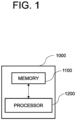
- Fig. 1 is a drawing schematically illustrating a calibrating device for calibrating a physics engine of a virtual world simulator for learning a deep learning-based device in accordance with one example embodiment of the present disclosure.
- the calibrating device 1000 may include a memory 1100 for storing instructions to calibrate the physics engine of the virtual world simulator for learning of the deep learning-based device and a processor 1200 for performing processes corresponding to the instructions in the memory 1100 to calibrate the physics engine of the virtual world simulator for learning of the deep learning-based device.
- the calibrating device 1000 may typically achieve a desired system performance by using combinations of at least one computing device and at least one computer software, e.g., a computer processor, a memory, a storage, an input device, an output device, or any other conventional computing components, an electronic communication device such as a router or a switch, an electronic information storage system such as a network-attached storage (NAS) device and a storage area network (SAN) as the computing device and any instructions that allow the computing device to function in a specific way as the computer software.
- a computer software e.g., a computer processor, a memory, a storage, an input device, an output device, or any other conventional computing components, an electronic communication device such as a router or a switch, an electronic information storage system such as a network-attached storage (NAS) device and a storage area network (SAN) as the computing device and any instructions that allow the computing device to function in a specific way as the computer software.
- NAS network-attached storage
- SAN storage area network
- the processor of the computing device may include hardware configuration of MPU (Micro Processing Unit) or CPU (Central Processing Unit), cache memory, data bus, etc. Additionally, the computing device may further include OS and software configuration of applications that achieve specific purposes.
- MPU Micro Processing Unit
- CPU Central Processing Unit
- computing device does not exclude an integrated device including any combination of a processor, a memory, a medium, or any other computing components for implementing the present disclosure.
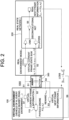
- a method for calibrating the physics engine of the virtual world simulator for learning of the deep learning-based device by using the calibrating device 1000 in accordance with one example embodiment of the present disclosure is described by referring to Fig. 2 as follows.
- the virtual world simulator 100 generates virtual current frame information I t corresponding to a virtual current state in a virtual environment predetermined for learning of the deep learning-based device 300, i.e., an agent.
- the virtual current state may include operating state information, surrounding environment information, operating conditions, etc. of the deep learning-based device 300, and the deep learning-based device 300 is an autonomous vehicle.
- the virtual current state may include various driving information such as autonomous vehicle information, surrounding vehicle information, road information, traffic signal information, the surrounding environment information, etc.
- the calibrating device 1000 transmits the acquired virtual current frame information I t to the deep learning-based device 300, to thereby allow the deep learning-based device 300 to apply its operation using previous learned parameters to the virtual current frame information I t and thus to output virtual action information a t corresponding to the virtual current frame information I t at a step of S2.
- the calibrating device 1000 transmits the virtual current frame information I t acquired from the virtual world simulator 100 and the virtual action information a t outputted from the deep learning-based device 300 to the physics engine F 110 of the virtual world simulator 100, to thereby allow the physics engine F 110 to apply its operation using previous calibrated parameters to the virtual current frame information I t and the virtual action information a t and thus to output virtual next frame information I t +1 corresponding to the virtual action information a t and the virtual current frame information I t at a step of S3.
- the calibrating device 1000 transmits the virtual current frame information I t acquired from the virtual world simulator 100 and the virtual action information a t outputted from the deep learning-based device 300 to the real state network 200, to thereby allow the real state network 200 to apply its operation using learned prediction parameters to the virtual action information a t and multiple pieces of virtual recent frame information corresponding to the virtual current frame information I t and thus to output predicted real next frame information I t +1 at a step of S5. That is, the real state network 200 outputs next frame information predicted to happen in the real world by referring to the multiple pieces of the virtual recent frame information and the virtual action information.
- the multiple pieces of the virtual recent frame information may be k+1 pieces of the virtual recent frame information, but the scope of the present disclosure is not limited thereto.
- the real state network 200 has been learned to output the multiple pieces of the predicted next frame information corresponding to the real action information on the real action in the multiple pieces of the real recent frame information performed by the deep learning-based device in the real environment, a process of which will be described in detail later.
- the multiple pieces of the predicted next frame information may be k+1 pieces of the predicted next frame information
- the multiple pieces of the real recent frame information may be k+1 pieces of the real recent frame information, but the scope of the present disclosure is not limited thereto.
- the calibrating device 1000 performs a process of transmitting the virtual current frame information and the virtual action information to the real state network 200, to thereby instruct the real state network 200 to generate the multiple pieces of the virtual recent frame information by referring to the virtual current frame information and k pieces of virtual previous frame information received beforehand.
- the calibrating device 1000 may generate the multiple pieces of the virtual recent frame information by referring to the virtual current frame information and the k pieces of the virtual previous frame information received beforehand, to thereby transmit the virtual recent frame information to the real state network 200.
- the calibrating device 1000 may perform a process of transmitting the virtual current frame information and the virtual action information to the real state network 200, to thereby instruct the real state network 200 to generate a virtual current frame state sum created by concatenating the virtual current frame information and the k pieces of the virtual previous frame information.
- the calibrating device 1000 may generate the virtual current frame state sum created by concatenating the virtual current frame information and the k pieces of the virtual previous frame information, to thereby transmit the virtual current frame state sum to the real state network 200.
- the virtual current frame state sum s t may be represented as [ I t-K , I t-K+ 1 , ..., I t -1 , I t ] and the predicted real next state Î t +1 may be represented as S ( s t , a t ) .
- the real state network 200 may (i) (i-1) generate a 1-st dimension vector by applying convolution operation to the virtual current frame state sum s t and (i-2) generate a 2-nd dimension vector by applying fully-connected operation to the virtual action information, and (ii) generate the predicted real next frame information by applying deconvolution operation to a concatenation of the 1-st dimension vector and the 2-nd dimension vector.
- the virtual current frame state sum s t may be an H ⁇ W ⁇ Cx(K+1) tensor created by concatenating (i) the k pieces of the virtual previous frame information and (ii) the virtual current frame information which is an H ⁇ W ⁇ C tensor.
- the 1-st feature vector may be an HWC-dimensional vector
- the predicted real next frame information may be an H ⁇ W ⁇ C tensor created by applying deconvolution operation to a 1 ⁇ 1 ⁇ (HWC+L) tensor generated by concatenating the 1-st feature vector and the 2-nd feature vector.
- the virtual action information may be a 3-dimensional vector, for example, if the deep learning-based device 300 is the autonomous vehicle, the virtual action information may correspond to [information on a degree of change in a steering angle, information on a pressure on a brake pedal, information on a pressure on an accelerator pedal].
- the calibrating device 1000 performs a process of calibrating the previous calibrated parameters of the physics engine F 110, such that at least one loss is minimized which is created by referring to the virtual next frame information outputted from the physics engine F 110 of the virtual world simulator 100 and the predicted real next frame information outputted from the real state network 200, to thereby generate current calibrated parameters as optimized parameters, at a step of S6.
- the physics engine F 110 may plan a virtual next frame where a gap between the virtual environment and the real environment is minimized.
- the calibrating device 1000 may calculate one or more losses ⁇ I t + 1 ⁇ I ⁇ t + 1 ⁇ F 2 by referring to the difference between the virtual next frame information I t +1 generated by the physics engine F 110 and the predicted real next frame information Î t +1 generated by the real state network 200, or may instruct a loss layer to calculate the losses ⁇ I t + 1 ⁇ I ⁇ t + 1 ⁇ F 2 , and may optimize the physics engine F 110 by referring to the losses ⁇ I t + 1 ⁇ I ⁇ t + 1 ⁇ F 2 .
- the previous calibrated parameters may be optimized as follows.
- the calibrating device 1000 may perform (i) a process of selecting one previous calibrated parameter among the previous calibrated parameters of the physics engine F 110 and (ii) a process of calibrating the selected one previous calibrated parameter with a preset learning rate by using the loss, to thereby generate one current calibrated parameter as an optimized parameter.
- the calibrating device 1000 may repeat, until the loss decreases, (i) a process of instructing the physics engine F 110 to apply its operation using said one current calibrated parameter and a rest of the previous calibrated parameters excluding said one previous calibrated parameter to the virtual current frame information and the virtual action information, to thereby generate new virtual next frame information and (ii) a process of determining whether the loss decreases by using at least one new loss created by referring to the difference between the new virtual next frame information and the predicted real next frame information.
- the calibrating device 1000 may decrease the preset learning rate and may perform the processes above.
- the calibrating device 1000 performs a process of transmitting the virtual next frame information I t +1 outputted from the physics engine F 110 and reward information r t +1 corresponding to the virtual action information outputted from the deep learning-based device 300 to the deep learning-based device 300 at a step of S4, to thereby instruct the deep learning-based device 300 to update the previous learned parameters via on-policy reinforcement learning which uses the virtual next frame information I t +1 and the reward information r t +1 .
- the reward information may be result representing whether the virtual action information is appropriate which is performed by the deep learning-based device 300 in response to the virtual current frame information, and the reward information may be generated by the physics engine F 110 or the calibrating device 1000.
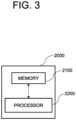
- Fig. 3 is a drawing schematically illustrating a learning device for learning the real state network capable of generating the predicted next frame information corresponding to the real action information on the real action performed in the multiple pieces of the real recent frame information by the deep learning-based device in the real environment in accordance with one example embodiment of the present disclosure.
- the learning device 2000 may include a memory 2100 for storing instructions to learn the real state network capable of outputting the predicted next frame information corresponding to the real action information on the real action performed in the multiple pieces of the real recent frame information by the deep learning-based device in the real environment and a processor 2200 for performing processes corresponding to the instructions in the memory 2100 to learn the real state network capable of outputting the predicted next frame information corresponding to the real action information on the real action performed in the multiple pieces of the real recent frame information by the deep learning-based device in the real environment.
- the learning device 2000 may typically achieve a desired system performance by using combinations of at least one computing device and at least one computer software, e.g., a computer processor, a memory, a storage, an input device, an output device, or any other conventional computing components, an electronic communication device such as a router or a switch, an electronic information storage system such as a network-attached storage (NAS) device and a storage area network (SAN) as the computing device and any instructions that allow the computing device to function in a specific way as the computer software.
- the processor of the computing device may include hardware configuration of MPU (Micro Processing Unit) or CPU (Central Processing Unit), cache memory, data bus, etc. Additionally, the computing device may further include OS and software configuration of applications that achieve specific purposes.
- computing device does not exclude an integrated device including any combination of a processor, a memory, a medium, or any other computing components for implementing the present disclosure.
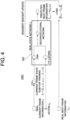
- a method for learning of outputting the predicted next frame information corresponding to the real action information on the real action performed in the multiple pieces of the real recent frame information by the deep learning-based device in the real environment by using the learning device 2000 in accordance with one example embodiment of the present disclosure configured as such is described as follows by referring to Fig. 4 . In the description below, the part easily deducible from the explanation of Fig. 2 will be omitted.
- the learning device 2000 acquires multiple pieces of trajectory information corresponding to multiple pieces of the real action information on the real action performed by the deep learning-based device in the real environment as training data.
- N pieces of the trajectory information may be generated by the agent, which is the deep learning-based device, in various environments like the real environment, and the deep learning-based device may generate the N pieces of the trajectory information by repeating: (i) a process of creating the current frame I t which is information on the real environment, (ii) a process of creating the action a t corresponding to the current frame I t , and (iii) a process of creating the next frame I t +1 changed according to the action a t .
- the N pieces of the trajectory information may be exemplarily represented as follows.
- s t ) of the deep learning-based device may be different.
- the learning device 2000 may perform a process of generating multiple pieces of recent frame information for training by referring to k pieces of previous real frame information and real current frame information at a point of time in specific trajectory information among the multiple pieces of the trajectory information acquired as the training data.
- the learning device 2000 performs a process of inputting into the real state network 200 the multiple pieces of the recent frame information for training and action information for training which is acquired by referring to real current action information of the specific trajectory information at the point of the time, to thereby allow the real state network 200 to apply its operation using prediction parameters to the multiple pieces of the recent frame information for training and the action information for training and thus to output the predicted next frame information.
- the learning device 2000 may perform (i) a process of inputting a current frame state sum for training, created by concatenating the multiple pieces of the recent frame information for training, into a convolutional neural network of the real state network 200, to thereby allow the convolutional neural network to output a 1-st feature vector by applying convolution operation to the current frame state sum for training and (ii) a process of inputting the action information for training into at least one fully connected layer of the real state network 200, to thereby allow said at least one fully connected layer to output a 2-nd feature vector by applying fully-connected operation to the action information for training.
- the learning device 2000 may perform a process of inputting a concatenated feature vector created by concatenating the 1-st feature vector and the 2-nd feature vector into a deconvolutional layer, to thereby allow the deconvolutional layer to output the predicted next frame information by applying deconvolution operation to the concatenated feature vector.
- the current frame state sum for training s t may be represented as [ I t-K ,I t-K +1 , ... , I t- 1 , I t ] and the predicted next frame information Î t +1 may be represented as S ( s t ,a t ) .
- the current frame state sum for training is an H ⁇ W ⁇ Cx(K+1) tensor created by concatenating the multiple pieces of the recent frame information for training which are H ⁇ W ⁇ C tensors
- the 1-st feature vector is an HWC-dimensional vector
- the action information for training is a 3-dimensional vector
- the 2-nd feature vector is an L-dimensional vector
- the concatenated feature vector is a 1 ⁇ 1 ⁇ (HWC+L) tensor
- the predicted next frame information is an H ⁇ W ⁇ C tensor.
- the learning device 2000 performs a process of updating the prediction parameters such that the loss is minimized, by using at least one loss created by referring to the difference between the predicted next frame information and real next frame information which is next to the real current frame information in the specific trajectory information.
- the learning device 2000 may calculate one or more losses ⁇ I t + 1 ⁇ I ⁇ t + 1 ⁇ F 2 by referring to the real next frame information I t +1 of the specific trajectory information and the predicted next frame information Î t +1 outputted from the real state network 200, or may instruct a loss layer to calculate the losses ⁇ I t + 1 ⁇ I ⁇ t + 1 ⁇ F 2 , and may learn the real state network 200 by referring to the losses ⁇ I t + 1 ⁇ I ⁇ t + 1 ⁇ F 2 .
- the learning device 2000 may perform a process of updating the prediction parameters of the real state network 200 according to a gradient descent, for example, may update at least one parameter of at least one of the convolutional neural network, said at least one fully connected layer, and the deconvolutional layer.
- the learning device 2000 may repeat the learning processes above by using N real world trajectories, such that the losses of the real state network 200 converge.
- the present disclosure has an effect of more reliably applying short-term planning of the deep learning-based device learned in the virtual world to the real world, by calibrating the physics engine of the virtual world simulator to minimize the gap between the virtual world and the real world.
- the present disclosure has another effect of utilizing losses between the physics engine and a real environment model as a reliability measure, for validating a reliability of a given virtual environment.
- the embodiments of the present disclosure as explained above can be implemented in a form of unclaimed executable program command through a variety of computer means recordable to unclaimed computer readable media.
- the computer readable media may include solely or in combination, program commands, data files, and data structures.
- the program commands recorded to the media may be components specially designed for the present invention or may be usable to a skilled human in a field of computer software.
- Computer readable media include magnetic media such as hard disk, floppy disk, and magnetic tape, optical media such as CD-ROM and DVD, magneto-optical media such as floptical disk and hardware devices such as ROM, RAM, and flash memory specially designed to store and carry out program commands.
- Program commands include not only a machine language code made by a complier but also a high level code that can be used by an interpreter etc., which is executed by a computer.
- the aforementioned hardware device can work as more than a software module to perform the action of the present invention and they can do the same in the opposite case.
Landscapes
- Engineering & Computer Science (AREA)
- Physics & Mathematics (AREA)
- Theoretical Computer Science (AREA)
- General Physics & Mathematics (AREA)
- Evolutionary Computation (AREA)
- Data Mining & Analysis (AREA)
- General Engineering & Computer Science (AREA)
- Artificial Intelligence (AREA)
- Life Sciences & Earth Sciences (AREA)
- Software Systems (AREA)
- Biophysics (AREA)
- Health & Medical Sciences (AREA)
- Computing Systems (AREA)
- Biomedical Technology (AREA)
- Mathematical Physics (AREA)
- Molecular Biology (AREA)
- Computational Linguistics (AREA)
- General Health & Medical Sciences (AREA)
- Transportation (AREA)
- Mechanical Engineering (AREA)
- Automation & Control Theory (AREA)
- Computer Vision & Pattern Recognition (AREA)
- Multimedia (AREA)
- Evolutionary Biology (AREA)
- Bioinformatics & Computational Biology (AREA)
- Bioinformatics & Cheminformatics (AREA)
- Human Computer Interaction (AREA)
- Geometry (AREA)
- Computer Hardware Design (AREA)
- Medical Informatics (AREA)
- Neurology (AREA)
- Management, Administration, Business Operations System, And Electronic Commerce (AREA)
- Image Analysis (AREA)
- Feedback Control In General (AREA)
Claims (14)
- Verfahren zum Kalibrieren einer Physik-Engine (110) eines Virtuelle-Welt-Simulators (100), die zum Anlernen einer auf Deep Learning basierenden Vorrichtung (300) verwendet werden soll, die ein autonomes Fahrzeug ist, das so konfiguriert ist, dass es Aktionsinformationen ausgibt, die einen dreidimensionalen reellwertigen Vektor umfassen, der einen Änderungsbetrag eines Lenkwinkels, einen Druck auf ein Bremspedal und einen Druck auf ein Gaspedal spezifiziert, und wobei die Physik-Engine so konfiguriert ist, dass sie einen nächsten Zustand mit veränderter Geschwindigkeit, Ort und Umgebung des Fahrzeugs ausgibt, wenn Aktionen wie das Drehen eines Lenkrads um einen bestimmten Winkel und das Treten auf das Bremspedal mit einem bestimmten Druck als Reaktion auf einen Zustand einer aktuellen Geschwindigkeit und seiner Umgebung ausgeführt werden, wobei das Verfahren die folgenden Schritte umfasst:(a) wenn virtuelle aktuelle Frame-Informationen (It), die einem virtuellen aktuellen Zustand in einer virtuellen Umgebung entsprechen, vom Virtuelle-Welt-Simulator (100) erfasst werden, eine Kalibrierungsvorrichtung (1000), die (i) einen Übertragungsprozess (S1) der virtuellen aktuellen Frame-Informationen (It) an die auf Deep Learning basierende Vorrichtung (300) durchführt, um dadurch die auf Deep Learning basierende Vorrichtung anzuweisen, ihre Operation unter Verwendung von zuvor gelernten Parametern auf die virtuellen aktuellen Frame-Informationen (It) anzuwenden, und somit virtuelle Aktionsinformationen (at) auszugeben (S2), die sich auf die auszuführende Aktion beziehen, die den virtuellen aktuellen Frame-Informationen entspricht, (ii) einen Übertragungsprozess der virtuellen aktuellen Frame-Informationen (It) und der virtuellen Aktionsinformationen (at) an die Physik-Engine (110) des Virtuelle-Welt-Simulators (100), um dadurch die Physik-Engine anzuweisen, ihre Operation unter Verwendung vorheriger kalibrierter Parameter auf die virtuellen aktuellen Frame-Informationen und die virtuellen Aktionsinformationen anzuwenden und somit virtuelle nächste Frame-Informationen (I t+1) auszugeben (S3), die den virtuellen aktuellen Frame-Informationen und den virtuellen Aktionsinformationen entsprechen, und (iii) einen Übertragungsprozess der virtuellen aktuellen Frame-Information (It) und der virtuellen Aktionsinformation (at) an ein Real-Zustand-Netzwerk (200), das angelernt wurde, mehrere Teile vorhergesagter nächster Frame-Informationen (Î t+1) als Reaktion auf reale Aktionsinformation
(at) über eine reale Aktion auszugeben, die in mehreren Teilen realer letzter Frame-Informationen ([It-k, It-K+1,....,It-1, It]) durch die auf Deep Learning basierende Vorrichtung (300) in einer realen Umgebung durchgeführt wird, um dadurch das Real-Zustand-Netzwerk (200) anzuweisen, seine Operation unter Verwendung gelernter Vorhersageparameter auf die virtuellen Aktionsinformationen und mehrere Teile der virtuellen letzten Frame-Informationen, die den virtuellen aktuellen Frame-Informationen entsprechen, anzuwenden und somit vorhergesagte reale nächste Frame-Informationen (Î t+1 = S(St, at )) auszugeben (S5), und(b) die Kalibrierungsvorrichtung (100) einen Kalibrierungsprozess (S6) der vorherigen kalibrierten Parameter der Physik-Engine (110) durchführt, so dass mindestens ein Verlust (∥I t+1 - Î t+1∥2 F ) minimiert wird, der durch Bezugnahme auf die Differenz zwischen den virtuellen nächsten Frame-Informationen (I t+1) und der vorhergesagten realen nächsten Frame-Informationen (Î t+1) erzeugt wird, um dadurch aktuelle kalibrierte Parameter als optimierte Parameter zu erzeugen;(c) Kalibrierungsvorrichtung (1000), die einen Übertragungsprozess (S4) der virtuellen nächsten Frame-Informationen (I t+1) und der Belohnungsinformationen (rt+1), die den virtuellen Aktionsinformationen (at) entsprechen, an die auf Deep Learning basierende Vorrichtung (300) durchführt, um dadurch die auf Deep Learning basierende Vorrichtung anzuweisen, die zuvor gelernten Parameter über On-Policy-Reinforcement-Learning zu aktualisieren, das die virtuellen nächsten Frame-Informationen und die Belohnungsinformationen verwendet. - Verfahren nach Anspruch 1, wobei die Kalibrierungsvorrichtung (1000) in dem Prozess (iii) beim Schritt (a) einen Übertragungsprozess der virtuellen aktuellen Frame-Information (It) und der virtuellen Aktionsinformation (at) an Real-Zustand-Netzwerk (200) durchführt, um dadurch das Real-Zustand-Netzwerk anzuweisen, die mehreren Teile der virtuellen letzten Frame-Informationen ([It-k, It-K+1, ... ,It-1, It]) durch Bezugnahme auf die virtuellen aktuellen Frame-Informationen (It) und k Teile der virtuellen vorherigen Frame-Informationen ([It-k, It-K+1, ... ,It-1]), die zuvor empfangen wurden, zu erzeugen.
- Verfahren nach Anspruch 2, wobei die Kalibrierungsvorrichtung bei dem Prozess (iii) einen Übertragungsprozess der virtuellen aktuellen Frame-Information (It ) und der virtuellen Aktionsinformation (at) an das Real-Zustand-Netzwerk (200) durchführt, um dadurch das Real-Zustand-Netzwerk anzuweisen, (iii-1) (iii-1-1) einen ersten Merkmalsvektor durch Anwendung einer Faltungsoperation auf eine virtuelle aktuelle Frame-Zustandssumme (st = [It-k, It-K+1,... ,It-1, It]) zu erzeugen, die durch Verkettung der virtuellen aktuellen Frame-Informationen und der k Teile der virtuellen vorherigen Frame-Informationen erzeugt wird, und (iii-1-2) einen zweiten Merkmalsvektor zu erzeugen, indem eine vollständig verbundene Operation auf die virtuelle Aktionsinformation (at) angewendet wird, und (iii-2) die vorhergesagte reale nächste Frame-Information (Î t+1) zu erzeugen, indem eine Entfaltungsoperation auf eine Verkettung des ersten Merkmalsvektors und des zweiten Merkmalsvektors angewendet wird.
- Verfahren nach Anspruch 3, wobei die virtuelle aktuelle Frame-Information ein HxWxC-Tensor ist, die virtuelle aktuelle Frame-Zustandssumme ein HxWxCx(K+l)-Tensor ist, der durch Verkettung (i) der k Teile der virtuellen vorherigen Frame-Information erzeugt wird, und (ii) wobei der erste Merkmalsvektor ein HWC-dimensionaler Vektor ist, und
wobei, unter der Annahme, dass der zweite Merkmalsvektor ein L-dimensionaler Vektor ist, die vorhergesagte reale nächste Frame-Information ein HxWxC-Tensor ist, der durch Anwendung der Entfaltungsoperation auf einen 1×1×(HWC+L)-Tensor erzeugt wird, der durch Verkettung des ersten Merkmalsvektors und des zweiten Merkmalsvektors erzeugt wird. - Verfahren nach Anspruch 1, wobei beim Schritt (b) die Kalibrierungsvorrichtung (1000), bis der Verlust abnimmt, Folgendes wiederholt: (b-1) einen Auswahlprozess eines vorherigen kalibrierten Parameters aus den vorherigen kalibrierten Parametern, (b-2) einen Kalibrierungsprozess des ausgewählten vorherigen kalibrierten Parameters mit einer voreingestellten Lernrate unter Verwendung des Verlustes, um dadurch einen aktuellen kalibrierten Parameter als einen optimierten Parameter zu erzeugen und (b-3) (b-3a) einen Anweisungsprozess an die Physik-Engine (110), ihre Operation unter Verwendung des besagten aktuellen kalibrierten Parameters und eines Rests der vorherigen kalibrierten Parameter mit Ausnahme des besagten vorherigen kalibrierten Parameters auf die virtuellen aktuellen Frame-Informationen (It) und die virtuellen Aktionsinformationen (at) anzuwenden, um dadurch neue virtuelle nächste Frame-Informationen (I t+1) zu erzeugen, und (b-3b) einen Prozess zur Bestimmung, ob der Verlust abnimmt, indem mindestens ein neuer Verlust verwendet wird, der durch Bezugnahme auf die neuen virtuellen nächsten Frame-Informationen (I t+1) und die vorhergesagten realen nächsten Frame-Informationen (Î t+1) gebildet wird.
- Verfahren nach Anspruch 5, wobei die Kalibrierungsvorrichtung (1000) die voreingestellte Lernrate verringert und den besagten Prozess (b-1), den besagten Prozess (b-2) und den besagten Prozess (b-3) durchführt, wenn der Verlust für keinen der zuvor kalibrierten Parameter als nicht verringert bestimmt wird.
- Verfahren zum Anlernen eines Real-Zustand-Netzwerkes (200), das in der Lage ist, vorhergesagte reale nächste Frame-Informationen zu erzeugen, die realen Aktionsinformationen über eine reale Aktion entsprechen, die in mehreren Teilen von realen letzten Frame-Informationen durch eine auf Deep Learning basierende Vorrichtung durchgeführt wird, die ein autonomes Fahrzeug in einer realen Umgebung ist, welches die folgenden Schritte umfasst:(a) wenn mehrere Teile von Trajektorieninformationen (X1, X2, ..., XN), die mehreren Teilen der realen Aktionsinformationen über die reale Aktion entsprechen, die von der auf Deep Learning basierenden Vorrichtung in der realen Umgebung durchgeführt wird, als Trainingsdaten erfasst werden, wobei jeder Teil der realen Aktionsinformationen einen dreidimensionalen realen Vektor umfasst, der einen Änderungsbetrag eines Lenkwinkels, einen Druck auf ein Bremspedal und einen Druck auf ein Gaspedal spezifiziert, führt eine Lernvorrichtung (2000) einen Prozess des Erzeugens mehrerer Teile von letzten Frame-Informationen ([It-k, It-K+1, ..., It-1, It]) für das Training durch, indem sie sich auf k Teile vorheriger realer Frame-Informationen und realen aktuellen Frame-Informationen zu einem Zeitpunkt in spezifischen Trajektorieninformationen bezieht;(b) die Lernvorrichtung (2000) führt einen Eingabeprozess in das Real-Zustand-Netzwerk (200) der mehrfachen Teile der letzten Frame-Information für Training und Aktionsinformation (at) für das Training durch, die durch Bezugnahme auf die reale aktuelle Aktionsinformation der spezifischen Trajektorieninformation zu dem Zeitpunkt erworben wird, um dadurch dem Real-Zustand-Netzwerk zu ermöglichen, seine Operation unter Verwendung von Vorhersageparametern auf die mehrfachen Teile der letzten Frame-Informationen für das Training und die Aktionsinformation für das Training anzuwenden und somit die vorhergesagte nächste Frame-Information (Î t+1) auszugeben; und(c) die Lernvorrichtung (2000) einen Aktualisierungsprozess der Vorhersageparameter durchführt, so dass der Verlust minimiert wird, indem mindestens ein Verlust (∥I t+1 - Î t+1∥2 F ) verwendet wird, der durch Bezugnahme auf die Differenz zwischen der vorhergesagten nächsten Frame-Information (Î t+1) und der realen nächsten Frame-Informationen (I t+1) erzeugt wird, die sich neben den realen nächsten Frame-Informationen in der spezifischen Trajektorieninformation befinden.
- Verfahren nach Anspruch 7, wobei beim Schritt (b) die Lernvorrichtung (2000) (i) einen Eingabeprozess einer aktuellen Frame-Zustandssumme (st = [It-k, It-K+1,...,It-1, It]) für das Training, die durch Verkettung der mehrfachen Teile der letzten Frame-Informationen für das Training in ein neuronales Faltungsnetzwerk (CNN) des Real-Zustand-Netzwerkes (200) erzeugt wird, um dadurch dem neuronalen Faltungsnetzwerk zu ermöglichen, einen ersten Merkmalsvektor auszugeben, indem eine Faltungsoperation auf die aktuelle Frame-Zustandssumme für das Training angewendet wird, und einen Eingabeprozess der Aktionsinformation (at) für das Training in mindestens eine vollständig verbundene Schicht (FC Layers) des Real-Zustand-Netzwerkes, um dadurch zu ermöglichen, dass die besagte mindestens eine vollständig verbundene Schicht einen zweiten Merkmalsvektor ausgibt, indem eine vollständig verbundene Operation auf die Aktionsinformation für das Training angewendet wird, und (ii) einen Eingabeprozess eines verketteten Merkmals, das durch Verkettung des ersten Merkmalsvektors und des zweiten Merkmalsvektors in eine Entfaltungsschicht erzeugt wird, um dadurch zu ermöglichen, dass die Entfaltungsschicht die vorhergesagte nächste Frame-Information (Î t+1) ausgibt, indem eine Entfaltungsoperation auf den verketteten Merkmalsvektor angewendet wird.
- Verfahren nach Anspruch 8, wobei die aktuelle Frame-Zustandssumme für das Training ein H×W×C×(K+l)-Tensor ist, der erzeugt wird durch Verkettung der mehreren Teile der letzten Frame-Informationen für das Training, die HxWxC-Tensoren sind, wobei der erste Merkmalsvektor ein HWC-dimensionaler Vektor ist, wobei die Aktionsinformation für das Training ein dreidimensionaler Vektor ist, wobei der zweite Merkmalsvektor ein L-dimensionaler Vektor ist, und wobei der verkettete Merkmalsvektor ein 1×1×(HWC+L)-Tensor, und die vorhergesagte nächste Frame-Information ein HxWxC-Tensor ist.
- Verfahren nach Anspruch 8, wobei die Lernvorrichtung (2000) einen Aktualisierungsprozess mindestens eines Parameters des neuronalen Faltungsnetzwerkes, der mindestens einen vollständig verbundenen Schicht und der Entfaltungsschicht durchführt, gemäß einem Gradientenverfahren unter Verwendung des Verlustes (∥I t+1 - Î t+1∥2 F).
- Kalibrierungsvorrichtung (1000) zum Kalibrieren einer Physik-Engine (110) eines Virtuelle-Welt-Simulators (100), die zum Anlernen einer auf Deep Learning basierenden Vorrichtung (300) verwendet werden soll, wobei es sich um ein autonomes Fahrzeug handelt, das so konfiguriert ist, dass es Aktionsinformationen ausgibt, die einen dreidimensionalen reellwertigen Vektor umfassen, der einen Änderungsbetrag eines Lenkwinkels, einen Druck auf ein Bremspedal und einen Druck auf ein Gaspedal spezifiziert, und wobei die Physik-Engine so konfiguriert ist, dass sie einen nächsten Zustand mit geänderter Geschwindigkeit, Ort und Umgebung des Fahrzeugs ausgibt, wenn Aktionen wie das Drehen eines Lenkrads um einen bestimmten Winkel und das Treten auf das Bremspedal mit einem bestimmten Druck als Reaktion auf einen Zustand einer aktuellen Geschwindigkeit und seiner Umgebung durchgeführt werden, wobei die Kalibrierungsvorrichtung umfasst:mindestens einen Speicher (1100), der Befehle speichert; undmindestens einen Prozessor (1200), der so konfiguriert ist, dass er die Befehle ausführt, oder eine andere Vorrichtung bei der Ausführung unterstützt:
(I) wenn virtuelle aktuelle Frame-Informationen (It), die einem virtuellen aktuellen Zustand in einer virtuellen Umgebung entsprechen, vom Virtuelle-Welt-Simulator erfasst werden, (i) ein Übertragungsprozess der virtuellen aktuellen Frame-Informationen (It) an die auf Deep Learning basierende Vorrichtung (300), um dadurch die auf Deep Learning basierende Vorrichtung anzuweisen, ihre Operation unter Verwendung von zuvor gelernten Parametern auf die virtuellen aktuellen Frame-Informationen anzuwenden, und somit virtuelle Aktionsinformationen (at) auszugeben, die sich auf die auszuführende Aktion beziehen, die den virtuellen aktuellen Frame-Informationen entspricht, (ii) ein Übertragungsprozess der virtuellen aktuellen Frame-Informationen und der virtuellen Aktionsinformationen an die Physik-Engine (110) des Virtuelle-Welt-Simulators (100), um dadurch die Physik-Engine anzuweisen, ihre Operation unter Verwendung vorheriger kalibrierter Parameter auf die virtuellen aktuellen Frame-Informationen und die virtuellen Aktionsinformationen anzuwenden und somit virtuelle nächste Frame-Informationen (It+1) auszugeben, die den virtuellen aktuellen Frame-Informationen und den virtuellen Aktionsinformationen entsprechen, und (iii) ein Übertragungsprozess der virtuellen aktuellen Frame-Informationen und der virtuellen Aktionsinformationen an ein Real-Zustand-Netzwerk (200), das angelernt wurde, mehrere Teile vorhergesagter nächster Frame-Informationen als Reaktion auf reale Aktionsinformationen über eine reale Aktion auszugeben, die in mehreren Teilen realer letzter Frame-Informationen durch die auf Deep Learning basierende Vorrichtung in einer realen Umgebung durchgeführt wird, um dadurch das Real-Zustand-Netzwerk anzuweisen, seine Operation unter Verwendung gelernter Vorhersageparameter auf die virtuellen Aktionsinformationen und mehrere Teile der virtuellen letzten Frame-Informationen, die den virtuellen aktuellen Frame-Informationen entsprechen, anzuwenden und somit vorhergesagte reale nächste Frame-Informationen (Î t+1) auszugeben, (II) ein Kalibrierungsprozess der vorherigen kalibrierten Parameter der Physik-Engine (110), so dass mindestens ein Verlust (∥I t+1 - Î t+1∥ 2F) minimiert wird, der durch Bezugnahme auf die Differenz zwischen den virtuellen nächsten Frame-Informationen (I t+1) und den vorhergesagten realen nächsten Frame-Informationen (Î t+1) erzeugt wird, um dadurch aktuelle kalibrierte Parameter als optimierte Parameter zu erzeugen, und (III) ein Übertragungsprozess der virtuellen nächsten Frame-Informationen (It+1) und der Belohnungsinformationen (rt+1), die den virtuellen Aktionsinformationen (at) entsprechen, an die auf Deep Learning basierende Vorrichtung (300), um dadurch die auf Deep Learning basierende Vorrichtung anzuweisen, die zuvor gelernten Parameter über On-Policy-Reinforcement-Learning zu aktualisieren, das die virtuellen nächsten Frame-Informationen und die Belohnungsinformation verwendet. - Kalibrierungsvorrichtung nach Anspruch 11, wobei der Prozessor (1200) beim Prozess (iii) einen Übertragungsprozess der virtuellen aktuellen Frame-Informationen (It) und der virtuellen Aktionsinformation (at) an das Real-Zustand-Netzwerk (200) durchführt, um dadurch das Real-Zustand-Netzwerk anzuweisen, die mehreren Teile der virtuellen letzten Frame-Information ([It-k, It-K+1, ... ,It-1, It]) unter Bezugnahme auf die virtuelle aktuelle Frame-Information und k Teile der virtuellen vorherigen Frame-Information, die zuvor empfangen wurden, zu erzeugen.
- Kalibrierungsvorrichtung nach Anspruch 12, wobei der Prozessor (1200) beim Prozess (iii) einen Übertragungsprozess der virtuellen aktuellen Frame-Information (It) und der virtuellen Aktionsinformation (at) an das Real-Zustand-Netzwerk durchführt, um dadurch das Real-Zustand-Netzwerk anzuweisen, (iii-1) (iii-1-1) einen ersten Merkmalsvektor zu erzeugen, indem eine Faltungsoperation auf eine virtuelle aktuelle Frame-Zustandssumme (st = [It-k, It-K+1,... ,It-1, It]) angewendet wird, die durch Verkettung der virtuellen aktuellen Frame-Information und der k Teile der virtuellen vorherigen Frame-Information erzeugt wird, und (iii-1-2) einen zweiten Merkmalsvektor zu erzeugen, indem eine vollständig verbundene Operation auf die virtuelle Aktionsinformation (at) angewendet wird, und (iii-2) die vorhergesagte reale nächste Frame-Information (Î t+1) zu erzeugen, indem eine Entfaltungsoperation auf eine Verkettung des ersten Merkmalsvektors und des zweiten Merkmalsvektors angewendet wird.
- Lernvorrichtung (2000) zum Anlernen eines Real-Zustand-Netzwerkes (200), das in der Lage ist, vorhergesagte nächste Frame-Informationen zu erzeugen, die realen Aktionsinformationen über eine reale Aktion entsprechen, die in mehreren Teilen von realen letzten Frame-Informationen durch eine auf Deep Learning basierende Vorrichtung durchgeführt wird, die ein autonomes Fahrzeug in einer realen Umgebung ist, welches umfasst:mindestens einem Speicher (2100), der Befehle speichert; undmindestens einen Prozessor (2200), der so konfiguriert ist, dass er die auszuführenden Befehle ausführt:
(I) wenn mehrere Teile von Trajektorieninformationen (X1, X2, ..., XN), die mehreren Teilen der realen Aktionsinformationen über die von der auf Deep Learning basierenden Vorrichtung in der realen Umgebung durchgeführte reale Aktion entsprechen, als Trainingsdaten erfasst werden, wobei jeder Teil der realen Aktionsinformationen einen dreidimensionalen realen Vektor umfasst, der einen Änderungsbetrag eines Lenkwinkels, einen Druck auf ein Bremspedal, einen Druck auf ein Gaspedal spezifiziert, ein Prozess des Erzeugens mehrerer Teile von letzten Frame-Informationen ([It-k, It-K+1, ... ,It-1, It]) für das Training durch Bezugnahme auf k Teile vorheriger realer Frame-Informationen und realer aktueller Frame-Informationen zu einem Zeitpunkt in spezifischen Trajektorieninformationen, (II) ein Eingabeprozess in das Real-Zustand-Netzwerk (200) der mehreren Teile der letzten Frame-Informationen für das Training und der Aktionsinformationen für das Training, die durch Bezugnahme auf reale aktuelle Aktionsinformationen der spezifischen Trajektorieninformationen zu diesem Zeitpunkt erfasst werden, um dadurch dem Real-Zustand-Netzwerk (200) zu ermöglichen, seine Operation unter Verwendung von Vorhersageparametern auf die mehreren Teile der letzten Frame-Information für das Training und die Aktionsinformation für das Training anzuwenden und somit die vorhergesagte nächste Frame-Information (Ît+1) auszugeben, und (III) ein Aktualisierungsprozess der Vorhersageparameter, so dass der Verlust minimiert wird, unter Verwendung mindestens eines Verlustes (∥I t+1 - Î t+1∥2 F), der durch Bezugnahme auf die Differenz zwischen der vorhergesagten nächsten Frame-Informationen (Î t+1) und der realen nächsten Frame-Informationen (I t+1) erzeugt wird, die sich neben den realen aktuellen Frame-Informationen in den spezifischen Trajektorieninformationen befinden.
Applications Claiming Priority (2)
| Application Number | Priority Date | Filing Date | Title |
|---|---|---|---|
| US201962798691P | 2019-01-30 | 2019-01-30 | |
| US16/723,450 US10776542B2 (en) | 2019-01-30 | 2019-12-20 | Method and device for calibrating physics engine of virtual world simulator to be used for learning of deep learning-based device, and a learning method and learning device for real state network used therefor |
Publications (3)
| Publication Number | Publication Date |
|---|---|
| EP3690750A1 EP3690750A1 (de) | 2020-08-05 |
| EP3690750C0 EP3690750C0 (de) | 2024-08-14 |
| EP3690750B1 true EP3690750B1 (de) | 2024-08-14 |
Family
ID=69177075
Family Applications (1)
| Application Number | Title | Priority Date | Filing Date |
|---|---|---|---|
| EP20152427.9A Active EP3690750B1 (de) | 2019-01-30 | 2020-01-17 | Verfahren und vorrichtung zur kalibrierung einer physikmaschine eines simulators der virtuellen welt zur verwendung zum lernen einer vorrichtung auf tiefenlernbasis sowie lernverfahren und lernvorrichtung für ein dafür verwendetes echtzustandsnetzwerk |
Country Status (5)
| Country | Link |
|---|---|
| US (1) | US10776542B2 (de) |
| EP (1) | EP3690750B1 (de) |
| JP (1) | JP6865365B2 (de) |
| KR (1) | KR102300910B1 (de) |
| CN (1) | CN111738046B (de) |
Families Citing this family (5)
| Publication number | Priority date | Publication date | Assignee | Title |
|---|---|---|---|---|
| US12482189B2 (en) | 2020-06-10 | 2025-11-25 | Nvidia Corporation | Environment generation using one or more neural networks |
| KR102264571B1 (ko) * | 2020-10-30 | 2021-06-15 | 주식회사 애자일소다 | 계층 구조를 갖는 의사결정 에이전트 |
| DE102020215302A1 (de) * | 2020-12-03 | 2022-06-09 | Robert Bosch Gesellschaft mit beschränkter Haftung | Dynamikabhängige Verhaltensplanung für zumindest teilweise automatisiert fahrende Fahrzeuge |
| US12505342B2 (en) | 2021-02-24 | 2025-12-23 | Nvidia Corporation | Generating frames for neural simulation using one or more neural networks |
| CN116934795B (zh) * | 2022-04-08 | 2025-11-25 | 腾讯科技(深圳)有限公司 | 虚拟对象的控制方法、装置、设备及存储介质 |
Family Cites Families (9)
| Publication number | Priority date | Publication date | Assignee | Title |
|---|---|---|---|---|
| DE102014117888A1 (de) * | 2014-12-04 | 2016-10-13 | Connaught Electronics Ltd. | Online-Kalibrierung eines Kraftfahrzeug-Kamerasystems |
| WO2017004803A1 (en) * | 2015-07-08 | 2017-01-12 | Xiaoou Tang | An apparatus and a method for semantic image labeling |
| US10019652B2 (en) * | 2016-02-23 | 2018-07-10 | Xerox Corporation | Generating a virtual world to assess real-world video analysis performance |
| US20190019087A1 (en) * | 2016-03-25 | 2019-01-17 | Sony Corporation | Information processing apparatus |
| US10902343B2 (en) * | 2016-09-30 | 2021-01-26 | Disney Enterprises, Inc. | Deep-learning motion priors for full-body performance capture in real-time |
| KR102742851B1 (ko) * | 2017-02-16 | 2024-12-13 | 삼성전자주식회사 | 자율 주행을 위한 차량 제어 방법, 차량 제어 장치 및 자율 주행을 위한 학습 방법 |
| US10678846B2 (en) * | 2017-03-10 | 2020-06-09 | Xerox Corporation | Instance-level image retrieval with a region proposal network |
| US10475165B2 (en) * | 2017-04-06 | 2019-11-12 | Disney Enterprises, Inc. | Kernel-predicting convolutional neural networks for denoising |
| WO2019191306A1 (en) * | 2018-03-27 | 2019-10-03 | Nvidia Corporation | Training, testing, and verifying autonomous machines using simulated environments |
-
2019
- 2019-12-20 US US16/723,450 patent/US10776542B2/en active Active
-
2020
- 2020-01-06 KR KR1020200001711A patent/KR102300910B1/ko active Active
- 2020-01-17 EP EP20152427.9A patent/EP3690750B1/de active Active
- 2020-01-19 CN CN202010061002.7A patent/CN111738046B/zh active Active
- 2020-01-20 JP JP2020007174A patent/JP6865365B2/ja active Active
Also Published As
| Publication number | Publication date |
|---|---|
| US20200242289A1 (en) | 2020-07-30 |
| US10776542B2 (en) | 2020-09-15 |
| CN111738046B (zh) | 2024-08-02 |
| KR20200094639A (ko) | 2020-08-07 |
| CN111738046A (zh) | 2020-10-02 |
| JP6865365B2 (ja) | 2021-04-28 |
| EP3690750A1 (de) | 2020-08-05 |
| EP3690750C0 (de) | 2024-08-14 |
| JP2020123338A (ja) | 2020-08-13 |
| KR102300910B1 (ko) | 2021-09-13 |
Similar Documents
| Publication | Publication Date | Title |
|---|---|---|
| EP3690750B1 (de) | Verfahren und vorrichtung zur kalibrierung einer physikmaschine eines simulators der virtuellen welt zur verwendung zum lernen einer vorrichtung auf tiefenlernbasis sowie lernverfahren und lernvorrichtung für ein dafür verwendetes echtzustandsnetzwerk | |
| JP6857371B2 (ja) | 安全な自律走行を支援する学習方法、そしてこれを利用した学習装置、テスト方法、及びテスト装置 | |
| JP6964354B2 (ja) | 最近の走行経路に対する軌跡基盤行動分析を遂行して、車両のモードを手動走行モードから自律走行モードに変更するか否かを判断する学習方法及び学習装置 | |
| US11087175B2 (en) | Learning method and learning device of recurrent neural network for autonomous driving safety check for changing driving mode between autonomous driving mode and manual driving mode, and testing method and testing device using them | |
| JP6855090B2 (ja) | カメラから取得されたイメージと、それに対応するレーダまたはライダを通じて取得されたポイントクラウドマップをニューラルネットワークのそれぞれのコンボリューションステージごとに統合する学習方法及び学習装置、そしてそれを利用したテスト方法及びテスト装置 | |
| KR102373448B1 (ko) | 사람의 주행 데이터를 트레이닝 데이터로서 사용하여 강화 학습을 지원함으로써 맞춤형 경로 플래닝을 수행하는 학습 방법 및 학습 장치 | |
| JP6912835B2 (ja) | 自律走行自動車のレベル4を満たすために要求されるhdマップアップデートに利用される、少なくとも一つのアダプティブロス重み付け値マップを利用したアテンションドリブン・イメージセグメンテーション学習方法及び学習装置、そしてこれを利用したテスティング方法及びテスティング装置 | |
| US20240362899A1 (en) | Behaviour Models for Autonomous Vehicle Simulators | |
| JP6892157B2 (ja) | V2x情報融合技術によって取得された、各物体に対する深さ予測情報及び各物体に対するクラス情報を利用して3d空間を再構築することによりhdマップをアップデートする学習方法及び学習装置、そしてこれを利用したテスティング方法及びテスティング装置 | |
| EP3690811B1 (de) | Lernverfahren und lernvorrichtung zur beseitigung von jittering auf einem video, das durch eine wackelnde kamera erfasst wurde, unter verwendung einer vielzahl von neuronalen netzwerken für fehlertoleranz und fluktuationsrobustheit in extremen situationen, sowie testverfahren und testvorrichtung damit | |
| JP6979228B2 (ja) | V2v通信によって取得された、他の自律走行車両の空間探知結果を自身の自律走行車両の空間探知結果と統合する学習方法及び学習装置、そしてこれを利用したテスト方法及びテスト装置{learning method and learning device for integrating object detection information acquired through v2v communication from other autonomous vehicle with object detection information generated by present autonomous vehicle, and testing method and testing device using the same} | |
| CN113496510A (zh) | 使用神经网络进行逼真的图像透视变换 | |
| KR20200092845A (ko) | 인스턴스 세그멘테이션을 이용한 객체의 자세에 따라 모드를 전환할 수 있는 cnn 기반의 수도-3d 바운딩 박스를 검출하는 방법 및 이를 이용한 장치 | |
| CN111488783B (zh) | 基于cnn检测伪3d边界框的方法及其装置 | |
| CN117036607B (zh) | 基于隐式神经渲染的自动驾驶场景数据生成方法及系统 | |
| CN112784867A (zh) | 利用合成图像训练深度神经网络 | |
| KR20200095357A (ko) | 비최대값 억제를 학습하는 병합 네트워크를 이용한 이종 센서 융합을 위한 학습 방법 및 학습 장치 | |
| CN113379654A (zh) | 动态路由的块鉴别器 | |
| EP4124995A1 (de) | Trainingsverfahren zum trainieren eines agenten zur steuerung einer gesteuerten vorrichtung, steuerungsverfahren zum steuern der gesteuerten vorrichtung, computerprogramm(e), computerlesbares medium, trainingssystem und steuerungssystem | |
| Ayyagari | Comparative Study of Model-Based Lateral Controllers with Selected Deep Learning Methods for Autonomous Driving | |
| Chaaban et al. | An End-to-End Pothole Detection and Avoidance System for Autonomous Ground Vehicles | |
| Gideon et al. | Autonomous lane navigation: Using hand-coded method and deep learning method | |
| CN118819117A (zh) | 一种面向adas测试场景的车辆关键特性精准控制方法与系统 | |
| Czechowski et al. | Deep Reinforcement and Imitation Learning for Autonomous Driving: A Systematic Review in the CARLA Simulation Environment | |
| KR20260004078A (ko) | 언어명령 기반 가상 공간 항해를 위한 코스-투-파인 융합 방법 및 그 장치 |
Legal Events
| Date | Code | Title | Description |
|---|---|---|---|
| PUAI | Public reference made under article 153(3) epc to a published international application that has entered the european phase |
Free format text: ORIGINAL CODE: 0009012 |
|
| STAA | Information on the status of an ep patent application or granted ep patent |
Free format text: STATUS: REQUEST FOR EXAMINATION WAS MADE |
|
| 17P | Request for examination filed |
Effective date: 20200117 |
|
| AK | Designated contracting states |
Kind code of ref document: A1 Designated state(s): AL AT BE BG CH CY CZ DE DK EE ES FI FR GB GR HR HU IE IS IT LI LT LU LV MC MK MT NL NO PL PT RO RS SE SI SK SM TR |
|
| AX | Request for extension of the european patent |
Extension state: BA ME |
|
| RBV | Designated contracting states (corrected) |
Designated state(s): AL AT BE BG CH CY CZ DE DK EE ES FI FR GB GR HR HU IE IS IT LI LT LU LV MC MK MT NL NO PL PT RO RS SE SI SK SM TR |
|
| STAA | Information on the status of an ep patent application or granted ep patent |
Free format text: STATUS: EXAMINATION IS IN PROGRESS |
|
| 17Q | First examination report despatched |
Effective date: 20210701 |
|
| REG | Reference to a national code |
Ref country code: DE Free format text: PREVIOUS MAIN CLASS: G06N0003000000 Ref country code: DE Ref legal event code: R079 Ref document number: 602020035594 Country of ref document: DE Free format text: PREVIOUS MAIN CLASS: G06N0003000000 Ipc: G06N0003092000 |
|
| GRAJ | Information related to disapproval of communication of intention to grant by the applicant or resumption of examination proceedings by the epo deleted |
Free format text: ORIGINAL CODE: EPIDOSDIGR1 |
|
| GRAP | Despatch of communication of intention to grant a patent |
Free format text: ORIGINAL CODE: EPIDOSNIGR1 |
|
| GRAP | Despatch of communication of intention to grant a patent |
Free format text: ORIGINAL CODE: EPIDOSNIGR1 |
|
| STAA | Information on the status of an ep patent application or granted ep patent |
Free format text: STATUS: GRANT OF PATENT IS INTENDED |
|
| RIC1 | Information provided on ipc code assigned before grant |
Ipc: B60W 60/00 20200101ALI20240304BHEP Ipc: G06N 3/0464 20230101ALI20240304BHEP Ipc: G06N 3/092 20230101AFI20240304BHEP |
|
| INTG | Intention to grant announced |
Effective date: 20240320 |
|
| RAP3 | Party data changed (applicant data changed or rights of an application transferred) |
Owner name: STRADVISION, INC. |
|
| GRAS | Grant fee paid |
Free format text: ORIGINAL CODE: EPIDOSNIGR3 |
|
| GRAA | (expected) grant |
Free format text: ORIGINAL CODE: 0009210 |
|
| STAA | Information on the status of an ep patent application or granted ep patent |
Free format text: STATUS: THE PATENT HAS BEEN GRANTED |
|
| AK | Designated contracting states |
Kind code of ref document: B1 Designated state(s): AL AT BE BG CH CY CZ DE DK EE ES FI FR GB GR HR HU IE IS IT LI LT LU LV MC MK MT NL NO PL PT RO RS SE SI SK SM TR |
|
| REG | Reference to a national code |
Ref country code: GB Ref legal event code: FG4D |
|
| REG | Reference to a national code |
Ref country code: CH Ref legal event code: EP |
|
| REG | Reference to a national code |
Ref country code: DE Ref legal event code: R096 Ref document number: 602020035594 Country of ref document: DE |
|
| REG | Reference to a national code |
Ref country code: IE Ref legal event code: FG4D |
|
| U01 | Request for unitary effect filed |
Effective date: 20240911 |
|
| U07 | Unitary effect registered |
Designated state(s): AT BE BG DE DK EE FI FR IT LT LU LV MT NL PT RO SE SI Effective date: 20240926 |
|
| PG25 | Lapsed in a contracting state [announced via postgrant information from national office to epo] |
Ref country code: NO Free format text: LAPSE BECAUSE OF FAILURE TO SUBMIT A TRANSLATION OF THE DESCRIPTION OR TO PAY THE FEE WITHIN THE PRESCRIBED TIME-LIMIT Effective date: 20241114 |
|
| U20 | Renewal fee for the european patent with unitary effect paid |
Year of fee payment: 6 Effective date: 20241210 |
|
| PG25 | Lapsed in a contracting state [announced via postgrant information from national office to epo] |
Ref country code: PL Free format text: LAPSE BECAUSE OF FAILURE TO SUBMIT A TRANSLATION OF THE DESCRIPTION OR TO PAY THE FEE WITHIN THE PRESCRIBED TIME-LIMIT Effective date: 20240814 Ref country code: GR Free format text: LAPSE BECAUSE OF FAILURE TO SUBMIT A TRANSLATION OF THE DESCRIPTION OR TO PAY THE FEE WITHIN THE PRESCRIBED TIME-LIMIT Effective date: 20241115 |
|
| PG25 | Lapsed in a contracting state [announced via postgrant information from national office to epo] |
Ref country code: IS Free format text: LAPSE BECAUSE OF FAILURE TO SUBMIT A TRANSLATION OF THE DESCRIPTION OR TO PAY THE FEE WITHIN THE PRESCRIBED TIME-LIMIT Effective date: 20241214 |
|
| PG25 | Lapsed in a contracting state [announced via postgrant information from national office to epo] |
Ref country code: HR Free format text: LAPSE BECAUSE OF FAILURE TO SUBMIT A TRANSLATION OF THE DESCRIPTION OR TO PAY THE FEE WITHIN THE PRESCRIBED TIME-LIMIT Effective date: 20240814 |
|
| PG25 | Lapsed in a contracting state [announced via postgrant information from national office to epo] |
Ref country code: ES Free format text: LAPSE BECAUSE OF FAILURE TO SUBMIT A TRANSLATION OF THE DESCRIPTION OR TO PAY THE FEE WITHIN THE PRESCRIBED TIME-LIMIT Effective date: 20240814 Ref country code: RS Free format text: LAPSE BECAUSE OF FAILURE TO SUBMIT A TRANSLATION OF THE DESCRIPTION OR TO PAY THE FEE WITHIN THE PRESCRIBED TIME-LIMIT Effective date: 20241114 |
|
| PG25 | Lapsed in a contracting state [announced via postgrant information from national office to epo] |
Ref country code: RS Free format text: LAPSE BECAUSE OF FAILURE TO SUBMIT A TRANSLATION OF THE DESCRIPTION OR TO PAY THE FEE WITHIN THE PRESCRIBED TIME-LIMIT Effective date: 20241114 Ref country code: PL Free format text: LAPSE BECAUSE OF FAILURE TO SUBMIT A TRANSLATION OF THE DESCRIPTION OR TO PAY THE FEE WITHIN THE PRESCRIBED TIME-LIMIT Effective date: 20240814 Ref country code: NO Free format text: LAPSE BECAUSE OF FAILURE TO SUBMIT A TRANSLATION OF THE DESCRIPTION OR TO PAY THE FEE WITHIN THE PRESCRIBED TIME-LIMIT Effective date: 20241114 Ref country code: IS Free format text: LAPSE BECAUSE OF FAILURE TO SUBMIT A TRANSLATION OF THE DESCRIPTION OR TO PAY THE FEE WITHIN THE PRESCRIBED TIME-LIMIT Effective date: 20241214 Ref country code: HR Free format text: LAPSE BECAUSE OF FAILURE TO SUBMIT A TRANSLATION OF THE DESCRIPTION OR TO PAY THE FEE WITHIN THE PRESCRIBED TIME-LIMIT Effective date: 20240814 Ref country code: GR Free format text: LAPSE BECAUSE OF FAILURE TO SUBMIT A TRANSLATION OF THE DESCRIPTION OR TO PAY THE FEE WITHIN THE PRESCRIBED TIME-LIMIT Effective date: 20241115 Ref country code: ES Free format text: LAPSE BECAUSE OF FAILURE TO SUBMIT A TRANSLATION OF THE DESCRIPTION OR TO PAY THE FEE WITHIN THE PRESCRIBED TIME-LIMIT Effective date: 20240814 |
|
| PG25 | Lapsed in a contracting state [announced via postgrant information from national office to epo] |
Ref country code: SM Free format text: LAPSE BECAUSE OF FAILURE TO SUBMIT A TRANSLATION OF THE DESCRIPTION OR TO PAY THE FEE WITHIN THE PRESCRIBED TIME-LIMIT Effective date: 20240814 |
|
| PG25 | Lapsed in a contracting state [announced via postgrant information from national office to epo] |
Ref country code: CZ Free format text: LAPSE BECAUSE OF FAILURE TO SUBMIT A TRANSLATION OF THE DESCRIPTION OR TO PAY THE FEE WITHIN THE PRESCRIBED TIME-LIMIT Effective date: 20240814 |
|
| PG25 | Lapsed in a contracting state [announced via postgrant information from national office to epo] |
Ref country code: SK Free format text: LAPSE BECAUSE OF FAILURE TO SUBMIT A TRANSLATION OF THE DESCRIPTION OR TO PAY THE FEE WITHIN THE PRESCRIBED TIME-LIMIT Effective date: 20240814 |
|
| PLBE | No opposition filed within time limit |
Free format text: ORIGINAL CODE: 0009261 |
|
| STAA | Information on the status of an ep patent application or granted ep patent |
Free format text: STATUS: NO OPPOSITION FILED WITHIN TIME LIMIT |
|
| 26N | No opposition filed |
Effective date: 20250515 |
|
| REG | Reference to a national code |
Ref country code: CH Ref legal event code: PL |
|
| PG25 | Lapsed in a contracting state [announced via postgrant information from national office to epo] |
Ref country code: MC Free format text: LAPSE BECAUSE OF FAILURE TO SUBMIT A TRANSLATION OF THE DESCRIPTION OR TO PAY THE FEE WITHIN THE PRESCRIBED TIME-LIMIT Effective date: 20240814 |
|
| GBPC | Gb: european patent ceased through non-payment of renewal fee |
Effective date: 20250117 |
|
| PG25 | Lapsed in a contracting state [announced via postgrant information from national office to epo] |
Ref country code: GB Free format text: LAPSE BECAUSE OF NON-PAYMENT OF DUE FEES Effective date: 20250117 |
|
| PG25 | Lapsed in a contracting state [announced via postgrant information from national office to epo] |
Ref country code: CH Free format text: LAPSE BECAUSE OF NON-PAYMENT OF DUE FEES Effective date: 20250131 |
|
| PG25 | Lapsed in a contracting state [announced via postgrant information from national office to epo] |
Ref country code: IE Free format text: LAPSE BECAUSE OF NON-PAYMENT OF DUE FEES Effective date: 20250117 |