EP3690750B1 - Method and device for calibrating physics engine of virtual world simulator to be used for learning of deep learning-based device, and a learning method and learning device for real state network used therefor - Google Patents
Method and device for calibrating physics engine of virtual world simulator to be used for learning of deep learning-based device, and a learning method and learning device for real state network used therefor Download PDFInfo
- Publication number
- EP3690750B1 EP3690750B1 EP20152427.9A EP20152427A EP3690750B1 EP 3690750 B1 EP3690750 B1 EP 3690750B1 EP 20152427 A EP20152427 A EP 20152427A EP 3690750 B1 EP3690750 B1 EP 3690750B1
- Authority
- EP
- European Patent Office
- Prior art keywords
- virtual
- frame information
- real
- information
- learning
- Prior art date
- Legal status (The legal status is an assumption and is not a legal conclusion. Google has not performed a legal analysis and makes no representation as to the accuracy of the status listed.)
- Active
Links
Images

Classifications
-
- G—PHYSICS
- G06—COMPUTING OR CALCULATING; COUNTING
- G06N—COMPUTING ARRANGEMENTS BASED ON SPECIFIC COMPUTATIONAL MODELS
- G06N3/00—Computing arrangements based on biological models
- G06N3/004—Artificial life, i.e. computing arrangements simulating life
- G06N3/006—Artificial life, i.e. computing arrangements simulating life based on simulated virtual individual or collective life forms, e.g. social simulations or particle swarm optimisation [PSO]
-
- G—PHYSICS
- G06—COMPUTING OR CALCULATING; COUNTING
- G06N—COMPUTING ARRANGEMENTS BASED ON SPECIFIC COMPUTATIONAL MODELS
- G06N3/00—Computing arrangements based on biological models
- G06N3/02—Neural networks
- G06N3/10—Interfaces, programming languages or software development kits, e.g. for simulating neural networks
-
- G—PHYSICS
- G06—COMPUTING OR CALCULATING; COUNTING
- G06V—IMAGE OR VIDEO RECOGNITION OR UNDERSTANDING
- G06V20/00—Scenes; Scene-specific elements
- G06V20/50—Context or environment of the image
- G06V20/56—Context or environment of the image exterior to a vehicle by using sensors mounted on the vehicle
- G06V20/588—Recognition of the road, e.g. of lane markings; Recognition of the vehicle driving pattern in relation to the road
-
- B—PERFORMING OPERATIONS; TRANSPORTING
- B60—VEHICLES IN GENERAL
- B60W—CONJOINT CONTROL OF VEHICLE SUB-UNITS OF DIFFERENT TYPE OR DIFFERENT FUNCTION; CONTROL SYSTEMS SPECIALLY ADAPTED FOR HYBRID VEHICLES; ROAD VEHICLE DRIVE CONTROL SYSTEMS FOR PURPOSES NOT RELATED TO THE CONTROL OF A PARTICULAR SUB-UNIT
- B60W30/00—Purposes of road vehicle drive control systems not related to the control of a particular sub-unit, e.g. of systems using conjoint control of vehicle sub-units
- B60W30/08—Active safety systems predicting or avoiding probable or impending collision or attempting to minimise its consequences
-
- B—PERFORMING OPERATIONS; TRANSPORTING
- B60—VEHICLES IN GENERAL
- B60W—CONJOINT CONTROL OF VEHICLE SUB-UNITS OF DIFFERENT TYPE OR DIFFERENT FUNCTION; CONTROL SYSTEMS SPECIALLY ADAPTED FOR HYBRID VEHICLES; ROAD VEHICLE DRIVE CONTROL SYSTEMS FOR PURPOSES NOT RELATED TO THE CONTROL OF A PARTICULAR SUB-UNIT
- B60W40/00—Estimation or calculation of non-directly measurable driving parameters for road vehicle drive control systems not related to the control of a particular sub unit, e.g. by using mathematical models
- B60W40/02—Estimation or calculation of non-directly measurable driving parameters for road vehicle drive control systems not related to the control of a particular sub unit, e.g. by using mathematical models related to ambient conditions
- B60W40/04—Traffic conditions
-
- B—PERFORMING OPERATIONS; TRANSPORTING
- B60—VEHICLES IN GENERAL
- B60W—CONJOINT CONTROL OF VEHICLE SUB-UNITS OF DIFFERENT TYPE OR DIFFERENT FUNCTION; CONTROL SYSTEMS SPECIALLY ADAPTED FOR HYBRID VEHICLES; ROAD VEHICLE DRIVE CONTROL SYSTEMS FOR PURPOSES NOT RELATED TO THE CONTROL OF A PARTICULAR SUB-UNIT
- B60W60/00—Drive control systems specially adapted for autonomous road vehicles
-
- G—PHYSICS
- G06—COMPUTING OR CALCULATING; COUNTING
- G06F—ELECTRIC DIGITAL DATA PROCESSING
- G06F18/00—Pattern recognition
- G06F18/20—Analysing
- G06F18/21—Design or setup of recognition systems or techniques; Extraction of features in feature space; Blind source separation
- G06F18/214—Generating training patterns; Bootstrap methods, e.g. bagging or boosting
-
- G—PHYSICS
- G06—COMPUTING OR CALCULATING; COUNTING
- G06F—ELECTRIC DIGITAL DATA PROCESSING
- G06F18/00—Pattern recognition
- G06F18/20—Analysing
- G06F18/21—Design or setup of recognition systems or techniques; Extraction of features in feature space; Blind source separation
- G06F18/217—Validation; Performance evaluation; Active pattern learning techniques
-
- G—PHYSICS
- G06—COMPUTING OR CALCULATING; COUNTING
- G06F—ELECTRIC DIGITAL DATA PROCESSING
- G06F30/00—Computer-aided design [CAD]
- G06F30/20—Design optimisation, verification or simulation
- G06F30/27—Design optimisation, verification or simulation using machine learning, e.g. artificial intelligence, neural networks, support vector machines [SVM] or training a model
-
- G—PHYSICS
- G06—COMPUTING OR CALCULATING; COUNTING
- G06N—COMPUTING ARRANGEMENTS BASED ON SPECIFIC COMPUTATIONAL MODELS
- G06N3/00—Computing arrangements based on biological models
- G06N3/02—Neural networks
- G06N3/04—Architecture, e.g. interconnection topology
-
- G—PHYSICS
- G06—COMPUTING OR CALCULATING; COUNTING
- G06N—COMPUTING ARRANGEMENTS BASED ON SPECIFIC COMPUTATIONAL MODELS
- G06N3/00—Computing arrangements based on biological models
- G06N3/02—Neural networks
- G06N3/04—Architecture, e.g. interconnection topology
- G06N3/0464—Convolutional networks [CNN, ConvNet]
-
- G—PHYSICS
- G06—COMPUTING OR CALCULATING; COUNTING
- G06N—COMPUTING ARRANGEMENTS BASED ON SPECIFIC COMPUTATIONAL MODELS
- G06N3/00—Computing arrangements based on biological models
- G06N3/02—Neural networks
- G06N3/06—Physical realisation, i.e. hardware implementation of neural networks, neurons or parts of neurons
- G06N3/063—Physical realisation, i.e. hardware implementation of neural networks, neurons or parts of neurons using electronic means
-
- G—PHYSICS
- G06—COMPUTING OR CALCULATING; COUNTING
- G06N—COMPUTING ARRANGEMENTS BASED ON SPECIFIC COMPUTATIONAL MODELS
- G06N3/00—Computing arrangements based on biological models
- G06N3/02—Neural networks
- G06N3/08—Learning methods
-
- G—PHYSICS
- G06—COMPUTING OR CALCULATING; COUNTING
- G06N—COMPUTING ARRANGEMENTS BASED ON SPECIFIC COMPUTATIONAL MODELS
- G06N3/00—Computing arrangements based on biological models
- G06N3/02—Neural networks
- G06N3/08—Learning methods
- G06N3/09—Supervised learning
-
- G—PHYSICS
- G06—COMPUTING OR CALCULATING; COUNTING
- G06N—COMPUTING ARRANGEMENTS BASED ON SPECIFIC COMPUTATIONAL MODELS
- G06N3/00—Computing arrangements based on biological models
- G06N3/02—Neural networks
- G06N3/08—Learning methods
- G06N3/092—Reinforcement learning
-
- G—PHYSICS
- G06—COMPUTING OR CALCULATING; COUNTING
- G06V—IMAGE OR VIDEO RECOGNITION OR UNDERSTANDING
- G06V20/00—Scenes; Scene-specific elements
- G06V20/40—Scenes; Scene-specific elements in video content
-
- G—PHYSICS
- G06—COMPUTING OR CALCULATING; COUNTING
- G06V—IMAGE OR VIDEO RECOGNITION OR UNDERSTANDING
- G06V20/00—Scenes; Scene-specific elements
- G06V20/50—Context or environment of the image
- G06V20/56—Context or environment of the image exterior to a vehicle by using sensors mounted on the vehicle
- G06V20/58—Recognition of moving objects or obstacles, e.g. vehicles or pedestrians; Recognition of traffic objects, e.g. traffic signs, traffic lights or roads
- G06V20/584—Recognition of moving objects or obstacles, e.g. vehicles or pedestrians; Recognition of traffic objects, e.g. traffic signs, traffic lights or roads of vehicle lights or traffic lights
-
- G—PHYSICS
- G06—COMPUTING OR CALCULATING; COUNTING
- G06F—ELECTRIC DIGITAL DATA PROCESSING
- G06F2111/00—Details relating to CAD techniques
- G06F2111/10—Numerical modelling
Definitions
- the present disclosure relates to a virtual world simulator to be used for learning of a deep learning-based device; and more particularly, to the method and the device for calibrating a physics engine of a virtual world simulator to be used for learning of the deep learning-based device by using a real state network capable of modeling a next state in a real world, and a learning method and a learning device for real state network used therefor.
- Deep learning-based devices such as autonomous vehicles, generally determine the next action to be taken by a short-term planning based on information from several frames to dozens of frames of recent images inputted.
- actions of three dimensional real-valued vectors i.e., (i) an amount of change in a steering angle, (ii) a pressure on a brake pedal, (iii) a pressure on an accelerator pedal, are outputted, and accordingly, the autonomous vehicles will autonomously drive themselves in response to the actions.
- This deep learning-based device should be learned to determine appropriate actions according to the input state, and there are various learning methods, but currently, on-policy reinforcement learning is generally used.
- the deep learning-based device can be learned in a real world, but it is difficult to acquire diversified training data, and it is time-consuming and costly.
- the physics engine of a virtual world simulator may be configured to output "a next state with a changed velocity, a location, and surroundings of the vehicle” if "actions of rotating a steering wheel by a certain angle and stepping on the brake pedal with a certain pressure" are taken in response to "a state of a current velocity and its surroundings", thereby learning the autonomous vehicle.
- the vehicle has learned a proper action that can avoid an accident in a dangerous situation in the virtual world, but nevertheless an accident in the real world occurs even though the vehicle takes the proper action in a same situation.
- a calibrating device for calibrating a physics engine of a virtual world as defined by the appended claim 11.
- the appended claims 12 and 13 define preferred embodiments of this third aspect.
- a learning device for learning a real state network as defined by the appended claim 14.
- Any images referred to in the present disclosure may include images related to any roads paved or unpaved, in which case the objects on the roads or near the roads may include vehicles, persons, animals, plants, buildings, flying objects like planes or drones, or any other obstacles which may appear in a road-related scene, but the scope of the present disclosure is not limited thereto.
- said any images referred to in the present disclosure may include images not related to any roads, such as images related to alleyway, land lots, sea, lakes, rivers, mountains, forests, deserts, sky, or any indoor space
- the objects in said any images may include vehicles, persons, animals, plants, buildings, flying objects like planes or drones, ships, amphibious planes or ships, or any other obstacles which may appear in a scene related to alleyway, land lots, sea, lakes, rivers, mountains, forests, deserts, sky, or any indoor space, but the scope of the present disclosure is not limited thereto.
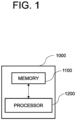
- Fig. 1 is a drawing schematically illustrating a calibrating device for calibrating a physics engine of a virtual world simulator for learning a deep learning-based device in accordance with one example embodiment of the present disclosure.
- the calibrating device 1000 may include a memory 1100 for storing instructions to calibrate the physics engine of the virtual world simulator for learning of the deep learning-based device and a processor 1200 for performing processes corresponding to the instructions in the memory 1100 to calibrate the physics engine of the virtual world simulator for learning of the deep learning-based device.
- the calibrating device 1000 may typically achieve a desired system performance by using combinations of at least one computing device and at least one computer software, e.g., a computer processor, a memory, a storage, an input device, an output device, or any other conventional computing components, an electronic communication device such as a router or a switch, an electronic information storage system such as a network-attached storage (NAS) device and a storage area network (SAN) as the computing device and any instructions that allow the computing device to function in a specific way as the computer software.
- a computer software e.g., a computer processor, a memory, a storage, an input device, an output device, or any other conventional computing components, an electronic communication device such as a router or a switch, an electronic information storage system such as a network-attached storage (NAS) device and a storage area network (SAN) as the computing device and any instructions that allow the computing device to function in a specific way as the computer software.
- NAS network-attached storage
- SAN storage area network
- the processor of the computing device may include hardware configuration of MPU (Micro Processing Unit) or CPU (Central Processing Unit), cache memory, data bus, etc. Additionally, the computing device may further include OS and software configuration of applications that achieve specific purposes.
- MPU Micro Processing Unit
- CPU Central Processing Unit
- computing device does not exclude an integrated device including any combination of a processor, a memory, a medium, or any other computing components for implementing the present disclosure.
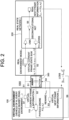
- a method for calibrating the physics engine of the virtual world simulator for learning of the deep learning-based device by using the calibrating device 1000 in accordance with one example embodiment of the present disclosure is described by referring to Fig. 2 as follows.
- the virtual world simulator 100 generates virtual current frame information I t corresponding to a virtual current state in a virtual environment predetermined for learning of the deep learning-based device 300, i.e., an agent.
- the virtual current state may include operating state information, surrounding environment information, operating conditions, etc. of the deep learning-based device 300, and the deep learning-based device 300 is an autonomous vehicle.
- the virtual current state may include various driving information such as autonomous vehicle information, surrounding vehicle information, road information, traffic signal information, the surrounding environment information, etc.
- the calibrating device 1000 transmits the acquired virtual current frame information I t to the deep learning-based device 300, to thereby allow the deep learning-based device 300 to apply its operation using previous learned parameters to the virtual current frame information I t and thus to output virtual action information a t corresponding to the virtual current frame information I t at a step of S2.
- the calibrating device 1000 transmits the virtual current frame information I t acquired from the virtual world simulator 100 and the virtual action information a t outputted from the deep learning-based device 300 to the physics engine F 110 of the virtual world simulator 100, to thereby allow the physics engine F 110 to apply its operation using previous calibrated parameters to the virtual current frame information I t and the virtual action information a t and thus to output virtual next frame information I t +1 corresponding to the virtual action information a t and the virtual current frame information I t at a step of S3.
- the calibrating device 1000 transmits the virtual current frame information I t acquired from the virtual world simulator 100 and the virtual action information a t outputted from the deep learning-based device 300 to the real state network 200, to thereby allow the real state network 200 to apply its operation using learned prediction parameters to the virtual action information a t and multiple pieces of virtual recent frame information corresponding to the virtual current frame information I t and thus to output predicted real next frame information I t +1 at a step of S5. That is, the real state network 200 outputs next frame information predicted to happen in the real world by referring to the multiple pieces of the virtual recent frame information and the virtual action information.
- the multiple pieces of the virtual recent frame information may be k+1 pieces of the virtual recent frame information, but the scope of the present disclosure is not limited thereto.
- the real state network 200 has been learned to output the multiple pieces of the predicted next frame information corresponding to the real action information on the real action in the multiple pieces of the real recent frame information performed by the deep learning-based device in the real environment, a process of which will be described in detail later.
- the multiple pieces of the predicted next frame information may be k+1 pieces of the predicted next frame information
- the multiple pieces of the real recent frame information may be k+1 pieces of the real recent frame information, but the scope of the present disclosure is not limited thereto.
- the calibrating device 1000 performs a process of transmitting the virtual current frame information and the virtual action information to the real state network 200, to thereby instruct the real state network 200 to generate the multiple pieces of the virtual recent frame information by referring to the virtual current frame information and k pieces of virtual previous frame information received beforehand.
- the calibrating device 1000 may generate the multiple pieces of the virtual recent frame information by referring to the virtual current frame information and the k pieces of the virtual previous frame information received beforehand, to thereby transmit the virtual recent frame information to the real state network 200.
- the calibrating device 1000 may perform a process of transmitting the virtual current frame information and the virtual action information to the real state network 200, to thereby instruct the real state network 200 to generate a virtual current frame state sum created by concatenating the virtual current frame information and the k pieces of the virtual previous frame information.
- the calibrating device 1000 may generate the virtual current frame state sum created by concatenating the virtual current frame information and the k pieces of the virtual previous frame information, to thereby transmit the virtual current frame state sum to the real state network 200.
- the virtual current frame state sum s t may be represented as [ I t-K , I t-K+ 1 , ..., I t -1 , I t ] and the predicted real next state Î t +1 may be represented as S ( s t , a t ) .
- the real state network 200 may (i) (i-1) generate a 1-st dimension vector by applying convolution operation to the virtual current frame state sum s t and (i-2) generate a 2-nd dimension vector by applying fully-connected operation to the virtual action information, and (ii) generate the predicted real next frame information by applying deconvolution operation to a concatenation of the 1-st dimension vector and the 2-nd dimension vector.
- the virtual current frame state sum s t may be an H ⁇ W ⁇ Cx(K+1) tensor created by concatenating (i) the k pieces of the virtual previous frame information and (ii) the virtual current frame information which is an H ⁇ W ⁇ C tensor.
- the 1-st feature vector may be an HWC-dimensional vector
- the predicted real next frame information may be an H ⁇ W ⁇ C tensor created by applying deconvolution operation to a 1 ⁇ 1 ⁇ (HWC+L) tensor generated by concatenating the 1-st feature vector and the 2-nd feature vector.
- the virtual action information may be a 3-dimensional vector, for example, if the deep learning-based device 300 is the autonomous vehicle, the virtual action information may correspond to [information on a degree of change in a steering angle, information on a pressure on a brake pedal, information on a pressure on an accelerator pedal].
- the calibrating device 1000 performs a process of calibrating the previous calibrated parameters of the physics engine F 110, such that at least one loss is minimized which is created by referring to the virtual next frame information outputted from the physics engine F 110 of the virtual world simulator 100 and the predicted real next frame information outputted from the real state network 200, to thereby generate current calibrated parameters as optimized parameters, at a step of S6.
- the physics engine F 110 may plan a virtual next frame where a gap between the virtual environment and the real environment is minimized.
- the calibrating device 1000 may calculate one or more losses ⁇ I t + 1 ⁇ I ⁇ t + 1 ⁇ F 2 by referring to the difference between the virtual next frame information I t +1 generated by the physics engine F 110 and the predicted real next frame information Î t +1 generated by the real state network 200, or may instruct a loss layer to calculate the losses ⁇ I t + 1 ⁇ I ⁇ t + 1 ⁇ F 2 , and may optimize the physics engine F 110 by referring to the losses ⁇ I t + 1 ⁇ I ⁇ t + 1 ⁇ F 2 .
- the previous calibrated parameters may be optimized as follows.
- the calibrating device 1000 may perform (i) a process of selecting one previous calibrated parameter among the previous calibrated parameters of the physics engine F 110 and (ii) a process of calibrating the selected one previous calibrated parameter with a preset learning rate by using the loss, to thereby generate one current calibrated parameter as an optimized parameter.
- the calibrating device 1000 may repeat, until the loss decreases, (i) a process of instructing the physics engine F 110 to apply its operation using said one current calibrated parameter and a rest of the previous calibrated parameters excluding said one previous calibrated parameter to the virtual current frame information and the virtual action information, to thereby generate new virtual next frame information and (ii) a process of determining whether the loss decreases by using at least one new loss created by referring to the difference between the new virtual next frame information and the predicted real next frame information.
- the calibrating device 1000 may decrease the preset learning rate and may perform the processes above.
- the calibrating device 1000 performs a process of transmitting the virtual next frame information I t +1 outputted from the physics engine F 110 and reward information r t +1 corresponding to the virtual action information outputted from the deep learning-based device 300 to the deep learning-based device 300 at a step of S4, to thereby instruct the deep learning-based device 300 to update the previous learned parameters via on-policy reinforcement learning which uses the virtual next frame information I t +1 and the reward information r t +1 .
- the reward information may be result representing whether the virtual action information is appropriate which is performed by the deep learning-based device 300 in response to the virtual current frame information, and the reward information may be generated by the physics engine F 110 or the calibrating device 1000.
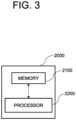
- Fig. 3 is a drawing schematically illustrating a learning device for learning the real state network capable of generating the predicted next frame information corresponding to the real action information on the real action performed in the multiple pieces of the real recent frame information by the deep learning-based device in the real environment in accordance with one example embodiment of the present disclosure.
- the learning device 2000 may include a memory 2100 for storing instructions to learn the real state network capable of outputting the predicted next frame information corresponding to the real action information on the real action performed in the multiple pieces of the real recent frame information by the deep learning-based device in the real environment and a processor 2200 for performing processes corresponding to the instructions in the memory 2100 to learn the real state network capable of outputting the predicted next frame information corresponding to the real action information on the real action performed in the multiple pieces of the real recent frame information by the deep learning-based device in the real environment.
- the learning device 2000 may typically achieve a desired system performance by using combinations of at least one computing device and at least one computer software, e.g., a computer processor, a memory, a storage, an input device, an output device, or any other conventional computing components, an electronic communication device such as a router or a switch, an electronic information storage system such as a network-attached storage (NAS) device and a storage area network (SAN) as the computing device and any instructions that allow the computing device to function in a specific way as the computer software.
- the processor of the computing device may include hardware configuration of MPU (Micro Processing Unit) or CPU (Central Processing Unit), cache memory, data bus, etc. Additionally, the computing device may further include OS and software configuration of applications that achieve specific purposes.
- computing device does not exclude an integrated device including any combination of a processor, a memory, a medium, or any other computing components for implementing the present disclosure.
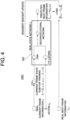
- a method for learning of outputting the predicted next frame information corresponding to the real action information on the real action performed in the multiple pieces of the real recent frame information by the deep learning-based device in the real environment by using the learning device 2000 in accordance with one example embodiment of the present disclosure configured as such is described as follows by referring to Fig. 4 . In the description below, the part easily deducible from the explanation of Fig. 2 will be omitted.
- the learning device 2000 acquires multiple pieces of trajectory information corresponding to multiple pieces of the real action information on the real action performed by the deep learning-based device in the real environment as training data.
- N pieces of the trajectory information may be generated by the agent, which is the deep learning-based device, in various environments like the real environment, and the deep learning-based device may generate the N pieces of the trajectory information by repeating: (i) a process of creating the current frame I t which is information on the real environment, (ii) a process of creating the action a t corresponding to the current frame I t , and (iii) a process of creating the next frame I t +1 changed according to the action a t .
- the N pieces of the trajectory information may be exemplarily represented as follows.
- s t ) of the deep learning-based device may be different.
- the learning device 2000 may perform a process of generating multiple pieces of recent frame information for training by referring to k pieces of previous real frame information and real current frame information at a point of time in specific trajectory information among the multiple pieces of the trajectory information acquired as the training data.
- the learning device 2000 performs a process of inputting into the real state network 200 the multiple pieces of the recent frame information for training and action information for training which is acquired by referring to real current action information of the specific trajectory information at the point of the time, to thereby allow the real state network 200 to apply its operation using prediction parameters to the multiple pieces of the recent frame information for training and the action information for training and thus to output the predicted next frame information.
- the learning device 2000 may perform (i) a process of inputting a current frame state sum for training, created by concatenating the multiple pieces of the recent frame information for training, into a convolutional neural network of the real state network 200, to thereby allow the convolutional neural network to output a 1-st feature vector by applying convolution operation to the current frame state sum for training and (ii) a process of inputting the action information for training into at least one fully connected layer of the real state network 200, to thereby allow said at least one fully connected layer to output a 2-nd feature vector by applying fully-connected operation to the action information for training.
- the learning device 2000 may perform a process of inputting a concatenated feature vector created by concatenating the 1-st feature vector and the 2-nd feature vector into a deconvolutional layer, to thereby allow the deconvolutional layer to output the predicted next frame information by applying deconvolution operation to the concatenated feature vector.
- the current frame state sum for training s t may be represented as [ I t-K ,I t-K +1 , ... , I t- 1 , I t ] and the predicted next frame information Î t +1 may be represented as S ( s t ,a t ) .
- the current frame state sum for training is an H ⁇ W ⁇ Cx(K+1) tensor created by concatenating the multiple pieces of the recent frame information for training which are H ⁇ W ⁇ C tensors
- the 1-st feature vector is an HWC-dimensional vector
- the action information for training is a 3-dimensional vector
- the 2-nd feature vector is an L-dimensional vector
- the concatenated feature vector is a 1 ⁇ 1 ⁇ (HWC+L) tensor
- the predicted next frame information is an H ⁇ W ⁇ C tensor.
- the learning device 2000 performs a process of updating the prediction parameters such that the loss is minimized, by using at least one loss created by referring to the difference between the predicted next frame information and real next frame information which is next to the real current frame information in the specific trajectory information.
- the learning device 2000 may calculate one or more losses ⁇ I t + 1 ⁇ I ⁇ t + 1 ⁇ F 2 by referring to the real next frame information I t +1 of the specific trajectory information and the predicted next frame information Î t +1 outputted from the real state network 200, or may instruct a loss layer to calculate the losses ⁇ I t + 1 ⁇ I ⁇ t + 1 ⁇ F 2 , and may learn the real state network 200 by referring to the losses ⁇ I t + 1 ⁇ I ⁇ t + 1 ⁇ F 2 .
- the learning device 2000 may perform a process of updating the prediction parameters of the real state network 200 according to a gradient descent, for example, may update at least one parameter of at least one of the convolutional neural network, said at least one fully connected layer, and the deconvolutional layer.
- the learning device 2000 may repeat the learning processes above by using N real world trajectories, such that the losses of the real state network 200 converge.
- the present disclosure has an effect of more reliably applying short-term planning of the deep learning-based device learned in the virtual world to the real world, by calibrating the physics engine of the virtual world simulator to minimize the gap between the virtual world and the real world.
- the present disclosure has another effect of utilizing losses between the physics engine and a real environment model as a reliability measure, for validating a reliability of a given virtual environment.
- the embodiments of the present disclosure as explained above can be implemented in a form of unclaimed executable program command through a variety of computer means recordable to unclaimed computer readable media.
- the computer readable media may include solely or in combination, program commands, data files, and data structures.
- the program commands recorded to the media may be components specially designed for the present invention or may be usable to a skilled human in a field of computer software.
- Computer readable media include magnetic media such as hard disk, floppy disk, and magnetic tape, optical media such as CD-ROM and DVD, magneto-optical media such as floptical disk and hardware devices such as ROM, RAM, and flash memory specially designed to store and carry out program commands.
- Program commands include not only a machine language code made by a complier but also a high level code that can be used by an interpreter etc., which is executed by a computer.
- the aforementioned hardware device can work as more than a software module to perform the action of the present invention and they can do the same in the opposite case.
Landscapes
- Engineering & Computer Science (AREA)
- Physics & Mathematics (AREA)
- Theoretical Computer Science (AREA)
- General Physics & Mathematics (AREA)
- Evolutionary Computation (AREA)
- Data Mining & Analysis (AREA)
- General Engineering & Computer Science (AREA)
- Artificial Intelligence (AREA)
- Life Sciences & Earth Sciences (AREA)
- Software Systems (AREA)
- Biophysics (AREA)
- Health & Medical Sciences (AREA)
- Computing Systems (AREA)
- Biomedical Technology (AREA)
- Mathematical Physics (AREA)
- Molecular Biology (AREA)
- Computational Linguistics (AREA)
- General Health & Medical Sciences (AREA)
- Transportation (AREA)
- Mechanical Engineering (AREA)
- Automation & Control Theory (AREA)
- Computer Vision & Pattern Recognition (AREA)
- Multimedia (AREA)
- Evolutionary Biology (AREA)
- Bioinformatics & Computational Biology (AREA)
- Bioinformatics & Cheminformatics (AREA)
- Human Computer Interaction (AREA)
- Geometry (AREA)
- Computer Hardware Design (AREA)
- Medical Informatics (AREA)
- Neurology (AREA)
- Management, Administration, Business Operations System, And Electronic Commerce (AREA)
- Image Analysis (AREA)
- Feedback Control In General (AREA)
Description
- The present disclosure relates to a virtual world simulator to be used for learning of a deep learning-based device; and more particularly, to the method and the device for calibrating a physics engine of a virtual world simulator to be used for learning of the deep learning-based device by using a real state network capable of modeling a next state in a real world, and a learning method and a learning device for real state network used therefor.
- Deep learning-based devices, such as autonomous vehicles, generally determine the next action to be taken by a short-term planning based on information from several frames to dozens of frames of recent images inputted.
- For example, in the case of the autonomous vehicles, based on segmentation images or meta data like bounding boxes and left/right direction of detected objects, which are information obtained from each frame, actions of three dimensional real-valued vectors, i.e., (i) an amount of change in a steering angle, (ii) a pressure on a brake pedal, (iii) a pressure on an accelerator pedal, are outputted, and accordingly, the autonomous vehicles will autonomously drive themselves in response to the actions.
- This deep learning-based device should be learned to determine appropriate actions according to the input state, and there are various learning methods, but currently, on-policy reinforcement learning is generally used.
- Also, the deep learning-based device can be learned in a real world, but it is difficult to acquire diversified training data, and it is time-consuming and costly.
- Therefore, a method for learning the deep learning-based devices in a virtual world has been proposed.
- However, when learning in the virtual world, there is a problem in a reliability of the learning results due to a gap between virtual environment and real environment.
- For example, in case of the deep learning-based device is an autonomous vehicle, the physics engine of a virtual world simulator may be configured to output "a next state with a changed velocity, a location, and surroundings of the vehicle" if "actions of rotating a steering wheel by a certain angle and stepping on the brake pedal with a certain pressure" are taken in response to "a state of a current velocity and its surroundings", thereby learning the autonomous vehicle.
- However, the larger a discrepancy between the next state created by the physics engine of the virtual world simulator and the next state of a real world is, the less optimal the optimal action having been learned in the virtual world is in the real world.
- For example, in the case of the autonomous vehicle, the vehicle has learned a proper action that can avoid an accident in a dangerous situation in the virtual world, but nevertheless an accident in the real world occurs even though the vehicle takes the proper action in a same situation.
- It is noted that an approach to learn such physics priors and incorporate them into an RL agent titled "LEARNING PHYSICS PRIORS FOR DEEP
- REINFORCEMENT LEARNING", pages 1-17, is disclosed in Open Review. net, on 20 November 2018 (2018-11-20). The method disclosed therein involves pre-training a frame predictor on raw videos and then using it to initialize the dynamics prediction model on a target task. The prediction model, SpatialNet, is designed to implicitly capture localized physical phenomena and interactions.
- Reference is further made to Felix Leibfried ET AL: "A Deep Learning Approach for Joint Video Frame and Reward Prediction in Atari Games", 17 August 2017 (2017-08-17), pages 1-18, arXiv.org. This paper discloses the use of model-based techniques in environments with a high-dimensional visual state space by demonstrating that it is possible to learn system dynamics and the reward structure jointly. A deep neural network developed for video frame prediction in Atari games is extended to enable reward prediction as well. A joint optimization problem is phrased therein for minimizing both video frame and reward reconstruction loss, and adapt network parameters accordingly.
- It is an object of the present disclosure to solve all the aforementioned problems.
- It is another object of the present disclosure to allow a physics engine of a virtual world simulator to output a next state that minimizes a gap between a virtual world and a real world.
- It is still another object of the present disclosure to calibrate the physics engine of the virtual world simulator such that the virtual world more closely mimics the real world.
- In accordance with a first aspect of the present disclosure, there is provided a method for calibrating a physics engine of a virtual world simulator as defined by the appended
claim 1. The appended claims 2-6 define preferred embodiments of this first aspect. - In accordance with a second aspect of the present disclosure, there is provided a method for learning a real state as defined by the appended claim 7. The appended claims 8-10 define preferred embodiments of this second aspect.
- In accordance with a third aspect of the present disclosure, there is provided a calibrating device for calibrating a physics engine of a virtual world as defined by the appended claim 11. The appended claims 12 and 13 define preferred embodiments of this third aspect.
- In accordance a fourth aspect of the present disclosure, there is provided a learning device for learning a real state network as defined by the appended claim 14.
- The above and other objects and features of the present disclosure will become apparent from the following description of preferred embodiments given in conjunction with the accompanying drawings, in which:
-
Fig. 1 is a drawing schematically illustrating a calibrating device for calibrating a physics engine of a virtual world simulator to be used for learning of a deep learning-based device in accordance with one example embodiment of the present disclosure. -
Fig. 2 is a drawing schematically illustrating a method for calibrating the physics engine of the virtual world simulator to be used for learning of the deep learning-based device in accordance with one example embodiment of the present disclosure. -
Fig. 3 is a drawing schematically illustrating a learning device for learning a real state network capable of generating predicted next frame information corresponding to real action information on a real action performed in multiple pieces of real recent frame information by the deep learning-based device in a real environment in accordance with one example embodiment of the present disclosure. -
Fig. 4 is a drawing schematically illustrating a learning method for learning the real state network capable of generating the predicted next frame information corresponding to the real action information on the real action performed in the multiple pieces of the real recent frame information by the deep learning-based device in the real environment in accordance with one example embodiment of the present disclosure. -
Fig. 5 is a drawing schematically illustrating a method for generating at least one trajectory for learning the real state network in accordance with one example embodiment of the present disclosure. - Detailed explanation on the present disclosure to be made below refer to attached drawings and diagrams illustrated as specific embodiment examples under which the present disclosure may be implemented to make clear of purposes, technical solutions, and advantages of the present disclosure.
- Any images referred to in the present disclosure may include images related to any roads paved or unpaved, in which case the objects on the roads or near the roads may include vehicles, persons, animals, plants, buildings, flying objects like planes or drones, or any other obstacles which may appear in a road-related scene, but the scope of the present disclosure is not limited thereto. As another example, said any images referred to in the present disclosure may include images not related to any roads, such as images related to alleyway, land lots, sea, lakes, rivers, mountains, forests, deserts, sky, or any indoor space, in which case the objects in said any images may include vehicles, persons, animals, plants, buildings, flying objects like planes or drones, ships, amphibious planes or ships, or any other obstacles which may appear in a scene related to alleyway, land lots, sea, lakes, rivers, mountains, forests, deserts, sky, or any indoor space, but the scope of the present disclosure is not limited thereto.
- To allow those skilled in the art to carry out the present disclosure easily, the example embodiments of the present disclosure by referring to attached diagrams will be explained in detail as shown below.
-
Fig. 1 is a drawing schematically illustrating a calibrating device for calibrating a physics engine of a virtual world simulator for learning a deep learning-based device in accordance with one example embodiment of the present disclosure. By referring toFig. 1 , thecalibrating device 1000 may include amemory 1100 for storing instructions to calibrate the physics engine of the virtual world simulator for learning of the deep learning-based device and aprocessor 1200 for performing processes corresponding to the instructions in thememory 1100 to calibrate the physics engine of the virtual world simulator for learning of the deep learning-based device. - Specifically, the
calibrating device 1000 may typically achieve a desired system performance by using combinations of at least one computing device and at least one computer software, e.g., a computer processor, a memory, a storage, an input device, an output device, or any other conventional computing components, an electronic communication device such as a router or a switch, an electronic information storage system such as a network-attached storage (NAS) device and a storage area network (SAN) as the computing device and any instructions that allow the computing device to function in a specific way as the computer software. - The processor of the computing device may include hardware configuration of MPU (Micro Processing Unit) or CPU (Central Processing Unit), cache memory, data bus, etc. Additionally, the computing device may further include OS and software configuration of applications that achieve specific purposes.
- However, such description of the computing device does not exclude an integrated device including any combination of a processor, a memory, a medium, or any other computing components for implementing the present disclosure.
- A method for calibrating the physics engine of the virtual world simulator for learning of the deep learning-based device by using the
calibrating device 1000 in accordance with one example embodiment of the present disclosure is described by referring toFig. 2 as follows. - First, the
virtual world simulator 100 generates virtual current frame information It corresponding to a virtual current state in a virtual environment predetermined for learning of the deep learning-baseddevice 300, i.e., an agent. Herein, the virtual current state may include operating state information, surrounding environment information, operating conditions, etc. of the deep learning-baseddevice 300, and the deep learning-baseddevice 300 is an autonomous vehicle. The virtual current state may include various driving information such as autonomous vehicle information, surrounding vehicle information, road information, traffic signal information, the surrounding environment information, etc. - Next, if the virtual current frame information It corresponding to the virtual current state in the virtual environment is acquired from the
virtual world simulator 100, thecalibrating device 1000 transmits the acquired virtual current frame information It to the deep learning-baseddevice 300, to thereby allow the deep learning-baseddevice 300 to apply its operation using previous learned parameters to the virtual current frame information It and thus to output virtual action information at corresponding to the virtual current frame information It at a step of S2. - Also, the
calibrating device 1000 transmits the virtual current frame information It acquired from thevirtual world simulator 100 and the virtual action information at outputted from the deep learning-baseddevice 300 to thephysics engine F 110 of thevirtual world simulator 100, to thereby allow thephysics engine F 110 to apply its operation using previous calibrated parameters to the virtual current frame information It and the virtual action information at and thus to output virtual next frame information I t+1 corresponding to the virtual action information at and the virtual current frame information It at a step of S3. - In addition to this, the
calibrating device 1000 transmits the virtual current frame information It acquired from thevirtual world simulator 100 and the virtual action information at outputted from the deep learning-baseddevice 300 to thereal state network 200, to thereby allow thereal state network 200 to apply its operation using learned prediction parameters to the virtual action information at and multiple pieces of virtual recent frame information corresponding to the virtual current frame information It and thus to output predicted real next frame information I t+1 at a step of S5. That is, thereal state network 200 outputs next frame information predicted to happen in the real world by referring to the multiple pieces of the virtual recent frame information and the virtual action information. Throughout the present disclosure, the multiple pieces of the virtual recent frame information may be k+1 pieces of the virtual recent frame information, but the scope of the present disclosure is not limited thereto. - Herein, the
real state network 200 has been learned to output the multiple pieces of the predicted next frame information corresponding to the real action information on the real action in the multiple pieces of the real recent frame information performed by the deep learning-based device in the real environment, a process of which will be described in detail later. Throughout the present disclosure, the multiple pieces of the predicted next frame information may be k+1 pieces of the predicted next frame information, and the multiple pieces of the real recent frame information may be k+1 pieces of the real recent frame information, but the scope of the present disclosure is not limited thereto. - And, the
calibrating device 1000 performs a process of transmitting the virtual current frame information and the virtual action information to thereal state network 200, to thereby instruct thereal state network 200 to generate the multiple pieces of the virtual recent frame information by referring to the virtual current frame information and k pieces of virtual previous frame information received beforehand. As another example, thecalibrating device 1000 may generate the multiple pieces of the virtual recent frame information by referring to the virtual current frame information and the k pieces of the virtual previous frame information received beforehand, to thereby transmit the virtual recent frame information to thereal state network 200. - That is, the
calibrating device 1000 may perform a process of transmitting the virtual current frame information and the virtual action information to thereal state network 200, to thereby instruct thereal state network 200 to generate a virtual current frame state sum created by concatenating the virtual current frame information and the k pieces of the virtual previous frame information. As another example, thecalibrating device 1000 may generate the virtual current frame state sum created by concatenating the virtual current frame information and the k pieces of the virtual previous frame information, to thereby transmit the virtual current frame state sum to thereal state network 200. - Herein, the virtual current frame state sum st may be represented as [It-K , I t-K+1, ..., I t-1, It ] and the predicted real next state Î t+1 may be represented as S(st, at ).
- Meanwhile, the
real state network 200 may (i) (i-1) generate a 1-st dimension vector by applying convolution operation to the virtual current frame state sum st and (i-2) generate a 2-nd dimension vector by applying fully-connected operation to the virtual action information, and (ii) generate the predicted real next frame information by applying deconvolution operation to a concatenation of the 1-st dimension vector and the 2-nd dimension vector. - Herein, the virtual current frame state sum st may be an H×W×Cx(K+1) tensor created by concatenating (i) the k pieces of the virtual previous frame information and (ii) the virtual current frame information which is an H×W×C tensor. Further, the 1-st feature vector may be an HWC-dimensional vector, and, supposing that the 2-nd feature vector is an L-dimensional vector, the predicted real next frame information may be an H×W×C tensor created by applying deconvolution operation to a 1×1×(HWC+L) tensor generated by concatenating the 1-st feature vector and the 2-nd feature vector. And, the virtual action information may be a 3-dimensional vector, for example, if the deep learning-based
device 300 is the autonomous vehicle, the virtual action information may correspond to [information on a degree of change in a steering angle, information on a pressure on a brake pedal, information on a pressure on an accelerator pedal]. - Next, the
calibrating device 1000 performs a process of calibrating the previous calibrated parameters of thephysics engine F 110, such that at least one loss is minimized which is created by referring to the virtual next frame information outputted from thephysics engine F 110 of thevirtual world simulator 100 and the predicted real next frame information outputted from thereal state network 200, to thereby generate current calibrated parameters as optimized parameters, at a step of S6. As a result, thephysics engine F 110 may plan a virtual next frame where a gap between the virtual environment and the real environment is minimized. - That is, the
calibrating device 1000 may calculate one or more losses
physics engine F 110 and the predicted real next frame information Î t+1 generated by thereal state network 200, or may instruct a loss layer to calculate the losses
physics engine F 110 by referring to the losses
- Meanwhile, if the
physics engine F 110 of thevirtual world simulator 100 is non-differentiable, the previous calibrated parameters may be optimized as follows. - That is, the
calibrating device 1000 may perform (i) a process of selecting one previous calibrated parameter among the previous calibrated parameters of thephysics engine F 110 and (ii) a process of calibrating the selected one previous calibrated parameter with a preset learning rate by using the loss, to thereby generate one current calibrated parameter as an optimized parameter. And, thecalibrating device 1000 may repeat, until the loss decreases, (i) a process of instructing thephysics engine F 110 to apply its operation using said one current calibrated parameter and a rest of the previous calibrated parameters excluding said one previous calibrated parameter to the virtual current frame information and the virtual action information, to thereby generate new virtual next frame information and (ii) a process of determining whether the loss decreases by using at least one new loss created by referring to the difference between the new virtual next frame information and the predicted real next frame information. - And, if the loss is determined as not decreased for any of the previous calibrated parameters, the
calibrating device 1000 may decrease the preset learning rate and may perform the processes above. - Also, the
calibrating device 1000 performs a process of transmitting the virtual next frame information I t+1 outputted from thephysics engine F 110 and reward information r t+1 corresponding to the virtual action information outputted from the deep learning-baseddevice 300 to the deep learning-baseddevice 300 at a step of S4, to thereby instruct the deep learning-baseddevice 300 to update the previous learned parameters via on-policy reinforcement learning which uses the virtual next frame information I t+1 and the reward information r t+1. Herein, the reward information may be result representing whether the virtual action information is appropriate which is performed by the deep learning-baseddevice 300 in response to the virtual current frame information, and the reward information may be generated by thephysics engine F 110 or thecalibrating device 1000. -
Fig. 3 is a drawing schematically illustrating a learning device for learning the real state network capable of generating the predicted next frame information corresponding to the real action information on the real action performed in the multiple pieces of the real recent frame information by the deep learning-based device in the real environment in accordance with one example embodiment of the present disclosure. By referring toFig. 3 , thelearning device 2000 may include amemory 2100 for storing instructions to learn the real state network capable of outputting the predicted next frame information corresponding to the real action information on the real action performed in the multiple pieces of the real recent frame information by the deep learning-based device in the real environment and aprocessor 2200 for performing processes corresponding to the instructions in thememory 2100 to learn the real state network capable of outputting the predicted next frame information corresponding to the real action information on the real action performed in the multiple pieces of the real recent frame information by the deep learning-based device in the real environment. - Specifically, the
learning device 2000 may typically achieve a desired system performance by using combinations of at least one computing device and at least one computer software, e.g., a computer processor, a memory, a storage, an input device, an output device, or any other conventional computing components, an electronic communication device such as a router or a switch, an electronic information storage system such as a network-attached storage (NAS) device and a storage area network (SAN) as the computing device and any instructions that allow the computing device to function in a specific way as the computer software. The processor of the computing device may include hardware configuration of MPU (Micro Processing Unit) or CPU (Central Processing Unit), cache memory, data bus, etc. Additionally, the computing device may further include OS and software configuration of applications that achieve specific purposes. - However, such description of the computing device does not exclude an integrated device including any combination of a processor, a memory, a medium, or any other computing components for implementing the present disclosure.
- A method for learning of outputting the predicted next frame information corresponding to the real action information on the real action performed in the multiple pieces of the real recent frame information by the deep learning-based device in the real environment by using the
learning device 2000 in accordance with one example embodiment of the present disclosure configured as such is described as follows by referring toFig. 4 . In the description below, the part easily deducible from the explanation ofFig. 2 will be omitted. - First, the
learning device 2000 acquires multiple pieces of trajectory information corresponding to multiple pieces of the real action information on the real action performed by the deep learning-based device in the real environment as training data. - Herein, by referring to
Fig. 5 , N pieces of the trajectory information may be generated by the agent, which is the deep learning-based device, in various environments like the real environment, and the deep learning-based device may generate the N pieces of the trajectory information by repeating: (i) a process of creating the current frame It which is information on the real environment, (ii) a process of creating the action at corresponding to the current frame It, and (iii) a process of creating the next frame I t+1 changed according to the action at. The N pieces of the trajectory information may be exemplarily represented as follows.


- Herein, each of lengths T 1,...,TN, each of starting points

- And, the
learning device 2000 may perform a process of generating multiple pieces of recent frame information for training by referring to k pieces of previous real frame information and real current frame information at a point of time in specific trajectory information among the multiple pieces of the trajectory information acquired as the training data. - Next, the
learning device 2000 performs a process of inputting into thereal state network 200 the multiple pieces of the recent frame information for training and action information for training which is acquired by referring to real current action information of the specific trajectory information at the point of the time, to thereby allow thereal state network 200 to apply its operation using prediction parameters to the multiple pieces of the recent frame information for training and the action information for training and thus to output the predicted next frame information. - As one example, the
learning device 2000 may perform (i) a process of inputting a current frame state sum for training, created by concatenating the multiple pieces of the recent frame information for training, into a convolutional neural network of thereal state network 200, to thereby allow the convolutional neural network to output a 1-st feature vector by applying convolution operation to the current frame state sum for training and (ii) a process of inputting the action information for training into at least one fully
connected layer of thereal state network 200, to thereby allow said at least one fully connected layer to output a 2-nd feature vector by applying fully-connected operation to the action information for training. And, thelearning device 2000 may perform a process of inputting a concatenated feature vector created by concatenating the 1-st feature vector and the 2-nd feature vector into a deconvolutional layer, to thereby allow the deconvolutional layer to output the predicted next frame information by applying deconvolution operation to the concatenated feature vector. - Herein, the current frame state sum for training st may be represented as [It-K,I t-K+1,...,I t-1,It ] and the predicted next frame information Î t+1 may be represented as S(st,at ).
- That is, the current frame state sum for training, is an H×W×Cx(K+1) tensor created by concatenating the multiple pieces of the recent frame information for training which are H×W×C tensors, the 1-st feature vector is an HWC-dimensional vector, the action information for training is a 3-dimensional vector, the 2-nd feature vector is an L-dimensional vector, the concatenated feature vector is a 1×1×(HWC+L) tensor and the predicted next frame information is an H×W×C tensor.
- Next, the
learning device 2000 performs a process of updating the prediction parameters such that the loss is minimized, by using at least one loss created by referring to the difference between the predicted next frame information and real next frame information which is next to the real current frame information in the specific trajectory information. - That is, the
learning device 2000 may calculate one or more losses
real state network 200, or may instruct a loss layer to calculate the losses
real state network 200 by referring to the losses
- Herein, the
learning device 2000 may perform a process of updating the prediction parameters of thereal state network 200 according to a gradient descent, for example, may update at least one parameter of at least one of the convolutional neural network, said at least one fully connected layer, and the deconvolutional layer. - And, the
learning device 2000 may repeat the learning processes above by using N real world trajectories, such that the losses of thereal state network 200 converge. - The present disclosure has an effect of more reliably applying short-term planning of the deep learning-based device learned in the virtual world to the real world, by calibrating the physics engine of the virtual world simulator to minimize the gap between the virtual world and the real world.
- The present disclosure has another effect of utilizing losses between the physics engine and a real environment model as a reliability measure, for validating a reliability of a given virtual environment.
- The embodiments of the present disclosure as explained above can be implemented in a form of unclaimed executable program command through a variety of computer means recordable to unclaimed computer readable media. The computer readable media may include solely or in combination, program commands, data files, and data structures. The program commands recorded to the media may be components specially designed for the present invention or may be usable to a skilled human in a field of computer software. Computer readable media include magnetic media such as hard disk, floppy disk, and magnetic tape, optical media such as CD-ROM and DVD, magneto-optical media such as floptical disk and hardware devices such as ROM, RAM, and flash memory specially designed to store and carry out program commands. Program commands include not only a machine language code made by a complier but also a high level code that can be used by an interpreter etc., which is executed by a computer. The aforementioned hardware device can work as more than a software module to perform the action of the present invention and they can do the same in the opposite case.
Claims (14)
- A method for calibrating a physics engine (110) of a virtual world simulator (100) to be used for learning of a deep learning-based device (300) being an autonomous vehicle configured to output action information comprising a three dimensional real-valued vector, specifying an amount of change in a steering angle, a pressure on a brake pedal, a pressure on an accelerator pedal and the physics engine being configured to output a next state with a changed velocity, a location, and surroundings of the vehicle if actions of rotating a steering wheel by a certain angle and stepping on the brake pedal with a certain pressure are taken in response to a state of a current velocity and its surroundings, the method comprising steps of:(a) if virtual current frame information (It) corresponding to a virtual current state in a virtual environment is acquired from the virtual world simulator (100), a calibrating device (1000) performing (i) a process of transmitting (S1) the virtual current frame information (It) to the deep learning-based device (300), to thereby instruct the deep learning-based device to apply its operation using previous learned parameters to the virtual current frame information (It), and thus to output (S2) virtual action information (at) related to the action to be performed corresponding to the virtual current frame information, (ii) a process of transmitting the virtual current frame information (It) and the virtual action information (at) to the physics engine (110) of the virtual world simulator (100), to thereby instruct the physics engine to apply its operation using previous calibrated parameters to the virtual current frame information and the virtual action information, and thus to output (S3) virtual next frame information (It+1) corresponding to the virtual current frame information and the virtual action information, and (iii) a process of transmitting the virtual current frame information (It) and the virtual action information (at) to a real state network (200) which has been learned to output multiple pieces of predicted next frame information (Î t+1) in response to real action information (at) on a real action performed in multiple pieces of real recent frame information ([It-k, It-K+1,...,It-1, It]) by the deep learning-based device (300) in a real environment, to thereby instruct the real state network (200) to apply its operation using learned prediction parameters to the virtual action information and multiple pieces of the virtual recent frame information corresponding to the virtual current frame information and thus to output (S5) predicted real next frame information (Î t+1 = S(st ,at )); and(b) the calibrating device (100) performing a process of calibrating (S6) the previous calibrated parameters of the physics engine 110), such that at least one loss (
 (c) the calibrating device (1000) performing a process of transmitting (S4) the virtual next frame information (Î t+1) and reward information (rt+1) corresponding to the virtual action information (at) to the deep learning-based device (300), to thereby instruct the deep learning-based device to update the previous learned parameters via on-policy reinforcement learning which uses the virtual next frame information and the reward information.
 - The method of Claim 1, wherein, in the process of (iii) at the step of (a), the calibrating device (1000) performs a process of transmitting the virtual current frame information (It ) and the virtual action information (at) to the real state network (200), to thereby instruct the real state network to generate the multiple pieces of the virtual recent frame information ([It-k, It-K+1,...,It-1, It]) by referring to the virtual current frame information (It ) and k pieces of virtual previous frame information ([It-k, It-K+1,...,It-1]) received beforehand.
- The method of Claim 2, wherein, at the process of (iii), the calibrating device performs a process of transmitting the virtual current frame information (It) and the virtual action information (at) to the real state network (200), to thereby instruct the real state network to (iii-1) (iii-1-1) generate a 1-st feature vector by applying convolution operation to a virtual current frame state sum (st = [It-k, It-K+1,...,It-1, It]) created by concatenating the virtual current frame information and the k pieces of the virtual previous frame information and (iii-1-2) generate a 2-nd feature vector by applying fully-connected operation to the virtual action information (at), and (iii-2) generate the predicted real next frame information (Î t+1), by applying deconvolution operation to a concatenation of the 1-st feature vector and the 2-nd feature vector.
- The method of Claim 3, wherein the virtual current frame information is an H×W×C tensor, the virtual current frame state sum is an H×W×C×(K+1) tensor created by concatenating (i) the k pieces of the virtual previous frame information and (ii) wherein the 1-st feature vector is an HWC-dimensional vector, and
wherein, supposing that the 2-nd feature vector is an L-dimension vector, the predicted real next frame information is an H×W×C tensor created by applying deconvolution operation to a 1×1×(HWC+L) tensor generated by concatenating the 1-st feature vector and the 2-nd feature vector. - The method of Claim 1, wherein, at the step of (b), the calibrating device (1000) repeats, until the loss decreases, (b-1) a process of selecting one previous calibrated parameter among the previous calibrated parameters (b-2) a process of calibrating the selected one previous calibrated parameter with a preset learning rate by using the loss, to thereby generate one current calibrated parameter as an optimized parameter, and (b-3) (b-3a) a process of instructing the physics engine (110) to apply its operation using said one current calibrated parameter and a rest of the previous calibrated parameters excluding said one previous calibrated parameter to the virtual current frame information (It) and the virtual action information (at), to thereby generate new virtual next frame information (I t+1) and (b-3b) a process of determining whether the loss decreases by using at least one new loss created by referring to the new virtual next frame information (I t+1) and the predicted real next frame information (Î t+1).
- The method of Claim 5, wherein, if the loss is determined as not decreased for any of the previous calibrated parameters, the calibrating device (1000) decreases the preset learning rate and performs said process (b-1), said process (b-2), and said process (b-3).
- A method for learning a real state network (200) capable of generating predicted next frame information corresponding to real action information on a real action performed in multiple pieces of real recent frame information by a deep learning-based device being an autonomous vehicle in a real environment, comprising steps of:(a) if multiple pieces of trajectory information (X1, X2,...,XN) corresponding to multiple pieces of the real action information on the real action performed by the deep learning-based device in the real environment are acquired as training data, each piece of real action information comprising a three dimensional real-valued vector, specifying an amount of change in a steering angle, a pressure on a brake pedal, a pressure on an accelerator pedal, a learning device (2000) performing a process of generating multiple pieces of recent frame information ([It-k, It-K+1,...,It-1, It]) for training by referring to k pieces of previous real frame information and real current frame information at a point of time in specific trajectory information;(b) the learning device (2000) performing a process of inputting into the real state network (200) the multiple pieces of the recent frame information for training and action information (at) for training which is acquired by referring to real current action information of the specific trajectory information at the point of the time, to thereby allow the real state network to apply its operation using prediction parameters to the multiple pieces of the recent frame information for training and the action information for training and thus to output the predicted next frame information (Î t+1); and(c) the learning device (2000) performing a process of updating the prediction parameters such that the loss is minimized, by using at least one loss (

- The method of Claim 7, wherein, at the step of (b), the learning device (2000) performs (i) a process of inputting a current frame state sum (st = [It-k, It-K+1,...,It-1, It]) for training created by concatenating the multiple pieces of the recent frame information for training into a convolutional neural network (CNN) of the real state network (200), to thereby allow the convolutional neural network to output a 1-st feature vector by applying convolution operation to the current frame state sum for training and a process of inputting the action information (at) for training into at least one fully connected layer (FC Layers) of the real state network, to thereby allow said at least one fully connected layer to output a 2-nd feature vector by applying fully-connected operation to the action information for training and (ii) a process of inputting a concatenated feature created by concatenating the 1-st feature vector and the 2-nd feature vector into a deconvolutional layer, to thereby allow the deconvolutional layer to output the predicted next frame information (Î t+1), by applying deconvolution operation to the concatenated feature vector.
- The method of Claim 8, wherein the current frame state sum for training is an H×W×Cx(K+1) tensor created by concatenating the multiple pieces of the recent frame information for training which are H×W×C tensors, wherein the 1-st feature vector is an HWC-dimensional vector, wherein the action information for training is a 3-dimensional vector, wherein the 2-nd feature vector is an L-dimension vector, and wherein the concatenated feature vector is a 1×1×(HWC+L) tensor, and the predicted next frame information is an H×W×C tensor.
- The method of Claim 8, wherein the learning device (2000) performs a process of updating at least one parameter of at least one of the convolutional neural network, said at least one fully connected layer, and the deconvolutional layer according to a gradient descent using the loss (

- A calibrating device (1000) for calibrating a physics engine (110) of a virtual world simulator (100) to be used for learning of a deep learning-based device (300), being an autonomous vehicle configured to output action information comprising a three dimensional real-valued vector, specifying an amount of change in a steering angle, a pressure on a brake pedal, a pressure on an accelerator pedal and the physics engine being configured to output a next state with a changed velocity, a location, and surroundings of the vehicle if actions of rotating a steering wheel by a certain angle and stepping on the brake pedal with a certain pressure are taken in response to a state of a current velocity and its surroundings, the calibrating device comprising:at least one memory (1100) that stores instructions; andat least one processor (1200) configured to execute the instructions to perform or support another device to perform: (I) if virtual current frame information (It) corresponding to a virtual current state in a virtual environment is acquired from the virtual world simulator, (i) a process of transmitting the virtual current frame information (It) to the deep learning-based device (300), to thereby instruct the deep learning-based device to apply its operation using previous learned parameters to the virtual current frame information, and thus to output virtual action information (at) related to the action to be performed corresponding to the virtual current frame information, (ii) a process of transmitting the virtual current frame information and the virtual action information to the physics engine (110) of the virtual world simulator (100), to thereby instruct the physics engine to apply its operation using previous calibrated parameters to the virtual current frame information and the virtual action information, and thus to output virtual next frame information (It+1) corresponding to the virtual current frame information and the virtual action information, and (iii) a process of transmitting the virtual current frame information and the virtual action information to a real state network (200) which has been learned to output multiple pieces of predicted next frame information in response to real action information on a real action performed in multiple pieces of real recent frame information by the deep learning-based device in a real environment, to thereby instruct the real state network to apply its operation using learned prediction parameters to the virtual action information and multiple pieces of the virtual recent frame information corresponding to the virtual current frame information and thus to output predicted real next frame information (Î t+1), (II) a process of calibrating the previous calibrated parameters of the physics engine (110), such that at least one loss (
 and (III) a process of transmitting the virtual next frame information (It+1) and reward information (rt+1) corresponding to the virtual action information (at) to the deep learning-based device (300), to thereby instruct the deep learning-based device to update the previous learned parameters via on-policy reinforcement learning which uses the virtual next frame information and the reward information.
 - The calibrating device of Claim 11, wherein, in the process of (iii), the processor (1200) performs a process of transmitting the virtual current frame information (It) and the virtual action information (at) to the real state network (200), to thereby instruct the real state network to generate the multiple pieces of the virtual recent frame information ([It-k, It-K+1,...,It-1, It]) by referring to the virtual current frame information and k pieces of virtual previous frame information received beforehand.
- The calibrating device of Claim 12, wherein, at the process of (iii), the processor (1200) performs a process of transmitting the virtual current frame information (It) and the virtual action information (at) to the real state network, to thereby instruct the real state network to (iii-1) (iii-1-1) generate a 1-st feature vector by applying convolution operation to a virtual current frame state sum (st = [It-k, It-K+1,...,It-1, It]) created by concatenating the virtual current frame information and the k pieces of the virtual previous frame information and (iii-1-2) generate a 2-nd feature vector by applying fully-connected operation to the virtual action information (at), and (iii-2) generate the predicted real next frame information (Î t+1) by applying deconvolution operation to a concatenation of the 1-st feature vector and the 2-nd feature vector.
- A learning device (2000) for learning a real state network (200) capable of generating predicted next frame information corresponding to real action information on a real action performed in multiple pieces of real recent frame information by a deep learning-based device being an autonomous vehicle in a real environment, comprising:at least one memory (2100) that stores instructions; andat least one processor (2200) configured to execute the instructions to perform: (I) if multiple pieces of trajectory information (X1, X2,...,XN) corresponding to multiple pieces of the real action information on the real action performed by the deep learning-based device in the real environment are acquired as training data, each piece of real action information comprising a three dimensional real-valued vector, specifying an amount of change in a steering angle, a pressure on a brake pedal, a pressure on an accelerator pedal, a process of generating multiple pieces of recent frame information ([It-k, It-K+1,...,It-1, It]) for training by referring to k pieces of previous real frame information and real current frame information at a point of time in specific trajectory information, (II) a process of inputting into the real state network (200) the multiple pieces of the recent frame information for training and action information for training which is acquired by referring to real current action information of the specific trajectory information at the point of the time, to thereby allow the real state network (200) to apply its operation using prediction parameters to the multiple pieces of the recent frame information for training and the action information for training and thus to output the predicted next frame information (Î t+1), and (III) a process of updating the prediction parameters such that the loss is minimized, by using at least one loss (

Applications Claiming Priority (2)
| Application Number | Priority Date | Filing Date | Title |
|---|---|---|---|
| US201962798691P | 2019-01-30 | 2019-01-30 | |
| US16/723,450 US10776542B2 (en) | 2019-01-30 | 2019-12-20 | Method and device for calibrating physics engine of virtual world simulator to be used for learning of deep learning-based device, and a learning method and learning device for real state network used therefor |
Publications (3)
| Publication Number | Publication Date |
|---|---|
| EP3690750A1 EP3690750A1 (en) | 2020-08-05 |
| EP3690750B1 true EP3690750B1 (en) | 2024-08-14 |
| EP3690750C0 EP3690750C0 (en) | 2024-08-14 |
Family
ID=69177075
Family Applications (1)
| Application Number | Title | Priority Date | Filing Date |
|---|---|---|---|
| EP20152427.9A Active EP3690750B1 (en) | 2019-01-30 | 2020-01-17 | Method and device for calibrating physics engine of virtual world simulator to be used for learning of deep learning-based device, and a learning method and learning device for real state network used therefor |
Country Status (5)
| Country | Link |
|---|---|
| US (1) | US10776542B2 (en) |
| EP (1) | EP3690750B1 (en) |
| JP (1) | JP6865365B2 (en) |
| KR (1) | KR102300910B1 (en) |
| CN (1) | CN111738046B (en) |
Families Citing this family (5)
| Publication number | Priority date | Publication date | Assignee | Title |
|---|---|---|---|---|
| US12482189B2 (en) | 2020-06-10 | 2025-11-25 | Nvidia Corporation | Environment generation using one or more neural networks |
| KR102264571B1 (en) * | 2020-10-30 | 2021-06-15 | 주식회사 애자일소다 | Hierarchical decision agent |
| DE102020215302A1 (en) * | 2020-12-03 | 2022-06-09 | Robert Bosch Gesellschaft mit beschränkter Haftung | Dynamics-dependent behavior planning for at least partially automated vehicles |
| US12505342B2 (en) * | 2021-02-24 | 2025-12-23 | Nvidia Corporation | Generating frames for neural simulation using one or more neural networks |
| CN116934795B (en) * | 2022-04-08 | 2025-11-25 | 腾讯科技(深圳)有限公司 | Methods, devices, equipment, and storage media for controlling virtual objects |
Family Cites Families (9)
| Publication number | Priority date | Publication date | Assignee | Title |
|---|---|---|---|---|
| DE102014117888A1 (en) * | 2014-12-04 | 2016-10-13 | Connaught Electronics Ltd. | Online calibration of a motor vehicle camera system |
| WO2017004803A1 (en) * | 2015-07-08 | 2017-01-12 | Xiaoou Tang | An apparatus and a method for semantic image labeling |
| US10019652B2 (en) * | 2016-02-23 | 2018-07-10 | Xerox Corporation | Generating a virtual world to assess real-world video analysis performance |
| EP3435296A4 (en) * | 2016-03-25 | 2019-07-03 | Sony Corporation | INFORMATION PROCESSING DEVICE |
| US10902343B2 (en) * | 2016-09-30 | 2021-01-26 | Disney Enterprises, Inc. | Deep-learning motion priors for full-body performance capture in real-time |
| KR102742851B1 (en) * | 2017-02-16 | 2024-12-13 | 삼성전자주식회사 | Control method and control apparatus of car for automatic driving and learning method for automatic driving |
| US10678846B2 (en) * | 2017-03-10 | 2020-06-09 | Xerox Corporation | Instance-level image retrieval with a region proposal network |
| US10475165B2 (en) * | 2017-04-06 | 2019-11-12 | Disney Enterprises, Inc. | Kernel-predicting convolutional neural networks for denoising |
| WO2019191306A1 (en) * | 2018-03-27 | 2019-10-03 | Nvidia Corporation | Training, testing, and verifying autonomous machines using simulated environments |
-
2019
- 2019-12-20 US US16/723,450 patent/US10776542B2/en active Active
-
2020
- 2020-01-06 KR KR1020200001711A patent/KR102300910B1/en active Active
- 2020-01-17 EP EP20152427.9A patent/EP3690750B1/en active Active
- 2020-01-19 CN CN202010061002.7A patent/CN111738046B/en active Active
- 2020-01-20 JP JP2020007174A patent/JP6865365B2/en active Active
Also Published As
| Publication number | Publication date |
|---|---|
| JP6865365B2 (en) | 2021-04-28 |
| US10776542B2 (en) | 2020-09-15 |
| JP2020123338A (en) | 2020-08-13 |
| US20200242289A1 (en) | 2020-07-30 |
| CN111738046B (en) | 2024-08-02 |
| KR20200094639A (en) | 2020-08-07 |
| EP3690750A1 (en) | 2020-08-05 |
| KR102300910B1 (en) | 2021-09-13 |
| CN111738046A (en) | 2020-10-02 |
| EP3690750C0 (en) | 2024-08-14 |
Similar Documents
| Publication | Publication Date | Title |
|---|---|---|
| JP6857371B2 (en) | Learning methods that support safe autonomous driving, and learning devices, test methods, and test devices that use them. | |
| JP6964354B2 (en) | A learning method and learning device that performs trajectory-based behavior analysis for a recent driving route and determines whether or not to change the vehicle mode from the manual driving mode to the autonomous driving mode. | |
| US11087175B2 (en) | Learning method and learning device of recurrent neural network for autonomous driving safety check for changing driving mode between autonomous driving mode and manual driving mode, and testing method and testing device using them | |
| JP6855090B2 (en) | A learning method and learning device that integrates the image acquired from the camera and the point cloud map acquired through the corresponding radar or rider for each convolution stage of the neural network, and a test method and test device using it. | |
| KR102373448B1 (en) | Learning method and learning device for supporting reinforcement learning by using human driving data as training data to thereby perform personalized path planning | |
| JP6912835B2 (en) | Attention-driven image segmentation learning method and learning device using at least one adaptive loss weighted map used for HD map update required to meet level 4 of autonomous vehicles, and testing using this. Method and testing equipment | |
| US10776542B2 (en) | Method and device for calibrating physics engine of virtual world simulator to be used for learning of deep learning-based device, and a learning method and learning device for real state network used therefor | |
| US20240362899A1 (en) | Behaviour Models for Autonomous Vehicle Simulators | |
| EP3690811B1 (en) | Learning method and learning device for removing jittering on video acquired through shaking camera by using a plurality of neural networks for fault tolerance and fluctuation robustness in extreme situations, and testing method and testing device using the same | |
| JP6892157B2 (en) | A learning method and learning device that updates the HD map by reconstructing the 3D space using the depth prediction information for each object and the class information for each object acquired by the V2X information fusion technology, and using this. Testing method and testing equipment | |
| US20250145179A1 (en) | Trajectory generation for mobile agents | |
| JP6979228B2 (en) | A learning method and learning device that integrates the space detection results of other autonomous vehicles acquired by V2V communication with the space detection results of its own autonomous vehicle, and a test method and test device that uses this {LEARNING METHOD AND LEARNING DEVICE FOR INTEGRATING OBJECT DETECTION INFORMATION ACQUIRED THROUGH V2V COMMUNICATION FROM OTHER AUTONOMOUS VEHICLE WITH OBJECT DETECTION INFORMATION GENERATED BY PRESENT AUTONOMOUS VEHICLE, AND TESTING METHOD AND TESTING DEVICE USING THE SAME} | |
| CN113496510A (en) | Realistic image perspective transformation using neural networks | |
| KR20200092845A (en) | Method for detecting pseudo-3d bounding box based on cnn capable of converting modes according to poses of objects using instance segmentation and device using the same | |
| CN117036607B (en) | Method and system for generating scene data for autonomous driving based on implicit neural rendering | |
| CN112784867A (en) | Training deep neural networks using synthetic images | |
| CN111488783B (en) | Method and device for detecting pseudo 3D bounding boxes based on CNN | |
| KR20200095357A (en) | Learning method and learning device for heterogeneous sensor fusion by using merging network which learns non-maximum suppression | |
| EP3742344B1 (en) | Computer-implemented method of and apparatus for training a neural network | |
| CN113379654A (en) | Block discriminator for dynamic routing | |
| KR20260004078A (en) | Coarse-to-fine fusion method and apparatus for virtual space navigation based on language commands | |
| Chaaban et al. | An End-to-End Pothole Detection and Avoidance System for Autonomous Ground Vehicles | |
| EP4124995A1 (en) | Training method for training an agent for controlling a controlled device, control method for controlling the controlled device, computer program(s), computer readable medium, training system and control system | |
| Ayyagari | Comparative Study of Model-Based Lateral Controllers with Selected Deep Learning Methods for Autonomous Driving | |
| Gideon et al. | Autonomous lane navigation: Using hand-coded method and deep learning method |
Legal Events
| Date | Code | Title | Description |
|---|---|---|---|
| PUAI | Public reference made under article 153(3) epc to a published international application that has entered the european phase |
Free format text: ORIGINAL CODE: 0009012 |
|
| STAA | Information on the status of an ep patent application or granted ep patent |
Free format text: STATUS: REQUEST FOR EXAMINATION WAS MADE |
|
| 17P | Request for examination filed |
Effective date: 20200117 |
|
| AK | Designated contracting states |
Kind code of ref document: A1 Designated state(s): AL AT BE BG CH CY CZ DE DK EE ES FI FR GB GR HR HU IE IS IT LI LT LU LV MC MK MT NL NO PL PT RO RS SE SI SK SM TR |
|
| AX | Request for extension of the european patent |
Extension state: BA ME |
|
| RBV | Designated contracting states (corrected) |
Designated state(s): AL AT BE BG CH CY CZ DE DK EE ES FI FR GB GR HR HU IE IS IT LI LT LU LV MC MK MT NL NO PL PT RO RS SE SI SK SM TR |
|
| STAA | Information on the status of an ep patent application or granted ep patent |
Free format text: STATUS: EXAMINATION IS IN PROGRESS |
|
| 17Q | First examination report despatched |
Effective date: 20210701 |
|
| REG | Reference to a national code |
Ref country code: DE Ref legal event code: R079 Free format text: PREVIOUS MAIN CLASS: G06N0003000000 Ipc: G06N0003092000 Ref document number: 602020035594 Country of ref document: DE |
|
| GRAJ | Information related to disapproval of communication of intention to grant by the applicant or resumption of examination proceedings by the epo deleted |
Free format text: ORIGINAL CODE: EPIDOSDIGR1 |
|
| GRAP | Despatch of communication of intention to grant a patent |
Free format text: ORIGINAL CODE: EPIDOSNIGR1 |
|
| GRAP | Despatch of communication of intention to grant a patent |
Free format text: ORIGINAL CODE: EPIDOSNIGR1 |
|
| STAA | Information on the status of an ep patent application or granted ep patent |
Free format text: STATUS: GRANT OF PATENT IS INTENDED |
|
| RIC1 | Information provided on ipc code assigned before grant |
Ipc: B60W 60/00 20200101ALI20240304BHEP Ipc: G06N 3/0464 20230101ALI20240304BHEP Ipc: G06N 3/092 20230101AFI20240304BHEP |
|
| INTG | Intention to grant announced |
Effective date: 20240320 |
|
| RAP3 | Party data changed (applicant data changed or rights of an application transferred) |
Owner name: STRADVISION, INC. |
|
| GRAS | Grant fee paid |
Free format text: ORIGINAL CODE: EPIDOSNIGR3 |
|
| GRAA | (expected) grant |
Free format text: ORIGINAL CODE: 0009210 |
|
| STAA | Information on the status of an ep patent application or granted ep patent |
Free format text: STATUS: THE PATENT HAS BEEN GRANTED |
|
| AK | Designated contracting states |
Kind code of ref document: B1 Designated state(s): AL AT BE BG CH CY CZ DE DK EE ES FI FR GB GR HR HU IE IS IT LI LT LU LV MC MK MT NL NO PL PT RO RS SE SI SK SM TR |
|
| REG | Reference to a national code |
Ref country code: GB Ref legal event code: FG4D |
|
| REG | Reference to a national code |
Ref country code: CH Ref legal event code: EP |
|
| REG | Reference to a national code |
Ref country code: DE Ref legal event code: R096 Ref document number: 602020035594 Country of ref document: DE |
|
| REG | Reference to a national code |
Ref country code: IE Ref legal event code: FG4D |
|
| U01 | Request for unitary effect filed |
Effective date: 20240911 |
|
| U07 | Unitary effect registered |
Designated state(s): AT BE BG DE DK EE FI FR IT LT LU LV MT NL PT RO SE SI Effective date: 20240926 |
|
| PG25 | Lapsed in a contracting state [announced via postgrant information from national office to epo] |
Ref country code: NO Free format text: LAPSE BECAUSE OF FAILURE TO SUBMIT A TRANSLATION OF THE DESCRIPTION OR TO PAY THE FEE WITHIN THE PRESCRIBED TIME-LIMIT Effective date: 20241114 |
|
| U20 | Renewal fee for the european patent with unitary effect paid |
Year of fee payment: 6 Effective date: 20241210 |
|
| PG25 | Lapsed in a contracting state [announced via postgrant information from national office to epo] |
Ref country code: PL Free format text: LAPSE BECAUSE OF FAILURE TO SUBMIT A TRANSLATION OF THE DESCRIPTION OR TO PAY THE FEE WITHIN THE PRESCRIBED TIME-LIMIT Effective date: 20240814 Ref country code: GR Free format text: LAPSE BECAUSE OF FAILURE TO SUBMIT A TRANSLATION OF THE DESCRIPTION OR TO PAY THE FEE WITHIN THE PRESCRIBED TIME-LIMIT Effective date: 20241115 |
|
| PG25 | Lapsed in a contracting state [announced via postgrant information from national office to epo] |
Ref country code: IS Free format text: LAPSE BECAUSE OF FAILURE TO SUBMIT A TRANSLATION OF THE DESCRIPTION OR TO PAY THE FEE WITHIN THE PRESCRIBED TIME-LIMIT Effective date: 20241214 |
|
| PG25 | Lapsed in a contracting state [announced via postgrant information from national office to epo] |
Ref country code: HR Free format text: LAPSE BECAUSE OF FAILURE TO SUBMIT A TRANSLATION OF THE DESCRIPTION OR TO PAY THE FEE WITHIN THE PRESCRIBED TIME-LIMIT Effective date: 20240814 |
|
| PG25 | Lapsed in a contracting state [announced via postgrant information from national office to epo] |
Ref country code: ES Free format text: LAPSE BECAUSE OF FAILURE TO SUBMIT A TRANSLATION OF THE DESCRIPTION OR TO PAY THE FEE WITHIN THE PRESCRIBED TIME-LIMIT Effective date: 20240814 Ref country code: RS Free format text: LAPSE BECAUSE OF FAILURE TO SUBMIT A TRANSLATION OF THE DESCRIPTION OR TO PAY THE FEE WITHIN THE PRESCRIBED TIME-LIMIT Effective date: 20241114 |
|
| PG25 | Lapsed in a contracting state [announced via postgrant information from national office to epo] |
Ref country code: RS Free format text: LAPSE BECAUSE OF FAILURE TO SUBMIT A TRANSLATION OF THE DESCRIPTION OR TO PAY THE FEE WITHIN THE PRESCRIBED TIME-LIMIT Effective date: 20241114 Ref country code: PL Free format text: LAPSE BECAUSE OF FAILURE TO SUBMIT A TRANSLATION OF THE DESCRIPTION OR TO PAY THE FEE WITHIN THE PRESCRIBED TIME-LIMIT Effective date: 20240814 Ref country code: NO Free format text: LAPSE BECAUSE OF FAILURE TO SUBMIT A TRANSLATION OF THE DESCRIPTION OR TO PAY THE FEE WITHIN THE PRESCRIBED TIME-LIMIT Effective date: 20241114 Ref country code: IS Free format text: LAPSE BECAUSE OF FAILURE TO SUBMIT A TRANSLATION OF THE DESCRIPTION OR TO PAY THE FEE WITHIN THE PRESCRIBED TIME-LIMIT Effective date: 20241214 Ref country code: HR Free format text: LAPSE BECAUSE OF FAILURE TO SUBMIT A TRANSLATION OF THE DESCRIPTION OR TO PAY THE FEE WITHIN THE PRESCRIBED TIME-LIMIT Effective date: 20240814 Ref country code: GR Free format text: LAPSE BECAUSE OF FAILURE TO SUBMIT A TRANSLATION OF THE DESCRIPTION OR TO PAY THE FEE WITHIN THE PRESCRIBED TIME-LIMIT Effective date: 20241115 Ref country code: ES Free format text: LAPSE BECAUSE OF FAILURE TO SUBMIT A TRANSLATION OF THE DESCRIPTION OR TO PAY THE FEE WITHIN THE PRESCRIBED TIME-LIMIT Effective date: 20240814 |
|
| PG25 | Lapsed in a contracting state [announced via postgrant information from national office to epo] |
Ref country code: SM Free format text: LAPSE BECAUSE OF FAILURE TO SUBMIT A TRANSLATION OF THE DESCRIPTION OR TO PAY THE FEE WITHIN THE PRESCRIBED TIME-LIMIT Effective date: 20240814 |
|
| PG25 | Lapsed in a contracting state [announced via postgrant information from national office to epo] |
Ref country code: CZ Free format text: LAPSE BECAUSE OF FAILURE TO SUBMIT A TRANSLATION OF THE DESCRIPTION OR TO PAY THE FEE WITHIN THE PRESCRIBED TIME-LIMIT Effective date: 20240814 |
|
| PG25 | Lapsed in a contracting state [announced via postgrant information from national office to epo] |
Ref country code: SK Free format text: LAPSE BECAUSE OF FAILURE TO SUBMIT A TRANSLATION OF THE DESCRIPTION OR TO PAY THE FEE WITHIN THE PRESCRIBED TIME-LIMIT Effective date: 20240814 |
|
| PLBE | No opposition filed within time limit |
Free format text: ORIGINAL CODE: 0009261 |
|
| STAA | Information on the status of an ep patent application or granted ep patent |
Free format text: STATUS: NO OPPOSITION FILED WITHIN TIME LIMIT |
|
| 26N | No opposition filed |
Effective date: 20250515 |
|
| REG | Reference to a national code |
Ref country code: CH Ref legal event code: PL |
|
| PG25 | Lapsed in a contracting state [announced via postgrant information from national office to epo] |
Ref country code: MC Free format text: LAPSE BECAUSE OF FAILURE TO SUBMIT A TRANSLATION OF THE DESCRIPTION OR TO PAY THE FEE WITHIN THE PRESCRIBED TIME-LIMIT Effective date: 20240814 |
|
| GBPC | Gb: european patent ceased through non-payment of renewal fee |
Effective date: 20250117 |
|
| PG25 | Lapsed in a contracting state [announced via postgrant information from national office to epo] |
Ref country code: GB Free format text: LAPSE BECAUSE OF NON-PAYMENT OF DUE FEES Effective date: 20250117 |
|
| PG25 | Lapsed in a contracting state [announced via postgrant information from national office to epo] |
Ref country code: CH Free format text: LAPSE BECAUSE OF NON-PAYMENT OF DUE FEES Effective date: 20250131 |
|
| PG25 | Lapsed in a contracting state [announced via postgrant information from national office to epo] |
Ref country code: IE Free format text: LAPSE BECAUSE OF NON-PAYMENT OF DUE FEES Effective date: 20250117 |
|
| U20 | Renewal fee for the european patent with unitary effect paid |
Year of fee payment: 7 Effective date: 20260129 |