EP3686807A2 - Lernverfahren und lernvorrichtung für objektdetektor für überwachungszwecke basierend auf einem neuronalen faltungsnetzwerk, das in der lage ist, modi je nach objektmassstäben zu konvertieren, sowie prüfvorrichtung und prüfverfahren damit - Google Patents
Lernverfahren und lernvorrichtung für objektdetektor für überwachungszwecke basierend auf einem neuronalen faltungsnetzwerk, das in der lage ist, modi je nach objektmassstäben zu konvertieren, sowie prüfvorrichtung und prüfverfahren damit Download PDFInfo
- Publication number
- EP3686807A2 EP3686807A2 EP19208316.0A EP19208316A EP3686807A2 EP 3686807 A2 EP3686807 A2 EP 3686807A2 EP 19208316 A EP19208316 A EP 19208316A EP 3686807 A2 EP3686807 A2 EP 3686807A2
- Authority
- EP
- European Patent Office
- Prior art keywords
- layers
- testing
- training
- scales
- output
- Prior art date
- Legal status (The legal status is an assumption and is not a legal conclusion. Google has not performed a legal analysis and makes no representation as to the accuracy of the status listed.)
- Granted
Links
Images


Classifications
-
- G—PHYSICS
- G06—COMPUTING OR CALCULATING; COUNTING
- G06N—COMPUTING ARRANGEMENTS BASED ON SPECIFIC COMPUTATIONAL MODELS
- G06N3/00—Computing arrangements based on biological models
- G06N3/02—Neural networks
- G06N3/08—Learning methods
- G06N3/084—Backpropagation, e.g. using gradient descent
-
- G—PHYSICS
- G06—COMPUTING OR CALCULATING; COUNTING
- G06V—IMAGE OR VIDEO RECOGNITION OR UNDERSTANDING
- G06V20/00—Scenes; Scene-specific elements
- G06V20/50—Context or environment of the image
- G06V20/52—Surveillance or monitoring of activities, e.g. for recognising suspicious objects
-
- G—PHYSICS
- G06—COMPUTING OR CALCULATING; COUNTING
- G06V—IMAGE OR VIDEO RECOGNITION OR UNDERSTANDING
- G06V10/00—Arrangements for image or video recognition or understanding
- G06V10/70—Arrangements for image or video recognition or understanding using pattern recognition or machine learning
- G06V10/77—Processing image or video features in feature spaces; using data integration or data reduction, e.g. principal component analysis [PCA] or independent component analysis [ICA] or self-organising maps [SOM]; Blind source separation
- G06V10/7715—Feature extraction, e.g. by transforming the feature space, e.g. multi-dimensional scaling [MDS]; Mappings, e.g. subspace methods
-
- G—PHYSICS
- G06—COMPUTING OR CALCULATING; COUNTING
- G06F—ELECTRIC DIGITAL DATA PROCESSING
- G06F18/00—Pattern recognition
- G06F18/20—Analysing
- G06F18/21—Design or setup of recognition systems or techniques; Extraction of features in feature space; Blind source separation
- G06F18/211—Selection of the most significant subset of features
- G06F18/2115—Selection of the most significant subset of features by evaluating different subsets according to an optimisation criterion, e.g. class separability, forward selection or backward elimination
-
- G—PHYSICS
- G06—COMPUTING OR CALCULATING; COUNTING
- G06F—ELECTRIC DIGITAL DATA PROCESSING
- G06F18/00—Pattern recognition
- G06F18/20—Analysing
- G06F18/21—Design or setup of recognition systems or techniques; Extraction of features in feature space; Blind source separation
- G06F18/214—Generating training patterns; Bootstrap methods, e.g. bagging or boosting
-
- G—PHYSICS
- G06—COMPUTING OR CALCULATING; COUNTING
- G06N—COMPUTING ARRANGEMENTS BASED ON SPECIFIC COMPUTATIONAL MODELS
- G06N3/00—Computing arrangements based on biological models
- G06N3/02—Neural networks
- G06N3/04—Architecture, e.g. interconnection topology
- G06N3/045—Combinations of networks
-
- G—PHYSICS
- G06—COMPUTING OR CALCULATING; COUNTING
- G06N—COMPUTING ARRANGEMENTS BASED ON SPECIFIC COMPUTATIONAL MODELS
- G06N3/00—Computing arrangements based on biological models
- G06N3/02—Neural networks
- G06N3/04—Architecture, e.g. interconnection topology
- G06N3/0464—Convolutional networks [CNN, ConvNet]
-
- G—PHYSICS
- G06—COMPUTING OR CALCULATING; COUNTING
- G06N—COMPUTING ARRANGEMENTS BASED ON SPECIFIC COMPUTATIONAL MODELS
- G06N3/00—Computing arrangements based on biological models
- G06N3/02—Neural networks
- G06N3/08—Learning methods
- G06N3/09—Supervised learning
-
- G—PHYSICS
- G06—COMPUTING OR CALCULATING; COUNTING
- G06V—IMAGE OR VIDEO RECOGNITION OR UNDERSTANDING
- G06V10/00—Arrangements for image or video recognition or understanding
- G06V10/20—Image preprocessing
- G06V10/25—Determination of region of interest [ROI] or a volume of interest [VOI]
-
- G—PHYSICS
- G06—COMPUTING OR CALCULATING; COUNTING
- G06V—IMAGE OR VIDEO RECOGNITION OR UNDERSTANDING
- G06V10/00—Arrangements for image or video recognition or understanding
- G06V10/40—Extraction of image or video features
- G06V10/46—Descriptors for shape, contour or point-related descriptors, e.g. scale invariant feature transform [SIFT] or bags of words [BoW]; Salient regional features
- G06V10/462—Salient features, e.g. scale invariant feature transforms [SIFT]
-
- G—PHYSICS
- G06—COMPUTING OR CALCULATING; COUNTING
- G06V—IMAGE OR VIDEO RECOGNITION OR UNDERSTANDING
- G06V10/00—Arrangements for image or video recognition or understanding
- G06V10/70—Arrangements for image or video recognition or understanding using pattern recognition or machine learning
- G06V10/764—Arrangements for image or video recognition or understanding using pattern recognition or machine learning using classification, e.g. of video objects
-
- G—PHYSICS
- G06—COMPUTING OR CALCULATING; COUNTING
- G06V—IMAGE OR VIDEO RECOGNITION OR UNDERSTANDING
- G06V10/00—Arrangements for image or video recognition or understanding
- G06V10/70—Arrangements for image or video recognition or understanding using pattern recognition or machine learning
- G06V10/77—Processing image or video features in feature spaces; using data integration or data reduction, e.g. principal component analysis [PCA] or independent component analysis [ICA] or self-organising maps [SOM]; Blind source separation
- G06V10/774—Generating sets of training patterns; Bootstrap methods, e.g. bagging or boosting
-
- G—PHYSICS
- G06—COMPUTING OR CALCULATING; COUNTING
- G06V—IMAGE OR VIDEO RECOGNITION OR UNDERSTANDING
- G06V10/00—Arrangements for image or video recognition or understanding
- G06V10/70—Arrangements for image or video recognition or understanding using pattern recognition or machine learning
- G06V10/82—Arrangements for image or video recognition or understanding using pattern recognition or machine learning using neural networks
-
- G—PHYSICS
- G06—COMPUTING OR CALCULATING; COUNTING
- G06V—IMAGE OR VIDEO RECOGNITION OR UNDERSTANDING
- G06V2201/00—Indexing scheme relating to image or video recognition or understanding
- G06V2201/08—Detecting or categorising vehicles
Definitions
- the present disclosure relates to a learning method for an object detector to be used for surveillance based on a convolutional neural network(CNN) capable of converting modes according to scales of objects, and a testing method and a testing device using the same, and more particularly, to the method for learning the CNN-based object detector, including steps of: (a) if a training image including at least one object is inputted, instructing at least one convolutional layer to apply at least one convolution operation to the training image, to thereby output at least one feature map and instructing a region proposal network (RPN) to output k regions of interest (ROIs) in the training image by using the feature map; (b) (i) instructing each of pooling layers having each different pooling scale to pool each of areas, corresponding to each of the k ROIs, on the feature map per each of their scales, to thereby output each of k first feature vectors corresponding to each of the k ROIs per each of their scales, (ii) instructing each of first fully connected (FC) layers
- CNN convolutional neural network
- ConvNet convolutional neural network
- Fig. 1 is a drawing illustrating a learning process using the CNN according to a conventional art.
- Fig. 1 illustrates a process of comparing a bounding box estimated by a learning device with that of its ground truth (GT).
- GT ground truth
- a conventional learning device estimates the bounding box and then compares the estimated bounding box with the GT's bounding box, to thereby obtain one or more loss values.
- the loss values mean values of difference between the estimated bounding box and the GT's bounding box.
- the loss values may include dx c , dy c , dw, dh as shown in Fig. 1 .
- the learning device of Fig. 1 obtains an RGB image and inputs the RGB image to a convolutional layer. After the RGB image passes through the convolutional layer, a feature map is generated such that a width and a height of the RGB image are decreased and the number of channels is increased.
- the learning device of Fig. 1 may allow the feature map to be fed into a region proposal network (RPN) to generate proposal boxes and then may apply either max pooling operations or average pooling operations to pixel data included in areas, corresponding to the proposal boxes, on the feature map, to thereby generate a pooled feature map.
- RPN region proposal network
- the max pooling is a method of selecting each largest value in each of sub-regions in its corresponding proposal box as each of representative values per each of the sub-regions
- the average pooling is a method of calculating each average value in each of the sub-regions in its corresponding proposal box as each of representative values per each of the sub-regions.
- the learning device of Fig. 1 may input the pooled feature map to a fully connected (FC) layer.
- FC fully connected
- the learning device allows the FC layer to check a type of the object on the RGB image through classification operations.
- the pooled feature map may also be referred to as a "feature vector.”
- one or more bounding boxes on the inputted RGB image may be estimated by the FC layer, and the loss values, which are obtained by comparing the estimated bounding boxes with their GT's bounding boxes.
- the GT's bounding boxes are bounding boxes accurately including the object on the image, which may be generated directly by a person.
- the learning device of Fig. 1 may adjust at least one parameter of the FC layer, at least one parameter of the RPN, and at least one parameter of the convolutional layer in order to reduce the loss values while performing the backpropagation.
- new bounding boxes corresponding to a new object on a test image may be estimated.
- the present application proposes a method for reducing the number of operations by allowing each of pooling layers having each different scale to perform each of pooling operations.
- a method for learning a convolutional neural network (CNN)-based object detector including steps of: (a) a learning device, if a training image including at least one object is inputted, instructing at least one convolutional layer to apply at least one convolution operation to the training image, to thereby output at least one feature map and instructing a region proposal network (RPN) to output k regions of interest (ROIs) in the training image by using the feature map; (b) the learning device (i) instructing each of pooling layers having each different pooling scale to pool each of areas, corresponding to each of the k ROIs, on the feature map per each of their scales, to thereby output each of k first feature vectors corresponding to each of the k ROIs per each of their scales, (ii) instructing each of first fully connected (FC) layers corresponding to each of the pooling layers to output each of k second feature vectors per each of their scales by using each of the k first feature
- FC fully connected
- the k ROIs are selected among predetermined ROI candidates by the RPN, wherein, after the step of (a), the learning device instructs a second loss layer to generate ROI losses by referring to the ROI candidates and their corresponding second GTs, to thereby learn the RPN through backpropagation by using the ROI losses.
- the second FC layers include a (2-1)-st FC layer and (2-2)-nd FC layers, wherein, at the step of (b), the learning device (i) instructs the (2-1)-st FC layer to concatenate each of the k second feature vectors per each of their scales outputted from each of the first FC layers, to thereby output a third feature vector and (ii) instructs the (2-2)-nd FC layers to output each of the class information and each of the regression information corresponding to the k ROIs by using the third feature vector.
- the learning device learns each of the first FC layers by using at least part of each of the class losses and each of the regression losses corresponding to each of the k second feature vectors per each of their scales outputted from each of the first FC layers.
- the learning device learns each of the first FC layers through backpropagation by applying each of weights to each of the class losses and each of regression losses, wherein said each of weights are determined by referring to information on degrees of contribution by each of the first FC layers to each of the class losses and each of the regression losses.
- the learning device determines each of the number of channels of each of the second feature vectors per each of their scales outputted from each of the first FC layers to be same with each other.
- the learning device determines a total number of channels of the second feature vectors outputted from each of the first FC layers to be less than a predetermined number.
- a method for testing a convolutional neural network (CNN)-based object detector including steps of: (a) on condition that a learning device (1) has instructed at least one convolutional layer to apply at least one convolution operation to a training image, to thereby output at least one feature map for training and has instructed a region proposal network (RPN) to output k regions of interest (ROIs) for training in the training image by using the feature map for training, (2) (i) has instructed each of pooling layers having each different pooling scale to pool each of areas, corresponding to each of the k ROIs for training, on the feature map for training per each of their scales, to thereby output each of k first feature vectors for training corresponding to each of the k ROIs for training per each of their scales, (ii) has instructed each of first fully connected (FC) layers corresponding to each of the pooling layers to output each of k second feature vectors for training per each of their scales by using each of the k first feature
- FC fully connected
- the k ROIs for training are selected among predetermined ROI candidates for training by the RPN, wherein the learning device has instructed a second loss layer to generate ROI losses by referring to the ROI candidates for training and their corresponding second GTs, to thereby learn the RPN through backpropagation by using the ROI losses.
- the second FC layers include a (2-1)-st FC layer and (2-2)-nd FC layers, wherein, at the step of (b), the testing device (i) instructs the (2-1)-st FC layer to concatenate each of the m second feature vectors for testing per each of their scales outputted from each of the first FC layers, to thereby output a third feature vector for testing and (ii) instructs the (2-2)-nd FC layers to output each of the class information for testing and each of the regression information for testing corresponding to the m ROIs for testing by using the third feature vector for testing.
- the learning device has learned each of the first FC layers by using at least part of each of the class losses and each of the regression losses corresponding to each of the k second feature vectors for training per each of their scales outputted from each of the first FC layers.
- the learning device has learned each of the first FC layers through backpropagation by applying each of weights to each of the class losses and each of regression losses, wherein said each of weights are determined by referring to information on degrees of contribution by each of the first FC layers to each of the class losses and each of the regression losses.
- the testing device determines each of the number of channels of each of the second feature vectors for testing per each of their scales outputted from each of the first FC layers to be same with each other.
- the testing device determines a total number of channels of the second feature vectors for testing outputted from each of the first FC layers to be less than a predetermined number.
- a learning device for learning a convolutional neural network (CNN)-based object detector, including: at least one memory that stores instructions; and at least one processor configured to execute the instructions to: perform processes of (I) instructing at least one convolutional layer to apply at least one convolution operation to a training image including at least one object, to thereby output at least one feature map and instructing a region proposal network (RPN) to output k regions of interest (ROIs) in the training image by using the feature map, (II) (i) instructing each of pooling layers having each different pooling scale to pool each of areas, corresponding to each of the k ROIs, on the feature map per each of their scales, to thereby output each of k first feature vectors corresponding to each of the k ROIs per each of their scales, (ii) instructing each of first fully connected (FC) layers corresponding to each of the pooling layers to output each of k second feature vectors per each of their scales by using
- CNN convolutional neural network
- the k ROIs are selected among predetermined ROI candidates by the RPN, wherein, after the process of (I), the processor instructs a second loss layer to generate ROI losses by referring to the ROI candidates and their corresponding second GTs, to thereby learn the RPN through backpropagation by using the ROI losses.
- the second FC layers include a (2-1)-st FC layer and (2-2)-nd FC layers, wherein, at the process of (II), the processor (i) instructs the (2-1)-st FC layer to concatenate each of the k second feature vectors per each of their scales outputted from each of the first FC layers, to thereby output a third feature vector and (ii) instructs the (2-2)-nd FC layers to output each of the class information and each of the regression information corresponding to the k ROIs by using the third feature vector.
- the processor learns each of the first FC layers by using at least part of each of the class losses and each of the regression losses corresponding to each of the k second feature vectors per each of their scales outputted from each of the first FC layers.
- the processor learns each of the first FC layers through backpropagation by applying each of weights to each of the class losses and each of regression losses, wherein said each of weights are determined by referring to information on degrees of contribution by each of the first FC layers to each of the class losses and each of the regression losses.
- the processor determines each of the number of channels of each of the second feature vectors per each of their scales outputted from each of the first FC layers to be same with each other.
- the processor determines a total number of channels of the second feature vectors outputted from each of the first FC layers to be less than a predetermined number.
- a testing device for testing a convolutional neural network (CNN)-based object detector including: at least one memory that stores instructions; and at least one processor, on condition that a learning device (1) has instructed at least one convolutional layer to apply at least one convolution operation to a training image, to thereby output at least one feature map for training and has instructed a region proposal network (RPN) to output k regions of interest (ROIs) for training in the training image by using the feature map for training, (2) (i) has instructed each of pooling layers having each different pooling scale to pool each of areas, corresponding to each of the k ROIs for training, on the feature map for training per each of their scales, to thereby output each of k first feature vectors for training corresponding to each of the k ROIs for training per each of their scales, (ii) has instructed each of first fully connected (FC) layers corresponding to each of the pooling layers to output each of k second feature vectors for training per each of
- FC fully connected
- the k ROIs for training are selected among predetermined ROI candidates for training by the RPN, wherein the learning device has instructed a second loss layer to generate ROI losses by referring to the ROI candidates for training and their corresponding second GTs, to thereby learn the RPN through backpropagation by using the ROI losses.
- the second FC layers include a (2-1)-st FC layer and (2-2)-nd FC layers, wherein, at the process of (II), the processor (i) instructs the (2-1)-st FC layer to concatenate each of the m second feature vectors for testing per each of their scales outputted from each of the first FC layers, to thereby output a third feature vector for testing and (ii) instructs the (2-2)-nd FC layers to output each of the class information for testing and each of the regression information for testing corresponding to the m ROIs for testing by using the third feature vector for testing.
- the learning device has learned each of the first FC layers by using at least part of each of the class losses and each of the regression losses corresponding to each of the k second feature vectors for training per each of their scales outputted from each of the first FC layers.
- the learning device has learned each of the first FC layers through backpropagation by applying each of weights to each of the class losses and each of regression losses, wherein said each of weights are determined by referring to information on degrees of contribution by each of the first FC layers to each of the class losses and each of the regression losses.
- the processor determines each of the number of channels of each of the second feature vectors for testing per each of their scales outputted from each of the first FC layers to be same with each other.
- the processor determines a total number of channels of the second feature vectors for testing outputted from each of the first FC layers to be less than a predetermined number.
- Any images referred to in the present disclosure may include images related to any roads paved or unpaved, in which case the objects on the roads or near the roads may include vehicles, persons, animals, plants, buildings, flying objects like planes or drones, or any other obstacles which may appear in a road-related scene, but the scope of the present disclosure is not limited thereto.
- said any images referred to in the present disclosure may include images not related to any roads, such as images related to alleyway, land lots, sea, lakes, rivers, mountains, forests, deserts, sky, or any indoor space
- the objects in said any images may include vehicles, persons, animals, plants, buildings, flying objects like planes or drones, ships, amphibious planes or ships, or any other obstacles which may appear in a scene related to alleyway, land lots, sea, lakes, rivers, mountains, forests, deserts, sky, or any indoor space, but the scope of the present disclosure is not limited thereto.
- Fig. 2 is a block diagram of a learning device 100 in accordance with one example embodiment of the present disclosure.
- the learning device 100 in accordance with one example embodiment of the present disclosure may include a communication part 110 and a processor 120. Further, the learning device 100 may include a database 130 as the case may be. In addition, the learning device may further include a memory 115 capable of storing computer readable instructions for performing following processes. As one example, the processor, the memory, a medium, etc. may be integrated with an integrated processor.
- the learning device 100 of the present disclosure is a digital device, and any digital device having a processor capable of performing various operations may be adopted as the learning device 100 according to the present disclosure.
- the communication part 110 may obtain a training image including at least one object.
- the training image may be obtained from the database 130.
- the processor 120 may perform (a) a first process of instructing at least one convolutional layer to apply at least one convolution operation to the training image, to thereby output at least one feature map and instructing a region proposal network (RPN) to output k regions of interest (ROIs) in the training image by using the feature map; (b) a second process of (i) instructing each of pooling layers having each different pooling scale to pool each of areas, corresponding to each of the k ROIs, on the feature map per each of their scales, to thereby output each of k first feature vectors corresponding to each of the k ROIs per each of their scales, (ii) instructing each of first fully connected (FC) layers corresponding to each of the pooling layers to output each of k second feature vectors per each of their scales by using each of the k first feature vectors per each of their scales, and (iii) instructing one or more second FC layers to output each of class information and each of regression information corresponding to each of the k ROIs by using
- the database 130 may be accessible by the communication part 110 of the learning device 100, and the ground truth, e.g., class information indicating whether an object is an automobile, a pedestrian, etc., and regression information indicating information on the location of the bounding box, may be recorded.
- the ground truth e.g., class information indicating whether an object is an automobile, a pedestrian, etc., and regression information indicating information on the location of the bounding box
- the learning device 100 instructs a convolutional layer 10 to apply at least one convolution operation to the training image, to thereby output at least one feature map.
- the learning device 100 instructs a region proposal network (RPN) 20 to output k regions of interest (ROIs) in the training image by using the feature map.
- RPN region proposal network
- ROIs regions of interest
- the k ROIs have been selected among predetermined ROI candidates.
- the learning device 100 instructs each of pooling layers 30 having each different pooling scale to pool each of areas, corresponding to each of the k ROIs outputted from the RPN 20, on the feature map per each of their scales, to thereby output each of k first feature vectors corresponding to each of the k ROIs per each of their scales.
- each of the three pooling layers 30 having each different pooling scale are illustrated, but the present disclosure is not limited to these examples.
- a first feature vector with a large pooling scale may have a greater amount of information than a first feature vector with a small pooling scale.
- the learning device 100 instructs each of the first fully connected (FC) layers 40 corresponding to each of the pooling layers 30 to output each of the k second feature vectors per each of their scales by using each of the k first feature vectors per each of their scales.
- FC fully connected
- each of the number of channels of each of the second feature vectors per each of their scales outputted from each of the first FC layers 40 may be the same with each other.
- each of the number of channels of the second feature vectors outputted from each of the first FC layers 40 may be 128, but the present disclosure is not limited to this example.
- the total number of channels of the second feature vectors outputted from the first FC layers 40 may be set to be less than a predetermined number.
- the total number of channels of the second feature vectors outputted from the first FC layers 40 may be 384, i.e., 128 + 128 + 128, but the present disclosure is not limited to this example.
- the number of channels, i.e., 384 channels, to be used for performing operations in accordance with the present disclosure becomes smaller than 4096 channels to be used for performing operations according to the conventional art, and thus an operation capability of the learning device 100 is greatly improved.
- the learning device 100 instructs the second FC layers 50 to output each of class information and each of regression information corresponding to each of the k ROIs by using each of the k second feature vectors per each of their scales by inputting each of the k second feature vectors to the second FC layers 50.
- the second FC layer 50 may include a (2-1)-st FC layer 51 and (2-2)-nd FC layers 55.
- the (2-1)-st FC layer 51 may concatenate each of the second feature vectors outputted from each of the first FC layers, to thereby output a third feature vector.
- the (2-2)-nd FC layers 55 may output each of the class information and each of the regression information corresponding to the k ROIs by using the third feature vector.
- the learning device 100 may instruct a first loss layer 60 to generate the class losses and the regression losses corresponding to the k ROIs by referring to each of the class information, each of the regression information, and their corresponding first ground truths (GTs), to thereby learn the second FC layers, the first FC layers, and the convolutional layer through backpropagation by using the class losses and the regression losses.
- a first loss layer 60 to generate the class losses and the regression losses corresponding to the k ROIs by referring to each of the class information, each of the regression information, and their corresponding first ground truths (GTs), to thereby learn the second FC layers, the first FC layers, and the convolutional layer through backpropagation by using the class losses and the regression losses.
- GTs first ground truths
- the learning device 100 may learn each of the first FC layers 40 by using each of the class losses and each of the regression losses corresponding to each of the k second feature vectors per each of their scales outputted from each of the first FC layers 40.
- the learning device 100 may learn each of the first FC layers 40 through backpropagation by applying each of weights to each of the class losses and each of regression losses, and said each of weights are determined by referring to information on degrees of contribution by each of the first FC layers 40 to each of the class losses and each of the regression losses.
- the learning device 100 may instruct a second loss layer 21 to obtain ROI losses by referring to the ROI candidates and their corresponding second GTs, to thereby learn the RPN through backpropagation by using the ROI losses.
- the ROI losses may include ROI class losses and ROI regression losses.
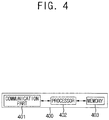
- Fig. 4 is a block diagram schematically illustrating a testing device 400 for testing the object detector based on the CNN in accordance with one example embodiment of the present disclosure.
- a testing device 400 in accordance with one example embodiment of the present disclosure may include a communication part 401 and a processor 402. It is illustrated in the drawings that the testing device 400 is distinguished from the learning device 100, but the testing device may be the same as the learning device 100.
- the learning device may further include a memory 403 capable of storing computer readable instructions for performing following processes.
- the processor, the memory, a medium, etc. may be integrated with an integrated processor.
- the learning device On condition that (1) the learning device (i) has instructed the convolutional layer to apply the convolution operation to the training image, to thereby output the feature map for training and (ii) has instructed the region proposal network (RPN) to output the k ROIs for training in the training image by using the feature map for training, (2) the learning device (i) has instructed each of the pooling layers having each different pooling scale to pool each of the areas, corresponding to each of the k ROIs for training, on the feature map for training per each of their scales, to thereby output each of the k first feature vectors for training corresponding to each of the k ROIs for training per each of their scales, (ii) has instructed each of the first fully connected (FC) layers corresponding to each of the pooling layers to output each of the k second feature vectors for training per each of their scales by using each of the k first feature vectors for training per each of their scales, and (iii) has instructed the second FC layers to output each of the class information for training and each of the regression
- the processor 402 may perform (1) a first process of (i) instructing the convolutional layer to apply the convolution operation to the test image, to thereby output at least one feature map for testing and (ii) instructing the RPN to output m ROIs for testing in the test image by using the feature map for testing; and (2) a second process of (i) instructing each of the pooling layers having each different pooling scale to pool each of areas, corresponding to each of the m ROIs for testing, on the feature map for testing per each of their scales, to thereby output each of m first feature vectors for testing corresponding to each of the m ROIs for testing per each of their scales, (ii) instructing each of the first FC layers corresponding to each of the pooling layers to output each of m second feature vectors for testing per each of their scales by using each of the m first feature vectors for testing per each of their scales, and (iii) instructing the second FC layers to output each of class information for testing and each of regression information for testing corresponding to each of
- m which is the number of ROIs outputted by the RPN in the testing device 400
- k which is the number of ROIs outputted by the RPN in the learning device 100
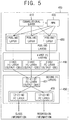
- a method of testing the object detector based on the CNN by using each of the pooling layers having each different pooling scale in accordance with one example embodiment of the present disclosure by using the testing device 400 will be described by referring to Fig. 5 .
- detailed description easily understandable from the learning method will be omitted.
- the testing device 400 instructs the convolutional layer 410 to apply at least one convolution operation to the test image, to thereby output at least one feature map for testing.
- the feature map for testing outputted from the convolutional layer 410 is inputted to the RPN 420, and the testing device 400 instructs the RPN 420 to output the m ROIs for testing corresponding to the test image by using the feature map for testing.
- the testing device 400 instructs each of the pooling layers 430 having each different pooling scale to pool each of the areas, corresponding to each of the m ROIs for testing, on the feature map for testing per each of their scales, to thereby output each of the m first feature vectors for testing corresponding to each of the m ROIs for testing per each of their scales.
- Fig. 5 illustrates each of 3 pooling layers 430 having each different pooling scale, but the present disclosure is not limited to this example.
- a first feature vector for testing having a large pooling scale may have a larger amount of information than a first feature vector having a small pooling scale.
- the testing device 400 instructs each of the first FC layers 440 corresponding to each of the pooling layers 430 to output each of the m second feature vectors for testing per each of their scales by using each of the m first feature vectors for testing per each of their scales.
- Fig. 5 illustrates that there are the 3 first FC layers 440, but this is because the number of the pooling layers 430 is 3, and the present disclosure is not limited to this example.
- each of the numbers of channels of each of the second feature vectors for testing per each of their scales, which are outputted from each of the first FC layers 440 may be the same with each other.
- each of the number of channels of the second feature vectors for testing per each of their scales, which are outputted from each of the first FC layers 440 may be 128, but the present disclosure is not limited to this example.
- the total number of channels of the second feature vectors for testing, outputted from the first FC layers 440 may be set to be smaller than a predetermined number.
- the total number of channels of the second feature vectors for testing, outputted from the first FC layers 440 may be 384, i.e., 128+128+128, but the present disclosure is not limited to this example.
- the number of channels, i.e., 384 channels, to be used for performing operations in accordance with the present disclosure becomes smaller than 4096 channels to be used for performing operations according to the conventional art, and thus an operation capability of the testing device 400 is greatly improved.
- the testing device 400 instructs the second FC layers 450 to output each of the class information for testing and each of the regression information for testing corresponding to each of the m ROIs for testing by using each of the m second feature vectors for testing per each of their scales.
- the second FC layer 450 may include a (2-1)-st FC layer 451 and (2-2)-nd FC layers 455.
- the (2-1)-st FC layer 451 may concatenate each of the second feature vectors for testing outputted from each of the first FC layers 440, to thereby output a third feature vector for testing.
- the (2-2)-nd FC layers 455 may output each of the class information for testing and each of the regression information for testing corresponding to the m ROIs for testing by using the third feature vector for testing.
- the present disclosure has an effect of using more features on the feature map, pooled with various scales by instructing each of the pooling layers having each different pooling scale to pool the area, corresponding to the ROIs, on the feature map per each of their scales.
- the present disclosure has another effect of improving a computational speed owing to a less number of channels to be used for performing operations.
- the learning method and the testing method in accordance with the present disclosure may be used for surveillance by using the CNN capable of converting modes according to scales of objects. According to the modes, weights of various layers and/or those of various losses may be adjusted.
- the embodiments of the present disclosure as explained above can be implemented in a form of executable program command through a variety of computer means recordable to computer readable media.
- the computer readable media may include solely or in combination, program commands, data files, and data structures.
- the program commands recorded to the media may be components specially designed for the present disclosure or may be usable to a skilled human in a field of computer software.
- Computer readable media include magnetic media such as hard disk, floppy disk, and magnetic tape, optical media such as CD-ROM and DVD, magneto-optical media such as floptical disk and hardware devices such as ROM, RAM, and flash memory specially designed to store and carry out program commands.
- Program commands include not only a machine language code made by a complier but also a high level code that can be used by an interpreter etc., which is executed by a computer.
- the aforementioned hardware device can work as more than a software module to perform the action of the present disclosure and they can do the same in the opposite case.
Landscapes
- Engineering & Computer Science (AREA)
- Theoretical Computer Science (AREA)
- Physics & Mathematics (AREA)
- General Physics & Mathematics (AREA)
- Evolutionary Computation (AREA)
- Artificial Intelligence (AREA)
- General Health & Medical Sciences (AREA)
- Health & Medical Sciences (AREA)
- Software Systems (AREA)
- Computing Systems (AREA)
- Computer Vision & Pattern Recognition (AREA)
- Multimedia (AREA)
- Data Mining & Analysis (AREA)
- Life Sciences & Earth Sciences (AREA)
- General Engineering & Computer Science (AREA)
- Medical Informatics (AREA)
- Databases & Information Systems (AREA)
- Mathematical Physics (AREA)
- Biomedical Technology (AREA)
- Biophysics (AREA)
- Molecular Biology (AREA)
- Computational Linguistics (AREA)
- Bioinformatics & Cheminformatics (AREA)
- Bioinformatics & Computational Biology (AREA)
- Evolutionary Biology (AREA)
- Image Analysis (AREA)
- Image Processing (AREA)
Applications Claiming Priority (1)
| Application Number | Priority Date | Filing Date | Title |
|---|---|---|---|
| US16/258,248 US10402686B1 (en) | 2019-01-25 | 2019-01-25 | Learning method and learning device for object detector to be used for surveillance based on convolutional neural network capable of converting modes according to scales of objects, and testing method and testing device using the same |
Publications (4)
| Publication Number | Publication Date |
|---|---|
| EP3686807A2 true EP3686807A2 (de) | 2020-07-29 |
| EP3686807A3 EP3686807A3 (de) | 2020-08-19 |
| EP3686807B1 EP3686807B1 (de) | 2025-01-01 |
| EP3686807C0 EP3686807C0 (de) | 2025-01-01 |
Family
ID=67769938
Family Applications (1)
| Application Number | Title | Priority Date | Filing Date |
|---|---|---|---|
| EP19208316.0A Active EP3686807B1 (de) | 2019-01-25 | 2019-11-11 | Lernverfahren und lernvorrichtung für objektdetektor für überwachungszwecke basierend auf einem neuronalen faltungsnetzwerk, das in der lage ist, modi je nach objektmassstäben zu konvertieren, sowie prüfvorrichtung und prüfverfahren damit |
Country Status (5)
| Country | Link |
|---|---|
| US (1) | US10402686B1 (de) |
| EP (1) | EP3686807B1 (de) |
| JP (1) | JP6856904B2 (de) |
| KR (1) | KR102320995B1 (de) |
| CN (1) | CN111488786B (de) |
Families Citing this family (4)
| Publication number | Priority date | Publication date | Assignee | Title |
|---|---|---|---|---|
| US10726303B1 (en) * | 2019-01-30 | 2020-07-28 | StradVision, Inc. | Learning method and learning device for switching modes of autonomous vehicle based on on-device standalone prediction to thereby achieve safety of autonomous driving, and testing method and testing device using the same |
| CN110648322B (zh) * | 2019-09-25 | 2023-08-15 | 杭州智团信息技术有限公司 | 一种子宫颈异常细胞检测方法及系统 |
| CN112308156B (zh) * | 2020-11-05 | 2022-05-03 | 电子科技大学 | 一种基于对抗学习的两阶段图像变化检测方法 |
| CN114092813B (zh) * | 2021-11-25 | 2022-08-05 | 中国科学院空天信息创新研究院 | 一种工业园区图像提取方法、系统、电子设备和存储介质 |
Family Cites Families (14)
| Publication number | Priority date | Publication date | Assignee | Title |
|---|---|---|---|---|
| US6413949B1 (en) * | 1995-06-07 | 2002-07-02 | D-Pharm, Ltd. | Prodrugs with enhanced penetration into cells |
| US9665802B2 (en) * | 2014-11-13 | 2017-05-30 | Nec Corporation | Object-centric fine-grained image classification |
| US20170124409A1 (en) * | 2015-11-04 | 2017-05-04 | Nec Laboratories America, Inc. | Cascaded neural network with scale dependent pooling for object detection |
| US10303977B2 (en) * | 2016-06-28 | 2019-05-28 | Conduent Business Services, Llc | System and method for expanding and training convolutional neural networks for large size input images |
| US10354159B2 (en) * | 2016-09-06 | 2019-07-16 | Carnegie Mellon University | Methods and software for detecting objects in an image using a contextual multiscale fast region-based convolutional neural network |
| US10678846B2 (en) * | 2017-03-10 | 2020-06-09 | Xerox Corporation | Instance-level image retrieval with a region proposal network |
| US10621725B2 (en) * | 2017-04-12 | 2020-04-14 | Here Global B.V. | Small object detection from a large image |
| US10169679B1 (en) * | 2017-10-13 | 2019-01-01 | StradVision, Inc. | Learning method and learning device for adjusting parameters of CNN by using loss augmentation and testing method and testing device using the same |
| US9946960B1 (en) * | 2017-10-13 | 2018-04-17 | StradVision, Inc. | Method for acquiring bounding box corresponding to an object in an image by using convolutional neural network including tracking network and computing device using the same |
| US10007865B1 (en) | 2017-10-16 | 2018-06-26 | StradVision, Inc. | Learning method and learning device for adjusting parameters of CNN by using multi-scale feature maps and testing method and testing device using the same |
| US9953437B1 (en) * | 2017-10-18 | 2018-04-24 | StradVision, Inc. | Method and device for constructing a table including information on a pooling type and testing method and testing device using the same |
| CN108052881A (zh) * | 2017-11-30 | 2018-05-18 | 华中科技大学 | 一种实时检测施工现场图像中多类实体对象的方法及设备 |
| CN108416394B (zh) * | 2018-03-22 | 2019-09-03 | 河南工业大学 | 基于卷积神经网络的多目标检测模型构建方法 |
| JP6847424B2 (ja) * | 2018-11-30 | 2021-03-24 | 株式会社ポコアポコネットワークス | 検出装置、検出方法、コンピュータプログラム及び学習モデル |
-
2019
- 2019-01-25 US US16/258,248 patent/US10402686B1/en active Active
- 2019-09-27 KR KR1020190119513A patent/KR102320995B1/ko active Active
- 2019-11-11 EP EP19208316.0A patent/EP3686807B1/de active Active
- 2019-12-16 CN CN201911291795.5A patent/CN111488786B/zh active Active
- 2019-12-27 JP JP2019239316A patent/JP6856904B2/ja active Active
Non-Patent Citations (1)
| Title |
|---|
| TSUNG-YI LIN ET AL: "Feature Pyramid Networks for Object Detection", ARXIV.ORG, CORNELL UNIVERSITY LIBRARY, 201 OLIN LIBRARY CORNELL UNIVERSITY ITHACA, NY 14853, 9 December 2016 (2016-12-09), XP080738158, DOI: 10.1109/CVPR.2017.106 * |
Also Published As
| Publication number | Publication date |
|---|---|
| CN111488786A (zh) | 2020-08-04 |
| EP3686807B1 (de) | 2025-01-01 |
| KR102320995B1 (ko) | 2021-11-03 |
| EP3686807C0 (de) | 2025-01-01 |
| JP6856904B2 (ja) | 2021-04-14 |
| CN111488786B (zh) | 2023-09-08 |
| EP3686807A3 (de) | 2020-08-19 |
| US10402686B1 (en) | 2019-09-03 |
| KR20200092848A (ko) | 2020-08-04 |
| JP2020119520A (ja) | 2020-08-06 |
Similar Documents
| Publication | Publication Date | Title |
|---|---|---|
| US10410120B1 (en) | Learning method and testing method of object detector to be used for surveillance based on R-CNN capable of converting modes according to aspect ratios or scales of objects, and learning device and testing device using the same | |
| US10692002B1 (en) | Learning method and learning device of pedestrian detector for robust surveillance based on image analysis by using GAN and testing method and testing device using the same | |
| KR102296507B1 (ko) | 트래킹 네트워크를 포함한 cnn을 사용하여 객체를 트래킹하는 방법 및 이를 이용한 장치 | |
| US10621476B1 (en) | Learning method and learning device for object detector based on reconfigurable network for optimizing customers' requirements such as key performance index using target object estimating network and target object merging network, and testing method and testing device using the same | |
| US10423860B1 (en) | Learning method and learning device for object detector based on CNN to be used for multi-camera or surround view monitoring using image concatenation and target object merging network, and testing method and testing device using the same | |
| US10430691B1 (en) | Learning method and learning device for object detector based on CNN, adaptable to customers' requirements such as key performance index, using target object merging network and target region estimating network, and testing method and testing device using the same to be used for multi-camera or surround view monitoring | |
| US10325371B1 (en) | Method and device for segmenting image to be used for surveillance using weighted convolution filters for respective grid cells by converting modes according to classes of areas to satisfy level 4 of autonomous vehicle, and testing method and testing device using the same | |
| US10796206B2 (en) | Method for integrating driving images acquired from vehicles performing cooperative driving and driving image integrating device using same | |
| KR20200095367A (ko) | 거리 예측이 가능한 레이더를 통해 획득되는 정보와 카메라를 통해 획득되는 정보를 통합하는 센서 융합을 수행함으로써 자율 주행을 지원하는 뉴럴 네트워크를 향상시키는 학습 방법 및 학습 장치, 그리고 이를 사용한 테스트 방법 및 테스트 장치 | |
| CN111507159B (zh) | 提供自动驾驶安全性的方法和装置 | |
| US10387752B1 (en) | Learning method and learning device for object detector with hardware optimization based on CNN for detection at distance or military purpose using image concatenation, and testing method and testing device using the same | |
| EP3686807A2 (de) | Lernverfahren und lernvorrichtung für objektdetektor für überwachungszwecke basierend auf einem neuronalen faltungsnetzwerk, das in der lage ist, modi je nach objektmassstäben zu konvertieren, sowie prüfvorrichtung und prüfverfahren damit | |
| US10402692B1 (en) | Learning method and learning device for fluctuation-robust object detector based on CNN using target object estimating network adaptable to customers' requirements such as key performance index, and testing device using the same | |
| CN111507373B (zh) | 执行无缝参数变更的方法及装置 | |
| EP3690811A1 (de) | Lernverfahren und lernvorrichtung zur beseitigung von jittering auf einem video, das durch eine wackelnde kamera erfasst wurde, unter verwendung einer vielzahl von neuronalen netzwerken für fehlertoleranz und fluktuationsrobustheit in extremen situationen, sowie testverfahren und testvorrichtung damit | |
| EP3686837B1 (de) | Lernverfahren und lernvorrichtung zur verringerung der verzerrung, die in einem verzerrten bild auftritt, das bei der stabilisierung eines verzerrten bildes erzeugt wird, durch verwendung eines gan zur verbesserung der fehlertoleranz und der fluktuationsrobustheit in extremen situationen | |
| CN111507152B (zh) | 基于内置独立型预测来转换自动驾驶模式的方法及装置 | |
| US10387754B1 (en) | Learning method and learning device for object detector based on CNN using 1×H convolution to be used for hardware optimization, and testing method and testing device using the same | |
| KR20200095357A (ko) | 비최대값 억제를 학습하는 병합 네트워크를 이용한 이종 센서 융합을 위한 학습 방법 및 학습 장치 | |
| EP3686797A1 (de) | Lernverfahren und lernvorrichtung für objektdetektor basierend auf cnn mit 1×1-faltung zur hardwareoptimierung sowie prüfverfahren und prüfvorrichtung damit | |
| US20200234135A1 (en) | LEARNING METHOD AND LEARNING DEVICE FOR CNN USING 1xK OR Kx1 CONVOLUTION TO BE USED FOR HARDWARE OPTIMIZATION, AND TESTING METHOD AND TESTING DEVICE USING THE SAME | |
| EP3913530B1 (de) | Lernverfahren und lernvorrichtung zum aktualisieren eines objektdetektors basierend auf tiefenlernen eines autonomen fahrzeugs zur anpassung des objektdetektors an die fahrumstände sowie aktualisierungsverfahren und aktualisierungsvorrichtung damit | |
| US10373004B1 (en) | Method and device for detecting lane elements to plan the drive path of autonomous vehicle by using a horizontal filter mask, wherein the lane elements are unit regions including pixels of lanes in an input image |
Legal Events
| Date | Code | Title | Description |
|---|---|---|---|
| PUAI | Public reference made under article 153(3) epc to a published international application that has entered the european phase |
Free format text: ORIGINAL CODE: 0009012 |
|
| STAA | Information on the status of an ep patent application or granted ep patent |
Free format text: STATUS: REQUEST FOR EXAMINATION WAS MADE |
|
| PUAL | Search report despatched |
Free format text: ORIGINAL CODE: 0009013 |
|
| 17P | Request for examination filed |
Effective date: 20191211 |
|
| AK | Designated contracting states |
Kind code of ref document: A2 Designated state(s): AL AT BE BG CH CY CZ DE DK EE ES FI FR GB GR HR HU IE IS IT LI LT LU LV MC MK MT NL NO PL PT RO RS SE SI SK SM TR |
|
| AX | Request for extension of the european patent |
Extension state: BA ME |
|
| AK | Designated contracting states |
Kind code of ref document: A3 Designated state(s): AL AT BE BG CH CY CZ DE DK EE ES FI FR GB GR HR HU IE IS IT LI LT LU LV MC MK MT NL NO PL PT RO RS SE SI SK SM TR |
|
| AX | Request for extension of the european patent |
Extension state: BA ME |
|
| RIC1 | Information provided on ipc code assigned before grant |
Ipc: G06K 9/32 20060101ALI20200716BHEP Ipc: G06N 3/08 20060101ALI20200716BHEP Ipc: G06K 9/62 20060101ALI20200716BHEP Ipc: G06N 3/04 20060101AFI20200716BHEP |
|
| RBV | Designated contracting states (corrected) |
Designated state(s): AL AT BE BG CH CY CZ DE DK EE ES FI FR GB GR HR HU IE IS IT LI LT LU LV MC MK MT NL NO PL PT RO RS SE SI SK SM TR |
|
| STAA | Information on the status of an ep patent application or granted ep patent |
Free format text: STATUS: EXAMINATION IS IN PROGRESS |
|
| 17Q | First examination report despatched |
Effective date: 20240426 |
|
| REG | Reference to a national code |
Ref country code: DE Ref legal event code: R079 Ref document number: 602019064186 Country of ref document: DE Free format text: PREVIOUS MAIN CLASS: G06N0003040000 Ipc: G06N0003084000 |
|
| GRAP | Despatch of communication of intention to grant a patent |
Free format text: ORIGINAL CODE: EPIDOSNIGR1 |
|
| STAA | Information on the status of an ep patent application or granted ep patent |
Free format text: STATUS: GRANT OF PATENT IS INTENDED |
|
| RIC1 | Information provided on ipc code assigned before grant |
Ipc: G06V 10/774 20220101ALI20240629BHEP Ipc: G06V 10/82 20220101ALI20240629BHEP Ipc: G06V 10/77 20220101ALI20240629BHEP Ipc: G06V 10/764 20220101ALI20240629BHEP Ipc: G06V 10/25 20220101ALI20240629BHEP Ipc: G06N 3/045 20230101ALI20240629BHEP Ipc: G06N 3/084 20230101AFI20240629BHEP |
|
| INTG | Intention to grant announced |
Effective date: 20240802 |
|
| GRAS | Grant fee paid |
Free format text: ORIGINAL CODE: EPIDOSNIGR3 |
|
| GRAA | (expected) grant |
Free format text: ORIGINAL CODE: 0009210 |
|
| STAA | Information on the status of an ep patent application or granted ep patent |
Free format text: STATUS: THE PATENT HAS BEEN GRANTED |
|
| AK | Designated contracting states |
Kind code of ref document: B1 Designated state(s): AL AT BE BG CH CY CZ DE DK EE ES FI FR GB GR HR HU IE IS IT LI LT LU LV MC MK MT NL NO PL PT RO RS SE SI SK SM TR |
|
| REG | Reference to a national code |
Ref country code: GB Ref legal event code: FG4D |
|
| REG | Reference to a national code |
Ref country code: CH Ref legal event code: EP |
|
| REG | Reference to a national code |
Ref country code: DE Ref legal event code: R096 Ref document number: 602019064186 Country of ref document: DE |
|
| REG | Reference to a national code |
Ref country code: IE Ref legal event code: FG4D |
|
| U01 | Request for unitary effect filed |
Effective date: 20250108 |
|
| U07 | Unitary effect registered |
Designated state(s): AT BE BG DE DK EE FI FR IT LT LU LV MT NL PT RO SE SI Effective date: 20250116 |
|
| PG25 | Lapsed in a contracting state [announced via postgrant information from national office to epo] |
Ref country code: PL Free format text: LAPSE BECAUSE OF FAILURE TO SUBMIT A TRANSLATION OF THE DESCRIPTION OR TO PAY THE FEE WITHIN THE PRESCRIBED TIME-LIMIT Effective date: 20250101 |
|
| PG25 | Lapsed in a contracting state [announced via postgrant information from national office to epo] |
Ref country code: ES Free format text: LAPSE BECAUSE OF FAILURE TO SUBMIT A TRANSLATION OF THE DESCRIPTION OR TO PAY THE FEE WITHIN THE PRESCRIBED TIME-LIMIT Effective date: 20250101 |
|
| PG25 | Lapsed in a contracting state [announced via postgrant information from national office to epo] |
Ref country code: NO Free format text: LAPSE BECAUSE OF FAILURE TO SUBMIT A TRANSLATION OF THE DESCRIPTION OR TO PAY THE FEE WITHIN THE PRESCRIBED TIME-LIMIT Effective date: 20250401 Ref country code: IS Free format text: LAPSE BECAUSE OF FAILURE TO SUBMIT A TRANSLATION OF THE DESCRIPTION OR TO PAY THE FEE WITHIN THE PRESCRIBED TIME-LIMIT Effective date: 20250501 |
|
| PG25 | Lapsed in a contracting state [announced via postgrant information from national office to epo] |
Ref country code: HR Free format text: LAPSE BECAUSE OF FAILURE TO SUBMIT A TRANSLATION OF THE DESCRIPTION OR TO PAY THE FEE WITHIN THE PRESCRIBED TIME-LIMIT Effective date: 20250101 |
|
| PG25 | Lapsed in a contracting state [announced via postgrant information from national office to epo] |
Ref country code: GR Free format text: LAPSE BECAUSE OF FAILURE TO SUBMIT A TRANSLATION OF THE DESCRIPTION OR TO PAY THE FEE WITHIN THE PRESCRIBED TIME-LIMIT Effective date: 20250402 |
|
| PG25 | Lapsed in a contracting state [announced via postgrant information from national office to epo] |
Ref country code: CZ Free format text: LAPSE BECAUSE OF FAILURE TO SUBMIT A TRANSLATION OF THE DESCRIPTION OR TO PAY THE FEE WITHIN THE PRESCRIBED TIME-LIMIT Effective date: 20250101 |
|
| PG25 | Lapsed in a contracting state [announced via postgrant information from national office to epo] |
Ref country code: SM Free format text: LAPSE BECAUSE OF FAILURE TO SUBMIT A TRANSLATION OF THE DESCRIPTION OR TO PAY THE FEE WITHIN THE PRESCRIBED TIME-LIMIT Effective date: 20250101 |
|
| PG25 | Lapsed in a contracting state [announced via postgrant information from national office to epo] |
Ref country code: SK Free format text: LAPSE BECAUSE OF FAILURE TO SUBMIT A TRANSLATION OF THE DESCRIPTION OR TO PAY THE FEE WITHIN THE PRESCRIBED TIME-LIMIT Effective date: 20250101 |
|
| PLBE | No opposition filed within time limit |
Free format text: ORIGINAL CODE: 0009261 |
|
| STAA | Information on the status of an ep patent application or granted ep patent |
Free format text: STATUS: NO OPPOSITION FILED WITHIN TIME LIMIT |
|
| U20 | Renewal fee for the european patent with unitary effect paid |
Year of fee payment: 7 Effective date: 20251028 |
|
| 26N | No opposition filed |
Effective date: 20251002 |