EP3686787B1 - Lernverfahren und lernvorrichtung zur erzeugung virtueller merkmalskarten, deren eigenschaften denen von realen merkmalskarten entsprechen oder ähnlich sind, unter verwendung eines gan, das auf die in virtuellen fahrumgebungen zu verwendende domänenanpassung angewendet werden kann - Google Patents
Lernverfahren und lernvorrichtung zur erzeugung virtueller merkmalskarten, deren eigenschaften denen von realen merkmalskarten entsprechen oder ähnlich sind, unter verwendung eines gan, das auf die in virtuellen fahrumgebungen zu verwendende domänenanpassung angewendet werden kann Download PDFInfo
- Publication number
- EP3686787B1 EP3686787B1 EP20151838.8A EP20151838A EP3686787B1 EP 3686787 B1 EP3686787 B1 EP 3686787B1 EP 20151838 A EP20151838 A EP 20151838A EP 3686787 B1 EP3686787 B1 EP 3686787B1
- Authority
- EP
- European Patent Office
- Prior art keywords
- network
- real
- loss
- feature map
- generate
- Prior art date
- Legal status (The legal status is an assumption and is not a legal conclusion. Google has not performed a legal analysis and makes no representation as to the accuracy of the status listed.)
- Active
Links
Images

Classifications
-
- G—PHYSICS
- G06—COMPUTING OR CALCULATING; COUNTING
- G06T—IMAGE DATA PROCESSING OR GENERATION, IN GENERAL
- G06T11/00—Two-dimensional [2D] image generation
-
- G—PHYSICS
- G06—COMPUTING OR CALCULATING; COUNTING
- G06F—ELECTRIC DIGITAL DATA PROCESSING
- G06F18/00—Pattern recognition
- G06F18/20—Analysing
- G06F18/21—Design or setup of recognition systems or techniques; Extraction of features in feature space; Blind source separation
- G06F18/214—Generating training patterns; Bootstrap methods, e.g. bagging or boosting
-
- G—PHYSICS
- G06—COMPUTING OR CALCULATING; COUNTING
- G06F—ELECTRIC DIGITAL DATA PROCESSING
- G06F18/00—Pattern recognition
- G06F18/20—Analysing
- G06F18/21—Design or setup of recognition systems or techniques; Extraction of features in feature space; Blind source separation
- G06F18/217—Validation; Performance evaluation; Active pattern learning techniques
-
- G—PHYSICS
- G06—COMPUTING OR CALCULATING; COUNTING
- G06N—COMPUTING ARRANGEMENTS BASED ON SPECIFIC COMPUTATIONAL MODELS
- G06N3/00—Computing arrangements based on biological models
- G06N3/02—Neural networks
- G06N3/04—Architecture, e.g. interconnection topology
- G06N3/045—Combinations of networks
-
- G—PHYSICS
- G06—COMPUTING OR CALCULATING; COUNTING
- G06N—COMPUTING ARRANGEMENTS BASED ON SPECIFIC COMPUTATIONAL MODELS
- G06N3/00—Computing arrangements based on biological models
- G06N3/02—Neural networks
- G06N3/04—Architecture, e.g. interconnection topology
- G06N3/0464—Convolutional networks [CNN, ConvNet]
-
- G—PHYSICS
- G06—COMPUTING OR CALCULATING; COUNTING
- G06N—COMPUTING ARRANGEMENTS BASED ON SPECIFIC COMPUTATIONAL MODELS
- G06N3/00—Computing arrangements based on biological models
- G06N3/02—Neural networks
- G06N3/04—Architecture, e.g. interconnection topology
- G06N3/047—Probabilistic or stochastic networks
-
- G—PHYSICS
- G06—COMPUTING OR CALCULATING; COUNTING
- G06N—COMPUTING ARRANGEMENTS BASED ON SPECIFIC COMPUTATIONAL MODELS
- G06N3/00—Computing arrangements based on biological models
- G06N3/02—Neural networks
- G06N3/04—Architecture, e.g. interconnection topology
- G06N3/0475—Generative networks
-
- G—PHYSICS
- G06—COMPUTING OR CALCULATING; COUNTING
- G06N—COMPUTING ARRANGEMENTS BASED ON SPECIFIC COMPUTATIONAL MODELS
- G06N3/00—Computing arrangements based on biological models
- G06N3/02—Neural networks
- G06N3/08—Learning methods
- G06N3/084—Backpropagation, e.g. using gradient descent
-
- G—PHYSICS
- G06—COMPUTING OR CALCULATING; COUNTING
- G06N—COMPUTING ARRANGEMENTS BASED ON SPECIFIC COMPUTATIONAL MODELS
- G06N3/00—Computing arrangements based on biological models
- G06N3/02—Neural networks
- G06N3/08—Learning methods
- G06N3/088—Non-supervised learning, e.g. competitive learning
-
- G—PHYSICS
- G06—COMPUTING OR CALCULATING; COUNTING
- G06N—COMPUTING ARRANGEMENTS BASED ON SPECIFIC COMPUTATIONAL MODELS
- G06N3/00—Computing arrangements based on biological models
- G06N3/02—Neural networks
- G06N3/08—Learning methods
- G06N3/09—Supervised learning
-
- G—PHYSICS
- G06—COMPUTING OR CALCULATING; COUNTING
- G06N—COMPUTING ARRANGEMENTS BASED ON SPECIFIC COMPUTATIONAL MODELS
- G06N3/00—Computing arrangements based on biological models
- G06N3/02—Neural networks
- G06N3/08—Learning methods
- G06N3/094—Adversarial learning
-
- G—PHYSICS
- G06—COMPUTING OR CALCULATING; COUNTING
- G06N—COMPUTING ARRANGEMENTS BASED ON SPECIFIC COMPUTATIONAL MODELS
- G06N5/00—Computing arrangements using knowledge-based models
- G06N5/04—Inference or reasoning models
- G06N5/046—Forward inferencing; Production systems
-
- G—PHYSICS
- G06—COMPUTING OR CALCULATING; COUNTING
- G06V—IMAGE OR VIDEO RECOGNITION OR UNDERSTANDING
- G06V10/00—Arrangements for image or video recognition or understanding
- G06V10/40—Extraction of image or video features
- G06V10/44—Local feature extraction by analysis of parts of the pattern, e.g. by detecting edges, contours, loops, corners, strokes or intersections; Connectivity analysis, e.g. of connected components
- G06V10/443—Local feature extraction by analysis of parts of the pattern, e.g. by detecting edges, contours, loops, corners, strokes or intersections; Connectivity analysis, e.g. of connected components by matching or filtering
- G06V10/449—Biologically inspired filters, e.g. difference of Gaussians [DoG] or Gabor filters
- G06V10/451—Biologically inspired filters, e.g. difference of Gaussians [DoG] or Gabor filters with interaction between the filter responses, e.g. cortical complex cells
- G06V10/454—Integrating the filters into a hierarchical structure, e.g. convolutional neural networks [CNN]
-
- G—PHYSICS
- G06—COMPUTING OR CALCULATING; COUNTING
- G06V—IMAGE OR VIDEO RECOGNITION OR UNDERSTANDING
- G06V10/00—Arrangements for image or video recognition or understanding
- G06V10/70—Arrangements for image or video recognition or understanding using pattern recognition or machine learning
- G06V10/77—Processing image or video features in feature spaces; using data integration or data reduction, e.g. principal component analysis [PCA] or independent component analysis [ICA] or self-organising maps [SOM]; Blind source separation
- G06V10/776—Validation; Performance evaluation
-
- G—PHYSICS
- G06—COMPUTING OR CALCULATING; COUNTING
- G06V—IMAGE OR VIDEO RECOGNITION OR UNDERSTANDING
- G06V10/00—Arrangements for image or video recognition or understanding
- G06V10/70—Arrangements for image or video recognition or understanding using pattern recognition or machine learning
- G06V10/82—Arrangements for image or video recognition or understanding using pattern recognition or machine learning using neural networks
-
- G—PHYSICS
- G06—COMPUTING OR CALCULATING; COUNTING
- G06V—IMAGE OR VIDEO RECOGNITION OR UNDERSTANDING
- G06V20/00—Scenes; Scene-specific elements
- G06V20/10—Terrestrial scenes
- G06V20/13—Satellite images
-
- G—PHYSICS
- G06—COMPUTING OR CALCULATING; COUNTING
- G06V—IMAGE OR VIDEO RECOGNITION OR UNDERSTANDING
- G06V20/00—Scenes; Scene-specific elements
- G06V20/50—Context or environment of the image
- G06V20/56—Context or environment of the image exterior to a vehicle by using sensors mounted on the vehicle
Definitions
- the present disclosure relates to a learning method and a learning device, a testing method and a testing device for use with an autonomous vehicle, virtual driving, and the like; and more particularly, to the learning method and the learning device for generating virtual feature maps whose characteristics are same or similar to those of real feature maps by using GAN, and the testing method and the testing device using the same.
- Deep Convolution Neural Networks are at the heart of the remarkable development in deep learning. CNNs have already been used in the 90's to solve problems of character recognition, but their use has become as widespread as it is now thanks to recent researches. These CNNs won the 2012 ImageNet image classification tournament, crushing other competitors. Then, the CNNs became a very useful tool in the field of machine learning.
- the CNNs have been popular in an autonomous vehicles industry.
- the CNNs When used in the autonomous vehicles industry, the CNNs perform functions of acquiring images from a camera installed on a vehicle, searching for lanes, etc. In order to perform these functions, the CNNs learn parameters by using training images on a real world and their corresponding GTs.
- Shortcoming of this kind of a traditional approach is that acquiring training images on a real world and generating their corresponding GTs should be done by people, not automatically by a programmed computer, resulting in high cost on training processes.
- An alternative approach for training the CNNs is using virtual images on a virtual world simulated by a programmed computer.
- the virtual images and their corresponding GTs can be acquired automatically by the programmed computer, resulting in much lower cost on training processes, comparing to the traditional approach.
- EP 3 404 586 A1 discloses a structure of GAN for novel data detection, which includes a generator to generate novel data and a discriminator to classify the received novel data as novel in response to detecting that the data does not correspond to any classified category.
- Any images referred to in the present disclosure may include images related to any roads paved or unpaved, in which case the objects on the roads or near the roads may include vehicles, persons, animals, plants, buildings, flying objects like planes or drones, or any other obstacles which may appear in a road-related scene.
- said any images referred to in the present disclosure may include images not related to any roads, such as images related to alleyway, land lots, sea, lakes, rivers, mountains, forests, deserts, sky, or any indoor space
- the objects in said any images may include vehicles, persons, animals, plants, buildings, flying objects like planes or drones, ships, amphibious planes or ships, or any other obstacles which may appear in a scene related to alleyway, land lots, sea, lakes, rivers, mountains, forests, deserts, sky, or any indoor space.
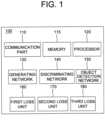
- Fig. 1 is a drawing schematically illustrating a configuration of a learning device performing a method for learning generation of virtual feature maps whose characteristics are same as or similar to those of real feature maps by using GAN in accordance with one embodiment of the present disclosure.
- the learning device 100 may include a generating network 130, a discriminating network 140, an object detection network 150, a first loss unit 160, a second loss unit 170 and a third loss unit 180, which are components to be described later.
- a communication part 110 and a processor 120 Processes of input/output and computation of the generating network 130, the discriminating network 140, the object detection network 150, the first loss unit 160, the second loss unit 170 and the third loss unit 180 may be respectively performed by a communication part 110 and a processor 120.
- detailed communication schematics between the communication part 110 and the processor 120 is omitted in Fig. 1 .
- a memory 115 may have stored various instructions to be described later, and the processor 120 may execute the instructions stored in the memory 115 and may perform processes of the present disclosure by executing the processes to be disclosed later.
- Such description of the learning device 100 does not exclude an integrated device including any combination of a processor, a memory, a medium, or any other computing components.
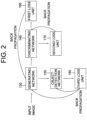
- Fig. 2 is a drawing schematically illustrating a flow of the method for learning the generation of the virtual feature maps whose characteristics are same as or similar to those of the real feature maps by using the GAN in accordance with one embodiment of the present disclosure.
- the generating network 130 may generate at least one output feature map, and deliver it to the discriminating network 140 and the object detection network 150.
- the discriminating network 140 may generate at least one evaluation score on the output feature map, and deliver it to the first loss unit 160 and the second loss unit 170.
- the object detection network 150 may generate one or more class scores, and deliver those to the third loss unit 180.
- the first loss unit 160, the second loss unit 170, and the third loss unit 180 may generate at least one first loss, at least one second loss, and at least third loss respectively, and support their corresponding networks to learn parameters thereof by backpropagating those losses.
- the learning device 100 acquires said at least one input image, and feed it to the generating network 130.
- the input image may be one of the virtual images.
- the virtual images are a virtually photographed image on a virtual world simulated by a programmed computer.
- the learning device 100 instructs the generating network 130 to apply one or more convolutional operations to the input image, to thereby generate said at least one output feature map, whose characteristics are same as or similar to those of the real feature maps.
- “A is similar to B” means that a degree of similarity between A and B is same as or larger than a predetermined threshold. Further, the degree of similarity therebetween is determined by using one of various well-known techniques but the detailed explanation thereon is omitted.
- the real feature maps are derived from real images, which are some of really photographed images on a real world, different from the virtual feature maps.
- the characteristics of the real feature maps may include characteristics resulted from those of the real images, which include a low chroma, a low contrast, relatively sufficient details of objects, and relatively sophisticated, realistic routes of rays.
- the learning device 100 may deliver the output feature map to the discriminating network 140 and the object detection network 150.
- the discriminating network 140 may be explained.
- the learning device 100 may instruct the discriminating network 140 to calculate at least one probability of the output feature map being real or fake, to thereby generate said at least one evaluation score.
- the discriminating network 140 may determine whether its own inputted feature map is one of the real feature maps or one of the virtual feature maps, by applying at least part of one or more convolutional operations and one or more FC operations to the inputted feature map. How the discriminating network 140 is trained will be explained later, along with the second loss unit 170.
- the learning device 100 may instruct the object detection network 150 to detect one or more objects included in the input image by referring to the output feature map, to thereby generate said one or more class scores.
- the object detection network 150 Fig. 3 will be referred to.
- Fig. 3 is a drawing schematically illustrating an object detection network and its corresponding RPN for performing the method for learning the generation of the virtual feature maps whose characteristics are same as or similar to those of the real feature maps by using the GAN in accordance with one embodiment of the present disclosure.
- the object detection network 150 may generate the class scores through a convolutional layer 151 and an FC layer 152, which are included therein, along with a support of an RPN 153.
- the object detection network 150 may instruct the convolutional layer 151 to apply one or more convolutional operations to each of regions on the output feature map corresponding to each of the ROIs, to thereby generate each of partial feature maps per each of ROls. And, the object detection network 150 may instruct the FC layer 152 to generate information on each of one or more classes of the objects included in the input image by referring to each of the partial feature maps per each of the ROls.
- the class information may include each of probabilities of each of the objects of the input image being included in each corresponding class, and each of the class scores may include the probabilities corresponding to each of the objects.
- the learning device 100 instructs the first loss unit 160 to generate said at least one first loss by referring to the evaluation score generated by the discriminating network 140.
- the first loss allows parameters of the generating network 130 to be adjusted to deceive the discriminating network 140, so that a feature map to be generated by the generating network 130, which is one of the virtual feature maps though, may be determined as one of the real feature maps by the discriminating network 140.
- the learning device 100 instructs the first loss unit 160 to learn the parameters of the generating network 130 by backpropagating the first loss.
- the learning device 100 if at least one training image which is one of the virtual images is acquired, has instructed the generating network 130 to apply one or more convolutional operations to the training image, to thereby generate at least one output feature map for training, whose characteristics are same as or similar to those of the real feature maps; and (2) the learning device 100, if at least one evaluation score, corresponding to the output feature map for training, generated by the discriminating network 140 is acquired, has instructed a first loss unit to generate at least one first loss by referring to the evaluation score, and learning parameters of the generating network by backpropagating the first loss, the testing device, if at least one test image which is one of the virtual images is acquired, may instruct the generating network 130 to apply said one or more convolutional operations to the test image, to thereby generate at least one output feature map for testing, whose characteristics are same as or similar to those of the real feature maps.
- the object detection network 150 may be used to support an autonomous driving in the real world.
- the test image may be acquired through a camera included in an autonomous vehicle including the object detection network 150, and the object detection network 150 may support the autonomous vehicle by using the test image.
- the object detection network 150 Since the object detection network 150 have been learned by using the virtual feature maps whose characteristics are same as or similar to those of the real feature maps, the object detection network 150 may work well in the real world even though it have been learned in the virtual world.
- communication parts of the learning device and the testing device may perform transmission of image data, for example, images described above like the original image, original labels, and additional labels, etc., and that processors and/or memories of the learning device and the testing device may retain data for feature maps and performing operations, and that the processors of the learning device and the testing device may perform convolution operations, deconvolution operations, and loss value operations.
- the present disclosure has an effect of alleviating a problem of procuring the sets of the training images in the non-RGB format by transforming the sets of the training images in the RGB format into those in the non-RGB format with a cycle GAN (Generative Adversarial Network) capable of being applied to domain adaptation.
- GAN Geneative Adversarial Network
- the method in accordance with the present disclosure can be performed to be used in virtual driving environments by using a runtime input transformation. Further, a gap between virtuality and reality, and annotation costs can be reduced by the method.
- the embodiments of the present disclosure as explained above can be implemented in a form of executable program command through a variety of computer means recordable to computer readable media.
- the computer readable media may include solely or in combination, program commands, data files, and data structures.
- the program commands recorded to the media may be components specially designed for the present disclosure or may be usable to a skilled human in a field of computer software.
- Computer readable media include magnetic media such as hard disk, floppy disk, and magnetic tape, optical media such as CD-ROM and DVD, magneto-optical media such as floptical disk and hardware devices such as ROM, RAM, and flash memory specially designed to store and carry out program commands.
- Program commands include not only a machine language code made by a complier but also a high level code that can be used by an interpreter etc., which is executed by a computer.
- the aforementioned hardware device can work as more than a software module to perform the action of the present disclosure and they can do the same in the opposite case.
Landscapes
- Engineering & Computer Science (AREA)
- Theoretical Computer Science (AREA)
- Physics & Mathematics (AREA)
- Evolutionary Computation (AREA)
- General Physics & Mathematics (AREA)
- Artificial Intelligence (AREA)
- Health & Medical Sciences (AREA)
- General Health & Medical Sciences (AREA)
- Software Systems (AREA)
- Data Mining & Analysis (AREA)
- Computing Systems (AREA)
- Life Sciences & Earth Sciences (AREA)
- General Engineering & Computer Science (AREA)
- Biomedical Technology (AREA)
- Molecular Biology (AREA)
- Computational Linguistics (AREA)
- Mathematical Physics (AREA)
- Biophysics (AREA)
- Computer Vision & Pattern Recognition (AREA)
- Multimedia (AREA)
- Databases & Information Systems (AREA)
- Medical Informatics (AREA)
- Bioinformatics & Cheminformatics (AREA)
- Bioinformatics & Computational Biology (AREA)
- Evolutionary Biology (AREA)
- Biodiversity & Conservation Biology (AREA)
- Probability & Statistics with Applications (AREA)
- Image Analysis (AREA)
- Control Of Position, Course, Altitude, Or Attitude Of Moving Bodies (AREA)
Claims (5)
- Lernverfahren zum Ableiten einer oder mehrerer virtueller Merkmalskarten von einem oder mehreren virtuellen Bildern, deren eine oder mehrere Eigenschaften gleich oder ähnlich denen einer oder mehrerer realer Merkmalskarten sind, die von einem oder mehreren realen Bildern abgeleitet wurden, unter Verwendung von GAN (Generative Adversarial Network), das ein Erzeugungsnetzwerk (130) und ein Diskriminierungsnetzwerk (140) enthält, wobei "ähnlich" bedeutet, dass ein Grad der Ähnlichkeit zwischen den Eigenschaften des einen oder der mehreren virtuellen Bilder und den Eigenschaften der einen oder der mehreren realen Merkmalskarten gleich oder größer als ein vorbestimmter Schwellenwert ist, umfassend die folgenden Schritte:(a) wenn mindestens ein Eingabebild, das eines der virtuellen Bilder ist, erfasst wird, Anweisen des Erzeugungsnetzwerks (130), eine oder mehrere Faltungsoperationen auf das Eingabebild durch eine Lernvorrichtung (100) anzuwenden, um mindestens eine Ausgabemerkmalskarte zu erzeugen, deren Eigenschaften gleich oder ähnlich den Eigenschaften der realen Merkmalskarten sind, wobei die Eigenschaften der realen Merkmalskarten Eigenschaften umfassen, die sich aus den realen Bildern ergeben, beispielsweise Chroma, Kontrast, Details von Objekten und Strahlenverläufe, wobei das eine oder die mehreren virtuellen Bilder virtuell fotografierte Bilder auf einer virtuellen Welt sind, die von einem programmierten Computer simuliert wird, und das eine oder die mehreren realen Bilder die Bilder sind, die auf einer realen Welt fotografiert wurden; und(b) wenn mindestens eine Bewertungspunktzahl, die der von dem Diskriminierungsnetzwerk (140) erzeugten Ausgabemerkmalskarte entspricht, erfasst wird, Anweisen einer ersten Verlusteinheit (160), mindestens einen ersten Verlust unter Bezugnahme auf die Bewertungspunktzahl zu erzeugen, und Lernen von Parametern des Erzeugungsnetzwerks (130) durch Rückpropagieren des ersten Verlusts durch die Lernvorrichtung (100) , wobei der erste Verlust ermöglicht, dass die Parameter des Erzeugungsnetzwerks (130) angepasst werden, um das Diskriminierungsnetzwerk (140) zu täuschen, so dass eine durch das Erzeugungsnetzwerk (130) zu erzeugende Merkmalskarte, die eine der virtuellen Merkmalskarten ist, durch das Diskriminierungsnetzwerk (140) bestimmt wird, als ob sie eine der realen Merkmalskarten wäre,wobei ein Objekterkennungsnetzwerk (150), angewiesen durch die Lernvorrichtung (100), jede von einer oder mehreren Klassenpunktzahlen erzeugt, die jedem von einem oder mehreren Objekten entsprechen, die in dem Eingabebild enthalten sind, unter Bezugnahme auf die Ausgabemerkmalskarte, wobei das Objekterkennungsnetzwerk (150), wenn jede von einer oder mehreren ROIs auf dem Eingabebild, erzeugt durch ein RPN (153), erfasst wird, eine Faltungsschicht (151) anweist, eine oder mehrere Faltungsoperationen auf jede der Regionen auf der Ausgabemerkmalskarte anzuwenden, die jeder der ROIs entspricht, um dadurch jede der Teilmerkmalskarten für jede der ROIs zu erzeugen, und eine FC-Schicht (152) anweist, Informationen über jede von einer oder mehreren Klassen der Objekte zu erzeugen, die in dem Eingabebild enthalten sind, unter Bezugnahme auf jede der Teilmerkmalskarten, um dadurch die Klassenpunktzahlen zu erzeugen,wobei eine dritte Verlusteinheit (180), die von der Lernvorrichtung (100) angewiesen wird, mindestens einen dritten Verlust unter Bezugnahme auf die Klassenpunktzahlen und ihre entsprechenden GTs erzeugt und Parameter des Erzeugungsnetzwerks (130) und des Objekterkennungsnetzwerks (150) durch Rückpropagieren des dritten Verlusts erlernt,wobei die Lernvorrichtung (100) das Diskriminierungsnetzwerk (140), das bestimmen kann, ob seine eigene eingegebene Merkmalskarte eine der realen Merkmalskarten oder eine der virtuellen Merkmalskarten ist, anweist, mindestens eine Wahrscheinlichkeit zu erzeugen, dass die Ausgabemerkmalskarte real oder gefälscht ist, um dadurch die Bewertungspunktzahl zu erzeugen,wobei der dritte Verlust (i) ermöglicht, dass die Parameter des Objekterkennungsnetzwerks (150) angepasst werden, um seine Genauigkeit beim Erkennen der Objekte zu erhöhen, die in dem Eingabebild enthalten sind, das der Ausgabemerkmalskarte entspricht, und gleichzeitig (ii) ermöglicht, dass die Parameter des Erzeugungsnetzwerks (130) angepasst werden, um eine optimierte Merkmalskarte zu erzeugen, die das Objekterkennungsnetzwerk (150) dabei unterstützt, seine Genauigkeit beim Erkennen der Objekte durch Verwendung der optimierten Merkmalskarte zu erhöhen,wobei das Diskriminierungsnetzwerk (140), wenn die Ausgabemerkmalskarte, mindestens eine reale Trainingsmerkmalskarte, die unter Verwendung mindestens eines der realen Bilder erzeugt wird, und ihre entsprechenden GTs erfasst werden, eine zweite Verlusteinheit (170) anweist, die dem Diskriminierungsnetzwerk (140) entspricht, mindestens einen zweiten Verlust unter Bezugnahme auf (i) Bewertungspunktzahlen zum Training auf der Ausgabemerkmalskarte und der realen Trainingsmerkmalskarte, die durch das Diskriminierungsnetzwerk (140) erzeugt wurde, und (ii) die GTs zu erzeugen und deren Parameter durch Rückpropagieren des zweiten Verlustes zu lernen, um dadurch eine Wahrscheinlichkeit zu bestimmen, ob eine einzugebende Merkmalskarte real oder gefälscht ist,wobei das RPN (153) mindestens einen RPN-Verlust unter Bezugnahme auf jede der ROIs und jede ihrer entsprechenden GTs erzeugt und Parameter davon durch Rückpropagieren des RPN-Verlusts lernt, um dadurch die Wahrscheinlichkeiten von Objekten zu erhöhen, die in einzugebenden Bildern enthalten sind und sich in von dem RPN (153) erzeugten ROIs befinden.
- Testverfahren, um eine oder mehrere virtuelle Merkmalskarten von einem oder mehreren virtuellen Bildern abzuleiten, deren eine oder mehrere Eigenschaften gleich oder ähnlich denen einer oder mehrerer realer Merkmalskarten zum Testen sind, die von einem oder mehreren realen Bildern abgeleitet wurden, unter Verwendung von GAN (Generative Adversarial Network), das ein Erzeugungsnetzwerk (130) und ein Diskriminierungsnetzwerk (140) enthält, umfassend einen Schritt von:
unter der Bedingung, dass (1) eine Lernvorrichtung (100) das Erzeugungsnetzwerk (130) angewiesen hat, eine oder mehrere Faltungsoperationen auf mindestens ein Trainingsbild anzuwenden, das eines der virtuellen Bilder ist, um mindestens eine Ausgabemerkmalskarte zum Training zu erzeugen, deren Eigenschaften gleich oder ähnlich den Eigenschaften einer oder mehrerer realer Merkmalskarten zum Training sind, wobei die Eigenschaften der realen Merkmalskarten Eigenschaften einschließen, die aus den realen Bildern resultieren, zum Beispiel Chroma, Kontrast, Details von Objekten und Strahlenverläufe, wobei "ähnlich" bedeutet, dass ein Grad der Ähnlichkeit zwischen den Eigenschaften des einen oder der mehreren virtuellen Bilder und den Eigenschaften der einen oder der mehreren realen Merkmalskarten gleich oder größer als ein vorbestimmter Schwellenwert ist, wobei das eine oder die mehreren virtuellen Bilder virtuell fotografierte Bilder auf einer virtuellen Welt sind, die durch einen programmierten Computer simuliert wird, und das eine oder die mehreren realen Bilder die auf einer realen Welt fotografierten Bilder sind, und (2) die Lernvorrichtung (100) eine erste Verlusteinheit (160) angewiesen hat, mindestens einen ersten Verlust unter Bezugnahme auf mindestens eine Bewertungspunktzahl zu erzeugen, entsprechend der Ausgabemerkmalskarte zum Training, die durch das Diskriminierungsnetzwerk (140) erzeugt wird, und Parametern des Erzeugungsnetzwerks (130) durch Rückpropagieren des ersten Verlustes zu lernen, wobei der erste Verlust ermöglicht hat, dass die Parameter des Erzeugungsnetzwerks (130) angepasst werden, um das Diskriminierungsnetzwerk (140) zu täuschen, so dass eine durch das Erzeugungsnetzwerk (130) zu erzeugende Merkmalskarte, die eine der virtuellen Merkmalskarten ist, durch das Diskriminierungsnetzwerk (140) bestimmt wird, als ob sie eine der realen Merkmalskarten wäre, wobei die Lernvorrichtung (100) ein Objekterkennungsnetzwerk (150) angewiesen hat, jede von einer oder mehreren Klassenpunktzahlen zu erzeugen, die jedem von einem oder mehreren Objekten entsprechen, die in dem Eingabebild enthalten sind, unter Bezugnahme auf die Ausgabemerkmalskarte zum Training, wobei das Objekterkennungsnetzwerk (150), als Reaktion auf das Erfassen jeder der einen oder mehreren ROIs auf dem von einem RPN (153) erzeugten Eingabebild eine Faltungsschicht (151) angewiesen hat, eine oder mehrere Faltungsoperationen auf jede der Regionen auf der Ausgabemerkmalskarte zum Training anzuwenden, die jeder der ROIs entspricht, um dadurch jede der Teilmerkmalskarten für jede der ROIs zu erzeugen, und eine FC-Schicht (152) angewiesen hat, Informationen über jede von einer oder mehreren Klassen der Objekte, die in dem Eingabebild enthalten sind, unter Bezugnahme auf jede der Teilmerkmalskarten zu erzeugen, um dadurch die Klassenpunktzahlen zu erzeugen, wobei die Lernvorrichtung (100) eine dritte Verlusteinheit (180) angewiesen hat, mindestens einen dritten Verlust unter Bezugnahme auf die Klassenpunktzahlen und ihre entsprechenden GTs zu erzeugen und Parameter des Erzeugungsnetzwerks (130) und des Objekterkennungsnetzwerks (150) durch Rückpropagieren des dritten Verlusts zu lernen, wobei die Lernvorrichtung (100) das Diskriminierungsnetzwerk (140), das in der Lage ist, zu bestimmen, ob seine eigene eingegebene Merkmalskarte eine der realen Merkmalskarten oder eine der virtuellen Merkmalskarten ist, anweist, mindestens eine Wahrscheinlichkeit dafür zu erzeugen, dass die Ausgabemerkmalskarte real oder gefälscht ist, um dadurch die Bewertungspunktzahl zu erzeugen, wobei der dritte Verlust (i) ermöglicht, dass die Parameter des Objekterkennungsnetzwerks (150) angepasst werden, um seine Genauigkeit beim Erkennen der in dem der Ausgabemerkmalskarte entsprechenden Eingabebild enthaltenen Objekte zu erhöhen und gleichzeitig (ii) ermöglicht, dass die Parameter des Erzeugungsnetzwerks (130) angepasst werden, um eine optimierte Merkmalskarte zu erzeugen, die das Objekterkennungsnetzwerk (150) dabei unterstützt, seine Genauigkeit beim Erkennen der Objekte unter Verwendung der optimierten Merkmalskarte zu erhöhen, wobei das Diskriminierungsnetzwerk (140), wenn die Ausgabemerkmalskarte, mindestens eine reale Trainingsmerkmalskarte, die unter Verwendung mindestens eines der realen Bilder erzeugt wurde, und ihre entsprechenden GTs erfasst werden, eine zweite Verlusteinheit (170) anweist, die dem Diskriminierungsnetzwerk (140) entspricht, mindestens einen zweiten Verlust unter Bezugnahme auf (i) Bewertungspunktzahlen zum Training auf der Ausgabemerkmalskarte und der realen Trainingsmerkmalskarte, die durch das Diskriminierungsnetzwerk (140) erzeugt wurde, und (ii) die GTs zu erzeugen und deren Parameter durch Rückpropagieren des zweiten Verlustes zu lernen, um dadurch eine Wahrscheinlichkeit zu bestimmen, dass eine einzugebende Merkmalskarte real oder gefälscht ist, wobei das RPN (153) mindestens einen RPN-Verlust unter Bezugnahme auf jede der ROIs und jede ihrer entsprechenden GTs erzeugt und Parameter davon durch Rückpropagieren des RPN-Verlusts lernt, um dadurch Wahrscheinlichkeiten von Objekten zu erhöhen, die in einzugebenden Bildern enthalten sind und sich in von dem RPN (153) erzeugten ROIs befinden; wenn mindestens ein Testbild, das eines der virtuellen Bilder ist, erfasst wird, Anweisen des Erzeugungsnetzwerks (130), die eine oder mehrere Faltungsoperationen auf das Testbild durch eine Testvorrichtung anzuwenden, um dadurch mindestens eine Ausgabemerkmalskarte zum Testen zu erzeugen, deren Eigenschaften gleich oder ähnlich denen der realen Merkmalskarten zum Testen sind. - Verfahren nach Anspruch 2, wobei ein Objekterkennungsnetzwerk (150) ein oder mehrere im Testbild enthaltene Objekte unter Bezugnahme auf die Ausgabemerkmalskarte zum Testen erkennt.
- Verfahren nach Anspruch 3, wobei das Testbild durch eine Kamera erfasst wird, die in einem autonomen Fahrzeug enthalten ist, das das Objekterkennungsnetzwerk (150) enthält, und das Objekterkennungsnetzwerk (150) das autonome Fahrzeug unter Verwendung des Testbildes unterstützt.
- Lernvorrichtung (100) zum Ableiten einer oder mehrerer virtueller Merkmalskarten von einem oder mehreren virtuellen Bildern, deren eine oder mehrere Eigenschaften gleich oder ähnlich denen einer oder mehrerer realer Merkmalskarten sind, die von einem oder mehreren realen Bildern abgeleitet wurden, unter Verwendung von GAN (Generative Adversarial Network) mit einem Erzeugungsnetzwerk (130) und einem Diskriminierungsnetzwerk (140), wobei "ähnlich" bedeutet, dass ein Grad der Ähnlichkeit zwischen den Eigenschaften des einen oder der mehreren virtuellen Bilder und den Eigenschaften der einen oder mehreren realen Merkmalskarten gleich oder größer als ein vorbestimmter Schwellenwert ist, umfassend:mindestens einen Arbeitsspeicher (115), der Anweisungen speichert; undmindestens einen Prozessor (120), der konfiguriert ist, die Anweisungen auszuführen, um folgende Prozesse durchzuführen: (I) wenn mindestens ein Eingabebild, das eines der virtuellen Bilder ist, erfasst wird, Anweisen des Erzeugungsnetzwerks (130), eine oder mehrere Faltungsoperationen auf das Eingabebild anzuwenden, um mindestens eine Ausgabemerkmalskarte zu erzeugen, deren Eigenschaften gleich oder ähnlich den Eigenschaften der realen Merkmalskarten sind, wobei die Eigenschaften der realen Merkmalskarten Eigenschaften umfassen, die sich aus den realen Bildern ergeben, beispielsweise Chroma, Kontrast, Details von Objekten und Strahlenverläufe, wobei das eine oder die mehreren virtuellen Bilder virtuell fotografierte Bilder auf einer virtuellen Welt sind, die von einem programmierten Computer simuliert wird, und das eine oder die mehreren realen Bilder die Bilder sind, die auf einer realen Welt fotografiert wurden, und (II), wenn mindestens eine Bewertungspunktzahl, die der Ausgabemerkmalskarte entspricht, die durch das Diskriminierungsnetzwerk (140) erzeugt wurde, erfasst wird, Anweisen einer ersten Verlusteinheit (160), mindestens einen ersten Verlust unter Bezugnahme auf die Bewertungspunktzahl zu erzeugen, und Lernen von Parametern des Erzeugungsnetzwerks (130) durch Rückpropagieren des ersten Verlusts, wobei der erste Verlust ermöglicht, dass die Parameter des Erzeugungsnetzwerks (130) angepasst werden, um das Diskriminierungsnetzwerk (140) zu täuschen, so dass eine durch das Erzeugungsnetzwerk (130) zu erzeugende Merkmalskarte, die eine der virtuellen Merkmalskarten ist, durch das Diskriminierungsnetzwerk (140) bestimmt wird, als ob sie eine der realen Merkmalskarten wäre,wobei der Prozessor (120) ein Objekterkennungsnetzwerk (150) anweist, jede von einer oder mehreren Klassenpunktzahlen entsprechend jedem von einem oder mehreren Objekten, die in dem Eingabebild enthalten sind, unter Bezugnahme auf die Ausgabemerkmalskarte zu erzeugen, wobei das Objekterkennungsnetzwerk (150), wenn jede von einer oder mehreren ROIs auf dem Eingabebild, die von einem RPN (153) erfasst wird, eine Faltungsschicht (151) anweist, eine oder mehrere Faltungsoperationen auf jede der Regionen auf der Ausgabemerkmalskarte anzuwenden, die jeder der ROIs entspricht, um dadurch jede der Teilmerkmalskarten für jede der ROIs zu erzeugen, und eine FC-Schicht (152) anweist, Informationen über jede von einer oder mehreren Klassen der Objekte zu erzeugen, die in dem Eingabebild enthalten sind, unter Bezugnahme auf jede der Teilmerkmalskarten, um dadurch die Klassenpunktzahlen zu erzeugen,wobei der Prozessor (120) eine dritte Verlusteinheit (180) anweist, mindestens einen dritten Verlust unter Bezugnahme auf die Klassenpunktzahlen und ihre entsprechenden GTs zu erzeugen und Parameter des Erzeugungsnetzwerks (130) und des Objekterkennungsnetzwerks (150) durch Rückpropagieren des dritten Verlusts zu lernen,wobei der Prozessor (120) das Diskriminierungsnetzwerk (140), das bestimmen kann, ob seine eigene eingegebene Merkmalskarte eine der realen Merkmalskarten oder eine der virtuellen Merkmalskarten ist, anweist, mindestens eine Wahrscheinlichkeit dafür zu erzeugen, dass die Ausgabemerkmalskarte real oder gefälscht ist, um dadurch die Bewertungspunktzahl zu erzeugen,wobei der dritte Verlust (i) ermöglicht, dass die Parameter des Objekterkennungsnetzwerks (150) angepasst werden, um seine Genauigkeit beim Erkennen der Objekte zu erhöhen, die in dem Eingabebild enthalten sind, das der Ausgabemerkmalskarte entspricht, und gleichzeitig (ii) ermöglicht, dass die Parameter des Erzeugungsnetzwerks (130) angepasst werden, um eine optimierte Merkmalskarte zu erzeugen, die das Objekterkennungsnetzwerk (150) dabei unterstützt, seine Genauigkeit beim Erkennen der Objekte durch Verwendung der optimierten Merkmalskarte zu erhöhen,wobei das Diskriminierungsnetzwerk (140), wenn die Ausgabemerkmalskarte, mindestens eine reale Trainingsmerkmalskarte, die unter Verwendung mindestens eines der realen Bilder erzeugt wird, und ihre entsprechenden GTs erfasst werden, eine zweite Verlusteinheit (170) anweist, die dem Diskriminierungsnetzwerk (140) entspricht, mindestens einen zweiten Verlust unter Bezugnahme auf (i) Bewertungspunktzahlen zum Training auf der Ausgabemerkmalskarte und der realen Trainingsmerkmalskarte, die durch das Diskriminierungsnetzwerk (140) erzeugt wurde, und (ii) die GTs zu erzeugen und deren Parameter durch Rückpropagieren des zweiten Verlustes zu lernen, um dadurch eine Wahrscheinlichkeit zu bestimmen, ob eine einzugebende Merkmalskarte real oder gefälscht ist,wobei das RPN (153) mindestens einen RPN-Verlust unter Bezugnahme auf jede der ROIs und jede ihrer entsprechenden GTs erzeugt und Parameter davon durch Rückpropagieren des RPN-Verlusts lernt, um dadurch die Wahrscheinlichkeiten von Objekten zu erhöhen, die in einzugebenden Bildern enthalten sind und sich in von dem RPN (153) erzeugten ROIs befinden.
Applications Claiming Priority (1)
| Application Number | Priority Date | Filing Date | Title |
|---|---|---|---|
| US16/259,355 US10373026B1 (en) | 2019-01-28 | 2019-01-28 | Learning method and learning device for generation of virtual feature maps whose characteristics are same as or similar to those of real feature maps by using GAN capable of being applied to domain adaptation to be used in virtual driving environments |
Publications (3)
| Publication Number | Publication Date |
|---|---|
| EP3686787A1 EP3686787A1 (de) | 2020-07-29 |
| EP3686787C0 EP3686787C0 (de) | 2024-10-16 |
| EP3686787B1 true EP3686787B1 (de) | 2024-10-16 |
Family
ID=67477548
Family Applications (1)
| Application Number | Title | Priority Date | Filing Date |
|---|---|---|---|
| EP20151838.8A Active EP3686787B1 (de) | 2019-01-28 | 2020-01-14 | Lernverfahren und lernvorrichtung zur erzeugung virtueller merkmalskarten, deren eigenschaften denen von realen merkmalskarten entsprechen oder ähnlich sind, unter verwendung eines gan, das auf die in virtuellen fahrumgebungen zu verwendende domänenanpassung angewendet werden kann |
Country Status (5)
| Country | Link |
|---|---|
| US (1) | US10373026B1 (de) |
| EP (1) | EP3686787B1 (de) |
| JP (1) | JP6886202B2 (de) |
| KR (1) | KR102349910B1 (de) |
| CN (1) | CN111489403B (de) |
Families Citing this family (35)
| Publication number | Priority date | Publication date | Assignee | Title |
|---|---|---|---|---|
| US11157014B2 (en) | 2016-12-29 | 2021-10-26 | Tesla, Inc. | Multi-channel sensor simulation for autonomous control systems |
| US10678244B2 (en) | 2017-03-23 | 2020-06-09 | Tesla, Inc. | Data synthesis for autonomous control systems |
| US11893393B2 (en) | 2017-07-24 | 2024-02-06 | Tesla, Inc. | Computational array microprocessor system with hardware arbiter managing memory requests |
| US10671349B2 (en) | 2017-07-24 | 2020-06-02 | Tesla, Inc. | Accelerated mathematical engine |
| US11157441B2 (en) | 2017-07-24 | 2021-10-26 | Tesla, Inc. | Computational array microprocessor system using non-consecutive data formatting |
| US11409692B2 (en) | 2017-07-24 | 2022-08-09 | Tesla, Inc. | Vector computational unit |
| US12307350B2 (en) | 2018-01-04 | 2025-05-20 | Tesla, Inc. | Systems and methods for hardware-based pooling |
| US11561791B2 (en) | 2018-02-01 | 2023-01-24 | Tesla, Inc. | Vector computational unit receiving data elements in parallel from a last row of a computational array |
| US11215999B2 (en) | 2018-06-20 | 2022-01-04 | Tesla, Inc. | Data pipeline and deep learning system for autonomous driving |
| US11361457B2 (en) | 2018-07-20 | 2022-06-14 | Tesla, Inc. | Annotation cross-labeling for autonomous control systems |
| US11636333B2 (en) | 2018-07-26 | 2023-04-25 | Tesla, Inc. | Optimizing neural network structures for embedded systems |
| US11562231B2 (en) | 2018-09-03 | 2023-01-24 | Tesla, Inc. | Neural networks for embedded devices |
| WO2020077117A1 (en) | 2018-10-11 | 2020-04-16 | Tesla, Inc. | Systems and methods for training machine models with augmented data |
| WO2020079074A2 (en) * | 2018-10-16 | 2020-04-23 | Five AI Limited | Autonomous vehicle planning |
| US11196678B2 (en) | 2018-10-25 | 2021-12-07 | Tesla, Inc. | QOS manager for system on a chip communications |
| US11816585B2 (en) | 2018-12-03 | 2023-11-14 | Tesla, Inc. | Machine learning models operating at different frequencies for autonomous vehicles |
| US11537811B2 (en) | 2018-12-04 | 2022-12-27 | Tesla, Inc. | Enhanced object detection for autonomous vehicles based on field view |
| US11610117B2 (en) | 2018-12-27 | 2023-03-21 | Tesla, Inc. | System and method for adapting a neural network model on a hardware platform |
| US10997461B2 (en) | 2019-02-01 | 2021-05-04 | Tesla, Inc. | Generating ground truth for machine learning from time series elements |
| US11150664B2 (en) | 2019-02-01 | 2021-10-19 | Tesla, Inc. | Predicting three-dimensional features for autonomous driving |
| US11567514B2 (en) | 2019-02-11 | 2023-01-31 | Tesla, Inc. | Autonomous and user controlled vehicle summon to a target |
| US10956755B2 (en) | 2019-02-19 | 2021-03-23 | Tesla, Inc. | Estimating object properties using visual image data |
| CN119721121A (zh) * | 2019-05-17 | 2025-03-28 | 巴科股份有限公司 | 用于训练具有异构数据的生成式对抗网络的方法和系统 |
| WO2021147066A1 (en) * | 2020-01-23 | 2021-07-29 | Telefonaktiebolaget Lm Ericsson (Publ) | Method and apparatus for image classification |
| CN111639861B (zh) * | 2020-06-01 | 2023-06-23 | 上海大学 | 一种基于神经网络的绩效考核方法及系统 |
| KR102465487B1 (ko) * | 2020-11-05 | 2022-11-14 | 엔에이치엔 주식회사 | 컴퓨터 게임 맵 생성 장치 및 방법 |
| CN112785542B (zh) * | 2021-02-07 | 2022-09-09 | 中国人民解放军国防科技大学 | 遥感影像转换网络地图方法、装置、计算机设备和介质 |
| US11250298B1 (en) * | 2021-03-26 | 2022-02-15 | Stradavision, Inc. | Methods for training and testing perception network by using images obtained from multiple imaging devices having diverse specifications and learning device and testing device using the same |
| CN113205468B (zh) * | 2021-06-01 | 2022-08-09 | 桂林电子科技大学 | 一种基于自注意力机制和gan的水下图像实时复原模型方法 |
| JP7621197B2 (ja) * | 2021-06-08 | 2025-01-24 | 株式会社日立製作所 | 学習認識装置 |
| CN113534837B (zh) * | 2021-07-06 | 2024-03-22 | 深圳市科卫泰实业发展有限公司 | 基于生成对抗网络的无人机飞行状态融合控制系统及控制方法 |
| JP2024535985A (ja) | 2021-08-19 | 2024-10-04 | テスラ,インコーポレイテッド | シミュレートコンテンツを用いた視覚に基づくシステムの訓練 |
| US12462575B2 (en) | 2021-08-19 | 2025-11-04 | Tesla, Inc. | Vision-based machine learning model for autonomous driving with adjustable virtual camera |
| KR102856442B1 (ko) | 2022-01-11 | 2025-09-04 | 연세대학교 산학협력단 | 이미지 문맥 오차를 통한 적대적 생성 신경망 기반의 실사 주행 영상 생성 방법 및 장치 |
| CN114756894B (zh) * | 2022-06-15 | 2022-08-23 | 北京中科开迪软件有限公司 | 一种基于光盘库的电子图像档案保护方法及系统 |
Family Cites Families (14)
| Publication number | Priority date | Publication date | Assignee | Title |
|---|---|---|---|---|
| JP2002109555A (ja) * | 2000-07-24 | 2002-04-12 | Mitsubishi Electric Corp | 仮想美容整形システム及び仮想美容整形方法 |
| US10614287B2 (en) * | 2014-06-16 | 2020-04-07 | Siemens Healthcare Diagnostics Inc. | Virtual staining of cells in digital holographic microscopy images using general adversarial networks |
| US10127659B2 (en) | 2016-11-23 | 2018-11-13 | General Electric Company | Deep learning medical systems and methods for image acquisition |
| CN108229508B (zh) * | 2016-12-15 | 2022-01-04 | 富士通株式会社 | 用于训练图像处理装置的训练装置和训练方法 |
| US10346974B2 (en) * | 2017-05-18 | 2019-07-09 | Toshiba Medical Systems Corporation | Apparatus and method for medical image processing |
| US20180336439A1 (en) * | 2017-05-18 | 2018-11-22 | Intel Corporation | Novelty detection using discriminator of generative adversarial network |
| US11003995B2 (en) * | 2017-05-19 | 2021-05-11 | Huawei Technologies Co., Ltd. | Semi-supervised regression with generative adversarial networks |
| US10262243B2 (en) * | 2017-05-24 | 2019-04-16 | General Electric Company | Neural network point cloud generation system |
| GB201710877D0 (en) * | 2017-07-06 | 2017-08-23 | Nokia Technologies Oy | A method and an apparatus for evaluating generative machine learning model |
| WO2019019199A1 (en) * | 2017-07-28 | 2019-01-31 | Shenzhen United Imaging Healthcare Co., Ltd. | SYSTEM AND METHOD FOR IMAGE CONVERSION |
| US10726304B2 (en) * | 2017-09-08 | 2020-07-28 | Ford Global Technologies, Llc | Refining synthetic data with a generative adversarial network using auxiliary inputs |
| CN108495110B (zh) * | 2018-01-19 | 2020-03-17 | 天津大学 | 一种基于生成式对抗网络的虚拟视点图像生成方法 |
| CN108335306B (zh) * | 2018-02-28 | 2021-05-18 | 北京市商汤科技开发有限公司 | 图像处理方法及装置、电子设备和存储介质 |
| CN108550151A (zh) * | 2018-04-17 | 2018-09-18 | 深圳市唯特视科技有限公司 | 一种基于对抗训练的反向域自适应方法 |
-
2019
- 2019-01-28 US US16/259,355 patent/US10373026B1/en active Active
- 2019-12-12 KR KR1020190166179A patent/KR102349910B1/ko active Active
-
2020
- 2020-01-08 CN CN202010016992.2A patent/CN111489403B/zh active Active
- 2020-01-14 EP EP20151838.8A patent/EP3686787B1/de active Active
- 2020-01-15 JP JP2020004266A patent/JP6886202B2/ja active Active
Also Published As
| Publication number | Publication date |
|---|---|
| JP6886202B2 (ja) | 2021-06-16 |
| KR102349910B1 (ko) | 2022-01-12 |
| JP2020119554A (ja) | 2020-08-06 |
| KR20200093425A (ko) | 2020-08-05 |
| EP3686787C0 (de) | 2024-10-16 |
| EP3686787A1 (de) | 2020-07-29 |
| CN111489403B (zh) | 2023-09-26 |
| CN111489403A (zh) | 2020-08-04 |
| US10373026B1 (en) | 2019-08-06 |
Similar Documents
| Publication | Publication Date | Title |
|---|---|---|
| EP3686787B1 (de) | Lernverfahren und lernvorrichtung zur erzeugung virtueller merkmalskarten, deren eigenschaften denen von realen merkmalskarten entsprechen oder ähnlich sind, unter verwendung eines gan, das auf die in virtuellen fahrumgebungen zu verwendende domänenanpassung angewendet werden kann | |
| JP6855082B2 (ja) | 自律走行状況での障害物検出のためのcnn学習用イメージデータセットの生成方法及び装置、そしてこれを利用したテスト方法及びテスト装置 | |
| KR102373456B1 (ko) | 자동 주차 시스템을 제공하기 위해 결정 지점 간의 관계 및 결정 지점에 대한 리그레션 결과를 이용하여 주차 공간을 검출하는 학습 방법 및 학습 장치, 그리고 이를 이용한 테스팅 방법 및 테스팅 장치 | |
| EP3686849A1 (de) | Lernverfahren und lernvorrichtung zur laufzeiteingabetransformation eines realen bildes der realen welt in ein virtuelles bild der virtuellen welt, das zur objekterkennung auf realen bildern verwendet werden soll, unter verwendung eines zyklus-gan, das auf eine domänenanpassung angewendet werden kann | |
| US10776673B2 (en) | Learning method and learning device for sensor fusion to integrate information acquired by radar capable of distance estimation and information acquired by camera to thereby improve neural network for supporting autonomous driving, and testing method and testing device using the same | |
| EP3686779B1 (de) | Verfahren und vorrichtung zur aufmerksamkeitsbasierten spurdetektion ohne nachverarbeitung unter verwendung einer spurmaske und testverfahren und testvorrichtung mit verwendung davon | |
| US10692002B1 (en) | Learning method and learning device of pedestrian detector for robust surveillance based on image analysis by using GAN and testing method and testing device using the same | |
| US10919543B2 (en) | Learning method and learning device for determining whether to switch mode of vehicle from manual driving mode to autonomous driving mode by performing trajectory-based behavior analysis on recent driving route | |
| JP6849898B2 (ja) | 生成ニューラルネットワークと、判別ニューラルネットワークとを含む敵対的生成ネットワークを利用して、合成可否判断不可の合成イメージを生成する方法、及び装置 | |
| EP3690742A1 (de) | Verfahren zur automatischen markierung von trainingsbildern zur verwendung in einem tiefenlernnetzwerk zur analyse von bildern mit hoher präzision und vorrichtung zur automatischen markierung mit verwendung davon | |
| US20200250402A1 (en) | Method for recognizing face using multiple patch combination based on deep neural network with fault tolerance and fluctuation robustness in extreme situation | |
| US10551845B1 (en) | Method and computing device for generating image data set to be used for hazard detection and learning method and learning device using the same | |
| US20200242479A1 (en) | Learning method and learning device for generating training data from virtual data on virtual world by using generative adversarial network, to thereby reduce annotation cost required in training processes of neural network for autonomous driving, and a testing method and a testing device using the same | |
| US10796206B2 (en) | Method for integrating driving images acquired from vehicles performing cooperative driving and driving image integrating device using same | |
| EP3686778B1 (de) | Lernverfahren und lernvorrichtung zur verbesserung der segmentierungsleistung zur erkennung von verkehrsbenutzerereignissen unter verwendung von doppelter einbettungskonfiguration in einem mehrkamerasystem und prüfverfahren und prüfvorrichtung damit | |
| US10325179B1 (en) | Learning method and learning device for pooling ROI by using masking parameters to be used for mobile devices or compact networks via hardware optimization, and testing method and testing device using the same | |
| JP6903352B2 (ja) | 非最大値抑制を学習する併合ネットワークを利用した異種センサ融合のための学習方法及び学習装置{learning method and learning device for heterogeneous sensor fusion by using merging network which learns non−maximum suppression} | |
| EP3690710A1 (de) | Verfahren zur bereitstellung eines objekterkennungssystems, das in der lage ist, typen von erkennbaren klassen in echtzeit unter verwendung von kontinuierlichem lernen zu aktualisieren, sowie vorrichtung damit | |
| US20200252550A1 (en) | Method for correcting misalignment of camera by selectively using information generated by itself and information generated by other entities and device using the same | |
| US10635938B1 (en) | Learning method and learning device for allowing CNN having trained in virtual world to be used in real world by runtime input transformation using photo style transformation, and testing method and testing device using the same | |
| KR102313129B1 (ko) | 자율 주행에 대한 논리적 근거를 제시하기 위하여, 관리자가 객체 검출기의 객체 검출 프로세스를 평가할 수 있도록 지원하는 방법 및 장치 | |
| EP4064126B1 (de) | Verfahren zum trainieren und testen von wahrnehmungsnetzen unter verwendung von bildern, die aus mehreren bildgebungsvorrichtungen mit diversen spezifikationen erhalten werden, und lernvorrichtung und testvorrichtung mit verwendung davon |
Legal Events
| Date | Code | Title | Description |
|---|---|---|---|
| PUAI | Public reference made under article 153(3) epc to a published international application that has entered the european phase |
Free format text: ORIGINAL CODE: 0009012 |
|
| STAA | Information on the status of an ep patent application or granted ep patent |
Free format text: STATUS: REQUEST FOR EXAMINATION WAS MADE |
|
| 17P | Request for examination filed |
Effective date: 20200114 |
|
| AK | Designated contracting states |
Kind code of ref document: A1 Designated state(s): AL AT BE BG CH CY CZ DE DK EE ES FI FR GB GR HR HU IE IS IT LI LT LU LV MC MK MT NL NO PL PT RO RS SE SI SK SM TR |
|
| AX | Request for extension of the european patent |
Extension state: BA ME |
|
| RBV | Designated contracting states (corrected) |
Designated state(s): AL AT BE BG CH CY CZ DE DK EE ES FI FR GB GR HR HU IE IS IT LI LT LU LV MC MK MT NL NO PL PT RO RS SE SI SK SM TR |
|
| STAA | Information on the status of an ep patent application or granted ep patent |
Free format text: STATUS: EXAMINATION IS IN PROGRESS |
|
| 17Q | First examination report despatched |
Effective date: 20220712 |
|
| REG | Reference to a national code |
Ref country code: DE Ref legal event code: R079 Free format text: PREVIOUS MAIN CLASS: G06K0009000000 Ipc: G06V0010440000 Ref country code: DE Ref legal event code: R079 Ref document number: 602020039399 Country of ref document: DE Free format text: PREVIOUS MAIN CLASS: G06K0009000000 Ipc: G06V0010440000 |
|
| GRAP | Despatch of communication of intention to grant a patent |
Free format text: ORIGINAL CODE: EPIDOSNIGR1 |
|
| STAA | Information on the status of an ep patent application or granted ep patent |
Free format text: STATUS: GRANT OF PATENT IS INTENDED |
|
| INTG | Intention to grant announced |
Effective date: 20240620 |
|
| RIC1 | Information provided on ipc code assigned before grant |
Ipc: G06V 10/82 20220101ALI20240608BHEP Ipc: G06V 10/44 20220101AFI20240608BHEP |
|
| GRAS | Grant fee paid |
Free format text: ORIGINAL CODE: EPIDOSNIGR3 |
|
| GRAA | (expected) grant |
Free format text: ORIGINAL CODE: 0009210 |
|
| STAA | Information on the status of an ep patent application or granted ep patent |
Free format text: STATUS: THE PATENT HAS BEEN GRANTED |
|
| GRAL | Information related to payment of fee for publishing/printing deleted |
Free format text: ORIGINAL CODE: EPIDOSDIGR3 |
|
| GRAS | Grant fee paid |
Free format text: ORIGINAL CODE: EPIDOSNIGR3 |
|
| AK | Designated contracting states |
Kind code of ref document: B1 Designated state(s): AL AT BE BG CH CY CZ DE DK EE ES FI FR GB GR HR HU IE IS IT LI LT LU LV MC MK MT NL NO PL PT RO RS SE SI SK SM TR |
|
| REG | Reference to a national code |
Ref country code: GB Ref legal event code: FG4D |
|
| REG | Reference to a national code |
Ref country code: CH Ref legal event code: EP |
|
| REG | Reference to a national code |
Ref country code: IE Ref legal event code: FG4D |
|
| REG | Reference to a national code |
Ref country code: DE Ref legal event code: R096 Ref document number: 602020039399 Country of ref document: DE |
|
| U01 | Request for unitary effect filed |
Effective date: 20241113 |
|
| U07 | Unitary effect registered |
Designated state(s): AT BE BG DE DK EE FI FR IT LT LU LV MT NL PT RO SE SI Effective date: 20241120 |
|
| U20 | Renewal fee for the european patent with unitary effect paid |
Year of fee payment: 6 Effective date: 20250121 |
|
| PG25 | Lapsed in a contracting state [announced via postgrant information from national office to epo] |
Ref country code: HR Free format text: LAPSE BECAUSE OF FAILURE TO SUBMIT A TRANSLATION OF THE DESCRIPTION OR TO PAY THE FEE WITHIN THE PRESCRIBED TIME-LIMIT Effective date: 20241016 Ref country code: IS Free format text: LAPSE BECAUSE OF FAILURE TO SUBMIT A TRANSLATION OF THE DESCRIPTION OR TO PAY THE FEE WITHIN THE PRESCRIBED TIME-LIMIT Effective date: 20250216 |
|
| PG25 | Lapsed in a contracting state [announced via postgrant information from national office to epo] |
Ref country code: ES Free format text: LAPSE BECAUSE OF FAILURE TO SUBMIT A TRANSLATION OF THE DESCRIPTION OR TO PAY THE FEE WITHIN THE PRESCRIBED TIME-LIMIT Effective date: 20241016 |
|
| PG25 | Lapsed in a contracting state [announced via postgrant information from national office to epo] |
Ref country code: NO Free format text: LAPSE BECAUSE OF FAILURE TO SUBMIT A TRANSLATION OF THE DESCRIPTION OR TO PAY THE FEE WITHIN THE PRESCRIBED TIME-LIMIT Effective date: 20250116 |
|
| PG25 | Lapsed in a contracting state [announced via postgrant information from national office to epo] |
Ref country code: GR Free format text: LAPSE BECAUSE OF FAILURE TO SUBMIT A TRANSLATION OF THE DESCRIPTION OR TO PAY THE FEE WITHIN THE PRESCRIBED TIME-LIMIT Effective date: 20250117 |
|
| PG25 | Lapsed in a contracting state [announced via postgrant information from national office to epo] |
Ref country code: PL Free format text: LAPSE BECAUSE OF FAILURE TO SUBMIT A TRANSLATION OF THE DESCRIPTION OR TO PAY THE FEE WITHIN THE PRESCRIBED TIME-LIMIT Effective date: 20241016 |
|
| PG25 | Lapsed in a contracting state [announced via postgrant information from national office to epo] |
Ref country code: RS Free format text: LAPSE BECAUSE OF FAILURE TO SUBMIT A TRANSLATION OF THE DESCRIPTION OR TO PAY THE FEE WITHIN THE PRESCRIBED TIME-LIMIT Effective date: 20250116 |
|
| PG25 | Lapsed in a contracting state [announced via postgrant information from national office to epo] |
Ref country code: SM Free format text: LAPSE BECAUSE OF FAILURE TO SUBMIT A TRANSLATION OF THE DESCRIPTION OR TO PAY THE FEE WITHIN THE PRESCRIBED TIME-LIMIT Effective date: 20241016 |
|
| PG25 | Lapsed in a contracting state [announced via postgrant information from national office to epo] |
Ref country code: SK Free format text: LAPSE BECAUSE OF FAILURE TO SUBMIT A TRANSLATION OF THE DESCRIPTION OR TO PAY THE FEE WITHIN THE PRESCRIBED TIME-LIMIT Effective date: 20241016 |
|
| PG25 | Lapsed in a contracting state [announced via postgrant information from national office to epo] |
Ref country code: CZ Free format text: LAPSE BECAUSE OF FAILURE TO SUBMIT A TRANSLATION OF THE DESCRIPTION OR TO PAY THE FEE WITHIN THE PRESCRIBED TIME-LIMIT Effective date: 20241016 |
|
| PLBE | No opposition filed within time limit |
Free format text: ORIGINAL CODE: 0009261 |
|
| STAA | Information on the status of an ep patent application or granted ep patent |
Free format text: STATUS: NO OPPOSITION FILED WITHIN TIME LIMIT |
|
| REG | Reference to a national code |
Ref country code: CH Ref legal event code: PL |
|
| PG25 | Lapsed in a contracting state [announced via postgrant information from national office to epo] |
Ref country code: MC Free format text: LAPSE BECAUSE OF FAILURE TO SUBMIT A TRANSLATION OF THE DESCRIPTION OR TO PAY THE FEE WITHIN THE PRESCRIBED TIME-LIMIT Effective date: 20241016 |
|
| 26N | No opposition filed |
Effective date: 20250717 |
|
| GBPC | Gb: european patent ceased through non-payment of renewal fee |
Effective date: 20250116 |
|
| PG25 | Lapsed in a contracting state [announced via postgrant information from national office to epo] |
Ref country code: GB Free format text: LAPSE BECAUSE OF NON-PAYMENT OF DUE FEES Effective date: 20250116 |
|
| PG25 | Lapsed in a contracting state [announced via postgrant information from national office to epo] |
Ref country code: CH Free format text: LAPSE BECAUSE OF NON-PAYMENT OF DUE FEES Effective date: 20250131 |
|
| PG25 | Lapsed in a contracting state [announced via postgrant information from national office to epo] |
Ref country code: IE Free format text: LAPSE BECAUSE OF NON-PAYMENT OF DUE FEES Effective date: 20250114 |
|
| U20 | Renewal fee for the european patent with unitary effect paid |
Year of fee payment: 7 Effective date: 20260122 |