EP3683696B1 - System und verfahren für bloom-filter für grosse daten - Google Patents
System und verfahren für bloom-filter für grosse daten Download PDFInfo
- Publication number
- EP3683696B1 EP3683696B1 EP20151789.3A EP20151789A EP3683696B1 EP 3683696 B1 EP3683696 B1 EP 3683696B1 EP 20151789 A EP20151789 A EP 20151789A EP 3683696 B1 EP3683696 B1 EP 3683696B1
- Authority
- EP
- European Patent Office
- Prior art keywords
- segment
- key
- segments
- bloom filter
- extent
- Prior art date
- Legal status (The legal status is an assumption and is not a legal conclusion. Google has not performed a legal analysis and makes no representation as to the accuracy of the status listed.)
- Active
Links
Images




Classifications
-
- G—PHYSICS
- G06—COMPUTING OR CALCULATING; COUNTING
- G06F—ELECTRIC DIGITAL DATA PROCESSING
- G06F16/00—Information retrieval; Database structures therefor; File system structures therefor
- G06F16/20—Information retrieval; Database structures therefor; File system structures therefor of structured data, e.g. relational data
- G06F16/22—Indexing; Data structures therefor; Storage structures
- G06F16/2228—Indexing structures
- G06F16/2237—Vectors, bitmaps or matrices
-
- G—PHYSICS
- G06—COMPUTING OR CALCULATING; COUNTING
- G06F—ELECTRIC DIGITAL DATA PROCESSING
- G06F16/00—Information retrieval; Database structures therefor; File system structures therefor
- G06F16/20—Information retrieval; Database structures therefor; File system structures therefor of structured data, e.g. relational data
- G06F16/22—Indexing; Data structures therefor; Storage structures
- G06F16/2228—Indexing structures
- G06F16/2255—Hash tables
Definitions
- a Bloom filter is a space-efficient probabilistic data structure, conceived by Burton Howard Bloom in 1970, that is used to test whether an key is a member of a set. False positive matches are possible, but false negatives are not.
- the advantage of a Bloom filter over the "conventional" dictionary structures is space efficiency.
- a Bloom filter needs only a constant number of bits per element, while keeping the false positive rate constant, independent of the size of the elements it is filtering.
- Bloom filters have been implemented in some very successful and widely deployed systems. For example, Google's Bigtable and Facebok's RocksDB employ Bloom filter to avoid performing disk lookups for non existing data.
- BLO blocked bloom filter
- Putze [3] provide a potential solution for the poor memory locality of standard bloom filters.
- a BLO filter is composed of b smaller and equal size blocks, each managed as a standard bloom filters.
- each element is mapped to k bits within a single randomly assigned bloom filter block.
- Putze [3] claims that BLO filter is more cache efficient by suffering less cache misses.
- US 2008/155229 A1 discloses a cache-aware Bloom filter system that segments a bit vector of a cache-aware Bloom filter into fixed-size blocks.
- the present invention relates to efficient searching of big data using space-efficient probabilistic data structure like bloom filter. Most applicable usage is searching large key-value stores and/or big database tables.
- the present invention provides a method according to appended claim 1 and a systema according to appended claim 5.
- Term Definition Bloom filter Effective method of indexing large amounts of data by combining hashing and a bit array. The method is used to determine whether a given value is definitely not, or possibly in, a set of values Segmented Bloom filter A bloom filter that is divided into equal size segments, where each segment is managed as a regular bloom filter Segment-id A Segmented Bloom Filter may consists of n segments marked a S1, S2, ..., Sn Segment Si has segment-id of i or index i. Extent A collection of bloom filter segments, where all segments in this collection have the same segment-id Packing factor The number of segments to pack into a single extent Chunk A collection of key-value pairs. BDBF Big Data Bloom Filter algorithm which improves the I/O and access times of data search operations in big tables SBF segments Set of segments that make up a segmented bloom filter
- the present invention provides a new solution for applying SELECT query for a big dataset consisting of key values pairs.
- Bloom filter acts as "index like” method; it can filter out key values that we definitely know not to be in big table.
- Dividing a big table into chunks enables to create a collection of bloom filters which can be easily managed , such that each chunk may be filtered out separately.
- This novel approach facilitates an extent structure having the same size as the original segmented bloom filters which enables to filter out multiple chunks, rather than processing of single chunks as known in prior art.
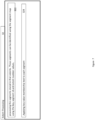
- Figure 1 depicts a block diagram, presenting components for applying enhance the bloom filter on big data processing according to some embodiments of the invention.
- a big data table of key-value pairs is partitioned into chunks. Each chunk key values are processed by segmented bloom filter module 14. At the first stage are generated Bloom filter segments (16), into these segments are encoded key values (18). At the next stage the Bloom filter segments with encoded keys values , are packed into data structure of extents. Each extent only includes segments with the same index; the extent may include some of the segments with the same index or all of them , according to predefined packing factor. The extents are saved in a bit array structure , ordered by their number. To enable efficient data retrieval the extents are mapped to be associated with the segment ID and chunk ID.
- FIG. 2 depicts a flow diagram elaborating the processing of generating of Bloom filter segments , according to some embodiments of the present invention. This processing includes the following steps:
- FIG. 3 is a flow diagram of Key values encoding of encoding process , according to some embodiments of the invention. This processing includes the following steps:
- FIG 4 is a flow diagram, depicting the processing of packing bloom filter segments, according to some embodiments of the invention. This processing includes the following steps: packing of segments into extents (data structure) where each extent include on segments of different chunks with the same id./index (step 202)
- packing factor The number of the segments in each extent
- packing factor the number of the segments in each extent
- the extent data structure enable to reduce the number of files required for holding the Bloom filter, and improve I/O, by packing multiple segments having the same segment ID into a single extent and save it to disk.
- a bloom filter for a chunk of size 1MB may include 16 segments size 64KB each.
- At the end of the packing procedure for each group of 16 chunks we end up with 16 extents with a total size of 16MB. (the same size of 16 classical Bloom filter for corresponding chunks).
- each extent of 1MB can be used for filtering 16 chunks. :
- FIG. 5 is a flow diagram, depicting the computation module for processing of computing segment ID and hash bits vector according to some embodiments of the invention. This processing includes the following steps:
- Figure 6 is a flow diagram of chunk filtering module processing according to some embodiments of the invention. select all big-table extents and for each extent E, determine whether, or not, the chunks represented by E needs to be included in the SELECT by applying extent processing (step 302)
- FIG. 7 illustrates Extent module Processing, according to some embodiments of the invention. This processing includes the following steps: processing the segments stored in that extents. These segments can be identified using the segment map using the key, segment id and extent number values, (step 322)
- Figure 8 is a flow diagram of key-value membership test module processing, processing according to some embodiments of the invention.
- FIG. 9 is a flow diagram of mapping module processing according to some embodiments of the invention. This processing includes the following steps:
- Maintaining chunk-map table by storing information about data chunks associate given chunk-number to chunk_ file path (step 224)
- Mapping segment table (sbf-map table ) by storing information about all segments maintaining the relationship between segments, extents and chunks (step 228)
- the chunk-map table stores information about data chunks; it maps a given chunk-number to chunk_ file path.
- the extent-map table stores information about extents; it maps a given extent number to extent file path.
- the sbf-map table stores information about all segments; it keeps the relationship between segments, extents and chunks.
- the main benefit of employing a bloom filter for filtering records with a given ⁇ key> value is by avoiding reading chunks having no record with the provided ⁇ key> value. This can be done efficiently using the BDBF filter as suggested by the present invention.
- the segmented bloom filtering algorithm guarantees that each key is hashed into exactly a single segment. Accordingly , once the segment id for a given ⁇ key> value is computed, there is a need to read all segments, requiring only to inspect the SBF segments corresponding to the segment-id. In other words, it is only required to read and inspect the extents corresponding to that segment-id.
- This BDBF algorithm filter and minimizes the I/O cost in case of false filtering results.
- the benefits directly affect the cost of chunk access. This benefit has greater impact when the data chunks are distributed over multiple processor nodes.
- Step (1) compute segment id and hash bits for ⁇ key-value>
- Step (2) select all big-table extents and for each extent E, determine whether, or not, the chunks represented by E needs to be included in the SELECT.
- the number of chunks that can be filtered by a single extent is determined by the pack factor (see 003 definitions). Step(2) is implemented as follows
- Extent processing is performed to all the segments stored in that extents. These segments can be identified using the segment map using the key, segment id and extent number values, as implemented by the BDBF_PROCESS_EXTENT function.
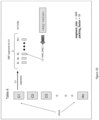
- Figure 10 is a visual example of bloom filter segmentation by chunks according to some embodiments of the invention.
- the apparatus of the present invention may include, according to certain embodiments of the invention, machine readable memory containing or otherwise storing a program of instructions which, when executed by the machine, implements some or all of the apparatus, methods, features and functionalities of the invention shown and described herein.
- the apparatus of the present invention may include, according to certain embodiments of the invention, a program as above which may be written in any conventional programming language, and optionally a machine for executing the program such as but not limited to a general purpose computer which may optionally be configured or activated in accordance with the teachings of the present invention. Any of the teachings incorporated herein may wherever suitable operate on signals representative of physical objects or substances.
- the term "computer” should be broadly construed to cover any kind of electronic device with data processing capabilities, including, by way of nonlimiting example, personal computers, servers, computing system, communication devices, processors (e.g. digital signal processor (DSP), microcontrollers, field programmable gate array (FPGA), application specific integrated circuit (ASIC), etc.) and other electronic computing devices.
- processors e.g. digital signal processor (DSP), microcontrollers, field programmable gate array (FPGA), application specific integrated circuit (ASIC), etc.
- DSP digital signal processor
- FPGA field programmable gate array
- ASIC application specific integrated circuit
- software components of the present invention including programs and data may, if desired, be implemented in ROM (read only memory) form including CD-ROMs, EPROMs and EEPROMs, or may be stored in any other suitable typically non-transitory computer-readable medium such as but not limited to disks of various kinds, cards of various kinds and RAMs.
- ROM read only memory
- EEPROM electrically erasable programmable read-only memory
- Components described herein as software may, alternatively, be implemented wholly or partly in hardware, if desired, using conventional techniques.
- components described herein as hardware may, alternatively, be implemented wholly or partly in software, if desired, using conventional techniques.
- Any computer-readable or machine-readable media described herein is intended to include non-transitory computer- or machine-readable media.
- Any computations or other forms of analysis described herein may be performed by a suitable computerized method. Any step described herein may be computer-implemented.
- the invention shown and described herein may include (a) using a computerized method to identify a solution to any of the problems or for any of the objectives described herein, the solution optionally include at least one of a decision, an action, a product, a service or any other information described herein that impacts, in a positive manner, a problem or objectives described herein; and (b) outputting the solution.
- the scope of the present invention is not limited to structures and functions specifically described herein and is also intended to include devices which have the capacity to yield a structure, or perform a function, described herein, such that even though users of the device may not use the capacity, they are, if they so desire, able to modify the device to obtain the structure or function.
- a system embodiment is intended to include a corresponding process embodiment.
- each system embodiment is intended to include a server-centered "view” or client centered “view”, or “view” from any other node of the system, of the entire functionality of the system, computer-readable medium, apparatus, including only those functionalities performed at that server or client or node.
Landscapes
- Engineering & Computer Science (AREA)
- Theoretical Computer Science (AREA)
- Software Systems (AREA)
- Data Mining & Analysis (AREA)
- Databases & Information Systems (AREA)
- Physics & Mathematics (AREA)
- General Engineering & Computer Science (AREA)
- General Physics & Mathematics (AREA)
- Information Retrieval, Db Structures And Fs Structures Therefor (AREA)
Claims (8)
- Verfahren zum Anwenden eines Bloom-Filters auf eine große Datentabelle, die aus Schlüssel-Wert-Paaren besteht, um eine effiziente Schlüssel-Wert-Zugehörigkeitsprüfung für jedes Segment zu ermöglichen, unter Verwendung mindestens eines Prozessors, wobei das Verfahren die folgenden Schritte umfasst:- Partitionieren der großen Datentabelle von Schlüssel-Wert-Paaren in Datenblöcke (12);- Bestimmen der Größe des Bloom-Filter-Vektors und der Anzahl der Segmente S in dem Vektor für jeden Datenblock, wobei jedes Segment Z Bytes (16) hat;- Kodieren aller Schlüssel eines gegebenen Datenblocks in einen Bloom-Filter-Vektor (164) durch, für jeden Schlüssel:- Bestimmen der Segment-ID des Schlüssels der großen Datentabelle unter Verwendung der Hash-Funktion h0 (166), so dass jeder Schlüssel in genau ein einziges Segment gehasht wird,- Kodieren des Schlüssels in ein Bloom-Filter-Segment mit der bestimmten Segment-ID;wobei der Prozess des Codierens des Schlüssels in ein gegebenes Bloom-Filter-Segment durch Verwenden von k Hash-Funktionen und Setzen der geeigneten Bits des Segments wie folgt implementiert wird: Setzen aller Bits des Segments auf falsch und dann für jedes i=1..k Bestimmen, welche Bits des Segments auf wahr gesetzt werden, durch Anwenden von Funktionen hi(key-value) (18, 182-186) auf den Schlüssel,wobei das Verfahren gekennzeichnet ist durch:- Bestimmen der Anzahl P, Packfaktor, der Bloom-Filter-Segmente, die zum Packen von Segmenten in Extents verwendet werden sollen, wobei der Packfaktor die Anzahl von Segmenten in jedem Extent definiert und wobei der Packfaktor durch die Lesespeichergröße (204) bestimmt wird;- Packen von Segmenten in Extents, wobei aufeinanderfolgende P-Segmente mit derselben Segment-ID gemäß der Datenblock-Reihenfolge in ein einziges Extent gepackt werden, und Speichern der Extents (206); wobei eine Extent-Struktur eine Bit-Array-Struktur ist;wobei ein einzelner Extent, der Segmente mit derselben Segment-ID hat, eine Schlüsselwert-Zugehörigkeitsprüfung für jedes Segment der Größe Z Bytes unterstützt, abhängig von der Anzahl von Segmenten, die in einen einzelnen Extent gepackt sind, oder einem Packfaktor, wobei die Schlüsselwert-Zugehörigkeitsprüfung durch nachfolgende Schritte angewendet wird:- Berechnen der Segment-ID durch Anwenden der h0-Funktion auf einen gegebenen Schlüsselwert;- Berechnen des Schlüsselwerts x durch Anwenden von hi(key-value), wobei i=1..k;- Prüfen, ob Bit x in dem Segment wahr oder falsch ist.
- Verfahren nach Anspruch 1, ferner umfassend den Schritt des Aufrechterhaltens von Beziehungen zwischen Datenblöcken, Extents und Segmenten durch Aufrechterhalten mindestens einer Zuordnungstabelle.
- Verfahren nach Anspruch 1, wobei die Extent-Struktur mehrere Datenblöcke parallel herausfiltert und die Anzahl der für die Speicherung des Bloom-Filters erforderlichen Dateien reduziert, indem gewährleistet wird, dass jeder Schlüssel in genau ein einziges Segment gehasht wird, was nur das Lesen und Prüfen der dieser Segment-ID entsprechenden Extents erfordert.
- Verfahren nach Anspruch 3, wobei Segmente unter Verwendung der Segmentzuordnung unter Verwendung der Schlüssel-, Segment-ID- und Extentnummernwerte identifiziert werden können.
- System zur Durchführung eines Verfahrens nach einem der Ansprüche 1 bis 4, umfassend eine nichtflüchtige Speichervorrichtung und eine oder mehrere betriebsmäßig mit der Speichervorrichtung gekoppelte Verarbeitungsvorrichtungen, auf denen Module von Befehlscode gespeichert sind, die von dem einen oder den mehreren Prozessoren ausgeführt werden können.
- System nach Anspruch 5, ferner umfassend das Zuordnungsmodul zum Aufrechterhalten von Beziehungen zwischen Datenblöcken, Extents und Segmenten durch Aufrechterhalten mindestens einer Zuordnungstabelle.
- System nach Anspruch 5, wobei die Extent-Struktur es ermöglicht, mehrere Datenblöcke parallel herauszufiltern und die Anzahl der für die Speicherung des Bloom-Filters erforderlichen Dateien zu reduzieren, indem gewährleistet wird, dass jeder Schlüssel in genau ein einziges Segment gehasht wird, was nur das Lesen und Prüfen der dieser Segment-ID entsprechenden Extents erfordert.
- System nach Anspruch 5, wobei Segmente unter Verwendung der Segmentzuordnung unter Verwendung der Schlüssel-, Segment-ID- und ExtentNummernwerte identifiziert werden können.
Applications Claiming Priority (1)
| Application Number | Priority Date | Filing Date | Title |
|---|---|---|---|
| US16/249,098 US11119996B2 (en) | 2019-01-16 | 2019-01-16 | System and method of bloom filter for big data |
Publications (3)
| Publication Number | Publication Date |
|---|---|
| EP3683696A1 EP3683696A1 (de) | 2020-07-22 |
| EP3683696B1 true EP3683696B1 (de) | 2025-01-08 |
| EP3683696C0 EP3683696C0 (de) | 2025-01-08 |
Family
ID=69172604
Family Applications (1)
| Application Number | Title | Priority Date | Filing Date |
|---|---|---|---|
| EP20151789.3A Active EP3683696B1 (de) | 2019-01-16 | 2020-01-14 | System und verfahren für bloom-filter für grosse daten |
Country Status (2)
| Country | Link |
|---|---|
| US (1) | US11119996B2 (de) |
| EP (1) | EP3683696B1 (de) |
Families Citing this family (8)
| Publication number | Priority date | Publication date | Assignee | Title |
|---|---|---|---|---|
| US11829606B2 (en) * | 2020-06-12 | 2023-11-28 | Rubrik, Inc. | Cloud object storage and versioning system |
| US11853288B1 (en) * | 2021-01-25 | 2023-12-26 | Wells Fargo Bank, N.A. | Enhanced filter accuracy |
| CN114048201A (zh) * | 2021-11-16 | 2022-02-15 | 北京锐安科技有限公司 | 一种基于分布式流计算引擎Flink的关键字段实时去重方法 |
| CN114398316A (zh) * | 2022-01-13 | 2022-04-26 | 中孚安全技术有限公司 | 基于多特征值的文件信息处理方法与系统 |
| CN117633028A (zh) * | 2022-08-19 | 2024-03-01 | 腾讯科技(深圳)有限公司 | 数据整合方法、装置、电子设备及介质 |
| CN115454983B (zh) * | 2022-09-13 | 2023-07-14 | 浪潮卓数大数据产业发展有限公司 | 一种基于布隆过滤器的海量Hbase数据去重方法 |
| CN115905594A (zh) * | 2022-12-29 | 2023-04-04 | 深圳市广电信义科技有限公司 | 基于布隆过滤器的车牌号码比对方法、系统、设备及介质 |
| CN116881521B (zh) * | 2023-08-08 | 2024-07-12 | 北京火山引擎科技有限公司 | 数据获取方法、设备及存储介质 |
Family Cites Families (8)
| Publication number | Priority date | Publication date | Assignee | Title |
|---|---|---|---|---|
| US20080155229A1 (en) * | 2006-12-21 | 2008-06-26 | Kevin Scott Beyer | System and method for generating a cache-aware bloom filter |
| CN101799783A (zh) * | 2009-01-19 | 2010-08-11 | 中国人民大学 | 一种数据存储处理方法、查找方法及其装置 |
| US8266506B2 (en) * | 2009-04-18 | 2012-09-11 | Alcatel Lucent | Method and apparatus for multiset membership testing using combinatorial bloom filters |
| US20110276744A1 (en) * | 2010-05-05 | 2011-11-10 | Microsoft Corporation | Flash memory cache including for use with persistent key-value store |
| US9401967B2 (en) * | 2010-06-09 | 2016-07-26 | Brocade Communications Systems, Inc. | Inline wire speed deduplication system |
| US8972651B2 (en) * | 2011-10-05 | 2015-03-03 | Hitachi, Ltd. | Storage system and storage method |
| US9819637B2 (en) * | 2013-02-27 | 2017-11-14 | Marvell World Trade Ltd. | Efficient longest prefix matching techniques for network devices |
| US10761758B2 (en) * | 2015-12-21 | 2020-09-01 | Quantum Corporation | Data aware deduplication object storage (DADOS) |
-
2019
- 2019-01-16 US US16/249,098 patent/US11119996B2/en active Active
-
2020
- 2020-01-14 EP EP20151789.3A patent/EP3683696B1/de active Active
Also Published As
| Publication number | Publication date |
|---|---|
| US11119996B2 (en) | 2021-09-14 |
| EP3683696C0 (de) | 2025-01-08 |
| EP3683696A1 (de) | 2020-07-22 |
| US20200226112A1 (en) | 2020-07-16 |
Similar Documents
| Publication | Publication Date | Title |
|---|---|---|
| EP3683696A1 (de) | System und verfahren für bloom-filter für grosse daten | |
| US12614113B2 (en) | Using consistency metadata for filtering of machine learning data across jobs | |
| US10831747B2 (en) | Multi stage aggregation using digest order after a first stage of aggregation | |
| US11100420B2 (en) | Input processing for machine learning | |
| US9805079B2 (en) | Executing constant time relational queries against structured and semi-structured data | |
| US10366053B1 (en) | Consistent randomized record-level splitting of machine learning data | |
| EP3238106B1 (de) | Verdichtungspolitik | |
| US10318484B2 (en) | Scan optimization using bloom filter synopsis | |
| US20190258625A1 (en) | Data partitioning and ordering | |
| US10713589B1 (en) | Consistent sort-based record-level shuffling of machine learning data | |
| JP6639420B2 (ja) | フラッシュ最適化データ・レイアウトのための方法、フラッシュ最適化記憶のための装置、およびコンピュータ・プログラム | |
| CN104679778A (zh) | 一种搜索结果的生成方法及装置 | |
| JP2023040076A (ja) | 多次元データベース環境における仮想キューブでのリアルタイムデータ集約のためのシステムおよび方法 | |
| US10169352B2 (en) | System for performing parallel forensic analysis of electronic data and method therefor | |
| Luo et al. | Umzi: Unified multi-zone indexing for large-scale HTAP | |
| US10810174B2 (en) | Database management system, database server, and database management method | |
| WO2018200348A1 (en) | Systems and methods for accelerating exploratory statistical analysis | |
| Chen et al. | DiskJoin: Large-scale Vector Similarity Join with SSD | |
| Choi et al. | Can Learned Indexes be Built Efficiently? A Deep Dive into Sampling Trade-offs | |
| Firth et al. | TAPER: query-aware, partition-enhancement for large, heterogenous graphs | |
| Lee et al. | Boosting compaction in b-tree based key-value store by exploiting parallel reads in flash ssds | |
| Tran et al. | Exploring means to enhance the efficiency of GPU bitmap index query processing | |
| Guan et al. | ReInc: Scaling Training of Dynamic Graph Neural Networks | |
| US12613854B2 (en) | Split retrieval structures for storing and querying data | |
| CN114925123B (zh) | 一种分布式的图数据库与图计算系统间的数据传输方法 |
Legal Events
| Date | Code | Title | Description |
|---|---|---|---|
| PUAI | Public reference made under article 153(3) epc to a published international application that has entered the european phase |
Free format text: ORIGINAL CODE: 0009012 |
|
| STAA | Information on the status of an ep patent application or granted ep patent |
Free format text: STATUS: THE APPLICATION HAS BEEN PUBLISHED |
|
| AK | Designated contracting states |
Kind code of ref document: A1 Designated state(s): AL AT BE BG CH CY CZ DE DK EE ES FI FR GB GR HR HU IE IS IT LI LT LU LV MC MK MT NL NO PL PT RO RS SE SI SK SM TR |
|
| AX | Request for extension of the european patent |
Extension state: BA ME |
|
| STAA | Information on the status of an ep patent application or granted ep patent |
Free format text: STATUS: REQUEST FOR EXAMINATION WAS MADE |
|
| 17P | Request for examination filed |
Effective date: 20210122 |
|
| RBV | Designated contracting states (corrected) |
Designated state(s): AL AT BE BG CH CY CZ DE DK EE ES FI FR GB GR HR HU IE IS IT LI LT LU LV MC MK MT NL NO PL PT RO RS SE SI SK SM TR |
|
| STAA | Information on the status of an ep patent application or granted ep patent |
Free format text: STATUS: EXAMINATION IS IN PROGRESS |
|
| 17Q | First examination report despatched |
Effective date: 20211220 |
|
| RIC1 | Information provided on ipc code assigned before grant |
Ipc: G06F 16/22 20190101AFI20240619BHEP |
|
| GRAP | Despatch of communication of intention to grant a patent |
Free format text: ORIGINAL CODE: EPIDOSNIGR1 |
|
| STAA | Information on the status of an ep patent application or granted ep patent |
Free format text: STATUS: GRANT OF PATENT IS INTENDED |
|
| INTG | Intention to grant announced |
Effective date: 20240730 |
|
| GRAS | Grant fee paid |
Free format text: ORIGINAL CODE: EPIDOSNIGR3 |
|
| GRAA | (expected) grant |
Free format text: ORIGINAL CODE: 0009210 |
|
| STAA | Information on the status of an ep patent application or granted ep patent |
Free format text: STATUS: THE PATENT HAS BEEN GRANTED |
|
| AK | Designated contracting states |
Kind code of ref document: B1 Designated state(s): AL AT BE BG CH CY CZ DE DK EE ES FI FR GB GR HR HU IE IS IT LI LT LU LV MC MK MT NL NO PL PT RO RS SE SI SK SM TR |
|
| REG | Reference to a national code |
Ref country code: GB Ref legal event code: FG4D |
|
| REG | Reference to a national code |
Ref country code: CH Ref legal event code: EP |
|
| REG | Reference to a national code |
Ref country code: DE Ref legal event code: R096 Ref document number: 602020044385 Country of ref document: DE |
|
| REG | Reference to a national code |
Ref country code: IE Ref legal event code: FG4D |
|
| U01 | Request for unitary effect filed |
Effective date: 20250206 |
|
| U07 | Unitary effect registered |
Designated state(s): AT BE BG DE DK EE FI FR IT LT LU LV MT NL PT RO SE SI Effective date: 20250225 |
|
| U20 | Renewal fee for the european patent with unitary effect paid |
Year of fee payment: 6 Effective date: 20250325 |
|
| PG25 | Lapsed in a contracting state [announced via postgrant information from national office to epo] |
Ref country code: RS Free format text: LAPSE BECAUSE OF FAILURE TO SUBMIT A TRANSLATION OF THE DESCRIPTION OR TO PAY THE FEE WITHIN THE PRESCRIBED TIME-LIMIT Effective date: 20250408 |
|
| PG25 | Lapsed in a contracting state [announced via postgrant information from national office to epo] |
Ref country code: PL Free format text: LAPSE BECAUSE OF FAILURE TO SUBMIT A TRANSLATION OF THE DESCRIPTION OR TO PAY THE FEE WITHIN THE PRESCRIBED TIME-LIMIT Effective date: 20250108 |
|
| PG25 | Lapsed in a contracting state [announced via postgrant information from national office to epo] |
Ref country code: ES Free format text: LAPSE BECAUSE OF FAILURE TO SUBMIT A TRANSLATION OF THE DESCRIPTION OR TO PAY THE FEE WITHIN THE PRESCRIBED TIME-LIMIT Effective date: 20250108 |
|
| PG25 | Lapsed in a contracting state [announced via postgrant information from national office to epo] |
Ref country code: IS Free format text: LAPSE BECAUSE OF FAILURE TO SUBMIT A TRANSLATION OF THE DESCRIPTION OR TO PAY THE FEE WITHIN THE PRESCRIBED TIME-LIMIT Effective date: 20250508 Ref country code: NO Free format text: LAPSE BECAUSE OF FAILURE TO SUBMIT A TRANSLATION OF THE DESCRIPTION OR TO PAY THE FEE WITHIN THE PRESCRIBED TIME-LIMIT Effective date: 20250408 |
|
| PG25 | Lapsed in a contracting state [announced via postgrant information from national office to epo] |
Ref country code: HR Free format text: LAPSE BECAUSE OF FAILURE TO SUBMIT A TRANSLATION OF THE DESCRIPTION OR TO PAY THE FEE WITHIN THE PRESCRIBED TIME-LIMIT Effective date: 20250108 |
|
| PG25 | Lapsed in a contracting state [announced via postgrant information from national office to epo] |
Ref country code: GR Free format text: LAPSE BECAUSE OF FAILURE TO SUBMIT A TRANSLATION OF THE DESCRIPTION OR TO PAY THE FEE WITHIN THE PRESCRIBED TIME-LIMIT Effective date: 20250409 |
|
| REG | Reference to a national code |
Ref country code: CH Ref legal event code: PL |
|
| PG25 | Lapsed in a contracting state [announced via postgrant information from national office to epo] |
Ref country code: SM Free format text: LAPSE BECAUSE OF FAILURE TO SUBMIT A TRANSLATION OF THE DESCRIPTION OR TO PAY THE FEE WITHIN THE PRESCRIBED TIME-LIMIT Effective date: 20250108 |
|
| PG25 | Lapsed in a contracting state [announced via postgrant information from national office to epo] |
Ref country code: MC Free format text: LAPSE BECAUSE OF FAILURE TO SUBMIT A TRANSLATION OF THE DESCRIPTION OR TO PAY THE FEE WITHIN THE PRESCRIBED TIME-LIMIT Effective date: 20250108 |
|
| PG25 | Lapsed in a contracting state [announced via postgrant information from national office to epo] |
Ref country code: CH Free format text: LAPSE BECAUSE OF NON-PAYMENT OF DUE FEES Effective date: 20250131 |
|
| PG25 | Lapsed in a contracting state [announced via postgrant information from national office to epo] |
Ref country code: CZ Free format text: LAPSE BECAUSE OF FAILURE TO SUBMIT A TRANSLATION OF THE DESCRIPTION OR TO PAY THE FEE WITHIN THE PRESCRIBED TIME-LIMIT Effective date: 20250108 |
|
| PG25 | Lapsed in a contracting state [announced via postgrant information from national office to epo] |
Ref country code: SK Free format text: LAPSE BECAUSE OF FAILURE TO SUBMIT A TRANSLATION OF THE DESCRIPTION OR TO PAY THE FEE WITHIN THE PRESCRIBED TIME-LIMIT Effective date: 20250108 |
|
| PLBE | No opposition filed within time limit |
Free format text: ORIGINAL CODE: 0009261 |
|
| STAA | Information on the status of an ep patent application or granted ep patent |
Free format text: STATUS: NO OPPOSITION FILED WITHIN TIME LIMIT |
|
| 26N | No opposition filed |
Effective date: 20251009 |
|
| PG25 | Lapsed in a contracting state [announced via postgrant information from national office to epo] |
Ref country code: IE Free format text: LAPSE BECAUSE OF NON-PAYMENT OF DUE FEES Effective date: 20250114 |
|
| U20 | Renewal fee for the european patent with unitary effect paid |
Year of fee payment: 7 Effective date: 20260129 |
|
| PGFP | Annual fee paid to national office [announced via postgrant information from national office to epo] |
Ref country code: GB Payment date: 20260130 Year of fee payment: 7 |