EP3682906A1 - Compound targeting norepinephrine transporter - Google Patents
Compound targeting norepinephrine transporter Download PDFInfo
- Publication number
- EP3682906A1 EP3682906A1 EP19152274.7A EP19152274A EP3682906A1 EP 3682906 A1 EP3682906 A1 EP 3682906A1 EP 19152274 A EP19152274 A EP 19152274A EP 3682906 A1 EP3682906 A1 EP 3682906A1
- Authority
- EP
- European Patent Office
- Prior art keywords
- compound
- residue
- receive
- following
- mmol
- Prior art date
- Legal status (The legal status is an assumption and is not a legal conclusion. Google has not performed a legal analysis and makes no representation as to the accuracy of the status listed.)
- Withdrawn
Links
- 150000001875 compounds Chemical class 0.000 title claims abstract description 72
- 102000008092 Norepinephrine Plasma Membrane Transport Proteins Human genes 0.000 title claims description 36
- 108010049586 Norepinephrine Plasma Membrane Transport Proteins Proteins 0.000 title claims description 36
- 230000008685 targeting Effects 0.000 title 1
- XLYOFNOQVPJJNP-UHFFFAOYSA-N water Substances O XLYOFNOQVPJJNP-UHFFFAOYSA-N 0.000 claims description 30
- 229910001868 water Inorganic materials 0.000 claims description 28
- 230000015572 biosynthetic process Effects 0.000 claims description 26
- 238000002600 positron emission tomography Methods 0.000 claims description 25
- 238000000034 method Methods 0.000 claims description 24
- 238000003786 synthesis reaction Methods 0.000 claims description 22
- XRWSZZJLZRKHHD-WVWIJVSJSA-N asunaprevir Chemical compound O=C([C@@H]1C[C@H](CN1C(=O)[C@@H](NC(=O)OC(C)(C)C)C(C)(C)C)OC1=NC=C(C2=CC=C(Cl)C=C21)OC)N[C@]1(C(=O)NS(=O)(=O)C2CC2)C[C@H]1C=C XRWSZZJLZRKHHD-WVWIJVSJSA-N 0.000 claims description 18
- 229940125961 compound 24 Drugs 0.000 claims description 18
- 229910052739 hydrogen Inorganic materials 0.000 claims description 15
- 238000009826 distribution Methods 0.000 claims description 14
- SZUVGFMDDVSKSI-WIFOCOSTSA-N (1s,2s,3s,5r)-1-(carboxymethyl)-3,5-bis[(4-phenoxyphenyl)methyl-propylcarbamoyl]cyclopentane-1,2-dicarboxylic acid Chemical compound O=C([C@@H]1[C@@H]([C@](CC(O)=O)([C@H](C(=O)N(CCC)CC=2C=CC(OC=3C=CC=CC=3)=CC=2)C1)C(O)=O)C(O)=O)N(CCC)CC(C=C1)=CC=C1OC1=CC=CC=C1 SZUVGFMDDVSKSI-WIFOCOSTSA-N 0.000 claims description 12
- 229940126543 compound 14 Drugs 0.000 claims description 12
- 229910052740 iodine Inorganic materials 0.000 claims description 12
- RIOQSEWOXXDEQQ-UHFFFAOYSA-N triphenylphosphine Chemical compound C1=CC=CC=C1P(C=1C=CC=CC=1)C1=CC=CC=C1 RIOQSEWOXXDEQQ-UHFFFAOYSA-N 0.000 claims description 12
- 241001465754 Metazoa Species 0.000 claims description 11
- WRMNZCZEMHIOCP-UHFFFAOYSA-N 2-phenylethanol Chemical class OCCC1=CC=CC=C1 WRMNZCZEMHIOCP-UHFFFAOYSA-N 0.000 claims description 10
- JGFZNNIVVJXRND-UHFFFAOYSA-N N,N-Diisopropylethylamine (DIPEA) Chemical compound CCN(C(C)C)C(C)C JGFZNNIVVJXRND-UHFFFAOYSA-N 0.000 claims description 10
- 238000002405 diagnostic procedure Methods 0.000 claims description 10
- VVWRJUBEIPHGQF-UHFFFAOYSA-N propan-2-yl n-propan-2-yloxycarbonyliminocarbamate Chemical compound CC(C)OC(=O)N=NC(=O)OC(C)C VVWRJUBEIPHGQF-UHFFFAOYSA-N 0.000 claims description 10
- UAOUIVVJBYDFKD-XKCDOFEDSA-N (1R,9R,10S,11R,12R,15S,18S,21R)-10,11,21-trihydroxy-8,8-dimethyl-14-methylidene-4-(prop-2-enylamino)-20-oxa-5-thia-3-azahexacyclo[9.7.2.112,15.01,9.02,6.012,18]henicosa-2(6),3-dien-13-one Chemical compound C([C@@H]1[C@@H](O)[C@@]23C(C1=C)=O)C[C@H]2[C@]12C(N=C(NCC=C)S4)=C4CC(C)(C)[C@H]1[C@H](O)[C@]3(O)OC2 UAOUIVVJBYDFKD-XKCDOFEDSA-N 0.000 claims description 9
- -1 (methoxymethyl)triphenylphosphonium halide Chemical class 0.000 claims description 9
- 150000002367 halogens Chemical group 0.000 claims description 9
- WWTBZEKOSBFBEM-SPWPXUSOSA-N (2s)-2-[[2-benzyl-3-[hydroxy-[(1r)-2-phenyl-1-(phenylmethoxycarbonylamino)ethyl]phosphoryl]propanoyl]amino]-3-(1h-indol-3-yl)propanoic acid Chemical compound N([C@@H](CC=1C2=CC=CC=C2NC=1)C(=O)O)C(=O)C(CP(O)(=O)[C@H](CC=1C=CC=CC=1)NC(=O)OCC=1C=CC=CC=1)CC1=CC=CC=C1 WWTBZEKOSBFBEM-SPWPXUSOSA-N 0.000 claims description 8
- UNILWMWFPHPYOR-KXEYIPSPSA-M 1-[6-[2-[3-[3-[3-[2-[2-[3-[[2-[2-[[(2r)-1-[[2-[[(2r)-1-[3-[2-[2-[3-[[2-(2-amino-2-oxoethoxy)acetyl]amino]propoxy]ethoxy]ethoxy]propylamino]-3-hydroxy-1-oxopropan-2-yl]amino]-2-oxoethyl]amino]-3-[(2r)-2,3-di(hexadecanoyloxy)propyl]sulfanyl-1-oxopropan-2-yl Chemical compound O=C1C(SCCC(=O)NCCCOCCOCCOCCCNC(=O)COCC(=O)N[C@@H](CSC[C@@H](COC(=O)CCCCCCCCCCCCCCC)OC(=O)CCCCCCCCCCCCCCC)C(=O)NCC(=O)N[C@H](CO)C(=O)NCCCOCCOCCOCCCNC(=O)COCC(N)=O)CC(=O)N1CCNC(=O)CCCCCN\1C2=CC=C(S([O-])(=O)=O)C=C2CC/1=C/C=C/C=C/C1=[N+](CC)C2=CC=C(S([O-])(=O)=O)C=C2C1 UNILWMWFPHPYOR-KXEYIPSPSA-M 0.000 claims description 8
- KDLHZDBZIXYQEI-UHFFFAOYSA-N Palladium Chemical compound [Pd] KDLHZDBZIXYQEI-UHFFFAOYSA-N 0.000 claims description 8
- LJOOWESTVASNOG-UFJKPHDISA-N [(1s,3r,4ar,7s,8s,8as)-3-hydroxy-8-[2-[(4r)-4-hydroxy-6-oxooxan-2-yl]ethyl]-7-methyl-1,2,3,4,4a,7,8,8a-octahydronaphthalen-1-yl] (2s)-2-methylbutanoate Chemical compound C([C@H]1[C@@H](C)C=C[C@H]2C[C@@H](O)C[C@@H]([C@H]12)OC(=O)[C@@H](C)CC)CC1C[C@@H](O)CC(=O)O1 LJOOWESTVASNOG-UFJKPHDISA-N 0.000 claims description 8
- 229910052783 alkali metal Inorganic materials 0.000 claims description 8
- 229910052801 chlorine Inorganic materials 0.000 claims description 8
- 239000000460 chlorine Substances 0.000 claims description 8
- 229940126208 compound 22 Drugs 0.000 claims description 8
- 229940127204 compound 29 Drugs 0.000 claims description 8
- WZZBNLYBHUDSHF-DHLKQENFSA-N 1-[(3s,4s)-4-[8-(2-chloro-4-pyrimidin-2-yloxyphenyl)-7-fluoro-2-methylimidazo[4,5-c]quinolin-1-yl]-3-fluoropiperidin-1-yl]-2-hydroxyethanone Chemical compound CC1=NC2=CN=C3C=C(F)C(C=4C(=CC(OC=5N=CC=CN=5)=CC=4)Cl)=CC3=C2N1[C@H]1CCN(C(=O)CO)C[C@@H]1F WZZBNLYBHUDSHF-DHLKQENFSA-N 0.000 claims description 7
- YSUIQYOGTINQIN-UZFYAQMZSA-N 2-amino-9-[(1S,6R,8R,9S,10R,15R,17R,18R)-8-(6-aminopurin-9-yl)-9,18-difluoro-3,12-dihydroxy-3,12-bis(sulfanylidene)-2,4,7,11,13,16-hexaoxa-3lambda5,12lambda5-diphosphatricyclo[13.2.1.06,10]octadecan-17-yl]-1H-purin-6-one Chemical compound NC1=NC2=C(N=CN2[C@@H]2O[C@@H]3COP(S)(=O)O[C@@H]4[C@@H](COP(S)(=O)O[C@@H]2[C@@H]3F)O[C@H]([C@H]4F)N2C=NC3=C2N=CN=C3N)C(=O)N1 YSUIQYOGTINQIN-UZFYAQMZSA-N 0.000 claims description 7
- QBWKPGNFQQJGFY-QLFBSQMISA-N 3-[(1r)-1-[(2r,6s)-2,6-dimethylmorpholin-4-yl]ethyl]-n-[6-methyl-3-(1h-pyrazol-4-yl)imidazo[1,2-a]pyrazin-8-yl]-1,2-thiazol-5-amine Chemical compound N1([C@H](C)C2=NSC(NC=3C4=NC=C(N4C=C(C)N=3)C3=CNN=C3)=C2)C[C@H](C)O[C@H](C)C1 QBWKPGNFQQJGFY-QLFBSQMISA-N 0.000 claims description 7
- 229940125833 compound 23 Drugs 0.000 claims description 7
- 229940125846 compound 25 Drugs 0.000 claims description 7
- 208000037265 diseases, disorders, signs and symptoms Diseases 0.000 claims description 7
- 229910052731 fluorine Inorganic materials 0.000 claims description 7
- LWJROJCJINYWOX-UHFFFAOYSA-L mercury dichloride Chemical compound Cl[Hg]Cl LWJROJCJINYWOX-UHFFFAOYSA-L 0.000 claims description 7
- GLGNXYJARSMNGJ-VKTIVEEGSA-N (1s,2s,3r,4r)-3-[[5-chloro-2-[(1-ethyl-6-methoxy-2-oxo-4,5-dihydro-3h-1-benzazepin-7-yl)amino]pyrimidin-4-yl]amino]bicyclo[2.2.1]hept-5-ene-2-carboxamide Chemical compound CCN1C(=O)CCCC2=C(OC)C(NC=3N=C(C(=CN=3)Cl)N[C@H]3[C@H]([C@@]4([H])C[C@@]3(C=C4)[H])C(N)=O)=CC=C21 GLGNXYJARSMNGJ-VKTIVEEGSA-N 0.000 claims description 6
- ZCYVEMRRCGMTRW-UHFFFAOYSA-N 7553-56-2 Chemical compound [I] ZCYVEMRRCGMTRW-UHFFFAOYSA-N 0.000 claims description 6
- OKTJSMMVPCPJKN-UHFFFAOYSA-N Carbon Chemical compound [C] OKTJSMMVPCPJKN-UHFFFAOYSA-N 0.000 claims description 6
- 229940125758 compound 15 Drugs 0.000 claims description 6
- 239000011630 iodine Substances 0.000 claims description 6
- LPNYRYFBWFDTMA-UHFFFAOYSA-N potassium tert-butoxide Chemical compound [K+].CC(C)(C)[O-] LPNYRYFBWFDTMA-UHFFFAOYSA-N 0.000 claims description 6
- JUDUFOKGIZUSFP-UHFFFAOYSA-M silver;4-methylbenzenesulfonate Chemical compound [Ag+].CC1=CC=C(S([O-])(=O)=O)C=C1 JUDUFOKGIZUSFP-UHFFFAOYSA-M 0.000 claims description 6
- 239000012279 sodium borohydride Substances 0.000 claims description 6
- 229910000033 sodium borohydride Inorganic materials 0.000 claims description 6
- SFOYQZYQTQDRIY-UHFFFAOYSA-N 1-chloro-3-iodopropane Chemical compound ClCCCI SFOYQZYQTQDRIY-UHFFFAOYSA-N 0.000 claims description 5
- 230000002378 acidificating effect Effects 0.000 claims description 5
- 150000001340 alkali metals Chemical class 0.000 claims description 5
- 125000000217 alkyl group Chemical group 0.000 claims description 5
- 230000015556 catabolic process Effects 0.000 claims description 5
- 238000006731 degradation reaction Methods 0.000 claims description 5
- 238000010511 deprotection reaction Methods 0.000 claims description 5
- SJFNDMHZXCUXSA-UHFFFAOYSA-M methoxymethyl(triphenyl)phosphanium;chloride Chemical compound [Cl-].C=1C=CC=CC=1[P+](C=1C=CC=CC=1)(COC)C1=CC=CC=C1 SJFNDMHZXCUXSA-UHFFFAOYSA-M 0.000 claims description 5
- 230000002194 synthesizing effect Effects 0.000 claims description 5
- 238000005967 Finkelstein reaction Methods 0.000 claims description 4
- MGJKQDOBUOMPEZ-UHFFFAOYSA-N N,N'-dimethylurea Chemical compound CNC(=O)NC MGJKQDOBUOMPEZ-UHFFFAOYSA-N 0.000 claims description 4
- 125000005604 azodicarboxylate group Chemical group 0.000 claims description 4
- HUMNYLRZRPPJDN-KWCOIAHCSA-N benzaldehyde Chemical class O=[11CH]C1=CC=CC=C1 HUMNYLRZRPPJDN-KWCOIAHCSA-N 0.000 claims description 4
- PUJDIJCNWFYVJX-UHFFFAOYSA-N benzyl carbamate Chemical compound NC(=O)OCC1=CC=CC=C1 PUJDIJCNWFYVJX-UHFFFAOYSA-N 0.000 claims description 4
- 229910052794 bromium Inorganic materials 0.000 claims description 4
- 125000001309 chloro group Chemical group Cl* 0.000 claims description 4
- FAMRKDQNMBBFBR-BQYQJAHWSA-N diethyl azodicarboxylate Substances CCOC(=O)\N=N\C(=O)OCC FAMRKDQNMBBFBR-BQYQJAHWSA-N 0.000 claims description 4
- FAMRKDQNMBBFBR-UHFFFAOYSA-N ethyl n-ethoxycarbonyliminocarbamate Chemical compound CCOC(=O)N=NC(=O)OCC FAMRKDQNMBBFBR-UHFFFAOYSA-N 0.000 claims description 4
- 238000005580 one pot reaction Methods 0.000 claims description 4
- 238000000163 radioactive labelling Methods 0.000 claims description 4
- GNFTZDOKVXKIBK-UHFFFAOYSA-N 3-(2-methoxyethoxy)benzohydrazide Chemical compound COCCOC1=CC=CC(C(=O)NN)=C1 GNFTZDOKVXKIBK-UHFFFAOYSA-N 0.000 claims description 3
- PZBQVZFITSVHAW-UHFFFAOYSA-N 5-chloro-2h-benzotriazole Chemical compound C1=C(Cl)C=CC2=NNN=C21 PZBQVZFITSVHAW-UHFFFAOYSA-N 0.000 claims description 3
- UFHFLCQGNIYNRP-UHFFFAOYSA-N Hydrogen Chemical compound [H][H] UFHFLCQGNIYNRP-UHFFFAOYSA-N 0.000 claims description 3
- 238000006751 Mitsunobu reaction Methods 0.000 claims description 3
- 238000007239 Wittig reaction Methods 0.000 claims description 3
- 230000036772 blood pressure Effects 0.000 claims description 3
- 239000001257 hydrogen Substances 0.000 claims description 3
- 229910052763 palladium Inorganic materials 0.000 claims description 3
- UQJXXWHAJKRDKY-UHFFFAOYSA-N tert-butyl n-[[(2-methylpropan-2-yl)oxycarbonylamino]-methylsulfanylmethylidene]carbamate Chemical compound CC(C)(C)OC(=O)NC(SC)=NC(=O)OC(C)(C)C UQJXXWHAJKRDKY-UHFFFAOYSA-N 0.000 claims description 3
- RTMSUOJCNYFQFE-UHFFFAOYSA-N 1-chloropropoxybenzene Chemical class CCC(Cl)OC1=CC=CC=C1 RTMSUOJCNYFQFE-UHFFFAOYSA-N 0.000 claims description 2
- 208000024172 Cardiovascular disease Diseases 0.000 claims description 2
- 206010052399 Neuroendocrine tumour Diseases 0.000 claims description 2
- 208000018737 Parkinson disease Diseases 0.000 claims description 2
- ZLMJMSJWJFRBEC-UHFFFAOYSA-N Potassium Chemical compound [K] ZLMJMSJWJFRBEC-UHFFFAOYSA-N 0.000 claims description 2
- KEAYESYHFKHZAL-UHFFFAOYSA-N Sodium Chemical compound [Na] KEAYESYHFKHZAL-UHFFFAOYSA-N 0.000 claims description 2
- YTAHJIFKAKIKAV-XNMGPUDCSA-N [(1R)-3-morpholin-4-yl-1-phenylpropyl] N-[(3S)-2-oxo-5-phenyl-1,3-dihydro-1,4-benzodiazepin-3-yl]carbamate Chemical compound O=C1[C@H](N=C(C2=C(N1)C=CC=C2)C1=CC=CC=C1)NC(O[C@H](CCN1CCOCC1)C1=CC=CC=C1)=O YTAHJIFKAKIKAV-XNMGPUDCSA-N 0.000 claims description 2
- RDOXTESZEPMUJZ-UHFFFAOYSA-N anisole Chemical class COC1=CC=CC=C1 RDOXTESZEPMUJZ-UHFFFAOYSA-N 0.000 claims description 2
- 238000003459 chloroalkylation reaction Methods 0.000 claims description 2
- 208000017169 kidney disease Diseases 0.000 claims description 2
- 125000002496 methyl group Chemical group [H]C([H])([H])* 0.000 claims description 2
- 208000016065 neuroendocrine neoplasm Diseases 0.000 claims description 2
- 201000011519 neuroendocrine tumor Diseases 0.000 claims description 2
- 238000010534 nucleophilic substitution reaction Methods 0.000 claims description 2
- 229910052700 potassium Inorganic materials 0.000 claims description 2
- 239000011591 potassium Substances 0.000 claims description 2
- 230000009467 reduction Effects 0.000 claims description 2
- 239000012312 sodium hydride Substances 0.000 claims description 2
- 229910000104 sodium hydride Inorganic materials 0.000 claims description 2
- 125000005931 tert-butyloxycarbonyl group Chemical group [H]C([H])([H])C(OC(*)=O)(C([H])([H])[H])C([H])([H])[H] 0.000 claims description 2
- 238000007070 tosylation reaction Methods 0.000 claims description 2
- KGNDCEVUMONOKF-UGPLYTSKSA-N benzyl n-[(2r)-1-[(2s,4r)-2-[[(2s)-6-amino-1-(1,3-benzoxazol-2-yl)-1,1-dihydroxyhexan-2-yl]carbamoyl]-4-[(4-methylphenyl)methoxy]pyrrolidin-1-yl]-1-oxo-4-phenylbutan-2-yl]carbamate Chemical compound C1=CC(C)=CC=C1CO[C@H]1CN(C(=O)[C@@H](CCC=2C=CC=CC=2)NC(=O)OCC=2C=CC=CC=2)[C@H](C(=O)N[C@@H](CCCCN)C(O)(O)C=2OC3=CC=CC=C3N=2)C1 KGNDCEVUMONOKF-UGPLYTSKSA-N 0.000 claims 2
- WRYNUJYAXVDTCB-UHFFFAOYSA-M acetyloxymercury Chemical compound CC(=O)O[Hg] WRYNUJYAXVDTCB-UHFFFAOYSA-M 0.000 claims 1
- 125000005843 halogen group Chemical group 0.000 abstract 1
- XEKOWRVHYACXOJ-UHFFFAOYSA-N Ethyl acetate Chemical compound CCOC(C)=O XEKOWRVHYACXOJ-UHFFFAOYSA-N 0.000 description 99
- HEDRZPFGACZZDS-MICDWDOJSA-N Trichloro(2H)methane Chemical compound [2H]C(Cl)(Cl)Cl HEDRZPFGACZZDS-MICDWDOJSA-N 0.000 description 70
- RTZKZFJDLAIYFH-UHFFFAOYSA-N Diethyl ether Chemical compound CCOCC RTZKZFJDLAIYFH-UHFFFAOYSA-N 0.000 description 44
- 239000000700 radioactive tracer Substances 0.000 description 44
- CSCPPACGZOOCGX-UHFFFAOYSA-N Acetone Chemical compound CC(C)=O CSCPPACGZOOCGX-UHFFFAOYSA-N 0.000 description 30
- YMWUJEATGCHHMB-UHFFFAOYSA-N Dichloromethane Chemical compound ClCCl YMWUJEATGCHHMB-UHFFFAOYSA-N 0.000 description 30
- 239000002904 solvent Substances 0.000 description 30
- WYURNTSHIVDZCO-UHFFFAOYSA-N Tetrahydrofuran Chemical compound C1CCOC1 WYURNTSHIVDZCO-UHFFFAOYSA-N 0.000 description 26
- 239000011541 reaction mixture Substances 0.000 description 21
- 238000005160 1H NMR spectroscopy Methods 0.000 description 20
- WEVYAHXRMPXWCK-UHFFFAOYSA-N Acetonitrile Chemical compound CC#N WEVYAHXRMPXWCK-UHFFFAOYSA-N 0.000 description 20
- HCYAFALTSJYZDH-UHFFFAOYSA-N Desimpramine Chemical compound C1CC2=CC=CC=C2N(CCCNC)C2=CC=CC=C21 HCYAFALTSJYZDH-UHFFFAOYSA-N 0.000 description 20
- PMZURENOXWZQFD-UHFFFAOYSA-L Sodium Sulfate Chemical compound [Na+].[Na+].[O-]S([O-])(=O)=O PMZURENOXWZQFD-UHFFFAOYSA-L 0.000 description 20
- 229960003914 desipramine Drugs 0.000 description 20
- 229910052938 sodium sulfate Inorganic materials 0.000 description 20
- 235000011152 sodium sulphate Nutrition 0.000 description 20
- 238000001644 13C nuclear magnetic resonance spectroscopy Methods 0.000 description 19
- OKKJLVBELUTLKV-UHFFFAOYSA-N Methanol Chemical compound OC OKKJLVBELUTLKV-UHFFFAOYSA-N 0.000 description 19
- 230000000747 cardiac effect Effects 0.000 description 19
- 239000000243 solution Substances 0.000 description 19
- 239000012267 brine Substances 0.000 description 18
- 238000002330 electrospray ionisation mass spectrometry Methods 0.000 description 18
- HPALAKNZSZLMCH-UHFFFAOYSA-M sodium;chloride;hydrate Chemical compound O.[Na+].[Cl-] HPALAKNZSZLMCH-UHFFFAOYSA-M 0.000 description 18
- 241000700159 Rattus Species 0.000 description 17
- 210000004027 cell Anatomy 0.000 description 17
- 238000006243 chemical reaction Methods 0.000 description 17
- VYPSYNLAJGMNEJ-UHFFFAOYSA-N Silicium dioxide Chemical compound O=[Si]=O VYPSYNLAJGMNEJ-UHFFFAOYSA-N 0.000 description 16
- 238000004440 column chromatography Methods 0.000 description 16
- 210000002216 heart Anatomy 0.000 description 16
- 239000003208 petroleum Substances 0.000 description 16
- 239000000203 mixture Substances 0.000 description 15
- 230000002829 reductive effect Effects 0.000 description 15
- SFLSHLFXELFNJZ-QMMMGPOBSA-N (-)-norepinephrine Chemical compound NC[C@H](O)C1=CC=C(O)C(O)=C1 SFLSHLFXELFNJZ-QMMMGPOBSA-N 0.000 description 14
- 238000002347 injection Methods 0.000 description 14
- 239000007924 injection Substances 0.000 description 14
- 229960002748 norepinephrine Drugs 0.000 description 14
- SFLSHLFXELFNJZ-UHFFFAOYSA-N norepinephrine Natural products NCC(O)C1=CC=C(O)C(O)=C1 SFLSHLFXELFNJZ-UHFFFAOYSA-N 0.000 description 14
- 239000012044 organic layer Substances 0.000 description 13
- 239000010410 layer Substances 0.000 description 12
- 239000012043 crude product Substances 0.000 description 11
- 230000000694 effects Effects 0.000 description 11
- PDWUPXJEEYOOTR-JRGAVVOBSA-N iobenguane (131I) Chemical compound NC(N)=NCC1=CC=CC([131I])=C1 PDWUPXJEEYOOTR-JRGAVVOBSA-N 0.000 description 11
- FBWPWWWZWKPJFL-UHFFFAOYSA-N 3-Methoxy-4-hydroxyphenylethyleneglycol Chemical compound COC1=CC(C(O)CO)=CC=C1O FBWPWWWZWKPJFL-UHFFFAOYSA-N 0.000 description 10
- OZGANZKCVKSMQQ-UHFFFAOYSA-N MHPG Natural products NC(=N)NCCC1=CC=CC(O)=C1 OZGANZKCVKSMQQ-UHFFFAOYSA-N 0.000 description 10
- ZMXDDKWLCZADIW-UHFFFAOYSA-N N,N-Dimethylformamide Chemical compound CN(C)C=O ZMXDDKWLCZADIW-UHFFFAOYSA-N 0.000 description 10
- 210000004185 liver Anatomy 0.000 description 10
- BRMYZIKAHFEUFJ-UHFFFAOYSA-L mercury diacetate Chemical compound CC(=O)O[Hg]OC(C)=O BRMYZIKAHFEUFJ-UHFFFAOYSA-L 0.000 description 10
- BWHMMNNQKKPAPP-UHFFFAOYSA-L potassium carbonate Chemical compound [K+].[K+].[O-]C([O-])=O BWHMMNNQKKPAPP-UHFFFAOYSA-L 0.000 description 10
- 241000282693 Cercopithecidae Species 0.000 description 9
- 239000008280 blood Substances 0.000 description 9
- 239000011734 sodium Substances 0.000 description 9
- FVAUCKIRQBBSSJ-UHFFFAOYSA-M sodium iodide Chemical compound [Na+].[I-] FVAUCKIRQBBSSJ-UHFFFAOYSA-M 0.000 description 9
- YLQBMQCUIZJEEH-UHFFFAOYSA-N tetrahydrofuran Natural products C=1C=COC=1 YLQBMQCUIZJEEH-UHFFFAOYSA-N 0.000 description 9
- 238000000376 autoradiography Methods 0.000 description 8
- BDAGIHXWWSANSR-UHFFFAOYSA-N methanoic acid Natural products OC=O BDAGIHXWWSANSR-UHFFFAOYSA-N 0.000 description 8
- 239000003921 oil Substances 0.000 description 8
- 229910052681 coesite Inorganic materials 0.000 description 7
- 229910052906 cristobalite Inorganic materials 0.000 description 7
- 239000012074 organic phase Substances 0.000 description 7
- 238000000746 purification Methods 0.000 description 7
- 239000000377 silicon dioxide Substances 0.000 description 7
- 229910052682 stishovite Inorganic materials 0.000 description 7
- 229910052905 tridymite Inorganic materials 0.000 description 7
- WSFSSNUMVMOOMR-UHFFFAOYSA-N Formaldehyde Chemical compound O=C WSFSSNUMVMOOMR-UHFFFAOYSA-N 0.000 description 6
- ZMANZCXQSJIPKH-UHFFFAOYSA-N Triethylamine Chemical compound CCN(CC)CC ZMANZCXQSJIPKH-UHFFFAOYSA-N 0.000 description 6
- DZGWFCGJZKJUFP-UHFFFAOYSA-N Tyramine Natural products NCCC1=CC=C(O)C=C1 DZGWFCGJZKJUFP-UHFFFAOYSA-N 0.000 description 6
- WGQKYBSKWIADBV-UHFFFAOYSA-N benzylamine Chemical compound NCC1=CC=CC=C1 WGQKYBSKWIADBV-UHFFFAOYSA-N 0.000 description 6
- ZRALSGWEFCBTJO-UHFFFAOYSA-N guanidine group Chemical group NC(=N)N ZRALSGWEFCBTJO-UHFFFAOYSA-N 0.000 description 6
- 239000007788 liquid Substances 0.000 description 6
- 230000002285 radioactive effect Effects 0.000 description 6
- 229960003732 tyramine Drugs 0.000 description 6
- DZGWFCGJZKJUFP-UHFFFAOYSA-O tyraminium Chemical compound [NH3+]CCC1=CC=C(O)C=C1 DZGWFCGJZKJUFP-UHFFFAOYSA-O 0.000 description 6
- MGNJFTPJNPWIDL-UHFFFAOYSA-N 2-[4-(3-chloropropoxy)-3-iodophenyl]ethanol Chemical compound ClCCCOC1=C(C=C(C=C1)CCO)I MGNJFTPJNPWIDL-UHFFFAOYSA-N 0.000 description 5
- KCBAMQOKOLXLOX-BSZYMOERSA-N CC1=C(SC=N1)C2=CC=C(C=C2)[C@H](C)NC(=O)[C@@H]3C[C@H](CN3C(=O)[C@H](C(C)(C)C)NC(=O)CCCCCCCCCCNCCCONC(=O)C4=C(C(=C(C=C4)F)F)NC5=C(C=C(C=C5)I)F)O Chemical compound CC1=C(SC=N1)C2=CC=C(C=C2)[C@H](C)NC(=O)[C@@H]3C[C@H](CN3C(=O)[C@H](C(C)(C)C)NC(=O)CCCCCCCCCCNCCCONC(=O)C4=C(C(=C(C=C4)F)F)NC5=C(C=C(C=C5)I)F)O KCBAMQOKOLXLOX-BSZYMOERSA-N 0.000 description 5
- 238000012879 PET imaging Methods 0.000 description 5
- UIIMBOGNXHQVGW-UHFFFAOYSA-M Sodium bicarbonate Chemical compound [Na+].OC([O-])=O UIIMBOGNXHQVGW-UHFFFAOYSA-M 0.000 description 5
- 210000004369 blood Anatomy 0.000 description 5
- 230000003247 decreasing effect Effects 0.000 description 5
- 229910000027 potassium carbonate Inorganic materials 0.000 description 5
- 238000000926 separation method Methods 0.000 description 5
- 230000003068 static effect Effects 0.000 description 5
- 210000003462 vein Anatomy 0.000 description 5
- 230000002861 ventricular Effects 0.000 description 5
- OSWFIVFLDKOXQC-UHFFFAOYSA-N 4-(3-methoxyphenyl)aniline Chemical compound COC1=CC=CC(C=2C=CC(N)=CC=2)=C1 OSWFIVFLDKOXQC-UHFFFAOYSA-N 0.000 description 4
- 229910052689 Holmium Inorganic materials 0.000 description 4
- VEXZGXHMUGYJMC-UHFFFAOYSA-N Hydrochloric acid Chemical compound Cl VEXZGXHMUGYJMC-UHFFFAOYSA-N 0.000 description 4
- 239000012298 atmosphere Substances 0.000 description 4
- HUMNYLRZRPPJDN-UHFFFAOYSA-N benzaldehyde Chemical compound O=CC1=CC=CC=C1 HUMNYLRZRPPJDN-UHFFFAOYSA-N 0.000 description 4
- 239000003638 chemical reducing agent Substances 0.000 description 4
- 231100000673 dose–response relationship Toxicity 0.000 description 4
- 235000019253 formic acid Nutrition 0.000 description 4
- 238000003384 imaging method Methods 0.000 description 4
- 239000003112 inhibitor Substances 0.000 description 4
- 238000002372 labelling Methods 0.000 description 4
- 210000004165 myocardium Anatomy 0.000 description 4
- 239000012071 phase Substances 0.000 description 4
- DTUQWGWMVIHBKE-UHFFFAOYSA-N phenylacetaldehyde Chemical compound O=CCC1=CC=CC=C1 DTUQWGWMVIHBKE-UHFFFAOYSA-N 0.000 description 4
- 239000002243 precursor Substances 0.000 description 4
- 239000000047 product Substances 0.000 description 4
- 230000002889 sympathetic effect Effects 0.000 description 4
- KPMFVXRSDFGYDA-JBASAIQMSA-N tert-butyl N-[(E)-C-(3,5-dimethyl-4-oxo-1,3,5-triazinan-1-yl)-N-[(2-methylpropan-2-yl)oxycarbonyl]carbonimidoyl]-N-[2-[3-fluoro-4-(3-iodopropoxy)phenyl]ethyl]carbamate Chemical compound C(C)(C)(C)OC(=O)\N=C(/N1CN(C(N(C1)C)=O)C)\N(C(OC(C)(C)C)=O)CCC1=CC(=C(C=C1)OCCCI)F KPMFVXRSDFGYDA-JBASAIQMSA-N 0.000 description 4
- 238000004809 thin layer chromatography Methods 0.000 description 4
- OYWRDHBGMCXGFY-UHFFFAOYSA-N 1,2,3-triazinane Chemical compound C1CNNNC1 OYWRDHBGMCXGFY-UHFFFAOYSA-N 0.000 description 3
- 239000006145 Eagle's minimal essential medium Substances 0.000 description 3
- LFQSCWFLJHTTHZ-UHFFFAOYSA-N Ethanol Chemical compound CCO LFQSCWFLJHTTHZ-UHFFFAOYSA-N 0.000 description 3
- QZVCTJOXCFMACW-UHFFFAOYSA-N Phenoxybenzamine Chemical compound C=1C=CC=CC=1CN(CCCl)C(C)COC1=CC=CC=C1 QZVCTJOXCFMACW-UHFFFAOYSA-N 0.000 description 3
- HEMHJVSKTPXQMS-UHFFFAOYSA-M Sodium hydroxide Chemical compound [OH-].[Na+] HEMHJVSKTPXQMS-UHFFFAOYSA-M 0.000 description 3
- 239000012300 argon atmosphere Substances 0.000 description 3
- 229910052796 boron Inorganic materials 0.000 description 3
- 239000013058 crude material Substances 0.000 description 3
- 230000007423 decrease Effects 0.000 description 3
- IJKVHSBPTUYDLN-UHFFFAOYSA-N dihydroxy(oxo)silane Chemical compound O[Si](O)=O IJKVHSBPTUYDLN-UHFFFAOYSA-N 0.000 description 3
- 238000001704 evaporation Methods 0.000 description 3
- 230000008020 evaporation Effects 0.000 description 3
- XMBWDFGMSWQBCA-UHFFFAOYSA-N hydrogen iodide Chemical compound I XMBWDFGMSWQBCA-UHFFFAOYSA-N 0.000 description 3
- 238000001727 in vivo Methods 0.000 description 3
- 239000011261 inert gas Substances 0.000 description 3
- 230000007774 longterm Effects 0.000 description 3
- 230000001537 neural effect Effects 0.000 description 3
- 229960003418 phenoxybenzamine Drugs 0.000 description 3
- 238000002360 preparation method Methods 0.000 description 3
- 235000009518 sodium iodide Nutrition 0.000 description 3
- 239000007787 solid Substances 0.000 description 3
- 239000007858 starting material Substances 0.000 description 3
- XJYFNWQRTHOSSA-UHFFFAOYSA-N tert-butyl n-[(3,5-dimethyl-4-oxo-1,3,5-triazinan-1-yl)-[(2-methylpropan-2-yl)oxycarbonylamino]methylidene]carbamate Chemical compound CN1CN(C(\NC(=O)OC(C)(C)C)=N\C(=O)OC(C)(C)C)CN(C)C1=O XJYFNWQRTHOSSA-UHFFFAOYSA-N 0.000 description 3
- 125000005490 tosylate group Chemical group 0.000 description 3
- 0 *c1c(*)cc(C=O)cc1 Chemical compound *c1c(*)cc(C=O)cc1 0.000 description 2
- KVHYECHFPMHRKQ-UHFFFAOYSA-N 1,3-dimethyl-1,3,5-triazinan-2-one Chemical compound CN1CNCN(C)C1=O KVHYECHFPMHRKQ-UHFFFAOYSA-N 0.000 description 2
- LLPNHQKFZBOYRL-VMPITWQZSA-N 1-(3-chloropropoxy)-2-fluoro-4-[(E)-2-methoxyethenyl]benzene Chemical compound ClCCCOC1=C(C=C(C=C1)\C=C\OC)F LLPNHQKFZBOYRL-VMPITWQZSA-N 0.000 description 2
- HGHMTEYYHYMXJN-UHFFFAOYSA-N 2-(4-hydroxy-3-iodophenyl)ethyl acetate Chemical compound C(C)(=O)OCCC1=CC(=C(C=C1)O)I HGHMTEYYHYMXJN-UHFFFAOYSA-N 0.000 description 2
- PDWUPXJEEYOOTR-UHFFFAOYSA-N 2-[(3-iodophenyl)methyl]guanidine Chemical compound NC(=N)NCC1=CC=CC(I)=C1 PDWUPXJEEYOOTR-UHFFFAOYSA-N 0.000 description 2
- VIRYMACZBJHLJV-UHFFFAOYSA-N 2-[4-(3-chloropropoxy)-3-fluorophenyl]ethanol Chemical compound ClCCCOC1=C(C=C(C=C1)CCO)F VIRYMACZBJHLJV-UHFFFAOYSA-N 0.000 description 2
- IEYZQLVPQAINJW-UHFFFAOYSA-N 2-[4-(3-chloropropoxy)-3-iodophenyl]ethyl acetate Chemical compound C(C)(=O)OCCC1=CC(=C(C=C1)OCCCCl)I IEYZQLVPQAINJW-UHFFFAOYSA-N 0.000 description 2
- XDZUQAQOQCLWBX-ZONNCAFXSA-N 3-[4-[2-[[(E)-C-(3,5-dimethyl-4-oxo-1,3,5-triazinan-1-yl)-N-[(2-methylpropan-2-yl)oxycarbonyl]carbonimidoyl]-[(2-methylpropan-2-yl)oxycarbonyl]amino]ethyl]-2-fluorophenoxy]propyl 4-methylbenzenesulfonate Chemical compound CC1=CC=C(C=C1)S(=O)(=O)OCCCOC1=C(C=C(C=C1)CCN(/C(=N/C(=O)OC(C)(C)C)/N1CN(C(N(C1)C)=O)C)C(=O)OC(C)(C)C)F XDZUQAQOQCLWBX-ZONNCAFXSA-N 0.000 description 2
- QSBHJTCAPWOIIE-UHFFFAOYSA-N 3-fluoro-4-hydroxybenzaldehyde Chemical compound OC1=CC=C(C=O)C=C1F QSBHJTCAPWOIIE-UHFFFAOYSA-N 0.000 description 2
- RVWOHBWQJGLXIJ-UHFFFAOYSA-N 3-iodo-4-methoxybenzaldehyde Chemical compound COC1=CC=C(C=O)C=C1I RVWOHBWQJGLXIJ-UHFFFAOYSA-N 0.000 description 2
- BDJRLGJVFFHEEE-UHFFFAOYSA-N 4-(3-chloropropoxy)-3-fluorobenzaldehyde Chemical compound FC1=CC(C=O)=CC=C1OCCCCl BDJRLGJVFFHEEE-UHFFFAOYSA-N 0.000 description 2
- DYOOONNFAWETJN-UHFFFAOYSA-N 5-benzyl-1,3-dimethyl-1,3,5-triazinan-2-one Chemical compound C1N(C)C(=O)N(C)CN1CC1=CC=CC=C1 DYOOONNFAWETJN-UHFFFAOYSA-N 0.000 description 2
- XKRFYHLGVUSROY-UHFFFAOYSA-N Argon Chemical compound [Ar] XKRFYHLGVUSROY-UHFFFAOYSA-N 0.000 description 2
- PIWKPBJCKXDKJR-UHFFFAOYSA-N Isoflurane Chemical compound FC(F)OC(Cl)C(F)(F)F PIWKPBJCKXDKJR-UHFFFAOYSA-N 0.000 description 2
- 241000282567 Macaca fascicularis Species 0.000 description 2
- WRUZLCLJULHLEY-UHFFFAOYSA-N N-(p-hydroxyphenyl)glycine Chemical compound OC(=O)CNC1=CC=C(O)C=C1 WRUZLCLJULHLEY-UHFFFAOYSA-N 0.000 description 2
- CHJJGSNFBQVOTG-UHFFFAOYSA-N N-methyl-guanidine Natural products CNC(N)=N CHJJGSNFBQVOTG-UHFFFAOYSA-N 0.000 description 2
- OPFJDXRVMFKJJO-ZHHKINOHSA-N N-{[3-(2-benzamido-4-methyl-1,3-thiazol-5-yl)-pyrazol-5-yl]carbonyl}-G-dR-G-dD-dD-dD-NH2 Chemical compound S1C(C=2NN=C(C=2)C(=O)NCC(=O)N[C@H](CCCN=C(N)N)C(=O)NCC(=O)N[C@H](CC(O)=O)C(=O)N[C@H](CC(O)=O)C(=O)N[C@H](CC(O)=O)C(N)=O)=C(C)N=C1NC(=O)C1=CC=CC=C1 OPFJDXRVMFKJJO-ZHHKINOHSA-N 0.000 description 2
- 241000283973 Oryctolagus cuniculus Species 0.000 description 2
- ISWSIDIOOBJBQZ-UHFFFAOYSA-N Phenol Chemical compound OC1=CC=CC=C1 ISWSIDIOOBJBQZ-UHFFFAOYSA-N 0.000 description 2
- 238000000692 Student's t-test Methods 0.000 description 2
- 241000282887 Suidae Species 0.000 description 2
- XSQUKJJJFZCRTK-UHFFFAOYSA-N Urea Chemical compound NC(N)=O XSQUKJJJFZCRTK-UHFFFAOYSA-N 0.000 description 2
- 125000003172 aldehyde group Chemical group 0.000 description 2
- 238000000540 analysis of variance Methods 0.000 description 2
- IHUDNPDJXLIGJZ-UHFFFAOYSA-N benzyl 3,5-dimethyl-4-oxo-1,3,5-triazinane-1-carboxylate Chemical compound CN1CN(CN(C1=O)C)C(=O)OCC1=CC=CC=C1 IHUDNPDJXLIGJZ-UHFFFAOYSA-N 0.000 description 2
- 230000027455 binding Effects 0.000 description 2
- ILAHWRKJUDSMFH-UHFFFAOYSA-N boron tribromide Chemical compound BrB(Br)Br ILAHWRKJUDSMFH-UHFFFAOYSA-N 0.000 description 2
- 210000004556 brain Anatomy 0.000 description 2
- 150000003943 catecholamines Chemical class 0.000 description 2
- 239000003795 chemical substances by application Substances 0.000 description 2
- 239000012230 colorless oil Substances 0.000 description 2
- 230000009137 competitive binding Effects 0.000 description 2
- 229940125904 compound 1 Drugs 0.000 description 2
- 229940126086 compound 21 Drugs 0.000 description 2
- 238000001816 cooling Methods 0.000 description 2
- 238000012937 correction Methods 0.000 description 2
- 239000013078 crystal Substances 0.000 description 2
- 230000001419 dependent effect Effects 0.000 description 2
- SWSQBOPZIKWTGO-UHFFFAOYSA-N dimethylaminoamidine Natural products CN(C)C(N)=N SWSQBOPZIKWTGO-UHFFFAOYSA-N 0.000 description 2
- 230000002349 favourable effect Effects 0.000 description 2
- 239000000706 filtrate Substances 0.000 description 2
- YCKRFDGAMUMZLT-BJUDXGSMSA-N fluorine-18 atom Chemical compound [18F] YCKRFDGAMUMZLT-BJUDXGSMSA-N 0.000 description 2
- KRHYYFGTRYWZRS-BJUDXGSMSA-M fluorine-18(1-) Chemical compound [18F-] KRHYYFGTRYWZRS-BJUDXGSMSA-M 0.000 description 2
- 239000012216 imaging agent Substances 0.000 description 2
- 230000005764 inhibitory process Effects 0.000 description 2
- 230000030214 innervation Effects 0.000 description 2
- 238000010253 intravenous injection Methods 0.000 description 2
- PDWUPXJEEYOOTR-IUAIQHPESA-N iobenguane (123I) Chemical compound NC(N)=NCC1=CC=CC([123I])=C1 PDWUPXJEEYOOTR-IUAIQHPESA-N 0.000 description 2
- 229960002725 isoflurane Drugs 0.000 description 2
- 238000004895 liquid chromatography mass spectrometry Methods 0.000 description 2
- 238000004519 manufacturing process Methods 0.000 description 2
- 230000007246 mechanism Effects 0.000 description 2
- 125000000956 methoxy group Chemical group [H]C([H])([H])O* 0.000 description 2
- 125000001570 methylene group Chemical group [H]C([H])([*:1])[*:2] 0.000 description 2
- 230000002107 myocardial effect Effects 0.000 description 2
- 210000005036 nerve Anatomy 0.000 description 2
- 210000000056 organ Anatomy 0.000 description 2
- QNGNSVIICDLXHT-UHFFFAOYSA-N para-ethylbenzaldehyde Natural products CCC1=CC=C(C=O)C=C1 QNGNSVIICDLXHT-UHFFFAOYSA-N 0.000 description 2
- 229940100595 phenylacetaldehyde Drugs 0.000 description 2
- TYJJADVDDVDEDZ-UHFFFAOYSA-M potassium hydrogencarbonate Chemical class [K+].OC([O-])=O TYJJADVDDVDEDZ-UHFFFAOYSA-M 0.000 description 2
- 238000011160 research Methods 0.000 description 2
- 238000002603 single-photon emission computed tomography Methods 0.000 description 2
- 229910000030 sodium bicarbonate Inorganic materials 0.000 description 2
- 235000017557 sodium bicarbonate Nutrition 0.000 description 2
- 238000007619 statistical method Methods 0.000 description 2
- 238000003860 storage Methods 0.000 description 2
- 230000000946 synaptic effect Effects 0.000 description 2
- 230000009885 systemic effect Effects 0.000 description 2
- YEKKUMDOLGAXCR-UHFFFAOYSA-N tert-butyl (nz)-n-[(5-chlorobenzotriazol-1-yl)-[(2-methylpropan-2-yl)oxycarbonylamino]methylidene]carbamate Chemical compound ClC1=CC=C2N(C(=NC(=O)OC(C)(C)C)NC(=O)OC(C)(C)C)N=NC2=C1 YEKKUMDOLGAXCR-UHFFFAOYSA-N 0.000 description 2
- NCSBVRMYFMVSGE-JBASAIQMSA-N tert-butyl N-[2-[4-(3-chloropropoxy)-3-fluorophenyl]ethyl]-N-[(E)-C-(3,5-dimethyl-4-oxo-1,3,5-triazinan-1-yl)-N-[(2-methylpropan-2-yl)oxycarbonyl]carbonimidoyl]carbamate Chemical compound C(C)(C)(C)OC(=O)\N=C(/N1CN(C(N(C1)C)=O)C)\N(C(OC(C)(C)C)=O)CCC1=CC(=C(C=C1)OCCCCl)F NCSBVRMYFMVSGE-JBASAIQMSA-N 0.000 description 2
- 229940086542 triethylamine Drugs 0.000 description 2
- XLYOFNOQVPJJNP-NJFSPNSNSA-N ((18)O)water Chemical compound [18OH2] XLYOFNOQVPJJNP-NJFSPNSNSA-N 0.000 description 1
- GBPSFJOGCVJGIQ-UHFFFAOYSA-N 2-(3-iodo-4-methoxyphenyl)ethyl acetate Chemical compound COC1=CC=C(CCOC(C)=O)C=C1I GBPSFJOGCVJGIQ-UHFFFAOYSA-N 0.000 description 1
- DBVYMDMGVRXUPK-LMANFOLPSA-N 2-[2-(4-fluoranyl-3-hydroxyphenyl)ethyl]guanidine Chemical compound NC(=N)NCCC1=CC=C([18F])C(O)=C1 DBVYMDMGVRXUPK-LMANFOLPSA-N 0.000 description 1
- 125000000094 2-phenylethyl group Chemical group [H]C1=C([H])C([H])=C(C([H])=C1[H])C([H])([H])C([H])([H])* 0.000 description 1
- AUFVJZSDSXXFOI-UHFFFAOYSA-N 2.2.2-cryptand Chemical compound C1COCCOCCN2CCOCCOCCN1CCOCCOCC2 AUFVJZSDSXXFOI-UHFFFAOYSA-N 0.000 description 1
- RUEQUZHTNGMFNF-UHFFFAOYSA-N 3-[4-[2-[[C-(3,5-dimethyl-4-oxo-1,3,5-triazinan-1-yl)-N-[(2-methylpropan-2-yl)oxycarbonyl]carbonimidoyl]-[(2-methylpropan-2-yl)oxycarbonyl]amino]ethyl]-2-iodophenoxy]propyl 4-methylbenzenesulfonate Chemical compound CC1=CC=C(C=C1)S(=O)(=O)OCCCOC1=C(C=C(C=C1)CCN(C(=NC(=O)OC(C)(C)C)N1CN(C(N(C1)C)=O)C)C(=O)OC(C)(C)C)I RUEQUZHTNGMFNF-UHFFFAOYSA-N 0.000 description 1
- SOQCZBSZZLWDGU-UHFFFAOYSA-N 3-fluoro-4-methoxybenzaldehyde Chemical compound COC1=CC=C(C=O)C=C1F SOQCZBSZZLWDGU-UHFFFAOYSA-N 0.000 description 1
- QTBSBXVTEAMEQO-UHFFFAOYSA-M Acetate Chemical compound CC([O-])=O QTBSBXVTEAMEQO-UHFFFAOYSA-M 0.000 description 1
- 206010002091 Anaesthesia Diseases 0.000 description 1
- FGUUSXIOTUKUDN-IBGZPJMESA-N C1(=CC=CC=C1)N1C2=C(NC([C@H](C1)NC=1OC(=NN=1)C1=CC=CC=C1)=O)C=CC=C2 Chemical compound C1(=CC=CC=C1)N1C2=C(NC([C@H](C1)NC=1OC(=NN=1)C1=CC=CC=C1)=O)C=CC=C2 FGUUSXIOTUKUDN-IBGZPJMESA-N 0.000 description 1
- UDHJSISEGPTKFP-UHFFFAOYSA-N COc(ccc(CCO)c1)c1I Chemical compound COc(ccc(CCO)c1)c1I UDHJSISEGPTKFP-UHFFFAOYSA-N 0.000 description 1
- 108090000790 Enzymes Proteins 0.000 description 1
- 102000004190 Enzymes Human genes 0.000 description 1
- 230000005526 G1 to G0 transition Effects 0.000 description 1
- 241000282412 Homo Species 0.000 description 1
- 241000124008 Mammalia Species 0.000 description 1
- 238000005481 NMR spectroscopy Methods 0.000 description 1
- 241000288906 Primates Species 0.000 description 1
- 241000700157 Rattus norvegicus Species 0.000 description 1
- WETWJCDKMRHUPV-UHFFFAOYSA-N acetyl chloride Chemical compound CC(Cl)=O WETWJCDKMRHUPV-UHFFFAOYSA-N 0.000 description 1
- 239000012346 acetyl chloride Substances 0.000 description 1
- 239000002253 acid Substances 0.000 description 1
- 150000001408 amides Chemical class 0.000 description 1
- 238000001949 anaesthesia Methods 0.000 description 1
- 230000037005 anaesthesia Effects 0.000 description 1
- 238000004458 analytical method Methods 0.000 description 1
- 230000001430 anti-depressive effect Effects 0.000 description 1
- 239000000935 antidepressant agent Substances 0.000 description 1
- 229940005513 antidepressants Drugs 0.000 description 1
- 229910052786 argon Inorganic materials 0.000 description 1
- 238000003556 assay Methods 0.000 description 1
- 239000003637 basic solution Substances 0.000 description 1
- 230000008901 benefit Effects 0.000 description 1
- 125000001797 benzyl group Chemical group [H]C1=C([H])C([H])=C(C([H])=C1[H])C([H])([H])* 0.000 description 1
- 230000000903 blocking effect Effects 0.000 description 1
- 230000036765 blood level Effects 0.000 description 1
- 239000000872 buffer Substances 0.000 description 1
- FJDQFPXHSGXQBY-UHFFFAOYSA-L caesium carbonate Chemical compound [Cs+].[Cs+].[O-]C([O-])=O FJDQFPXHSGXQBY-UHFFFAOYSA-L 0.000 description 1
- 229910000024 caesium carbonate Inorganic materials 0.000 description 1
- 210000000748 cardiovascular system Anatomy 0.000 description 1
- 239000003153 chemical reaction reagent Substances 0.000 description 1
- 238000003776 cleavage reaction Methods 0.000 description 1
- 230000006957 competitive inhibition Effects 0.000 description 1
- 230000008878 coupling Effects 0.000 description 1
- 238000010168 coupling process Methods 0.000 description 1
- 238000005859 coupling reaction Methods 0.000 description 1
- 238000007405 data analysis Methods 0.000 description 1
- 238000000354 decomposition reaction Methods 0.000 description 1
- 238000007872 degassing Methods 0.000 description 1
- 230000017858 demethylation Effects 0.000 description 1
- 238000010520 demethylation reaction Methods 0.000 description 1
- 238000001514 detection method Methods 0.000 description 1
- 238000002059 diagnostic imaging Methods 0.000 description 1
- 238000009792 diffusion process Methods 0.000 description 1
- 239000012153 distilled water Substances 0.000 description 1
- 230000002708 enhancing effect Effects 0.000 description 1
- 150000002084 enol ethers Chemical class 0.000 description 1
- 238000002474 experimental method Methods 0.000 description 1
- 238000000605 extraction Methods 0.000 description 1
- 239000003269 fluorescent indicator Substances 0.000 description 1
- 238000011010 flushing procedure Methods 0.000 description 1
- 239000006260 foam Substances 0.000 description 1
- 238000010438 heat treatment Methods 0.000 description 1
- 238000004128 high performance liquid chromatography Methods 0.000 description 1
- 238000005984 hydrogenation reaction Methods 0.000 description 1
- 230000007062 hydrolysis Effects 0.000 description 1
- 238000006460 hydrolysis reaction Methods 0.000 description 1
- 210000004072 lung Anatomy 0.000 description 1
- 230000014759 maintenance of location Effects 0.000 description 1
- 238000001819 mass spectrum Methods 0.000 description 1
- 238000005259 measurement Methods 0.000 description 1
- 239000002609 medium Substances 0.000 description 1
- 150000002730 mercury Chemical class 0.000 description 1
- 239000013580 millipore water Substances 0.000 description 1
- 230000004048 modification Effects 0.000 description 1
- 238000012986 modification Methods 0.000 description 1
- 239000002858 neurotransmitter agent Substances 0.000 description 1
- 239000012299 nitrogen atmosphere Substances 0.000 description 1
- 230000000269 nucleophilic effect Effects 0.000 description 1
- 239000008188 pellet Substances 0.000 description 1
- 125000001997 phenyl group Chemical group [H]C1=C([H])C([H])=C(*)C([H])=C1[H] 0.000 description 1
- 239000002244 precipitate Substances 0.000 description 1
- 238000012746 preparative thin layer chromatography Methods 0.000 description 1
- 210000005215 presynaptic neuron Anatomy 0.000 description 1
- 239000012217 radiopharmaceutical Substances 0.000 description 1
- 229940121896 radiopharmaceutical Drugs 0.000 description 1
- 230000002799 radiopharmaceutical effect Effects 0.000 description 1
- 230000000717 retained effect Effects 0.000 description 1
- 229920006395 saturated elastomer Polymers 0.000 description 1
- 230000007017 scission Effects 0.000 description 1
- 238000011894 semi-preparative HPLC Methods 0.000 description 1
- ZIQRIAYNHAKDDU-UHFFFAOYSA-N sodium;hydroiodide Chemical compound [Na].I ZIQRIAYNHAKDDU-UHFFFAOYSA-N 0.000 description 1
- 238000000638 solvent extraction Methods 0.000 description 1
- 241000894007 species Species 0.000 description 1
- 230000003595 spectral effect Effects 0.000 description 1
- 238000003756 stirring Methods 0.000 description 1
- 238000005556 structure-activity relationship Methods 0.000 description 1
- 239000000126 substance Substances 0.000 description 1
- AUARCXFFQZMDCT-UHFFFAOYSA-N tert-butyl N-[2-[4-(3-chloropropoxy)-3-iodophenyl]ethyl]-N-[C-(3,5-dimethyl-4-oxo-1,3,5-triazinan-1-yl)-N-[(2-methylpropan-2-yl)oxycarbonyl]carbonimidoyl]carbamate Chemical compound C(C)(C)(C)OC(=O)N=C(N1CN(C(N(C1)C)=O)C)N(C(OC(C)(C)C)=O)CCC1=CC(=C(C=C1)OCCCCl)I AUARCXFFQZMDCT-UHFFFAOYSA-N 0.000 description 1
- JCHSXHSTUJHHFU-UHFFFAOYSA-N tert-butyl N-[C-(3,5-dimethyl-4-oxo-1,3,5-triazinan-1-yl)-N-[(2-methylpropan-2-yl)oxycarbonyl]carbonimidoyl]-N-[2-[3-iodo-4-(3-iodopropoxy)phenyl]ethyl]carbamate Chemical compound C(C)(C)(C)OC(=O)N=C(N1CN(C(N(C1)C)=O)C)N(C(OC(C)(C)C)=O)CCC1=CC(=C(C=C1)OCCCI)I JCHSXHSTUJHHFU-UHFFFAOYSA-N 0.000 description 1
- 238000012360 testing method Methods 0.000 description 1
- 238000006257 total synthesis reaction Methods 0.000 description 1
- 238000005303 weighing Methods 0.000 description 1
Images




Classifications
-
- A—HUMAN NECESSITIES
- A61—MEDICAL OR VETERINARY SCIENCE; HYGIENE
- A61K—PREPARATIONS FOR MEDICAL, DENTAL OR TOILETRY PURPOSES
- A61K51/00—Preparations containing radioactive substances for use in therapy or testing in vivo
- A61K51/02—Preparations containing radioactive substances for use in therapy or testing in vivo characterised by the carrier, i.e. characterised by the agent or material covalently linked or complexing the radioactive nucleus
- A61K51/04—Organic compounds
- A61K51/0404—Lipids, e.g. triglycerides; Polycationic carriers
- A61K51/0406—Amines, polyamines, e.g. spermine, spermidine, amino acids, (bis)guanidines
-
- A—HUMAN NECESSITIES
- A61—MEDICAL OR VETERINARY SCIENCE; HYGIENE
- A61K—PREPARATIONS FOR MEDICAL, DENTAL OR TOILETRY PURPOSES
- A61K51/00—Preparations containing radioactive substances for use in therapy or testing in vivo
- A61K51/02—Preparations containing radioactive substances for use in therapy or testing in vivo characterised by the carrier, i.e. characterised by the agent or material covalently linked or complexing the radioactive nucleus
- A61K51/04—Organic compounds
-
- A—HUMAN NECESSITIES
- A61—MEDICAL OR VETERINARY SCIENCE; HYGIENE
- A61P—SPECIFIC THERAPEUTIC ACTIVITY OF CHEMICAL COMPOUNDS OR MEDICINAL PREPARATIONS
- A61P9/00—Drugs for disorders of the cardiovascular system
-
- C—CHEMISTRY; METALLURGY
- C07—ORGANIC CHEMISTRY
- C07B—GENERAL METHODS OF ORGANIC CHEMISTRY; APPARATUS THEREFOR
- C07B59/00—Introduction of isotopes of elements into organic compounds ; Labelled organic compounds per se
- C07B59/001—Acyclic or carbocyclic compounds
-
- C—CHEMISTRY; METALLURGY
- C07—ORGANIC CHEMISTRY
- C07B—GENERAL METHODS OF ORGANIC CHEMISTRY; APPARATUS THEREFOR
- C07B59/00—Introduction of isotopes of elements into organic compounds ; Labelled organic compounds per se
- C07B59/002—Heterocyclic compounds
-
- C—CHEMISTRY; METALLURGY
- C07—ORGANIC CHEMISTRY
- C07C—ACYCLIC OR CARBOCYCLIC COMPOUNDS
- C07C277/00—Preparation of guanidine or its derivatives, i.e. compounds containing the group, the singly-bound nitrogen atoms not being part of nitro or nitroso groups
- C07C277/08—Preparation of guanidine or its derivatives, i.e. compounds containing the group, the singly-bound nitrogen atoms not being part of nitro or nitroso groups of substituted guanidines
-
- C—CHEMISTRY; METALLURGY
- C07—ORGANIC CHEMISTRY
- C07C—ACYCLIC OR CARBOCYCLIC COMPOUNDS
- C07C279/00—Derivatives of guanidine, i.e. compounds containing the group, the singly-bound nitrogen atoms not being part of nitro or nitroso groups
- C07C279/04—Derivatives of guanidine, i.e. compounds containing the group, the singly-bound nitrogen atoms not being part of nitro or nitroso groups having nitrogen atoms of guanidine groups bound to acyclic carbon atoms of a carbon skeleton
- C07C279/08—Derivatives of guanidine, i.e. compounds containing the group, the singly-bound nitrogen atoms not being part of nitro or nitroso groups having nitrogen atoms of guanidine groups bound to acyclic carbon atoms of a carbon skeleton being further substituted by singly-bound oxygen atoms
-
- C—CHEMISTRY; METALLURGY
- C07—ORGANIC CHEMISTRY
- C07D—HETEROCYCLIC COMPOUNDS
- C07D251/00—Heterocyclic compounds containing 1,3,5-triazine rings
- C07D251/02—Heterocyclic compounds containing 1,3,5-triazine rings not condensed with other rings
- C07D251/08—Heterocyclic compounds containing 1,3,5-triazine rings not condensed with other rings having one double bond between ring members or between a ring member and a non-ring member
-
- C—CHEMISTRY; METALLURGY
- C07—ORGANIC CHEMISTRY
- C07B—GENERAL METHODS OF ORGANIC CHEMISTRY; APPARATUS THEREFOR
- C07B2200/00—Indexing scheme relating to specific properties of organic compounds
- C07B2200/05—Isotopically modified compounds, e.g. labelled
Definitions
- the invention concerns a compound, the compound for use in a diagnostic method, the compound for use in a diagnostic method for diagnosing a disorder in generation, degradation, distribution or function of norepinephrine transporter (NET) and a method for synthesizing the compound.
- NET norepinephrine transporter
- Norepinephrine is a neurotransmitter. Functions of NE comprise a general mobilization of brain and body as well as an increase of heart rate and blood pressure. NET is responsible for the reuptake of NE released into the synaptic cleft into the presynaptic neuron. Therewith, NET regulates concentration of NE in the synaptic cleft. For detecting NET in the human or animal body several tracers that bind to NET and that can be detected in Positron Emission Tomography (PET) have been developed.
- PET Positron Emission Tomography
- WO 2013/036869 A2 discloses compositions, methods and systems for the synthesis and use of imaging agents comprising 18 F.
- the imaging agent may be used to image an area of interest in a subject, including the heart, cardiovascular system, cardiac vessels, brain and other organs.
- the disclosed methods include a method of detecting NET.
- radiotracers of cardiac sympathetic innervation are known.
- the radiotracers are 4-[ 18 F]fluoro-m-hydroxyphenethylguanidine([ 18 F]4F-MHPG, [ 18 F]1) and its structural isomer 3-[ 18 F]fluoro-p-hydroxyphenethylguanidine([ 18 F]3F-PHPG, [ 18 F]2) having the following formulae
- fluorine-18 has a sufficiently long half-life such that the production and distribution of 18 F-labeled radiopharmaceuticals from a central production facility to stand-alone PET imaging centers is feasible.
- PET studies showed very long neuronal retention times for [ 18 F]1 and [ 18 F]2 in nonhuman primate myocardium consistent with rapid vesicular uptake and very little diffusion of the tracers from storage vesicles.
- the guanidine group of the side chain of [ 18 F]1 and [ 18 F]2 confers stability against neuronal enzymes.
- the problem to be solved by the present invention is to provide an alternative tracer binding to NET, the tracer for use in diagnostic methods as well as a method for synthesizing the tracer.
- halogen residue may be a F, Cl, Br or I residue, in particular an F or I residue, in particular an F residue.
- the invention further concerns the compound according to the invention for use in a diagnostic method practiced on the living human or animal body, i. e., in vivo.
- This diagnostic method may be a diagnostic method for diagnosing a disorder in generation, degradation, distribution or function of NET in the human or animal body.
- the inventors found that the compound according to the invention shows a particular slow uptake and a quick flushing out by the liver in vivo.
- the diagnostic method may comprise Positron Emission Tomography (PET) of the human or animal body, to which body the compound has been administered before performing the PET.
- PET Positron Emission Tomography
- the disorder in generation, degradation, distribution or function of NET may be associated with a cardiovascular disease, a dysregulated blood pressure, a renal disorder, a neuroendocrine tumor disease or Parkinson's disease.
- the invention further concerns a method for synthesizing the compound according to the invention, wherein the method comprises the following steps or consists of the following steps:
- the halogen residue may be a F, Cl, Br or I residue, in particular an F or I residue, in particular an F residue. If the halogen residue is an F residue the resulting compound is the compound designated as 18 F-AF78 in this application.
- steps modifying the aldehyde group of compound 14 and groups resulting directly or indirectly from this aldehyde group can be performed partly or completely prior to or after all or of a part of the steps modifying the methoxy group of compound 14 and groups resulting directly or indirectly from this methoxy group.
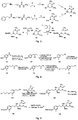
- steps a) to f) can be performed in the given order but also in any other order as long as performing the steps results in compound 30. Performances in different orders are illustrated in the reaction schemes according to Figs. 1 and 2 and 4 to 6 . If steps a) to f) are performed in the given order, all of steps b) to f) are performed in each case with the product of the preceding step which product is identified in the preceding step by a number.
- step f) the chlorine atom at the terminal of the alkyl chain of the compound resulting from e) is replaced in step f) by iodine in a Finkelstein reaction.
- An advantage of the method according to the invention illustrated in Fig. 1 is that the reaction to extend a benzaldehyde residue by one more methylene groups to achieve a phenethyl moiety which reaction usually takes four steps only takes two steps. These two steps are a Wittig reaction from benzaldehyde 25 to enol ether 26, and a one-pot reaction to phenylethanol 28 through putative intermediate phenylacetaldehyde 27.
- the intermediate 27 was first planned to be prepared in acidic condition from 26. But after having applied multiple demethylation conditions, such as hydrochloric acid or formic acid, no desired compound could be obtained.
- Compound 26 decomposes very fast after the addition of acid, even at low temperature and anhydrous condition, and formed the starting material compound 25 again.
- a one-pot reaction using mercury (II) acetate is applied as the mercury salt probably stabilizes the putative phenylacetaldehyde intermediate 27, which is not isolated and is directly reduced by addition of NaBH 4 in basic solution.
- the synthetic scheme is markedly shortened with successful formation of alcohol 28.
- compound 28 is even formed when the alkali metal borohydride is added immediately after addition of mercury acetate, the yield of compound 28 is low in this case.
- the time between the addition of the mercury acetate and the reducing agent may be in the range of 5 minutes to 25 minutes, in particular 6 minutes to 20 minutes, in particular 7 minutes to 15 minutes, in particular 8 minutes to 15 minutes, in particular 9 minutes to 12 minutes. In particular the time between the addition of the mercury acetate and the reducing agent is 10 minutes or about 10 minutes.
- the reaction to extend the benzaldehyde residue by one more methylene group should occur at a temperature in the range of 0 °C to 5 °C, in particular 0 °C to 4 °C, in particular 0 °C to 2 °C, in particular 0 °C to 1 °C, in particular at a temperature of 0 °C.
- Compound 24 is used in Mitsunobu reaction to introduce a fully protected guanidine moiety in compound 28 or the other compound resulting from step d) directly or by synthesis and comprising at least an R1-substituted 2-phenylethanol residue to result in the compound 29 or the other compound comprising the residue of compound 24 present in compound 29.
- a compound resulting from step d) by synthesis and comprising at least an R1-substituted 2-phenylethanol residue may be, e. g., a compound such as compound 117 in Fig. 4 .
- the chlorine atom at the terminal of the alkyl chain is replaced by iodine in a Finkelstein reaction which iodine is subsequently replaced by a tosylate residue for the radiolabeling by reacting with silver tosylate in the dark.
- the total reaction scheme is illustrated in Fig. 1 .
- Radiofluorination is performed by a nucleophilic method illustrated in Fig. 2 .
- the tosylate moiety is a very good leaving group, which is replaced by [ 18 F]fluorine.
- TLC using autoradiography showed the formation of the fluorinated intermediate before deprotection.
- the intermediate formed after the removal of both Boc groups still contained the triazinanone structure on the guanidine. This structure turned out to be more stable than expected. Therefore, 6N HCI was used for decomposition of this moiety.
- the total synthesis time of labeling is approximately 120 min.
- the average overall radiochemical yield was 7.9 ⁇ 3.1% (decay-corrected based on the starting radioactivity, calculated from 5 times of labeling records) and > 97% radiochemical purity.
- the (methoxymethyl)triphenylphosphonium halide of step c) may be (methoxymethyl)triphenylphosphonium chloride.
- the azodicarboxylate of step e) is diethyl azodicarboxylate (DEAD) or diisopropyl azodicarboxylate (DIAD).
- the deprotection under acidic condition of step g) may be performed at a temperature of at most 100 °C.
- Compound 24 can be synthesized in a method comprising the following steps:
- compound 13 of step j) is synthesized by reacting 1,3-bis(tert-butoxycarbonyl)-2-methyl-2-thiopseudourea and 5-chlorobenzotriazole in the presence of mercury (II) chloride (HgCl 2 ).
- the total reaction scheme of synthesis of compound 24 is illustrated in Fig. 3 .
- the triazinane intermediate 22 is prepared first.
- the hydrogenation step from resulting compound 21 wherein Bn is benzyl, to compound 22 would require very high pressure, which is difficult to achieve in lab conditions and also unfeasible for a scaling-up preparation.
- the improved method of the invention uses benzyl carbamate instead of benzylamine for the preparation of triazinane intermediate 23, which undergoes a much milder condition in the removal of protection group. While forming the fully protected guanidine compound 24 from compound 22, a reaction with pseudourea did not work because the triazinane intermediate decomposed. However, the inventors found that compound 24 can be obtained when compound 13 is used instead of the pseudourea.
- the conditions of the synthesis according to Fig. 1 were as follows: (a) 1-chloro-3-iodopropane, K 2 CO 3 , acetone, 60°C, 14 h, 87%; (b) (methoxymethyl)triphenylphosphonium chloride, potassium tert -butoxide (KOtBu), THF, 0°C->r.t., 24 h, 50%; (c) Hg(OAc) 2 , THF, H2O, 0°C, 15 min; (d) NaBH 4 , K 2 CO 3 , H 2 O, 0°C, 30 min, 68%; (e) compound 24, triphenylphosphine (PPh 3 ), diisopropyl azodicarboxylate (DIAD), THF, 0°C->r.t., 16 h, 84%; (f) Nal, acetone, 70°C, 14 h, 99%; (g) silver p-toluenesulf
- TLC Thin layer chromatography
- silica gel 60, 230-400 mesh by Merck was used for column chromatography.
- silica gel 60 PF 254 by Merck was used for preparative thin layer chromatography.
- 1,3-Bis(tert-butoxycarbonyl)-2-methyl-2-thiopseudourea and 5-chlorobenzotriazole were dissolved in dimethylformamide and triethyl amine (0.35 g, 3.45 mol).
- Mercury(II) chloride (HgCl2) was added and the reaction mixture was stirred at 50 °C for 24 h. The mixture was washed with sodium hydrocarbonate and water and extracted with ethyl acetate (8 ⁇ 50 ml). The combined organic layers were dried over sodium sulfate.
- Benzylamine (9.81 g, 91.7 mmol) was dissolved in formaldehyde (14.7 g, 183 mmol, 40% aq. solution) and heated to 100 °C under argon atmosphere. N,N'-dimethylurea (8.07 g, 91.7 mmol) was added and the mixture was stirred for 14 h. The mixture was washed with water and extracted with dichloromethane (2 ⁇ 200 mL). The combined organic layers were washed with brine solution and dried over sodium sulfate.
- Benzyl carbamate (1.00 g, 6.62 mmol) was dissolved in formaldehyde (1.18 g, 14.6 mmol, 40% aq. solution) and methanol. The mixture was heated to 100 °C under argon atmosphere, N,N' -dimethylurea (0.58 g, 6.62 mmol) was added and the mixture was stirred for 14 h. The solvent was removed in vacuo and crude product was washed with water and extracted with dichloromethane (2 ⁇ 200 mL). The combined organic layers were washed with brine solution and dried over sodium sulfate.
- 18 F-Fluoride trapped on a Sep-Pak QMA cartridge was first washed with distilled water (3 mL) to remove 18 O-water.
- 18 F-Fluoride was then eluted from the cartridge with K 2 CO 3 solution (0.3 mL, 23 ⁇ mol/mL) into a vial that contains Kryptofix 222 (22.5 mg, 59.7 ⁇ mol).
- Acetonitrile (0.5 mL ⁇ 4) was added to the vial, and the solution was dried azeotropically under argon at 120°C. Labeling is carried out by adding the solution of the precursor (4.8 mg) in dry acetonitrile (0.3 mL), followed by heating and stirring at 110°C for 10 min.
- I-MIBG was purchase from GE Healthcare (Freiburg im Breigau, Germany) and used within 2 h after calibration time. 131 I-MIBG was chosen instead of 123 I-MIBG due to its relative longer half-life, which is convenient for research purposes and financial reasons.
- 3-lodo-4-methoxyphenethyl acetate 113 (588 mg, 1.87 mmol, 1.00 equiv.) was dissolved in dry dichloromethane (12 mL) under inert gas atmosphere and a solution of boron tribromide (445 ⁇ L, 4.69 mmol, 2.50 equiv.) in dry dichloromethane (12 mL) was added at -20 °C. The reaction mixture was stirred for 2 h and partitioned between ethyl acetate (60 mL) and a 50% aqueous sodium bicarbonate solution (60 mL). The layers were separated and the aqueous layer was extracted with ethyl acetate (2 ⁇ 60 mL).
- Radiofluorination was performed using K 18 F to replace the tosylate group of precursor 123 with 18 F.
- 6N HCI cleavage of the boc groups and the triazinanone moiety was achieved ( Fig. 6 ).
- the desired radioactive labelled compound 18 F-37 was obtained with an overall radiochemical yield of 22% (decay corrected) and >99% radiochemical purity.
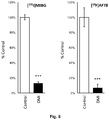
- SK-N-SH cells expressing NET were cultivated according to the instructions from the supplier (Sigma-Aldrich Chemie GmbH, Kunststoff, Germany). The cells were transferred to a 12 well plate and incubated in 1 mL EMEM while reaching 2 ⁇ 10 5 cells/well density the day for testing. The medium was removed, and the cells were washed with 1 mL EMEM. A solution of 18 F-AF78 (3.7 kBq) in EMEM (700 ⁇ L) was added to each well with or without inhibitors (NE, MHPG, cold AF78 each with a final concentration 100 nM, 1 ⁇ M, 10 ⁇ M and 100 ⁇ M, respectively; Desipramine 10 ⁇ M). The plate was incubated for 60 min at 37°C.
- the cells were washed with ice-cold PBS buffer (1 mLx2) in order to remove unbound tracer.
- NaOH solution 0.1 N, 500 ⁇ L was added to each well followed by the collection of cell pellet and the measurement in ⁇ -counter (FH412, Frieseke & Höpfner, Er Weg, Germany) using differential energy windows ( ⁇ 20%) for 18 F and 131 I.
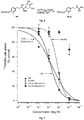
- IC50 of NE, MHPG, and cold reference 2 AF78 are 1.38 ⁇ 0.25 ⁇ M, 6.80 ⁇ 0.73 ⁇ M, and 2.57 ⁇ 1.37 ⁇ M, respectively. (IC50 of AF78 vs. MHPG p value ⁇ 0.01)
- cold reference 2 (AF78) could inhibit the cell uptake of 131 I-MIBG in a concentration-dependent manner.
- cold reference 1 was not able to block the uptake of 131 I-MIBG even at the highest concentration tested. Inhibition was only 40% at 100 ⁇ M. This result provides a hint for a structure-activity relationship. The introduction of long alkyl chain at 3-position on the benzene ring seems not to be tolerated, whereas introduction at the 4-position seems to be well tolerated.
- NE, MHPG, and cold reference 2 were added.
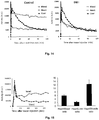
- Fig. 9 shows dose-response curves of 18 F-AF78 uptake in SK-N-SH cells in the presence of increasing concentrations of the following non-radioactive compounds: NE ( ⁇ ), MHPG ( ⁇ ), and cold AF78 ( ⁇ ). Results are expressed as percentage of control AF78 uptake.
- NE, MHPG, and cold AF78 could inhibit the uptake of 18 F-AF78 at an IC50 value of 0.60 ⁇ 0.27, 0.85 ⁇ 0.63, and 2.68 ⁇ 0.83 ⁇ M, respectively.
- the heart to blood (H/B) and heart to liver (H/L) count ratio were calculated, respectively.
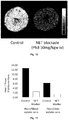
- the rats were first injected via tail vein either with or without (control) NET blocker phenoxynezamine 50 mg/kg after anaesthesia. After 10 min, the tracer (10-20 MBq) was administered. The hearts were harvested 10 min later, frozen, and cut into 20 ⁇ m short axis slices using a cryostat (Cryotome FSE, Thermo Fisher Scientific).
- autoradiography plates (Fuji SR-type image plate, Fujifilm Corporation, Tokyo, Japan) were exposed to the short axis slices immediately for 18 h and thereafter imaged using a digital autoradiographic system (Typhoon FLA 7000).
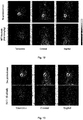
- 18 F-AF78 showed homogeneous tracer uptake throughout the left ventricular walls in the healthy myocardium. The result is shown in Fig. 10 . 18 F-AF78 demonstrated an even distribution throughout the myocardium (control), which could be inhibited by a pretreatment with phenoxybenzamine (PhB, 50 mg/kg i.v. injection) 10 min before tracer injection. A lack of delineation of the right ventricular wall might be due to its thinness and the slicing position.
- PhB phenoxybenzamine
- Rats were maintained anaesthetized during the whole experiment by 2% isoflurane. All scans were obtained using a dedicated small-animal PET system (microPET FOCUS 120, SIEMENS, Germany).
- the PET imaging protocol was designed to assess the systemic and myocardial tracer distribution of 18 F-AF78. Shortly before the injection of 10-20 MBq of 18 F-AF78 via the tail vein, a dynamic PET scan was initiated.
- rats were pretreated with phenoxybenzamine (50 mg/kg intravenously, Sigma-Aldrich, Tokyo, Japan). Ten minutes after the pretreatment, 10-20 MBq of 18 F-AF78 was administered via the tail vein.
- PET image was acquired in list-mode format.
- the data were sorted into 3-demensional sonograms, which were then rebind with a Fourier algorithm to reconstruct dynamic images using a 2-dimensinal ordered-subset expectation maximization (OSEM) algorithm. All images were corrected for 18 F decay, random, and dead time; correction for attenuation was not performed (Higuchi JNM 2013).
- the obtained PET images were analyzed with the public domain tool AMIDE imaging software (A Medical Imaging Data Examiner, version 1.01).
- Cynomolgus monkey Male, 5.3 kg was maintained anaesthesized during the imaging study using 3.3% seboflurane. Shortly before receiving an intravenous injection of the tracer (44 MBq), a 120 min dynamic PET session was started. In addition, to investigate the inhibition of cardiac neuronal uptake-1, DMI (1mg/kg, iv.) was injected to Cynomolgus monkey (female, 5.6 kg) 10 min before the tracer (18.2 MBq) injection and PET assessment started. PET was conducted using a PCA-2000A positron scanner (Toshiba Medical Systems Corporation, Otawara, Japan). Sinograms were collected with the following pattern: 10 sec ⁇ 12, 30 sec ⁇ 6, 300 sec ⁇ 23. The tissue uptake was determined as arbitrary unit (A.U.), from which a time-activity curves of different organs were generated.
- A.U. arbitrary unit
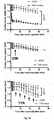
- 18 F-AF78 cardiac uptake showed a high tracer activity after the first washout and maintained activity throughout the entire 120 min scan time.
- the pretreatment with uptake-1 inhibitor DMI (1 mg/kg, iv) 10 min before the tracer injection markedly reduced the heart uptake level, which dropped almost instantly to the same level as in blood.
- DIAD diisopropyl azodicarboxylate
- DIPEA N,N -diisopropylethylamine
- DMF N,N -dimethylformamide
- DMI desipramine
- 11 C-HED 11 C-(-)- m- hydroxyephedrine
- iv intravenously
- 18 F-MHPG 18 F-4-fluoro-3-hydroxyphenethylguanidine
- 123/131 I-MIBG 123/131 I- meta -iodobenzylguanidine
- NE norepinephrine
- NET norepinephrine transporter
- PET positron emission tomography
- PhB phenoxybenzamine
- 18 F-PHPG 18 F-3-fluoro-4-hydroxyphenethylguanidine
- SPECT single photon emission computed tomography
- THF tetrahydrofuran
Landscapes
- Chemical & Material Sciences (AREA)
- Organic Chemistry (AREA)
- Health & Medical Sciences (AREA)
- Life Sciences & Earth Sciences (AREA)
- General Health & Medical Sciences (AREA)
- Veterinary Medicine (AREA)
- Medicinal Chemistry (AREA)
- Pharmacology & Pharmacy (AREA)
- Animal Behavior & Ethology (AREA)
- Public Health (AREA)
- Proteomics, Peptides & Aminoacids (AREA)
- Optics & Photonics (AREA)
- Epidemiology (AREA)
- Physics & Mathematics (AREA)
- Chemical Kinetics & Catalysis (AREA)
- Engineering & Computer Science (AREA)
- Bioinformatics & Cheminformatics (AREA)
- Cardiology (AREA)
- Heart & Thoracic Surgery (AREA)
- General Chemical & Material Sciences (AREA)
- Nuclear Medicine, Radiotherapy & Molecular Imaging (AREA)
- Biophysics (AREA)
- Molecular Biology (AREA)
- Organic Low-Molecular-Weight Compounds And Preparation Thereof (AREA)
- Medicines Containing Antibodies Or Antigens For Use As Internal Diagnostic Agents (AREA)
- Acyclic And Carbocyclic Compounds In Medicinal Compositions (AREA)
- Plural Heterocyclic Compounds (AREA)
Abstract
The invention concerns a compound according to following formulawherein R1 is a halogen residue.
Description
- The invention concerns a compound, the compound for use in a diagnostic method, the compound for use in a diagnostic method for diagnosing a disorder in generation, degradation, distribution or function of norepinephrine transporter (NET) and a method for synthesizing the compound.
- Norepinephrine (NE) is a neurotransmitter. Functions of NE comprise a general mobilization of brain and body as well as an increase of heart rate and blood pressure. NET is responsible for the reuptake of NE released into the synaptic cleft into the presynaptic neuron. Therewith, NET regulates concentration of NE in the synaptic cleft. For detecting NET in the human or animal body several tracers that bind to NET and that can be detected in Positron Emission Tomography (PET) have been developed.
-
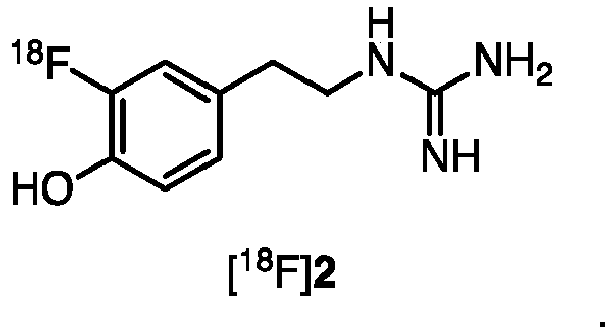
WO 2013/036869 A2 discloses compositions, methods and systems for the synthesis and use of imaging agents comprising 18F. The imaging agent may be used to image an area of interest in a subject, including the heart, cardiovascular system, cardiac vessels, brain and other organs. In certain embodiments the disclosed methods include a method of detecting NET. - From Jung, Yong-Woon et al., ACS Chem. Neurosci. 2017, 8, pages 1530 to 1542 radiotracers of cardiac sympathetic innervation are known. The radiotracers are 4-[18F]fluoro-m-hydroxyphenethylguanidine([18F]4F-MHPG, [18F]1) and its structural isomer 3-[18F]fluoro-p-hydroxyphenethylguanidine([18F]3F-PHPG, [18F]2) having the following formulae

- According to this document fluorine-18 has a sufficiently long half-life such that the production and distribution of 18F-labeled radiopharmaceuticals from a central production facility to stand-alone PET imaging centers is feasible. In the document it is further stated that PET studies showed very long neuronal retention times for [18F]1 and [18F]2 in nonhuman primate myocardium consistent with rapid vesicular uptake and very little diffusion of the tracers from storage vesicles. Furthermore, the guanidine group of the side chain of [18F]1 and [18F]2 confers stability against neuronal enzymes.
- Chen, X. et al., EJNMMI Research (2018) 8:12, discloses 18F-N-[3-bromo-4-(3-fluoro-propoxy)-benzyl]-guanidine C8F-LMI1195) as PET tracer. This tracer is designed for assessment of sympathetic innervation of the heart. It is described that for 18F-LMI1195 exists an easy and high-yield labeling procedure that is convenient and eligible for commercial preparation and application.
- The problem to be solved by the present invention is to provide an alternative tracer binding to NET, the tracer for use in diagnostic methods as well as a method for synthesizing the tracer.
- The problem is solved by the features of
claims claims - According to the invention a compound according to the following formula

- The invention further concerns the compound according to the invention for use in a diagnostic method practiced on the living human or animal body, i. e., in vivo. This diagnostic method may be a diagnostic method for diagnosing a disorder in generation, degradation, distribution or function of NET in the human or animal body. The inventors found that the compound according to the invention shows a particular slow uptake and a quick flushing out by the liver in vivo.
- The diagnostic method may comprise Positron Emission Tomography (PET) of the human or animal body, to which body the compound has been administered before performing the PET. The disorder in generation, degradation, distribution or function of NET may be associated with a cardiovascular disease, a dysregulated blood pressure, a renal disorder, a neuroendocrine tumor disease or Parkinson's disease.
- The invention further concerns a method for synthesizing the compound according to the invention, wherein the method comprises the following steps or consists of the following steps:
- a) Removing the methyl group of the following
compound 14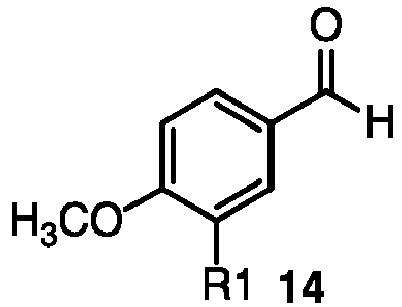
compound 15
compound 14 by synthesis and comprising at least the R1-substituted methylphenylether residue ofcompound 14, wherein R1 is a halogen residue, - b) chloroalkylation of
compound 15 or of another compound obtained from step a) by use of 1-chloro-3-iodopropane to receive the followingcompound 25
- c) performing a Wittig reaction with
compound 25 or with another compound obtained fromcompound 14 by synthesis and comprising at least the R1-substituted benzaldehyde residue ofcompound 14 by use of a (methoxymethyl)triphenylphosphonium halide and potassium tert-butoxide or sodium hydride to receive the followingcompound 26
- d) reduction of
compound 26 or the other compound resulting from step c in a two step one pot reaction by addition of mercury acetate to allow the formation of an intermediate followed by addition of alkali metal borohydride, in particular sodium borohydride or potassium borohydride, to receive the followingcompound 28
- e) performing a Mitsunobu reaction with
compound 28 or with the other compound resulting from step d) directly or by synthesis and comprising at least an R1-substituted 2-phenylethanol residue in the presence of triphenylphosphine, an azodicarboxylate and the followingcompound 24
following compound 29
compound 24 present incompound 29, - f) replacing the chlorine atom at the terminal of the alkyl chain of the compound resulting from any of steps b) to e) by iodine in a Finkelstein reaction followed by a tosylation using silver p-toluenesulfonate in the dark and if any of steps a) to e) have not been performed up to the present step performing all of steps a) to e) that have not been performed up to the present step to receive the
following compound 30
- g)
radiolabeling compound 30 by a nucleophilic substitution using an alkali metal salt of 18F, in particular K18F, followed by deprotection under acidic condition at a temperature of at least 70 °C to receive the following compound
- The halogen residue may be a F, Cl, Br or I residue, in particular an F or I residue, in particular an F residue. If the halogen residue is an F residue the resulting compound is the compound designated as 18F-AF78 in this application.
- The steps modifying the aldehyde group of
compound 14 and groups resulting directly or indirectly from this aldehyde group can be performed partly or completely prior to or after all or of a part of the steps modifying the methoxy group ofcompound 14 and groups resulting directly or indirectly from this methoxy group. This means that above steps a) to f) can be performed in the given order but also in any other order as long as performing the steps results incompound 30. Performances in different orders are illustrated in the reaction schemes according toFigs. 1 and 2 and4 to 6 . If steps a) to f) are performed in the given order, all of steps b) to f) are performed in each case with the product of the preceding step which product is identified in the preceding step by a number. - In an embodiment the chlorine atom at the terminal of the alkyl chain of the compound resulting from e) is replaced in step f) by iodine in a Finkelstein reaction.
- An advantage of the method according to the invention illustrated in
Fig. 1 is that the reaction to extend a benzaldehyde residue by one more methylene groups to achieve a phenethyl moiety which reaction usually takes four steps only takes two steps. These two steps are a Wittig reaction frombenzaldehyde 25 toenol ether 26, and a one-pot reaction tophenylethanol 28 through putativeintermediate phenylacetaldehyde 27. The intermediate 27 was first planned to be prepared in acidic condition from 26. But after having applied multiple demethylation conditions, such as hydrochloric acid or formic acid, no desired compound could be obtained.Compound 26 decomposes very fast after the addition of acid, even at low temperature and anhydrous condition, and formed the startingmaterial compound 25 again. In the end, a one-pot reaction using mercury (II) acetate is applied as the mercury salt probably stabilizes theputative phenylacetaldehyde intermediate 27, which is not isolated and is directly reduced by addition of NaBH4 in basic solution. As a result, the synthetic scheme is markedly shortened with successful formation ofalcohol 28. Thoughcompound 28 is even formed when the alkali metal borohydride is added immediately after addition of mercury acetate, the yield ofcompound 28 is low in this case. The inventors found that yield is improved when the intermediate 27 has enough time to form between the addition of the mercury acetate and the addition of the reducing agent alkali metal borohydride. If the time between the addition of the mercury acetate and the addition of the reducing agent is too long, hydrolysis back to thebenzaldehyde 25 may occur. - The time between the addition of the mercury acetate and the reducing agent may be in the range of 5 minutes to 25 minutes, in particular 6 minutes to 20 minutes, in particular 7 minutes to 15 minutes, in particular 8 minutes to 15 minutes, in particular 9 minutes to 12 minutes. In particular the time between the addition of the mercury acetate and the reducing agent is 10 minutes or about 10 minutes. Furthermore, the reaction to extend the benzaldehyde residue by one more methylene group should occur at a temperature in the range of 0 °C to 5 °C, in particular 0 °C to 4 °C, in particular 0 °C to 2 °C, in particular 0 °C to 1 °C, in particular at a temperature of 0 °C.
-
Compound 24 is used in Mitsunobu reaction to introduce a fully protected guanidine moiety incompound 28 or the other compound resulting from step d) directly or by synthesis and comprising at least an R1-substituted 2-phenylethanol residue to result in thecompound 29 or the other compound comprising the residue ofcompound 24 present incompound 29. A compound resulting from step d) by synthesis and comprising at least an R1-substituted 2-phenylethanol residue may be, e. g., a compound such ascompound 117 inFig. 4 . The chlorine atom at the terminal of the alkyl chain is replaced by iodine in a Finkelstein reaction which iodine is subsequently replaced by a tosylate residue for the radiolabeling by reacting with silver tosylate in the dark. The total reaction scheme is illustrated inFig. 1 . - Radiofluorination is performed by a nucleophilic method illustrated in
Fig. 2 . The tosylate moiety is a very good leaving group, which is replaced by [18F]fluorine. TLC using autoradiography showed the formation of the fluorinated intermediate before deprotection. The intermediate formed after the removal of both Boc groups still contained the triazinanone structure on the guanidine. This structure turned out to be more stable than expected. Therefore, 6N HCI was used for decomposition of this moiety. The total synthesis time of labeling is approximately 120 min. The average overall radiochemical yield was 7.9 ± 3.1% (decay-corrected based on the starting radioactivity, calculated from 5 times of labeling records) and > 97% radiochemical purity. - The (methoxymethyl)triphenylphosphonium halide of step c) may be (methoxymethyl)triphenylphosphonium chloride.
- In an embodiment the azodicarboxylate of step e) is diethyl azodicarboxylate (DEAD) or diisopropyl azodicarboxylate (DIAD).
- The deprotection under acidic condition of step g) may be performed at a temperature of at most 100 °C.
-
Compound 24 can be synthesized in a method comprising the following steps: - h) Reacting benzyl carbamate, N,N'-dimethylurea and water at a temperature of at least 80 °C to receive the following
compound 23
- i) reacting
compound 23 with hydrogen catalyzed by palladium on activated charcoal to receivecompound 22
- j) reacting
compound 22 with the followingcompound 13
compound 24, wherein Boc is tert-butoxycarbonyl protecting group. - In an
embodiment compound 13 of step j) is synthesized by reacting 1,3-bis(tert-butoxycarbonyl)-2-methyl-2-thiopseudourea and 5-chlorobenzotriazole in the presence of mercury (II) chloride (HgCl2). - The total reaction scheme of synthesis of
compound 24 is illustrated inFig. 3 . For synthesizingcompound 24 the triazinane intermediate 22 is prepared first. When using benzylamine as starting material, the hydrogenation step from resultingcompound 21
guanidine compound 24 fromcompound 22, a reaction with pseudourea
compound 24 can be obtained whencompound 13 is used instead of the pseudourea. - Embodiments of the invention:
- Fig. 1
- shows a reaction scheme for synthesis of
compound 30 as precursor of tracer 2 (= 18F-AF78), - Fig. 2
- shows a reaction scheme for synthesis of 18F-AF78,
- Fig. 3
- shows a reaction scheme for synthesis of
compound 24, - Fig. 4
- shows a reaction scheme for synthesis of
compound 117, - Fig. 5
- shows a reaction scheme for synthesis of
compound 123 as precursor of tracer 18F-37, - Fig. 6
- shows a reaction scheme for synthesis of compound 18F-37,
- Fig. 7
- shows dose-response curves of 131I-MIBG uptake in SK-N-SH cells in the presence of increasing concentrations of non-radioactive compounds,
- Fig. 8
- shows uptake of 18F-AF78 in SK-N-SH cells with and without NET inhibitor desipramine (DMI),
- Fig. 9
- shows dose-response curves of 18F-AF78 uptake in SK-N-SH cells in the presence of increasing concentrations of non-radioactive references,
- Fig. 10
- shows an autoradiography of slices from rats' left ventricular short axis after administration of 18F-AF78 with and without prior NET blockade,
- Fig. 11
- shows results of a tissue distribution study after administration of 18F-AF78 with and without prior NET blockade,
- Fig. 12
- shows static PET images of cardiac uptake of 18F-AF78 in healthy rats with and without prior NET blockade,
- Fig. 13
- shows static PET images of cardiac uptake of 18F-37 in healthy rats with and without prior NET blockade,
- Fig. 14
- shows time-activity curves of 18F-AF78 generated from dynamic PET images in a control monkey with and without prior NET blockade,
- Fig. 15
- shows time-activity curves of 18F-37 generated from dynamic PET images in rat (left panel) and results of biodistribution studies in rats (n = 4) showing heart-to-blood (H/B), heart-to-liver (H/L) and heart-to-muscle ratios (H/M) after 10 min of tracer injection (right panel),
- Fig. 16
- shows static PET images of cardiac uptake of 18F-AF78 in healthy rats, rabbits, pigs and monkeys,
- Fig. 17
- shows the results of a biodistribution study with 18F-A78 in monkey and
- Fig. 18
- shows the results of a kinetic study performed with 18F-AF78 in monkeys' hearts. Top panel shows the cardiac tracer uptake with (DMI blocking) and without (CONT) the pretreatment of NET blocker desipramine (DMI). Middle panel shows the tracer uptake with DMI chase (DMI injection after tracer administration) compared with control (CONT). Lower panel shows the tracer uptake with tyramine chase (TYR chase, tyramine, a catecholamine releasing agent, injected after tracer administration) compared with control (CONT).
- The conditions of the synthesis according to
Fig. 1 were as follows:
(a) 1-chloro-3-iodopropane, K2CO3, acetone, 60°C, 14 h, 87%; (b) (methoxymethyl)triphenylphosphonium chloride, potassium tert-butoxide (KOtBu), THF, 0°C->r.t., 24 h, 50%; (c) Hg(OAc)2, THF, H2O, 0°C, 15 min; (d) NaBH4, K2CO3, H2O, 0°C, 30 min, 68%; (e)compound 24, triphenylphosphine (PPh3), diisopropyl azodicarboxylate (DIAD), THF, 0°C->r.t., 16 h, 84%; (f) Nal, acetone, 70°C, 14 h, 99%; (g) silver p-toluenesulfonate, CH3CN, 0°C->r.t., dark, 72 h, 98%. - Conditions of the synthesis according to
Fig. 3 were as follows:
(a) H2O, 100°C, 14 h, 77%; (b) CH3OH, H2O, 100°C, 14 h, 35%; (c) H2, Pd/C, r.t., 14 h, 88%; (d)compound 13, DIPEA, CH3CN, 50°C, 14 h, 58%; (e)compound 23, HgCl2, DMF, N2, 50°C, 14 h. - Solvents were dried according to published methods and freshly distilled before use. All other reagents were commercially available compounds and were used without further purification unless noted otherwise. All reactions were carried out under nitrogen atmosphere. 1H and 13C NMR spectral data were obtained from a
Bruker Avance II 400 MHz. 1H and 13C NMR chemical shifts (δ) are reported in parts per million (ppm) relative to internal standard TMS and coupling constants (J) are in Hz. - Thin layer chromatography (TLC) was performed on
silica gel 60 with a 254 nm fluorescent indicator. UV light or iodine vapor were used for detection. - Purity was evaluated via LCMS performed on an LCMS-system by Shimadzu Products, containing a LC20AB liquid chromatograph, an SPD-20A UV/Vis detector and a DGU-20A3R degassing unit. Stationary phase was a
Synergi 4 µm fusion-RP (150 × 4.6 mm) column (Phenomenex, Aschaffenburg, Germany). Mass spectra were obtained by a Shimadzu LCMS-2020 (confirming purity ≥95%). - For column chromatography,
silica gel 60, 230-400 mesh by Merck was used. For preparative thin layer chromatography,silica gel 60 PF254 by Merck was used. - 1,3-Bis(tert-butoxycarbonyl)-2-methyl-2-thiopseudourea and 5-chlorobenzotriazole were dissolved in dimethylformamide and triethyl amine (0.35 g, 3.45 mol). Mercury(II) chloride (HgCl2) was added and the reaction mixture was stirred at 50 °C for 24 h. The mixture was washed with sodium hydrocarbonate and water and extracted with ethyl acetate (8×50 ml). The combined organic layers were dried over sodium sulfate. The crude product was dissolved in dichloromethane and purified by column (5:1-1:1 petroleum ether:ethyl acetate) to give the
target compound 13 as a white solid (0.74 g, 18.7 mmol. 57% yield) which was used in the next step without further purification. ESI-MS (m/z): 396.05 [M+H]+. - 3-Fluoro-4-methoxybenzaldehyde 14 (5.00 g, 32.5 mmol) was mixed with 48% HBr (30 mL), heated to 140 °C and stirred under argon atmosphere for 3 h. The mixture was diluted with water (150 mL) and extracted with dichloromethane (2×100 mL). The combined organic layers were washed with brine solution and dried over sodium sulfate. The solvent was removed in vacuo to give
compound 15 as a brown solid (4.36 g, 30.2 mmol, 97% yield). NMRs are in accordance to literature. (Jiang 2014) ESI-MS (m/z): 141.00 [M+H]+. - Benzylamine (9.81 g, 91.7 mmol) was dissolved in formaldehyde (14.7 g, 183 mmol, 40% aq. solution) and heated to 100 °C under argon atmosphere. N,N'-dimethylurea (8.07 g, 91.7 mmol) was added and the mixture was stirred for 14 h. The mixture was washed with water and extracted with dichloromethane (2×200 mL). The combined organic layers were washed with brine solution and dried over sodium sulfate. The solvent was removed in vacuo and the crude product was purified by column chromatography (1:1 petroleum ether:ethyl acetate) to give the
title compound 21 as yellow crystals (15.5 g, 70.9 mmol, 77% yield). 1H NMR (CDCl3, 400 MHz) δ = 2.85 (s, 6 H), 3.90 (s, 2 H), 4.16 (s, 4 H), 7.28 (m, 5 H) ppm. 13C NMR (CDCl3, 101 MHz) δ = 32.47, 55.36, 67.72, 127.70, 128.60, 129.11, 137.49, 156.04 ppm. ESI-MS (m/z): 220.10 [M+H]+. - Benzyl carbamate (1.00 g, 6.62 mmol) was dissolved in formaldehyde (1.18 g, 14.6 mmol, 40% aq. solution) and methanol. The mixture was heated to 100 °C under argon atmosphere, N,N'-dimethylurea (0.58 g, 6.62 mmol) was added and the mixture was stirred for 14 h. The solvent was removed in vacuo and crude product was washed with water and extracted with dichloromethane (2×200 mL). The combined organic layers were washed with brine solution and dried over sodium sulfate. The solvent was removed in vacuo and the crude product was purified by column chromatography (1:1 petroleum ether:ethyl acetate, then 25:1 dichloromethane:methanol) to give the
title compound 23 as a colourless liquid (0.60 g, 2.29 mmol, 35% yield). 1H NMR (CDCl3, 400 MHz) δ = 2.79 (s, 6H), 4.62 (s, 4H), 5.09 (s, 2H), 7.26-7.27 (5H) ppm. 13C NMR (CDCl3, 101 MHz) δ = 32.66, 60.34, 68.15, 128.04, 128.40, 128.58, 135.56, 154.39, 156.07 ppm. ESI-MS (m/z): 264.00 [M+H]+. - Compound 23 (603 mg, 2.29 mmol) was dissolved in methanol, palladium on activated charcoal (30 mg) was added and the reaction mixture was stirred at r.t. for 14 h under hydrogen atmosphere. The mixture was filtered and the filtrate was concentrated in vacuo to give the
title compound 22 as white solid (259 mg, 2.01 mmol, 88% yield). 1H NMR (CDCl3, 400 MHz) δ = 2.77 (s, 1H), 2.85 (s, 5H), 4.16 (s, 4H) ppm. - To a solution of compound 22 (137 mg, 1.06 mmol) and compound 13 (420 mg, 1.06 mmol) in acetonitrile, DIPEA (274 mg, 2.13 mmol) was added and the mixture was stirred at 50 °C for 14 h. The solvent was removed in vacuo. The residue was diluted with water (50 mL) and extracted with ethyl acetate (2×30 ml) and dichloromethane (2x30 ml). The combined organic phases were washed with brine, dried over sodium sulfate and the solvent was removed in vacuo. The crude product was purified by column chromatography (6:1 then 2:1 petroleum ether:ethyl acetate, 1:1:0.05 petroleum ether:ethyl acetate:triethylamine) to give the
target compound 24 as white crystals (226 mg, 0.61 mmol, 58% yield). 1H NMR (CDCl3, 400 MHz) δ = 1.47-1.48 (m, 18H), 2.01-2.02 (m, 1H), 2.90-2.91 (m, 6H), 4.69 (s, 6H) ppm. 13C NMR (CDCl3, 101 MHz) δ = 28.16, 33.18, 60.47, 62.31, 81.82, 154.01, 157.30 ppm. ESI-MS (m/z): 372.20 [M+H]+. - To a solution of compound 15 (2.50 g, 17.9 mmol) and potassium carbonate (2.71 g, 19.6 mmol) in acetone, 1-chloro-3-iodpropane (3.64 g, 17.9 mmol) was added and the reaction mixture was stirred at 60 °C for 14 h. The solvent was evaporated and the residue was diluted with water (100 mL) and extracted with ethyl acetate (2×50 ml). The combined organic phases were washed with brine and dried over sodium sulfate. The solvent was removed in vacuo and the crude product was purified by column chromatography (5:1 petroleum ether:ethyl acetate). The solvent was removed in vacuo to give
compound 25 as a pale-yellow liquid (3.36 g, 15.6 mmol, 87% yield). 1H NMR (CDCl3, 400 MHz) δ = 2.23-2.32 (m, 2 H), 3.74-3.78 (m, 2 H), 4.22-4.28 (m, 2 H), 7.58-7.80 (m, 3 H), 9,85 (s, 1 H) ppm. 13C NMR (CDCl3, 101 MHz) δ = 31.98, 41.14, 65.69, 113.62, 113.81, 115.94, 116.15, 123.30, 123.37, 130.20, 130.30, 147.54, 148.66, 150.66-153.12 (J(C-F) = 254.4 Hz), 189.96 ppm. ESI-MS (m/z): 217.10 [M+H]+. - (Methoxymethyl)triphenylphosphonium chloride (538 mg, 1.57 mmol) was dissolved in dry tetrahydrofuran and cooled to 0°C. Potassium tert-butoxide (228 mg, 2.04 mmol) was added portionwise and the mixture was stirred for 1 h. Compound 25 (200 mg, 1.00 mmol) in dry tetrahydrofuran was added dropwise under cooling and the reaction was warmed to room temperature over night. After mixture was quenched with water, the solvent was removed in vacuo and the residue was diluted with water (100 mL) and extracted with ethyl acetate (2×50 ml). The combined organic phases were washed with brine and dried over sodium sulfate. The solvent was removed in vacuo and the crude product was purified by column chromatography (15:1 petroleum ether:ethyl acetate) to give the
target compound 26 as a colorless oil (192 mg, 0.78 mmol, 50% yield). 1H NMR (CDCl3, 400 MHz) δ = 2.25 (m, 2 H), 3.37 (s, 2 H), 3.76-3.77 (m, 3 H), 4.16 (m, 2H), 5.13-5.14 (d, J = 6.9 Hz, 1H), 5.70-5.73 (d, J = 13.0 Hz, 0.5 H), 6.08-6.10 (d, J = 7.0 Hz, 0.5 H), 6.87-6.89 (m, 3 H) ppm. 13C NMR (CDCl3, 101 MHz) δ = 32.47, 41.52, 41.55, 56.70, 60.78, 66.15, 66.29, 112.69, 112.88, 115.08, 115.10, 115.84, 115.86, 116.02, 116.21, 121.13, 121.17, 147.57, 148.78, 151.91-154.35 (J(C-F) = 245.1 Hz), 153.80 ppm. - Compound 26 (90 mg, 0.37 mmol) was dissolved in tetrahydrofuran and a solution of mercury(II) acetate (129 mg, 0.41 mmol) in water was added under cooling in an ice/water bath. The reaction mixture was stirred for 15 mins and sodium borohydride (56 mg, 1.48 mmol) in a saturated potassium carbonate solution was added dropwise. The reaction mixture was stirred for 30 min, diluted with water and extracted with ethyl acetate (4x10 ml). The combined organic phases were washed with brine and dried over sodium sulfate. The solvent was removed in vacuo and the crude product was purified by column chromatography (4:1 petroleum ether:ethyl acetate) to give the
target compound 28 as colorless oil (58.5 mg, 0.25 mmol, 68% yield). 1H NMR (CDCl3, 400 MHz) δ = 2.22-2.28 (m, 2 H), 2.77-2.80 (t, J = 6.5 Hz, 2 H), 3.75-3.83 (m, 4 H), 4.15-4.18 (t, J = 5.8 Hz, 2H), 6.91-6.98 (m, 3 H) ppm. 13C NMR (CDCl3, 101 MHz) δ = 31.27, 38.82, 41.32, 41.43, 62.64, 65.98, 113.39, 113.46, 116.63, 116.84, 125.48, 125.56, 133.36, 133.39, 144.45, 144.85, 153.22-156.17 (J(C-F) = 251.5 Hz) ppm. - Compound 28 (72 mg, 0.31 mmol), compound 24 (172 mg, 0.46 mmol) and triphenyl phosphine (122 mg, 0.46 mmol) were dissolved in dry tetrahydrofuran. A solution of DIAD (94 mg, 0.46 mmol) in dry tetrahydrofuran was added dropwise at 0 °C and the reaction mixture was slow warmed up to room temperature and stirred for 16 h. The mixture was diluted with water (40 mL) and extracted with diethyl ether (4×10 ml). The combined organic phases were washed with brine and dried over sodium sulfate. The solvent was removed in vacuo and the crude product was purified by column chromatography (2.5:1.5:0.5 petroleum ether:acetone:ethyl acetate) to give the
target compound 29 as a colorless liquid (152 mg, 0.26 mmol, 84% yield). 1H NMR (CDCl3, 400 MHz) δ = 1.47 (s, 18 H), 2.22-2.25 (m, 2 H), 2.84 (m, 6 H), 3.57 (bs, 4 H), 3.74-3.77 (m, 2 H), 4.13-4.16 (m, 2 H), 4.52 (bs, 4 H), 6.89-6.95 (m, 3 H) ppm. 13C NMR (CDCl3, 101 MHz) δ = 28.14, 28.25, 41.43, 48.87, 60.49, 61.02, 66.02, 80.84, 83.00, 115.48, 116.55, 116.73, 124.40, 124.43, 131.50, 131.56, 145.60, 145.71, 150.98, 151.52-153.97 (J(C-F) = 246.8 Hz), 152.31, 156.98, 158.39 ppm. ESI-MS (m/z): 586.25, 588.25 [M+H]+. - Compound 29 (72 mg, 0.12 mmol) and sodium iodine (37 mg, 0.25 mmol) were dissolved in acetone and the reaction mixture was stirred at 70 °C for 14 h. The mixture diluted with water (40 mL) and extracted with diethyl ether (4 x 10 ml). The combined organic phases were washed with brine and dried over sodium sulfate. The solvent was removed in vacuo to give the target compound 30a as a yellow liquid (83 mg, 0.12 mmol, 99% yield) and was used directly in the next step without further purification. ESI-MS (m/z): 678.20 [M+H]+, 700.20 [M+Na]+.
- Compound 30a (72 mg, 0.11 mmol) was dissolved in acetonitrile and silver p-toluenesulfonate (148 mg, 0.53 mmol) in darkness at 0 °C. The reaction mixture was stirred at room temperature for 72 h. The crude product was diluted with water (40 mL) and extracted with ethyl acetate (4×10 ml). The combined organic phases were washed with brine and dried over sodium sulfate. The solvent was removed in vacuo to give the
target compound 30 as a yellow liquid (75 mg, 0.10 mmol, 98% yield). 1H NMR (CDCl3, 400 MHz) δ = 1.48 (s, 18 H), 2.11-2.14 (m, 2 H), 2.14 (s, 3H), 2.85 (s, 6H), 3.85 (bs, 4H), 3.89-4.01 (m, 2H), 4.22-4.25 (m, 2H), 4.55 (bs, 4H), 6.77-6.93 (m, 3H), 7.26-7.28 (m, 2H), 7.75-7.77 (d, J = 8.3 Hz) ppm. 13C NMR (CDCl3, 101 MHz) δ = 28.15, 28.26, 29.05, 29.80, 33.22, 33.66, 60.50, 61.20, 64.87, 66.98, 80.93, 83.06, 115.32, 116.49, 116.67, 124.42, 127.98, 129.95, 131.55, 132.92, 144.92, 145.36, 145.47, 151.37, 152.28, 153.82, 156.95 ppm. ESI-MS (m/z): 722.35 [M+H]+, 744.30 [M+Na]+. - 18F-Fluoride trapped on a Sep-Pak QMA cartridge was first washed with distilled water (3 mL) to remove 18O-water. 18F-Fluoride was then eluted from the cartridge with K2CO3 solution (0.3 mL, 23 µmol/mL) into a vial that contains Kryptofix222 (22.5 mg, 59.7 µmol). Acetonitrile (0.5 mL×4) was added to the vial, and the solution was dried azeotropically under argon at 120°C. Labeling is carried out by adding the solution of the precursor (4.8 mg) in dry acetonitrile (0.3 mL), followed by heating and stirring at 110°C for 10 min. Hydrochloric acid (6N, 0.3 mL) was added to the reaction mixture, and the reaction continued for 20 min at 100°C. The mixture was cooled, diluted with 1 mL of a mixture solution of water and acetonitrile (1:1), and applied to the semi-preparative HPLC for purification. HPLC condition: Column: 9.4×250 mm 5-micron ZORBAX Eclipse XDB-C18 (P.N.: 990967-202). Mobile phase: Phase A: Millipore water with 0.1% formic acid; Phase B: Methanol with 0.1% formic acid. Condition: 0-20 min, 30%-60% B, 20-22 min 60-100% B, 22-50
min 100% B;Flow rate 3 mL/min. Condition of autoradiography: TLC with normalphase silica gel 60. Solvent system: 3 mL methanol + 20 µL formic acid, Rf.: 0.6. 131I-MIBG was purchase from GE Healthcare (Freiburg im Breigau, Germany) and used within 2 h after calibration time. 131I-MIBG was chosen instead of 123I-MIBG due to its relative longer half-life, which is convenient for research purposes and financial reasons. -

product 107 as a pale yellow oil (1.79 g, 81% yield). 1H-NMR (CDCl3, 400 MHz) δ = 8.02 (1H, d, J = 2.13 Hz, Hh'), 7.66 (1H, d, J = 2.18 Hz, Hh), 7.50 (1H, dd, J = 2.13 Hz, 8.54 Hz, Hd'), 7.15 (1H, dd, J = 2.25 Hz, 8.46 Hz, Hd), 6.92 (1H, d, J = 12.92 Hz, Ha), 6.78 - 6.71 (2H, m, He/e'), 6.07 (1H, d, J = 6.94 Hz, Ha'), 5.70 (1H, d, J = 13.00 Hz, Hb), 5.09 (1H, d, J = 6.98 Hz, Hb'), 3.86/3.85 (6H, s, Hi/i'), 3.77 (3H, s, Hj'), 3.66 (3H, s, Hj) ppm. 13C-NMR (CDCl3, 101 MHz) δ = 156.4 (Cf), 156.1 (Cf), 148.5 (Ca), 147.3 (Ca'), 139.1 (Ch'), 136.1 (Ch), 131.3 (Cc), 131.0 (Cc), 129.4 (Cd'), 126.3 (Cd), 111.2/110.7 (Ce/e'), 103.9 (Cb'), 103.4 (Cb), 86.5 (Cg), 86.0 (Cg'), 60.8 (Cj'), 56.7/56.6/56.5 (Cj/i/i') ppm. ESI-MS (m/z): 290.80 [M+H]+. -

- (E/Z)-2-lodo-1-methoxy-4-(2-methoxyvinyl)benzene 107 (1.79 g, 6.17 mmol, 1.00 equiv.) was suspended in tetrahydrofuran (46 mL) and water (74 mL) before mercury acetate (2.18 g, 6.84 mmol, 1.10 equiv.) was added at 0 °C. The reaction mixture was stirred at 0 °C for 30 min followed by the addition of a 50% aqueous potassium carbonate solution (30 mL) and sodium borohydride (942 mg, 24.90 mmol, 4.00 equiv.). After the reaction mixture was stirred at 0 °C for 2.5 h, the precipitate was filtered off and the filtrate was extracted with ethyl acetate (3 × 80 mL). The combined organic layers were dried over sodium sulfate and the solvent was removed under reduced pressure. The crude material was purified by column chromatography (SiO2, petroleum ether/ethyl acetate = 1:1, Rf = 0.45) to obtain
alcohol 108 as a yellow oil (1.36 g, 79% yield). 1H-NMR (CDCl3, 400 MHz) δ = 7.65 (1H, d, J = 2.13 Hz, Hh), 7.16 (1H, dd, J = 2.14 Hz, 8.35 Hz, Hd), 6.76 (1H, d, J = 8.35 Hz, He), 3.85 (3H, s, Hi), 3.81 (2H, t, J = 6.55 Hz, Ha), 2.76 (2H, t, J = 6.53 Hz, Hb), 1.69 (1H, s, Hj) ppm. 13C-NMR (CDCl3, 101 MHz) δ = 157.0 (Cf), 139.9 (Ch), 132.9 (Cc), 130.2 (Cd), 111.1 (Ce), 86.2 (Cg), 63.7 (Ca), 56.5 (Ci), 37.8 (Cb) ppm. ESI-MS (m/z): 278.80 [M+H]+. -

- 2-(3-lodo-4-methoxyphenyl)ethan-1-ol 108 (1.04 g, 3.74 mmol, 1.00 equiv.) was dissolved in acetone (20 mL) and acetyl chloride (800 µL, 11.21 mmol, 3.00 equiv.) was added at 0 °C. The reaction mixture was stirred at room temperature for 18 h before the solvent was removed under reduced pressure. The residue was dissolved in ethyl acetate (20 mL) and washed with saturated aqueous sodium bicarbonate solution (1 × 20 mL) and brine (1 × 20 mL). The organic layer was dried over sodium sulfate and the solvent was removed under reduced pressure. The crude material was purified by column chromatography (SiO2, petroleum ether/ethyl acetate = 3:1, Rf = 0.54) to obtain
acetate 113 as a yellow oil (1.07 g, 90% yield). 1H-NMR (CDCl3, 400 MHz) δ = 7.63 (1H, d, J = 2.15 Hz, Hh), 7.15 (1H, dd, J = 2.16 Hz, 8.39 Hz, Hd), 6.75 (1H, d, J = 8.38 Hz, He), 4.22 (2H, t, J = 7.01 Hz, Ha), 3.85 (3H, s, Hi), 2.83 (2H, t, J = 7.01 Hz, Hb), 2.03 (3H, s, Hk) ppm. 13C-NMR (CDCl3, 101 MHz) δ = 171.1 (Cj), 157.1 (Cf), 139.9 (Ch), 132.2 (Cc), 130.0 (Cd), 111.0 (Ce), 86.1 (Cg), 64.9 (Ca), 56.5 (Ci), 33.8 (Cb), 21.1 (Ck) ppm. ESI-MS (m/z): 342.85 [M+Na]+. -

- 3-lodo-4-methoxyphenethyl acetate 113 (588 mg, 1.87 mmol, 1.00 equiv.) was dissolved in dry dichloromethane (12 mL) under inert gas atmosphere and a solution of boron tribromide (445 µL, 4.69 mmol, 2.50 equiv.) in dry dichloromethane (12 mL) was added at -20 °C. The reaction mixture was stirred for 2 h and partitioned between ethyl acetate (60 mL) and a 50% aqueous sodium bicarbonate solution (60 mL). The layers were separated and the aqueous layer was extracted with ethyl acetate (2 × 60 mL). The combined organic layers were washed with brine (1 × 180 mL) and dried over sodium sulfate. Evaporation of the solvent under reduced pressure and purification by column chromatography (SiO2, petroleum ether/ethyl acetate = 3:1, Rf = 0.36) afforded
phenol 114 as a yellow oil (602 mg, 92% yield). 1H-NMR (CDCl3, 400 MHz) δ = 7.51 (1H, d, J = 2.08 Hz, Hh), 7.08 (1H, dd, J = 2.05 Hz, 8.28 Hz, Hd), 6.91 (1H, d, J = 8.29 Hz, He), 5.47 (1H, bs, Hi), 4.22 (2H, t, J = 7.02 Hz, Ha), 2.83 (2H, t, J = 6.99 Hz, Hb), 2.04 (3H, s, Hk) ppm. 13C-NMR (CDCl3, 101 MHz) δ = 171.2 (Cj), 153.8 (Cf), 138.5 (Ch), 132.0 (Cc), 130.8 (Cd), 115.1 (Ce), 85.6 (Cg), 65.0 (Ca), 33.8 (Cb), 21.1 (Ck) ppm. ESI-MS (m/z): 328.85 [M+Na]+. -

- 4-Hydroxy-3-iodophenethyl acetate 114 (330 mg, 1.08 mmol, 1.00 equiv.) was dissolved in acetone (17 mL) followed by the addition of 3-chloro-1-iodopropane (177 µL, 1.65 mmol, 1.53 equiv.) and cesium carbonate (702 mg, 2.15 mmol, 2.00 equiv.). The reaction mixture was stirred at 70 °C for 18 h before water (85 mL) was added. After an extraction with ethyl acetate (3 × 85 mL), the combined organic layers were washed with brine (1 × 215 mL) and dried over sodium sulfate. The solvent was removed under reduced pressure and the crude product was purified by column chromatography (SiO2, petroleum ether/ethyl acetate = 5:1, Rf = 0.42) to give the title compound as a yellow oil (372 mg, 90% yield). 1H-NMR (CDCl3, 400 MHz) δ = 7.63 (1H, d, J = 2.16 Hz, Hh), 7.13 (1H, dd, J = 2.15 Hz, 8.33 Hz, Hd), 6.76 (1H, d, J = 8.35 Hz, He), 4.22 (2H, t, J = 6.99 Hz, Ha), 4.14 (2H, t, J = 5.68 Hz, Hk), 3.84 (2H, t, J = 6.33 Hz, Hm), 2.83 (2H, t, J = 6.99 Hz, Hb), 2.23 (2H, quint, J = 6.00 Hz, Hl), 2.03 (3H, s, Hj) ppm. 13C-NMR (CDCl3, 101 MHz) δ = 171.1 (Ci), 156.1 (Cf), 139.8 (Ch), 132.5 (Cc), 130.0 (Cd), 112.2 (Ce), 86.8 (Cg), 65.6 (Ck), 64.9 (Ca), 41.8 (Cm), 33.8 (Cb), 32.3 (Cl), 21.1 (Cj) ppm. ESI-MS (m/z): 404.80 [M+Na]+.
-

- 4-(3-Chloropropoxy)-3-iodophenethyl acetate (189 mg, 0.49 mmol, 1.00 equiv.) was dissolved in methanol (9 mL) before potassium carbonate (650 mg, 4.70 mmol, 9.60 equiv.) was added. The reaction mixture was stirred at room temperature for 3 h and was partitioned between water (60 mL) and dichloromethane (60 mL) followed by layer separation. The aqueous layer was extracted with dichloromethane (2 × 60 mL) and the combined organic layers were washed with brine (1 × 180 mL) and dried over sodium sulfate. The solvent was removed under reduced pressure to obtain
alcohol 117 as a yellow oil (175 mg, quant.) which was used directly in the next step. 1H-NMR (CDCl3, 400 MHz) δ = 7.65 (1H, d, J = 2.15 Hz, Hh), 7.16 (1H, dd, J = 2.12 Hz, 8.32 Hz, Hd), 6.77 (1H, d, J = 8.36 Hz, He), 4.14 (2H, t, J = 5.72 Hz, Hi), 3.87 - 3.78 (4H, m, Ha,k), 2.77 (2H, t, J = 6.48 Hz, Hb), 2.27 (2H, quint, J = 6.00 Hz, Hj) ppm. 13C-NMR (CDCl3, 101 MHz) δ = 156.1 (Cf), 139.9 (Ch), 133.3 (Cc), 130.2 (Cd), 112.3 (Ce), 87.0 (Cg), 65.7 (Ci), 63.7 (Ca), 41.8 (Ck), 37.9 (Cb), 32.3 (Cj) ppm. ESI-MS (m/z): 362.80 [M+Na]+. -

- 2-(4-(3-Chloropropoxy)-3-iodophenyl)ethan-1-ol 117 (160 mg, 0.47 mmol, 1.00 equiv.), triphenylphosphine (185 mg, 0.71 mmol, 1.51 equiv.) and 24 (175 mg, 0.47 mmol, 1.00 equiv.) were dissolved in dry tetrahydrofuran (23 mL) under inert gas atmosphere. DIAD (140 µL, 0.71 mmol, 1.51 equiv.) was added at 0 °C and the reaction mixture was stirred at room temperature for 18 h. The solvent was removed under reduced pressure and the residue was partitioned between water (20 mL) and ethyl acetate (20 mL) followed by layer separation. The aqueous layer was extracted with ethyl acetate (2 × 20 mL) and the combined organic layers were washed with brine (1 × 60 mL) and dried over sodium sulfate. Evaporation of the solvent under reduced pressure and purification by column chromatography (SiO2, petroleum ether/acetone/ethyl acetate = 5:3:1, Rf = 0.38) gave the
title compound 121 as a pale green oil (272 mg, 83% yield). 1H-NMR (CDCl3, 400 MHz) δ = 7.61 (1H, d, J = 1.81 Hz, Hh), 7.12 (1H, dd, J = 1.71 Hz, 8.25 Hz, Hd), 6.74 (1H, d, J = 8.31 Hz, He), 4.50 (4H, bs, Hp), 4.16 - 4.07 (3H, m, Hi), 3.82 (2H, t, J = 6.25 Hz, Hk), 3.57 (2H, bs, Ha), 2.88 - 2.80 (8H, m, Hb,q), 2.26 (2H, quint, J = 5.96 Hz, Hj), 1.48 (9H, s, H°), 1.47 (9H, s, Ho) ppm. 13C-NMR (CDCl3, 101 MHz) δ = 156.3 (Cf,r), 152.4/151.3 (Cl,m), 139.6 (Ch), 132.5 (Cc), 129.9 (Cd), 112.3 (Ce), 87.0 (Cg), 83.1/80.9 (Cn), 65.7 (Ci), 61.2 (Cp), 49.0 (Ca), 41.7 (Ck), 33.2 (Cq), 33.1 (Cb), 32.2 (Cj), 28.3/28.2 (Co) ppm. ESI-MS (m/z): 694.20 [M+H]+, 716.05 [M+Na]+. -

- 121 (236 mg, 0.34 mmol, 1.00 equiv.) was dissolved in acetone (30 mL) and sodium iodide (510 mg, 3.40 mmol, 10.00 equiv.) was added. The reaction mixture was stirred at 70 °C for 18 h and the solvent was removed under reduced pressure. Since LC-MS indicated incomplete conversion of the starting material, an additional amount of sodium iodide (816 mg, 5.44 mmol, 16.00 equiv.) was added. The reaction mixture was stirred at 70 °C for another day. After adding another amount of sodium iodide (816 mg, 5.44 mmol, 16.00 equiv.), the reaction mixture was stirred at 70 °C for additional 18 h before partitioning between water (15 mL) and diethyl ether (15 mL) followed by layer separation. The aqueous layer was extracted with diethyl ether (2 × 15 mL) and the combined organic layers were washed with brine (1 × 45 mL) and dried over sodium sulfate. The solvent was removed under reduced pressure to obtain
iodide 122 as a yellow oil (221 mg, 83% yield) which was used directly in the next step. 1H-NMR (CDCl3, 400 MHz) δ = 7.62 (1H, d, J = 2.16 Hz, Hh), 7.13 (1H, dd, J = 2.22 Hz, 8.31 Hz, Hd), 6.75 (1H, d, J = 8.33 Hz, He), 4.51 (4H, bs, Hp), 4.05 (3H, t, J = 5.69 Hz, Hi), 3.58 (2H, bs, Ha), 3.46 (3H, t, J = 6.60 Hz, Hk), 2.90 - 2.75 (8H, m, Hb,q), 2.32 - 2.24 (2H, m, Hj), 1.48 (9H, s, Ho), 1.47 (10H, s, Ho) ppm. 13C-NMR (CDCl3, 101 MHz) δ = 157.0 (Cr), 156.2 (Cf), 152.3/151.1 (Cl,m), 139.6 (Ch), 132.6 (Cc), 129.8 (Cd), 112.4 (Ce), 87.0 (Cg), 83.1/81.0 (Cn), 68.7 (Ci), 61.2 (Cp), 49.0 (Ca), 33.3 (Cq), 33.1 (Cb), 32.9 (Cj), 28.3/28.2 (C°), 3.1 (Ck) ppm. ESI-MS (m/z): 786.00 [M+H]+, 807.90 [M+Na]+. -

- 122 (191 mg, 0.24 mmol, 1.00 equiv.) was dissolved in acetonitrile (10 mL) and silver p-toluenesulfonate (340 mg, 1.22 mmol, 5.00 equiv.) was added. The reaction mixture was stirred in darkness at room temperature for 72 h before the solvent was removed under reduced pressure. The residue was partitioned between water (15 mL) and ethyl acetate (15 mL) followed by layer separation. The aqueous layer was extracted with ethyl acetate (2 × 15 mL) and the combined organic layers were washed with brine (1 × 40 mL) and dried over sodium sulfate. Evaporation of the solvent under reduced pressure and purification by column chromatography by column chromatography (SiO2, petroleum ether/acetone/ethyl acetate = 6:3:1, Rf = 0.33) afforded the
target compound 123 as a colourless foam (113 mg, 56% yield). 1H-NMR (CDCl3, 400 MHz) δ = 7.75 (2H, d, J = 8.33 Hz, Ht), 7.58 (1H, d, J = 2.06 Hz, Hh), 7.23 (2H, d, J = 8.32 Hz, Hu), 7.10 (1H, dd, J = 2.04 Hz, 8.33 Hz, Hd), 6.62 (1H, d, J = 8.22 Hz, He), 4.52 (3H, bs, Hp), 4.31 (2H, t, J = 6.02 Hz, Hk), 3.96 (2H, t, J = 5.78 Hz, Hi), 3.56 (2H, bs, Ha), 2.88 - 2.79 (8H, m, Hb,q), 2.36 (3H, s, Hw), 2.19-2.10 (2H, m, Hj), 1.48 (9H, s, H°), 1.47 (9H, s, Ho) ppm. 13C-NMR (CDCl3, 101 MHz) δ = 157.0 (Cr), 156.0 (Cf), 152.3/151.0 (Cl,m), 144.9 (Cv), 139.6 (Ch), 132.9 (Cs), 132.5 (Cc), 130.0 (Cu), 129.7 (Cd), 127.9 (Ct), 112.1 (Ce), 86.8 (Cg), 83.0/81.0 (Cn), 67.2 (Ck), 64.4 (Ci), 61.2 (Cp), 49.1 (Ca), 33.3 (Cq), 33.2 (Cb), 29.0 (Cj), 28.3/28.2 (Co), 21.8 (Cw) ppm. ESI-MS (m/z): 830.10 [M+H]+, 852.05 [M+Na]+. - Radiofluorination was performed using K18F to replace the tosylate group of
precursor 123 with 18F. By the addition of 6N HCI, cleavage of the boc groups and the triazinanone moiety was achieved (Fig. 6 ). The desired radioactive labelled compound 18F-37 was obtained with an overall radiochemical yield of 22% (decay corrected) and >99% radiochemical purity. - SK-N-SH cells expressing NET were cultivated according to the instructions from the supplier (Sigma-Aldrich Chemie GmbH, Munich, Germany). The cells were transferred to a 12 well plate and incubated in 1 mL EMEM while reaching 2×10⁵ cells/well density the day for testing. The medium was removed, and the cells were washed with 1 mL EMEM. A solution of 18F-AF78 (3.7 kBq) in EMEM (700 µL) was added to each well with or without inhibitors (NE, MHPG, cold AF78 each with a
final concentration 100 nM, 1 µM, 10 µM and 100 µM, respectively;Desipramine 10 µM). The plate was incubated for 60 min at 37°C. The cells were washed with ice-cold PBS buffer (1 mLx2) in order to remove unbound tracer. NaOH solution (0.1 N, 500µL) was added to each well followed by the collection of cell pellet and the measurement in γ-counter (FH412, Frieseke & Höpfner, Erlangen, Germany) using differential energy windows (±20%) for 18F and 131I. - Cold, i. e. non-radioactive, reference compound AF78 of the compound according to the invention and the following
compound 1
Fig. 7 shows the dose-response curves of 131I-MIBG uptake in SK-N-SH cells in the presence of increasing concentrations of the following non-radioactive compounds: NE (●), MHPG (■), cold reference 1 (= compound 1) (◆), cold reference 2 (= compound AF78) (A). Results are expressed as percent of control MIBG uptake. IC50 of NE, MHPG, andcold reference 2 AF78 are 1.38 ± 0.25 µM, 6.80 ± 0.73 µM, and 2.57 ± 1.37 µM, respectively. (IC50 of AF78 vs. MHPG p value < 0.01) - NE and cold MIBG were used as references. As a result, cold reference 2 (AF78) could inhibit the cell uptake of 131I-MIBG in a concentration-dependent manner. In contrast,
cold reference 1 was not able to block the uptake of 131I-MIBG even at the highest concentration tested. Inhibition was only 40% at 100 µM. This result provides a hint for a structure-activity relationship. The introduction of long alkyl chain at 3-position on the benzene ring seems not to be tolerated, whereas introduction at the 4-position seems to be well tolerated. - After successful radiolabeling, 18F-AF78 was also tested in SK-N-SH cells in order to check cell uptake. Antidepressant desipramine (DMI) was used as the inhibitor of NET. Results are shown in
Fig. 8 . The addition of DMI blocks cell uptake of tracers specifically transported by NET. The results show that 94% of the uptake of 18F-AF78 was inhibited by the addition of DMI compared to 87% of 131I-MIBG, as a reference. - To further confirm the tracer's binding affinity, 18F-labeled AF78 was used in competitive inhibition assay, to which different concentrations of NE, MHPG, and cold reference 2 (AF78) were added.
Fig. 9 shows dose-response curves of 18F-AF78 uptake in SK-N-SH cells in the presence of increasing concentrations of the following non-radioactive compounds: NE (●), MHPG (◆), and cold AF78 (▲). Results are expressed as percentage of control AF78 uptake. NE, MHPG, and cold AF78 could inhibit the uptake of 18F-AF78 at an IC50 value of 0.60 ± 0.27, 0.85 ± 0.63, and 2.68 ± 0.83 µM, respectively. (IC50 of MHPG vs. AF78, p value < 0.05). These results are in accordance with the outcomes achieved by using 131I-MIBG as a reference. Therefore, it further confirmed that the structural modification retained the property of being specifically taken up by NET as compared to the original reference and the clinically used tracer 131I-MIBG. - Standard protocols and data analysis methods for non-invasive PET imaging of small animals have been established in the working group of the inventors (Rischpler C. et al., Eur J Nucl Med Mol Imaging. 2013; 40(7): 1077-83). Healthy male Wistar rats (Japan SLC, Inc., Japan) each weighing 200-250 g were used. The rats are anaesthetized with 2% isoflurane. 10-20 MBq of the tracer was administered via tail vein injection. Ten minutes after the tracer administration, the animals were immediately euthanized. Hearts, livers and blood were obtained for ex vivo analysis with autoradiography (Typhoon FLA 7000) and tissue counts with γ-counter (1480
WIZARD™ 3"). Following weight and decay correction of tissue counts, the heart to blood (H/B) and heart to liver (H/L) count ratio were calculated, respectively. For autoradiography, the rats were first injected via tail vein either with or without (control) NET blocker phenoxynezamine 50 mg/kg after anaesthesia. After 10 min, the tracer (10-20 MBq) was administered. The hearts were harvested 10 min later, frozen, and cut into 20 µm short axis slices using a cryostat (Cryotome FSE, Thermo Fisher Scientific). To obtain the distribution of the tracer, autoradiography plates (Fuji SR-type image plate, Fujifilm Corporation, Tokyo, Japan) were exposed to the short axis slices immediately for 18 h and thereafter imaged using a digital autoradiographic system (Typhoon FLA 7000). - In an autoradiography study of left ventricular short axis (LVSA) slices from rats, 18F-AF78 showed homogeneous tracer uptake throughout the left ventricular walls in the healthy myocardium. The result is shown in
Fig. 10 . 18F-AF78 demonstrated an even distribution throughout the myocardium (control), which could be inhibited by a pretreatment with phenoxybenzamine (PhB, 50 mg/kg i.v. injection) 10 min before tracer injection. A lack of delineation of the right ventricular wall might be due to its thinness and the slicing position. - An ex vivo tissue counting study showed that the tracer has a reasonable uptake in the heart as demonstrated in both Heart-to-Blood (H/B) and Heart-to-Liver (H/L) ratio counting 12.54 and 6.14, respectively. This uptake could be specifically blocked by PhB (50 mg/kg) and led to approximately 6 fold decline in the H/B ratio and 5 fold decline in the H/L ratio, counting 2.41 and 1.30, respectively. Results of the tissue distribution study are shown in
Fig. 11 . The columns are the mean value of 2 rats. Data were determined 10 min post injection. Y-axis represents the heart/tissue distribution ratio. Both the Heart-to-Blood ratio (H/B) and the Heart-to-Liver (H/L) ratio decreased significantly after pretreatment with PhB (50 mg/kg, NET blockade) 10 min before tracer injection. In comparison, according to Raffel, D. et al., J. Nucl. Med. 2017, 58(Suppl 1): 96 MHPG and PHPG show tissue concentration ratios at a time frame of 50-60 min imaging as follows: MHPG with H/B 3.6 and H/L 2.3; PHPG with 5.4 and 1.1, respectively. Therefore, the low liver uptake of 18F-AF78 facilitates the possibility of evaluating the inferior wall activity of the heart. This highly specific cardiac uptake shows that 18F-AF78 is an almost ideal PET imaging of the heart. - Rats were maintained anaesthetized during the whole experiment by 2% isoflurane. All scans were obtained using a dedicated small-animal PET system (
microPET FOCUS 120, SIEMENS, Germany). The PET imaging protocol was designed to assess the systemic and myocardial tracer distribution of 18F-AF78. Shortly before the injection of 10-20 MBq of 18F-AF78 via the tail vein, a dynamic PET scan was initiated. In order to evaluate the cardiac uptake mechanism of the tracer, rats were pretreated with phenoxybenzamine (50 mg/kg intravenously, Sigma-Aldrich, Tokyo, Japan). Ten minutes after the pretreatment, 10-20 MBq of 18F-AF78 was administered via the tail vein. A 10 min dynamic PET session was started shortly before the tracer injection. PET image was acquired in list-mode format. The data were sorted into 3-demensional sonograms, which were then rebind with a Fourier algorithm to reconstruct dynamic images using a 2-dimensinal ordered-subset expectation maximization (OSEM) algorithm. All images were corrected for 18F decay, random, and dead time; correction for attenuation was not performed (Higuchi JNM 2013). The obtained PET images were analyzed with the public domain tool AMIDE imaging software (A Medical Imaging Data Examiner, version 1.01). - Systemic distribution of 18F-AF78 18F-37 in the healthy rat myocardium by in vivo PET with (NET Blockade) or without (No pretreatment) pretreatment with NET blocker PhB (50 mg/kg iv injection) 10 min before the tracer injection is shown in
Figs. 12 and 13 . The static PET images show homogeneous and clear tracer uptake throughout the left ventricular wall. Pretreatment with NET blocker PhB (50 mg/kg, intravenously via tail vein) significantly decreased the myocardial tracer uptake (Figs. 12 and 13 , NET Blockade). - For control, Cynomolgus monkey (male, 5.3 kg) was maintained anaesthesized during the imaging study using 3.3% seboflurane. Shortly before receiving an intravenous injection of the tracer (44 MBq), a 120 min dynamic PET session was started. In addition, to investigate the inhibition of cardiac neuronal uptake-1, DMI (1mg/kg, iv.) was injected to Cynomolgus monkey (female, 5.6 kg) 10 min before the tracer (18.2 MBq) injection and PET assessment started. PET was conducted using a PCA-2000A positron scanner (Toshiba Medical Systems Corporation, Otawara, Japan). Sinograms were collected with the following pattern: 10 sec×12, 30 sec×6, 300 sec ×23. The tissue uptake was determined as arbitrary unit (A.U.), from which a time-activity curves of different organs were generated.
- A tissue bio-distribution consistent with that observed in rat could be observed with clear long term and stable cardiac uptake during the total 120 min scan whereas uptake in adjacent liver and lungs was low. Representative time activity curves derived from 18F-AF78 dynamic images in control and sympathetic nerve blocked monkey were generated from the scanning data. The time activity curves expressed in arbitrary unit, A.U. versus time in minutes are shown
Fig. 14 . 18F-AF78 cardiac uptake showed a high tracer activity after the first washout and maintained activity throughout the entire 120 min scan time. The pretreatment with uptake-1 inhibitor DMI (1 mg/kg, iv) 10 min before the tracer injection markedly reduced the heart uptake level, which dropped almost instantly to the same level as in blood. In the control, activity in the liver reached a peak a little while after the tracer injection, then decreased slowly to blood level after 60 min. The results show a stable long-term cardiac specific uptake with favorable Heart/Blood and Heart/Liver ratios. Tracer uptake in the liver was not affected by pretreatment with DMI. - Further biodistribution studies were performed in rats (n = 4) 10 min after injection of the tracer 18F-37 demonstrating favourable heart-to-blood (H/B, approx. 6:1) and heart-to-liver (H/L, approx. 2:1) ratios (
Fig. 15 , right panel). Heart-to-muscle ratios (H/M) were very high with a value of approx. 12:1. Time activity curves indicated stable long term cardiac uptake (expressed in arbitrary unit, A.U.) which is displayed inFig. 15 (left panel). 16 MBq of tracer activity was injected. - Static PET images of cardiac uptake of 18F-AF78 in healthy rats, rabbits, pigs and monkeys (
Fig. 16 ) show that 18F-AF78 works in all of these species such that it can be assumed that it works in all mammals including humans. - A further biodistribution study with 18F-A78 in monkey has been conducted. Results calculated as SUV (standardized uptake value) are shown in
Fig. 17 . The results show a stable cardiac uptake along with fast blood pool washout and relative fast liver uptake washout. The liver uptake is decreasing and is lower than cardiac uptake 35 min after tracer administration. - A kinetic study has been performed with 18F-A78 in monkeys' hearts. The results confirmed the specific uptake of 18F-AF78 via NET and stable vesicular storage mechanism in the sympathetic nerve terminals. When injected 10 min before the tracer administration, NET blocker desipramine (DMI) specifically blocked the tracer uptake with significant difference (p<0.0001) compared to control (
Fig. 18 , upper panel). In contrast, when performing DMI chase (injected 10 min after the tracer administration), no difference can be seen compared to control group (Fig. 18 , middle panel). Furthermore, a continuous tyramine (TYR) chase was applied after tracer administration. Tyramine is known as agent causing a catecholamine release thus enhancing tracer washout. The cardiac uptake of 18F-AF78 decreased considerable. Decrease was statistically significant (p<0.005) compared to control group (Fig. 18 , lower panel). - All results are displayed as mean ± SD. The two-tailed paired Student t-test was used to compare differences between two dependent groups, and the two-tailed independent Student t-test for differences between independent groups. Multiple group comparisons were performed using analysis of variance (ANOVA). A p value of less than 0.05 was assumed to be statistically significant. Statistical analysis was performed with StatMate III (ATMS Co., Ltd.).
- DIAD, diisopropyl azodicarboxylate; DIPEA, N,N-diisopropylethylamine; DMF, N,N-dimethylformamide; DMI, desipramine; 11C-HED, 11C-(-)-m-hydroxyephedrine; iv, intravenously; 18F-MHPG, 18F-4-fluoro-3-hydroxyphenethylguanidine; 123/131I-MIBG, 123/131I-meta-iodobenzylguanidine; NE, norepinephrine; NET, norepinephrine transporter; PET, positron emission tomography; PhB, phenoxybenzamine; 18F-PHPG, 18F-3-fluoro-4-hydroxyphenethylguanidine; SPECT, single photon emission computed tomography; THF, tetrahydrofuran
Claims (15)
- Compound according to following formula

- Compound according to claim 1, wherein the halogen residue is a F, Cl, Br or I residue.
- Compound according to claim 1 or 2 for use in a diagnostic method practiced on the living human or animal body.
- Compound according to claim 1 or 2 for use in a diagnostic method practiced on the living human or animal body for diagnosing a disorder in generation, degradation, distribution or function of norepinephrine transporter (NET) in the human or animal body.
- Compound according to claim 4 for the use according to claim 4, wherein the diagnostic method comprises Positron Emission Tomography (PET) of the human or animal body, to which body the compound has been administered before performing the PET.
- Compound according to claim 4 or 5 for the use according to claim 4, wherein the disorder in generation, degradation, distribution or function of NET is associated with a cardiovascular disease, a dysregulated blood pressure, a renal disorder, a neuroendocrine tumor disease or Parkinson's disease.
- Method for synthesizing the compound according to claim 1, wherein this method comprises the following steps:a) Removing the methyl group of the following compound 14

 b) chloroalkylation of compound 15 or of another compound obtained from step a) by use of 1-chloro-3-iodopropane to receive the following compound 25
 c) performing a Wittig reaction with compound 25 or with another compound obtained from compound 14 by synthesis and comprising at least the R1-substituted benzaldehyde residue of compound 14 by use of a (methoxymethyl)triphenylphosphonium halide and potassium tert-butoxide or sodium hydride to receive the following compound 26
 d) reduction of compound 26 or the other compound resulting from step c in a two step one pot reaction by addition of mercury acetate to allow the formation of an intermediate followed by addition of an alkali metal borohydride to receive the following compound 28
 e) performing a Mitsunobu reaction with compound 28 or with the other compound resulting from step d) directly or by synthesis and comprising at least an R1-substituted 2-phenylethanol residue in the presence of triphenylphosphine, an azodicarboxylate and the following compound 24
 f) replacing the chlorine atom at the terminal of the alkyl chain of the compound resulting from any of steps b) to e) by iodine in a Finkelstein reaction followed by a tosylation using silver p-toluenesulfonate in the dark and if any of steps a) to e) have not been performed up to the present step performing all of steps a) to e) that have not been performed up to the present step to receive the following compound 30
 g) radiolabeling compound 30 by a nucleophilic substitution using an alkali metal salt of 18F followed by deprotection under acidic condition at a temperature of at least 70 °C to receive the following compound
- Method according to claim 7, wherein the halogen residue is a F, Cl, Br or I residue.
- Method according to claim 7 or 8, wherein the (methoxymethyl)triphenylphosphonium halide of step c) is (methoxymethyl)triphenylphosphonium chloride.
- Method according to any of claims 7 to 9, wherein the azodicarboxylate of step e) is diethyl azodicarboxylate (DEAD) or diisopropyl azodicarboxylate (DIAD).
- Method according to any of claims 7 to 10, wherein the alkali metal borohydride of step d) is sodium borohydride or potassium borohydride.
- Method according to any of claims 7 to 11, wherein the alkali metal salt of 18F used in step g) is K18F.
- Method according to any of claims 7 to 12, wherein the deprotection under acidic condition of step g) is performed at a temperature of at most 100 °C.
- Method according to any of claims 7 to 13, wherein synthesis of compound 24 comprises the following steps:h) Reacting benzyl carbamate, N,N'-dimethylurea and water at a temperature of at least 80 °C to receive the following compound 23
 i) reacting compound 23 with hydrogen catalyzed by palladium on activated charcoal to receive compound 22
 j) reacting compound 22 with the following compound 13
- Method according to claim 14, wherein compound 13 of step j) is synthesized by reacting 1,3-bis(tert-butoxycarbonyl)-2-methyl-2-thiopseudourea and 5-chlorobenzotriazole in the presence of mercury (II) chloride (HgCl2).
Priority Applications (8)
| Application Number | Priority Date | Filing Date | Title |
|---|---|---|---|
| EP19152274.7A EP3682906A1 (en) | 2019-01-17 | 2019-01-17 | Compound targeting norepinephrine transporter |
| AU2020208383A AU2020208383B2 (en) | 2019-01-17 | 2020-01-09 | Compound targeting norepinephrine transporter |
| US17/423,526 US12285501B2 (en) | 2019-01-17 | 2020-01-09 | Compound targeting norepinephrine transporter |
| EP20700204.9A EP3911372B8 (en) | 2019-01-17 | 2020-01-09 | Compound targeting norepinephrine transporter |
| JP2021541087A JP7386383B2 (en) | 2019-01-17 | 2020-01-09 | Compounds that target the norepinephrine transporter |
| CN202080009449.8A CN113301926B (en) | 2019-01-17 | 2020-01-09 | Compounds Targeting Norepinephrine Transporters |
| PCT/EP2020/050406 WO2020148154A1 (en) | 2019-01-17 | 2020-01-09 | Compound targeting norepinephrine transporter |
| CA3127127A CA3127127C (en) | 2019-01-17 | 2020-01-09 | Compound targeting norepinephrine transporter |
Applications Claiming Priority (1)
| Application Number | Priority Date | Filing Date | Title |
|---|---|---|---|
| EP19152274.7A EP3682906A1 (en) | 2019-01-17 | 2019-01-17 | Compound targeting norepinephrine transporter |
Publications (1)
| Publication Number | Publication Date |
|---|---|
| EP3682906A1 true EP3682906A1 (en) | 2020-07-22 |
Family
ID=65036660
Family Applications (2)
| Application Number | Title | Priority Date | Filing Date |
|---|---|---|---|
| EP19152274.7A Withdrawn EP3682906A1 (en) | 2019-01-17 | 2019-01-17 | Compound targeting norepinephrine transporter |
| EP20700204.9A Active EP3911372B8 (en) | 2019-01-17 | 2020-01-09 | Compound targeting norepinephrine transporter |
Family Applications After (1)
| Application Number | Title | Priority Date | Filing Date |
|---|---|---|---|
| EP20700204.9A Active EP3911372B8 (en) | 2019-01-17 | 2020-01-09 | Compound targeting norepinephrine transporter |
Country Status (7)
| Country | Link |
|---|---|
| US (1) | US12285501B2 (en) |
| EP (2) | EP3682906A1 (en) |
| JP (1) | JP7386383B2 (en) |
| CN (1) | CN113301926B (en) |
| AU (1) | AU2020208383B2 (en) |
| CA (1) | CA3127127C (en) |
| WO (1) | WO2020148154A1 (en) |
Citations (2)
| Publication number | Priority date | Publication date | Assignee | Title |
|---|---|---|---|---|
| WO2008083056A2 (en) * | 2006-12-26 | 2008-07-10 | Lantheus Medical Imaging, Inc. | Ligands for imaging cardiac innervation |
| WO2013036869A2 (en) | 2011-09-09 | 2013-03-14 | Lantheus Medical Imaging, Inc. | Compositions, methods, and systems for the synthesis and use of imaging agents |
Family Cites Families (4)
| Publication number | Priority date | Publication date | Assignee | Title |
|---|---|---|---|---|
| WO2008016811A2 (en) * | 2006-07-31 | 2008-02-07 | Neurogen Corporation | Aminopiperidines and realted compounds |
| GB0913342D0 (en) | 2009-07-31 | 2009-09-16 | Astrazeneca Ab | Compounds - 801 |
| AU2015237282B2 (en) | 2014-01-03 | 2019-06-06 | Nutech Ventures | Radioiodinated compounds |
| JP6267569B2 (en) | 2014-04-23 | 2018-01-24 | 富士フイルムRiファーマ株式会社 | Diagnostic and therapeutic agents for endometriosis |
-
2019
- 2019-01-17 EP EP19152274.7A patent/EP3682906A1/en not_active Withdrawn
-
2020
- 2020-01-09 WO PCT/EP2020/050406 patent/WO2020148154A1/en not_active Ceased
- 2020-01-09 AU AU2020208383A patent/AU2020208383B2/en active Active
- 2020-01-09 CA CA3127127A patent/CA3127127C/en active Active
- 2020-01-09 EP EP20700204.9A patent/EP3911372B8/en active Active
- 2020-01-09 JP JP2021541087A patent/JP7386383B2/en active Active
- 2020-01-09 CN CN202080009449.8A patent/CN113301926B/en active Active
- 2020-01-09 US US17/423,526 patent/US12285501B2/en active Active
Patent Citations (2)
| Publication number | Priority date | Publication date | Assignee | Title |
|---|---|---|---|---|
| WO2008083056A2 (en) * | 2006-12-26 | 2008-07-10 | Lantheus Medical Imaging, Inc. | Ligands for imaging cardiac innervation |
| WO2013036869A2 (en) | 2011-09-09 | 2013-03-14 | Lantheus Medical Imaging, Inc. | Compositions, methods, and systems for the synthesis and use of imaging agents |
Non-Patent Citations (6)
| Title |
|---|
| CHEN, X. ET AL., EJNMMI RESEARCH, vol. 8, no. 12, 2018, pages 1 - 8 |
| GANESAN VAIDYANATHAN ET AL: "Synthesis and evaluation of 4-[18F]fluoropropoxy-3-iodobenzylguanidine ([18F]FPOIBG): A novel 18F-labeled analogue of MIBG", NUCLEAR MEDICINE AND BIOLOGY., vol. 42, no. 8, 1 August 2015 (2015-08-01), US, pages 673 - 684, XP055604085, ISSN: 0969-8051, DOI: 10.1016/j.nucmedbio.2015.04.005 * |
| JUNG, YONG-WOON ET AL., ACS CHEM. NEUROSCI., vol. 8, 2017, pages 1530 - 1542 |
| R. A. WERNER ET AL: "Retention Kinetics of the 18F-Labeled Sympathetic Nerve PET Tracer LMI1195: Comparison with 11C-Hydroxyephedrine and 123I-MIBG", THE JOURNAL OF NUCLEAR MEDICINE, vol. 56, no. 9, 16 July 2015 (2015-07-16), US, pages 1429 - 1433, XP055382282, ISSN: 0161-5505, DOI: 10.2967/jnumed.115.158493 * |
| RAFFEL, D. ET AL., J. NUCL. MED., vol. 58, no. 1, 2017, pages 96 |
| RISCHPLER C. ET AL., EUR J NUCL MED MOL IMAGING, vol. 40, no. 7, 2013, pages 1077 - 83 |
Also Published As
| Publication number | Publication date |
|---|---|
| US12285501B2 (en) | 2025-04-29 |
| US20220096667A1 (en) | 2022-03-31 |
| JP2022518439A (en) | 2022-03-15 |
| CA3127127C (en) | 2024-01-16 |
| JP7386383B2 (en) | 2023-11-27 |
| AU2020208383B2 (en) | 2023-03-02 |
| CN113301926A (en) | 2021-08-24 |
| CA3127127A1 (en) | 2020-07-23 |
| EP3911372B8 (en) | 2023-01-04 |
| AU2020208383A1 (en) | 2021-08-26 |
| CN113301926B (en) | 2023-09-12 |
| EP3911372A1 (en) | 2021-11-24 |
| EP3911372B1 (en) | 2022-11-30 |
| WO2020148154A1 (en) | 2020-07-23 |
Similar Documents
| Publication | Publication Date | Title |
|---|---|---|
| TWI549692B (en) | a ligand that visualizes the distribution of cardiac nerves | |
| US9238631B2 (en) | Radiolabeled amino acids for diagnostic imaging | |
| EP2388245B1 (en) | Compounds for use in imaging, diagnosing and/or treatment of diseases of the central nervous system or of tumors | |
| JP5732198B2 (en) | Method for producing radioactive fluorine-labeled organic compound | |
| EP1749815B1 (en) | Radioactive tyrosine derivative, method for producing same, labeling agent for positron imaging and medical agent for assessing grade of malignancy of tumor respectively composed of radioactive tyrosine derivative, and method for detecting tumor | |
| KR20120089846A (en) | Single diastereomers of 4-fluoroglutamine and methods for their preparation and use | |
| EP3911372B1 (en) | Compound targeting norepinephrine transporter | |
| CA2689141A1 (en) | Radiolabelled fluorobenzamide analogues, their synthesis and use in diagnostic imaging | |
| HK40060549B (en) | Compound targeting norepinephrine transporter | |
| HK40060549A (en) | Compound targeting norepinephrine transporter | |
| EP3216796B1 (en) | Phosphonium compound and production method therefor | |
| US20250051245A1 (en) | Method for the preparation of a composition comprising dissolved [18f]fluoride and composition obtainable by the method | |
| EP3468620B1 (en) | 18 f-labeled bisphosphonates for pet imaging | |
| HK40011061A (en) | Ligands for imaging cardiac innervation | |
| BE1024388B1 (en) | PROCESS FOR THE PREPARATION OF NITROIMIDAZOLE ANALOGS BASED ON RADIO-BASED NUCLEOSIDE |
Legal Events
| Date | Code | Title | Description |
|---|---|---|---|
| PUAI | Public reference made under article 153(3) epc to a published international application that has entered the european phase |
Free format text: ORIGINAL CODE: 0009012 |
|
| STAA | Information on the status of an ep patent application or granted ep patent |
Free format text: STATUS: THE APPLICATION HAS BEEN PUBLISHED |
|
| AK | Designated contracting states |
Kind code of ref document: A1 Designated state(s): AL AT BE BG CH CY CZ DE DK EE ES FI FR GB GR HR HU IE IS IT LI LT LU LV MC MK MT NL NO PL PT RO RS SE SI SK SM TR |
|
| AX | Request for extension of the european patent |
Extension state: BA ME |
|
| STAA | Information on the status of an ep patent application or granted ep patent |
Free format text: STATUS: THE APPLICATION IS DEEMED TO BE WITHDRAWN |
|
| 18D | Application deemed to be withdrawn |
Effective date: 20210123 |