EP3681271B1 - A method for producing banana plants with tolerance to fusarium oxysporum cubensis tr4 - Google Patents
A method for producing banana plants with tolerance to fusarium oxysporum cubensis tr4 Download PDFInfo
- Publication number
- EP3681271B1 EP3681271B1 EP18786052.3A EP18786052A EP3681271B1 EP 3681271 B1 EP3681271 B1 EP 3681271B1 EP 18786052 A EP18786052 A EP 18786052A EP 3681271 B1 EP3681271 B1 EP 3681271B1
- Authority
- EP
- European Patent Office
- Prior art keywords
- banana
- plants
- plant
- fusarium oxysporum
- tolerance
- Prior art date
- Legal status (The legal status is an assumption and is not a legal conclusion. Google has not performed a legal analysis and makes no representation as to the accuracy of the status listed.)
- Active
Links
Images



Classifications
-
- A—HUMAN NECESSITIES
- A01—AGRICULTURE; FORESTRY; ANIMAL HUSBANDRY; HUNTING; TRAPPING; FISHING
- A01H—NEW PLANTS OR NON-TRANSGENIC PROCESSES FOR OBTAINING THEM; PLANT REPRODUCTION BY TISSUE CULTURE TECHNIQUES
- A01H6/00—Angiosperms, i.e. flowering plants, characterised by their botanic taxonomy
-
- A—HUMAN NECESSITIES
- A01—AGRICULTURE; FORESTRY; ANIMAL HUSBANDRY; HUNTING; TRAPPING; FISHING
- A01H—NEW PLANTS OR NON-TRANSGENIC PROCESSES FOR OBTAINING THEM; PLANT REPRODUCTION BY TISSUE CULTURE TECHNIQUES
- A01H1/00—Processes for modifying genotypes ; Plants characterised by associated natural traits
- A01H1/06—Processes for producing mutations, e.g. treatment with chemicals or with radiation
Definitions
- the present disclosure relates to plant resistance and in particular to a method of producing plants with tolerance or resistance to Fusarium oxysporum Cubensis TR4.
- Fusarium oxysporum f. sp. Cubense spores can lie dormant in the soil for even 30 years.
- the spores infect a susceptible plant through the roots and colonize the plant's xylem vessels, blocking the flow of water and nutrients.
- This condition produces the symptoms called Fusarium wilt.
- the characteristic symptom of Fusarium wilt is blackened, discoloured and weakened vascular tissue within the stems of the plant. The discolouration varies from pale yellow in the early stages to dark red and black in the later stages. Internal symptoms initially develop in the feeder roots and rhizomes and then in the plant's pseudostem.
- Chai, M., et al. initiated a program for improving banana cultivars by induced mutations.
- Pisang Berrangan (AAA) banana plant was gamma-irradiated at various dosages. Mutants tolerant to Fusarium wilt were selected [ Chai, M., et al. "Biotechnology and in vitro mutagenesis for banana improvement.” Banana improvement-cellular, molecular biology and induced mutation. Enfield, NH, USA: FAO/IAEA/INIBAP, Science Publishers Inc, 2004, 59-77 ].
- Luis Pérez-Vicente et al. reviewed main aspects of Fusarium wilt and disclosed different protocols regarding the sampling, extraction, and isolation storage, banana inoculation, and molecular extraction and diagnostic tools [ Luis P6rez-Vicente et al. ′′′′Technical Manual, Prevention and diagnostic of Fusarium Wilt (Panama disease) of banana caused by Fusarium oxysporum f sp. cubense Tropical Race 4 (TR4f' FOOD AND AGRICULTURE ORGANIZATION OF THE UNITED NATIONS, May 2014 ],
- Dita, M. A., et al. discloses a rapid TR4 detection method that is based on PCR and can be applied in planta. [ Dita, M. A,, et al. "A molecular diagnostic for tropical race 4 of the banana fusarium wilt pathogen. "Plant Pathology 59.2 (2010): 348-357 ]
- the present disclosure provides, in accordance with a first of its aspects, a method for producing a banana plant with tolerance to Fusarium oxysporum Cubensis TR4 the method comprising:
- banana plant comprising at least one genomic marker associated with the plant's tolerance or resistance to Fusarium oxysporum Cubensis TR4, said tolerance or resistance being exhibited by a banana plant remaining asymptomatic after exposure with Fusarium oxysporum Cubensis TR4.
- the present invention is based on the finding that exposing banana plant meristems to a demethylating agent during 1-2 propagation cycles in the micropropagation stage of cultivation produced a plurality of mutant Cavendish banana plants, among which some exhibited resistance to Fusarium oxysporum Cubensis TR4 pathogen.
- Fusarium oxysporum Cubensis is a typical vascular wilt disease that produces various symptoms called Fusarium wilt. The symptoms can be divided into internal symptoms and external symptoms.
- Fusarium wilt The characteristic internal symptom of Fusarium wilt is vascular discolouration, which varies from pale yellow in the early stages to dark red or almost black in later stages. Internal symptoms first develop in the feeder roots, which are the initial infection sites. The fungus spreads to the rhizome and then to the pseudostem.
- External symptoms include wilting and yellowing of older leaves around the margins.
- the yellow leaves may remain erect or collapse at the petiole. Eventually, all the leaves fall down and dry up.
- Another common symptom is the splitting of the base of the pseudostem.
- Other symptoms include irregular, pale margins on new leaves and the wrinkling and distortion of the leaf blade.
- the plant when referring to tolerance, it is to be understood that the plant is infected by the fungus, but remains viable and productive in terms of fruit yield.
- the plant may or may not show one or more symptoms of the disease.
- the plant does not show external symptoms of the disease, yet exhibit internal symptoms of the disease.
- the plant shows mild symptoms (external and/or internal) of the disease, but still remains viable.
- the method disclosed herein is for producing one or more mutant banana plants with tolerance or resistance to Fusarium oxysporum Cubensis TR4.
- the tolerance or resistance is determined by the absence of one or more symptoms of the disease.
- the one or more symptoms include at least one of, at times a combination of leaves wilting, leaves yellowing and blackening of the plant's vascular system.
- the method disclosed herein for producing banana plants with tolerance or resistance to Fusarium oxysporum Cubensis TR4 comprises:
- the banana meristem expiants employed by the method of the present disclosure is typically, but not exclusively, a shoot apical meristem.
- the banana meristem explant is placed in a culture media and is allowed to propagate.
- the propagation is required in order to multiply the number of cells from the same single explant.
- the multiplication process involves a plurality of micropropagation cycles, each cycle involving replacement of the culture media.
- the culture media typically contain, at minimum, inorganic salts, nutrients, growth regulators (Auxins and Cytokinin), complex natural preparations and inert supportive materials.
- Each cycle does not necessarily use the same culture media as the previous one, and the type of culture media or any supplements added to a culture media will depend on the particular stage of the meristem propagation.
- Banana meristems are typically cultured by employing a plurality of propagation cycles.
- at least one, at times, 1-3 propagation cycles are in a medium comprising a demethylating agent.
- the exposure to the medium comprising the demethylating agent is after sufficient multiplication of the meristematic cells in the culture.
- a demethylating agent when referring to a demethylating agent it is to be understood as an agent comprising one or a combination of compounds that inhibits nucleic acid methylation.
- the compound is a DNA methyl transferase inhibitor.
- a non-limiting list of DNA methyl transferase inhibitor include azacitidine and 5-aza-2'-deoxycytidine (decitabine).
- the demethylation agent comprises decitabine. In some aspects the amount of decitabine is between 0.1-50pM.
- the demethylation agent comprises decitabine.
- the amount of decitabine is any one of 1, 10, 15, 30, or 45pM, each amount representing a different aspect of the invention.
- the demethylation agent comprises decitabine. In some aspects the amount of decitabine is 30pM.
- Exposure of the propagating meristems to a demethylation agent typically takes place after at least 10 propagating cycles. In some aspects, the exposure to a media supplemented with the demethylating agent is after at least 15 propagating cycles.
- the exposure to the demethylating agent may be in a single propagating cycle, but also in more than one propagating cycles.
- the exposing of the one or more meristems to the demethylating agent in for at least two, typically sequential, propagating cycles.
- a determination on how many cycles need to be in the presence of the demethylating agent can be based on the level of expression and thereby amplification of retrotransposable elements in their plant genome, as determined by Southern blot hybridization analysis, as further discussed below.
- the meristematic tissues are propagated, at least in one propagating cycle, in a media comprising a cytokinin-like substance.
- Cytokinin like substances are known in the art, and non-limiting examples, include isopentenyl adenine (2iP), kinetin (KIN), 6-Benzyladenin (BA) and 6-Benzylaminopurine (BAP), 1-phenyl- 3- (l,2,3-thiadiazol-5-yl) urea (TDZ).
- the cytokinin-like substance is TDZ, which was found to provide the best rate of multiplication.
- TDZ TDZ-induced cell division
- the next stage in the disclosed method involves rooting of the meristems that exhibit a desired level of retro-transposable elements expression.
- the level of expression can be determined by Southern blot hybridization analysis.
- the expression and amplification is determined to be sufficient when the level reached a plateau.
- retro-transposable elements are DNA sequences that undergo transcription into RNA and are subsequently converted back to DNA sequences which are is inserted back into the genome.
- the increase in expression (the amplification) of the retro-transposable elements is indicative of the increase in the number of copies of the sequence inserted back into the genome.
- the expression and amplification of the retrotransposons can be determined by various DNA detection techniques, for example, by Southern blot hybridization.
- probes can be utilized in Southern blot hybridization analysis of retrotransposons. These include, for example, probes specific to retrotransposons, for example, Ban-1, a portion of the gene encoding the reverse transcriptase of Copia 1 retrotransposable element.
- Ban-1 The sequence of Ban-1 is provided below and is referred to as SEQ ID NO: 1 :
- samples can be taken from sequential proliferation cycles, each time being subjected to Southern blot analysis and once the desired level is determined, the method can go forward to the next stage.
- clusters of plants plants originating from the same plant in the previous cycle, and typically, 5-8 plants per sibling cluster
- hardening is a process of exposing the plants, after tissue culture, to environmental conditions that will keep them at high humidity and mild temperature so that they do not suffer from a shock once they are exposed to the "harsh" ambient conditions.
- planting can be in the open field or in a greenhouse.
- Plants tolerant or resistant to Fusarium oxysporum Cubensis TR4 may be selected. This can be done by known selection techniques.
- the selection and screening of those regenerated plants tolerant or resistant to Fusarium oxysporum Cubensis TR4 is performed by inoculation (exposing) the plants to an inoculum containing Fusarium oxysporum Cubensis TR4 spores and visually analyzing the plants after further growth. Those plants that are identified as asymptomatic are then further used for establishing the next tolerant/resistant plant generation (tissue culturing and plant regeneration).
- Figure 1 provides a block diagram of steps for obtaining banana plants according to one embodiment of the present disclosure.
- a clone from banana meristem is used as a starting point for the in vitro mutagenesis.
- the clone is typically produced from a meristem of a banana of commercial interest (e.g. having high fruit yield etc).
- the clone is then subjected to the in vitro mutagenesis step, where the clone is exposed to a medium comprising a demethylating agent to thereby provide several siblings (siblings 1 to N) some of which exhibit expression and thereby amplification of retrotransposable elements in their plant genome (which can be determined by Southern blot hybridization analysis).
- the banana plants comprise at least one genomic marker associated with a plant's tolerance or resistance to Fusarium oxysporum Cubensis TR4.
- the method comprises identifying the genomic marker that is associated with the plant's tolerance or resistance.
- Thidiazuron On the 7** ⁇ cycle of propagation 0.1 ppm Thidiazuron (TDZ) was added to the medium. In cycles 20 and 21, 30pM 5-Aza-2-Deoxycytidine (a demethylation compound) was filter sterilized and added to the medium after solidification.
- DNA samples were taken from cycle 0, 5, 21, 22 and analyzed by Southern blot hybridization, probed with Ban- 1.
- Samples (2.5 g) of fully expanded leaf blade tissue were harvested and ground by mortar and pestle under liquid nitrogen.
- the samples were homogenized in 25 ml extraction buffer containing 4 percent (w/v) CTAB, 10 mM Tris-HCl pH 8, 1.4 M NaCl and 20 mM EDTA.
- the extracts were placed at 65 degrees centigrade for 30 min. After cooling to room temperature an equal volume of chloroformdsoamyl alcohol (20:1) was added and after 15 min. of incubation at room temperature, the mixture was centrifuged at 5000 rpm for 5 min. The supernatant was filtered through 5 layers of cheesecloth and an equal volume of ice cold iso-propanol was added to the filtrate.
- the cluster of plants plants originating from the same plant in the previous cycle (about 5-8 plants per sibling cluster) were divided into two batches. One batch was used for evaluation in a commercial plantation in Israel and the second batch was sent to be screened for resistance at the University of Wageningen (Holland).
- the first batch of plants were planted in the field in Israel and were later evaluated for agronomic characteristics including plant height at flowering of the second cycle of fruit, number of fingers on the bunch, bunch weight finger length etc.
- the second in vitro plants were hardened in Holland in a greenhouse according to standard hardening protocol. After 6 weeks the plants were transferred to 1000 cc pots containing an inert medium of peat moss based medium. Six weeks later the plants were inoculated according to a procedure used routinely for selection of resistance at the UoW Holland. Approximately 9,000 clones (1-3 plants per clone) were inoculated with 200 mL of inoculum in a concentration of lx lOôspores mL'f In addition to the mutated plants the experiment also included 100 control plants that were inoculated and a plant from each clone was kept not inoculated. The plants were all grown in the pots for 15 weeks.
- the plants were examined for symptoms 13-15 weeks post inoculation. The plants were visually analyzed (yellowing and wilting of older leaves and blackening of the internal vascular system after cutting the corm 4-5 cm above ground. One hundred and fifty three clones were found Asymptomatic from the first batch (4100 clones). The asymptomatic clones were placed in tissue culture and re-propagated to a quantity of 100 plants per clone for field trial.
- Figure 1 provides a block diagram of the method of producing the banana plants as described above.
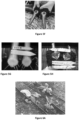
- Figures 2A-2E show exemplary plants 13 weeks post inoculation. Specifically, Figure 2A is an image of a plant with no significant symptoms of the disease (this plant was thus selected for internal Fusarium oxysporum f. sp. cubense (FOC) conformation and field trials). Figures 2B-2E are images of plants showing more than 60% external yellowing or splitting. These plants were thus discarded.
- Figure 2A is an image of a plant with no significant symptoms of the disease (this plant was thus selected for internal Fusarium oxysporum f. sp. cubense (FOC) conformation and field trials).
- Figures 2B-2E are images of plants showing more than 60% external yellowing or splitting. These plants were thus discarded.
- Figure 3 is an image of a tray containing 12 inoculated banana plants, 9 weeks post inoculation with 200ml of inoculum (concentration of 1x10" spores/ml). This Figure specifically shows that that the inoculated plants were highly susceptible to the disease. The symptoms are yellowing of older leaves and wilting.
- Figure 4 is an image of an asymptomatic plant 13 weeks post inoculation. The plants do not express visual symptoms of the disease.
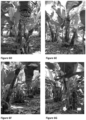
- Figure 5 A-5H are images of resistant ( Figures 5A-5D ) and susceptible ( Figure 5E- 5F, 5H) banana plants, the resistant plants obtained according to the present disclosure.
- Figures 5G and 5H shows a comparison between resistant plant ( Figure 5G ) obtained according to the present disclosure and susceptible plant ( Figure 5H ), and blackening of the vascular tissue of the stems is shown in Figure 5H but not in Figure 5G .
- FIGS 6A-6G show banana plants produced by the method described herein. As shown, no disease symptoms are evident, and the plants produce high yield and commercially viable fruit.
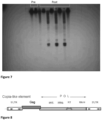
- Figure 7 is a Southern blot hybridization probed with Ban-Retro 1 probe.
- Banana genomic DNA extracted from leaves of tissue cultured plants prior to the activation of retro transposable elements (lanes 1,2 marked pre) and post activation (lanes 3-10, marked post).
- Lanes 2, 4, 6 ,8 , and 10 represent genomic DNA cut with the restriction enzyme EcoRl while lanes 1, 3 , 5, 7, and 9 represent uncut DNA.
- the DNA fragments were hybridized with labeled Ban-Retro 1 probe.
- Each lane contains lOpg of DNA. All samples shown in the figure were collected from successive cycles of tissue culture of the same explant. The banding pattern in the figure clearly reveals activation of retrotransposable elements and intensification of the elements in specific loci.
- Figure 8 provides a putative structure of Cpia like retro-transposable element comprising: 5' long terminal repeats, 3' long terminal repeats, GAG protein, genes encoding Protease (prot.). Integrase (Intg.), Reverse transcriptase (RT), RNAs H (RN H).
- Protease prot.
- Integrase Integrase
- RT Reverse transcriptase
- RN H RNAs H
Landscapes
- Life Sciences & Earth Sciences (AREA)
- Health & Medical Sciences (AREA)
- Genetics & Genomics (AREA)
- Botany (AREA)
- Developmental Biology & Embryology (AREA)
- Environmental Sciences (AREA)
- Molecular Biology (AREA)
- General Health & Medical Sciences (AREA)
- Physiology (AREA)
- Breeding Of Plants And Reproduction By Means Of Culturing (AREA)
- Measuring Or Testing Involving Enzymes Or Micro-Organisms (AREA)
Description
- The present disclosure relates to plant resistance and in particular to a method of producing plants with tolerance or resistance to Fusarium oxysporum Cubensis TR4.
- References considered to be relevant as background to the presently disclosed subject matter are listed below:
- Chai, M., et al. "Biotechnology and in vitro mutagenesis for banana improvement." Banana improvement-cellular, molecular biology and induced mutation. Enfield, NH, USA: FAO/IAEA/INIBAP, Science Publishers Inc, 2004, 59-77.
- Akimoto, Keiko, et al. "Epigenetic inheritance in rice plants. " Annals of botany 100.2 (2007): 205-217.
- Luis Pérez-Vicente et al. ""Technical Manual, Prevention and diagnostic of Fusarium Wilt (Panama disease) of banana caused by Fusarium oxysporum f sp. cubense Tropical Race 4 (TR4) " FOOD AND AGRICULTURE ORGANIZATION OF THE UNITED NATIONS, May 2014
- Dita, M. A., et al. "A molecular diagnostic for tropical race 4 of the banana fusarium -wiltpathogen. " Plant Pathology' 59.2 (2010): 348-357.
- Acknowledgement of the above references herein is not to be inferred as meaning that these are in any way relevant to the patentability of the presently disclosed subject matter.
- Global banana production is seriously threatened by the re-emergence of a Fusarium Wilt. The disease, caused by the soil-bome fungus Fusarium oxysporum f. sp. Cubense (FOC) and also known as "Panama disease", wiped out the Gros Michel banana industry in Central America and the Caribbean, in the mid-twentieth century. The effects of FOC Race 1 were overcome by a shift to resistant Cavendish cultivars, which are currently the source of 99% of banana exports. More than 80% of global banana and plantain production is thought to be based on TR4 susceptible germplasm. This strain of FOC has caused epidemics in Cavendish in the tropics different from those less-severe infections previously reported in the sub-tropics. [Luis P6rez-Vicente et al. "Technical Manual, Prevention and diagnostic of Fusarium Wilt (Panama disease) of banana caused by Fusarium oxysporum f. sp. cubense Tropical Race 4 (TR4)" FOOD AND AGRICULTURE ORGANIZATION OF THE UNITED NATIONS, May 2014]
- Fusarium oxysporum f. sp. Cubense spores can lie dormant in the soil for even 30 years. The spores infect a susceptible plant through the roots and colonize the plant's xylem vessels, blocking the flow of water and nutrients. This condition produces the symptoms called Fusarium wilt. The characteristic symptom of Fusarium wilt is blackened, discoloured and weakened vascular tissue within the stems of the plant. The discolouration varies from pale yellow in the early stages to dark red and black in the later stages. Internal symptoms initially develop in the feeder roots and rhizomes and then in the plant's pseudostem.
- Currently, they are resistant to fungicides and cannot be eliminated from the soil by any chemical treatment. Thus, hitherto, there is no viable fully effective treatment of soil or plants to control or cure Fusarium wilt in the field.
- Chai, M., et al. initiated a program for improving banana cultivars by induced mutations. Pisang Berrangan (AAA) banana plant was gamma-irradiated at various dosages. Mutants tolerant to Fusarium wilt were selected [Chai, M., et al. "Biotechnology and in vitro mutagenesis for banana improvement." Banana improvement-cellular, molecular biology and induced mutation. Enfield, NH, USA: FAO/IAEA/INIBAP, Science Publishers Inc, 2004, 59-77].
- Akimoto, Keiko, et al show that demethylation activated a disease resistance gene in rice plant [Akimoto, Keiko, et al. "Epigenetic inheritance in rice plants." Annals of botany 100.2 (2007): 205-217].
- Luis Pérez-Vicente et al. reviewed main aspects of Fusarium wilt and disclosed different protocols regarding the sampling, extraction, and isolation storage, banana inoculation, and molecular extraction and diagnostic tools [Luis P6rez-Vicente et al. ‴′Technical Manual, Prevention and diagnostic of Fusarium Wilt (Panama disease) of banana caused by Fusarium oxysporum f sp. cubense Tropical Race 4 (TR4f' FOOD AND AGRICULTURE ORGANIZATION OF THE UNITED NATIONS, May 2014],
- Dita, M. A., et al. discloses a rapid TR4 detection method that is based on PCR and can be applied in planta. [Dita, M. A,, et al. "A molecular diagnostic for tropical race 4 of the banana fusarium wilt pathogen. "Plant Pathology 59.2 (2010): 348-357]
- The present disclosure provides, in accordance with a first of its aspects, a method for producing a banana plant with tolerance to Fusarium oxysporum Cubensis TR4 the method comprising:
- (a) exposing one or more banana meristems, in one or more propagating cycles, to a medium comprising a demethylating agent to thereby provide one or more banana meristems exhibiting expression and thereby amplification of retrotransposable elements in their plant genome as visualized by Southern blot hybridization analysis, wherein said southern blot hybridization is conducted with a probe specific to retrotransposons (RT);
- (b) rooting said meristems that exhibited said amplification and regenerating therefrom one or more regenerated banana plants, at least one of said regenerated banana plants having tolerance or resistance to Fusarium oxysporum Cubensis.
- Further disclosed herein is a banana plant comprising at least one genomic marker associated with the plant's tolerance or resistance to Fusarium oxysporum Cubensis TR4, said tolerance or resistance being exhibited by a banana plant remaining asymptomatic after exposure with Fusarium oxysporum Cubensis TR4.
- In order to better understand the subject matter that is disclosed herein and to exemplify how it may be carried out in practice, embodiments will now be described, by way of non-limiting example only, with reference to the accompanying drawings, in which:
- Figure lisa block diagram describing a method producing a banana plant with tolerance or resistance to Fusarium oxysporum Cubensis TR4, in accordance with an embodiment of the present disclosure.
-
Figure 2A-2E are images of plants 13 weeks post inoculation with the fungus pathogen whereFig. 2A shows no significant symptoms of the disease, whileFigs. 2B-2E ) show typical and advanced symptoms of the disease. -
Figure 3 is an image of a tray containing 12 inoculated banana plants, 9 weeks post inoculation with 200ml of inoculum (concentration of 1x10" spores/ml). -
Figure 4 is an image of an asymptomatic plant 13 weeks post inoculation. -
Figure 5 A-5H are images of resistant (Figures 5A-5D ,5G ) and susceptible (Figure 5E-5F ,5H ) banana plants, the resistant plants obtained according to the present disclosure, and a direct comparison between the vascular tissue within the stems of a resistant plant (Fig. 5G ) and susceptible plant (Fig. 5H ). -
Figure 6A-6G are images of resistant banana plants produced in accordance with the present disclosure at different stages, withFigures 6D-6G shown banana fruit from different siblings. -
Figure 7 is a Southern blot hybridization probed with Ban-Retro 1 probe, where pre and post indicates before or after exposure to demethylation agent, respectively . -
Figure 8 is putative structure of Cpia like retro-transposable element comprising: 5' long terminal repeats, 3' long terminal repeats, GAG protein, genes encoding Protease (prot.). Integrase (Intg.), Reverse transcriptase (RT), RNAs H (RN H.). - The present invention is based on the finding that exposing banana plant meristems to a demethylating agent during 1-2 propagation cycles in the micropropagation stage of cultivation produced a plurality of mutant Cavendish banana plants, among which some exhibited resistance to Fusarium oxysporum Cubensis TR4 pathogen.
- Based on the above finding, a method of producing Cavendish banana plants with tolerance or resistance to Fusarium oxysporum Cubensis and specifically to Fusarium oxysporum Cubensis TR4 has been established.
- Fusarium oxysporum Cubensis is a typical vascular wilt disease that produces various symptoms called Fusarium wilt. The symptoms can be divided into internal symptoms and external symptoms.
- The characteristic internal symptom of Fusarium wilt is vascular discolouration, which varies from pale yellow in the early stages to dark red or almost black in later stages. Internal symptoms first develop in the feeder roots, which are the initial infection sites. The fungus spreads to the rhizome and then to the pseudostem.
- External symptoms include wilting and yellowing of older leaves around the margins. The yellow leaves may remain erect or collapse at the petiole. Eventually, all the leaves fall down and dry up. Another common symptom is the splitting of the base of the pseudostem. Other symptoms include irregular, pale margins on new leaves and the wrinkling and distortion of the leaf blade.
- Thus, in the context of the present disclosure, when referring to tolerance, it is to be understood that the plant is infected by the fungus, but remains viable and productive in terms of fruit yield. In this respect, the plant may or may not show one or more symptoms of the disease. In some embodiments, the plant does not show external symptoms of the disease, yet exhibit internal symptoms of the disease. In some other embodiments, the plant shows mild symptoms (external and/or internal) of the disease, but still remains viable.
- Further, in the context of the present disclosure, when referring to resistance, it is to be understood that the plant does not show any of the characteristic symptoms, that is remains asymptomatic, of the disease.
- The method disclosed herein is for producing one or more mutant banana plants with tolerance or resistance to Fusarium oxysporum Cubensis TR4.
- In some embodiments, the tolerance or resistance is determined by the absence of one or more symptoms of the disease. In some embodiments, the one or more symptoms include at least one of, at times a combination of leaves wilting, leaves yellowing and blackening of the plant's vascular system.
- Specifically, the method disclosed herein for producing banana plants with tolerance or resistance to Fusarium oxysporum Cubensis TR4 comprises:
- (a) exposing one or more banana meristems, in one or more propagating cycles, to a medium comprising a demethylating agent to thereby provide one or more banana meristems exhibiting expression and thereby amplification of retrotransposable elements in their plant genome as determined by Southern blot hybridization analysis, wherein said southern blot hybridization is conducted with a probe specific to retrotransposons (RT),
- (b) rooting said meristems that exhibited said amplification and regenerating therefrom one or more regenerated banana plants, at least one of said regenerated banana plants having tolerance or resistance to Fusarium oxysporum Cubensis TR4.
- The banana meristem expiants employed by the method of the present disclosure is typically, but not exclusively, a shoot apical meristem. The banana meristem explant is placed in a culture media and is allowed to propagate.
- As appreciated, the propagation is required in order to multiply the number of cells from the same single explant. The multiplication process involves a plurality of micropropagation cycles, each cycle involving replacement of the culture media. Typically, the culture media contain, at minimum, inorganic salts, nutrients, growth regulators (Auxins and Cytokinin), complex natural preparations and inert supportive materials. Each cycle does not necessarily use the same culture media as the previous one, and the type of culture media or any supplements added to a culture media will depend on the particular stage of the meristem propagation.
- Banana meristems are typically cultured by employing a plurality of propagation cycles. According to the present disclosure, at least one, at times, 1-3 propagation cycles are in a medium comprising a demethylating agent. The exposure to the medium comprising the demethylating agent is after sufficient multiplication of the meristematic cells in the culture.
- In the context of the present disclosure, when referring to a demethylating agent it is to be understood as an agent comprising one or a combination of compounds that inhibits nucleic acid methylation. In some embodiments the compound is a DNA methyl transferase inhibitor. A non-limiting list of DNA methyl transferase inhibitor include azacitidine and 5-aza-2'-deoxycytidine (decitabine).
- In some preferred embodiments, the demethylation agent comprises decitabine. In some aspects the amount of decitabine is between 0.1-50pM.
- In some preferred embodiments, the demethylation agent comprises decitabine. In some aspects the amount of decitabine is any one of 1, 10, 15, 30, or 45pM, each amount representing a different aspect of the invention.
- In some preferred embodiments, the demethylation agent comprises decitabine. In some aspects the amount of decitabine is 30pM.
- Exposure of the propagating meristems to a demethylation agent typically takes place after at least 10 propagating cycles. In some aspects, the exposure to a media supplemented with the demethylating agent is after at least 15 propagating cycles.
- The exposure to the demethylating agent may be in a single propagating cycle, but also in more than one propagating cycles. In some aspects, the exposing of the one or more meristems to the demethylating agent in for at least two, typically sequential, propagating cycles. A determination on how many cycles need to be in the presence of the demethylating agent can be based on the level of expression and thereby amplification of retrotransposable elements in their plant genome, as determined by Southern blot hybridization analysis, as further discussed below.
- In some embodiments, during the propagation stage, and typically before exposure to the demethylating agent, the meristematic tissues are propagated, at least in one propagating cycle, in a media comprising a cytokinin-like substance. Cytokinin like substances are known in the art, and non-limiting examples, include isopentenyl adenine (2iP), kinetin (KIN), 6-Benzyladenin (BA) and 6-Benzylaminopurine (BAP), 1-phenyl- 3- (l,2,3-thiadiazol-5-yl) urea (TDZ).
- In one preferred embodiment, the cytokinin-like substance is TDZ, which was found to provide the best rate of multiplication.
- The presence of TDZ in the culture media is in very low amounts, typically, in the range of 0. Ippm. This amount is sufficient to induce the desired cell division.
- The next stage in the disclosed method involves rooting of the meristems that exhibit a desired level of retro-transposable elements expression. As indicated above, the level of expression can be determined by Southern blot hybridization analysis. In one embodiment, the expression and amplification is determined to be sufficient when the level reached a plateau.
- As appreciated, retro-transposable elements (or retrotransposons, or RT) are DNA sequences that undergo transcription into RNA and are subsequently converted back to DNA sequences which are is inserted back into the genome. The increase in expression (the amplification) of the retro-transposable elements is indicative of the increase in the number of copies of the sequence inserted back into the genome.
- The expression and amplification of the retrotransposons can be determined by various DNA detection techniques, for example, by Southern blot hybridization.
- Various probes can be utilized in Southern blot hybridization analysis of retrotransposons. These include, for example, probes specific to retrotransposons, for example, Ban-1, a portion of the gene encoding the reverse transcriptase of
Copia 1 retrotransposable element. - The sequence of Ban-1 is provided below and is referred to as SEQ ID NO: 1 :

- To perform the Southern blot analysis, a sample of DNA is taken from the culture medium. To verify when the expression and reached the desired level, samples can be taken from sequential proliferation cycles, each time being subjected to Southern blot analysis and once the desired level is determined, the method can go forward to the next stage.
- Methods for propagation and rooting are known in the art, for example, as described in Cronauser S. S. et al.: Annuls of Botany 53 (1984) 321-328. Generally, the plants are placed in a rooting and regeneration medium, optionally Murashige and Skoog (MS) medium, for a time sufficient to obtain the regenerated plant. [Murashige, T. and F. Skoog. 1962. A revised medium for rapid growth and bioassays with tobacco tissue cultures. Physiol. Plant. 15: 473-497.]
- Once clusters of plants (plants originating from the same plant in the previous cycle, and typically, 5-8 plants per sibling cluster) are developed, these are separated for hardening and planting. As appreciated, hardening is a process of exposing the plants, after tissue culture, to environmental conditions that will keep them at high humidity and mild temperature so that they do not suffer from a shock once they are exposed to the "harsh" ambient conditions. As further appreciated, planting can be in the open field or in a greenhouse.
- Plants tolerant or resistant to Fusarium oxysporum Cubensis TR4 may be selected. This can be done by known selection techniques.
- Typically, the selection and screening of those regenerated plants tolerant or resistant to Fusarium oxysporum Cubensis TR4 is performed by inoculation (exposing) the plants to an inoculum containing Fusarium oxysporum Cubensis TR4 spores and visually analyzing the plants after further growth. Those plants that are identified as asymptomatic are then further used for establishing the next tolerant/resistant plant generation (tissue culturing and plant regeneration).
-
Figure 1 provides a block diagram of steps for obtaining banana plants according to one embodiment of the present disclosure. Specifically, a clone from banana meristem is used as a starting point for the in vitro mutagenesis. The clone is typically produced from a meristem of a banana of commercial interest (e.g. having high fruit yield etc). The clone is then subjected to the in vitro mutagenesis step, where the clone is exposed to a medium comprising a demethylating agent to thereby provide several siblings (siblings 1 to N) some of which exhibit expression and thereby amplification of retrotransposable elements in their plant genome (which can be determined by Southern blot hybridization analysis). At this stage, selection for resistance to TR4 strain of Fusarium oxysporum f. sp. Cubensis is conducted as described herein, followed by field evaluation that includes, inter alia, yield, as well as any other phenotypic characteristics that may be of commercial interest, as can be determined by those versed in the art. - The banana plants disclosed herein and have unique characteristics that can also be identified in a molecular level. Specifically, the banana plants comprise at least one genomic marker associated with a plant's tolerance or resistance to Fusarium oxysporum Cubensis TR4. Thus, also disclosed herein is a method of identifying banana plants with tolerance or resistance to Fusarium oxysporum Cubensis TR4, the method comprises identifying the genomic marker that is associated with the plant's tolerance or resistance.
- In the non-limiting Examples provided below, and which form part of the present disclosure, two batches were tested, in a first batch around 4500 mutant banana plants were successfully acclimatized and subsequently inoculated with the TR4 strain of Fusarium oxysporum f. sp. Cubensis. These were divided into three study groups. Out of the total number of mutated banana plants at least 153 plants (3.4%) were determined to be asymptomatic upon inoculation to the fungi's spores; and in a second batch, out of 5200 mutant plants, 262 (5.0%) were determined to be asymptomatic upon inoculation to the fungi's spores.
- Twenty clones of GAL cultivar were selected in the field for high performance each clone received an accession number. Expiants were put in culture according to a standard procedure.
- On the 7**^ cycle of propagation 0.1 ppm Thidiazuron (TDZ) was added to the medium. In cycles 20 and 21, 30pM 5-Aza-2-Deoxycytidine (a demethylation compound) was filter sterilized and added to the medium after solidification.
- In cycle 22 the plants were placed on rooting and regeneration medium.
- DNA samples were taken from cycle 0, 5, 21, 22 and analyzed by Southern blot hybridization, probed with Ban- 1.
- Samples (2.5 g) of fully expanded leaf blade tissue were harvested and ground by mortar and pestle under liquid nitrogen. The samples were homogenized in 25 ml extraction buffer containing 4 percent (w/v) CTAB, 10 mM Tris-HCl pH 8, 1.4 M NaCl and 20 mM EDTA. The extracts were placed at 65 degrees centigrade for 30 min. After cooling to room temperature an equal volume of chloroformdsoamyl alcohol (20:1) was added and after 15 min. of incubation at room temperature, the mixture was centrifuged at 5000 rpm for 5 min. The supernatant was filtered through 5 layers of cheesecloth and an equal volume of ice cold iso-propanol was added to the filtrate. Following addition of NaCl to a final concentration of 0.1 M the samples were kept at -20 degrees centigrade for one hour and subsequently centrifuged for 15 min. at 11,000 rpm at 40 degrees centigrade The resulting pellet was resuspended in 3 ml of 70 percent ethyl alcohol, the mixture was centrifuged as above, and the resulting pellet was resuspended in 0.5 ml distilled water. Aliquots of ten micro g DNA were digested with EcoRI and separated on a 1.2 percent agarose gel, stained with ethidium bromide and blotted onto a Nytran membrane. Transfer of DNA and hybridization was performed according to [Sambrook J. et al.: Molecular Cloning, A laboratory Manual. Cold Spring Harbor N.Y., Coldspring Harbor Laboratory Press].
- After 24 cycles, the cluster of plants (plants originating from the same plant in the previous cycle (about 5-8 plants per sibling cluster) were divided into two batches. One batch was used for evaluation in a commercial plantation in Israel and the second batch was sent to be screened for resistance at the University of Wageningen (Holland).
- The first batch of plants were planted in the field in Israel and were later evaluated for agronomic characteristics including plant height at flowering of the second cycle of fruit, number of fingers on the bunch, bunch weight finger length etc.
- Detailed botanical description of the plant, which includes its general appearance, pseudostem and suckers, petiole, midrib, leaf, inflorescence and male bud, flower bract, male flower, and fruit is disclosed below. This description is based on observations of specimens grown in the Western Galilee, Israel, 20 months after planting. The plantation is at 30 m above sea level, approximately 1200 m East of the Mediterranean sea, adjacent to the town of Shiomi. The description is based on an observation of approximately 50 plants grown in a commercial plantation. Data was collected in 2012/2013. The descriptors presented herein are in accordance with and include all of the 117 international standards found in "Descriptors for Banana (Musa spp.)" elaborated by CIRAD/INIBAP/IPGRI. The color terminology is in accordance with The U.K.'s Royal Horticultural Society's Colour Chart, 2001. Ploidy: Triploid(AAA). Leaf habit: Drooping.
- The second in vitro plants were hardened in Holland in a greenhouse according to standard hardening protocol. After 6 weeks the plants were transferred to 1000 cc pots containing an inert medium of peat moss based medium. Six weeks later the plants were inoculated according to a procedure used routinely for selection of resistance at the UoW Holland. Approximately 9,000 clones (1-3 plants per clone) were inoculated with 200 mL of inoculum in a concentration of lx lOôspores mL'f In addition to the mutated plants the experiment also included 100 control plants that were inoculated and a plant from each clone was kept not inoculated. The plants were all grown in the pots for 15 weeks. The plants were examined for symptoms 13-15 weeks post inoculation. The plants were visually analyzed (yellowing and wilting of older leaves and blackening of the internal vascular system after cutting the corm 4-5 cm above ground. One hundred and fifty three clones were found Asymptomatic from the first batch (4100 clones). The asymptomatic clones were placed in tissue culture and re-propagated to a quantity of 100 plants per clone for field trial.
-
Figure 1 provides a block diagram of the method of producing the banana plants as described above. -
Figures 2A-2E show exemplary plants 13 weeks post inoculation. Specifically,Figure 2A is an image of a plant with no significant symptoms of the disease (this plant was thus selected for internal Fusarium oxysporum f. sp. cubense (FOC) conformation and field trials).Figures 2B-2E are images of plants showing more than 60% external yellowing or splitting. These plants were thus discarded. -
Figure 3 is an image of a tray containing 12 inoculated banana plants, 9 weeks post inoculation with 200ml of inoculum (concentration of 1x10" spores/ml). This Figure specifically shows that that the inoculated plants were highly susceptible to the disease. The symptoms are yellowing of older leaves and wilting. -
Figure 4 is an image of an asymptomatic plant 13 weeks post inoculation. The plants do not express visual symptoms of the disease. -
Figure 5 A-5H are images of resistant (Figures 5A-5D ) and susceptible (Figure 5E- 5F, 5H) banana plants, the resistant plants obtained according to the present disclosure.Figures 5G and 5H shows a comparison between resistant plant (Figure 5G ) obtained according to the present disclosure and susceptible plant (Figure 5H ), and blackening of the vascular tissue of the stems is shown inFigure 5H but not inFigure 5G . -
Figures 6A-6G show banana plants produced by the method described herein. As shown, no disease symptoms are evident, and the plants produce high yield and commercially viable fruit. -
Figure 7 is a Southern blot hybridization probed with Ban-Retro 1 probe. Banana genomic DNA extracted from leaves of tissue cultured plants prior to the activation of retro transposable elements (lanes Lanes 2, 4, 6 ,8 , and 10 represent genomic DNA cut with the restriction enzyme EcoRl whilelanes Retro 1 probe. Each lane contains lOpg of DNA. All samples shown in the figure were collected from successive cycles of tissue culture of the same explant. The banding pattern in the figure clearly reveals activation of retrotransposable elements and intensification of the elements in specific loci. - Finally,
Figure 8 provides a putative structure of Cpia like retro-transposable element comprising: 5' long terminal repeats, 3' long terminal repeats, GAG protein, genes encoding Protease (prot.). Integrase (Intg.), Reverse transcriptase (RT), RNAs H (RN H).
Claims (10)
- A method for producing a banana plant with tolerance or resistance to Fusarium oxysporum Cubensis TR4 the method comprising:(a) exposing one or more banana meristems, in one or more propagating cycles, to a medium comprising a demethylating agent to thereby provide one or more banana meristems exhibiting expression and thereby amplification of retrotransposable elements in their plant genome as determined by Southern blot hybridization analysis wherein said southern blot hybridization is conducted with a probe specific to retrotransposons (RT),(b) rooting said meristems that exhibited said amplification and regenerating therefrom one or more regenerated banana plants, at least one of said regenerated banana plants having tolerance or resistance to Fusarium oxysporum Cubensis TR4.
- The method of claim 1, wherein said demethylating agent is a DNA-methyltransferase inhibitor.
- The method of claim 1 or 2, wherein said demethylating agent is selected from the group consisting of azacitidine and decitabine.
- The method of claim 1, wherein said demethylating agent is decitabine.
- The method of any one of claims 1 to 4, comprising exposing said one or more meristems to the demethylating agent in two or more propagating cycles.
- The method of claim 4 or 5, wherein said exposing to said demethylating agent is until said amplification reaches a plateau.
- The method of claim 1, wherein said probe is Ban-1.
- The method of any one of claims 1 to 7, wherein said one or more meristems are subjected to one or more cycles of micropropagation with 1-phenyl-3- (1,2,3-thiadiazol-5-yl) urea (TDZ) prior to exposing the same to a demethylating agent.
- The method of any one of claims 1 to 8, wherein at least one of said regenerated banana plants is tolerant or resistant to Fusarium oxysporum Cubensis TR4.
- The method of any one of claims 1 to 9, wherein said tolerance or resistance is determined by the absence of one or more of leaves wilting, leaves yellowing, blackening of the plant's vascular system.
Applications Claiming Priority (2)
| Application Number | Priority Date | Filing Date | Title |
|---|---|---|---|
| US201762558463P | 2017-09-14 | 2017-09-14 | |
| PCT/IL2018/051029 WO2019053720A1 (en) | 2017-09-14 | 2018-09-13 | A method for producing banana plants with tolerance to fusarium oxysporum cubensis tr4 |
Publications (3)
| Publication Number | Publication Date |
|---|---|
| EP3681271A1 EP3681271A1 (en) | 2020-07-22 |
| EP3681271C0 EP3681271C0 (en) | 2024-07-31 |
| EP3681271B1 true EP3681271B1 (en) | 2024-07-31 |
Family
ID=63840893
Family Applications (1)
| Application Number | Title | Priority Date | Filing Date |
|---|---|---|---|
| EP18786052.3A Active EP3681271B1 (en) | 2017-09-14 | 2018-09-13 | A method for producing banana plants with tolerance to fusarium oxysporum cubensis tr4 |
Country Status (11)
| Country | Link |
|---|---|
| US (2) | US12082544B2 (en) |
| EP (1) | EP3681271B1 (en) |
| JP (1) | JP7282396B2 (en) |
| AU (1) | AU2018333148B2 (en) |
| CO (1) | CO2020004456A2 (en) |
| CR (1) | CR20200156A (en) |
| EC (1) | ECSP20020990A (en) |
| ES (1) | ES2993136T3 (en) |
| IL (2) | IL273082B2 (en) |
| PH (1) | PH12020500503A1 (en) |
| WO (1) | WO2019053720A1 (en) |
Families Citing this family (7)
| Publication number | Priority date | Publication date | Assignee | Title |
|---|---|---|---|---|
| EP3681271B1 (en) * | 2017-09-14 | 2024-07-31 | Rahan Meristem (1998) Ltd | A method for producing banana plants with tolerance to fusarium oxysporum cubensis tr4 |
| CN110804673A (en) * | 2019-11-12 | 2020-02-18 | 华侨大学 | Primer composition for simultaneously detecting arbuscular mycorrhizal fungi and banana vascular wilt in bananas and qPCR method |
| CN112293248B (en) * | 2020-11-30 | 2021-12-21 | 中国热带农业科学院海口实验站 | Chemical mutagenesis method for inducing and increasing mutation range of banana |
| CN112753572A (en) * | 2021-01-04 | 2021-05-07 | 华南农业大学 | Mutation breeding method for resisting blight of bananas |
| CN115960186B (en) * | 2022-12-30 | 2026-03-17 | 中国热带农业科学院环境与植物保护研究所 | Application of protein FocVPS41 in regulating the pathogenicity of Fusarium wilt in bananas |
| CN116287374B (en) * | 2023-01-04 | 2025-07-29 | 华南农业大学 | Rapid detection method and application of No. 4 physiological race of banana wilt tropical disease |
| CN116606746B (en) * | 2023-05-19 | 2023-11-24 | 云南省农业科学院农业环境资源研究所 | Penicillium and its applications |
Family Cites Families (5)
| Publication number | Priority date | Publication date | Assignee | Title |
|---|---|---|---|---|
| US20060143740A1 (en) | 2004-12-23 | 2006-06-29 | Eliahu Khayat | Process for selecting banana clones and banana clones obtained thereby |
| JP4613273B2 (en) | 2007-02-06 | 2011-01-12 | 大学共同利用機関法人自然科学研究機構 | Rice transposon gene |
| CN104335902A (en) | 2014-11-17 | 2015-02-11 | 琼州学院 | Method for improving blight resistance of banana plants by virtue of banana stem tip slices |
| WO2017093317A1 (en) | 2015-12-02 | 2017-06-08 | Universität Basel | Mobilisation of transposable elements to enhance genetic and epigenetic variability in a population |
| EP3681271B1 (en) * | 2017-09-14 | 2024-07-31 | Rahan Meristem (1998) Ltd | A method for producing banana plants with tolerance to fusarium oxysporum cubensis tr4 |
-
2018
- 2018-09-13 EP EP18786052.3A patent/EP3681271B1/en active Active
- 2018-09-13 US US16/647,268 patent/US12082544B2/en active Active
- 2018-09-13 WO PCT/IL2018/051029 patent/WO2019053720A1/en not_active Ceased
- 2018-09-13 CR CR20200156A patent/CR20200156A/en unknown
- 2018-09-13 ES ES18786052T patent/ES2993136T3/en active Active
- 2018-09-13 IL IL273082A patent/IL273082B2/en unknown
- 2018-09-13 IL IL316399A patent/IL316399A/en unknown
- 2018-09-13 JP JP2020515690A patent/JP7282396B2/en active Active
- 2018-09-13 AU AU2018333148A patent/AU2018333148B2/en active Active
-
2020
- 2020-03-12 PH PH12020500503A patent/PH12020500503A1/en unknown
- 2020-04-01 EC ECSENADI202020990A patent/ECSP20020990A/en unknown
- 2020-04-14 CO CONC2020/0004456A patent/CO2020004456A2/en unknown
-
2024
- 2024-08-06 US US18/795,645 patent/US20240389529A1/en active Pending
Non-Patent Citations (1)
| Title |
|---|
| PATRICK T GRIFFIN ET AL: "A Comparative Analysis of 5-Azacytidine- and Zebularine-Induced DNA Demethylation", G3 (BETHESDA, MD.), 8 September 2016 (2016-09-08), United States, pages 2773 - 2780, XP055521851, Retrieved from the Internet <URL:https://www.ncbi.nlm.nih.gov/pmc/articles/PMC5015934/pdf/2773.pdf> DOI: 10.1534/g3.116.030262 * |
Also Published As
| Publication number | Publication date |
|---|---|
| AU2018333148A1 (en) | 2020-03-26 |
| PH12020500503A1 (en) | 2021-05-17 |
| JP7282396B2 (en) | 2023-05-29 |
| EP3681271C0 (en) | 2024-07-31 |
| CR20200156A (en) | 2020-09-16 |
| IL316399A (en) | 2024-12-01 |
| US20200275624A1 (en) | 2020-09-03 |
| IL273082A (en) | 2020-04-30 |
| ES2993136T3 (en) | 2024-12-23 |
| WO2019053720A1 (en) | 2019-03-21 |
| JP2020534824A (en) | 2020-12-03 |
| ECSP20020990A (en) | 2020-06-30 |
| US12082544B2 (en) | 2024-09-10 |
| IL273082B1 (en) | 2024-11-01 |
| US20240389529A1 (en) | 2024-11-28 |
| IL273082B2 (en) | 2025-03-01 |
| CO2020004456A2 (en) | 2020-05-29 |
| EP3681271A1 (en) | 2020-07-22 |
| AU2018333148B2 (en) | 2024-12-12 |
Similar Documents
| Publication | Publication Date | Title |
|---|---|---|
| US20240389529A1 (en) | Method for producing banana plants with tolerance to fusarium oxysporum cubensis tr4 | |
| US11864511B2 (en) | Resistance to ToLCNDV in melons | |
| Pereira-Lorenzo et al. | Interspecific hybridization of chestnut | |
| CN111356361B (en) | CGMMV-resistant Citrullus plants | |
| Crouch et al. | Perspectives on the application of biotechnology to assist the genetic enhancement of plantain and banana (Musa spp.) | |
| CN105794631A (en) | Building method of durum wheat-elytrigia elongatum 7E scab-resistant alien-disomic line | |
| Merkle et al. | Castanea spp. chestnut. | |
| Sudha et al. | Phenotypic and molecular characterization of potato germplasm for potato cyst nematode resistance | |
| Skirvin et al. | Rubus spp. cane fruit. | |
| Sridhar et al. | Occurrence of Aulacorthum solani on potato: a vector of Potato virus Yo and Potato leafroll virus in India | |
| Graebner | Breeding qualitative and quantitative traits for potatoes in the Columbia Basin | |
| US20240090420A1 (en) | Qtls for mclcv resistance in c. melo | |
| Drew et al. | Development of PRSV-P resistant Carica papaya genotypes by introgression of genes from wild Vasconcella species | |
| Wiedemann et al. | Intergeneric hybrids between species Of Hydrangea and Dichroa-their germination in vivo and in vitro and molecular verification by RAPD analysis | |
| Garg et al. | Systematics of the genus Cucumis: A review of literature | |
| Downey | Genetic diversity of Prunus serotina and the evaluation of other wild species for breeding sour cherry resistance to cherry leaf spot | |
| Jatav | Genetic variability for resistance against root lesion nematode and dry root rot fungus in chickpea | |
| WO2025021893A1 (en) | Resistance to cysdv in melons | |
| Asiedu | Gemma Amau, K. Abraham, MN Sheela, Hana Chair, Alieu Sartie, and Robert Asiedu | |
| CN118871457A (en) | Modified Tom2a gene involved in tobacco mosaic virus resistance | |
| Javornik | Molecular genetic hop research in Slovenia | |
| Padron | Avocado sunblotch viroid (ASBVd) in cell and tissue culture of avocado (Persea americana Mill.) | |
| NEGI | 7/UlSis | |
| van Niekerk | Establishment of tissue culture plants for the evaluation of defence-related genes in Persea americana Mill | |
| Stockenhuber | Phylogenetic relationship of the genus Scorzoneroides (Compositae) inferred from plastid and low-copy nuclear markers, and karyological data |
Legal Events
| Date | Code | Title | Description |
|---|---|---|---|
| STAA | Information on the status of an ep patent application or granted ep patent |
Free format text: STATUS: UNKNOWN |
|
| STAA | Information on the status of an ep patent application or granted ep patent |
Free format text: STATUS: THE INTERNATIONAL PUBLICATION HAS BEEN MADE |
|
| PUAI | Public reference made under article 153(3) epc to a published international application that has entered the european phase |
Free format text: ORIGINAL CODE: 0009012 |
|
| STAA | Information on the status of an ep patent application or granted ep patent |
Free format text: STATUS: REQUEST FOR EXAMINATION WAS MADE |
|
| 17P | Request for examination filed |
Effective date: 20200406 |
|
| AK | Designated contracting states |
Kind code of ref document: A1 Designated state(s): AL AT BE BG CH CY CZ DE DK EE ES FI FR GB GR HR HU IE IS IT LI LT LU LV MC MK MT NL NO PL PT RO RS SE SI SK SM TR |
|
| AX | Request for extension of the european patent |
Extension state: BA ME |
|
| DAV | Request for validation of the european patent (deleted) | ||
| DAX | Request for extension of the european patent (deleted) | ||
| STAA | Information on the status of an ep patent application or granted ep patent |
Free format text: STATUS: EXAMINATION IS IN PROGRESS |
|
| 17Q | First examination report despatched |
Effective date: 20210218 |
|
| GRAP | Despatch of communication of intention to grant a patent |
Free format text: ORIGINAL CODE: EPIDOSNIGR1 |
|
| STAA | Information on the status of an ep patent application or granted ep patent |
Free format text: STATUS: GRANT OF PATENT IS INTENDED |
|
| INTG | Intention to grant announced |
Effective date: 20240226 |
|
| GRAS | Grant fee paid |
Free format text: ORIGINAL CODE: EPIDOSNIGR3 |
|
| GRAA | (expected) grant |
Free format text: ORIGINAL CODE: 0009210 |
|
| STAA | Information on the status of an ep patent application or granted ep patent |
Free format text: STATUS: THE PATENT HAS BEEN GRANTED |
|
| AK | Designated contracting states |
Kind code of ref document: B1 Designated state(s): AL AT BE BG CH CY CZ DE DK EE ES FI FR GB GR HR HU IE IS IT LI LT LU LV MC MK MT NL NO PL PT RO RS SE SI SK SM TR |
|
| REG | Reference to a national code |
Ref country code: CH Ref legal event code: EP Ref country code: GB Ref legal event code: FG4D |
|
| REG | Reference to a national code |
Ref country code: DE Ref legal event code: R096 Ref document number: 602018072466 Country of ref document: DE |
|
| REG | Reference to a national code |
Ref country code: IE Ref legal event code: FG4D |
|
| U01 | Request for unitary effect filed |
Effective date: 20240826 |
|
| U07 | Unitary effect registered |
Designated state(s): AT BE BG DE DK EE FI FR IT LT LU LV MT NL PT RO SE SI Effective date: 20240904 |
|
| U20 | Renewal fee for the european patent with unitary effect paid |
Year of fee payment: 7 Effective date: 20240920 |
|
| REG | Reference to a national code |
Ref country code: ES Ref legal event code: FG2A Ref document number: 2993136 Country of ref document: ES Kind code of ref document: T3 Effective date: 20241223 |
|
| PG25 | Lapsed in a contracting state [announced via postgrant information from national office to epo] |
Ref country code: NO Free format text: LAPSE BECAUSE OF FAILURE TO SUBMIT A TRANSLATION OF THE DESCRIPTION OR TO PAY THE FEE WITHIN THE PRESCRIBED TIME-LIMIT Effective date: 20241031 |
|
| PG25 | Lapsed in a contracting state [announced via postgrant information from national office to epo] |
Ref country code: GR Free format text: LAPSE BECAUSE OF FAILURE TO SUBMIT A TRANSLATION OF THE DESCRIPTION OR TO PAY THE FEE WITHIN THE PRESCRIBED TIME-LIMIT Effective date: 20241101 Ref country code: PL Free format text: LAPSE BECAUSE OF FAILURE TO SUBMIT A TRANSLATION OF THE DESCRIPTION OR TO PAY THE FEE WITHIN THE PRESCRIBED TIME-LIMIT Effective date: 20240731 |
|
| PG25 | Lapsed in a contracting state [announced via postgrant information from national office to epo] |
Ref country code: IS Free format text: LAPSE BECAUSE OF FAILURE TO SUBMIT A TRANSLATION OF THE DESCRIPTION OR TO PAY THE FEE WITHIN THE PRESCRIBED TIME-LIMIT Effective date: 20241130 |
|
| PG25 | Lapsed in a contracting state [announced via postgrant information from national office to epo] |
Ref country code: HR Free format text: LAPSE BECAUSE OF FAILURE TO SUBMIT A TRANSLATION OF THE DESCRIPTION OR TO PAY THE FEE WITHIN THE PRESCRIBED TIME-LIMIT Effective date: 20240731 |
|
| PG25 | Lapsed in a contracting state [announced via postgrant information from national office to epo] |
Ref country code: RS Free format text: LAPSE BECAUSE OF FAILURE TO SUBMIT A TRANSLATION OF THE DESCRIPTION OR TO PAY THE FEE WITHIN THE PRESCRIBED TIME-LIMIT Effective date: 20241031 |
|
| PG25 | Lapsed in a contracting state [announced via postgrant information from national office to epo] |
Ref country code: RS Free format text: LAPSE BECAUSE OF FAILURE TO SUBMIT A TRANSLATION OF THE DESCRIPTION OR TO PAY THE FEE WITHIN THE PRESCRIBED TIME-LIMIT Effective date: 20241031 Ref country code: PL Free format text: LAPSE BECAUSE OF FAILURE TO SUBMIT A TRANSLATION OF THE DESCRIPTION OR TO PAY THE FEE WITHIN THE PRESCRIBED TIME-LIMIT Effective date: 20240731 Ref country code: NO Free format text: LAPSE BECAUSE OF FAILURE TO SUBMIT A TRANSLATION OF THE DESCRIPTION OR TO PAY THE FEE WITHIN THE PRESCRIBED TIME-LIMIT Effective date: 20241031 Ref country code: IS Free format text: LAPSE BECAUSE OF FAILURE TO SUBMIT A TRANSLATION OF THE DESCRIPTION OR TO PAY THE FEE WITHIN THE PRESCRIBED TIME-LIMIT Effective date: 20241130 Ref country code: HR Free format text: LAPSE BECAUSE OF FAILURE TO SUBMIT A TRANSLATION OF THE DESCRIPTION OR TO PAY THE FEE WITHIN THE PRESCRIBED TIME-LIMIT Effective date: 20240731 Ref country code: GR Free format text: LAPSE BECAUSE OF FAILURE TO SUBMIT A TRANSLATION OF THE DESCRIPTION OR TO PAY THE FEE WITHIN THE PRESCRIBED TIME-LIMIT Effective date: 20241101 |
|
| PG25 | Lapsed in a contracting state [announced via postgrant information from national office to epo] |
Ref country code: SM Free format text: LAPSE BECAUSE OF FAILURE TO SUBMIT A TRANSLATION OF THE DESCRIPTION OR TO PAY THE FEE WITHIN THE PRESCRIBED TIME-LIMIT Effective date: 20240731 |
|
| PG25 | Lapsed in a contracting state [announced via postgrant information from national office to epo] |
Ref country code: MC Free format text: LAPSE BECAUSE OF FAILURE TO SUBMIT A TRANSLATION OF THE DESCRIPTION OR TO PAY THE FEE WITHIN THE PRESCRIBED TIME-LIMIT Effective date: 20240731 |
|
| PG25 | Lapsed in a contracting state [announced via postgrant information from national office to epo] |
Ref country code: CZ Free format text: LAPSE BECAUSE OF FAILURE TO SUBMIT A TRANSLATION OF THE DESCRIPTION OR TO PAY THE FEE WITHIN THE PRESCRIBED TIME-LIMIT Effective date: 20240731 |
|
| PG25 | Lapsed in a contracting state [announced via postgrant information from national office to epo] |
Ref country code: SK Free format text: LAPSE BECAUSE OF FAILURE TO SUBMIT A TRANSLATION OF THE DESCRIPTION OR TO PAY THE FEE WITHIN THE PRESCRIBED TIME-LIMIT Effective date: 20240731 |
|
| REG | Reference to a national code |
Ref country code: CH Ref legal event code: PL |
|
| PLBE | No opposition filed within time limit |
Free format text: ORIGINAL CODE: 0009261 |
|
| STAA | Information on the status of an ep patent application or granted ep patent |
Free format text: STATUS: NO OPPOSITION FILED WITHIN TIME LIMIT |
|
| 26N | No opposition filed |
Effective date: 20250501 |
|
| PG25 | Lapsed in a contracting state [announced via postgrant information from national office to epo] |
Ref country code: CH Free format text: LAPSE BECAUSE OF NON-PAYMENT OF DUE FEES Effective date: 20240930 |
|
| PG25 | Lapsed in a contracting state [announced via postgrant information from national office to epo] |
Ref country code: IE Free format text: LAPSE BECAUSE OF NON-PAYMENT OF DUE FEES Effective date: 20240913 |
|
| U20 | Renewal fee for the european patent with unitary effect paid |
Year of fee payment: 8 Effective date: 20250909 |
|
| PGFP | Annual fee paid to national office [announced via postgrant information from national office to epo] |
Ref country code: GB Payment date: 20250904 Year of fee payment: 8 |
|
| PGFP | Annual fee paid to national office [announced via postgrant information from national office to epo] |
Ref country code: CY Payment date: 20250908 Year of fee payment: 8 |
|
| PGFP | Annual fee paid to national office [announced via postgrant information from national office to epo] |
Ref country code: ES Payment date: 20251015 Year of fee payment: 8 |
|
| PG25 | Lapsed in a contracting state [announced via postgrant information from national office to epo] |
Ref country code: HU Free format text: LAPSE BECAUSE OF FAILURE TO SUBMIT A TRANSLATION OF THE DESCRIPTION OR TO PAY THE FEE WITHIN THE PRESCRIBED TIME-LIMIT; INVALID AB INITIO Effective date: 20180913 |