EP3679501B1 - Umgebungsbedingung überprüfung und benutzerauthentifizierung in einem gesicherten coprozessor - Google Patents
Umgebungsbedingung überprüfung und benutzerauthentifizierung in einem gesicherten coprozessor Download PDFInfo
- Publication number
- EP3679501B1 EP3679501B1 EP18773022.1A EP18773022A EP3679501B1 EP 3679501 B1 EP3679501 B1 EP 3679501B1 EP 18773022 A EP18773022 A EP 18773022A EP 3679501 B1 EP3679501 B1 EP 3679501B1
- Authority
- EP
- European Patent Office
- Prior art keywords
- security
- processor device
- component
- signal
- subsystem
- Prior art date
- Legal status (The legal status is an assumption and is not a legal conclusion. Google has not performed a legal analysis and makes no representation as to the accuracy of the status listed.)
- Active
Links
Images




Classifications
-
- G—PHYSICS
- G06—COMPUTING OR CALCULATING; COUNTING
- G06F—ELECTRIC DIGITAL DATA PROCESSING
- G06F21/00—Security arrangements for protecting computers, components thereof, programs or data against unauthorised activity
- G06F21/70—Protecting specific internal or peripheral components, in which the protection of a component leads to protection of the entire computer
-
- G—PHYSICS
- G06—COMPUTING OR CALCULATING; COUNTING
- G06F—ELECTRIC DIGITAL DATA PROCESSING
- G06F21/00—Security arrangements for protecting computers, components thereof, programs or data against unauthorised activity
- G06F21/30—Authentication, i.e. establishing the identity or authorisation of security principals
- G06F21/31—User authentication
-
- G—PHYSICS
- G06—COMPUTING OR CALCULATING; COUNTING
- G06F—ELECTRIC DIGITAL DATA PROCESSING
- G06F21/00—Security arrangements for protecting computers, components thereof, programs or data against unauthorised activity
- G06F21/50—Monitoring users, programs or devices to maintain the integrity of platforms, e.g. of processors, firmware or operating systems
- G06F21/55—Detecting local intrusion or implementing counter-measures
- G06F21/552—Detecting local intrusion or implementing counter-measures involving long-term monitoring or reporting
-
- G—PHYSICS
- G06—COMPUTING OR CALCULATING; COUNTING
- G06F—ELECTRIC DIGITAL DATA PROCESSING
- G06F21/00—Security arrangements for protecting computers, components thereof, programs or data against unauthorised activity
- G06F21/70—Protecting specific internal or peripheral components, in which the protection of a component leads to protection of the entire computer
- G06F21/81—Protecting specific internal or peripheral components, in which the protection of a component leads to protection of the entire computer by operating on the power supply, e.g. enabling or disabling power-on, sleep or resume operations
-
- G—PHYSICS
- G06—COMPUTING OR CALCULATING; COUNTING
- G06F—ELECTRIC DIGITAL DATA PROCESSING
- G06F21/00—Security arrangements for protecting computers, components thereof, programs or data against unauthorised activity
- G06F21/70—Protecting specific internal or peripheral components, in which the protection of a component leads to protection of the entire computer
- G06F21/82—Protecting input, output or interconnection devices
- G06F21/83—Protecting input, output or interconnection devices input devices, e.g. keyboards, mice or controllers thereof
-
- G—PHYSICS
- G06—COMPUTING OR CALCULATING; COUNTING
- G06F—ELECTRIC DIGITAL DATA PROCESSING
- G06F21/00—Security arrangements for protecting computers, components thereof, programs or data against unauthorised activity
- G06F21/70—Protecting specific internal or peripheral components, in which the protection of a component leads to protection of the entire computer
- G06F21/82—Protecting input, output or interconnection devices
- G06F21/84—Protecting input, output or interconnection devices output devices, e.g. displays or monitors
-
- H—ELECTRICITY
- H04—ELECTRIC COMMUNICATION TECHNIQUE
- H04L—TRANSMISSION OF DIGITAL INFORMATION, e.g. TELEGRAPHIC COMMUNICATION
- H04L63/00—Network architectures or network communication protocols for network security
- H04L63/08—Network architectures or network communication protocols for network security for authentication of entities
-
- H—ELECTRICITY
- H04—ELECTRIC COMMUNICATION TECHNIQUE
- H04L—TRANSMISSION OF DIGITAL INFORMATION, e.g. TELEGRAPHIC COMMUNICATION
- H04L63/00—Network architectures or network communication protocols for network security
- H04L63/10—Network architectures or network communication protocols for network security for controlling access to devices or network resources
-
- H—ELECTRICITY
- H04—ELECTRIC COMMUNICATION TECHNIQUE
- H04L—TRANSMISSION OF DIGITAL INFORMATION, e.g. TELEGRAPHIC COMMUNICATION
- H04L63/00—Network architectures or network communication protocols for network security
- H04L63/18—Network architectures or network communication protocols for network security using different networks or channels, e.g. using out of band channels
-
- H—ELECTRICITY
- H04—ELECTRIC COMMUNICATION TECHNIQUE
- H04L—TRANSMISSION OF DIGITAL INFORMATION, e.g. TELEGRAPHIC COMMUNICATION
- H04L9/00—Cryptographic mechanisms or cryptographic arrangements for secret or secure communications; Network security protocols
- H04L9/32—Cryptographic mechanisms or cryptographic arrangements for secret or secure communications; Network security protocols including means for verifying the identity or authority of a user of the system or for message authentication, e.g. authorization, entity authentication, data integrity or data verification, non-repudiation, key authentication or verification of credentials
- H04L9/3226—Cryptographic mechanisms or cryptographic arrangements for secret or secure communications; Network security protocols including means for verifying the identity or authority of a user of the system or for message authentication, e.g. authorization, entity authentication, data integrity or data verification, non-repudiation, key authentication or verification of credentials using a predetermined code, e.g. password, passphrase or PIN
-
- H—ELECTRICITY
- H04—ELECTRIC COMMUNICATION TECHNIQUE
- H04W—WIRELESS COMMUNICATION NETWORKS
- H04W12/00—Security arrangements; Authentication; Protecting privacy or anonymity
- H04W12/06—Authentication
-
- G—PHYSICS
- G06—COMPUTING OR CALCULATING; COUNTING
- G06F—ELECTRIC DIGITAL DATA PROCESSING
- G06F2221/00—Indexing scheme relating to security arrangements for protecting computers, components thereof, programs or data against unauthorised activity
- G06F2221/21—Indexing scheme relating to G06F21/00 and subgroups addressing additional information or applications relating to security arrangements for protecting computers, components thereof, programs or data against unauthorised activity
- G06F2221/2111—Location-sensitive, e.g. geographical location, GPS
-
- H—ELECTRICITY
- H04—ELECTRIC COMMUNICATION TECHNIQUE
- H04W—WIRELESS COMMUNICATION NETWORKS
- H04W12/00—Security arrangements; Authentication; Protecting privacy or anonymity
- H04W12/60—Context-dependent security
- H04W12/65—Environment-dependent, e.g. using captured environmental data
Definitions
- Today's mobile device user expects the mobile device to not only provide reliable communication, but also to offer security and protection against threats to use of the mobile device, data stored on the mobile device, and operations performed by the mobile device.
- the threats are many: an unauthorized user, a lost or stolen mobile device, an unintended use of the mobile device (e.g., eavesdropping through a microphone on the mobile device), malware or spyware that may compromise data or applications on the mobile device, or communication from the mobile device to unintended recipients.
- Each of these may compromise security of the mobile device, a user of the mobile device, or data stored on the mobile device.
- TPM/SE Trusted Platform Module
- SE discrete Secure Element
- the TPM/SE component can, for example, receive signals and, based on the signals, perform security operations directed to authentication services, such as authenticating passwords, encryption keys, or certificates in order to protect data stored on the mobile device.
- the use of the TPM/SE component has limitations with regards to directly operating or controlling the mobile device. If, for example, the TPM/SE component itself is consumed performing an authentication security operation or if the TPM/SE component itself is compromised, a security operation direct to enabling or curtailing mobile device functionality may not be executable.
- an apparatus comprises a central security processor device embodied in a Central Security Chip (CSC) component, a delegate security processor device embodied in a System on Chip (SoC) component, and a user input subsystem.
- the central security processor device is configured to receive an input signal from a user via the user input subsystem, determine a security condition, and, in response to determining the security condition, transmit a security condition signal to the delegate security processor device.
- the delegate security processor device is configured to receive the signal and, in response to receiving the signal, cause the SoC component to perform a security operation.
- an apparatus comprises a central security processor device embodied in a CSC component, a delegate security processor device embodied in a SoC component, and a sensor subsystem.
- the central security processor device is configured to receive a sensed signal from the sensor subsystem, determine a security condition, and, in response to determining the security condition, transmit a security condition signal to the delegate security processor device.
- the delegate security processor device is configured to receive the signal and, in response to receiving the signal, cause the SoC component to perform a security operation.
- a delegate processor device embodied in a SoC component receives a security condition signal.
- the security condition signal is from a central security processor embodied in a CSC component that is separate and disparate from the SoC component and sent by the central security processor device in response to the central security processor device receiving a sensed or input signal.
- the delegate security processor device then causes, in response to receiving the security condition signal, the SoC component to perform a security operation.
- SoC System on Chip
- IC integrated circuits
- TPM Trusted Platform Module
- SE discrete Secure Element
- Such components can, for example, receive signals and, based on the signals, perform authentication services such as authenticating passwords, encryption keys, or certificates in order to protect data stored on the mobile device.
- the TPM/SE component For the mobile device to pass a security assurance certification such as an Evaluation Assurance Level (EAL) category ranking, it is often necessary for the TPM/SE component to be separate and disparate from other components of the mobile device, including the SoC component.
- EAL Evaluation Assurance Level
- IC circuitry that is included as part of the TPM/SE component and is necessary for the TPM/SE component to function particularly IC circuitry centric to a TPM/SE specific memory device, may not be capable of being manufactured as part of the SoC component due to limitations of the SoC manufacturing technology; this further necessitates that the TPM/SE component with the TPM/SE specific memory device be separate and disparate from the SoC component.
- the TPM/SE component is passive with regards to controlling operation of the mobile device. If a security condition develops, the TPM/SE component cannot directly enable or disable subsystems of the mobile device that might be used to perform, for example, user input functions, sensing functions, power management functions, memory management functions, or communication system functions. In such an instance, architecture utilizing the SoC to maintain direct control over the enabling or disabling of subsystems of the mobile device is needed.
- a security policy typically defines protocol that is to be used when enabling or disabling subsystems of a mobile device when the mobile device experiences a security condition.
- a security policy may be developed by a user of the mobile device and vary based on a variety of factors, including, for example, a particular user of the mobile device, a particular security condition, or a particular mobile device itself.
- This disclosure describes apparatuses and methods for maintaining security of a mobile device according to a security policy, utilizing a central security processor device embodied in a Central Security Chip (CSC) component and a delegate security processor device embodied in a SoC component.
- the central security processor device determines, based on a received signal and data stored in a memory device that is also embodied in the CSC, a security condition.
- the central security processor device transmits a signal, via a secure control and communication network, to the delegate security processor device.
- the delegate security processor device then causes the SoC component to perform the security operation, relying on one or more subsystem processing cores embodied in the SoC component to execute the security operation.
- Fig. 1 illustrates an example operating environment 100 that includes a variety of electronic computing devices in accordance with one or more aspects.
- the variety of electronic computing devices includes mobile computing devices such as a mobile phone 102, a personal digital assistant 104, a tablet 106, and a laptop 108 computer.
- the operating environment may also include non-mobile computing devices such as the personal computer 110 and the like.
- the variety of electronic computing devices will each include at least one printed circuit board (PCB) module 120 populated with a variety of components, IC-based or otherwise.
- the PCB module includes a printed circuit board 122 includes one or more layers of dielectric and conductive circuitry, a Central Security Chip (CSC) component 124 having a central security processor device 126 and a System on Chip (SoC) component 128 having a delegate security processor device 130.
- CSC Central Security Chip
- SoC System on Chip
- an electronic computing device may perform any number of sensitive operations that access, exchange, display, or record sensitive data.
- the access, exchange, display, or recording of sensitive data may be a component of, for example, performing a financial transaction, initiating a function of a physical device that is part of the Internet of Things (IoT), or controlling automobile operation via an Advanced Driver-Assistance System (ADAS).
- the sensitive operation may be performed via the electronic computing device communicating to another electronic computing device either directly or indirectly via any one of a variety of networks, including a local area network (LAN), a wide area network (WAN), a wireless local area network (WLAN), and the like.
- LAN local area network
- WAN wide area network
- WLAN wireless local area network
- Communicating via the variety of networks may be supported by any number of communication technologies, including Wi-Fi, Bluetooth, fiber-optics, or infrared communication.
- Wi-Fi Wireless Fidelity
- Bluetooth Wireless Fidelity
- fiber-optics Wireless Fidelity
- infrared communication As a sensitive operation is being performed by the electronic computing device, it is desirable to assure that a security condition compromising secure operation of the electronic computing device is not present.
- a security condition may be, for example, access of the electronic computing device by an unintended user (either directly or remotely) or the electronic computing device being in an environment where it is not intended to be used.
- the central security processor device 126 embodied in the CSC component 124 is used to determine such a security condition exists and, in response, transmit a security condition signal to the delegate security processor device 130 embodied in the SoC component 128 such that it can, in response, perform a security operation that directly enables or disables any number of subsystems of the electronic computing device. If no security condition is determined to exist however, and the user device is secure (or "safe"), the central security processor device 126 does not transmit a security condition signal to the delegate security processor device 130 and the SoC component 128 is not caused to perform a security operation.
- a particular security operation to be performed may be established via a security policy that is implemented by a user of the electronic computing device.
- Fig. 2 illustrates an example apparatus having a configuration 200 where an input signal 202 is sent to a central security processor device 126 embodied in a CSC component 124 of the apparatus.
- the central security processor device 126 is configured to communicate with a delegate security processor device 130 embodied on a SoC component 128 of the apparatus.
- the SoC component 128 is separate from the CSC component 124 in accordance with operating environment 100 and as determined by Evaluation Assurance Level requirements.
- the apparatus further comprises multiple apparatus subsystems, including an apparatus user input subsystem 204, an apparatus sensor subsystem 206, an apparatus memory subsystem 208, an apparatus power subsystem 210, an apparatus display subsystem 212, and an apparatus communications subsystem 214.
- the CSC component 124 also includes IC circuitry comprising a CSC component memory device 216 storing data.
- the central security processor device 126 is configured to, upon receipt of the input signal 202, determine whether a security condition exists based on the received input signal 202 and the data stored in the CSC component memory device 216. If the security condition exists, the central security processor device 126 transmits a security condition signal to the delegate security processor device 130.
- the SoC component 128 also includes IC circuitry comprising a SoC component memory device 218.
- the SoC component memory device 218 is a computer-readable memory device storing instructions that, when executed, cause the central security processor device 126 to perform a security operation in response to receiving the security condition signal.
- the SoC component 128 also comprises IC circuitry of multiple apparatus subsystem core devices used for processing other instructions that are stored in the SoC component memory device 218 and that also control operations of the apparatus, including operations performed by an apparatus user input core device 220, an apparatus sensor core device 222, an apparatus memory core device 224, an apparatus power management core device 226, an apparatus display core device 228 and an apparatus communications core device 230.
- Apparatus subsystem core devices 220-230 may communicate with corresponding apparatus subsystems 204-214 in order to operate the corresponding subsystems.
- Communication within the apparatus is configured such that the central security processor device 126 and the delegate security processor device 130 communicate via an external secure control and communication bus 232, where the external secure control and communication bus 232 is external to both the CSC component 124 and the SoC component 128.
- the delegate security processor device 130, the SoC component memory device 218, and the apparatus subsystem core devices 220-230 communicate via an internal secure control and communication bus 234 that is internal the SoC component 128.
- the delegate security processor device 130 may, according to a security policy and in a fashion autonomous from the central security processor device 126, communicate to the apparatus subsystem core devices 220-230 which, in turn, signal the apparatus subsystems 204-214 to perform one or more security operations according to the security policy.
- the security operations may include security operations directed to functionality of the apparatus including, for example, disabling a display of the apparatus so that information cannot be displayed, powering off the apparatus so that an unintended user may not be able to use the device, shutting down a data path to a memory device of the apparatus so that confidential information cannot be accessed, disabling a sensor device of the apparatus so that the apparatus is unable to record visual or audible conditions surrounding the apparatus, or disabling communications of the apparatus in order to prevent unintended transmission or receipt of information by the apparatus.
- the delegate security processor device 130 might also perform security operations that are directed to data security and authentication and might otherwise be performed by the central security processor device 126, such as such as template matching, keymaster, or encryption security operations.
- Fig. 3 illustrates example user inputs that are signaled to the central security processor device 126 in accordance with operating environment 100.
- User inputs are input via a user input subsystem 204, which may include a keypad, a microphone, scanner, image capture device, or the like.
- User inputs may include, for example, a fingerprint 300, an iris pattern 302, or password or personal identification number 304.
- User inputs may also include a vocal command 306 that is sufficient for voice recognition.
- Such user inputs may be used by the central security processor device 126 to determine, for example and based on data stored in the CSC memory device 216, one or more security conditions related to authenticating a user of the apparatus.
- the user input subsystem 204 may provide an input signal to the central security processor device 126 in a passive fashion.
- a microphone or image capture device of the user input subsystem may passively monitor surroundings and users near the device and, without direct, active input from a user, transmit an input signal to the central security processor device 126.
- the central security processor device 126 may then determine a security condition exists, and accordingly, transmit a security condition signal to the central security processor device 126.
- Fig. 4 illustrates an example apparatus having a configuration 400 where a sensed signal 402 is sent to a central security processor device 126 embodied in a CSC component 124 of the apparatus.
- the central security processor device 126 is configured to communicate with a delegate security processor device 130 embodied on a SoC component 128 of the apparatus.
- the SoC component 128 is separate from the CSC component 124 in accordance with operating environment 100 and as determined by Evaluation Assurance Level requirements.
- the apparatus further comprises multiple apparatus subsystems, including an apparatus user input subsystem 204, an apparatus sensor subsystem 206, an apparatus memory subsystem 208, an apparatus power subsystem 210, an apparatus display subsystem 212, and an apparatus communications subsystem 214.
- the CSC component 124 also includes IC circuitry comprising a CSC component memory device 216 storing data.
- the central security processor device 126 Upon receipt of the input signal 202, the central security processor device 126 is configured to determine whether a security condition exists based on the received input signal 202 and the data stored in the CSC component memory device 216. If the security condition exists, the central security processor device 126 transmits a security condition signal to the delegate security processor device 130.
- the SoC component 128 also includes IC circuitry comprising a SoC component memory device 218.
- the SoC component memory device 218 is a computer-readable memory device storing instructions that, when executed, cause the central security processor device 126 to perform a security operation in response to receiving the security condition signal.
- the SoC component 128 also comprises IC circuity of multiple apparatus subsystem core devices used for processing other instructions that are stored in the SoC component memory device 218 and that also control operations of the apparatus, including operations performed by an apparatus user input core device 220, an apparatus sensor core device 222, an apparatus memory core device 224, an apparatus power management core device 226, an apparatus display core device 228 and an apparatus communications core device 230.
- Apparatus subsystem core devices 220-230 may communicate with corresponding apparatus subsystems 204-214 in order to operate the corresponding subsystems.
- Communication within the apparatus is configured such that the central security processor device 126 and the delegate security processor device 130 communicate via an external secure control and communication bus 232, where the external secure control and communication bus 232 is external to both the CSC component 124 and the SoC component 128.
- the delegate security processor device 130, the SoC component memory device 218, and the apparatus subsystem core devices 220-230 communicate via an internal secure control and communication bus 234, which is internal the SoC component 128.
- the delegate security processor device 130 may, according to a security policy and in a fashion autonomous from the central security processor device 126, communicates to the apparatus subsystem core devices 220-230 which, in turn, signal the apparatus subsystems 204-214 to perform one or more security operations according to the security policy.
- the security operations may include security operations directed to functionality of the apparatus including, for example, disabling a display of the apparatus so that information cannot be displayed, powering off the apparatus so that an unintended user may not be able to use the device, shutting down a data path to a memory device of the apparatus so that confidential information cannot be accessed, disabling a sensor device of the apparatus so that the apparatus is unable to record visual or audible conditions surrounding the apparatus, or disabling communications of the apparatus in order to prevent unintended transmission or receipt of information by the apparatus.
- the delegate security processor device 130 may also perform security operations that are directed to data security and authentication and might otherwise be performed by the central security processor device 126, such as such as template matching, keymaster, or encryption security operations.
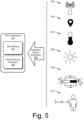
- Fig. 5 illustrates example sensed environmental conditions, which are sensed by a sensor subsystem and signaled to the central security processor device 126 in accordance with one or more aspects of operating environment 100.
- Surroundings of the apparatus that indicate environmental conditions are sensed by the apparatus sensor subsystem 206 which may be comprised of any combination of sensor devices that, for example, sense radio waves 500 used in communication or radar technologies, position signals 502 used for location or Global Positioning Systems (GPS), thermal conditions 504 surrounding the apparatus, light waves 506 that may be surrounding or communicating with the apparatus, electromagnetic flux 508 that may be surrounding the apparatus, or a proximity signal 510 indicating proximity of the apparatus to a user.
- GPS Global Positioning Systems
- a sensed single environmental condition or a sensed combination of environmental conditions may be used by the central security processor device 126 to determine a security condition where the apparatus is being accessed by another apparatus which is not authorized to retrieve data from the apparatus, a security condition where the apparatus has been stolen or transported to a location where it is not to operate, a security condition where operating the apparatus may damage the apparatus, or a security condition where the apparatus is not in proximity to the owner of the apparatus.
- Such sensed conditions be used by the central security processor device 126 to determine, for example and based on data stored in the CSC memory device 216, one or more security conditions related to the apparatus's presence in an insecure environment.
- Fig. 6 illustrates an example method 600 performed by a delegate security processor device of an apparatus.
- the delegate security processor device 130 may be embodied on the SoC component 128 as describe above.
- the delegate security processor device receives a security condition signal.
- the delegate security processor device causes, in response to receiving the security condition signal, a security operation to be performed.
- the security operation may be a security operation that is directed to functionality of the apparatus including, for example, disabling a display of the apparatus so that information cannot be displayed, powering off the apparatus so that an unintended user may not be able to use the device, shutting down a data path to a memory device of the apparatus so that confidential information cannot be accessed, disabling a sensor device of the apparatus so that the apparatus is unable to record visual or audible conditions surrounding the apparatus, or disabling communications of the apparatus in order to prevent unintended transmission or receipt of information by the apparatus.
- the security operation may alternatively be a security operation that is directed to data security and authentication, such as performing a template matching operation, performing a keymaster operation, or performing an encryption operation.
- the delegate security processor device optionally transmits a confirmation signal indicating confirming that the security operation has been performed.
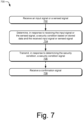
- Fig. 7 illustrates an example method 700 performed by a central security processor device of an apparatus.
- the central security processor device may be embodied on the CSC component 124 as described above.
- the central security processor device receives an input signal or a sensed signal.
- the input signal may be received from a user input subsystem of the apparatus, and may be an iris pattern, a password, a personal identification number, or a vocal command.
- the sensed signal may be received from a sensor subsystem of the apparatus that senses a radio wave, a position, a thermal condition, a light wave, an electromagnetic flux, or a proximity of the apparatus to a user.
- the central security processor device determines, based on stored data and the received input signal or sensed signal, a security condition.
- the central security processor device transmits, in response to determining the security condition, a security condition signal.
- the central security processor device optionally receives a confirmation signal that confirms a security operation has been performed.
- Fig. 8 illustrates an example method 800 performed on an apparatus having a central security processor device and a delegate security processor device.
- the central security processor device may be embodied on the CSC component 124 as described above.
- the delegate security processor device may be embodied on the SoC component 128 as described above.
- the central security processor device receives a signal.
- the signal may be received from a user input subsystem of the apparatus, and may be an iris pattern, a password, a personal identification number, or a vocal command.
- the signal may be received from a sensor subsystem of the apparatus that senses a radio wave, a position, a thermal condition, a light wave, an electromagnetic flux, or a proximity of the apparatus to a user.
- the central security processor device determines a security condition in response to receiving the signal and based, at least in part, on data stored on the CSC component.
- the central security processor device then transmits, in response to determining the security condition, a security condition signal to the delegate security processor device.
- the delegate security processor device causes the SoC to perform a security operation in response to receiving the security condition signal.
- the security operation may be a security operation that is directed to functionality of the apparatus including, for example, disabling a display of the apparatus so that information cannot be displayed, powering off the apparatus so that an unintended user may not be able to use the device, shutting down a data path to a memory device of the apparatus so that confidential information cannot be accessed, disabling a sensor device of the apparatus so that the apparatus is unable to record visual or audible conditions surrounding the apparatus, or disabling communications of the apparatus in order to prevent unintended transmission or receipt of information by the apparatus.
- the security operation may alternatively be a security operation that is directed to data security and authentication, such as performing a template matching operation, performing a keymaster operation, or performing an encryption operation.
Landscapes
- Engineering & Computer Science (AREA)
- Computer Security & Cryptography (AREA)
- Theoretical Computer Science (AREA)
- Computer Hardware Design (AREA)
- General Engineering & Computer Science (AREA)
- Software Systems (AREA)
- General Physics & Mathematics (AREA)
- Physics & Mathematics (AREA)
- Computer Networks & Wireless Communication (AREA)
- Signal Processing (AREA)
- Computing Systems (AREA)
- Environmental & Geological Engineering (AREA)
- Telephone Function (AREA)
- Storage Device Security (AREA)
- Mobile Radio Communication Systems (AREA)
Claims (15)
- Gerät, umfassend:ein Benutzereingabe-Subsystem, das dafür konfiguriert ist, eine Eingabe von einem Benutzer zu empfangen;eine Sicherheitskomponente, wobei die Sicherheitskomponente eine erste Sicherheitsprozessorvorrichtung aufweist, die dafür konfiguriert ist:ein Eingabesignal von dem Benutzer über das Benutzereingabe-Subsystem zu empfangen;eine Sicherheitsbedingung auf der Grundlage des von dem Benutzereingabe-Subsystem empfangenen Eingabesignals zu bestimmen; undals Antwort auf das Bestimmen der Sicherheitsbedingung ein Sicherheitsbedingungssignal zu übertragen; undeine von der Sicherheitskomponente getrennte System-on-Chip-(SoC-)Komponente, wobei die SoC-Komponente aufweist:mehrere Gerätesubsystem-Kernvorrichtungen, die dafür konfiguriert sind:mit entsprechenden Gerätesubsystemen zu kommunizieren, um die entsprechenden Gerätesubsysteme zu betreiben; undeine zweite Sicherheitsprozessorvorrichtung, die dafür konfiguriert ist:von der ersten Sicherheitsprozessorvorrichtung das Sicherheitsbedingungssignal zu empfangen; undals Antwort auf das Empfangen des Sicherheitsbedingungssignals und autonom von der ersten Sicherheitsprozessorvorrichtung über einen sicheren Steuerungs- und Kommunikationsbus, der sich innerhalb der SoC-Komponente befindet, gemäß einer Sicherheitsrichtlinie mit mindestens einer der mehreren Gerätesubsystem-Kernvorrichtungen zu kommunizieren, um der mindestens einen Subsystem-Kernvorrichtung zu signalisieren, eine Sicherheitsoperation durchzuführen, die ein entsprechendes Subsystem deaktiviert.
- Gerät nach Anspruch 1, ferner einen externen sicheren Steuerungs- und Kommunikationsbus umfassend, wobei der externe sichere Steuerungs- und Kommunikationsbus dafür konfiguriert ist, das Sicherheitsbedingungssignal von der ersten Sicherheitsprozessorvorrichtung zu der zweiten Sicherheitsprozessorvorrichtung zu übertragen.
- Gerät gemäß Anspruch 1 oder Anspruch 2, ferner ein internes sicheres Steuerungs- und Kommunikationsnetzwerk umfassend, wobei das interne sichere Steuerungs- und Kommunikationsnetzwerk sich innerhalb der SoC-Komponente befindet und dafür konfiguriert ist, ein Signal von der zweiten Sicherheitsprozessorvorrichtung zu einer in der SoC-Komponente eingebauten Speichervorrichtung und einer in der SoC-Komponente eingebauten Gerätesubsystem-Kernvorrichtung zu übertragen.
- Gerät nach einem der vorhergehenden Ansprüche, wobei die erste Sicherheitsprozessorvorrichtung, die dafür konfiguriert ist, die Sicherheitsbedingung zu bestimmen, die Sicherheitsbedingung auf der Grundlage von Daten bestimmt, die auf der Sicherheitskomponente gespeichert sind.
- Gerät nach einem der vorhergehenden Ansprüche, wobei die erste Sicherheitsprozessorvorrichtung, die dafür konfiguriert ist, das Eingabesignal von dem Benutzereingabe-Subsystem zu empfangen, ein Signal empfängt, das durch das Benutzereingabe-Subsystem als Antwort darauf erzeugt wird, dass das Benutzereingabe-Subsystem eine persönliche Identifikationsnummer, ein Passwort, einen Fingerabdruck, ein Irismuster oder einen Sprachbefehl empfängt.
- Gerät nach einem der vorhergehenden Ansprüche, wobei die Sicherheitsoperation die SoC-Komponente dazu veranlasst:eine Anzeige des Geräts zu deaktivieren oder das Gerät auszuschalten; und/odereinen Datenpfad zu einer Speichervorrichtung des Geräts abzuschalten, um den Zugriff auf vertrauliche Informationen zu verhindern, die in der Speichervorrichtung gespeichert sind; und/odereine Verschlüsselungsoperation zu initiieren; und/odereine sichere Vorlagenabgleich-Operation oder eine Keymaster-Operation durchzuführen; und/odereine Sensorvorrichtung des Geräts zu deaktivieren.
- Gerät, umfassend:ein Sensorsubsystem, das dafür konfiguriert ist, eine Umgebungsbedingung zu erfassen;eine Sicherheitskomponente, wobei die Sicherheitskomponente eine erste Sicherheitsprozessorvorrichtung aufweist, die dafür konfiguriert ist:ein erfasstes Signal über das Sensorsubsystem zu empfangen;eine Sicherheitsbedingung auf der Grundlage des von dem Sensorsubsystem empfangenen erfassten Signals zu bestimmen; undals Antwort auf das Bestimmen der Sicherheitsbedingung ein Sicherheitsbedingungssignal zu übertragen; undeine von der Sicherheitskomponente getrennte System-on-Chip-(SoC-)Komponente, wobei die SoC-Komponente aufweist:
mehrere Gerätesubsystem-Kernvorrichtungen, die dafür konfiguriert sind:mit entsprechenden Gerätesubsystemen zu kommunizieren, um die entsprechenden Gerätesubsysteme zu betreiben; undeine zweite Sicherheitsprozessorvorrichtung, die dafür konfiguriert ist:von der ersten Sicherheitsprozessorvorrichtung das Sicherheitsbedingungssignal zu empfangen; undals Antwort auf das Empfangen des Sicherheitsbedingungssignals und autonom von der ersten Sicherheitsprozessorvorrichtung über einen sicheren Steuerungs- und Kommunikationsbus, der sich innerhalb der SoC-Komponente befindet, gemäß einer Sicherheitsrichtlinie mit mindestens einer der mehreren Gerätesubsystem-Kernvorrichtungen zu kommunizieren, um der mindestens einen Subsystem-Kernvorrichtung zu signalisieren, eine Sicherheitsoperation durchzuführen, die ein entsprechendes Subsystem deaktiviert. - Gerät nach Anspruch 7, ferner einen externen sicheren Steuerungs- und Kommunikationsbus umfassend, wobei der externe sichere Steuerungs- und Kommunikationsbus dafür konfiguriert ist, das Sicherheitsbedingungssignal von der ersten Sicherheitsprozessorvorrichtung zu der zweiten Sicherheitsprozessorvorrichtung zu übertragen.
- Gerät nach Anspruch 7 oder 8, ferner ein internes sicheres Steuerungs- und Kommunikationsnetzwerk umfassend, wobei das interne sichere Steuerungs- und Kommunikationsnetzwerk sich innerhalb der SoC-Komponente befindet und dafür konfiguriert ist, ein Signal von der zweiten Sicherheitsprozessorvorrichtung zu einer in der SoC-Komponente eingebauten Speichervorrichtung und einer in der SoC-Komponente eingebauten Gerät-Kernvorrichtung zu übertragen.
- Gerät nach einem der Ansprüche 7 bis 9, wobei die erste Sicherheitsprozessorvorrichtung, die dafür konfiguriert ist, der Sicherheitsbedingung zu bestimmen, die Sicherheitsbedingung auf der Grundlage von Daten bestimmt, die auf der Sicherheitskomponente gespeichert sind.
- Gerät nach einem der Ansprüche 7 bis 10, wobei die erste Sicherheitsprozessorvorrichtung, die dafür konfiguriert ist, ein erfasstes Signal von dem Sensorsubsystem zu empfangen, ein Signal empfängt, das durch das Sensorsubsystem als Antwort darauf erzeugt wird, dass das Sensorsubsystem eine Funkwelle, ein Positionssignal, eine thermische Bedingung, eine Lichtwelle, einen elektromagnetischen Fluss oder ein Annäherungssignal erfasst.
- Gerät nach einem der Ansprüche 7 bis 11, wobei die Sicherheitsoperation die SoC-Komponente veranlasst, eine Anzeige des Geräts zu deaktivieren oder das Gerät auszuschalten.
- Gerät nach einem der Ansprüche 7 bis 11, wobei die Sicherheitsoperation die SoC-Komponente dazu veranlasst:einen Datenpfad zu einer Speichervorrichtung des Geräts abzuschalten, um den Zugriff auf vertrauliche Informationen zu verhindern, die in der Speichervorrichtung gespeichert sind; und/odereine Verschlüsselungsoperation zu initiieren; und/odereine sichere Vorlagenabgleich-Operation oder eine Keymaster-Operation durchzuführen; und/odereine Sensorvorrichtung des Geräts zu deaktivieren.
- Verfahren, durchgeführt durch ein Gerät, wobei das Verfahren umfasst:Empfangen eines Sicherheitsbedingungssignals durch eine erste Sicherheitsprozessorvorrichtung einer System-on-Chip-(SoC-)Komponente, wobei die SoC-Komponente mehrere Gerätesubsystem-Kernvorrichtungen aufweist, die dafür konfiguriert sind, mit entsprechenden Gerätesubsystemen zu kommunizieren, um die entsprechenden Gerätesubsysteme zu betreiben, wobei das Sicherheitsbedingungssignal durch eine zweite Sicherheitsprozessorvorrichtung gesendet wird, die in einer Sicherheitskomponente eingebauten ist, die von der SoC-Komponente getrennt ist, und als Antwort darauf gesendet wird, dass die zweite Sicherheitsprozessorvorrichtung ein erfasstes Signal oder ein Eingabesignal empfängt;als Antwort auf das Empfangen des Sicherheitsbedingungssignals und autonom von der ersten Sicherheitsprozessorvorrichtung über einen sicheren Steuerungs- und Kommunikationsbus, der sich innerhalb der SoC-Komponente befindet, erfolgendes Kommunizieren mit mindestens einer der mehreren Gerätesubsystem-Kernvorrichtungen gemäß einer Sicherheitsrichtlinie, um der mindestens einen Subsystem-Kernvorrichtung zu signalisieren, eine Sicherheitsoperation durchzuführen, die ein entsprechendes Subsystem deaktiviert; undals Antwort darauf, dass die mindestens eine Subsystem-Kernvorrichtung die Sicherheitsoperation durchführt, erfolgendes Übertragen eines Bestätigungssignals durch die erste Sicherheitsprozessorvorrichtung zu der zweiten Sicherheitsprozessorvorrichtung.
- Verfahren nach Anspruch 14, wobei das durch die zweite Sicherheitsprozessorvorrichtung empfangene Erfassungssignal oder Eingabesignal eines von Folgendem ist:eine Eingabe, die durch einen Benutzer des Geräts eingegeben wird; odereine Angabe eines Umgebungszustandes, der durch ein Sensorsubsystem des Geräts erfasst wird.
Applications Claiming Priority (2)
| Application Number | Priority Date | Filing Date | Title |
|---|---|---|---|
| US15/697,059 US10740494B2 (en) | 2017-09-06 | 2017-09-06 | Central and delegate security processors for a computing device |
| PCT/US2018/048561 WO2019050741A1 (en) | 2017-09-06 | 2018-08-29 | VERIFICATION OF ENVIRONMENTAL CONDITION AND AUTHENTICATION OF USER IN A SECURITY COPROCESSOR |
Publications (3)
| Publication Number | Publication Date |
|---|---|
| EP3679501A1 EP3679501A1 (de) | 2020-07-15 |
| EP3679501B1 true EP3679501B1 (de) | 2024-08-07 |
| EP3679501B8 EP3679501B8 (de) | 2024-10-23 |
Family
ID=63638375
Family Applications (1)
| Application Number | Title | Priority Date | Filing Date |
|---|---|---|---|
| EP18773022.1A Active EP3679501B8 (de) | 2017-09-06 | 2018-08-29 | Umgebungsbedingung überprüfung und benutzerauthentifizierung in einem gesicherten coprozessor |
Country Status (7)
| Country | Link |
|---|---|
| US (1) | US10740494B2 (de) |
| EP (1) | EP3679501B8 (de) |
| JP (1) | JP6887522B2 (de) |
| KR (1) | KR102294211B1 (de) |
| CN (1) | CN110582770B (de) |
| TW (1) | TWI681318B (de) |
| WO (1) | WO2019050741A1 (de) |
Families Citing this family (4)
| Publication number | Priority date | Publication date | Assignee | Title |
|---|---|---|---|---|
| CN111046414B (zh) * | 2018-10-15 | 2023-07-25 | 中兴通讯股份有限公司 | 移动终端、开关控制方法及计算机可读存储介质 |
| KR102785635B1 (ko) | 2019-09-26 | 2025-03-21 | 엘지전자 주식회사 | 세탁기 및 그 제어 방법 |
| US12273447B2 (en) * | 2021-09-08 | 2025-04-08 | Qualcomm Incorporated | Devices and methods utilizing sensor information for increased trust level |
| FR3135585B1 (fr) * | 2022-05-13 | 2025-10-31 | St Microelectronics Srl | Routeur |
Family Cites Families (57)
| Publication number | Priority date | Publication date | Assignee | Title |
|---|---|---|---|---|
| JP2000285025A (ja) * | 1999-03-31 | 2000-10-13 | Nippon Computer:Kk | セキュリティ管理用電子デバイス |
| PA8581901A1 (es) | 2002-09-10 | 2004-05-21 | Ivi Smart Technologies Inc | Verificacion biometrica segura de identidad |
| CA2857208C (en) * | 2003-05-30 | 2018-09-04 | Privaris, Inc. | An in-circuit security system and methods for controlling access to and use of sensitive data |
| EP1612684B1 (de) * | 2004-07-01 | 2009-09-30 | Texas Instruments Incorporated | Vorrichtung und Verfahren zum sicheren Modus für Prozessoren und Speicher auf mehreren Halbleiterbauelementen in einem einzelnen Halbleitergehäuse |
| JP4516399B2 (ja) * | 2004-10-08 | 2010-08-04 | フェリカネットワークス株式会社 | 情報処理装置および方法、並びにプログラム |
| US9454657B2 (en) * | 2004-12-03 | 2016-09-27 | Bce Inc. | Security access device and method |
| US9177176B2 (en) * | 2006-02-27 | 2015-11-03 | Broadcom Corporation | Method and system for secure system-on-a-chip architecture for multimedia data processing |
| JP4769608B2 (ja) * | 2006-03-22 | 2011-09-07 | 富士通株式会社 | 起動検証機能を有する情報処理装置 |
| WO2007134448A1 (en) * | 2006-05-18 | 2007-11-29 | Research In Motion Limited | Automatic security action invocation for mobile communications device |
| US8560863B2 (en) * | 2006-06-27 | 2013-10-15 | Intel Corporation | Systems and techniques for datapath security in a system-on-a-chip device |
| US20080127343A1 (en) * | 2006-11-28 | 2008-05-29 | Avaya Technology Llc | Self-Operating Security Platform |
| US8307416B2 (en) * | 2007-01-03 | 2012-11-06 | Texas Instruments Incorporated | Data structures for use in firewalls |
| US8285300B2 (en) * | 2007-02-28 | 2012-10-09 | At&T Intellectual Property I, Lp | Methods and systems for location-based management of wireless devices |
| FR2913550A1 (fr) * | 2007-03-07 | 2008-09-12 | Inside Contactless Sa | Procede de chargement securise de donnees d'acces a un service dans un chipset nfc |
| US20080272880A1 (en) * | 2007-05-03 | 2008-11-06 | Sehat Sutardja | Device with ic, soc or sip having one or more remotely enabled module and methods for selling the device |
| US20090193230A1 (en) | 2008-01-30 | 2009-07-30 | Ralf Findeisen | Computer system including a main processor and a bound security coprocessor |
| JP5060995B2 (ja) * | 2008-03-11 | 2012-10-31 | 株式会社日立システムズ | 情報漏洩防止システム |
| JP2009259211A (ja) * | 2008-03-25 | 2009-11-05 | Hitachi Kokusai Electric Inc | 無線通信装置及び情報処理装置 |
| US8365308B2 (en) * | 2008-09-26 | 2013-01-29 | Broadcom Corporation | Method and system for a secure power management scheme |
| JP5606705B2 (ja) * | 2009-08-27 | 2014-10-15 | 京セラ株式会社 | 携帯端末装置 |
| US20110088100A1 (en) * | 2009-10-14 | 2011-04-14 | Serge Rutman | Disabling electronic display devices |
| US8621202B2 (en) * | 2010-02-11 | 2013-12-31 | Cisco Technology, Inc. | Externally managed security and validation processing device |
| US8464320B2 (en) * | 2010-05-24 | 2013-06-11 | Verizon Patent And Licensing Inc. | System and method for providing authentication continuity |
| US8479017B2 (en) * | 2010-06-21 | 2013-07-02 | Intel Corporation | System and method for N-ary locality in a security co-processor |
| US9268390B2 (en) * | 2010-12-14 | 2016-02-23 | Microsoft Technology Licensing, Llc | Human presence detection |
| JP2012252667A (ja) * | 2011-06-07 | 2012-12-20 | Sharp Corp | 半導体デバイス |
| US8836472B2 (en) * | 2011-11-23 | 2014-09-16 | Blackberry Limited | Combining navigation and fingerprint sensing |
| US9018585B2 (en) * | 2011-12-28 | 2015-04-28 | Intel Corporation | Method and apparatus to determine user presence |
| US20130246800A1 (en) * | 2012-03-19 | 2013-09-19 | Microchip Technology Incorporated | Enhancing Security of Sensor Data for a System Via an Embedded Controller |
| US20140020114A1 (en) * | 2012-07-13 | 2014-01-16 | Qualcomm Incorporated | Methods and apparatuses for integrating a portion of secure element components on a system on chip |
| TW201408088A (zh) | 2012-08-15 | 2014-02-16 | Muchtel Technology Inc | 地域性數位版權存取認證方法及系統 |
| US10009764B2 (en) | 2012-09-21 | 2018-06-26 | Apple Inc. | Apparatus and methods for controlled switching of electronic access clients without requiring network access |
| US9881161B2 (en) | 2012-12-06 | 2018-01-30 | S-Printing Solution Co., Ltd. | System on chip to perform a secure boot, an image forming apparatus using the same, and method thereof |
| JP2014194714A (ja) * | 2013-03-29 | 2014-10-09 | Chugoku Electric Power Co Inc:The | 可搬型鍵媒体、コンピュータ、並びに該可搬型鍵媒体及び該コンピュータを備えたセキュリティシステム |
| US9015378B2 (en) * | 2013-05-15 | 2015-04-21 | Google Inc. | Determining sensor information in the background on a mobile device |
| US9268948B2 (en) * | 2013-06-24 | 2016-02-23 | Intel Corporation | Secure access enforcement proxy |
| US8892403B1 (en) * | 2013-07-09 | 2014-11-18 | Google Inc. | Determining sensor information based on events associated with a mobile device |
| CN106462550B (zh) * | 2013-09-27 | 2019-10-25 | 英特尔公司 | 用于共享嵌入式硬件资源的方法、设备和装置 |
| US9402018B2 (en) * | 2013-12-17 | 2016-07-26 | Amazon Technologies, Inc. | Distributing processing for imaging processing |
| US10417900B2 (en) * | 2013-12-26 | 2019-09-17 | Intel Corporation | Techniques for detecting sensor inputs on a wearable wireless device |
| WO2015143066A1 (en) | 2014-03-21 | 2015-09-24 | Good Technology Corporation | Computing device security |
| US9778728B2 (en) * | 2014-05-29 | 2017-10-03 | Apple Inc. | System on a chip with fast wake from sleep |
| CN110781469B (zh) * | 2014-08-07 | 2021-01-01 | 创新先进技术有限公司 | 一种身份认证方法及装置 |
| US9479331B2 (en) | 2014-08-20 | 2016-10-25 | Apple Inc. | Managing security in a system on a chip (SOC) that powers down a secure processor |
| US9654296B2 (en) * | 2014-08-25 | 2017-05-16 | Intel Corporation | Handling sensor data |
| US9594927B2 (en) * | 2014-09-10 | 2017-03-14 | Intel Corporation | Providing a trusted execution environment using a processor |
| US9396070B2 (en) * | 2014-09-11 | 2016-07-19 | Qualcomm Incorporated | System and method for system-on-a-chip subsystem external access detection and recovery |
| US9589155B2 (en) | 2014-09-23 | 2017-03-07 | Intel Corporation | Technologies for verifying components |
| US20160180078A1 (en) * | 2014-12-23 | 2016-06-23 | Jasmeet Chhabra | Technologies for enhanced user authentication using advanced sensor monitoring |
| US9544419B2 (en) * | 2014-12-24 | 2017-01-10 | Intel Corporation | Methods and systems for configuring a mobile device based on an orientation-based usage context |
| US9990479B2 (en) | 2014-12-27 | 2018-06-05 | Intel Corporation | Technologies for authenticating a user of a computing device based on authentication context state |
| CN106330580A (zh) | 2015-06-15 | 2017-01-11 | 中兴通讯股份有限公司 | 监控设备控制方法及装置 |
| CN104978303B (zh) * | 2015-06-19 | 2019-06-04 | 上海兆芯集成电路有限公司 | 单芯片整合的传感器集线器和多传感器管理方法 |
| US10140457B2 (en) * | 2015-07-31 | 2018-11-27 | Intel Corporation | Secure input/output device management |
| US10009944B2 (en) * | 2015-08-26 | 2018-06-26 | International Business Machines Corporation | Controlling wireless connection of a device to a wireless access point |
| CN105975838A (zh) * | 2016-06-12 | 2016-09-28 | 北京集创北方科技股份有限公司 | 安全芯片、生物特征识别方法和生物特征模板注册方法 |
| US10602339B2 (en) * | 2017-05-17 | 2020-03-24 | Hand Held Products, Inc. | Systems and methods for improving alert messaging using device to device communication |
-
2017
- 2017-09-06 US US15/697,059 patent/US10740494B2/en active Active
-
2018
- 2018-08-01 TW TW107126610A patent/TWI681318B/zh active
- 2018-08-29 WO PCT/US2018/048561 patent/WO2019050741A1/en not_active Ceased
- 2018-08-29 CN CN201880019127.4A patent/CN110582770B/zh active Active
- 2018-08-29 EP EP18773022.1A patent/EP3679501B8/de active Active
- 2018-08-29 JP JP2019551680A patent/JP6887522B2/ja active Active
- 2018-08-29 KR KR1020197027163A patent/KR102294211B1/ko active Active
Also Published As
| Publication number | Publication date |
|---|---|
| CN110582770A (zh) | 2019-12-17 |
| TW201921226A (zh) | 2019-06-01 |
| TWI681318B (zh) | 2020-01-01 |
| JP2020533655A (ja) | 2020-11-19 |
| KR20190119101A (ko) | 2019-10-21 |
| JP6887522B2 (ja) | 2021-06-16 |
| WO2019050741A9 (en) | 2019-10-24 |
| WO2019050741A1 (en) | 2019-03-14 |
| EP3679501B8 (de) | 2024-10-23 |
| KR102294211B1 (ko) | 2021-08-27 |
| CN110582770B (zh) | 2022-10-18 |
| US20190073491A1 (en) | 2019-03-07 |
| US10740494B2 (en) | 2020-08-11 |
| EP3679501A1 (de) | 2020-07-15 |
Similar Documents
| Publication | Publication Date | Title |
|---|---|---|
| EP3014507B1 (de) | Kontinuierliche mehrstufige authentifizierung | |
| EP2895982B1 (de) | Hardware-erzwungener zugriffsschutz | |
| EP3679501B1 (de) | Umgebungsbedingung überprüfung und benutzerauthentifizierung in einem gesicherten coprozessor | |
| US20080098134A1 (en) | Portable Storage Device and Method For Exchanging Data | |
| EP3198782B1 (de) | Sicherung von sensordaten | |
| GB2580549A (en) | Data security system with encryption | |
| US20090064273A1 (en) | Methods and systems for secure data entry and maintenance | |
| US10601592B2 (en) | System and method trusted workspace in commercial mobile devices | |
| WO2009094213A1 (en) | Secure platform management device | |
| US20150264048A1 (en) | Information processing apparatus, information processing method, and recording medium | |
| CN113330434B (zh) | 防篡改数据处理设备 | |
| US11921857B2 (en) | Electronic device for providing service by using secure element, and operating method thereof | |
| US12199975B2 (en) | Apparatus and methods for automating password generators | |
| EP3098744A1 (de) | Ferngeschützte elektronische vorrichtung | |
| US20220269764A1 (en) | Mobile optical view environment | |
| US20250193167A1 (en) | Electronic device and method for performing user authentication on electronic device | |
| KR20240028895A (ko) | 애플릿의 비접촉 통신 제어 방법 및 장치 | |
| WO2017151080A1 (ru) | Система персональной идентификации |
Legal Events
| Date | Code | Title | Description |
|---|---|---|---|
| STAA | Information on the status of an ep patent application or granted ep patent |
Free format text: STATUS: UNKNOWN |
|
| STAA | Information on the status of an ep patent application or granted ep patent |
Free format text: STATUS: THE INTERNATIONAL PUBLICATION HAS BEEN MADE |
|
| PUAI | Public reference made under article 153(3) epc to a published international application that has entered the european phase |
Free format text: ORIGINAL CODE: 0009012 |
|
| STAA | Information on the status of an ep patent application or granted ep patent |
Free format text: STATUS: REQUEST FOR EXAMINATION WAS MADE |
|
| 17P | Request for examination filed |
Effective date: 20190912 |
|
| AK | Designated contracting states |
Kind code of ref document: A1 Designated state(s): AL AT BE BG CH CY CZ DE DK EE ES FI FR GB GR HR HU IE IS IT LI LT LU LV MC MK MT NL NO PL PT RO RS SE SI SK SM TR |
|
| AX | Request for extension of the european patent |
Extension state: BA ME |
|
| DAV | Request for validation of the european patent (deleted) | ||
| DAX | Request for extension of the european patent (deleted) | ||
| STAA | Information on the status of an ep patent application or granted ep patent |
Free format text: STATUS: EXAMINATION IS IN PROGRESS |
|
| 17Q | First examination report despatched |
Effective date: 20211210 |
|
| REG | Reference to a national code |
Ref country code: DE Ref legal event code: R079 Free format text: PREVIOUS MAIN CLASS: G06F0021320000 Ipc: H04L0009400000 Ref country code: DE Ref legal event code: R079 Ref document number: 602018072795 Country of ref document: DE Free format text: PREVIOUS MAIN CLASS: G06F0021320000 Ipc: H04L0009400000 |
|
| GRAP | Despatch of communication of intention to grant a patent |
Free format text: ORIGINAL CODE: EPIDOSNIGR1 |
|
| STAA | Information on the status of an ep patent application or granted ep patent |
Free format text: STATUS: GRANT OF PATENT IS INTENDED |
|
| RIC1 | Information provided on ipc code assigned before grant |
Ipc: H04L 9/32 20060101ALI20230922BHEP Ipc: G06F 21/55 20130101ALI20230922BHEP Ipc: G06F 21/83 20130101ALI20230922BHEP Ipc: G06F 21/31 20130101ALI20230922BHEP Ipc: H04W 12/06 20090101ALI20230922BHEP Ipc: G06F 21/32 20130101ALI20230922BHEP Ipc: H04L 9/40 20220101AFI20230922BHEP |
|
| INTG | Intention to grant announced |
Effective date: 20231019 |
|
| GRAJ | Information related to disapproval of communication of intention to grant by the applicant or resumption of examination proceedings by the epo deleted |
Free format text: ORIGINAL CODE: EPIDOSDIGR1 |
|
| STAA | Information on the status of an ep patent application or granted ep patent |
Free format text: STATUS: EXAMINATION IS IN PROGRESS |
|
| GRAP | Despatch of communication of intention to grant a patent |
Free format text: ORIGINAL CODE: EPIDOSNIGR1 |
|
| STAA | Information on the status of an ep patent application or granted ep patent |
Free format text: STATUS: GRANT OF PATENT IS INTENDED |
|
| INTC | Intention to grant announced (deleted) | ||
| INTG | Intention to grant announced |
Effective date: 20240228 |
|
| P01 | Opt-out of the competence of the unified patent court (upc) registered |
Effective date: 20240507 |
|
| GRAS | Grant fee paid |
Free format text: ORIGINAL CODE: EPIDOSNIGR3 |
|
| GRAA | (expected) grant |
Free format text: ORIGINAL CODE: 0009210 |
|
| STAA | Information on the status of an ep patent application or granted ep patent |
Free format text: STATUS: THE PATENT HAS BEEN GRANTED |
|
| AK | Designated contracting states |
Kind code of ref document: B1 Designated state(s): AL AT BE BG CH CY CZ DE DK EE ES FI FR GB GR HR HU IE IS IT LI LT LU LV MC MK MT NL NO PL PT RO RS SE SI SK SM TR |
|
| REG | Reference to a national code |
Ref country code: GB Ref legal event code: FG4D |
|
| REG | Reference to a national code |
Ref country code: CH Ref legal event code: EP |
|
| REG | Reference to a national code |
Ref country code: IE Ref legal event code: FG4D |
|
| REG | Reference to a national code |
Ref country code: DE Ref legal event code: R096 Ref document number: 602018072795 Country of ref document: DE |
|
| REG | Reference to a national code |
Ref country code: CH Ref legal event code: PK Free format text: BERICHTIGUNG B8 |
|
| REG | Reference to a national code |
Ref country code: NL Ref legal event code: FP |
|
| REG | Reference to a national code |
Ref country code: LT Ref legal event code: MG9D |
|
| PG25 | Lapsed in a contracting state [announced via postgrant information from national office to epo] |
Ref country code: NO Free format text: LAPSE BECAUSE OF FAILURE TO SUBMIT A TRANSLATION OF THE DESCRIPTION OR TO PAY THE FEE WITHIN THE PRESCRIBED TIME-LIMIT Effective date: 20241107 |
|
| REG | Reference to a national code |
Ref country code: AT Ref legal event code: MK05 Ref document number: 1712114 Country of ref document: AT Kind code of ref document: T Effective date: 20240807 |
|
| PG25 | Lapsed in a contracting state [announced via postgrant information from national office to epo] |
Ref country code: FI Free format text: LAPSE BECAUSE OF FAILURE TO SUBMIT A TRANSLATION OF THE DESCRIPTION OR TO PAY THE FEE WITHIN THE PRESCRIBED TIME-LIMIT Effective date: 20240807 Ref country code: PL Free format text: LAPSE BECAUSE OF FAILURE TO SUBMIT A TRANSLATION OF THE DESCRIPTION OR TO PAY THE FEE WITHIN THE PRESCRIBED TIME-LIMIT Effective date: 20240807 Ref country code: GR Free format text: LAPSE BECAUSE OF FAILURE TO SUBMIT A TRANSLATION OF THE DESCRIPTION OR TO PAY THE FEE WITHIN THE PRESCRIBED TIME-LIMIT Effective date: 20241108 Ref country code: PT Free format text: LAPSE BECAUSE OF FAILURE TO SUBMIT A TRANSLATION OF THE DESCRIPTION OR TO PAY THE FEE WITHIN THE PRESCRIBED TIME-LIMIT Effective date: 20241209 |
|
| PG25 | Lapsed in a contracting state [announced via postgrant information from national office to epo] |
Ref country code: BG Free format text: LAPSE BECAUSE OF FAILURE TO SUBMIT A TRANSLATION OF THE DESCRIPTION OR TO PAY THE FEE WITHIN THE PRESCRIBED TIME-LIMIT Effective date: 20240807 |
|
| PG25 | Lapsed in a contracting state [announced via postgrant information from national office to epo] |
Ref country code: LV Free format text: LAPSE BECAUSE OF FAILURE TO SUBMIT A TRANSLATION OF THE DESCRIPTION OR TO PAY THE FEE WITHIN THE PRESCRIBED TIME-LIMIT Effective date: 20240807 |
|
| PG25 | Lapsed in a contracting state [announced via postgrant information from national office to epo] |
Ref country code: AT Free format text: LAPSE BECAUSE OF FAILURE TO SUBMIT A TRANSLATION OF THE DESCRIPTION OR TO PAY THE FEE WITHIN THE PRESCRIBED TIME-LIMIT Effective date: 20240807 Ref country code: IS Free format text: LAPSE BECAUSE OF FAILURE TO SUBMIT A TRANSLATION OF THE DESCRIPTION OR TO PAY THE FEE WITHIN THE PRESCRIBED TIME-LIMIT Effective date: 20241207 |
|
| PG25 | Lapsed in a contracting state [announced via postgrant information from national office to epo] |
Ref country code: HR Free format text: LAPSE BECAUSE OF FAILURE TO SUBMIT A TRANSLATION OF THE DESCRIPTION OR TO PAY THE FEE WITHIN THE PRESCRIBED TIME-LIMIT Effective date: 20240807 |
|
| PG25 | Lapsed in a contracting state [announced via postgrant information from national office to epo] |
Ref country code: ES Free format text: LAPSE BECAUSE OF FAILURE TO SUBMIT A TRANSLATION OF THE DESCRIPTION OR TO PAY THE FEE WITHIN THE PRESCRIBED TIME-LIMIT Effective date: 20240807 Ref country code: RS Free format text: LAPSE BECAUSE OF FAILURE TO SUBMIT A TRANSLATION OF THE DESCRIPTION OR TO PAY THE FEE WITHIN THE PRESCRIBED TIME-LIMIT Effective date: 20241107 |
|
| PG25 | Lapsed in a contracting state [announced via postgrant information from national office to epo] |
Ref country code: RS Free format text: LAPSE BECAUSE OF FAILURE TO SUBMIT A TRANSLATION OF THE DESCRIPTION OR TO PAY THE FEE WITHIN THE PRESCRIBED TIME-LIMIT Effective date: 20241107 Ref country code: PT Free format text: LAPSE BECAUSE OF FAILURE TO SUBMIT A TRANSLATION OF THE DESCRIPTION OR TO PAY THE FEE WITHIN THE PRESCRIBED TIME-LIMIT Effective date: 20241209 Ref country code: PL Free format text: LAPSE BECAUSE OF FAILURE TO SUBMIT A TRANSLATION OF THE DESCRIPTION OR TO PAY THE FEE WITHIN THE PRESCRIBED TIME-LIMIT Effective date: 20240807 Ref country code: NO Free format text: LAPSE BECAUSE OF FAILURE TO SUBMIT A TRANSLATION OF THE DESCRIPTION OR TO PAY THE FEE WITHIN THE PRESCRIBED TIME-LIMIT Effective date: 20241107 Ref country code: LV Free format text: LAPSE BECAUSE OF FAILURE TO SUBMIT A TRANSLATION OF THE DESCRIPTION OR TO PAY THE FEE WITHIN THE PRESCRIBED TIME-LIMIT Effective date: 20240807 Ref country code: IS Free format text: LAPSE BECAUSE OF FAILURE TO SUBMIT A TRANSLATION OF THE DESCRIPTION OR TO PAY THE FEE WITHIN THE PRESCRIBED TIME-LIMIT Effective date: 20241207 Ref country code: HR Free format text: LAPSE BECAUSE OF FAILURE TO SUBMIT A TRANSLATION OF THE DESCRIPTION OR TO PAY THE FEE WITHIN THE PRESCRIBED TIME-LIMIT Effective date: 20240807 Ref country code: GR Free format text: LAPSE BECAUSE OF FAILURE TO SUBMIT A TRANSLATION OF THE DESCRIPTION OR TO PAY THE FEE WITHIN THE PRESCRIBED TIME-LIMIT Effective date: 20241108 Ref country code: FI Free format text: LAPSE BECAUSE OF FAILURE TO SUBMIT A TRANSLATION OF THE DESCRIPTION OR TO PAY THE FEE WITHIN THE PRESCRIBED TIME-LIMIT Effective date: 20240807 Ref country code: ES Free format text: LAPSE BECAUSE OF FAILURE TO SUBMIT A TRANSLATION OF THE DESCRIPTION OR TO PAY THE FEE WITHIN THE PRESCRIBED TIME-LIMIT Effective date: 20240807 Ref country code: BG Free format text: LAPSE BECAUSE OF FAILURE TO SUBMIT A TRANSLATION OF THE DESCRIPTION OR TO PAY THE FEE WITHIN THE PRESCRIBED TIME-LIMIT Effective date: 20240807 Ref country code: AT Free format text: LAPSE BECAUSE OF FAILURE TO SUBMIT A TRANSLATION OF THE DESCRIPTION OR TO PAY THE FEE WITHIN THE PRESCRIBED TIME-LIMIT Effective date: 20240807 |
|
| REG | Reference to a national code |
Ref country code: CH Ref legal event code: PL |
|
| PG25 | Lapsed in a contracting state [announced via postgrant information from national office to epo] |
Ref country code: RO Free format text: LAPSE BECAUSE OF FAILURE TO SUBMIT A TRANSLATION OF THE DESCRIPTION OR TO PAY THE FEE WITHIN THE PRESCRIBED TIME-LIMIT Effective date: 20240807 Ref country code: DK Free format text: LAPSE BECAUSE OF FAILURE TO SUBMIT A TRANSLATION OF THE DESCRIPTION OR TO PAY THE FEE WITHIN THE PRESCRIBED TIME-LIMIT Effective date: 20240807 Ref country code: SM Free format text: LAPSE BECAUSE OF FAILURE TO SUBMIT A TRANSLATION OF THE DESCRIPTION OR TO PAY THE FEE WITHIN THE PRESCRIBED TIME-LIMIT Effective date: 20240807 |
|
| PG25 | Lapsed in a contracting state [announced via postgrant information from national office to epo] |
Ref country code: LU Free format text: LAPSE BECAUSE OF NON-PAYMENT OF DUE FEES Effective date: 20240829 |
|
| PG25 | Lapsed in a contracting state [announced via postgrant information from national office to epo] |
Ref country code: CH Free format text: LAPSE BECAUSE OF NON-PAYMENT OF DUE FEES Effective date: 20240831 |
|
| PG25 | Lapsed in a contracting state [announced via postgrant information from national office to epo] |
Ref country code: CZ Free format text: LAPSE BECAUSE OF FAILURE TO SUBMIT A TRANSLATION OF THE DESCRIPTION OR TO PAY THE FEE WITHIN THE PRESCRIBED TIME-LIMIT Effective date: 20240807 |
|
| PG25 | Lapsed in a contracting state [announced via postgrant information from national office to epo] |
Ref country code: SK Free format text: LAPSE BECAUSE OF FAILURE TO SUBMIT A TRANSLATION OF THE DESCRIPTION OR TO PAY THE FEE WITHIN THE PRESCRIBED TIME-LIMIT Effective date: 20240807 |
|
| REG | Reference to a national code |
Ref country code: DE Ref legal event code: R097 Ref document number: 602018072795 Country of ref document: DE |
|
| PLBE | No opposition filed within time limit |
Free format text: ORIGINAL CODE: 0009261 |
|
| STAA | Information on the status of an ep patent application or granted ep patent |
Free format text: STATUS: NO OPPOSITION FILED WITHIN TIME LIMIT |
|
| REG | Reference to a national code |
Ref country code: BE Ref legal event code: MM Effective date: 20240831 |
|
| PG25 | Lapsed in a contracting state [announced via postgrant information from national office to epo] |
Ref country code: MC Free format text: LAPSE BECAUSE OF FAILURE TO SUBMIT A TRANSLATION OF THE DESCRIPTION OR TO PAY THE FEE WITHIN THE PRESCRIBED TIME-LIMIT Effective date: 20240807 |
|
| PG25 | Lapsed in a contracting state [announced via postgrant information from national office to epo] |
Ref country code: BE Free format text: LAPSE BECAUSE OF NON-PAYMENT OF DUE FEES Effective date: 20240831 |
|
| 26N | No opposition filed |
Effective date: 20250508 |
|
| PG25 | Lapsed in a contracting state [announced via postgrant information from national office to epo] |
Ref country code: IE Free format text: LAPSE BECAUSE OF NON-PAYMENT OF DUE FEES Effective date: 20240829 |
|
| PG25 | Lapsed in a contracting state [announced via postgrant information from national office to epo] |
Ref country code: SE Free format text: LAPSE BECAUSE OF FAILURE TO SUBMIT A TRANSLATION OF THE DESCRIPTION OR TO PAY THE FEE WITHIN THE PRESCRIBED TIME-LIMIT Effective date: 20240807 |
|
| PGFP | Annual fee paid to national office [announced via postgrant information from national office to epo] |
Ref country code: NL Payment date: 20250826 Year of fee payment: 8 |
|
| PGFP | Annual fee paid to national office [announced via postgrant information from national office to epo] |
Ref country code: DE Payment date: 20250827 Year of fee payment: 8 |
|
| PGFP | Annual fee paid to national office [announced via postgrant information from national office to epo] |
Ref country code: GB Payment date: 20250827 Year of fee payment: 8 |
|
| PGFP | Annual fee paid to national office [announced via postgrant information from national office to epo] |
Ref country code: FR Payment date: 20250825 Year of fee payment: 8 |
|
| PG25 | Lapsed in a contracting state [announced via postgrant information from national office to epo] |
Ref country code: CY Free format text: LAPSE BECAUSE OF FAILURE TO SUBMIT A TRANSLATION OF THE DESCRIPTION OR TO PAY THE FEE WITHIN THE PRESCRIBED TIME-LIMIT; INVALID AB INITIO Effective date: 20180829 Ref country code: IT Free format text: LAPSE BECAUSE OF FAILURE TO SUBMIT A TRANSLATION OF THE DESCRIPTION OR TO PAY THE FEE WITHIN THE PRESCRIBED TIME-LIMIT Effective date: 20240807 |
|
| PG25 | Lapsed in a contracting state [announced via postgrant information from national office to epo] |
Ref country code: HU Free format text: LAPSE BECAUSE OF FAILURE TO SUBMIT A TRANSLATION OF THE DESCRIPTION OR TO PAY THE FEE WITHIN THE PRESCRIBED TIME-LIMIT; INVALID AB INITIO Effective date: 20180829 |