EP3677853A1 - Air conditioning system control device - Google Patents
Air conditioning system control device Download PDFInfo
- Publication number
- EP3677853A1 EP3677853A1 EP17923313.5A EP17923313A EP3677853A1 EP 3677853 A1 EP3677853 A1 EP 3677853A1 EP 17923313 A EP17923313 A EP 17923313A EP 3677853 A1 EP3677853 A1 EP 3677853A1
- Authority
- EP
- European Patent Office
- Prior art keywords
- air
- indoor units
- conditioning indoor
- influence
- degree
- Prior art date
- Legal status (The legal status is an assumption and is not a legal conclusion. Google has not performed a legal analysis and makes no representation as to the accuracy of the status listed.)
- Granted
Links
Images


Classifications
-
- F—MECHANICAL ENGINEERING; LIGHTING; HEATING; WEAPONS; BLASTING
- F24—HEATING; RANGES; VENTILATING
- F24F—AIR-CONDITIONING; AIR-HUMIDIFICATION; VENTILATION; USE OF AIR CURRENTS FOR SCREENING
- F24F3/00—Air-conditioning systems in which conditioned primary air is supplied from one or more central stations to distributing units in the rooms or spaces where it may receive secondary treatment; Apparatus specially designed for such systems
- F24F3/06—Air-conditioning systems in which conditioned primary air is supplied from one or more central stations to distributing units in the rooms or spaces where it may receive secondary treatment; Apparatus specially designed for such systems characterised by the arrangements for the supply of heat-exchange fluid for the subsequent treatment of primary air in the room units
- F24F3/065—Air-conditioning systems in which conditioned primary air is supplied from one or more central stations to distributing units in the rooms or spaces where it may receive secondary treatment; Apparatus specially designed for such systems characterised by the arrangements for the supply of heat-exchange fluid for the subsequent treatment of primary air in the room units with a plurality of evaporators or condensers
-
- F—MECHANICAL ENGINEERING; LIGHTING; HEATING; WEAPONS; BLASTING
- F24—HEATING; RANGES; VENTILATING
- F24F—AIR-CONDITIONING; AIR-HUMIDIFICATION; VENTILATION; USE OF AIR CURRENTS FOR SCREENING
- F24F11/00—Control or safety arrangements
- F24F11/30—Control or safety arrangements for purposes related to the operation of the system, e.g. for safety or monitoring
-
- F—MECHANICAL ENGINEERING; LIGHTING; HEATING; WEAPONS; BLASTING
- F24—HEATING; RANGES; VENTILATING
- F24F—AIR-CONDITIONING; AIR-HUMIDIFICATION; VENTILATION; USE OF AIR CURRENTS FOR SCREENING
- F24F11/00—Control or safety arrangements
- F24F11/30—Control or safety arrangements for purposes related to the operation of the system, e.g. for safety or monitoring
- F24F11/46—Improving electric energy efficiency or saving
-
- F—MECHANICAL ENGINEERING; LIGHTING; HEATING; WEAPONS; BLASTING
- F24—HEATING; RANGES; VENTILATING
- F24F—AIR-CONDITIONING; AIR-HUMIDIFICATION; VENTILATION; USE OF AIR CURRENTS FOR SCREENING
- F24F11/00—Control or safety arrangements
- F24F11/62—Control or safety arrangements characterised by the type of control or by internal processing, e.g. using fuzzy logic, adaptive control or estimation of values
-
- F—MECHANICAL ENGINEERING; LIGHTING; HEATING; WEAPONS; BLASTING
- F24—HEATING; RANGES; VENTILATING
- F24F—AIR-CONDITIONING; AIR-HUMIDIFICATION; VENTILATION; USE OF AIR CURRENTS FOR SCREENING
- F24F11/00—Control or safety arrangements
- F24F11/62—Control or safety arrangements characterised by the type of control or by internal processing, e.g. using fuzzy logic, adaptive control or estimation of values
- F24F11/63—Electronic processing
- F24F11/64—Electronic processing using pre-stored data
-
- F—MECHANICAL ENGINEERING; LIGHTING; HEATING; WEAPONS; BLASTING
- F24—HEATING; RANGES; VENTILATING
- F24F—AIR-CONDITIONING; AIR-HUMIDIFICATION; VENTILATION; USE OF AIR CURRENTS FOR SCREENING
- F24F11/00—Control or safety arrangements
- F24F11/62—Control or safety arrangements characterised by the type of control or by internal processing, e.g. using fuzzy logic, adaptive control or estimation of values
- F24F11/63—Electronic processing
- F24F11/65—Electronic processing for selecting an operating mode
-
- F—MECHANICAL ENGINEERING; LIGHTING; HEATING; WEAPONS; BLASTING
- F24—HEATING; RANGES; VENTILATING
- F24F—AIR-CONDITIONING; AIR-HUMIDIFICATION; VENTILATION; USE OF AIR CURRENTS FOR SCREENING
- F24F2110/00—Control inputs relating to air properties
- F24F2110/10—Temperature
-
- F—MECHANICAL ENGINEERING; LIGHTING; HEATING; WEAPONS; BLASTING
- F24—HEATING; RANGES; VENTILATING
- F24F—AIR-CONDITIONING; AIR-HUMIDIFICATION; VENTILATION; USE OF AIR CURRENTS FOR SCREENING
- F24F2110/00—Control inputs relating to air properties
- F24F2110/20—Humidity
-
- F—MECHANICAL ENGINEERING; LIGHTING; HEATING; WEAPONS; BLASTING
- F24—HEATING; RANGES; VENTILATING
- F24F—AIR-CONDITIONING; AIR-HUMIDIFICATION; VENTILATION; USE OF AIR CURRENTS FOR SCREENING
- F24F2140/00—Control inputs relating to system states
-
- F—MECHANICAL ENGINEERING; LIGHTING; HEATING; WEAPONS; BLASTING
- F24—HEATING; RANGES; VENTILATING
- F24F—AIR-CONDITIONING; AIR-HUMIDIFICATION; VENTILATION; USE OF AIR CURRENTS FOR SCREENING
- F24F2140/00—Control inputs relating to system states
- F24F2140/60—Energy consumption
Definitions
- the present invention relates to an air-conditioning system control apparatus that controls various devices included in an air-conditioning system.
- Patent Literature 1 discloses an air-conditioning system including a plurality of air-conditioning indoor units each provided with a light emitting and receiving device that emits and receives light.
- each of the air-conditioning indoor units emits and receives light to measure the distance between each air-conditioning indoor unit and the other air-conditioning indoor unit or units, and calculates the degree of influence between those air-conditioning indoor units based on the result of the measurement.
- Patent Literature 1 Japanese Unexamined Patent Application Publication No. 2006-226578
- the air-conditioning system disclosed in Patent Literature 1 needs to include the light emitting and receiving device as an additional component in order to calculate the degree of influence between the air-conditioning indoor units.
- the present invention has been made to solve the above problem, and an object of the invention is to provide an air-conditioning system control apparatus capable of calculating the degree of influence between the air-conditioning indoor units without a specific device.
- An air-conditioning system control apparatus includes an influence-degree calculation unit that calculates a degree of influence between two air-conditioning indoor units that are selected from a plurality of air-conditioning indoor units as a pair of air-conditioning indoor units, based on operation data on the pair of air-conditioning indoor units.
- the degree of influence between the pair of air-conditioning indoor units is calculated based on operation data on the pair of air-conditioning indoor units. It is therefore possible to calculate the degree of influence between the air-conditioning indoor units without a specific device.
- Fig. 1 is a block diagram of an air-conditioning system 1 according to Embodiment 1 of the present invention.
- the air-conditioning system 1 as illustrated in Fig. 1 includes at least one air-conditioning outdoor unit 3, a plurality of air-conditioning indoor units 4, a plurality of sensors 5, and an air-conditioning system control apparatus 2.
- the air-conditioning system 1 according to Embodiment 1, as illustrated in Fig. 1 includes two air-conditioning outdoor units 3 and six air-conditioning indoor units 4A, 4B, 4C, 4D, 4E, and 4F. This, however, is an example.
- the air-conditioning indoor units 4A, 4B, 4C, 4D, 4E, and 4F may be collectively referred to as the air-conditioning indoor units 4.
- One of the two air-conditioning outdoor units 3 is connected to the air-conditioning indoor units 4A to 4C by refrigerant pipes and communication lines, and the other is connected to the air-conditioning indoor units 4D to 4F by refrigerant pipes and communication lines. It should be noted that the relationship in connection between the air-conditioning outdoor units 3 and the refrigerant pipes may be different from that between the air-conditioning outdoor units 3 and the communication lines.
- the sensors 5 may be provided outside the air-conditioning indoor units 4A, 4B, 4C, 4D, 4E, and 4F and the air-conditioning outdoor units 3.
- two air-conditioning indoor units 4A and 4E are installed in a first space 7, and four air-conditioning indoor units 4B, 4C, 4D, and 4F are installed in a second space 8.
- One of the two air-conditioning outdoor units 3 is connected to the two air-conditioning indoor units 4A and 4E provided in the first space 7 and one air-conditioning indoor unit 4B provided in the second space 8, and the other is connected to the three air-conditioning indoor units 4C, 4D, and 4E provided in the second space 8.
- air-conditioning indoor units 4 connected to the same air-conditioning outdoor unit 3 may be all installed in the same space or may be provided in different spaces. Furthermore, air-conditioning indoor units 4 connected to different air-conditioning outdoor units 3 may also be provided in the same space. With respect to Embodiment 1, it is illustrated by way of example in Fig. 1 that two spaces are provided, but the number of spaces may be one or may be three or more.
- Fig. 2 is a block diagram of the air-conditioning system control apparatus 2 according to Embodiment 1 of the present invention.
- the air-conditioning system control apparatus 2 is a microcomputer that executes a plurality of programs.
- the air-conditioning system control apparatus 2 includes an interface unit 11, an operation data collection unit 12, an operation data table 13, an influence-degree calculation unit 14, a room determination unit 15, a position estimation unit 16, a map creation unit 17, an influence-degree table 14a, and a rotation control unit 6.
- the interface unit 11 receives operation data from the air-conditioning outdoor units 3, the air-conditioning indoor units 4, the sensors 5 and other components.
- the operation data collection unit 12 receives the operation data from the interface unit 11. In other words, the operation data collection unit 12 collects via the interface unit 11, the operation data from the air-conditioning outdoor units 3, the air-conditioning indoor units 4, the sensors 5 and other components that are all included in the air-conditioning system 1.
- the operation data indicates information that can be collected from the air-conditioning system 1, and that indicates operating conditions such as an operation state, that is, whether an air-conditioning indoor unit is in operation or in a stopped state, an operation mode, a wind speed and a wind direction, and detection values obtained by the sensors 5.
- the operation data is collected not only when the air-conditioning indoor unit is in operation, but when the air-conditioning indoor unit is in the stopped state.
- the operation data table 13 is a storage unit that stores the operation data.
- the operation data collection unit 12 stores the collected operation data in the operation data table 13.
- the influence-degree calculation unit 14 obtains the operation data from the operation data table 13, and calculates a degree of influence.
- the degree of influence is the degree to which one of the plurality of air-conditioning indoor units 4 is influenced by another one of the plurality of air-conditioning indoor units 4.
- the influence-degree calculation unit 14 calculates a degree of influence between two air-conditioning apparatuses that are selected from the plurality of air-conditioning indoor units 4 as a pair of air-conditioning indoor units, based on operation data on the two air-conditioning apparatuses.
- the influence-degree calculation unit 14 selects the air-conditioning indoor units 4A and 4B from the air-conditioning indoor units 4A to 4F, and calculates a degree of influence between the air-conditioning indoor units 4A and 4B based on the operation data on the air-conditioning indoor units 4A and 4B. Then, the influence-degree calculation unit 14 selects the air-conditioning indoor units 4A and 4C, and calculates a degree of influence between the air-conditioning indoor units 4A and 4C based on the operation data on the air-conditioning indoor units 4A and 4C.
- the influence-degree calculation unit 14 calculates a degree of influence between the air-conditioning indoor units of each of all possible combinations of the air-conditioning indoor units 4A to 4F. That is, the degrees of influence between all pairs of air-conditioning indoor units are calculated.
- the influence-degree calculation unit 14 calculates a degree of influence using temporal correlation based on obtained operation data.
- a parameter indicating the temporal correlation is a parameter correlated with the distance between a pair of air-conditioning indoor units.
- the parameter indicating the temporal correlation is a change pattern of a suction temperature. The higher the degree of similarity in temporal change of the suction temperature between a pair of air-conditioning indoor units, the higher the degree of influence between the air-conditioning indoor units, and the higher the possibility with which the degree of influence between the air-conditioning indoor units is higher than that between another pair of air-conditioning indoor units. Therefore, as the degree of influence between a pair of air-conditioning indoor units, the degree of similarity in temporal change of suction temperature data between the pair of air-conditioning indoor units can be applied.
- the parameter indicating the temporal correlation may be a time interval pattern of thermo-on time and thermos-off time.
- the parameter indicating the temporal correlation may be a value of a temperature change of one of a pair of air-conditioning indoor units, which is made when the one of the pair of air-conditioning indoor units is stopped while the other air-conditioning indoor unit is in operation.
- the degree of influence between these two air-conditioning indoor units is higher than that between another pair of air-conditioning indoor units. In this case, for example, it is assumed that there is a high probability that the above former two air-conditioning indoor units are provided in the same space.
- the influence-degree calculation unit 14 calculate the degree of influence between a pair of air-conditioning indoor units using a machine learning method.
- the degree of influence between air-conditioning indoor units 4 constantly changes due to external environmental factors such as the number of people who are present in a room and opening and closing of windows.
- the influence-degree calculation unit 14 repeatedly stores and learns the calculated temporal correlation at all times or at regular intervals, and as a result can accurately recognize position information on the air-conditioning indoor units 4.
- the room determination unit 15 determines whether a pair of air-conditioning indoor units are present in the same space or not based on the degree of influence calculated by the influence-degree calculation unit 14. For example, the room determination unit 15 determines whether the calculated degree of influence is higher than or equal to a first threshold. When determining that the calculated degree of influence is higher than or equal to the first threshold, the room determination unit 15 determines that that the pair of air-conditioning indoor units are present in the same space, and when determining that the calculated degree of influence is less than the first threshold, the room determination unit 15 determines that that the pair of air-conditioning indoor units are not present in the same space.
- the room determination unit 15 determines whether, for example, the air-conditioning indoor units 4A and 4B are present in the same space, based on the degree of influence between the air-conditioning indoor units 4A and 4B. In Embodiment 1, the room determination unit 15 determines that the degree of influence between the air-conditioning indoor units 4A and 4B is less than the first threshold, and the air-conditioning indoor units 4A and 4B are not present in the same space. Also, the room determination unit 15 determines whether, for example, the air-conditioning indoor units 4A and 4E are present in the same space or not based on the degree of influence between the air-conditioning indoor units 4A and 4E.
- the room determination unit 15 determines that the degree of influence between the air-conditioning indoor units 4A and 4E is higher than or equal to the first threshold, and accordingly the room determination unit 15 determines that the air-conditioning indoor units 4A and 4E are present in the same space.
- the room determination unit 15 makes the above determination regarding all possible combinations of the air-conditioning indoor units 4A to 4F. As a result, it is determined whether or not all air-conditioning indoor units 4A to 4F are present in the same space.
- the position estimation unit 16 estimates, based on the degree of influence between a pair of air-conditioning indoor units that are determined to be present in the same space by the room determination unit 15, a positional relationship between the pair of air-conditioning indoor units. For example, the position estimation unit 16 estimates a distance by referring to the calculated degree of influence and a table stored in advance and indicating a relationship between the degree of influence and distance information. Based on the distances between all pairs of air-conditioning indoor units provided in the same space, the position estimation unit 16 estimates the positions of all air-conditioning indoor units 4 provided in the same space.
- calculated degrees of influence are classified based on a plurality of second thresholds set for respective distances, and the position estimation unit 16 may estimate a positional relationship based on the classified degrees of influence. Thereby, the position estimation unit 16 estimates how far away a pair of air-conditioning indoor units that are in the same space are from each other.
- the position estimation unit 16 may use a larger number of parameters than the parameters which the room determination unit 15 uses to determine whether a pair of air-conditioning indoor units are present in the same space or not, to thereby determine a detailed positional relationship between the pair of air-conditioning indoor units.
- the map creation unit 17 creates a two-dimensional location map of air-conditioning indoor units 4 that are present in the same space, based on the estimation of positions of the air-conditioning indoor units 4 present in the same space that is made by the position estimation unit 16. After the influence-degree calculation unit 14 calculates degrees of influence between all pairs of air-conditioning indoor units, the map creation unit 17 creates a list of air-conditioning indoor units 4 that are present in the same space. For example, the map creation unit 17 converts parameters regarding the degrees of influence into distance proximities, and based on obtained distance proximities between all the air-conditioning indoor units 4, plots installation locations of all air-conditioning indoor units 4 on a plane.
- the location map of the air-conditioning indoor units 4 present in the same space is automatically created in the air-conditioning system control apparatus 2.
- An algorithm for use in plotting the installation locations of the air-conditioning indoor units 4 on the plane based on the distance information regarding distances between the air-conditioning indoor units 4 is not limited to a specific one, and may be a general solution to a position determination problem.
- the algorithm may be an algorithm for use in, for example, a position determination method in an ad-hoc network of, for example, wireless sensors or wireless terminals, using a graph theory.
- the algorithm may be a heuristic algorithm represented by a genetic algorithm.
- the algorithm may be an algorithm using a recognition method.
- the influence-degree table 14a is a storage unit that stores a degree of influence.
- the influence-degree calculation unit 14 stores a calculated degree of influence in the influence-degree table 14a.
- the rotation control unit 6 obtains the degree of influence from the influence-degree table 14a, and executes a rotation operation based on the degree of influence. In the rotation operation, one or some of the plurality of air-conditioning indoor units 4 are kept in operation, and the operation of the other or others of the plurality of air-conditioning indoor units 4 is stopped.
- the rotation control unit 6 is provided in the air-conditioning system control apparatus 2. This, however, is an example. Instead of the rotation control unit 6, an external module may be used.
- the rotation control unit 6 keeps in operation one of air-conditioning indoor units 4 installed in the same space, and stops the operation of the other or others of the air-conditioning units. Then, after the elapse of a predetermined time period, the rotation control unit 6 stops the operation of one or some or all air-conditioning indoor units 4 that are in operation, and starts the operation of one or some or all air-conditioning indoor units 4 that is in the stopped state.
- the operations of the air-conditioning indoor units 4A to 4F are selectively stopped or started in rotation at regular intervals, thereby equalizing the operational loads on the air-conditioning indoor units to achieve energy savings, and uniformly air-conditioning a target space for air-conditioning.
- one of air-conditioning units having the lowest degree of influence is stopped in operation.
- the air-conditioning indoor units 4C and 4F have the lowest degree of influence, and the rotation control unit 6 keeps the air-conditioning indoor unit 4C in operation, and stops the operation of the air-conditioning indoor unit 4F.
- the operation of one of the air-conditioning indoor units 4 having the lowest degree of influence is stopped, to thereby reduce the degree of a change in an air-conditioning environment that is made by stopping an air-conditioning indoor unit 4.
- two air-conditioning indoor units 4 are installed, one of the two air-conditioning indoor units 4, for example, the air-conditioning indoor unit 4A, is kept in operation, and the operation of the other air-conditioning indoor unit 4, for example, the air-conditioning indoor unit 4E, is stopped.
- the rotation control unit 6 stops next an air-conditioning indoor unit 4 having the lowest degree of influence for an air-conditioning indoor unit 4 that is in the stopped state. For example, in the second space 8 as indicated in Fig. 1 , when the air-conditioning indoor unit 4C is in operation, the rotation control unit 6 selects the air-conditioning indoor unit 4F, which has the lowest degree of influence for the air-conditioning indoor unit 4C, as an air-conditioning indoor unit 4 to be stopped next. Then, after the elapse of a predetermined time period, the rotation control unit 6 stops the operation of the air-conditioning indoor unit 4C and keeps the air-conditioning indoor unit 4F in operation.
- an air-conditioning indoor unit 4 having the lowest degree of influence for an air-conditioning indoor unit 4 that is in the stopped state is stopped next, to thereby also reduce the degree of a change in the air-conditioning environment that is made by stopping an air-conditioning indoor unit 4.
- the rotation control unit 6 may continuously perform a control of stopping the operation of one of air-conditioning indoor units 4 of the plurality of air-conditioning indoor units 4 that have the lowest degree of influence, and then stopping the operation of an air-conditioning indoor unit 4 having the lowest degree of influence for the air-conditioning indoor unit 4 that is in the stopped state. In this case, it is possible to further reduce the degree of a change in the air-conditioning environment that is made by stopping an air-conditioning indoor unit 4. It should be noted that in Embodiment 1, the rotation control unit 6 performs the rotation operation based on the degree of influence between air-conditioning indoor units 4; however, the rotation control unit 6 may perform the rotation operation based on the positions of the air-conditioning indoor units 4.
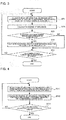
- Fig. 3 is a flowchart of an operation of the air-conditioning system control apparatus 2 according to Embodiment 1 of the present invention. Next, an operation of the air-conditioning system control apparatus 2 will be described.
- two air-conditioning indoor units 4 are arbitrarily selected from a plurality of air-conditioning indoor units 4 as a pair of air-conditioning indoor units 4 (step ST1).
- the influence-degree calculation unit 14 calculates a degree of influence between the pair of air-conditioning indoor units (step ST2). Based on the calculated degree of influence, the room determination unit 15 determines whether the pair of air-conditioning indoor units 4 are present in the same space or not (step ST3). When the pair of air-conditioning indoor units are not present in the same space (No in step ST3), the process proceeds to step ST5.
- step ST4 the position estimation unit 16 estimates a positional relationship between the pair of air-conditioning indoor units (step ST4).
- the above steps ST1 to ST4 are carried out for all possible combinations of the plurality of air-conditioning indoor units 4 (step ST5).
- step ST5 a list of air-conditioning indoor units 4 present in the same space is created.
- the degree of influence between a pair of air-conditioning indoor units is calculated based on operation data on the pair of air-conditioning indoor units. Therefore, it is possible to calculate a degree of influence between the pair of air-conditioning indoor units 4 without a specific device such as an optical transmitting and receiving device. Furthermore, location information on the air-conditioning indoor units 4 on the plane can be obtained based on the degree of influence, and an energy-efficient control based on the location information can be performed to achieve energy saving. In Embodiment 1, the location information on the air-conditioning indoor units 4 is automatically obtained. Thus, when installing the air-conditioning system 1, for example, workers do not need to manually register the location information, and the burden on the worker in installation of the air-conditioning system 1 is thus reduced. Furthermore, in Embodiment 1, it is possible to provide additional functions and services, such as visualization of space information including the obtained location information, to a user who is present in space air-conditioned by the air-conditioning system 1 or an administrator for the space.
- the room determination unit 15 determines whether a pair of air-conditioning indoor units are present in the same space or not, and only when it is determined that the pair of air-conditioning indoor units are present in the same space, the position estimation unit 16 estimates how far away the pair of air-conditioning indoor units are from each other. That is, the air-conditioning system control apparatus 2 does not need to estimate the positions of the pair of air-conditioning indoor units when the pair of air-conditioning indoor units are not present in the same space. Therefore, the processing load on the air-conditioning system control apparatus 2 is reduced.
- the rotation control unit 6 maintains or stops operating of each of the air-conditioning indoor units 4.
- the air-conditioning environment is not greatly changed. That is, when the rotation operation is performed, the operation load is equalized to achieve energy savings, a target space for air-conditioning is uniformly air-conditioned, and the degree of the change of the air-conditioning environment is reduced.
- Embodiment 1 it is described above by way of example that calculation is performed using a machine learning method. It will be described by way of example that machine learning is further promoted.
- the rotation control unit 6 keeps in operation, one of a pair of air-conditioning indoor units for which operation data is not sufficiently collected as compared with other pairs of air-conditioning indoor units, and stops the operation of the other of the above pair of air-conditioning indoor units. While an air-conditioning rotation control is being performed as in intermediate seasons, there is a case where operation data on a pair of air-conditioning indoor units has not been sufficiently collected.
- the rotation control unit 6 preferentially performs a control of keeping one of the above pair of air-conditioning indoor units in operation, and stopping the operation of the other of the pair of air-conditioning indoor units. Accordingly, the operation data collection unit 12 collects further operation data on the pair of air-conditioning indoor units. Thereby, the further operation data is added to the operation data insufficient to determine whether the pair of air-conditioning indoor units are present in the same space or not and estimate the degree of influence between the air-conditioning indoor units. It is therefore possible to improve the accuracy of calculation of the location information on the air-conditioning indoor units 4.
- the air-conditioning indoor units 4 operate automatically (in an automatic mode).
- the user is allowed to set only limited items such as a temperature, and is not allowed to set detailed items such as an air rate.
- the automatic operation is performed in a manner suitable for calculation of location information, to thereby early improve the accuracy in calculation of the degree of influence.
- the rotation control unit 6 keeps in operation, one of two air-conditioning indoor units 4 that are assumed adjacent to each other and stops the operation of the other of the two air-conditioning unit 4. Thereby, further operation data is added to the insufficient operation data, thus improving the accuracy in calculation of the degree of influence.
- Fig. 4 is a flowchart of an operation of the air-conditioning system control apparatus 2 according to Embodiment 2 of the present invention.
- Embodiment 2 it is not determined whether a pair of air-conditioning indoor units are present in the same space.
- Embodiment 2 is different from Embodiment 1.
- components that are the same as those in Embodiment 1 will be denoted by the same reference signs, and their descriptions will thus be omitted.
- Embodiment 2 will be described by mainly to the differences between Embodiments 1 and 2.
- Embodiment 2 it is not determined whether a pair of air-conditioning indoor units are present in the same space, and the degree of influence between air-conditioning indoor units of each of all possible combinations of the air-conditioning indoor units is calculated.
- Fig. 4 first, two air-conditioning indoor units 4 are arbitrarily selected from a plurality of air-conditioning indoor units 4 (step ST11). Then, the influence-degree calculation unit 14 calculates the degree of influence between the selected air-conditioning indoor units, and the position estimation unit 16 estimates a positional relationship between the air-conditioning indoor units based on the calculated degree of influence (step ST12). The above steps ST11 and ST12 are repeatedly carried out for all possible combinations of the plurality of air-conditioning indoor units 4 (step ST13). Thus, a list of air-conditioning indoor units 4 present in the same space is created.
- Embodiment 2 also in the case where a positional relationship between a pair of air-conditioning indoor units is estimated regardless of whether they are present in the same space, it is possible to obtain the same advantages as in Embodiment 1.
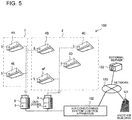
- Fig. 5 is a block diagram of an air-conditioning system 100 according to Embodiment 3 of the present invention.
- an air-conditioning system control apparatus 102 is connected to an external server 122 via a network 120.
- Embodiment 3 is different from Embodiment 1.
- Embodiment 3 will be described by referring mainly to the differences between Embodiments 1 and 3.
- components that are the same as those in Embodiment 1 will be denoted by the same reference signs, and their descriptions will thus be omitted.
- the air-conditioning system control apparatus 102 is connected to the external server 122 and another building 121 via the network 120. It should be noted that the air-conditioning system 100 including the air-conditioning system control apparatus 102 is set in advance to have a floor map in which installation positions of the air-conditioning indoor units 4 are registered by, for example, a construction worker or workers. An air-conditioning system in another building 121 does not have such a floor map.
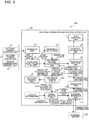
- Fig. 6 is a block diagram of the air-conditioning system control apparatus 102 according to Embodiment 3 of the present invention. As illustrated in Fig. 6 , the air-conditioning system control apparatus 102 further includes a transmission unit 116, an external interface unit 117, a reception unit 118, and a correction information table 119.
- the transmission unit 116 transmits data indicating a degree of influence that is obtained from the influence-degree table 14a and the floor map (layout information) to the external server 122 via the external interface unit 117.
- the external interface unit 117 transmits and receives data to and from the external server 122.
- the reception unit 118 receives correction information from the external server 122 via the external interface unit 117.
- the correction information table 119 is a storage unit that stores the correction information.
- the reception unit 118 stores the received correction information in the correction information table 119.
- the influence-degree calculation unit 14 obtains the correction information from the correction information table 119, and corrects the degree of influence.
- the external server 122 creates the correction information based on the received degree of influence.
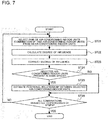
- Fig. 7 is a flowchart of an operation of the air-conditioning system control apparatus 102 according to Embodiment 3 of the present invention.
- two air-conditioning indoor units 4 are arbitrarily selected from a plurality of air-conditioning indoor units 4 (step ST21).
- the influence-degree calculation unit 14 calculates a degree of influence between the selected two air-conditioning indoor units (step ST22). From an external device having layout information, the layout information is obtained, and the degree of influence is corrected based on the layout information (step ST23). Based on the corrected degree of influence, the room determination unit 15 determines whether the two air-conditioning indoor units 4 are present in the same space or not (step ST24). When it is determined that the two air-conditioning indoor units are not present in the same space (No in step ST24), the process proceeds to step ST26.
- the position estimation unit 16 estimates a positional relationship between the two air-conditioning indoor units (step ST25).
- the above steps ST21 to ST25 are repeatedly carried out for all possible combinations of the air-conditioning indoor units 4 (step ST26). Thus, a list of air-conditioning indoor units 4 present in the same space is created.
- the corrected information is transmitted from the air-conditioning system control apparatus 102 of the air-conditioning system 100 to the external server 122 via the network 120.
- the external server 122 transmits the received information to an air-conditioning system control apparatus for the other building 121.
- the air-conditioning system control apparatus for the other building 121 Based on the information transmitted from the external server 122, the air-conditioning system control apparatus for the other building 121 corrects a calculated degree of influence between the air-conditioning indoor units 4.
- the calculated degree of influence is corrected based on a relationship between the transmitted floor map and the degree of influence, and the accuracy of calculation of the degree of influence can thus be improved. Thereby, it is possible to estimate the position based on the degree of influence with a higher accuracy.
- 1 air-conditioning system 1 air-conditioning system, 2 air-conditioning system control apparatus, 3 air-conditioning outdoor unit, 4 air-conditioning indoor unit, 5 sensor, 6 rotation control unit, 7 first space, 8 second space , 11 interface unit, 12 operation data collection unit, 13 operation data table, 14 influence-degree calculation unit, 14a influence-degree table, 15 room determination unit, 16 position estimation unit, 17 map creation unit, 100 air-conditioning system, 102 air-conditioning system control apparatus, 116 transmission unit, 117 external interface unit, 118 reception unit, 119 correction information table, 120 network, 121 another building, 122 external server
Landscapes
- Engineering & Computer Science (AREA)
- Chemical & Material Sciences (AREA)
- Combustion & Propulsion (AREA)
- Mechanical Engineering (AREA)
- General Engineering & Computer Science (AREA)
- Signal Processing (AREA)
- Physics & Mathematics (AREA)
- Fuzzy Systems (AREA)
- Mathematical Physics (AREA)
- Air Conditioning Control Device (AREA)
Abstract
Description
- The present invention relates to an air-conditioning system control apparatus that controls various devices included in an air-conditioning system.
- In the past, an air-conditioning system in which a plurality of air-conditioning indoor units are provided in the same space has been known.
Patent Literature 1 discloses an air-conditioning system including a plurality of air-conditioning indoor units each provided with a light emitting and receiving device that emits and receives light. In the technique ofPatent Literature 1, each of the air-conditioning indoor units emits and receives light to measure the distance between each air-conditioning indoor unit and the other air-conditioning indoor unit or units, and calculates the degree of influence between those air-conditioning indoor units based on the result of the measurement. - Patent Literature 1: Japanese Unexamined Patent Application Publication No.
2006-226578 - The air-conditioning system disclosed in
Patent Literature 1 needs to include the light emitting and receiving device as an additional component in order to calculate the degree of influence between the air-conditioning indoor units. - The present invention has been made to solve the above problem, and an object of the invention is to provide an air-conditioning system control apparatus capable of calculating the degree of influence between the air-conditioning indoor units without a specific device.
- An air-conditioning system control apparatus according to an embodiment of the present invention includes an influence-degree calculation unit that calculates a degree of influence between two air-conditioning indoor units that are selected from a plurality of air-conditioning indoor units as a pair of air-conditioning indoor units, based on operation data on the pair of air-conditioning indoor units.
- According to the embodiment of the present invention, the degree of influence between the pair of air-conditioning indoor units is calculated based on operation data on the pair of air-conditioning indoor units. It is therefore possible to calculate the degree of influence between the air-conditioning indoor units without a specific device.
-
- [
Fig. 1] Fig. 1 is a block diagram of an air-conditioning system 1 according toEmbodiment 1 of the present invention. - [
Fig. 2] Fig. 2 is a block diagram of an air-conditioningsystem control apparatus 2 according toEmbodiment 1 of the present invention. - [
Fig. 3] Fig. 3 is a flowchart of an operation of the air-conditioningsystem control apparatus 2 according toEmbodiment 1 of the present invention. - [
Fig. 4] Fig. 4 is a flowchart of an operation of an air-conditioningsystem control apparatus 2 according toEmbodiment 2 of the present invention. - [
Fig. 5] Fig. 5 is a block diagram of an air-conditioning system 100 according toEmbodiment 3 of the present invention. - [
Fig. 6] Fig. 6 is a block diagram of an air-conditioningsystem control apparatus 102 according toEmbodiment 3 of the present invention. - [
Fig. 7] Fig. 7 is a flowchart of an operation of the air-conditioningsystem control apparatus 102 according toEmbodiment 3 of the present invention. - Embodiments of an air-conditioning system control apparatus according to the present invention will be described with reference to the drawings.
Fig. 1 is a block diagram of an air-conditioning system 1 according toEmbodiment 1 of the present invention. The air-conditioning system 1 as illustrated inFig. 1 includes at least one air-conditioningoutdoor unit 3, a plurality of air-conditioning indoor units 4, a plurality ofsensors 5, and an air-conditioningsystem control apparatus 2. The air-conditioning system 1 according toEmbodiment 1, as illustrated inFig. 1 , includes two air-conditioningoutdoor units 3 and six air-conditioningindoor units indoor units outdoor units 3 is connected to the air-conditioningindoor units 4A to 4C by refrigerant pipes and communication lines, and the other is connected to the air-conditioningindoor units 4D to 4F by refrigerant pipes and communication lines. It should be noted that that the relationship in connection between the air-conditioningoutdoor units 3 and the refrigerant pipes may be different from that between the air-conditioningoutdoor units 3 and the communication lines. Furthermore, although it is illustrated by way of example that in the air-conditioningindoor units outdoor units 3,respective sensors 5 are provided, thesensors 5 may be provided outside the air-conditioningindoor units outdoor units 3. - Of the six air-conditioning
indoor units 4A to 4F, two air-conditioningindoor units first space 7, and four air-conditioningindoor units second space 8. One of the two air-conditioningoutdoor units 3 is connected to the two air-conditioningindoor units first space 7 and one air-conditioningindoor unit 4B provided in thesecond space 8, and the other is connected to the three air-conditioningindoor units second space 8. - In the air-
conditioning system 1 according toEmbodiment 1, air-conditioning indoor units 4 connected to the same air-conditioningoutdoor unit 3 may be all installed in the same space or may be provided in different spaces. Furthermore, air-conditioning indoor units 4 connected to different air-conditioningoutdoor units 3 may also be provided in the same space. With respect toEmbodiment 1, it is illustrated by way of example inFig. 1 that two spaces are provided, but the number of spaces may be one or may be three or more. -
Fig. 2 is a block diagram of the air-conditioningsystem control apparatus 2 according toEmbodiment 1 of the present invention. As illustrated inFig. 2 , the air-conditioningsystem control apparatus 2 is a microcomputer that executes a plurality of programs. The air-conditioningsystem control apparatus 2 includes aninterface unit 11, an operationdata collection unit 12, an operation data table 13, an influence-degree calculation unit 14, aroom determination unit 15, aposition estimation unit 16, amap creation unit 17, an influence-degree table 14a, and arotation control unit 6. Theinterface unit 11 receives operation data from the air-conditioningoutdoor units 3, the air-conditioning indoor units 4, thesensors 5 and other components. The operationdata collection unit 12 receives the operation data from theinterface unit 11. In other words, the operationdata collection unit 12 collects via theinterface unit 11, the operation data from the air-conditioningoutdoor units 3, the air-conditioning indoor units 4, thesensors 5 and other components that are all included in the air-conditioning system 1. - The operation data indicates information that can be collected from the air-
conditioning system 1, and that indicates operating conditions such as an operation state, that is, whether an air-conditioning indoor unit is in operation or in a stopped state, an operation mode, a wind speed and a wind direction, and detection values obtained by thesensors 5. The operation data is collected not only when the air-conditioning indoor unit is in operation, but when the air-conditioning indoor unit is in the stopped state. The operation data table 13 is a storage unit that stores the operation data. The operationdata collection unit 12 stores the collected operation data in the operation data table 13. - The influence-
degree calculation unit 14 obtains the operation data from the operation data table 13, and calculates a degree of influence. The degree of influence is the degree to which one of the plurality of air-conditioning indoor units 4 is influenced by another one of the plurality of air-conditioning indoor units 4. Specifically, the influence-degree calculation unit 14 calculates a degree of influence between two air-conditioning apparatuses that are selected from the plurality of air-conditioning indoor units 4 as a pair of air-conditioning indoor units, based on operation data on the two air-conditioning apparatuses. For example, the influence-degree calculation unit 14 selects the air-conditioningindoor units indoor units 4A to 4F, and calculates a degree of influence between the air-conditioningindoor units indoor units degree calculation unit 14 selects the air-conditioningindoor units indoor units indoor units degree calculation unit 14 calculates a degree of influence between the air-conditioning indoor units of each of all possible combinations of the air-conditioningindoor units 4A to 4F. That is, the degrees of influence between all pairs of air-conditioning indoor units are calculated. - To be more specific, the influence-
degree calculation unit 14 calculates a degree of influence using temporal correlation based on obtained operation data. A parameter indicating the temporal correlation is a parameter correlated with the distance between a pair of air-conditioning indoor units. The parameter indicating the temporal correlation is a change pattern of a suction temperature. The higher the degree of similarity in temporal change of the suction temperature between a pair of air-conditioning indoor units, the higher the degree of influence between the air-conditioning indoor units, and the higher the possibility with which the degree of influence between the air-conditioning indoor units is higher than that between another pair of air-conditioning indoor units. Therefore, as the degree of influence between a pair of air-conditioning indoor units, the degree of similarity in temporal change of suction temperature data between the pair of air-conditioning indoor units can be applied. - It should be noted that the parameter indicating the temporal correlation may be a time interval pattern of thermo-on time and thermos-off time. The higher the degree of similarity in temporal change of thermo-on time and thermos-off time between a pair of air-conditioning indoor units, the higher the degree of influence between the a pair of air-conditioning indoor units, and the higher the possibility with which the degree of influence between the pair of air-conditioning indoor units is higher than that between another pair of air-conditioning indoor units. Therefore, as the degree of influence between a pair of air-conditioning indoor units, the degree of similarity in the degree of similarity in time interval pattern of thermo-on time and thermos-off time between the pair of air-conditioning indoor units can be applied.
- Furthermore, the parameter indicating the temporal correlation may be a value of a temperature change of one of a pair of air-conditioning indoor units, which is made when the one of the pair of air-conditioning indoor units is stopped while the other air-conditioning indoor unit is in operation. To be more specific, when an air-conditioning operation of an air-conditioning indoor unit 4 that is in operation influences a detection value obtained by the
sensor 5 of an air-conditioning indoor unit 4 that is in the stopped state, it is assumed that the degree of influence between these two air-conditioning indoor units is higher than that between another pair of air-conditioning indoor units.
In this case, for example, it is assumed that there is a high probability that the above former two air-conditioning indoor units are provided in the same space. - Also, when the temporal correlation between values obtained by two temperature sensors provided at a pair of air-conditioning indoor units is higher than that between values obtained by two temperature sensors provided at another the pair of air-conditioning indoor units, it is assumed that that the degree of influence of the former pair of air-conditioning indoor units is higher than that of the latter pair of air-conditioning indoor units. Therefore, as the degree of influence between a pair of air-conditioning indoor units, a value of a temperature change of one of the pair of air-conditioning indoor units that is made when the one of the pair of air-conditioning indoor units is stopped while the other of the pair of air-conditioning indoor units is in operation may be applied.
- It is preferable that the influence-
degree calculation unit 14 calculate the degree of influence between a pair of air-conditioning indoor units using a machine learning method. The degree of influence between air-conditioning indoor units 4 constantly changes due to external environmental factors such as the number of people who are present in a room and opening and closing of windows. InEmbodiment 1, the influence-degree calculation unit 14 repeatedly stores and learns the calculated temporal correlation at all times or at regular intervals, and as a result can accurately recognize position information on the air-conditioning indoor units 4. - The
room determination unit 15 determines whether a pair of air-conditioning indoor units are present in the same space or not based on the degree of influence calculated by the influence-degree calculation unit 14. For example, theroom determination unit 15 determines whether the calculated degree of influence is higher than or equal to a first threshold. When determining that the calculated degree of influence is higher than or equal to the first threshold, theroom determination unit 15 determines that that the pair of air-conditioning indoor units are present in the same space, and when determining that the calculated degree of influence is less than the first threshold, theroom determination unit 15 determines that that the pair of air-conditioning indoor units are not present in the same space. - The
room determination unit 15 determines whether, for example, the air-conditioningindoor units indoor units Embodiment 1, theroom determination unit 15 determines that the degree of influence between the air-conditioningindoor units indoor units room determination unit 15 determines whether, for example, the air-conditioningindoor units indoor units Embodiment 1, theroom determination unit 15 determines that the degree of influence between the air-conditioningindoor units room determination unit 15 determines that the air-conditioningindoor units room determination unit 15 makes the above determination regarding all possible combinations of the air-conditioningindoor units 4A to 4F. As a result, it is determined whether or not all air-conditioningindoor units 4A to 4F are present in the same space. - The
position estimation unit 16 estimates, based on the degree of influence between a pair of air-conditioning indoor units that are determined to be present in the same space by theroom determination unit 15, a positional relationship between the pair of air-conditioning indoor units. For example, theposition estimation unit 16 estimates a distance by referring to the calculated degree of influence and a table stored in advance and indicating a relationship between the degree of influence and distance information. Based on the distances between all pairs of air-conditioning indoor units provided in the same space, theposition estimation unit 16 estimates the positions of all air-conditioning indoor units 4 provided in the same space. It should be noted that in the relationship indicated by the table, the lower the degree of influence between a pair of air-conditioning indoor units, the greater the distance between the pair of air-conditioning indoor units, and the higher the degree of influence between the pair of air-conditioning indoor units, the smaller the distance between the pair of air-conditioning indoor units. - It should be noted that calculated degrees of influence are classified based on a plurality of second thresholds set for respective distances, and the
position estimation unit 16 may estimate a positional relationship based on the classified degrees of influence. Thereby, theposition estimation unit 16 estimates how far away a pair of air-conditioning indoor units that are in the same space are from each other. Theposition estimation unit 16 may use a larger number of parameters than the parameters which theroom determination unit 15 uses to determine whether a pair of air-conditioning indoor units are present in the same space or not, to thereby determine a detailed positional relationship between the pair of air-conditioning indoor units. - The
map creation unit 17 creates a two-dimensional location map of air-conditioning indoor units 4 that are present in the same space, based on the estimation of positions of the air-conditioning indoor units 4 present in the same space that is made by theposition estimation unit 16. After the influence-degree calculation unit 14 calculates degrees of influence between all pairs of air-conditioning indoor units, themap creation unit 17 creates a list of air-conditioning indoor units 4 that are present in the same space. For example, themap creation unit 17 converts parameters regarding the degrees of influence into distance proximities, and based on obtained distance proximities between all the air-conditioning indoor units 4, plots installation locations of all air-conditioning indoor units 4 on a plane. Thus, the location map of the air-conditioning indoor units 4 present in the same space is automatically created in the air-conditioningsystem control apparatus 2. An algorithm for use in plotting the installation locations of the air-conditioning indoor units 4 on the plane based on the distance information regarding distances between the air-conditioning indoor units 4 is not limited to a specific one, and may be a general solution to a position determination problem. - To be more specific, the algorithm may be an algorithm for use in, for example, a position determination method in an ad-hoc network of, for example, wireless sensors or wireless terminals, using a graph theory. Alternatively, the algorithm may be a heuristic algorithm represented by a genetic algorithm. Still alternatively, the algorithm may be an algorithm using a recognition method.
- The influence-degree table 14a is a storage unit that stores a degree of influence. The influence-
degree calculation unit 14 stores a calculated degree of influence in the influence-degree table 14a. Therotation control unit 6 obtains the degree of influence from the influence-degree table 14a, and executes a rotation operation based on the degree of influence. In the rotation operation, one or some of the plurality of air-conditioning indoor units 4 are kept in operation, and the operation of the other or others of the plurality of air-conditioning indoor units 4 is stopped. - In
Embodiment 1, therotation control unit 6 is provided in the air-conditioningsystem control apparatus 2. This, however, is an example. Instead of therotation control unit 6, an external module may be used. For example, therotation control unit 6 keeps in operation one of air-conditioning indoor units 4 installed in the same space, and stops the operation of the other or others of the air-conditioning units. Then, after the elapse of a predetermined time period, therotation control unit 6 stops the operation of one or some or all air-conditioning indoor units 4 that are in operation, and starts the operation of one or some or all air-conditioning indoor units 4 that is in the stopped state. In such a manner, the operations of the air-conditioningindoor units 4A to 4F are selectively stopped or started in rotation at regular intervals, thereby equalizing the operational loads on the air-conditioning indoor units to achieve energy savings, and uniformly air-conditioning a target space for air-conditioning. - Of the plurality of air-conditioning indoor units 4, one of air-conditioning units having the lowest degree of influence is stopped in operation. For example, in the
second space 8 as indicated inFig. 1 , the air-conditioningindoor units rotation control unit 6 keeps the air-conditioningindoor unit 4C in operation, and stops the operation of the air-conditioningindoor unit 4F. In such a manner, the operation of one of the air-conditioning indoor units 4 having the lowest degree of influence is stopped, to thereby reduce the degree of a change in an air-conditioning environment that is made by stopping an air-conditioning indoor unit 4. It should be noted that in the case where as in thefirst space 7 as indicated inFig. 1 , two air-conditioning indoor units 4 are installed, one of the two air-conditioning indoor units 4, for example, the air-conditioningindoor unit 4A, is kept in operation, and the operation of the other air-conditioning indoor unit 4, for example, the air-conditioningindoor unit 4E, is stopped. - Furthermore, the
rotation control unit 6 stops next an air-conditioning indoor unit 4 having the lowest degree of influence for an air-conditioning indoor unit 4 that is in the stopped state. For example, in thesecond space 8 as indicated inFig. 1 , when the air-conditioningindoor unit 4C is in operation, therotation control unit 6 selects the air-conditioningindoor unit 4F, which has the lowest degree of influence for the air-conditioningindoor unit 4C, as an air-conditioning indoor unit 4 to be stopped next. Then, after the elapse of a predetermined time period, therotation control unit 6 stops the operation of the air-conditioningindoor unit 4C and keeps the air-conditioningindoor unit 4F in operation. In such a manner, an air-conditioning indoor unit 4 having the lowest degree of influence for an air-conditioning indoor unit 4 that is in the stopped state is stopped next, to thereby also reduce the degree of a change in the air-conditioning environment that is made by stopping an air-conditioning indoor unit 4. - The
rotation control unit 6 may continuously perform a control of stopping the operation of one of air-conditioning indoor units 4 of the plurality of air-conditioning indoor units 4 that have the lowest degree of influence, and then stopping the operation of an air-conditioning indoor unit 4 having the lowest degree of influence for the air-conditioning indoor unit 4 that is in the stopped state. In this case, it is possible to further reduce the degree of a change in the air-conditioning environment that is made by stopping an air-conditioning indoor unit 4. It should be noted that inEmbodiment 1, therotation control unit 6 performs the rotation operation based on the degree of influence between air-conditioning indoor units 4; however, therotation control unit 6 may perform the rotation operation based on the positions of the air-conditioning indoor units 4. -
Fig. 3 is a flowchart of an operation of the air-conditioningsystem control apparatus 2 according toEmbodiment 1 of the present invention. Next, an operation of the air-conditioningsystem control apparatus 2 will be described. As illustrated inFig. 3 , first, two air-conditioning indoor units 4 are arbitrarily selected from a plurality of air-conditioning indoor units 4 as a pair of air-conditioning indoor units 4 (step ST1). Then, the influence-degree calculation unit 14 calculates a degree of influence between the pair of air-conditioning indoor units (step ST2). Based on the calculated degree of influence, theroom determination unit 15 determines whether the pair of air-conditioning indoor units 4 are present in the same space or not (step ST3). When the pair of air-conditioning indoor units are not present in the same space (No in step ST3), the process proceeds to step ST5. - By contrast, when the pair of air-conditioning indoor units are present in the same space (Yes in step ST3), the
position estimation unit 16 estimates a positional relationship between the pair of air-conditioning indoor units (step ST4). The above steps ST1 to ST4 are carried out for all possible combinations of the plurality of air-conditioning indoor units 4 (step ST5). Thus, a list of air-conditioning indoor units 4 present in the same space is created. - In
Embodiment 1, the degree of influence between a pair of air-conditioning indoor units is calculated based on operation data on the pair of air-conditioning indoor units. Therefore, it is possible to calculate a degree of influence between the pair of air-conditioning indoor units 4 without a specific device such as an optical transmitting and receiving device. Furthermore, location information on the air-conditioning indoor units 4 on the plane can be obtained based on the degree of influence, and an energy-efficient control based on the location information can be performed to achieve energy saving. InEmbodiment 1, the location information on the air-conditioning indoor units 4 is automatically obtained. Thus, when installing the air-conditioning system 1, for example, workers do not need to manually register the location information, and the burden on the worker in installation of the air-conditioning system 1 is thus reduced. Furthermore, inEmbodiment 1, it is possible to provide additional functions and services, such as visualization of space information including the obtained location information, to a user who is present in space air-conditioned by the air-conditioning system 1 or an administrator for the space. - In
Embodiment 1, theroom determination unit 15 determines whether a pair of air-conditioning indoor units are present in the same space or not, and only when it is determined that the pair of air-conditioning indoor units are present in the same space, theposition estimation unit 16 estimates how far away the pair of air-conditioning indoor units are from each other. That is, the air-conditioningsystem control apparatus 2 does not need to estimate the positions of the pair of air-conditioning indoor units when the pair of air-conditioning indoor units are not present in the same space. Therefore, the processing load on the air-conditioningsystem control apparatus 2 is reduced. Therotation control unit 6 maintains or stops operating of each of the air-conditioning indoor units 4. Thus, even if the operation of an air-conditioning indoor unit 4 is stopped, the air-conditioning environment is not greatly changed. That is, when the rotation operation is performed, the operation load is equalized to achieve energy savings, a target space for air-conditioning is uniformly air-conditioned, and the degree of the change of the air-conditioning environment is reduced. - Regarding
Embodiment 1, it is described above by way of example that calculation is performed using a machine learning method. It will be described by way of example that machine learning is further promoted. Therotation control unit 6 keeps in operation, one of a pair of air-conditioning indoor units for which operation data is not sufficiently collected as compared with other pairs of air-conditioning indoor units, and stops the operation of the other of the above pair of air-conditioning indoor units. While an air-conditioning rotation control is being performed as in intermediate seasons, there is a case where operation data on a pair of air-conditioning indoor units has not been sufficiently collected. In this case, therotation control unit 6 preferentially performs a control of keeping one of the above pair of air-conditioning indoor units in operation, and stopping the operation of the other of the pair of air-conditioning indoor units. Accordingly, the operationdata collection unit 12 collects further operation data on the pair of air-conditioning indoor units. Thereby, the further operation data is added to the operation data insufficient to determine whether the pair of air-conditioning indoor units are present in the same space or not and estimate the degree of influence between the air-conditioning indoor units. It is therefore possible to improve the accuracy of calculation of the location information on the air-conditioning indoor units 4. - The following description is made by referring to by way of example the case where the air-conditioning indoor units 4 operate automatically (in an automatic mode). In this automatic operation, the user is allowed to set only limited items such as a temperature, and is not allowed to set detailed items such as an air rate. To the extent that the user's settings are satisfied, the automatic operation is performed in a manner suitable for calculation of location information, to thereby early improve the accuracy in calculation of the degree of influence. For example, the
rotation control unit 6 keeps in operation, one of two air-conditioning indoor units 4 that are assumed adjacent to each other and stops the operation of the other of the two air-conditioning unit 4. Thereby, further operation data is added to the insufficient operation data, thus improving the accuracy in calculation of the degree of influence. -
Fig. 4 is a flowchart of an operation of the air-conditioningsystem control apparatus 2 according toEmbodiment 2 of the present invention. InEmbodiment 2, it is not determined whether a pair of air-conditioning indoor units are present in the same space. In this regard,Embodiment 2 is different fromEmbodiment 1. RegardingEmbodiment 2, components that are the same as those inEmbodiment 1 will be denoted by the same reference signs, and their descriptions will thus be omitted.Embodiment 2 will be described by mainly to the differences betweenEmbodiments - In
Embodiment 2, it is not determined whether a pair of air-conditioning indoor units are present in the same space, and the degree of influence between air-conditioning indoor units of each of all possible combinations of the air-conditioning indoor units is calculated. As illustrated inFig. 4 , first, two air-conditioning indoor units 4 are arbitrarily selected from a plurality of air-conditioning indoor units 4 (step ST11). Then, the influence-degree calculation unit 14 calculates the degree of influence between the selected air-conditioning indoor units, and theposition estimation unit 16 estimates a positional relationship between the air-conditioning indoor units based on the calculated degree of influence (step ST12). The above steps ST11 and ST12 are repeatedly carried out for all possible combinations of the plurality of air-conditioning indoor units 4 (step ST13). Thus, a list of air-conditioning indoor units 4 present in the same space is created. - As in
Embodiment 2, also in the case where a positional relationship between a pair of air-conditioning indoor units is estimated regardless of whether they are present in the same space, it is possible to obtain the same advantages as inEmbodiment 1. -
Fig. 5 is a block diagram of an air-conditioning system 100 according toEmbodiment 3 of the present invention. InEmbodiment 3, an air-conditioningsystem control apparatus 102 is connected to anexternal server 122 via anetwork 120. In this regard,Embodiment 3 is different fromEmbodiment 1.Embodiment 3 will be described by referring mainly to the differences betweenEmbodiments Embodiment 3, components that are the same as those inEmbodiment 1 will be denoted by the same reference signs, and their descriptions will thus be omitted. - As illustrated in
Fig. 5 , the air-conditioningsystem control apparatus 102 is connected to theexternal server 122 and anotherbuilding 121 via thenetwork 120. It should be noted that the air-conditioning system 100 including the air-conditioningsystem control apparatus 102 is set in advance to have a floor map in which installation positions of the air-conditioning indoor units 4 are registered by, for example, a construction worker or workers. An air-conditioning system in anotherbuilding 121 does not have such a floor map. -
Fig. 6 is a block diagram of the air-conditioningsystem control apparatus 102 according toEmbodiment 3 of the present invention. As illustrated inFig. 6 , the air-conditioningsystem control apparatus 102 further includes atransmission unit 116, anexternal interface unit 117, areception unit 118, and a correction information table 119. - The
transmission unit 116 transmits data indicating a degree of influence that is obtained from the influence-degree table 14a and the floor map (layout information) to theexternal server 122 via theexternal interface unit 117. Theexternal interface unit 117 transmits and receives data to and from theexternal server 122. Thereception unit 118 receives correction information from theexternal server 122 via theexternal interface unit 117. The correction information table 119 is a storage unit that stores the correction information. Thereception unit 118 stores the received correction information in the correction information table 119. The influence-degree calculation unit 14 obtains the correction information from the correction information table 119, and corrects the degree of influence. Theexternal server 122 creates the correction information based on the received degree of influence. -
Fig. 7 is a flowchart of an operation of the air-conditioningsystem control apparatus 102 according toEmbodiment 3 of the present invention. As illustrated inFig. 7 , first, two air-conditioning indoor units 4 are arbitrarily selected from a plurality of air-conditioning indoor units 4 (step ST21). Then, the influence-degree calculation unit 14 calculates a degree of influence between the selected two air-conditioning indoor units (step ST22). From an external device having layout information, the layout information is obtained, and the degree of influence is corrected based on the layout information (step ST23). Based on the corrected degree of influence, theroom determination unit 15 determines whether the two air-conditioning indoor units 4 are present in the same space or not (step ST24). When it is determined that the two air-conditioning indoor units are not present in the same space (No in step ST24), the process proceeds to step ST26. - When it is determined that the two air-conditioning indoor units are present in the same space (Yes in step ST24), the
position estimation unit 16 estimates a positional relationship between the two air-conditioning indoor units (step ST25). The above steps ST21 to ST25 are repeatedly carried out for all possible combinations of the air-conditioning indoor units 4 (step ST26). Thus, a list of air-conditioning indoor units 4 present in the same space is created. - In
Embodiment 3, the corrected information is transmitted from the air-conditioningsystem control apparatus 102 of the air-conditioning system 100 to theexternal server 122 via thenetwork 120. Theexternal server 122 transmits the received information to an air-conditioning system control apparatus for theother building 121. Based on the information transmitted from theexternal server 122, the air-conditioning system control apparatus for theother building 121 corrects a calculated degree of influence between the air-conditioning indoor units 4. In theother building 121, the calculated degree of influence is corrected based on a relationship between the transmitted floor map and the degree of influence, and the accuracy of calculation of the degree of influence can thus be improved. Thereby, it is possible to estimate the position based on the degree of influence with a higher accuracy. - 1 air-conditioning system, 2 air-conditioning system control apparatus, 3 air-conditioning outdoor unit, 4 air-conditioning indoor unit, 5 sensor, 6 rotation control unit, 7 first space, 8 second space , 11 interface unit, 12 operation data collection unit, 13 operation data table, 14 influence-degree calculation unit, 14a influence-degree table, 15 room determination unit, 16 position estimation unit, 17 map creation unit, 100 air-conditioning system, 102 air-conditioning system control apparatus, 116 transmission unit, 117 external interface unit, 118 reception unit, 119 correction information table, 120 network, 121 another building, 122 external server
Claims (22)
- An air-conditioning system control apparatus comprising an influence-degree calculation unit configured to calculate a degree of influence between two air-conditioning indoor units that are selected from a plurality of air-conditioning indoor units as a pair of air-conditioning indoor units, based on operation data on the pair of air-conditioning indoor units.
- The air-conditioning system control apparatus of claim 1, further comprising a room determination unit configured to determine whether the pair of air-conditioning indoor units are present in the same space or not based on the degree of influence calculated by the influence-degree calculation unit.
- The air-conditioning system control apparatus of claim 2, further comprising a position estimation unit configured to estimate a positional relationship between the pair of air-conditioning indoor units, which are determined by the room determination unit to be present in the same space, based on the degree of influence between the pair of air-conditioning indoor units.
- The air-conditioning system control apparatus of claim 3, further comprising a map creation unit configured to create a location map of the plurality of air-conditioning indoor units based on the positional relationship estimated by the position estimation unit.
- The air-conditioning system control apparatus of claim 4, wherein
the influence-degree calculation unit is configured to calculate degrees of influence between all possible pairs of air-conditioning indoor units of the plurality of air-conditioning indoor units,
the position estimation unit is configured to estimate positional relationships between the all possible pairs of air-conditioning indoor units, and
the map creation unit is configured to create a location map of all the plurality of air-conditioning indoor units based on the positional relationships between the all possible pairs of air-conditioning indoor units. - The air-conditioning system control apparatus of claim 5, wherein
each of the positional relationships is a distance proximity between an associated pair of air-conditioning indoor units of the all possible pairs of air-conditioning indoor units, and
the map creation unit is configured to plot positions of all the plurality of air-conditioning indoor units on a plane, based on distance proximities between the all possible pairs of air-conditioning indoor units. - The air-conditioning system control apparatus of any one of claims 1 to 6, further comprising a rotation control unit configured to perform, based on the degree of influence calculated by the influence-degree calculation unit, a rotation operation in which one or some of the plurality of air-conditioning indoor units are kept in operation and an operation of a remaining one or ones of the plurality of air-conditioning indoor units is stopped.
- The air-conditioning system control apparatus of claim 7, wherein the rotation control unit is configured to stop an operation of one of air-conditioning indoor units that have the lowest degree of influence for each other, among the plurality of air-conditioning indoor units.
- The air-conditioning system control apparatus of claim 8 as dependent on claim 7 as dependent on any one of claims 4 to 6, wherein the rotation control unit is configured to stop an operation of one of two air-conditioning indoor units that are furthest away from each other on the location map created by the map creation unit, among the plurality of air-conditioning indoor units.
- The air-conditioning system control apparatus of any one of claims 7 to 9, wherein the rotation control unit is configured to stop next an operation of one of the plurality of air-conditioning indoor units that has the lowest degree of influence for another one of the plurality of air-conditioning indoor units that is in a stopped state.
- The air-conditioning system control apparatus of claim 10 as dependent on any one of claims 7 to 9 as dependent on any one of claims 4 to 6, wherein the rotation control unit is configured to next stop an operation of one of the plurality of air-conditioning indoor units that is furthest from an other one of the plurality of air-conditioning indoor units that is in a stopped state, on the location map created by the map creation unit, among the plurality of air-conditioning indoor units.
- The air-conditioning system control apparatus of any one of claims 7 to 11, wherein the rotation control unit is configured to keep in operation, one of the pair of air-conditioning indoor units for which operation data is not sufficiently collected as compared with operation data on an other pair of air-conditioning indoor units, and stop an operation of an other of the pair of air-conditioning indoor units.
- The air-conditioning system control apparatus of any one of claims 7 to 12, wherein the rotation control unit is configured to keep in operation, when the plurality of air-conditioning indoor units are in automatic operation, one of the pair of air-conditioning indoor units for which operation data is not sufficiently collected as compared with operation data on an other pair of air-conditioning indoor units, and stop an operation of an other of the pair of air-conditioning indoor units.
- The air-conditioning system control apparatus of any one of claims 1 to 13, wherein the influence-degree calculation unit is configured to calculate the degree of influence between the pair of air-conditioning indoor units, using a machine learning method.
- The air-conditioning system control apparatus of any one of claims 1 to 14, wherein the influence-degree calculation unit is configured to calculate the degree of influence using a temporal correlation based on the operation data.
- The air-conditioning system control apparatus of any one of claims 1 to 15, wherein the degree of influence is a degree of similarity in temporal change of suction temperature data between the pair of air-conditioning indoor units.
- The air-conditioning system control apparatus of claim 16, wherein the influence-degree calculation unit is configured to increase the degree of influence such that the higher the similarity in temporal change of suction temperature data between the pair of air-conditioning indoor units, the higher the degree of influence.
- The air-conditioning system control apparatus of any one of claims 1 to 17, wherein the degree of influence is a degree of similarity in a time interval pattern of thermos-on time and thermos-off time between the pair of air-conditioning indoor units.
- The air-conditioning system control apparatus of claim 18, wherein the influence-degree calculation unit is configured to increase the degree of influence such that the higher the degree of similarity in the time interval pattern of the thermos-on time and the thermos-off time between the pair of air-conditioning indoor units, the higher the degree of influence.
- The air-conditioning system control apparatus of any one of claims 1 to 19, wherein the operation data is a temperature change of one of the pair of air-conditioning indoor units that is made when the one of the pair of air-conditioning indoor units is stopped while an other of the pair of air-conditioning indoor units is in operation.
- The air-conditioning system control apparatus of claim 20, wherein the influence-degree calculation unit is configured to increase the degree of influence such that the greater the temperature change of in the stopped one of the pair of air-conditioning indoor units, the higher the degree of influence.
- The air-conditioning system control apparatus of any one of claims 1 to 21, wherein the influence-degree calculation unit is configured to obtain from an external device having layout information on the plurality of air-conditioning indoor units, the layout information, and correct the degree of influence based on the layout information.
Applications Claiming Priority (1)
| Application Number | Priority Date | Filing Date | Title |
|---|---|---|---|
| PCT/JP2017/031170 WO2019043834A1 (en) | 2017-08-30 | 2017-08-30 | Air conditioning system control device |
Publications (3)
| Publication Number | Publication Date |
|---|---|
| EP3677853A1 true EP3677853A1 (en) | 2020-07-08 |
| EP3677853A4 EP3677853A4 (en) | 2020-08-26 |
| EP3677853B1 EP3677853B1 (en) | 2021-08-11 |
Family
ID=65527231
Family Applications (1)
| Application Number | Title | Priority Date | Filing Date |
|---|---|---|---|
| EP17923313.5A Active EP3677853B1 (en) | 2017-08-30 | 2017-08-30 | Air conditioning system control device |
Country Status (5)
| Country | Link |
|---|---|
| US (1) | US11306934B2 (en) |
| EP (1) | EP3677853B1 (en) |
| JP (1) | JP6785975B2 (en) |
| CN (1) | CN111033138B (en) |
| WO (1) | WO2019043834A1 (en) |
Cited By (1)
| Publication number | Priority date | Publication date | Assignee | Title |
|---|---|---|---|---|
| EP4300002A4 (en) * | 2021-06-22 | 2024-08-07 | GD Midea Heating & Ventilating Equipment Co., Ltd. | POSITION DETERMINATION METHOD AND APPARATUS AND AIR CONDITIONING SYSTEM AND READABLE RECORDING MEDIUM |
Families Citing this family (6)
| Publication number | Priority date | Publication date | Assignee | Title |
|---|---|---|---|---|
| JP7446157B2 (en) * | 2020-05-22 | 2024-03-08 | 三菱電機株式会社 | Air conditioning control system, air conditioning system, air conditioning control method and program |
| US11906182B2 (en) * | 2021-04-02 | 2024-02-20 | Carrier Corporation | Scoring a building's atmospheric environment |
| CN113324314B (en) * | 2021-06-22 | 2025-04-25 | 广东美的暖通设备有限公司 | Address matching method, air conditioning system and readable storage medium |
| CN116928817A (en) | 2022-03-31 | 2023-10-24 | 特灵国际有限公司 | Methods to improve the performance of air-cooled packaging units in multi-packaging unit installations |
| KR20250046548A (en) * | 2023-09-27 | 2025-04-03 | 엘지전자 주식회사 | Air conditioner |
| WO2025182089A1 (en) * | 2024-03-01 | 2025-09-04 | 三菱電機ビルソリューションズ株式会社 | Air conditioning control device, air conditioning system, air conditioning control method, and program |
Family Cites Families (19)
| Publication number | Priority date | Publication date | Assignee | Title |
|---|---|---|---|---|
| US4711394A (en) | 1987-02-26 | 1987-12-08 | Samuel Glenn W | Multiple-unit HVAC energy management system |
| JP2006226578A (en) * | 2005-02-16 | 2006-08-31 | Daikin Ind Ltd | Air conditioning system and control method |
| JP5312010B2 (en) * | 2008-12-22 | 2013-10-09 | 三菱電機株式会社 | Air conditioning management device |
| US9475359B2 (en) * | 2009-10-06 | 2016-10-25 | Johnson Controls Technology Company | Systems and methods for displaying a hierarchical set of building management system information |
| JP2012172941A (en) * | 2011-02-23 | 2012-09-10 | Daikin Industries Ltd | Air conditioning system |
| JP5527300B2 (en) | 2011-09-30 | 2014-06-18 | ダイキン工業株式会社 | Air conditioner |
| JP2013096589A (en) * | 2011-10-28 | 2013-05-20 | Sanyo Electric Co Ltd | Store centralized control device and method of measuring degree of influence of air conditioner on showcase |
| JP5940295B2 (en) * | 2011-12-27 | 2016-06-29 | 株式会社竹中工務店 | Air conditioning control system and air conditioning control method |
| JP2013148304A (en) | 2012-01-23 | 2013-08-01 | Hitachi Appliances Inc | Air conditioner |
| JP5797212B2 (en) * | 2013-01-08 | 2015-10-21 | 三菱電機株式会社 | System controller, energy saving control method and program |
| JP6015943B2 (en) * | 2013-01-31 | 2016-10-26 | 株式会社富士通ゼネラル | Air conditioner |
| US9244471B2 (en) * | 2013-03-14 | 2016-01-26 | Siemens Industry, Inc. | Methods and systems for remotely monitoring and controlling HVAC units |
| JP5705260B2 (en) * | 2013-04-17 | 2015-04-22 | 三菱電機株式会社 | Lighting control system and lighting control method |
| JP5790729B2 (en) * | 2013-09-30 | 2015-10-07 | ダイキン工業株式会社 | Air conditioning system and control method thereof |
| JP5780280B2 (en) * | 2013-09-30 | 2015-09-16 | ダイキン工業株式会社 | Air conditioning system and control method thereof |
| JP6400325B2 (en) | 2014-04-30 | 2018-10-03 | 三菱重工サーマルシステムズ株式会社 | Indoor unit controller, air conditioner equipped with the same, and control method for indoor unit controller |
| JP6075568B2 (en) | 2014-06-27 | 2017-02-08 | 三菱電機株式会社 | Air conditioning management server, air conditioning management system, air conditioning management method, and program |
| CN105447257A (en) * | 2015-12-04 | 2016-03-30 | 浙江工业大学 | Evidence reasoning analysis algorithm and entropy weight based air conditioner starting temperature limit value simulation method |
| WO2019013014A1 (en) * | 2017-07-12 | 2019-01-17 | 三菱電機株式会社 | Comfort level display device |
-
2017
- 2017-08-30 WO PCT/JP2017/031170 patent/WO2019043834A1/en not_active Ceased
- 2017-08-30 US US16/627,467 patent/US11306934B2/en active Active
- 2017-08-30 EP EP17923313.5A patent/EP3677853B1/en active Active
- 2017-08-30 JP JP2019538822A patent/JP6785975B2/en active Active
- 2017-08-30 CN CN201780094097.9A patent/CN111033138B/en active Active
Cited By (1)
| Publication number | Priority date | Publication date | Assignee | Title |
|---|---|---|---|---|
| EP4300002A4 (en) * | 2021-06-22 | 2024-08-07 | GD Midea Heating & Ventilating Equipment Co., Ltd. | POSITION DETERMINATION METHOD AND APPARATUS AND AIR CONDITIONING SYSTEM AND READABLE RECORDING MEDIUM |
Also Published As
| Publication number | Publication date |
|---|---|
| CN111033138B (en) | 2021-06-04 |
| US11306934B2 (en) | 2022-04-19 |
| US20210003304A1 (en) | 2021-01-07 |
| JPWO2019043834A1 (en) | 2020-03-26 |
| WO2019043834A1 (en) | 2019-03-07 |
| EP3677853B1 (en) | 2021-08-11 |
| EP3677853A4 (en) | 2020-08-26 |
| CN111033138A (en) | 2020-04-17 |
| JP6785975B2 (en) | 2020-11-18 |
Similar Documents
| Publication | Publication Date | Title |
|---|---|---|
| EP3677853B1 (en) | Air conditioning system control device | |
| US10812942B2 (en) | Mobile tag sensing and location estimation | |
| US9989626B2 (en) | Mobile robot and sound source position estimation system | |
| CN105518395B (en) | Air conditioner control system and sensor device control method | |
| US10054328B2 (en) | Operational conditioning based on environmental components | |
| US20130079030A1 (en) | Space recognition method and system based on environment information | |
| US9532436B2 (en) | Lighting control system and lighting control method | |
| EP4024332B1 (en) | Air conditioning system and method for providing information using air conditioning system | |
| US11466885B2 (en) | Air-conditioning control device, air-conditioning system, and air-conditioning control method | |
| KR101589044B1 (en) | Energy control apparatus based on position recognition of terminal | |
| CN104279717A (en) | Air conditioner and control method and device thereof | |
| KR20220008607A (en) | System and method for detecting occupants | |
| JP3858827B2 (en) | Information management system | |
| EP4050361A1 (en) | Facility equipment control system, information terminal, location identification method, and program | |
| EP3104624A1 (en) | Communications device, communications method, and program | |
| US20230366978A1 (en) | Location estimation apparatus, facility device system, location estimation method, and recording medium | |
| JP7055980B2 (en) | Air conditioning controller, air conditioning control program | |
| HK40072320A (en) | Facility equipment control system, information terminal, location identification method, and program | |
| KR101787545B1 (en) | Data collection method and control method using the same in a disconnected network environment | |
| JP2022078334A (en) | Electronic devices and methods | |
| KR20180062885A (en) | A wireless sensor, a network apparatus for a wireless sensor and a method of managing energy of a wireless sensor | |
| CN110345611A (en) | Air-conditioning and environment information acquisition network module matching process, device and storage medium |
Legal Events
| Date | Code | Title | Description |
|---|---|---|---|
| STAA | Information on the status of an ep patent application or granted ep patent |
Free format text: STATUS: THE INTERNATIONAL PUBLICATION HAS BEEN MADE |
|
| PUAI | Public reference made under article 153(3) epc to a published international application that has entered the european phase |
Free format text: ORIGINAL CODE: 0009012 |
|
| STAA | Information on the status of an ep patent application or granted ep patent |
Free format text: STATUS: REQUEST FOR EXAMINATION WAS MADE |
|
| 17P | Request for examination filed |
Effective date: 20200206 |
|
| AK | Designated contracting states |
Kind code of ref document: A1 Designated state(s): AL AT BE BG CH CY CZ DE DK EE ES FI FR GB GR HR HU IE IS IT LI LT LU LV MC MK MT NL NO PL PT RO RS SE SI SK SM TR |
|
| AX | Request for extension of the european patent |
Extension state: BA ME |
|
| A4 | Supplementary search report drawn up and despatched |
Effective date: 20200727 |
|
| RIC1 | Information provided on ipc code assigned before grant |
Ipc: F24F 11/30 20180101AFI20200721BHEP Ipc: F24F 11/62 20180101ALI20200721BHEP Ipc: F24F 140/00 20180101ALI20200721BHEP Ipc: F24F 11/46 20180101ALI20200721BHEP Ipc: F24F 3/06 20060101ALI20200721BHEP |
|
| DAV | Request for validation of the european patent (deleted) | ||
| DAX | Request for extension of the european patent (deleted) | ||
| GRAP | Despatch of communication of intention to grant a patent |
Free format text: ORIGINAL CODE: EPIDOSNIGR1 |
|
| STAA | Information on the status of an ep patent application or granted ep patent |
Free format text: STATUS: GRANT OF PATENT IS INTENDED |
|
| RIC1 | Information provided on ipc code assigned before grant |
Ipc: F24F 11/46 20180101ALI20210224BHEP Ipc: F24F 3/06 20060101ALI20210224BHEP Ipc: F24F 11/62 20180101ALI20210224BHEP Ipc: F24F 140/00 20180101ALI20210224BHEP Ipc: F24F 11/30 20180101AFI20210224BHEP |
|
| INTG | Intention to grant announced |
Effective date: 20210316 |
|
| GRAS | Grant fee paid |
Free format text: ORIGINAL CODE: EPIDOSNIGR3 |
|
| GRAA | (expected) grant |
Free format text: ORIGINAL CODE: 0009210 |
|
| STAA | Information on the status of an ep patent application or granted ep patent |
Free format text: STATUS: THE PATENT HAS BEEN GRANTED |
|
| AK | Designated contracting states |
Kind code of ref document: B1 Designated state(s): AL AT BE BG CH CY CZ DE DK EE ES FI FR GB GR HR HU IE IS IT LI LT LU LV MC MK MT NL NO PL PT RO RS SE SI SK SM TR |
|
| REG | Reference to a national code |
Ref country code: CH Ref legal event code: EP |
|
| REG | Reference to a national code |
Ref country code: DE Ref legal event code: R096 Ref document number: 602017044092 Country of ref document: DE |
|
| REG | Reference to a national code |
Ref country code: IE Ref legal event code: FG4D Ref country code: AT Ref legal event code: REF Ref document number: 1419774 Country of ref document: AT Kind code of ref document: T Effective date: 20210915 |
|
| REG | Reference to a national code |
Ref country code: LT Ref legal event code: MG9D |
|
| REG | Reference to a national code |
Ref country code: NL Ref legal event code: MP Effective date: 20210811 |
|
| REG | Reference to a national code |
Ref country code: AT Ref legal event code: MK05 Ref document number: 1419774 Country of ref document: AT Kind code of ref document: T Effective date: 20210811 |
|
| PG25 | Lapsed in a contracting state [announced via postgrant information from national office to epo] |
Ref country code: SE Free format text: LAPSE BECAUSE OF FAILURE TO SUBMIT A TRANSLATION OF THE DESCRIPTION OR TO PAY THE FEE WITHIN THE PRESCRIBED TIME-LIMIT Effective date: 20210811 Ref country code: RS Free format text: LAPSE BECAUSE OF FAILURE TO SUBMIT A TRANSLATION OF THE DESCRIPTION OR TO PAY THE FEE WITHIN THE PRESCRIBED TIME-LIMIT Effective date: 20210811 Ref country code: HR Free format text: LAPSE BECAUSE OF FAILURE TO SUBMIT A TRANSLATION OF THE DESCRIPTION OR TO PAY THE FEE WITHIN THE PRESCRIBED TIME-LIMIT Effective date: 20210811 Ref country code: ES Free format text: LAPSE BECAUSE OF FAILURE TO SUBMIT A TRANSLATION OF THE DESCRIPTION OR TO PAY THE FEE WITHIN THE PRESCRIBED TIME-LIMIT Effective date: 20210811 Ref country code: FI Free format text: LAPSE BECAUSE OF FAILURE TO SUBMIT A TRANSLATION OF THE DESCRIPTION OR TO PAY THE FEE WITHIN THE PRESCRIBED TIME-LIMIT Effective date: 20210811 Ref country code: LT Free format text: LAPSE BECAUSE OF FAILURE TO SUBMIT A TRANSLATION OF THE DESCRIPTION OR TO PAY THE FEE WITHIN THE PRESCRIBED TIME-LIMIT Effective date: 20210811 Ref country code: AT Free format text: LAPSE BECAUSE OF FAILURE TO SUBMIT A TRANSLATION OF THE DESCRIPTION OR TO PAY THE FEE WITHIN THE PRESCRIBED TIME-LIMIT Effective date: 20210811 Ref country code: BG Free format text: LAPSE BECAUSE OF FAILURE TO SUBMIT A TRANSLATION OF THE DESCRIPTION OR TO PAY THE FEE WITHIN THE PRESCRIBED TIME-LIMIT Effective date: 20211111 Ref country code: NO Free format text: LAPSE BECAUSE OF FAILURE TO SUBMIT A TRANSLATION OF THE DESCRIPTION OR TO PAY THE FEE WITHIN THE PRESCRIBED TIME-LIMIT Effective date: 20211111 Ref country code: PT Free format text: LAPSE BECAUSE OF FAILURE TO SUBMIT A TRANSLATION OF THE DESCRIPTION OR TO PAY THE FEE WITHIN THE PRESCRIBED TIME-LIMIT Effective date: 20211213 |
|
| PG25 | Lapsed in a contracting state [announced via postgrant information from national office to epo] |
Ref country code: PL Free format text: LAPSE BECAUSE OF FAILURE TO SUBMIT A TRANSLATION OF THE DESCRIPTION OR TO PAY THE FEE WITHIN THE PRESCRIBED TIME-LIMIT Effective date: 20210811 Ref country code: LV Free format text: LAPSE BECAUSE OF FAILURE TO SUBMIT A TRANSLATION OF THE DESCRIPTION OR TO PAY THE FEE WITHIN THE PRESCRIBED TIME-LIMIT Effective date: 20210811 Ref country code: GR Free format text: LAPSE BECAUSE OF FAILURE TO SUBMIT A TRANSLATION OF THE DESCRIPTION OR TO PAY THE FEE WITHIN THE PRESCRIBED TIME-LIMIT Effective date: 20211112 |
|
| REG | Reference to a national code |
Ref country code: CH Ref legal event code: PL |
|
| PG25 | Lapsed in a contracting state [announced via postgrant information from national office to epo] |
Ref country code: NL Free format text: LAPSE BECAUSE OF FAILURE TO SUBMIT A TRANSLATION OF THE DESCRIPTION OR TO PAY THE FEE WITHIN THE PRESCRIBED TIME-LIMIT Effective date: 20210811 |
|
| REG | Reference to a national code |
Ref country code: BE Ref legal event code: MM Effective date: 20210831 |
|
| PG25 | Lapsed in a contracting state [announced via postgrant information from national office to epo] |
Ref country code: LI Free format text: LAPSE BECAUSE OF NON-PAYMENT OF DUE FEES Effective date: 20210831 Ref country code: DK Free format text: LAPSE BECAUSE OF FAILURE TO SUBMIT A TRANSLATION OF THE DESCRIPTION OR TO PAY THE FEE WITHIN THE PRESCRIBED TIME-LIMIT Effective date: 20210811 Ref country code: CH Free format text: LAPSE BECAUSE OF NON-PAYMENT OF DUE FEES Effective date: 20210831 |
|
| REG | Reference to a national code |
Ref country code: DE Ref legal event code: R097 Ref document number: 602017044092 Country of ref document: DE |
|
| PG25 | Lapsed in a contracting state [announced via postgrant information from national office to epo] |
Ref country code: SM Free format text: LAPSE BECAUSE OF FAILURE TO SUBMIT A TRANSLATION OF THE DESCRIPTION OR TO PAY THE FEE WITHIN THE PRESCRIBED TIME-LIMIT Effective date: 20210811 Ref country code: SK Free format text: LAPSE BECAUSE OF FAILURE TO SUBMIT A TRANSLATION OF THE DESCRIPTION OR TO PAY THE FEE WITHIN THE PRESCRIBED TIME-LIMIT Effective date: 20210811 Ref country code: RO Free format text: LAPSE BECAUSE OF FAILURE TO SUBMIT A TRANSLATION OF THE DESCRIPTION OR TO PAY THE FEE WITHIN THE PRESCRIBED TIME-LIMIT Effective date: 20210811 Ref country code: MC Free format text: LAPSE BECAUSE OF FAILURE TO SUBMIT A TRANSLATION OF THE DESCRIPTION OR TO PAY THE FEE WITHIN THE PRESCRIBED TIME-LIMIT Effective date: 20210811 Ref country code: LU Free format text: LAPSE BECAUSE OF NON-PAYMENT OF DUE FEES Effective date: 20210830 Ref country code: EE Free format text: LAPSE BECAUSE OF FAILURE TO SUBMIT A TRANSLATION OF THE DESCRIPTION OR TO PAY THE FEE WITHIN THE PRESCRIBED TIME-LIMIT Effective date: 20210811 Ref country code: CZ Free format text: LAPSE BECAUSE OF FAILURE TO SUBMIT A TRANSLATION OF THE DESCRIPTION OR TO PAY THE FEE WITHIN THE PRESCRIBED TIME-LIMIT Effective date: 20210811 Ref country code: AL Free format text: LAPSE BECAUSE OF FAILURE TO SUBMIT A TRANSLATION OF THE DESCRIPTION OR TO PAY THE FEE WITHIN THE PRESCRIBED TIME-LIMIT Effective date: 20210811 |
|
| PLBE | No opposition filed within time limit |
Free format text: ORIGINAL CODE: 0009261 |
|
| STAA | Information on the status of an ep patent application or granted ep patent |
Free format text: STATUS: NO OPPOSITION FILED WITHIN TIME LIMIT |
|
| 26N | No opposition filed |
Effective date: 20220512 |
|
| PG25 | Lapsed in a contracting state [announced via postgrant information from national office to epo] |
Ref country code: IT Free format text: LAPSE BECAUSE OF FAILURE TO SUBMIT A TRANSLATION OF THE DESCRIPTION OR TO PAY THE FEE WITHIN THE PRESCRIBED TIME-LIMIT Effective date: 20210811 Ref country code: IE Free format text: LAPSE BECAUSE OF NON-PAYMENT OF DUE FEES Effective date: 20210830 Ref country code: BE Free format text: LAPSE BECAUSE OF NON-PAYMENT OF DUE FEES Effective date: 20210831 |
|
| PG25 | Lapsed in a contracting state [announced via postgrant information from national office to epo] |
Ref country code: SI Free format text: LAPSE BECAUSE OF FAILURE TO SUBMIT A TRANSLATION OF THE DESCRIPTION OR TO PAY THE FEE WITHIN THE PRESCRIBED TIME-LIMIT Effective date: 20210811 |
|
| PG25 | Lapsed in a contracting state [announced via postgrant information from national office to epo] |
Ref country code: FR Free format text: LAPSE BECAUSE OF NON-PAYMENT OF DUE FEES Effective date: 20211011 |
|
| P01 | Opt-out of the competence of the unified patent court (upc) registered |
Effective date: 20230512 |
|
| PG25 | Lapsed in a contracting state [announced via postgrant information from national office to epo] |
Ref country code: CY Free format text: LAPSE BECAUSE OF FAILURE TO SUBMIT A TRANSLATION OF THE DESCRIPTION OR TO PAY THE FEE WITHIN THE PRESCRIBED TIME-LIMIT Effective date: 20210811 |
|
| PG25 | Lapsed in a contracting state [announced via postgrant information from national office to epo] |
Ref country code: HU Free format text: LAPSE BECAUSE OF FAILURE TO SUBMIT A TRANSLATION OF THE DESCRIPTION OR TO PAY THE FEE WITHIN THE PRESCRIBED TIME-LIMIT; INVALID AB INITIO Effective date: 20170830 |
|
| REG | Reference to a national code |
Ref country code: DE Ref legal event code: R084 Ref document number: 602017044092 Country of ref document: DE |
|
| PG25 | Lapsed in a contracting state [announced via postgrant information from national office to epo] |
Ref country code: MK Free format text: LAPSE BECAUSE OF FAILURE TO SUBMIT A TRANSLATION OF THE DESCRIPTION OR TO PAY THE FEE WITHIN THE PRESCRIBED TIME-LIMIT Effective date: 20210811 |
|
| PG25 | Lapsed in a contracting state [announced via postgrant information from national office to epo] |
Ref country code: MT Free format text: LAPSE BECAUSE OF FAILURE TO SUBMIT A TRANSLATION OF THE DESCRIPTION OR TO PAY THE FEE WITHIN THE PRESCRIBED TIME-LIMIT Effective date: 20210811 |
|
| PGFP | Annual fee paid to national office [announced via postgrant information from national office to epo] |
Ref country code: DE Payment date: 20250702 Year of fee payment: 9 |
|
| PGFP | Annual fee paid to national office [announced via postgrant information from national office to epo] |
Ref country code: GB Payment date: 20250703 Year of fee payment: 9 |
|
| PG25 | Lapsed in a contracting state [announced via postgrant information from national office to epo] |
Ref country code: TR Free format text: LAPSE BECAUSE OF FAILURE TO SUBMIT A TRANSLATION OF THE DESCRIPTION OR TO PAY THE FEE WITHIN THE PRESCRIBED TIME-LIMIT Effective date: 20210811 |