EP3677561A1 - Calcium sulphate-based products - Google Patents
Calcium sulphate-based products Download PDFInfo
- Publication number
- EP3677561A1 EP3677561A1 EP20159919.8A EP20159919A EP3677561A1 EP 3677561 A1 EP3677561 A1 EP 3677561A1 EP 20159919 A EP20159919 A EP 20159919A EP 3677561 A1 EP3677561 A1 EP 3677561A1
- Authority
- EP
- European Patent Office
- Prior art keywords
- gypsum
- calcium sulphate
- nitrate
- product
- additive
- Prior art date
- Legal status (The legal status is an assumption and is not a legal conclusion. Google has not performed a legal analysis and makes no representation as to the accuracy of the status listed.)
- Granted
Links
Images
Classifications
-
- C—CHEMISTRY; METALLURGY
- C04—CEMENTS; CONCRETE; ARTIFICIAL STONE; CERAMICS; REFRACTORIES
- C04B—LIME, MAGNESIA; SLAG; CEMENTS; COMPOSITIONS THEREOF, e.g. MORTARS, CONCRETE OR LIKE BUILDING MATERIALS; ARTIFICIAL STONE; CERAMICS; REFRACTORIES; TREATMENT OF NATURAL STONE
- C04B28/00—Compositions of mortars, concrete or artificial stone, containing inorganic binders or the reaction product of an inorganic and an organic binder, e.g. polycarboxylate cements
- C04B28/14—Compositions of mortars, concrete or artificial stone, containing inorganic binders or the reaction product of an inorganic and an organic binder, e.g. polycarboxylate cements containing calcium sulfate cements
-
- C—CHEMISTRY; METALLURGY
- C04—CEMENTS; CONCRETE; ARTIFICIAL STONE; CERAMICS; REFRACTORIES
- C04B—LIME, MAGNESIA; SLAG; CEMENTS; COMPOSITIONS THEREOF, e.g. MORTARS, CONCRETE OR LIKE BUILDING MATERIALS; ARTIFICIAL STONE; CERAMICS; REFRACTORIES; TREATMENT OF NATURAL STONE
- C04B22/00—Use of inorganic materials as active ingredients for mortars, concrete or artificial stone, e.g. accelerators or shrinkage compensating agents
- C04B22/06—Oxides, Hydroxides
-
- C—CHEMISTRY; METALLURGY
- C04—CEMENTS; CONCRETE; ARTIFICIAL STONE; CERAMICS; REFRACTORIES
- C04B—LIME, MAGNESIA; SLAG; CEMENTS; COMPOSITIONS THEREOF, e.g. MORTARS, CONCRETE OR LIKE BUILDING MATERIALS; ARTIFICIAL STONE; CERAMICS; REFRACTORIES; TREATMENT OF NATURAL STONE
- C04B22/00—Use of inorganic materials as active ingredients for mortars, concrete or artificial stone, e.g. accelerators or shrinkage compensating agents
- C04B22/08—Acids or salts thereof
- C04B22/085—Acids or salts thereof containing nitrogen in the anion, e.g. nitrites
-
- C—CHEMISTRY; METALLURGY
- C04—CEMENTS; CONCRETE; ARTIFICIAL STONE; CERAMICS; REFRACTORIES
- C04B—LIME, MAGNESIA; SLAG; CEMENTS; COMPOSITIONS THEREOF, e.g. MORTARS, CONCRETE OR LIKE BUILDING MATERIALS; ARTIFICIAL STONE; CERAMICS; REFRACTORIES; TREATMENT OF NATURAL STONE
- C04B22/00—Use of inorganic materials as active ingredients for mortars, concrete or artificial stone, e.g. accelerators or shrinkage compensating agents
- C04B22/08—Acids or salts thereof
- C04B22/14—Acids or salts thereof containing sulfur in the anion, e.g. sulfides
- C04B22/142—Sulfates
-
- C—CHEMISTRY; METALLURGY
- C04—CEMENTS; CONCRETE; ARTIFICIAL STONE; CERAMICS; REFRACTORIES
- C04B—LIME, MAGNESIA; SLAG; CEMENTS; COMPOSITIONS THEREOF, e.g. MORTARS, CONCRETE OR LIKE BUILDING MATERIALS; ARTIFICIAL STONE; CERAMICS; REFRACTORIES; TREATMENT OF NATURAL STONE
- C04B2103/00—Function or property of ingredients for mortars, concrete or artificial stone
- C04B2103/56—Opacifiers
- C04B2103/58—Shrinkage reducing agents
-
- C—CHEMISTRY; METALLURGY
- C04—CEMENTS; CONCRETE; ARTIFICIAL STONE; CERAMICS; REFRACTORIES
- C04B—LIME, MAGNESIA; SLAG; CEMENTS; COMPOSITIONS THEREOF, e.g. MORTARS, CONCRETE OR LIKE BUILDING MATERIALS; ARTIFICIAL STONE; CERAMICS; REFRACTORIES; TREATMENT OF NATURAL STONE
- C04B2111/00—Mortars, concrete or artificial stone or mixtures to prepare them, characterised by specific function, property or use
- C04B2111/00474—Uses not provided for elsewhere in C04B2111/00
- C04B2111/00612—Uses not provided for elsewhere in C04B2111/00 as one or more layers of a layered structure
-
- C—CHEMISTRY; METALLURGY
- C04—CEMENTS; CONCRETE; ARTIFICIAL STONE; CERAMICS; REFRACTORIES
- C04B—LIME, MAGNESIA; SLAG; CEMENTS; COMPOSITIONS THEREOF, e.g. MORTARS, CONCRETE OR LIKE BUILDING MATERIALS; ARTIFICIAL STONE; CERAMICS; REFRACTORIES; TREATMENT OF NATURAL STONE
- C04B2111/00—Mortars, concrete or artificial stone or mixtures to prepare them, characterised by specific function, property or use
- C04B2111/00474—Uses not provided for elsewhere in C04B2111/00
- C04B2111/00939—Uses not provided for elsewhere in C04B2111/00 for the fabrication of moulds or cores
-
- C—CHEMISTRY; METALLURGY
- C04—CEMENTS; CONCRETE; ARTIFICIAL STONE; CERAMICS; REFRACTORIES
- C04B—LIME, MAGNESIA; SLAG; CEMENTS; COMPOSITIONS THEREOF, e.g. MORTARS, CONCRETE OR LIKE BUILDING MATERIALS; ARTIFICIAL STONE; CERAMICS; REFRACTORIES; TREATMENT OF NATURAL STONE
- C04B2111/00—Mortars, concrete or artificial stone or mixtures to prepare them, characterised by specific function, property or use
- C04B2111/20—Resistance against chemical, physical or biological attack
- C04B2111/28—Fire resistance, i.e. materials resistant to accidental fires or high temperatures
Definitions
- the present invention provides a calcium sulphate-based composition for use in forming a calcium sulphate-based product by drying an aqueous slurry of the calcium sulphate-based composition, the calcium sulphate-based composition comprising calcined gypsum and a shrinkage resistance additive, wherein the shrinkage resistance additive is a metal nitrate, hydroxide, acetate or sulphate.
Landscapes
- Chemical & Material Sciences (AREA)
- Engineering & Computer Science (AREA)
- Ceramic Engineering (AREA)
- Materials Engineering (AREA)
- Structural Engineering (AREA)
- Organic Chemistry (AREA)
- Inorganic Chemistry (AREA)
- Chemical Kinetics & Catalysis (AREA)
- Curing Cements, Concrete, And Artificial Stone (AREA)
- Catalysts (AREA)
- Compositions Of Oxide Ceramics (AREA)
- Paper (AREA)
Abstract
Description
- This invention relates to improved high temperature resistant calcium sulphate-based products and, in particular, to calcium sulphate-based products having reduced shrinkage at high temperatures.
- Calcium sulphate-based products are widely used in the construction of buildings, for example, to form internal partitions (using wallboard, also known as dry wall, gypsum board or plaster board) and ceilings or to encase ducts (e.g. ventilation ducts) within buildings.
- Calcium sulphate-based products such as wallboard are typically formed by drying an aqueous slurry of the hemihydrate of calcium sulphate (CaSO4.½ H2O), also known as calcined gypsum or stucco, between two sheets of lining paper or fibreglass matting. As the slurry dries and the calcined gypsum is hydrated, a hard, rigid core of gypsum (calcium sulphate dihydrate - (CaSO4.2H2O)) sandwiched between the lining sheets/mats is formed.
- When wallboard or ceiling tiles are exposed to high temperatures such as those experienced in a building fire or those experienced by wallboards used for encasing ducts carrying high temperature fluids, the water of crystallization contained within the gypsum is driven off to yield the anhydrite of calcium sulphate. Initially, this has the advantage that heat transfer across the wallboard/ceiling tile is reduced thus helping to contain the heat emanating from ducting or generated during a building fire. However, at temperatures around 400-450°C, the initially formed AIII phase anhydrite (also known as γ-CaSO4 or "soluble" anhydrite) converts to the All phase (or "insoluble" anhydrite) and this phase change results in shrinkage of the wallboard/tile i.e. a loss of dimensional stability. This shrinkage often causes the wallboards to pull away from their supporting structures. This is obviously undesirable. It can leave ducts exposed to high temperatures. Furthermore, in situations where wallboard is used for internal partitions and a fire breaks out, shrinkage can leaves gaps exposing rooms adjacent to the fire source to the effects of the heat/fire. Gaps also allow ingress of oxygen into the fire source thus fuelling the fire and negating the effects of any fire doors.
- At higher temperatures (in excess of 600°C), the insoluble anhydrite goes on to sinter resulting in large reductions in wallboard volume. This results in extreme shrinkage which eventually causes collapse of the internal walls/ceilings/duct casings as they are no longer held by their supporting structures.
- Efforts have been made to improve the heat resistance of calcium sulphate-based products such as wallboard in an attempt to reduce shrinkage.
- It is known e.g. from
EP0258064 to use micro silica as an additive in the gypsum core of wallboard to reduce shrinkage. However, this additive only has an effect at temperatures greater than 600°C i.e. it does not resist the shrinkage of the board at lower temperatures and linear shrinkage of more than 10% is still seen as temperatures around 1000°C. - It is known from
WO99/08979 WO00/06518 -
US5985013 discloses an ablative type heat protecting material containing calcium sulphate hemihydrate and a hydrated salt. A number of hydrated salts are used including magnesium nitrate hexahydrate (used in an amount of 40wt% based on the weight of dry ingredients). The time taken for heat transfer across the heat ablative material was recorded. No mention is made of any shrinkage resistance properties of the hydrated salts. - Calcium sulphate-based products are also used to cast metal or glass objects. Calcium sulphate moulds are heated to 700-900°C prior to being filled with molten metal/glass. It is important to control high temperature shrinkage of such calcium sulphate-based moulds to ensure that the moulds do not leak and to ensure that the cast metal/glass products are not warped.
- A preferred aim of the present invention is to provide an improved heat resistant calcium sulphate-based product having reduced shrinkage after heat exposure e.g. when in contact with ducting, during a building fire or during casting of metal products. Such an improved heat resistant product may have particular use as a building product e.g. wallboard or panels for forming internal partitions in buildings, ceiling tiles, wallboard or panels for encasing ventilation/smoke extraction ducting, joint filler materials for joining wallboard/panels/tiles or for moulds for use in metal/glass product casting.
- Accordingly, in a first aspect, the present invention provides a calcium sulphate-based product comprising gypsum and a shrinkage resistance additive, wherein the shrinkage resistance additive is a metal nitrate, hydroxide, acetate or sulphate.
- In a second aspect, the present invention provides a calcium sulphate-based product comprising gypsum and a shrinkage resistance additive, wherein the product is formed from drying an aqueous slurry containing calcined gypsum and said shrinkage resistance additive, the shrinkage resistance additive being a metal nitrate, hydroxide, acetate or sulphate.
- In a third aspect, the present invention provides a method of forming a calcium sulphate-based product by drying an aqueous slurry comprising calcined gypsum and a shrinkage resistance additive wherein the shrinkage resistance additive is a metal nitrate, hydroxide, acetate or sulphate.
- In a fourth aspect, the present invention provides the use of a metal nitrate, hydroxide, acetate or sulphate as an additive in a gypsum matrix for reducing shrinkage in a calcium sulphate-based product during heat exposure.
- In a fifth aspect, the present invention provides a calcium sulphate-based composition for use in forming a calcium sulphate-based product by drying an aqueous slurry of the calcium sulphate-based composition, the calcium sulphate-based composition comprising calcined gypsum and a shrinkage resistance additive, wherein the shrinkage resistance additive is a metal nitrate, hydroxide, acetate or sulphate.
- The inventors have found that including a metal nitrate, hydroxide, acetate or sulphate salt in a calcium sulphate based product e.g. the gypsum core of a wallboard reduces shrinkage of the wallboard when the board is exposed to high temperatures. Unlike micro silica which only has an effect above 600°C, the metal nitrate, hydroxide, acetate or sulphate begins to have an effect around 400°C where it undergoes an endothermic decomposition (to yield oxides, oxygen and nitrogen oxides) and thus acts as a heat sink. The metal nitrate, hydroxide, acetate or sulphate also acts to increase the temperature at which the transition from the soluble to insoluble calcium sulphate anhydrite occurs thus allowing the product to resist the shrinkage arising from the phase change until higher temperatures (greater than 900°C) are reached. The inventors have found that a metal-rich layer forms at the surface of the calcium sulphate based product and it is believed that this metal-rich layer protects the calcium sulphate anhydrite and delays the transition until higher temperatures.
- Optional features of the invention will now be set out. These are applicable singly or in any combination with any aspect of the invention.
- The metal in the metal salt may be an alkaline earth metal e.g. calcium or magnesium. The metal may be a transition metal e.g. copper, iron or zinc. The metal may be aluminium. The metal may be an alkali metal e.g. potassium.
- Preferably the metal nitrate is magnesium nitrate, aluminium nitrate, zinc nitrate or iron nitrate. Magnesium nitrate is hygroscopic and typically exists as magnesium nitrate hexahydrate, Mg(NO3)2•6H2O. Aluminium nitrate is also hygroscopic and typically exists as aluminium nitrate nonahydrate, Al(NO3)3•9H2O. Zinc nitrate is hygroscopic and typically exists as zinc nitrate hexahydrate, Zn(NO3)2•6H2O or zinc nitrate tetrahydrate Zn(NO3)2•4H2O. Iron nitrate is also hygroscopic and typically exists as iron nitrate nonahydrate, Fe(NO3)3•9H2O.
- The metal hydroxide, acetate or sulphate may be magnesium hydroxide, acetate or sulphate aluminium hydroxide, acetate or sulphate, zinc hydroxide, acetate or sulphate or iron hydroxide or acetate. Preferably, it is magnesium hydroxide (Mg(OH)2), acetate or sulphate. Magnesium acetate is hygroscopic and typically exists as magnesium acetate tetrahydrate, Mg(C2H3O2)2•4H2O. Magnesium sulphate is hygroscopic and typically exists as magnesium sulphate heptahydrate, MgSO4•7H2O.
- The calcium sulphate-based product is formed from drying an aqueous slurry containing calcined gypsum (or stucco) and the metal nitrate, hydroxide, acetate or sulphate anti-shrinkage additive.
- In some embodiments, the metal nitrate, hydroxide, acetate or sulphate is present in the slurry and in the calcium sulphate-based composition in an amount greater than or equal to 1 wt% or greater than or equal to 2 wt% or greater than or equal to 4.5 wt% or greater than or equal to 9 wt% or greater or equal to than 15 wt% or greater than or equal to 20 wt% or greater than or equal to 25 wt% (based on the amount of nitrate, hydroxide, acetate or sulphate /calcined gypsum in the slurry/composition).
- In some embodiments, the metal nitrate, hydroxide, acetate or sulphate is present in the slurry and in the calcium sulphate-based composition in an amount equal to or less than 50 wt% or equal to or less than 40 wt% or equal to or less than 30wt% (based on the amount of nitrate, hydroxide, acetate or sulphate /calcined gypsum in the slurry/composition).
- In preferred embodiments, the metal nitrate, hydroxide, acetate or sulphate is present in the slurry/composition in an amount between 4.5 wt% and less than 30 wt%.
- In some embodiments, the metal nitrate, hydroxide, acetate or sulphate is present in the resulting calcium sulphate-based product in an amount greater than or equal to 0.5 wt% or greater than or equal to 2 wt% or greater than or equal to 4 wt% or greater than or equal to 7 wt% or greater or equal to than 12 wt% or greater than or equal to 15 wt% or greater than or equal to 20 wt% (based on the amount of nitrate, hydroxide, acetate or sulphate /gypsum in the product).
- In some embodiments, the metal nitrate, hydroxide, acetate or sulphate is present in the calcium sulphate-based product in an amount equal to or less than 40 wt% or equal to or less than 35 wt% or equal to or less than 25 wt% (based on the amount of nitrate, hydroxide, acetate or sulphate /gypsum in the product).
- In preferred embodiments, the metal nitrate, hydroxide, acetate of sulphate is present in the calcium sulphate-based product in an amount between 4 wt% and less than 25 wt%.
- The term calcined gypsum (or stucco) is intended to refer predominantly to calcium sulphate hemihydrate (CaSO4.1/2H20) but may also encompass any other calcium sulphate compound having a lower bound water content than calcium sulphate dihydrate (e.g. calcium sulphate anhydrite).
- The term "gypsum" is intended to refer predominantly to calcium sulphate dihydrate (CaSO4.2H20).
- In some embodiments, the calcined gypsum is present in the slurry and in the calcium-sulphate-based composition in an amount of 99 - 50 wt% (based on the amount of nitrate, hydroxide, acetate or sulphate /calcined gypsum in the slurry/composition). More preferably, it is present in an amount from 98 to 70wt% or 90 to 70 wt%.
- In some embodiments, the gypsum is present in the calcium sulphate-based product an amount of 99.5 - 60 wt% (based on the amount of nitrate, hydroxide, acetate or sulphate /gypsum in the product). More preferably, it is present in an amount from 98 to 75 wt% or 95 to 75 wt%.
- Preferably, the product e.g. the gypsum core of the product contains no clinker i.e. no product produced by sintering limestone and alumina-silicate.
- The term "calcium sulphate-based product" may include building products such as wallboards (with or without liners) (with or without fibrous reinforcement), tiles (e.g. ceiling tiles), duct encasement panels, joint filler materials (e.g. for joining adjacent wallboards/tiles/panels etc.), plaster compositions and moulds for casting metal products.
- The term "calcium sulphate-based" will be readily understood as meaning that the product comprises gypsum as a major component i.e. that gypsum is the largest single component in terms of wt% of the product. The term may mean that the product comprises gypsum in 40 wt%, 50 wt%, 60 wt%, 70 wt%, 80 wt%, 90 wt% or greater based on the total weight of the product.
- The calcium sulphate-based product may be a composite product e.g. it may be a wallboard having a gypsum matrix core (containing the shrinkage resistance additive) sandwiched between two liners (e.g. paper liners or fibreglass matting).
- In some embodiments, the calcium sulphate-based product contains substantially no inorganic fibres e.g. no glass or asbestos fibres. The present inventors have found that the addition of a combination of a clay additive and a metal salt can help maintain strength and structural integrity after heating even in the absence of a fibrous network.
- However, in some embodiments, the calcium sulphate-based product may contain inorganic fibres (e.g. glass fibres) and/or matting (e.g. glass matting) as this may help improve strength of the product prior to heating.
- The calcium sulphate-based product may contain additives such as accelerators, retarders, foaming/anti-foaming agents, fluidisers etc.. The accelerators may be, for example, freshly ground gypsum having an additive of sugar or surfactant. Such accelerators may include Ground Mineral NANSA (GMN), heat resistant accelerator (HRA) and ball milled accelerator (BMA). Alternatively, the accelerator may be a chemical additive such as aluminium sulphate, zinc sulphate or potassium sulphate. In certain cases, a mixture of accelerators may be used, e.g. GMN in combination with a sulphate accelerator. As a further alternative, ultrasound may be used to accelerate the setting rate of the slurry, e.g. as described in
US2010/0136259 . -
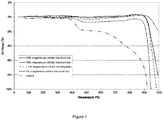
Figure 1 shows a graph of linear shrinkage for a control sample and inventive samples during heating to 1000°C. - The following examples are given by way of illustration only.
- 200g of calcined gypsum was added to 140g of water at 40°C. This was mixed by hand for 30 seconds and the resulting slurry was poured into a cylindrical silicone mould (of height 25mm and diameter 12mm). The sample was transferred to an oven at 40°C and left to dry overnight (at least 12 hours).
- 2g of magnesium nitrate hexahydrate was added to 140g of water at 40°C. 200g of calcined gypsum was added to the solution and the resulting slurry (containing 1.0 wt% nitrate based on weight of calcined gypsum) was blended by hand for 30 seconds to form a slurry. The resulting slurry was poured into a cylindrical silicone mould (of height 25mm and diameter 12mm) and the sample was transferred to an oven at 40°C and left to dry overnight (at least 12 hours).
- 5g of magnesium nitrate hexahydrate was added to 140g of water at 40°C. 200g of calcined gypsum was added to the solution and the resulting slurry (containing 2.4 wt% nitrate based on weight of dry ingredients/containing 2.5 wt% based on weight of calcined gypsum) was blended by hand for 30 seconds to form a slurry. The resulting slurry was poured into a cylindrical silicone mould (of height 25mm and diameter 12mm) and the sample was transferred to an oven at 40°C and left to dry overnight (at least 12 hours).
- 10g of magnesium nitrate hexahydrate was added to 140g of water at 40°C. 200g of calcined gypsum was added to the solution and the resulting slurry (containing 4.8 wt% nitrate based on weight of dry ingredients/containing 5 wt% based on weight of gypsum) was blended by hand for 30 seconds to form a slurry. The resulting slurry was poured into a cylindrical silicone mould (of height 25mm and diameter 12mm) and the sample was transferred to an oven at 40°C and left to dry overnight (at least 12 hours).
- 20g of magnesium nitrate hexahydrate was added to 140g of water at 40°C. 200g of calcined gypsum was added to the solution and the resulting slurry (containing 9.1 wt% nitrate based on weight of dry ingredients/containing 10 wt% based on weight of gypsum) was blended by hand for 30 seconds to form a slurry. The resulting slurry was poured into a cylindrical silicone mould (of height 25mm and diameter 12mm) and the sample was transferred to an oven at 40°C and left to dry overnight (at least 12 hours).
- 60g of magnesium nitrate hexahydrate was added to 140g of water at 40°C. 200g of calcined gypsum was added to the solution and the resulting slurry (containing 23.1 wt% nitrate based on weight of dry ingredients/containing 30 wt% based on weight of gypsum) was blended by hand for 30 seconds to form a slurry. The resulting slurry was poured into a cylindrical silicone mould (of height 25mm and diameter 12mm) and the sample was transferred to an oven at 40°C and left to dry overnight (at least 12 hours).
- 5g of aluminium nitrate nonahydrate was added to 140g of water at 40°C. 200g of calcined gypsum was added to the solution and the resulting slurry (containing 2.4 wt% nitrate based on weight of dry ingredients/containing 2.5 wt% based on weight of calcined gypsum) was blended by hand for 30 seconds to form a slurry. The resulting slurry was poured into a cylindrical silicone mould (of height 25mm and diameter 12mm) and the sample was transferred to an oven at 40°C and left to dry overnight (at least 12 hours).
- 10g of aluminium nitrate nonahydrate was added to 140g of water at 40°C. 200g of calcined gypsum was added to the solution and the resulting slurry (containing 4.8 wt% nitrate based on weight of dry ingredients/containing 5 wt% based on weight of gypsum) was blended by hand for 30 seconds to form a slurry. The resulting slurry was poured into a cylindrical silicone mould (of height 25mm and diameter 12mm) and the sample was transferred to an oven at 40°C and left to dry overnight (at least 12 hours).
- 20g of aluminium nitrate nonahydrate was added to 140g of water at 40°C. 200g of calcined gypsum was added to the solution and the resulting slurry (containing 9.1 wt% nitrate based on weight of dry ingredients/containing 10 wt% based on weight of gypsum) was blended by hand for 30 seconds to form a slurry. The resulting slurry was poured into a cylindrical silicone mould (of height 25mm and diameter 12mm) and the sample was transferred to an oven at 40°C and left to dry overnight (at least 12 hours).
- 5g of zinc nitrate hexahydrate was added to 140g of water at 40°C. 200g of calcined gypsum was added to the solution and the resulting slurry (containing 2.4 wt% nitrate based on weight of dry ingredients/containing 2.5 wt% based on weight of calcined gypsum) was blended by hand for 30 seconds to form a slurry. The resulting slurry was poured into a cylindrical silicone mould (of height 25mm and diameter 12mm) and the sample was transferred to an oven at 40°C and left to dry overnight (at least 12 hours).
- 10g of zinc nitrate hexahydrate was added to 140g of water at 40°C. 200g of calcined gypsum was added to the solution and the resulting slurry (containing 4.8 wt% nitrate based on weight of dry ingredients/containing 5 wt% based on weight of gypsum) was blended by hand for 30 seconds to form a slurry. The resulting slurry was poured into a cylindrical silicone mould (of height 25mm and diameter 12mm) and the sample was transferred to an oven at 40°C and left to dry overnight (at least 12 hours).
- 20g of zinc nitrate hexahydrate was added to 140g of water at 40°C. 200g of calcined gypsum was added to the solution and the resulting slurry (containing 9.1 wt% nitrate based on weight of dry ingredients/containing 10 wt% based on weight of gypsum) was blended by hand for 30 seconds to form a slurry. The resulting slurry was poured into a cylindrical silicone mould (of height 25mm and diameter 12mm) and the sample was transferred to an oven at 40°C and left to dry overnight (at least 12 hours).
- 5g of iron (III) nitrate nonahydrate was added to 140g of water at 40°C. 200g of calcined gypsum was added to the solution and the resulting slurry (containing 2.4 wt% nitrate based on weight of dry ingredients/containing 2.5 wt% based on weight of calcined gypsum) was blended by hand for 30 seconds to form a slurry. The resulting slurry was poured into a cylindrical silicone mould (of height 25mm and diameter 12mm) and the sample was transferred to an oven at 40°C and left to dry overnight (at least 12 hours).
- 10g of iron (III) nitrate nonahydrate was added to 140g of water at 40°C. 200g of calcined gypsum was added to the solution and the resulting slurry (containing 4.8 wt% nitrate based on weight of dry ingredients/containing 5 wt% based on weight of gypsum) was blended by hand for 30 seconds to form a slurry. The resulting slurry was poured into a cylindrical silicone mould (of height 25mm and diameter 12mm) and the sample was transferred to an oven at 40°C and left to dry overnight (at least 12 hours).
- 20g of iron (III) nitrate nonahydrate was added to 140g of water at 40°C. 200g of calcined gypsum was added to the solution and the resulting slurry (containing 9.1 wt% nitrate based on weight of dry ingredients/containing 10 wt% based on weight of gypsum) was blended by hand for 30 seconds to form a slurry. The resulting slurry was poured into a cylindrical silicone mould (of height 25mm and diameter 12mm) and the sample was transferred to an oven at 40°C and left to dry overnight (at least 12 hours).
- 20g of potassium nitrate was added to 140g of water at 40°C. 200g of calcined gypsum was added to the solution and the resulting slurry (containing 9.1 wt% nitrate based on weight of dry ingredients/containing 10 wt% based on weight of gypsum) was blended by hand for 30 seconds to form a slurry. The resulting slurry was poured into a cylindrical silicone mould (of height 25mm and diameter 12mm) and the sample was transferred to an oven at 40°C and left to dry overnight (at least 12 hours).
- 16g of copper nitrate tetrahydrate was added to 140g of water at 40°C. 200g of calcined gypsum was added to the solution and the resulting slurry (containing 7.4 wt% nitrate based on weight of dry ingredients/containing 5 wt% based on weight of gypsum) was blended by hand for 30 seconds to form a slurry. The resulting slurry was poured into a cylindrical silicone mould (of height 25mm and diameter 12mm) and the sample was transferred to an oven at 40°C and left to dry overnight (at least 12 hours).
- 18g of calcium nitrate tetrahydrate was added to 140g of water at 40°C. 200g of calcined gypsum was added to the solution and the resulting slurry (containing 8.3 wt% nitrate based on weight of dry ingredients/containing 9 wt% based on weight of gypsum) was blended by hand for 30 seconds to form a slurry. The resulting slurry was poured into a cylindrical silicone mould (of height 25mm and diameter 12mm) and the sample was transferred to an oven at 40°C and left to dry overnight (at least 12 hours).
- 20g of magnesium hydroxide was added to 140g of water at 40°C. 200g of calcined gypsum was added to the solution and the resulting slurry (containing 9.1wt% hydroxide based on weight of dry ingredients/containing 7.8wt% based on weight of gypsum) was blended by hand for 30 seconds to form a slurry. The resulting slurry was poured into a cylindrical silicone mould (of height 25mm and diameter 12mm) and the sample was transferred to an oven at 40°C and left to dry overnight (at least 12 hours).
- 20g of magnesium acetate tetrahydrate was added to 140g of water at 40°C. 200g of calcined gypsum was added to the solution and the resulting slurry (containing 9.1wt% acetate based on weight of dry ingredients/containing 7.8wt% based on weight of gypsum) was blended by hand for 30 seconds to form a slurry. The resulting slurry was poured into a cylindrical silicone mould (of height 25mm and diameter 12mm) and the sample was transferred to an oven at 40°C and left to dry overnight (at least 12 hours).
- 20g of magnesium sulphate heptahydrate was added to 140g of water at 40°C. 200g of calcined gypsum was added to the solution and the resulting slurry (containing 9.1wt% sulphate based on weight of dry ingredients/containing 7.8wt% based on weight of gypsum) was blended by hand for 30 seconds to form a slurry. The resulting slurry was poured into a cylindrical silicone mould (of height 25mm and diameter 12mm) and the sample was transferred to an oven at 40°C and left to dry overnight (at least 12 hours).
- A summary of all sample formulations is shown in Table 1 below.
Nitrate % wt:wt stucco Wt% in slurry Wt% in product Mg 1 1 1.0 0.8 2 2.5 2.4 2.0 3 5 4.8 4.0 4 10 9.1 7.8 5 30 23.1 20.2 Al 6 2.5 2.4 2.0 7 5 4.8 4.1 8 10 9.1 7.8 Zn 9 2.5 2.4 2.0 10 5 4.8 4.1 11 10 9.1 7.8 Fe 12 2.5 2.4 2.0 13 5 4.8 4.0 14 10 9.1 7.8 K 15 10 9.1 7.8 Cu 16 8 7.4 6.3 Ca 17 9 8.3 7.1 Mg(OH)2 18 10 9.1 7.8 Mg(C2H3O2)2 19 10 9.1 7.8 MgSO4 20 10 9.1 7.8 - The linear shrinkage of the samples was measured using a Netzsch dilatometer with a ceramic rod attached to a linear displacement transducer having a resolution of 8nm. The samples were supported by other ceramic rods and the heated in a furnace to 1000°C at a rate of 5°C/min. The results are shown in
Figures 1 and 2 and Table 2 below.Formulation Linear Shrinkage (%) 500°C 750°C 900°C 950°C 1000°C Control -1.8 -3.6 -7.1 -18.0 Off scale Mg nitrate 1 -0.8 -0.7 -1.3 -10.6 -12.3 2 -0.3 -0.1 0.0 -4.4 -12.1 3 -0.3 -0.3 -0.5 -7.0 -12.1 4 -0.0 -0.1 0.2 -2.8 -6.5 5 -0.5 0.1 0.2 -0.5 -1.9 Al nitrate 6 -0.7 -2.0 -5.6 -11.7 -16.7 7 -0.8 -1.4 -5.3 -10.4 -15.7 8 -0.7 -0.4 -0.4 -0.9 -3.5 Zn nitrate 9 -0.9 -1.1 -7.4 -17.8 Off-scale 10 -0.4 -0.8 -7.6 -17.3 Off-scale 11 -0.2 -0.3 -1.8 -6.5 -9.7 Fe nitrate 12 -0.9 -1.6 -4.7 -15.9 -17.0 13 -0.3 -0.7 -2.9 -9.0 -15.9 14 -0.6 -0.7 -3.6 -7.7 -12.3 K nitrate 15 -0.9 -2.8 -16.4 -17.4 Off-scale Cu nitrate 16 -0.2 -1.5 -12.9 Off-scale Off-scale Ca nitrate 17 -0.3 -2.8 -9.1 -9.1 Off-scale Mg hydroxide 18 -1.4 -3.2 -5.8 -8.0 -9.9 Mg acetate 19 -0.7 -3.5 -5.3 -9.7 -12.7 Mg sulphate 20 -1.4 -3.2 -5.1 -7.4 -11.1 - It can be seen that:
- a) linear shrinkage is reduced at 500°C and 750°C for all samples;
- b) linear shrinkage is reduced at all temperatures for all magnesium and aluminium salt samples;
- c) linear shrinkage at 900°C is reduced to less than around 1% for all samples containing magnesium nitrate; and
- d) linear shrinkage reduction is greater at addition levels greater than 4 wt% (based on amount of additive/gypsum in product) and especially at addition levels greater than 7 wt%.
- The following numbered clauses, describing aspects of our proposals, are part of the description:
- 1. A calcium sulphate-based product comprising gypsum and a shrinkage resistance additive wherein the shrinkage resistance additive is a metal nitrate, hydroxide, acetate or sulphate.
- 2. A calcium sulphate-based product according to
clause 1 wherein the shrinkage resistance additive is provided in an amount equal to or greater than 0.5 wt% based on the weight of gypsum and additive. - 3. A calcium sulphate-based product according to
clause 2 wherein the shrinkage resistance additive is provided in an amount equal to or greater than 4 wt%. - 4. A calcium sulphate-based product according to clause 3 wherein the shrinkage resistance additive is provided in an amount equal to or greater than 7 wt%.
- 5. A calcium sulphate-based product according to any one of
clauses 1 to 4 wherein the shrinkage resistance additive is provided in an amount less than 40 wt%. - 6. A calcium sulphate-based product according to clause 5 wherein the shrinkage resistance additive is provided in an amount less than 25 wt%.
- 7. A calcium sulphate-based product according to clause 6 wherein the shrinkage resistance additive is provided in an amount between 4 wt% and less than 25 wt%.
- 8. A calcium sulphate-based product comprising gypsum and a shrinkage resistance additive wherein the product is produced by drying an aqueous slurry comprising calcined gypsum and the shrinkage resistance additive, the shrinkage resistance additive being a metal nitrate, hydroxide, acetate or sulphate.
- 9. A calcium sulphate-based product according to
clause 8 wherein the shrinkage resistance additive is provided in the slurry in an amount equal to or greater than 1 wt% based on the weight of calcined gypsum and additive. - 10. A calcium sulphate-based product according to clause 9 wherein the shrinkage resistance additive is provided in the slurry in an amount equal to or greater than 4.5 wt%.
- 11. A calcium sulphate-based product according to
clause 10 wherein the shrinkage resistance additive is provided in the slurry in an amount equal to or greater than 9 wt%. - 12. A calcium sulphate-based product according to any one of
clauses 8 to 11 wherein the shrinkage resistance additive is provided in the slurry an amount less than 50 wt%. - 13. A calcium sulphate-based product according to clause 12 wherein the shrinkage resistance additive is provided in the slurry in an amount less than 30 wt%.
- 14. A calcium sulphate-based product according to clause 13 wherein the shrinkage resistance additive is provided in the slurry in an amount between 4.5 wt% and less than 30 wt%.
- 15. A product according to any one of the preceding clauses wherein the shrinkage resistance additive is a nitrate of an alkali metal, an alkaline earth metal, a transition metal or aluminium.
- 16. A product according to clause 15 wherein the shrinkage resistance additive is a nitrate of magnesium, aluminium, zinc, iron, potassium, copper or calcium.
- 17. A product according to any one of
clauses 1 to 14 wherein the shrinkage resistance additive is selected from: the nitrate, hydroxide, acetate or sulphate of magnesium, aluminium or zinc; or the nitrate, hydroxide or acetate of iron. - 18. A product according to any one of the preceding clauses wherein the product is a building material or a mould for metal casting.
- 19. A product according to clause 18 wherein the product is a composite wallboard comprising a core of the gypsum and shrinkage resistance additive sandwiched between two liners.
- 20. A calcium sulphate-based composition for use in forming a calcium sulphate-based product by drying an aqueous slurry of the calcium sulphate-based composition, the calcium sulphate-based composition comprising calcined gypsum and a shrinkage resistance additive, wherein the shrinkage resistance additive is a metal nitrate, hydroxide, acetate or sulphate.
- 21. A calcium sulphate-based composition according to clause 20 wherein the shrinkage resistance additive is provided in an amount equal to or greater than 1 wt% based on the weight of calcined gypsum and additive.
- 22. A calcium sulphate-based composition according to clause 21 wherein the shrinkage resistance additive is provided in an amount equal to or greater than 4.5 wt%.
- 23. A calcium sulphate-based composition according to clause 22 wherein the shrinkage resistance additive is provided in an amount equal to or greater than 9 wt%.
- 24. A calcium sulphate-based composition according to any one of clauses 20 to 23 wherein the shrinkage resistance additive is provided in an amount less than 50 wt%.
- 25. A calcium sulphate-based composition according to clause 24 wherein the shrinkage resistance additive is provided in an amount less than 30 wt%.
- 26. A calcium sulphate-based composition according to clause 25 wherein the shrinkage resistance additive is provided in an amount between 4.5 wt% and less than 30 wt%.
- 27. A composition according to any one of clauses 20 to 26 wherein the shrinkage resistance additive is a nitrate of an alkali metal, an alkaline earth metal, a transition metal or aluminium.
- 28. A composition according to clause 27 wherein the shrinkage resistance additive is a nitrate of magnesium, aluminium, zinc, iron, potassium, copper or calcium.
- 29. A composition according to any one of clauses 20 to 26 wherein the shrinkage resistance additive is selected from the nitrate, hydroxide, acetate or sulphate of magnesium, aluminium or zinc or the nitrate, hydroxide or acetate of iron.
- 30. A method of forming a calcium sulphate-based product by drying an aqueous slurry comprising a composition according to any one of clause 20 to 29.
- 31. A method according to
clause 30 wherein the product is a building material or a mould for casting metal. - 32. A method according to clause 31 wherein the product is a composite wallboard and the method comprises drying the aqueous slurry between two liners.
- 33. Use of a metal nitrate, hydroxide, acetate or sulphate as an additive in a gypsum matrix for reducing shrinkage in a calcium sulphate-based product during heat exposure.
- 34. Use according to clause 33 wherein the additive is used in an amount greater than or equal to 0.5 wt% (based on the amount of additive and gypsum).
- 35. Use according to clause 34 wherein the additive is used in an amount greater than or equal to 4 wt% (based on the amount of additive and gypsum).
- 36. Use according to clause 35 wherein the additive is used in an amount greater than or equal to 7 wt% (based on the amount of additive and gypsum).
- 37. Use according to any one of clauses 33 to 36 wherein the additive is used in an amount less than 40 wt%.
- 38. Use according to clause 37 wherein the additive is used in an amount less than 25 wt%.
- 39. Use according to any one of clauses 33 to 38 wherein the additive is used in an amount between 4 wt% and less than 25 wt%.
- 40. Use according to any one of clauses 33 to 39 wherein the additive is a nitrate of an alkali metal, an alkaline earth metal, a transition metal or aluminium.
- 41. Use according to clause 40 wherein the additive is a nitrate of magnesium, aluminium, zinc, iron, potassium, copper or calcium.
- 42. Use according to any one of clauses 33 to 39 wherein the shrinkage resistance additive is selected from the nitrate, hydroxide, acetate or sulphate of magnesium, aluminium or zinc or the nitrate, hydroxide or acetate of iron.
- 43. Use according to any one of clauses 33 to 42 wherein the calcium sulphate-based product is a building material or a mould for casting metal.
- 44. Use according to clause 43 wherein the product is a composite wallboard comprising a core of the gypsum matrix and shrinkage resistance additive sandwiched between two liners.
- 45. Calcium sulphate-based product substantially as any one embodiment herein described.
- 46. Calcium sulphate-based composition substantially as any one embodiment herein described.
- 47. Method of forming a calcium sulphate-based product substantially as any one embodiment herein described.
- 48. Use of a metal nitrate, hydroxide, acetate or sulphate substantially as any one embodiment herein described.
Claims (12)
- A calcium sulphate-based product, wherein the product comprises gypsum and a shrinkage resistance additive provided in an amount between 4 and 40 wt% (based on the weight of gypsum and additive) wherein the shrinkage resistance additive is a metal acetate, or a hydroxide of an alkali metal, a transition metal, or of magnesium, aluminium or zinc.
- A calcium sulphate-based product comprising gypsum and a shrinkage resistance additive wherein the product is produced by drying an aqueous slurry comprising calcined gypsum and between 4.5 and 50 wt% shrinkage resistance additive (based on the weight of gypsum and additive), the shrinkage resistance additive being a metal acetate, or a hydroxide of an alkali metal, of a transition metal, or of magnesium, aluminium or zinc.
- A calcium sulphate-based composition for use in forming a calcium sulphate-based product by drying an aqueous slurry of the calcium sulphate-based composition, the calcium sulphate-based composition comprising calcined gypsum and between 4.5 and 50 wt% of a shrinkage resistance additive (based on the amount of gypsum and additive), wherein the shrinkage resistance additive is a metal acetate or a hydroxide of an alkali metal, a transition metal, or of magnesium, aluminium or zinc.
- A product or composition according to any one of the preceding claims wherein the shrinkage resistance additive is selected from the hydroxide or acetate of magnesium, aluminium, zinc or iron.
- A calcium sulphate-based product comprising gypsum and a shrinkage resistance additive provided in an amount less than 40 wt% based on the weight of gypsum and additive wherein the shrinkage resistance additive is a hydroxide or acetate of magnesium, aluminium, zinc or iron.
- A calcium sulphate-based product comprising gypsum and a shrinkage resistance additive wherein the product is produced by drying an aqueous slurry comprising calcined gypsum less than 50 wt% shrinkage resistance additive (based on the weight of gypsum and additive), the shrinkage resistance additive being a hydroxide or acetate of magnesium, aluminium, zinc or iron.
- A calcium sulphate-based composition for use in forming a calcium sulphate-based product by drying an aqueous slurry of the calcium sulphate-based composition, the calcium sulphate-based composition comprising calcined gypsum and less than 50 wt% of a shrinkage resistance additive (based on the amount of gypsum and additive), wherein the shrinkage resistance additive is a hydroxide or acetate of magnesium, aluminium, zinc or iron.
- A product according to any one of claims 1, 2, 5 or 6 wherein the product is a building material or a mould for metal casting.
- A product according to claim 8 wherein the product is a composite wallboard comprising a core of the gypsum and shrinkage resistance additive sandwiched between two liners.
- A method of forming a calcium sulphate-based product by drying an aqueous slurry comprising a composition according to claim 3 or claim 7.
- A method according to claim 10 wherein the product is a building material or a mould for casting metal.
- A method according to claim 11 wherein the product is a composite wallboard and the method comprises drying the aqueous slurry between two liners.
Applications Claiming Priority (3)
| Application Number | Priority Date | Filing Date | Title |
|---|---|---|---|
| GBGB1420768.2A GB201420768D0 (en) | 2014-11-21 | 2014-11-21 | Calcium sulphate-based products |
| PCT/EP2015/076786 WO2016079099A1 (en) | 2014-11-21 | 2015-11-17 | Calcium sulphase-based products |
| EP15794947.0A EP3221274B2 (en) | 2014-11-21 | 2015-11-17 | Additive for shrinkage reduction |
Related Parent Applications (2)
| Application Number | Title | Priority Date | Filing Date |
|---|---|---|---|
| EP15794947.0A Division EP3221274B2 (en) | 2014-11-21 | 2015-11-17 | Additive for shrinkage reduction |
| EP15794947.0A Division-Into EP3221274B2 (en) | 2014-11-21 | 2015-11-17 | Additive for shrinkage reduction |
Publications (2)
| Publication Number | Publication Date |
|---|---|
| EP3677561A1 true EP3677561A1 (en) | 2020-07-08 |
| EP3677561B1 EP3677561B1 (en) | 2025-09-03 |
Family
ID=52292370
Family Applications (2)
| Application Number | Title | Priority Date | Filing Date |
|---|---|---|---|
| EP20159919.8A Active EP3677561B1 (en) | 2014-11-21 | 2015-11-17 | Calcium sulphate-based products |
| EP15794947.0A Active EP3221274B2 (en) | 2014-11-21 | 2015-11-17 | Additive for shrinkage reduction |
Family Applications After (1)
| Application Number | Title | Priority Date | Filing Date |
|---|---|---|---|
| EP15794947.0A Active EP3221274B2 (en) | 2014-11-21 | 2015-11-17 | Additive for shrinkage reduction |
Country Status (16)
| Country | Link |
|---|---|
| US (1) | US11117834B2 (en) |
| EP (2) | EP3677561B1 (en) |
| JP (1) | JP2017536322A (en) |
| KR (1) | KR20170085586A (en) |
| CN (1) | CN107108364A (en) |
| AU (1) | AU2015348618B2 (en) |
| BR (1) | BR112017010615A2 (en) |
| CA (1) | CA2967522A1 (en) |
| ES (1) | ES2857051T5 (en) |
| GB (1) | GB201420768D0 (en) |
| IL (1) | IL252298A0 (en) |
| RU (1) | RU2017121653A (en) |
| SG (1) | SG11201703989UA (en) |
| TW (1) | TW201627251A (en) |
| WO (1) | WO2016079099A1 (en) |
| ZA (1) | ZA201703675B (en) |
Families Citing this family (3)
| Publication number | Priority date | Publication date | Assignee | Title |
|---|---|---|---|---|
| GB201420768D0 (en) | 2014-11-21 | 2015-01-07 | Bpb United Kingdom Ltd | Calcium sulphate-based products |
| US11339572B1 (en) | 2017-01-23 | 2022-05-24 | Gold Bond Building Products, Llc | Method of manufacturing gypsum board with improved fire |
| US20190062215A1 (en) * | 2017-08-25 | 2019-02-28 | United States Gypsum Company | Gypsum board with enhanced strength, and related methods, slurries, and cover sheets |
Citations (7)
| Publication number | Priority date | Publication date | Assignee | Title |
|---|---|---|---|---|
| EP0258064A2 (en) | 1986-08-28 | 1988-03-02 | Winroc Holdings Ltd. | High-strength, fire-resistant gypsum composition |
| WO1999008979A1 (en) | 1997-08-21 | 1999-02-25 | United States Gypsum Company | Gypsum-containing product having increased resistance to permanent deformation and method and composition for producing it |
| US5985013A (en) | 1997-01-15 | 1999-11-16 | Kofler; Gregory | Ablative material for fire and heat protection and a method for preparation thereof |
| WO2000006518A1 (en) | 1998-07-30 | 2000-02-10 | United States Gypsum Company | Gypsum-containing product having increased resistance to permanent deformation and method and composition for producing it |
| JP2005187278A (en) * | 2003-12-26 | 2005-07-14 | Hokkaido Technology Licence Office Co Ltd | Shrinkage reduction agent for hydraulic material |
| JP2009263217A (en) * | 2008-03-31 | 2009-11-12 | A & A Material Corp | Gypsum-based molded body and method for producing the same |
| US20100136259A1 (en) | 2005-10-19 | 2010-06-03 | O'keefe Sam | Cementitious Board Manufacture |
Family Cites Families (56)
| Publication number | Priority date | Publication date | Assignee | Title |
|---|---|---|---|---|
| US2526066A (en) | 1944-09-08 | 1950-10-17 | Certain Teed Prod Corp | Plastic composition materials and products made therefrom |
| US2744022A (en) | 1952-07-30 | 1956-05-01 | Certain Teed Prod Corp | Plaster compositions and products |
| US3616173A (en) | 1967-08-29 | 1971-10-26 | Georgia Pacific Corp | Fire resistant wallboard |
| JPS5239844B1 (en) | 1970-12-29 | 1977-10-07 | ||
| US4021259A (en) * | 1972-06-19 | 1977-05-03 | Japan Synthetic Rubber Co., Ltd. | Gypsum composition |
| US3980487A (en) | 1973-12-12 | 1976-09-14 | Nissan Chemical Industries, Ltd. | Anticorrosive gypsum composition |
| JPS5940783B2 (en) * | 1977-12-16 | 1984-10-02 | 石原産業株式会社 | Manufacturing method of hardened gypsum body |
| JPS55126559A (en) * | 1979-03-24 | 1980-09-30 | Sumitomo Chemical Co | Gypsum composition having good swelling control effect for floor |
| JPS5771841A (en) | 1980-10-21 | 1982-05-04 | Nihon Process Engineering Kk | Hydraulic composition |
| US4722866A (en) | 1985-04-09 | 1988-02-02 | Georgia-Pacific Corporation | Fire resistant gypsum board |
| US4664707A (en) | 1985-04-09 | 1987-05-12 | Georgia-Pacific Corporation | Fire resistant gypsum composition |
| SU1629269A1 (en) | 1988-08-11 | 1991-02-23 | Новокузнецкое Отделение Уральского Научно-Исследовательского И Проектного Института Строительных Материалов | Self-stressing cement |
| JP3242397B2 (en) | 1990-04-18 | 2001-12-25 | 電気化学工業株式会社 | Cement admixture and cement composition |
| CN1071156A (en) | 1991-09-29 | 1993-04-21 | 张同德 | The production method of hollow wall panel and molding device |
| JP2986986B2 (en) * | 1991-10-09 | 1999-12-06 | 浅野スレート株式会社 | Manufacturing method of high strength gypsum board |
| JPH07133147A (en) | 1991-12-25 | 1995-05-23 | Hera Corp:The | Geopolymer modified gypsum-based building material |
| US5346550A (en) | 1992-02-05 | 1994-09-13 | Halliburton Company | Low temperature well cementing compositions and methods |
| US6013125A (en) | 1995-09-13 | 2000-01-11 | Quraishi; Mashallah M. | Investment of powders and method for rapid preparation of investment molds |
| JPH10245256A (en) * | 1997-03-06 | 1998-09-14 | Chichibu Onoda Cement Corp | Fire-resistant gypsum cured body |
| FR2789679B1 (en) | 1999-02-12 | 2001-03-30 | Lafarge Platres | PREFABRICATED PLASTER CONSTRUCTION ELEMENT HAVING WATER RESISTANCE |
| US6241815B1 (en) | 1999-08-10 | 2001-06-05 | United States Gypsum Company | Gypsum-cement system for construction materials |
| US7101430B1 (en) | 1999-09-24 | 2006-09-05 | Headwaters Resources, Inc. | Masonry, mortar, and stucco cement compositions |
| US6475275B1 (en) | 1999-10-21 | 2002-11-05 | Isolatek International | Cement composition |
| FR2811980B1 (en) * | 2000-07-18 | 2003-04-25 | Lafarge Platres | COMPOSITION FOR PLASTERBOARD, PREPARATION OF THIS COMPOSITION AND MANUFACTURE OF PLASTERBOARDS |
| MY128602A (en) | 2001-09-03 | 2007-02-28 | Grace W R & Co | Foamed fireproofing composition and method |
| RU2260572C1 (en) | 2004-05-25 | 2005-09-20 | Ефимов Петр Алексеевич | Additive for modification of gypseous bindings, building mortars and concretes prepared on their base |
| DE102004056977A1 (en) * | 2004-11-25 | 2006-06-01 | Wacker Chemie Ag | Glycol-functional siloxane mixture |
| RU2285677C1 (en) | 2005-04-08 | 2006-10-20 | Государственное образовательное учреждение высшего профессионального образования "Уральский государственный технический университет-УПИ" | Gypsum binding agent |
| US8016960B2 (en) * | 2005-04-27 | 2011-09-13 | United States Gypsum Company | Methods of and systems for adding a high viscosity gypsum additive to a post-mixer aqueous dispersion of calcined gypsum |
| US20110195241A1 (en) | 2005-06-09 | 2011-08-11 | United States Gypsum Company | Low Weight and Density Fire-Resistant Gypsum Panel |
| KR100835702B1 (en) | 2007-03-08 | 2008-06-09 | 장산씨엠주식회사 | Waterproofing material composition for reinforced concrete with anti-rust function |
| CN101265067A (en) | 2008-04-28 | 2008-09-17 | 长沙归一建材科技有限公司 | Water-resisting high-strength gypsum-base concrete brick or building block, and producing method thereof |
| RU2387607C2 (en) | 2008-05-04 | 2010-04-27 | Общество с ограниченной ответственностью фирма "ВЕФТ" | Additive for modification of gypsum binders, construction mortars and concretes on their basis |
| US8366823B2 (en) | 2008-09-25 | 2013-02-05 | United States Gypsum Company | Fly ash based lightweight cementitious composition with high compressive strength and fast set |
| RU2415093C1 (en) * | 2009-10-15 | 2011-03-27 | Михаил Аркадьевич Михеенков | Method of preparing water-resistant gypsum binder |
| CN102464478B (en) | 2010-11-18 | 2014-02-26 | 特里波德株式会社 | Ultralow-heat binder composition with high-temperature type latent-heat compound and method for lowering hydration heat of concrete by using same |
| WO2012077229A1 (en) | 2010-12-10 | 2012-06-14 | 吉野石膏株式会社 | Dried gypsum composition and gypsum-based coating material |
| US8323785B2 (en) | 2011-02-25 | 2012-12-04 | United States Gypsum Company | Lightweight, reduced density fire rated gypsum panels |
| CN102173726A (en) | 2011-03-03 | 2011-09-07 | 大庆华夏绿垣建材科技开发有限公司 | Low-drying-shrinkage high-strength light-weight wallboard material and preparation method thereof |
| EP2502891A1 (en) | 2011-03-23 | 2012-09-26 | Sika Technology AG | Activator composition for latent hydraulic and/or pozzolanic binder materials |
| CN102826823A (en) | 2011-06-17 | 2012-12-19 | 大庆华夏绿垣建材科技开发有限公司 | Production method of novel lightweight high-strength shock-resistant fireproofing inner wall board |
| DE102011078531A1 (en) | 2011-07-01 | 2013-01-03 | Wacker Chemie Ag | Gypsum-containing building materials |
| WO2013048351A1 (en) | 2011-09-27 | 2013-04-04 | Scg Building Materials Co., Ltd | Gypsum-based composition for construction material and system |
| IN2014CN04783A (en) * | 2011-12-27 | 2015-09-18 | Dow Global Technologies Llc | |
| MX2014009534A (en) | 2012-02-17 | 2014-10-13 | United States Gypsum Co | Gypsum products with high efficiency heat sink additives. |
| US9193627B2 (en) | 2012-03-09 | 2015-11-24 | Parexgroup Sa | Use of at least one superabsorbent polymer (SAP), in a dry composition based on mineral binder and intended for the preparation of a hardenable wet formulation for the construction industry |
| CN102850031A (en) | 2012-09-20 | 2013-01-02 | 吴江市天源塑胶有限公司 | Corrosion-resistant polymer waterproof mortar |
| FR3000059A1 (en) | 2012-12-21 | 2014-06-27 | Saint Gobain Placo | COMPOSITION FOR PLASTER PLATES AND PRODUCTS OBTAINED |
| CN103626439B (en) | 2013-11-29 | 2016-03-23 | 中建四局第六建筑工程有限公司 | A kind of masonry mortar utilizing building solid castoff to produce |
| CN103803821A (en) | 2013-12-16 | 2014-05-21 | 张家港市双林制墨涂装有限公司 | Fly ash cement and preparation method thereof |
| CN103979837B (en) | 2014-03-31 | 2016-02-17 | 滁州学院 | A kind of moistureproof light thermal-insulation partition plate and preparation method thereof |
| CN104058644A (en) | 2014-05-29 | 2014-09-24 | 蚌埠华东石膏有限公司 | Corrosion-resisting autoclaved aerated concrete block |
| CN104016649B (en) | 2014-05-30 | 2016-02-17 | 山西凝固力新型材料有限公司 | A kind of fly ash base sealing material |
| GB201420767D0 (en) | 2014-11-21 | 2015-01-07 | Bpb United Kingdom Ltd | Fire resistant calcium sulphate-based products |
| GB201420768D0 (en) | 2014-11-21 | 2015-01-07 | Bpb United Kingdom Ltd | Calcium sulphate-based products |
| GB201420766D0 (en) | 2014-11-21 | 2015-01-07 | Bpb United Kingdom Ltd | Fire resistant calcium sulphate-based products |
-
2014
- 2014-11-21 GB GBGB1420768.2A patent/GB201420768D0/en not_active Ceased
-
2015
- 2015-11-17 CN CN201580062107.1A patent/CN107108364A/en active Pending
- 2015-11-17 EP EP20159919.8A patent/EP3677561B1/en active Active
- 2015-11-17 WO PCT/EP2015/076786 patent/WO2016079099A1/en not_active Ceased
- 2015-11-17 SG SG11201703989UA patent/SG11201703989UA/en unknown
- 2015-11-17 JP JP2017527560A patent/JP2017536322A/en active Pending
- 2015-11-17 RU RU2017121653A patent/RU2017121653A/en unknown
- 2015-11-17 AU AU2015348618A patent/AU2015348618B2/en not_active Expired - Fee Related
- 2015-11-17 ES ES15794947T patent/ES2857051T5/en active Active
- 2015-11-17 BR BR112017010615-9A patent/BR112017010615A2/en not_active Application Discontinuation
- 2015-11-17 EP EP15794947.0A patent/EP3221274B2/en active Active
- 2015-11-17 US US15/524,956 patent/US11117834B2/en active Active
- 2015-11-17 KR KR1020177016958A patent/KR20170085586A/en not_active Withdrawn
- 2015-11-17 CA CA2967522A patent/CA2967522A1/en active Pending
- 2015-11-19 TW TW104138265A patent/TW201627251A/en unknown
-
2017
- 2017-05-15 IL IL252298A patent/IL252298A0/en unknown
- 2017-05-29 ZA ZA201703675A patent/ZA201703675B/en unknown
Patent Citations (7)
| Publication number | Priority date | Publication date | Assignee | Title |
|---|---|---|---|---|
| EP0258064A2 (en) | 1986-08-28 | 1988-03-02 | Winroc Holdings Ltd. | High-strength, fire-resistant gypsum composition |
| US5985013A (en) | 1997-01-15 | 1999-11-16 | Kofler; Gregory | Ablative material for fire and heat protection and a method for preparation thereof |
| WO1999008979A1 (en) | 1997-08-21 | 1999-02-25 | United States Gypsum Company | Gypsum-containing product having increased resistance to permanent deformation and method and composition for producing it |
| WO2000006518A1 (en) | 1998-07-30 | 2000-02-10 | United States Gypsum Company | Gypsum-containing product having increased resistance to permanent deformation and method and composition for producing it |
| JP2005187278A (en) * | 2003-12-26 | 2005-07-14 | Hokkaido Technology Licence Office Co Ltd | Shrinkage reduction agent for hydraulic material |
| US20100136259A1 (en) | 2005-10-19 | 2010-06-03 | O'keefe Sam | Cementitious Board Manufacture |
| JP2009263217A (en) * | 2008-03-31 | 2009-11-12 | A & A Material Corp | Gypsum-based molded body and method for producing the same |
Also Published As
| Publication number | Publication date |
|---|---|
| AU2015348618B2 (en) | 2020-02-27 |
| RU2017121653A (en) | 2018-12-24 |
| EP3221274A1 (en) | 2017-09-27 |
| AU2015348618A1 (en) | 2017-06-08 |
| CA2967522A1 (en) | 2016-05-26 |
| ZA201703675B (en) | 2019-10-30 |
| ES2857051T5 (en) | 2024-06-13 |
| BR112017010615A2 (en) | 2018-02-14 |
| WO2016079099A1 (en) | 2016-05-26 |
| EP3221274B2 (en) | 2023-12-20 |
| IL252298A0 (en) | 2017-07-31 |
| US20170320779A1 (en) | 2017-11-09 |
| US11117834B2 (en) | 2021-09-14 |
| RU2017121653A3 (en) | 2019-04-22 |
| ES2857051T3 (en) | 2021-09-28 |
| JP2017536322A (en) | 2017-12-07 |
| TW201627251A (en) | 2016-08-01 |
| EP3221274B1 (en) | 2020-12-30 |
| SG11201703989UA (en) | 2017-06-29 |
| GB201420768D0 (en) | 2015-01-07 |
| CN107108364A (en) | 2017-08-29 |
| KR20170085586A (en) | 2017-07-24 |
| EP3677561B1 (en) | 2025-09-03 |
Similar Documents
| Publication | Publication Date | Title |
|---|---|---|
| US11198645B2 (en) | Fire resistant calcium sulphate-based products | |
| US11117835B2 (en) | Fire resistant calcium sulphate-based products | |
| EP3221274B1 (en) | Additive for shrinkage reduction | |
| US10988413B2 (en) | Calcium sulphate-based products |
Legal Events
| Date | Code | Title | Description |
|---|---|---|---|
| PUAI | Public reference made under article 153(3) epc to a published international application that has entered the european phase |
Free format text: ORIGINAL CODE: 0009012 |
|
| STAA | Information on the status of an ep patent application or granted ep patent |
Free format text: STATUS: THE APPLICATION HAS BEEN PUBLISHED |
|
| AC | Divisional application: reference to earlier application |
Ref document number: 3221274 Country of ref document: EP Kind code of ref document: P |
|
| AK | Designated contracting states |
Kind code of ref document: A1 Designated state(s): AL AT BE BG CH CY CZ DE DK EE ES FI FR GB GR HR HU IE IS IT LI LT LU LV MC MK MT NL NO PL PT RO RS SE SI SK SM TR |
|
| STAA | Information on the status of an ep patent application or granted ep patent |
Free format text: STATUS: REQUEST FOR EXAMINATION WAS MADE |
|
| STAA | Information on the status of an ep patent application or granted ep patent |
Free format text: STATUS: EXAMINATION IS IN PROGRESS |
|
| 17P | Request for examination filed |
Effective date: 20201222 |
|
| RBV | Designated contracting states (corrected) |
Designated state(s): AL AT BE BG CH CY CZ DE DK EE ES FI FR GB GR HR HU IE IS IT LI LT LU LV MC MK MT NL NO PL PT RO RS SE SI SK SM TR |
|
| 17Q | First examination report despatched |
Effective date: 20210125 |
|
| GRAP | Despatch of communication of intention to grant a patent |
Free format text: ORIGINAL CODE: EPIDOSNIGR1 |
|
| STAA | Information on the status of an ep patent application or granted ep patent |
Free format text: STATUS: GRANT OF PATENT IS INTENDED |
|
| INTG | Intention to grant announced |
Effective date: 20250423 |
|
| GRAS | Grant fee paid |
Free format text: ORIGINAL CODE: EPIDOSNIGR3 |
|
| GRAA | (expected) grant |
Free format text: ORIGINAL CODE: 0009210 |
|
| STAA | Information on the status of an ep patent application or granted ep patent |
Free format text: STATUS: THE PATENT HAS BEEN GRANTED |
|
| AC | Divisional application: reference to earlier application |
Ref document number: 3221274 Country of ref document: EP Kind code of ref document: P |
|
| AK | Designated contracting states |
Kind code of ref document: B1 Designated state(s): AL AT BE BG CH CY CZ DE DK EE ES FI FR GB GR HR HU IE IS IT LI LT LU LV MC MK MT NL NO PL PT RO RS SE SI SK SM TR |
|
| REG | Reference to a national code |
Ref country code: CH Ref legal event code: EP |
|
| REG | Reference to a national code |
Ref country code: DE Ref legal event code: R096 Ref document number: 602015092313 Country of ref document: DE |
|
| REG | Reference to a national code |
Ref country code: IE Ref legal event code: FG4D |
|
| REG | Reference to a national code |
Ref country code: NL Ref legal event code: MP Effective date: 20250903 |
|
| PGFP | Annual fee paid to national office [announced via postgrant information from national office to epo] |
Ref country code: DE Payment date: 20251126 Year of fee payment: 11 |
|
| PGFP | Annual fee paid to national office [announced via postgrant information from national office to epo] |
Ref country code: GB Payment date: 20251127 Year of fee payment: 11 |
|
| PG25 | Lapsed in a contracting state [announced via postgrant information from national office to epo] |
Ref country code: NO Free format text: LAPSE BECAUSE OF FAILURE TO SUBMIT A TRANSLATION OF THE DESCRIPTION OR TO PAY THE FEE WITHIN THE PRESCRIBED TIME-LIMIT Effective date: 20251203 |
|
| REG | Reference to a national code |
Ref country code: LT Ref legal event code: MG9D |
|
| PG25 | Lapsed in a contracting state [announced via postgrant information from national office to epo] |
Ref country code: FI Free format text: LAPSE BECAUSE OF FAILURE TO SUBMIT A TRANSLATION OF THE DESCRIPTION OR TO PAY THE FEE WITHIN THE PRESCRIBED TIME-LIMIT Effective date: 20250903 |
|
| PG25 | Lapsed in a contracting state [announced via postgrant information from national office to epo] |
Ref country code: HR Free format text: LAPSE BECAUSE OF FAILURE TO SUBMIT A TRANSLATION OF THE DESCRIPTION OR TO PAY THE FEE WITHIN THE PRESCRIBED TIME-LIMIT Effective date: 20250903 |
|
| PGFP | Annual fee paid to national office [announced via postgrant information from national office to epo] |
Ref country code: FR Payment date: 20251125 Year of fee payment: 11 |
|
| PG25 | Lapsed in a contracting state [announced via postgrant information from national office to epo] |
Ref country code: GR Free format text: LAPSE BECAUSE OF FAILURE TO SUBMIT A TRANSLATION OF THE DESCRIPTION OR TO PAY THE FEE WITHIN THE PRESCRIBED TIME-LIMIT Effective date: 20251204 |
|
| PG25 | Lapsed in a contracting state [announced via postgrant information from national office to epo] |
Ref country code: SE Free format text: LAPSE BECAUSE OF FAILURE TO SUBMIT A TRANSLATION OF THE DESCRIPTION OR TO PAY THE FEE WITHIN THE PRESCRIBED TIME-LIMIT Effective date: 20250903 |
|
| PG25 | Lapsed in a contracting state [announced via postgrant information from national office to epo] |
Ref country code: LV Free format text: LAPSE BECAUSE OF FAILURE TO SUBMIT A TRANSLATION OF THE DESCRIPTION OR TO PAY THE FEE WITHIN THE PRESCRIBED TIME-LIMIT Effective date: 20250903 |
|
| PG25 | Lapsed in a contracting state [announced via postgrant information from national office to epo] |
Ref country code: PL Free format text: LAPSE BECAUSE OF FAILURE TO SUBMIT A TRANSLATION OF THE DESCRIPTION OR TO PAY THE FEE WITHIN THE PRESCRIBED TIME-LIMIT Effective date: 20250903 Ref country code: BG Free format text: LAPSE BECAUSE OF FAILURE TO SUBMIT A TRANSLATION OF THE DESCRIPTION OR TO PAY THE FEE WITHIN THE PRESCRIBED TIME-LIMIT Effective date: 20250903 |
|
| PG25 | Lapsed in a contracting state [announced via postgrant information from national office to epo] |
Ref country code: RS Free format text: LAPSE BECAUSE OF FAILURE TO SUBMIT A TRANSLATION OF THE DESCRIPTION OR TO PAY THE FEE WITHIN THE PRESCRIBED TIME-LIMIT Effective date: 20251203 |
|
| PG25 | Lapsed in a contracting state [announced via postgrant information from national office to epo] |
Ref country code: ES Free format text: LAPSE BECAUSE OF FAILURE TO SUBMIT A TRANSLATION OF THE DESCRIPTION OR TO PAY THE FEE WITHIN THE PRESCRIBED TIME-LIMIT Effective date: 20250903 |
|
| REG | Reference to a national code |
Ref country code: AT Ref legal event code: MK05 Ref document number: 1832907 Country of ref document: AT Kind code of ref document: T Effective date: 20250903 |
|
| PG25 | Lapsed in a contracting state [announced via postgrant information from national office to epo] |
Ref country code: NL Free format text: LAPSE BECAUSE OF FAILURE TO SUBMIT A TRANSLATION OF THE DESCRIPTION OR TO PAY THE FEE WITHIN THE PRESCRIBED TIME-LIMIT Effective date: 20250903 |
|
| PG25 | Lapsed in a contracting state [announced via postgrant information from national office to epo] |
Ref country code: SM Free format text: LAPSE BECAUSE OF FAILURE TO SUBMIT A TRANSLATION OF THE DESCRIPTION OR TO PAY THE FEE WITHIN THE PRESCRIBED TIME-LIMIT Effective date: 20250903 |
|
| PG25 | Lapsed in a contracting state [announced via postgrant information from national office to epo] |
Ref country code: AT Free format text: LAPSE BECAUSE OF FAILURE TO SUBMIT A TRANSLATION OF THE DESCRIPTION OR TO PAY THE FEE WITHIN THE PRESCRIBED TIME-LIMIT Effective date: 20250903 |
|
| PG25 | Lapsed in a contracting state [announced via postgrant information from national office to epo] |
Ref country code: RO Free format text: LAPSE BECAUSE OF FAILURE TO SUBMIT A TRANSLATION OF THE DESCRIPTION OR TO PAY THE FEE WITHIN THE PRESCRIBED TIME-LIMIT Effective date: 20250903 Ref country code: IT Free format text: LAPSE BECAUSE OF FAILURE TO SUBMIT A TRANSLATION OF THE DESCRIPTION OR TO PAY THE FEE WITHIN THE PRESCRIBED TIME-LIMIT Effective date: 20250903 |
|
| PG25 | Lapsed in a contracting state [announced via postgrant information from national office to epo] |
Ref country code: IS Free format text: LAPSE BECAUSE OF FAILURE TO SUBMIT A TRANSLATION OF THE DESCRIPTION OR TO PAY THE FEE WITHIN THE PRESCRIBED TIME-LIMIT Effective date: 20260103 |
|
| PG25 | Lapsed in a contracting state [announced via postgrant information from national office to epo] |
Ref country code: CZ Free format text: LAPSE BECAUSE OF FAILURE TO SUBMIT A TRANSLATION OF THE DESCRIPTION OR TO PAY THE FEE WITHIN THE PRESCRIBED TIME-LIMIT Effective date: 20250903 Ref country code: PT Free format text: LAPSE BECAUSE OF FAILURE TO SUBMIT A TRANSLATION OF THE DESCRIPTION OR TO PAY THE FEE WITHIN THE PRESCRIBED TIME-LIMIT Effective date: 20260105 |
|
| PG25 | Lapsed in a contracting state [announced via postgrant information from national office to epo] |
Ref country code: SK Free format text: LAPSE BECAUSE OF FAILURE TO SUBMIT A TRANSLATION OF THE DESCRIPTION OR TO PAY THE FEE WITHIN THE PRESCRIBED TIME-LIMIT Effective date: 20250903 Ref country code: EE Free format text: LAPSE BECAUSE OF FAILURE TO SUBMIT A TRANSLATION OF THE DESCRIPTION OR TO PAY THE FEE WITHIN THE PRESCRIBED TIME-LIMIT Effective date: 20250903 |