EP3676992B1 - Verfahren zur gebührenabrechnung von daten, die auf einem abschnitt eines kommunikationsnetzwerks geleitet werden - Google Patents
Verfahren zur gebührenabrechnung von daten, die auf einem abschnitt eines kommunikationsnetzwerks geleitet werden Download PDFInfo
- Publication number
- EP3676992B1 EP3676992B1 EP18786836.9A EP18786836A EP3676992B1 EP 3676992 B1 EP3676992 B1 EP 3676992B1 EP 18786836 A EP18786836 A EP 18786836A EP 3676992 B1 EP3676992 B1 EP 3676992B1
- Authority
- EP
- European Patent Office
- Prior art keywords
- charging
- network slice
- network
- application
- message
- Prior art date
- Legal status (The legal status is an assumption and is not a legal conclusion. Google has not performed a legal analysis and makes no representation as to the accuracy of the status listed.)
- Active
Links
Images


Classifications
-
- H—ELECTRICITY
- H04—ELECTRIC COMMUNICATION TECHNIQUE
- H04W—WIRELESS COMMUNICATION NETWORKS
- H04W48/00—Access restriction; Network selection; Access point selection
- H04W48/18—Selecting a network or a communication service
-
- H—ELECTRICITY
- H04—ELECTRIC COMMUNICATION TECHNIQUE
- H04L—TRANSMISSION OF DIGITAL INFORMATION, e.g. TELEGRAPHIC COMMUNICATION
- H04L41/00—Arrangements for maintenance, administration or management of data switching networks, e.g. of packet switching networks
- H04L41/08—Configuration management of networks or network elements
- H04L41/0803—Configuration setting
- H04L41/0806—Configuration setting for initial configuration or provisioning, e.g. plug-and-play
-
- H—ELECTRICITY
- H04—ELECTRIC COMMUNICATION TECHNIQUE
- H04L—TRANSMISSION OF DIGITAL INFORMATION, e.g. TELEGRAPHIC COMMUNICATION
- H04L41/00—Arrangements for maintenance, administration or management of data switching networks, e.g. of packet switching networks
- H04L41/08—Configuration management of networks or network elements
- H04L41/0894—Policy-based network configuration management
-
- H—ELECTRICITY
- H04—ELECTRIC COMMUNICATION TECHNIQUE
- H04L—TRANSMISSION OF DIGITAL INFORMATION, e.g. TELEGRAPHIC COMMUNICATION
- H04L41/00—Arrangements for maintenance, administration or management of data switching networks, e.g. of packet switching networks
- H04L41/50—Network service management, e.g. ensuring proper service fulfilment according to agreements
- H04L41/5029—Service quality level-based billing, e.g. dependent on measured service level customer is charged more or less
-
- H—ELECTRICITY
- H04—ELECTRIC COMMUNICATION TECHNIQUE
- H04L—TRANSMISSION OF DIGITAL INFORMATION, e.g. TELEGRAPHIC COMMUNICATION
- H04L41/00—Arrangements for maintenance, administration or management of data switching networks, e.g. of packet switching networks
- H04L41/50—Network service management, e.g. ensuring proper service fulfilment according to agreements
- H04L41/5041—Network service management, e.g. ensuring proper service fulfilment according to agreements characterised by the time relationship between creation and deployment of a service
-
- H—ELECTRICITY
- H04—ELECTRIC COMMUNICATION TECHNIQUE
- H04L—TRANSMISSION OF DIGITAL INFORMATION, e.g. TELEGRAPHIC COMMUNICATION
- H04L43/00—Arrangements for monitoring or testing data switching networks
- H04L43/20—Arrangements for monitoring or testing data switching networks the monitoring system or the monitored elements being virtualised, abstracted or software-defined entities, e.g. SDN or NFV
-
- H—ELECTRICITY
- H04—ELECTRIC COMMUNICATION TECHNIQUE
- H04W—WIRELESS COMMUNICATION NETWORKS
- H04W16/00—Network planning, e.g. coverage or traffic planning tools; Network deployment, e.g. resource partitioning or cells structures
- H04W16/02—Resource partitioning among network components, e.g. reuse partitioning
- H04W16/04—Traffic adaptive resource partitioning
-
- H—ELECTRICITY
- H04—ELECTRIC COMMUNICATION TECHNIQUE
- H04W—WIRELESS COMMUNICATION NETWORKS
- H04W24/00—Supervisory, monitoring or testing arrangements
- H04W24/02—Arrangements for optimising operational condition
-
- H—ELECTRICITY
- H04—ELECTRIC COMMUNICATION TECHNIQUE
- H04W—WIRELESS COMMUNICATION NETWORKS
- H04W76/00—Connection management
- H04W76/10—Connection setup
- H04W76/11—Allocation or use of connection identifiers
-
- H—ELECTRICITY
- H04—ELECTRIC COMMUNICATION TECHNIQUE
- H04W—WIRELESS COMMUNICATION NETWORKS
- H04W8/00—Network data management
- H04W8/02—Processing of mobility data, e.g. registration information at HLR [Home Location Register] or VLR [Visitor Location Register]; Transfer of mobility data, e.g. between HLR, VLR or external networks
- H04W8/08—Mobility data transfer
Definitions
- the application for invention lies in the field of mobile telecommunications infrastructures and techniques relating to the charging of services implemented from network slice architectures.
- Next-generation mobile networks will support a greater number of services and applications than previous-generation networks (2G, 3G, 4G).
- 5G networks loT services ( Internet Of Things ) and mobility services based on vehicular networks, i.e. networks implemented in means of transport (train, plane, car, etc.), are the most emblematic.
- These new services are accompanied by new value chains in which new players, including car manufacturers, insurance companies, automotive equipment manufacturers, are involved and seeking compensation for their participation in providing services to customers.
- 5G networks will also be accompanied by fairly significant changes to mobile network architectures.
- 4G generation of mobile networks currently being deployed in a majority of countries the different network architectures are most often based on very specific equipment dedicated to certain precise functionalities, whether at the level of the access network or the core network, particularly with regard to the transmission of packets from or to a mobile terminal.
- the transmission channels established between a mobile terminal and a mobile network are most often few in number and are used to route in a differentiated manner the packets of real-time services (voice, video, etc.) on the one hand and the "Internet" data packets on the other hand.
- This implementation offers in particular limited flexibility in terms of the possibilities of differentiating the flows currently routed on the "Internet” channel.
- This lack of flexibility and scalability inherent in this type of conventional architecture has led to considering the adoption of more flexible architectures for the next generation of mobile networks in order to be able to respond quickly to extremely diverse demands in terms of traffic or quality of service.
- 5G networks are intended to concern both mobile and fixed networks.
- network slices can be simultaneously established within a single telecommunications network, these making it possible to offer specific characteristics for the different services to different customers on the same network.
- the implementation of network slices is favored by the ongoing development of virtualized architectures offering more flexibility and dynamic character in terms of deployment.
- the elementary functions of routing and data processing making it possible to implement a network slice require characteristics (modularity, capacity adaptation, scaling) more easily deployed by virtual instances.
- the NGTP consortium in English Next Generation Telematics Protocol, in the document http://ngtp.org/wp-content/uploads/2013/12/NGTP20_nutshell.pdf (version 1.0, November 2010), proposes for example a service platform allowing the routing of traffic from a mobile terminal to the different providers but does not involve the client in any way, even if only to inform them.
- the document WO 2017/143047 A1 describes a method that allows a control node of a network to select a network slice to which a Wireless Transmit/Receive Unit (WRTU) device should connect, based on service information transmitted by the WRTU and, if applicable, another control node for the WRTU to access the network slice.
- WRTU Wireless Transmit/Receive Unit
- the document "3rd Generation Partnership Project; Technical Specification Group Services and System Aspects; Study on Architecture for Next Generation System (Release 14)" is a system architecture specification document describing in particular the implementation of network slices in a next generation network.
- the document describes in particular the allocation of a slice identifier by an NSSF type device when a terminal does not transmit one in an attachment message (D2, Page 86).
- the present invention aims to remedy these drawbacks.
- the invention improves the situation by means of a method for charging data of an application transmitted on a slice of a communication network, according to claim 1, implemented in a network access device.
- the streams sent and received by a terminal for an application are conveyed on an appropriate network slice.
- a network slice must be determined by the access device to which the terminal is attached, in collaboration or not with a network device, to route the data relating to the application.
- the determination of the network slice is carried out depending for example on the identifier of the application and the association between the application and a network slice is carried out by one or more network devices only.
- the access device must include means for detecting that a new application is activated by itself or by a terminal communicating with its correspondents via the access device.
- the access device must know the network slice to be used for the flows relating to the application. It therefore requests an entity within of the communication network, to obtain a slice identifier and the charging parameters linked to the slice, these parameters specifying the pricing conditions associated with the transport of the application on the network slice corresponding to the identifier. It is possible that, for an application, several network slices may be proposed by the management entity, each with different pricing conditions.
- the access device can on the one hand identify the network slice relating to the application that has just been activated but also obtain the pricing conditions relating to the network slice, thus allowing it, when several network slices are proposed, to select a network slice by knowing a priori the type of taxation, the advantages in terms of taxation or the characteristics of the distribution of costs between the actors involved in the provision of the data.
- This information is particularly important when the access device is used to connect terminals whose manager is different from the manager of the access device or when it is desirable to be able to identify data in a simple manner, for example by associating an application with a network slice having specific taxation parameters, and to tax this data in accordance with the taxation parameters received.
- the taxation parameters may or may not be specific to a network slice and a network slice may comprise several taxation parameters.
- the access device intervenes in the choice of the network slice, relying in particular on the parameters received, and can thus initialize the charging of the flows relating to the application in accordance with the parameters received, for example by transmitting a message to the network slice management equipment.
- the access device contributes to the choice of the network slice and gives its authorization for the charging of the flows in accordance with the charging parameters of the chosen network slice.
- the access device When the access device connects to the network for the first time, it may be useful to transmit to it by default certain network slice identifiers as well as the associated charging parameters. For example, the most commonly used network slice identifiers, corresponding to Internet slices and real-time services by default, may thus be transmitted to the access device. Furthermore, by sending parameters such as its identity, the attachment network, the connection type or its capabilities, it is possible for the management entity to transmit network slice identifiers adapted to the context of the access device.
- an access device attached to a network of operator A may be communicated the “management” network slice identifiers of operator A, allowing operator A to remotely manage the device, and a network slice identifier allowing the transmission of the flows of a security service, such as for example the European emergency call service for vehicles ( in English e-call ).
- the charging parameters are transmitted with the network slice identifiers so that the access device can, if necessary, activate or not the network slice or choose to limit or on the contrary increase the data transiting on this slice.
- the client of an access device of a car manufacturer may for example be reluctant to activate a network slice specific to the manufacturer's applications, characterized by high usage costs and borne by the client.
- the charging method further comprises a step of selection by the access device of a network slice identifier and associated charging parameters.
- the access device can choose the network slice corresponding to the identifier with charging parameters that match its criteria. Thus, if it obtains an identifier of a first network slice whose billing is indicated as zero and a network slice with parameters indicating billing based on data volume, it will probably choose the identifier of the first.
- This selection step is optional because the access device may, for example, not select any identifier and connect to the different network slices, the choice of transmitting data flows on one network slice or another may depend on other parameters, typically quality of service.
- the management entity does not wish to leave the choice of the network slice to be selected entirely to the access device, it will transmit to the access device a single network slice identifier or all the identifiers of the slices to which the access device must connect.
- the charging method further comprises a step of transmission by the access device of an acceptance message comprising the selected network slice identifier.
- the device transmits an acceptance message comprising the selected network slice identifier.
- the acceptance message may further comprise the charging parameters associated with the network slice, in particular in the case where a network slice could have charging parameters to be chosen by the access device from the set of parameters received.
- This message may be advantageously used by the management device to inform other entities, for example the charging servers and the entities responsible for collecting and counting the data transmitted on the network slice. This message may thus be used as a trigger for the counting of the data by the entities responsible for counting, charging and invoicing.
- the charging method further comprises a step of sending, to the network slice management entity, a refusal message.
- the latter may refuse them by sending a message to the management device indicating to the latter that the network slice identifiers received and the pricing conditions are not suitable for it.
- the access device may thus send a refusal message if it decides not to select a network slice for a given application or for a given terminal.
- the management device may, on the one hand, inform the entities responsible for charging that the data relating to the application are not billed according to the proposed parameters and, on the other hand, optionally propose other identifiers with other charging parameters.
- the charging method further comprises a step of receiving a recommendation message comprising the identifier of another network slice, called the default.
- the access device may propose to the access device a so-called default network slice identifier having charging parameters that are probably more acceptable to the access device.
- This slice may be, for example, the network slice used for Internet applications that do not require constraints and whose charging is carried out, for example, according to the volume of data transmitted on the network slice and in accordance with the type of contract of the access device.
- the use of a "default Internet” network slice that does not guarantee any quality of service or availability other than "best effort" may be preferred.
- the taxation method further comprises a step of receiving a message modifying taxation parameters. associated with a network slice.
- the charging parameters may need to be updated for a given network slice identifier or for several network slice identifiers. Thus, a change in pricing policy may require informing the access devices of these new conditions via the use of new charging parameters.
- a change in pricing policy may require informing the access devices of these new conditions via the use of new charging parameters.
- the charging for a given network slice is based on a certain volume of data, it may be necessary to inform the access device of the pricing conditions corresponding to the exceeding of the data volume for a network slice. This information may be used by the access device, for example, to inform the terminal manager that activated the application of a security problem detected from the large volume of data observed or to inform the terminal manager of new provisions in the contract between the access device manager and the terminal manager operator.
- the detection step is carried out by receiving data relating to the application from a terminal attached to the access device.
- the detection of the activation of an application can be carried out according to different methods. If the application is implemented on the access device, the access device is directly informed of the execution of an application by the operating system in particular. In the case where an application is executed on a terminal connected to the access device, for example using a Wi-Fi or Bluetooth connection, the access device can detect the launch of an application requiring the request of a network slice and charging parameters, by analyzing the traffic received on the Bluetooth or Wi-Fi link.
- the data received by the access device can correspond to data from the activated application or to so-called control data transmitted by the terminal to the access device indicating that a new application is activated; the control data indicating the type of application so as to obtain a network slice and charging parameters adapted to the application.
- the access device when it receives the slice identifiers and the associated charging parameters, transmits to the terminal that has activated the application, for which a network slice is to be determined, an information message to obtain a recommendation on the slice identifier to select.
- the terminal can for example request the user's opinion for billing associated with a slice and from this opinion, inform the access device of its agreement or disagreement for the proposed type of charging.
- the access device can ensure the agreement of the terminal, and therefore of the user, before choosing an identifier and the associated charging parameters, and initializing the charging of the data for the application activated on the terminal.
- the management entity is an NSSF device.
- the purpose of the NSSF ( Network Slice Selection Function ) device is to allocate a network slice corresponding to the needs of a terminal.
- This function specified in the 3GPP ( 3rd Generation Partnership Program ) document TS 23.501 v1.2.0 (July 2017), can advantageously transmit to the terminal charging parameters corresponding to the network slices.
- the NSSF device can obtain these charging parameters from the charging system in order to take into account, in particular, the agreements between the operator transmitting the information to the terminal and the terminal and gateway managers.
- the taxation parameters are included in S-NSSAI data.
- S-NSSAI Single Network Slice Selection Assistance Information
- S-NSSAI data is transmitted by an NSSF device to convey various information related to a network slice to be assigned to a terminal.
- S-NSSAI data specified in 3GPP TS 23.501 v1.2.0 (July 2017), comprises two fields named SST ( Slice / Service type ) and SD ( Slice Differentiator ).
- SST field includes information related to the supported services in terms of characteristics and behavior while the SD field includes additional information. Charging parameters can advantageously be transmitted in the SD field of the S-NSSAI data transmitted to the terminal.
- the invention also relates to a device for charging data of an application transmitted on a slice of a communication network, implemented in a network access device according to claim 13.
- This device capable of implementing in all its embodiments the charging method which has just been described, is intended to be implemented in an access device which may be equipment for residential customers (box, CPE (in English Customer Premises Equipment) or professional customers, connected to a fixed network or to a mobile network.
- the access device may also be a terminal, a modem, a femtocell device, etc.
- the invention also relates to a computer program comprising instructions for implementing the steps of the taxation method which has just been described, when this program is executed by a processor.
- This program may use any programming language, and may be in the form of source code, object code, or code intermediate between source code and object code, such as in a partially compiled form, or in any other desirable form.
- the invention also relates to an information medium readable by a computer, and comprising instructions of the computer program as mentioned above.
- the information carrier may be any entity or device capable of storing programs.
- the carrier may include a means of storage, such as a ROM, for example a CD ROM or a microelectronic circuit ROM, or a magnetic recording medium, for example a floppy disk or a hard disk.
- the information carrier may be a transmissible carrier such as an electrical or optical signal, which may be conveyed via an electrical or optical cable, by radio or by other means.
- the program according to the invention may in particular be downloaded from a network such as the Internet.
- the information carrier may be an integrated circuit in which the program is incorporated, the circuit being adapted to execute or to be used in the execution of the method in question.
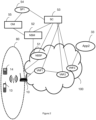
- FIG. 1 presents a simplified view of an organization of a communication infrastructure according to the prior art.
- the communication infrastructure 100 is organized into network slices.
- a network slice is implemented to ensure the routing of data having common characteristics. These characteristics may relate to quality of service criteria, security criteria, types of terminals, data transmitted for a specific application or even for data specific to a given application provider.
- the communication infrastructure 100 routes the data from and to the network 80.
- the infrastructure 100 routes data from other networks and terminals and represents, for example, a communication infrastructure of a telecommunications operator.
- the network 80 may, for example, be a network deployed in a car, a train or a house.
- the equipment 10, or access device of the network 80 ensures the connection between the network 80 and the infrastructure 100. This equipment is, for example, a home gateway or a router implemented in a car, a train, etc.
- the equipment 10 (also called gateway in the remainder of the document) ensures the transmission and reception of data for the terminals 11, 12, 13, 14 attached to the equipment 10 by wired links of the Ethernet, electrical, optical fiber type, or by wireless links such as for example Bluetooth or Wi-Fi links.
- the network 80 is considered in the figure 1 as a vehicle communications network.
- the TR1 21 slice is used for example for data emitted by the sensor 11 sending diagnostic information from the car to a Tel 31 platform of the vehicle manufacturer, the platform also being accessible to partners of the manufacturer such as equipment manufacturers and security companies.
- the TR2 slice 22 is used for accessing video and audio content offered by a content provider via a broadcasting platform App1 32 and a CDN server 35.
- the TR3 network slice 23 routes the data relating to assisted driving to an application App2 33 specifically implemented for this service.
- the TR3 slice 23 requires availability and low latency for the data.
- the TR4 slice 24 routes the vehicle data to the Internet Int 34.
- the terminals 11, 12, 13, 14 may in certain cases only transmit data for a single slice or on different slices depending on the application generating or receiving the data. There is no a priori limitation as to the number of slices that can be implemented in the infrastructure 100.
- the equipment 10 can itself transmit data to applications or platforms on one or more slices deployed in the infrastructure 100.
- the network slices are implemented between the terminal connecting to the communications infrastructure, represented in the figure 1 by the equipment 10, and platforms such as Tel 31, App1 32..., without taking into account the needs of the terminals attached to the equipment 10 and without any information relating to the taxation of the data exchanged on the network slices being transmitted.
- the communication network 80 comprises two terminals 13, 14.
- the terminals can be smartphones, tablets, sensors or any device capable of communicating via a wired or wireless link with the gateway 10.
- the gateway 10 is connected to the network 100 via a wired link, such as a fiber or an xDSL ( Digital Subscriber Line ) link or via a wireless link, for example via Wi-Fi or cellular access (3G, 4G, 5G, etc.).
- a network slice composed of the virtualized functions VNF1, VNF2, VNF3 is shown.
- Network slices can also integrate non-virtualized functions. For simplification purposes, only one network slice is shown.
- Gateway 10 is also connected to an NSSF ( Network Slice Selection Function ) entity 51 in charge of selecting network slices for gateway 10.
- NSSF Network Slice Selection Function
- the entity 54 SP1 is a control platform managed by the manufacturer of the vehicle in which the network 80 is implemented.
- the manufacturer via the platform 54, issues an order to the entity 55 OM (in English Order Management ) of the operator of the infrastructure 100 for a connectivity offer.
- This order for the application 33 App2, the data of which is routed by the infrastructure operator 100, is described from various parameters including Service_Type, Split_Billing, Conditions_Split_Billing, Split_Billing_partners.
- the operator sets up an entity 53 SC (in English Service Charging ) in charge of billing the uses.
- the Service_Type parameters are for example loT ( Internet Of Things ), eMBB ( enhanced Mobile BroadBand ), eMBB premium to guarantee a better quality of service for these flows, or eMBB critical to guarantee data reliability and low latency.
- the Split_Billing parameter indicates whether split billing between different actors should be enabled or not. If enabled, different actors, such as the infrastructure operator 100 and the vehicle manufacturer, each receive a fee.
- the Split_Billing_partners parameter indicates which partners will be billed under the above conditions.
- the entity 55 OM transmits a request for implementation of the command to the entity 52 NSM (in English Network Slice Manager ).
- the request integrates the parameters received from the entity 54 SP1 during the command.
- the entity 53 SC then transmits the charging information to the virtualized instances VNF1, VNF2, VNF3 involved in routing the data relating to the application to the server 33 App2.
- the instances VNF1, VNF2 and VNF3 will transmit charging information to the billing entity 53 when transporting the data relating to the application 33 App2. If the VNF instances transport data relating to distinct network slices, the network slice identifier corresponding to the application 33 App2 must be associated with the data relating to the application 33 App2 so that each VNF can transmit the charging information corresponding to the data of the application 33 App2.
- An orchestration entity can also intervene for the implementation of the network slice for the routing of data between the VNFs.
- the procedure described in the figure 2 allows an application to be associated with a network slice and for charging parameters to be matched to the application.
- the data sent by the terminals 13 and 14 having activated the application App2 to the server 33 App2 and transmitted by the gateway 10 are routed by the VNF1, VNF2, VNF3 and charging information is transmitted by these VNFs to a billing system 53 ensuring the billing of the data in accordance with the charging parameters specified in the order.
- the operator of the infrastructure 100 uses the charging information received for the distribution of the billing of the various actors involved in the provision of the application App2 to the terminals 13 and 14.
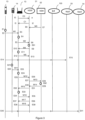
- FIG 3 presents an overview of the method of charging data for an application according to a first embodiment of the invention.
- the gateway 10 connects to the communication infrastructure 100 and transmits during a step I0 an initial configuration message C0 to the network slice management entity 51.
- the gateway can obtain the address of the entity 51 in a DHCP ( Dynamic Host Configuration Protocol ) type message for a fixed network or when establishing the PDN ( Packet Data Network ) connection for a mobile network, or even by configuration in the gateway.
- the entity 51 receives the message C0 during the step I1 and transmits during a step I2 an initial notification message C1 comprising slice identifiers and charging parameters associated with these identifiers.
- the entity 51 uses a parameter of the gateway 10, such as the IP address ( Internet Protocol ), the MAC address ( Medium Access Control ) or an identifier of the IMEI ( International Mobile Equipment Identity ) or MSISDN ( Mobile Station Integrated Services Digital Network ) type.
- the gateway 10 may receive during step I3 a default slice identifier and the associated charging parameters allowing it to transmit and receive data relating to Internet communications not requiring specific processing and pricing.
- an application App2 is activated on the terminal Term1 13.
- the activation of the application App2 can be the result of an action by a user who opens the application or it can result from an automatic action, for example from a sensor which sends data to a server.
- the activation of the application on the terminal Term1 13 is detected during a step E4 by the gateway 10.
- the gateway ensures the connectivity of the terminals 13 and 14 with data networks. This detection, according to one example, is carried out by the reception of data relating to the application App2 sent by the terminal Term1 13 or according to another example, by the sending of a control message sent by the terminal Term1 13 to the gateway 10. In the embodiment described in the figure 3 , it is considered that the gateway 10 detects during step E4 the activation of the application App2 on the terminal Term1 13 by sending data relating to the application App2 in a message M1 during step E2 and the reception of this message M1 by the gateway 10 during step E3.
- the access device may transmit data relating to the detected application App2 on a network slice to which it is connected or to which it can connect.
- the access device may transmit the data on a network slice that it received during step I3.
- the network slice may for example be used until the initialization of the charging corresponding to the network slice subsequently used for the transport of the data of the application App2.
- the application data is stored in memory, for example in a “buffer” before being transmitted once the initialization of the taxation is carried out by the gateway 10.
- the gateway 10 sends an identification message M2 to an entity 51 for managing the network slices of the infrastructure of communication 100.
- the management entity 51 is in this example an NSSF server.
- the message M2 is for example a control message.
- the gateway 10 can, according to one example, transmit the message M2 via an access device of the communication infrastructure. This access device can be a base station of the eNodeB type if the communication infrastructure is a 4G mobile network or of the NR ( NextGen Radio Access Network ) type if it is a 5G network.
- the NSSF server 51 receives the message M2 transmitted by the gateway 10.
- the message M2 received comprises information on the application App2 detected by the gateway 10.
- the information can be, according to one example, an identifier of the application App2 or any other information making it possible to identify the application App2 unambiguously.
- the NSSF server 51 selects during the step E61 a network slice capable of routing the data of the application App2 in the communication infrastructure 100 as well as the charging parameters corresponding to the routing of the data of the application in the slice. This may be indifferently a network slice already implemented in the communication infrastructure 100 or a new network slice if the network slices implemented in the infrastructure 100 do not allow routing the data of the application App2.
- the NSSF server 51 can use the information transmitted by the NSM entity 52 as described in the figure 2 and represented in the figure 3 by the message M3 transmitted by the entity 52 NSM during the step E7 and received by the server 51 NSSF during the step E8.
- the message M3 includes a network slice identifier as well as the charging parameters. These charging parameters can be established from the parameters transmitted when the order is taken. It can be a hexadecimal code or an attribute in text format allowing it to be interpreted by the gateway 10.
- the NSSF server 51 transmits to the gateway 10, a network slice identifier corresponding to the application App2 as well as taxation parameters associated with this network slice. From these attributes, the gateway 10 can determine the type of taxation and in particular whether the application App2 executed by the terminal 13 will be billed by the operator of the infrastructure 100 and/or for example by the manufacturer of the vehicle having issued an order, with reference to the figure 2 .
- the NSSF server 51 sends a message M4 comprising the network slice and the associated charging parameters. According to an example not illustrated, the NSSF server 51 can transmit several slice identifiers with which charging parameters are associated.
- the gateway receives the message M4 during a step E10. It is considered that, in this embodiment, the gateway 10 receives several network slice identifiers and charging parameters associated with each network slice.
- the gateway 10 selects a network slice identifier from among the identifiers received. This selection is possibly performed by comparing the charging parameters associated with each network slice.
- the gateway may, for example, select a network slice whose charging parameters determine lower billing or billing by an entity other than that administering the gateway 10.
- the gateway 10 relays the information to the terminal 13 which itself selects the network slice. This may be performed via notification on the screen of the terminal 13 of the billing conditions for a broadcast service.
- the gateway 10 transmits to the NSSF server 51 a message M5 comprising the selected slice identifier. It can, according to one example, also transmit the charging parameters associated with the selected slice.
- this message M5 is received by the NSSF server 51.
- the NSSF server 51 can, according to one example, inform the entities in charge of the charging as well as the entities in charge of implementing the network slice.
- the data of the application App2 are taxed in accordance with the taxation parameters associated with the selected network slice.
- the equipment ensuring the connection of the gateway 10 to the network (or infrastructure) 100 can issue taxation tickets corresponding to the volume of data of the application App2 to a taxation equipment in the case of “offline” taxation or receive taxation credits from a taxation equipment in the case of so-called “online” taxation.
- This taxation data is then potentially used for the invoicing of the different entities in accordance with the taxation parameters of the slice in the case of shared invoicing.
- the terminal 13 transmits the data relating to the application App2 to the application server 33 App2, these data being received then transferred by the gateway 10 to the virtualized instances of the network slice of the communication infrastructure 100, the network slice corresponding to the identifier selected during the step E11.
- the NSSF server 51 will have been able to previously transmit information comprising an identifier of the access equipment of the slice to which the gateway 10 must transmit the data relating to the application App2.
- step E21 an application App3 on the terminal 14 is started.
- the terminal 14 is also attached by a wired or wireless link to the gateway 10 which is itself attached to the communication infrastructure 100.
- steps E22, E23, E24, E25 and E26 are respectively identical to the steps E2, E3, E4, E5, E6.
- the NSSF server 51 does not have a network slice identifier or associated charging parameters for the application App3. For this reason, it requests the NSM server 52 during a step E27 by transmitting a message M13 comprising a request for a network slice for the application App3.
- the NSM server 52 receives the message M13 during the step E28 and associates a network slice, for example following a received order, as described in the figure 2 .
- the NSM server 52 selects during a step E62 a network slice and charging parameters for the data of the App3 application.
- the NSM server 52 will be able to return a network slice offering a high throughput but having undemanding quality of service characteristics, particularly in terms of latency and with charging based on the volume of data of the App3 application transmitted at the expense of the gateway manager 10.
- step E29 the NSM server 52 sends a message M14 comprising the identifier of the selected network slice and the charging parameters of the identifier for the application App3 to the NSSF server 51.
- the NSSF server 51 receives the message in step E30.
- the NSSF server 51 transmits the identifier of the network slice and the charging parameters relating to the identifier in a message M15 received by the gateway 10 in step E32.
- the NSSF server 51 can store the slice identifier received and the associated charging parameters for the application App3 so as to be able to communicate them to a device during a future request.
- the gateway 10 decides to refuse the identifier and the associated charging parameters received from the NSSF server 51, for example because of the charging of the application data by volume and because this charging is the responsibility of the manager of the gateway 10.
- step E34 the gateway 10 sends a message M16 refusing the network slice identifier and the charging parameters received.
- This message M16 is received by the NSSF server 51 during step E35.
- the NSSF server 51 Upon receipt of the message M16, the NSSF server 51 sends a message M17 comprising a so-called default network slice with charging parameters corresponding to a fixed cost borne by the manager of the gateway 10, during step E36.
- This network slice offers a non-guaranteed and limited throughput as well as minimum quality of service characteristics.
- the recommendation message M17 is received by the gateway 10 during step E37.
- the gateway 10, during step E38 acknowledges receipt of the message M17 by sending a message M18 acknowledgment message to the NSSF server 51, thereby triggering the charging in accordance with the charging parameters present in the M17 message for the default network slice.
- the NSSF server 51 upon receipt of the M18 message during step E39, informs the entities responsible for charging and implementing the network slices that the data of the App3 application will be routed on the default network slice with flat-rate charging.
- the data of the application App3 sent by the terminal 13 during the step E40 are routed to the gateway 10 then to the infrastructure 100. Within the infrastructure 100, the data of the application App3 are transmitted via the default network slice to the application server 34 App3 which receives them during the step E41.
- FIG 4 presents an overview of the method of charging data for an application according to a second embodiment of the invention.
- step E14 the terminal 13 transmits the data relating to the application App2 to the application server 33 App2, this data being received and then transferred by the gateway 10 to the virtualized instances of the network slice of the communication infrastructure 100, the network slice corresponding to the identifier selected during step E11.
- the network slice selected during step E11 by the gateway 10 is a network slice TR1 whose pricing is linked to volumes of data transmitted and received by the terminal 13 with a cap on the volume of data admitted and indicated in the order initially received. This means that from a certain volume of data of the application App2 exchanged by the terminal 13 with the application App2 33, the price of the additional data becomes significantly higher.
- the entity 52 NSM detects during a step E81 that the data ceiling authorized for a T1 tariff has been reached. This detection is implemented for example by the reception of a message not shown on the figure 4 from a equipment responsible for metering and charging services (such as entity 53 SC shown on the figure 2 but not shown on the figure 4 ). This means that the taxation of data exchanged on the network slice used to transmit the data of the App2 application will change.
- the NSM entity 52 transmits during a step E82 to the NSSF entity 51 a message M22 indicating that the data ceiling for the T1 pricing has been reached for the terminal 13.
- the NSSF server 51 receives the message M22 during the step E83.
- this message M22 Upon receipt of this message M22, it transmits to the gateway 10 a message M23 comprising network slice identifiers and the pricing parameters associated with the slices. In particular, it transmits the new pricing parameters of the slice TR1 for the data of the application App2.
- the NSSF server 51 transmits only the slice identifier corresponding to slice TR1 and the new pricing parameters.
- the gateway 10 Upon receipt of the message M23 during step E85, the gateway 10 transmits during step E86 to the terminal 13 a message M24 comprising information indicating that the data ceiling for the application App2 at the rate T1 has been reached and that the future data of the application App2 will be at rate conditions T2.
- the user makes a decision on the desire to continue to use the application App2 and transmits to the gateway 10 during step E88 a message M25 comprising information indicating to the gateway 10 that data relating to the application App2 will still be transmitted and received by the terminal 13.
- the gateway 10 Upon receipt of the message M25 during step E89, the gateway 10 selects during step E90 a network slice to route the data of the application App2.
- terminal 13 indicates to gateway 10 in the message M25 that it will pay for the App2 application data at the new T2 rate.
- the gateway selects the network slice used previously but with new T2 charging parameters.
- the terminal 13 does not indicate to the gateway 10 that it will pay for the data of the application App2 at the tariff conditions T2 or indicates that it will not pay them, and the gateway selects another network slice to route the data of the application App2 for the terminal 13 and chooses for example a default network slice offering fewer guarantees in terms of security, quality of service, reliability but having less expensive charging parameters than the tariff T2.
- the gateway 10 transmits a message to the NSSF server 51 to request support for a new network slice and charging parameters.
- the NSSF server 51 may request the NSM server 52 to obtain this information.
- a new order may be, alternatively, proposed to the supplier if the pricing assumes support by this supplier.
- the gateway 10 sends to the NSSF server 51 during the step E91 a message M25 comprising the selected network slice identifier.
- This message may optionally also comprise the charging parameters associated with the selected network slice.
- the NSSF server 51 Upon receipt of the message M25 during the step E92 initializing the charging for the data of the application App2, the NSSF server 51 informs the entities responsible for charging and implementing the network slices that the data of the application App2 sent by the terminal 13 will be routed on the network slice whose identifier was transmitted by the gateway 10 in the message M25.
- the data of the application App2 sent by the terminal 13 during step E93 are routed to the gateway 10 then to the infrastructure 100.
- the data of the application App3 are transmitted via the network slice selected by the gateway 10 to the application server 33 App2 which receives them during step E94, and billed in accordance with the charging parameters. selected by gateway 10.
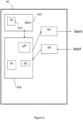
- the taxation device 60 implements the taxation method, different embodiments of which have just been described.
- Such a device 60 can be implemented in an access device.
- the access device can be equipment for residential customers or professional customers, connected to a fixed network or to a mobile network.
- the access device can also be a terminal, a modem, a femtocell device, etc.
- the device 60 comprises a processing unit 630, equipped for example with a microprocessor ⁇ P, and controlled by a computer program 610, stored in a memory 620 and implementing the charging method according to the invention.
- a computer program 610 stored in a memory 620 and implementing the charging method according to the invention.
- the code instructions of the computer program 610 are for example loaded into a RAM memory, before being executed by the processor of the processing unit 630.
- the charging device further comprises, according to yet another embodiment, a module for selecting a network slice identifier and associated charging parameters.
- the charging method advantageously makes it possible to condition the allocation and selection of network slices by an access device, according to charging parameters used to distribute the costs of implementing a service and billing between different actors involved in the provision of services.
- an access device can transmit data emitted by terminals attached to it and possibly managed by entities other than the entity managing the access device on network slices having quality of service, latency, and throughput parameters corresponding to charging parameters.
- the access device offers terminals Internet connections with different throughputs and quality of service parameters
- the data of an application activated on a terminal having contracted a value-added service with the access device will be routed on a more efficient network slice than the data of an application activated on a terminal having contracted a "best effort" offer.
- the charging process thus makes it possible to enrich the network slice selection process by an access device with pricing conditions, possibly negotiated with the terminals for which the access device provides connectivity. This process could also allow terminals to select an access device based on charging parameters proposed by the access devices.
Landscapes
- Engineering & Computer Science (AREA)
- Computer Networks & Wireless Communication (AREA)
- Signal Processing (AREA)
- Computer Security & Cryptography (AREA)
- Databases & Information Systems (AREA)
- Quality & Reliability (AREA)
- Data Exchanges In Wide-Area Networks (AREA)
- Mobile Radio Communication Systems (AREA)
- Telephonic Communication Services (AREA)
Claims (16)
- Verfahren zur Gebührenabrechnung der Daten einer Anwendung, die auf einem Abschnitt eines Kommunikationsnetzwerks (100) übertragen werden, implementiert in einer Zugangsvorrichtung (10) zu dem Netzwerk (100) und beinhaltend:- einen Schritt (E4, E24) des Detektierens der Aktivierung oder des Starts der Anwendung,- im Anschluss an den Schritt des Detektierens (E4, E24), einen Schritt (E5, E25) des Sendens, an eine Entität (51) zur Verwaltung der Netzwerkabschnitte, einer Identifikationsmeldung (M2, M12), die eine Information bezüglich der Identifikation der detektierten Anwendung beinhaltet,- einen Schritt (E10, E32) des Empfangens, von der Entität (51) zur Verwaltung der Netzwerkabschnitte, einer Benachrichtigungsmeldung (M4, M15, M17), die mindestens eine Netzwerkabschnittskennung, die der detektierten Anwendung entspricht, und Gebührenabrechnungsparameter, die mit der mindestens einen Netzwerkabschnittskennung assoziiert sind, beinhaltet,- einen Schritt (E11, E90) des Initialisierens einer Gebührenabrechnung der Daten des Netzwerkabschnitts, dessen Kennung ausgewählt wurde, in Abhängigkeit von den Tarifbedingungen, die mit den Gebührenabrechnungsparametern des Abschnitts verbunden und mit dem Transport der Daten auf dem ausgewählten Netzwerkabschnitt assoziiert sind.
- Verfahren zur Gebührenabrechnung nach Anspruch 1, das vor dem Schritt des Detektierens (E4, E24), während sich die Zugangsvorrichtung mit dem Netzwerk verbindet, ferner Folgendes beinhaltet:- einen Schritt (10) des Sendens, an die Entität (51) zur Verwaltung der Netzwerkabschnitte, während sich die Zugangsvorrichtung mit dem Netzwerk (100) verknüpft, einer Erstkonfigurationsmeldung (C0), die mindestens einen Parameter bezüglich der Zugangsvorrichtung (10) beinhaltet,- einen Schritt (13) des Empfangens, von der Verwaltungsentität (51), einer Erstbenachrichtigungsmeldung (C1), die mindestens eine standardmäßige Netzwerkabschnittskennung (100), die in Abhängigkeit von dem mindestens einen Parameter der Zugangsvorrichtung bestimmt wird, und Gebührenabrechnungsparameter, die mit der mindestens einen standardmäßigen Netzwerkabschnittskennung assoziiert sind, beinhaltet.
- Verfahren zur Gebührenabrechnung nach Anspruch 1, das ferner einen Schritt (E11, E90) des Auswählens, durch die Zugangsvorrichtung (10), einer Netzwerkabschnittskennung und der assoziierten Gebührenabrechnungsparameter anhand der mit der mindestens einen empfangenen Netzwerkabschnittskennung assoziierten Gebührenabrechnungsparameter beinhaltet, falls die Zugangsvorrichtung mehrere Netzwerkabschnittskennungen erhält.
- Verfahren zur Gebührenabrechnung nach Anspruch 3, das ferner einen Schritt (E12) des Sendens, durch die Zugangsvorrichtung (10), einer Annahmemeldung (M5) beinhaltet, die die ausgewählte Netzwerkabschnittskennung beinhaltet.
- Verfahren zur Gebührenabrechnung nach Anspruch 1, das ferner einen Schritt (E34) des Sendens, an die Entität (51) zur Verwaltung der Netzwerkabschnitte, einer Ablehnungsmeldung (M16) beinhaltet.
- Verfahren zur Gebührenabrechnung nach Anspruch 5, das ferner einen Schritt (E37) des Empfangens einer Empfehlungsmeldung (M17) beinhaltet, die die Kennung eines anderen sogenannten standardmäßigen Netzwerkabschnitts beinhaltet.
- Verfahren zur Gebührenabrechnung nach Anspruch 1, das ferner einen Schritt (E85) des Empfangens einer Meldung (M23) über eine Modifizierung der Gebührenabrechnungsparameter, die mit der mindestens einen empfangenen Netzwerkabschnittskennung assoziiert sind, beinhaltet.
- Verfahren zur Gebührenabrechnung nach Anspruch 1, wobei der Schritt (E4, E24) des Detektierens durch das Empfangen von Daten bezüglich der Anwendung von einem Endgerät (13, 14), das mit der Zugangsvorrichtung (10) verknüpft ist, erfolgt.
- Verfahren zur Gebührenabrechnung nach Anspruch 1, ferner beinhaltend:- einen Schritt (E86) des Sendens, an ein mit der Zugangsvorrichtung (10) verknüpftes Endgerät (13, 14), einer Informationsmeldung (M24), die eine Angabe bezüglich der mindestens einen Netzwerkabschnittskennung und die Gebührenabrechnungsparameter, die mit der mindestens einen Kennung assoziiert sind, beinhaltet,- einen Schritt (E88) des Empfangens, von dem Endgerät (13, 14), einer Empfehlungsmeldung (M25), die eine Information bezüglich der empfangenen Gebührenabrechnungsparameter beinhaltet.
- Verfahren zur Gebührenabrechnung nach Anspruch 1, wobei die Verwaltungsentität (51) eine NSSF-Vorrichtung, Network-Slice-Selection-Function-Vorrichtung, ist.
- Verfahren zur Gebührenabrechnung nach Anspruch 1, wobei die Gebührenabrechnungsparameter in S-NSSAI-Daten, Single-Network-Slice-Selection-Assistance-Information-Daten, enthalten sind.
- Verfahren zur Gebührenabrechnung nach Anspruch 1, das ferner einen Schritt des Initialisierens der Gebührenabrechnung der Daten der Anwendung in Abhängigkeit von der empfangenen Benachrichtigungsmeldung beinhaltet.
- Vorrichtung zur Gebührenabrechnung der Daten einer Anwendung, die auf einem Abschnitt eines Kommunikationsnetzwerks (100) übertragen werden, implementiert in einer Zugangsvorrichtung (10) zu dem Netzwerk (100) und beinhaltend:- einen Detektor (61), der dazu fähig ist, eine Aktivierung oder einen Start der Anwendung zu detektieren,- einen Sender (63), der dazu fähig ist, im Anschluss an den Schritt des Detektierens (E4, E24) eine Identifikationsmeldung, die eine Information bezüglich der Identifikation der detektierten Anwendung beinhaltet, an eine Entität (51) zur Verwaltung der Netzwerkabschnitte zu senden,- einen Empfänger (64), der dazu fähig ist, eine Benachrichtigungsmeldung, die mindestens eine Netzwerkabschnittskennung, die der detektierten Anwendung entspricht, und Gebührenabrechnungsparameter, die mit der mindestens einen Netzwerkabschnittskennung assoziiert sind, beinhaltet, von der Entität (51) zur Verwaltung der Netzwerkabschnitte zu empfangen,- ein Modul zur Initialisierung einer Gebührenabrechnung von Daten, das dazu fähig ist, die Gebührenabrechnung der Daten des Netzwerkabschnitts, dessen Kennung ausgewählt wurde, in Abhängigkeit von den Tarifbedingungen, die mit den Gebührenabrechnungsparametern des Abschnitts verbunden und mit dem Transport der Daten auf dem ausgewählten Netzwerkabschnitt assoziiert sind, zu initialisieren.
- System zur Gebührenabrechnung, beinhaltend- eine Zugangsvorrichtung (10), die eine Gebührenabrechnungsvorrichtung nach Anspruch 13 beinhaltet,- eine Entität (51) zur Verwaltung der Netzwerkabschnitte, beinhaltend- einen Empfänger, der dazu fähig ist, die Identifikationsmeldung, die eine Information bezüglich der Identifikation der Anwendung beinhaltet, zu empfangen,- ein Auswahlmodul, das dazu fähig ist, mindestens eine Netzwerkabschnittskennung, die der Anwendung entspricht, und Gebührenabrechnungsparameter, die mit der mindestens einen Netzwerkabschnittskennung assoziiert sind, auszuwählen,- einen Sender, der dazu fähig ist, die Benachrichtigungsmeldung, die die mindestens eine Netzwerkabschnittskennung und die mit der mindestens einen Netzwerkabschnittskennung assoziierten Gebührenabrechnungsparameter beinhaltet, zu senden.
- Computerprogramm, dadurch gekennzeichnet, dass es Anweisungen zur Implementierung der Schritte des Verfahrens zur Gebührenabrechnung nach Anspruch 1 beinhaltet, wenn dieses Verfahren von einem Prozessor ausgeführt wird.
- Speichermedium, das von einer Gebührenabrechnungsvorrichtung nach Anspruch 13 gelesen werden kann und auf dem das Programm nach Anspruch 15 gespeichert ist.
Applications Claiming Priority (2)
| Application Number | Priority Date | Filing Date | Title |
|---|---|---|---|
| FR1757926A FR3070564A1 (fr) | 2017-08-28 | 2017-08-28 | Procede de taxation de donnees d'une application acheminees sur une tranche d'un reseau de communication |
| PCT/FR2018/052100 WO2019043324A1 (fr) | 2017-08-28 | 2018-08-24 | Procédé de taxation de données d'une application acheminées sur une tranche d'un réseau de communication |
Publications (2)
| Publication Number | Publication Date |
|---|---|
| EP3676992A1 EP3676992A1 (de) | 2020-07-08 |
| EP3676992B1 true EP3676992B1 (de) | 2024-10-09 |
Family
ID=60627762
Family Applications (1)
| Application Number | Title | Priority Date | Filing Date |
|---|---|---|---|
| EP18786836.9A Active EP3676992B1 (de) | 2017-08-28 | 2018-08-24 | Verfahren zur gebührenabrechnung von daten, die auf einem abschnitt eines kommunikationsnetzwerks geleitet werden |
Country Status (6)
| Country | Link |
|---|---|
| US (1) | US11240744B2 (de) |
| EP (1) | EP3676992B1 (de) |
| CN (1) | CN111052677B (de) |
| ES (1) | ES3009602T3 (de) |
| FR (1) | FR3070564A1 (de) |
| WO (1) | WO2019043324A1 (de) |
Families Citing this family (6)
| Publication number | Priority date | Publication date | Assignee | Title |
|---|---|---|---|---|
| EP3769469A1 (de) * | 2018-03-20 | 2021-01-27 | Nokia Solutions and Networks Oy | Quotenverwaltung in einer sitzungsverwaltungsfunktion (smf) zur online-abrechnung |
| CN112956253B (zh) * | 2018-11-06 | 2022-10-04 | 中兴通讯股份有限公司 | 用于将用户设备附着到网络切片的方法和装置 |
| FR3089376A1 (fr) * | 2018-11-29 | 2020-06-05 | Orange | Activation ou désactivation d’un sous-ensemble virtuel d’un réseau dédié à un service pour un terminal |
| US11240855B2 (en) * | 2020-01-13 | 2022-02-01 | Qualcomm Incorporated | Local area network client participation in a network slice |
| US12096218B2 (en) * | 2020-03-23 | 2024-09-17 | T-Mobile Usa, Inc. | Security for network slicing in a communication system |
| FR3111251A1 (fr) * | 2020-06-04 | 2021-12-10 | Orange | Procédé de discrimination d’un message entre un terminal et un serveur de données |
Family Cites Families (7)
| Publication number | Priority date | Publication date | Assignee | Title |
|---|---|---|---|---|
| WO2011097543A2 (en) * | 2010-02-05 | 2011-08-11 | Ivan Andrew Pointer | Financial, account and ledger web application and method for use on personal computers and internet capable mobile devices |
| US9544927B2 (en) * | 2012-07-02 | 2017-01-10 | Alcatel Lucent | System, method and computer readable medium for bearer activation in a core network for wireless devices |
| WO2017143047A1 (en) * | 2016-02-16 | 2017-08-24 | Idac Holdings, Inc. | Network slicing operation |
| WO2018008980A1 (ko) * | 2016-07-05 | 2018-01-11 | 엘지전자(주) | 무선 통신 시스템에서 사용자가 선호하는 자원 운용 선택 방법 및 이를 위한 장치 |
| AU2017419197A1 (en) * | 2017-06-19 | 2020-01-02 | Huawei Technologies Co., Ltd. | Registration method, session establishment method, terminal, and amf entity |
| US11044664B2 (en) * | 2017-06-29 | 2021-06-22 | Nokia Solutions And Networks Oy | Enhanced interfaces for network slice selection based on charging rules |
| CN109257769B (zh) * | 2017-07-12 | 2020-09-01 | 维沃移动通信有限公司 | 一种处理网络切片拥塞的方法、相关设备和系统 |
-
2017
- 2017-08-28 FR FR1757926A patent/FR3070564A1/fr not_active Withdrawn
-
2018
- 2018-08-24 WO PCT/FR2018/052100 patent/WO2019043324A1/fr not_active Ceased
- 2018-08-24 CN CN201880055439.0A patent/CN111052677B/zh active Active
- 2018-08-24 ES ES18786836T patent/ES3009602T3/es active Active
- 2018-08-24 US US16/642,242 patent/US11240744B2/en active Active
- 2018-08-24 EP EP18786836.9A patent/EP3676992B1/de active Active
Also Published As
| Publication number | Publication date |
|---|---|
| ES3009602T3 (en) | 2025-03-27 |
| CN111052677B (zh) | 2023-08-22 |
| US20200389844A1 (en) | 2020-12-10 |
| US11240744B2 (en) | 2022-02-01 |
| EP3676992A1 (de) | 2020-07-08 |
| FR3070564A1 (fr) | 2019-03-01 |
| CN111052677A (zh) | 2020-04-21 |
| WO2019043324A1 (fr) | 2019-03-07 |
Similar Documents
| Publication | Publication Date | Title |
|---|---|---|
| EP3676992B1 (de) | Verfahren zur gebührenabrechnung von daten, die auf einem abschnitt eines kommunikationsnetzwerks geleitet werden | |
| EP3632087B1 (de) | Auswahl einer netzwerkscheibe in bezug auf eine anwendung | |
| EP3479644B1 (de) | Verfahren zur verbindung eines benutzerendgeräts mit einem netzwerk-slice | |
| EP2078412B1 (de) | Verfahren für den zugang zu einem dienst von einem benutzerendgerät über ein heterogenes netzwerk mit verschiedenen verfügbaren zugangstypen | |
| EP3427449B1 (de) | Auswahl einer netzwerk-slice-instanziierung zum übertragen von uplink-paketen | |
| WO2021255382A1 (fr) | Procédé de configuration d'un dispositif terminal | |
| EP2460322A1 (de) | Verfahren und system für automatische auswahl von übertragungsmedien | |
| EP3970128A1 (de) | Verfahren zur zuweisung eines systems zur steuerung eines ferngesteuerten fahrzeugs | |
| EP3248326B1 (de) | Verfahren zur verwaltung der signalisierung des vorhandenseins eines endgeräts in einem kommunikationsnetzwerk | |
| EP1479212A1 (de) | Vorrichtung und verfahren zur vermittlung zwischen dienstanbietern und ihren nutzern | |
| WO2019122711A1 (fr) | Procédé de configuration dynamique d'entités d'un réseau de communications pour l'acheminement de données d'un terminal visiteur | |
| EP3895389A1 (de) | Endgerät, das gleichzeitig mit mehreren zugangsnetzen verbunden werden kann, verfahren zur unterscheidung von vom endgerät emittierten verkehr, vorrichtung und verfahren zur verkehrsverwaltung | |
| FR2985402A1 (fr) | Procede de connexion a un reseau local d'un terminal mettant en oeuvre un protocole de type eap et systeme de communication associe | |
| FR3023092A1 (fr) | Procede et dispositif de gestion de la connexion d' un terminal a un reseau d' acces | |
| FR3122544A1 (fr) | Procédé et dispositif de paramétrage d’un dispositif terminal | |
| EP2400726A1 (de) | Verfahren zur Identifizierung eines lokalen Netzwerks, welches durch eine offentliche IP Adresse identifiziert wird | |
| WO2022136786A1 (fr) | Procede de traitement d'une demande d'enregistrement d'un terminal d'un utilisateur d'un reseau de communication, procede de mise a disposition d'une table de numeros d'urgence, procede de gestion d'une table de numeros d'urgence, dispositifs, equipement de proximite, equipement de controle, equipement de gestion d'une mobilite d'un terminal d'un utilisateur, systeme et programmes d'ordinateur correspondants | |
| EP1854265A1 (de) | Verfahren zur regelung des zugangs zu einem dienst, system und einrichtungen dafür | |
| FR2965132A1 (fr) | Procede de configuration de parametres de gestion de paquets de donnees appartenant a un flux de donnees |
Legal Events
| Date | Code | Title | Description |
|---|---|---|---|
| STAA | Information on the status of an ep patent application or granted ep patent |
Free format text: STATUS: UNKNOWN |
|
| STAA | Information on the status of an ep patent application or granted ep patent |
Free format text: STATUS: THE INTERNATIONAL PUBLICATION HAS BEEN MADE |
|
| PUAI | Public reference made under article 153(3) epc to a published international application that has entered the european phase |
Free format text: ORIGINAL CODE: 0009012 |
|
| STAA | Information on the status of an ep patent application or granted ep patent |
Free format text: STATUS: REQUEST FOR EXAMINATION WAS MADE |
|
| 17P | Request for examination filed |
Effective date: 20200325 |
|
| AK | Designated contracting states |
Kind code of ref document: A1 Designated state(s): AL AT BE BG CH CY CZ DE DK EE ES FI FR GB GR HR HU IE IS IT LI LT LU LV MC MK MT NL NO PL PT RO RS SE SI SK SM TR |
|
| AX | Request for extension of the european patent |
Extension state: BA ME |
|
| DAV | Request for validation of the european patent (deleted) | ||
| DAX | Request for extension of the european patent (deleted) | ||
| STAA | Information on the status of an ep patent application or granted ep patent |
Free format text: STATUS: EXAMINATION IS IN PROGRESS |
|
| 17Q | First examination report despatched |
Effective date: 20210311 |
|
| RAP3 | Party data changed (applicant data changed or rights of an application transferred) |
Owner name: ORANGE |
|
| REG | Reference to a national code |
Ref country code: DE Ref legal event code: R079 Free format text: PREVIOUS MAIN CLASS: H04L0012240000 Ipc: H04L0041500000 Ref country code: DE Ref legal event code: R079 Ref document number: 602018075235 Country of ref document: DE Free format text: PREVIOUS MAIN CLASS: H04L0012240000 Ipc: H04L0041500000 |
|
| GRAP | Despatch of communication of intention to grant a patent |
Free format text: ORIGINAL CODE: EPIDOSNIGR1 |
|
| STAA | Information on the status of an ep patent application or granted ep patent |
Free format text: STATUS: GRANT OF PATENT IS INTENDED |
|
| RIC1 | Information provided on ipc code assigned before grant |
Ipc: H04L 41/0894 20220101ALI20231213BHEP Ipc: H04L 43/20 20220101ALI20231213BHEP Ipc: H04W 48/18 20090101ALI20231213BHEP Ipc: H04W 16/04 20090101ALI20231213BHEP Ipc: H04L 41/5041 20220101ALI20231213BHEP Ipc: H04L 41/0806 20220101ALI20231213BHEP Ipc: H04L 41/50 20220101AFI20231213BHEP |
|
| INTG | Intention to grant announced |
Effective date: 20240109 |
|
| GRAS | Grant fee paid |
Free format text: ORIGINAL CODE: EPIDOSNIGR3 |
|
| GRAA | (expected) grant |
Free format text: ORIGINAL CODE: 0009210 |
|
| STAA | Information on the status of an ep patent application or granted ep patent |
Free format text: STATUS: THE PATENT HAS BEEN GRANTED |
|
| AK | Designated contracting states |
Kind code of ref document: B1 Designated state(s): AL AT BE BG CH CY CZ DE DK EE ES FI FR GB GR HR HU IE IS IT LI LT LU LV MC MK MT NL NO PL PT RO RS SE SI SK SM TR |
|
| REG | Reference to a national code |
Ref country code: CH Ref legal event code: EP |
|
| REG | Reference to a national code |
Ref country code: DE Ref legal event code: R096 Ref document number: 602018075235 Country of ref document: DE |
|
| REG | Reference to a national code |
Ref country code: IE Ref legal event code: FG4D Free format text: LANGUAGE OF EP DOCUMENT: FRENCH |
|
| REG | Reference to a national code |
Ref country code: LT Ref legal event code: MG9D |
|
| REG | Reference to a national code |
Ref country code: NL Ref legal event code: MP Effective date: 20241009 |
|
| REG | Reference to a national code |
Ref country code: AT Ref legal event code: MK05 Ref document number: 1731823 Country of ref document: AT Kind code of ref document: T Effective date: 20241009 |
|
| PG25 | Lapsed in a contracting state [announced via postgrant information from national office to epo] |
Ref country code: NL Free format text: LAPSE BECAUSE OF FAILURE TO SUBMIT A TRANSLATION OF THE DESCRIPTION OR TO PAY THE FEE WITHIN THE PRESCRIBED TIME-LIMIT Effective date: 20241009 |
|
| REG | Reference to a national code |
Ref country code: ES Ref legal event code: FG2A Ref document number: 3009602 Country of ref document: ES Kind code of ref document: T3 Effective date: 20250327 |
|
| PG25 | Lapsed in a contracting state [announced via postgrant information from national office to epo] |
Ref country code: NL Free format text: LAPSE BECAUSE OF FAILURE TO SUBMIT A TRANSLATION OF THE DESCRIPTION OR TO PAY THE FEE WITHIN THE PRESCRIBED TIME-LIMIT Effective date: 20241009 |
|
| PG25 | Lapsed in a contracting state [announced via postgrant information from national office to epo] |
Ref country code: HR Free format text: LAPSE BECAUSE OF FAILURE TO SUBMIT A TRANSLATION OF THE DESCRIPTION OR TO PAY THE FEE WITHIN THE PRESCRIBED TIME-LIMIT Effective date: 20241009 Ref country code: IS Free format text: LAPSE BECAUSE OF FAILURE TO SUBMIT A TRANSLATION OF THE DESCRIPTION OR TO PAY THE FEE WITHIN THE PRESCRIBED TIME-LIMIT Effective date: 20250209 Ref country code: PT Free format text: LAPSE BECAUSE OF FAILURE TO SUBMIT A TRANSLATION OF THE DESCRIPTION OR TO PAY THE FEE WITHIN THE PRESCRIBED TIME-LIMIT Effective date: 20250210 |
|
| PG25 | Lapsed in a contracting state [announced via postgrant information from national office to epo] |
Ref country code: FI Free format text: LAPSE BECAUSE OF FAILURE TO SUBMIT A TRANSLATION OF THE DESCRIPTION OR TO PAY THE FEE WITHIN THE PRESCRIBED TIME-LIMIT Effective date: 20241009 |
|
| PG25 | Lapsed in a contracting state [announced via postgrant information from national office to epo] |
Ref country code: BG Free format text: LAPSE BECAUSE OF FAILURE TO SUBMIT A TRANSLATION OF THE DESCRIPTION OR TO PAY THE FEE WITHIN THE PRESCRIBED TIME-LIMIT Effective date: 20241009 |
|
| PG25 | Lapsed in a contracting state [announced via postgrant information from national office to epo] |
Ref country code: NO Free format text: LAPSE BECAUSE OF FAILURE TO SUBMIT A TRANSLATION OF THE DESCRIPTION OR TO PAY THE FEE WITHIN THE PRESCRIBED TIME-LIMIT Effective date: 20250109 |
|
| PG25 | Lapsed in a contracting state [announced via postgrant information from national office to epo] |
Ref country code: LV Free format text: LAPSE BECAUSE OF FAILURE TO SUBMIT A TRANSLATION OF THE DESCRIPTION OR TO PAY THE FEE WITHIN THE PRESCRIBED TIME-LIMIT Effective date: 20241009 Ref country code: GR Free format text: LAPSE BECAUSE OF FAILURE TO SUBMIT A TRANSLATION OF THE DESCRIPTION OR TO PAY THE FEE WITHIN THE PRESCRIBED TIME-LIMIT Effective date: 20250110 Ref country code: AT Free format text: LAPSE BECAUSE OF FAILURE TO SUBMIT A TRANSLATION OF THE DESCRIPTION OR TO PAY THE FEE WITHIN THE PRESCRIBED TIME-LIMIT Effective date: 20241009 |
|
| PG25 | Lapsed in a contracting state [announced via postgrant information from national office to epo] |
Ref country code: PL Free format text: LAPSE BECAUSE OF FAILURE TO SUBMIT A TRANSLATION OF THE DESCRIPTION OR TO PAY THE FEE WITHIN THE PRESCRIBED TIME-LIMIT Effective date: 20241009 |
|
| PG25 | Lapsed in a contracting state [announced via postgrant information from national office to epo] |
Ref country code: RS Free format text: LAPSE BECAUSE OF FAILURE TO SUBMIT A TRANSLATION OF THE DESCRIPTION OR TO PAY THE FEE WITHIN THE PRESCRIBED TIME-LIMIT Effective date: 20250109 |
|
| PG25 | Lapsed in a contracting state [announced via postgrant information from national office to epo] |
Ref country code: SM Free format text: LAPSE BECAUSE OF FAILURE TO SUBMIT A TRANSLATION OF THE DESCRIPTION OR TO PAY THE FEE WITHIN THE PRESCRIBED TIME-LIMIT Effective date: 20241009 |
|
| PG25 | Lapsed in a contracting state [announced via postgrant information from national office to epo] |
Ref country code: DK Free format text: LAPSE BECAUSE OF FAILURE TO SUBMIT A TRANSLATION OF THE DESCRIPTION OR TO PAY THE FEE WITHIN THE PRESCRIBED TIME-LIMIT Effective date: 20241009 |
|
| REG | Reference to a national code |
Ref country code: DE Ref legal event code: R097 Ref document number: 602018075235 Country of ref document: DE |
|
| PG25 | Lapsed in a contracting state [announced via postgrant information from national office to epo] |
Ref country code: EE Free format text: LAPSE BECAUSE OF FAILURE TO SUBMIT A TRANSLATION OF THE DESCRIPTION OR TO PAY THE FEE WITHIN THE PRESCRIBED TIME-LIMIT Effective date: 20241009 |
|
| PG25 | Lapsed in a contracting state [announced via postgrant information from national office to epo] |
Ref country code: RO Free format text: LAPSE BECAUSE OF FAILURE TO SUBMIT A TRANSLATION OF THE DESCRIPTION OR TO PAY THE FEE WITHIN THE PRESCRIBED TIME-LIMIT Effective date: 20241009 |
|
| PG25 | Lapsed in a contracting state [announced via postgrant information from national office to epo] |
Ref country code: SK Free format text: LAPSE BECAUSE OF FAILURE TO SUBMIT A TRANSLATION OF THE DESCRIPTION OR TO PAY THE FEE WITHIN THE PRESCRIBED TIME-LIMIT Effective date: 20241009 |
|
| PG25 | Lapsed in a contracting state [announced via postgrant information from national office to epo] |
Ref country code: CZ Free format text: LAPSE BECAUSE OF FAILURE TO SUBMIT A TRANSLATION OF THE DESCRIPTION OR TO PAY THE FEE WITHIN THE PRESCRIBED TIME-LIMIT Effective date: 20241009 |
|
| PLBE | No opposition filed within time limit |
Free format text: ORIGINAL CODE: 0009261 |
|
| STAA | Information on the status of an ep patent application or granted ep patent |
Free format text: STATUS: NO OPPOSITION FILED WITHIN TIME LIMIT |
|
| PG25 | Lapsed in a contracting state [announced via postgrant information from national office to epo] |
Ref country code: SE Free format text: LAPSE BECAUSE OF FAILURE TO SUBMIT A TRANSLATION OF THE DESCRIPTION OR TO PAY THE FEE WITHIN THE PRESCRIBED TIME-LIMIT Effective date: 20241009 |
|
| 26N | No opposition filed |
Effective date: 20250710 |
|
| PGFP | Annual fee paid to national office [announced via postgrant information from national office to epo] |
Ref country code: ES Payment date: 20250901 Year of fee payment: 8 |
|
| PGFP | Annual fee paid to national office [announced via postgrant information from national office to epo] |
Ref country code: DE Payment date: 20250724 Year of fee payment: 8 |
|
| PGFP | Annual fee paid to national office [announced via postgrant information from national office to epo] |
Ref country code: IT Payment date: 20250723 Year of fee payment: 8 |
|
| PGFP | Annual fee paid to national office [announced via postgrant information from national office to epo] |
Ref country code: GB Payment date: 20250724 Year of fee payment: 8 |
|
| PGFP | Annual fee paid to national office [announced via postgrant information from national office to epo] |
Ref country code: FR Payment date: 20250723 Year of fee payment: 8 |