EP3675463B1 - Identifizierungsverfahren eines verbundenen objekts in einer netzinfrastruktur - Google Patents
Identifizierungsverfahren eines verbundenen objekts in einer netzinfrastruktur Download PDFInfo
- Publication number
- EP3675463B1 EP3675463B1 EP19220142.4A EP19220142A EP3675463B1 EP 3675463 B1 EP3675463 B1 EP 3675463B1 EP 19220142 A EP19220142 A EP 19220142A EP 3675463 B1 EP3675463 B1 EP 3675463B1
- Authority
- EP
- European Patent Office
- Prior art keywords
- connected object
- connection gateway
- connection
- objects
- network
- Prior art date
- Legal status (The legal status is an assumption and is not a legal conclusion. Google has not performed a legal analysis and makes no representation as to the accuracy of the status listed.)
- Active
Links
Images

Classifications
-
- H—ELECTRICITY
- H04—ELECTRIC COMMUNICATION TECHNIQUE
- H04W—WIRELESS COMMUNICATION NETWORKS
- H04W40/00—Communication routing or communication path finding
- H04W40/24—Connectivity information management, e.g. connectivity discovery or connectivity update
- H04W40/246—Connectivity information discovery
-
- H—ELECTRICITY
- H04—ELECTRIC COMMUNICATION TECHNIQUE
- H04L—TRANSMISSION OF DIGITAL INFORMATION, e.g. TELEGRAPHIC COMMUNICATION
- H04L67/00—Network arrangements or protocols for supporting network services or applications
- H04L67/50—Network services
- H04L67/51—Discovery or management thereof, e.g. service location protocol [SLP] or web services
-
- H—ELECTRICITY
- H04—ELECTRIC COMMUNICATION TECHNIQUE
- H04W—WIRELESS COMMUNICATION NETWORKS
- H04W8/00—Network data management
- H04W8/005—Discovery of network devices, e.g. terminals
-
- H—ELECTRICITY
- H04—ELECTRIC COMMUNICATION TECHNIQUE
- H04L—TRANSMISSION OF DIGITAL INFORMATION, e.g. TELEGRAPHIC COMMUNICATION
- H04L67/00—Network arrangements or protocols for supporting network services or applications
- H04L67/01—Protocols
- H04L67/12—Protocols specially adapted for proprietary or special-purpose networking environments, e.g. medical networks, sensor networks, networks in vehicles or remote metering networks
-
- H—ELECTRICITY
- H04—ELECTRIC COMMUNICATION TECHNIQUE
- H04W—WIRELESS COMMUNICATION NETWORKS
- H04W88/00—Devices specially adapted for wireless communication networks, e.g. terminals, base stations or access point devices
- H04W88/16—Gateway arrangements
Definitions
- the present invention relates to the field of connected objects and, in particular, the exchange of data in a network infrastructure comprising connected objects. It relates in particular to a method for identifying a connected object in a network infrastructure which comprises at least two networks of connected objects interconnected via a data transport network.
- IoT Internet of Things
- LoT Internet of Things
- ICT Information and Communication Technologies
- connection gateways specific to each subnetwork, to which one or more connected objects are respectively connected.
- Each connection gateway ensures the routing of messages which pass, on the one hand, between the different connected objects of the local network and, on the other hand, between the connected objects of the local network and a data transport network (such as for example Internet).
- connection gateways of the interconnected local networks are connected to connection gateways of the data transport network.
- Messages can thus pass between connected objects in distinct connected object networks.
- a message can be sent by a source connected object of a given network of connected objects and pass through several connection gateways, including at least one connection gateway of a data transport network, up to a connected object recipient of another network of connected objects.
- a connected object In such a configuration, it is particularly useful for a specific connected object to have precise knowledge of the different connected objects of the network infrastructure to which it belongs and with which it can exchange messages. This knowledge assumes that the connected object in question can regularly obtain updated information on all other connected objects with which it can exchange messages.
- a connected object is all the more capable of exchanging messages in an efficient and relevant manner within such a network infrastructure as it can identify the other connected objects with which it can do so and determine related characteristics. to these other connected objects. For example, who is the manufacturer of another connected object, what is its functional area or even how far away is it located in the network infrastructure.
- each connected object before becoming the source of a message, can search to whom and how it can transmit a message.
- each connection gateway potentially uses one or more different communication interfaces.
- the connection gateways of a network of connected objects can use Ethernet interfaces, WIFI interfaces, Bluetooth interfaces, RF433 interfaces or even IrDA interfaces.
- a connected object must be able to exchange messages with another connected object in a network infrastructure which interconnects connection gateways which use different communications interfaces. In other words, each message exchanged is likely to pass through several connection gateways which use different communications interfaces.
- the patent application WO2007055689 discloses in particular, a source node of a wireless network capable of sending a request (RREQ - Route Request) comprising for example: the address of the source node, the sequence number, the address of the destination node and the number sequence, the RREQ identifier, the message ID, the message length, the time to live (TTL), the number of hops, the routing metric, and an "Intermediate Response" indicator (IR).
- the first intermediate node with a valid route to the destination node responds to the RREQ with a RREP (Route Response) message.
- the RREP message is sent in unicast to the source node and thus quickly establishes a temporary forwarding route to the destination.
- the intermediate node then forwards the RREQ message to the destination node.
- the source node receives the RREP message, it creates a forwarding route to the destination node. Additionally, if the destination node receives other RREQ messages with better metrics (best route), the destination node updates its route to the source node with the new route. The source node then updates its own routing table.
- the system described in this document does not allow a connected object to identify other connected objects with which it can exchange messages.
- gateways Tanganelli giacomo et al. “Edge-centric distributed discovery and access in the Internet of Things”, IEEE Internet of Things Journal, IEEE, USA, vol.5, n°1, 01/02/2018 ). These gateways are based on a distributed solution to bring together gateways deployed in Fog Computing to allow global discovery and access to batch resources independently of their location. However, these gateways require on the one hand a particular architecture and on the other hand this technology only focuses on resources. Also, such gateways do not make it possible to identify specific connected objects or to centralize the functionalities and needs of connected objects.
- the invention aims to remedy the aforementioned drawbacks of the prior art.
- the invention aims to propose a method which allows a connected object to search for and identify one or more other connected objects on the basis of determined search criteria.
- the method applies to a connected object belonging to a network infrastructure composed of several networks of connected objects interconnected via a data transport network.
- the method also applies in such a network infrastructure in which the different connection gateways of the different networks use different communication interfaces.
- a “connected object” is an electronic object connected, by a wired or wireless connection, to a data transport network, so that the connected object can share data with another connected object.
- a server a desktop or mobile computer, an electronic tablet, a smartphone or any other device connected to a given network.
- such connected objects can be, for example, home automation devices, intelligent lighting devices, connected speakers or even smartphones.
- “local” or “source” connected object as a connected object which is connected to the connection gateway which executes the method without the connection using an intermediate connection gateway.
- “remote” connected object means a connected object which is connected to the connection gateway which executes the method via at least one other connection gateway.
- gateway within the meaning of the invention means equipment ensuring the connection between equipment belonging to different local networks or subnetworks, for example ensuring the connection between equipment of a network of connected objects (local IP addresses) and internet services (public IP addresses). Therefore, such a gateway has two types of IP addresses. Its public IP address, assigned by the ISP, allows it to exchange data with the Internet network. Its local IP address allows it to exchange data with equipment in its local subnetwork. It is generally specific and assigned by default by the ISP.
- subnetwork or "local network” within the meaning of the invention corresponds for example to local networks each served by at least one connection gateway to another network such as the Internet and to which connected objects are connected .
- “message” or “message to be transmitted” corresponds to a message sent between connected objects through at least one gateway or between connected object and gateway or between gateways and comprising data which may include information relating to their state and that of their environment.
- the format of these Data can for example correspond to files, media streams (video, sound) or even coded values.
- request or “request message” corresponds to a message sent between two connected objects through at least one gateway and comprising data from a connected object.
- a request message may also include an identifier of the selected reception gateway, message parameters and possibly a time slot for the transmission of a response message.
- response message corresponds to a message sent by a connected object, preferably recipient, to another connected object, preferably source in response to a request or a request message sent by the 'source connected object.
- a response message may be stored or recorded on a storage medium.
- messages message corresponds to a message sent by gateways in response to a request.
- a mesh message preferably includes information included in a routing list.
- list corresponds to a plurality of data making it possible to indicate specific information in particular in connection with one or more connected objects or with one or more connection gateways.
- Communication protocols within the meaning of the invention corresponds for example to rules for data exchange between different entities.
- Communication protocols correspond, for example, to wifi, wired network, Bluetooth, infrared, Zigbee, LTE, 5G, and 3G.
- process means an action carried out by a device or a processor except if the context indicates otherwise.
- operations refer to actions and/or processes of a data processing system, for example a computer system or electronic computing device, which manipulates and transforms data represented as physical quantities (electronic ) in the memories of the computer system or other information storage, transmission or display devices. These operations can be based on applications or software.
- application means any expression, code or notation, of a set of instructions intended to cause data processing to perform a particular function directly or indirectly (eg after a conversion operation to another code).
- program code may include, but are not limited to, a subroutine, a function, an executable application, source code, object code, library and/or any other sequence of instructions designed for execution on a computer system.
- processor within the meaning of the invention, is meant at least one hardware circuit configured to execute operations according to instructions contained in a code.
- the hardware circuit may be an integrated circuit. Examples of a processor include, but are not limited to, a central processing unit, a graphics processor, an application-specific integrated circuit (ASIC), and a programmable logic circuit. A single processor or several other units can be used to implement the invention.
- substantially identical is meant within the meaning of the invention a correspondence of the search criteria and the information of the routing list varying by less than 30% in relation to the search criteria and the information compared, preferably by less than 20%. , even more preferably less than 10%.
- the connected object networks 101 and 107 each allow the various connected objects that they comprise to be connected to the data transport network 104, for example to the Internet, via their connection gateways 102, 103 and 108, respectively.
- the connection gateways 102, 103 and 108 are adapted to establish a connection with a connection gateway of the data transport network 104.
- This connection can, for example, use wired technology, such as Ethernet technology, or a wireless technology, such as 4G technology or WiMax technology.
- the connection gateways 102 and 108 establish a communication link with the connection gateway 105 while the connection gateway 103 establishes a communication link with the connection gateway 106 of the data transport network 104.
- connection gateway 102 is directly connected with the connected objects 102a, 102b and 102c
- connection gateway 103 is directly connected with the connected objects 103a and 103b
- connection gateway 108 is directly connected with the connected objects 108a and 108b.
- directly connected we mean a connection of a connected object to the connection gateway which does not pass through any intermediate entity whatsoever.
- connection gateway the different connected objects which are directly connected to a connection gateway are, in fact, also connected to each other via said connection gateway.
- each connected object is capable of establishing other connections, that is to say other communication links, with other connected objects which are not directly connected to the same connection gateway.
- a connected object can then be connected to a connection gateway without being directly connected to said gateway. Indeed, in this case, it is connected via its communication link, which is in turn directly connected to said connection gateway.
- each connection gateway uses one or more communication interfaces of its own to communicate with the connected objects which are directly connected to it. It can, for example, be an Ethernet interface, a WIFI interface, a Bluetooth interface, an RF433 interface or even an IrDA interface.
- a connection gateway in which the invention can be implemented are limited neither by the number nor by the type or nature of the connection interfaces which are supported.
- an advantage of the method according to the modes of implementation lies in particular on the fact that said method applies in interconnected networks of connected objects which may include several connection gateways which use different communication interfaces.
- connection gateways 102, 103 and 108 of the connected object networks 101 and 107 ensure the routing of data, and in particular messages, between the different connected objects of the network infrastructure 109 formed by the two networks. connected objects 101 and 107 which are interconnected via the data transport network 104.
- these connection gateways are also adapted to ensure the routing of messages, through them, from a source connected object which is connected, directly or not, to a destination connected object which is connected to another connection gateway of the network infrastructure 109.
- the connection gateway 102 ensures the routing of messages exchanged with the data transport network 104 and, where applicable, with a connected object which is connected to the connection gateway 103 or to the connection gateway 108.
- connection gateway can be connected, directly or indirectly, with one or more connected objects without limit to the number of connection gateways through which messages can be transmitted to a recipient connected object within the same network of objects connected or another network of connected objects.
- the method according to the invention aims to identify, by a source connected object, particular connected objects within the network infrastructure.
- the method allows any source connected object to know, throughout the network infrastructure to which it belongs, all the connected objects that meet search criteria. specific.
- source connected object we mean a connected object which sends or will send a message to another connected object in the network infrastructure, called a recipient connected object.
- connection gateway of a connected object network of a network infrastructure such as that which has been described with reference to the figure 1 .
- the method can be executed as soon as a connected object sends, to a connection gateway, a request which includes search criteria.
- Each connected object is thus able to initiate the execution of the steps of the process by a connection gateway to regularly update its knowledge of the other elements of the network infrastructure to which it belongs.
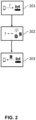
- the connection gateway receives a request from a connected object source of the network infrastructure.
- This query includes specific search criteria.
- the connected object sending the request is called the source connected object in the sense that it can and/or will transmit a message, via one or more connection gateways of the network infrastructure, to another connected object.
- the search criteria can be, for example and in a non-limiting manner, a unique universal identifier, UUID, of a connected object, a functional domain of a connected object, a manufacturer of a connected object or even a maximum distance targeted, in the network infrastructure, in relation to the source connected object.
- these search criteria allow the source connected object to subsequently identify other connected objects with which it can exchange messages. For example, because there is compatibility from the manufacturer(s) of the connected objects involved or because they are at a distance, in the network infrastructure, which makes this exchange of messages possible.
- a UUID is a unique identifier assigned to a connected object which is generated by the manufacturer of said connected object.
- Step 202 consists, for its part, of analyzing the correspondence of the search criteria of the request with information included in a routing list of the connection gateway.
- match we mean the fact that certain parameters of the search criteria and the routing list are substantially identical or sufficiently close within the limit of predetermined differences.
- This information is non-limiting example of information included in a routing list. Such a list may also include other information relating to the communication interfaces used by the connection gateway concerned for these different connections with connected objects.
- the correspondence can mean, for example, the fact of finding identically, in the routing list, a unique universal identifier of a connected object included in the search criteria of the request received by the connection gateway.
- step 203 is executed as soon as a correspondence is established for a determined connected object.
- This connected object is designated as an identified connected object in the sense that it meets all or part of the search criteria of the request issued by the source connected object.
- step 203 consists of transmitting, to the source connected object which issued the request, information characteristic of the identified connected object. This characteristic information is that available to the connection gateway which received the request.
- this characteristic information allows the source connected object to update the information available to it with a view to exchanging messages with one or more other connected objects of the network infrastructure.
- the distance values used that is to say the distance separating a connection gateway from a remote connected object correspond to the number of connection gateways which separate said gateway from a connection gateway which is directly connected to said connected object.
- directly connected we mean being connected without any intermediary element.
- the routing list of the connection gateway can, for example, be generated and updated regularly by said connection gateway.
- the information included in a routing list of a connection gateway can be stored in a memory of said connection gateway and updated upon receipt, by said connection gateway , a response message coming from a connected object or a mesh message coming from another connection gateway of the network infrastructure.
- each connection gateway of a connected network can thus request to obtain updated information on all the other entities of the network infrastructure to which it has access.
- a mesh message, received by a connection gateway, from a second specific connection gateway of the network infrastructure may include all the information included in the routing list of said second connection gateway.
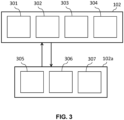
- connection gateway 102 thus comprises a reception module 301, an analysis module 302 and an identification module 303.
- the steps of the method executed by the connection gateway involve an interaction of said connection gateway.
- connection with the source connected object 102a In particular, in the example shown, the source connected object 102a comprises a transmission module 305 and a reception module 306 which allow this interaction.
- Each module (of the connection gateway and the source connected object) includes means which allow it to carry out its functions. These means can be combinations of processors, random access memory, read only memory, cache memory, as well as codes (software) supporting instructions for operating these hardware elements.
- connection gateway The roles of the different modules of the source connected object and the connection gateway which interact are described below in the chronological order of the interaction associated with the execution of the steps of the method by the connection gateway.
- the transmission module 305 of the source connected object 102a is thus advantageously configured to transmit a request which includes determined search criteria. This request is intended for the connection gateway.
- the reception module 301 of the connection gateway 102 is therefore configured to allow the connection gateway 102 to receive requests from connected objects source of the network infrastructure. These queries include search criteria as described above.
- the analysis module 302 of the connection gateway 102 is for its part configured to analyze the correspondence of the search criteria of each request with information included in the routing list of the connection gateway. In particular, the analysis module 302 verifies that the correspondence is established between at least one criterion of search and information from the routing list of the connection gateway before the identification module intervenes.
- the identification module 303 of the connection gateway 102 is configured to transmit to source connected objects, for each identified connected object, for which a match is established, information characteristic of the identified connected object.
- the information reception module 306 of the source connected object 102a is configured to receive characteristic information from one or more connected objects identified by the connection gateway on the basis of the search criteria.
- each storage module can include any known readable medium in the art comprising, for example, volatile memory, such as static random access memory (SRAM) and dynamic random access memory (DRAM), and/or non-volatile memory, such as read only memory, flash memories, hard disks , optical disks and magnetic tapes or in the form of volatile memory, such as random access memory (RAM) and/or cache memory.
- volatile memory such as static random access memory (SRAM) and dynamic random access memory (DRAM)
- non-volatile memory such as read only memory, flash memories, hard disks , optical disks and magnetic tapes or in the form of volatile memory, such as random access memory (RAM) and/or cache memory.
- the present invention provides solutions allowing the identification of one or more connected objects on the basis of specific search criteria.
- a connection gateway of a connected object network is thus able to transmit to a source connected object information characteristic of other connected objects of the same network infrastructure with which it is likely to exchange messages.
- identification may be carried out by matching search criteria with information included in a gateway routing list which may be updated regularly.
- the method applies in a network infrastructure composed of several networks of connected objects interconnected via a data transport network and in which the different connection gateways of the different networks use different communication interfaces.
Landscapes
- Engineering & Computer Science (AREA)
- Computer Networks & Wireless Communication (AREA)
- Signal Processing (AREA)
- Databases & Information Systems (AREA)
- Data Exchanges In Wide-Area Networks (AREA)
Claims (14)
- Verfahren zum Identifizieren eines verbundenen Objekts in einer Netzwerkinfrastruktur (109), wobei die Netzwerkinfrastruktur mindestens zwei Netzwerke verbundener Objekte (101, 107), die über ein Datentransportnetzwerk (104) vernetzt sind, aufweist, wobei die Netzwerke verbundener Objekte jeweils eine Vielzahl von Gateways (101, 102, 108) zum Verbinden mit dem Datentransportnetzwerk, die jeweilige Kommunikationsschnittstellen unterstützen, umfassen, wobei das Verfahren die folgenden Schritte, die durch ein erstes Gateway zum Verbinden eines der Netzwerke verbundener Objekte ausgeführt werden, umfasst:- Empfangen (201) einer Anfrage von einem verbundenen Quellobjekt der Netzwerkinfrastruktur, die Anfrage umfassend bestimmte Suchkriterien; die Suchkriterien umfassend:▪ eine maximale Zielentfernung in der Netzwerkinfrastruktur relativ zu dem verbundenen Quellobjekt;- Analysieren (202) der Übereinstimmung der Suchkriterien der Anfrage mit Informationen bezüglich verbundener Objekte der Netzwerkinfrastruktur, die in einer Routing-Liste des Verbindungs-Gateways enthalten sind; die Informationen bezüglich verbundener Objekte umfassend:▪ jeweilige Entfernungen in der Netzwerkinfrastruktur, die das Verbindungs-Gateway von lokalen oder entfernten verbundenen Objekten, an die das Verbindungs-Gateway Nachrichten übermitteln kann, trennen;und, im Falle einer Identifizierung eines oder mehrerer anderer verbundener Objekte, für die eine Übereinstimmung festgestellt wird,- Übermitteln (203) von Informationen, die für das eine oder die mehreren identifizierten anderen verbundenen Objekte charakteristisch sind, an das verbundene Quellobjekt.
- Verfahren nach dem vorstehenden Anspruch,
dadurch gekennzeichnet, dass die Suchkriterien ferner eines oder mehrere der folgenden Kriterien umfassen:- eine eindeutige universelle Kennung, UUID, eines verbundenen Objekts;- ein Identifikationsdatum des Funktionsbereichs eines verbundenen Objekts; und- ein Identifikationsdatum eines Erzeugers eines verbundenen Objekts;und dass die Informationen bezüglich verbundener Objekte ferner eine oder mehrere der folgenden Informationen umfassen:- eindeutige universelle Kennungen, UUID, von lokalen oder entfernten verbundenen Objekten, an die das Verbindungs-Gateway Nachrichten übermitteln kann;- Identifikationsdaten der jeweiligen Funktionsbereiche lokaler oder entfernter verbundener Objekte, an die das Verbindungs-Gateway Nachrichten übermitteln kann; und- Identifikationsdaten der jeweiligen Erzeuger von lokalen oder entfernten verbundenen Objekten, an die das Verbindungs-Gateway Nachrichten senden kann. - Verfahren nach einem der vorstehenden Ansprüche,
dadurch gekennzeichnet, dass das Verfahren für vernetzte Netzwerke von verbundenen Objekten gilt, die mehrere Verbindungs-Gateways umfassen, die unterschiedliche Kommunikationsschnittstellen verwenden. - Verfahren nach einem der vorstehenden Ansprüche, wobei ein Wert für die Entfernung, die ein Verbindungs-Gateway von einem entfernten verbundenen Objekt trennt, durch die Anzahl der Verbindungs-Gateways bestimmt wird, die das Gateway von einem Verbindungs-Gateway trennen, das direkt mit dem verbundenen Objekt verbunden ist.
- Verfahren nach einem der vorstehenden Ansprüche, wobei ein verbundenes Objekt als identifiziertes verbundenes Objekt bezeichnet wird, wenn es alle oder ein Teil der Suchkriterien der Anfrage erfüllt, die durch das verbundene Quellobjekt ausgegeben wurden.
- Verfahren nach einem der vorstehenden Ansprüche, wobei eine Übereinstimmung der Suchkriterien der Anfrage mit Informationen über ein bestimmtes lokales oder entferntes verbundenes Objekt der Netzwerkinfrastruktur festgestellt wird, wenn:- eine eindeutige universelle Kennung, UUID, eines in den Suchkriterien enthaltenen verbundenen Objekts mit einer eindeutigen universellen Kennung, UUID, des in der Routing-Liste des Verbindungs-Gateways enthaltenen verbundenen Objekts identisch ist;
oder wenn- ein Identifikationsdatum des Funktionsbereichs und ein Identifikationsdatum des Erzeugers eines verbundenen Objekts, die in den Suchkriterien der Anfrage enthalten sind, mit dem Funktionsbereich beziehungsweise dem Erzeuger des verbundenen Objekts identisch sind, die in der Routing-Liste des Verbindungs-Gateways enthalten sind, und, gegebenenfalls,- die maximale Zielentfernung in der Netzwerkinfrastruktur relativ zu dem in den Suchkriterien enthaltenen verbundenen Quellobjekt größer als oder gleich der Entfernung in der Netzwerkinfrastruktur ist, die das verbundene Objekt von dem ersten Verbindungs-Gateway trennt. - Verfahren nach einem der vorstehenden Ansprüche, wobei die Informationen, die für ein identifiziertes verbundenes Objekt charakteristisch sind, eine oder mehrere der folgenden Informationen umfassen:- die eindeutige universelle Kennung, UUID, des identifizierten verbundenen Objekts;- den Funktionsbereich des identifizierten verbundenen Objekts;- den Erzeuger des identifizierten verbundenen Objekts;- die Entfernung in der Netzwerkinfrastruktur, die das identifizierte verbundene Objekt von dem verbundenen Quellobjekt trennt; und- die Latenz, die einer Datenübertragung von dem Verbindungs-Gateway an das identifizierte verbundene Objekt zugeordnet ist.
- Verfahren nach einem der vorstehenden Ansprüche, wobei die in einer Routing-Liste eines Verbindungs-Gateways enthaltenen Informationen in einem Speicher des Verbindungs-Gateways gespeichert werden und bei Empfang einer Antwortnachricht von einem verbundenen Objekt oder einer Netznachricht von einem anderen Verbindungs-Gateway der Netzwerkinfrastruktur durch das Verbindungs-Gateway aktualisiert werden.
- Verfahren nach dem vorstehenden Anspruch, wobei eine durch ein Verbindungs-Gateway empfangene Antwortnachricht von einem bestimmten verbundenen Objekt der Netzwerkinfrastruktur umfasst:- eine eindeutige universelle Kennung, UUID, des verbundenen Objekts;- ein Identifikationsdatum des Funktionsbereichs des verbundenen Objekts;- ein Identifikationsdatum des Erzeugers des verbundenen Objekts;- die Entfernung in der Netzwerkinfrastruktur, die das verbundene Objekt von dem verbundenen Quellobjekt trennt; und- eine Liste eindeutiger universeller Kennungen anderer verbundener Objekte des Netzwerks verbundener Objekte, mit denen das verbundene Objekt eine festgestellte Kommunikationsverbindung besitzt, sowie den Funktionsbereich, den Erzeuger und die Entfernung, die den anderen verbundenen Objekten zugeordnet sind.
- Verfahren nach dem vorstehenden Anspruch, wobei eine durch ein Verbindungs-Gateway empfangene Netznachricht von einem bestimmten zweiten Verbindungs-Gateway der Netzwerkinfrastruktur die in der Routing-Liste des zweiten Verbindungs-Gateways enthaltenen Informationen umfasst.
- Verfahren nach einem der vorstehenden Ansprüche, wobei die durch die Verbindungs-Gateways verwendeten Kommunikationsschnittstellen Ethernet-Schnittstellen, WLAN-Schnittstellen, Bluetooth-Schnittstellen, RF433-Schnittstellen oder IrDA-Schnittstellen umfassen.
- Verbindungs-Gateway eines Netzwerks verbundener Objekte, das für die Durchführung des Verfahrens nach einem der vorstehenden Ansprüche konfiguriert ist, wobei das Netzwerk verbundener Objekte mit einem anderen Netzwerk verbundener Objekte über mindestens ein Datentransportnetzwerk in einer Netzwerkinfrastruktur vernetzt ist und Verbindungs-Gateways umfasst, die jeweilige Kommunikationsschnittstellen unterstützen, wobei das Verbindungs-Gateway dadurch gekennzeichnet ist, dass es aufweist:- ein Empfangsmodul (301), das konfiguriert ist, um Anfragen von verbundenen Quellobjekten der Netzwerkinfrastruktur zu empfangen, die Anfragen umfassend bestimmte Suchkriterien;- ein Analysemodul (302), das konfiguriert ist, um die Übereinstimmung der Suchkriterien jeder Anfrage mit Informationen bezüglich verbundener Objekte der Netzwerkinfrastruktur, die in einer Routing-Liste des Verbindungs-Gateways enthalten sind, zu analysieren; und- ein Identifikationsmodul (303), das konfiguriert ist, um für jedes identifizierte verbundene Objekt, für das eine Übereinstimmung festgestellt wird, Informationen, die für das identifizierte verbundene Objekt charakteristisch sind, an verbundene Quellobjekte zu übermitteln.
- Datenkommunikationssystem, umfassend mindestens zwei Netzwerke verbundener Objekte, die über ein Datentransportnetzwerk in einer Netzwerkinfrastruktur vernetzt sind, die Netzwerke verbundener Objekte umfassend eine Vielzahl von Verbindungs-Gateways nach dem vorstehenden Anspruch.
- Verbundenes Objekt eines Netzwerks verbundener Objekte, wobei das Netzwerk verbundener Objekte mit mindestens einem zweiten Netzwerk verbundener Objekte über ein Datentransportnetz in einer Netzwerkinfrastruktur vernetzt ist und Verbindungs-Gateways umfasst, die jeweilige Kommunikationsschnittstellen unterstützen, wobei das verbundene Objekt mit einem Verbindungs-Gateway verbunden ist, das für die Durchführung des Verfahrens nach einem der Ansprüche 1 bis 11 konfiguriert ist, und dadurch gekennzeichnet ist, dass es aufweist:- ein Anfragesendemodul (305), das konfiguriert ist, um eine Anfrage, die bestimmte Suchkriterien umfasst, zu senden; und- ein Informationsempfangsmodul (306), das konfiguriert ist, um Informationen, die für identifizierte verbundene Objekte charakteristisch sind, zu empfangen.
Applications Claiming Priority (2)
| Application Number | Priority Date | Filing Date | Title |
|---|---|---|---|
| EP18306906 | 2018-12-31 | ||
| FR1904719A FR3095913B1 (fr) | 2019-05-06 | 2019-05-06 | Procédé d’identification d’un objet connecté dans une infrastructure réseau |
Publications (2)
| Publication Number | Publication Date |
|---|---|
| EP3675463A1 EP3675463A1 (de) | 2020-07-01 |
| EP3675463B1 true EP3675463B1 (de) | 2023-12-06 |
Family
ID=70803007
Family Applications (1)
| Application Number | Title | Priority Date | Filing Date |
|---|---|---|---|
| EP19220142.4A Active EP3675463B1 (de) | 2018-12-31 | 2019-12-30 | Identifizierungsverfahren eines verbundenen objekts in einer netzinfrastruktur |
Country Status (2)
| Country | Link |
|---|---|
| US (1) | US11343750B2 (de) |
| EP (1) | EP3675463B1 (de) |
Families Citing this family (1)
| Publication number | Priority date | Publication date | Assignee | Title |
|---|---|---|---|---|
| USD975551S1 (en) * | 2021-04-19 | 2023-01-17 | First Texas Products, Llc | Search coil for a detector |
Family Cites Families (8)
| Publication number | Priority date | Publication date | Assignee | Title |
|---|---|---|---|---|
| PL2296325T3 (pl) | 2005-11-09 | 2014-08-29 | Thomson Licensing | Wybór trasy w sieciach bezprzewodowych |
| CN101939950B (zh) * | 2007-12-20 | 2013-10-09 | 艾利森电话股份有限公司 | 基于ims的远程设备发现和控制 |
| US9705747B1 (en) * | 2012-12-04 | 2017-07-11 | Qualcomm Incorporated | Distributed path selection in hybrid networks |
| KR101997370B1 (ko) * | 2014-07-31 | 2019-10-01 | 콘비다 와이어리스, 엘엘씨 | 사물 인터넷(iot)에서의 디바이스 로케이션 등록을 위한 서버 |
| US9755894B2 (en) * | 2014-09-10 | 2017-09-05 | Citrix Systems, Inc. | Virtual serial cable |
| US10182326B2 (en) * | 2015-01-27 | 2019-01-15 | Lg Electronics Inc. | Method and device for controlling device using bluetooth technology |
| KR102715376B1 (ko) * | 2016-12-30 | 2024-10-11 | 인텔 코포레이션 | 라디오 통신을 위한 방법 및 디바이스 |
| US20180199297A1 (en) * | 2017-01-10 | 2018-07-12 | Quantek, Inc. | Method of Performing Timing Arrangement in a Mesh Network |
-
2019
- 2019-12-30 EP EP19220142.4A patent/EP3675463B1/de active Active
- 2019-12-31 US US16/731,222 patent/US11343750B2/en active Active
Also Published As
| Publication number | Publication date |
|---|---|
| EP3675463A1 (de) | 2020-07-01 |
| US20200213934A1 (en) | 2020-07-02 |
| US11343750B2 (en) | 2022-05-24 |
Similar Documents
| Publication | Publication Date | Title |
|---|---|---|
| US7978631B1 (en) | Method and apparatus for encoding and mapping of virtual addresses for clusters | |
| KR101564471B1 (ko) | 멀티-마스터 동기화 환경에서 웹 서비스 종점들의 동기화 | |
| EP3675435A1 (de) | Dynamisches routingverfahren in einem netzwerk von verbundenen objekten | |
| US10917479B2 (en) | System and method for attribute based device and service discovery | |
| EP3549352B1 (de) | Elektrizitätszähler mit einem stromleitungsschnitstelle und zumindest einem radiofrequenzschnitstelle. | |
| JP4607764B2 (ja) | モバイルピアツーピアネットワーク構築 | |
| WO2008037916A1 (fr) | Procede pour evaluer la fiabilite d'une route dans un reseau cooperatif | |
| JP6865593B2 (ja) | 不均一ネットワークにまたがるコンテンツ配送 | |
| EP3675463B1 (de) | Identifizierungsverfahren eines verbundenen objekts in einer netzinfrastruktur | |
| EP3785464B1 (de) | Verfahren zur zuweisung eines neuen sammelknotens in einem verteilten drahtlosen netzwerk | |
| EP3675561A1 (de) | Dynamisches routing-verfahren in verbundenen netzen von verbundenen objekten | |
| FR3095913A1 (fr) | Procédé d’identification d’un objet connecté dans une infrastructure réseau | |
| EP3672209B1 (de) | Identifizierungsverfahren von kommunikationsknoten | |
| EP3382996A1 (de) | Kommunikationsvorrichtung und -netz | |
| FR3073109A1 (fr) | Procede de communication | |
| EP1652346B1 (de) | Verfahren zum finden von mobilen kommunizierenden objekten in einem kommunikationsnetz | |
| FR3095914A1 (fr) | Procédé de routage dynamique dans un réseau d’objets connectés | |
| WO2009007619A2 (fr) | Reseau ip sans fil maille | |
| EP3709185A1 (de) | Optimierungsverfahren für den datenaustausch in einer infrastruktur von vernetzten objekten | |
| FR3095917A1 (fr) | Procédé de routage dynamique dans des réseaux interconnectés d’objets connectés | |
| EP3747238B1 (de) | Aggregation mehrerer funkverbindungen in einem drahtlosen netzwerk | |
| FR3075520A1 (fr) | Procede de communication hybride | |
| FR3129797A1 (fr) | Procede de configuration d’un reseau de communication et nœud implementant ledit procede de configuration | |
| EP4568212A1 (de) | Verfahren und vorrichtung zur verwaltung der aktualisierung eines endgerätes in einem telekommunikationsnetz. | |
| FR3144476A1 (fr) | Procédé de routage de messages dans un réseau maillé |
Legal Events
| Date | Code | Title | Description |
|---|---|---|---|
| PUAI | Public reference made under article 153(3) epc to a published international application that has entered the european phase |
Free format text: ORIGINAL CODE: 0009012 |
|
| STAA | Information on the status of an ep patent application or granted ep patent |
Free format text: STATUS: THE APPLICATION HAS BEEN PUBLISHED |
|
| AK | Designated contracting states |
Kind code of ref document: A1 Designated state(s): AL AT BE BG CH CY CZ DE DK EE ES FI FR GB GR HR HU IE IS IT LI LT LU LV MC MK MT NL NO PL PT RO RS SE SI SK SM TR |
|
| AX | Request for extension of the european patent |
Extension state: BA ME |
|
| STAA | Information on the status of an ep patent application or granted ep patent |
Free format text: STATUS: REQUEST FOR EXAMINATION WAS MADE |
|
| 17P | Request for examination filed |
Effective date: 20210104 |
|
| RBV | Designated contracting states (corrected) |
Designated state(s): AL AT BE BG CH CY CZ DE DK EE ES FI FR GB GR HR HU IE IS IT LI LT LU LV MC MK MT NL NO PL PT RO RS SE SI SK SM TR |
|
| STAA | Information on the status of an ep patent application or granted ep patent |
Free format text: STATUS: EXAMINATION IS IN PROGRESS |
|
| 17Q | First examination report despatched |
Effective date: 20210531 |
|
| REG | Reference to a national code |
Free format text: PREVIOUS MAIN CLASS: H04L0029080000 Ref country code: DE Ref legal event code: R079 Ref document number: 602019042740 Country of ref document: DE Free format text: PREVIOUS MAIN CLASS: H04L0029080000 Ipc: H04L0067510000 |
|
| P01 | Opt-out of the competence of the unified patent court (upc) registered |
Effective date: 20230330 |
|
| GRAP | Despatch of communication of intention to grant a patent |
Free format text: ORIGINAL CODE: EPIDOSNIGR1 |
|
| STAA | Information on the status of an ep patent application or granted ep patent |
Free format text: STATUS: GRANT OF PATENT IS INTENDED |
|
| RIC1 | Information provided on ipc code assigned before grant |
Ipc: H04L 67/51 20220101AFI20230605BHEP |
|
| INTG | Intention to grant announced |
Effective date: 20230712 |
|
| GRAS | Grant fee paid |
Free format text: ORIGINAL CODE: EPIDOSNIGR3 |
|
| GRAA | (expected) grant |
Free format text: ORIGINAL CODE: 0009210 |
|
| STAA | Information on the status of an ep patent application or granted ep patent |
Free format text: STATUS: THE PATENT HAS BEEN GRANTED |
|
| AK | Designated contracting states |
Kind code of ref document: B1 Designated state(s): AL AT BE BG CH CY CZ DE DK EE ES FI FR GB GR HR HU IE IS IT LI LT LU LV MC MK MT NL NO PL PT RO RS SE SI SK SM TR |
|
| REG | Reference to a national code |
Ref country code: GB Ref legal event code: FG4D Free format text: NOT ENGLISH |
|
| RIN1 | Information on inventor provided before grant (corrected) |
Inventor name: CHAABANE, WAJIH Inventor name: MENIGOT, GILLES Inventor name: DEMEILLIEZ, BRUNO |
|
| REG | Reference to a national code |
Ref country code: CH Ref legal event code: EP |
|
| REG | Reference to a national code |
Ref country code: DE Ref legal event code: R096 Ref document number: 602019042740 Country of ref document: DE |
|
| REG | Reference to a national code |
Ref country code: IE Ref legal event code: FG4D Free format text: LANGUAGE OF EP DOCUMENT: FRENCH |
|
| REG | Reference to a national code |
Ref country code: LT Ref legal event code: MG9D |
|
| PG25 | Lapsed in a contracting state [announced via postgrant information from national office to epo] |
Ref country code: GR Free format text: LAPSE BECAUSE OF FAILURE TO SUBMIT A TRANSLATION OF THE DESCRIPTION OR TO PAY THE FEE WITHIN THE PRESCRIBED TIME-LIMIT Effective date: 20240307 |
|
| REG | Reference to a national code |
Ref country code: NL Ref legal event code: MP Effective date: 20231206 |
|
| PG25 | Lapsed in a contracting state [announced via postgrant information from national office to epo] |
Ref country code: LT Free format text: LAPSE BECAUSE OF FAILURE TO SUBMIT A TRANSLATION OF THE DESCRIPTION OR TO PAY THE FEE WITHIN THE PRESCRIBED TIME-LIMIT Effective date: 20231206 |
|
| PG25 | Lapsed in a contracting state [announced via postgrant information from national office to epo] |
Ref country code: ES Free format text: LAPSE BECAUSE OF FAILURE TO SUBMIT A TRANSLATION OF THE DESCRIPTION OR TO PAY THE FEE WITHIN THE PRESCRIBED TIME-LIMIT Effective date: 20231206 |
|
| PG25 | Lapsed in a contracting state [announced via postgrant information from national office to epo] |
Ref country code: LT Free format text: LAPSE BECAUSE OF FAILURE TO SUBMIT A TRANSLATION OF THE DESCRIPTION OR TO PAY THE FEE WITHIN THE PRESCRIBED TIME-LIMIT Effective date: 20231206 Ref country code: GR Free format text: LAPSE BECAUSE OF FAILURE TO SUBMIT A TRANSLATION OF THE DESCRIPTION OR TO PAY THE FEE WITHIN THE PRESCRIBED TIME-LIMIT Effective date: 20240307 Ref country code: ES Free format text: LAPSE BECAUSE OF FAILURE TO SUBMIT A TRANSLATION OF THE DESCRIPTION OR TO PAY THE FEE WITHIN THE PRESCRIBED TIME-LIMIT Effective date: 20231206 Ref country code: BG Free format text: LAPSE BECAUSE OF FAILURE TO SUBMIT A TRANSLATION OF THE DESCRIPTION OR TO PAY THE FEE WITHIN THE PRESCRIBED TIME-LIMIT Effective date: 20240306 |
|
| REG | Reference to a national code |
Ref country code: AT Ref legal event code: MK05 Ref document number: 1639453 Country of ref document: AT Kind code of ref document: T Effective date: 20231206 |
|
| PG25 | Lapsed in a contracting state [announced via postgrant information from national office to epo] |
Ref country code: NL Free format text: LAPSE BECAUSE OF FAILURE TO SUBMIT A TRANSLATION OF THE DESCRIPTION OR TO PAY THE FEE WITHIN THE PRESCRIBED TIME-LIMIT Effective date: 20231206 |
|
| PG25 | Lapsed in a contracting state [announced via postgrant information from national office to epo] |
Ref country code: SE Free format text: LAPSE BECAUSE OF FAILURE TO SUBMIT A TRANSLATION OF THE DESCRIPTION OR TO PAY THE FEE WITHIN THE PRESCRIBED TIME-LIMIT Effective date: 20231206 Ref country code: RS Free format text: LAPSE BECAUSE OF FAILURE TO SUBMIT A TRANSLATION OF THE DESCRIPTION OR TO PAY THE FEE WITHIN THE PRESCRIBED TIME-LIMIT Effective date: 20231206 Ref country code: NO Free format text: LAPSE BECAUSE OF FAILURE TO SUBMIT A TRANSLATION OF THE DESCRIPTION OR TO PAY THE FEE WITHIN THE PRESCRIBED TIME-LIMIT Effective date: 20240306 Ref country code: NL Free format text: LAPSE BECAUSE OF FAILURE TO SUBMIT A TRANSLATION OF THE DESCRIPTION OR TO PAY THE FEE WITHIN THE PRESCRIBED TIME-LIMIT Effective date: 20231206 Ref country code: LV Free format text: LAPSE BECAUSE OF FAILURE TO SUBMIT A TRANSLATION OF THE DESCRIPTION OR TO PAY THE FEE WITHIN THE PRESCRIBED TIME-LIMIT Effective date: 20231206 Ref country code: HR Free format text: LAPSE BECAUSE OF FAILURE TO SUBMIT A TRANSLATION OF THE DESCRIPTION OR TO PAY THE FEE WITHIN THE PRESCRIBED TIME-LIMIT Effective date: 20231206 |
|
| PG25 | Lapsed in a contracting state [announced via postgrant information from national office to epo] |
Ref country code: IS Free format text: LAPSE BECAUSE OF FAILURE TO SUBMIT A TRANSLATION OF THE DESCRIPTION OR TO PAY THE FEE WITHIN THE PRESCRIBED TIME-LIMIT Effective date: 20240406 |
|
| PG25 | Lapsed in a contracting state [announced via postgrant information from national office to epo] |
Ref country code: AT Free format text: LAPSE BECAUSE OF FAILURE TO SUBMIT A TRANSLATION OF THE DESCRIPTION OR TO PAY THE FEE WITHIN THE PRESCRIBED TIME-LIMIT Effective date: 20231206 Ref country code: CZ Free format text: LAPSE BECAUSE OF FAILURE TO SUBMIT A TRANSLATION OF THE DESCRIPTION OR TO PAY THE FEE WITHIN THE PRESCRIBED TIME-LIMIT Effective date: 20231206 |
|
| PG25 | Lapsed in a contracting state [announced via postgrant information from national office to epo] |
Ref country code: SK Free format text: LAPSE BECAUSE OF FAILURE TO SUBMIT A TRANSLATION OF THE DESCRIPTION OR TO PAY THE FEE WITHIN THE PRESCRIBED TIME-LIMIT Effective date: 20231206 |
|
| PG25 | Lapsed in a contracting state [announced via postgrant information from national office to epo] |
Ref country code: SM Free format text: LAPSE BECAUSE OF FAILURE TO SUBMIT A TRANSLATION OF THE DESCRIPTION OR TO PAY THE FEE WITHIN THE PRESCRIBED TIME-LIMIT Effective date: 20231206 Ref country code: SK Free format text: LAPSE BECAUSE OF FAILURE TO SUBMIT A TRANSLATION OF THE DESCRIPTION OR TO PAY THE FEE WITHIN THE PRESCRIBED TIME-LIMIT Effective date: 20231206 Ref country code: RO Free format text: LAPSE BECAUSE OF FAILURE TO SUBMIT A TRANSLATION OF THE DESCRIPTION OR TO PAY THE FEE WITHIN THE PRESCRIBED TIME-LIMIT Effective date: 20231206 Ref country code: IT Free format text: LAPSE BECAUSE OF FAILURE TO SUBMIT A TRANSLATION OF THE DESCRIPTION OR TO PAY THE FEE WITHIN THE PRESCRIBED TIME-LIMIT Effective date: 20231206 Ref country code: IS Free format text: LAPSE BECAUSE OF FAILURE TO SUBMIT A TRANSLATION OF THE DESCRIPTION OR TO PAY THE FEE WITHIN THE PRESCRIBED TIME-LIMIT Effective date: 20240406 Ref country code: EE Free format text: LAPSE BECAUSE OF FAILURE TO SUBMIT A TRANSLATION OF THE DESCRIPTION OR TO PAY THE FEE WITHIN THE PRESCRIBED TIME-LIMIT Effective date: 20231206 Ref country code: CZ Free format text: LAPSE BECAUSE OF FAILURE TO SUBMIT A TRANSLATION OF THE DESCRIPTION OR TO PAY THE FEE WITHIN THE PRESCRIBED TIME-LIMIT Effective date: 20231206 Ref country code: AT Free format text: LAPSE BECAUSE OF FAILURE TO SUBMIT A TRANSLATION OF THE DESCRIPTION OR TO PAY THE FEE WITHIN THE PRESCRIBED TIME-LIMIT Effective date: 20231206 |
|
| REG | Reference to a national code |
Ref country code: CH Ref legal event code: PL |
|
| PG25 | Lapsed in a contracting state [announced via postgrant information from national office to epo] |
Ref country code: PL Free format text: LAPSE BECAUSE OF FAILURE TO SUBMIT A TRANSLATION OF THE DESCRIPTION OR TO PAY THE FEE WITHIN THE PRESCRIBED TIME-LIMIT Effective date: 20231206 Ref country code: PT Free format text: LAPSE BECAUSE OF FAILURE TO SUBMIT A TRANSLATION OF THE DESCRIPTION OR TO PAY THE FEE WITHIN THE PRESCRIBED TIME-LIMIT Effective date: 20240408 |
|
| PG25 | Lapsed in a contracting state [announced via postgrant information from national office to epo] |
Ref country code: LU Free format text: LAPSE BECAUSE OF NON-PAYMENT OF DUE FEES Effective date: 20231230 |
|
| REG | Reference to a national code |
Ref country code: BE Ref legal event code: MM Effective date: 20231231 |
|
| PG25 | Lapsed in a contracting state [announced via postgrant information from national office to epo] |
Ref country code: PT Free format text: LAPSE BECAUSE OF FAILURE TO SUBMIT A TRANSLATION OF THE DESCRIPTION OR TO PAY THE FEE WITHIN THE PRESCRIBED TIME-LIMIT Effective date: 20240408 Ref country code: PL Free format text: LAPSE BECAUSE OF FAILURE TO SUBMIT A TRANSLATION OF THE DESCRIPTION OR TO PAY THE FEE WITHIN THE PRESCRIBED TIME-LIMIT Effective date: 20231206 Ref country code: LU Free format text: LAPSE BECAUSE OF NON-PAYMENT OF DUE FEES Effective date: 20231230 |
|
| REG | Reference to a national code |
Ref country code: DE Ref legal event code: R097 Ref document number: 602019042740 Country of ref document: DE |
|
| PG25 | Lapsed in a contracting state [announced via postgrant information from national office to epo] |
Ref country code: MC Free format text: LAPSE BECAUSE OF FAILURE TO SUBMIT A TRANSLATION OF THE DESCRIPTION OR TO PAY THE FEE WITHIN THE PRESCRIBED TIME-LIMIT Effective date: 20231206 |
|
| REG | Reference to a national code |
Ref country code: IE Ref legal event code: MM4A |
|
| PG25 | Lapsed in a contracting state [announced via postgrant information from national office to epo] |
Ref country code: IE Free format text: LAPSE BECAUSE OF NON-PAYMENT OF DUE FEES Effective date: 20231230 |
|
| PG25 | Lapsed in a contracting state [announced via postgrant information from national office to epo] |
Ref country code: DK Free format text: LAPSE BECAUSE OF FAILURE TO SUBMIT A TRANSLATION OF THE DESCRIPTION OR TO PAY THE FEE WITHIN THE PRESCRIBED TIME-LIMIT Effective date: 20231206 |
|
| PLBE | No opposition filed within time limit |
Free format text: ORIGINAL CODE: 0009261 |
|
| STAA | Information on the status of an ep patent application or granted ep patent |
Free format text: STATUS: NO OPPOSITION FILED WITHIN TIME LIMIT |
|
| PG25 | Lapsed in a contracting state [announced via postgrant information from national office to epo] |
Ref country code: BE Free format text: LAPSE BECAUSE OF NON-PAYMENT OF DUE FEES Effective date: 20231231 |
|
| PG25 | Lapsed in a contracting state [announced via postgrant information from national office to epo] |
Ref country code: CH Free format text: LAPSE BECAUSE OF NON-PAYMENT OF DUE FEES Effective date: 20231231 |
|
| PG25 | Lapsed in a contracting state [announced via postgrant information from national office to epo] |
Ref country code: SI Free format text: LAPSE BECAUSE OF FAILURE TO SUBMIT A TRANSLATION OF THE DESCRIPTION OR TO PAY THE FEE WITHIN THE PRESCRIBED TIME-LIMIT Effective date: 20231206 |
|
| PG25 | Lapsed in a contracting state [announced via postgrant information from national office to epo] |
Ref country code: SI Free format text: LAPSE BECAUSE OF FAILURE TO SUBMIT A TRANSLATION OF THE DESCRIPTION OR TO PAY THE FEE WITHIN THE PRESCRIBED TIME-LIMIT Effective date: 20231206 Ref country code: IE Free format text: LAPSE BECAUSE OF NON-PAYMENT OF DUE FEES Effective date: 20231230 Ref country code: DK Free format text: LAPSE BECAUSE OF FAILURE TO SUBMIT A TRANSLATION OF THE DESCRIPTION OR TO PAY THE FEE WITHIN THE PRESCRIBED TIME-LIMIT Effective date: 20231206 Ref country code: CH Free format text: LAPSE BECAUSE OF NON-PAYMENT OF DUE FEES Effective date: 20231231 Ref country code: BE Free format text: LAPSE BECAUSE OF NON-PAYMENT OF DUE FEES Effective date: 20231231 |
|
| 26N | No opposition filed |
Effective date: 20240909 |
|
| PGFP | Annual fee paid to national office [announced via postgrant information from national office to epo] |
Ref country code: DE Payment date: 20241216 Year of fee payment: 6 |
|
| PG25 | Lapsed in a contracting state [announced via postgrant information from national office to epo] |
Ref country code: FI Free format text: LAPSE BECAUSE OF FAILURE TO SUBMIT A TRANSLATION OF THE DESCRIPTION OR TO PAY THE FEE WITHIN THE PRESCRIBED TIME-LIMIT Effective date: 20231207 |
|
| PG25 | Lapsed in a contracting state [announced via postgrant information from national office to epo] |
Ref country code: CY Free format text: LAPSE BECAUSE OF FAILURE TO SUBMIT A TRANSLATION OF THE DESCRIPTION OR TO PAY THE FEE WITHIN THE PRESCRIBED TIME-LIMIT; INVALID AB INITIO Effective date: 20191230 |
|
| PG25 | Lapsed in a contracting state [announced via postgrant information from national office to epo] |
Ref country code: HU Free format text: LAPSE BECAUSE OF FAILURE TO SUBMIT A TRANSLATION OF THE DESCRIPTION OR TO PAY THE FEE WITHIN THE PRESCRIBED TIME-LIMIT; INVALID AB INITIO Effective date: 20191230 |
|
| PG25 | Lapsed in a contracting state [announced via postgrant information from national office to epo] |
Ref country code: TR Free format text: LAPSE BECAUSE OF FAILURE TO SUBMIT A TRANSLATION OF THE DESCRIPTION OR TO PAY THE FEE WITHIN THE PRESCRIBED TIME-LIMIT Effective date: 20231206 |
|
| PGFP | Annual fee paid to national office [announced via postgrant information from national office to epo] |
Ref country code: GB Payment date: 20251218 Year of fee payment: 7 |
|
| PGFP | Annual fee paid to national office [announced via postgrant information from national office to epo] |
Ref country code: FR Payment date: 20251218 Year of fee payment: 7 |