EP3673369B1 - Procédé d'exécution d'un programme de graphe d'uplet à travers un réseau - Google Patents
Procédé d'exécution d'un programme de graphe d'uplet à travers un réseau Download PDFInfo
- Publication number
- EP3673369B1 EP3673369B1 EP18730559.4A EP18730559A EP3673369B1 EP 3673369 B1 EP3673369 B1 EP 3673369B1 EP 18730559 A EP18730559 A EP 18730559A EP 3673369 B1 EP3673369 B1 EP 3673369B1
- Authority
- EP
- European Patent Office
- Prior art keywords
- graph
- shards
- send
- shard
- sub
- Prior art date
- Legal status (The legal status is an assumption and is not a legal conclusion. Google has not performed a legal analysis and makes no representation as to the accuracy of the status listed.)
- Active
Links
Images









Classifications
-
- G—PHYSICS
- G06—COMPUTING OR CALCULATING; COUNTING
- G06F—ELECTRIC DIGITAL DATA PROCESSING
- G06F9/00—Arrangements for program control, e.g. control units
- G06F9/06—Arrangements for program control, e.g. control units using stored programs, i.e. using an internal store of processing equipment to receive or retain programs
- G06F9/46—Multiprogramming arrangements
- G06F9/50—Allocation of resources, e.g. of the central processing unit [CPU]
- G06F9/5005—Allocation of resources, e.g. of the central processing unit [CPU] to service a request
- G06F9/5027—Allocation of resources, e.g. of the central processing unit [CPU] to service a request the resource being a machine, e.g. CPUs, Servers, Terminals
- G06F9/5038—Allocation of resources, e.g. of the central processing unit [CPU] to service a request the resource being a machine, e.g. CPUs, Servers, Terminals considering the execution order of a plurality of tasks, e.g. taking priority or time dependency constraints into consideration
-
- G—PHYSICS
- G06—COMPUTING OR CALCULATING; COUNTING
- G06F—ELECTRIC DIGITAL DATA PROCESSING
- G06F9/00—Arrangements for program control, e.g. control units
- G06F9/06—Arrangements for program control, e.g. control units using stored programs, i.e. using an internal store of processing equipment to receive or retain programs
- G06F9/44—Arrangements for executing specific programs
- G06F9/448—Execution paradigms, e.g. implementations of programming paradigms
- G06F9/4494—Execution paradigms, e.g. implementations of programming paradigms data driven
-
- G—PHYSICS
- G06—COMPUTING OR CALCULATING; COUNTING
- G06F—ELECTRIC DIGITAL DATA PROCESSING
- G06F9/00—Arrangements for program control, e.g. control units
- G06F9/06—Arrangements for program control, e.g. control units using stored programs, i.e. using an internal store of processing equipment to receive or retain programs
- G06F9/46—Multiprogramming arrangements
- G06F9/50—Allocation of resources, e.g. of the central processing unit [CPU]
- G06F9/5061—Partitioning or combining of resources
- G06F9/5066—Algorithms for mapping a plurality of inter-dependent sub-tasks onto a plurality of physical CPUs
-
- H—ELECTRICITY
- H04—ELECTRIC COMMUNICATION TECHNIQUE
- H04L—TRANSMISSION OF DIGITAL INFORMATION, e.g. TELEGRAPHIC COMMUNICATION
- H04L47/00—Traffic control in data switching networks
- H04L47/10—Flow control; Congestion control
- H04L47/12—Avoiding congestion; Recovering from congestion
- H04L47/125—Avoiding congestion; Recovering from congestion by balancing the load, e.g. traffic engineering
-
- H—ELECTRICITY
- H04—ELECTRIC COMMUNICATION TECHNIQUE
- H04L—TRANSMISSION OF DIGITAL INFORMATION, e.g. TELEGRAPHIC COMMUNICATION
- H04L67/00—Network arrangements or protocols for supporting network services or applications
- H04L67/01—Protocols
- H04L67/10—Protocols in which an application is distributed across nodes in the network
Definitions
- Document US 2016(364451 A1 refers to a controller that analyzes a tuple in an operator graph.
- the controller determines that the tuple includes one or more selected characteristics. These characteristics signify preferred data.
- the controller determines operations of the operator graph which can be suppressed.
- the controller suppresses the one or more operations.
- the controller suppresses those operations in response to the tuple including one or more of the selected characteristics.
- the present disclosure describes a new programming model for cloud computing.
- the new programming model may be used for writing distributed low-latency non-batch programs.
- An application constructs a program under the model, and then submits it for execution.
- the program consists of a directed acyclic graph of operators. Streams of values flow along edges in the graph from one operator to another. Each value sent through a stream is a tuple. Different operators in the same program may run on different machines.
- the programming model coordinates the execution of these operators on different machines and propagates data from one operator to another.
- the at least one second shard may be a receive shard of the one of the one or more first shards.
- the method further includes generating, by the one of the one or more first shards, a list of the receive shards with which the one or more first shards communicate, and transmitting, by the one of the one or more first shards, the list to a controller. Additionally, the controller tracks all receive shards that have started processing, determine whether one or more of the receive shards that have started processing are not present in the list, and for each receive shard that has started processing and is not present in the list, send a token value on behalf of the one of the one or more first shards to the receive shard.
- a new programming model may be used for writing distributed low-latency non-batch programs.
- An application constructs a program under the new model, and then submits it for execution.
- the program consists of a directed acyclic graph of operators. Streams of values flow along edges in the graph. Each value sent through a stream is a tuple. Different operators in the same program may run on different machines.
- the programming model coordinates the execution of these operators on different machines and propagates data from one operator to another.
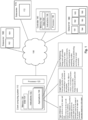
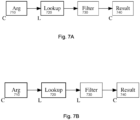
- Figs. 2A-2B illustrate an example of a program created using the programming model.
- an objective is to fetch all images in a photo album and generate a thumbnail for each image.
- this objective may be represented as:
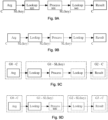
- all sharded locations are treated as unique. For example, even though both Lookup operations 920, 940 are assigned to the same location, they are treated as different locations. Thus, as shown in Fig. 9D , the Process operation 930 is assigned to one of the unique Lookup locations.
- a merge graph is built where each operation ends up in a sub-graph of its own. These sub-graphs are then repeatedly merged together. Specifically, all operations having external incoming edges are merged together into the same sub-graph. Further, all possible pairs of sub-graphs that have non-blocking operations are merged.
- Fig. 12 illustrates an example program.
- Figs. 13A-13F describe main partitioning of the program, while Figs. 14A-14E describe an example of local partitioning.
- the resulting program is shown in Fig. 15 .
- Fig. 13B is transformed into Fig. 13C , for example, by growing sharded sub-graphs.
- Such growing includes adding neighboring nodes with unassigned locations into the sharded sub-graphs.
- Nodes D and G are candidates to be folded into sharded sub-graphs, because they have unassigned locations and also have edges coupled to nodes within sharded sub-graphs. It is determined whether nodes D and G have been marked as splittable. If not, they are dropped as candidate. If they are marked as splittable, they are placed into neighboring sub-graphs.
- Operation D cannot be placed into sub-graph 1316 with node E, because of the constraint that the set of edges whose destination operation is assigned to a sharded location must remain unchanged. Operation D is added to sub-graph 1313. This would not have been possible if nodes B and C had not previously been merged into the same sub-graph, because it would not abide by the main partitioning constraints.
- node D By adding node D into sub-graph 1313, the operation of node D is effectively sharded. Accordingly, new operation D' is added to the graph to merge the results from the sharded instances of D. Similarly, the operation of node G is placed into sub-graph 1318 with node F, and new operation G" is added to the graph. The new operations D' and G' are not splittable. There are no further operations in Fig. 13C that can be placed into sharded locations.
- Fig. 13D illustrates assigning locations to all unassigned locations. This may be performed by copying locations from assigned nodes to their neighbors. For example, nodes D', J, G', H, and K had unassigned locations in Fig. 13C . Nodes G', H, and K are neighbors of sub-graph 1320 which includes node I. Accordingly, the location L assigned to node I is also assigned to nodes G', H, and K. Nodes D' and J do not have any neighboring unsharded sub-graphs, and so nodes D' and J are assigned to controller C.
- Figs. 13E-F illustrate an example of merging unsharded sub-graphs.
- the total number of sub-graphs are minimized by merging together all possible pairs of unsharded sub-graphs that run at the same location.
- the sub-graphs of nodes G', H, I, and K are all assigned to location L. All sub-graphs assigned to location L can be merged into new sub-graph 1322 without introducing a cycle.
- Sub-graph 1310 including node A cannot be merged with sub-graph 1315 or 1317 without introducing a cycle.
- Sub-graphs 1315 including node D' and sub-graph 1317 including node J can be merged.
- a resulting graph is illustrated in Fig. 13F . This graph cannot be further merged.
- Each operation has been assigned to a sub-graph, and the number of sub-graphs has been minimized. Any further merges would break one of the main partition
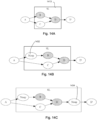
- Fig. 14A sub-graphs containing blocking operations are identified.
- operations B and D are the only blocking operations in the program. Accordingly, sub-graph 1413 including nodes B, C, and D is to be split.
- FIGs. 14B-14C the sub-graph 1413 of Fig. 4A is modified in order to enforce the local partitioning constraints.
- a first modification shown in Fig. 14B ensures that there are no blocking operations with external inputs in the sub-graph. Multiple blocking operations with external inputs would make it difficult or impossible to enforce the local partitioning constraints requiring that each blocking operation ends up in a sub-graph of its own, and that the graph remain acyclic.
- the first modification inserts no-operations just before the blocking operations.
- a no-operation, or "no-op" is an operation that does not change program semantics if inserted between two operations.
- An example of a no-op is Interleave. Interleave passes data from a node before it to a node after it. Because blocking operation B has an external input from node A, a No-op operation 1432 is inserted between nodes A and B.
- a second modification shown in Fig. 14C , ensures that there are no blocking operations with external output in the sub-graph. This prepares the sub-graph for a final partitioning step where special send and receive operations are inserted along those outputs, and ensures that the send operations do not end up in the same sub-graph as the blocking operation. Accordingly, the second modification inserts another No-op operation 1434 between nodes D and D'.
- Fig. 14D illustrates building of a merge graph, where each operation ends up in a sub-graph of its own.
- merge graph 1450 includes sub-graphs 1452, 1453, 1454, 1456, and 1458, each including one operation.
- Sub-graphs having non-blocking operations are merged to the extent possible.
- Fig. 14E there are two sub-graphs 1455, 1458 containing Noop operations. However, merging those two sub-graphs 1455, 1458 would introduce a cycle, and thus is not permissible. Because sub-graph 1453 including node B and sub-graph 1456 including node D have blocking operations that cannot be merged with any other sub-graphs, the local partitioning is complete.
- Fig. 15 illustrates the final program, after main and local partitioning. Locations have been assigned to each location in such a way to minimize traffic sent across networks from one location to another. Moreover, precautions have been taken to ensure efficiency, for example, by preventing cycles and optimizing sending and receiving between nodes.
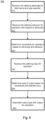
- Fig. 16 provides a flow diagram illustrating an example method 1600 of graph creation and partitioning for a created program. Some parts of the method 1600 are described in further detail in connection with Figs. 17-18 . Each of the methods described herein includes parts which may be performed in a different order or simultaneously, and additional parts may be included with other parts may be omitted.
- locations are assigned to any operations without a predefined location.
- the locations may be assigned based on a first set of constraints, such as the main partitioning constraints described above.
- the first set of constraints requires that all operations be placed into a sub-graph, that a location be assigned to each sub-graph, that an operation with a programmer-assigned location must retain that assignment, and that an unassigned operation may only be placed into a sharded location if it has a splittable property.
- a location is sharded, all edges in the program whose destination operation is assigned to that location remain unchanged throughout the algorithm.
- the graph must be acyclic.
- the locations may be assigned by, for example, based on neighboring nodes.
- operations with unassigned locations may be added into adjacent sharded sub-graphs in accordance with the constraints. Any further operations with unassigned locations may be assigned locations to match neighboring unsharded nodes.
- the location assignment may be part of graph partitioning.
- local partitioning is performed for the individual sub-graphs based on a second set of constraints, such as the local partitioning constraints discussed above.
- the local partitioning is further described in connection with Fig. 18 .
- nodes with unassigned locations are added into neighboring sharded sub-graphs, to the extent possible while adhering to the main partitioning constraints.
- this may include creation of an additional operation. For example, where a node with an unassigned location is effectively sharded when it is added to the neighboring sharded sub-graph, a new operation is added to the graph outside the sub-graph to merge the results from the sharded operation.
- locations are assigned to any remaining nodes with unassigned locations.
- the locations may be assigned based on locations previously assigned to neighboring nodes, while adhering to the main partitioning constraints. An example is discussed above in connection with Fig. 13D .
- the identified sub-graphs are prepared for splitting. Preparation may include, for example, modifications to ensure that there are no blocking operations with external inputs to the sub-graph, and that there are no blocking operations with external output in the sub-graph. Such modifications may include addition of operations to the sub-graph, such as discussed above in connection with Figs. 14B-C .
- a merge graph is built, where each operation ends up in a separate sub-graph.
- An example is discussed above in connection with Fig. 14D .
- the graph may be executed.
- Each of the sub-graphs is executed at their respective locations, and each sub-graph is executed in a respective single thread.
- Data transfers along edges within a sub-graph are optimized based on their execution within a single-threaded environment.
- an end node receives a token from each other node sending tuples to the end node indicating that the other node has finished providing input.
- the other node can for example be a sharded node, or shard for short.
- the end node adds the tokens together, and when a sum of the token equals the number of other node providing input, the end node determines that the stream is complete.
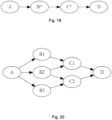
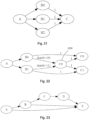
- a unique graph includes a plurality of nodes which each run exactly once.
- An example of a unique graph is provided in Fig. 19 .
- each of nodes A, B, C, D run once, wherein streams from A are input to B, which are input to C, which are input to D.
- a non-unique graph may have an arbitrary number of activation copies executed, such that inputs will be split up and sent to any of these executions and the outputs are merged together.
- An example of a non-unique graph is provided in Fig. 20 .
- nodes B1, B2, and B3 are activations of the same operation B.
- nodes C1 and C2 are activations of the same operation C.
- each node When activations are initialized, each node locally keeps track of a number of upstream (send nodes) and downstream nodes (receive nodes) it is connected to. Nodes inbetween the initial send node and the final receive node may serve as both send and receive nodes, receiving information from one or more nodes, performing an operation, and transmitting information to one or more further nodes.
- Each value sent through a stream is a tuple. Different operations in the same program may run on different machines. The programming model coordinates the execution of these operators on different machines and propagates data from one operator to another.
- the destination node sums a number of token values received from upstream operators of shards. For example, when input to a send node ends, the send node transmits a token value (e.g. 1) to every node to which it has transmitted information. When the destination node receives token values totaling a number of send nodes to which it is connected, the destination node determines that the stream has ended. Accordingly, the destination node may take an action, such as generating an end signal or marking the stream as being finished. In one example, the destination node sends a completion token to further downstream nodes.
- a token value e.g. 1
- Fig. 22 illustrates an example in which a send node only sends streams to a subset of the receive nodes to which it is connected.
- nodes B and C are sharded, but only some of the shard-pairs communicate.
- B0 may only contact shard C0 and not shard C1
- shard B1 only contacts shard C1 and not shard C0.
- the send node generates a list of all receive shards to which it has communicated, and further provides this list to a controller 2250.
- the list may, for example, be included in a message indicating that the send shard has completed its transmissions for the stream.
- the controller tracks all receive shards that have begun processing. If a particular shard has been started but is not present in the list, the controller assumes responsibility for that particular shard and sends it a token value on behalf of the send shard.
- a non-unique sender may send streams to a unique receiver.
- Each non-unique sender sends a token value of 1 to the unique receiver and the unique receiver waits for a total of token values equal to the number of non-unique senders.
- the non-unique sender When the non-unique sender is done, it sends the list of receive shards to which it has already sent tokens and the controller is responsible for delivering the remaining tokens to each shard. In other examples, the controller may deliver the all tokens for the non-unique senders to each receive shard.
- the data input stream is a normal stream of tuples that should be sent to all activations of the destination graph G.
- the activation input stream includes activations on which tuples arrive. For example, when a copy of a particular graph is executed, an identifier is sent to the controller which routes the activation to the appropriate dynamic send operation.
- the dynamic send operation maintains a set of registered activations, and also maintains a buffer of all input data received.
- an end signal is sent from the dynamic send operation to all registered and new activations, and also to new activations that arrive afterwards.
- the buffer of input data can be discarded.
- operations are executed by one or more first shards.
- the first shards may be send shards in a graph.
- the at least one second shard sums the received token values, and determined whether the sum matches a number of the one or more first shard. For example, the at least one second shard may know that it receives input from three send shards. Accordingly, the at least one second shard waits until it receives a total of 3 tokens before it considers the stream to be complete.
- the above-described technology provides for fast and efficient execution of programs. Moreover, the techniques described are adaptable for various types of sharded and pipelined programs. Even further, the techniques may be applied during writing of a program, and thus dynamically adapt to changes in the program.
- the new programming model supports an unbounded number of shards, each transmitting tuples across the database to other shards. While only some subset of the shards may actually run for a particular program, the controller compensates for the shards that do not run, without significant burden to the controller.
Landscapes
- Engineering & Computer Science (AREA)
- Software Systems (AREA)
- Theoretical Computer Science (AREA)
- Physics & Mathematics (AREA)
- General Engineering & Computer Science (AREA)
- General Physics & Mathematics (AREA)
- Computer Networks & Wireless Communication (AREA)
- Signal Processing (AREA)
- Information Retrieval, Db Structures And Fs Structures Therefor (AREA)
Claims (12)
- Un procédé d'exécution d'un programme à travers une architecture distribuée, comprenant :le fait de construire un graphe comprenant la génération d'une pluralité de noeuds, chaque noeud correspondant à une opération du programme, et les noeuds étant reliés par des arêtes ou des sommets, représentant des flux envoyés entre les noeuds, et des emplacements étant automatiquement attribués à des noeuds particuliers ;le fait de fragmenter automatiquement des calculs en instanciant plusieurs fois des sous-graphes, les noeuds seulement comprenant des opérateurs qui permettent de fragmenter des instances parallèles ;le fait de partitionner le graphe construit, chacun des sous-graphes étant exécuté à leurs emplacements respectifs et chaque sous-graphe étant exécuté dans un thread unique respectif ;le fait, par des fragments d'envoi d'un premier noeud fragmenté de l'architecture distribuée, d'exécuter une ou plusieurs opérations ;le fait, à partir des fragments d'envoi, d'envoyer des tuples vers au moins un fragment de réception d'un deuxième noeud fragmenté, les tuples faisant partie d'un flux et étant basés sur la ou les opérations ;le fait, à partir de chacun des fragments d'envoi, d'envoyer une valeur de jeton vers ledit au moins un fragment de réception lorsque l'envoi des tuples du flux est terminé ;le fait, par le fragment de réception, de déterminer si une somme des valeurs de jeton reçues au niveau du ou des fragments de réception correspond à un certain nombre de fragments d'envoi qui sont censés envoyer une valeur de jeton au fragment de réception ; etle fait de mettre en oeuvre une première action par le fragment de réception en réponse à la détermination que la somme des valeurs de jeton correspond au nombre de fragments d'envoi, la mise en oeuvre de la première action comprenant au moins un parmi le marquage du flux comme étant complet ou la génération d'un message indiquant que le flux est complet ;le fait, par chacun des fragments d'envoi, de générer une liste des fragments de réception avec lesquels chaque fragment d'envoi respectif a communiqué ;le fait, par les fragments d'envoi, de transmettre la liste respective à un contrôleur ;le fait, par le contrôleur, de suivre toutes les fragments de réception qui ont commencé un traitement ;le fait, par le contrôleur, de déterminer si un ou plusieurs des fragments de réception qui ont commencé un traitement ne sont pas présents dans la liste ; etpour chaque fragment de réception qui a commencé un traitement et n'est pas présent dans la liste, le fait, par le contrôleur, d'envoyer au fragment de réception une valeur de jeton pour le compte du fragment d'envoi respectif.
- Le procédé selon la revendication 1, comprenant en outre :le fait, par un contrôleur, de déterminer si des fragments n'ont pas commencé un traitement ;le fait, par le contrôleur, de déterminer si les fragments n'ayant pas commencé un traitement sont intentionnellement ignorés par la conception du programme ; etle fait, par le contrôleur, pour le compte de toutes les fragments intentionnellement ignorés qui n'ont pas commencé un traitement, d'envoyer une valeur de jeton au fragment de réception.
- Le procédé selon la revendication 1, comprenant en outre :
le fait, à partir du graphe, de vérifier si les contraintes de type et de partitionnement sont remplies à travers l'architecture distribuée, les contraintes de partitionnement exigeant que chaque opération de blocage aboutisse dans un sous-graphe qui lui est propre, la segmentation des sous-graphes pouvant produire seulement un seul sous-graphe avec des entrées externes/non locales, et que le graphe doive rester acyclique, et des contraintes de type déterminant si des sorties d'une opération correspondent aux entrées d'une autre opération, et comprenant en outre le fait de construire dynamiquement des activations du graphe au fur et à mesure de l'exécution du programme, et comprenant en outre :le fait, par une opération d'envoi dynamique, d'envoyer un flux de données d'entrée à toutes les activations d'un graphe destinataire ;le fait, au niveau de l'opération d'envoi dynamique à partir du contrôleur, de recevoir de nouveaux tuples reçus au fur et à mesure de la détection d'activations supplémentaires du graphe de destination. - Le procédé selon la revendication 3, dans lequel la construction du graphe comprend le fait de construire un graphe de fusion, et/ou dans lequel le graphe n'est pas unique.
- Le procédé selon la revendication 1, dans lequel l'exécution de la ou des opérations fait partie d'un flux de traitement de données pipeline.
- Un système, comprenant :un environnement informatique distribué, l'environnement distribué étant configuré pour exécuter un programme ;un ou plusieurs processeurs, en communication avec un premier noeud fragmenté et un deuxième noeud fragmenté, et configurés pour construire un graphe qui est construit en générant une pluralité de noeuds, chaque noeud correspondant à une opération du programme, et les noeuds étant connectés par des arêtes ou des sommets, représentant des flux qui sont envoyés entre les noeuds, et des emplacements étant automatiquement attribués à des noeuds particuliers, le système étant configuré pour fragmenter automatiquement des calculs en instanciant des sous-graphes plusieurs fois, les noeuds seulement comprenant des opérateurs qui permettent que des instances parallèles puissent être fragmentées, et pour fragmenter le graphe construit, les sous-graphes étant chacun exécutés à leurs emplacements respectifs et chaque sous-graphe est exécuté dans un thread unique respectif ;des fragments d'envoi du premier noeud fragmenté dans l'environnement informatique distribué utilisé ; etau moins un fragment de réception du deuxième noeud fragmenté dans l'environnement informatique distribué, ledit au moins un fragment de réception étant distant des fragments d'envoi ;les fragments d'envoi sont configurés pour :exécuter une ou plusieurs opérations ;envoyer des tuples auxdits un ou plusieurs fragments de réception, les tuples faisant partie d'un flux et étant basés sur la ou les opérations ;envoyer une valeur de jeton auxdits un ou plusieurs fragments de réception lorsque l'envoi des tuples dans le flux est terminé ; etledit au moins un fragment de réception est configuré pour :déterminer si une somme des valeurs de jeton reçues correspond à un certain nombre de fragments d'envoi qui sont censés envoyer une valeur de jeton au fragment de réception ; etmettre en oeuvre une première action en réponse à la détermination que la somme des valeurs de jeton correspond au nombre de fragments d'envoi, la mise en oeuvre de la première action comprenant au moins un parmi le marquage du flux comme étant complet ou la génération d'un message indiquant que le flux est complet ;le système comprend en outre un contrôleur, et les fragments d'envoi sont en outre configurés pour :générer une liste des fragments de réception avec lesquels chaque fragment d'envoi respectif a communiqué ;transmettre la liste respective à un contrôleur ;le contrôleur étant en outre configuré pour :suivre toutes les fragments de réception qui ont commencé un traitement ;déterminer si une ou plusieurs des fragments de réception qui ont commencé un traitement ne sont pas présents dans la liste ; etpour chaque fragment de réception qui a commencé un traitement et qui n'est pas présent dans la liste, envoyer au fragment de réception une valeur de jeton pour le compte du fragment d'envoi respectif.
- Le système selon la revendication 6, comprenant en outre un contrôleur, le contrôleur étant configuré pour :déterminer si des fragments n'ont pas commencé un traitement ;déterminer si les fragments qui n'ont pas commencé un traitement sont intentionnellement ignorés par la conception du programme ; etenvoyer au fragment de réception une valeur de jeton pour le compte de tous les fragments intentionnellement ignorés qui n'ont pas commencé un traitement.
- Le système selon la revendication 6, dans lequel la mise en oeuvre de la première action comprend au moins un parmi le marquage du flux comme étant complet ou la génération d'un message indiquant que le flux est complet.
- Le système selon la revendication 6, comprenant en outre un dispositif client en communication avec au moins l'un des fragments d'envoi, ledit au moins un fragment de réception, ou le contrôleur, le dispositif client étant configuré pour :construire un graphe, chaque noeud du graphe représentant une partition ; etvérifier, sur la base du graphe, si les contraintes de type et de partitionnement sont remplies à travers l'architecture distribuée, et le dispositif client étant en outre configuré pour construire dynamiquement des activations du graphique au fur et à mesure de l'exécution du programme, et comprenant en outre une opération d'envoi dynamique exécutée sur un dispositif de calcul dans l'architecture distribuée, l'opération d'envoi dynamique :envoie un flux d'entrée de données à toutes les activations d'un graphe de destination ;reçoit, du contrôleur, de nouveaux tuples reçus à mesure que des activations supplémentaires du graphe de destination sont détectées.
- Le système selon la revendication 9, dans lequel le dispositif client est en outre configuré pour construire un graphe de fusion, et/ou dans lequel le graphe n'est pas unique.
- Le système selon la revendication 6, dans lequel l'exécution de la ou des opérations fait partie d'un flux de traitement de données en pipeline.
- Un support de stockage lisible par machine, stockant des instructions qui, lorsqu'elles sont exécutées par un dispositif de traitement, amènent le dispositif de traitement à mettre en oeuvre les étapes du procédé de l'une quelconque des revendications 1 à 5.
Applications Claiming Priority (2)
| Application Number | Priority Date | Filing Date | Title |
|---|---|---|---|
| US15/685,022 US10887235B2 (en) | 2017-08-24 | 2017-08-24 | Method of executing a tuple graph program across a network |
| PCT/US2018/033112 WO2019040139A1 (fr) | 2017-08-24 | 2018-05-17 | Procédé d'exécution d'un programme de graphe d'uplet à travers un réseau |
Publications (2)
| Publication Number | Publication Date |
|---|---|
| EP3673369A1 EP3673369A1 (fr) | 2020-07-01 |
| EP3673369B1 true EP3673369B1 (fr) | 2024-07-03 |
Family
ID=62567816
Family Applications (1)
| Application Number | Title | Priority Date | Filing Date |
|---|---|---|---|
| EP18730559.4A Active EP3673369B1 (fr) | 2017-08-24 | 2018-05-17 | Procédé d'exécution d'un programme de graphe d'uplet à travers un réseau |
Country Status (5)
| Country | Link |
|---|---|
| US (1) | US10887235B2 (fr) |
| EP (1) | EP3673369B1 (fr) |
| CN (1) | CN110945481B (fr) |
| TW (1) | TWI710913B (fr) |
| WO (1) | WO2019040139A1 (fr) |
Families Citing this family (7)
| Publication number | Priority date | Publication date | Assignee | Title |
|---|---|---|---|---|
| US11843656B2 (en) * | 2017-09-27 | 2023-12-12 | Iguazio Systems Ltd. | Dynamic application mobilization |
| KR102820745B1 (ko) | 2018-12-31 | 2025-06-13 | 삼성전자주식회사 | 폴링 시간을 예측하는 뉴럴 네트워크 시스템 및 이를 이용한 뉴럴 네트워크 모델 처리 방법 |
| US11256546B2 (en) | 2019-07-02 | 2022-02-22 | Nokia Technologies Oy | Methods, apparatuses and computer readable mediums for network based media processing |
| TWI714390B (zh) * | 2019-12-13 | 2020-12-21 | 中華電信股份有限公司 | 作業流程調控方法 |
| US20230027647A1 (en) * | 2019-12-20 | 2023-01-26 | Telefonaktiebolaget Lm Ericsson (Publ) | Dynamic distribution of a computational graph |
| US11550554B2 (en) * | 2021-01-07 | 2023-01-10 | Microsoft Technology Licensing, Llc | Merged machine-level intermediate representation optimizations |
| US20220342728A1 (en) | 2021-04-14 | 2022-10-27 | Nvidia Corporation | Application programming interface to locate incomplete graph code |
Citations (2)
| Publication number | Priority date | Publication date | Assignee | Title |
|---|---|---|---|---|
| US20160364451A1 (en) * | 2015-06-15 | 2016-12-15 | International Business Machines Corporation | Suppressing stream functionality to expedite preferred data |
| US20170124452A1 (en) * | 2015-10-28 | 2017-05-04 | Google Inc. | Processing computational graphs |
Family Cites Families (79)
| Publication number | Priority date | Publication date | Assignee | Title |
|---|---|---|---|---|
| US5191638A (en) | 1989-03-31 | 1993-03-02 | Matsushita Electric Industrial Co., Ltd. | Fuzzy-boolean multi-stage inference apparatus |
| US5748966A (en) | 1994-12-30 | 1998-05-05 | The Trustees Of The University Of Pennsylvania | Type error checker for type-free or polymorphic computer language |
| US5630051A (en) | 1995-03-06 | 1997-05-13 | Motorola Inc. | Method and apparatus for merging hierarchical test subsequence and finite state machine (FSM) model graphs |
| JPH08278890A (ja) | 1995-04-05 | 1996-10-22 | Sharp Corp | 進化適応型推論知識抽出装置およびその装置を用いた販売時点データ解析装置 |
| US6202202B1 (en) | 1996-09-24 | 2001-03-13 | Microsoft Corporation | Pointer analysis by type inference for programs with structured memory objects and potentially inconsistent memory object accesses |
| US6014518A (en) | 1997-06-26 | 2000-01-11 | Microsoft Corporation | Terminating polymorphic type inference program analysis |
| US6018628A (en) | 1998-06-16 | 2000-01-25 | Sun Microsystems, Inc. | Method of implementing parameterized types to be compatible with existing unparameterized libraries |
| US6292938B1 (en) | 1998-12-02 | 2001-09-18 | International Business Machines Corporation | Retargeting optimized code by matching tree patterns in directed acyclic graphs |
| CA2288614C (fr) | 1999-11-08 | 2004-05-11 | Robert J. Blainey | Affectation de boucles pour l'optimisation de compilateurs |
| WO2002013002A2 (fr) | 2000-08-04 | 2002-02-14 | Intrinsic Graphics, Inc. | Systeme et methode permettant d'optimiser une innovation independante dans un machine a contenu de loisir et infographique |
| US7010789B1 (en) | 2000-09-29 | 2006-03-07 | International Business Machines Corporation | Independent net task identification for efficient partition and distribution |
| US20020112201A1 (en) | 2000-12-04 | 2002-08-15 | Flanagan Cormac Andrias | Method and apparatus for automatically inferring annotations for an extended static checker |
| WO2004031973A1 (fr) | 2002-09-30 | 2004-04-15 | Advent Networks, Inc. | Mise en oeuvre de semantique de programmation de demande/reponse a l'aide d'un intergiciel de publication/abonnement |
| US7496892B2 (en) | 2003-05-06 | 2009-02-24 | Andrew Nuss | Polymorphic regular expressions |
| US7636917B2 (en) | 2003-06-30 | 2009-12-22 | Microsoft Corporation | Network load balancing with host status information |
| US7567504B2 (en) | 2003-06-30 | 2009-07-28 | Microsoft Corporation | Network load balancing with traffic routing |
| US20050177578A1 (en) | 2004-02-10 | 2005-08-11 | Chen Yao-Ching S. | Efficient type annontation of XML schema-validated XML documents without schema validation |
| GB2416048A (en) | 2004-07-10 | 2006-01-11 | Hewlett Packard Development Co | Inferring data type in a multi stage process |
| US7970730B2 (en) | 2005-01-27 | 2011-06-28 | Microsoft Corporation | Efficient data access via runtime type inference |
| US10002325B2 (en) | 2005-03-30 | 2018-06-19 | Primal Fusion Inc. | Knowledge representation systems and methods incorporating inference rules |
| US7426503B2 (en) | 2005-04-25 | 2008-09-16 | Microsoft Corporation | System and method for an improved type inference |
| US8473971B2 (en) | 2005-09-06 | 2013-06-25 | Microsoft Corporation | Type inference and type-directed late binding |
| US7958493B2 (en) | 2006-01-20 | 2011-06-07 | Kevin Edward Lindsey | Type inference system and method |
| US7720779B1 (en) | 2006-01-23 | 2010-05-18 | Quantum Leap Research, Inc. | Extensible bayesian network editor with inferencing capabilities |
| US8429218B2 (en) | 2006-04-06 | 2013-04-23 | International Business Machines Corporation | Process restart on a compute node |
| EP1933507A1 (fr) * | 2006-12-15 | 2008-06-18 | Ubiwave | Réseaux à sauts multiples permettant de diminuer la consommation d'énergie |
| US8396827B2 (en) | 2006-12-29 | 2013-03-12 | Sap Ag | Relation-based hierarchy evaluation of recursive nodes |
| US8752032B2 (en) | 2007-02-23 | 2014-06-10 | Irdeto Canada Corporation | System and method of interlocking to protect software-mediated program and device behaviours |
| US7856246B2 (en) | 2007-03-21 | 2010-12-21 | Nokia Corporation | Multi-cell data processor |
| KR101600303B1 (ko) | 2007-11-08 | 2016-03-07 | 센티언트 테크놀로지스 (바베이도스) 리미티드 | 복잡한 알고리즘들을 수행하기 위한 분산 네트워크 |
| US8332385B2 (en) | 2008-03-11 | 2012-12-11 | Semmle Limited | Approximating query results by relations over types for error detection and optimization |
| US20110301941A1 (en) | 2009-03-20 | 2011-12-08 | Syl Research Limited | Natural language processing method and system |
| US8555265B2 (en) * | 2010-05-04 | 2013-10-08 | Google Inc. | Parallel processing of data |
| US8549502B2 (en) | 2010-06-21 | 2013-10-01 | Microsoft Corporation | Compiler with user-defined type inference rules |
| TW201237639A (en) | 2010-12-10 | 2012-09-16 | Microsoft Corp | Back-end constrained delegation model |
| US8612688B2 (en) * | 2010-12-30 | 2013-12-17 | Facebook, Inc. | Distributed cache for graph data |
| US20130139164A1 (en) | 2011-11-28 | 2013-05-30 | Sap Ag | Business Process Optimization |
| US8965921B2 (en) * | 2012-06-06 | 2015-02-24 | Rackspace Us, Inc. | Data management and indexing across a distributed database |
| US20140058913A1 (en) * | 2012-08-24 | 2014-02-27 | International Business Machines Corporation | Graph partitioning for dynamic securitization |
| US8843887B2 (en) | 2012-08-31 | 2014-09-23 | Oracle International Corporation | Fast dispatch predicate for overloaded functions with generic type hierarchies that lack contravariance |
| US9411558B2 (en) * | 2012-10-20 | 2016-08-09 | Luke Hutchison | Systems and methods for parallelization of program code, interactive data visualization, and graphically-augmented code editing |
| US9229983B2 (en) * | 2012-11-30 | 2016-01-05 | Amazon Technologies, Inc. | System-wide query optimization |
| JP6134004B2 (ja) * | 2012-12-06 | 2017-05-24 | イービジョン スマート オプティクス インコーポレイテッド | イメージを提供するシステム、デバイス、および/または方法 |
| US9832068B2 (en) * | 2012-12-17 | 2017-11-28 | Microsoft Technology Licensing, Llc | Reachability-based coordination for cyclic dataflow |
| US9311149B2 (en) | 2012-12-21 | 2016-04-12 | International Business Machines Corporation | Processor provisioning by a middleware processing system |
| US9696974B2 (en) | 2013-03-13 | 2017-07-04 | Microsoft Technology Licensing, Llc. | Graph-based model for type systems |
| US10055396B2 (en) | 2013-04-12 | 2018-08-21 | Microsoft Technology Licensing, Llc | Binding of data source to compound control |
| US9147010B2 (en) * | 2013-04-17 | 2015-09-29 | International Business Machines Corporation | Reconfiguring an operator graph based on attribute usage |
| US9182952B2 (en) | 2013-06-04 | 2015-11-10 | Qualcomm Incorporated | Automated graph-based programming |
| US9459986B2 (en) | 2013-08-28 | 2016-10-04 | International Business Machines Corporation | Automatic generation of analysis-equivalent application constructs |
| EP3051773B1 (fr) * | 2013-10-25 | 2020-09-16 | Huawei Technologies Co., Ltd. | Procédé de commande d'un flux auxiliaire à trajets multiples, dispositif de commande, noeud et système |
| US9723054B2 (en) * | 2013-12-30 | 2017-08-01 | Microsoft Technology Licensing, Llc | Hierarchical organization for scale-out cluster |
| US9313110B2 (en) * | 2014-01-22 | 2016-04-12 | International Business Machines Corporation | Managing processing branches in an operator graph |
| US9189212B2 (en) * | 2014-03-31 | 2015-11-17 | International Business Machines Corporation | Predicted outputs in a streaming environment |
| US10402453B2 (en) | 2014-06-27 | 2019-09-03 | Nuance Communications, Inc. | Utilizing large-scale knowledge graphs to support inference at scale and explanation generation |
| US10025571B1 (en) | 2014-07-17 | 2018-07-17 | Google Llc | Optimized execution of dynamic languages |
| US10437843B2 (en) * | 2014-07-29 | 2019-10-08 | Microsoft Technology Licensing, Llc | Optimization of database queries via transformations of computation graph |
| US20160065498A1 (en) * | 2014-08-26 | 2016-03-03 | rift.IO, Inc. | Distributed transaction subsystem |
| US10303796B2 (en) * | 2015-01-09 | 2019-05-28 | Ariba, Inc. | Updating distributed shards without compromising on consistency |
| US9886441B2 (en) * | 2015-04-06 | 2018-02-06 | Sap Se | Shard aware near real time indexing |
| US9823982B1 (en) * | 2015-06-19 | 2017-11-21 | Amazon Technologies, Inc. | Archiving and restoration of distributed database log records |
| US10037389B2 (en) * | 2015-07-21 | 2018-07-31 | International Business Machines Corporation | Dynamic window adjustments in a streaming environment |
| US10339116B2 (en) * | 2015-10-07 | 2019-07-02 | Oracle International Corporation | Composite sharding |
| US11151446B2 (en) | 2015-10-28 | 2021-10-19 | Google Llc | Stream-based accelerator processing of computational graphs |
| US10664249B2 (en) | 2015-11-20 | 2020-05-26 | Microsoft Technology Licensing, Llc | Verified compilation of reversible circuits |
| US20170193041A1 (en) | 2016-01-05 | 2017-07-06 | Sqrrl Data, Inc. | Document-partitioned secondary indexes in a sorted, distributed key/value data store |
| US9928046B2 (en) * | 2016-02-12 | 2018-03-27 | International Business Machines Corporation | System and method for dynamic runtime merging of real time streaming operator environments |
| US10896178B2 (en) * | 2016-03-30 | 2021-01-19 | Microsoft Technology Licensing, Llc | High performance query processing and data analytics |
| US10303505B2 (en) * | 2016-05-19 | 2019-05-28 | International Business Machines Corporation | Adjusting a computing environment for processing a data stream with dummy tuples |
| US10311158B2 (en) * | 2016-06-06 | 2019-06-04 | International Business Machines Corporation | Streamlining tuple processing by delivering tuple attributes to associated operators |
| US10394891B2 (en) * | 2016-08-05 | 2019-08-27 | International Business Machines Corporation | Distributed graph databases that facilitate streaming data insertion and queries by efficient throughput edge addition |
| US10380188B2 (en) * | 2016-08-05 | 2019-08-13 | International Business Machines Corporation | Distributed graph databases that facilitate streaming data insertion and queries by reducing number of messages required to add a new edge by employing asynchronous communication |
| US10552450B2 (en) * | 2016-08-05 | 2020-02-04 | International Business Machines Corporation | Distributed graph databases that facilitate streaming data insertion and low latency graph queries |
| US10417239B2 (en) * | 2017-01-13 | 2019-09-17 | International Business Machines Corporation | Reducing flow delays in a data streaming application caused by lookup operations |
| US10706102B2 (en) * | 2017-03-06 | 2020-07-07 | International Business Machines Corporation | Operation efficiency management with respect to application run-time |
| US10425313B2 (en) * | 2017-04-05 | 2019-09-24 | International Business Machines Corporation | Tuple traffic management |
| US10628492B2 (en) * | 2017-07-20 | 2020-04-21 | Microsoft Technology Licensing, Llc | Distributed graph database writes |
| US10642582B2 (en) * | 2017-08-24 | 2020-05-05 | Google Llc | System of type inference for tuple graph programs method of executing a tuple graph program across a network |
| US10599482B2 (en) * | 2017-08-24 | 2020-03-24 | Google Llc | Method for intra-subgraph optimization in tuple graph programs |
-
2017
- 2017-08-24 US US15/685,022 patent/US10887235B2/en active Active
-
2018
- 2018-05-15 TW TW107116380A patent/TWI710913B/zh active
- 2018-05-17 WO PCT/US2018/033112 patent/WO2019040139A1/fr not_active Ceased
- 2018-05-17 EP EP18730559.4A patent/EP3673369B1/fr active Active
- 2018-05-17 CN CN201880035919.0A patent/CN110945481B/zh active Active
Patent Citations (2)
| Publication number | Priority date | Publication date | Assignee | Title |
|---|---|---|---|---|
| US20160364451A1 (en) * | 2015-06-15 | 2016-12-15 | International Business Machines Corporation | Suppressing stream functionality to expedite preferred data |
| US20170124452A1 (en) * | 2015-10-28 | 2017-05-04 | Google Inc. | Processing computational graphs |
Non-Patent Citations (1)
| Title |
|---|
| CALUWAERTS L J ET AL: "Implementing streams on a data flow computer system with paged memory", ACM SIGARCH COMPUTER ARCHITECTURE NEWS, ACM SPECIAL INTEREST GROUP ON COMPUTER ARCHITECTURE, 2 PENN PLAZA, SUITE 701 NEW YORK NY 10121-0701 USA, vol. 11, no. 3, 13 June 1983 (1983-06-13), pages 76 - 83, XP058251273, ISSN: 0163-5964 * |
Also Published As
| Publication number | Publication date |
|---|---|
| US10887235B2 (en) | 2021-01-05 |
| EP3673369A1 (fr) | 2020-07-01 |
| TW201913404A (zh) | 2019-04-01 |
| WO2019040139A1 (fr) | 2019-02-28 |
| CN110945481A (zh) | 2020-03-31 |
| CN110945481B (zh) | 2023-08-08 |
| US20190068504A1 (en) | 2019-02-28 |
| TWI710913B (zh) | 2020-11-21 |
Similar Documents
| Publication | Publication Date | Title |
|---|---|---|
| US10887235B2 (en) | Method of executing a tuple graph program across a network | |
| EP3616057B1 (fr) | Procédé d'optimisation intra-sous-graphe dans des programmes de graphe de tuples | |
| AU2019268140B2 (en) | Compilation of graph-based program specifications with automated clustering of graph components based on the identification of particular data port connections | |
| EP3189417B1 (fr) | Compilation de specifications de programmes sous forme de graphes permettant au système d'exécution de déterminer une exécution efficace | |
| US8762964B2 (en) | Optimizing symbol manipulation language-based executable applications for distributed execution | |
| EP2021920A2 (fr) | Gestion de ressources informatiques pour des calculs à base de graphes | |
| US11429355B2 (en) | System of type inference for tuple graph programs | |
| WO2014011696A1 (fr) | Procédé et système d'amélioration automatisée du parallélisme dans la compilation de programmes | |
| CN106687919A (zh) | 管理用于控制任务的状态 | |
| CN106605209A (zh) | 控制数据处理任务 | |
| US20250130784A1 (en) | Code compilation for dynamic peer-to-peer networked code execution and data management | |
| WO2025039772A1 (fr) | Procédé, appareil et dispositif de planification d'instructions, support de stockage et produit-programme | |
| Kreitz | Automated fast-track reconfiguration of group communication systems | |
| HK1237463B (zh) | 编译基於图的程序规范 | |
| HK1242444B (zh) | 基於特定数据端口连接的识别使用图组件的自动聚类的基於图的程序规范的编译 | |
| HK1237466B (zh) | 用於控制多个组件的执行的方法、系统和计算机可读介质 | |
| HK1237063B (zh) | 执行基於图的程序规范 | |
| HK1237062B (zh) | 执行基於图的程序规范 | |
| HK1236649B (zh) | 控制数据处理任务 | |
| HK1237465B (zh) | 管理任务的调用 |
Legal Events
| Date | Code | Title | Description |
|---|---|---|---|
| STAA | Information on the status of an ep patent application or granted ep patent |
Free format text: STATUS: UNKNOWN |
|
| STAA | Information on the status of an ep patent application or granted ep patent |
Free format text: STATUS: THE INTERNATIONAL PUBLICATION HAS BEEN MADE |
|
| PUAI | Public reference made under article 153(3) epc to a published international application that has entered the european phase |
Free format text: ORIGINAL CODE: 0009012 |
|
| STAA | Information on the status of an ep patent application or granted ep patent |
Free format text: STATUS: REQUEST FOR EXAMINATION WAS MADE |
|
| 17P | Request for examination filed |
Effective date: 20191127 |
|
| AK | Designated contracting states |
Kind code of ref document: A1 Designated state(s): AL AT BE BG CH CY CZ DE DK EE ES FI FR GB GR HR HU IE IS IT LI LT LU LV MC MK MT NL NO PL PT RO RS SE SI SK SM TR |
|
| AX | Request for extension of the european patent |
Extension state: BA ME |
|
| DAV | Request for validation of the european patent (deleted) | ||
| DAX | Request for extension of the european patent (deleted) | ||
| STAA | Information on the status of an ep patent application or granted ep patent |
Free format text: STATUS: EXAMINATION IS IN PROGRESS |
|
| 17Q | First examination report despatched |
Effective date: 20211201 |
|
| GRAP | Despatch of communication of intention to grant a patent |
Free format text: ORIGINAL CODE: EPIDOSNIGR1 |
|
| STAA | Information on the status of an ep patent application or granted ep patent |
Free format text: STATUS: GRANT OF PATENT IS INTENDED |
|
| INTG | Intention to grant announced |
Effective date: 20231222 |
|
| GRAS | Grant fee paid |
Free format text: ORIGINAL CODE: EPIDOSNIGR3 |
|
| P01 | Opt-out of the competence of the unified patent court (upc) registered |
Effective date: 20240422 |
|
| GRAA | (expected) grant |
Free format text: ORIGINAL CODE: 0009210 |
|
| STAA | Information on the status of an ep patent application or granted ep patent |
Free format text: STATUS: THE PATENT HAS BEEN GRANTED |
|
| AK | Designated contracting states |
Kind code of ref document: B1 Designated state(s): AL AT BE BG CH CY CZ DE DK EE ES FI FR GB GR HR HU IE IS IT LI LT LU LV MC MK MT NL NO PL PT RO RS SE SI SK SM TR |
|
| REG | Reference to a national code |
Ref country code: CH Ref legal event code: EP |
|
| REG | Reference to a national code |
Ref country code: DE Ref legal event code: R096 Ref document number: 602018071274 Country of ref document: DE |
|
| REG | Reference to a national code |
Ref country code: LT Ref legal event code: MG9D |
|
| REG | Reference to a national code |
Ref country code: NL Ref legal event code: MP Effective date: 20240703 |
|
| PG25 | Lapsed in a contracting state [announced via postgrant information from national office to epo] |
Ref country code: PT Free format text: LAPSE BECAUSE OF FAILURE TO SUBMIT A TRANSLATION OF THE DESCRIPTION OR TO PAY THE FEE WITHIN THE PRESCRIBED TIME-LIMIT Effective date: 20241104 |
|
| REG | Reference to a national code |
Ref country code: AT Ref legal event code: MK05 Ref document number: 1700550 Country of ref document: AT Kind code of ref document: T Effective date: 20240703 |
|
| PG25 | Lapsed in a contracting state [announced via postgrant information from national office to epo] |
Ref country code: NL Free format text: LAPSE BECAUSE OF FAILURE TO SUBMIT A TRANSLATION OF THE DESCRIPTION OR TO PAY THE FEE WITHIN THE PRESCRIBED TIME-LIMIT Effective date: 20240703 |
|
| PG25 | Lapsed in a contracting state [announced via postgrant information from national office to epo] |
Ref country code: PT Free format text: LAPSE BECAUSE OF FAILURE TO SUBMIT A TRANSLATION OF THE DESCRIPTION OR TO PAY THE FEE WITHIN THE PRESCRIBED TIME-LIMIT Effective date: 20241104 Ref country code: NL Free format text: LAPSE BECAUSE OF FAILURE TO SUBMIT A TRANSLATION OF THE DESCRIPTION OR TO PAY THE FEE WITHIN THE PRESCRIBED TIME-LIMIT Effective date: 20240703 |
|
| PG25 | Lapsed in a contracting state [announced via postgrant information from national office to epo] |
Ref country code: NO Free format text: LAPSE BECAUSE OF FAILURE TO SUBMIT A TRANSLATION OF THE DESCRIPTION OR TO PAY THE FEE WITHIN THE PRESCRIBED TIME-LIMIT Effective date: 20241003 |
|
| PG25 | Lapsed in a contracting state [announced via postgrant information from national office to epo] |
Ref country code: GR Free format text: LAPSE BECAUSE OF FAILURE TO SUBMIT A TRANSLATION OF THE DESCRIPTION OR TO PAY THE FEE WITHIN THE PRESCRIBED TIME-LIMIT Effective date: 20241004 Ref country code: FI Free format text: LAPSE BECAUSE OF FAILURE TO SUBMIT A TRANSLATION OF THE DESCRIPTION OR TO PAY THE FEE WITHIN THE PRESCRIBED TIME-LIMIT Effective date: 20240703 Ref country code: PL Free format text: LAPSE BECAUSE OF FAILURE TO SUBMIT A TRANSLATION OF THE DESCRIPTION OR TO PAY THE FEE WITHIN THE PRESCRIBED TIME-LIMIT Effective date: 20240703 |
|
| PG25 | Lapsed in a contracting state [announced via postgrant information from national office to epo] |
Ref country code: BG Free format text: LAPSE BECAUSE OF FAILURE TO SUBMIT A TRANSLATION OF THE DESCRIPTION OR TO PAY THE FEE WITHIN THE PRESCRIBED TIME-LIMIT Effective date: 20240703 |
|
| PG25 | Lapsed in a contracting state [announced via postgrant information from national office to epo] |
Ref country code: LV Free format text: LAPSE BECAUSE OF FAILURE TO SUBMIT A TRANSLATION OF THE DESCRIPTION OR TO PAY THE FEE WITHIN THE PRESCRIBED TIME-LIMIT Effective date: 20240703 |
|
| PG25 | Lapsed in a contracting state [announced via postgrant information from national office to epo] |
Ref country code: IS Free format text: LAPSE BECAUSE OF FAILURE TO SUBMIT A TRANSLATION OF THE DESCRIPTION OR TO PAY THE FEE WITHIN THE PRESCRIBED TIME-LIMIT Effective date: 20241103 Ref country code: AT Free format text: LAPSE BECAUSE OF FAILURE TO SUBMIT A TRANSLATION OF THE DESCRIPTION OR TO PAY THE FEE WITHIN THE PRESCRIBED TIME-LIMIT Effective date: 20240703 |
|
| PG25 | Lapsed in a contracting state [announced via postgrant information from national office to epo] |
Ref country code: HR Free format text: LAPSE BECAUSE OF FAILURE TO SUBMIT A TRANSLATION OF THE DESCRIPTION OR TO PAY THE FEE WITHIN THE PRESCRIBED TIME-LIMIT Effective date: 20240703 Ref country code: CZ Free format text: LAPSE BECAUSE OF FAILURE TO SUBMIT A TRANSLATION OF THE DESCRIPTION OR TO PAY THE FEE WITHIN THE PRESCRIBED TIME-LIMIT Effective date: 20240703 |
|
| PG25 | Lapsed in a contracting state [announced via postgrant information from national office to epo] |
Ref country code: ES Free format text: LAPSE BECAUSE OF FAILURE TO SUBMIT A TRANSLATION OF THE DESCRIPTION OR TO PAY THE FEE WITHIN THE PRESCRIBED TIME-LIMIT Effective date: 20240703 Ref country code: RS Free format text: LAPSE BECAUSE OF FAILURE TO SUBMIT A TRANSLATION OF THE DESCRIPTION OR TO PAY THE FEE WITHIN THE PRESCRIBED TIME-LIMIT Effective date: 20241003 |
|
| PG25 | Lapsed in a contracting state [announced via postgrant information from national office to epo] |
Ref country code: RS Free format text: LAPSE BECAUSE OF FAILURE TO SUBMIT A TRANSLATION OF THE DESCRIPTION OR TO PAY THE FEE WITHIN THE PRESCRIBED TIME-LIMIT Effective date: 20241003 Ref country code: PL Free format text: LAPSE BECAUSE OF FAILURE TO SUBMIT A TRANSLATION OF THE DESCRIPTION OR TO PAY THE FEE WITHIN THE PRESCRIBED TIME-LIMIT Effective date: 20240703 Ref country code: NO Free format text: LAPSE BECAUSE OF FAILURE TO SUBMIT A TRANSLATION OF THE DESCRIPTION OR TO PAY THE FEE WITHIN THE PRESCRIBED TIME-LIMIT Effective date: 20241003 Ref country code: LV Free format text: LAPSE BECAUSE OF FAILURE TO SUBMIT A TRANSLATION OF THE DESCRIPTION OR TO PAY THE FEE WITHIN THE PRESCRIBED TIME-LIMIT Effective date: 20240703 Ref country code: IS Free format text: LAPSE BECAUSE OF FAILURE TO SUBMIT A TRANSLATION OF THE DESCRIPTION OR TO PAY THE FEE WITHIN THE PRESCRIBED TIME-LIMIT Effective date: 20241103 Ref country code: HR Free format text: LAPSE BECAUSE OF FAILURE TO SUBMIT A TRANSLATION OF THE DESCRIPTION OR TO PAY THE FEE WITHIN THE PRESCRIBED TIME-LIMIT Effective date: 20240703 Ref country code: GR Free format text: LAPSE BECAUSE OF FAILURE TO SUBMIT A TRANSLATION OF THE DESCRIPTION OR TO PAY THE FEE WITHIN THE PRESCRIBED TIME-LIMIT Effective date: 20241004 Ref country code: FI Free format text: LAPSE BECAUSE OF FAILURE TO SUBMIT A TRANSLATION OF THE DESCRIPTION OR TO PAY THE FEE WITHIN THE PRESCRIBED TIME-LIMIT Effective date: 20240703 Ref country code: ES Free format text: LAPSE BECAUSE OF FAILURE TO SUBMIT A TRANSLATION OF THE DESCRIPTION OR TO PAY THE FEE WITHIN THE PRESCRIBED TIME-LIMIT Effective date: 20240703 Ref country code: CZ Free format text: LAPSE BECAUSE OF FAILURE TO SUBMIT A TRANSLATION OF THE DESCRIPTION OR TO PAY THE FEE WITHIN THE PRESCRIBED TIME-LIMIT Effective date: 20240703 Ref country code: BG Free format text: LAPSE BECAUSE OF FAILURE TO SUBMIT A TRANSLATION OF THE DESCRIPTION OR TO PAY THE FEE WITHIN THE PRESCRIBED TIME-LIMIT Effective date: 20240703 Ref country code: AT Free format text: LAPSE BECAUSE OF FAILURE TO SUBMIT A TRANSLATION OF THE DESCRIPTION OR TO PAY THE FEE WITHIN THE PRESCRIBED TIME-LIMIT Effective date: 20240703 |
|
| REG | Reference to a national code |
Ref country code: DE Ref legal event code: R097 Ref document number: 602018071274 Country of ref document: DE |
|
| PG25 | Lapsed in a contracting state [announced via postgrant information from national office to epo] |
Ref country code: DK Free format text: LAPSE BECAUSE OF FAILURE TO SUBMIT A TRANSLATION OF THE DESCRIPTION OR TO PAY THE FEE WITHIN THE PRESCRIBED TIME-LIMIT Effective date: 20240703 Ref country code: SM Free format text: LAPSE BECAUSE OF FAILURE TO SUBMIT A TRANSLATION OF THE DESCRIPTION OR TO PAY THE FEE WITHIN THE PRESCRIBED TIME-LIMIT Effective date: 20240703 Ref country code: RO Free format text: LAPSE BECAUSE OF FAILURE TO SUBMIT A TRANSLATION OF THE DESCRIPTION OR TO PAY THE FEE WITHIN THE PRESCRIBED TIME-LIMIT Effective date: 20240703 |
|
| PG25 | Lapsed in a contracting state [announced via postgrant information from national office to epo] |
Ref country code: EE Free format text: LAPSE BECAUSE OF FAILURE TO SUBMIT A TRANSLATION OF THE DESCRIPTION OR TO PAY THE FEE WITHIN THE PRESCRIBED TIME-LIMIT Effective date: 20240703 |
|
| PG25 | Lapsed in a contracting state [announced via postgrant information from national office to epo] |
Ref country code: IT Free format text: LAPSE BECAUSE OF FAILURE TO SUBMIT A TRANSLATION OF THE DESCRIPTION OR TO PAY THE FEE WITHIN THE PRESCRIBED TIME-LIMIT Effective date: 20240703 Ref country code: SK Free format text: LAPSE BECAUSE OF FAILURE TO SUBMIT A TRANSLATION OF THE DESCRIPTION OR TO PAY THE FEE WITHIN THE PRESCRIBED TIME-LIMIT Effective date: 20240703 |
|
| PLBE | No opposition filed within time limit |
Free format text: ORIGINAL CODE: 0009261 |
|
| STAA | Information on the status of an ep patent application or granted ep patent |
Free format text: STATUS: NO OPPOSITION FILED WITHIN TIME LIMIT |
|
| 26N | No opposition filed |
Effective date: 20250404 |
|
| PGFP | Annual fee paid to national office [announced via postgrant information from national office to epo] |
Ref country code: DE Payment date: 20250529 Year of fee payment: 8 |
|
| PGFP | Annual fee paid to national office [announced via postgrant information from national office to epo] |
Ref country code: GB Payment date: 20250527 Year of fee payment: 8 |
|
| PGFP | Annual fee paid to national office [announced via postgrant information from national office to epo] |
Ref country code: IE Payment date: 20250527 Year of fee payment: 8 |
|
| PG25 | Lapsed in a contracting state [announced via postgrant information from national office to epo] |
Ref country code: SE Free format text: LAPSE BECAUSE OF FAILURE TO SUBMIT A TRANSLATION OF THE DESCRIPTION OR TO PAY THE FEE WITHIN THE PRESCRIBED TIME-LIMIT Effective date: 20240703 |
|
| REG | Reference to a national code |
Ref country code: CH Ref legal event code: H13 Free format text: ST27 STATUS EVENT CODE: U-0-0-H10-H13 (AS PROVIDED BY THE NATIONAL OFFICE) Effective date: 20251223 |
|
| PG25 | Lapsed in a contracting state [announced via postgrant information from national office to epo] |
Ref country code: LU Free format text: LAPSE BECAUSE OF NON-PAYMENT OF DUE FEES Effective date: 20250517 |
|
| PG25 | Lapsed in a contracting state [announced via postgrant information from national office to epo] |
Ref country code: CH Free format text: LAPSE BECAUSE OF NON-PAYMENT OF DUE FEES Effective date: 20250531 |
|
| REG | Reference to a national code |
Ref country code: BE Ref legal event code: MM Effective date: 20250531 |
|
| PG25 | Lapsed in a contracting state [announced via postgrant information from national office to epo] |
Ref country code: MC Free format text: LAPSE BECAUSE OF FAILURE TO SUBMIT A TRANSLATION OF THE DESCRIPTION OR TO PAY THE FEE WITHIN THE PRESCRIBED TIME-LIMIT Effective date: 20240703 |
|
| PG25 | Lapsed in a contracting state [announced via postgrant information from national office to epo] |
Ref country code: BE Free format text: LAPSE BECAUSE OF NON-PAYMENT OF DUE FEES Effective date: 20250531 |
|
| PG25 | Lapsed in a contracting state [announced via postgrant information from national office to epo] |
Ref country code: FR Free format text: LAPSE BECAUSE OF NON-PAYMENT OF DUE FEES Effective date: 20250531 |