EP3673369B1 - Method of executing a tuple graph program across a network - Google Patents
Method of executing a tuple graph program across a network Download PDFInfo
- Publication number
- EP3673369B1 EP3673369B1 EP18730559.4A EP18730559A EP3673369B1 EP 3673369 B1 EP3673369 B1 EP 3673369B1 EP 18730559 A EP18730559 A EP 18730559A EP 3673369 B1 EP3673369 B1 EP 3673369B1
- Authority
- EP
- European Patent Office
- Prior art keywords
- graph
- shards
- send
- shard
- sub
- Prior art date
- Legal status (The legal status is an assumption and is not a legal conclusion. Google has not performed a legal analysis and makes no representation as to the accuracy of the status listed.)
- Active
Links
Images









Classifications
-
- G—PHYSICS
- G06—COMPUTING OR CALCULATING; COUNTING
- G06F—ELECTRIC DIGITAL DATA PROCESSING
- G06F9/00—Arrangements for program control, e.g. control units
- G06F9/06—Arrangements for program control, e.g. control units using stored programs, i.e. using an internal store of processing equipment to receive or retain programs
- G06F9/46—Multiprogramming arrangements
- G06F9/50—Allocation of resources, e.g. of the central processing unit [CPU]
- G06F9/5005—Allocation of resources, e.g. of the central processing unit [CPU] to service a request
- G06F9/5027—Allocation of resources, e.g. of the central processing unit [CPU] to service a request the resource being a machine, e.g. CPUs, Servers, Terminals
- G06F9/5038—Allocation of resources, e.g. of the central processing unit [CPU] to service a request the resource being a machine, e.g. CPUs, Servers, Terminals considering the execution order of a plurality of tasks, e.g. taking priority or time dependency constraints into consideration
-
- G—PHYSICS
- G06—COMPUTING OR CALCULATING; COUNTING
- G06F—ELECTRIC DIGITAL DATA PROCESSING
- G06F9/00—Arrangements for program control, e.g. control units
- G06F9/06—Arrangements for program control, e.g. control units using stored programs, i.e. using an internal store of processing equipment to receive or retain programs
- G06F9/44—Arrangements for executing specific programs
- G06F9/448—Execution paradigms, e.g. implementations of programming paradigms
- G06F9/4494—Execution paradigms, e.g. implementations of programming paradigms data driven
-
- G—PHYSICS
- G06—COMPUTING OR CALCULATING; COUNTING
- G06F—ELECTRIC DIGITAL DATA PROCESSING
- G06F9/00—Arrangements for program control, e.g. control units
- G06F9/06—Arrangements for program control, e.g. control units using stored programs, i.e. using an internal store of processing equipment to receive or retain programs
- G06F9/46—Multiprogramming arrangements
- G06F9/50—Allocation of resources, e.g. of the central processing unit [CPU]
- G06F9/5061—Partitioning or combining of resources
- G06F9/5066—Algorithms for mapping a plurality of inter-dependent sub-tasks onto a plurality of physical CPUs
-
- H—ELECTRICITY
- H04—ELECTRIC COMMUNICATION TECHNIQUE
- H04L—TRANSMISSION OF DIGITAL INFORMATION, e.g. TELEGRAPHIC COMMUNICATION
- H04L47/00—Traffic control in data switching networks
- H04L47/10—Flow control; Congestion control
- H04L47/12—Avoiding congestion; Recovering from congestion
- H04L47/125—Avoiding congestion; Recovering from congestion by balancing the load, e.g. traffic engineering
-
- H—ELECTRICITY
- H04—ELECTRIC COMMUNICATION TECHNIQUE
- H04L—TRANSMISSION OF DIGITAL INFORMATION, e.g. TELEGRAPHIC COMMUNICATION
- H04L67/00—Network arrangements or protocols for supporting network services or applications
- H04L67/01—Protocols
- H04L67/10—Protocols in which an application is distributed across nodes in the network
Definitions
- Document US 2016(364451 A1 refers to a controller that analyzes a tuple in an operator graph.
- the controller determines that the tuple includes one or more selected characteristics. These characteristics signify preferred data.
- the controller determines operations of the operator graph which can be suppressed.
- the controller suppresses the one or more operations.
- the controller suppresses those operations in response to the tuple including one or more of the selected characteristics.
- the present disclosure describes a new programming model for cloud computing.
- the new programming model may be used for writing distributed low-latency non-batch programs.
- An application constructs a program under the model, and then submits it for execution.
- the program consists of a directed acyclic graph of operators. Streams of values flow along edges in the graph from one operator to another. Each value sent through a stream is a tuple. Different operators in the same program may run on different machines.
- the programming model coordinates the execution of these operators on different machines and propagates data from one operator to another.
- the at least one second shard may be a receive shard of the one of the one or more first shards.
- the method further includes generating, by the one of the one or more first shards, a list of the receive shards with which the one or more first shards communicate, and transmitting, by the one of the one or more first shards, the list to a controller. Additionally, the controller tracks all receive shards that have started processing, determine whether one or more of the receive shards that have started processing are not present in the list, and for each receive shard that has started processing and is not present in the list, send a token value on behalf of the one of the one or more first shards to the receive shard.
- a new programming model may be used for writing distributed low-latency non-batch programs.
- An application constructs a program under the new model, and then submits it for execution.
- the program consists of a directed acyclic graph of operators. Streams of values flow along edges in the graph. Each value sent through a stream is a tuple. Different operators in the same program may run on different machines.
- the programming model coordinates the execution of these operators on different machines and propagates data from one operator to another.
- Figs. 2A-2B illustrate an example of a program created using the programming model.
- an objective is to fetch all images in a photo album and generate a thumbnail for each image.
- this objective may be represented as:
- all sharded locations are treated as unique. For example, even though both Lookup operations 920, 940 are assigned to the same location, they are treated as different locations. Thus, as shown in Fig. 9D , the Process operation 930 is assigned to one of the unique Lookup locations.
- a merge graph is built where each operation ends up in a sub-graph of its own. These sub-graphs are then repeatedly merged together. Specifically, all operations having external incoming edges are merged together into the same sub-graph. Further, all possible pairs of sub-graphs that have non-blocking operations are merged.
- Fig. 12 illustrates an example program.
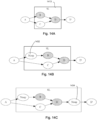
- Figs. 13A-13F describe main partitioning of the program, while Figs. 14A-14E describe an example of local partitioning.
- the resulting program is shown in Fig. 15 .
- Fig. 13B is transformed into Fig. 13C , for example, by growing sharded sub-graphs.
- Such growing includes adding neighboring nodes with unassigned locations into the sharded sub-graphs.
- Nodes D and G are candidates to be folded into sharded sub-graphs, because they have unassigned locations and also have edges coupled to nodes within sharded sub-graphs. It is determined whether nodes D and G have been marked as splittable. If not, they are dropped as candidate. If they are marked as splittable, they are placed into neighboring sub-graphs.
- Operation D cannot be placed into sub-graph 1316 with node E, because of the constraint that the set of edges whose destination operation is assigned to a sharded location must remain unchanged. Operation D is added to sub-graph 1313. This would not have been possible if nodes B and C had not previously been merged into the same sub-graph, because it would not abide by the main partitioning constraints.
- node D By adding node D into sub-graph 1313, the operation of node D is effectively sharded. Accordingly, new operation D' is added to the graph to merge the results from the sharded instances of D. Similarly, the operation of node G is placed into sub-graph 1318 with node F, and new operation G" is added to the graph. The new operations D' and G' are not splittable. There are no further operations in Fig. 13C that can be placed into sharded locations.
- Fig. 13D illustrates assigning locations to all unassigned locations. This may be performed by copying locations from assigned nodes to their neighbors. For example, nodes D', J, G', H, and K had unassigned locations in Fig. 13C . Nodes G', H, and K are neighbors of sub-graph 1320 which includes node I. Accordingly, the location L assigned to node I is also assigned to nodes G', H, and K. Nodes D' and J do not have any neighboring unsharded sub-graphs, and so nodes D' and J are assigned to controller C.
- Figs. 13E-F illustrate an example of merging unsharded sub-graphs.
- the total number of sub-graphs are minimized by merging together all possible pairs of unsharded sub-graphs that run at the same location.
- the sub-graphs of nodes G', H, I, and K are all assigned to location L. All sub-graphs assigned to location L can be merged into new sub-graph 1322 without introducing a cycle.
- Sub-graph 1310 including node A cannot be merged with sub-graph 1315 or 1317 without introducing a cycle.
- Sub-graphs 1315 including node D' and sub-graph 1317 including node J can be merged.
- a resulting graph is illustrated in Fig. 13F . This graph cannot be further merged.
- Each operation has been assigned to a sub-graph, and the number of sub-graphs has been minimized. Any further merges would break one of the main partition
- Fig. 14A sub-graphs containing blocking operations are identified.
- operations B and D are the only blocking operations in the program. Accordingly, sub-graph 1413 including nodes B, C, and D is to be split.
- FIGs. 14B-14C the sub-graph 1413 of Fig. 4A is modified in order to enforce the local partitioning constraints.
- a first modification shown in Fig. 14B ensures that there are no blocking operations with external inputs in the sub-graph. Multiple blocking operations with external inputs would make it difficult or impossible to enforce the local partitioning constraints requiring that each blocking operation ends up in a sub-graph of its own, and that the graph remain acyclic.
- the first modification inserts no-operations just before the blocking operations.
- a no-operation, or "no-op" is an operation that does not change program semantics if inserted between two operations.
- An example of a no-op is Interleave. Interleave passes data from a node before it to a node after it. Because blocking operation B has an external input from node A, a No-op operation 1432 is inserted between nodes A and B.
- a second modification shown in Fig. 14C , ensures that there are no blocking operations with external output in the sub-graph. This prepares the sub-graph for a final partitioning step where special send and receive operations are inserted along those outputs, and ensures that the send operations do not end up in the same sub-graph as the blocking operation. Accordingly, the second modification inserts another No-op operation 1434 between nodes D and D'.
- Fig. 14D illustrates building of a merge graph, where each operation ends up in a sub-graph of its own.
- merge graph 1450 includes sub-graphs 1452, 1453, 1454, 1456, and 1458, each including one operation.
- Sub-graphs having non-blocking operations are merged to the extent possible.
- Fig. 14E there are two sub-graphs 1455, 1458 containing Noop operations. However, merging those two sub-graphs 1455, 1458 would introduce a cycle, and thus is not permissible. Because sub-graph 1453 including node B and sub-graph 1456 including node D have blocking operations that cannot be merged with any other sub-graphs, the local partitioning is complete.
- Fig. 15 illustrates the final program, after main and local partitioning. Locations have been assigned to each location in such a way to minimize traffic sent across networks from one location to another. Moreover, precautions have been taken to ensure efficiency, for example, by preventing cycles and optimizing sending and receiving between nodes.
- Fig. 16 provides a flow diagram illustrating an example method 1600 of graph creation and partitioning for a created program. Some parts of the method 1600 are described in further detail in connection with Figs. 17-18 . Each of the methods described herein includes parts which may be performed in a different order or simultaneously, and additional parts may be included with other parts may be omitted.
- locations are assigned to any operations without a predefined location.
- the locations may be assigned based on a first set of constraints, such as the main partitioning constraints described above.
- the first set of constraints requires that all operations be placed into a sub-graph, that a location be assigned to each sub-graph, that an operation with a programmer-assigned location must retain that assignment, and that an unassigned operation may only be placed into a sharded location if it has a splittable property.
- a location is sharded, all edges in the program whose destination operation is assigned to that location remain unchanged throughout the algorithm.
- the graph must be acyclic.
- the locations may be assigned by, for example, based on neighboring nodes.
- operations with unassigned locations may be added into adjacent sharded sub-graphs in accordance with the constraints. Any further operations with unassigned locations may be assigned locations to match neighboring unsharded nodes.
- the location assignment may be part of graph partitioning.
- local partitioning is performed for the individual sub-graphs based on a second set of constraints, such as the local partitioning constraints discussed above.
- the local partitioning is further described in connection with Fig. 18 .
- nodes with unassigned locations are added into neighboring sharded sub-graphs, to the extent possible while adhering to the main partitioning constraints.
- this may include creation of an additional operation. For example, where a node with an unassigned location is effectively sharded when it is added to the neighboring sharded sub-graph, a new operation is added to the graph outside the sub-graph to merge the results from the sharded operation.
- locations are assigned to any remaining nodes with unassigned locations.
- the locations may be assigned based on locations previously assigned to neighboring nodes, while adhering to the main partitioning constraints. An example is discussed above in connection with Fig. 13D .
- the identified sub-graphs are prepared for splitting. Preparation may include, for example, modifications to ensure that there are no blocking operations with external inputs to the sub-graph, and that there are no blocking operations with external output in the sub-graph. Such modifications may include addition of operations to the sub-graph, such as discussed above in connection with Figs. 14B-C .
- a merge graph is built, where each operation ends up in a separate sub-graph.
- An example is discussed above in connection with Fig. 14D .
- the graph may be executed.
- Each of the sub-graphs is executed at their respective locations, and each sub-graph is executed in a respective single thread.
- Data transfers along edges within a sub-graph are optimized based on their execution within a single-threaded environment.
- an end node receives a token from each other node sending tuples to the end node indicating that the other node has finished providing input.
- the other node can for example be a sharded node, or shard for short.
- the end node adds the tokens together, and when a sum of the token equals the number of other node providing input, the end node determines that the stream is complete.
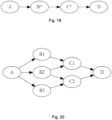
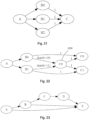
- a unique graph includes a plurality of nodes which each run exactly once.
- An example of a unique graph is provided in Fig. 19 .
- each of nodes A, B, C, D run once, wherein streams from A are input to B, which are input to C, which are input to D.
- a non-unique graph may have an arbitrary number of activation copies executed, such that inputs will be split up and sent to any of these executions and the outputs are merged together.
- An example of a non-unique graph is provided in Fig. 20 .
- nodes B1, B2, and B3 are activations of the same operation B.
- nodes C1 and C2 are activations of the same operation C.
- each node When activations are initialized, each node locally keeps track of a number of upstream (send nodes) and downstream nodes (receive nodes) it is connected to. Nodes inbetween the initial send node and the final receive node may serve as both send and receive nodes, receiving information from one or more nodes, performing an operation, and transmitting information to one or more further nodes.
- Each value sent through a stream is a tuple. Different operations in the same program may run on different machines. The programming model coordinates the execution of these operators on different machines and propagates data from one operator to another.
- the destination node sums a number of token values received from upstream operators of shards. For example, when input to a send node ends, the send node transmits a token value (e.g. 1) to every node to which it has transmitted information. When the destination node receives token values totaling a number of send nodes to which it is connected, the destination node determines that the stream has ended. Accordingly, the destination node may take an action, such as generating an end signal or marking the stream as being finished. In one example, the destination node sends a completion token to further downstream nodes.
- a token value e.g. 1
- Fig. 22 illustrates an example in which a send node only sends streams to a subset of the receive nodes to which it is connected.
- nodes B and C are sharded, but only some of the shard-pairs communicate.
- B0 may only contact shard C0 and not shard C1
- shard B1 only contacts shard C1 and not shard C0.
- the send node generates a list of all receive shards to which it has communicated, and further provides this list to a controller 2250.
- the list may, for example, be included in a message indicating that the send shard has completed its transmissions for the stream.
- the controller tracks all receive shards that have begun processing. If a particular shard has been started but is not present in the list, the controller assumes responsibility for that particular shard and sends it a token value on behalf of the send shard.
- a non-unique sender may send streams to a unique receiver.
- Each non-unique sender sends a token value of 1 to the unique receiver and the unique receiver waits for a total of token values equal to the number of non-unique senders.
- the non-unique sender When the non-unique sender is done, it sends the list of receive shards to which it has already sent tokens and the controller is responsible for delivering the remaining tokens to each shard. In other examples, the controller may deliver the all tokens for the non-unique senders to each receive shard.
- the data input stream is a normal stream of tuples that should be sent to all activations of the destination graph G.
- the activation input stream includes activations on which tuples arrive. For example, when a copy of a particular graph is executed, an identifier is sent to the controller which routes the activation to the appropriate dynamic send operation.
- the dynamic send operation maintains a set of registered activations, and also maintains a buffer of all input data received.
- an end signal is sent from the dynamic send operation to all registered and new activations, and also to new activations that arrive afterwards.
- the buffer of input data can be discarded.
- operations are executed by one or more first shards.
- the first shards may be send shards in a graph.
- the at least one second shard sums the received token values, and determined whether the sum matches a number of the one or more first shard. For example, the at least one second shard may know that it receives input from three send shards. Accordingly, the at least one second shard waits until it receives a total of 3 tokens before it considers the stream to be complete.
- the above-described technology provides for fast and efficient execution of programs. Moreover, the techniques described are adaptable for various types of sharded and pipelined programs. Even further, the techniques may be applied during writing of a program, and thus dynamically adapt to changes in the program.
- the new programming model supports an unbounded number of shards, each transmitting tuples across the database to other shards. While only some subset of the shards may actually run for a particular program, the controller compensates for the shards that do not run, without significant burden to the controller.
Landscapes
- Engineering & Computer Science (AREA)
- Software Systems (AREA)
- Theoretical Computer Science (AREA)
- Physics & Mathematics (AREA)
- General Engineering & Computer Science (AREA)
- General Physics & Mathematics (AREA)
- Computer Networks & Wireless Communication (AREA)
- Signal Processing (AREA)
- Information Retrieval, Db Structures And Fs Structures Therefor (AREA)
Description
- The present application is a continuation of
U.S. Patent Application No. 15/685,022, filed August 24, 2017 - Cloud computing allows users with various computing capabilities to store and process data using shared pools of configurable resources for cost and computing efficiency. Current programming models for cloud computing include MapReduce, Dryad, and Bulk Synchronous Parallel cloud processing. One of the problems facing distributed computations is performance. Performance in a distributed computation is related to a proximity of data to the computation units and data transfer costs between computation units.
- Document CALUWAERTS L J ET AL: "Implementing streams on a data flow computer system with paged memory" describes how streams are implemented on a data flow computer system based on a paged memory. This memory holds both the data flow programs and data structures such as streams.
- Document
US 2016(364451 A1 refers to a controller that analyzes a tuple in an operator graph. The controller determines that the tuple includes one or more selected characteristics. These characteristics signify preferred data. The controller determines operations of the operator graph which can be suppressed. The controller suppresses the one or more operations. The controller suppresses those operations in response to the tuple including one or more of the selected characteristics. - The present invention is defined in the independent claims. Preferred embodiments are defined in the dependent claims.
- The present disclosure describes a new programming model for cloud computing. The new programming model may be used for writing distributed low-latency non-batch programs. An application constructs a program under the model, and then submits it for execution. The program consists of a directed acyclic graph of operators. Streams of values flow along edges in the graph from one operator to another. Each value sent through a stream is a tuple. Different operators in the same program may run on different machines. The programming model coordinates the execution of these operators on different machines and propagates data from one operator to another.
- One aspect of the programming model provides a method for executing a program in a distributed architecture, comprising executing, by one or more first shards of the distributed architecture, one or more operations, sending, from the one or more first shards, tuples to at least one second shard, the tuples being part of a stream and being based on the one or more operations, and sending, from each of the one or more first shards, a token value to the at least one second shard when the sending of the tuples in the stream is complete. The method further includes determining, by the second shard, whether a total of the token values matches a number of the one or more first shards, and taking a first action in response to determining that the total of the token values matches the number of the one or more first shards. The first action may include marking the stream as being complete and/or generating a message indicating that the stream is complete.
- The at least one second shard may be a receive shard of the one of the one or more first shards. The method further includes generating, by the one of the one or more first shards, a list of the receive shards with which the one or more first shards communicate, and transmitting, by the one of the one or more first shards, the list to a controller. Additionally, the controller tracks all receive shards that have started processing, determine whether one or more of the receive shards that have started processing are not present in the list, and for each receive shard that has started processing and is not present in the list, send a token value on behalf of the one of the one or more first shards to the receive shard. The method further includes determining, by a controller, whether any shards have not begun processing, determining, by the controller, whether the shards that have not begun processing are intentionally skipped by design of the program, and sending, by the controller on behalf of any intentionally skipped shards that have not begun processing, a token value to the second shard.
- Another aspect of the disclosure provides a system, comprising one or more first shards in a distributed computing environment, and at least one second shard in the distributed computing environment, the at least one second shard being remote from the one or more first shards. The one or more first shards are configured to execute one or more operations, send tuples to at least one second shard, the tuples being part of a stream and being based on the one or more operations, and send a token value to the at least one second shard when the sending of the tuples in the stream is complete. The at least one second shard is configured to determine whether a total of the token values matches a number of the one or more first shards, and take a first action in response to determining that the total of the token values matches the number of the one or more first shards.
- The system further includes a client device in communication with at least one of the one or more first shards, the at least one second shard, or the controller. The client device is configured to construct a graph, wherein each node of the graph represents a shard, and verify, based on the graph, whether the program will be accurately executed across the distributed architecture. The client device may be further configured to dynamically building activations of the graph as the program is executed.
- In some examples, a dynamic send operation may be executed on a computing device in the distributed architecture. The dynamic send operation sends a data input stream to all activations of a destination graph, and receives, from the controller, new tuples received as additional activations of the destination graph are detected.
- In some embodiments a machine-readable storage medium, for example a non-transitory machine-readable storage medium, stores instructions which, when executed, cause a processing device to perform operations comprising a method according to any embodiment or aspect described herein.
-
-
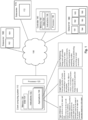
Fig. 1 is a block diagram of an example system according to aspects of the disclosure. -
Figs. 2A-2B illustrate an example of a program created using the programming model according to aspects of the disclosure. -
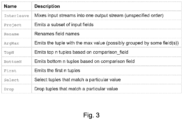
Fig. 3 is a chart listing examples of built-in operations of the programming model according to aspects of the disclosure. -
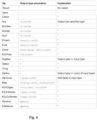
Fig. 4 is a chart listing examples of output type annotations for operations according to aspects of the disclosure. -
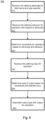
Fig. 5 provides a flow diagram illustrating an example type inferencing method according to aspects of the disclosure. -
Figs. 6A-6C illustrate an example of location assignment during program creation according to aspects of the disclosure. -
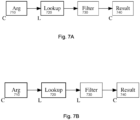
Figs. 7A-7B illustrate an example of automatic location assignment during graph creation according to aspects of the disclosure. -
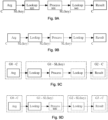
Figs. 8A-8C illustrate an example of partitioning a graph to minimize a number of sub-graphs according to aspects of the disclosure. -
Figs. 9A-9D provide an example of graph partitioning for sharded locations according to aspects of the disclosure. -
Figs. 10A-10B provide an example of co-location according to aspects of the disclosure. -
Figs. 11A-11C illustrate an example of a program with multiple input operations according to aspects of the disclosure. -
Fig. 12 illustrates an example program according to aspects of the disclosure. -
Figs. 13A-13F describe an example of main partitioning of the program ofFig. 12 according to aspects of the disclosure. -
Figs. 14A-14E describe an example of local partitioning of the program ofFig. 12 according to aspects of the disclosure. -
Fig. 15 illustrates the program ofFig. 12 after main partitioning and local partitioning are performed according to aspects of the disclosure. -
Fig. 16 provides a flow diagram illustrating an example method of graph creation and partitioning according to aspects of the disclosure. -
Fig. 17 provides a flow diagram illustrating a method of main graph partitioning. -
Fig. 18 provides a flow diagram illustrating an example method of local partitioning. -
Fig. 19 is a graphical illustration of an example of a unique graph according to aspects of the disclosure. -
Fig. 20 is a graphical illustration of an example non-unique graph according to aspects of the disclosure. -
Fig. 21 illustrates an example of sending token values signaling completion of a stream according to aspects of the disclosure. -
Fig. 22 illustrates an example in which a send node only sends streams to a subset of the receive nodes to which it is connected. -
Fig. 23 illustrates an example of determining completion of a stream when there are unstarted send nodes. -
Fig. 24 illustrates an example of determining completion of a stream when there are multiple activations of a graph. -
Fig. 25 provides a flow diagram illustrating anexample method 2500 for executing a program over a distributed network. - A new programming model may be used for writing distributed low-latency non-batch programs. An application constructs a program under the new model, and then submits it for execution. The program consists of a directed acyclic graph of operators. Streams of values flow along edges in the graph. Each value sent through a stream is a tuple. Different operators in the same program may run on different machines. The programming model coordinates the execution of these operators on different machines and propagates data from one operator to another.
- Construction of the program includes defining operations that form nodes of the graph. Operations receive streams of values as input and send streams of values as output. Each stream has a tuple type, and all tuples flowing through the stream must match that type. The tuple types are defined by fields including a name identifier and a field type identifier. In defining the operations, type inference is used to provide a standardized way for the operations to interact with each other. For example, an operation, as part of its definition, can refer to its inputs and outputs and set a variety of constraints on them. One example of such a constraint is that an output type can be constrained to include every field of the input.
- Operations in the graph may be performed at various locations in the distributed architecture. While some operator locations may be defined in a programming phase, others may not, and operators may be automatically assigned to other locations during graph creation and partitioning. In this regard, locations are automatically assigned in a way that reduces overall network traffic.
- The graph is created based on the operations defined in the programming phase. Partitioning of the graph may be performed in two phases, including a main phase and a local phase. Each phase is carried out in accordance with a set of constraints. A first set of constraints for the main partitioning may be different than a second set of constraints for the local partitioning.
- In the main phase, a first step merges sub-graphs in accordance with the first set of constraints, minimizing a total number of sub-graphs in the program. Some sub-graphs are then grown by incorporating neighboring unassigned nodes into them. Candidate operations are first checked to determine whether they have been marked as splittable, meaning they can be split into separate operations without changing the functionality of the operation. If not, they are not incorporated into the neighboring sub-graph. If they are splittable, placing those candidates into the neighboring sub-graphs is limited by the constraints. Locations are assigned to all unassigned operations by copying locations from assigned nodes to their neighbors. Possible pairs of unsharded sub-graphs that run at the same location are merged to minimize the total number of sub-graphs. At some point, further merging will not be possible.
- In the local partitioning phase, sub-graphs that need to be split, for example to prevent inefficiencies in execution, are identified. These sub-graphs can simply be those containing blocking operations, which might hold onto a thread while performing I/O, preventing further operations from being able to run. The graph is prepared for splitting. This may include modifying the sub-graph to enforce the local partitioning constraints. A merge graph is built where each operation ends up in a sub-graph of its own. These sub-graphs are then repeatedly merged together. Specifically, all operations having external incoming edges are merged together into the same sub-graph. Further, all possible pairs of sub-graphs that have nonblocking operations are merged.
- The new programming model automatically shards computations by instantiating sub-graphs multiple times, if an operator is implemented for a sharded service. The sharding provides both a latency benefit in that the shards are executed in parallel, as well as a data efficiency benefit. As an example of the data efficiency benefit, operators placed after a sharded operator can often run on the same sharded instances, filtering and reducing the eventual output so network traffic is minimized.
- Once partitioned, the graph is executed. Each of the sub-graphs is executed at their respective locations, and each sub-graph is executed in a respective single thread. Data transfers along edges within a sub-graph are optimized based on their execution within a single-threaded environment.
- Various aspects of the programming model allow for efficient execution of the programs. Such aspects include, by way of example and not limitation, pipelining and the sharding described above. The pipelining provides for very low latency. For example, for a computation consisting of a series of 5 operations that take 10ms each, but involve hundreds of thousands of independent values, processing the operations one after the other would take 50ms. However, a properly pipelined solution could be completed in as little as 10ms. In order to accomplish this, tuples are streamed between operators during execution, which leads to better pipelining across the overall program. This tuple streaming format provides efficient serialization/deserialization across the network due. In order to get the pipeline started early but achieve higher throughput, the new programming model uses dynamic buffer growth. For example, small messages are sent early on in the computation, but grow later on because larger messages are more efficient.
- The new programming model also provides for low buffering, for example, by instituting flow control between network nodes. For example, sending nodes determine if a receiver is busy, and if so block transmission. Within a sub-graph, the new programming model is able to efficiently deliver data between operations via local procedure calls. The new programming model efficiently determines when a computation completes, and by determining completion sooner, provides for lower latency.
-
Fig. 1 illustrates an example system including a distributed computing environment. A plurality ofdatacenters network 150. Thedatacenters client 110, over thenetwork 150. Thus, for example, theclient 110 may execute operations in "the cloud." In some examples, thedatacenters controller 190. -
Client 110 may execute one or more applications for creating programs using the new programming model. Eachclient 110 may be a personal computer, intended for use by a person having all the internal components normally found in a personal computer such as a central processing unit (CPU), CD-ROM, hard drive, and a display device, for example, a monitor having a screen, a projector, a touch-screen, a small LCD screen, a television, or another device such as an electrical device that can be operable to display information processed byprocessor 120, speakers, a modem and/or network interface device, user input, such as a mouse, keyboard, touch screen or microphone, and all of the components used for connecting these elements to one another. Moreover, computers in accordance with the systems and methods described herein may include devices capable of processing instructions and transmitting data to and from humans and other computers including general purpose computers, PDAs, tablets, mobile phones, smartwatches, network computers lacking local storage capability, set top boxes for televisions, and other networked devices. - The
client 110 may contain aprocessor 120,memory 130, and other components typically present in general purpose computers. Thememory 130 can store information accessible by theprocessor 120, includinginstructions 132 that can be executed by theprocessor 120. Memory can also includedata 134 that can be retrieved, manipulated or stored by theprocessor 120. Thememory 130 may be a type of non-transitory computer readable medium capable of storing information accessible by theprocessor 120, such as a hard-drive, solid state drive, tape drive, optical storage, memory card, ROM, RAM, DVD, CD-ROM, write-capable, and read-only memories. Theprocessor 120 can be a well-known processor or other lesser-known types of processors. Alternatively, theprocessor 120 can be a dedicated controller such as an ASIC. - The
instructions 132 can be a set of instructions executed directly, such as machine code, or indirectly, such as scripts, by theprocessor 120. In this regard, the terms "instructions," "steps" and "programs" can be used interchangeably herein. Theinstructions 132 can be stored in object code format for direct processing by theprocessor 120, or other types of computer language including scripts or collections of independent source code modules that are interpreted on demand or compiled in advance. - The
data 134 can be retrieved, stored or modified by theprocessor 120 in accordance with theinstructions 132. For instance, although the system and method is not limited by a particular data structure, thedata 134 can be stored in computer registers, in a relational database as a table having a plurality of different fields and records, or XML documents. Thedata 134 can also be formatted in a computer-readable format such as, but not limited to, binary values, ASCII or Unicode. Moreover, thedata 134 can include information sufficient to identify relevant information, such as numbers, descriptive text, proprietary codes, pointers, references to data stored in other memories, including other network locations, or information that is used by a function to calculate relevant data. -
Applications 136 may be used for constructing programs under the new programming mode. Theapplications 136 may, for example, be downloaded, executable from theinstructions 132, or remotely accessed. In some examples, the application may be remotely executed. For example,client 110 may compile a program and send it to the cloud for execution. Theapplications 136 may perform different functions, such as type inference, graph creation, graph partitioning, etc. For example, one application may perform a variety of different functions, or various applications may each perform one or more different functions. - For the type inference function, the application may be configured to receive information defining attributes of an operation by field name and type specifier. The application may further receive information defining a behavior for the operation with respect to the attributes. Constraints for the operation are determined based on the attribute and behavior. Information defining an input for the operation may also be received, and used along with the constraints to determine a type for an output of the operation. The determined output type may be associated with the output for the operation.
- For graph creation, a plurality of nodes are generated, wherein each node corresponds to an operation of the program. The nodes are connected be edges or vertices, representing streams sent between nodes. Locations may be assigned to particular nodes, for example, automatically based on program requirements and capabilities of computing devices, or manually by programmer selection.
- For graph partitioning, the graph is optimized to reduce overall network traffic. For example, where possible, locations for execution of one or more operations are automatically assigned together. In doing so, nodes are merged and split according to a number of predefined constraints. Partitioning may further be performed at a local level, for example, for operations to be executed at a sharded location. Such local partitioning may be performed according to a second, separate set of constraints. Both main and local partitioning may be performed when the program is compiled. As a result of the partitioning, the program is ready for execution by computing devices in one or
more datacenters - Although
Fig. 1 functionally illustrates theprocessor 120 andmemory 130 as being within the same block, theprocessor 120 andmemory 130 may actually include multiple processors and memories that may or may not be stored within the same physical housing. For example, some of theinstructions 132 anddata 134 can be stored on a removable CD-ROM and others within a read-only computer chip. Some or all of the instructions and data can be stored in a location physically remote from, yet still accessible by, theprocessor 120. Similarly, theprocessor 120 can actually include a collection of processors, which may or may not operate in parallel. - The datacenters 160-180 may be positioned a considerable distance from one another. For example, the datacenters may be positioned in various countries around the world. Each
datacenter Fig. 1 ,datacenter 160 includescomputing devices datacenter 170 includescomputing device 172, anddatacenter 180 includes computing devices 181-186. Programs may be executed across these computing devices, for example, such that some operations are executed by one or more computing devices of a first datacenter while other operations are performed by one or more computing devices of a second datacenter. In some examples, the computing devices in the various datacenters may have different capacities. For example, the different computing devices may have different processing speeds, workloads, etc. While only a few of these computing devices are shown, it should be understood that eachdatacenter - In some examples, each datacenter 160-180 may also include a number of storage devices (not shown), such as hard drives, random access memory, disks, disk arrays, tape drives, or any other types of storage devices. The
datacenters network 150 and/or additional networks. - In some examples, the
controller 190 communicates with the computing devices in the datacenters 160-180, and may facilitate the execution of programs. For example, thecontroller 190 tracks the capacity, status, workload, or other information of each computing device, and use such information to assign tasks. Thecontroller 190 may also assist in determining whether streams sent over the network have completed. For example, thecontroller 190 sends tokens on behalf of sharded operators, the tokens used by downstream nodes to determine that the stream is complete. Thecontroller 190 may include aprocessor 198 andmemory 192, includingdata 194 and instructions 196, similar to theclient 110 described above. -
Client 110, datacenters 160-180, and control 190 can be capable of direct and indirect communication such as overnetwork 150. For example, using an Internet socket, aclient 110 can connect to a service operating on remote servers through an Internet protocol suite. Servers can set up listening sockets that may accept an initiating connection for sending and receiving information. Thenetwork 150, and intervening nodes, may include various configurations and protocols including the Internet, World Wide Web, intranets, virtual private networks, wide area networks, local networks, private networks using communication protocols proprietary to one or more companies, Ethernet, WiFi (e.g., 702.71, 702.71b, g, n, or other such standards), and HTTP, and various combinations of the foregoing. Such communication may be facilitated by a device capable of transmitting data to and from other computers, such as modems (e.g., dial-up, cable or fiber optic) and wireless interfaces. -
Figs. 2A-2B illustrate an example of a program created using the programming model. In this program, an objective is to fetch all images in a photo album and generate a thumbnail for each image. In code, this objective may be represented as:
      thumbnails = []
      for image_name in images(album_name):
             image = lookup(image_name)
             thumb = thumbnail(image)
             thumbnails. append(thumb)
      return thumbnails
      // The input and output
      string album_name = ...;
      vector<string> thumbnails;
      // Construct the program
      Program program;
      Stream input = program.AddInput(album_name);
      Stream image_names = ListImages(input);
      Stream images = Lookup(image_names);
      Stream result = Thumbnail(images);
      program.AddOutput(result, &thumbnails);
      // Run the program
      util::Status s = runtime.Run(program);


Stream s = ZipConst(input, {"label", 100});
Claims (12)
- A method for executing a program across a distributed architecture, comprising:constructing a graph comprising the generation of a plurality of nodes, wherein each node corresponds to an operation of the program, and wherein the nodes are connected by edges or vertices, representing streams being sent between the nodes, and wherein locations are automatically assigned to particular nodes;automatically sharding computations by instantiating sub-graphs multiple times, wherein only nodes comprising operators which allow for parallel instances can be sharded;partitioning the constructed graph, wherein each of the sub-graphs is executed at their respective locations and each sub-graph is executed in a respective single thread;executing, by send shards of a first sharded node of the distributed architecture, one or more operations;sending, from the send shards, tuples to at least one receive shard of a second sharded node, the tuples being part of a stream and being based on the one or more operations;sending, from each of the send shards, a token value to the at least one receive shard when the sending of the tuples in the stream is complete;determining, by the receive shard, whether a sum of the received token values at the at least one receive shard matches a number of the send shards that are expected to send a token value to the receive shard; andtaking a first action by the receive shard in response to determining that the sum of the token values matches the number of the send shards, wherein taking the first action comprises at least one of marking the stream as being complete or generating a message indicating that the stream is complete;generating, by each of the send shards, a list of the receive shards with which each respective send shard has communicated;transmitting, by the send shards, the respective list to a controller;tracking, by the controller, all receive shards that have started processing;determining, by the controller, whether one or more of the receive shards that have started processing are not present in the list; andfor each receive shard that has started processing and is not present in the list, sending, by the controller, a token value on behalf of the respective send shard to the receive shard.
- The method of claim 1, further comprising:determining, by a controller, whether any shards have not begun processing;determining, by the controller, whether the shards that have not begun processing are intentionally skipped by design of the program; andsending, by the controller on behalf of any intentionally skipped shards that have not begun processing, a token value to the receive shard.
- The method of claim 1, further comprising:
verifying, based on the graph, whether type and partitioning constraints are fulfilled across the distributed architecture, wherein the partitioning constraints require that each blocking operation ends up in a sub-graph of its own, splitting sub-graphs may only produce one sub-graph with external/non-local inputs, and that the graph must remain acyclic, and wherein type constraints determine whether outputs of one operation are matched with inputs of another operation, and further comprising dynamically building activations of the graph as the program is executed, and further comprising:sending, by a dynamic send operation, a data input stream to all activations of a destination graph;receiving, at the dynamic send operation from the controller, new tuples received as additional activations of the destination graph are detected. - The method of claim 3, wherein constructing the graph comprises building a merge graph, and/or wherein the graph is non-unique.
- The method of claim 1, wherein executing the one or more operations is part of a pipelined data processing flow.
- A system, comprising:a distributed computing environment, wherein the distributed environment is configured to execute a program;one or more processors, being in communication with a first sharded node and a second sharded node, and being configured to construct a graph being constructed by generating a plurality of nodes, wherein each node corresponds to an operation of the program, and wherein the nodes are connected by edges or vertices, representing streams being sent between the nodes, and wherein locations are automatically assigned to particular nodes, wherein the system is configured to automatically shard computations by instantiating sub-graphs multiple times, wherein only nodes comprising operators which allow for parallel instances can be sharded, and to partition the constructed graph, wherein each of the sub-graphs is executed at their respective locations and each sub-graph is executed in a respective single thread;send shards of the first sharded node in the distributed computing environment; andat least one receive shard of the second sharded node in the distributed computing environment, the at least one receive shard being remote from the send shards;wherein the send shards are configured to:execute one or more operations;send tuples to the at least one receive shard, the tuples being part of a stream and being based on the one or more operations;send a token value to the at least one receive shard when the sending of the tuples in the stream is complete; andwherein the at least one receive shard is configured to:determine whether a sum of the received token values matches a number of the send shards that are expected to send a token value to the receive shard; andtake a first action in response to determining that the sum of the token values matches the number of the send shards, wherein taking the first action comprises at least one of marking the stream as being complete or generating a message indicating that the stream is complete;wherein the system further comprises a controller, and wherein the send shards are further configured to:generate a list of the receive shards with which each respective send shard has communicated;transmit the respective list to a controller;wherein the controller is further configured to:track all receive shards that have started processing;determine whether one or more of the receive shards that have started processing are not present in the list; andfor each receive shard that has started processing and is not present in the list, send a token value on behalf of the respective send shard to the receive shard.
- The system of claim 6, further comprising a controller, wherein the controller is configured to:determine whether any shards have not begun processing;determine whether the shards that have not begun processing are intentionally skipped by design of the program; andsend, on behalf of any intentionally skipped shards that have not begun processing, a token value to the receive shard.
- The system of claim 6, wherein taking the first action comprises at least one of marking the stream as being complete or generating a message indicating that the stream is complete.
- The system of claim 6, further comprising a client device in communication with at least one of the send shards, the at least one receive shard, or the controller, the client device configured to:construct a graph, wherein each node of the graph represents a shard; andverify, based on the graph, whether type and partitioning constraints are fulfilled across the distributed architecture, and wherein the client device is further configured to dynamically building activations of the graph as the program is executed, and further comprising a dynamic send operation executed on a computing device in the distributed architecture, wherein the dynamic send operation:sends a data input stream to all activations of a destination graph;receives, from the controller, new tuples received as additional activations of the destination graph are detected.
- The system of claim 9, wherein the client device is further configured to build a merge graph, and/or wherein the graph is non-unique.
- The system of claim 6, wherein executing the one or more operations is part of a pipelined data processing flow.
- A machine-readable storage medium, storing instructions which when executed by a processing device, cause the processing device to perform the method steps of any of claims 1 to 5.
Applications Claiming Priority (2)
| Application Number | Priority Date | Filing Date | Title |
|---|---|---|---|
| US15/685,022 US10887235B2 (en) | 2017-08-24 | 2017-08-24 | Method of executing a tuple graph program across a network |
| PCT/US2018/033112 WO2019040139A1 (en) | 2017-08-24 | 2018-05-17 | Method of executing a tuple graph program across a network |
Publications (2)
| Publication Number | Publication Date |
|---|---|
| EP3673369A1 EP3673369A1 (en) | 2020-07-01 |
| EP3673369B1 true EP3673369B1 (en) | 2024-07-03 |
Family
ID=62567816
Family Applications (1)
| Application Number | Title | Priority Date | Filing Date |
|---|---|---|---|
| EP18730559.4A Active EP3673369B1 (en) | 2017-08-24 | 2018-05-17 | Method of executing a tuple graph program across a network |
Country Status (5)
| Country | Link |
|---|---|
| US (1) | US10887235B2 (en) |
| EP (1) | EP3673369B1 (en) |
| CN (1) | CN110945481B (en) |
| TW (1) | TWI710913B (en) |
| WO (1) | WO2019040139A1 (en) |
Families Citing this family (7)
| Publication number | Priority date | Publication date | Assignee | Title |
|---|---|---|---|---|
| US11843656B2 (en) * | 2017-09-27 | 2023-12-12 | Iguazio Systems Ltd. | Dynamic application mobilization |
| KR102820745B1 (en) | 2018-12-31 | 2025-06-13 | 삼성전자주식회사 | Neural network system predicting polling time and neural network model processing method using the same |
| US11256546B2 (en) | 2019-07-02 | 2022-02-22 | Nokia Technologies Oy | Methods, apparatuses and computer readable mediums for network based media processing |
| TWI714390B (en) * | 2019-12-13 | 2020-12-21 | 中華電信股份有限公司 | Method for controlling operation flow |
| US20230027647A1 (en) * | 2019-12-20 | 2023-01-26 | Telefonaktiebolaget Lm Ericsson (Publ) | Dynamic distribution of a computational graph |
| US11550554B2 (en) * | 2021-01-07 | 2023-01-10 | Microsoft Technology Licensing, Llc | Merged machine-level intermediate representation optimizations |
| US20220342728A1 (en) | 2021-04-14 | 2022-10-27 | Nvidia Corporation | Application programming interface to locate incomplete graph code |
Citations (2)
| Publication number | Priority date | Publication date | Assignee | Title |
|---|---|---|---|---|
| US20160364451A1 (en) * | 2015-06-15 | 2016-12-15 | International Business Machines Corporation | Suppressing stream functionality to expedite preferred data |
| US20170124452A1 (en) * | 2015-10-28 | 2017-05-04 | Google Inc. | Processing computational graphs |
Family Cites Families (79)
| Publication number | Priority date | Publication date | Assignee | Title |
|---|---|---|---|---|
| US5191638A (en) | 1989-03-31 | 1993-03-02 | Matsushita Electric Industrial Co., Ltd. | Fuzzy-boolean multi-stage inference apparatus |
| US5748966A (en) | 1994-12-30 | 1998-05-05 | The Trustees Of The University Of Pennsylvania | Type error checker for type-free or polymorphic computer language |
| US5630051A (en) | 1995-03-06 | 1997-05-13 | Motorola Inc. | Method and apparatus for merging hierarchical test subsequence and finite state machine (FSM) model graphs |
| JPH08278890A (en) | 1995-04-05 | 1996-10-22 | Sharp Corp | Evolutionary adaptive inference knowledge extraction device and point-of-sale data analysis device using the device |
| US6202202B1 (en) | 1996-09-24 | 2001-03-13 | Microsoft Corporation | Pointer analysis by type inference for programs with structured memory objects and potentially inconsistent memory object accesses |
| US6014518A (en) | 1997-06-26 | 2000-01-11 | Microsoft Corporation | Terminating polymorphic type inference program analysis |
| US6018628A (en) | 1998-06-16 | 2000-01-25 | Sun Microsystems, Inc. | Method of implementing parameterized types to be compatible with existing unparameterized libraries |
| US6292938B1 (en) | 1998-12-02 | 2001-09-18 | International Business Machines Corporation | Retargeting optimized code by matching tree patterns in directed acyclic graphs |
| CA2288614C (en) | 1999-11-08 | 2004-05-11 | Robert J. Blainey | Loop allocation for optimizing compilers |
| WO2002013002A2 (en) | 2000-08-04 | 2002-02-14 | Intrinsic Graphics, Inc. | Development of graphics hardware and software |
| US7010789B1 (en) | 2000-09-29 | 2006-03-07 | International Business Machines Corporation | Independent net task identification for efficient partition and distribution |
| US20020112201A1 (en) | 2000-12-04 | 2002-08-15 | Flanagan Cormac Andrias | Method and apparatus for automatically inferring annotations for an extended static checker |
| WO2004031973A1 (en) | 2002-09-30 | 2004-04-15 | Advent Networks, Inc. | Implementing request/reply programming semantics using publish/subscribe middleware |
| US7496892B2 (en) | 2003-05-06 | 2009-02-24 | Andrew Nuss | Polymorphic regular expressions |
| US7636917B2 (en) | 2003-06-30 | 2009-12-22 | Microsoft Corporation | Network load balancing with host status information |
| US7567504B2 (en) | 2003-06-30 | 2009-07-28 | Microsoft Corporation | Network load balancing with traffic routing |
| US20050177578A1 (en) | 2004-02-10 | 2005-08-11 | Chen Yao-Ching S. | Efficient type annontation of XML schema-validated XML documents without schema validation |
| GB2416048A (en) | 2004-07-10 | 2006-01-11 | Hewlett Packard Development Co | Inferring data type in a multi stage process |
| US7970730B2 (en) | 2005-01-27 | 2011-06-28 | Microsoft Corporation | Efficient data access via runtime type inference |
| US10002325B2 (en) | 2005-03-30 | 2018-06-19 | Primal Fusion Inc. | Knowledge representation systems and methods incorporating inference rules |
| US7426503B2 (en) | 2005-04-25 | 2008-09-16 | Microsoft Corporation | System and method for an improved type inference |
| US8473971B2 (en) | 2005-09-06 | 2013-06-25 | Microsoft Corporation | Type inference and type-directed late binding |
| US7958493B2 (en) | 2006-01-20 | 2011-06-07 | Kevin Edward Lindsey | Type inference system and method |
| US7720779B1 (en) | 2006-01-23 | 2010-05-18 | Quantum Leap Research, Inc. | Extensible bayesian network editor with inferencing capabilities |
| US8429218B2 (en) | 2006-04-06 | 2013-04-23 | International Business Machines Corporation | Process restart on a compute node |
| EP1933507A1 (en) * | 2006-12-15 | 2008-06-18 | Ubiwave | Low-power multi-hop networks |
| US8396827B2 (en) | 2006-12-29 | 2013-03-12 | Sap Ag | Relation-based hierarchy evaluation of recursive nodes |
| US8752032B2 (en) | 2007-02-23 | 2014-06-10 | Irdeto Canada Corporation | System and method of interlocking to protect software-mediated program and device behaviours |
| US7856246B2 (en) | 2007-03-21 | 2010-12-21 | Nokia Corporation | Multi-cell data processor |
| KR101600303B1 (en) | 2007-11-08 | 2016-03-07 | 센티언트 테크놀로지스 (바베이도스) 리미티드 | Distributed network for performing complex algorithms |
| US8332385B2 (en) | 2008-03-11 | 2012-12-11 | Semmle Limited | Approximating query results by relations over types for error detection and optimization |
| US20110301941A1 (en) | 2009-03-20 | 2011-12-08 | Syl Research Limited | Natural language processing method and system |
| US8555265B2 (en) * | 2010-05-04 | 2013-10-08 | Google Inc. | Parallel processing of data |
| US8549502B2 (en) | 2010-06-21 | 2013-10-01 | Microsoft Corporation | Compiler with user-defined type inference rules |
| TW201237639A (en) | 2010-12-10 | 2012-09-16 | Microsoft Corp | Back-end constrained delegation model |
| US8612688B2 (en) * | 2010-12-30 | 2013-12-17 | Facebook, Inc. | Distributed cache for graph data |
| US20130139164A1 (en) | 2011-11-28 | 2013-05-30 | Sap Ag | Business Process Optimization |
| US8965921B2 (en) * | 2012-06-06 | 2015-02-24 | Rackspace Us, Inc. | Data management and indexing across a distributed database |
| US20140058913A1 (en) * | 2012-08-24 | 2014-02-27 | International Business Machines Corporation | Graph partitioning for dynamic securitization |
| US8843887B2 (en) | 2012-08-31 | 2014-09-23 | Oracle International Corporation | Fast dispatch predicate for overloaded functions with generic type hierarchies that lack contravariance |
| US9411558B2 (en) * | 2012-10-20 | 2016-08-09 | Luke Hutchison | Systems and methods for parallelization of program code, interactive data visualization, and graphically-augmented code editing |
| US9229983B2 (en) * | 2012-11-30 | 2016-01-05 | Amazon Technologies, Inc. | System-wide query optimization |
| JP6134004B2 (en) * | 2012-12-06 | 2017-05-24 | イービジョン スマート オプティクス インコーポレイテッド | Systems, devices, and / or methods for providing images |
| US9832068B2 (en) * | 2012-12-17 | 2017-11-28 | Microsoft Technology Licensing, Llc | Reachability-based coordination for cyclic dataflow |
| US9311149B2 (en) | 2012-12-21 | 2016-04-12 | International Business Machines Corporation | Processor provisioning by a middleware processing system |
| US9696974B2 (en) | 2013-03-13 | 2017-07-04 | Microsoft Technology Licensing, Llc. | Graph-based model for type systems |
| US10055396B2 (en) | 2013-04-12 | 2018-08-21 | Microsoft Technology Licensing, Llc | Binding of data source to compound control |
| US9147010B2 (en) * | 2013-04-17 | 2015-09-29 | International Business Machines Corporation | Reconfiguring an operator graph based on attribute usage |
| US9182952B2 (en) | 2013-06-04 | 2015-11-10 | Qualcomm Incorporated | Automated graph-based programming |
| US9459986B2 (en) | 2013-08-28 | 2016-10-04 | International Business Machines Corporation | Automatic generation of analysis-equivalent application constructs |
| EP3051773B1 (en) * | 2013-10-25 | 2020-09-16 | Huawei Technologies Co., Ltd. | Multi-path auxiliary stream control method, control device, node and system |
| US9723054B2 (en) * | 2013-12-30 | 2017-08-01 | Microsoft Technology Licensing, Llc | Hierarchical organization for scale-out cluster |
| US9313110B2 (en) * | 2014-01-22 | 2016-04-12 | International Business Machines Corporation | Managing processing branches in an operator graph |
| US9189212B2 (en) * | 2014-03-31 | 2015-11-17 | International Business Machines Corporation | Predicted outputs in a streaming environment |
| US10402453B2 (en) | 2014-06-27 | 2019-09-03 | Nuance Communications, Inc. | Utilizing large-scale knowledge graphs to support inference at scale and explanation generation |
| US10025571B1 (en) | 2014-07-17 | 2018-07-17 | Google Llc | Optimized execution of dynamic languages |
| US10437843B2 (en) * | 2014-07-29 | 2019-10-08 | Microsoft Technology Licensing, Llc | Optimization of database queries via transformations of computation graph |
| US20160065498A1 (en) * | 2014-08-26 | 2016-03-03 | rift.IO, Inc. | Distributed transaction subsystem |
| US10303796B2 (en) * | 2015-01-09 | 2019-05-28 | Ariba, Inc. | Updating distributed shards without compromising on consistency |
| US9886441B2 (en) * | 2015-04-06 | 2018-02-06 | Sap Se | Shard aware near real time indexing |
| US9823982B1 (en) * | 2015-06-19 | 2017-11-21 | Amazon Technologies, Inc. | Archiving and restoration of distributed database log records |
| US10037389B2 (en) * | 2015-07-21 | 2018-07-31 | International Business Machines Corporation | Dynamic window adjustments in a streaming environment |
| US10339116B2 (en) * | 2015-10-07 | 2019-07-02 | Oracle International Corporation | Composite sharding |
| US11151446B2 (en) | 2015-10-28 | 2021-10-19 | Google Llc | Stream-based accelerator processing of computational graphs |
| US10664249B2 (en) | 2015-11-20 | 2020-05-26 | Microsoft Technology Licensing, Llc | Verified compilation of reversible circuits |
| US20170193041A1 (en) | 2016-01-05 | 2017-07-06 | Sqrrl Data, Inc. | Document-partitioned secondary indexes in a sorted, distributed key/value data store |
| US9928046B2 (en) * | 2016-02-12 | 2018-03-27 | International Business Machines Corporation | System and method for dynamic runtime merging of real time streaming operator environments |
| US10896178B2 (en) * | 2016-03-30 | 2021-01-19 | Microsoft Technology Licensing, Llc | High performance query processing and data analytics |
| US10303505B2 (en) * | 2016-05-19 | 2019-05-28 | International Business Machines Corporation | Adjusting a computing environment for processing a data stream with dummy tuples |
| US10311158B2 (en) * | 2016-06-06 | 2019-06-04 | International Business Machines Corporation | Streamlining tuple processing by delivering tuple attributes to associated operators |
| US10394891B2 (en) * | 2016-08-05 | 2019-08-27 | International Business Machines Corporation | Distributed graph databases that facilitate streaming data insertion and queries by efficient throughput edge addition |
| US10380188B2 (en) * | 2016-08-05 | 2019-08-13 | International Business Machines Corporation | Distributed graph databases that facilitate streaming data insertion and queries by reducing number of messages required to add a new edge by employing asynchronous communication |
| US10552450B2 (en) * | 2016-08-05 | 2020-02-04 | International Business Machines Corporation | Distributed graph databases that facilitate streaming data insertion and low latency graph queries |
| US10417239B2 (en) * | 2017-01-13 | 2019-09-17 | International Business Machines Corporation | Reducing flow delays in a data streaming application caused by lookup operations |
| US10706102B2 (en) * | 2017-03-06 | 2020-07-07 | International Business Machines Corporation | Operation efficiency management with respect to application run-time |
| US10425313B2 (en) * | 2017-04-05 | 2019-09-24 | International Business Machines Corporation | Tuple traffic management |
| US10628492B2 (en) * | 2017-07-20 | 2020-04-21 | Microsoft Technology Licensing, Llc | Distributed graph database writes |
| US10642582B2 (en) * | 2017-08-24 | 2020-05-05 | Google Llc | System of type inference for tuple graph programs method of executing a tuple graph program across a network |
| US10599482B2 (en) * | 2017-08-24 | 2020-03-24 | Google Llc | Method for intra-subgraph optimization in tuple graph programs |
-
2017
- 2017-08-24 US US15/685,022 patent/US10887235B2/en active Active
-
2018
- 2018-05-15 TW TW107116380A patent/TWI710913B/en active
- 2018-05-17 WO PCT/US2018/033112 patent/WO2019040139A1/en not_active Ceased
- 2018-05-17 EP EP18730559.4A patent/EP3673369B1/en active Active
- 2018-05-17 CN CN201880035919.0A patent/CN110945481B/en active Active
Patent Citations (2)
| Publication number | Priority date | Publication date | Assignee | Title |
|---|---|---|---|---|
| US20160364451A1 (en) * | 2015-06-15 | 2016-12-15 | International Business Machines Corporation | Suppressing stream functionality to expedite preferred data |
| US20170124452A1 (en) * | 2015-10-28 | 2017-05-04 | Google Inc. | Processing computational graphs |
Non-Patent Citations (1)
| Title |
|---|
| CALUWAERTS L J ET AL: "Implementing streams on a data flow computer system with paged memory", ACM SIGARCH COMPUTER ARCHITECTURE NEWS, ACM SPECIAL INTEREST GROUP ON COMPUTER ARCHITECTURE, 2 PENN PLAZA, SUITE 701 NEW YORK NY 10121-0701 USA, vol. 11, no. 3, 13 June 1983 (1983-06-13), pages 76 - 83, XP058251273, ISSN: 0163-5964 * |
Also Published As
| Publication number | Publication date |
|---|---|
| US10887235B2 (en) | 2021-01-05 |
| EP3673369A1 (en) | 2020-07-01 |
| TW201913404A (en) | 2019-04-01 |
| WO2019040139A1 (en) | 2019-02-28 |
| CN110945481A (en) | 2020-03-31 |
| CN110945481B (en) | 2023-08-08 |
| US20190068504A1 (en) | 2019-02-28 |
| TWI710913B (en) | 2020-11-21 |
Similar Documents
| Publication | Publication Date | Title |
|---|---|---|
| US10887235B2 (en) | Method of executing a tuple graph program across a network | |
| EP3616057B1 (en) | Method for intra-subgraph optimization in tuple graph programs | |
| AU2019268140B2 (en) | Compilation of graph-based program specifications with automated clustering of graph components based on the identification of particular data port connections | |
| EP3189417B1 (en) | Compiling graph-based program specifications for enabling a runtime system to determine an efficient execution | |
| US8762964B2 (en) | Optimizing symbol manipulation language-based executable applications for distributed execution | |
| EP2021920A2 (en) | Managing computing resources in graph-based computations | |
| US11429355B2 (en) | System of type inference for tuple graph programs | |
| WO2014011696A1 (en) | Method and system for automated improvement of parallelism in program compilation | |
| CN106687919A (en) | Managing state for controlling tasks | |
| CN106605209A (en) | Controlling data processing tasks | |
| US20250130784A1 (en) | Code compilation for dynamic peer-to-peer networked code execution and data management | |
| WO2025039772A1 (en) | Instruction scheduling method, apparatus and device, storage medium, and program product | |
| Kreitz | Automated fast-track reconfiguration of group communication systems | |
| HK1237463B (en) | Compiling graph-based program specifications | |
| HK1242444B (en) | Compilation of graph-based program specifications with automated clustering of graph components based on the identification of particular data port connections | |
| HK1237466B (en) | Method and system for controlling execution of components, and computer-readable medium | |
| HK1237063B (en) | Executing graph-based program specifications | |
| HK1237062B (en) | Executing graph-based program specifications | |
| HK1236649B (en) | Controlling data processing tasks | |
| HK1237465B (en) | Managing invocation of tasks |
Legal Events
| Date | Code | Title | Description |
|---|---|---|---|
| STAA | Information on the status of an ep patent application or granted ep patent |
Free format text: STATUS: UNKNOWN |
|
| STAA | Information on the status of an ep patent application or granted ep patent |
Free format text: STATUS: THE INTERNATIONAL PUBLICATION HAS BEEN MADE |
|
| PUAI | Public reference made under article 153(3) epc to a published international application that has entered the european phase |
Free format text: ORIGINAL CODE: 0009012 |
|
| STAA | Information on the status of an ep patent application or granted ep patent |
Free format text: STATUS: REQUEST FOR EXAMINATION WAS MADE |
|
| 17P | Request for examination filed |
Effective date: 20191127 |
|
| AK | Designated contracting states |
Kind code of ref document: A1 Designated state(s): AL AT BE BG CH CY CZ DE DK EE ES FI FR GB GR HR HU IE IS IT LI LT LU LV MC MK MT NL NO PL PT RO RS SE SI SK SM TR |
|
| AX | Request for extension of the european patent |
Extension state: BA ME |
|
| DAV | Request for validation of the european patent (deleted) | ||
| DAX | Request for extension of the european patent (deleted) | ||
| STAA | Information on the status of an ep patent application or granted ep patent |
Free format text: STATUS: EXAMINATION IS IN PROGRESS |
|
| 17Q | First examination report despatched |
Effective date: 20211201 |
|
| GRAP | Despatch of communication of intention to grant a patent |
Free format text: ORIGINAL CODE: EPIDOSNIGR1 |
|
| STAA | Information on the status of an ep patent application or granted ep patent |
Free format text: STATUS: GRANT OF PATENT IS INTENDED |
|
| INTG | Intention to grant announced |
Effective date: 20231222 |
|
| GRAS | Grant fee paid |
Free format text: ORIGINAL CODE: EPIDOSNIGR3 |
|
| P01 | Opt-out of the competence of the unified patent court (upc) registered |
Effective date: 20240422 |
|
| GRAA | (expected) grant |
Free format text: ORIGINAL CODE: 0009210 |
|
| STAA | Information on the status of an ep patent application or granted ep patent |
Free format text: STATUS: THE PATENT HAS BEEN GRANTED |
|
| AK | Designated contracting states |
Kind code of ref document: B1 Designated state(s): AL AT BE BG CH CY CZ DE DK EE ES FI FR GB GR HR HU IE IS IT LI LT LU LV MC MK MT NL NO PL PT RO RS SE SI SK SM TR |
|
| REG | Reference to a national code |
Ref country code: CH Ref legal event code: EP |
|
| REG | Reference to a national code |
Ref country code: DE Ref legal event code: R096 Ref document number: 602018071274 Country of ref document: DE |
|
| REG | Reference to a national code |
Ref country code: LT Ref legal event code: MG9D |
|
| REG | Reference to a national code |
Ref country code: NL Ref legal event code: MP Effective date: 20240703 |
|
| PG25 | Lapsed in a contracting state [announced via postgrant information from national office to epo] |
Ref country code: PT Free format text: LAPSE BECAUSE OF FAILURE TO SUBMIT A TRANSLATION OF THE DESCRIPTION OR TO PAY THE FEE WITHIN THE PRESCRIBED TIME-LIMIT Effective date: 20241104 |
|
| REG | Reference to a national code |
Ref country code: AT Ref legal event code: MK05 Ref document number: 1700550 Country of ref document: AT Kind code of ref document: T Effective date: 20240703 |
|
| PG25 | Lapsed in a contracting state [announced via postgrant information from national office to epo] |
Ref country code: NL Free format text: LAPSE BECAUSE OF FAILURE TO SUBMIT A TRANSLATION OF THE DESCRIPTION OR TO PAY THE FEE WITHIN THE PRESCRIBED TIME-LIMIT Effective date: 20240703 |
|
| PG25 | Lapsed in a contracting state [announced via postgrant information from national office to epo] |
Ref country code: PT Free format text: LAPSE BECAUSE OF FAILURE TO SUBMIT A TRANSLATION OF THE DESCRIPTION OR TO PAY THE FEE WITHIN THE PRESCRIBED TIME-LIMIT Effective date: 20241104 Ref country code: NL Free format text: LAPSE BECAUSE OF FAILURE TO SUBMIT A TRANSLATION OF THE DESCRIPTION OR TO PAY THE FEE WITHIN THE PRESCRIBED TIME-LIMIT Effective date: 20240703 |
|
| PG25 | Lapsed in a contracting state [announced via postgrant information from national office to epo] |
Ref country code: NO Free format text: LAPSE BECAUSE OF FAILURE TO SUBMIT A TRANSLATION OF THE DESCRIPTION OR TO PAY THE FEE WITHIN THE PRESCRIBED TIME-LIMIT Effective date: 20241003 |
|
| PG25 | Lapsed in a contracting state [announced via postgrant information from national office to epo] |
Ref country code: GR Free format text: LAPSE BECAUSE OF FAILURE TO SUBMIT A TRANSLATION OF THE DESCRIPTION OR TO PAY THE FEE WITHIN THE PRESCRIBED TIME-LIMIT Effective date: 20241004 Ref country code: FI Free format text: LAPSE BECAUSE OF FAILURE TO SUBMIT A TRANSLATION OF THE DESCRIPTION OR TO PAY THE FEE WITHIN THE PRESCRIBED TIME-LIMIT Effective date: 20240703 Ref country code: PL Free format text: LAPSE BECAUSE OF FAILURE TO SUBMIT A TRANSLATION OF THE DESCRIPTION OR TO PAY THE FEE WITHIN THE PRESCRIBED TIME-LIMIT Effective date: 20240703 |
|
| PG25 | Lapsed in a contracting state [announced via postgrant information from national office to epo] |
Ref country code: BG Free format text: LAPSE BECAUSE OF FAILURE TO SUBMIT A TRANSLATION OF THE DESCRIPTION OR TO PAY THE FEE WITHIN THE PRESCRIBED TIME-LIMIT Effective date: 20240703 |
|
| PG25 | Lapsed in a contracting state [announced via postgrant information from national office to epo] |
Ref country code: LV Free format text: LAPSE BECAUSE OF FAILURE TO SUBMIT A TRANSLATION OF THE DESCRIPTION OR TO PAY THE FEE WITHIN THE PRESCRIBED TIME-LIMIT Effective date: 20240703 |
|
| PG25 | Lapsed in a contracting state [announced via postgrant information from national office to epo] |
Ref country code: IS Free format text: LAPSE BECAUSE OF FAILURE TO SUBMIT A TRANSLATION OF THE DESCRIPTION OR TO PAY THE FEE WITHIN THE PRESCRIBED TIME-LIMIT Effective date: 20241103 Ref country code: AT Free format text: LAPSE BECAUSE OF FAILURE TO SUBMIT A TRANSLATION OF THE DESCRIPTION OR TO PAY THE FEE WITHIN THE PRESCRIBED TIME-LIMIT Effective date: 20240703 |
|
| PG25 | Lapsed in a contracting state [announced via postgrant information from national office to epo] |
Ref country code: HR Free format text: LAPSE BECAUSE OF FAILURE TO SUBMIT A TRANSLATION OF THE DESCRIPTION OR TO PAY THE FEE WITHIN THE PRESCRIBED TIME-LIMIT Effective date: 20240703 Ref country code: CZ Free format text: LAPSE BECAUSE OF FAILURE TO SUBMIT A TRANSLATION OF THE DESCRIPTION OR TO PAY THE FEE WITHIN THE PRESCRIBED TIME-LIMIT Effective date: 20240703 |
|
| PG25 | Lapsed in a contracting state [announced via postgrant information from national office to epo] |
Ref country code: ES Free format text: LAPSE BECAUSE OF FAILURE TO SUBMIT A TRANSLATION OF THE DESCRIPTION OR TO PAY THE FEE WITHIN THE PRESCRIBED TIME-LIMIT Effective date: 20240703 Ref country code: RS Free format text: LAPSE BECAUSE OF FAILURE TO SUBMIT A TRANSLATION OF THE DESCRIPTION OR TO PAY THE FEE WITHIN THE PRESCRIBED TIME-LIMIT Effective date: 20241003 |
|
| PG25 | Lapsed in a contracting state [announced via postgrant information from national office to epo] |
Ref country code: RS Free format text: LAPSE BECAUSE OF FAILURE TO SUBMIT A TRANSLATION OF THE DESCRIPTION OR TO PAY THE FEE WITHIN THE PRESCRIBED TIME-LIMIT Effective date: 20241003 Ref country code: PL Free format text: LAPSE BECAUSE OF FAILURE TO SUBMIT A TRANSLATION OF THE DESCRIPTION OR TO PAY THE FEE WITHIN THE PRESCRIBED TIME-LIMIT Effective date: 20240703 Ref country code: NO Free format text: LAPSE BECAUSE OF FAILURE TO SUBMIT A TRANSLATION OF THE DESCRIPTION OR TO PAY THE FEE WITHIN THE PRESCRIBED TIME-LIMIT Effective date: 20241003 Ref country code: LV Free format text: LAPSE BECAUSE OF FAILURE TO SUBMIT A TRANSLATION OF THE DESCRIPTION OR TO PAY THE FEE WITHIN THE PRESCRIBED TIME-LIMIT Effective date: 20240703 Ref country code: IS Free format text: LAPSE BECAUSE OF FAILURE TO SUBMIT A TRANSLATION OF THE DESCRIPTION OR TO PAY THE FEE WITHIN THE PRESCRIBED TIME-LIMIT Effective date: 20241103 Ref country code: HR Free format text: LAPSE BECAUSE OF FAILURE TO SUBMIT A TRANSLATION OF THE DESCRIPTION OR TO PAY THE FEE WITHIN THE PRESCRIBED TIME-LIMIT Effective date: 20240703 Ref country code: GR Free format text: LAPSE BECAUSE OF FAILURE TO SUBMIT A TRANSLATION OF THE DESCRIPTION OR TO PAY THE FEE WITHIN THE PRESCRIBED TIME-LIMIT Effective date: 20241004 Ref country code: FI Free format text: LAPSE BECAUSE OF FAILURE TO SUBMIT A TRANSLATION OF THE DESCRIPTION OR TO PAY THE FEE WITHIN THE PRESCRIBED TIME-LIMIT Effective date: 20240703 Ref country code: ES Free format text: LAPSE BECAUSE OF FAILURE TO SUBMIT A TRANSLATION OF THE DESCRIPTION OR TO PAY THE FEE WITHIN THE PRESCRIBED TIME-LIMIT Effective date: 20240703 Ref country code: CZ Free format text: LAPSE BECAUSE OF FAILURE TO SUBMIT A TRANSLATION OF THE DESCRIPTION OR TO PAY THE FEE WITHIN THE PRESCRIBED TIME-LIMIT Effective date: 20240703 Ref country code: BG Free format text: LAPSE BECAUSE OF FAILURE TO SUBMIT A TRANSLATION OF THE DESCRIPTION OR TO PAY THE FEE WITHIN THE PRESCRIBED TIME-LIMIT Effective date: 20240703 Ref country code: AT Free format text: LAPSE BECAUSE OF FAILURE TO SUBMIT A TRANSLATION OF THE DESCRIPTION OR TO PAY THE FEE WITHIN THE PRESCRIBED TIME-LIMIT Effective date: 20240703 |
|
| REG | Reference to a national code |
Ref country code: DE Ref legal event code: R097 Ref document number: 602018071274 Country of ref document: DE |
|
| PG25 | Lapsed in a contracting state [announced via postgrant information from national office to epo] |
Ref country code: DK Free format text: LAPSE BECAUSE OF FAILURE TO SUBMIT A TRANSLATION OF THE DESCRIPTION OR TO PAY THE FEE WITHIN THE PRESCRIBED TIME-LIMIT Effective date: 20240703 Ref country code: SM Free format text: LAPSE BECAUSE OF FAILURE TO SUBMIT A TRANSLATION OF THE DESCRIPTION OR TO PAY THE FEE WITHIN THE PRESCRIBED TIME-LIMIT Effective date: 20240703 Ref country code: RO Free format text: LAPSE BECAUSE OF FAILURE TO SUBMIT A TRANSLATION OF THE DESCRIPTION OR TO PAY THE FEE WITHIN THE PRESCRIBED TIME-LIMIT Effective date: 20240703 |
|
| PG25 | Lapsed in a contracting state [announced via postgrant information from national office to epo] |
Ref country code: EE Free format text: LAPSE BECAUSE OF FAILURE TO SUBMIT A TRANSLATION OF THE DESCRIPTION OR TO PAY THE FEE WITHIN THE PRESCRIBED TIME-LIMIT Effective date: 20240703 |
|
| PG25 | Lapsed in a contracting state [announced via postgrant information from national office to epo] |
Ref country code: IT Free format text: LAPSE BECAUSE OF FAILURE TO SUBMIT A TRANSLATION OF THE DESCRIPTION OR TO PAY THE FEE WITHIN THE PRESCRIBED TIME-LIMIT Effective date: 20240703 Ref country code: SK Free format text: LAPSE BECAUSE OF FAILURE TO SUBMIT A TRANSLATION OF THE DESCRIPTION OR TO PAY THE FEE WITHIN THE PRESCRIBED TIME-LIMIT Effective date: 20240703 |
|
| PLBE | No opposition filed within time limit |
Free format text: ORIGINAL CODE: 0009261 |
|
| STAA | Information on the status of an ep patent application or granted ep patent |
Free format text: STATUS: NO OPPOSITION FILED WITHIN TIME LIMIT |
|
| 26N | No opposition filed |
Effective date: 20250404 |
|
| PGFP | Annual fee paid to national office [announced via postgrant information from national office to epo] |
Ref country code: DE Payment date: 20250529 Year of fee payment: 8 |
|
| PGFP | Annual fee paid to national office [announced via postgrant information from national office to epo] |
Ref country code: GB Payment date: 20250527 Year of fee payment: 8 |
|
| PGFP | Annual fee paid to national office [announced via postgrant information from national office to epo] |
Ref country code: IE Payment date: 20250527 Year of fee payment: 8 |
|
| PG25 | Lapsed in a contracting state [announced via postgrant information from national office to epo] |
Ref country code: SE Free format text: LAPSE BECAUSE OF FAILURE TO SUBMIT A TRANSLATION OF THE DESCRIPTION OR TO PAY THE FEE WITHIN THE PRESCRIBED TIME-LIMIT Effective date: 20240703 |
|
| REG | Reference to a national code |
Ref country code: CH Ref legal event code: H13 Free format text: ST27 STATUS EVENT CODE: U-0-0-H10-H13 (AS PROVIDED BY THE NATIONAL OFFICE) Effective date: 20251223 |
|
| PG25 | Lapsed in a contracting state [announced via postgrant information from national office to epo] |
Ref country code: LU Free format text: LAPSE BECAUSE OF NON-PAYMENT OF DUE FEES Effective date: 20250517 |
|
| PG25 | Lapsed in a contracting state [announced via postgrant information from national office to epo] |
Ref country code: CH Free format text: LAPSE BECAUSE OF NON-PAYMENT OF DUE FEES Effective date: 20250531 |
|
| REG | Reference to a national code |
Ref country code: BE Ref legal event code: MM Effective date: 20250531 |
|
| PG25 | Lapsed in a contracting state [announced via postgrant information from national office to epo] |
Ref country code: MC Free format text: LAPSE BECAUSE OF FAILURE TO SUBMIT A TRANSLATION OF THE DESCRIPTION OR TO PAY THE FEE WITHIN THE PRESCRIBED TIME-LIMIT Effective date: 20240703 |
|
| PG25 | Lapsed in a contracting state [announced via postgrant information from national office to epo] |
Ref country code: BE Free format text: LAPSE BECAUSE OF NON-PAYMENT OF DUE FEES Effective date: 20250531 |
|
| PG25 | Lapsed in a contracting state [announced via postgrant information from national office to epo] |
Ref country code: FR Free format text: LAPSE BECAUSE OF NON-PAYMENT OF DUE FEES Effective date: 20250531 |