EP3673364B1 - Verwaltung der konfiguration einer web-anwendung - Google Patents
Verwaltung der konfiguration einer web-anwendung Download PDFInfo
- Publication number
- EP3673364B1 EP3673364B1 EP18849324.1A EP18849324A EP3673364B1 EP 3673364 B1 EP3673364 B1 EP 3673364B1 EP 18849324 A EP18849324 A EP 18849324A EP 3673364 B1 EP3673364 B1 EP 3673364B1
- Authority
- EP
- European Patent Office
- Prior art keywords
- web application
- runtime
- runtime web
- server
- client device
- Prior art date
- Legal status (The legal status is an assumption and is not a legal conclusion. Google has not performed a legal analysis and makes no representation as to the accuracy of the status listed.)
- Active
Links
Images



Classifications
-
- H—ELECTRICITY
- H04—ELECTRIC COMMUNICATION TECHNIQUE
- H04L—TRANSMISSION OF DIGITAL INFORMATION, e.g. TELEGRAPHIC COMMUNICATION
- H04L67/00—Network arrangements or protocols for supporting network services or applications
- H04L67/01—Protocols
- H04L67/02—Protocols based on web technology, e.g. hypertext transfer protocol [HTTP]
-
- G—PHYSICS
- G06—COMPUTING OR CALCULATING; COUNTING
- G06F—ELECTRIC DIGITAL DATA PROCESSING
- G06F8/00—Arrangements for software engineering
- G06F8/60—Software deployment
-
- H—ELECTRICITY
- H04—ELECTRIC COMMUNICATION TECHNIQUE
- H04L—TRANSMISSION OF DIGITAL INFORMATION, e.g. TELEGRAPHIC COMMUNICATION
- H04L63/00—Network architectures or network communication protocols for network security
- H04L63/08—Network architectures or network communication protocols for network security for authentication of entities
-
- H—ELECTRICITY
- H04—ELECTRIC COMMUNICATION TECHNIQUE
- H04L—TRANSMISSION OF DIGITAL INFORMATION, e.g. TELEGRAPHIC COMMUNICATION
- H04L67/00—Network arrangements or protocols for supporting network services or applications
- H04L67/01—Protocols
-
- H—ELECTRICITY
- H04—ELECTRIC COMMUNICATION TECHNIQUE
- H04L—TRANSMISSION OF DIGITAL INFORMATION, e.g. TELEGRAPHIC COMMUNICATION
- H04L67/00—Network arrangements or protocols for supporting network services or applications
- H04L67/2866—Architectures; Arrangements
- H04L67/30—Profiles
- H04L67/306—User profiles
-
- H—ELECTRICITY
- H04—ELECTRIC COMMUNICATION TECHNIQUE
- H04L—TRANSMISSION OF DIGITAL INFORMATION, e.g. TELEGRAPHIC COMMUNICATION
- H04L67/00—Network arrangements or protocols for supporting network services or applications
- H04L67/34—Network arrangements or protocols for supporting network services or applications involving the movement of software or configuration parameters
-
- H—ELECTRICITY
- H04—ELECTRIC COMMUNICATION TECHNIQUE
- H04L—TRANSMISSION OF DIGITAL INFORMATION, e.g. TELEGRAPHIC COMMUNICATION
- H04L67/00—Network arrangements or protocols for supporting network services or applications
- H04L67/50—Network services
- H04L67/56—Provisioning of proxy services
- H04L67/568—Storing data temporarily at an intermediate stage, e.g. caching
- H04L67/5681—Pre-fetching or pre-delivering data based on network characteristics
-
- H—ELECTRICITY
- H04—ELECTRIC COMMUNICATION TECHNIQUE
- H04L—TRANSMISSION OF DIGITAL INFORMATION, e.g. TELEGRAPHIC COMMUNICATION
- H04L67/00—Network arrangements or protocols for supporting network services or applications
- H04L67/14—Session management
- H04L67/146—Markers for unambiguous identification of a particular session, e.g. session cookie or URL-encoding
Definitions
- Web applications may include those that are designed to operate through a web browser using a web protocol, such as HTTP.
- a typical web application involves a server component and a client component.
- the client component is designed to operate within a web browser.
- a web browser may include an application that is used to retrieve data from a server and render that data for display to a user.
- Such data may be associated with web pages or web applications. Examples of such web applications may be internet email applications, internet retail applications, and web communication applications.
- WebRTC Web Real Time Communication
- WebRTC is a project by the World Wide Web Consortium (3C) to define a set of Application Programming Interfaces (APIs) to enable browser-to-browser and browser-to-device applications for voice, video, and text.
- APIs Application Programming Interfaces
- WebRTC as a solution allows for the creation of new usage models for communication services.
- One new usage model includes the ability of a web user to simply initiate a real-time communication via a web application on the user's device (e.g., a personal computer, mobile device, etc.).
- the user can access an identifier (e.g., uniform resource identifier (URI)) pointing to a specific carrier communication ID (e.g., phone number, SIP user ID) through the web application to initiate the WebRTC communication session.
- URI uniform resource identifier
- a provider of web communication applications may wish to provide customized interfaces to its customers.
- a particular organization such as a business or government agency, may wish to use a web communication application that is customized for its purposes.
- Such customizations may include various appearance related features and operational features. It is desirable to have an efficient and intuitive way to provide such customized web applications to customers.
- US 2015/0319252 A1 relates to methods and systems for customizing applications in enterprise mobility management systems.
- a client agent software application on a mobile device may be customized to embed or make available enterprise server URLs, a session cookie for authentication, and various other data during the device enrollment process.
- the customization of the client agent may be based on the device, user, and/or enrollment session.
- the embedded data may be accessed by the client agent application to support seamless single-sign-on during first-time use.
- Additional customized applications based on device, user, and/or enrollment session may be generated and provided to mobile devices during or after device enrollment.
- Customized applications may be based on application templates, such as packaged web applications or specific implementations of hosted applications.
- a generic web application container can be configured based on the identity of a user that first uses it.
- the web application container may include an application that uses a web engine, such as the web engine used in a web browser, to provide some of the functionality of the web browser, but with a different interface.
- the interface may be designed specifically for a particular web application or set of web applications.
- the web application container when the web application container is first launched, it loads a bootstrap application that provides some basic functionality to prompt a user for credentials.
- credentials may include, for example, a username and password.
- the bootstrap application consults a configuration server that is able to provide a Uniform Resource Locator (URL) to a web application server that stores a runtime web application that has already been customized for that user.
- URL Uniform Resource Locator
- the web application container can use the URL to load the actual web application, essentially configures the web application container as customized by the user.
- a web application provider can provide a generic web application container to each of its customers.
- the same web application container may be used by a multiplicity of different customers to run a number of differently customized web applications for those customers.
- Those customers may then set up their own customized web applications which are then stored on various servers.
- the customer may then log in from any device running the generic web application container and be able to utilize the customized web application from within the generic web application container.
- Fig. 1 illustrates an example of a communication service that may be used to centrally provide an interactive call menu for a call structure.
- the user devices 102a, 102b may be various computing systems such as a desktop computer, a laptop computer, a tablet device or a mobile phone.
- the user devices 102a, 102b include hardware 104a, 104b, operating systems 106a, 106b, and web application containers 108.
- the hardware 104a, 104b includes components such as processors, memory, network interfaces, and other physical resources.
- the hardware 104a from the first user devices 102a may be different than the hardware 104b from the second user device 102b.
- the operating systems 106a, 106b are software applications that provide other applications with access to the physical resources (e.g., hardware 104a, 104b) of the user devices 102a, 102b.
- the operating system 106a of the first user device 102a may be different than the operating system of the second hardware devices 102b.
- Each of the user devices 102a, 102b has a web application container installed.
- the web application container 108 is a generic or standardized application. In other words, it is not customized for particular customers or individuals.
- the web application container 108 may include a web engine that performs that functionality of web browsers.
- the web application is able to retrieve data from the Internet using Hypertext Transfer Protocol (HTTP).
- HTTP Hypertext Transfer Protocol
- Such data may be formatted in Hypertext Markup Language (HTML).
- HTML Hypertext Markup Language
- the web application container 108 may also be able to use javascript, flash, and other web-based technologies.
- the web application container 108 may be designed to run a specific web application or set of web applications.
- the bootstrap application 110 may provide basic functionality, which may include retrieving credentials from a user 101. Such credentials may include a username and password. Upon receiving the credentials from the user 101, the bootstrap application 110 may transmit those credentials to a configuration server 114.
- the configuration server 114 may be a server that is associated with the entity that provides the web application 112a.
- the configuration server 114 may be owned, operated, leased, or managed by the entity.
- the web application 112a is a web communication application
- the entity may be referred to as the web communication service provider.
- the configuration server 114 is designed to interface with various user devices 102a and respond to requests to configure such devices.
- the configuration server 114 may access a configuration database 116 that includes a list of user credentials and the location at which a customizable runtime web application is stored for the users associated with such credentials.
- the configuration database 116 may store a Uniform Resource Locator (URL) that points to a runtime web application server 118 that stores the desired runtime web application 112a.
- the configuration server 114 may send an authentication request 120 to the runtime web application server 118a to ensure that the user device 102a is authorized to receive the URL.
- URL Uniform Resource Locator
- the user device 102a when user 101 provides his or her credentials through user device 102a, the user device 102a receives URL 1 13a, sometimes referred to as a target URL 113 a, from the configuration server 114.
- URL 113a a runtime web application 112a that has been customized for the user 101, or an entity associated with the user 101, is loaded within the web application container 108.
- the runtime web application 112a may have a customized interface and may be designed to work with specified servers as dictated by the configuration data.
- the configuration data received from the configuration server 114 such as the URL 113 a, can be stored locally so that on a subsequent startup of the web application container 108, the runtime web application 112a will automatically be loaded instead of the bootstrap application 110.
- URL 113b a runtime web application 112b that has been customized for the user 103, and is different than runtime web application 112a, is loaded within the web application container 108 of the user device 102b.
- URL 113a points to the same server as URL 113b.
- URL 113b points to a different server than does URL 113a.
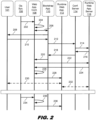
- Fig. 2 is a flow diagram showing web application configuration.
- the operating system 106 loads the web application container 108.
- the operating system may load the processor instructions associated with the web application container in memory and provide the web application container 108 with access to computing and other hardware resources.
- Such hardware resources may include microphones, speakers, haptic feedback mechanisms, display hardware, or proximity sensors.
- the operating system may also provide other pieces of information to the web application container such as device location, network type, changes in network type, or cellular call state.
- the operating system may also provide the web application container 108 access to notifications, simple message systems, and other resources.
- the web application container 108 determines whether there is any locally saved configuration data. If not, then at signal 206, the web application container 108 loads the bootstrap application 110. The bootstrap application 110 then prompts the user for credentials at signal 208. At signal 210, the user 101 provides the bootstrap application 110 with the credentials.
- the bootstrap application 110 sends a request to the configuration server 114 for configuration data.
- the request includes the credentials that were provided by the user 101.
- the configuration server 114 may then consult a configuration database (e.g., 116, Fig. 1 ) to determine the URL for the appropriate runtime web application.
- the runtime web application 112 may be made available on multiple servers. In some examples, the runtime web application 112 may be on a single server. In either case, the configuration server 114 finds the URL for the runtime web application associated with the user 101.
- the configuration server 114 may authenticate the user's request. For example, at signal 214, the configuration server 114 sends an authentication request to the runtime web application server 118 associated with the URL. At signal 216, the runtime web application server 118 responds with an authentication acknowledgement if it is determined that the user is indeed authorized to use that customized runtime web application. If the user 101 is not authorized to use that runtime web application 112, then the authentication request will be denied.
- Various authentication mechanisms may be used to perform the authentication. For example, OAuth, which is an open standard for token-based authentication and authorization may be used.
- the configuration server 114 provides the bootstrap application 110 with the URL associated with the user's 101 runtime web application.
- the bootstrap application 110 provides the URL to the web application container 108.
- the web application container 108 uses the URL to request the runtime web application 112 from the runtime web application server 118.
- the runtime web application server 118 responds by sending the client portion of the runtime web application to the web application container 108.
- the web application container stores the client portion of the runtime web application 112 locally on the user's 101 device (e.g., 102a, Fig. 1 ). Then, at signal 228, the web application container loads and executes the runtime web application 112 within the web application container 108.
- the runtime web application 112 may then operate to provide the user with its specific features. For example, if the runtime web application 112 is a communication application, then the runtime web application 112 may present the user 101 with a user interface for calling other persons using various types of media, such as voice, video, and text.
- Signal 230 represents the interaction between the user 101 and the runtime web application 112.
- Signal 232 represents the interaction between the runtime web application 112 and the runtime web application server 118.
- the runtime web application 112, along with the runtime web application server 118, may support real time communications such as a WebRTC communication sessions.
- Signal 234 represents a subsequent startup of the web application container 108.
- the web application container 108 determines that a customized version of the runtime web application is stored locally.
- that runtime web application 112 is loaded into the web application container 108 without the use of the bootstrap application 110 or the configuration server 114.
- the web application container 108 may check upon startup whether there is a URL stored locally. If so, the web application container 108 may then obtain the runtime web application 112 as done in signal 222. If no URL or runtime web application is stored locally, then the bootstrap application 110 will be loaded as shown in signal 206.
- the web application container 108 may be configured to determine whether a newer version of the runtime web application 112 that is currently associated with the web application container 108 is available. If a new version of the runtime web application is available, then the web application container 108 may automatically obtain the newer version from the runtime web application server 118. In other words, the newer version may be obtained without requiring input from the user 101.
- the user may also log on from different devices, which may use different operating systems.
- a mobile device may use a different operating system than a desktop device.
- Different devices may have different web application containers that are compatible with different operating systems.
- a web application container for a mobile device may be different than a web application container for a desktop device.
- the web application container for one type of desktop operating system may be different than the web application container for a different type of desktop operating system.
- the different types of web application containers may load the same runtime web application. In other words, users may log on from different devices with different platforms and use the same runtime web application.
- Fig. 3 is a flowchart showing an illustrative method performed by a client device for web application configuration.
- the client device may perform method 300 by reading code from a computer readable medium and executing that code with one or more processors.
- the method 300 includes a step 302 for executing a web application container (e.g., 108, Fig. 1 ) on a client computing system (e.g., 102a, Fig. 1 ).
- the web application container may be specifically adapted for use with the operating system or platform of the client computing system.
- the method 300 further includes a step 304 for, in response to determining that a runtime web application for the web application container is not locally accessible, executing a bootstrap application within the web application container. For example, if it is the first time the web application container is being run, or if the previous runtime web application has been removed, then there will not be a locally accessible runtime web application. If, however, there were a locally accessible runtime web application, then that locally accessible runtime web application could be loaded.
- the method 300 further includes a step 306 for prompting a user for credentials.
- credentials may include, for example, a username and password.
- the mechanism for prompting the user for credentials may be done with a bootstrap application that is loaded within the web application container.
- the bootstrap application has limited functionality and is designed to help the user get the runtime web application loaded within the web application container.
- the method 300 further includes a step 308 for sending the credentials to a configuration server (e.g., 114, Fig. 1 ).
- the credentials may include, for example, a username, a password, and a unique identifier for the runtime web application.
- the configuration server may have access to a database that matches usernames or unique identifiers with a target URL for the customized runtime web application.
- the method 300 further includes a step 310 for, after sending the credentials to the configuration server, receiving a target URL, the target URL pointing to a customized runtime web application on a first runtime web application server.
- the runtime web application may be customized by the user or an organization associated with the user.
- the user may be an employee of a company.
- the company may have provided the web application service provider with customization details in order to create a customized version of the web application for its employees.
- a customized runtime application may be one that includes a subset from the set of available features offered by the entity that produces or provides the runtime application. For example, a customer may select from a list of features the ones in which the customer is interested. Different customers will thus have different combinations of features for their own customized runtime web applications. For example, the web application service provider may offer voice, video, chat, screen sharing, and other types of media. Various customers may only wish to use a subset of those features and thus runtime web applications for such customers may include only the selected subset of features.
- a customized runtime application may also include features that are created or designed specifically for a particular customer.
- the customization may include the layout of the user interface, the branding, the text strings, the colors, the icons, the images, and other interface related features.
- such features may be provided by the customer to the communication service provider. The communication service provider may then integrate such features into the customized runtime web application.
- the method 300 further includes a step 312 for downloading the customized runtime web application to the computing system.
- the method 300 further includes a step 314 for executing the customized runtime web application.
- the runtime web application may thus interact with the runtime web application server, and other servers, to provide the desired functionality to the user.
- the user may establish communication sessions between his or her device and the devices of other users.
- Fig. 4 is a flowchart showing an illustrative method performed by a runtime web application server for web application configuration.
- the runtime web application server performs method 400 by reading code from a computer readable medium and executing that code with one or more processors.
- the method 400 includes a step 402 for receiving authentication data from a configuration server.
- the authentication data may include, for example, credentials provided by a user that is requesting a customized version of a runtime web application.
- the configuration server may be adapted to receive the authentication data from a bootstrap application within a web application container running on a client device associated with the user.
- the runtime web application server may maintain a plurality of runtime web applications associated with different entities.
- the method 400 further includes a step 404 for confirming the authentication data in response to matching the data to a database associated with the runtime web application server.
- the runtime web application server may maintain a database that matches runtime web applications with the credentials of the users who are authorized to use such runtime web applications. If there is no match, then the authentication request is denied. However, if the authentication data is confirmed, then the runtime web application server can respond with the target URL.
- the method 400 further includes a step 406 for receiving a request from the client device to download one of the plurality of runtime web applications.
- the client device may use the URL received to obtain the runtime web application.
- the method 400 further includes a step 402 for, in response to the request, downloading the one of the plurality of runtime web applications to the client device.
- Fig. 5 is a diagram showing an illustrative computing system that may perform functions related to web application configuration. Such functions may include those described above in the text accompanying Figs. 3-4 .
- the computing system 500 may also be one of: a user device (e.g., 102a, Fig. 1 ), a configuration server (e.g., 114, Fig. 1 ), or a runtime web application server (e.g., 118, Fig. 1 ).
- the computing system 500 includes a memory 504 which may include software 506 and a data store 508.
- the processing system 500 also includes a processor 510, a network interface 514, and a user interface 512.
- the memory 504 may be one of several different types of memory. Some types of memory, such as solid state drives, are designed for storage. These types of memory typically have large storage volume but relatively slow performance. Other types of memory, such as those used for Random Access Memory (RAM), are optimized for speed and are often referred to as "working memory.” The various types of memory may store information in the form of software 506 and data in the data store 508.
- RAM Random Access Memory
- the computing system 500 also includes a processor 510 for executing the software 506 and using or updating the data 508 stored in memory 504.
- the software 506 may include an operating system and any other software applications a user may wish to install.
- the software 506 may be, for example, software designed to provide an interactive call menu creation service.
- the software 506 may be an application to render web content, such as a browser.
- the software 506 may include machine readable instructions of a computer program product that when executed, perform the functions described above in accordance with the text accompanying Figs. 6-7.
- the user interface 512 may include a number of input devices such as a mouse, touchpad, or touchscreen that allow the user to interact with the computing system 500.
- the user interface 512 may also include a number of different types of output devices such as a monitor or a touchscreen.
- the user interface allows the user to interact with the processing system 500 in a manner as described above.
- the network interface 514 may include hardware and software that allows the processing system 500 to communicate with other processing systems over a network 516.
- the network interface 514 may be designed to communicate with the network 516 through hardwire media such as Ethernet, coaxial, fiber-optic, etc.
- the network interface 514 may also be designed to communicate with the network 516 using wireless technologies.
- processing systems described herein may include non-transitory, tangible, machine readable media that include executable code that when run by one or more processors may cause the one or more processors to perform the processes of methods as described above.
- Some common forms of machine readable media that may include the processes of methods are, for example, floppy disk, flexible disk, hard disk, magnetic tape, any other magnetic medium, CD-ROM, any other optical medium, RAM, PROM, EPROM, FLASH-EPROM, any other memory chip or cartridge, and/or any other medium from which a processor or computer is adapted to read.
Landscapes
- Engineering & Computer Science (AREA)
- Computer Networks & Wireless Communication (AREA)
- Signal Processing (AREA)
- General Engineering & Computer Science (AREA)
- Theoretical Computer Science (AREA)
- Software Systems (AREA)
- Computer Hardware Design (AREA)
- Computing Systems (AREA)
- Computer Security & Cryptography (AREA)
- Physics & Mathematics (AREA)
- General Physics & Mathematics (AREA)
- Information Transfer Between Computers (AREA)
- Stored Programmes (AREA)
Claims (15)
- Verfahren (300), das durch eine Client-Vorrichtung durchgeführt wird, das Verfahren umfassend:Ausführen (302) eines Webanwendungscontainers (108);nach dem Ausführen des Webanwendungscontainers, Feststellen, dass eine Laufzeit-Webanwendung (112a) für den Webanwendungscontainer nicht lokal auf der Client-Vorrichtung (102a) gespeichert ist;als Reaktion auf das Feststellen, Anfordern (306) von Berechtigungsnachweisen eines Benutzers (101);Senden (308) der Berechtigungsnachweise an einen Konfigurationsserver (114);nach dem Senden der Berechtigungsnachweise an den Konfigurationsserver, Empfangen (310) einer Ziel-URL (113a), wobei die Ziel-Webseitenadresse, URL, auf eine Laufzeit-Webanwendung auf einem ersten Laufzeit-Webanwendungsserver (118) verweist;Herunterladen (312) der Laufzeit-Webanwendung von dem ersten Laufzeit-Webanwendungsserver auf das Computersystem; undAusführen (314) der Laufzeit-Webanwendung.
- Verfahren nach Anspruch 1, ferner umfassend ein lokales Speichern der Laufzeit-Webanwendung auf der Client-Vorrichtung.
- Verfahren nach Anspruch 1, ferner umfassend, bei einem nachfolgenden Start des Webanwendungscontainers,, das Ausführen der Laufzeit-Webanwendung als Reaktion auf das Feststellen, dass die Laufzeit-Webanwendung lokal zugänglich ist.
- Verfahren nach Anspruch 1, wobei die Laufzeit-Webanwendung für eine Einheit angepasst wird, die der Client-Vorrichtung zugeordnet ist, wobei optional die Laufzeit-Webanwendung für mindestens eines angepasst wird von: einem Unternehmen, das der Einheit zugeordnet ist, und eine Einzelperson, die der Einheit zugeordnet ist.
- Verfahren nach Anspruch 1, wobei der Konfigurationsserver Benutzerberechtigungsnachweise und URLs speichert, die auf Speicherorte von Laufzeit-Webanwendungen verweisen.
- Verfahren nach Anspruch 1, ferner umfassend das Herunterladen der Laufzeit-Webanwendung (112a) mit einer zweiten Client-Vorrichtung (102b) als Reaktion auf das Bereitstellen von Berechtigungsnachweisen.
- Verfahren nach Anspruch 1, ferner umfassend das Herunterladen einer zweiten Laufzeit-Webanwendung mit einer dritten Client-Vorrichtung, das einer anderen Einheit zugeordnet ist, wobei optional die zweite Laufzeit-Webanwendung von einem zweiten Laufzeit-Webanwendungsserver heruntergeladen wird.
- Verfahren nach Anspruch 1, wobei die Laufzeit-Webanwendung Anpassungen für mindestens eines enthält von: Farben, Symbole, Textfolge und Layout; oder wobei die Laufzeit-Webanwendung eine Kommunikationsanwendung für einen Webkommunikationsdienst umfasst; oder wobei die Laufzeit-Webanwendung Zugang auf eine Hardware der Client-Vorrichtung hat.
- Verfahren nach Anspruch 1, wobei die Berechtigungsnachweise mindestens eines enthalten von: einen Benutzernamen, ein Passwort und eine eindeutige Kennung für die Laufzeit-Webanwendung.
- Verfahren nach Anspruch 1, ferner umfassend ein Authentifizieren beim ersten Laufzeit-Webanwendungsserver mit dem Konfigurationsserver vor dem Bereitstellen der Ziel-URL an die Client-Vorrichtung.
- Verfahren (400), das durch einen Laufzeit-Webanwendungsserver (118) durchgeführt wird, das Verfahren umfassend:Empfangen (402) von Authentifizierungsdaten von einem Konfigurationsserver (114), wobei die Authentifizierungsdaten einer ersten Einheit (101) zugeordnet sind, wobei der Laufzeit-Webanwendungsserver eine Vielzahl von Laufzeit-Webanwendungen (112a, 112b) pflegt, die anderen Einheiten zugeordnet sind, wobei der Konfigurationsserver konfiguriert ist, um die Authentifizierungsdaten von einer Bootstrap-Anwendung (110) zu empfangen, die in einem Webanwendungscontainer (108) auf einer Client-Vorrichtung (102a) läuft, die der ersten Einheit zugeordnet ist, wobei die Bootstrap-Anwendung läuft, nachdem der Webanwendungscontainer auf der Client-Vorrichtung ausgeführt wurde, die der ersten Einheit zugeordnet ist, wobei ein Empfang der Authentifizierungsdaten durch das Feststellen ausgelöst wird, dass auf der Client-Vorrichtung, die der ersten Einheit zugeordnet ist, keine Laufzeit-Webanwendung (112a) lokal gespeichert ist;Bestätigen (404) der Authentifizierungsdaten als Reaktion auf ein Abgleichen der Authentifizierungsdaten mit einer Datenbank innerhalb des Laufzeit-Webanwendungsservers;Empfangen (406) einer Aufforderung von der Client-Vorrichtung, um eine der Vielzahl von Laufzeit-Webanwendungen herunterzuladen; undals Reaktion auf die Aufforderung, Herunterladen (408) der einen der Vielzahl von Laufzeit-Webanwendungen von dem ersten Laufzeit-Webanwendungsserver auf die Client-Vorrichtung.
- Verfahren nach Anspruch 11, wobei die eine der Vielzahl der Laufzeit-Webanwendungen für die erste Einheit angepasst ist.
- Verfahren nach Anspruch 11, wobei die erste Einheit mindestens eines umfasst von: ein Unternehmen und eine Einzelperson.
- System (500), umfassend:einen Prozessor (510); undeinen Hauptspeicher (504), umfassend maschinenlesbare Anweisungen, die, wenn sie durch den Prozessor ausgeführt werden, das System veranlassen zum:als Reaktion auf das Feststellen, dass keine Laufzeit-Webanwendung (112a, 112b) für einen Webanwendungscontainer (108) lokal auf einer Client-Vorrichtung (102a, 102b) gespeichert ist, Ausführen einer Bootstrap-Anwendung (110) innerhalb des Webanwendungscontainers, wobei die Bootstrap-Anwendung von einen Benutzer (101, 103) Berechtigungsnachweise anfordert;Senden von Berechtigungsnachweisen an einen Konfigurationsserver (114), die von einem Benutzer erhalten werden;nach dem Senden der Berechtigungsnachweise an den Konfigurationsserver, Empfangen einer Ziel-Webseitenadresse, URL, (113a, 113b), wobei die Ziel-URL auf eine Laufzeit-Webanwendung (112a, 112b) auf einem ersten Laufzeit-Webanwendungsserver (118) verweist; undHerunterladen der Laufzeit-Webanwendung von dem ersten Laufzeit-Webanwendungsserver.
- System nach Anspruch 14, wobei das System ferner die Laufzeit-Webanwendung lokal speichert und wobei optional das System ferner bei dem Start des Webanwendungscontainers die Laufzeit-Webanwendung laden soll, die lokal gespeichert ist.
Applications Claiming Priority (2)
| Application Number | Priority Date | Filing Date | Title |
|---|---|---|---|
| US15/681,762 US10805419B2 (en) | 2017-08-21 | 2017-08-21 | Web application configuration management |
| PCT/US2018/000320 WO2019040096A1 (en) | 2017-08-21 | 2018-08-17 | CONFIGURATION MANAGEMENT OF WEB APPLICATIONS |
Publications (3)
| Publication Number | Publication Date |
|---|---|
| EP3673364A1 EP3673364A1 (de) | 2020-07-01 |
| EP3673364A4 EP3673364A4 (de) | 2021-05-12 |
| EP3673364B1 true EP3673364B1 (de) | 2023-05-03 |
Family
ID=65360861
Family Applications (1)
| Application Number | Title | Priority Date | Filing Date |
|---|---|---|---|
| EP18849324.1A Active EP3673364B1 (de) | 2017-08-21 | 2018-08-17 | Verwaltung der konfiguration einer web-anwendung |
Country Status (3)
| Country | Link |
|---|---|
| US (1) | US10805419B2 (de) |
| EP (1) | EP3673364B1 (de) |
| WO (1) | WO2019040096A1 (de) |
Families Citing this family (5)
| Publication number | Priority date | Publication date | Assignee | Title |
|---|---|---|---|---|
| US11782731B1 (en) * | 2018-12-03 | 2023-10-10 | Amazon Technologies, Inc. | Persisting user settings for non-persistent application streaming environments |
| CN110262805A (zh) * | 2019-06-14 | 2019-09-20 | 深圳前海微众银行股份有限公司 | 一种应用系统的管理方法及装置 |
| US11133999B1 (en) * | 2019-10-04 | 2021-09-28 | Rapid7, Inc. | Network sensor deployment for deep packet inspection |
| US11966781B2 (en) * | 2020-04-02 | 2024-04-23 | Jpmorgan Chase Bank, N.A. | System and method for implementing a standalone application module |
| US12585760B2 (en) * | 2022-07-28 | 2026-03-24 | Pure Storage, Inc. | Monitoring for security threats in a container system |
Family Cites Families (9)
| Publication number | Priority date | Publication date | Assignee | Title |
|---|---|---|---|---|
| US7627671B1 (en) * | 2004-05-22 | 2009-12-01 | ClearApp, Inc. | Monitoring and performance management of component-based applications |
| US9542566B2 (en) * | 2011-06-24 | 2017-01-10 | Alibaba.Com Limited | Develop and deploy software in multiple environments |
| US9009534B2 (en) * | 2012-05-24 | 2015-04-14 | Sap Se | Runtime configuration checks for composite applications |
| US20150121462A1 (en) * | 2013-10-24 | 2015-04-30 | Google Inc. | Identity application programming interface |
| US20150295984A1 (en) * | 2014-04-14 | 2015-10-15 | PetroGrid LLC | Multi Web Application Management Framework System and Method |
| US10924554B2 (en) * | 2014-05-05 | 2021-02-16 | Citrix Systems, Inc. | Application customization |
| US10084843B2 (en) * | 2014-07-14 | 2018-09-25 | Oracle Internatonal Corporation | System and method for web container partitions in a multitenant application server environment |
| US9886272B1 (en) * | 2016-12-05 | 2018-02-06 | Sap Se | Transformation of a web application into a hybrid mobile application |
| US10333985B2 (en) * | 2017-01-09 | 2019-06-25 | Microsoft Technology Licensing, Llc | Distribution and management of services in virtual environments |
-
2017
- 2017-08-21 US US15/681,762 patent/US10805419B2/en active Active
-
2018
- 2018-08-17 EP EP18849324.1A patent/EP3673364B1/de active Active
- 2018-08-17 WO PCT/US2018/000320 patent/WO2019040096A1/en not_active Ceased
Also Published As
| Publication number | Publication date |
|---|---|
| EP3673364A1 (de) | 2020-07-01 |
| WO2019040096A1 (en) | 2019-02-28 |
| US10805419B2 (en) | 2020-10-13 |
| EP3673364A4 (de) | 2021-05-12 |
| US20190058776A1 (en) | 2019-02-21 |
Similar Documents
| Publication | Publication Date | Title |
|---|---|---|
| EP3673364B1 (de) | Verwaltung der konfiguration einer web-anwendung | |
| US10325089B2 (en) | Mobile application, resource management advice | |
| US11799841B2 (en) | Providing intercommunication within a system that uses disparate authentication technologies | |
| US8996658B2 (en) | System and method for integration of browser-based thin client applications within desktop rich client architecture | |
| EP2871573B1 (de) | Dynamische Containerisierung | |
| US11822637B2 (en) | Adaptive authentication in spreadsheet interface integrated with web service | |
| US9407626B2 (en) | Security token management service hosting in application server | |
| US10367890B2 (en) | Maintain single session with a single application across multiple clients | |
| US20140201366A1 (en) | Smartphone apps in a cloud | |
| WO2021257289A1 (en) | Invoking microapp actions from user applications | |
| Aguilar | SignalR Programming in Microsoft ASP. NET | |
| US11151239B2 (en) | Single sign-on management for multiple independent identity providers | |
| JP2022531811A (ja) | 動的領域ベースのアプリケーション操作 | |
| KR20250166098A (ko) | 블록체인 웰렛의 확장 및 맞춤화 통합 | |
| US11449186B2 (en) | System and method for optimized generation of a single page application for multi-page applications | |
| EP3513316B1 (de) | Personalisierte suchumgebung | |
| WO2015003570A1 (en) | Data downloading method,device and system thereof | |
| CN112256326A (zh) | 信息的处理方法、装置、设备及存储介质 | |
| EP4310693A1 (de) | Bewertung der qualität von integrationen zur ausführung von suchvorgängen unter verwendung von anwendungsprogrammierungsschnittstellen | |
| US20230328057A1 (en) | Biometric multi-factor authentication | |
| US12608121B2 (en) | Context-based presentation of available microapp actions | |
| Yudin | Starting with Django | |
| US8799439B2 (en) | Managing attributes associated with an application server | |
| WO2023010266A1 (en) | Systems and methods for providing user guidance via workspace score | |
| Rozga | Creating a New Channel Connector |
Legal Events
| Date | Code | Title | Description |
|---|---|---|---|
| STAA | Information on the status of an ep patent application or granted ep patent |
Free format text: STATUS: THE INTERNATIONAL PUBLICATION HAS BEEN MADE |
|
| PUAI | Public reference made under article 153(3) epc to a published international application that has entered the european phase |
Free format text: ORIGINAL CODE: 0009012 |
|
| STAA | Information on the status of an ep patent application or granted ep patent |
Free format text: STATUS: REQUEST FOR EXAMINATION WAS MADE |
|
| 17P | Request for examination filed |
Effective date: 20200313 |
|
| AK | Designated contracting states |
Kind code of ref document: A1 Designated state(s): AL AT BE BG CH CY CZ DE DK EE ES FI FR GB GR HR HU IE IS IT LI LT LU LV MC MK MT NL NO PL PT RO RS SE SI SK SM TR |
|
| AX | Request for extension of the european patent |
Extension state: BA ME |
|
| DAV | Request for validation of the european patent (deleted) | ||
| DAX | Request for extension of the european patent (deleted) | ||
| A4 | Supplementary search report drawn up and despatched |
Effective date: 20210414 |
|
| RIC1 | Information provided on ipc code assigned before grant |
Ipc: H04L 29/08 20060101AFI20210408BHEP Ipc: H04L 29/06 20060101ALI20210408BHEP |
|
| REG | Reference to a national code |
Ref country code: DE Ref legal event code: R079 Ref document number: 602018049372 Country of ref document: DE Free format text: PREVIOUS MAIN CLASS: G06F0009445000 Ipc: H04L0067000000 |
|
| GRAP | Despatch of communication of intention to grant a patent |
Free format text: ORIGINAL CODE: EPIDOSNIGR1 |
|
| STAA | Information on the status of an ep patent application or granted ep patent |
Free format text: STATUS: GRANT OF PATENT IS INTENDED |
|
| RIC1 | Information provided on ipc code assigned before grant |
Ipc: H04L 67/5681 20220101ALI20221103BHEP Ipc: H04L 67/306 20220101ALI20221103BHEP Ipc: H04L 67/146 20220101ALI20221103BHEP Ipc: H04L 9/40 20220101ALI20221103BHEP Ipc: H04L 67/02 20220101ALI20221103BHEP Ipc: H04L 67/00 20220101AFI20221103BHEP |
|
| INTG | Intention to grant announced |
Effective date: 20221205 |
|
| GRAS | Grant fee paid |
Free format text: ORIGINAL CODE: EPIDOSNIGR3 |
|
| GRAA | (expected) grant |
Free format text: ORIGINAL CODE: 0009210 |
|
| STAA | Information on the status of an ep patent application or granted ep patent |
Free format text: STATUS: THE PATENT HAS BEEN GRANTED |
|
| AK | Designated contracting states |
Kind code of ref document: B1 Designated state(s): AL AT BE BG CH CY CZ DE DK EE ES FI FR GB GR HR HU IE IS IT LI LT LU LV MC MK MT NL NO PL PT RO RS SE SI SK SM TR |
|
| REG | Reference to a national code |
Ref country code: GB Ref legal event code: FG4D |
|
| REG | Reference to a national code |
Ref country code: AT Ref legal event code: REF Ref document number: 1565639 Country of ref document: AT Kind code of ref document: T Effective date: 20230515 Ref country code: CH Ref legal event code: EP |
|
| REG | Reference to a national code |
Ref country code: DE Ref legal event code: R096 Ref document number: 602018049372 Country of ref document: DE |
|
| REG | Reference to a national code |
Ref country code: IE Ref legal event code: FG4D |
|
| REG | Reference to a national code |
Ref country code: LT Ref legal event code: MG9D |
|
| REG | Reference to a national code |
Ref country code: NL Ref legal event code: MP Effective date: 20230503 |
|
| REG | Reference to a national code |
Ref country code: AT Ref legal event code: MK05 Ref document number: 1565639 Country of ref document: AT Kind code of ref document: T Effective date: 20230503 |
|
| PG25 | Lapsed in a contracting state [announced via postgrant information from national office to epo] |
Ref country code: SE Free format text: LAPSE BECAUSE OF FAILURE TO SUBMIT A TRANSLATION OF THE DESCRIPTION OR TO PAY THE FEE WITHIN THE PRESCRIBED TIME-LIMIT Effective date: 20230503 Ref country code: PT Free format text: LAPSE BECAUSE OF FAILURE TO SUBMIT A TRANSLATION OF THE DESCRIPTION OR TO PAY THE FEE WITHIN THE PRESCRIBED TIME-LIMIT Effective date: 20230904 Ref country code: NO Free format text: LAPSE BECAUSE OF FAILURE TO SUBMIT A TRANSLATION OF THE DESCRIPTION OR TO PAY THE FEE WITHIN THE PRESCRIBED TIME-LIMIT Effective date: 20230803 Ref country code: NL Free format text: LAPSE BECAUSE OF FAILURE TO SUBMIT A TRANSLATION OF THE DESCRIPTION OR TO PAY THE FEE WITHIN THE PRESCRIBED TIME-LIMIT Effective date: 20230503 Ref country code: ES Free format text: LAPSE BECAUSE OF FAILURE TO SUBMIT A TRANSLATION OF THE DESCRIPTION OR TO PAY THE FEE WITHIN THE PRESCRIBED TIME-LIMIT Effective date: 20230503 Ref country code: AT Free format text: LAPSE BECAUSE OF FAILURE TO SUBMIT A TRANSLATION OF THE DESCRIPTION OR TO PAY THE FEE WITHIN THE PRESCRIBED TIME-LIMIT Effective date: 20230503 |
|
| PG25 | Lapsed in a contracting state [announced via postgrant information from national office to epo] |
Ref country code: RS Free format text: LAPSE BECAUSE OF FAILURE TO SUBMIT A TRANSLATION OF THE DESCRIPTION OR TO PAY THE FEE WITHIN THE PRESCRIBED TIME-LIMIT Effective date: 20230503 Ref country code: PL Free format text: LAPSE BECAUSE OF FAILURE TO SUBMIT A TRANSLATION OF THE DESCRIPTION OR TO PAY THE FEE WITHIN THE PRESCRIBED TIME-LIMIT Effective date: 20230503 Ref country code: LV Free format text: LAPSE BECAUSE OF FAILURE TO SUBMIT A TRANSLATION OF THE DESCRIPTION OR TO PAY THE FEE WITHIN THE PRESCRIBED TIME-LIMIT Effective date: 20230503 Ref country code: LT Free format text: LAPSE BECAUSE OF FAILURE TO SUBMIT A TRANSLATION OF THE DESCRIPTION OR TO PAY THE FEE WITHIN THE PRESCRIBED TIME-LIMIT Effective date: 20230503 Ref country code: IS Free format text: LAPSE BECAUSE OF FAILURE TO SUBMIT A TRANSLATION OF THE DESCRIPTION OR TO PAY THE FEE WITHIN THE PRESCRIBED TIME-LIMIT Effective date: 20230903 Ref country code: HR Free format text: LAPSE BECAUSE OF FAILURE TO SUBMIT A TRANSLATION OF THE DESCRIPTION OR TO PAY THE FEE WITHIN THE PRESCRIBED TIME-LIMIT Effective date: 20230503 Ref country code: GR Free format text: LAPSE BECAUSE OF FAILURE TO SUBMIT A TRANSLATION OF THE DESCRIPTION OR TO PAY THE FEE WITHIN THE PRESCRIBED TIME-LIMIT Effective date: 20230804 |
|
| PG25 | Lapsed in a contracting state [announced via postgrant information from national office to epo] |
Ref country code: FI Free format text: LAPSE BECAUSE OF FAILURE TO SUBMIT A TRANSLATION OF THE DESCRIPTION OR TO PAY THE FEE WITHIN THE PRESCRIBED TIME-LIMIT Effective date: 20230503 |
|
| PG25 | Lapsed in a contracting state [announced via postgrant information from national office to epo] |
Ref country code: SK Free format text: LAPSE BECAUSE OF FAILURE TO SUBMIT A TRANSLATION OF THE DESCRIPTION OR TO PAY THE FEE WITHIN THE PRESCRIBED TIME-LIMIT Effective date: 20230503 |
|
| PG25 | Lapsed in a contracting state [announced via postgrant information from national office to epo] |
Ref country code: SM Free format text: LAPSE BECAUSE OF FAILURE TO SUBMIT A TRANSLATION OF THE DESCRIPTION OR TO PAY THE FEE WITHIN THE PRESCRIBED TIME-LIMIT Effective date: 20230503 Ref country code: SK Free format text: LAPSE BECAUSE OF FAILURE TO SUBMIT A TRANSLATION OF THE DESCRIPTION OR TO PAY THE FEE WITHIN THE PRESCRIBED TIME-LIMIT Effective date: 20230503 Ref country code: RO Free format text: LAPSE BECAUSE OF FAILURE TO SUBMIT A TRANSLATION OF THE DESCRIPTION OR TO PAY THE FEE WITHIN THE PRESCRIBED TIME-LIMIT Effective date: 20230503 Ref country code: EE Free format text: LAPSE BECAUSE OF FAILURE TO SUBMIT A TRANSLATION OF THE DESCRIPTION OR TO PAY THE FEE WITHIN THE PRESCRIBED TIME-LIMIT Effective date: 20230503 Ref country code: DK Free format text: LAPSE BECAUSE OF FAILURE TO SUBMIT A TRANSLATION OF THE DESCRIPTION OR TO PAY THE FEE WITHIN THE PRESCRIBED TIME-LIMIT Effective date: 20230503 Ref country code: CZ Free format text: LAPSE BECAUSE OF FAILURE TO SUBMIT A TRANSLATION OF THE DESCRIPTION OR TO PAY THE FEE WITHIN THE PRESCRIBED TIME-LIMIT Effective date: 20230503 |
|
| REG | Reference to a national code |
Ref country code: DE Ref legal event code: R097 Ref document number: 602018049372 Country of ref document: DE |
|
| PLBE | No opposition filed within time limit |
Free format text: ORIGINAL CODE: 0009261 |
|
| STAA | Information on the status of an ep patent application or granted ep patent |
Free format text: STATUS: NO OPPOSITION FILED WITHIN TIME LIMIT |
|
| PG25 | Lapsed in a contracting state [announced via postgrant information from national office to epo] |
Ref country code: MC Free format text: LAPSE BECAUSE OF FAILURE TO SUBMIT A TRANSLATION OF THE DESCRIPTION OR TO PAY THE FEE WITHIN THE PRESCRIBED TIME-LIMIT Effective date: 20230503 |
|
| REG | Reference to a national code |
Ref country code: CH Ref legal event code: PL |
|
| PG25 | Lapsed in a contracting state [announced via postgrant information from national office to epo] |
Ref country code: MC Free format text: LAPSE BECAUSE OF FAILURE TO SUBMIT A TRANSLATION OF THE DESCRIPTION OR TO PAY THE FEE WITHIN THE PRESCRIBED TIME-LIMIT Effective date: 20230503 |
|
| 26N | No opposition filed |
Effective date: 20240206 |
|
| PG25 | Lapsed in a contracting state [announced via postgrant information from national office to epo] |
Ref country code: LU Free format text: LAPSE BECAUSE OF NON-PAYMENT OF DUE FEES Effective date: 20230817 |
|
| PG25 | Lapsed in a contracting state [announced via postgrant information from national office to epo] |
Ref country code: LU Free format text: LAPSE BECAUSE OF NON-PAYMENT OF DUE FEES Effective date: 20230817 Ref country code: CH Free format text: LAPSE BECAUSE OF NON-PAYMENT OF DUE FEES Effective date: 20230831 |
|
| PG25 | Lapsed in a contracting state [announced via postgrant information from national office to epo] |
Ref country code: SI Free format text: LAPSE BECAUSE OF FAILURE TO SUBMIT A TRANSLATION OF THE DESCRIPTION OR TO PAY THE FEE WITHIN THE PRESCRIBED TIME-LIMIT Effective date: 20230503 |
|
| REG | Reference to a national code |
Ref country code: BE Ref legal event code: MM Effective date: 20230831 |
|
| REG | Reference to a national code |
Ref country code: IE Ref legal event code: MM4A |
|
| PG25 | Lapsed in a contracting state [announced via postgrant information from national office to epo] |
Ref country code: SI Free format text: LAPSE BECAUSE OF FAILURE TO SUBMIT A TRANSLATION OF THE DESCRIPTION OR TO PAY THE FEE WITHIN THE PRESCRIBED TIME-LIMIT Effective date: 20230503 Ref country code: IT Free format text: LAPSE BECAUSE OF FAILURE TO SUBMIT A TRANSLATION OF THE DESCRIPTION OR TO PAY THE FEE WITHIN THE PRESCRIBED TIME-LIMIT Effective date: 20230503 |
|
| PG25 | Lapsed in a contracting state [announced via postgrant information from national office to epo] |
Ref country code: IE Free format text: LAPSE BECAUSE OF NON-PAYMENT OF DUE FEES Effective date: 20230817 |
|
| PG25 | Lapsed in a contracting state [announced via postgrant information from national office to epo] |
Ref country code: IE Free format text: LAPSE BECAUSE OF NON-PAYMENT OF DUE FEES Effective date: 20230817 |
|
| PG25 | Lapsed in a contracting state [announced via postgrant information from national office to epo] |
Ref country code: BE Free format text: LAPSE BECAUSE OF NON-PAYMENT OF DUE FEES Effective date: 20230831 |
|
| PG25 | Lapsed in a contracting state [announced via postgrant information from national office to epo] |
Ref country code: BG Free format text: LAPSE BECAUSE OF FAILURE TO SUBMIT A TRANSLATION OF THE DESCRIPTION OR TO PAY THE FEE WITHIN THE PRESCRIBED TIME-LIMIT Effective date: 20230503 |
|
| PG25 | Lapsed in a contracting state [announced via postgrant information from national office to epo] |
Ref country code: BG Free format text: LAPSE BECAUSE OF FAILURE TO SUBMIT A TRANSLATION OF THE DESCRIPTION OR TO PAY THE FEE WITHIN THE PRESCRIBED TIME-LIMIT Effective date: 20230503 |
|
| PG25 | Lapsed in a contracting state [announced via postgrant information from national office to epo] |
Ref country code: CY Free format text: LAPSE BECAUSE OF FAILURE TO SUBMIT A TRANSLATION OF THE DESCRIPTION OR TO PAY THE FEE WITHIN THE PRESCRIBED TIME-LIMIT; INVALID AB INITIO Effective date: 20180817 |
|
| PG25 | Lapsed in a contracting state [announced via postgrant information from national office to epo] |
Ref country code: HU Free format text: LAPSE BECAUSE OF FAILURE TO SUBMIT A TRANSLATION OF THE DESCRIPTION OR TO PAY THE FEE WITHIN THE PRESCRIBED TIME-LIMIT; INVALID AB INITIO Effective date: 20180817 |
|
| PGFP | Annual fee paid to national office [announced via postgrant information from national office to epo] |
Ref country code: DE Payment date: 20250827 Year of fee payment: 8 |
|
| PGFP | Annual fee paid to national office [announced via postgrant information from national office to epo] |
Ref country code: GB Payment date: 20250827 Year of fee payment: 8 |
|
| PGFP | Annual fee paid to national office [announced via postgrant information from national office to epo] |
Ref country code: FR Payment date: 20250825 Year of fee payment: 8 |
|
| PG25 | Lapsed in a contracting state [announced via postgrant information from national office to epo] |
Ref country code: TR Free format text: LAPSE BECAUSE OF FAILURE TO SUBMIT A TRANSLATION OF THE DESCRIPTION OR TO PAY THE FEE WITHIN THE PRESCRIBED TIME-LIMIT Effective date: 20230503 |