EP3673110B1 - Verbessertes kompaktes verfahren zur herstellung von vorhydrolysiertem zellstoff - Google Patents
Verbessertes kompaktes verfahren zur herstellung von vorhydrolysiertem zellstoff Download PDFInfo
- Publication number
- EP3673110B1 EP3673110B1 EP18847479.5A EP18847479A EP3673110B1 EP 3673110 B1 EP3673110 B1 EP 3673110B1 EP 18847479 A EP18847479 A EP 18847479A EP 3673110 B1 EP3673110 B1 EP 3673110B1
- Authority
- EP
- European Patent Office
- Prior art keywords
- prehydrolysis
- neutralized
- digester
- slurry
- stage
- Prior art date
- Legal status (The legal status is an assumption and is not a legal conclusion. Google has not performed a legal analysis and makes no representation as to the accuracy of the status listed.)
- Active
Links
Images

Classifications
-
- D—TEXTILES; PAPER
- D21—PAPER-MAKING; PRODUCTION OF CELLULOSE
- D21C—PRODUCTION OF CELLULOSE BY REMOVING NON-CELLULOSE SUBSTANCES FROM CELLULOSE-CONTAINING MATERIALS; REGENERATION OF PULPING LIQUORS; APPARATUS THEREFOR
- D21C1/00—Pretreatment of the finely-divided materials before digesting
- D21C1/02—Pretreatment of the finely-divided materials before digesting with water or steam
-
- D—TEXTILES; PAPER
- D21—PAPER-MAKING; PRODUCTION OF CELLULOSE
- D21C—PRODUCTION OF CELLULOSE BY REMOVING NON-CELLULOSE SUBSTANCES FROM CELLULOSE-CONTAINING MATERIALS; REGENERATION OF PULPING LIQUORS; APPARATUS THEREFOR
- D21C1/00—Pretreatment of the finely-divided materials before digesting
- D21C1/04—Pretreatment of the finely-divided materials before digesting with acid reacting compounds
-
- D—TEXTILES; PAPER
- D21—PAPER-MAKING; PRODUCTION OF CELLULOSE
- D21C—PRODUCTION OF CELLULOSE BY REMOVING NON-CELLULOSE SUBSTANCES FROM CELLULOSE-CONTAINING MATERIALS; REGENERATION OF PULPING LIQUORS; APPARATUS THEREFOR
- D21C3/00—Pulping cellulose-containing materials
- D21C3/02—Pulping cellulose-containing materials with inorganic bases or alkaline reacting compounds, e.g. sulfate processes
Definitions
- a separate prehydrolysis step permits the desired adjustment of the hydrolysis of hemicelluloses by varying the hydrolysis conditions.
- the bulk delignification is not carried out until a separate alkaline cooking step, even though some handbooks indicate that as much as 30 kg of lignin per ton of wood may be dissolved in the prehydrolysis (i.e. a small part of the total lignin content as 30 kg per ton of wood corresponds to some 3 % of the wood material).
- the conditions for prehydrolysis is most often established by heating in a hot steam phase or hot water liquid environment, where the natural wood acidity released will usually lower the pH down to about 3.5, most often referred to as autohydrolysis. Sometimes could also additional acid and a catalyst be added.
- the subsequent delignification step has been a conventional kraft cooking method, where white liquor has been added to the digester.
- US 8,734,610 is disclosed a two-vessel digester system, where the acidic hydrolysis is established in an upper half of a first prehydrolysis vessel, followed by a countercurrent water-wash stage with some alkali addition.
- This system is of similar design as the old Varkaus (Finland) digester system that had the inherent pitch problems in the screen section ending the hydrolysis zone, and this system could only be operated in short campaigns with dissolving pulp production, said campaign being maximized to about two weeks at the most, requiring a swing production to standard kraft pulping process after these two weeks.
- the old Varkaus system is described in detail in US 4,436,586 (1984 ).
- the pitch problem is partially solved by the fact that the strainers in the batch digester are switching from withdrawing acidic prehydrolysate to alkaline cooking liquor and later on black liquor.
- the volume of acidic hydrolysate withdrawn after a steam phase prehydrolysis is also relatively small in total volume so the exposure in strainers is limited.
- the latter alkaline stages will then also dissolve and wash out any pitch deposits such that they do not build up over time. This is not possible to achieve in continuous systems as the strainers are located in a stationary process position where the chemical conditions (as of pH, pitch content, etc.) do not change.
- the hydrolysis step is conducted in a steam phase, can the following neutralization and alkalization of the wood material be obtained rather quickly and thoroughly as the wood material has been steamed at high temperature in a steam phase, allowing the alkali to penetrate the wood material by diffusion.
- this type of well-defined transition zone between the prehydrolyse in a steam phase and the neutralization is not favorable in a continuous system where the wood material is supposed to flow through reaction towers in a plug flow.
- the hydrolysis is instead most often implemented in a liquid filled stage at least in final parts.
- dissolving pulp for such end uses as spinning fibers is considered to be an optional method for producing textiles having less environmental impact compared with production of cotton textiles.
- the interest for dissolving pulp increases in years when cotton production is low due to crop failure.
- Dissolving pulp is also a base product for different additives and consistency agents and fillers in tyre cord and casings, ether and spongs, nitrocellulose and acetate.
- dissolving pulps may be an alternative product instead of pulp for regular paper pulp making.
- a common implementation in most prehydrolysis-kraft cooking processes is that the prehydrolysis stage has been terminated by withdrawal of the prehydrolysate, either in form of a pure acidic prehydrolysate, or in form of a neutralized prehydrolysate. As indicated before would any strainers in such process position be subjected to pitch deposits, both when the prehydrolysate is kept at its lowest pH level or if the prehydrolysate is withdrawn in a transition position where the chip suspension switch from acidic to alkaline.
- WO 2012158075 (Metso Paper Sweden which now is Valmet AB ) is disclosed an alternative compact process for producing dissolving pulp using a prehydrolysis kraft cooking process.
- this process is a charge of colder alkali added to the hydrolysed cellulosic slurry containing all dissolved carbohydrates, which charge quickly terminates the process conditions for hydrolysis.
- a first embodiment is a three-vessel design proposed, where an intermediate alkaline extraction process is established after the first hydrolysis vessel, enabling a further extraction of both hemicellulose and lignin from the hydrolysed cellulosic slurry.
- a second embodiment is a two-vessel design proposed where the charge of colder alkali is added to the end of the first hydrolysis vessel, and a first withdrawal to recovery is made in a digester screen section.
- US 2012/158075 A1 is related to an improved compact process for producing dissolving pulp in a prehydrolysis kraft cooking process.
- alkali is charged to the mixture of prehydrolyzed material to such an extent that the residual alkali concentration after neutralization of the acidic hydrolysate is above 20 g/l EA as NaOH and the temperature of the resulting alkaline treatment liquor for the prehydrolyzed material is lowered by at least 10% in comparison to the temperature in the prehydrolysis stage.
- the alkali charge will avoid redeposition of hemicelluloses dissolved in the prehydrolyse stage and will abruptly swing the wood material mixture to alkaline conditions favourable for a alkali impregnation stage at reduced temperature ahead of the final kraft cooking stage, which impregnation stage will extract the major part of the hemicelluloses content of the cellulose material.
- US 2012/211183 A1 relates to dissolving pulp by cooking and particularly with pre-hydrolysis and kraft cooking of wood chips.
- the pulp cooking system includes a pre-hydrolysis vessel and transfer system having multiple extraction points to remove the products of hydrolysis as the products are formed in the vessel and transfer system.
- the inventive concept is based on a moderate alkalizate ion of the hydrolysed cellulosic slurry and using mixing effects of process components in the transfer system to a subsequent digester before a first withdrawal of hydrolysis liquid in a top separator and within a very short time frame less than 10 minutes after alkali addition.
- BS bottom scraper
- the neutralized slurry maintained for a short time not exceeding 5 minutes, preferably in the range of 1-2 minutes, in the neutralized state while subjecting the neutralized slurry by mechanical agitation before extraction from the top separator.
- the neutralizing alkali charge can contain at least one of fresh white liquor, extracted black liquor from a digester, or alkaline wash liquor from subsequent digester or alkaline pre-bleaching.
- the neutralizing alkali charge can be added in such amount and at such temperature that the resulting temperature of the neutralized slurry is lowered by at least 10 % in comparison to the temperature in the prehydrolysis stage, preferably at least 12 °C if the prehydrolyse temperature is about 120 °C, and at least 18 °C if the prehydrolyse temperature is about 180 °C.
- a substantial reduction in temperature will effectively end the prehydrolysis of the cellulose material, in combination with the swing to moderate alkaline conditions, i.e. 5-10 g/l.
- the resulting temperature is the same as the temperature to be established in the subsequent digester, reducing need to add steam to digester top for heating.
- the neutralization stage is kept short, i.e. less than 10 minutes, this also implies that the alkali concentration established cannot be subjected to any larger order of alkali consumption during delignification reaction processes, which forms the very foundation for keeping the alkalization in the neutralization at a moderate level and not risking the concentration to drop so much that pitch deposits are formed on screens in subsequent withdrawal.
- additional alkaline liquors can be added to the feeding line ahead of top separator, said additional alkaline liquors added in an amount sufficient for establishing a L/W ratio sufficient for maintaining the withdrawal capacity in the top separator and a high extraction volume sent to recovery in return line from the top separator, thereby avoiding top separator plugging.
- the top separator needs to be operated with a certain overflow of liquor, as high degree of drainage of liquid in the withdrawal compartment, lowering the liquid level, may drain the plug of cellulose material excessively, and thus may form a plug that may activate the overload stop in the drive of the top separator motor. Adding additional liquid to the feeding line may quickly control the liquid overflow of the top separator, and maintain the withdrawal capacity high.
- the slurry after the addition of neutralizing alkali charge can be subjected to mechanical agitation first from a bottom scraper and finally from a top separator having a feeding screw sweeping over withdrawal screens.
- These components add a mixing effect into the neutralized slurry and guarantee that the alkali concentration is established evenly throughout the entire volume of the neutralized slurry, thus reducing pitch deposits forming on top separator screen.
- the slurry after the addition of neutralizing alkali charge be subjected to mechanical agitation from a pump located in the feeding line to the top of a kraft cooking digester. This pump can in some systems be discarded as the pressure in the outlet from the prehydrolyzing vessel often is sufficient for establishing a flow in the feeding line.
- the inventive process can be implemented in any type of prehydrolysis stage, such as a one where the acidification of said prehydrolysis is established only by steam heating and optionally adding water, and without adding any external acidifiers, only using the wood acidity released during steam heating reaching a pH level below 5 during the prehydrolysis. It can also be implemented in one where the acidification of said prehydrolysis is established in a liquid-filled phase wherein the acidification of said prehydrolysis is established by heating and addition of external acidifiers, reaching a pH level below 3 during the prehydrolysis established in a liquid-filled phase.
- inventive process can be implemented in a continuous digester system using one vessel for the prehydrolysis and one vessel for an alkaline pre-extraction stage and the kraft cooking stage.
- the lignin-containing cellulosic materials to be used in the present process are suitably softwood, hardwood, or annual plants. According to the present invention, prehydrolysis-kraft pulp can be obtained with a high yield of alpha cellulose with a high polymerization degree.
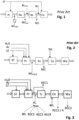
- Fig. 1 shown the cooking steps of US 5,589,033 .
- the chips are first treated in the prehydrolysis step Pr, where chips are heated by steam to 170 °C for 25 minutes. Thereafter is heated white liquor added in order to establish a neutralization step Ne, and the acidic prehydrolysate RECAc is withdrawn from the process.
- the neutralization step is established at 155 °C for 15 minutes. Even though the white liquor is heated, the temperature is decreased by some 8 %.
- the neutralization liquid is displaced by adding hot black liquor BL HOT , and this establishes an alkaline black liquor impregnation step BL held at 148 °C for 20 minutes.
- the black liquor is withdrawn, and a new charge of white liquor is added ahead of the following cooking step Co, which is held at 160 °C for 54 minutes.
- the white liquor used is heated both in a heat exchange with hot spent cooking liquor as well as steam in order not keep the temperature at high level, before being used as the neutralizing liquid.
- Fig. 2 shows the cooking steps of WO 2012158075 .
- a first steaming step ST for the chips is shown but this step may be avoided of the subsequent prehydrolysis is implemented in a steam phase.
- the chips are thereafter treated in the prehydrolysis step Pr, where chips are heated by steam at a temperature of between about 120 °C and 180 °C and during at least 20 minutes, to produce a prehydrolyzed cellulosic material and an acidic hydrolysate.
- Addition of liquid, such as water H 2 O is an option, which may be preferable if a liquid prehydrolysis is sought for, for example in a continuous cooking system.
- Another option is to add an acidifier Ac, if a lower temperature is sought for in the prehydrolysis.
- Fig. 3 are instead the basic process steps of the present invention shown.
- a first steaming step ST for the chips is shown a first steaming step ST for the chips but this step can be avoided if the subsequent prehydrolysis is implemented in a steam phase.
- the chips are thereafter treated in the prehydrolysis step Pr, where chips are heated by steam at a temperature of between about 120 °Cand 180 °C and during at least 20 minutes, to produce a prehydrolyzed cellulosic material and an acidic hydrolysate.
- Addition of liquid, such as water H 2 O, is an option, which can be preferable if a liquid prehydrolysis is sought for, for example in a continuous cooking system.
- Another option is to add an acidifier Ac if a lower temperature is sought for in the prehydrolysis.
- the novel approach disclosed in this figure is the usage of the transfer circulation Tr as the position for first withdrawal of dissolved matter from the hydrolysis stage.
- the residence time for the hydrolysed slurry in the transfer circulation is typically within 1-3 minutes, and well below 10 minutes.
- a moderate alkali charge AL added to the hydrolysed slurry.
- the inventive process is a distinct ending of the prehydrolysis implemented by adding a moderate alkali charge AL with a volume and at a temperature that will reduce the temperature of the cellulosic material by at least 10 % in comparison to the temperature in the prehydrolysis stage, preferably at least 12 °C if the prehydrolyse temperature is about 120 °C and at least 18 °C if the prehydrolyse temperature is about 180 °C.
- This will establish an alkaline treatment liquor which after this charge establishes an effective alkali concentration in the range 5-10 g/l EA as NaOH.
- the neutralized slurry is withdrawn within a short period of time less than 10 minutes and preferably within 1-3 minutes while having been subjected to mechanical mixing effects from at least a bottom scraper and a top separator screw.
- the short retention time in the transfer system Tr guarantees that no major consumption of alkali is established, which is the basis for keeping the charge of alkali at relatively modest level.
- the charge of fresh alkali i.e. typically in form of concentrated white liquor directly from the white liquor preparation in the causticizing area can thus be reduced, and to some extent be replaced by alkaline filtrates from brown wash (wash directly after digester or after a first oxygen delignification stage) or black liquor extraction flows from digester.
- the cellulosic material is transferred from the transfer system to a kraft cooking stage Co.
- the kraft cook can be implemented in any kind of known kraft cooking method continuous cooking such as, Compact Cooking, Lo-Solids cooking, ITC-cooking, MCC cooking, EAPC cooking as examples.
- the kraft cook is then finished by a wash stage Wa, which can be implemented in any kind of known wash equipment, such as a countercurrent wash zone in bottom of a digester or using a pressure diffuser 40 wash, wash press or filter wash after the cook.
- Fig. 4 a two-vessel continuous cooking system for prehydrolysis and cooking, wherein the inventive process is implemented.
- the chips are first fed to a chip bin 1 and subsequent steaming vessel 2 during addition of steam ST for purging the chips from bound air.
- the steamed chips fall into a liquid-filled chute above a high-pressure sluice feeder 3, which pressurize the steamed chips and feed the formed slurry of chips in a feed flow 4 to the prehydrolysis vessel 10.
- the prehydrolysis vessel is in form of a steam-liquid phase digester having an inverted top separator 11 withdrawing a part of the transport liquid from line 4 back to start of feeding via A.
Landscapes
- Chemical & Material Sciences (AREA)
- Inorganic Chemistry (AREA)
- Paper (AREA)
Claims (12)
- Verfahren zur Herstellung von Zellstoff aus ligninhaltigem Cellulosematerial, umfassend Vorhydrolysieren des Cellulosematerials in einer Vorhydrolysestufe bei einer Temperatur zwischen etwa 120 °C und 180 °C und während wenigstens 20 Minuten, um ein vorhydrolysiertes Cellulosematerial und ein saures Hydrolysat zu erzeugen, gekennzeichnet durch Zugabe einer neutralisierenden Alkaliladung zu dem vorhydrolysierten Cellulosematerial und dem sauren Hydrolysat in einem solchen Ausmaß, dass die Alkalikonzentration direkt nach der Alkaliladung zwischen 5 und 10 g/l EA als NaOH liegt, wodurch eine neutralisierte Aufschlämmung gebildet wird, die das hydrolysierte Cellulosematerial und das Hydrolysat enthält, wobei die neutralisierte Aufschlämmung für eine kurze Zeit von nicht mehr als 10 Minuten in dem neutralisierten Zustand gehalten wird, während die neutralisierte Aufschlämmung mechanischem Rühren unterzogen wird, wodurch gelöste Kohlenhydrate sowie jegliches in der Vorhydrolyse-Stufe gelöstes Lignin während dieser Neutralisationsstufe gelöst bleiben, anschließendes Überführen der neutralisierten Aufschlämmung direkt in eine Kraft-Kochstufe unter Verwendung eines Transferkreislaufs mit einer Zuführungsleitung zu dem oberen Teil eines Kraftkochers mit einem oberen Separator, der neutralisierte Behandlungsflüssigkeit extrahiert und extrahierte neutralisierte Behandlungsflüssigkeit wenigstens zum Teil zurück zu dem Anfang des Transferkreislaufs schickt, und wobei wenigstens 0,3 m3/BDT Holz aus der extrahierten neutralisierten Behandlungsflüssigkeit entnommen und zur Rückgewinnung geschickt werden.
- Verfahren gemäß Anspruch 1, dadurch gekennzeichnet, dass die neutralisierte Aufschlämmung für eine kurze Zeit, die 5 Minuten nicht überschreitet, vorzugsweise in dem Bereich von 1 bis 2 Minuten, in dem neutralisierten Zustand gehalten wird, während die neutralisierte Aufschlämmung mechanischem Rühren unterzogen wird, bevor sie aus dem oberen Abscheider extrahiert wird.
- Verfahren gemäß Anspruch 1, dadurch gekennzeichnet, dass die neutralisierende Alkaliladung wenigstens eine von frischer Weißlauge (WL), extrahierter Schwarzlauge aus einem Kocher (REC2, REC4) oder alkalischer Waschlauge (REC3) aus einem nachfolgenden Kocher oder einer alkalischen Vorbleiche enthält.
- Verfahren gemäß Anspruch 3, dadurch gekennzeichnet, dass die neutralisierende Alkaliladung in einer solchen Menge und bei einer solchen Temperatur zugegeben wird, dass die resultierende Temperatur der neutralisierten Aufschlämmung um wenigstens 10 % im Vergleich zu der Temperatur in der Vorhydrolyse-Stufe, vorzugsweise wenigstens 12 °C, , wenn die Vorhydrolyse-Temperatur etwa 120 °C beträgt, und wenigstens 18 °C erniedrigt wird, wenn die Vorhydrolyse-Temperatur etwa 180 °C beträgt.
- Verfahren gemäß Anspruch 4, dadurch gekennzeichnet, dass die resultierende Temperatur dieselbe Temperatur ist, wie die, die in dem nachfolgenden Kocher hergestellt werden soll, wodurch die Notwendigkeit verringert wird, Dampf zum Erhitzen oben in den Kocher zuzugeben.
- Verfahren gemäß Anspruch 1, gekennzeichnet durch die Zugabe von zusätzlichen alkalischen Laugen in die Rückführleitung von dem oberen Abscheider, wobei die zusätzlichen alkalischen Laugen in einer Menge zugegeben werden, die ausreicht, um ein L/W-Verhältnis über dem oberen Abscheider von wenigstens 2,0 m3/Bdt Holz selbst bei hohen Extraktionsströmen aus der Transferrückführleitung zu erreichen, um ein Verstopfen des oberen Abscheiders zu vermeiden.
- Verfahren gemäß Anspruch 1, dadurch gekennzeichnet, dass die Aufschlämmung nach der Zugabe der neutralisierenden Alkaliladung einem mechanischen Rühren durch einen Bodenschaber (BS) unterzogen wird.
- Verfahren gemäß Anspruch 7, dadurch gekennzeichnet, dass die Aufschlämmung nach der Zugabe der neutralisierenden Alkaliladung zuerst einem mechanischen Rühren durch einen Bodenschaber (BS) und schließlich von einen oberen Abscheider (31) mit einer Zuführschraube, die über Entnahmesiebe streicht, unterzogen wird.
- Verfahren gemäß Anspruch 8, dadurch gekennzeichnet, dass die Aufschlämmung nach der Zugabe der neutralisierenden Alkaliladung auch einem mechanischen Rühren durch eine Pumpe (P) unterzogen wird, die sich in der Zufiihrleitung (14) zu der Spitze eines KraftKochers (30) befindet.
- Verfahren gemäß Anspruch 1, dadurch gekennzeichnet, dass die Ansäuerung der Vorhydrolyse nur durch Dampfheizung und gegebenenfalls Zugabe von Wasser und ohne Zugabe von externen Säuerungsmitteln erfolgt, wobei nur die während der Dampfheizung freigesetzte Holzsäure verwendet wird, die während der Vorhydrolyse einen pH-Wert unter 5 erreicht.
- Verfahren gemäß Anspruch 1, dadurch gekennzeichnet, dass die Ansäuerung der Vorhydrolyse in einer flüssigkeitsgefüllten Phase erfolgt, wobei die Ansäuerung der Vorhydrolyse durch Erhitzen und Zugabe externer Säuerungsmittel erfolgt, wobei während der Vorhydrolyse, die in einer flüssigkeitsgefüllten Phase erfolgt, ein pH-Wert unter 3 erreicht wird.
- Verfahren gemäß Anspruch 1, dadurch gekennzeichnet, dass das Verfahren in einem kontinuierlichen Kochersystem durchgeführt wird unter Verwendung eines Behälters (10) für die Vorhydrolyse und eines Behälters (30) für eine alkalische Vorextraktionsstufe und die Kraft-Kochstufe.
Applications Claiming Priority (2)
| Application Number | Priority Date | Filing Date | Title |
|---|---|---|---|
| SE1751023 | 2017-08-25 | ||
| PCT/SE2018/050738 WO2019039982A1 (en) | 2017-08-25 | 2018-07-05 | IMPROVED COMPACT PROCESS FOR THE PRODUCTION OF A PREHYDROLYZED PASTE |
Publications (3)
| Publication Number | Publication Date |
|---|---|
| EP3673110A1 EP3673110A1 (de) | 2020-07-01 |
| EP3673110A4 EP3673110A4 (de) | 2021-05-12 |
| EP3673110B1 true EP3673110B1 (de) | 2025-03-26 |
Family
ID=65439666
Family Applications (1)
| Application Number | Title | Priority Date | Filing Date |
|---|---|---|---|
| EP18847479.5A Active EP3673110B1 (de) | 2017-08-25 | 2018-07-05 | Verbessertes kompaktes verfahren zur herstellung von vorhydrolysiertem zellstoff |
Country Status (6)
| Country | Link |
|---|---|
| EP (1) | EP3673110B1 (de) |
| BR (1) | BR112020003285A2 (de) |
| ES (1) | ES3020733T3 (de) |
| FI (1) | FI3673110T3 (de) |
| PT (1) | PT3673110T (de) |
| WO (1) | WO2019039982A1 (de) |
Family Cites Families (9)
| Publication number | Priority date | Publication date | Assignee | Title |
|---|---|---|---|---|
| SE389520B (sv) * | 1973-09-03 | 1976-11-08 | Kamyr Ab | Apparat for kontinuerlig utvinning av hydrolysat ur finfordelat fibermaterial |
| US4436586A (en) * | 1982-01-22 | 1984-03-13 | Kamyr, Inc. | Method of producing kraft pulp using an acid prehydrolysis and pre-extraction |
| AT398588B (de) * | 1992-12-02 | 1994-12-27 | Voest Alpine Ind Anlagen | Verfahren zur herstellung von viskosezellstoffen |
| FI103898B (fi) * | 1994-01-24 | 1999-10-15 | Sunds Defibrator Pori Oy | Menetelmä prehydrolysoidun sellun ja/tai sellumassan tuottamiseksi |
| SE532931C2 (sv) * | 2008-03-20 | 2010-05-11 | Metso Fiber Karlstad Ab | Matningssystem innefattande parallella pumpar för en kontinuerlig kokare |
| FI20085425A7 (fi) * | 2008-05-08 | 2009-11-09 | Valmet Technologies Inc | Sulfaattiesihydrolyysikeittomenetelmä |
| US9371612B2 (en) * | 2011-02-22 | 2016-06-21 | Andritz Inc. | Method and apparatus to produce pulp using pre-hydrolysis and Kraft cooking |
| RU2546497C1 (ru) * | 2011-05-13 | 2015-04-10 | Вальмет Актиеболаг | Компактный способ производства предварительно гидролизованной целлюлозы |
| CN102493257B (zh) * | 2011-12-07 | 2013-06-05 | 湖南骏泰浆纸有限责任公司 | 一种马尾松溶解浆及其生产方法 |
-
2018
- 2018-07-05 WO PCT/SE2018/050738 patent/WO2019039982A1/en not_active Ceased
- 2018-07-05 FI FIEP18847479.5T patent/FI3673110T3/fi active
- 2018-07-05 EP EP18847479.5A patent/EP3673110B1/de active Active
- 2018-07-05 ES ES18847479T patent/ES3020733T3/es active Active
- 2018-07-05 PT PT188474795T patent/PT3673110T/pt unknown
- 2018-07-05 BR BR112020003285-9A patent/BR112020003285A2/pt not_active Application Discontinuation
Also Published As
| Publication number | Publication date |
|---|---|
| WO2019039982A1 (en) | 2019-02-28 |
| ES3020733T3 (en) | 2025-05-23 |
| BR112020003285A2 (pt) | 2020-09-01 |
| EP3673110A1 (de) | 2020-07-01 |
| EP3673110A4 (de) | 2021-05-12 |
| FI3673110T3 (fi) | 2025-06-10 |
| PT3673110T (pt) | 2025-04-21 |
Similar Documents
| Publication | Publication Date | Title |
|---|---|---|
| CA2837277C (en) | Compact process for producing prehydrolyzed pulp | |
| US5589033A (en) | Production of prehydrolyzed pulp | |
| US5676795A (en) | Process for the production of viscose pulp | |
| US4668340A (en) | Method of countercurrent acid hydrolysis of comminuted cellulosic fibrous material | |
| US5779856A (en) | Cooking cellulose material using high alkali concentrations and/or high pH near the end of the cook | |
| US8475627B2 (en) | Process of treating a lignocellulosic material | |
| US3097987A (en) | Continuous pulping process | |
| US9574302B2 (en) | Method and system for efficient production of dissolving pulp in a kraft mill producing paper grade pulp with a continuous type digester | |
| CN111819323B (zh) | 生产溶解浆料的方法 | |
| JP2667058B2 (ja) | パルプの製造方法 | |
| EP3673110B1 (de) | Verbessertes kompaktes verfahren zur herstellung von vorhydrolysiertem zellstoff | |
| CA2189899C (en) | Cooking cellulose material using high alkali concentrations and/or high ph near the end of the cook | |
| CN101353868B (zh) | 一种以禾草类植物为原料制备高硬度浆的碱法蒸煮方法 | |
| CN101451312A (zh) | 一种以禾草类植物为原料制备漂白化学浆的方法 | |
| US20100263813A1 (en) | Green liquor pretreatment of lignocellulosic material | |
| RU2793493C2 (ru) | Способ изготовления растворимой древесноволокнистой массы | |
| US12234602B2 (en) | Apparatuses, methods and systems for yield increase in a kraft cooking plant | |
| US20040089430A1 (en) | Method for alkaline cooking of fiber material | |
| CN101644008A (zh) | 一种以禾草类植物为原料制备高硬度浆的亚硫酸钠法蒸煮方法 | |
| Resende et al. | HEMICELLULOSES EXTRACTION AND USES IN THE PULP INDUSTRY |
Legal Events
| Date | Code | Title | Description |
|---|---|---|---|
| STAA | Information on the status of an ep patent application or granted ep patent |
Free format text: STATUS: THE INTERNATIONAL PUBLICATION HAS BEEN MADE |
|
| PUAI | Public reference made under article 153(3) epc to a published international application that has entered the european phase |
Free format text: ORIGINAL CODE: 0009012 |
|
| STAA | Information on the status of an ep patent application or granted ep patent |
Free format text: STATUS: REQUEST FOR EXAMINATION WAS MADE |
|
| 17P | Request for examination filed |
Effective date: 20200204 |
|
| AK | Designated contracting states |
Kind code of ref document: A1 Designated state(s): AL AT BE BG CH CY CZ DE DK EE ES FI FR GB GR HR HU IE IS IT LI LT LU LV MC MK MT NL NO PL PT RO RS SE SI SK SM TR |
|
| AX | Request for extension of the european patent |
Extension state: BA ME |
|
| RIN1 | Information on inventor provided before grant (corrected) |
Inventor name: ANTONSSON, STEFAN Inventor name: WILGOTSON, FREDRIK |
|
| DAV | Request for validation of the european patent (deleted) | ||
| DAX | Request for extension of the european patent (deleted) | ||
| A4 | Supplementary search report drawn up and despatched |
Effective date: 20210413 |
|
| RIC1 | Information provided on ipc code assigned before grant |
Ipc: D21C 1/02 20060101AFI20210407BHEP Ipc: D21C 1/04 20060101ALI20210407BHEP Ipc: D21C 3/24 20060101ALI20210407BHEP Ipc: D21C 3/02 20060101ALI20210407BHEP |
|
| GRAP | Despatch of communication of intention to grant a patent |
Free format text: ORIGINAL CODE: EPIDOSNIGR1 |
|
| STAA | Information on the status of an ep patent application or granted ep patent |
Free format text: STATUS: GRANT OF PATENT IS INTENDED |
|
| INTG | Intention to grant announced |
Effective date: 20241029 |
|
| RIN1 | Information on inventor provided before grant (corrected) |
Inventor name: ANTONSSON, STEFAN Inventor name: WILGOTSON, FREDRIK |
|
| GRAS | Grant fee paid |
Free format text: ORIGINAL CODE: EPIDOSNIGR3 |
|
| GRAA | (expected) grant |
Free format text: ORIGINAL CODE: 0009210 |
|
| STAA | Information on the status of an ep patent application or granted ep patent |
Free format text: STATUS: THE PATENT HAS BEEN GRANTED |
|
| AK | Designated contracting states |
Kind code of ref document: B1 Designated state(s): AL AT BE BG CH CY CZ DE DK EE ES FI FR GB GR HR HU IE IS IT LI LT LU LV MC MK MT NL NO PL PT RO RS SE SI SK SM TR |
|
| REG | Reference to a national code |
Ref country code: GB Ref legal event code: FG4D |
|
| REG | Reference to a national code |
Ref country code: CH Ref legal event code: EP |
|
| REG | Reference to a national code |
Ref country code: DE Ref legal event code: R096 Ref document number: 602018080545 Country of ref document: DE |
|
| REG | Reference to a national code |
Ref country code: PT Ref legal event code: SC4A Ref document number: 3673110 Country of ref document: PT Date of ref document: 20250421 Kind code of ref document: T Free format text: AVAILABILITY OF NATIONAL TRANSLATION Effective date: 20250414 |
|
| REG | Reference to a national code |
Ref country code: IE Ref legal event code: FG4D |
|
| REG | Reference to a national code |
Ref country code: ES Ref legal event code: FG2A Ref document number: 3020733 Country of ref document: ES Kind code of ref document: T3 Effective date: 20250523 |
|
| REG | Reference to a national code |
Ref country code: SE Ref legal event code: TRGR |
|
| REG | Reference to a national code |
Ref country code: FI Ref legal event code: FGE |
|
| PG25 | Lapsed in a contracting state [announced via postgrant information from national office to epo] |
Ref country code: RS Free format text: LAPSE BECAUSE OF FAILURE TO SUBMIT A TRANSLATION OF THE DESCRIPTION OR TO PAY THE FEE WITHIN THE PRESCRIBED TIME-LIMIT Effective date: 20250626 |
|
| REG | Reference to a national code |
Ref country code: LT Ref legal event code: MG9D |
|
| PG25 | Lapsed in a contracting state [announced via postgrant information from national office to epo] |
Ref country code: NO Free format text: LAPSE BECAUSE OF FAILURE TO SUBMIT A TRANSLATION OF THE DESCRIPTION OR TO PAY THE FEE WITHIN THE PRESCRIBED TIME-LIMIT Effective date: 20250626 |
|
| PG25 | Lapsed in a contracting state [announced via postgrant information from national office to epo] |
Ref country code: HR Free format text: LAPSE BECAUSE OF FAILURE TO SUBMIT A TRANSLATION OF THE DESCRIPTION OR TO PAY THE FEE WITHIN THE PRESCRIBED TIME-LIMIT Effective date: 20250326 |
|
| PG25 | Lapsed in a contracting state [announced via postgrant information from national office to epo] |
Ref country code: LV Free format text: LAPSE BECAUSE OF FAILURE TO SUBMIT A TRANSLATION OF THE DESCRIPTION OR TO PAY THE FEE WITHIN THE PRESCRIBED TIME-LIMIT Effective date: 20250326 |
|
| PGFP | Annual fee paid to national office [announced via postgrant information from national office to epo] |
Ref country code: PT Payment date: 20250612 Year of fee payment: 8 |
|
| PG25 | Lapsed in a contracting state [announced via postgrant information from national office to epo] |
Ref country code: GR Free format text: LAPSE BECAUSE OF FAILURE TO SUBMIT A TRANSLATION OF THE DESCRIPTION OR TO PAY THE FEE WITHIN THE PRESCRIBED TIME-LIMIT Effective date: 20250627 Ref country code: BG Free format text: LAPSE BECAUSE OF FAILURE TO SUBMIT A TRANSLATION OF THE DESCRIPTION OR TO PAY THE FEE WITHIN THE PRESCRIBED TIME-LIMIT Effective date: 20250326 |
|
| REG | Reference to a national code |
Ref country code: NL Ref legal event code: MP Effective date: 20250326 |
|
| PG25 | Lapsed in a contracting state [announced via postgrant information from national office to epo] |
Ref country code: NL Free format text: LAPSE BECAUSE OF FAILURE TO SUBMIT A TRANSLATION OF THE DESCRIPTION OR TO PAY THE FEE WITHIN THE PRESCRIBED TIME-LIMIT Effective date: 20250326 |
|
| PG25 | Lapsed in a contracting state [announced via postgrant information from national office to epo] |
Ref country code: SM Free format text: LAPSE BECAUSE OF FAILURE TO SUBMIT A TRANSLATION OF THE DESCRIPTION OR TO PAY THE FEE WITHIN THE PRESCRIBED TIME-LIMIT Effective date: 20250326 |
|
| PGFP | Annual fee paid to national office [announced via postgrant information from national office to epo] |
Ref country code: ES Payment date: 20250812 Year of fee payment: 8 Ref country code: FI Payment date: 20250717 Year of fee payment: 8 |
|
| PG25 | Lapsed in a contracting state [announced via postgrant information from national office to epo] |
Ref country code: PL Free format text: LAPSE BECAUSE OF FAILURE TO SUBMIT A TRANSLATION OF THE DESCRIPTION OR TO PAY THE FEE WITHIN THE PRESCRIBED TIME-LIMIT Effective date: 20250326 Ref country code: IT Free format text: LAPSE BECAUSE OF FAILURE TO SUBMIT A TRANSLATION OF THE DESCRIPTION OR TO PAY THE FEE WITHIN THE PRESCRIBED TIME-LIMIT Effective date: 20250326 |
|
| PGFP | Annual fee paid to national office [announced via postgrant information from national office to epo] |
Ref country code: AT Payment date: 20250721 Year of fee payment: 8 |
|
| PGFP | Annual fee paid to national office [announced via postgrant information from national office to epo] |
Ref country code: SE Payment date: 20250723 Year of fee payment: 8 |
|
| PG25 | Lapsed in a contracting state [announced via postgrant information from national office to epo] |
Ref country code: EE Free format text: LAPSE BECAUSE OF FAILURE TO SUBMIT A TRANSLATION OF THE DESCRIPTION OR TO PAY THE FEE WITHIN THE PRESCRIBED TIME-LIMIT Effective date: 20250326 |
|
| PG25 | Lapsed in a contracting state [announced via postgrant information from national office to epo] |
Ref country code: RO Free format text: LAPSE BECAUSE OF FAILURE TO SUBMIT A TRANSLATION OF THE DESCRIPTION OR TO PAY THE FEE WITHIN THE PRESCRIBED TIME-LIMIT Effective date: 20250326 |
|
| PG25 | Lapsed in a contracting state [announced via postgrant information from national office to epo] |
Ref country code: SK Free format text: LAPSE BECAUSE OF FAILURE TO SUBMIT A TRANSLATION OF THE DESCRIPTION OR TO PAY THE FEE WITHIN THE PRESCRIBED TIME-LIMIT Effective date: 20250326 |
|
| PG25 | Lapsed in a contracting state [announced via postgrant information from national office to epo] |
Ref country code: IS Free format text: LAPSE BECAUSE OF FAILURE TO SUBMIT A TRANSLATION OF THE DESCRIPTION OR TO PAY THE FEE WITHIN THE PRESCRIBED TIME-LIMIT Effective date: 20250726 |