EP3671584B1 - Verfahren und system zur steuerung eines produktionsprozesses - Google Patents
Verfahren und system zur steuerung eines produktionsprozesses Download PDFInfo
- Publication number
- EP3671584B1 EP3671584B1 EP18212976.7A EP18212976A EP3671584B1 EP 3671584 B1 EP3671584 B1 EP 3671584B1 EP 18212976 A EP18212976 A EP 18212976A EP 3671584 B1 EP3671584 B1 EP 3671584B1
- Authority
- EP
- European Patent Office
- Prior art keywords
- collaborating
- workflow
- ahf
- automated handling
- automation system
- Prior art date
- Legal status (The legal status is an assumption and is not a legal conclusion. Google has not performed a legal analysis and makes no representation as to the accuracy of the status listed.)
- Active
Links
Images



Classifications
-
- G—PHYSICS
- G06—COMPUTING OR CALCULATING; COUNTING
- G06Q—INFORMATION AND COMMUNICATION TECHNOLOGY [ICT] SPECIALLY ADAPTED FOR ADMINISTRATIVE, COMMERCIAL, FINANCIAL, MANAGERIAL OR SUPERVISORY PURPOSES; SYSTEMS OR METHODS SPECIALLY ADAPTED FOR ADMINISTRATIVE, COMMERCIAL, FINANCIAL, MANAGERIAL OR SUPERVISORY PURPOSES, NOT OTHERWISE PROVIDED FOR
- G06Q50/00—Information and communication technology [ICT] specially adapted for implementation of business processes of specific business sectors, e.g. utilities or tourism
- G06Q50/04—Manufacturing
-
- G—PHYSICS
- G06—COMPUTING OR CALCULATING; COUNTING
- G06Q—INFORMATION AND COMMUNICATION TECHNOLOGY [ICT] SPECIALLY ADAPTED FOR ADMINISTRATIVE, COMMERCIAL, FINANCIAL, MANAGERIAL OR SUPERVISORY PURPOSES; SYSTEMS OR METHODS SPECIALLY ADAPTED FOR ADMINISTRATIVE, COMMERCIAL, FINANCIAL, MANAGERIAL OR SUPERVISORY PURPOSES, NOT OTHERWISE PROVIDED FOR
- G06Q10/00—Administration; Management
- G06Q10/06—Resources, workflows, human or project management; Enterprise or organisation planning; Enterprise or organisation modelling
-
- G—PHYSICS
- G06—COMPUTING OR CALCULATING; COUNTING
- G06Q—INFORMATION AND COMMUNICATION TECHNOLOGY [ICT] SPECIALLY ADAPTED FOR ADMINISTRATIVE, COMMERCIAL, FINANCIAL, MANAGERIAL OR SUPERVISORY PURPOSES; SYSTEMS OR METHODS SPECIALLY ADAPTED FOR ADMINISTRATIVE, COMMERCIAL, FINANCIAL, MANAGERIAL OR SUPERVISORY PURPOSES, NOT OTHERWISE PROVIDED FOR
- G06Q10/00—Administration; Management
- G06Q10/06—Resources, workflows, human or project management; Enterprise or organisation planning; Enterprise or organisation modelling
- G06Q10/063—Operations research, analysis or management
-
- G—PHYSICS
- G06—COMPUTING OR CALCULATING; COUNTING
- G06Q—INFORMATION AND COMMUNICATION TECHNOLOGY [ICT] SPECIALLY ADAPTED FOR ADMINISTRATIVE, COMMERCIAL, FINANCIAL, MANAGERIAL OR SUPERVISORY PURPOSES; SYSTEMS OR METHODS SPECIALLY ADAPTED FOR ADMINISTRATIVE, COMMERCIAL, FINANCIAL, MANAGERIAL OR SUPERVISORY PURPOSES, NOT OTHERWISE PROVIDED FOR
- G06Q10/00—Administration; Management
- G06Q10/06—Resources, workflows, human or project management; Enterprise or organisation planning; Enterprise or organisation modelling
- G06Q10/063—Operations research, analysis or management
- G06Q10/0631—Resource planning, allocation, distributing or scheduling for enterprises or organisations
-
- Y—GENERAL TAGGING OF NEW TECHNOLOGICAL DEVELOPMENTS; GENERAL TAGGING OF CROSS-SECTIONAL TECHNOLOGIES SPANNING OVER SEVERAL SECTIONS OF THE IPC; TECHNICAL SUBJECTS COVERED BY FORMER USPC CROSS-REFERENCE ART COLLECTIONS [XRACs] AND DIGESTS
- Y02—TECHNOLOGIES OR APPLICATIONS FOR MITIGATION OR ADAPTATION AGAINST CLIMATE CHANGE
- Y02P—CLIMATE CHANGE MITIGATION TECHNOLOGIES IN THE PRODUCTION OR PROCESSING OF GOODS
- Y02P90/00—Enabling technologies with a potential contribution to greenhouse gas [GHG] emissions mitigation
- Y02P90/30—Computing systems specially adapted for manufacturing
Definitions
- the invention relates to a method and a system for controlling a production process performed by machines of an automation system.
- the automation system can comprise collaborating machines.
- the invention further provides a method and system for dynamic adaption of a workflow of an automation system.
- An automation system can comprise machines adapted to perform production steps of a production process.
- a production process can be performed by a single machine and/or by collaborating machines which work in parallel to perform the respective production process steps of the production process.
- Each machine can comprise entities, in particular actuators, performing automated handling functions, AHFs, such as moving, picking or holding mechanical components, in particular workpieces during the production process.
- Machines of the automation system are designed to perform different kinds of automated handling functions or tasks to the end of fulfilling the production requirements.
- a cyber-physical production system In a cyber-physical production system a high level of human-machine collaboration and/or machine-machine collaboration is required to achieve complex production processes partially also carried out by human workers.
- automation systems comprising collaborating machines are difficult to implement.
- the support of an effective synchronous communication between heterogeneous participants in the collaboration, in particular heterogeneous machines does increase the complexity of the automation system and increases its failure probability.
- the probability of failure of the automation system is increased through possible deadlocks and other inter-process communication issues caused by the coordination of the machines.
- collaboration in a cyber-physical production system requires both message-based but also physical interaction between cyber-physical production units, production machines and/or production robots.
- the physical interaction can comprise optic, sonic and haptic interaction between collaborating participants, in particular machines and/or humans.
- US 2017/0039046 A1 refers to lock-free execution of workflow instances.
- US 5937388 A relates to a system for performing scalable distribution of process flow activities in a distributed workflow management system.
- a system for workflow process management is known from US 2004/0078105 A1 .
- collaboration protocols between machines of an automation system require some level of standardization which limits their flexibility, ability and effectiveness given that the standardized protocols need to work with a high variety of hardware and software which implicitly reduces their versatility. This poses a great challenge, especially in physical production environments of automation systems which require a high level of standardization.
- This object is achieved by a method for controlling a production process performed by collaborating machines of an automation system according to the first aspect of the present invention.
- the object is also achieved by an automation system comprising collaborating machines to perform a common production process according to a second aspect of the present invention.
- a conventional automation system is designed to perform a relatively fixed set of preprogrammed automated handling functions or tasks determined as part of its design.
- a certain degree of flexibility can be achieved by providing means to configure the automation system at runtime. Changing the functionality of the automation system at runtime beyond its configuration space requires re-programming of the automation system. Accordingly, if the requirements of the automation system change beyond its originally intended capabilities, the automation system, notably its software, has to be re-programmed.
- a further problem of the conventional approach is that development and development cycles are prolonged because even small changes of individual entities and/or functions in the automation system setting and/or on the real hardware of the automation system cannot be tested easily in the field.
- conventional development processes such as Waterfall, or Agile, tests cannot be performed upon operational software, and even small changes can take a long time to integrate, deploy and test.
- the invention further provides according to a fourth aspect an automation system adapted (in particular: designed and programmed) to perform a production process according to a workflow which can be adapted dynamically.
- the invention provides according to a first aspect a method for controlling a production process performed by collaborating machines of an automation system
- the workflow consists of one or more automated handling functions implementing associated production steps of said production process.
- the shared database of the automation system comprises a central database and/or a distributed database which is accessible to the collaborative workflow processors of the collaborating machines via a communication medium of the automation system.
- the collaborating machines of the automation system comprise machines provided at fixed locations of the automation system and/or mobile machines moveable within the automation system.
- each automated handling function of a workflow of a collaborating machine comprises an automated handling function name or identifier
- the recorded automated handling function attributes and/or process attributes are evaluated for performing process analysis and/or process optimization of the production process.
- the invention further provides according to a further second aspect an automation system comprising collaborating machines adapted to perform a common production process, wherein each collaborating machine comprises a local memory which stores a workflow execution context of the respective collaborating machine comprising a workflow including automated handling functions which implement associated production steps of the production process and a precondition context associated with said workflow for executing automated handling functions by the respective collaborating machine depending on the workflows and automated handling functions of other collaborating machines of said automation system and
- the plugged-in automated handling function implements at least one associated production step of the production process performed by the at least one collaborating machine of the automation system.
- the automated handling functions are performed by collaborating machines of said automation system.
- the automated handling functions performed by the collaborating machines of the automation system are coordinated by means of a ledger realized by a shared database of the automation system storing metadata about automated handling functions having been executed by the collaborating machines and workflow states of the collaborating machines of said automation system.
- the execution of an automated handling function is started automatically in response to reception of the control token via one of its input ports.
- control token is used for controlling the workflow execution and/or for controlling the application of an error handling policy if an error occurs during execution of an automated handling function.
- the invention further provides according to a fourth aspect an automation system comprising a machine to perform a production process according to a workflow comprising automated handling functions implementing associated production steps of the production process and executed by a workflow processor of the machine, wherein the workflow comprises at least one automated handling function shell configured to plug a pluggable automated handling function into the workflow of the automation system during runtime of the automation system to adapt dynamically the workflow of the automation system.
- the sequence of automated handling functions, AHF, instances having been executed by the collaborating machines M and/or metadata about automated handling functions and the workflow states s of the collaborating machines M can be communicated by the collaborative workflow processors CWPs during operation of the automation system AS to the shared database SDB of the automation system AS which realizes a distributed ledger (or: AHF ledger) to coordinate, or to facilitate the coordination of, the automated handling functions AHFs between collaborating machines M of the automation system AS.
- a distributed ledger or: AHF ledger
- Start and stop AHFs can bind skills and enable the exchange of automated handling functions AHFs and skills.
- the start and stop AHF can represent the tasks or AHFs in a nesting skill that bind a nested (plugged) skill or automated handling function AHF.
- the transport automated handling function AHF can be considered to be monolithic and may be replaced by a sequence of automated handling functions AHFs as follows: start AHF ⁇ move ⁇ pick ⁇ ... ⁇ release ⁇ stop AHF
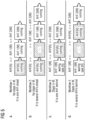
- Fig. 5 shows different successfully executed workflows WFs for AHF.1(M) >> AHF.2(M) [AHF(N)]. It is of note that each workflow WF can provide a different interleaving of AHF instances for the same workflow description, provided that it also contains unconditioned AHFs.
- a conditioned automated handling function AHF executed on a collaborating machine M i.e. AHF(M) [AHF(N)] comprises at least one predecessor AHF(N) executing on another collaborating machine N.
- the collaborative workflow processor CWP instance executed on collaborating machine M (CWP(M)) does check whether the common AHF ledger stored in the shared database SDB already contains a record for AHF(N) that does report a successful AHF completion. If the AHF ledger contains such a record, i.e. if the AHF condition is fulfilled, then the collaborative workflow processor CWP(M) can start with the conditioned AHF. Otherwise, the collaborative workflow processor CWP(M) will wait for the conditions of the next AHF to become true.
- the sequence of automated handling functions AHFs executed on one collaborating machine M is totally ordered.
- the ordering can be given in the workflow specification which is subject to the constraints and the leeway that the production process of a specific product with partially parallel sub-processes defines.
- the sequence of automated handling functions AHFs in the AHF ledger is partially ordered by the collaborating machines M that execute these automated handling functions AHFs. In consequence, different workflows WFs for the same collaborative workflow WF can result.
- the AHF ledger can contain a predecessor AHF S on collaborating machine N, i.e. AHF.S(N), sometime before AHF T on collaborating machine M conditioned with task S, i.e. AHF.T(M) [AHF.S(N)] (WFP2).
- workflow WF(M) contains conditioned AHF.T(M)[AHF.S(N)], then WF(N) must not contain a conditioned automated handling function AHF.S(N)[AHF.T' (M)] where S depends on T' with T' being equal to T or T' following T, that is where T' lies in the future of T. Otherwise, AHF S and AHF T cannot complete and both workflows WF come to a halt.
- the workflows WFs on collaborating machine M and collaborating machine N would deadlock.
- AHF.1(M) depends on the completion of AHF.1(N).
- workflow ⁇ 12.b ⁇ AHF.1(N) depends on the completion of AHF.1(M).
- Both machine-specific workflows ⁇ 12.a ⁇ and ⁇ 12.b ⁇ are correct on their own. However, both machine-specific workflows cannot be combined to a common, correct AHF ledger. If combined, these workflows WF may contradict each other insofar as a>>b and b>>a cannot hold at the same time.
- a stacking machine here collaborating machine "1” shall first stack a number of objects, and a packing machine (here collaborating machine "2") shall thereafter pack the stacked objects.
- the objects here may e.g. be workpieces or tools.
- AHF dependency cycles are not to be confused with AHF execution cycles.
- a production process can require that an automated handling function AHF is to be performed several times.
- a simple example is a workpiece that needs two boreholes at different places.
- Collaborating machine M1 deals with the workpiece and collaborating machine M2 deals with the machine tool (e.g. the machine drill).
- the workflow specification can distinguish instances of the same automated handling function AHF (drill).
- Fig. 11 shows a basic structure of a successful workflow WF resulting from ⁇ 19.a ⁇ and ⁇ 19.b ⁇ .
- Fig. 11 illustrates the collaborative drilling.
- Collaborating machine M1 applies ⁇ 19.a ⁇ on workpieces (for instance wooden blocks) and collaborating machine M2 applies ⁇ 19.b ⁇ on tools (e.g. drills).
- system according to the present invention provides an error handling procedure when executing a collaborative workflow.
- the automation system AS can comprise one or several collaborating machines M. If the automation system AS comprises only one machine, the machine may perform an autonomous workflow WF.
- the autonomous workflow WF is the workflow that executes autonomously on one machine M of the automation system AS without any human intervention.
- the automated handling function AHF forms part of a workflow WF.
- the automated handling function AHF can implement a production step conforming the predefined function as defined e.g. in VDI2860.
- An AHF instance comprises the execution of an automated handling function AHF on exactly one machine M.
- An AHF instance forms part of a workflow WF.
- An AHF ledger can comprise a database that keeps track of executed AHF instances in an immutable way, i.e. once a record is entered into the ledger it cannot be changed anymore.
- a workflow WF can comprise the execution of automated handling functions on one or more collaborating machines M.
- a control token CTOK flows through the AHF instances created from automated handling functions AHFs that belong to such a workflow WF.
- the method and system for controlling a production process performed by collaborating machines M of an automation system AS provides several advantages.
- the method and system according to the present invention provide for a collaboration of two or more collaborating machines M on the level of individual automated handling functions AHFs or process steps of a process.
- the method and system allow specifying machine collaborations in a flexible and efficient way.
- the method and system according to the present invention further allow coordinating multiple collaborating machines M.
- the method according to the present invention allows reducing the required communication needed for facilitating the collaboration of collaborating machines M with minimal coordination effort.
- the communication provided by the method and system according to the present invention is simple, reliable, fast and resource-efficient.
- the individual work plans or workflows WFs for each of the collaborating machines M of the automation system AS can be extracted for parallel execution and rendezvous when necessary.
- Each collaborating machine M can optimize on its own point of view the automated handling functions AHFs assigned to it with a minimal set of constraints.
- the method and system according to the present invention allow for local optimizations which can be performed on each collaborating machine M with regard to collaborating machine M and process characteristics which possibly are not known on the level of a central, overall work plan generator.
- the conditions specified within the workflow WF do allow for different workflows WFs.
- an optimization is possible, for example with regard to the properties of the production process, e.g. quality, cost and time.
- the collaborative workflows WFs provided by the method and system according to the present invention allow the specification of conditions that must be observed.
- Automated handling functions AHFs can be ordered within a workflow on each collaborating machine M and also between collaborating machines M of the automation system AS. It can also be generated, for instance based on a priority graph.
- the collaborative workflows WFs can be composed of fine-grained, modular automated handling functions AHFs focused on recurring production steps with a clear interface. Automated handling functions AHFs can be reused with different skills. Fine-grained automated handling functions AHFs allow for a modular composition of new workflows WFs by a reuse of existing automated handling functions AHFs. In contrast to this, conventional approaches depend on skills for each individual problem leading to a high number of complex skills with little possibility for reuse of existing solutions in a new context.
- a coordination layer that is formed by the AHF ledger documenting the history of a process in an immutable way can be replicated on the collaborating machines M and hence be implemented in the exact same way so that the integrity of the AHF ledger is ensured.
- an efficient factory-wide blockchain of AHF and workflow records can be implemented.
- the method and system for controlling a production process performed by collaborating machines M of an automation system AS increase the efficiency of the production process, in particular the production process can become faster and more flexible. For instance, different products can be produced in the production process with a small lot size in one shift. Faster production results in higher output within a given time period.
- the method and system further provide for optimization of a given work plan or workflow WF on each collaborating machine M with regard to given quality attributes. Optimization of a given work plan or workflow WF on each collaborating machine M can be performed with the goal to minimize production times. Further, the method and system according to the present invention allow to reuse automated handling functions AHFs which can be implemented by software components in different production processes and/or machine application scenarios.
- the AHF ledger can be implemented based on blockchain technology.
- the AHF ledger does not only document the work progress but also does facilitate the coordination of automated handling functions AHFs executed on different collaborating machines M of the automation system AS that collaborate to produce a product. Therefore, the coordination of automated handling functions AHFs between collaborating machines M of the automation system AS perform fast, in tight real time with minimum overhead.
- the system does not only comprise a passive AHF ledger storing AHF records and workflow records but also comprise a service program that automatically publishes interesting events of the system, i.e. entries in the AHF ledger for which the collaborative workflow processors CWPs have subscribed.
- the collaborative workflow processor CWP on collaborating machine M can subscribe for automated handling functions AHFs that may be executed on different collaborating machines M and must have finished before the workflow WF on collaborating machine M can continue.
- the method and system according to the present invention can be used in any kind of cyber-physical production system CPPS.
- the invention provides according to a further third aspect a method for dynamic adaption of a workflow WF on an automation system AS.
- the workflow WF comprises automated handling functions AHFs implementing associated production steps of a production process controlled by a workflow processor WP of a collaborating machine M of the automation system AS and at least one automated handling function AHF shell configured to plug a pluggable automated handling function pAHF into the workflow WF of the automation system AS during runtime of the automation system AS for adaption of the respective workflow WF.
- the method for dynamic adaption of a workflow WF of an automation system can be used to dynamically adapt the automation system AS by plugging new workflows and automated handling functions AHFs to perform functions that have not been foreseen at the time of programming of the automation system AS.
- New automated handling functions AHFs can therefore be provided at system start time of the automation system AS. Further, new skills and automated handling functions AHFs can be provided during system runtime.
- New versions of existing automated handling functions AHFs can be used and plugged into the AHF shell.
- New versions of automated handling functions AHFs can possess different characteristics as the already available automated handling functions AHFs and can provide other operational behavior with regard to system metrics such as resource consumption, quality, efficiency or cost.
- New versions of automated handling functions AHFs can be better suited than those already existing and performed by the automation system AS.
- an automated handling function AHF can denote a defined function which can contribute to carry out a workflow WF.
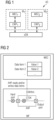
- An automated handling function AHF executes its function when possessing the control token CTOK as shown in Fig. 2 .
- an automated handling function AHF can read and write data items DI in the workflow execution context WEC.
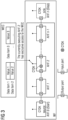
- a workflow WF can be composed of a series of automated handling functions AHFs as shown in Fig. 3 .
- a workflow WF can be specified as a machine- and human-readable expression comprising a series of automated handling functions AHFs.
- WF M AHF 1 ⁇ AHF 2 ⁇ ... ⁇ AHF n
- a workflow WF can denote a production workflow such as assembling a product from workpieces.
- Machine M of the automation system AS denotes the machine that executes the workflow WF.
- Automated handling functions AHF1, AHF2 denote automated handling functions AHFs to be formed by an entity such as an actuator of the collaborating machine M to accomplish the required production process.
- Typical automated handling functions AHFs are for example: move arm, pick drill and/or drill a hole.
- the symbol ">>" represents two ports connecting two consecutive automated handling functions AHFs, whereby the first arrow > indicates the output port of the previous AHF and the second arrow > indicates the input port of the next automated handling function AHF.
- Fig. 12 shows an overview of workflows WFs consisting of several concrete automated handling functions, AHF shells or subworkflows.
- a workflow processor WP can instantiate workflows WFs.
- a workflow processor WP creates instances of either concrete AHFs or AHF shells according to a workflow specification.
- Automated handling functions AHFs of a workflow WF can share data organized in a common workflow execution context WEC as also illustrated in Fig. 3 .
- the workflow processor WP executes a workflow WF and can comprise a series of automated handling functions AHF0 to AHFn as shown in Fig. 3 .
- Fig. 13 illustrates AHF shells used to plug pluggable software components.
- Components can pack task implementations in binary form.
- a component implementing an AHF is called a pluggable component.
- Fig. 14 illustrates an automated handling function AHF shell as part of a workflow WF.
- An automated handling function AHF shell can implement the AHF interface. Interface is meant in the sense of an interface program construct provided by object-oriented programming languages.
- An AHF interface can consist of two parts as illustrated in Fig. 15 .
- the AHF interface comprises a task control for receiving and releasing control tokens CTOK as well as task data for reading and writing data in the workflow execution context WEC.
- a pluggable automated handling function pAHF can implement at least one associated production step of a production process performed by at least one collaborating machine M of the automation system AS.
- a workflow WF controlled by the workflow processor WP of the collaborating machine M of said automation system AS forms part of a workflow execution context WEC associated with the machine M and stored in the local memory of the collaborating machine M.
- the workflow execution context WEC contains data items DI shared between automated handling functions AHFs executed by entities, in particular actuators, of the collaborating machine M as also illustrated in Figs. 2 , 3 .
- a control token CTOK is passed by the automated handling function AHF shell into the pluggable automated handling function pAHF to execute the pluggable automated handling function pAHF as also illustrated in Fig. 14 .
- the plugable automated handling function pAHF can be loaded in a possible embodiment from a repository stored in a database of the automation system AS.
- the pluggable automated handling function pAHF can be read from a local memory of the collaborating machine M of the automation system AS.
- the pluggable automated handling function pAHF can be read from a portable data carrier connected to the collaborating machine M of the automation system AS.
- the pluggable automated handling function pAHF can be provided by a software component delivery pipeline or by an automated update service of the system.
- the pluggable automated handling function pAHF can be indicated in a specific data item stored in the workflow execution context WEC of the collaborating machine M.
- the pluggable automated handling function pAHF can be adapted to perform a specific automated handling function AHF and/or a specific error handling function.
- the automated handling function AHF shell can provide in a possible embodiment a default behaviour and can indicate the unavailability of the required pluggable automated handling function pAHF.
- a control token CTOK can be used for controlling the workflow WF execution and can also be used for controlling the application of an error handling policy if an error occurs during execution of an automated handling function AHF, in particular during execution of the pluggable automated handling function pAHF.
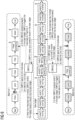
- Fig. 16 describes the semantics of task control and task data of automated handling function AHF shells in form of a programming language in pseudo code.
- step S7 it is checked whether the software component has been successfully plugged into the AHF shell. If this is the case, the control token CTOK is passed to the plugged pluggable automated handling function pAHF in step S8.
- step S9 the control token CTOK from the plugged software component, i.e. pluggable automated handling function pAHF, is received. This stops the AHF shell execution in step S10.
- step S11 the control token CTOK is available on the output port of the AHF shell and can be passed to the next automated handling function AHF of the workflow WF.
- the automated handling function AHF shell can be used to plug a pluggable software component, in particular a pluggable automated handling function pAHF, after unplugging a potentially already plugged-in software component.
- the AHF shell sets the workflow execution context WEC of the plugged-in software component and can indicate that the software component, i.e. the pluggable automated handling function pAHF has been plugged into the AHF shell.
- the AHF shell passes the control token CTOK to the plugged-in software component and may forward the control token CTOK to the next AHF if no software component is plugged.
- the AHF shell acts as a source AHF and as a sink AHF for the plugged-in automated handling function pAHF.
- the AHF shell can carry out automated handling functions AHFs from a workflow processor WP for the plugged automated handling function pAHF. Plugging machine tasks packed in pluggable software components can be implemented by loading plugged-in automated handling functions pAHFs from a library or repository dynamically.
- Fig. 18 illustrates the plug-in of a concrete automated handling function (fast arm move) in an AHF shell (arm move) as part of a workflow WF.
- WF ...
- gripper pick >> arm move plug: fast arm move >> gripper place >> ...
- the workflow processor WP connects the input ports and output ports of the respective automated handling functions AHFs and AHF shells such that all automated handling functions AHFs and AHF shells are connected in a sequence with a control token source AHF at the beginning of the workflow WF and a control token sink AHF at the end.
- the workflow processor WP For each AHF shell, the workflow processor WP writes the name of the automated handling function AHF/software component to be plugged in a AHF shell specific entry in the workflow execution context WEC.
- the pluggable software component i.e. the pluggable automated handling function pAHF corresponding to the name of the AHF is looked up in the software component repository.
- the software component repository can be for example a file directory of the machine M executing the workflow WF or a kind of remote application store.
- the AHF shell loads the automated handling function, i.e. the pluggable automated handling function pAHF, dynamically, i.e. it plugs the automated handling function AHF or pluggable software component at the workflow/AHF runtime.
- the software component i.e. the pluggable automated handling function pAHF
- the pluggable automated handling function pAHF can provide a task functionality which is executed every time when the automated handling function AHF shell receives the control token CTOK on its input port and passes the control token CTOK to the plugged-in automated handling function pAHF.
- the workflow specification stored in the workflow execution context WEC can be dynamically adapted by an external machine controller MC.
- the external machine controller MC can comprise in a possible implementation a software component pipeline.
- the external machine controller MC can read, write and replace workflow specifications contained in the workflow execution context WEC.
- the workflow processor WP can check for updated workflow specifications at the beginning of each workflow execution cycle, i.e. right before the source AHF produces a control token CTOK.
- a new workflow specification may change the number of automated handling functions AHFs and AHF shells being instantiated and/or the names of pluggable software components that AHF shells shall plug.
- the machine controller MC can also deploy new or alternative, pluggable components from the component repository. Switching to another version or variant of a pluggable component, i.e. pluggable automated handling function pAHF, can be achieved by rewriting the workflow specification such that, for example, version 2 of a pluggable component or a pluggable AHF is required instead of version 1 of the same pluggable component.
- the responsible AHF shell plugs can depend on one or more parameters. These parameters can comprise component/AHF compatibility strategy, the machine/production state or history as well as the machine environment.
- the pluggable automated handling function pAHF can be used for error handling.
- a control token CTOK that flows through a workflow WF between automated handling functions AHFs can indicate errors that possibly have occurred during the execution of a particular automated handling function AHF and/or a policy to be applied if an error occurs during execution of a particular automated handling function AHF.
- AHF denotes an automated handling function AHF to be performed on a machine M optionally including a version number, e.g. "fast arm move” or “fast arm move 3".
- the number is optionally given in form of a positive or negative version number denoting a range of alternative versions of the responsible versions the responsible AHF shell shall try during error handling, if necessary and if possible.
- the AHF shell looks for plugs "fast arm move 4" (version 4 results from 3+1) and retries AHF execution using "fast arm move 4". If the component repository does not contain the component in version 4, then the workflow execution is aborted.
Landscapes
- Business, Economics & Management (AREA)
- Engineering & Computer Science (AREA)
- Human Resources & Organizations (AREA)
- Economics (AREA)
- Strategic Management (AREA)
- Entrepreneurship & Innovation (AREA)
- Tourism & Hospitality (AREA)
- Theoretical Computer Science (AREA)
- General Physics & Mathematics (AREA)
- Marketing (AREA)
- General Business, Economics & Management (AREA)
- Physics & Mathematics (AREA)
- Educational Administration (AREA)
- Quality & Reliability (AREA)
- Operations Research (AREA)
- Game Theory and Decision Science (AREA)
- Development Economics (AREA)
- Manufacturing & Machinery (AREA)
- Health & Medical Sciences (AREA)
- General Health & Medical Sciences (AREA)
- Primary Health Care (AREA)
- Management, Administration, Business Operations System, And Electronic Commerce (AREA)
Claims (15)
- Verfahren zum Steuern eines Produktionsprozesses, der von kollaborativen Maschinen Mi eines Automationssystems (AS) ausgeführt wird,wobei jede kollaborative Maschine Mi des Automationssystems (AS) einen zugehörigen Arbeitsablaufausführungskontext (WEC) der kollaborativen Maschine Mi umfasst, der in einem lokalen Speicher der kollaborativen Maschine Mi gespeichert ist,wobei der Arbeitsablaufausführungskontext (WEC) jeder kollaborativen Maschine Mi einen Arbeitsablauf WF der jeweiligen kollaborativen Maschine Mi und einen mit dem Arbeitsablauf WF verknüpften Vorbedingungskontext mit Vorbedingungen für das Ausführen von automatisierten Handhabungsfunktionen (AHF) durch die jeweilige kollaborative Maschine Mi in Abhängigkeit von den Arbeitsabläufen WF und automatisierten Handhabungsfunktionen (AHF) anderer kollaborativer Maschinen Mi des Automationssystems (AS) umfasst,wobei jede kollaborative Maschine Mi des Automationssystems (AS) einen Prozessor für den kollaborativen Arbeitsablauf (CWP) umfasst, der zum Bestimmen von Arbeitsablaufzuständen s Zugriff auf eine gemeinsam genutzte Datenbank (SDB) des Automationssystems (AS) hat,wobei die gemeinsam genutzte Datenbank (SDB) im Betrieb des Automationssystems (AS) Metadaten zu automatisierten Handhabungsfunktionen (AHF), die von den kollaborativen Maschinen Mi ausgeführt wurden, und Arbeitsablaufzuständen s der kollaborativen Maschinen Mi speichert, die von den Prozessoren für den kollaborativen Arbeitsablauf (CWP) an die gemeinsam genutzte Datenbank (SDB) des Automationssystems (AS) übermittelt werden,wobei die gemeinsam genutzte Abfolge von abgeschlossenen Instanzen automatisierter Handhabungsfunktionen (AHF) und Arbeitsablaufzuständen s von den Prozessoren für den kollaborativen Arbeitsablauf (CWP) der kollaborativen Maschinen Mi des Automationssystems (AS) verarbeitet werden, damit die automatisierten Handhabungsfunktionen (AHF) zwischen den kollaborativen Maschinen Mi im Produktionsprozess koordiniert werden können.
- Verfahren nach Anspruch 1, wobei der Arbeitsablauf WF aus einer oder mehreren automatisierten Handhabungsfunktionen (AHF) besteht, die zugehörige Produktionsschritte des Produktionsprozesses umsetzen.
- Verfahren nach Anspruch 1 oder 2, wobei der Arbeitsablaufausführungskontext (WEC) jeder kollaborativen Maschine (M), der in dem lokalen Speicher der kollaborativen Maschine (M) gespeichert ist, Datenelemente enthält, die von von der jeweiligen kollaborativen Maschine (M) ausgeführten automatisierten Handhabungsfunktionen (AHF) gemeinsam genutzt werden.
- Verfahren nach einem der vorhergehenden Ansprüche 1 bis 3, wobei die gemeinsam genutzte Datenbank (SDB) des Automationssystems (AS), an die die Metadaten zu den von den kollaborativen Maschinen (M) ausgeführten automatisierten Handhabungsfunktionen AHF und Arbeitsablaufzustände s der kollaborativen Maschinen (M) von den Prozessoren für den kollaborativen Arbeitsablauf (CWP) im Betrieb des Automationssystems (AS) übermittelt werden, ein verteiltes Register realisiert, damit die automatisierten Handhabungsfunktionen (AHF) zwischen kollaborativen Maschinen (M) des Automationssystems (AS) koordiniert werden können.
- Verfahren nach Anspruch 4, wobei die Metadaten zu den automatisierten Handhabungsfunktionen AHF und/oder die Abfolge von Instanzen ausgeführter automatisierter Handhabungsfunktionen (AHF) und Arbeitsablaufzuständen s der kollaborativen Maschinen (M) des Automationssystems (AS) auf sichere und unveränderbare Weise in die gemeinsam genutzte Datenbank (SDB) des Automationssystems (AS) geschrieben werden.
- Verfahren nach Anspruch 4 oder 5, wobei die in der gemeinsam genutzten Datenbank (SDB) aufgezeichneten und zum Koordinieren der automatisierten Handhabungsfunktionen AHF benutzten Arbeitsablaufzustände s einen Laufzustand, einen Wartezustand, einen Endzustand und einen Fehlerzustand umfassen.
- Verfahren nach einem der vorhergehenden Ansprüche 1 bis 6, wobei die gemeinsam genutzte Datenbank (SDB) des Automationssystems (AS) eine zentrale Datenbank und/oder eine verteilte Datenbank umfasst, auf die die Prozessoren für den kollaborativen Arbeitsablauf (CWP) der kollaborativen Maschinen Mi über ein Kommunikationsmittel des Automationssystems (AS) zugreifen können.
- Verfahren nach einem der vorhergehenden Ansprüche 1 bis 7, wobei die kollaborativen Maschinen Mi des Automationssystems (AS) Maschinen, die an festen Standorten im Automationssystem (AS) vorgesehen sind, und/oder bewegliche Maschinen umfassen, die innerhalb des Automationssystems (AS) verfahrbar sind.
- Verfahren nach einem der vorhergehenden Ansprüche 1 bis 8, wobei sich die kollaborativen Maschinen Mi zumindest zeitweilig am gleichen Standort befinden, damit sie automatisierte Handhabungsfunktionen AHF an einem Gegenstand in einem gemeinsamen Produktionsprozess ausführen können.
- Verfahren nach einem der vorhergehenden Ansprüche 1 bis 9, wobei der Arbeitsablauf WF einer kollaborativen Maschine M einen vorgegebenen Produktionsarbeitsablauf, der in den lokalen Speicher der kollaborativen Maschine (M) geladen ist, oder einen Arbeitsablauf WF umfasst, der in einem Einlernprozess erzeugt und in dem lokalen Speicher der kollaborativen Maschine (M) gespeichert wurde, oder einen Arbeitsablauf WF, der in einem Maschinenlernprozess erzeugt und in dem lokalen Speicher der kollaborativen Maschine (M) gespeichert wurde, oder einen Arbeitsablauf umfasst, der über eine Softwarekomponenten-Delivery-Pipeline bereitgestellt wird.
- Verfahren nach einem der vorhergehenden Ansprüche 1 bis 10, wobei jede automatisierte Handhabungsfunktion AHF eines Arbeitsablaufs WF einer kollaborativen Maschine (M) Folgendes umfasst:- eine Bezeichnung oder Kennung für automatisierte Handhabungsfunktionen,- eine Produktkennung,- eine Prozesskennung,- mindestens einen Funktionsparameter und- eine Maschinenkennung für die ausführende kollaborative Maschine (M).
- Verfahren nach einem der vorhergehenden Ansprüche 1 bis 11, wobei die automatisierten Handhabungsfunktionen AHF eines Arbeitsablaufs WF, die einen zugehörigen Produktionsschritt des Produktionsprozesses umsetzen, bedingungslose automatisierte Handhabungsfunktionen AHF umfassen, die dem Arbeitsablauf WF entsprechend der Reihe nach ausgeführt werden, und
bedingte automatisierte Handhabungsfunktionen cAHF umfassen, die in Abhängigkeit von Ergebnissen automatisierter Handhabungsfunktionen AHF von anderen kollaborativen Maschinen (M) des Automationssystems (AS) von einer kollaborativen Maschine (M) des Automationssystems (AS) ausgeführt werden. - Verfahren nach einem der vorhergehenden Ansprüche 1 bis 12, wobei ein von einer zentralen oder verteilten, gemeinsam genutzten Datenbank des Automationssystems (AS) realisiertes verteiltes Register im Betrieb des Automationssystems (AS) Attribute der automatisierten Handhabungsfunktionen AHF und/oder des Prozesses einschließlich Start- und Stoppzeitpunkte automatisierter Handhabungsfunktionen AHF, derzeit von einer kollaborativen Maschine (M) ausgeführte automatisierte Handhabungsfunktionen AHF und Qualitätsangaben automatisierter Handhabungsfunktionen AHF aufzeichnet.
- Verfahren nach Anspruch 13, wobei die aufgezeichneten Attribute der automatisierten Handhabungsfunktionen AHF und/oder des Prozesses für das Durchführen einer Prozessanalyse und/oder einer Prozessoptimierung des Produktionsprozesses evaluiert werden.
- Automationssystem (AS), das Folgendes umfasst:
kollaborative Maschinen Mi zum Durchführen eines gemeinsamen Produktionsprozesses, wobei jede kollaborative Maschine Mi Folgendes umfasst:- einen lokalen Speicher, der einen Arbeitsablaufausführungskontext WEC für die jeweilige kollaborative Maschine Mi speichert, der einen Arbeitsablauf WF mit automatisierten Handhabungsfunktionen AHF, die zugehörige Produktionsschritte des Produktionsprozesses umsetzen, und einen mit dem Arbeitsablauf WF verknüpften Vorbedingungskontext zum Ausführen automatisierter Handhabungsfunktionen AHF durch die jeweilige kollaborative Maschine Mi in Abhängigkeit von den Arbeitsabläufen WF und automatisierter Handhabungsfunktionen AHF anderer kollaborativer Maschinen Mi des Automationssystems (AS) umfasst, und- einen Prozessor für den kollaborativen Arbeitsablauf (CWP), der zum Bestimmen von Arbeitsablaufzuständen s der kollaborativen Maschinen Mi Zugriff auf eine gemeinsam genutzte Datenbank (SDB) des Automationssystems (AS) hat,- wobei die gemeinsam genutzte Datenbank (SDB) des Automationssystems (AS) im Betrieb des Automationssystems (AS) Metadaten zu automatisierten Handhabungsfunktionen (AHF) und/oder eine Abfolge von Instanzen automatisierter Handhabungsfunktionen AHF, die von den kollaborativen Maschinen Mi des Automationssystems (AS) ausgeführt wurden, und Arbeitsablaufzuständen s der kollaborativen Maschinen Mi des Automationssystems (AS) speichert, die von den Prozessoren für den kollaborativen Arbeitsablauf (CWP) der kollaborativen Maschinen Mi an die gemeinsam genutzte Datenbank (SDB) des Automationssystems (AS) übermittelt werden,wobei die Metadaten und/oder die Abfolge von abgeschlossenen automatisierten Handhabungsfunktionen AHF und Arbeitsablaufzuständen s, die in der gemeinsam genutzten Datenbank (SDB) des Automationssystems (AS) gespeichert sind, von den Prozessoren für den kollaborativen Arbeitsablauf (CWP) der kollaborativen Maschinen Mi des Automationssystems (AS) verarbeitet werden, damit die automatisierten Handhabungsfunktionen (AHF) zwischen den kollaborativen Maschinen Mi im Produktionsprozess koordiniert werden können.
Priority Applications (1)
| Application Number | Priority Date | Filing Date | Title |
|---|---|---|---|
| EP18212976.7A EP3671584B1 (de) | 2018-12-17 | 2018-12-17 | Verfahren und system zur steuerung eines produktionsprozesses |
Applications Claiming Priority (1)
| Application Number | Priority Date | Filing Date | Title |
|---|---|---|---|
| EP18212976.7A EP3671584B1 (de) | 2018-12-17 | 2018-12-17 | Verfahren und system zur steuerung eines produktionsprozesses |
Publications (3)
| Publication Number | Publication Date |
|---|---|
| EP3671584A1 EP3671584A1 (de) | 2020-06-24 |
| EP3671584B1 true EP3671584B1 (de) | 2024-07-03 |
| EP3671584C0 EP3671584C0 (de) | 2024-07-03 |
Family
ID=64744396
Family Applications (1)
| Application Number | Title | Priority Date | Filing Date |
|---|---|---|---|
| EP18212976.7A Active EP3671584B1 (de) | 2018-12-17 | 2018-12-17 | Verfahren und system zur steuerung eines produktionsprozesses |
Country Status (1)
| Country | Link |
|---|---|
| EP (1) | EP3671584B1 (de) |
Families Citing this family (1)
| Publication number | Priority date | Publication date | Assignee | Title |
|---|---|---|---|---|
| CN113360220A (zh) * | 2021-06-23 | 2021-09-07 | 平安普惠企业管理有限公司 | 基于全局上下文类的工作流实现方法、系统、设备及介质 |
Family Cites Families (3)
| Publication number | Priority date | Publication date | Assignee | Title |
|---|---|---|---|---|
| US5937388A (en) * | 1996-12-05 | 1999-08-10 | Hewlett-Packard Company | System and method for performing scalable distribution of process flow activities in a distributed workflow management system |
| US20040078105A1 (en) * | 2002-09-03 | 2004-04-22 | Charles Moon | System and method for workflow process management |
| US20170039046A1 (en) * | 2015-08-04 | 2017-02-09 | Sap Se | Lock-free execution of workflow instances |
-
2018
- 2018-12-17 EP EP18212976.7A patent/EP3671584B1/de active Active
Also Published As
| Publication number | Publication date |
|---|---|
| EP3671584A1 (de) | 2020-06-24 |
| EP3671584C0 (de) | 2024-07-03 |
Similar Documents
| Publication | Publication Date | Title |
|---|---|---|
| US11951631B2 (en) | Object marking to support tasks by autonomous machines | |
| US11338434B2 (en) | Controlling process of robots having a behavior tree architecture | |
| KR102257938B1 (ko) | 산업 애플리케이션들을 위한 스킬 인터페이스 | |
| Angerer et al. | Robotics API: Object-oriented software development for industrial robots | |
| US11221852B2 (en) | Method for dynamic adaptation of a workflow of an automatic system | |
| Halt et al. | Intuitive constraint-based robot programming for robotic assembly tasks | |
| Pokahr et al. | Programming BDI agents with pure Java | |
| Volkmann et al. | Integration of a feasibility and context check into an OPC UA skill | |
| Hofmann et al. | Winning the robocup logistics league with fast navigation, precise manipulation, and robust goal reasoning | |
| Chryssolouris et al. | Artificial intelligence in manufacturing systems | |
| Chen et al. | A virtual environment for the management and development of cyber-physical manufacturing systems | |
| Zhang et al. | Holonic control at the production and controller levels | |
| EP3671584A1 (de) | Verfahren und system zur steuerung eines produktionsprozesses | |
| Dahl et al. | Control components for Collaborative and Intelligent Automation Systems. | |
| Cheng et al. | Game solving for industrial automation and control | |
| Tang et al. | HeRo: A State Machine-Based, Fault-Tolerant Framework for Heterogeneous Multi-Robot Collaboration | |
| US12257719B2 (en) | Robot planning for concurrent execution of actions | |
| Dahl | Preparation and control of intelligent automation systems | |
| Bubeck et al. | Model driven engineering for the implementation of user roles in industrial service robot applications | |
| Wiesmayr et al. | Modeling service choreographies and collaborative tasks for autonomous mixed-fleet systems | |
| Senehi et al. | Hierarchical control architectures from shop level to end effectors | |
| dos Santos | Development of functional libraries supporting object-oriented PLC programming of industrial workstations | |
| Fogliazza | How information technology enables the potential flexibility and re-configurability of highly automated manufacturing plants | |
| Kruger | The development and evaluation of an Erlang control system for reconfigurable manufacturing systems | |
| Soutukorva | Development and implementation of skill library for industrial robots |
Legal Events
| Date | Code | Title | Description |
|---|---|---|---|
| PUAI | Public reference made under article 153(3) epc to a published international application that has entered the european phase |
Free format text: ORIGINAL CODE: 0009012 |
|
| STAA | Information on the status of an ep patent application or granted ep patent |
Free format text: STATUS: THE APPLICATION HAS BEEN PUBLISHED |
|
| AK | Designated contracting states |
Kind code of ref document: A1 Designated state(s): AL AT BE BG CH CY CZ DE DK EE ES FI FR GB GR HR HU IE IS IT LI LT LU LV MC MK MT NL NO PL PT RO RS SE SI SK SM TR |
|
| AX | Request for extension of the european patent |
Extension state: BA ME |
|
| STAA | Information on the status of an ep patent application or granted ep patent |
Free format text: STATUS: REQUEST FOR EXAMINATION WAS MADE |
|
| 17P | Request for examination filed |
Effective date: 20200918 |
|
| RBV | Designated contracting states (corrected) |
Designated state(s): AL AT BE BG CH CY CZ DE DK EE ES FI FR GB GR HR HU IE IS IT LI LT LU LV MC MK MT NL NO PL PT RO RS SE SI SK SM TR |
|
| STAA | Information on the status of an ep patent application or granted ep patent |
Free format text: STATUS: EXAMINATION IS IN PROGRESS |
|
| 17Q | First examination report despatched |
Effective date: 20211223 |
|
| REG | Reference to a national code |
Ref country code: DE Ref legal event code: R079 Free format text: PREVIOUS MAIN CLASS: G06Q0010060000 Ref country code: DE Ref legal event code: R079 Ref document number: 602018071234 Country of ref document: DE Free format text: PREVIOUS MAIN CLASS: G06Q0010060000 Ipc: G06Q0010063000 |
|
| GRAP | Despatch of communication of intention to grant a patent |
Free format text: ORIGINAL CODE: EPIDOSNIGR1 |
|
| STAA | Information on the status of an ep patent application or granted ep patent |
Free format text: STATUS: GRANT OF PATENT IS INTENDED |
|
| RIC1 | Information provided on ipc code assigned before grant |
Ipc: G06Q 50/04 20120101ALN20240202BHEP Ipc: G06Q 10/06 20120101ALN20240202BHEP Ipc: G06Q 10/0631 20230101ALI20240202BHEP Ipc: G06Q 10/063 20230101AFI20240202BHEP |
|
| RIC1 | Information provided on ipc code assigned before grant |
Ipc: G06Q 50/04 20120101ALN20240220BHEP Ipc: G06Q 10/06 20120101ALN20240220BHEP Ipc: G06Q 10/0631 20230101ALI20240220BHEP Ipc: G06Q 10/063 20230101AFI20240220BHEP |
|
| INTG | Intention to grant announced |
Effective date: 20240311 |
|
| RIN1 | Information on inventor provided before grant (corrected) |
Inventor name: ROTHBAUER, STEFAN Inventor name: FROEHLICH, JOACHIM Inventor name: CRAMER, DIETER Inventor name: IONESCU, TUDOR |
|
| GRAS | Grant fee paid |
Free format text: ORIGINAL CODE: EPIDOSNIGR3 |
|
| GRAA | (expected) grant |
Free format text: ORIGINAL CODE: 0009210 |
|
| STAA | Information on the status of an ep patent application or granted ep patent |
Free format text: STATUS: THE PATENT HAS BEEN GRANTED |
|
| AK | Designated contracting states |
Kind code of ref document: B1 Designated state(s): AL AT BE BG CH CY CZ DE DK EE ES FI FR GB GR HR HU IE IS IT LI LT LU LV MC MK MT NL NO PL PT RO RS SE SI SK SM TR |
|
| REG | Reference to a national code |
Ref country code: CH Ref legal event code: EP |
|
| REG | Reference to a national code |
Ref country code: DE Ref legal event code: R096 Ref document number: 602018071234 Country of ref document: DE |
|
| U01 | Request for unitary effect filed |
Effective date: 20240705 |
|
| U07 | Unitary effect registered |
Designated state(s): AT BE BG DE DK EE FI FR IT LT LU LV MT NL PT RO SE SI Effective date: 20240902 |
|
| PG25 | Lapsed in a contracting state [announced via postgrant information from national office to epo] |
Ref country code: NO Free format text: LAPSE BECAUSE OF FAILURE TO SUBMIT A TRANSLATION OF THE DESCRIPTION OR TO PAY THE FEE WITHIN THE PRESCRIBED TIME-LIMIT Effective date: 20241003 |
|
| PG25 | Lapsed in a contracting state [announced via postgrant information from national office to epo] |
Ref country code: GR Free format text: LAPSE BECAUSE OF FAILURE TO SUBMIT A TRANSLATION OF THE DESCRIPTION OR TO PAY THE FEE WITHIN THE PRESCRIBED TIME-LIMIT Effective date: 20241004 Ref country code: PL Free format text: LAPSE BECAUSE OF FAILURE TO SUBMIT A TRANSLATION OF THE DESCRIPTION OR TO PAY THE FEE WITHIN THE PRESCRIBED TIME-LIMIT Effective date: 20240703 |
|
| U20 | Renewal fee for the european patent with unitary effect paid |
Year of fee payment: 7 Effective date: 20241219 |
|
| PG25 | Lapsed in a contracting state [announced via postgrant information from national office to epo] |
Ref country code: IS Free format text: LAPSE BECAUSE OF FAILURE TO SUBMIT A TRANSLATION OF THE DESCRIPTION OR TO PAY THE FEE WITHIN THE PRESCRIBED TIME-LIMIT Effective date: 20241103 |
|
| PG25 | Lapsed in a contracting state [announced via postgrant information from national office to epo] |
Ref country code: HR Free format text: LAPSE BECAUSE OF FAILURE TO SUBMIT A TRANSLATION OF THE DESCRIPTION OR TO PAY THE FEE WITHIN THE PRESCRIBED TIME-LIMIT Effective date: 20240703 Ref country code: CZ Free format text: LAPSE BECAUSE OF FAILURE TO SUBMIT A TRANSLATION OF THE DESCRIPTION OR TO PAY THE FEE WITHIN THE PRESCRIBED TIME-LIMIT Effective date: 20240703 |
|
| PG25 | Lapsed in a contracting state [announced via postgrant information from national office to epo] |
Ref country code: ES Free format text: LAPSE BECAUSE OF FAILURE TO SUBMIT A TRANSLATION OF THE DESCRIPTION OR TO PAY THE FEE WITHIN THE PRESCRIBED TIME-LIMIT Effective date: 20240703 Ref country code: RS Free format text: LAPSE BECAUSE OF FAILURE TO SUBMIT A TRANSLATION OF THE DESCRIPTION OR TO PAY THE FEE WITHIN THE PRESCRIBED TIME-LIMIT Effective date: 20241003 |
|
| PG25 | Lapsed in a contracting state [announced via postgrant information from national office to epo] |
Ref country code: RS Free format text: LAPSE BECAUSE OF FAILURE TO SUBMIT A TRANSLATION OF THE DESCRIPTION OR TO PAY THE FEE WITHIN THE PRESCRIBED TIME-LIMIT Effective date: 20241003 Ref country code: PL Free format text: LAPSE BECAUSE OF FAILURE TO SUBMIT A TRANSLATION OF THE DESCRIPTION OR TO PAY THE FEE WITHIN THE PRESCRIBED TIME-LIMIT Effective date: 20240703 Ref country code: NO Free format text: LAPSE BECAUSE OF FAILURE TO SUBMIT A TRANSLATION OF THE DESCRIPTION OR TO PAY THE FEE WITHIN THE PRESCRIBED TIME-LIMIT Effective date: 20241003 Ref country code: IS Free format text: LAPSE BECAUSE OF FAILURE TO SUBMIT A TRANSLATION OF THE DESCRIPTION OR TO PAY THE FEE WITHIN THE PRESCRIBED TIME-LIMIT Effective date: 20241103 Ref country code: HR Free format text: LAPSE BECAUSE OF FAILURE TO SUBMIT A TRANSLATION OF THE DESCRIPTION OR TO PAY THE FEE WITHIN THE PRESCRIBED TIME-LIMIT Effective date: 20240703 Ref country code: GR Free format text: LAPSE BECAUSE OF FAILURE TO SUBMIT A TRANSLATION OF THE DESCRIPTION OR TO PAY THE FEE WITHIN THE PRESCRIBED TIME-LIMIT Effective date: 20241004 Ref country code: ES Free format text: LAPSE BECAUSE OF FAILURE TO SUBMIT A TRANSLATION OF THE DESCRIPTION OR TO PAY THE FEE WITHIN THE PRESCRIBED TIME-LIMIT Effective date: 20240703 Ref country code: CZ Free format text: LAPSE BECAUSE OF FAILURE TO SUBMIT A TRANSLATION OF THE DESCRIPTION OR TO PAY THE FEE WITHIN THE PRESCRIBED TIME-LIMIT Effective date: 20240703 |
|
| PG25 | Lapsed in a contracting state [announced via postgrant information from national office to epo] |
Ref country code: SM Free format text: LAPSE BECAUSE OF FAILURE TO SUBMIT A TRANSLATION OF THE DESCRIPTION OR TO PAY THE FEE WITHIN THE PRESCRIBED TIME-LIMIT Effective date: 20240703 |
|
| PG25 | Lapsed in a contracting state [announced via postgrant information from national office to epo] |
Ref country code: SK Free format text: LAPSE BECAUSE OF FAILURE TO SUBMIT A TRANSLATION OF THE DESCRIPTION OR TO PAY THE FEE WITHIN THE PRESCRIBED TIME-LIMIT Effective date: 20240703 |
|
| PLBE | No opposition filed within time limit |
Free format text: ORIGINAL CODE: 0009261 |
|
| STAA | Information on the status of an ep patent application or granted ep patent |
Free format text: STATUS: NO OPPOSITION FILED WITHIN TIME LIMIT |
|
| 26N | No opposition filed |
Effective date: 20250404 |
|
| PG25 | Lapsed in a contracting state [announced via postgrant information from national office to epo] |
Ref country code: MC Free format text: LAPSE BECAUSE OF FAILURE TO SUBMIT A TRANSLATION OF THE DESCRIPTION OR TO PAY THE FEE WITHIN THE PRESCRIBED TIME-LIMIT Effective date: 20240703 |
|
| REG | Reference to a national code |
Ref country code: CH Ref legal event code: PL |
|
| GBPC | Gb: european patent ceased through non-payment of renewal fee |
Effective date: 20241217 |
|
| PG25 | Lapsed in a contracting state [announced via postgrant information from national office to epo] |
Ref country code: GB Free format text: LAPSE BECAUSE OF NON-PAYMENT OF DUE FEES Effective date: 20241217 |
|
| PG25 | Lapsed in a contracting state [announced via postgrant information from national office to epo] |
Ref country code: CH Free format text: LAPSE BECAUSE OF NON-PAYMENT OF DUE FEES Effective date: 20241231 |
|
| PG25 | Lapsed in a contracting state [announced via postgrant information from national office to epo] |
Ref country code: IE Free format text: LAPSE BECAUSE OF NON-PAYMENT OF DUE FEES Effective date: 20241217 |
|
| U20 | Renewal fee for the european patent with unitary effect paid |
Year of fee payment: 8 Effective date: 20251219 |
|
| PG25 | Lapsed in a contracting state [announced via postgrant information from national office to epo] |
Ref country code: CY Free format text: LAPSE BECAUSE OF FAILURE TO SUBMIT A TRANSLATION OF THE DESCRIPTION OR TO PAY THE FEE WITHIN THE PRESCRIBED TIME-LIMIT Effective date: 20240703 |